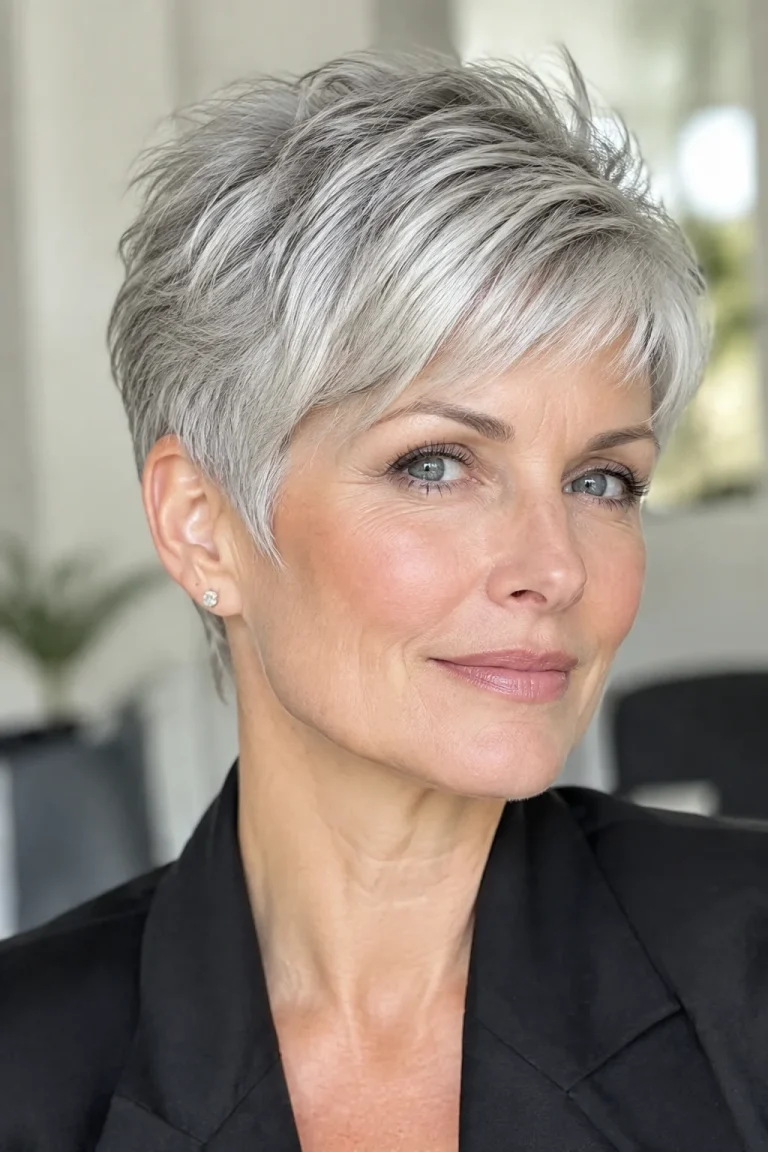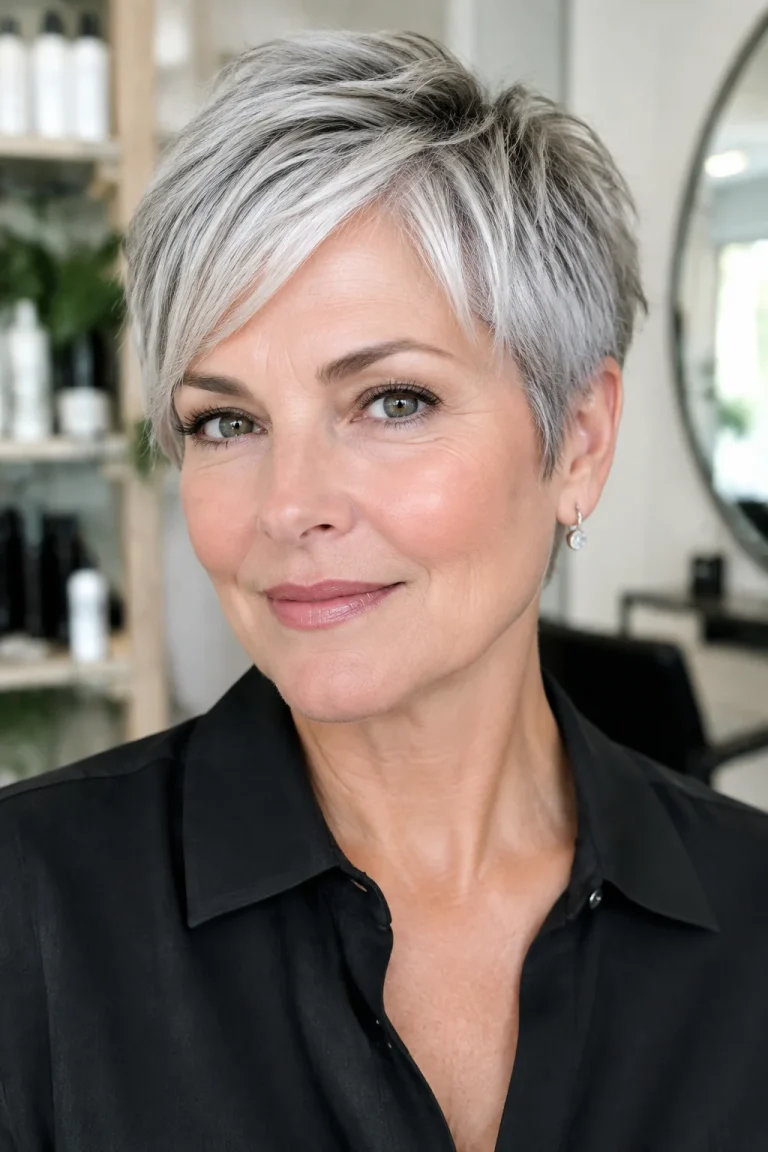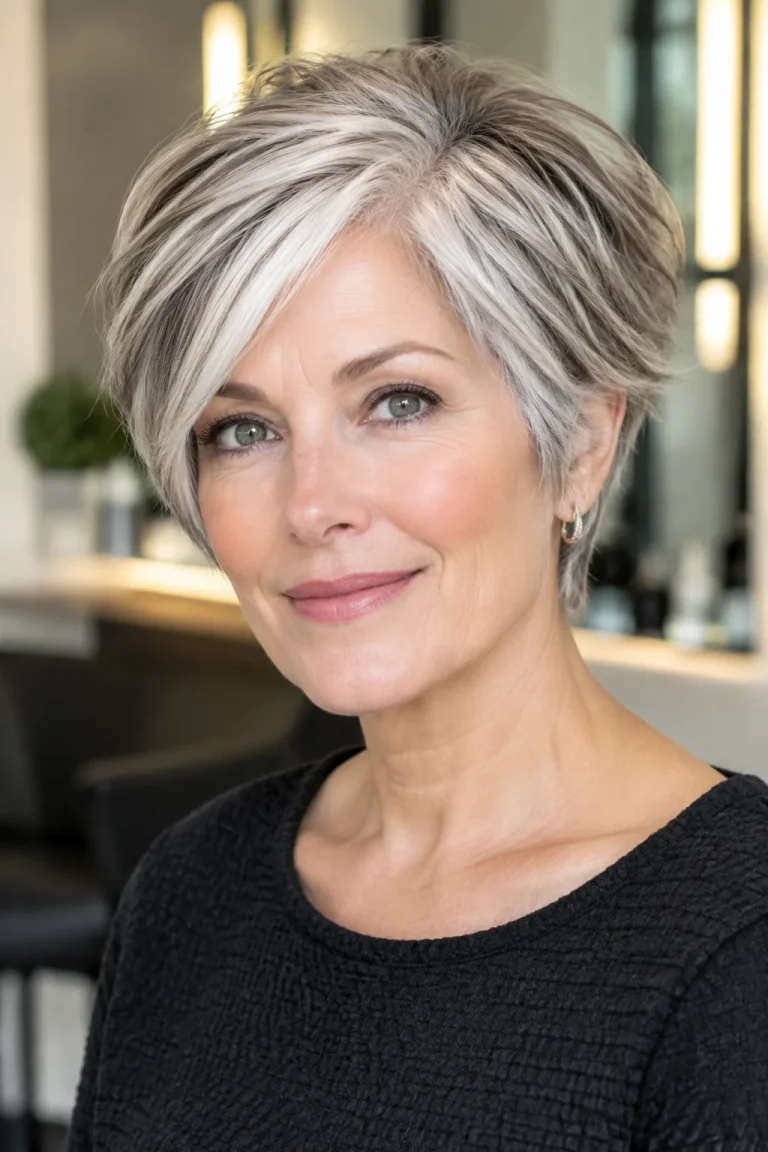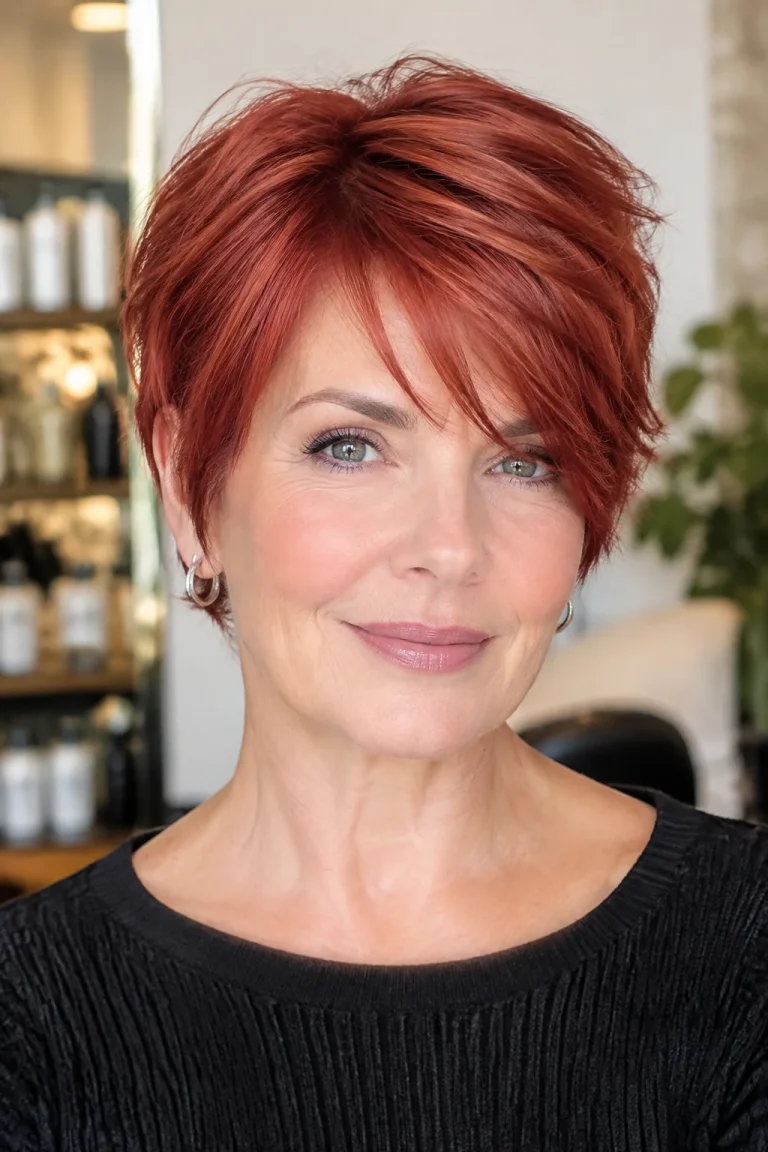
Short hair gets a bad reputation for being boring, but the right shade changes everything. Honey brown hair pixie cuts bring warmth to a style that can otherwise feel flat or severe. The color catches light in a way that adds movement even when the hair itself is barely an inch long, and it flatters nearly every skin tone from fair to deep. If you’ve been stuck between growing out an old cut and chopping it all off, this list gives you real direction. Some of these styles work best on thick hair, others were built for fine strands that need help holding shape. A few suit round faces, and a few were designed to soften sharp angles on square jaws. Bring these photos and names to your stylist so you’re both speaking the same language before the scissors come out.
Classic Honey Pixie with Longer Bangs
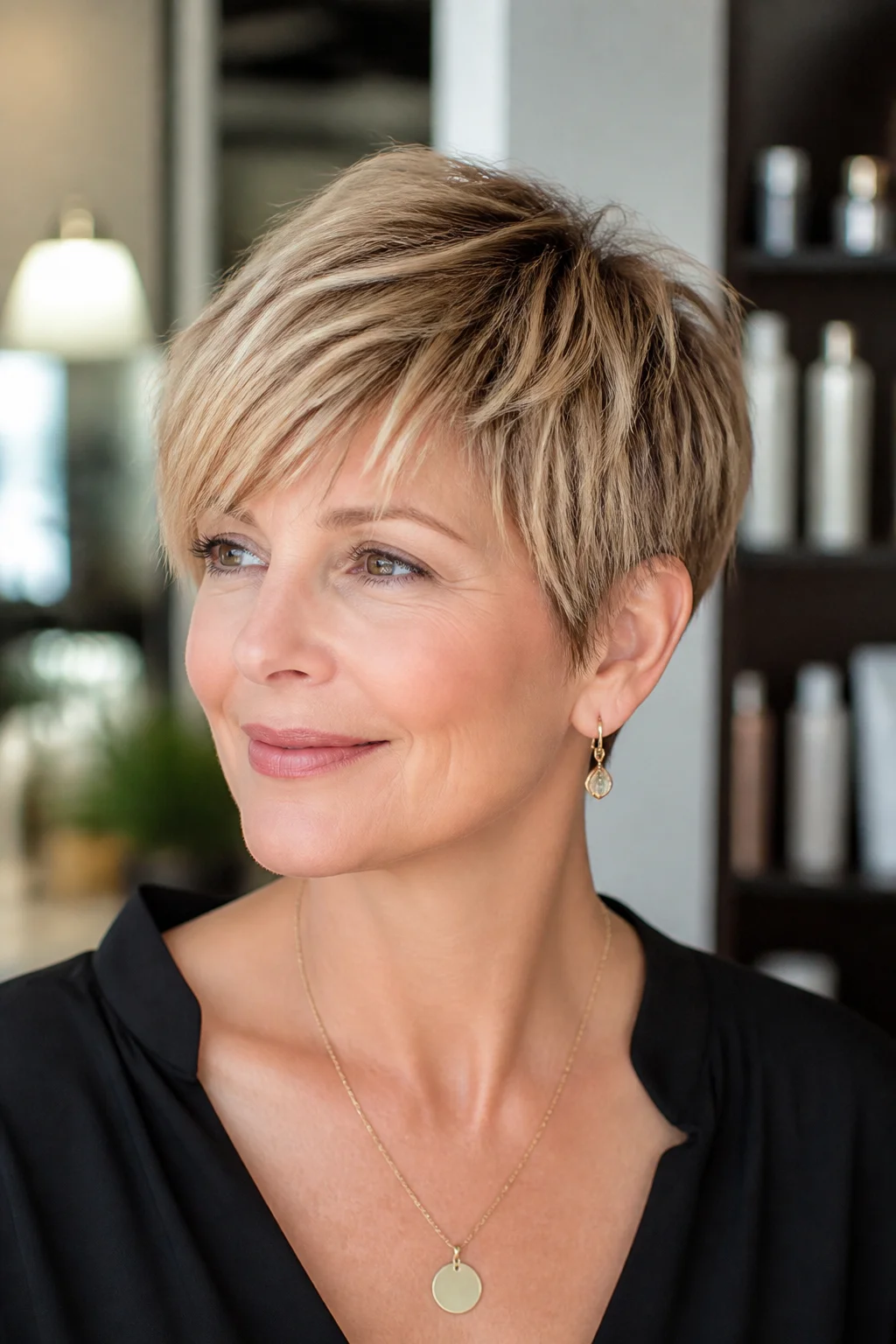
This is the pixie most people picture when they hear the word. The sides and back stay short and neat, while the bangs sweep across the forehead with enough length to style a few different ways. Honey brown works especially well here because it adds dimension to the crop without needing heavy layering underneath. You can push the bangs to the side for a softer look or wear them straight across for something more graphic. Tip: ask your stylist to leave a bit of extra length at the fringe so you have room to adjust as the cut grows out. A light mist of heat protectant before styling helps the finish last.
Textured Crop Pixie for Thick Hair
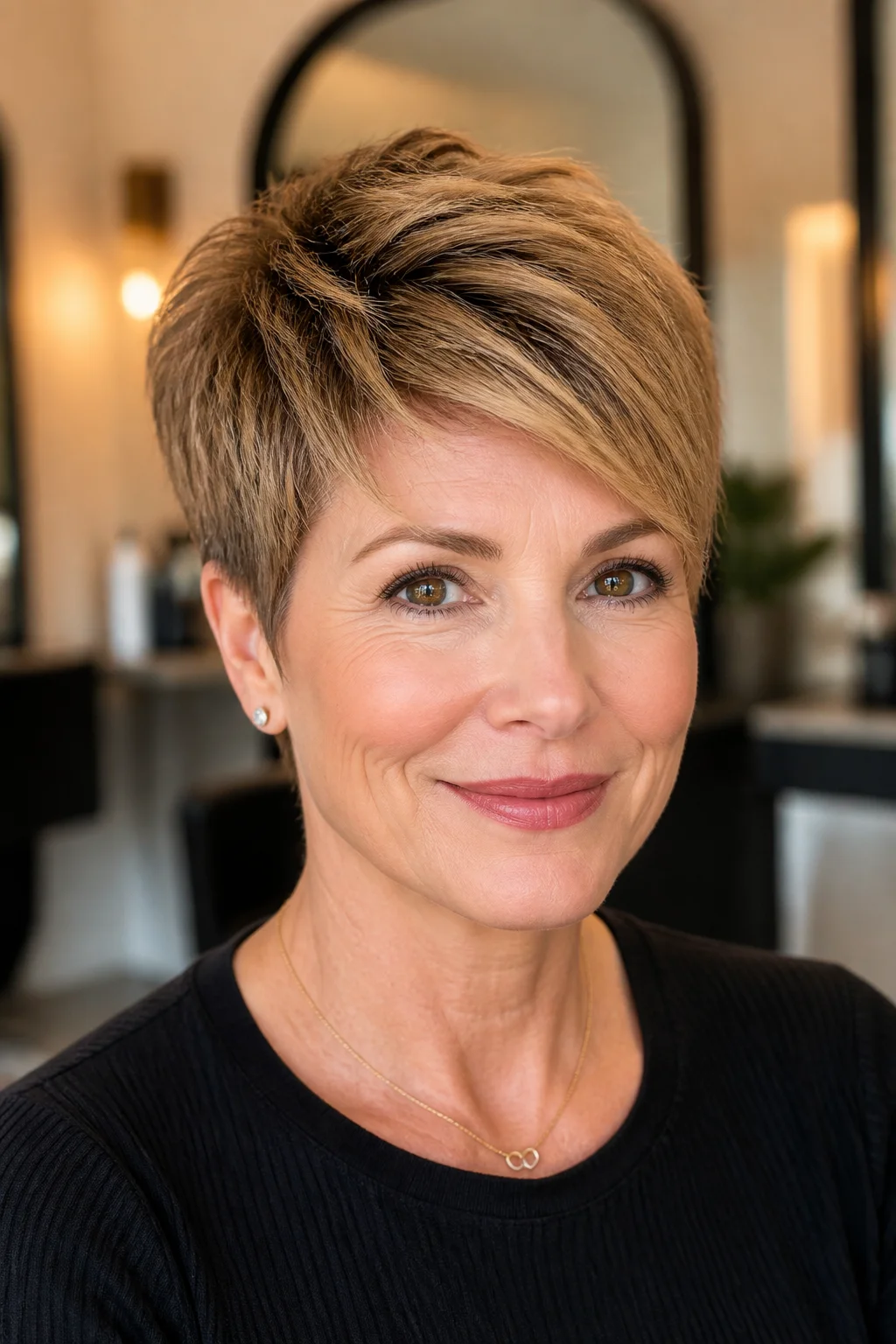
Thick hair can overwhelm a basic pixie fast, turning it into a triangle shape instead of a soft crop. Heavy point cutting and thinning shears remove bulk without sacrificing the overall shape. Honey brown tones through thick hair look almost multidimensional once the layers catch light differently at each length. This cut holds up through humid weather better than most short styles because there’s less hair fighting for space. A light mist of heat protectant before styling helps the finish last. A light mist of heat protectant before styling helps the finish last.
Undercut Pixie with Side Sweep
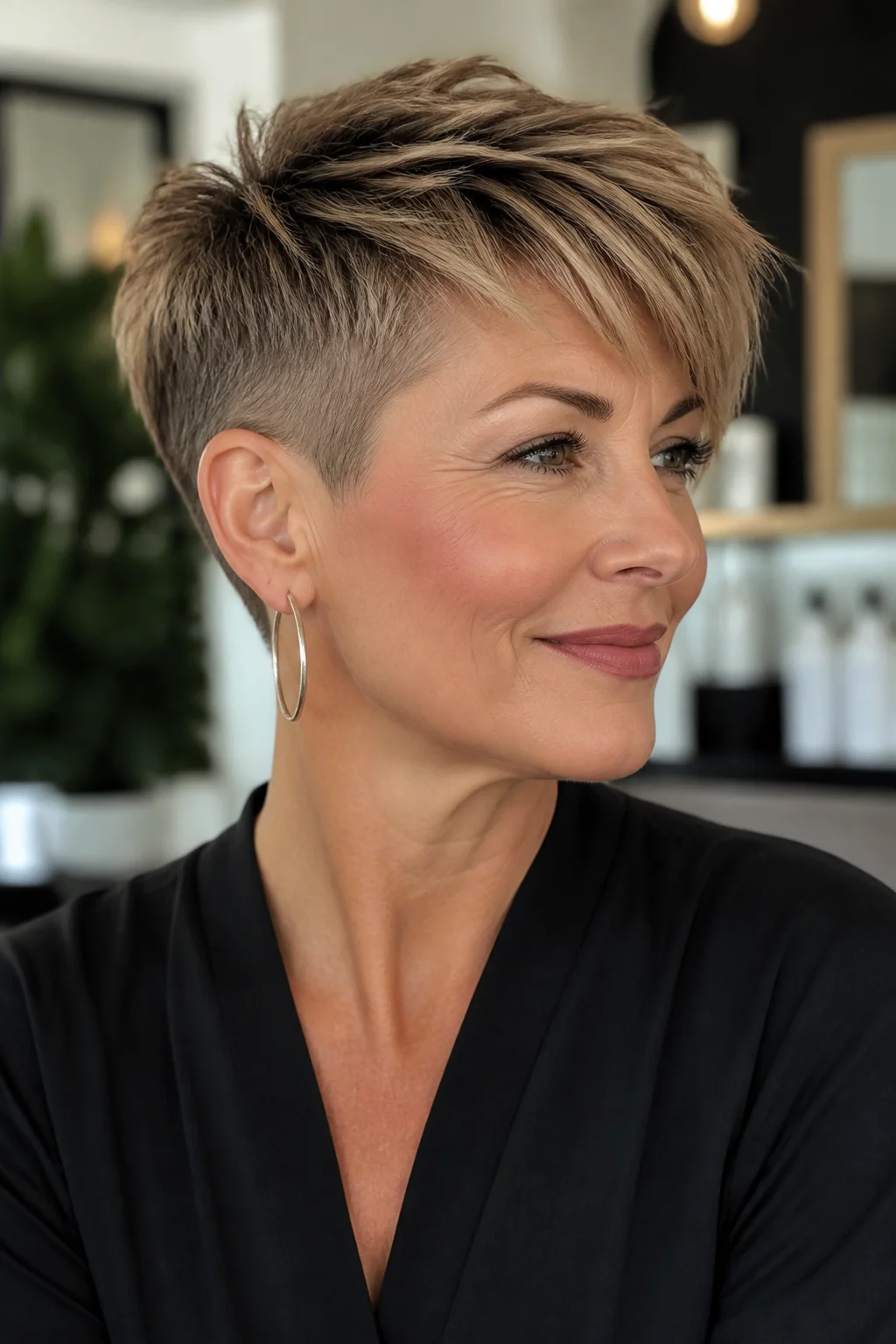
The undercut version shaves or closely clips one side while leaving generous length on top for a dramatic sweep. It’s a bolder pick, and honey brown softens the contrast so the look reads edgy rather than harsh. The longer top section can be pushed straight back for a sleek finish or tousled forward for something more casual. Because the shaved section grows out fast, plan on more frequent trims to keep the line crisp. I recommend this one for anyone who wants a pixie that still feels a little rebellious.
Curly Honey Pixie for Wavy Hair
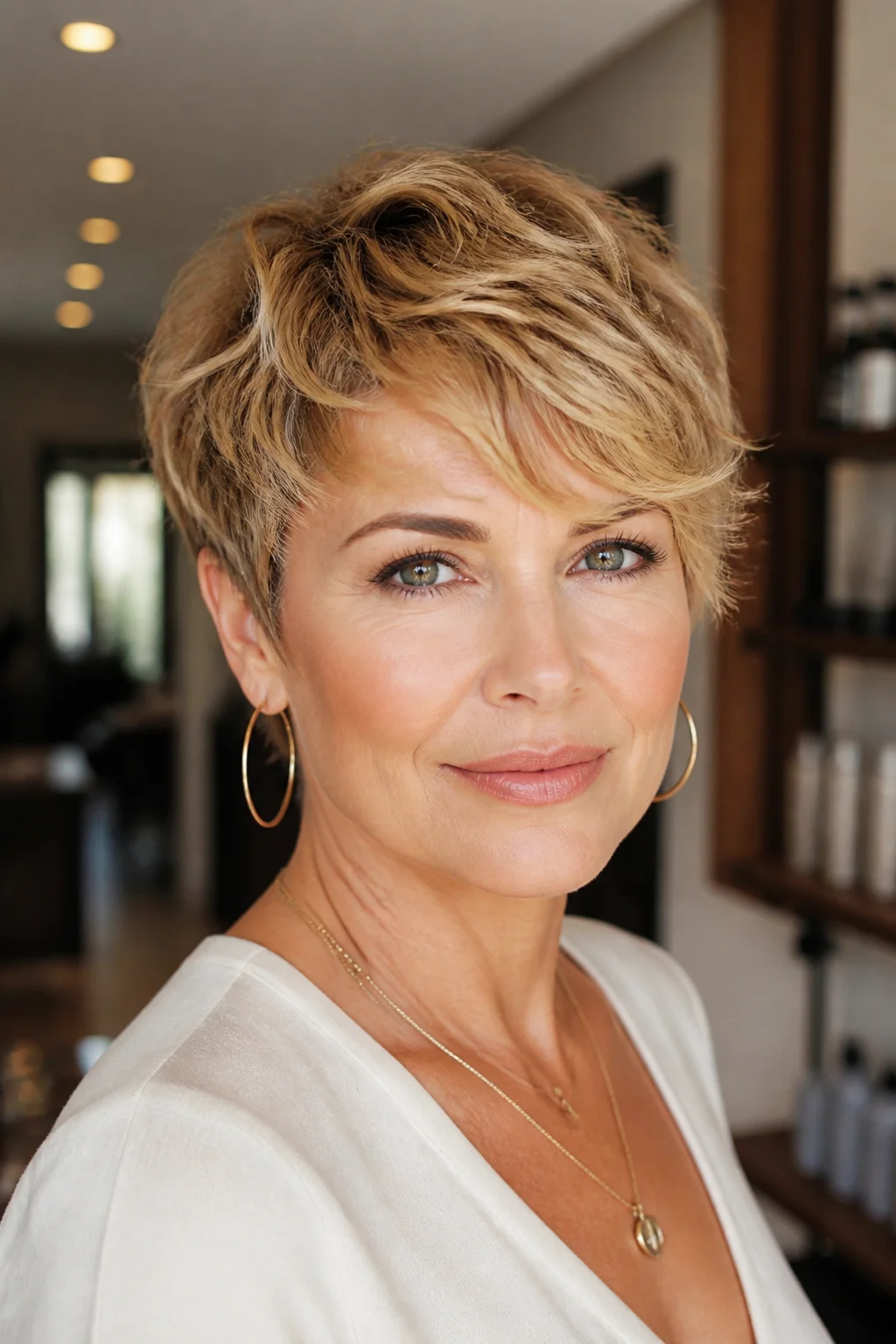
Curly and wavy textures need a pixie cut that respects the natural pattern instead of fighting it. Stylists typically cut curls dry so each ring falls where it actually wants to sit, which keeps the shape from ballooning out. Honey brown adds warmth to each curl and keeps the style from looking one dimensional under indoor lighting. This cut needs very little daily styling since the curl does most of the work.
Tapered Pixie for Fine Hair
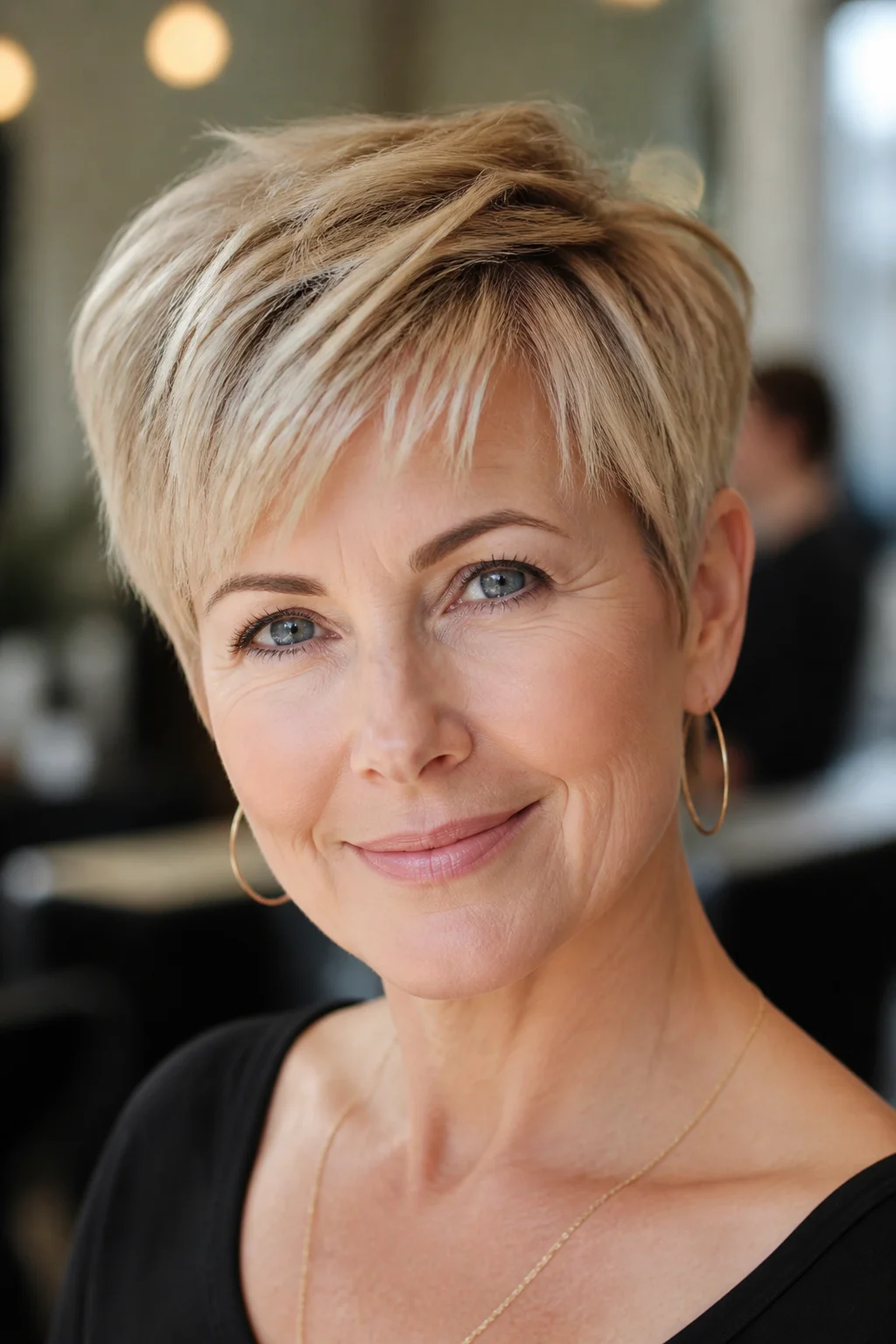
Fine hair often looks thin once it’s cut short, but a taper changes that perception. The back and sides taper gradually into the neckline, and the top keeps just enough length to blend in smoothly. Honey brown highlights placed carefully near the crown can trick the eye into seeing more density than what’s actually there. Tip: ask for a matte finishing product instead of anything shiny, since shine on fine hair can flatten the look further.
Honey Brown Pixie Bob Hybrid
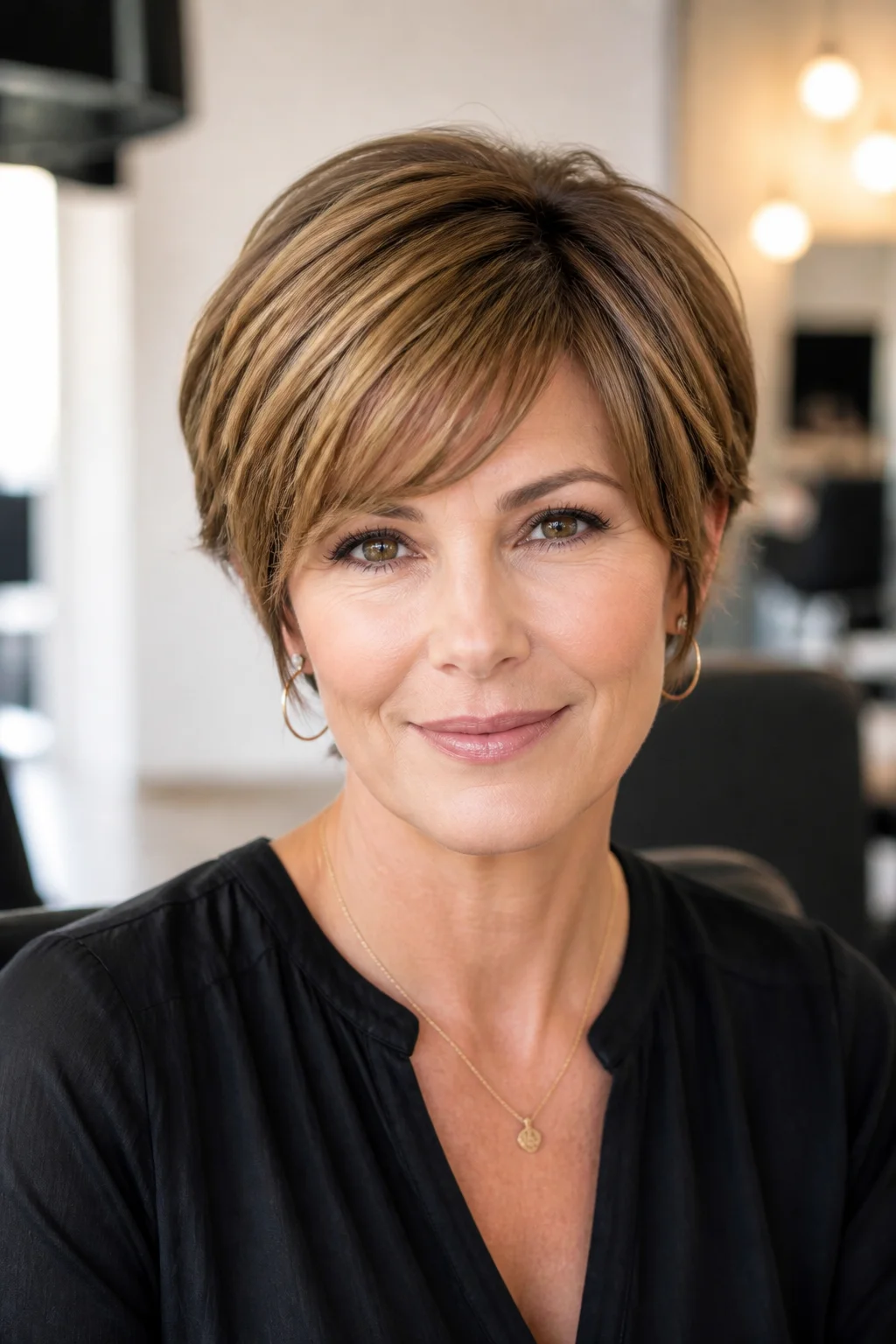
This one sits between a traditional pixie and a short bob, with more length left around the ears and nape than a standard crop. It suits people who like the idea of a pixie but aren’t ready to commit to something above the ears everywhere. Honey brown tones give the longer pieces a soft, warm frame around the face.
Pixie with Extended Crown for Round Faces
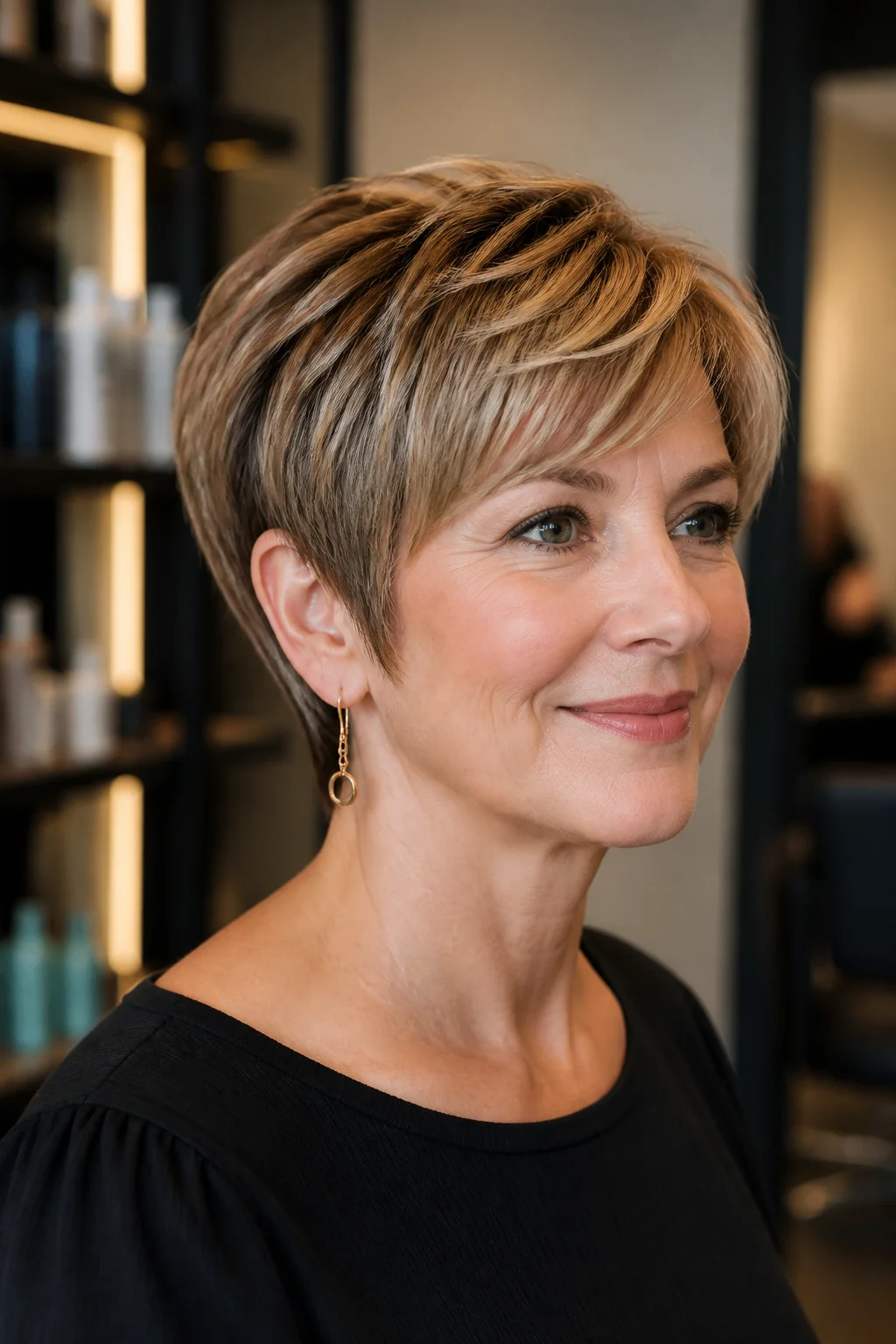
Round faces benefit from height, and this cut builds extra length and volume right at the crown to create the illusion of a longer face shape. The sides stay close and controlled so they don’t add width where it’s not needed. Honey brown coloring near the crown draws the eye upward, reinforcing the vertical line the cut is already creating. Ask your stylist about backcombing techniques or a light volumizing product for styling at home, since the crown height won’t hold on its own without some support.
Shaggy Honey Pixie Cut
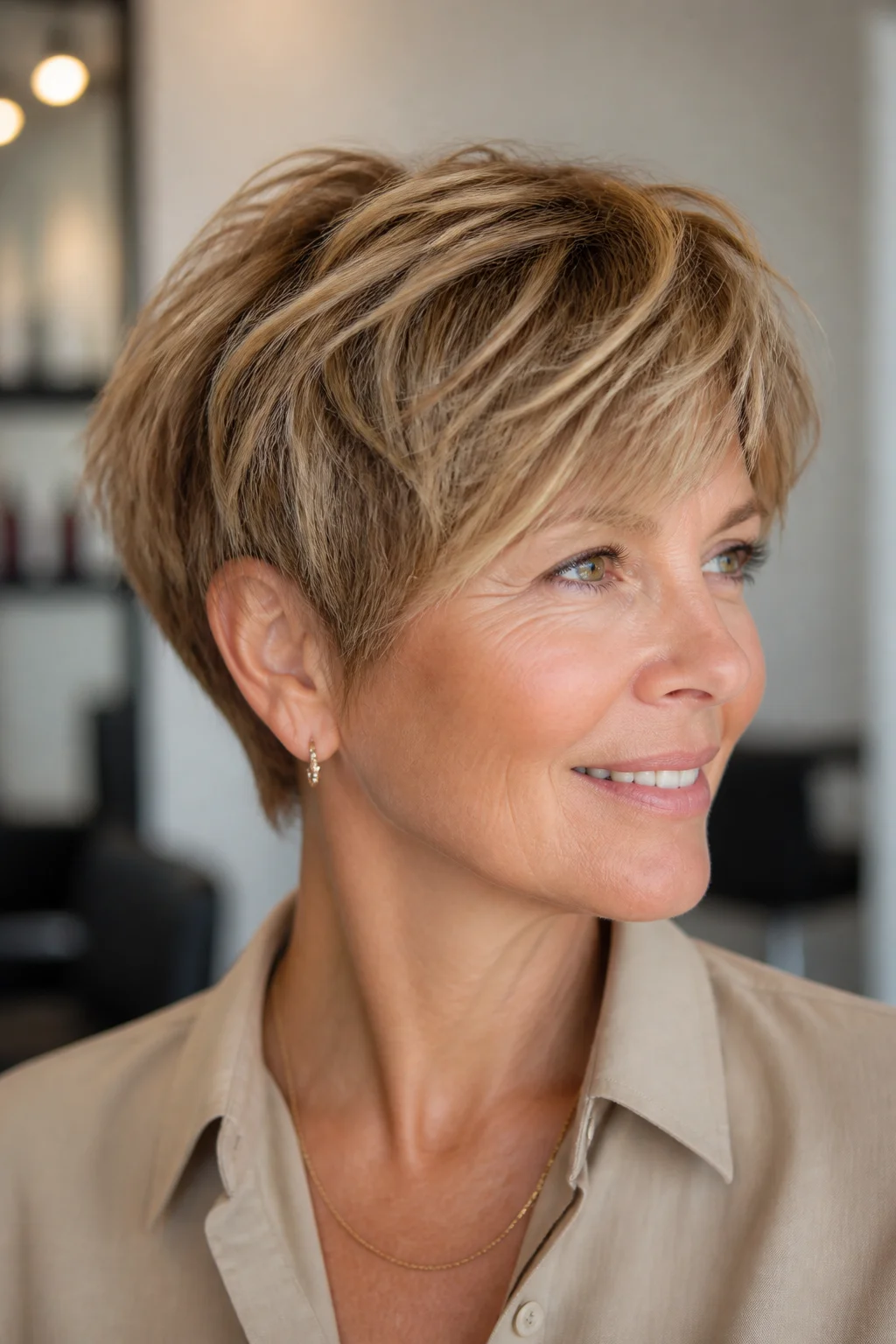
Choppy, uneven layers give this pixie a lived-in, undone quality that looks intentional rather than messy. It works well on people who don’t want to spend much time styling in the morning. Honey brown coloring pairs naturally with the shag’s textured layers, especially when a stylist adds subtle lowlights underneath the top layer. This cut looks like it took five minutes to style even when it actually took some careful cutting to get there.
Honey Blonde Dimensional Pixie
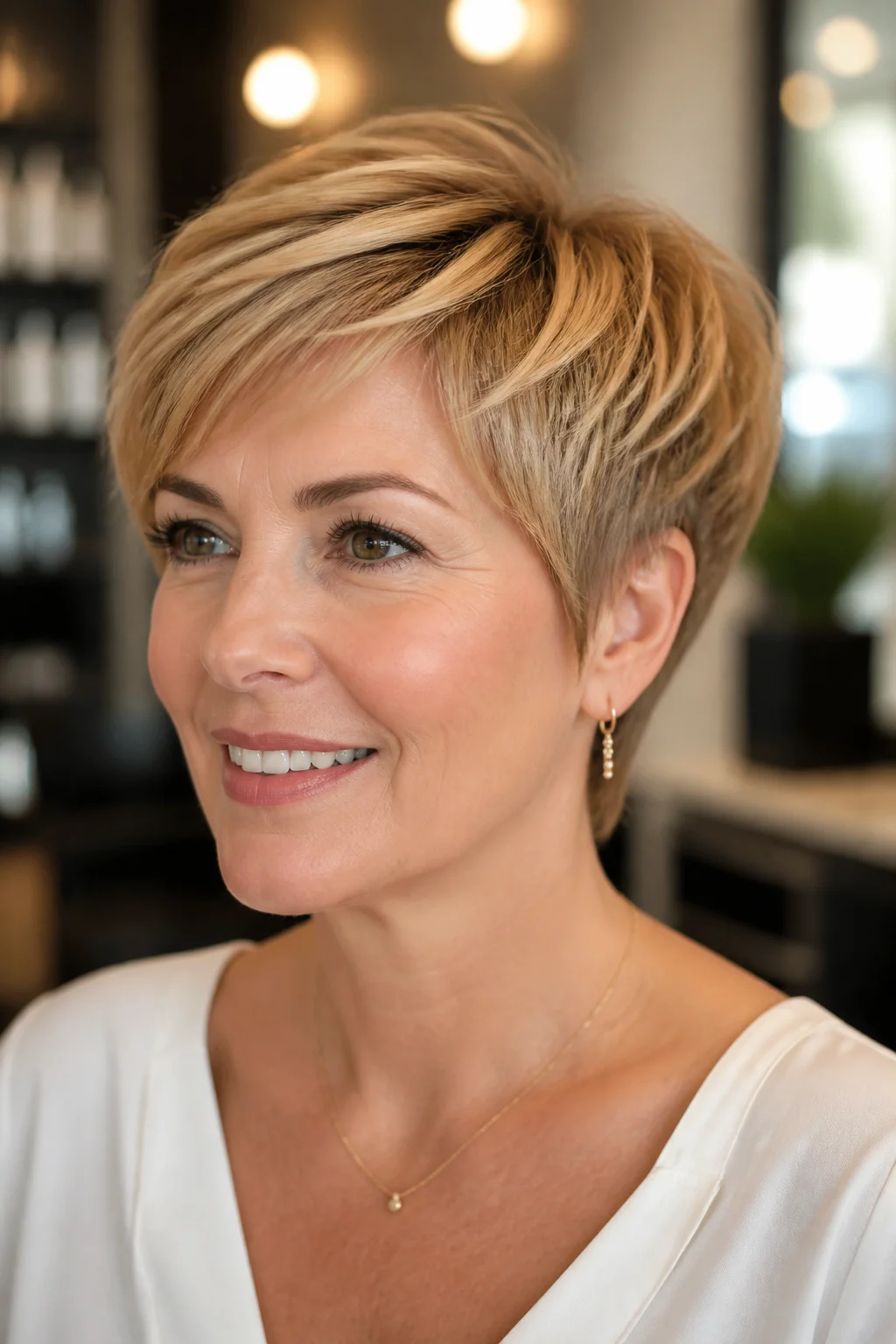
Multiple shades of honey and blonde woven through a pixie create depth that a single flat color can’t match. The lightest pieces are usually placed around the face and crown, where they catch the most natural light. This approach works on almost any pixie length, from a close crop to something a bit longer on top. Maintenance is moderate since regrowth is less noticeable with multiple blended tones instead of one solid color line.
Buzzed Nape Pixie with Length on Top
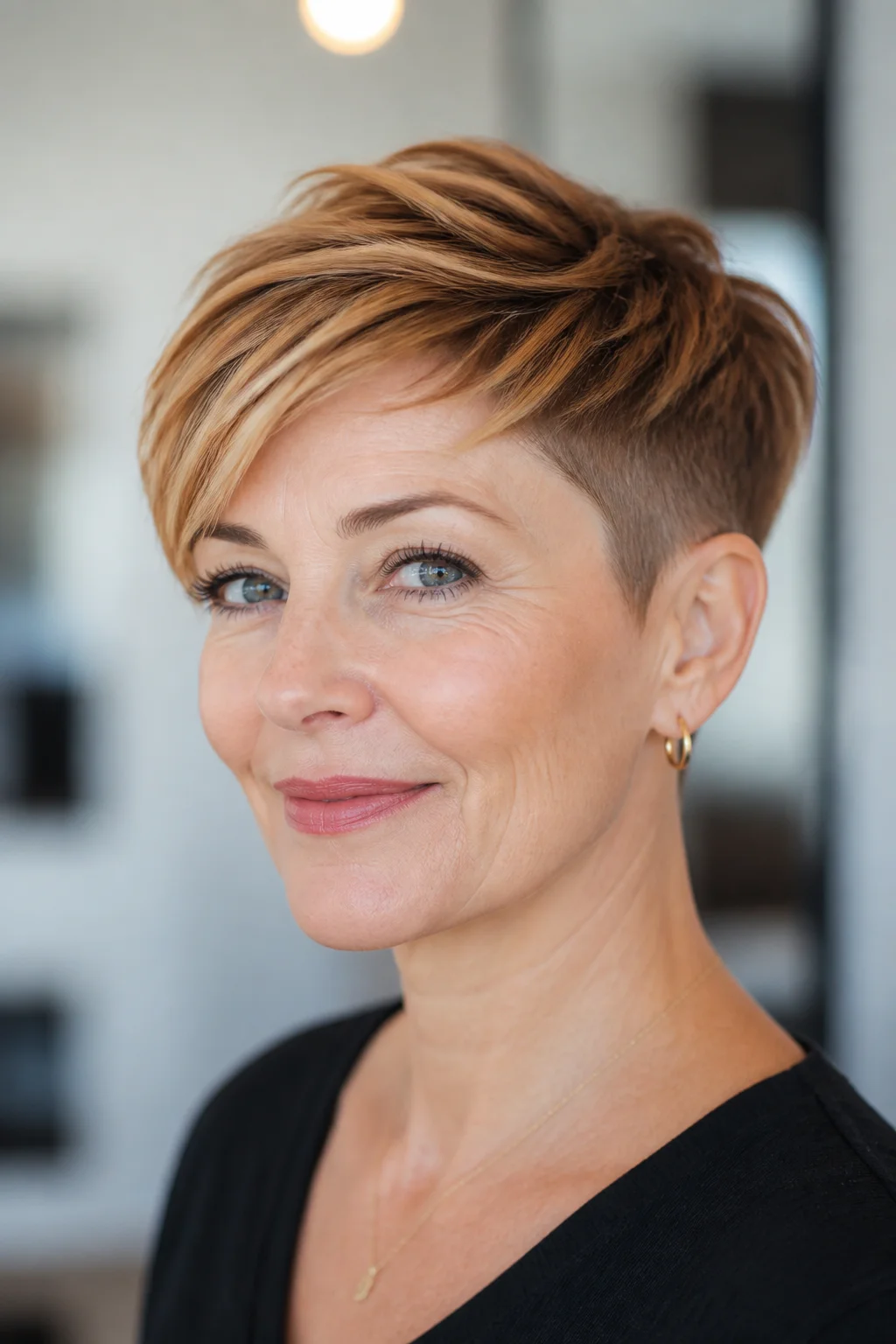
The nape is buzzed down close, almost like a fade, while the top keeps enough length to run fingers through and style loosely. It’s one of the lower maintenance options on this list since the buzzed section doesn’t need daily attention. Honey brown on the longer top pieces looks rich against the closely cropped nape underneath.
Pixie Fade for Oblong Faces
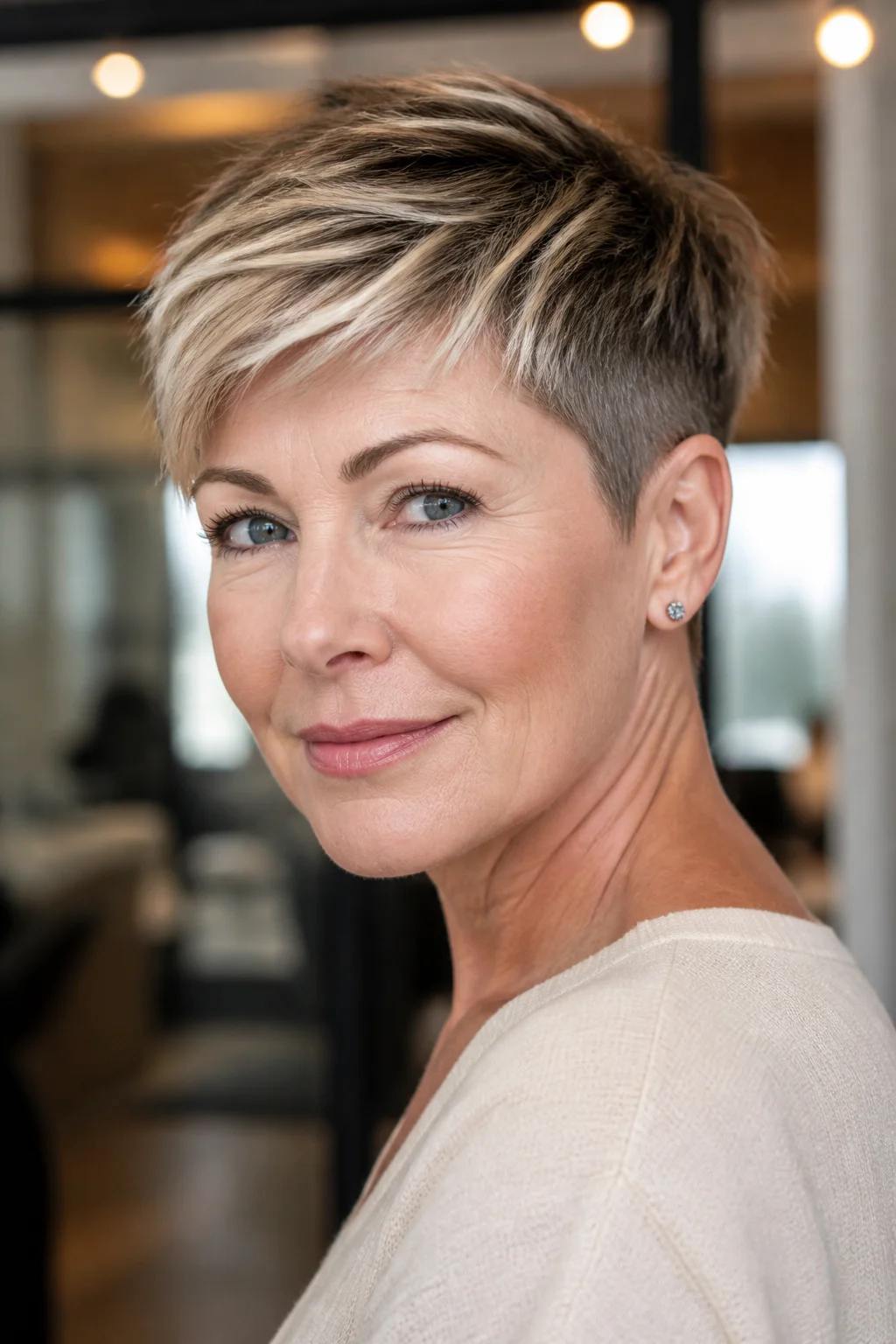
A fade on the sides paired with fuller volume on top helps balance an oblong face shape by adding width where the face naturally narrows. The transition from skin to hair is gradual, so there’s no harsh line to manage as it grows. Honey brown through the top layers keeps the style from looking too severe, since fades on their own can sometimes read as very structured or masculine. This is a great option if you want short hair but aren’t interested in anything that requires precise daily shaping.
Tousled Honey Pixie with Texture Paste
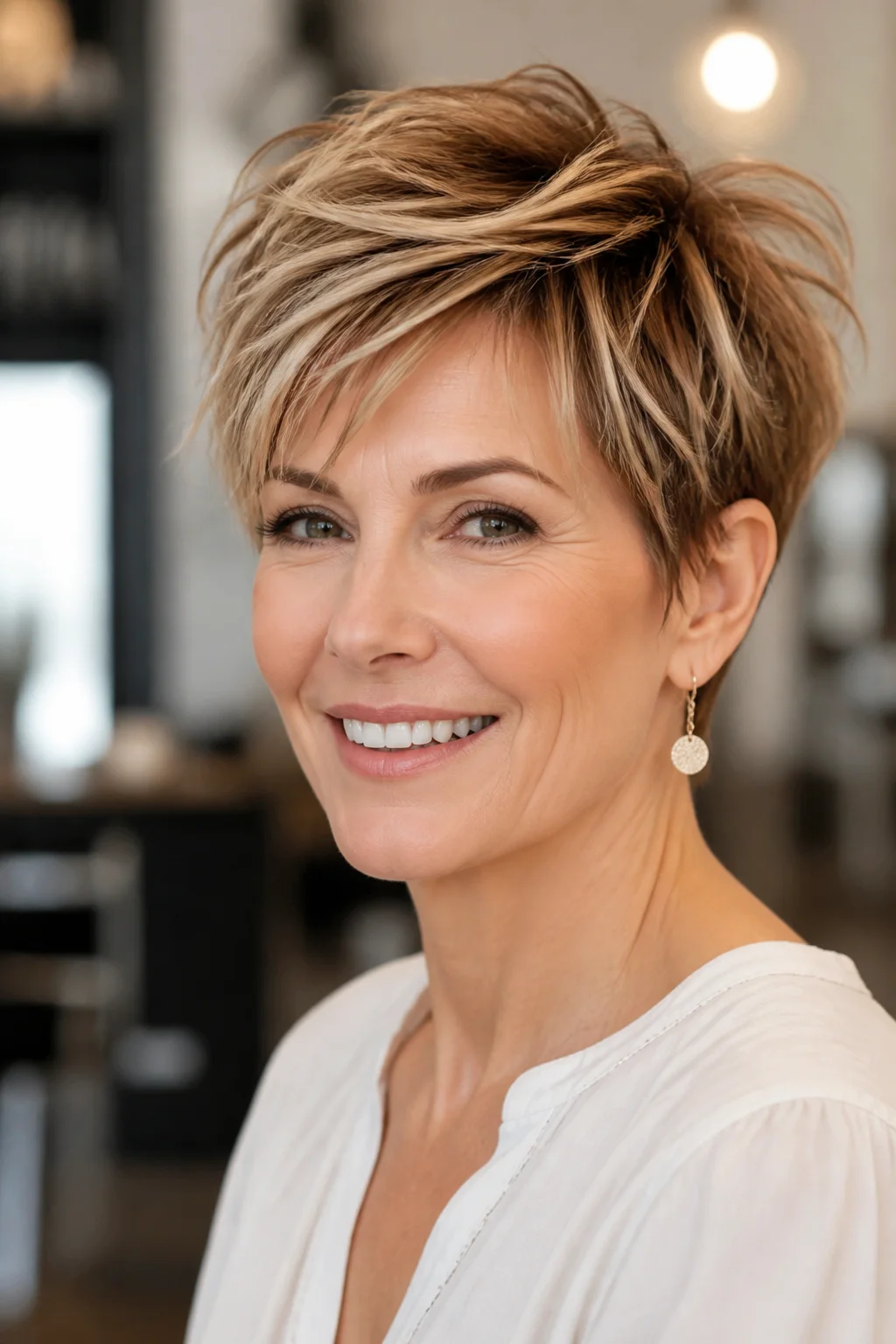
Some pixies are meant to look effortless, and this is one of them. A small amount of texture paste worked through damp or dry hair creates separation between pieces without weighing the cut down. Honey brown tones show up nicely in the separated pieces, almost like each strand has its own dimension. Tip: use a paste rather than a gel here, since gel tends to make short hair look wet and stiff instead of soft and touchable.
Grown-Out Pixie Transition Cut
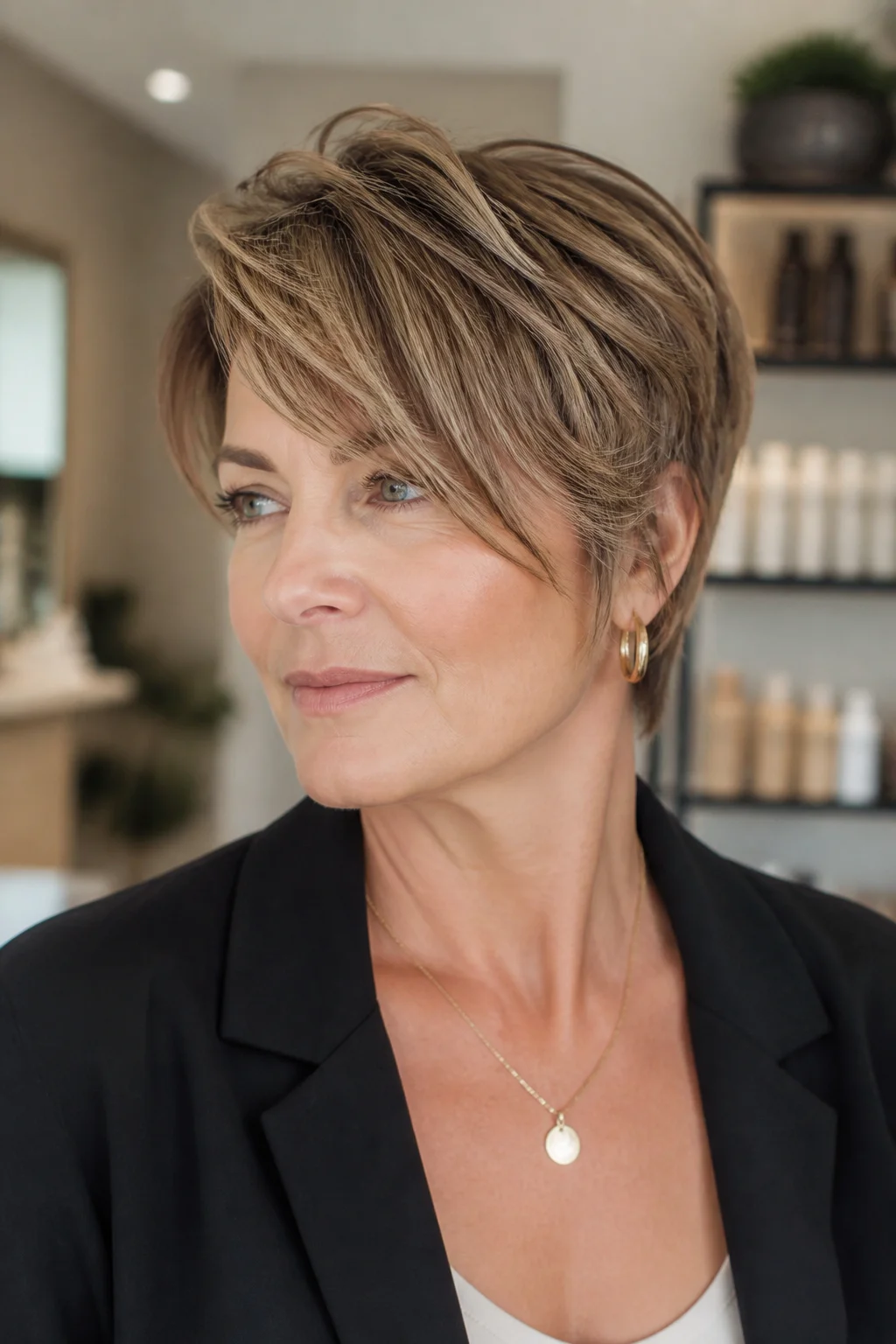
Growing out a pixie is one of the hardest phases in short hair, and this cut is designed specifically to manage that awkward middle stage. Layers are shaped to blend the longer top with the shorter sides so there’s less of a helmet effect as everything grows. Honey brown coloring, especially with some lowlights mixed in, helps disguise the different lengths until they even out. This isn’t a destination cut so much as a maintenance plan, and most people need a couple of shaping appointments over a few months to get through it comfortably.
Side-Parted Honey Pixie
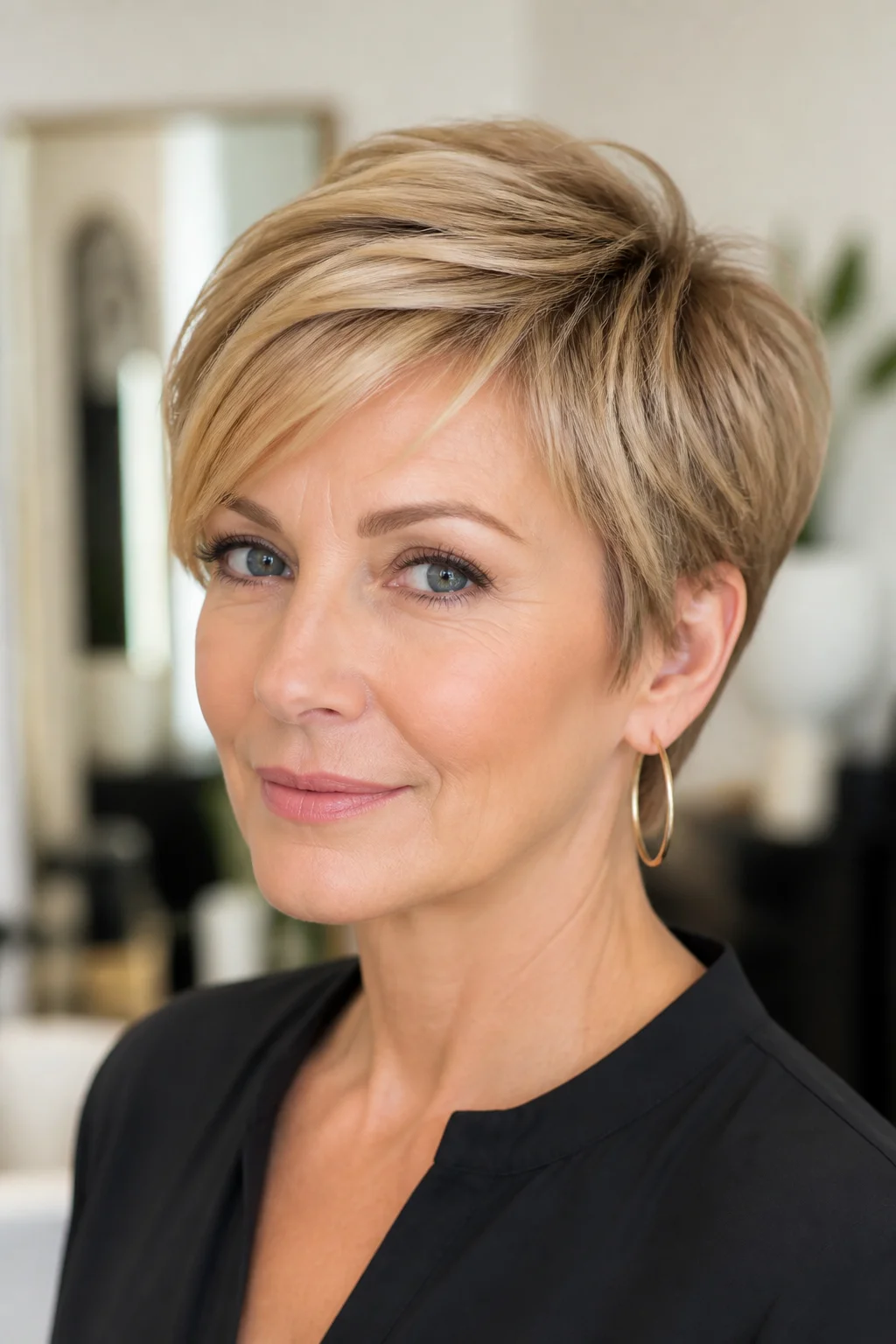
A deep side part instantly changes the mood of a pixie, making it look more polished and a little more grown-up. The longer side sweeps across the forehead while the shorter side stays close to the head. Honey brown coloring emphasizes the part line nicely since the color shifts slightly depending on which way the light hits it.
Honey Pixie with Disconnected Top
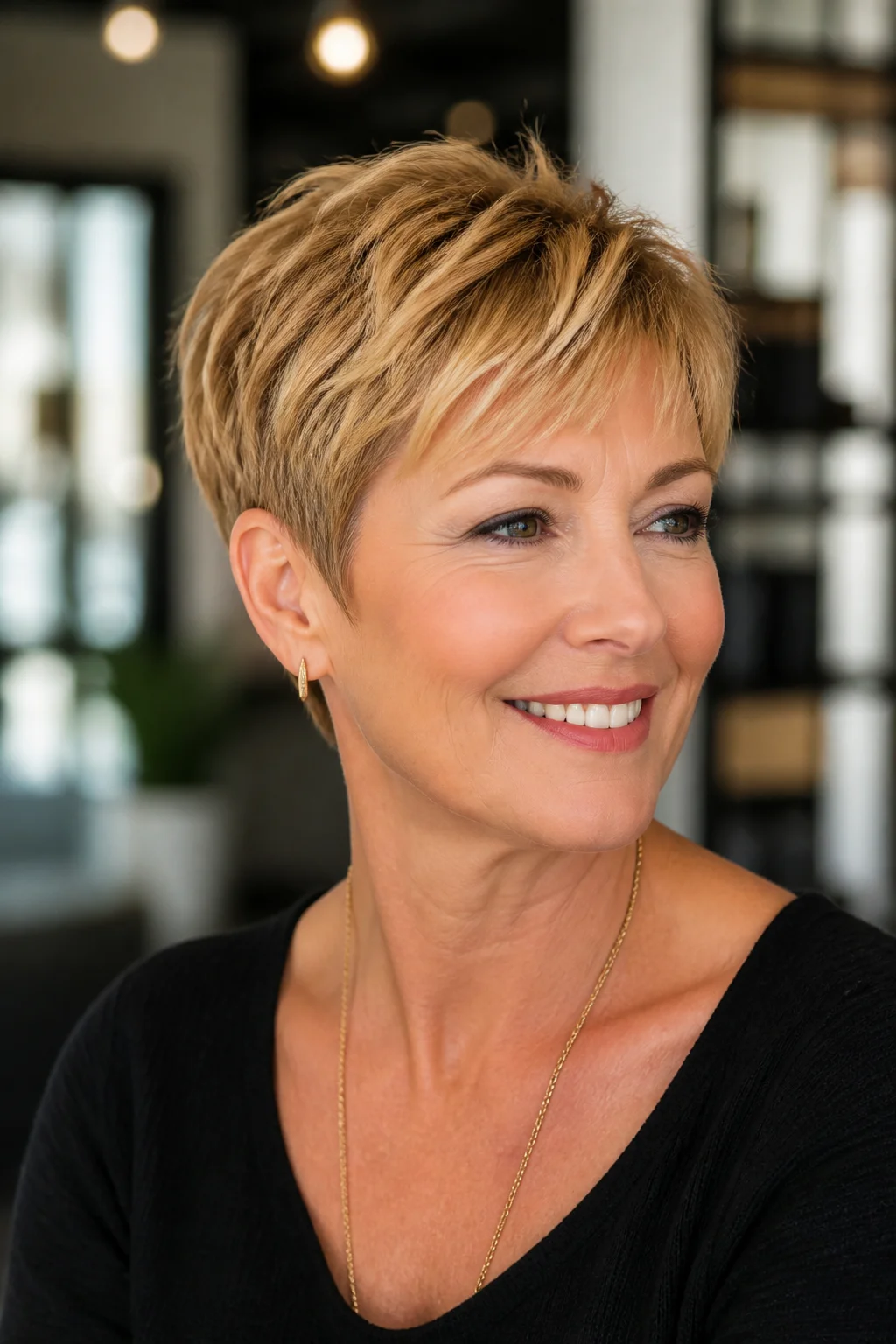
Disconnection means the top layers are cut with a noticeably different length than the sides and back, creating a deliberate break instead of a smooth blend. It’s a striking choice for anyone who wants their pixie to look more architectural. Honey brown coloring on the disconnected top section makes that piece stand out even more against the shorter base underneath. This cut needs regular trims to keep the disconnection sharp, since it softens fast as hair grows.
Pixie with Longer Sideburns
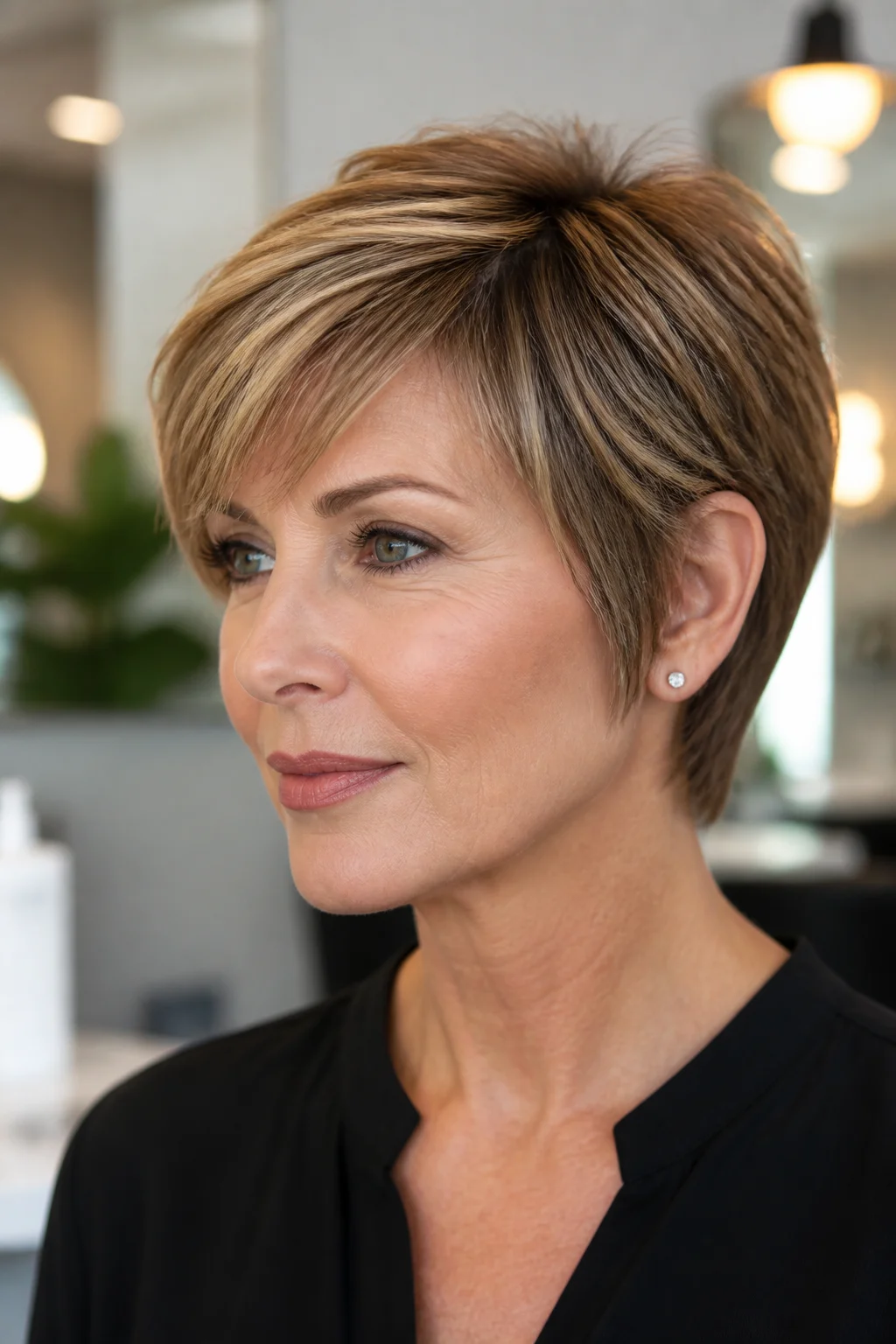
Extending the sideburns slightly longer than a typical pixie gives the whole cut a slightly retro, tomboyish edge. It’s a small detail, but it changes how the entire face gets framed. Honey brown along the sideburn area draws a soft line down toward the jaw.
Honey Brown Spiky Pixie
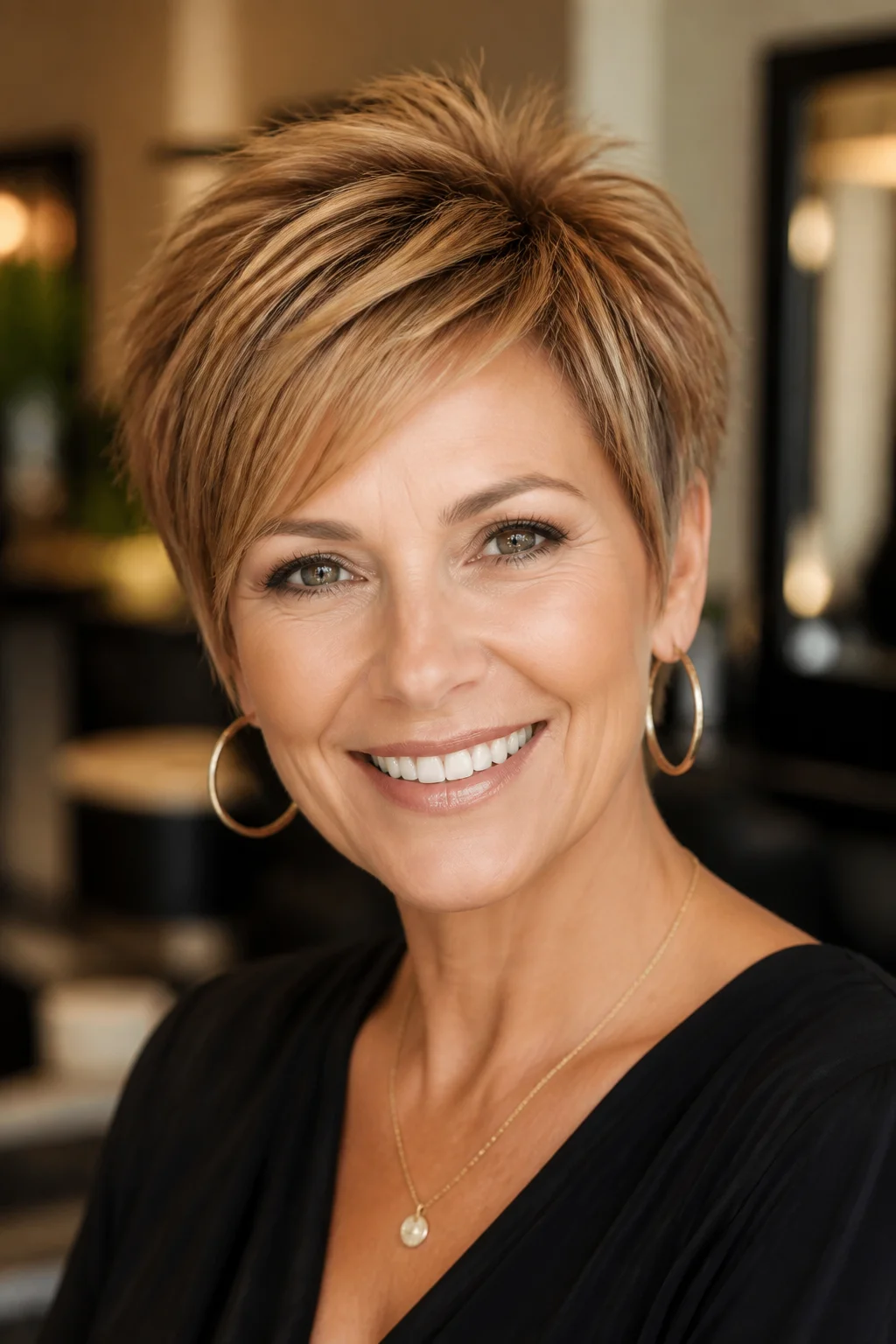
Short, piecey spikes styled with a strong hold product give this pixie a punchy, high energy look. It works best on hair with enough natural coarseness or product support to hold the spiked shape through the day. Honey brown coloring keeps the spikes from looking too harsh, since the warm tone softens what could otherwise feel like a very stark style. This one is a fun choice for anyone who wants their short hair to make a statement rather than blend in.
Rounded Honey Pixie for Square Faces
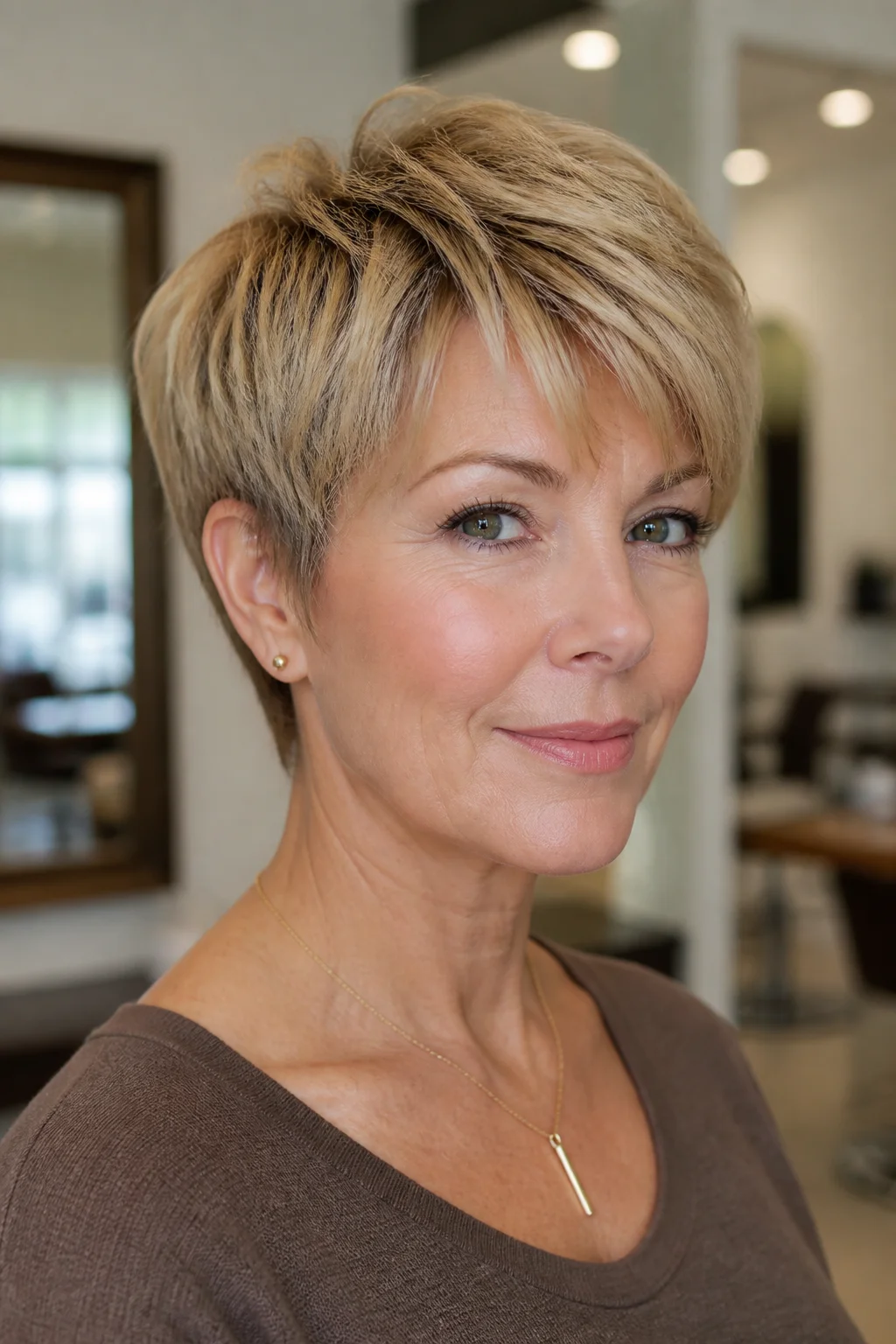
Square faces often look best with cuts that soften the jawline instead of echoing its angles, and a rounded pixie shape does exactly that. The layers are cut to curve gently around the face rather than falling in straight, sharp lines. Honey brown tones add to the softening effect since warm colors tend to feel less severe than cool or ashy ones. Tip: ask your stylist to keep the length just below the cheekbone if you want the rounding effect to show up clearly.
Honey Pixie with Razor Texture Detail
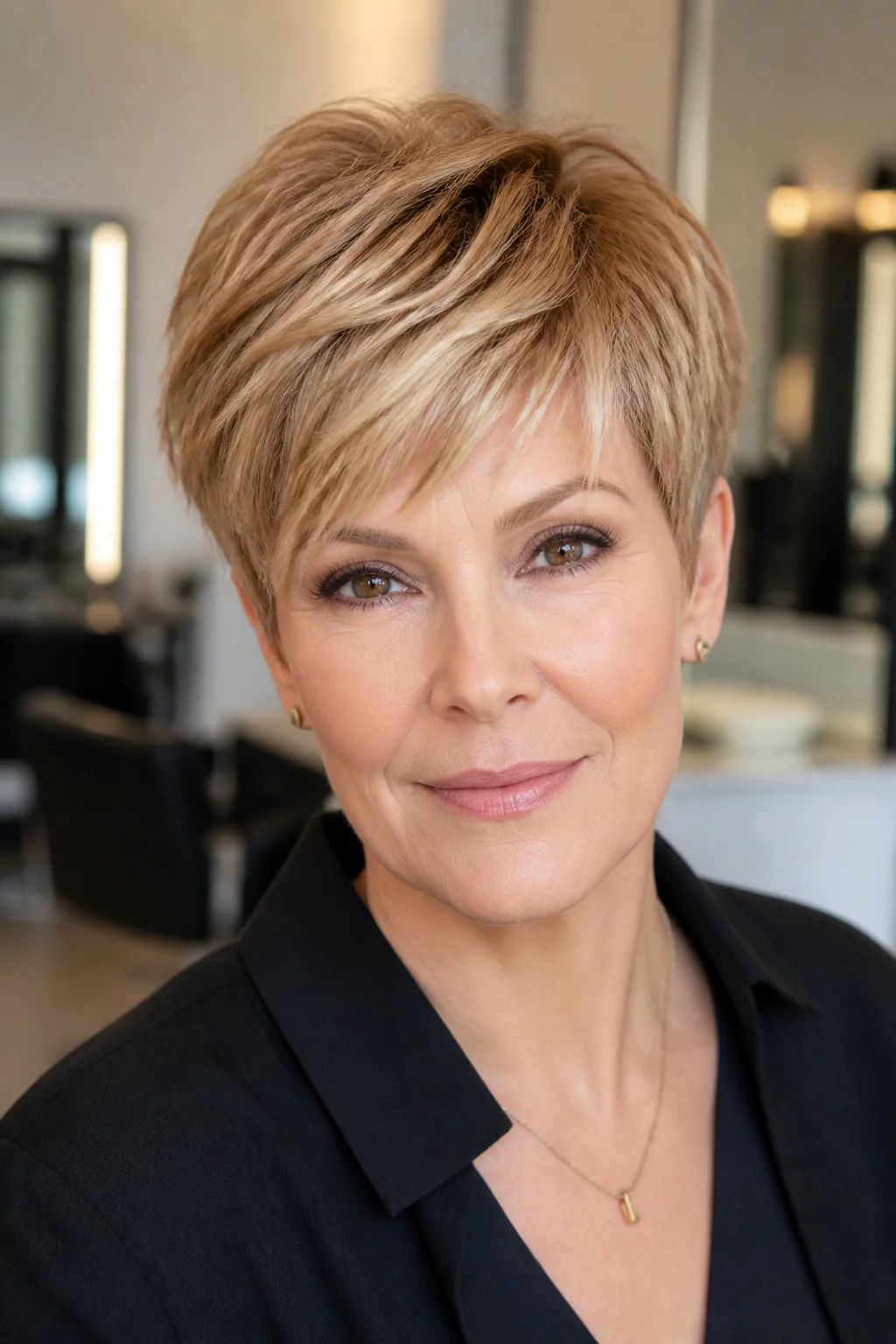
Razor cutting removes weight from the ends in a way that scissors alone can’t replicate, giving the hair a softer, feathered finish. It’s a subtle technique, but it changes how the whole cut moves and falls throughout the day. Honey brown pixies especially benefit from this detail since the feathered ends catch light differently than a blunt cut would. This works well as a finishing technique on almost any pixie shape already on this list, from the classic honey pixie with longer bangs to the shaggy honey pixie cut.
Choosing the Right Honey Brown Pixie for You
With this many options, picking one comes down to your hair type, face shape, and how much time you actually want to spend styling in the morning. If your hair is thick and hard to manage, start with the textured crop pixie for thick hair rather than a plain classic cut, since the extra thinning work will save you daily frustration. Fine hair does better with the tapered pixie for fine hair or the honey blonde dimensional pixie, both of which create the appearance of density without any extra products doing the heavy lifting.
Face shape matters just as much as texture. Round faces should lean toward the pixie with extended crown for round faces, while square faces generally look softer with the rounded honey pixie for square faces. Oblong faces benefit from the width the pixie fade for oblong faces adds at the sides.
A common mistake is choosing a high maintenance style, like the undercut pixie with side sweep or the honey pixie with disconnected top, without planning for the trim schedule that comes with it. These cuts move fast, and skipping appointments turns a sharp style into a shapeless one within weeks. If you’re not ready for that kind of upkeep, the shaggy honey pixie cut or the grown-out pixie transition cut will treat you far better over time.