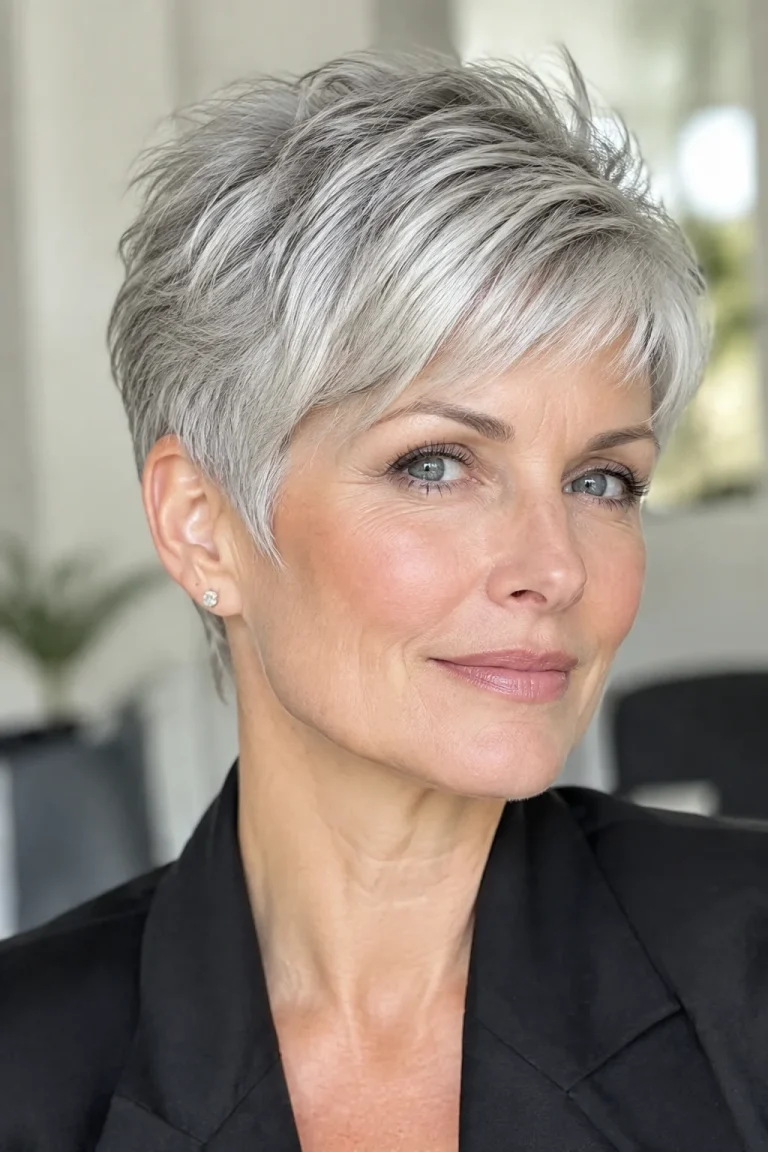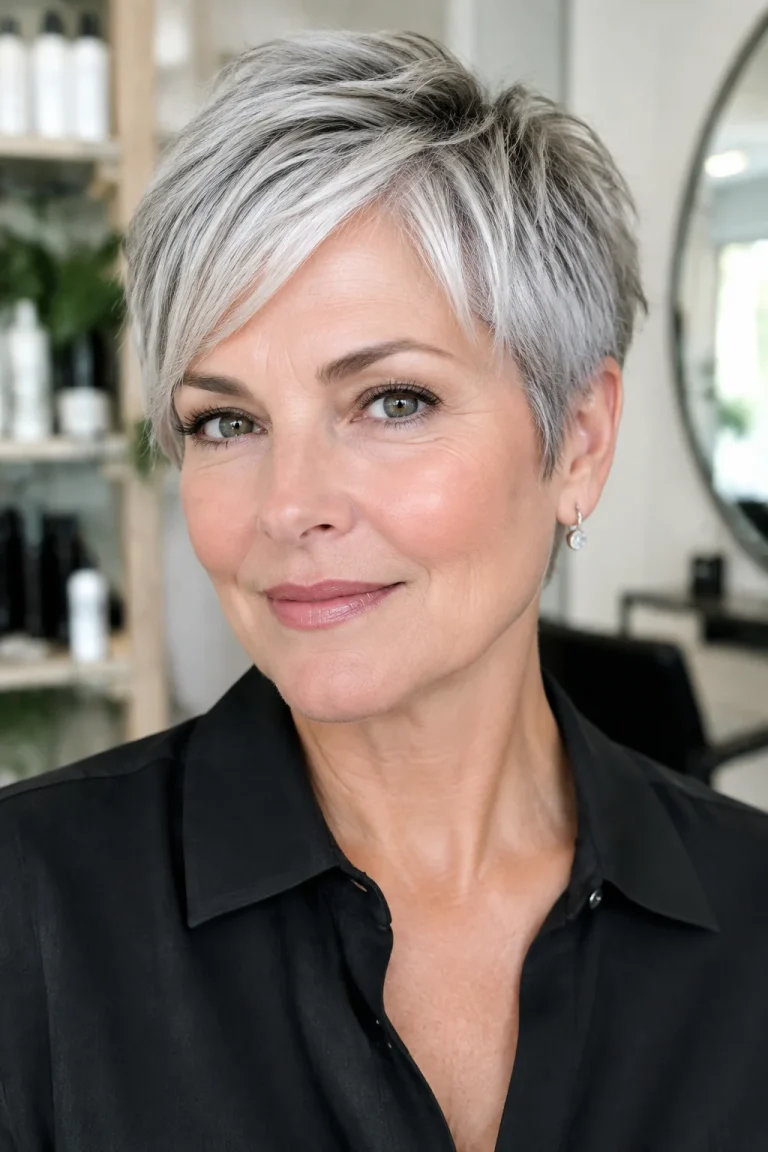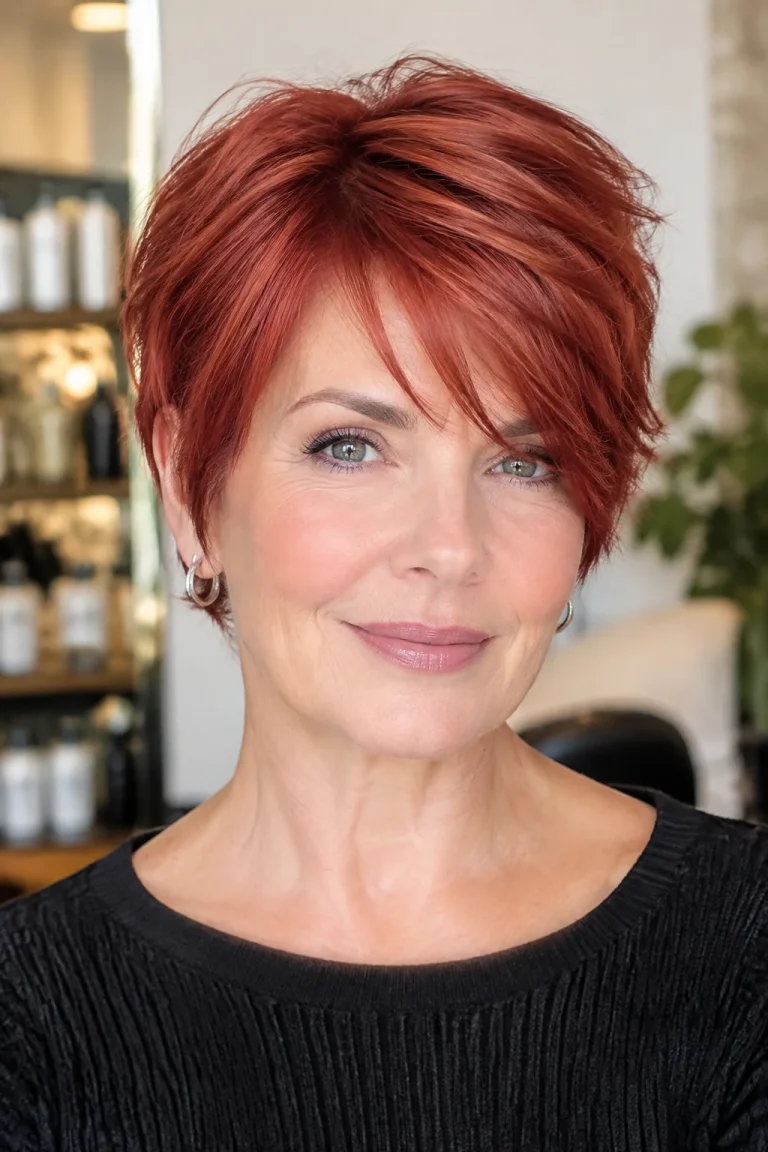
Gray hair changes the way a haircut behaves, and a lot of women notice their old bob doesn’t sit the same way once the color shifts. Gray strands tend to be coarser or finer than they used to be, and they often grow in with more texture or less shine. That means the cut matters more than ever. The right short hair bob haircuts for gray hair work with your natural texture instead of fighting it, and they grow out without leaving a hard, obvious line at the regrowth stage. A soft, blended bob can hide the in-between weeks and keep your style looking intentional instead of overdue for a trim. Below are twenty bob styles built around gray hair specifically, with notes on who each one suits and how to keep it looking fresh between salon visits.
Textured Pixie Bob with Soft Layers
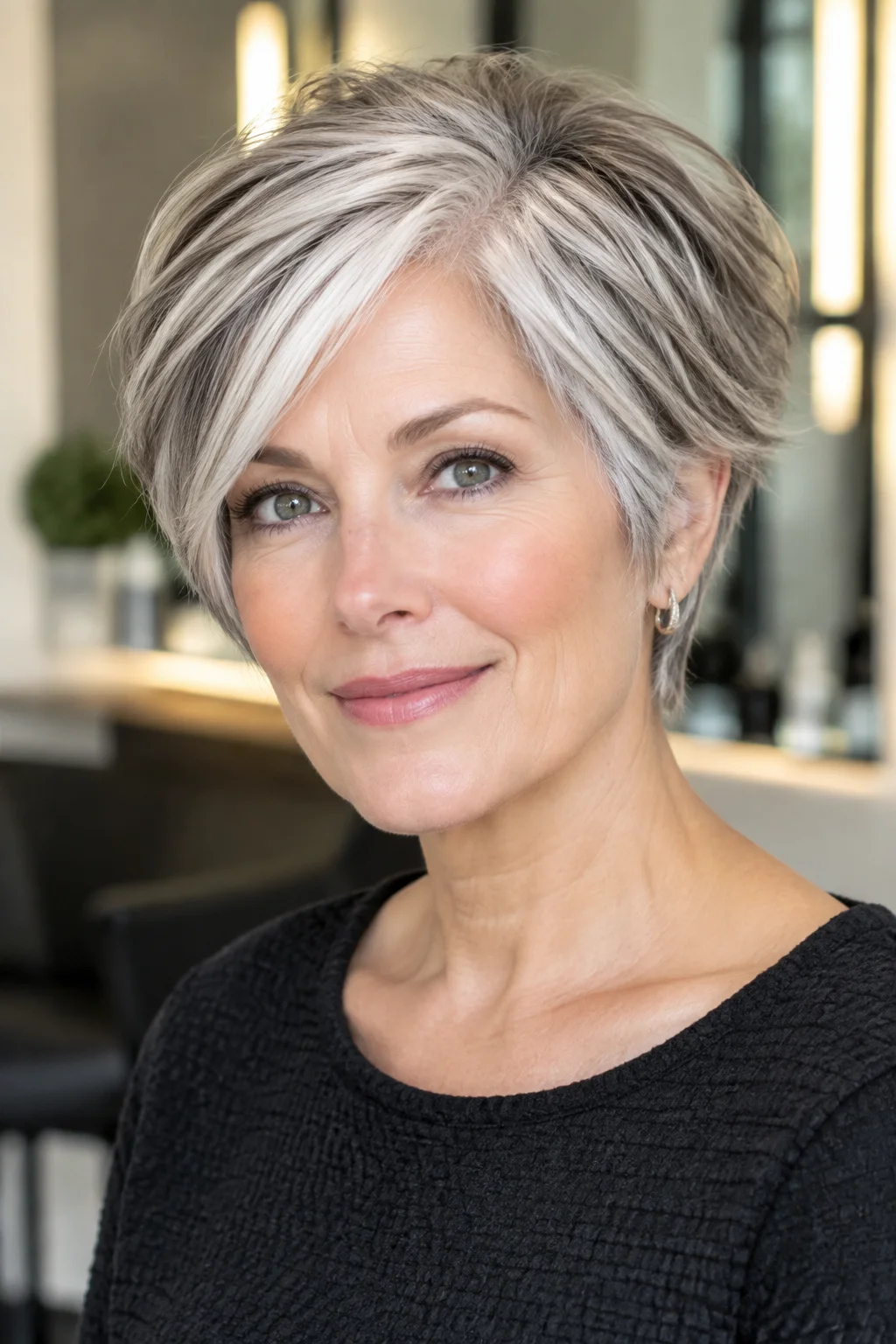
This cut sits between a pixie and a bob, long enough to tuck behind the ears but short enough to keep things easy in the morning. Layers are cut with a razor or texturizing shears so the ends feather instead of forming one blunt line. On gray hair, this softness matters because it keeps the cut from looking too severe against lighter strands. The layered structure also means regrowth blends in naturally, since there’s no single length line to outgrow. Tip: ask your stylist to keep the layers longer on top so you can style it smooth or tousled depending on the day. A light mist of heat protectant before styling helps the finish last.
Chin-Length Graduated Bob with Feathered Ends
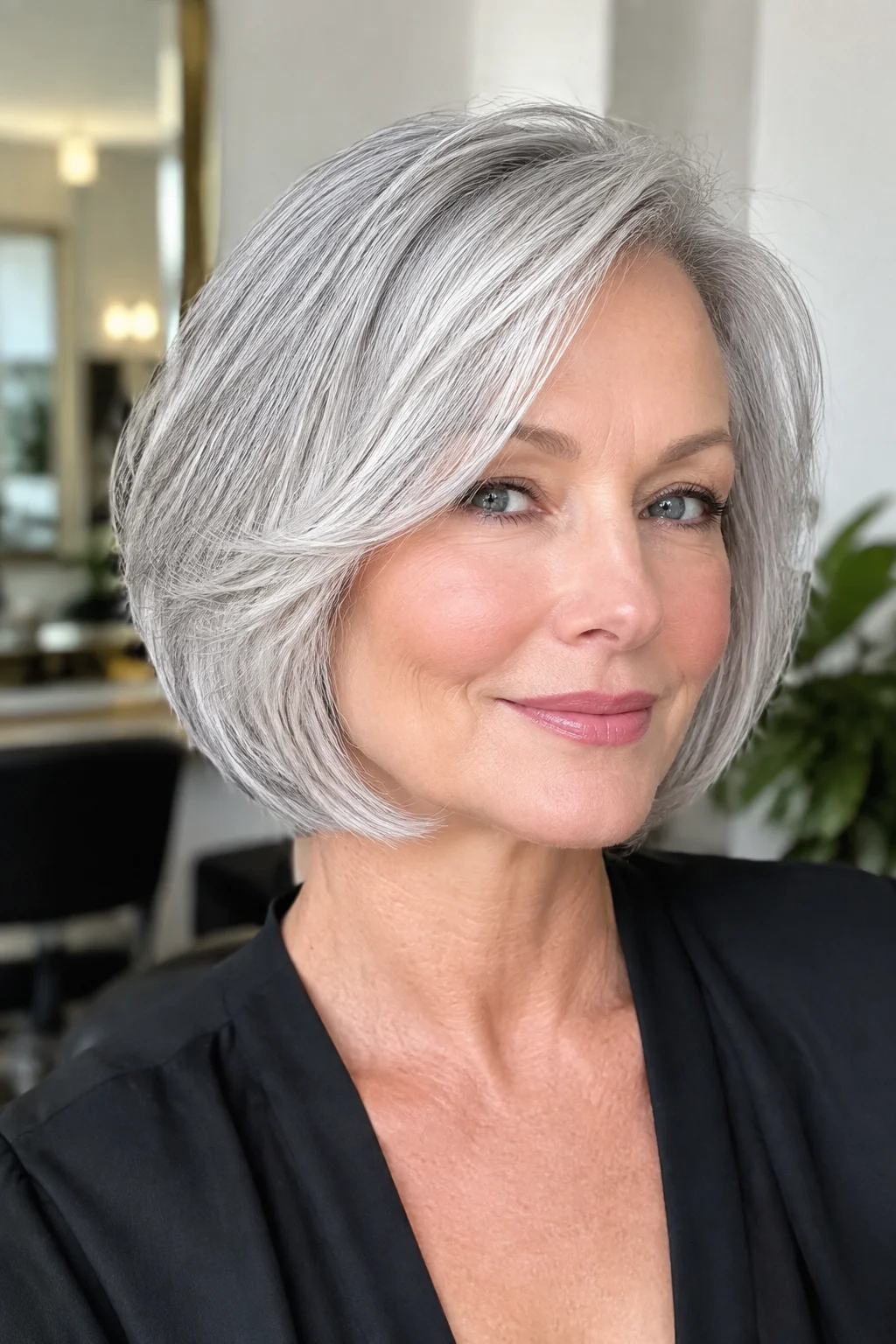
The graduation here builds gradually from the nape to the chin, so the silhouette tapers instead of stopping abruptly. Feathered ends soften the perimeter and keep gray hair from looking stiff or helmet-like. This style works especially well for straight or slightly wavy textures that hold a shape well.
Shaggy Bob with Movement and Texture

Shag bobs bring choppy, uneven layers throughout the whole cut, not just at the ends. The result feels loose and a little undone, which suits gray hair that has lost some of its natural shine. Because the layers are irregular by design, new growth doesn’t create a visible demarcation line the way a one-length bob would. This is a good pick if you’re tired of styling every single day, since the cut is meant to look slightly imperfect. It also adds the appearance of volume for finer gray hair that tends to lie flat.
Blunt Bob with Hidden Shorter Layers
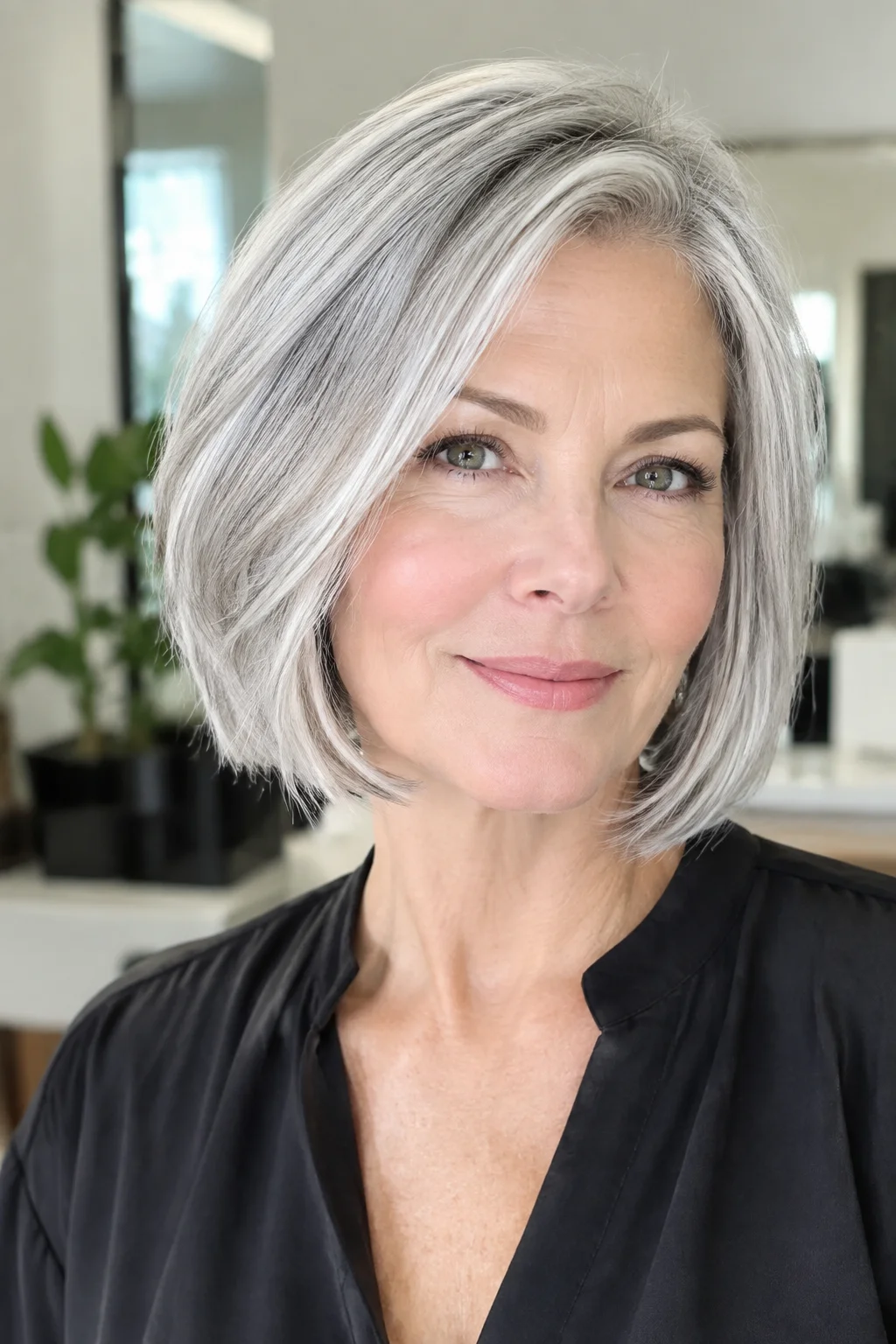
A blunt bob looks sleek and graphic from the outside, but the real trick is in layers cut underneath that you can’t see. Those hidden layers remove bulk and let the top layer fall cleanly, which keeps the blunt shape from looking heavy on gray hair. The outer line stays crisp while the inside does the work of softening everything else.
Side-Swept Bob with Longer Front Pieces

This bob keeps length at the front, framing the face and drawing the eye away from any uneven regrowth near the crown. The sides are swept to one direction, which adds asymmetry and movement without needing a full undercut. Gray hair often grows in with cowlicks or changes in direction, and this cut uses that tendency instead of fighting it. Tip: part the hair on the side opposite your natural cowlick to get more lift at the root.
Tousled Textured Bob for Fine Gray Hair
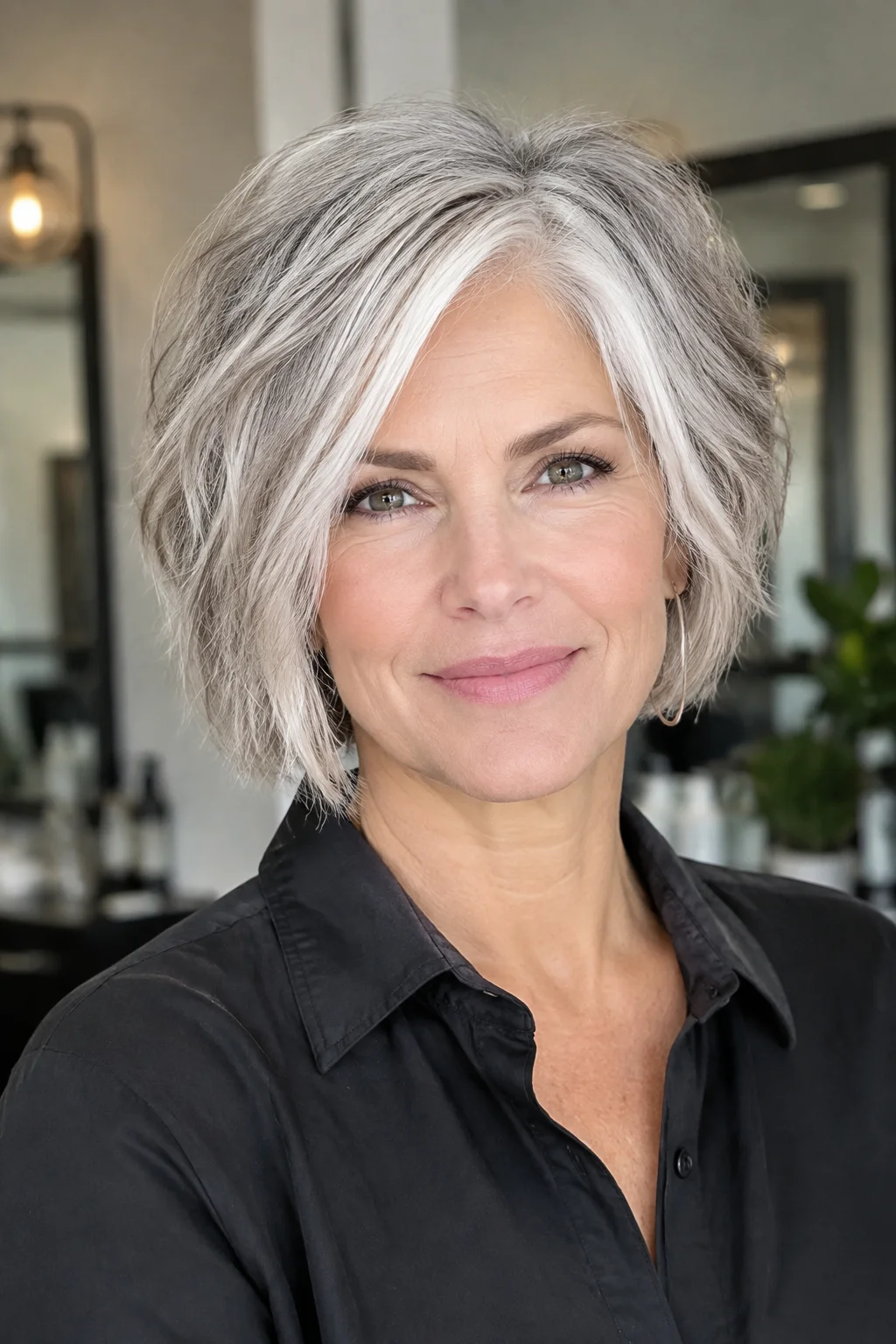
Fine gray hair can look flat fast, and this bob is built to counter that. Short layers throughout add fullness without needing much length removed, and a light texturizing spray or mousse keeps the ends looking tousled rather than limp. It’s a low-maintenance option for anyone who doesn’t want to blow-dry every section separately.
Soft Angled Bob Longer in Front
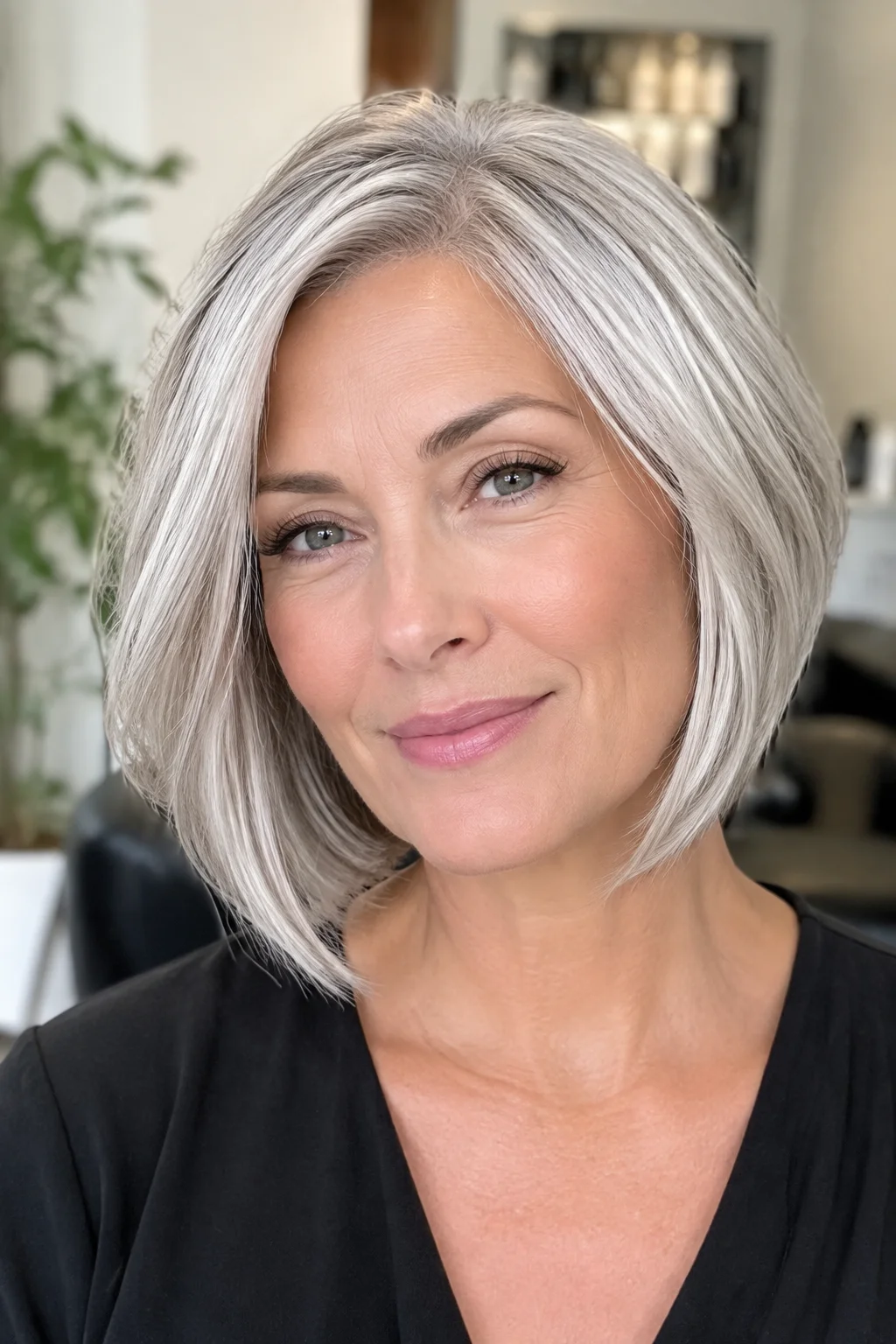
The angle here runs from short at the back to longer in front, creating a gentle slope instead of a sharp line. This works well for gray hair because the gradual change in length disguises new growth at the nape, which is usually the first place regrowth becomes noticeable. The front pieces also help frame the jawline, which is flattering as hair color lightens and the face naturally draws more attention.
Disconnected Bob with Choppy Texture
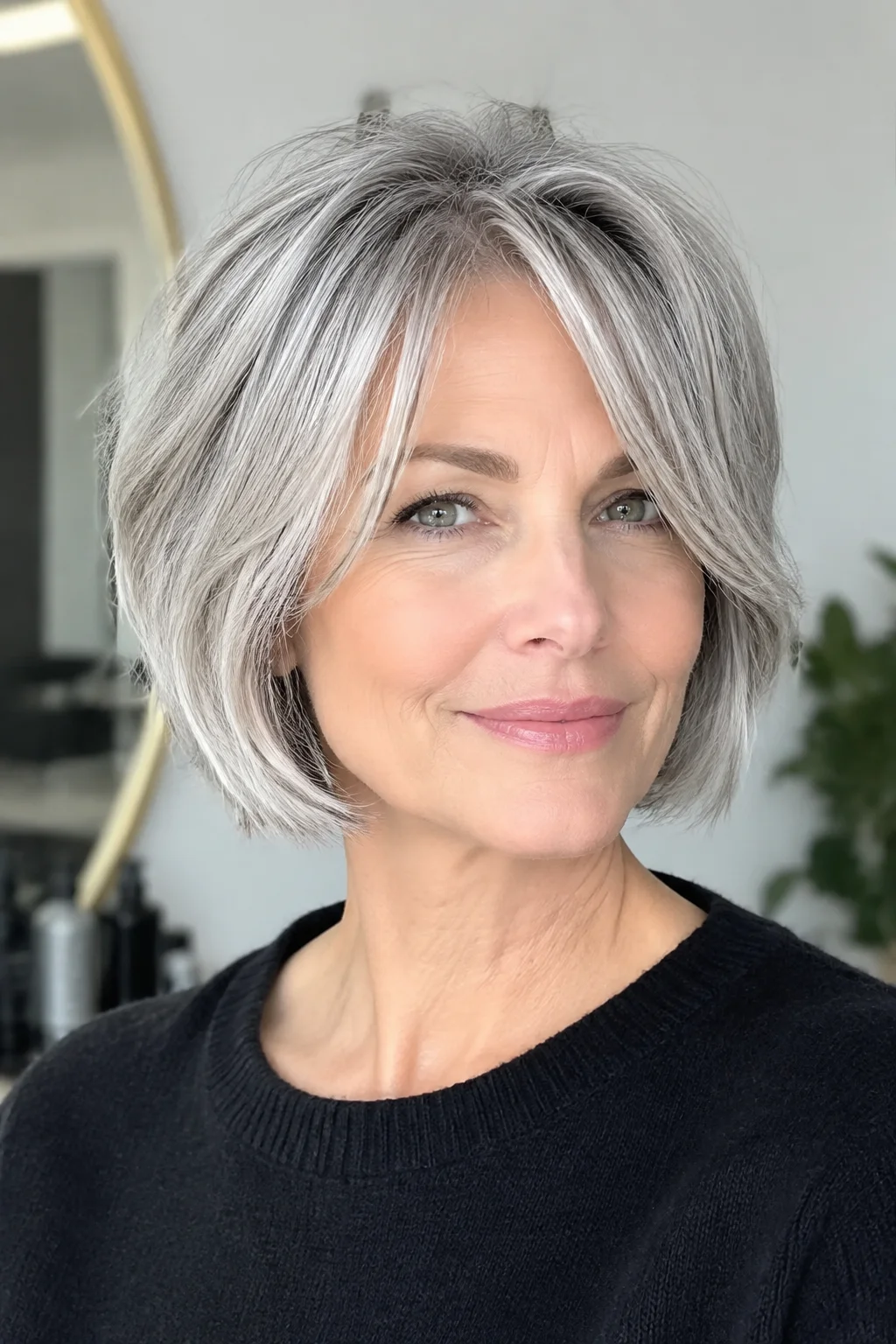
Disconnected bobs separate the top layers from the lower length, creating a deliberate break in the silhouette. The look feels edgier than a standard bob, almost like two different lengths working together. On gray hair, the choppiness distracts from any unevenness in how the gray is coming in, especially during the transition years.
Curly Bob with Softer Roots
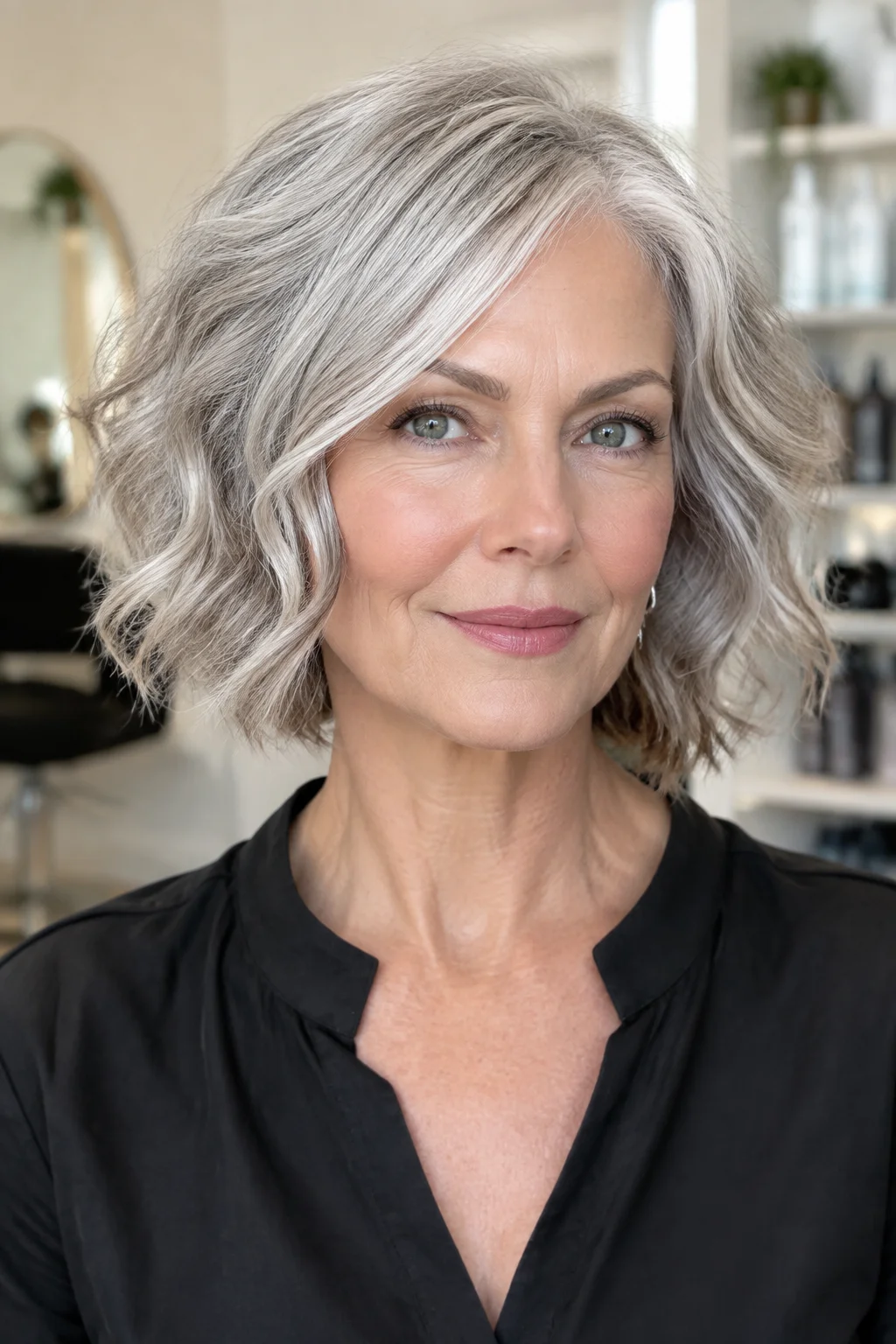
Curly gray hair often has more density and spring than it used to, and a bob cut specifically for curls lets that texture show instead of fighting it with heavy layering. Softer root layers reduce bulk at the crown so curls don’t stack up into a triangle shape. This cut needs a stylist who understands curl patterns, since cutting curly hair wet versus dry gives very different results. Regrowth blends well here because curls naturally hide root lines better than straight hair does.
Piece-y Layered Bob with Bangs
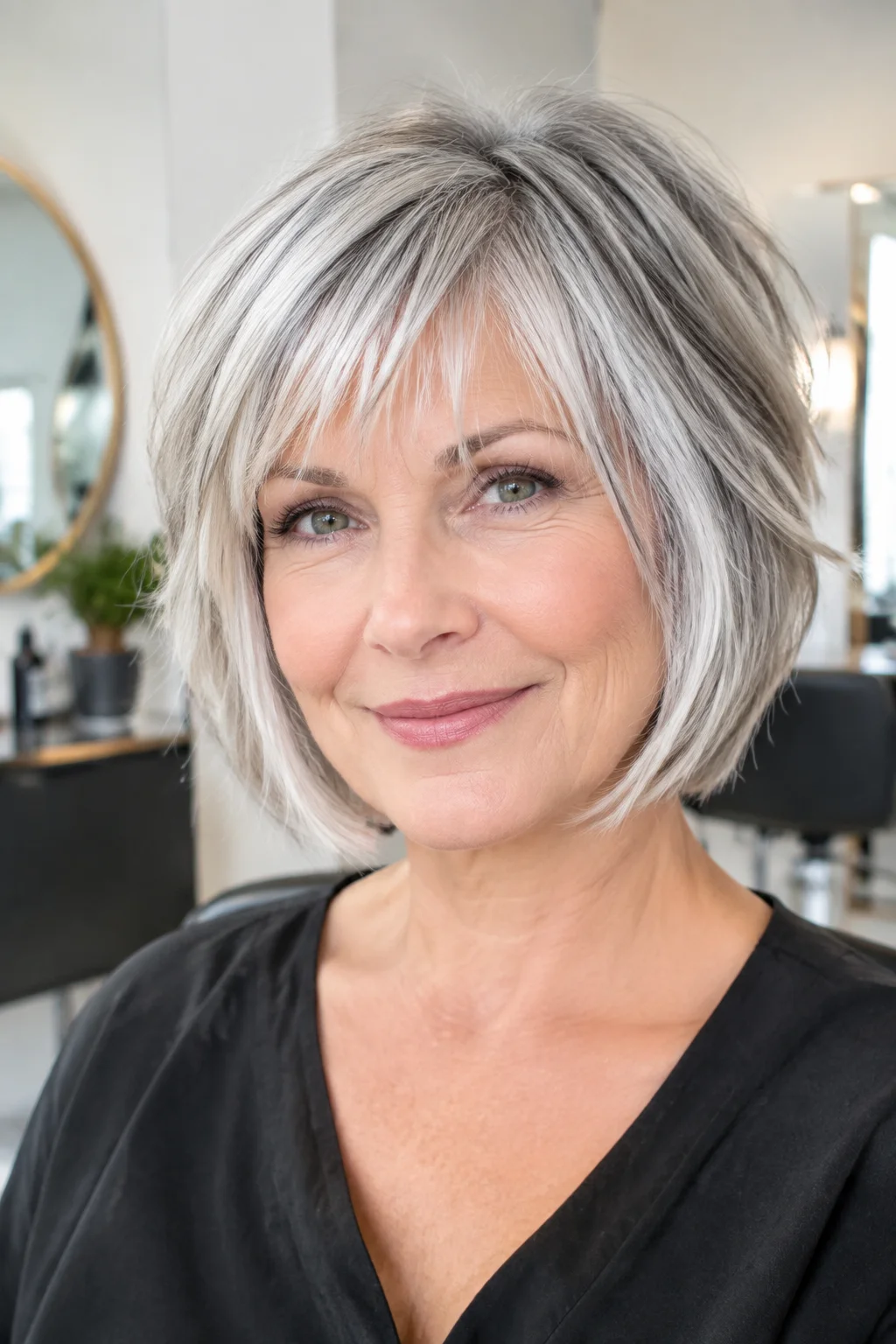
Adding bangs to a layered bob changes the whole face-framing effect, and piece-y styling keeps the bangs from looking too thick or blunt. This pairs well with gray hair that’s grown past the awkward short stage, since bangs can be cut to blend with lighter strands at the hairline. Tip: ask for bangs that hit just above the brow, since shorter bangs tend to highlight any unevenness in gray regrowth more than longer ones do.
Inverted Bob with Graduated Back
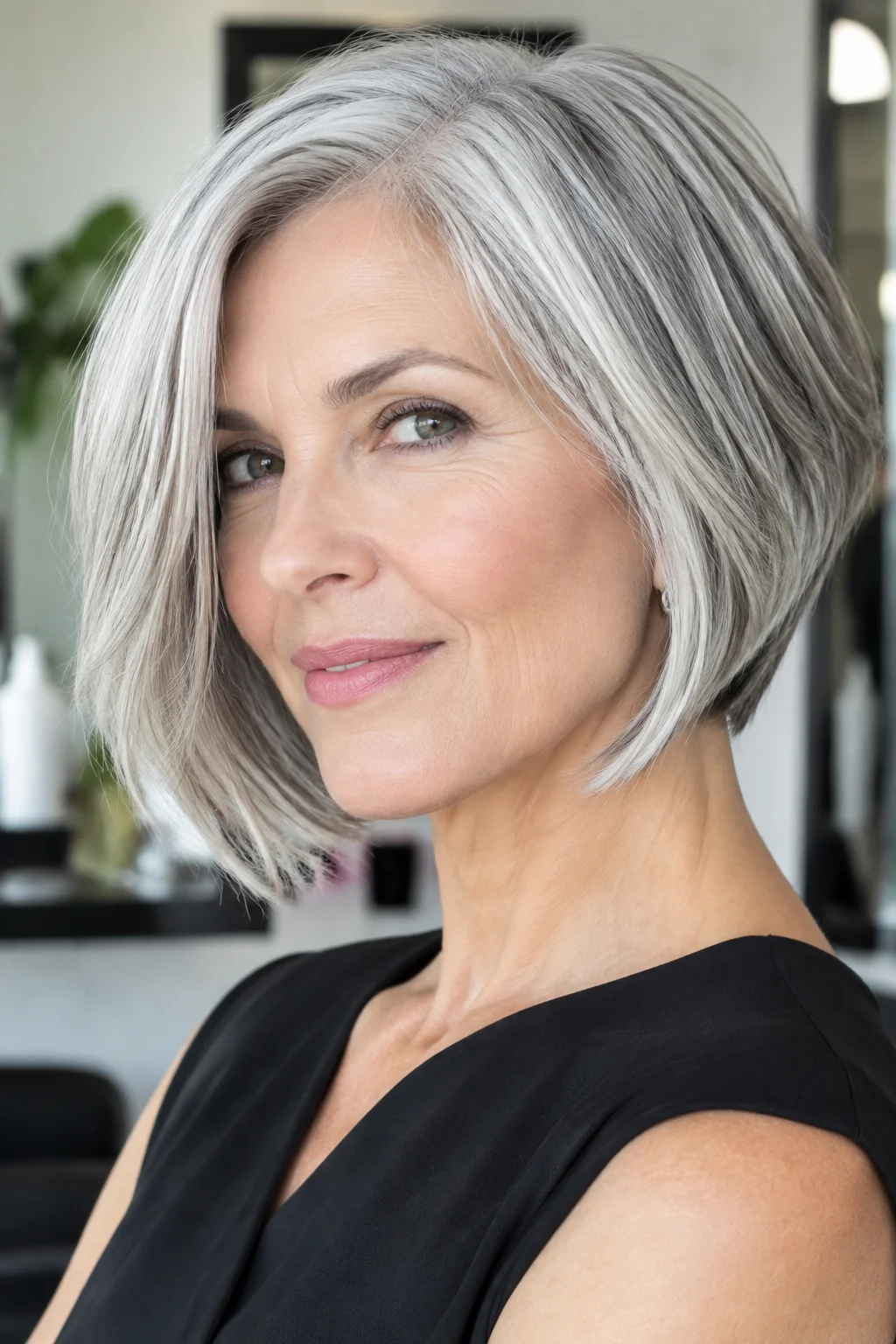
The inverted bob is shorter at the back and longer at the front, with graduation that builds volume at the crown. This structure flatters most face shapes and works particularly well for gray hair that’s thinning slightly, since the shorter back adds the appearance of density where it’s needed most.
Straight Bob with Textured Inner Layers
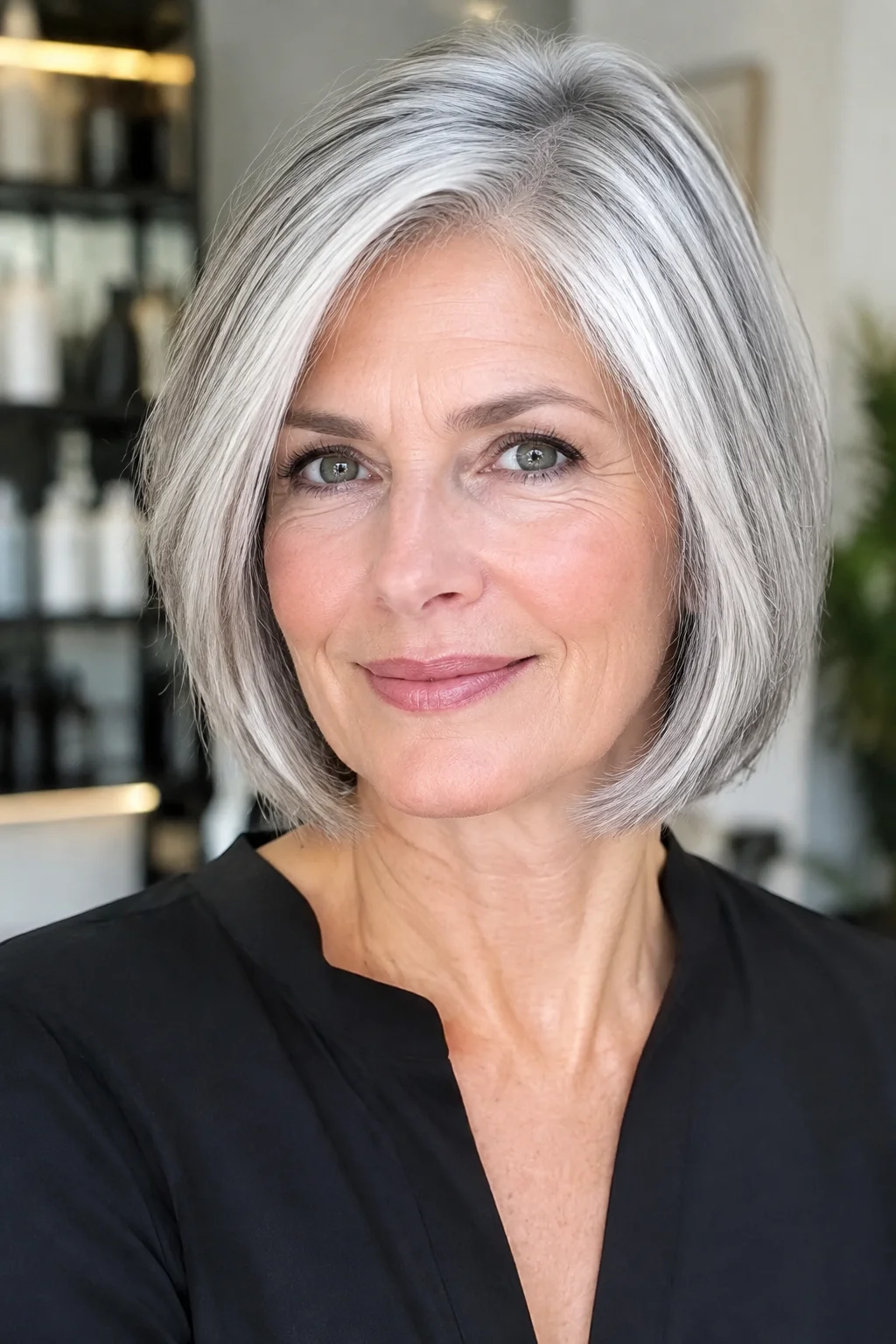
A straight bob reads clean and polished, but without some internal texture it can look flat against gray hair’s unique shine pattern. Inner layers cut at varying lengths give the straight shape enough movement to avoid looking stiff. This is a solid option if you prefer a smooth, low-fuss style but still want some life in the cut. It also holds up well if you blow-dry straight most days and only occasionally add waves.
Wavy Bob with Soft Undercut Texture
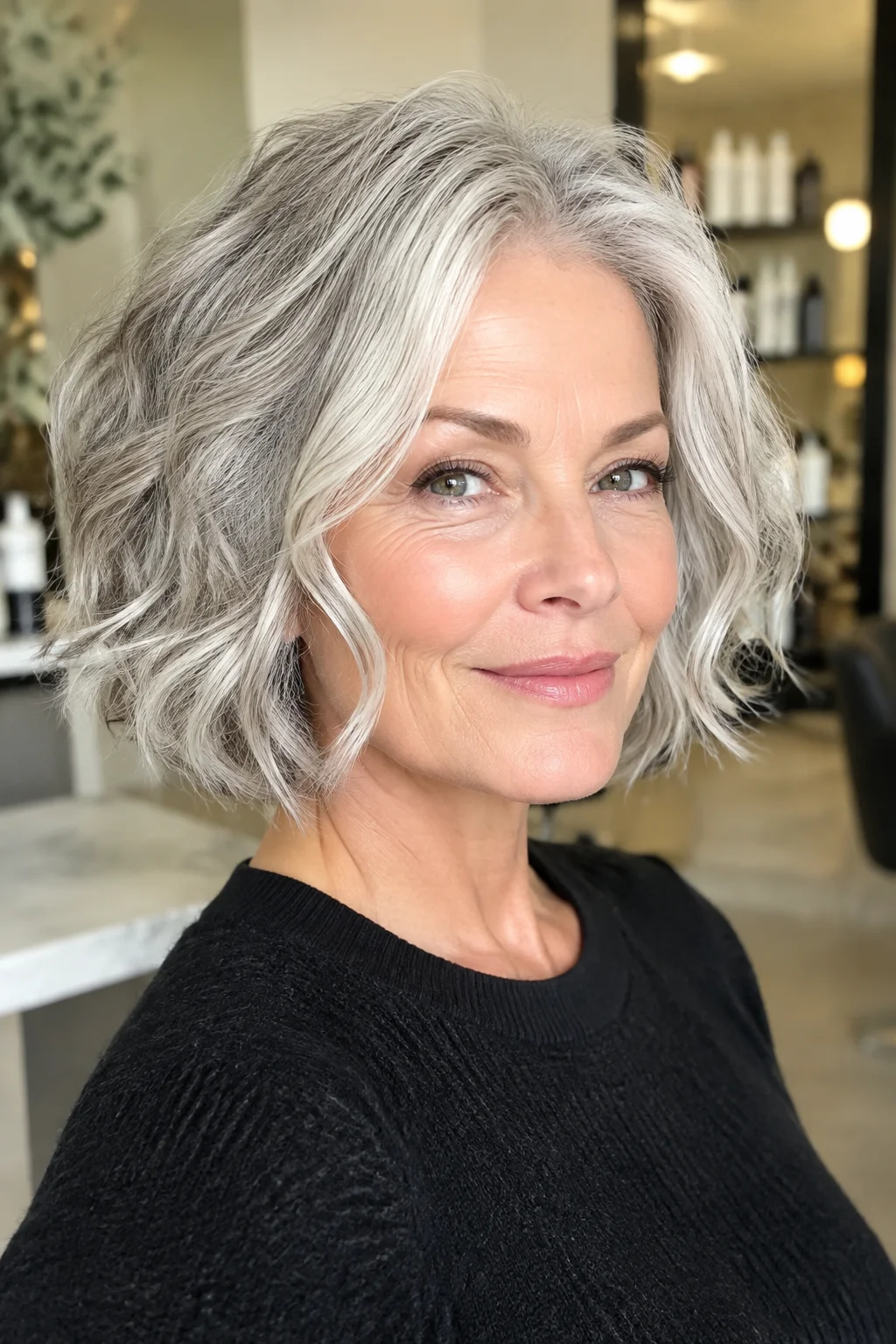
This bob uses a subtle undercut at the nape to remove bulk, which helps wavy gray hair move more freely instead of ballooning out. The visible length stays wavy and soft, while the hidden underlayer keeps things from getting heavy. Gray waves can sometimes look coarse, and this undercut technique softens that texture considerably.
Razored Bob for Movement and Blending
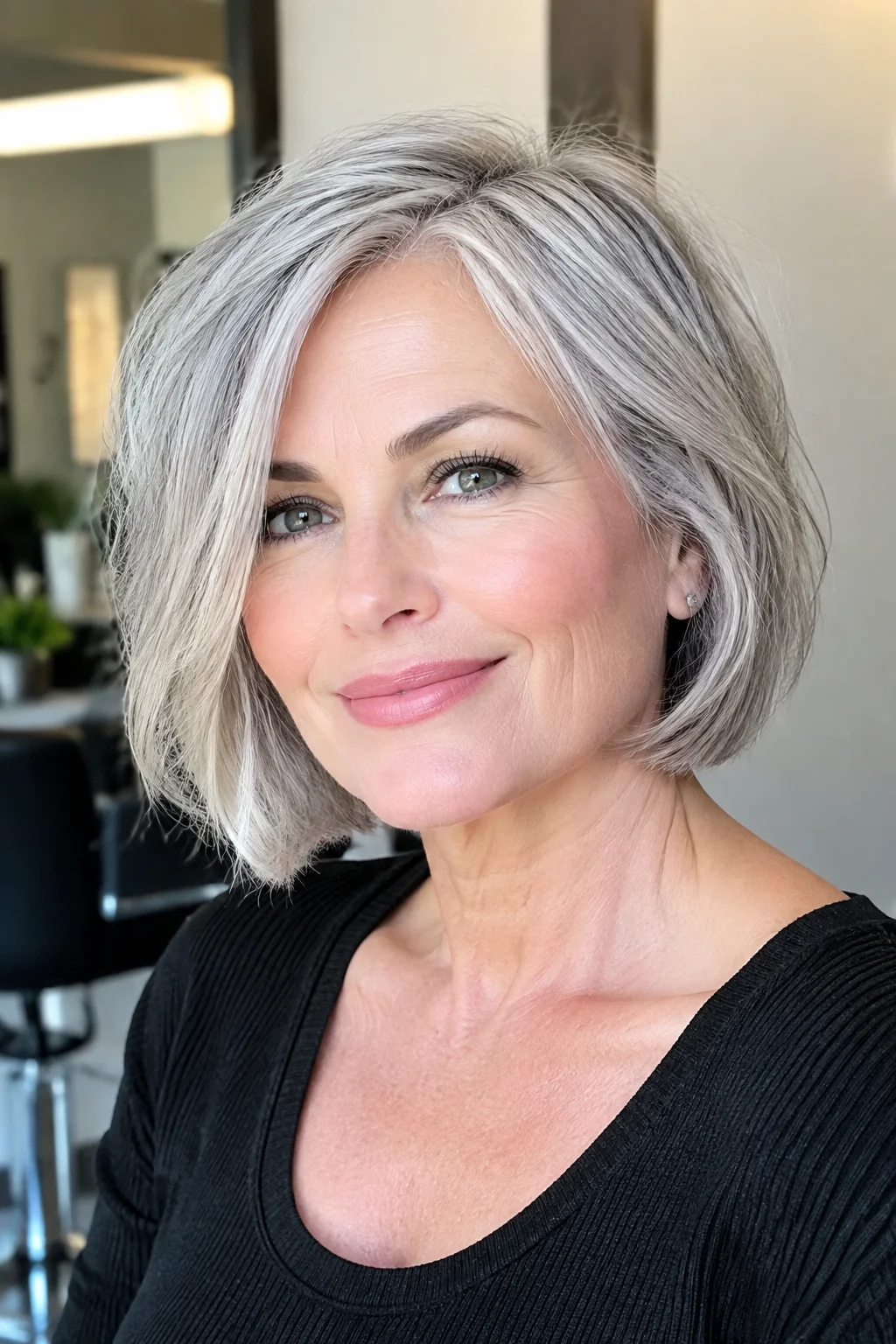
Razor cutting, instead of scissor cutting, creates softer, more textured ends throughout the bob. This technique blends well with gray hair because it avoids the blunt, uniform edge that can make gray look overly structured or aging. The razored ends also pick up light differently, which can minimize the appearance of dullness some gray hair develops over time.
Rounded Bob for Round Faces with Softer Layers
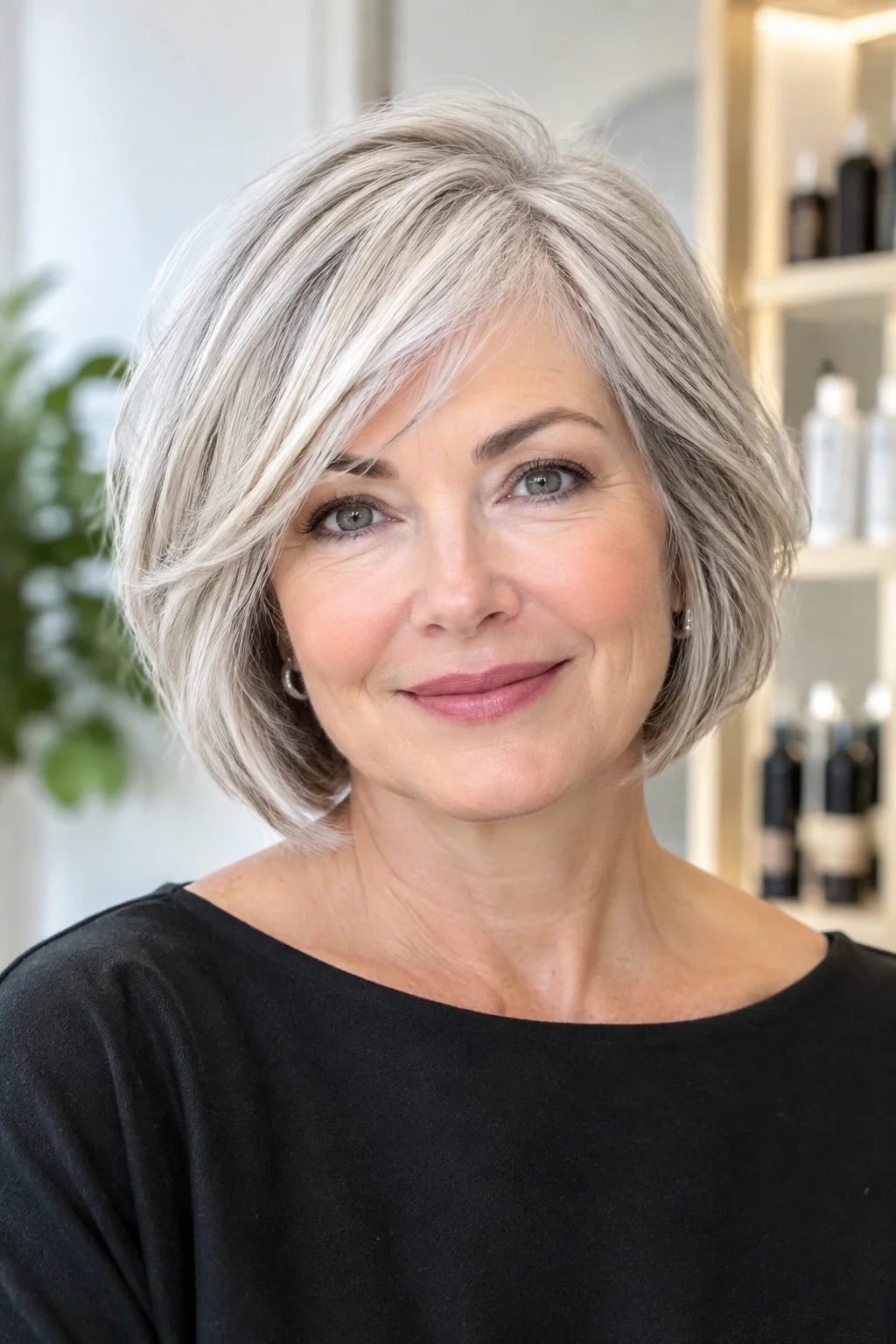
A rounded bob with soft layers works to balance round face shapes by adding length and angles rather than width. This isn’t a one-size style, so the stylist needs to adjust the roundness based on your particular bone structure. For gray hair, keeping the layers soft rather than blunt prevents the cut from emphasizing roundness further.
Sleek Bob with Strategic Volume Layers
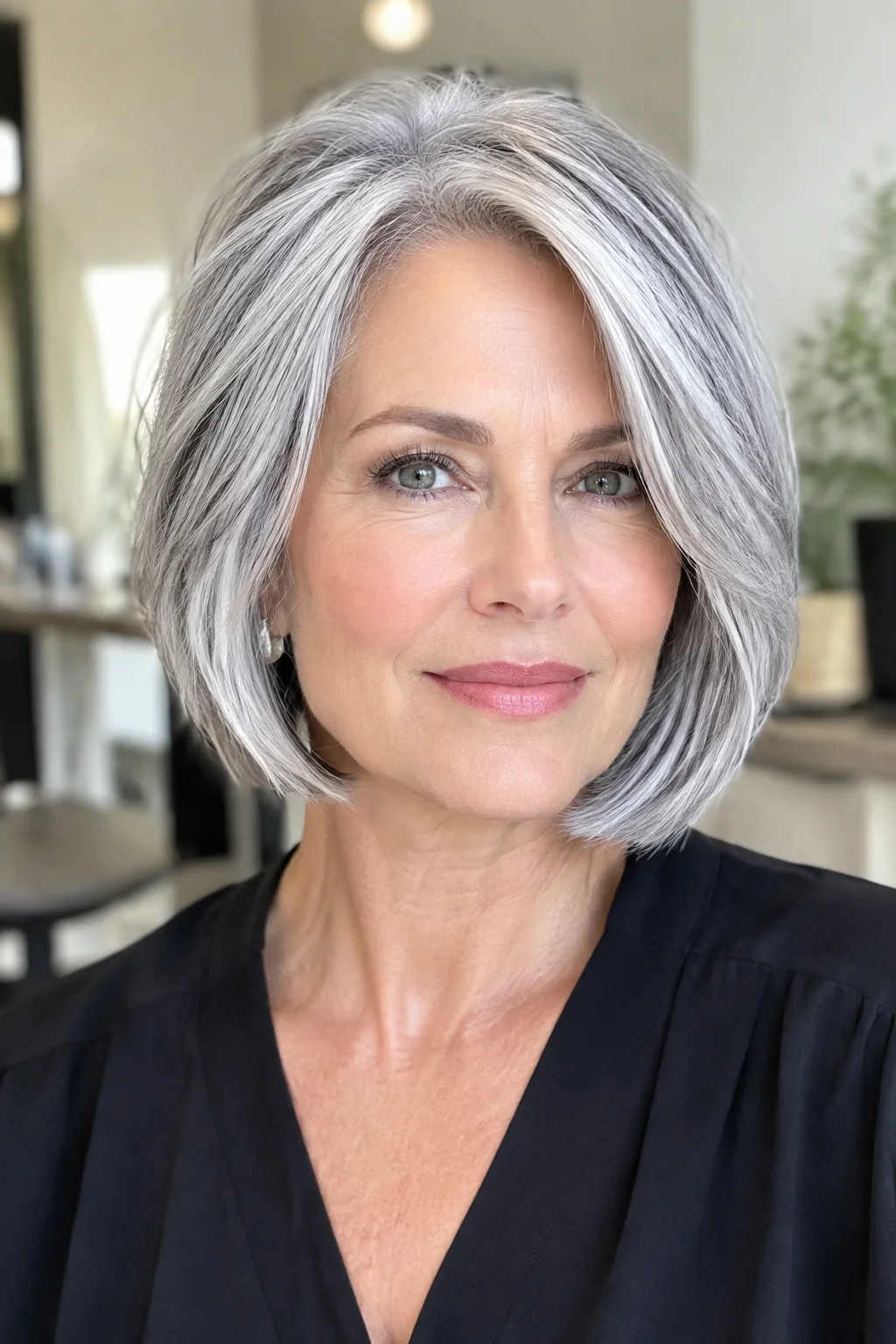
This bob looks smooth and polished on the surface, but strategic layers placed at the crown and mid-lengths add volume exactly where gray hair tends to go flat. It’s a more structured option that requires a bit more styling time, usually a round brush and blow dryer, to get the intended shape. Tip: use a volumizing spray at the roots before blow-drying to help the layers hold their lift through the day.
Taper-Cut Bob Shorter at Nape
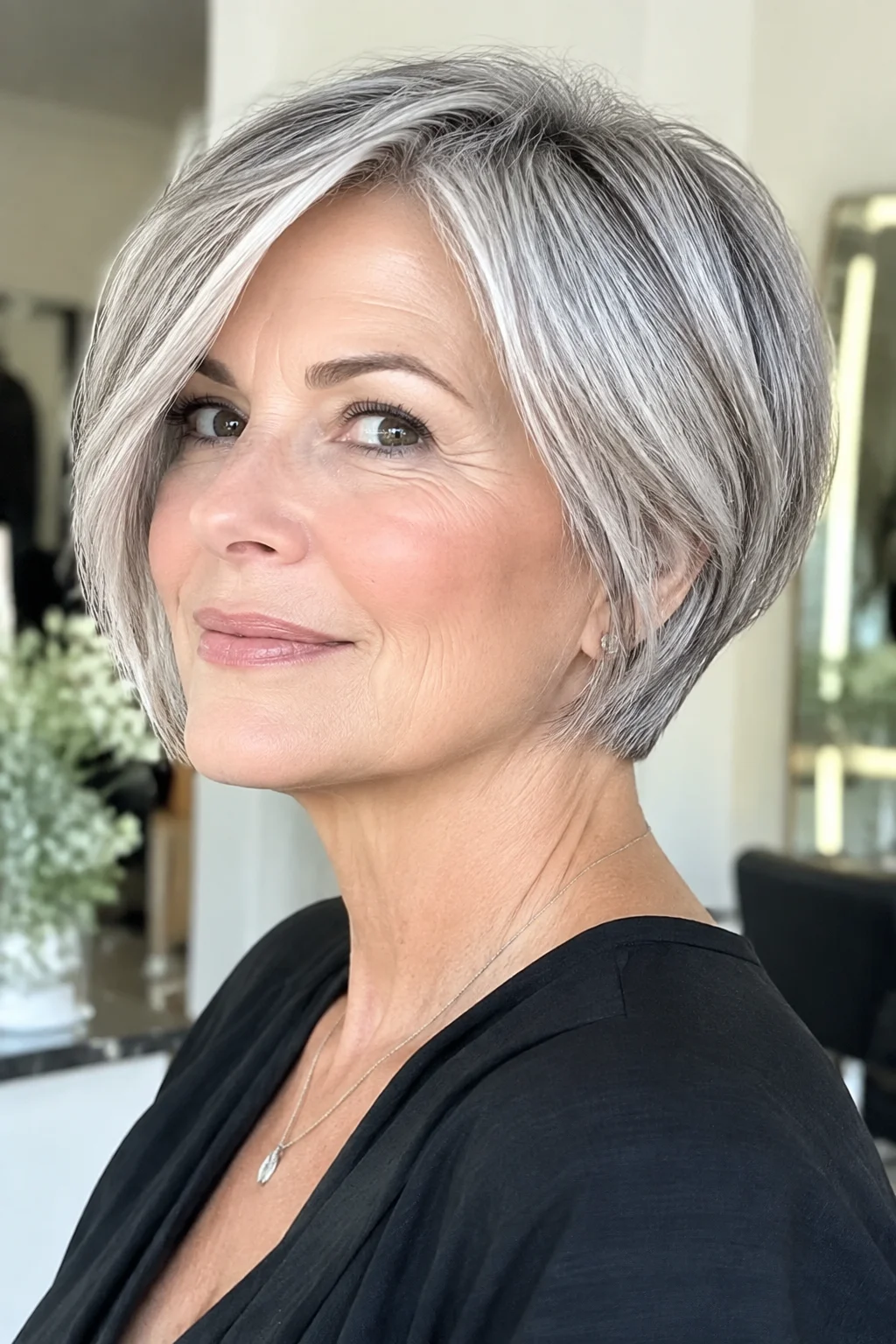
Tapering the nape shorter while keeping length through the crown and sides creates a neat, controlled shape that still has movement on top. This is a good choice for anyone who wants a slightly more polished, professional look without going fully blunt.
Textured Pixie-Bob Hybrid
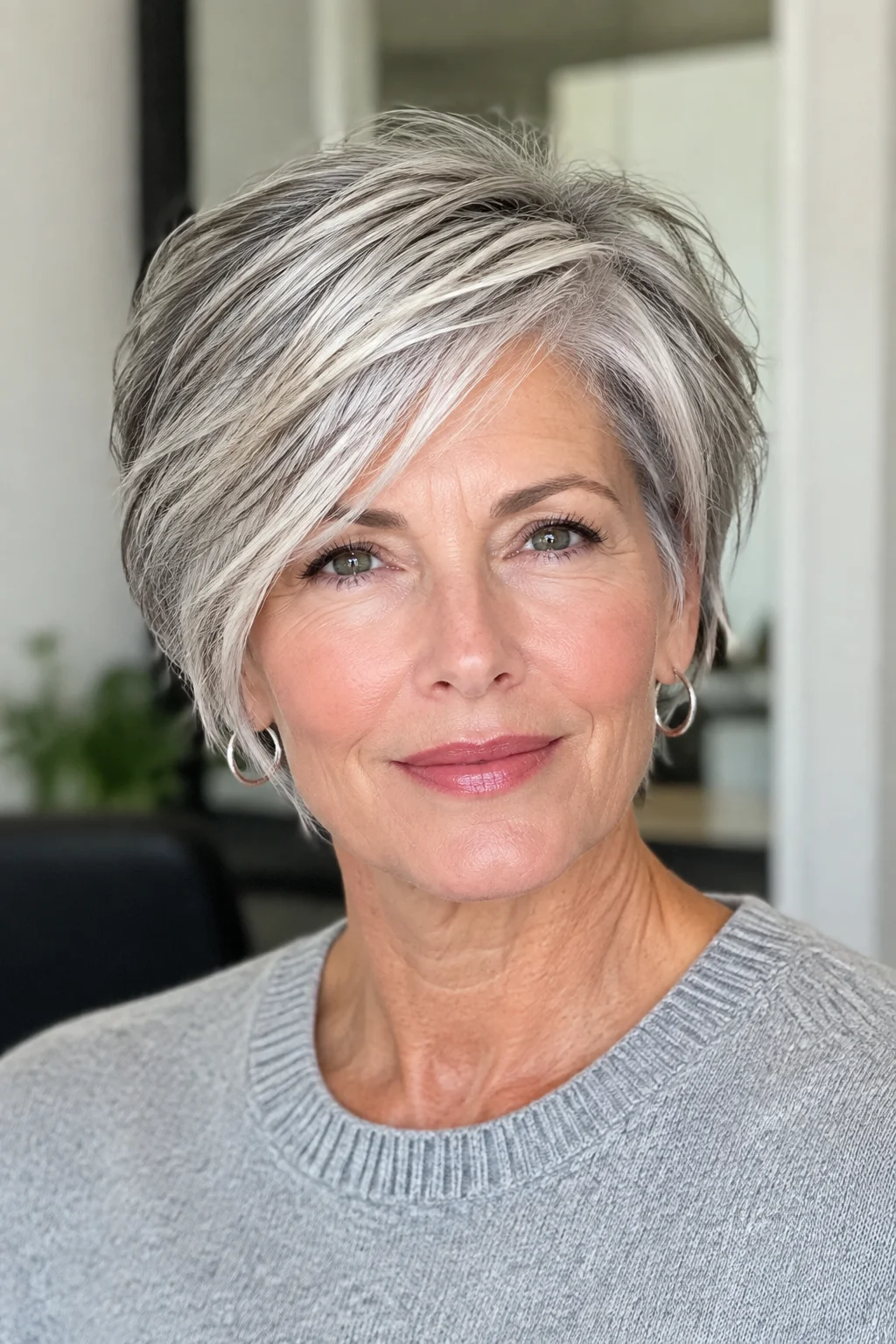
This hybrid blends pixie shortness at the back and sides with bob length through the top and front. It’s a bold change if you’re coming from a much longer style, but it offers serious ease of care. Gray hair often looks striking in shorter cuts because the color reads as more intentional and graphic in smaller sections. This style needs regular trims, roughly every six weeks, to keep the shape from growing out unevenly, since the length difference between the back and front is fairly dramatic.
Soft Wavy Bob with Face-Framing Layers
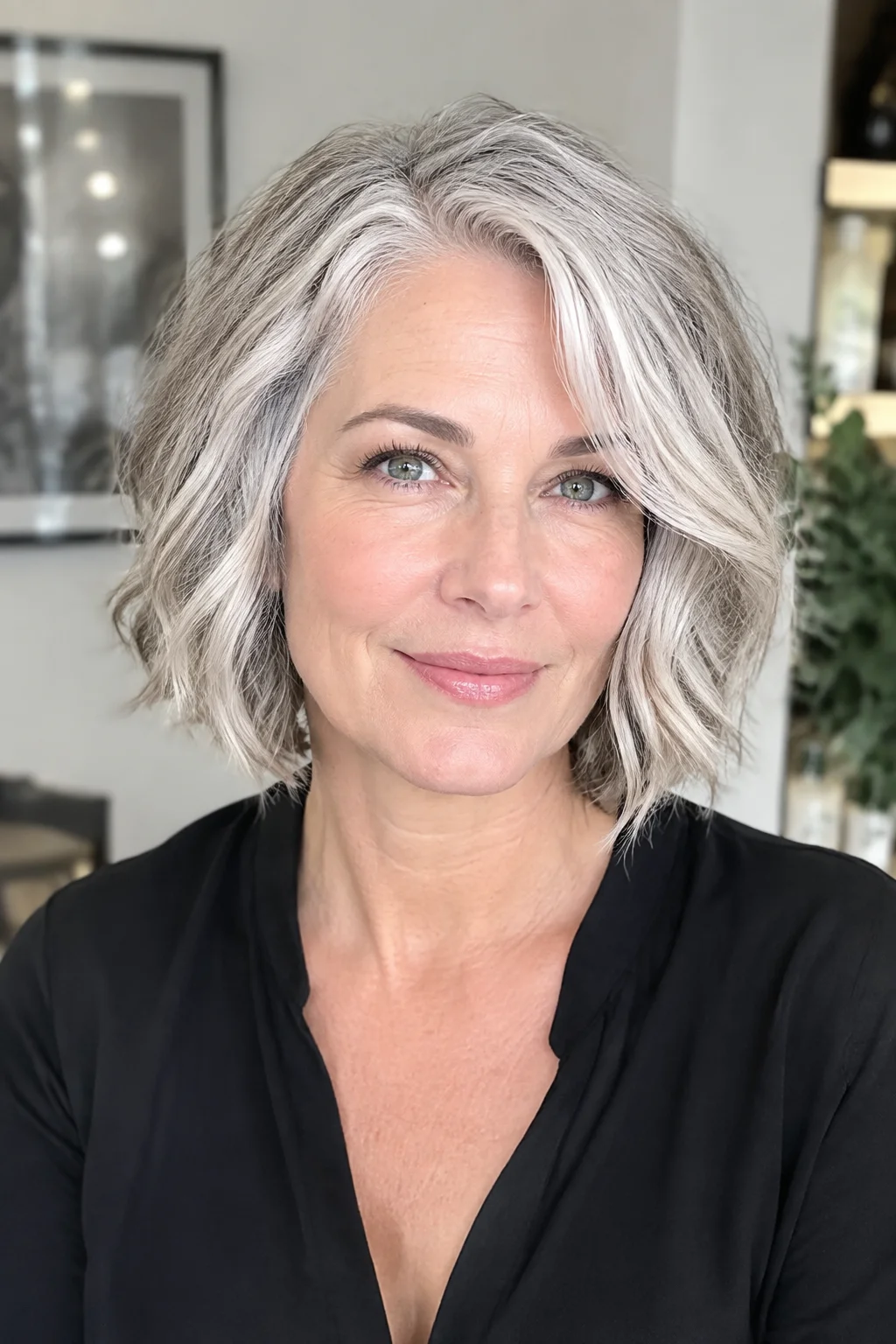
Face-framing layers cut into a wavy bob draw attention to the eyes and cheekbones, which works well as gray hair changes how your coloring reads against your skin. The layers are cut longer near the face and blend back into the rest of the bob, so there’s no harsh contrast. Soft waves set with a curling wand or texturizing spray help the face-framing pieces catch light nicely.
Choppy Layered Bob with Blended Regrowth Line
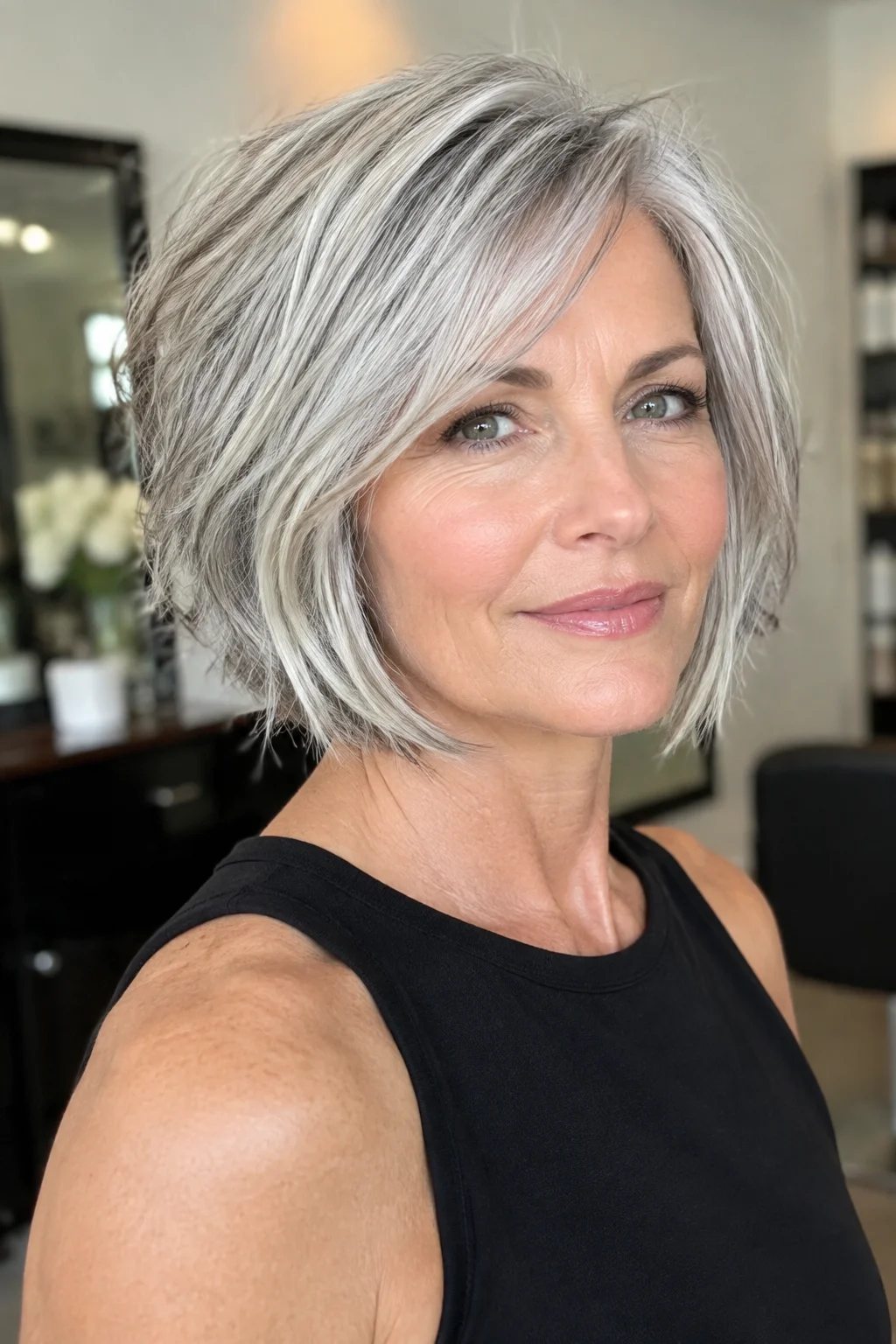
This is one of the most practical options on this list if you’re actively transitioning to gray and dealing with a visible line between your natural color and any previous dye. Choppy layers cut throughout the bob break up that line so it reads as texture instead of a clear boundary. The layers vary in length on purpose, which means there’s no single spot where regrowth suddenly becomes obvious. This cut usually needs a skilled hand, since the choppiness has to look random rather than patchy. It’s worth asking your stylist specifically about blending techniques for transitional gray, since not every salon approaches this the same way. Over a few months, as more natural gray grows in, this bob tends to look better rather than worse, which isn’t true of every style on this list.
Picking the Right Bob for Your Gray Hair
Choosing between these styles comes down to your hair’s natural texture, your face shape, and how much styling time you actually want to spend. If your hair is fine and tends to go flat, the tousled textured bob or the shaggy bob with movement and texture will do more for you than a sleek, blunt shape. If you’re still transitioning and dealing with a visible regrowth line, the choppy layered bob with blended regrowth line or the disconnected bob with choppy texture are built exactly for that problem. Curly or wavy gray hair does best with cuts designed around that pattern specifically, like the curly bob with softer roots or the wavy bob with soft undercut texture, rather than a style meant for straight hair.
A common mistake is choosing a blunt, one-length bob without asking about hidden layers underneath. On gray hair, that flat shape can look heavier and less flattering than intended, and it grows out with an obvious line at the ends. Another mistake is picking a dramatic style, like the textured pixie-bob hybrid, without committing to the six-week trim schedule it needs to look intentional rather than overgrown. Talk with your stylist honestly about how much time you want to spend styling each morning, since that answer narrows the list faster than anything else.