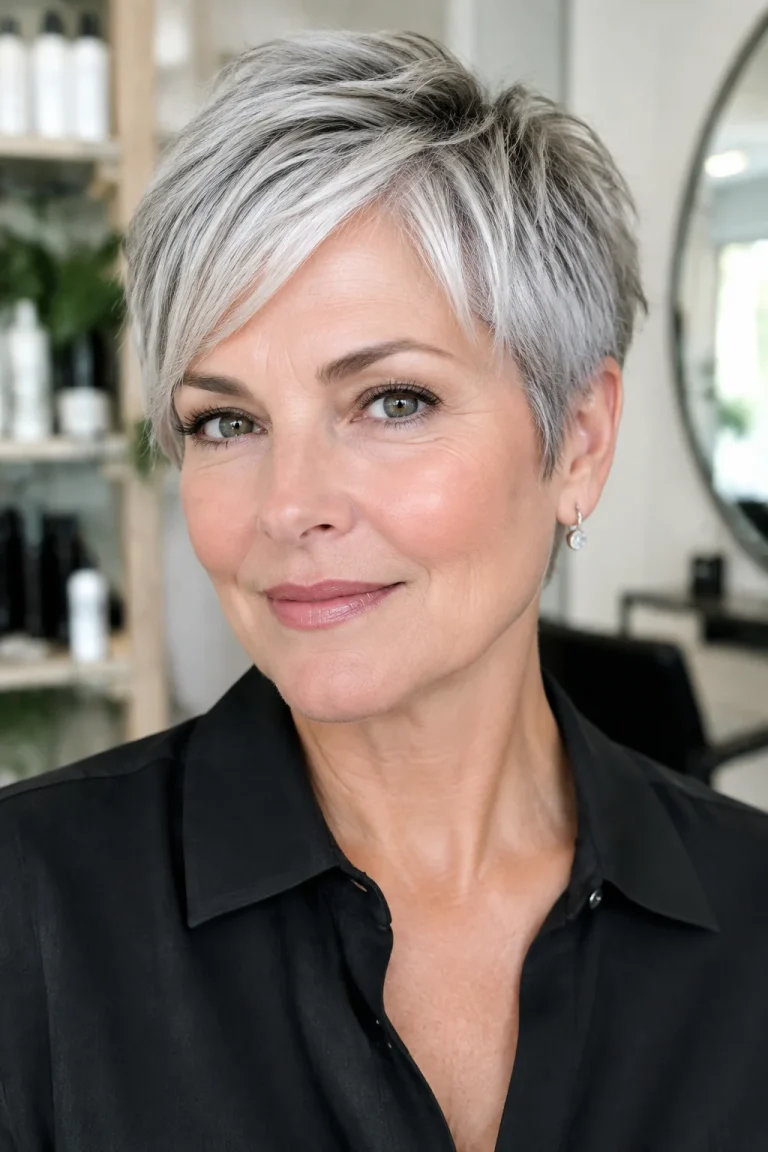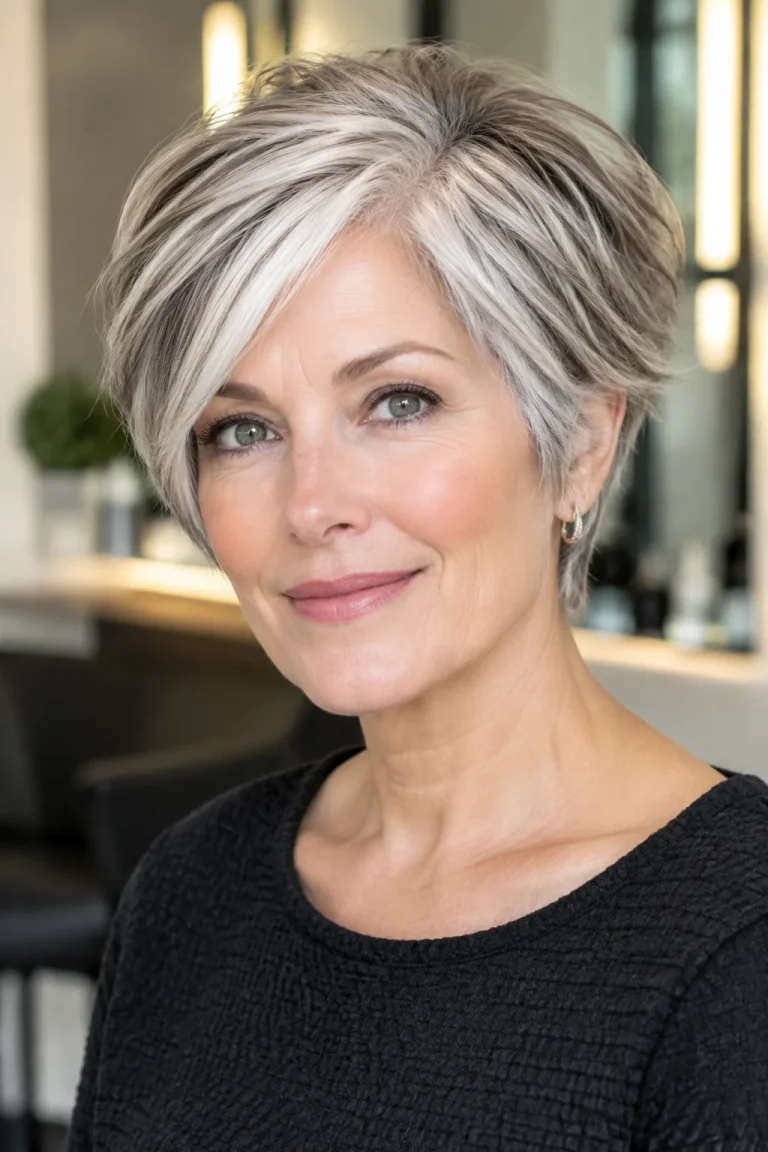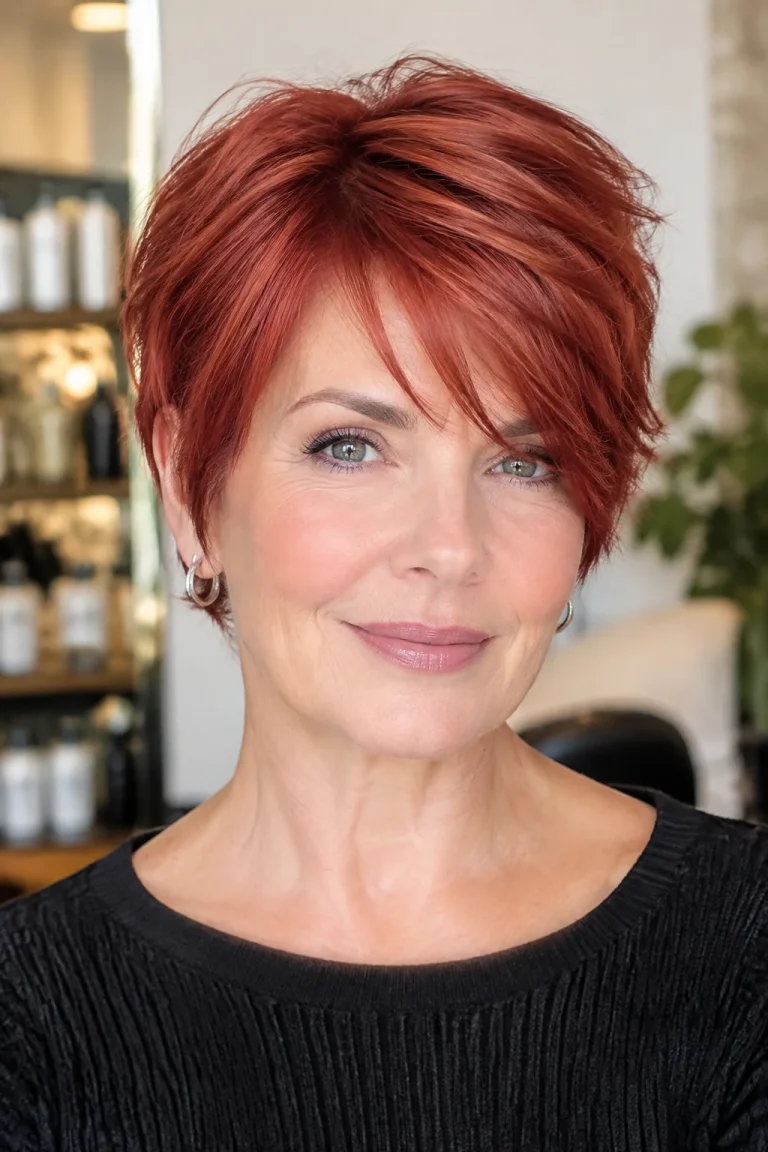
Gray hair with cool undertones needs a cut that works with the color instead of fighting it. Too much length can wash out silver and ash tones, while the wrong shape can make fine gray strands look flat or thin. The good news is that short hair hairstyles for gray hair come in a wide range of shapes, from blunt pixies to soft shags, and most of them actually make cool-toned gray look brighter and more polished. Short length also tends to show off the natural shine that gray hair often has, since light bounces differently off silver strands than off pigmented hair.
Below are twenty cuts worth considering, each suited to different face shapes, hair textures, and lifestyles. Read through them with your own hair texture and daily routine in mind, since the best cut is the one you’ll actually style on a Tuesday morning.
Blunt Pixie with Strong Cheekbones
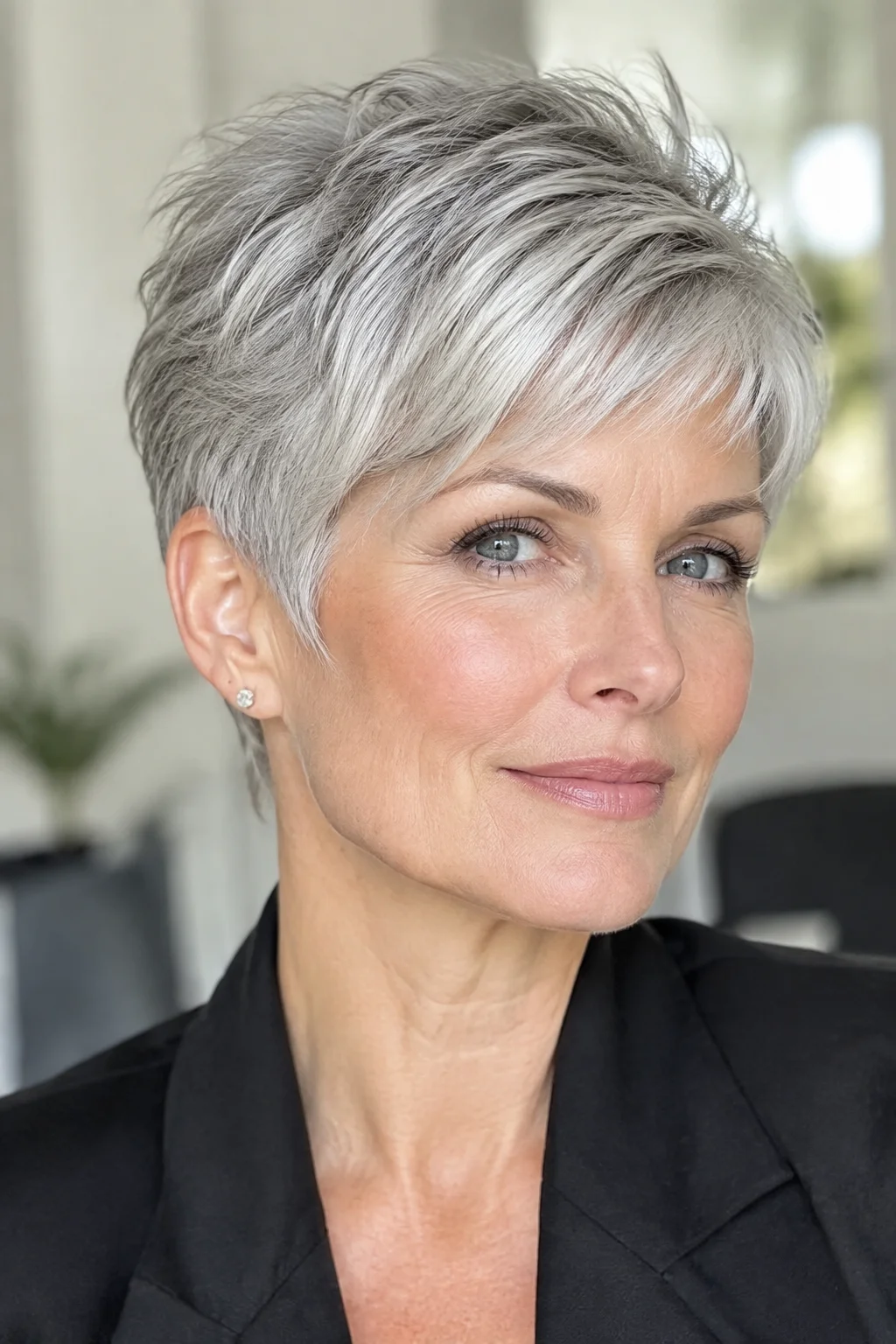
This cut keeps the sides and back close to the head while leaving a bit of length on top for texture. The blunt edges around the ears and nape give it a crisp, almost architectural look that pairs beautifully with cool gray tones. It works best on people with defined cheekbones or an oval face, since the short sides draw attention straight to the bone structure. Round or very soft faces might find it a bit severe. I recommend asking your stylist to keep the fringe area slightly longer so you can sweep it to one side on days you want a softer finish. A light mist of heat protectant before styling helps the finish last.
Textured Crop with Longer Top
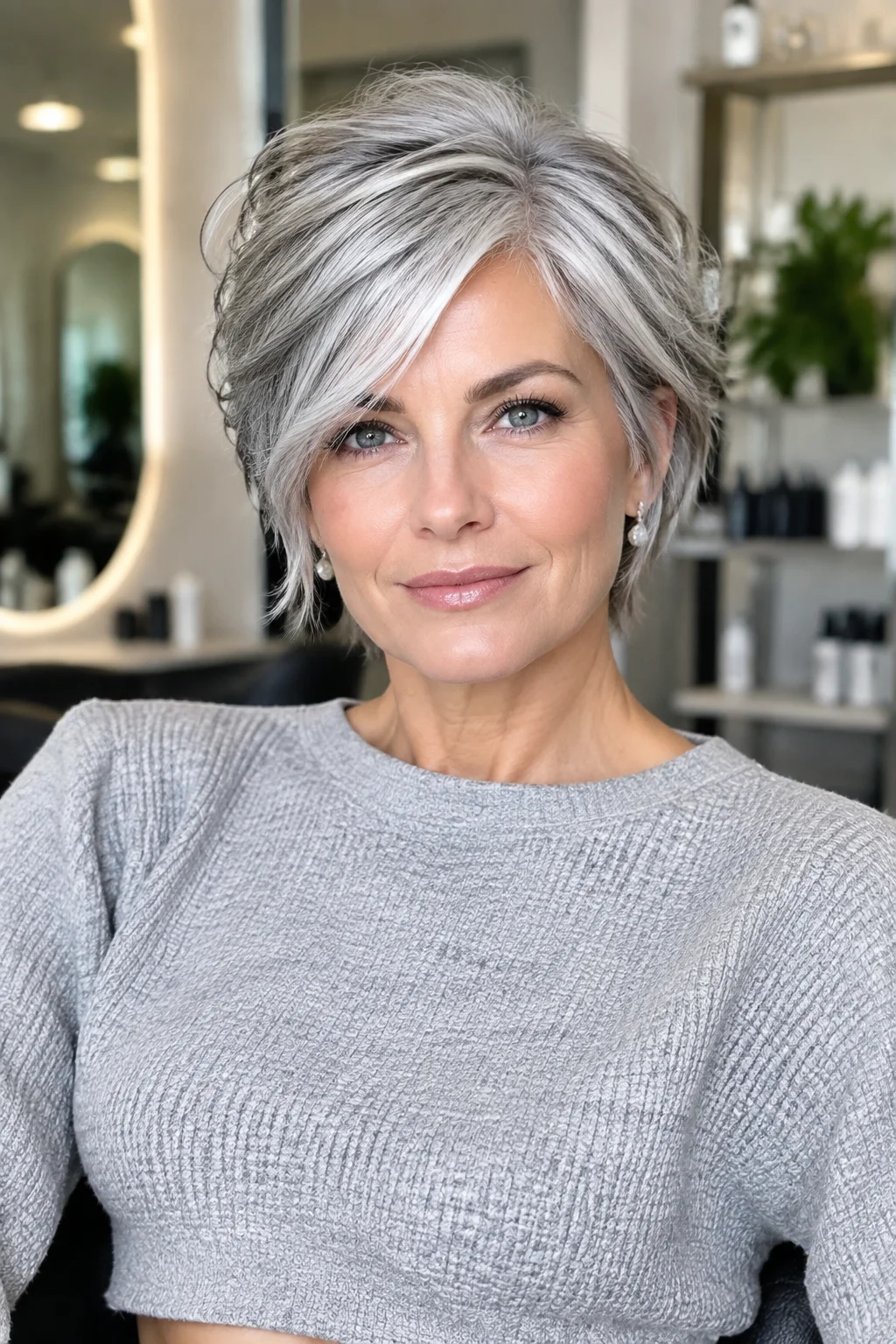
The textured crop is a low-maintenance option for anyone who wants shape without a lot of daily fuss. Sides stay short and neat, while the top gets choppy, piece-y layers that you can scrunch with a little product and go. Gray hair tends to have a slightly coarser texture than it did before, and this cut actually uses that to its advantage, letting the layers hold their shape through the day.
Sleek Bob to Chin Length
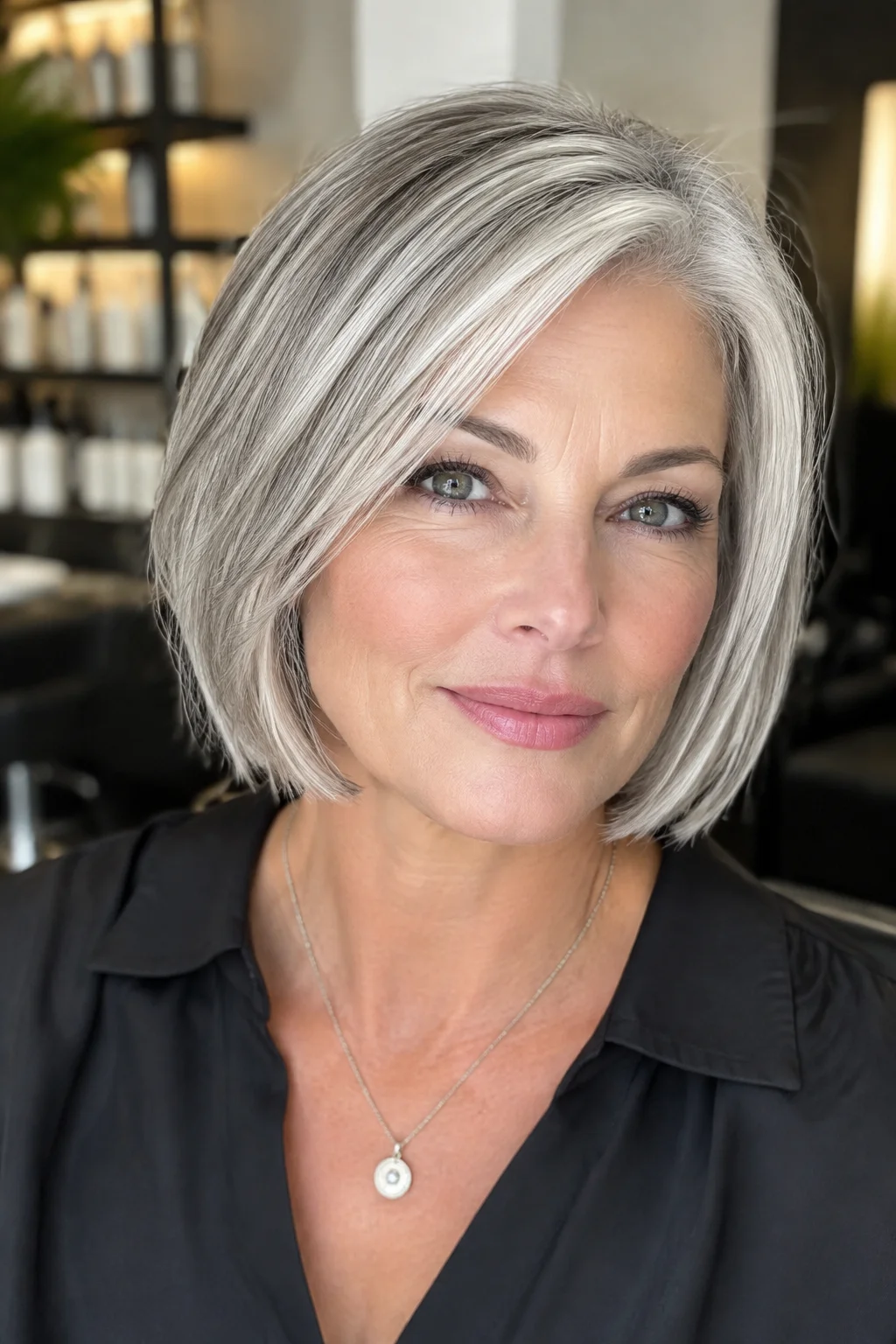
A chin-length bob with a glassy, smooth finish brings out the cool shine in gray hair better than almost any other cut. The straight lines and blunt perimeter catch light evenly across the whole head, so the color looks even and polished rather than patchy. This shape suits straighter hair textures best, since curly or wavy strands will need extra smoothing to get the sleek look. Tip: ask for a slight inward bend at the ends so the bob curves toward the jaw instead of flipping out. A light mist of heat protectant before styling helps the finish last. A light mist of heat protectant before styling helps the finish last.
Layered Pixie-Bob Hybrid
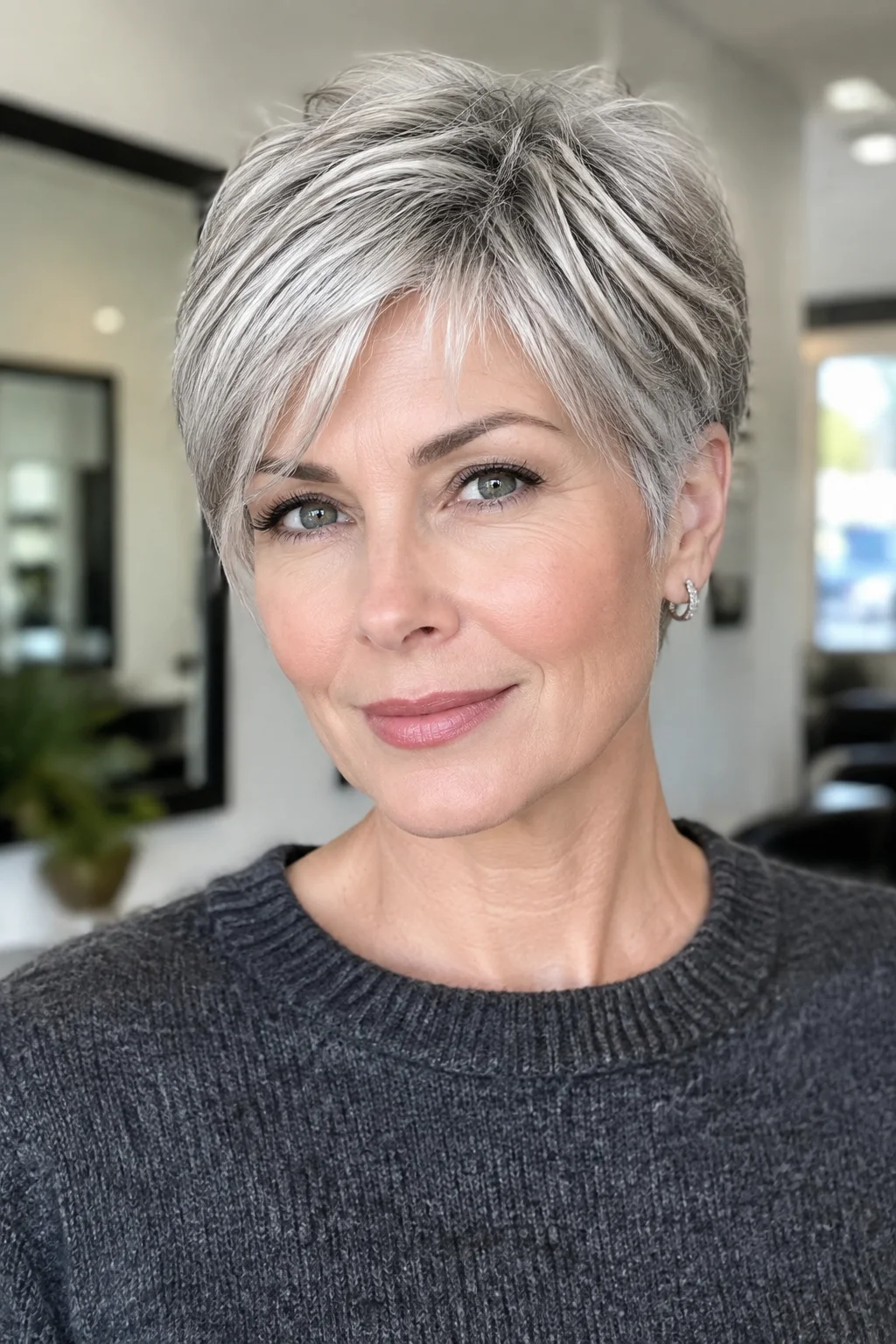
This style borrows the closeness of a pixie at the sides and back but keeps enough length on top and around the face to blend into bob-like layers. It suits people who want short hair but aren’t ready to go fully cropped. The layering softens the transition between short and long sections, which keeps the cut from looking choppy or unfinished. Gray hair holds this kind of layering well because the slight texture change that comes with gray strands adds natural volume without extra effort.
Disconnected Undercut with Gray Fade
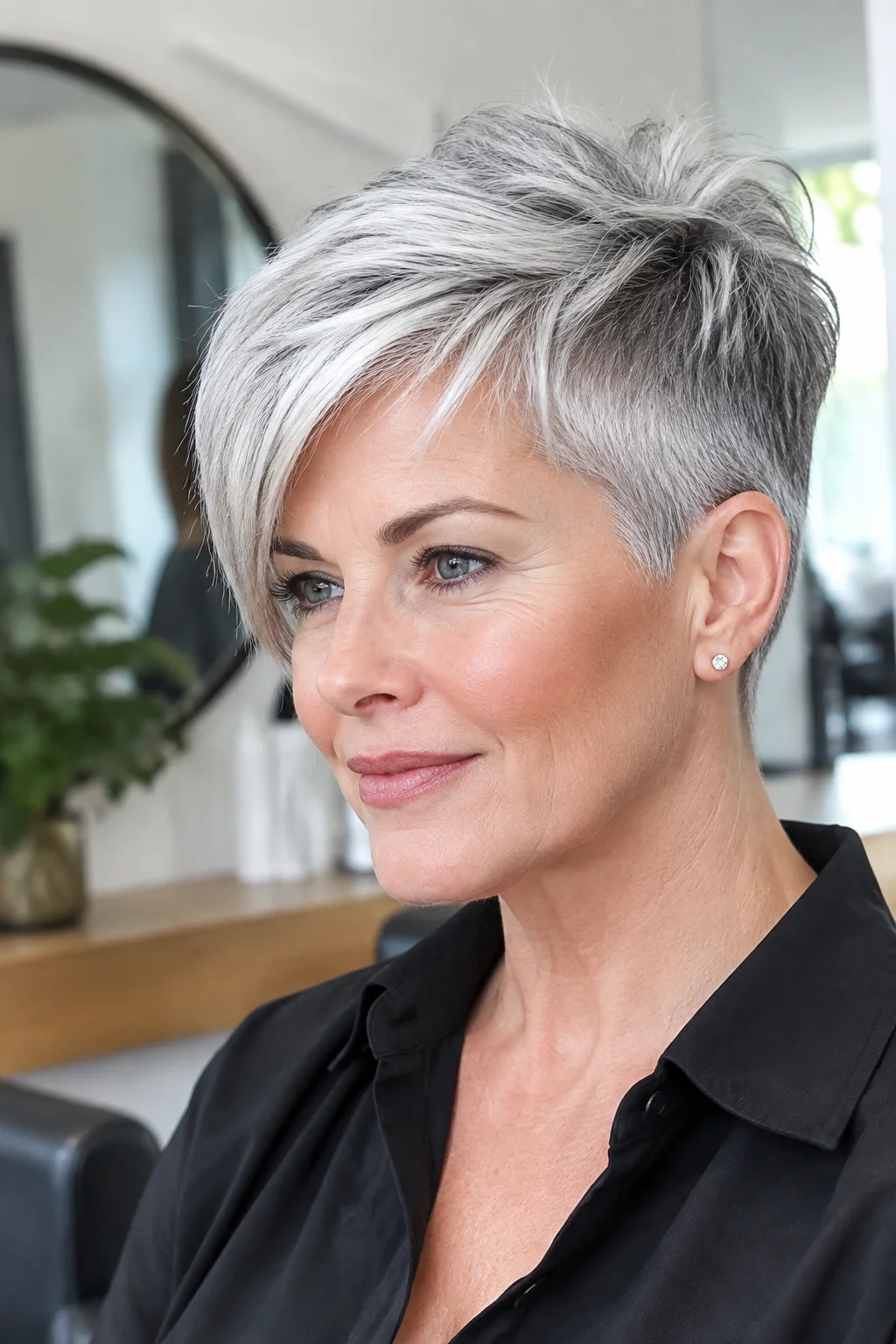
The disconnected undercut creates a sharp contrast between a closely shaved or faded section underneath and longer hair sitting on top. For gray hair, this contrast can look striking, almost like two different shades even though it’s all natural color. It’s a bold choice and works best for people who like an edgier look and don’t mind regular trims to keep the undercut fresh. Round faces benefit from the added height the longer top section provides.
Tousled Crop with Choppy Texture
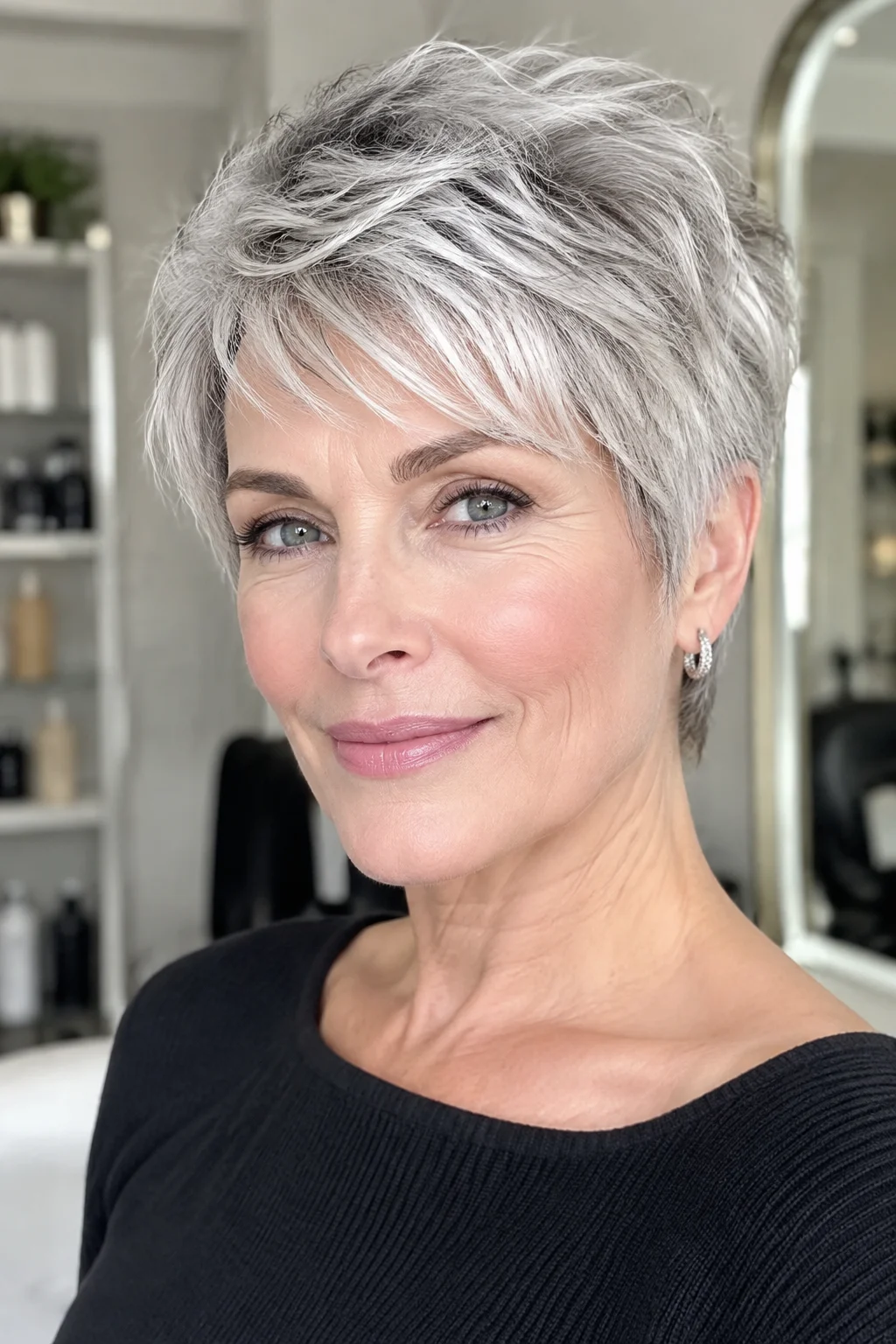
Short all over with deliberately uneven ends, this crop looks effortless but actually needs a precise cut underneath the texture. It’s a strong pick for thick or coarse gray hair that tends to puff up in humidity, since the choppy layers break up bulk naturally. Finger-style it with a matte paste for a lived-in finish that never looks overdone.
Side-Swept Pixie
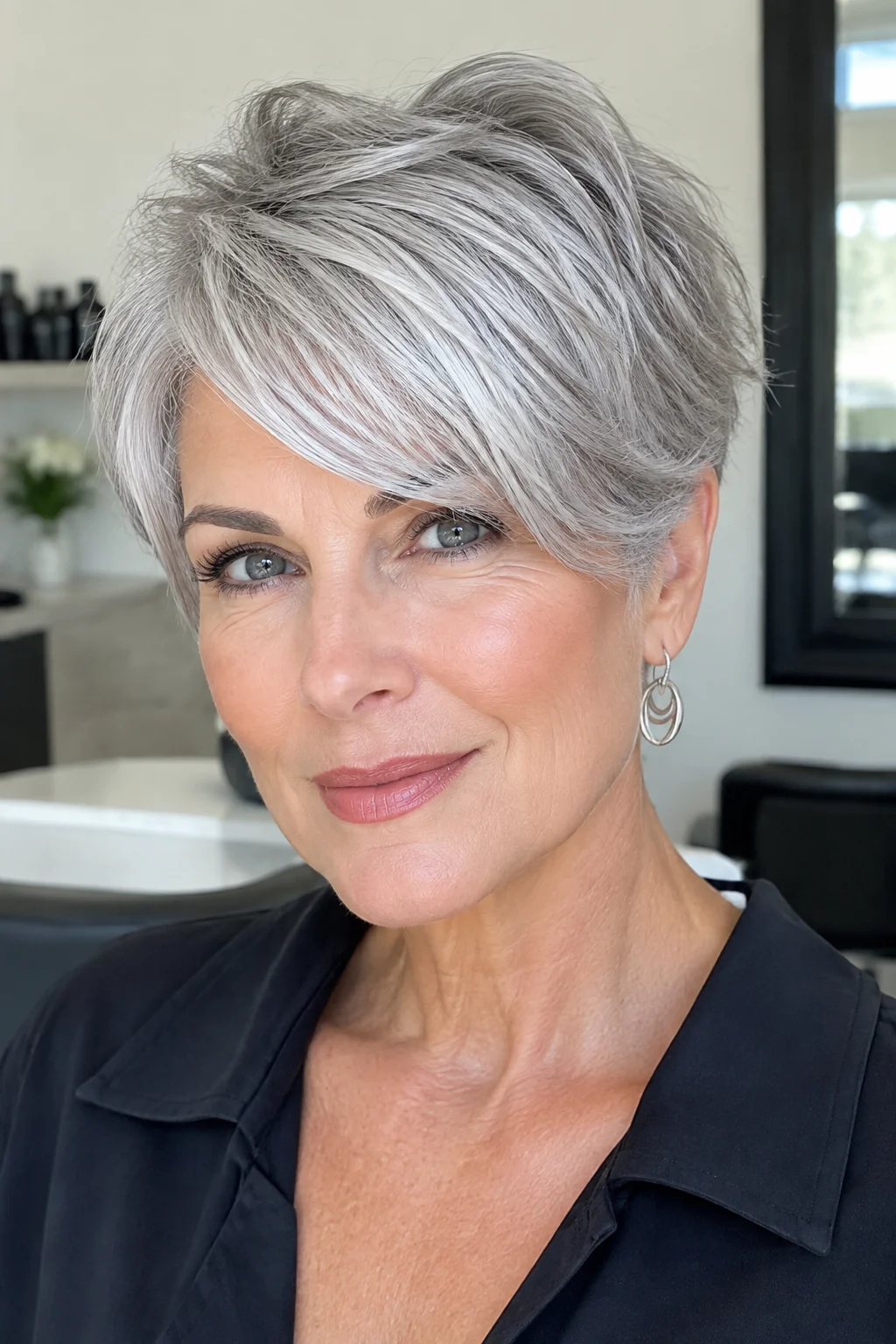
A side-swept pixie takes the classic short cut and adds a deep side part with longer pieces sweeping across the forehead. This asymmetry softens angular faces and adds a bit of movement that a straight-across fringe doesn’t offer. Gray hair with some natural wave takes to this style particularly well, since the wave helps the swept section hold its direction without constant restyling. Tip: use a small amount of pomade on dry hands to tame flyaways along the part line.
Curly Pixie for Naturally Textured Hair
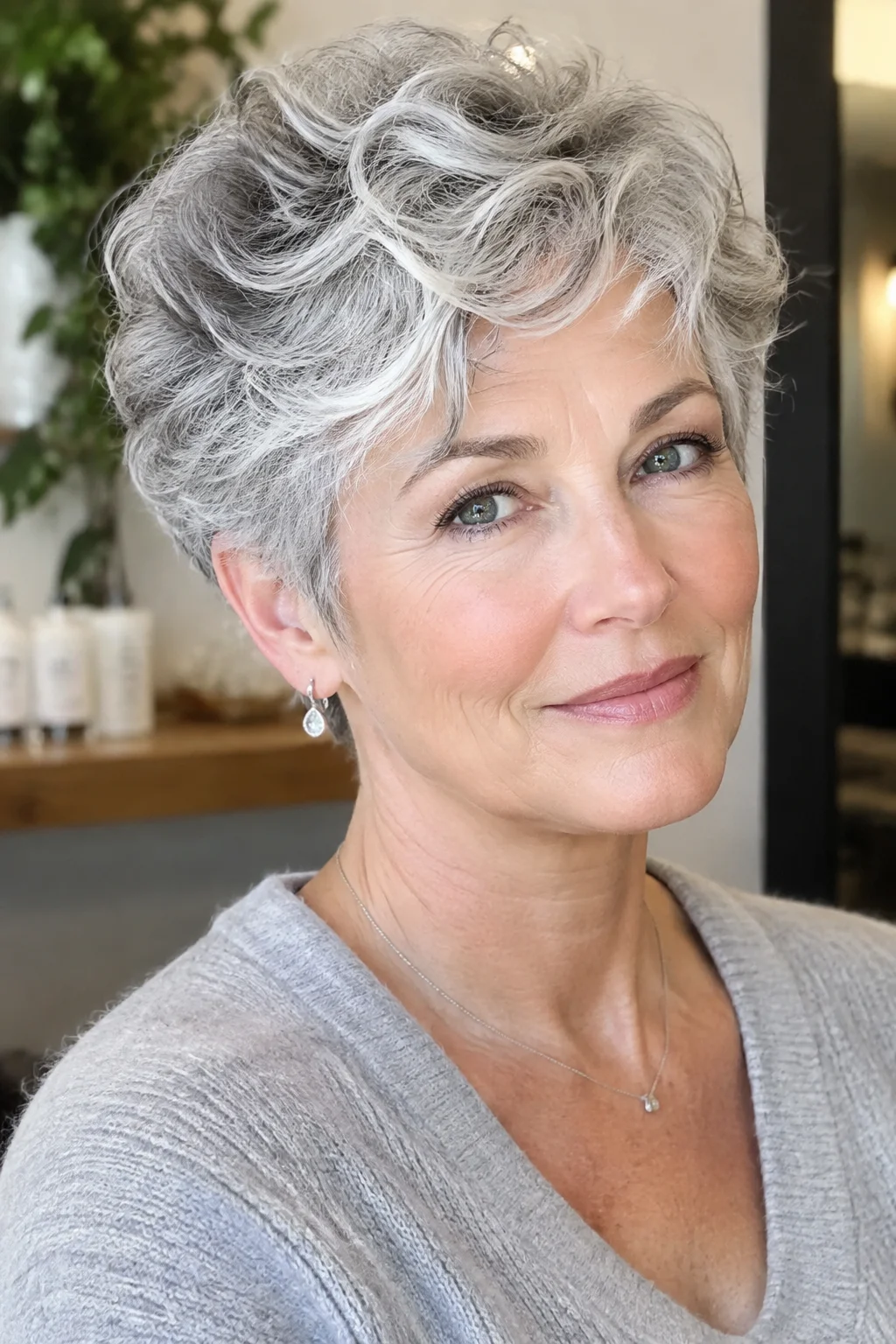
Curly and coily hair types often get pushed toward longer cuts, but a curly pixie actually highlights natural texture beautifully once the hair goes gray. The shorter length means curls spring up tighter and more defined, creating a halo effect around the face. This cut needs very little heat styling, which also protects the hair from the dryness gray strands are prone to.
Geometric Bob with Angled Layers
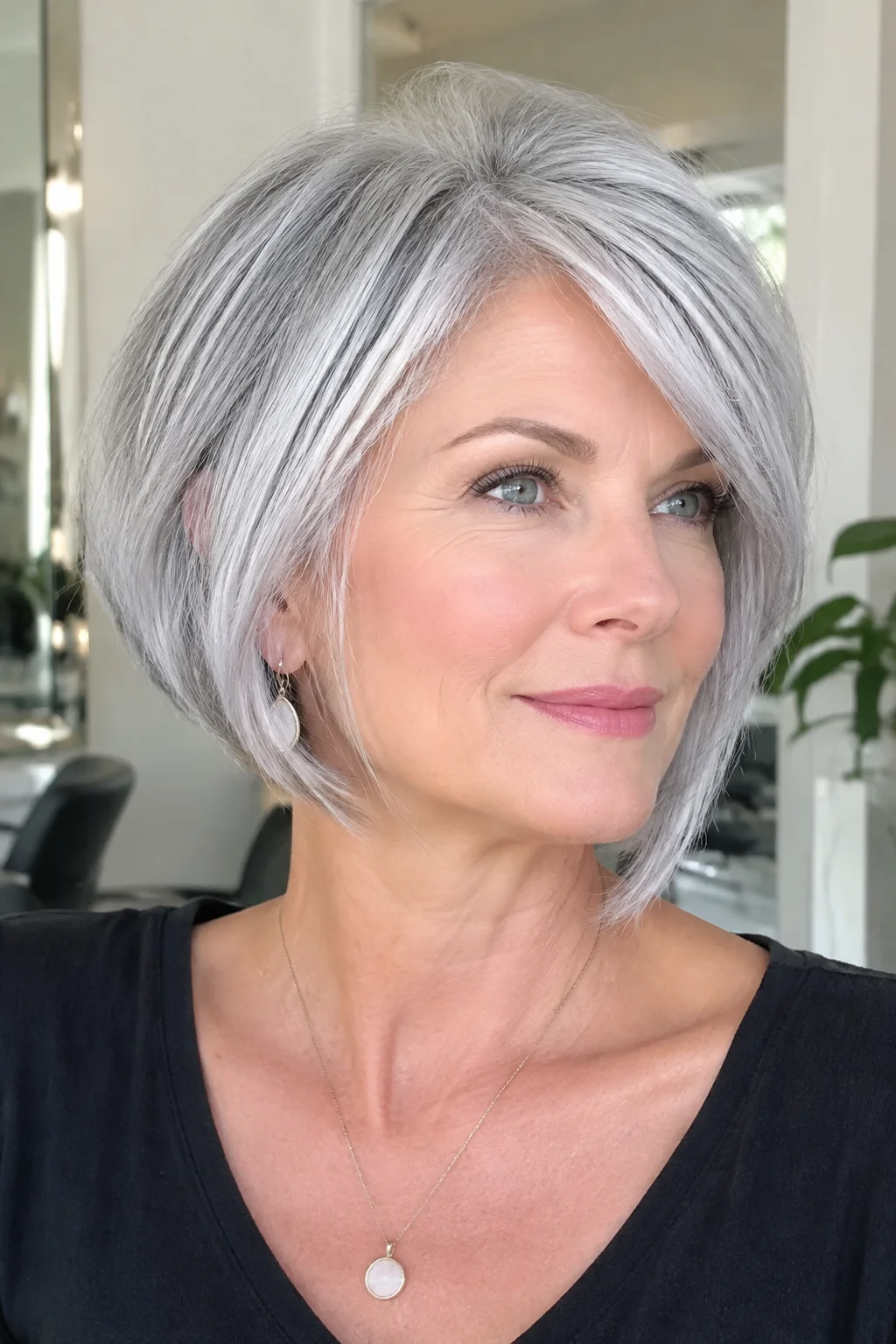
Sharp, angled layers built into a bob create visual lines that frame the face in a modern way. The geometry works especially well with cool gray tones since the precise cutting lines catch light in clean segments rather than a soft blur. This is a higher-maintenance cut that needs regular trims to keep the angles crisp, so it suits people who already visit their stylist every six to eight weeks.
Ear-Grazing Choppy Layers
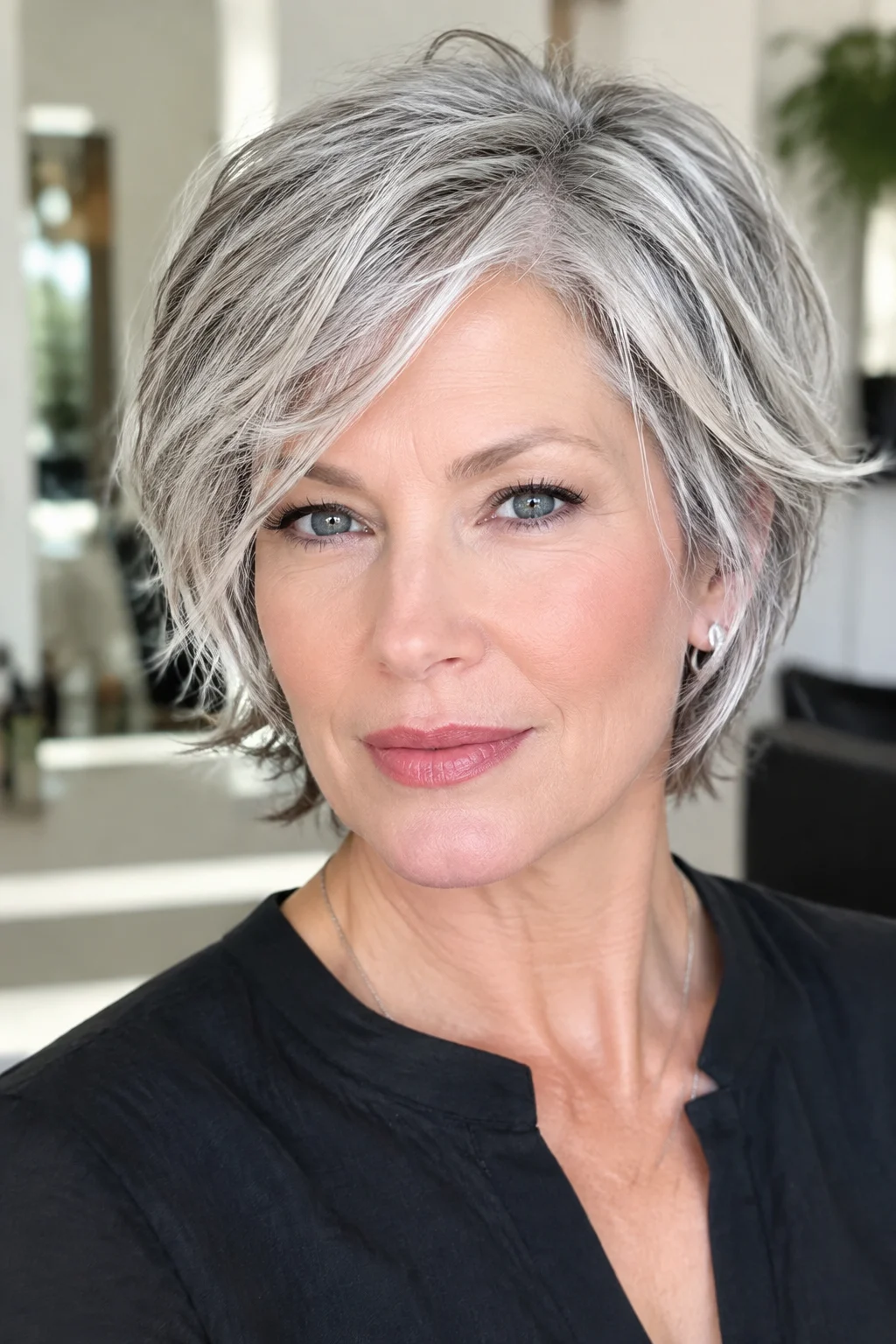
This length sits just above or right at the ears, with choppy, uneven layers cut throughout for texture. It’s short enough to feel low-maintenance but long enough to tuck behind the ears on busy days. The choppy ends keep fine gray hair from looking flat, adding the illusion of extra density without any added length.
Wet-Look Slicked-Back Pixie
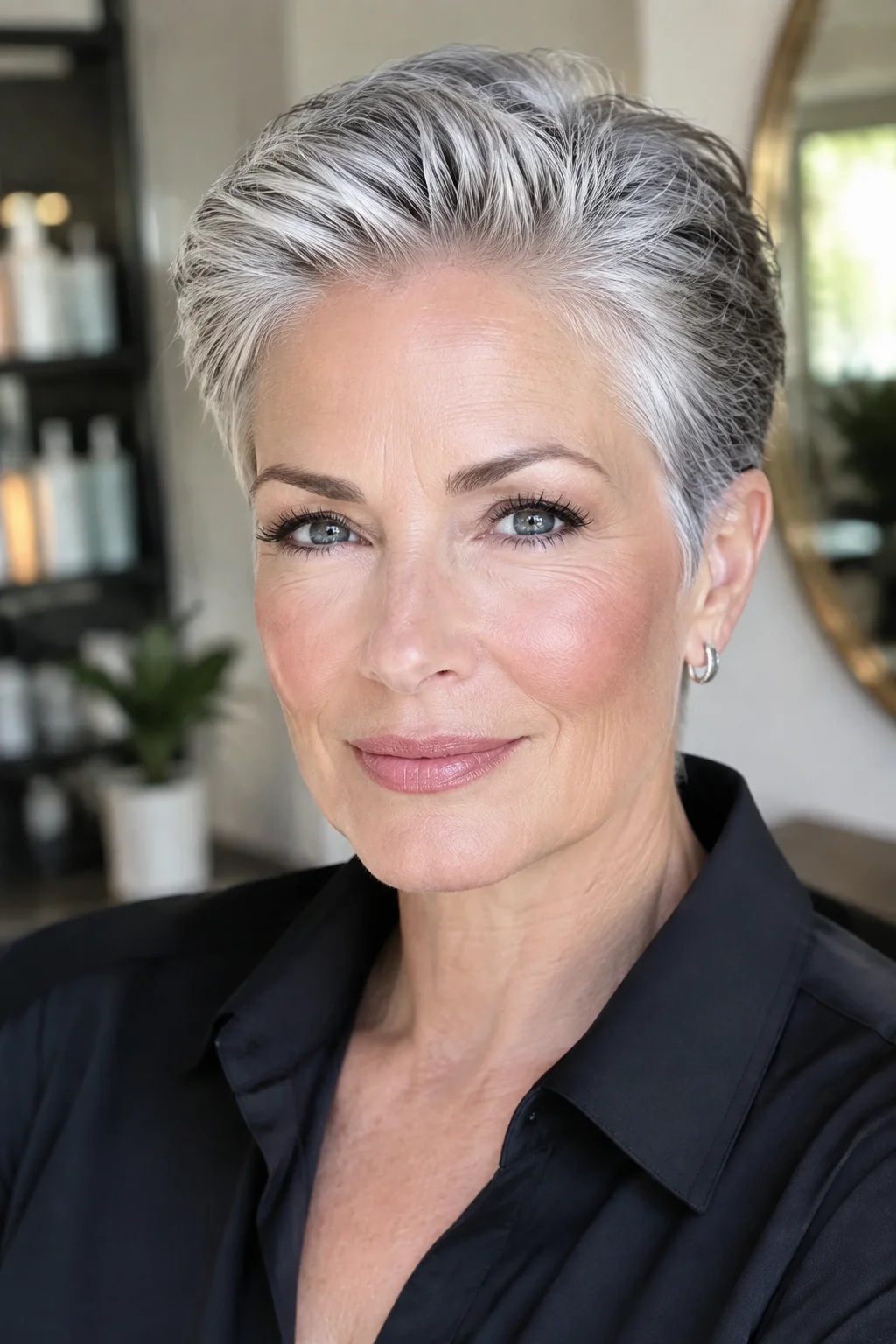
Styled with a strong-hold gel or cream, this pixie gets pushed straight back off the face for a sleek, almost polished metal finish. On cool-toned gray hair, the wet look genuinely looks like brushed silver, picking up light in a way that dry styling never quite achieves. It’s a dramatic option best saved for nights out or occasions where you want a statement look rather than an everyday routine. The style depends entirely on healthy scalp skin being visible at the hairline, so it suits those with clear, even skin tone there.
Tapered Nape with Longer Crown
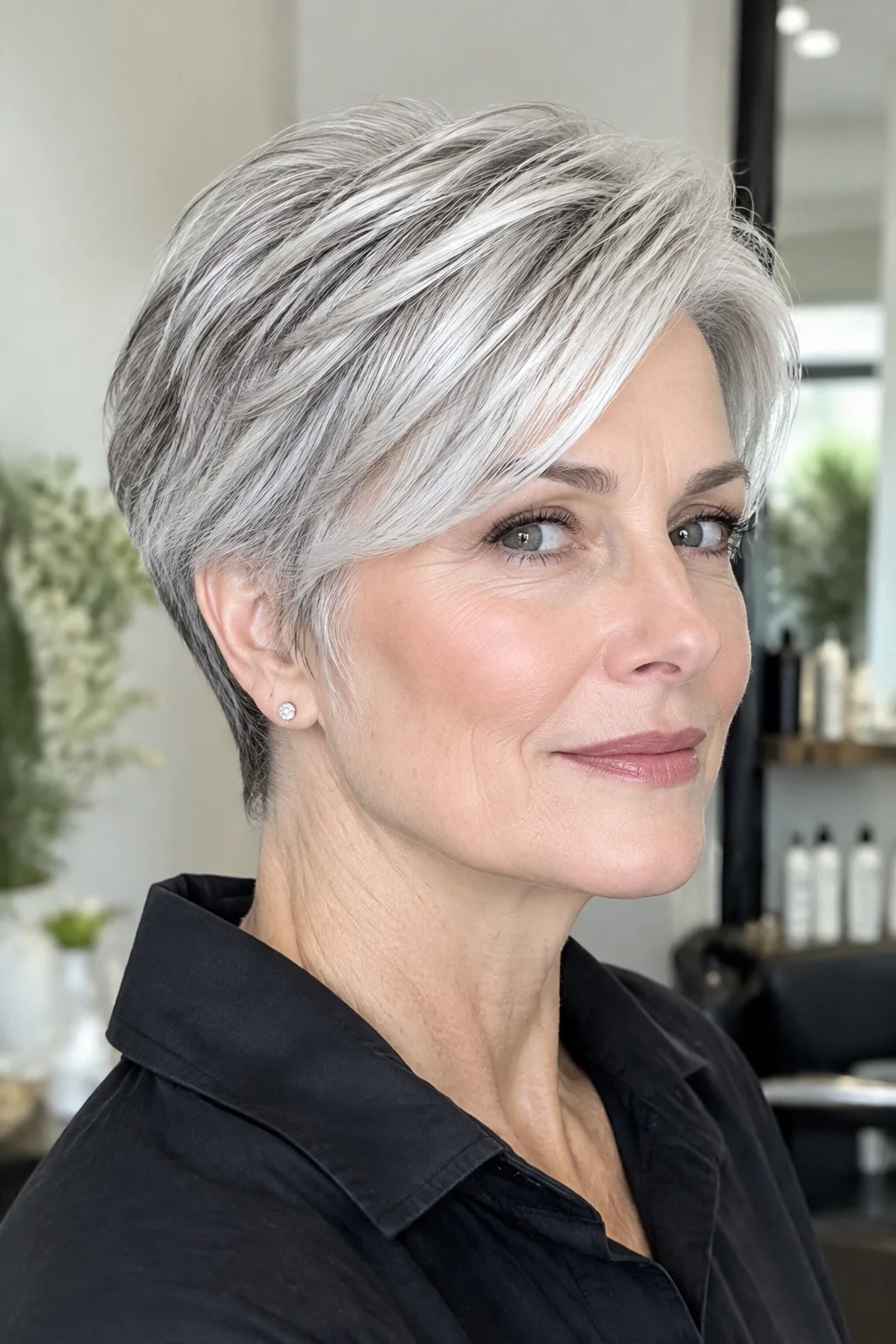
The tapering happens gradually from a close nape up to noticeably longer hair at the crown, creating a soft gradient instead of a hard line. This shape flatters most face shapes because the length builds gently rather than stopping abruptly. Gray hair with some natural lift at the roots looks especially good here, since the crown length can be teased or blow-dried upward for extra height.
Wavy Shag for Short Hair
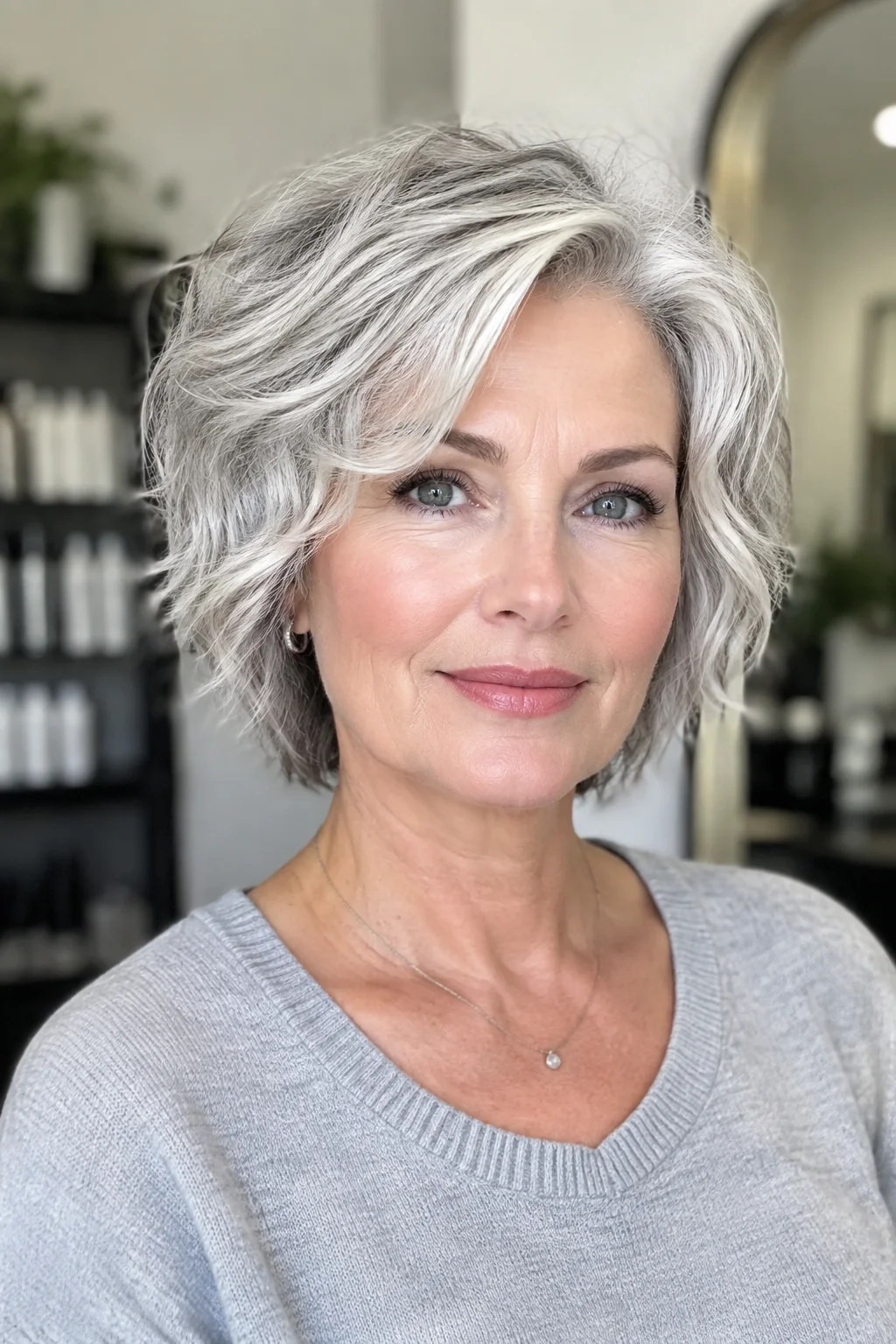
Shags bring a relaxed, rock-and-roll energy to short hair, with lots of layering and a shaggy, undone finish throughout. On gray hair, the waves in a shag catch light at different angles, giving the color depth instead of one flat tone. This cut suits people with natural wave or those willing to use a texturizing spray daily, since pin-straight hair won’t hold the shag’s shape as well. It also tends to need less frequent trims than a precise geometric cut would.
Blunt Bangs with Chin-Length Bob
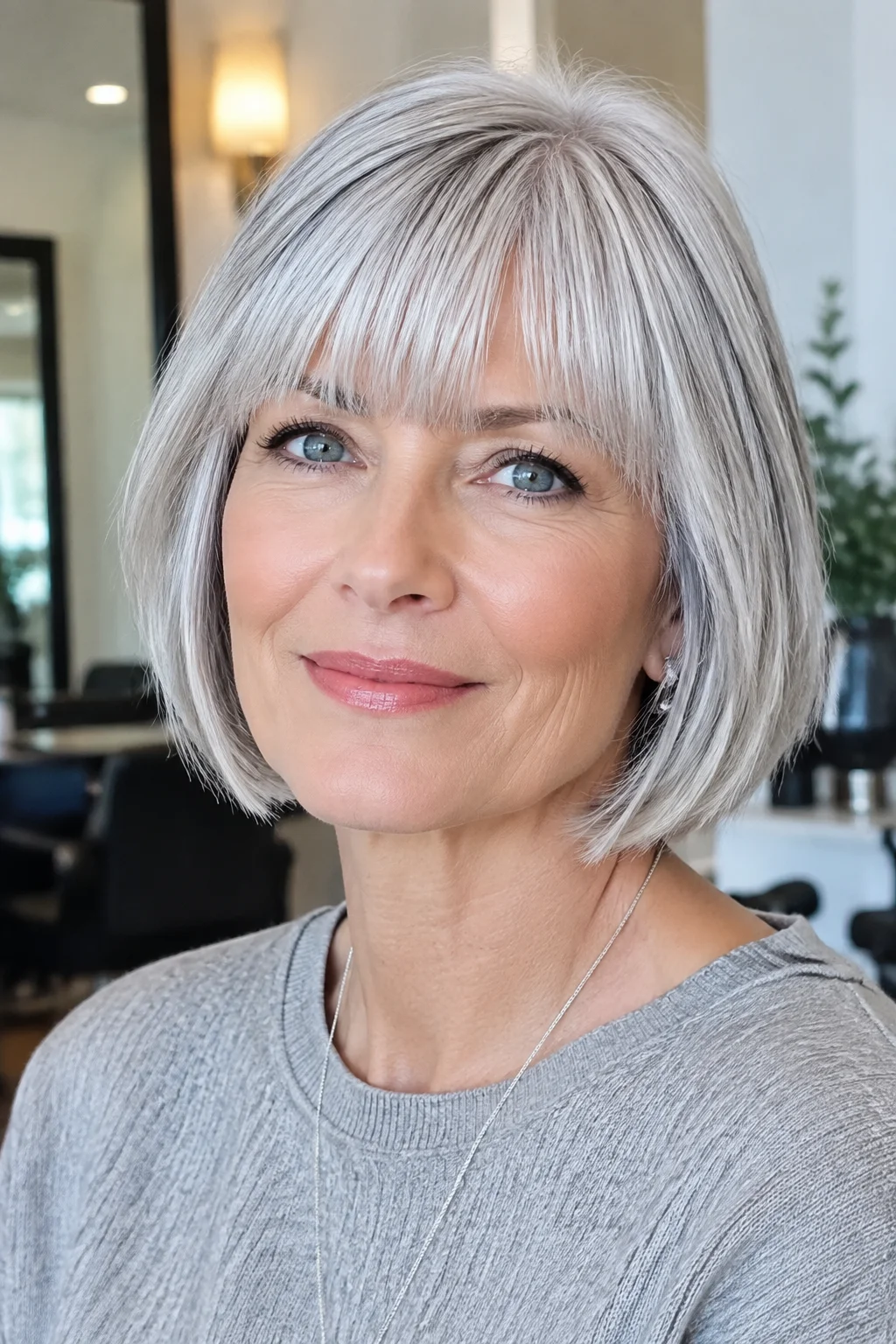
Pairing a thick, blunt fringe with a chin-length bob creates a bold frame around the whole face. The fringe draws the eye to the eyes and cheekbones, while the bob length keeps things balanced rather than top-heavy. This combination suits oval and heart-shaped faces best, and it needs fringe trims roughly every three to four weeks to keep the line sharp. Tip: keep a small flat iron on hand for touch-ups, since blunt bangs show every bend or kink immediately.
Rounded Pixie for Oval Faces
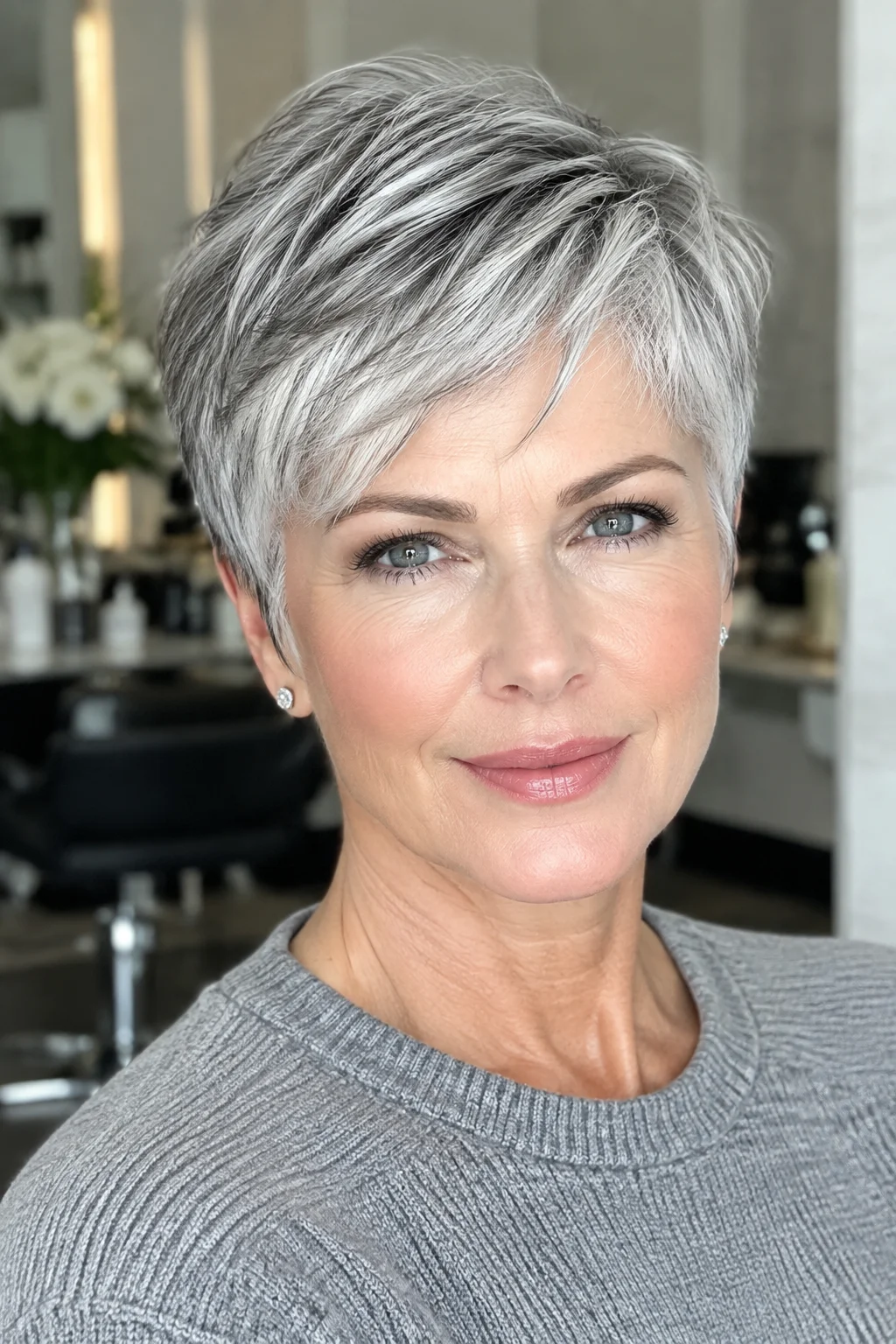
A rounded pixie follows the natural curve of the head, with soft layers that taper gently rather than ending in sharp points. It’s a forgiving shape that suits oval faces particularly well since there’s already balanced proportion to work with. The style is simple to maintain, needing just a light pomade worked through damp hair each morning.
Two-Tone Gray with Undercut Detail
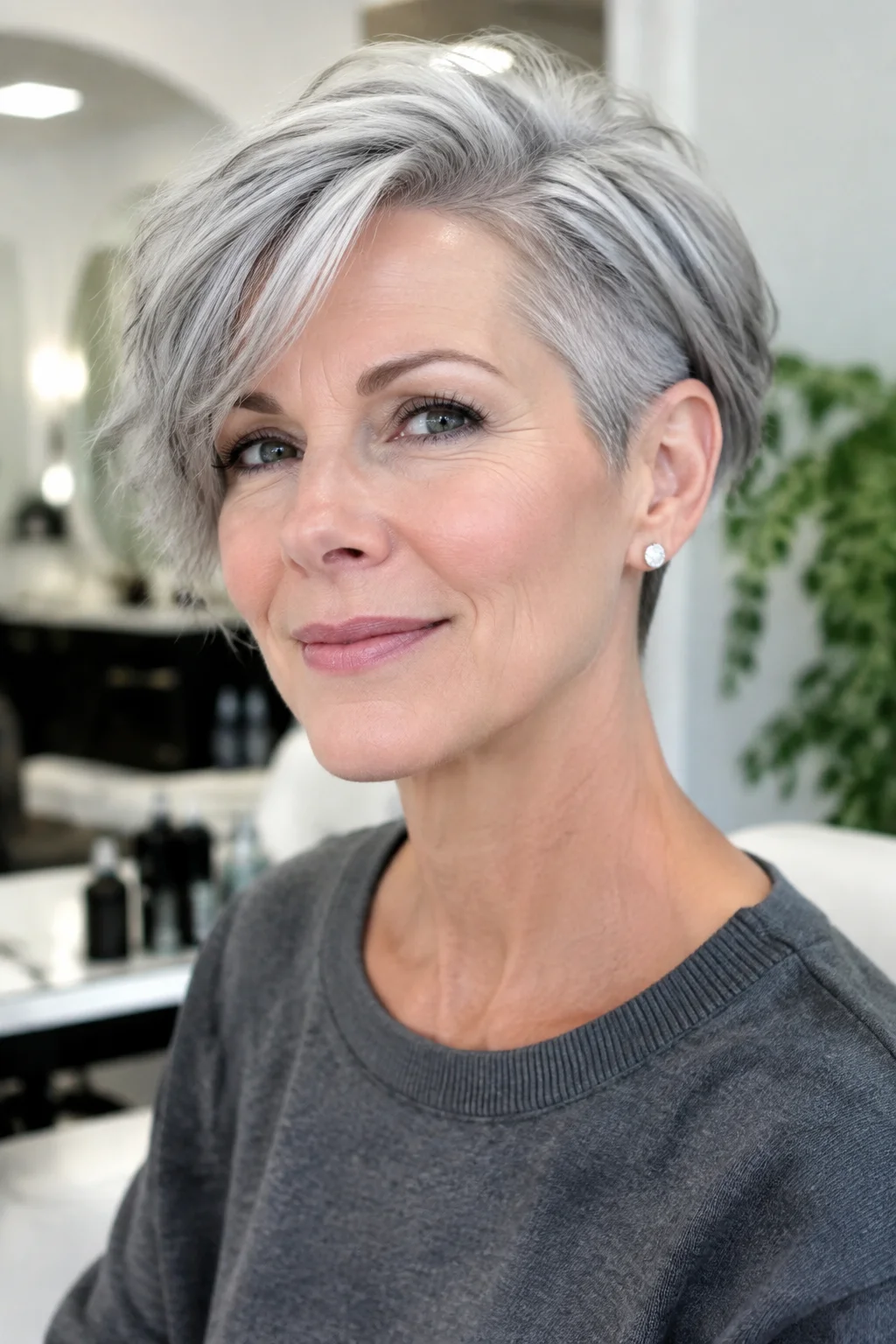
Some people embrace their transition to gray by keeping a visible line between silver regrowth and remaining pigmented ends, especially when paired with an undercut. This two-tone effect looks intentional and graphic rather than like an in-between stage. It’s a great option for anyone still growing out their gray who doesn’t want to color over it, and the undercut keeps the overall look tidy despite the two-tone contrast.
Tousled Bob with Texture and Movement
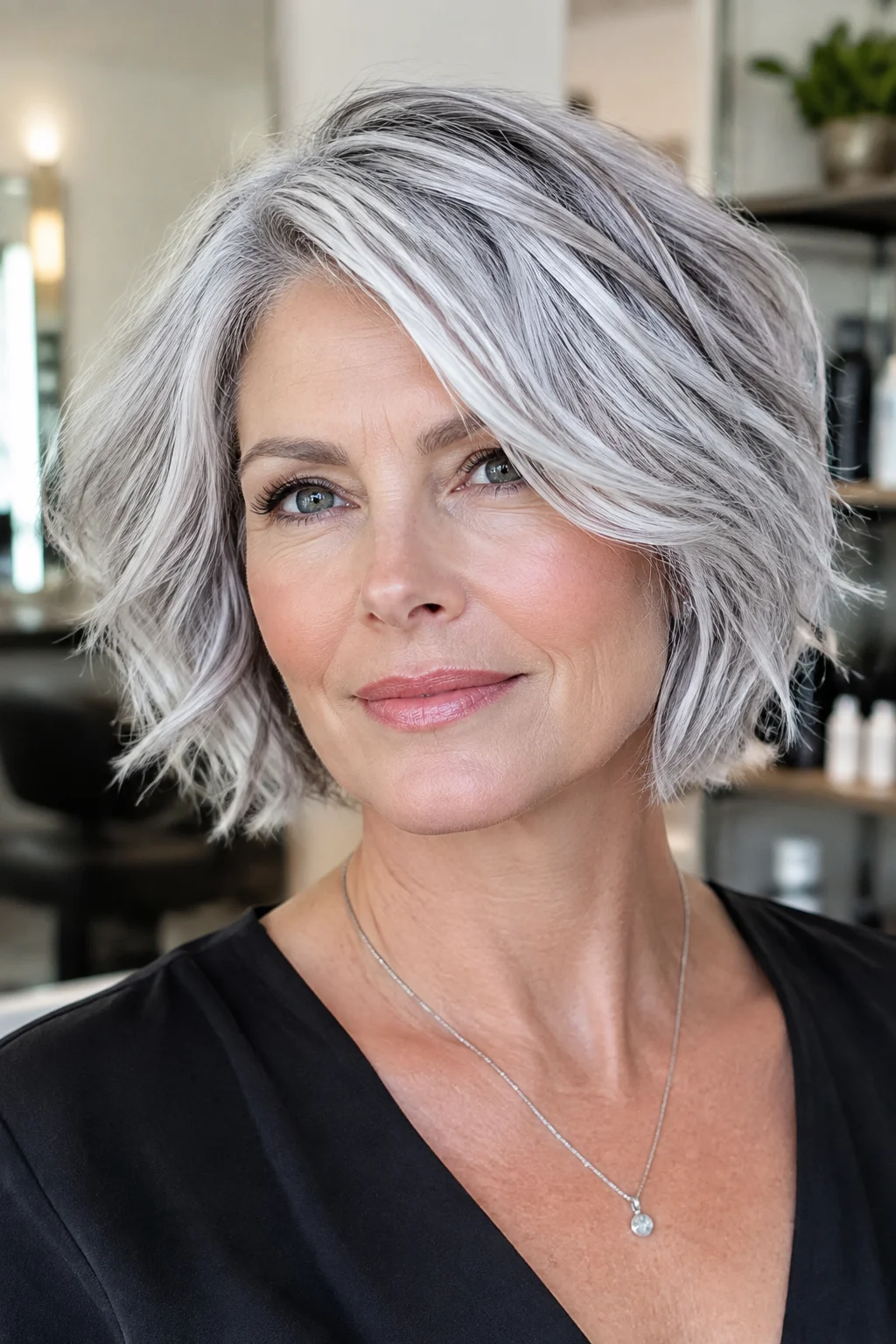
This bob skips the sleek, glassy finish in favor of a textured, piece-y look created with a sea salt spray or texturizing cream. It gives cool gray tones a softer, more relaxed appearance compared to a sharp geometric bob. The tousled finish hides a multitude of cowlicks and growth patterns, making it a practical choice for hair that doesn’t want to lie perfectly flat.
Severe Side Part Pixie
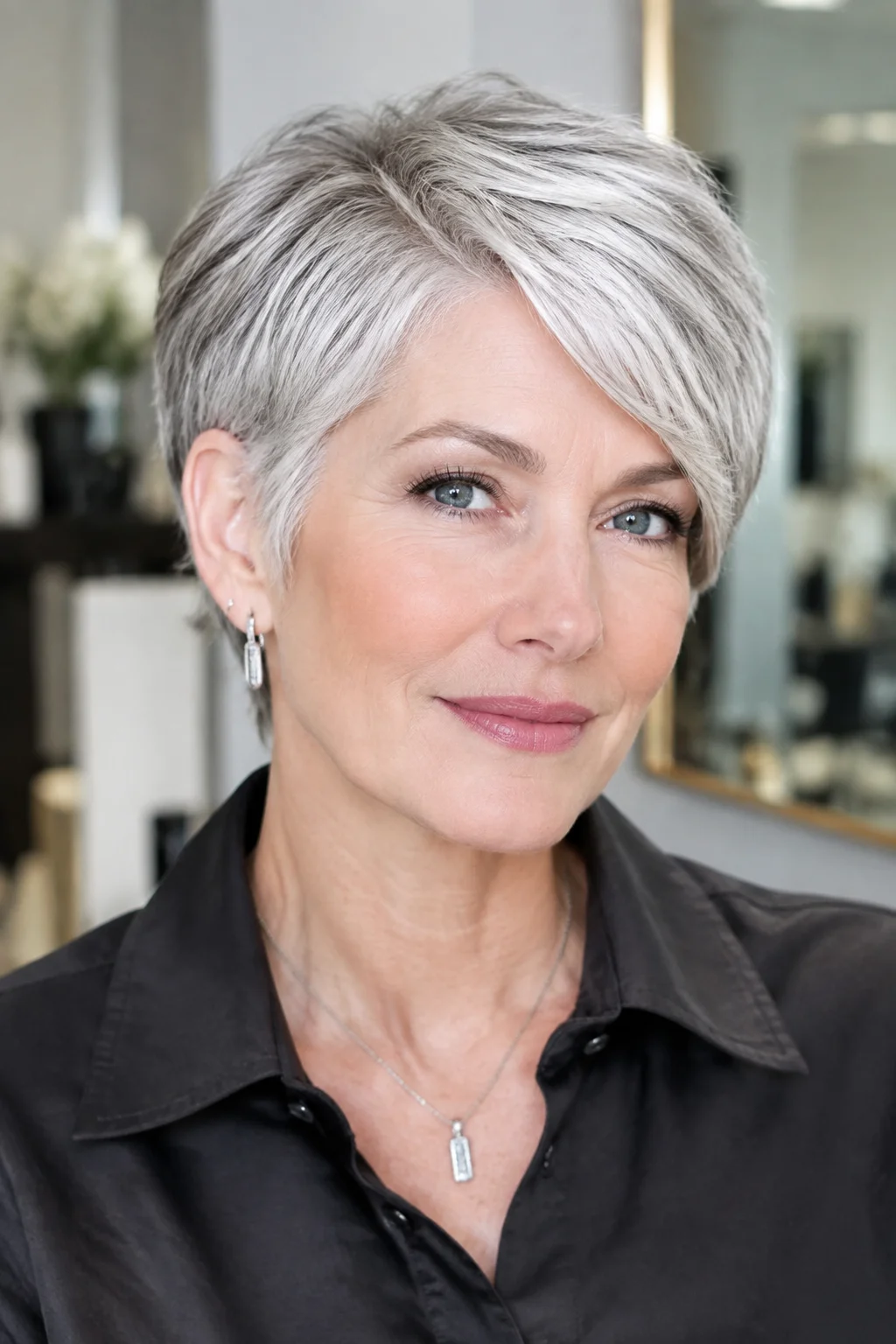
A hard, deep side part on a short pixie creates instant drama and a slightly retro feel. This works particularly well on fine gray hair since the strong part line gives the illusion of more volume on the heavier side. It requires precise cutting along the part to avoid gaps, so go to a stylist experienced with pixie shapes.
Short Feathered Layers Throughout
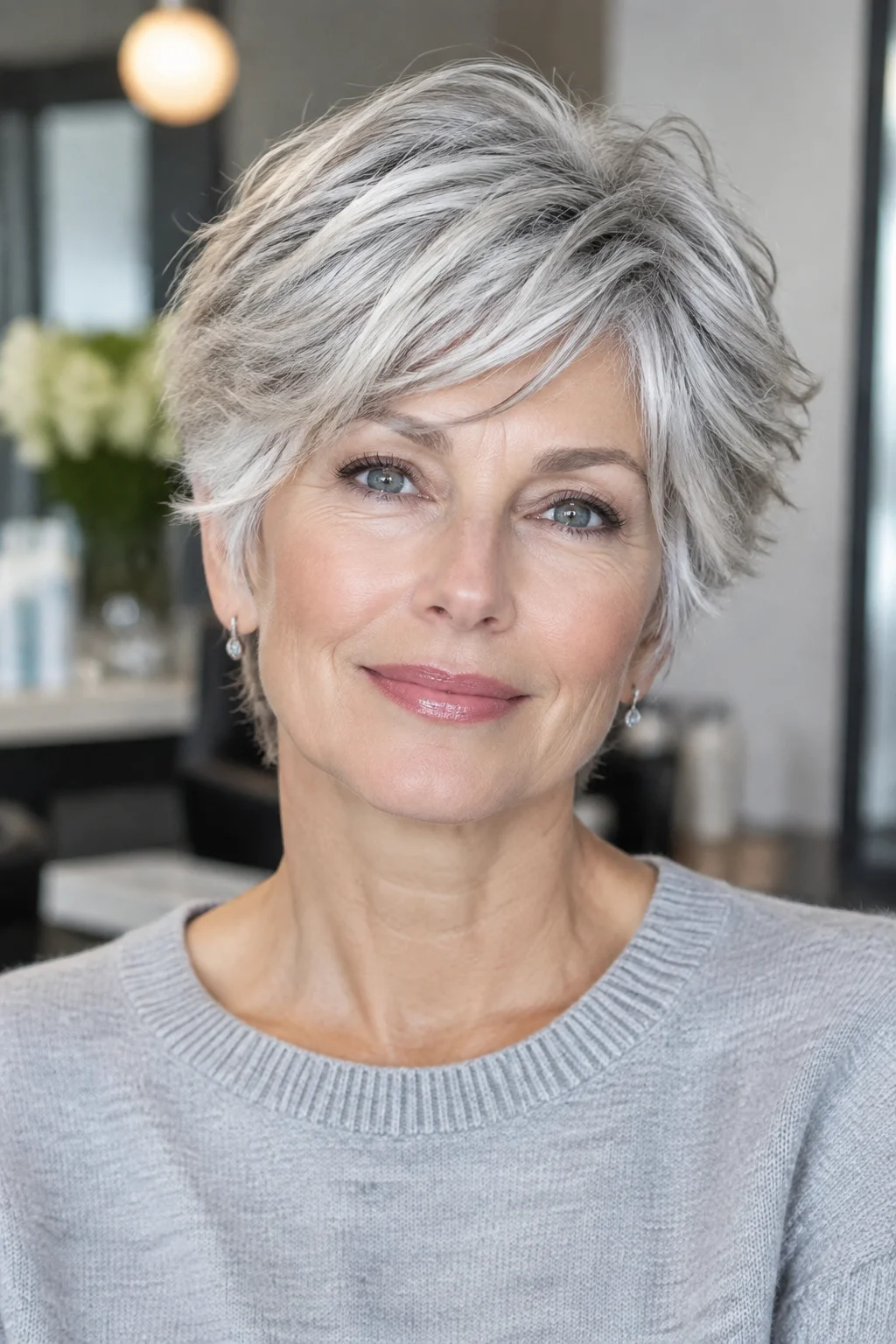
Feathered layers are cut to flick outward slightly at the ends, giving the whole head a soft, feminine movement. This technique works on nearly any short length and adds dimension to gray hair that might otherwise look uniform. It’s especially flattering on fine to medium hair types where extra texture reads as fullness rather than frizz.
Modern Gray Wolf Cut Short Version
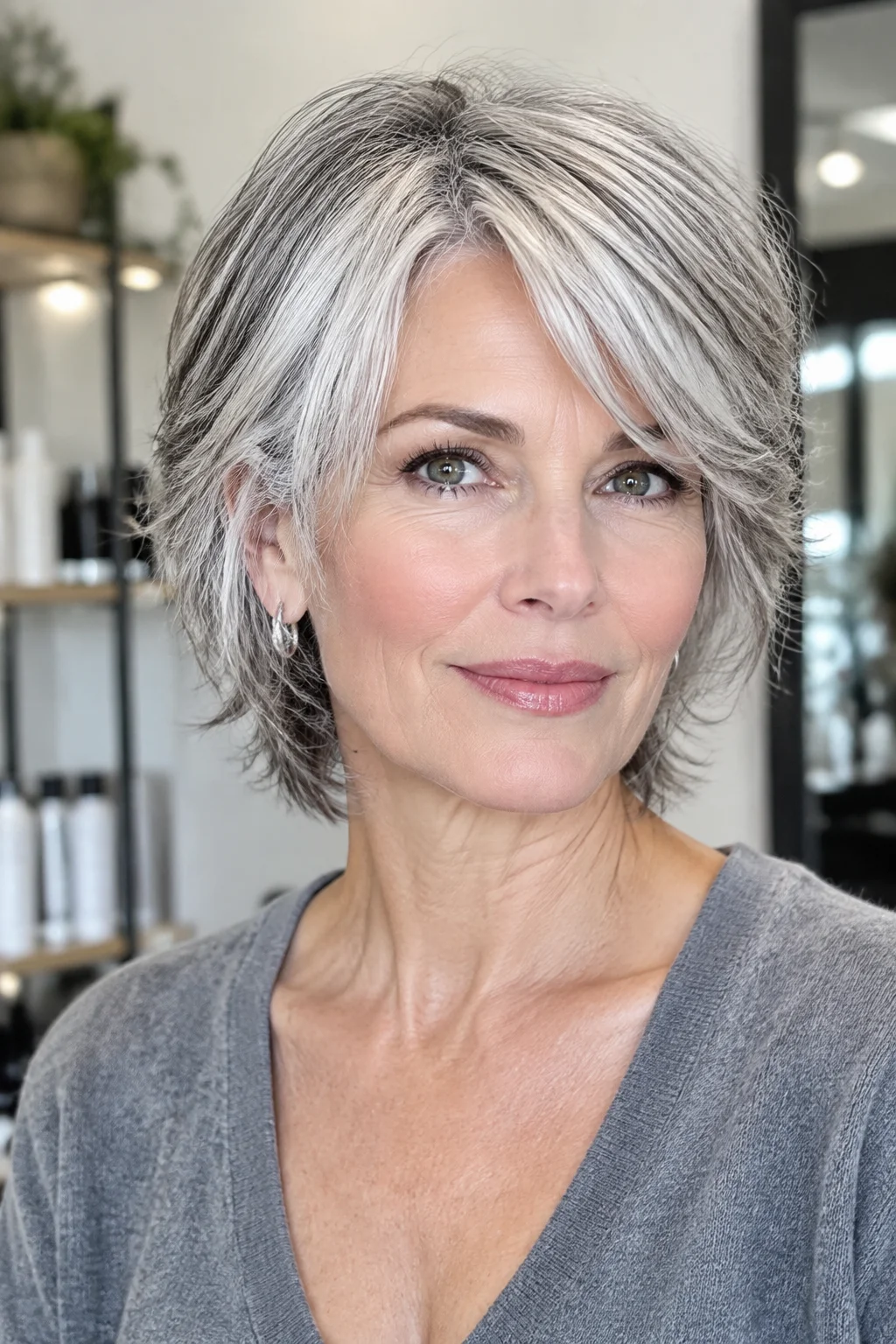
The wolf cut blends shag layering with mullet-inspired length at the back, and a short version keeps the silhouette compact while still delivering that shaggy, lived-in texture. On gray hair, the heavy layering creates contrast between shorter face-framing pieces and slightly longer back sections. It’s a trend-forward choice that suits people who already feel comfortable with a bit of imperfection in their styling, and it pairs well with air-drying for a naturally tousled result.
Which Cut Fits Your Hair and Lifestyle
Choosing between these styles comes down to three things: your natural texture, how much time you want to spend styling, and your face shape. If you have straight, fine hair and want something polished with almost no daily effort, the sleek bob to chin length or the rounded pixie for oval faces are safer bets than anything relying on heavy texture. If your hair already waves or curls on its own, fighting that with a sleek bob means extra heat styling every single day, so lean toward the wavy shag for short hair or the curly pixie instead, since both work with what your hair already wants to do.
For anyone who wants low maintenance above everything else, avoid cuts with sharp, defined edges like the geometric bob with angled layers or the blunt bangs with chin-length bob, since both need frequent trims to look intentional rather than overgrown. The textured crop with longer top and the tapered nape with longer crown forgive a missed haircut appointment far better.
A common mistake is choosing a dramatic style like the disconnected undercut with gray fade or the wet-look slicked-back pixie without considering how often you’ll need touch-ups. Bold cuts photograph well but demand upkeep. Match the drama level to your actual routine, not just to how the picture looks in a magazine.