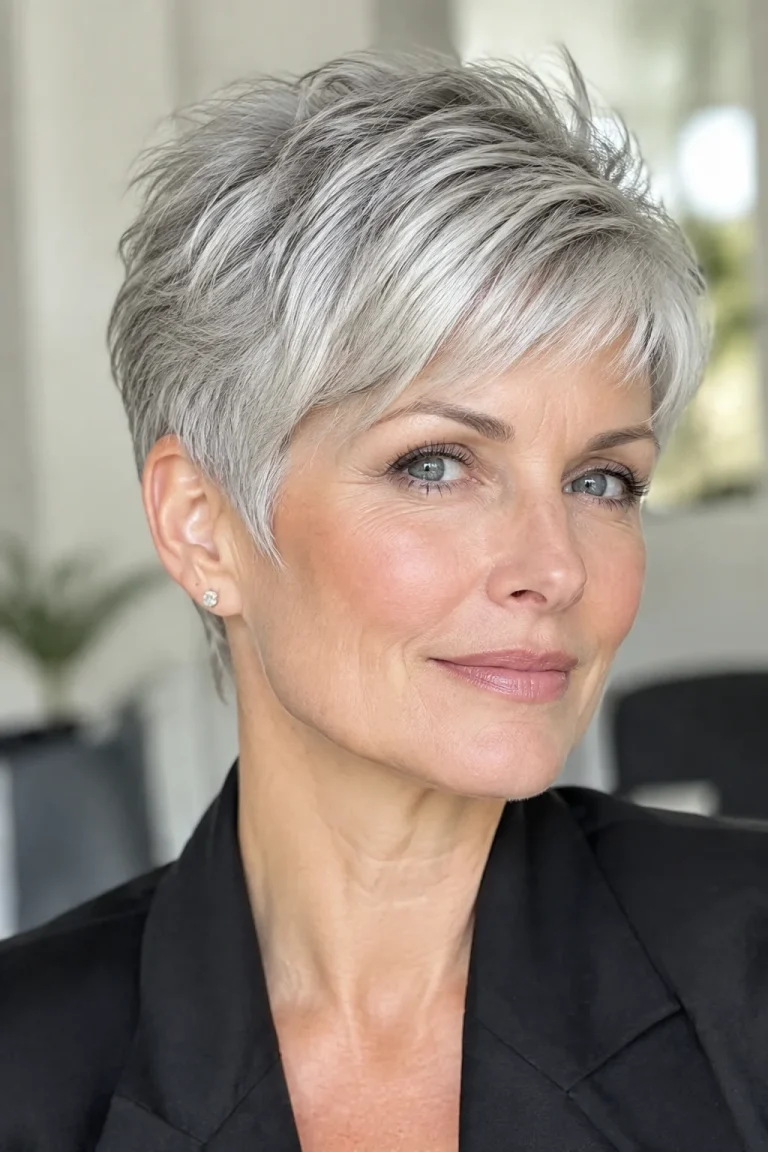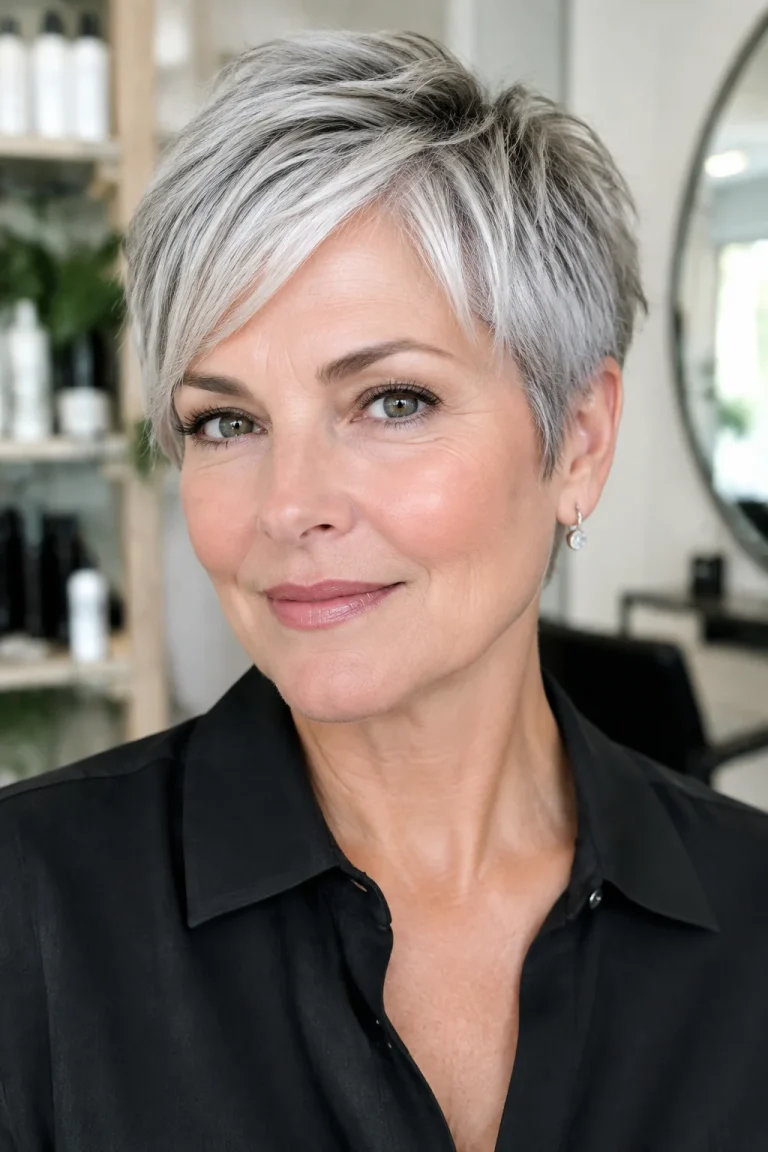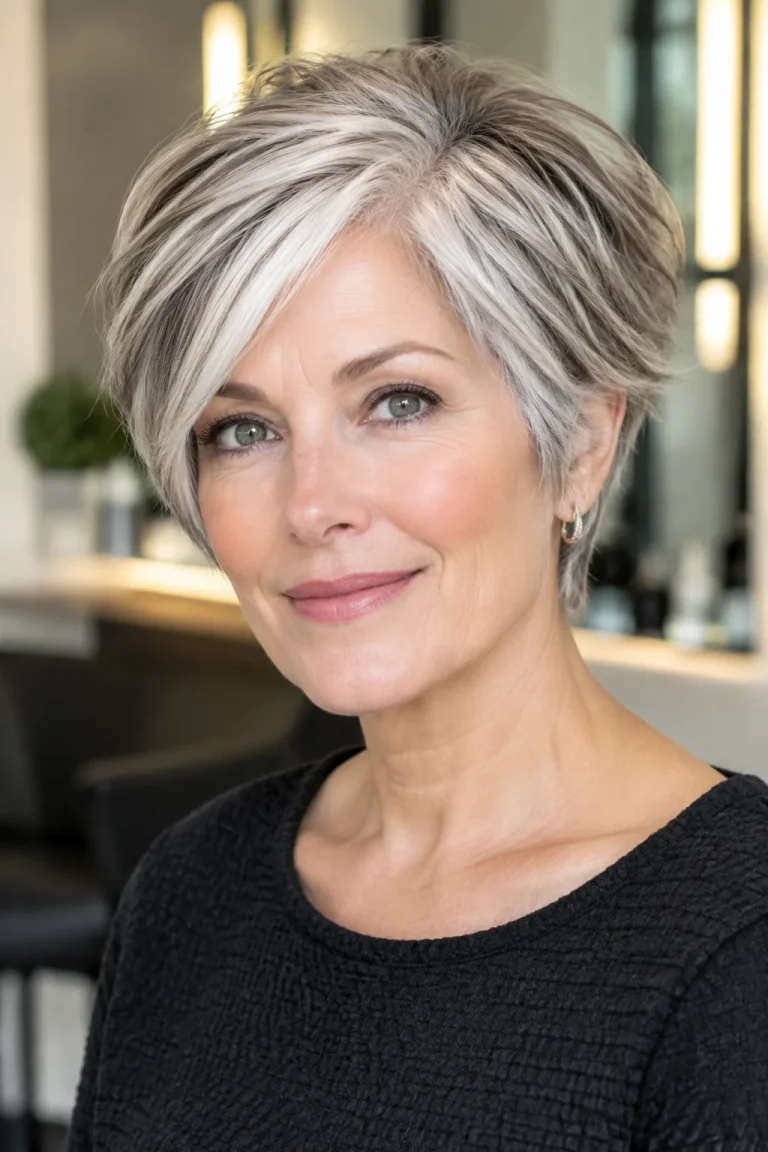
Gray hair changes the way a cut behaves, and most people figure that out the hard way after a trim leaves their ends looking flat or their roots looking washed out. Layers solve a lot of that. They break up solid gray in a way that looks deliberate instead of patchy, and they let silver, white, and pepper tones catch light instead of sitting there dull. Short hair layered haircuts for gray hair work because the layering adds movement exactly where gray can look stiff, and shorter lengths keep the texture from weighing itself down. Some of these cuts suit fine strands that need lift at the crown. Others are built for thick hair that needs the bulk cut away so it doesn’t puff out. Below are twenty three options worth bringing to a stylist, along with notes on who each one flatters and what to ask for in the chair.
Textured Pixie with Longer Bangs
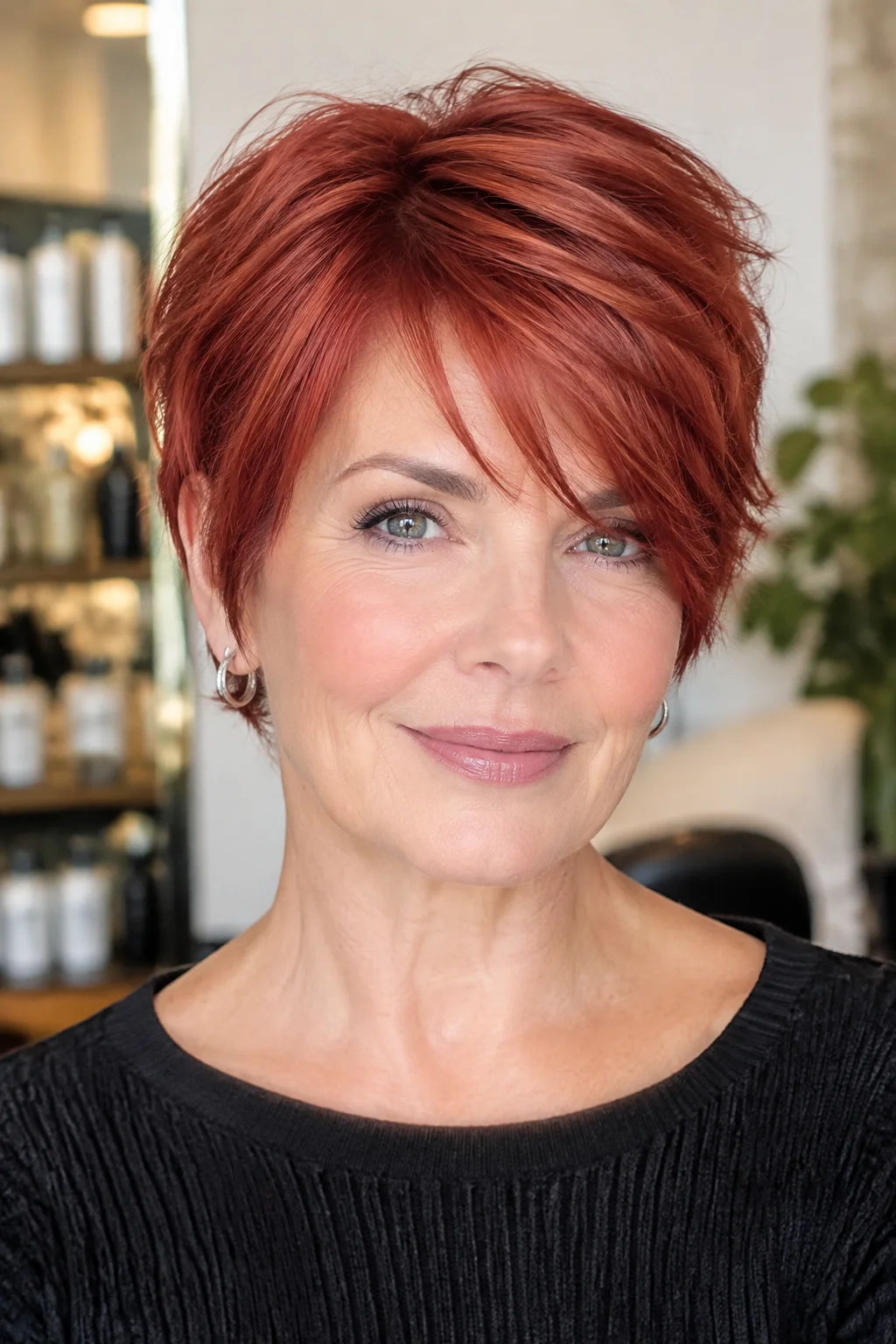
This pixie keeps the sides and back short while leaving length through the bangs, so you get an easy contrast between cropped and soft. Gray hair tends to show texture well in a cut like this because the shorter layers catch light from different angles. The longer bang piece can be swept to the side or worn straight across, depending on your face shape. Ask your stylist to point-cut the bang ends so they don’t read as a blunt line. Tip: a lightweight pomade on dry hair keeps the top piece soft instead of stiff. A light mist of heat protectant before styling helps the finish last.
Choppy Shag Bob
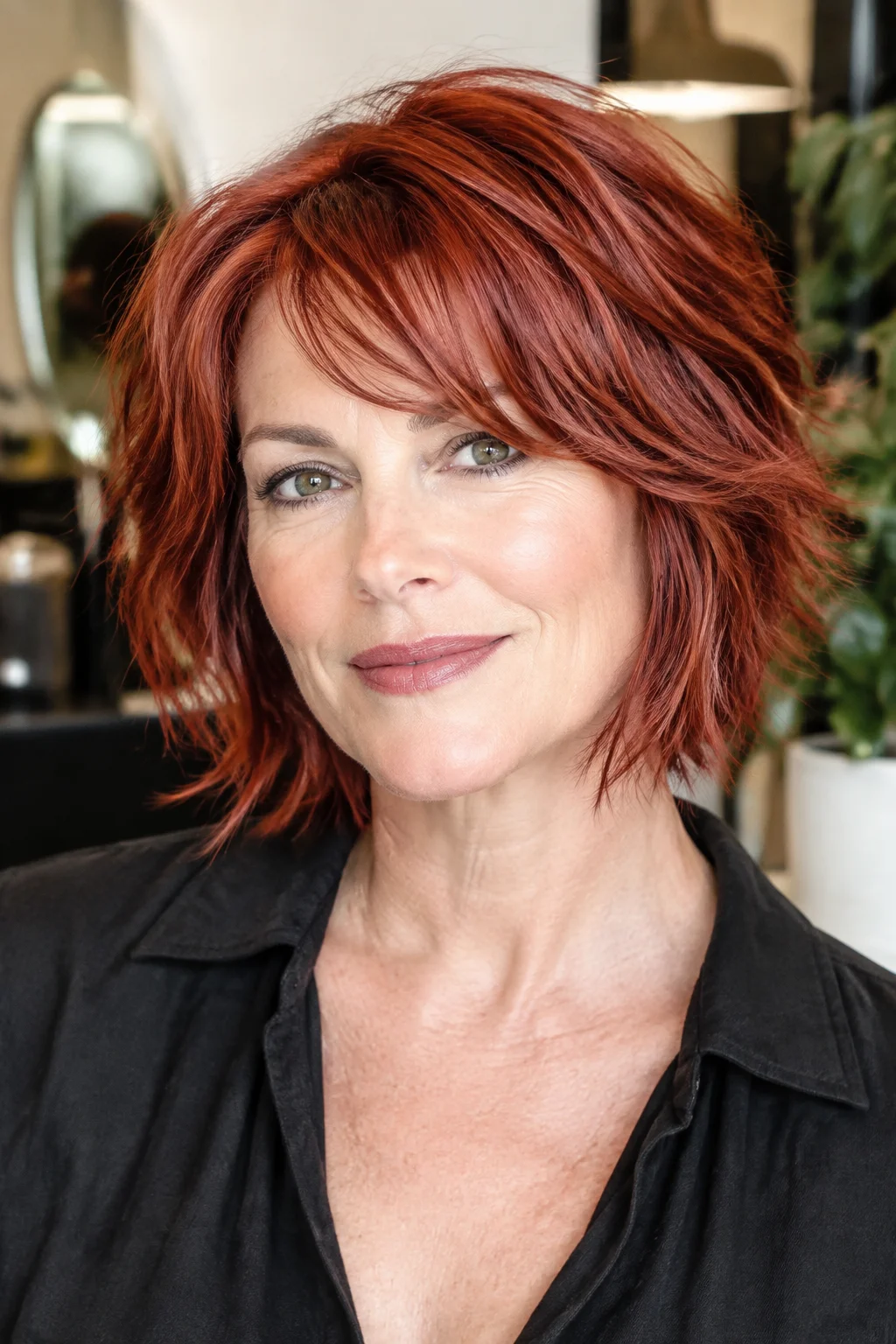
The shag bob brings heavy, irregular layers cut close to the face and jaw, which keeps it from reading as a plain bob. Gray hair often has a coarser texture than it did before, and this cut uses that to its advantage instead of fighting it. It looks a little undone on purpose, almost like you didn’t try too hard, which is the whole point of a shag. Ask for razor work at the ends so the layers feather instead of blunt out. A light mist of heat protectant before styling helps the finish last. A light mist of heat protectant before styling helps the finish last.
Stacked Layered Pixie
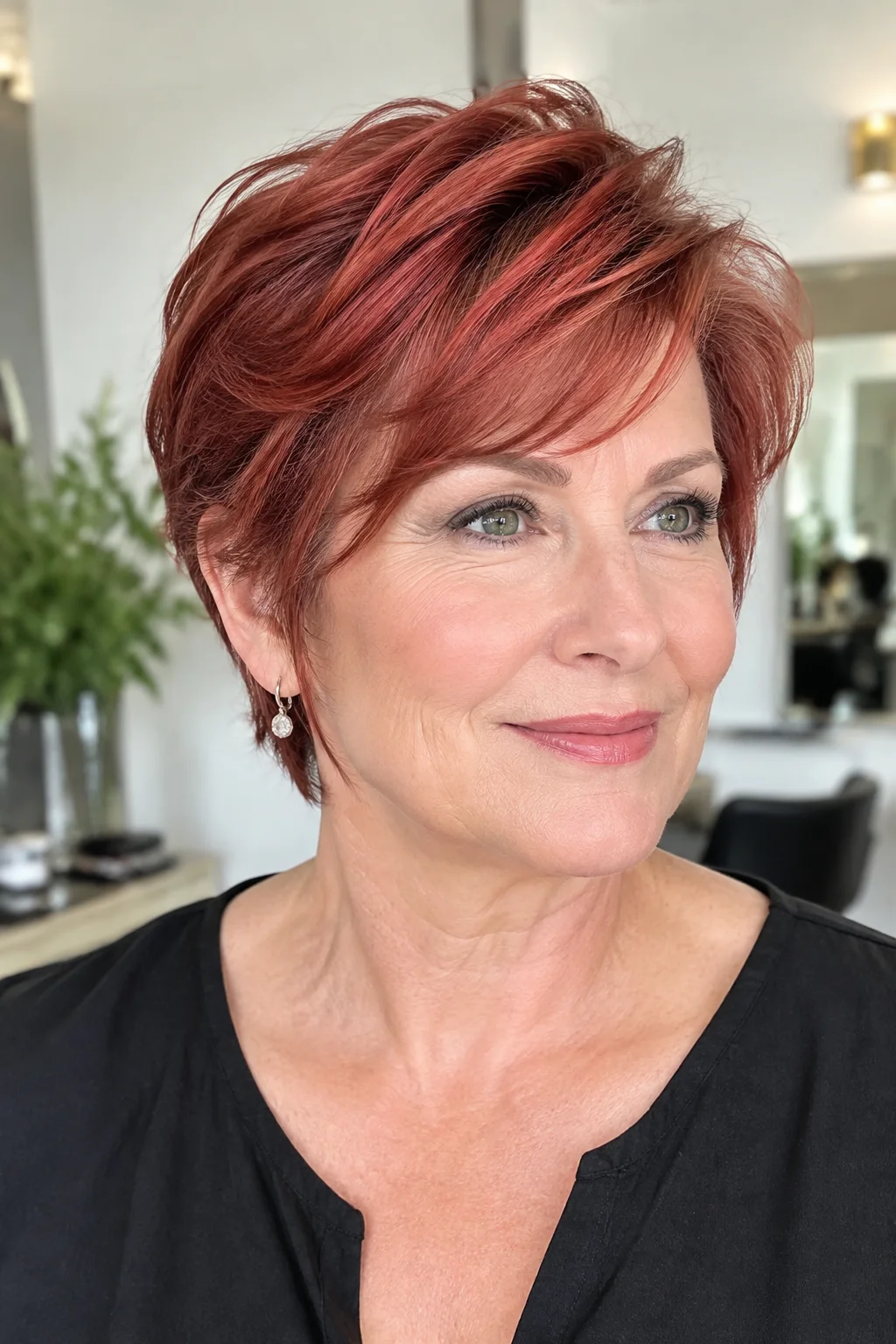
Stacking adds volume at the back of the head while keeping the front shorter and closer to the skin. This works particularly well for anyone whose gray hair has gone thin at the crown, since the stacked layers create the illusion of fullness without extensions or powders. The cut tapers down into the neckline, which keeps things neat at the back even as it builds height up top.
Feathered Short Bob
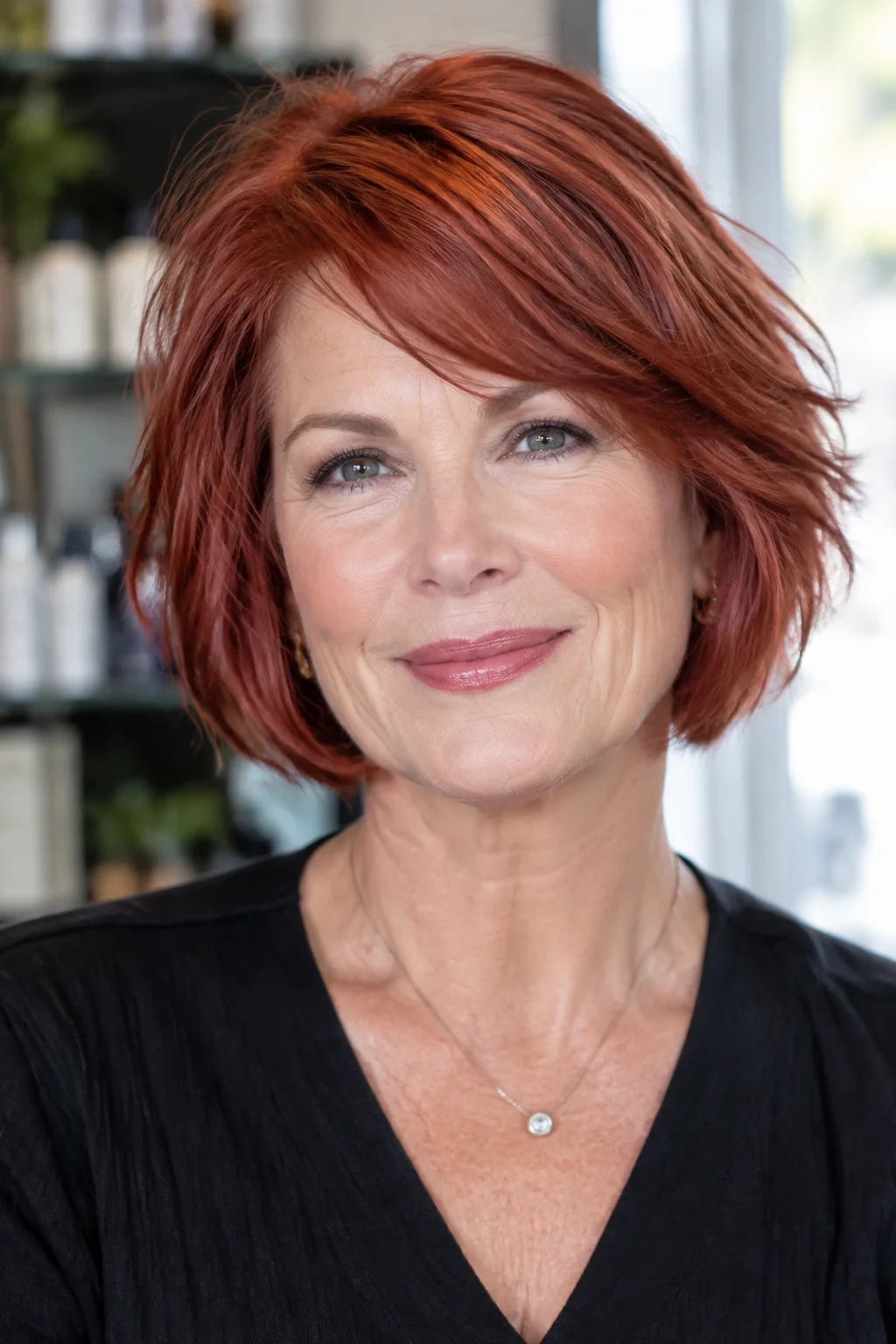
Feathering means the ends are cut so they flick slightly outward or blend softly rather than sitting in one heavy line. On a short bob, this keeps gray hair from looking too severe, which can happen with a blunt cut and stark white or silver strands. The feathered ends soften the whole shape around the face. Tip: blow dry with a round brush pointed outward at the ends to encourage the feathering to show.
Textured Crop with Longer Top
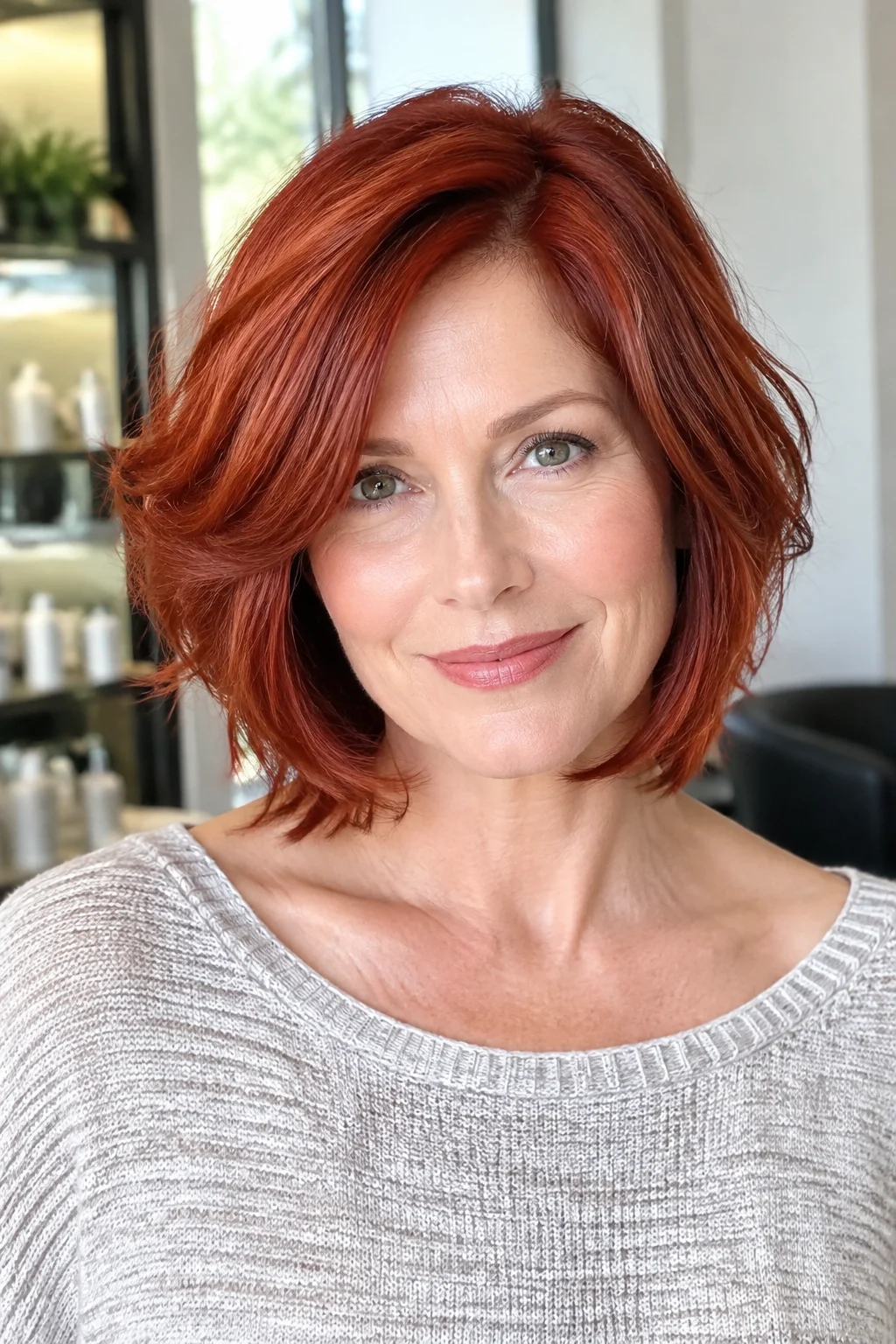
A crop with extra length on top gives you styling options a traditional pixie doesn’t. You can push it back, sweep it to one side, or let it fall forward with a little texture cream. Gray hair holds this kind of textured finish well because the slight coarseness of gray strands gives the style grip instead of letting it slide flat.
Layered Lob with Side Part
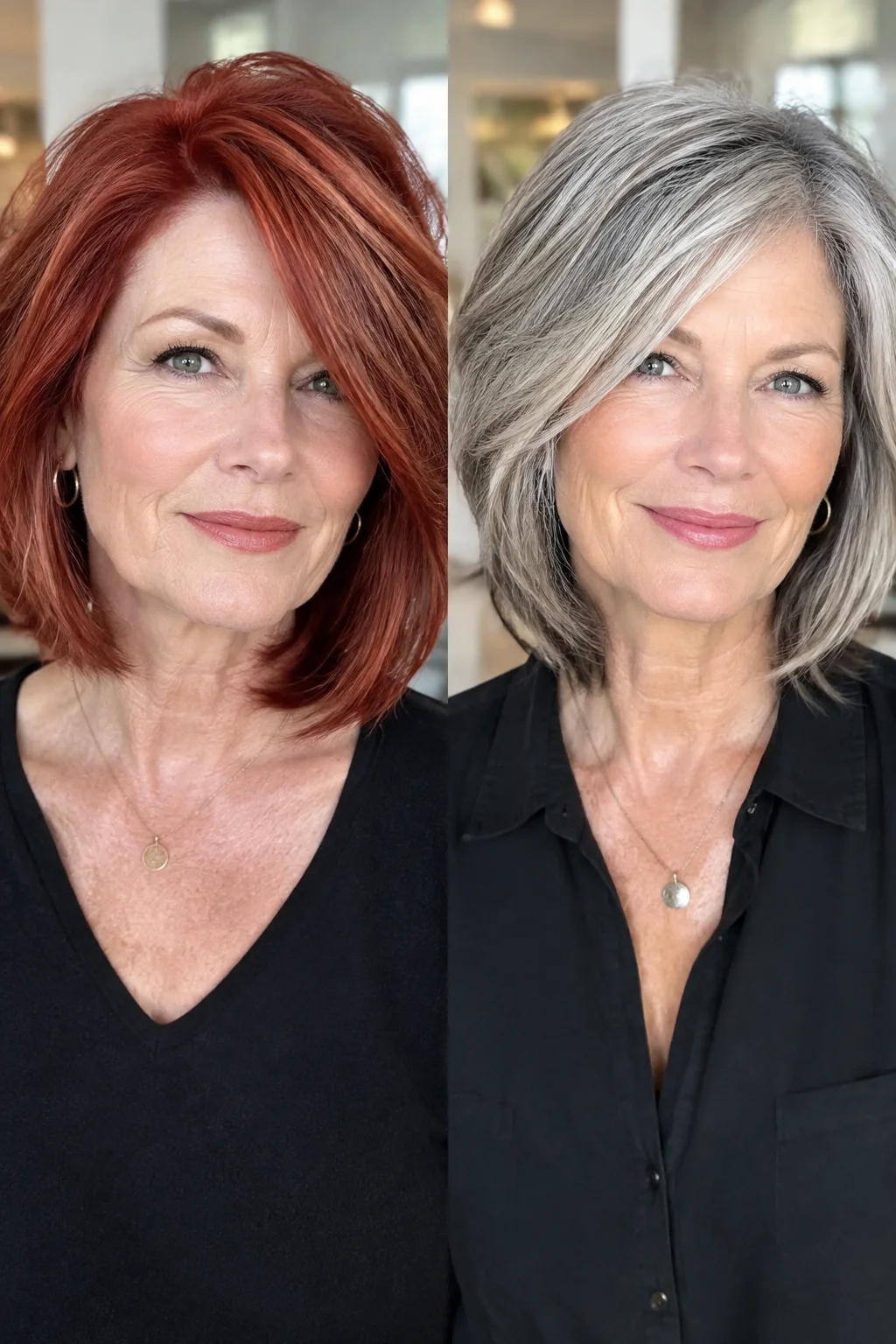
The lob, or long bob, sits around the chin to collarbone and picks up layers mostly toward the ends. A side part breaks up symmetry and softens a square or round face shape. This is a forgiving length for gray hair that’s transitioning from a dyed color, since it gives enough length to blend regrowth without a hard demarcation line.
Choppy Pixie Crop
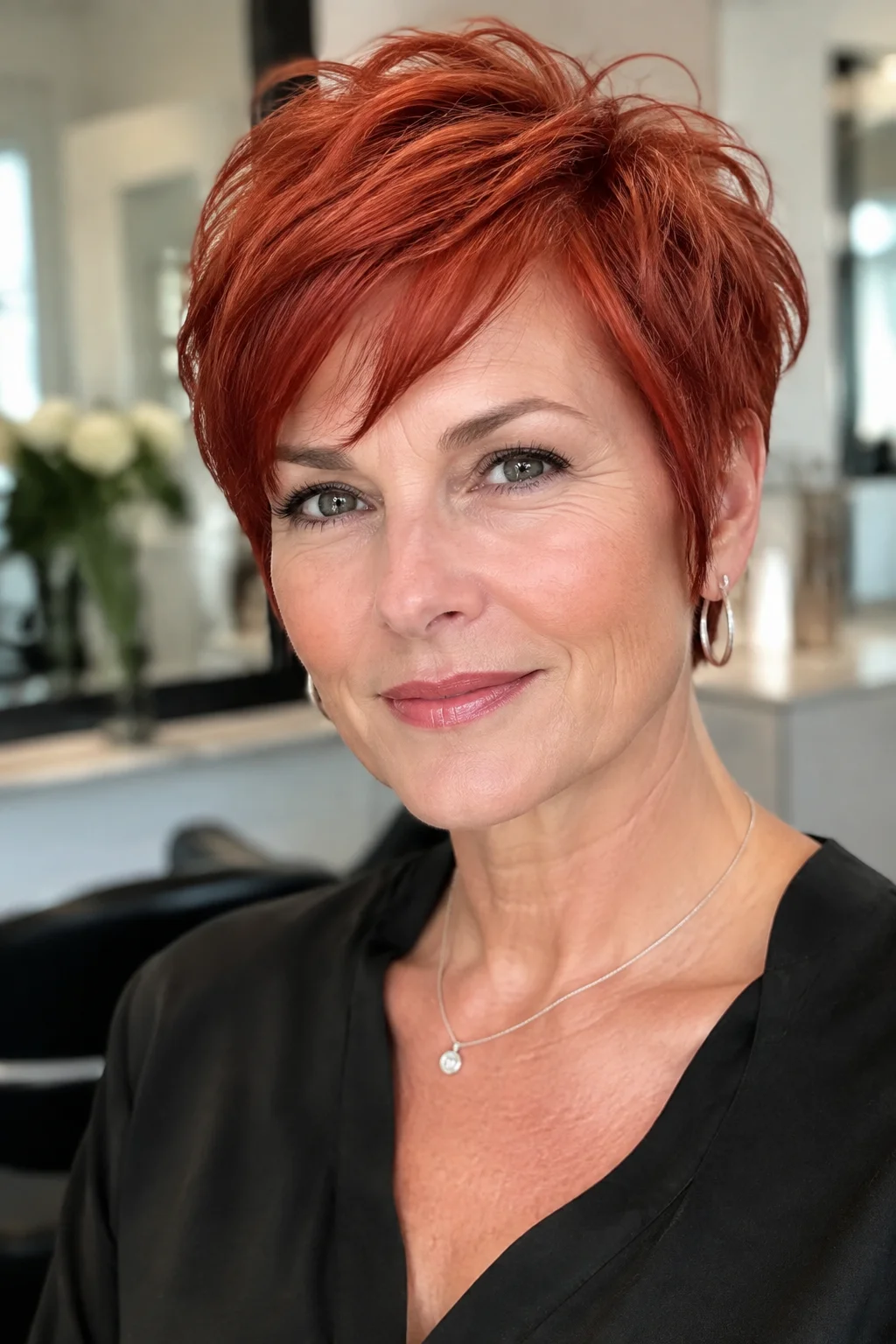
This one is short, blunt in places, and intentionally uneven. The choppy layers give gray hair a lived-in look that reads as current rather than severe. It suits finer hair types especially well, since the cut removes weight that might otherwise flatten the crown. Tip: scrunch a small amount of texturizing paste through damp hair before it dries to lock in the piecey finish.
Shaggy Bob with Face-Framing
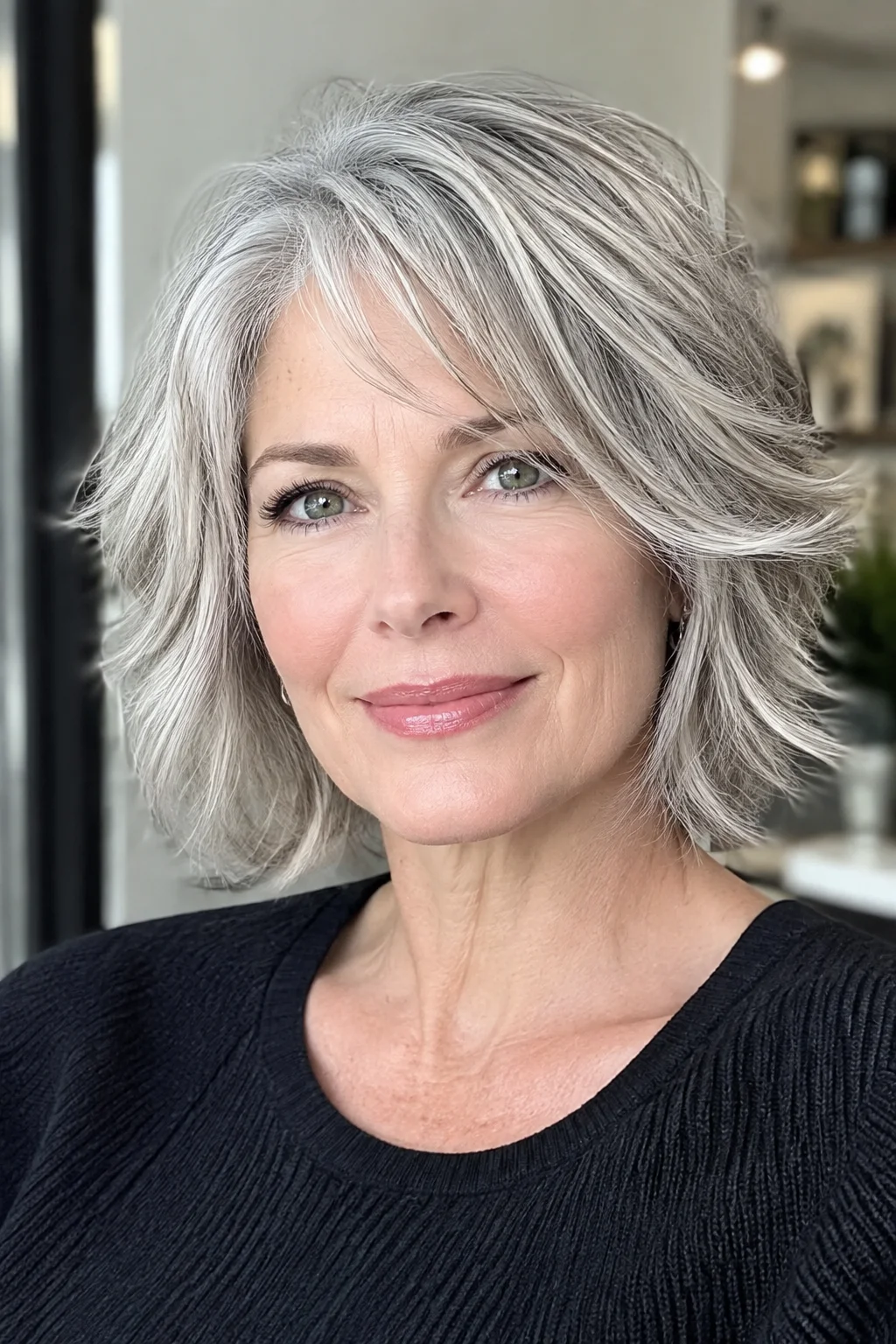
Face-framing pieces cut shorter around the cheekbones draw attention up toward the eyes, which flatters most face shapes. Paired with a shaggy, layered bob, this creates a cut that moves rather than sits still. Gray hair benefits from the lighter ends near the face since the color variation in natural gray often looks richer when it’s cut at an angle instead of straight across.
Graduated Layered Pixie Bob
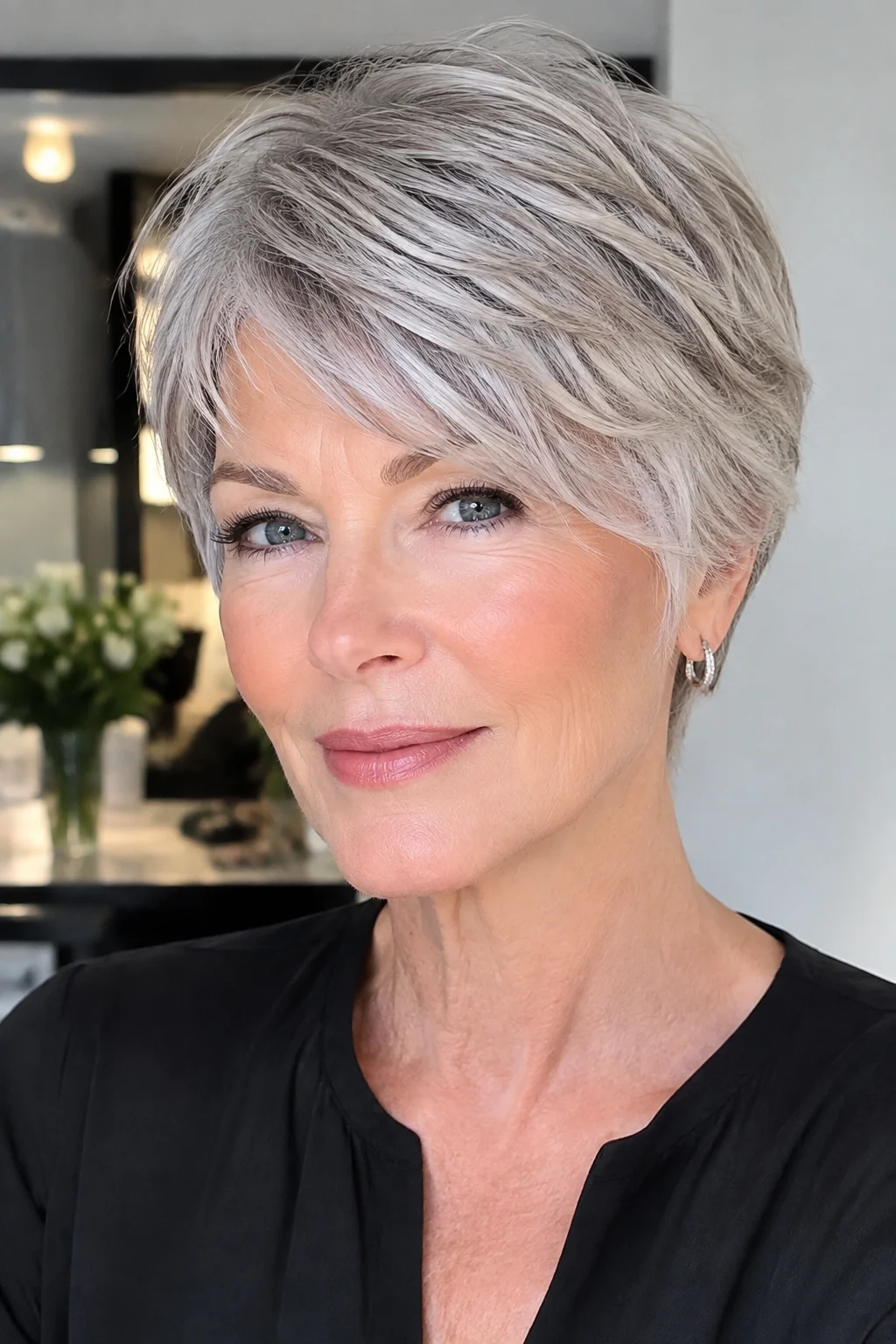
Graduation refers to the way the length builds gradually from short at the nape to longer at the crown and front. This pixie bob hybrid gives a rounded, soft silhouette instead of the sharper angles some pixies have. It’s a solid choice for anyone who wants short hair without looking overly cropped.
Textured Curly Pixie
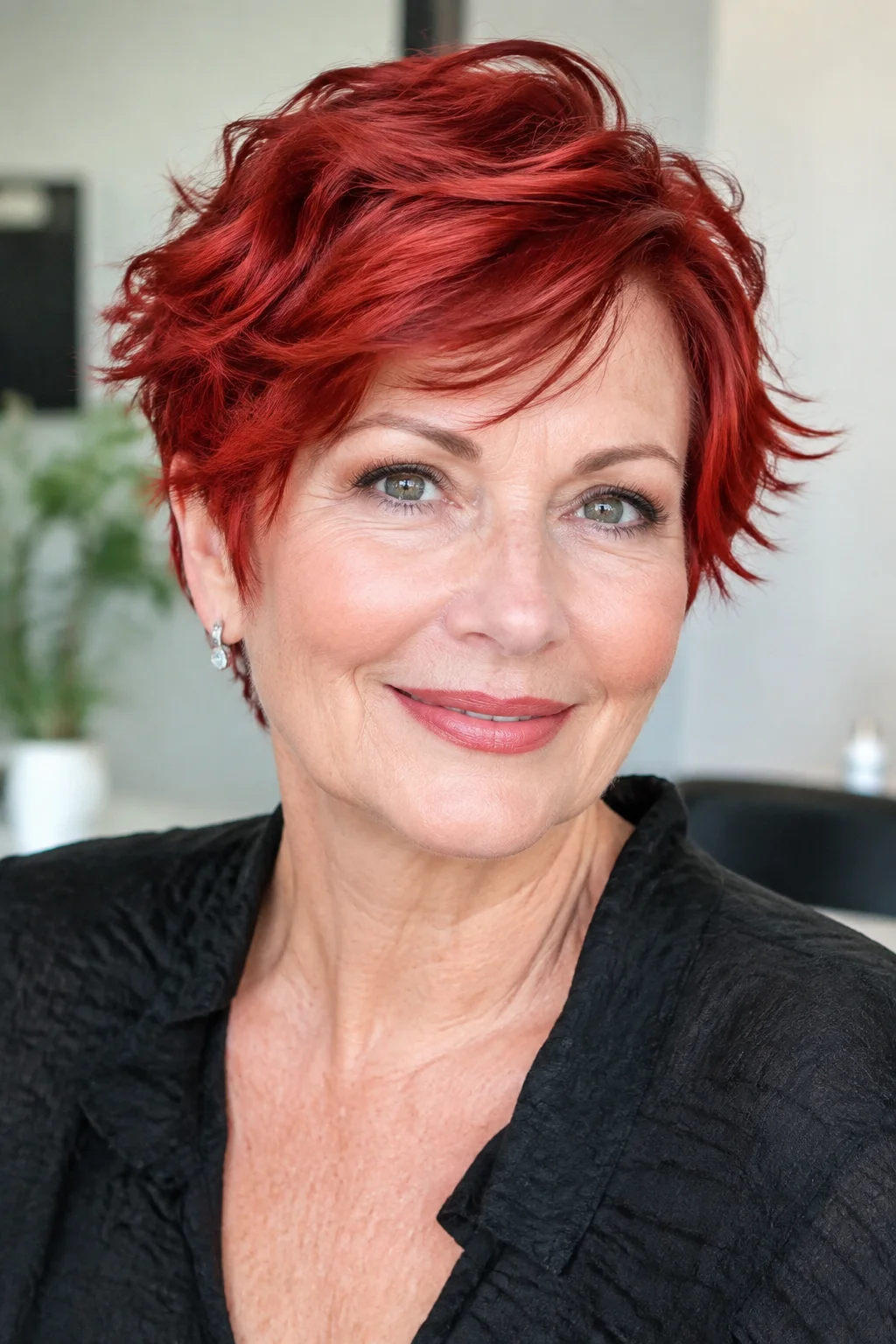
Curly gray hair needs layers that respect the curl pattern instead of cutting against it. This pixie is shaped with the curl in mind, so each curl falls into its own shape rather than clumping into a triangle shape at the bottom. Ask your stylist to cut it dry if possible so they can see exactly how each curl behaves before committing to the shape. Tip: avoid brushing curly gray hair when dry, since it disrupts the curl clump and causes frizz.
Asymmetrical Layered Cut
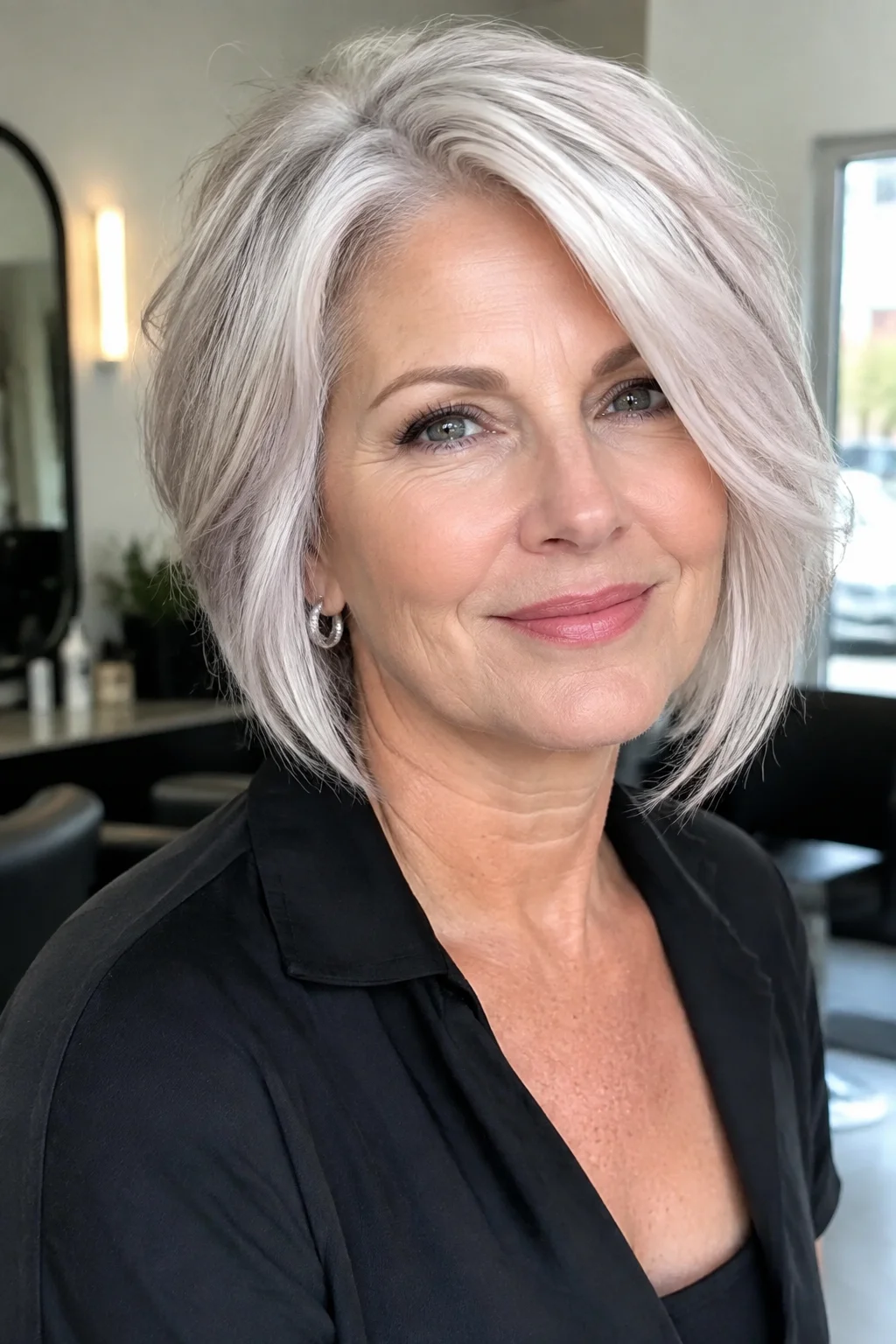
One side cut shorter than the other creates a deliberate imbalance that keeps a short cut from looking too matched or too safe. Layers throughout add the movement that keeps the asymmetry from looking like a mistake. This suits people who want something a little edgier without going fully shaved on one side.
Razor-Cut Shag
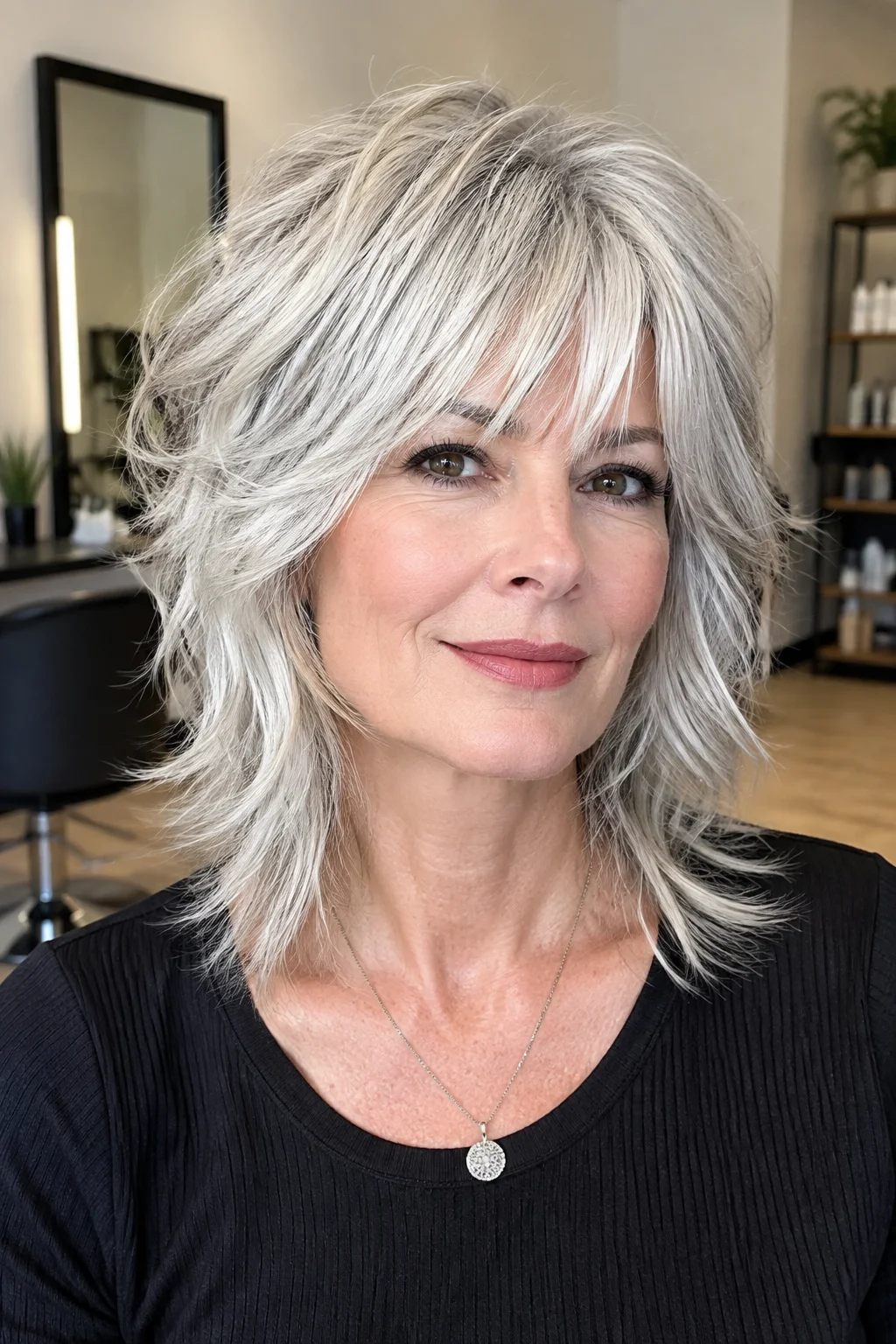
Razor cutting removes weight in a way that scissors can’t match, leaving ends that are soft and slightly frayed rather than blunt. On a shag, this technique multiplies the texture through the whole head. Gray hair that’s naturally finer can thin out too much with heavy razor work, so ask for it mainly through the mid-lengths and ends rather than close to the scalp.
Layered Bob with Undercut
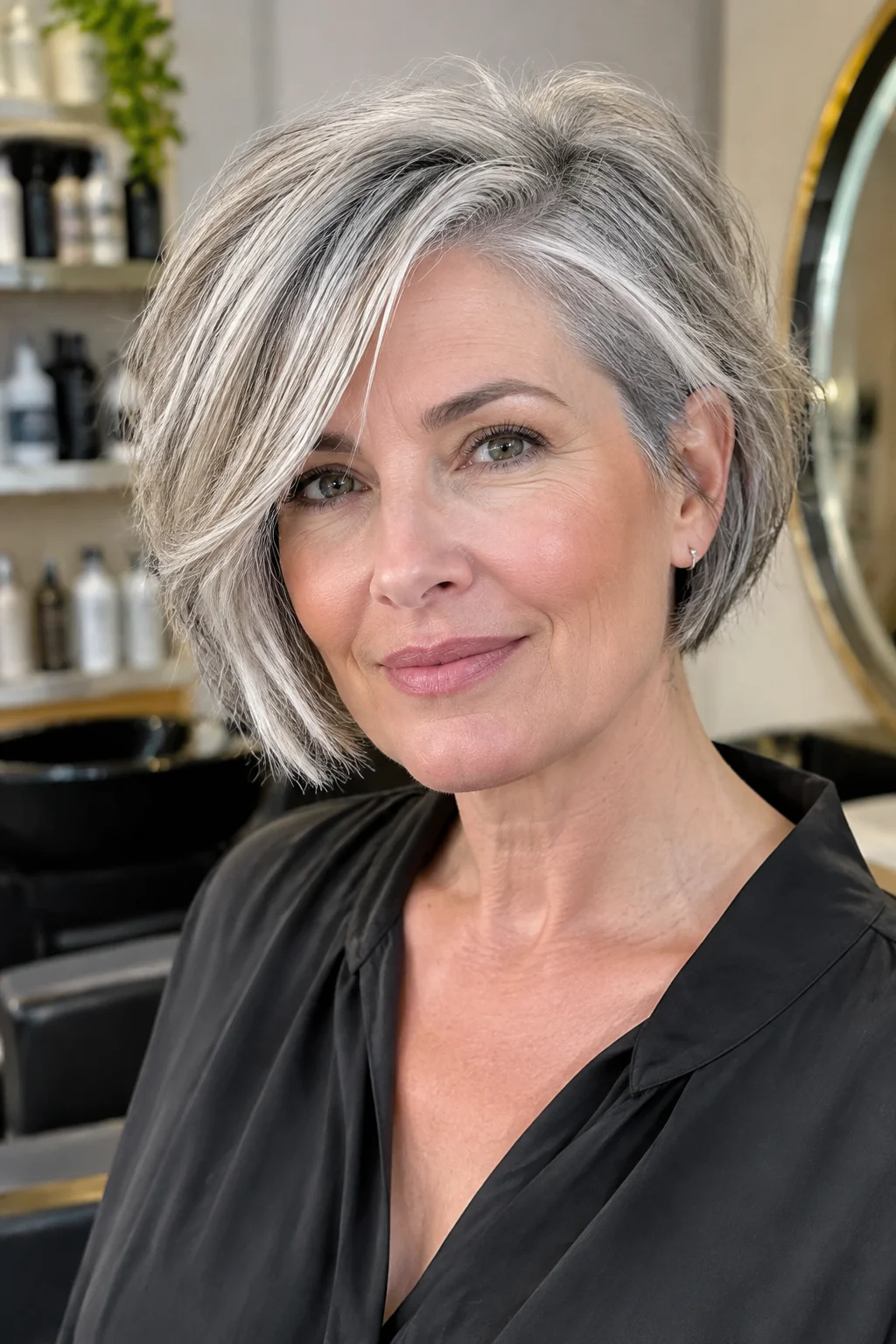
An undercut at the nape keeps the back light and the sides a little longer, giving you a bob on top and something more graphic underneath. It’s a good option if you want short hair layered haircuts for gray hair that still feel a bit unexpected rather than classic. The hidden undercut means you can tuck hair behind your ears and reveal it, or leave it covered for a more traditional day to day look.
Tousled Textured Crop
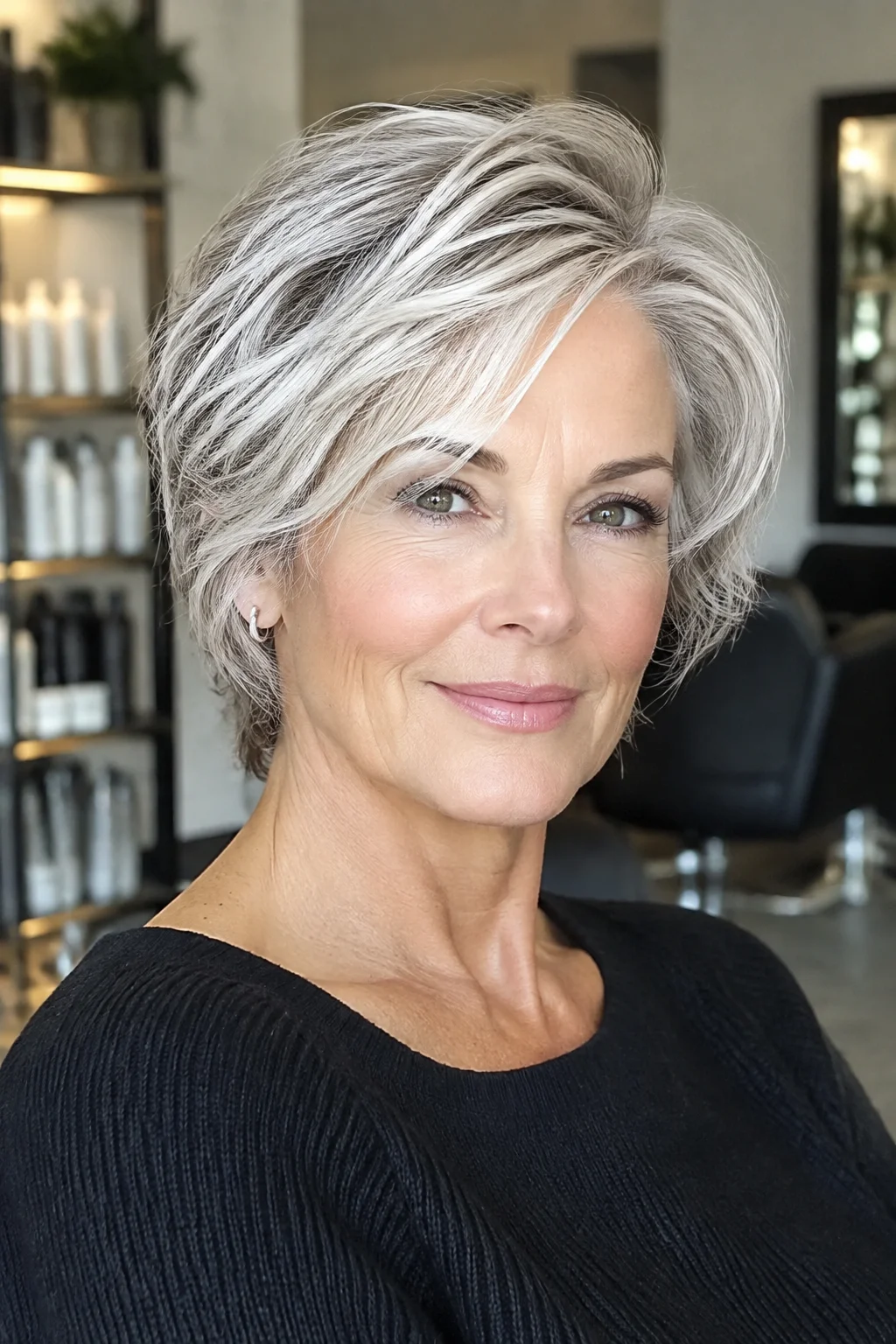
This crop is cut short and styled to look slightly messy, almost like you ran your fingers through it and walked out the door. Gray hair with some natural wave takes to this style easily since the wave adds to the tousled effect without much product. It’s a low maintenance option for someone who doesn’t want to spend a long time styling every morning.
Choppy Bangs with Layered Sides
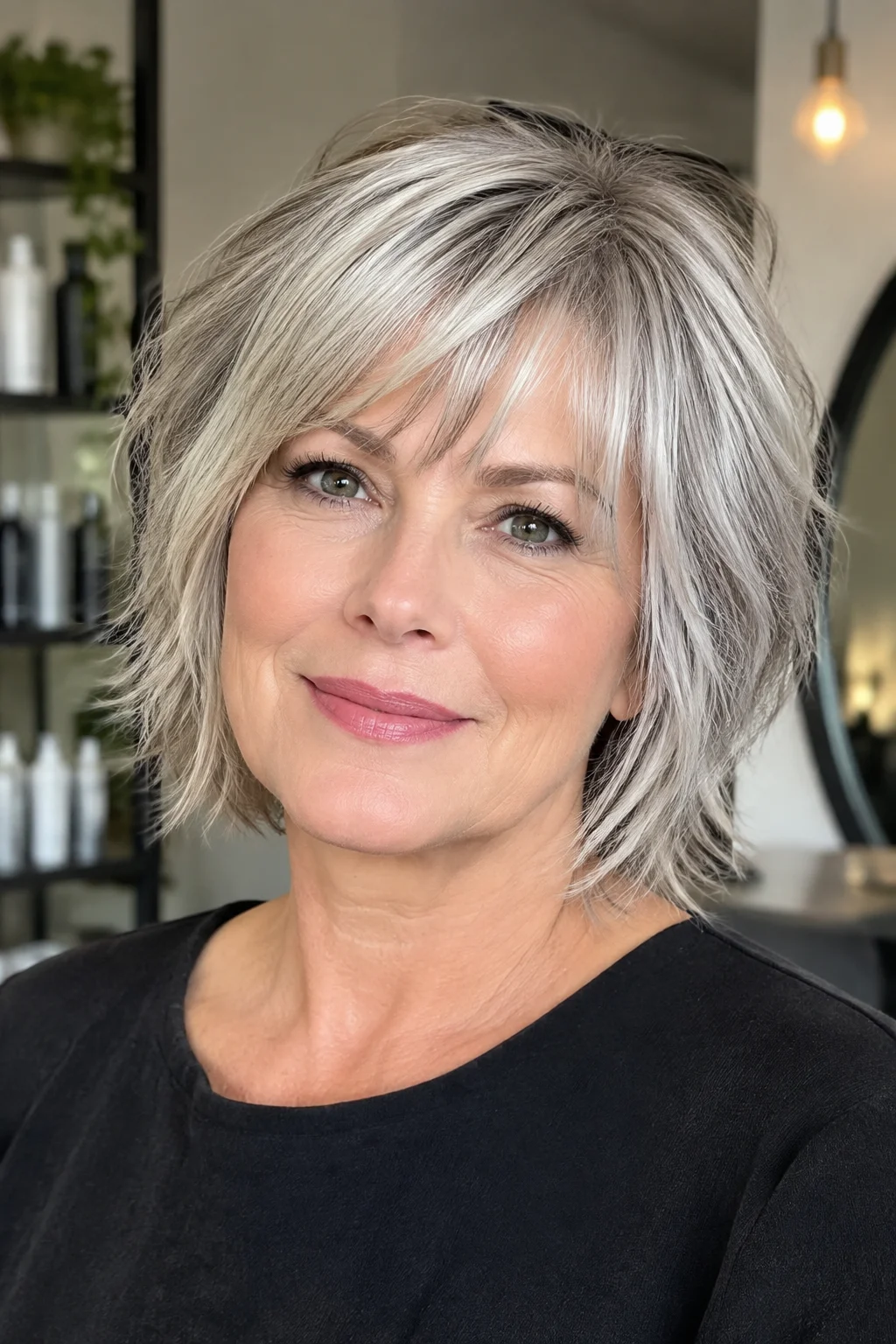
Choppy, textured bangs paired with layers through the sides create a frame around the face that’s a little rougher than a classic fringe. This works well on gray hair because the uneven bang line keeps attention moving instead of settling on one flat strip of color. Tip: have your stylist point-cut the bang edges rather than cutting them straight across.
Wavy Layered Pixie Bob
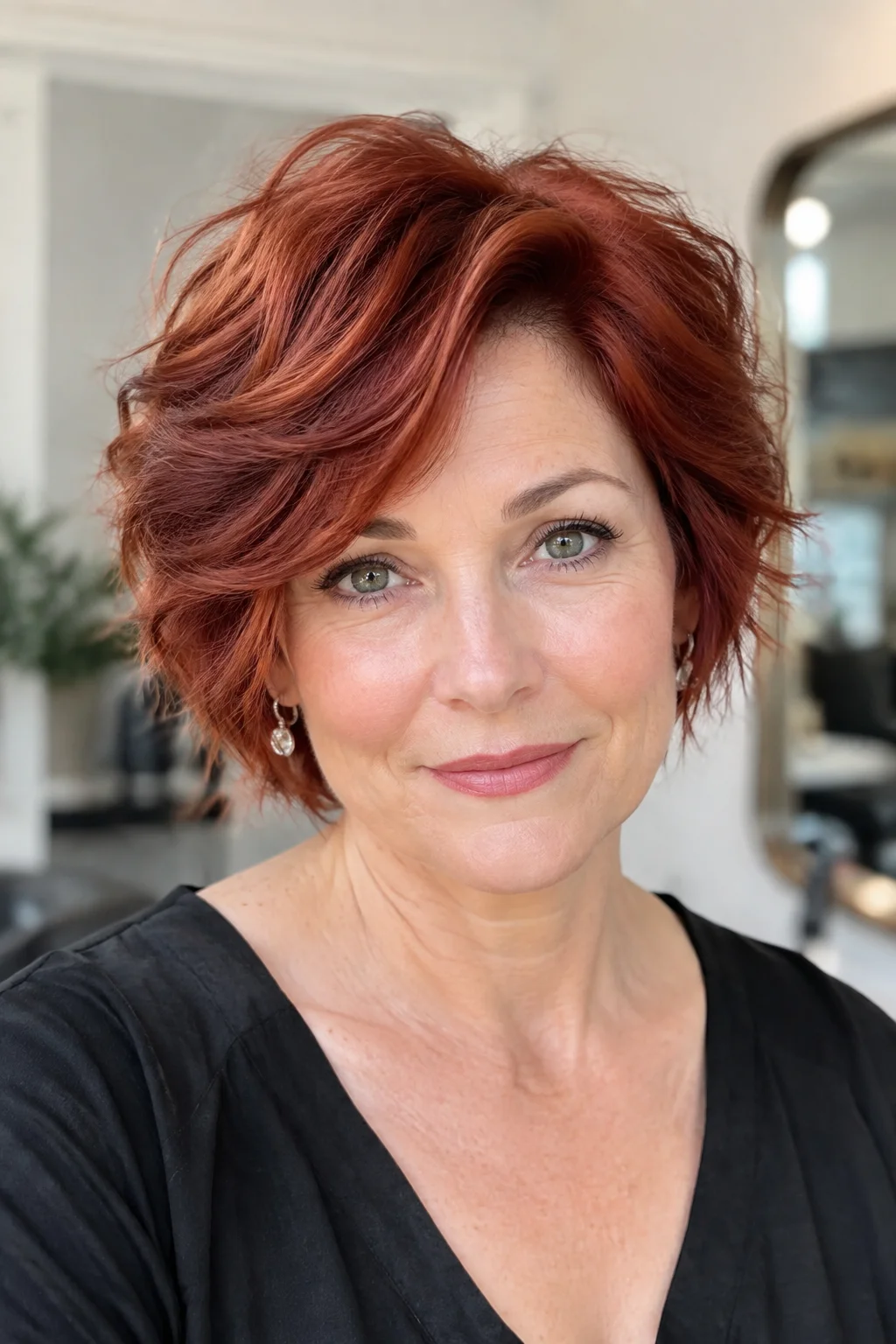
This cut sits between a pixie and a bob, with layers that encourage natural wave to show through. It’s compact around the ears and a bit longer through the crown and nape, giving wavy gray hair somewhere to move instead of flattening under its own weight.
Layered Curly Bob
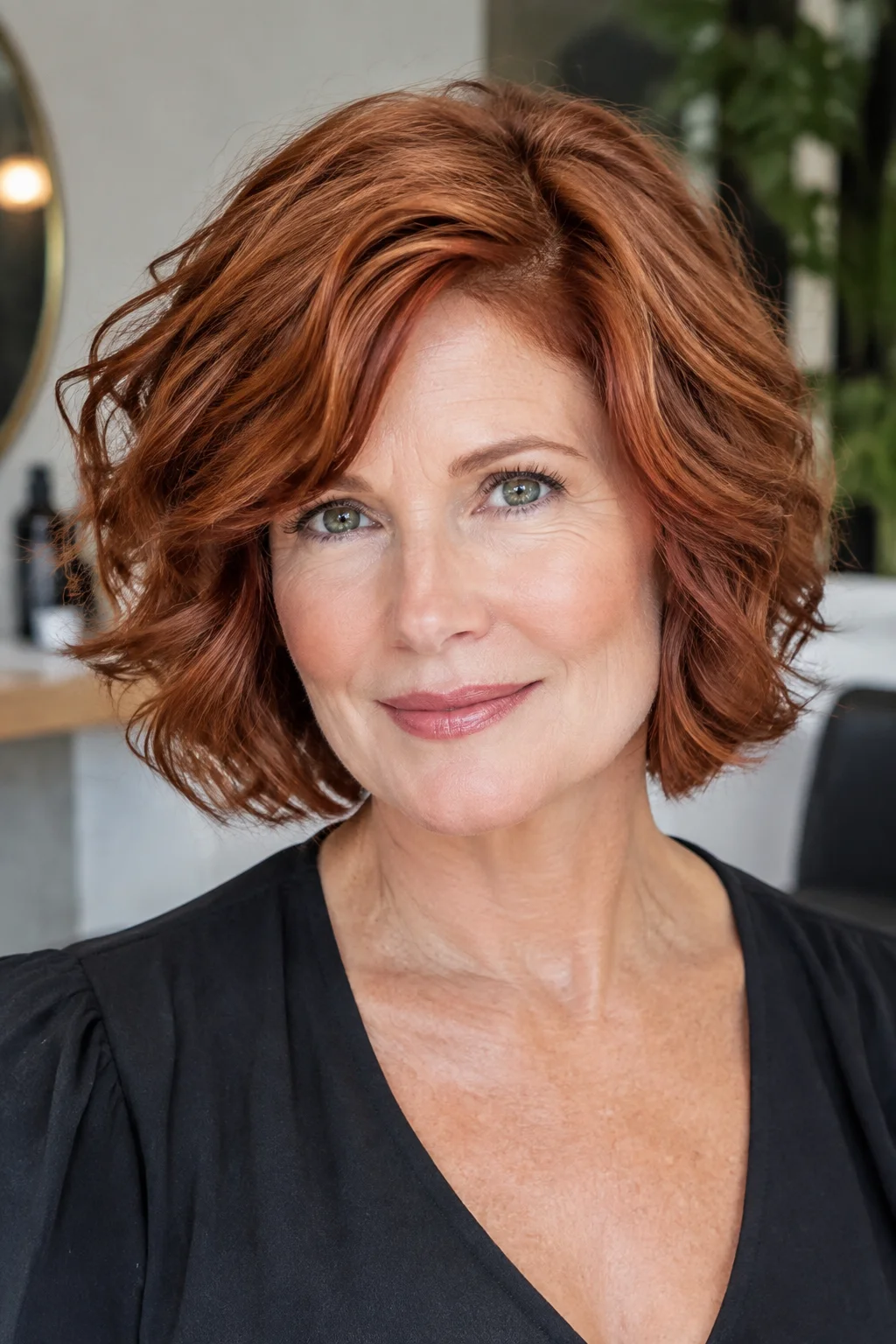
A curly bob cut in layers needs careful attention to how curls stack on top of each other, since cutting curls too uniformly can create a bottom heavy triangle. Layering throughout thins that weight out and lets the curls spring into a rounder shape. Gray curly hair, which can sometimes feel wiry, benefits from the extra movement layers provide. This one works especially well on medium to thick curl patterns that have enough density to support the layering without looking sparse.
Choppy Textured Crop
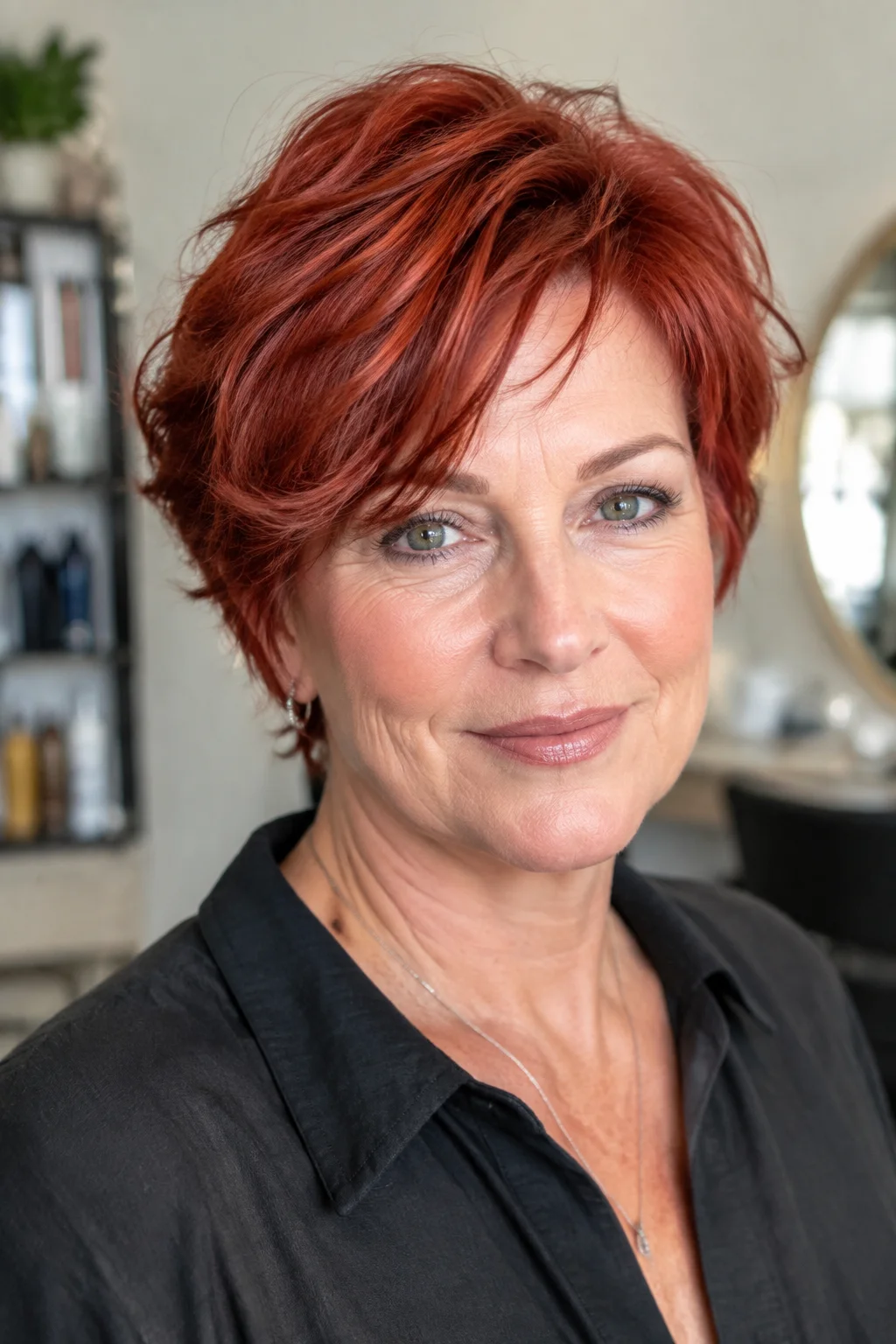
Short on the sides and back with choppy texture throughout the top, this crop is built for low maintenance mornings. A little texturizing product worked through with your fingers is often all the styling it needs. Gray hair with some natural texture holds the choppy shape well without much effort.
Feathered Pixie with Length
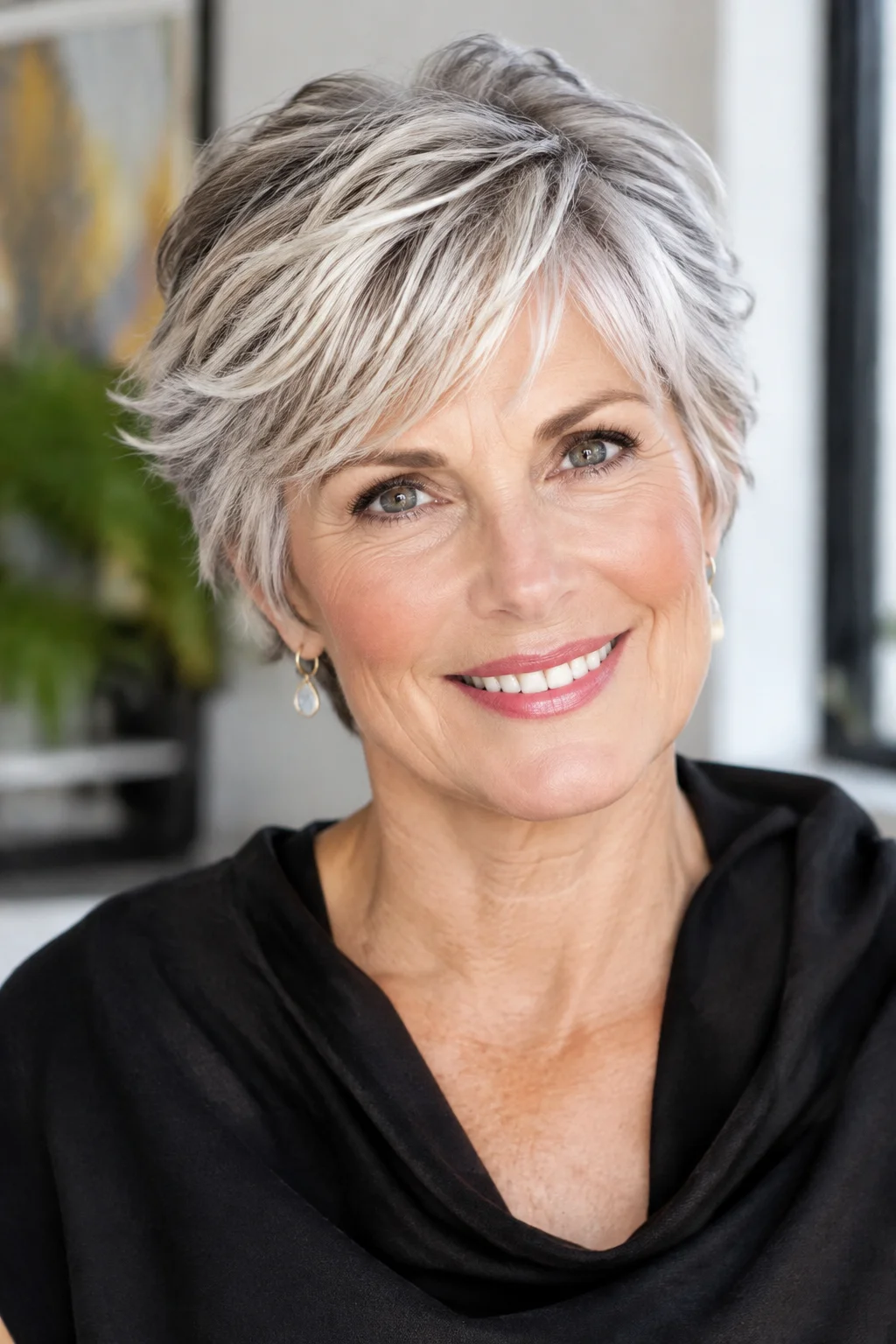
This pixie keeps a bit more length through the top and sides compared to a classic crop, with feathered ends throughout. The feathering softens what could otherwise be a stark, geometric shape. It flatters most face shapes because the soft ends avoid hard lines near the jaw or cheekbones.
Short Layered Bob with Flipped Ends
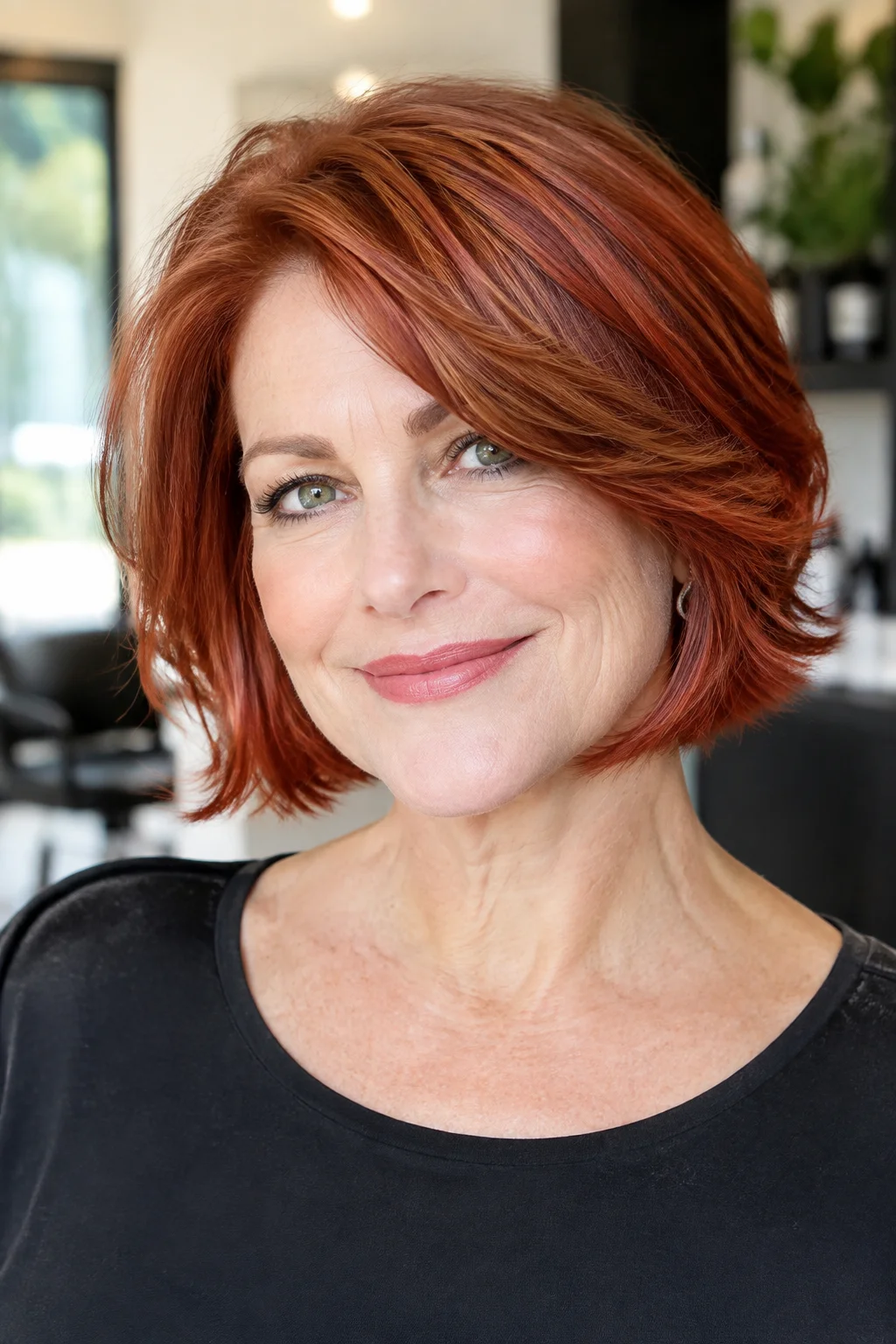
The ends flip outward slightly instead of curling under, giving this bob a retro feel without looking costume-like. Layers cut throughout keep the flip from looking stiff or overly styled. This is a good option for anyone who wants a classic short bob with just a little personality added in.
Textured Disconnected Pixie
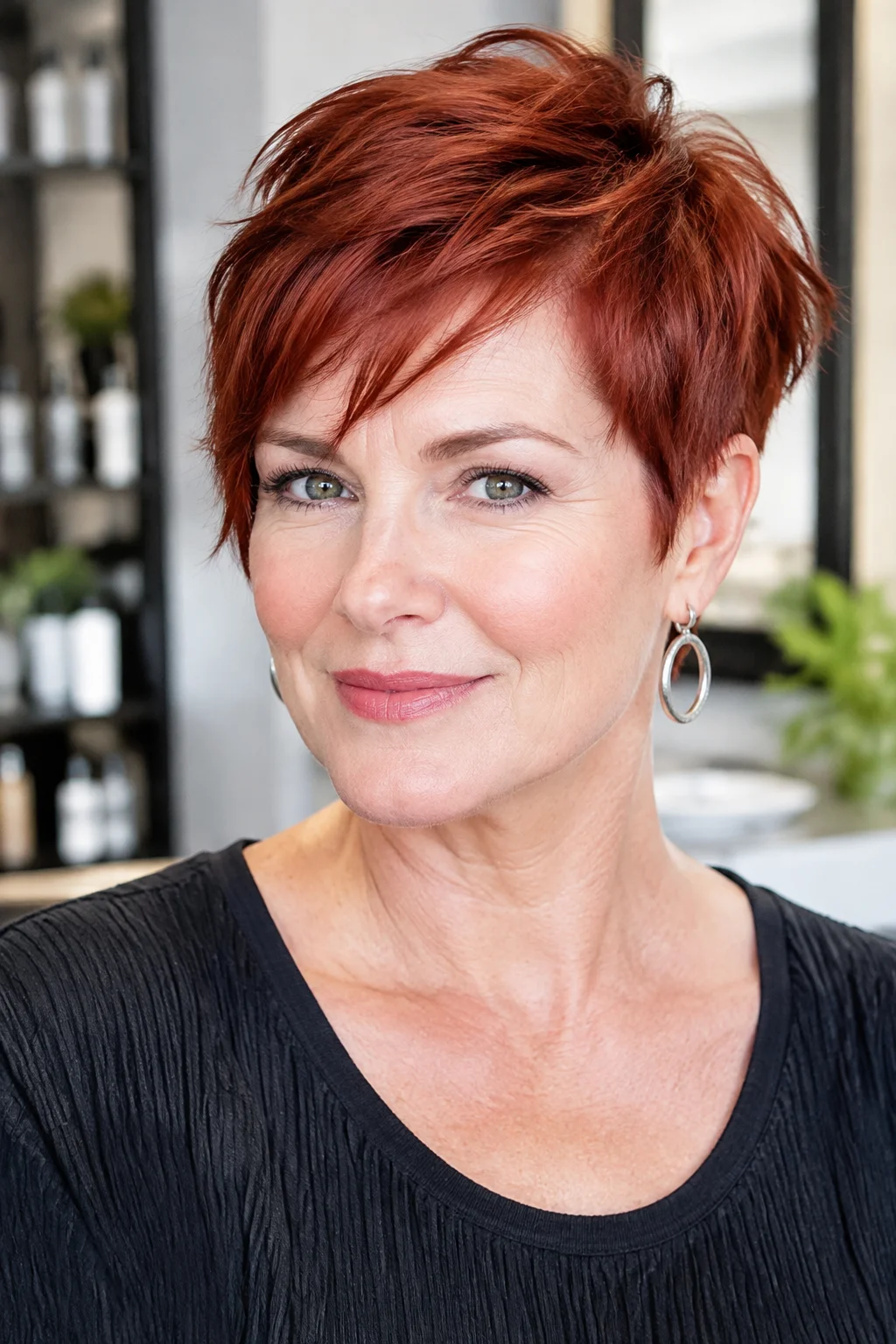
Disconnection means there’s a visible break between the length on top and the much shorter sides and back, rather than a smooth gradual blend. It’s a bold choice that reads as more modern than a traditional tapered pixie. Gray hair in this cut tends to look striking since the contrast between the short sides and longer top emphasizes the color shift.
Layered Lob with Choppy Bangs
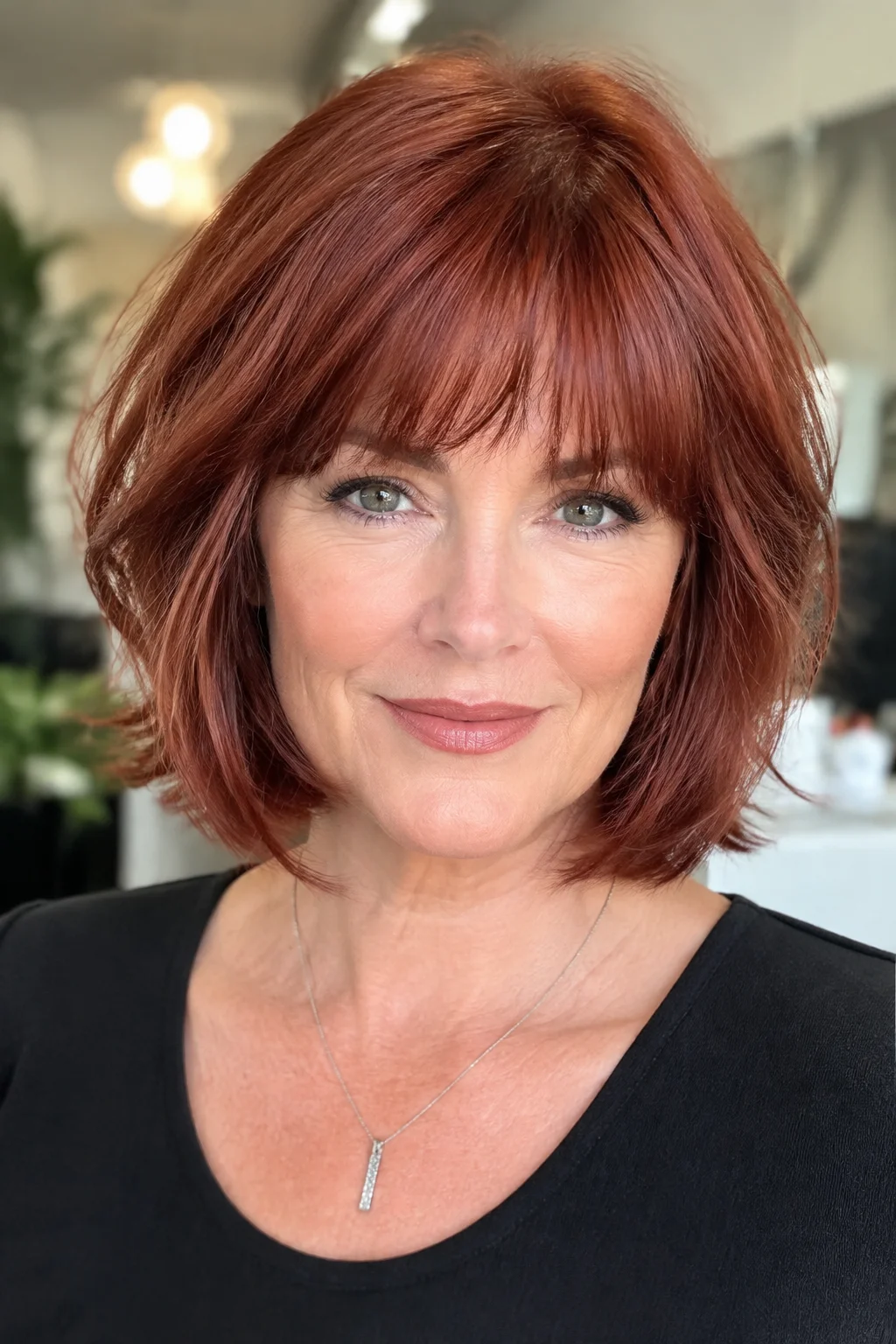
Pairing a longer layered bob with choppy, textured bangs gives you more length overall while still keeping the face-framing benefits of a fringe. The choppy bang texture keeps the whole look from feeling too polished or formal. This combination suits people who aren’t ready to go very short but still want layering to manage gray hair’s texture.
Short Shag with Feathered Layers
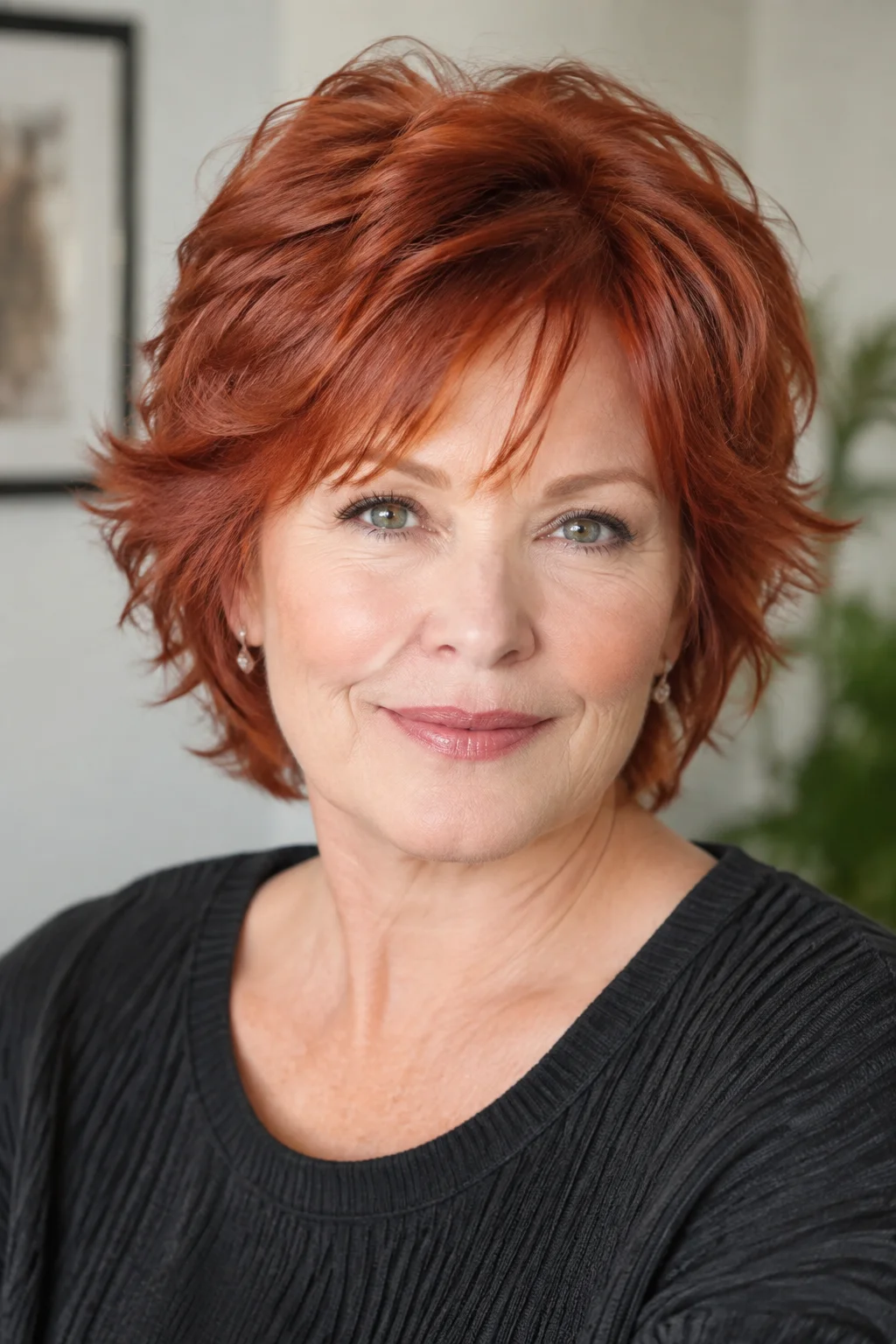
The shag gets its signature look from heavily feathered layers cut at varying lengths throughout the head. On short hair, this creates a lot of movement in a small amount of length, which keeps gray hair from looking flat at the roots. It’s one of the more versatile shag variations since it can be styled sleek or messy depending on the day. Tip: alternate between a round brush for smoother days and air drying with texture spray when you want more volume.
How to Choose the Right Cut for Your Gray Hair
Picking from this list comes down to three things: your hair’s texture, how much time you want to spend styling, and how much length you’re willing to give up. If your gray hair has gone coarser or wirier, something like the razor-cut shag or the layered curly bob will use that texture instead of fighting it. Fine, thinning gray hair usually does better with the stacked layered pixie or the graduated layered pixie bob, since both build volume at the crown rather than relying on length that just lies flat.
For anyone easing into gray rather than fully there yet, the layered lob with side part or the layered lob with choppy bangs give you enough length to blend regrowth gradually. If low maintenance mornings matter more than anything else, the tousled textured crop and the choppy textured crop both rely on natural texture instead of heavy styling.
A common mistake is choosing a blunt, heavy cut because it looks simple in a photo. Blunt ends on gray hair often look harsher than they do on pigmented hair, since there’s no color variation to soften the line. Layering almost always reads better once the gray sets in fully.
Final Thoughts
Gray hair isn’t something to work around. It’s a texture and color all its own, and the right cut treats it that way instead of trying to hide it. Whether you land on the textured pixie with longer bangs or the short shag with feathered layers, the layering is what makes the color look intentional. Bring a few of these photos to your next appointment and talk through which silhouette fits your hair type and your daily routine. A good stylist will adjust the details, but the core shapes here give you a real starting point.