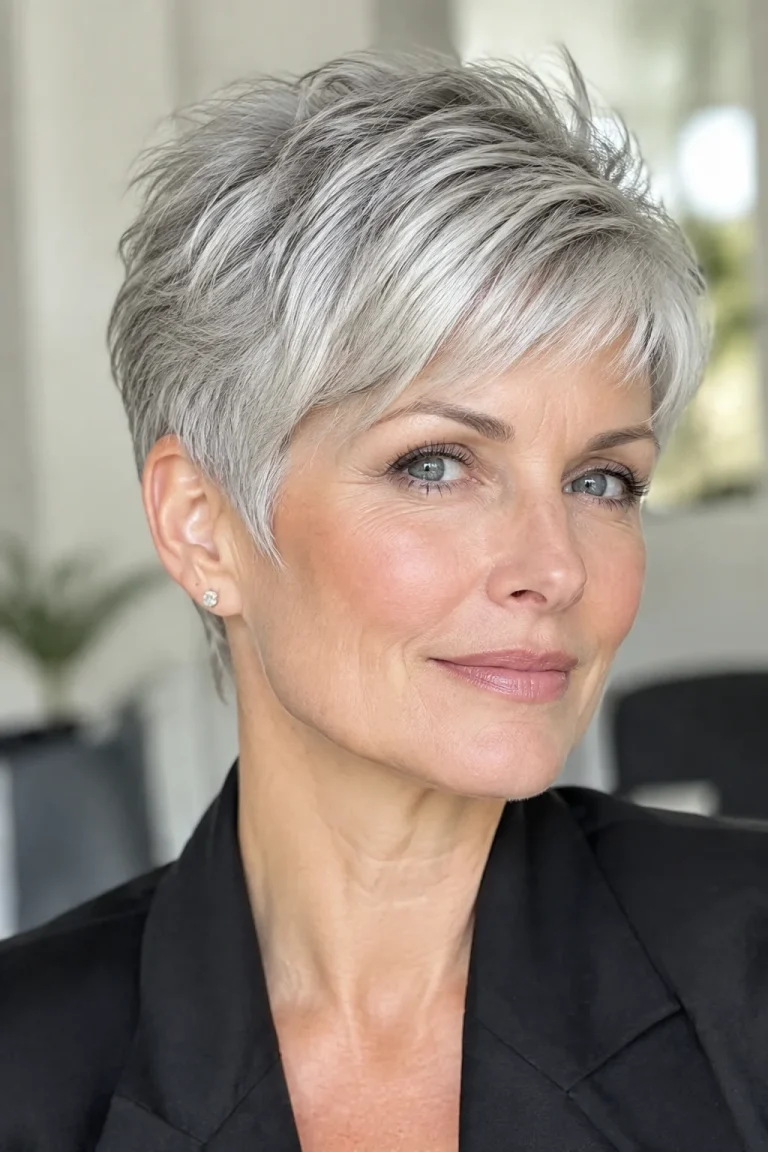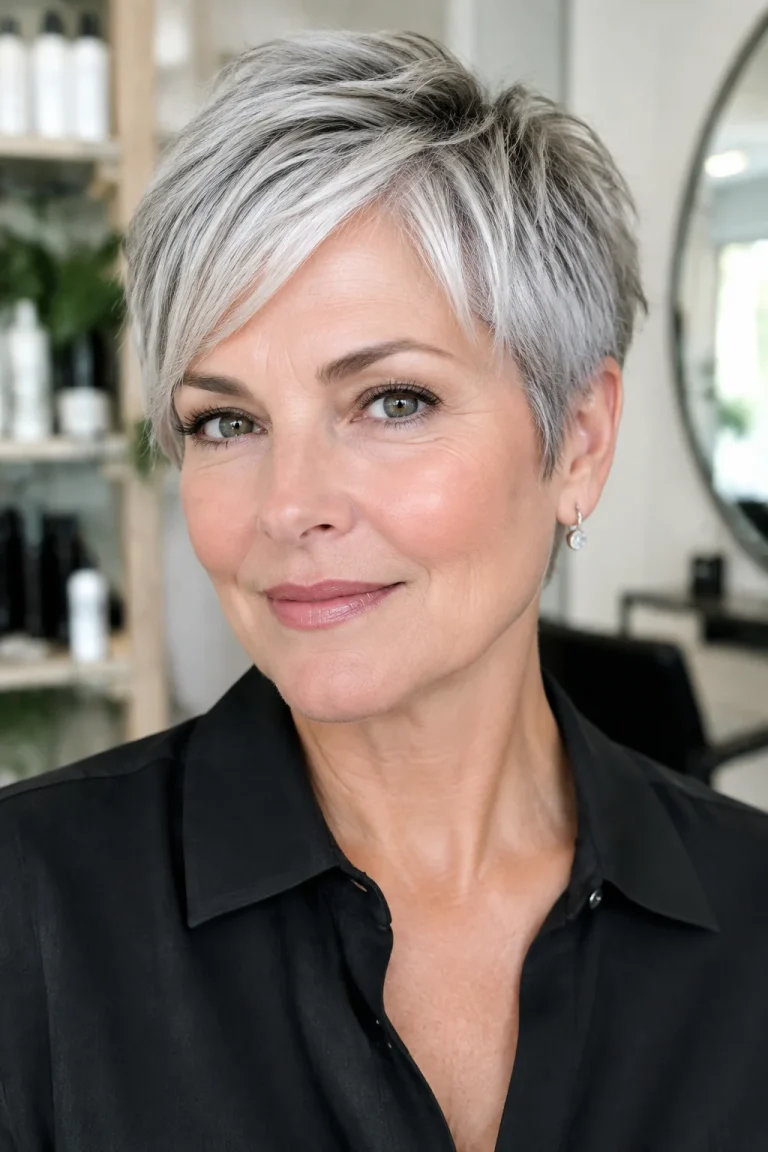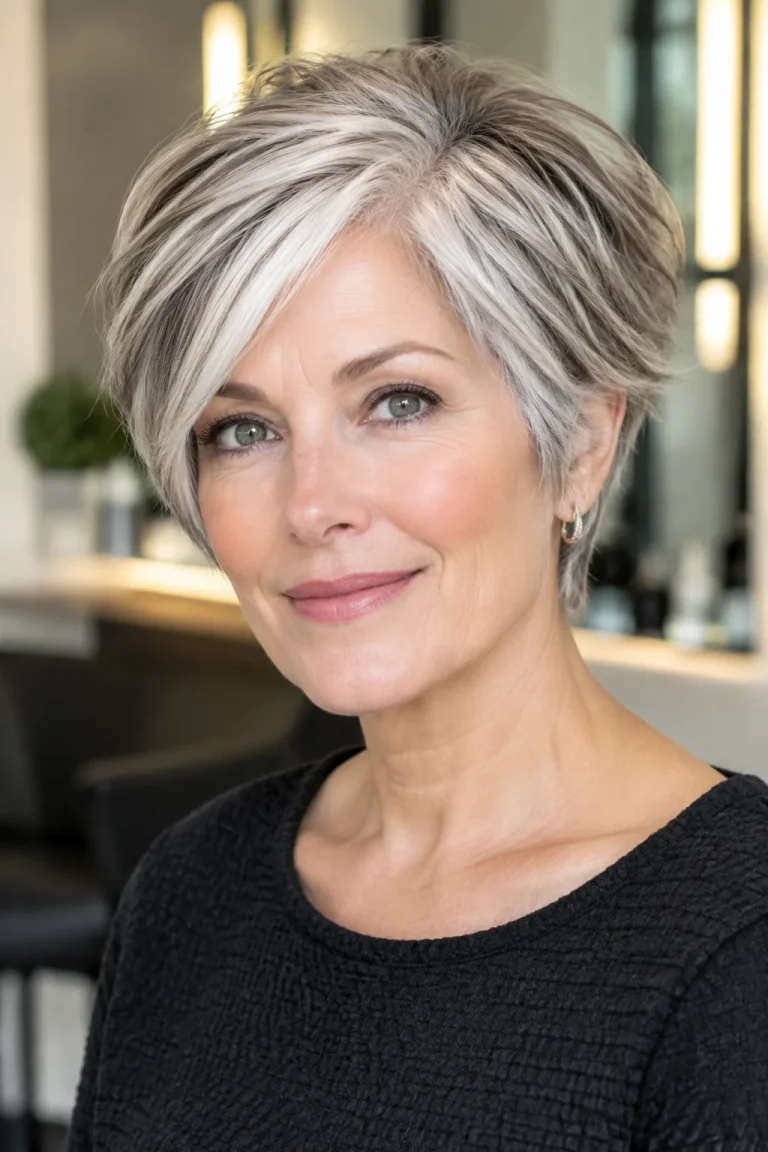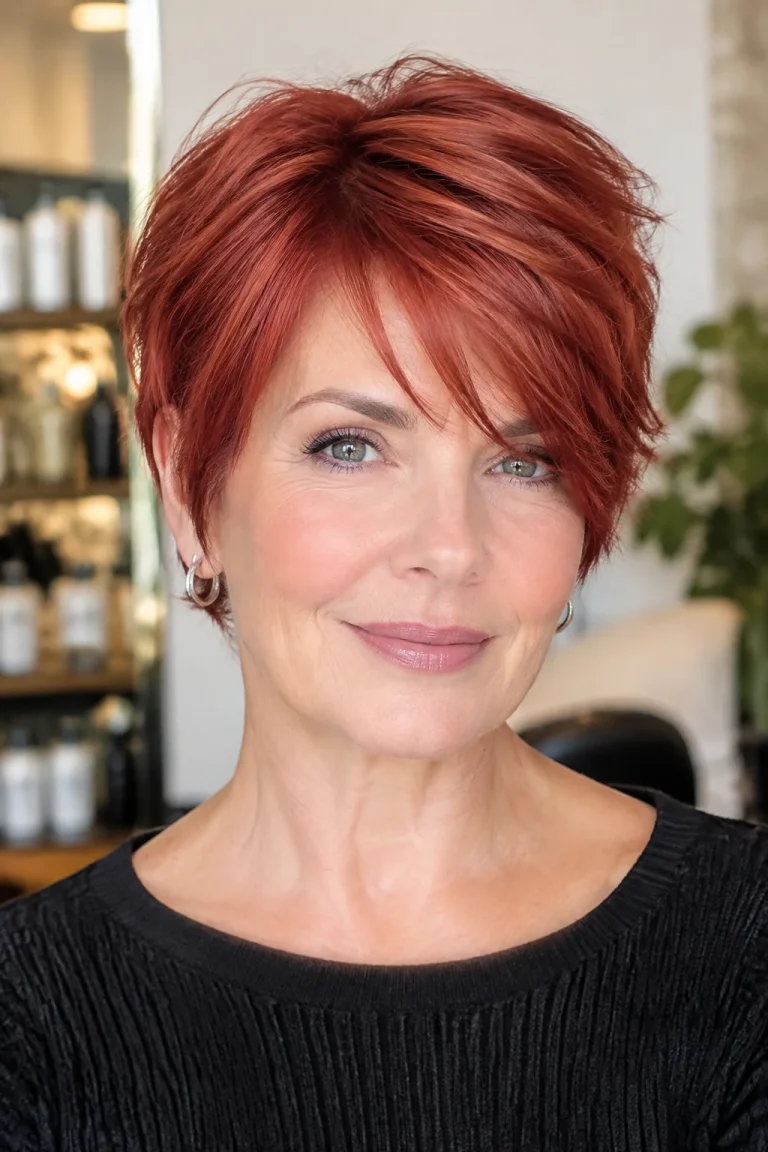
Growing out last year’s color and stuck on what to ask for next is a common spot to be in. A bob solves the length question, and honey brown solves the color question, since it sits between warm and neutral without looking flat under salon lighting. This list gathers honey brown hair bob haircuts for straight, wavy, curly, thick, and fine hair so you can walk into your appointment with a clear picture instead of a vague idea. Some cuts lean blunt and graphic, others go soft with layers or bangs, and a few bring in caramel or copper to break up the base shade. Read through a handful before you commit. The right one depends on your face shape, how much time you spend on styling, and whether you want low maintenance roots or a color that needs regular refreshing. Bring your favorite from here as a reference photo.
Blunt Honey Bob with Minimal Layers
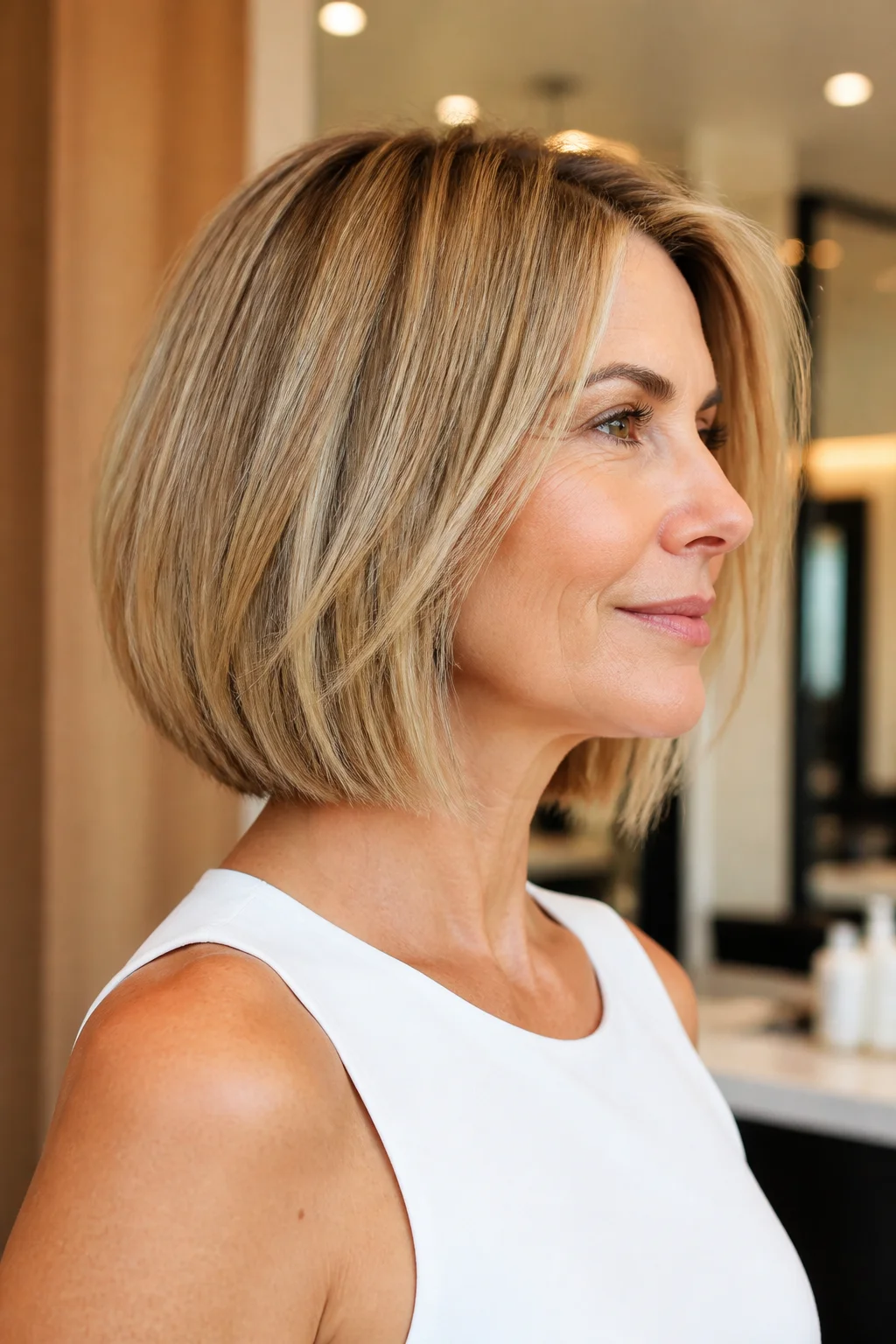
This one keeps the ends heavy and the shape clean, which makes honey brown look almost glossy since light bounces off the solid line instead of scattering through layers. It sits at the jaw or just below and works best on hair with natural body already, since fine flat hair can make a blunt cut look thin at the ends. Ask your stylist to keep the interior weight intact rather than thinning it out. Tip: get this trimmed every six to eight weeks or the blunt line grows soft and loses its shape fast. A light mist of heat protectant before styling helps the finish last. A light mist of heat protectant before styling helps the finish last.
Textured Honey Bob with Choppy Bangs
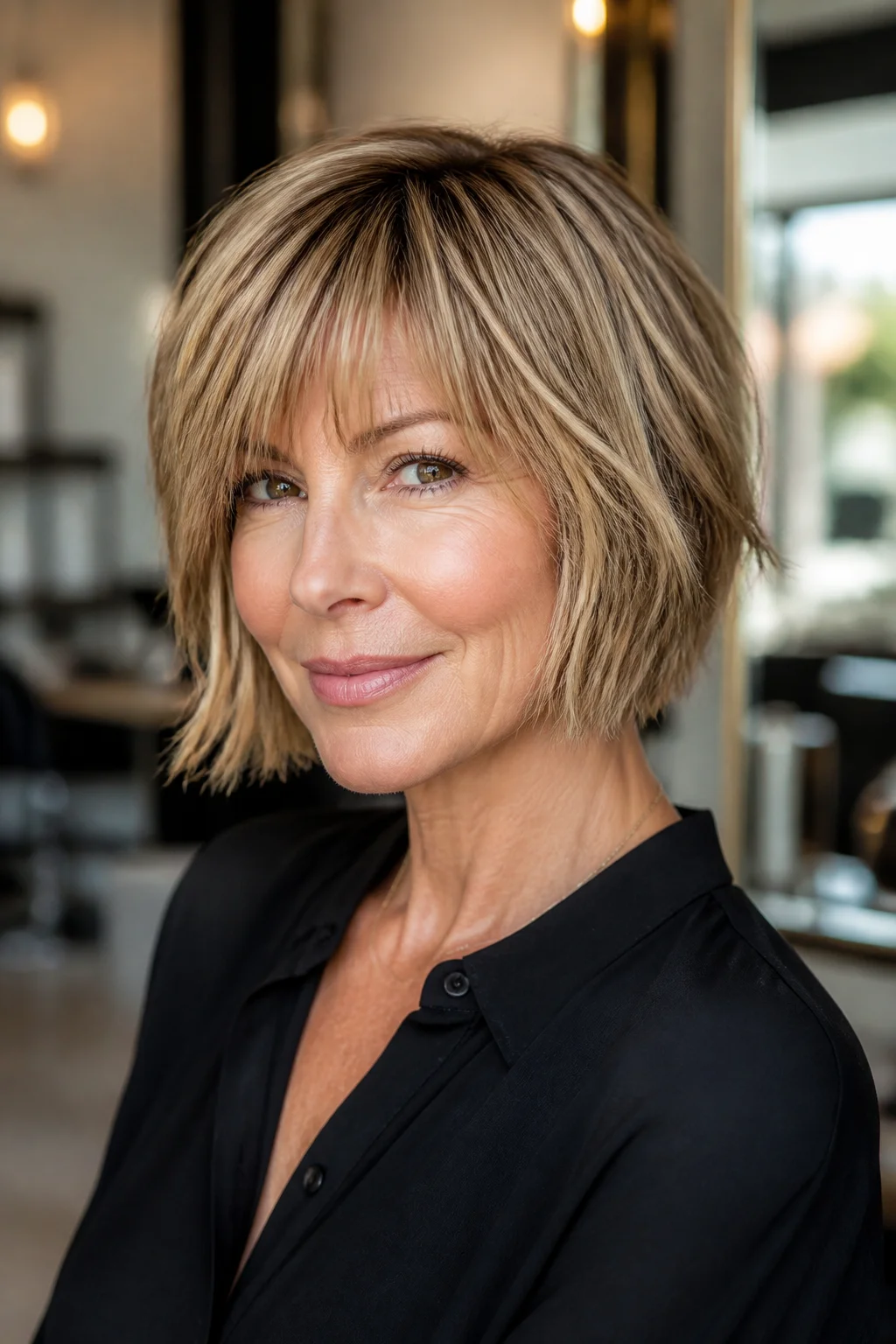
Choppy bangs paired with a textured bob give honey brown some movement instead of letting it sit flat across the forehead. The bangs hit above the brow and get point cut so they don’t read as one thick block. This suits round and oval faces especially well because the broken fringe line keeps things from looking too heavy up top.
Honey Balayage on Layered Bob
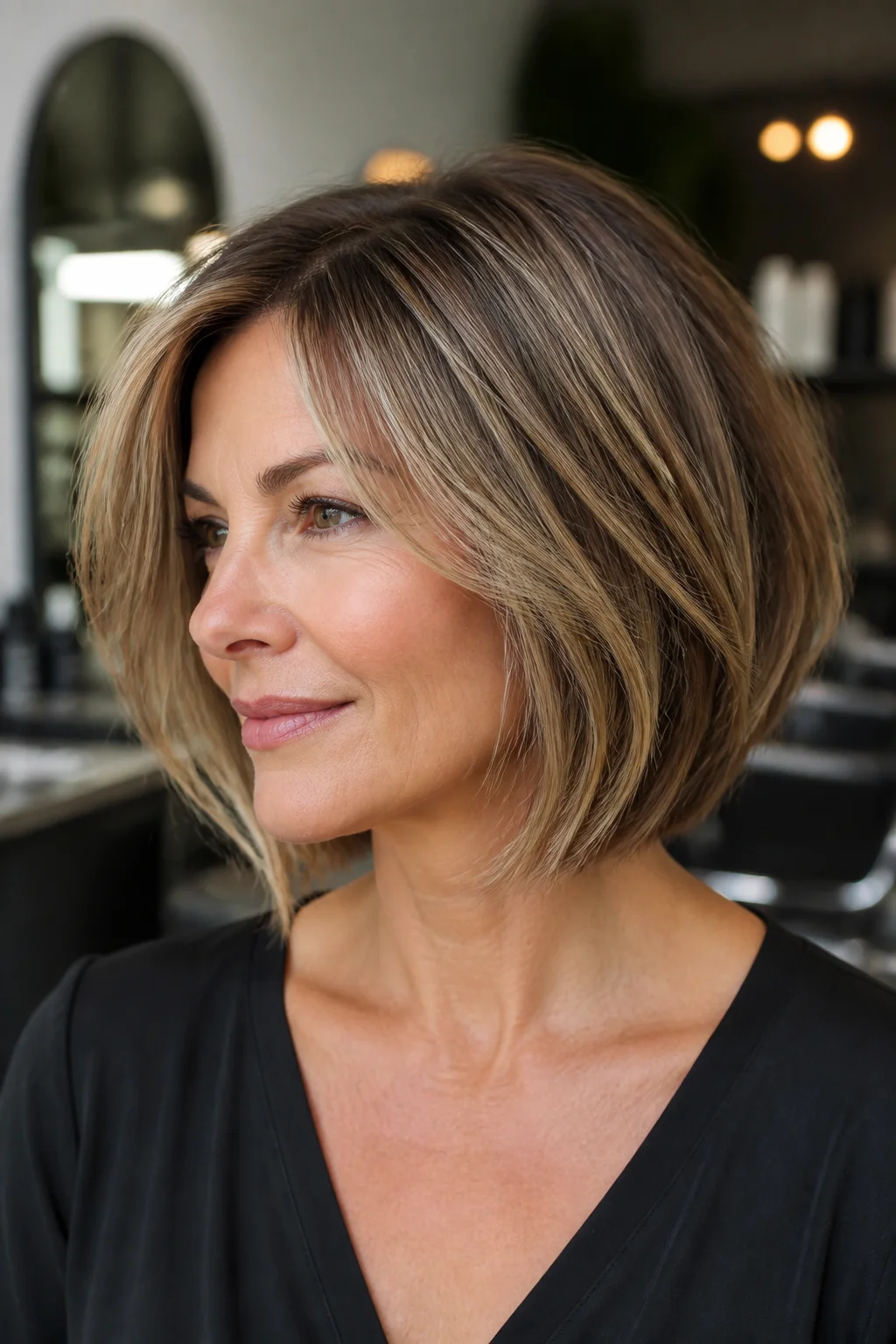
Balayage on a layered bob spreads honey tones through the mid-lengths and ends without a hard color line anywhere. The layers catch different depths of the shade as they move, so you get lighter pieces near the face and richer color underneath. This is a strong pick if you’re growing out a darker base and want the transition to look intentional rather than like regrowth. It also stretches out your salon visits since balayage doesn’t need constant root touch-ups. Ask for the lightest pieces to be placed around the face for a brightening effect near your jawline. A light mist of heat protectant before styling helps the finish last.
Curved A-Line Honey Bob
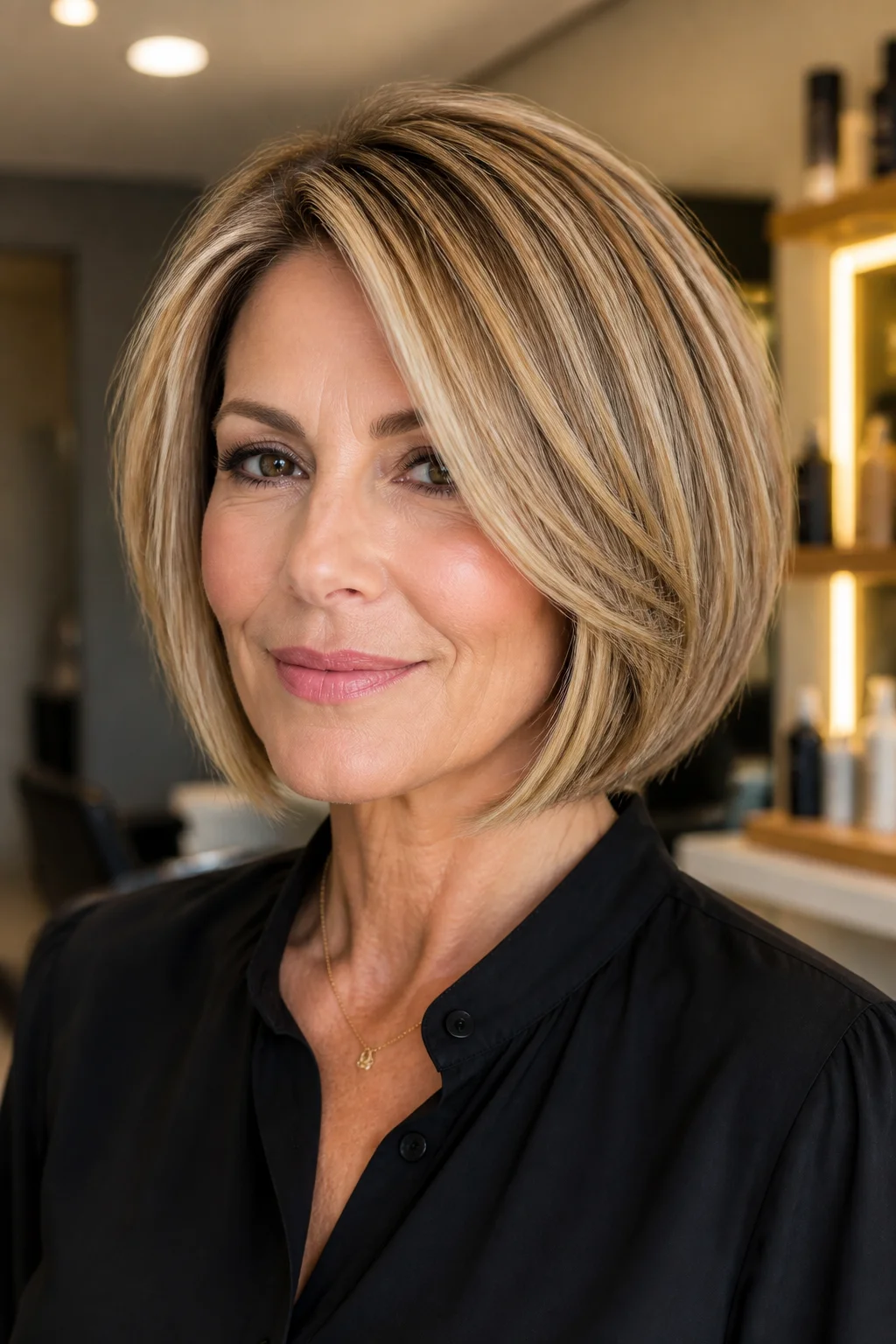
The A-line drops longer in front and shorter in back, and honey brown makes that slope more noticeable since the color shifts subtly along the angle. It flatters most face shapes because the longer front pieces draw the eye down and slim a rounder jaw. Stylists usually recommend this for hair with some natural wave, since straight hair shows every inch of the angle and needs precise cutting to look right.
Honey Brown Bob with Undercut Detail
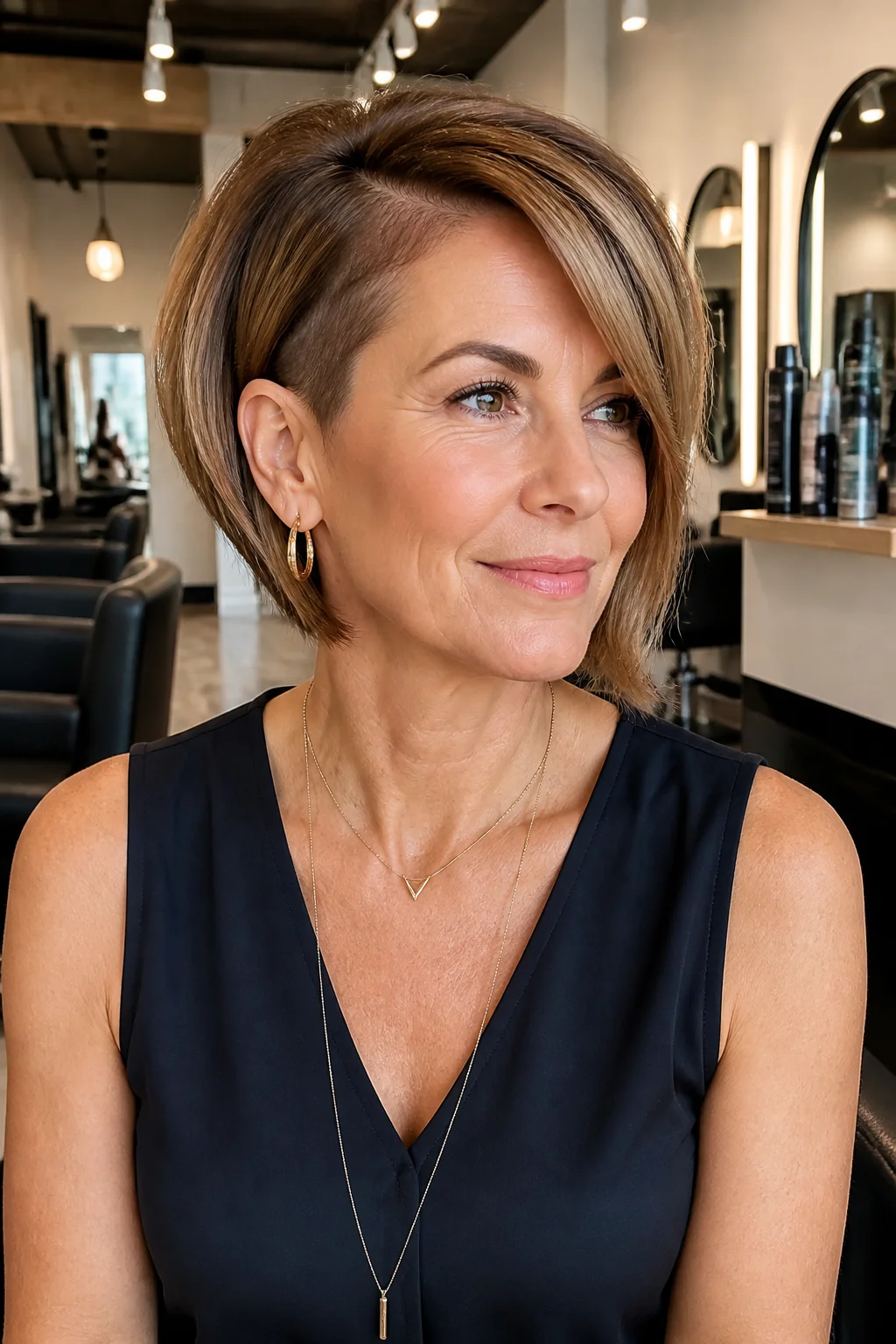
An undercut underneath a honey brown bob hides bulk without changing the visible length up top, which is useful if your hair is thick and heavy at the nape. From the front it looks like a regular bob. Lift it up and there’s a shaved or clippered section keeping things light. This works well for hot climates or for anyone who wears their hair up often and wants less weight pulling on a ponytail.
Wavy Honey Bob for Curly Hair
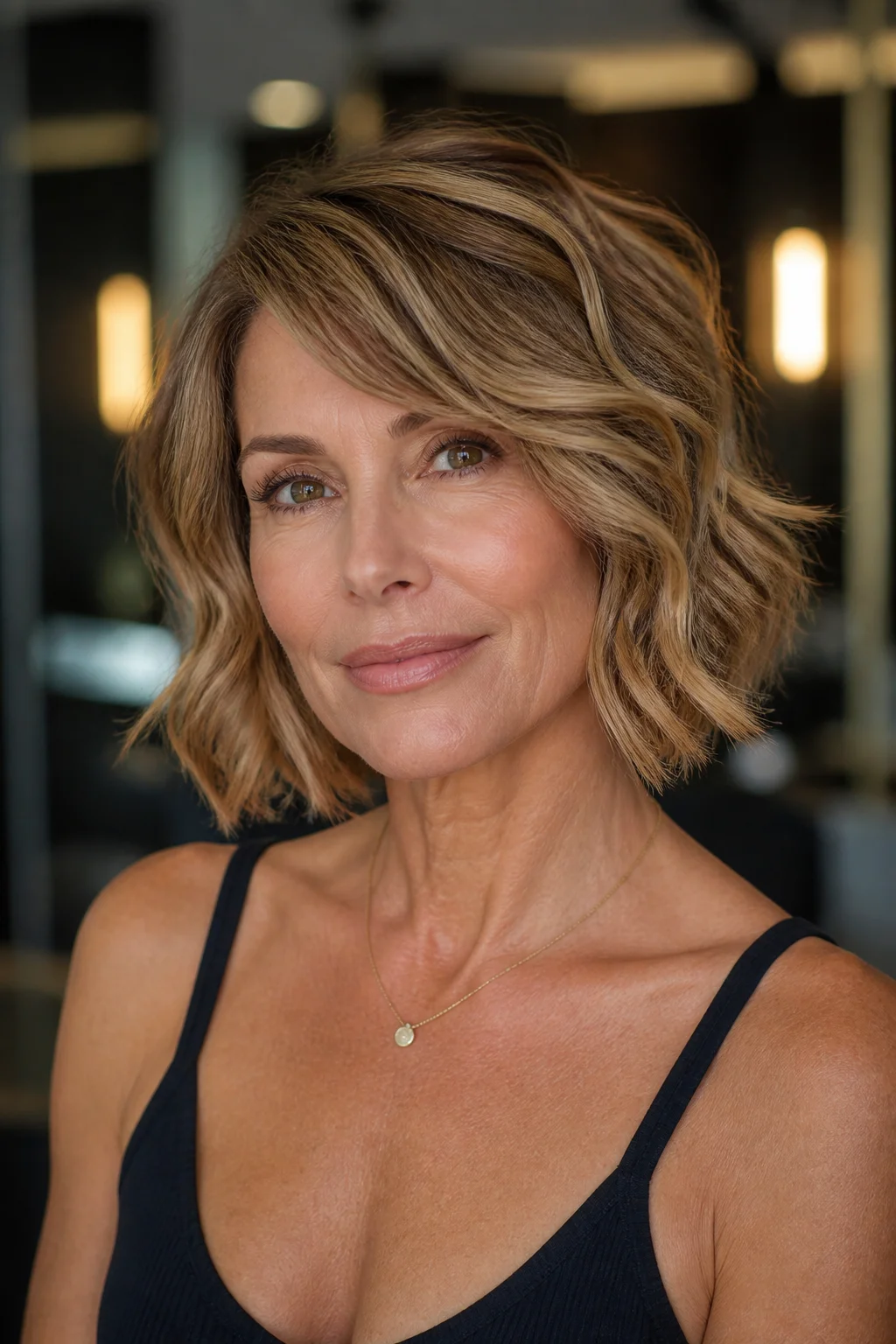
Curly hair cut into a bob shrinks up when it dries, so stylists cut it dry and account for the bounce before finalizing the length. Honey brown on curls picks up light differently with every ring, giving a multi-tonal look even with a single-process color. This cut needs a curl-specific routine to keep frizz down, and skipping a leave-in product usually shows within a day.
Honey Bob with Roots and Grown-Out Texture
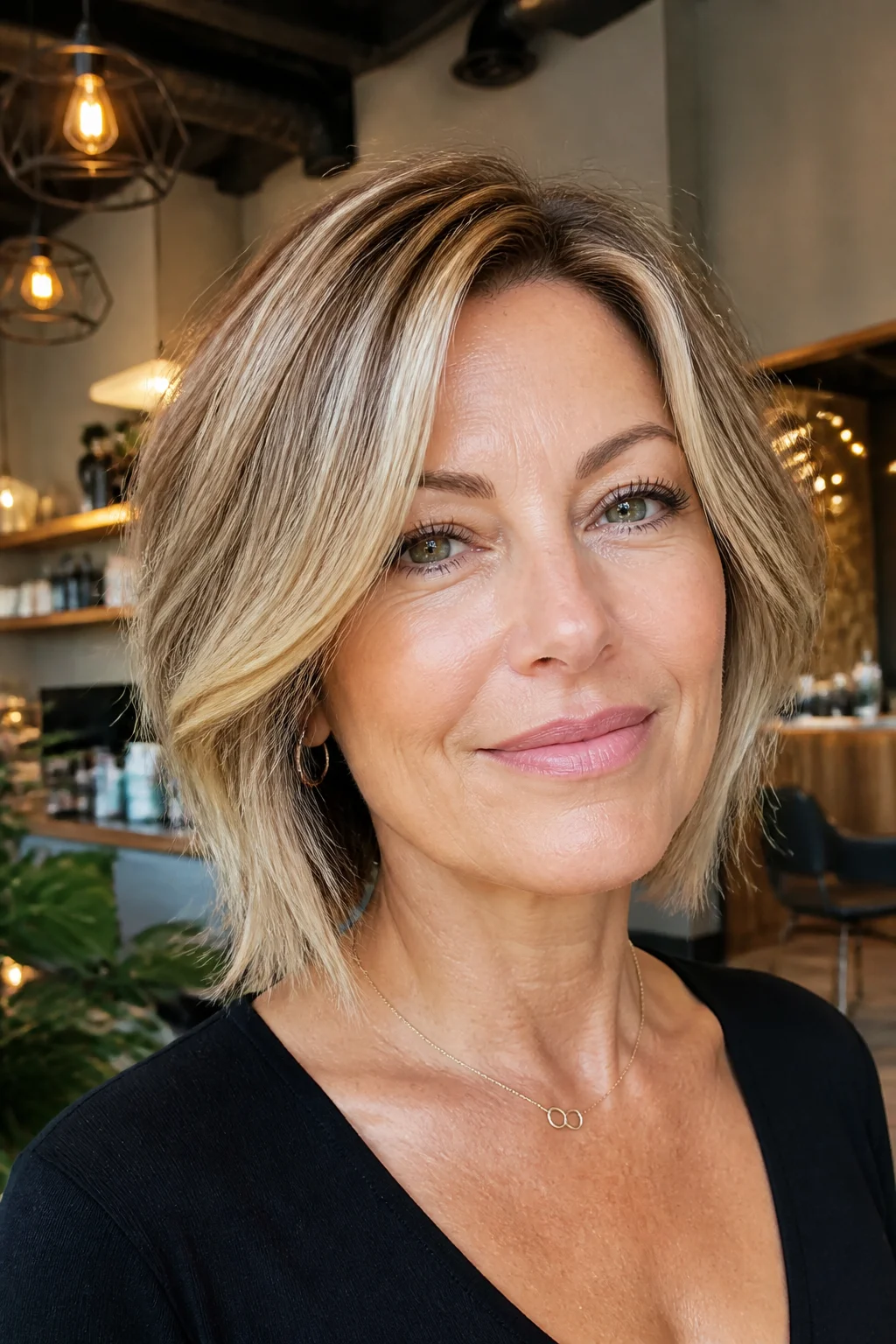
Letting your natural root show under honey brown ends takes the pressure off frequent color appointments. The transition zone gets softened with foils or a shadow technique so it fades rather than stops abruptly. This is the lowest maintenance option on this list for anyone who wants the color without the upkeep schedule.
Honey Honey Ombré Bob
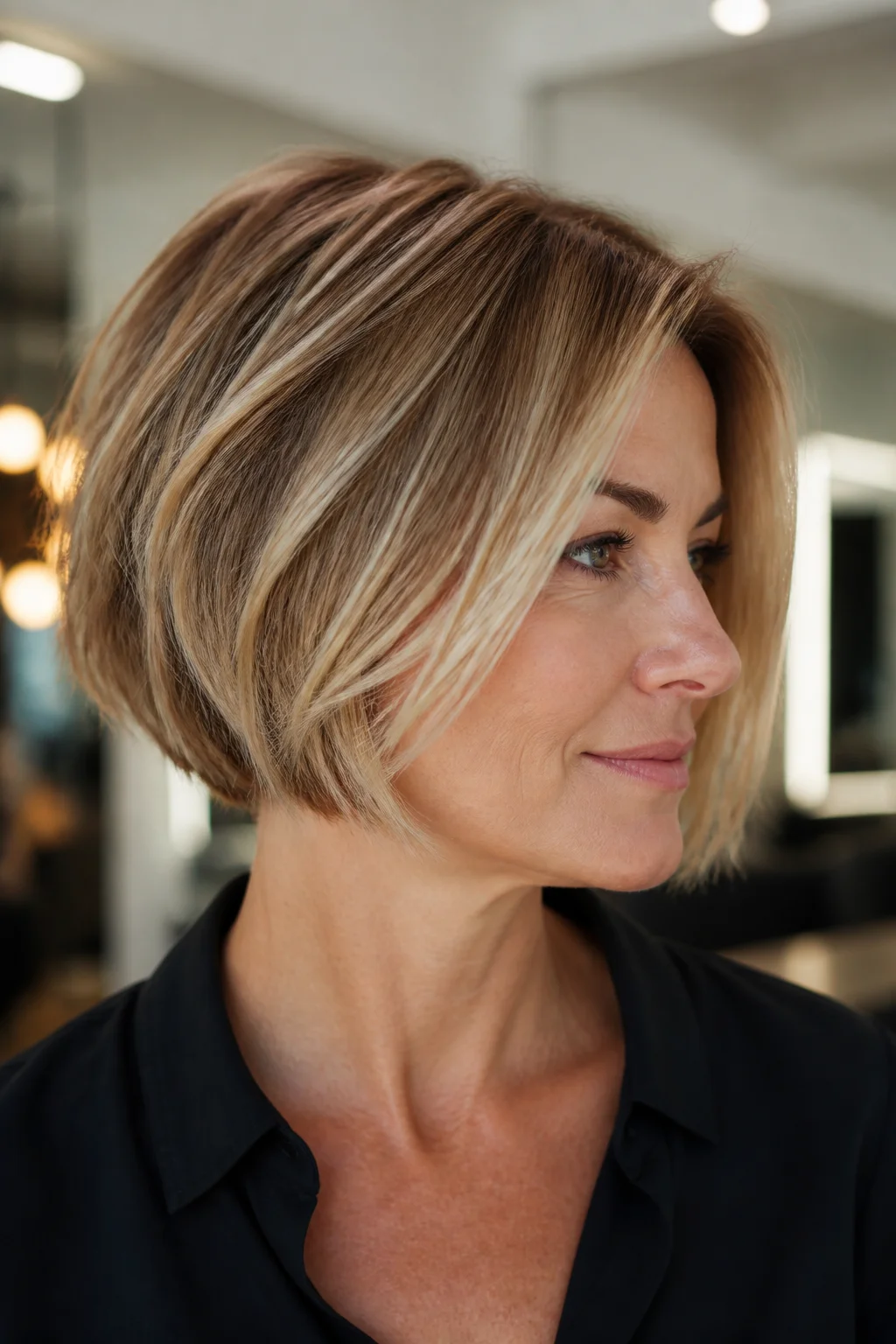
A deeper honey tone at the root melts into a lighter honey through the ends, keeping the whole look inside one color family instead of contrasting shades. It reads warm and sunlit without looking like a dramatic color change grown out. This suits bobs that hit collarbone length best, since shorter cuts don’t leave much room for the gradient to show.
Blunt Honey Bob with Heavy Bangs
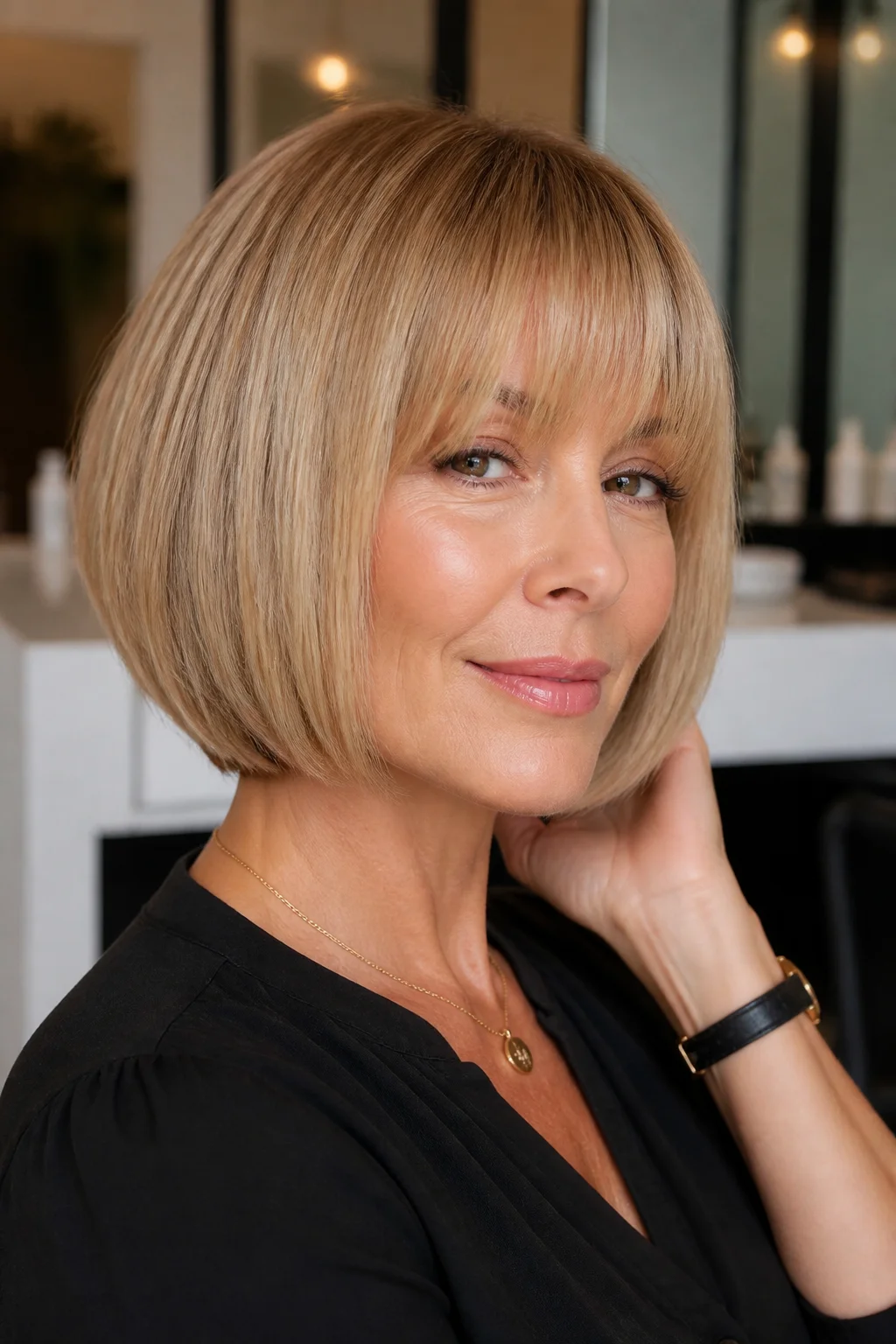
Heavy, blunt bangs paired with a blunt bob create a graphic, symmetrical shape that photographs well but does need regular trims to stay sharp. Honey brown softens the bangs so they don’t look as severe as they would in a cooler or darker shade. Oily scalps might find these bangs need washing more often since the fringe sits directly on the forehead.
Shaggy Honey Bob with Face-Framing Layers
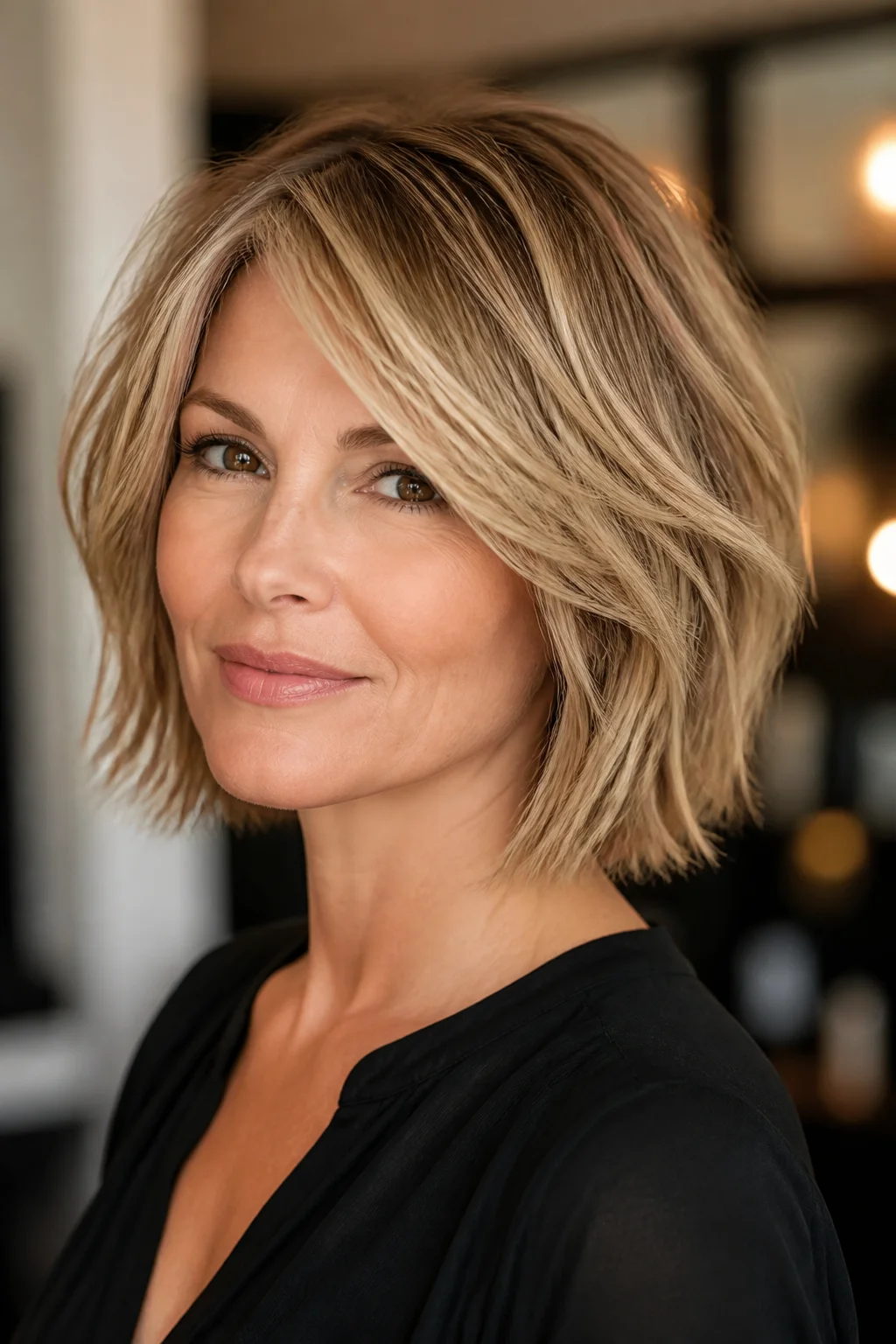
The shag brings choppy, uneven layers throughout, and honey brown catches on every one of those pieces for a lived-in, textured finish. Face-framing layers are cut shorter around the cheeks and blended back into the rest of the shape. This cut wants a texturizing spray or dry shampoo to hold its messy finish, and it actually looks better on day two hair than fresh out of the shower. Fine hair benefits from the shag because the layering creates the illusion of thickness. Thick hair benefits too, since the layers remove bulk that a blunt cut would leave behind.
Honey Brown Bob with Copper Lowlights
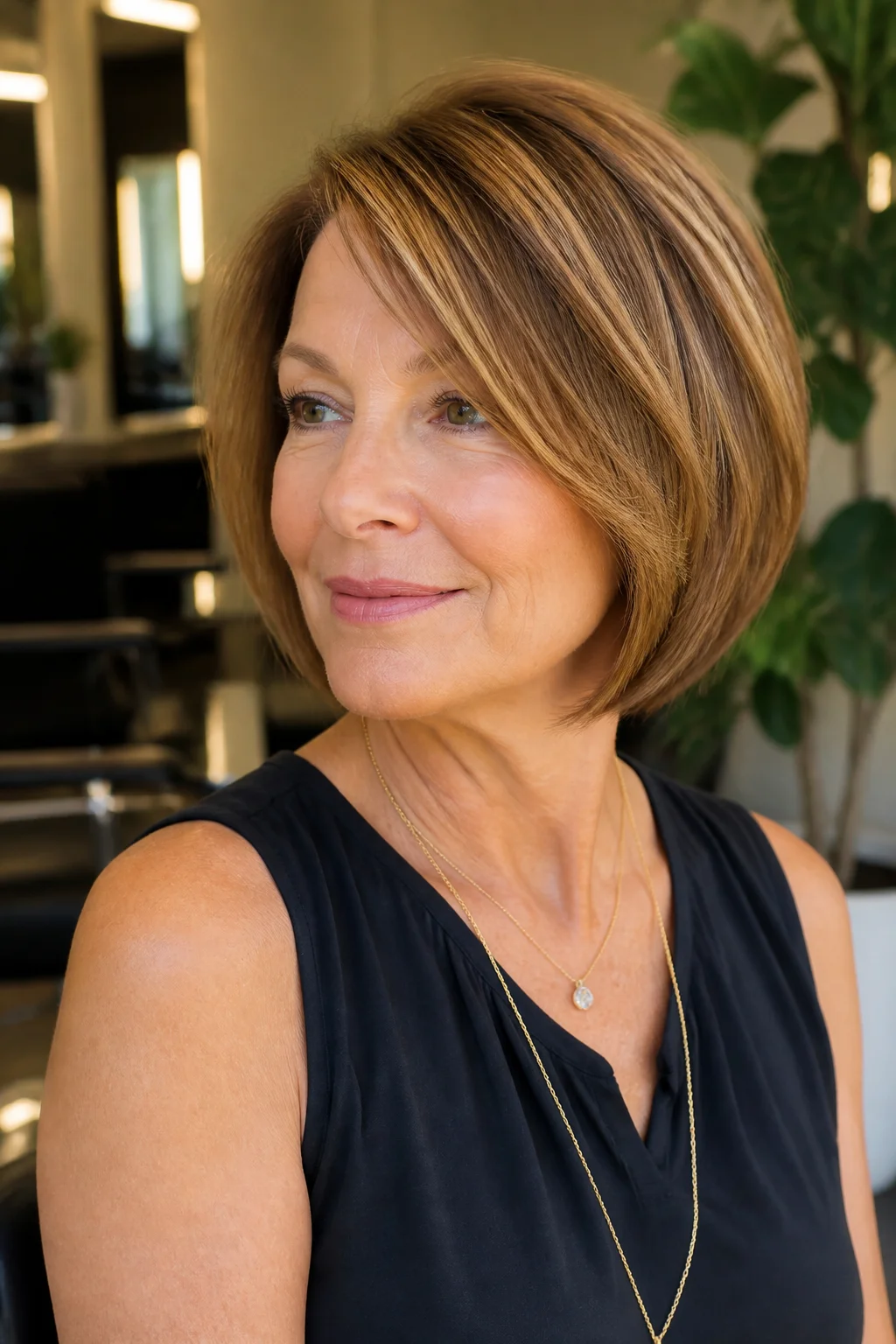
Copper lowlights woven through honey brown add depth without darkening the overall look, since copper sits close to honey on the color wheel. This works especially well on warmer skin tones where cooler ash tones tend to clash. Ask for the lowlights to be placed underneath rather than throughout so they show up as a peekaboo effect when your hair moves.
Straight Honey Bob with Side Part
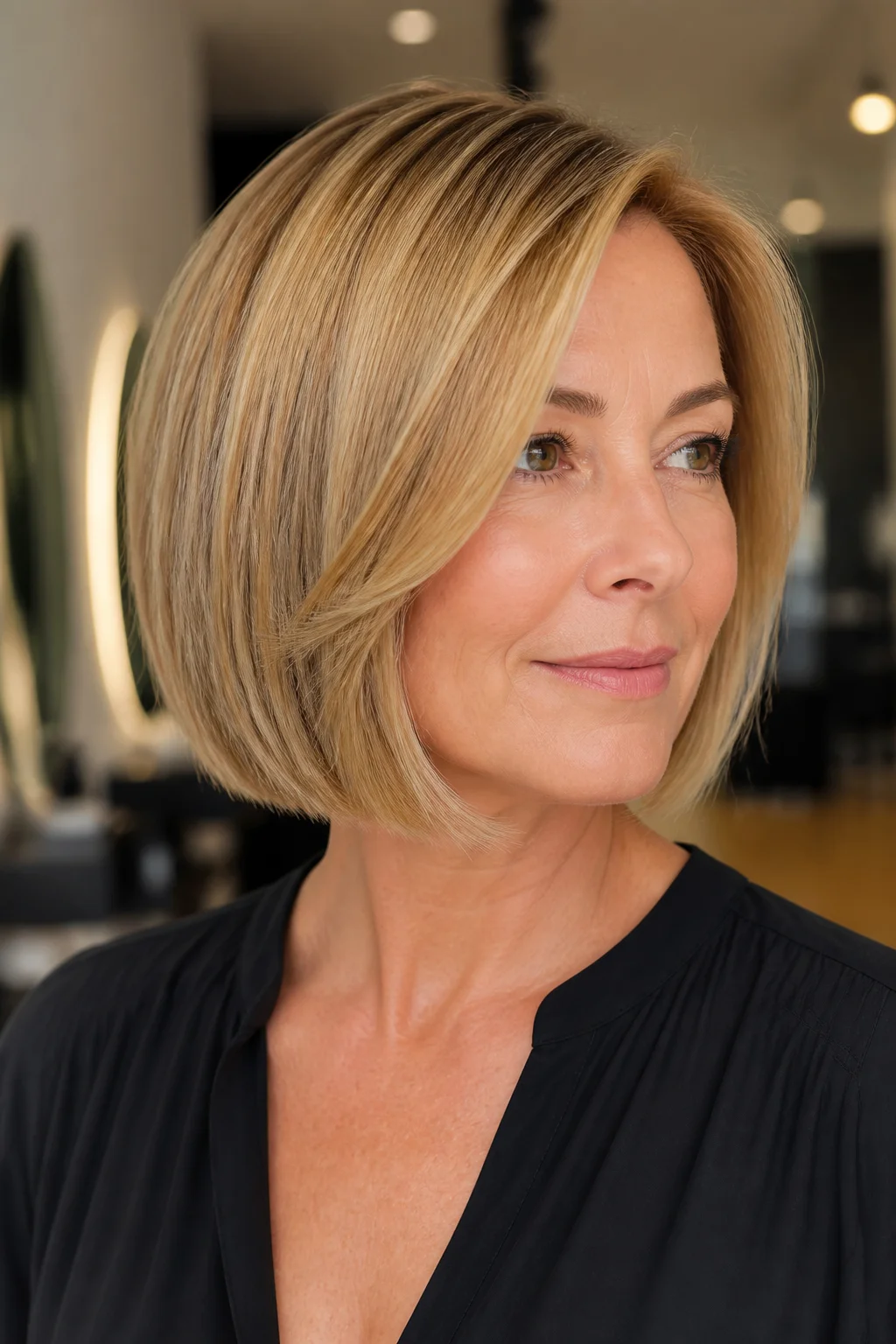
A side part shifts more weight to one side, which naturally frames the face on the shorter side and adds a soft curtain on the longer side. Honey brown on stick-straight hair shows the color as one continuous tone rather than dimensional pieces, so this suits people who prefer a cleaner, single-shade look. It’s a low-effort style since straight hair air-dries into the shape with minimal work.
Textured Honey Bob with Wispy Ends
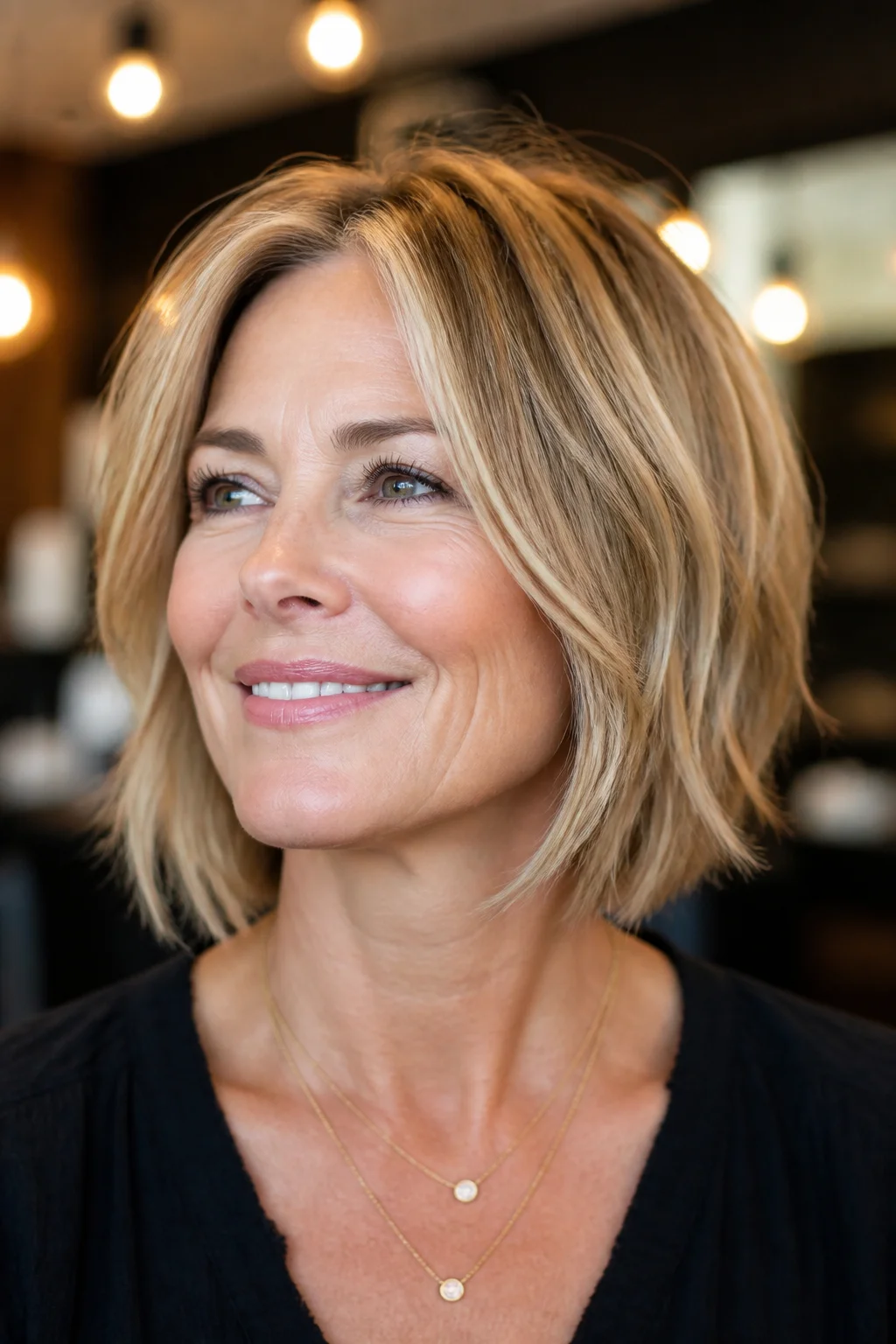
Wispy, point-cut ends keep this bob from looking too structured, and honey brown at the tips fades slightly lighter for a sun-kissed effect. It works on medium to fine hair since the thinned ends don’t add bulk. Tip: ask for a diffuser lesson if you plan to air dry, since wispy ends can look stringy without some added lift at the root.
Honey Bob with Caramel Melting
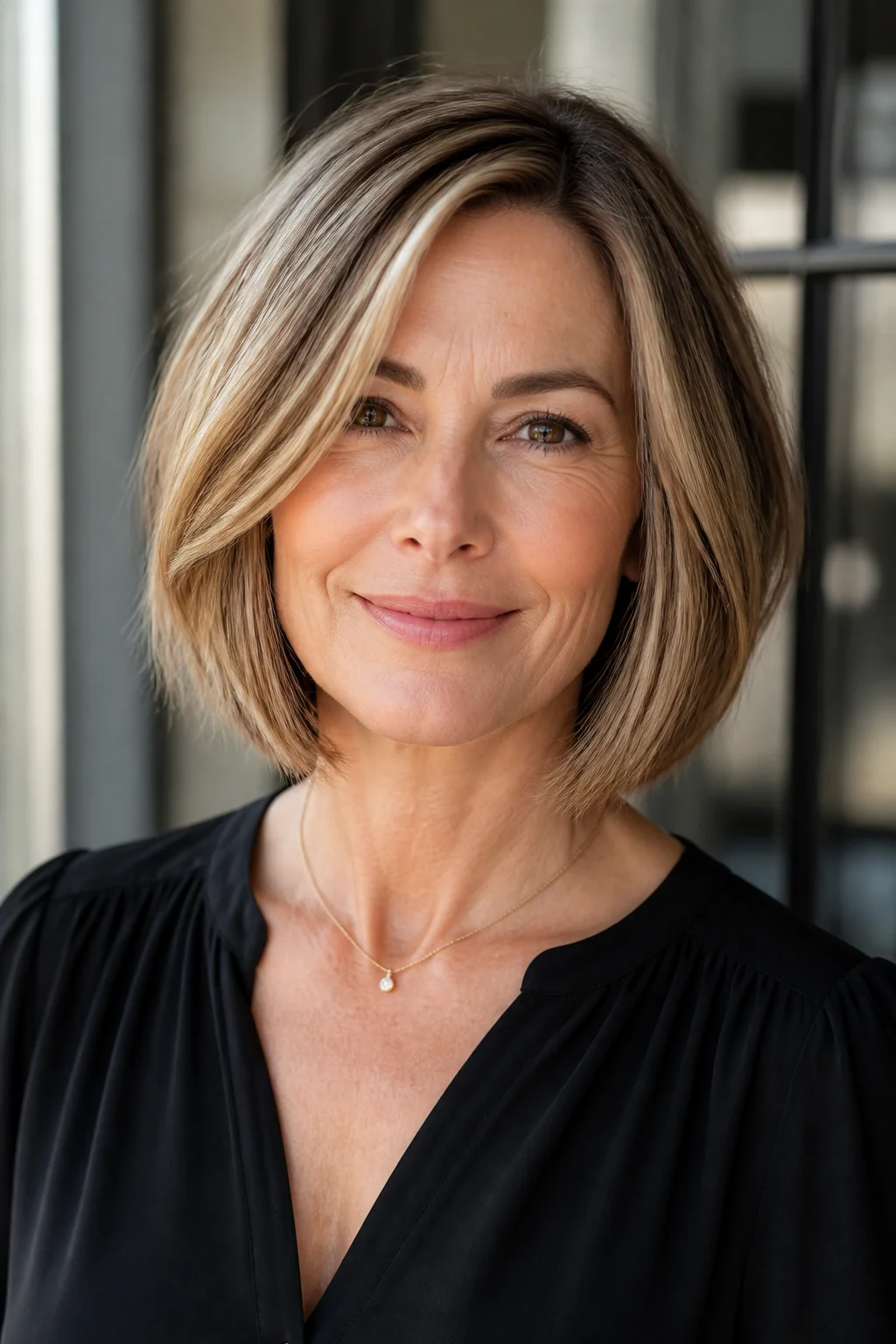
Caramel woven through honey brown creates a melted, almost liquid color effect where you can’t quite pinpoint where one shade ends and the next begins. This is a color-heavy entry on the list, so budget for a longer appointment and possibly a toner refresh every few months. The payoff is a rich, multidimensional color that looks expensive under any lighting.
Blunt Honey Bob for Thick Hair
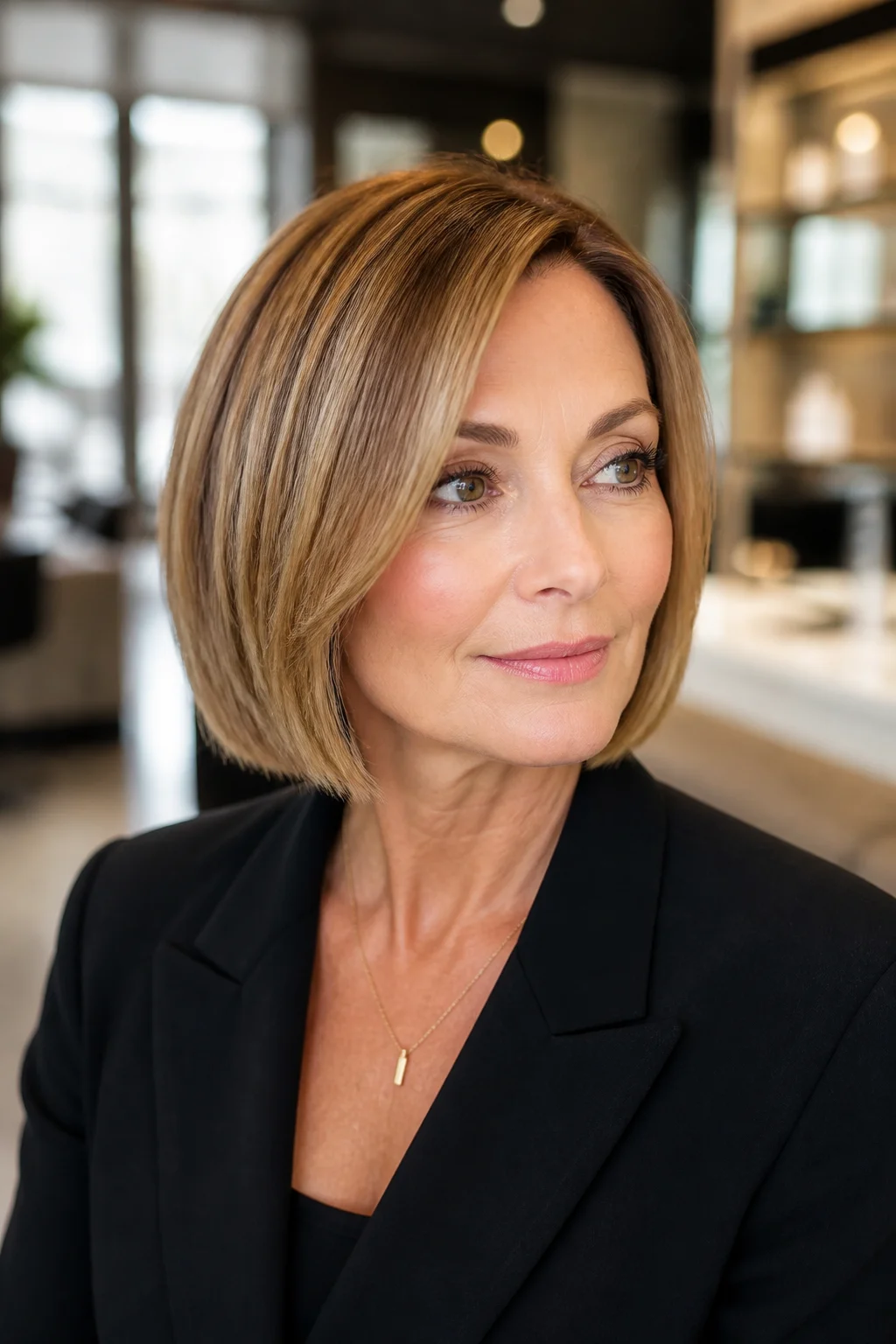
Thick hair holds a blunt line exceptionally well since there’s enough density to keep the ends from looking wispy. Honey brown on thick hair tends to look darker at first because the color has more strands to saturate, so ask your colorist to compensate with slightly warmer or lighter tones than you’d expect. This cut needs regular thinning at the interior to avoid looking heavy at the shoulders.
Honey Bob with Wispy Bangs and Layers
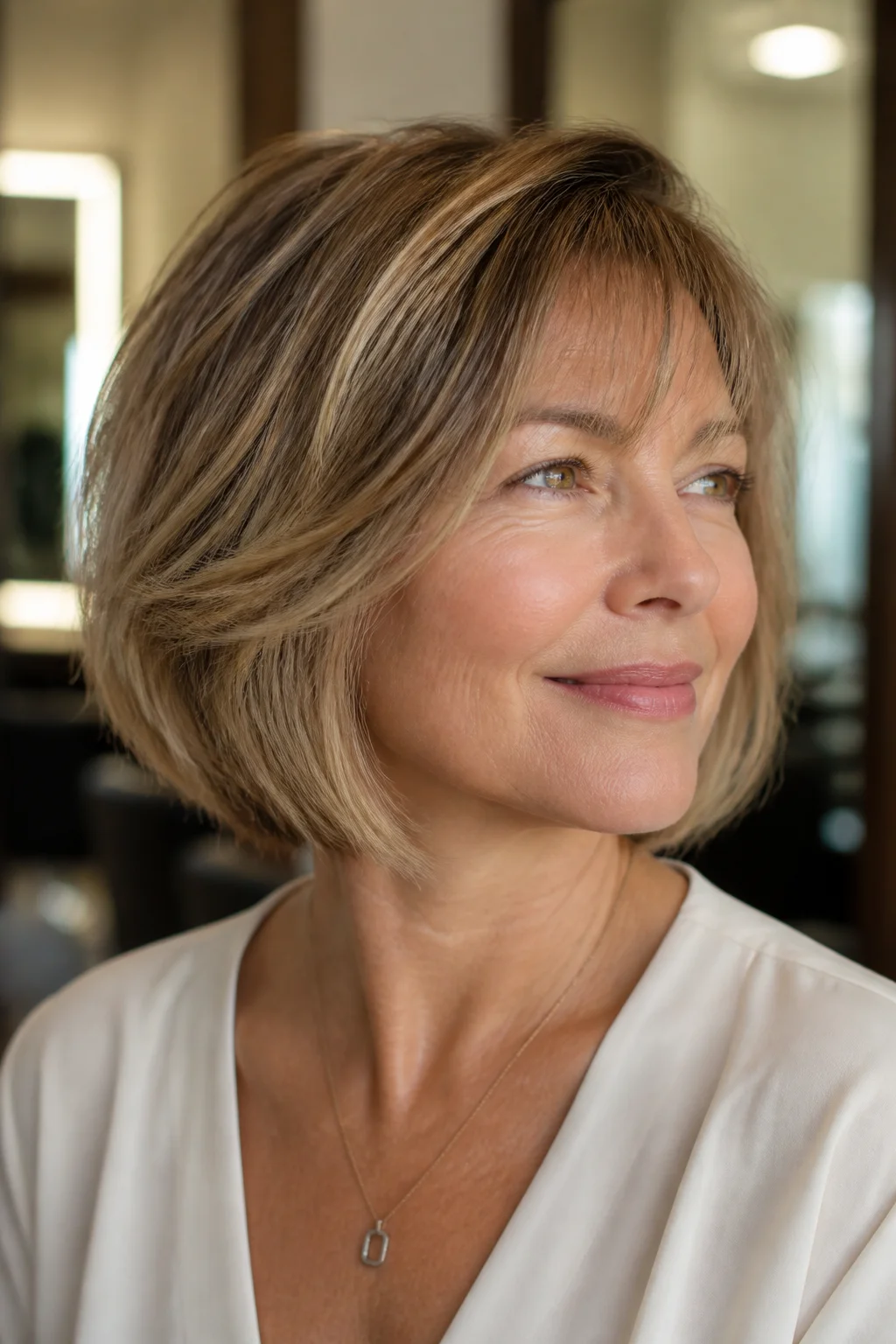
Wispy bangs blended into layered sides give this bob a soft, undone quality instead of a sharp, structured one. Honey brown looks especially warm through the layers since each piece catches light at a slightly different angle. It suits most hair textures, though curly hair will need the bangs cut a bit longer to account for shrinkage.
Honey Bob with Face-Framing Curtain Sections
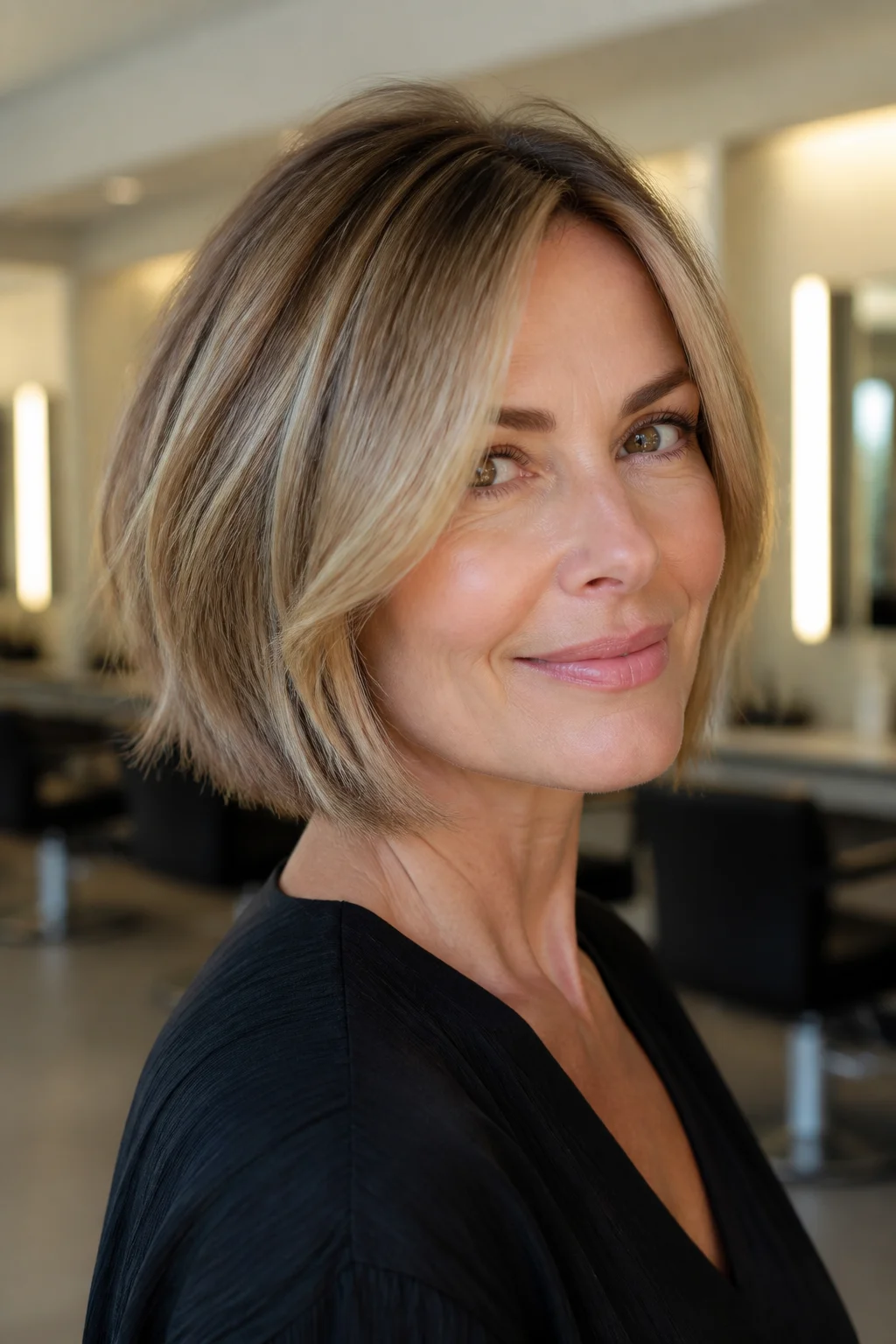
Curtain sections part down the middle and sweep back from the face, similar to bangs that have grown out and been styled to the sides. Honey brown highlights placed in these sections brighten the face without a full head of color. This is a good low-commitment way to test lighter tones before going all in.
Honey Bronde Bob with Shadow Root
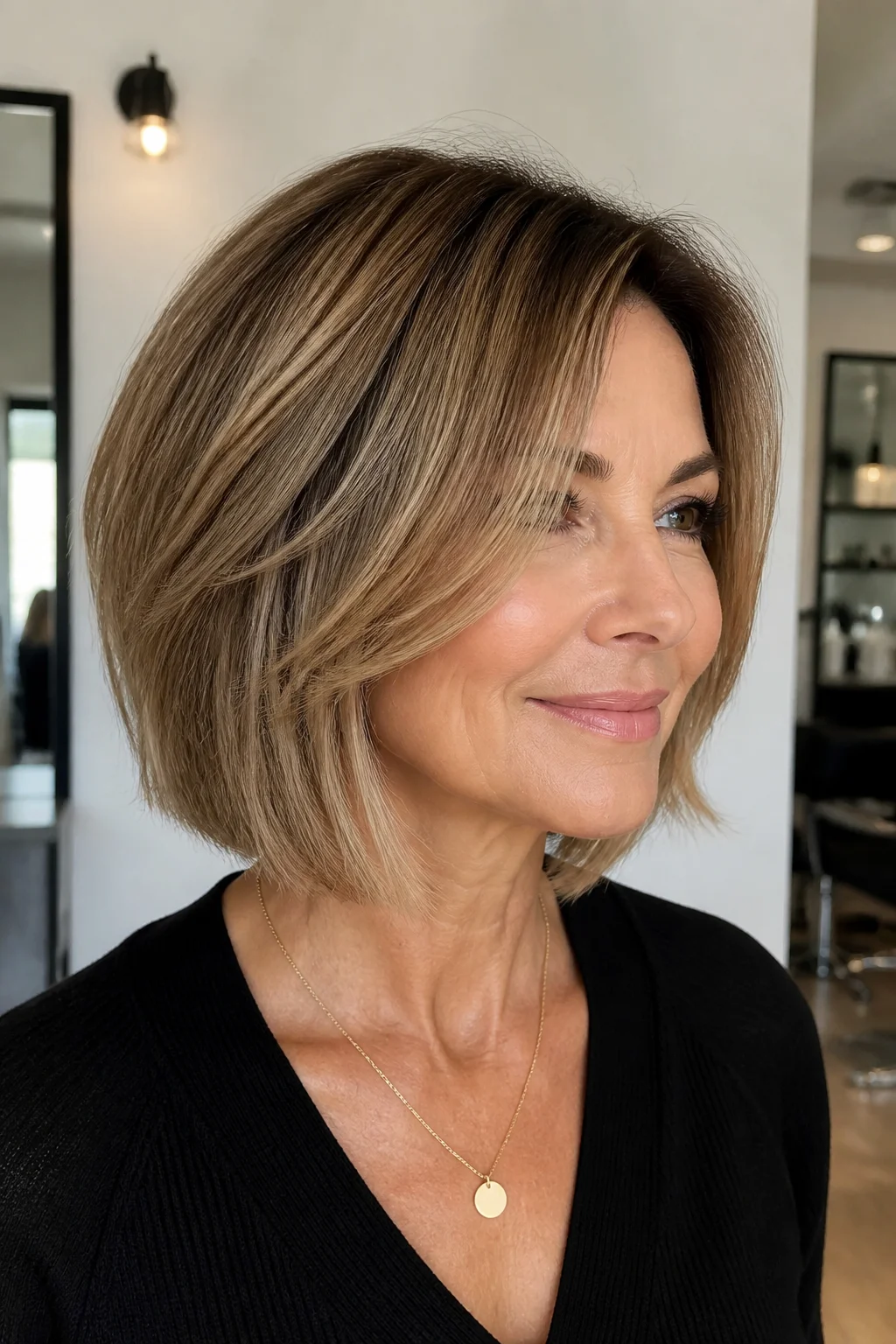
Bronde blends honey brown with a cooler blonde, and the shadow root keeps regrowth from looking obvious for months at a time. This is one of the more forgiving color combinations on this list since the root shadow does the work of hiding new growth. It suits anyone who wants a lighter overall look but doesn’t want to commit to full blonde maintenance.
Honey Bob with Volume at Crown
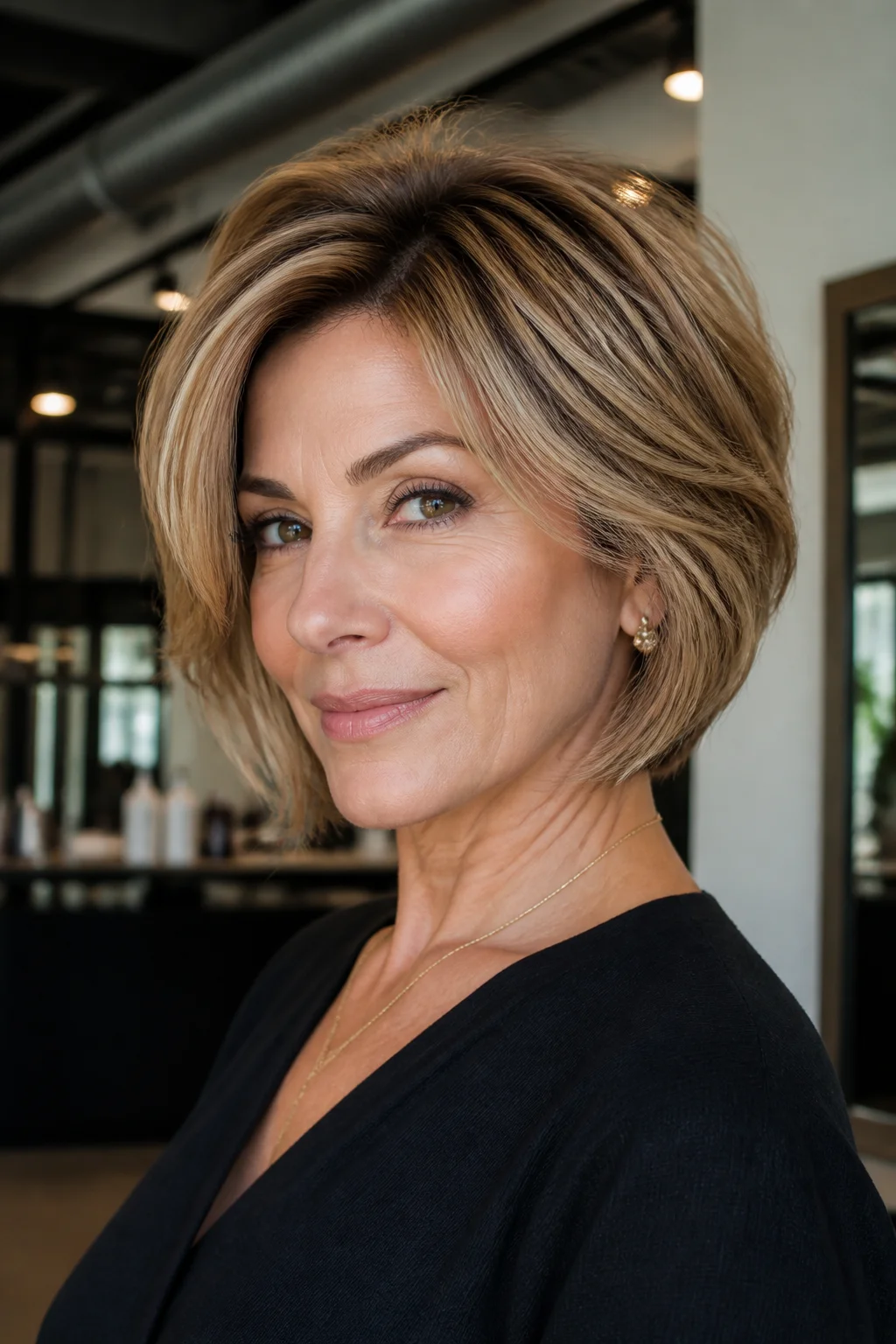
Volume built into the crown through cutting and blow-dry technique gives this bob extra height, which balances out longer face shapes. Honey brown reads richer at the roots where the volume lifts the hair away from the scalp. A round brush and a bit of mousse at the root will keep this look going through the day.
Honey Bob with Micro Bangs and Blunt Ends
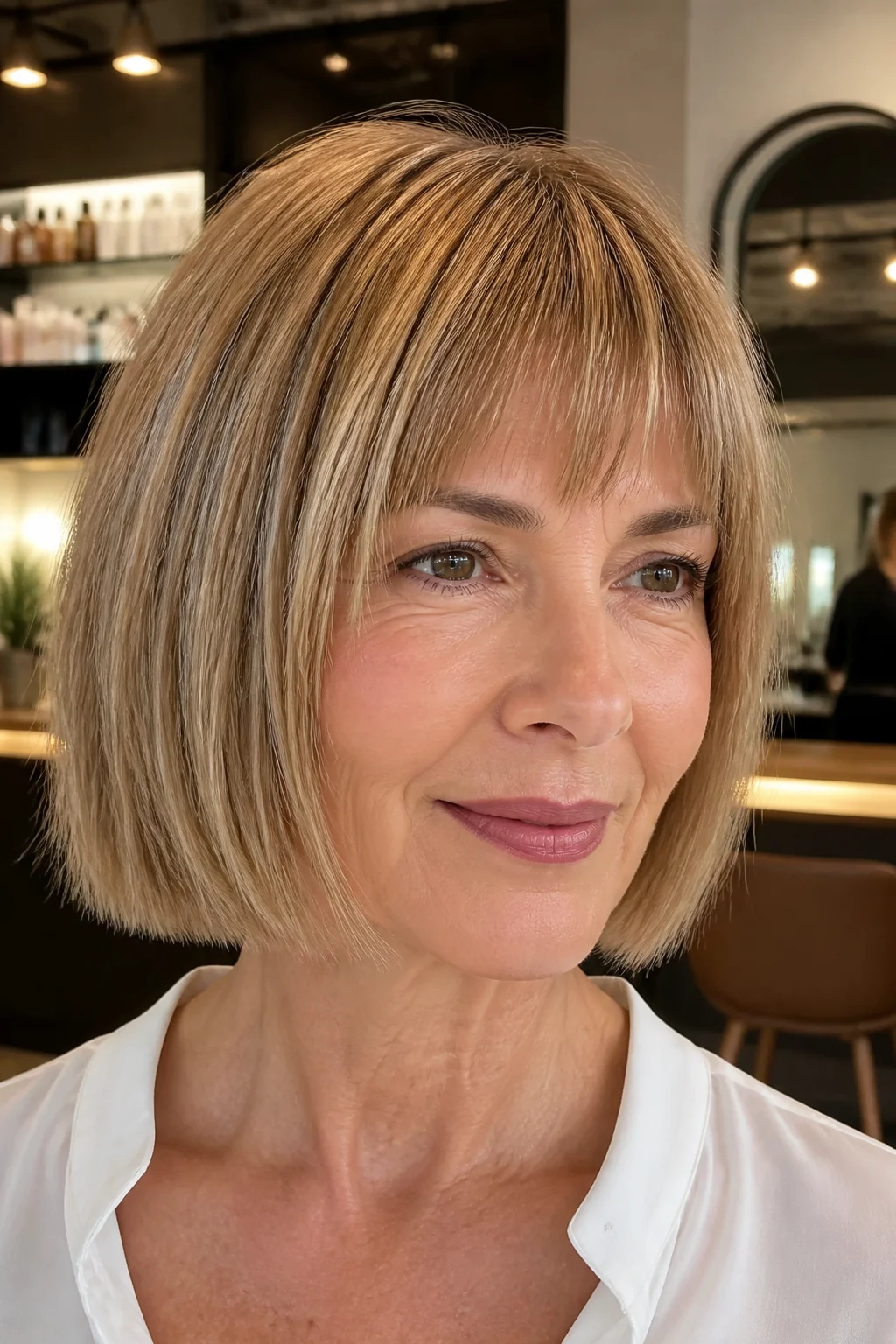
Micro bangs sit high above the brow and pair with blunt ends for a bold, retro-leaning shape. Honey brown keeps the overall look softer than it would be in black or dark brunette, since the contrast between skin and bangs isn’t as sharp. This isn’t a low-maintenance combination. Both the bangs and the blunt ends need trims every few weeks to hold their shape.
Honey Bob with Ribbon-Like Highlights
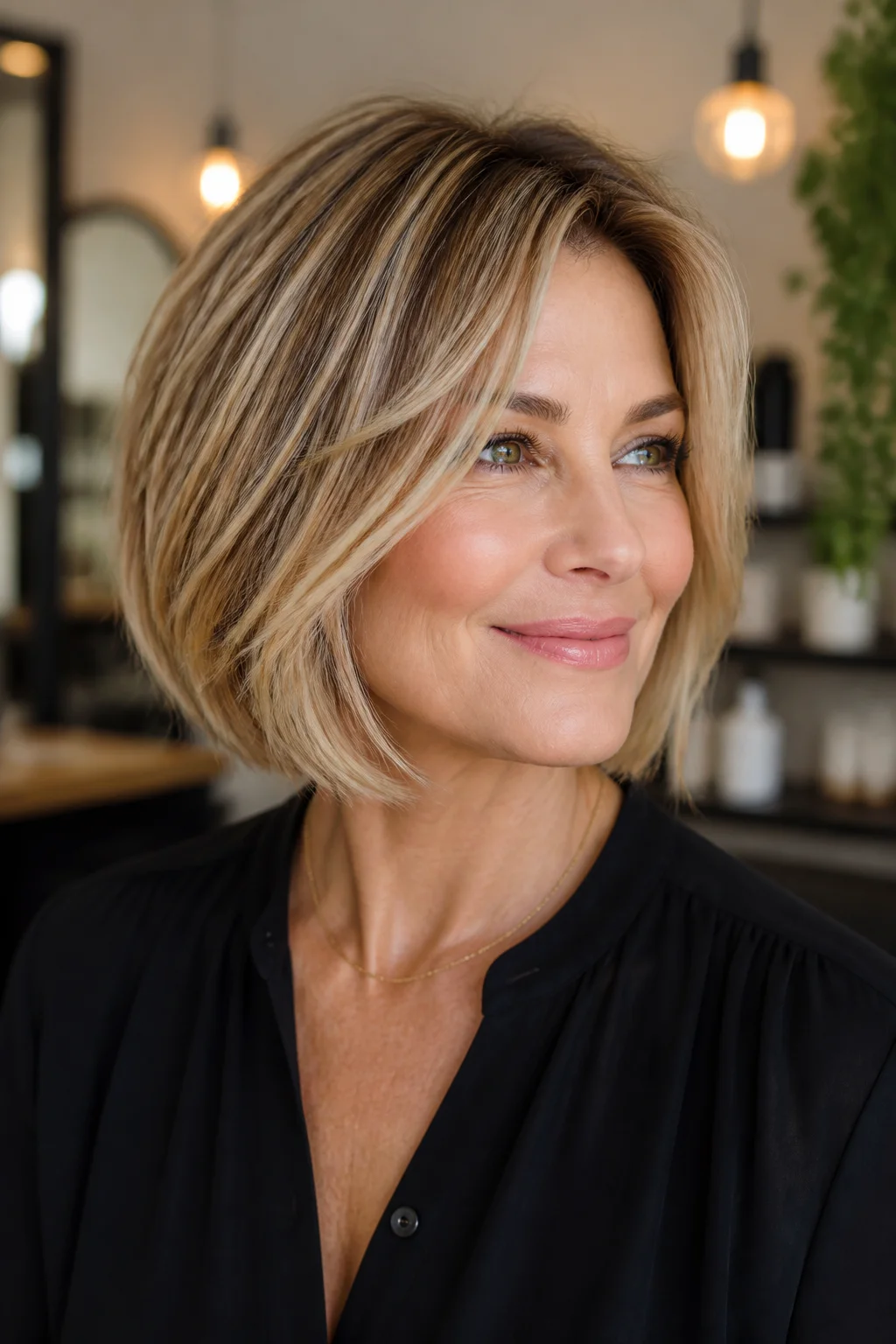
Thin, ribbon-like highlights placed strategically through a honey brown base create a striped effect when the hair is pulled back or worn in a low ponytail. It’s a subtler take on traditional foiling since the strips are placed with intention rather than all over. This works particularly well on bobs with some length left to move.
Tousled Honey Bob for Fine Hair
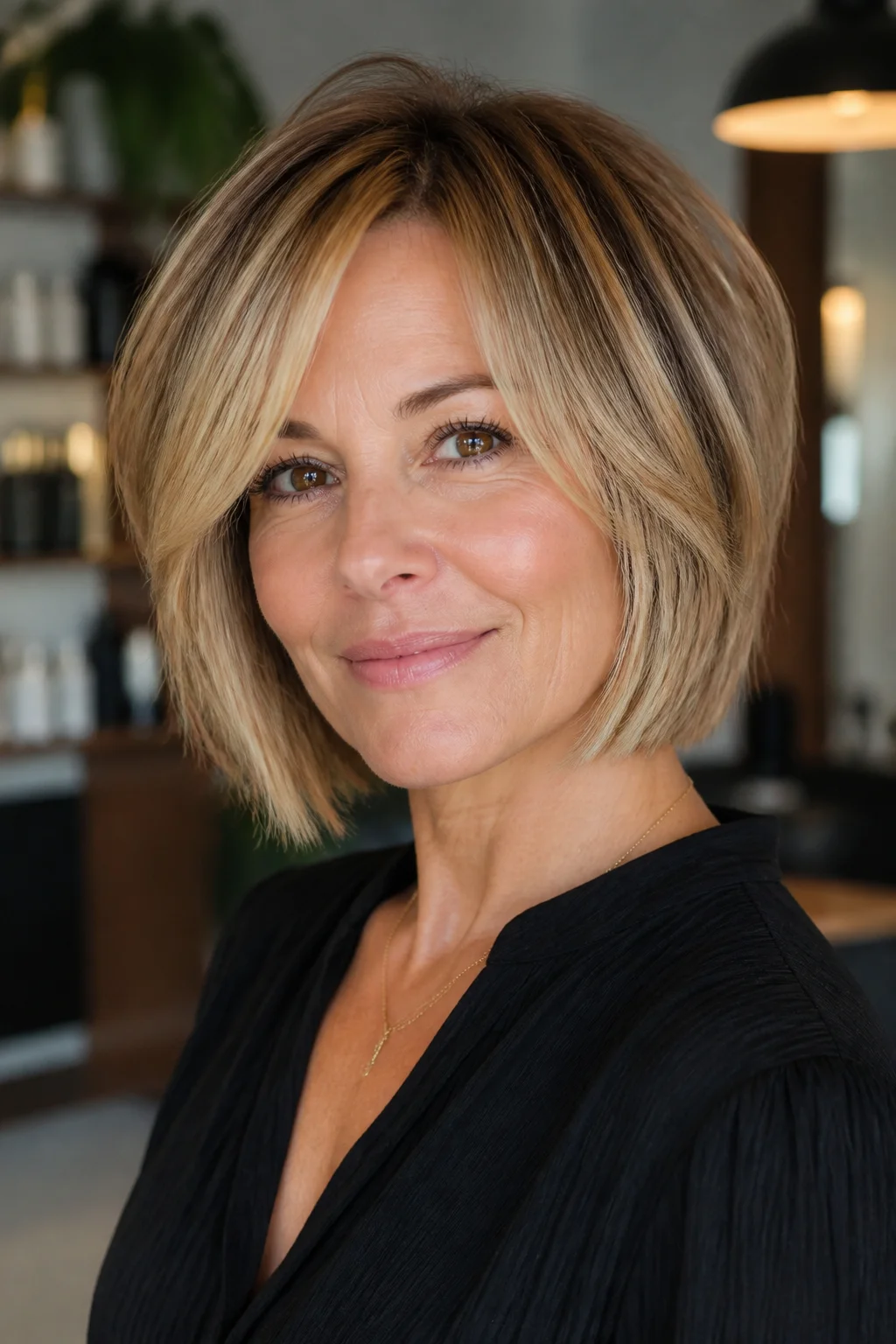
Fine hair often falls flat in a straight bob, so a tousled finish with a texturizing spray gives it the appearance of more density. Honey brown holds up well on fine strands because the color doesn’t need heavy layering to look full. Keep the cut just above shoulder length, since fine hair past that point tends to lose shape by midday.
Honey Bob with Diagonal Forward Layers
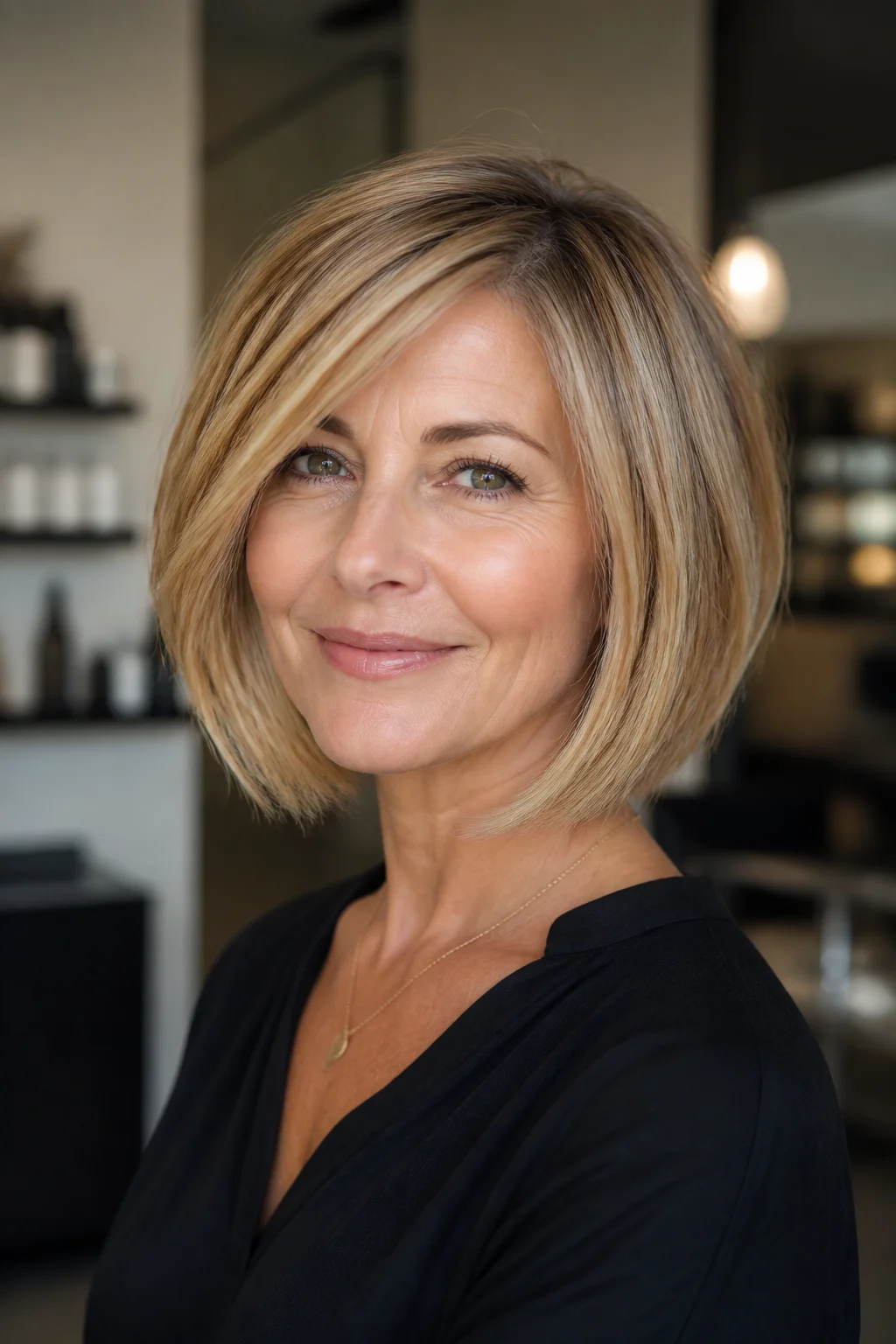
Layers cut on a forward diagonal push length and weight toward the face rather than distributing it evenly around the head. Honey brown along these layers creates a subtle gradient that’s more noticeable from the front than the back. This cut suits square or angular face shapes since the forward motion softens sharper jawlines.
Choosing the Right Honey Brown Bob for You
With this many honey brown hair bob haircuts to pick from, it helps to sort by what you’re actually willing to maintain. If you want close to zero color upkeep, look at the honey bob with roots and grown-out texture or the honey bronde bob with shadow root, since both are built around soft regrowth lines. If your priority is texture over color, the shaggy honey bob with face-framing layers and the tousled honey bob for fine hair both rely on cutting technique rather than heavy foiling to get their look.
For thick or coarse hair, avoid anything advertised as ultra low maintenance and instead look at the blunt honey bob for thick hair or the honey brown bob with undercut detail, both of which are built to handle density. Curly and wavy textures should skip the sharpest blunt options entirely and lean toward the wavy honey bob for curly hair, since curl pattern changes how blunt lines actually sit.
A common mistake is asking for balayage when what you actually want is a shadow root, or asking for micro bangs without accounting for the trims they demand. Bring a photo, but also tell your stylist how much time you spend on hair each morning. That detail changes the recommendation more than the photo does.