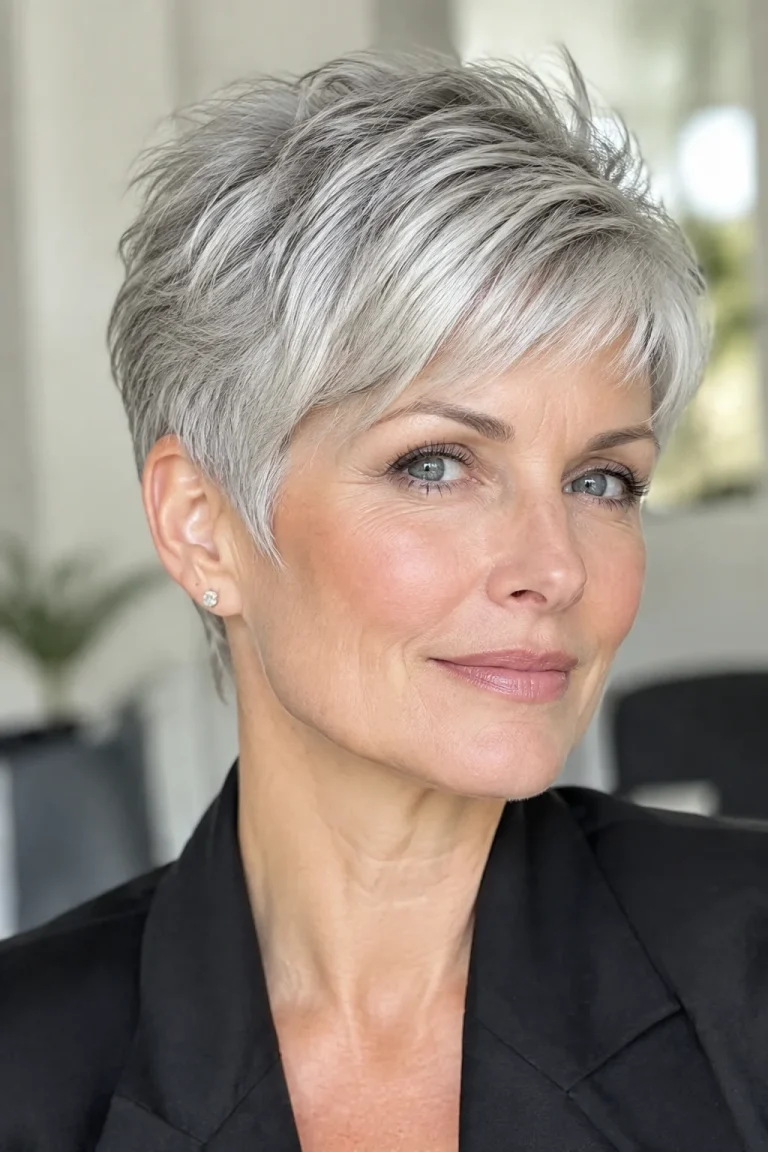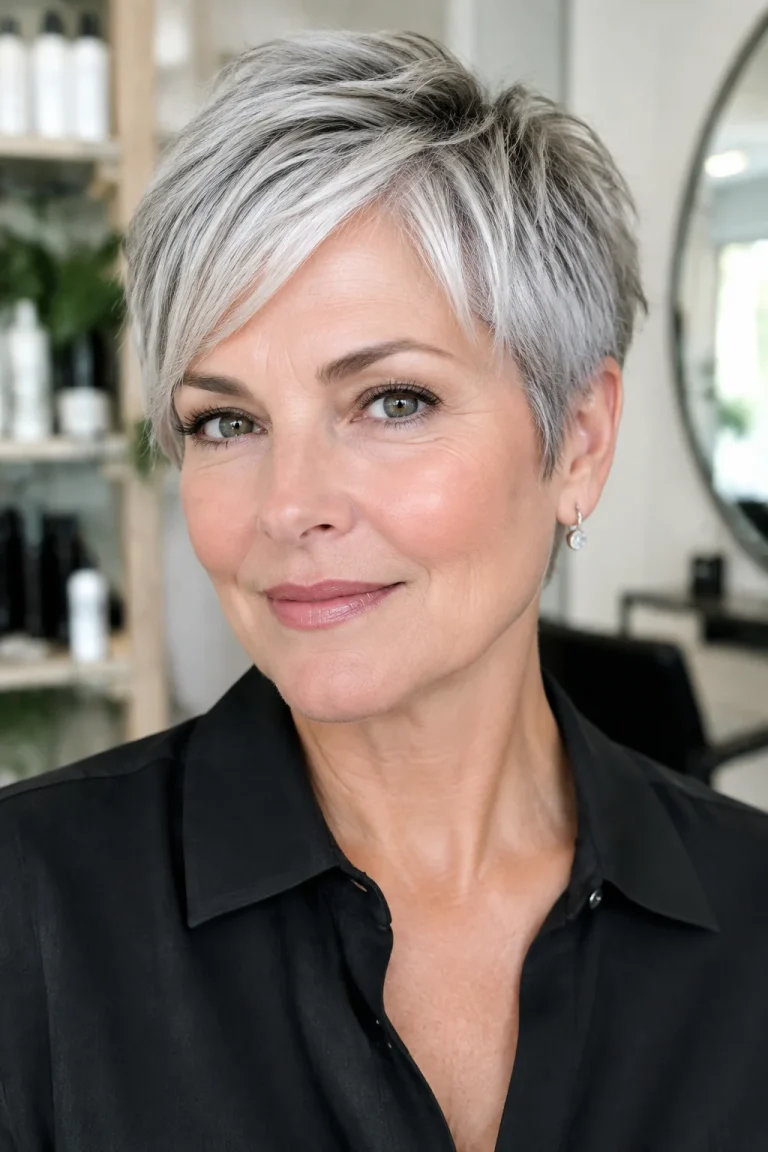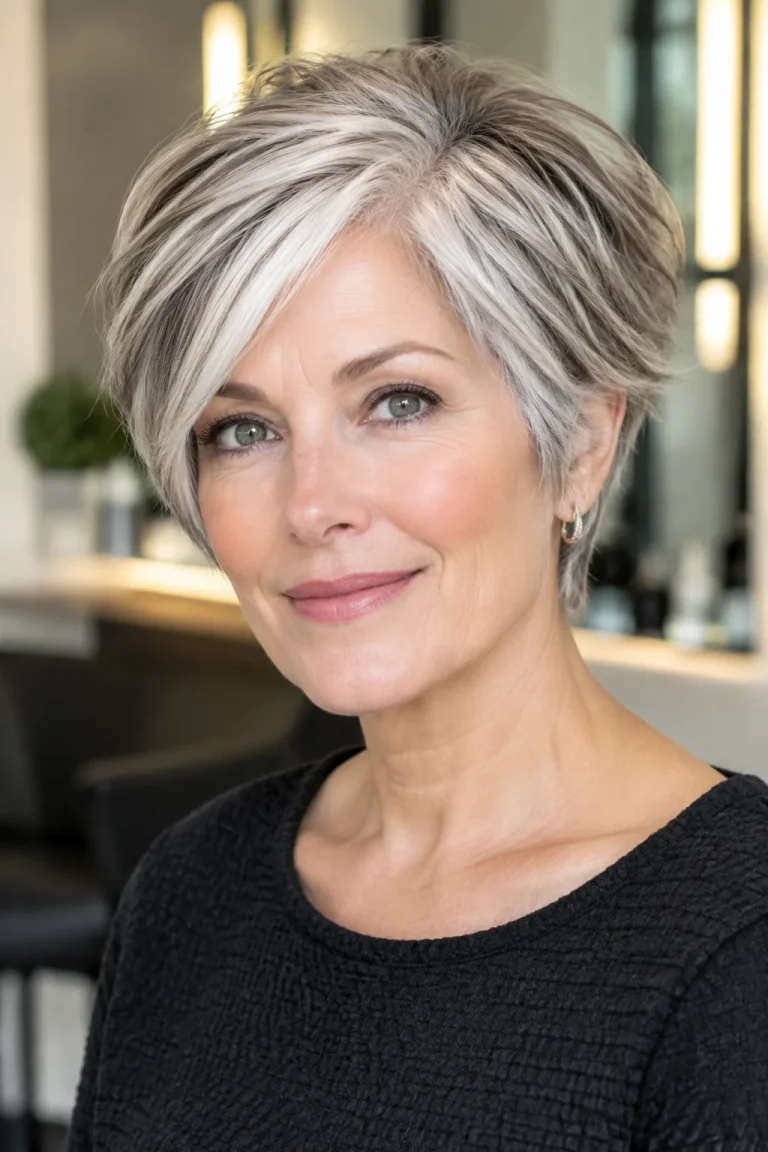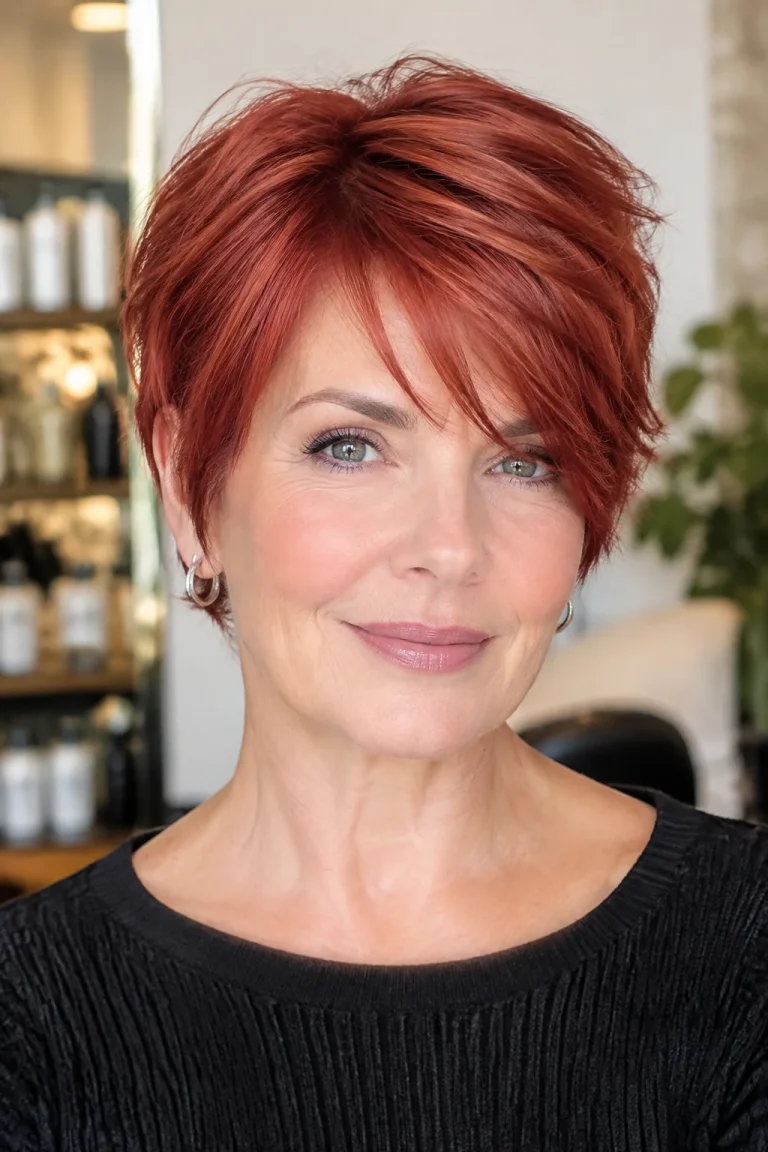
Straight hair can either flatter your face or wash it out flat, and a lot of that comes down to where the layers hit and how the front pieces are cut. If you carry extra weight in your face or feel like your features get lost in a blunt, one-length cut, the fix usually isn’t a whole new hair type. It’s smarter framing. Face-framing straight hair hairstyles for plus size women work by placing shorter, angled pieces around the jaw and cheeks so the eye moves up toward your features instead of sliding down your face. The goal is balance, not shrinking yourself or hiding behind your hair. Below are twenty ways to cut and style straight hair so it highlights your bone structure, softens sharp angles if you want that, and gives your whole look more shape. Some are dramatic changes, others are small adjustments you can ask for at your next appointment.
Wispy Bangs with Shoulder-Length Layers
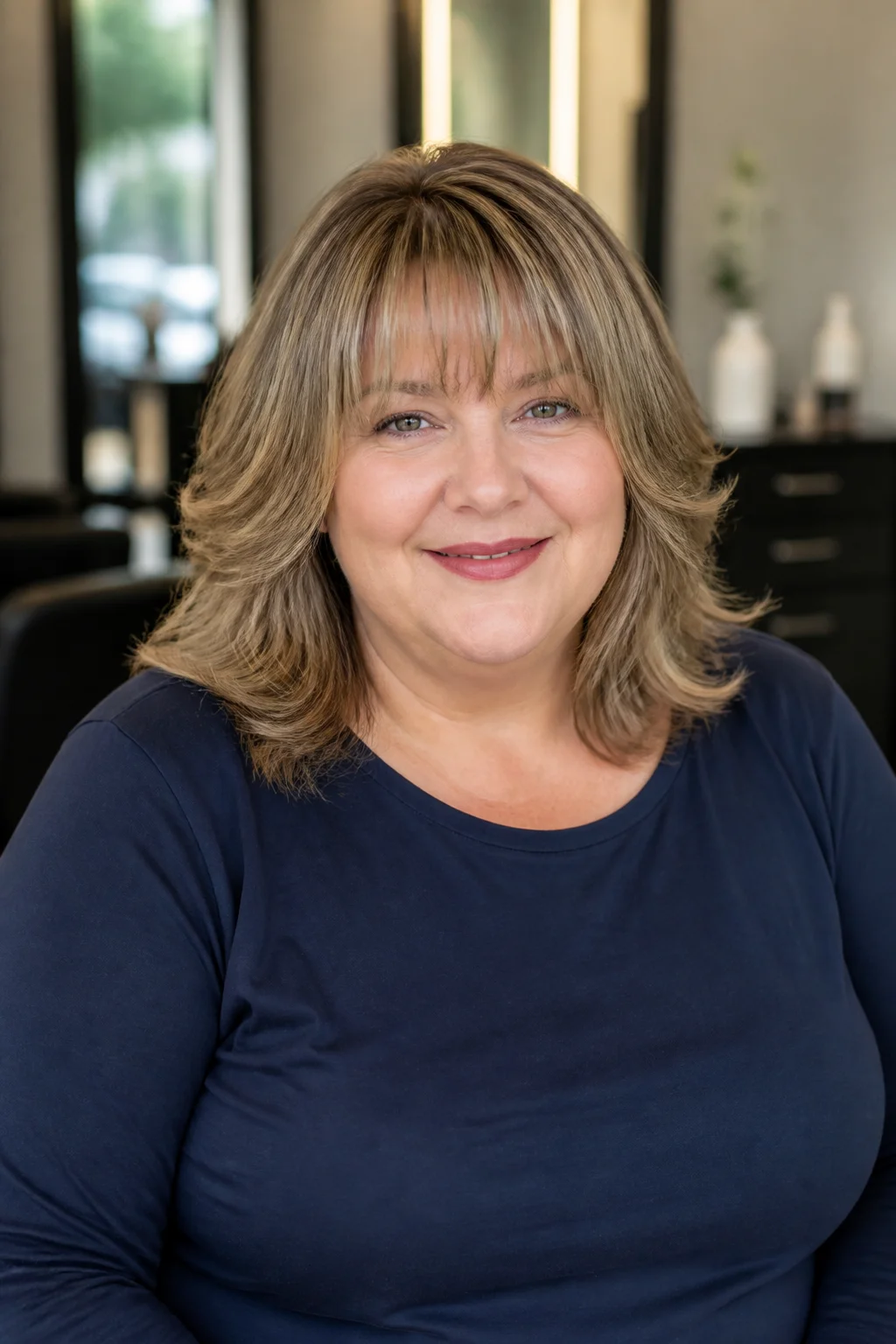
Wispy bangs sit light on the forehead instead of forming a heavy curtain, so they soften the top half of your face without adding bulk near the cheeks. Paired with layers that end around the shoulders, this cut keeps movement through the mid-length instead of letting hair sit flat and wide. The layers should start below the chin so they don’t add width right where your face is fullest. Tip: ask your stylist to point-cut the bang ends so they blend rather than sit as a solid block. A light mist of heat protectant before styling helps the finish last. A light mist of heat protectant before styling helps the finish last.
Angled Bob with Blunt Face-Framing Pieces
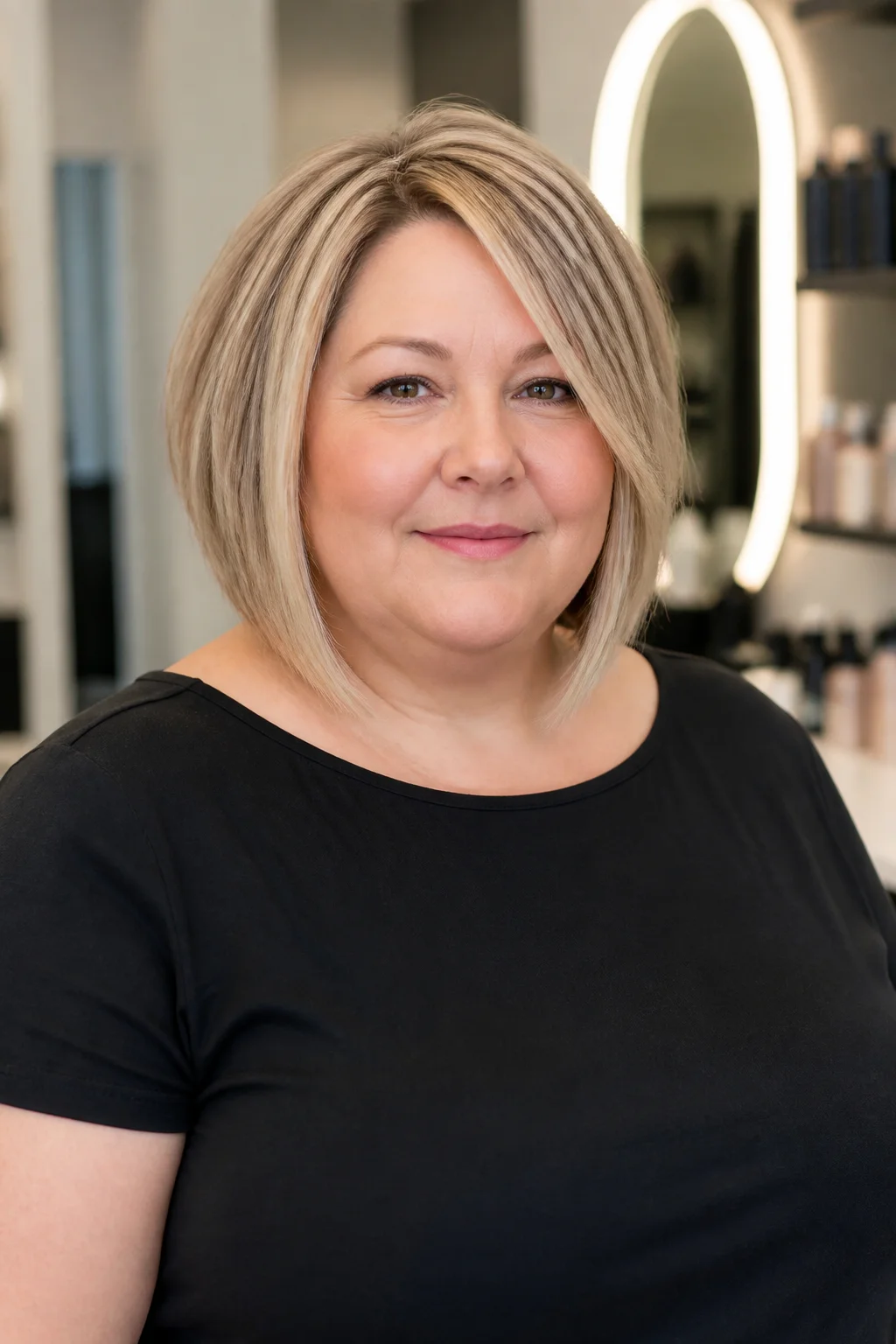
This bob cuts at an angle from back to front, with the front pieces left longer and blunt so they graze the jaw. The blunt edge does real work here. It draws a clean line along the jaw that makes your face look more defined rather than round. Because the back is shorter, the cut avoids adding bulk at the base of the neck, which keeps the whole silhouette from looking heavy. It’s a strong choice if you want a graphic, styled look rather than something soft and undone. A light mist of heat protectant before styling helps the finish last.
Long Straight Hair with Curtain Bangs
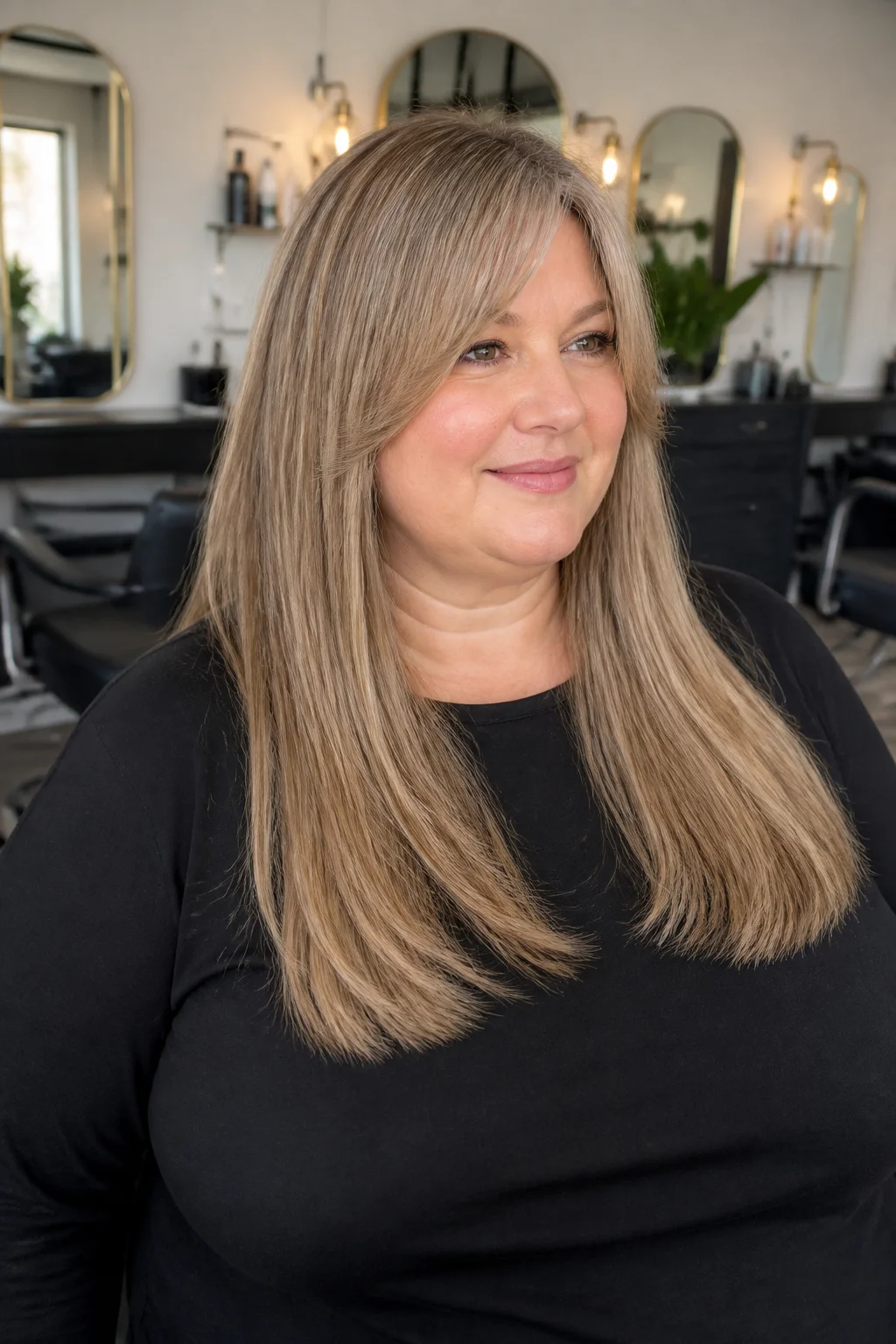
Curtain bangs part in the middle and sweep to both sides, framing the face like two soft brackets. On longer hair, they blend into face-framing layers so there’s no hard line where the bangs end. This works well if you want length but still need something to break up a large expanse of straight hair near your cheeks. The style also grows out easier than blunt bangs since the part-and-sweep shape stays wearable at almost any length.
Textured Layers Starting at Cheekbones
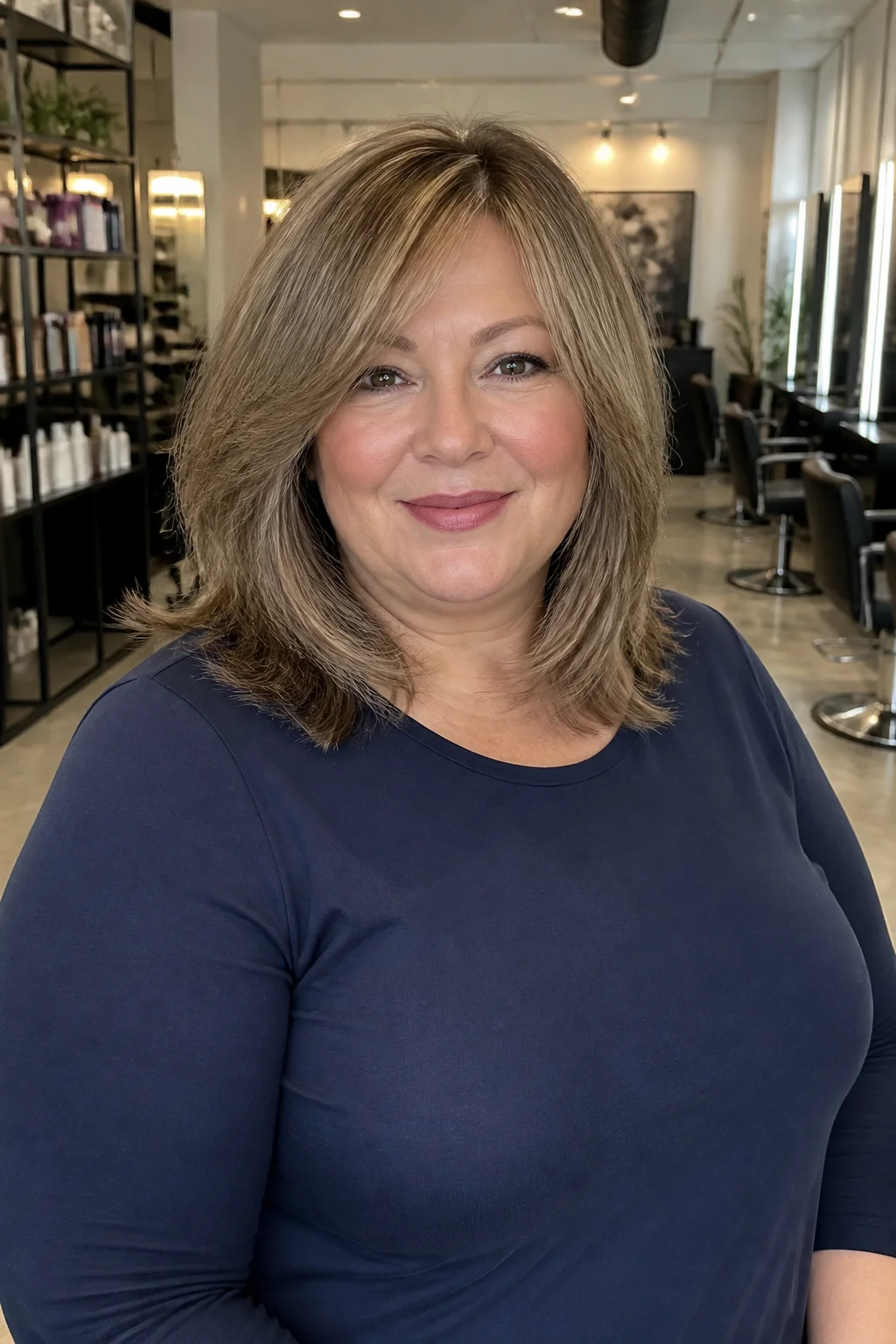
Layers that begin right at the cheekbone create instant lift and movement around the widest part of many faces. Texture here means the ends are cut with a razor or slide-cutting technique so they taper rather than sit thick and blunt. This keeps the layers from puffing out at the sides, which is a common complaint with layered cuts on fuller faces. Tip: request a light texturizing pass only on the face-framing pieces, not the whole head, so the rest of your hair keeps its smooth, straight finish.
Sleek Straight Bob with Diagonal Forward Sweep
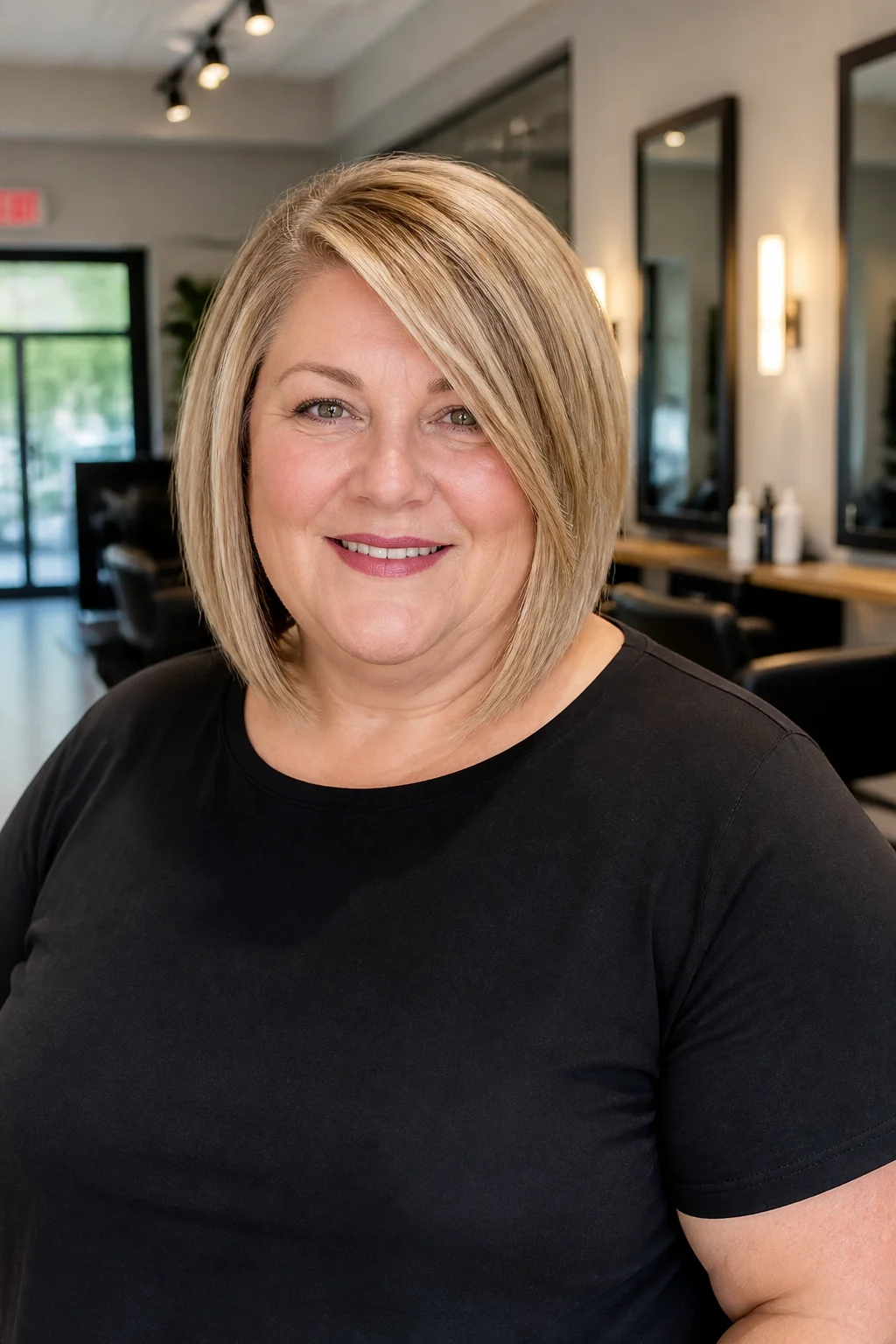
The diagonal sweep in this bob means the front is longer than the back, angling forward past the chin on both sides. That forward motion pulls focus down and in, which elongates a round or wide face shape. It’s a sleek, polished cut that photographs well because the diagonal line is clean and deliberate. Flat-iron work keeps the diagonal crisp, so this style asks for a little more daily maintenance than a softer layered cut.
Long Layers with Razor-Cut Face Framing
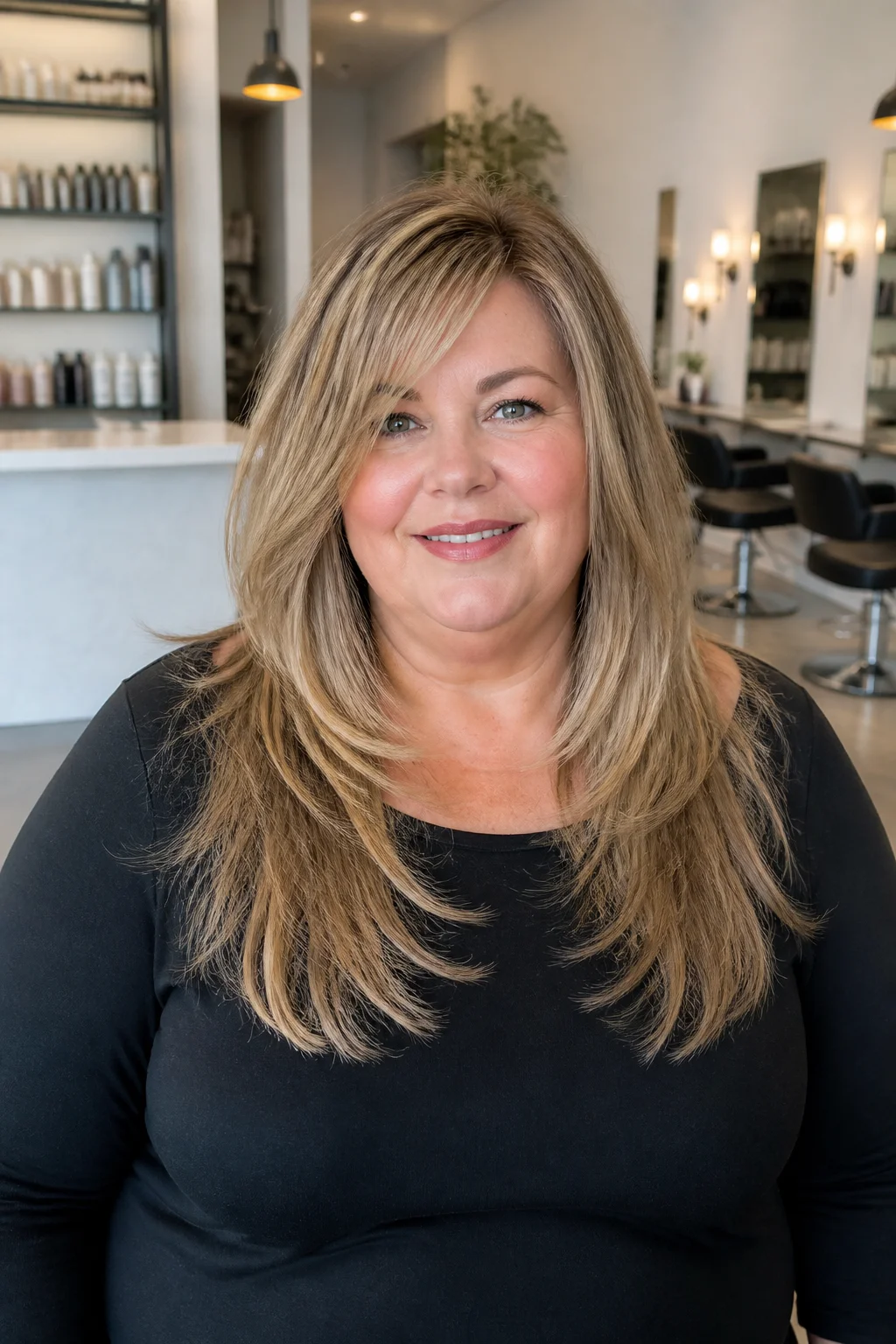
Razor cutting removes weight from the ends so long layers move instead of hanging stiff. On plus size faces, this matters because heavy, blunt long hair can add visual width right at the jaw and cheeks. The razor-cut face-framing pieces taper down to soft points, which reminds me of feathers laid against the skin rather than a solid sheet of hair. This cut suits anyone who wants length but is tired of hair that feels flat and one-dimensional.
Lob with Graduated Face-Framing Layers
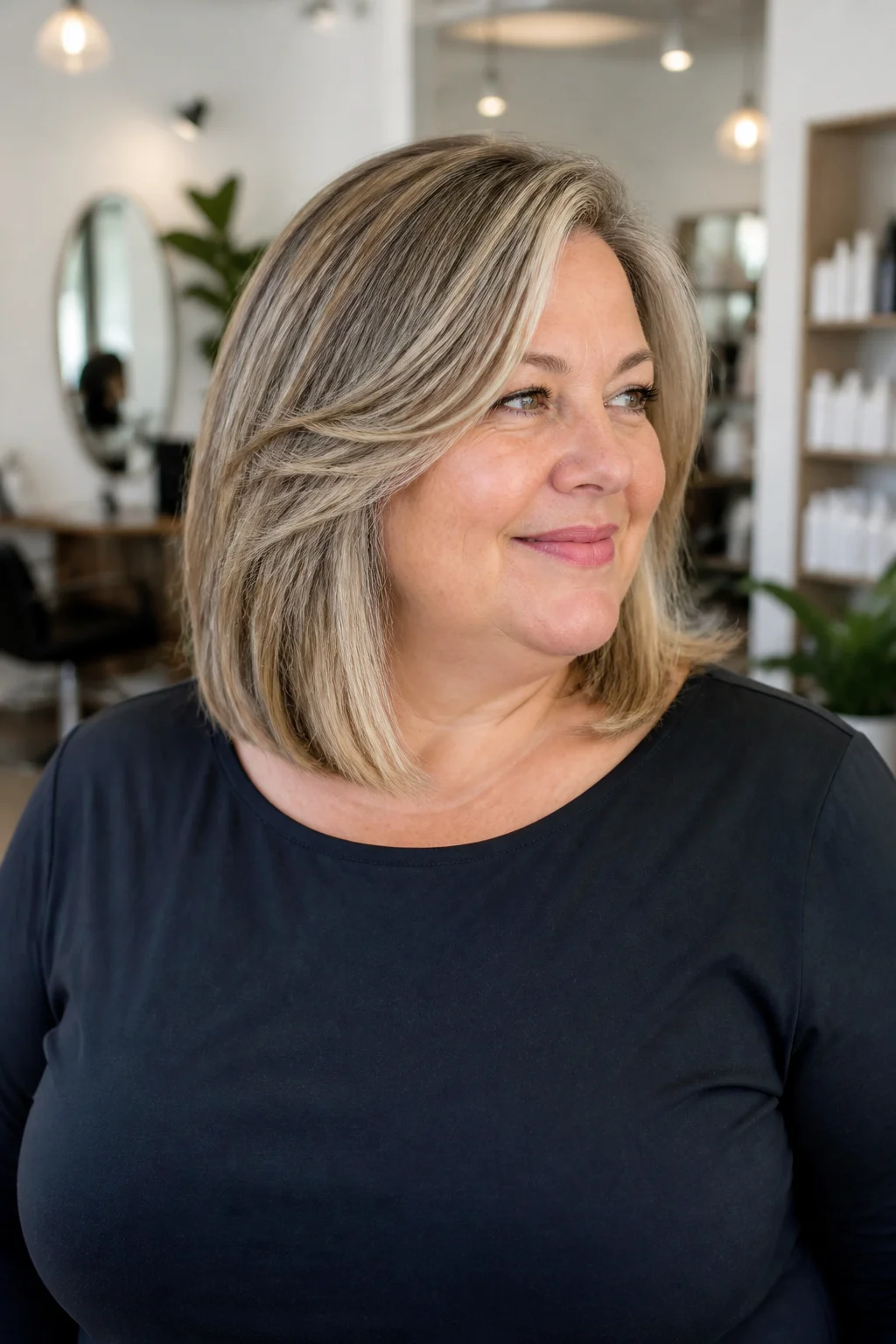
A lob, or long bob, hits between the chin and the collarbone, and graduated layers built into the front section create a gentle staircase effect down the face. Each layer is slightly longer than the one above it, so the framing looks intentional instead of choppy. This is one of the more forgiving cuts on this list because the graduation can be subtle or dramatic depending on how much length difference your stylist builds in.
Blunt Bangs with Long Straight Ends
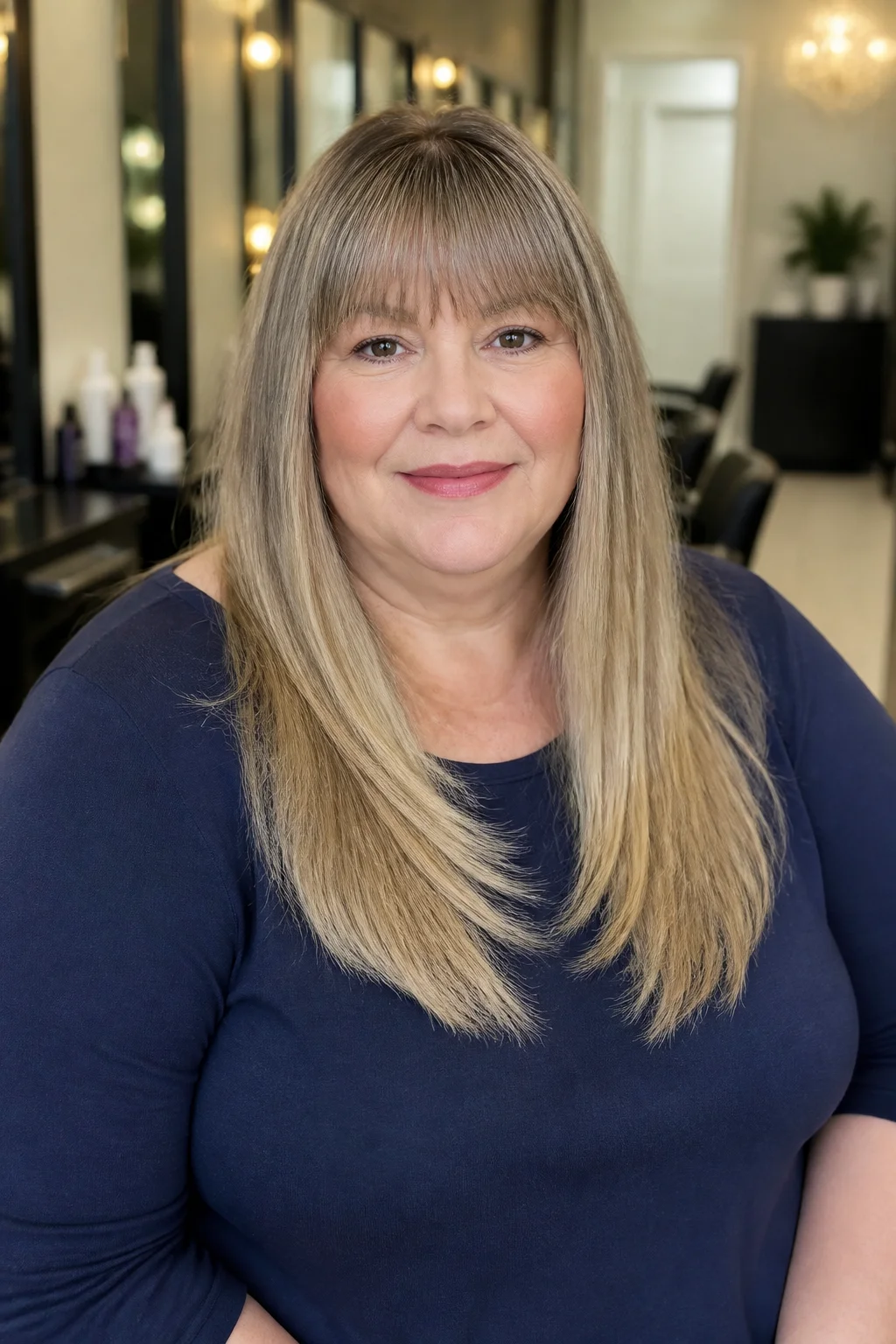
Full, blunt bangs paired with long, straight, one-length ends give a strong contrast between a soft front and a sleek back half. The bangs shorten the appearance of the forehead and pull attention to the eyes immediately. Keeping the rest of the hair blunt and straight balances out the boldness of the bangs so the whole look doesn’t feel too busy. This combination works best on faces that want more focus up top and less movement everywhere else.
Shag Cut with Tapered Face Layers
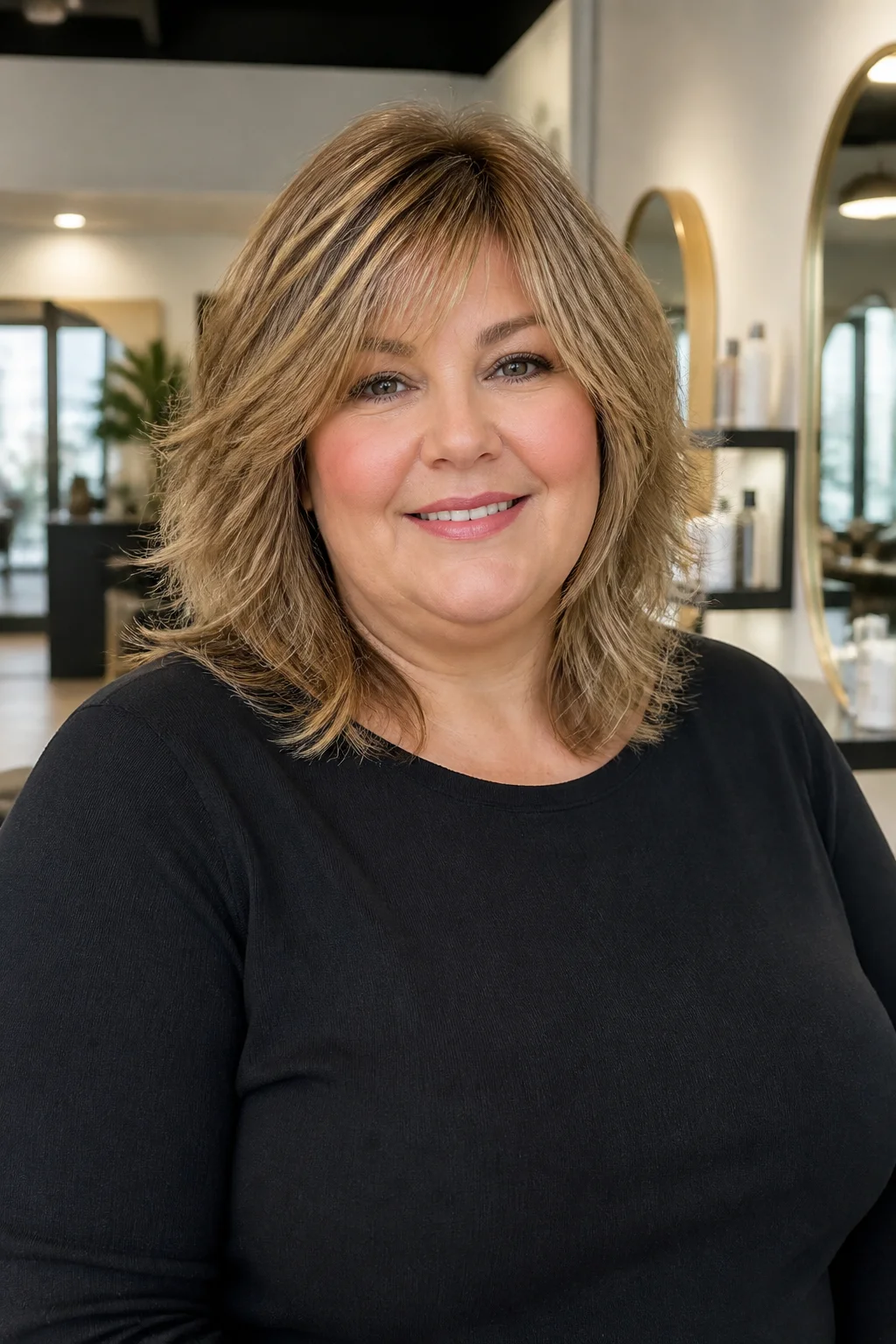
The shag brings heavy layering throughout, but the face-framing pieces are tapered thinner than the rest so they don’t overwhelm the cheeks. This cut has built-in texture and doesn’t require a perfectly smooth finish to look done, which makes it low-maintenance for straight hair. It works on almost any length and gives a lot of movement around the face without needing curls or waves to create shape.
Straight Pixie with Longer Face-Framing Sides
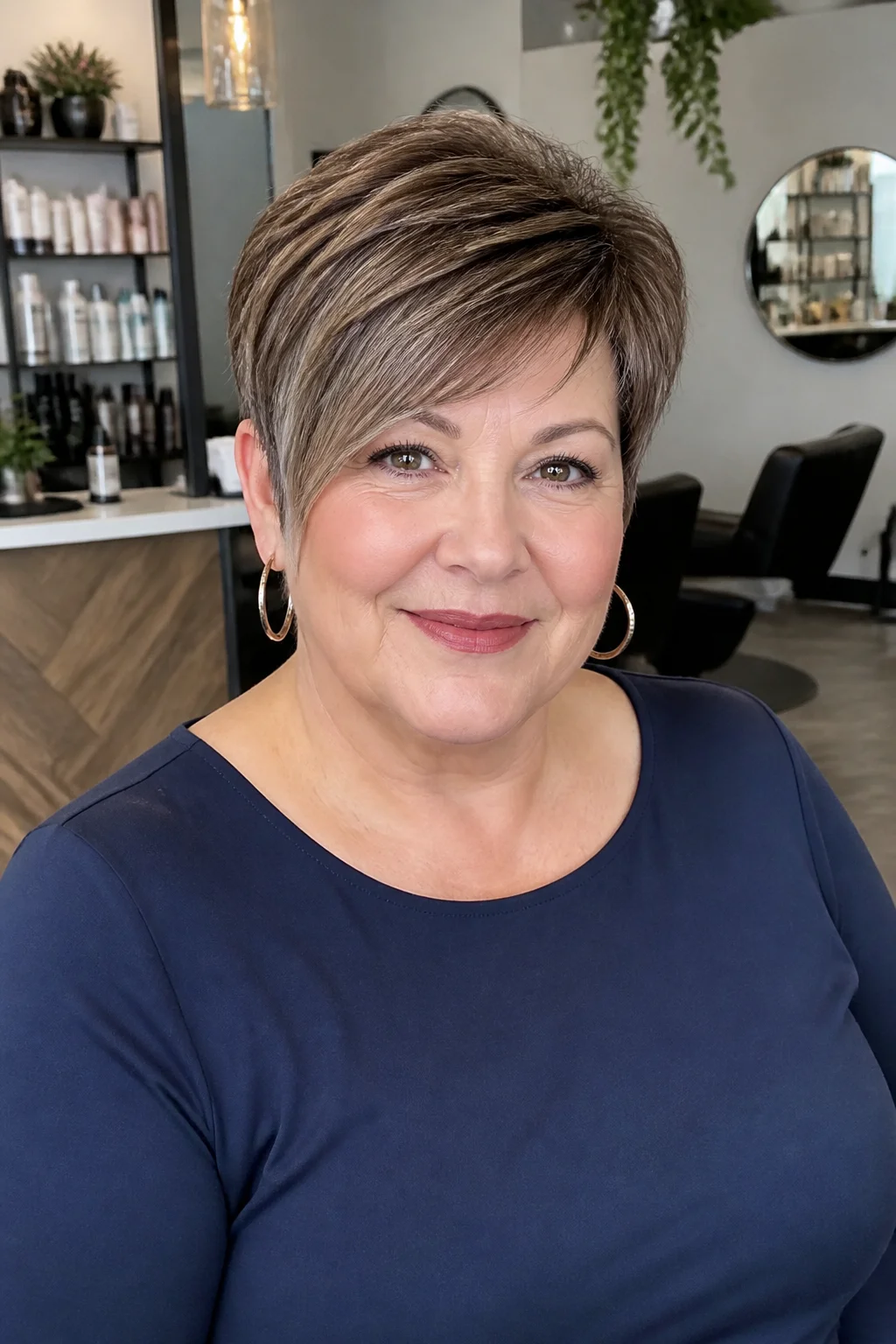
A pixie cut with longer pieces left at the sides gives you short hair without exposing the entire jawline at once. Those longer sides act like soft framing brackets, similar to bangs but positioned lower and closer to the ears. This is a confident, low-maintenance option, and it proves short hair can still soften and balance a fuller face when the front sections are left with a bit more length.
Asymmetrical Bob with One Side Longer
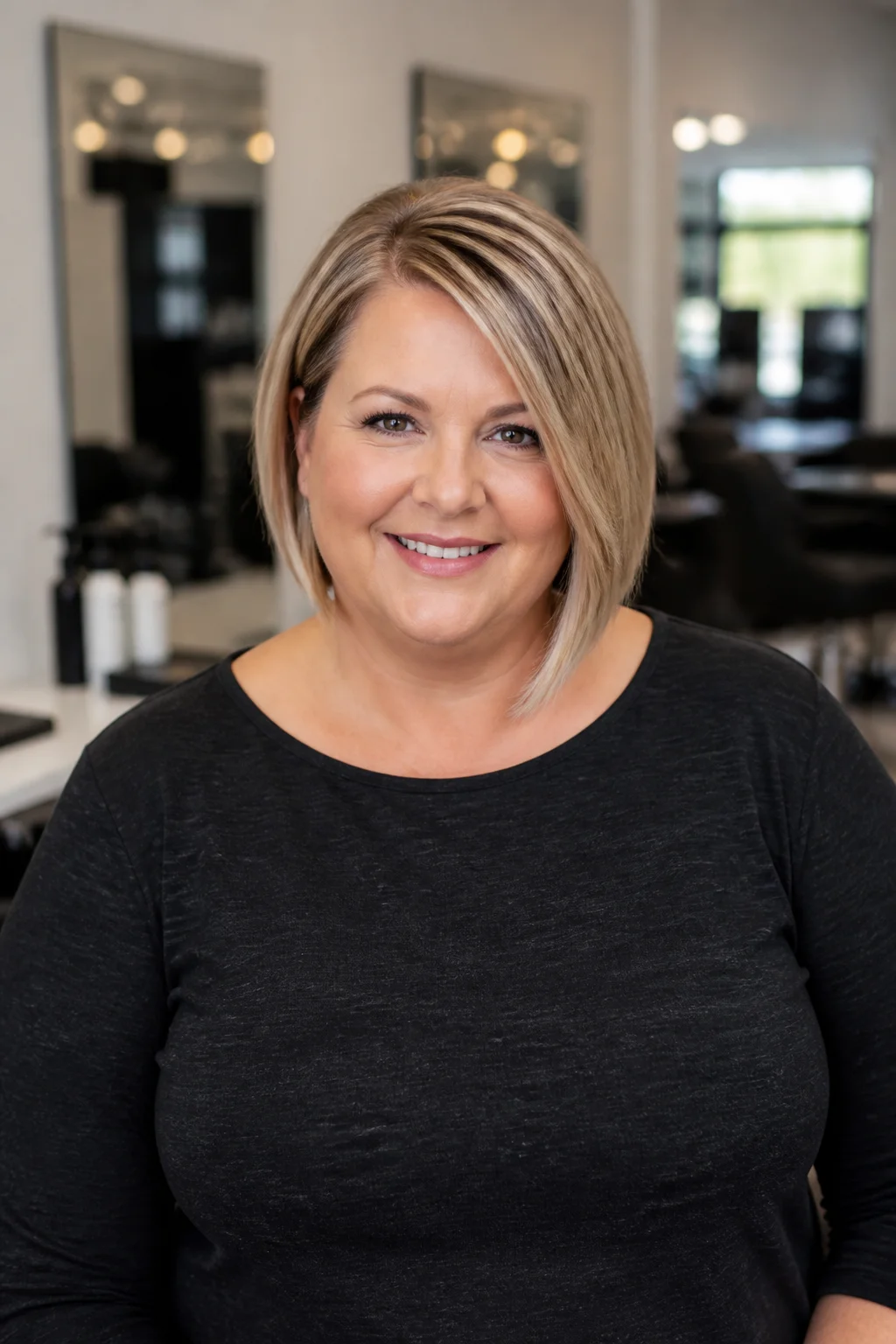
One side cut noticeably longer than the other creates a diagonal line across the face that naturally draws the eye upward and across. This asymmetry breaks the symmetry of a round or square face shape, adding an angle where there wasn’t one before. Tip: keep the longer side on whichever side you part your hair, since that side already gets more visual attention.
Straight Hair with Feathered Face Framing
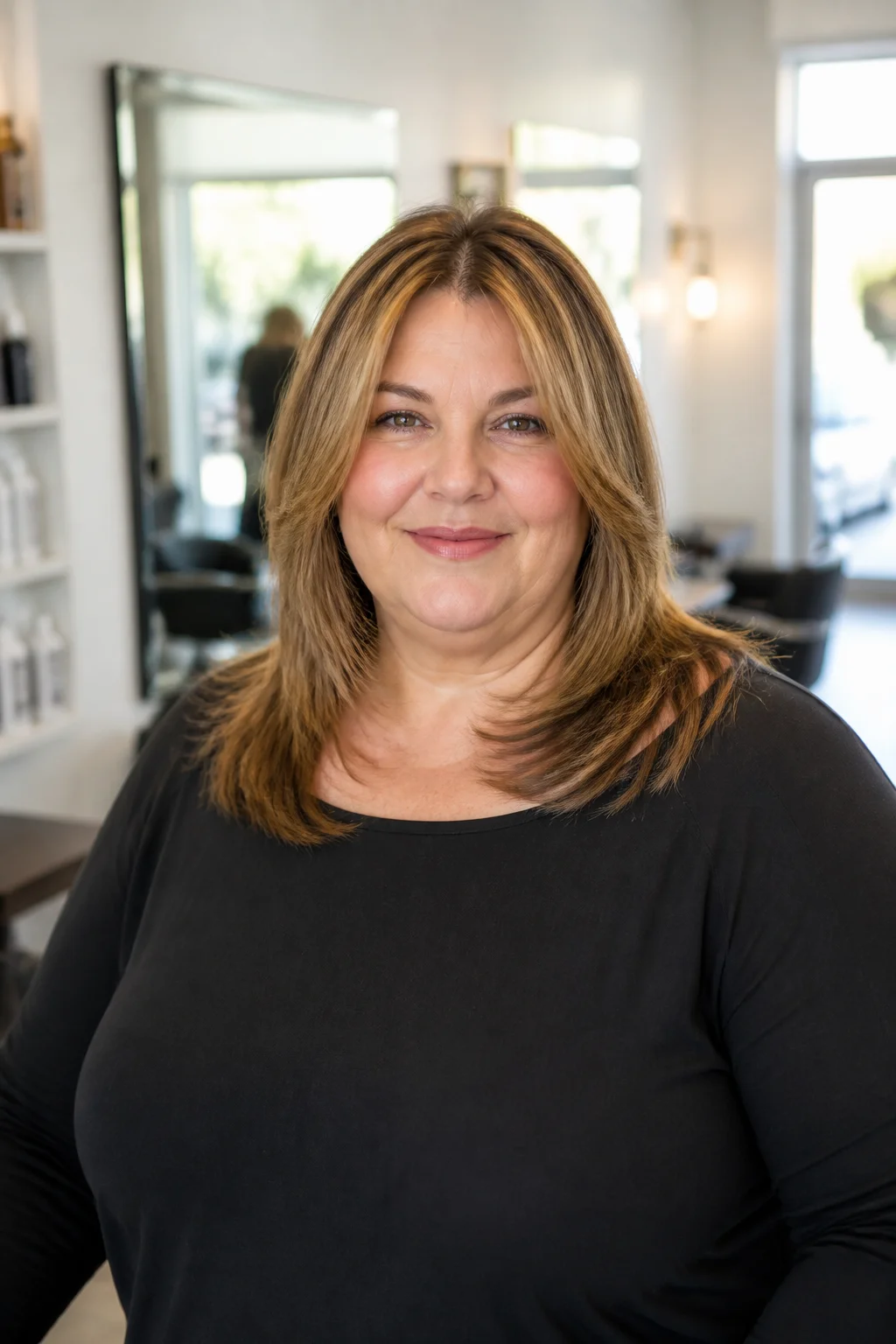
Feathered layers are cut so the ends flick slightly away from the face instead of curving in or hanging straight down. This small detail keeps the framing from looking heavy or wig-like. It’s a subtle style choice, but it changes how light catches the ends and softens the overall shape around your cheeks and jaw.
Mid-Length Straight Cut with Side-Swept Layers
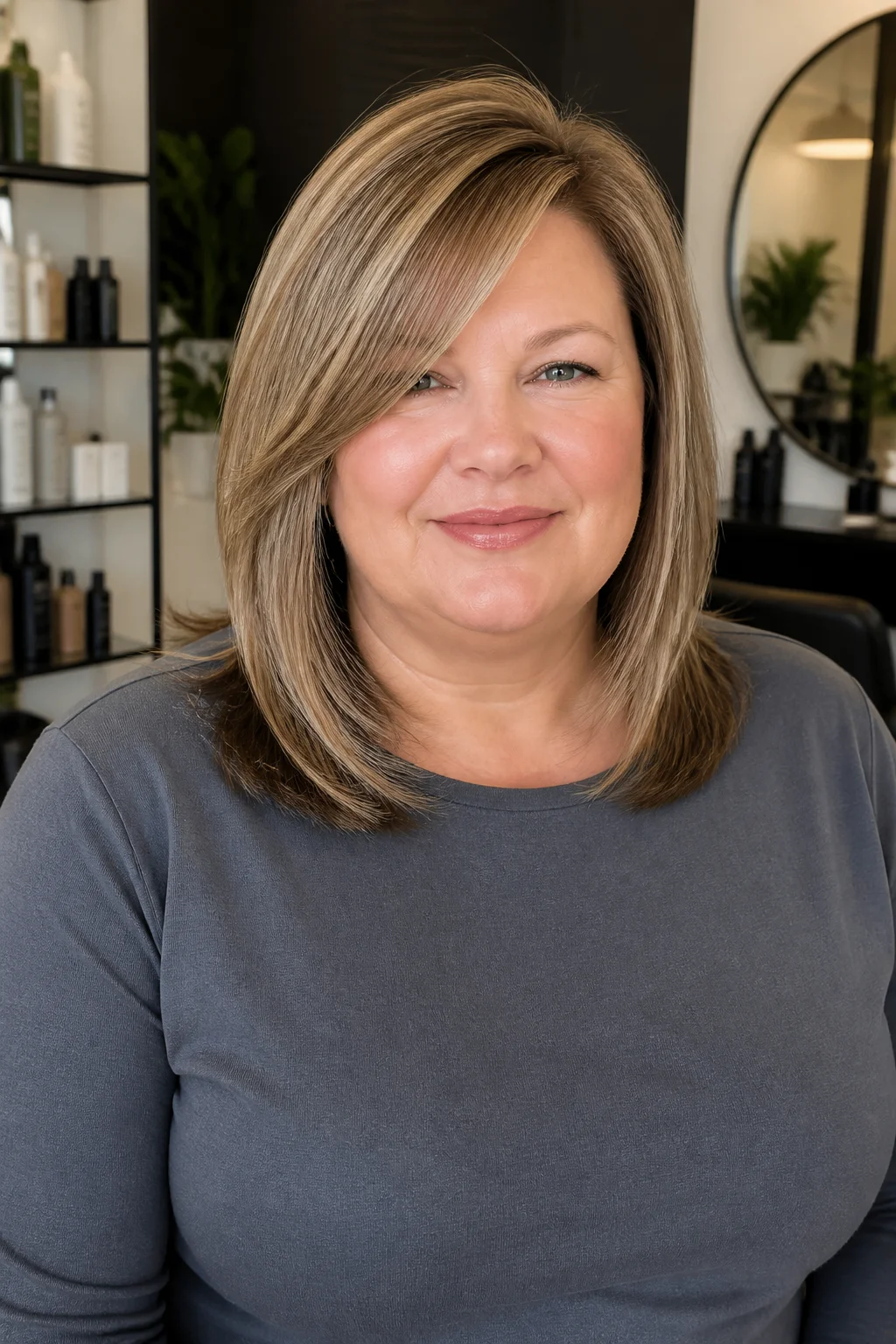
Side-swept layers move in one direction across the front, giving an asymmetrical lift without a full asymmetrical haircut. On mid-length hair, this creates a diagonal frame that works with almost any part. It’s an easy everyday style since the layers naturally fall into place with a round brush and blow-dryer, no heavy styling required to keep the sweep looking intentional.
Blunt Straight Ends with Textured Crown Layers
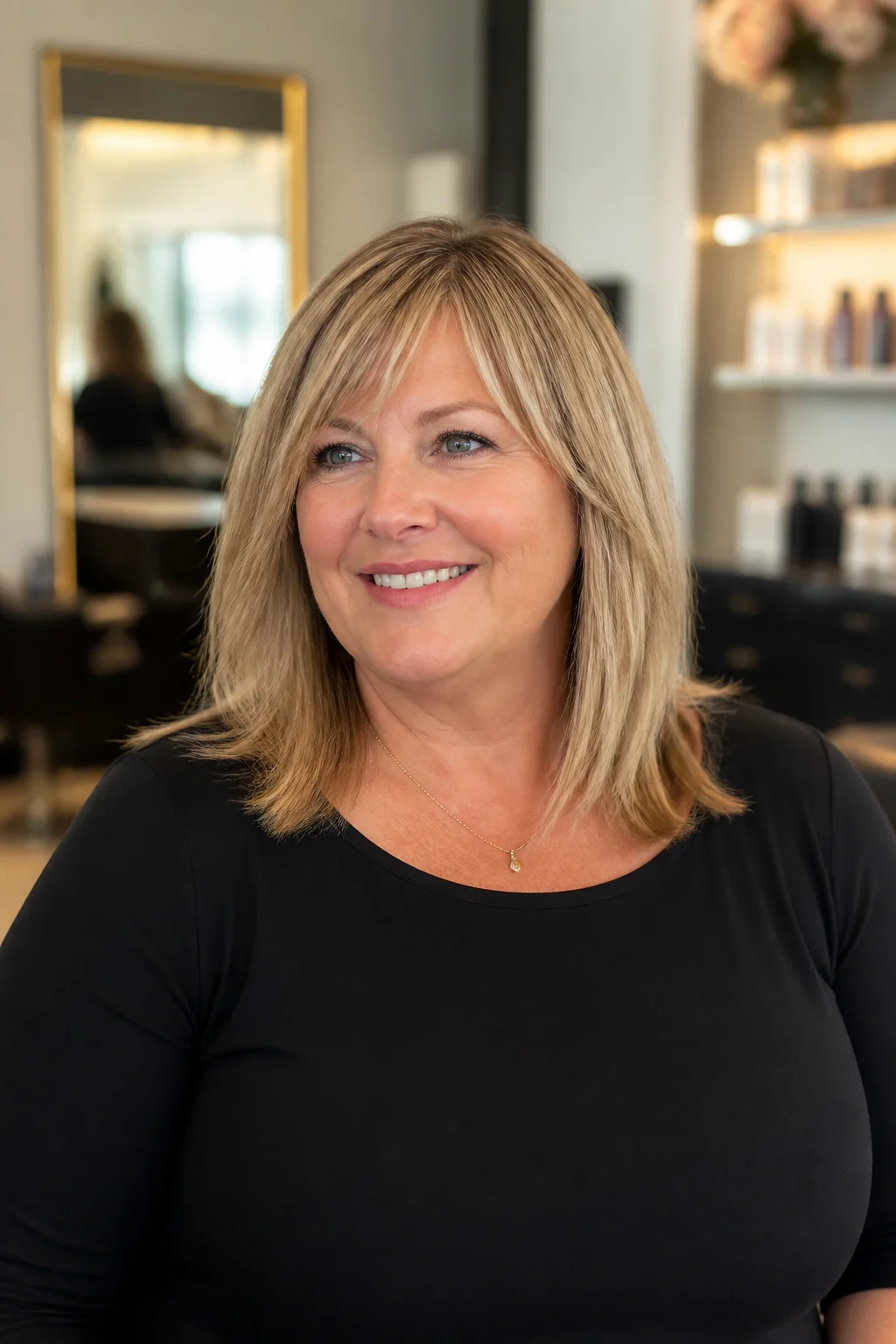
Keeping the ends blunt while adding texture only at the crown gives you a cut that reads sleek from a distance but has real movement up close. The blunt bottom keeps the silhouette controlled and doesn’t add extra width at the jaw. The textured crown layers add height and volume up top, which balances a fuller lower face by drawing the eye upward first.
High-Low Layered Bob with Chin Definition
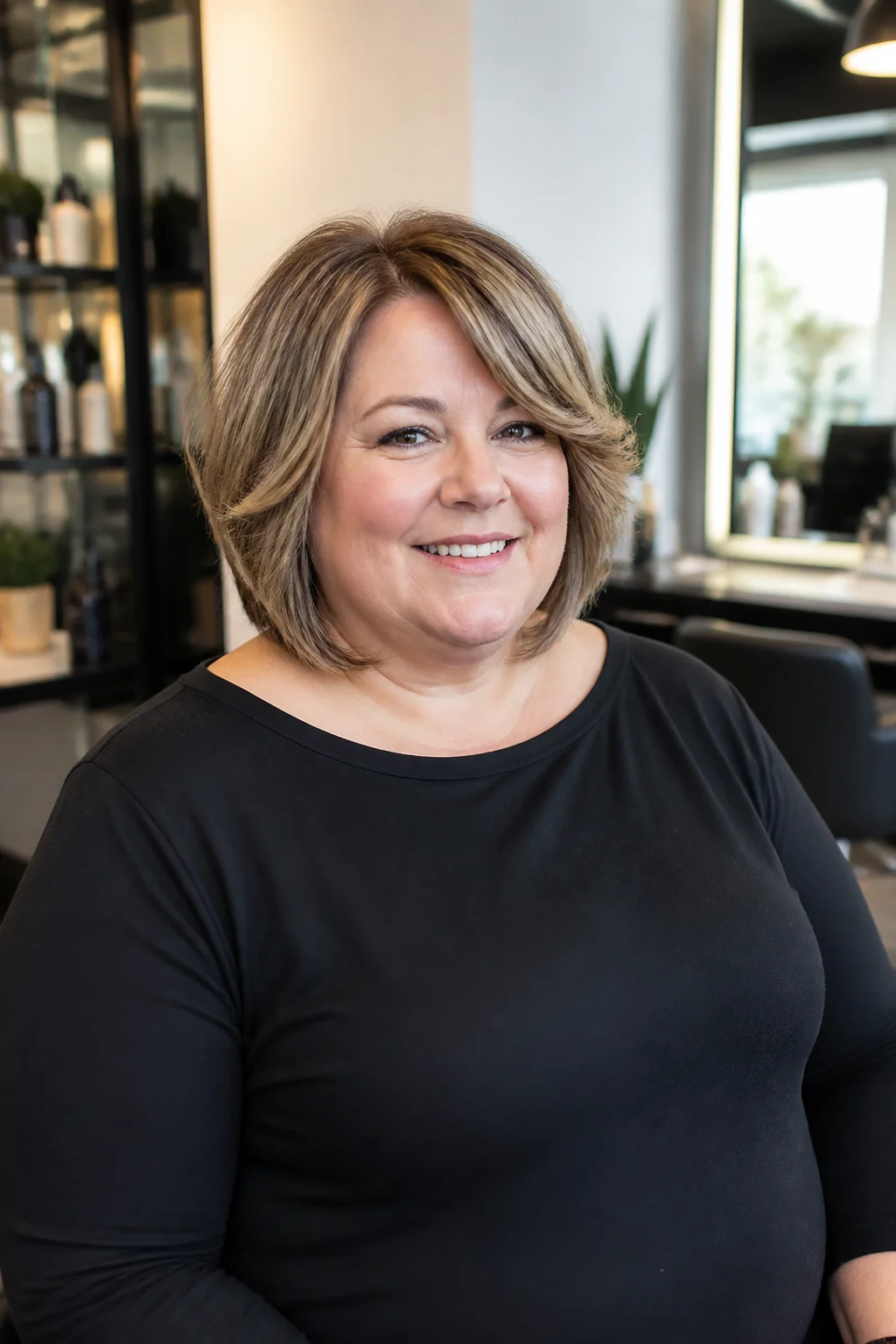
This bob is cut shorter in the back and gradually longer toward the front, landing right at the chin on both sides. That chin-length landing point acts like a natural highlight for your jawline. The high-low shape also keeps the back from looking bulky, since shorter layers there sit closer to the head. It’s a versatile cut that works whether your hair is fine or thick, because the graduated lengths distribute weight evenly instead of piling it all at one length.
Straight Long Bob with Undercutting Face Pieces
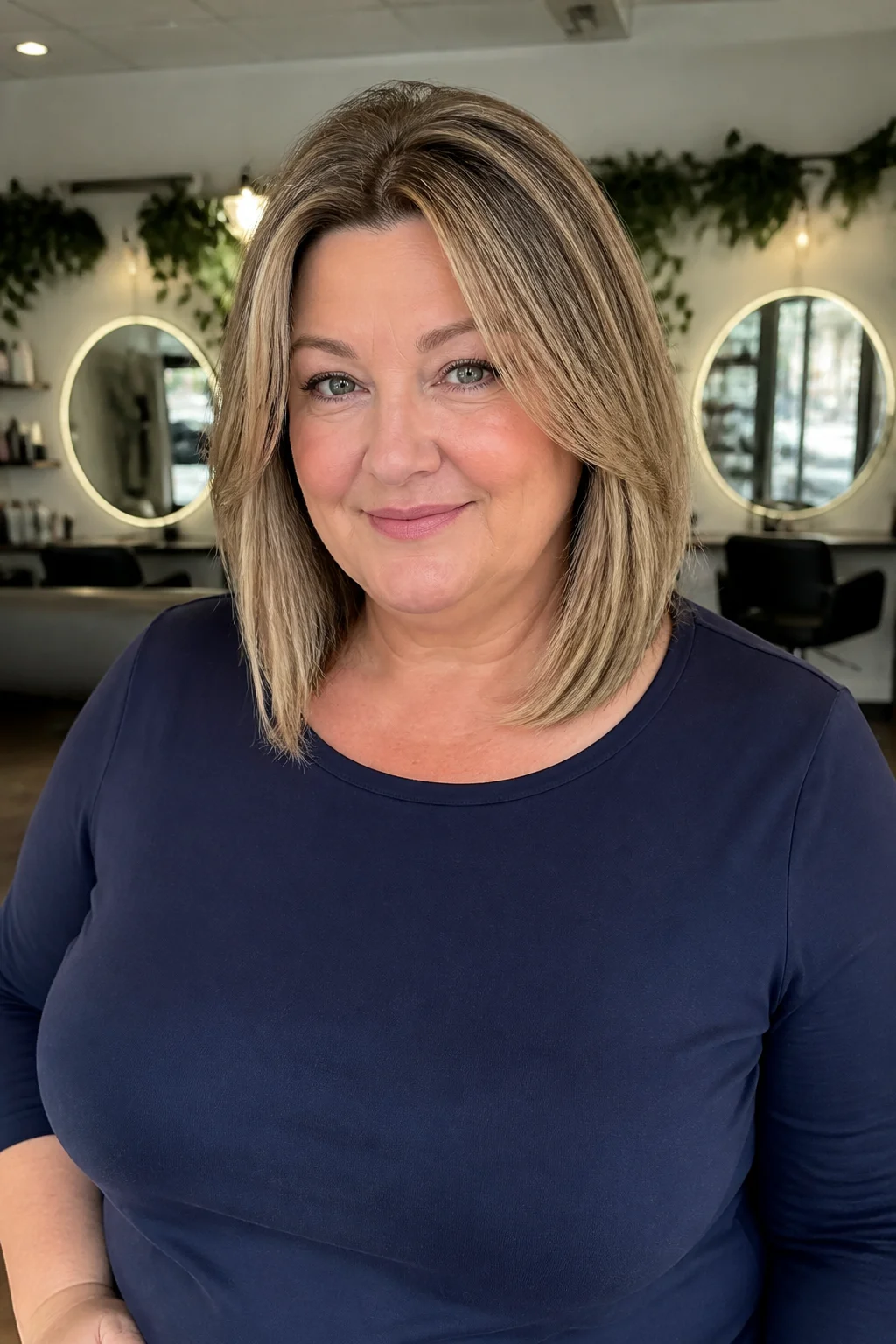
Undercutting the face-framing pieces means those front sections are cut with an interior layer hidden underneath the top layer, so the framing looks thinner and lighter than the rest of the hair. This technique is great for anyone who wants soft framing without losing overall length or thickness elsewhere. The hidden layer does the shaping work, so from the outside the cut still looks like one clean length.
Layered Straight Hair with Pointed Face Framing
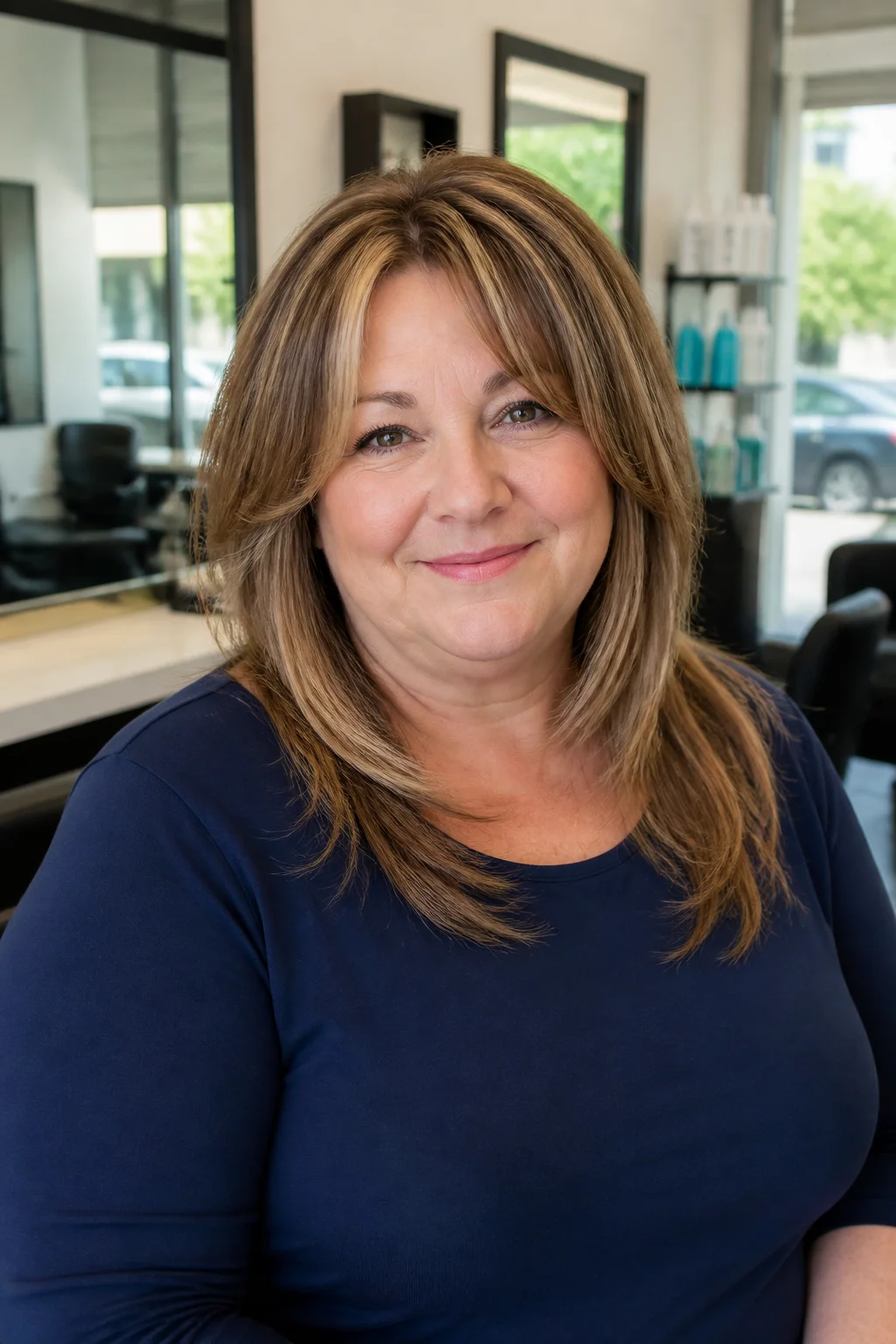
Point-cutting creates soft, irregular tips at the ends of the face-framing layers instead of one straight blunt line. This texture keeps the framing from looking heavy or pasted to the face. Picture the ends looking slightly chewed or feathered rather than cut with scissors in one straight pass. It works especially well on thicker hair that tends to look blocky when cut with a completely blunt edge.
Straight Shoulder-Length with Diagonal Bangs
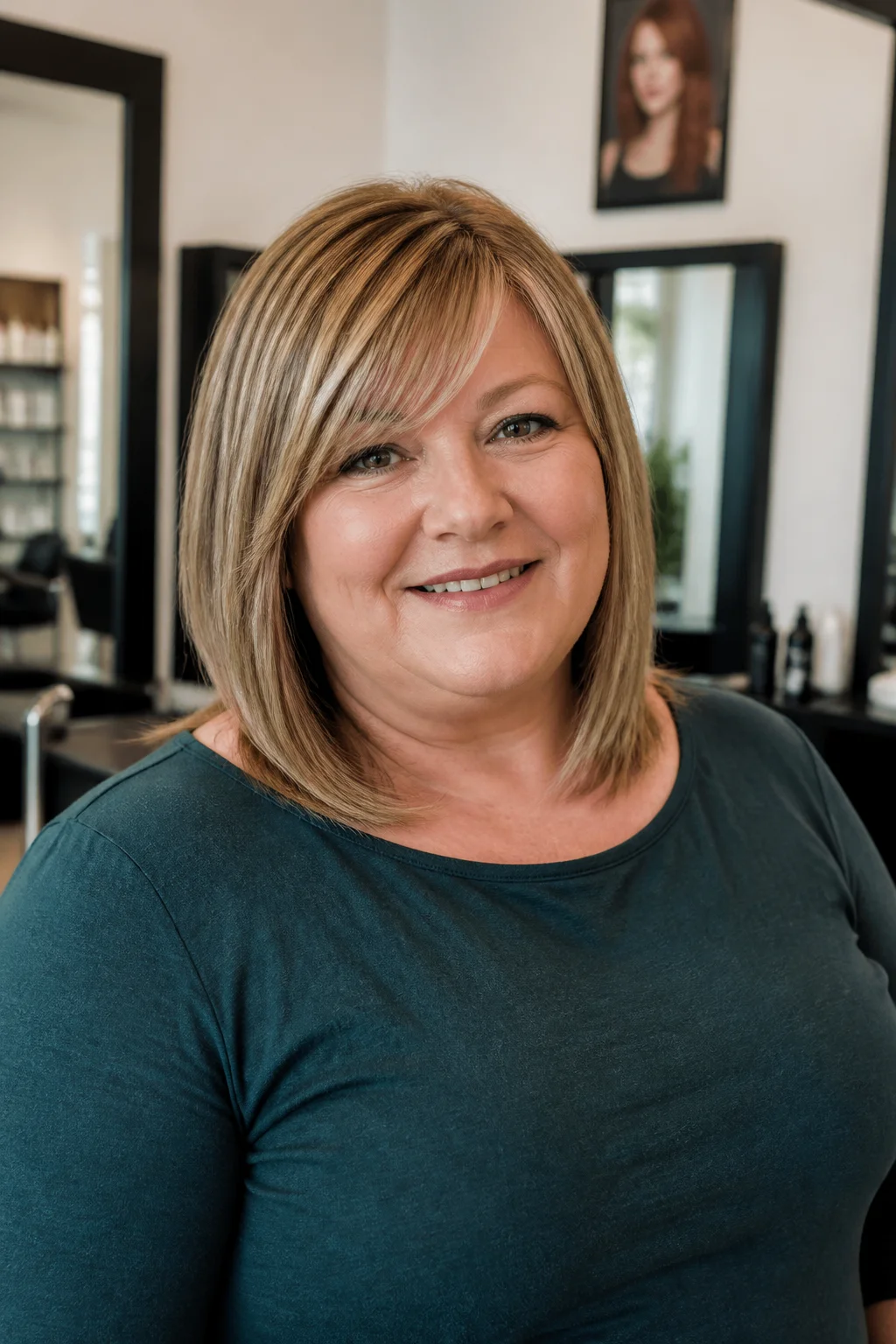
Diagonal bangs cut at a slant rather than straight across give a softer transition between the bang and the rest of the hair. On shoulder-length straight hair, this diagonal line adds asymmetry to an otherwise simple, symmetrical cut. It’s a smaller change than a full fringe but still reshapes how the front of your face reads.
Long Straight with Micro Bangs and Face Layers
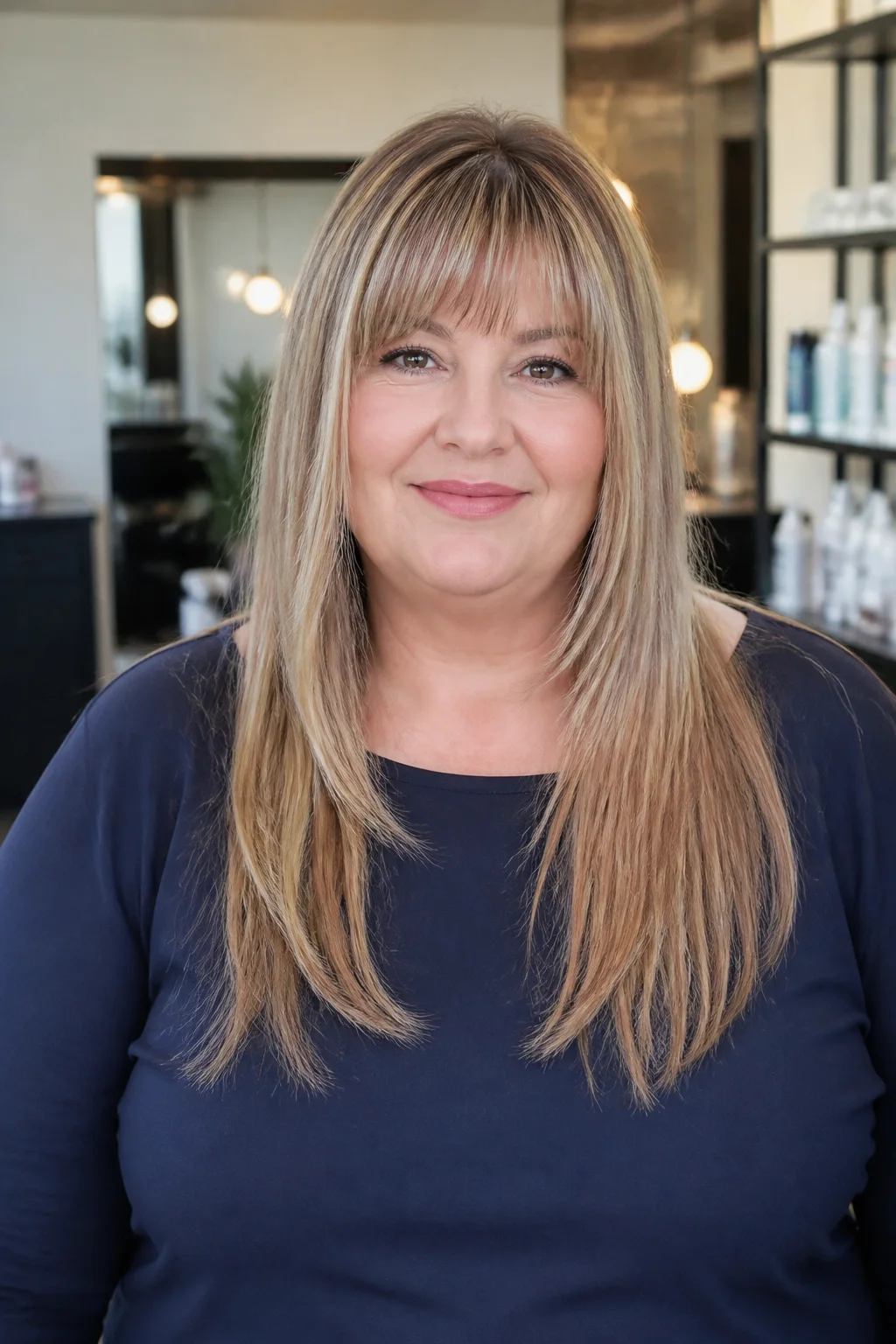
Micro bangs are short, usually landing above the eyebrows, and they pair with longer face-framing layers below to balance out the boldness up top. This is a bigger commitment than curtain or wispy bangs since micro bangs are harder to grow out gracefully. Tip: try this look with clip-in bangs first if you’re not sure a short fringe will suit your face shape long term.
Blunt Straight Lob with Beveled Face Pieces
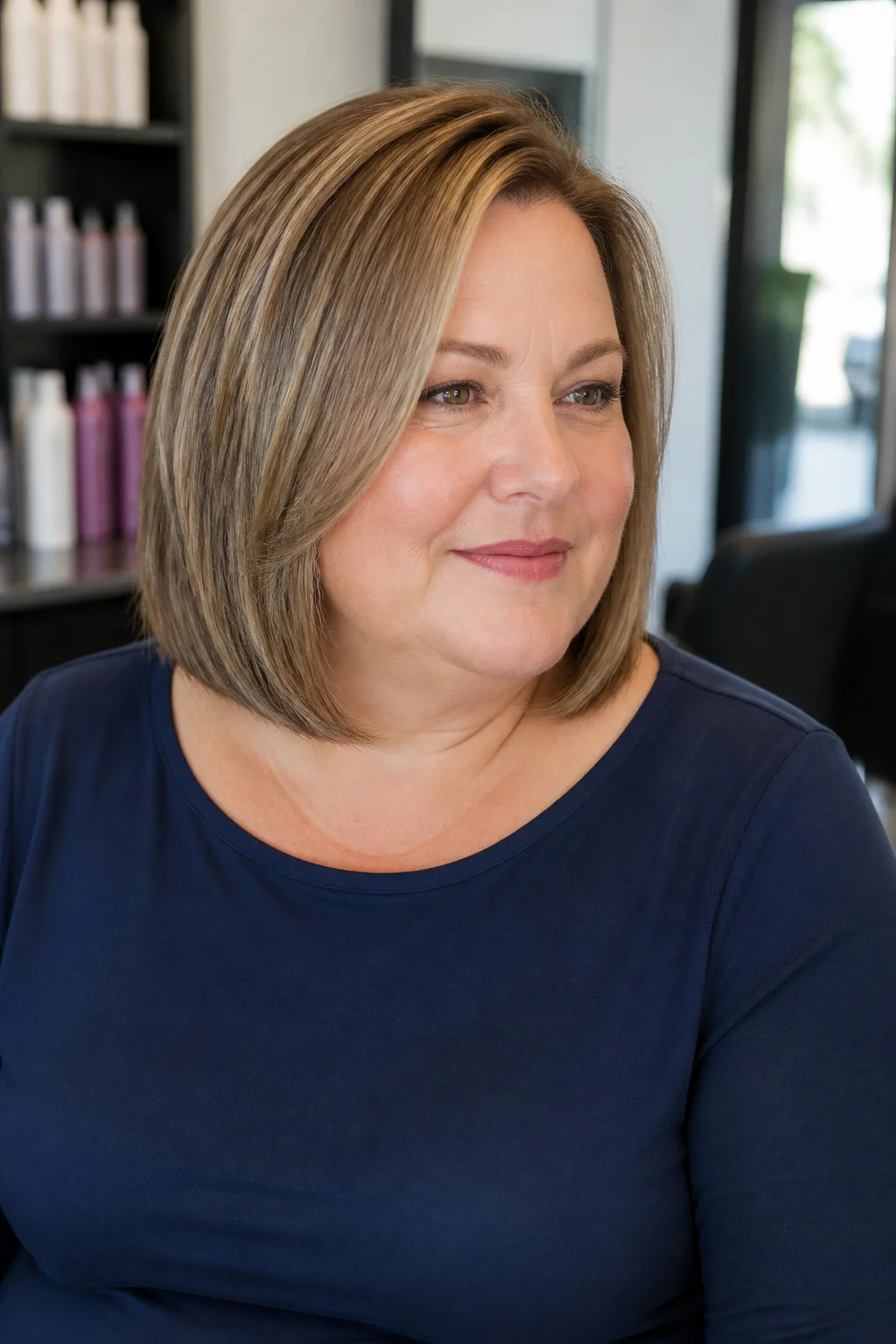
Beveling turns the ends slightly inward, curving toward the jaw rather than flipping out or hanging straight. On a blunt lob, this small inward curve softens the geometry of the cut and keeps the face-framing pieces hugging close to the cheeks. It’s a subtle finishing technique, but it changes the whole feel of the haircut from stiff to soft.
Choosing the Right Face-Framing Cut for Your Face Shape
Picking between these styles comes down to what you want the cut to fix or highlight, not just what looks nice in a photo. If your main concern is width across the cheeks, go with something like the textured layers starting at cheekbones or the long layers with razor-cut face framing, since both remove bulk exactly where it tends to build up. If you want a stronger, more graphic change, the angled bob with blunt face-framing pieces or the asymmetrical bob with one side longer will give you a defined line that a softer cut simply won’t.
For anyone hesitant about commitment, the straight hair with curtain bangs or the mid-length straight cut with side-swept layers are the easiest to grow out or adjust later. Avoid pairing a fuller face with a fully blunt, one-length cut and no framing at all. That combination is the most common mistake, since it removes any angle or taper that could soften the jaw and cheeks. Short on time for styling? The shag cut with tapered face layers and the straight pixie with longer face-framing sides both rely on the cut itself for shape, not daily blow-drying.
Final Thoughts
The right haircut should work with your face, not against it, and straight hair actually gives you a lot of control over where weight sits and where it’s removed. Talk to your stylist about your face shape before you commit, and bring a photo of the framing style you like best. Small adjustments, like where a layer starts or how blunt an edge is left, make a bigger difference than most people expect.