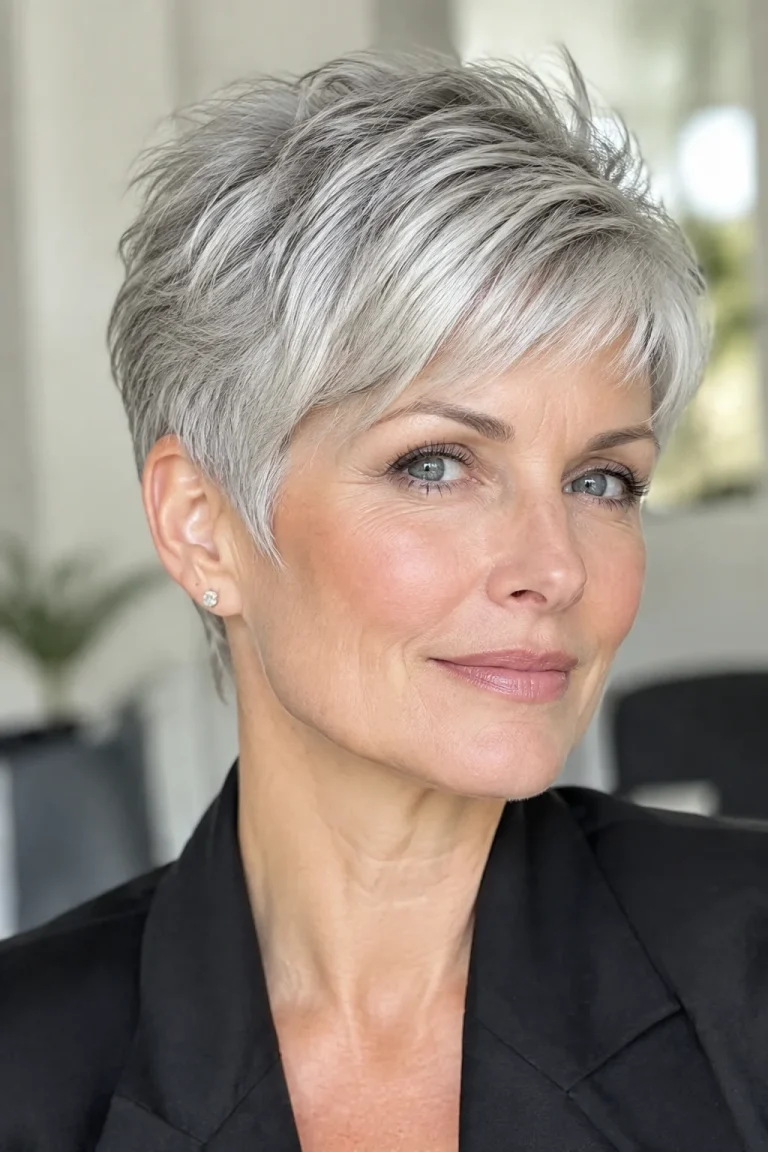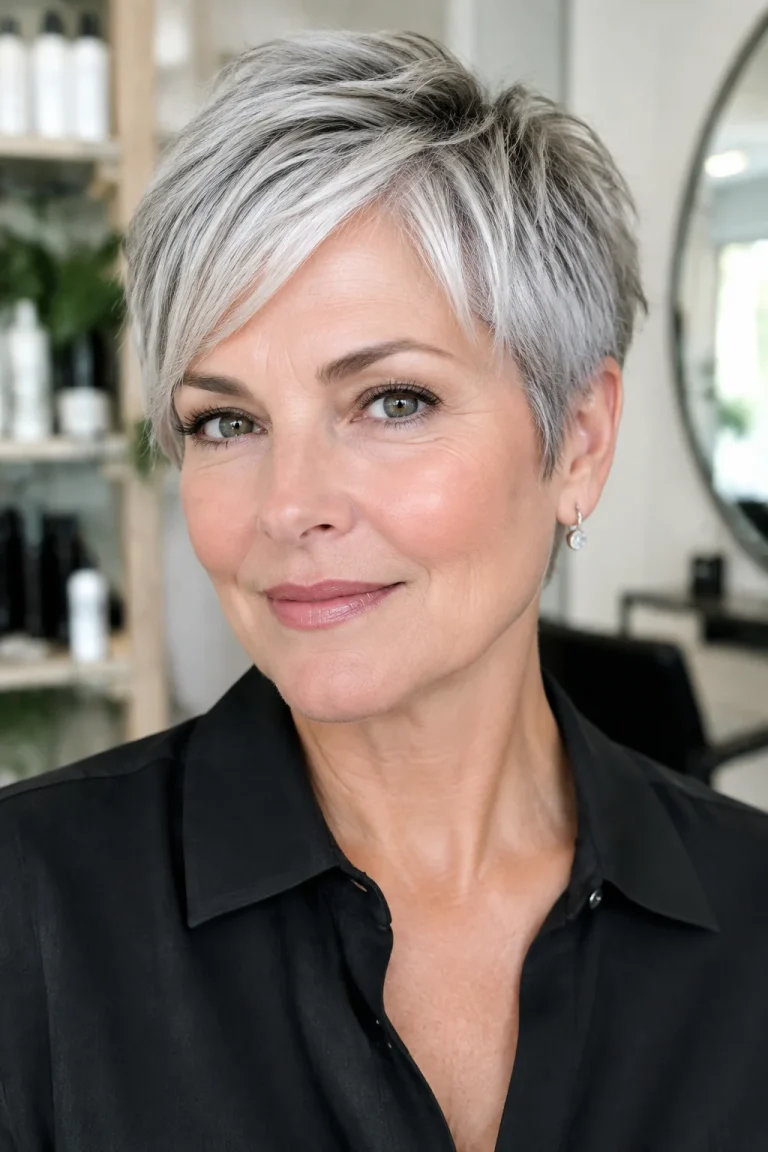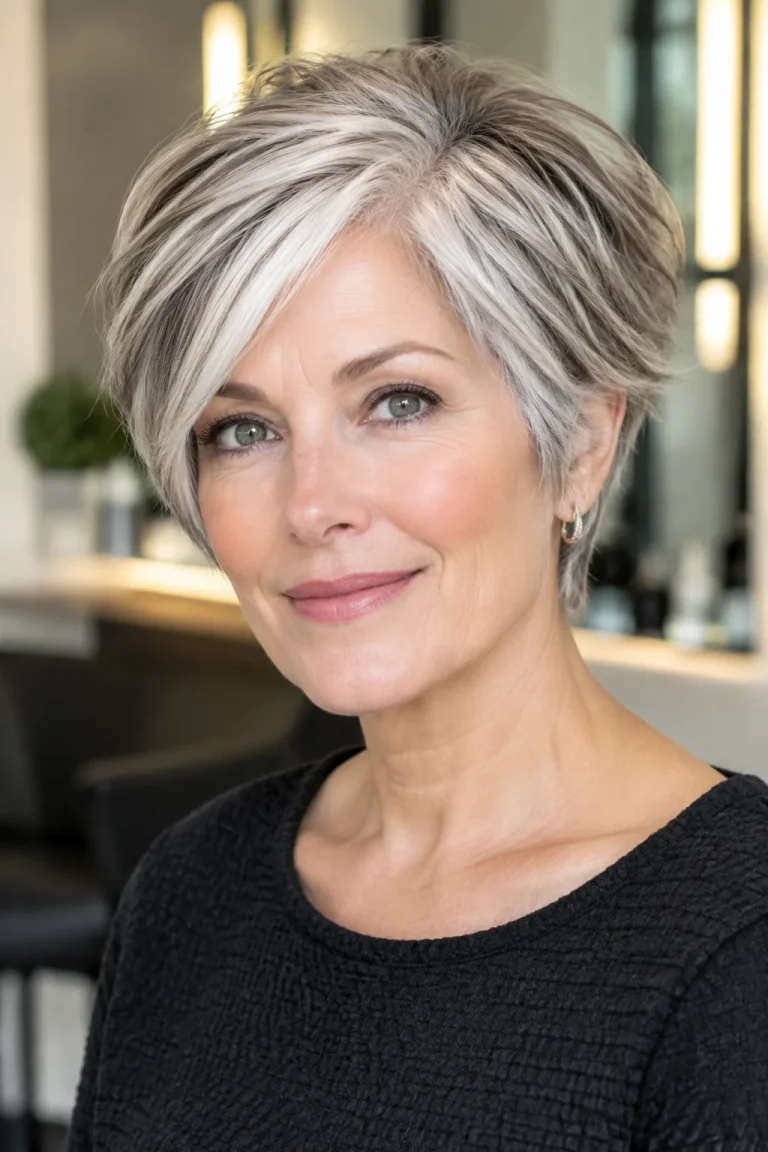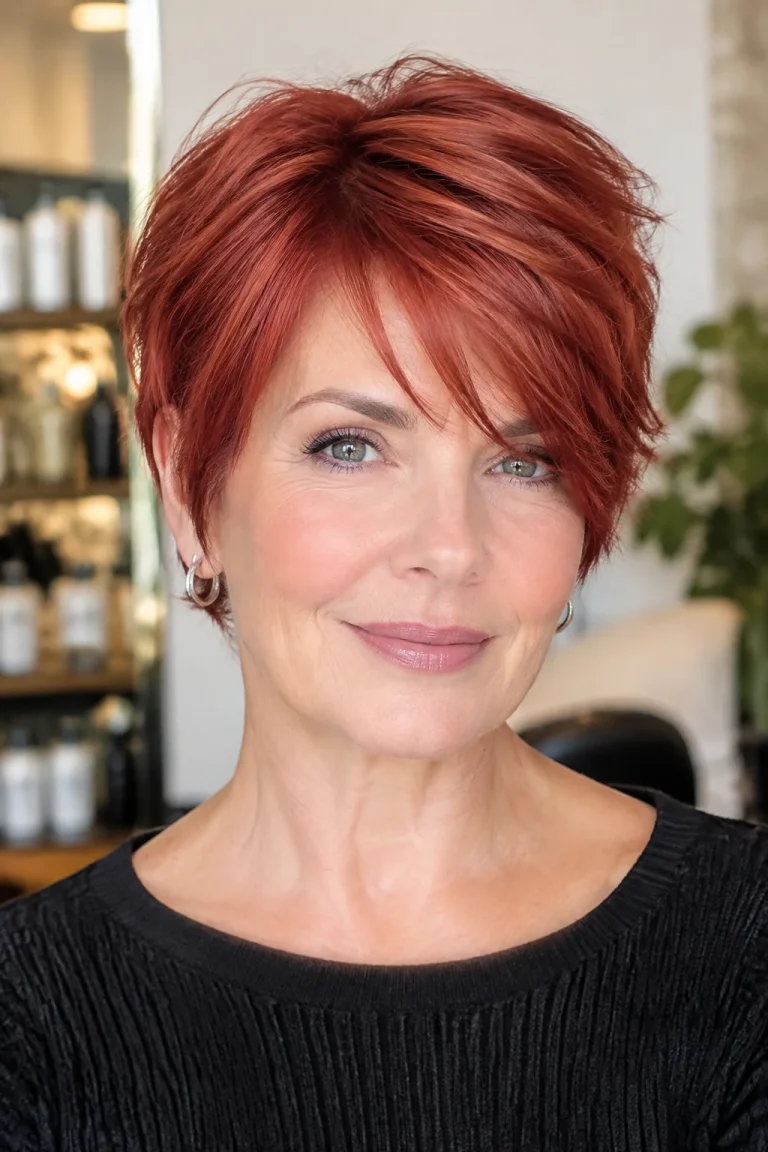
If your face feels rounder or fuller than you’d like in photos, the right haircut can change that impression fast. A face-framing layered bob for fuller faces works because it breaks up width at the cheeks and jaw, drawing the eye up and down instead of side to side. The wrong cut can add bulk exactly where you don’t want it, but layers placed with intention do the opposite. They carve out angles, add movement, and soften a strong jawline without hiding it completely. Below are 21 ways to wear this cut, from choppy and textured to sleek and side-parted. Each one handles length, layering, and placement a little differently, so you can find the version that matches your hair type and how much styling time you’re willing to give it on a regular morning.
Textured Choppy Layers with Chin-Length Frame
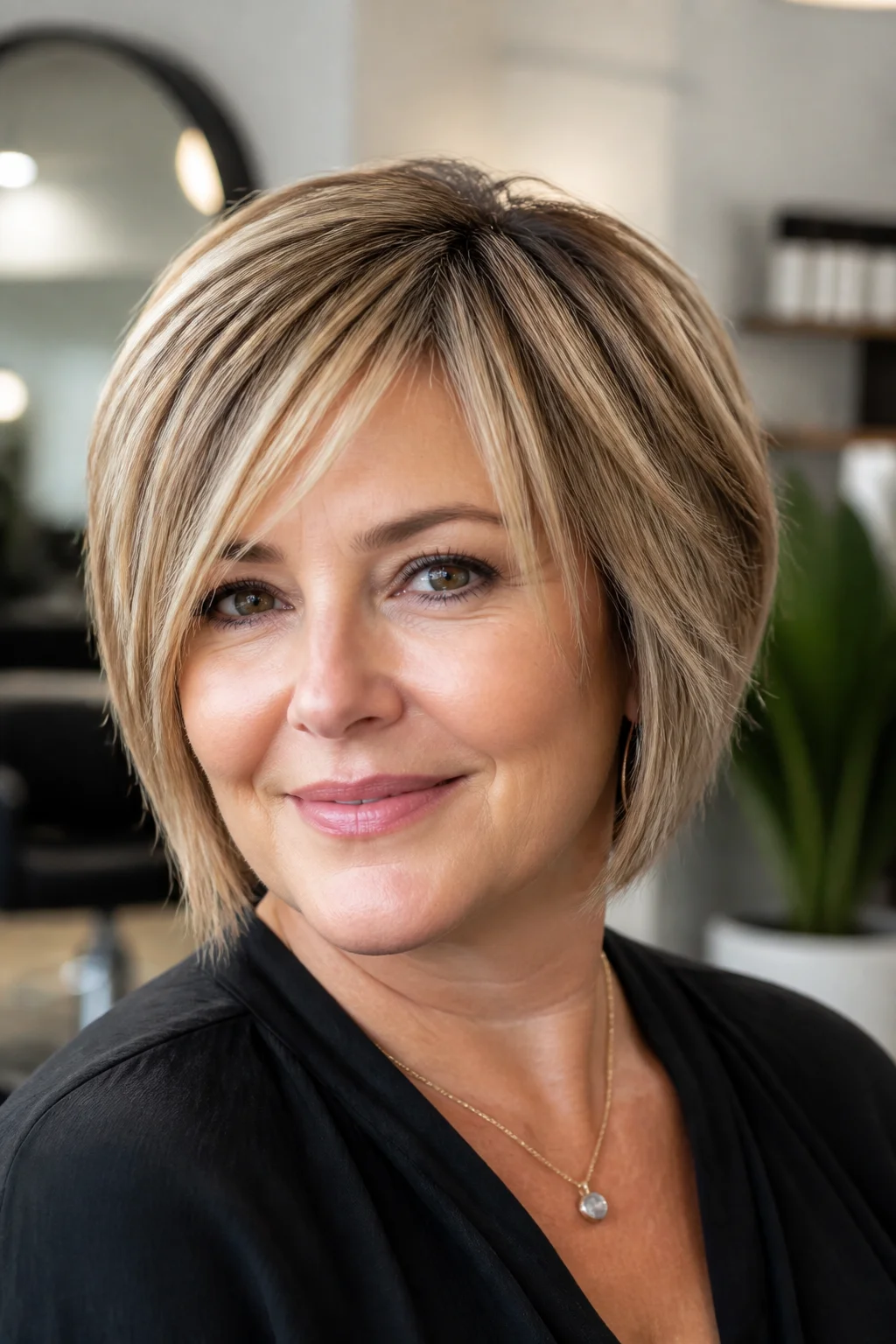
This version keeps the length right at the chin and chops the ends unevenly for a lived-in look. The choppy texture breaks up the solid line a blunt cut would create, which matters if you’re trying to avoid width at the jaw. Layers are cut short near the face and blend longer toward the back, so the frame stays soft instead of boxy. It works especially well on straight or slightly wavy hair since the texture holds without much product. Tip: ask your stylist for a razor rather than scissors on the ends to keep the choppiness looking natural instead of chunky. A light mist of heat protectant before styling helps the finish last.
Asymmetrical Layered Bob with Long Side-Sweep
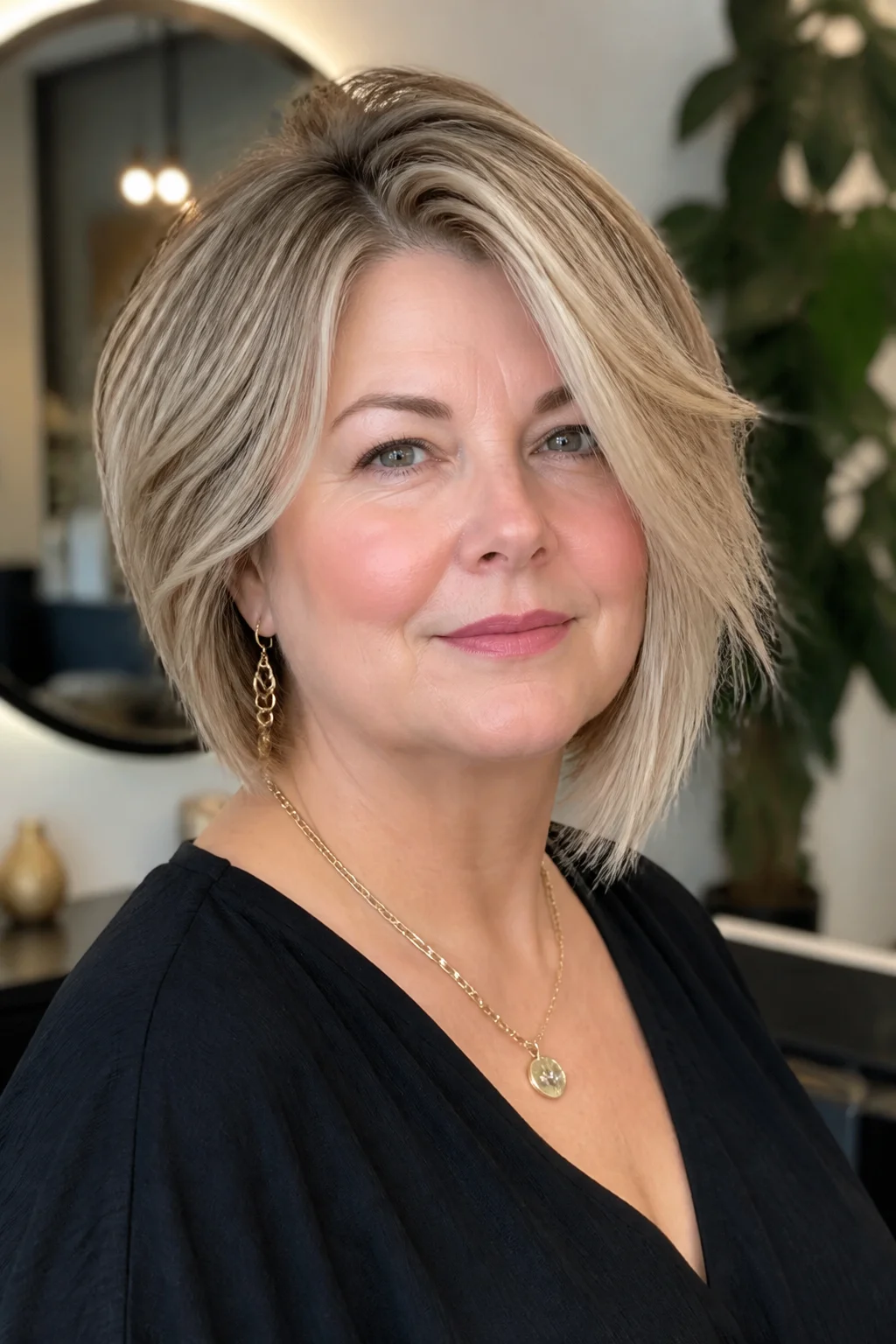
One side sits longer than the other here, and that imbalance does a lot of visual work. The longer piece sweeps across the cheek and pulls attention diagonally instead of straight across your face. It’s a good pick if you want something a little edgier than a standard bob. The shorter side stays layered close to the jaw for contrast.
Wispy Face-Framing Layers Over A-Line Bob
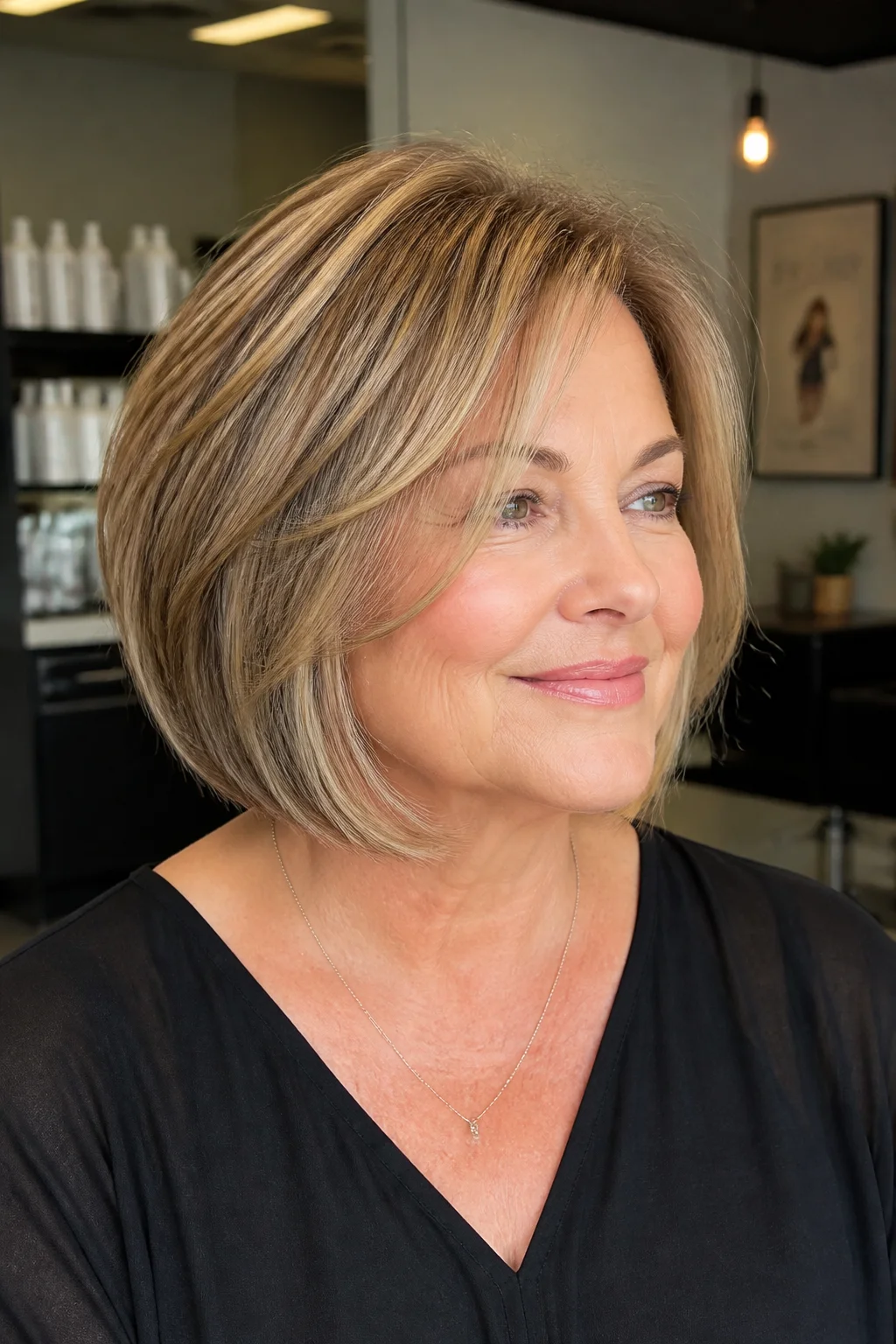
The A-line shape, shorter in back and longer in front, already does some slimming work on its own. Adding wispy layers around the face takes it further by thinning out the thickest part near the chin. This combination suits fine to medium hair best because heavier hair can overwhelm the wispy effect and make it disappear. The front pieces taper down to soft points rather than blunt ends, which keeps the whole look light. Stylists often recommend this for anyone who wants a fuller face for style without sacrificing the classic A-line silhouette. You’ll want a lightweight texturizing spray to keep those wispy ends from going flat by midday.
Feathered Layered Bob with Angled Sides
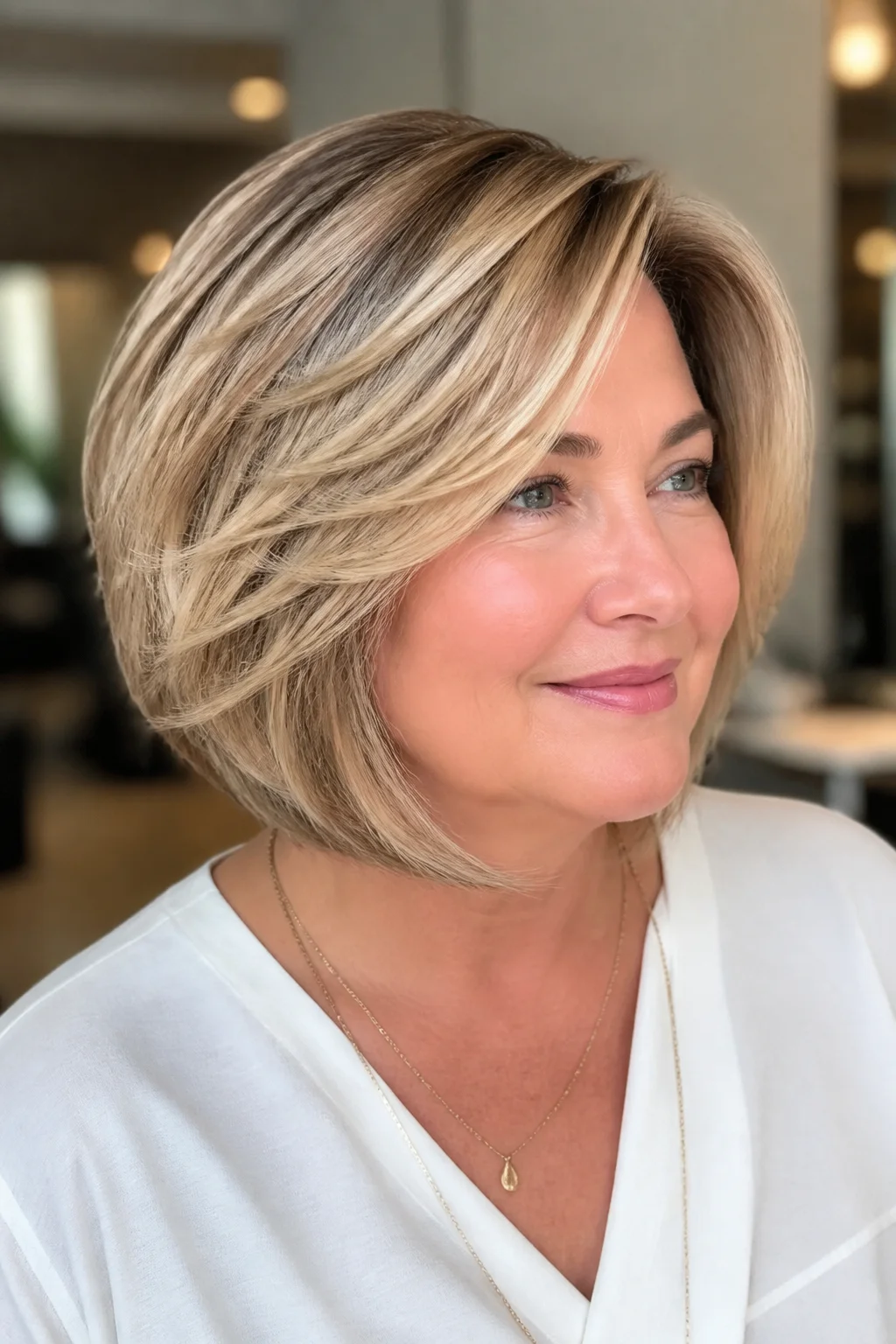
Feathered layers flick outward slightly at the ends instead of curving under or hanging straight. The angled sides cut in at a downward slant toward the chin, elongating the face shape in a subtle way. This one has a slightly retro feel, similar to cuts you’d have seen decades ago, but it reads modern with the right blow-dry. It needs round-brush styling to get the feathered flip, so factor in a few extra minutes at the mirror.
Shaggy Layers with Textured Crown Volume
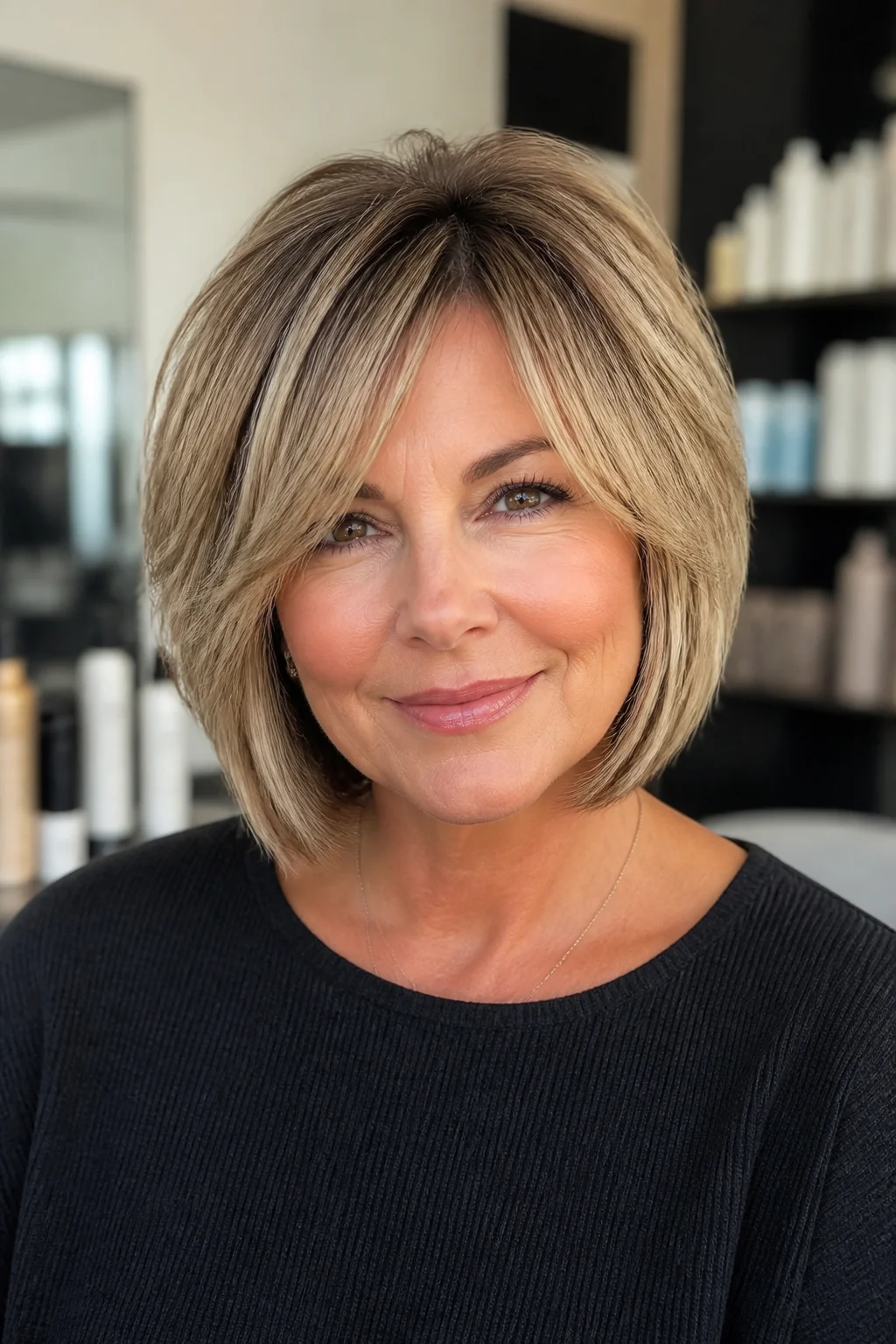
Shaggy layers pile texture through the mid-lengths and ends while lifting the crown for extra height on top. That height matters more than people expect. Building volume upward instead of letting hair sit flat against the head keeps the eye moving vertically rather than settling on the width of the cheeks. The shag also blurs the line between the face-framing pieces and the rest of the cut, so nothing looks too deliberate. It’s a forgiving style for second and third day hair since the texture only gets better with a little natural oil.
Blunt Layered Bob with Sharp Face-Framing Pieces
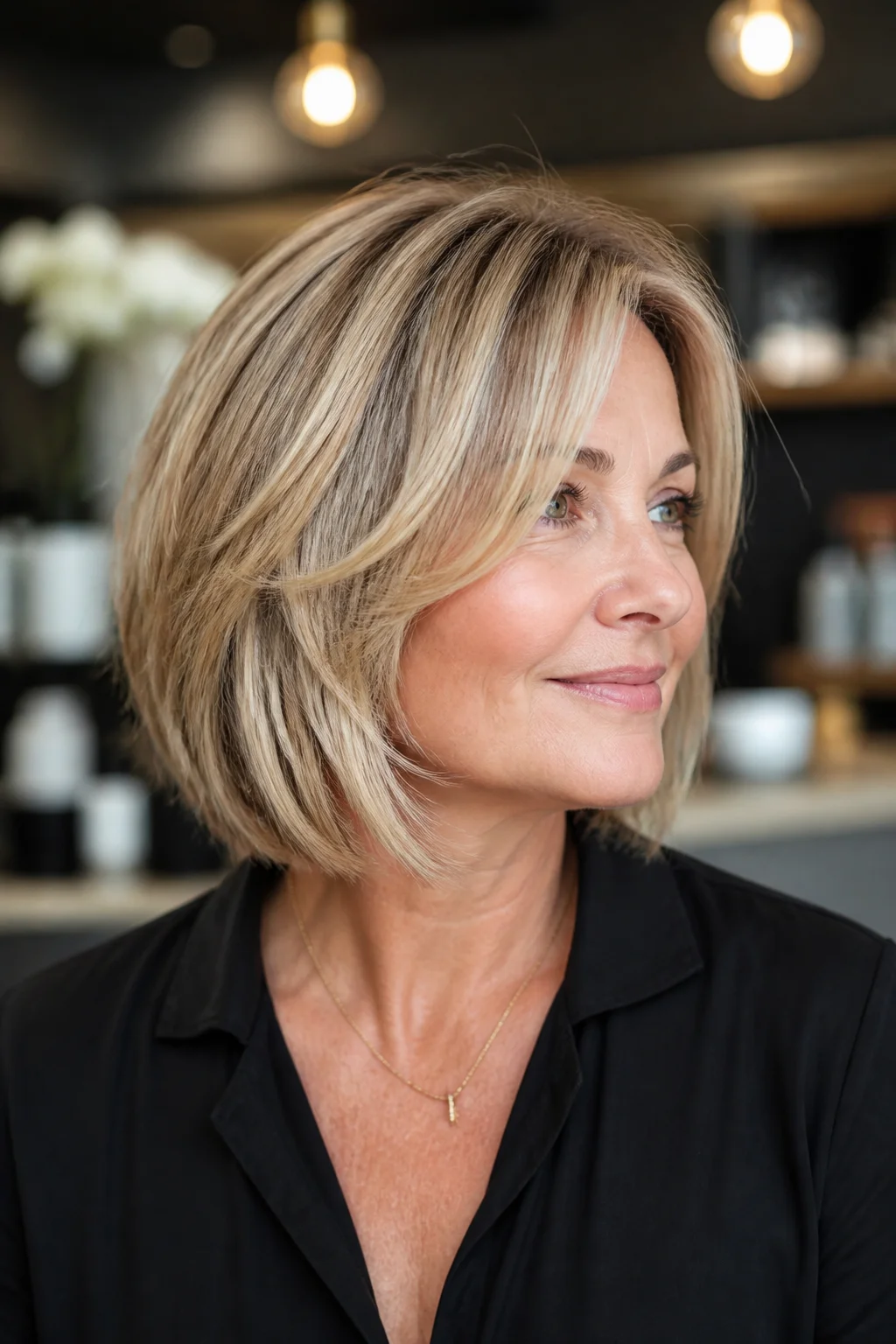
Not every layered bob needs to look soft and undone. This one keeps the ends blunt and precise while still cutting sharp, angled pieces around the face. The contrast between the clean blunt line and the sharper face pieces gives it a polished, almost graphic quality. It suits thicker hair that holds a crisp line well without needing much product.
Curly Layered Bob with Loose Face Waves
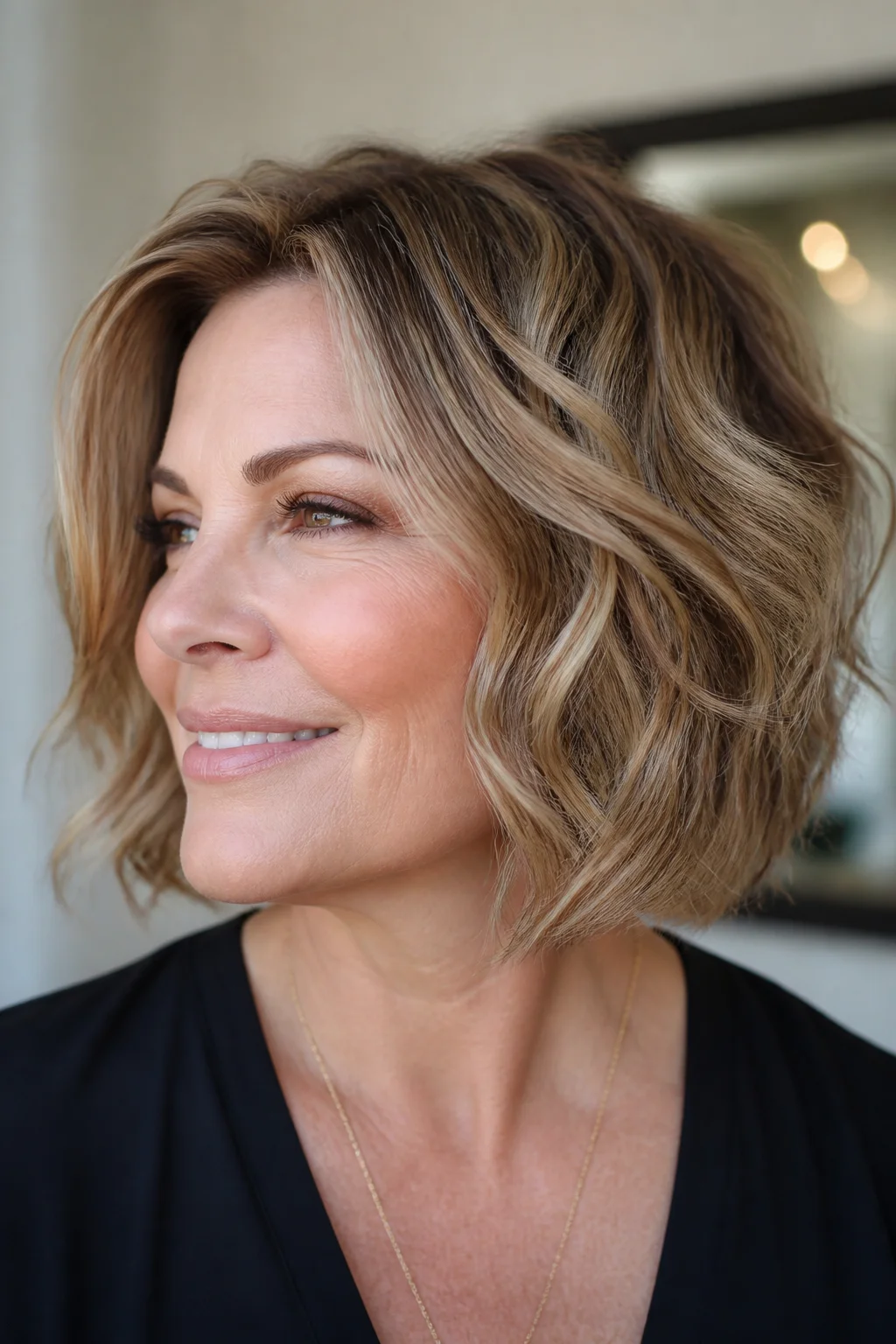
Curly hair needs layers that respect the curl pattern instead of fighting it, and this cut does that by placing shorter layers only around the face while leaving the rest of the length intact. The result is loose waves and curls that frame the cheeks without adding bulk at the sides. Curls naturally add width when cut too uniformly, so thinning out just the front pieces keeps the shape controlled. A curl cream applied to damp hair helps define those face-framing pieces without weighing down the rest of the curls.
Stacked Layers at Back with Long Face-Frame
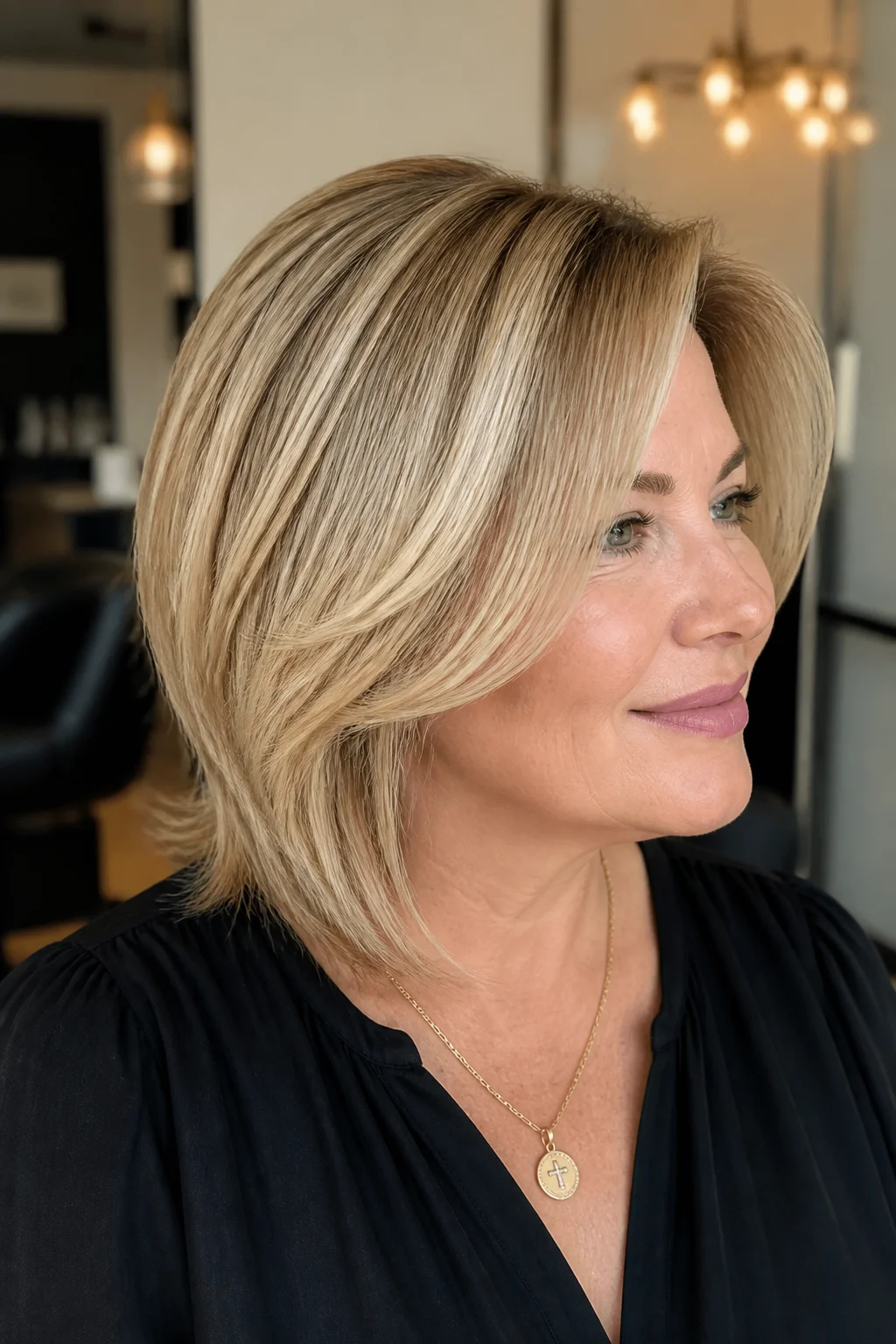
The back of this bob is stacked short with tight, graduated layers, while the front is left noticeably longer to frame the face. That length difference creates a strong vertical line down the sides of the face, which is exactly what helps a fuller face look more sculpted. It’s a structured cut, so it holds its shape well between salon visits. Fine hair benefits most from the stacking since it adds the illusion of thickness at the crown and nape.
Razored Layered Bob with Disconnected Texture
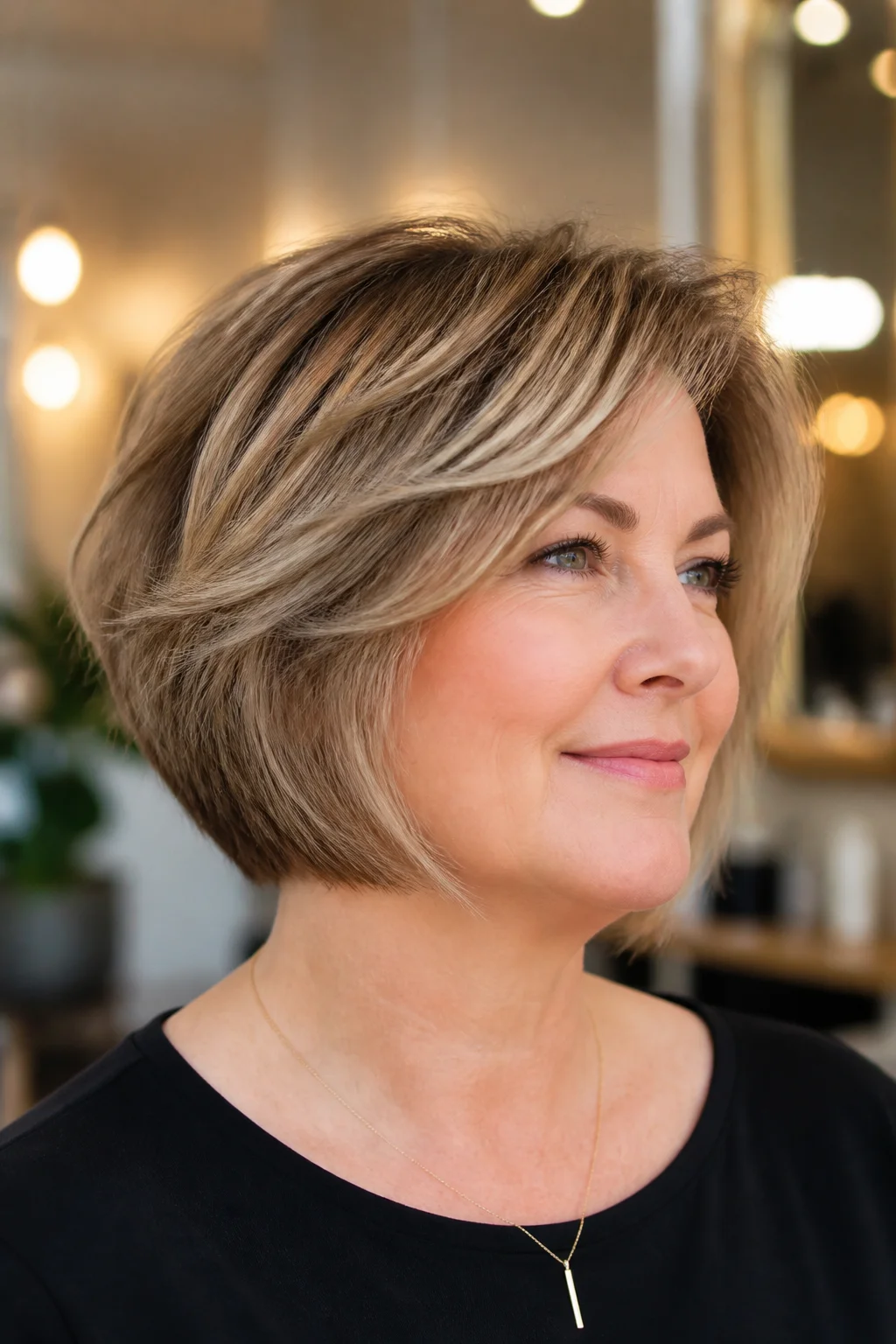
Razoring the ends instead of using scissors creates a rougher, more textured finish throughout this bob. The disconnection shows up between the shorter interior layers and the longer perimeter, giving it an undone, slightly grunge-inspired edge. It’s not a polished look, and it isn’t meant to be. Thick or coarse hair handles the razoring especially well because it removes bulk that scissors alone can’t manage.
Graduated Layers with Forward-Angle Face Pieces
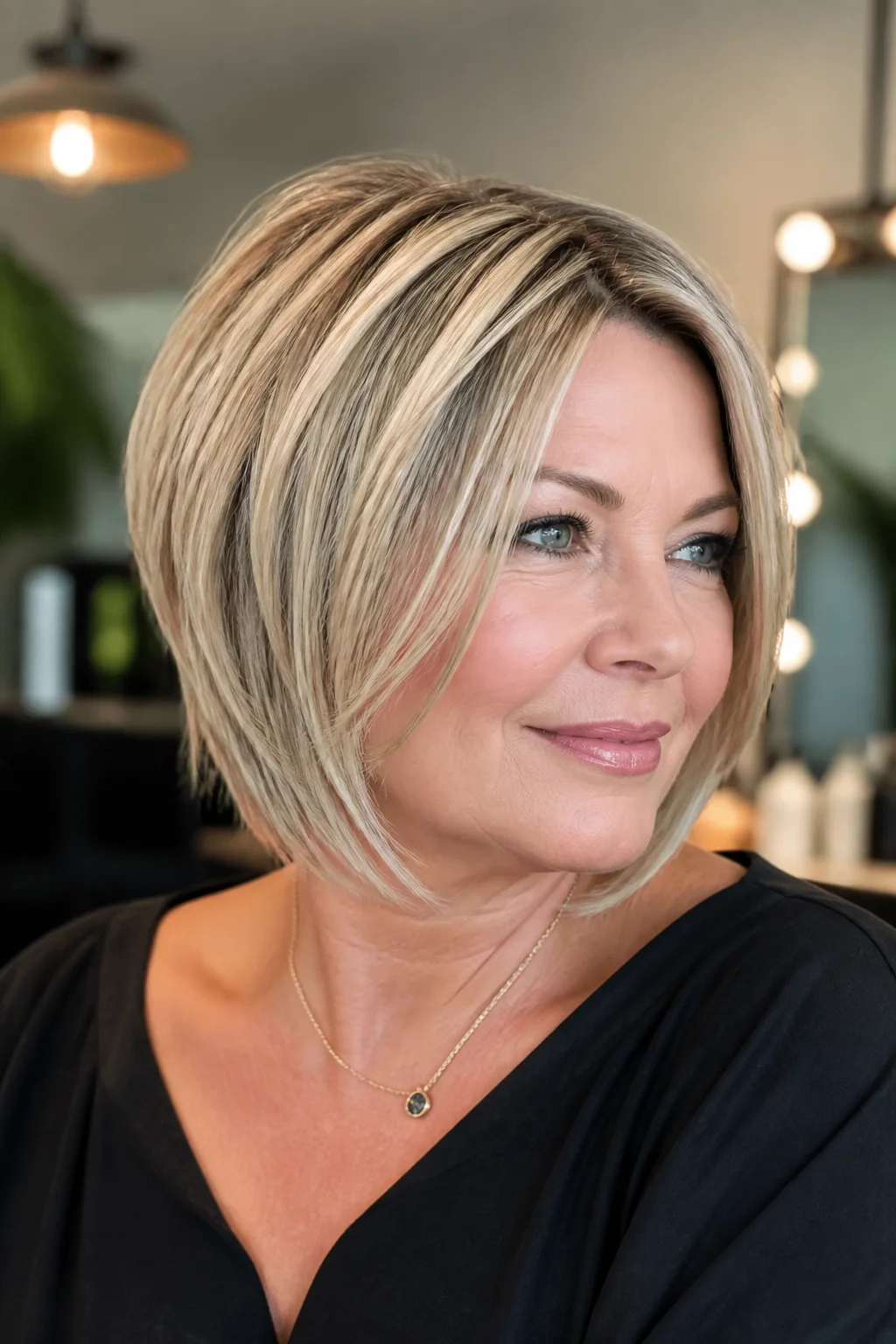
Graduated layering builds length gradually from short at the crown to longer at the perimeter, and here the front pieces are cut on a forward angle that points toward the chin. That forward direction pulls focus down and in, narrowing the appearance of the cheeks. Tip: request the graduation kept subtle rather than dramatic if you have a rounder face, since too much stacking at the crown can add width you’re trying to avoid.
Tousled Wavy Layers with Shorter Cheekbone Fringe
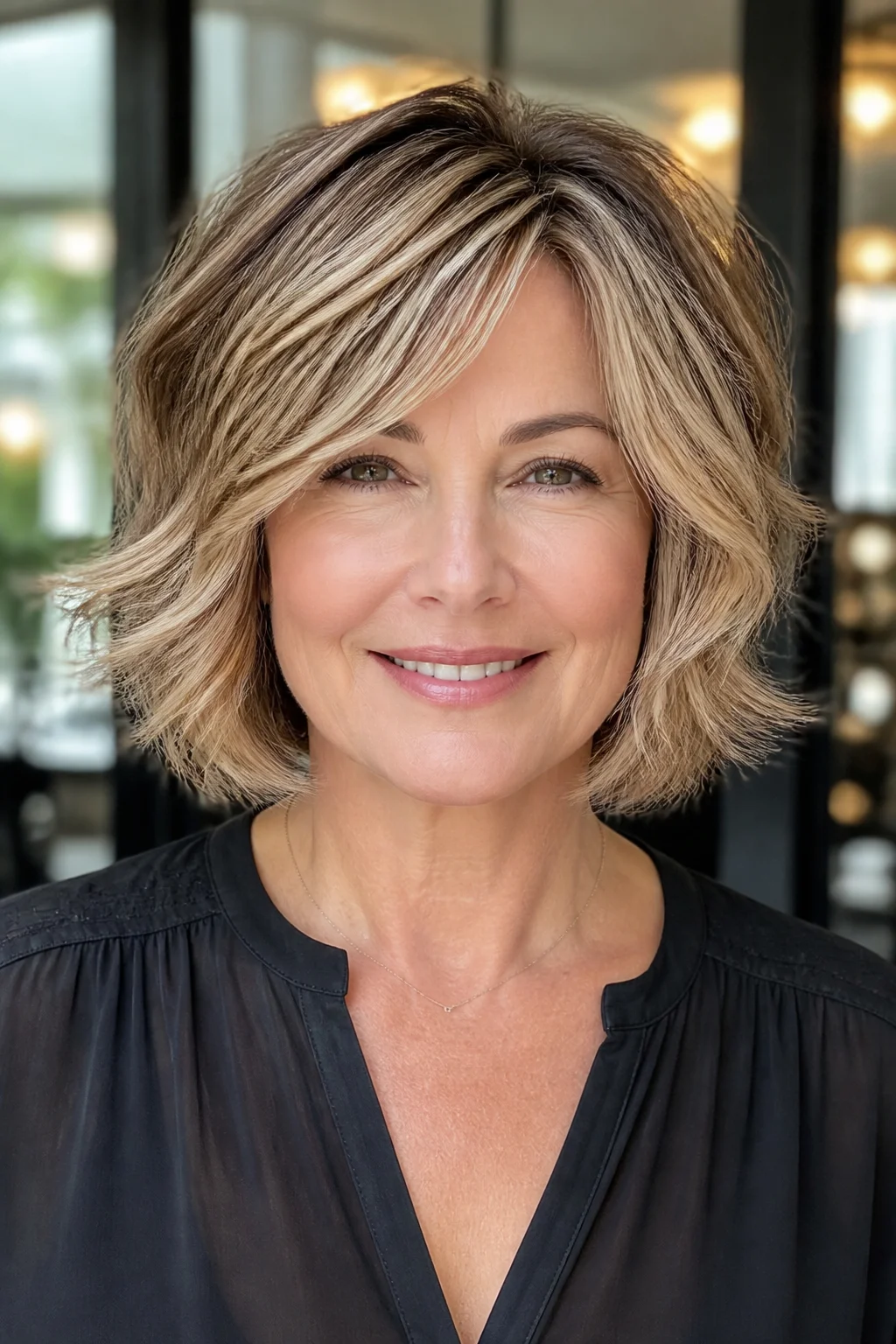
This one pairs loose, tousled waves through the length with a shorter fringe piece that hits right at the cheekbones. The shorter fringe acts almost like a frame within a frame, drawing attention to the cheekbones themselves instead of the fuller parts of the face below. Waves throughout keep the whole thing feeling relaxed rather than styled.
Inverted Layered Bob with Volume at Crown
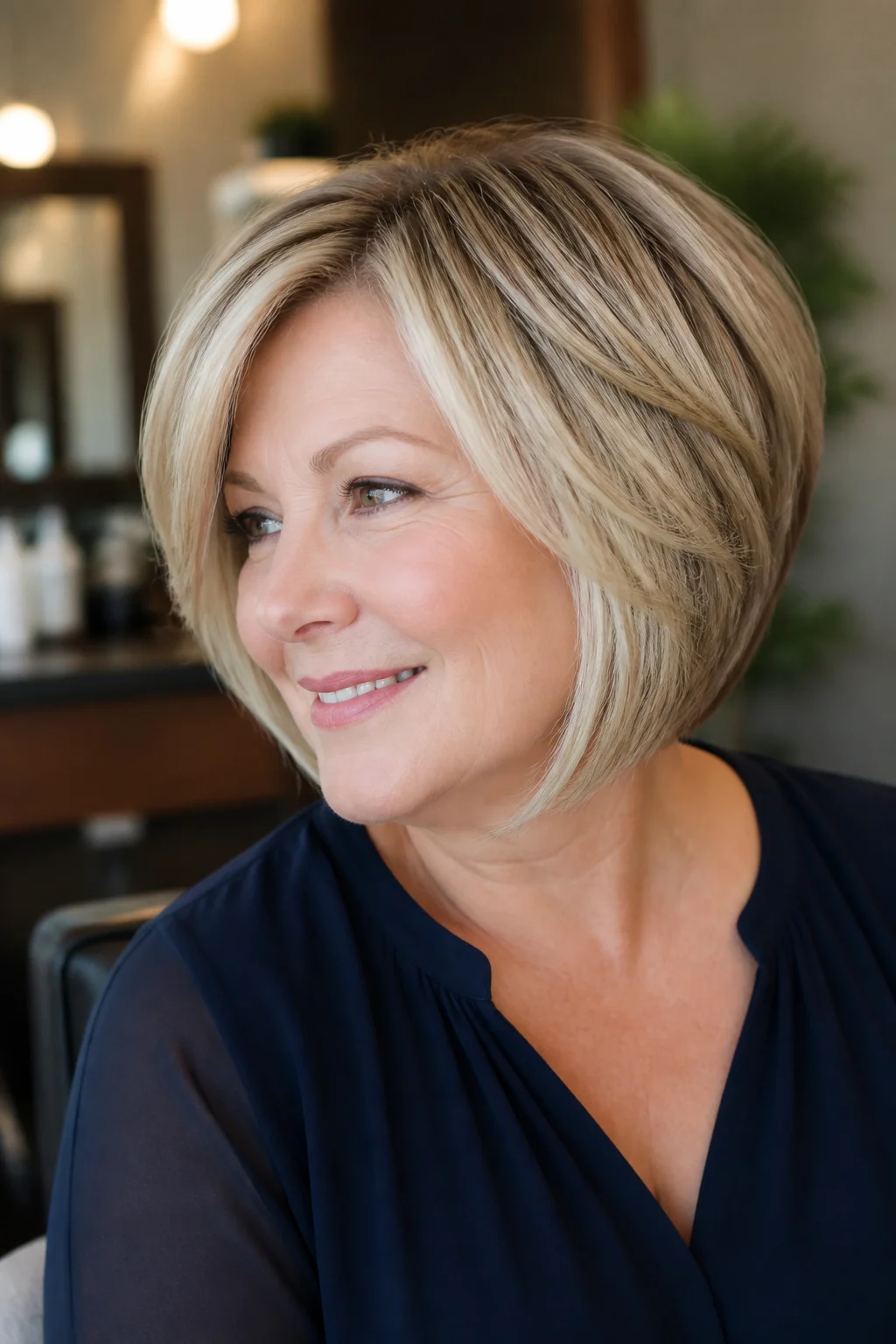
The inverted bob stacks shorter layers at the back and lets the front angle down longer at the sides, a shape that’s stayed popular because it flatters so many face types. Volume built at the crown through backcombing or a volumizing mousse keeps the top from looking flat compared to the fuller sides. The steep angle from back to front is the defining feature, and it needs regular trims to keep that line crisp. Without upkeep, the inverted shape grows out into something closer to a one-length bob, losing the effect that makes it work.
Side-Parted Layered Bob with Face-Sculpting Layers
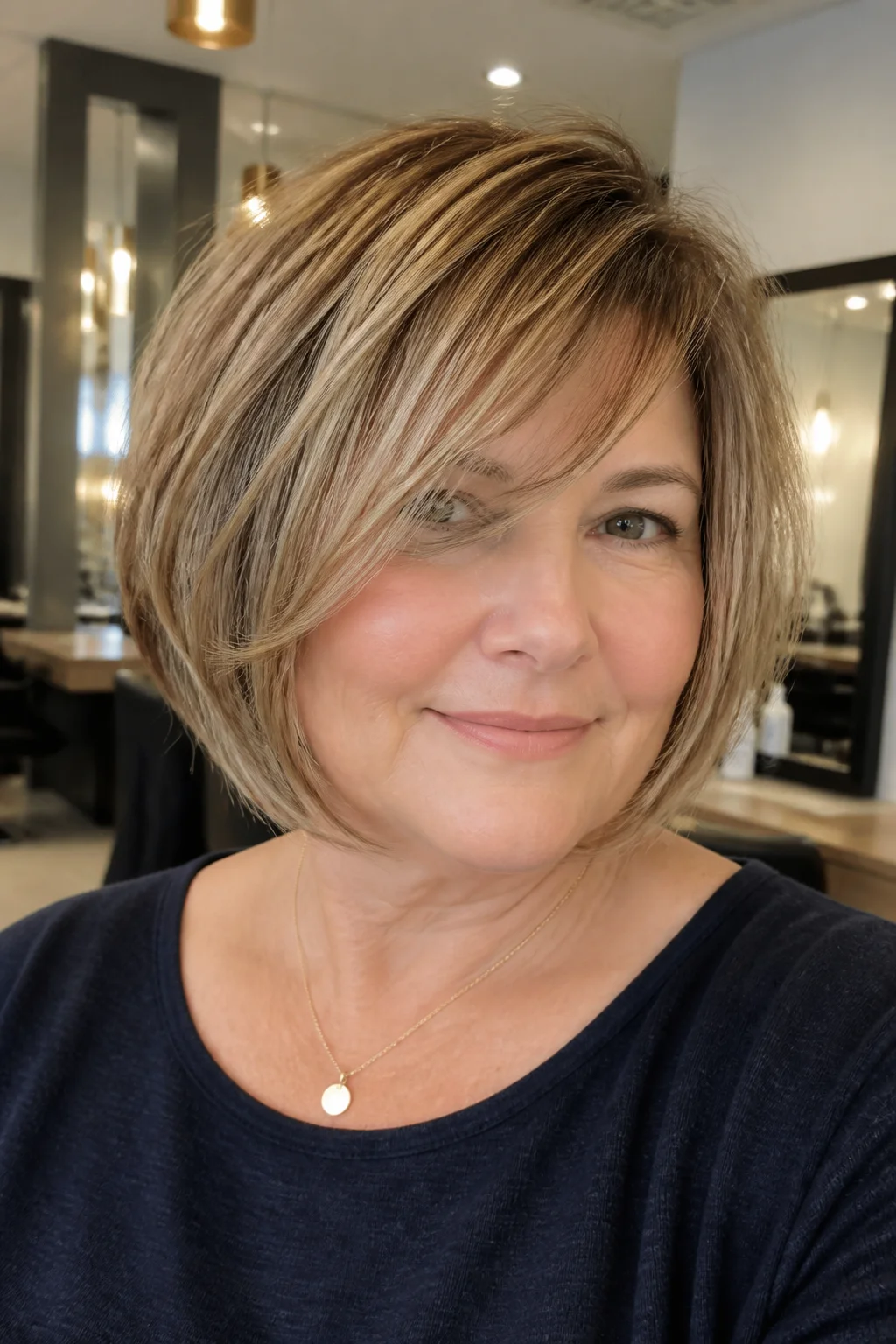
Moving the part to one side changes how the layers fall across your face, and that asymmetry alone can slim a rounder shape. The sculpting layers are placed to follow the curve of the cheek, shorter near the part and lengthening as they move around the face. It’s a low-maintenance option since the deep side part does most of the shaping work on its own.
Soft Wavy Layers with Subtle Highlights and Dimension
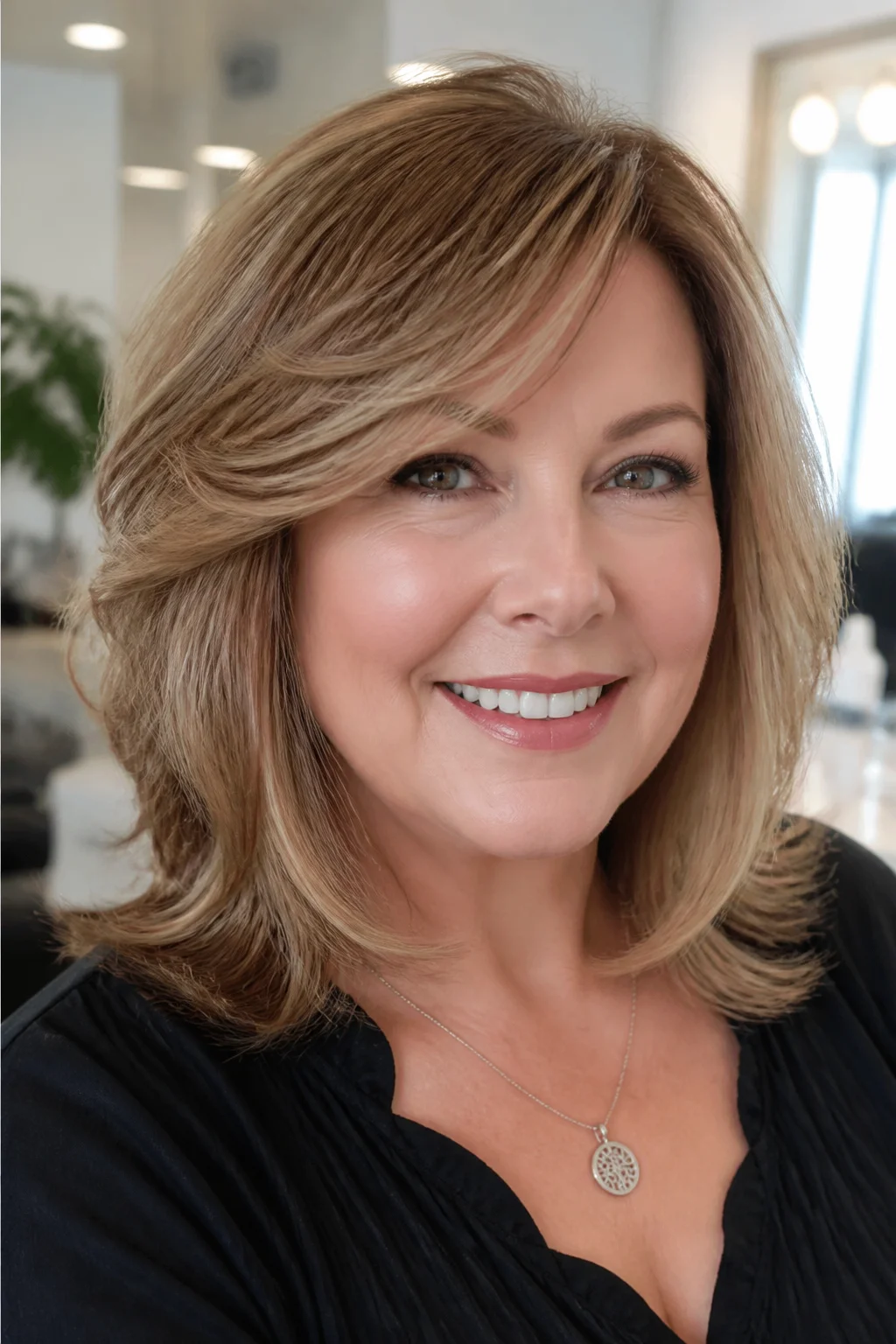
Soft waves paired with subtle highlights add dimension that a single flat color can’t give you. The highlights are placed to catch the light along the face-framing pieces specifically, which draws attention to movement rather than shape. This is a gentler approach for anyone not ready for choppy or razored texture but still wanting a face-framing layered bob for fuller faces that feels a little more done than a plain cut. The waves can be heat-styled or air-dried with a texturizing product, depending on how much time you have.
Textured Pixie-Bob Hybrid with Long Face Sides
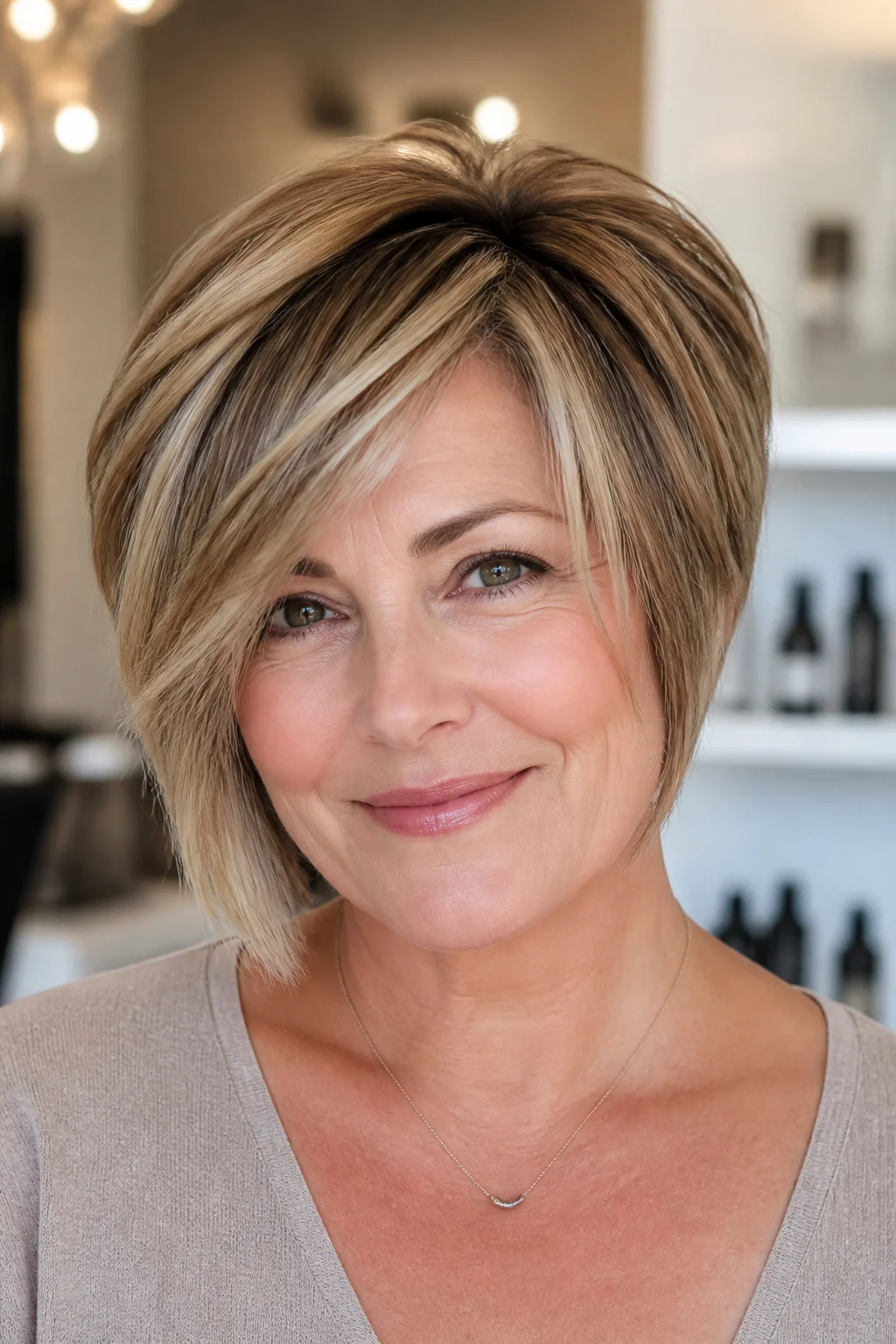
This hybrid keeps the back and crown short like a pixie while leaving the sides long enough to frame the face fully. It’s a bold combination that works best if you’re already comfortable with shorter hair overall. The long face pieces balance out the cropped back so the cut doesn’t feel too severe. Texture through the crown keeps the short sections from looking flat against a fuller face shape.
Blended Layers with Barely-Visible Disconnection
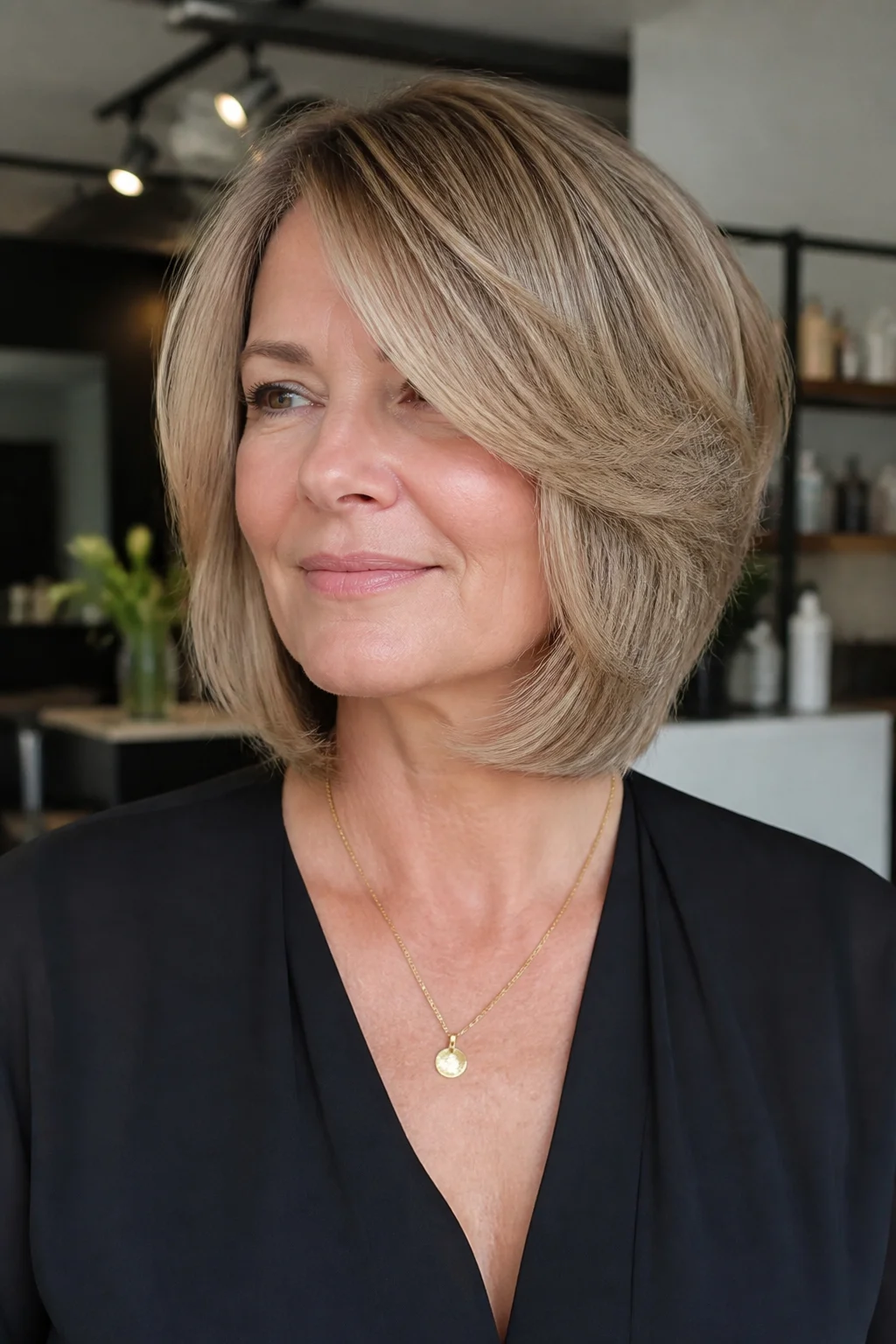
Some cuts wear their layers loudly. This one hides them. The layers are blended so smoothly that the disconnection between lengths is barely visible, giving a soft, rounded overall shape with just enough internal movement to avoid looking heavy. It suits anyone who wants the slimming benefit of layers without an obvious layered look.
Choppy Layers with Curtain-Bangs Effect
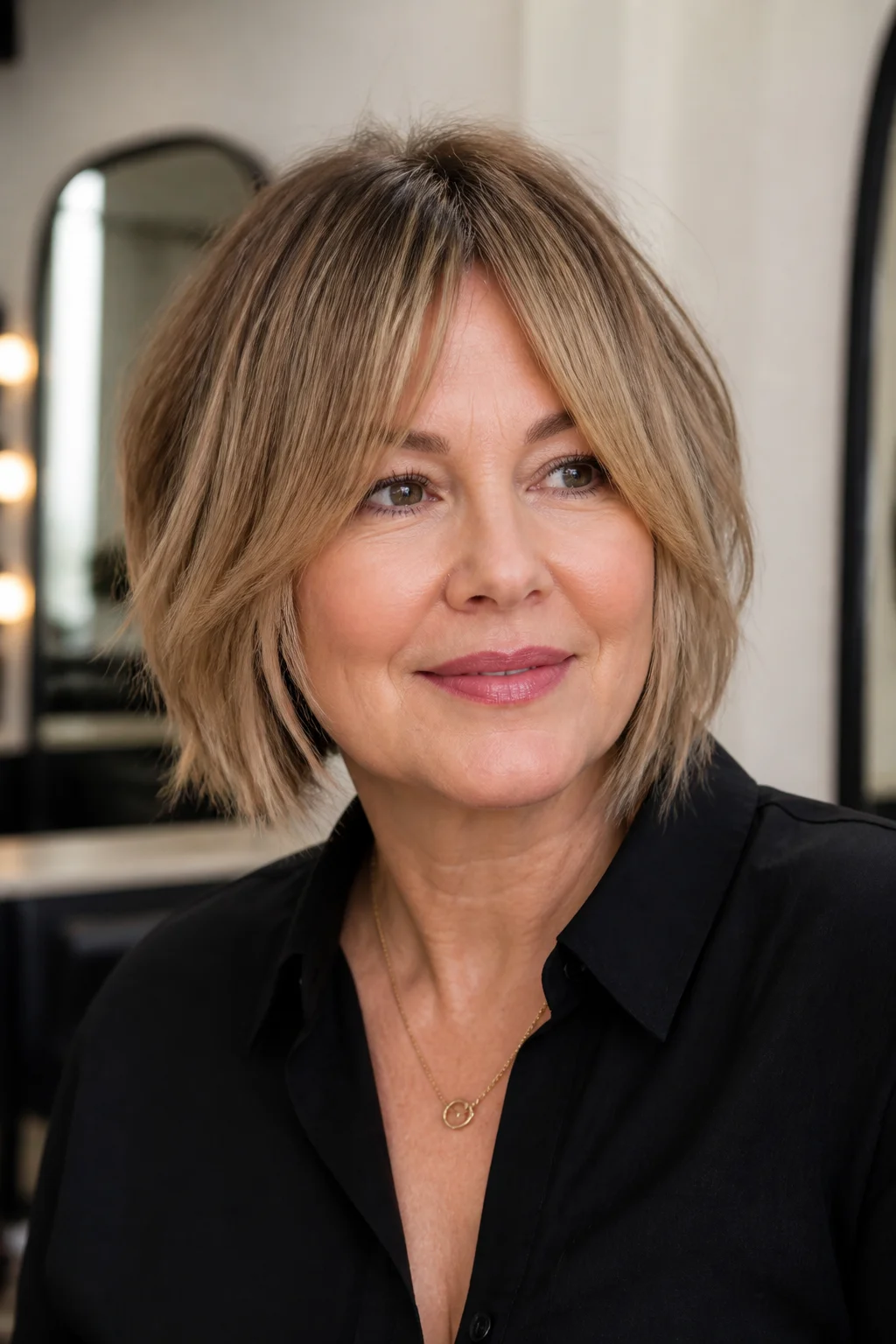
Curtain bangs split down the middle and sweep back toward the temples, and paired with choppy layers through the rest of the bob, they create a soft frame around the whole face. The part in the bangs elongates the forehead area while the choppy layers below handle the cheeks and jaw. Tip: keep the curtain pieces long enough to tuck behind the ears on days you want them out of your face entirely.
Shoulder-Length Layers with Textured Ends
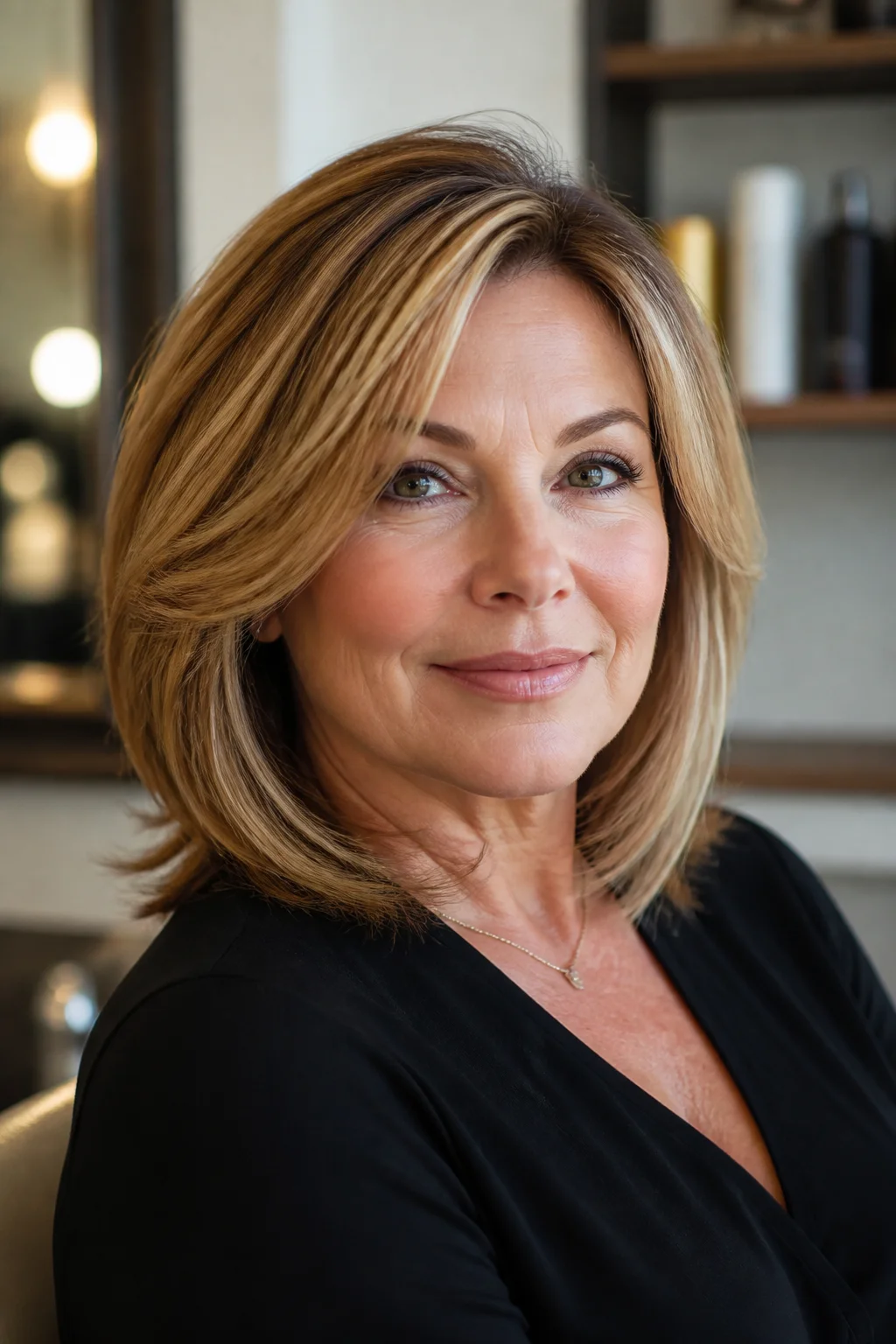
Stretching the bob down to shoulder length gives you more versatility for updos and ponytails while still keeping the face-framing layers intact near the front. Textured ends throughout prevent the extra length from looking heavy or flat. It’s a good middle-ground choice if you’re not ready to commit to a shorter bob but still want the slimming effect layers provide.
Undercut Layered Bob with Voluminous Top
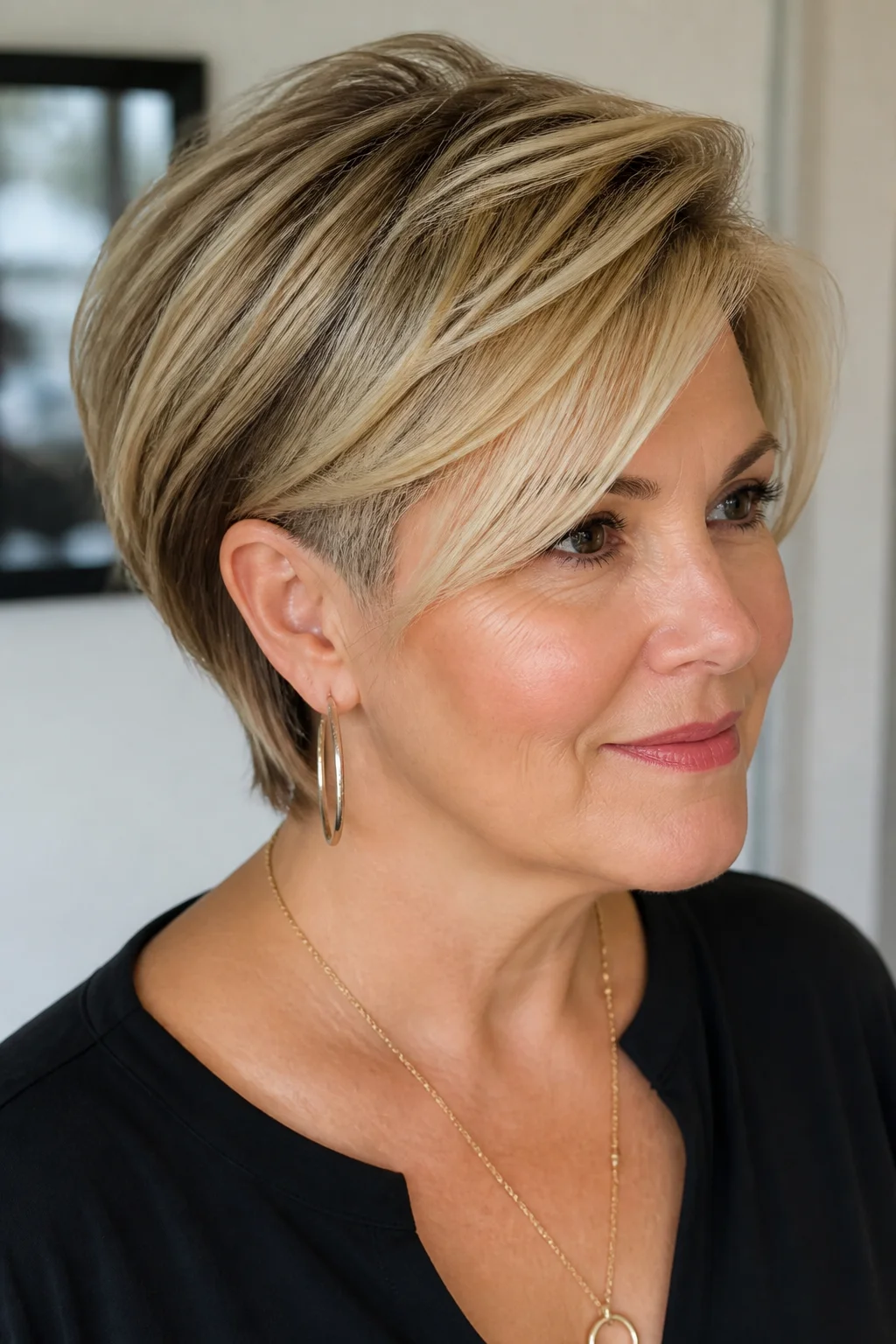
An undercut shaves or closely trims the hair underneath, while the top layers are left long and full to frame the face. The hidden shorter section reduces bulk at the nape without showing unless you want it to. Volume on top balances against the fuller face shape, keeping proportions even from crown to chin. This one is a commitment, since growing out an undercut takes patience, but it’s a striking option if you want something distinct.
Honey-Toned Layered Bob with Bronde Highlights
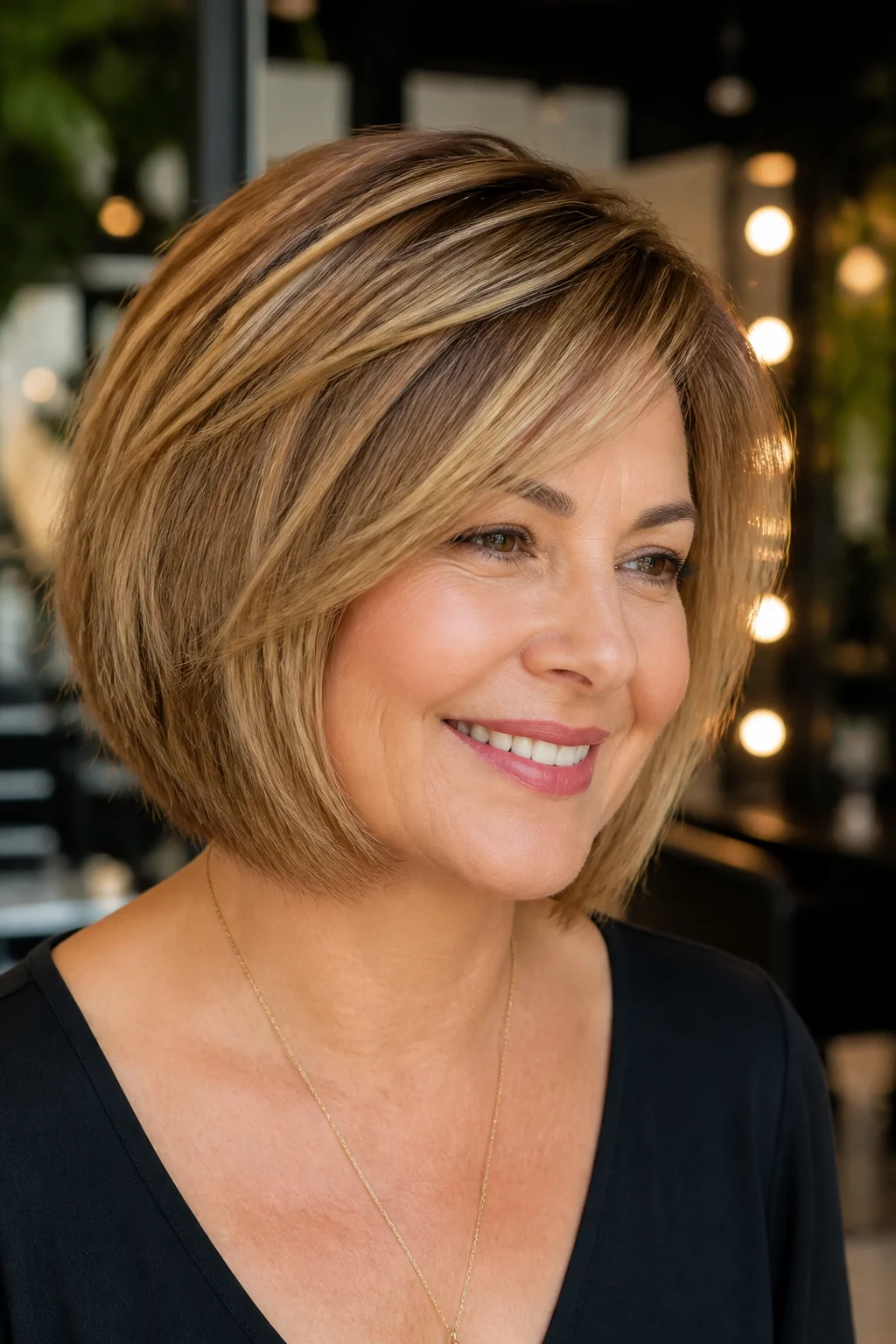
Bronde, that blend between brown and blonde, adds warmth through the face-framing pieces here, with honey tones concentrated where the layers hit the cheeks. The color placement does similar work to strategic highlights, pulling focus to movement and light rather than width. It looks especially rich on hair with natural waves that catch the different tones as they fall.
Taper-Layered Bob with Extended Front Pieces
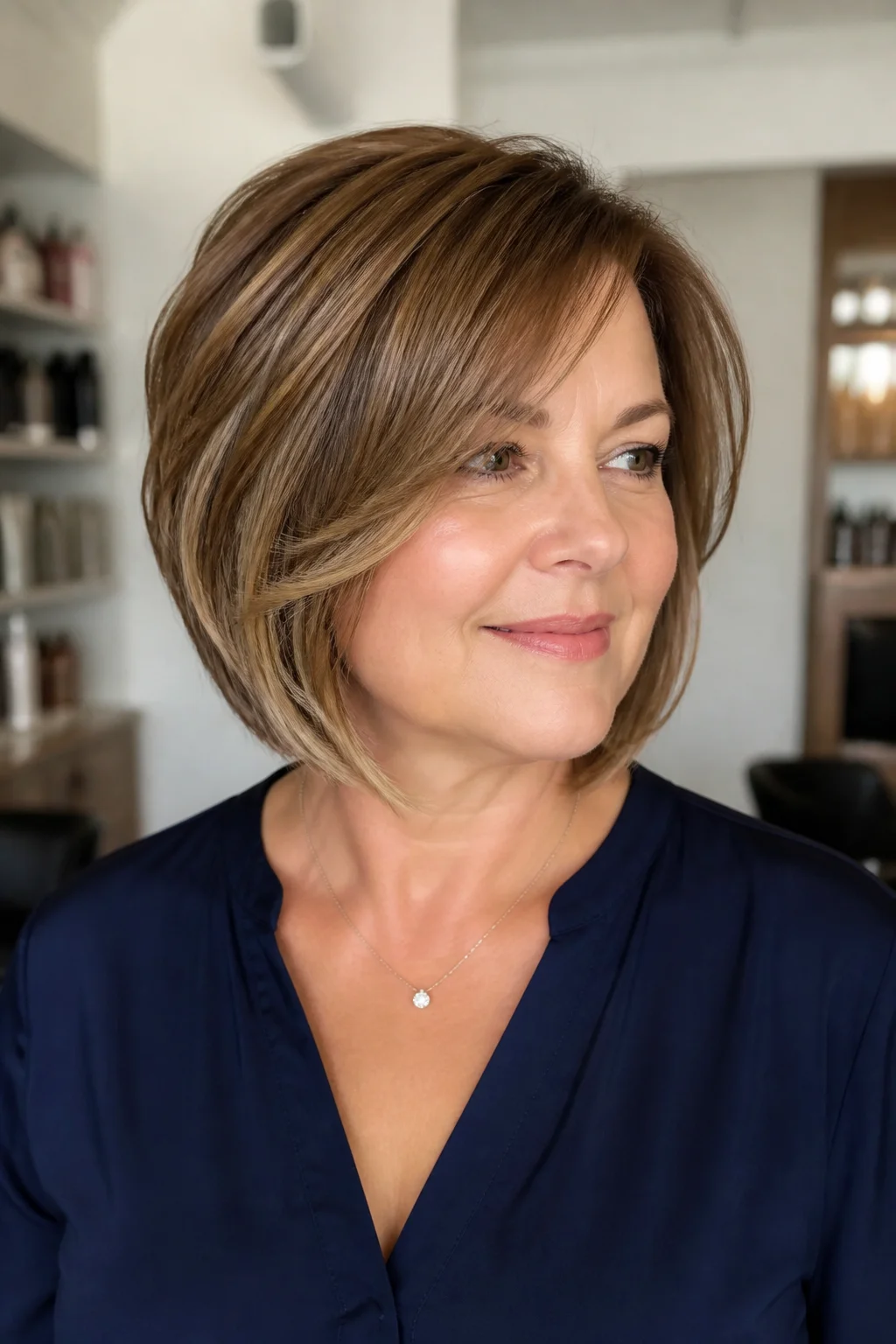
Tapering shortens the layers gradually toward the back while the front pieces stay extended past the chin, sometimes reaching the collarbone. That extension gives you a long, clean line down each side of the face, which is one of the more reliable ways to visually narrow a fuller face shape. The taper keeps the back neat and manageable so all the visual interest stays up front where it does the most good.
Which Face-Framing Bob Should You Actually Choose?
With 21 options, picking one comes down to your hair texture, your maintenance tolerance, and how bold you want to go. If you have fine hair, the stacked layers at back with long face-frame or the wispy face-framing layers over an A-line bob will give you the most lift without looking thin. Thick or coarse hair does better with the razored layered bob with disconnected texture or the shaggy layers with textured crown volume, since both cuts remove bulk instead of just adding shape.
For curly hair, skip anything designed around blunt lines and go straight to the curly layered bob with loose face waves, which respects your natural pattern instead of forcing it flat. If you want low maintenance, the blended layers with barely-visible disconnection or the side-parted layered bob with face-sculpting layers need almost no daily styling beyond a quick dry.
Avoid choosing a cut based on a photo alone without considering your hair’s natural texture. A choppy razored look on straight fine hair can end up looking thin and stringy instead of textured, while a blunt bob on very curly hair may not hold the sharp lines it’s meant to show. Talk through your hair type with your stylist before settling on the final shape.