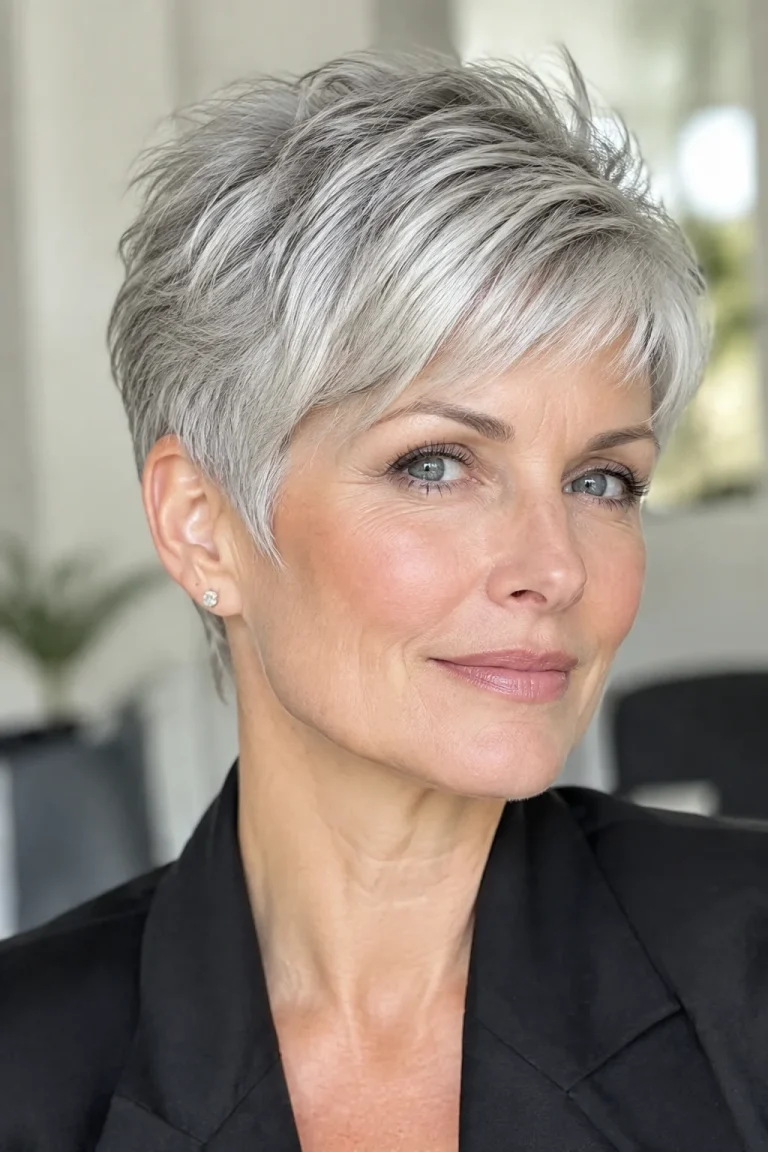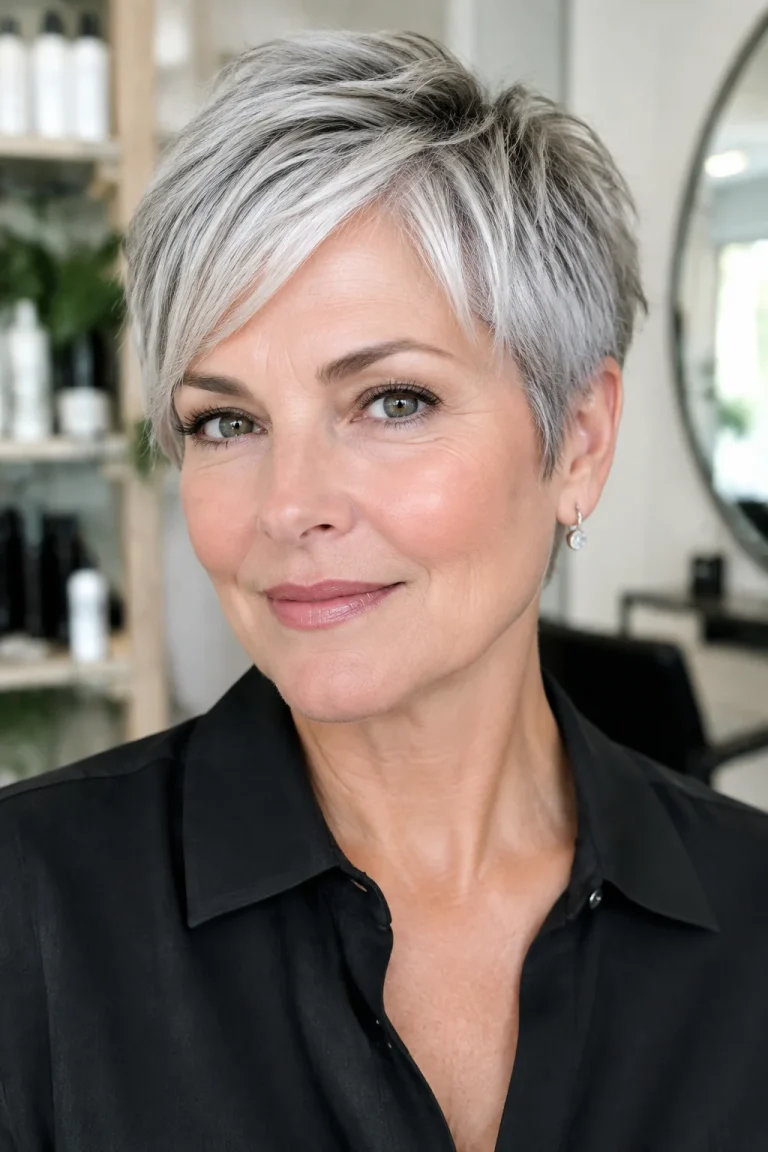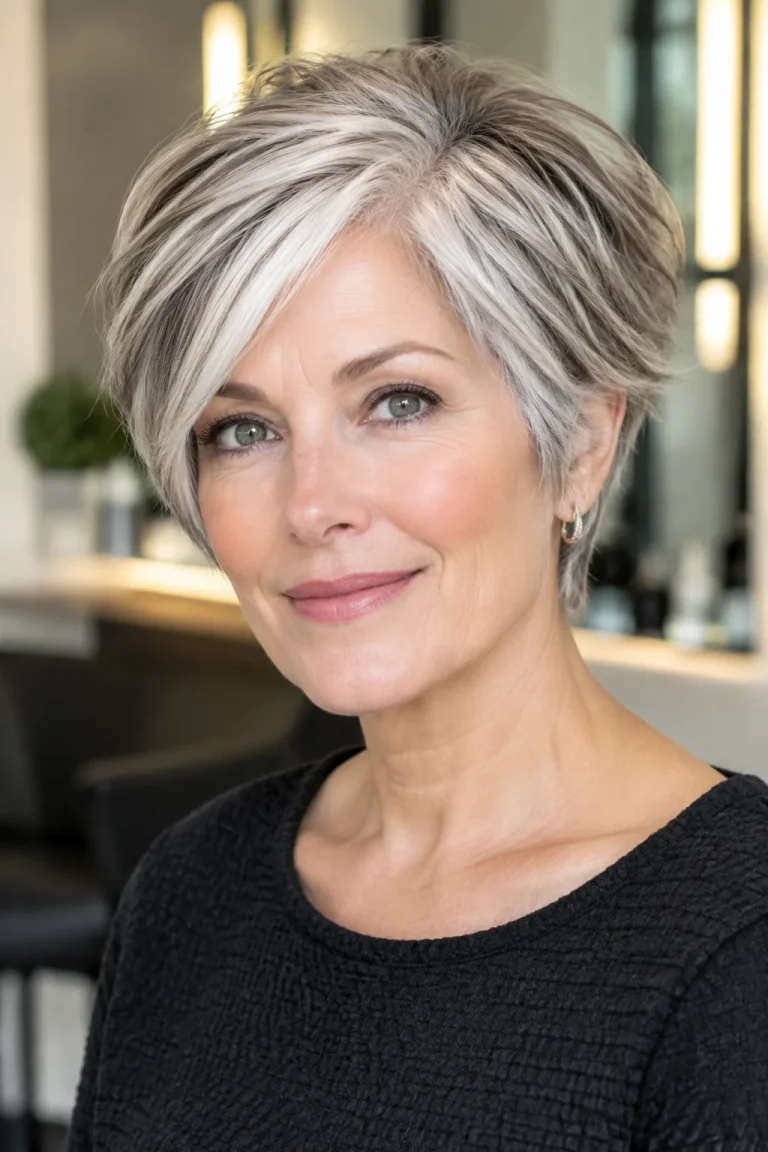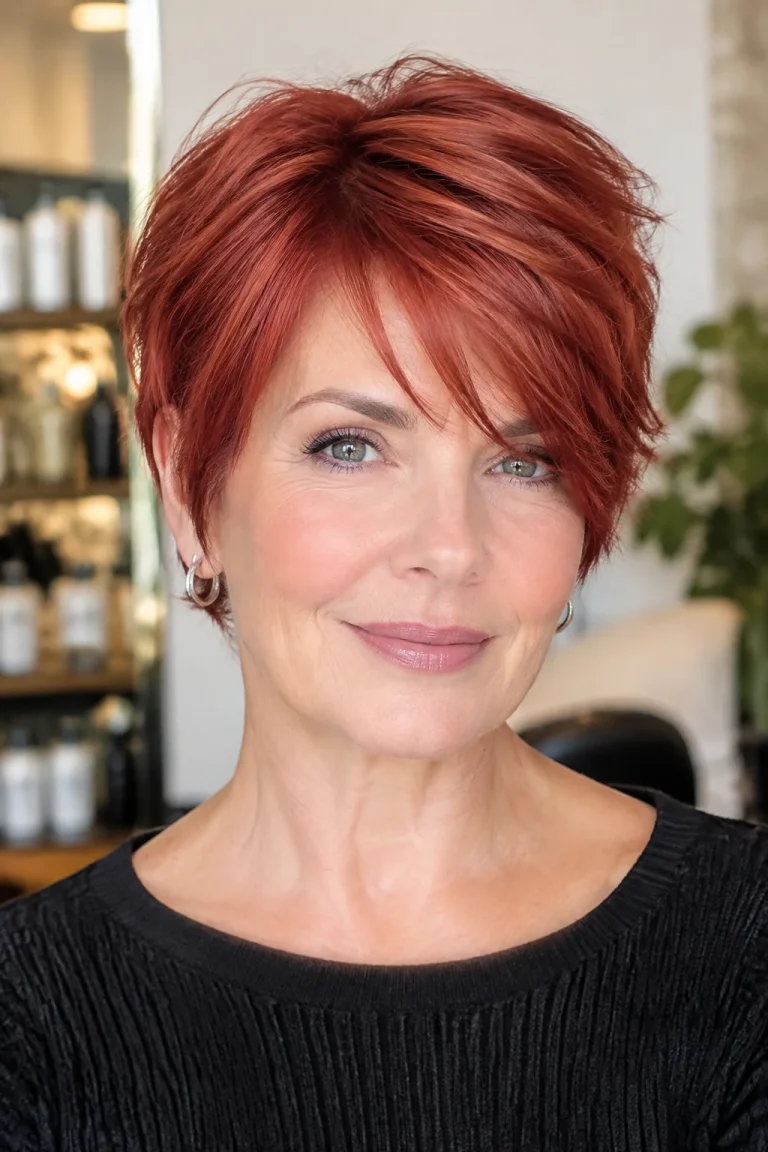
Finding a short cut that actually works with your face shape and body proportions takes more than flipping through random photos. A pixie can look sharp and balanced, or it can fight your features if the shape isn’t right. These short hair pixie cuts for plus size women focus on proportion, volume placement, and face framing so the end result flatters you instead of just following a trend. Some of these cuts soften a round face, others add height where you want it, and a few work best on straight or curly texture. Bring these pictures to your stylist and talk through which shape fits your hair type and your daily routine. A good pixie should feel easy to style, not like a project every morning. Read through all twenty-one and pick the ones that match your texture, your face shape, and how much time you want to spend with a blow dryer.
Classic Tapered Pixie with Length on Top
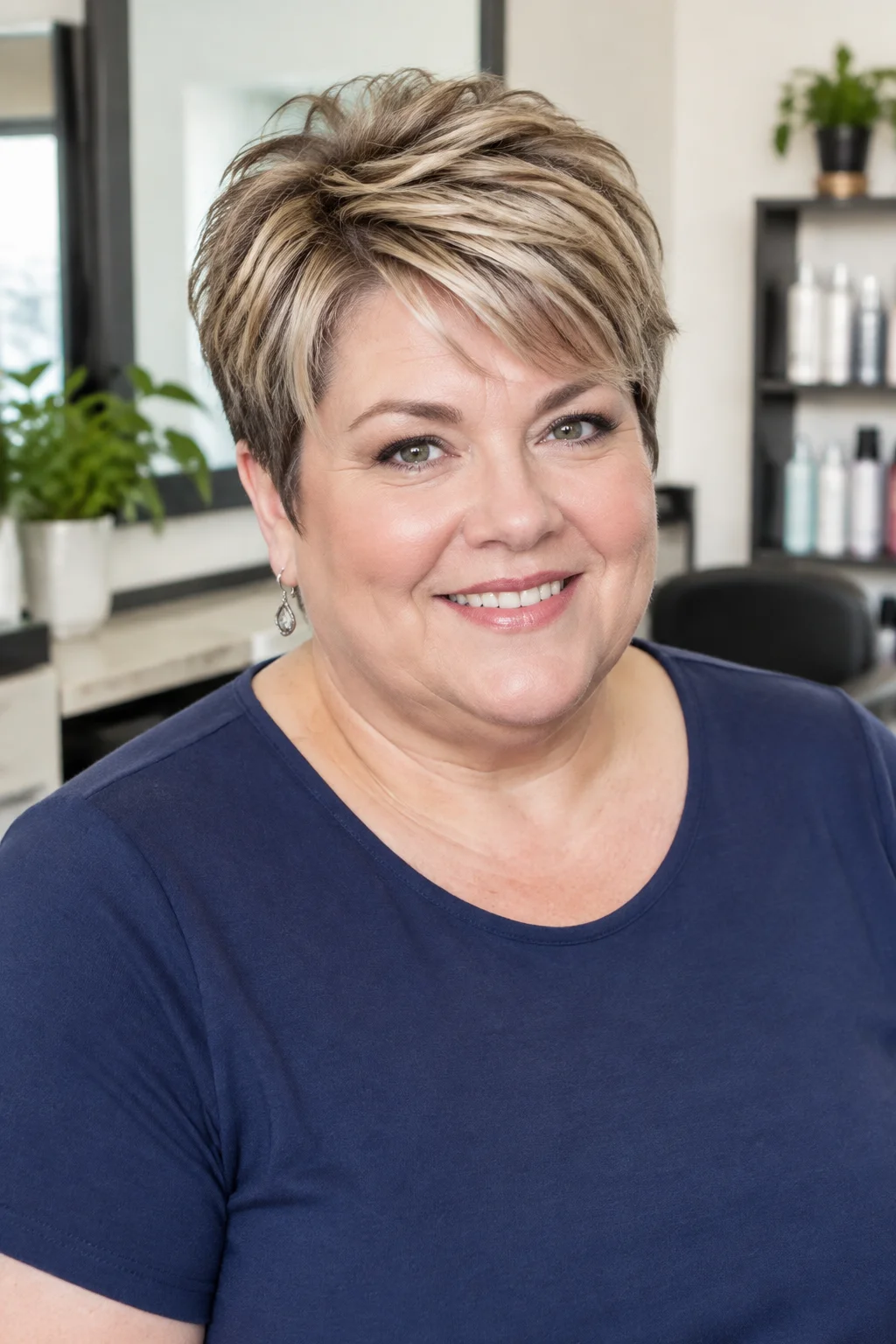
This is the pixie most people picture when they hear the word pixie. The sides and back stay close to the head while the top keeps enough length to style with texture or a slight sweep. It works on nearly every face shape because the longer top balances the cheeks and jaw, drawing the eye upward. Fine and thick hair both take to this cut well, though thick hair may need more frequent thinning to keep the taper clean. Tip: ask your stylist to leave at least two inches on top so you have styling options as it grows between appointments. A light mist of heat protectant before styling helps the finish last.
Textured Pixie Crop with Side Sweep
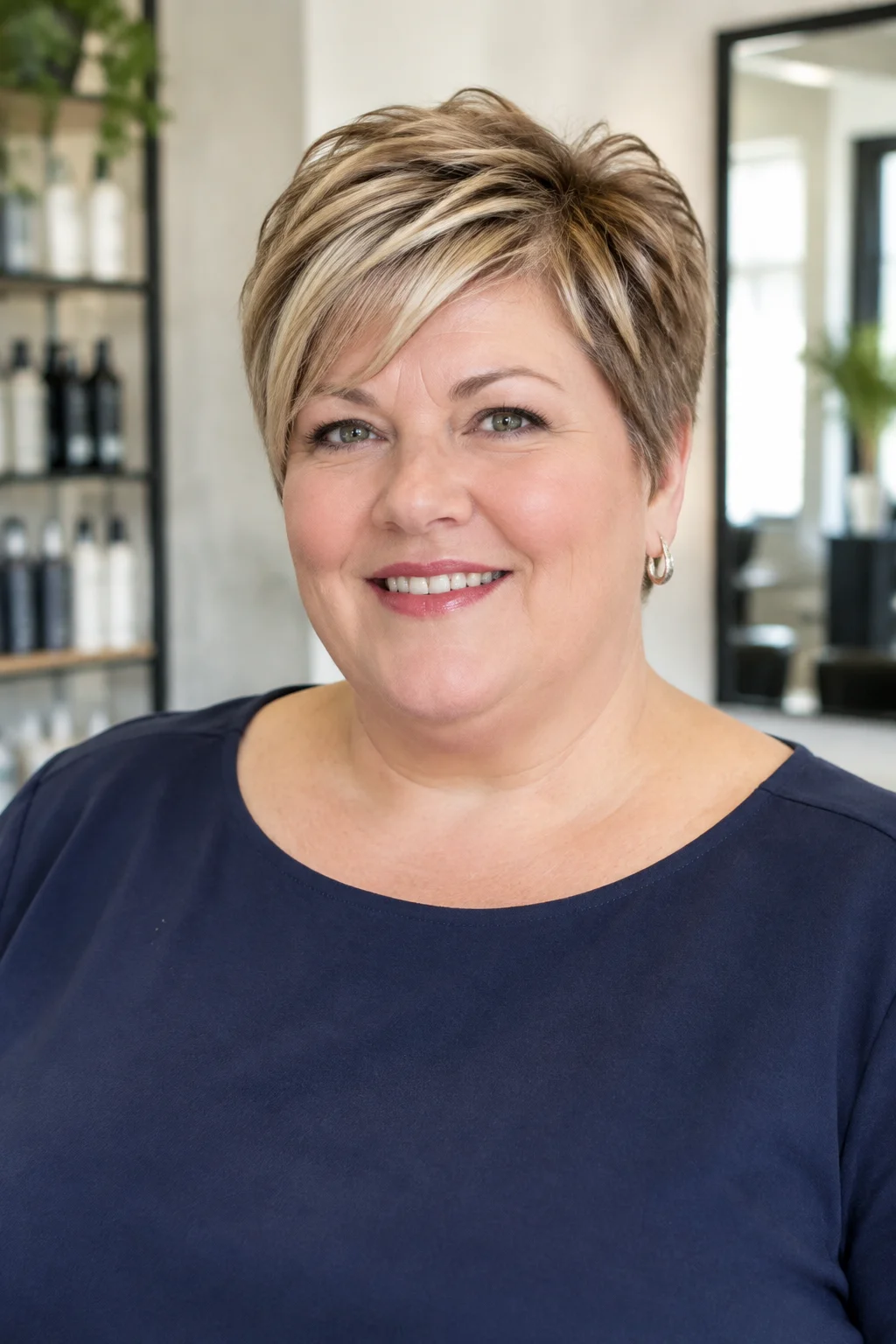
The side sweep softens the forehead and adds a bit of movement that a straight-across pixie doesn’t have. Texturizing shears break up the top layer so it doesn’t sit flat or heavy. This shape suits women who want something low maintenance but still styled, since a little pomade and finger work is really all it needs.
Soft Pixie with Longer Bangs for Rounder Faces
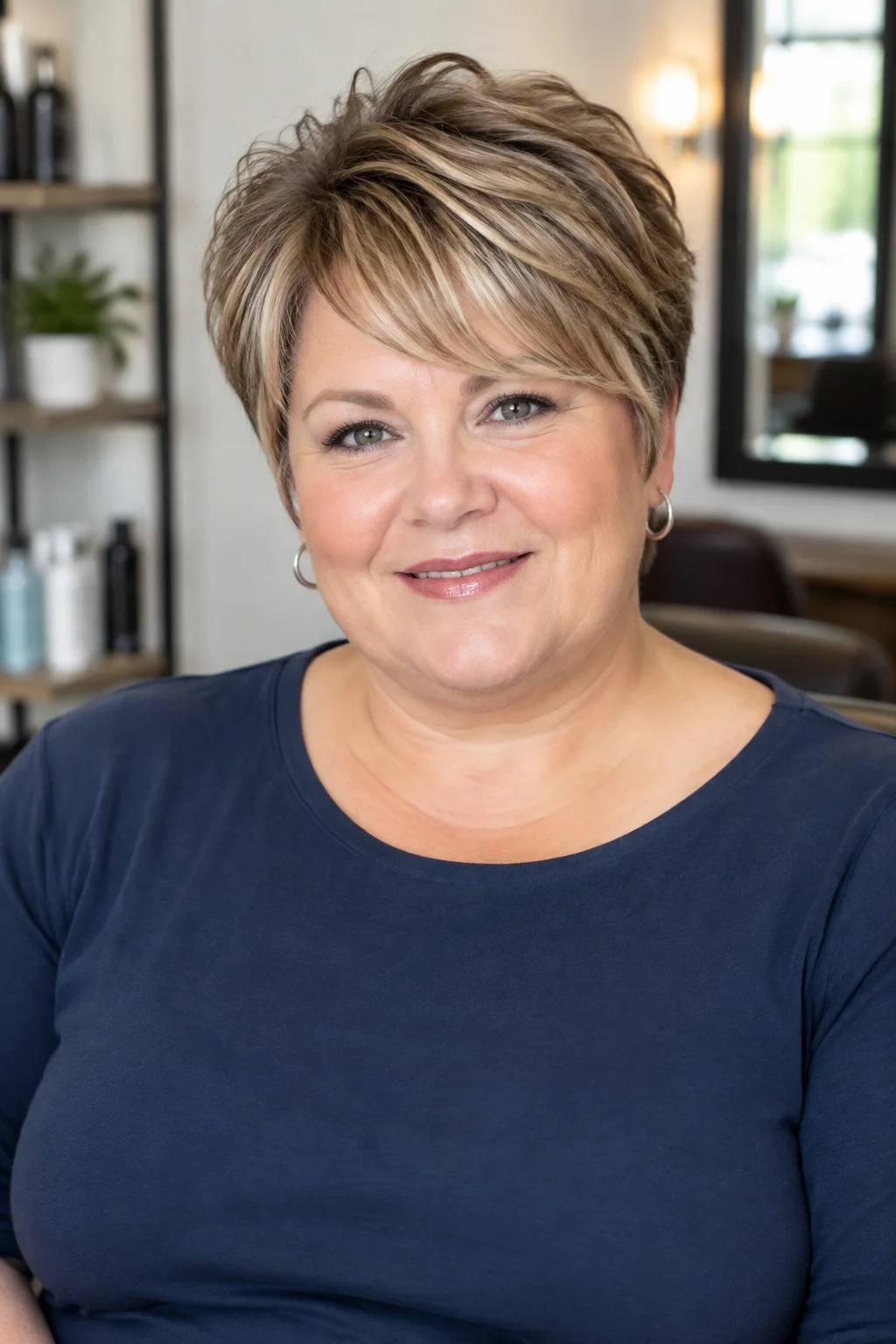
Rounder faces usually look best with length and angle somewhere near the forehead, and this cut delivers both. The bangs sit longer than a typical pixie fringe, often grazing the brow or slightly past it, which elongates the face. Side layers taper down toward the jaw to create a subtle diagonal line instead of a horizontal one. This combination avoids the boxy look that a too-short, too-blunt pixie can create on a fuller face. Stylists often recommend keeping the crown slightly lifted here, since added height at the top counteracts width at the cheeks. The bangs can be worn swept to one side for a softer effect or left straight down for more coverage. Either way, this style gives you room to adjust day to day without needing a full restyle.
Textured Curly Pixie for Natural Texture
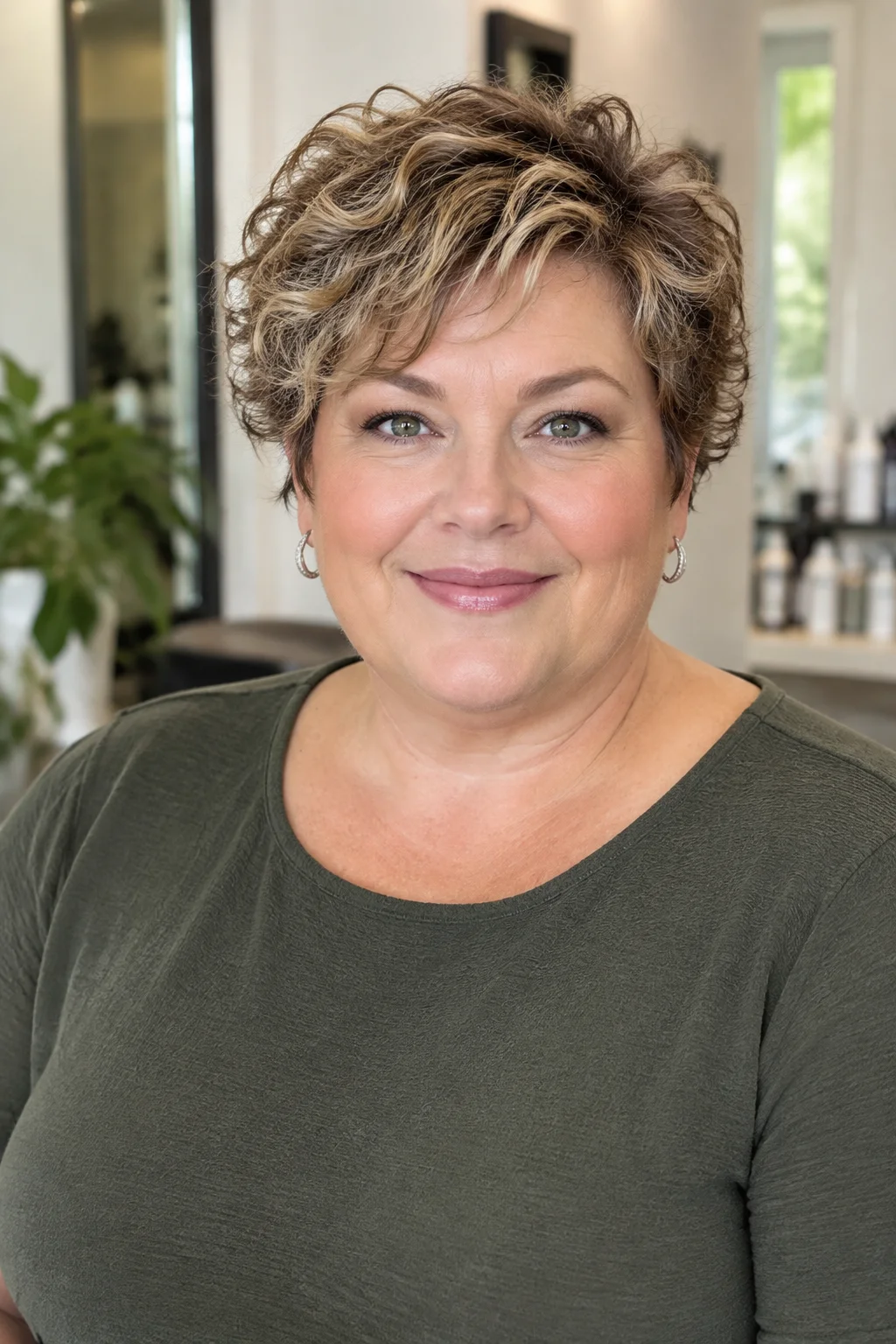
Curly hair needs a different cutting approach than straight hair, and this pixie respects that. Instead of blunt lines, the stylist cuts curl by curl so each ring of hair keeps its spring and shape. The result looks full without looking heavy, and it shrinks up nicely once it dries. This is one of the lower-maintenance curly options because there’s no blow-drying required, just a curl cream and air drying.
Sleek Pixie Bob Hybrid
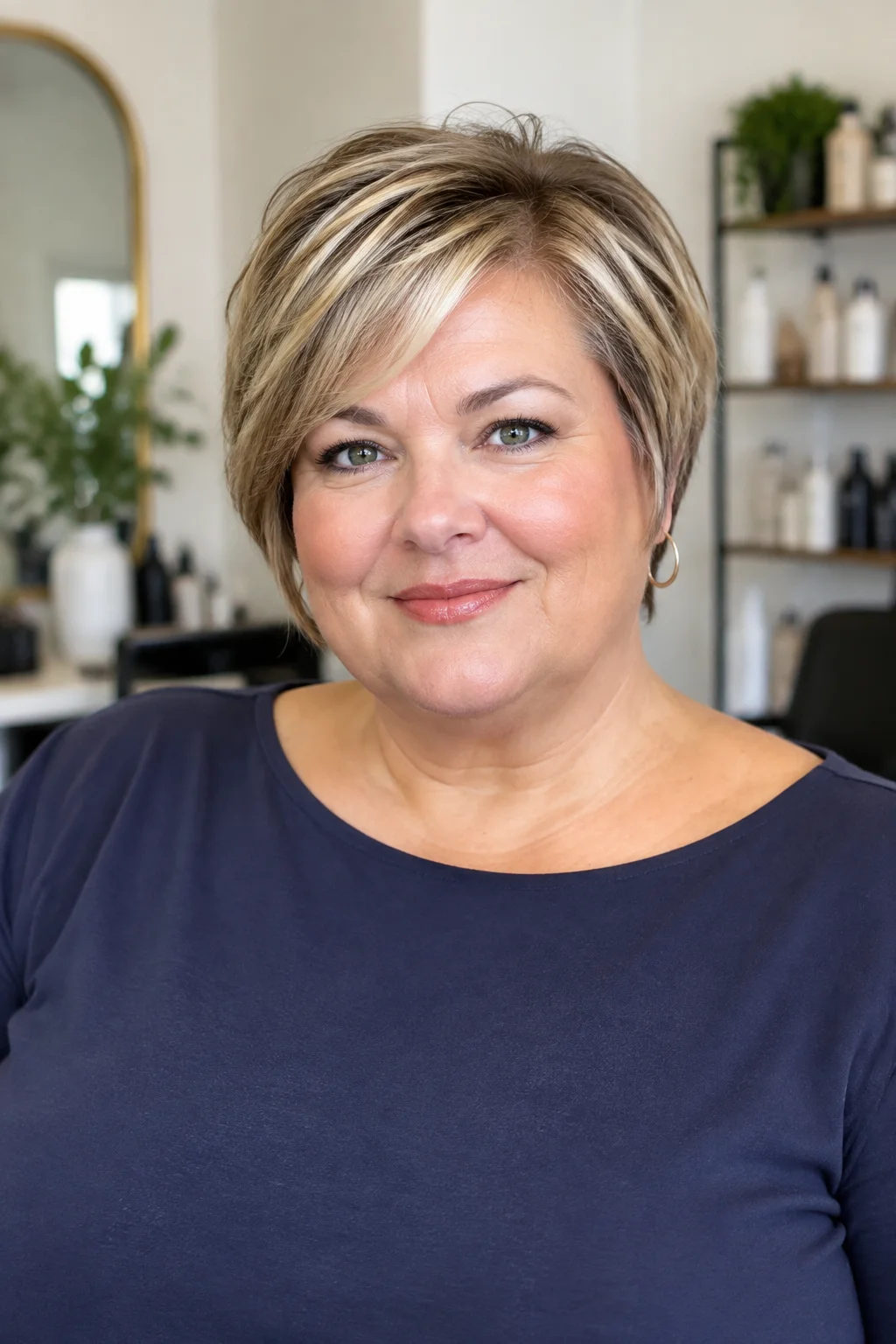
This cut sits between a pixie and a short bob, with length left longer at the nape and sides than a traditional pixie but still cropped tighter than a lob. It gives you more styling versatility since you can tuck it behind the ears or let it fall forward. The smooth, sleek finish works particularly well on straight hair that holds a blow-dry.
Layered Pixie with Wispy Texture
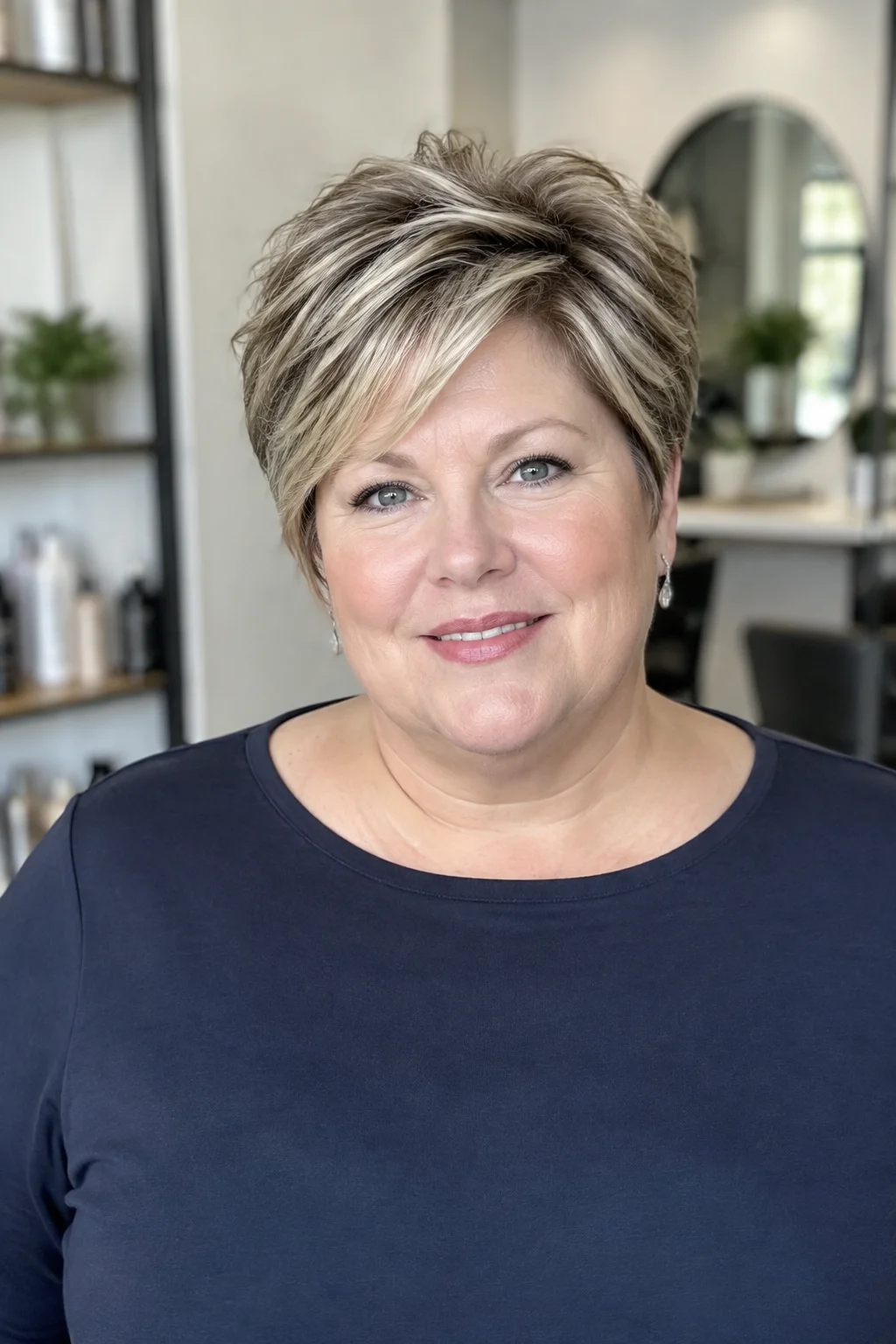
Layering throughout the crown and sides keeps this pixie from looking stiff or helmet-like. The wispy ends catch light and move naturally, which makes the cut feel less structured than a classic taper. It suits women who prefer a relaxed, undone look rather than a sharply defined silhouette, and it hides regrowth fairly well between trims.
Pixie Cut with Volume at the Crown
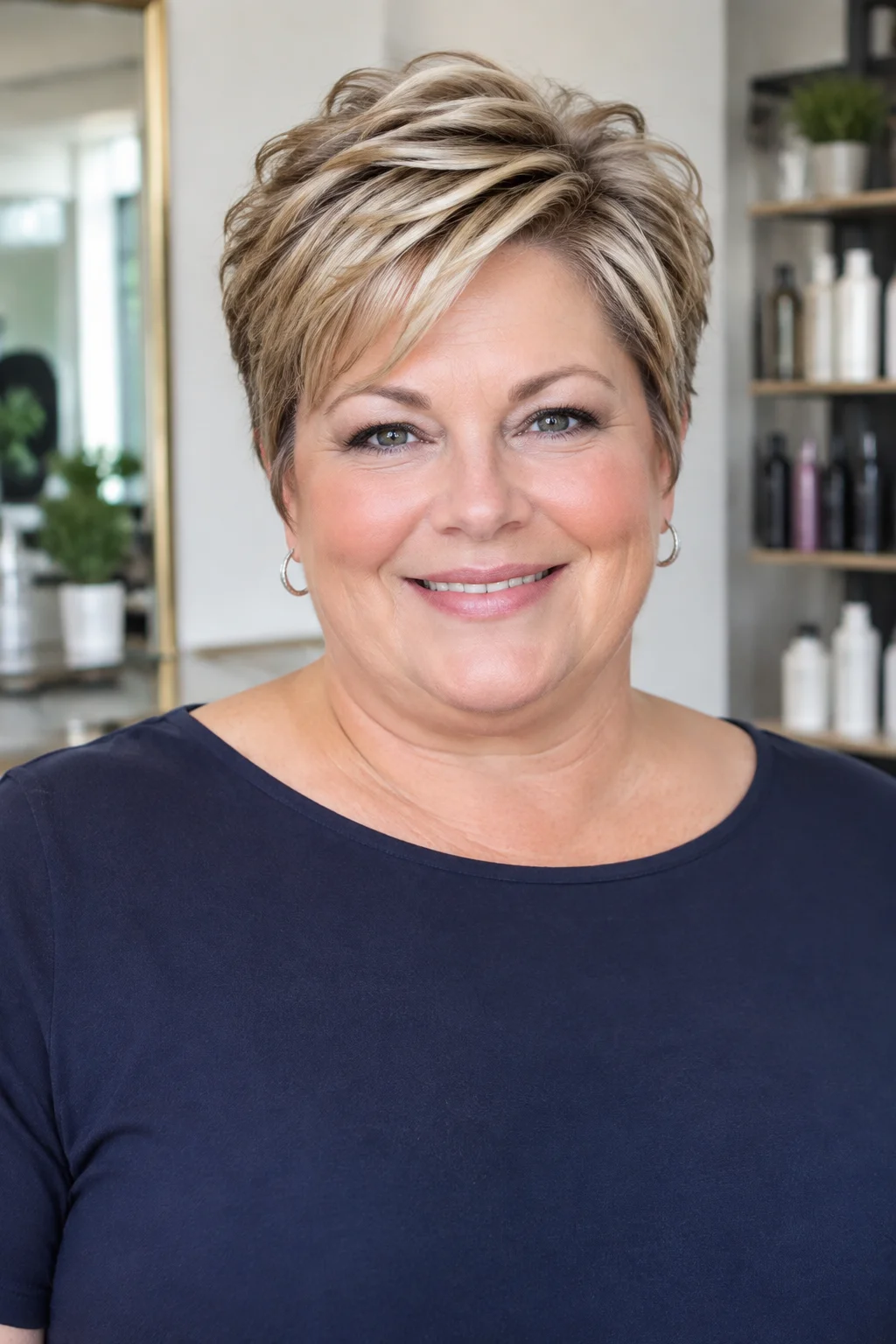
Height at the crown changes the whole proportion of a short cut, especially for anyone wanting length to balance a fuller midface. The stylist builds internal layers that push the hair up and out rather than flat against the scalp. A light round brush and some mousse during blow-drying keep that lift through the day. Tip: a volumizing spray at the root before blow-drying makes a noticeable difference without adding stiffness.
Grown-Out Pixie with Tousled Waves
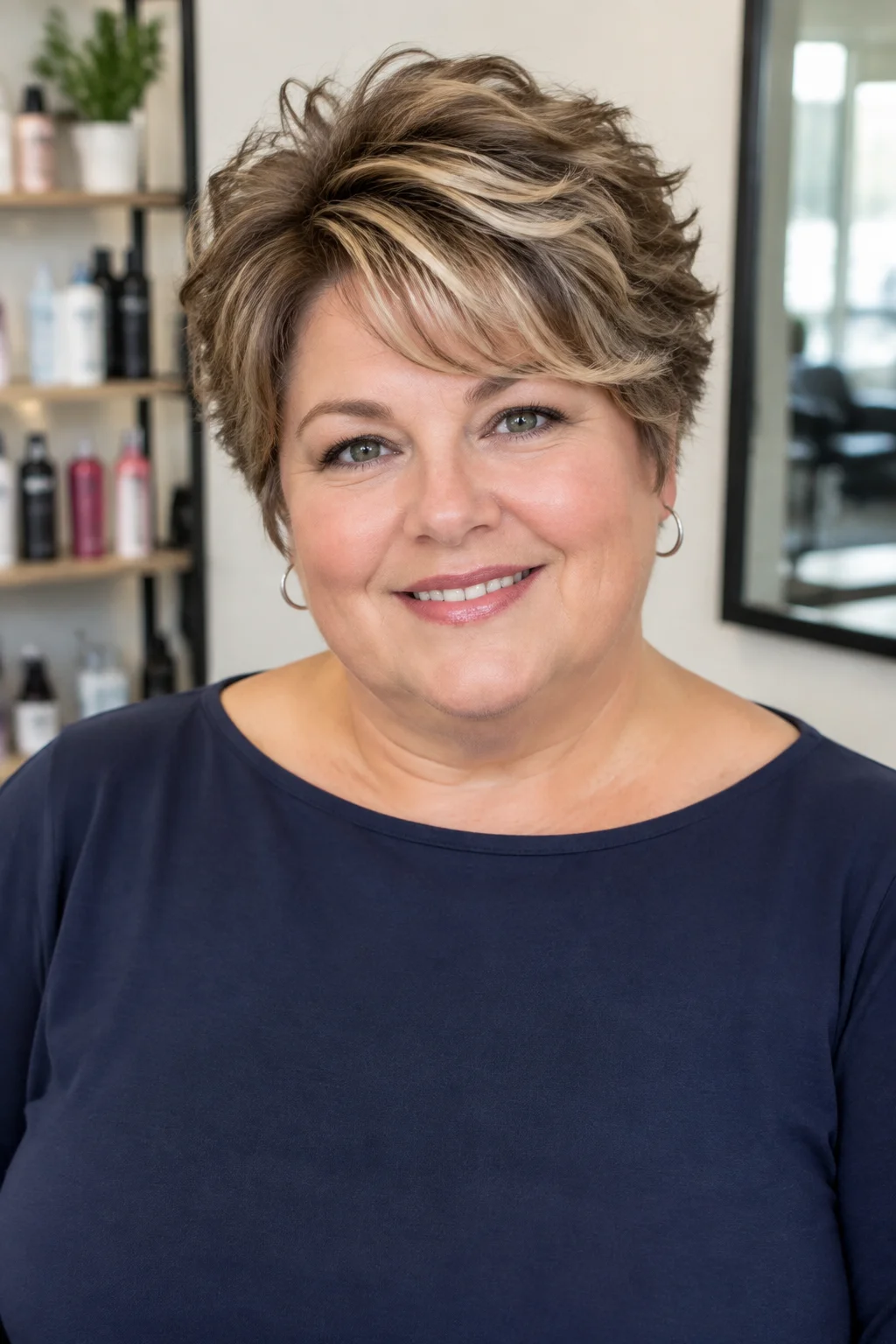
This one is for anyone transitioning out of a tighter pixie without wanting to commit to a full grow-out phase. The sides and back are left a bit longer, and the top gets tousled into loose waves using a texturizing spray or a wide barrel iron. It looks relaxed and a little undone, almost like you didn’t try too hard, which is part of its charm. The in-between length actually works in your favor here since it gives the stylist more to play with when shaping waves.
Pixie with Blunt Bangs and Feathered Sides
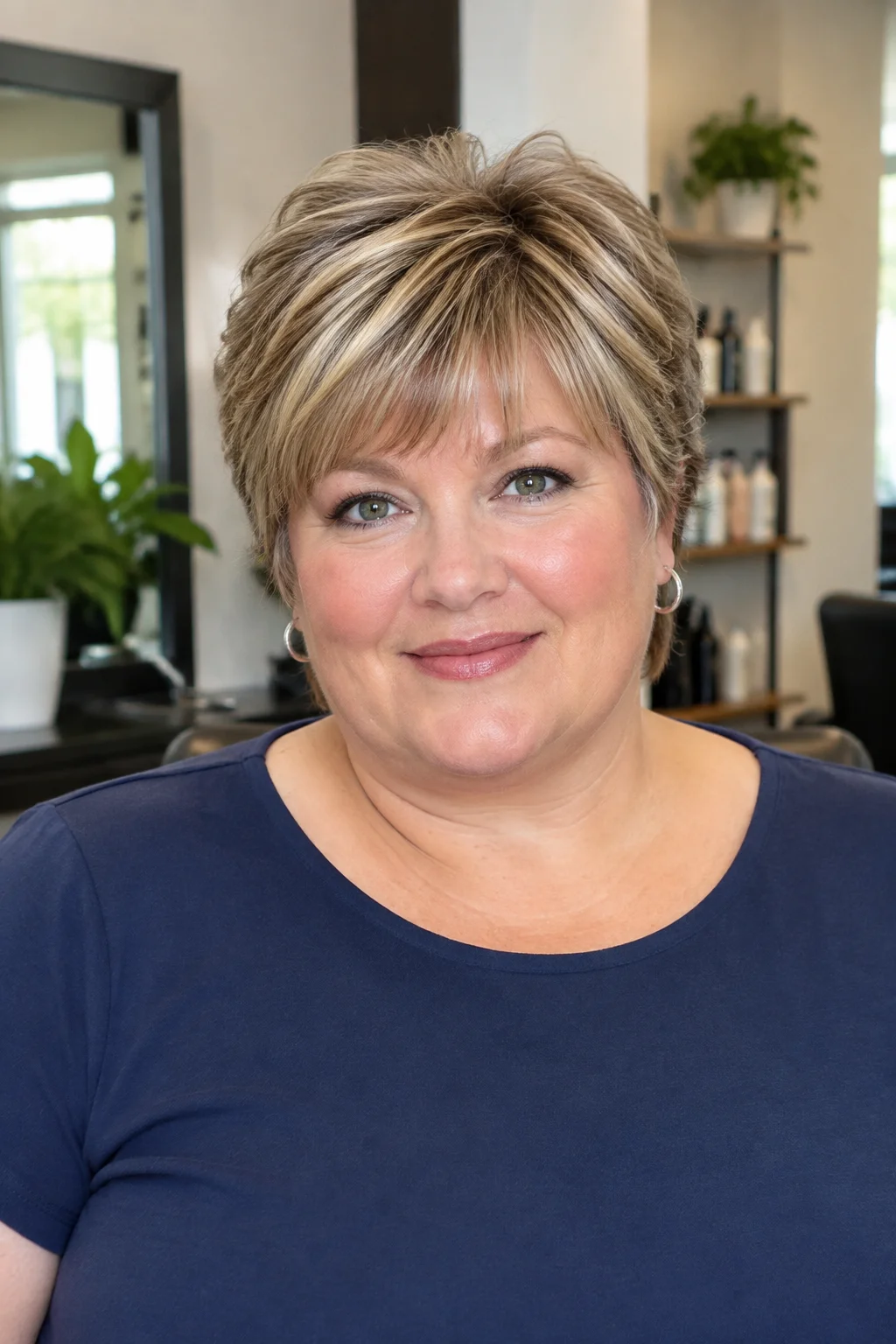
Blunt bangs create a strong, graphic line across the forehead, while feathered sides soften the rest of the cut so it doesn’t look too severe. This contrast is what makes the style interesting. It flatters oval and heart-shaped faces especially well, since the straight fringe balances a narrower chin.
Disconnected Pixie with Undercut Fade
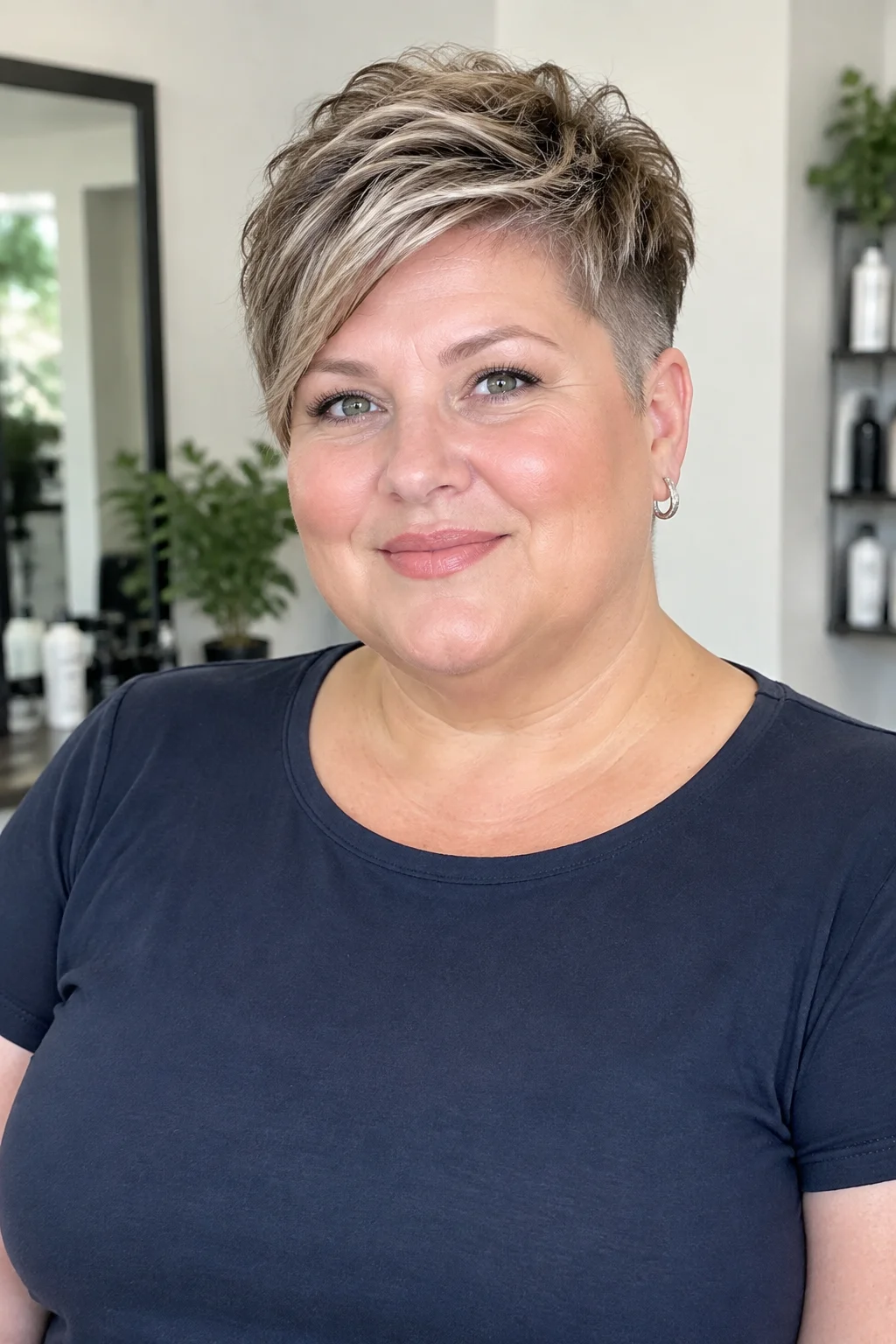
This is one of the edgier options on the list. The top section is cut with noticeably more length and left disconnected from a faded or shaved undercut below. It creates sharp contrast and works best for women who want a bold, modern look rather than something soft or traditional. Styling is quick because the top can be pushed back, swept to the side, or spiked depending on the day. The undercut does require more frequent trims to maintain the fade, usually every three to four weeks.
Pixie with Longer Crown for Face Framing
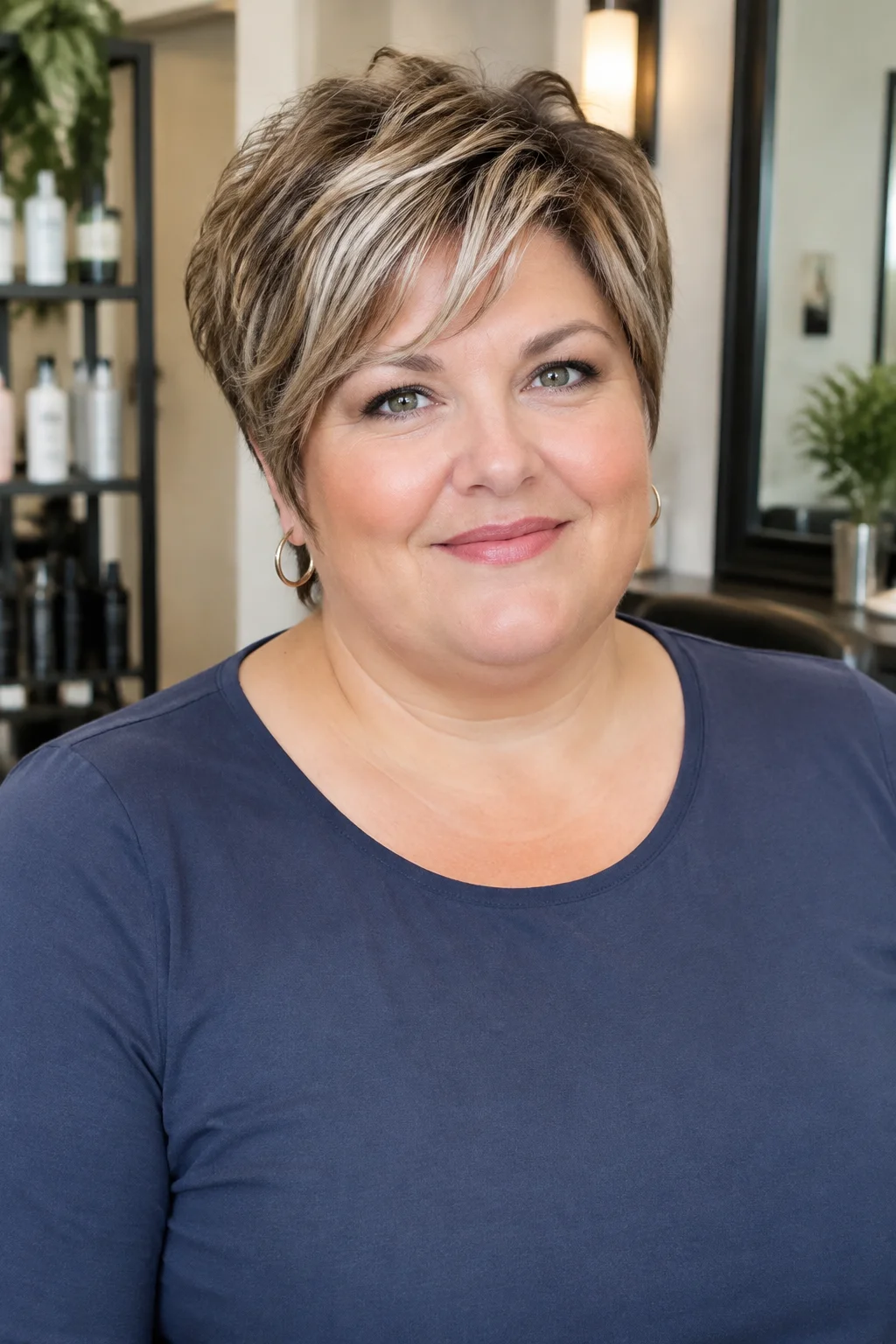
Keeping extra length through the crown and the pieces that fall near the cheeks gives this pixie a face-framing effect similar to longer haircuts. The sides stay shorter so the overall silhouette doesn’t get bulky. This works well for square or rectangular face shapes because the framing pieces soften strong jaw angles.
Wavy Pixie with Textured Layers
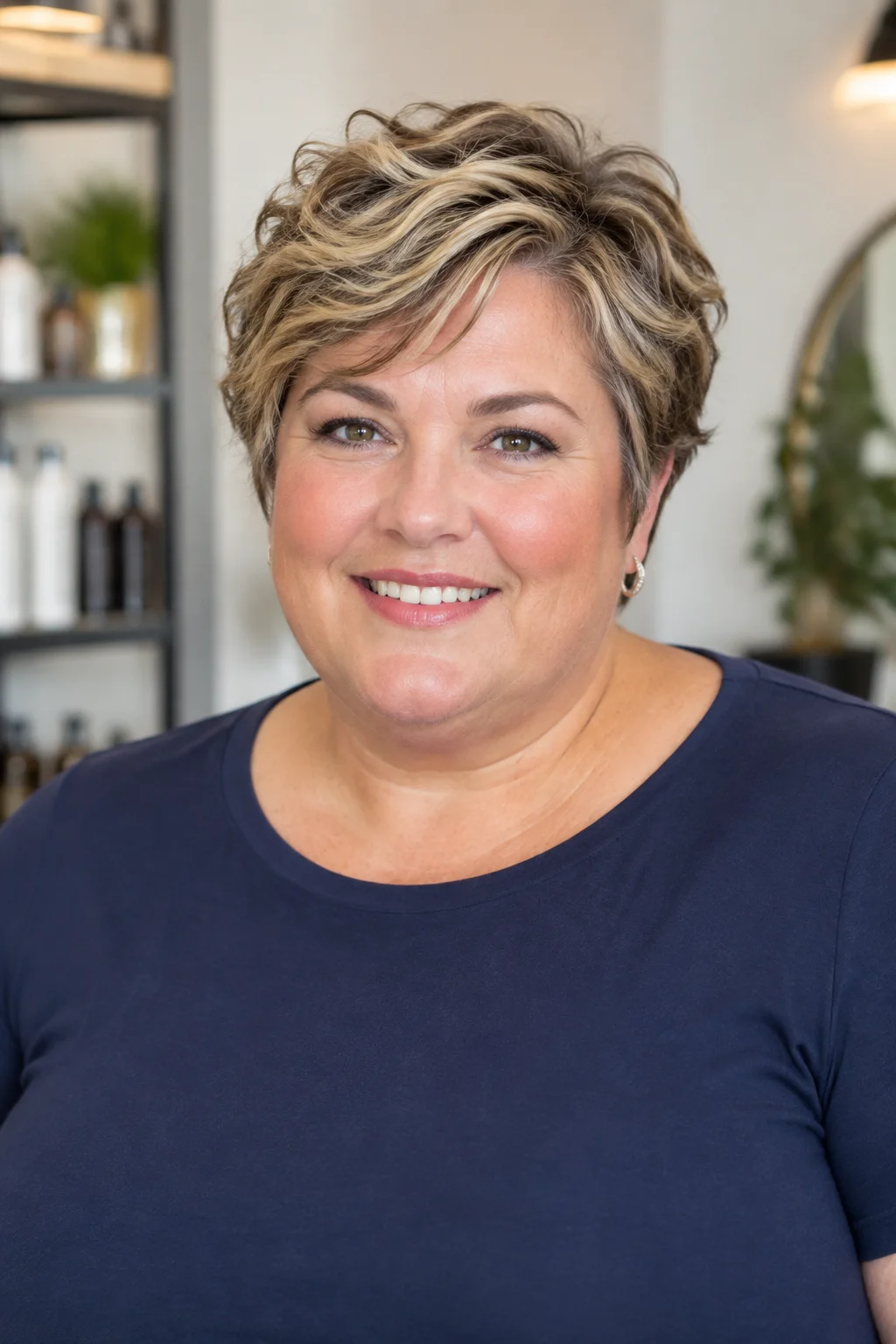
Natural waves get enhanced rather than fought in this cut. Layers are placed to let each wave fall where it wants instead of forcing a uniform shape, which cuts down on daily styling time considerably.
Pixie Cut with One-Side Shaved Design
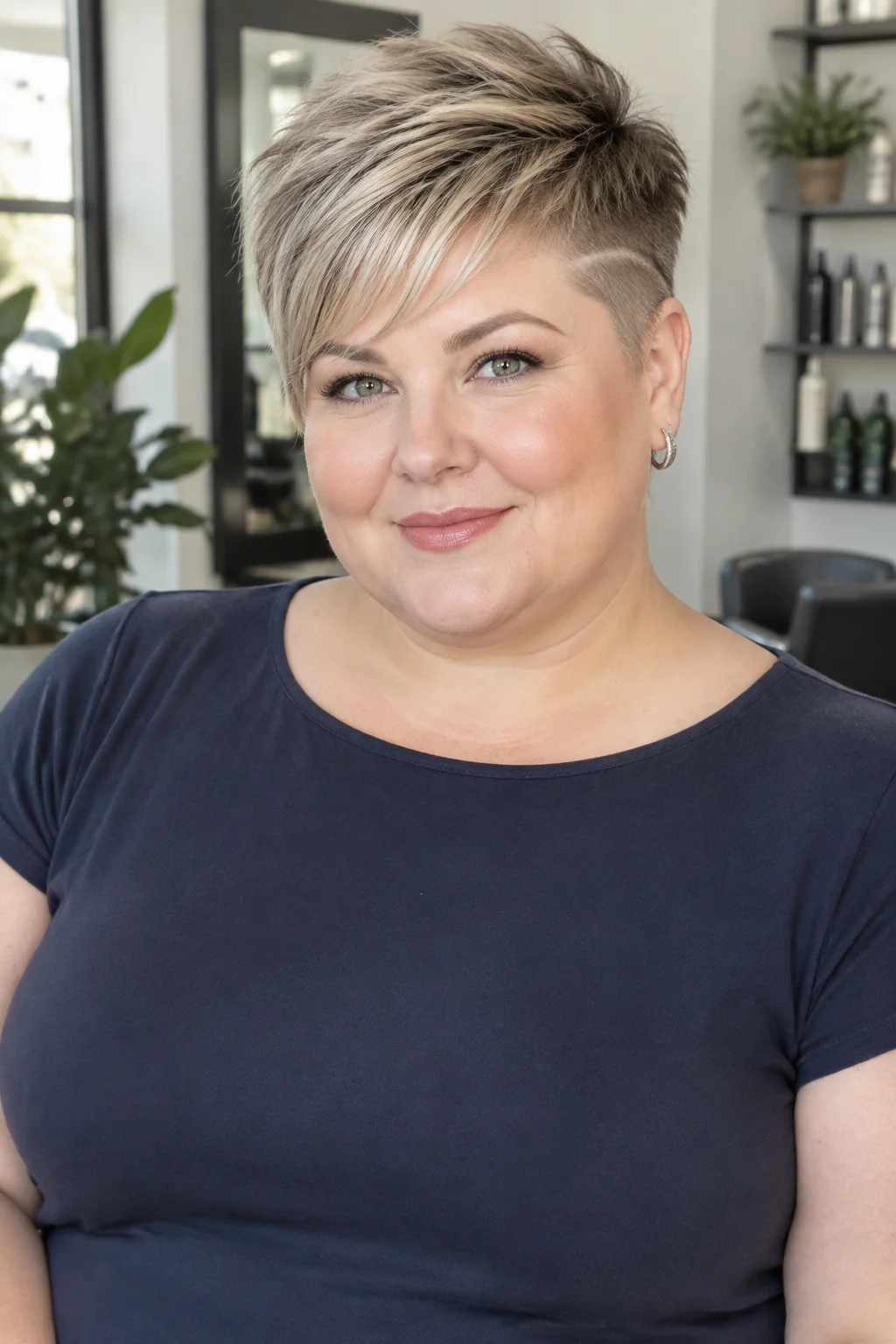
A shaved section on one side turns a classic pixie into something with a lot more personality. The rest of the cut can stay soft and textured, so the shaved piece reads as a deliberate design choice rather than a drastic change. This style works best for women who don’t mind regular upkeep, since the shaved area grows out faster than the rest of the cut and needs touch-ups every two to three weeks.
Textured Pixie with Longer Top Knot Ready
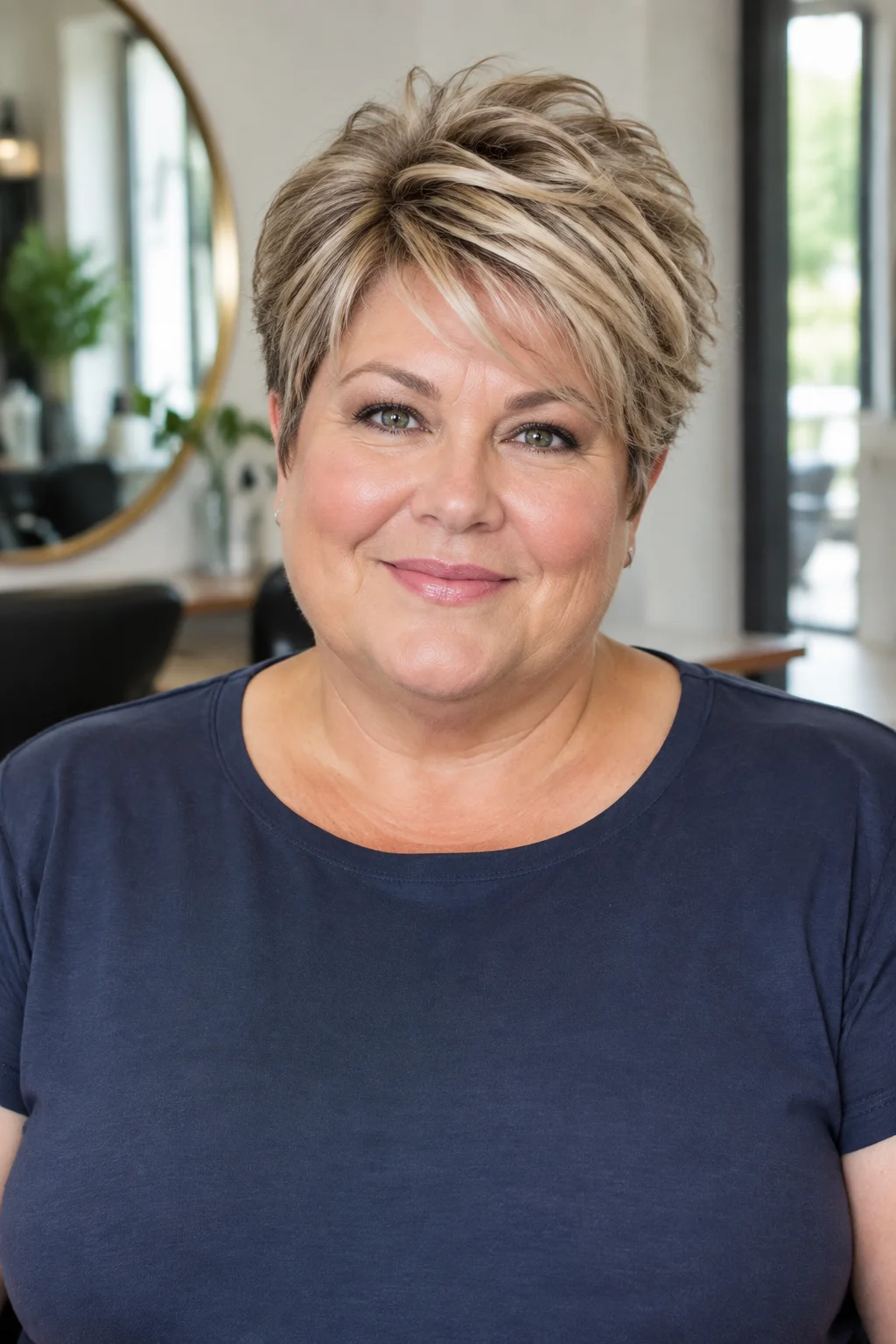
This version keeps just enough length on top to twist into a tiny knot or clip back, which is handy on days you want your hair fully off your face. The sides stay short and textured so the style still reads as a pixie even when the top is pulled up.
Soft Pixie with Rounded Edges
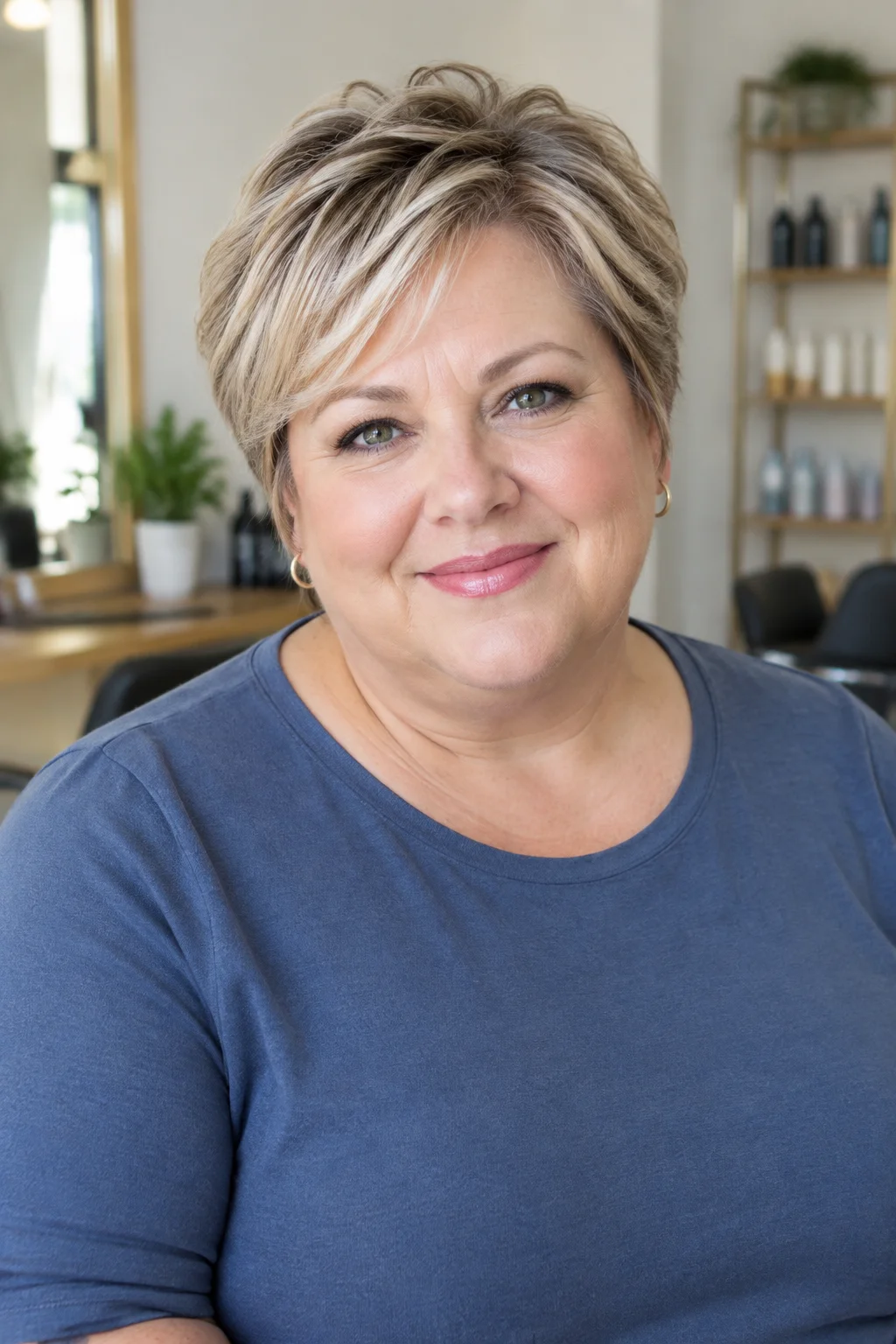
Rounded, soft edges throughout the nape and sideburns give this pixie a gentler overall look compared to sharper, more angular versions. It reads as approachable and easy rather than edgy, which makes it a good option for anyone moving into short hair for the first time and wanting something less dramatic.
Pixie with Textured Bangs and Tapered Nape
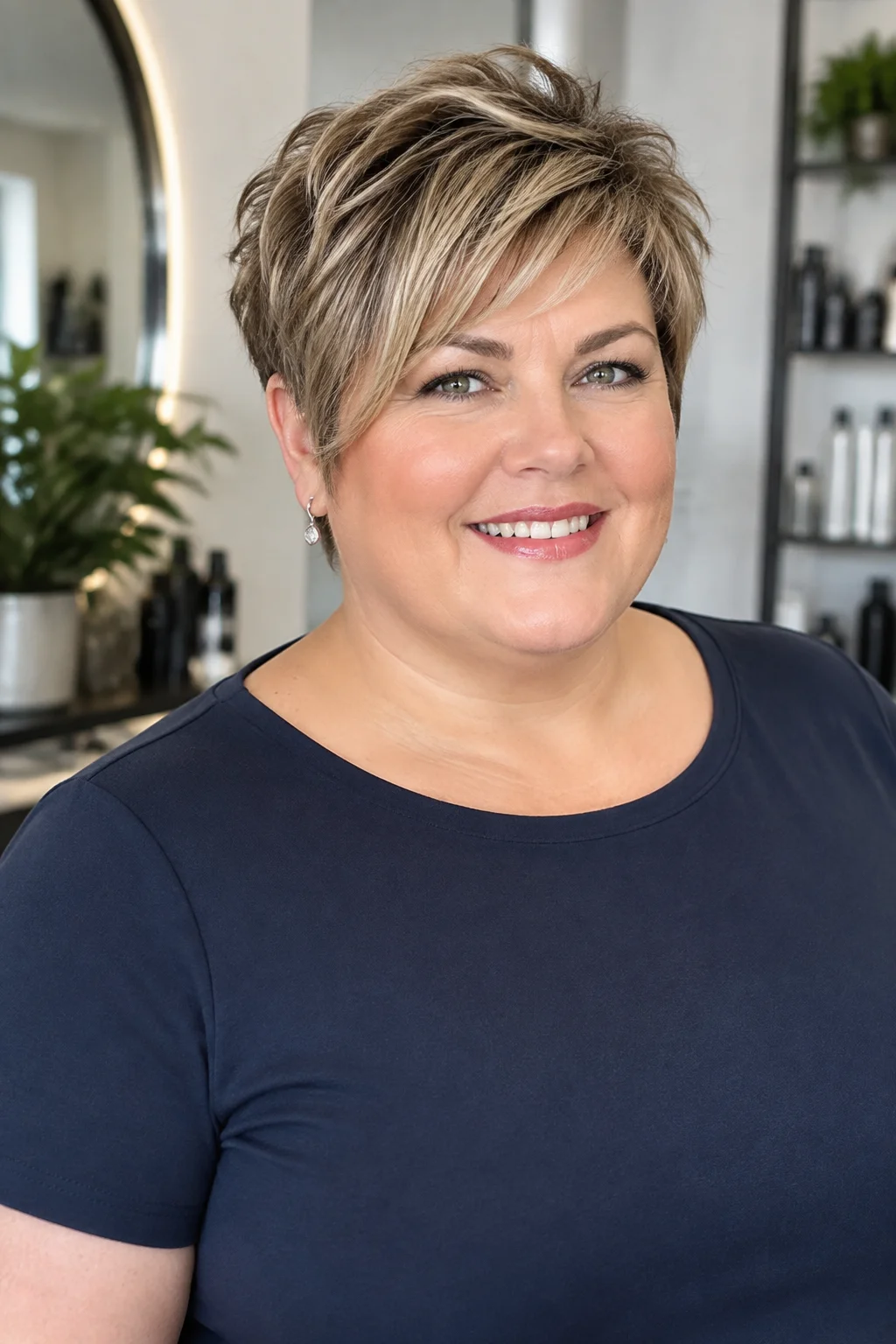
Textured, piece-y bangs break up the forehead without the heaviness of a blunt fringe, and a tapered nape keeps the back of the cut neat and close to the head. This combination is clean without feeling overly polished, and it works on both fine and medium hair densities. The taper in particular helps the cut hold its shape longer between salon visits.
Voluminous Pixie for Thin or Fine Hair
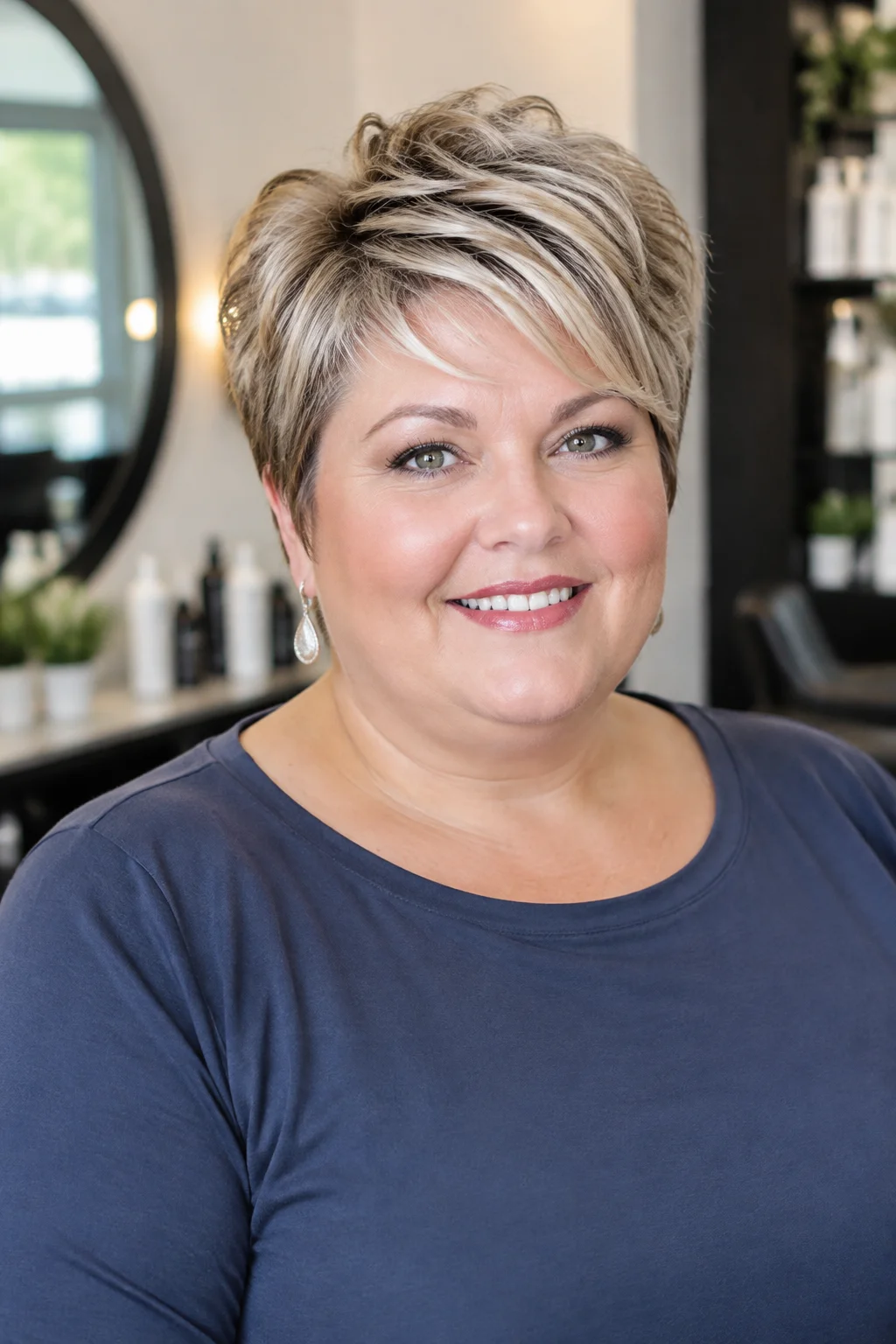
Fine hair often falls flat in a traditional pixie, so this version relies on strategic layering and a slightly longer top to create the illusion of thickness. A dry texturizing spray at the roots helps hold shape through the day. This is one of the better options for anyone who feels like their pixie goes limp by midafternoon.
Pixie with Longer Sideburns for Jaw Definition

Extending the sideburns slightly longer than usual draws a visual line down toward the jaw, which can sharpen or define that area nicely. It’s a small detail but it changes the overall framing of the face more than you’d expect from such a minor adjustment.
Choppy Pixie with Piece-y Texture Throughout
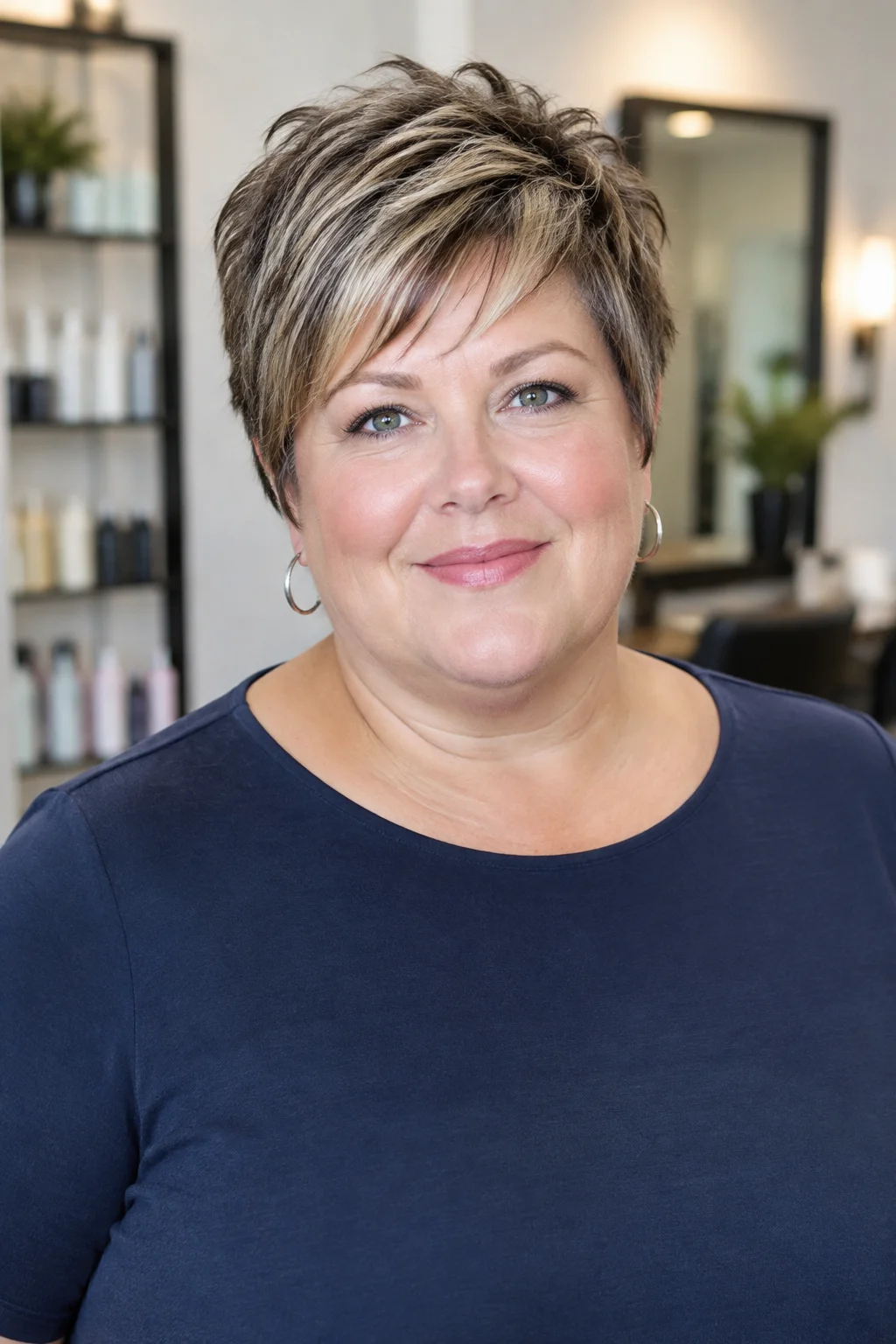
Heavy texturizing throughout every section gives this pixie a choppy, deconstructed finish. Nothing lies perfectly smooth, and that’s the point. It photographs well and looks intentionally undone, almost like you styled it in under five minutes, which honestly you can.
Pixie with Side-Parted Crown Volume
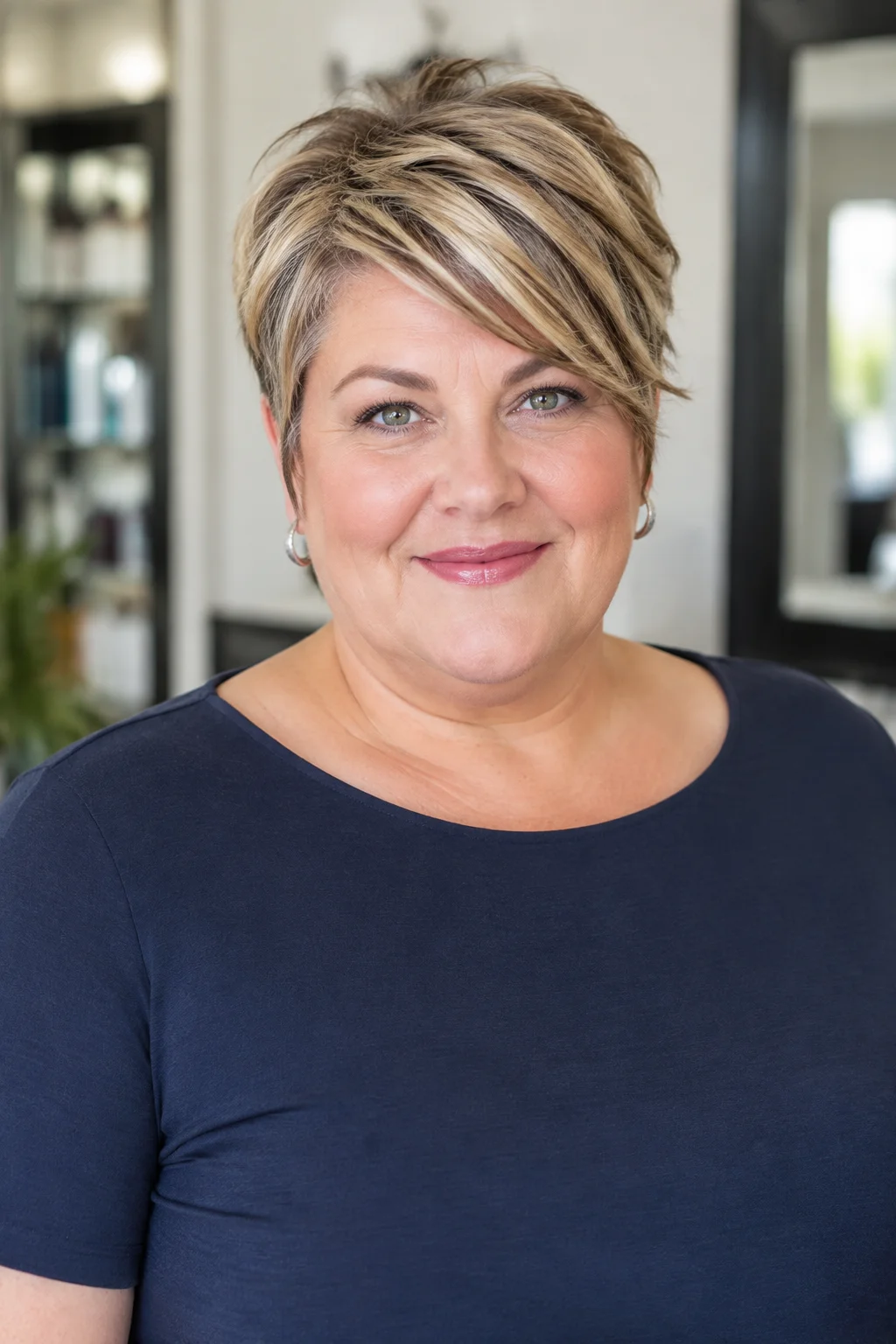
A deep side part paired with lifted crown volume creates asymmetry that flatters most face shapes. The side part also gives the illusion of more length since one side falls longer than the other.
Tapered Pixie with Longer Textured Top
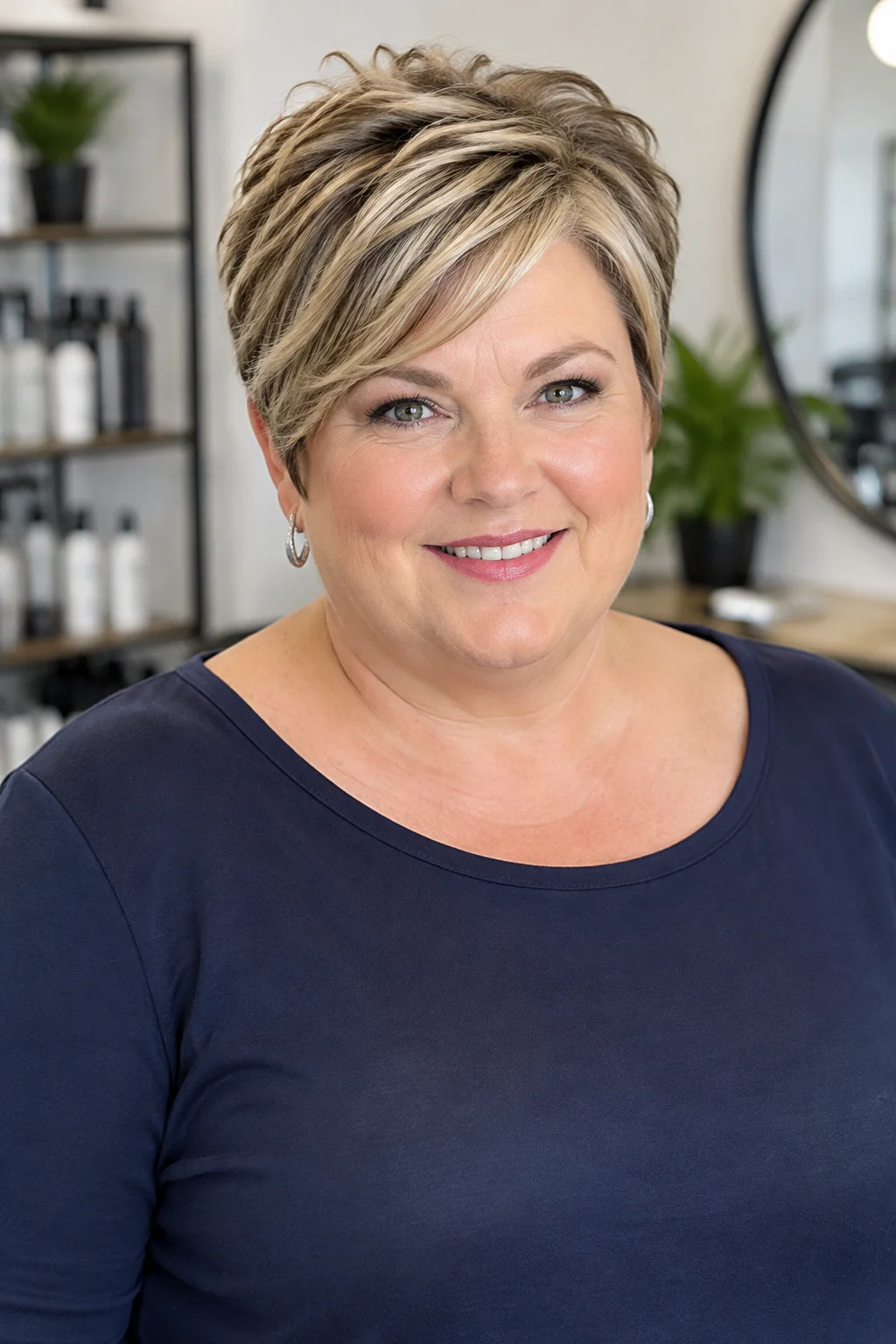
This final style blends the classic tapered sides with a noticeably longer, heavily textured top section, giving you more styling flexibility than a standard taper alone. You can push it forward for a fringe effect, sweep it to the side, or spike it up depending on your mood that day. The tapered sides keep maintenance low since they grow out gradually instead of needing constant edging. It’s a strong option if you want one cut that can look different depending on how you style it.
Which Pixie Should You Actually Choose?
With twenty-one options, narrowing things down comes down to three questions: your face shape, your hair texture, and how much styling time you’re willing to spend. If you have a round face, lean toward the soft pixie with longer bangs or the pixie with longer crown for face framing, since both add length and break up width through the cheeks. For square or angular faces, the pixie with blunt bangs and feathered sides or the soft pixie with rounded edges will soften strong jawlines without hiding them completely.
Texture matters just as much as shape. Curly hair does best with the textured curly pixie or the wavy pixie with textured layers, since both are cut to work with natural movement instead of against it. Fine hair holds up better in the voluminous pixie for thin or fine hair or the pixie cut with volume at the crown, since both rely on cutting techniques rather than product to fake thickness.
A common mistake is choosing a sharply disconnected style, like the disconnected pixie with undercut fade, without accounting for upkeep. These bold shapes need trims every few weeks to hold their line. If low maintenance matters more to you than a dramatic shape, the classic tapered pixie or the layered pixie with wispy texture will hold up longer between salon visits and grow out without leaving an awkward line.