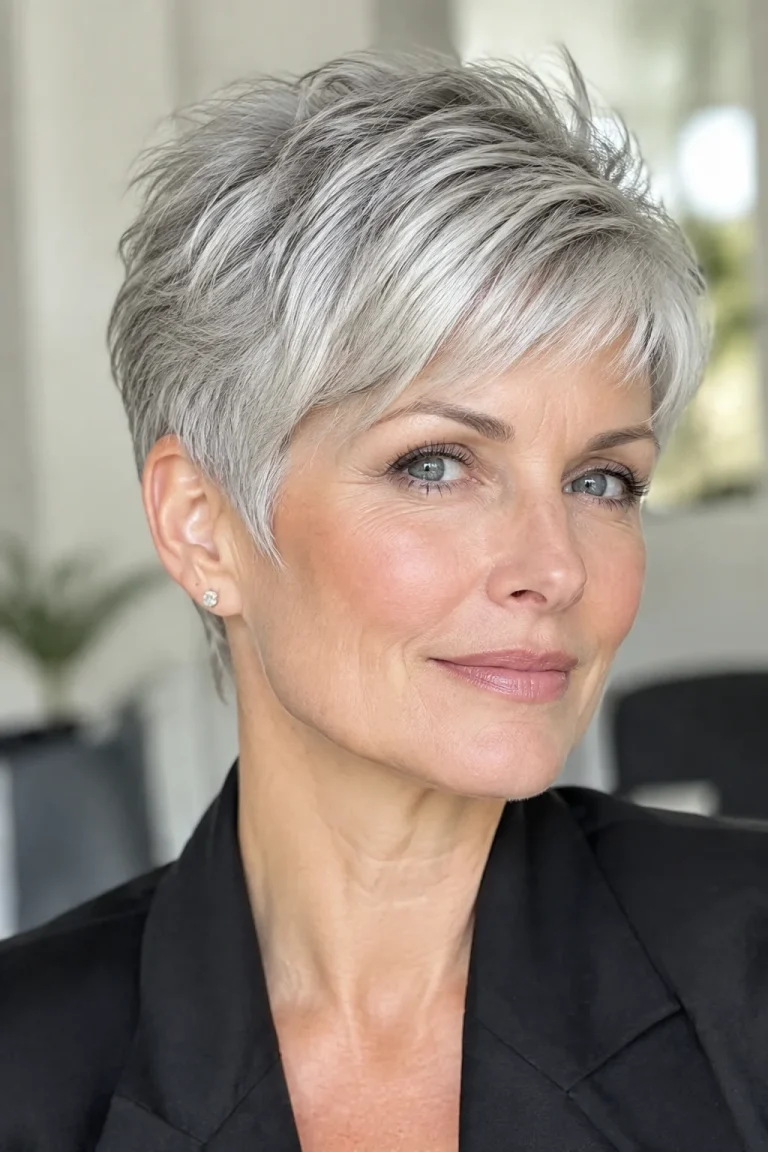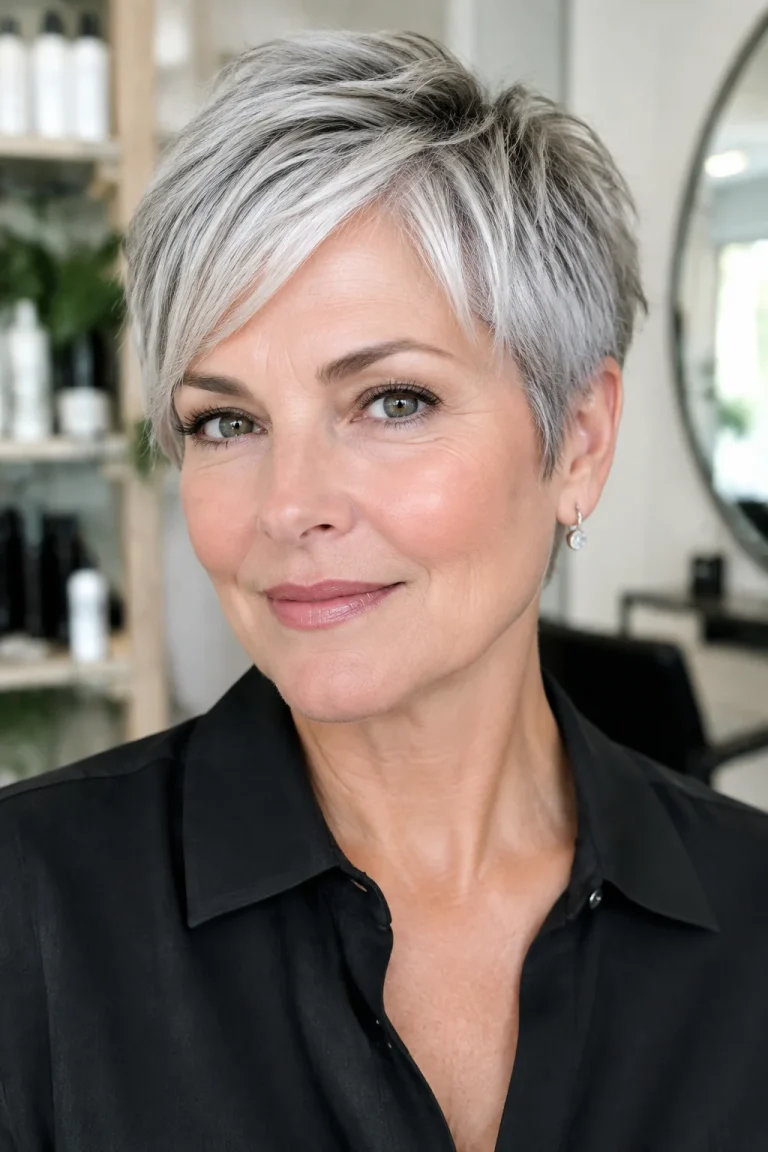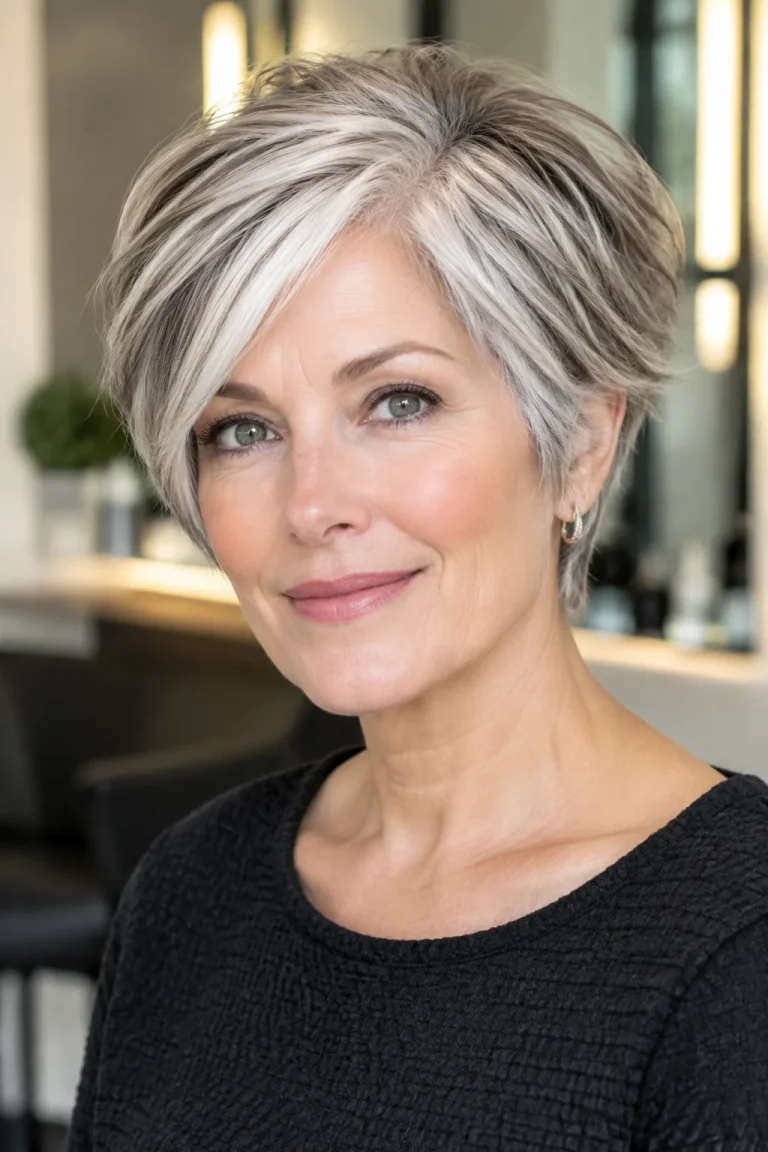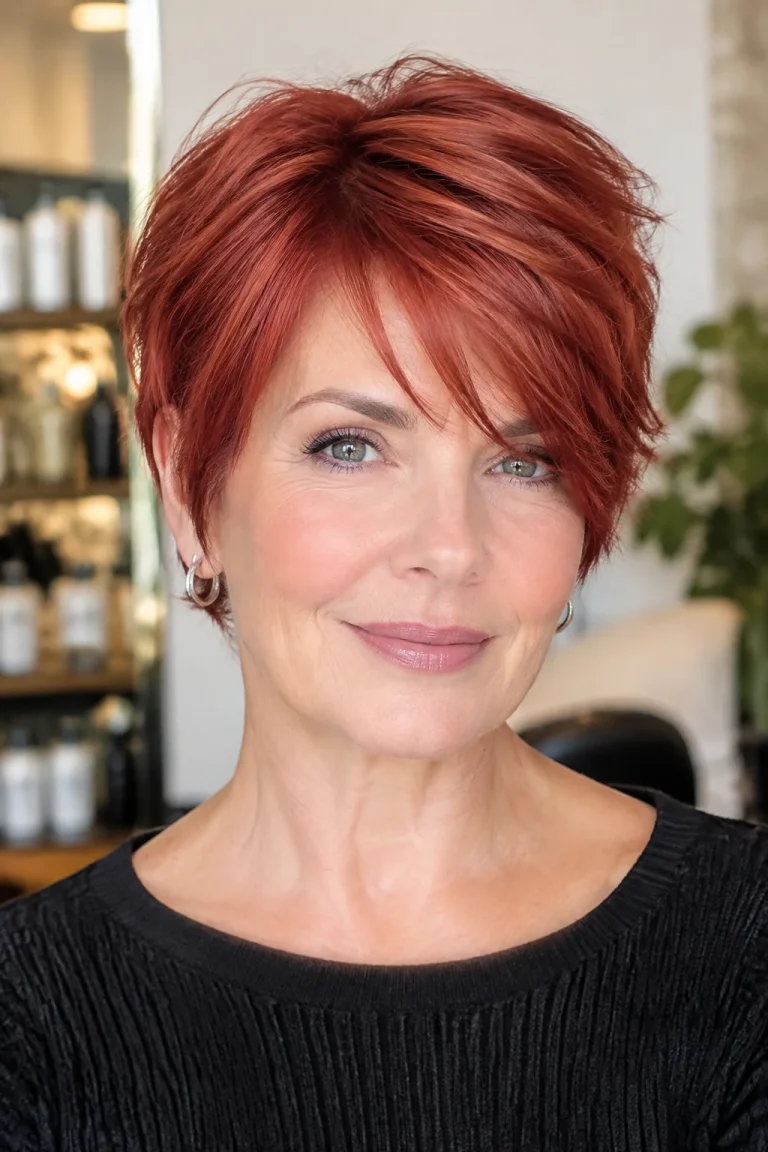
Honey brown sits in that sweet spot between blonde and brunette, and layers are what make the color actually move. Flat, one-length hair lets the shade sit there looking dull under normal light. Add layers and you get depth that catches sun and shifts tone as you turn your head. If you’re stuck scrolling for ideas before a haircut appointment, this list gives you real options to screenshot and show your stylist. These honey brown hair layered haircuts range from soft and barely-there to choppy and dramatic, so there’s something for straight hair, curly hair, thick hair, and fine hair alike. Bring a photo, point at what you like, and let your stylist adjust the layer placement to fit your face and how your hair actually behaves day to day.
Honey Brown Shag with Face-Framing Layers
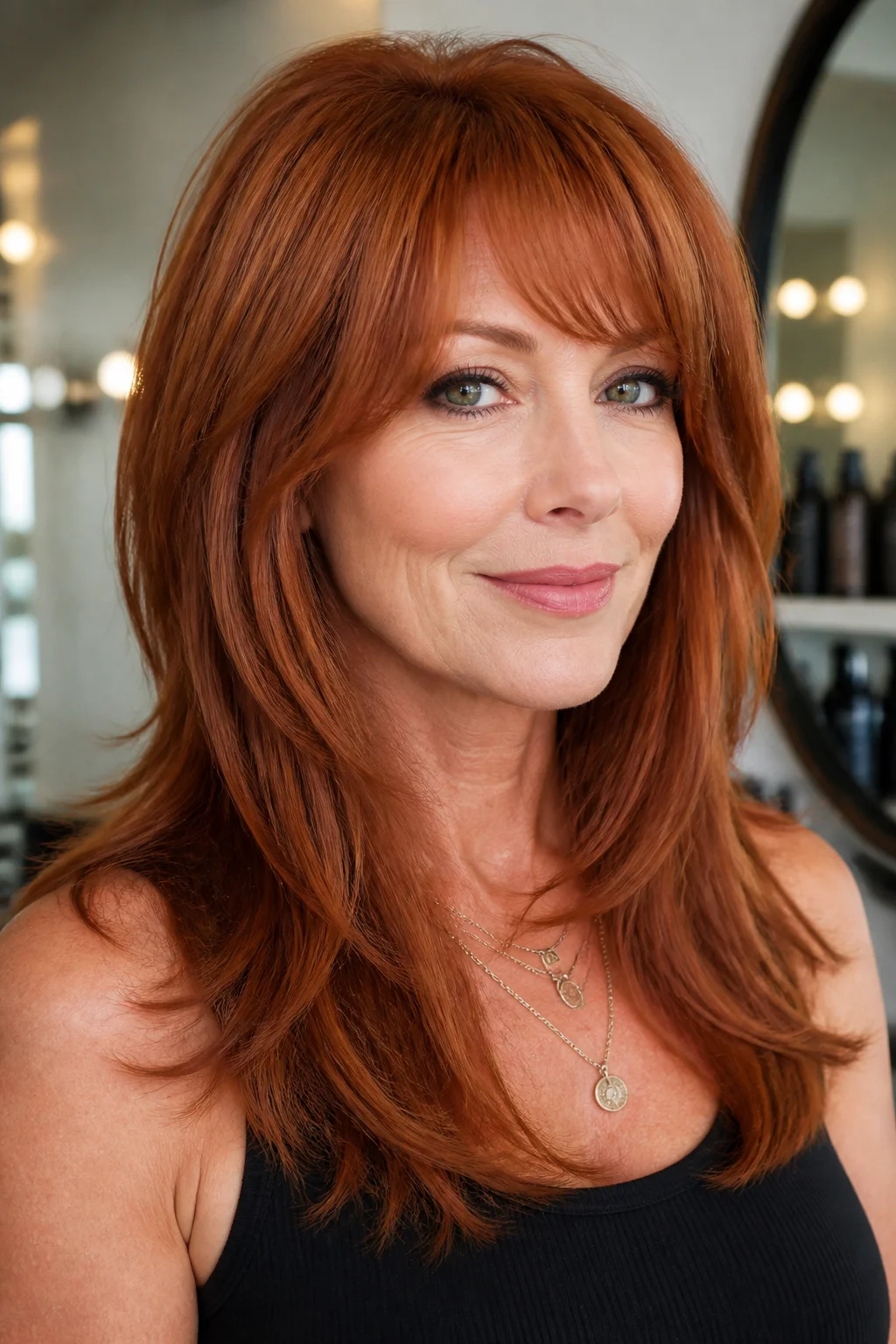
The shag is having a real moment, and honey brown makes it look sunlit instead of just messy. Layers start high near the crown and drop unevenly through the length, giving that lived-in texture shags are known for. Face-framing pieces are cut shorter around the cheeks to pull attention to your features. This works especially well on hair with some natural wave since the layers grab onto texture instead of fighting it. Ask your stylist to keep the ends razored rather than blunt so the shag doesn’t read too neat. A light mist of heat protectant before styling helps the finish last.
Long Honey Brown Hair with Feathered Layers
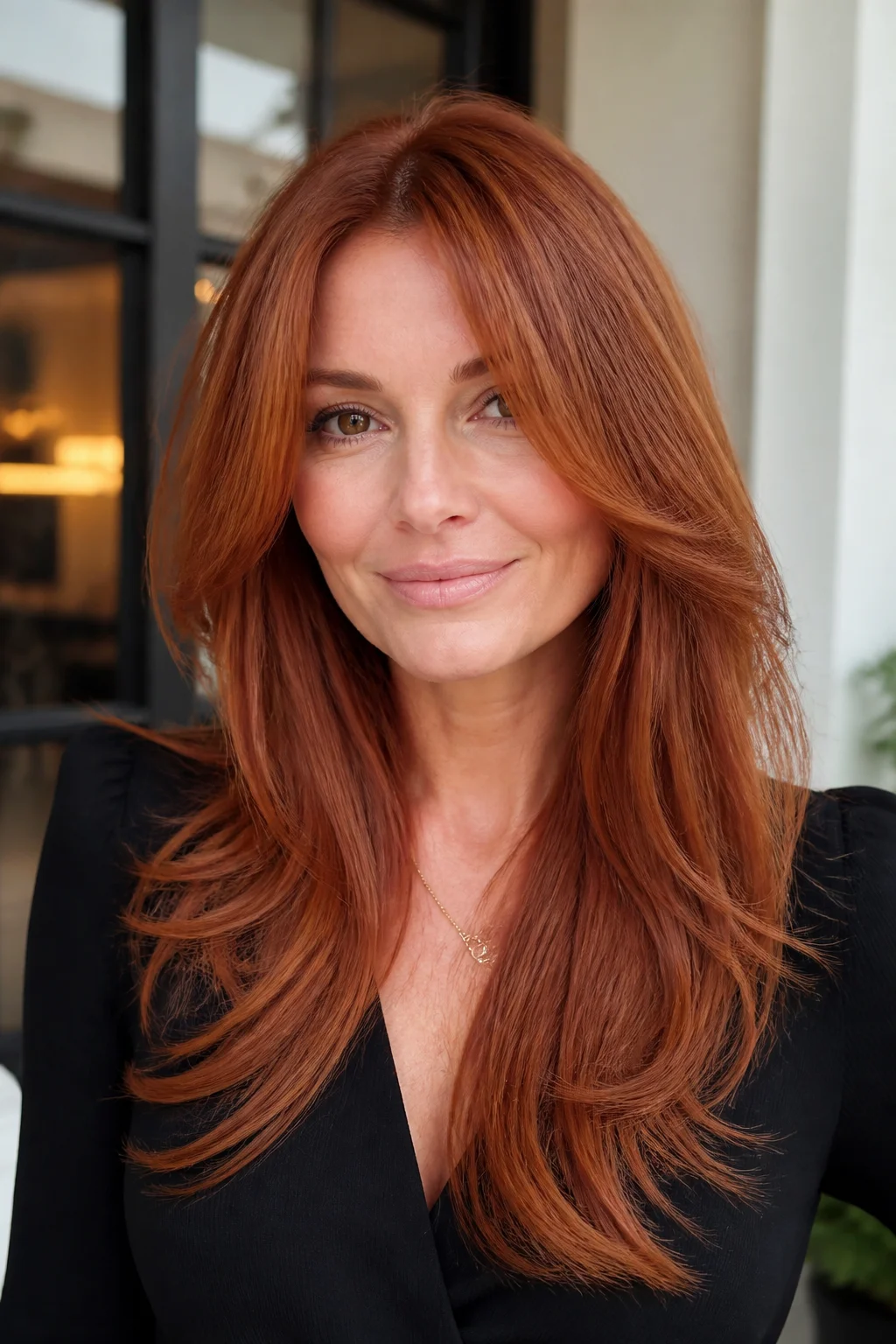
Feathered layers are thin, soft pieces cut throughout the length that flip out slightly at the ends. On long honey brown hair, this creates gentle movement without cutting off much length. It’s a low-maintenance option if you want dimension but aren’t ready to sacrifice inches. Tip: ask for the feathering to start below the chin so you keep length up top while still getting the swingy effect lower down. A light mist of heat protectant before styling helps the finish last. A light mist of heat protectant before styling helps the finish last.
Short Layered Honey Brown Pixie-Bob Hybrid
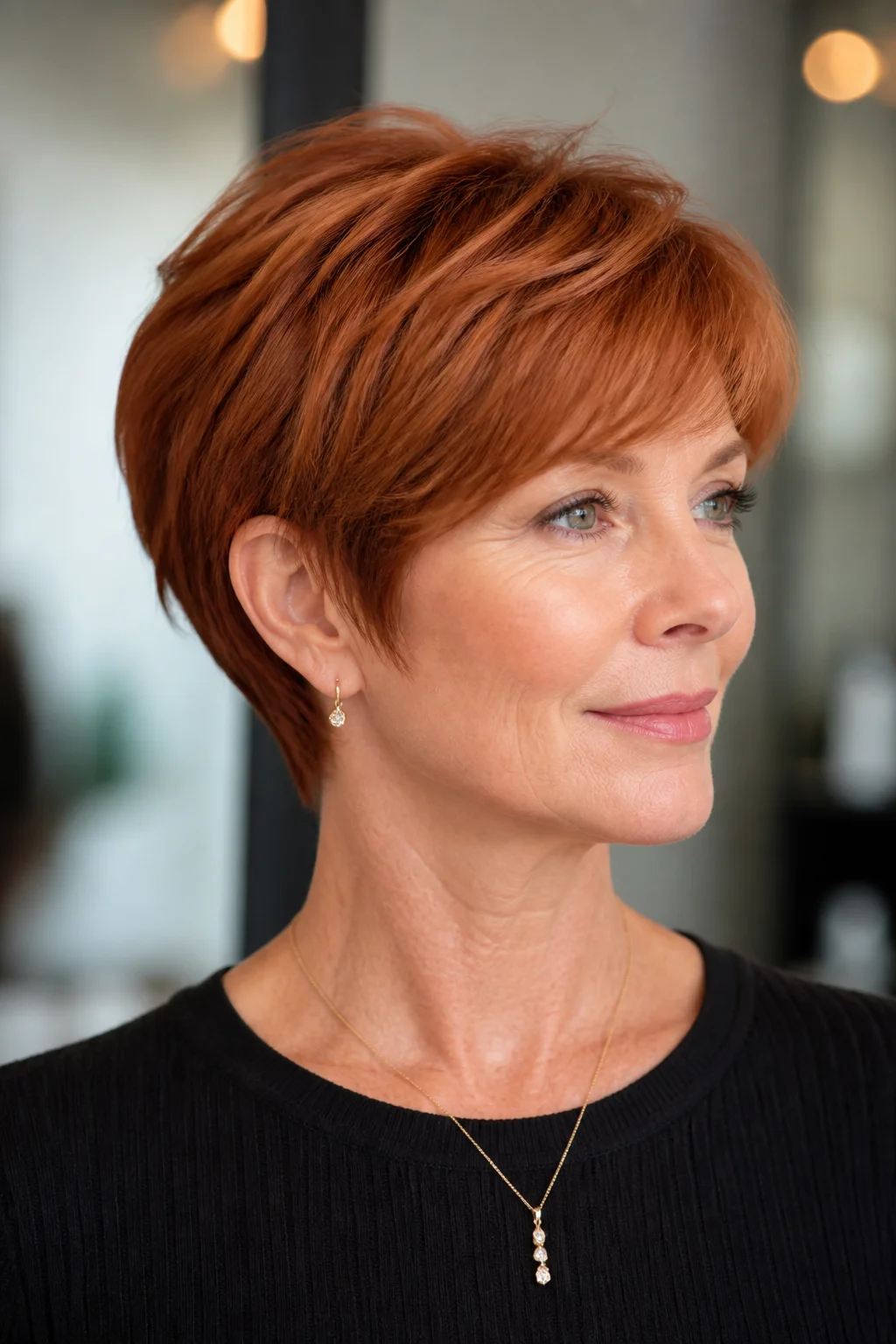
This cut splits the difference between a pixie and a bob, landing somewhere around the jaw with short, choppy layers cut into the crown. It’s a bold choice for anyone ready to commit to short hair without going full pixie. The layering keeps the shorter top from looking helmet-like and gives it a soft, textured shape instead. Honey brown works nicely here because the lighter pieces at the crown catch light and keep the short style from looking flat or heavy.
Honey Brown Textured Bob with Choppy Layers
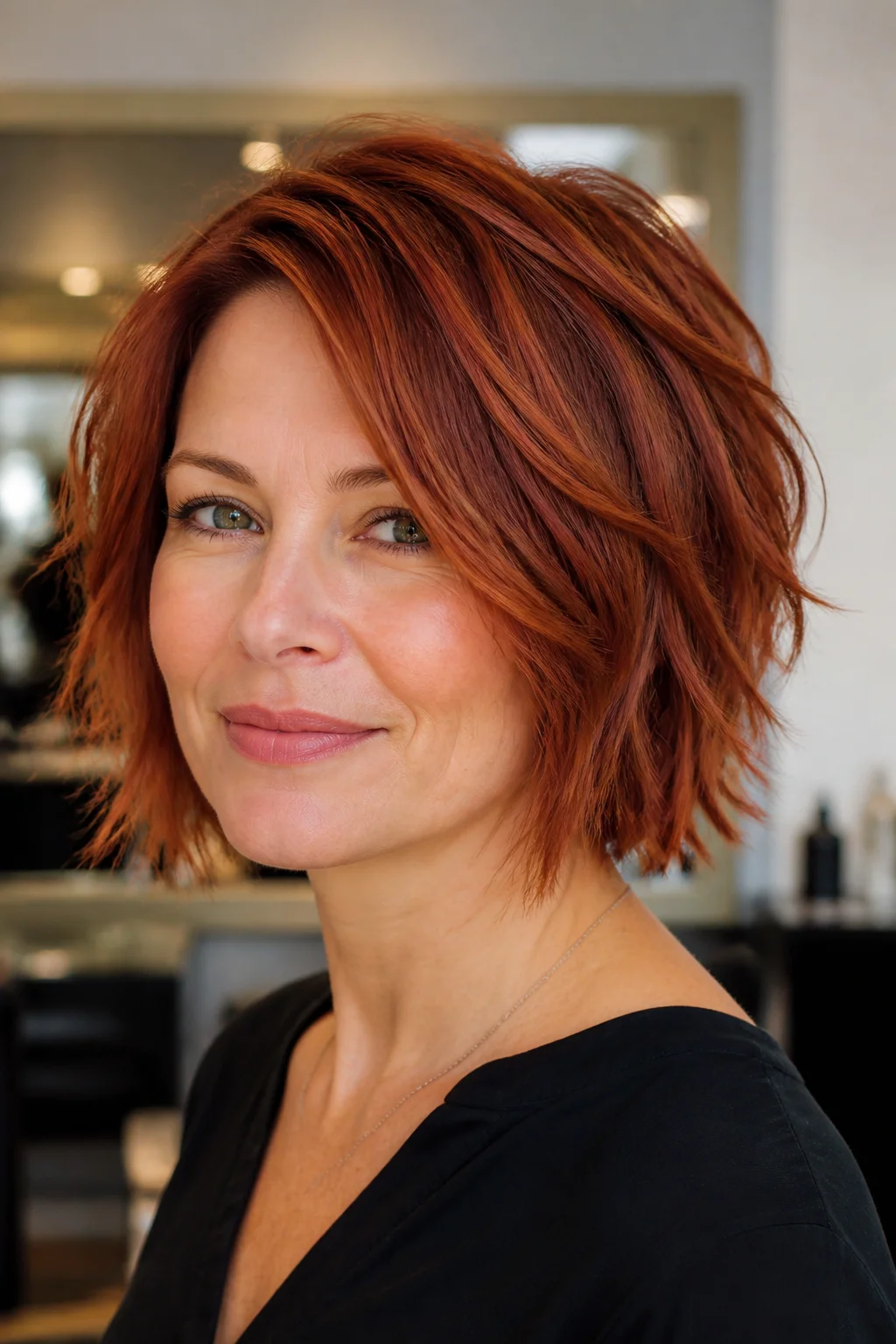
A textured bob with choppy layers gives you the classic bob shape but with edges that look intentionally undone. The choppiness comes from point-cutting the ends rather than cutting them straight across. On honey brown hair this creates little flecks of lighter and darker tone throughout, since the layers expose different depths of color. It’s a solid pick if you want a bob that doesn’t look too polished or corporate.
Honey Brown Curtain Layers for Oval Faces
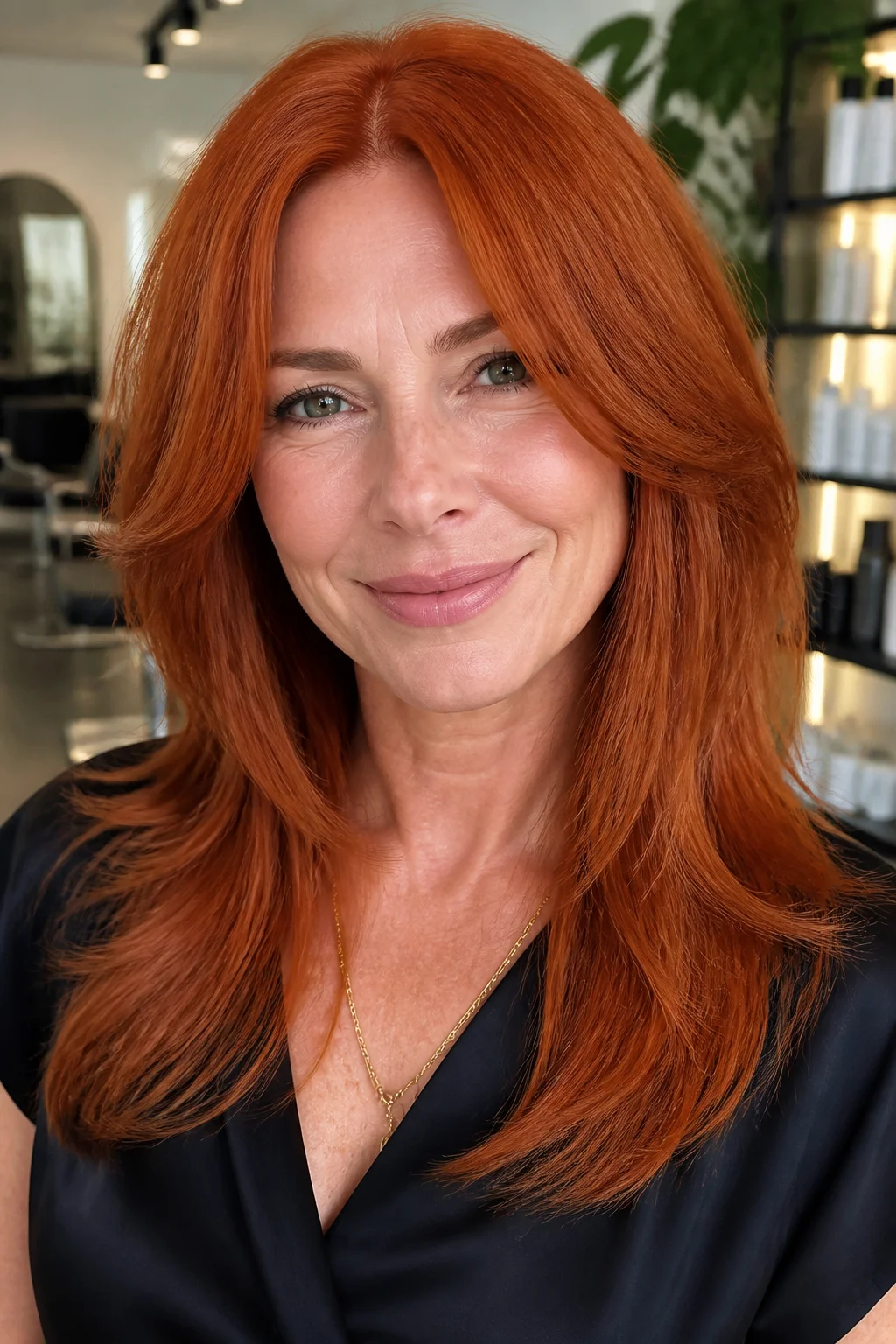
Curtain layers part down the middle and frame each side of the face, curving inward near the cheeks. Oval faces handle this style especially well because there’s already balanced proportion to work with, so the curtain shape just adds softness without needing to correct anything. The layers are usually long, starting around the cheekbone and blending into the rest of the hair. Honey brown adds warmth right at the face, which tends to be flattering under most lighting.
Honey Brown Thick Layers for Fine Hair
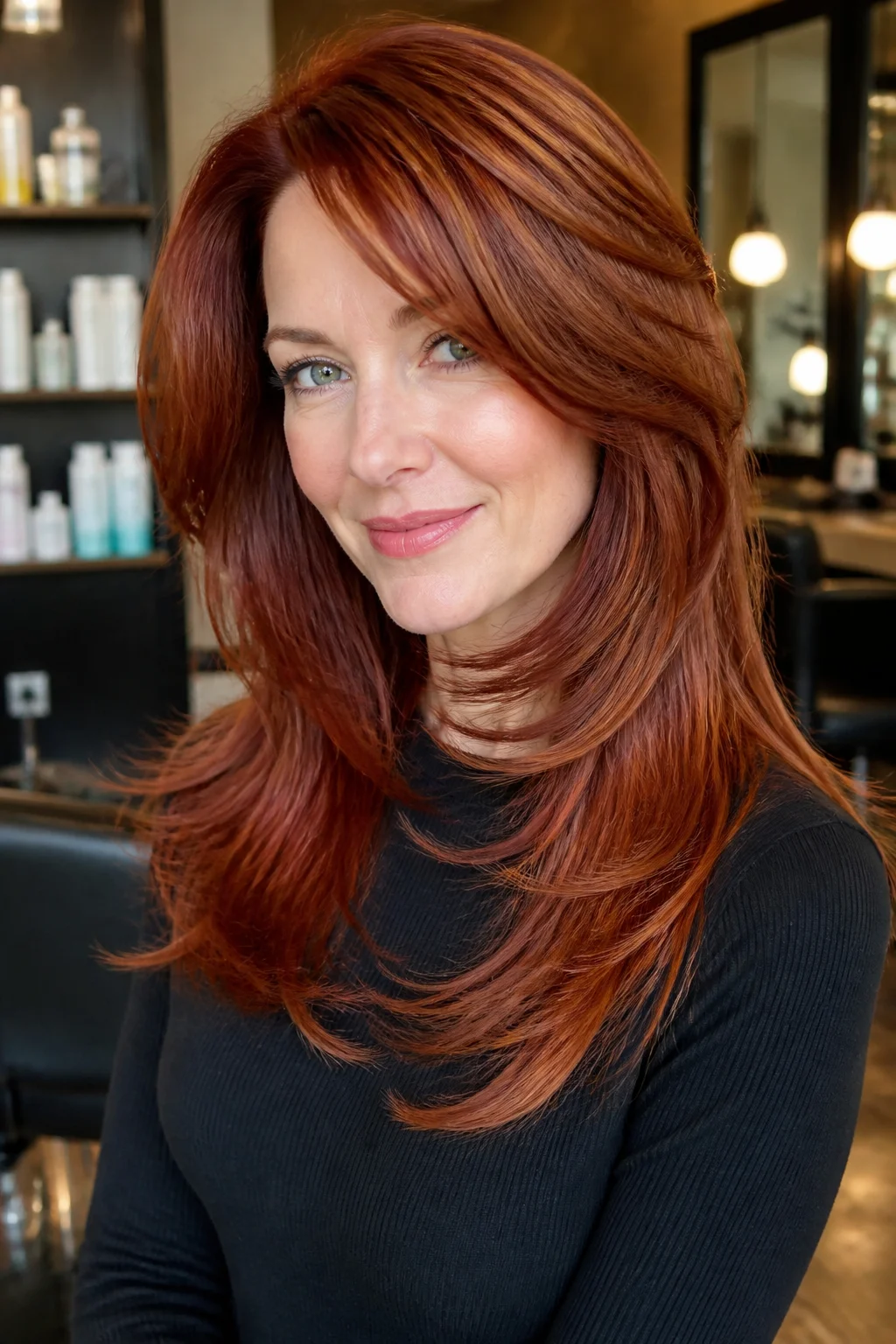
Fine hair often looks better with fewer, thicker layers rather than lots of thin ones, since thin layers can make fine strands look even sparser. Thick layers cut at longer intervals give the illusion of more density. This approach keeps the ends from looking wispy and gives the honey brown color solid, visible chunks of tone instead of a washed-out blend. Ask your stylist to avoid over-thinning with a razor here.
Long Honey Brown Mullet Layers
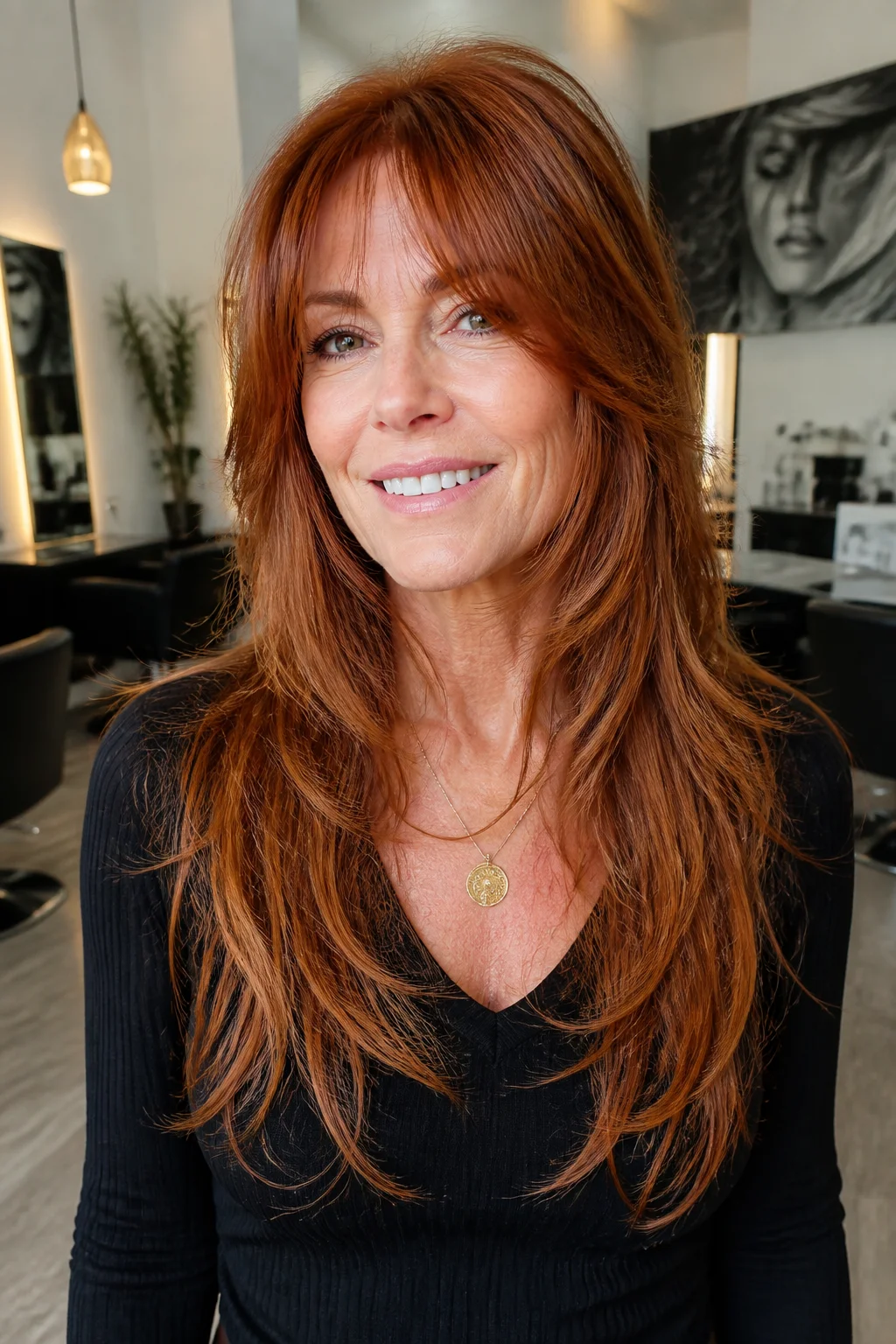
The modern mullet keeps length in the back with short, layered pieces up top and around the face. It’s an edgier pick, not for everyone, but honey brown softens the harshness that a mullet can sometimes have in darker or starker colors. Layers are cut aggressively short near the crown and gradually lengthen toward the back and shoulders. This style needs regular trims to keep the shape from growing out into something shapeless.
Honey Brown Disconnected Layers for Texture
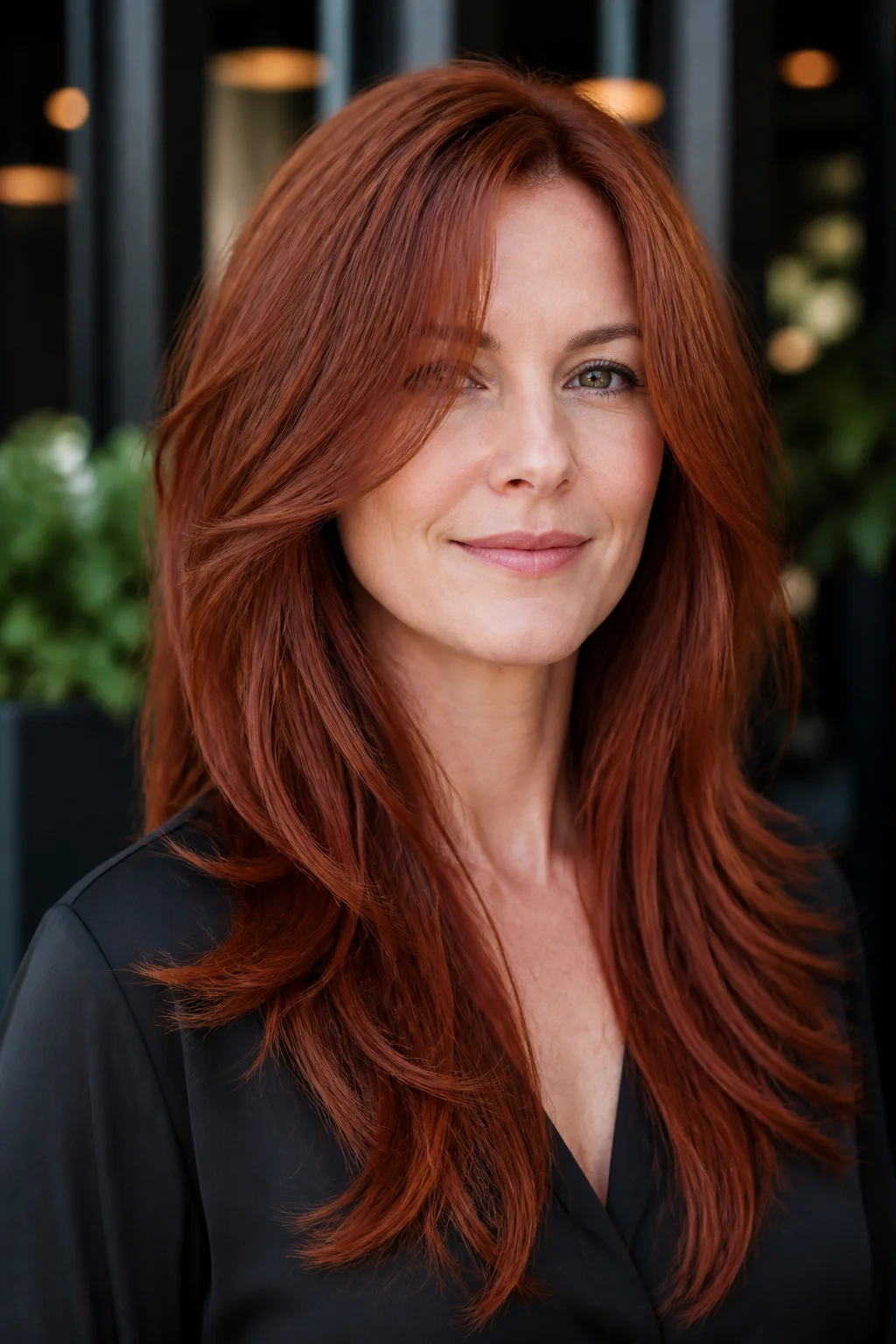
Disconnected layers create an intentional gap between the top layer and the length underneath, almost like two different haircuts stacked on top of each other. It’s a technical cut that needs a stylist comfortable with sharp texturizing. On honey brown hair, this disconnection reads as noticeable dimension since the shorter top pieces often catch more light than the layer below.
Honey Brown Stacked Layers at Crown
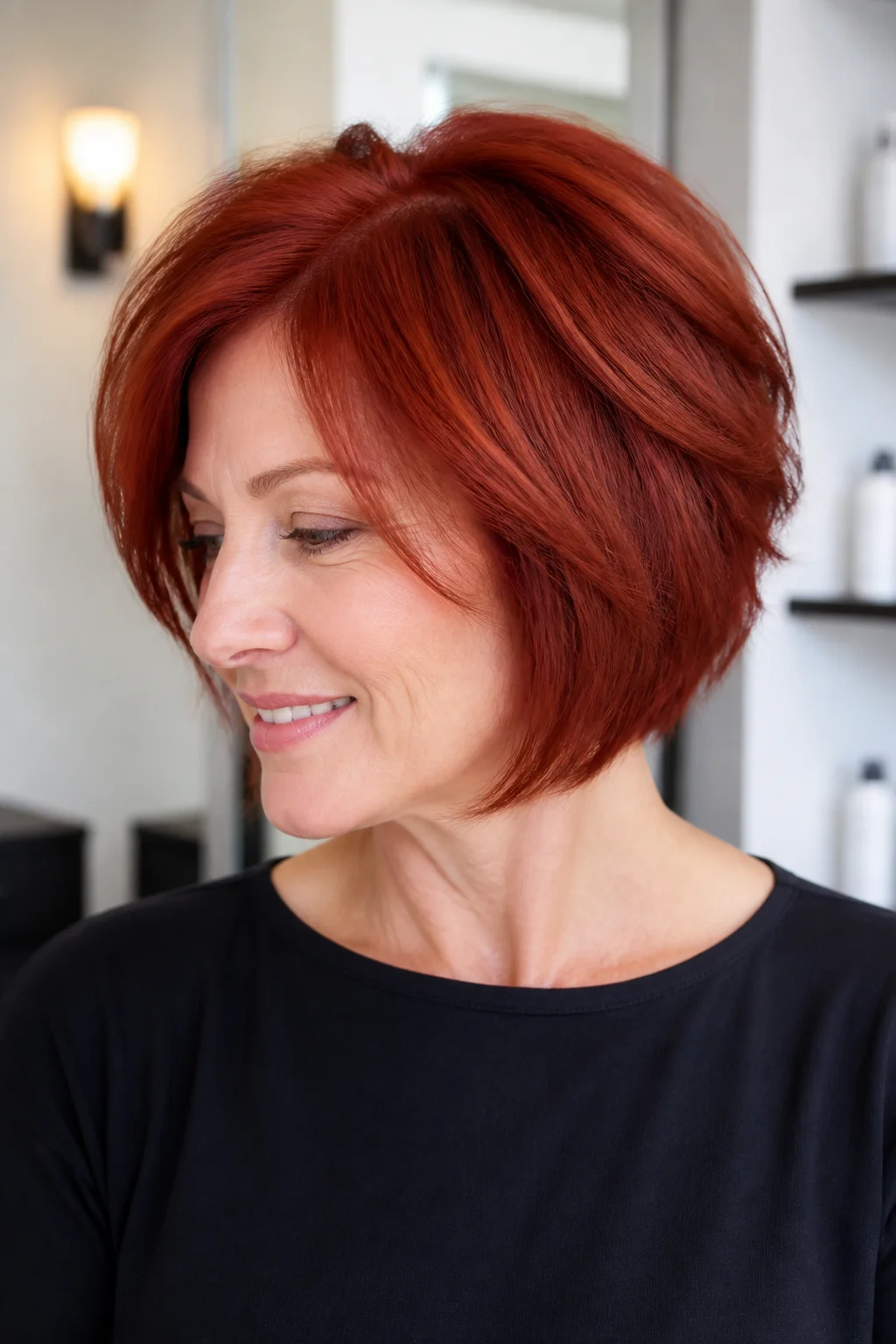
Stacking layers at the crown adds height and volume right where hair tends to fall flat. This is a smart option if your honey brown hair has decent length but not much natural lift near the roots. The stacked section is usually kept short and dense, blending into longer layers below it. Tip: this style pairs well with a round brush blowout since the stacked layers respond to lift and shape easily.
Honey Brown Waves with Subtle Layers
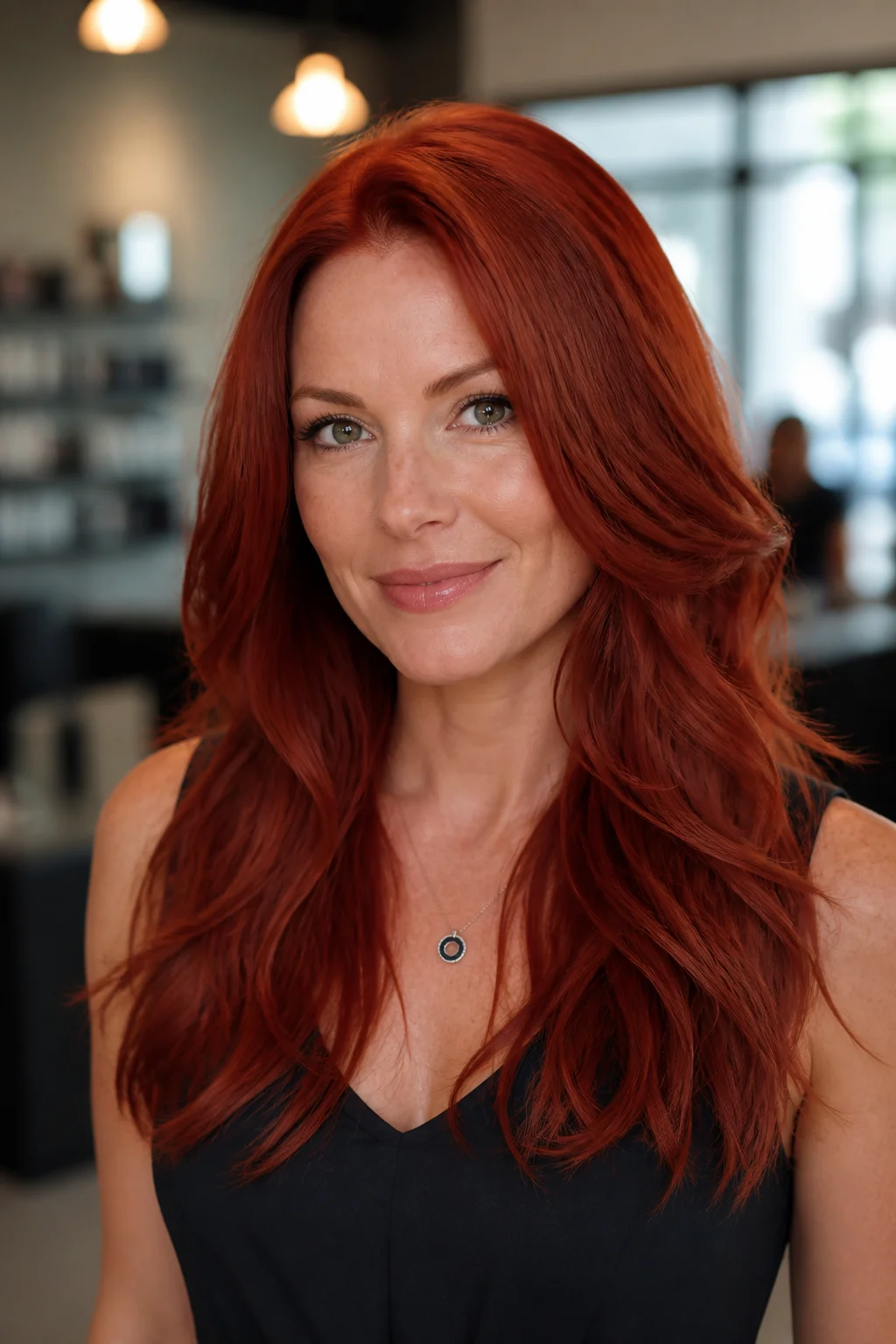
Sometimes less is more. Subtle layers cut sparingly through wavy honey brown hair let the natural texture do most of the work without a heavy layering job underneath it. The layers just remove some bulk so waves aren’t weighed down. It’s a gentle, low-drama option for anyone who likes their natural texture and doesn’t want a dramatic reshape.
Honey Brown Razored Layers for Curly Hair
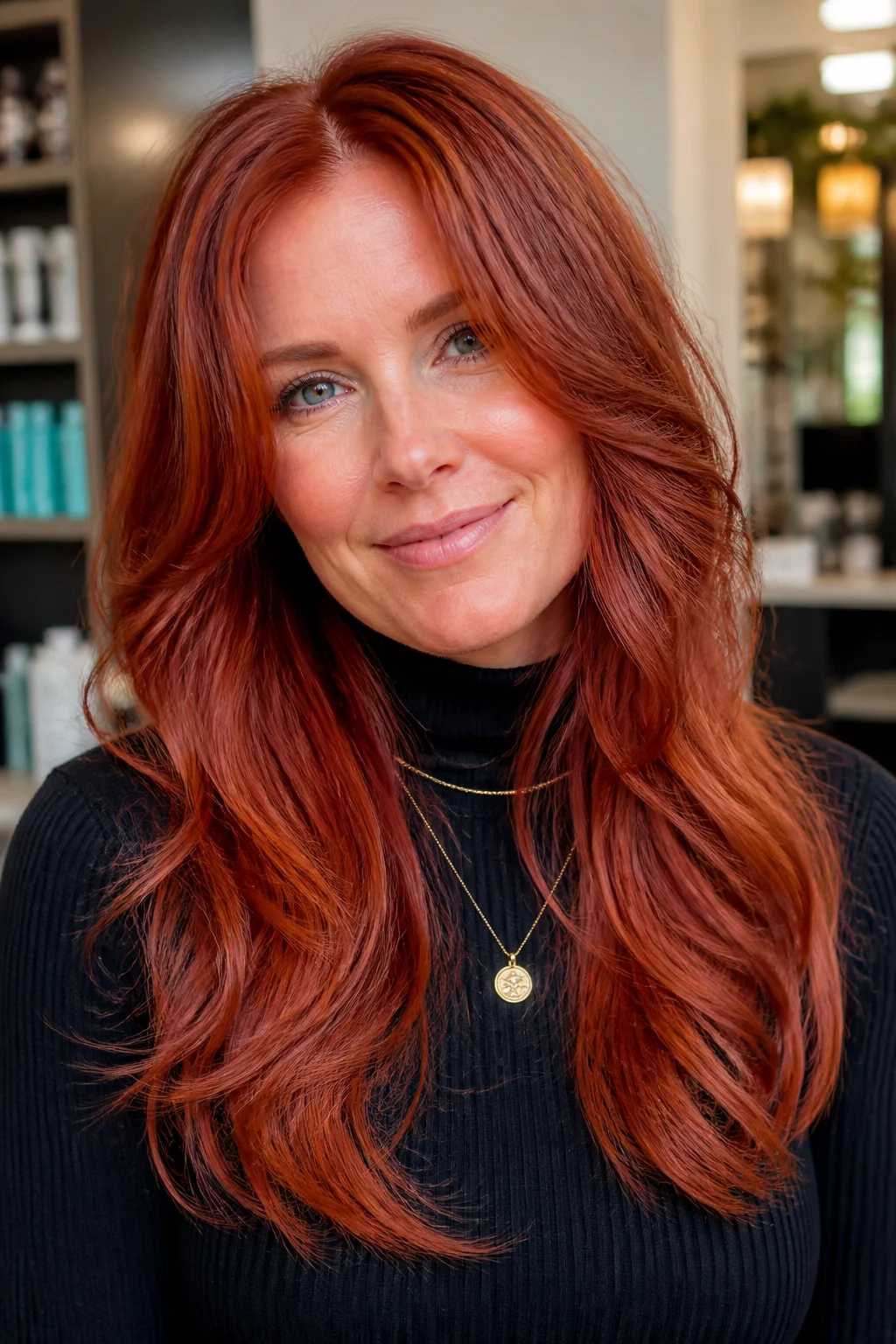
Curly hair needs layers cut with intention, since curls shrink up and behave differently than straight sections. Razored layers work well on curls because the razor softens the ends and prevents the blunt, triangular shape curly hair can fall into when cut with scissors alone. On honey brown curls, this technique highlights individual ringlets rather than blending them into one solid mass. It also helps distribute weight so curls don’t pile up at the bottom. Ask for a dry cut if your stylist offers one, since curls fall differently wet versus dry and a dry cut lets them shape around your actual curl pattern.
Honey Brown Blunt Layers for Square Faces
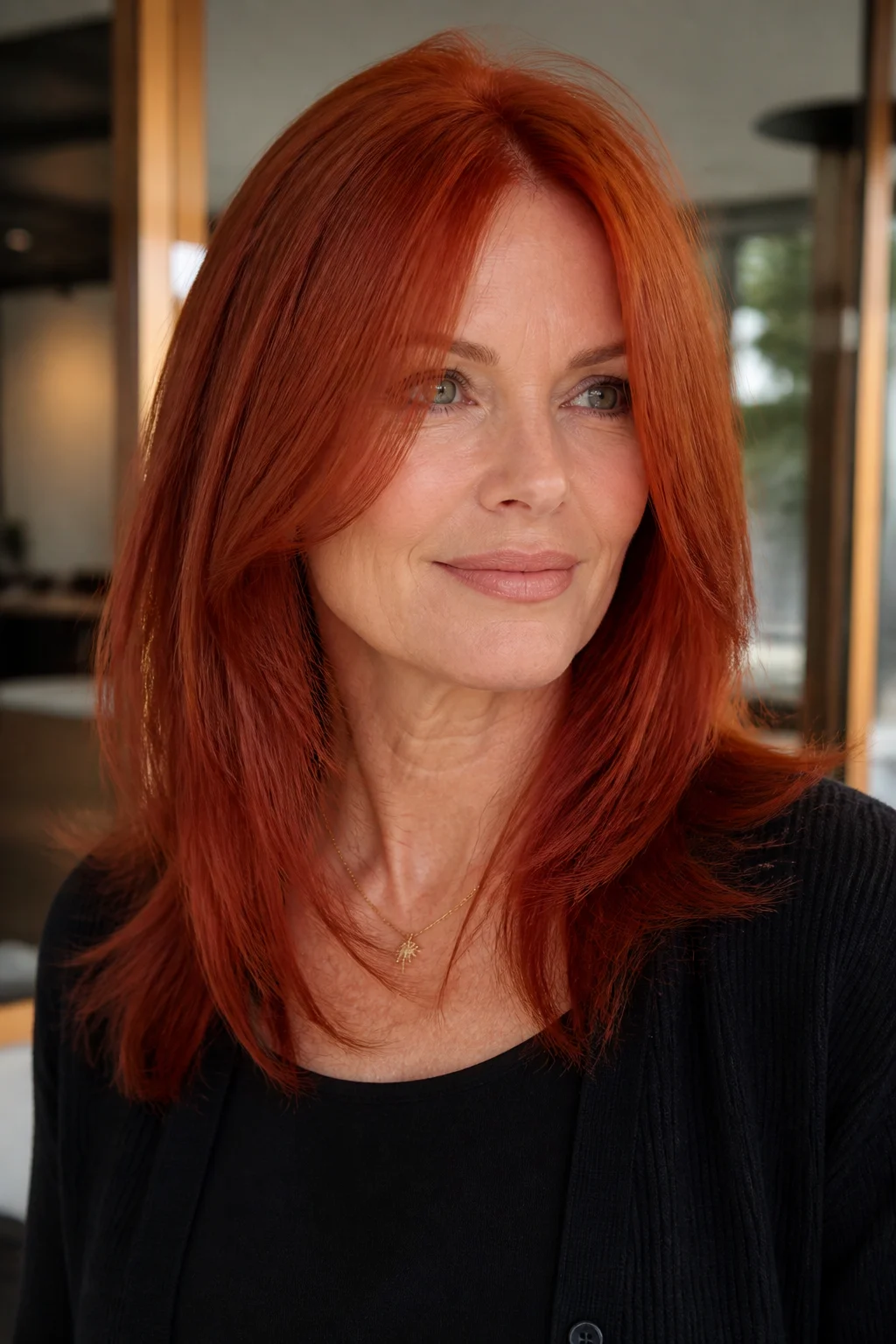
Square faces often do well with layers that soften strong jawlines instead of layers that add more angles. Blunt layers, cut with a clean horizontal line rather than a razor’s soft edge, give structure while still allowing some movement lower in the cut. This works because the blunt ends create a rounder visual shape near the jaw. Honey brown keeps the look warm instead of severe, which helps balance out the strong facial angles a square face already has.
Honey Brown Butterfly Layers
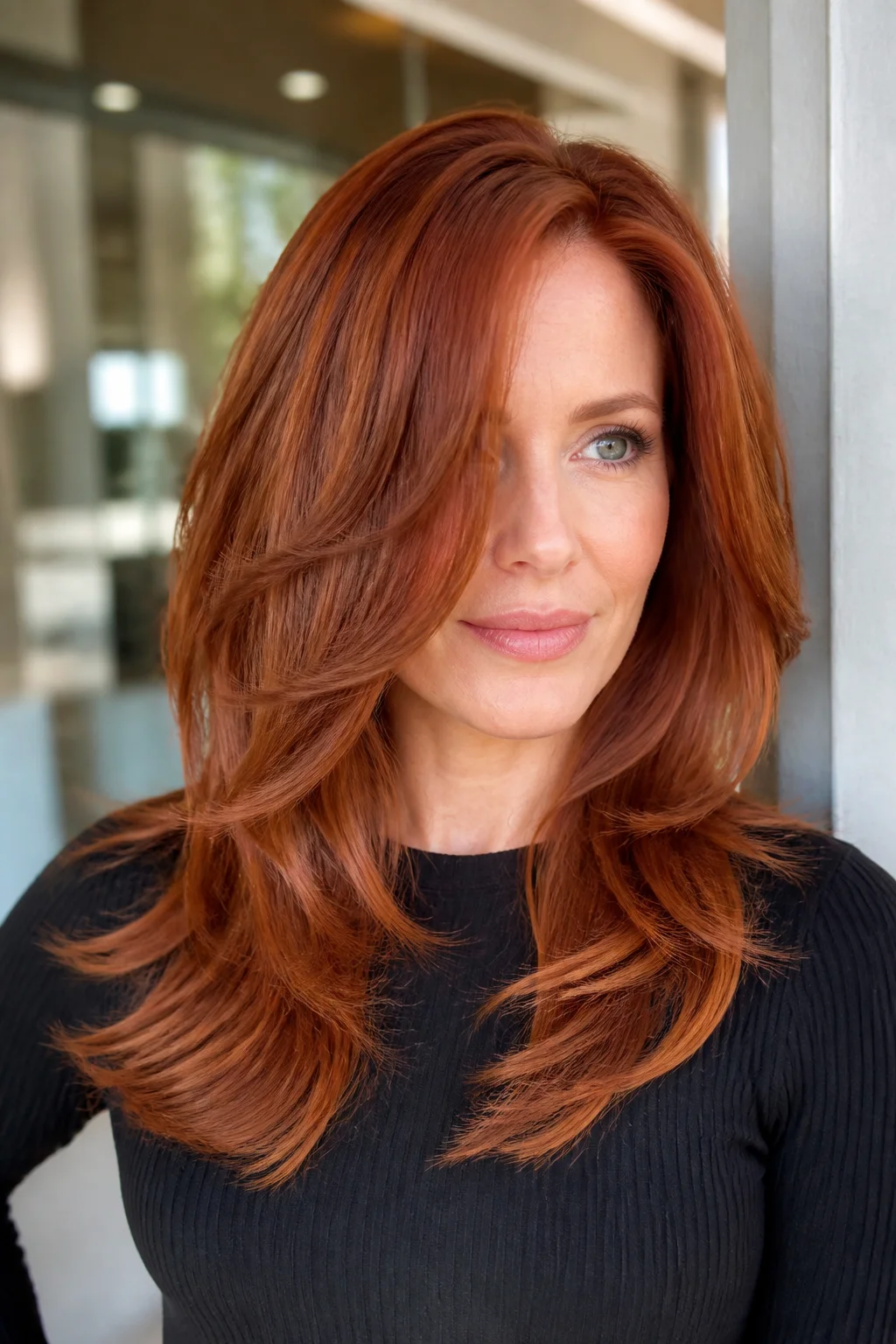
Butterfly layers are cut short at the very top and gradually lengthen outward, creating a shape that opens up like wings when hair is worn down or curled. This is one of the more dramatic layering techniques and needs a stylist who understands weight distribution closely. On honey brown hair, the shorter top layers often show up lighter from more sun exposure over time, which enhances the multi-tonal effect this cut is known for.
Honey Brown Layers with Grown-Out Undercut
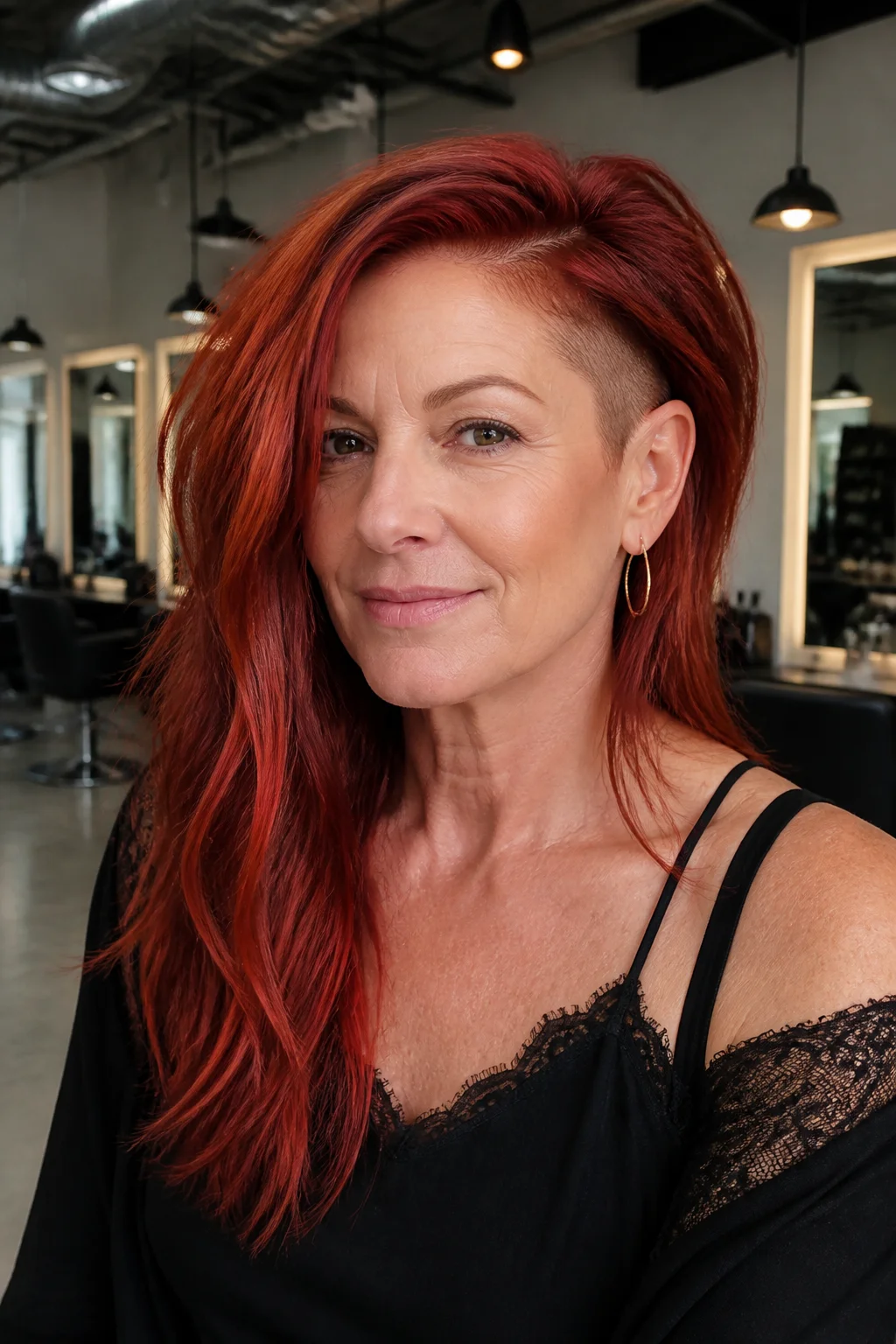
If you have an undercut you’re not ready to shave again but want it to blend into longer layers up top, this is the transition cut. Layers are worked in gradually to disguise the length difference between the undercut section and the rest of your hair. It takes a few cuts over several months to fully smooth out. Honey brown helps disguise the regrowth line since the tonal shift is subtle compared to high-contrast colors.
Honey Brown Long Layers for Thick Hair
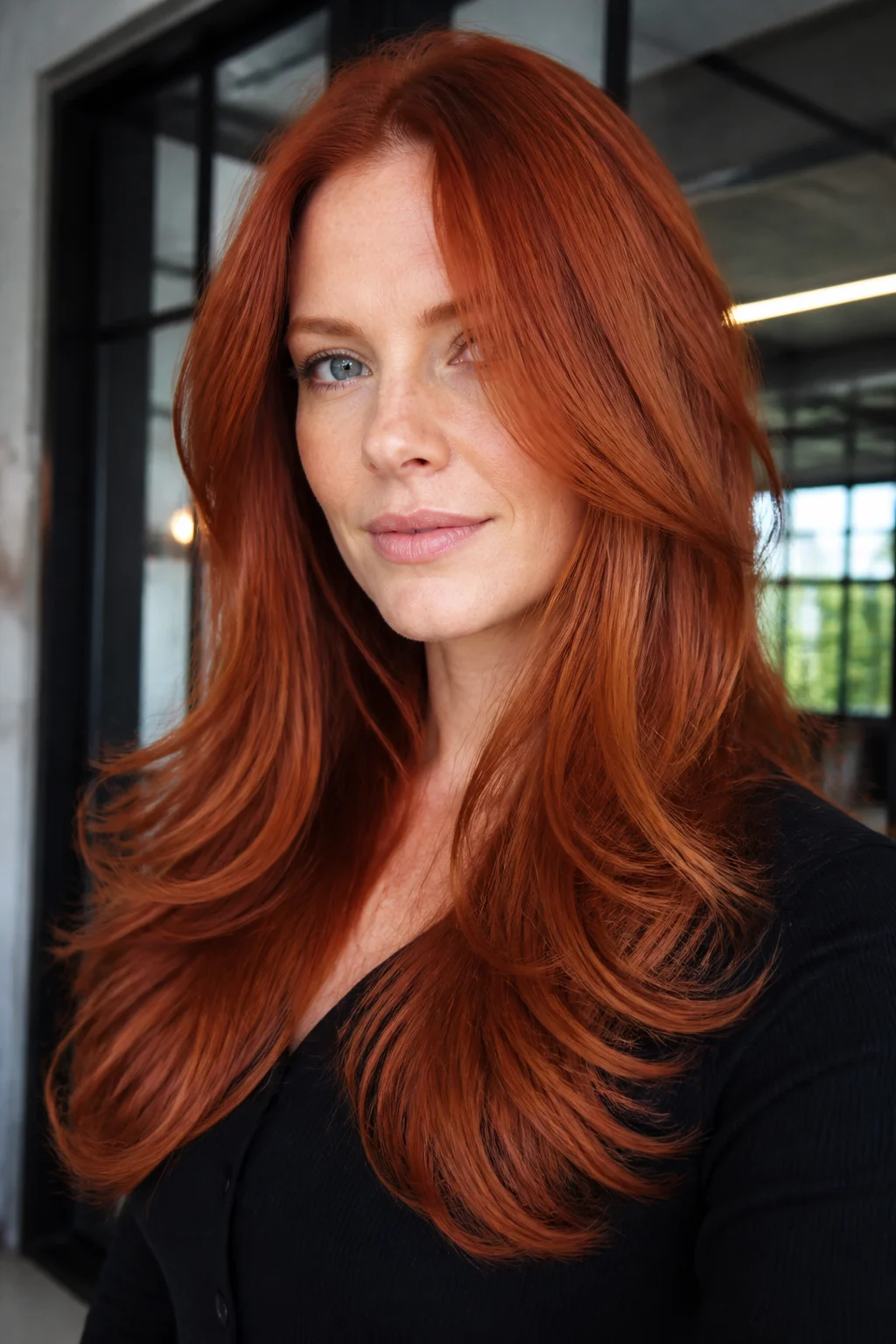
Thick hair carries long layers well since there’s enough density to support movement without going flat. Layers here are usually cut at longer intervals, removing bulk from underneath while keeping the outer shape full. This keeps the honey brown color visible in sections rather than compressed into one thick block of tone. It’s one of the more universally flattering options on this list, and most stylists can execute it quickly.
Honey Brown Side-Swept Layers
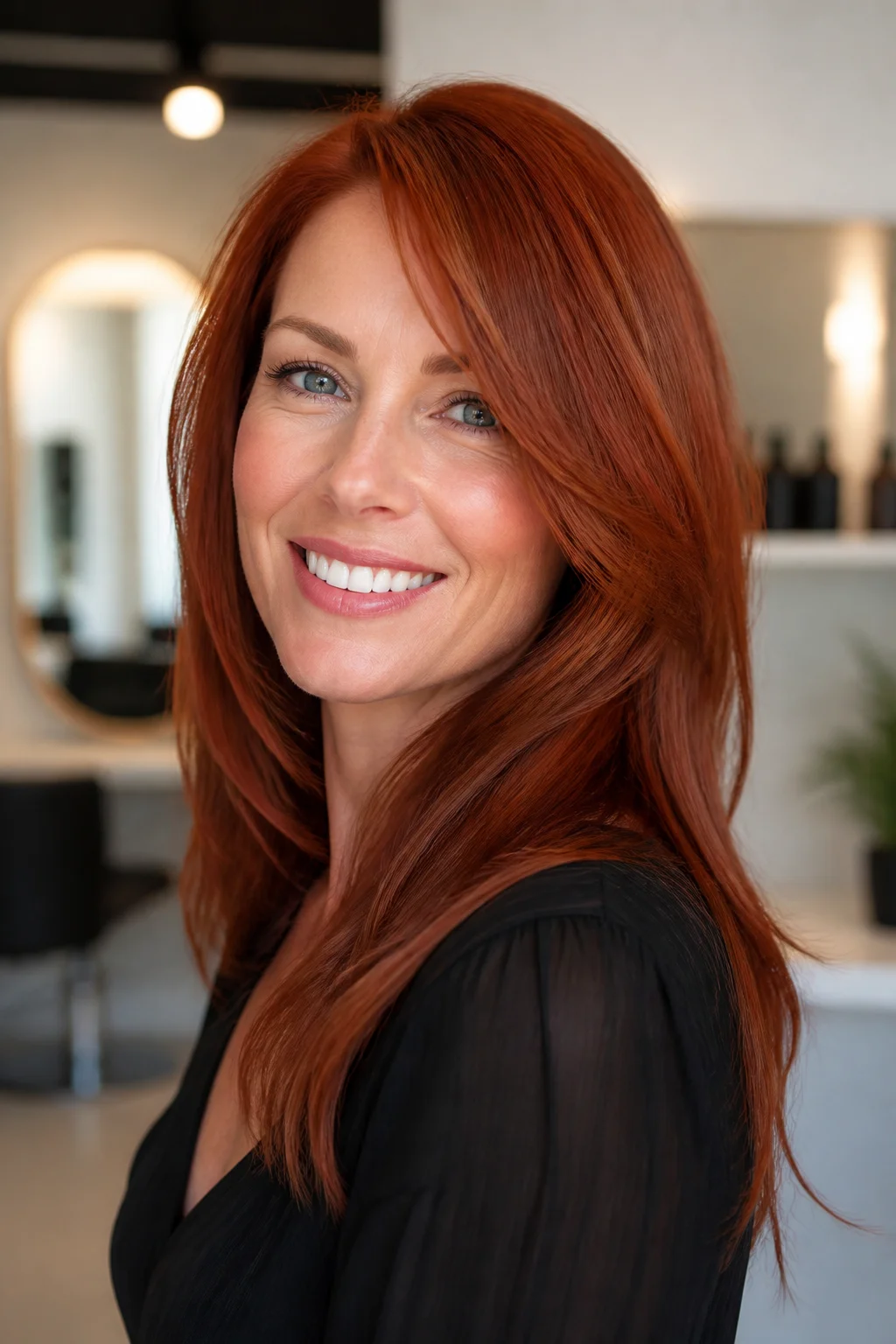
Side-swept layers push the front sections to one side, often cut at an angle rather than straight across. This creates a soft, asymmetrical frame around the face. It works particularly well for growing out bangs since the angled cut gives you something intentional to do with that in-between length. Honey brown adds subtle contrast between the swept pieces and the rest of the hair underneath.
Honey Brown Layers with Bangs
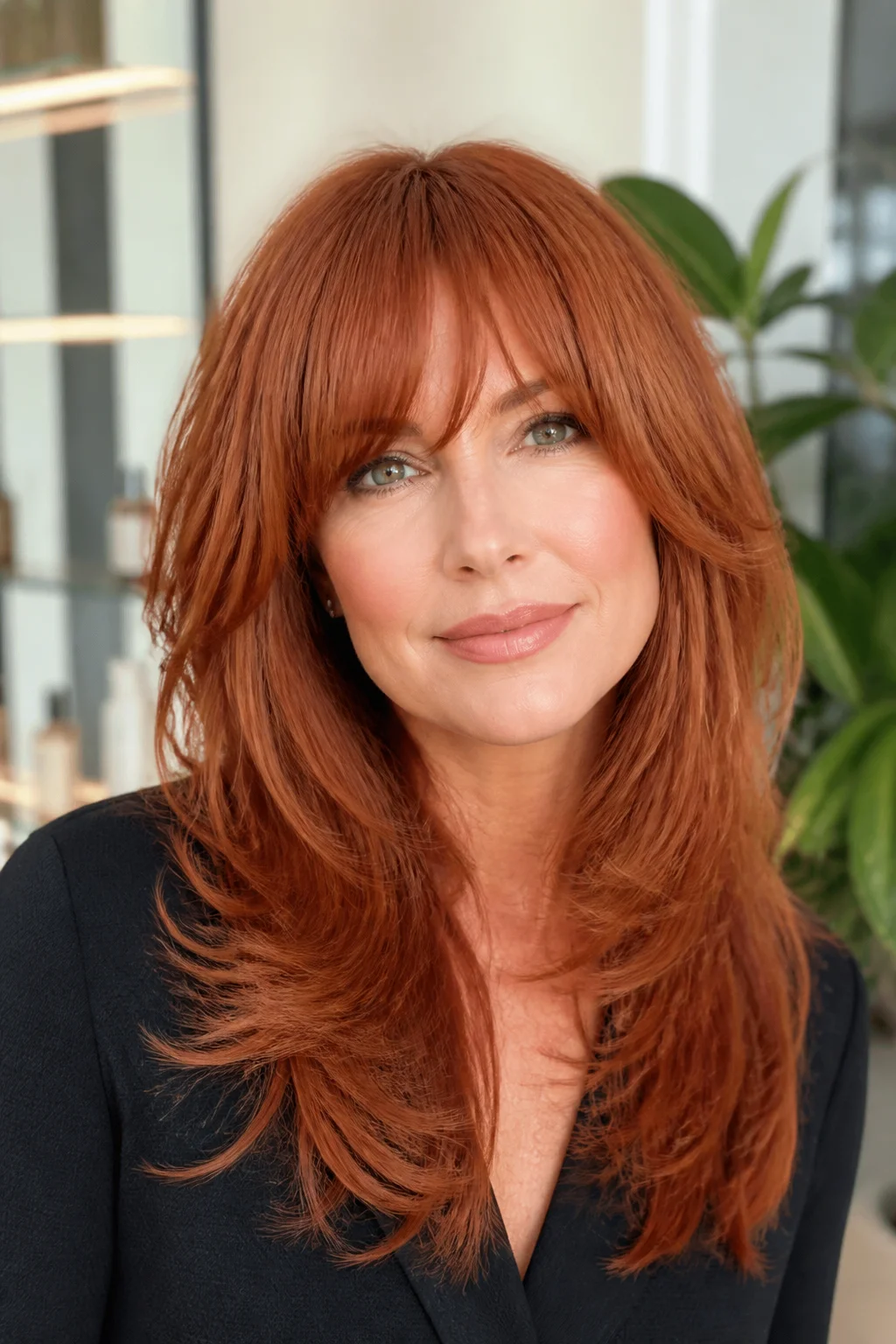
Pairing layers with bangs, whether curtain, full, or wispy, gives your whole style more cohesion since the bangs blend directly into the layering pattern rather than sitting as a separate piece. This combination works on almost any length. Tip: wispy bangs tend to blend more naturally into layered honey brown hair since they mimic the same soft, piece-y texture already happening throughout the cut.
Honey Brown Face-Framing Layers on Long Hair
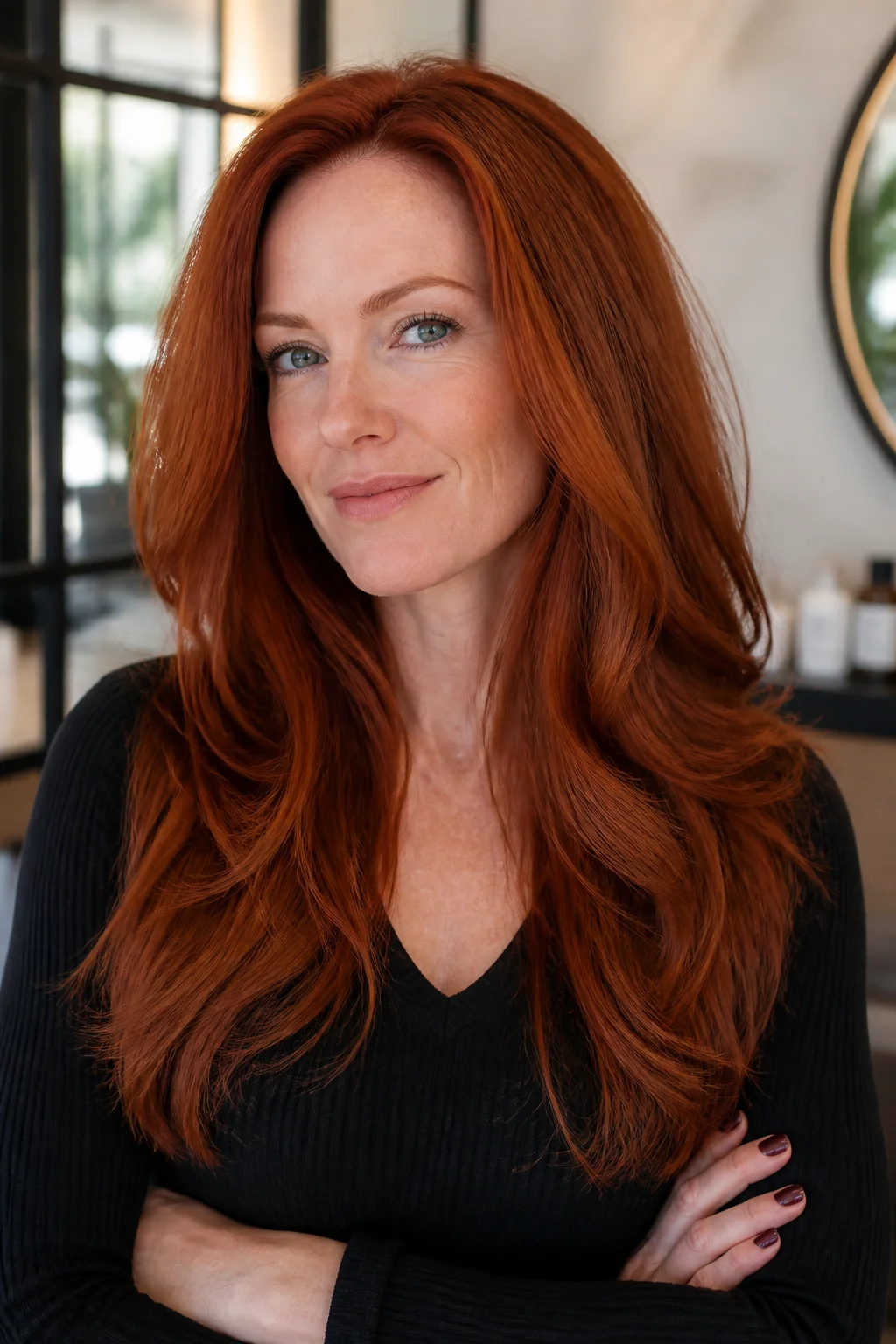
Face-framing layers on long hair focus the cutting mostly around the front, leaving the back length largely untouched. This means less commitment than an all-over layering job while still refreshing your overall shape. The shortest pieces usually land around the chin or collarbone and blend down into the rest of the length. It’s a solid choice if you like your length but want your honey brown color to show more dimension near your face.
Choosing the Right Layered Cut for Your Hair
With this many honey brown hair layered haircuts to pick from, the decision usually comes down to your hair’s natural texture and how much maintenance you actually want to deal with. If your hair is fine, skip anything with heavy, thin layering like the butterfly layers, since too much thinning will make fine strands look sparse. Reach for the thick layers for fine hair option instead. If you’ve got natural curl, the razored layers for curly hair approach respects your pattern instead of fighting it, while a style like the blunt layers for square faces works better on straighter textures where a clean line actually holds.
Anyone growing out a shorter cut should look at the layers with grown-out undercut or the side-swept layers, both built around transitional length. If you want low maintenance, the honey brown waves with subtle layers or the long layers for thick hair need less frequent trims than something like the mullet layers or the disconnected layers, which rely on sharp lines that grow out fast. A common mistake is choosing a dramatic style like the butterfly layers or shag with face-framing layers without discussing upkeep first. These cuts look great fresh but need trims every couple of months to keep their shape. Talk through your hair type, your styling routine, and how often you’ll realistically get to the salon before settling on one.