Growing out a boring cut or stuck picking between short and long is a real problem, and an uneven silhouette solves it without forcing a hard choice. Honey brown hair asymmetrical haircuts give you movement, dimension, and a shape that photographs well from every angle, which is why stylists keep bringing them up for clients who want something that doesn’t look like everyone else’s blowout. The warm gold and caramel tones in honey brown catch light along angled edges in a way that flat black or cool ash just can’t match. Below are twenty specific cuts to bring to your next appointment, described clearly enough that you can point at the name and say “this one.” Some are dramatic, some are subtle tweaks on a classic bob, and a few work even if you’re growing out layers right now. Read through, find the shape that fits your face and your patience level for styling, and take the name straight to your chair.
Asymmetrical Pixie with Side Sweep
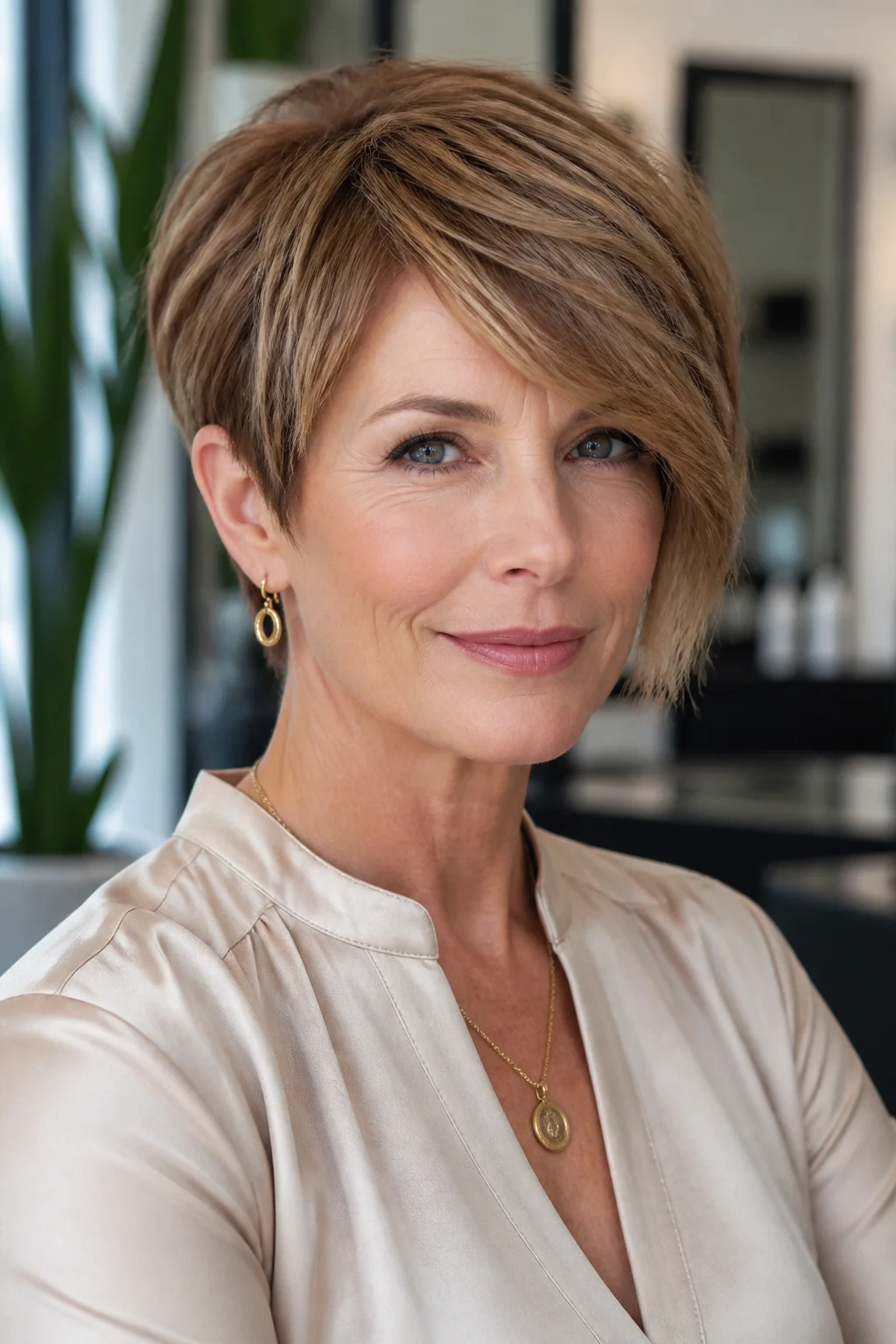
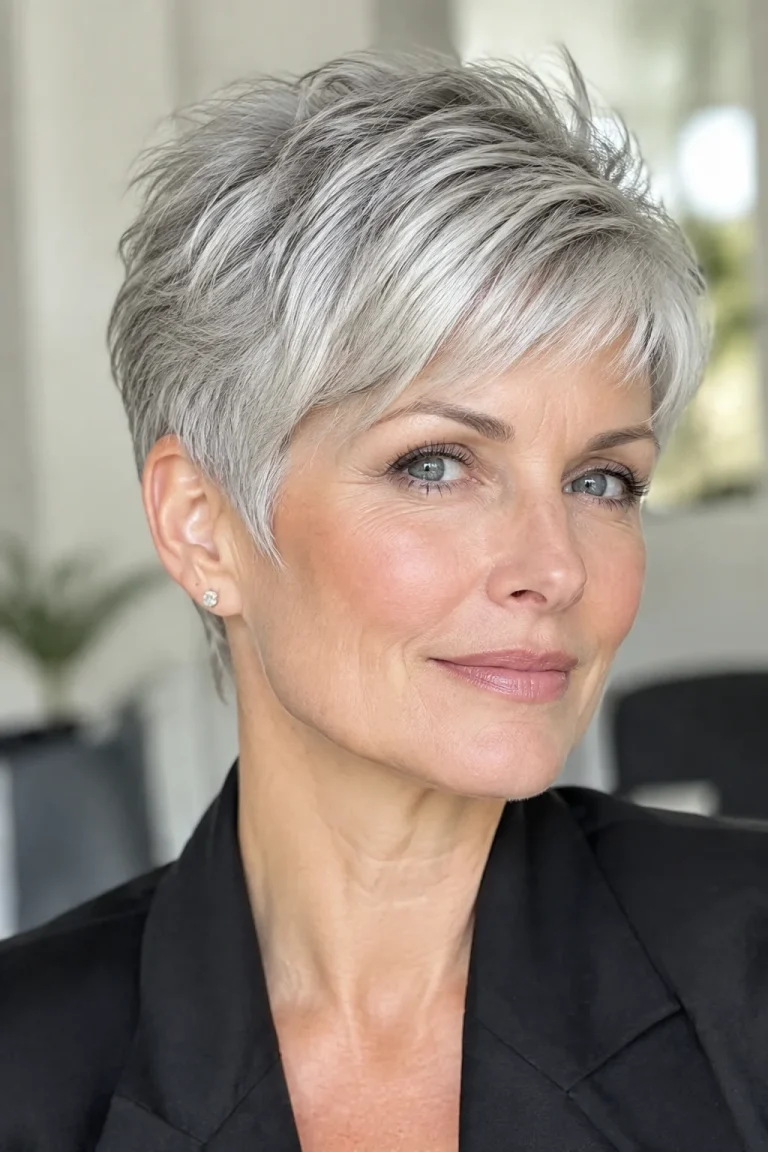
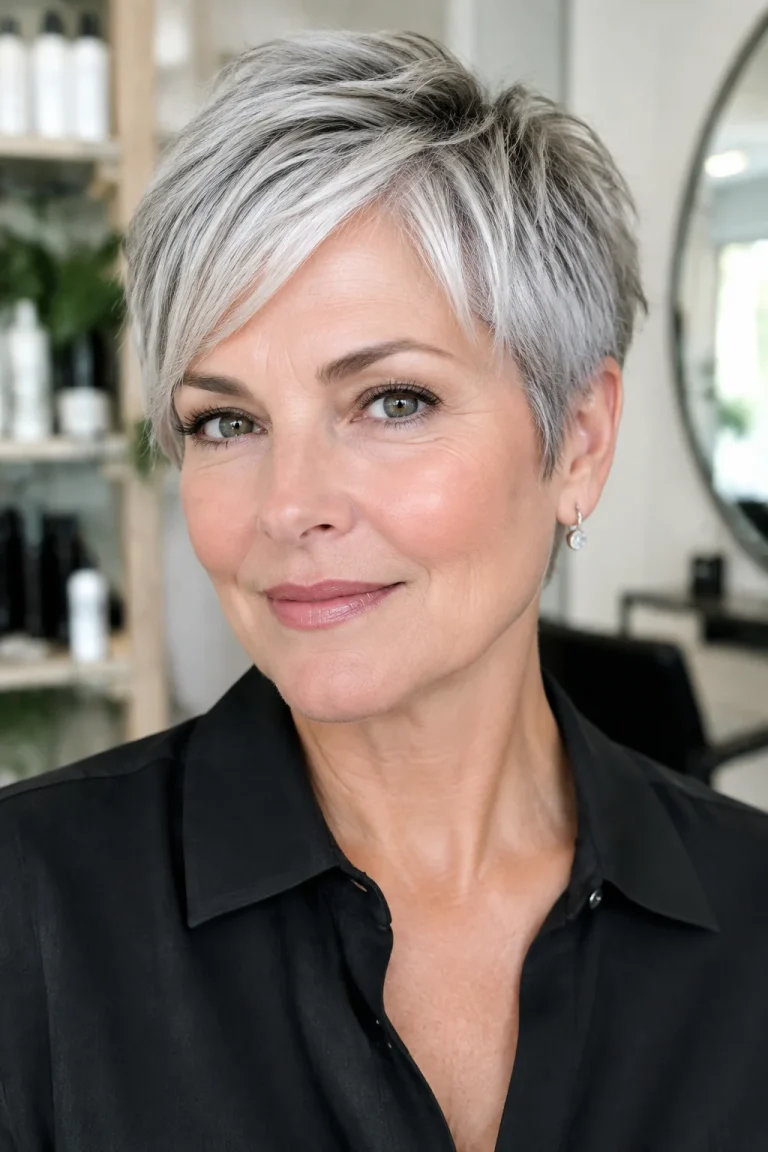
This pixie keeps one side cropped close while the other grows into a longer, sweeping piece that tucks behind the ear or falls across the brow. On honey brown hair the shorter side shows off lighter, sun-kissed pieces near the scalp while the longer sweep carries the deeper caramel tones. It’s a low-maintenance cut day to day, but the first few weeks after cutting need some blow-dry direction to train the sweep. Tip: ask your stylist for a slight undercut beneath the long piece so it doesn’t puff out when you sleep on it. A light mist of heat protectant before styling helps the finish last. A light mist of heat protectant before styling helps the finish last.
Long-Short Disconnected Bob
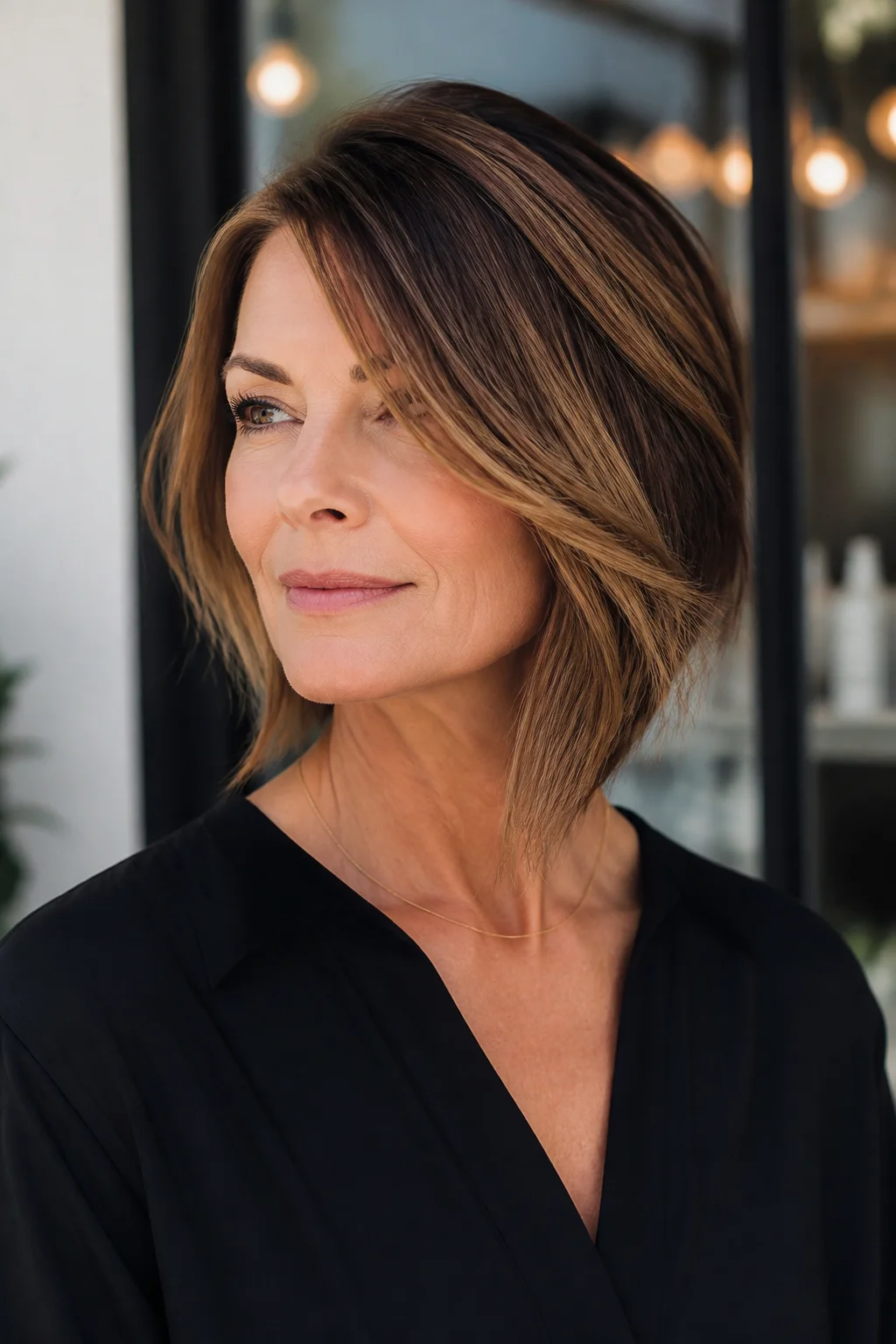
One side sits at the chin, the other drops to the collarbone, and there’s a clean break between the two lengths instead of a gradual blend. It reads modern and a little edgy without needing any color tricks to stand out. Honey brown works well here because the disconnection line itself becomes a visual detail, catching a slightly different tone as light hits the cut edge.
Shaggy Layered Asymmetrical Cut
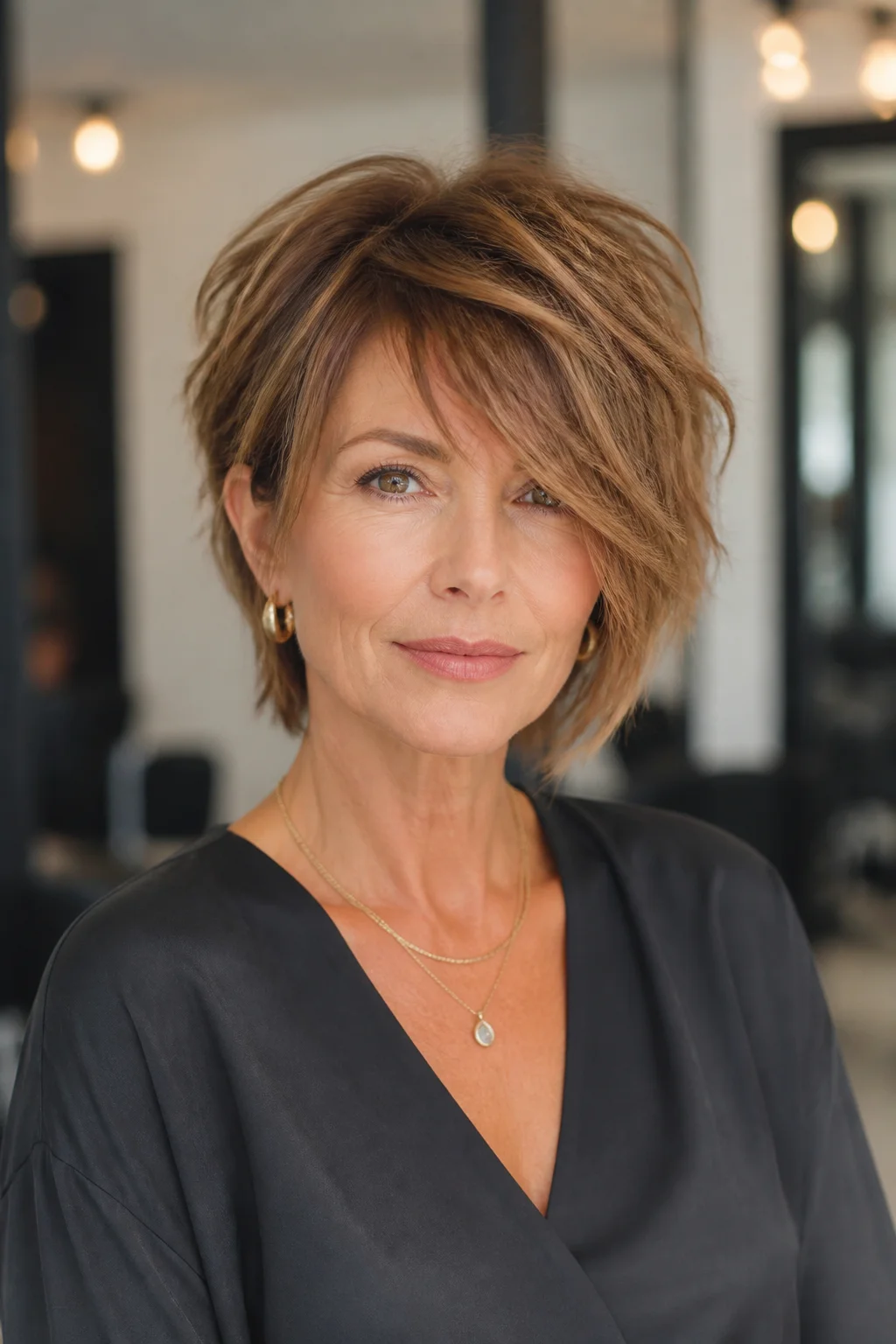
Heavy layering throughout the head, paired with uneven length at the ends, gives this cut a lived-in, textured look that never sits flat. It works especially well if your hair has natural wave or you’re willing to use a texturizing spray on straight strands. The shag base means you get volume at the crown without teasing, and the asymmetry keeps one side noticeably longer so the whole thing doesn’t read as a plain shag. Honey brown shades add depth to the layers since each length catches light differently, making the shag look fuller than it actually is. Stylists usually recommend a haircut refresh every eight to ten weeks to keep the shape from growing shapeless. A light mist of heat protectant before styling helps the finish last.
Undercut Asymmetrical with Length
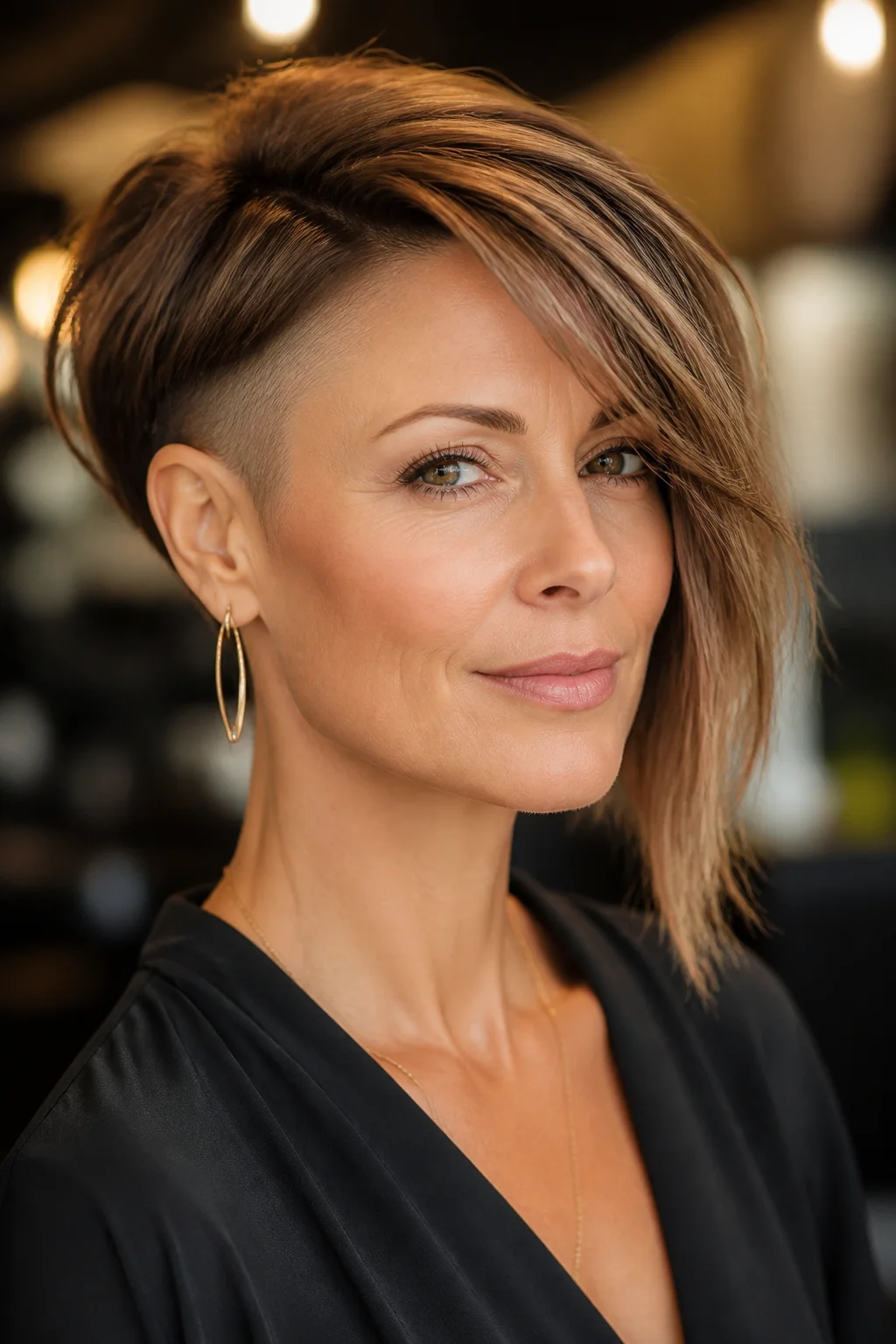
Shaved or clippered sections hide underneath longer top layers, so from the front you see a long, flowing cut, but flip it up and there’s a graphic undercut pattern beneath. This is a strong option if you want the drama of an undercut without committing to a fully visible shaved side. Honey brown hair on top contrasts nicely with the shorter undercut hair, especially if that hidden section grows in slightly lighter.
Choppy Wolf Cut (Asymmetrical Take)
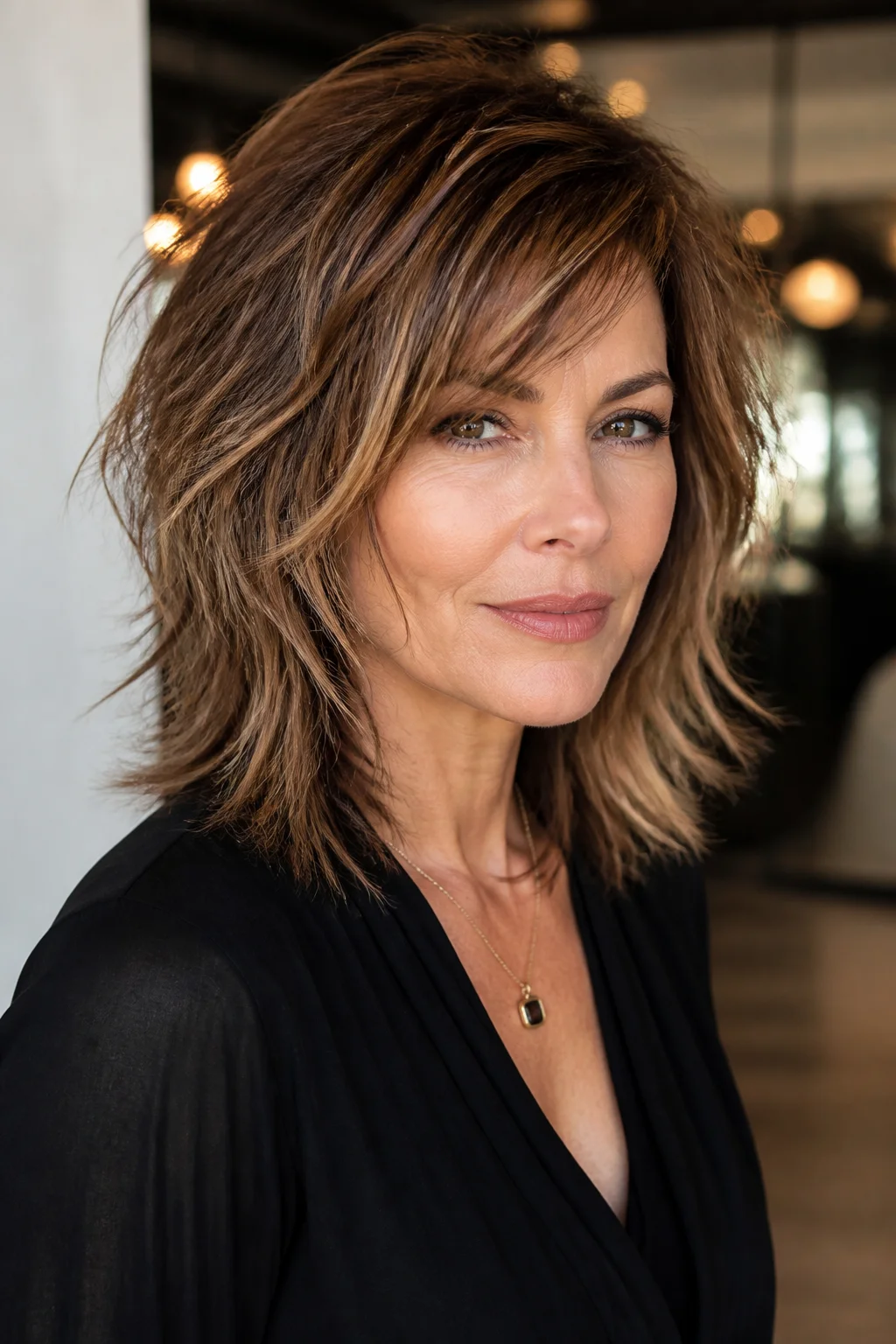
The wolf cut blends shag texture with mullet-style length at the back, and this version pushes one side shorter than the other for extra edge. Choppy, razored ends throughout keep it from looking too structured. It’s a good pick if you already have layers growing out unevenly and don’t want to start over from scratch.
Side-Part Lob with Angled Back
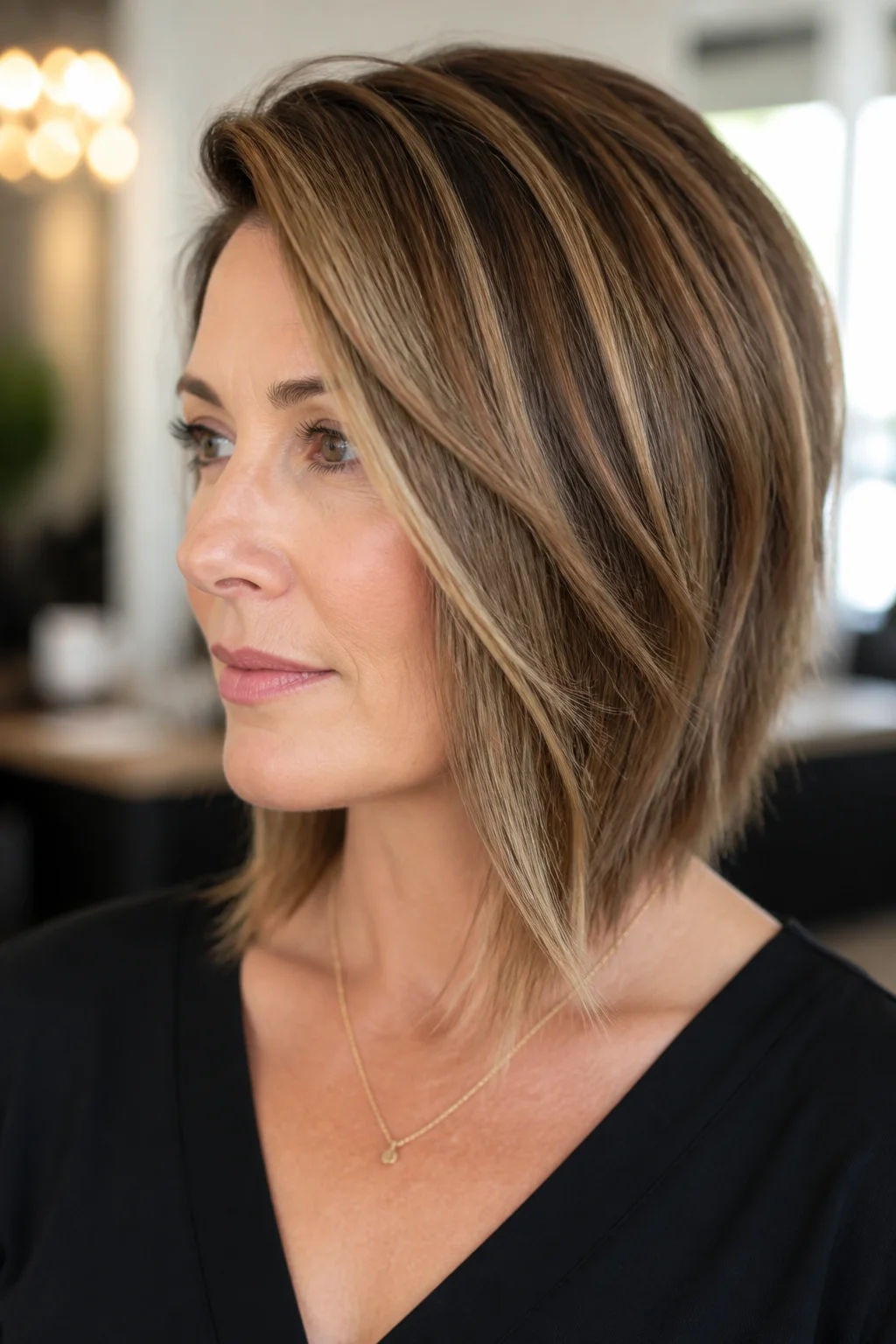
A long bob with a deep side part naturally creates length asymmetry, since one side falls forward over the face while the other tucks back. The back is cut at an angle, shorter at the nape and longer toward the front, so the whole shape slants downward on one side. Tip: request a diagonal parting guide rather than a straight one so the part itself feels intentional, not just combed over.
Blunt Asymmetrical Bob with Undercut Nape
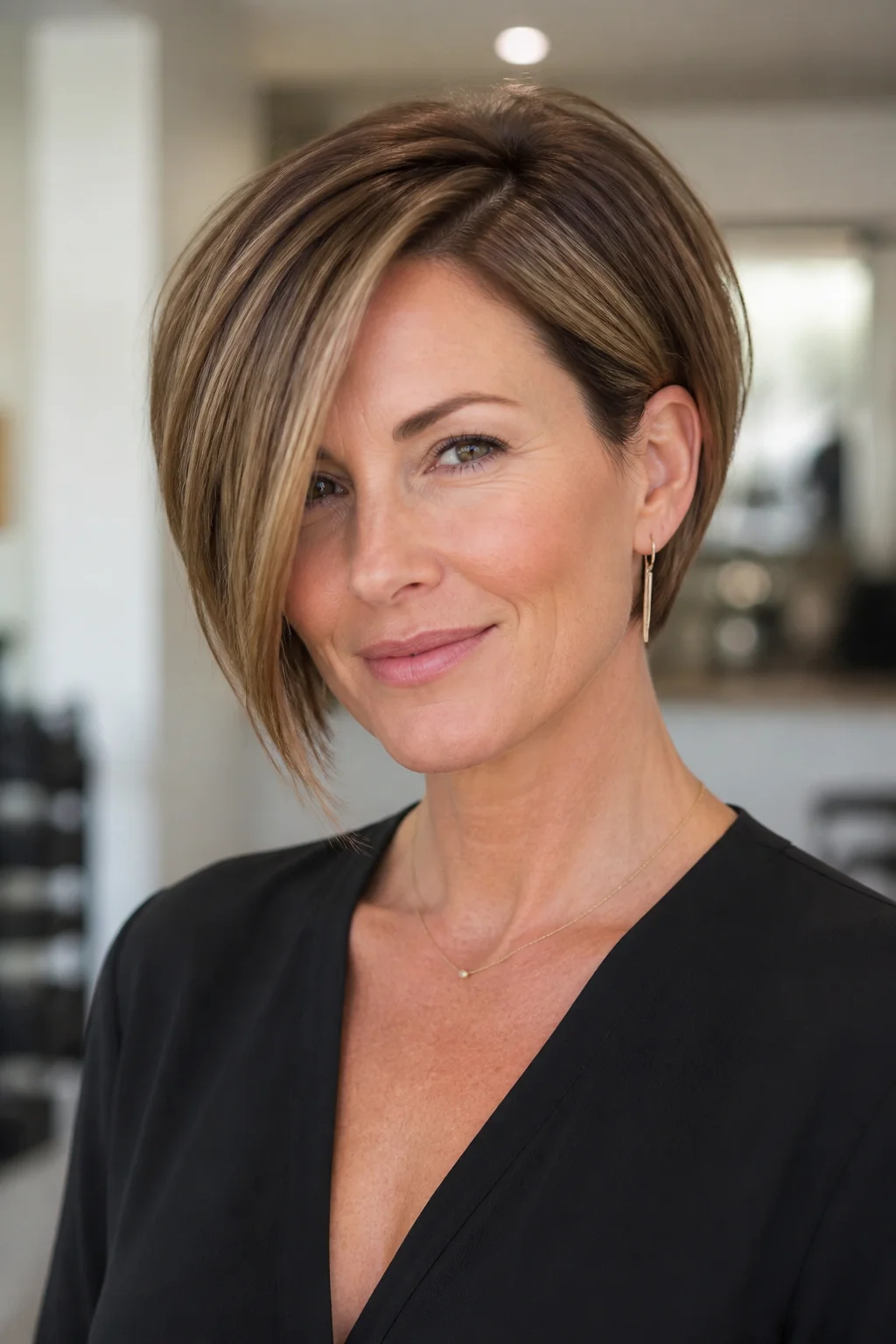
Blunt ends on an angled bob give a sharp, graphic edge, and adding an undercut at the nape lightens the weight without losing the blunt line everyone notices first. This one is best on straight or slightly wavy honey brown hair, since the blunt cut needs smooth strands to show its clean edge. Curly textures can still get this shape, but expect the line to soften within a day or two of humidity.
Face-Frame Layers (Asymmetrical Emphasis)
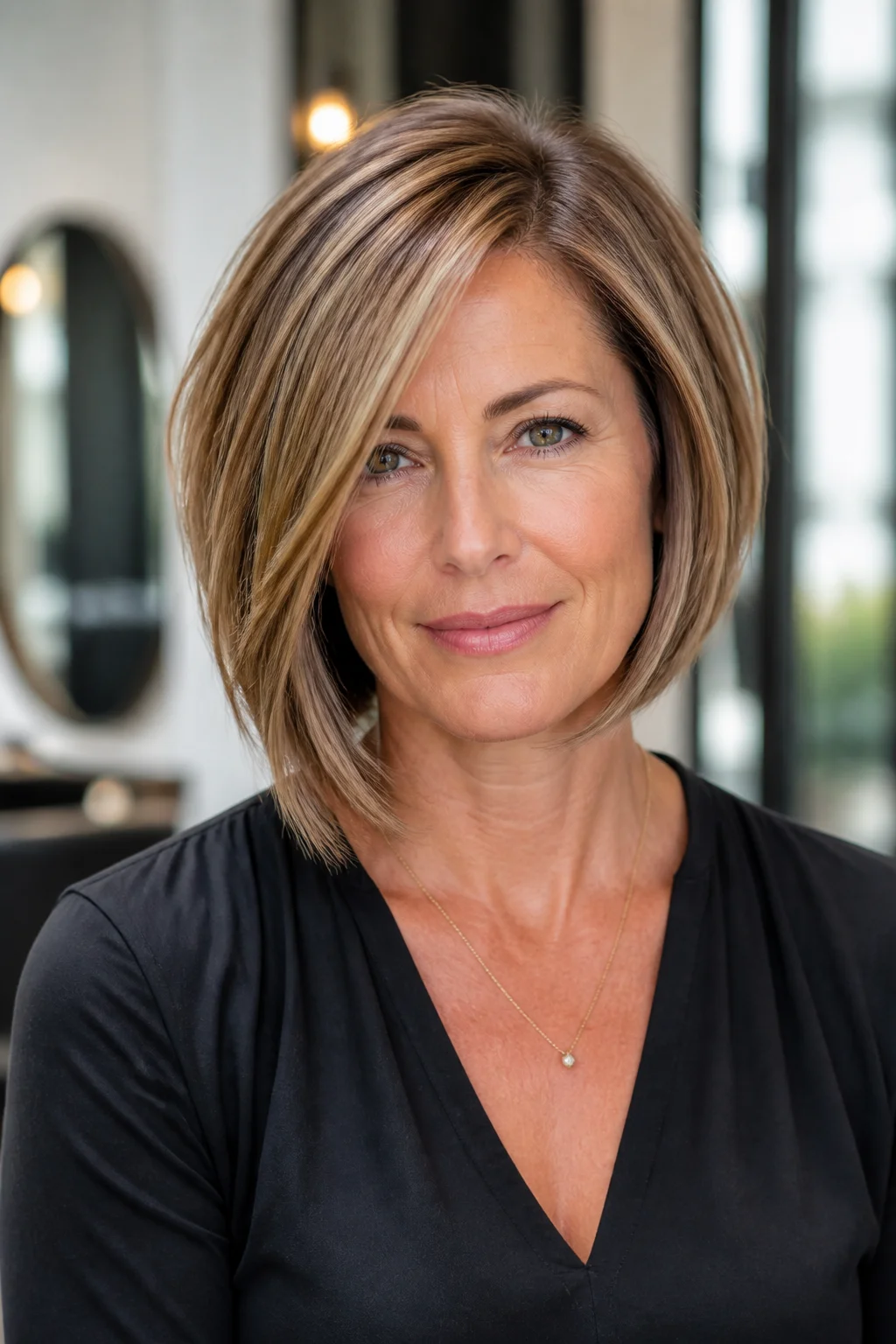
Rather than cutting the whole head asymmetrically, this approach keeps a longer base length but adds heavier layering around the face on just one side. It’s subtle, easy to grow out, and works on almost any length from shoulder to mid-back. Honey brown highlights placed within these face-framing layers make the asymmetry pop even more since the eye follows the lighter strands first.
Shag with Uneven Sides
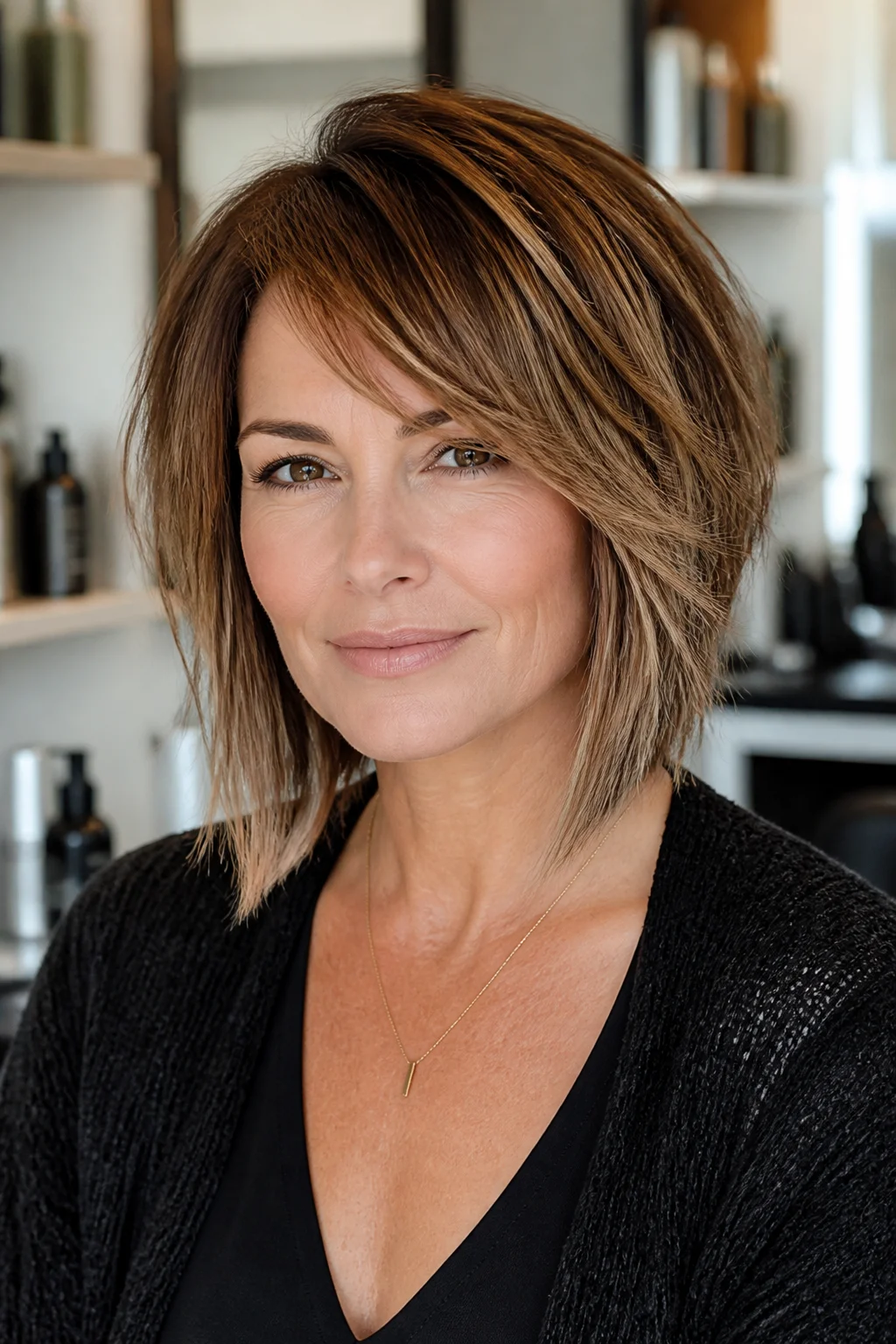
A classic shag gets an update when the sides are deliberately left uneven, one grazing the jaw and the other dropping past the shoulder. Feathered layers throughout keep movement high, and the color variation in honey brown hair reads almost like a natural balayage even without extra lightening. This cut suits people who like a slightly messy, undone finish rather than a polished blowout.
Mullet Haircut (Modern Asymmetrical)
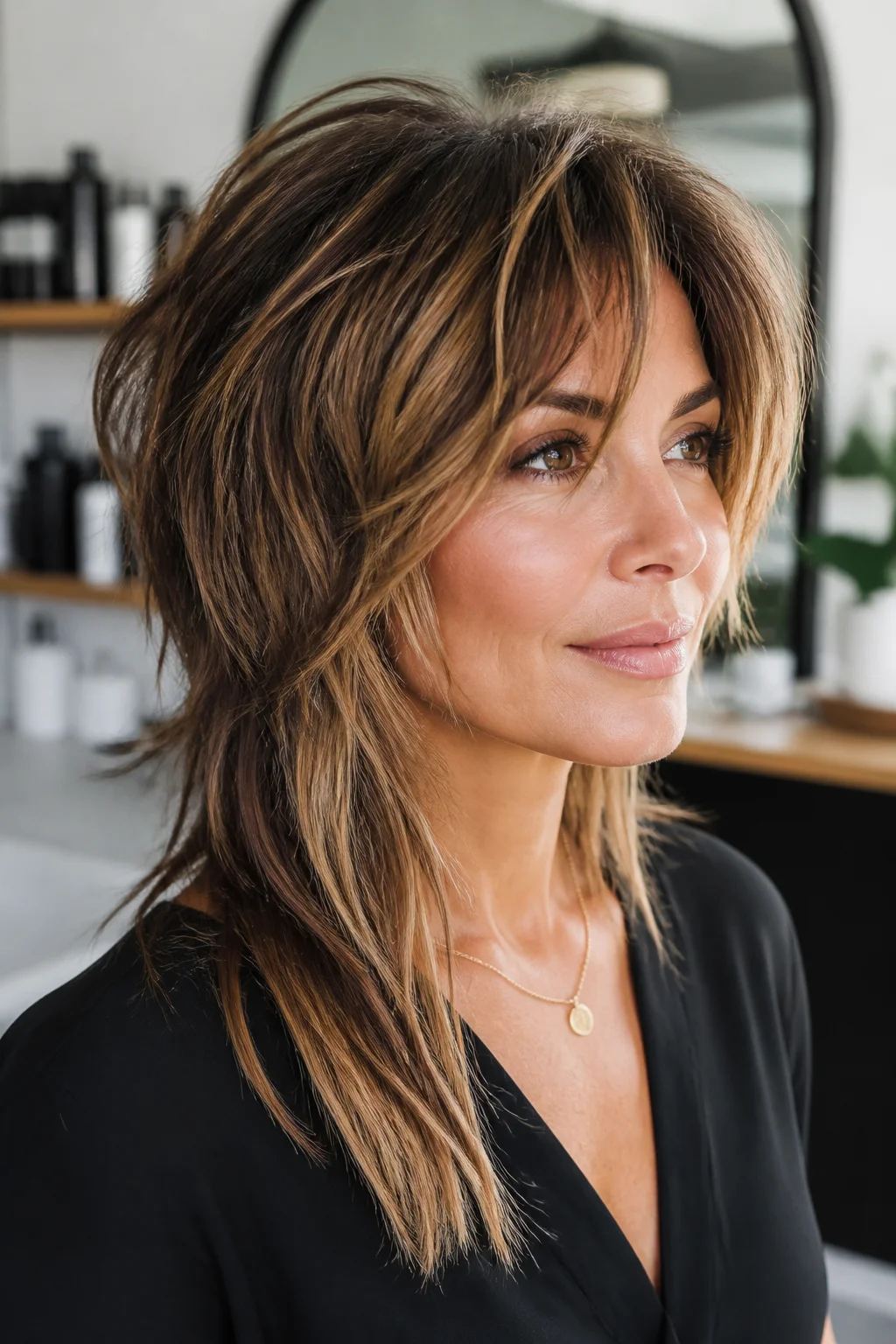
Short in front, long in back, and uneven on the sides, the modern mullet has moved far past its retro reputation. This version leans into the asymmetry by making one side notably shorter than the other around the face, which breaks up the classic mullet silhouette into something less predictable. Tip: keep the back layers long and soft rather than blunt so the cut doesn’t feel too retro-literal.
Razored Asymmetrical Pixie-Bob Hybrid
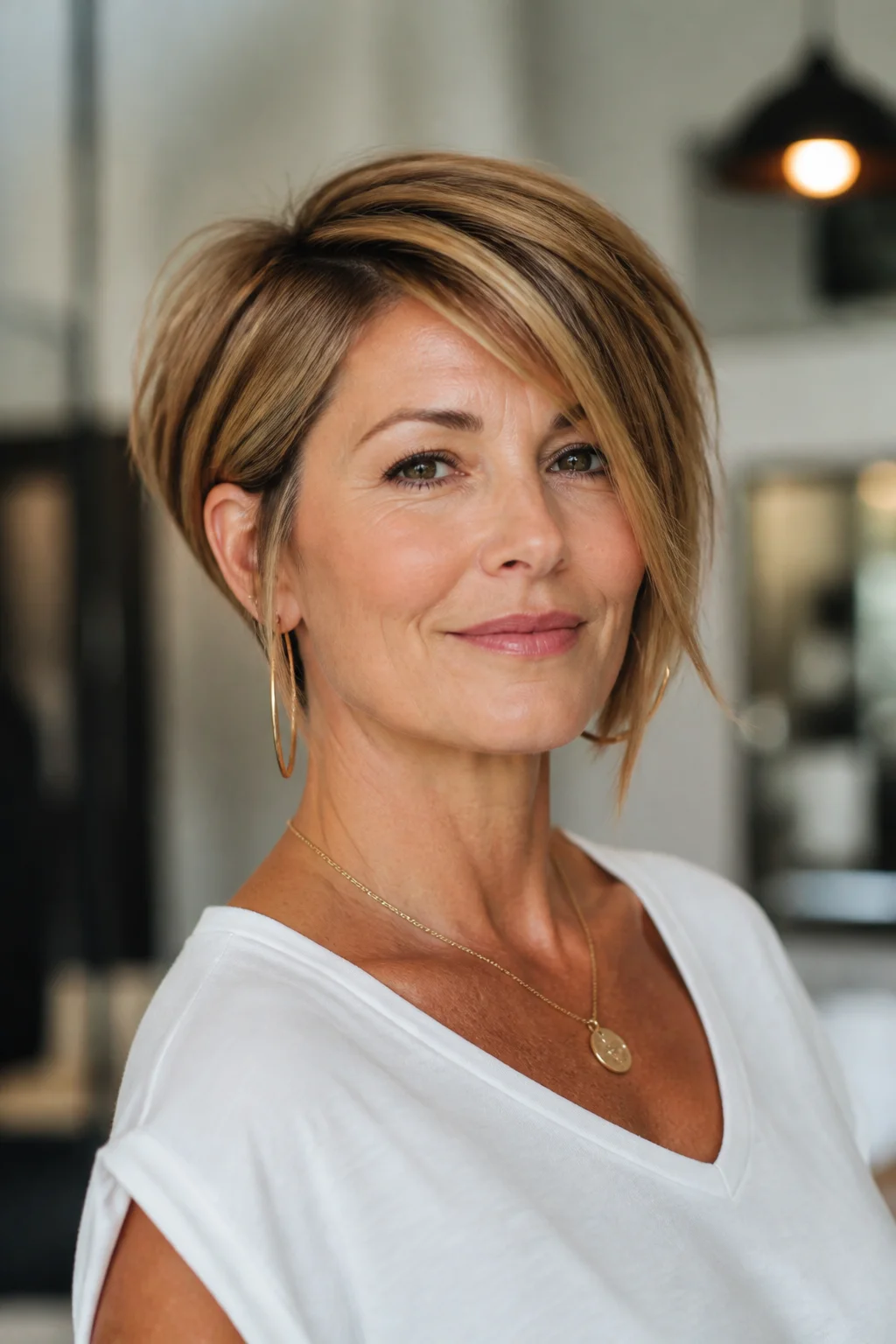
This cut sits between a pixie and a bob, with razored ends that fray slightly rather than cutting clean. One side is cropped pixie-short while the other stretches into bob length, creating a striking split down the middle of the head. It needs a confident stylist who works well with razors rather than scissors alone, since the texture depends on that specific tool. Honey brown hair takes well to this kind of textured cutting because the varied lengths catch light unevenly, giving natural-looking dimension without extra color work. Expect more frequent trims than a standard bob, since the shorter side grows out faster and can throw off the balance.
Angled Lob with Feathered Layers
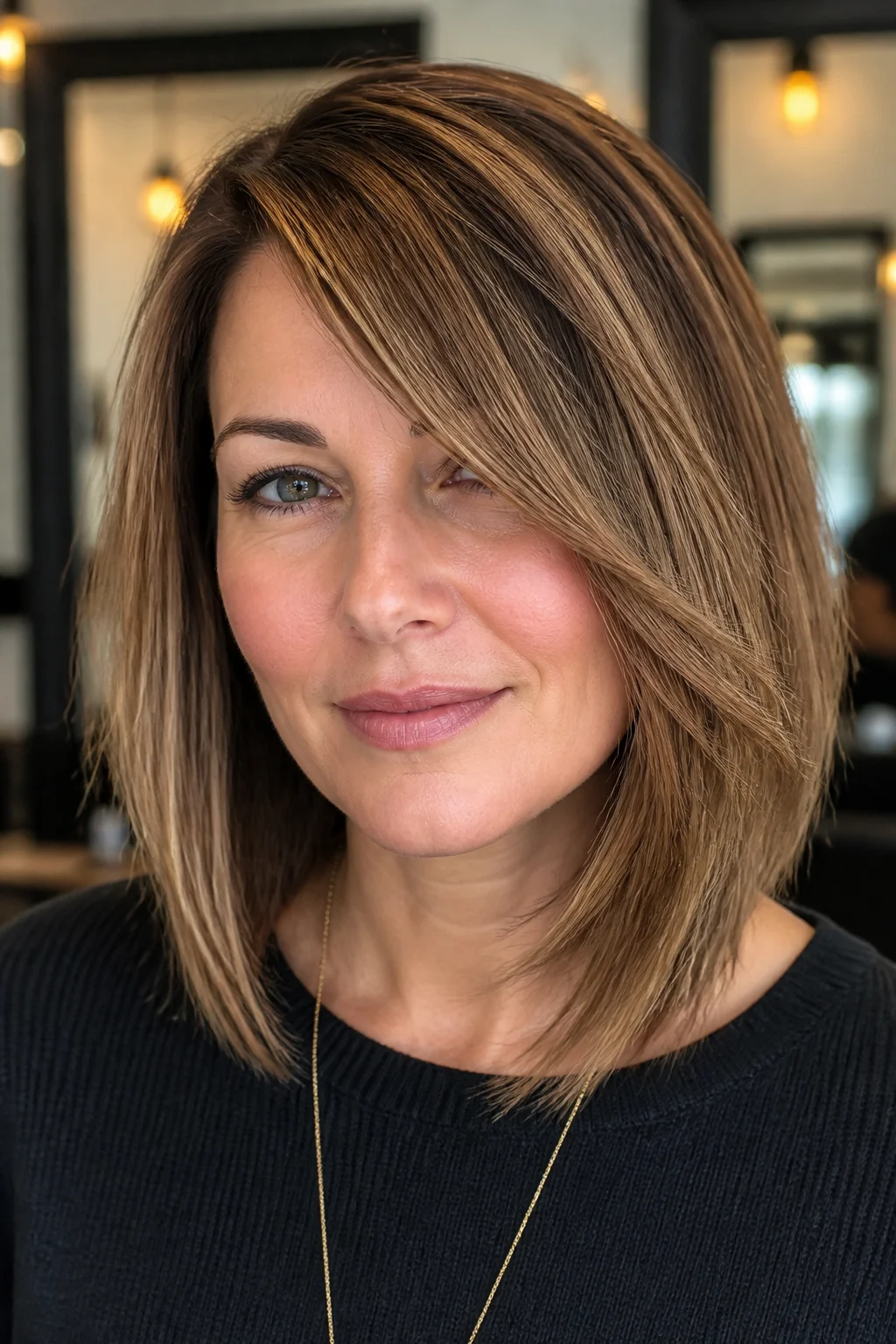
A long bob cut on a strong angle, shorter at the back and longer at the front, gets softened with feathered layers that keep the ends from looking too heavy. It flatters most face shapes because the length falls right around the jaw to collarbone area, and the feathering adds movement without sacrificing the angled line.
Textured Crop with Long Side Piece
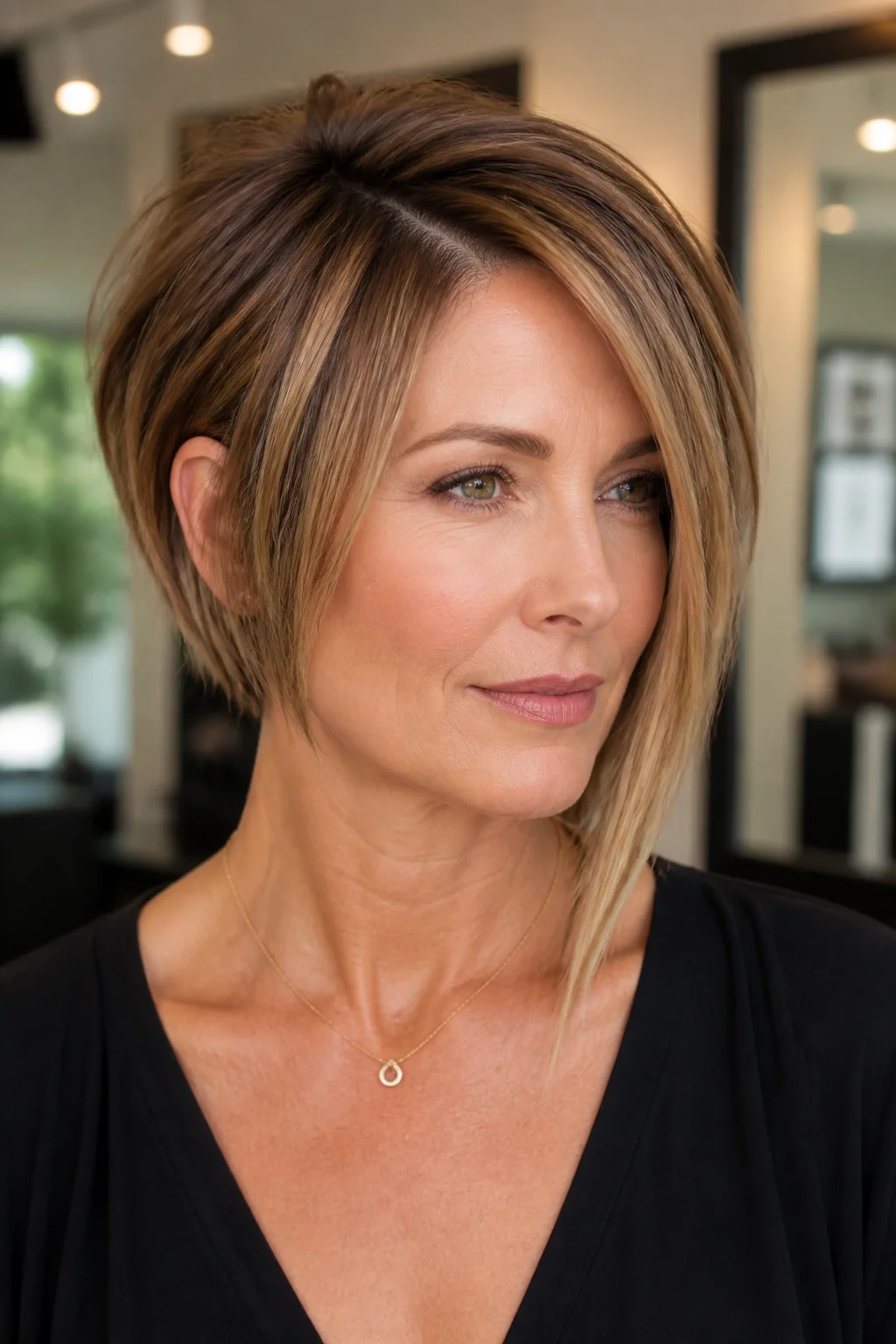
A very short, textured crop on most of the head paired with one deliberately long piece left to sweep across the forehead makes for one of the boldest cuts on this list. It’s not for anyone unwilling to commit, but the payoff is a sharp, editorial look that still feels wearable day to day. Honey brown coloring softens the harshness of the cropped sections, keeping the overall effect warm rather than severe.
Disconnected Bangs with Asymmetrical Length
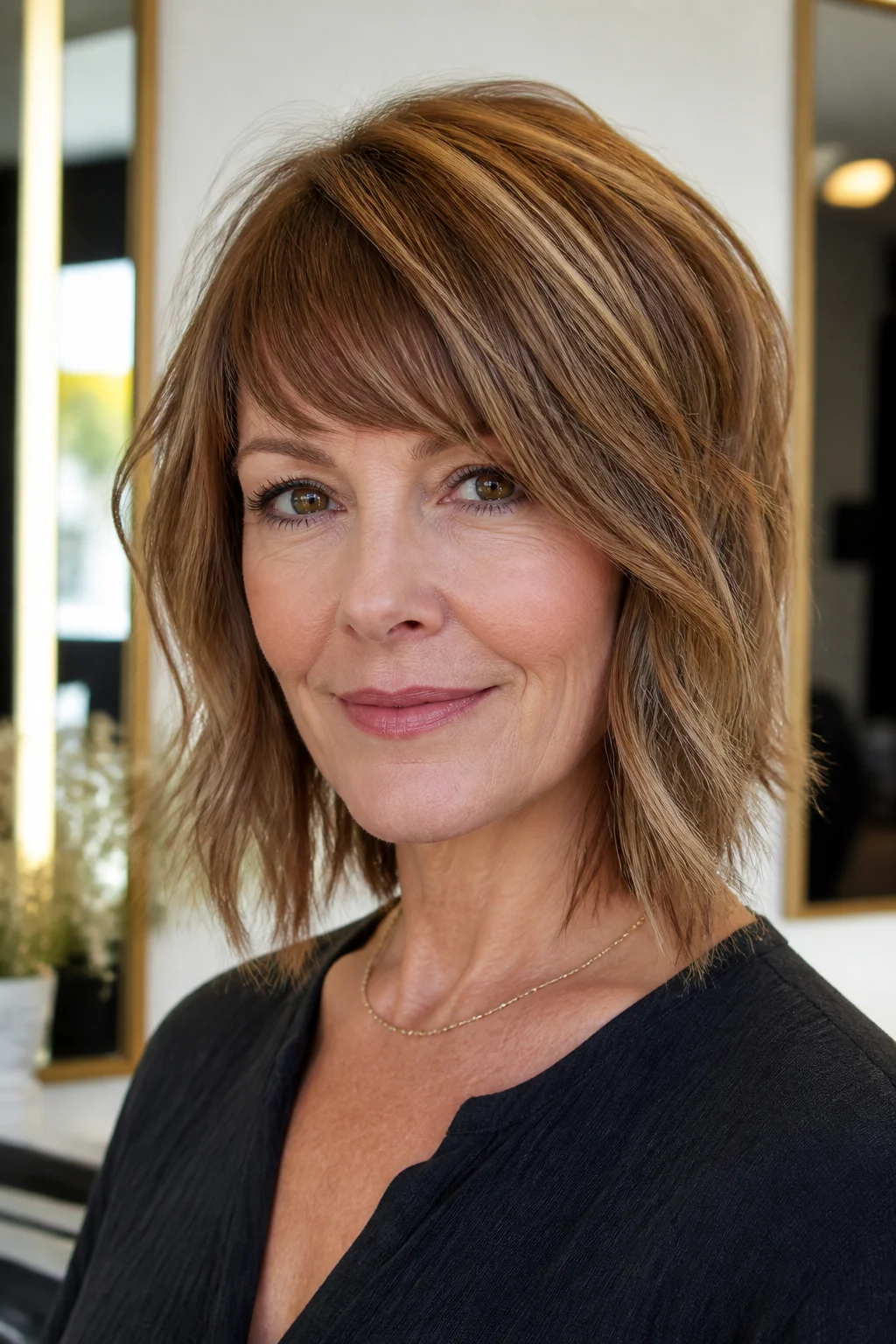
Choppy, disconnected bangs sit apart from the rest of the haircut rather than blending in, and pairing them with an already uneven length throughout adds another layer of asymmetry. This combination reads younger and a bit rebellious. It works best on people who already part their hair off-center, since a middle part fights against the disconnected fringe.
Curved Bob (Inverted Asymmetrical)
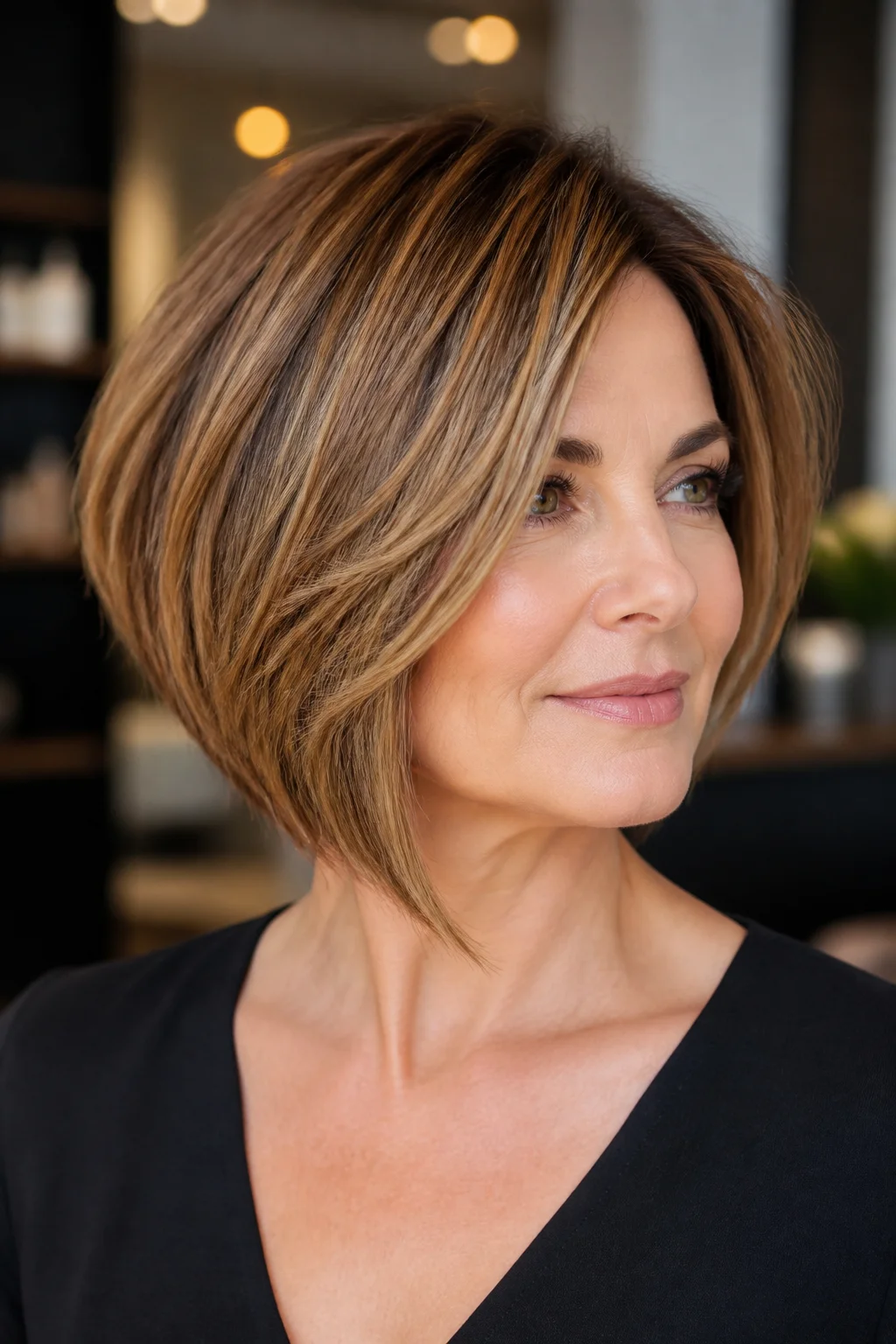
An inverted bob curves shorter at the back and longer at the front on both sides, but making one side more dramatic than the other turns a standard inverted shape into a genuinely asymmetrical one. The curve itself does a lot of the styling work, so it’s a decent option for anyone who doesn’t want to fuss with a flat iron every morning.
Choppy Layers with One Long Side
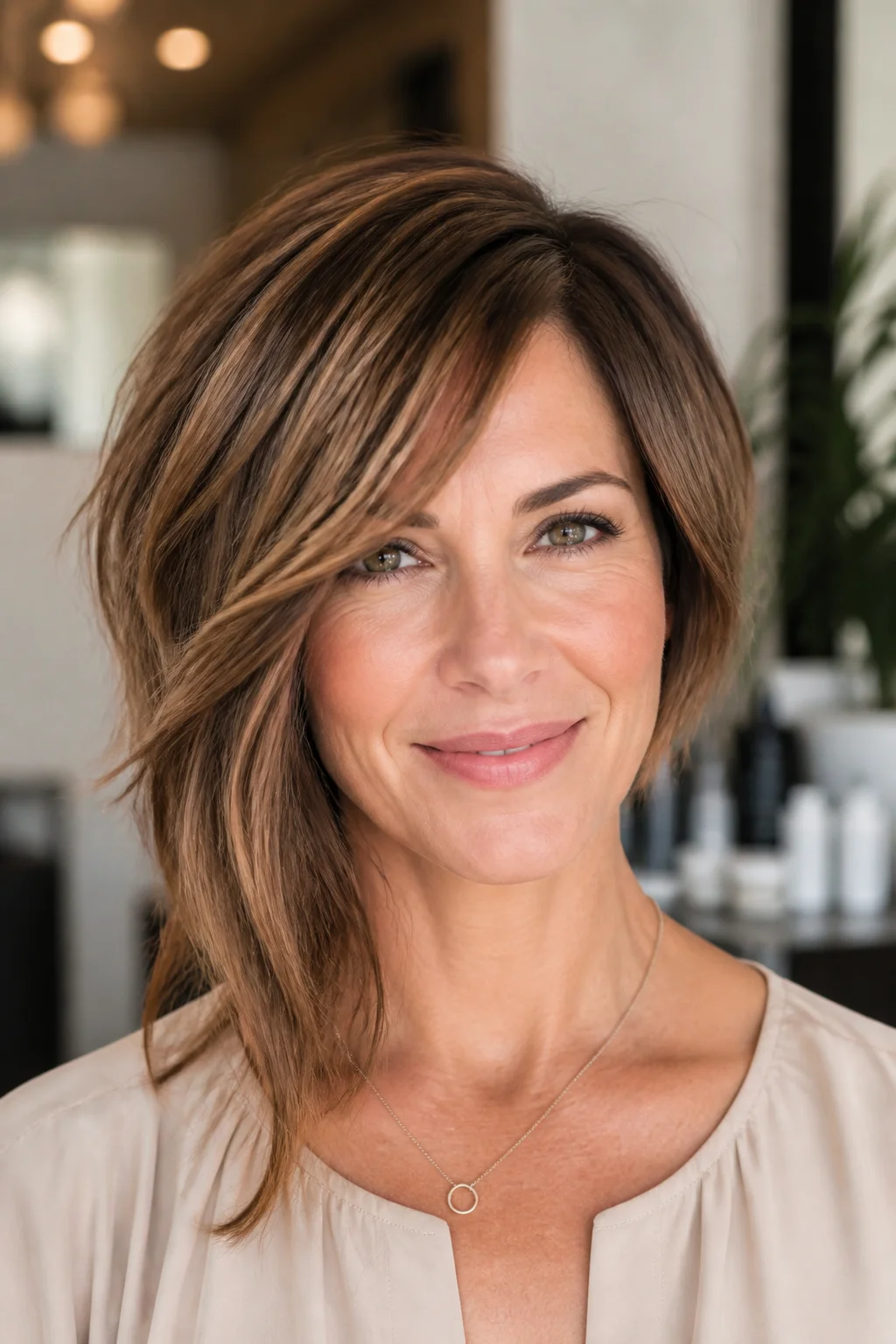
Uneven, choppy layers cut throughout the head, combined with one side left noticeably longer, gives a rougher, more casual finish than most bob or lob variations. It suits thicker hair especially well since the choppy cutting removes bulk while the length imbalance keeps things interesting.
Undercut Fade to Length (Asymmetrical Flow)
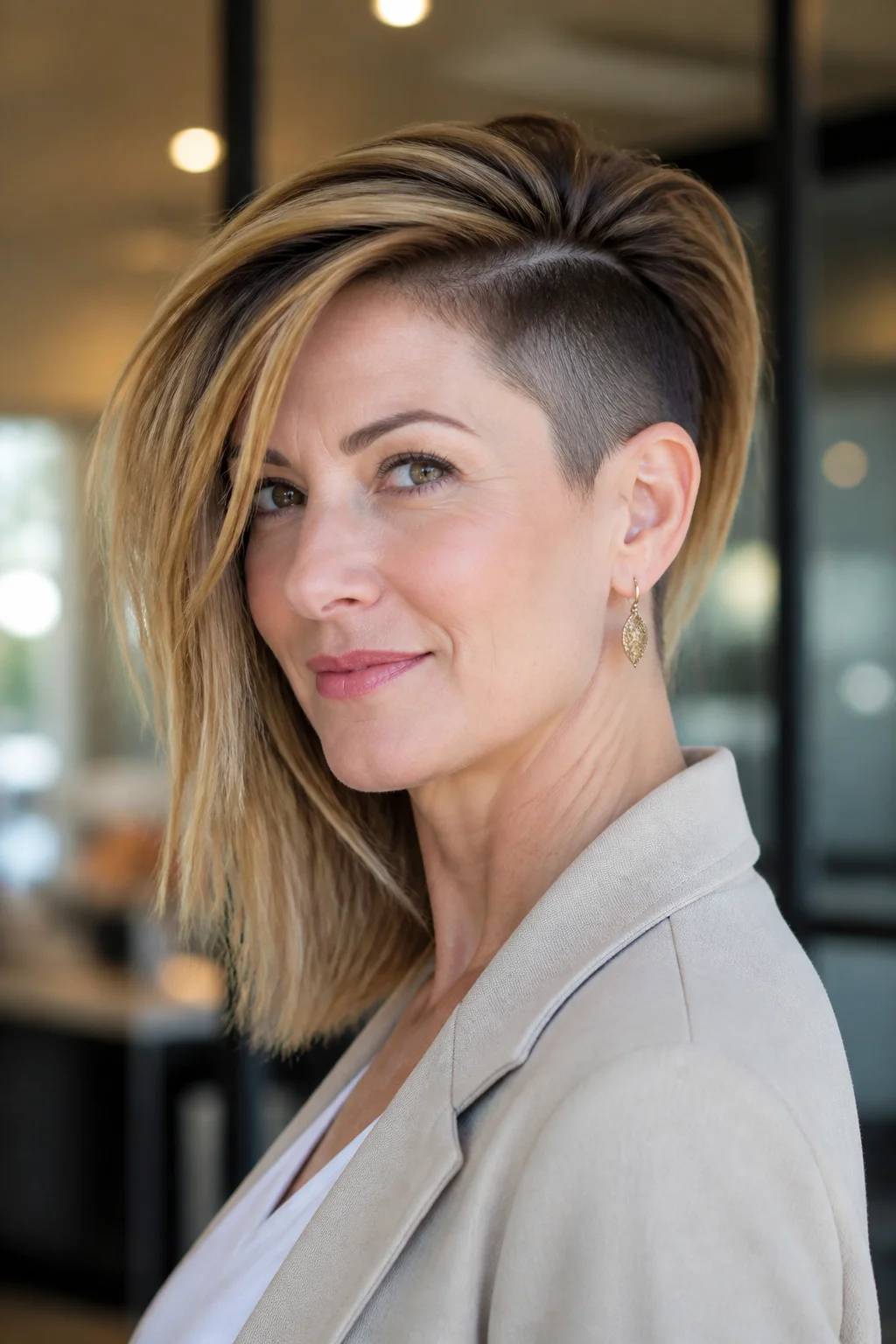
A close fade near one ear blends upward into progressively longer layers that flow into full length on the opposite side of the head. It’s a striking transition to watch in person, almost like the haircut has its own gradient built in. This one takes a stylist experienced with fades, since a poorly blended transition looks like a mistake rather than a style choice.
Flip Haircut (Asymmetrical Modern)
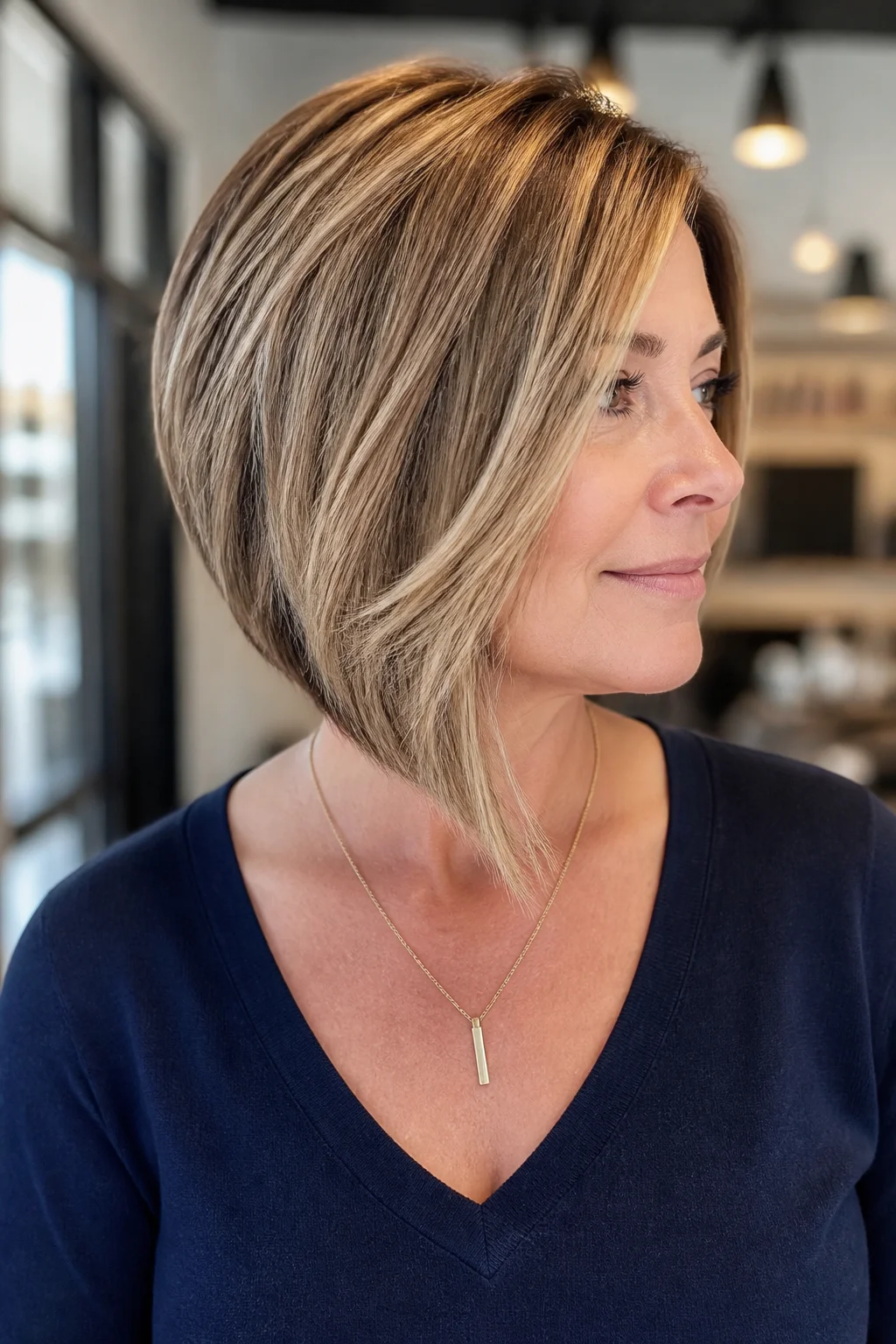
The flip haircut, popular decades ago, comes back here with uneven length and a modern asymmetrical edge instead of the old symmetrical flipped ends. One side flips outward at the collarbone while the other stays a bit longer and straighter. Tip: a light-hold mousse applied to damp hair helps the flip hold through the day without stiff product buildup.
Shear-Line Asymmetrical Pixie
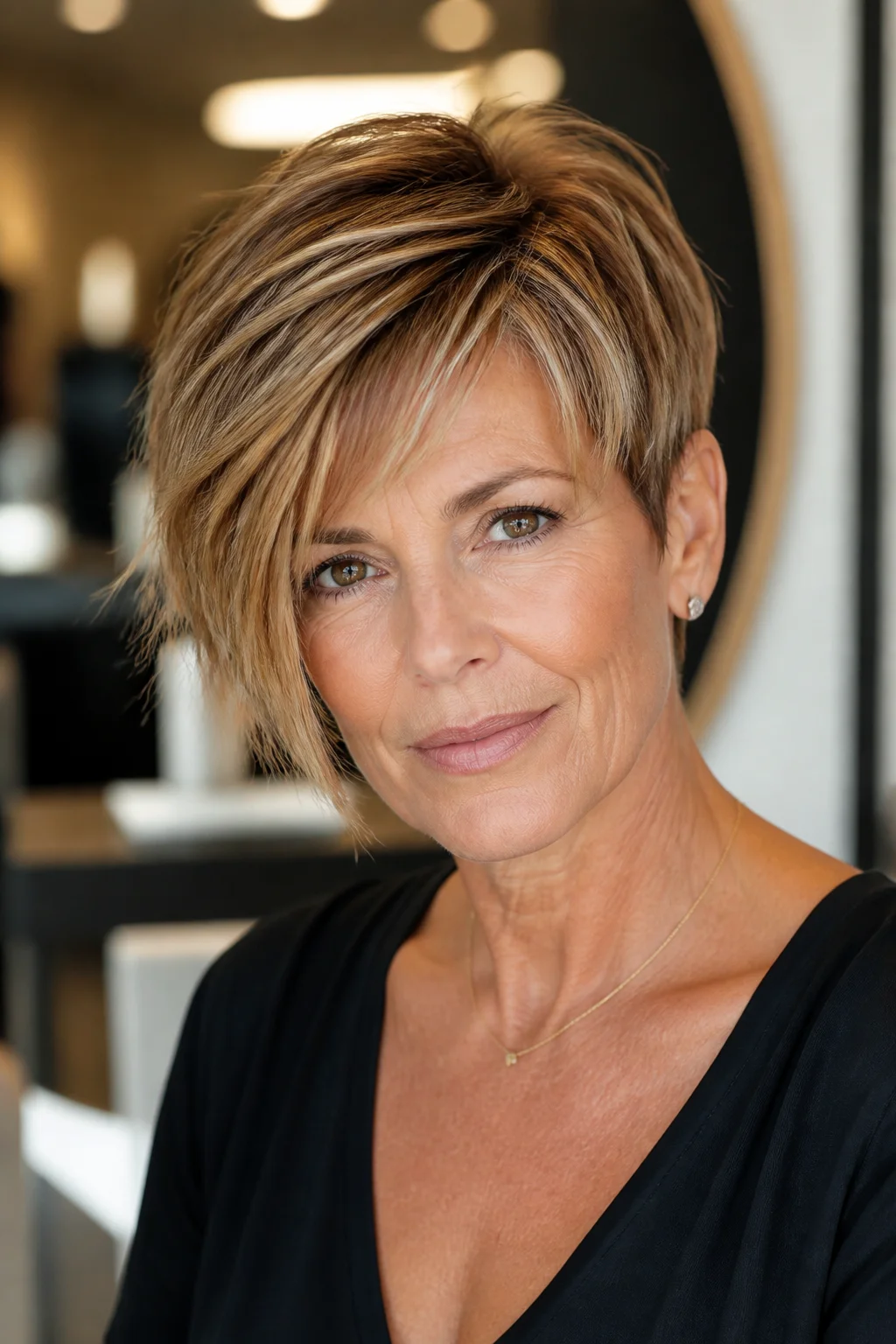
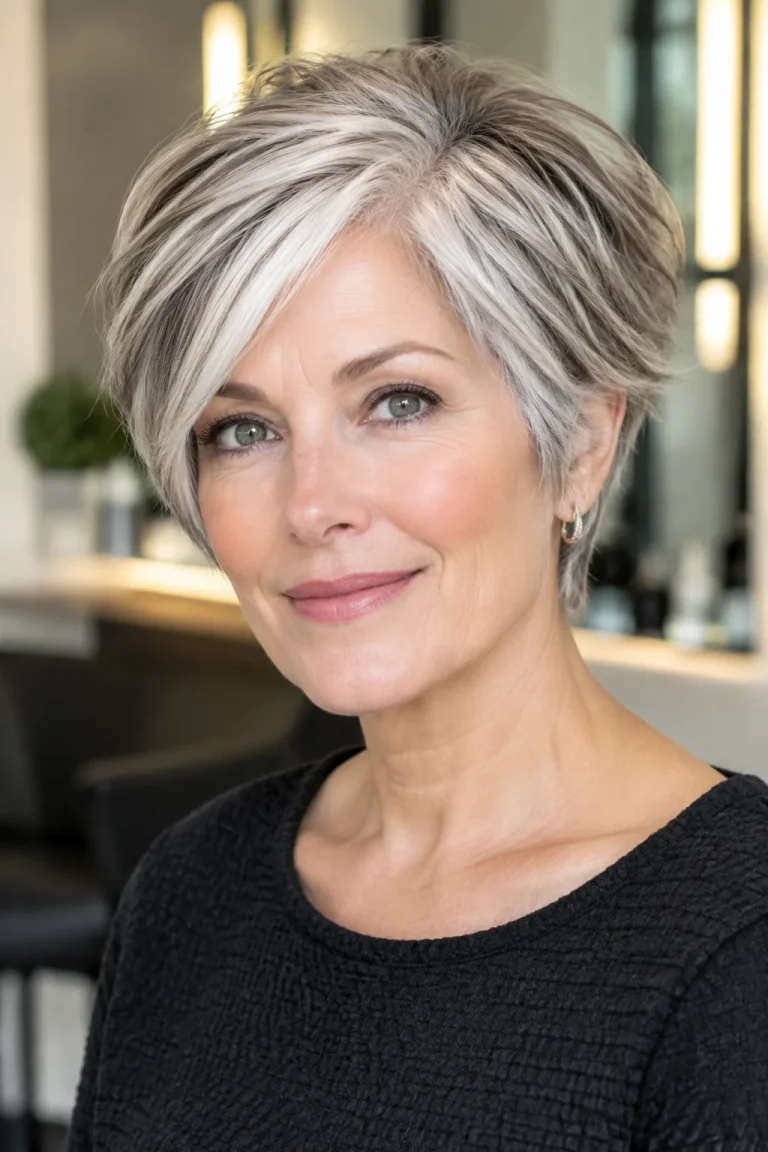
Cut with shears rather than clippers, this pixie has softer, more blended lines than a typical undercut pixie, with one side left a bit longer to break the symmetry. It’s a gentler introduction to short asymmetrical cuts for anyone nervous about going too severe. Honey brown hair on this length shows off soft color variation along the crop, since shorter hair reflects light differently than longer strands.
Layered Lob with Disconnected Back
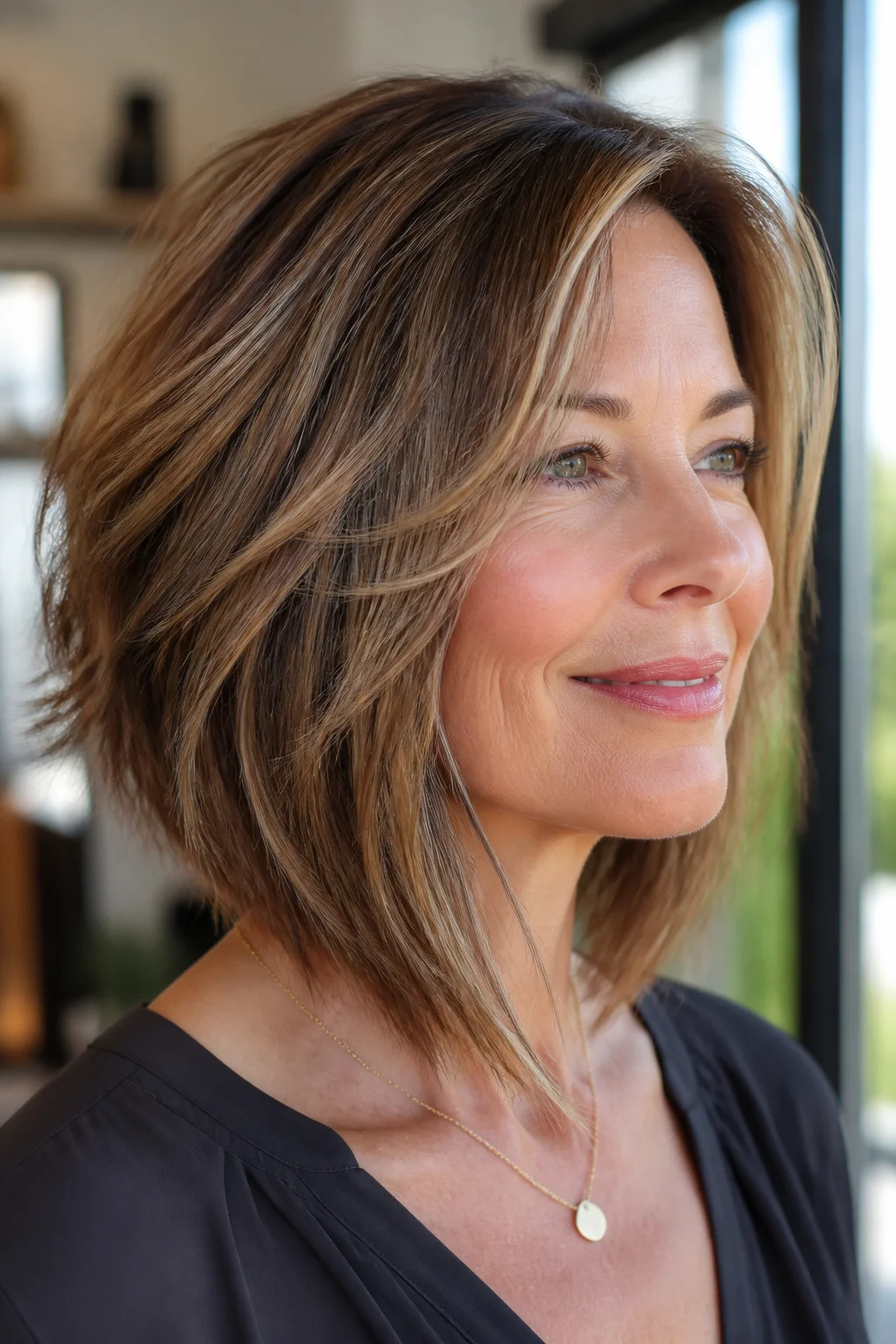
A long bob gets heavy internal layering plus a disconnected back section that sits shorter and separate from the rest of the cut. This creates depth from the side view that a standard lob doesn’t have. It’s a solid middle ground if you want texture and asymmetry but aren’t ready for anything above the shoulders.
Which Asymmetrical Cut Actually Fits You
Picking from twenty options gets overwhelming fast, so start with how much styling time you actually have each morning. The shear-line asymmetrical pixie and the razored asymmetrical pixie-bob hybrid both need almost no daily work once they’re cut right, while the shaggy layered asymmetrical cut and the choppy wolf cut depend on some texturizing product to look intentional rather than messy.
If you’re growing out a bob and don’t want to start over, the layered lob with disconnected back or the angled lob with feathered layers let you keep length while still getting an uneven silhouette. Anyone nervous about commitment should look at face-frame layers with asymmetrical emphasis first, since it’s the easiest to grow out or cut back to symmetrical if it’s not for you.
A common mistake is asking for the undercut fade to length without checking that your stylist regularly works with fades. A poorly blended fade grows out badly and looks patchy within a few weeks, while a clean one grows out smoothly for months. Bring in a photo, say the name of the cut, and confirm your stylist has done that specific transition before, not just a general undercut.
Honey brown as a base color works with nearly everything on this list, but cuts with more exposed layering, like the shag with uneven sides or the textured crop with long side piece, show off the tonal depth best since more strands catch light at different angles.