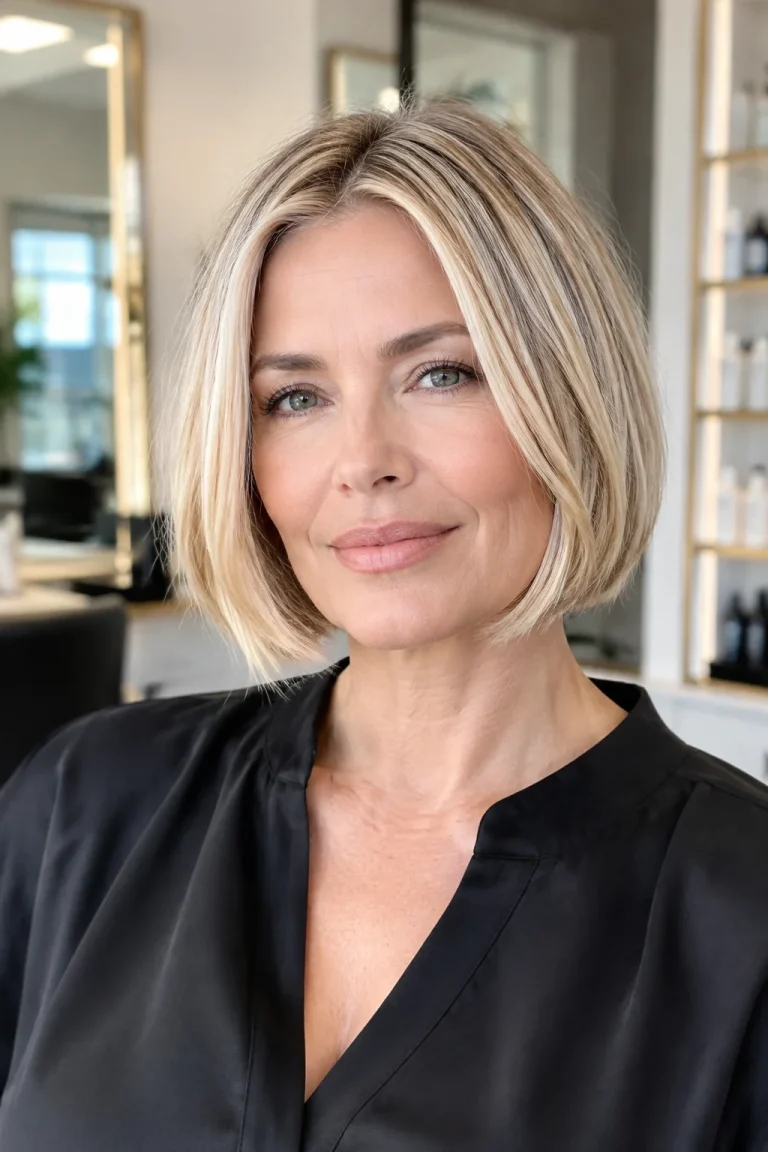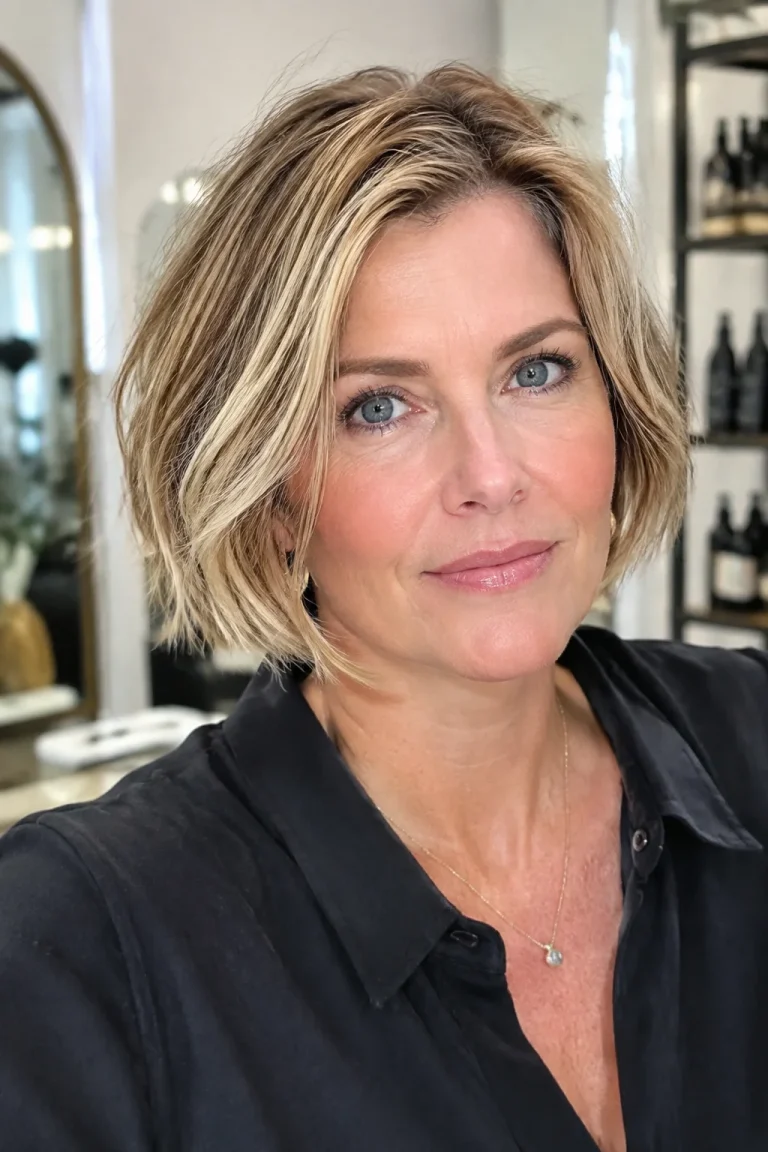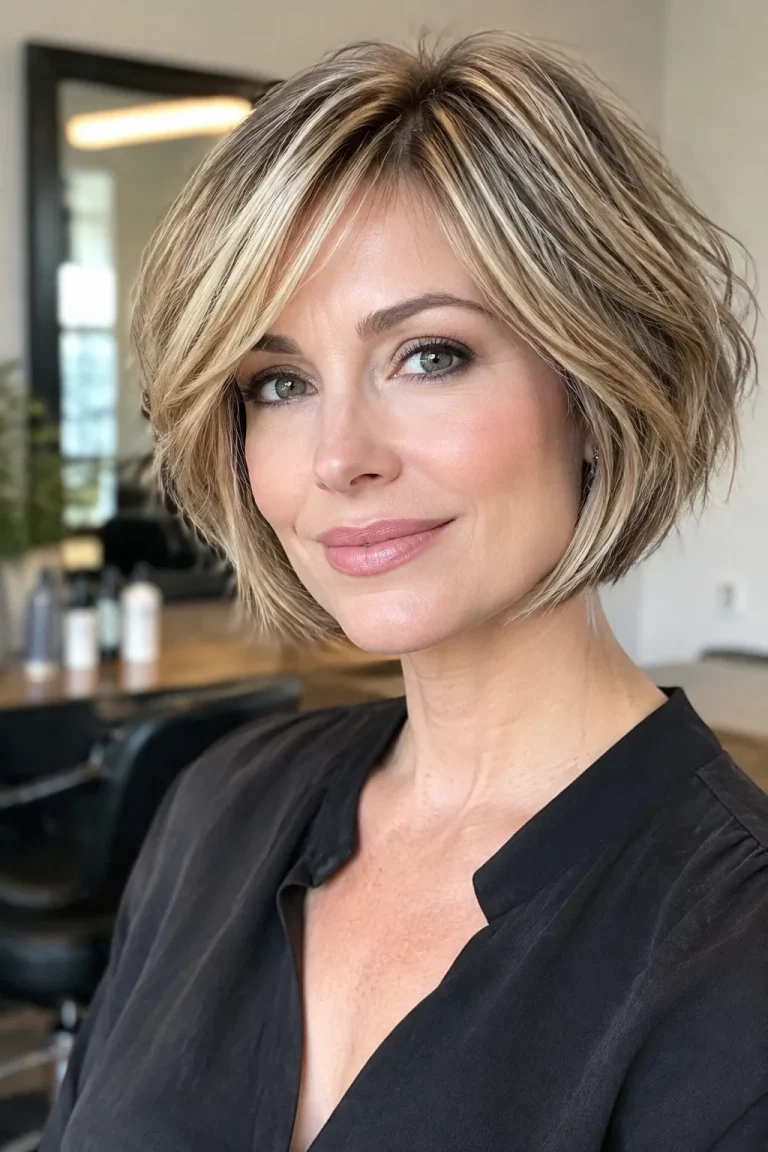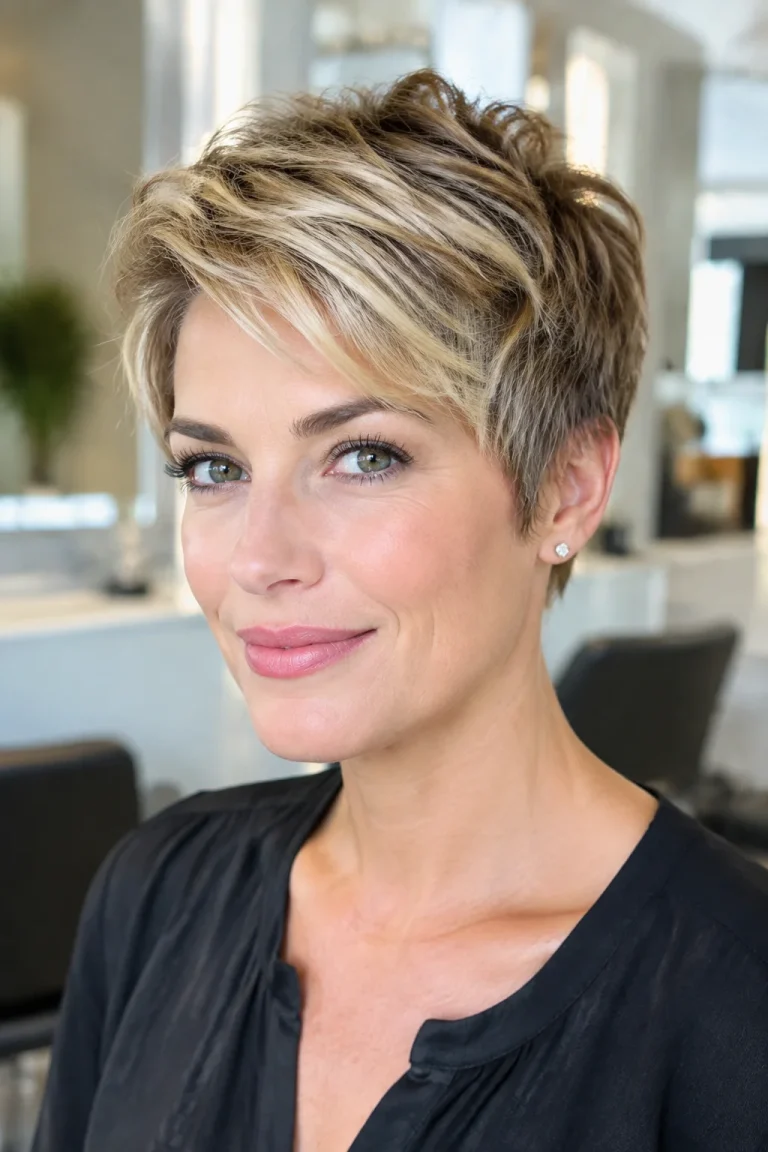
Thin, flat hair can feel impossible to style, no matter how much product you pile on. Strands lie down within an hour and your roots lose their lift before lunch. A good cut solves half the problem before you even pick up a blow dryer, which is exactly why volume-boosting short hair pixie cuts keep showing up in stylist recommendations for fine or limp hair. The right layers, texture, and shape give each strand something to push against, so your hair holds a lift instead of collapsing. Below are 23 pixie variations built around the same goal: more body, more texture, more shape, with less reliance on styling tools. Some lean soft and tousled, others go sharp and graphic. Pick the one that matches your face shape and how much time you’re willing to spend with a dryer each morning.
Textured Crown Pixie with Side Sweep
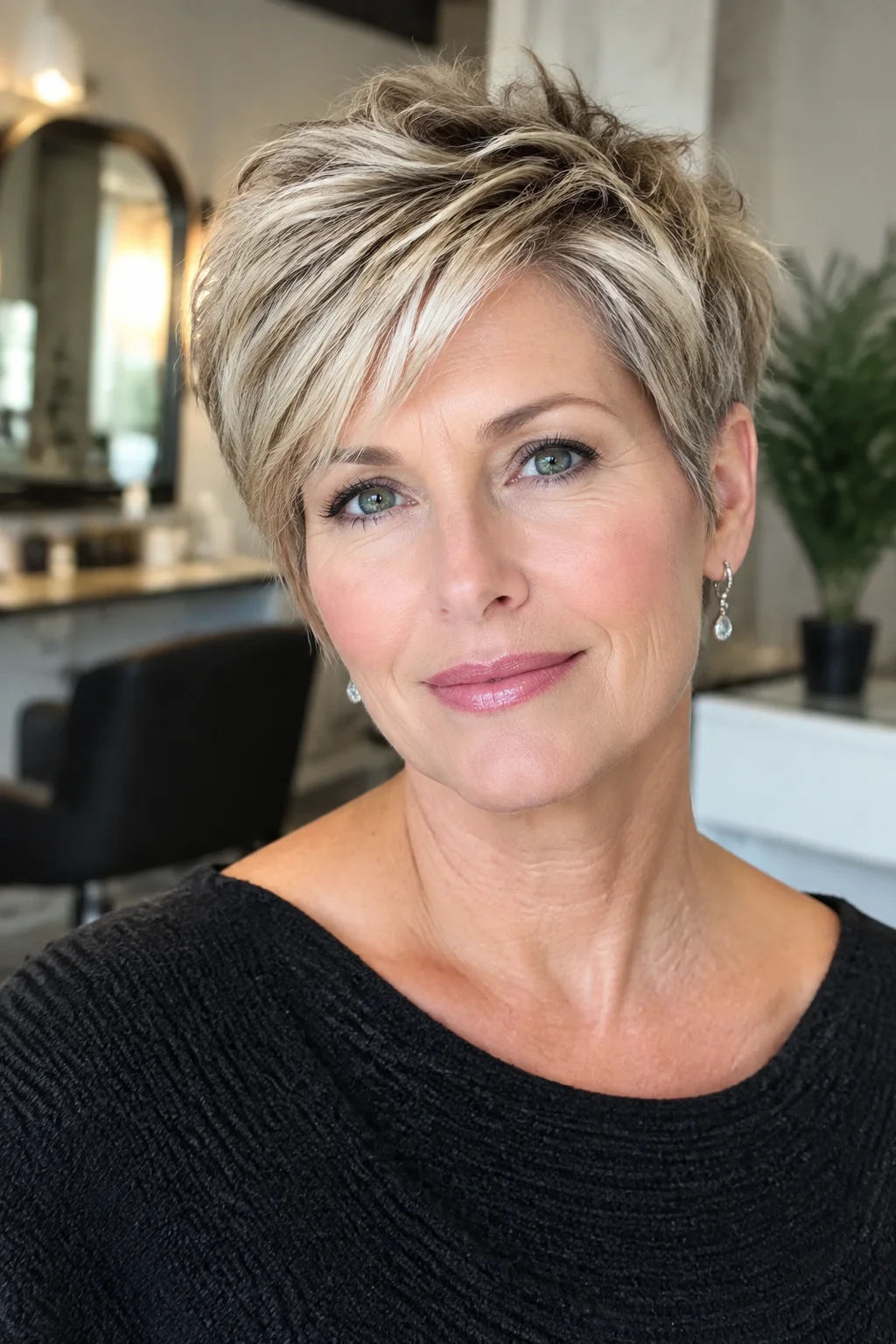
This cut piles short layers at the crown and lets them fall into a side sweep instead of lying flat against the scalp. The lift at the top balances a round or square face nicely. Ask your stylist for point cutting through the crown so each layer stands up on its own rather than relying on backcombing. Tip: a small amount of matte paste worked into damp roots keeps the lift going through the afternoon. A light mist of heat protectant before styling helps the finish last. A light mist of heat protectant before styling helps the finish last.
Shaggy Pixie with Choppy Layers
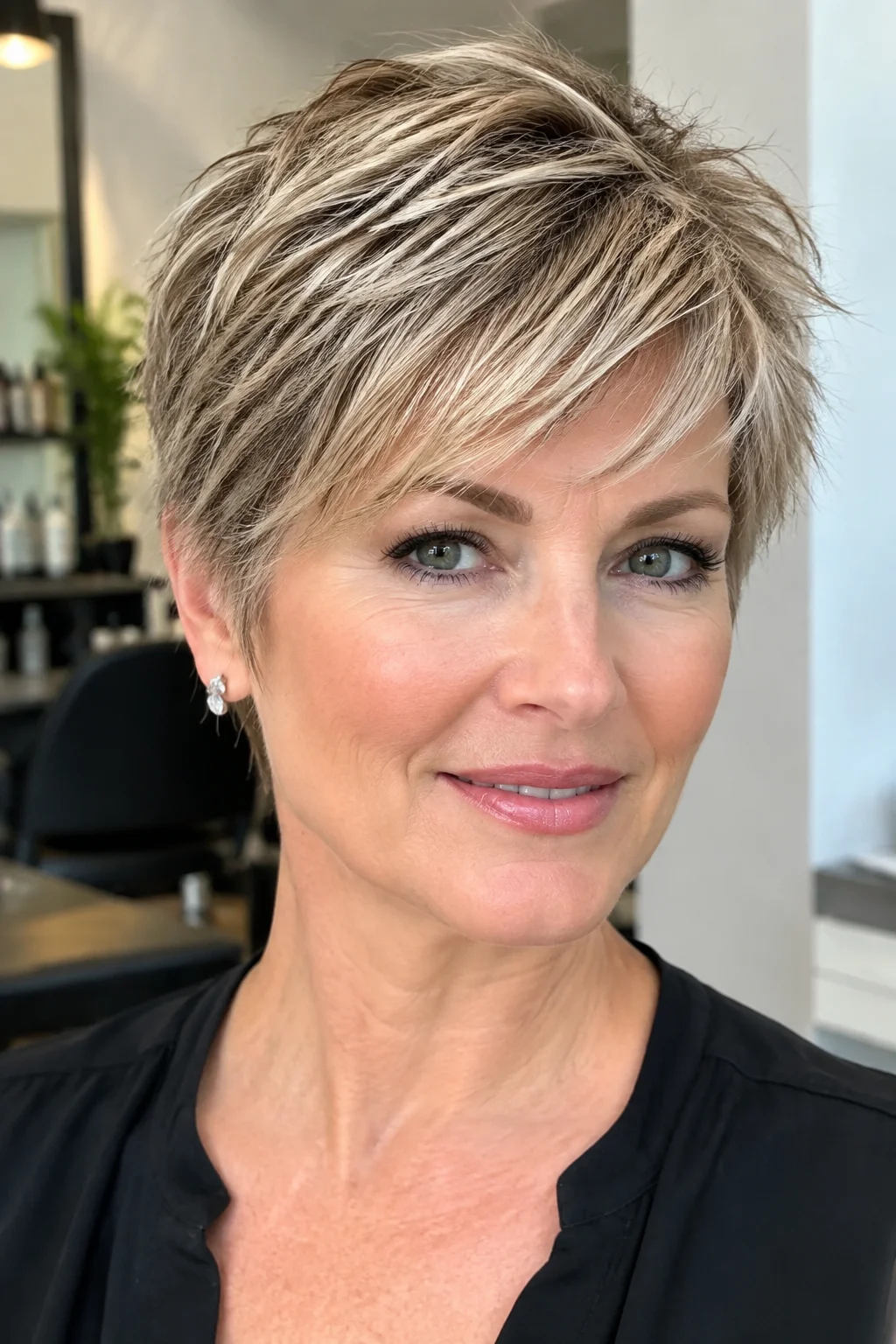
Choppy layers cut at irregular lengths break up the smoothness that makes fine hair look thin. This version skips the tidy, blended finish of a classic pixie and goes rougher on purpose. Short pieces around the crown stick up slightly while longer layers near the ears soften the edges. It reads casual and a little undone, which actually works in your favor since perfection draws attention to sparse spots. A light mist of heat protectant before styling helps the finish last. A light mist of heat protectant before styling helps the finish last.
High-Stacked Undercut Pixie
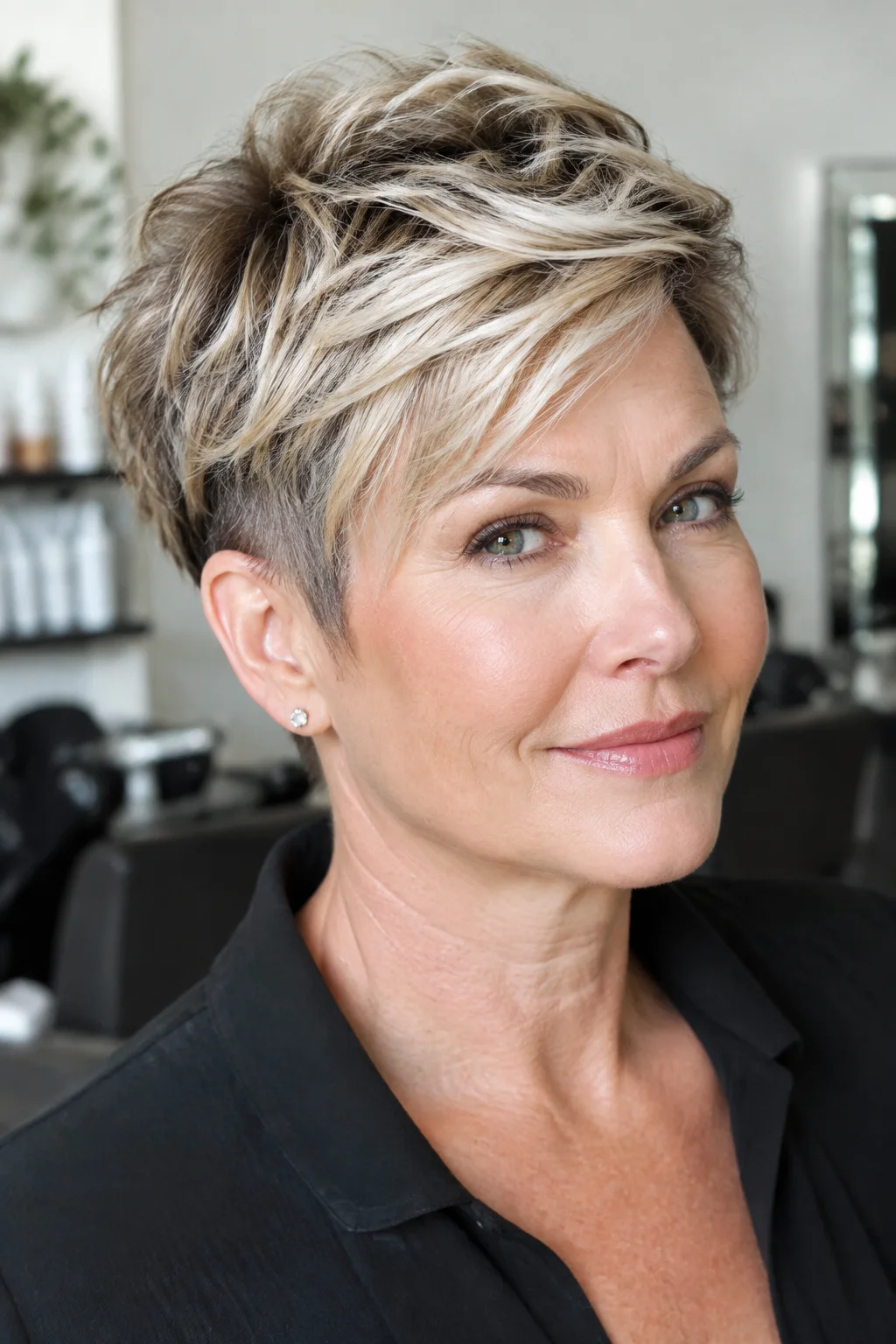
The sides and back get buzzed close while the top stays long enough to style in several directions. Stacking refers to how the layers build on top of each other at the back, creating a shelf of volume rather than a flat slope. This is one of the more dramatic volume-boosting short hair pixie cuts on this list, and it suits anyone who wants a bold, graphic shape. The undercut also means less hair to manage daily, since only the top needs real styling attention.
Cropped Curly Pixie with Defined Coils
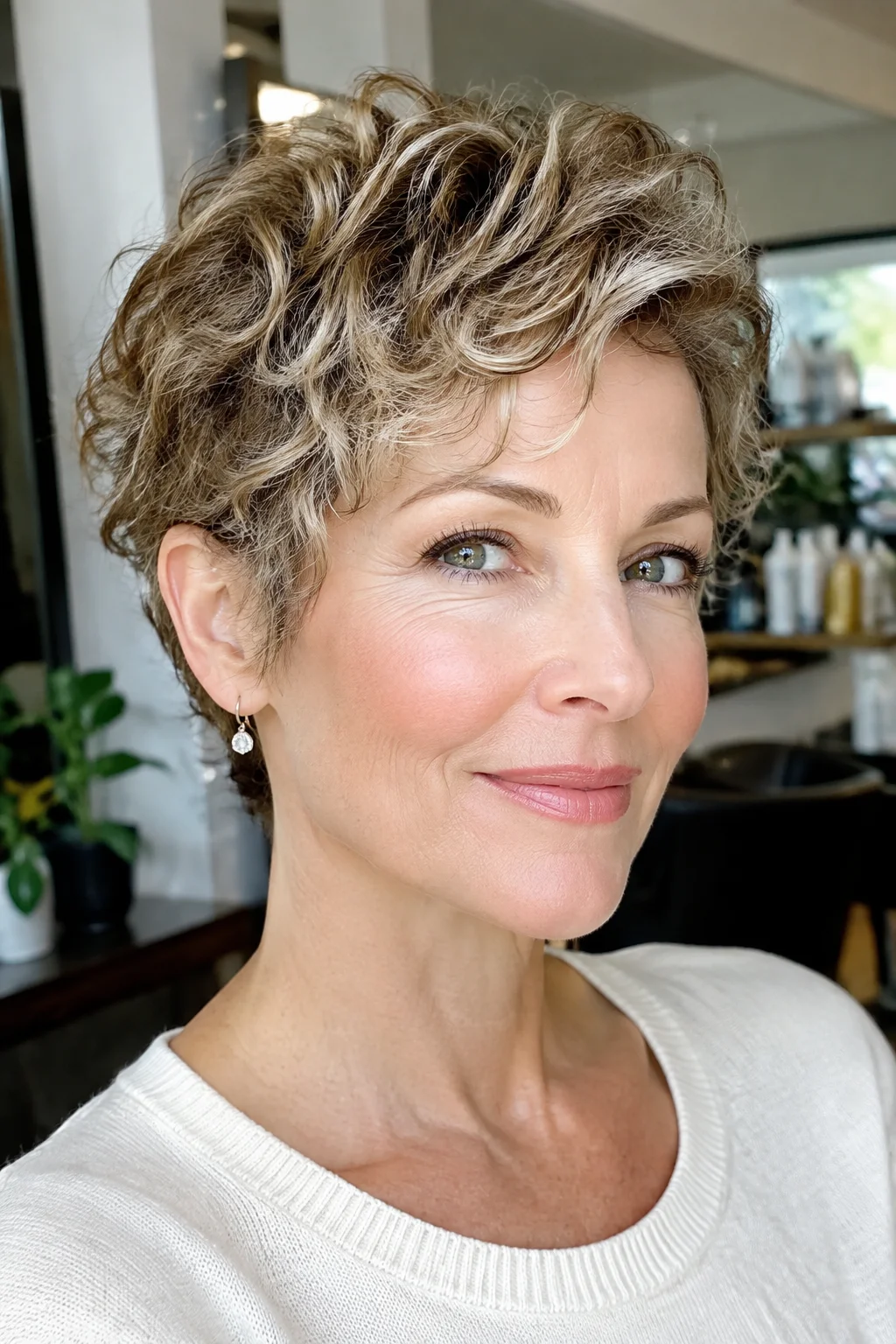
Curly hair already has natural lift, and cutting it short lets every coil show its shape. This crop keeps length uneven across the head so curls of different sizes cluster together instead of forming one uniform round shape. A curl-defining cream applied to soaking wet hair, then left alone to dry, gives the cleanest result. Avoid touching the curls while they dry or you’ll end up with frizz instead of definition.
Feathered Pixie Bob Hybrid
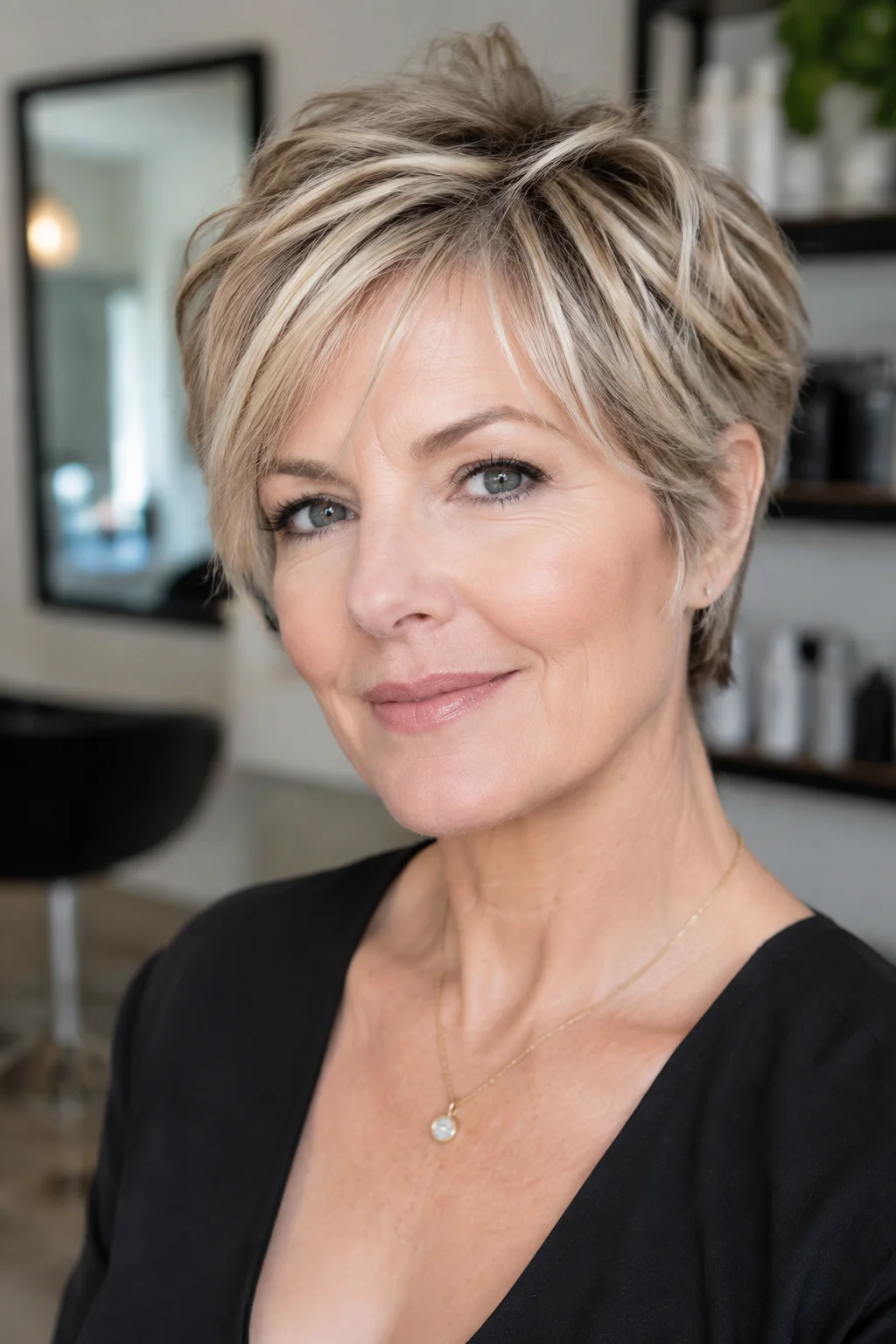
This style sits between a pixie and a bob, longer through the nape and sides than a true pixie but shorter than a lob. Feathered ends taper gradually instead of cutting straight across, which keeps the silhouette from looking heavy. It’s a solid middle ground if you’re not ready to commit to a fully cropped look but still want noticeable lift at the roots.
Razor-Cut Textured Pixie
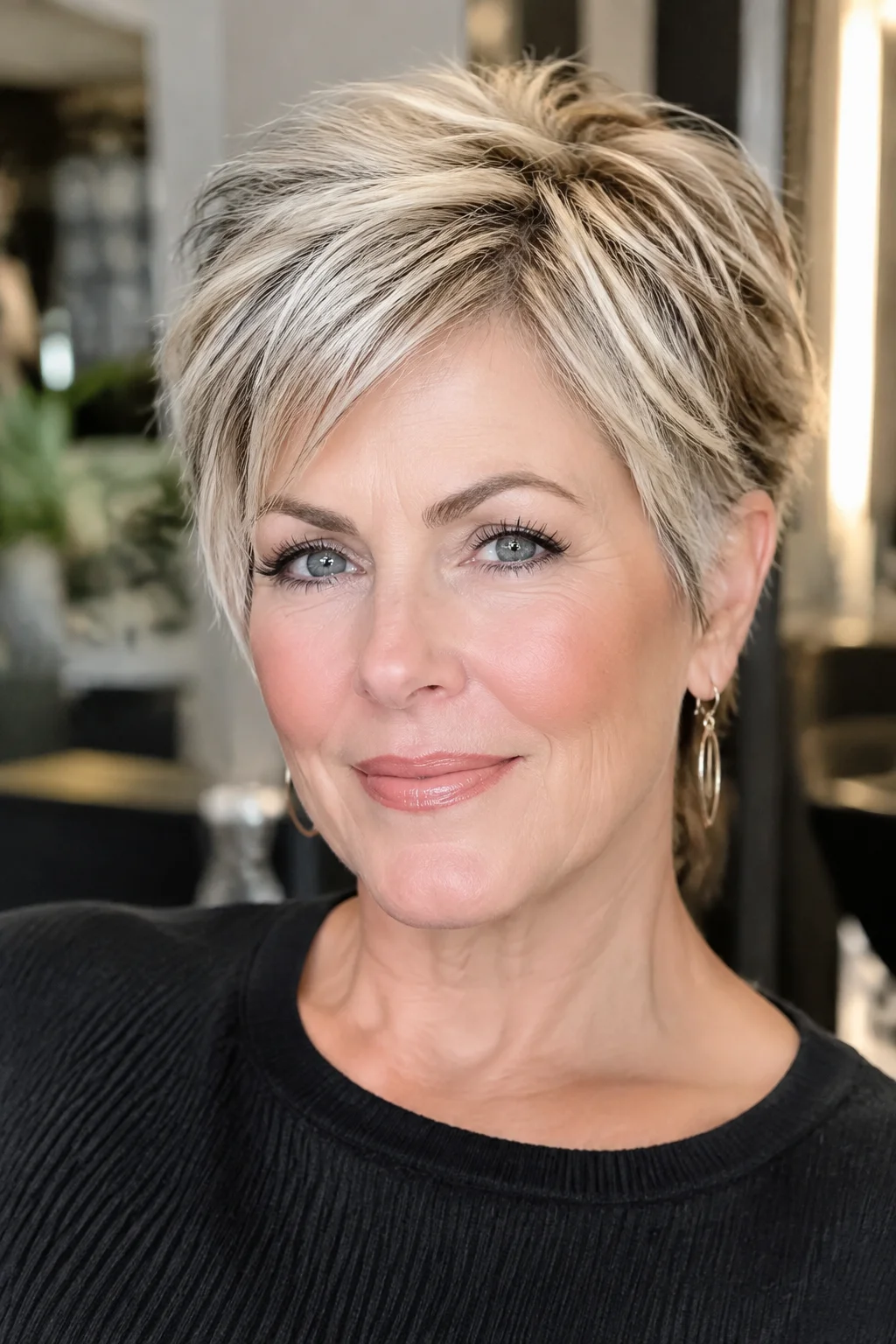
A razor removes weight from the ends rather than cutting straight across with shears, leaving soft, feathery tips that catch air easily. Fine hair benefits because the lighter ends don’t drag the rest of the style down. Ask for razor work concentrated at the crown and around the face for the most lift. Tip: skip heavy conditioner on the ends and keep moisture focused at the mid-lengths so the texture holds.
Spiky Pixie with Matte Finish
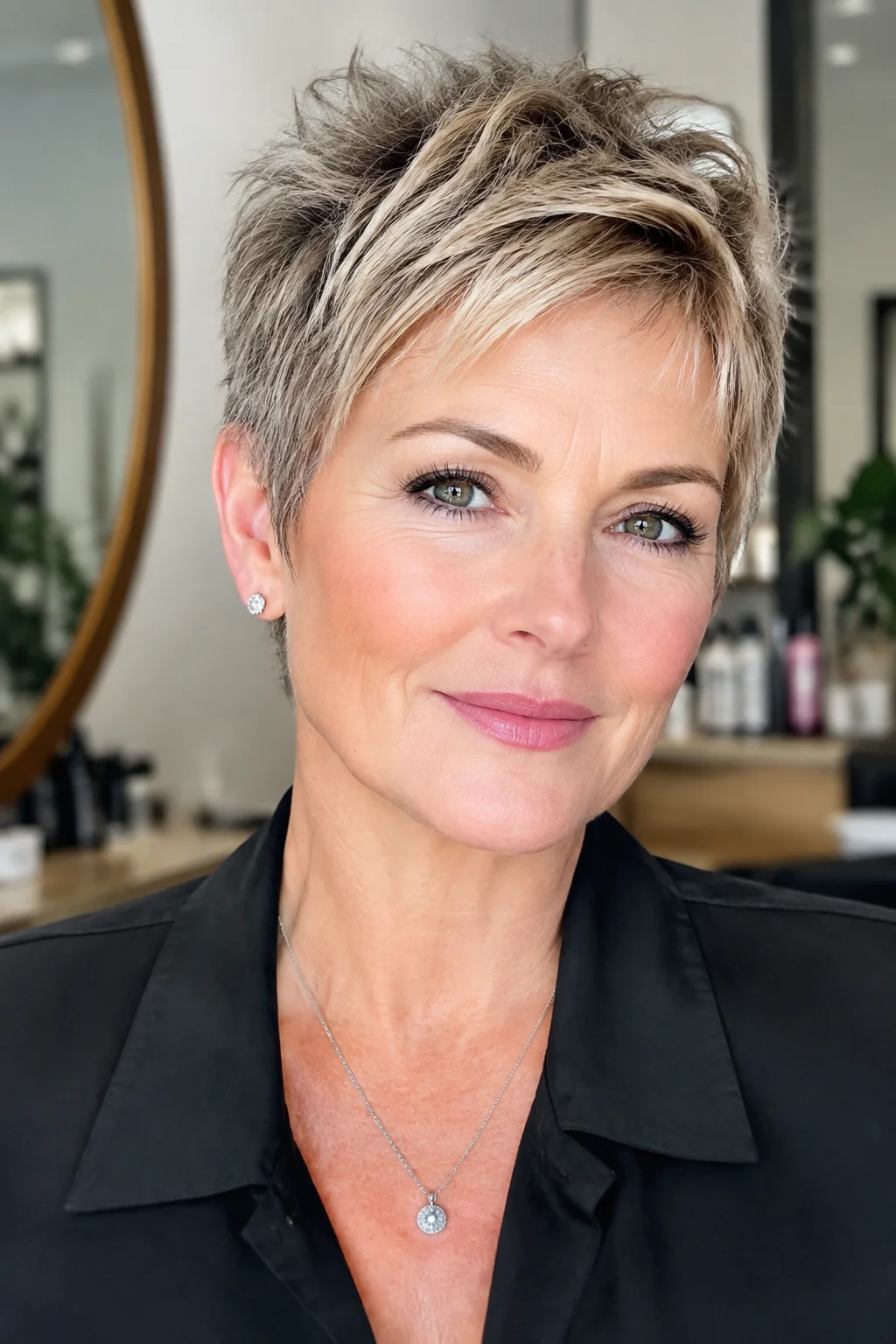
Short layers gelled or waxed into small spikes give instant height without a blow dryer doing all the work. A matte product matters here since anything glossy will weigh the spikes down and flatten them within minutes. This look suits someone who wants a low-maintenance morning routine and doesn’t mind a slightly edgier finish.
Tousled Pixie with Longer Fringe
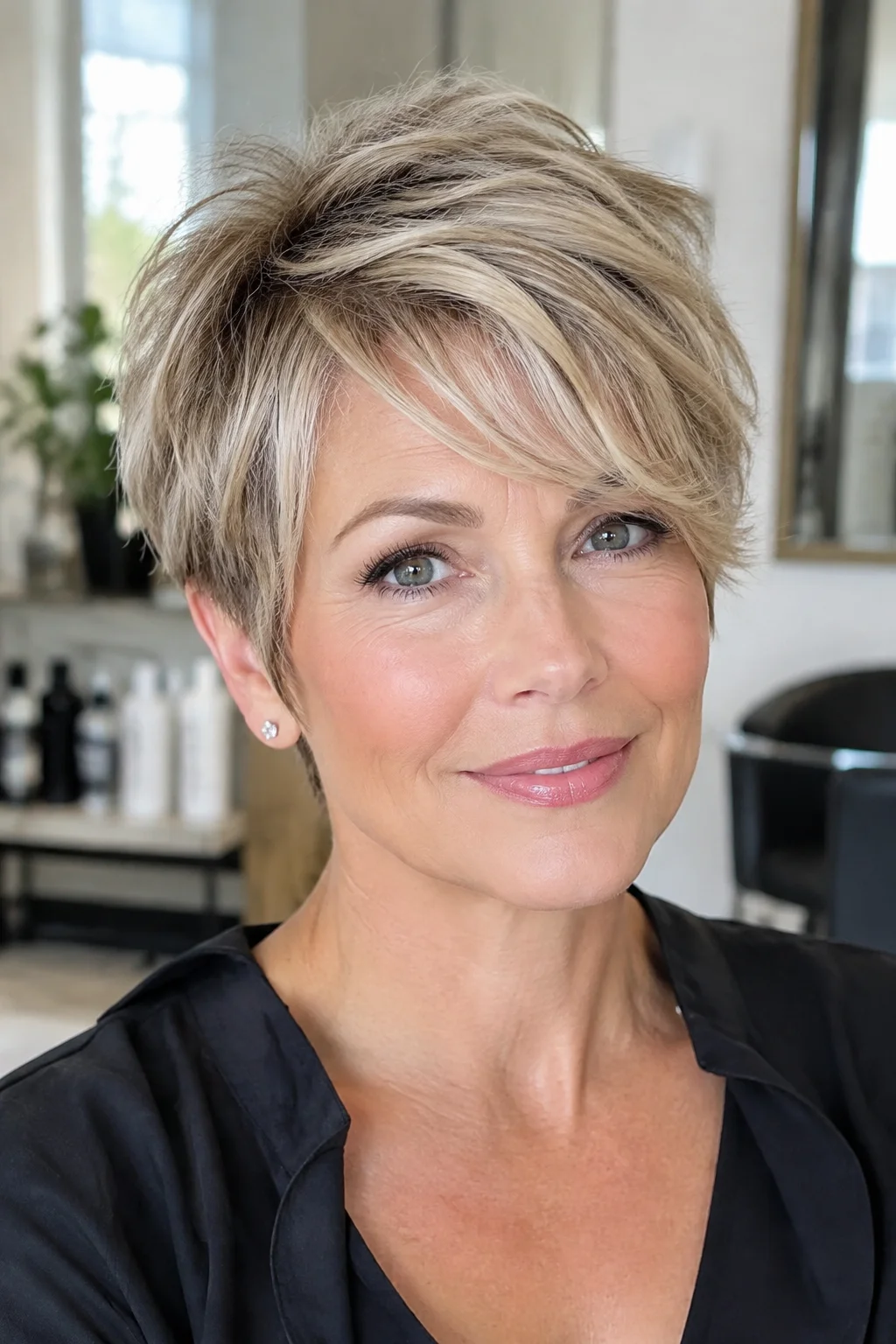
Keeping the fringe a bit longer than the rest of the cut gives you something to sweep across the forehead or push back off the face. The tousled finish comes from scrunching a texturizing spray into damp hair and letting it air dry partway before finishing with a diffuser. It’s forgiving on growing-out days since the longer pieces blend new growth more easily than a blunt, short fringe would.
Disconnected Pixie Fade
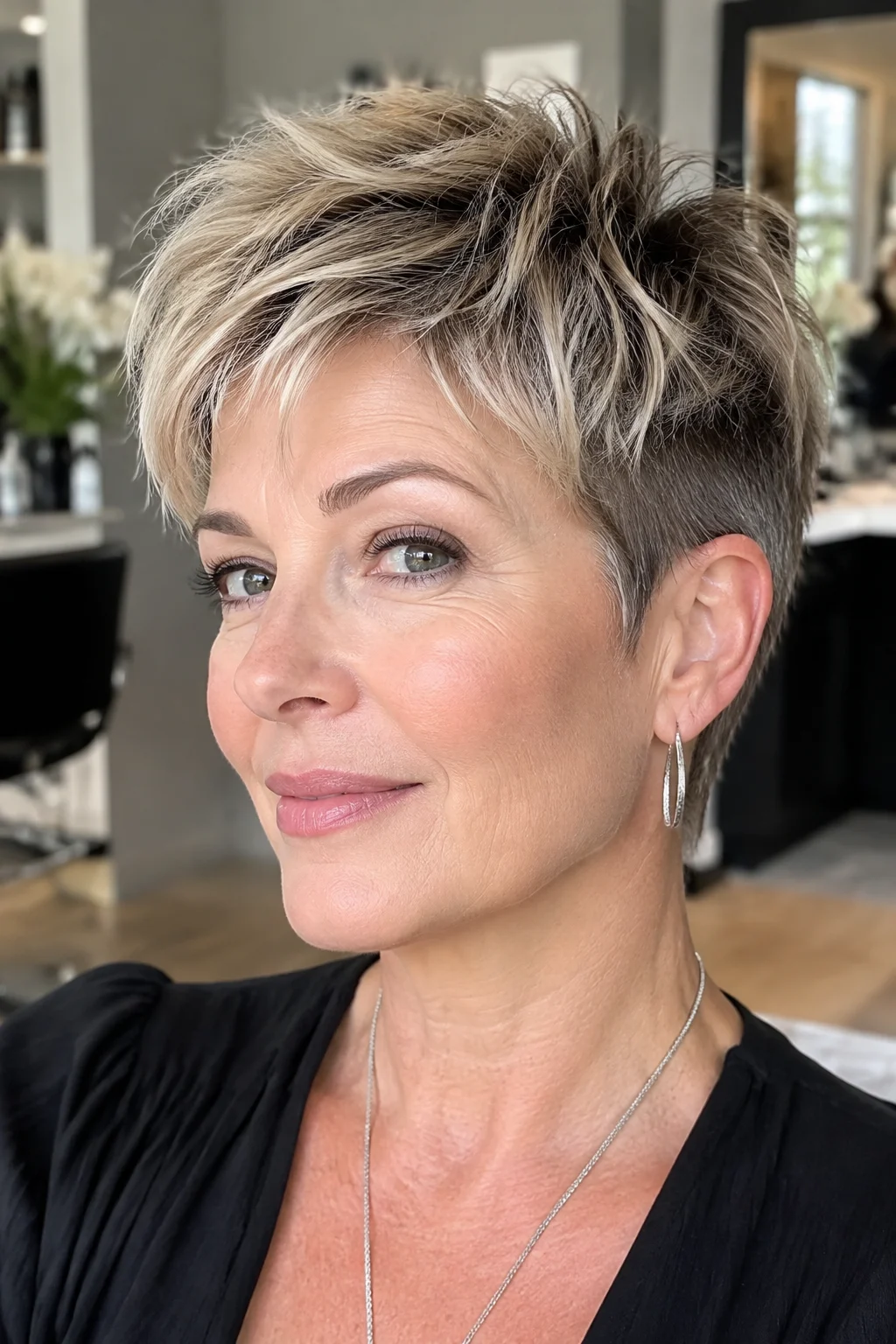
A fade on the sides creates a hard contrast against longer, choppier pieces on top, and that disconnection is the whole point of the style. Unlike a blended pixie where lengths gradually shift, this version keeps the short sides and longer top visually separate. It’s a strong choice if your hair is fine but you still want a bold, structured silhouette. The fade also grows out more gradually than a full undercut, so upkeep visits can stretch a little longer.
Wavy Pixie with Finger-Combed Texture
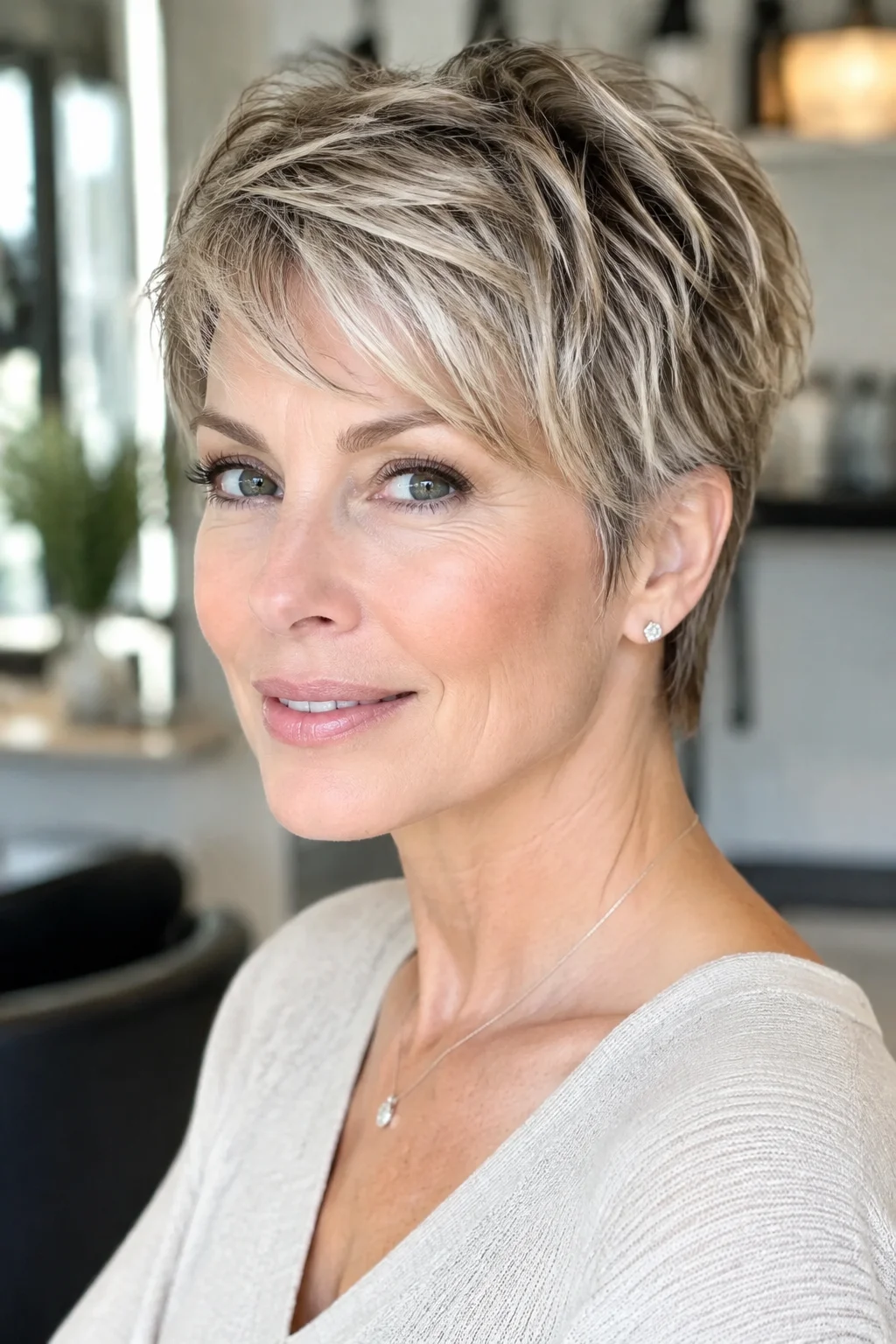
Natural waves get a boost here through finger combing rather than brushing, which keeps the wave pattern intact instead of smoothing it into flat strands. A light sea salt spray on damp hair before air drying enhances the texture without making it stiff. This cut works well for anyone who wants movement without heat styling.
Cropped Pixie with Long Wispy Bangs
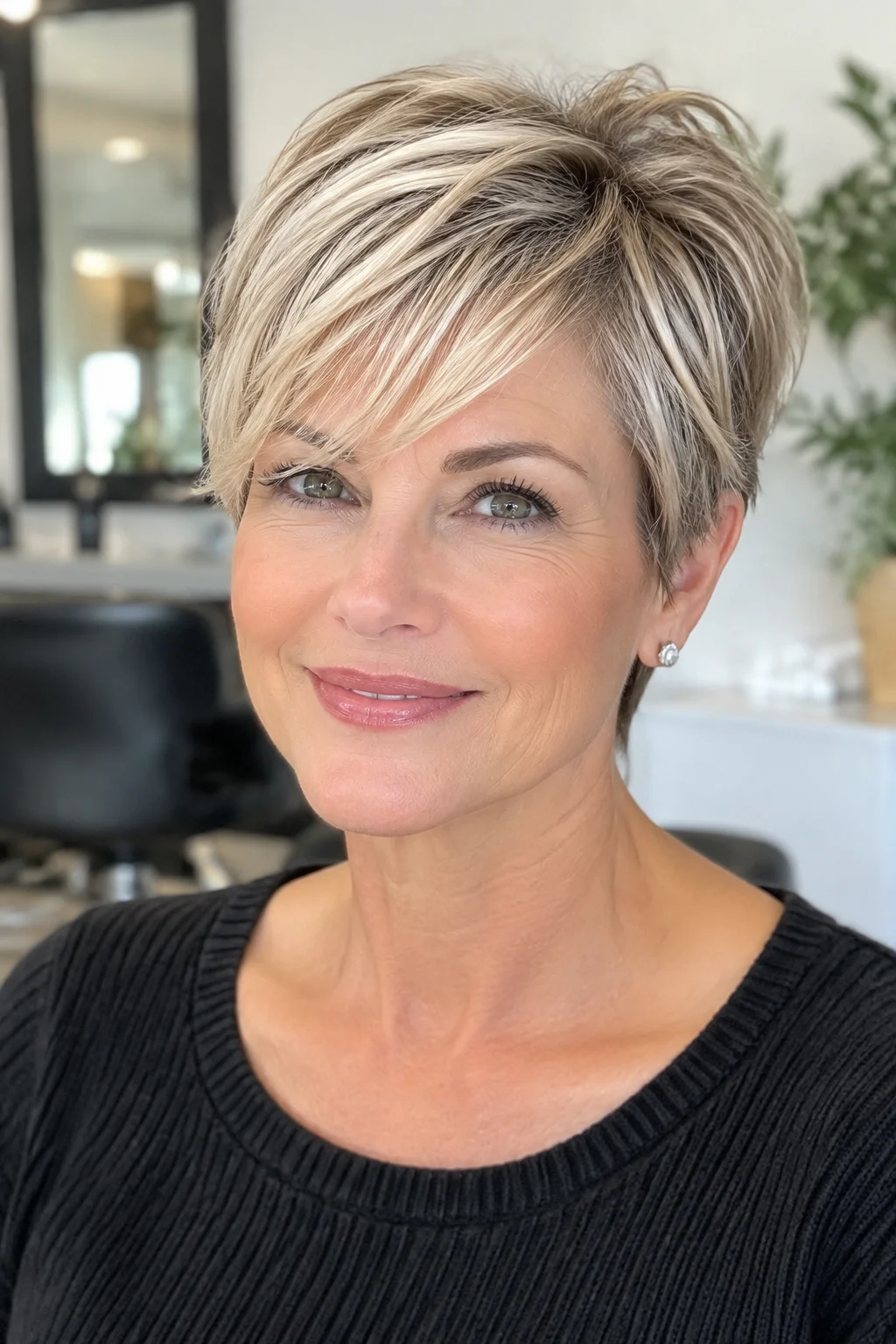
The back and sides stay short and close while the bangs grow out long enough to sweep across one side of the forehead. Those wispy bangs soften the overall crop and give you a styling option beyond the usual short-all-over look. Thin, feathered ends on the bangs keep them from looking like a heavy curtain.
Pompadour Pixie
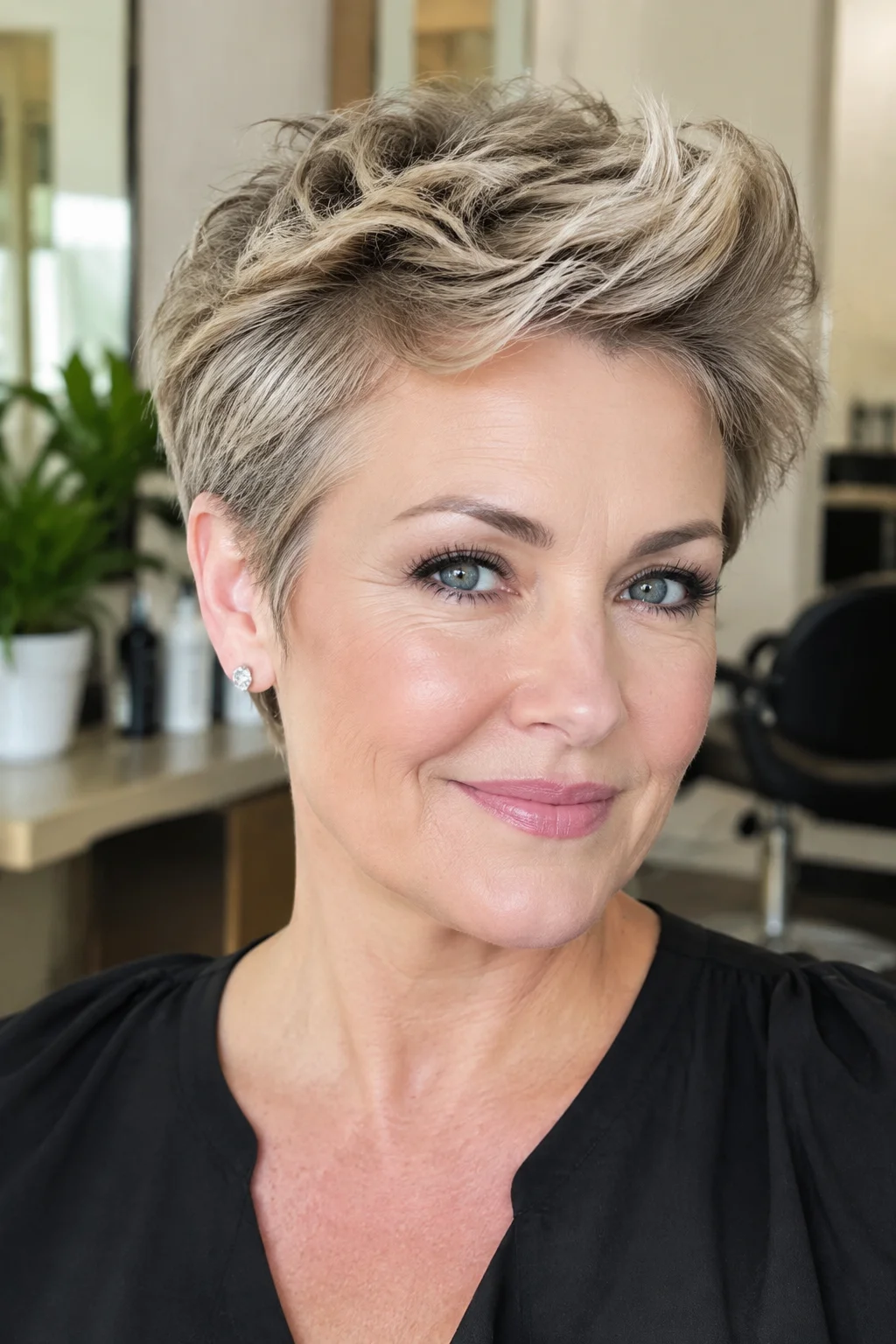
Volume gets pushed up and back at the front, similar to a classic pompadour but scaled down for short hair. This works especially well on fine hair since the style is built entirely around lift rather than length. A round brush and a blast of heat at the roots sets the shape, and a flexible-hold spray keeps it from collapsing by early afternoon.
Textured Pixie with Bleached Tips
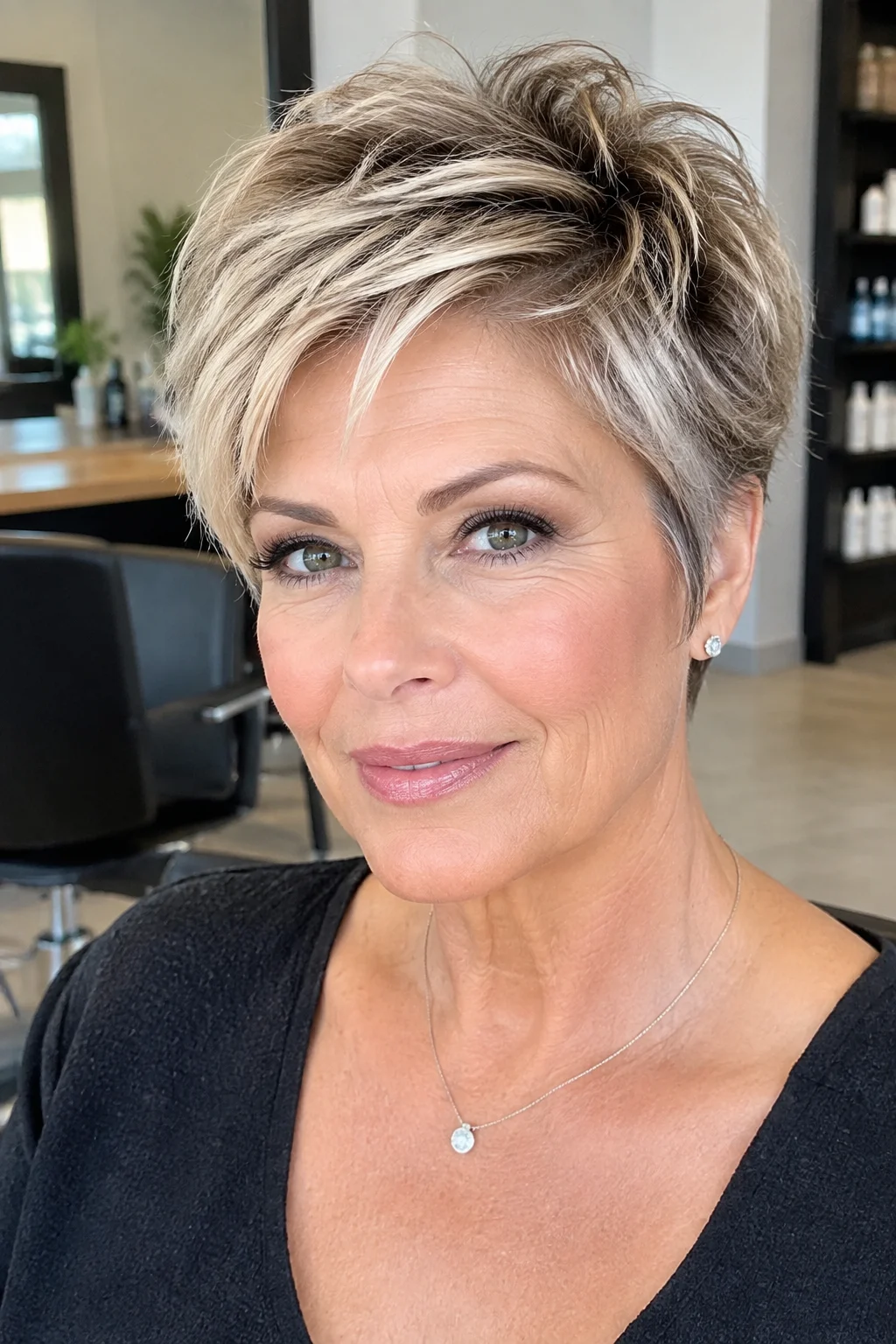
Lightened ends create a visual break between the roots and the tips, which tricks the eye into seeing more density than actually exists. This works on nearly any short cut, but it shows up best on choppy, textured layers where the lighter pieces catch the light individually rather than blending into one mass. Keep in mind that bleached ends need regular conditioning treatments to avoid breakage, since lightened hair is already more fragile than the rest of your strands.
Choppy Asymmetrical Pixie
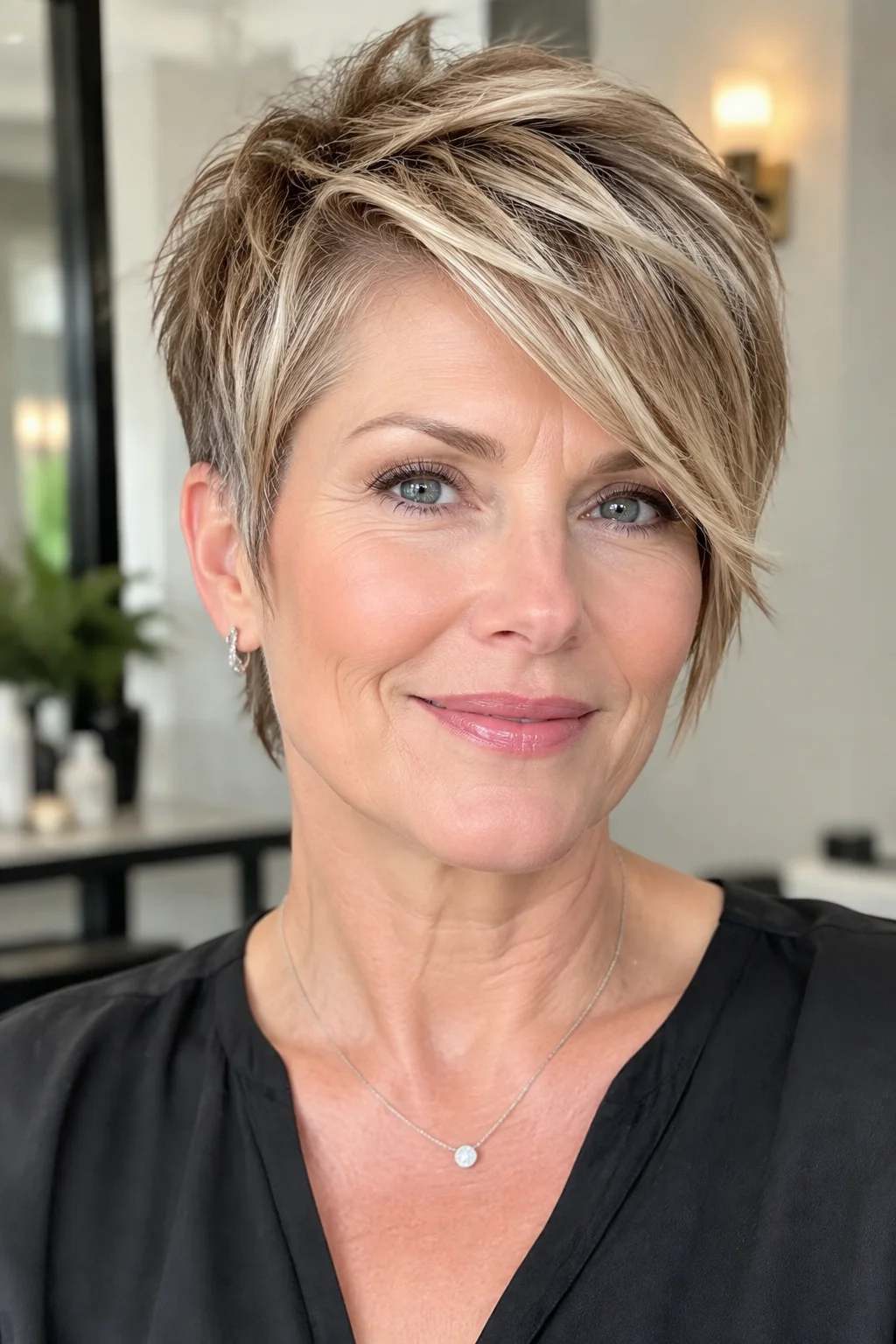
One side cut noticeably shorter than the other breaks the symmetry that can make short hair look plain. Asymmetry draws the eye across the face rather than straight down, which is a nice trick if you want attention on your cheekbones. Ask your stylist to keep the choppy texture consistent on both sides even though the lengths differ, or the imbalance can look accidental instead of intentional.
Messy Textured Pixie
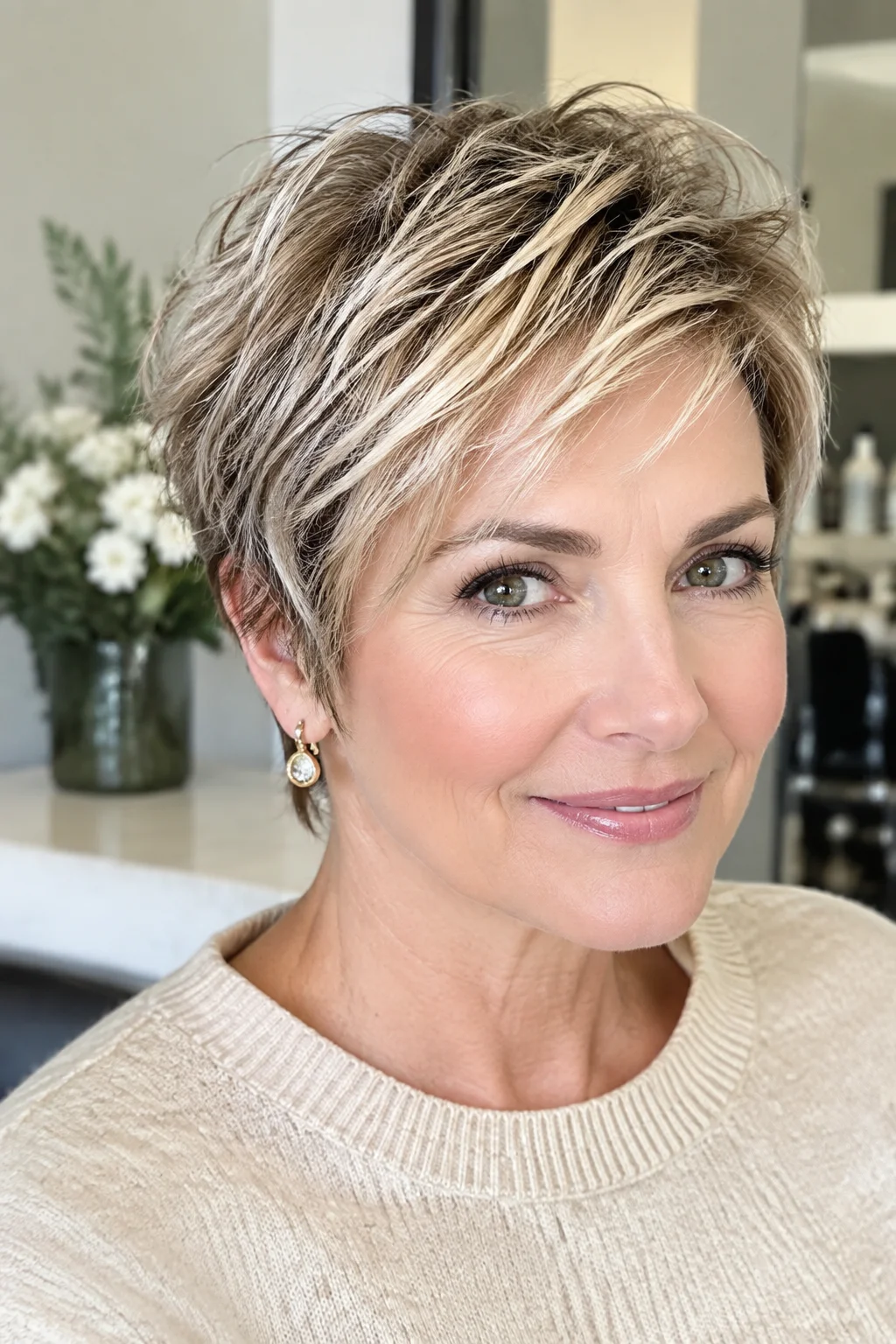
This one skips precision entirely and leans into a lived-in, just-got-out-of-bed finish. Layers are cut short and choppy throughout, then styled with a dry texturizing spray and tousled by hand. There’s no blow dryer required, which makes it one of the easier volume-boosting short hair pixie cuts to maintain on busy mornings. Reapply a little spray midday if the ends start to soften.
Layered Pixie with Curved Sides
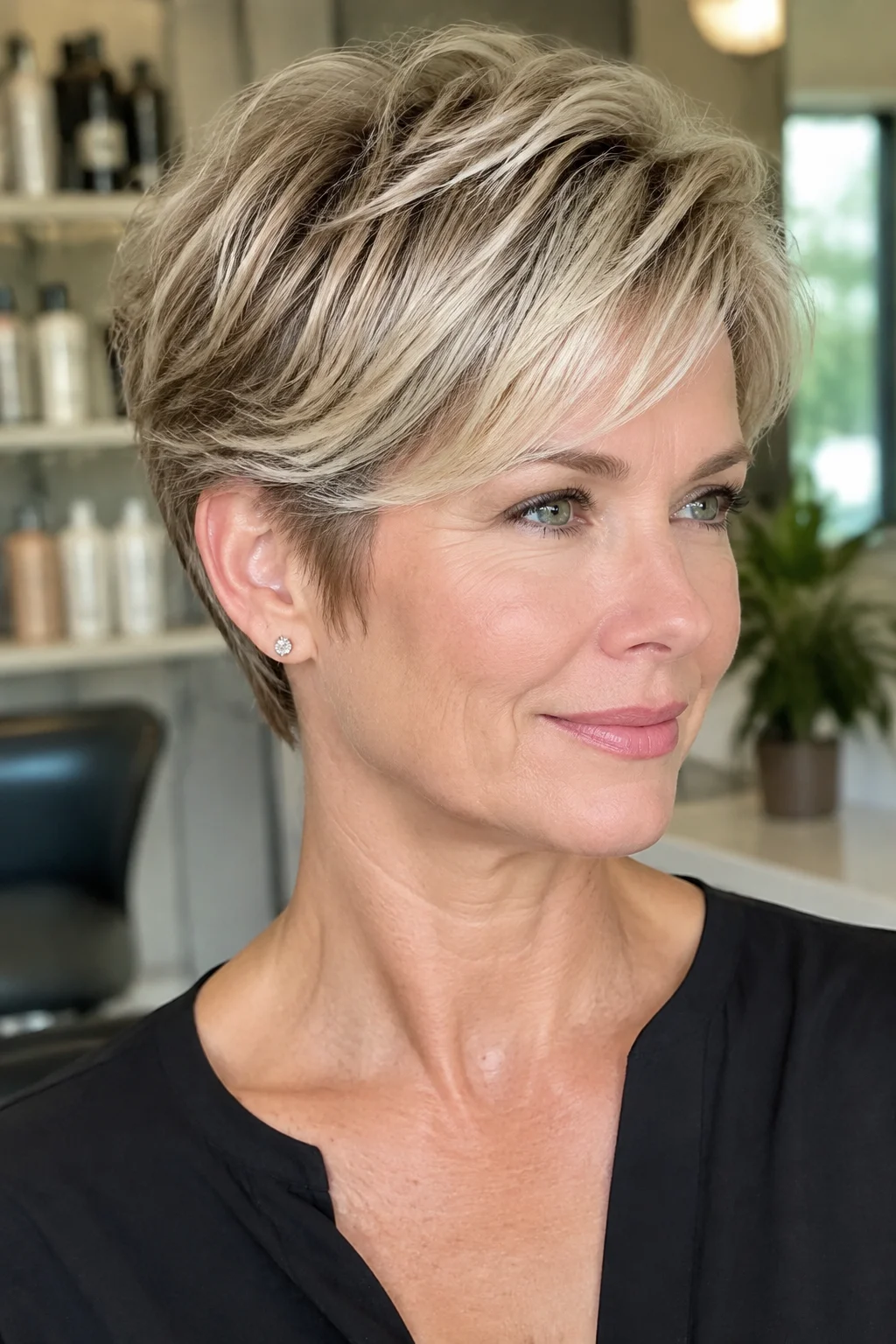
Layers here are cut to curve gently around the ears and jaw instead of sitting in a straight line. The curved shape is softer than a blunt pixie and flatters most face shapes, particularly square or angular ones. It’s a safe, wearable option if you want volume without anything too sharp or graphic.
Faux Hawk Pixie
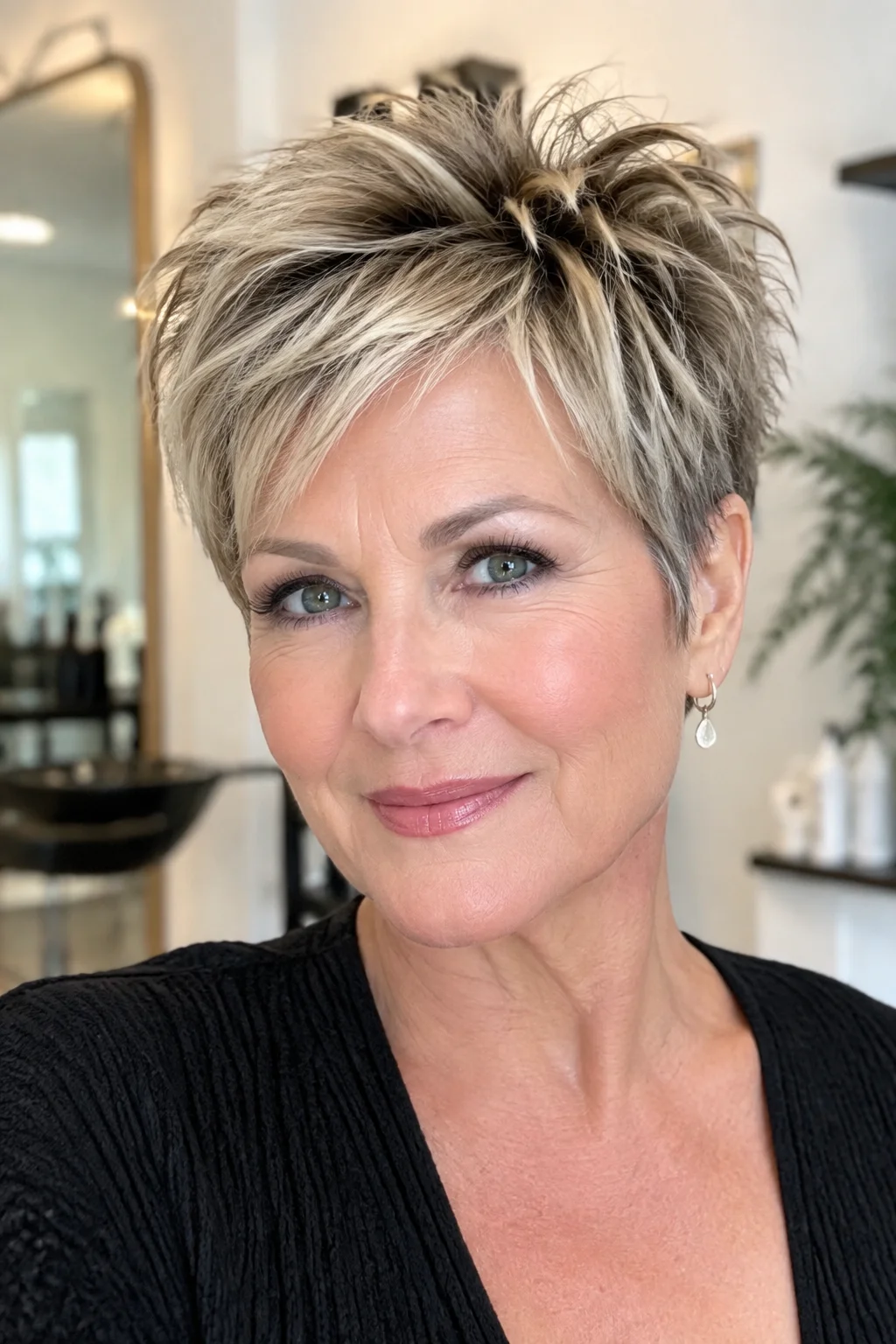
Hair at the center of the head gets styled upward into a subtle mohawk shape while the sides lie flatter. This isn’t as extreme as a true mohawk, just enough lift down the middle to create a strong center line. Gel or a strong-hold pomade worked through damp hair and then sculpted upward gives the cleanest result. Tip: comb the center section up while it’s still damp, then let it dry before adding more product so the shape holds without getting crunchy.
Pixie with Permed Texture
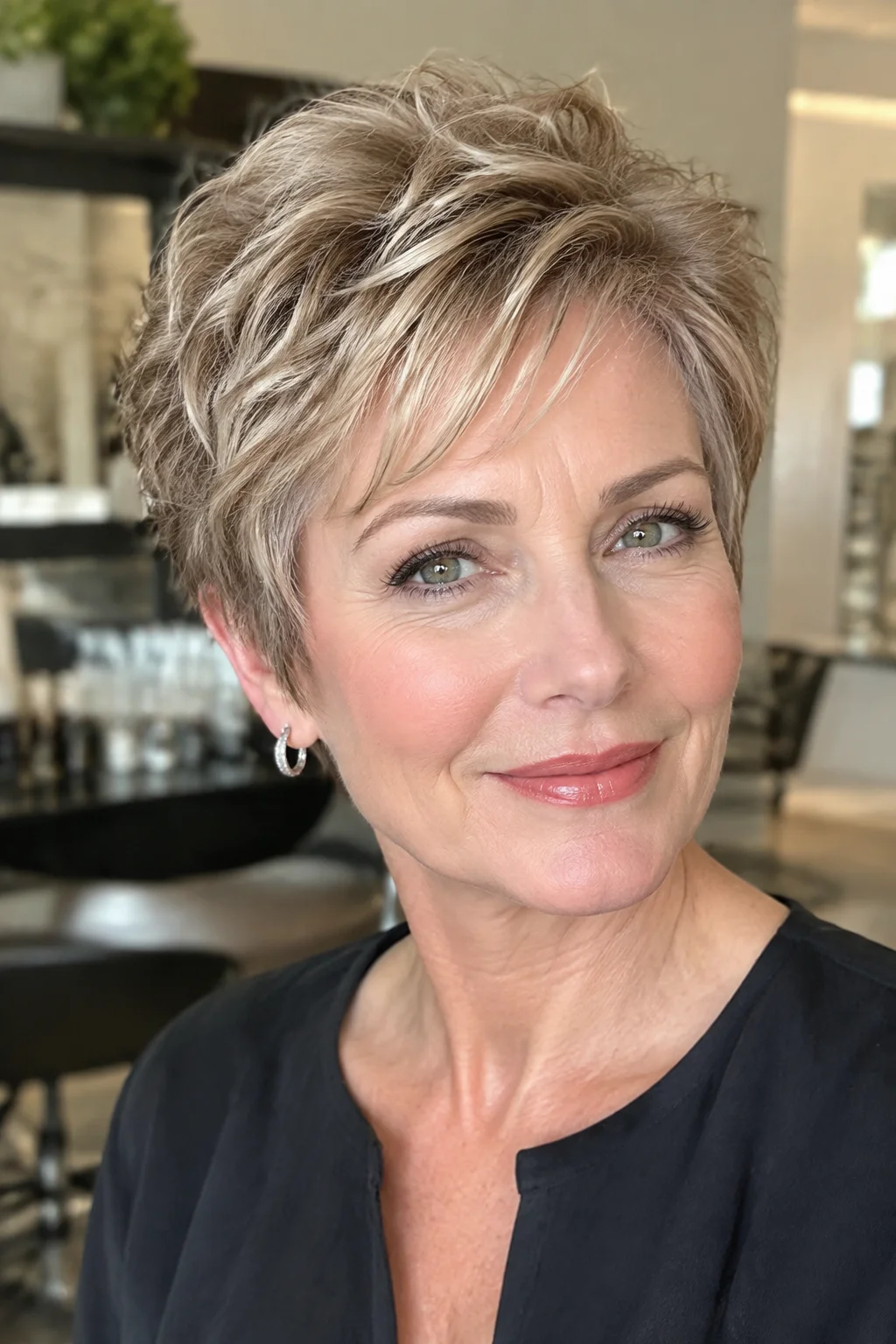
A light perm added to a short cut gives fine, straight hair a texture it can’t achieve on its own. The curls don’t need to be tight, just enough wave to add body and break up flat sections. This is worth considering if you’ve tried every styling product available and your hair still falls flat by noon.
Voluminous Pixie with Long Top
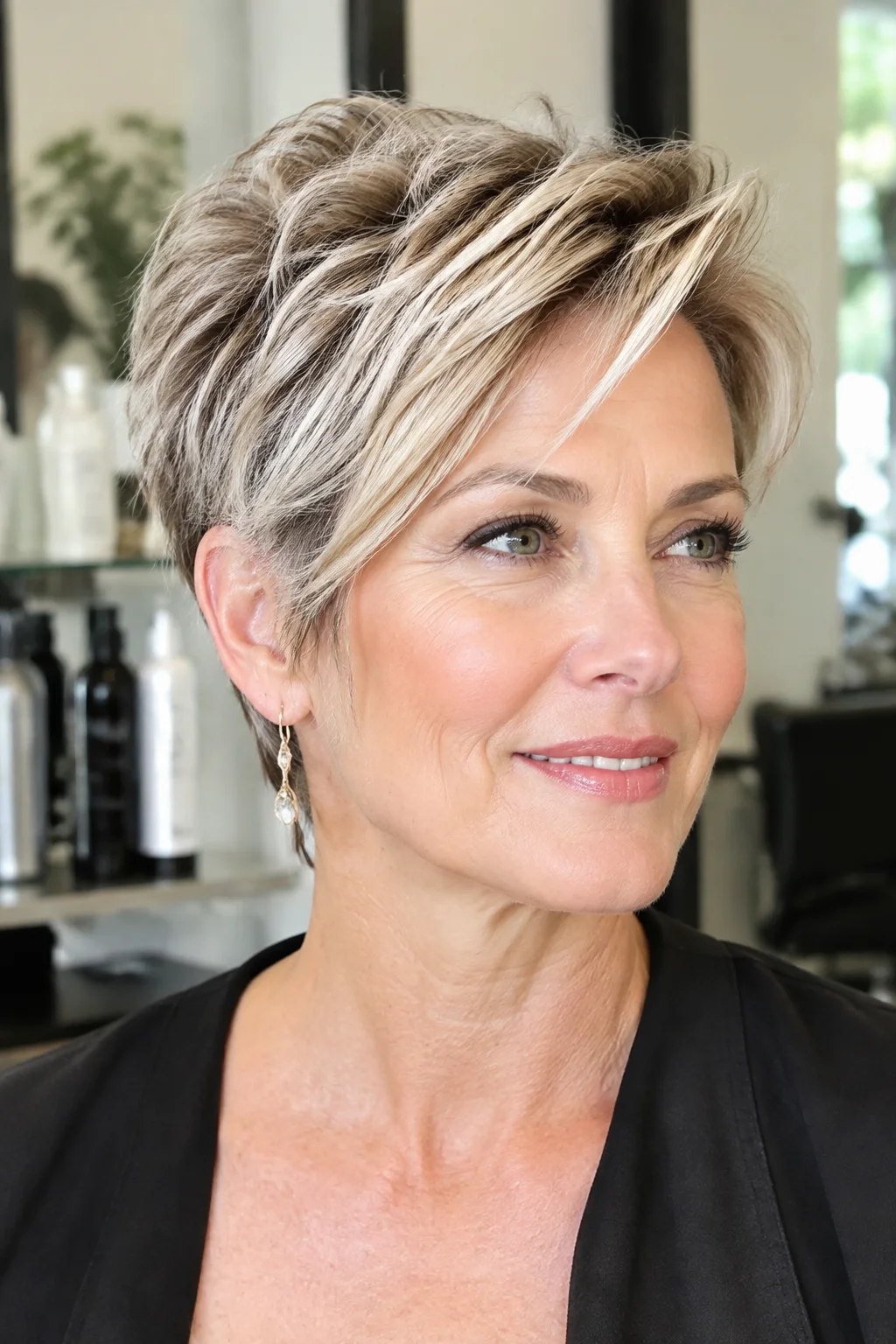
Short sides pair with a noticeably longer top section, giving you room to style volume in several directions depending on your mood. Some days you can push it up and back, other days sweep it to one side. The length on top also means you can go longer between trims without losing the overall shape.
Tousled Pixie Crop with Textured Layers
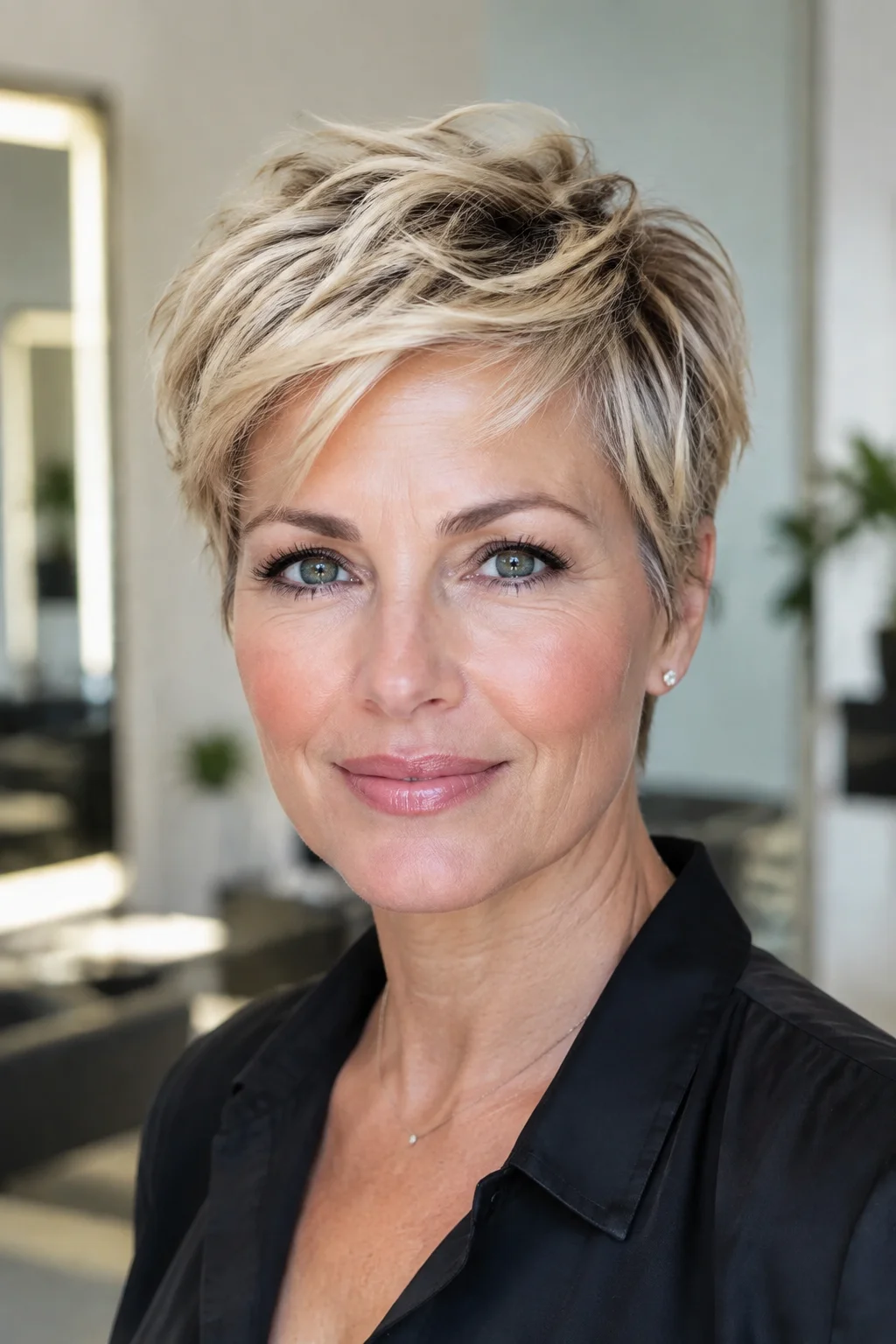
Short layers throughout get roughed up with a texturizing cream rather than smoothed down, creating a crop that looks a little undone on purpose. The layers are cut close to the head but at varying lengths so they don’t lie in one flat direction. It’s an easy everyday style since there’s no real blow-drying technique required, just scrunch and go.
Pixie with Wispy Face-Framing Layers
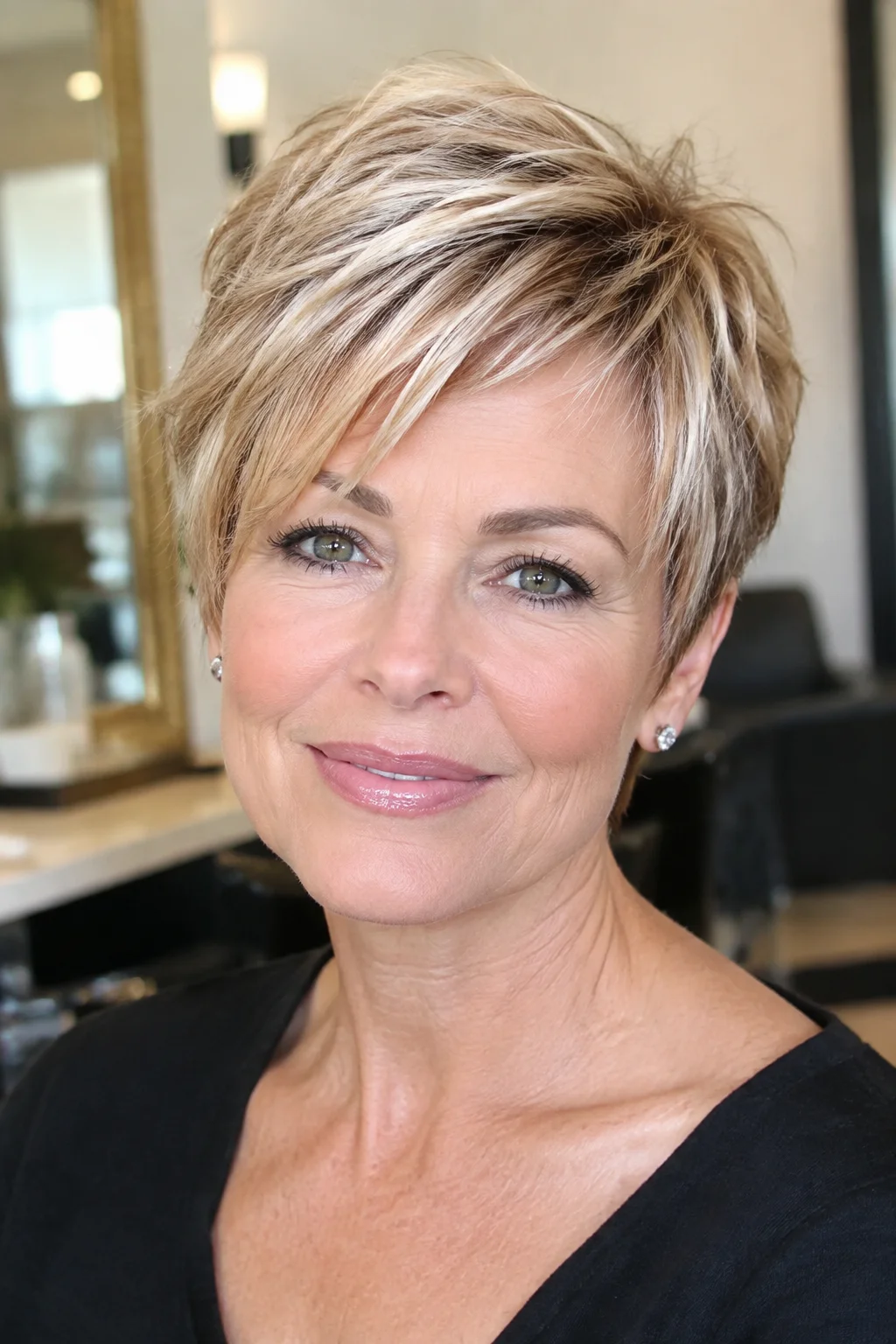
Longer, feather-thin layers are left around the face while the rest of the cut stays short and cropped. Those wispy pieces soften the jawline and give you something to tuck behind an ear or sweep across the cheek. The contrast between the short crop and the softer framing layers keeps the whole style from looking too severe.
Modern Choppy Pixie
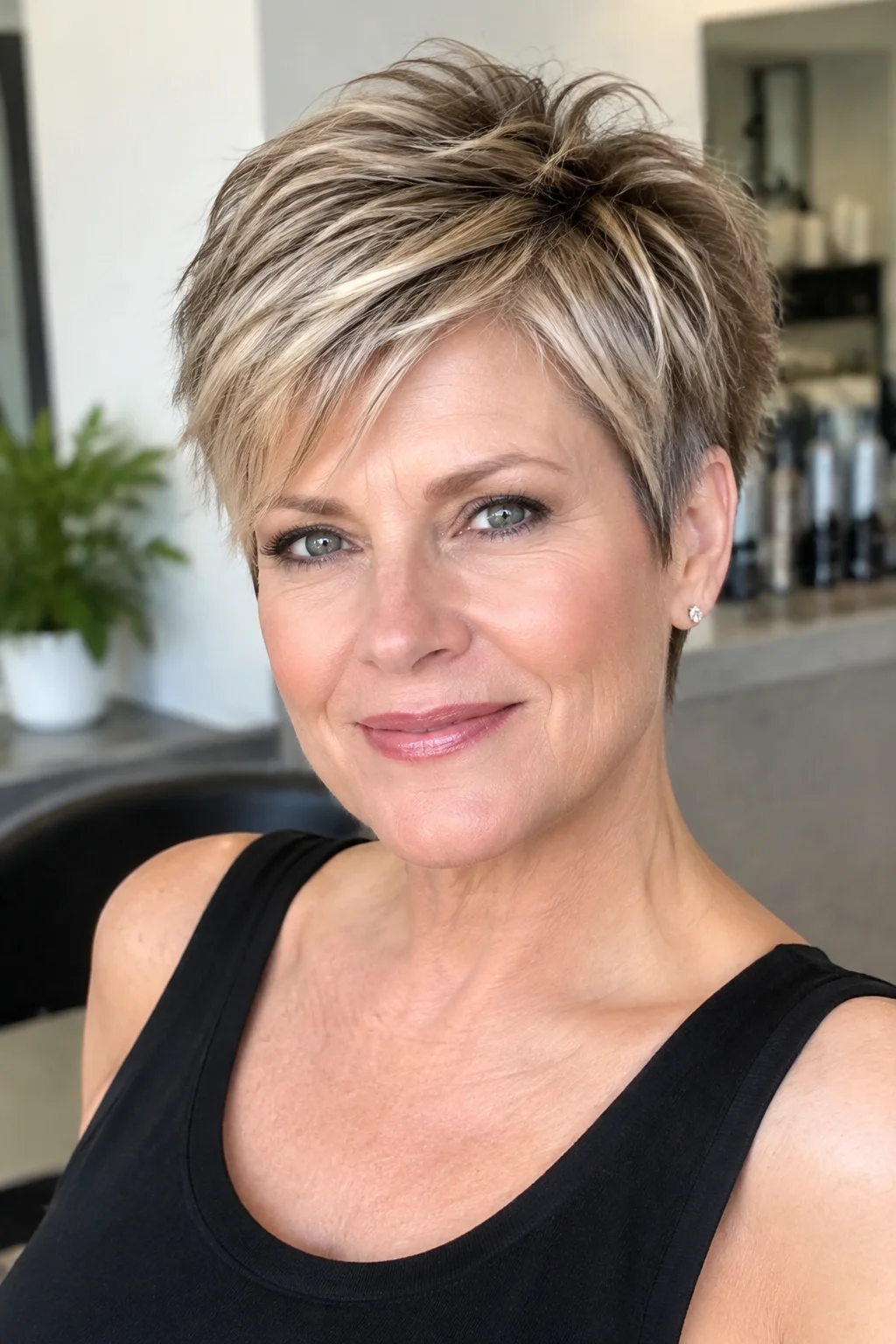
This update on the classic choppy pixie uses more disconnection between sections, with shorter pieces at the nape and noticeably longer, choppier layers on top. It feels current compared to the more uniform choppy pixies popular years back, since the length difference is more exaggerated now. Texture paste applied with fingertips rather than a comb keeps the choppy effect looking deliberate.
Volumized Pixie with Textured Bangs
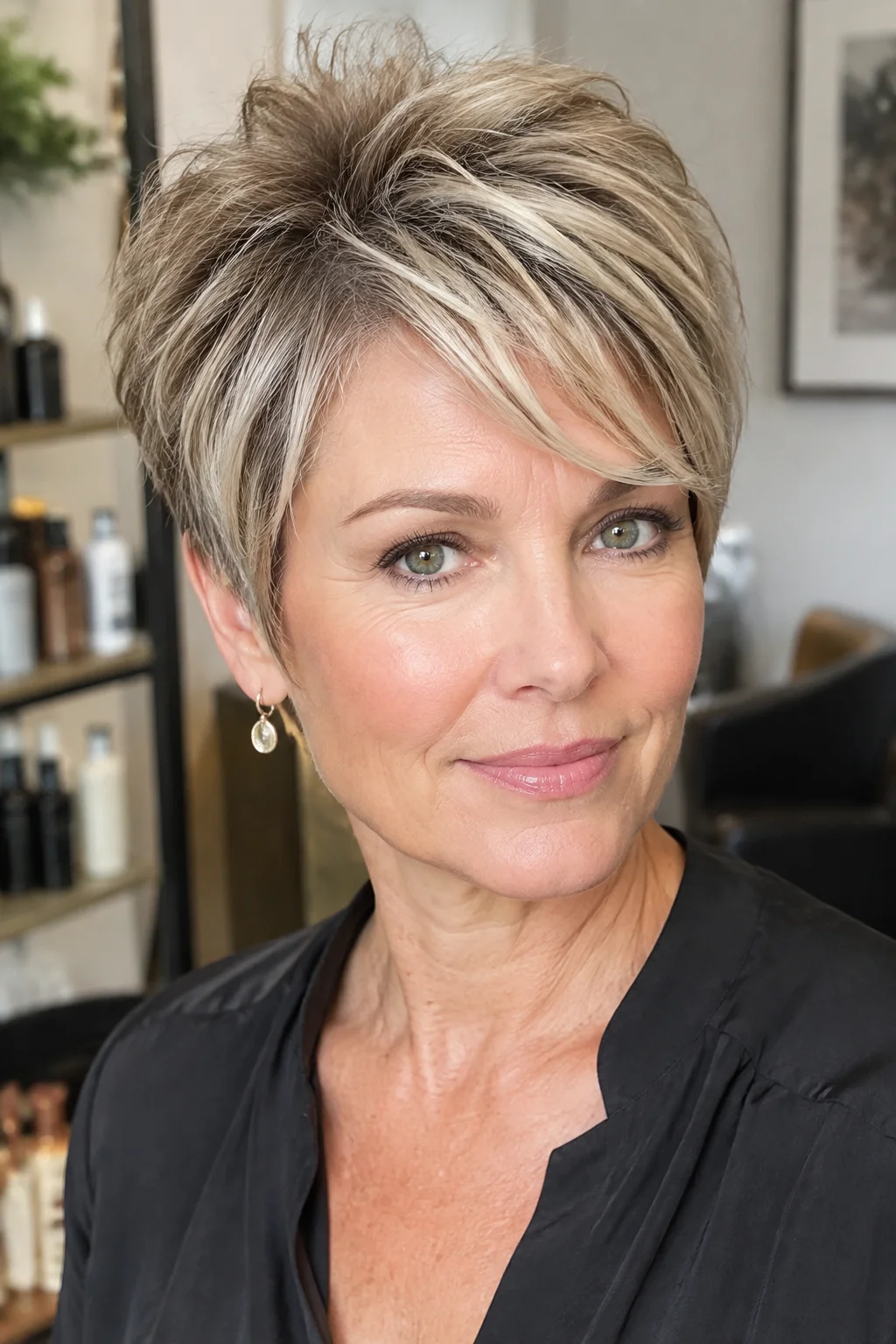
Short, piecey bangs are cut with a razor or notching shears to keep them from sitting heavy across the forehead. Paired with volume through the crown, this style gives fine hair real lift right where it tends to fall flattest first. A root-lifting spray applied before blow-drying with a round brush makes the biggest difference in how long the volume lasts through the day.
Choosing the Right Pixie for Fine Hair
With this many options, picking one comes down to how much styling time you’re willing to give it and how bold you want the shape to be. If mornings are rushed, the messy textured pixie or the tousled pixie crop with textured layers need almost no tools, just a texturizing product scrunched in by hand. If you want maximum drama and don’t mind regular touch-ups, the high-stacked undercut pixie or the disconnected pixie fade deliver the sharpest, most structured volume.
A common mistake is choosing a heavily razored or choppy style, like the razor-cut textured pixie, without discussing maintenance with your stylist first. Razored ends grow out softer but can look stringy on fine hair if you stretch appointments too long. Another mistake is picking the pompadour pixie or faux hawk pixie expecting a wash-and-go routine. Both rely on root lifting with a round brush and heat, so they take more morning effort than something like the wavy pixie with finger-combed texture, which is built around air drying.
If your hair is naturally curly or wavy, work with that texture rather than against it. The cropped curly pixie with defined coils and the pixie with permed texture both use curl pattern as the main source of volume instead of fighting it with a flat iron. For straight, fine hair with no natural texture, lean toward cuts built on layering and disconnection, like the layered pixie with curved sides or the choppy asymmetrical pixie, since the cutting technique does most of the volume work for you.