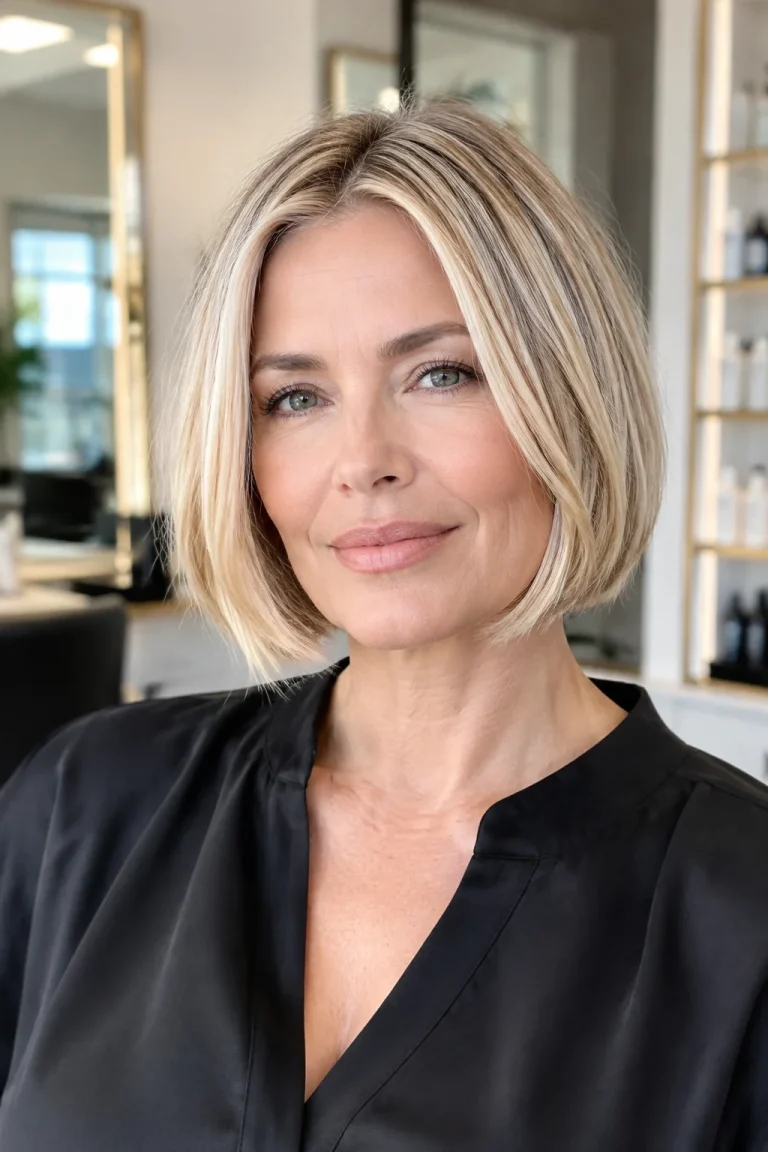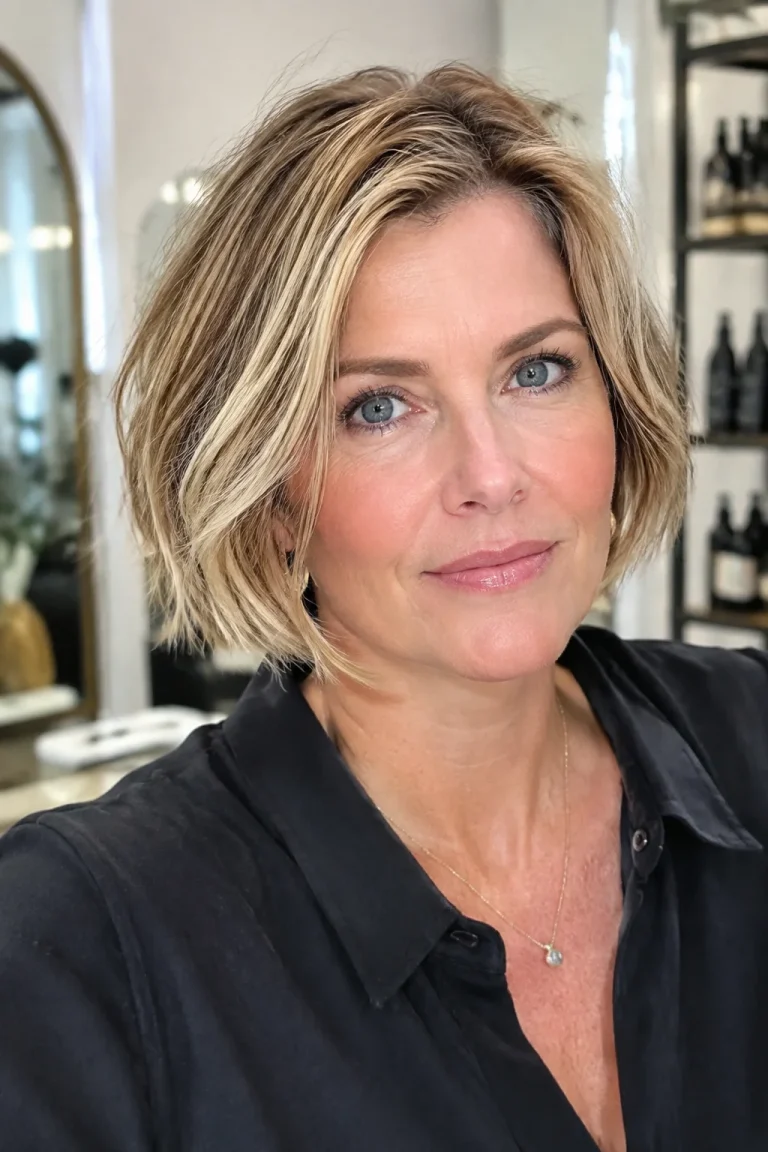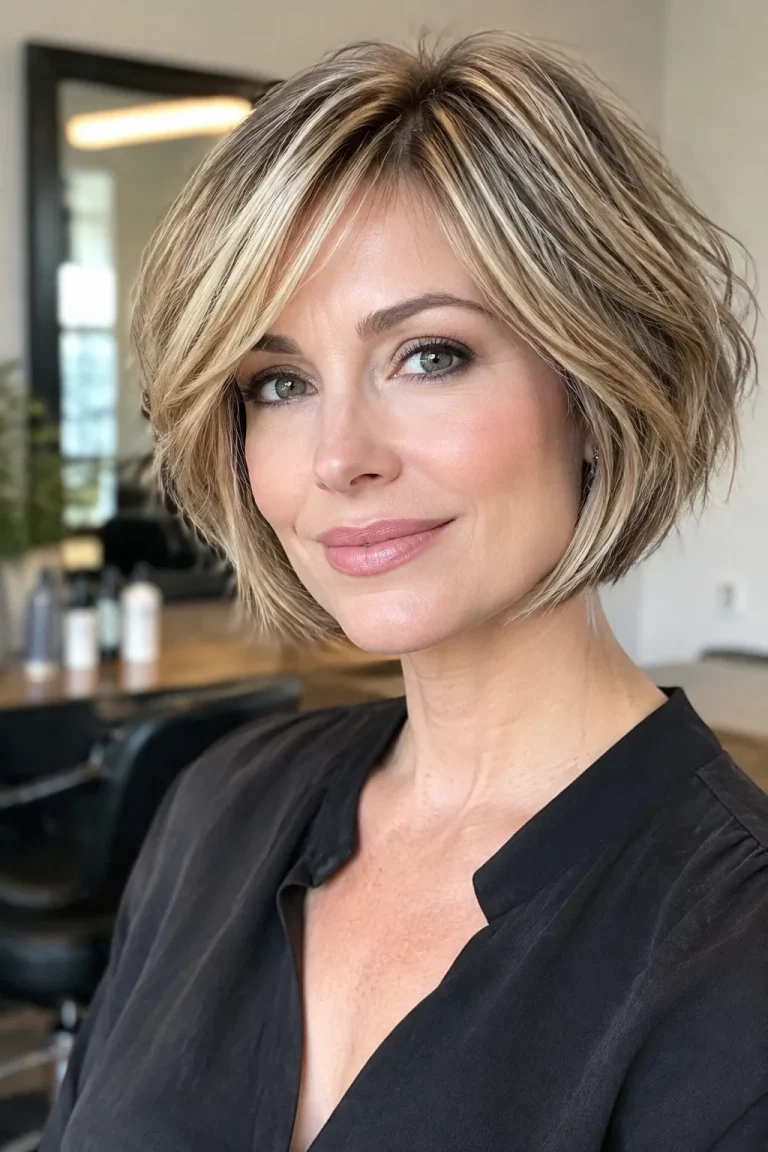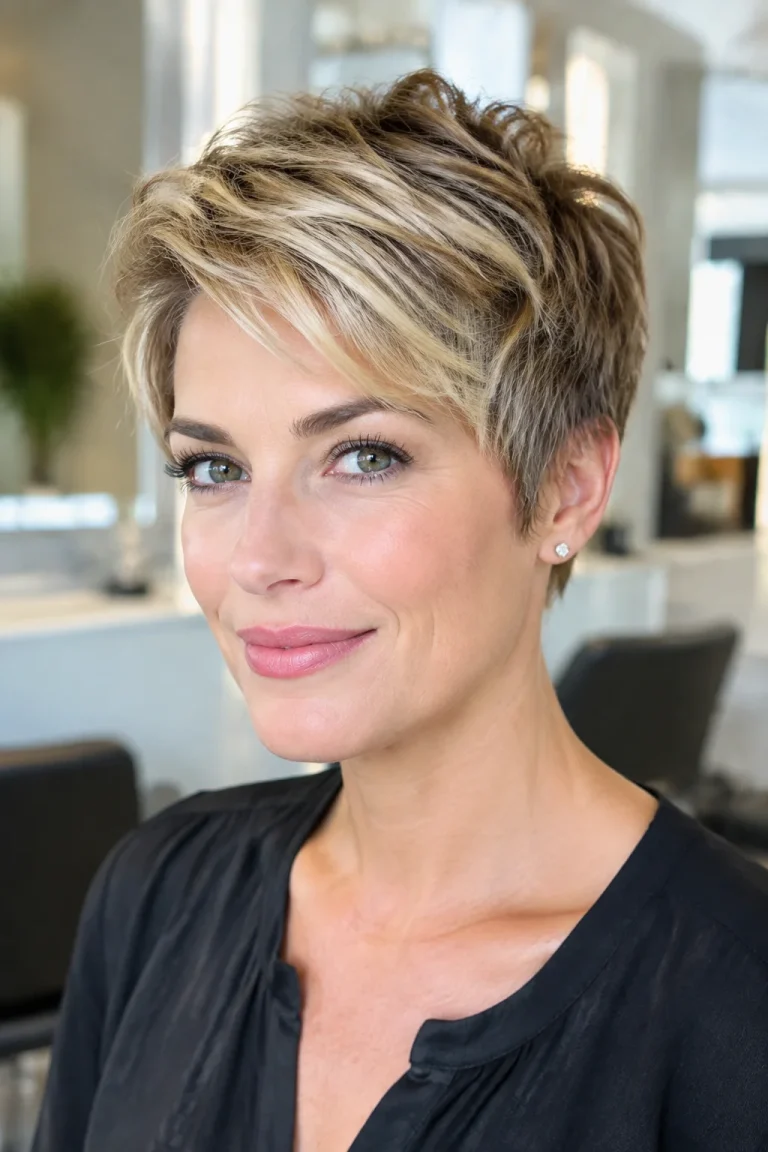
A blunt bob can start to feel flat after a few weeks. It sits on your shoulders in one heavy line, and if your hair has any natural body it fights the shape instead of working with it. That’s where layers change everything. Layered bob hairstyles for black women give the cut somewhere to breathe, adding lift at the crown, texture through the ends, and shape that moves when you walk instead of swinging like a curtain. Whether your hair is relaxed, natural, loc’d, or somewhere in between, layers can be cut to match your density and curl pattern instead of forcing your hair into a shape it wasn’t built for. Below are nineteen ways to bring movement into a bob, from soft face-framing pieces to sharp graduated shapes, so you can walk into your next salon visit knowing exactly what to ask for.
Short Layered Bob with Face-Framing Pieces
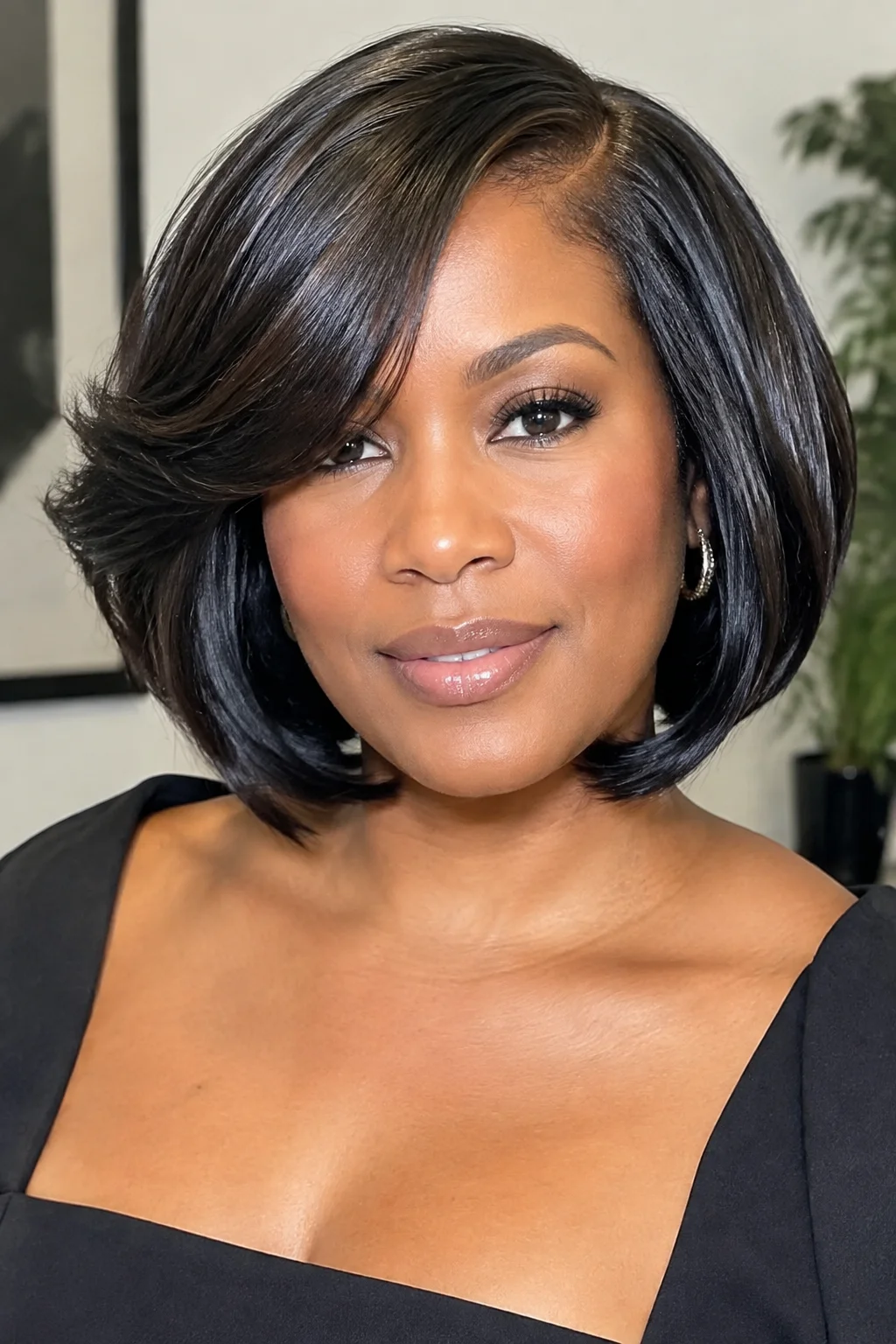
This version keeps most of the length close to the jaw while cutting shorter pieces around the face to soften the edges. It works especially well if you carry weight in your cheeks or want extra emphasis around the eyes. The face-framing pieces catch light differently than the rest of the bob, so the whole style reads as more dimensional even in a single hair color. Ask your stylist to point the shorter layers toward your chin rather than straight down, since that angle lifts the face instead of dragging it. A light mist of heat protectant before styling helps the finish last. A light mist of heat protectant before styling helps the finish last.
Shoulder-Length Textured Bob with Choppy Layers
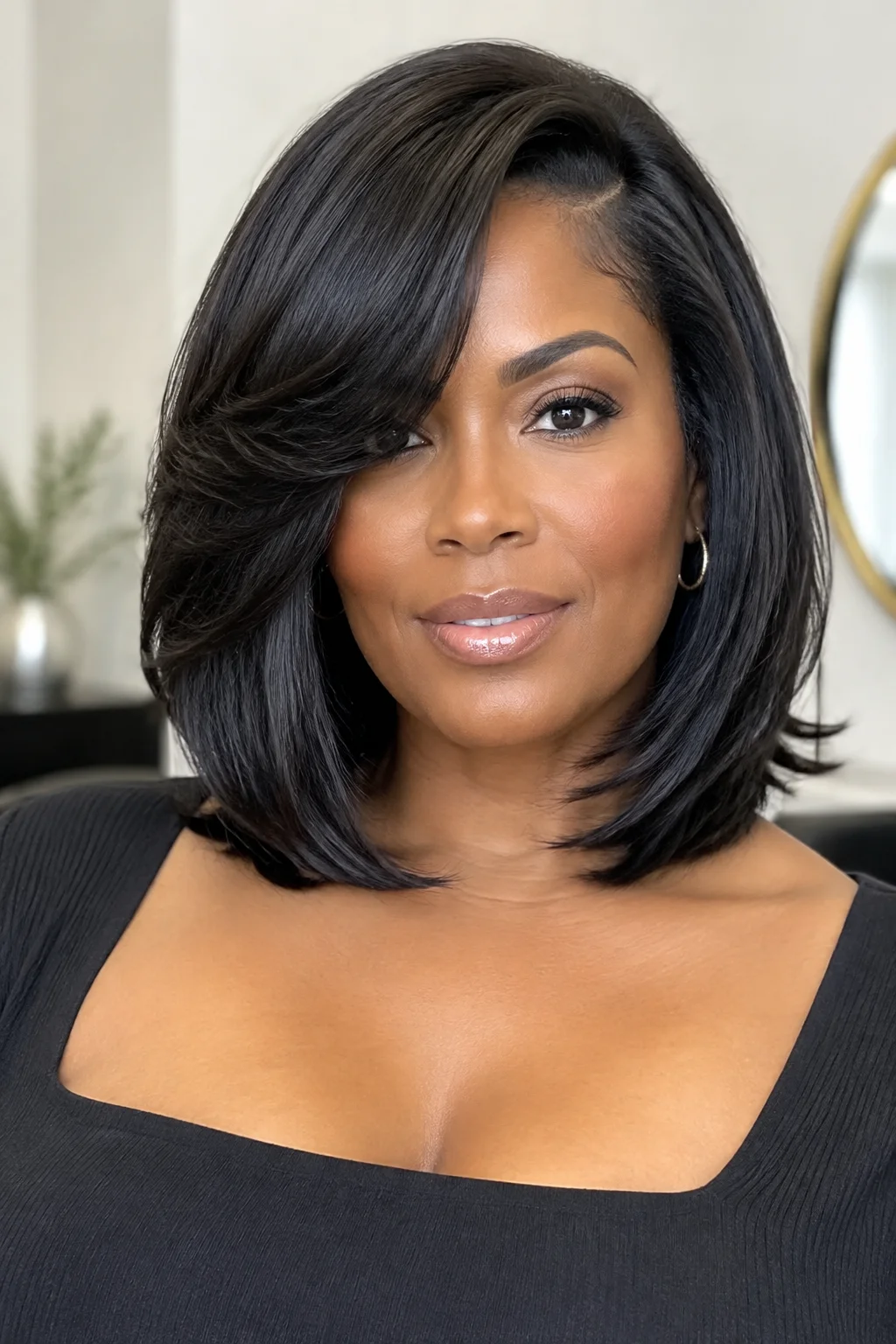
Choppy layers cut with a razor or slide-cutting technique give this bob a lived-in, slightly undone look. It’s not a style that needs to sit perfectly; the texture actually looks better a little rough around the edges. This length hits right at the shoulders, which means it can be worn straight, twisted, or blown out with a diffuser without losing its shape. Tip: ask for the choppiest layers underneath rather than on top, so the surface stays smooth while the movement happens below it. A light mist of heat protectant before styling helps the finish last. A light mist of heat protectant before styling helps the finish last.
Tapered Undercut Bob with Long Layers on Top
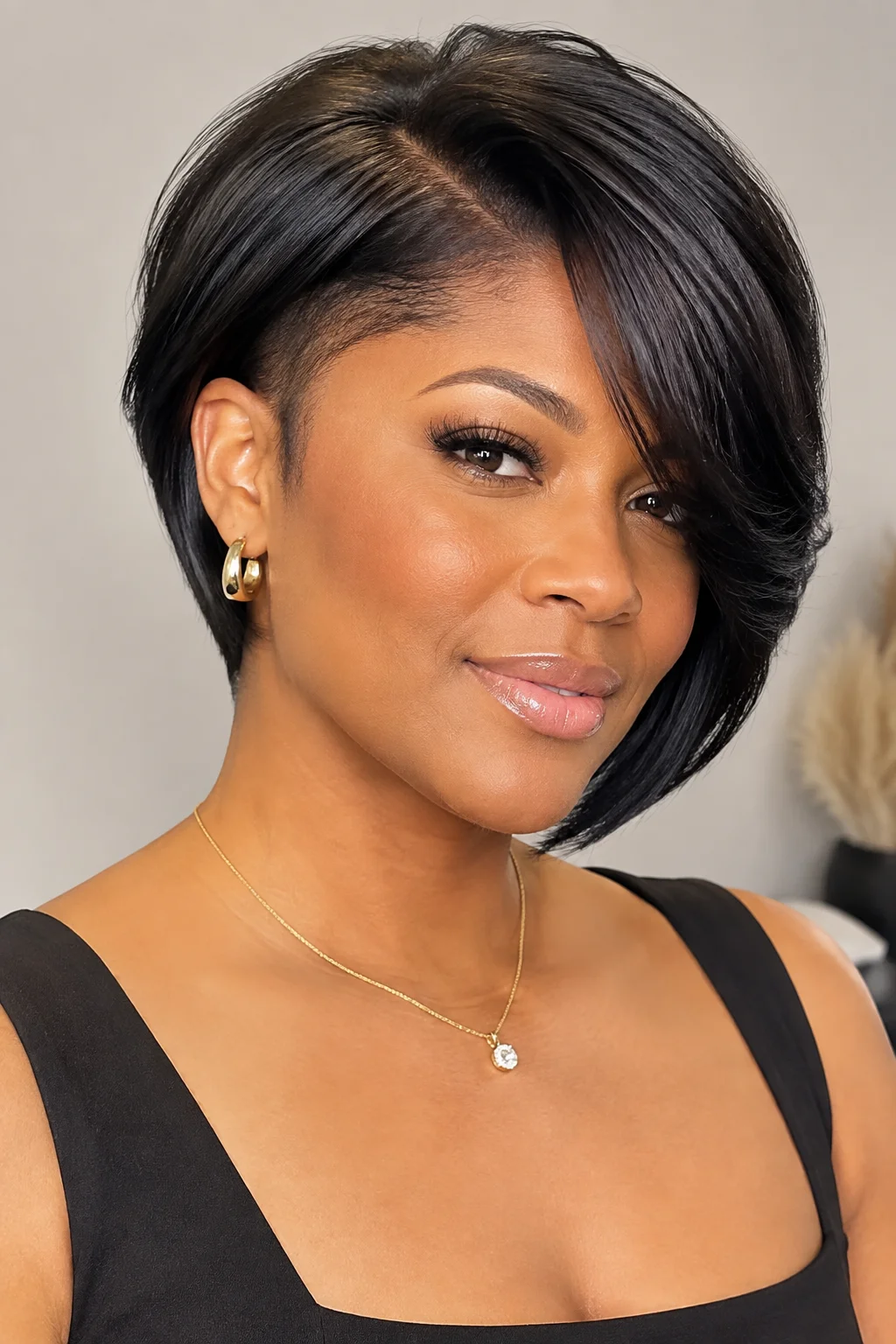
The sides and back are cut close, almost shaved, while the top carries long, soft layers that can be styled forward, back, or off to one side. It’s a strong contrast style, and it holds its shape well between salon visits because the undercut grows out slowly compared to the top layers. This one suits anyone who wants a bold silhouette without committing to short hair everywhere.
Blunt Layered Bob with Side Part
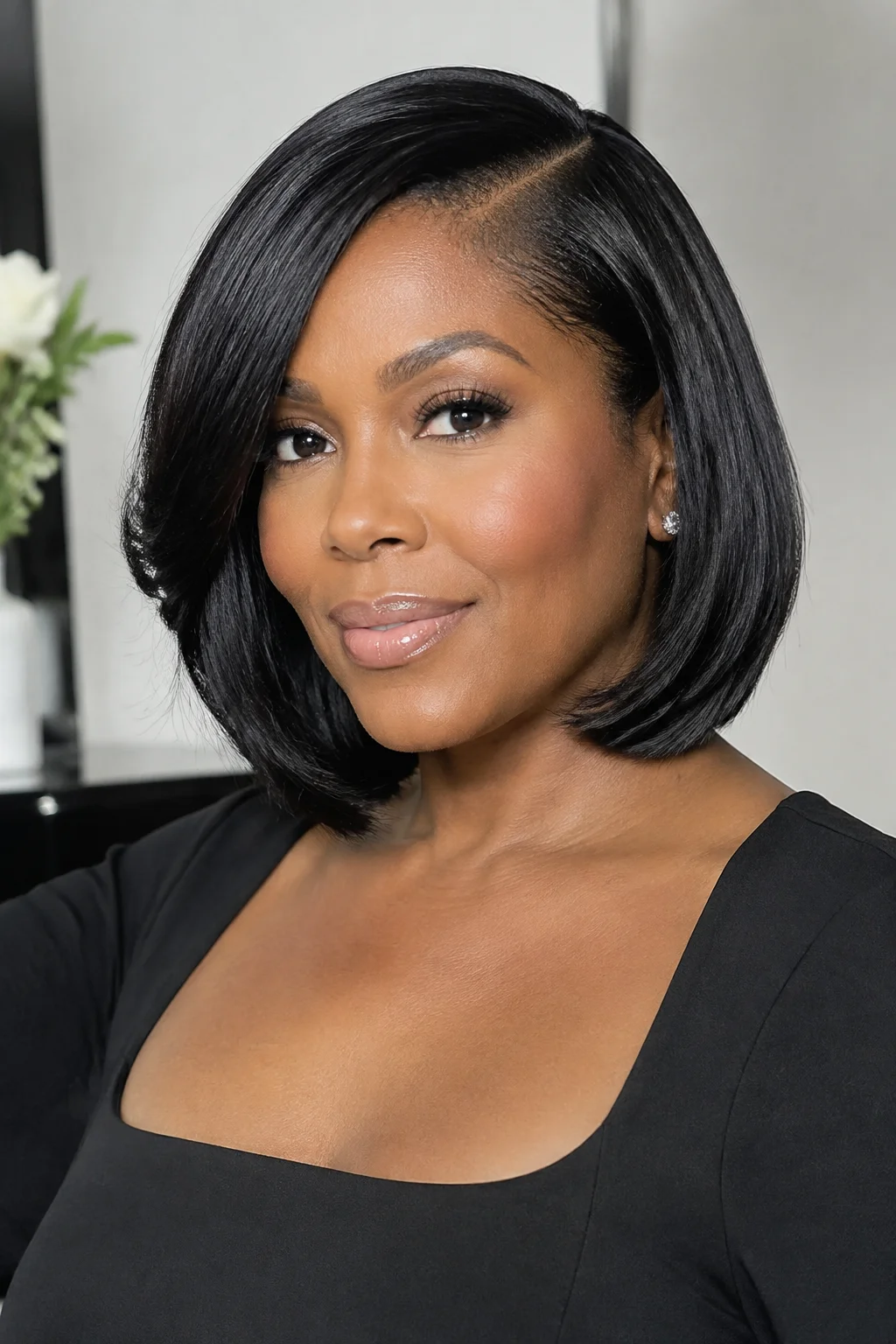
A side part changes the whole personality of a bob. Instead of layers falling evenly around the face, they stack unevenly, giving one side more volume than the other. The blunt ends keep the style looking polished even with the added movement from the layers underneath. This is a solid pick if you want something low-maintenance that still photographs well from every angle.
Layered Textured Bob with Natural Coils
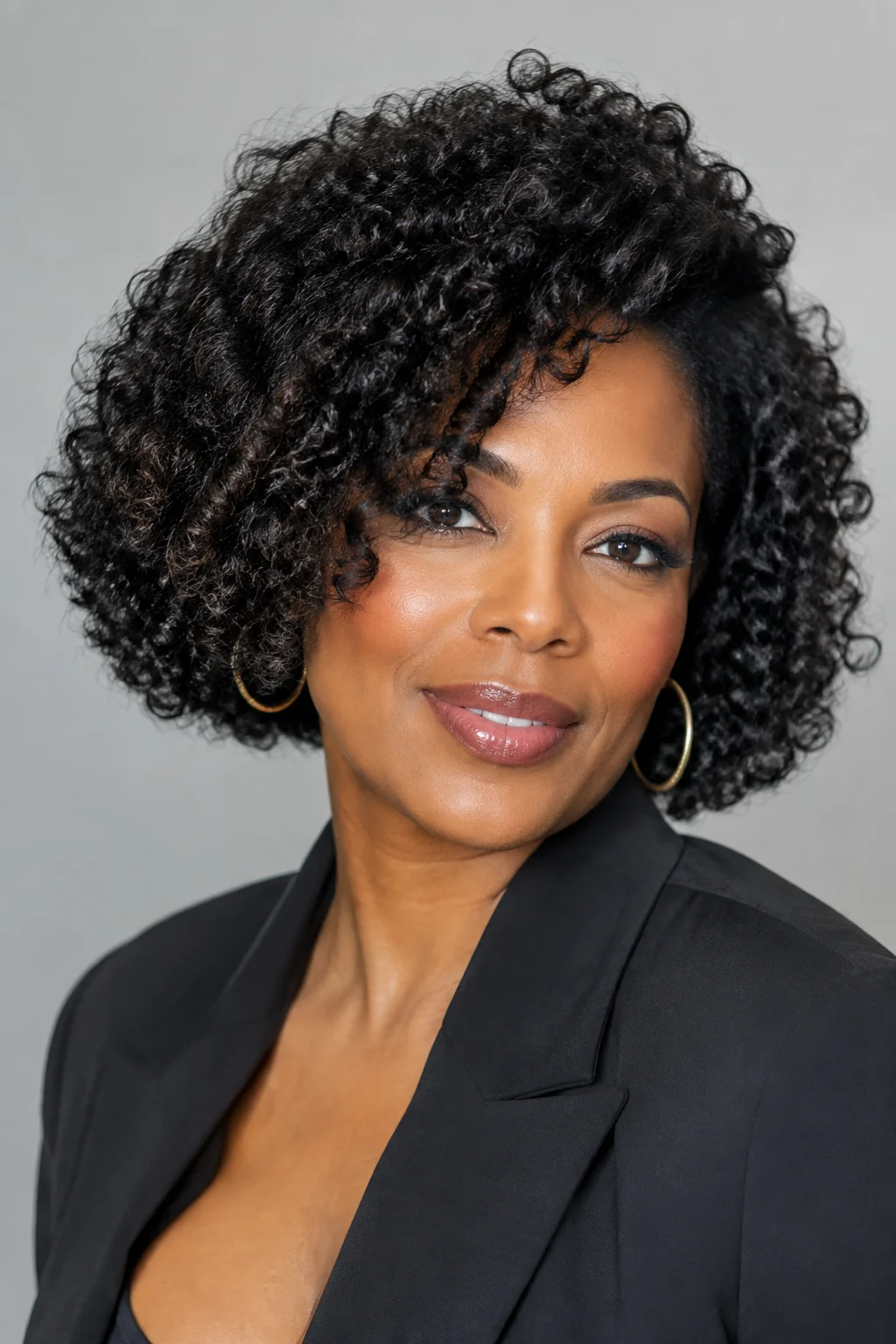
Layers cut specifically for coily or kinky textures behave differently than layers cut for straight hair, since curl shrinkage changes where the shortest pieces actually land. A good stylist will cut this style dry or on stretched hair so the layers fall where they’re meant to once the curl pattern springs back. The result is a rounded, full shape that moves with each step instead of clumping into one solid mass. This cut also holds up well through wash-and-go routines, twist-outs, or braid-outs, because the layering keeps the ends from looking blunt and heavy no matter which method you use to define the curls.
Graduated Layered Bob with Volume at Crown
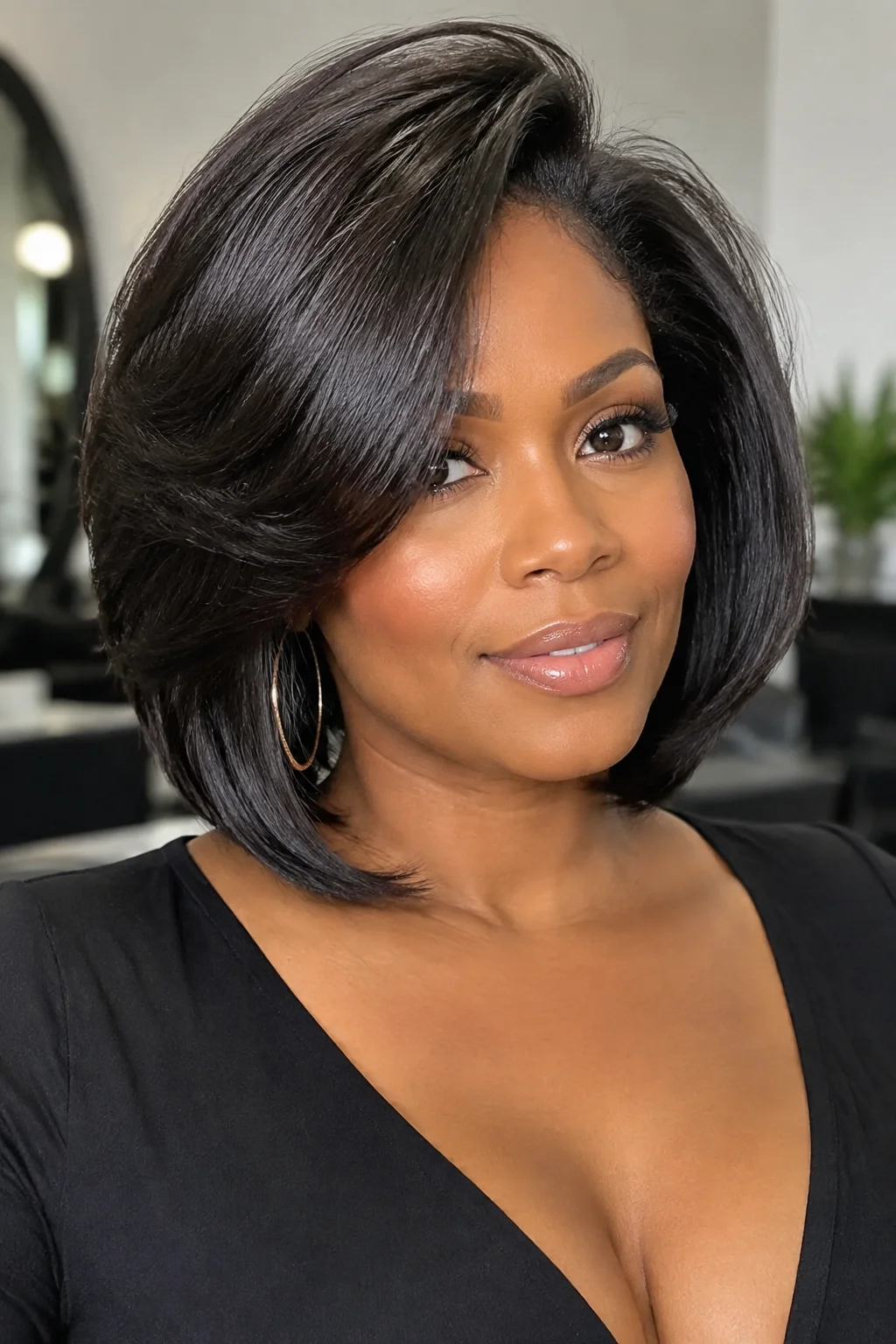
Graduation stacks the layers at the back, building volume right at the crown and tapering the length down toward the front. It gives the classic rounded bob shape a lift that a one-length cut simply can’t produce. Stylists sometimes call this the “stacked” technique, though the stacking here is more architectural than in a standard bob. It suits fine to medium hair that needs a boost at the roots, and it holds curl or wave patterns nicely since the graduated layers give each curl room to show its shape.
Micro Layered Bob for Fine Textured Hair
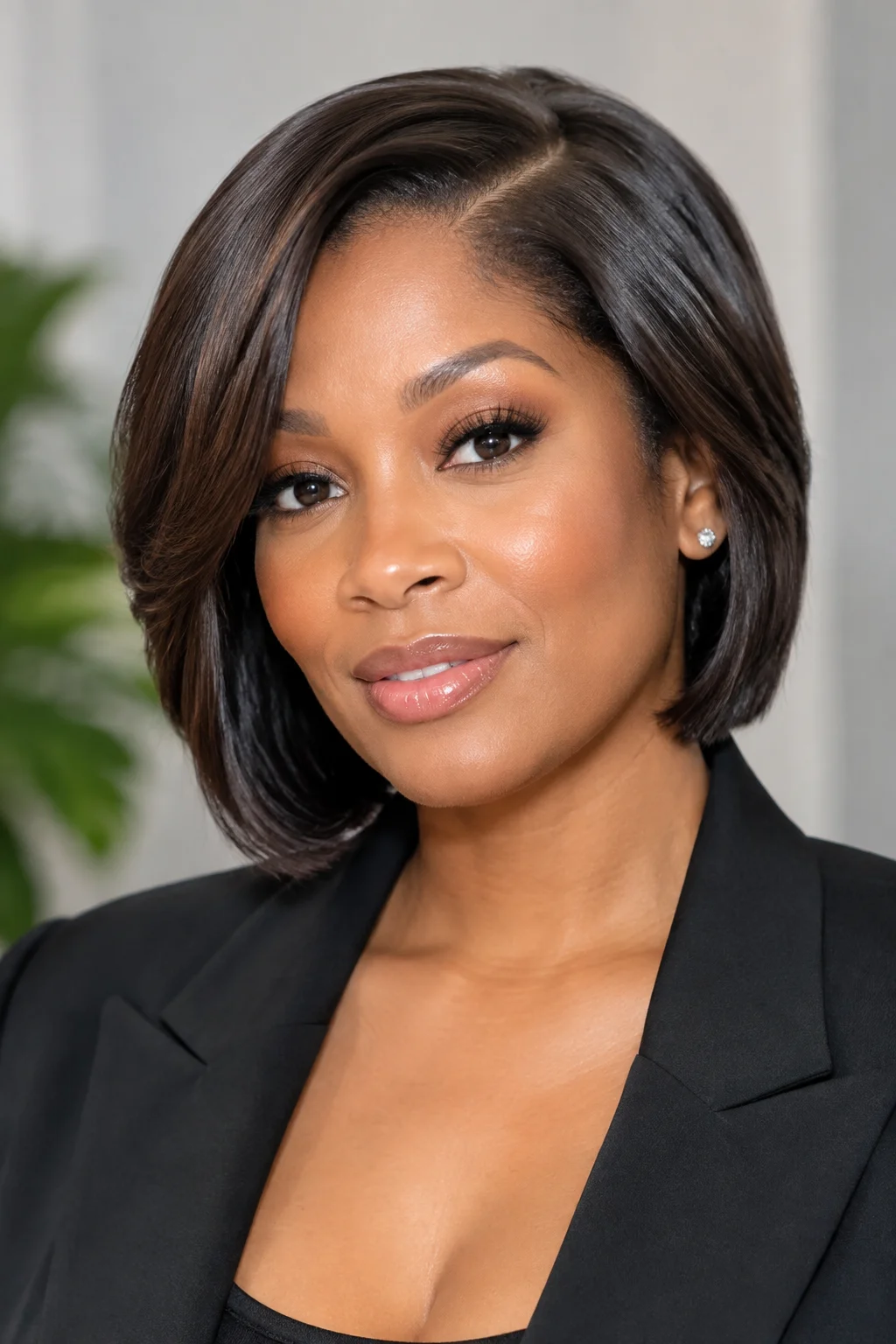
Fine hair can look thin when it’s cut in heavy layers, so this version uses very small, precise layers instead of big chunky ones. Tip: keep the layers concentrated at the ends only, leaving the roots untouched for extra density and less visible scalp.
Asymmetrical Layered Bob
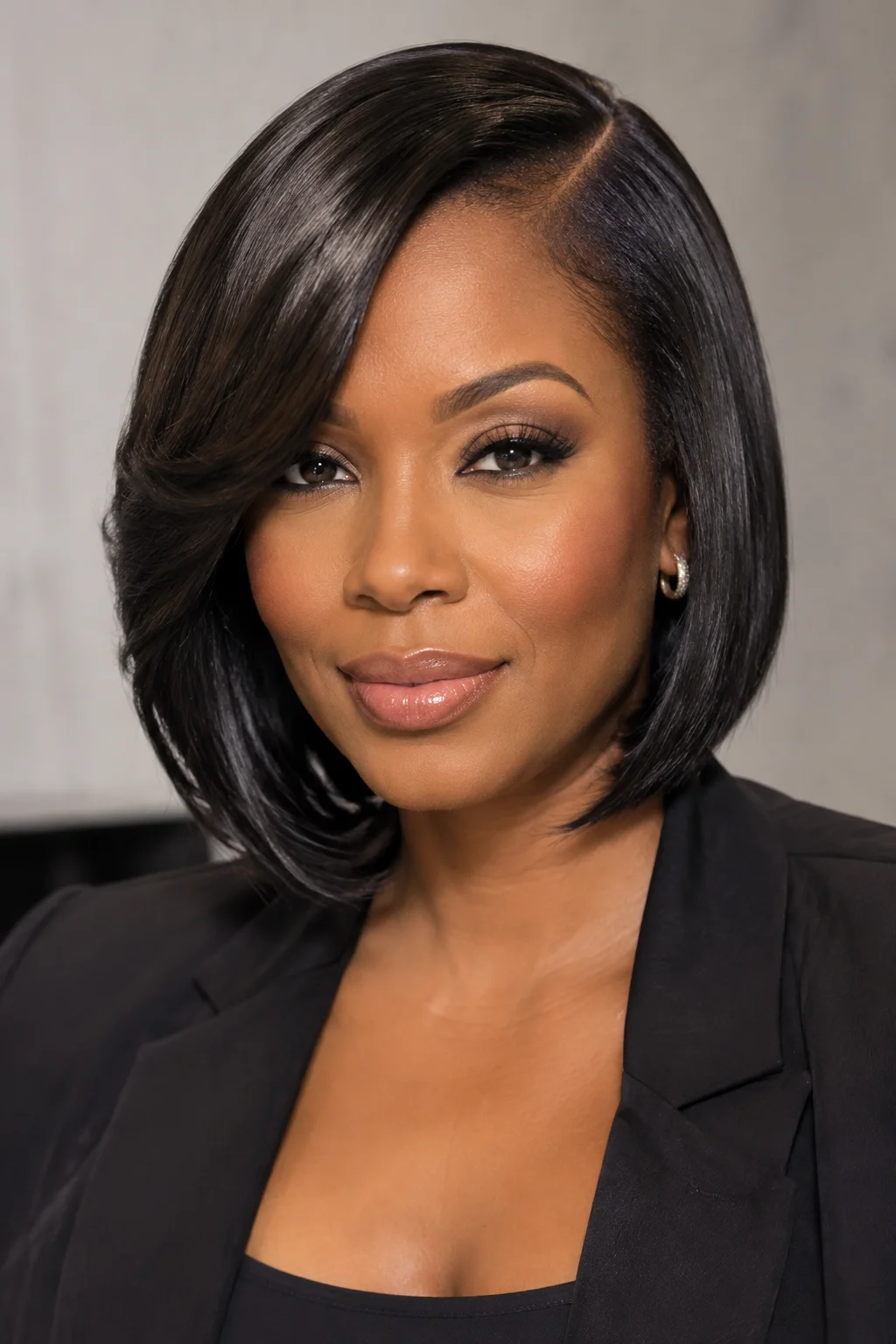
One side sits longer than the other, and layers are cut to emphasize that imbalance rather than hide it. It’s a striking option for anyone who wants a bob that doesn’t look like everyone else’s. The shorter side usually falls above the jaw while the longer side can reach the collarbone, and the layering in between keeps the transition from looking like a mistake.
Layered Bob with Shaved Design Detail
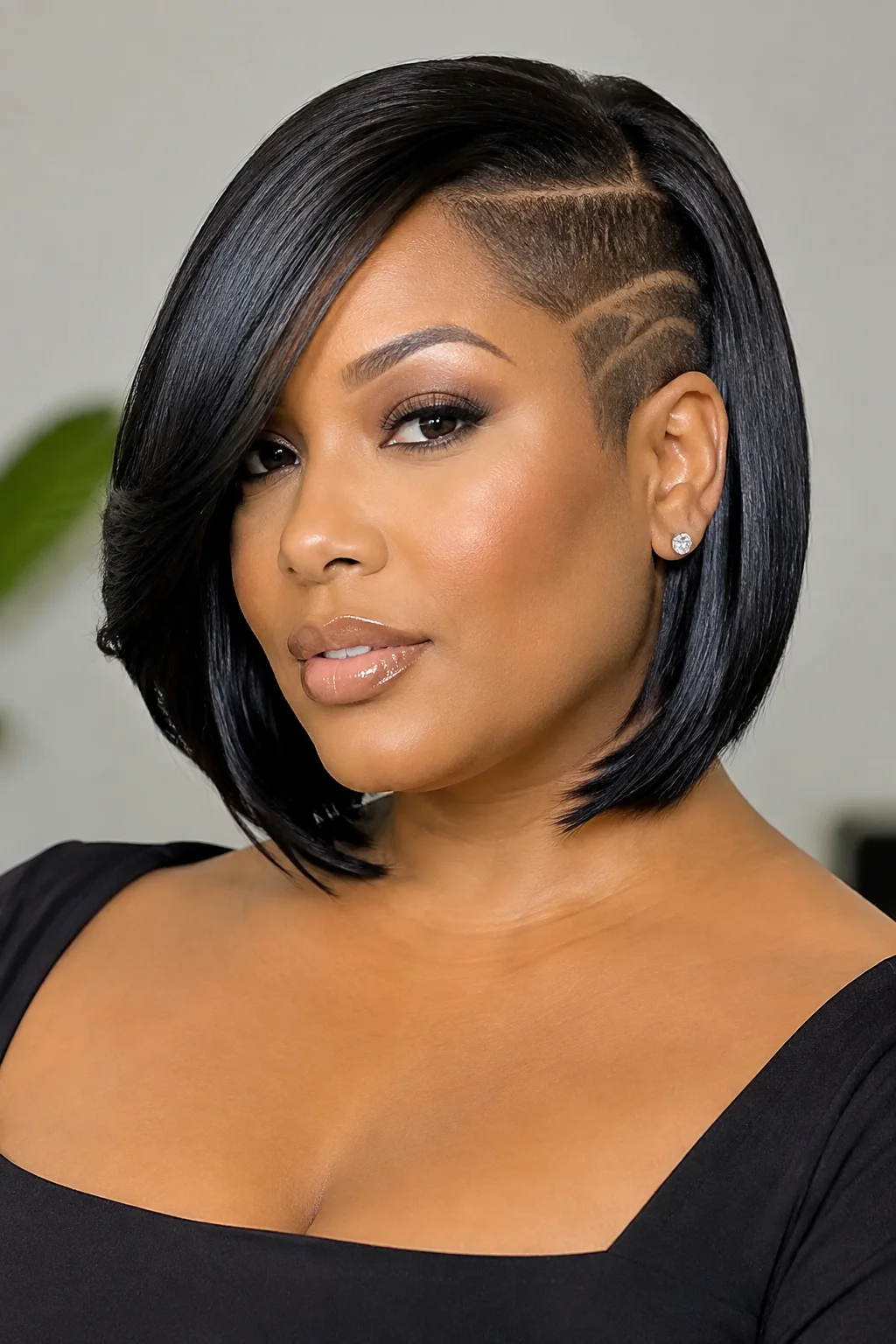
A shaved line or pattern, usually along the temple or nape, adds an edge to an otherwise soft, layered shape. This works well paired with a graduated or textured bob since the smooth shaved section contrasts against the movement of the layers. It’s a commitment, since the design needs upkeep every couple of weeks to stay crisp, but it turns a simple bob into something much more personal.
Feathered Layered Bob
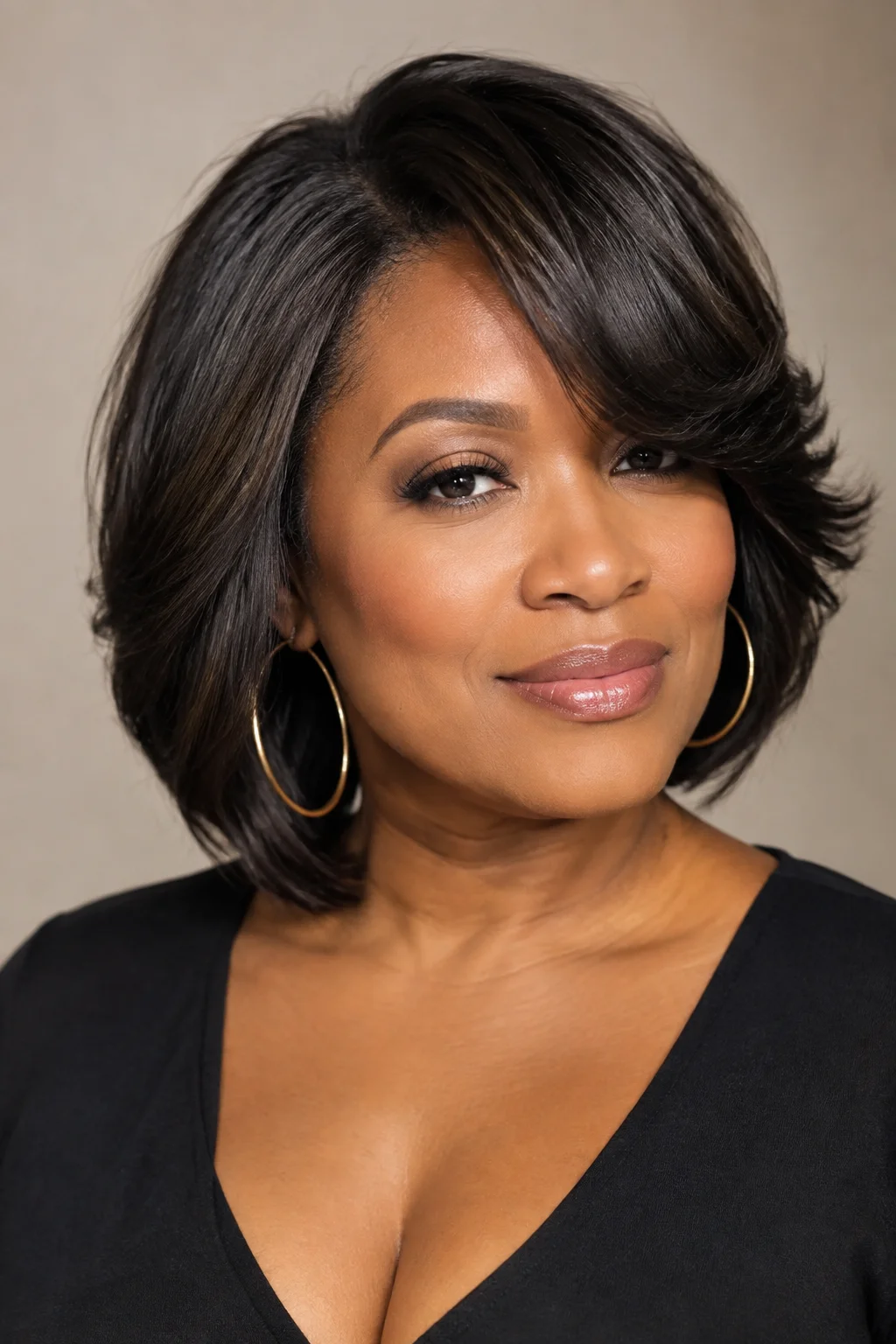
Feathered layers are cut thin and blended so the ends look wispy rather than blunt, similar to the feathered styles popular in past decades but updated for a shorter length. The effect is soft, almost airy, and it works especially well on hair that’s been color-treated since the lighter ends catch tone changes beautifully. This style needs some heat styling or a light mousse to keep the feathered pieces separated instead of clumping together.
Layered Twist-Out Bob
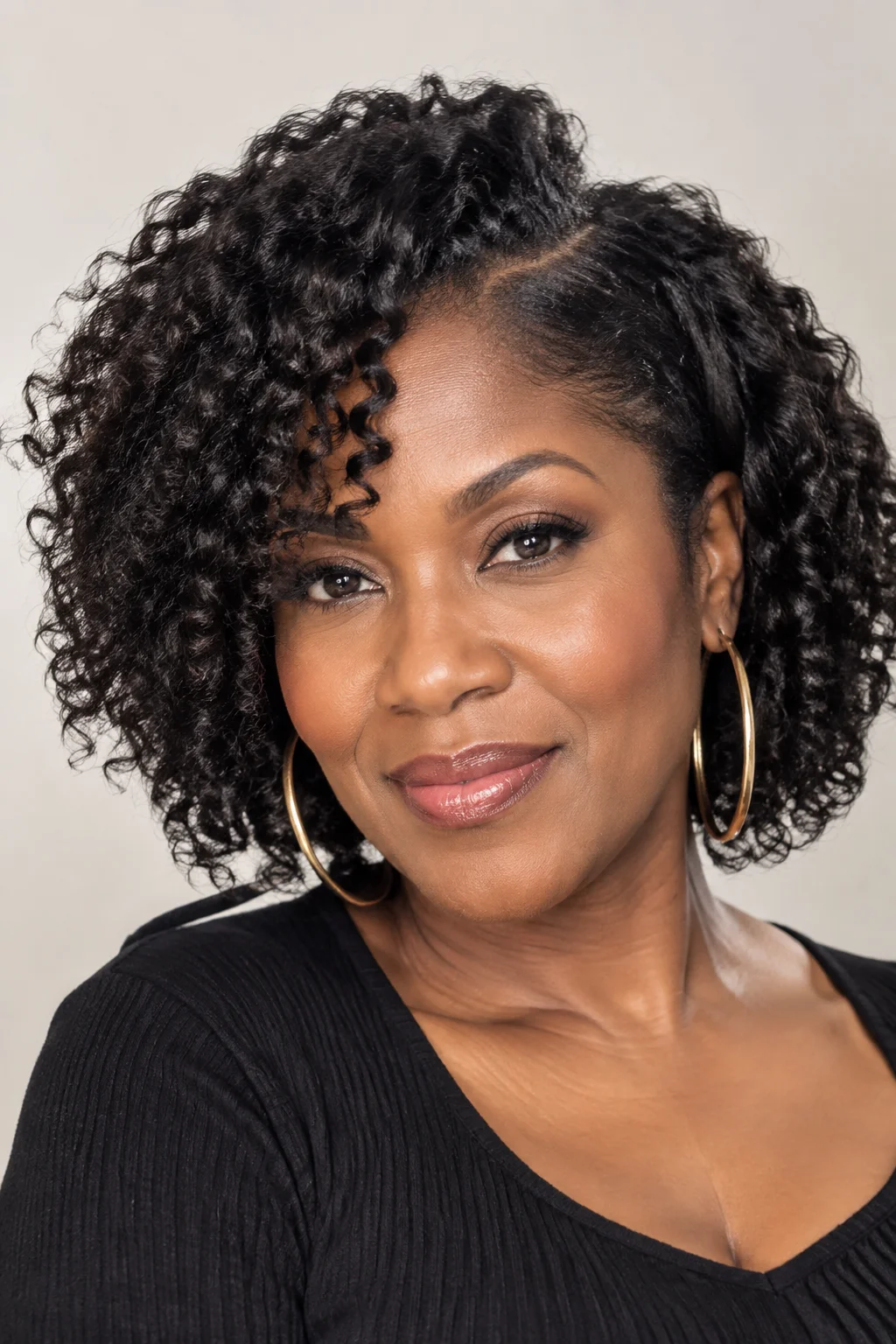
This is a bob cut specifically to be worn as a twist-out, with layers placed to enhance the natural spiral pattern that twisting creates. The layering keeps the twist-out from ballooning into a triangle shape, instead rounding it out at the sides and back. Length can vary depending on shrinkage, so it helps to discuss your stretched versus shrunken length with your stylist before the cut. Once installed, the twist-out bob can be refreshed nightly with a satin bonnet and re-twisted as needed, making it one of the more low-maintenance options on this list for natural hair.
Textured Layered Bob with Undercut Fade
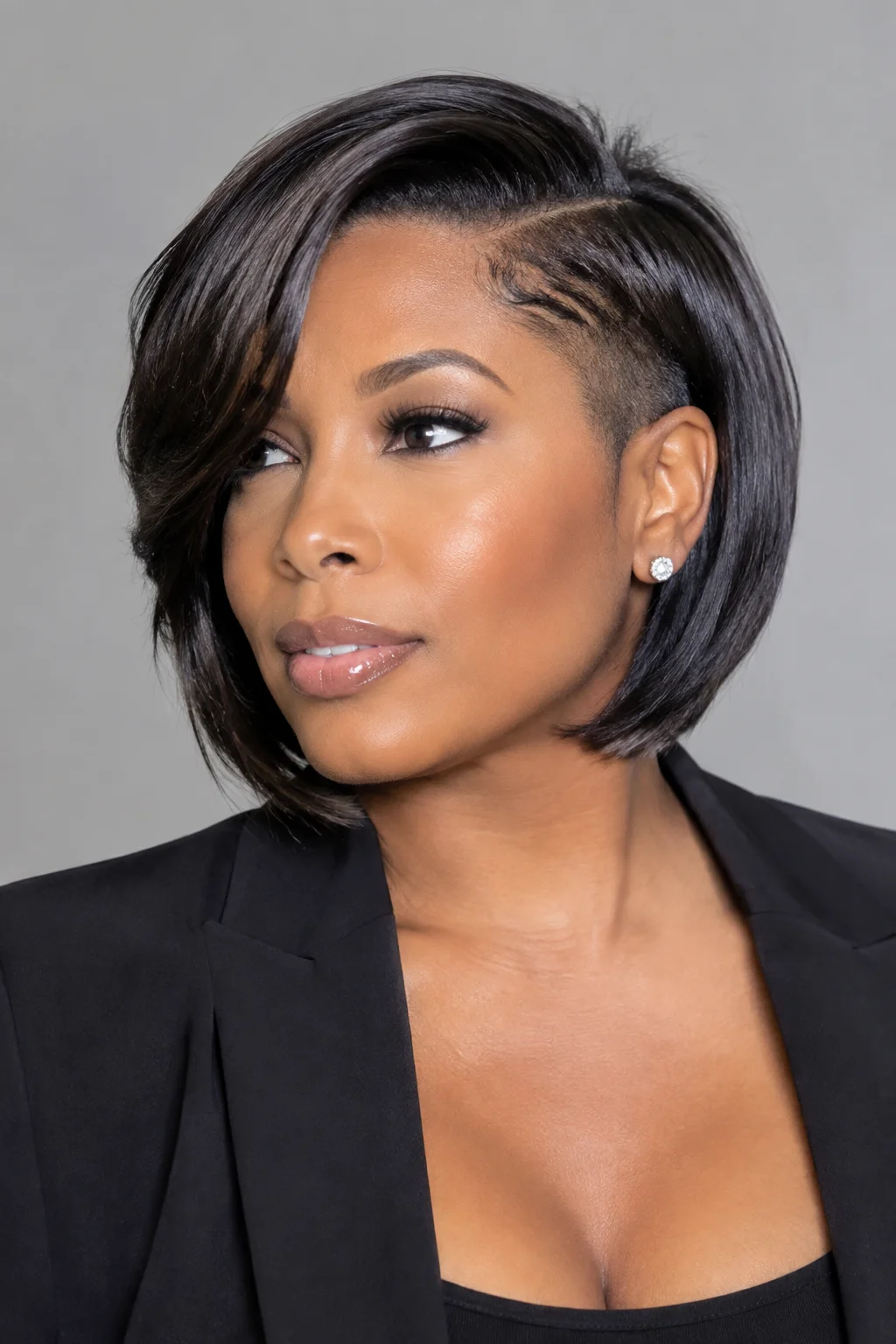
A fade at the nape blends into longer, textured layers on top, giving this bob a soft transition instead of a hard line. It’s a good middle ground between the boldness of a full undercut and the simplicity of a one-length bob. The faded section also reduces bulk at the back of the neck, which some people prefer for comfort in warmer weather.
Layered Bob with Side-Swept Bangs
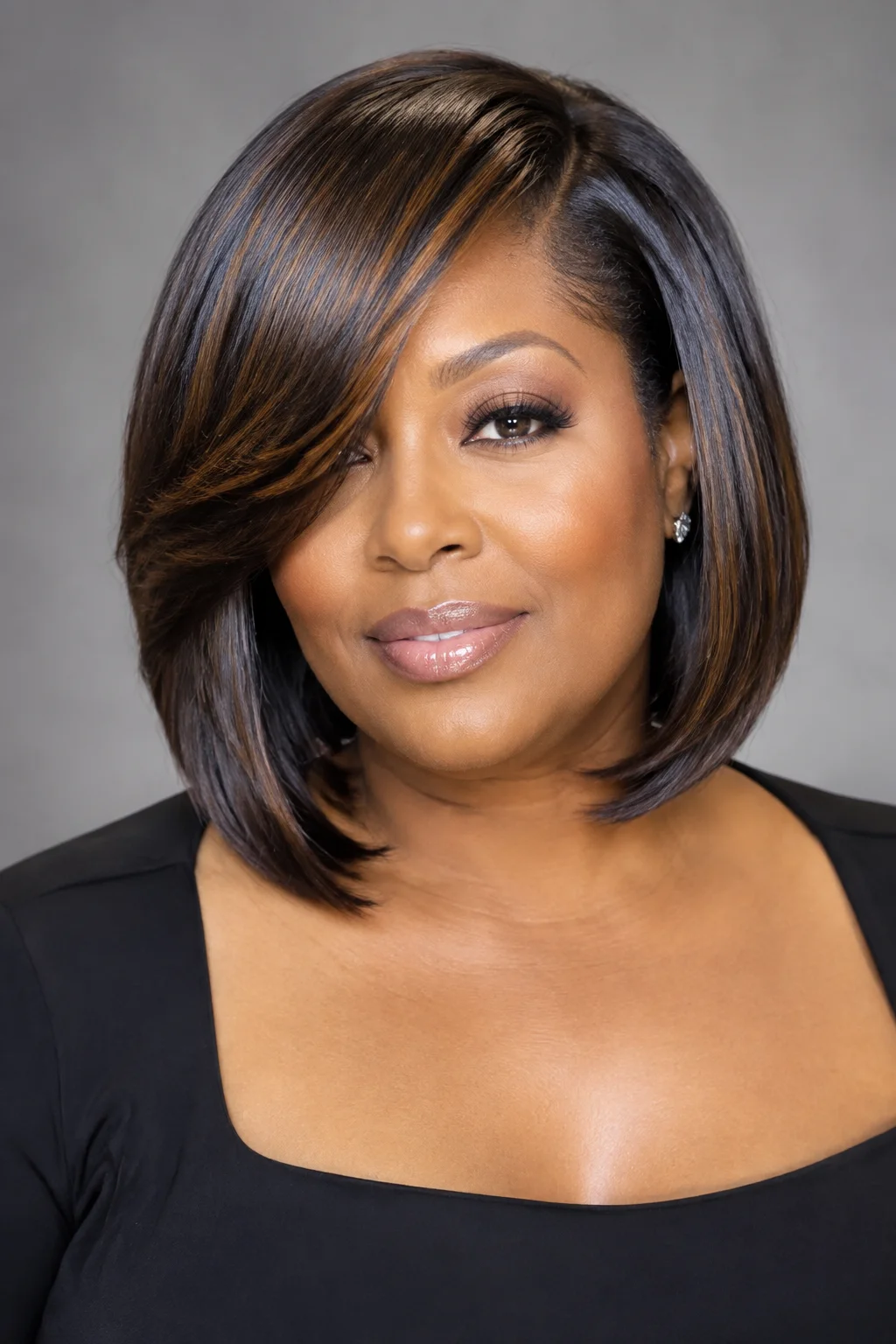
Side-swept bangs add another dimension of movement to a layered bob, sweeping across the forehead instead of sitting straight across. They blend into the rest of the layers rather than standing apart as a separate section. This style flatters most face shapes because the diagonal line of the bangs breaks up strong angles in the forehead and brow area.
Long Layered Bob with Curved Sides
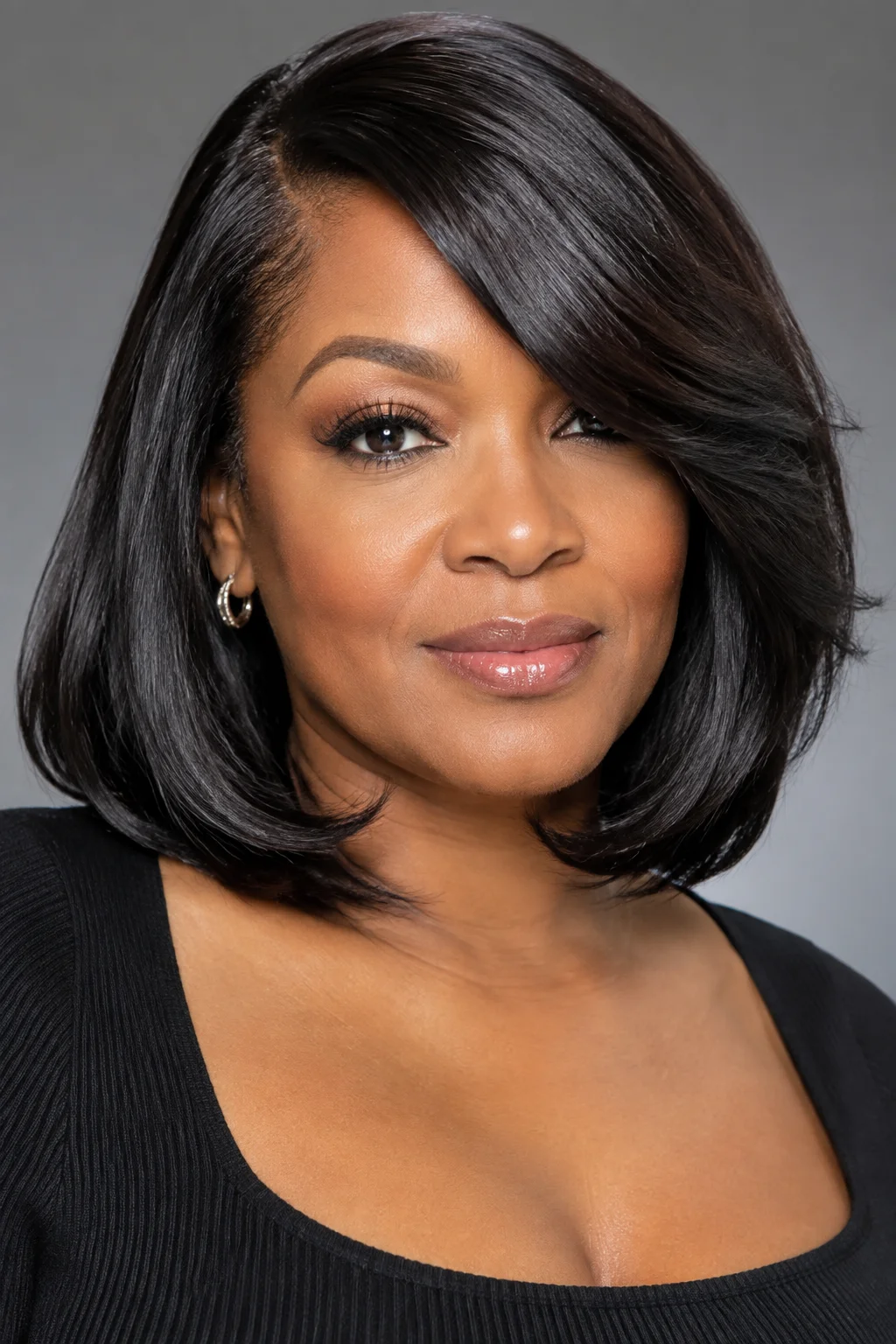
Sometimes called a “lob,” this longer bob keeps length near the collarbone while curving the front sections slightly inward toward the chin. The curve gives the illusion of a rounder, softer jawline even on angular face shapes. Layers throughout keep the length from feeling heavy, and the curved sides can be recreated daily with a round brush or a flat iron turned inward at the ends.
Taper Fade Layered Bob
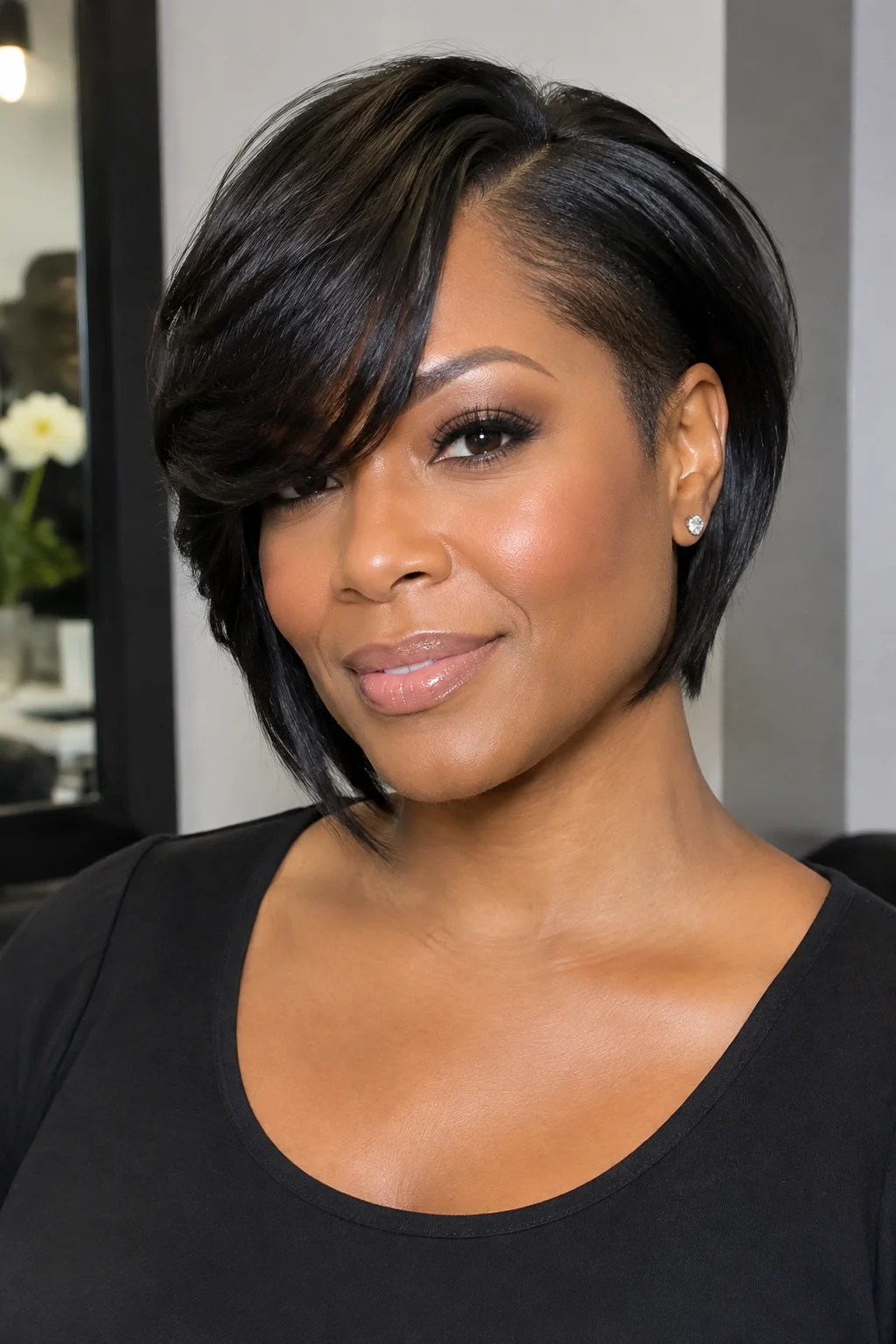
This pairs a tapered fade at the hairline with looser, longer layers through the crown and top section. It reads as more polished than a full undercut since the fade is subtle rather than dramatic. Compared to a shaved design detail, this option feels more office-appropriate while still giving a sharp, defined edge around the hairline.
Layered Bob with Stacked Crown
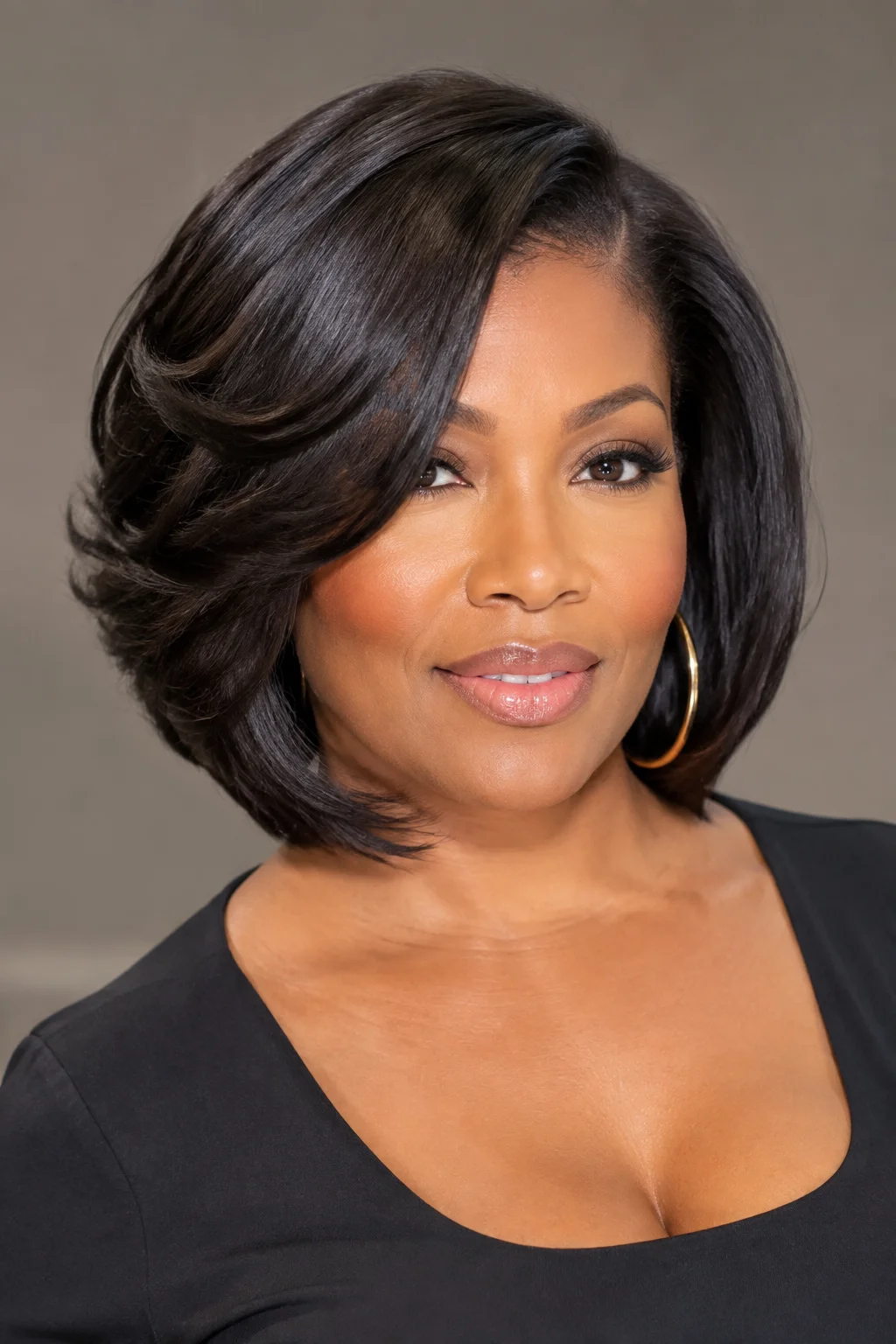
Extra layers are concentrated at the crown to build height right where hair often falls flattest by midday. This works well for anyone who wants volume without teasing or heavy products, since the cut itself does most of the lifting. It pairs nicely with a graduated back for a shape that looks intentional from every angle.
Layered Bob with Textured Bang Fringe
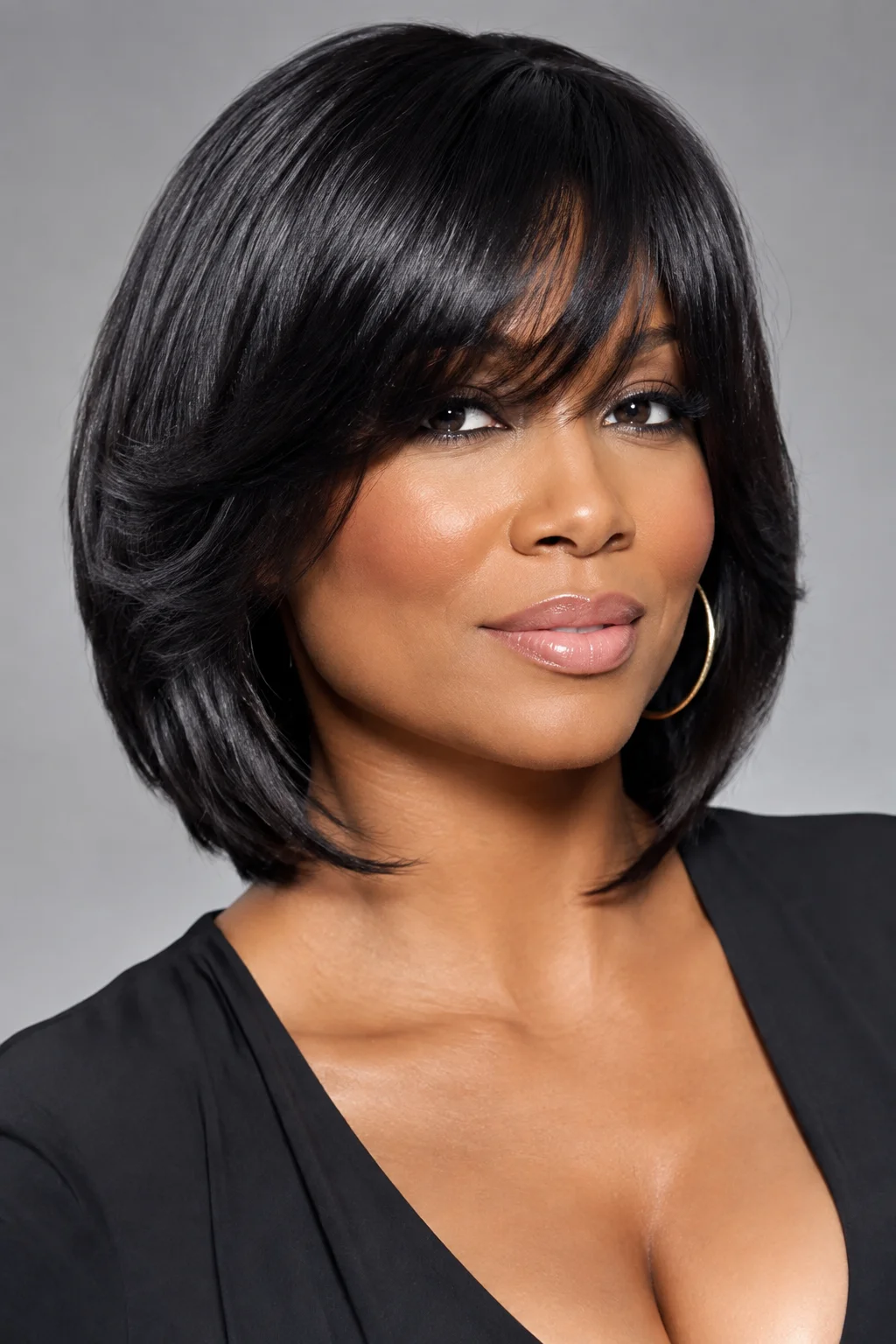
A fringe cut with texturizing shears sits just above the brow, blending into layers that continue through the rest of the bob. Unlike a blunt fringe, this version has broken ends that soften the line across the forehead. It suits thicker hair especially well, since the texturizing removes bulk that a blunt cut would leave behind.
Angled Layered Bob with Back Graduation
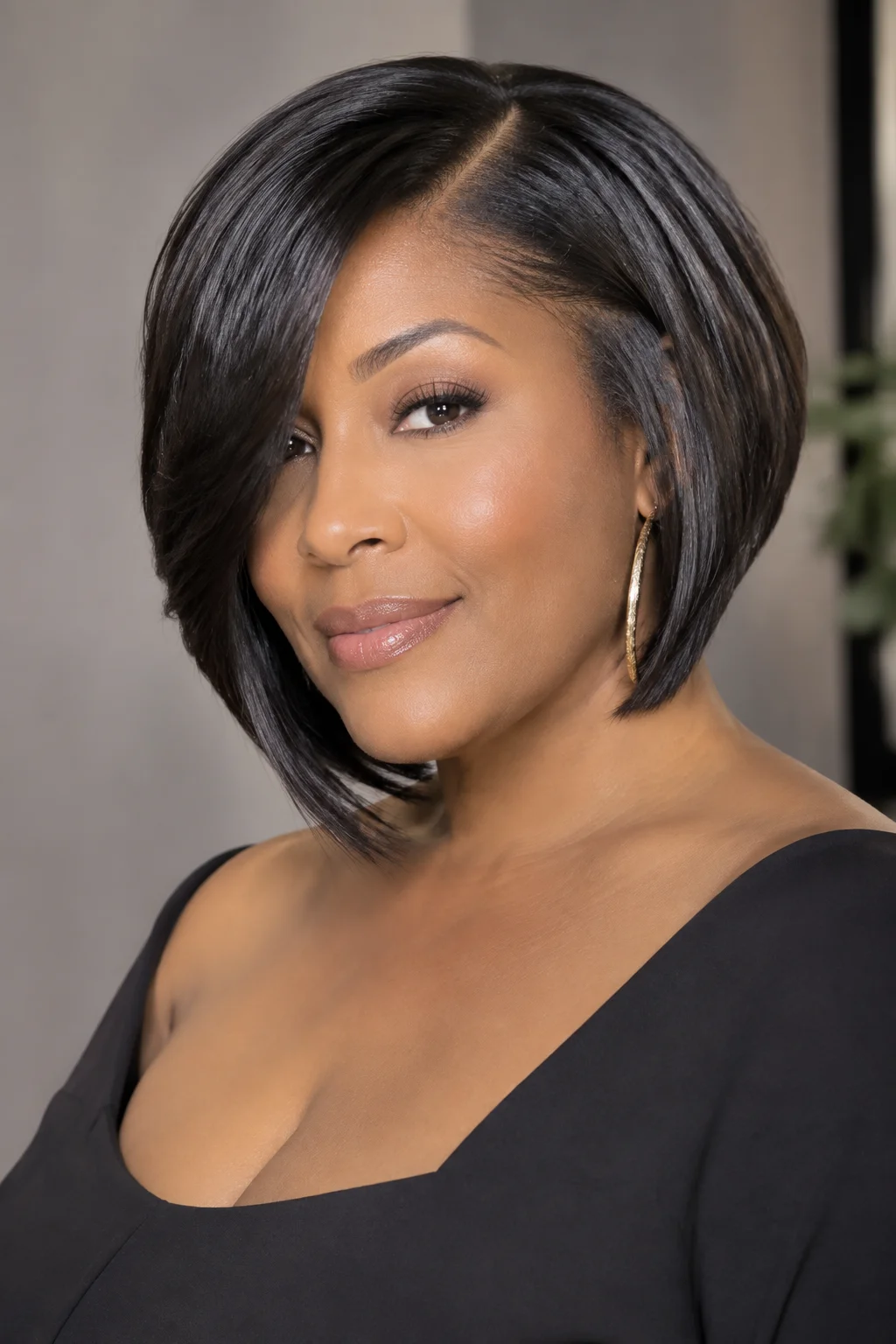
The front sections angle down longer while the back stays short and graduated, creating a dramatic slope from front to back. Layers throughout the angled sections keep the length from looking like a solid sheet of hair. Tip: ask for the steepest angle near the chin rather than the collarbone, since a sharper angle near the face reads more modern.
Layered Bob with Braided Detail Section
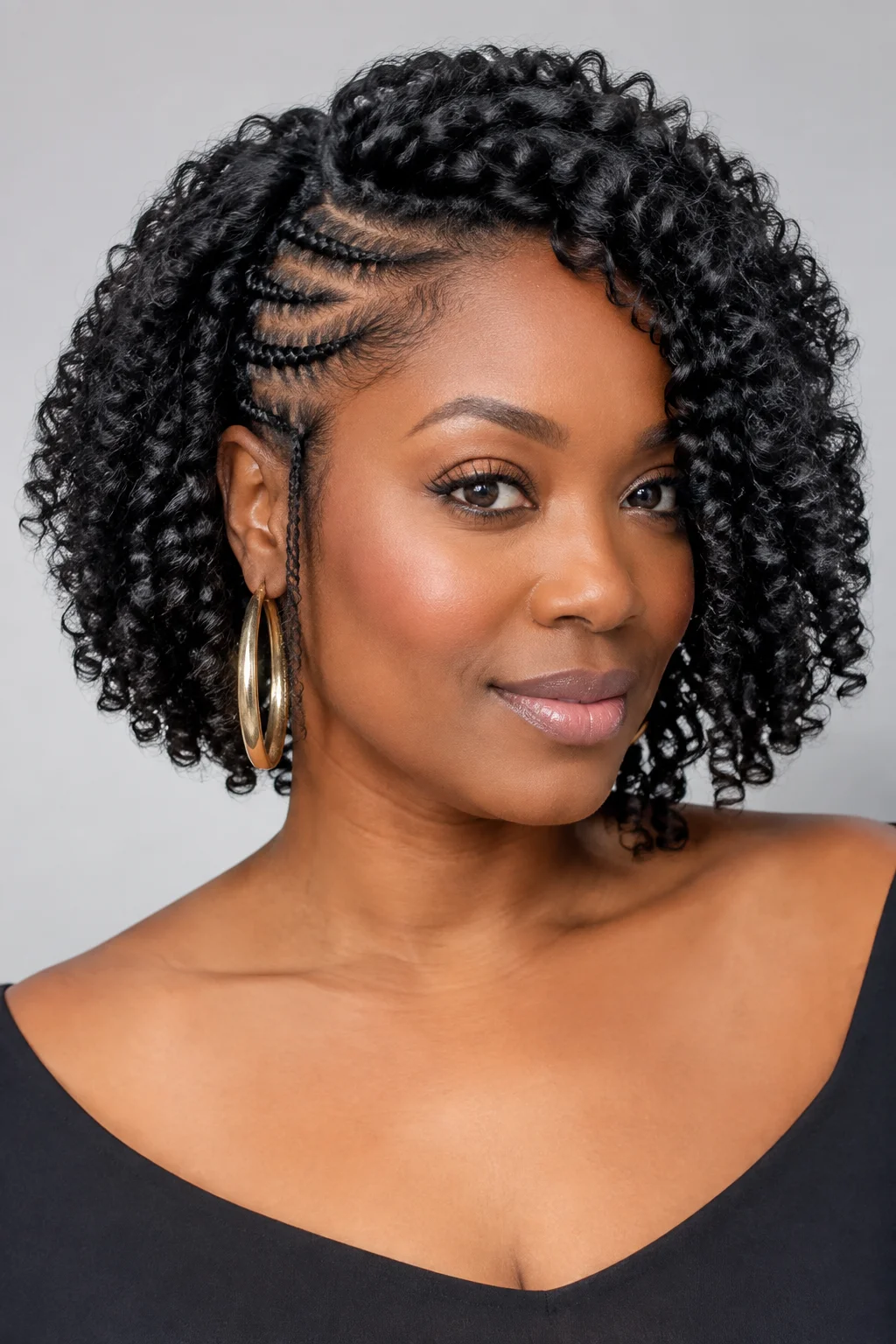
A small section, often at the temple or part line, is braided into the cut, adding texture that contrasts with the looser layers everywhere else. It’s a semi-permanent styling choice rather than a permanent cut feature, so it can be changed out without affecting the layering underneath. This option works well for anyone who wants a protective element built into an everyday hairstyle without going into a full braided style.
How to Choose the Right Layered Bob for You
Picking between these styles comes down to your hair’s density, your curl pattern, and how much daily styling time you actually want to spend. If you have fine hair, the micro layered bob for fine textured hair or the graduated layered bob with volume at crown will give you lift without stripping away density, since both concentrate the cutting work at strategic points rather than removing bulk everywhere. If your hair is thick or coily, the layered textured bob with natural coils or the layered twist-out bob will let your natural pattern do most of the styling work for you.
For anyone who wants a lower-maintenance routine, avoid styles that depend on a hard edge, like the layered bob with shaved design detail or the taper fade layered bob, unless you’re prepared for touch-ups every two to three weeks. A common mistake is choosing an asymmetrical layered bob or an angled layered bob with back graduation without discussing face shape first, since these styles emphasize whichever side or angle carries more length. Bring a photo, but also bring an honest conversation about how many minutes you actually spend on your hair each morning. That answer will point you toward the right cut faster than any picture can.