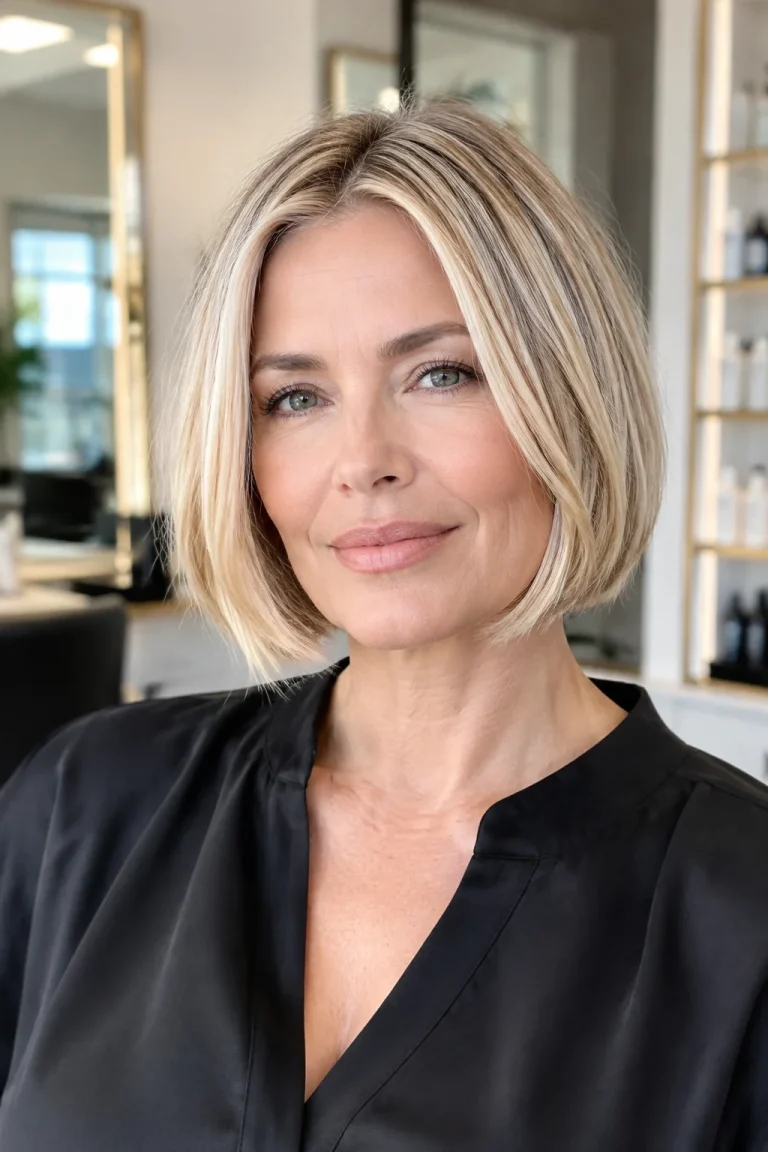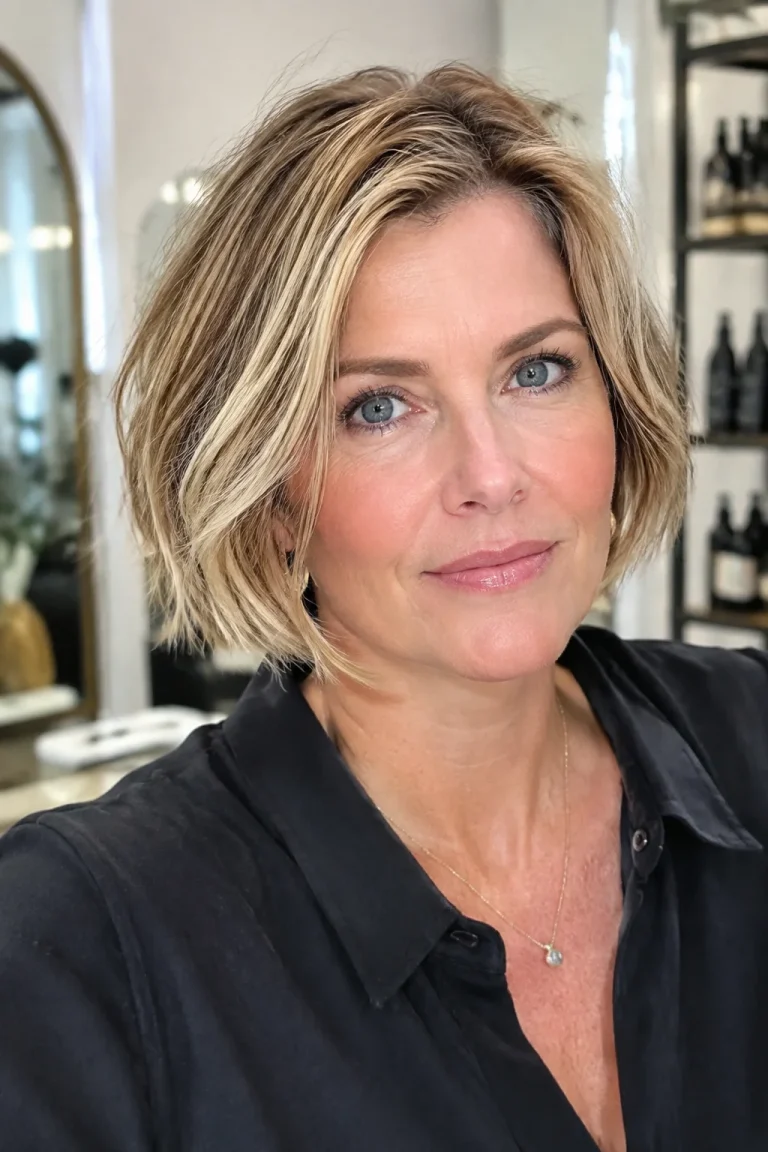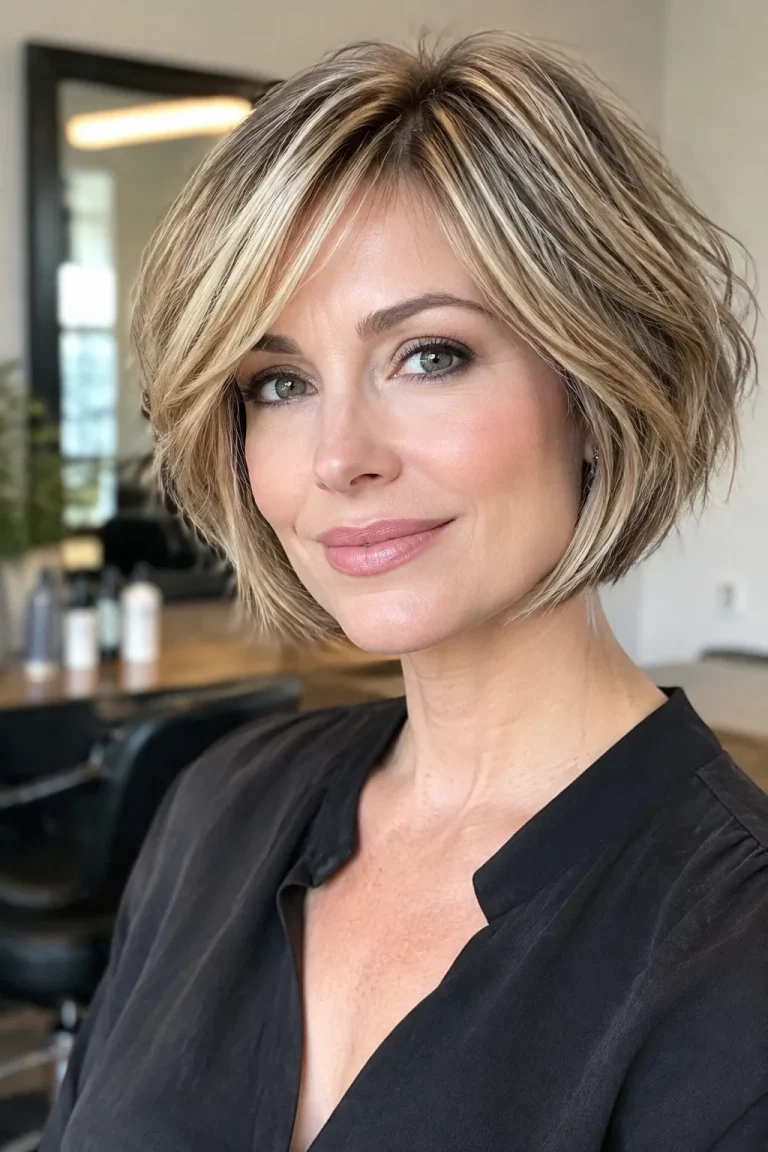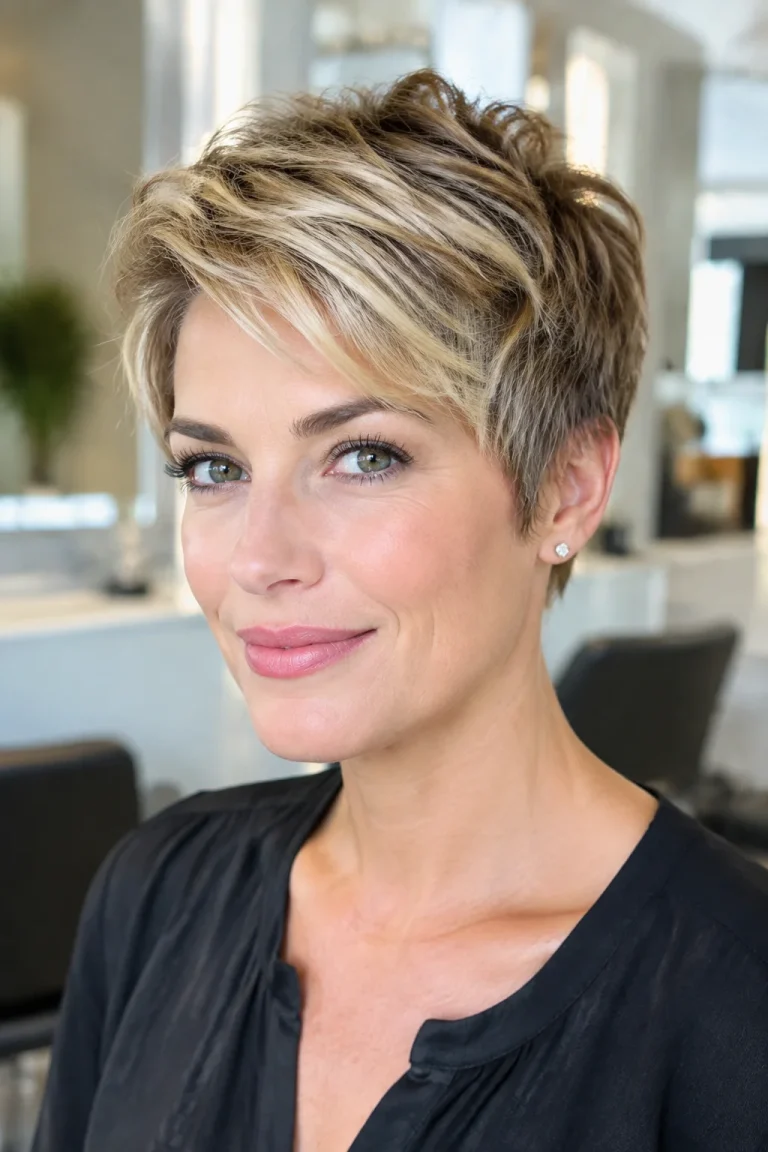
Short hair gets a bad reputation for being high effort, but that’s only true if you pick the wrong shape for your face. The right cut grows out cleanly, styles in five minutes, and still looks put together on day three. Below you’ll find a full range of face-framing low maintenance blonde hair pixie cuts, sorted by face shape, hair texture, and how much upkeep you actually want to deal with. Some of these are grown-out and soft, others are cropped tight and choppy. A few work best on fine hair that needs help looking fuller, while others suit thicker strands that hold texture well. Read through and match the description to your own face shape and hair type before you book your next appointment. A good stylist can adjust any of these, but knowing what to ask for saves you from a chair full of regret.
Classic Textured Pixie with Side-Swept Bangs for Oval Faces
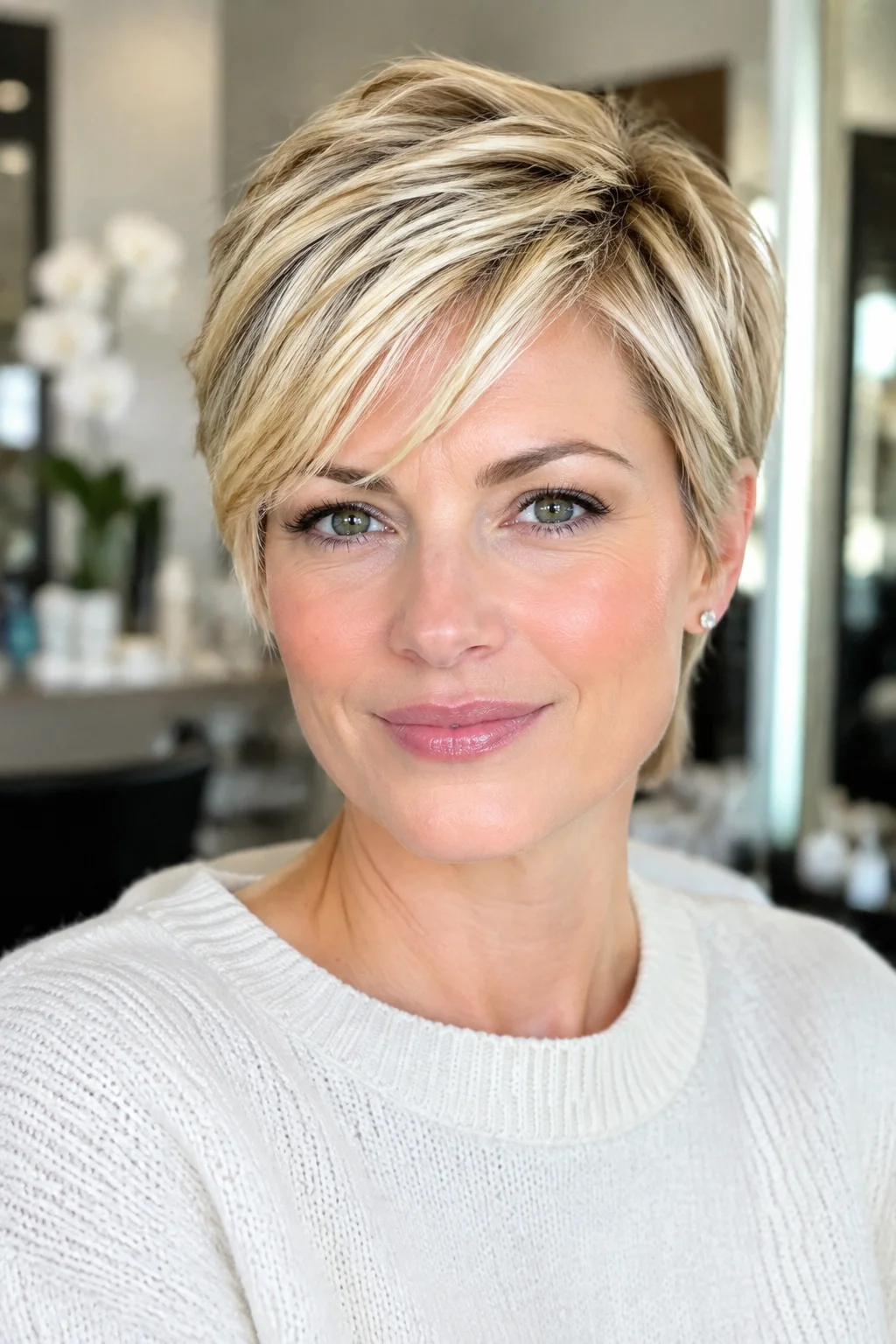
Oval faces can wear almost any pixie, but this version keeps the balance that made the shape easy in the first place. The sides stay short and textured while the bangs sweep across the forehead at an angle instead of sitting straight and blunt. Blonde color catches the light differently across each layer, which adds dimension without needing a toner appointment every month. Tip: ask your stylist to point-cut the bangs so they break up softly instead of ending in a hard line. A light mist of heat protectant before styling helps the finish last. A light mist of heat protectant before styling helps the finish last.
Cropped Pixie with Wispy Face-Framing Layers for Round Faces
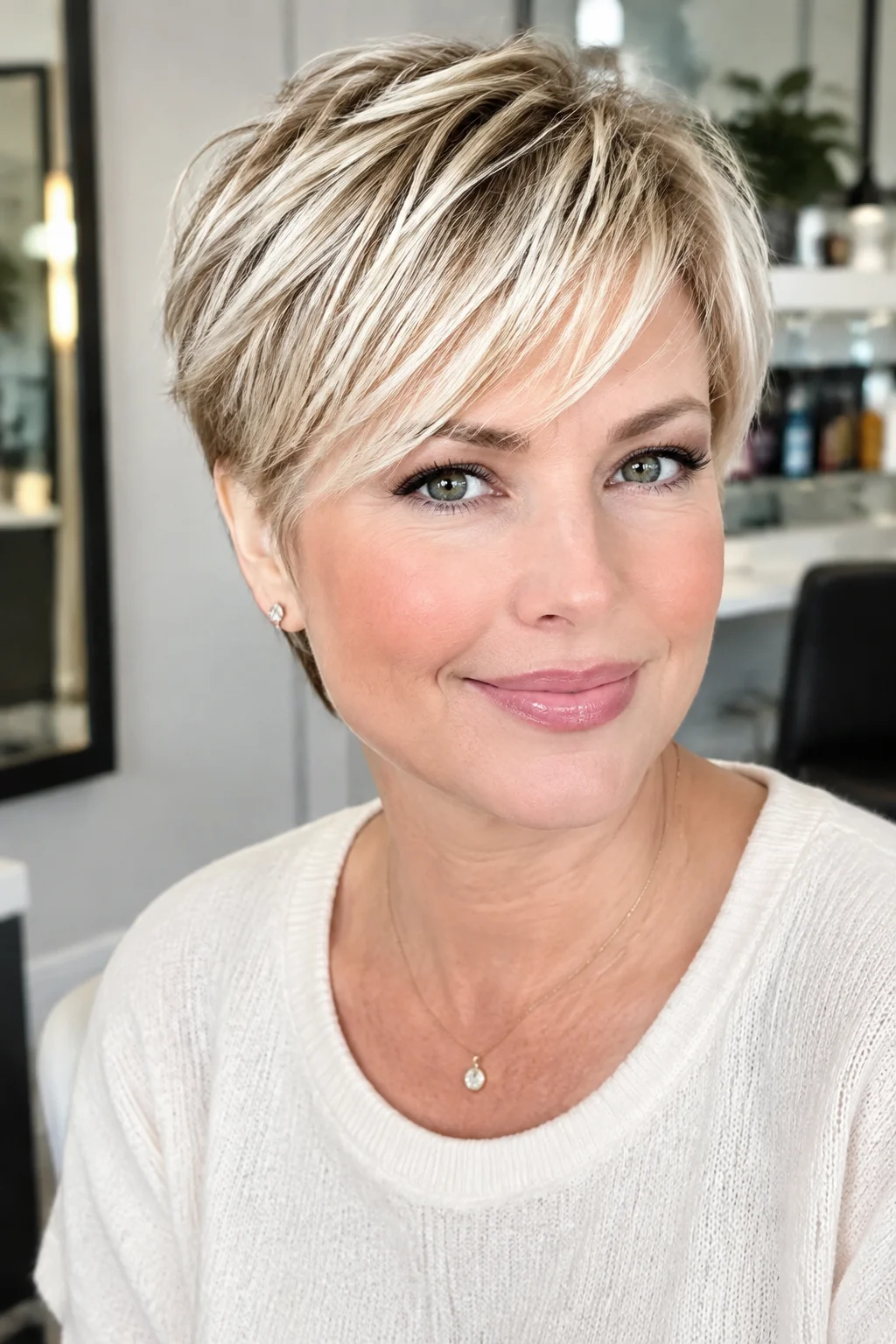
Round faces benefit from height and angles, and this cropped shape delivers both. The crown gets left slightly longer and pushed up, which lifts the whole face and breaks the roundness. Wispy pieces drop down near the cheekbones instead of sitting flush against them, carving out shadow and structure where a round face needs it most. This works especially well on blonde because the lighter color makes those thin, wispy ends look deliberate rather than sparse. Keep the neckline tapered close so the cut doesn’t add width at the jaw.
Long Pixie with Disconnected Bangs for Square Faces
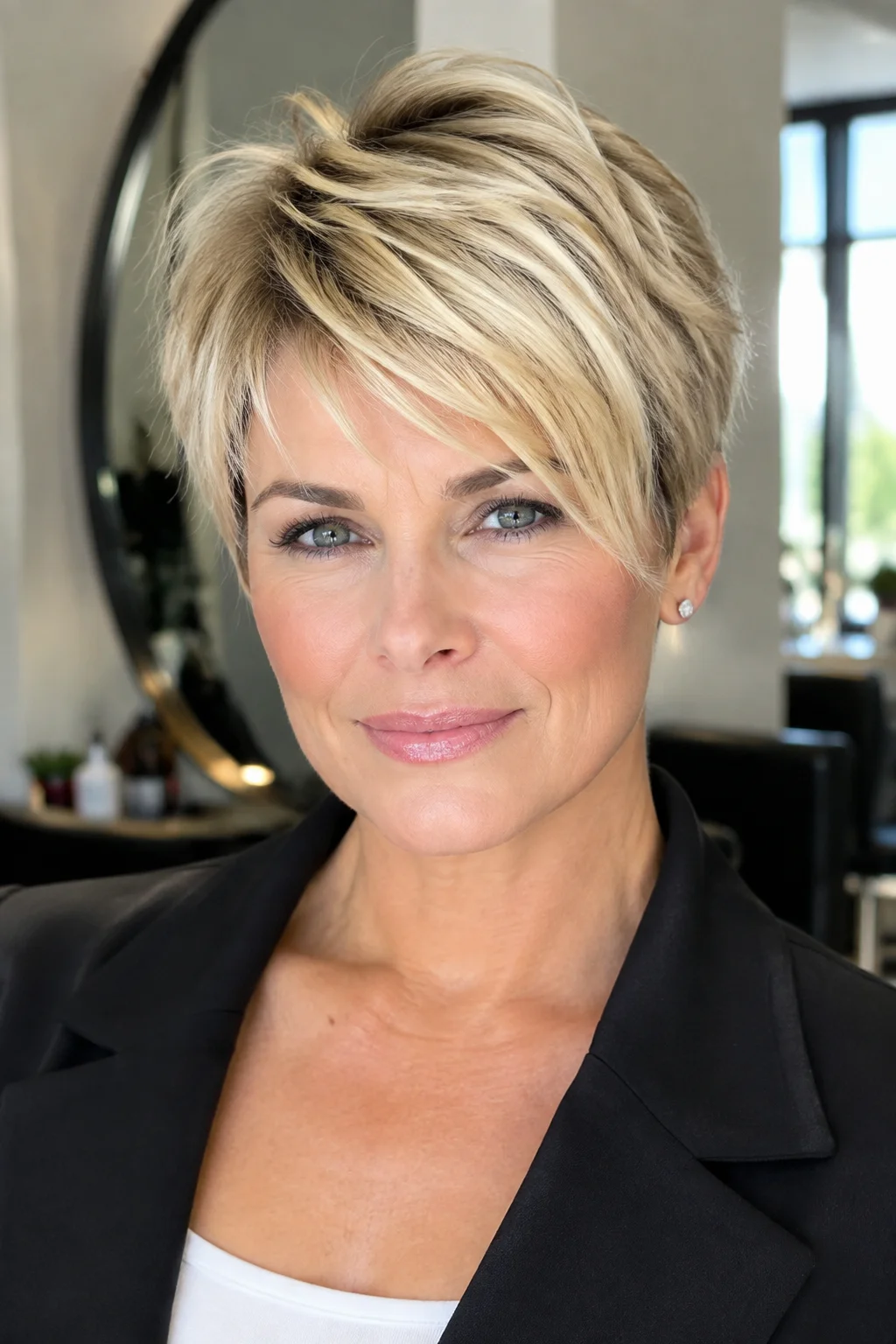
Square jawlines soften up nicely against disconnected bangs that sit apart from the rest of the cut in both length and texture. The top stays long enough to style in several directions, and the bangs land somewhere between the brow and the cheekbone depending on how much coverage you want. This disconnection breaks the straight lines of a square face without hiding the jaw completely.
Textured Undercut Pixie with Longer Top for Heart-Shaped Faces
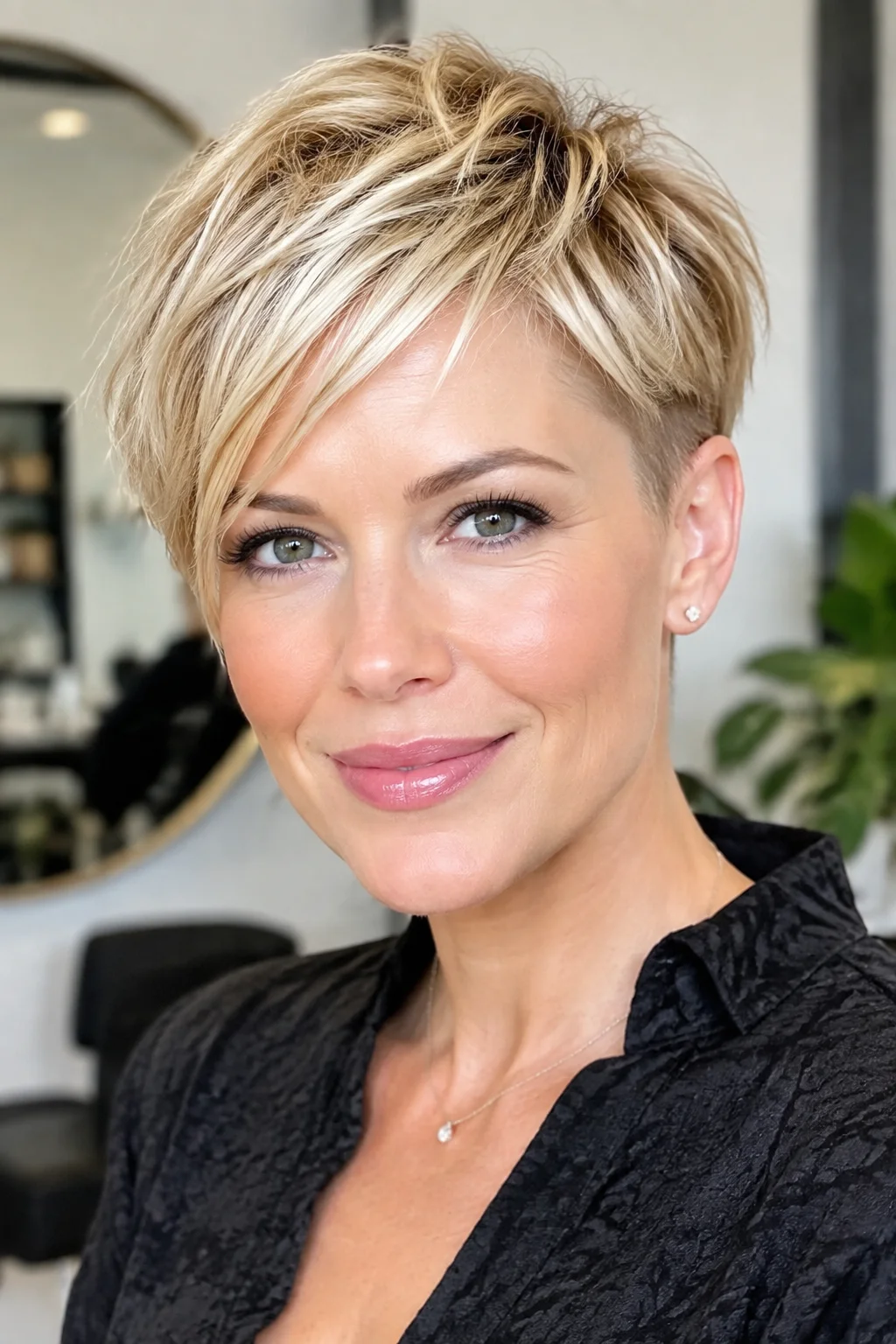
Heart-shaped faces carry more width up top and narrow toward the chin, so this cut keeps volume low on the sides and saves the length for the crown. The undercut trims away bulk at the temples, which are usually the widest point on a heart shape. On top, longer textured pieces can be pushed to one side or worn straight back depending on the day. Blonde tones work well here because the undercut section grows out fast, and lighter color hides the regrowth line better than a stark contrast would. Tip: keep the undercut a bit longer than skin-tight so it’s easier to maintain between salon visits.
Tousled Pixie with Choppy Layers for Fine Blonde Hair
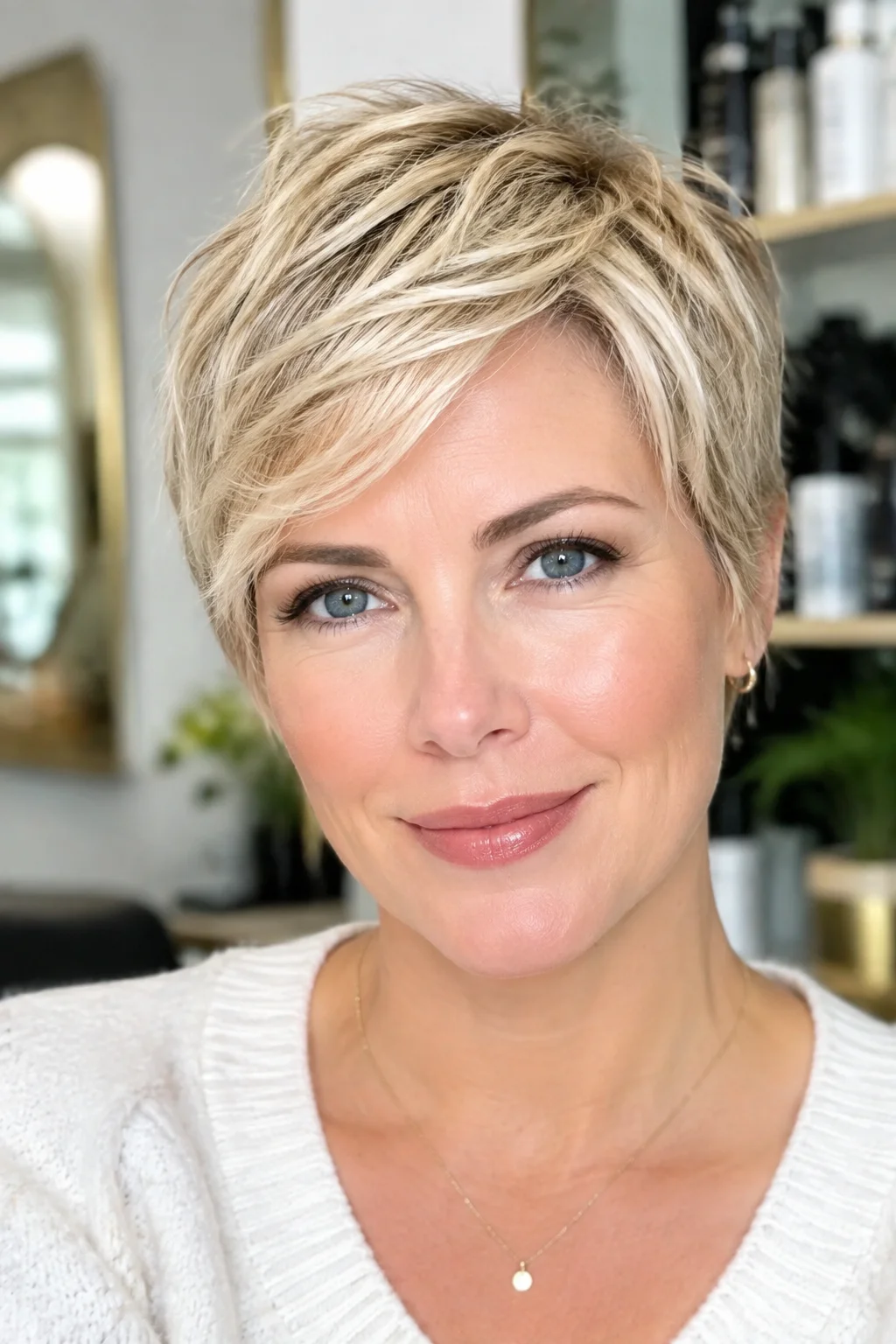
Fine hair struggles to hold shape, and heavy layering only makes it worse. This tousled version uses choppy, uneven layers cut close to the head so there’s less weight pulling the strands flat. The result looks fuller because every piece works independently instead of blending into one thin sheet. A light texturizing spray in the morning is really all this style needs.
Grown-Out Pixie with Feathered Face-Framing for Low Maintenance
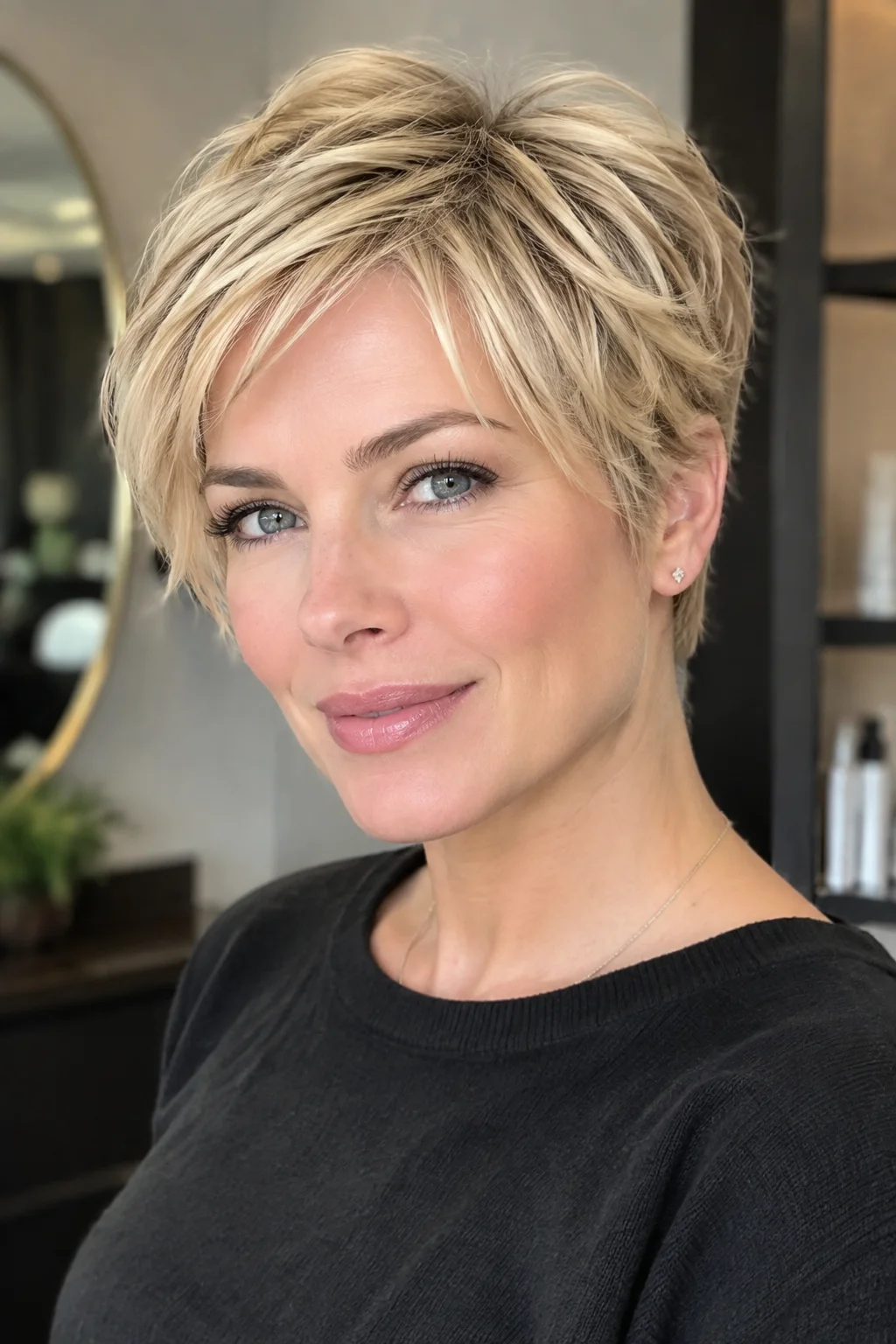
This is the cut for anyone who wants short hair without committing to monthly trims. The layers get feathered rather than blunt-cut, so as the hair grows, the ends still look intentional instead of shaggy in the wrong way. Face-framing pieces around the cheeks stay a bit longer than the rest, giving you something to tuck or sweep as it grows past awkward stages. Because the layers are feathered instead of stacked, there’s no hard demarcation line to grow out badly. Blonde color extends this even further, since regrowth blends into lighter roots more forgivingly than it would with a darker shade. Most people can stretch six to eight weeks between appointments with this shape, sometimes longer if the ends are kept feathered rather than sharp. Tip: ask for a “grow-out friendly” feathering technique specifically, since not every stylist frames it that way by default.
Shaggy Blonde Pixie with Textured Bangs for Thin Hair
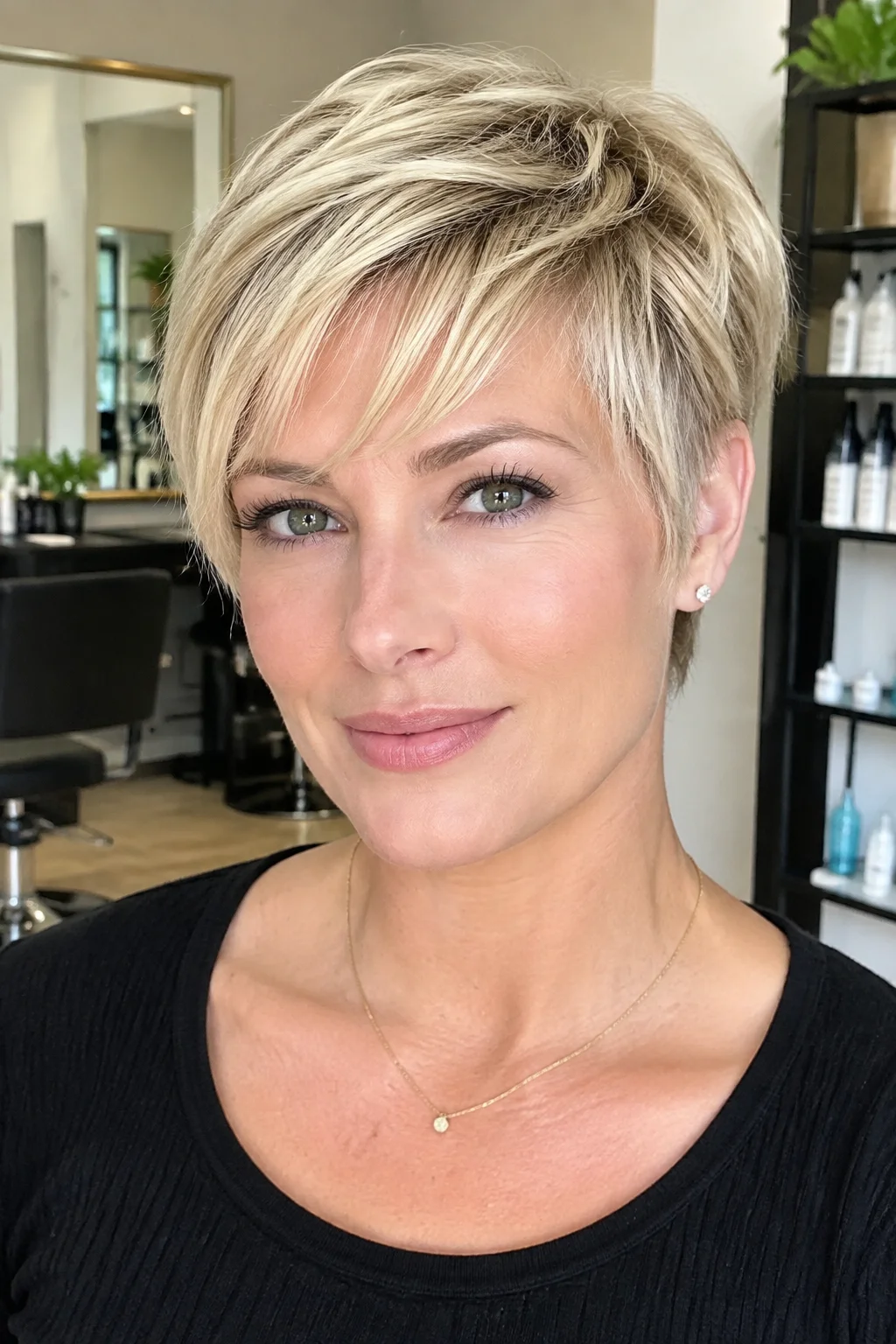
Thin hair reads differently than fine hair, and this shag style is built to fake density where there isn’t much. Choppy layers stack unevenly through the crown, and the bangs get cut with a razor instead of shears for a softer, less blunt edge. This adds movement without needing volume products every single morning.
Side-Part Pixie with Longer Blonde Face-Frame for Oblong Faces
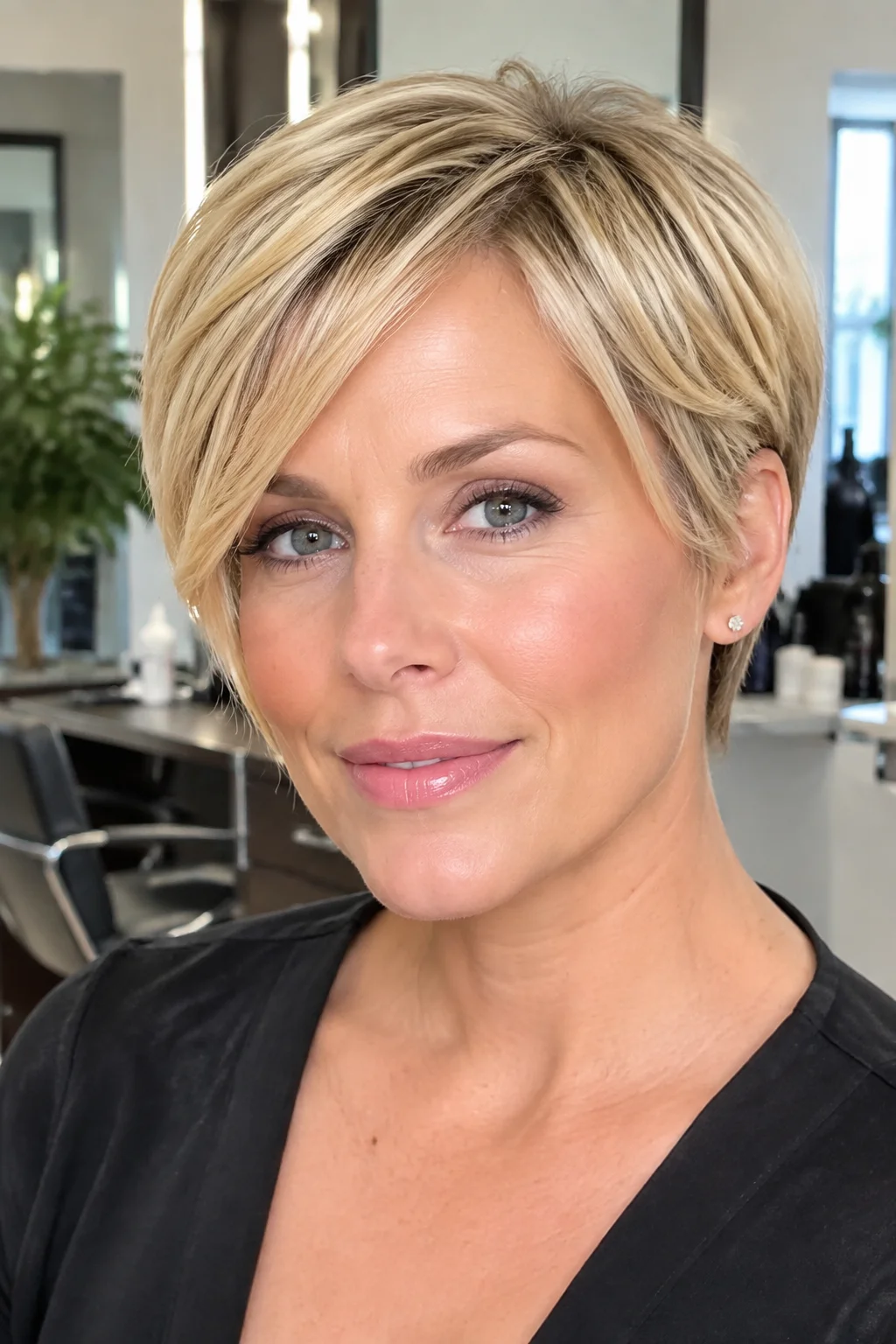
Oblong faces need width, not length, so this cut avoids height at the crown and instead builds fullness at the sides. A deep side part immediately breaks up the vertical line of the face. Longer pieces frame the cheeks and jaw, adding horizontal weight exactly where an oblong face needs it. Blonde highlights woven through the face-frame make those side pieces stand out even more against the shorter crown.
Messy Textured Pixie with Blonde Highlights and Wispy Layers
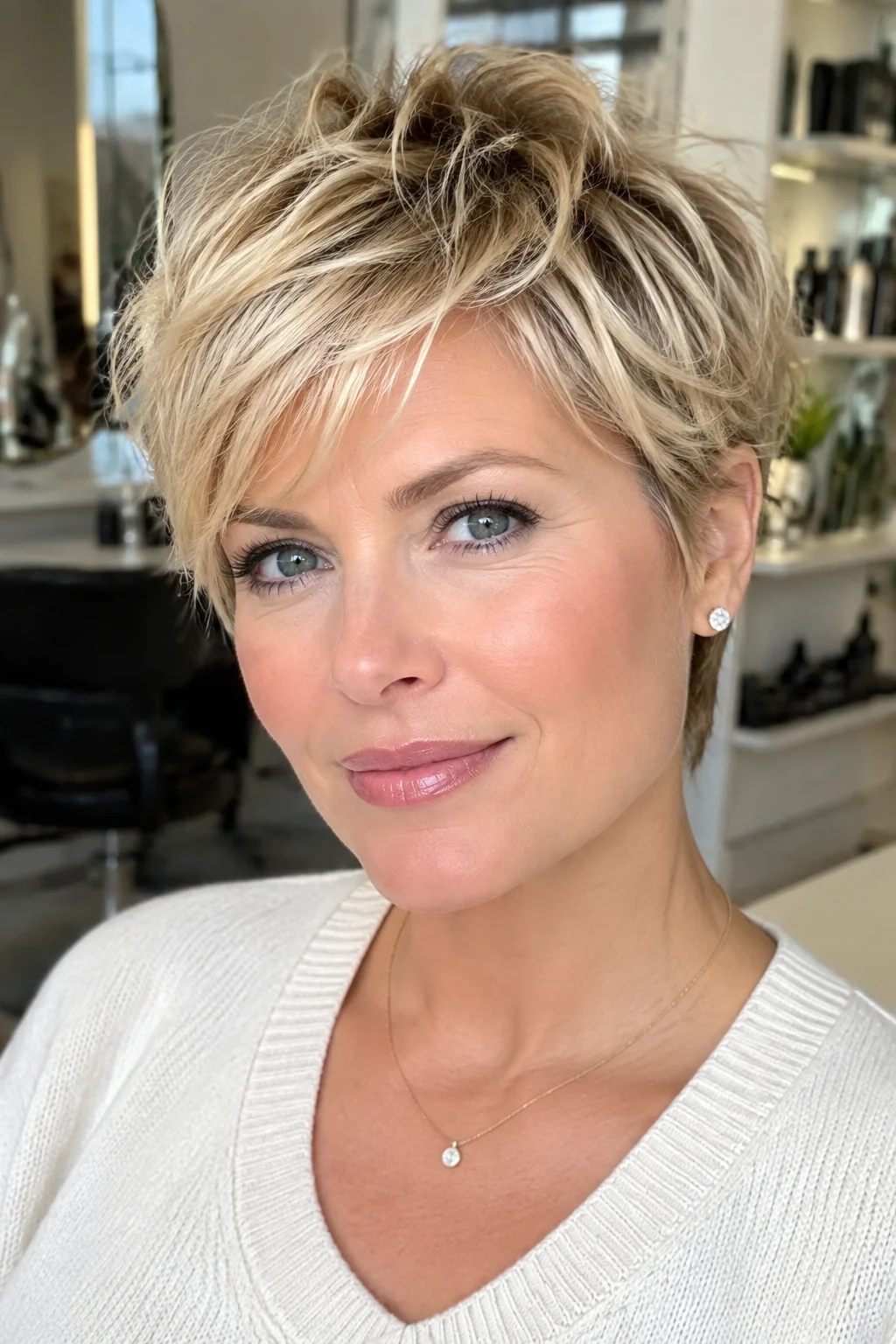
This one leans into imperfection on purpose. Layers get cut at slightly different lengths throughout, and the ends are textured heavily so nothing lies too flat or too neat. Blonde highlights placed unevenly through the top mimic natural sun-lightened hair, which means less frequent color appointments since there’s no single line of regrowth to manage. It’s a good option if you like the look of “just rolled out of bed” without actually looking unkempt.
Asymmetrical Pixie with One Long Side for Pear-Shaped Faces
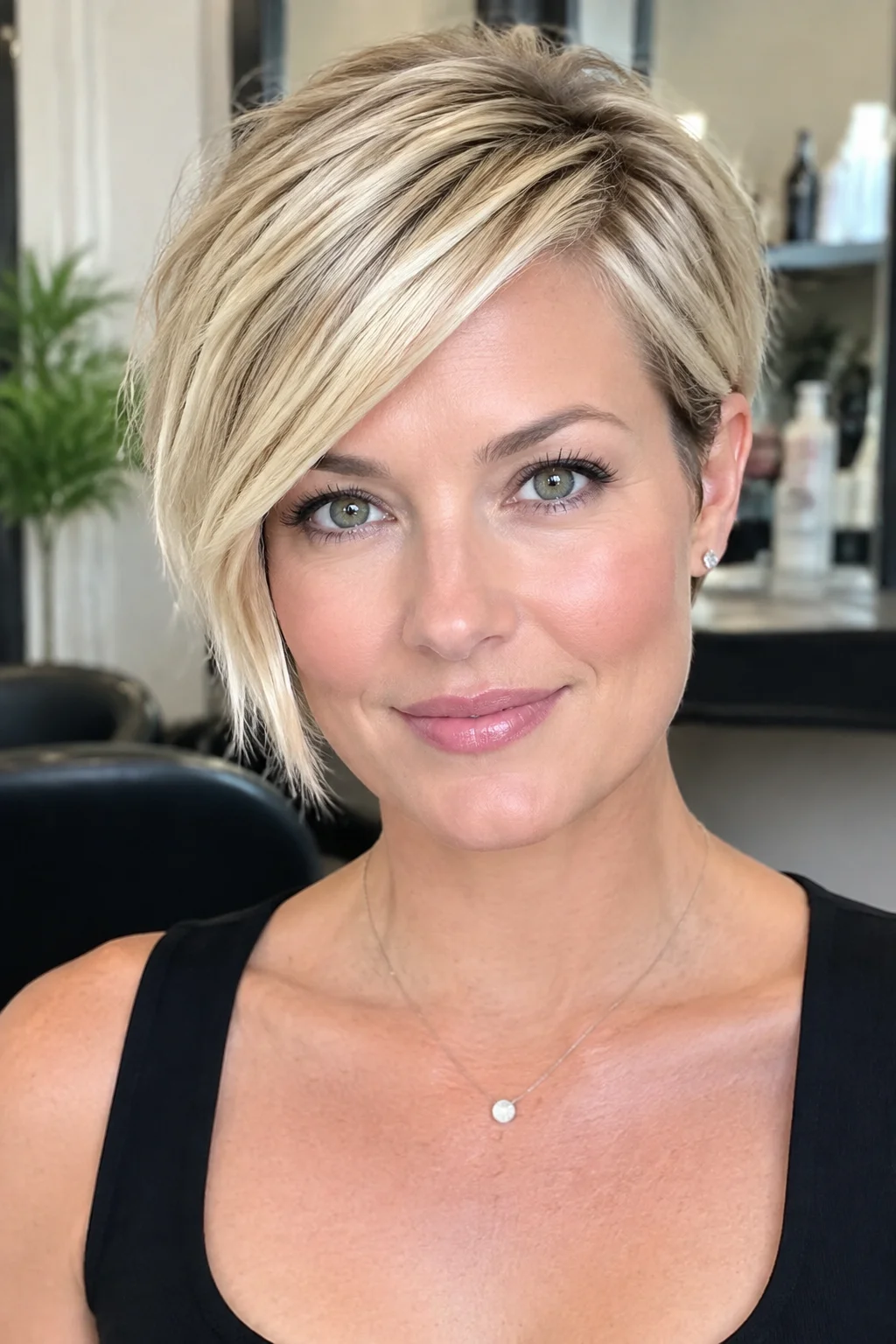
Pear-shaped faces carry more width at the jaw than at the forehead, and an asymmetrical cut helps balance that out. One side gets left noticeably longer than the other, drawing the eye upward and across instead of down toward the jaw. The shorter side stays close and textured so it doesn’t add bulk near the widest part of the face. Tip: wear the longer side swept toward the narrower side of your face for the most balancing effect.
Tapered Pixie with Blonde Balayage and Choppy Front Layers
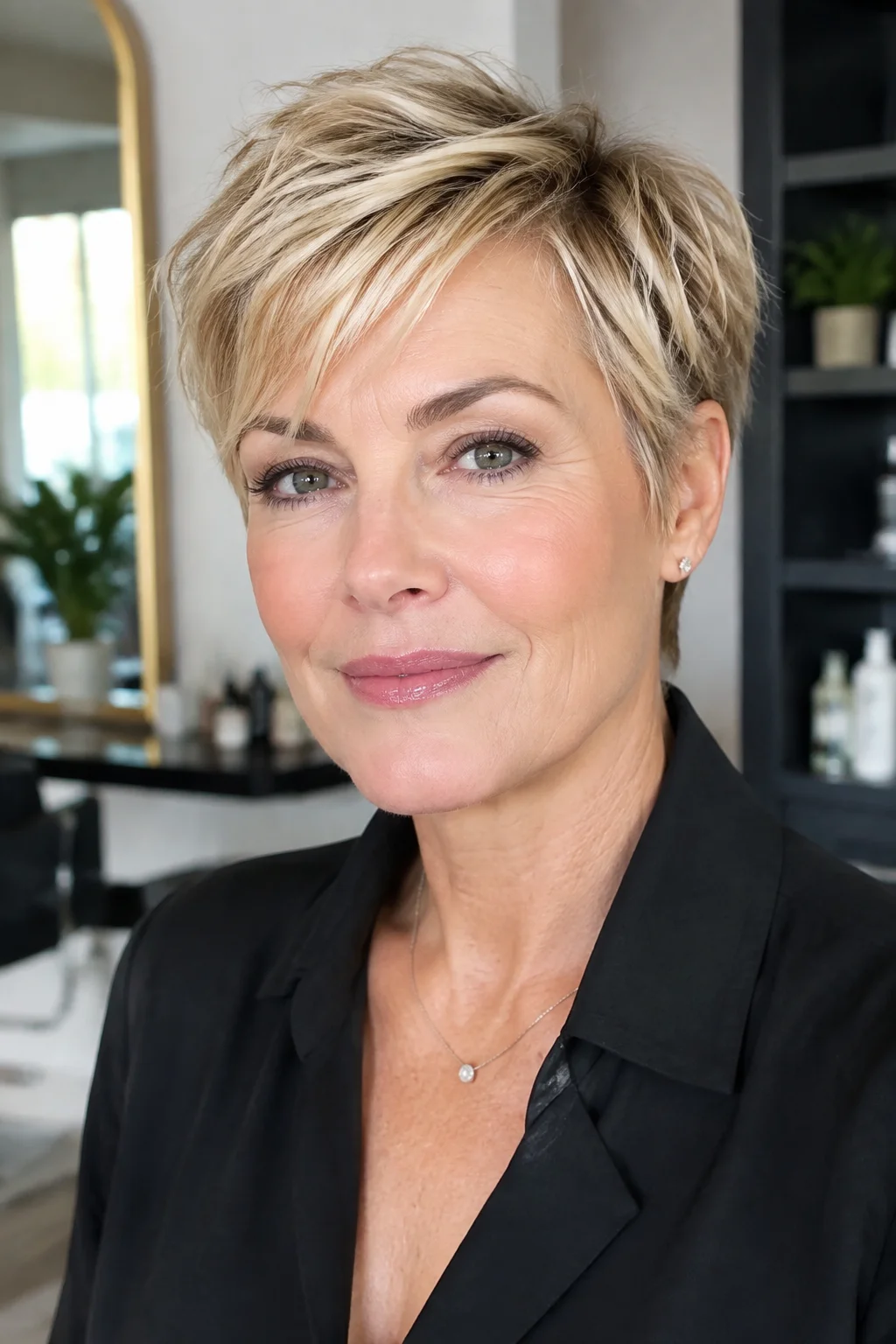
The taper here keeps things clean at the neckline and around the ears, while the front is left choppier and more textured for contrast. Blonde balayage through the top layers adds depth without a harsh grow-out line, since balayage is painted rather than applied at the root. This combination reads polished from the back and relaxed up front, which is a nice middle ground if you want a pixie that still feels professional.
Textured Crop Pixie with Longer Blonde Pieces in Front
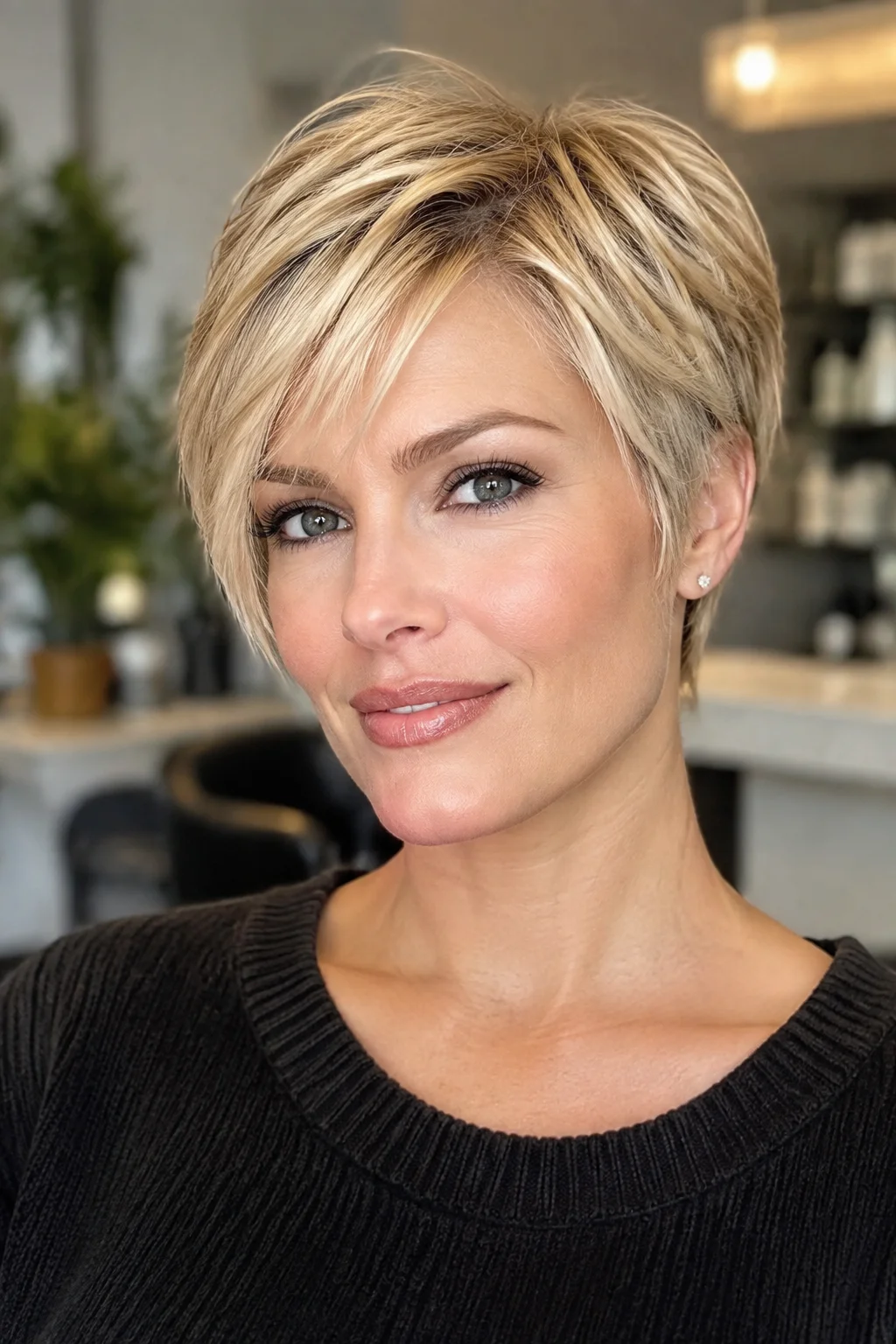
This crop keeps things short almost everywhere except right at the front, where a few longer pieces are left to fall across the forehead. It’s a simple styling formula: towel dry, apply a small amount of texture paste, and push the front pieces where you want them. There isn’t much else to do.
Soft Layered Pixie with Blonde Highlights for Mature Skin
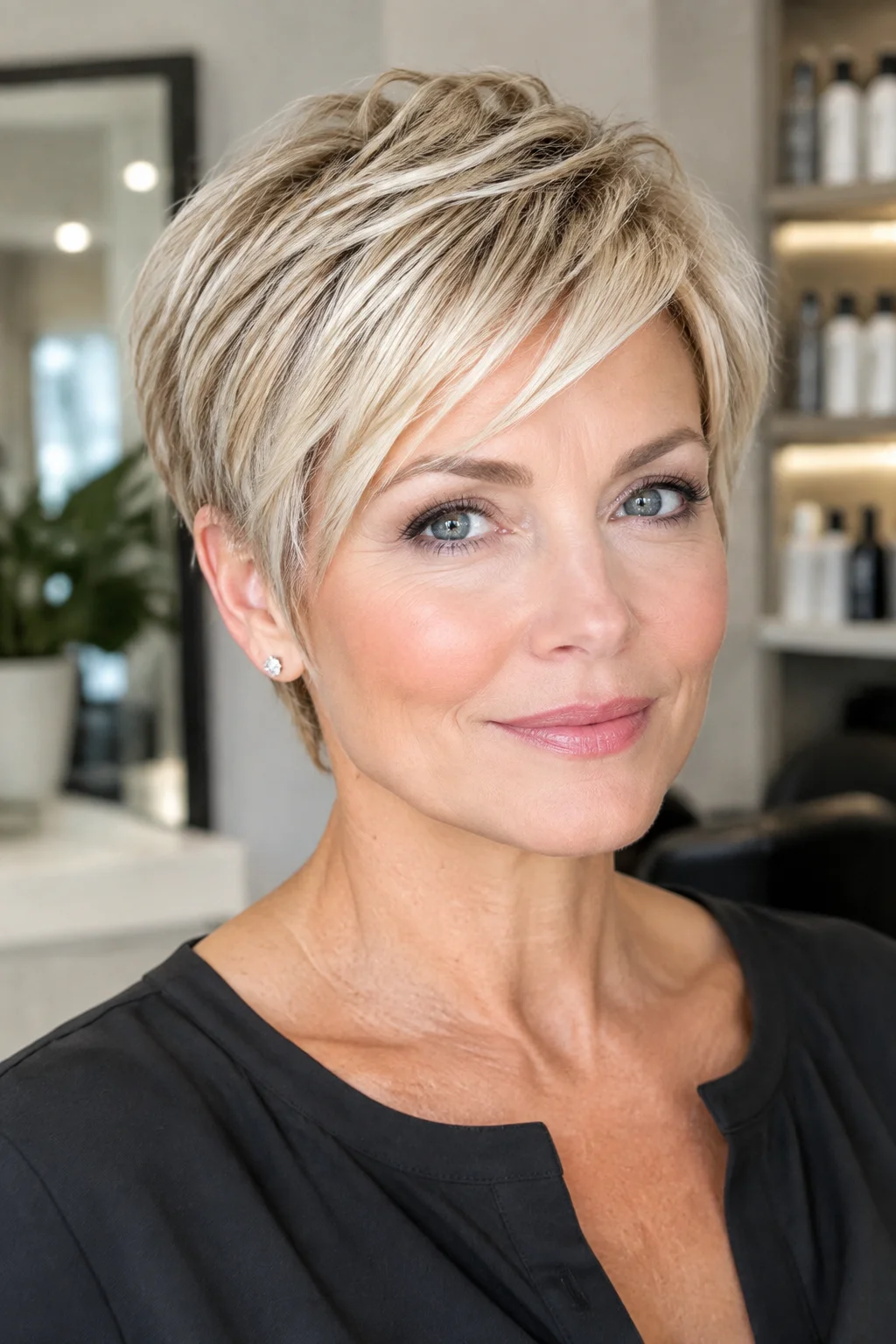
Softer layering suits mature skin because it avoids harsh, blunt lines near the face that can feel too severe against changing skin texture. This cut keeps everything rounded rather than choppy, with blonde highlights placed to brighten the complexion rather than compete with it. The face-framing pieces are cut on a slight angle so they lift the eye instead of dragging it down. Because the layers are soft rather than textured to the extreme, this style also holds up well without daily restyling, which matters if your morning routine doesn’t include quite as many steps as it used to. A light-hold mousse applied to damp hair is usually enough to set the shape for the day.
Choppy Pixie with Disconnected Blonde Fringe for Diamond Faces
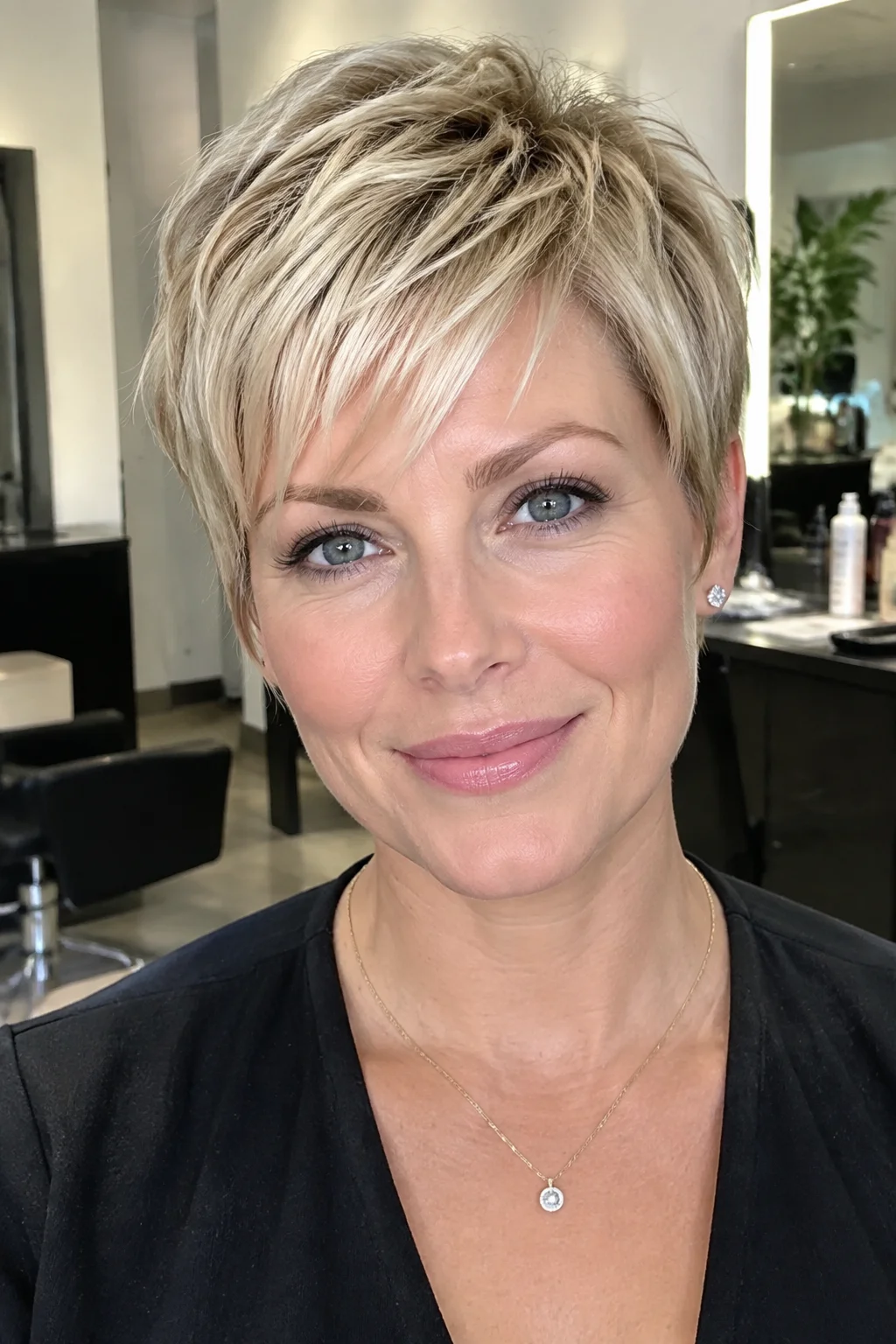
Diamond faces are widest at the cheekbones, so this cut adds fringe that sits disconnected from the rest of the layers to soften that width. The fringe stops short of the brow, keeping the forehead partially visible instead of hidden. This is a good pick if you want something a little edgier than a standard side-swept bang.
Tousled Blonde Pixie with Longer Sides for Textured Styling
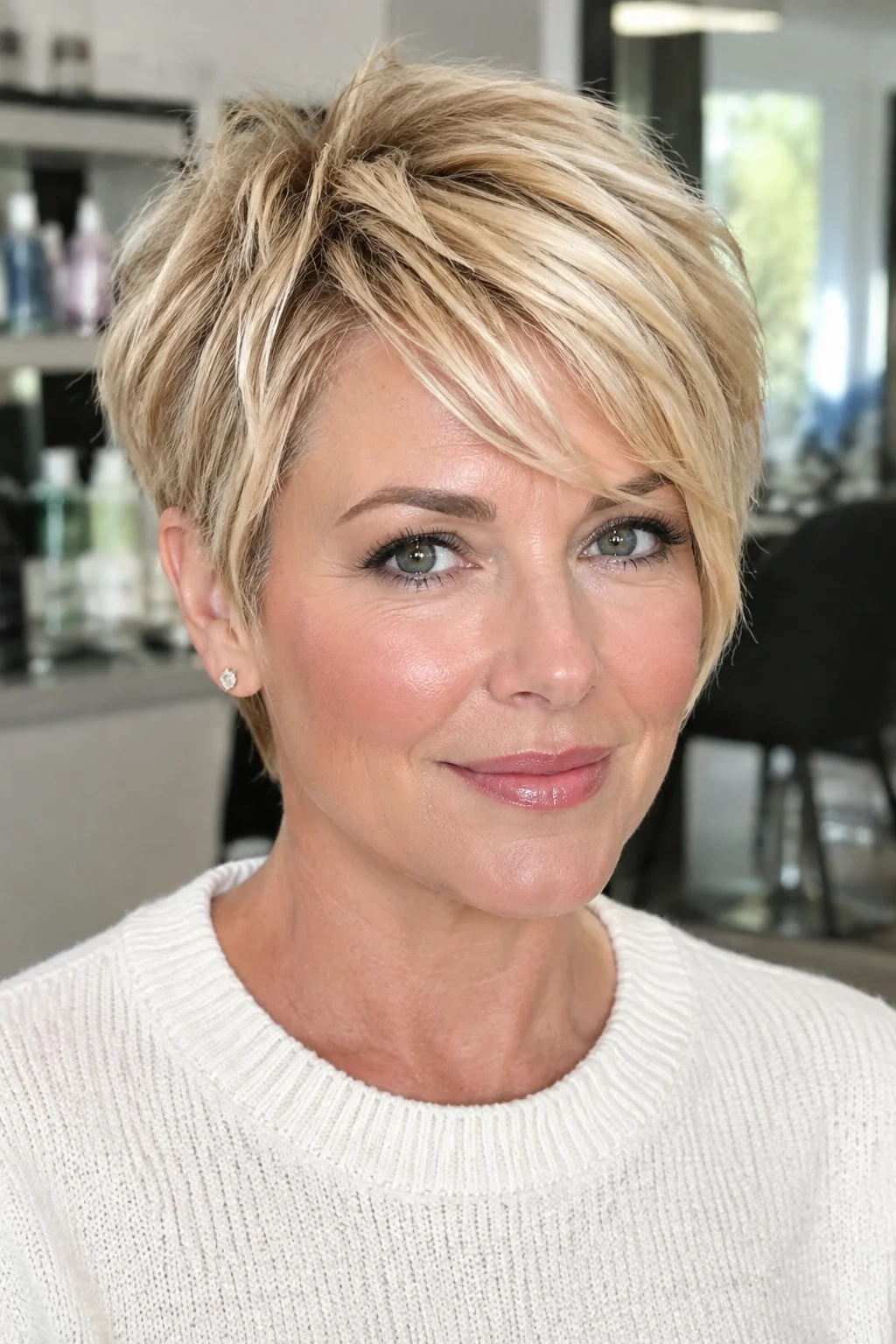
Longer sides give you more to work with on days when you want texture rather than a sleek finish. The top stays choppy and easy to tousle with your fingers, while the sides can be tucked behind the ears or left loose depending on your mood. Blonde tones catch the texture well under natural light, making each piece look separated rather than clumped together. This is one of the more flexible cuts on this list since it styles differently depending on product and effort level, from a quick finger-comb to a more deliberate piece-by-piece finish with a diffuser.
Feathered Pixie Crop with Blonde Ombre and Wispy Layers
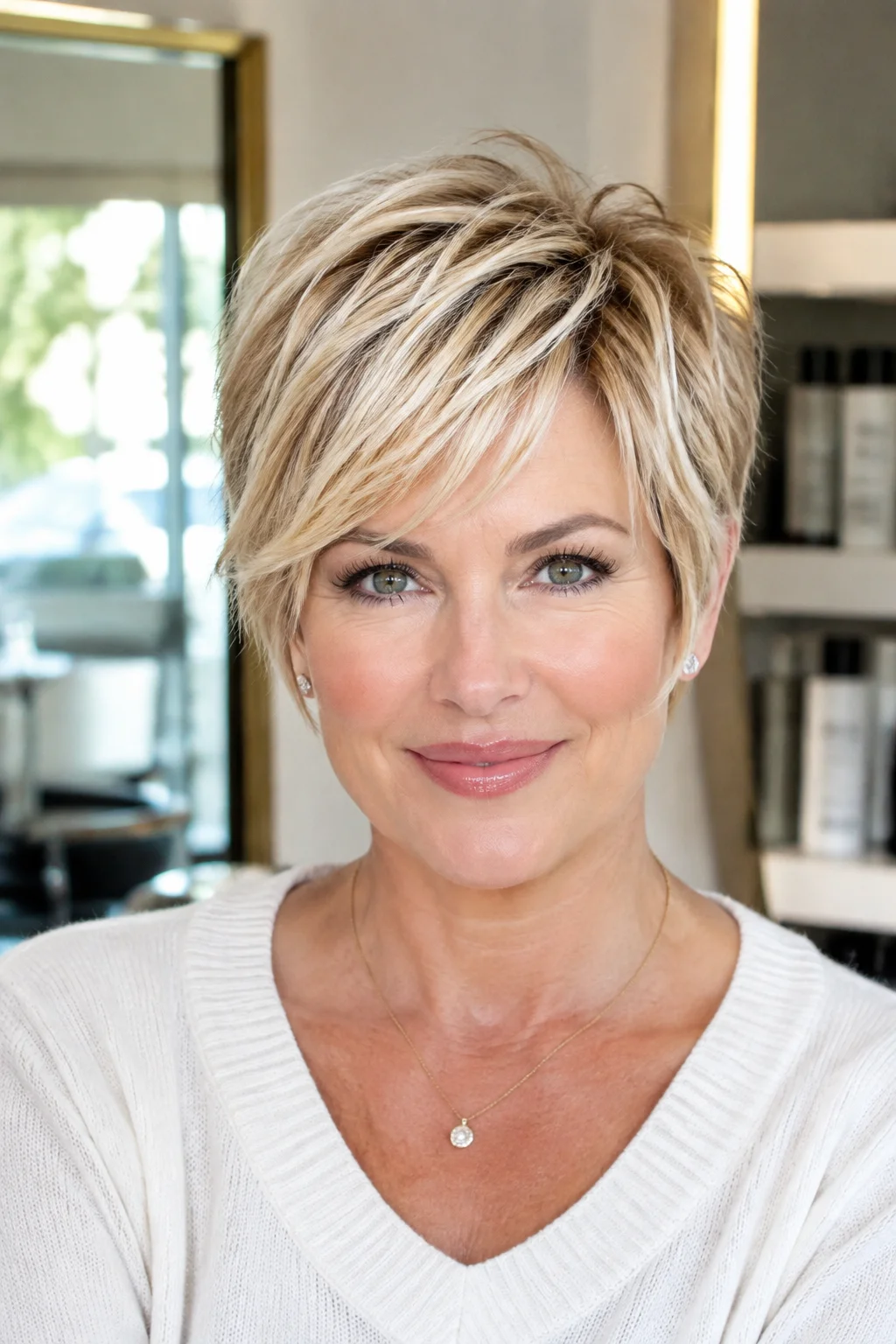
Feathering keeps this crop from ever looking stiff. The layers are wispy at the ends, almost brushing rather than cutting cleanly, and the blonde ombre transitions from a deeper root into lighter ends without a hard line to touch up. It’s especially good for anyone who wants low maintenance color alongside low maintenance styling, since both grow out gently rather than abruptly.
Textured Pixie with Grown-Out Blonde Roots for Effortless Upkeep
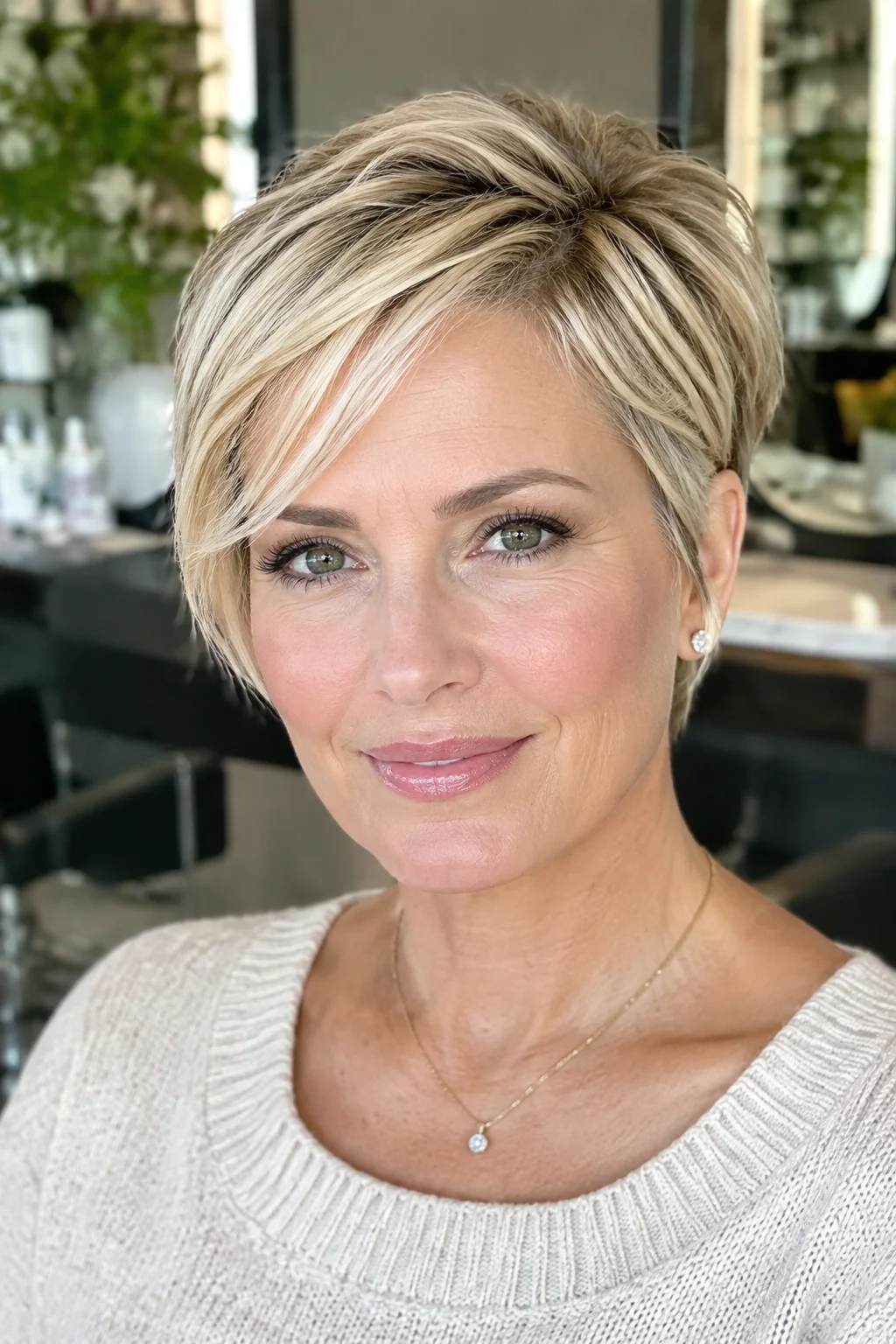
This cut is built around the grown-out root look rather than fighting against it. The blonde is applied in a way that lets the natural root color show through gradually, so there’s no scheduled touch-up window to plan around. Texture through the top hides any unevenness as the cut itself grows out too.
Side-Swept Blonde Pixie with Layered Crown for Added Volume
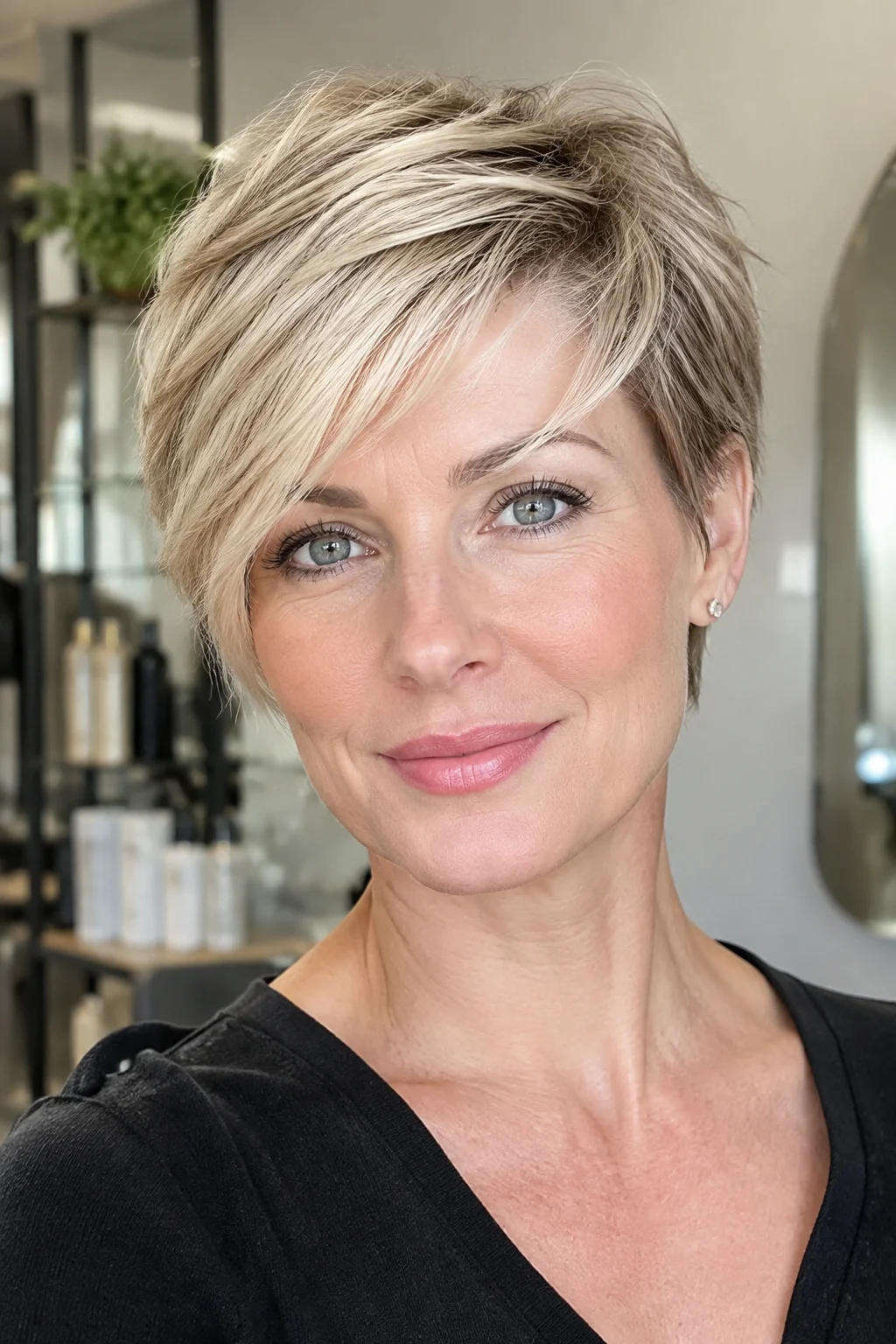
A layered crown lifts hair away from the scalp, which adds volume for anyone whose hair tends to sit flat. Side-swept styling at the front keeps the look soft rather than spiky. Tip: blow dry with a round brush lifting up and away from the roots to get the most out of the layered crown before applying any product.
Short Textured Blonde Pixie with Longer Bangs for Minimalist Maintenance
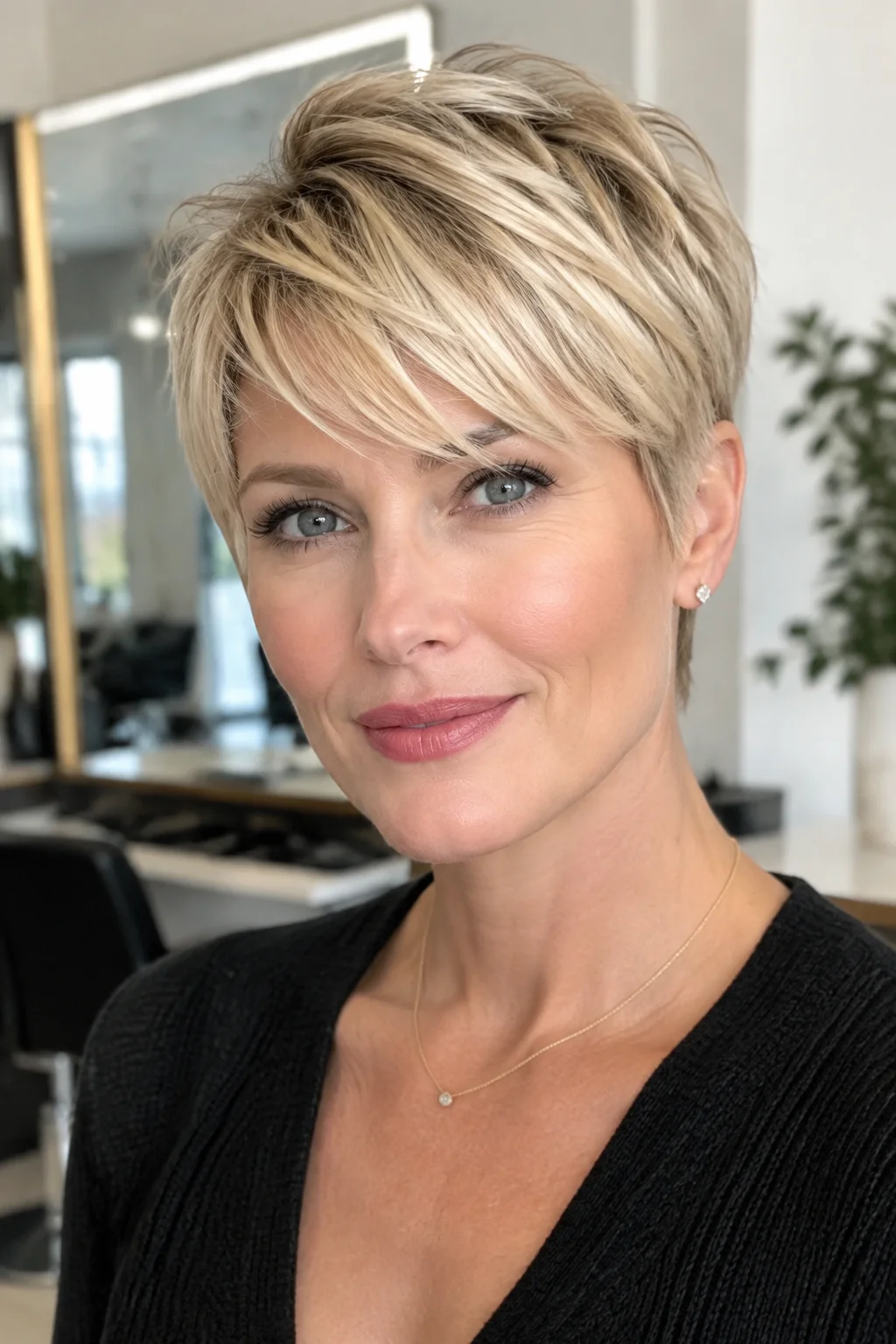
This is about as low effort as a pixie gets. The cut stays short and textured throughout, with bangs left just long enough to sweep to one side or push back with fingers. There’s no blow dry required, no round brush, no real routine beyond towel drying and running a bit of product through with your hands.
Choosing the Right Pixie for Your Face and Hair
Picking between these styles comes down to two questions: what shape is your face, and how much time do you actually want to spend on your hair each morning. If you have a round face, the cropped pixie with wispy face-framing layers or the choppy pixie with disconnected blonde fringe will add the angles you need. Square faces do better with the long pixie with disconnected bangs, since that cut breaks up strong jaw lines without fighting them. Heart-shaped faces should lean toward the textured undercut pixie with longer top, which trims bulk exactly where heart shapes carry the most width.
For upkeep, the grown-out pixie with feathered face-framing and the textured pixie with grown-out blonde roots are the two best choices if you dread frequent salon visits. Both are built to grow out without a hard line, which means longer stretches between appointments. If your hair is fine or thin, avoid heavy one-length layering entirely. The tousled pixie with choppy layers and the shaggy blonde pixie with textured bangs are cut specifically to fake density, while a smooth, blunt pixie will only expose how fine the strands really are.
A common mistake is choosing a cut based on a photo without accounting for your own hair texture. A style that looks effortless on thick, wavy hair might require daily styling on fine, straight hair, and vice versa. Bring reference photos to your appointment, but let your stylist adjust the layering and blonde placement to match what your hair actually does, not just what you want it to look like.