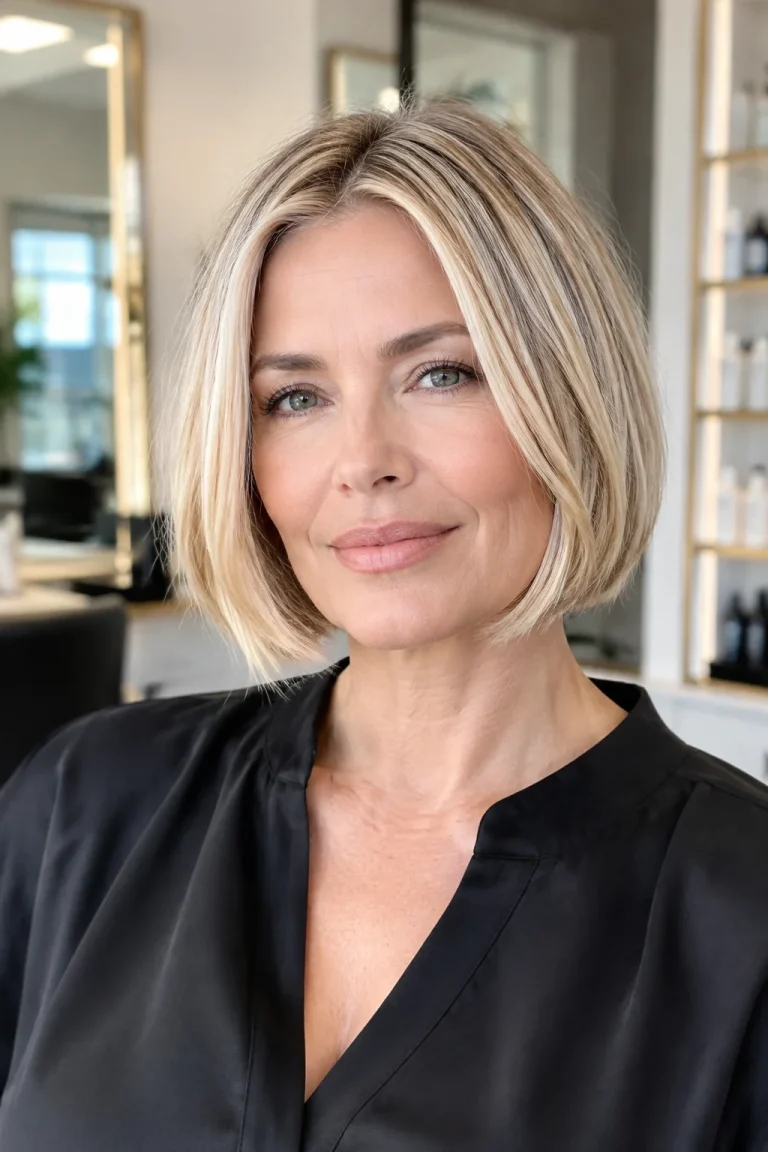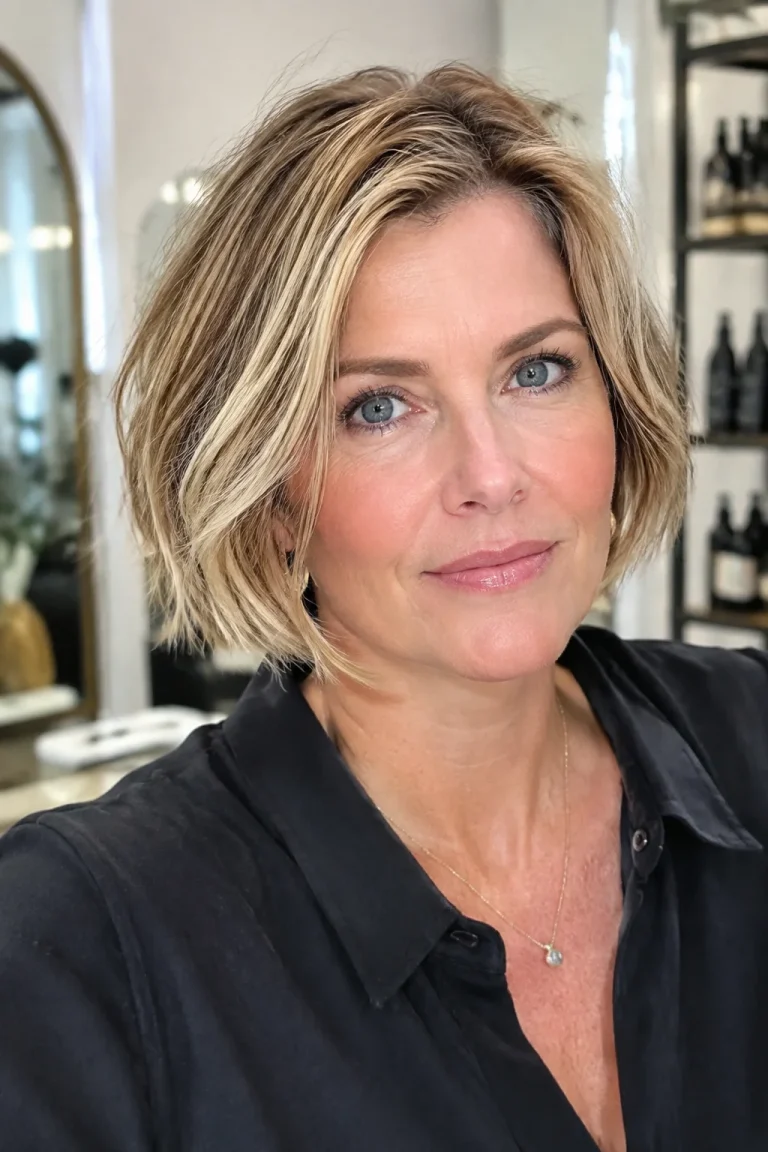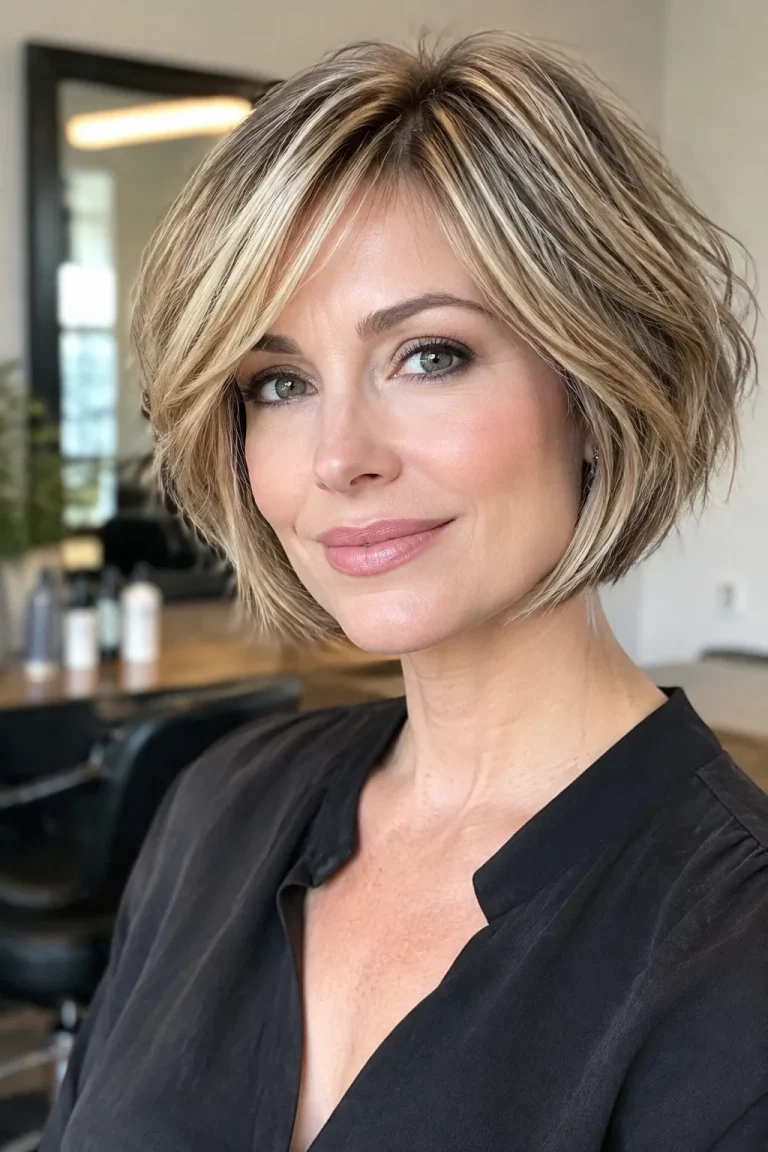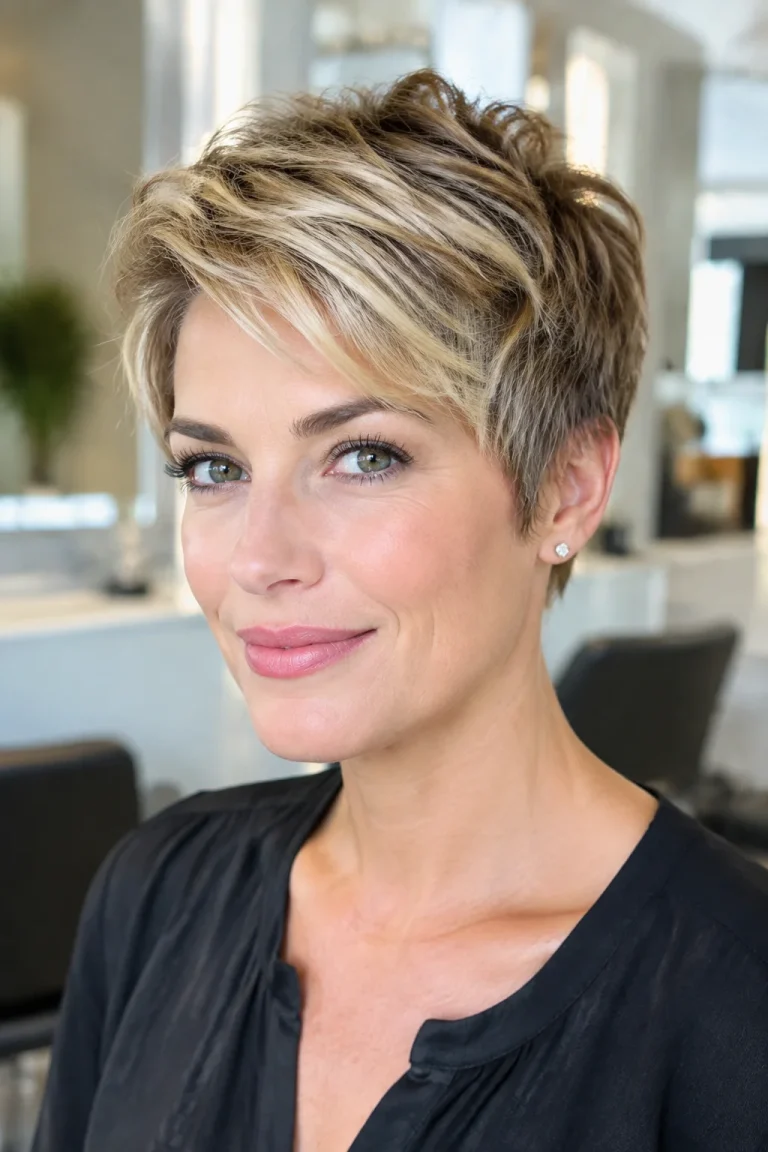
If your face feels round, long, or tired-looking in photos, the right haircut can fix that without a single product or filter. A face-framing layered bob works by cutting shorter, angled pieces near your cheeks and jaw, which pulls attention up toward your eyes instead of down toward your chin. It’s one of the most requested cuts in salons right now because it works on almost every hair type and face shape, from fine strands that need lift to thick hair that needs weight removed. Below are nineteen ways to wear this cut, each with its own texture, length, and finish. Some are soft and barely-there, others are sharp and graphic. Read through and note which details match your hair type and lifestyle, because that’s what makes a cut last past the first shampoo.
Textured Choppy Layers with Wispy Bangs
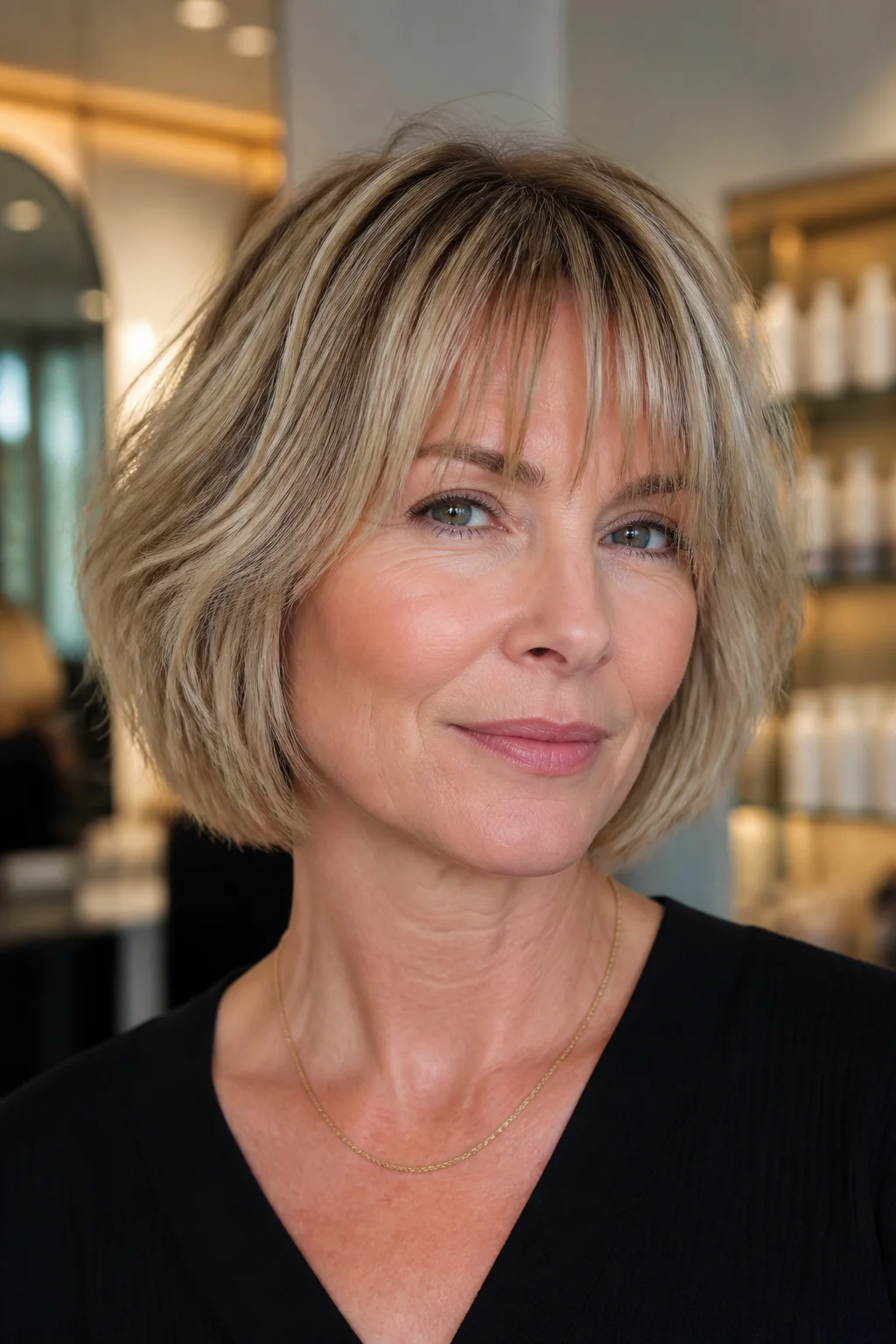
This version leans messy on purpose. A stylist cuts uneven layers through the ends and adds wispy, see-through bangs that break up the forehead without looking blunt. It suits thick or wavy hair best, since the texture gives the choppy pieces something to grip. Air-dry with a texturizing spray and scrunch lightly for lived-in movement. Tip: ask your stylist to point-cut the bangs rather than blunt-cut them, so they grow out softly instead of turning into a hard line. A light mist of heat protectant before styling helps the finish last. This face-framing layered bob option keeps the shape easy to maintain day to day.
Soft Waves Layered Bob with Subtle Face-Frame
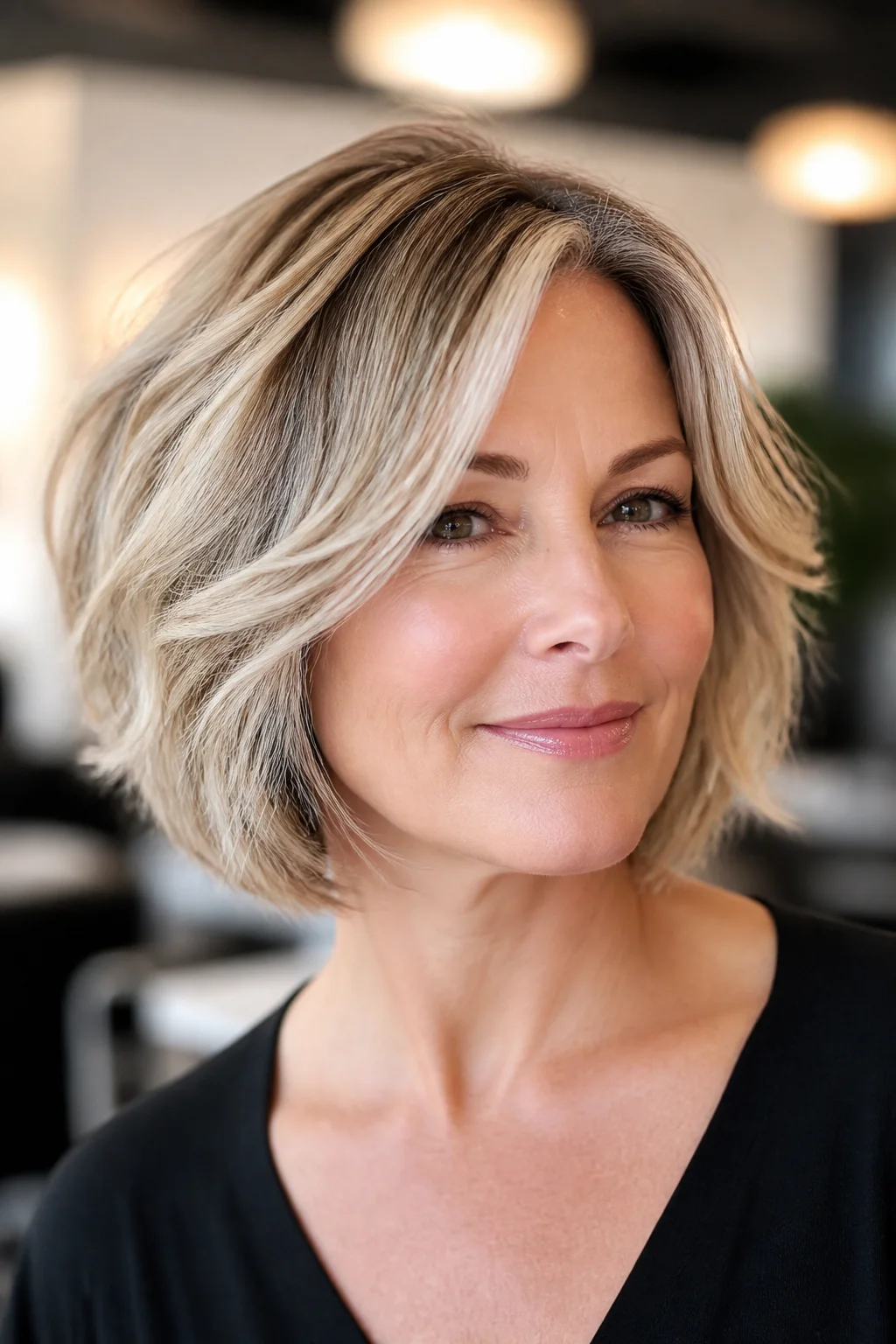
Loose waves paired with gentle layers around the face give a quiet, romantic finish. The face-framing pieces here are longer and less dramatic than in choppier cuts, so the effect reads polished rather than undone. A loose curling iron or wand, used on one-inch sections, builds the wave pattern without much effort. This cut suits fine to medium hair that holds curl well and looks best on second-day hair when the waves relax slightly. A light mist of heat protectant before styling helps the finish last. A light mist of heat protectant before styling helps the finish last.
Blunt Front with Graduated Layers Behind
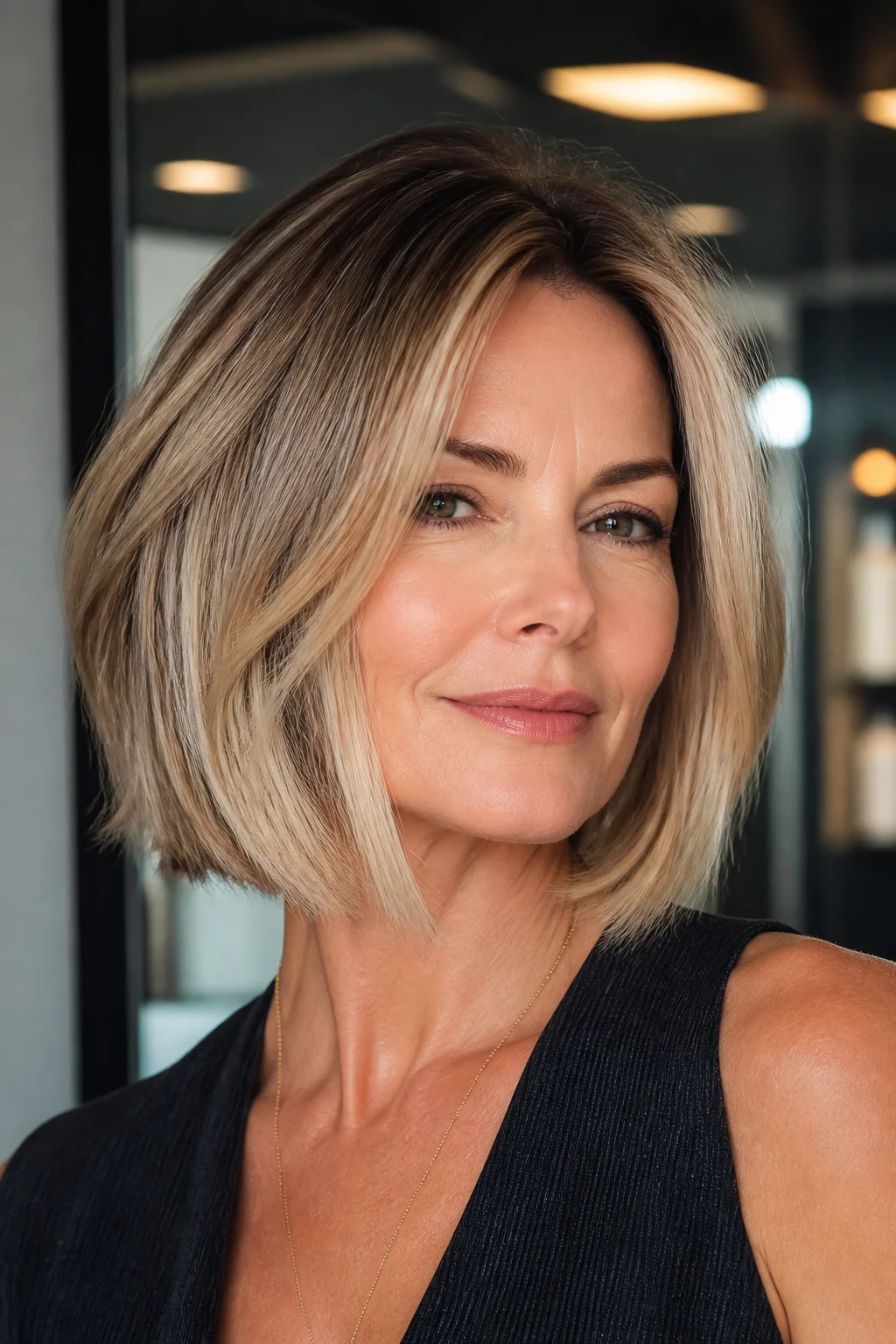
The front stays heavy and straight across the face while the back is graduated into shorter, stacked layers. That contrast gives the style a clean, architectural look from the front and soft movement from the back. It works well for people who want structure without losing shape entirely. Because the blunt front carries most of the visual weight, this cut needs regular trims to keep the line sharp.
Feathered Layers Throughout with Long Side-Sweep
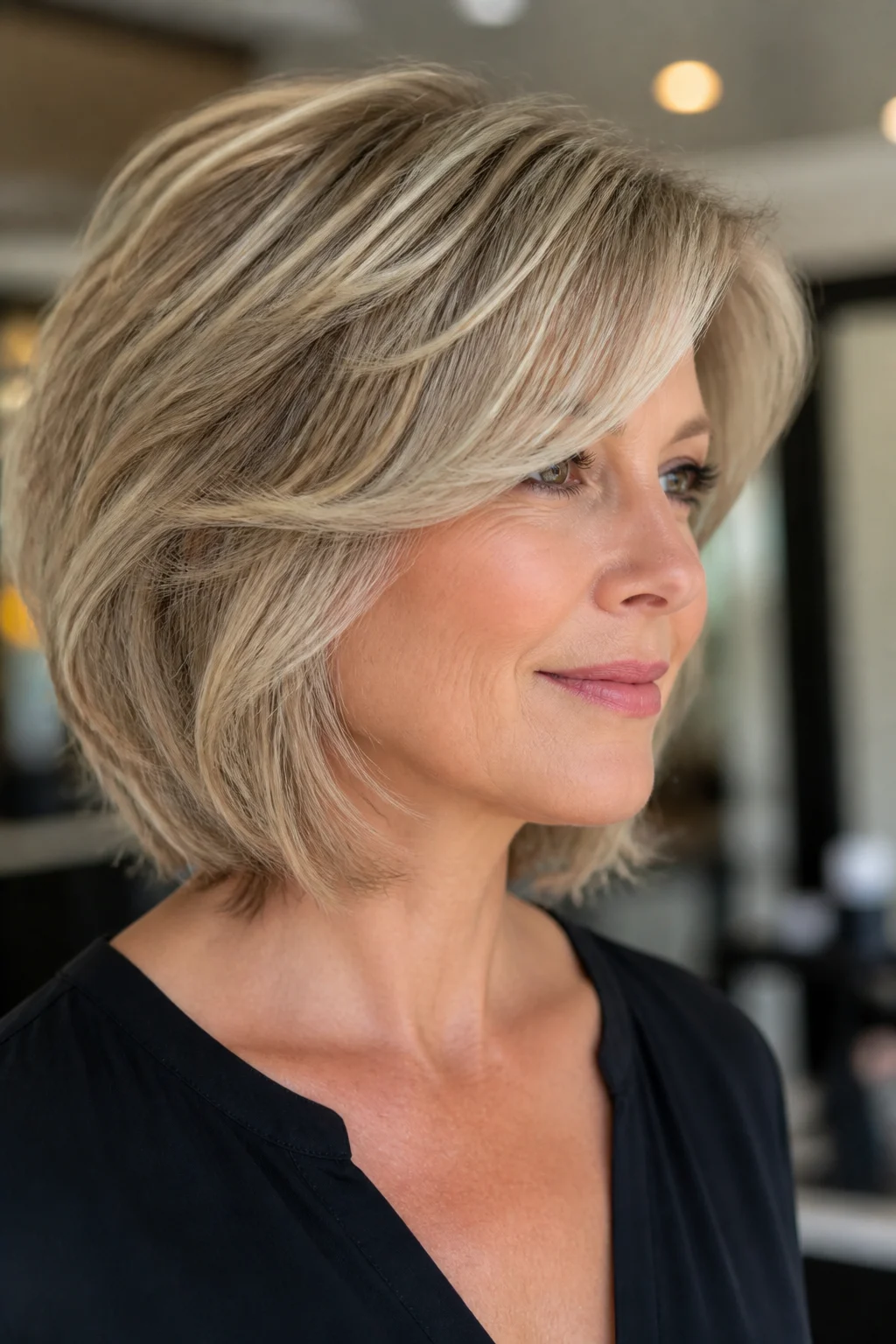
Feathering removes bulk evenly through the whole head, then a long side-sweep piece drapes across one side of the face. The result feels soft and a little retro, almost like something out of an old glamour photo. This works especially well on hair with natural body, since the feathered ends flip and move instead of sitting flat. Round-brush blow-drying gives the best shape here, with a large barrel brush used to curl the ends under and away from the face.
Inverted Bob with Deep Layers at Crown
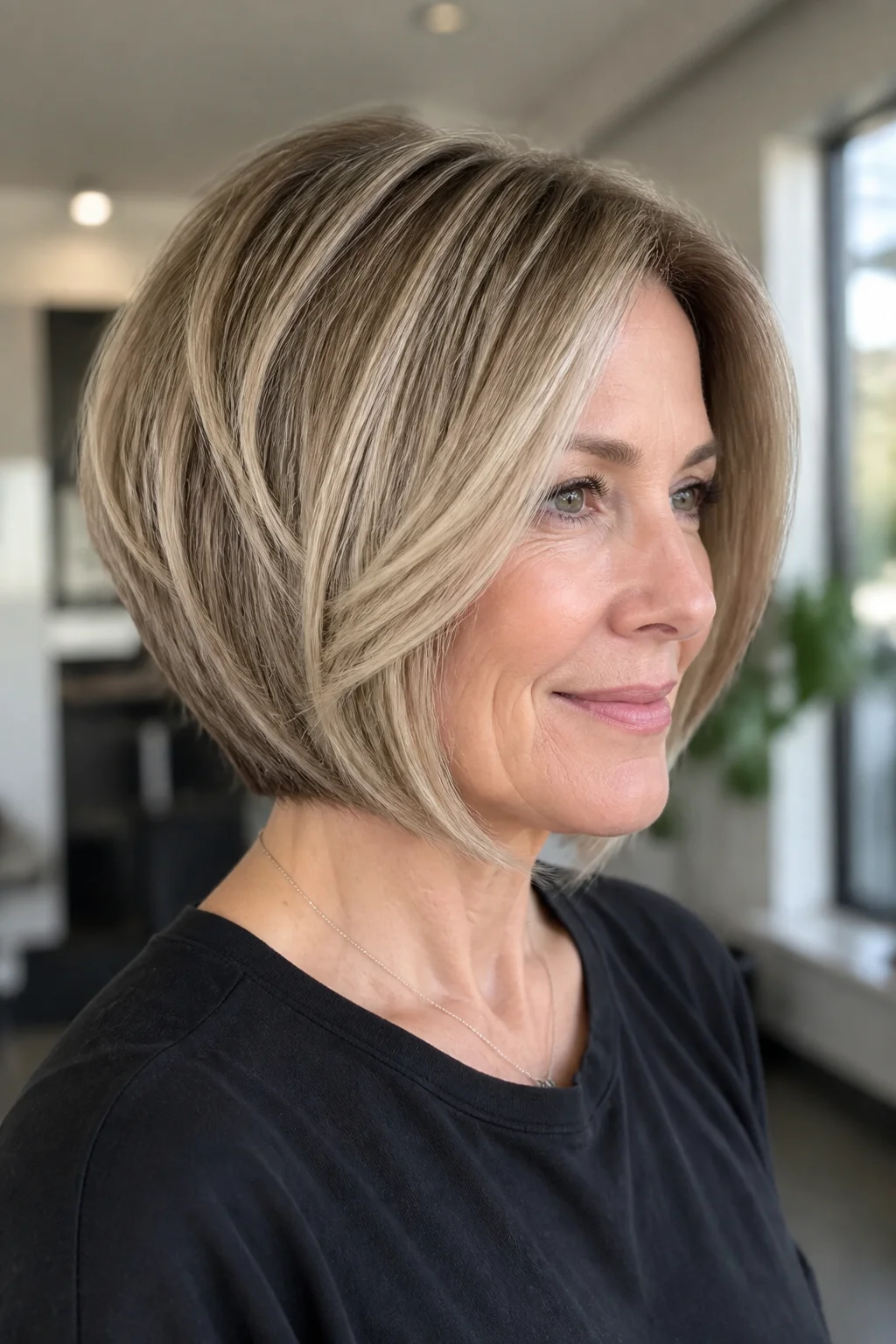
This shape stacks height at the crown and tapers down to a longer front, creating a rounded, sculptural silhouette. The deep layers cut into the crown remove weight so the shape doesn’t look helmet-like. It suits straight or slightly wavy hair that can hold the stacked shape without drooping. Fine hair benefits most here, since the layering adds visible volume at the root.
A-Line Bob with Face-Framing Micro-Layers
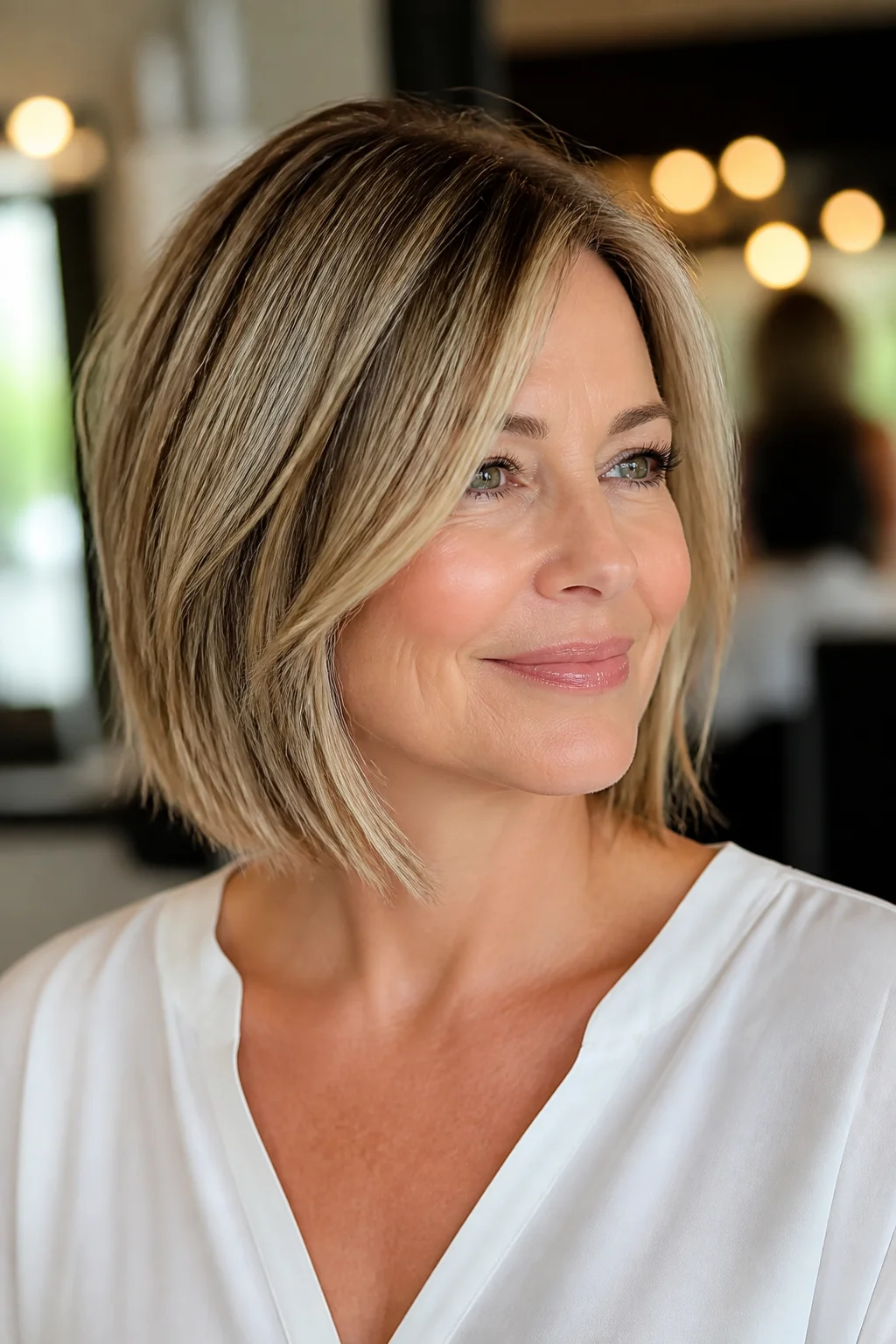
A steep A-line, longer in front and shorter in back, gets softened by tiny micro-layers cut into the front pieces. Without those micro-layers, an A-line can look severe. With them, the edges feel broken up and more forgiving around the jaw. This is a strong choice for anyone who wants a graphic shape but still wants softness near the face.
Curly Bob with Defined Ringlet Layers
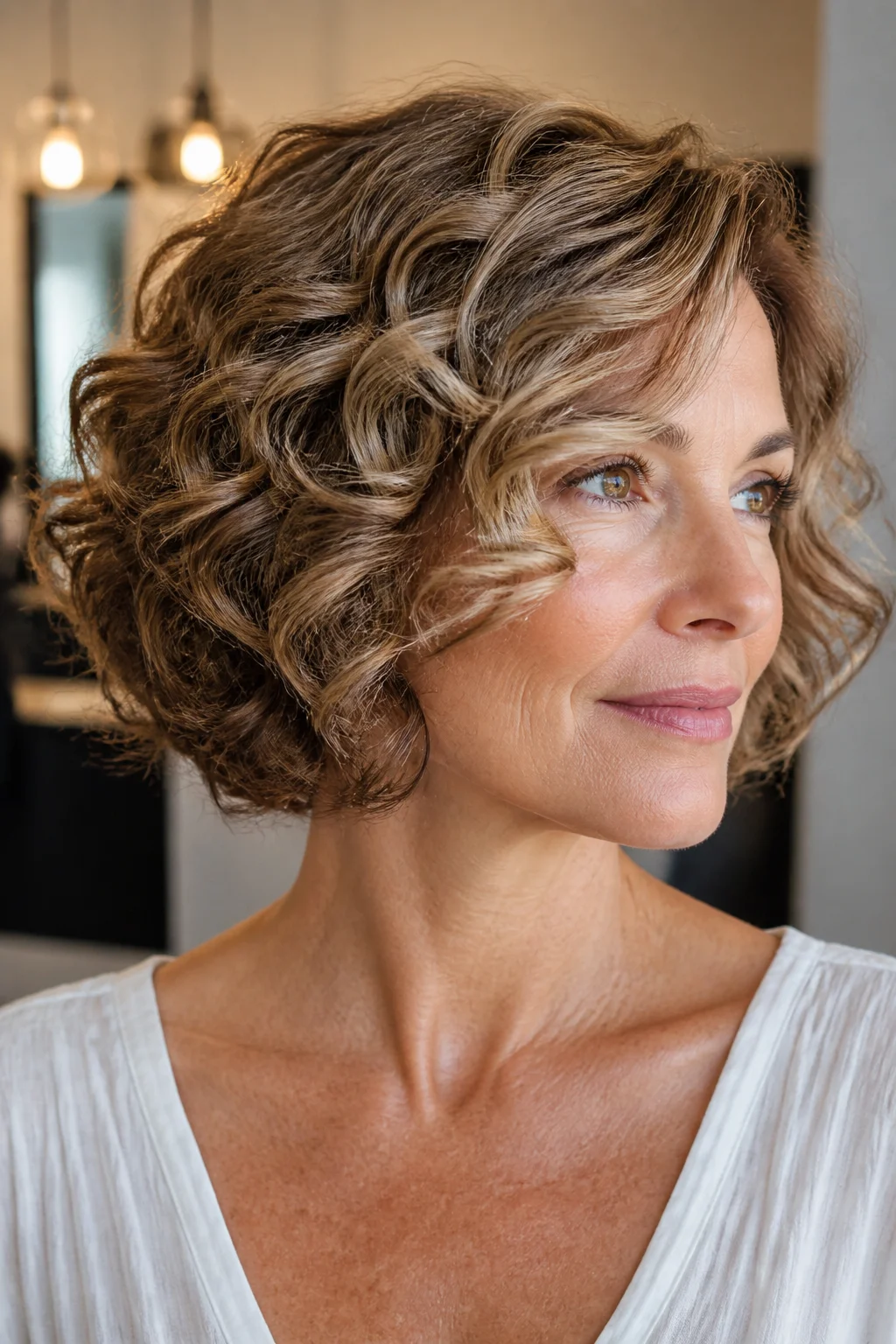
Curly hair needs a different layering approach, since curls shrink up and shift shape as they dry. This cut uses layers cut curl-by-curl, dry, so each ringlet has its own defined shape instead of clumping into one mass. The face-framing pieces sit slightly shorter, springing up near the cheekbones once dry. Tip: get this cut from someone experienced in dry-cutting curls, since wet-cutting curly hair often leads to uneven results once it springs back up.
Shag Bob with Long Face-Framing Pieces
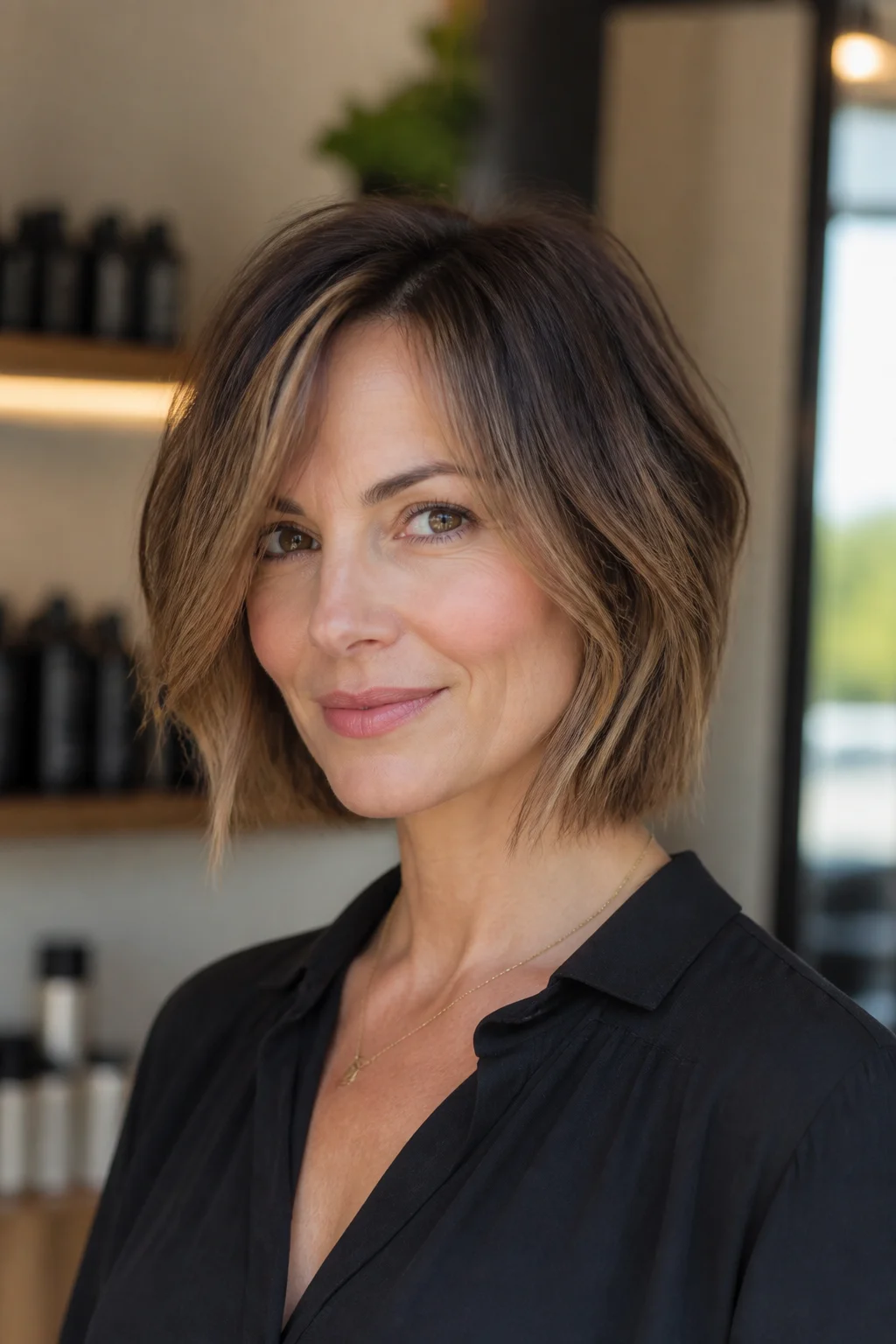
The shag brings back heavy layering and a slightly disheveled finish, paired here with long pieces left around the face. It’s choppier and more textured than a standard layered bob, with layers cut close to the head at the crown and looser toward the ends. This style rewards second or third-day hair, since a little grease and grit help the pieces separate. Fine hair gets real benefit from the shag’s built-in texture, since it fakes thickness that a blunt cut can’t.
Sleek Bob with Razor-Sharp Face Layers
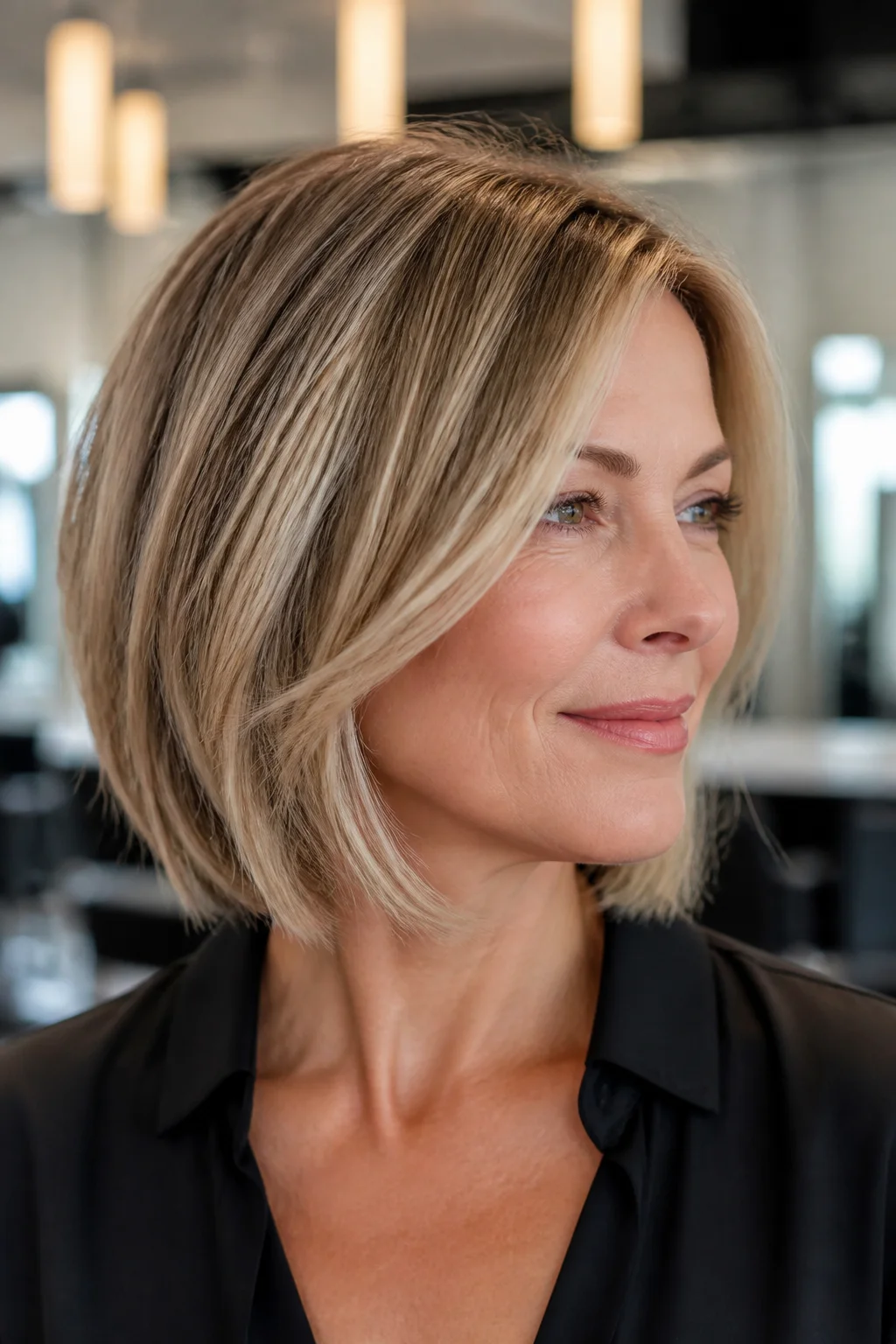
Straight, glass-like hair gets a modern edge here through razor-cut face pieces that create sharp, angular lines instead of soft ones. The rest of the bob stays smooth and glossy, so the contrast between sleek length and jagged face pieces becomes the whole point of the cut. This needs a flat iron and a strong smoothing serum to keep frizz from softening the sharp lines. It suits thick, coarse, or naturally straight hair far better than fine or curly textures.
Textured Pixie-Bob with Extended Face-Frame
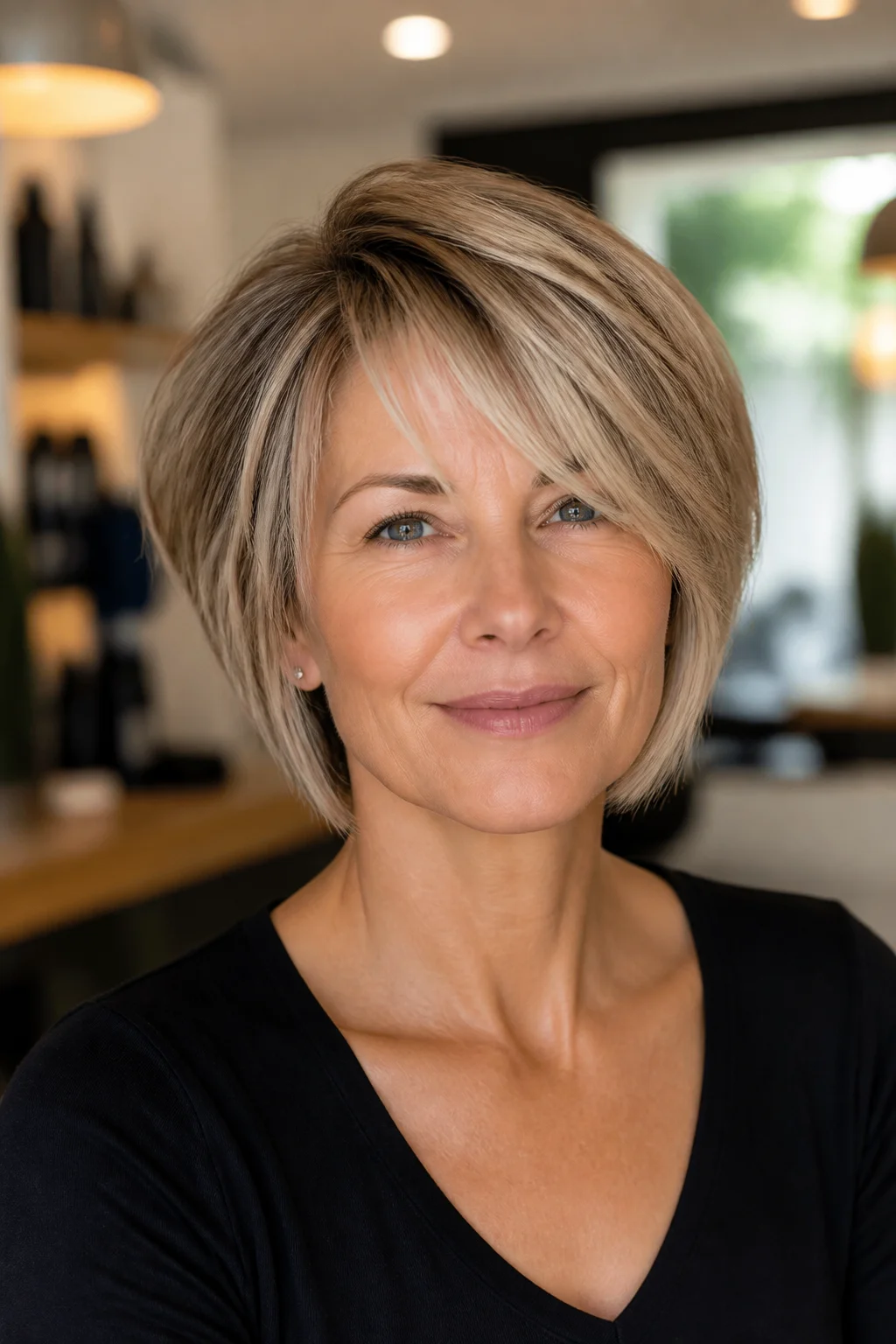
This one sits between a pixie and a bob, short through the back and sides with longer, textured pieces left to frame the face. It’s a bold change for anyone coming from long hair, but the extended face-frame keeps it from feeling too severe. Styling takes minutes, usually just a dime of texture paste worked through damp hair.
Tousled Wavy Bob with Undercutting at Nape
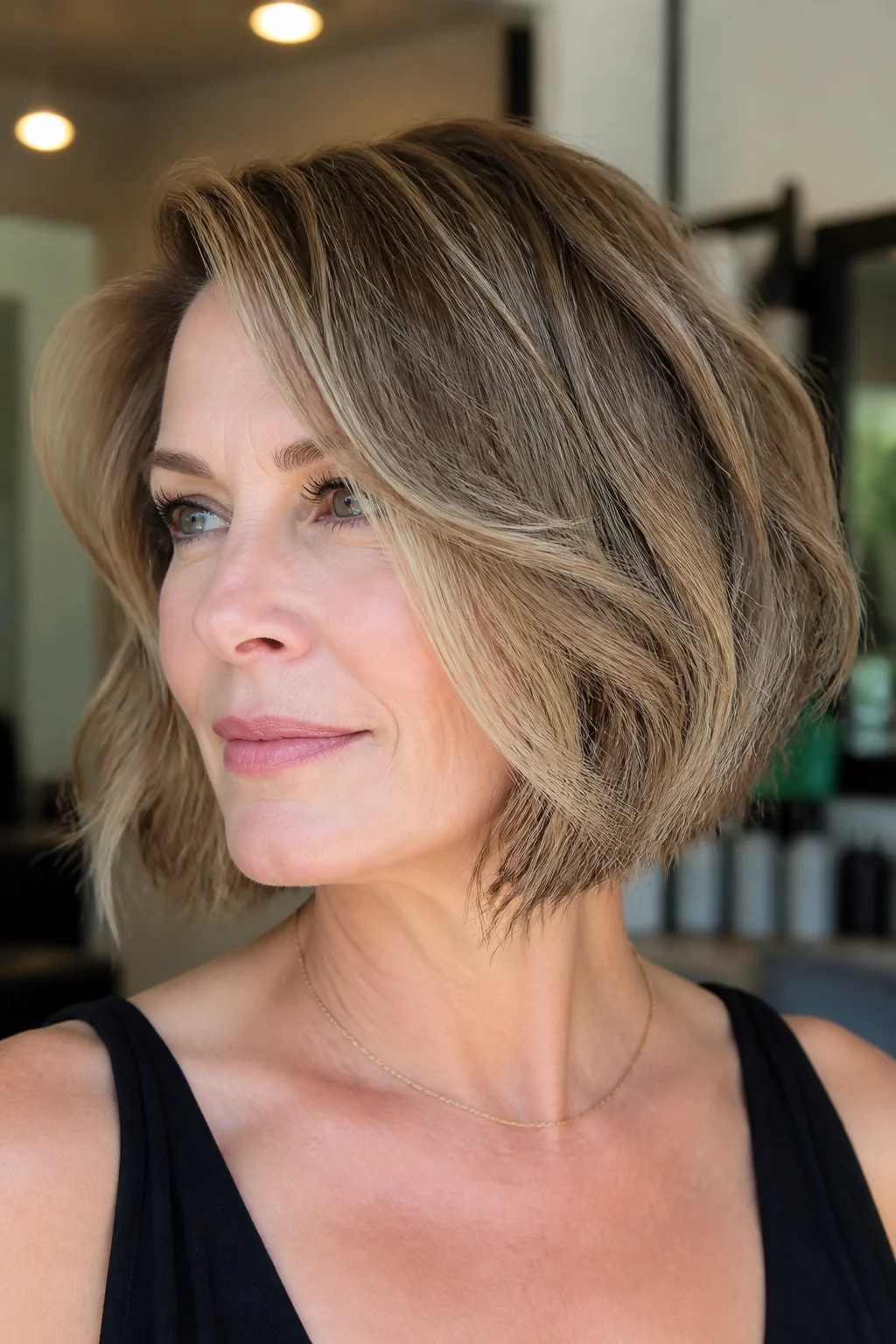
An undercut at the nape removes bulk that most people don’t realize is weighing down their bob. Paired with tousled waves through the top layers, this cut feels lighter and cooler, literally, since the undercut reduces heat and thickness at the neck. It’s a smart pick for thick or coarse hair in warm climates. The waves on top hide the undercut when hair is down, so it reads as a normal wavy bob until you pull hair up.
Blonde Balayage Bob with Dimensional Layers
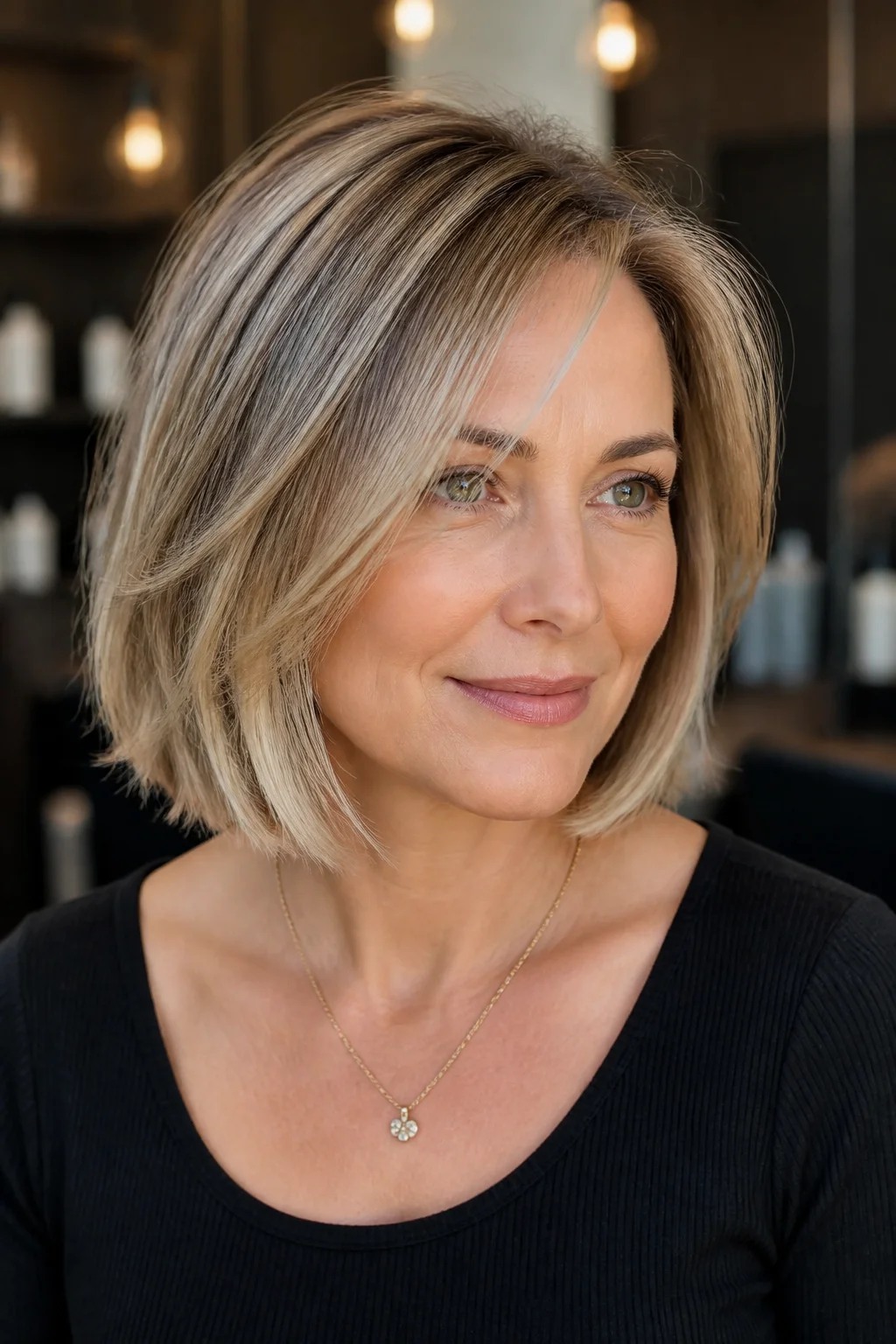
Color does a lot of the work in this cut. Hand-painted balayage highlights sit lightest around the face, right where the layers are shortest, so the color and the cut reinforce each other instead of competing. Dimensional layers underneath keep the blonde from looking flat or one-note. This combination photographs particularly well in natural light, where the tonal shifts catch differently depending on the angle.
Stacked Bob with Face-Framing Length
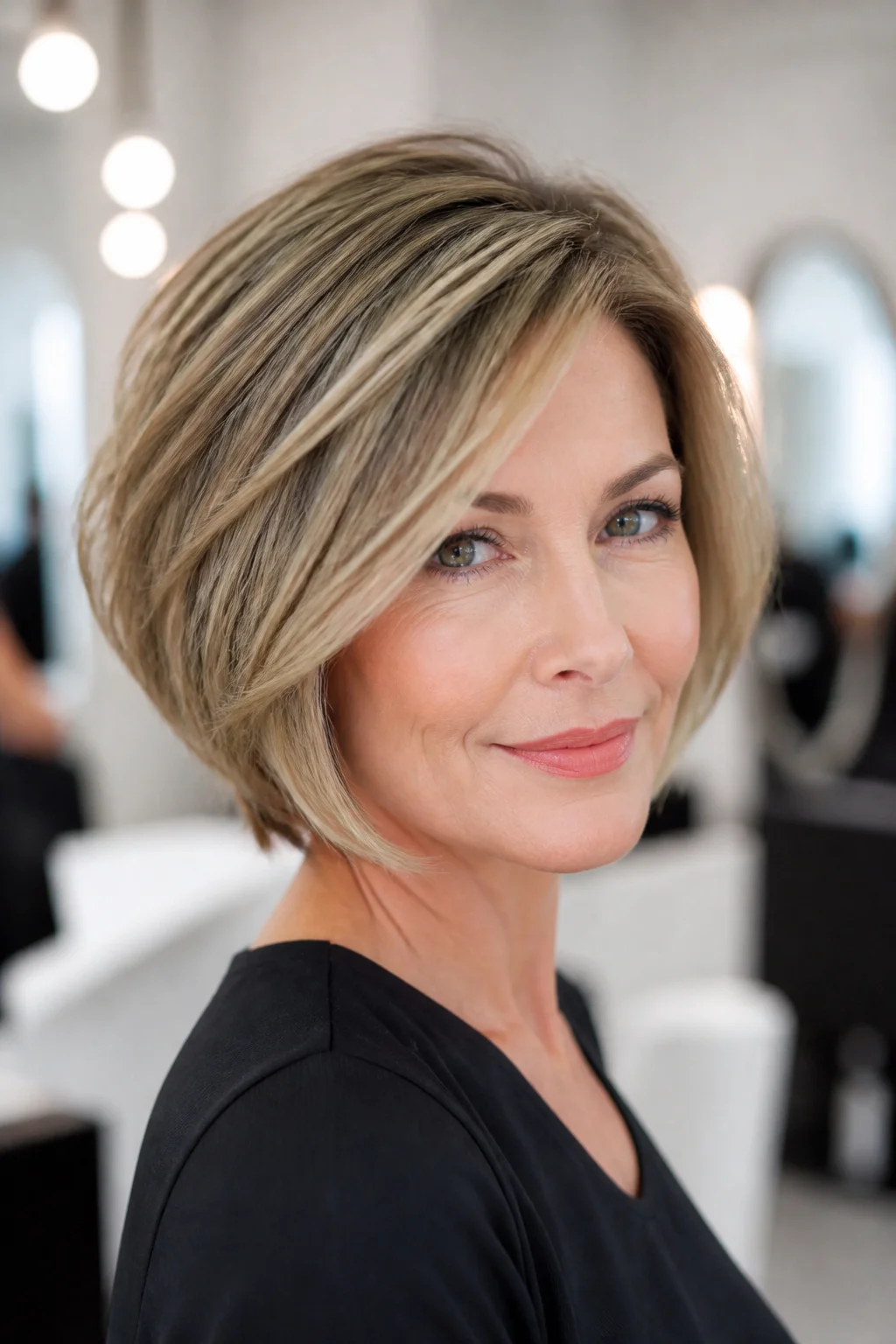
Stacking adds volume at the back through short, tightly cut layers, while the front is left longer to frame the face. The shape is rounded and full at the back, tapering into softer, longer pieces near the jaw. It suits thin or fine hair especially well, since the stacking creates the appearance of thickness where hair often falls flat.
Honey-Toned Layered Bob with Side Bangs
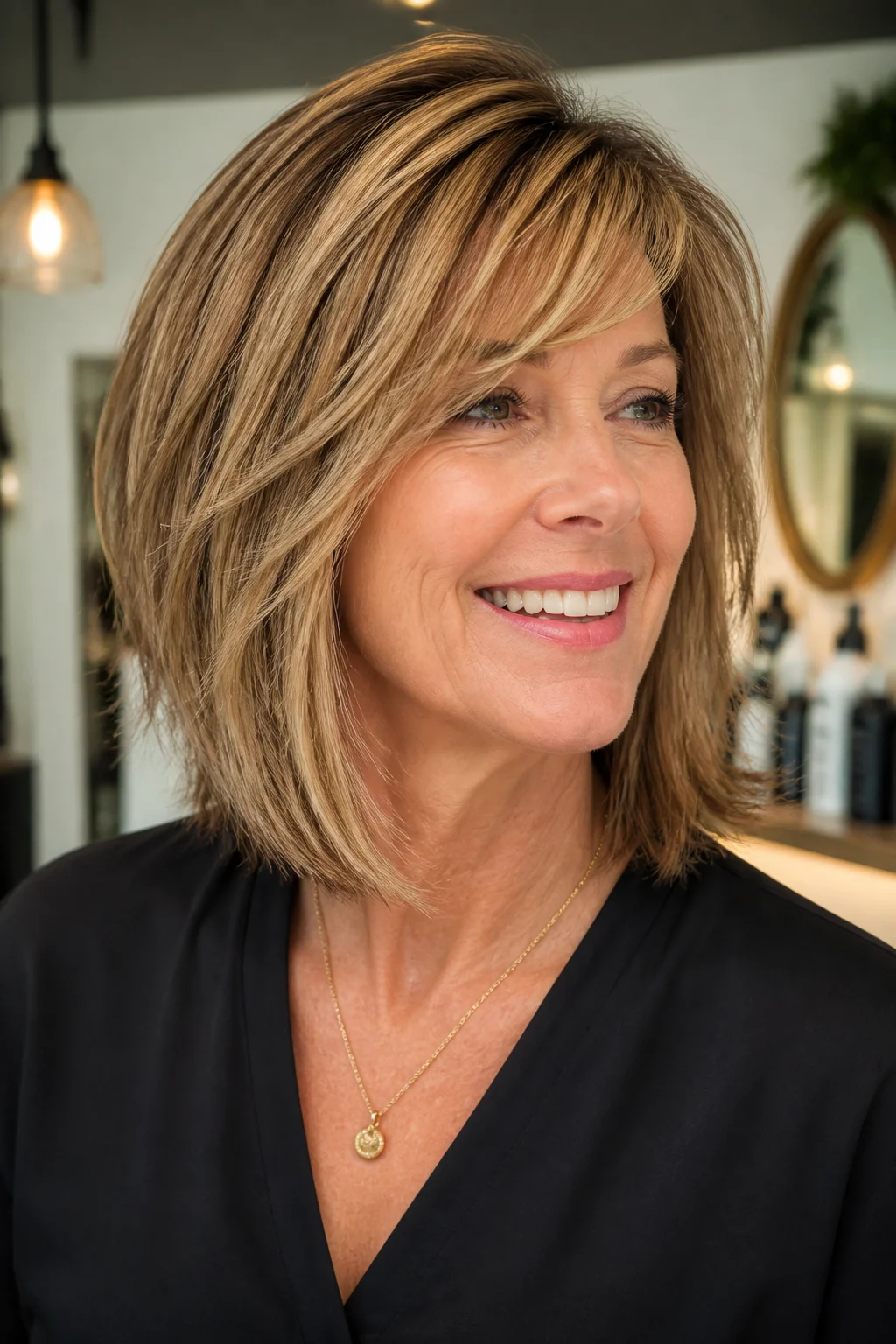
Warm honey tones combined with side-swept bangs give this cut a soft, approachable feel. The bangs blend into the face-framing layers rather than standing apart as a separate section, so there’s no harsh line where bangs meet the rest of the hair. Tip: ask for the bangs to be cut slightly longer than you think you want, since they’ll settle and look shorter once styled.
Disconnected Bob with Textured Face-Layers
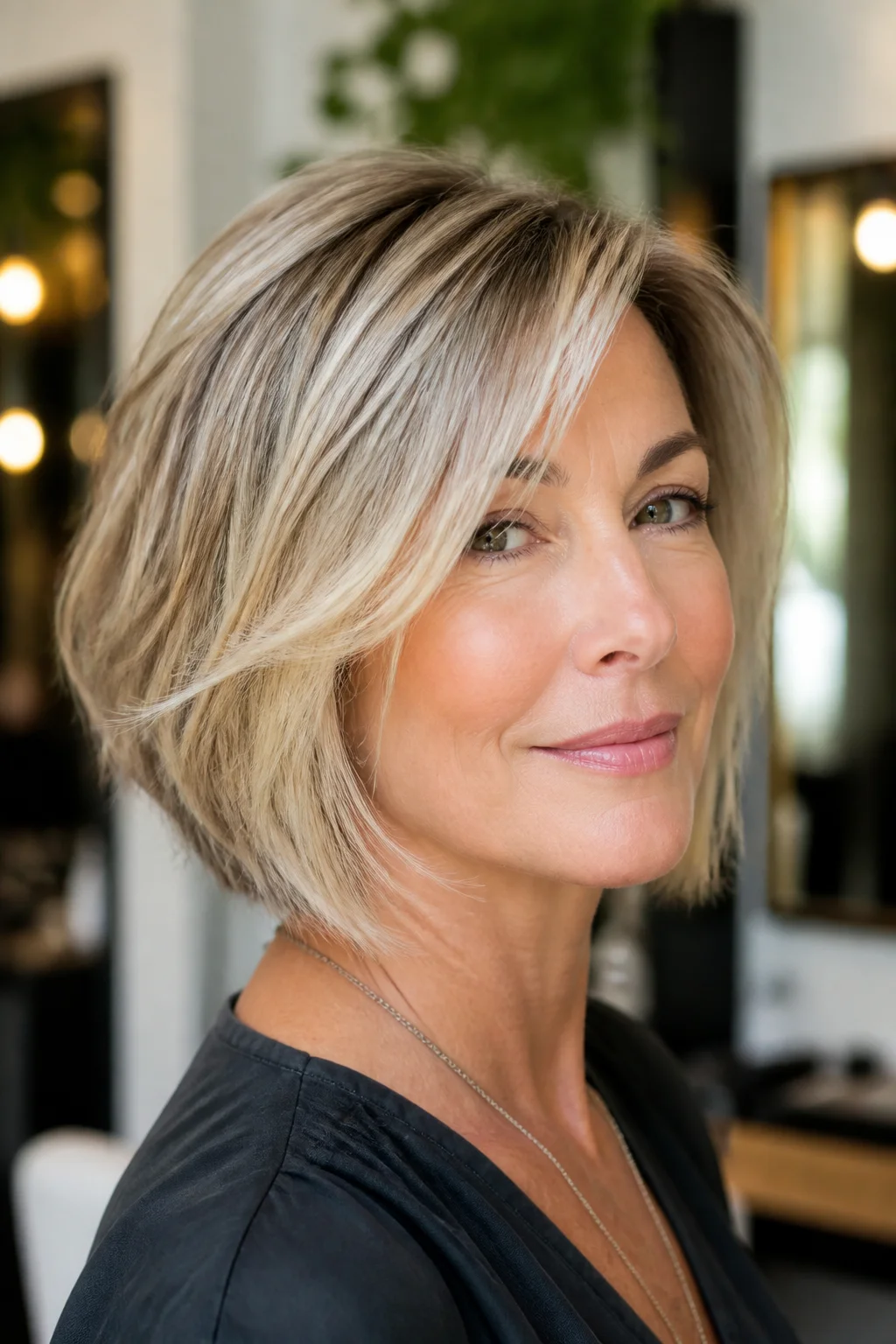
Disconnection means the top layers and the perimeter length are cut at deliberately different angles, creating visible separation instead of a smooth blend. Textured face-layers keep the disconnected pieces from looking choppy in a sloppy way. This is a strong option for anyone who wants an editorial, slightly edgy result rather than something conventionally pretty.
Fine-Hair Layered Bob with Movement
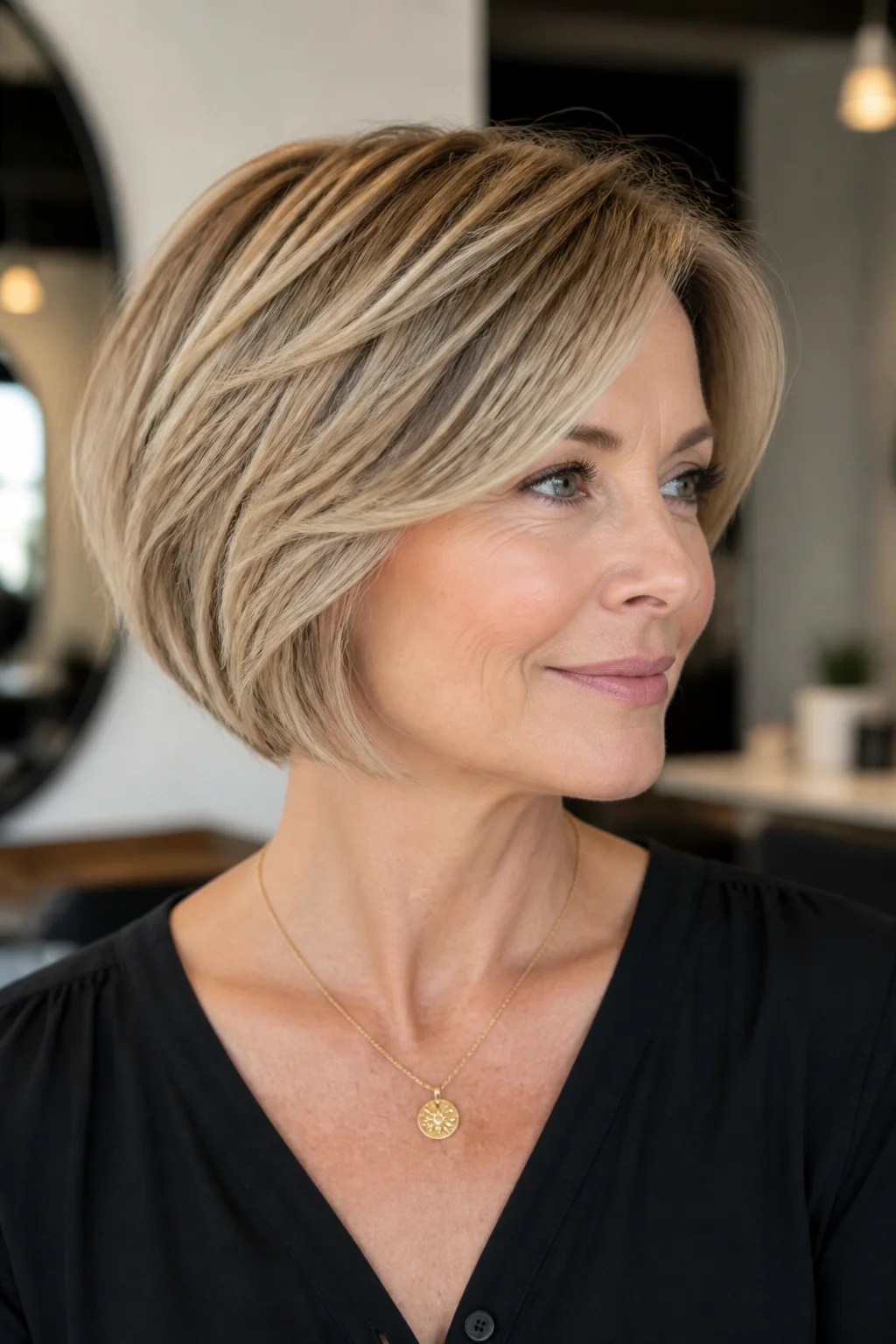
Fine hair often gets weighed down by too much length or too few layers, and this cut solves that directly. Shorter layers are cut through the crown and mid-lengths to build movement, while the ends stay just blunt enough to fake density. It looks like there’s more hair than there actually is, which is the entire goal for fine textures. A lightweight mousse at the root, blow-dried upside down, adds lift before any curling or waving happens.
Longer Layered Bob with Subtle Gradient
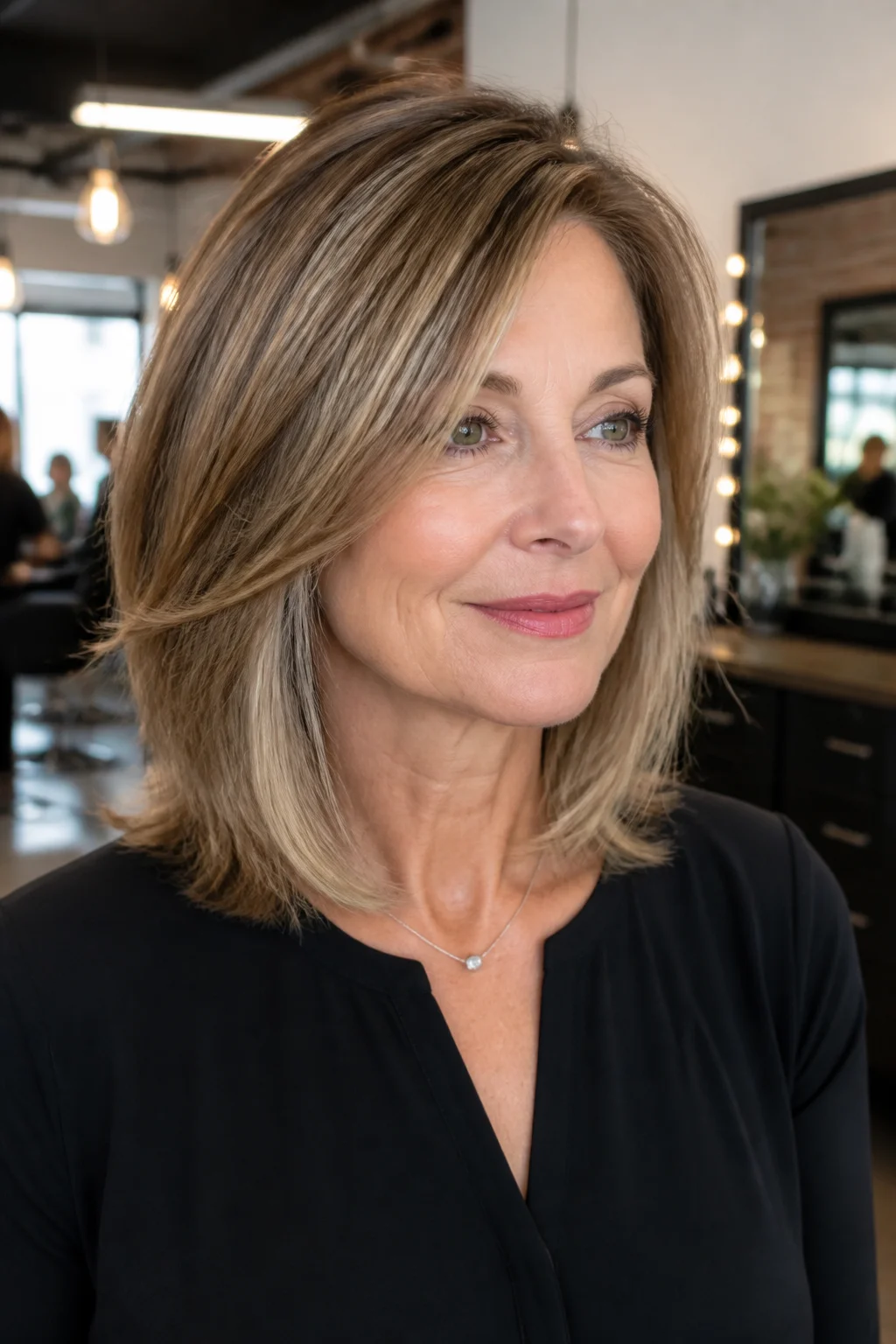
Sometimes called a “lob,” this longer take on the face-framing layered bob keeps length near the collarbone while still cutting in a gradual, subtle gradient of layers. The change in length from front to back is barely noticeable, which makes this a safe transitional cut for anyone leaving long hair behind for the first time. It suits nearly every face shape because the layers are gentle rather than dramatic.
Gray Layered Bob with Strategic Face-Framing
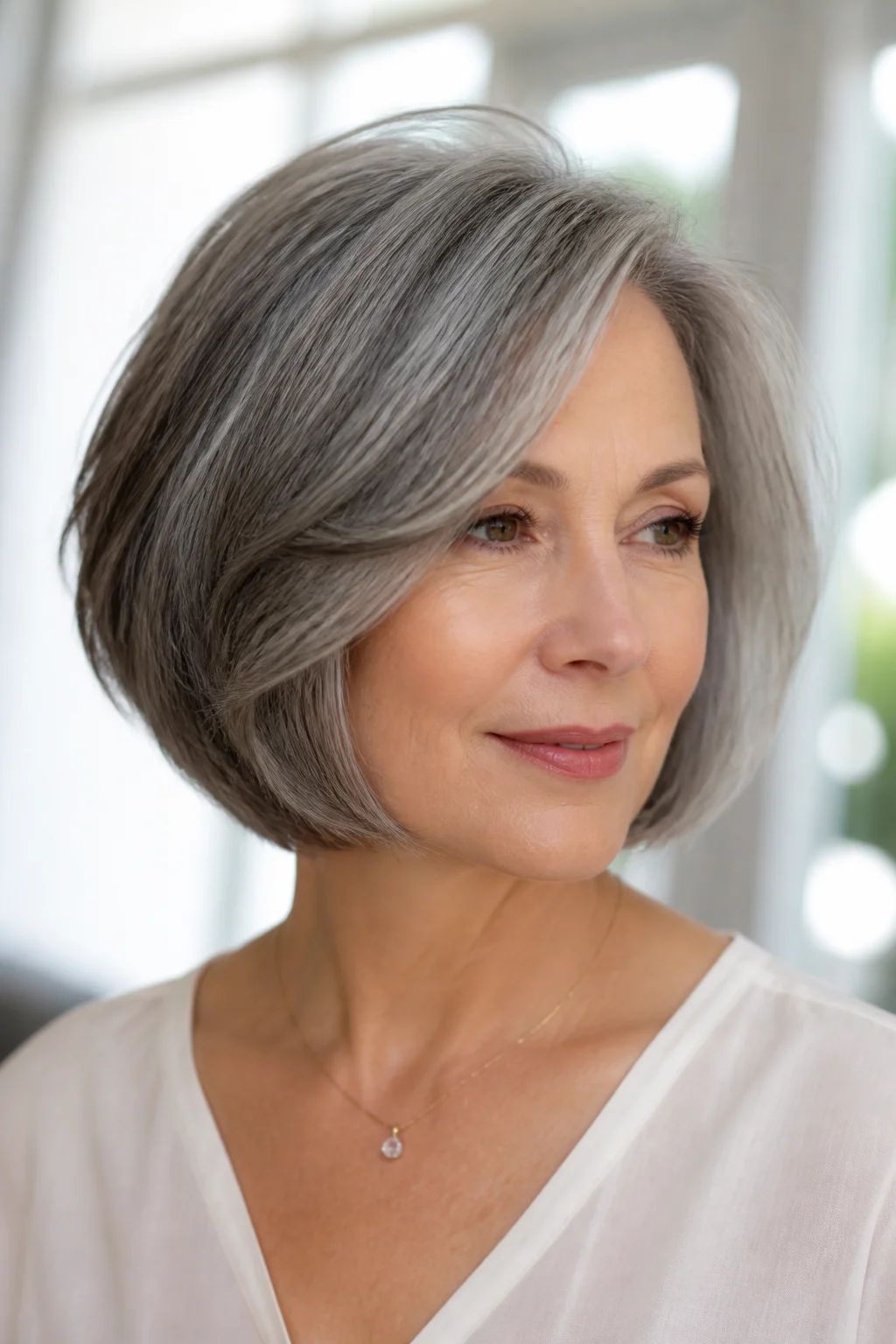
Gray hair has its own texture and reflects light differently than colored hair, so layering has to work a little harder to avoid flatness. Face-framing pieces are cut at strategic points near the temples and jaw to catch light and add dimension. This cut looks intentional and modern rather than like hair that’s simply been left to gray out. Regular trims matter more here, since gray hair tends to show split ends and dullness faster than pigmented hair.
Asymmetrical Layered Bob with One Long Side
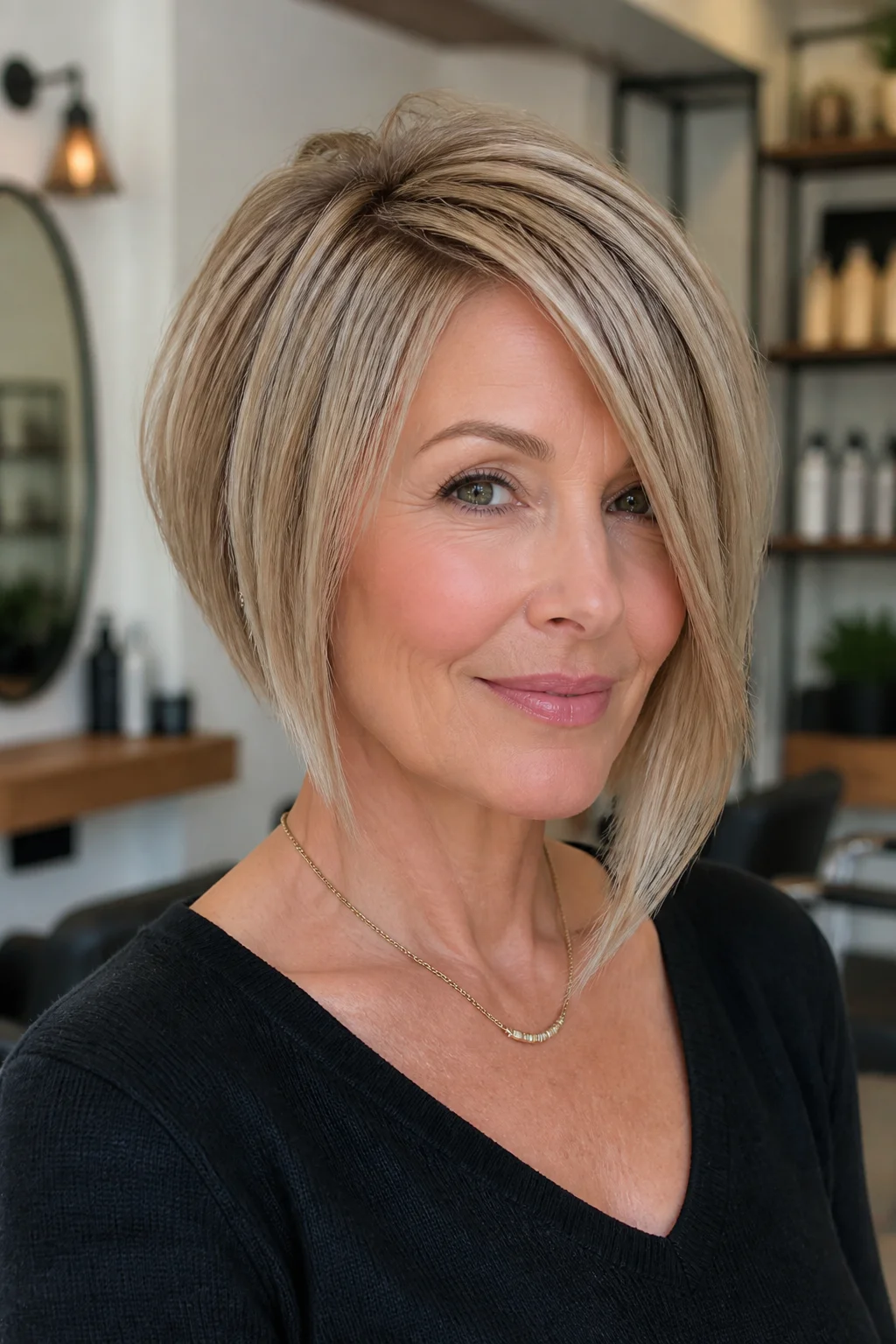
One side sits noticeably shorter than the other in this asymmetrical cut, creating a bold, graphic line that most other bobs avoid. Layers are cut differently on each side to support the uneven lengths without looking like a mistake. It’s a striking choice for anyone bored with symmetry, though it does require more frequent trims to maintain the exact length difference.
Which Face-Framing Bob Actually Fits You
With nineteen options, picking one comes down to your hair type, your face shape, and how much time you want to spend styling. If you have fine hair, skip anything heavily blunt and look toward the fine-hair layered bob with movement, the stacked bob with face-framing length, or the shag bob with long face-framing pieces, all three add fake density through layering rather than length. If your hair is thick or coarse, the sleek bob with razor-sharp face layers or the tousled wavy bob with undercutting at nape will remove bulk without thinning it unevenly.
For round faces, the A-line bob with face-framing micro-layers and the asymmetrical layered bob with one long side create angles that a fully rounded shape won’t. For square or angular faces, soften things with the soft waves layered bob with subtle face-frame or the honey-toned layered bob with side bangs.
A common mistake is choosing a dramatic cut, like the disconnected bob with textured face-layers, without accounting for upkeep. Sharp, graphic shapes grow out fast and need trims every six to eight weeks, while softer cuts like the longer layered bob with subtle gradient stretch to ten or twelve weeks between visits. Match the cut to your maintenance habits, not just the photo you’re bringing in.