A curly bob can either flatter your face or fight it, and the difference usually comes down to how the front layers get cut. Curls behave differently than straight hair when they shrink up, so a length that looks chin-grazing when wet can bounce up to jaw level once it dries. That’s why the framing pieces around your cheeks and temples matter so much. These face-framing curly bob hairstyles work because the stylist plans for shrinkage and shapes the front sections to soften angles, balance a wide forehead, or draw attention to your eyes. Some of these cuts use tight spirals, others rely on loose waves or coily texture, and a few lean into choppy, undone edges. Below you’ll find nineteen versions, each built around a different curl pattern, length, and framing technique, along with guidance on who each one suits and how to ask for it in the chair.
Tight Spiral Curly Bob with Wispy Face-Frame
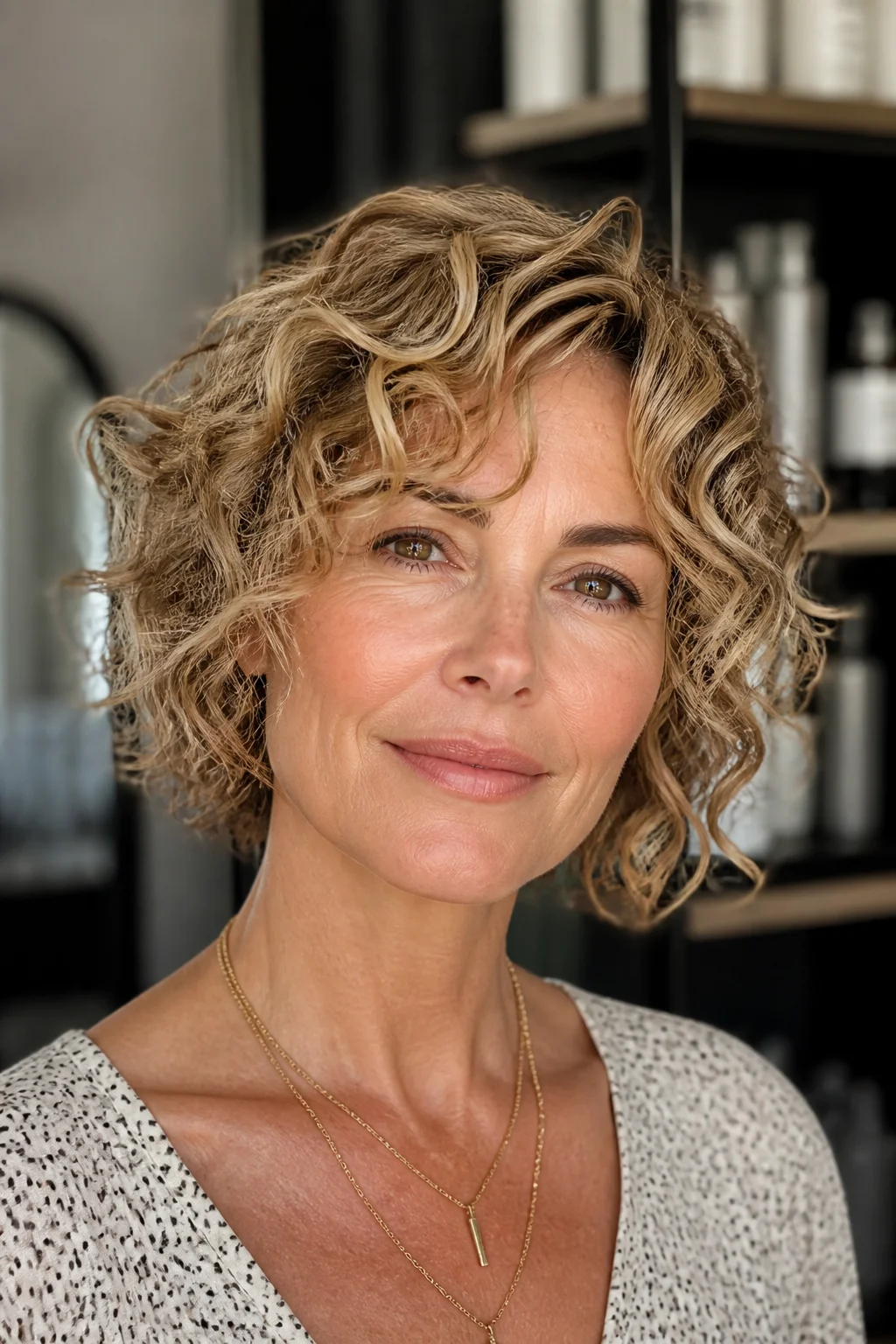
This one works best on naturally tight curls that hold a spiral shape without much product. The wispy pieces around the face get cut a bit shorter and thinner than the rest of the bob, so they curl up close to the cheekbones instead of hanging heavy. It softens a square jaw especially well because the thin strands break up hard lines without adding bulk. Ask your stylist to point-cut the front pieces dry, after the curls have already sprung into their natural pattern, so you can see exactly where they’ll land. A light mist of heat protectant before styling helps the finish last. A light mist of heat protectant before styling helps the finish last.
Textured Shag Bob with Long Face-Framing Layers
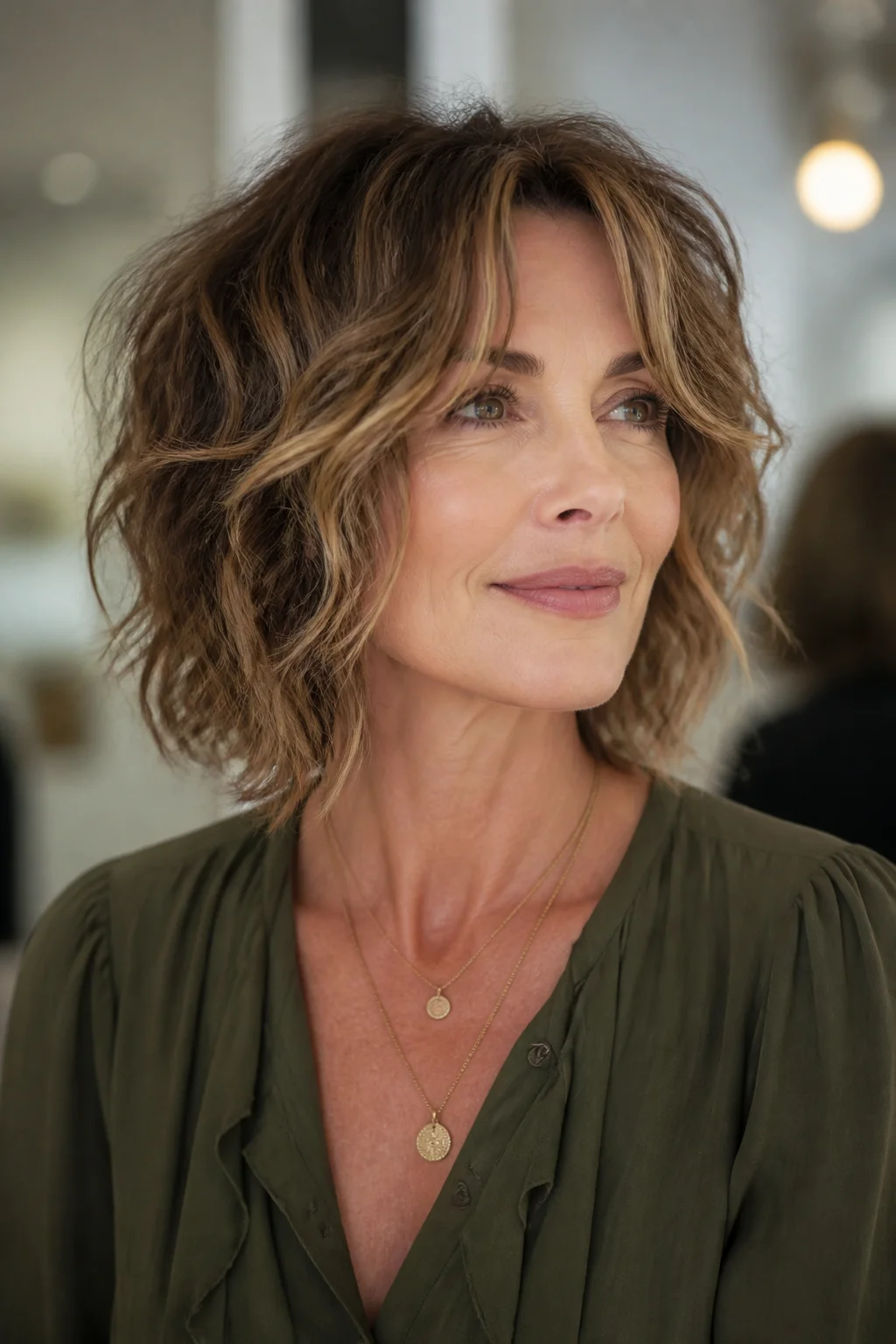
The shag brings movement through the crown while long layers up front stay a few inches past the chin, grazing toward the collarbone. It suits rounder faces because the length pulls curls downward instead of letting them puff out to the sides. Texture gets added throughout with a razor or thinning shears, which keeps the shape from looking bulky. Tip: ask for the face-framing layers to be cut two inches longer than you think you want, since curls always climb up shorter once they dry. A light mist of heat protectant before styling helps the finish last. A light mist of heat protectant before styling helps the finish last.
Shoulder-Length Curly Bob with Soft Undercut
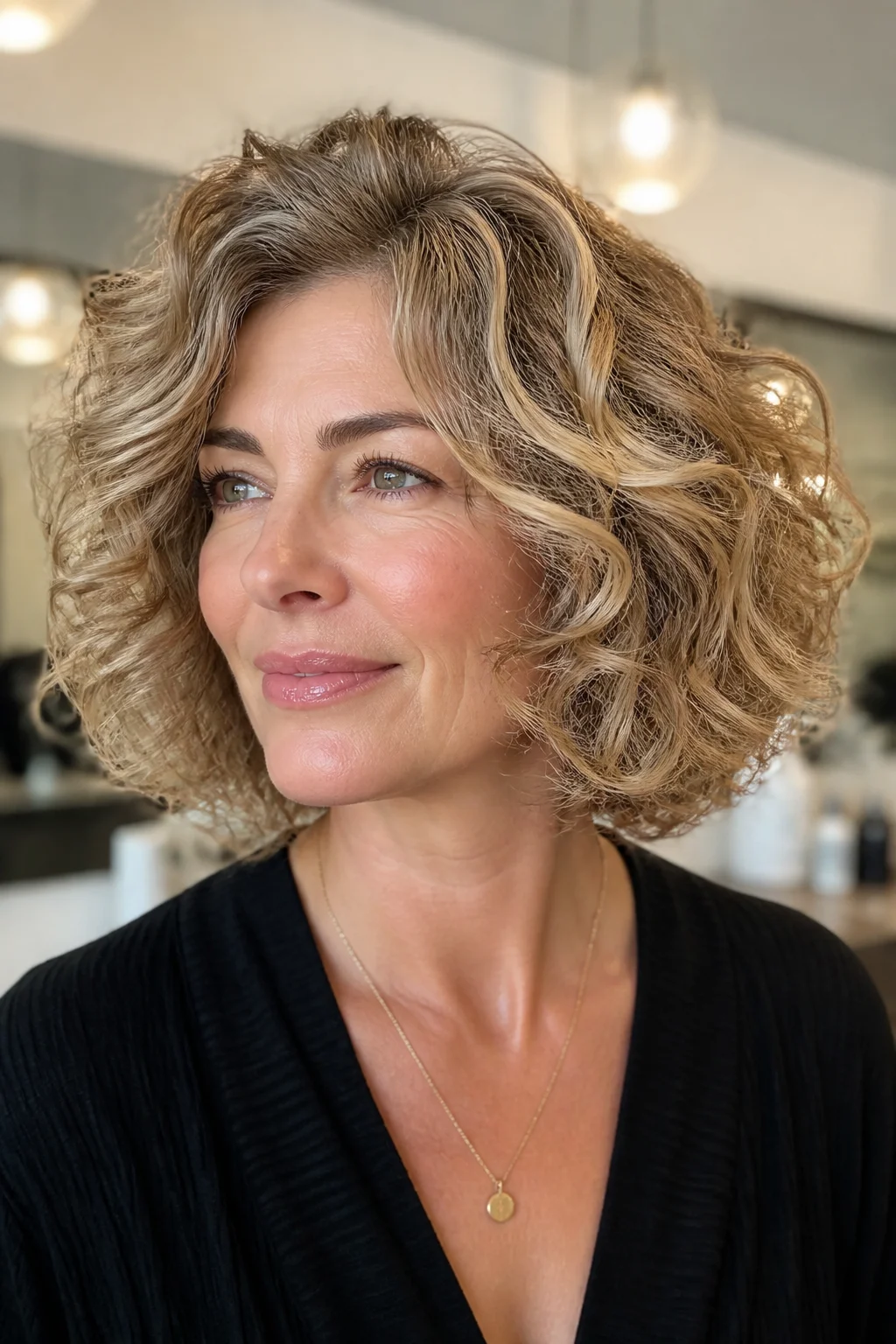
A hidden undercut underneath removes weight without touching the visible curls on top, which keeps the outer shape full while the neck stays light. This length sits right at the shoulder, long enough to tuck behind the ears but short enough to bounce with movement. It’s a smart pick if your curls tend to feel heavy or hot, since thinning from underneath doesn’t disturb the framing pieces at all.
Coily Textured Bob with Bangs and Sideswept Frame
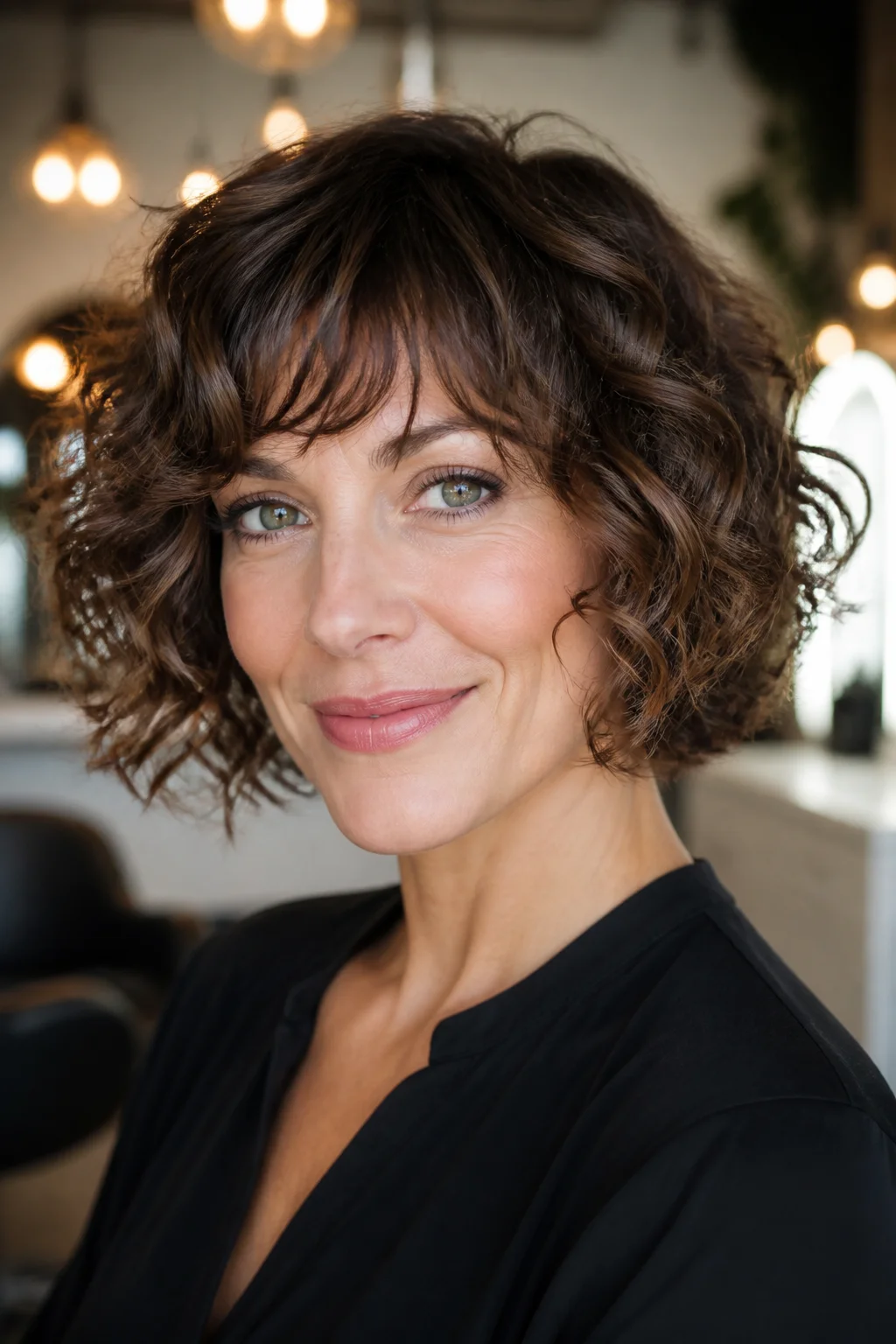
Coily hair holds shape differently than looser curls, so this bob keeps length control through strategic layering rather than heavy thinning. Sideswept bangs blend into longer pieces that sweep back toward the ear, avoiding a blunt line across the forehead. The combination flatters a long face shape by adding width near the temples. I recommend this style for anyone with 4A to 4C texture who wants bangs without daily flat-ironing, since the coils are left to dry naturally into their frame.
Loose Wave Curly Bob with Graduated Face-Frame

Graduated layers step down gradually from the crown to the chin, so the face-framing pieces blend rather than cut off in a sharp line. Loose waves make this graduation look soft instead of choppy. It’s a forgiving cut for growing out bangs, since the layers already taper toward the face.
Short Stacked Curly Bob with Forward-Falling Layers
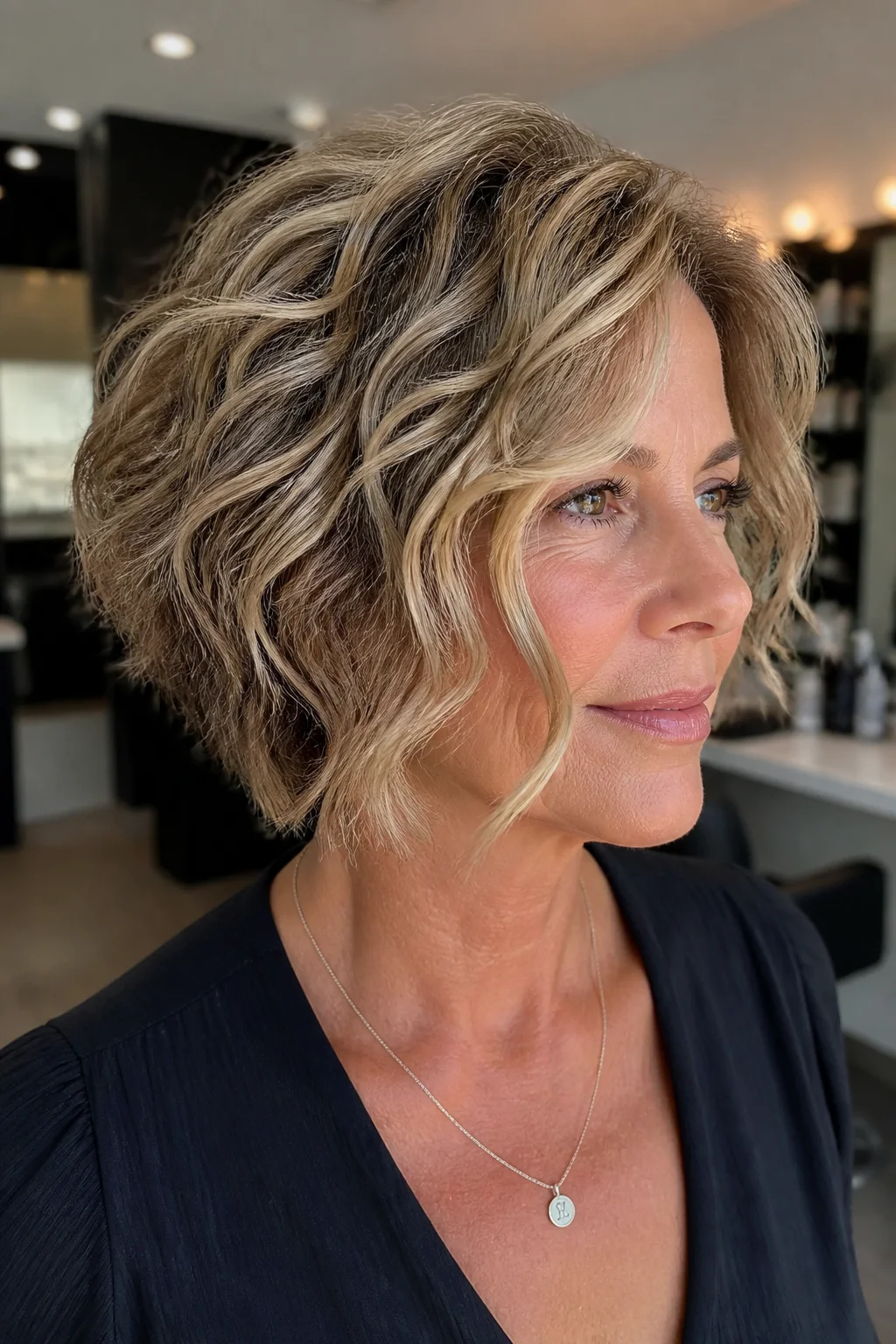
Stacking at the back adds volume and lift, while the front layers fall forward at an angle instead of staying tucked behind the ears. This creates a frame that points inward toward the chin, which narrows a wide face nicely. The back stays short and controlled, almost like a pixie underneath a fuller curly crown. Tip: request the stacking cut on dry, styled curls so the stylist can judge exactly how much lift each layer holds.
Wavy Curly Bob with Chin-Grazing Face-Frame
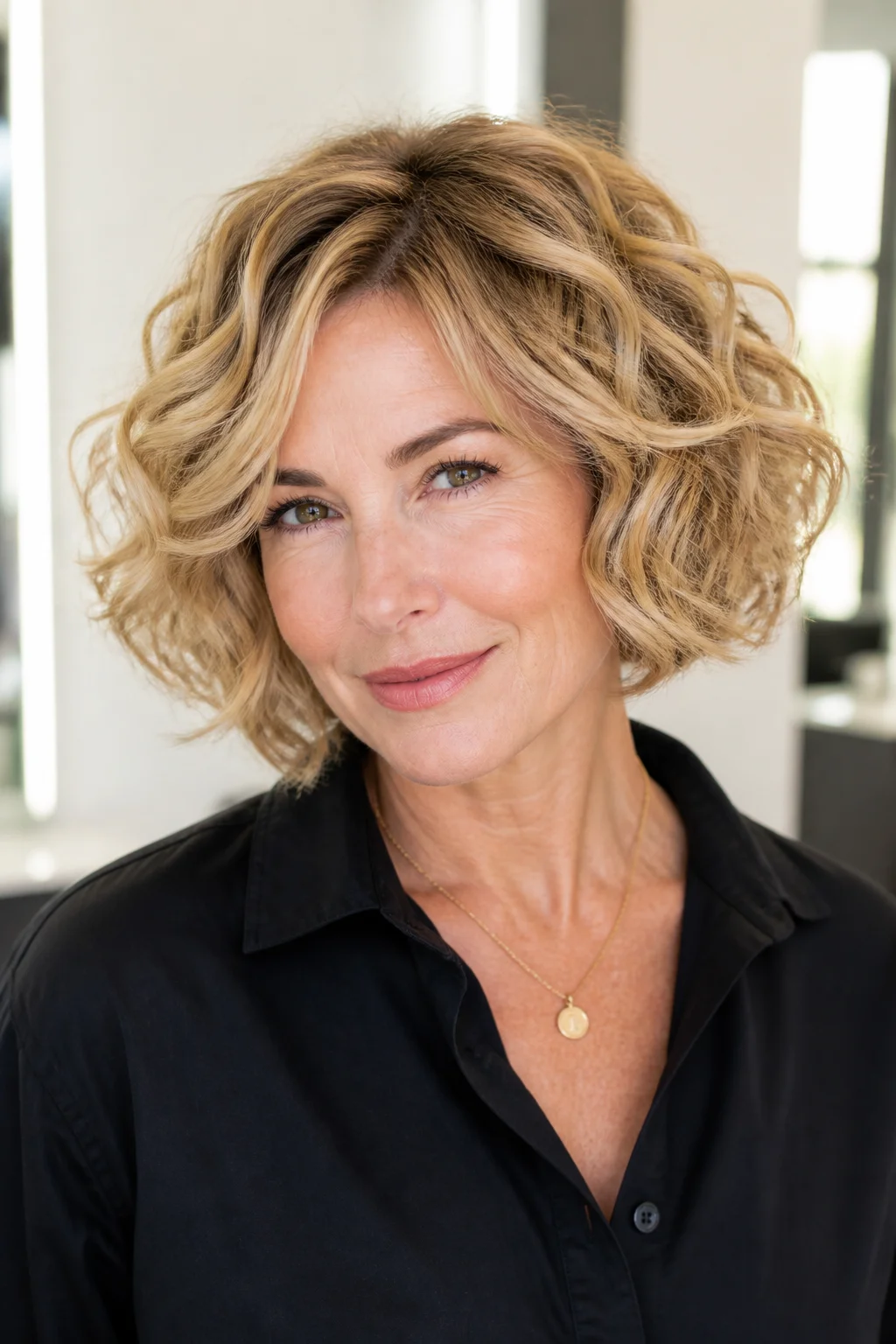
This is one of the simplest versions on the list, and that simplicity is the point. The whole bob sits at chin length, with face-framing pieces cut at the same length as the rest rather than separately layered. It suits looser wave patterns that don’t shrink much between wet and dry.
Tapered Curly Bob with Feathered Sides
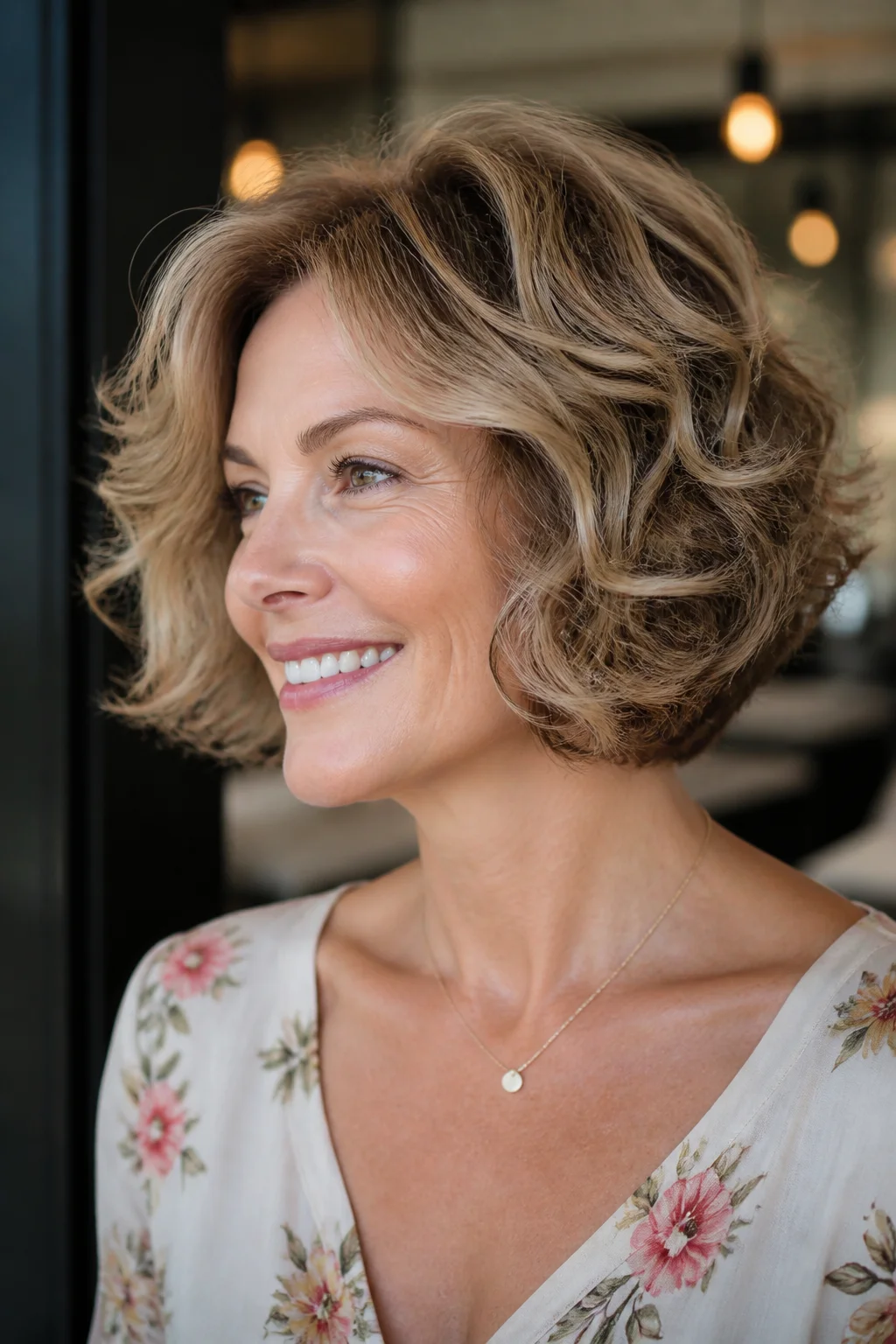
Tapering shortens the bob gradually from front to back, so the front is longer than the nape. Feathered sides add soft, wispy movement right at the temples, similar to how a feather duster fans out at the tip. This shape flatters an oval or heart-shaped face because it narrows visual width at the jaw while keeping fullness up top.
Ringlet Curly Bob with Asymmetrical Face-Frame
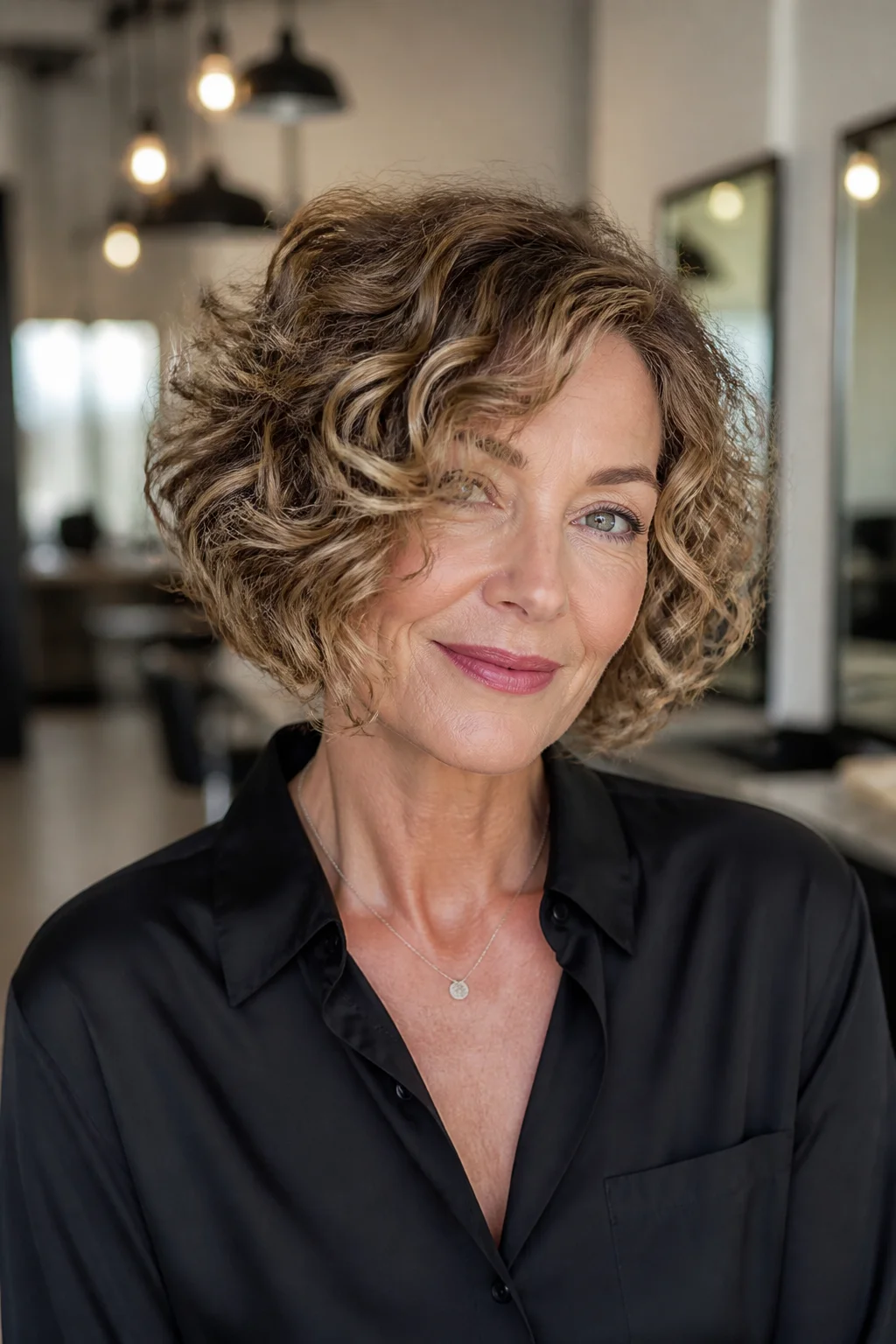
Tight ringlets need careful layering because they shrink more than any other curl type, and this bob accounts for that by cutting one side slightly longer than the other. The asymmetry draws the eye diagonally across the face, which can slim a round or square shape. It’s a bold choice, and it works best on someone who already likes a bit of visual interest rather than perfect symmetry.
Medium Curly Bob with Layered Bangs and Temples
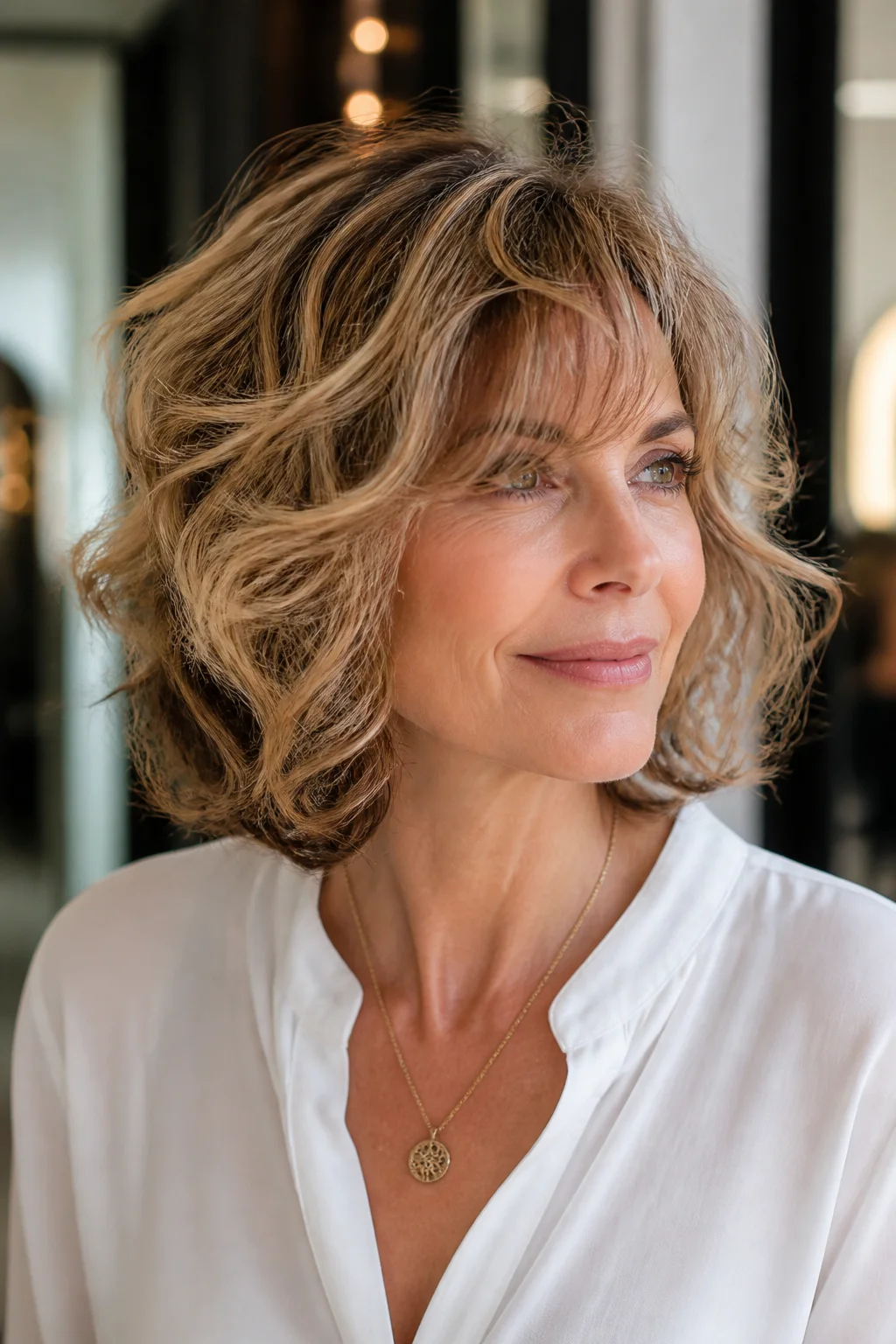
Layered bangs here aren’t a solid curtain of hair. They’re cut in pieces of varying length that blend into the temple area, so there’s no hard line where the bangs end and the rest of the bob begins. This medium length, usually landing between the chin and shoulder, gives enough weight to keep curls from frizzing upward while still leaving room for the layers to move.
Kinky Curly Bob with Blended Face-Frame
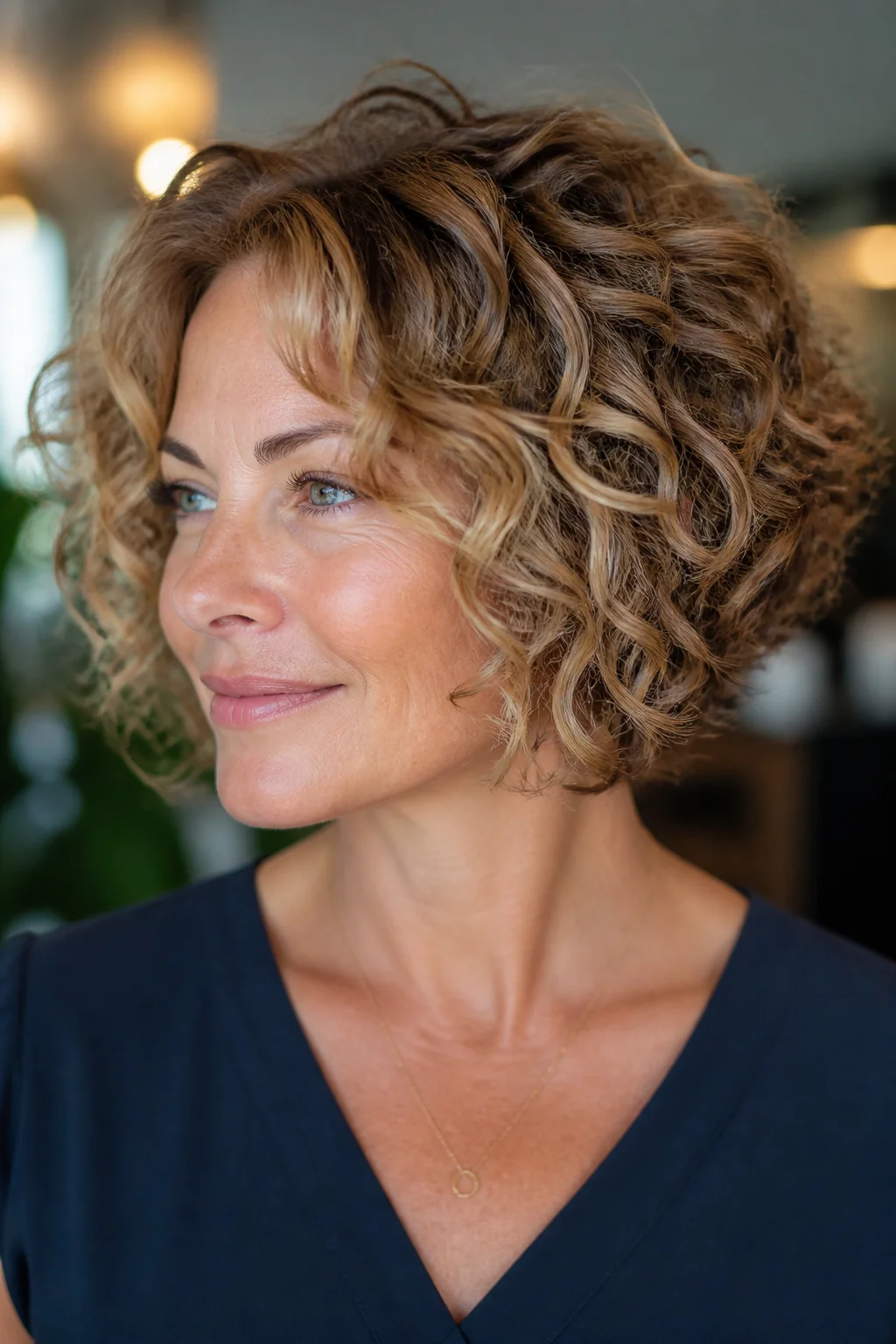
Kinky texture holds volume close to the scalp, so this bob avoids heavy layering that could make the shape look triangular. Instead, the face-framing pieces are blended in gradually, with length differences kept subtle. The result reads as one cohesive shape rather than separate layers fighting each other. Tip: ask for a dry cut and dry styling consultation, since kinky curls change shape dramatically between stretched and released states.
Waist-Length Curly Bob with Extended Face-Framing
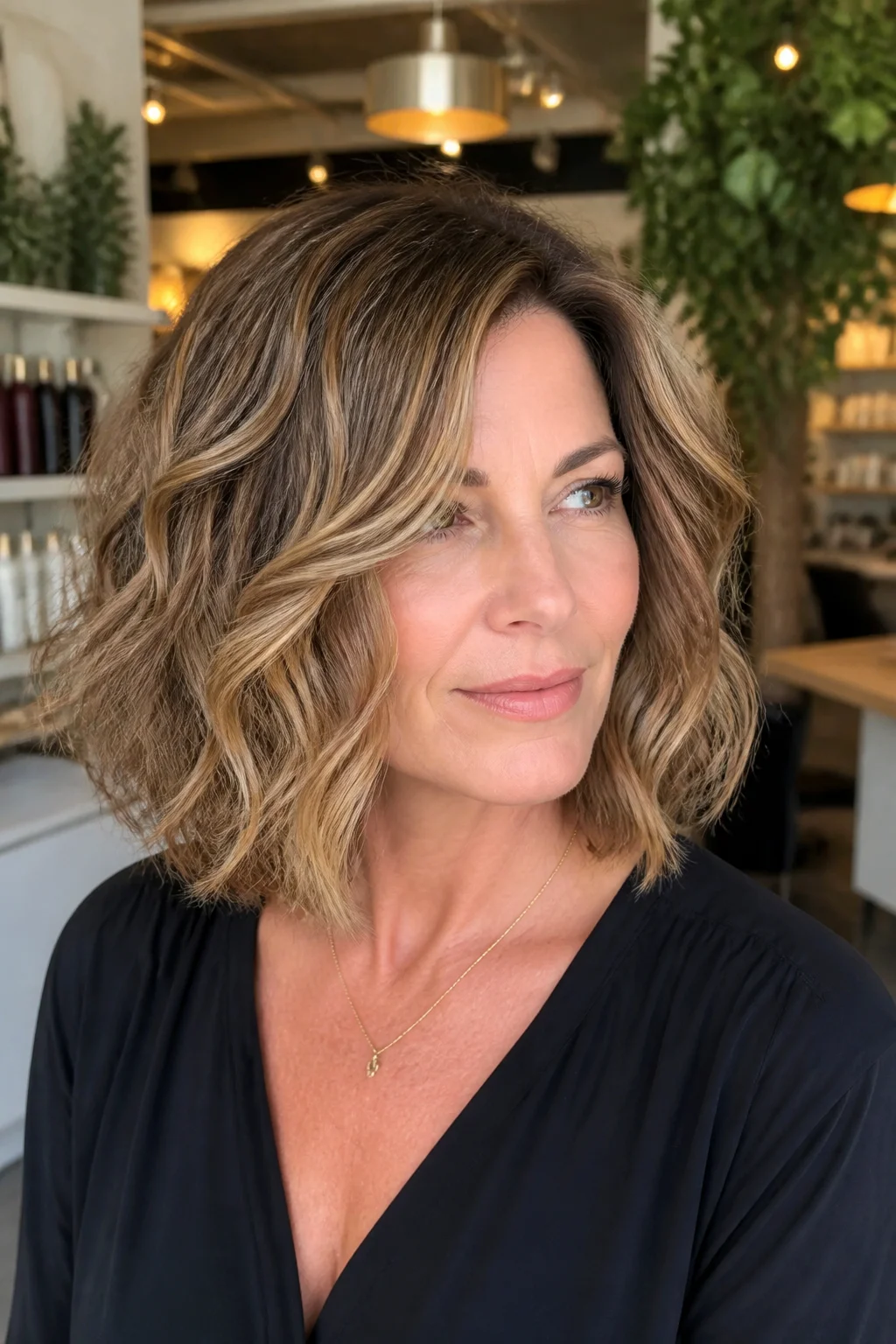
This isn’t a traditional short bob. It’s built for longer curly hair where the stylist creates a bob-like shape through layering rather than actual length, keeping the back long while framing pieces up front are cut to bob length. It gives the visual effect of a bob from the front while preserving length everywhere else, which suits anyone who loves the framing look but isn’t ready to cut off long hair.
Vintage-Wave Curly Bob with Sculpted Face-Frame
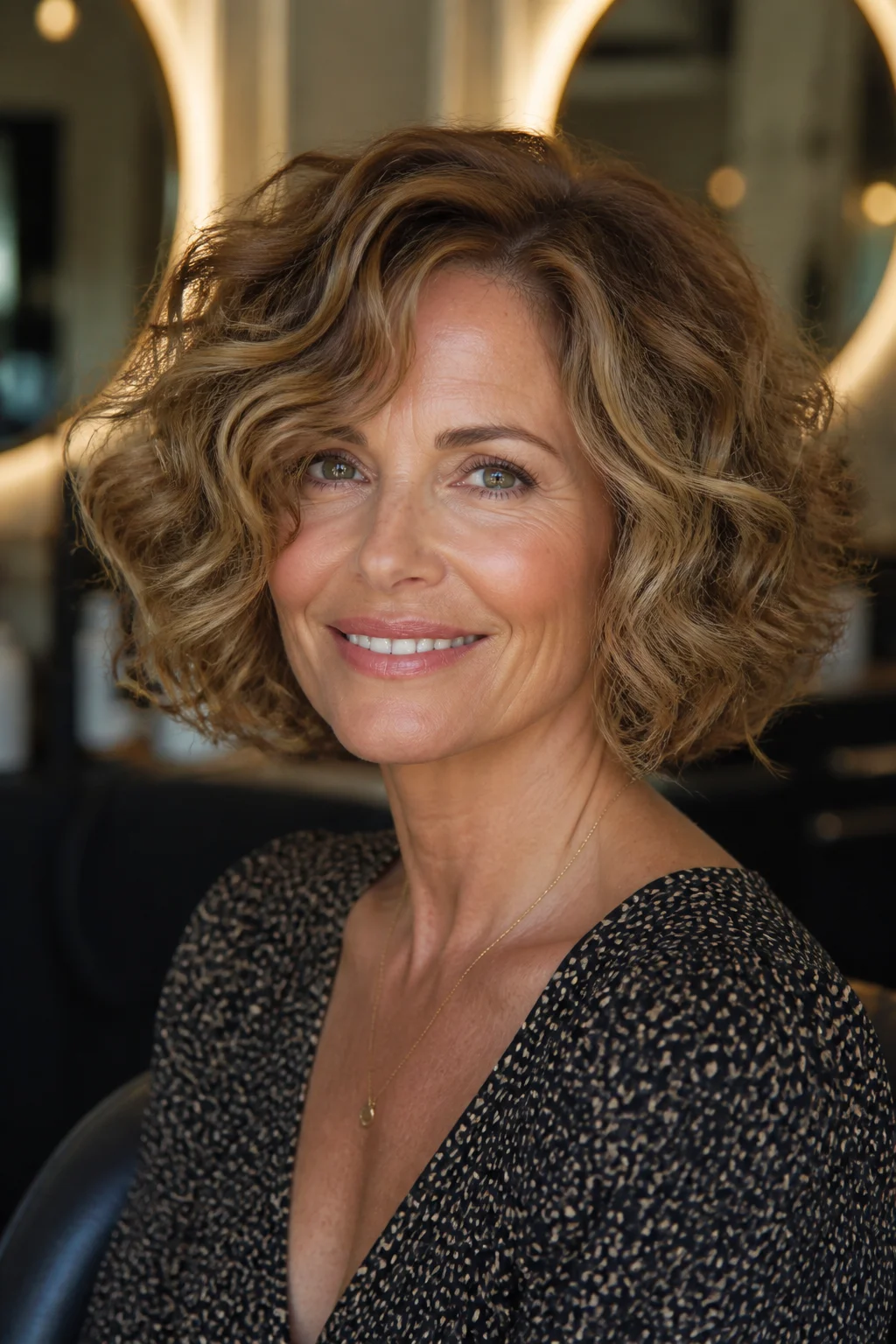
Pin curls and finger waves inspire this one, and the face-framing pieces are sculpted close to the head rather than left loose. It looks like something out of an old photograph, polished and deliberate. This style takes more styling time than most on this list, since it often involves setting curls in a specific direction rather than letting them air dry freely.
Choppy Curly Bob with Disconnected Face-Layers
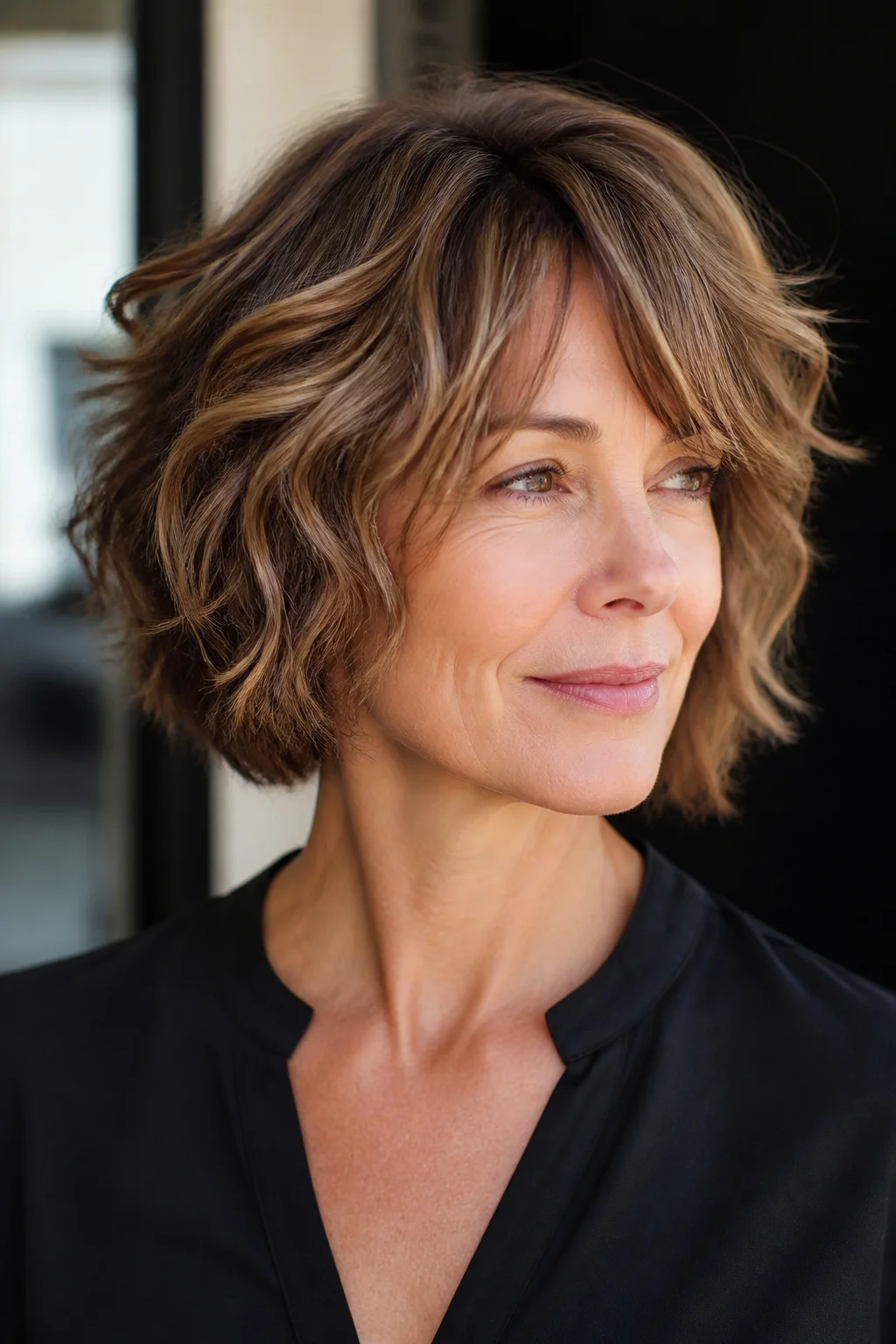
Disconnection here means the face-framing layers are cut with a visible gap between lengths, rather than blending smoothly. It gives an undone, lived-in texture that suits looser waves and medium curl patterns especially well. This is a lower-maintenance option since the choppy lines hide regrowth and uneven curl patterns better than a precise, blended cut would.
Curly Bob with Side-Parted Face-Frame
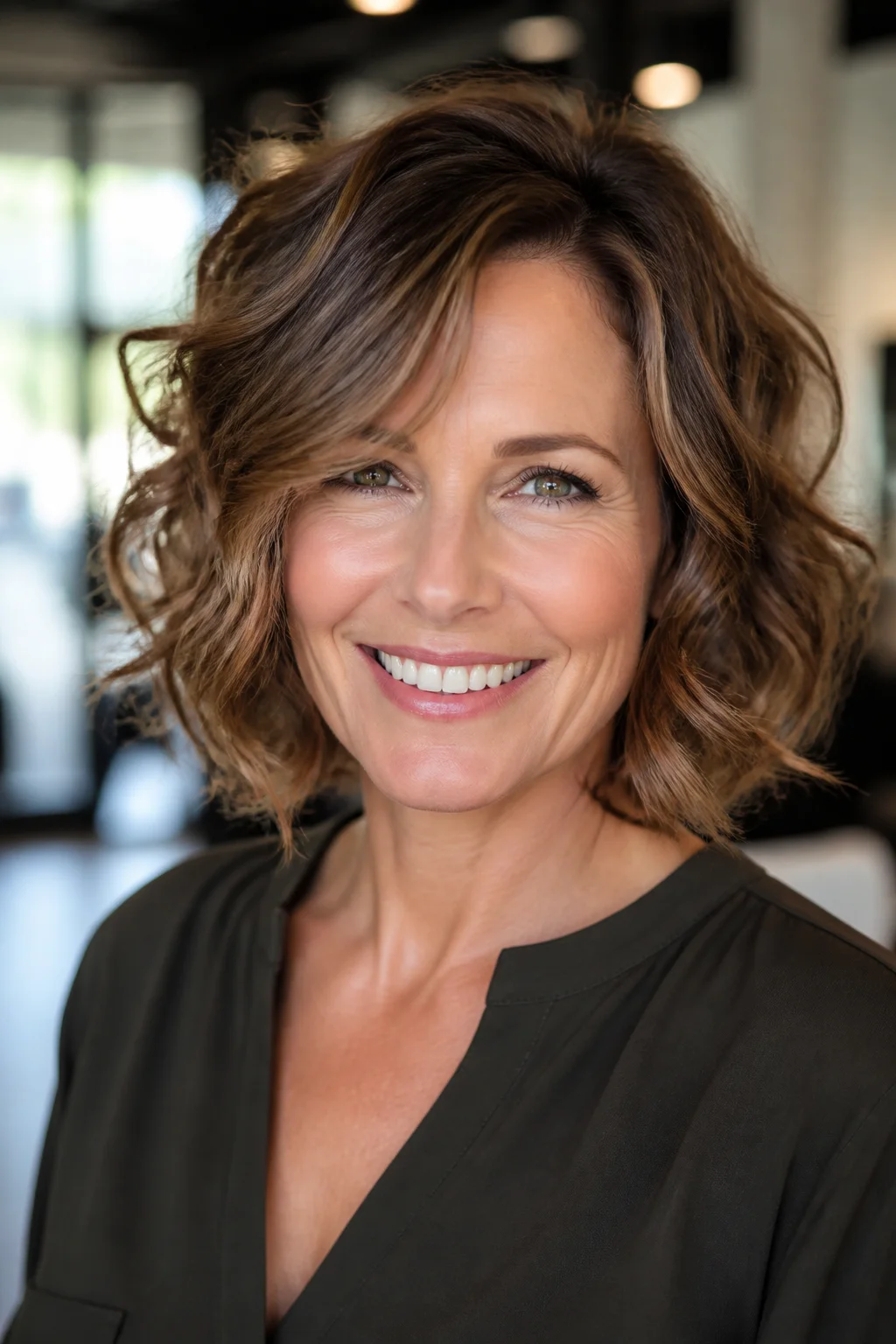
A deep side part changes how the face-framing pieces fall, pulling more length and volume to one side. This asymmetry works well for anyone with a slightly uneven hairline or a desire to minimize a broader forehead. It’s a small adjustment that makes a big difference in how the whole bob reads.
Bouncy Curly Bob with Graduated Face-Layers
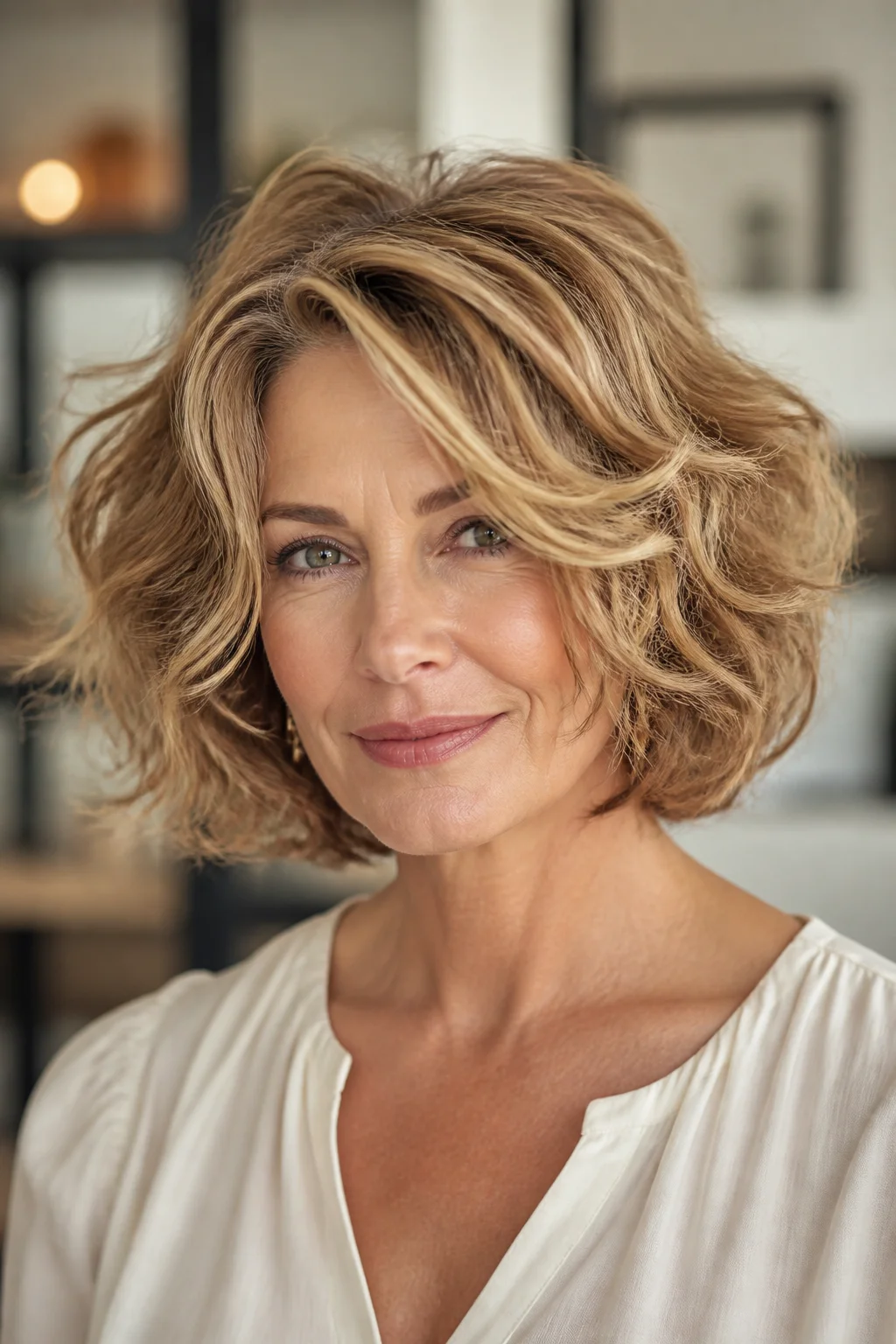
Graduation adds shape without heaviness, and this version keeps curls bouncy by removing weight strategically rather than all at once. The face-layers taper from shorter near the cheekbone to longer near the chin, creating a rounded frame that flatters most face shapes. It photographs well because the bounce holds even after a full day.
Tousled Curly Bob with Undercurl Face-Frame
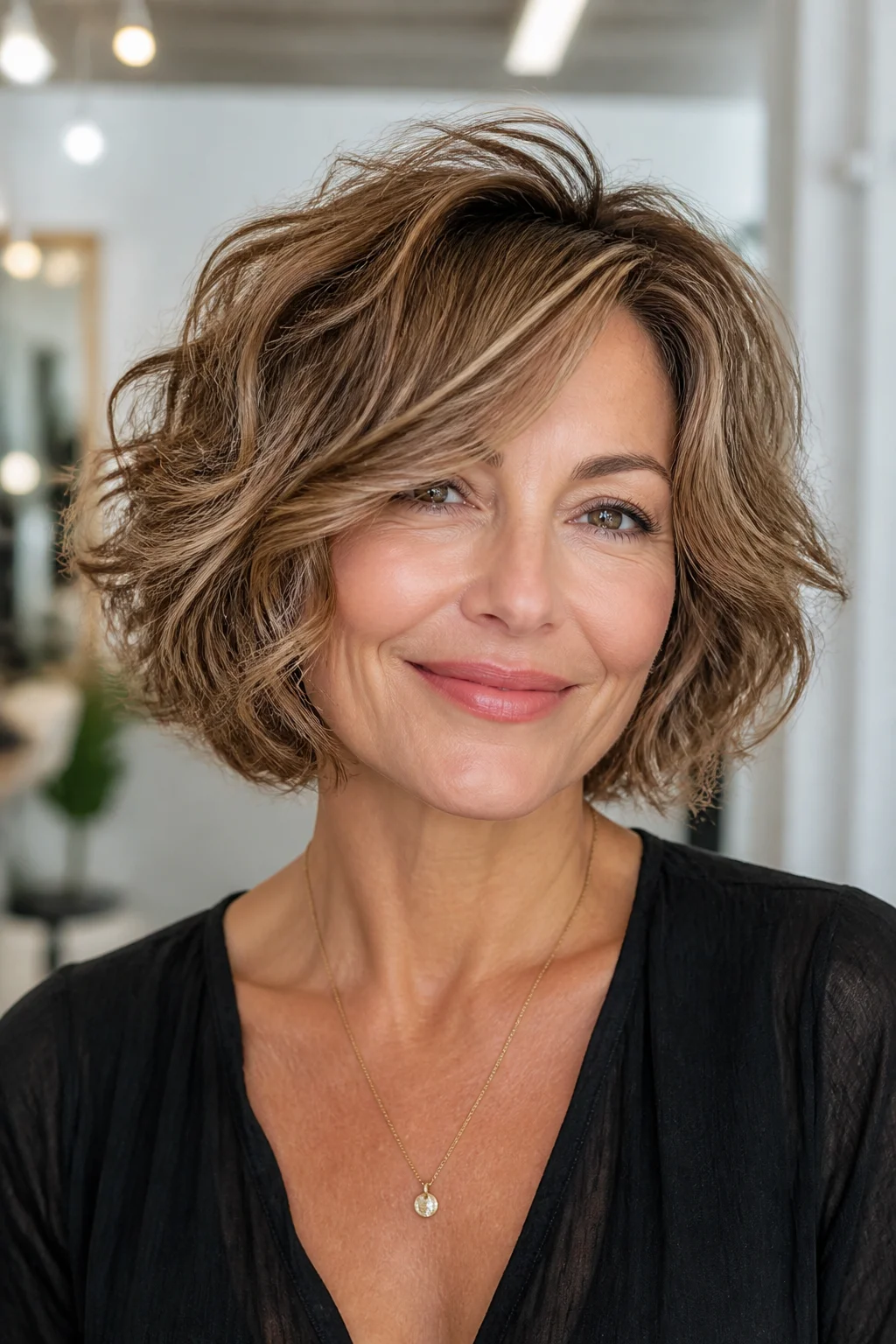
The undercurl technique tucks the ends of the face-framing pieces slightly inward, toward the neck, rather than letting them flip outward. This creates a softer, more polished frame even when the rest of the bob stays deliberately tousled and undone. Tip: scrunch the front pieces upward while drying to encourage that inward curl rather than brushing them, which can pull the pattern outward instead.
Curly Bob with Blunt Bangs and Curved Temple Layers
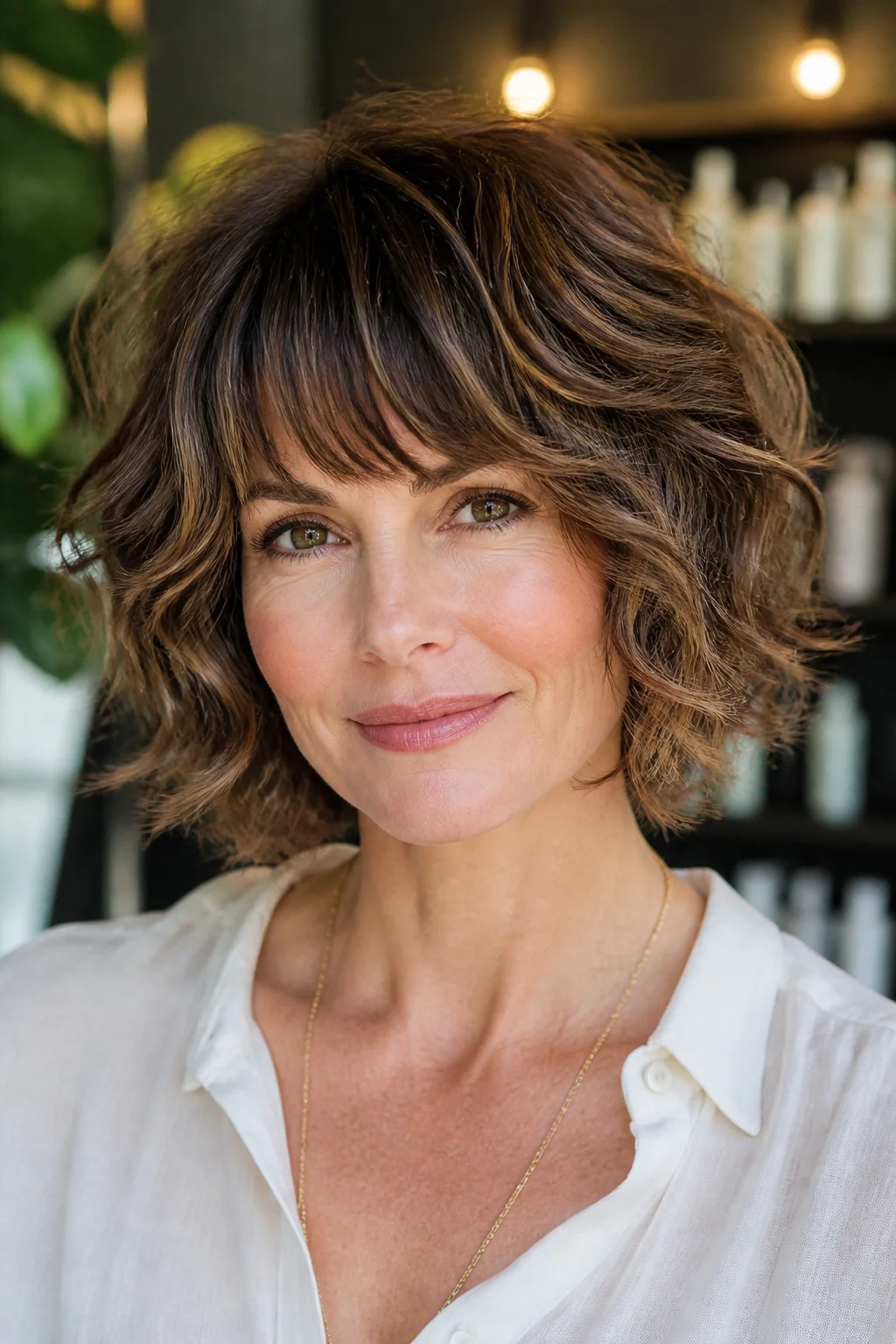
Blunt bangs sit as a solid, straight-across line, which is a departure from the softer, piece-y bangs seen elsewhere on this list. Curved layers at the temples soften the transition from bangs to the rest of the bob. This combination suits someone with strong, even features who wants a graphic, statement look rather than something soft and blended.
Spiral Curly Bob with Razored Face-Frame Edges
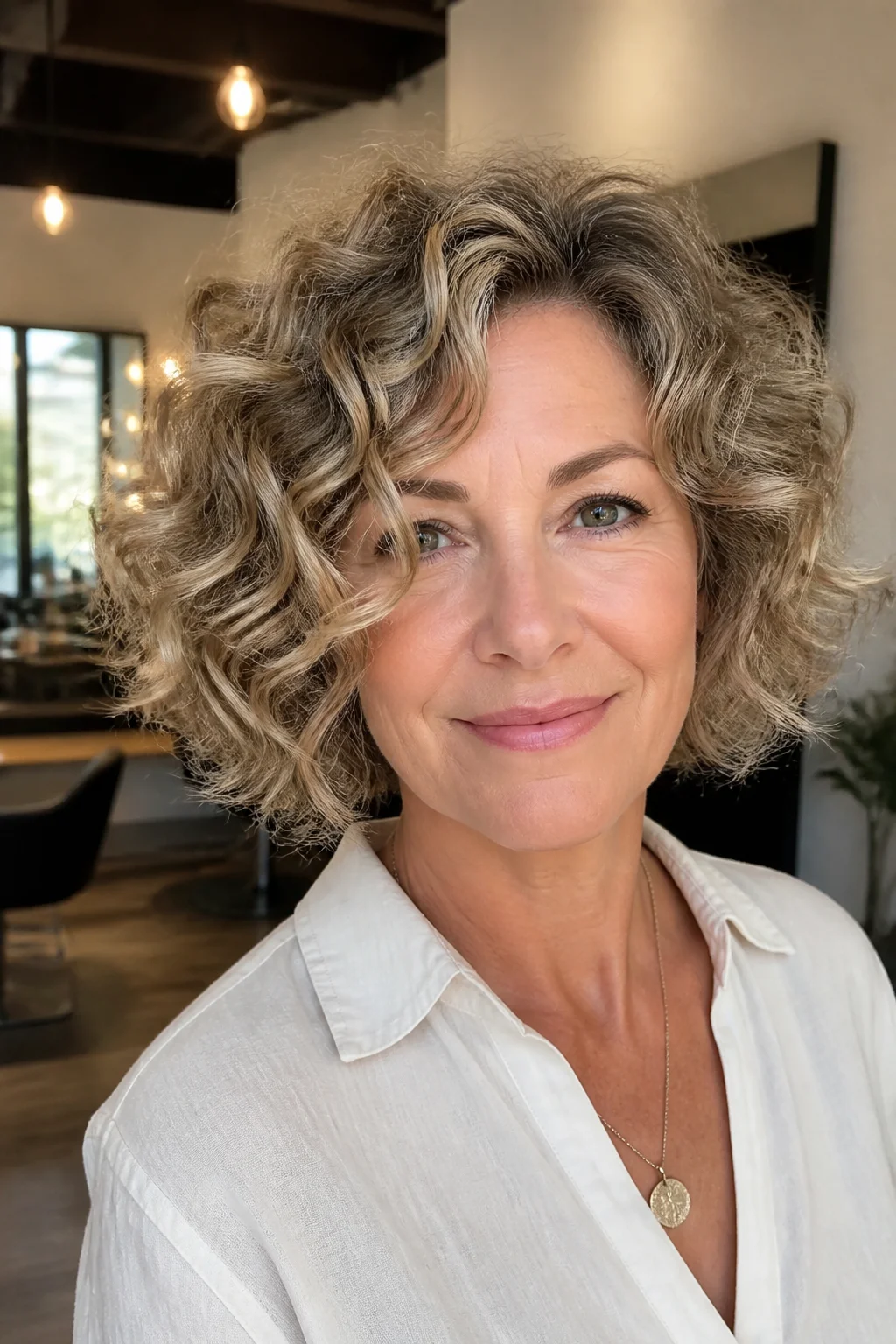
Razoring the edges instead of cutting with shears gives the face-framing pieces a texturized, feathery finish rather than a blunt one. On spiral curls, this technique breaks up the perfect coil pattern just enough to keep the frame from looking too uniform or wig-like. It’s a subtle finishing touch, but it changes the whole feel of the cut.
How to Choose the Right Face-Framing Curly Bob for You
Picking between these styles comes down to your curl pattern, your face shape, and how much daily styling time you’re willing to spend. If you have tight coils or kinky texture, look at the coily textured bob with bangs, the kinky curly bob with blended face-frame, or the ringlet curly bob with asymmetrical face-frame. These three account for heavy shrinkage in ways a looser cut won’t. If your waves are loose and relaxed, the wavy curly bob with chin-grazing face-frame or the loose wave curly bob with graduated face-frame will hold their shape without constant refreshing.
For round faces, the textured shag bob with long face-framing layers and the short stacked curly bob with forward-falling layers both add downward pull that elongates the face. For square or angular faces, the tight spiral curly bob with wispy face-frame and the tapered curly bob with feathered sides soften hard lines at the jaw.
A common mistake is asking for a face-framing cut without mentioning your curl pattern’s shrinkage. Curls that spiral tightly can pull up two or three inches once dry, so a piece that looks perfectly chin-length wet might sit at cheekbone height by the time it’s styled. Always ask your stylist to check the length on dry, styled hair before the final trim, especially with cuts like the ringlet curly bob or the kinky curly bob with blended face-frame.
If you want lower maintenance, choppy and disconnected shapes like the choppy curly bob with disconnected face-layers hide regrowth better than precise, blended styles like the vintage-wave curly bob with sculpted face-frame, which needs regular setting to keep its polished look.
Final Thoughts
Choosing among these face-framing curly bob hairstyles really depends on matching the technique to your curl type rather than picking a picture you like and hoping it translates. Bring reference photos to your appointment, but also talk openly with your stylist about how your curls have behaved in past cuts. A shape that works on tight spirals can look completely different on loose waves, even with the same layering instructions. Whatever style you land on, ask for a dry cut check before you leave the chair. That final look at your curls in their natural state is what makes any face-framing bob actually work for your features.