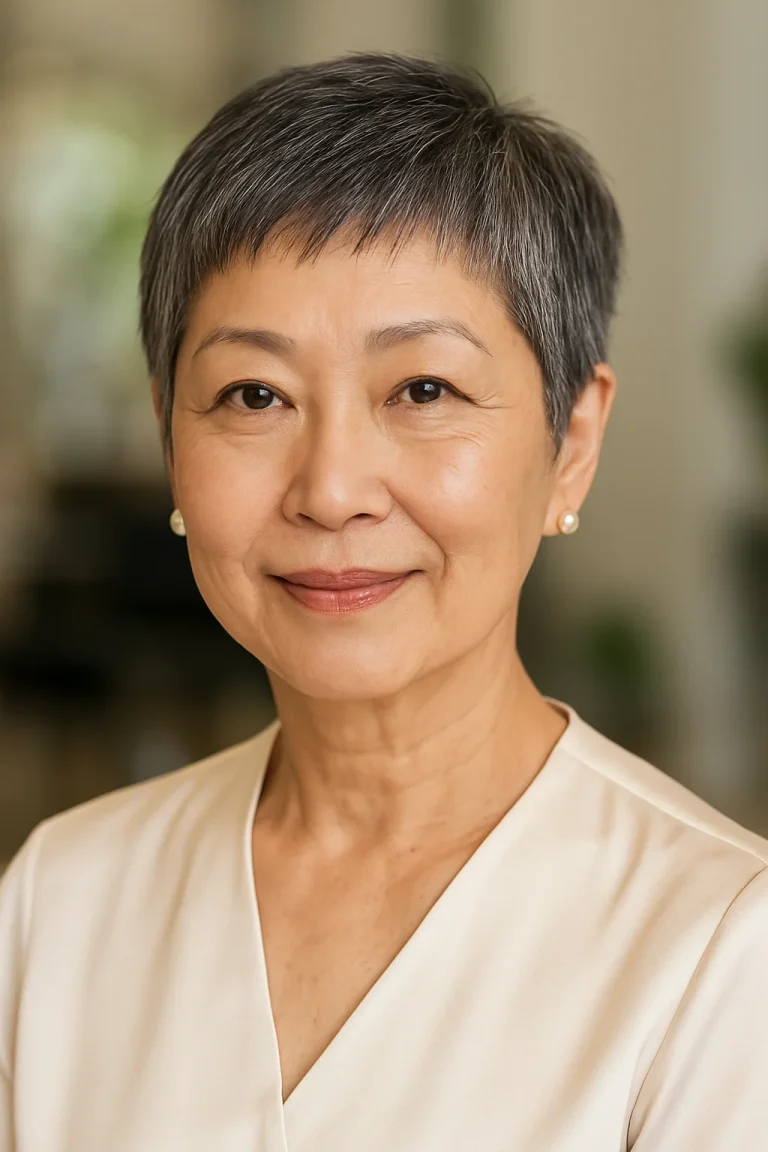
Hair can start to look flatter, finer, or less lively after 40, especially when a longer style loses its shape between appointments. A well-planned pixie brings the face forward, gives the crown more lift, and makes daily styling less demanding. Essential pixie cuts for women over 40 focus on structure, ease, and personality rather than trends alone, leaving room for polished, soft, bold, curly, or quietly silver results. The right choice depends on your hair density, natural texture, favorite part, and how much time you want to spend with a dryer or styling cream.
Bring two or three saved photos of essential pixie cuts for women over 40 to your stylist, then ask which details suit your hairline and growth pattern. This guide gathers essential pixie cuts for women over 40 into ten distinct shapes, focusing on clear differences rather than one haircut renamed several ways. Each option below has a distinct structure, so you can spot the idea that fits your routine before booking.
1. Classic Tapered Pixie
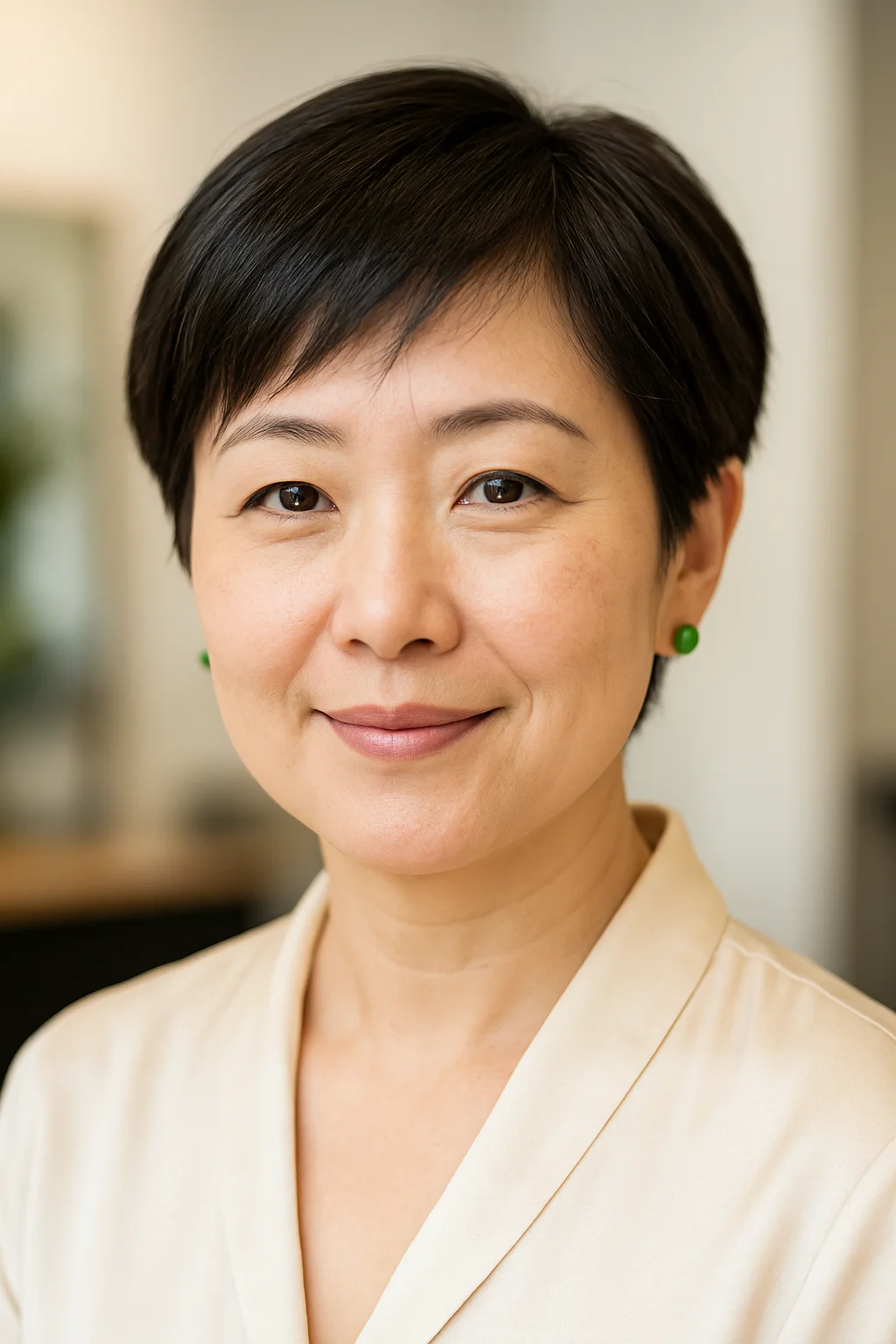
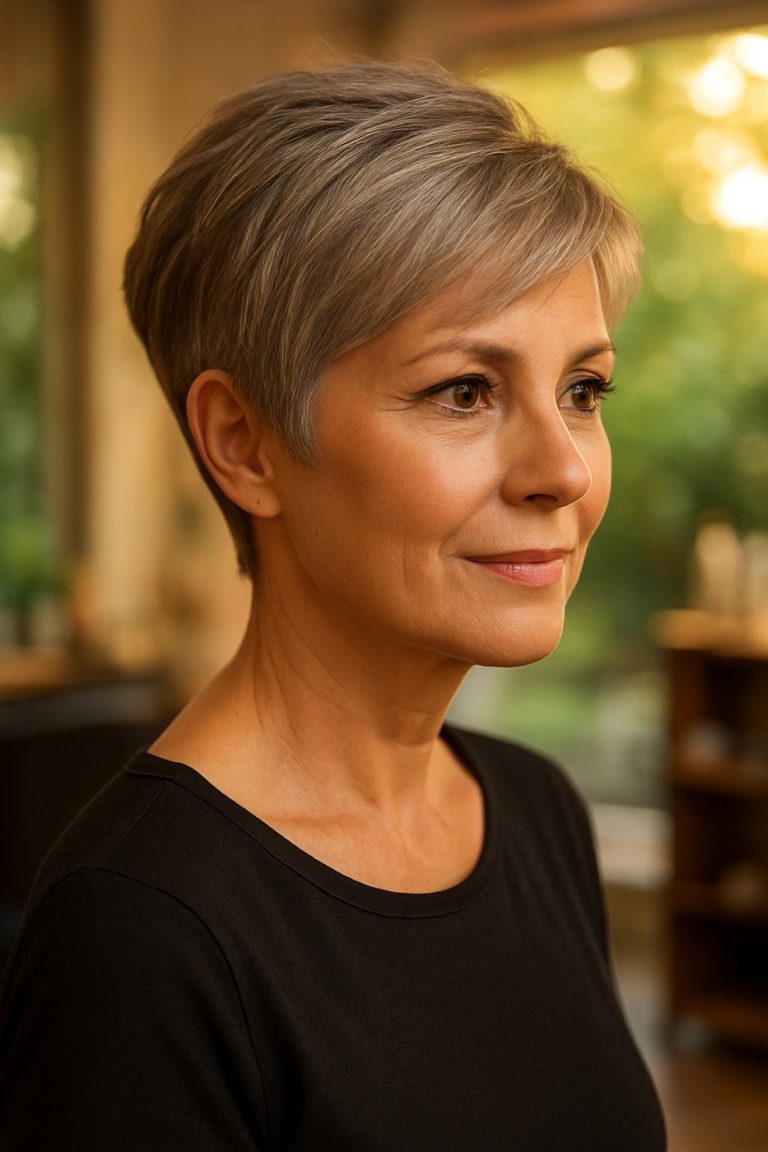
A classic tapered pixie keeps the sides and nape close while leaving gentle length through the crown. It feels like a clean reset for hair that has become difficult to shape. The top can be brushed forward, lifted with a dryer, or parted softly to one side. This balanced structure suits many face shapes while growing out neatly, since the crown length gives the sides time to catch up. Because the shape depends on where the length sits rather than how short the sides go, small adjustments at each visit keep the outline from looking uneven.
Tip: Ask your stylist to leave a slightly heavier ridge along the top of the ear instead of tapering evenly on both sides, since an uneven taper keeps the reset from looking sharp at the temples as it grows.
2. Side-Swept Long-Top Pixie
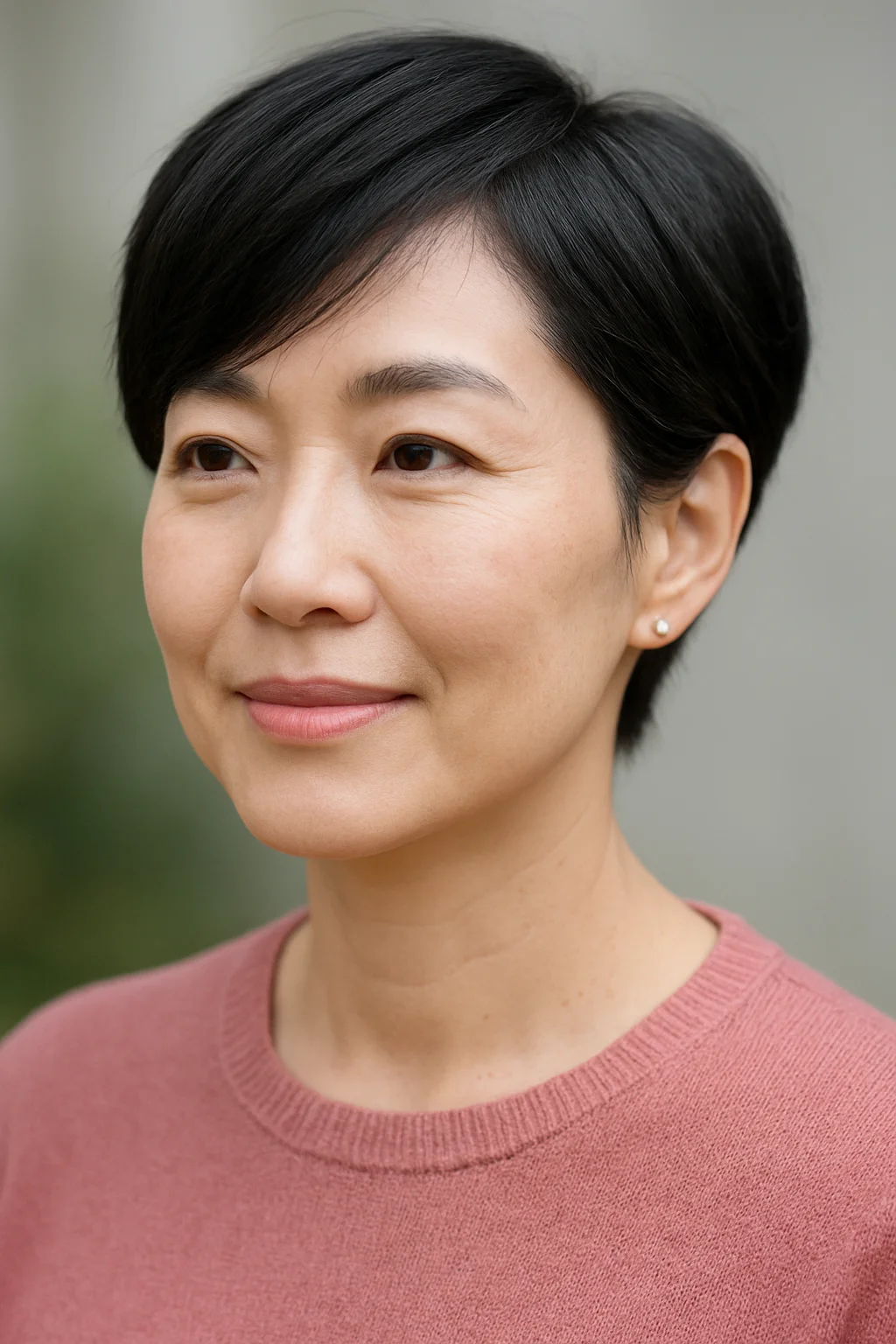
This cut leaves extra length on top and directs it across the forehead or away from the face. Styling this shape is similar to redirecting a curtain of hair rather than cutting it away completely. The sides stay neat, but the longer top creates movement and coverage, making it a practical pick for fine hair that needs visible height.
3. Curly Rounded Pixie
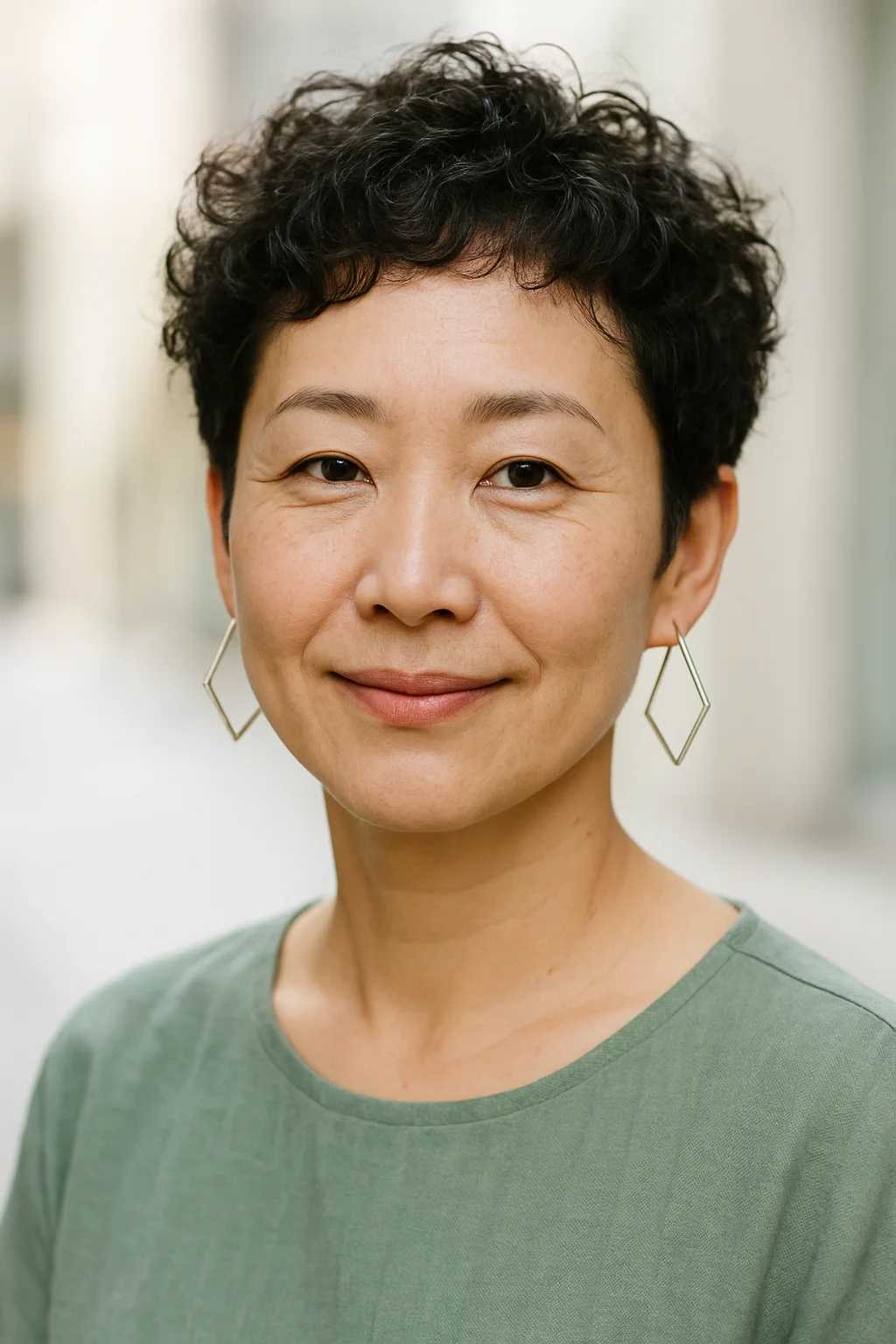
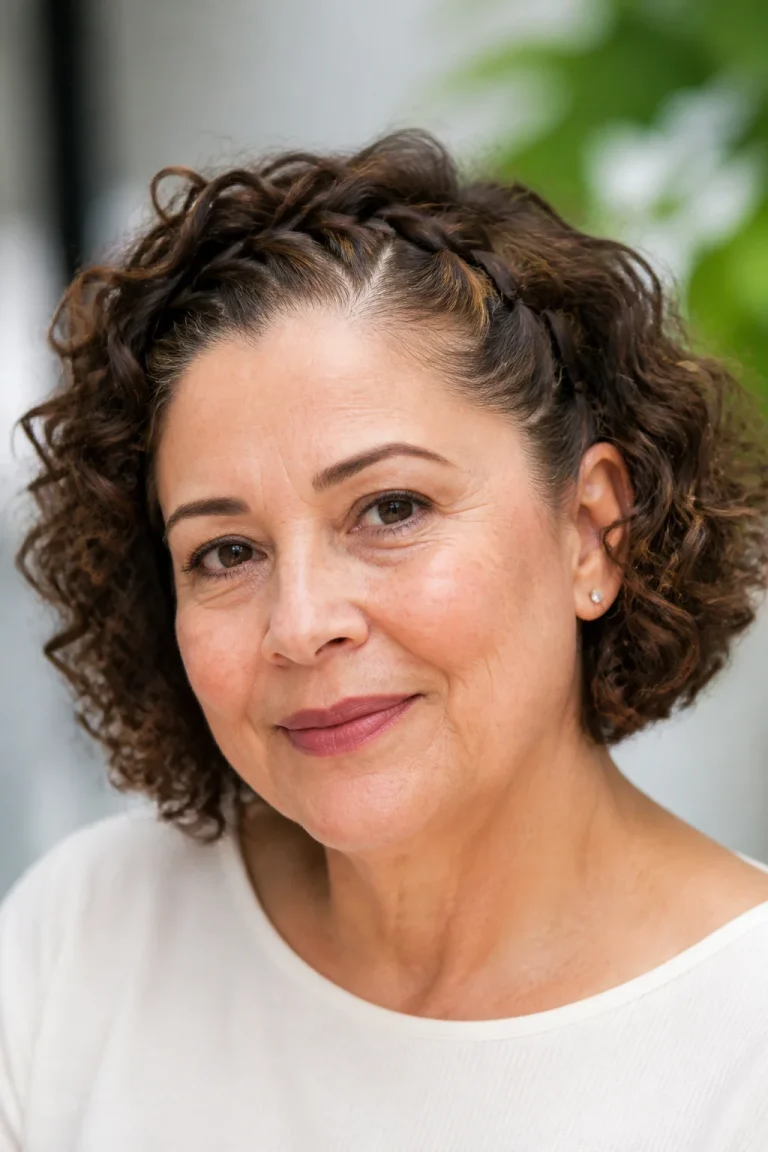
A curly pixie follows the natural bend of the hair instead of flattening it into a rigid shape. The finished outline looks like a soft halo around the crown, with shorter sides keeping the style controlled. This shape works best when the curls are cut dry or assessed in their natural pattern, since wet cutting often hides how much the strands will spring upward once dry. Ask your stylist to leave enough length for the curl to form without pulling the shape upward. Work a small amount of curl cream through damp hair and let it dry without excess handling. Skipping a diffuser in favor of air-drying on the first few wears can also reveal exactly how the shape settles before any further trimming.
4. Undercut Pixie
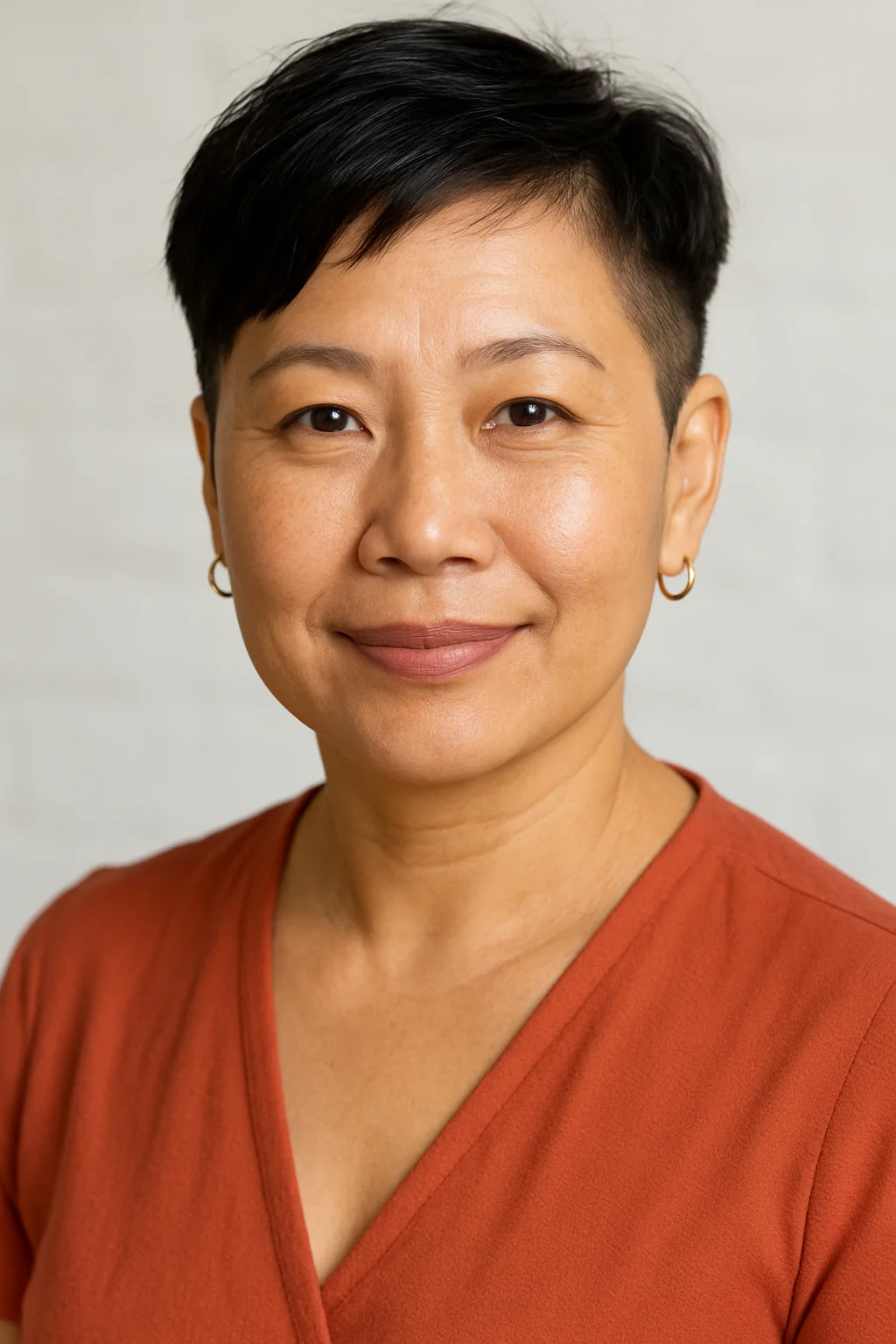
An undercut pixie removes weight from one or both sides beneath a longer top section. Compared to a fully covered pixie, this version feels lighter around the ears and temples once the weight is gone. The hidden shorter area makes the cut feel light while the upper section keeps plenty of styling options. You can reveal the undercut for a sharper finish or cover part of it for a quieter look, and this is a strong choice for thick hair that feels heavy around the temples.
5. Choppy Textured Pixie
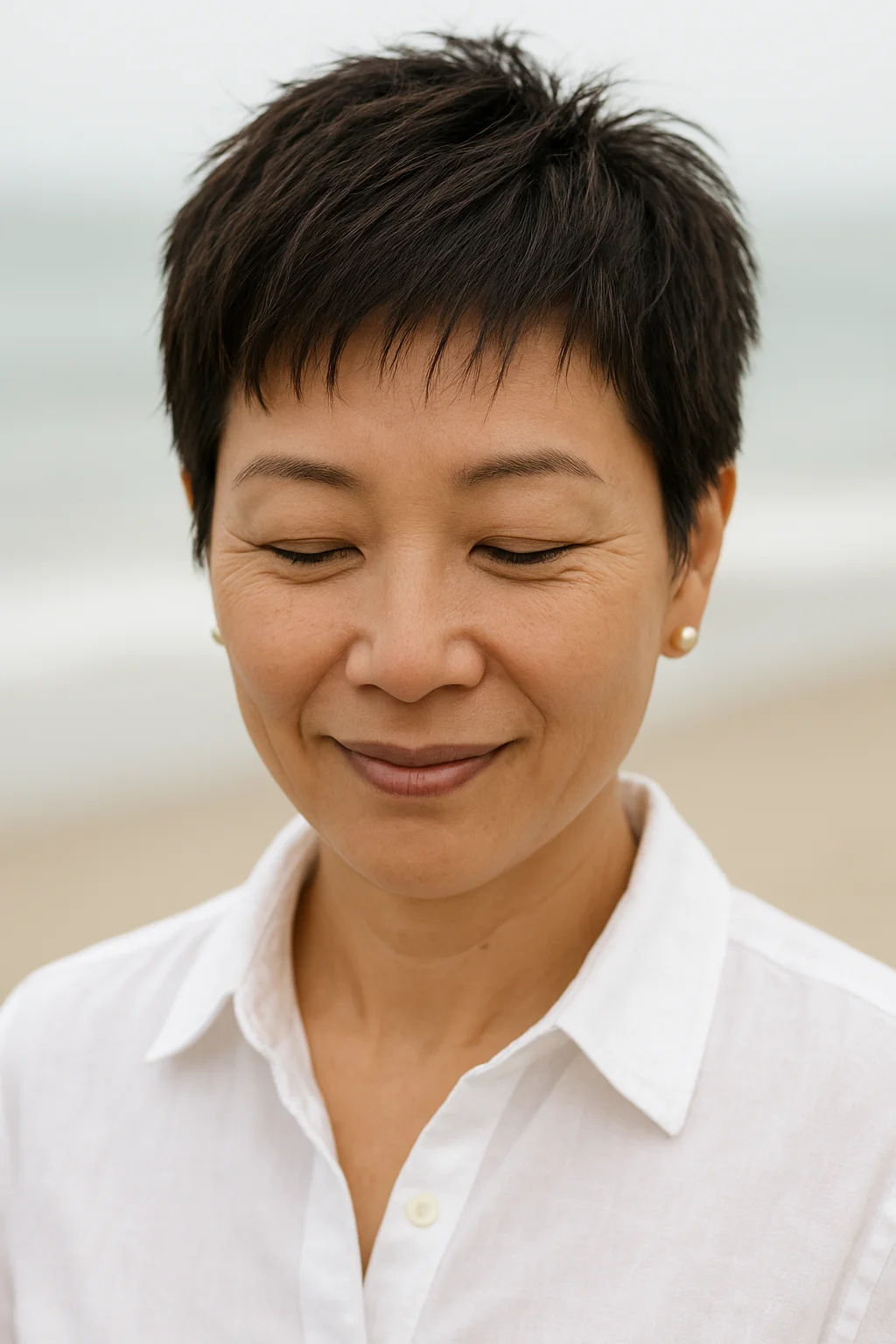
A choppy textured pixie uses separated pieces through the top and crown rather than one smooth layer. Think of each piece as an individual accent rather than part of a single continuous surface. A small amount of styling paste defines the ends without making the whole head stiff.
Tip: Ask for texture placed only through the top third of the cut, leaving the perimeter fuller so the movement does not turn into visible gaps near the crown.
6. Micro-Fringe Pixie
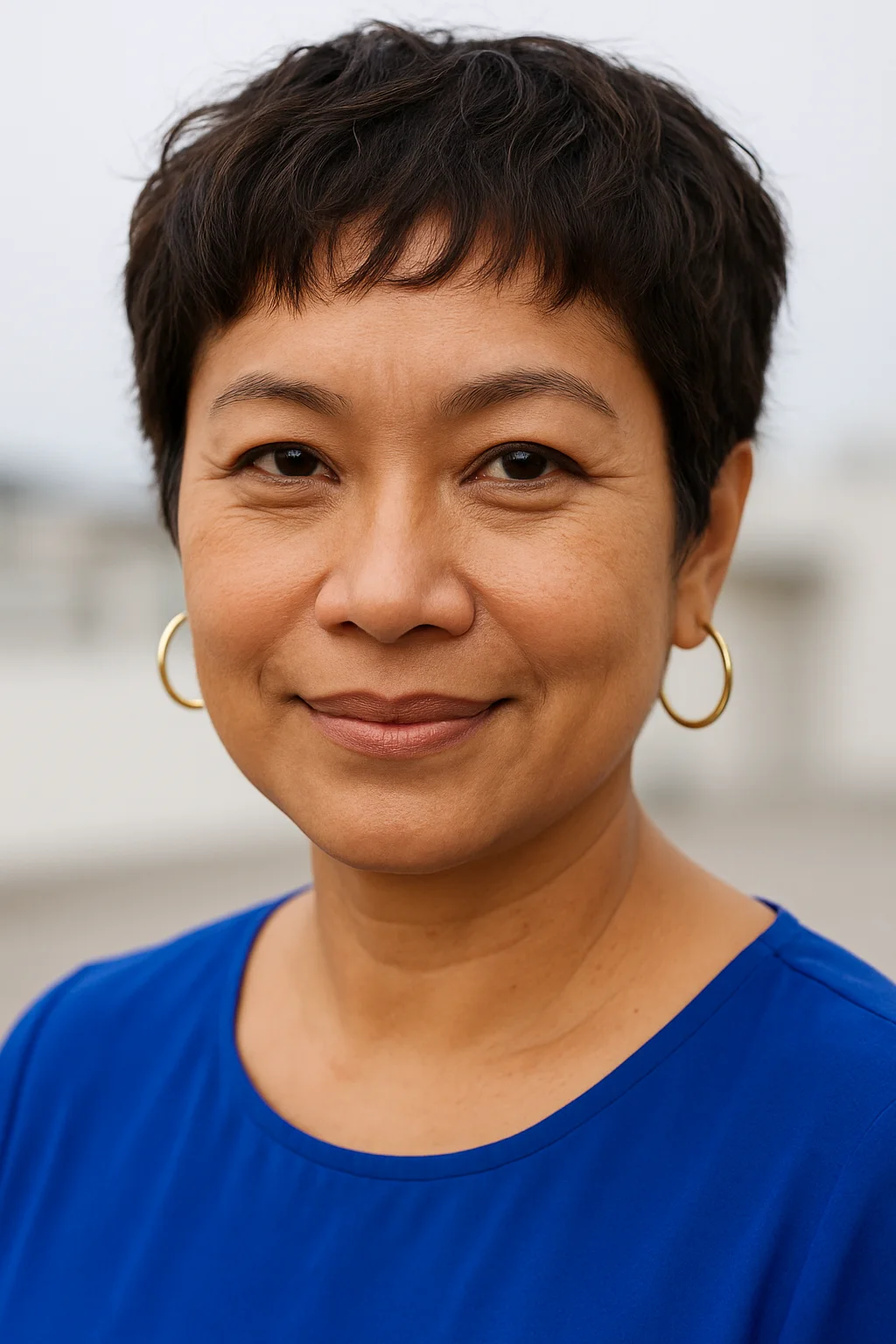
This short pixie cut pairs a close crop with a small, neat fringe above the brows. The shape reminds me of a modern editorial crop, but it can still look soft when the edges are not cut too sharply. It places attention on the eyes and cheekbones, so brow shape and makeup become part of the overall style. Choose this option when you enjoy regular trims and a clear, expressive outline. The fringe also tends to shift position quickly as it grows, so a four-week check-in keeps the line from drifting into the eyes.
7. Long-Nape Pixie Shag

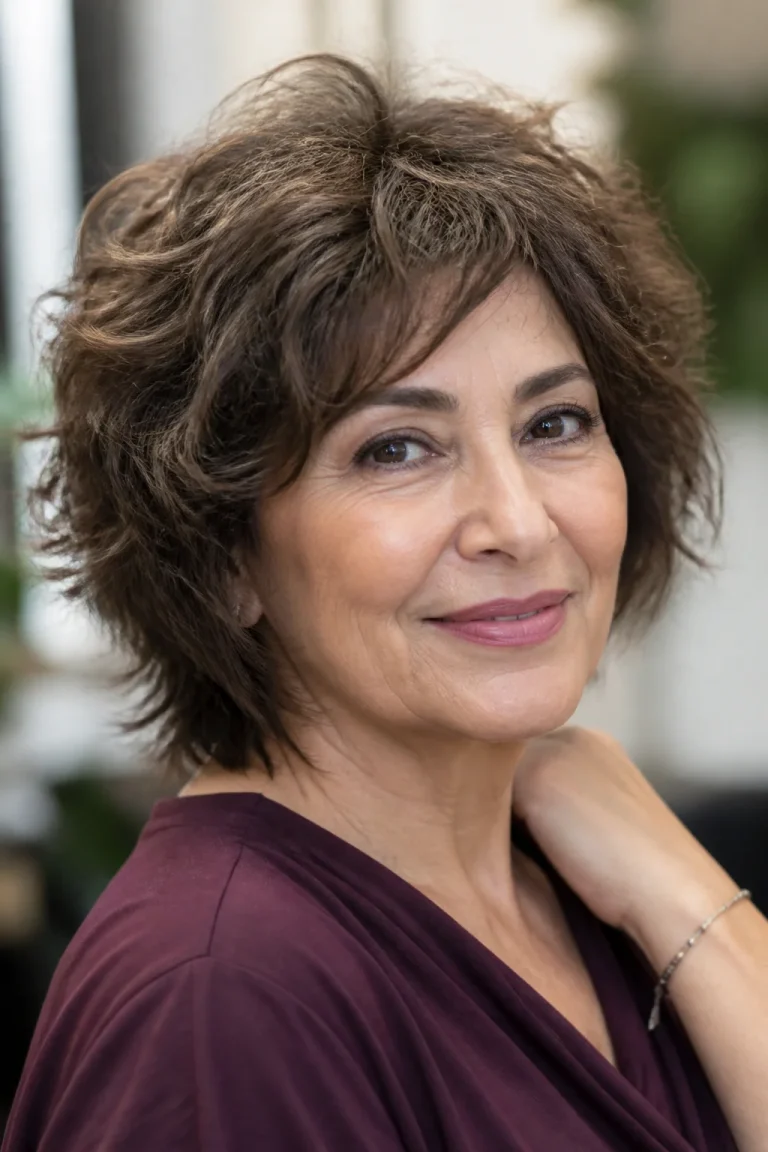
A long-nape pixie shag keeps the top short but lets the back extend slightly over the neckline. Picture a soft tail of movement gathering at the nape while the crown carries uneven, choppier layers. This shape suits someone who wants a shorter style without a fully exposed neck, and it works especially well with naturally wavy hair. Let the back grow a little longer for a softer finish, or keep it trimmed for a cleaner edge.
8. Lifted Pompadour Pixie
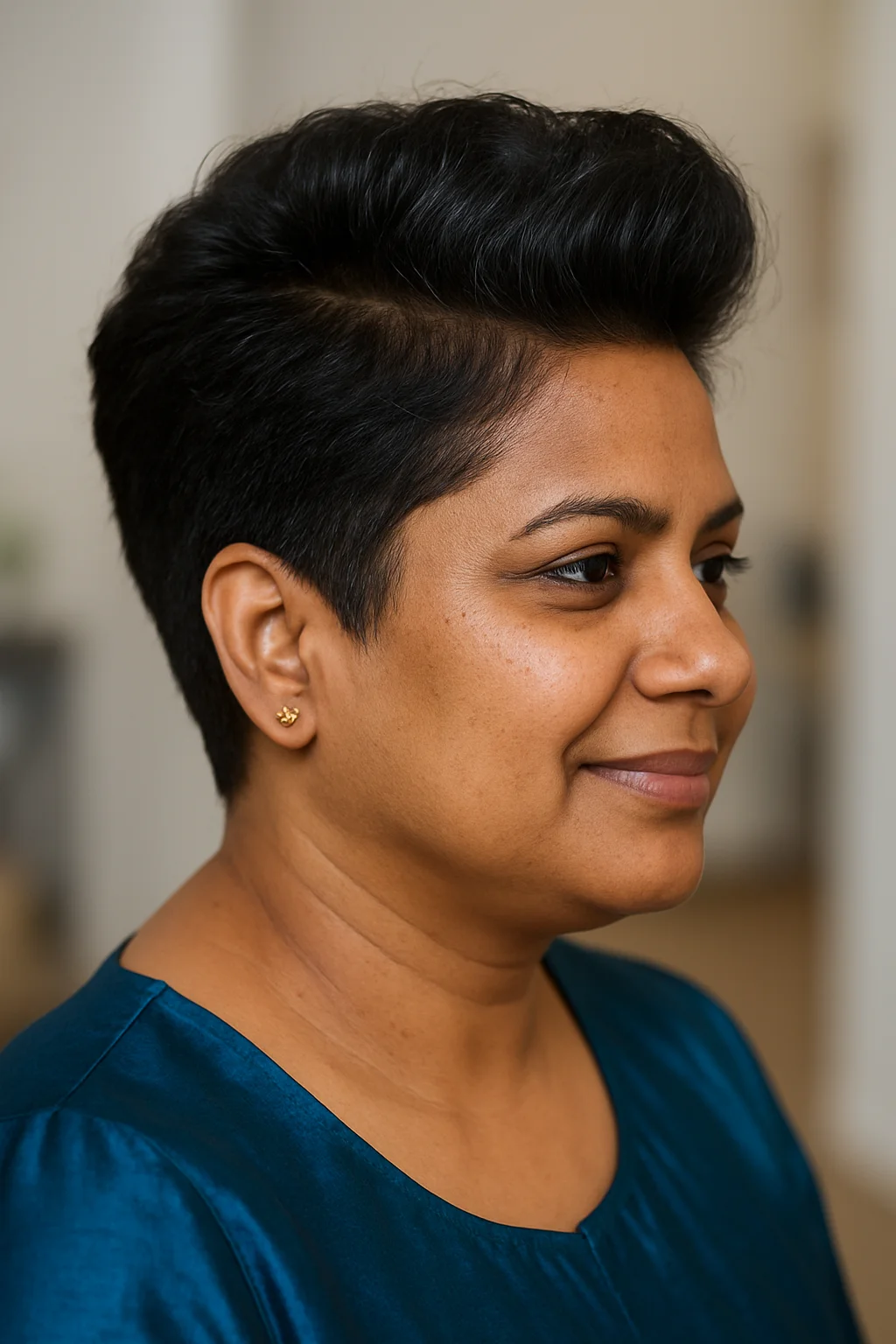
This style builds height at the front and crown, with the sides kept close enough to support the shape. Blow-dry the top upward and back, then smooth the surface or leave the ends lightly separated. The lift at the crown can look as if the hair were caught mid-motion and simply set in place. It brings a confident, dressed-up finish to simple outfits and can showcase natural gray beautifully. A light styling product keeps the lift flexible instead of stiff, and switching the direction of the blow-dry every few washes prevents the root area from training itself flat on one side. This shape rewards anyone willing to spend a few extra minutes with a round brush each morning.
9. Asymmetrical Pixie

An asymmetrical pixie has visibly different lengths on each side, often with one longer section sweeping across the forehead. The longer side falls almost like a diagonal frame for the face, while the shorter side gives the cut a crisp point of interest. Discuss your usual part before the cut, because the imbalance needs to follow the way your hair naturally falls rather than fight against it.
10. Close Silver Pixie
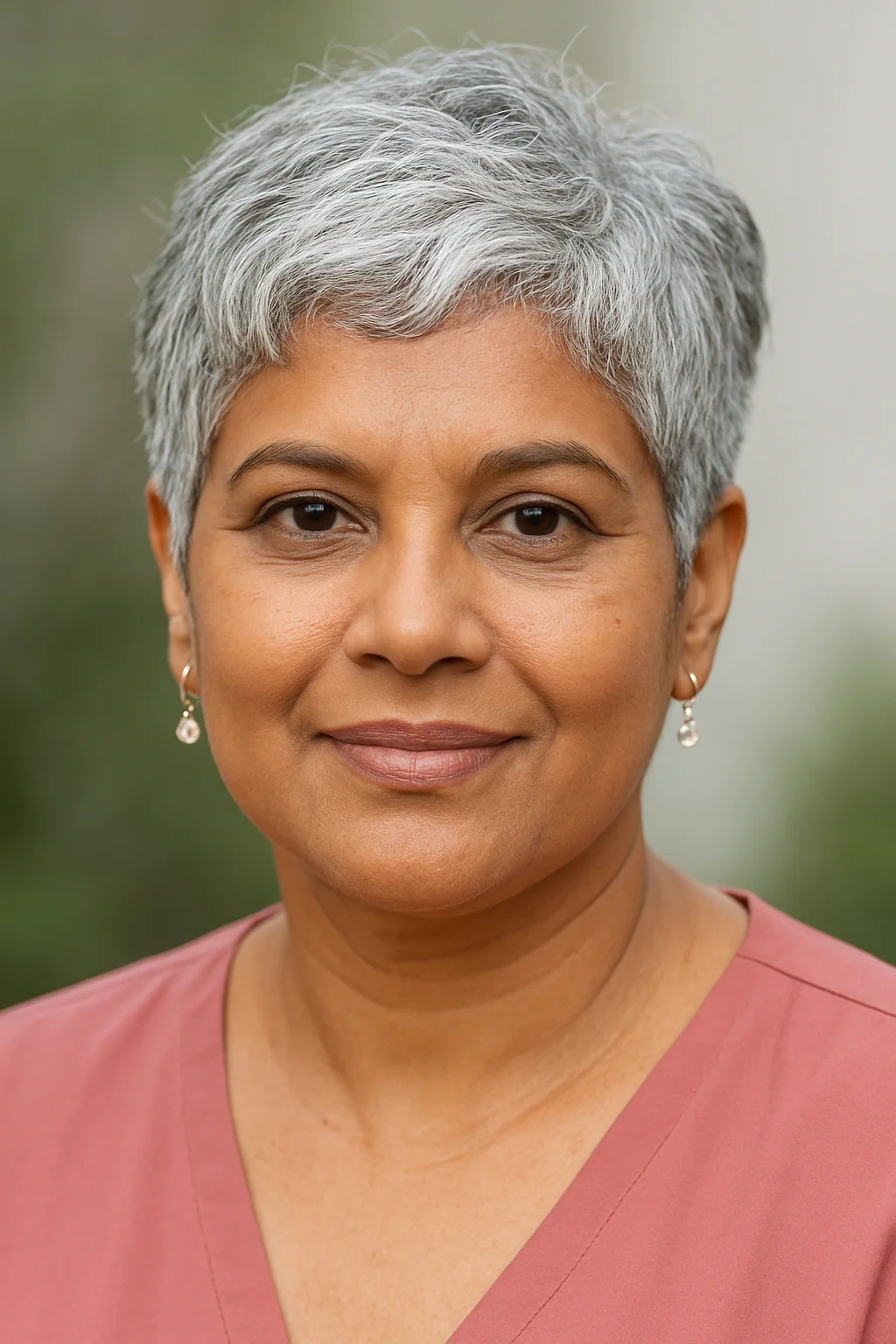
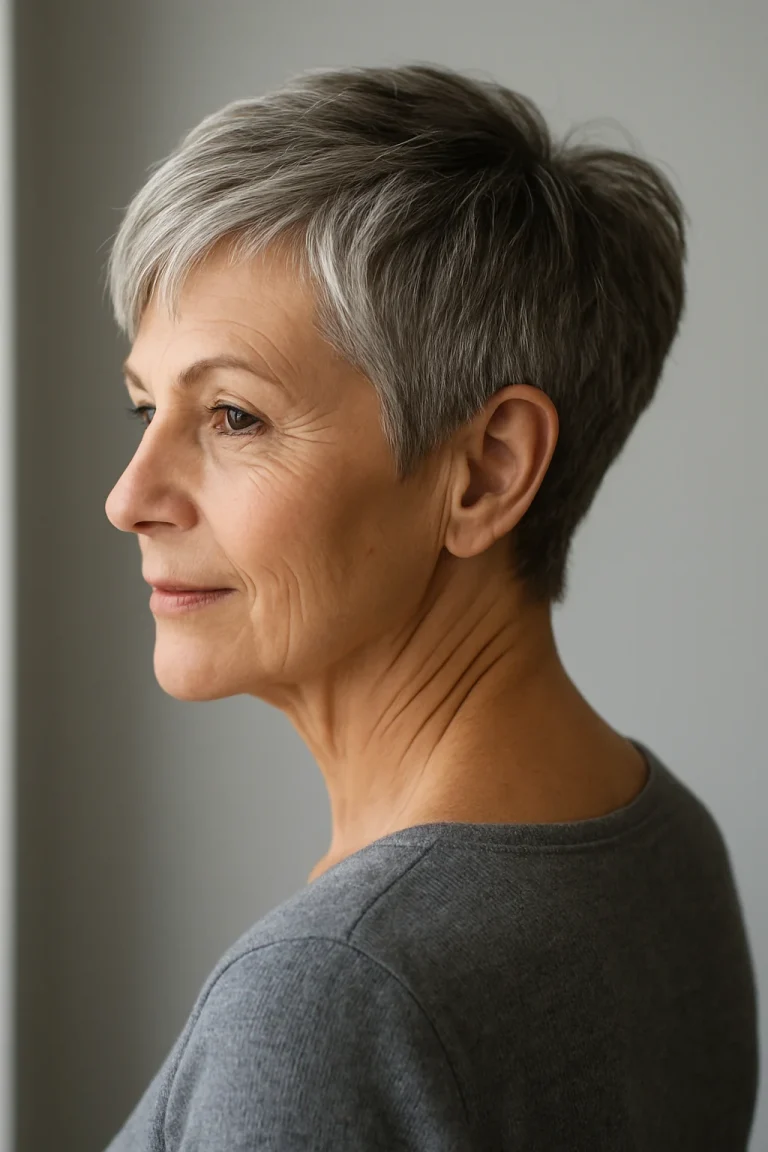
A close silver pixie keeps the sides, back, and top short enough to show the natural tone and texture of the hair. The result is easy to wash, quick to dry, and strong enough to highlight glasses, earrings, or a bold lip. This option needs regular shaping if you prefer a precise outline, but the daily routine is simple. Because there is so little length to hide behind, any unevenness in the natural tone becomes part of the visible design rather than something to correct.
Tip: Ask your stylist to fade the perimeter gradually over two visits rather than in one sitting, so the shift into a fully cropped shape feels less abrupt.
Bonus: How to Choose the Right Pixie
Choosing among essential pixie cuts for women over 40 becomes easier once you match the shape to your hair’s natural behavior rather than a photo alone. Choose the classic tapered pixie if you want the most balanced shape and simple styling, or the side-swept long-top pixie if you want parting options or more coverage near the forehead. Curly hair may suit the Curly Rounded Pixie, while thick hair may benefit from the weight removal in the Undercut Pixie.
For texture and movement, compare the choppy finish in the Choppy Textured Pixie with the longer neckline of the Long-Nape Pixie Shag; both add casual dimension but differ in how much length stays at the nape. If you want height without heaviness, the pompadour in the Lifted Pompadour Pixie deserves a look, and the asymmetrical shape in the Asymmetrical Pixie rewards anyone drawn to visible contrast between the two sides.
Avoid booking the micro-fringe shape in the Micro-Fringe Pixie or the close silver crop in the Close Silver Pixie without discussing trim frequency first, since both shapes shift noticeably as they grow.