Thin, flat hair gets harder to manage every year, and a haircut that looked full at 9 a.m. can go limp by lunch. That’s the real problem most women face after 70: not a lack of good style ideas, but a lack of cuts built to fight gravity and fine texture at the same time. A volume-boosting layered bob for women over 70 solves this by working with the hair you actually have instead of the hair you used to have. Layers cut at the right angle lift the roots, add shape without weight, and frame the face in a way that looks soft rather than severe. Below are eighteen ways to get that lift, each one suited to different hair types, face shapes, and how much styling time you want to spend. Pick the one that matches your hair’s natural behavior, and talk your stylist through the details before you sit in the chair.
Textured Choppy Layers with Shorter Crown
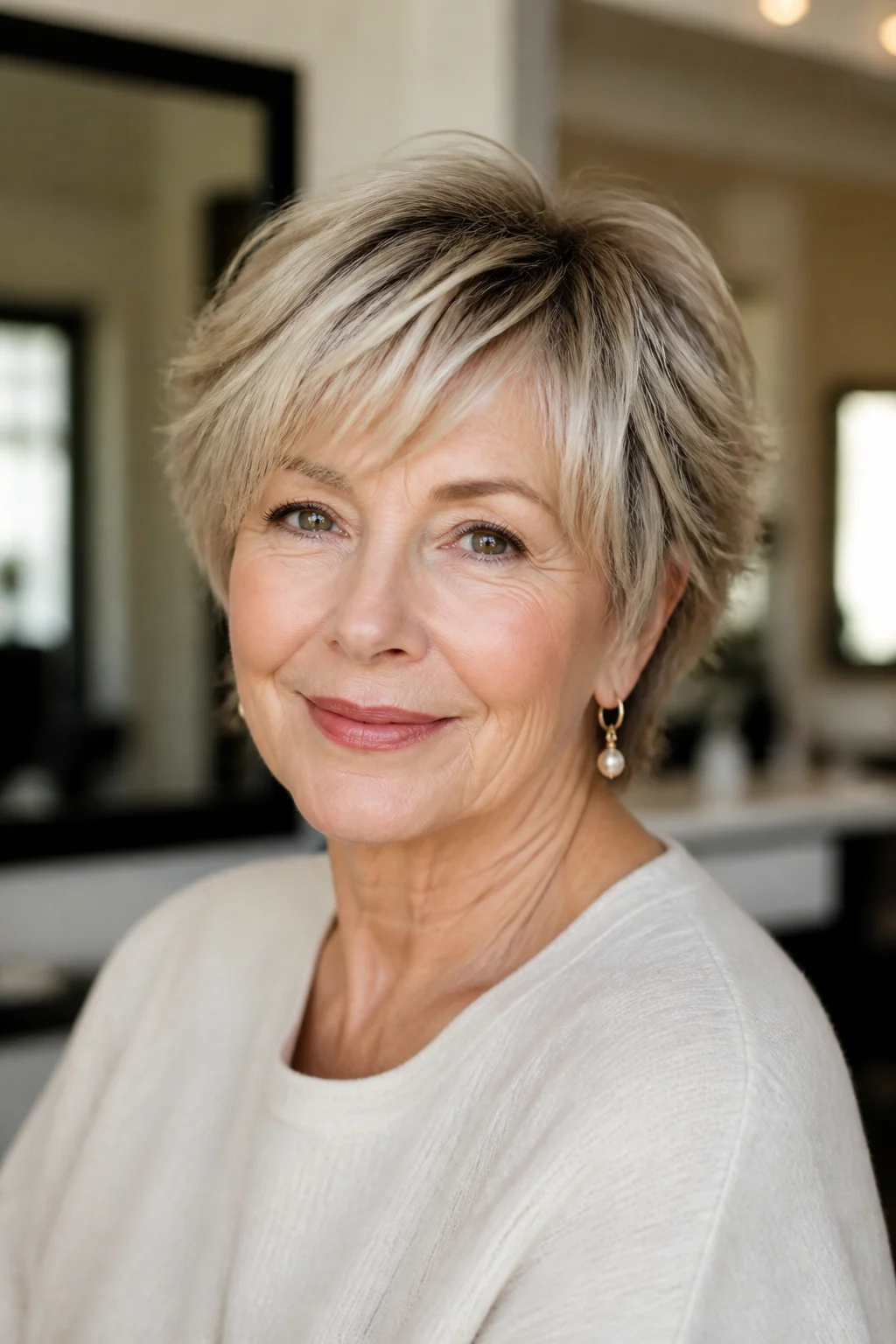
This cut works by taking weight out right at the crown, where fine hair tends to lie flattest. The shorter layers on top stand up on their own once you add a little mousse, so you get lift without teasing or backcombing. Longer pieces around the sides and back keep the shape soft. Tip: ask your stylist to point-cut the ends rather than blunt-cut them, since choppy edges hold texture longer through the day. A light mist of heat protectant before styling helps the finish last. A light mist of heat protectant before styling helps the finish last.
Face-Framing Layers on Chin-Length Bob
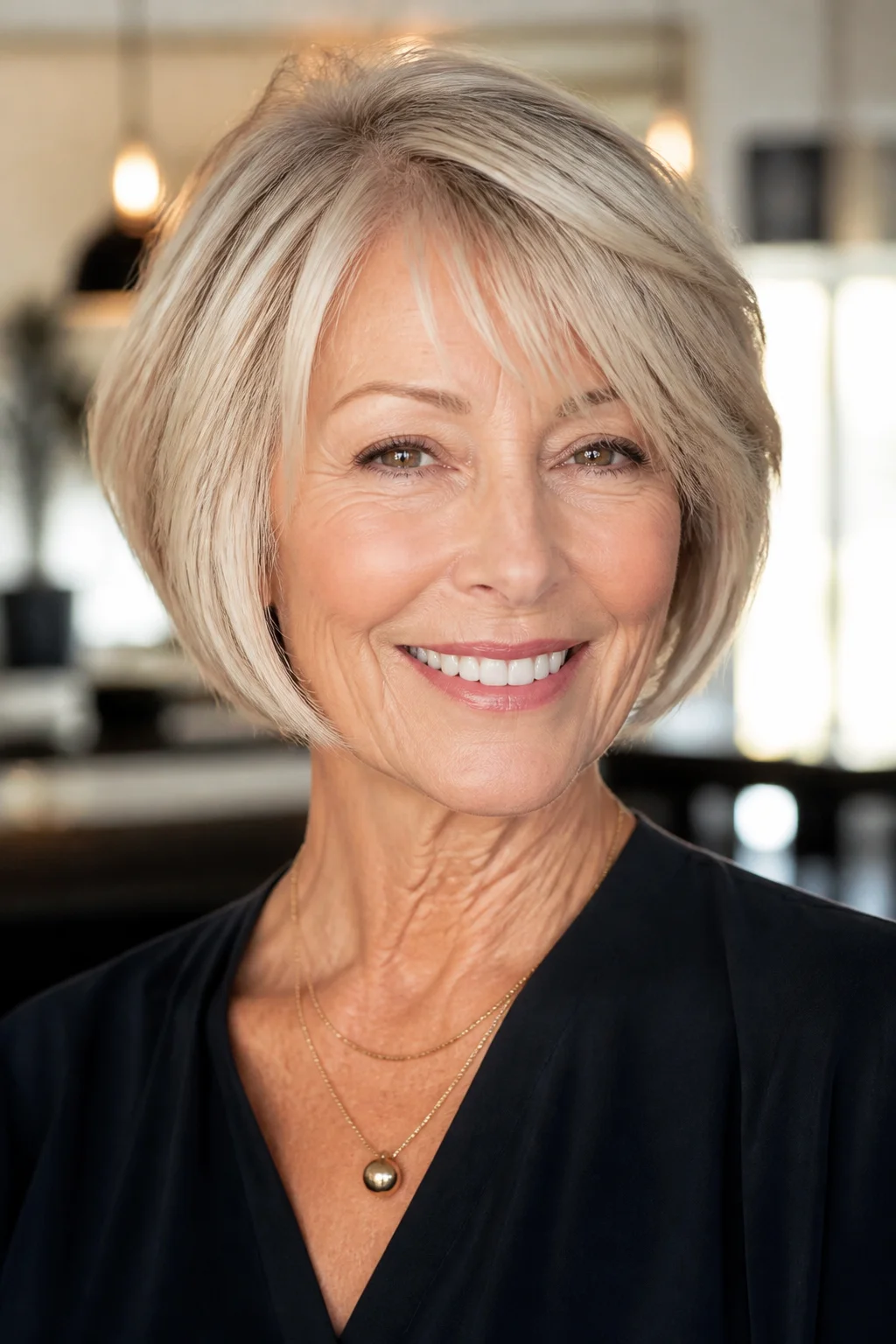
A chin-length bob with layers cut around the face does two jobs at once. It softens the jawline, which tends to become more pronounced with age, and it pulls attention up toward the eyes. The layers near the face are usually cut a bit shorter than the rest, so they curve inward and catch light. This length also sits at a spot that’s easy to blow dry with a round brush, which matters if your morning routine is short on time. A light mist of heat protectant before styling helps the finish last. A light mist of heat protectant before styling helps the finish last.
Stacked Back with Longer Front Layers
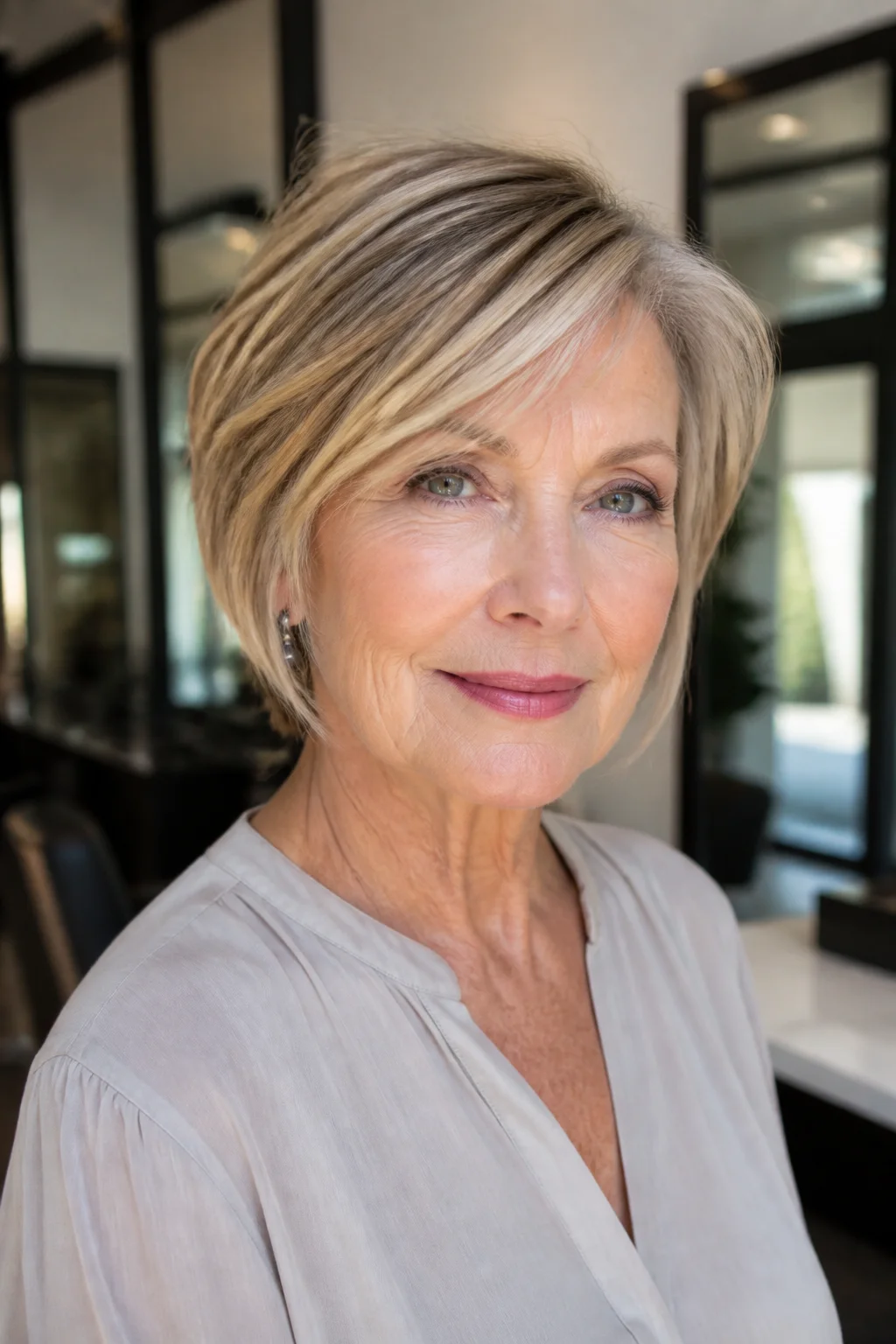
The back sections are cut close and stacked on top of each other, building real shape at the nape. Up front, the layers run longer, creating a nice contrast between structure in back and softness near the face. This is a strong pick if your hair is thin at the crown but a bit thicker toward the front, since the stacking gives the thin area something to work with.
Shag-Textured Layered Bob
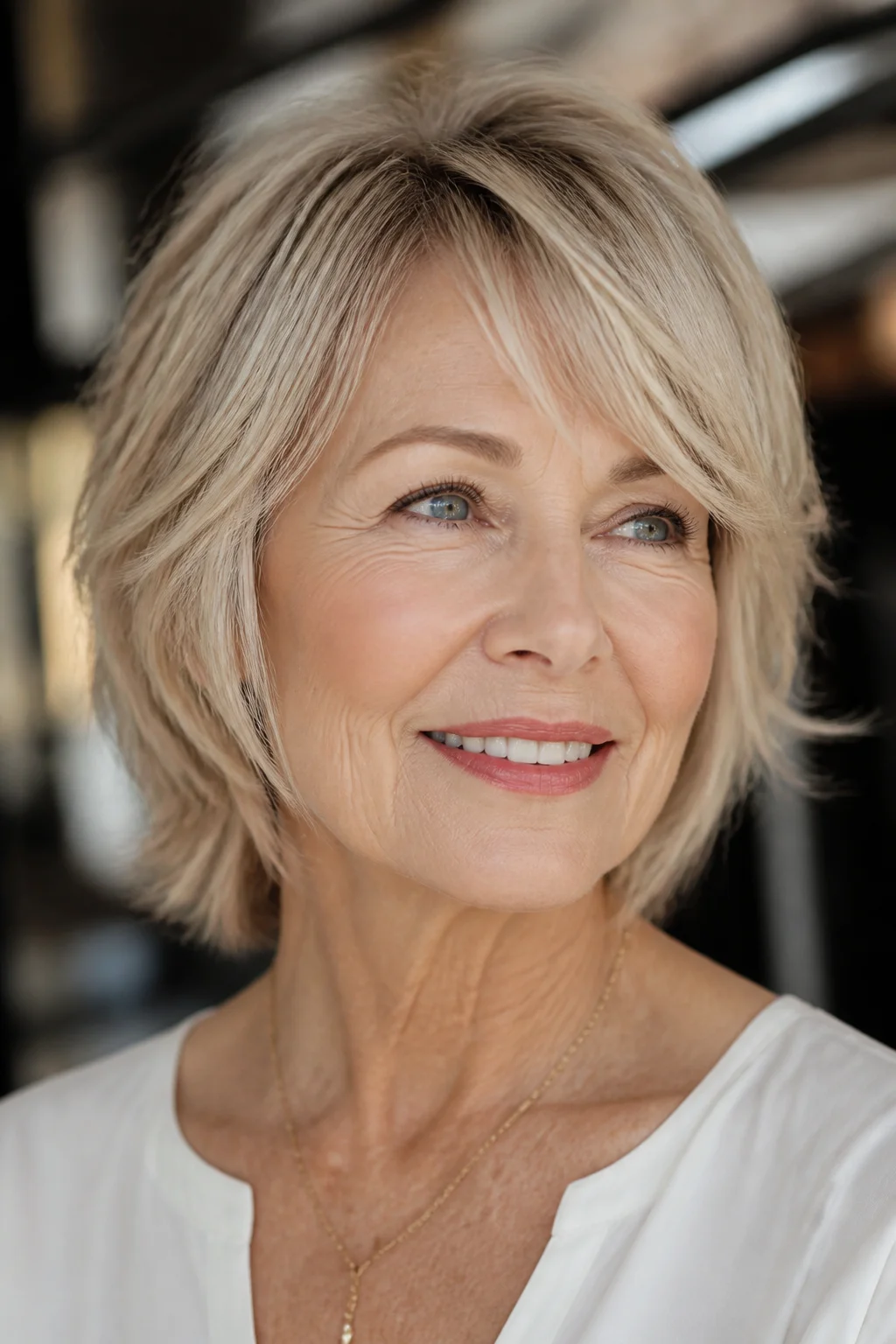
Shags are having a moment again, and the layered version works well on fine hair because the choppy, uneven layers trick the eye into seeing more density than is actually there. Every layer is cut at a slightly different length, so there’s no single line for hair to fall flat against. It looks a little undone on purpose, almost like you just ran your fingers through it. Tip: a texturizing spray applied to damp hair before drying helps the shag hold its messy shape past noon.
Tousled Waves with Layered Texture
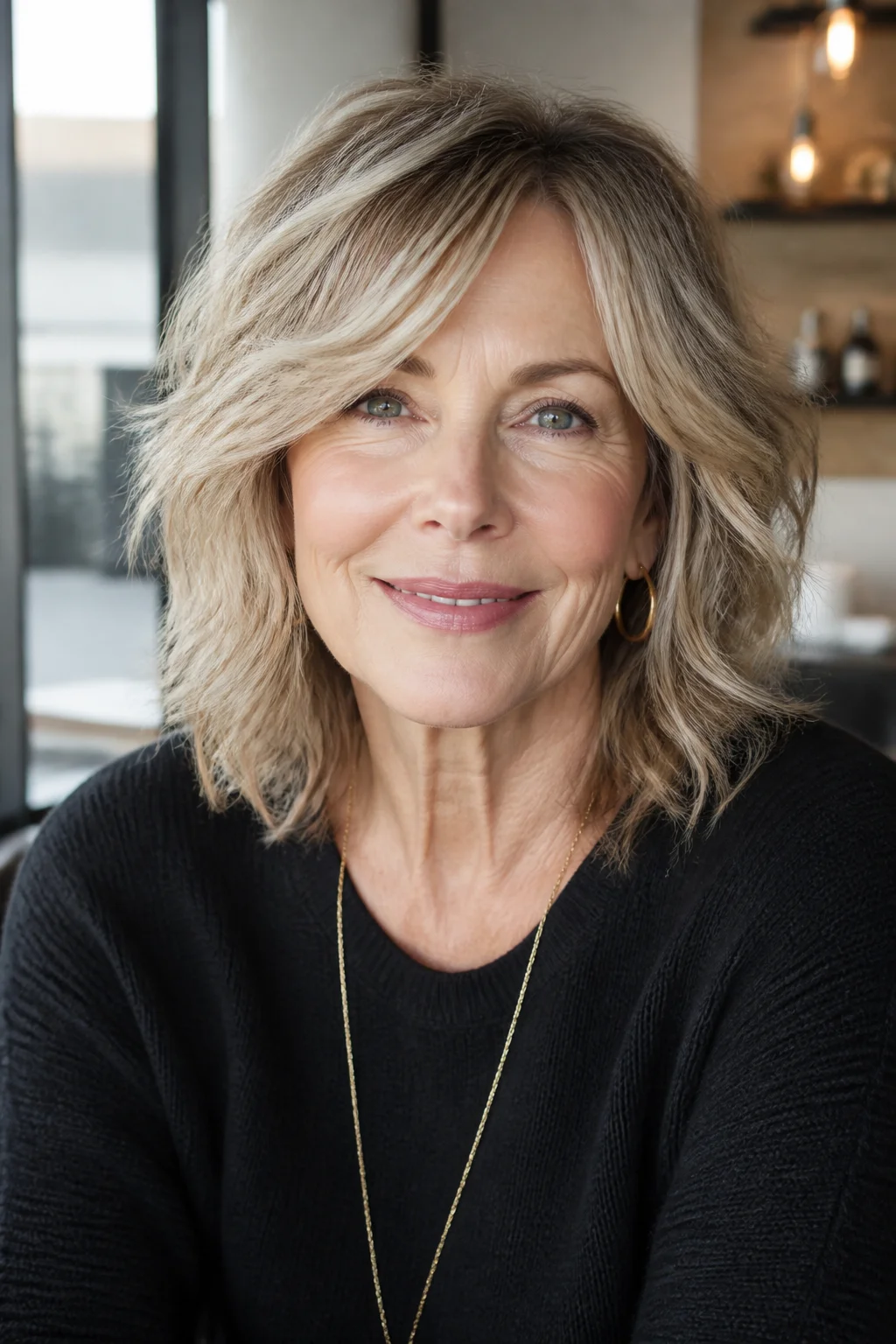
If your hair takes a wave naturally, or you’re willing to use a curling iron a few times a week, this cut gives those waves somewhere to land. The layers break up the wave pattern so it doesn’t look like one solid curl shape. It reminds me of the kind of texture you get after a day at the beach, loose and a little irregular. This works especially well for hair that’s medium in thickness but lacks natural movement on its own.
Micro Layers Throughout for Feathered Effect
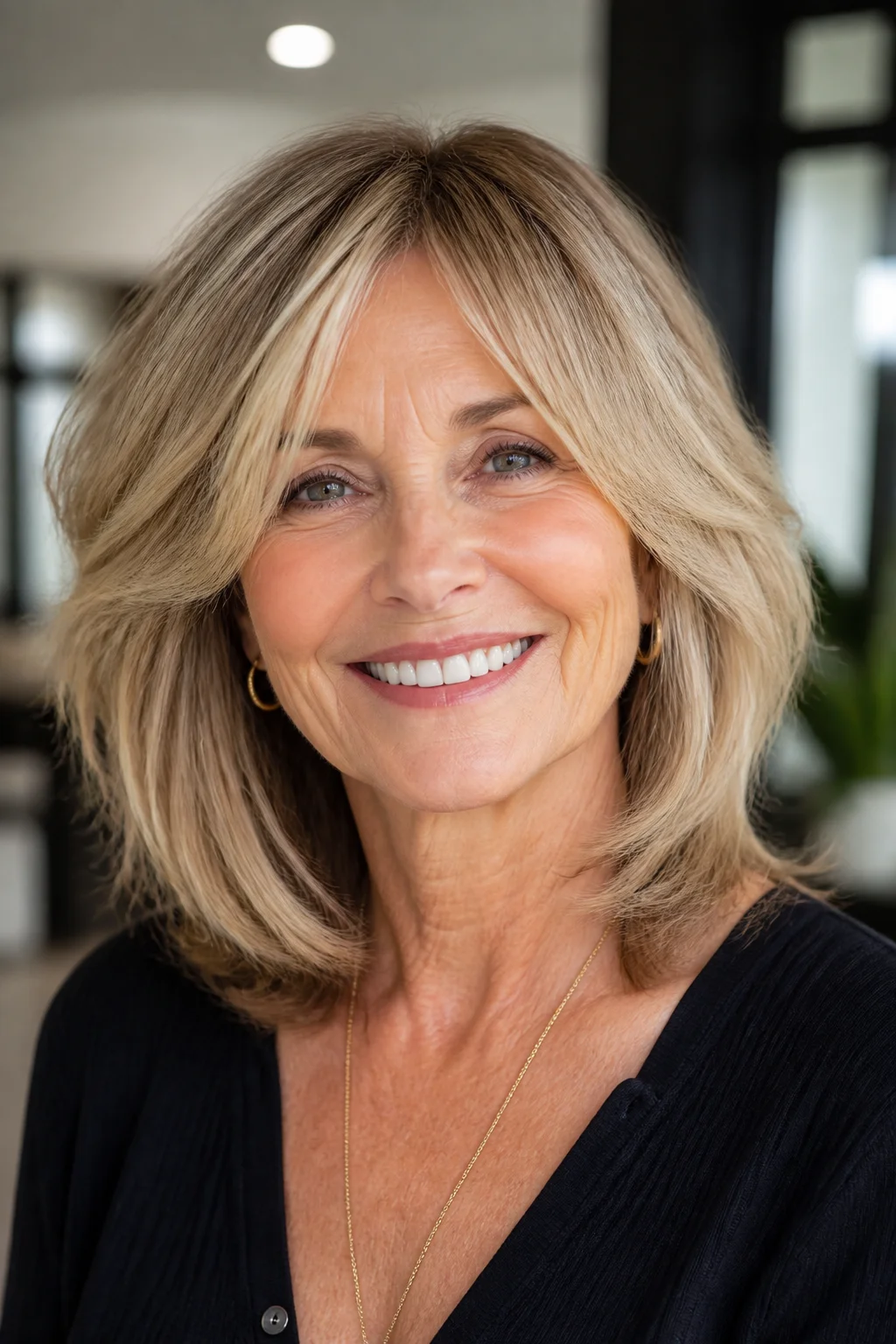
Micro layers are cut close together in small increments, which creates a feathered look across the whole head rather than just at the ends. This is one of the more labor-intensive cuts to get right, since uneven micro layering shows immediately, so it’s worth going to a stylist who works with fine hair often. Once it’s done well, the feathering adds a soft, airy quality that holds volume without looking stiff. Tip: skip heavy conditioner on the roots, since it can weigh down the feathered effect by midday.
Asymmetrical Layered Bob
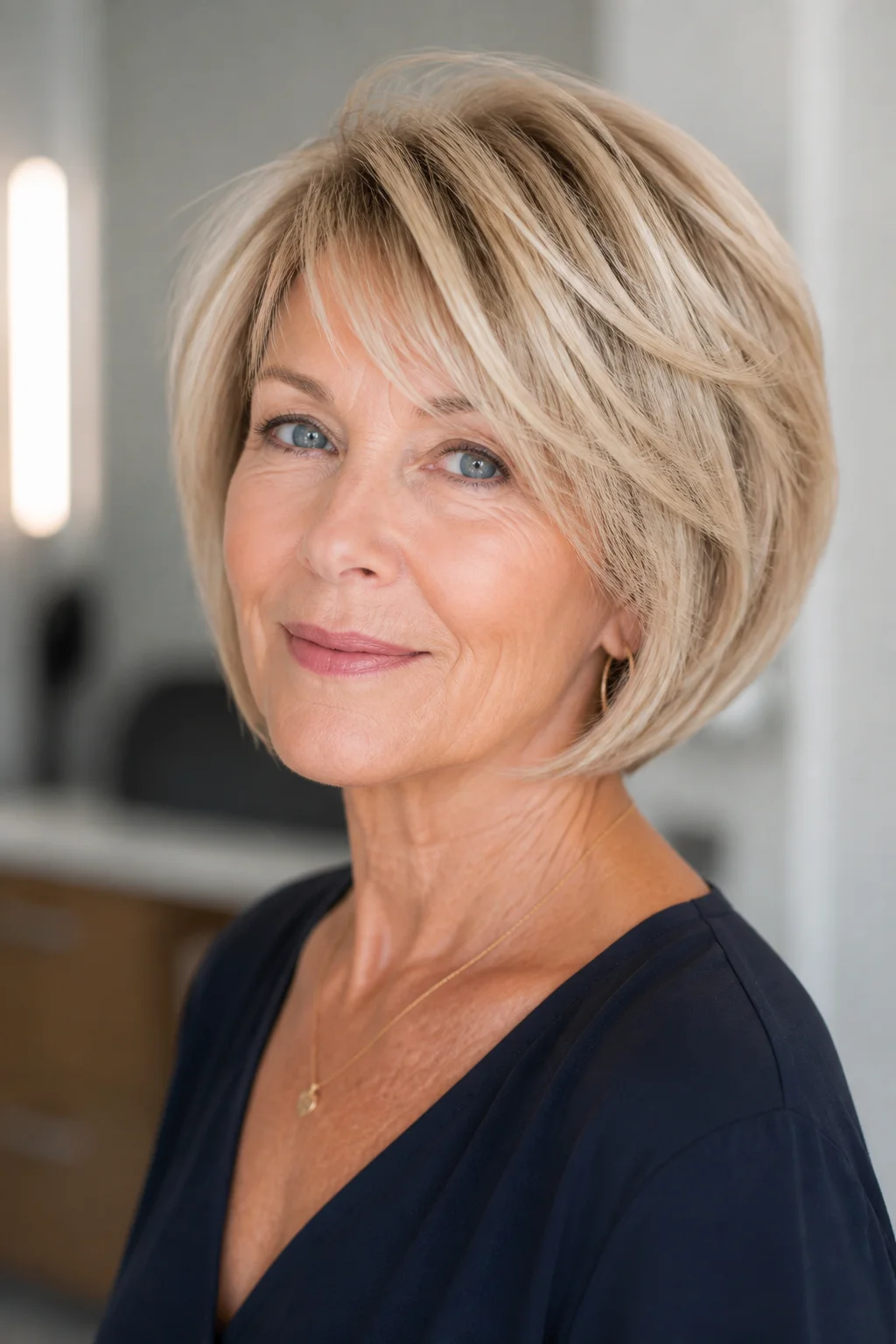
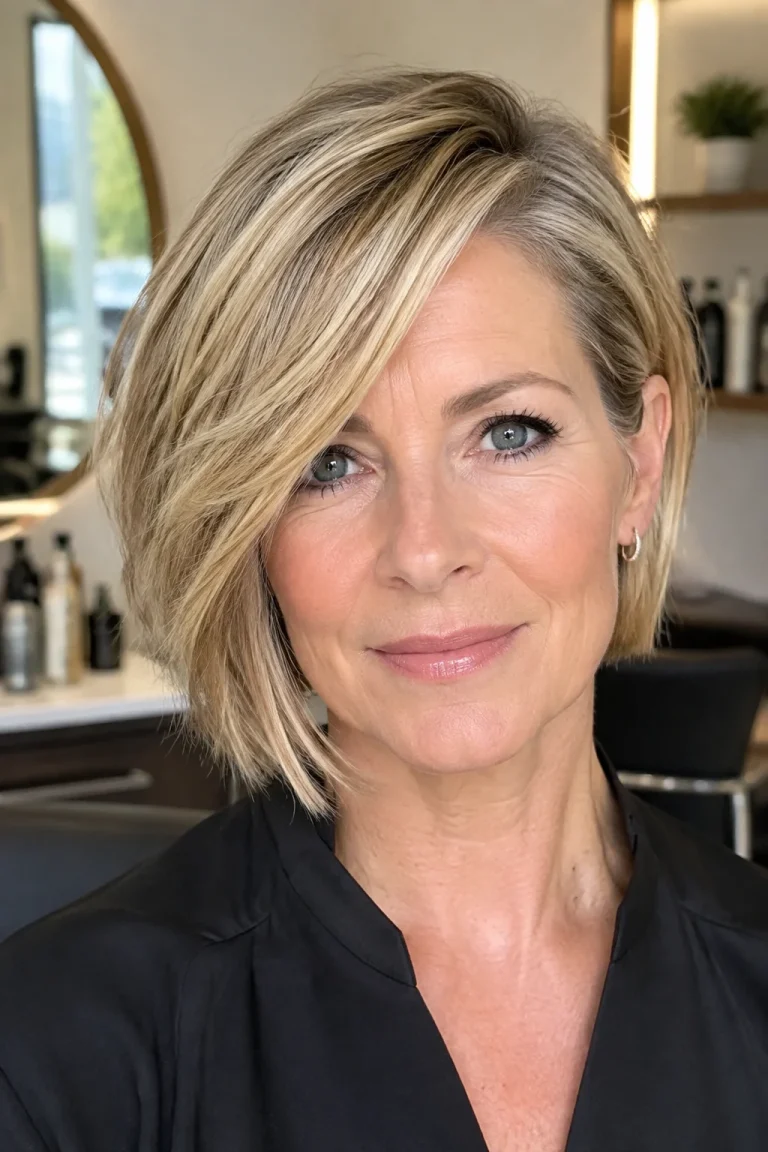
One side runs longer than the other, and the layers are cut to follow that uneven line rather than fight it. This cut suits women who want something a little more modern and don’t mind hair that isn’t perfectly symmetrical. The imbalance actually helps with volume, since the eye reads the longer side as movement rather than flatness.
Blunt Base with Choppy Layer Top
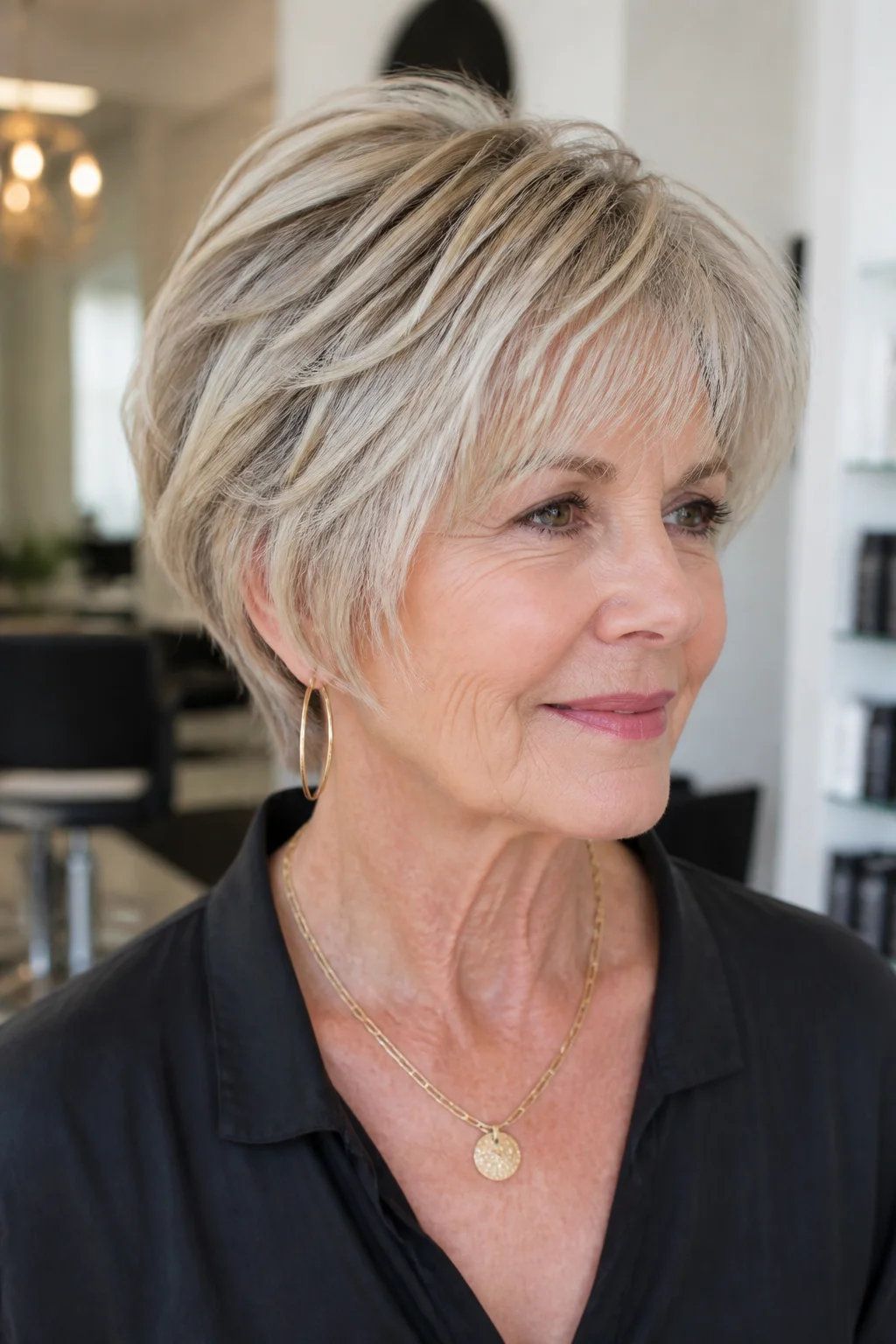
The bottom of the bob stays blunt and solid, which gives the cut a strong outline, while the top layers are choppy and textured for lift. This combination gives you the best of both worlds: a defined shape that doesn’t look shapeless, plus enough texture up top to keep roots from collapsing. It’s a good option if you liked a classic bob before but felt it looked too flat as your hair thinned.
Curly or Wavy Layered Bob for Natural Texture
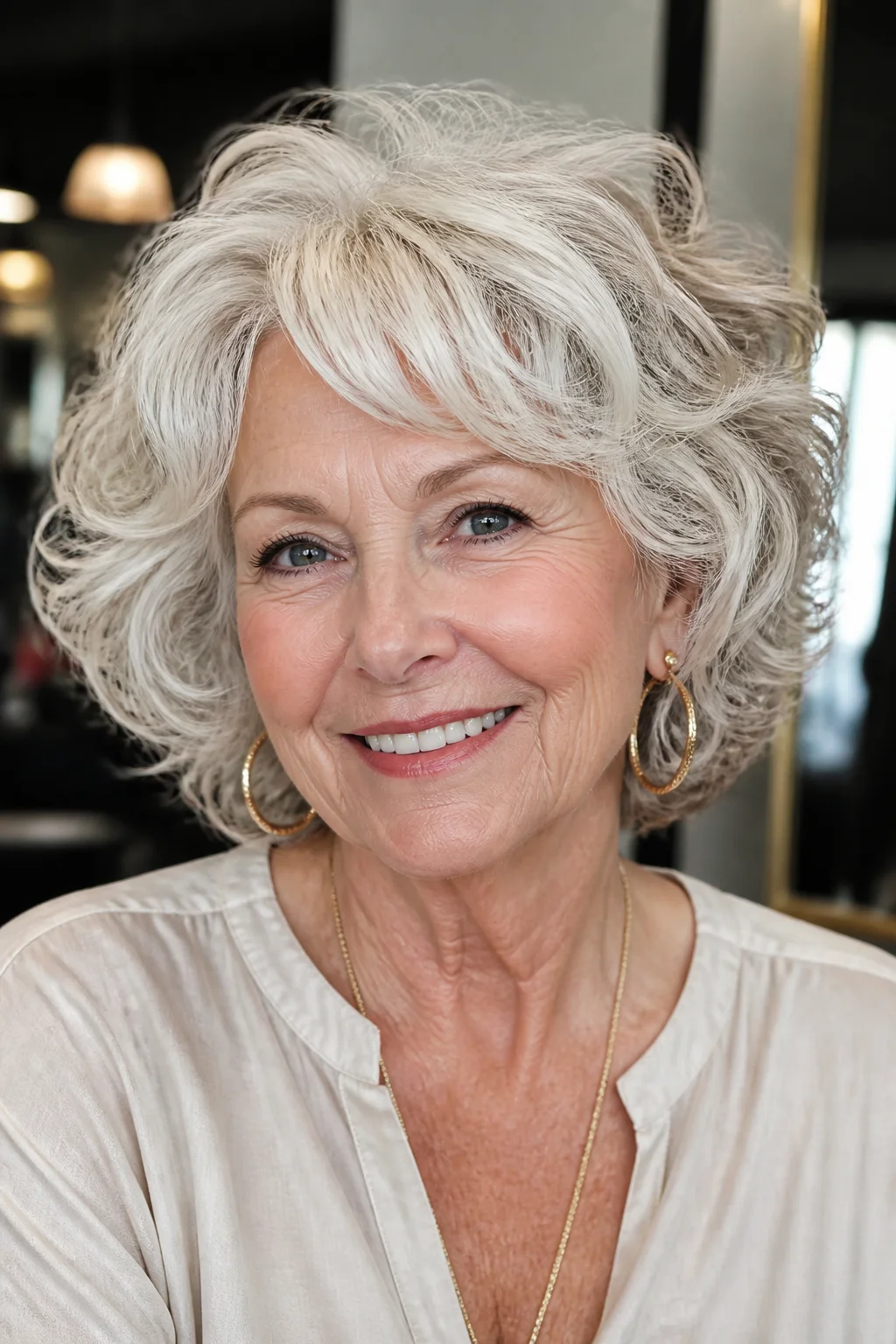
Curly and wavy hair types often get overlooked in bob cuts because stylists default to straight-hair techniques. This entry is built specifically around natural texture. Layers are cut while the hair is dry, curl by curl, so each ring falls where it naturally wants to sit instead of where a wet cut assumes it will land. The result holds shape and volume for days, since curl pattern itself does a lot of the volume work that layering does on straight hair. Tip: ask for a dry cut if your curl pattern is tight, since wet cutting tends to remove too much length once the curls spring back up.
Short Layered Pixie-Bob Hybrid
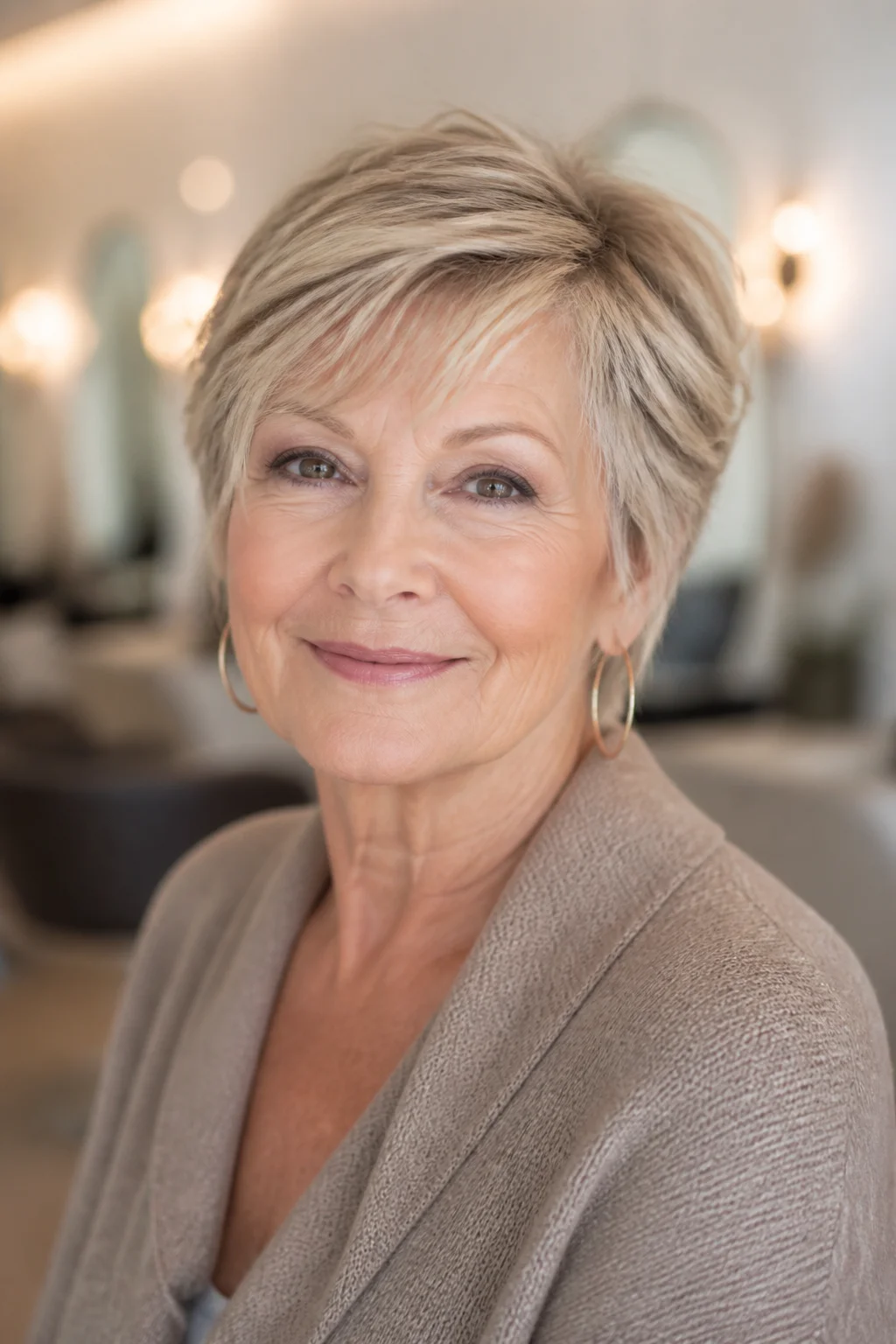
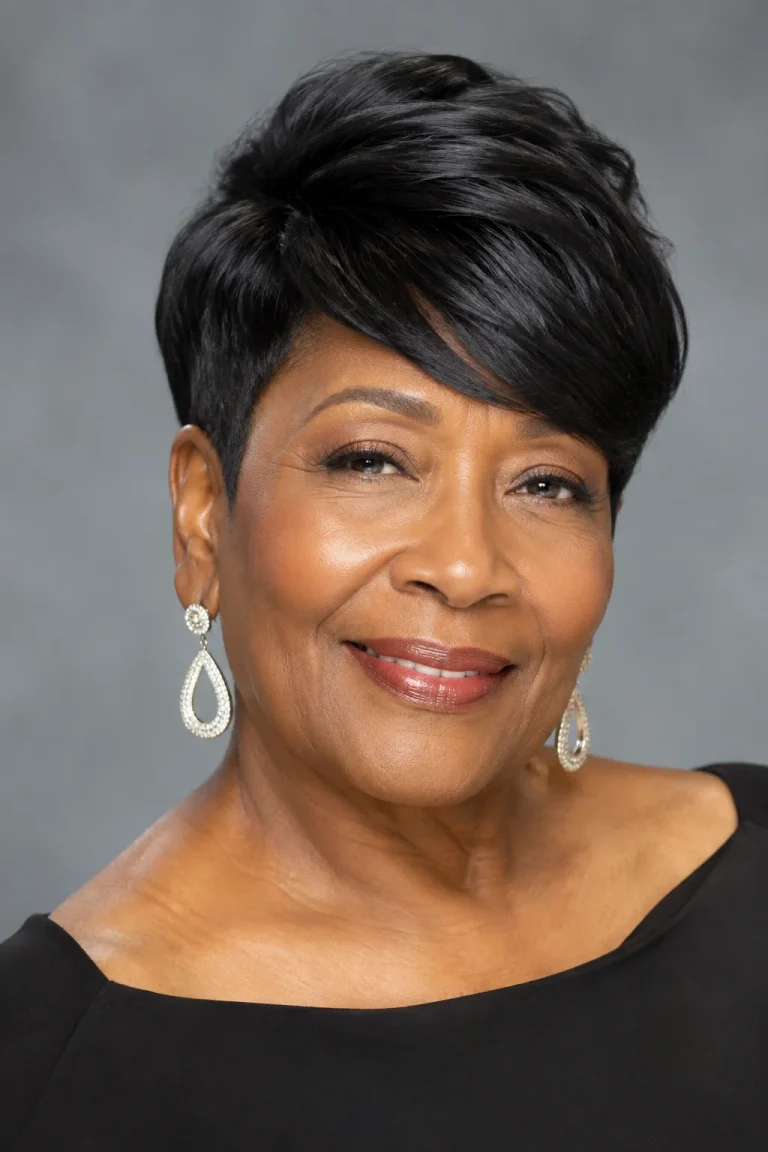
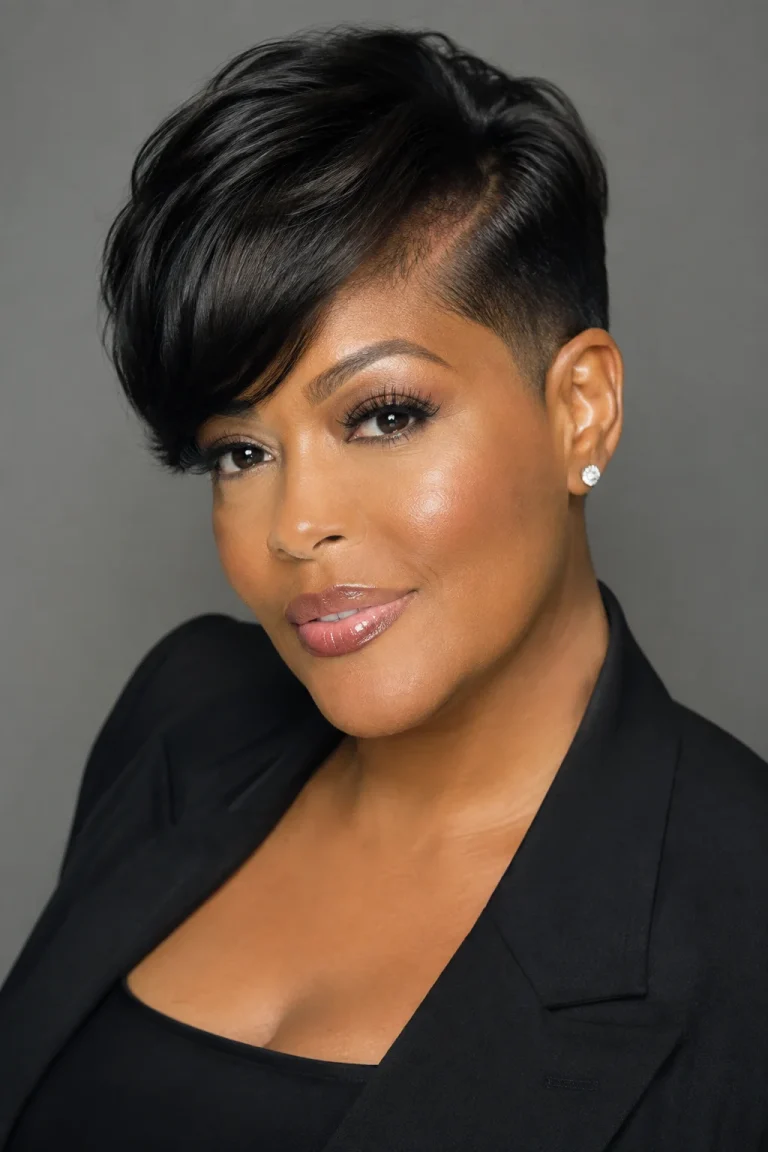
This is shorter than a true bob but longer than a pixie, landing somewhere around the jaw with heavy layering throughout. It’s a solid option for anyone who wants low maintenance without going full pixie short. The layering keeps it from looking boxy at that in-between length.
Graduated Layers with Side-Swept Styling
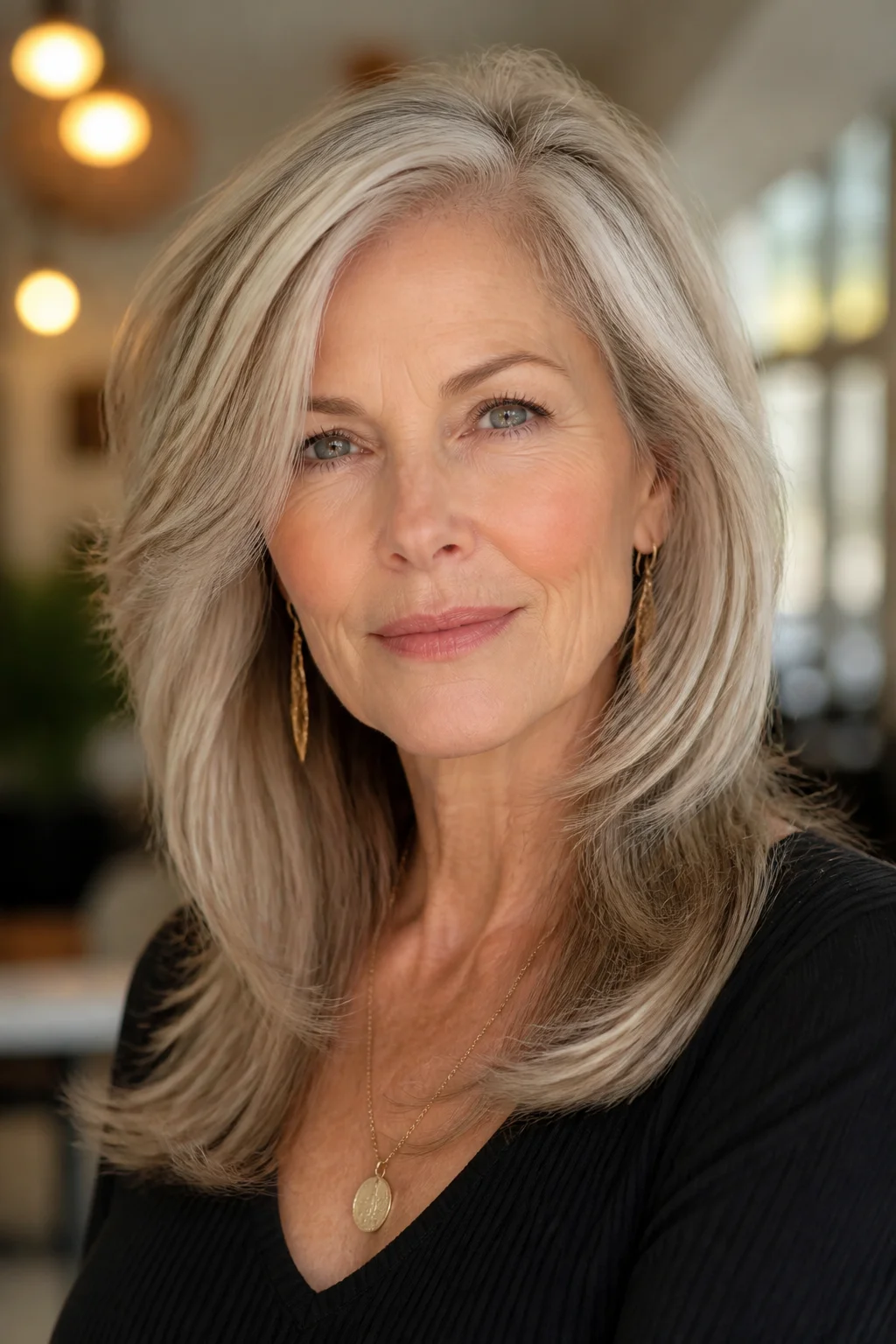
Graduated layers build gradually from short at the nape to longer toward the face, and this version is styled with a side sweep that adds asymmetry without an actual asymmetrical cut. It’s a softer look overall, good for anyone who wants volume but doesn’t want hair that looks obviously layered when it’s just sitting still.
Collarbone Layered Bob with Movement
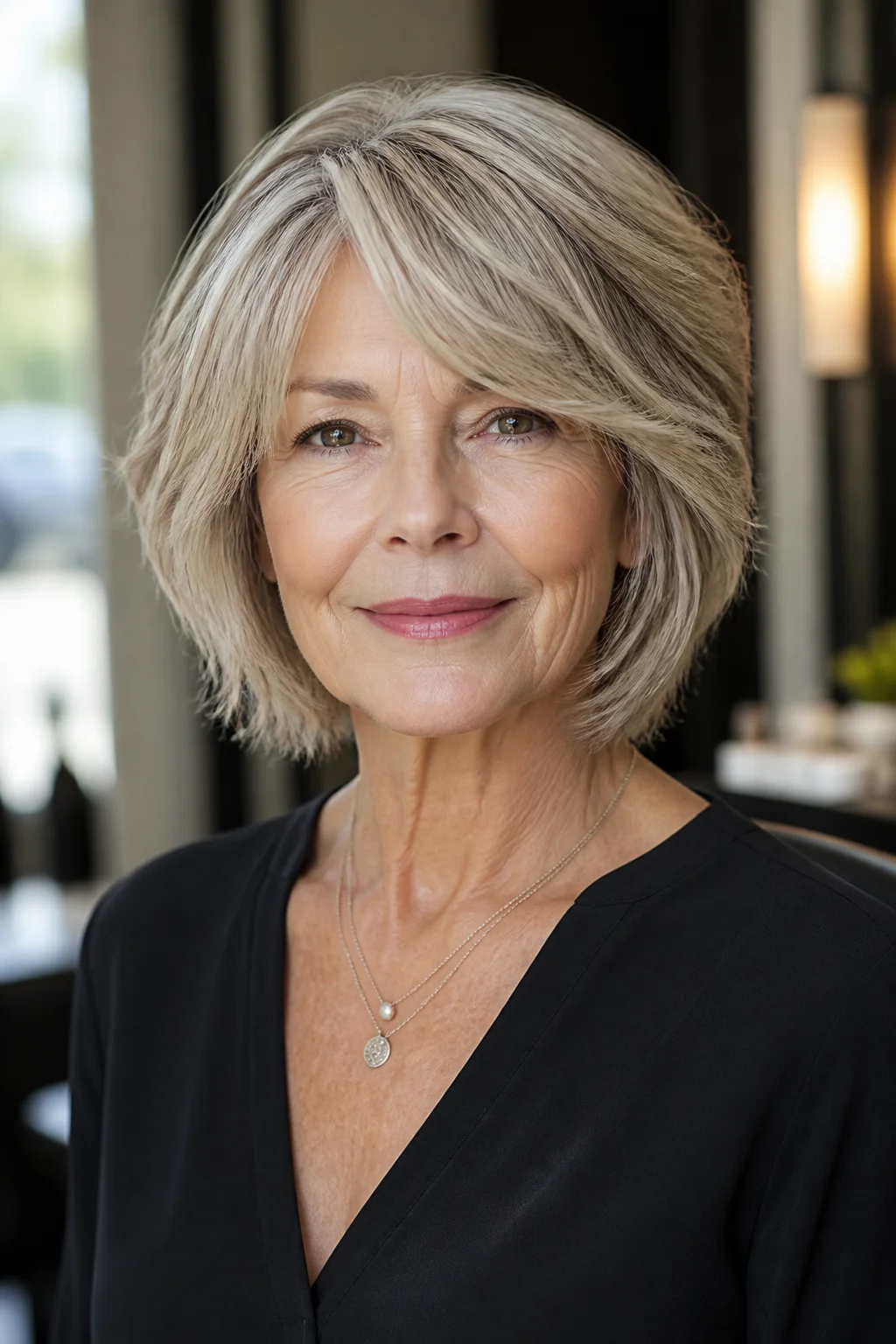
Landing right at the collarbone, this length gives layers more room to move than a chin-length cut does. The layers are cut with a slight inward curve at the ends, so the whole shape swings a little when you turn your head. Fine hair benefits from the extra length here because there’s more surface area for the layers to build volume against, rather than everything being crammed into a short length where thinness shows more.
Disconnected Layers for Dramatic Volume
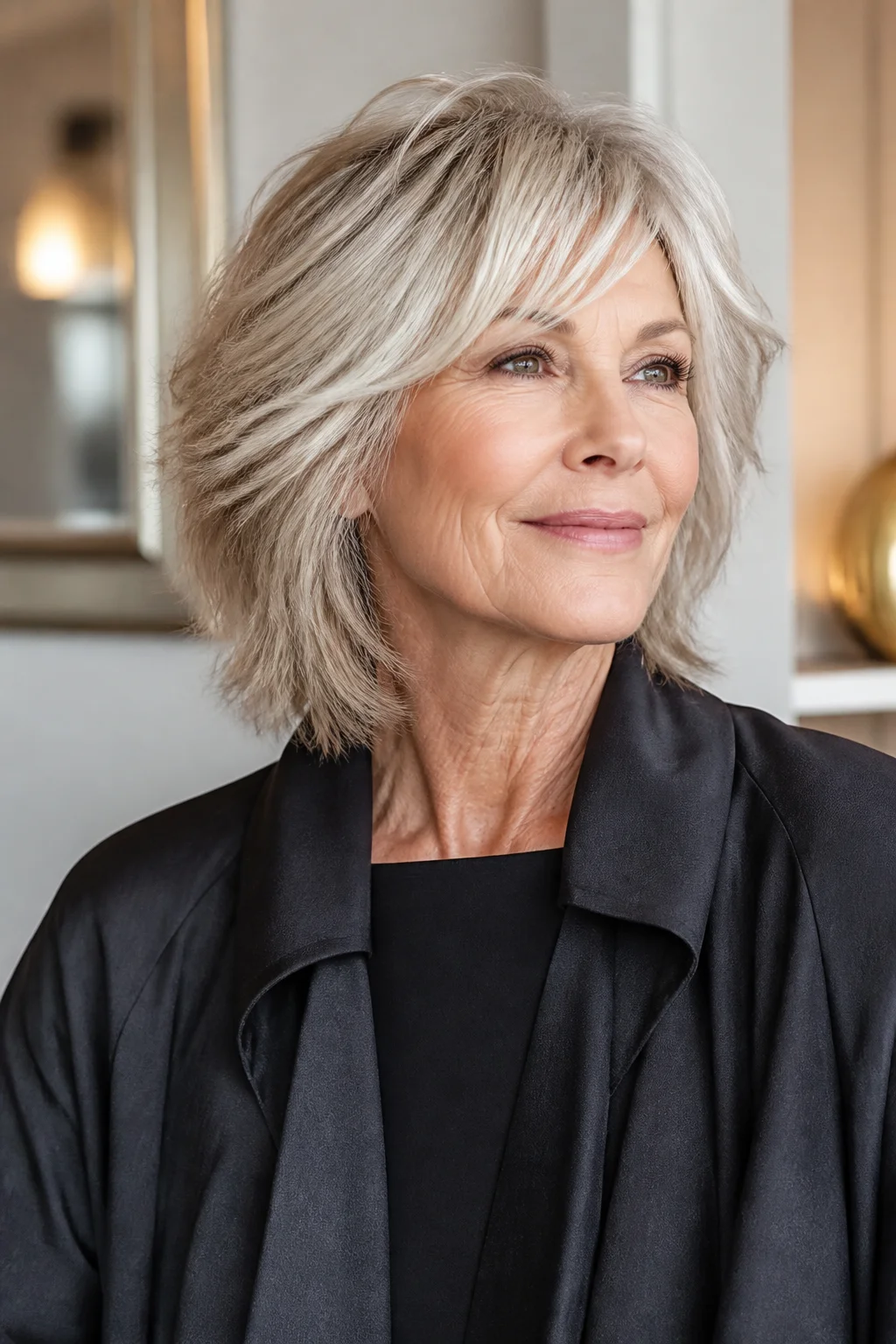
Disconnected layering means there’s a visible break between the top layers and the bottom length, rather than a smooth blend. That gap is exactly what creates the volume, since the top section sits up and away from the layer below it instead of melting into it. This is one of the more dramatic options on this list, and it suits women who already lean toward bold styling choices. It is not the cut to pick if you want something that blends in quietly.
Soft Layers with Rounded Crown
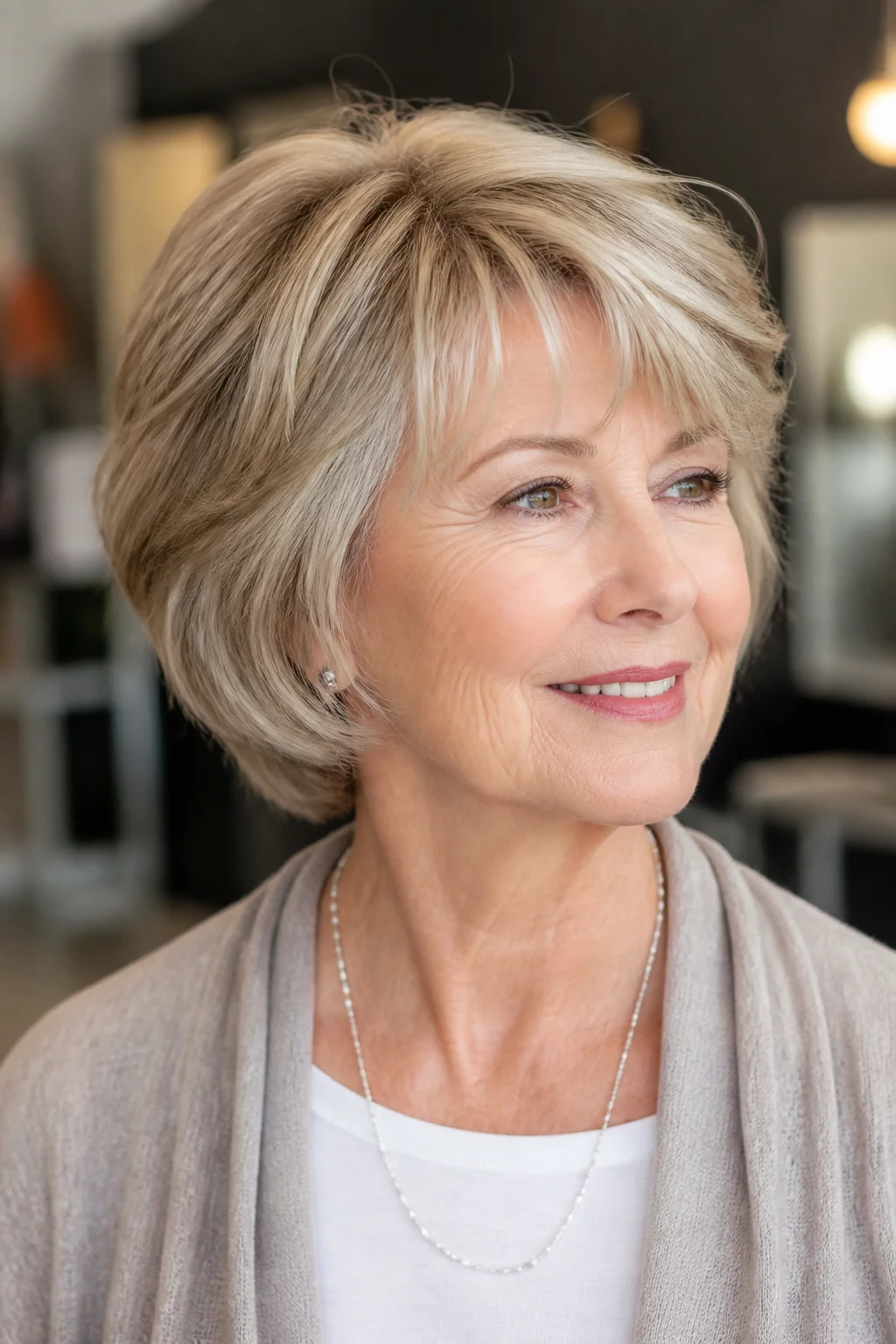
Soft, rounded layering avoids sharp lines almost entirely, building a gentle dome shape at the crown instead. This suits hair that’s fine and prone to breakage, since the softer cutting technique puts less stress on the ends. It’s also an easy cut to maintain, since there’s no choppy texture that needs constant touch-ups to look intentional.
Textured Bangs with Layered Bob
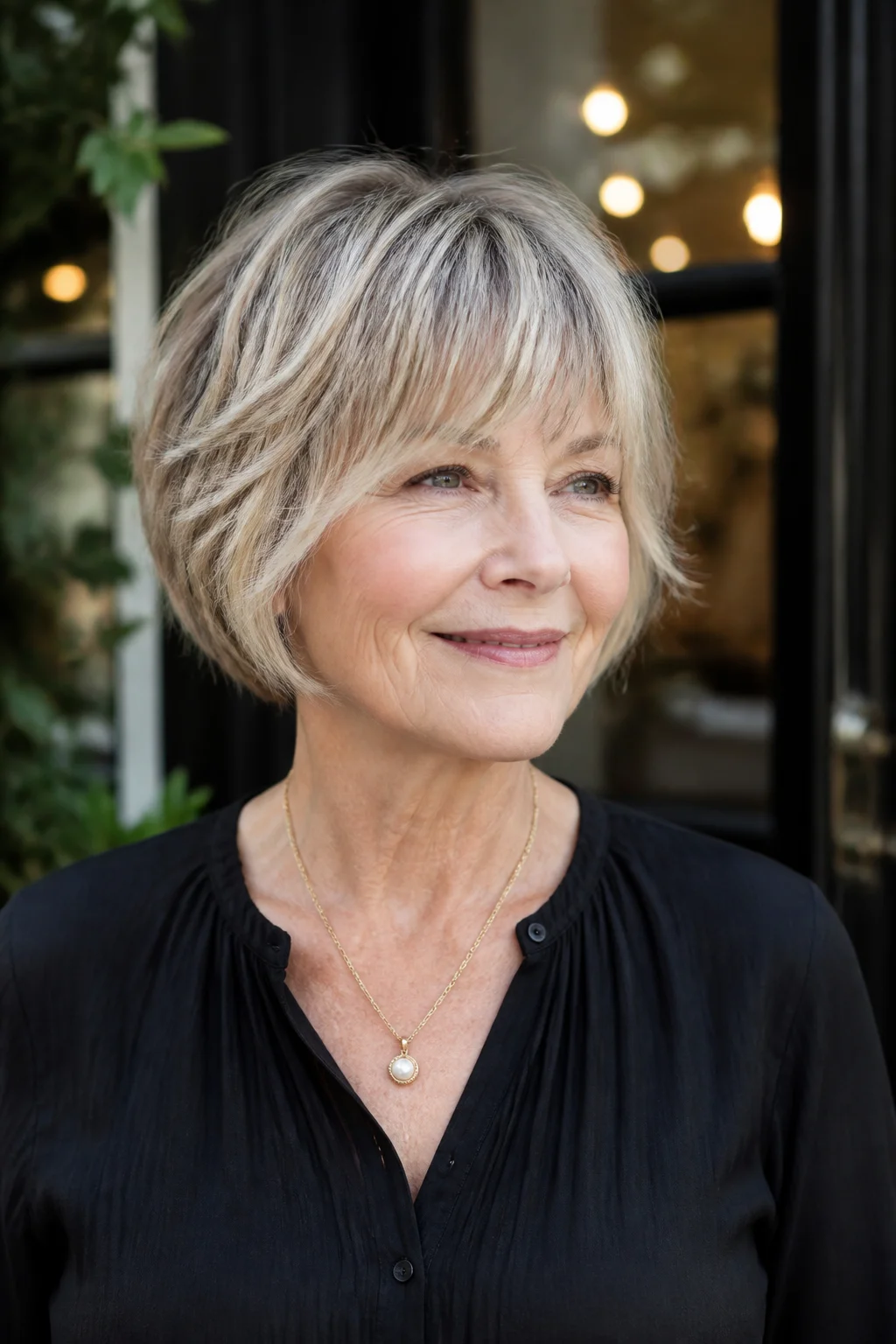
Adding textured bangs to a layered bob shifts a good amount of attention to the forehead and eyes, which works well if you want to soften a longer face shape. The bangs are cut with the same choppy technique as the rest of the layers, so they don’t read as a separate, heavier section. Tip: have the bangs cut slightly longer than you think you want, since fine hair bangs tend to look shorter once they’re dry and styled.
Voluminous Layered Lob (Long Bob)
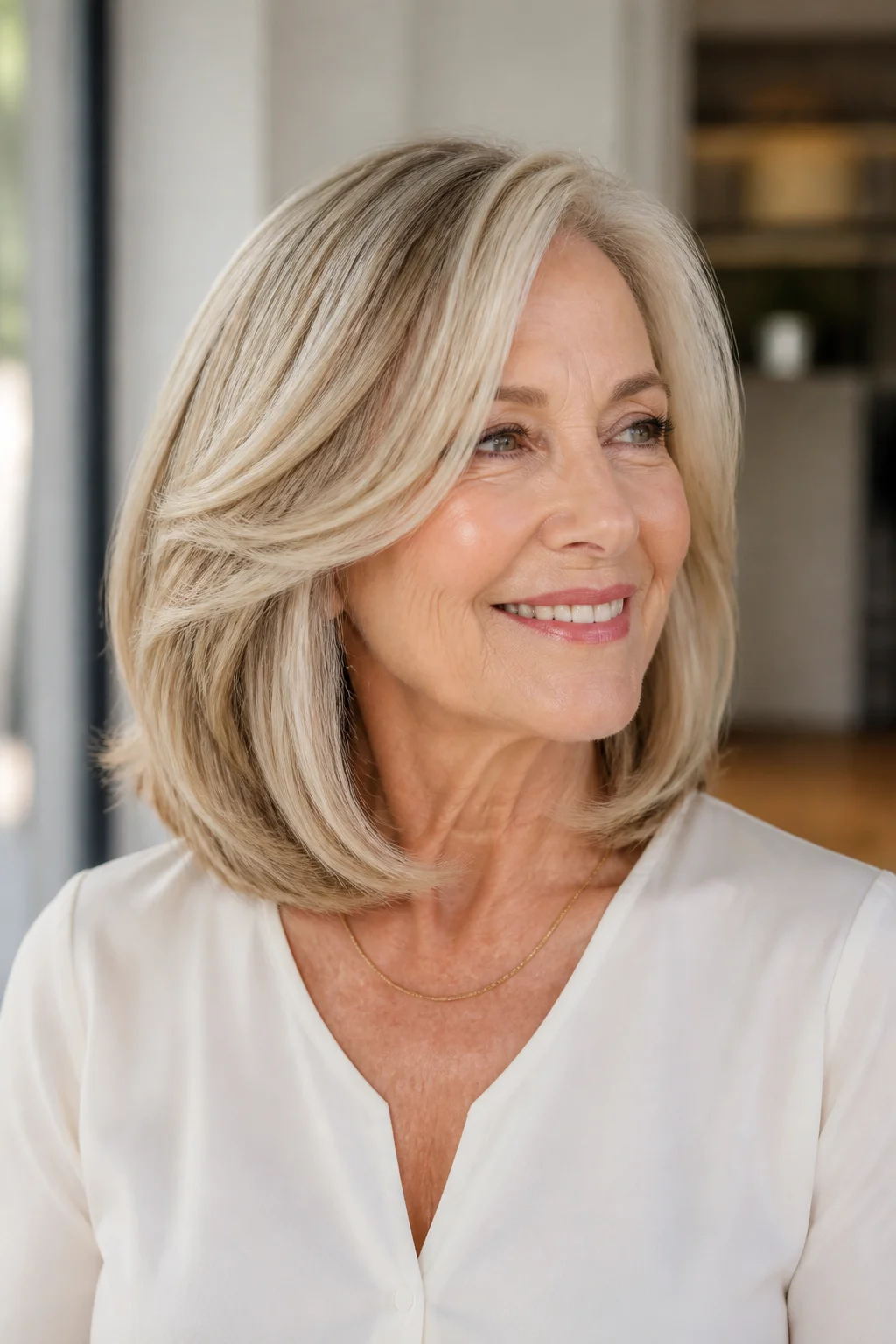
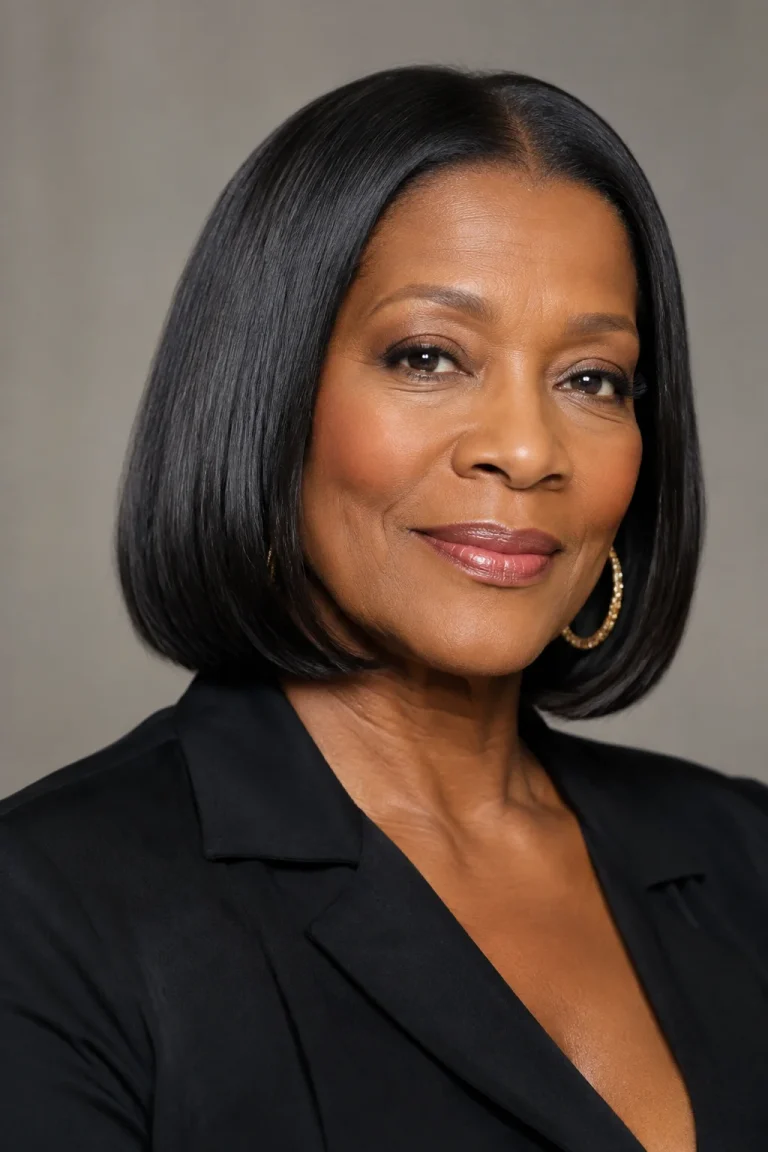
A lob, or long bob, sits between the shoulders and the chin and gives layering more length to build texture into. This version leans into heavy layering throughout rather than just at the ends, which keeps a longer length from looking stringy on fine hair. It’s a good middle-ground choice if you’re not ready to go shorter but still want the lift a true bob provides.
Sleek Layered Bob with Tousled Texture Only on Top
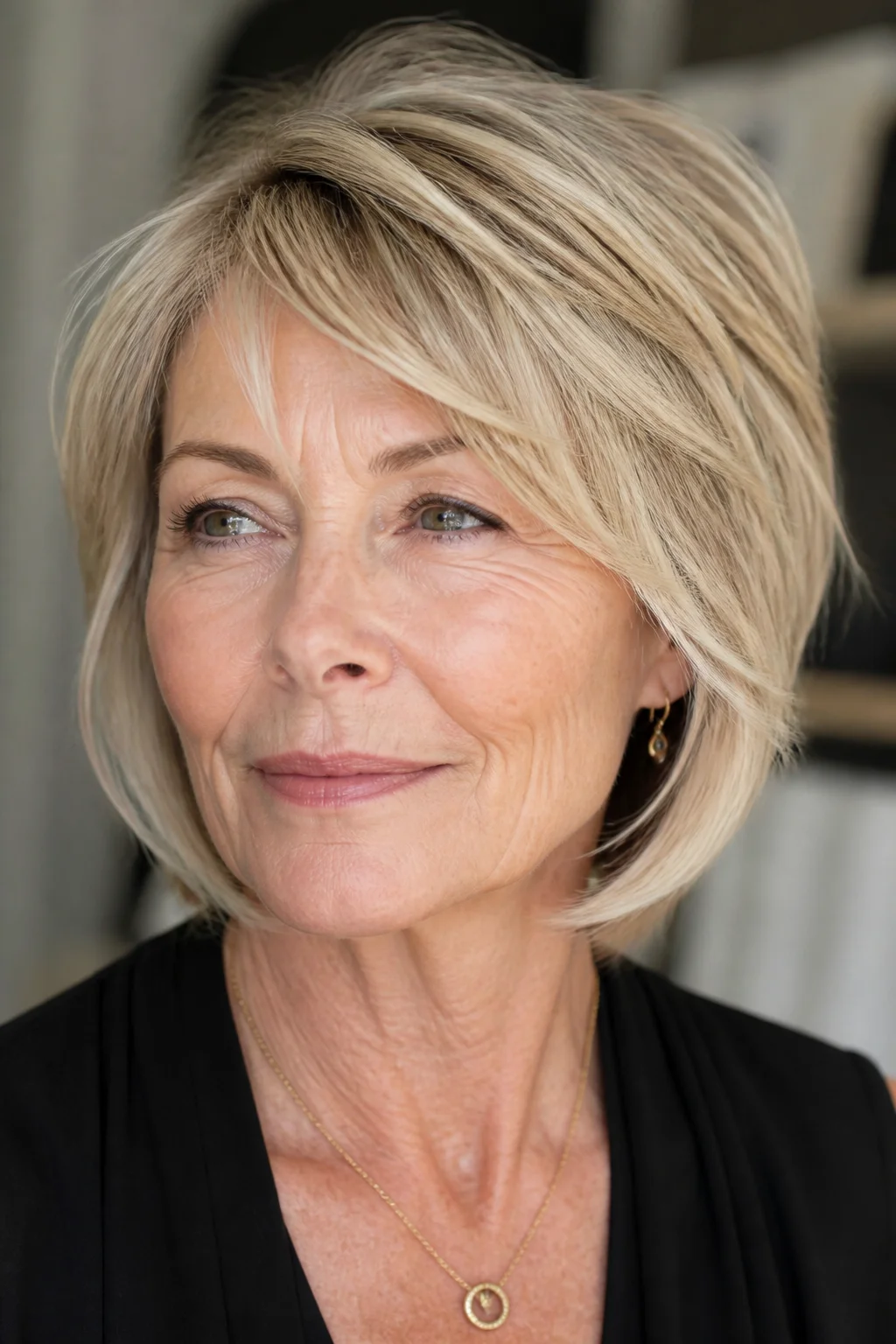
Here the bottom sections stay smooth and sleek while only the crown gets tousled, textured layering. This creates volume exactly where most women need it most, at the root, while keeping the overall silhouette polished rather than messy. It’s a nice compromise for anyone who likes the idea of texture but doesn’t want a fully undone look.
Razor-Cut Layered Bob for Maximum Texture
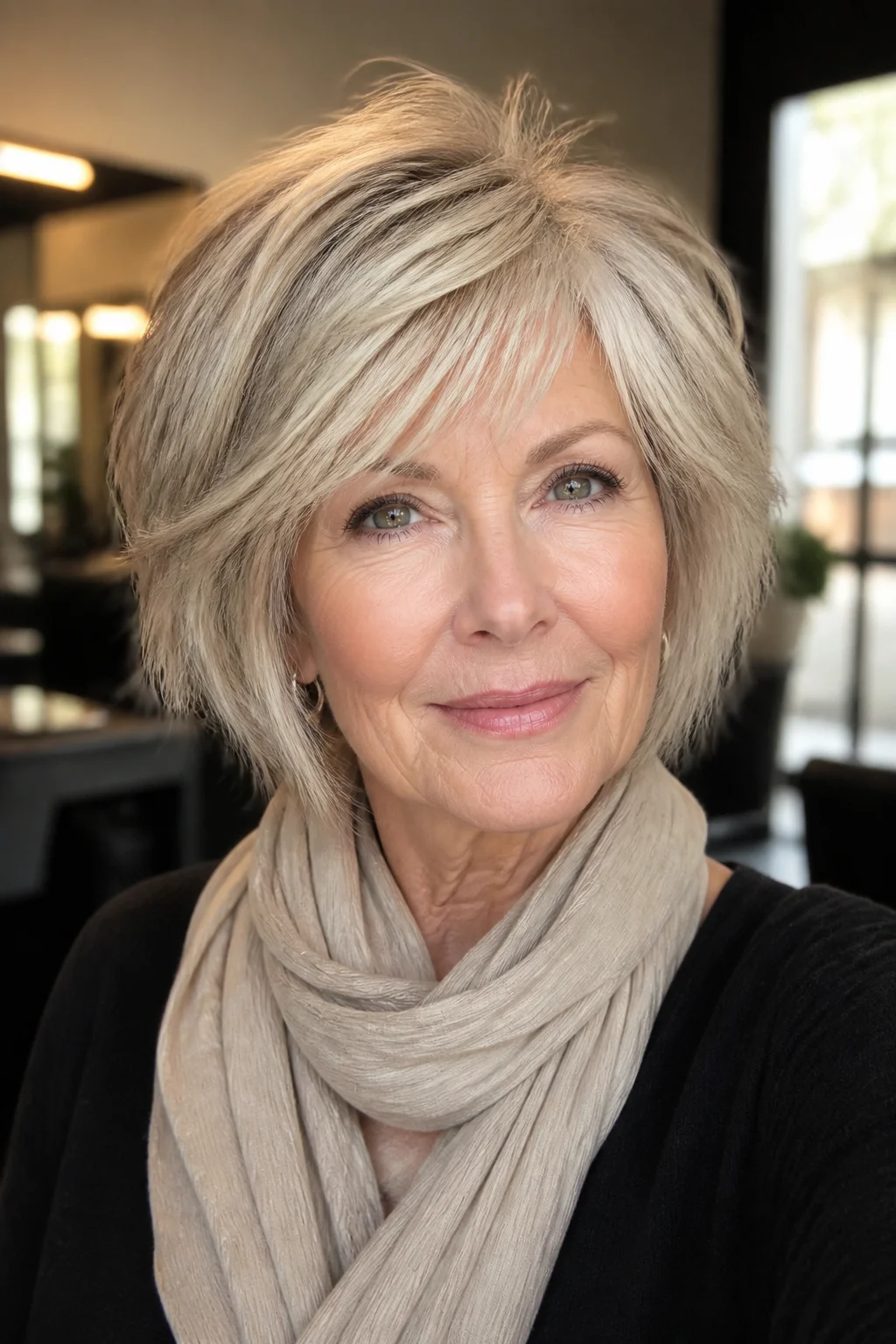
Razor cutting removes hair at an angle instead of straight across, which softens the ends and creates texture that scissors alone can’t match. On fine hair this technique needs a light hand, since too much razor work can thin hair out further rather than adding fullness. Done correctly, though, it gives the most texture of any technique on this list, and the layers hold their shape well between salon visits.
Choosing the Right Cut for Your Hair
With eighteen options, picking one comes down to your hair’s texture, your face shape, and how much time you want to spend styling it. If your hair is very fine and prone to going flat by afternoon, the textured choppy layers with shorter crown or the disconnected layers for dramatic volume will give you the most lift, since both remove weight right where it collapses fastest. If you have natural curl or wave, skip straight-hair techniques altogether and go with the curly or wavy layered bob for natural texture, since a dry cut respects the pattern you already have.
For anyone short on styling time, the sleek layered bob with tousled texture only on top or the soft layers with rounded crown need the least daily effort, since both hold their shape with minimal blow drying. Women who want a bolder statement should look at the asymmetrical layered bob or the shag-textured layered bob, both of which lean into uneven lines rather than smoothing them out.
A common mistake is choosing a heavily layered style without telling your stylist how thin your hair has actually gotten. Too many layers on very fine hair can backfire and create bald-looking patches at the ends. Always ask your stylist to check density before deciding between something like the micro layers throughout for feathered effect and a gentler option like the collarbone layered bob with movement.