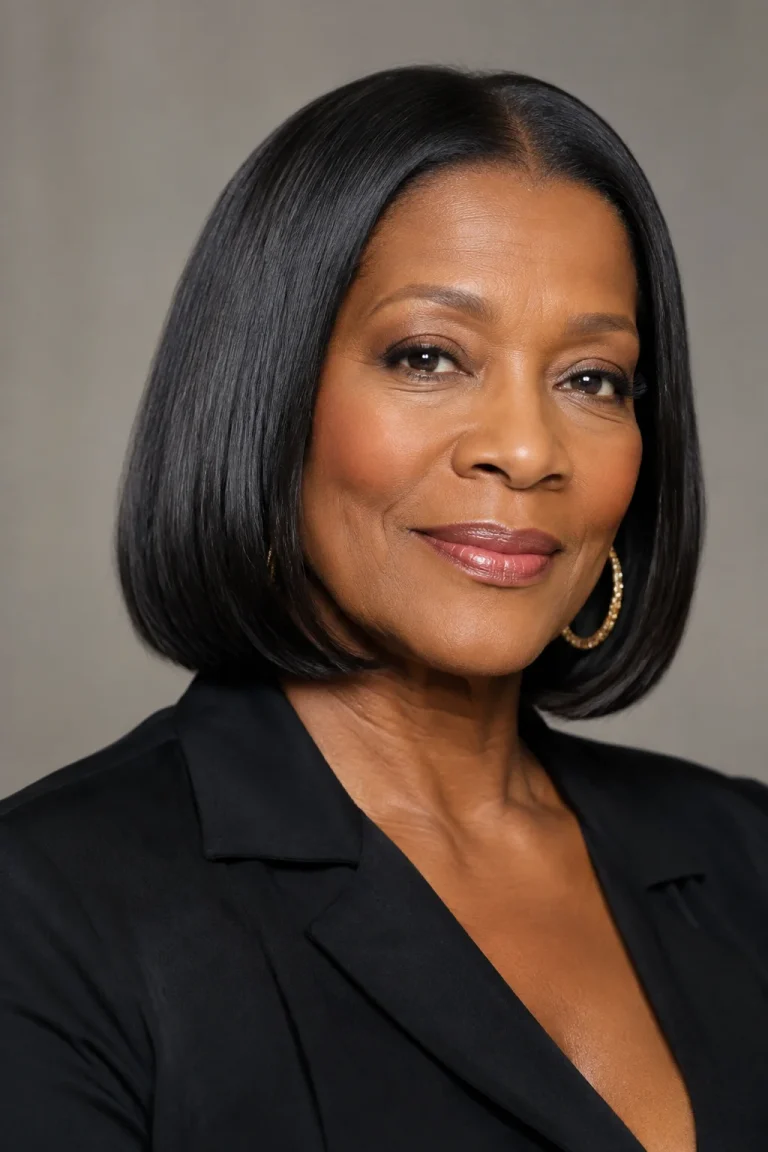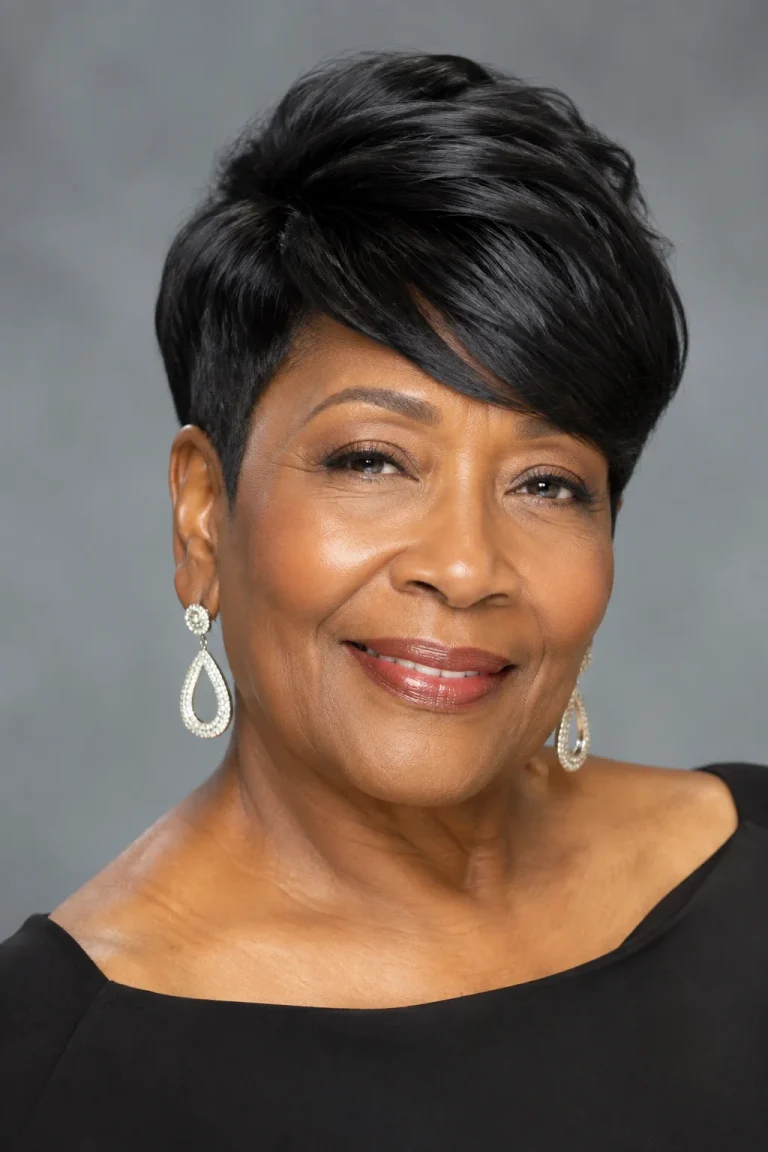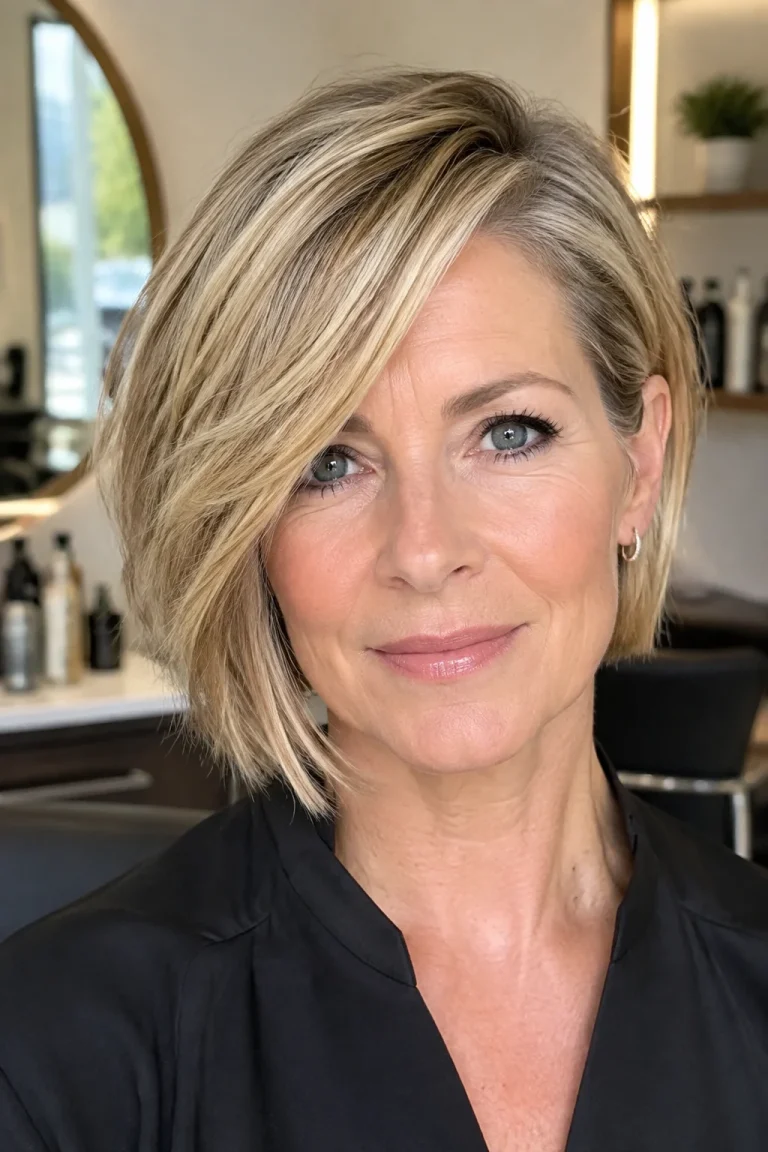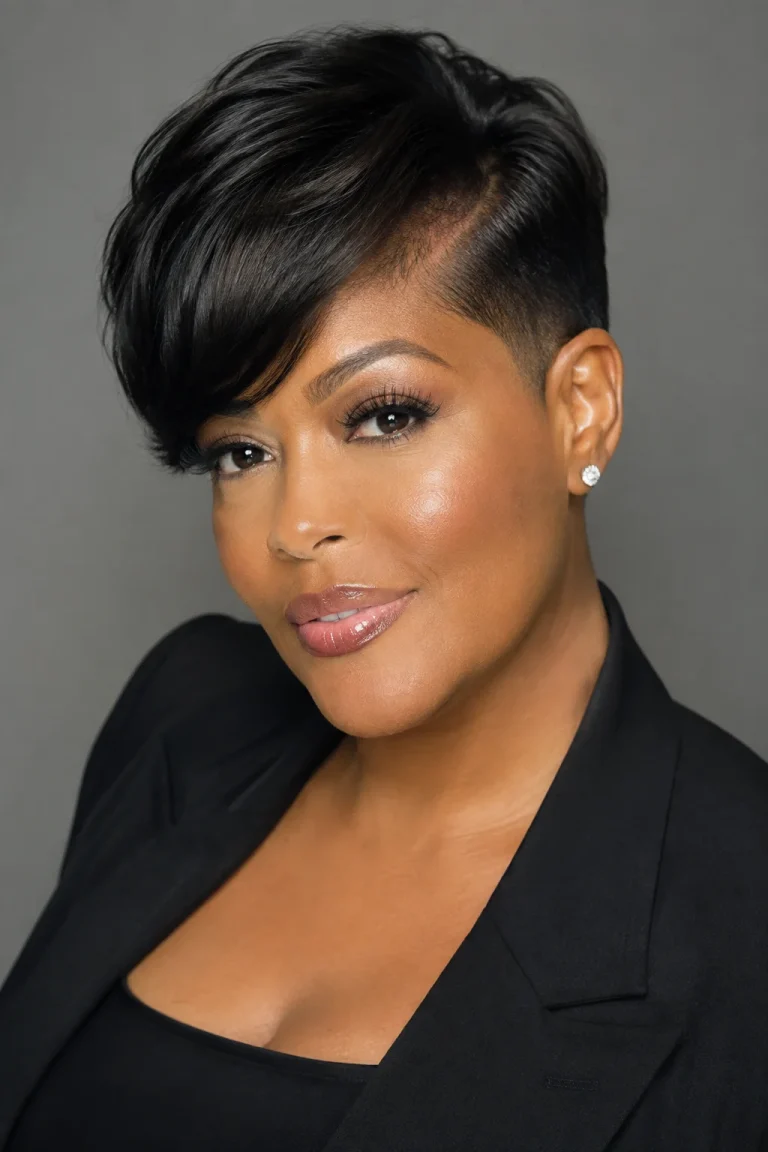
Fine or thinning curls can flatten out fast once you hit your forties, and a lot of women end up stuck with a style that looked full in the salon chair but falls flat by lunchtime. The good news is that a short cut, shaped the right way, can lift curls at the root and keep them lively all day without extra product or heat styling. These volume-boosting curly pixie haircuts for women over 40 are built around texture, weight removal, and smart layering so your natural curl pattern does the work for you. Some options lean soft and rounded, others go edgy with shaved sides or a mohawk shape, and a few borrow from mullets and shags for extra movement. Whatever your face shape or curl density, there’s a version here that will hold shape longer and look thicker without a single extra strand.
Rounded Classic Curly Pixie
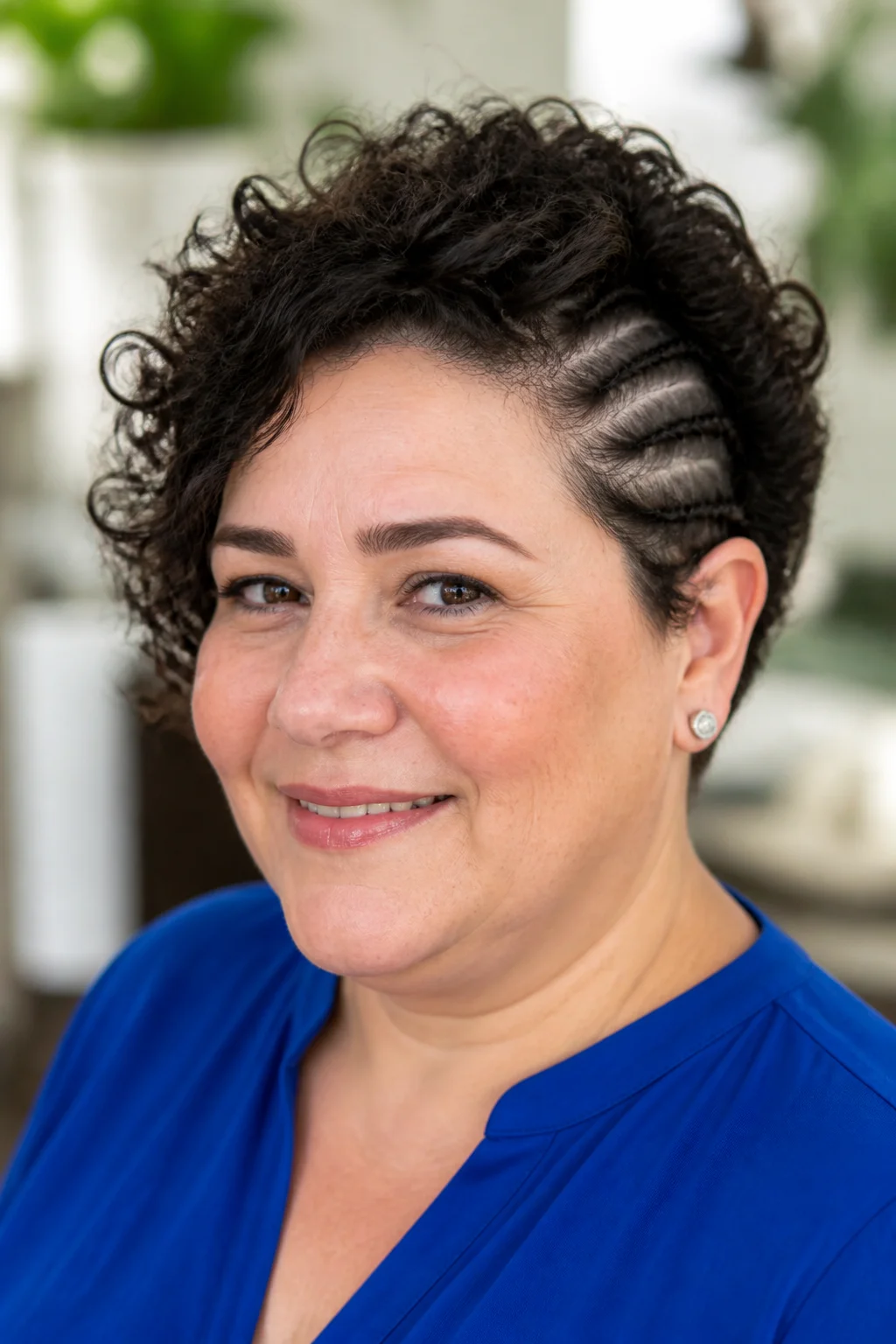
This is the shape most people picture when they think of a curly pixie, and it earns that reputation. The sides and back stay short while the top holds more length, rounding softly over the crown instead of sitting flat. That roundness reads as fullness even on finer curl types, because the eye follows the curve rather than the scalp. Curls at the crown get trimmed to spring upward instead of drooping sideways, which adds visible lift without extra layers. It works on nearly every face shape, and it grows out gracefully since there’s no hard line to maintain. Tip: ask your stylist to point-cut the ends rather than blunt-cut them, so each curl keeps its bounce.
Tapered Curly Pixie
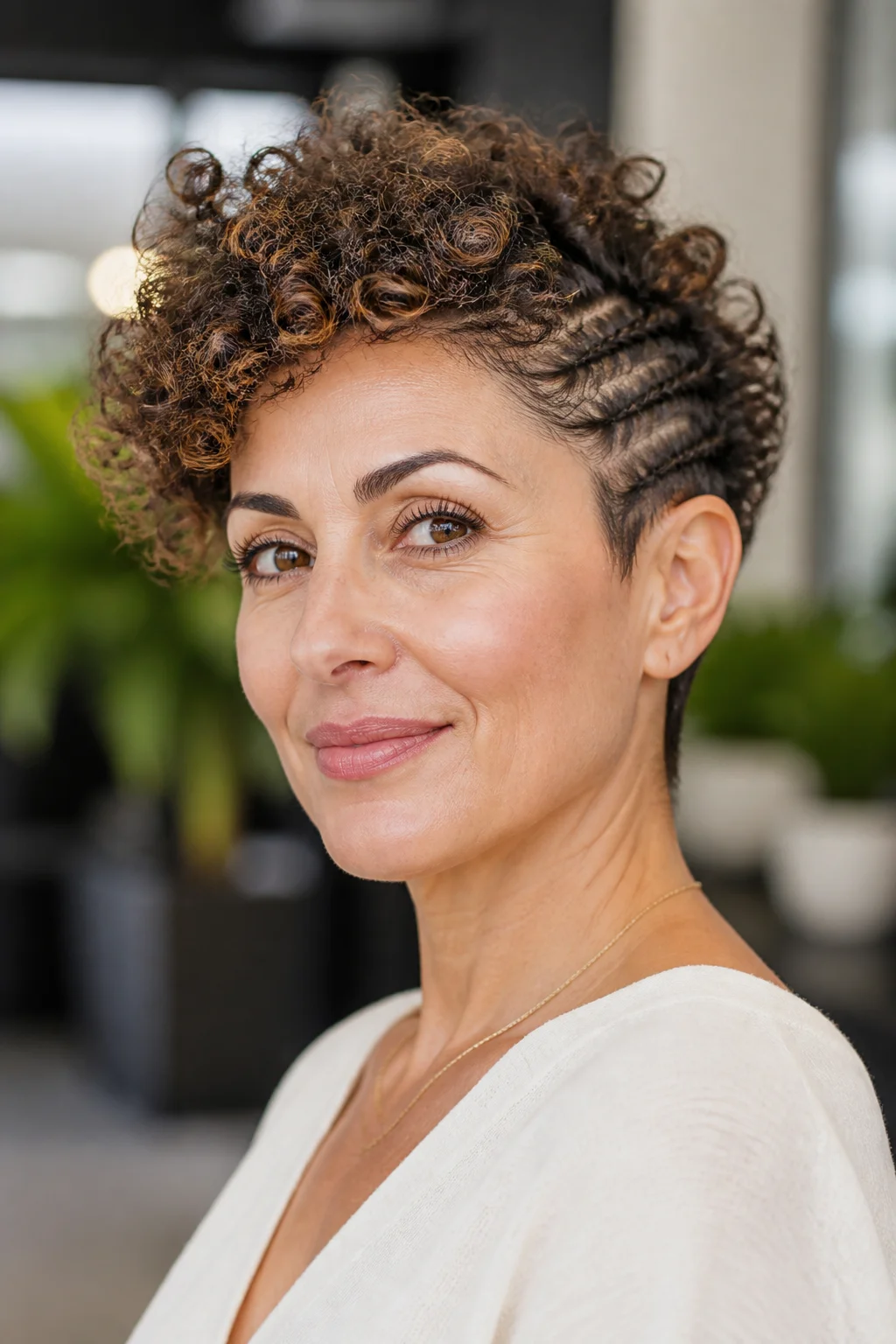
The taper narrows gradually from a fuller top down to close-cropped sides, which keeps the silhouette clean without shaving anything down to skin. It flatters curl patterns that get frizzy near the neckline, since shorter hair there behaves more predictably. Volume stays concentrated up top where you want it most.
Curly Bixie with Lifted Crown
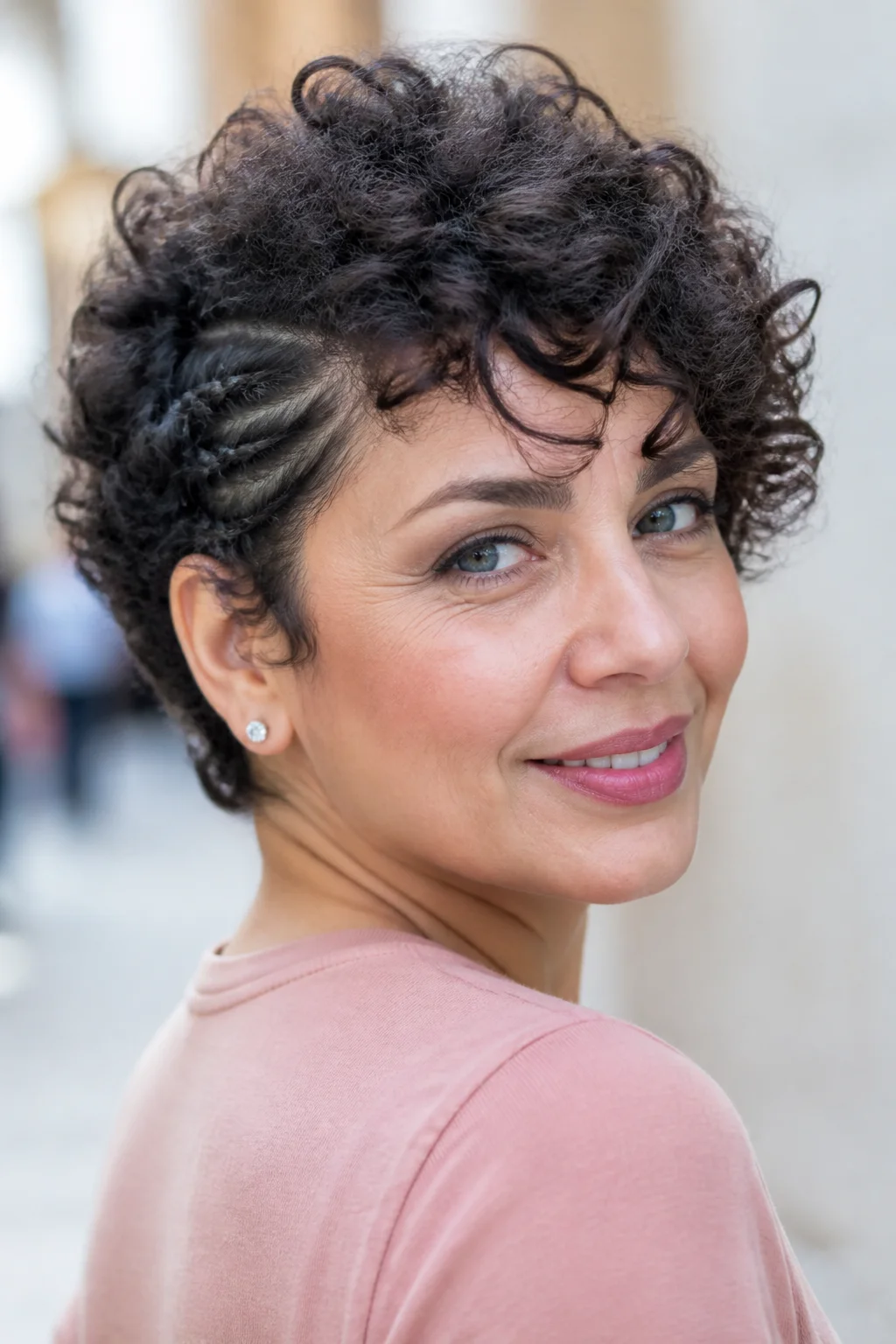
The bixie splits the difference between a bob and a pixie, leaving slightly more length through the crown and sides while keeping the back short and tapered. That extra length at the crown gets cut to stand up rather than lie down, which gives curly texture somewhere to build height. It suits women who want a pixie’s ease but aren’t ready to go extremely short. The longer top pieces can be twisted or picked out in the morning for even more lift. Because the crown carries the volume, the sides can stay simple and low maintenance. This cut also transitions well if you’re growing out a longer pixie or easing into shorter hair for the first time.
Curly Pixie Shag

Shag layering chops up the surface of the hair in short, choppy pieces that catch each curl at a different length. That variation breaks up any heaviness and makes thin curls look denser than they are. It reads a little rock and roll, a little undone, and it never looks overly styled. Tip: this cut benefits from a curl-defining cream rather than a heavy gel, since the shag wants texture, not shine.
Curly Pixie Mullet
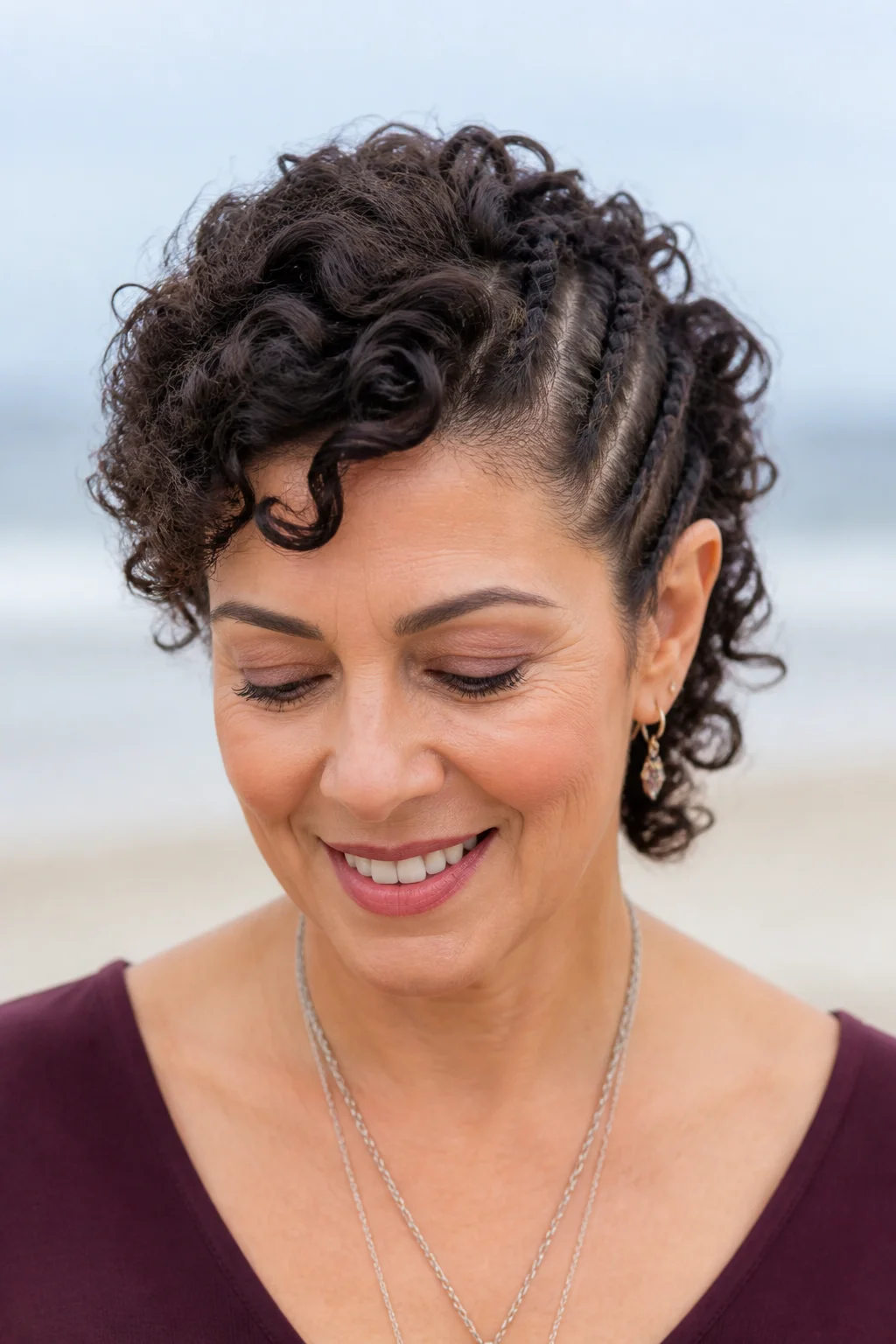
Short and tapered in the front, longer and looser in the back, the curly mullet plays with contrast on purpose. The front stays close to the scalp so curls lift instead of collapsing over the forehead, while the back grows out enough to show off ringlets or waves. It’s a bold choice, and it works best on women who already like a little drama in their hair. The length difference also means you get two textures to style separately.
Curly Faux Hawk Pixie
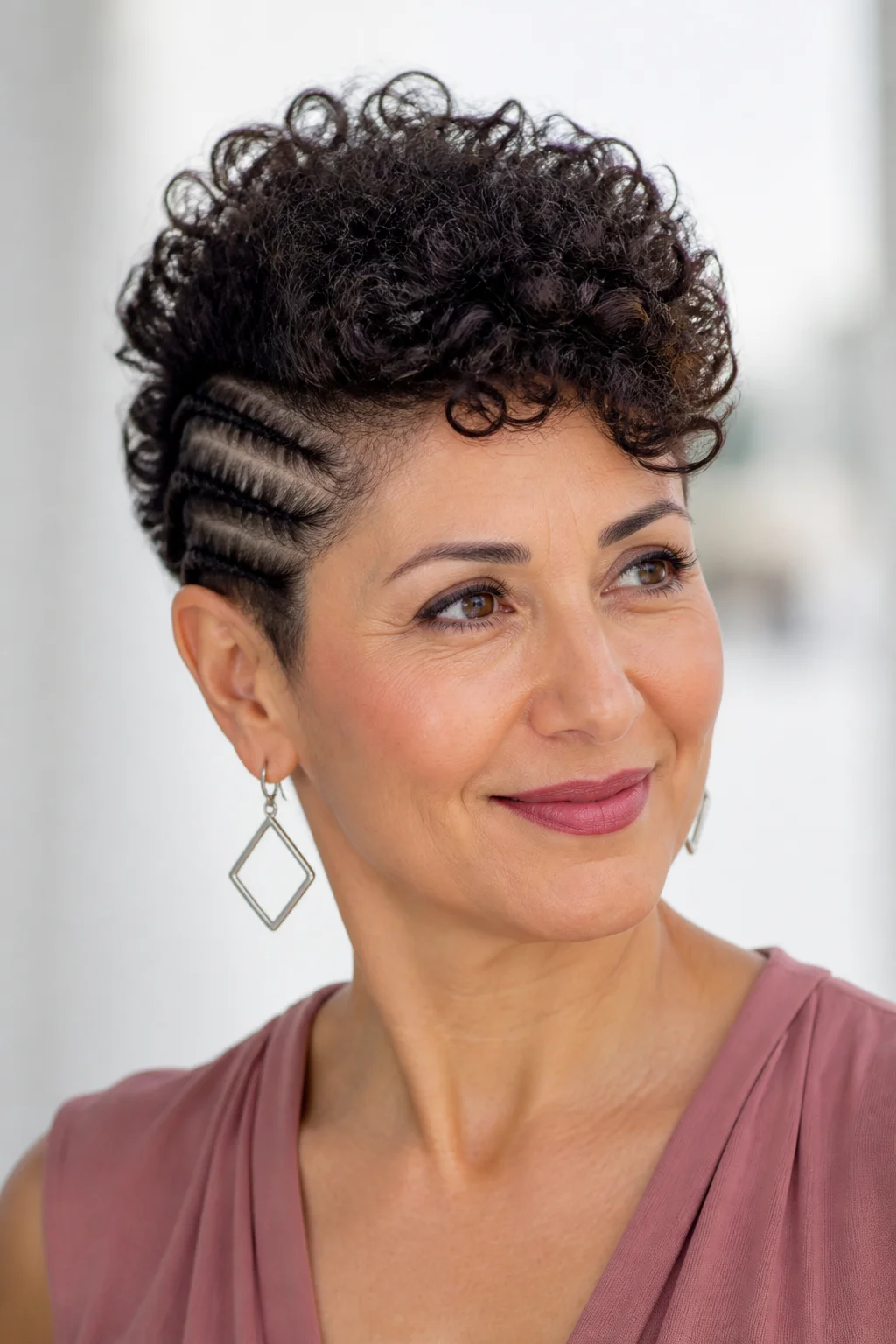
Faux hawks push the top section into a raised strip down the center without shaving the sides completely. Curls along that center strip get trained upward with product, creating a sculpted peak that reads as major volume from any angle. The sides taper close but keep some texture rather than going bare. This is a strong option for special occasions or for anyone who wants a daily style with real visual height.
Curly Mohawk Pixie
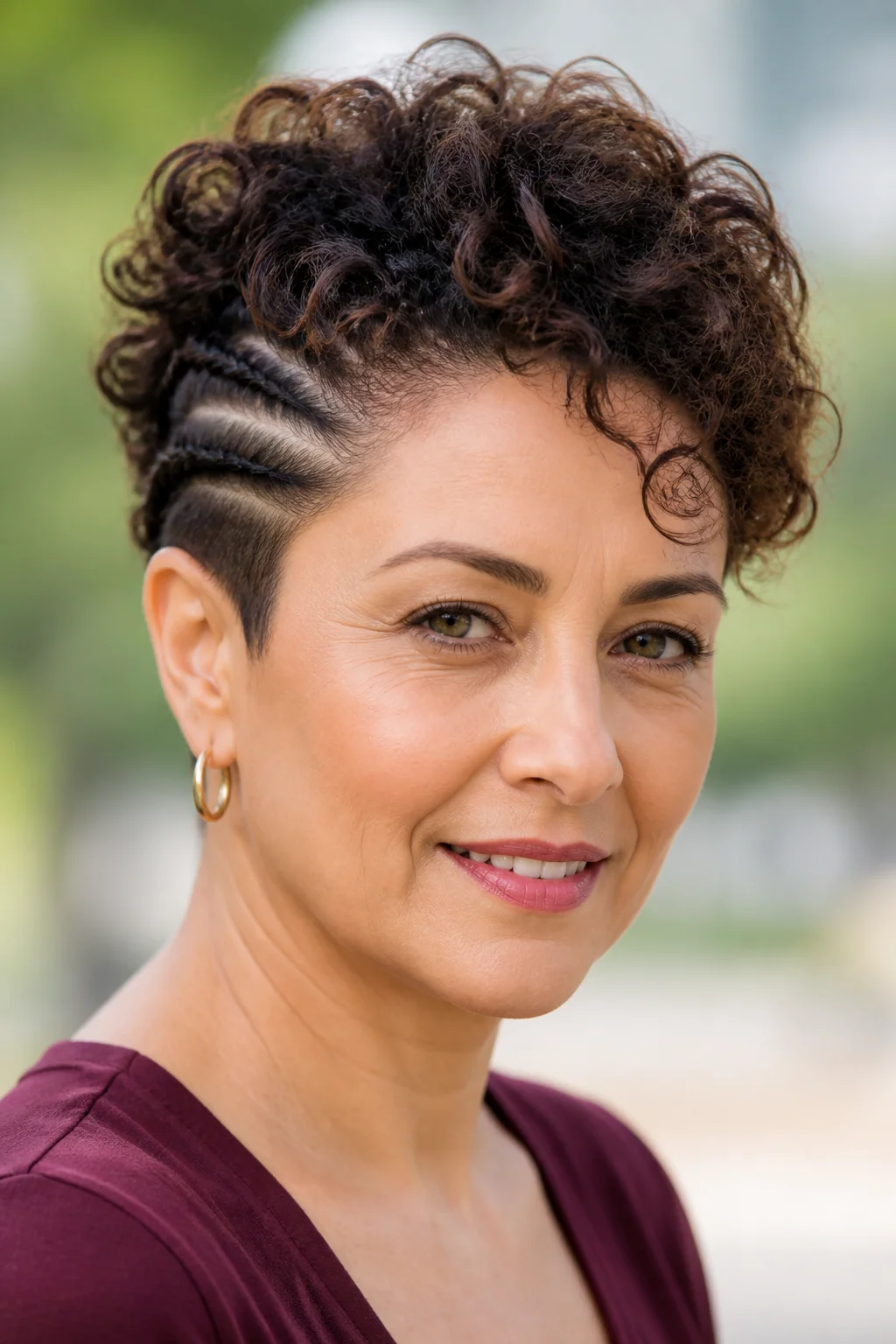
The mohawk pixie takes the faux hawk idea further by cutting the sides much shorter, almost skin close, so the center strip of curls stands out even more dramatically. It’s not subtle, and it isn’t meant to be. Curls piled along that center track can be picked into a rounded shape or pressed flatter for a softer daytime look. This cut suits women who like to switch their style between edgy and toned down depending on the day.
Curly Pompadour Pixie
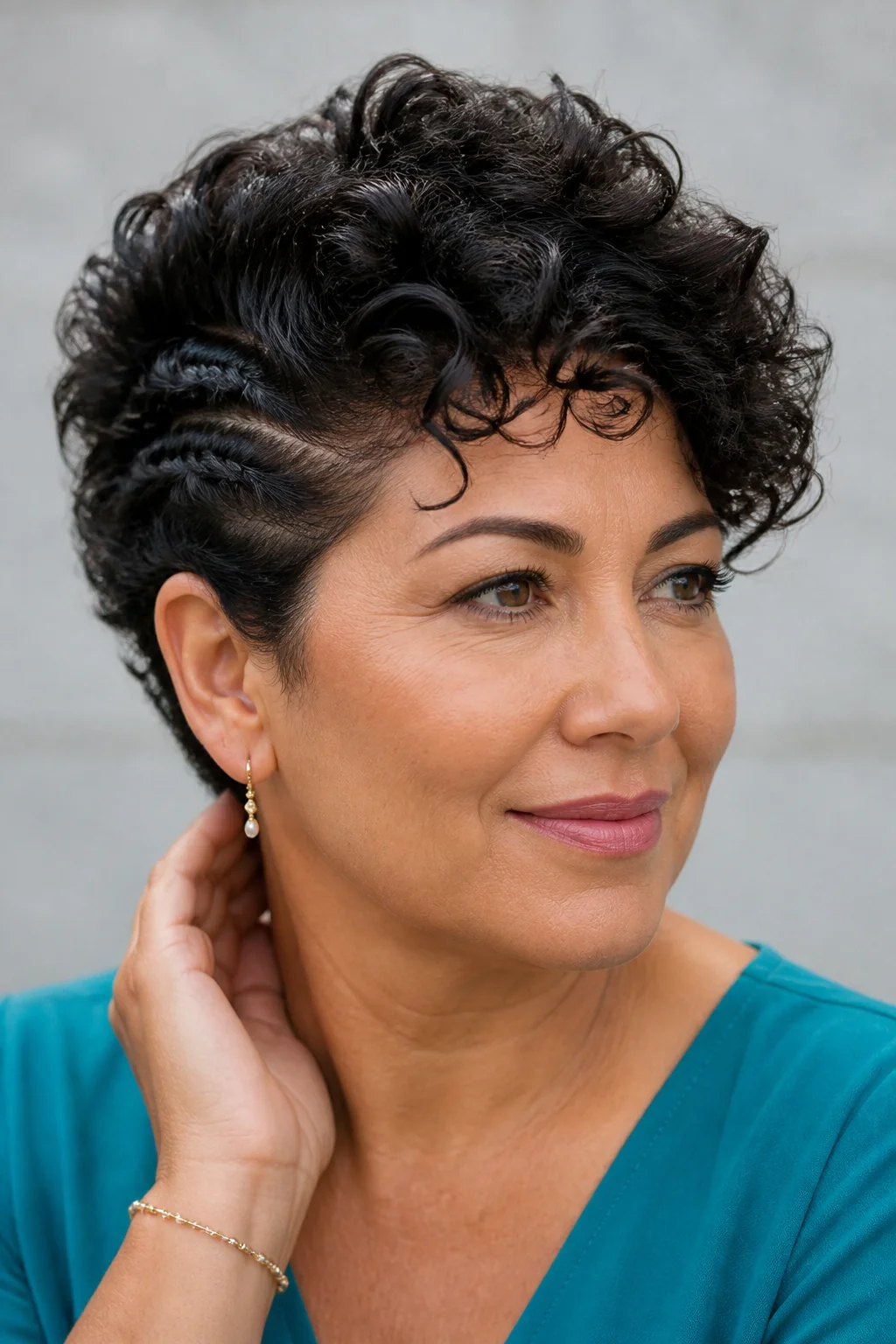
A pompadour pixie sweeps the top section up and back, using the natural spring of curls to hold that swept shape without much effort. The sides stay short and smooth, which throws the height on top into sharp relief. It has a retro feel that still looks current, especially with looser curl patterns. Tip: a light-hold mousse applied to damp curls before air drying helps the pompadour keep its shape through the day.
Curly Quiff Pixie
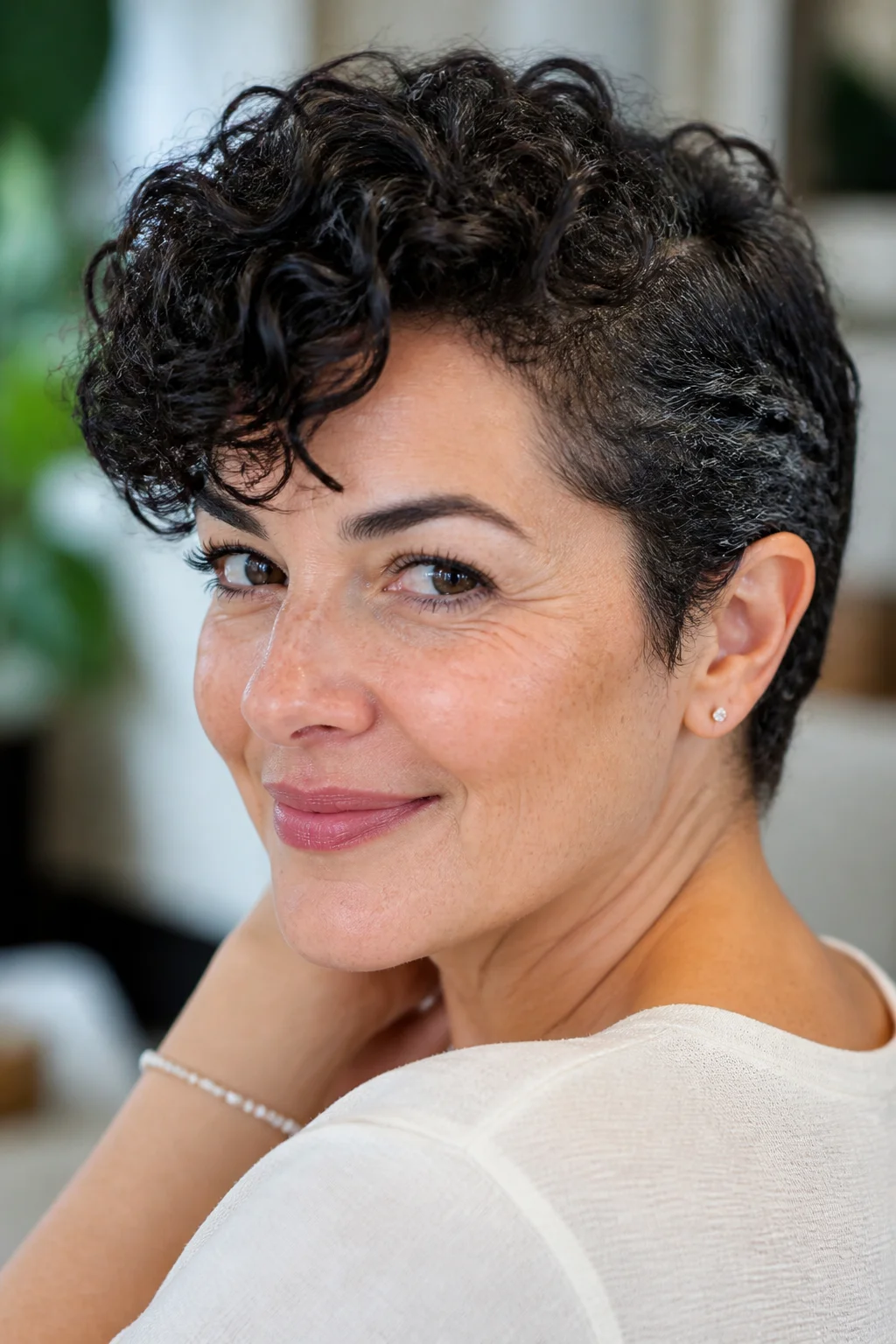
The quiff lifts hair just above the forehead rather than sweeping the whole top back, giving a shorter burst of volume that’s easier to manage than a full pompadour. Curls in that front section get a little extra length so they have something to grip when pushed upward. It’s a quick style to maintain since only the front needs real attention each morning.
Asymmetrical Curly Pixie
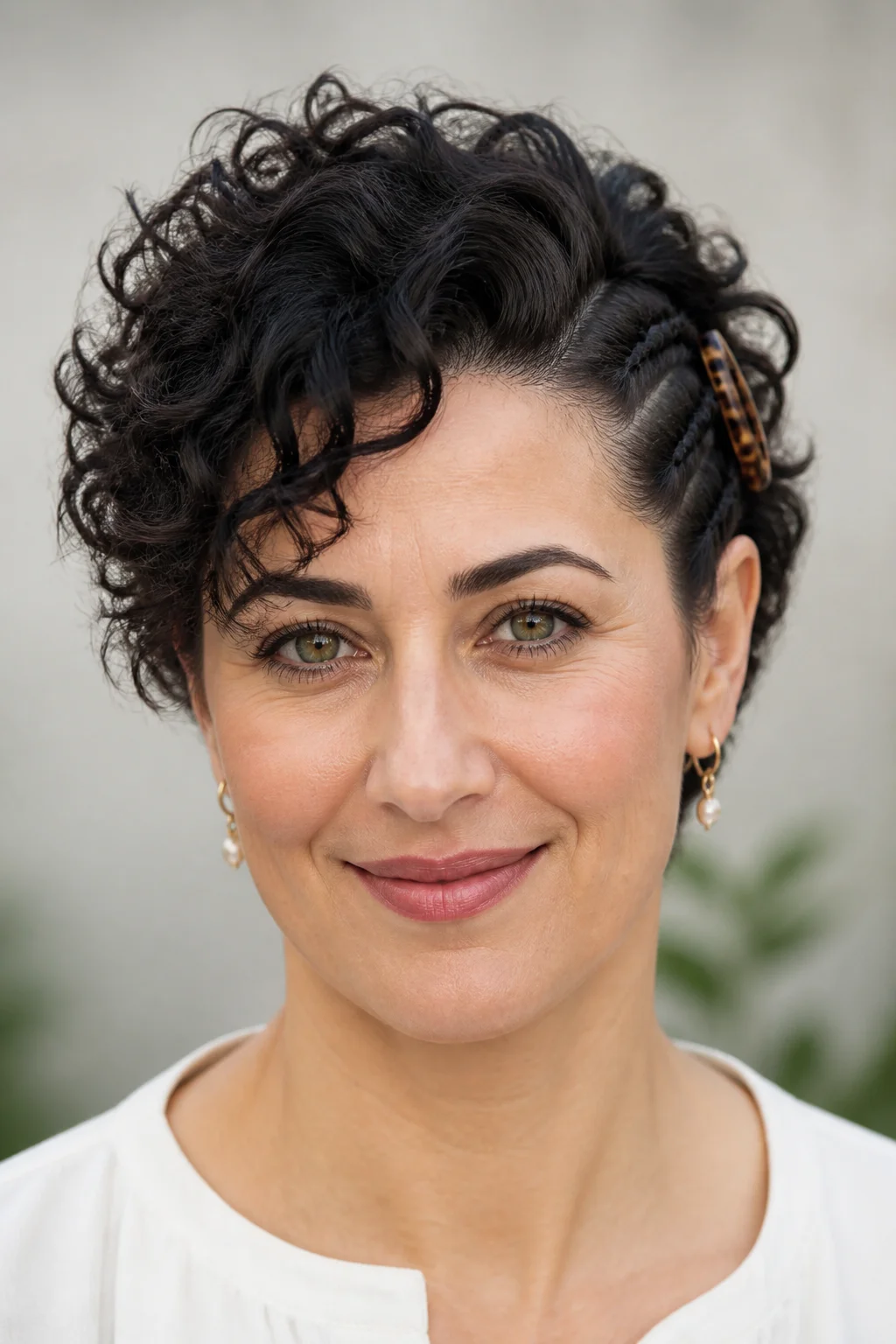
One side runs longer than the other in this cut, which naturally draws the eye across the head and makes the fuller side look even fuller by comparison. It’s a good pick if your curl density is uneven, since the longer side can hide a thinner patch while the shorter side shows off tighter curls. Stylists often pair this with a side part to reinforce the imbalance in a flattering way. The asymmetry also lets you flip your part occasionally for a slightly different look without cutting anything new.
Undercut Curly Pixie
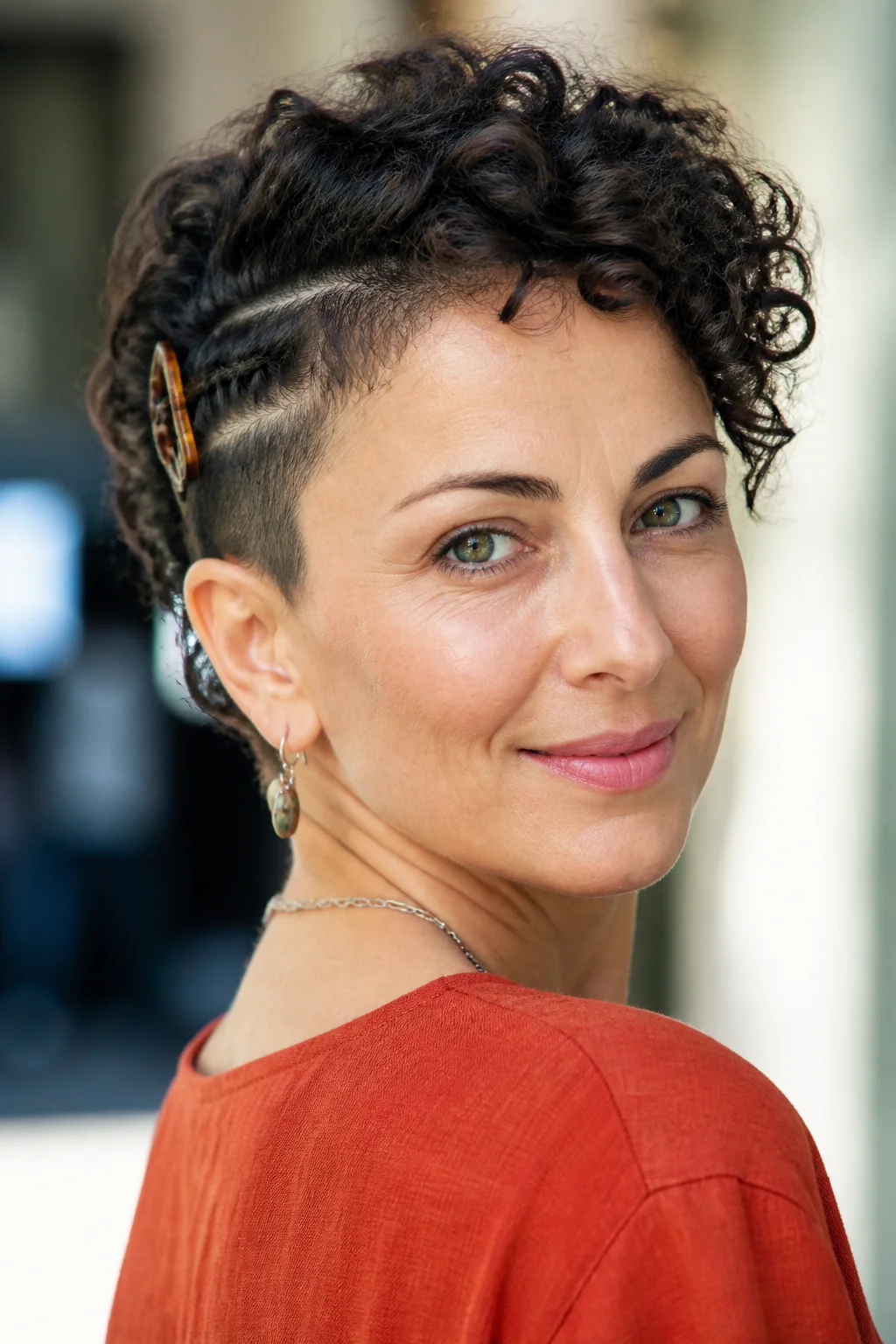
Shaving or clipping close underneath a longer top layer creates a hidden shelf that pushes the visible curls upward and outward. You do not see the shaved section unless the top is pushed aside, so it reads as a regular pixie with unusually strong volume from the front. This works especially well on thicker curl types that need somewhere for the bulk to go.
Disconnected Curly Pixie
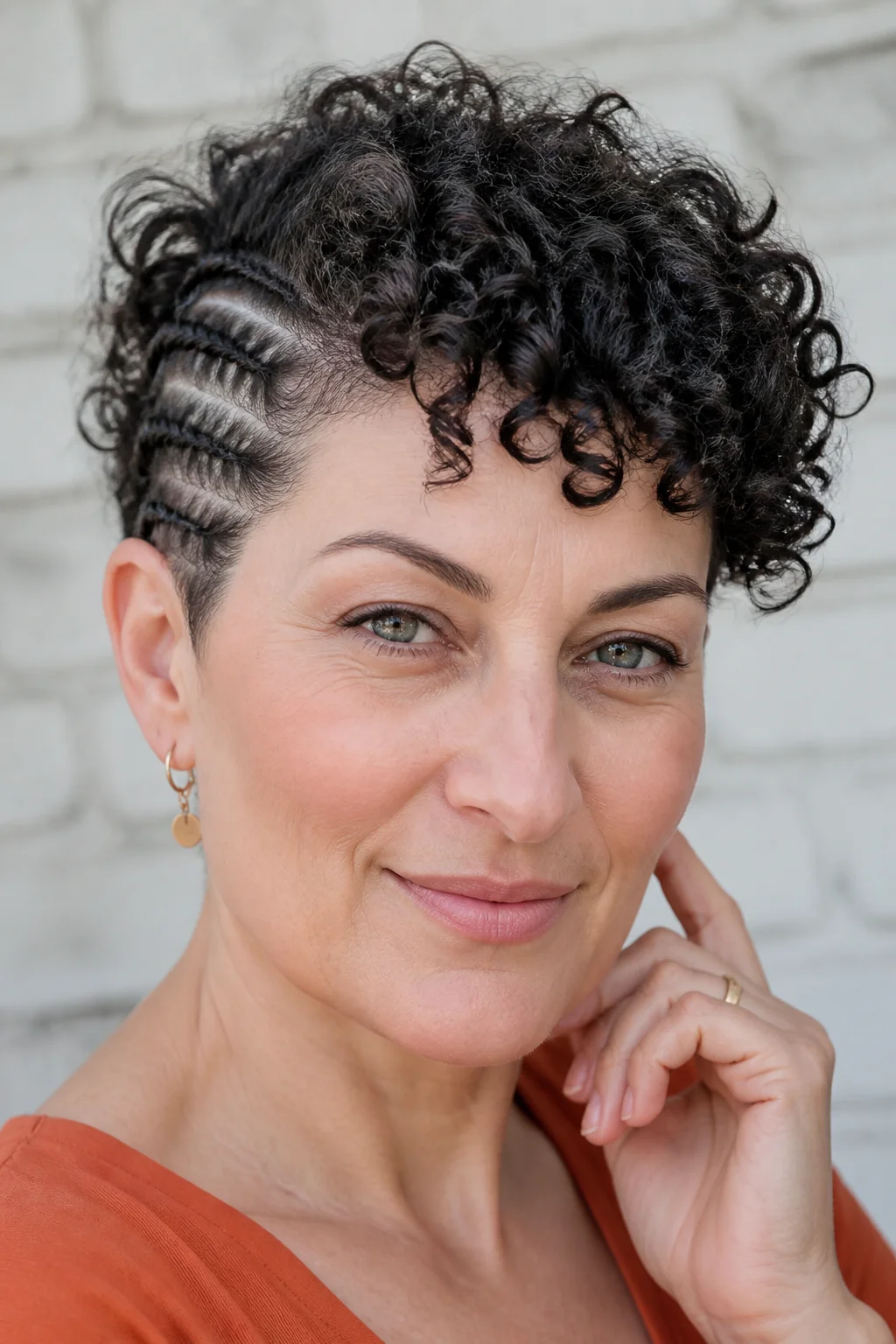
Disconnection means the top length is cut with no blending into the shorter sides, so there’s a visible jump between the two sections instead of a smooth taper. That hard line at the perimeter makes the top curls look like they’re floating above the head, which is a strong volume illusion. It suits curl patterns with a lot of natural bounce, since the disconnection highlights each curl’s shape rather than blending it away. Some women find this look edgier than they expected, so it’s worth showing your stylist a photo before committing.
Curly Bowl Pixie
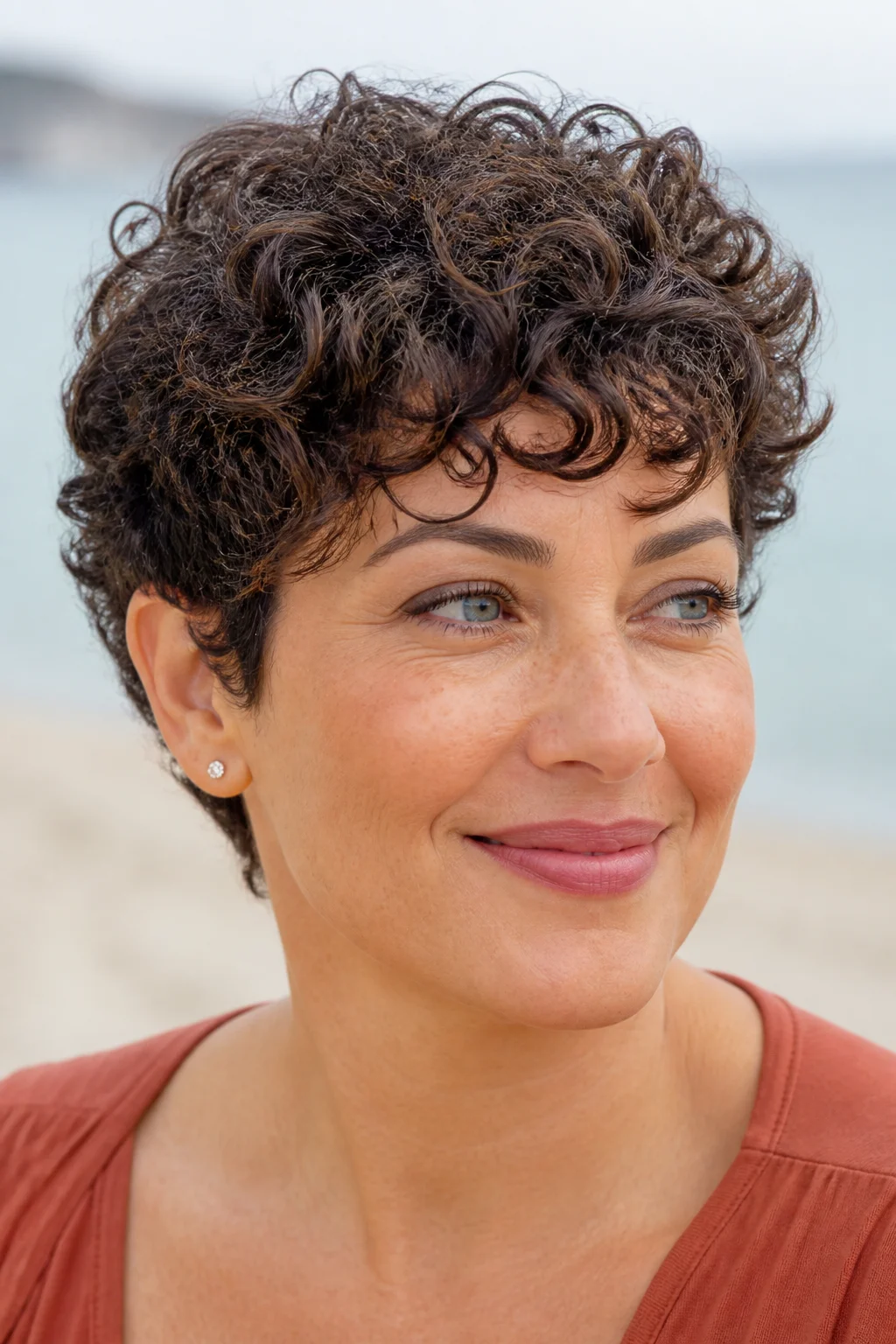
A modern bowl pixie rounds the top length evenly all the way around, similar to a classic bowl cut but shorter and with room for curls to expand outside the lines. Tip: keep the sides slightly shorter than the crown so the roundness lifts rather than weighs down.
Curly Crop Pixie

The crop keeps everything short and close to the head, with just enough length on top for curls to form small, defined shapes rather than long spirals. It’s a low-maintenance option that still reads as textured and full because every curl is visible instead of buried under length. This suits women who want minimal daily styling.
Curly Caesar Pixie
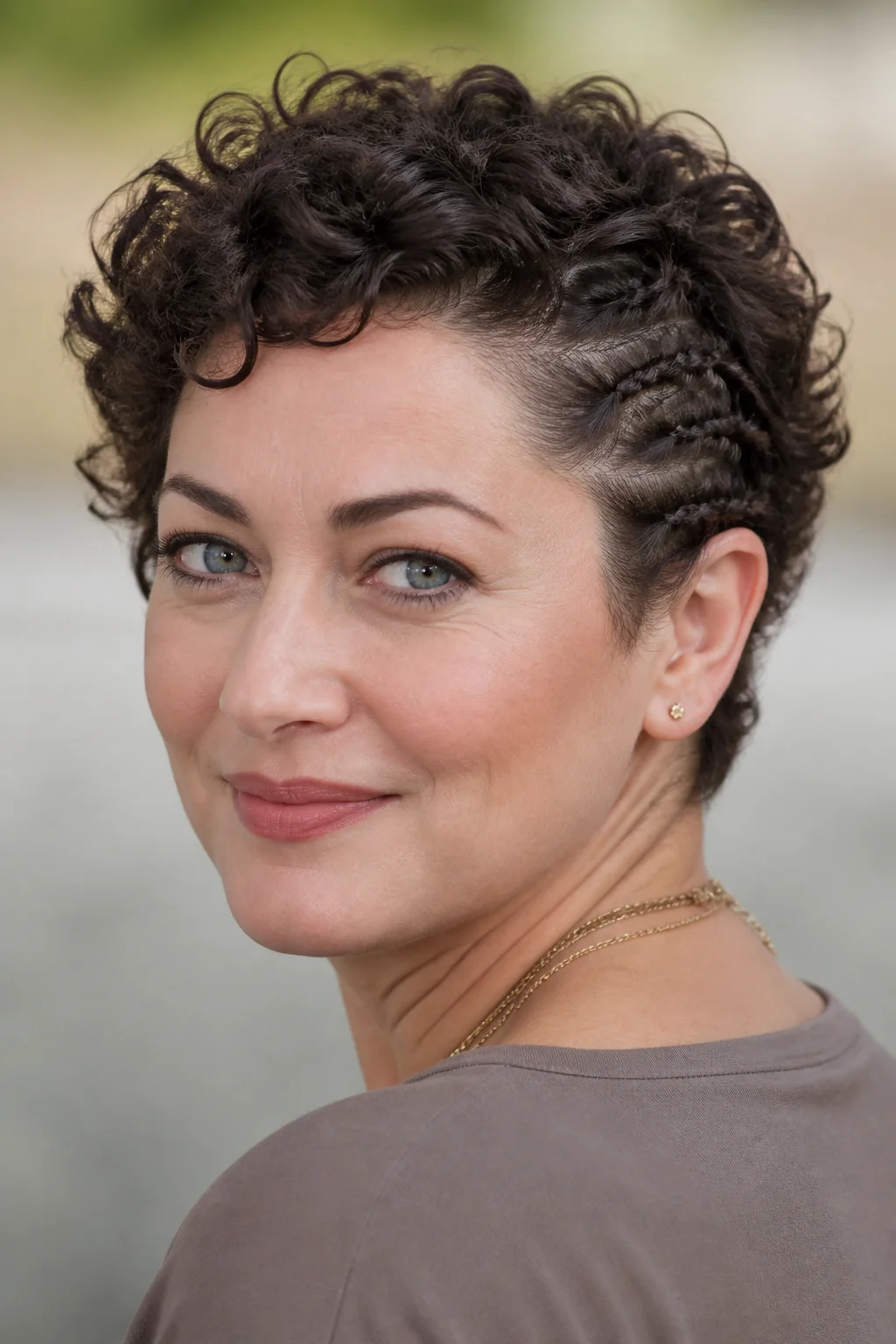
Caesar cuts keep length short and even across the whole head with a light fringe forward, and the curly version lets that fringe curl naturally instead of lying flat. Volume comes from the even length allowing curls to pile slightly at the crown. It’s understated, easy to maintain, and works well for very active lifestyles.
Curly Pixie with Curtain Fringe
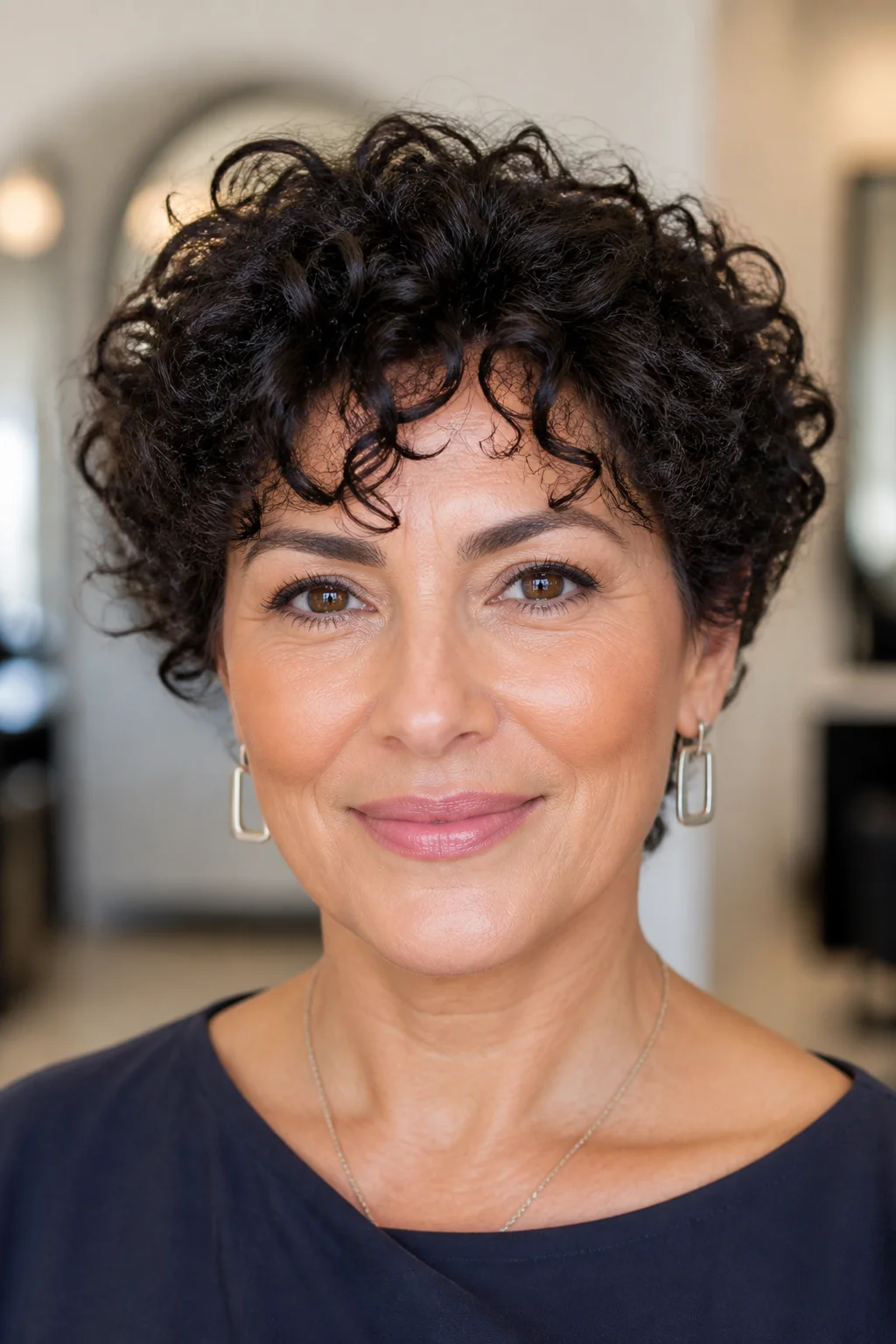
Curtain fringe parts in the center and sweeps outward on both sides, framing the face while leaving the crown free to build height. Curly texture in the fringe tends to separate into soft pieces rather than one solid curtain, which actually helps it stay lighter looking. This pairing softens angular face shapes and adds visual width near the temples, which balances a fuller crown above it.
Side-Swept Curly Pixie
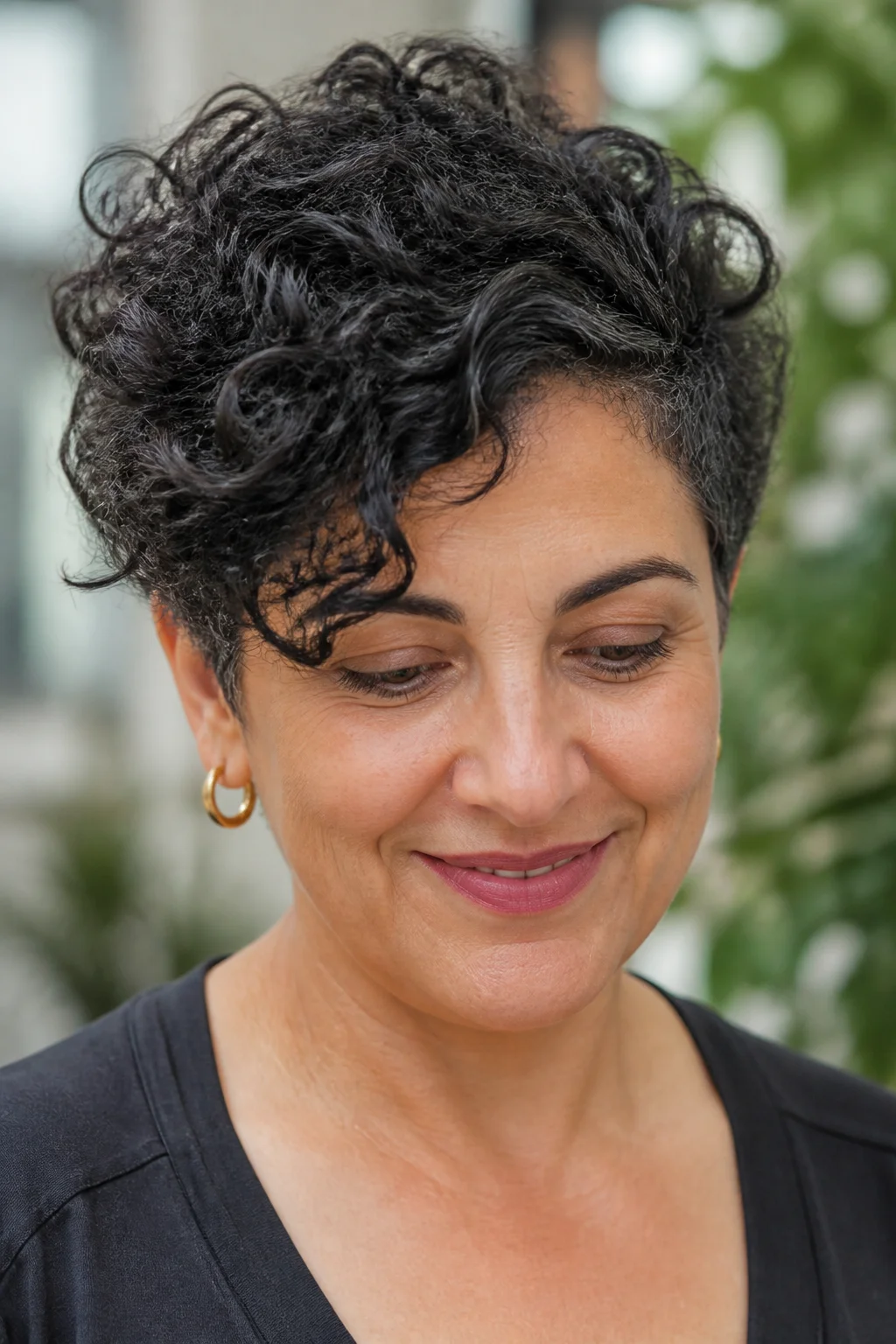
Sweeping the top to one side instead of straight back gives curls a diagonal path to fall along, and that diagonal line tends to look fuller than a straight-back style. It also softens the forehead, which some women prefer as they get older. Tip: alternate which side you sweep toward every few weeks so the curls do not train permanently in one direction.
Curly Pixie with Temple Fade
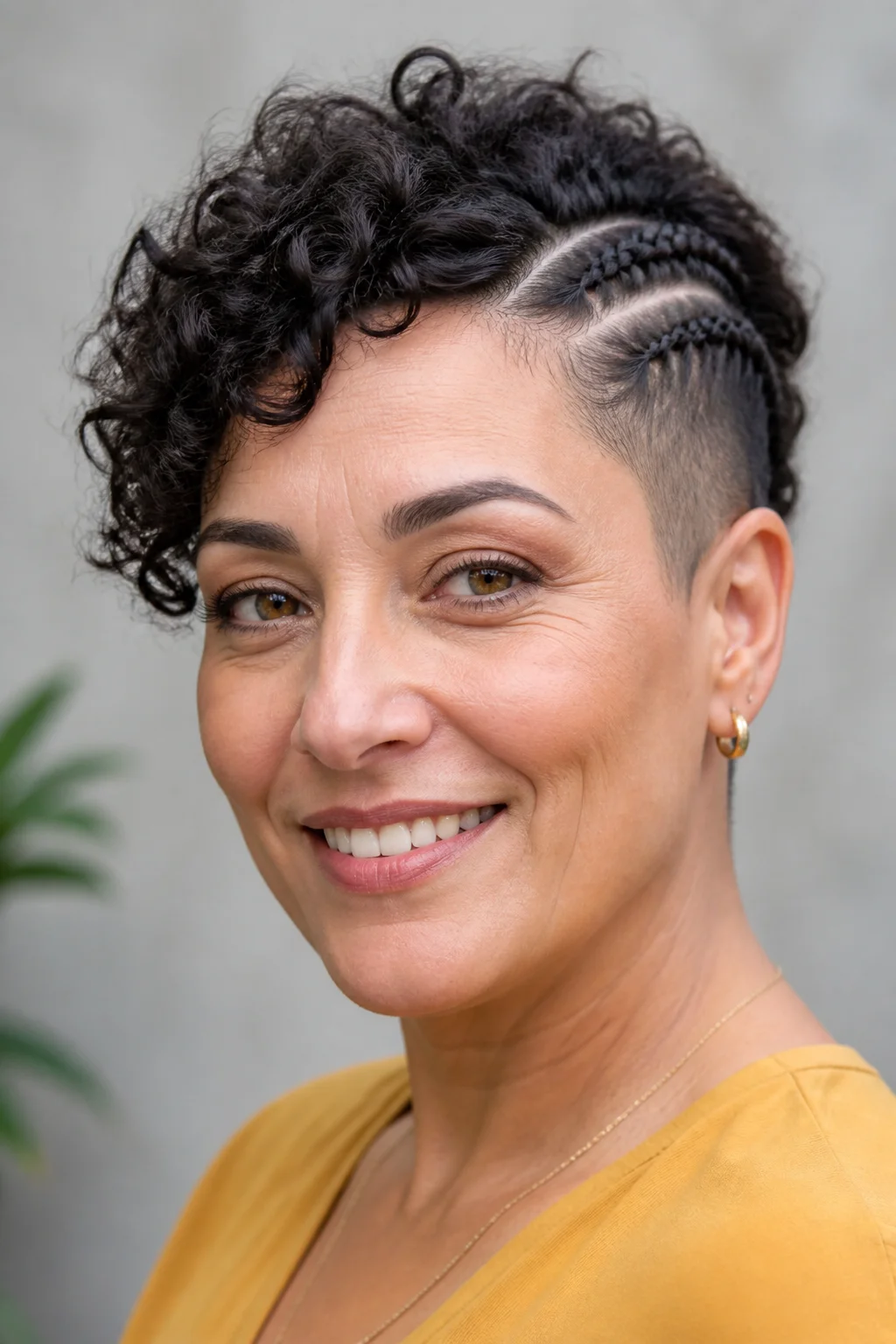
A temple fade tapers hair down to nearly nothing right at the temple area while leaving the rest of the sides slightly longer. That focused fade draws attention to the curls on top without shaving the whole head close. It’s a precise, barbershop-influenced look that pairs surprisingly well with soft curl textures, and it holds its shape for weeks between trims.
Tapered Natural Curl Pixie
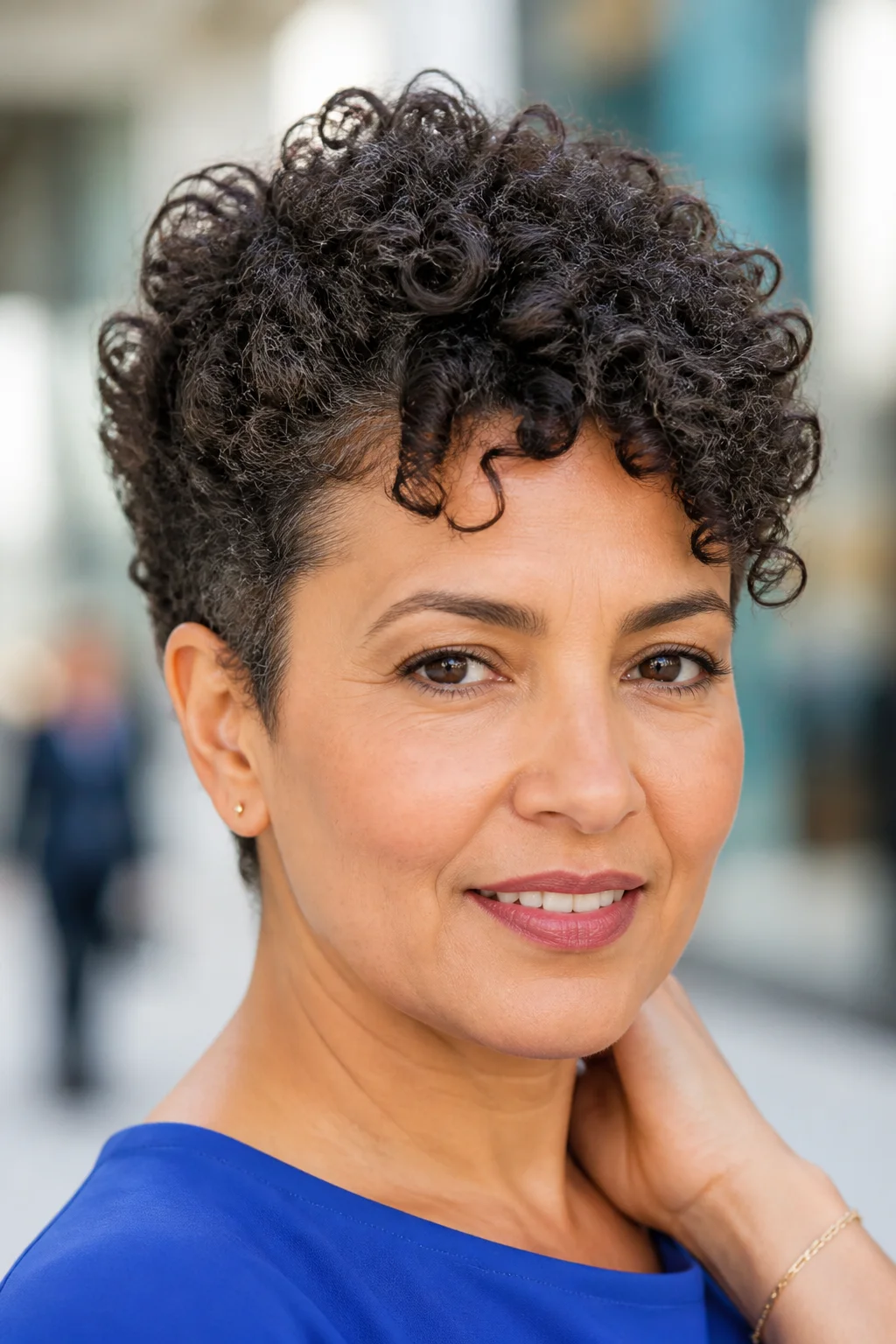
This version leans on whatever your curl pattern naturally does, with light tapering at the neckline and ears but almost no forced shaping elsewhere. It’s the lowest maintenance option on this list, ideal for anyone who wants volume without daily styling. The natural curl clumps do most of the visual work.
Curly Afro Pixie
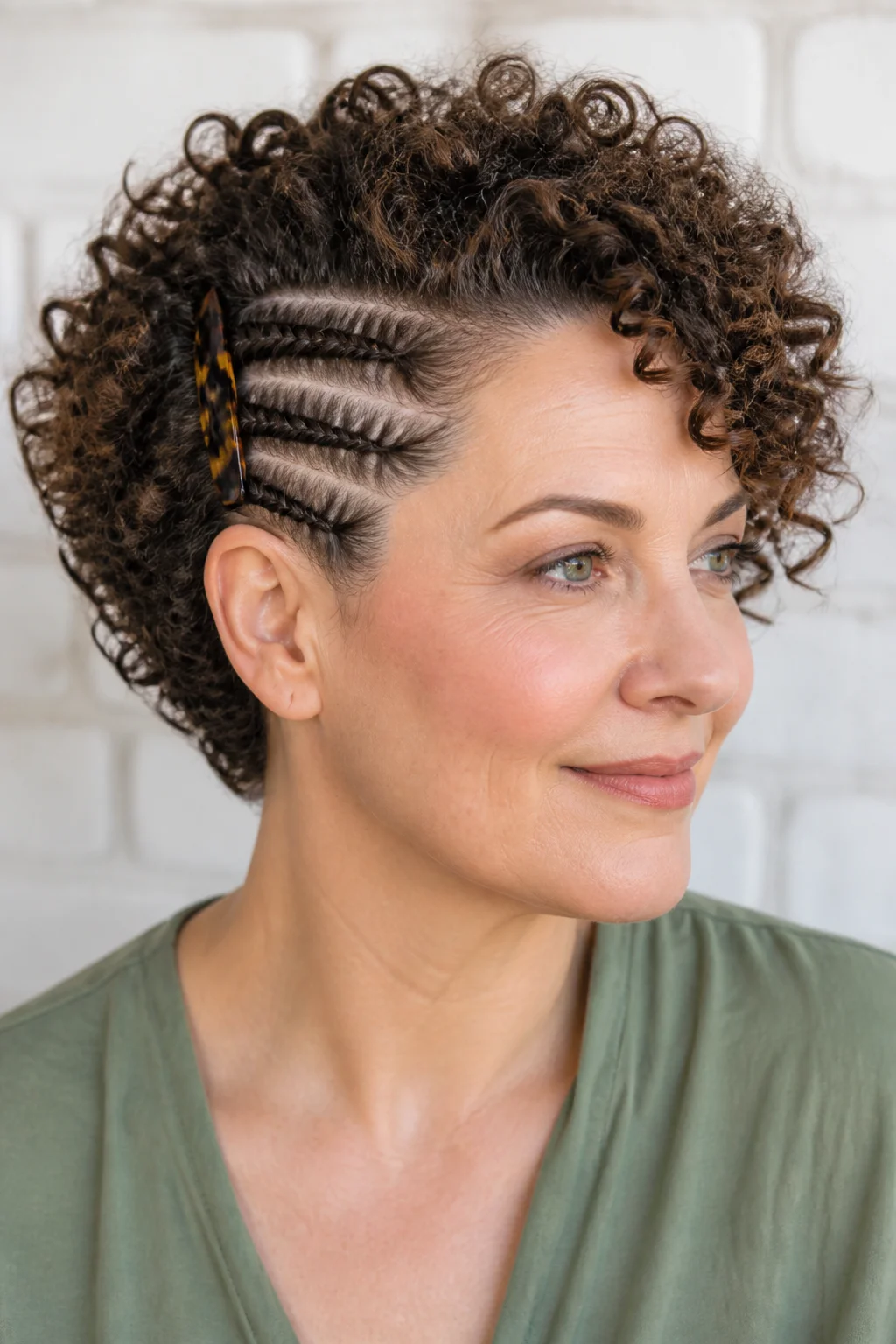
Cut short and even to let tight curl patterns form a rounded, all-over shape, the afro pixie is one of the most naturally voluminous options here. There’s no need to coax lift out of the hair since tight curls already stand away from the scalp on their own. Trimming is mostly about maintaining an even rounded outline rather than layering for movement. This cut looks polished with very little daily effort beyond a light moisturizing product.
Curly Pixie with Shaved Side
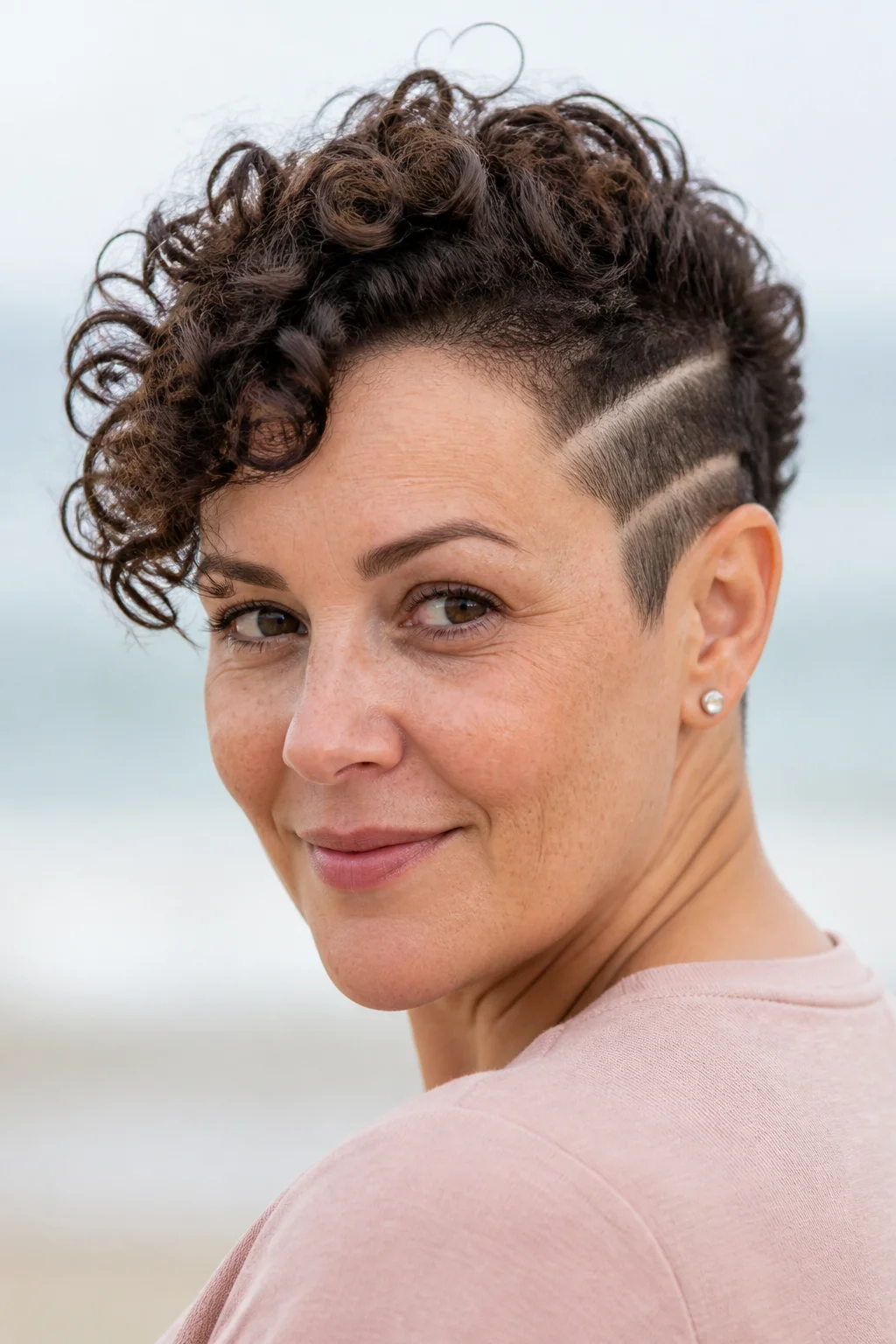
A single shaved side against a fuller curly top creates one of the sharpest contrasts on this list. The bare skin next to dense curls makes the curly section look noticeably bigger than it would against a full head of hair. It’s a strong style statement, and it works best for women who already feel confident with bold cuts.
Long-Crown Curly Pixie
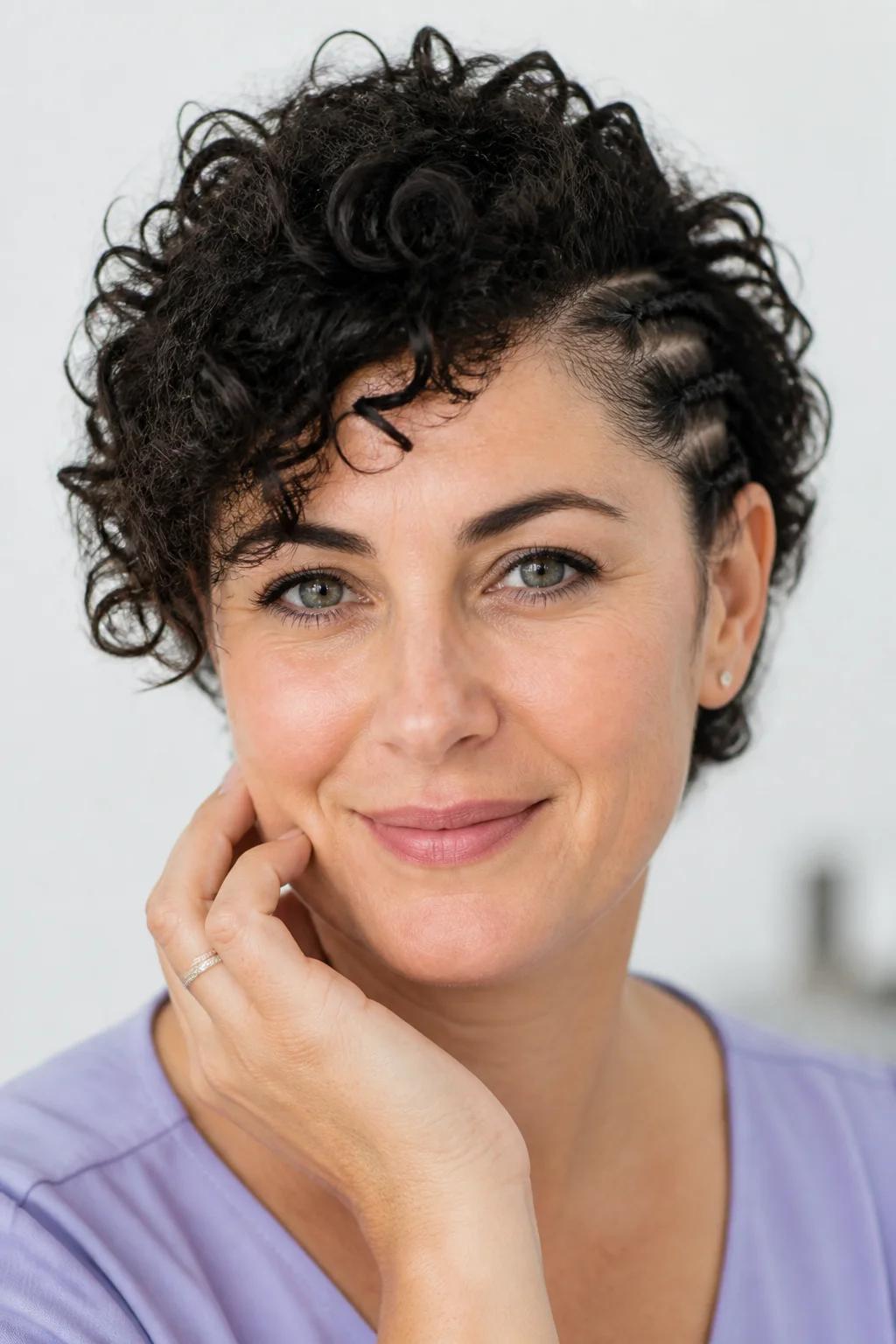
Length gets concentrated almost entirely at the crown here, with everything else cut short and simple. That concentrated length gives curls room to coil and stack on top of each other, building real height rather than just width. It’s a good transitional cut for anyone moving from a longer style into a true pixie, since the crown length offers something familiar to hold onto. Styling is mostly about lifting the roots while damp and letting the curls dry in place.
Choosing the Right Curly Pixie for Your Hair
Picking between these cuts comes down to your curl pattern, your face shape, and how much styling time you actually want to spend. If your curls are fine or looser, the rounded classic curly pixie or the curly quiff pixie will give you lift without needing heavy product, since softer curls respond well to shape alone. Denser or tighter curl patterns, like those suited to the curly afro pixie or the curly crop pixie, already carry natural volume, so the cut should focus on an even outline rather than adding more layers.
If you want drama, the curly mohawk pixie and the curly faux hawk pixie deliver the most height, but they need daily product to hold that shape. For something you can wash and go, the tapered natural curl pixie and the curly caesar pixie ask the least from your morning routine. Women who like an edge without full commitment often land on the undercut curly pixie or the curly pixie with shaved side, since both hide the boldest part of the cut under the top layer.
A common mistake is picking a heavily disconnected style, like the disconnected curly pixie or curly pixie mullet, without discussing curl shrinkage first. Curls always look shorter dry than wet, so a length that seems safe in the chair can end up much shorter once it springs up. Bring reference photos and talk through shrinkage before any cutting starts.
Final Thoughts
Short curly cuts reward good shaping more than heavy product, and every style on this list proves that volume comes from smart layering, not from piling on mousse. Talk to your stylist about your curl pattern before your appointment, bring a photo of the shape you like, and be honest about how much time you want to spend styling each morning. A well cut curly pixie should need less effort over time, not more, and it should still look full a week after your appointment as it did the day you left the chair.