Fine hair, thinning density, and a desire to look put-together without a daily fuss are the three things that come up again and again once hair passes 70. A good cut should work with what your hair is actually doing now, not what it did twenty years ago. Short hair layered haircuts for women over 70 solve a lot of problems at once: they add the illusion of fullness, they cut down on styling time, and they soften a face without aging it further. The styles below range from barely-there pixies to chin-length bobs with movement built into the ends. Bring the name and a photo to your stylist so you walk out with the cut you actually asked for, not a loose interpretation of it.
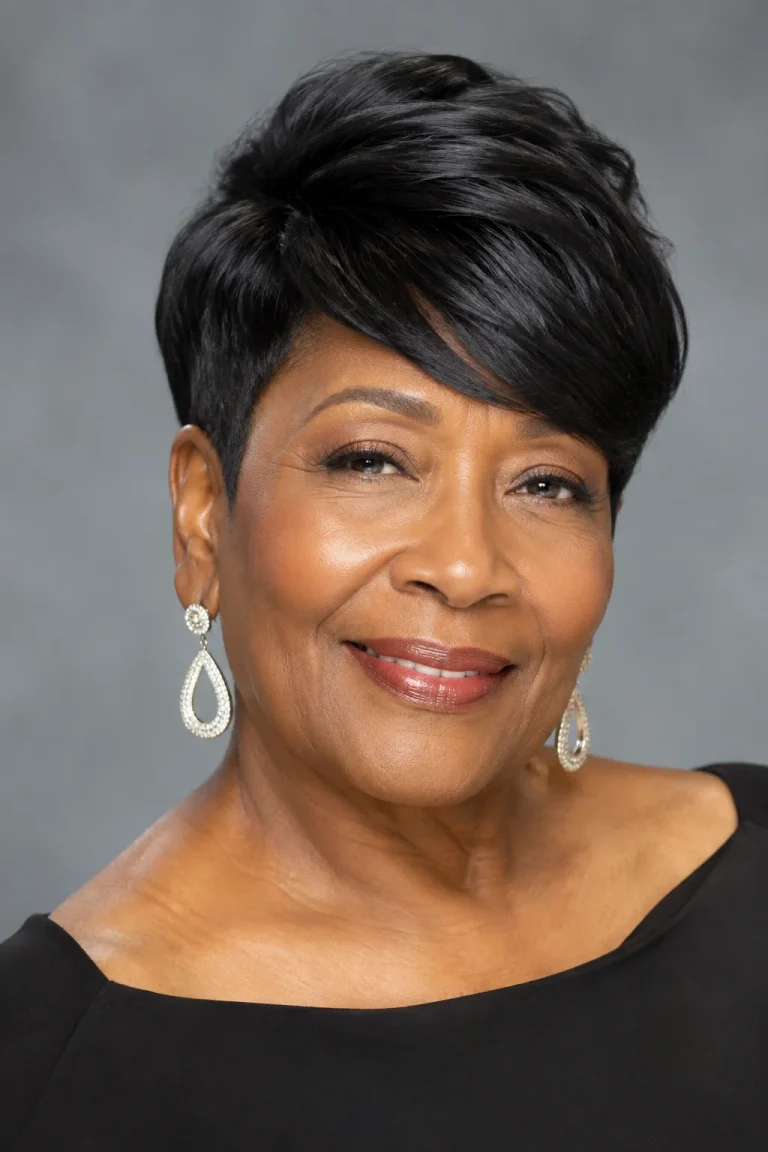
Short Textured Pixie with Soft Layers
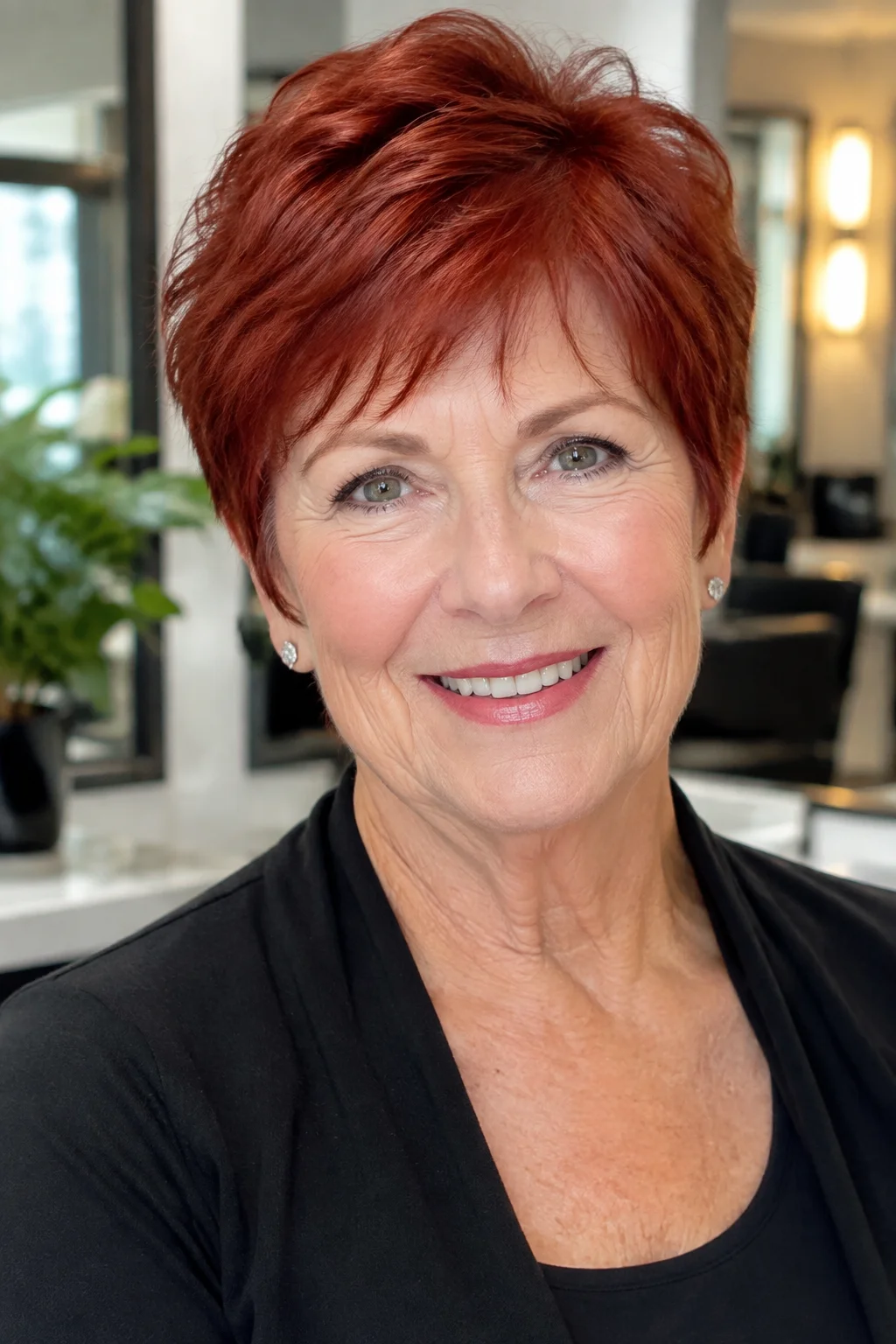
This pixie keeps length short all over but breaks up the top with soft, irregular layers that give it lift without looking stiff. It works especially well on fine hair because the layers are cut to create the appearance of volume rather than relying on thickness that isn’t there. The sides stay close to the head, which keeps the whole shape neat. Tip: ask your stylist for a light texturizing spray rather than heavy gel, since gel can weigh down what little volume the layers create. A light mist of heat protectant before styling helps the finish last. A light mist of heat protectant before styling helps the finish last.
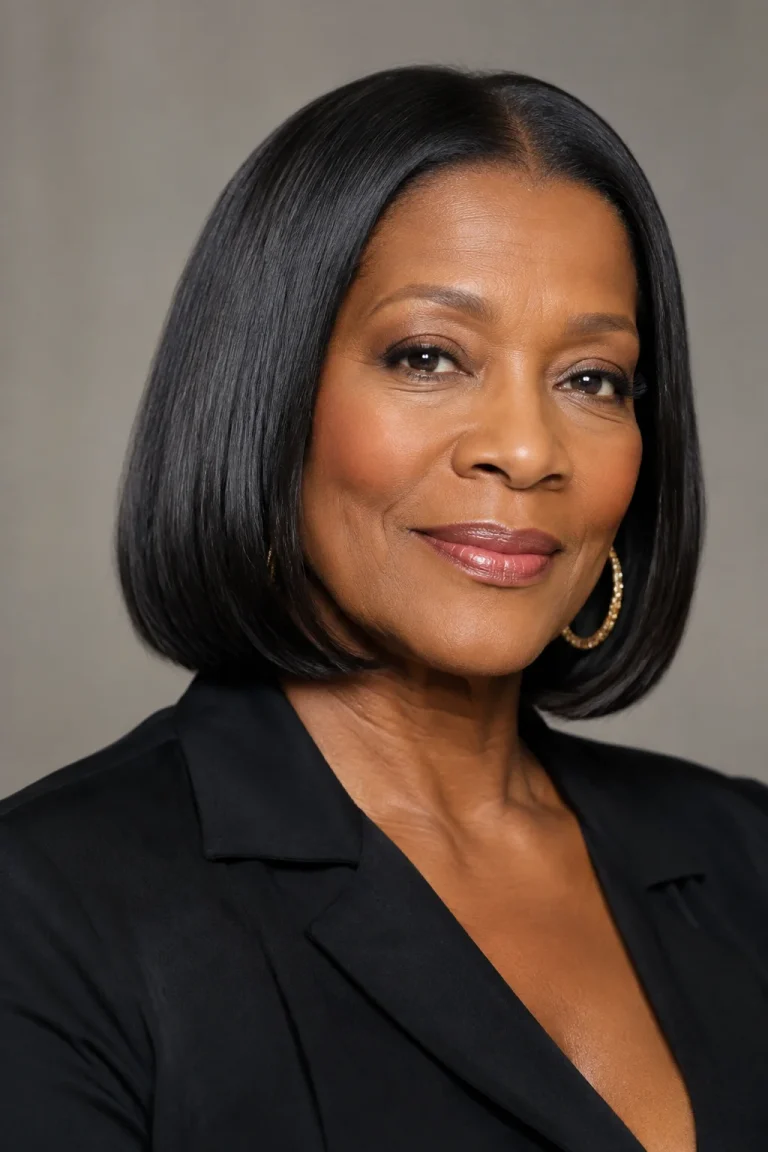
Chin-Length Bob with Face-Framing Layers
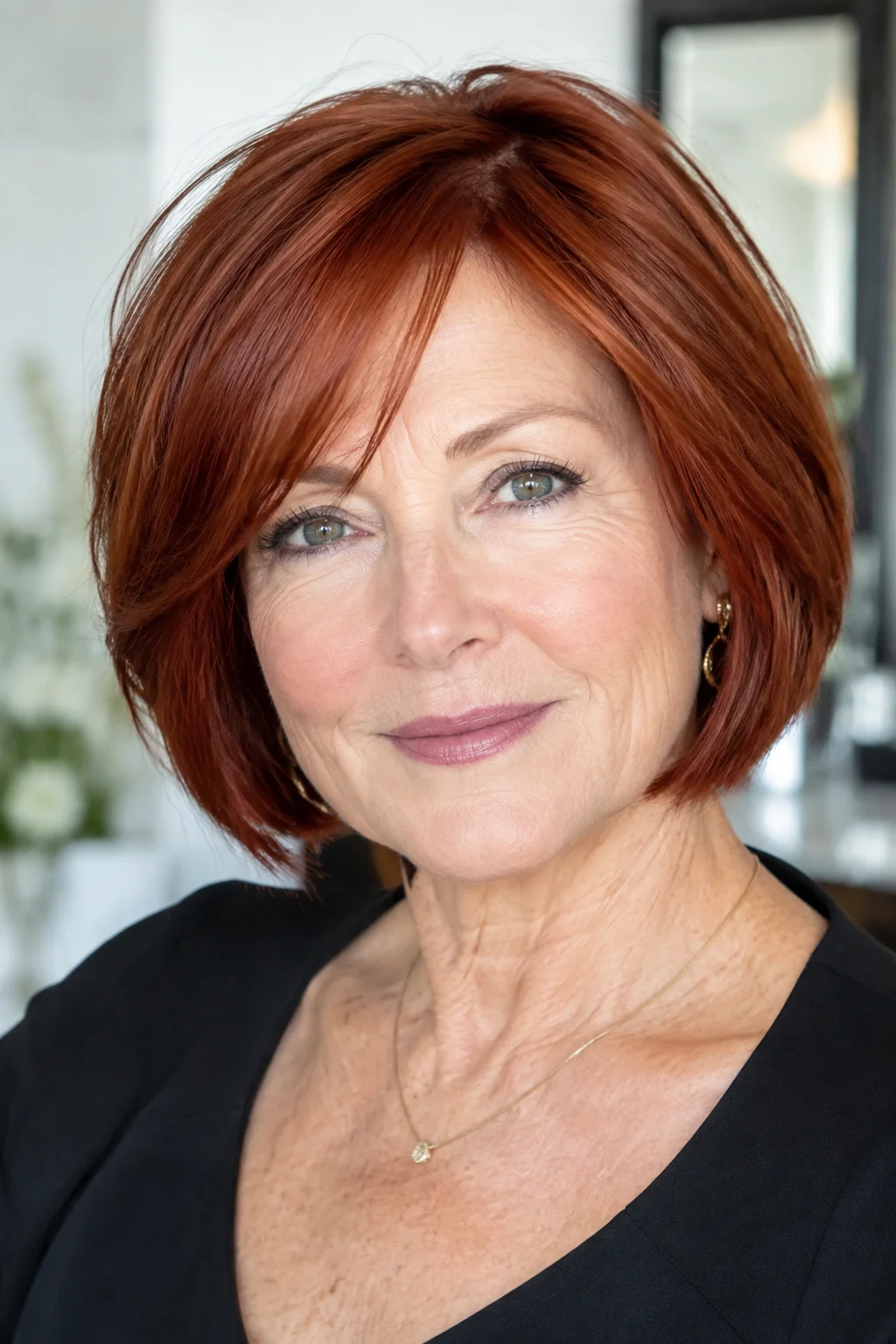
A chin-length bob with layers cut around the face does a lot of quiet work. It draws the eye up toward the cheekbones and away from the jawline, which is exactly what most women want as skin loses some firmness. The back can stay blunt or get a few layers depending on how much movement you want. This length also happens to be easy to sleep on and wake up without much damage, since it’s short enough to avoid tangling overnight. A light mist of heat protectant before styling helps the finish last. A light mist of heat protectant before styling helps the finish last.
Cropped Shag with Graduated Layers
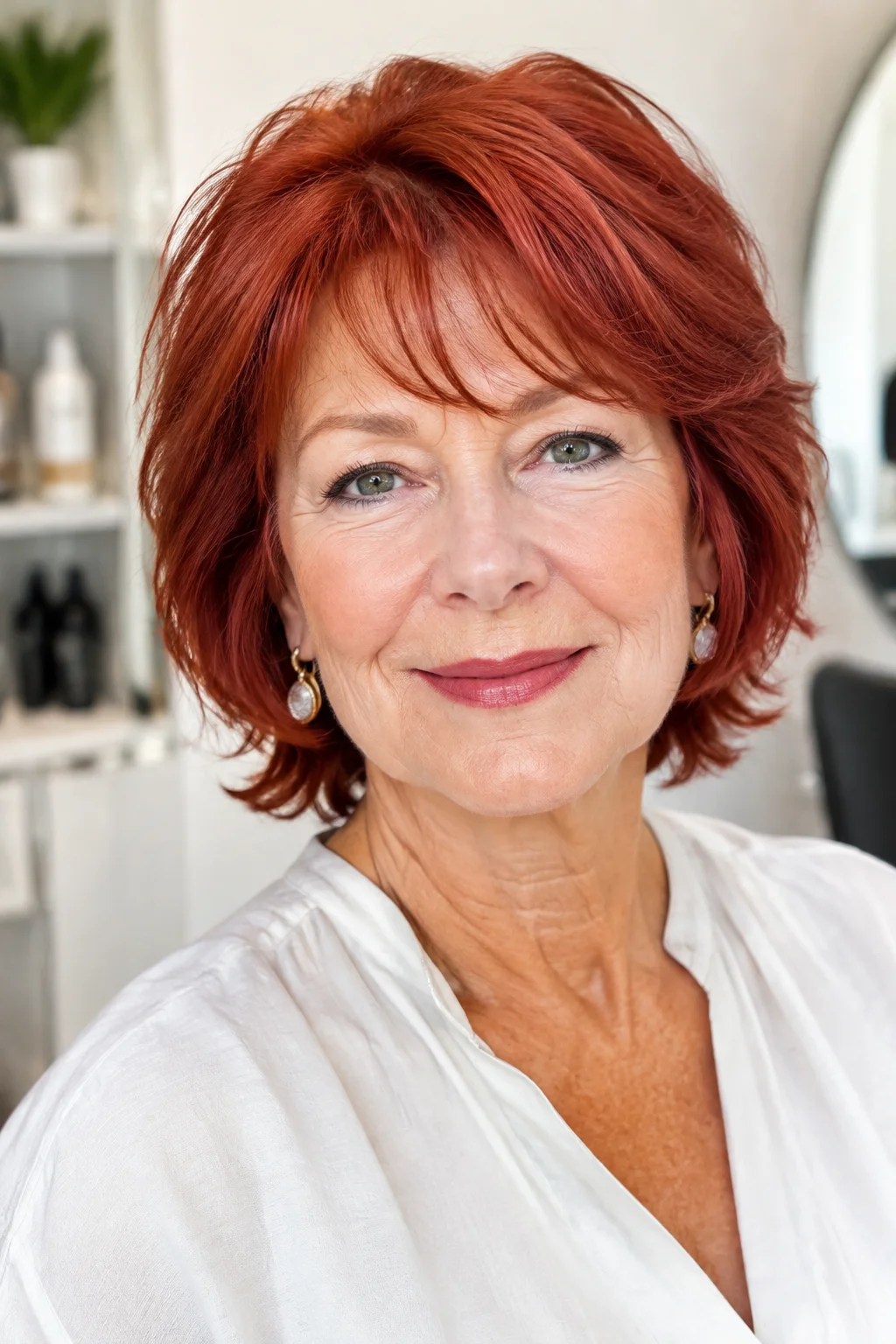
The shag has made a real comeback, and the cropped version suits shorter, finer hair better than the longer shaggy styles from decades past. Graduated layers throughout the crown and sides create texture that reads as deliberate, not messy. It’s a good pick if you want something with a little edge that still photographs well for family events. Tip: a shag like this needs regular trims, around every six weeks, to keep the graduation looking sharp instead of growing out shapeless.
Layered Pixie with Long Bangs
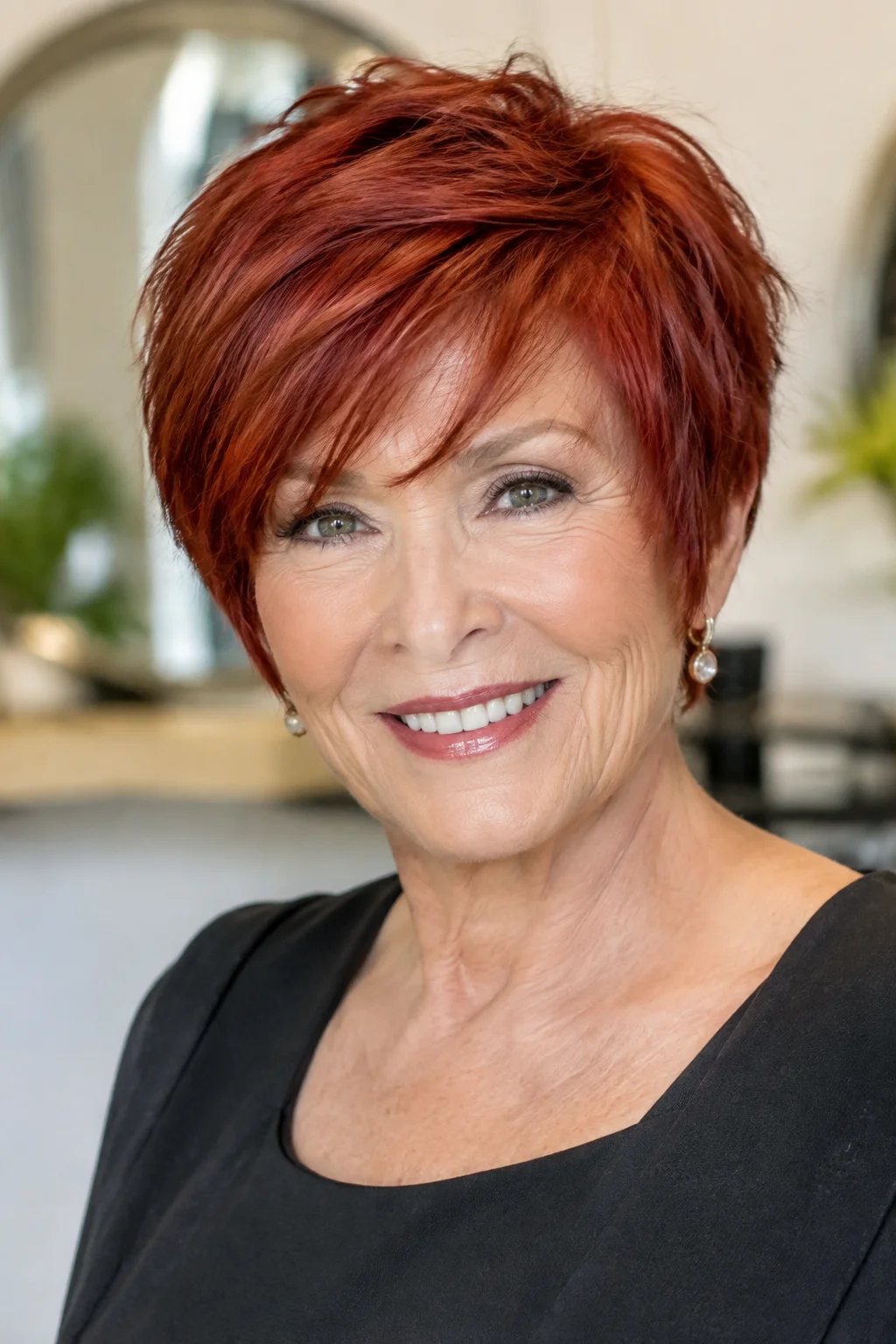
Keeping the bangs longer while the rest of the pixie stays short creates a nice contrast and gives you something to style differently depending on the day. You can sweep the bangs to the side for a softer look or push them back when you want your forehead showing. This version suits women who miss having “hair to do” but don’t want the upkeep of a longer cut.
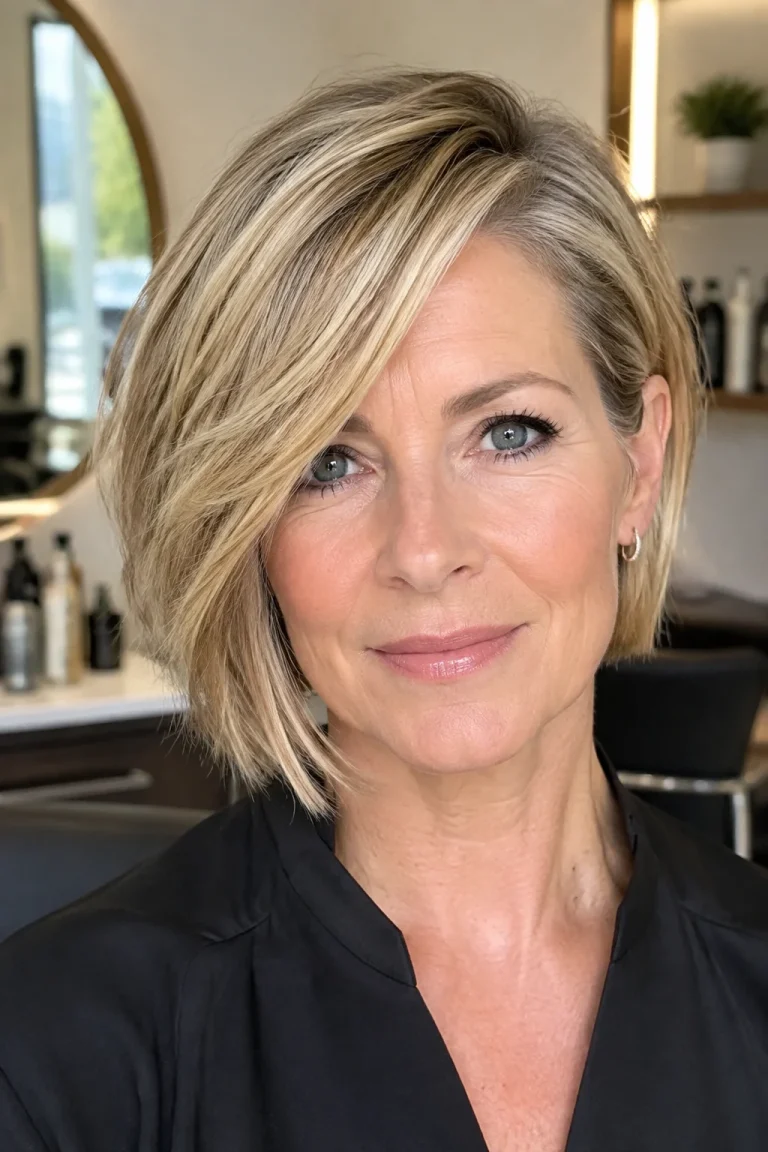
Short Layered Bob for Fine Hair
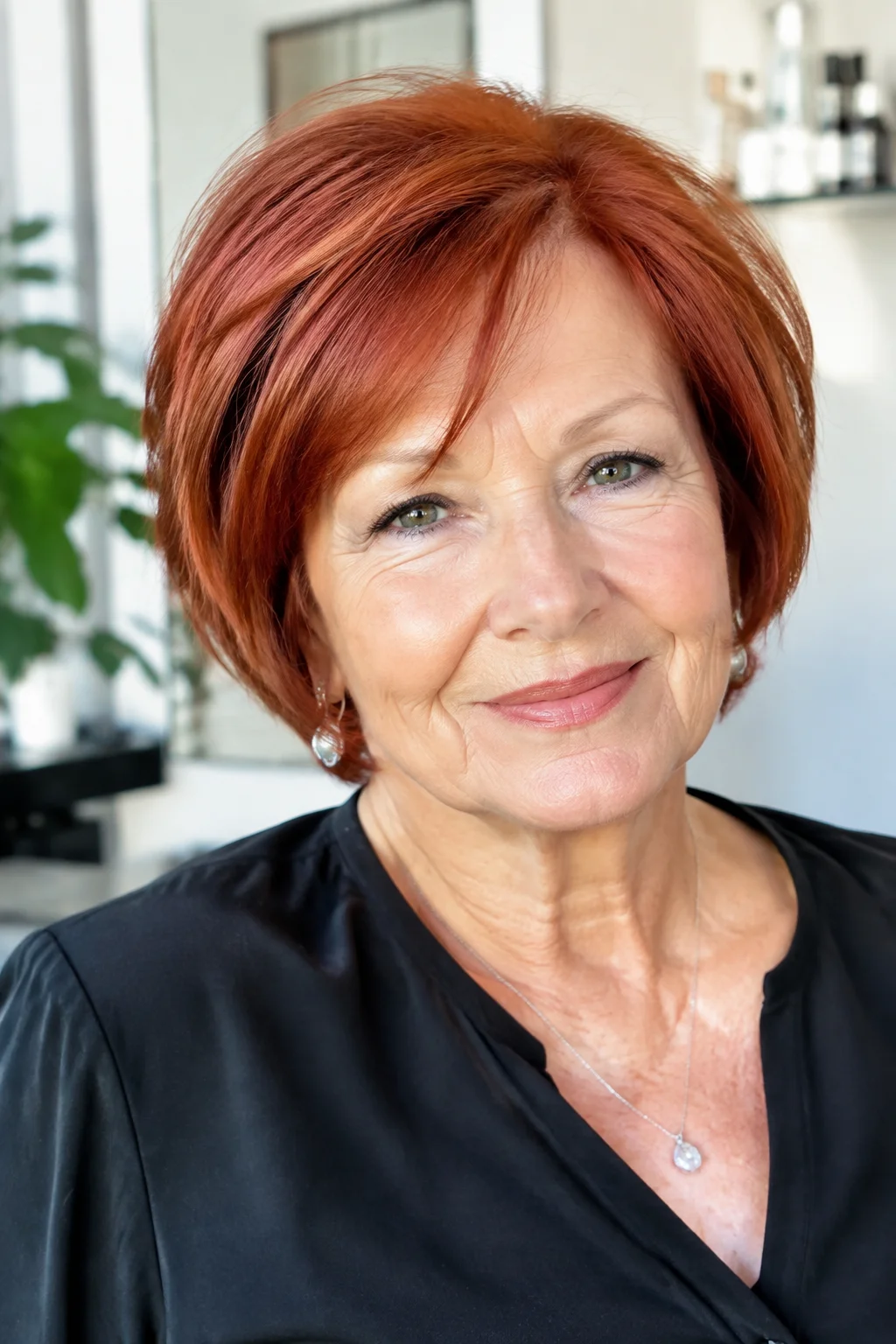
Fine hair often looks thinner than it is once it grows past the chin, so a short layered bob cut just above or at jaw length tends to look fuller in photographs and in the mirror. The layers are kept subtle here, mostly at the ends, so the line of the bob doesn’t get chopped up. Blow-drying with a round brush gives this cut noticeably more body than air drying.
Asymmetrical Layered Crop
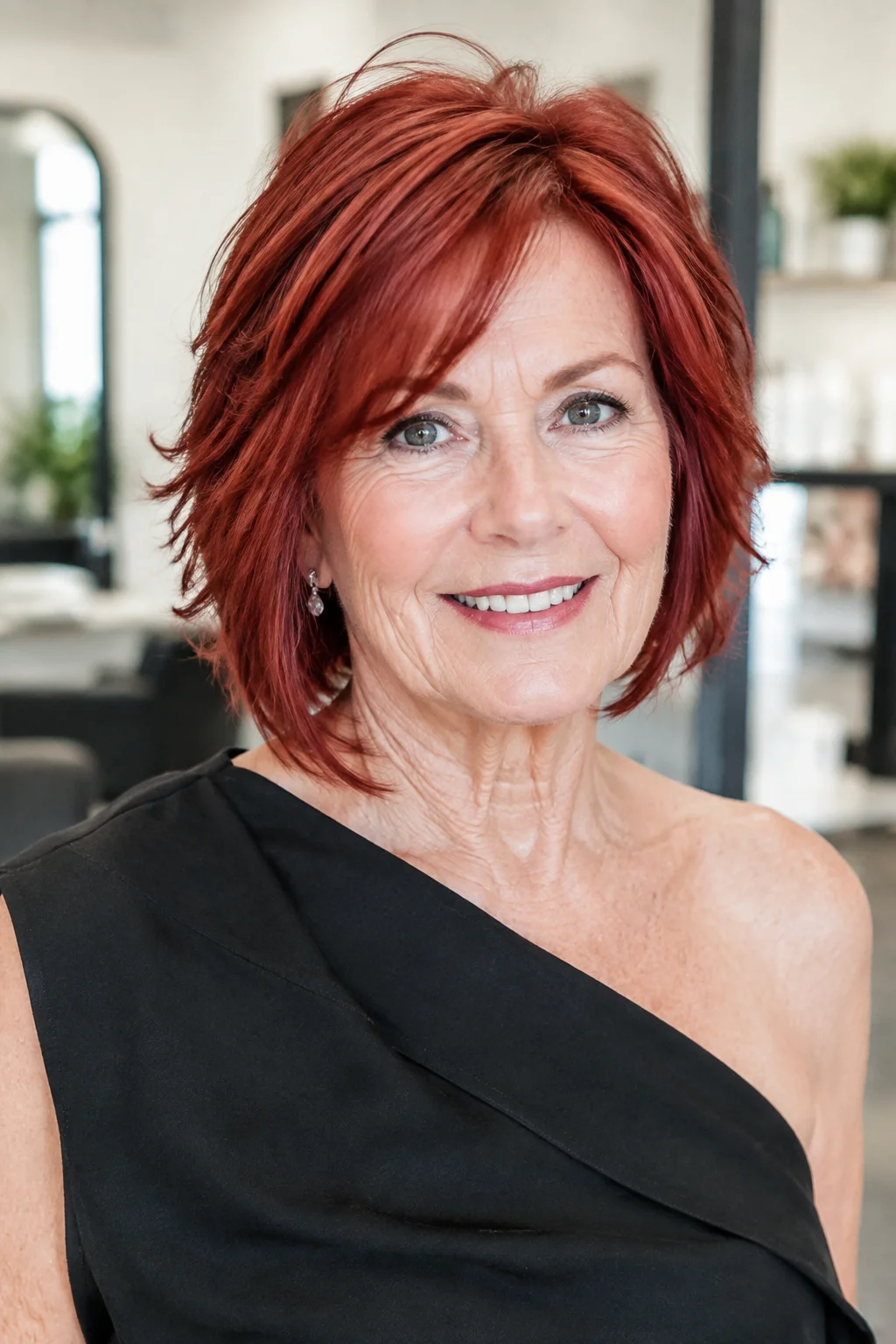
An asymmetrical crop takes a short pixie-length base and lets one side grow slightly longer than the other. It’s a more modern choice and tends to suit women who already wear bold colors or statement glasses, since the haircut has a bit of personality built in. The layering is concentrated near the longer side to keep that section from looking heavy compared to the rest.
Blunt Pixie with Textured Top Layers
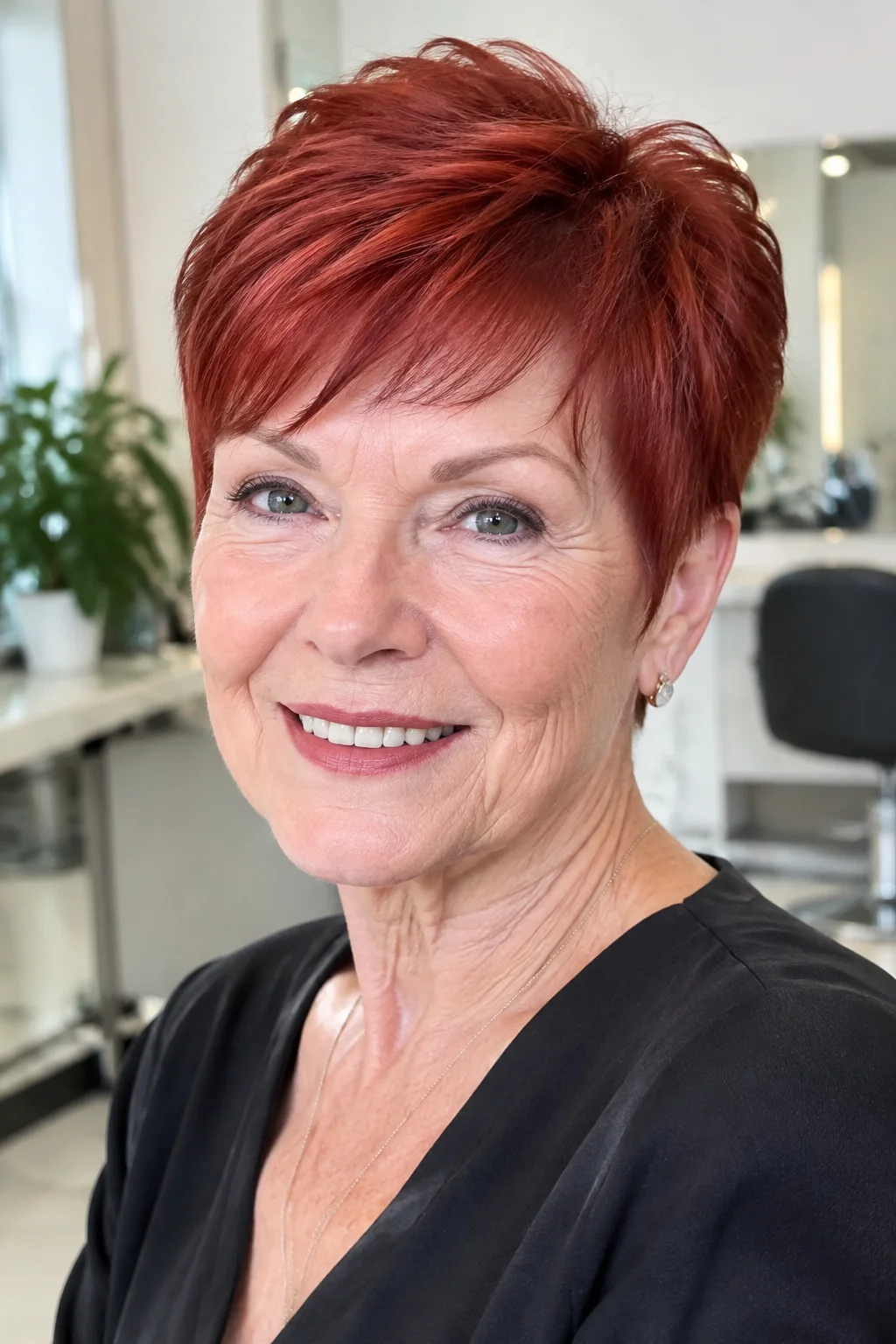
This one keeps a clean, blunt perimeter around the ears and neckline while the top gets choppier, more textured layers. The contrast between the smooth bottom and the broken-up top is what makes it interesting instead of flat. Tip: ask for a matte paste on the top layers only, so the bottom keeps its clean line and doesn’t pick up unwanted shine.
Side-Parted Short Bob with Undercut Layers
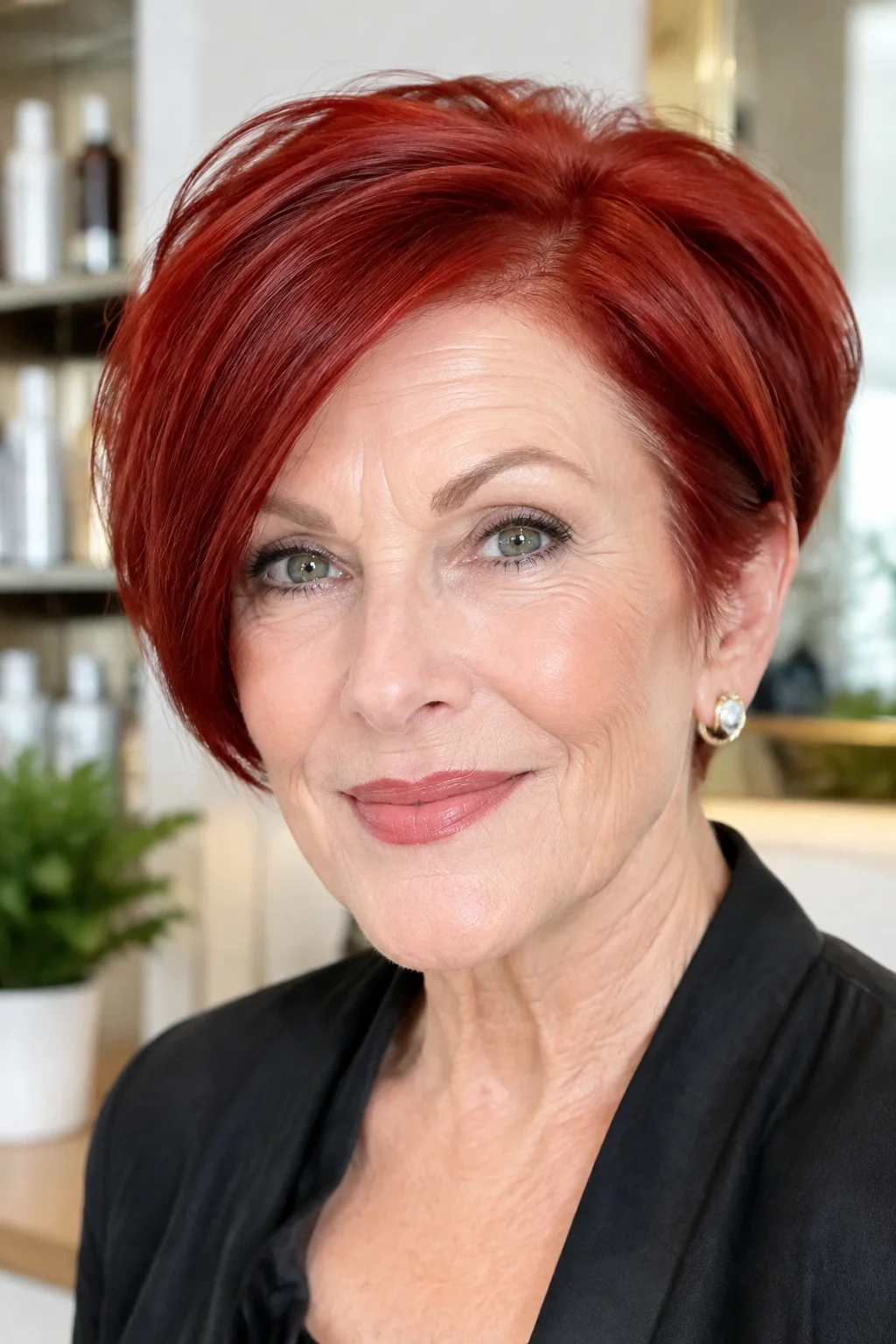
A deep side part instantly changes how a short bob sits, and adding undercut layers underneath keeps the nape from looking bulky. This is a sturdier option for thicker hair that doesn’t lie flat on its own. It holds its shape through humid weather better than most short cuts, which matters if you live somewhere with real summers.
Tousled Layered Crop for Curly Hair
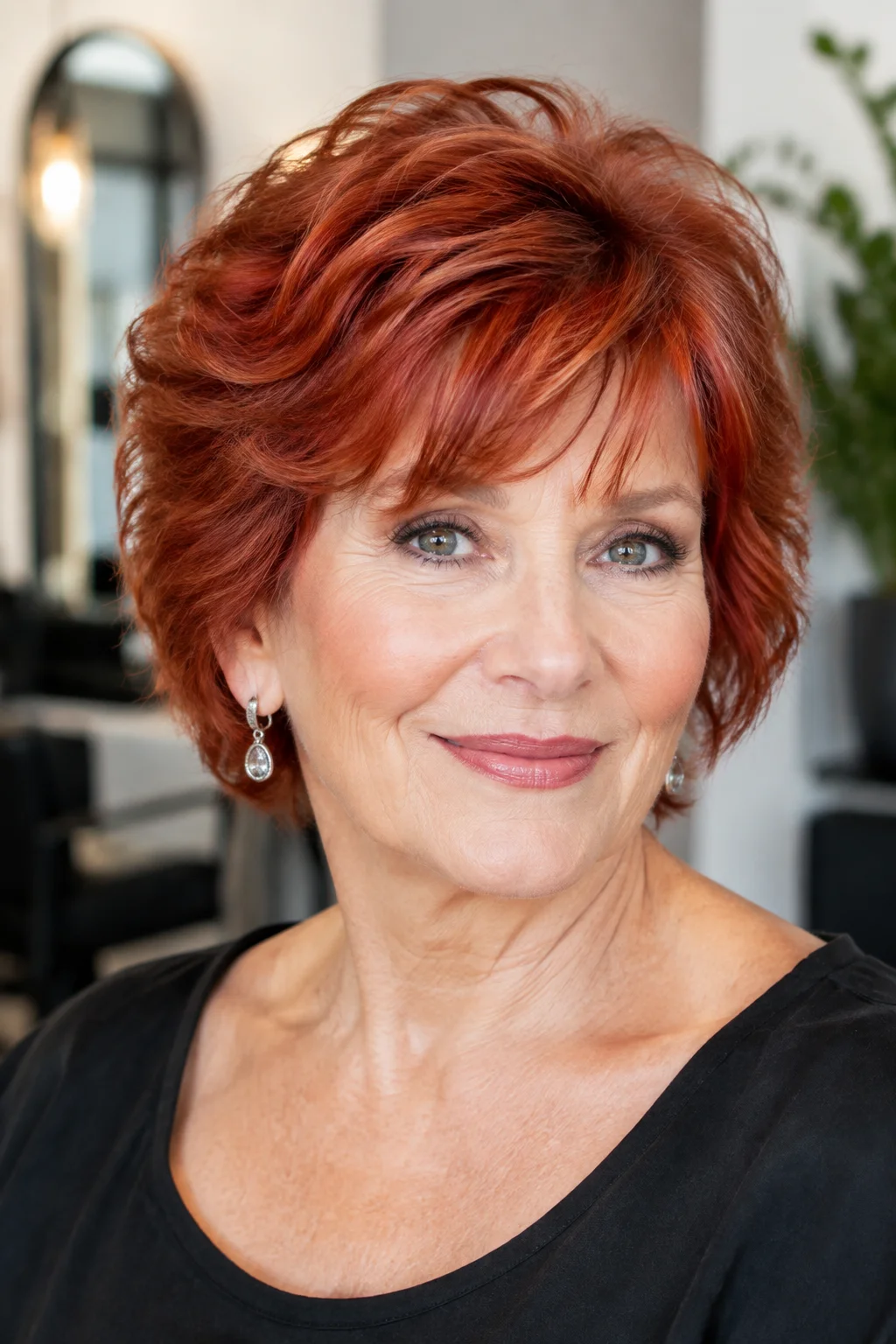
Curly hair needs layers cut with the curl pattern in mind, not against it, and this tousled crop does exactly that. The layers are longer and less aggressive than what you’d use on straight hair, since curls shrink up once they dry. It lets natural texture do most of the styling work, which cuts down on time spent with hot tools.
Feathered Pixie-Bob Hybrid
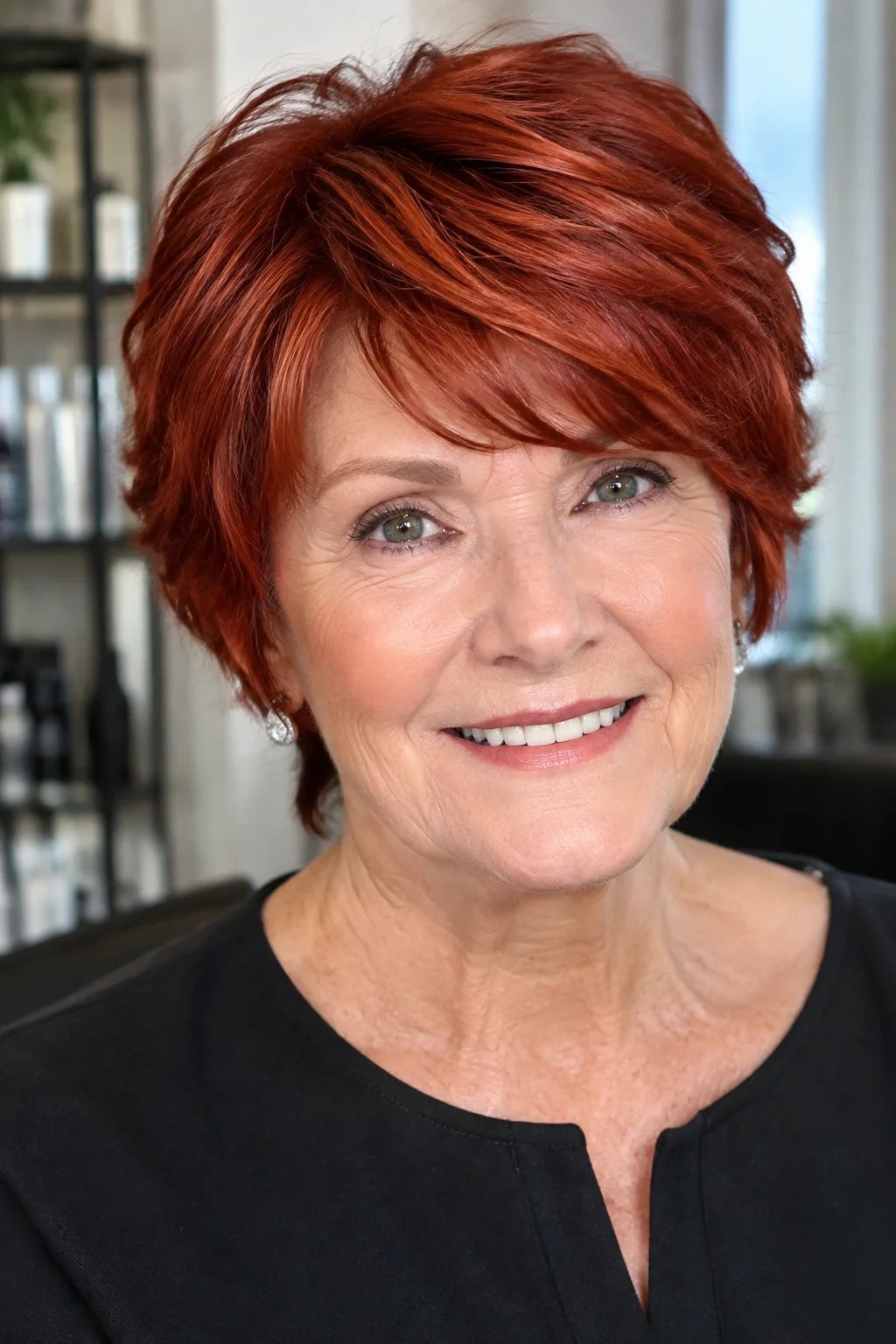
This cut splits the difference between a pixie and a bob, landing somewhere around the ear with feathered ends throughout. It gives you a little more length to tuck behind your ears on days you want it out of your face, while still reading as short overall. The feathering keeps the ends soft instead of blunt, which suits softer, more rounded face shapes.
Choppy Layered Lob for Straight Hair
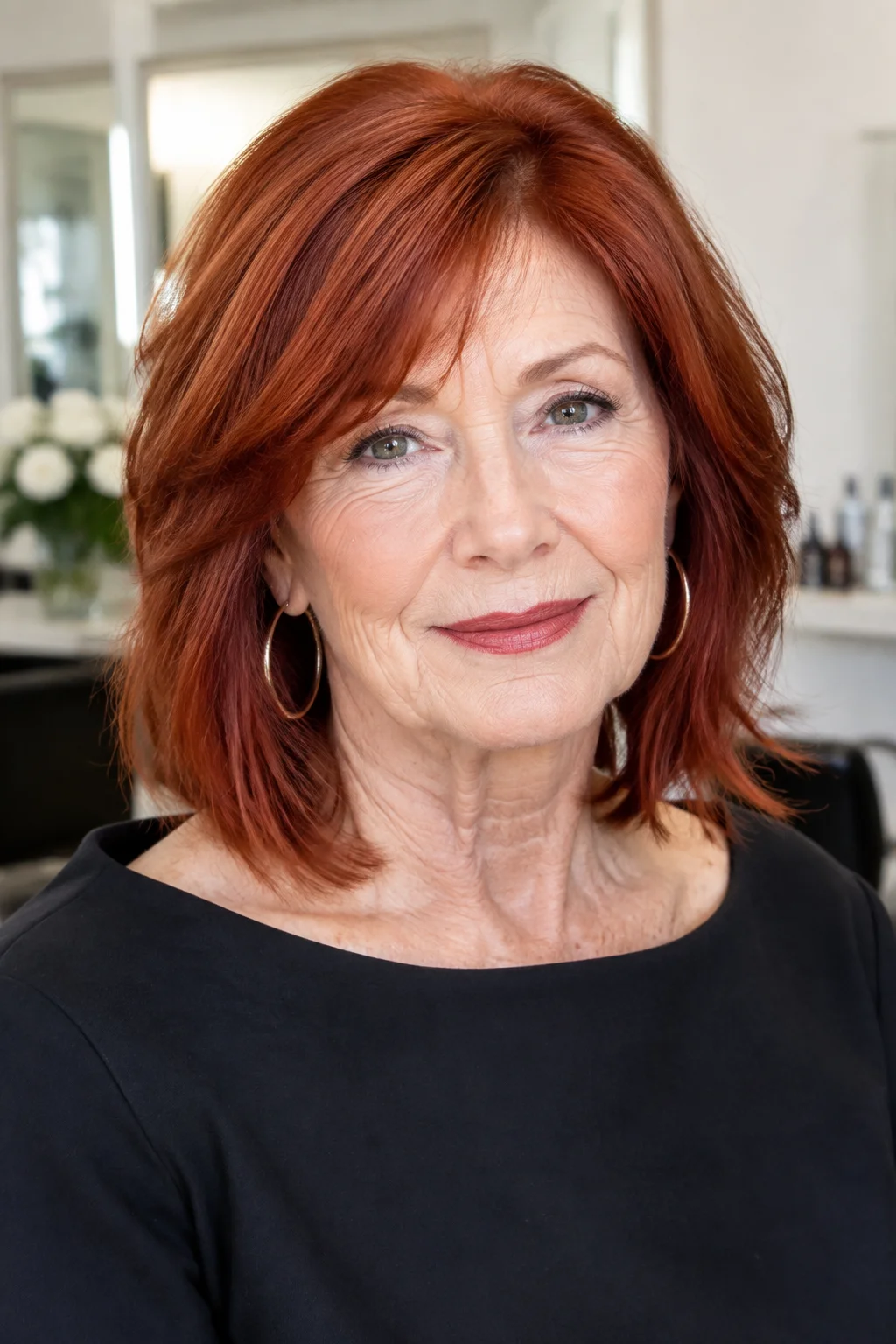
A choppy lob with heavy layering gives straight hair the kind of movement it doesn’t generate on its own. Without layers, straight hair at this length can look heavy and flat against the head. The choppy ends break up that weight and give the cut some life even without curling.
Stacked Layered Pixie with Crown Volume
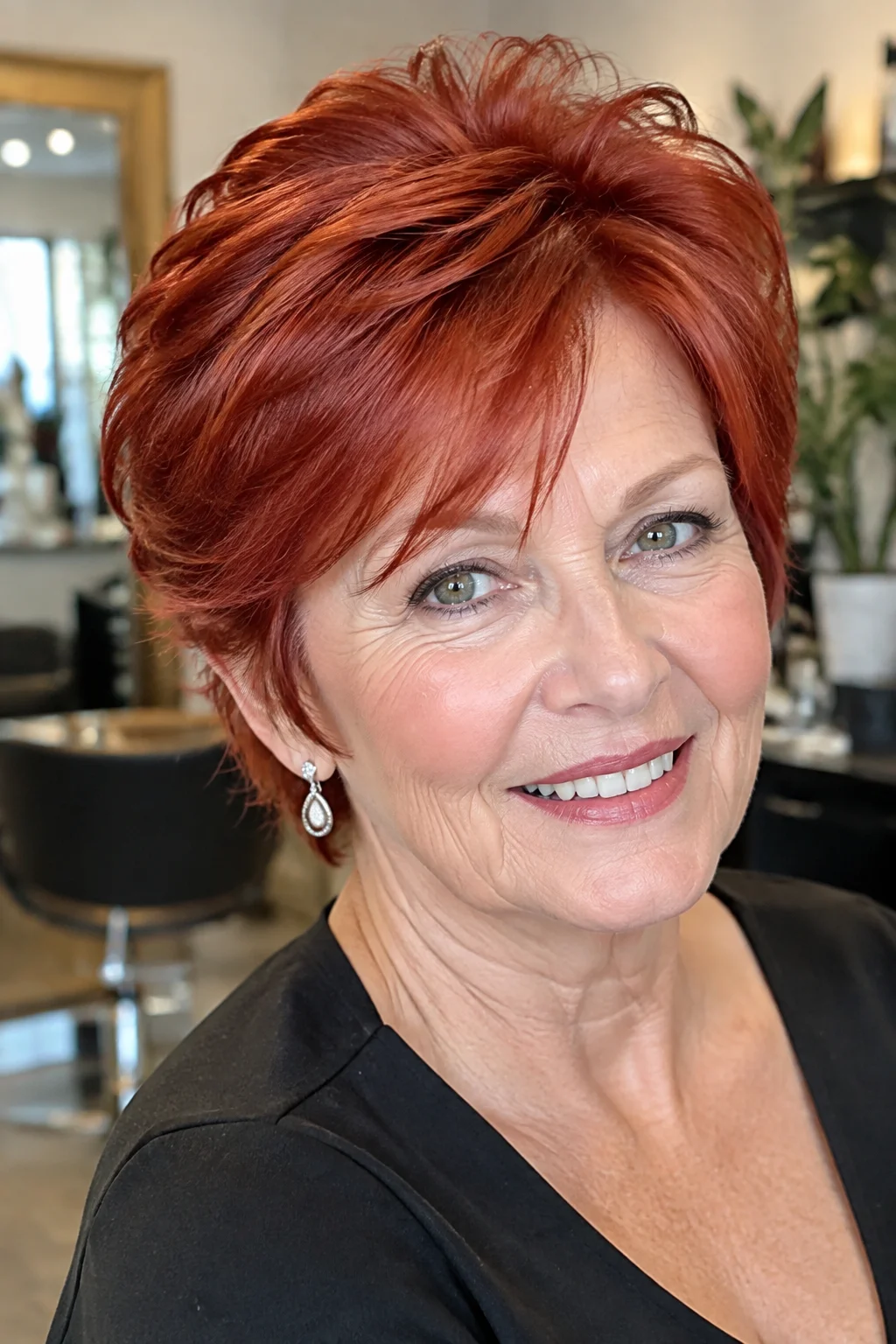
Stacking layers at the crown is one of the most reliable ways to build height where thinning often shows first. This pixie is cut short through the sides and back, with the stacking concentrated right at the top of the head. It reminds me of the kind of volume you’d normally only get from a blowout, except it’s built into the cut itself. Tip: sleeping with a silk pillowcase helps preserve that crown volume overnight instead of flattening it.
Short Layered Bob with Graduated Back
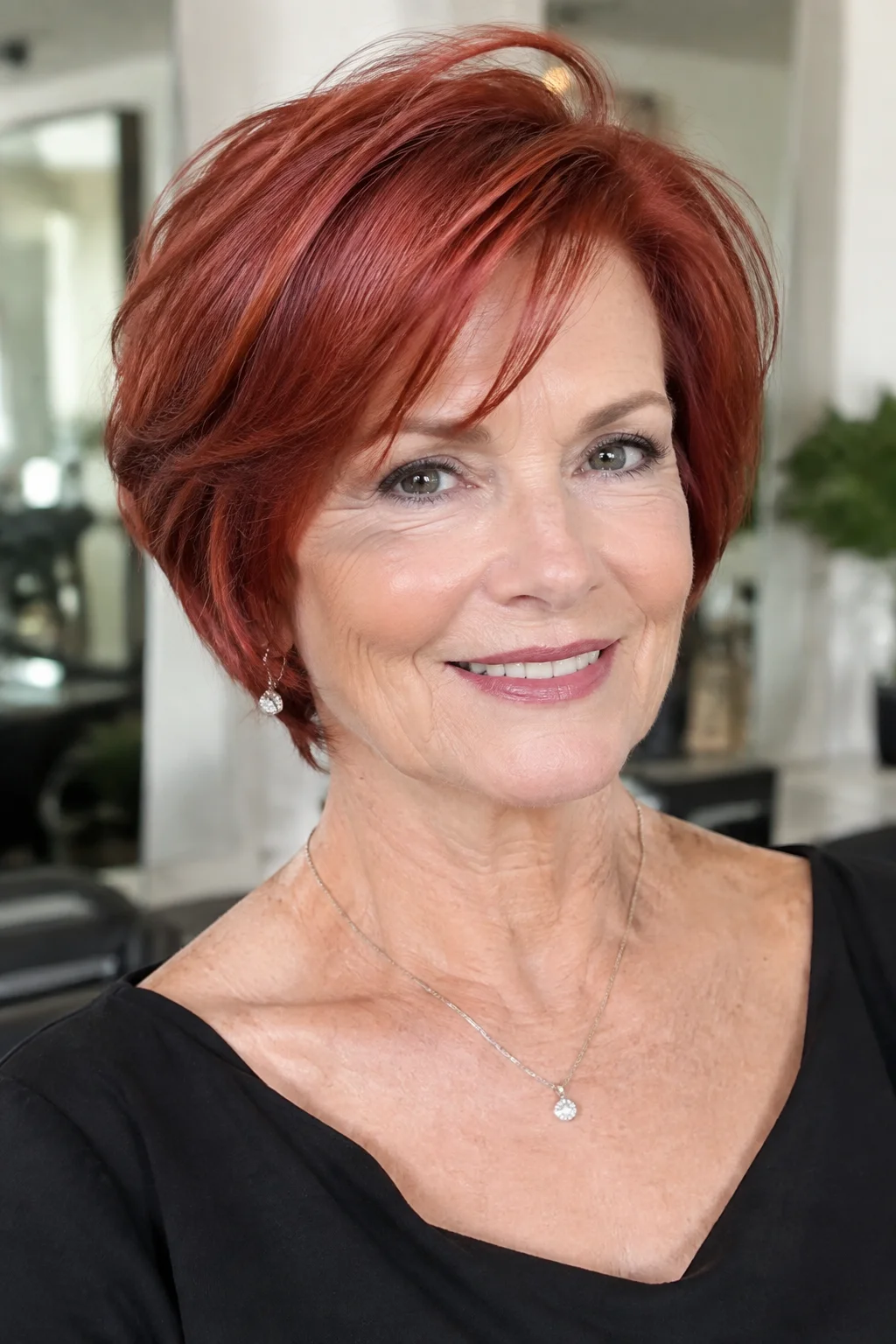
Graduating the back of a short bob, meaning the layers get progressively shorter toward the nape, creates a rounded shape that sits close to the head. This is a dependable option for women who want something neat and professional-looking without any dramatic styling required. It grows out fairly evenly too, so you’re not stuck with an awkward in-between stage.
Wispy Layered Crop with Disconnected Bangs
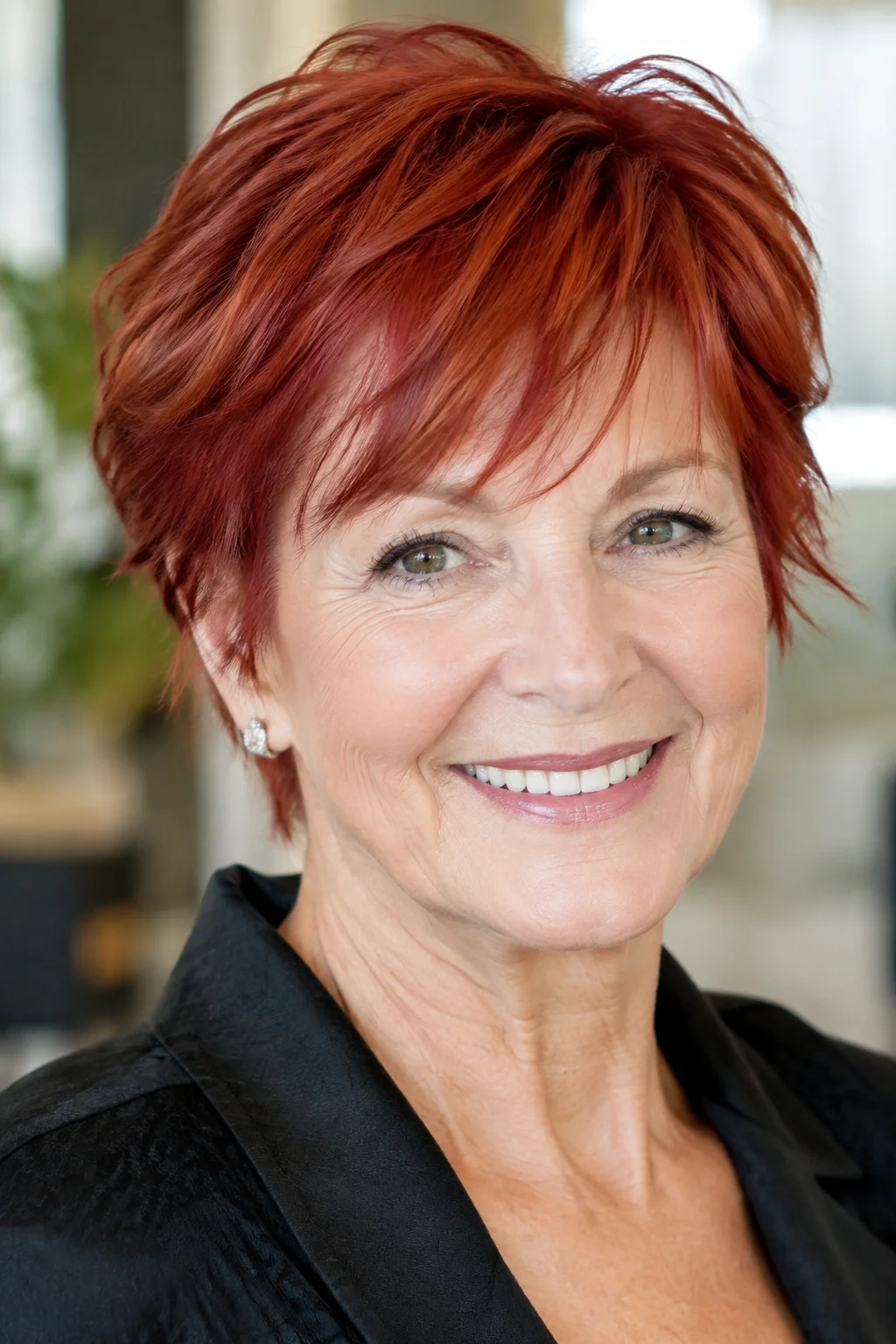
Disconnected bangs sit apart from the rest of the layering, creating a soft, wispy fringe that doesn’t follow the same line as the sides. This crop suits women who want bangs but don’t want the heavy, blunt kind that need trimming every few weeks. The wispiness forgives some growth between salon visits.
Textured Pixie-Shag Blend
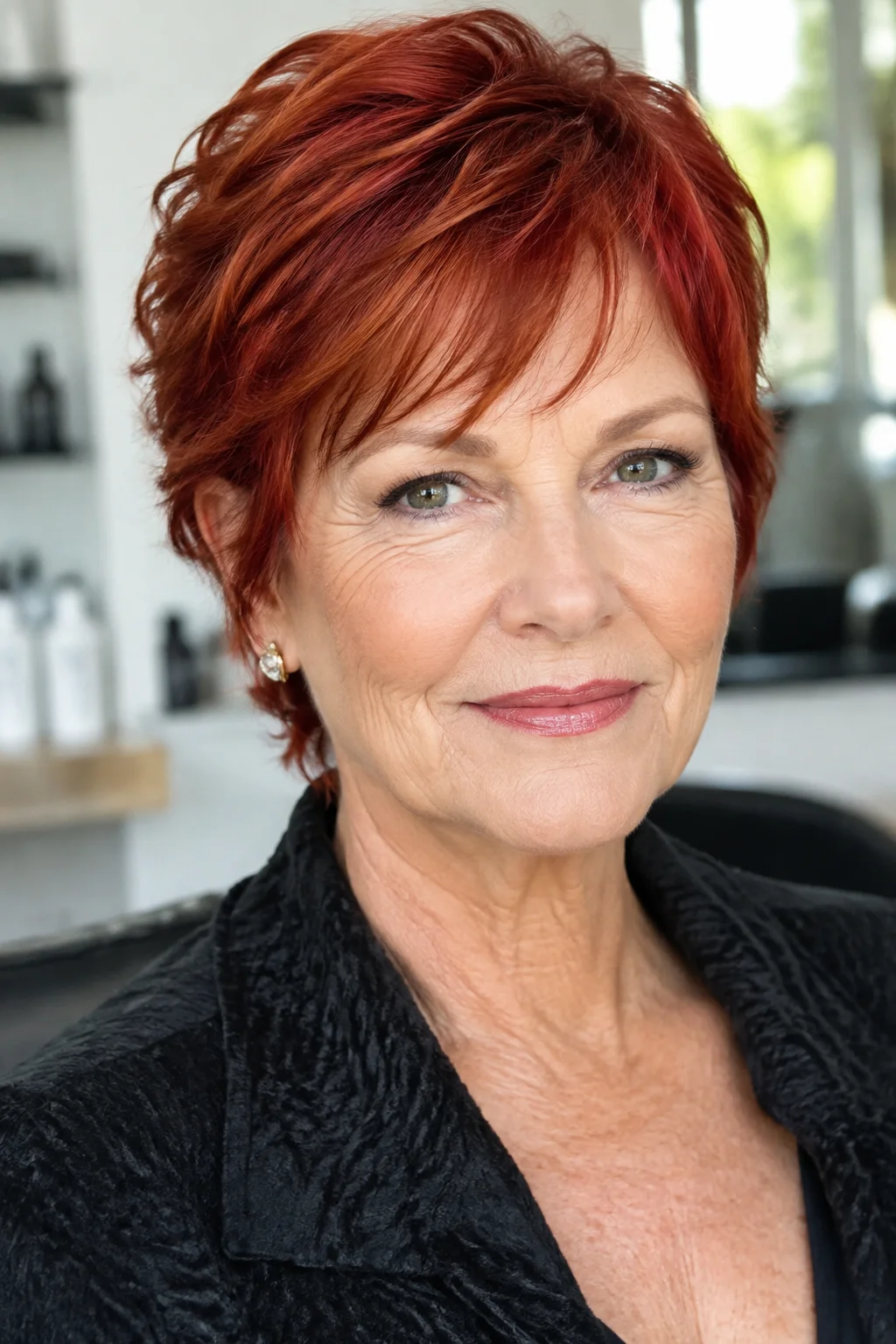
Combining pixie shortness with shag texture gives you a cut that’s easy to maintain but doesn’t look plain. Layers are cut unevenly on purpose throughout the crown and sides. Tip: finger-styling with a small amount of texture cream works better here than a brush, since brushing tends to smooth out the very texture you’re trying to show off.
Rounded Layered Bob for Round Faces
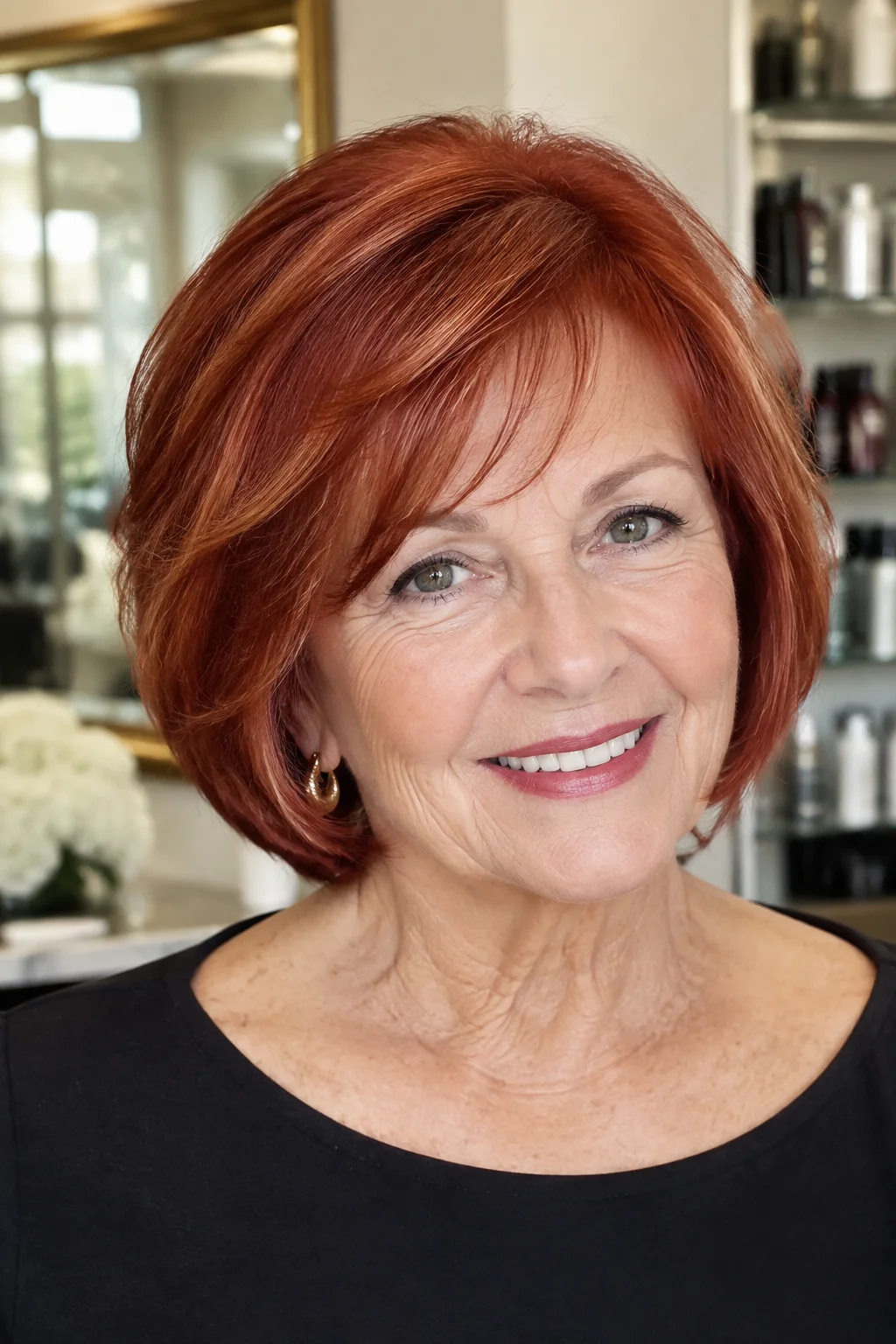
A rounded bob might sound like it would add width to a round face, but when the layers are placed correctly around the jaw, they actually create definition instead of adding bulk. The goal is length that hits just below the fullest part of the cheek, with layers that taper rather than stack outward.
Short Razored Layers with Longer Top
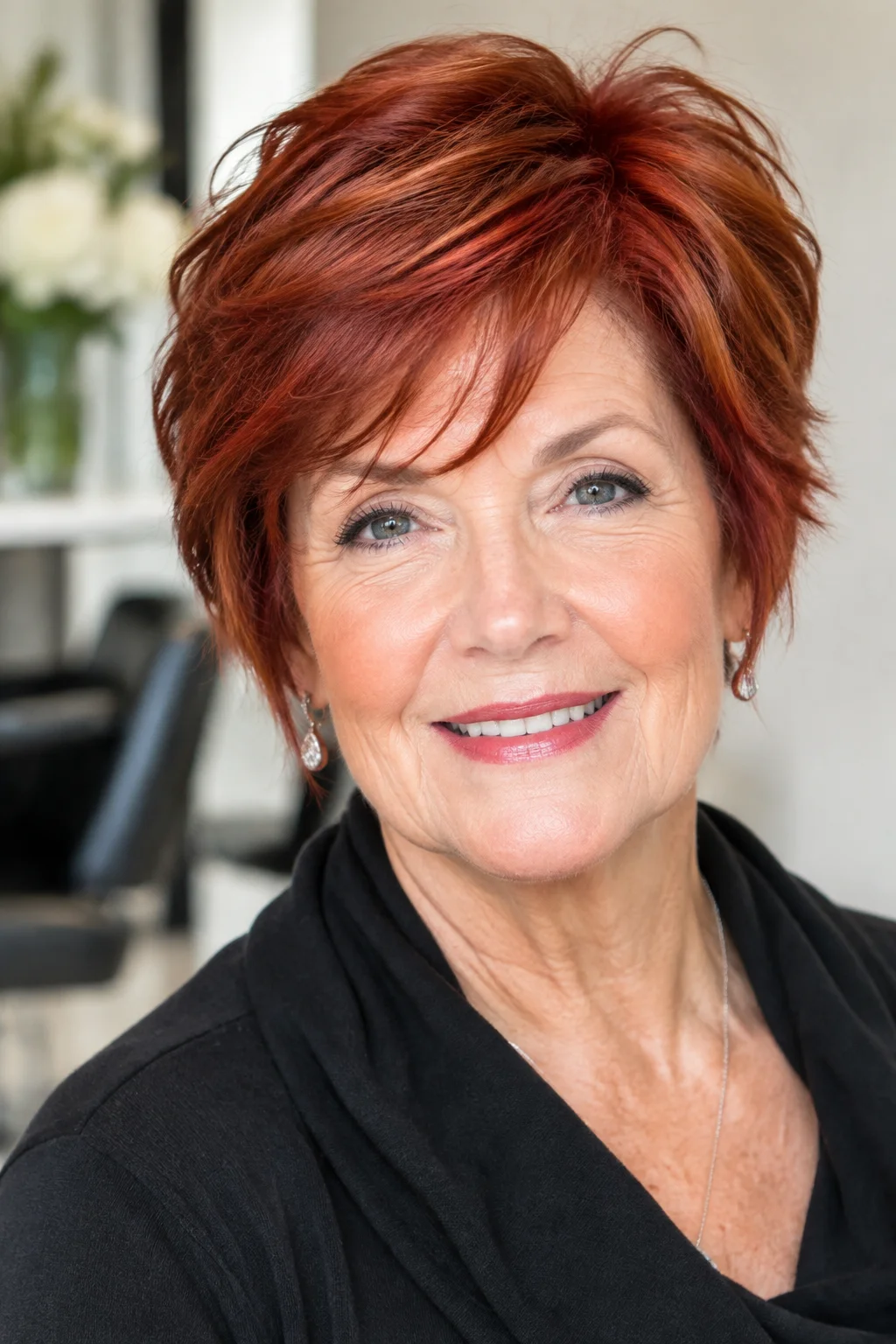
Razoring the ends instead of cutting them with shears creates a softer, more feathered finish, especially useful on layers that sit shorter through the sides with more length left on top. It’s a good option if your hair has gotten a little coarser with age, since razoring thins it out naturally. The longer top gives you flexibility to style it smooth or tousled depending on your mood that day.
Side-Swept Layered Pixie
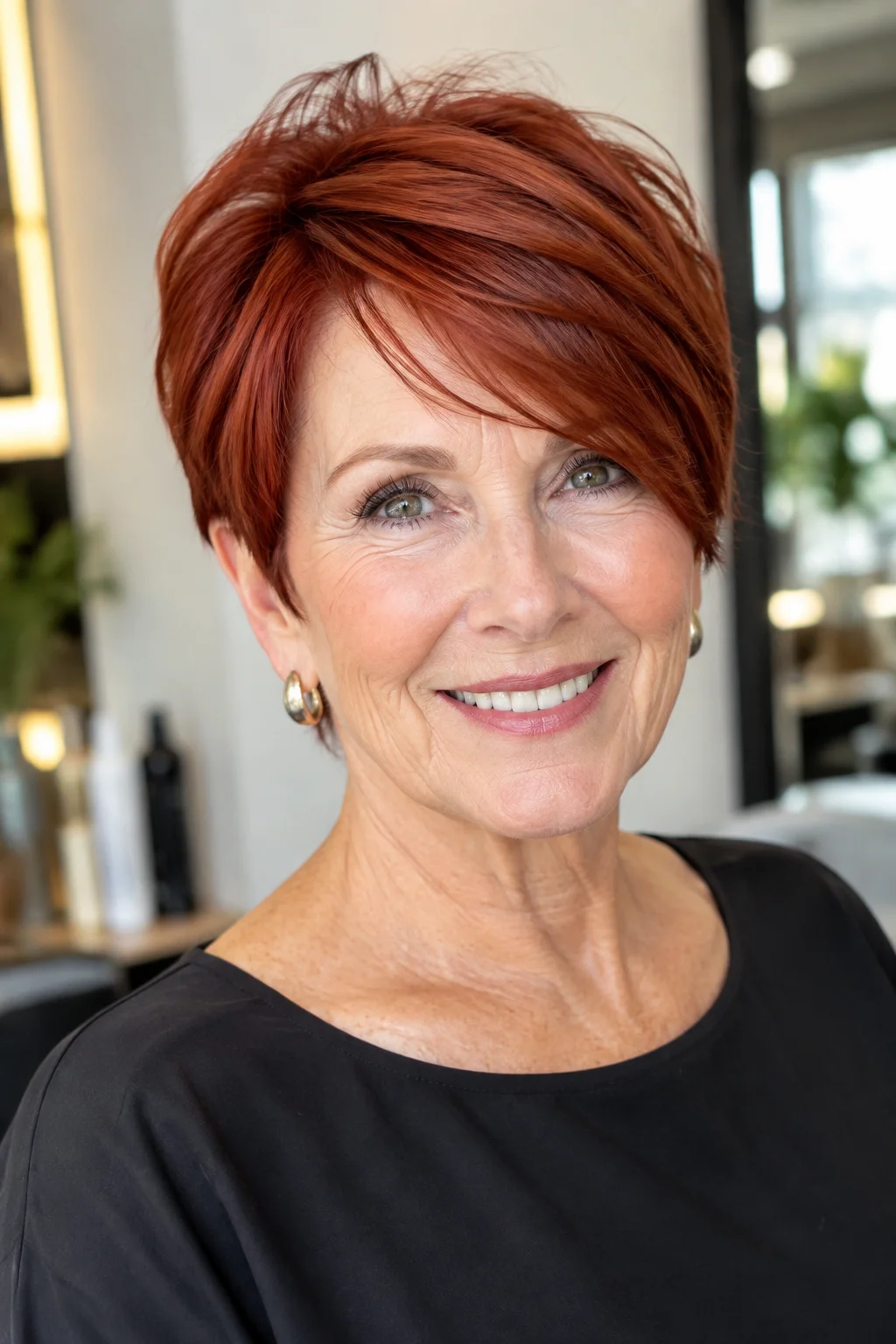
Sweeping the top layers to one side instead of styling them straight up or back softens the whole look and works well with glasses, since it keeps hair away from the frames. This pixie suits women who want something low-maintenance but still styled, rather than a wash-and-go crop.
Blended Layered Bob with Soft Texture
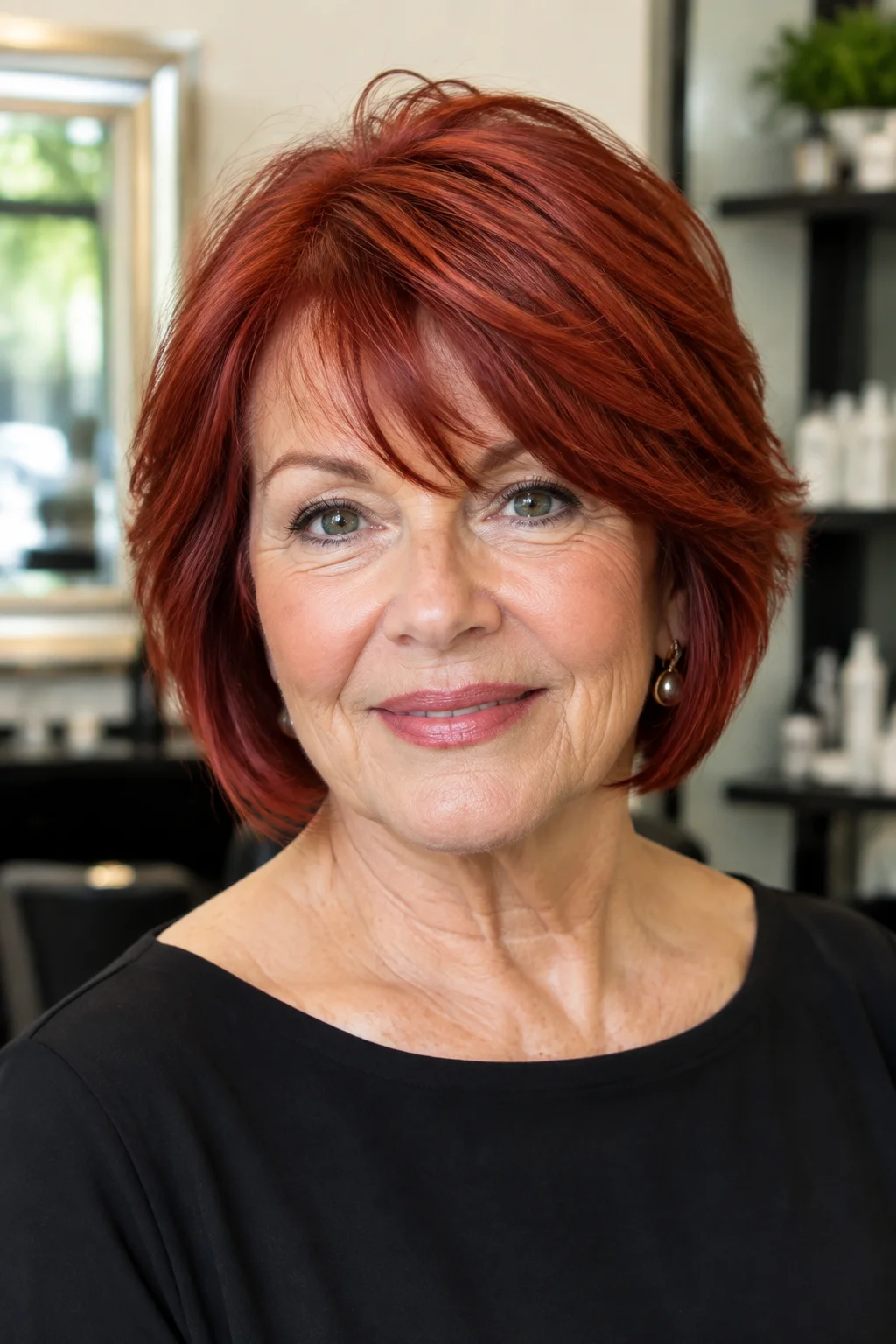
Blending means the layers transition into each other with no hard lines, which gives this bob a soft, almost airy quality compared to a more structured cut. It’s a forgiving choice if your hair has some natural waves, since the blended layers won’t fight the texture. This cut also tends to hide regrowth well between color appointments, if you color your hair.
Short Choppy Layers with Ear-Grazing Length
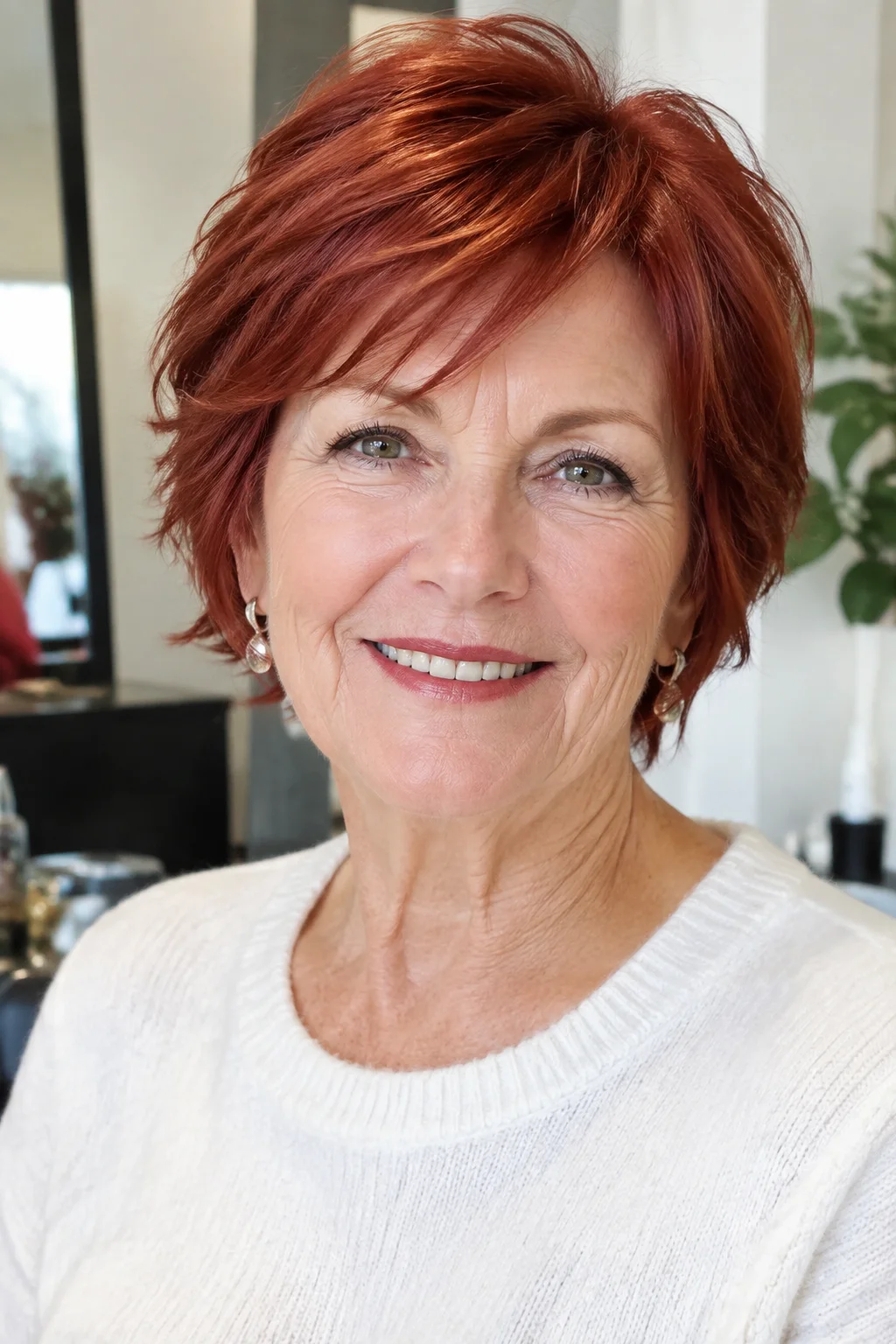
Length that grazes the ear with choppy layering throughout gives you something short but still substantial enough to tuck behind the ears. The choppiness keeps it from looking like a helmet, which can happen with very short, uniform cuts. It suits women who want short hair but aren’t ready for a full pixie.
Inverted Layered Bob for Volume at Crown
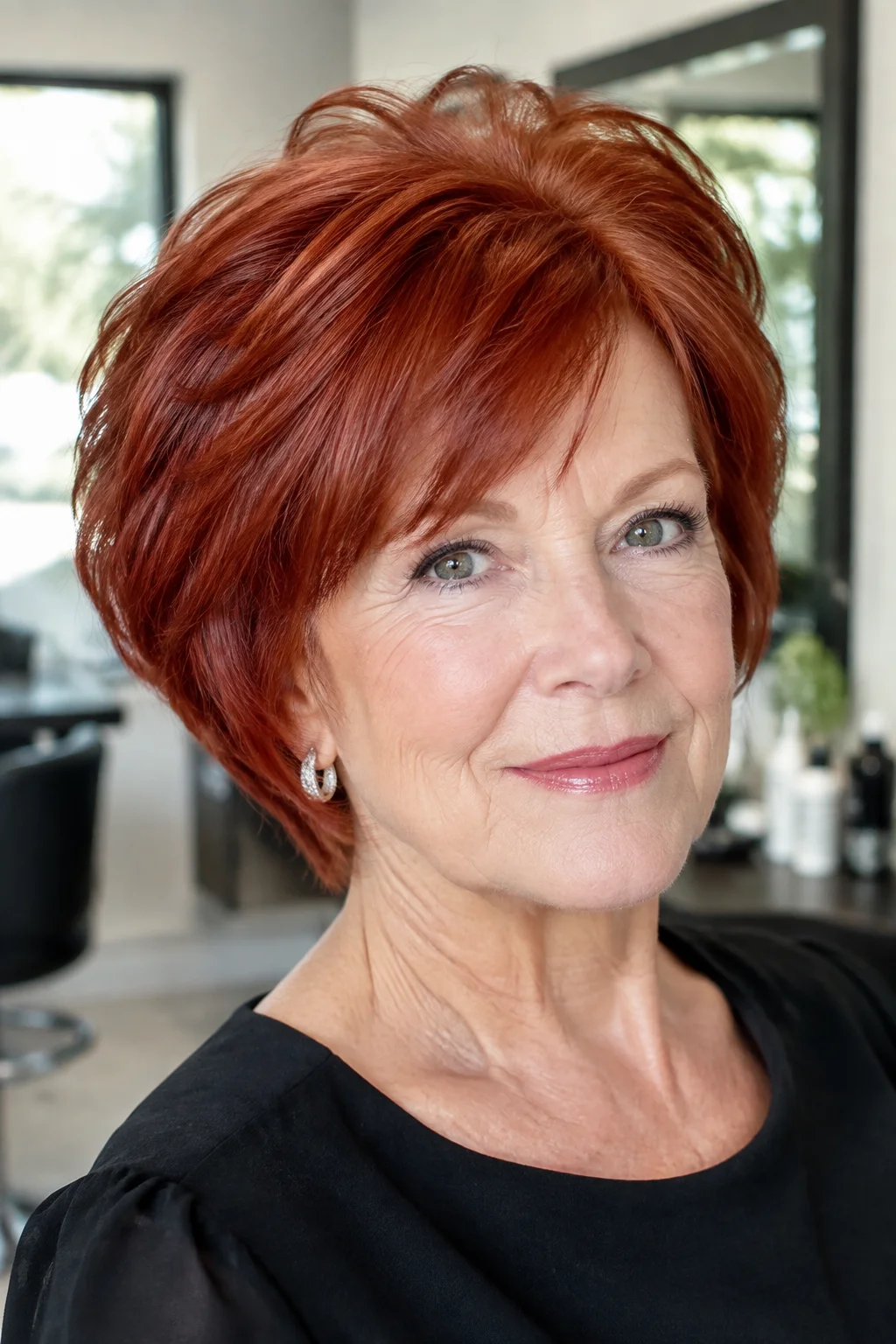
An inverted bob is cut shorter in the back and longer toward the front, with layers stacked at the crown to build volume right where thinning often starts. The shape itself does a lot of the volumizing work before any styling product gets involved. Tip: ask for the stacking to stay subtle if you want a softer silhouette rather than a sharply angled one.
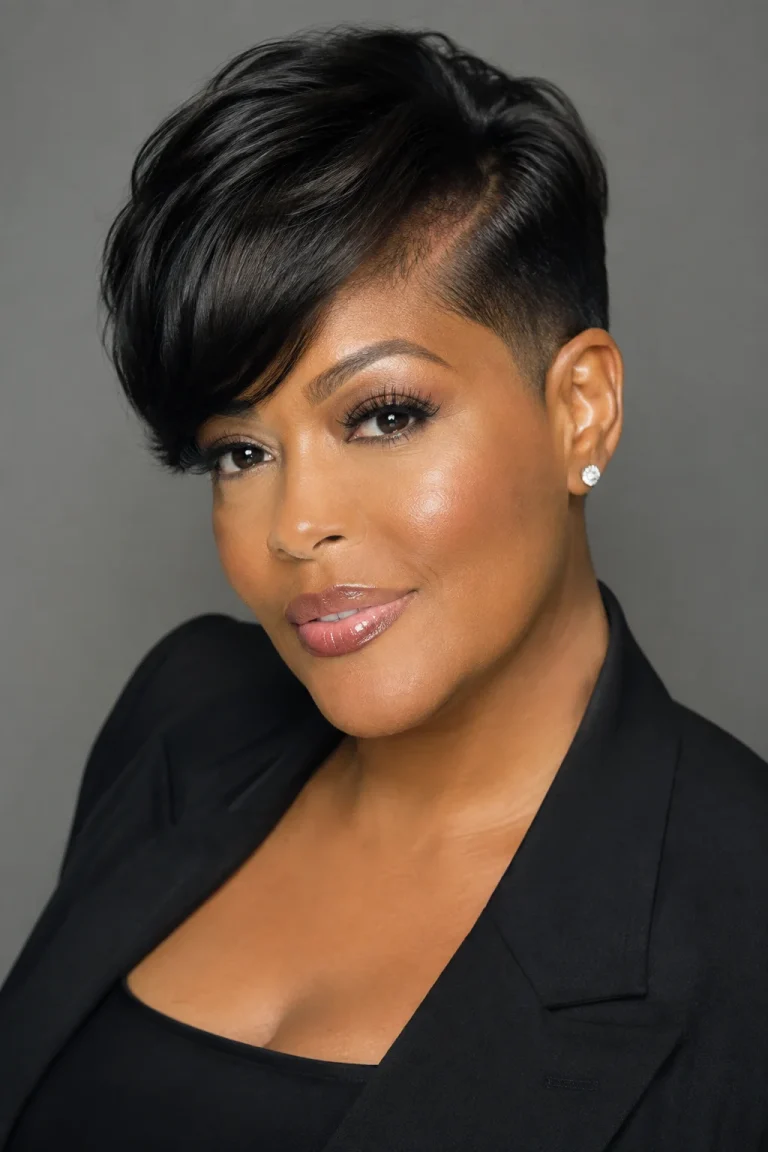
Taper-Fade Pixie with Textured Layers
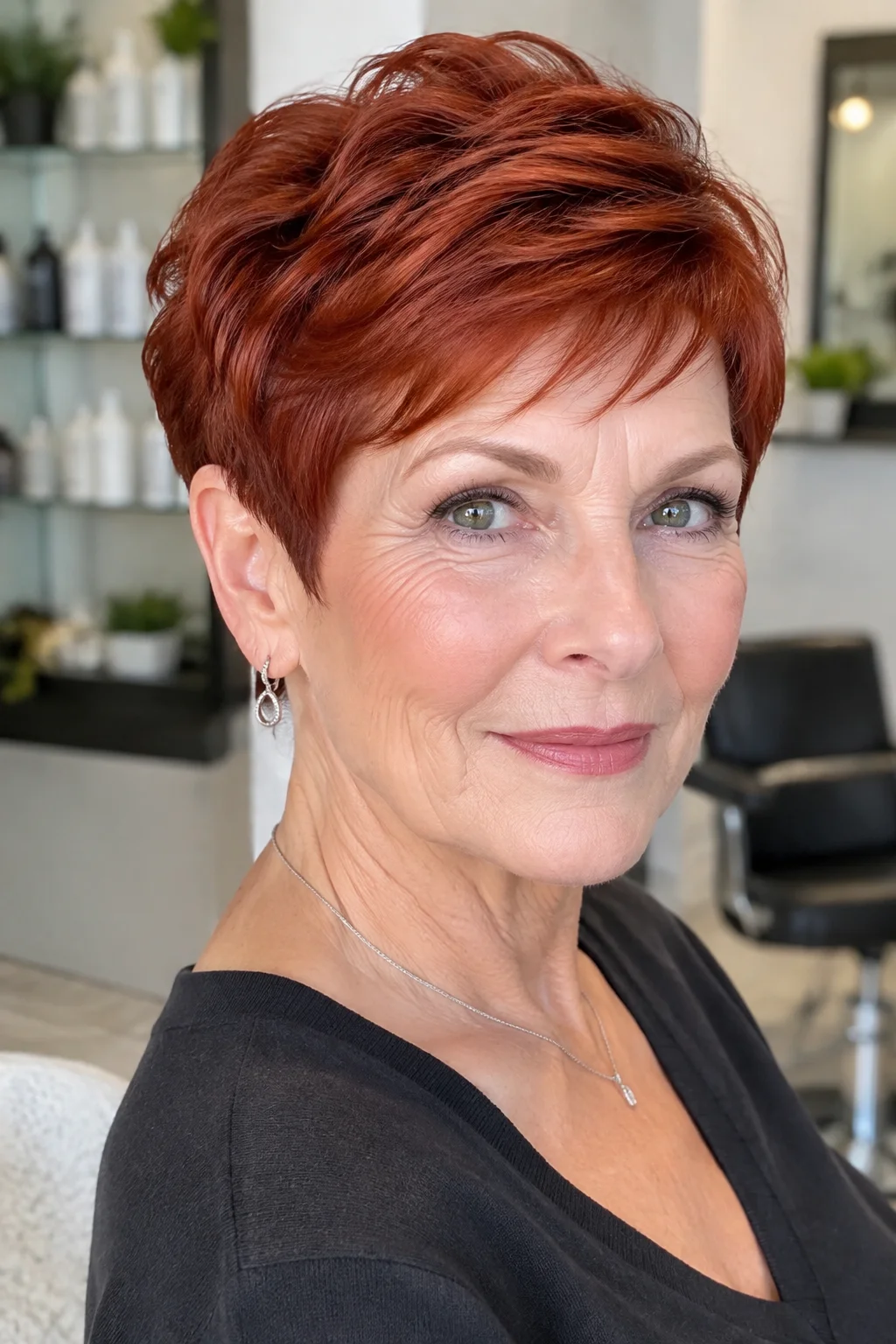
This pixie uses a gradual taper fade at the sides and back instead of a blunt cut, which gives it a cleaner, more polished finish close to the head. Textured layers on top keep it from looking too severe or masculine. It’s a confident choice for women who want short hair that still feels soft and feminine despite the close sides.
How to Choose the Right Cut for Your Hair
Start with your hair’s actual texture and density before you fall in love with a photo. Fine, thin hair generally does better with the stacked layered pixie with crown volume or the short layered bob for fine hair, since both cuts are built specifically to fake fullness rather than rely on it. If your hair is naturally curly, skip the choppy layered lob for straight hair entirely and go toward the tousled layered crop for curly hair, which respects how curls fall instead of fighting them.
Women with rounder faces tend to do best with the rounded layered bob for round faces or the side-swept layered pixie, both of which create definition near the jaw and cheek rather than adding width. If volume at the crown is your main concern, compare the inverted layered bob for volume at crown against the stacked layered pixie with crown volume. The inverted bob gives you more length to work with, while the stacked pixie is the lower-maintenance option.
A common mistake is choosing a heavily layered style like the cropped shag with graduated layers without committing to the six-week trim schedule it needs. If frequent salon visits aren’t realistic for you, lean toward cuts with more graduated, grown-out-friendly shapes, like the short layered bob with graduated back, instead.