Finding a cut that feels fresh after 70 can be harder than it should be. Hair gets thinner, texture shifts, and a style that looked great a decade ago might now drag your whole face down. The good news is that short hair bob haircuts for women over 70 solve most of these problems at once, adding shape where hair has lost density and framing the face in a way that looks soft rather than severe. Some of these cuts work with curl, some smooth gray into something sleek, and others lean into texture instead of fighting it. Below are 22 options worth bringing to your stylist, along with notes on who each one flatters and what to ask for in the chair. Pick the one that matches your hair’s natural behavior rather than the one that looks best in a photo.
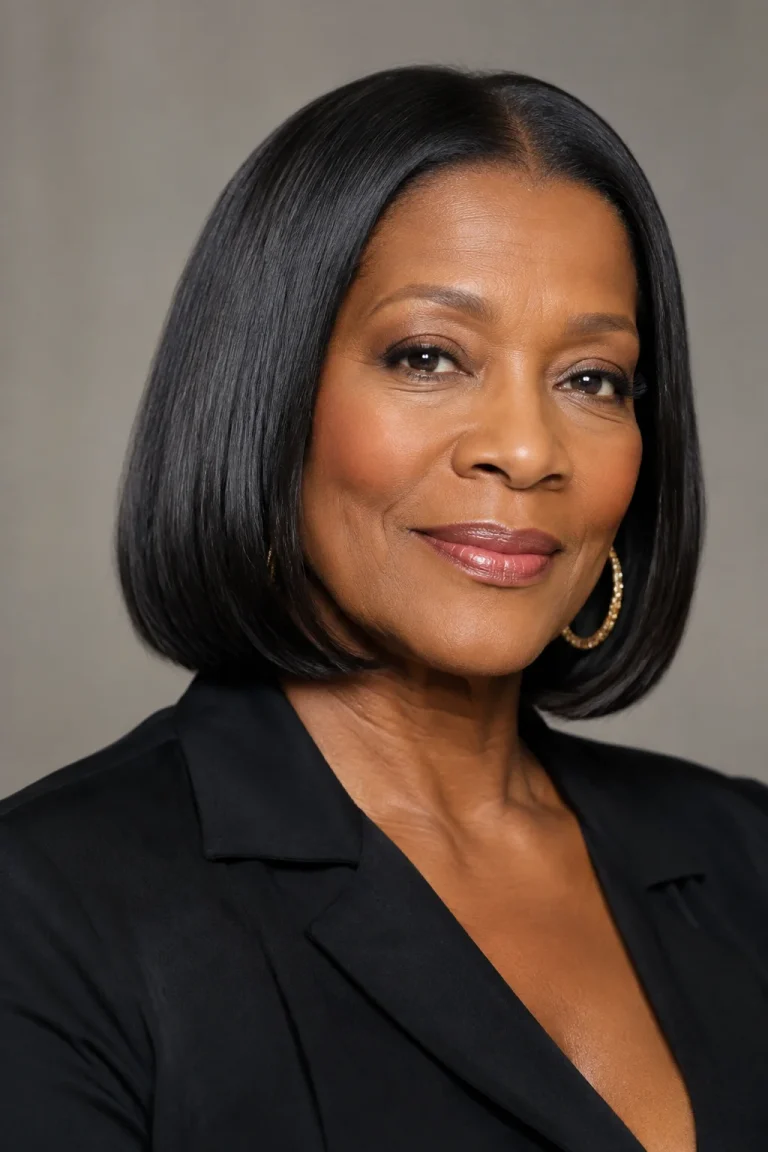
Classic Chin-Length Blunt Bob
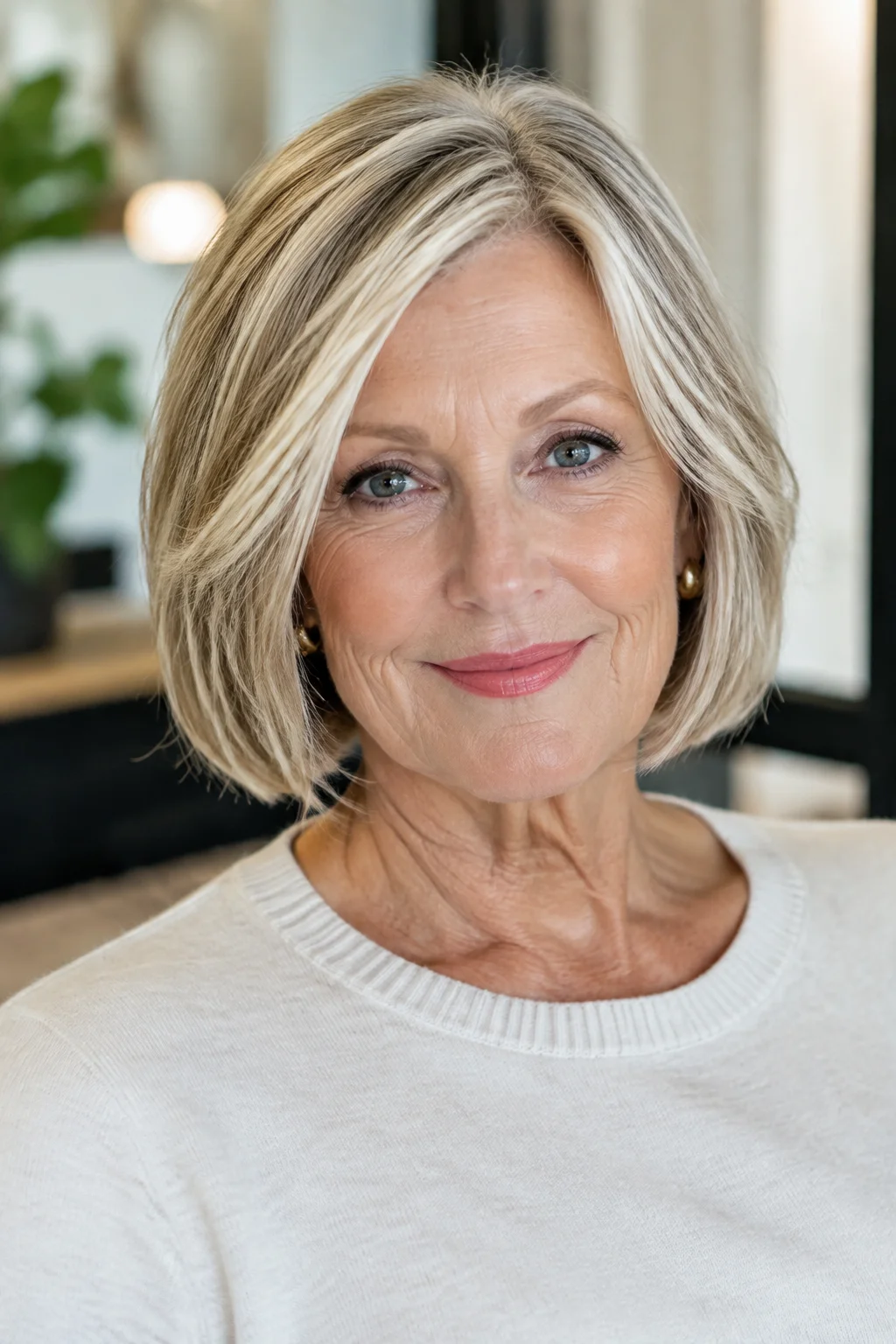
This is the bob most women picture when they hear the word. The ends sit right at the jaw and get cut in one clean, straight line, which gives fine hair a thicker look without any extra product. It works especially well for anyone whose hair has started to thin at the crown, since the weight at the bottom creates an illusion of fullness. Ask your stylist to keep the line sharp rather than soft, because that crispness is what makes this cut read as polished instead of flat. A light mist of heat protectant before styling helps the finish last. A light mist of heat protectant before styling helps the finish last.
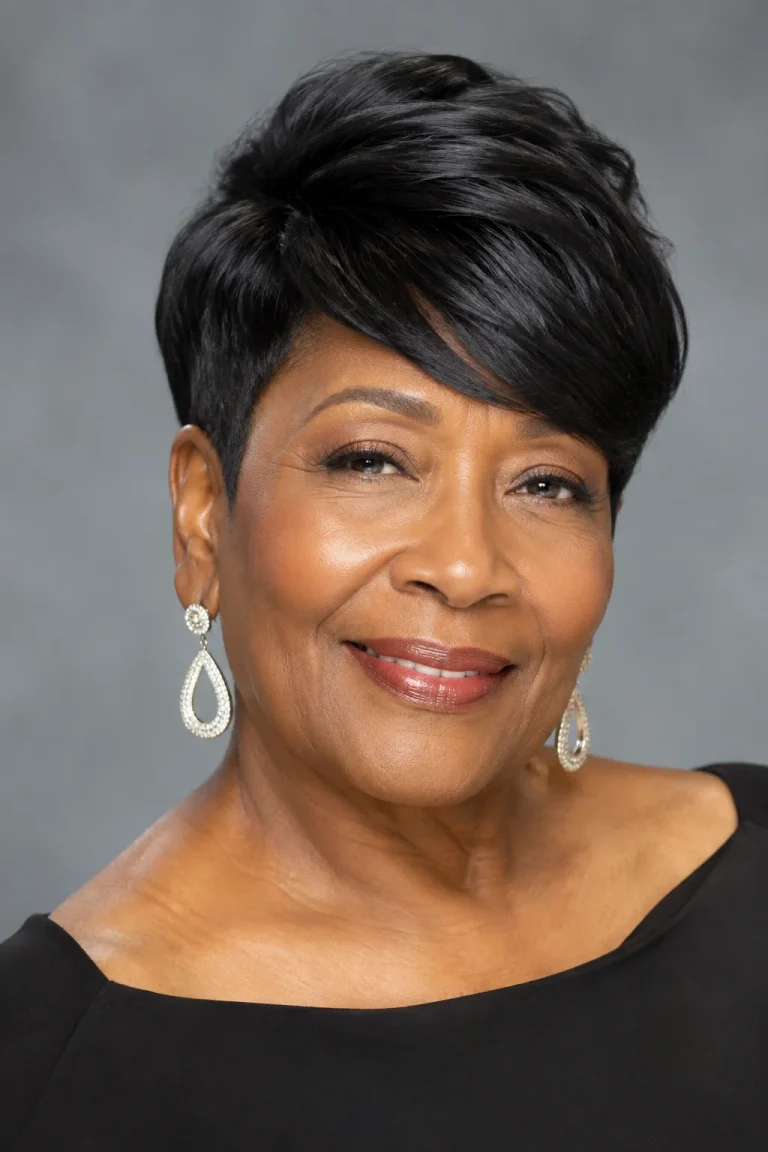
Textured Pixie-Bob Hybrid
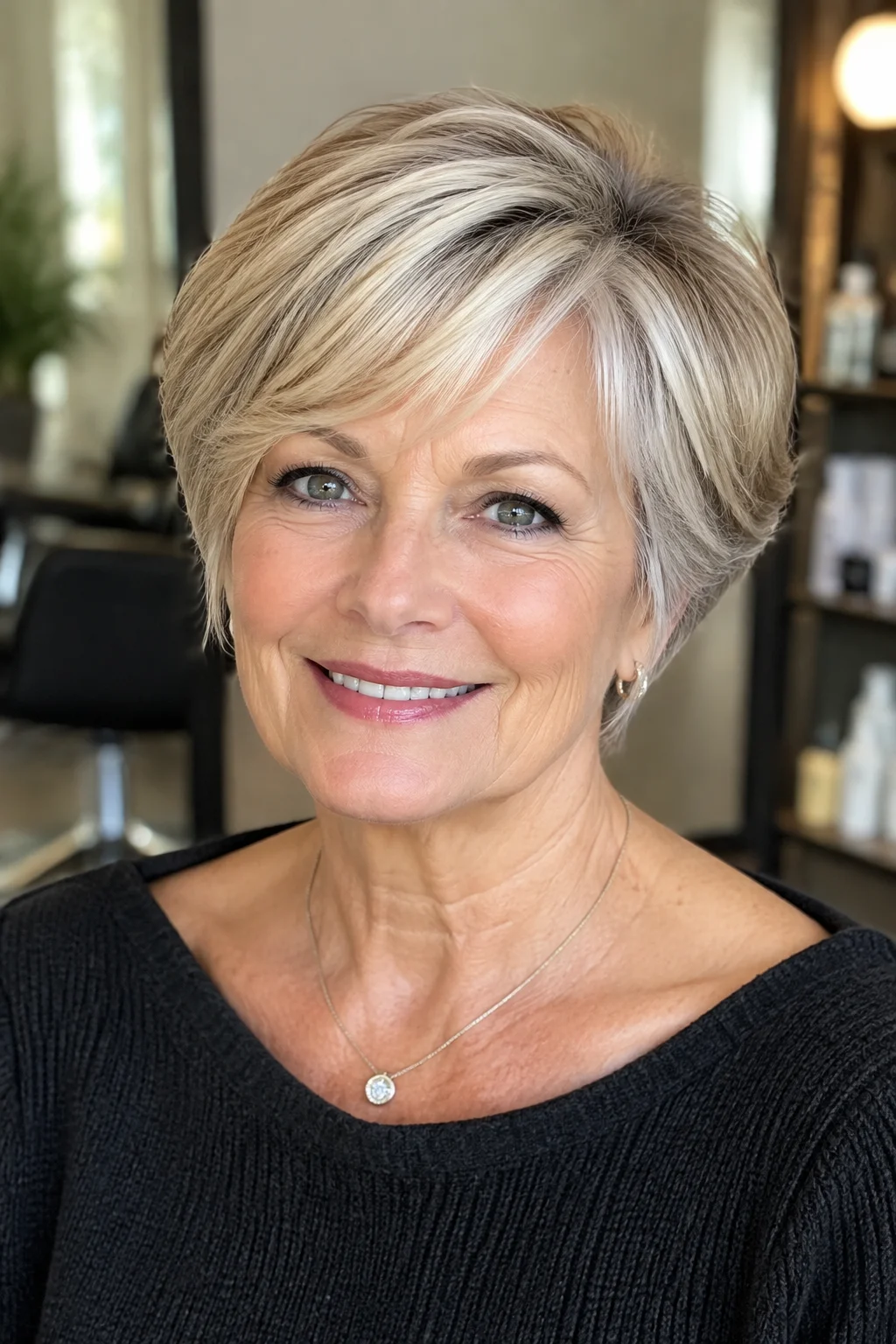
Somewhere between a pixie and a bob, this cut keeps a bit more length on top and sides while trimming the back short. It suits women who want the low maintenance of a pixie but aren’t ready to give up all their length. The texture is choppy rather than smooth, which hides thinning better than a sleek finish would. Tip: ask for point cutting at the ends so the layers blend instead of looking stacked. A light mist of heat protectant before styling helps the finish last. A light mist of heat protectant before styling helps the finish last.
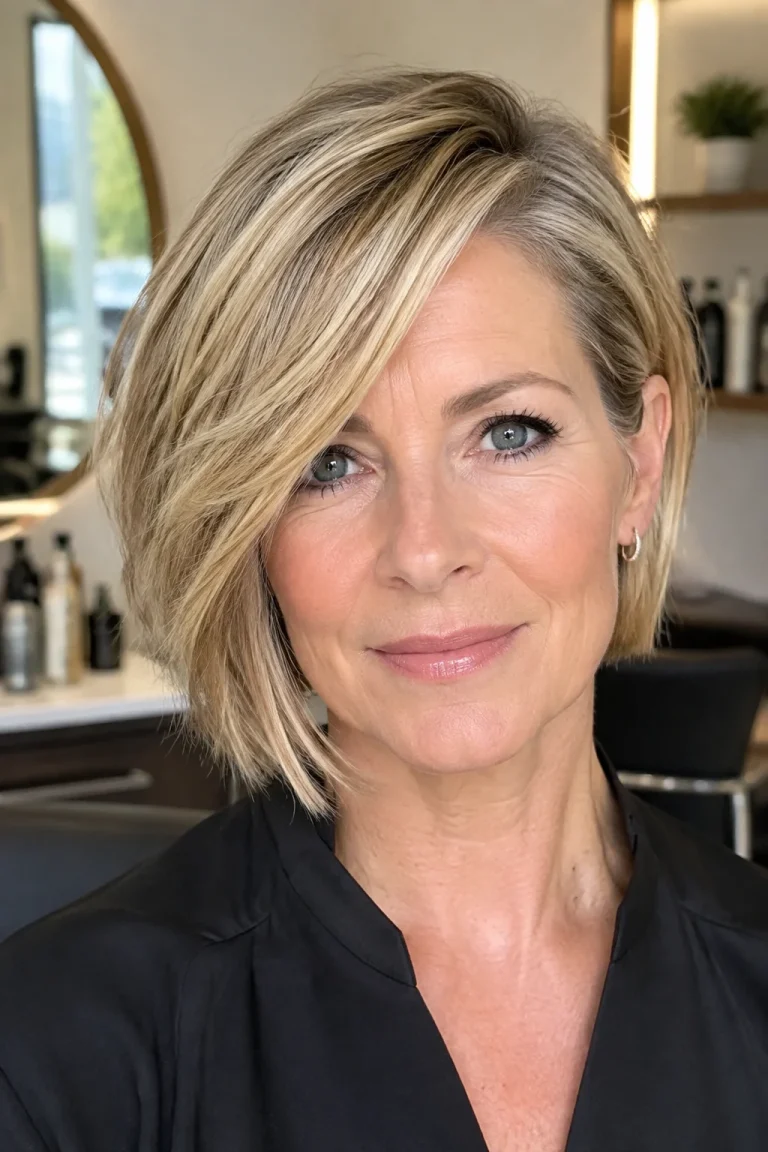
Graduated Bob with Angled Sides
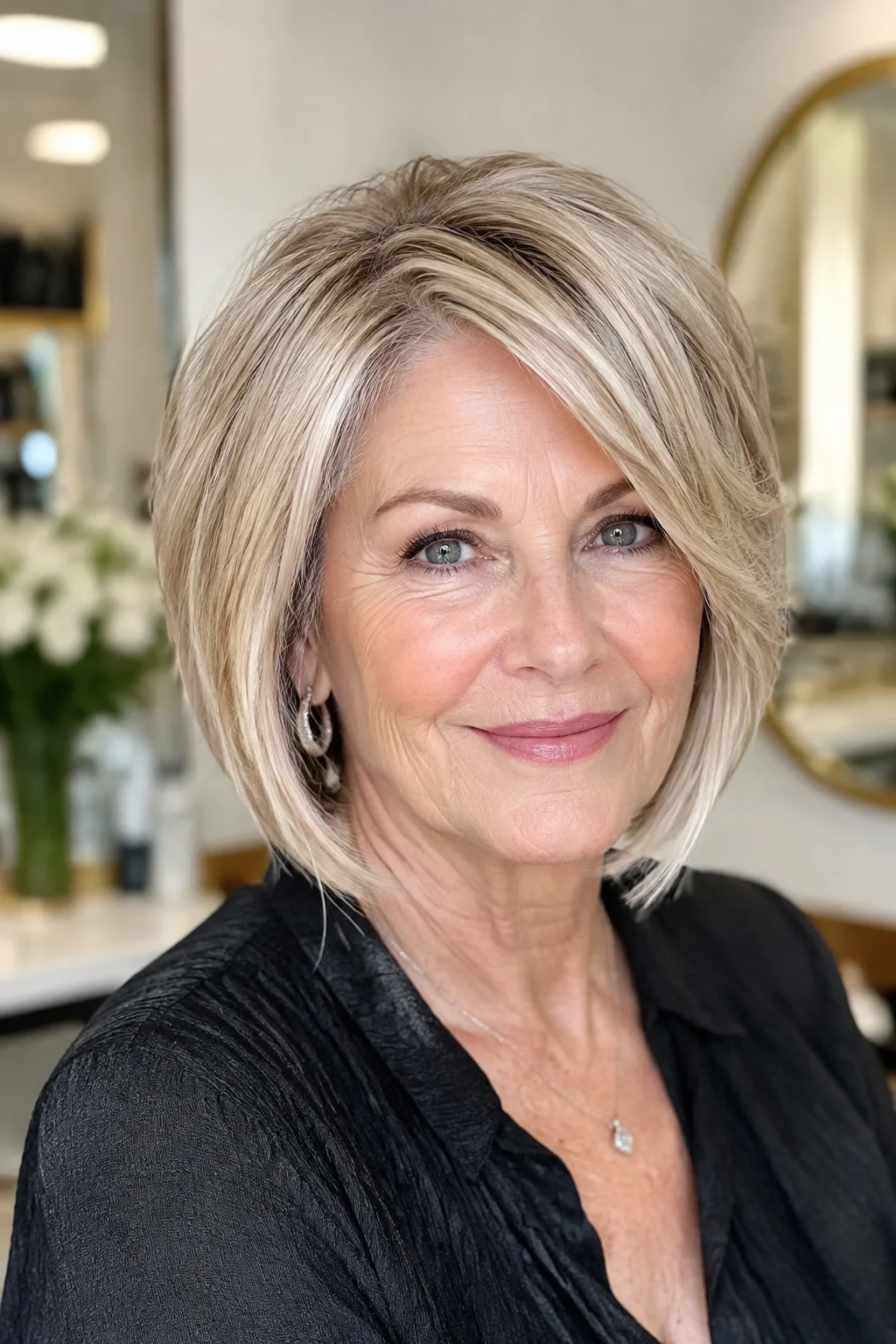
The back stays short while the front sides angle down longer, creating a slight slope when you look at it from the side. This shape is flattering if you carry fullness in the lower face, since the longer front pieces draw the eye downward in a slimming way. It also gives you two styling options in one haircut, since you can tuck the front pieces back or let them fall forward.
Softly Layered Bob for Thin Hair
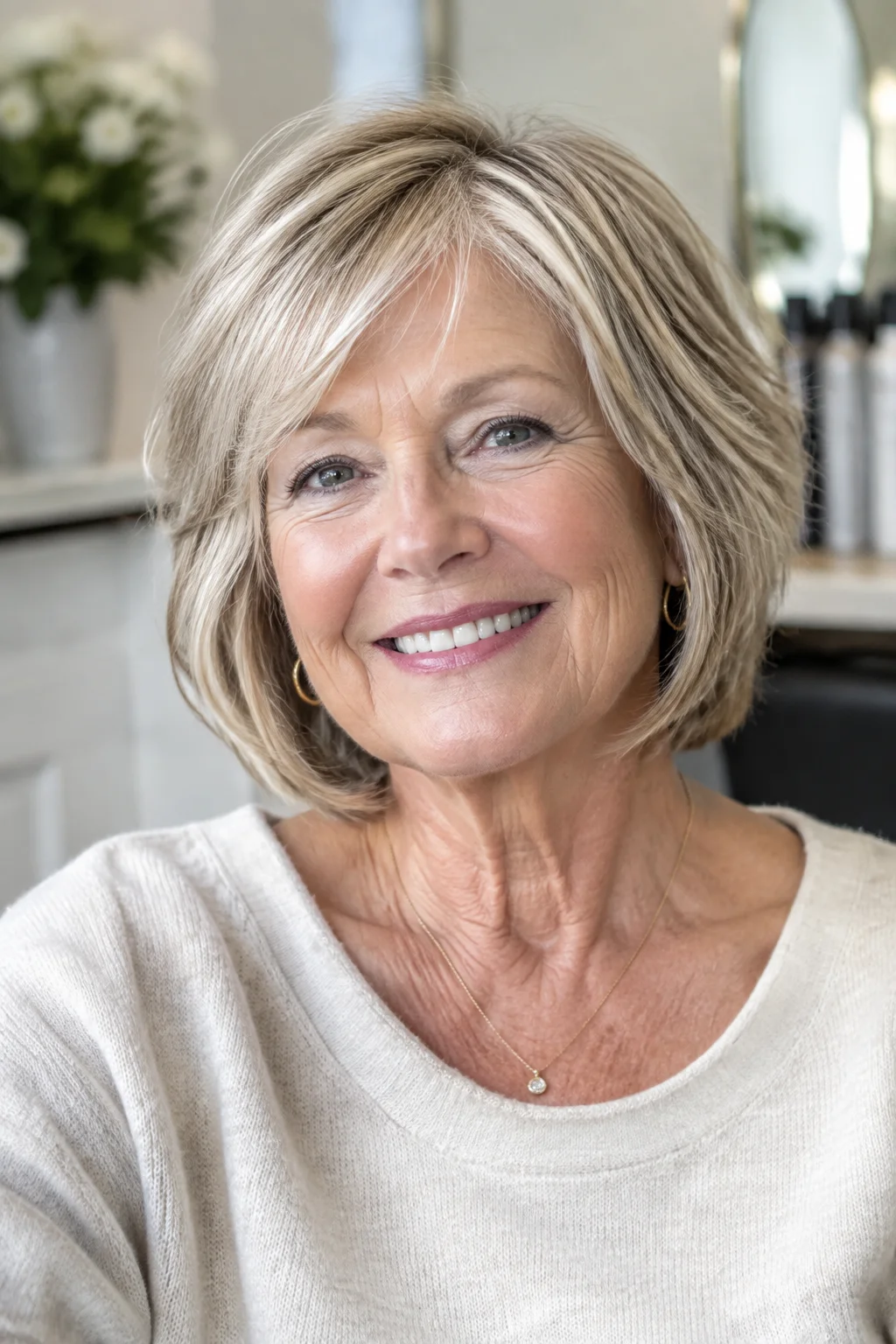
Thin hair often looks thinner with heavy layers, so this version keeps the layering light and only at the ends. The goal is movement without losing density, which matters more as hair ages and loses its natural body. A light wave or a loose curl from a small-barrel iron gives this cut the lift it needs, and a volumizing spray at the roots helps it hold shape through the day.
Curly Short Bob with Defined Ringlets
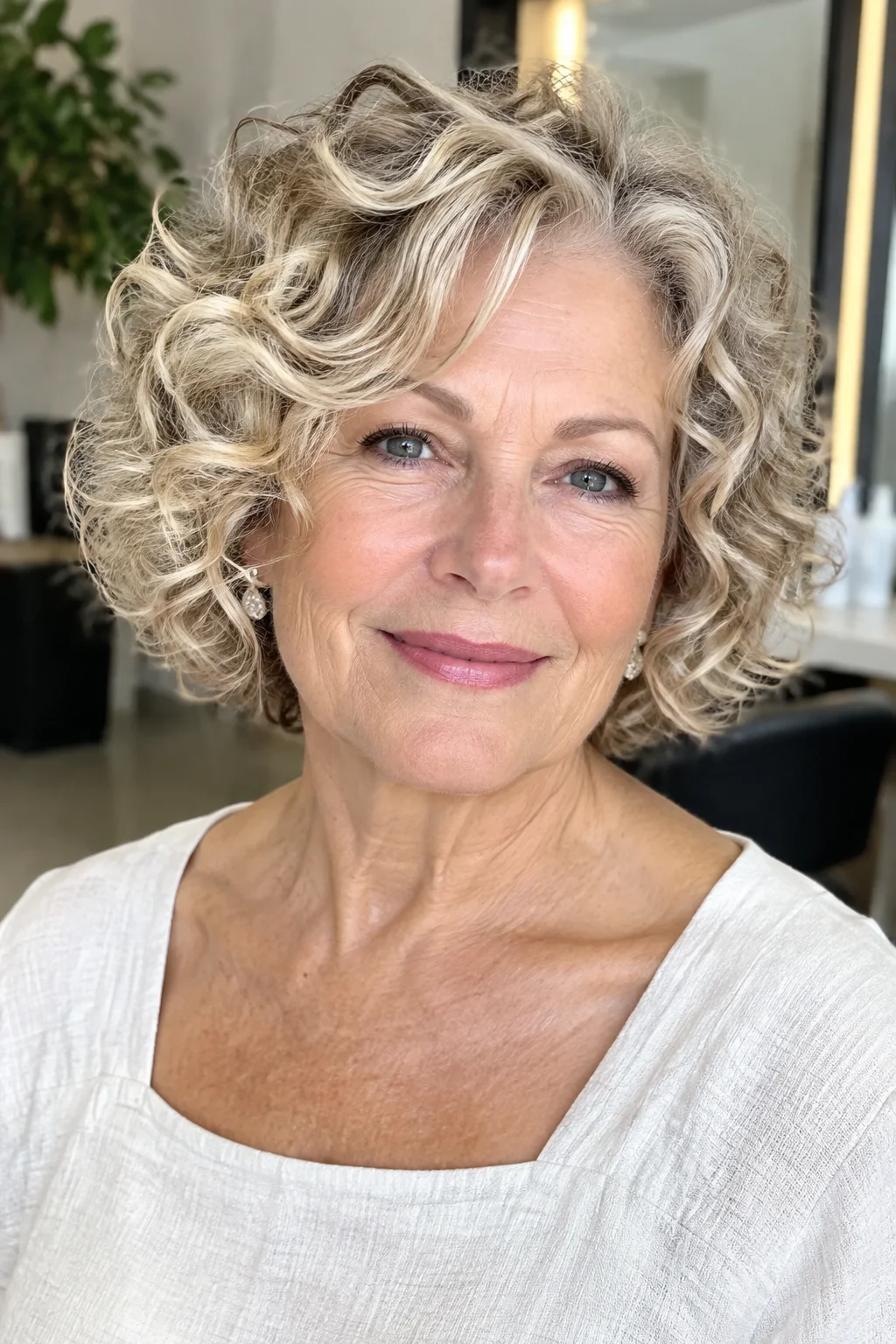
Curly hair needs a cut that respects the curl pattern instead of forcing it straight. This bob is cut dry, curl by curl, so each ringlet lands where it naturally wants to sit. It looks fuller than a straight bob of the same length because curls take up more visual space. Avoid heavy brushing after washing, since that breaks up the curl clumps and leads to frizz instead of definition.
Wavy Bob with Face-Framing Pieces
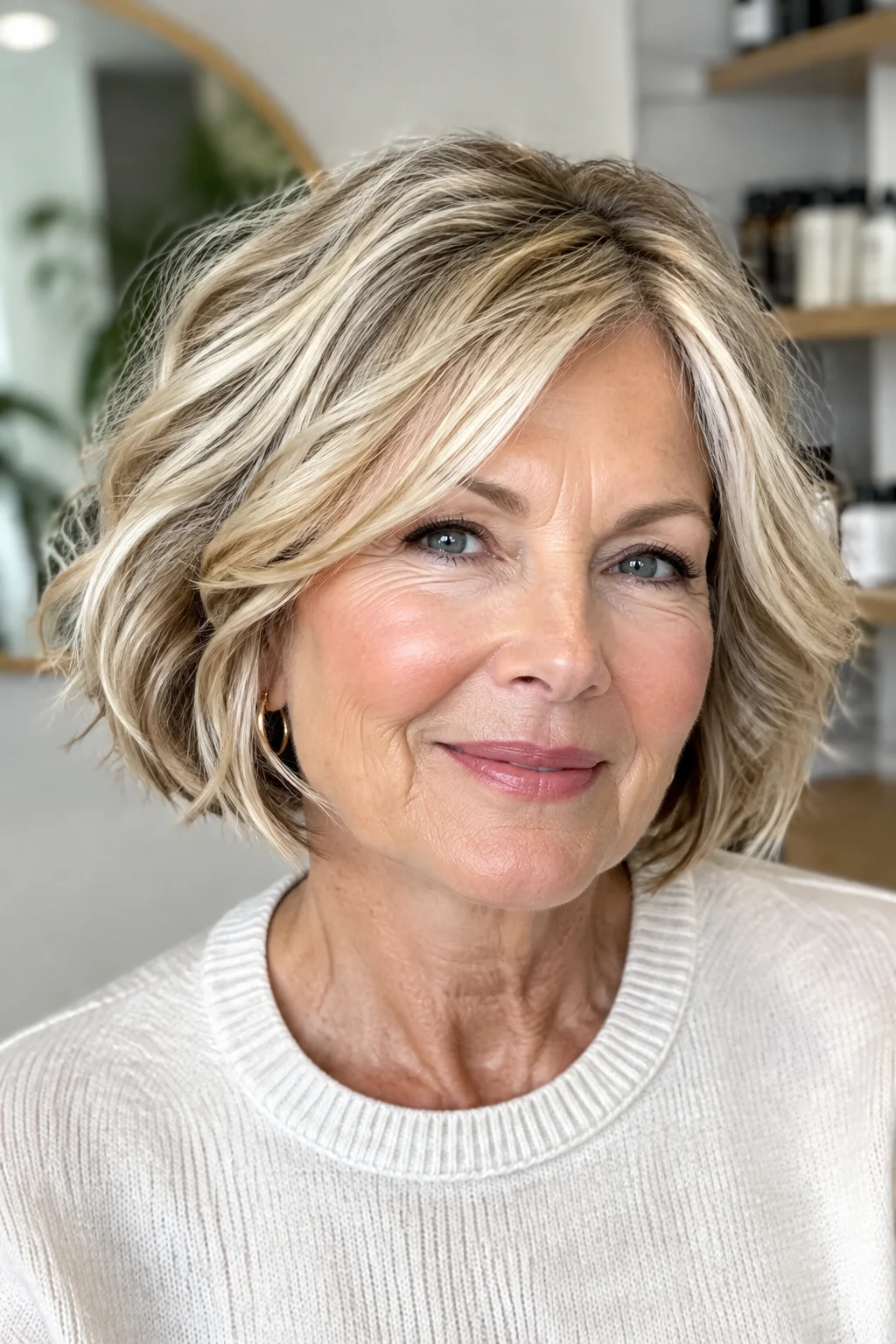
A few longer pieces left around the face soften the overall shape and give wavy hair something to move around. This cut flatters almost every face shape because those framing pieces can be angled to hit at the most flattering point, whether that’s the cheekbone or the jaw. Scrunching in a light mousse while hair is damp brings out the wave pattern without stiffness.
Sleek Silver Bob with Side Part
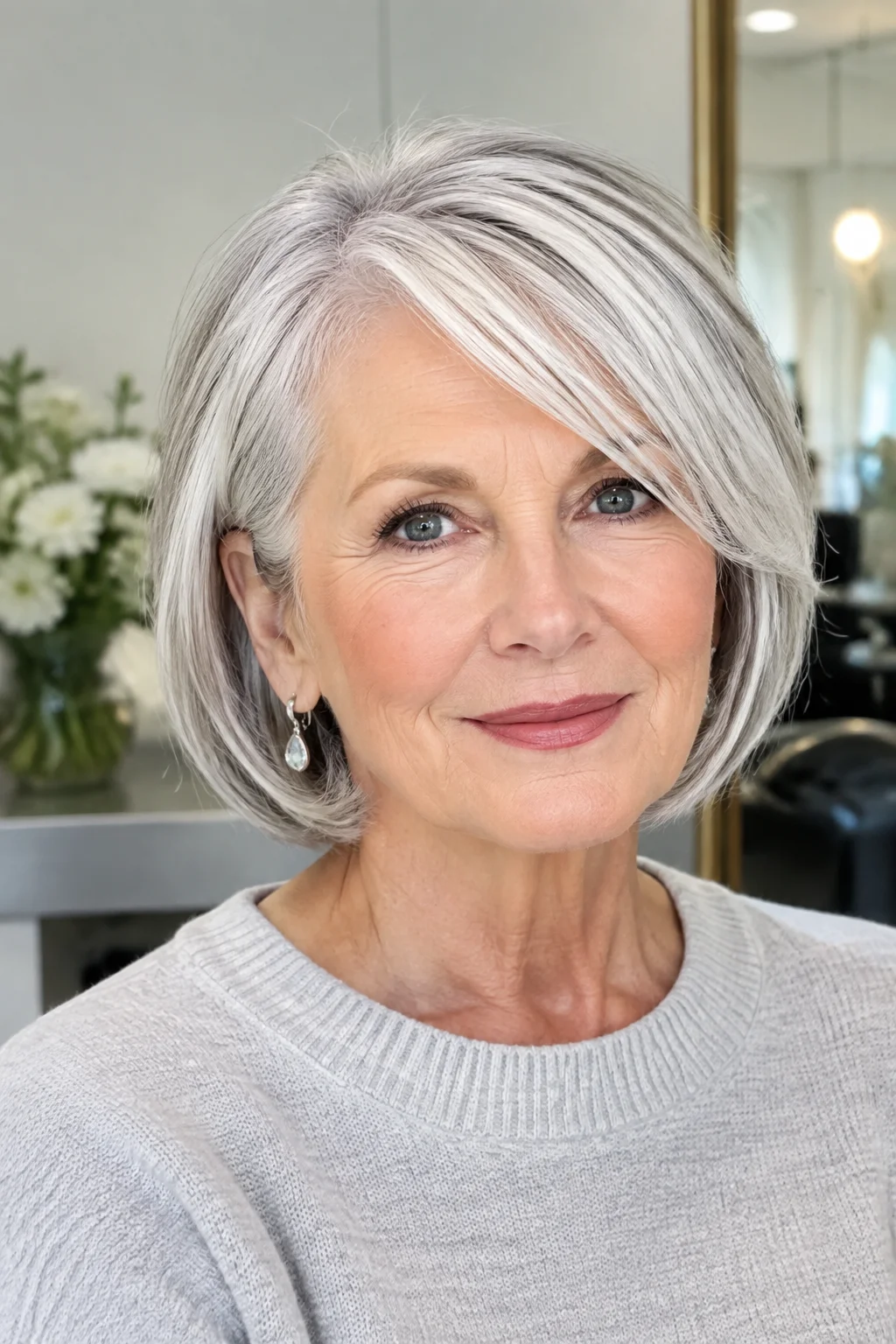
Gray and silver hair catches light differently than pigmented hair, and a sleek, straight bob shows that off. The side part adds a bit of asymmetry that keeps the style from looking stiff. This one needs regular blow-drying with a round brush to stay smooth, so it suits someone who doesn’t mind five extra minutes with a hair dryer.
Tousled Textured Bob for Gray Hair
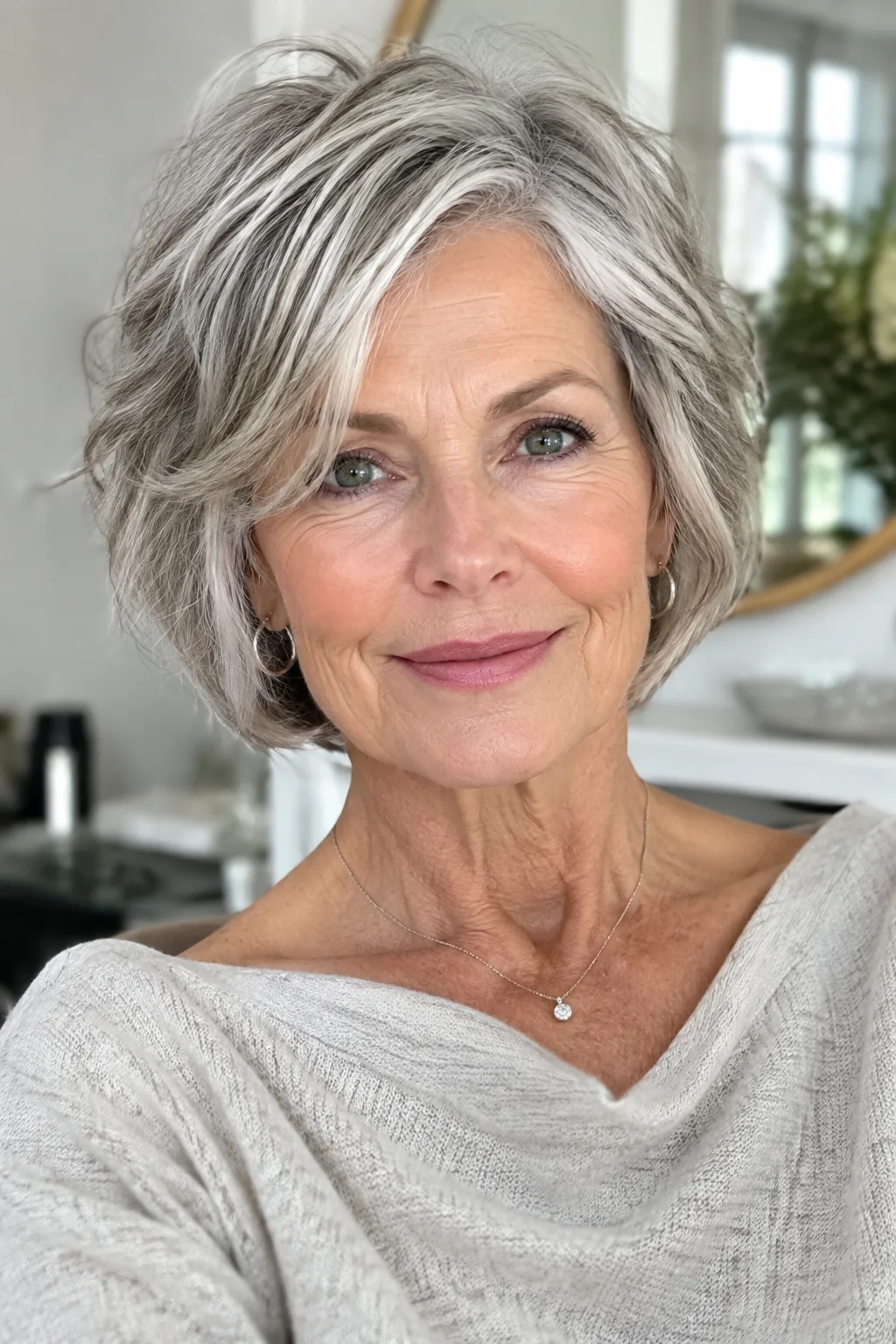
Instead of smoothing gray hair down, this cut roughs it up a little. Razor-cut ends and a texturizing cream give it a lived-in look that feels more relaxed than a sleek style. Tip: scrunch a texturizing spray into damp hair and let it air dry partway before finishing with a diffuser.
Rounded Bob for Square Faces
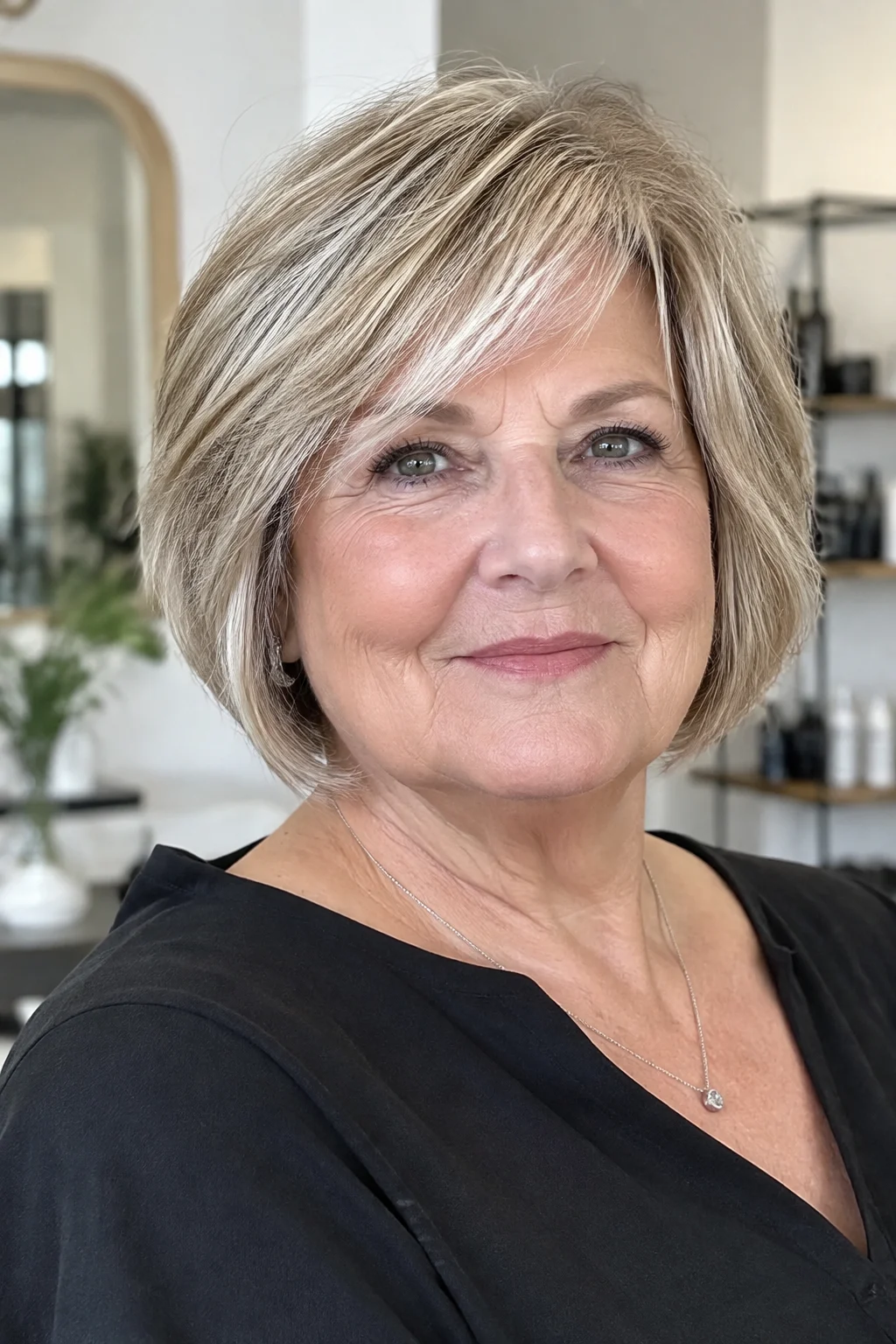
A rounded silhouette softens angles, which is exactly what a square jawline benefits from. The ends curve slightly inward at the chin instead of cutting straight across, taking some of the sharpness out of the face shape. This cut works best on hair with a bit of natural bend, since the curve needs that movement to read clearly.
Inverted Bob with Volume at Crown
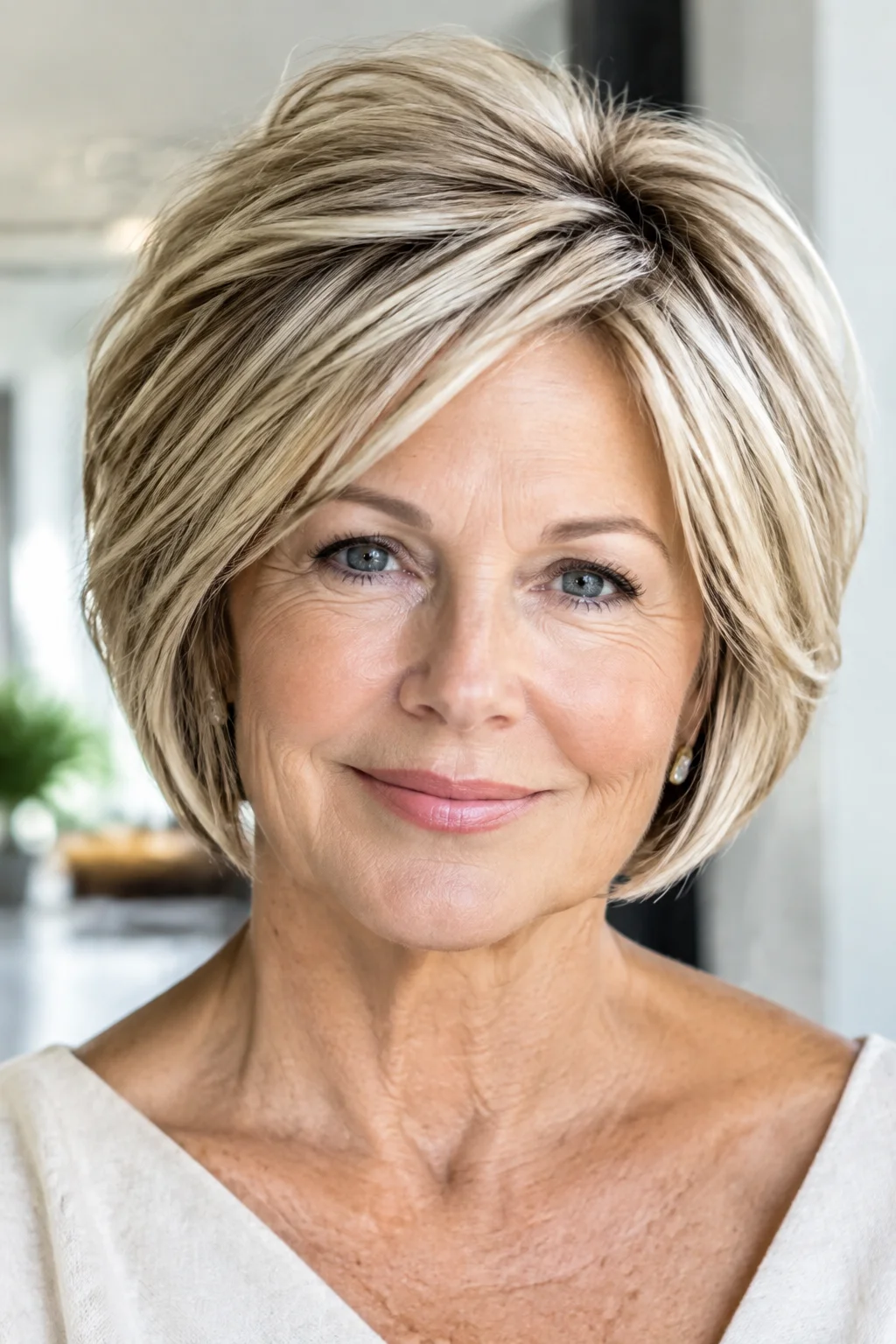
The back is cut shorter and stacked for height while the front angles longer, giving the whole shape a lifted, confident look from behind. Volume at the crown matters a lot for women over 70 because hair density there tends to drop first. This cut puts the fullness exactly where it’s needed most.
Stacked Layered Bob for Fine, Thin Hair
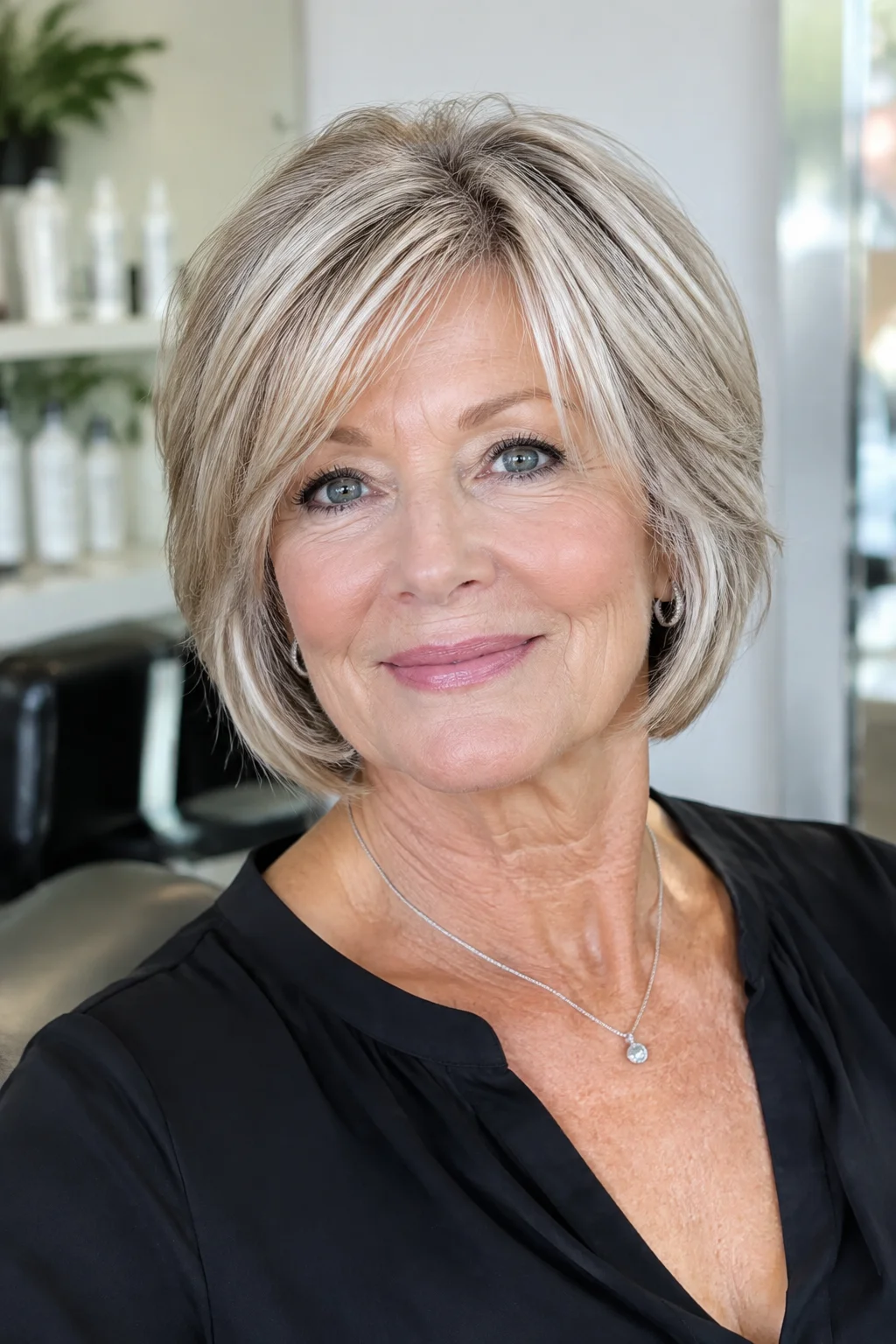
Stacking refers to the way layers are cut close together at the back, building up thickness that fine hair doesn’t have on its own. From the front it looks like a simple bob, but the back view reveals the real structure. It holds up well through a long day without needing touch-ups, which makes it a solid pick for anyone who wants a wash-and-go routine.
Blunt Bangs with Short Bob
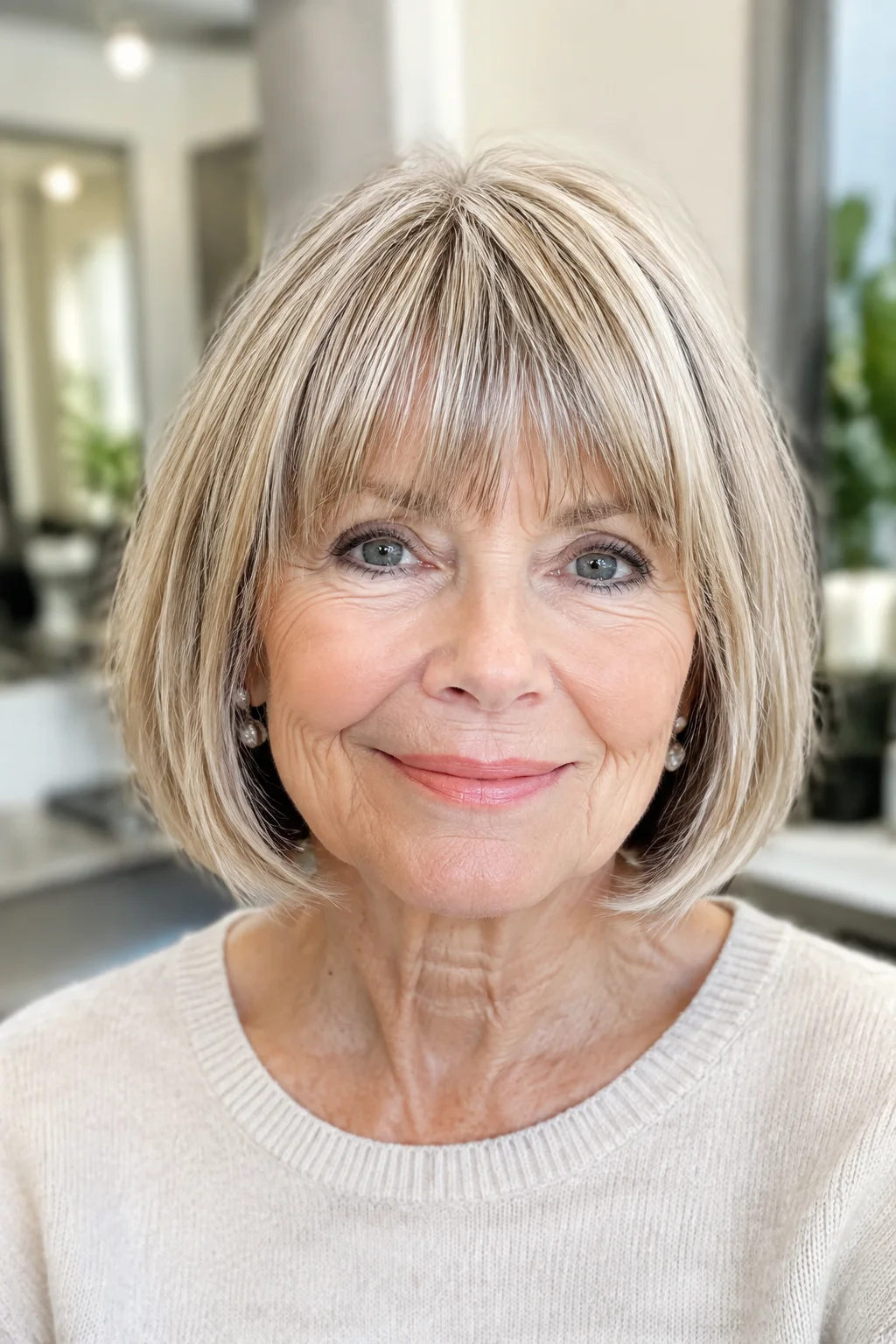
Full bangs cut straight across pair naturally with a blunt bob, and together they frame the eyes in a way that takes years off the whole face. This combination suits women with a higher forehead or who want to minimize the look of forehead lines. Bangs do require trims every few weeks to stay at the right length, so keep that upkeep in mind before committing.
Side-Swept Bob with Tucking Length
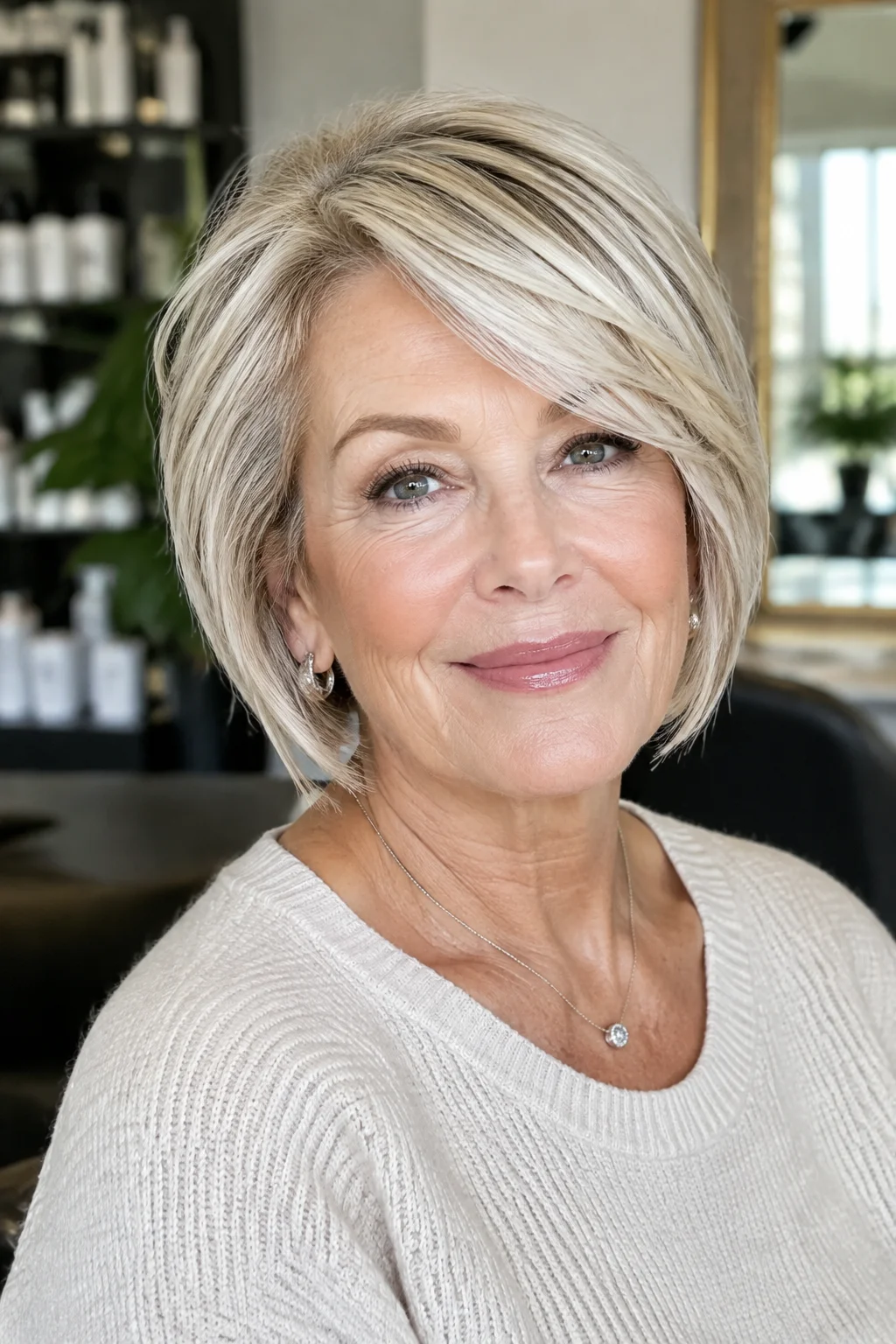
This bob keeps enough length to tuck behind one ear, giving you a quick way to change the look without touching a styling tool. The side-swept front softens the hairline and works well over thinning temples. It’s a practical, low-fuss option for someone who wants variety from a single cut.
Feathered Bob for Curly Hair
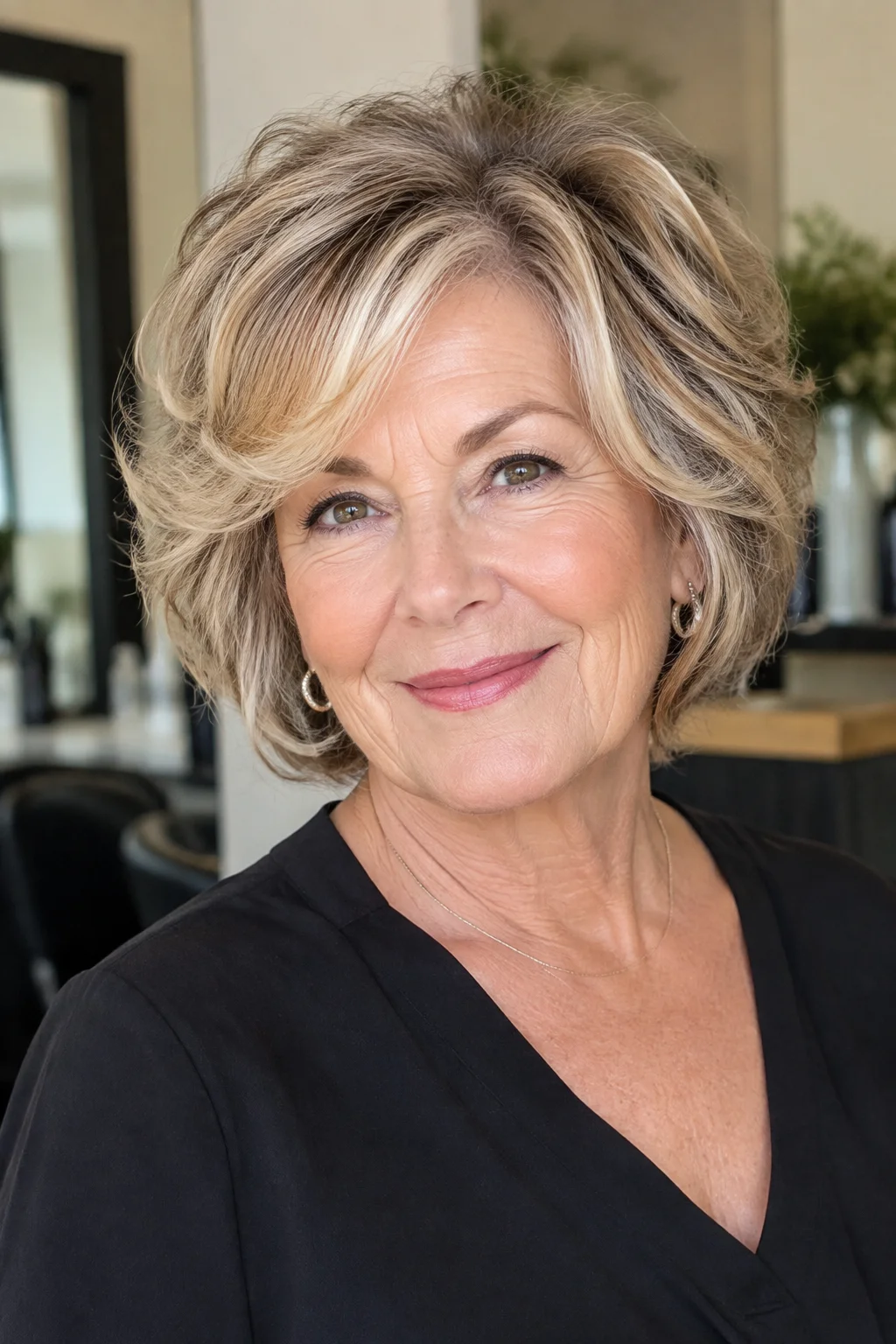
Feathering thins out the ends with a razor or thinning shears, which keeps curly hair from ballooning into a triangle shape. This version of the bob respects curl pattern while controlling bulk, so curls fall in soft pieces instead of one dense mass. It pairs well with a lightweight curl cream rather than heavy gel, since heavy products weigh curls down and flatten the shape this cut is built around.
Micro Bob (Pixie-Length Bob)
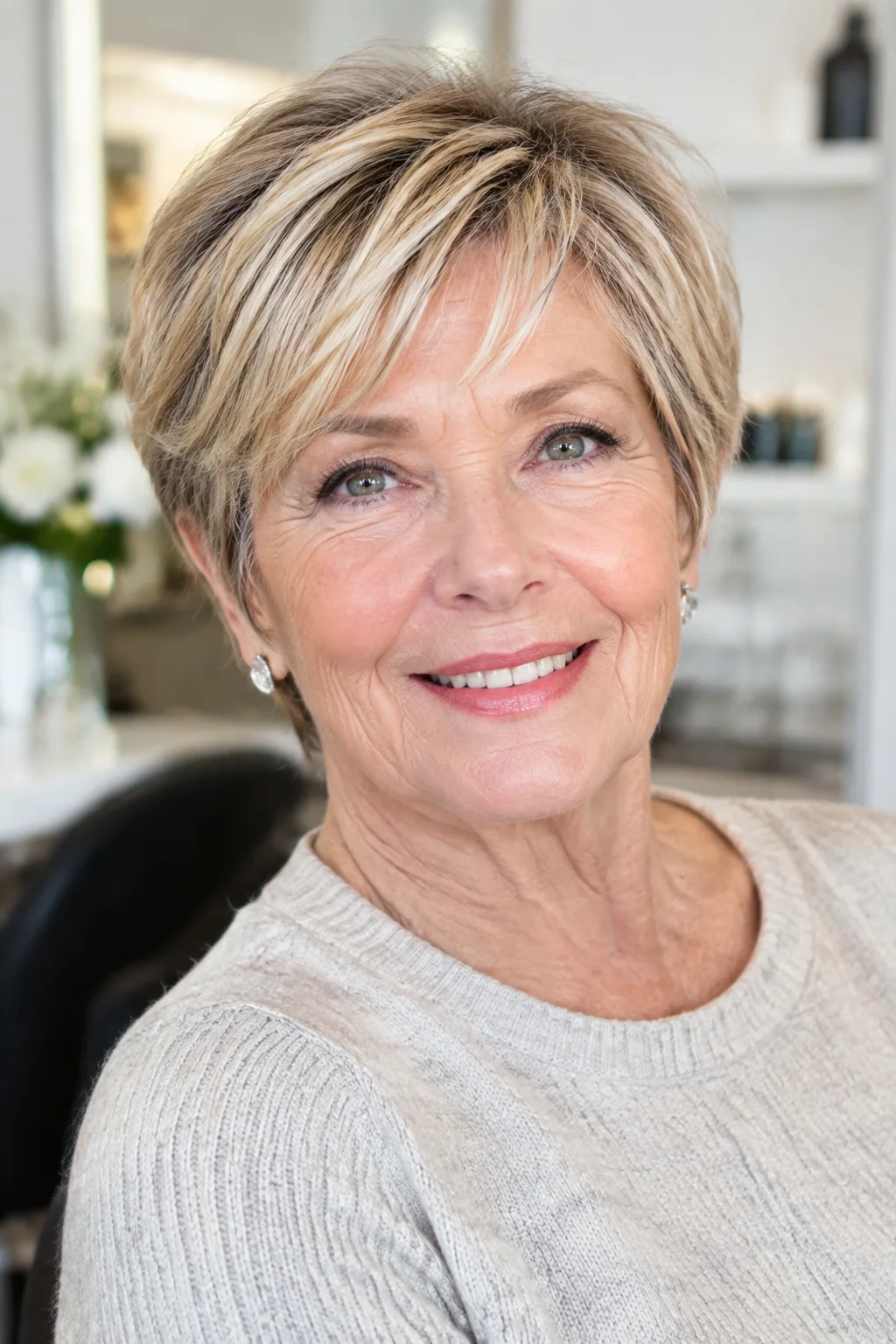
Cut just below the ear, the micro bob sits right at the edge between a long pixie and a true bob. It suits women who want short hair but still want a defined length line rather than the choppy, airy look of a full pixie. This is one of the lowest maintenance cuts on this list.
Wispy Layered Bob for Round Faces
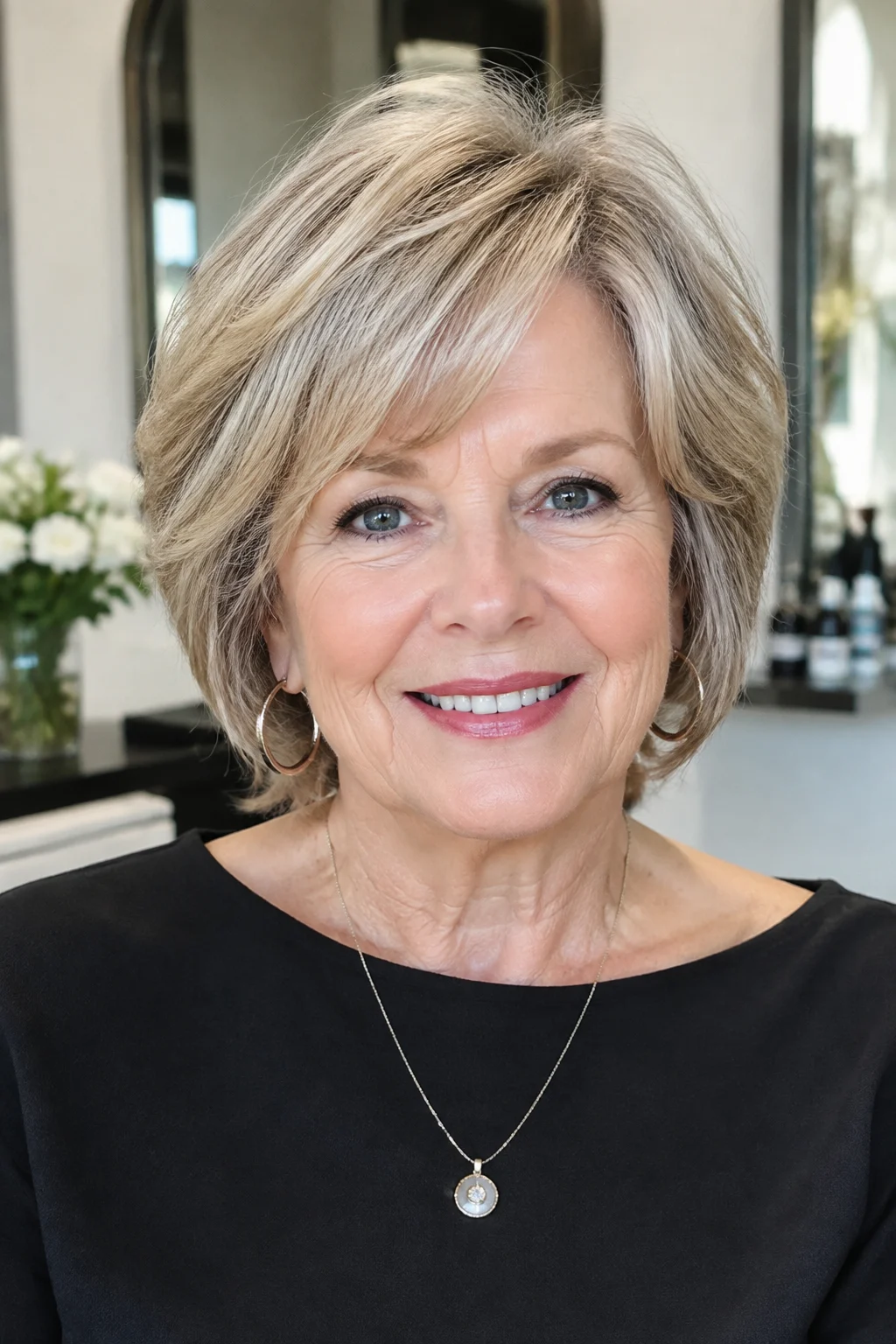
Wispy layers around the face add vertical lines that help elongate a round face shape. The layers stay thin and feathered rather than blunt, which keeps the whole look light. Round-faced women often find this more flattering than a blunt bob, since the straight-across line on a blunt cut can emphasize width instead of reducing it.
Styled-Back Bob with Nape Taper
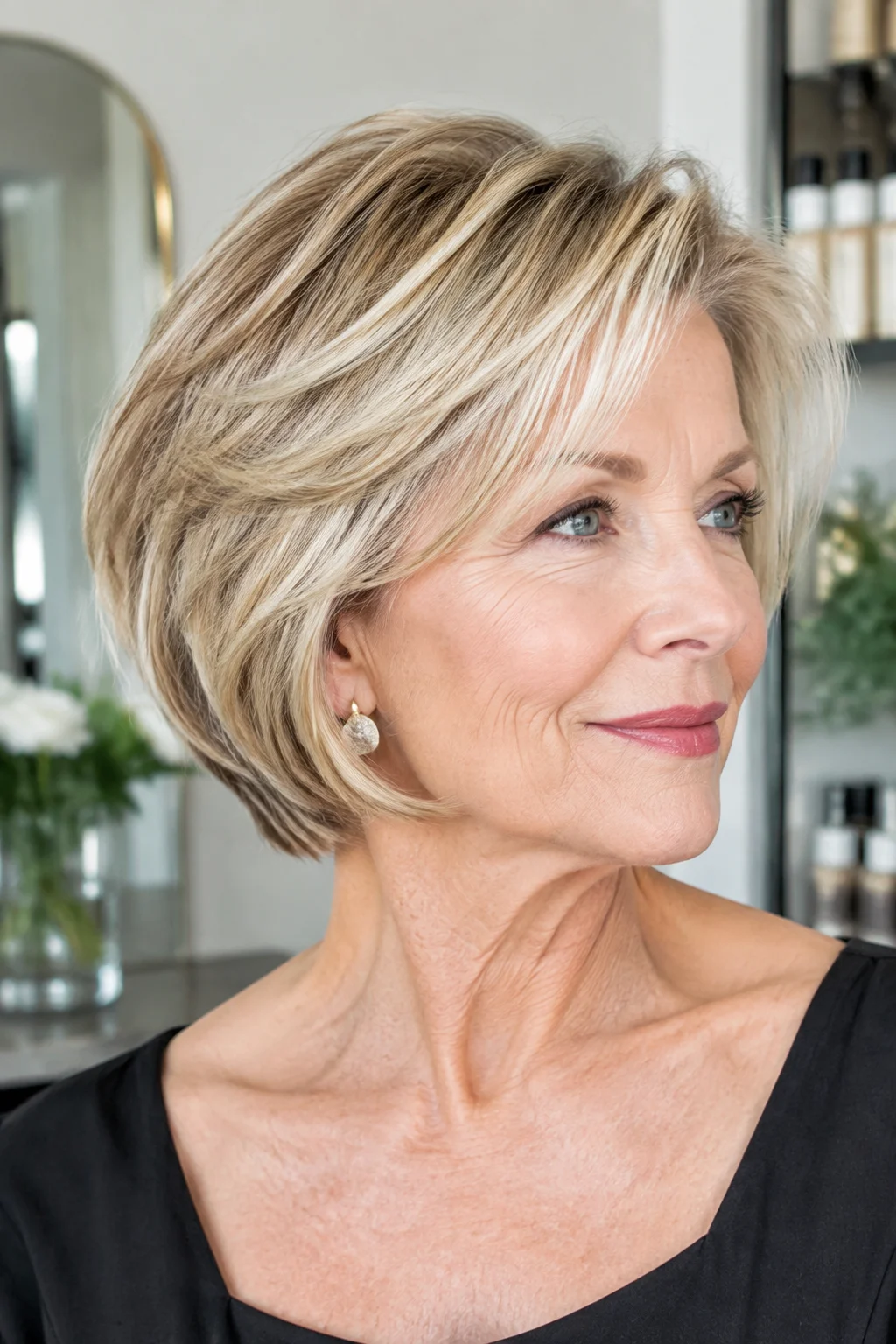
Here the sides and back taper in close to the neck while the top has enough length to sweep back and up. It gives an almost polished, structured appearance that works for more formal settings. The tapered nape also means less hair to manage at the back of the neck, which some women over 70 find more comfortable, especially in warmer weather.
Voluminous Permed Bob
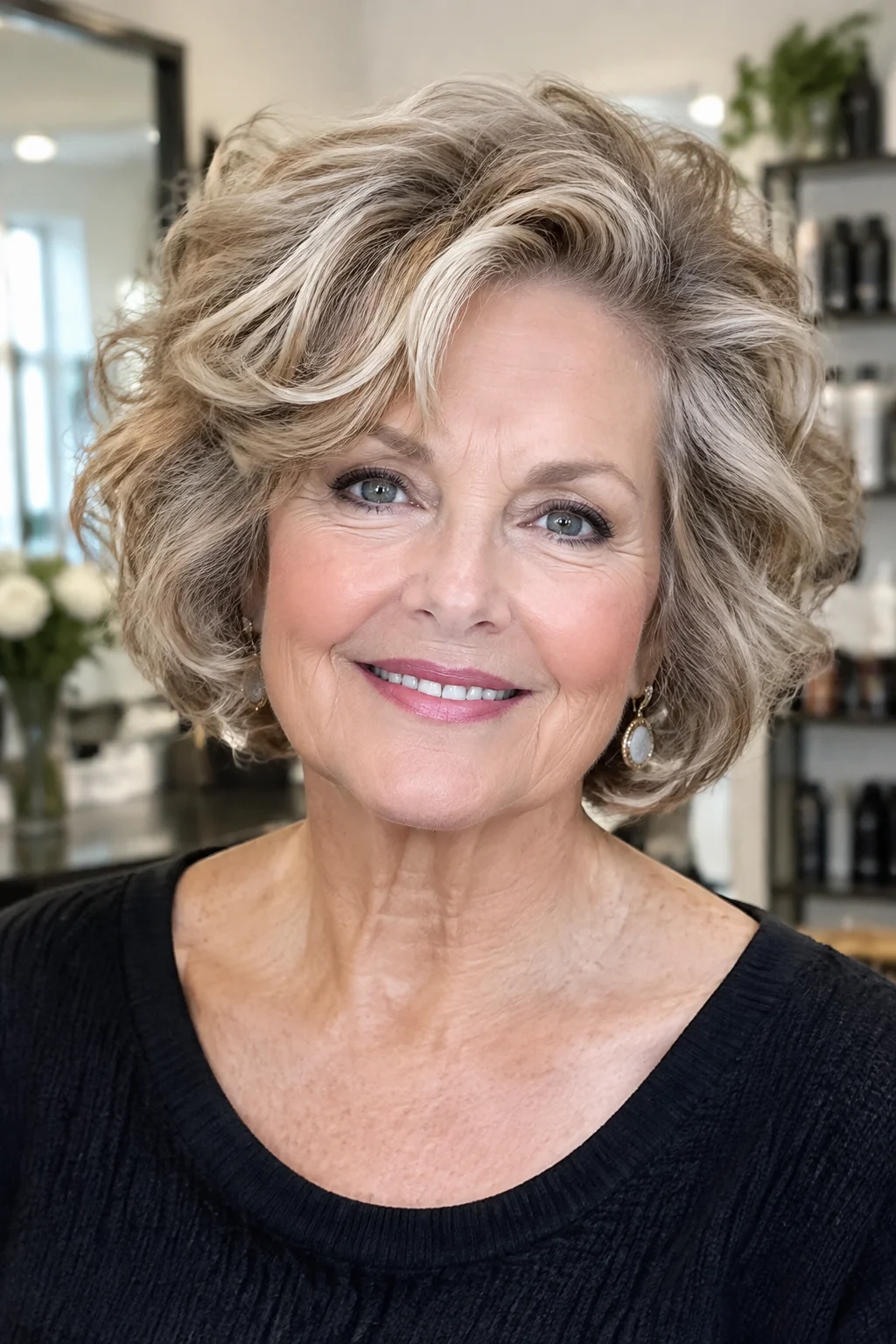
A loose perm added to a bob brings back body that straight, fine hair loses over time. The curls are usually big and soft rather than tight, giving the whole head a fuller silhouette. Tip: ask for a perm solution formulated for color-treated or fragile hair if your hair has been lightened or is on the drier side.
Dimensional Color Short Bob
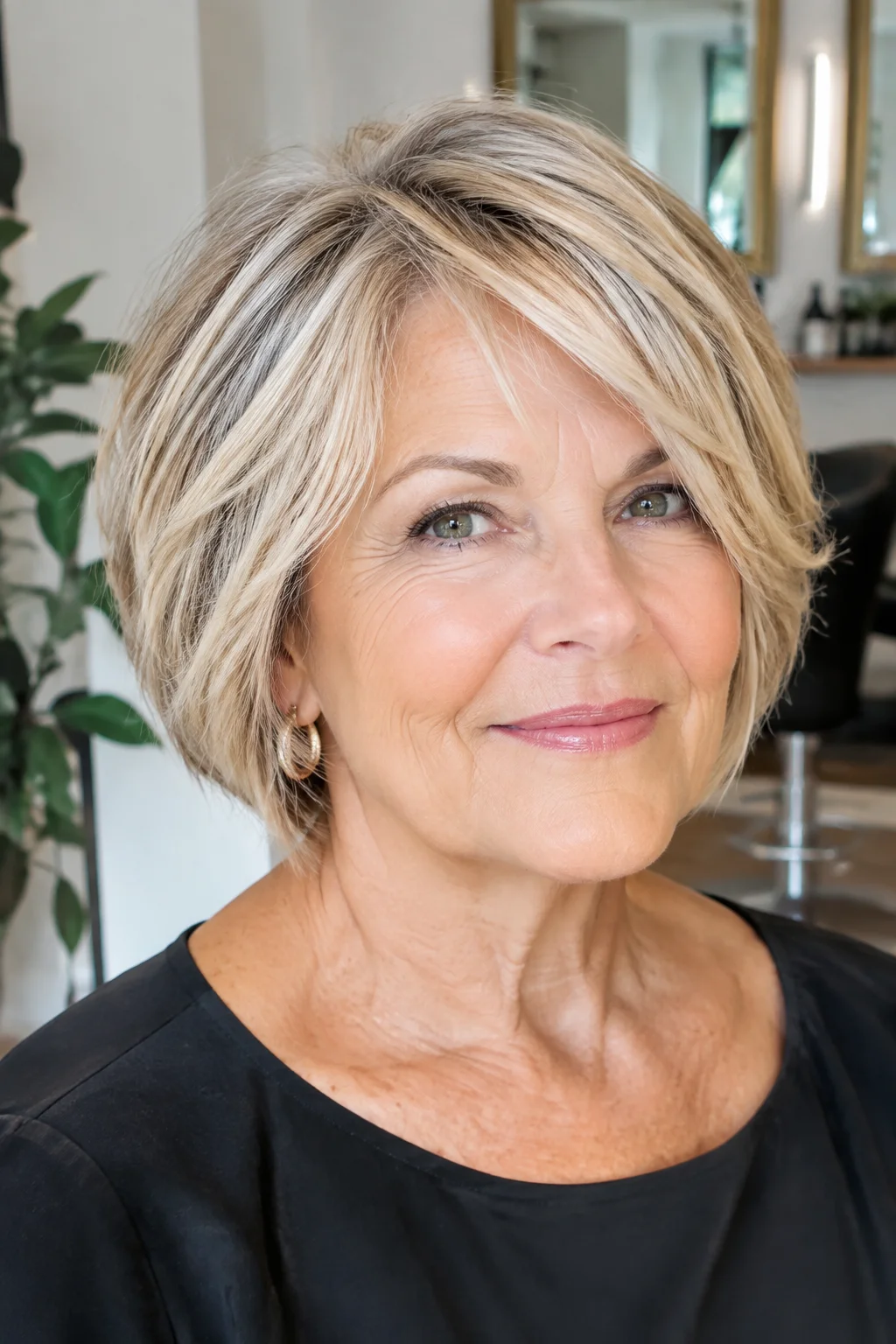
Adding two or three tones of color, rather than one flat shade, gives a short bob more depth and makes thin areas look less noticeable. Lighter pieces around the face catch light and draw attention upward. This works on gray, silver, or still-pigmented hair alike, since the dimension comes from contrast rather than a specific base color.
Choppy Textured Bob with Bangs
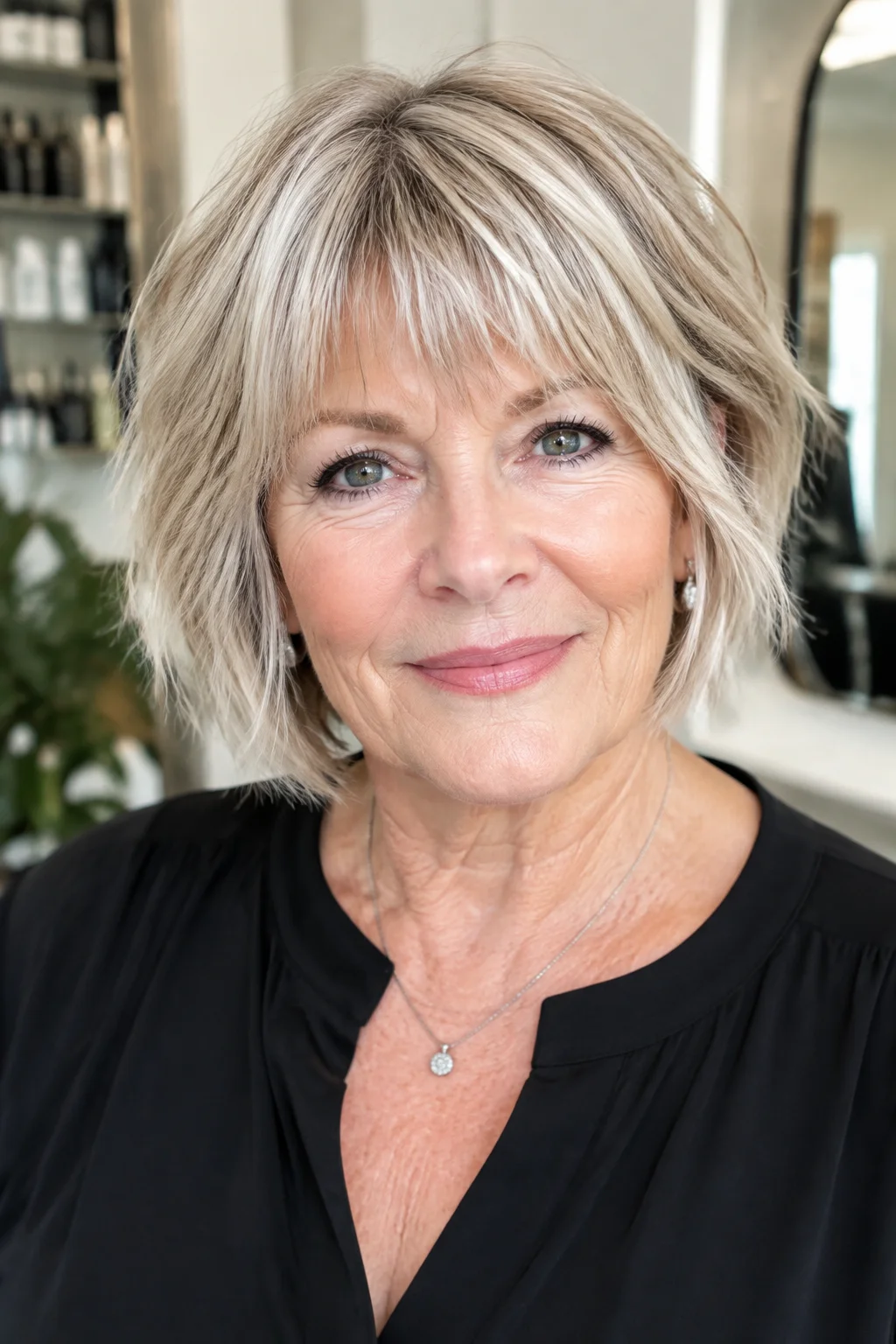
Heavy texturizing throughout, paired with blunt or slightly textured bangs, gives this bob an edgier feel than most on this list. It suits women who want their hair to look a little undone on purpose rather than perfectly smooth. The choppy ends also hide regrowth and texture changes between salon visits better than a clean, blunt cut does.
Sleek Undercut Bob
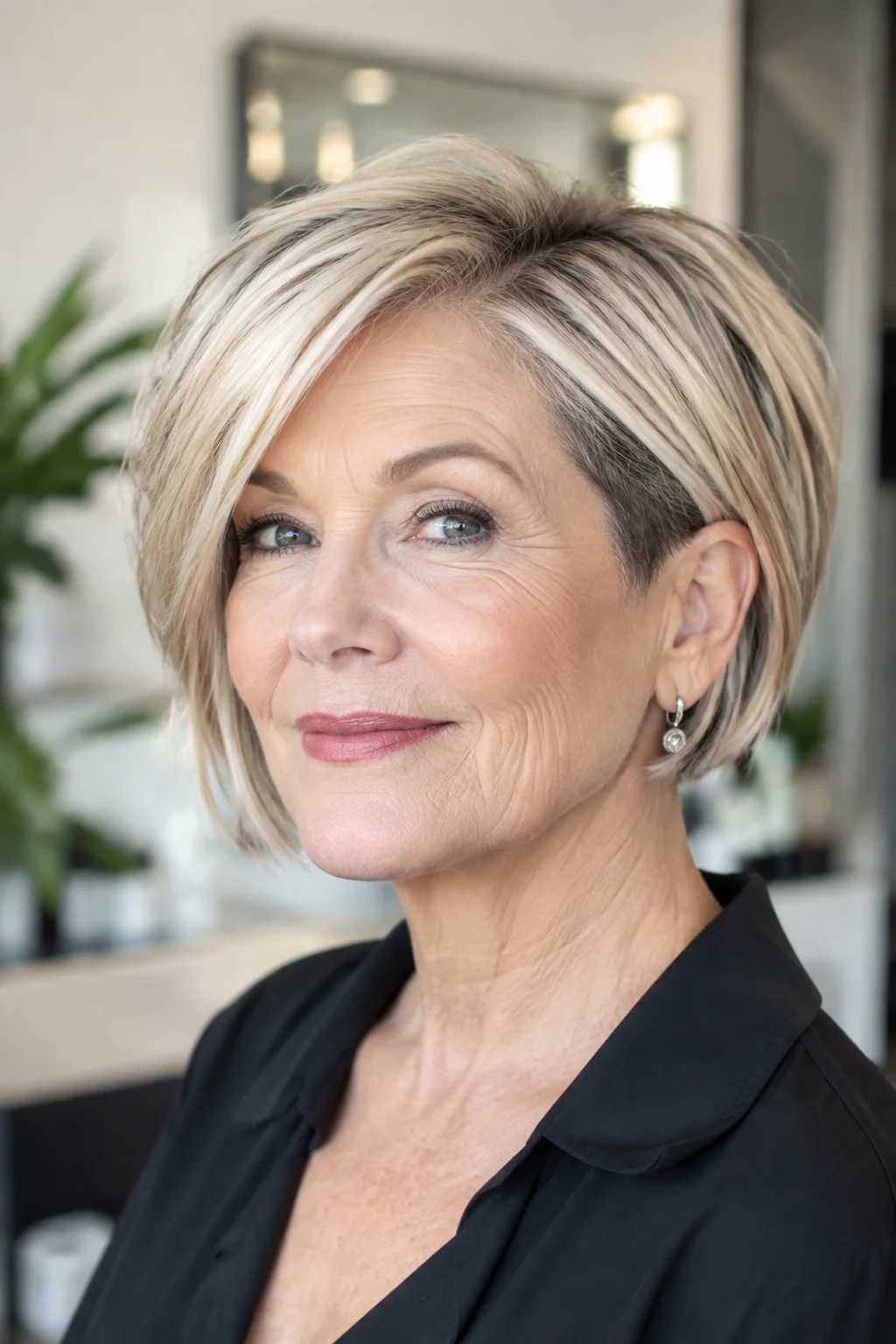
An undercut shaves or closely trims the hair underneath the top layer, hidden until you tuck hair behind your ear or put it up. It’s a bold choice, but it keeps the visible top layer light and easy to manage. This suits someone who wants a hidden detail rather than an obvious style statement, and it reduces bulk at the nape for anyone who finds heavy hair there uncomfortable.
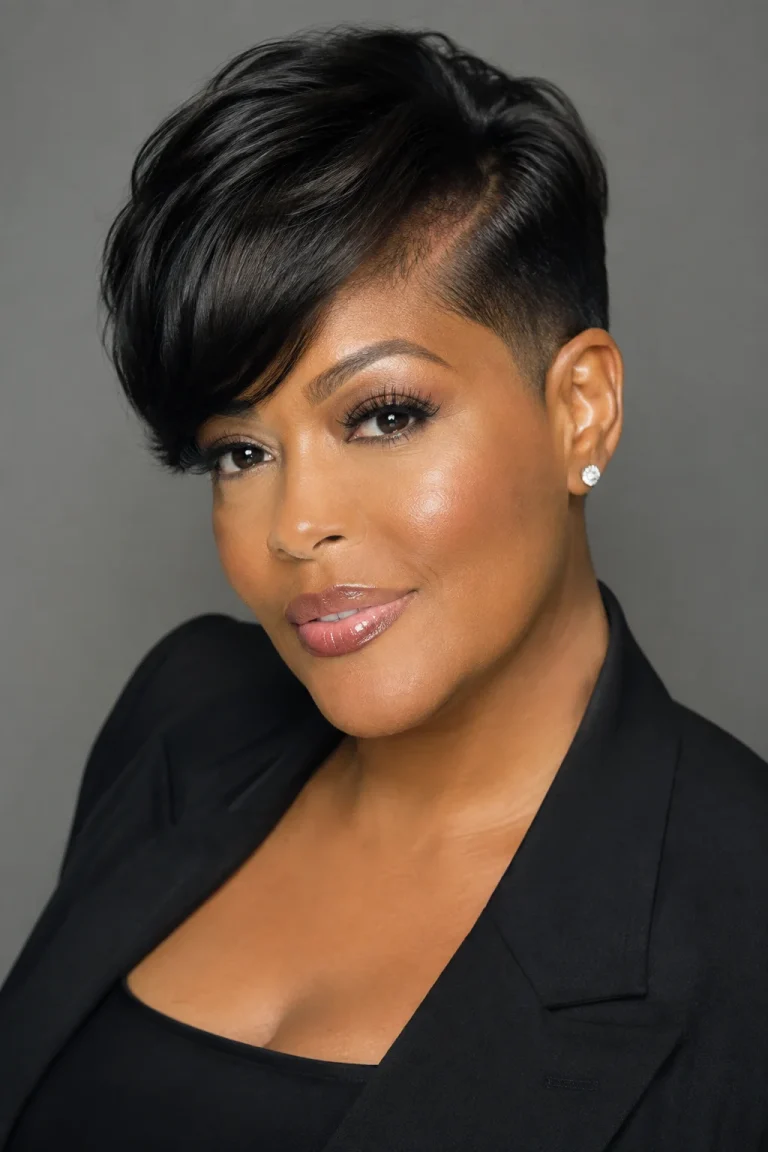
Taper Fade Bob for Low Maintenance
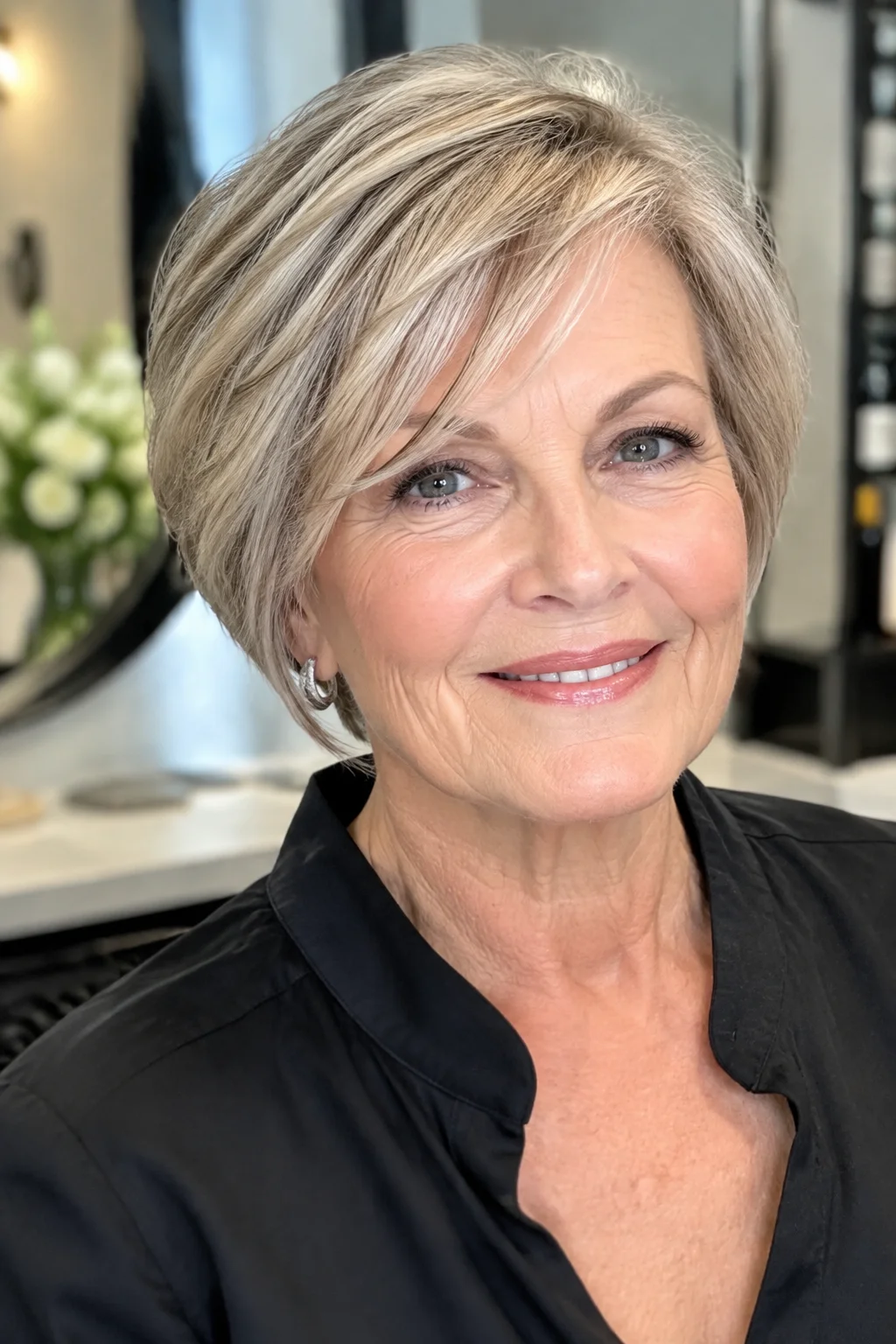
A tapered fade at the back and sides blends short hair smoothly into the neckline, similar to a men’s fade but softened for a feminine bob shape on top. It’s one of the lowest maintenance options here because the fade grows out gradually instead of leaving a hard line. This cut suits women who want to cut down salon visits without sacrificing a clean look.
Choosing the Right Bob: A Quick Decision Guide
With 22 options, picking one comes down to three things: your hair’s natural texture, your face shape, and how much styling time you actually want to spend. If your hair is fine and thin, look toward the stacked layered bob for fine, thin hair or the softly layered bob for thin hair, since both are built specifically to fake density rather than rely on hair you don’t have. If you’re working with natural curl, skip any blunt, straight-edged option and go for the curly short bob with defined ringlets or the feathered bob for curly hair, which are cut to work with the curl pattern instead of against it.
For round faces, the wispy layered bob for round faces or the rounded bob for square faces (used in reverse, for contrast) can adjust the appearance of width. Women who want the absolute least daily upkeep should consider the taper fade bob for low maintenance or the micro bob, both of which hold their shape with minimal styling. And if gray or silver hair is the focus, the sleek silver bob with side part and the tousled textured bob for gray hair take the same color in two very different directions, one polished and one relaxed. A common mistake is choosing a cut based on a photo alone without accounting for texture. A blunt bob photographed on straight, thick hair will not behave the same way on fine or curly hair, so always describe your actual hair type to your stylist before settling on a final choice.
Any of these styles can work well past 70, as long as the cut respects the hair you have now rather than the hair you used to have. Bring a photo to your appointment, but talk openly with your stylist about thickness, curl pattern, and how much time you want to spend styling it each morning. The right bob should feel easier to manage, not harder, and it should make your morning routine shorter, not longer.