Getting your hair cut after 40 should feel exciting, not risky. A lot of women stick with the same safe trim for years because they worry a bold change will age them or feel like too much upkeep. The truth is an asymmetrical cut can do the opposite. It adds movement, draws attention to your eyes and cheekbones, and gives thinning or flat hair a reason to look fuller again. Short hair asymmetrical haircuts for women over 40 work because they break up predictable lines and bring a little edge without going overboard. Some of these styles lean soft and wearable, others are sharper and more graphic, but all of them are built to flatter real faces at this stage of life. Print out your favorites, bring them to your stylist, and talk through what fits your hair texture and your daily routine.
One-Side-Longer Pixie with Angled Undercut
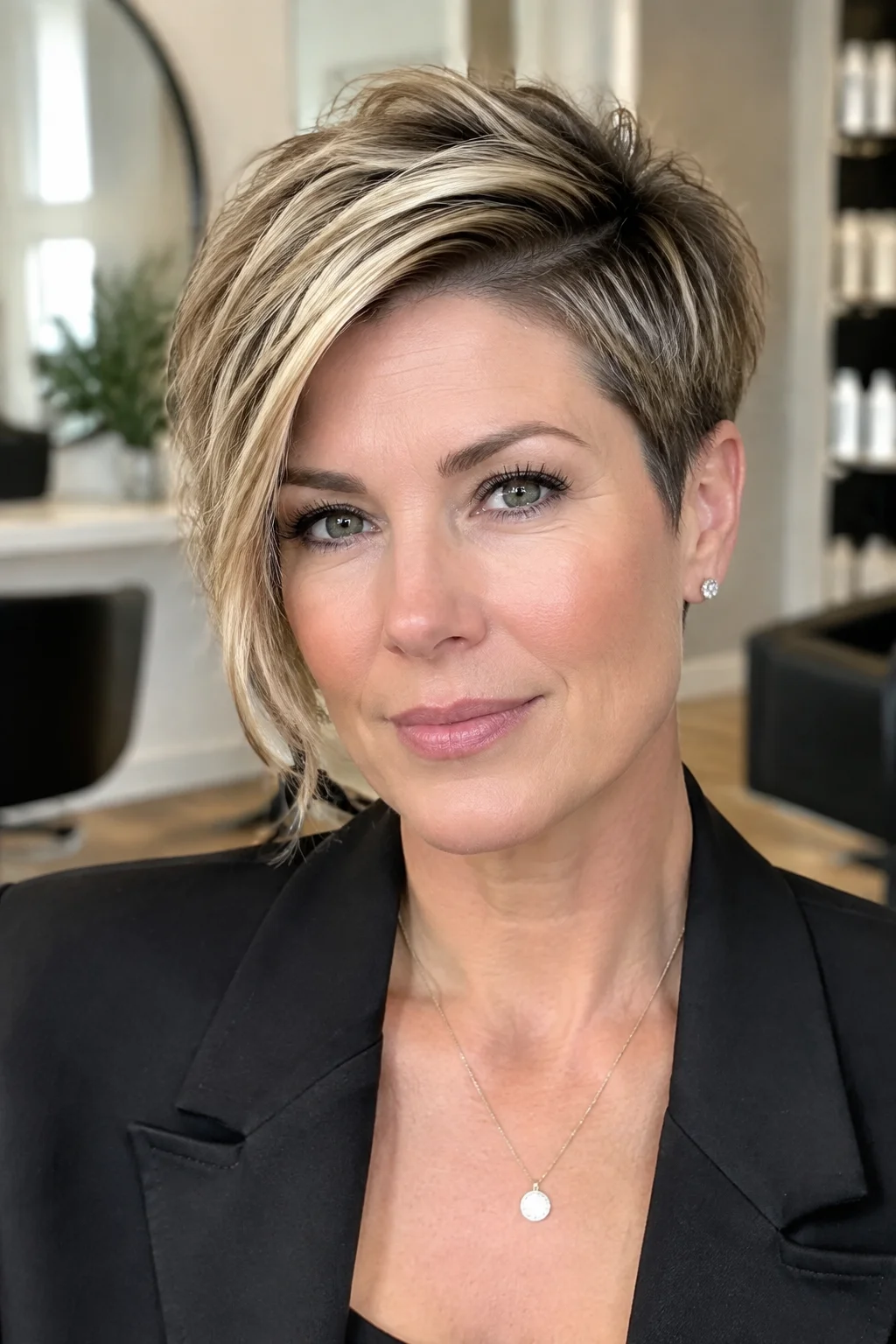
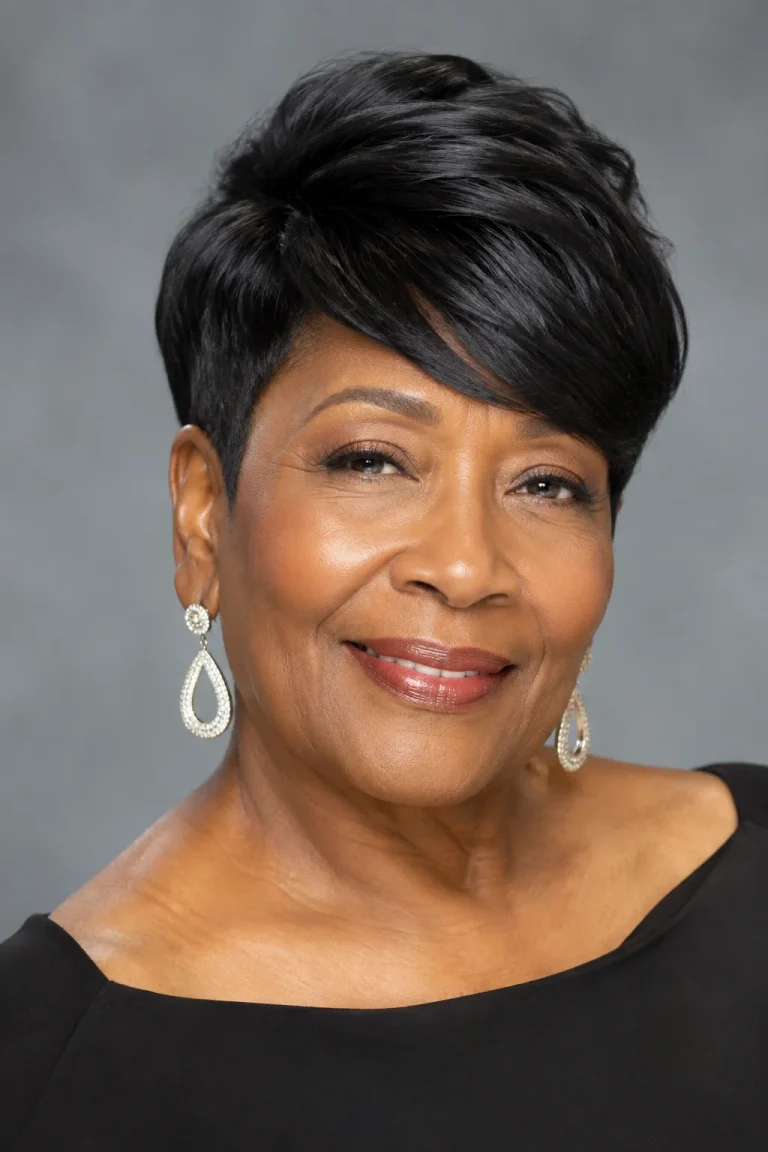
This pixie keeps one side short and tapered while letting the other side hang a bit longer, creating a diagonal line that frames the face. The undercut underneath removes bulk so the longer piece lies flat instead of poofing out. It works especially well on fine or medium hair because the shorter side gives the illusion of thickness while the longer side adds softness. Ask your stylist to angle the part sharply so the asymmetry reads as a deliberate style choice rather than an accident. Tip: request a slightly longer fringe on the heavier side to balance a round or square face. A light mist of heat protectant before styling helps the finish last.
Shaggy Asymmetrical Bob with Choppy Layers
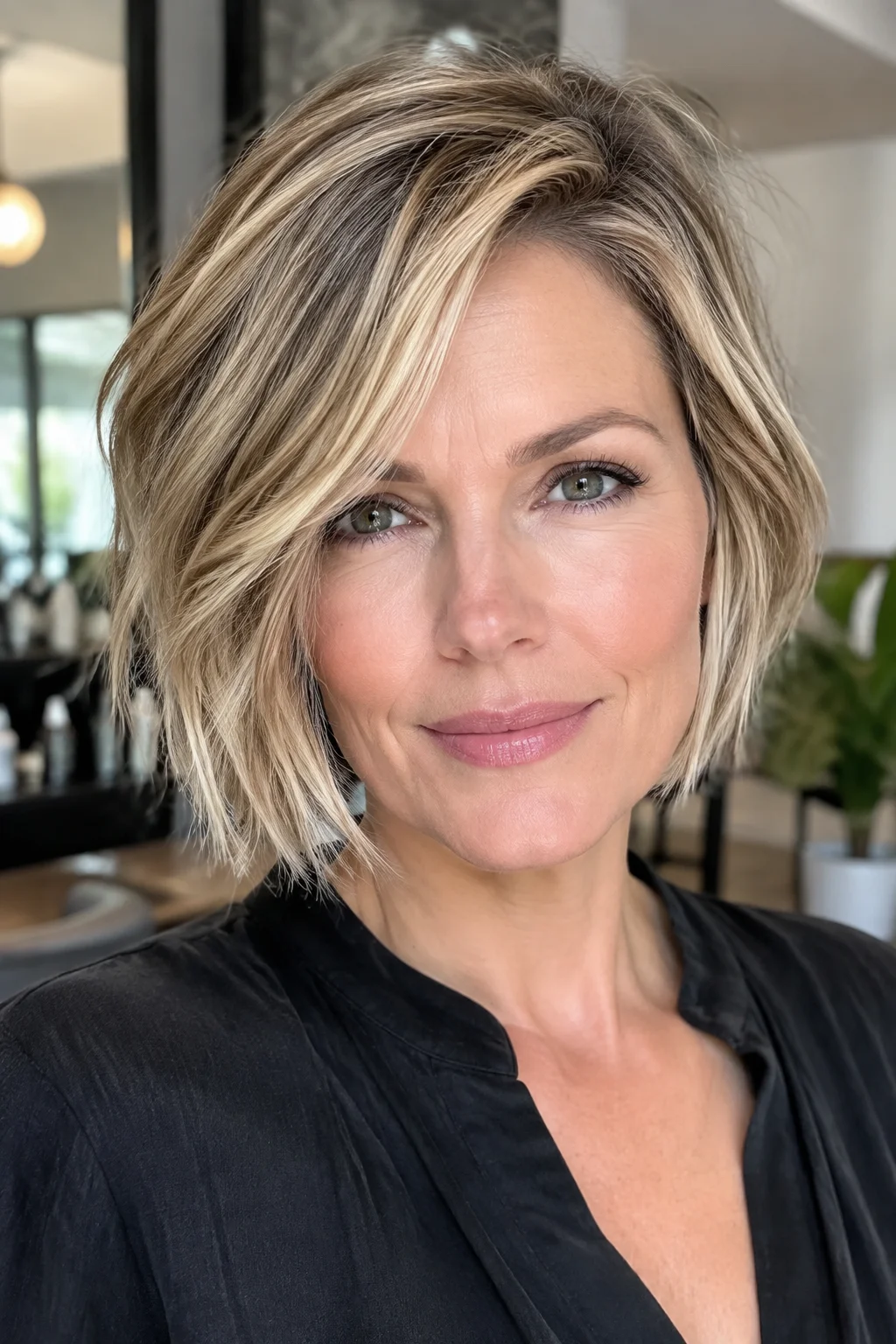
The shag brings texture and the asymmetry brings shape, and together they make a cut that looks effortless even on a day you did nothing to it. Layers are choppy and uneven on purpose, cut with a razor rather than shears for a softer edge. One side sits a touch below the chin, the other grazes the jaw, so the whole thing feels loose and lived in. This style hides fine lines around the jaw and softens a strong chin. It’s a good pick if you want something low maintenance that still looks intentional. A light mist of heat protectant before styling helps the finish last.
Disconnected Asymmetrical Undercut with Swept Fringe
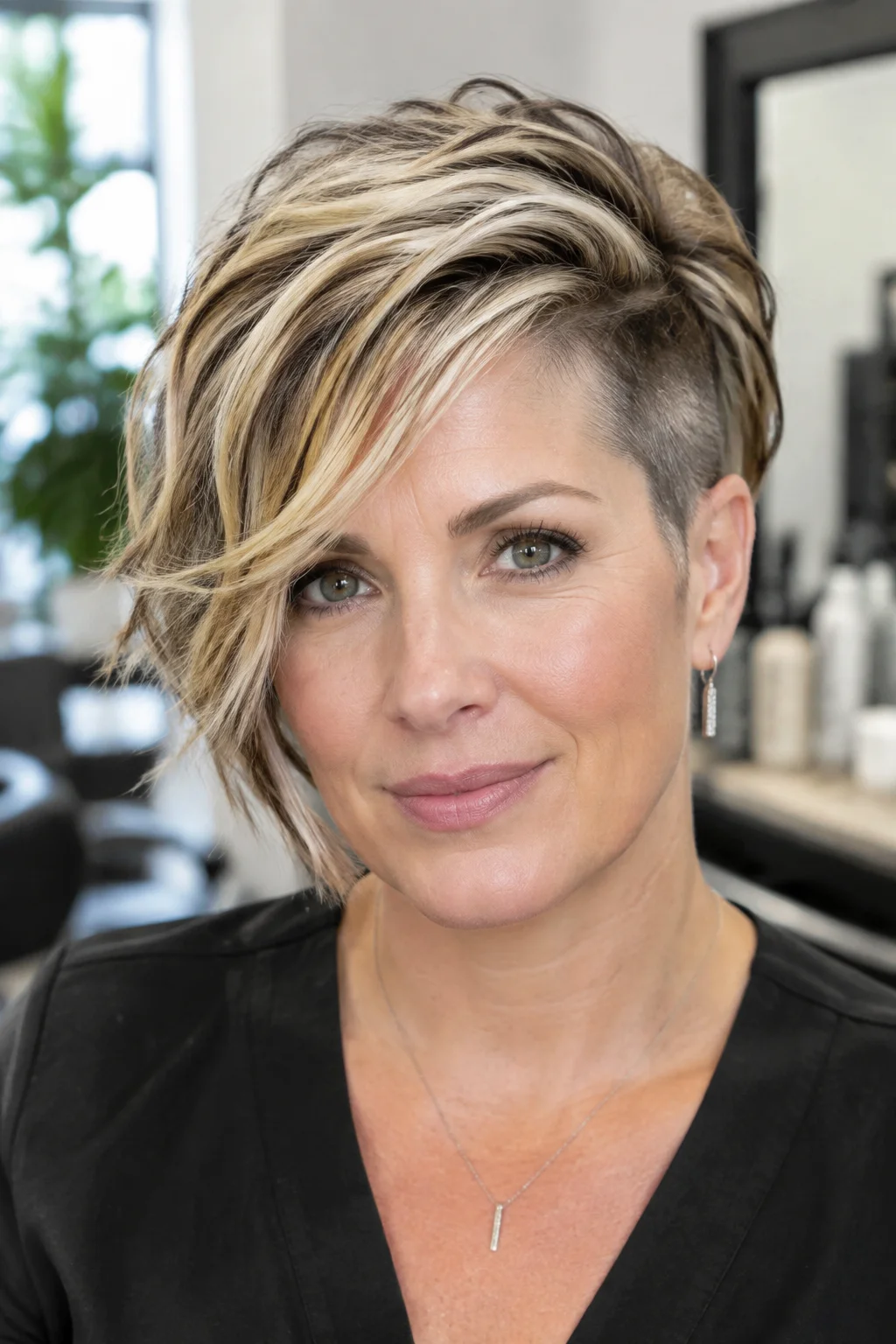
This one is for women who want a real statement. The undercut is shaved close on one side, completely disconnected from the longer top section, which gets swept across the forehead into a deep side fringe. It reads modern and a little rebellious without crossing into high maintenance territory since the shaved section grows out slowly. Thick or coarse hair holds this shape best because it needs enough weight on top to stay swept instead of sticking up. If you work somewhere conservative, ask your stylist to keep the undercut subtle so it can be covered when you want a quieter look.
Blunt Asymmetrical Lob with Side-Parted Volume
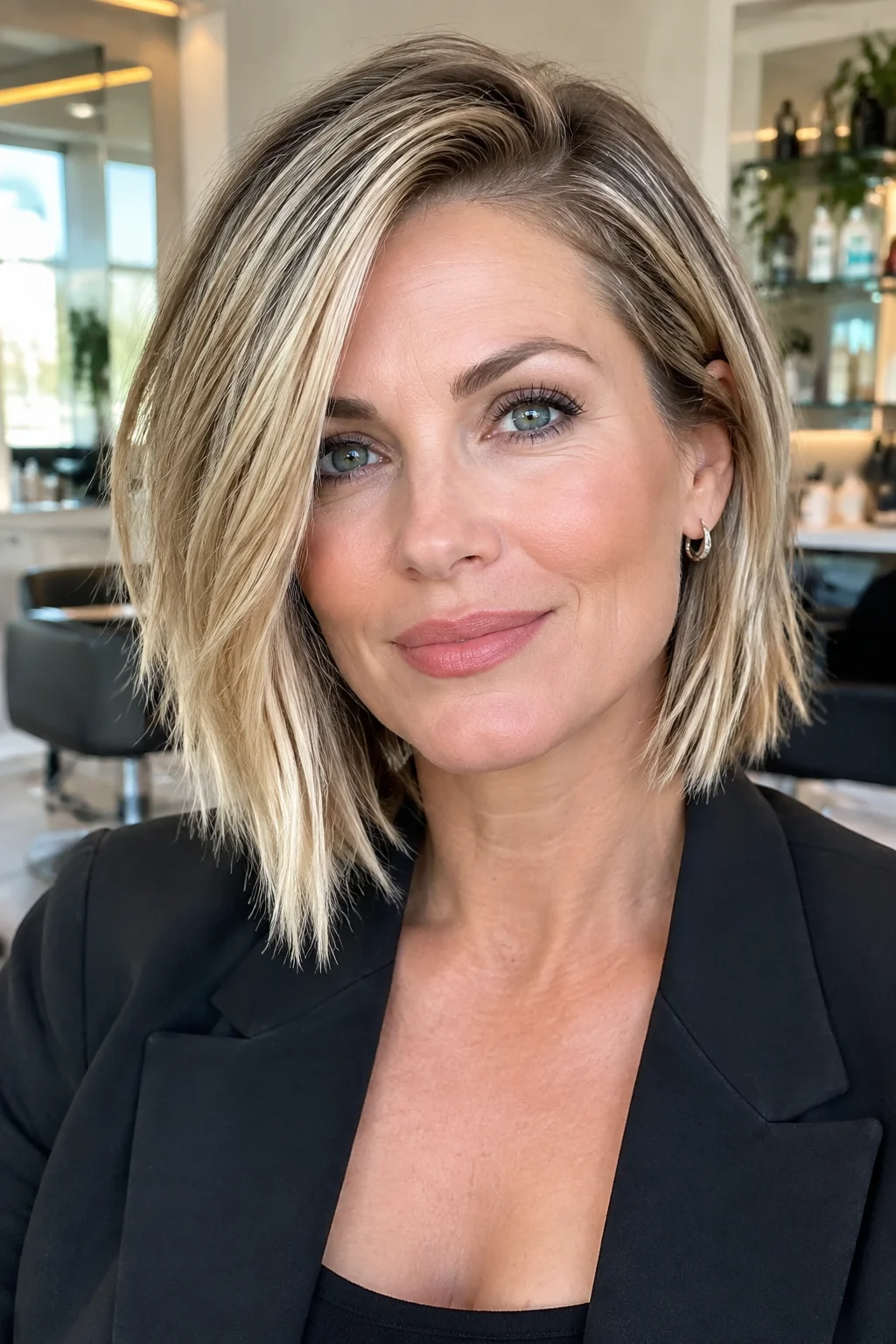
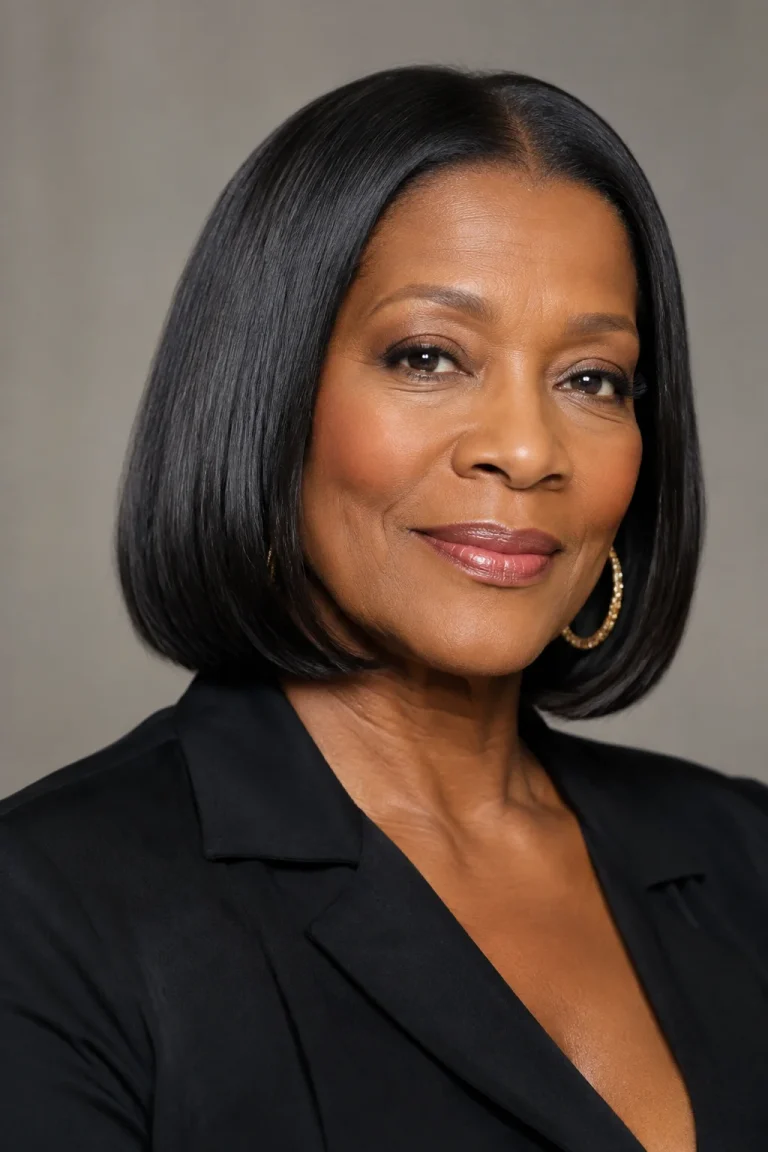
A blunt cut with one side noticeably longer than the other gives you the structure of a classic lob with a twist that keeps it from looking stiff. The side part does a lot of work here, pushing volume up and over to create a soft wave of hair that falls at different lengths down each shoulder. Blunt ends photograph well and hold color beautifully, which matters if you’ve got highlights or balayage you want to show off. This cut suits straight to slightly wavy hair the best.
Textured Asymmetrical Crop with Razored Edges
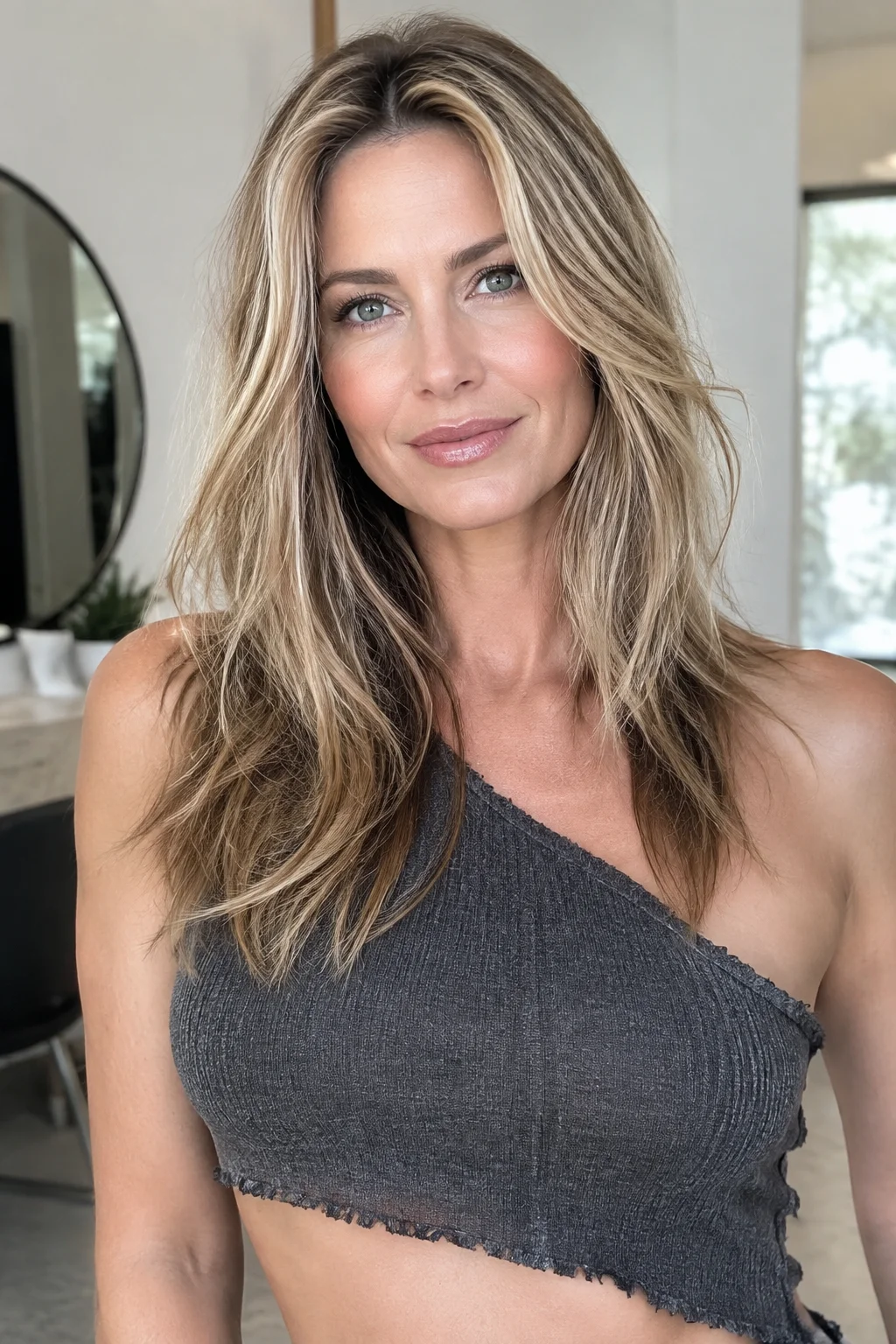
Short, cropped, and full of movement, this cut relies on razored edges instead of blunt shears to keep everything soft around the face. One side is cut shorter near the ear while the opposite side carries a bit more length toward the cheek. The texture reduces bulk, which is a relief if your hair tends to get heavy or triangular as it grows out. Tip: ask for point cutting at the tips so the ends feel feathered instead of blocky.
Curved Asymmetrical Bob for Round Faces
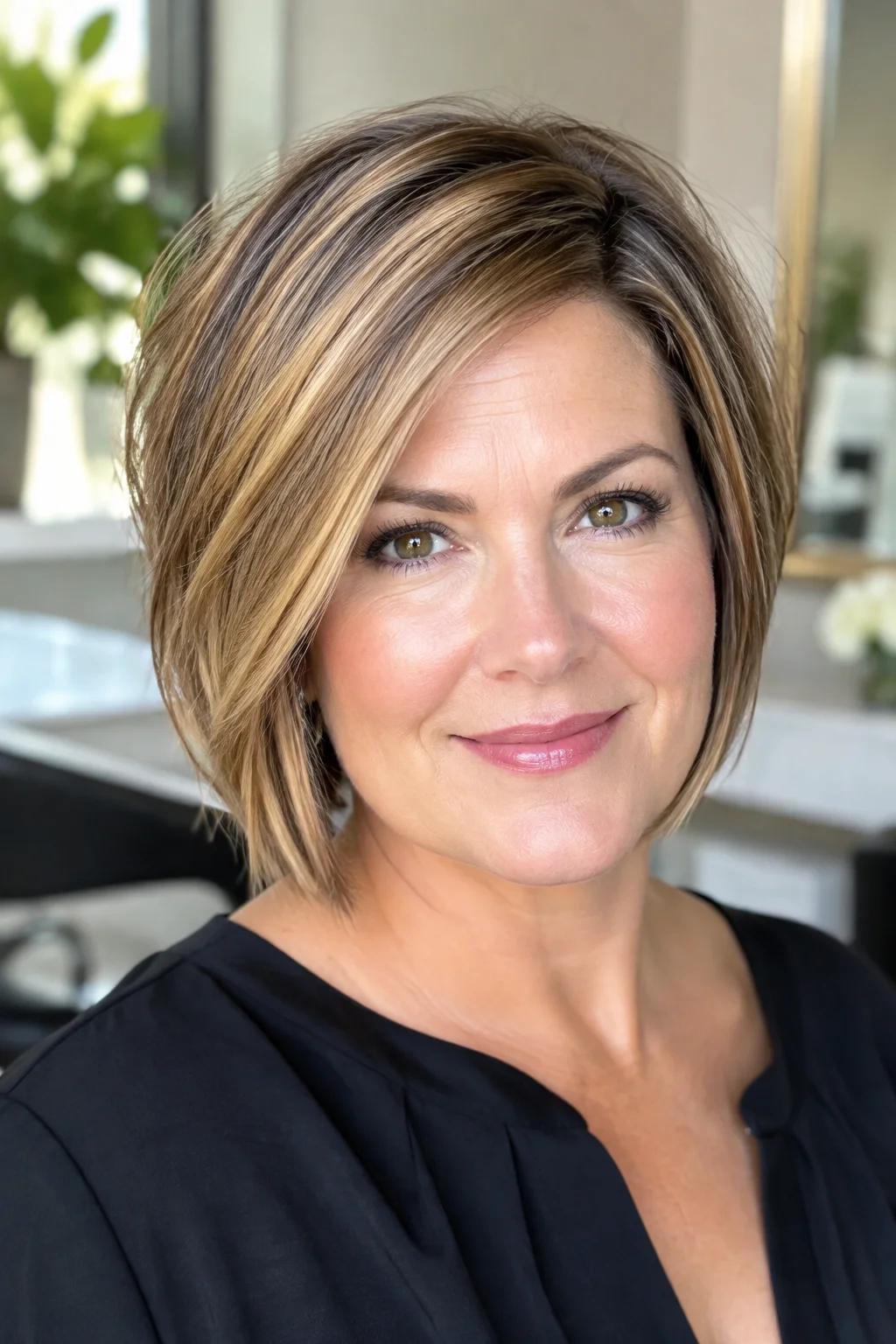
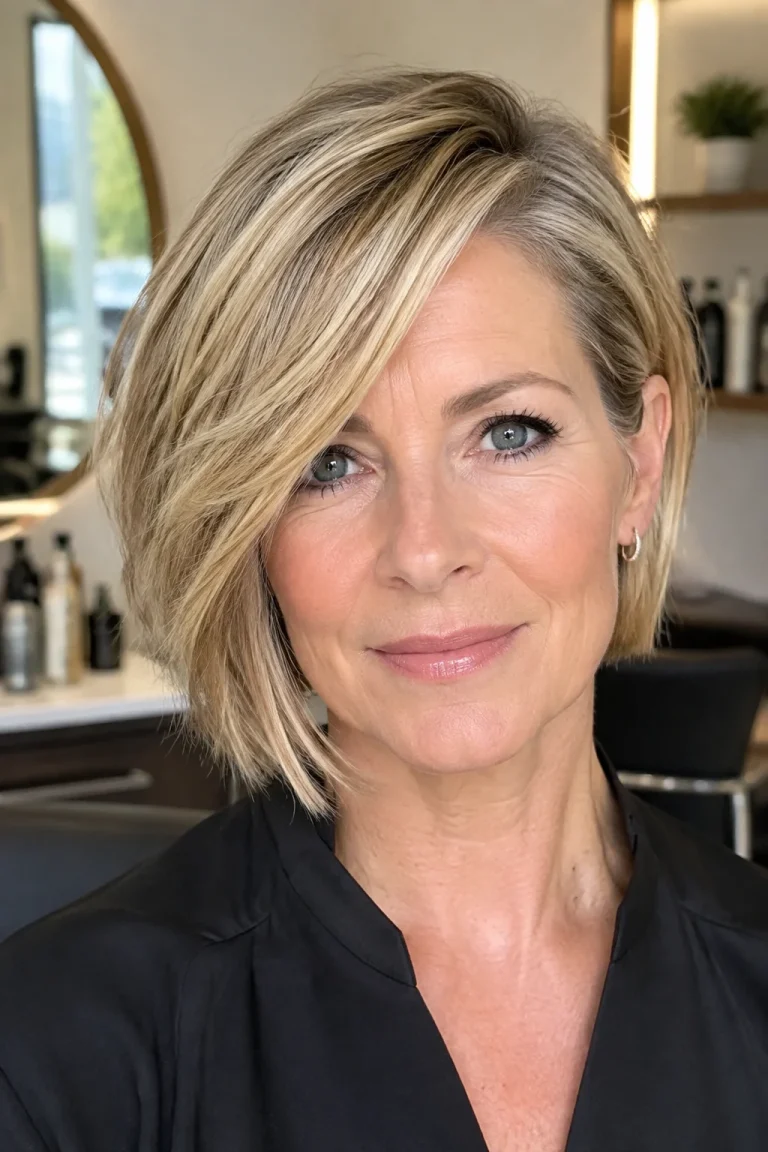
Round faces benefit from lines that break up width, and this bob does exactly that with a curved, diagonal cut that runs longer in front and shorter in back. The curve draws the eye down and elongates the face instead of adding roundness. It’s a flattering, fairly low drama option for anyone who wants asymmetry without anything extreme. Ask for the length difference to stay moderate, around two inches, so the shape still reads as a bob rather than a dramatic angle.
Asymmetrical Pixie-Bob Hybrid with Undercut Fade
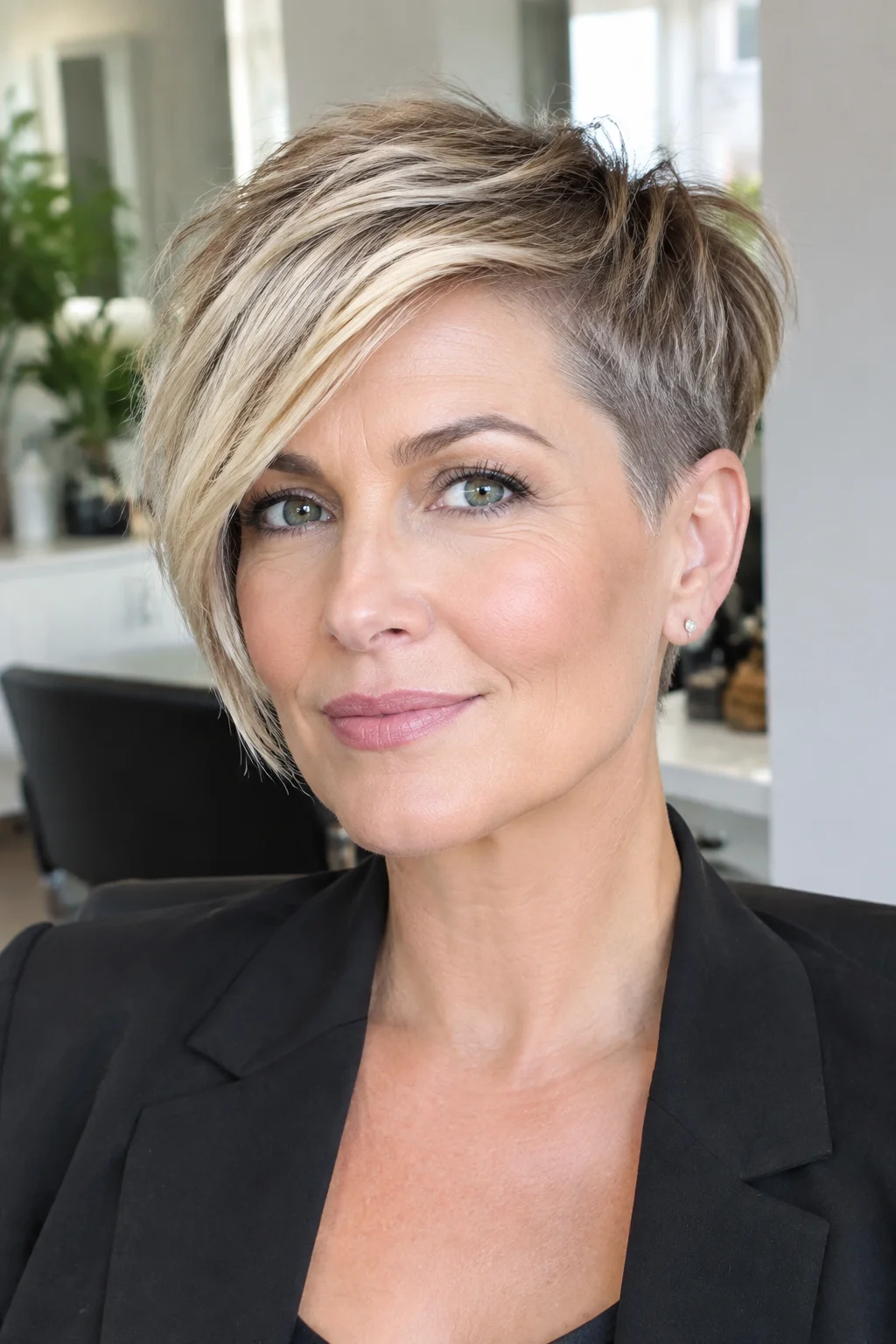
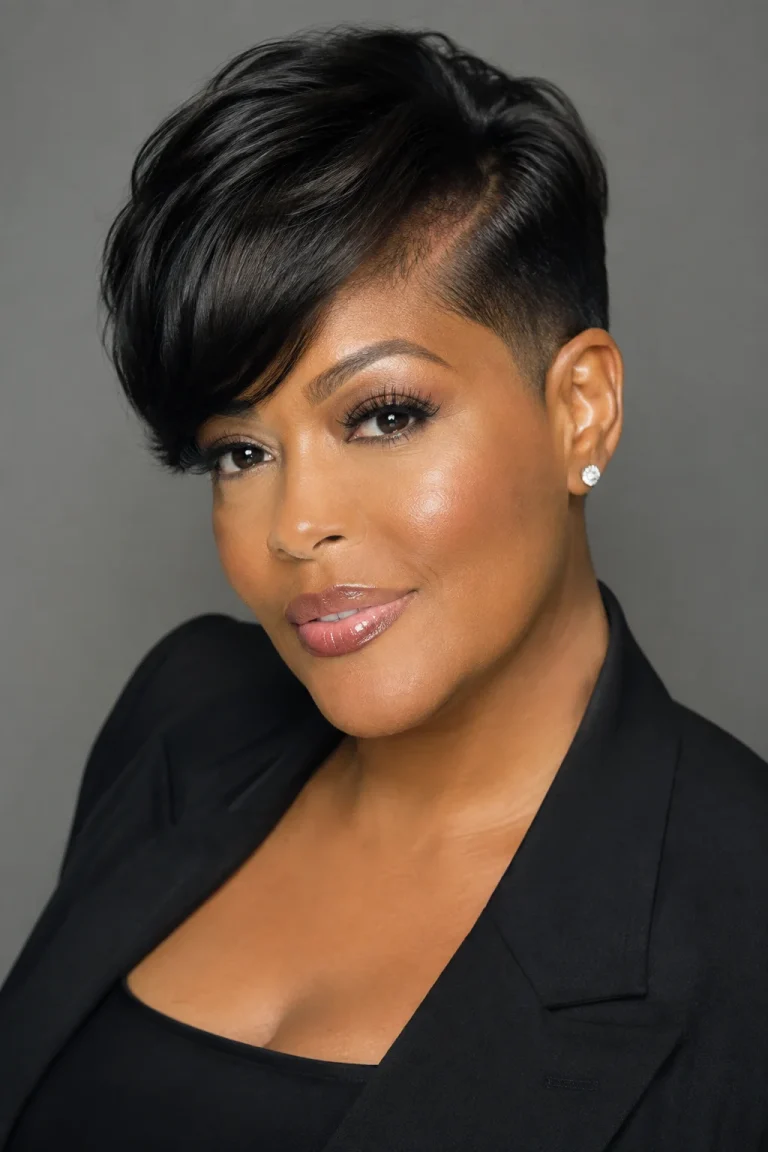
This cut splits the difference between a pixie and a bob, pulling the best of both into one shape. One side is cropped close with a fade, the other stretches down closer to bob length, and the two sides meet at a soft, diagonal line through the crown. It gives you the low maintenance ease of a pixie on one side and the styling flexibility of a bob on the other. Fine hair gets instant volume from the fade, since cutting away weight near the root always makes the top look fuller. This is a great option if you’re bored with your current short cut but aren’t ready to go fully short all over.
Side-Swept Asymmetrical Bangs with Short Layers
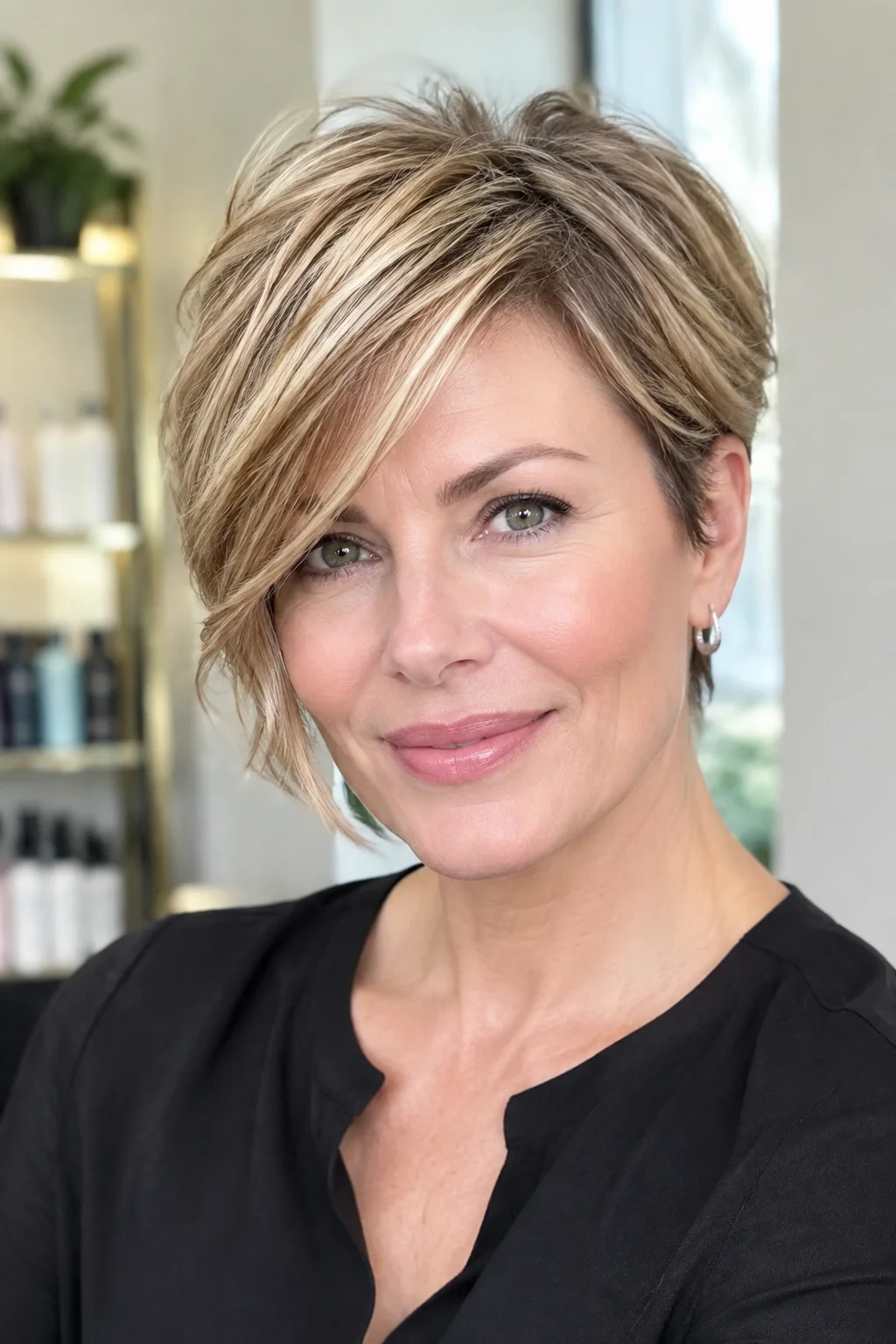
Short layers throughout the crown keep this cut light, while the side swept bangs add the asymmetrical element right at the front where it has the most impact on your face. The bangs blend into the length on one side and sit shorter and choppier on the other. It’s a flattering way to soften a strong brow line or hide forehead wrinkles without a heavy, blunt fringe that needs constant trimming.
Stacked Asymmetrical Bob with Shorter Back
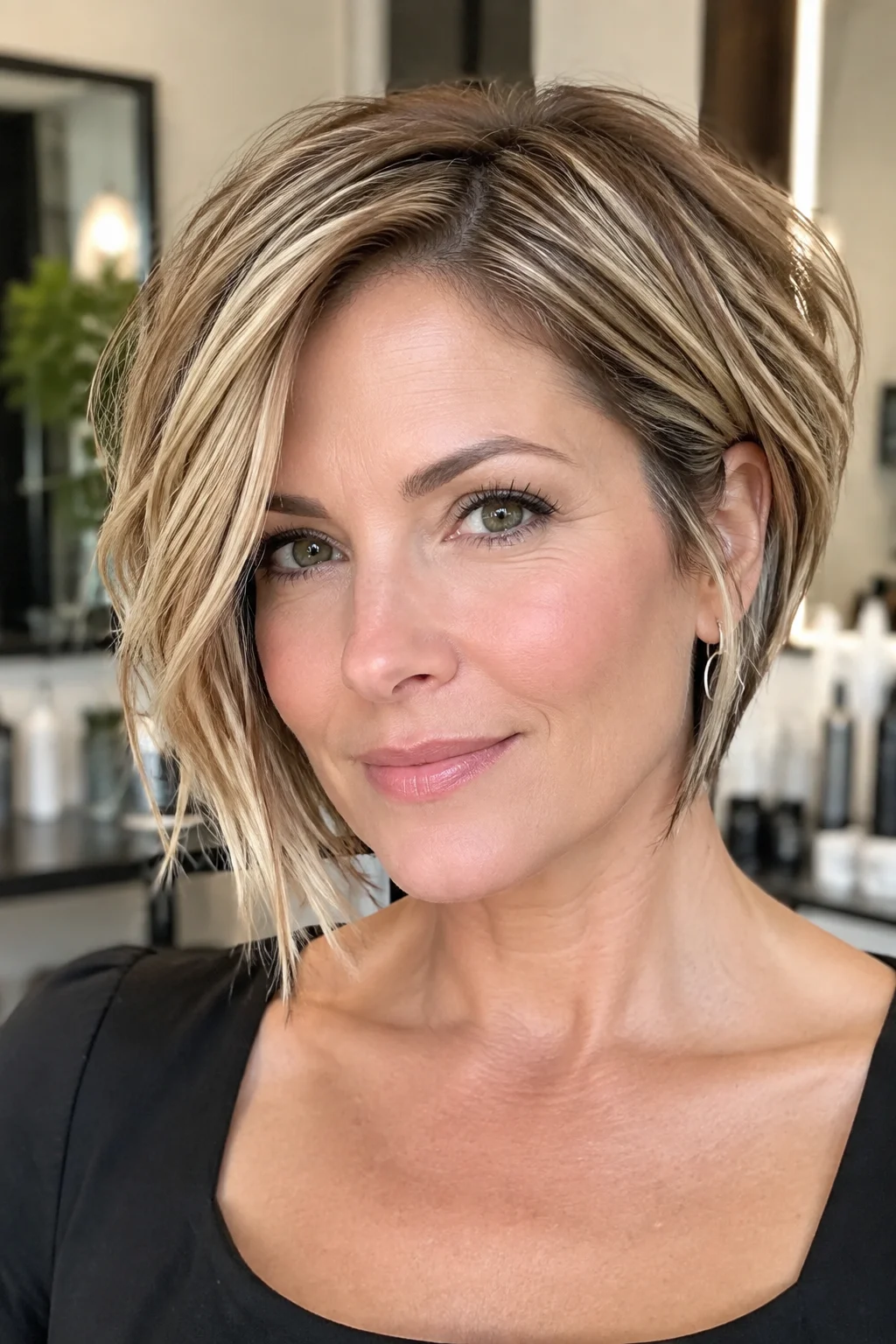
Stacking adds visible layers at the back of the head that get shorter as they go up, building a rounded shelf of volume at the nape. Paired with an asymmetrical front, where one side is noticeably longer than the other, this cut gives you lift where hair often falls flat and shape where it tends to look straight and boring. It flatters a long neck particularly well because the stacking shortens the visual length of the back of the head. Fine, limp hair responds well to the structure this cut provides, and it usually only needs a trim every six to eight weeks to keep its shape.
Tapered Asymmetrical Undercut with Longer Top Knot Section
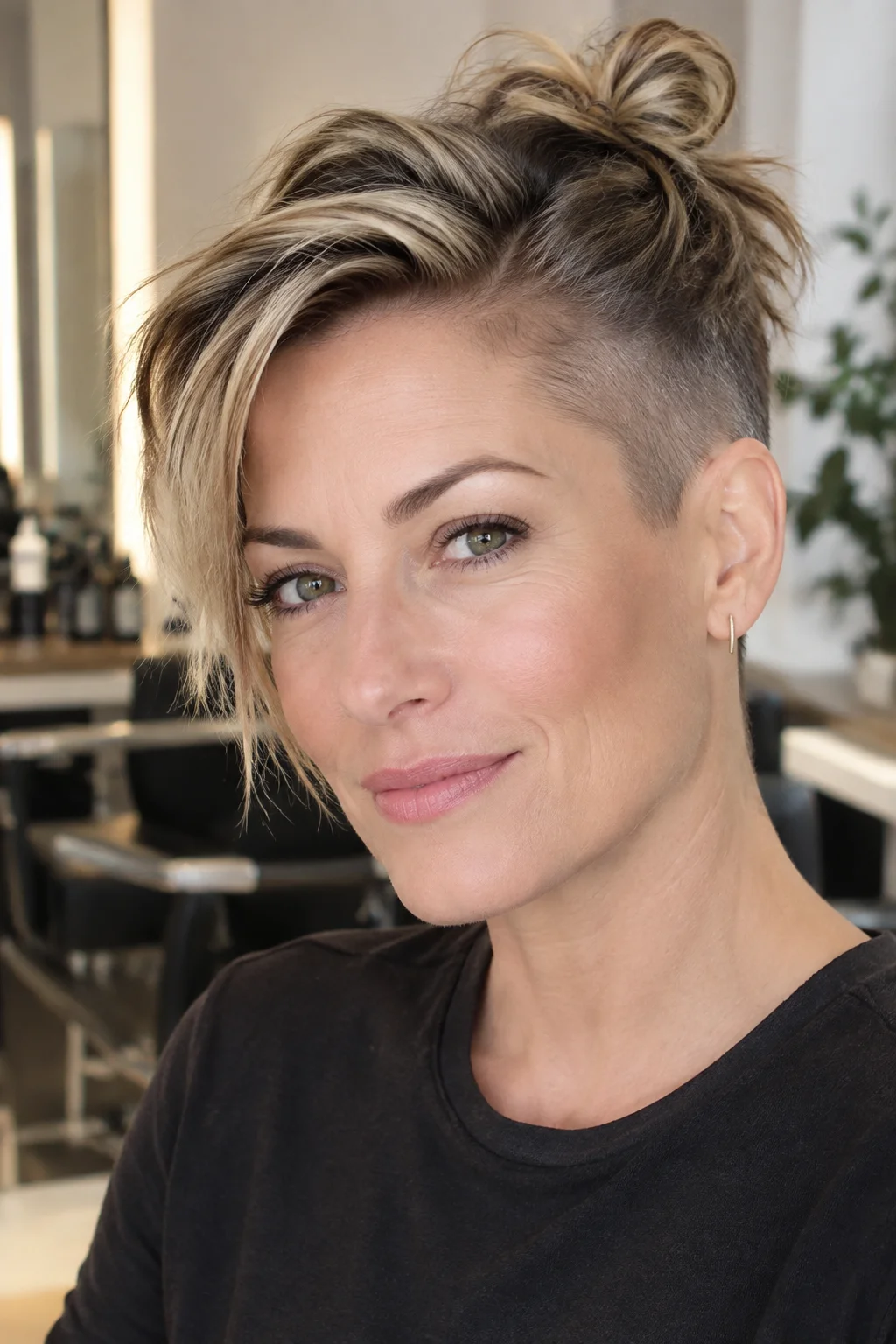
The sides and back taper in close, almost like a fade, while the top is left long enough on one side to gather into a small knot or twist if you want it pulled back. It’s a flexible cut, styled short and sharp some days, pulled up and softer on others. This works particularly well for active women who want an edgy base cut but still need an option for the gym or a hot afternoon. Coarse or thick hair holds the longer top section with the most body.
Asymmetrical Wavy Bob with Soft Undercut
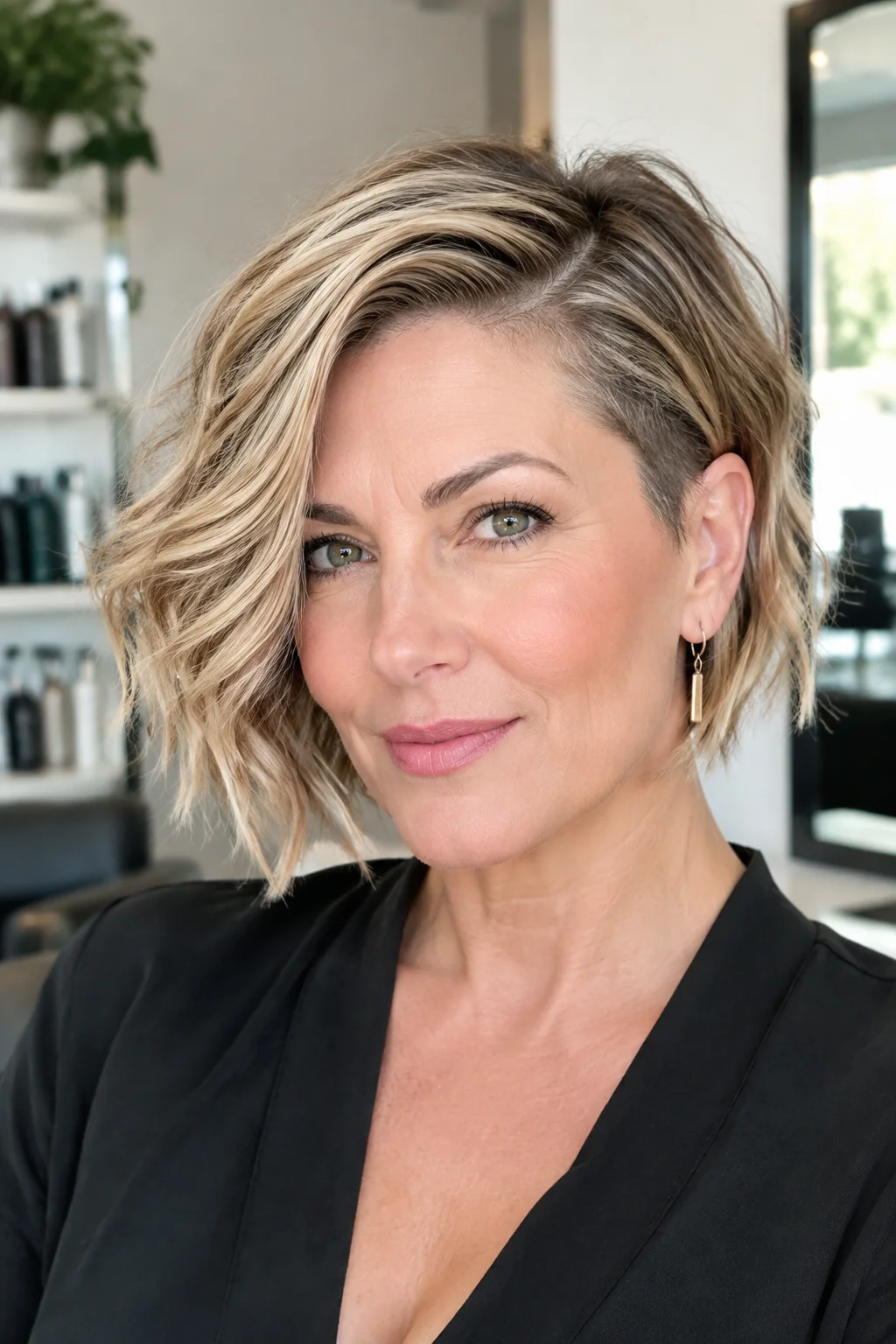
Waves add natural texture to this bob, and a soft, barely there undercut underneath keeps things from getting too heavy. One side sits near the chin, the other dips closer to the collarbone, and the waves blur the line between them so the asymmetry feels gentle rather than graphic. This is one of the easier asymmetrical cuts to grow out gradually, since the soft undercut doesn’t require reshaving as often as a sharper one. Tip: use a texturizing spray on damp hair before air drying to let the natural wave pattern show through.
Disconnected Asymmetrical Shag with Feathered Layers
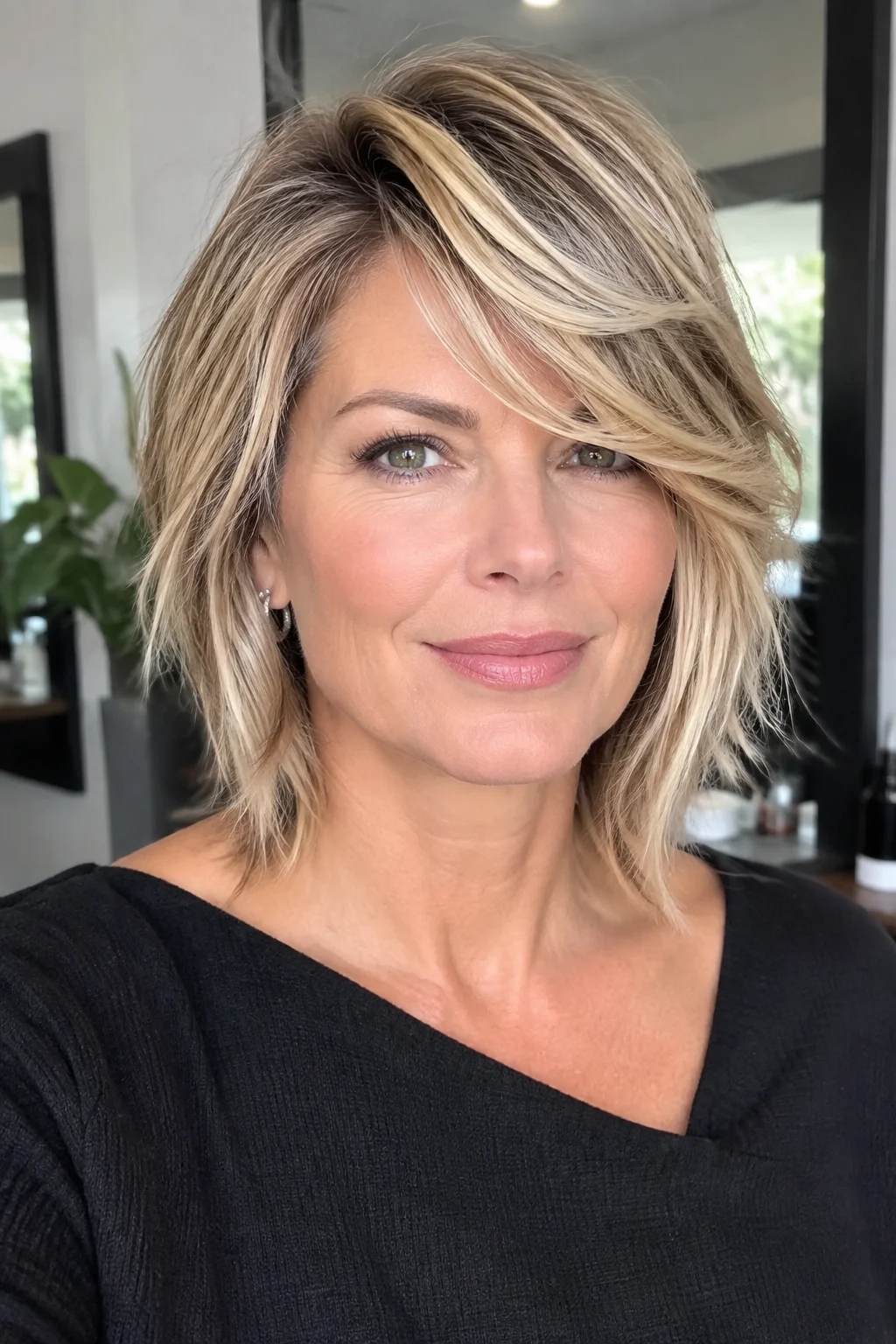
This shag takes the disconnected idea from the undercut styles and applies it to layering instead of shaving, cutting a visible gap between the shorter crown layers and the longer perimeter. Feathered ends keep everything soft at the tips so the disconnection doesn’t look harsh. One side is left noticeably longer, giving the whole cut a lopsided, rock and roll feel. It’s a strong choice for thick hair that needs layers removed to stop it from looking like a triangle.
Asymmetrical Angled Bob with Blunt Front
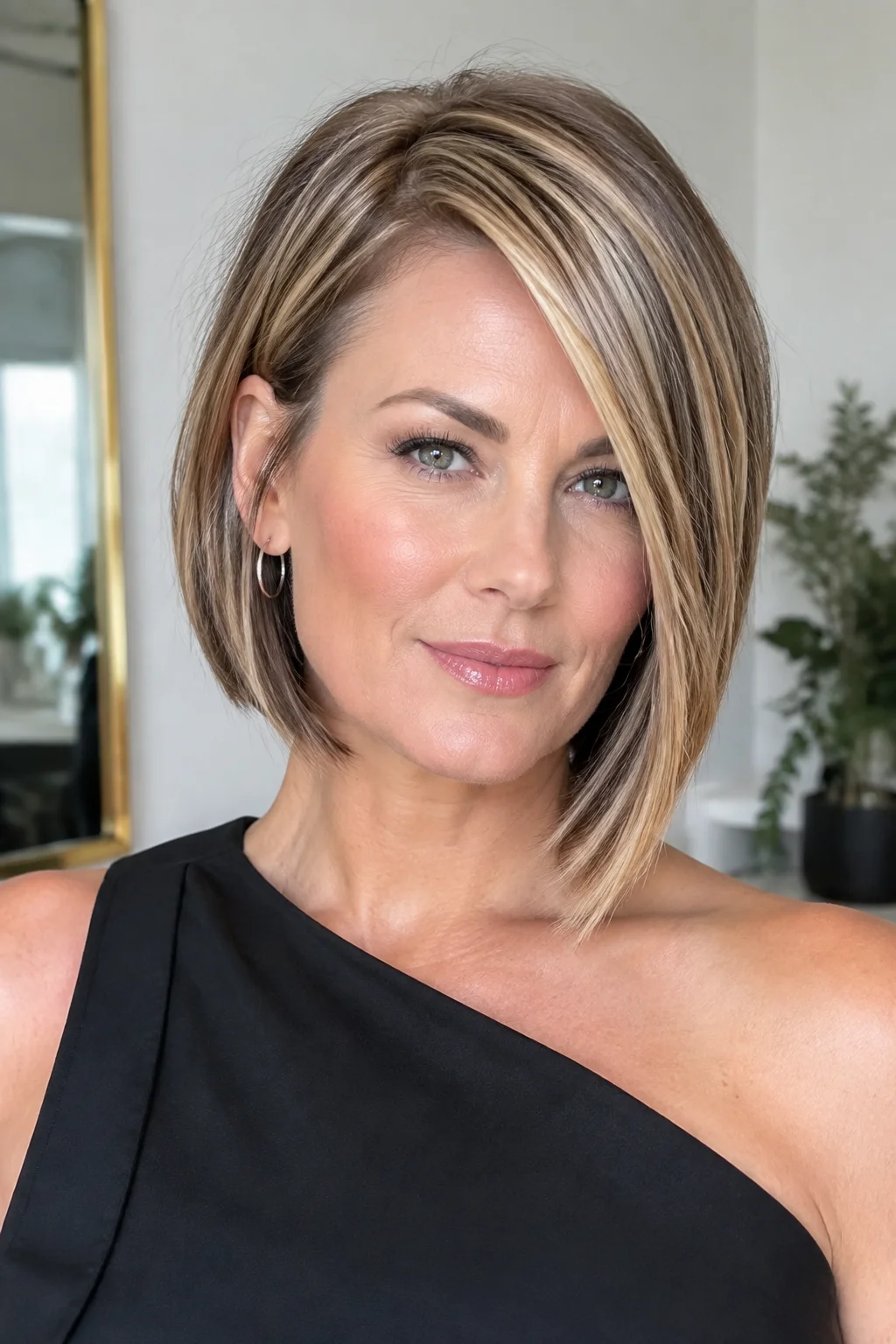
The front is cut blunt and straight across for structure, but the sides angle down unevenly, so one side is significantly shorter than the other by the time you reach the ears. It’s a graphic, confident shape that photographs well from every angle. This cut needs straight or only slightly wavy hair to really show its lines clearly.
Razored Asymmetrical Pixie with Textured Sides
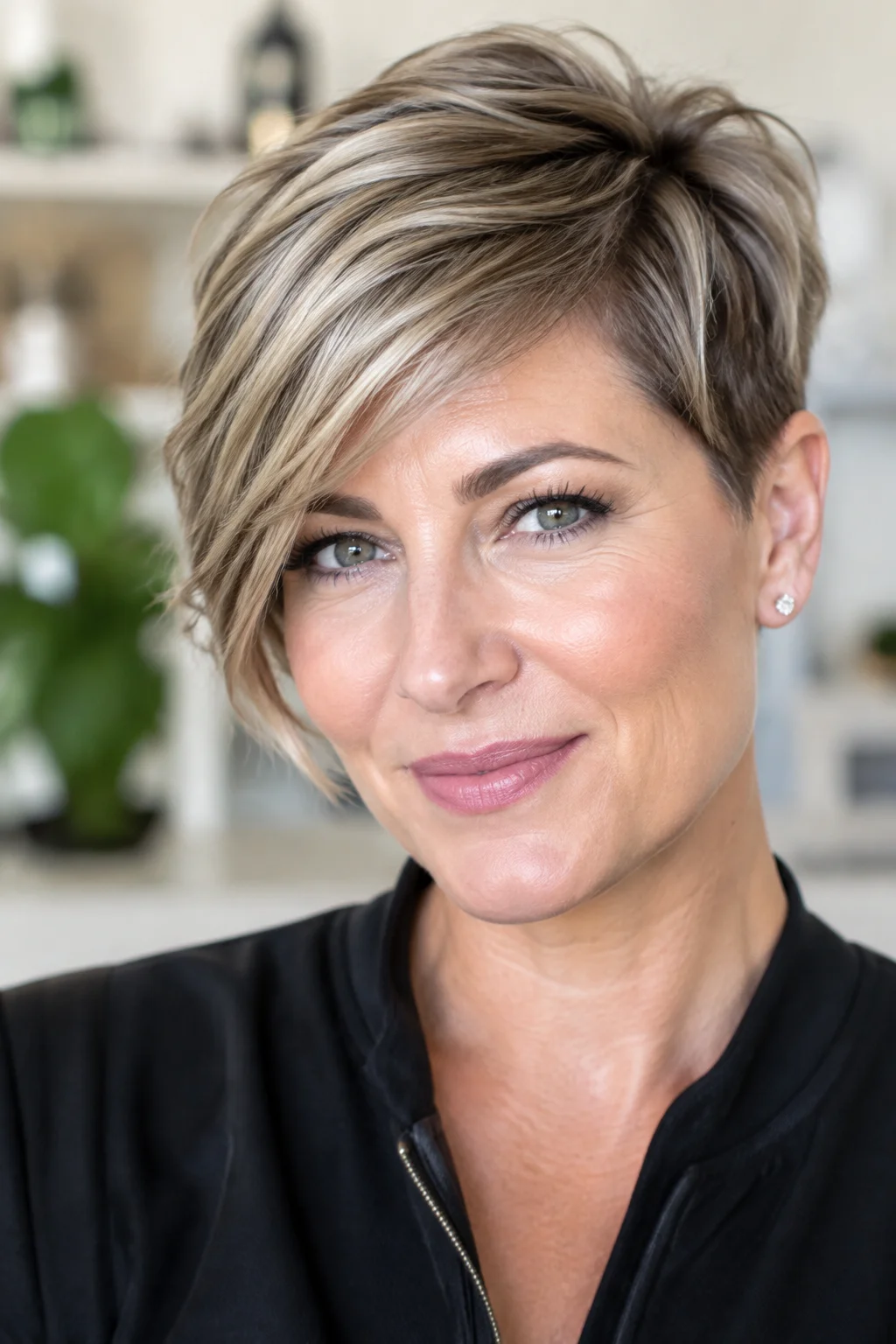
Razoring throughout this pixie keeps the texture soft and the sides close to the head, while one side is left just long enough to sweep across the temple. It’s a great low maintenance option since pixies grow out fast but this particular shape hides the awkward in between stages better than a blunt pixie would. Ask your stylist to keep the nape tapered tightly so the back doesn’t bulk up as it grows.
Side-Shaved Asymmetrical Bob with Longer Opposite Side
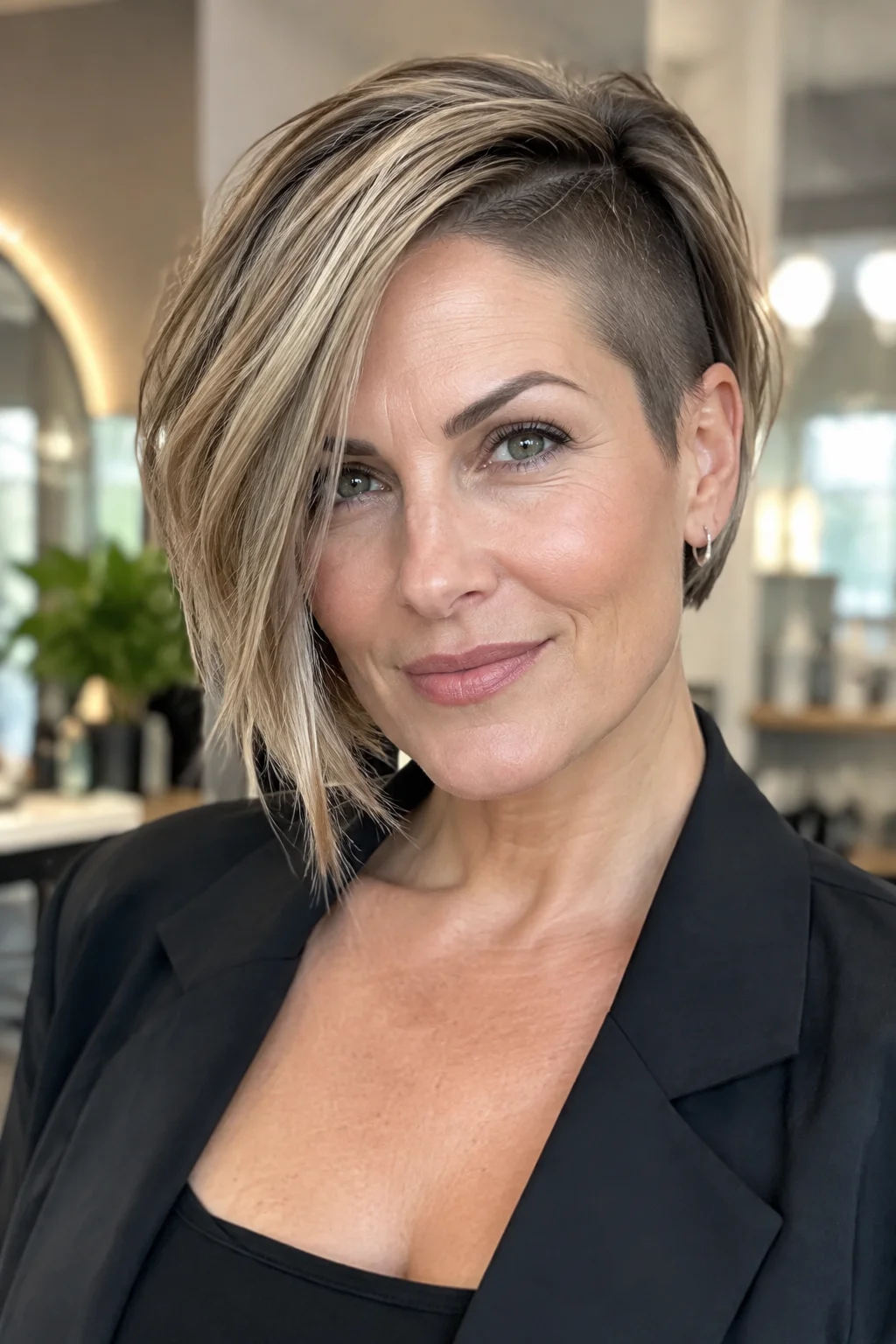
One side is shaved down close to the scalp, sometimes with a simple line or pattern shaved in for extra detail, while the opposite side is left at full bob length to fall past the jaw. It’s one of the boldest options on this list and it reads as a real style statement rather than a subtle variation. This cut suits women who already love attention grabbing color or makeup and want their hair to match that energy. The shaved side needs upkeep roughly every two to three weeks to stay crisp.
Asymmetrical Layered Crop with Side Volume
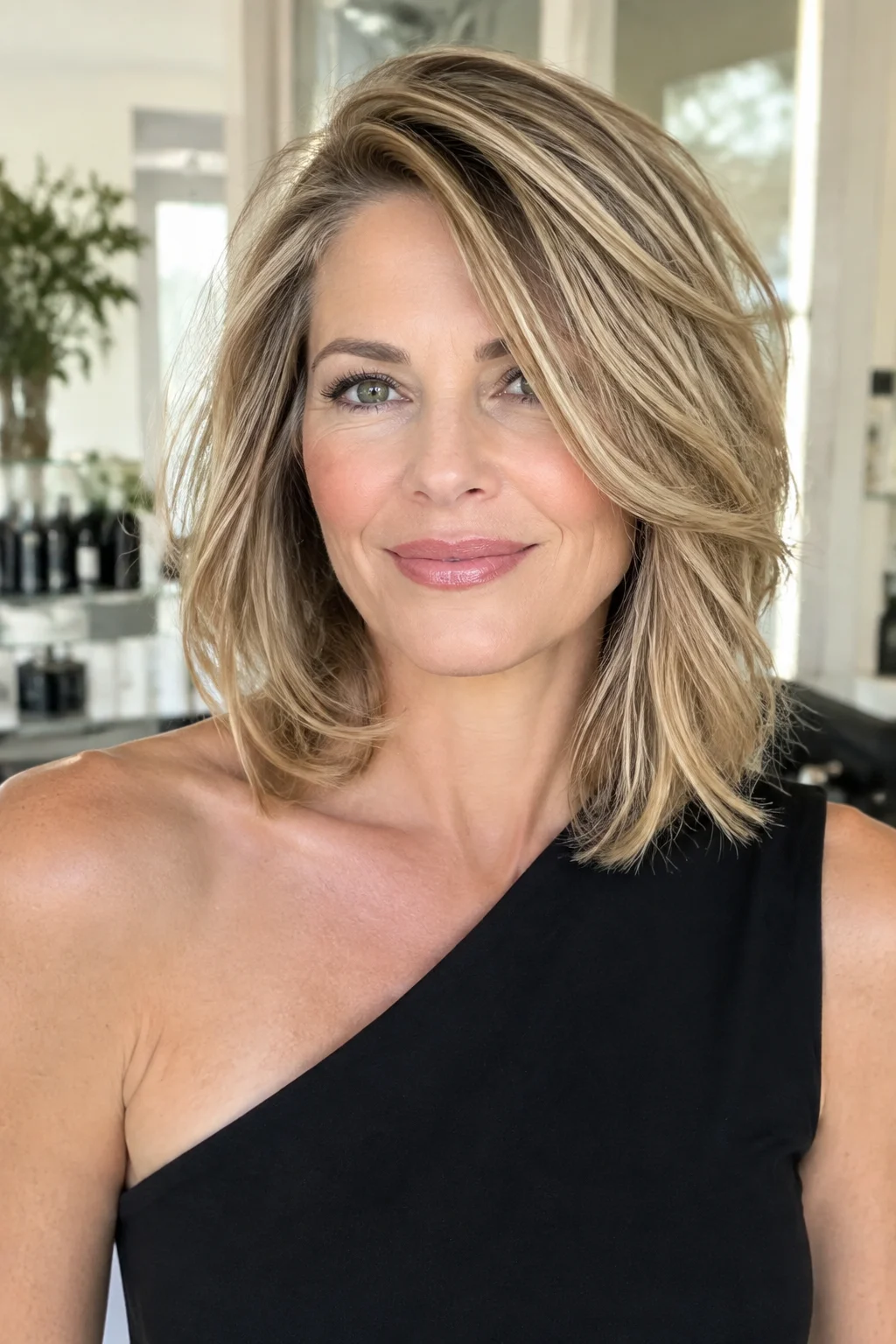
Layers throughout the crop build volume at the crown and push it toward one side, creating gentle asymmetry without any shaved sections or extreme angles. It’s a soft entry point if you like the idea of short asymmetrical hair but aren’t ready for anything too sharp. The layered volume also helps disguise thinning at the part line, a common concern after 40.
Flipped Asymmetrical Bob with Longer Swept Fringe
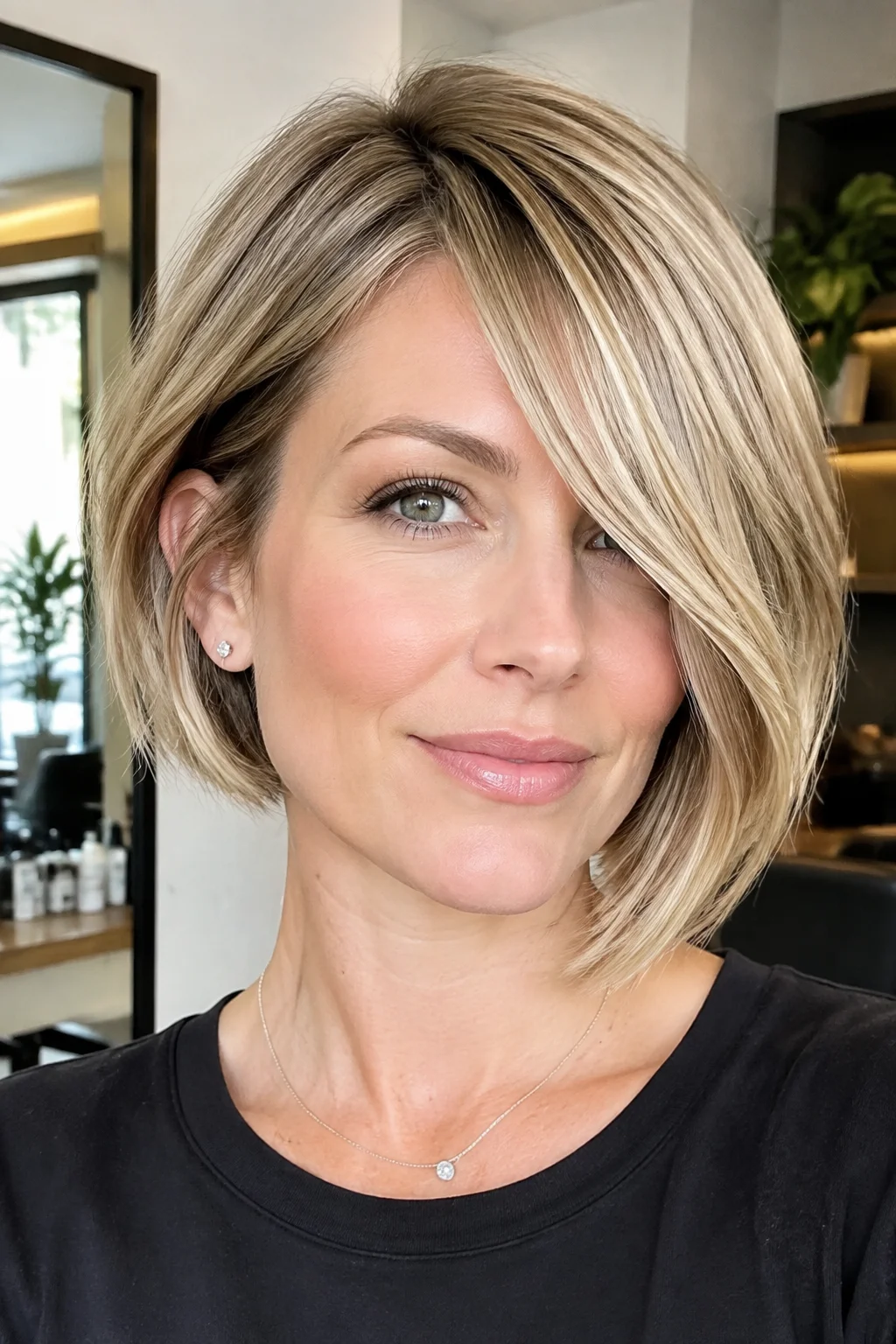
Ends are flipped outward at the bottom for a retro feel, while a longer fringe sweeps across the forehead and connects into the longer side of the bob. The flipped ends add width at the jaw, which flatters a narrow or long face shape nicely. This cut needs a round brush and blow dryer most mornings to keep the flip, so it’s better suited to someone who doesn’t mind a few extra minutes of styling.
Textured Asymmetrical Undercut with Piecey Top
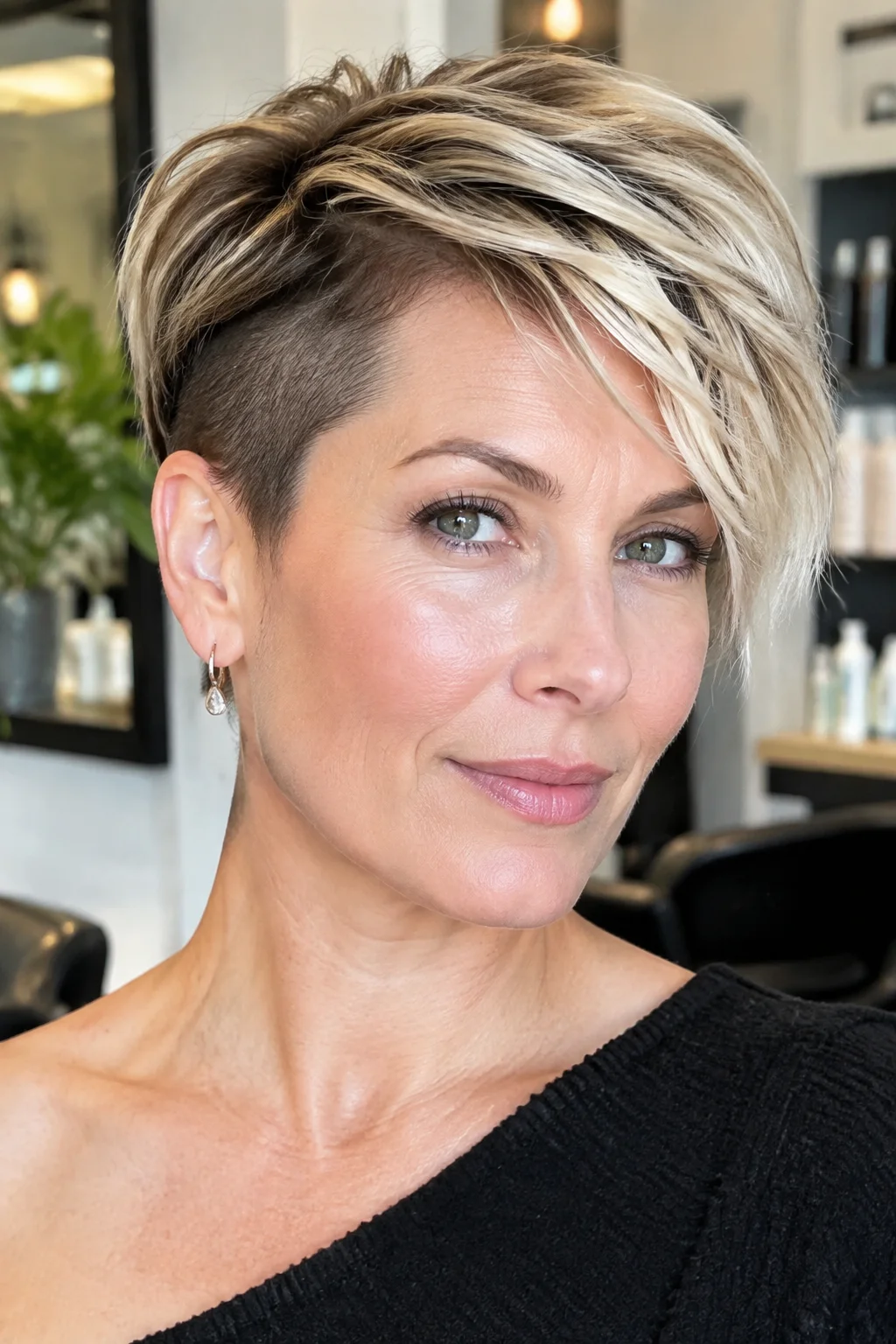
Heavy texturizing on top creates a piecey, separated finish, almost like the hair was styled with fingers rather than a comb, while an undercut underneath keeps the sides light and controlled. One side of the top section is left longer, adding the asymmetrical line. This cut works best on hair with some natural texture or a light perm, since pin straight hair can struggle to hold the piecey definition through the day.
Asymmetrical Choppy Bob for Fine Hair with Layered Texture
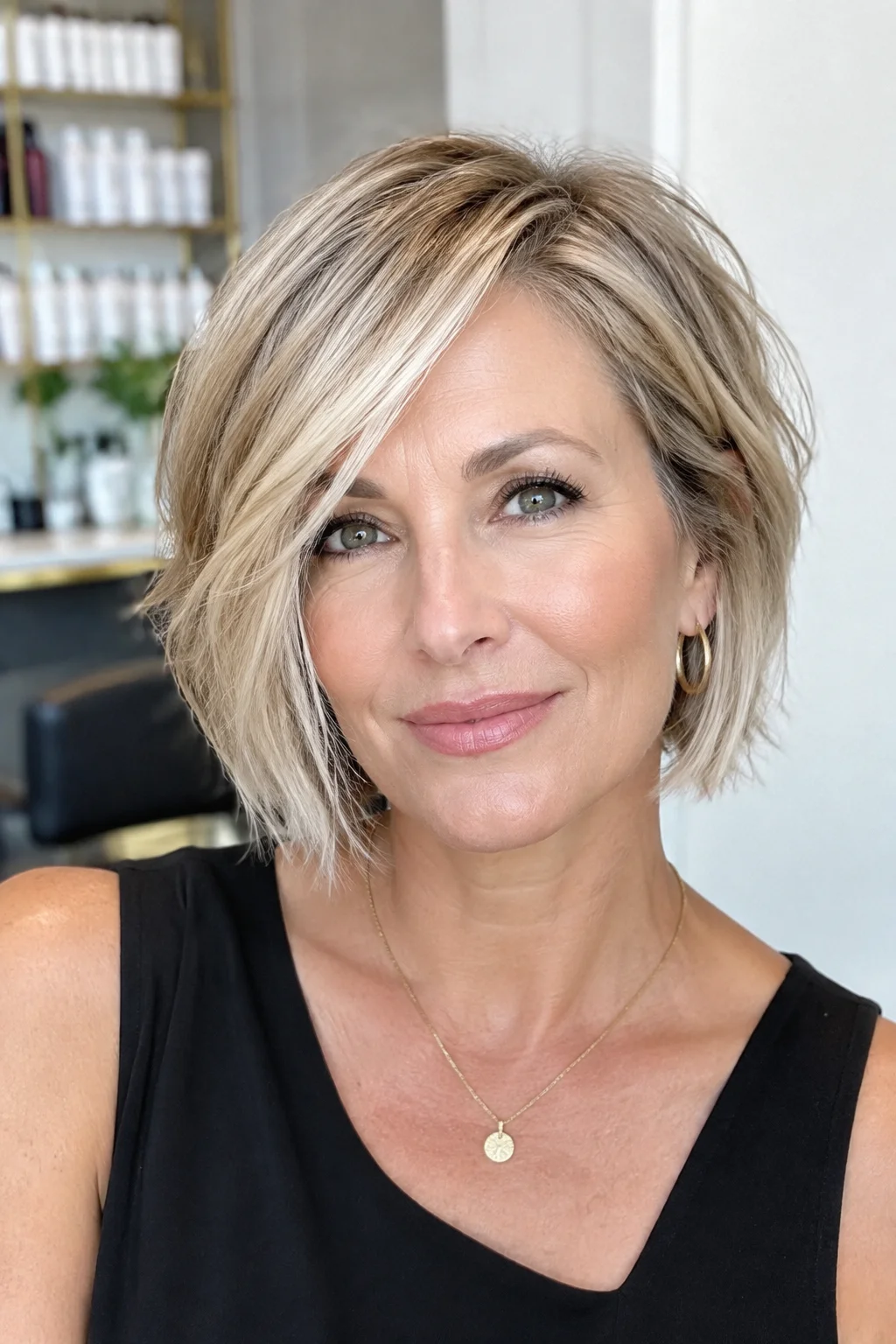
Fine hair often falls flat by midday, and this choppy bob fights that with layered texture cut in at different lengths all over, plus an asymmetrical line that keeps one side longer than the other. The choppy ends add grip for volumizing products, so a little mousse or texture spray goes much further than it would on a blunt cut. It’s one of the more forgiving styles here since the uneven layers hide regrowth and cowlicks well between salon visits.
Which Asymmetrical Cut Should You Actually Choose?
Start with how much styling time you actually want to spend, because that narrows the list fast. If you want wash and go ease, the shaggy asymmetrical bob with choppy layers or the asymmetrical layered crop with side volume are both built to air dry and still look finished. If you want something sharper and don’t mind more upkeep, the side-shaved asymmetrical bob or the disconnected asymmetrical undercut with swept fringe deliver the boldest payoff but need trims every few weeks to stay clean.
Face shape matters too. Round faces lean toward the curved asymmetrical bob, which elongates rather than adds width. Long or narrow faces look great in the flipped asymmetrical bob, since the outward flip adds visible width at the jaw. If your hair is fine and prone to going flat, avoid anything too blunt all over and lean into the stacked asymmetrical bob or the textured asymmetrical crop, both of which are cut specifically to build volume rather than weigh hair down.
A common mistake is choosing a dramatic shaved style without asking how it grows out. The disconnected undercut and the side-shaved bob both look fantastic fresh from the chair but need regular maintenance to avoid an awkward in between stage. If your schedule does not allow visits every two to three weeks, pick a softer option like the asymmetrical wavy bob with soft undercut instead, since it grows out gradually with no hard line to manage.
Bring a few photos to your appointment, explain your daily routine honestly, and let your stylist adjust the angle and length difference to suit your hair’s natural texture. Asymmetry is flexible by nature, so small tweaks can make any of these cuts feel entirely your own.