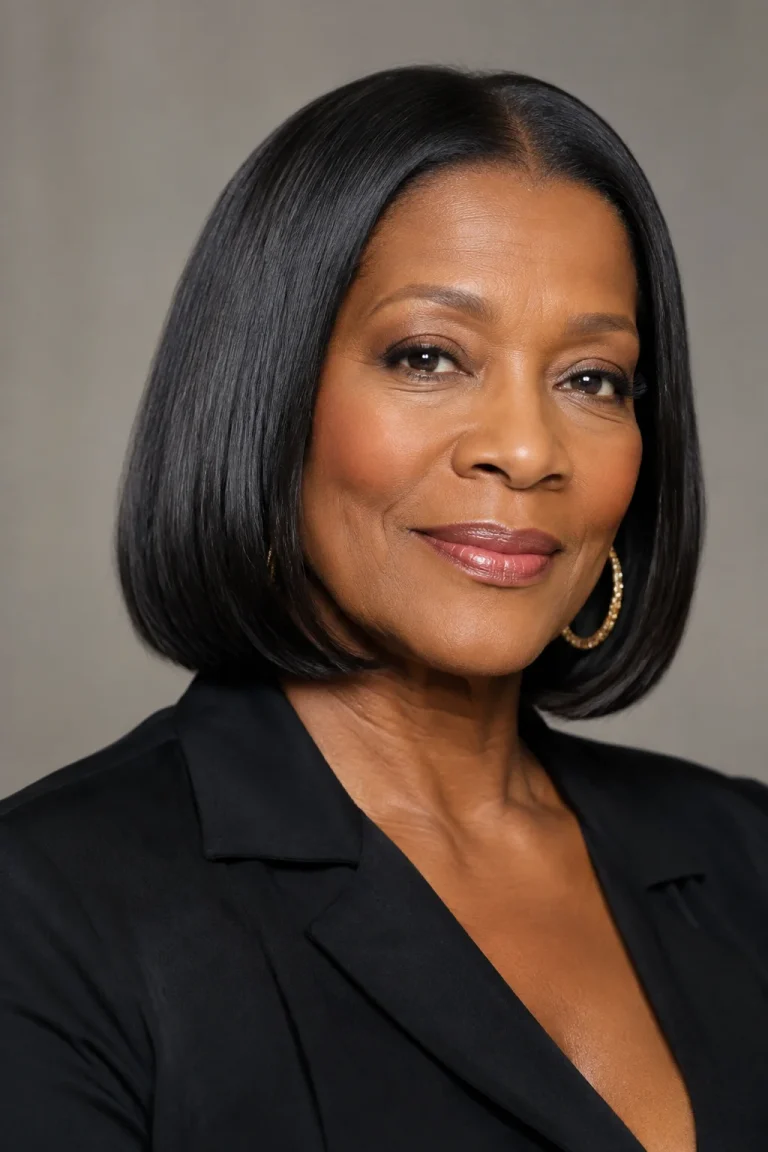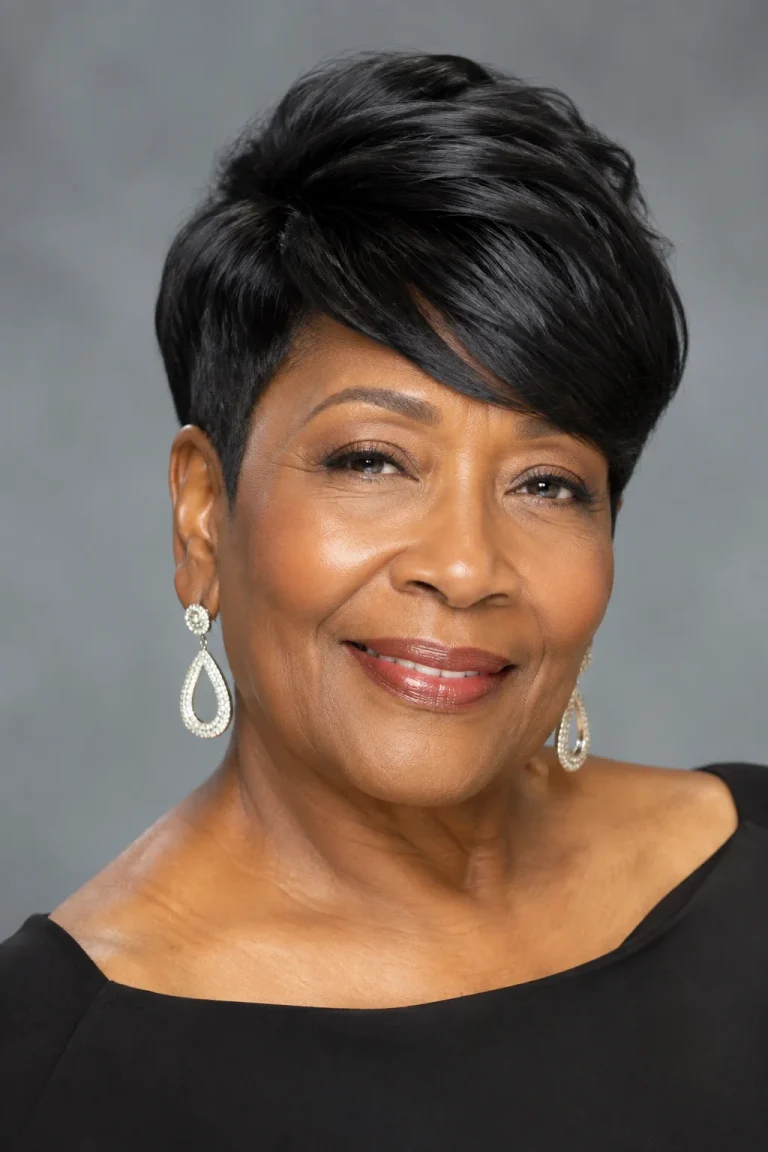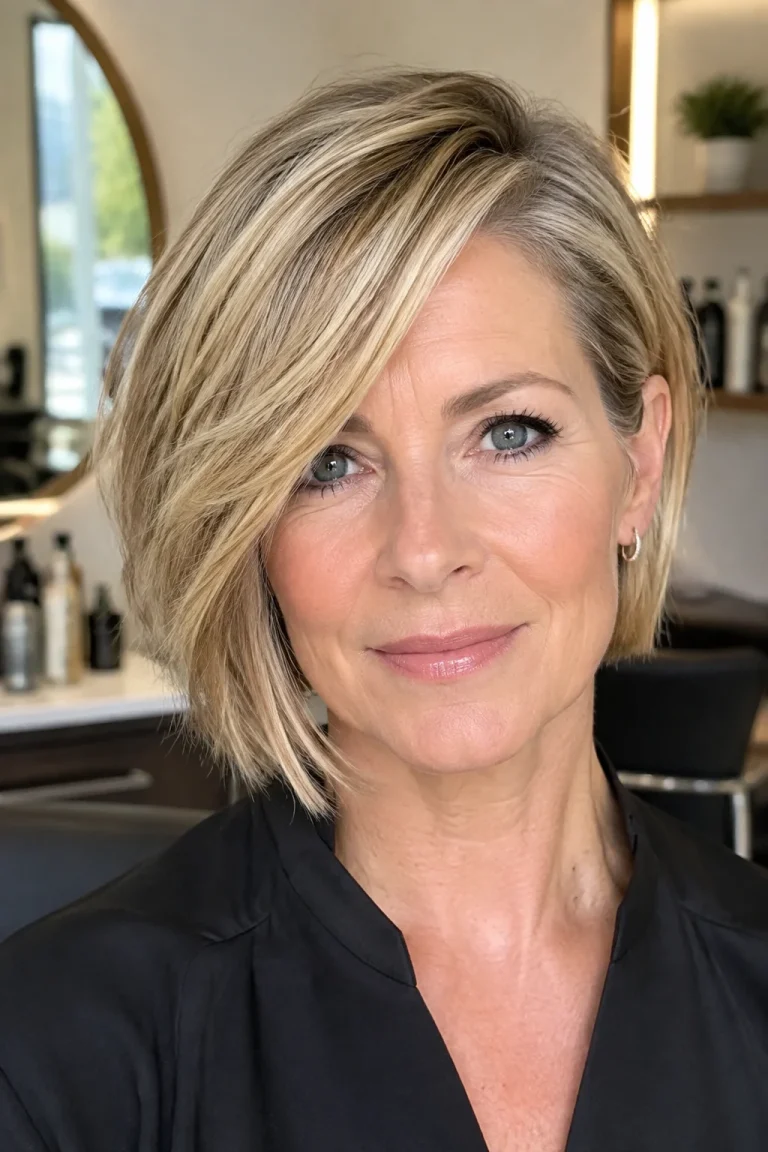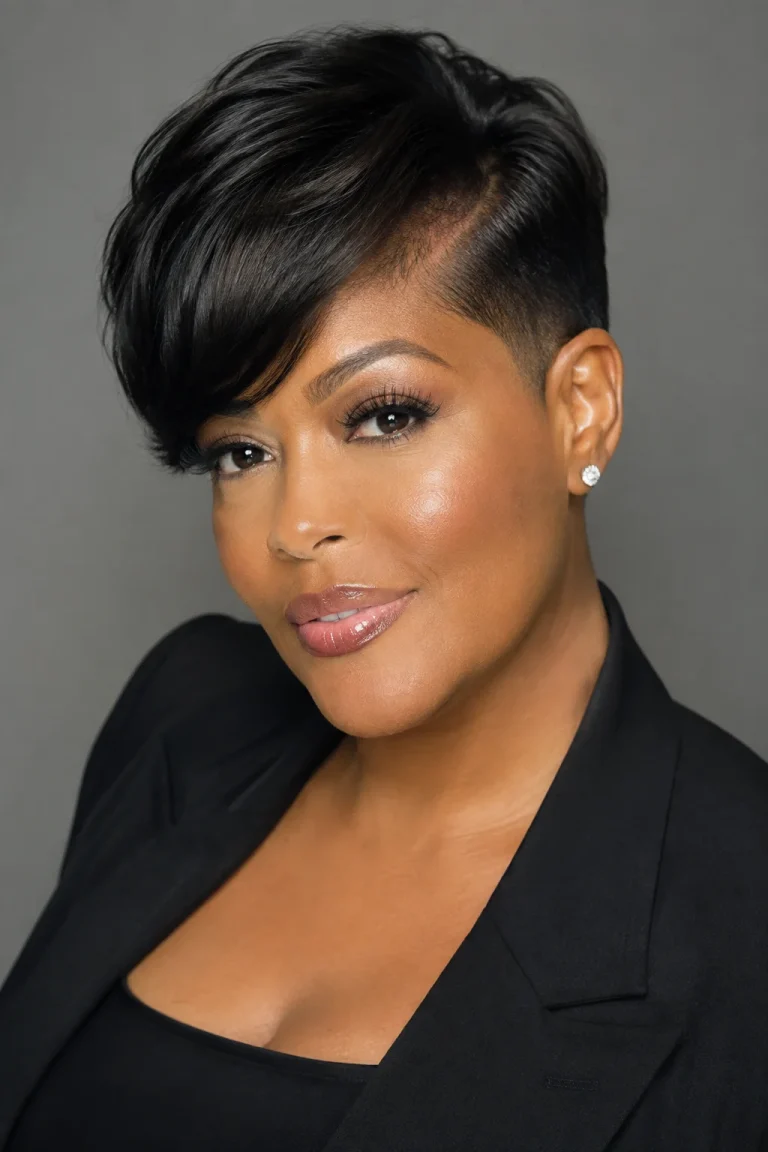
Gray, silver, or still holding onto color, curly hair changes with age and most cuts don’t keep up. Curls lose density over the years and a style that worked at forty can look flat or shapeless now. The good news is that short curly pixie cuts for women over 60 solve this problem directly by working with thinner strands instead of fighting them. A shorter length lifts curls off the scalp, adds shape without heavy product, and cuts down on styling time in the morning. Every option below was picked because it holds up on fine or medium curl patterns, flatters a mature face, and still looks intentional after a wash and air dry. Some are barely there, some have length on top, and a few play with texture in bolder ways. Bring the one you like to your stylist and ask if your curl pattern needs adjusting.
Classic Rounded Curly Pixie
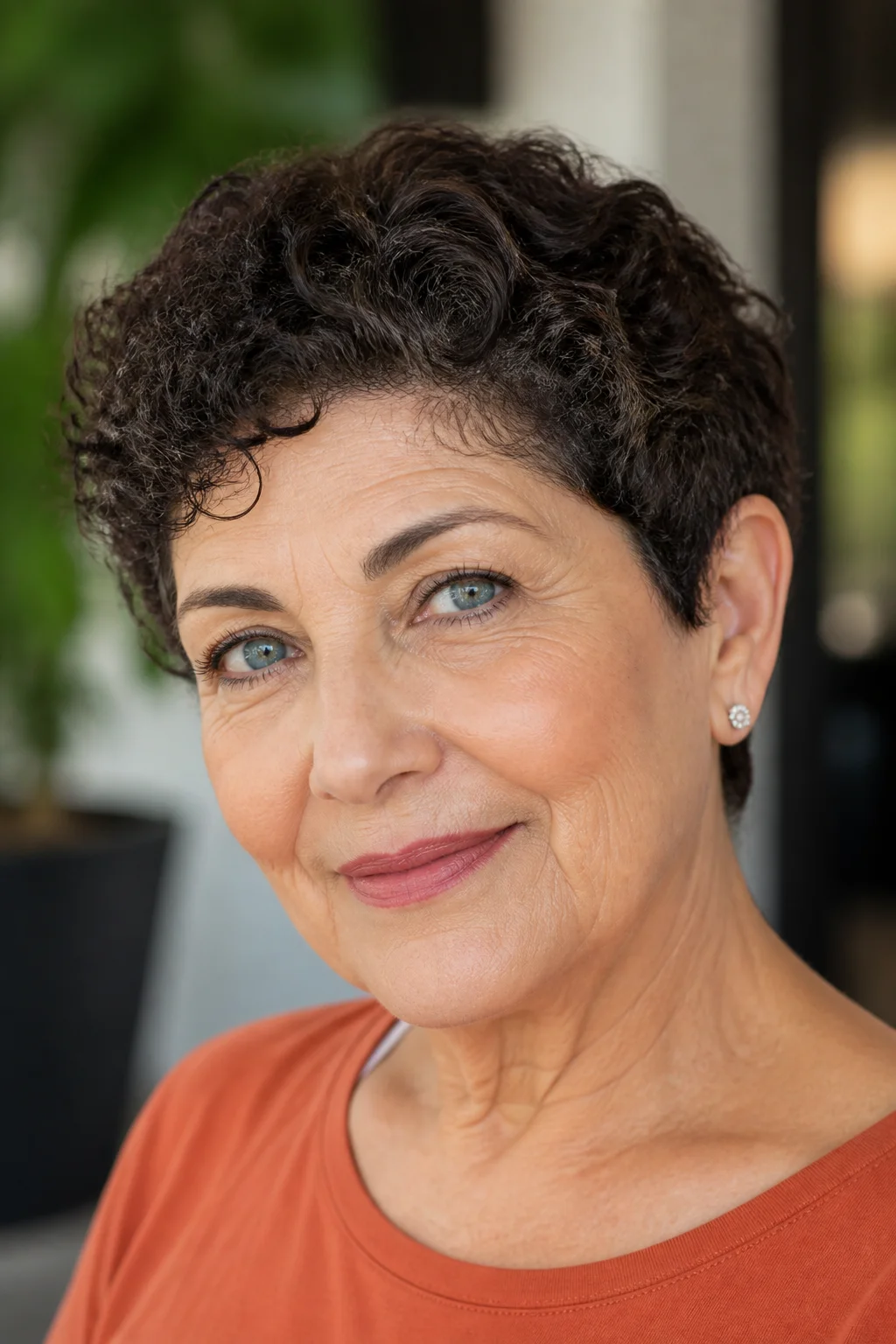
This is the cut most people picture when they think of a short curly style on an older woman, and there’s a reason it’s stuck around for decades. The rounded shape follows the natural curve of the head, keeping curls close and soft rather than sticking out at odd angles. It works on straight-across gray hair and salt and pepper blends equally well. Length stays short all over, usually an inch or two, so curls stay springy instead of weighed down. Tip: ask your stylist to round the perimeter slightly rather than cutting it blunt, since a soft edge photographs better and grows out gently. A light mist of heat protectant before styling helps the finish last.
Close-Cropped Curly Pixie
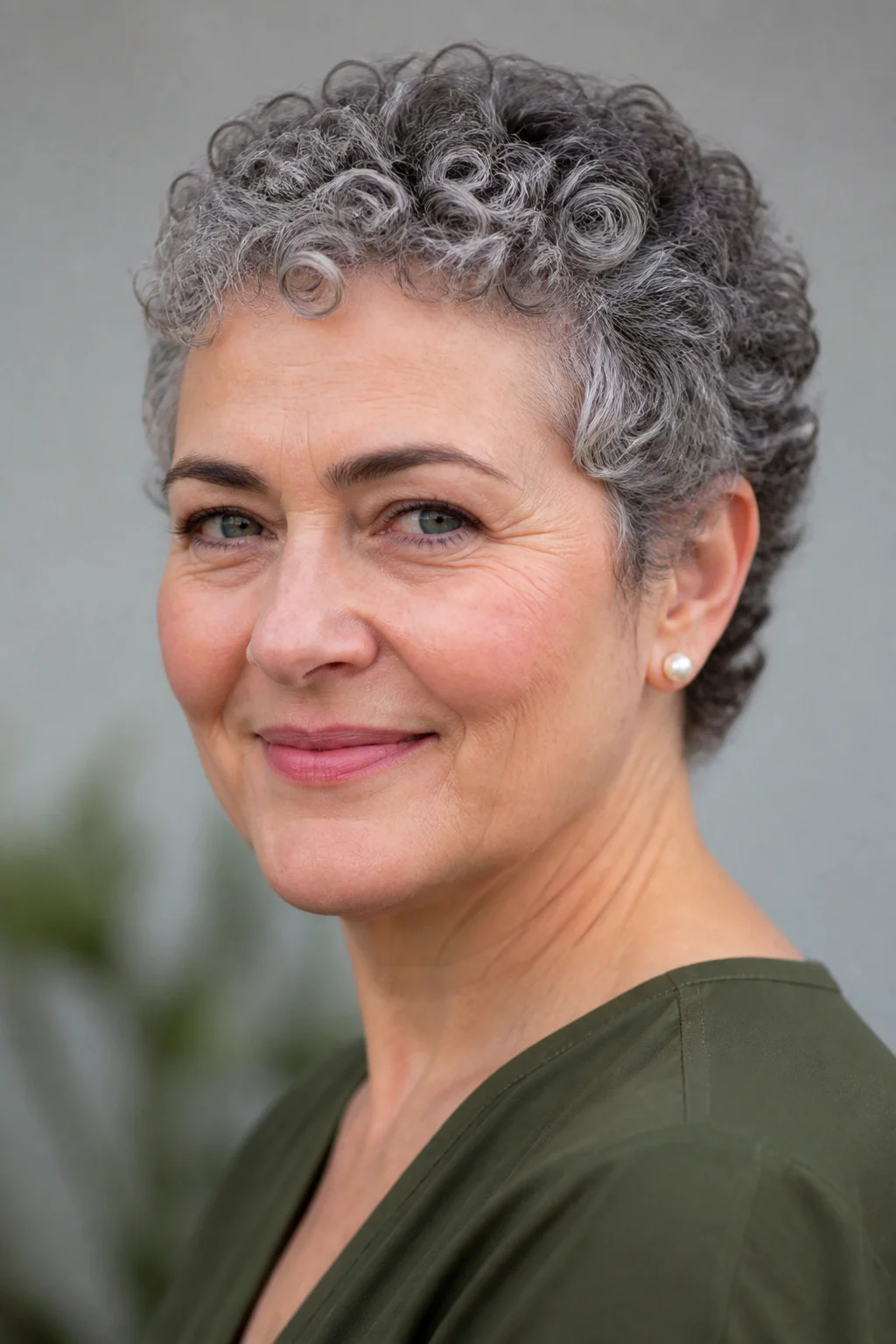
Cut close to the scalp, this style suits women who want almost no daily styling. It shows off curl texture in miniature, like tiny coils hugging the head. Thin or fine curls actually look denser this short because there’s less length for gravity to pull down.
Tapered Nape Curly Pixie
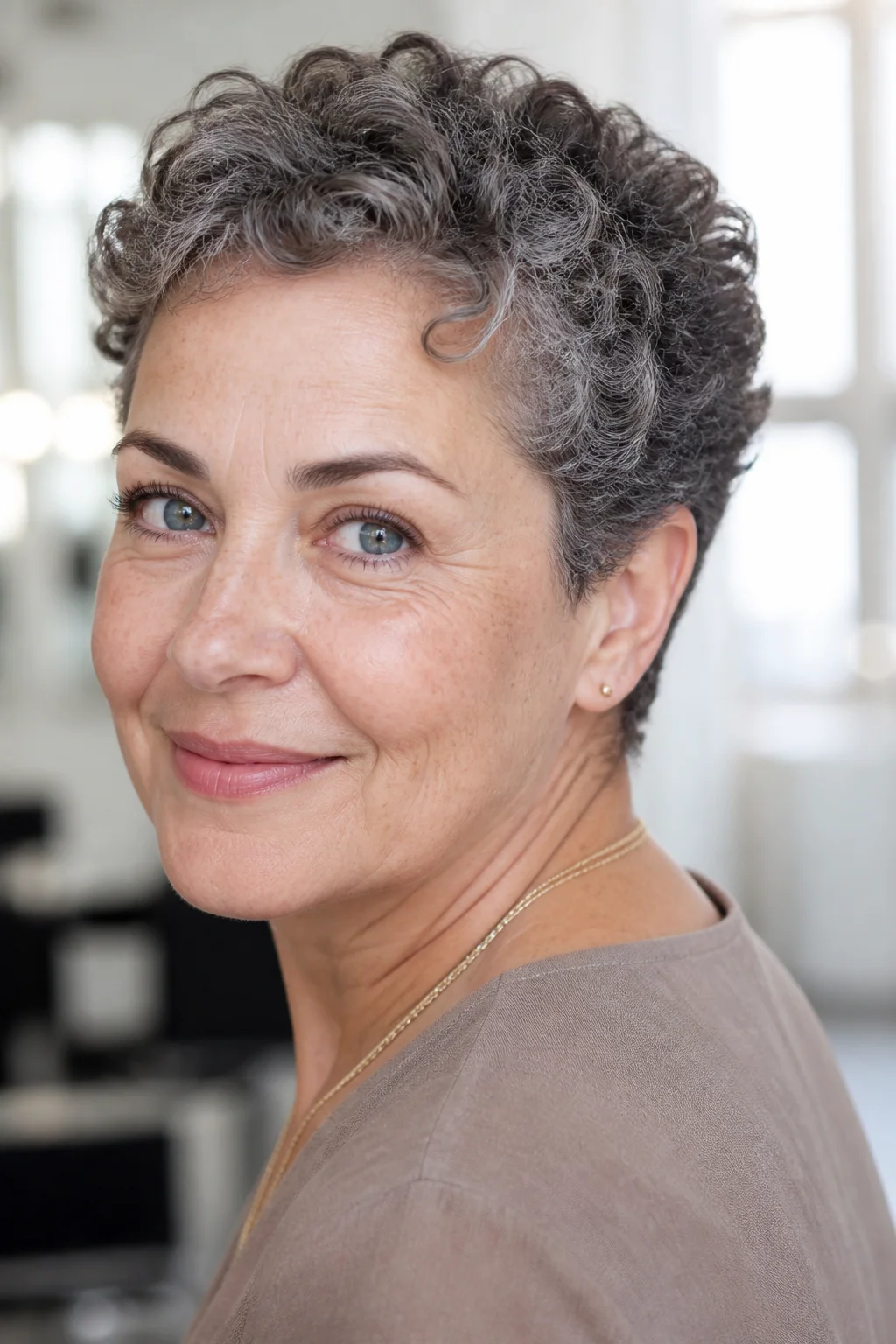
The back and sides taper down gradually into the neckline, leaving more curl volume up top. This creates a shape that’s neat at the base but still full and lively higher up. It’s a smart pick if your curls thin out more at the nape than at the crown, since the taper hides that naturally. Stylists often recommend this one for second or third pixie appointments once you already know you like short hair. The gradual blend also means fewer visits between trims, since there’s no harsh line to maintain. A light mist of heat protectant before styling helps the finish last.
High-Top Curly Pixie
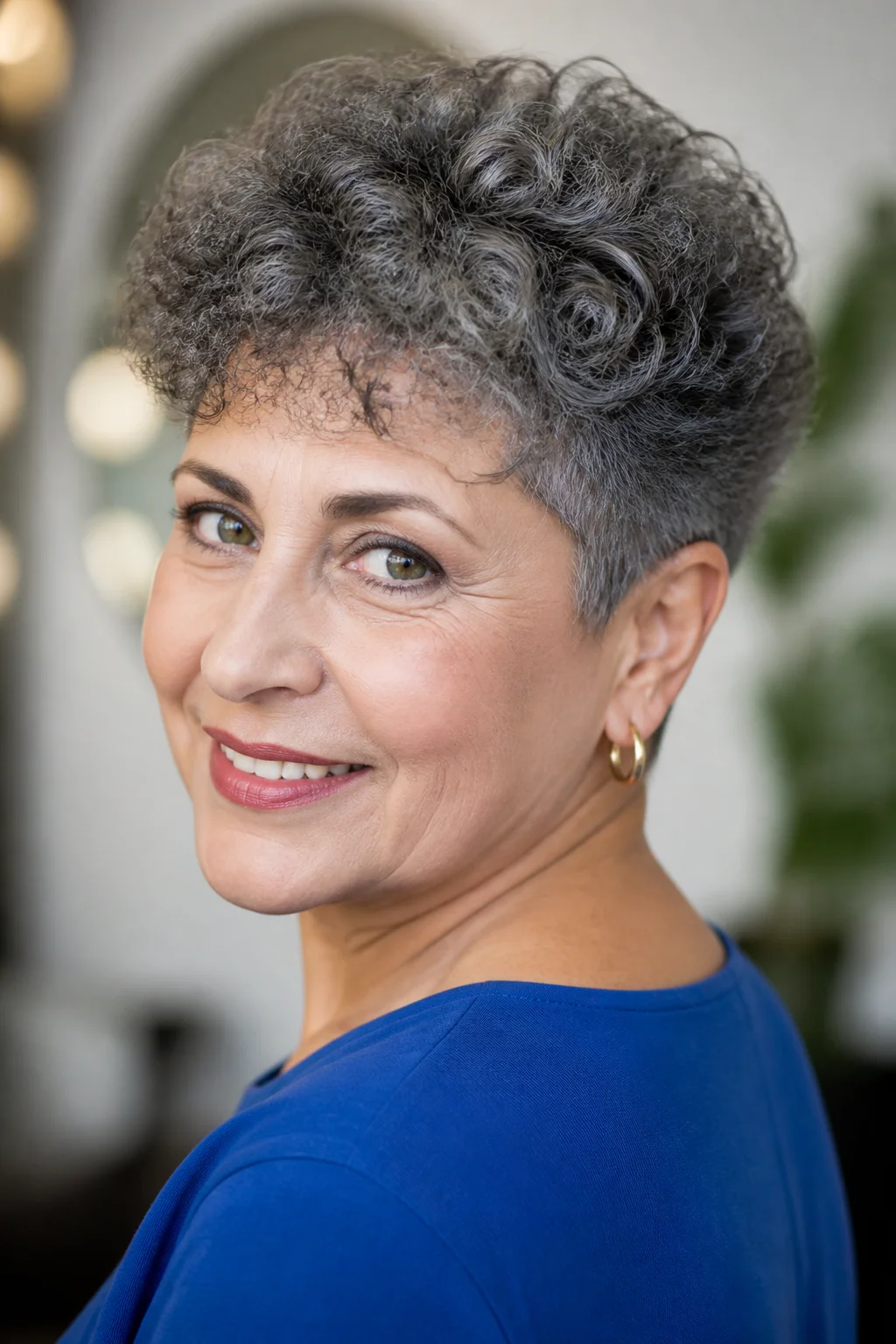
Height is the whole point here. Sides and back stay trimmed short while the top is left longer and lifted, giving curls room to bounce. This works especially well if your face has softened with age and you want a cut that draws the eye upward. A little mousse scrunched into damp curls is usually all it takes to hold the height through the day.
Curly Crop with Micro Fringe
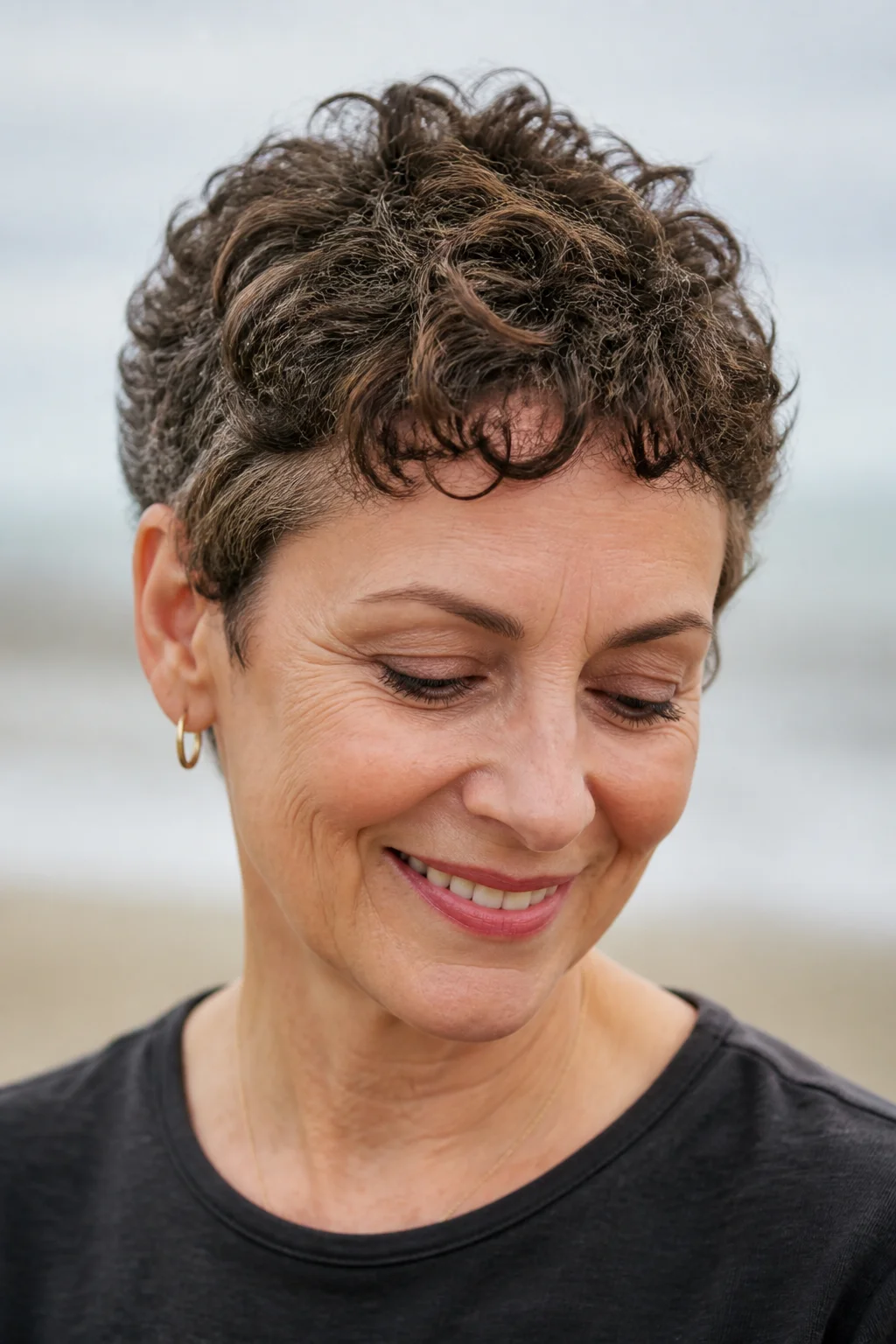
A tiny fringe, cut just above the brow, adds a playful detail to an otherwise simple crop. The rest of the hair stays short and rounded, so the fringe becomes the one styling feature you focus on. This suits women with smooth or lightly lined foreheads who want a touch of youthfulness without much fuss. Curl pattern in the fringe area can behave differently than the crown, so ask your stylist to check how it dries before finalizing the length.
Side-Swept Curly Fringe Pixie
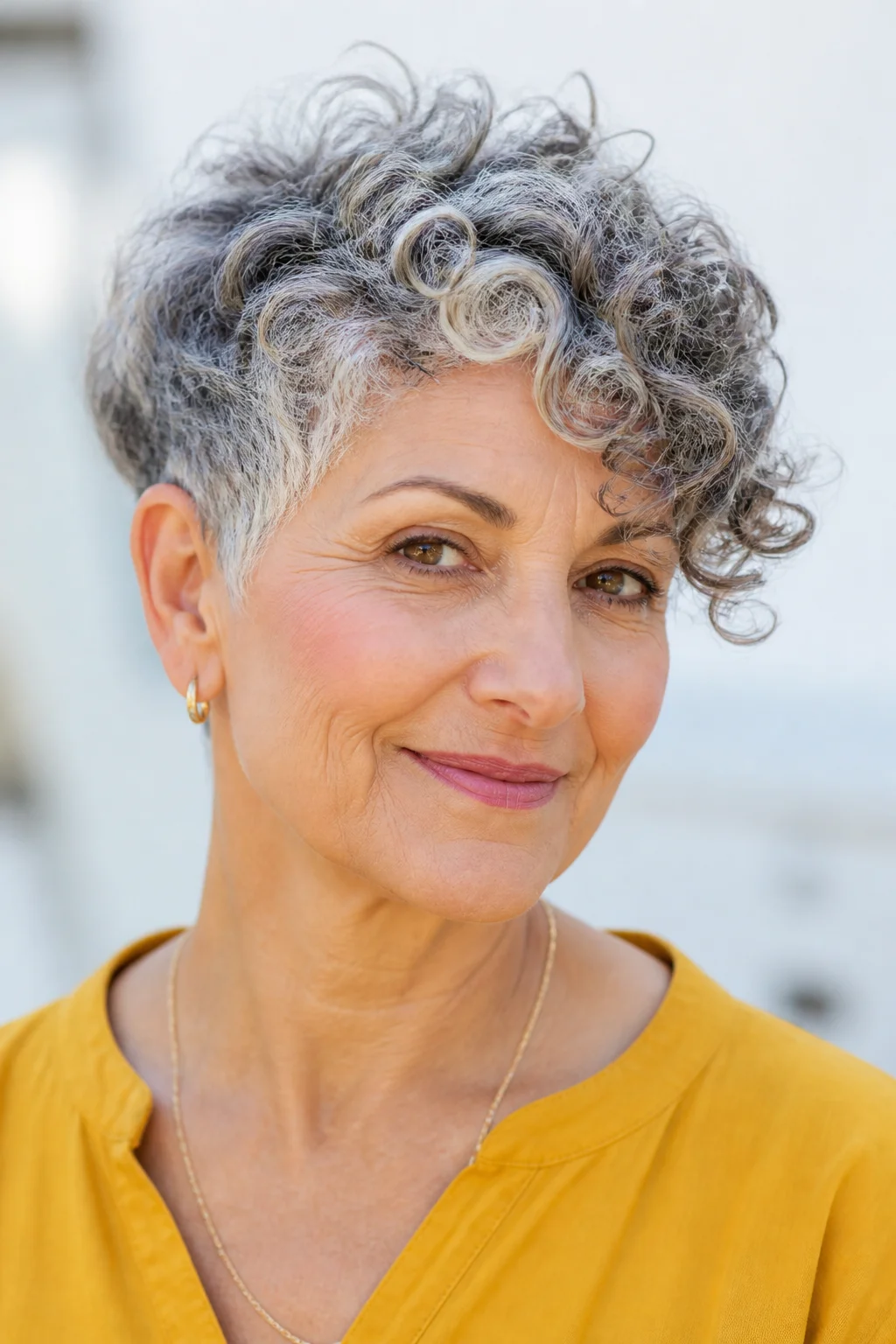
Rather than a straight fringe, this version sweeps longer curls to one side across the forehead. It softens angular features and gives you something to tuck behind an ear on busy days. The rest of the cut stays fairly short, so the swept piece becomes the focal point.
Long Asymmetrical Fringe Pixie
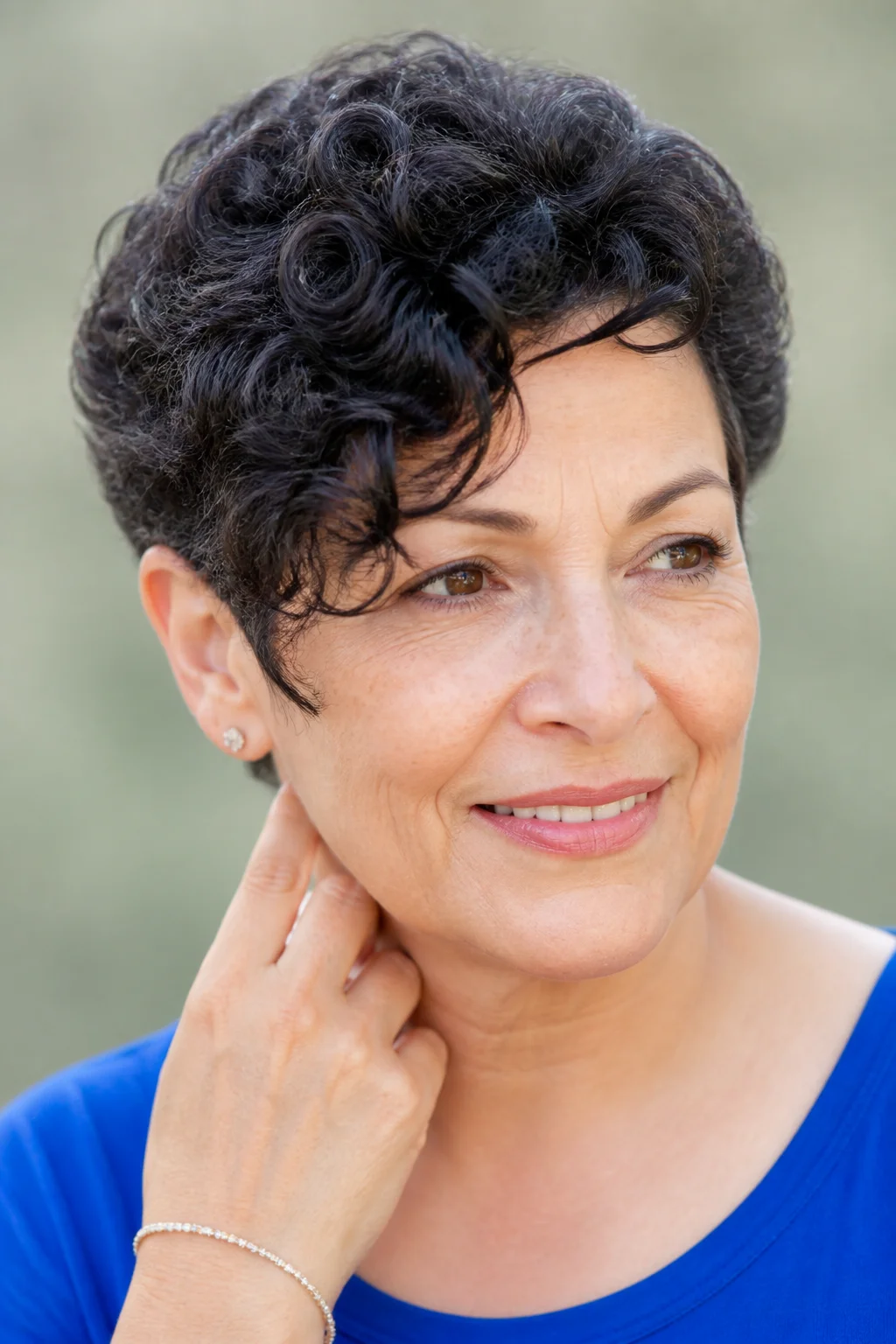
One side grows out longer than the other here, with the fringe curving diagonally across the face. It’s a bolder choice, more common on women who already wear their hair asymmetrical in some way. The uneven length actually works in favor of curly texture, since no two curls need to match perfectly for the shape to read as intentional. This cut needs a slightly more frequent trim schedule to keep the asymmetry from growing out into a lopsided mess. If you like a little edge in your look, this is one of the more distinctive options on this list.
Deep Side-Parted Curly Pixie
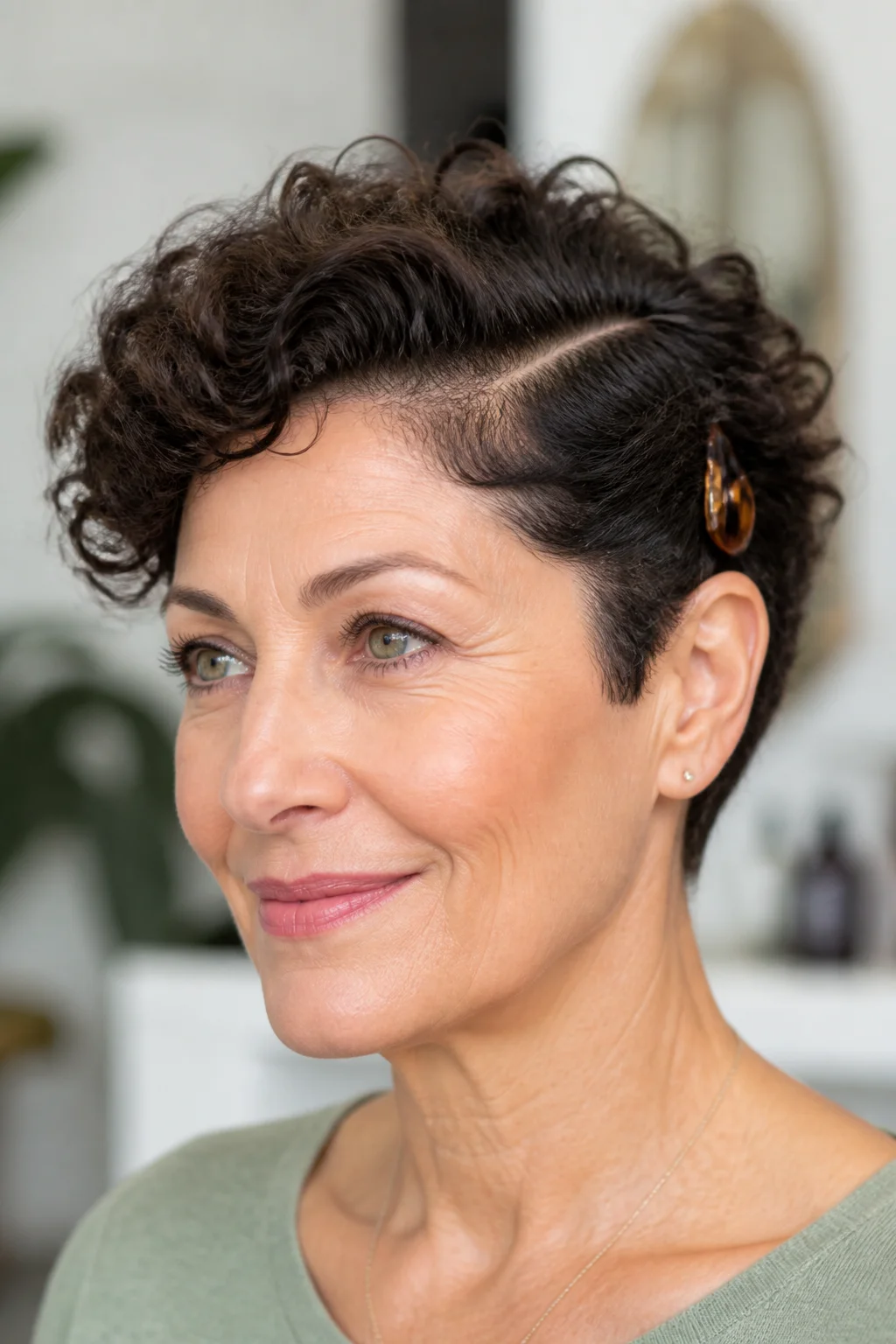
A deep side part shifts more volume to one side, which can balance a face that’s rounder on one side than the other. Curls on the fuller side get combed or finger-separated away from the part, creating instant lift. It’s a subtle change from a center part but makes a noticeable difference in photos.
Asymmetrical Curly Pixie
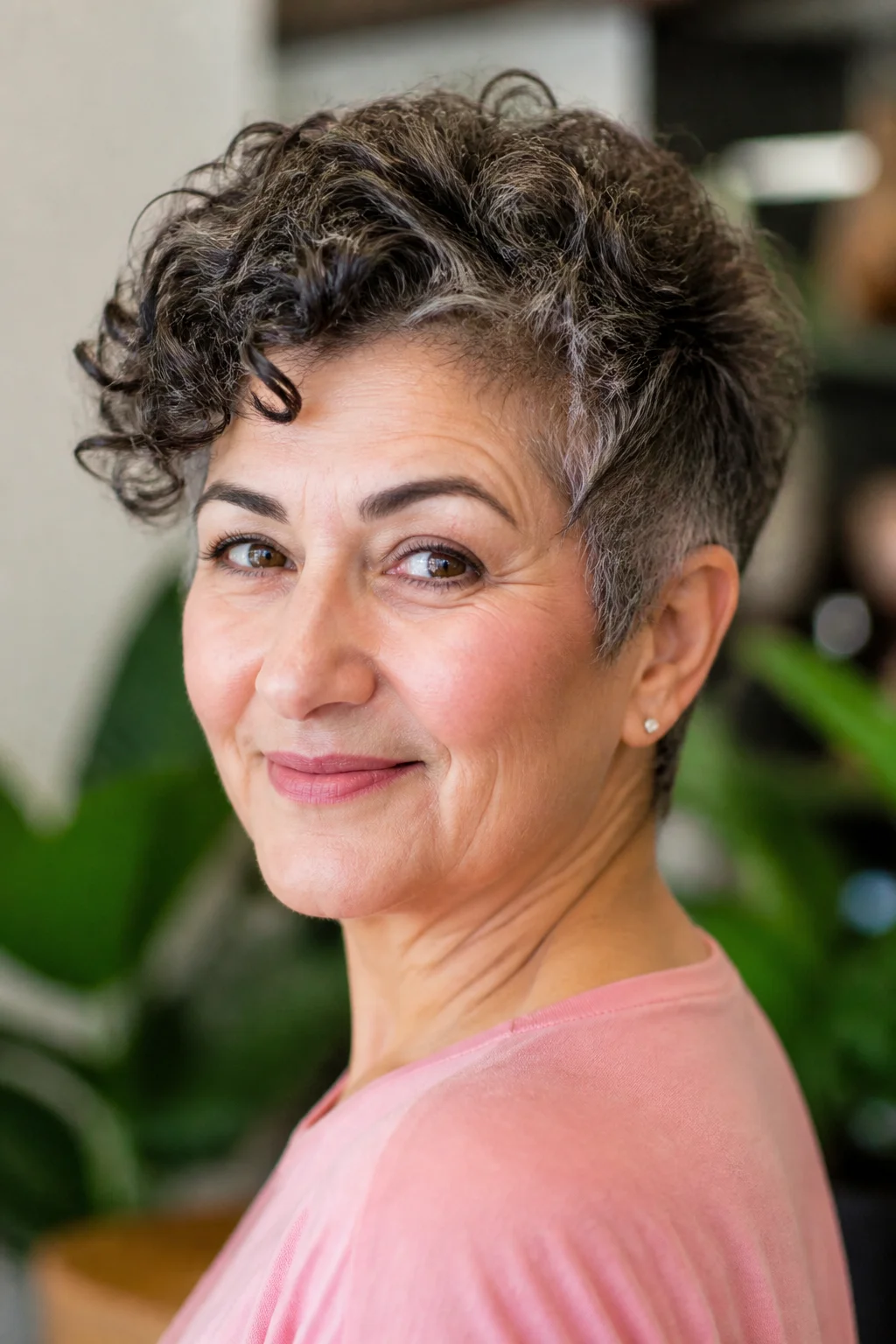
Unlike the fringe-focused asymmetrical cut above, this version varies length through the whole silhouette, not just the front. One side might sit close to the head while the other has slightly longer curls resting near the ear. It reads as modern and a little unexpected, which some women over 60 like specifically because it breaks from the “safe” pixie stereotype. Curl pattern needs to be even in texture for this to work well, since combining tight curls on one side with looser curls on the other can look accidental rather than styled.
Curly Pixie with a Classic Undercut
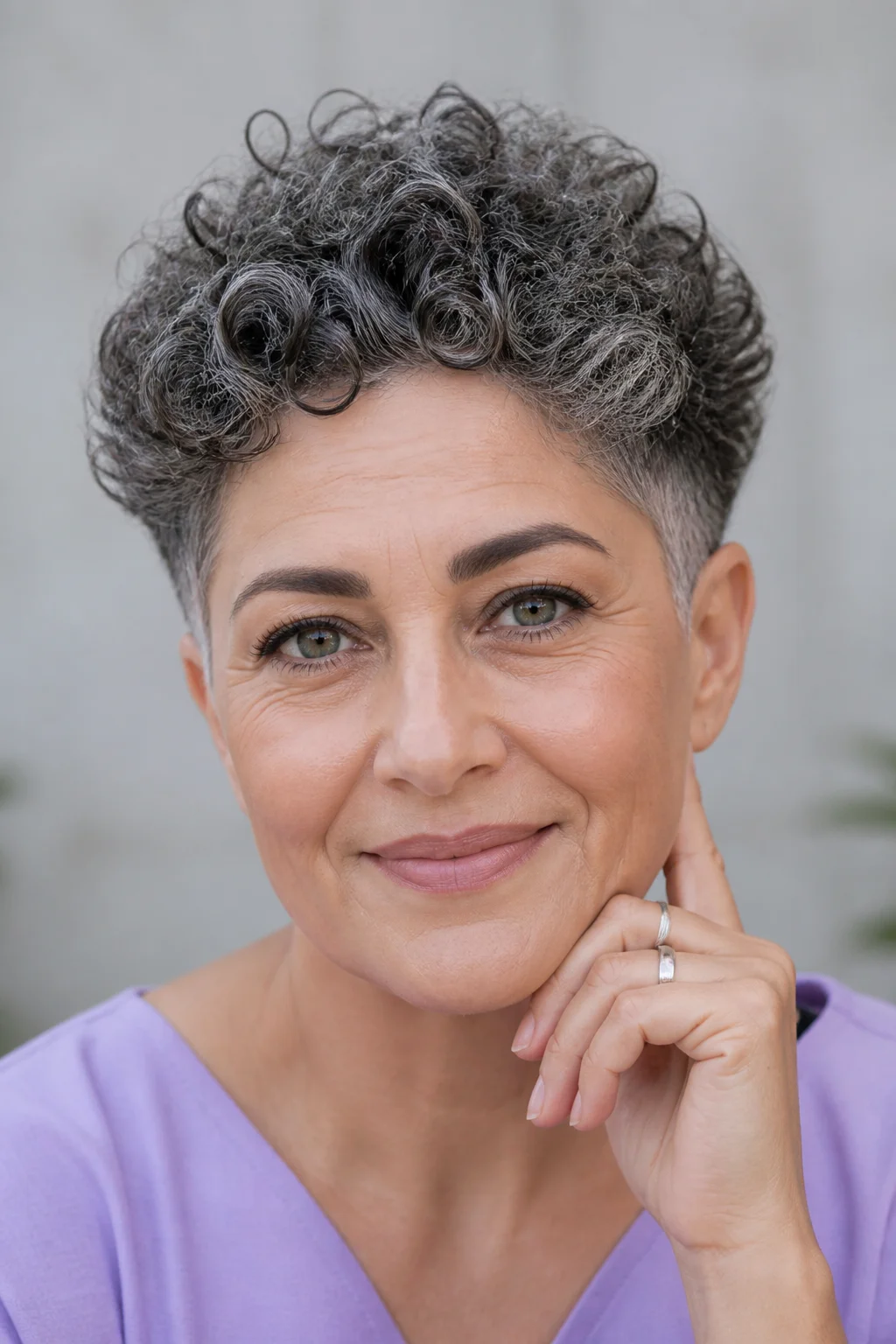
The sides and back are shaved or clipped very short beneath a longer curly top, creating real contrast between smooth skin and full texture. This is a low-maintenance option once it’s cut, since the undercut portion barely grows in a way you’ll notice for weeks. Curls on top can be scrunched, picked, or left loose depending on the day.
Disconnected Curly Undercut Pixie
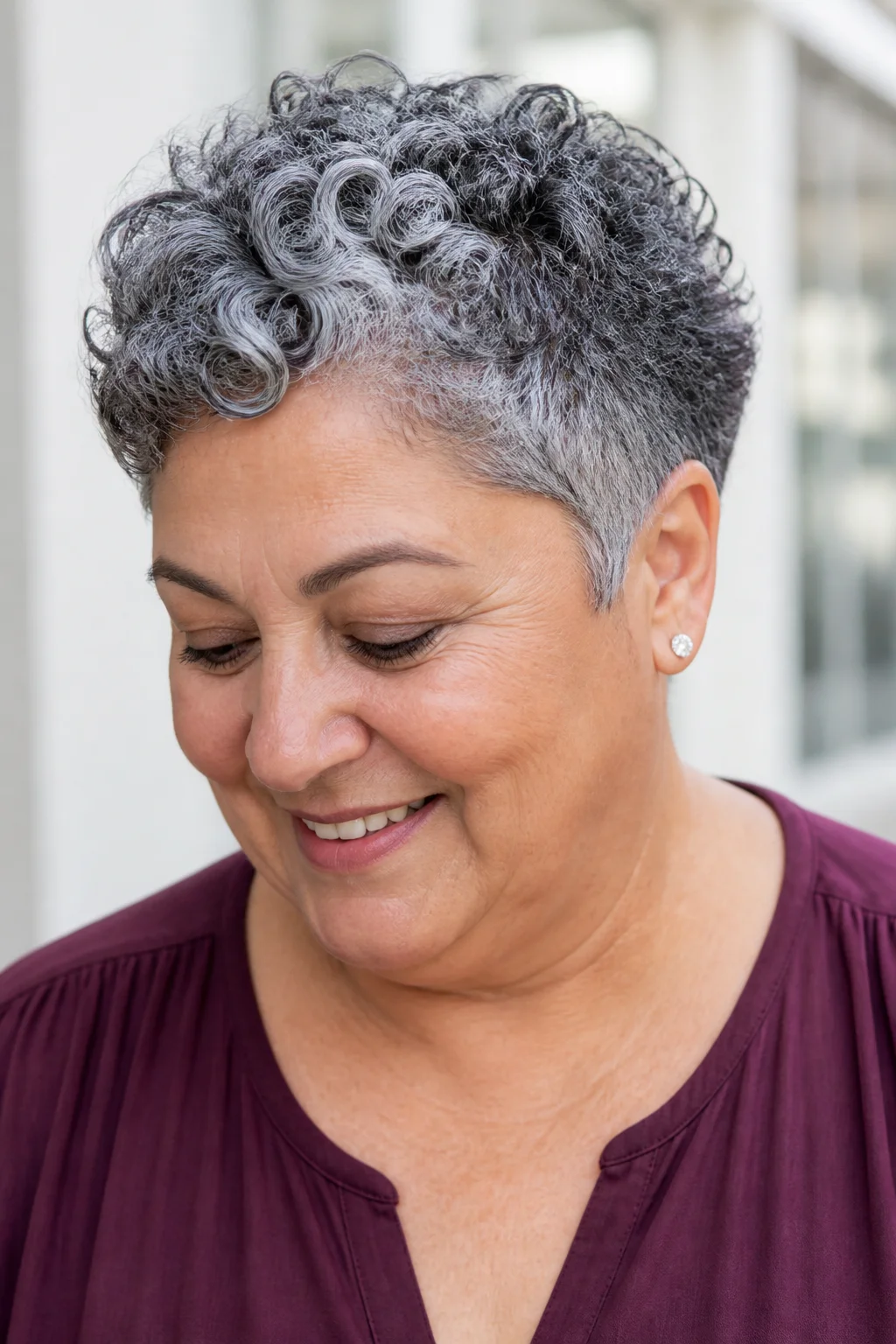
Here the transition between the shaved sides and the curly top happens abruptly instead of blending. There’s a visible line where one texture stops and the other starts. Tip: this cut looks strongest on thicker curl patterns, since a hard disconnection needs enough volume on top to balance the shaved sides, or the proportions can feel off.
Temple-Fade Curly Pixie
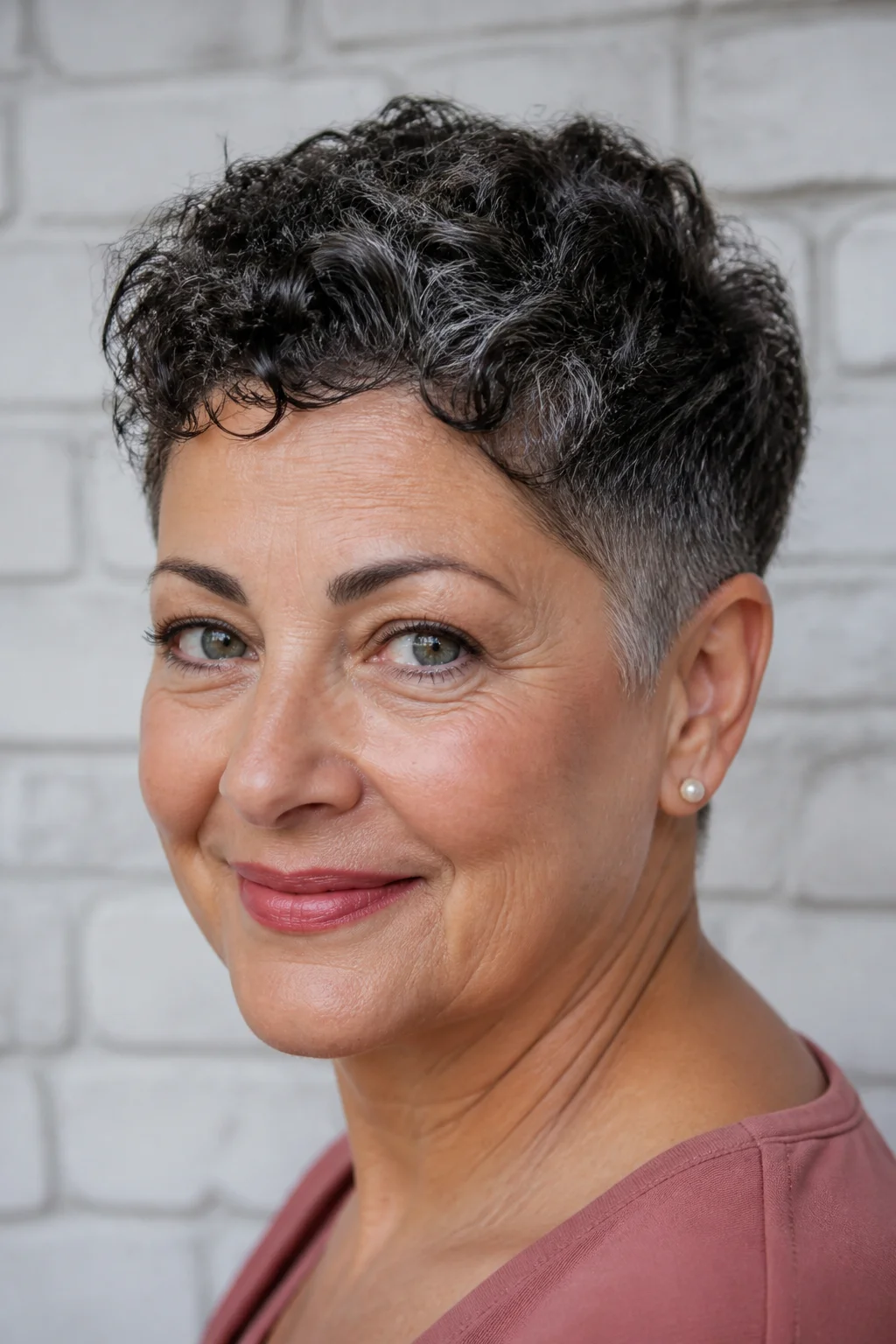
A soft fade at the temples tapers hair down close to the skin without the sharp lines of a full undercut. It’s a gentler way to get some of that contrast without committing to a shaved section. Curls up top stay fuller and rounder, similar to the classic rounded pixie but with more definition at the sides.
Curly Faux Hawk Pixie
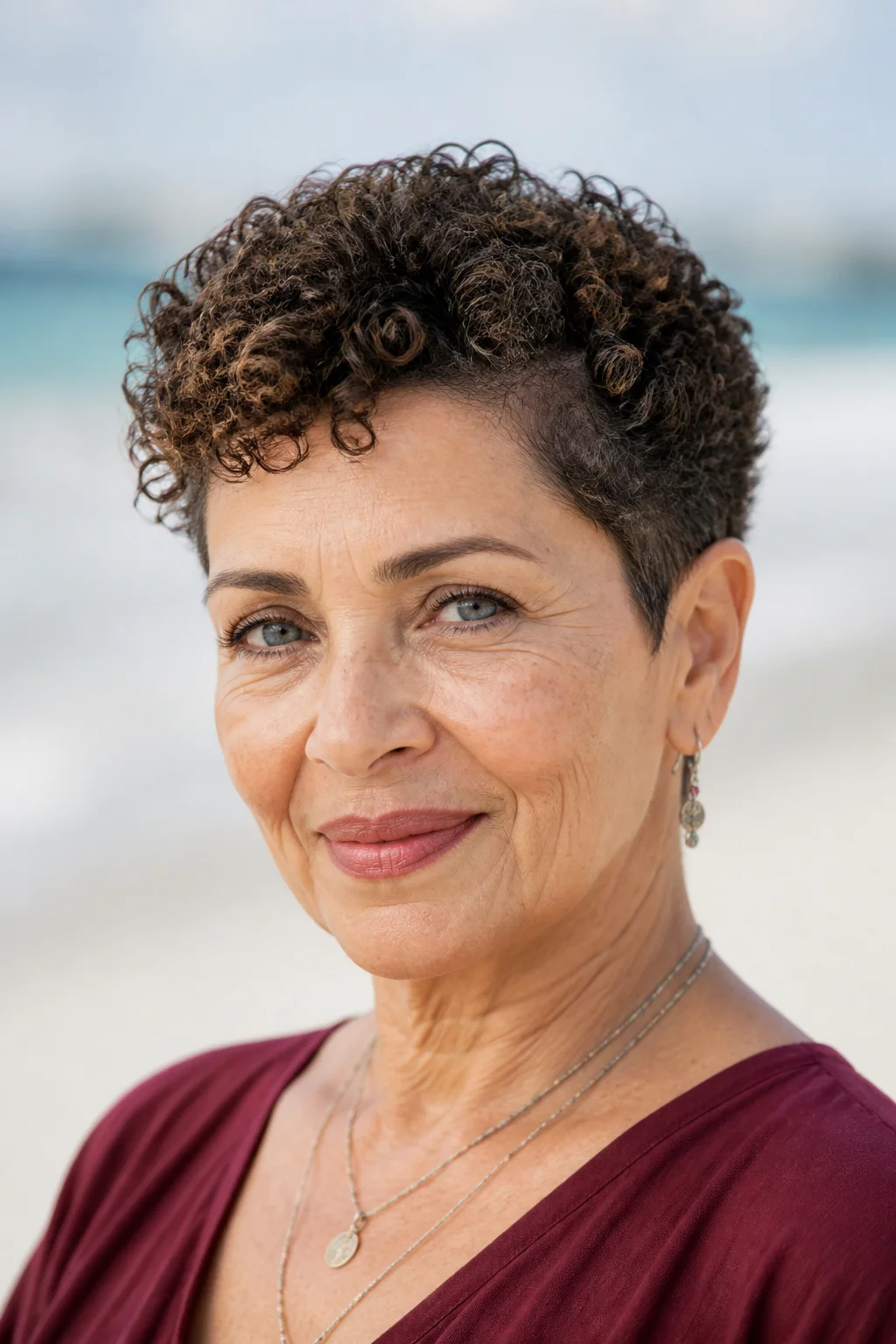
Sides are cut short and curls are styled upward through the center, mimicking the shape of a hawk without shaving anything. It’s temporary in the sense that you can style it flatter on days you want something calmer. This cut takes a bit more product and finger styling each morning than most on this list, so it suits women who don’t mind spending a few extra minutes with curl cream.
Curly Mohawk Pixie
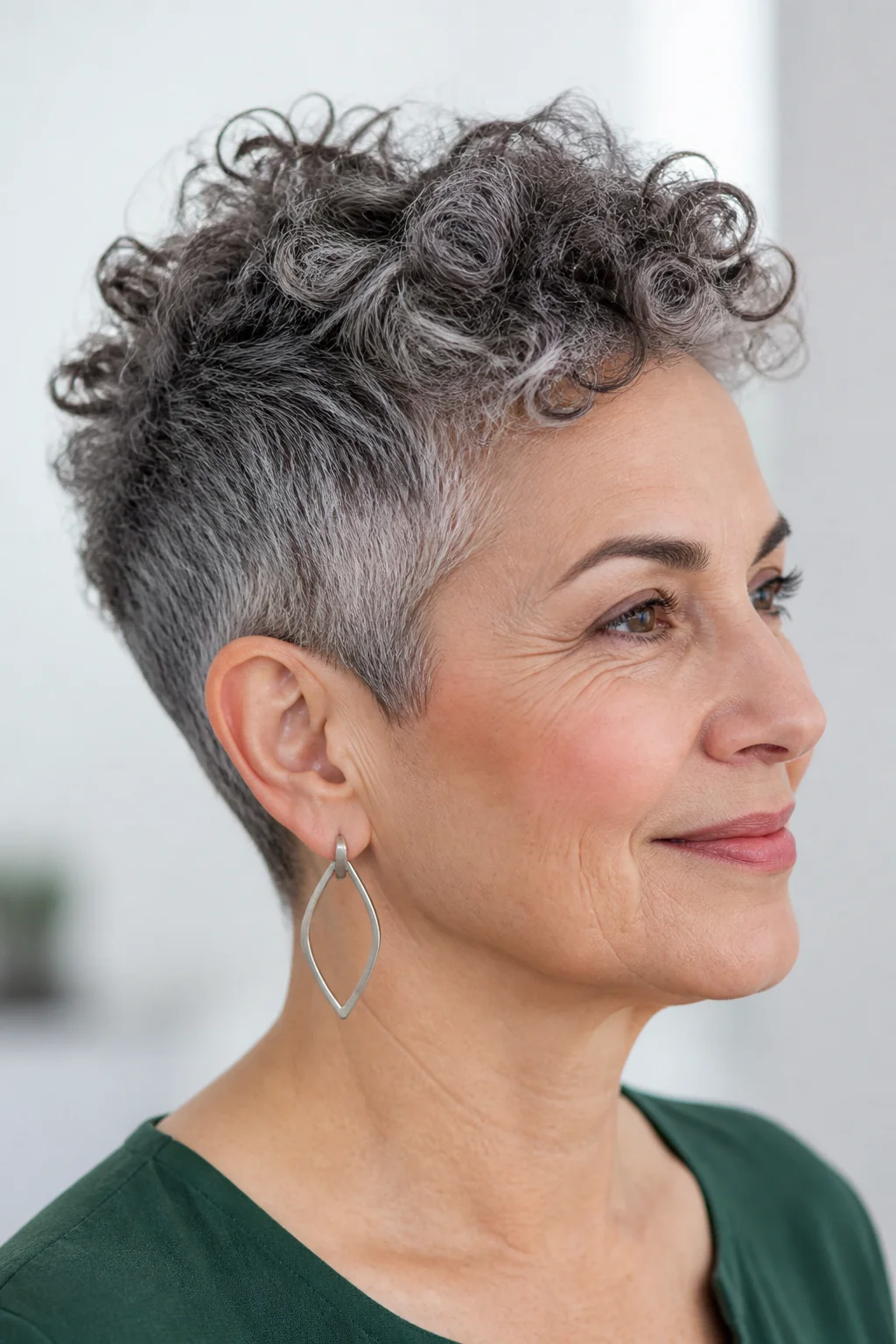
More dramatic than the faux hawk, this style keeps only a narrow strip of curls running down the center with much shorter sides. It’s a strong style choice and not for anyone who wants to blend in. Women who already favor bold color or jewelry tend to gravitate toward this one.
Curly Quiff Pixie
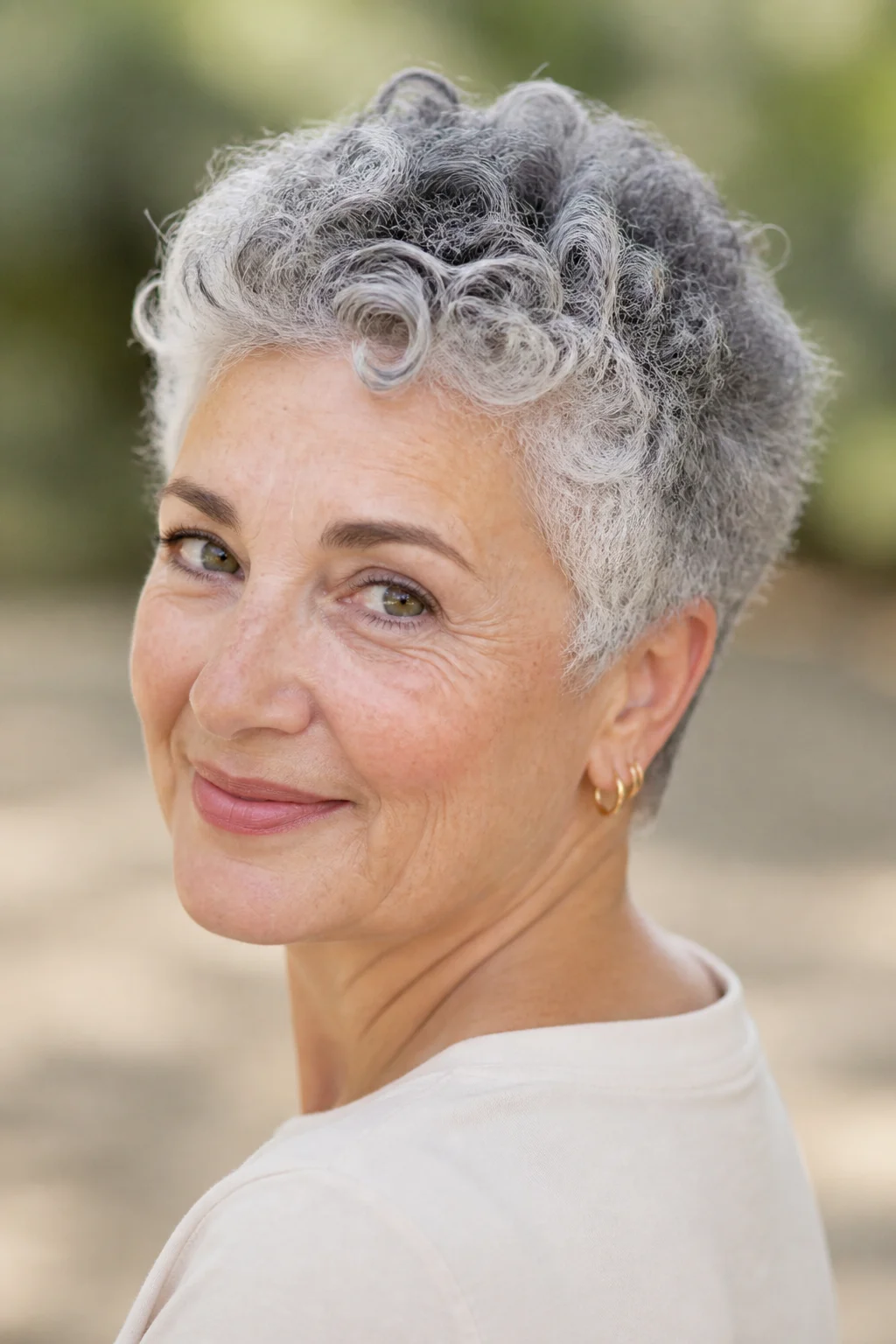
The front section is brushed up and back, giving lift right at the hairline where thinning can show most as hair ages. Curls behind the quiff stay shorter and simpler. This is one of the more flattering options if you’re dealing with a receding hairline or finer texture up front, since the styling direction covers exactly the area that needs the most help.
Curly Pompadour Pixie
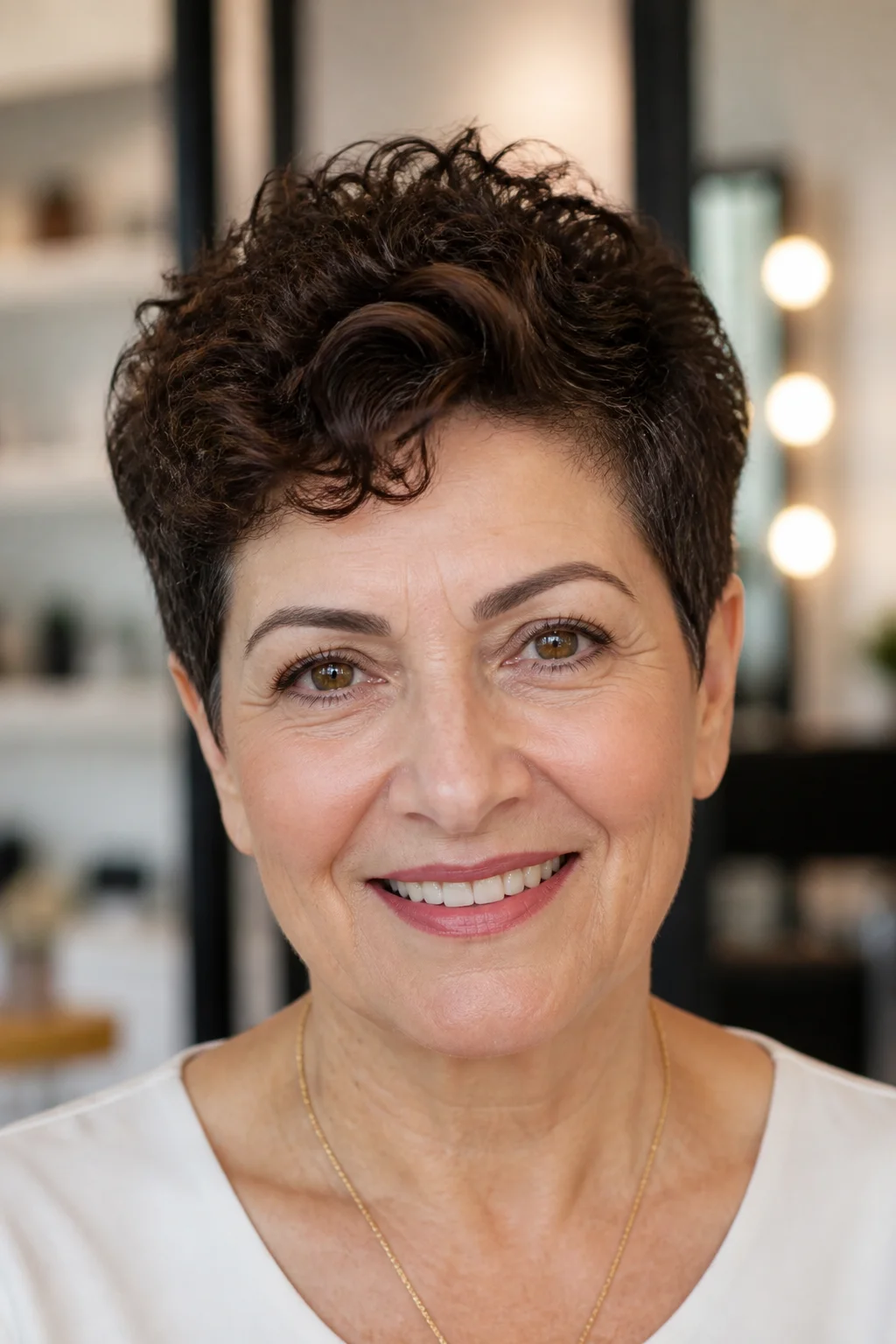
Taller and more structured than the quiff, the pompadour pushes curl volume straight up and back from the forehead. It needs a bit of firm-hold product to keep the shape through the day, especially on humid mornings. The sides stay short and clean, which keeps the whole look from feeling too big for a smaller frame.
Curly Bowl Pixie
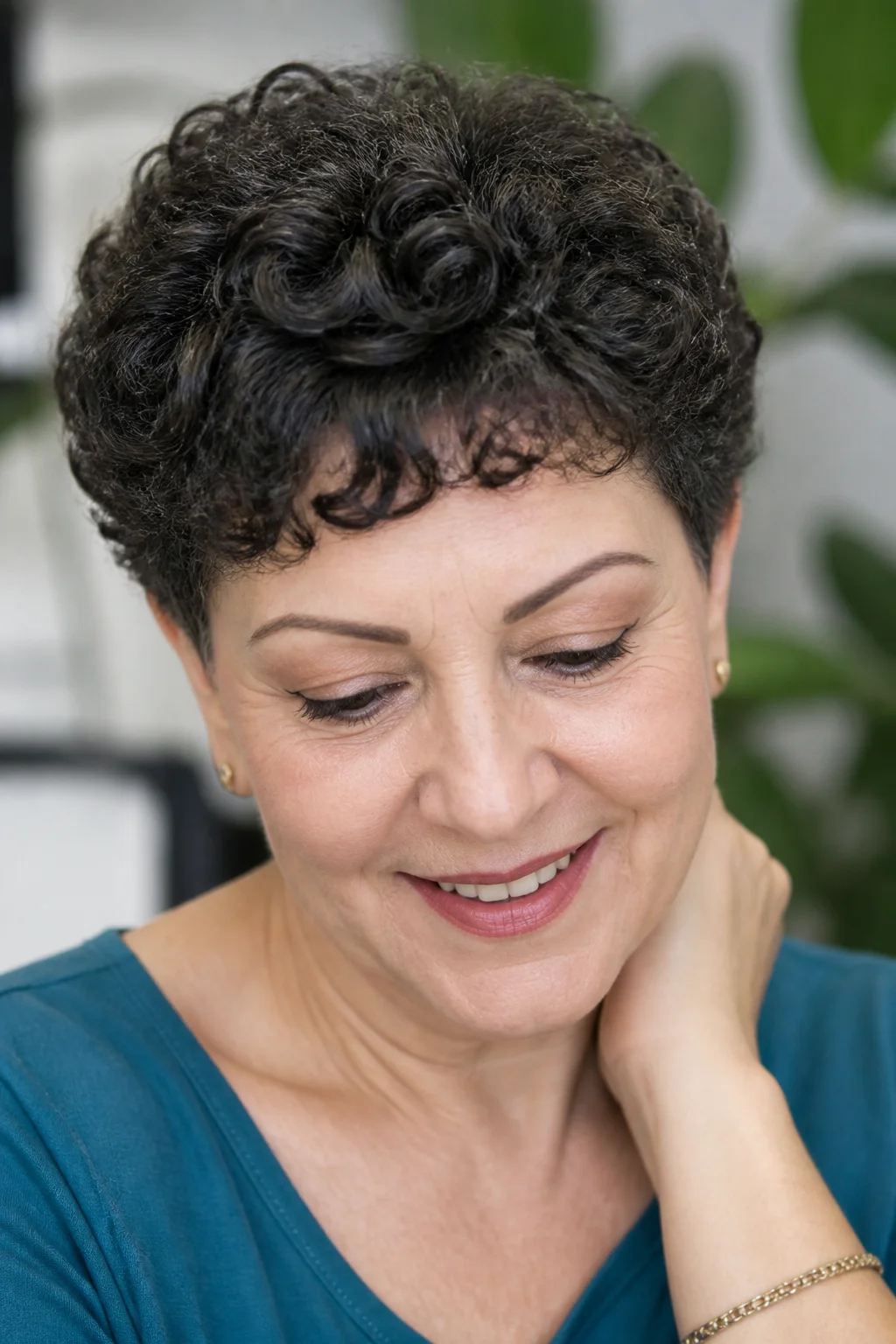
This one takes some confidence, since the shape sits close to the head like a rounded bowl with curls filling in the texture. It’s less common on women over 60 but works surprisingly well on those with strong facial features who want a graphic, no-nonsense cut. Length stays even all the way around rather than tapering at the nape.
Curly Bixie-Pixie Hybrid
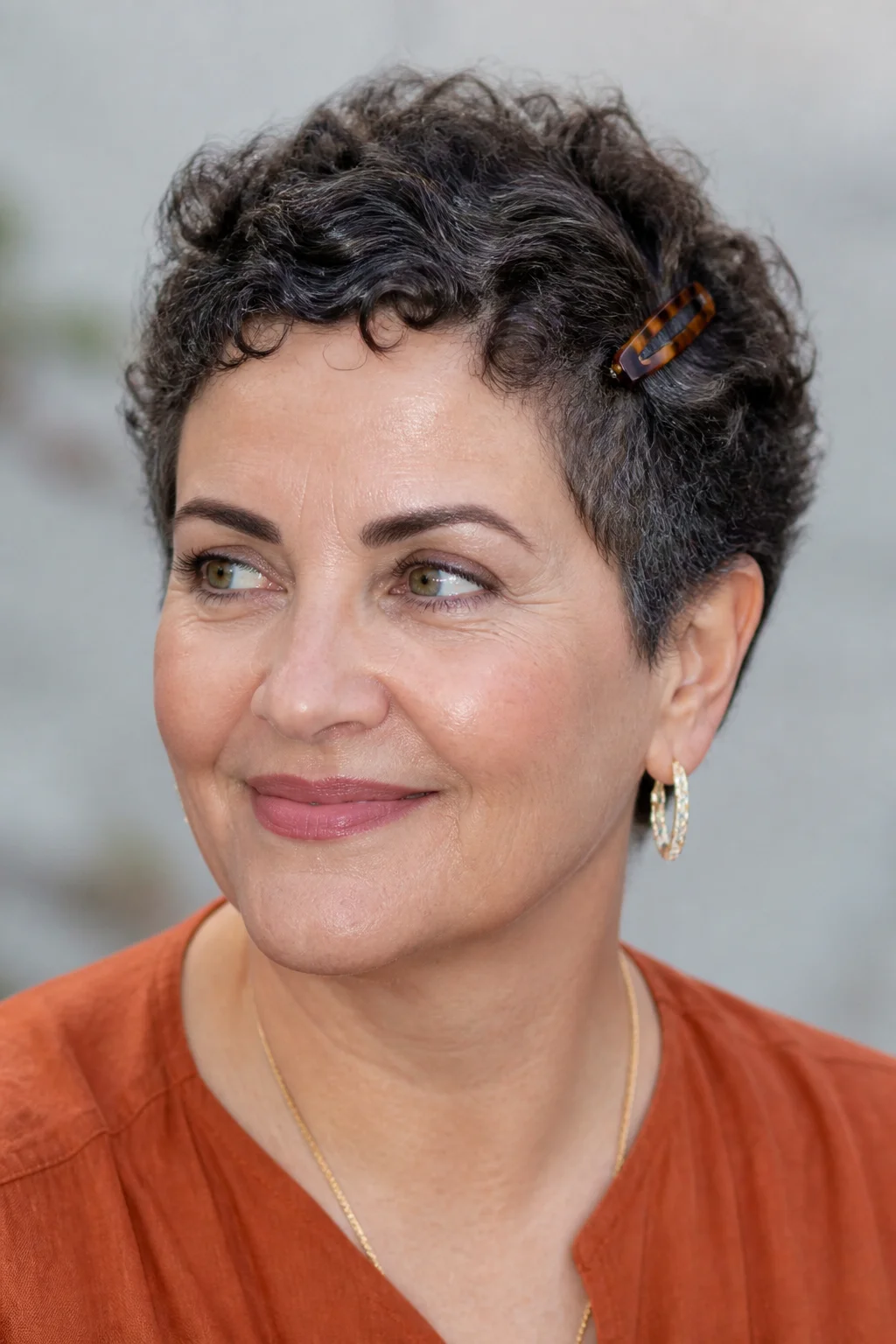
Somewhere between a bob and a pixie, this cut leaves a bit more length through the crown and sides than a true pixie while keeping the back short. It gives you more curl to work with on top without the length becoming heavy or pulling curls straight. Women transitioning from longer hair often start here because it feels like a middle step rather than a drastic chop.
Curly Shag Pixie
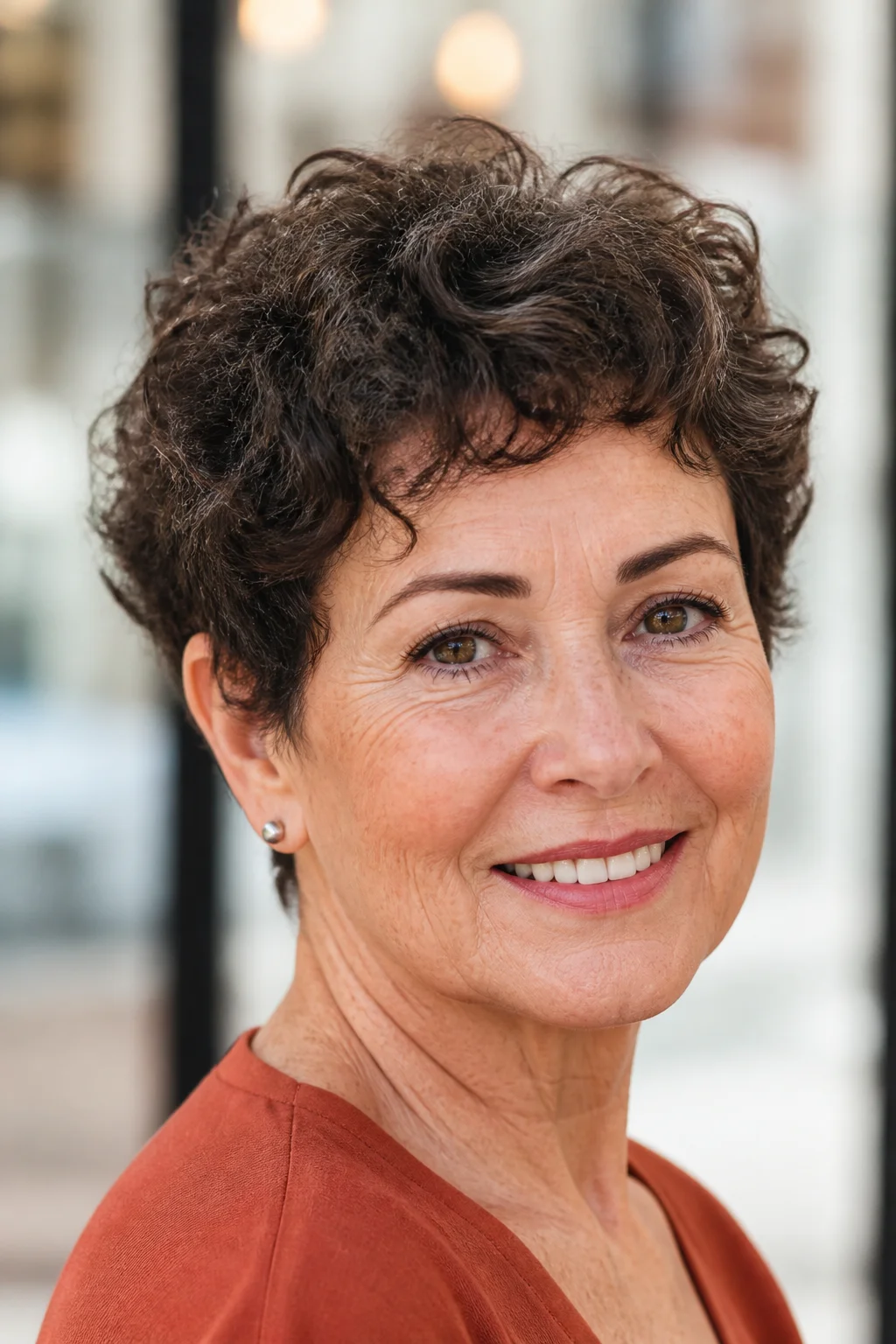
Layers are cut throughout at varying lengths, giving the curls a choppy, textured finish rather than one uniform shape. It suits looser curl patterns especially well, since the layers let each curl move independently instead of clumping into one round mass. This cut also hides regrowth and grays blending in more easily than solid, one-length pixies.
Piecey Spiky Curly Pixie
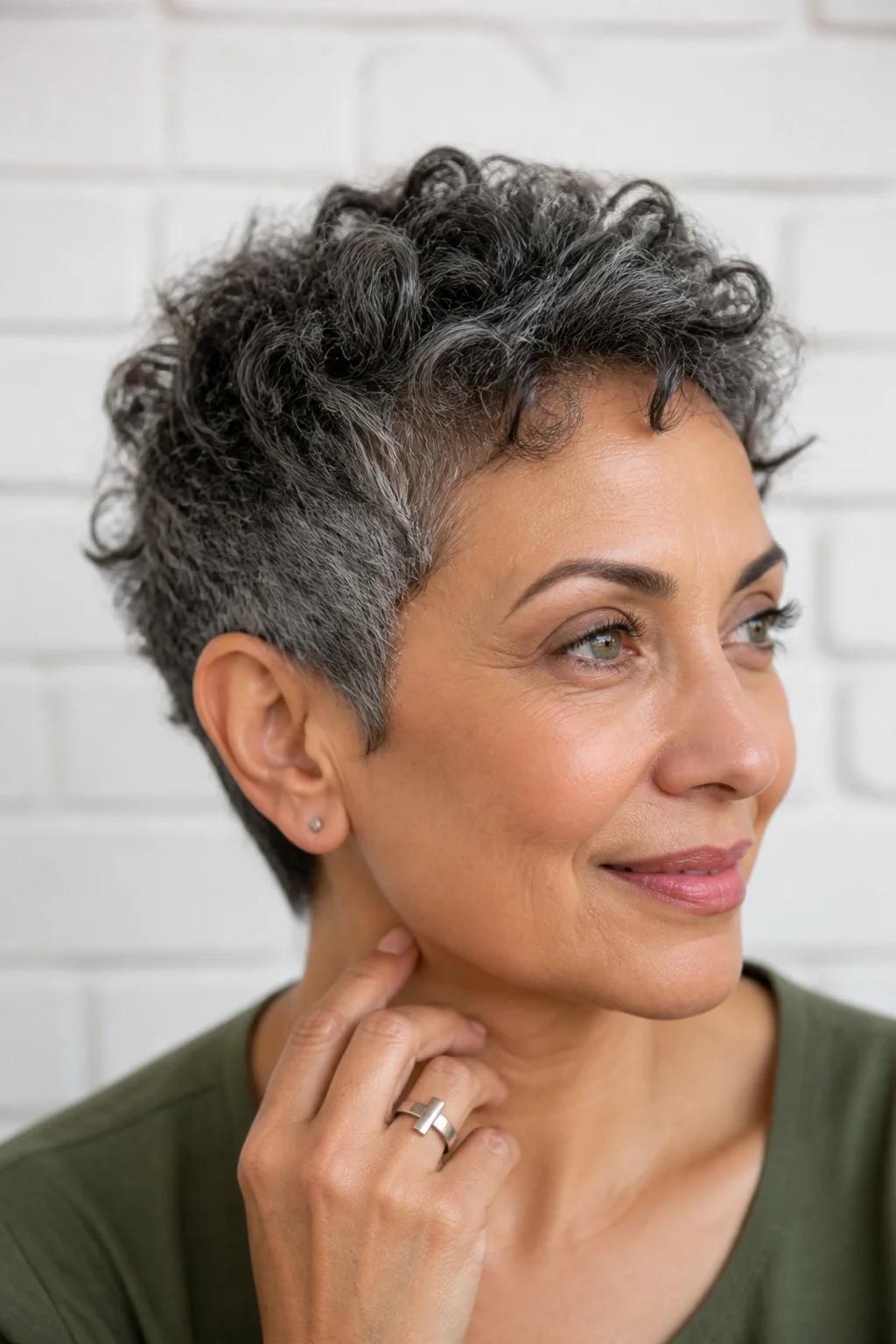
Individual curls are separated and pointed with a bit of gel or paste, creating a spiky, piece-y finish rather than a soft round one. It photographs well and adds an edgy quality that some women specifically want after years of softer, rounder cuts. Tip: use a small amount of product on dry hair rather than wet, since curls hold spikes better once they’ve already set into their natural shape.
Sculpted Finger-Coil Pixie
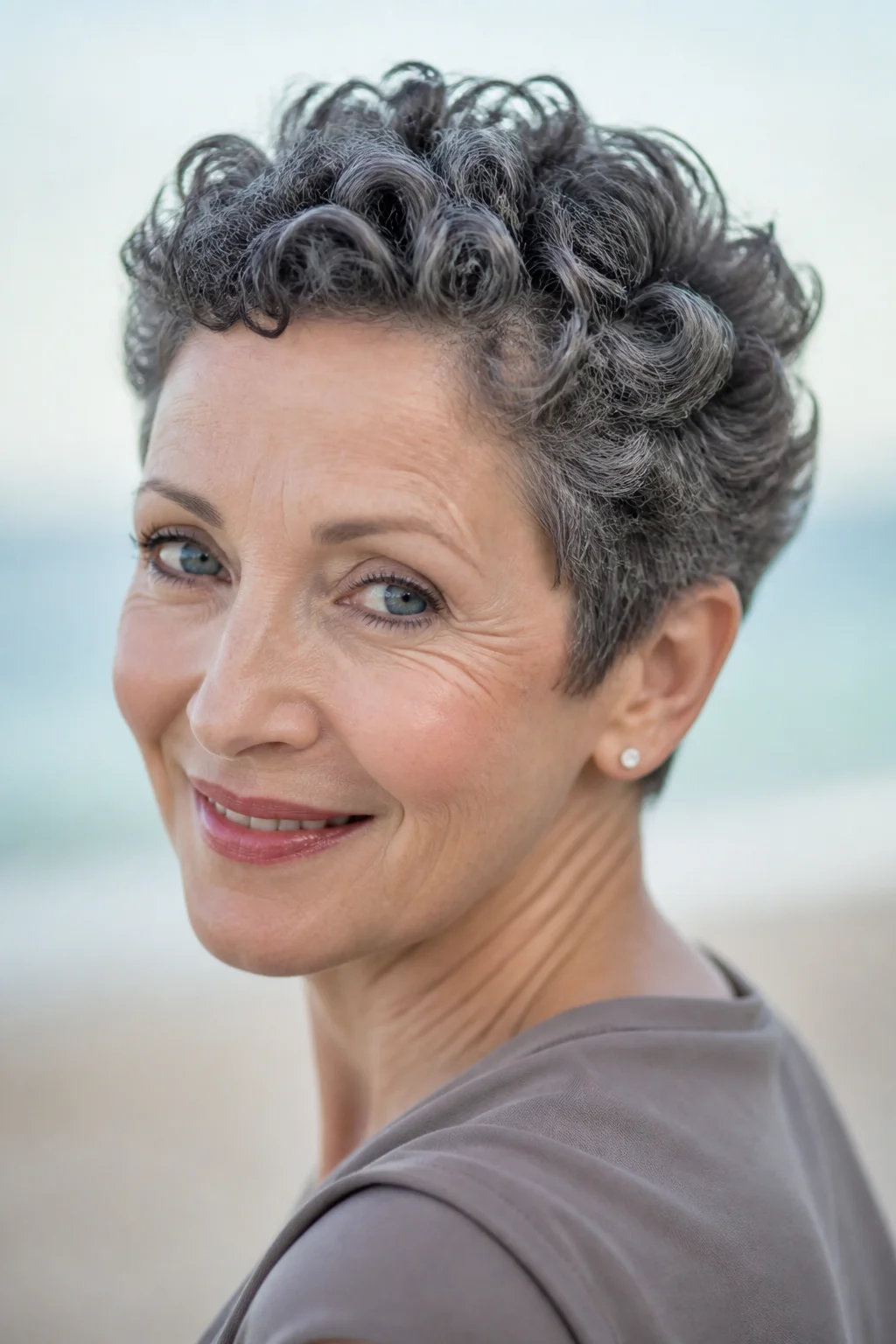
This style relies on finger-coiling small sections of curl to create defined, uniform spirals rather than letting curls clump naturally. It takes more time at the styling chair and a bit more effort at home with a curl cream or gel. The payoff is a very polished, defined curl pattern that looks almost sculpted rather than casual.
Natural Tapered Coil Pixie
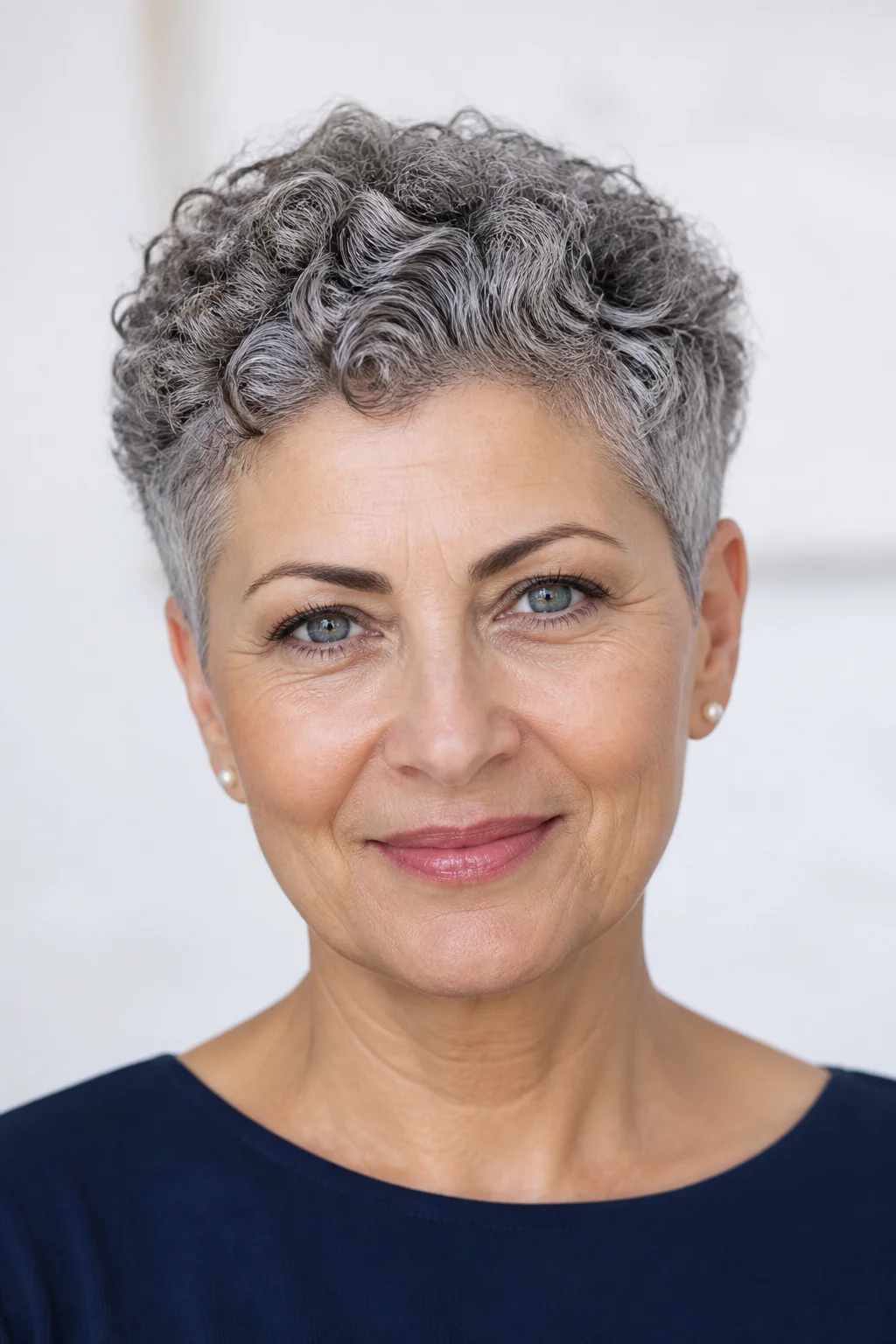
Coils are left in their most natural state here, tapered shorter at the sides and back but otherwise untouched by heavy styling tools. It’s the lowest-effort cut on this list once it’s grown into shape. Wash, apply a little leave-in, and let it dry.
Curly Pixie with a Shaved Side Part
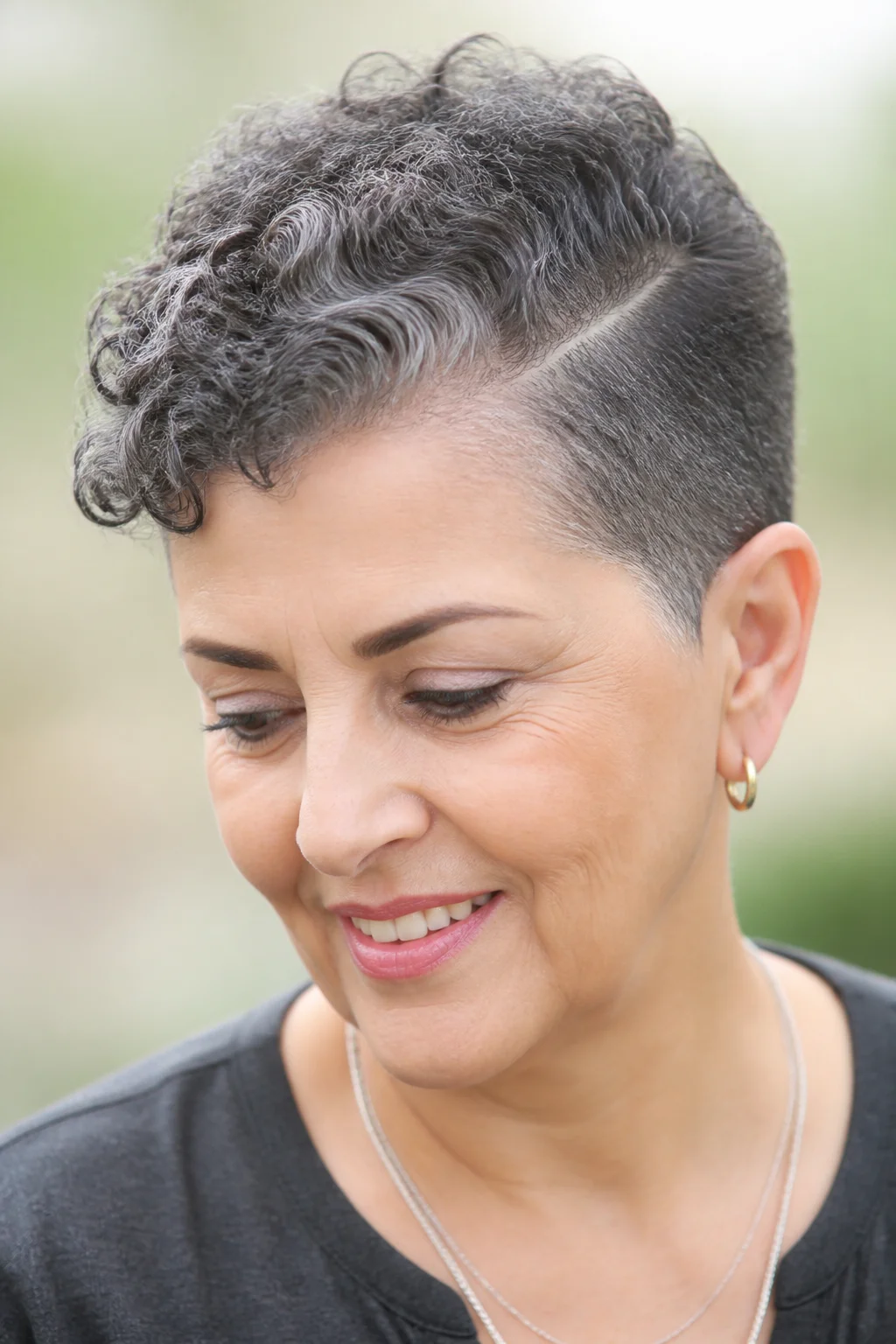
Rather than a comb part, an actual thin line is shaved into one side, giving a crisp, graphic detail against the curls. It’s a small design element that makes a simple pixie look more considered. This works best on curl patterns tight enough to hold the shape around the shaved line without curls flopping over and hiding it.
Soft Halo-Curl Pixie
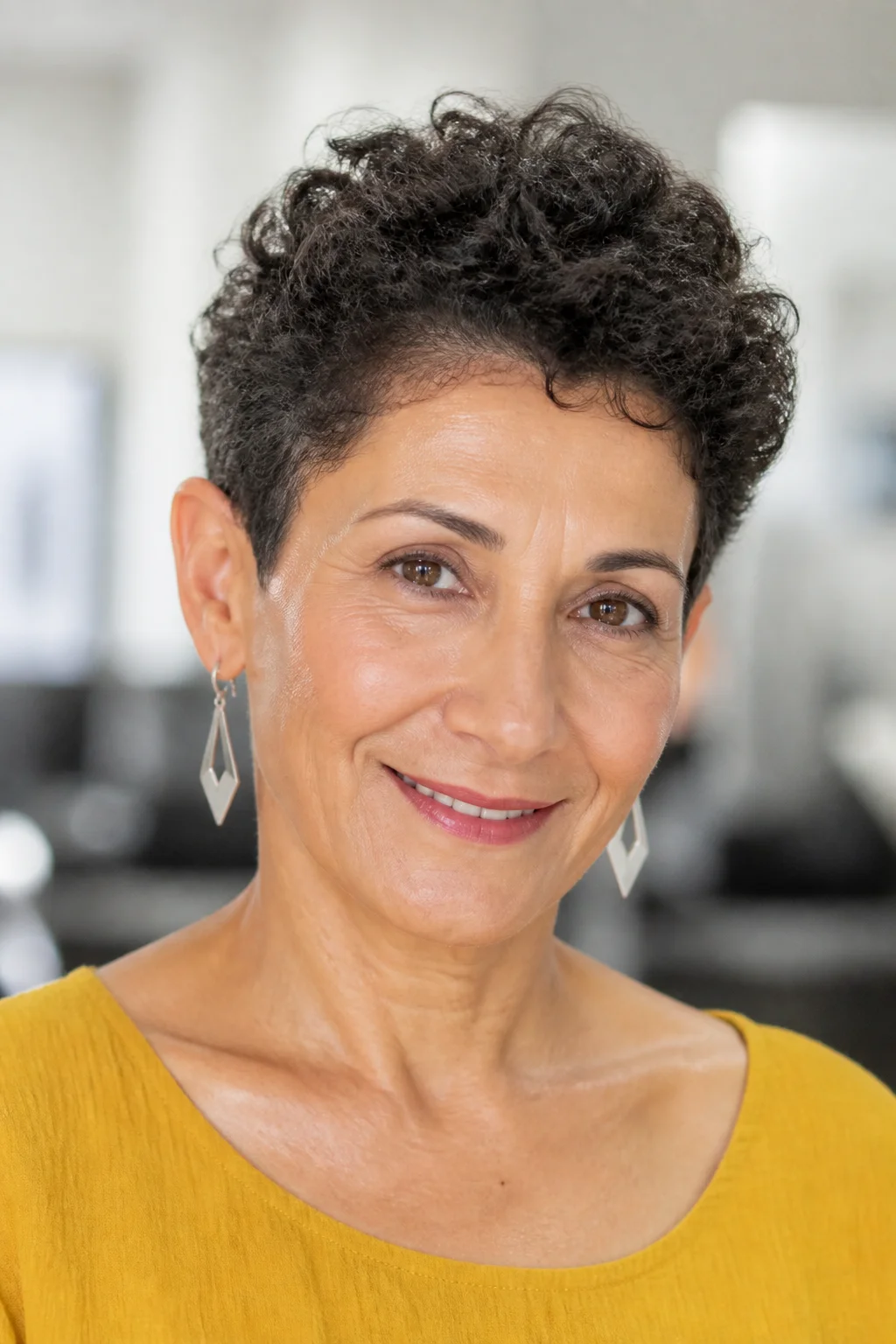
Curls are cut so they frame the face in a soft, even halo shape, fuller at the temples and crown and tapering gently at the nape. It’s one of the softest, most forgiving cuts on this list, flattering nearly every face shape. Many women over 60 choose this as their go-to because it requires very little precision styling and still looks finished every time.
Which Curly Pixie Should You Actually Book?
With this many options, picking one comes down to your curl pattern, your face shape, and how much time you want to spend styling. If your curls are fine or thinning, avoid heavier options like the curly pompadour pixie or curly quiff pixie, which need volume you may not have; instead lean toward the close-cropped curly pixie or the classic rounded curly pixie, both of which look fuller on thin strands because the length stays short and controlled.
If you want low maintenance above everything else, the natural tapered coil pixie and the tapered nape curly pixie need almost no daily styling beyond a leave-in product. If you want more drama or a style that reads as bold, the curly mohawk pixie, disconnected curly undercut pixie, and asymmetrical curly pixie all bring a stronger visual statement and suit women who already gravitate toward bold color or accessories.
A common mistake is choosing a cut based on a photo alone without accounting for your actual curl density. A style like the curly shag pixie depends on looser curls to create its layered texture, while the sculpted finger-coil pixie needs tighter, well-defined curls to hold its shape. Bring reference photos, but let your stylist adjust the cut to match what your hair is actually doing.
Whatever you choose, remember that a good curly pixie grows out gracefully and doesn’t demand a strict six-week trim schedule to look intentional. That flexibility is exactly what makes short curly pixie cuts for women over 60 such a practical long-term choice, not just a one-time style experiment.