Straight hair after 70 can be a gift if the cut works with your face instead of against it. A round face wants shape that adds angles and length, not one that piles width right where your cheeks are already the widest. The good news is that round face straight hair hairstyles for women over 70 do not have to mean short, boring, or safe. There are plenty of ways to add lift, angle, and movement so your face looks longer and your hair still feels like you. Fine or thinning strands common at this age also need cuts that create the illusion of body without heavy layering that falls flat. Below are 22 cuts built around length, angle, and placement, each one chosen to slim and flatter a round face while keeping straight hair easy to manage day to day.
Long Straight Layers With Side Part
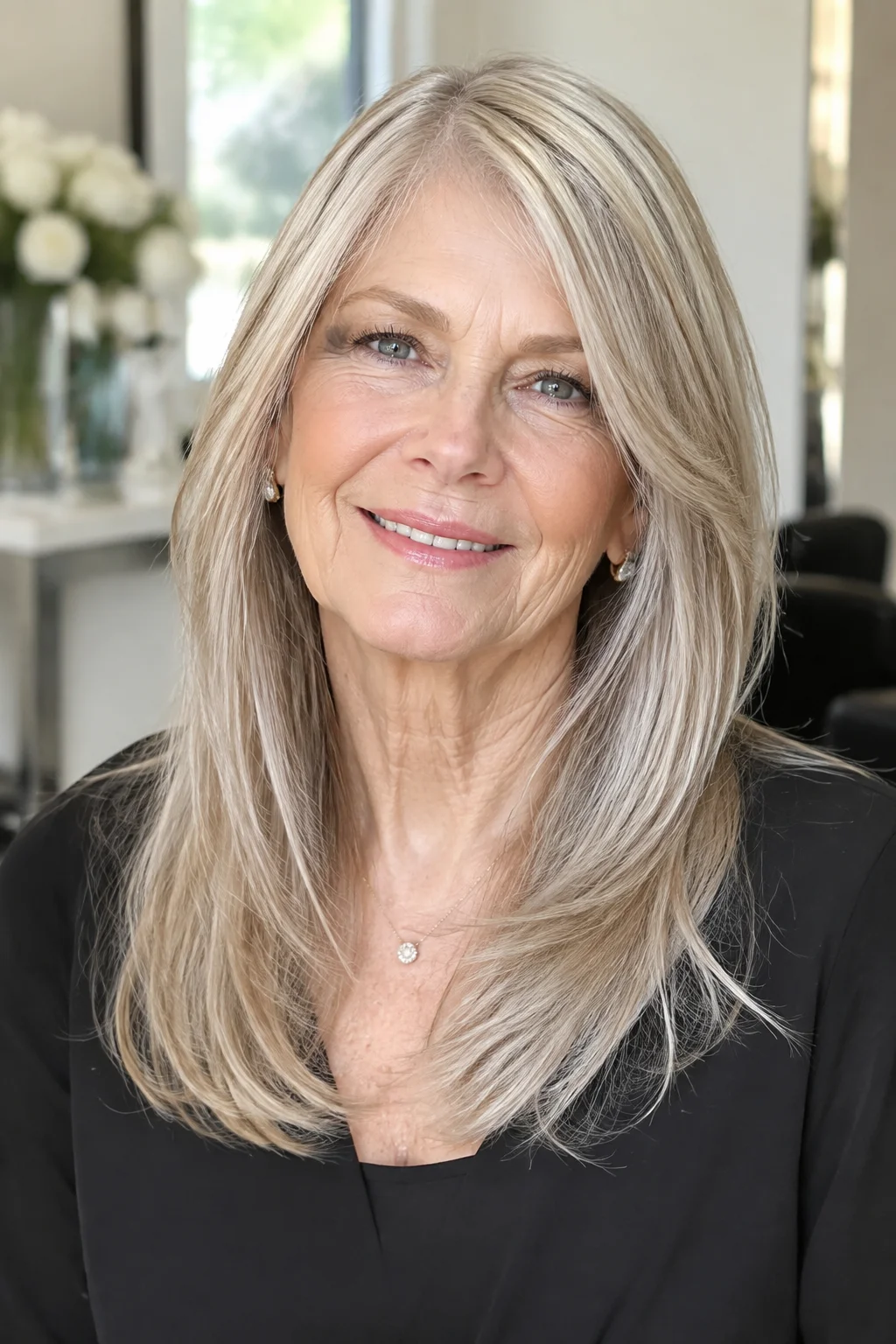
A deep side part throws shadow across one side of the face, which breaks up roundness right away. Long layers starting around the chin keep movement without cutting into the width at the cheeks. This combination works especially well on straight hair because the layers fall cleanly instead of flipping out. It’s a low fuss option for women who want length but still want a shape doing some visual work. Ask your stylist to keep the top layers longer so the part stays put through the day. A light mist of heat protectant before styling helps the finish last.
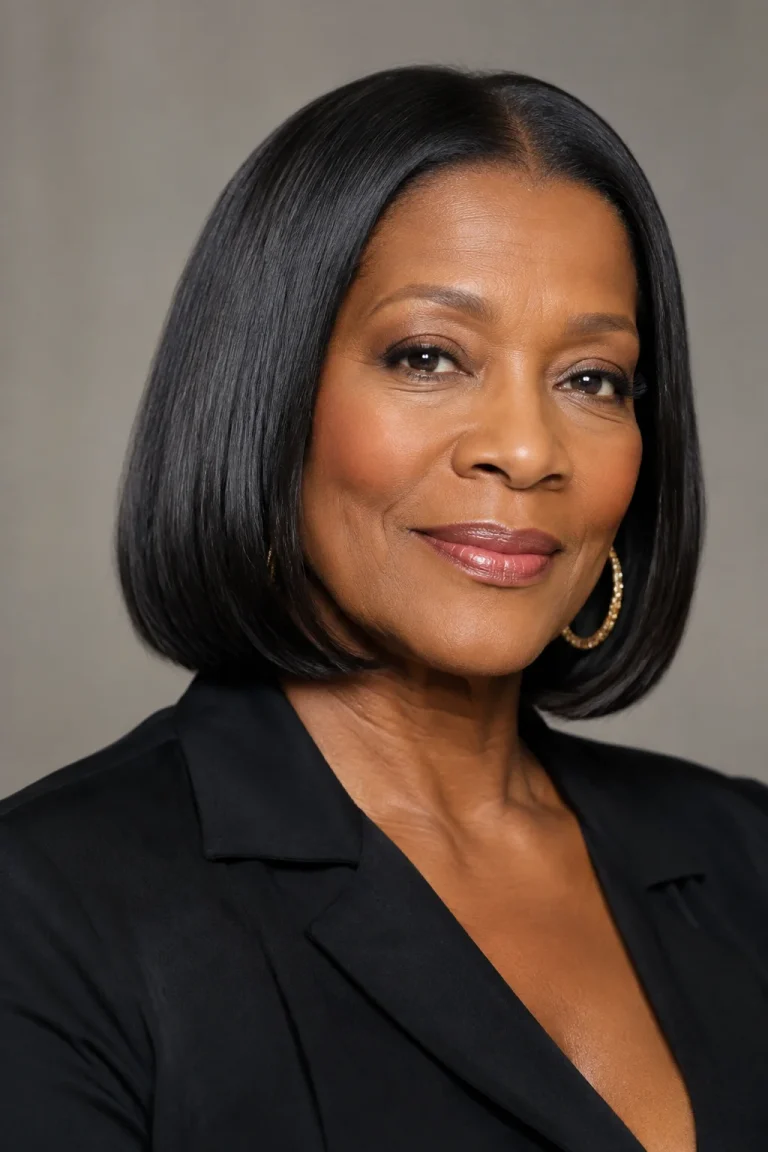
Sleek Straight Lob (Collarbone Length)
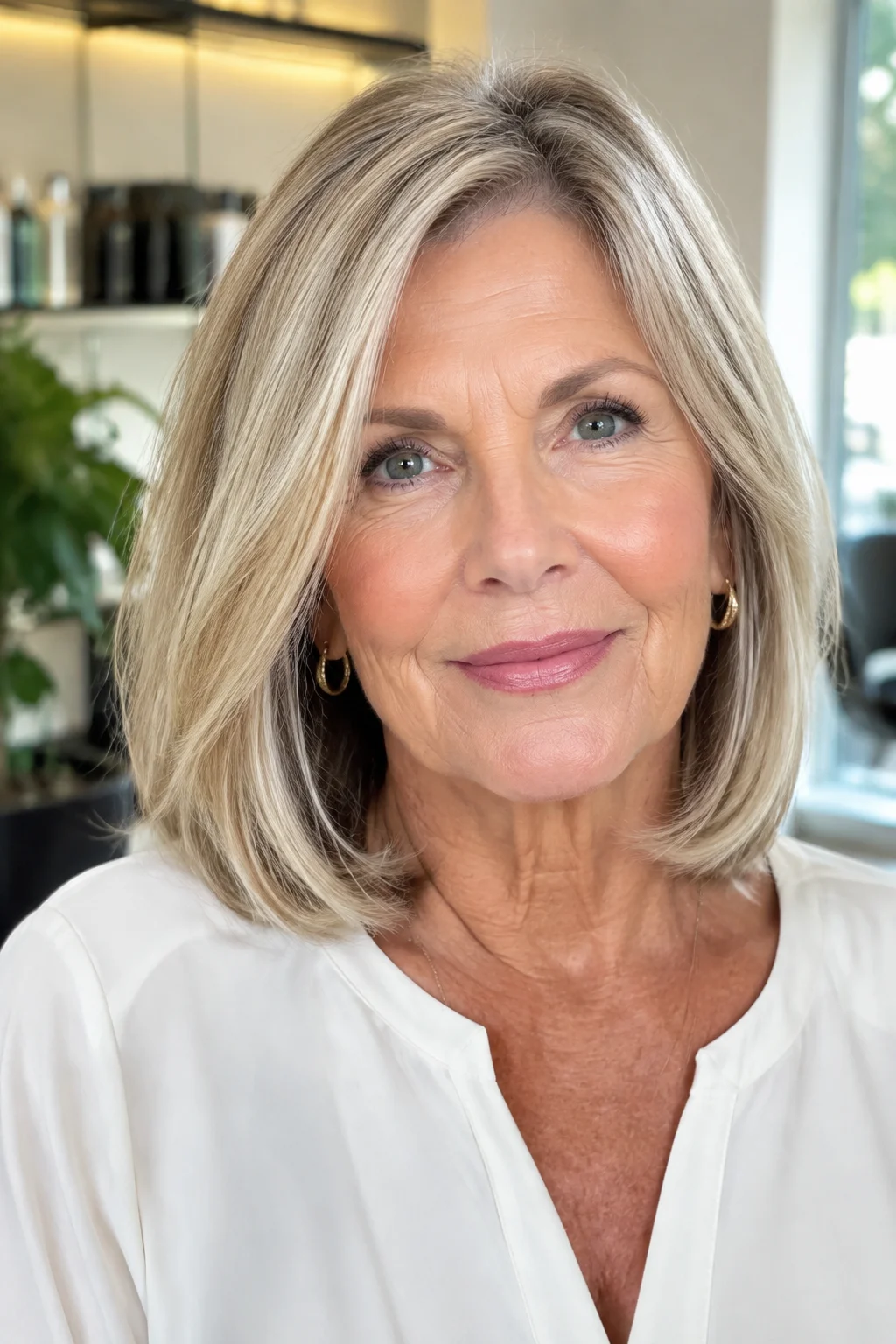
The lob sits right at collarbone length, and on a round face that spot is important. Hair ending above the shoulder tends to add width at the jaw, but collarbone length draws the eye downward and elongates things instead. Keep the ends blunt for a sleek, polished line. This cut also suits thinner hair well since blunt ends look thicker than the same hair cut into wispy layers. A light mist of heat protectant before styling helps the finish last. A light mist of heat protectant before styling helps the finish last.
Straight Hair With Face-Framing Angle
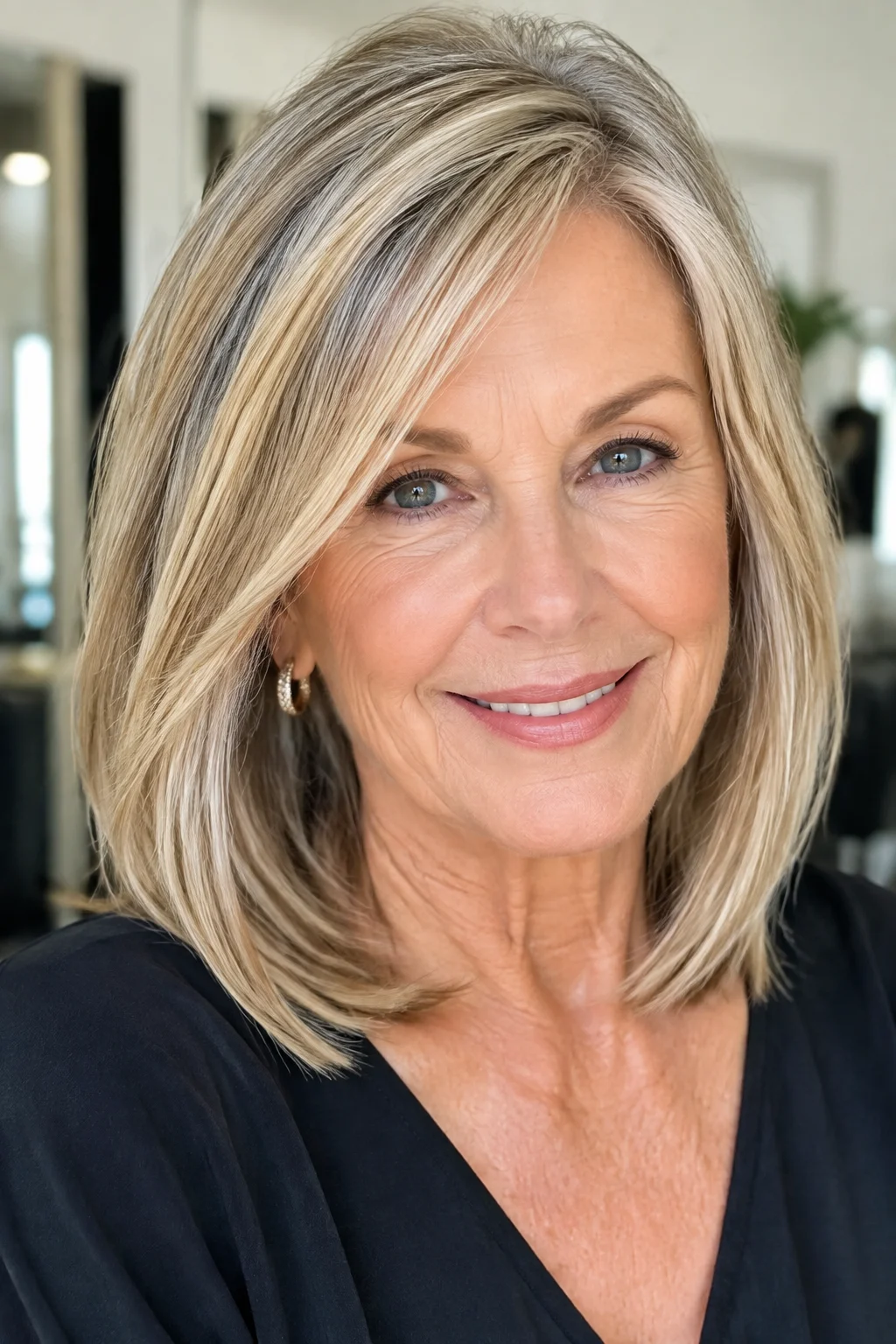
Angled pieces cut shorter near the chin and longer toward the collarbone create a diagonal line down the face. That diagonal is exactly what a round face benefits from, since it interrupts the curve of the cheek and jaw. The rest of the hair can stay one length behind the frame, which keeps the cut simple to maintain. Tip: ask for the angle to start at the cheekbone, not the ear, so it reads as a slimming line rather than a random layer.
Long Straight With Deep Side Sweep
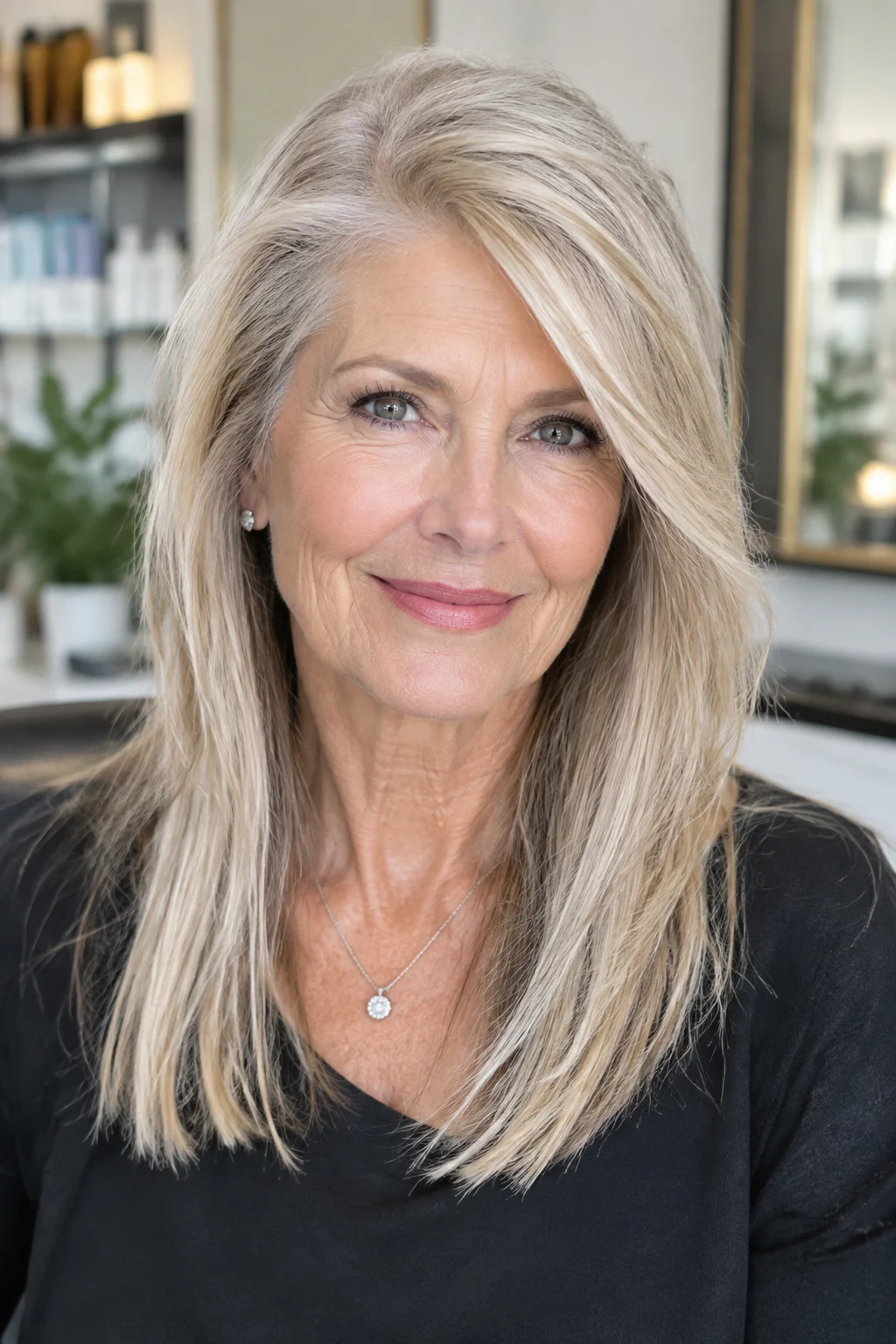
This style leans almost all the hair to one side in front, covering part of the forehead and one cheek. It’s a strong way to camouflage width without cutting length at all. The back stays long and straight, giving a clean silhouette from behind. Because the sweep covers so much of the face, this look reads younger and softer, similar to a curtain pulled just slightly open.
Straight Textured Choppy Lob
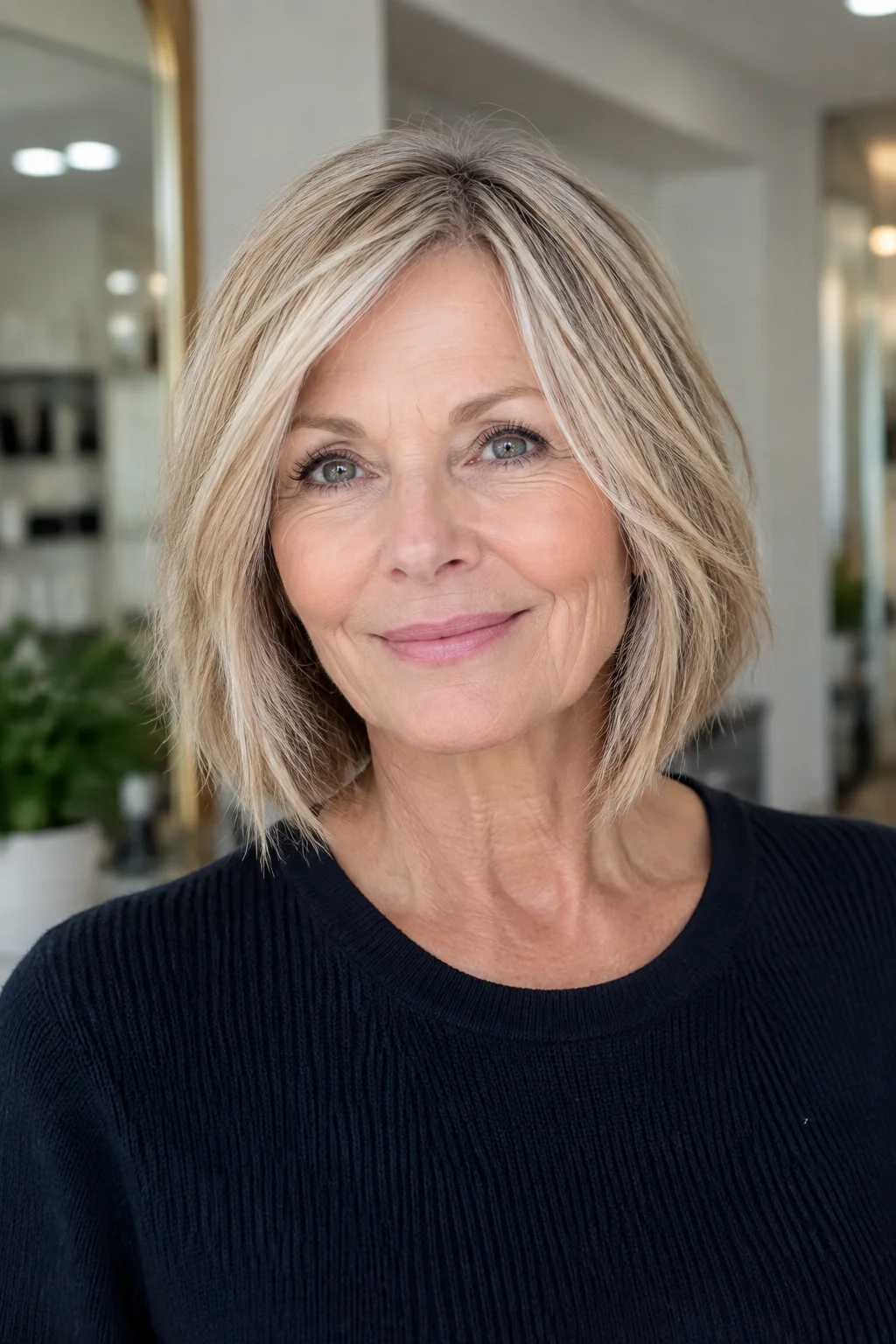
Texture cut into the ends of a lob keeps things from looking too heavy or too structured. Choppy pieces break up the blunt line just enough to feel current without sacrificing the slimming effect of the length. This works nicely on straight hair with some natural thinning, since the texture disguises any sparse spots at the ends.
Straight Hair With Tall Crown Volume
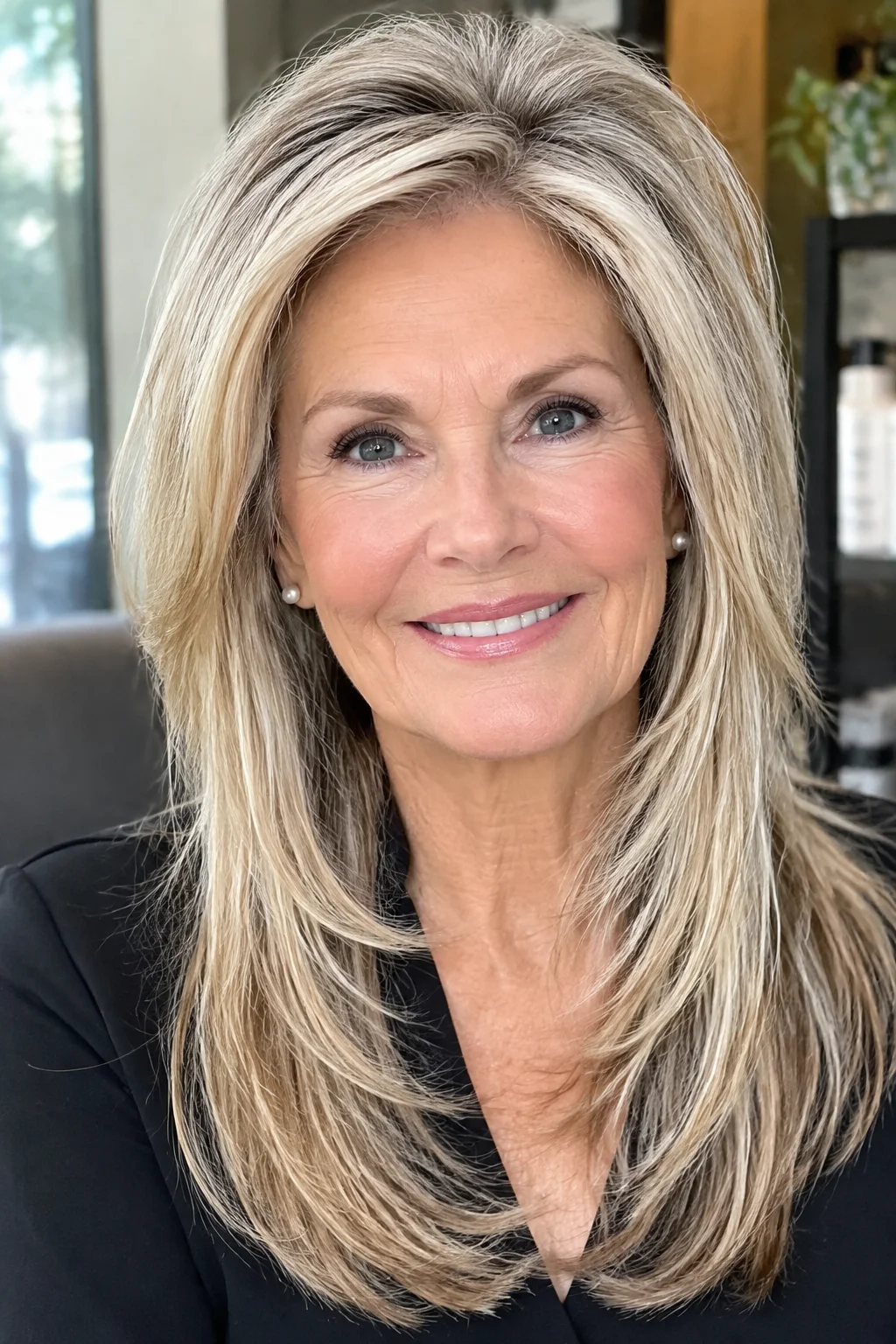
Height at the crown is one of the fastest ways to make a round face look longer, and it barely requires any change to length. A light backcombing or a blow dry lifted at the root gives the illusion of extra inches on top, which balances out width lower on the face. The rest of the hair can stay sleek and straight all the way down. Tip: a small amount of root lifting spray applied only at the crown keeps this look from tipping into stiff or overdone.
Long Straight Shag With Layers
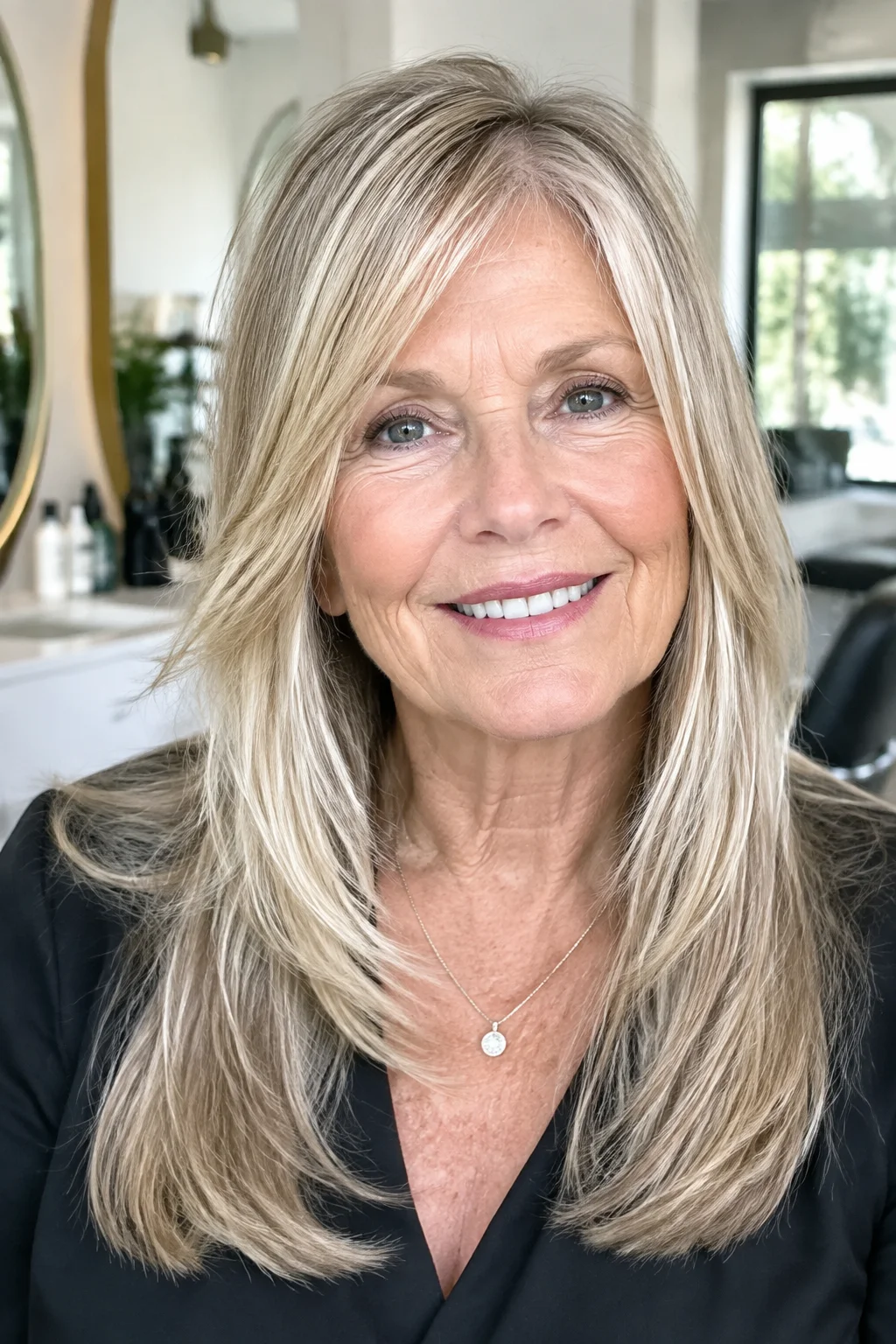
A shag brings looser, choppier layers throughout the length, adding shape without bulk. On a round face, the layered pieces around the jaw and cheek soften the roundness while the longer bottom layers keep everything elongated. This cut has more movement than a classic layered style and looks less structured, which suits women who want something with a little edge. It holds up well on straight hair because the layers do not need curl to show their shape.
Straight Blunt Lob With Minimal Layers
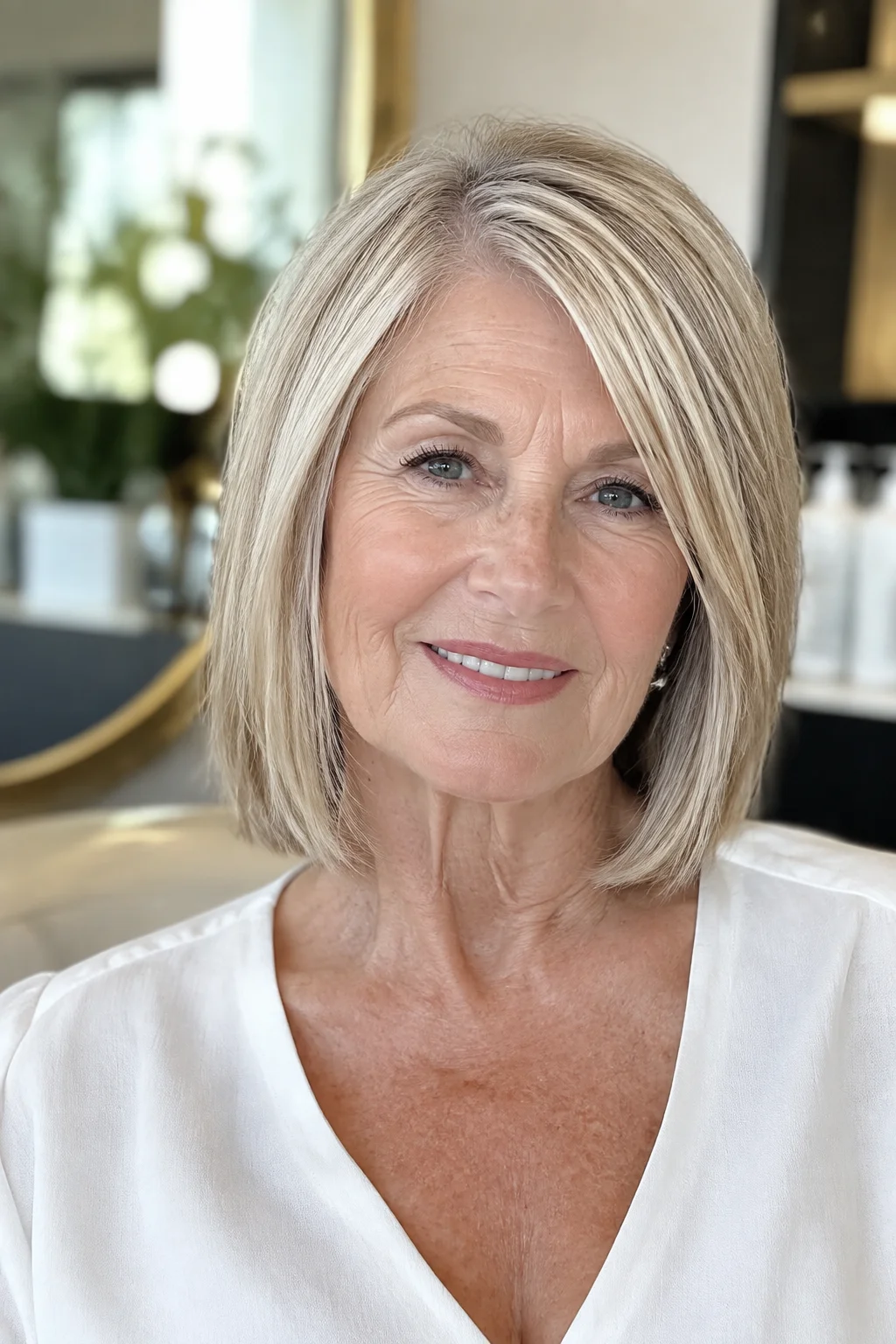
Sometimes less cutting is the better answer. A blunt lob with barely any layering keeps the hair looking fuller and denser, which matters if your hair has thinned with age. The straight line at the bottom draws a clean boundary that elongates the face when the length sits at or below the chin. This is one of the simplest cuts on this list to maintain, since there is no shaping to grow out awkwardly.
Long Straight With Center Part and Streamline
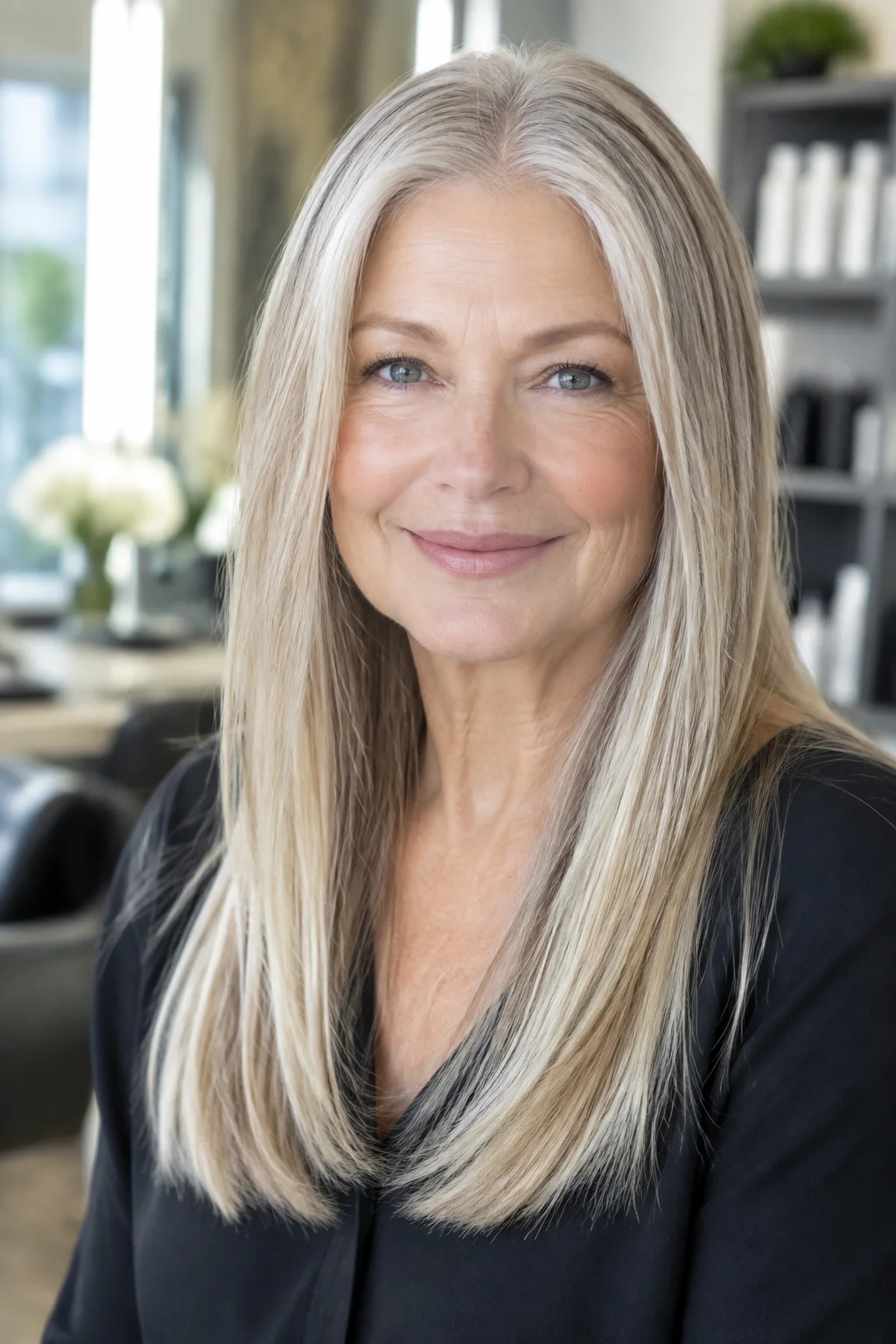
A center part is often avoided on round faces because it can widen the look of the cheeks, but on longer straight hair with a streamlined, sleek finish, it can actually work in your favor. what matters is keeping the hair flat and close to the head near the part, then letting it fall long and straight past the jaw. Length below the collarbone counteracts any width added by the part itself.
Straight Pixie-Bob Hybrid
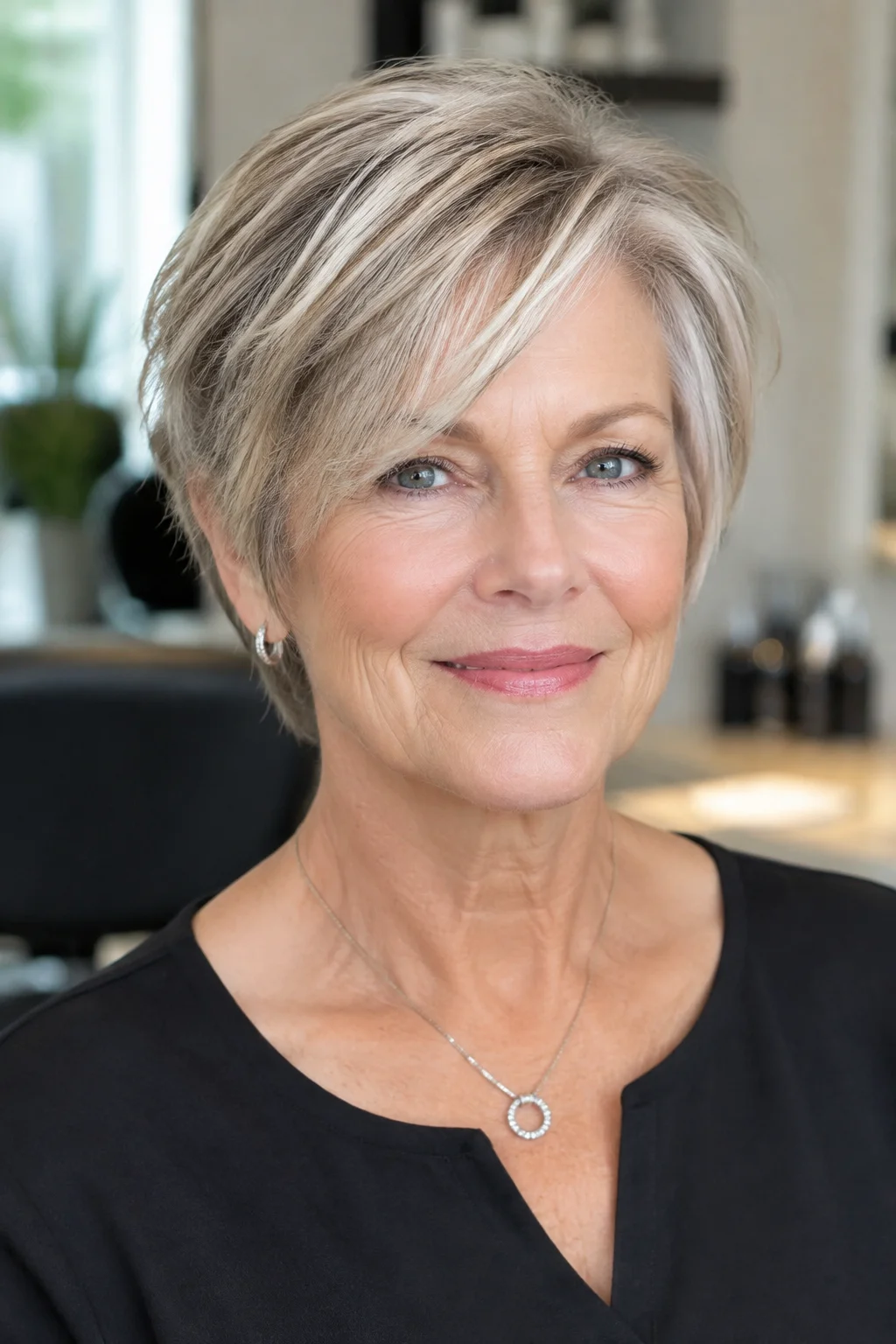
This cut sits between a pixie and a bob, usually landing just below the ear with soft layering through the crown. It gives you short hair’s ease with a bit more length to work with around the face. On a round face, keeping the sides slightly longer than the back helps avoid adding width at the jawline. This is a great option for women who want low maintenance styling but are not ready to go fully short.
Straight Hair With Wispy Face-Framing Layers
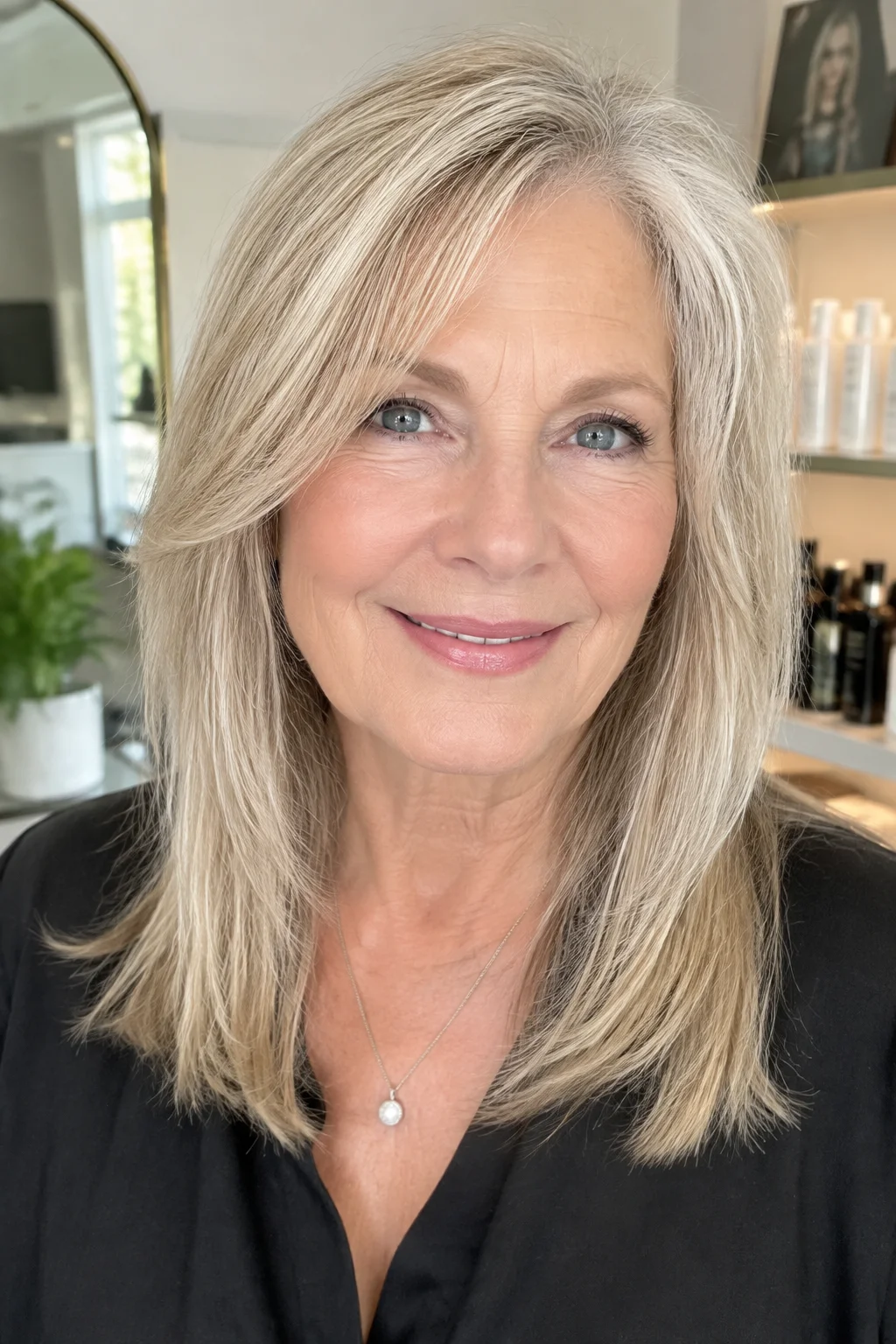
Wispy layers cut thin and feathered around the face soften the roundness without adding bulk. These layers work best when they start above the cheekbone and taper down past the jaw, creating a subtle frame rather than a solid block of hair. Straight hair shows off the wispiness clearly since there’s no curl to hide the fine ends.
Long Straight With Subtle Undercut Back
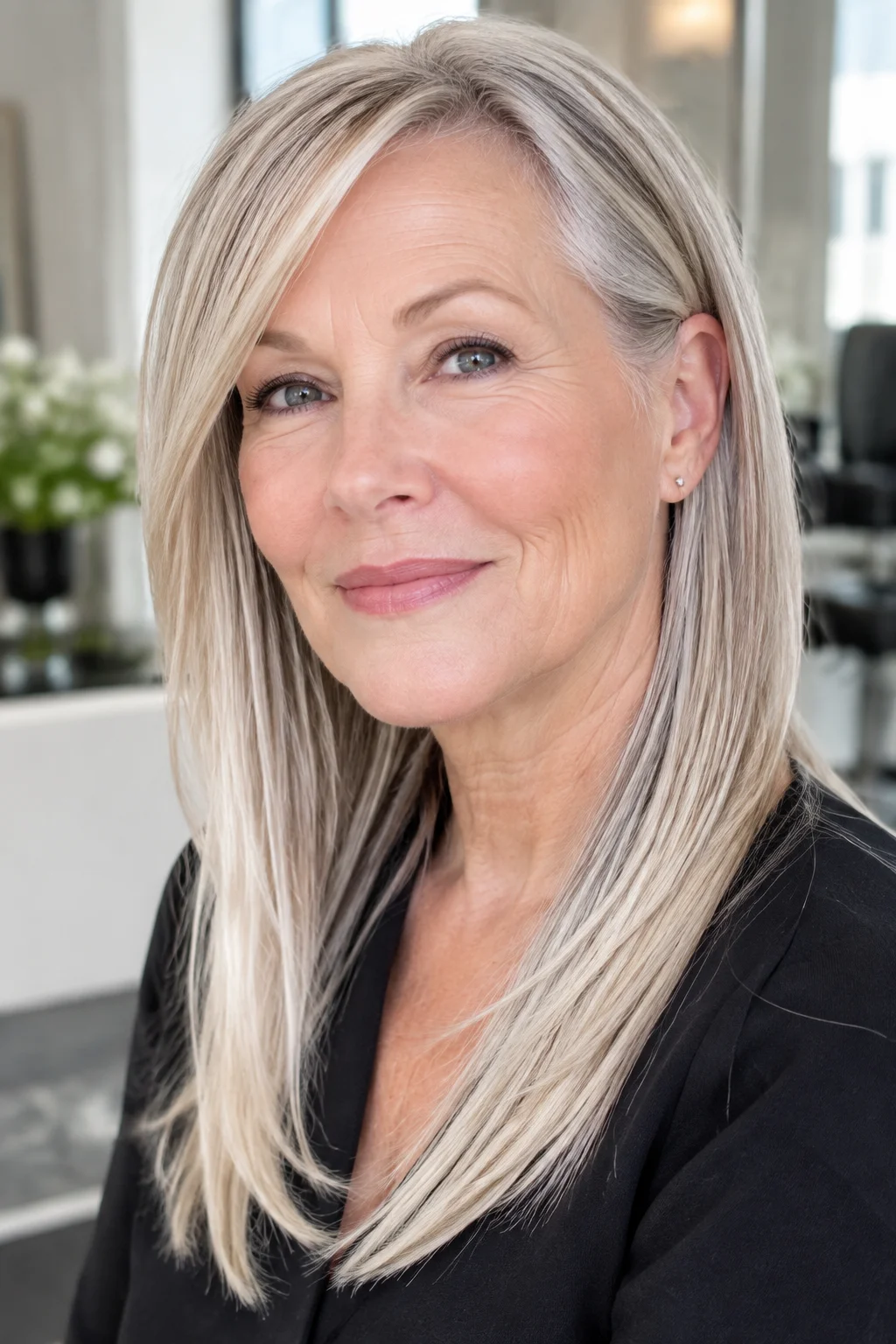
An undercut at the nape, hidden under the top layer of hair, removes bulk from the lower back of the head without changing the visible length on top. This keeps the silhouette long and straight from the front while making the overall cut feel lighter and less heavy at the neck. It’s a nice option if your hair holds a lot of thickness at the base of the skull and feels weighed down there.
Straight Shoulder-Length With Angled Front
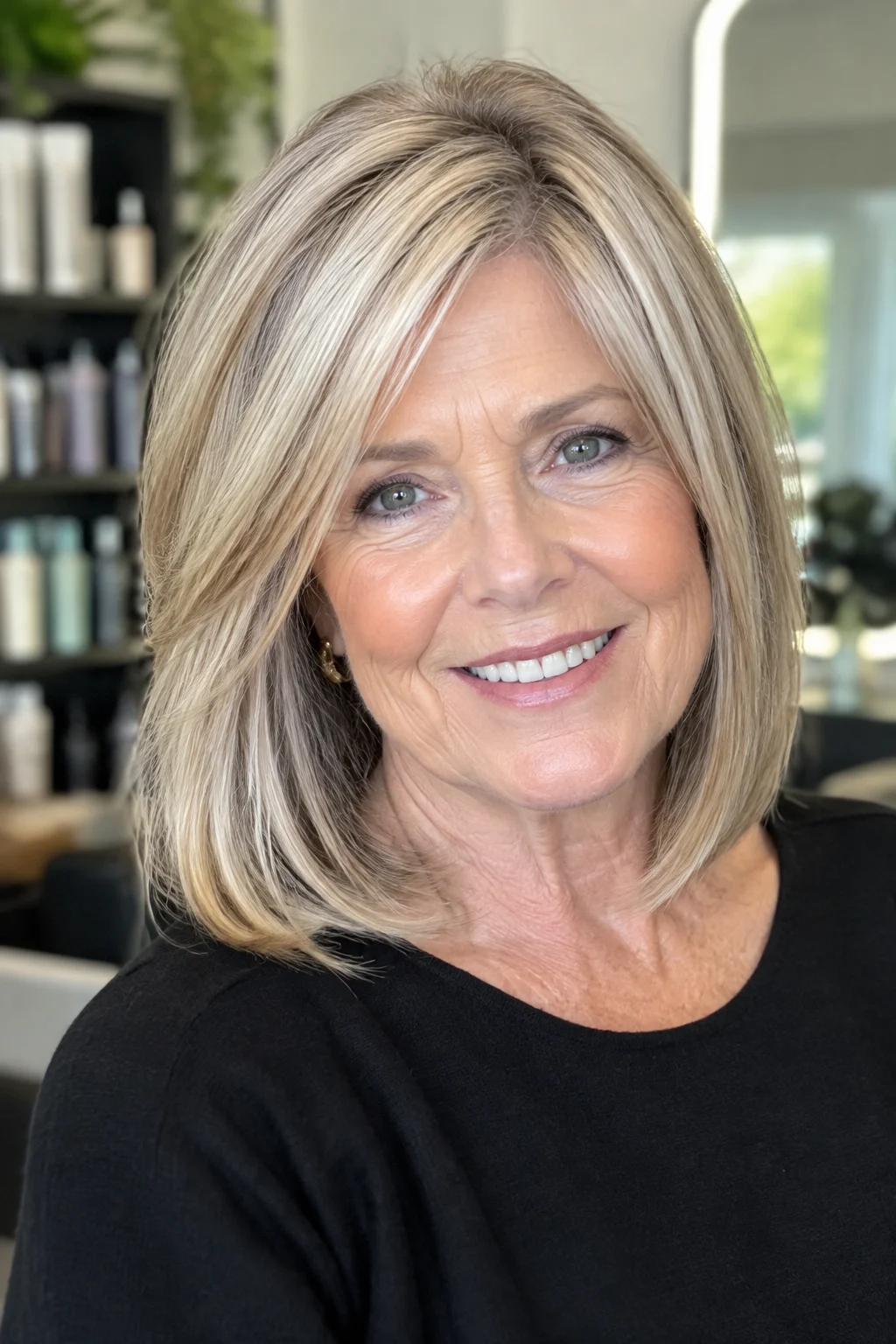
Shoulder length paired with a forward angle at the front pieces gives you the ease of a mid length cut with the slimming benefit of face-framing angles. The back stays blunt and even, while the front pieces taper down past the chin. Tip: request the angle be cut dry so your stylist can see exactly how it falls against your particular face shape before committing to the length.
Sleek Straight Mid-Length With Side Clip
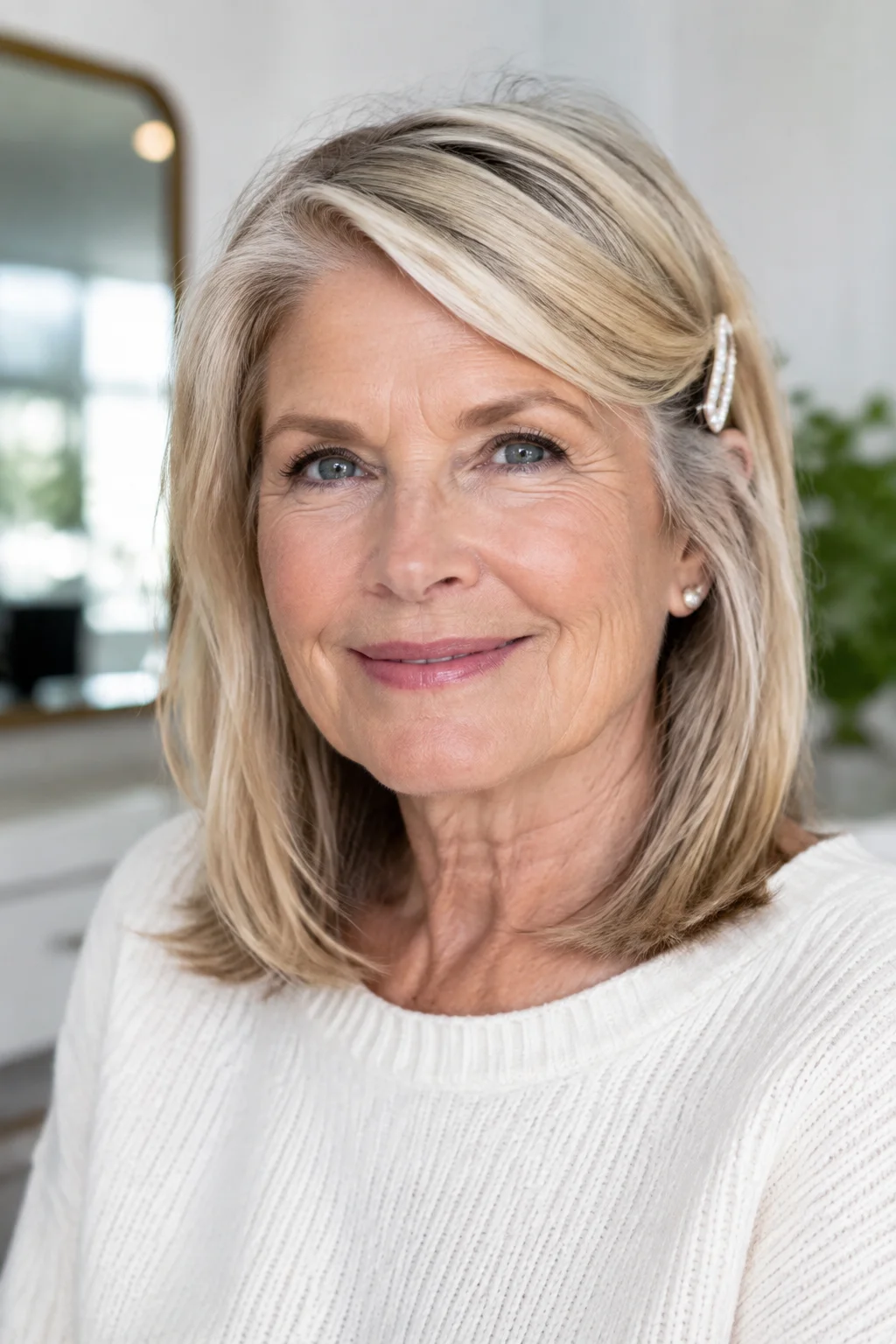
This is a simple, everyday cut, mid length, straight, and styled sleek against the head, then worn with a small side clip or pin to hold a deep part in place. It’s not a dramatic style, but the clip detail adds a bit of polish and helps keep flyaways controlled, which matters more as hair texture changes with age.
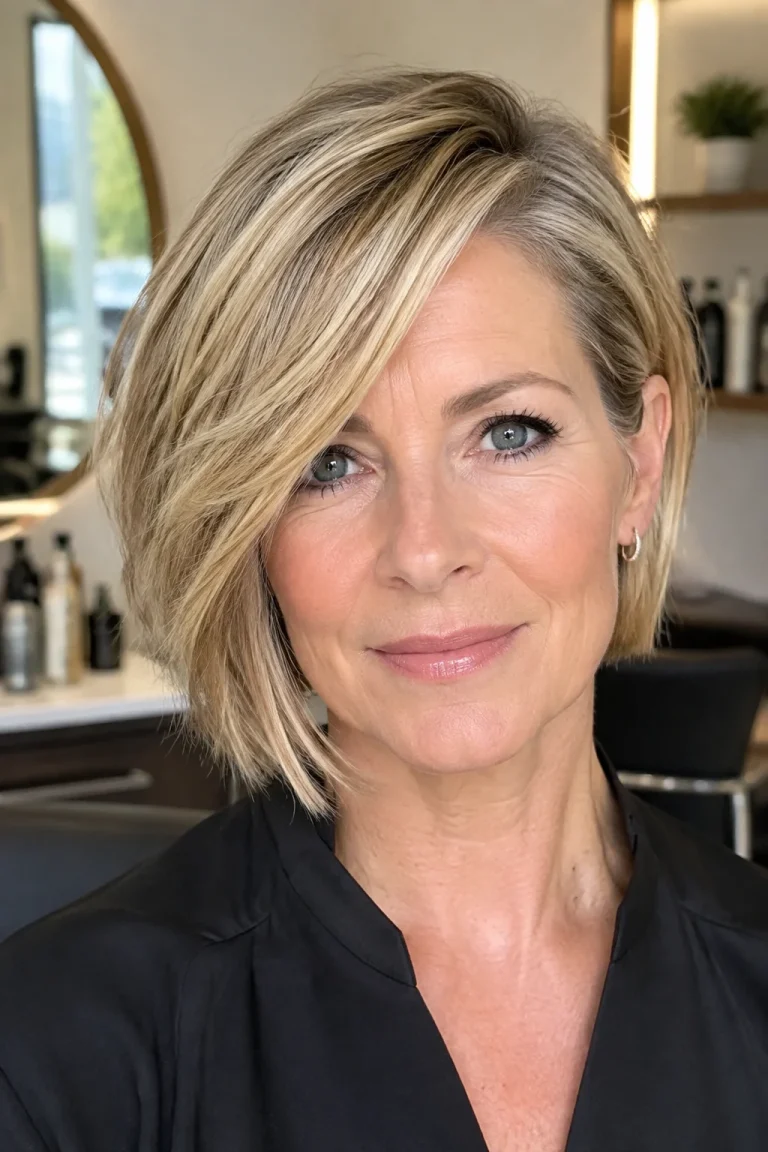
Straight Hair With Inverted Layers (Shorter Back)
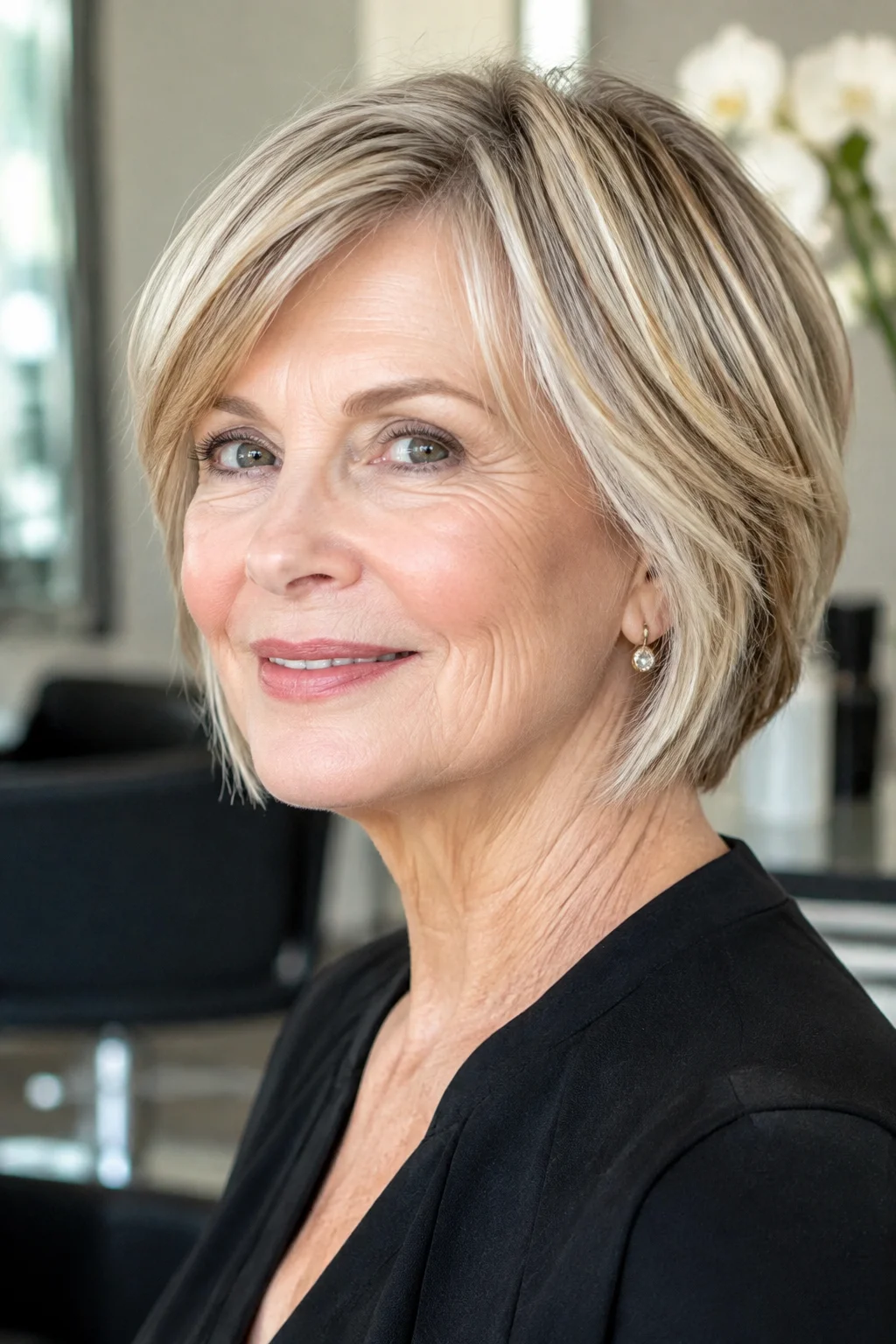
An inverted cut is shorter at the back and gradually longer toward the front, creating a diagonal line along the jaw. On a round face this diagonal does a lot of slimming work, since it avoids a straight horizontal line across the fullest part of the cheeks. The back stays neat and easy to style, while the front lengths need a little more attention with a flat iron to keep the line crisp. This cut also gives fine, straight hair a fuller look at the crown area, since the shorter back layers stack slightly.
Long Straight Curtain Layers
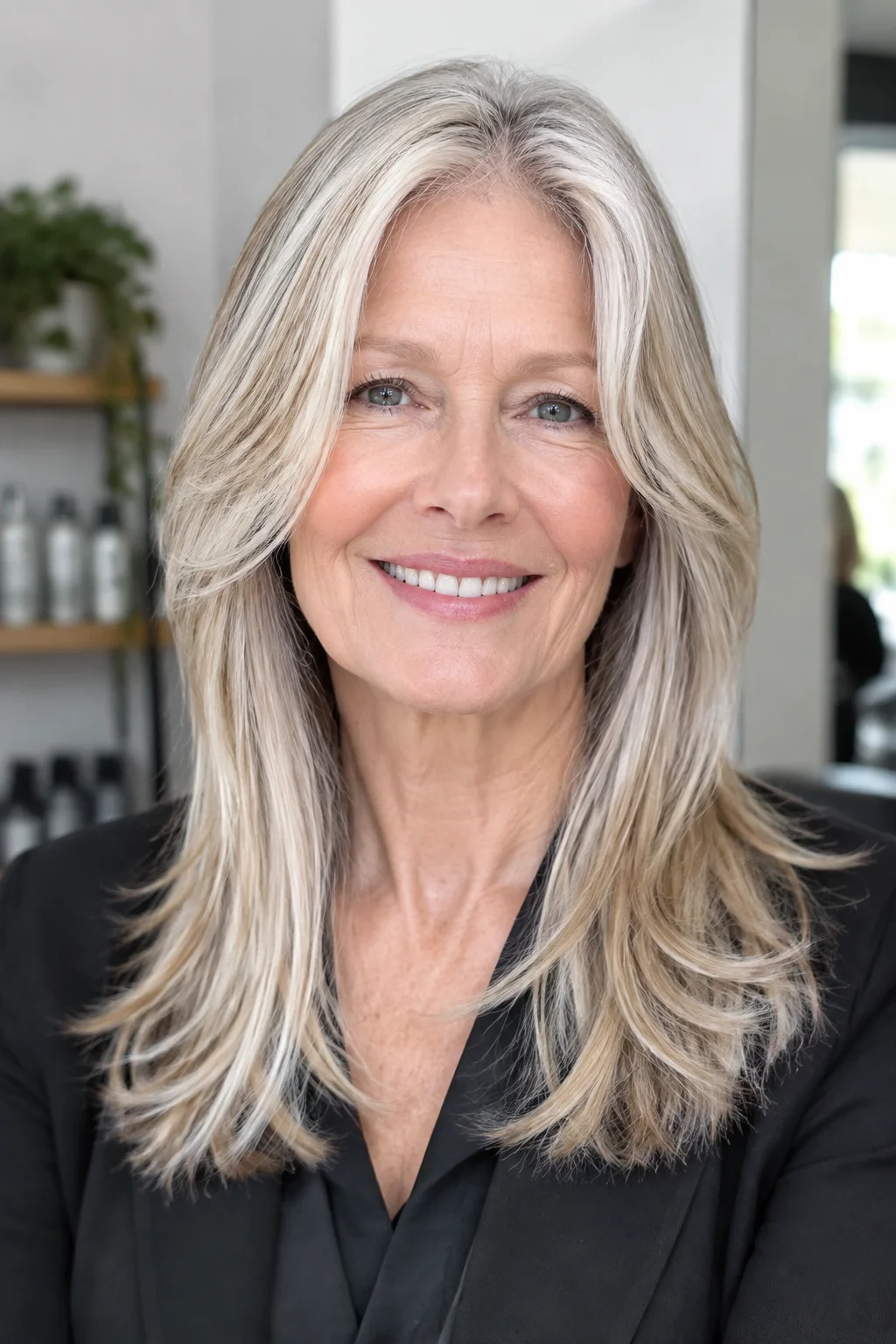
Curtain layers part in the middle and sweep back on both sides, framing the face like an open curtain. Cut long, these layers elongate a round face while softening the hairline near the temples. This look works with almost no styling effort since straight hair falls into the curtain shape naturally after a blow dry.
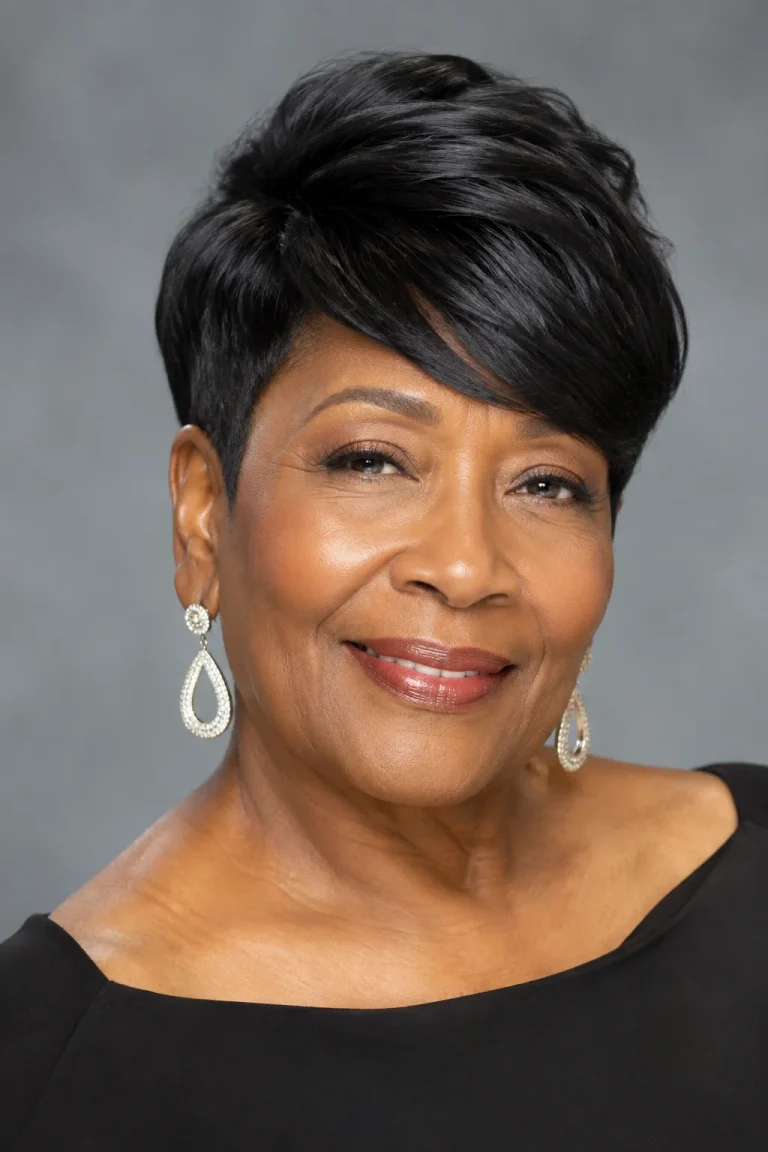
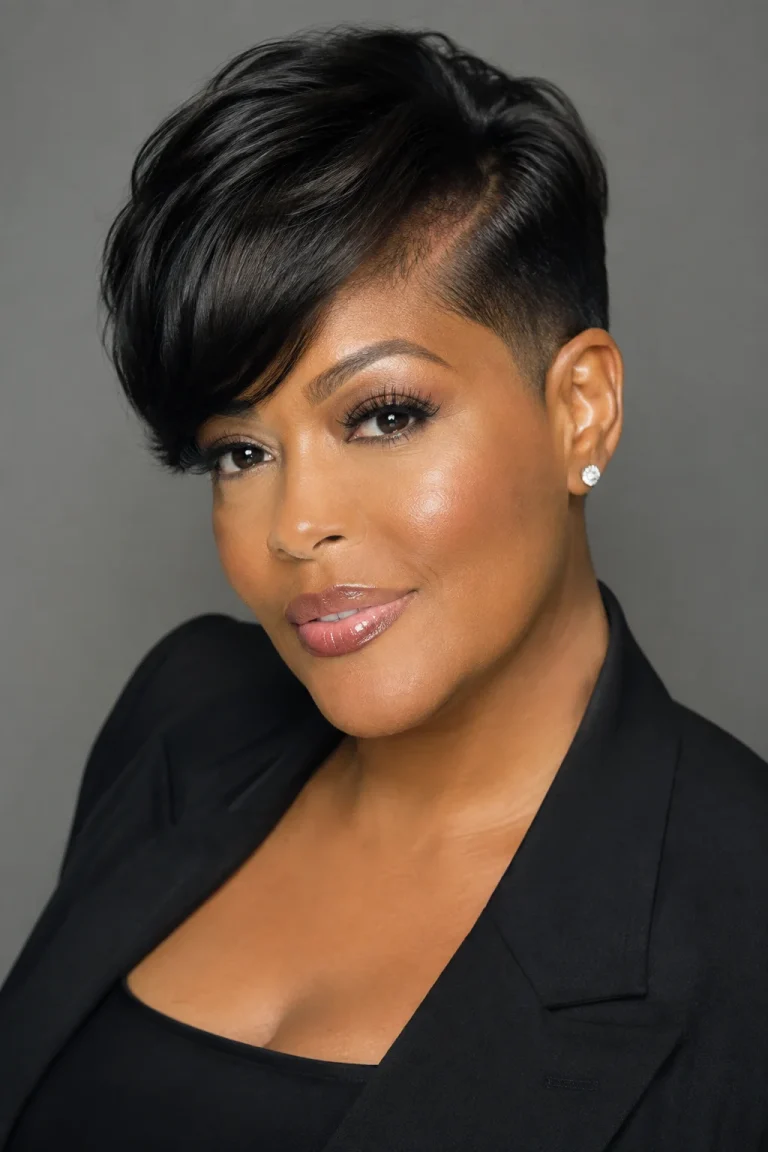
Straight Textured Choppy Pixie
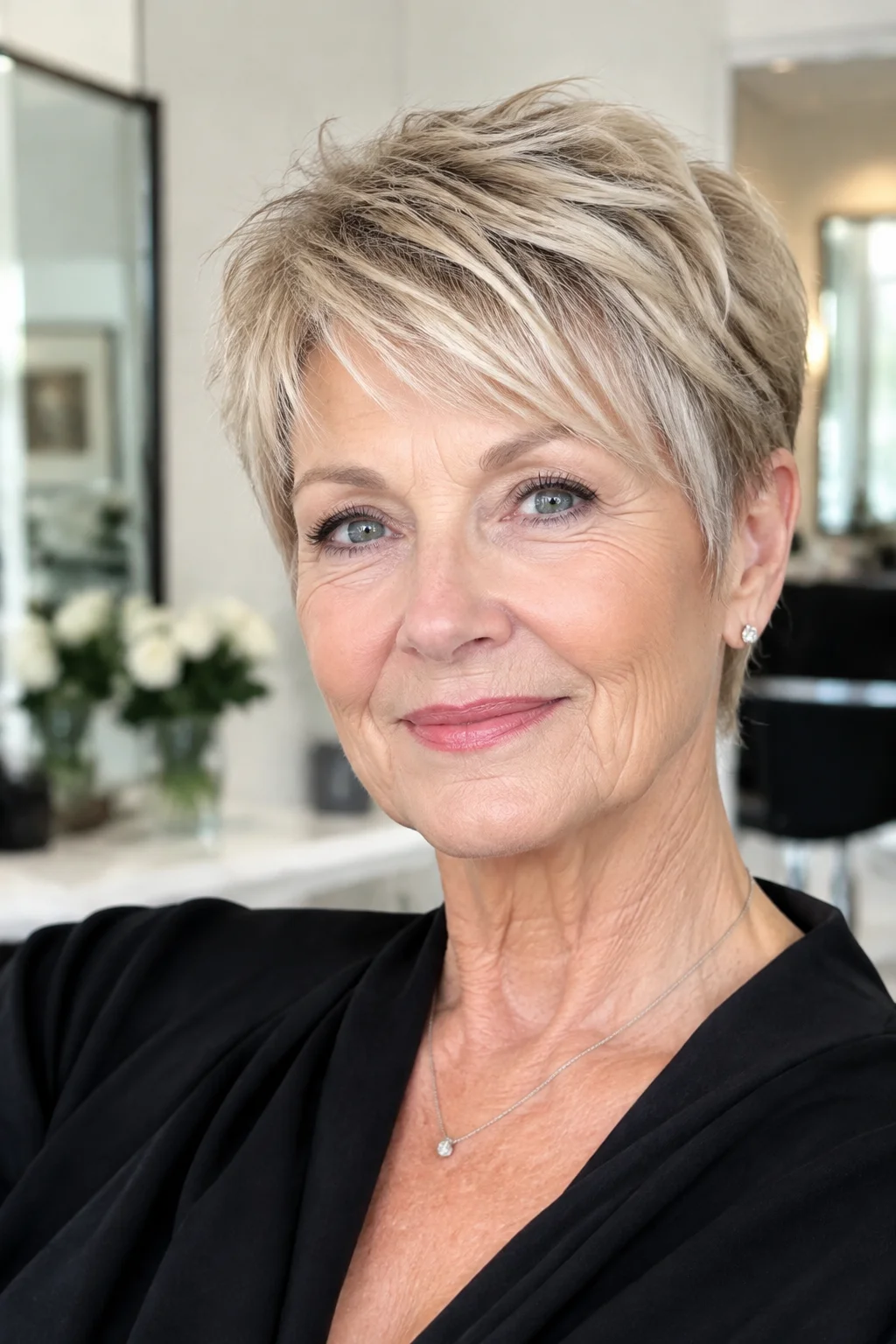
Choppy texture in a pixie cut keeps the style from looking too severe or blocky on a round face. Leaving the top slightly longer and textured gives you height, which is doing the real work of slimming here, while the sides stay close to the head. This is a bold change from longer styles, but it is a strong option for women who want a cut that needs almost no daily styling. Straight hair holds the choppy texture cleanly without the frizz that curl might add.
Straight Blunt Bob (Just Below Chin)
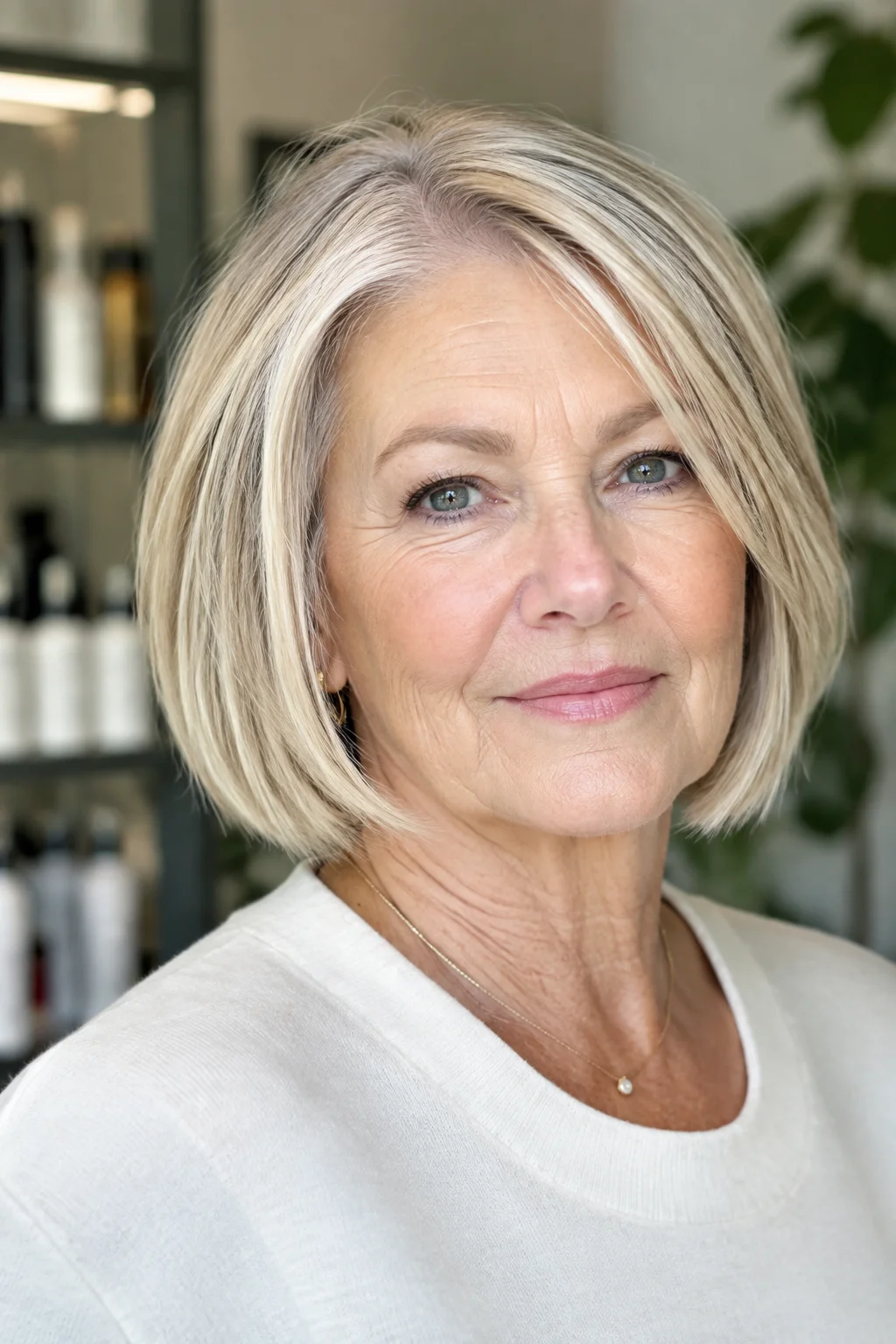
A blunt bob cut just below the chin adds a defined line right at the jaw, which can widen a round face if it is cut too short. Going slightly longer, resting just past the chin, avoids that problem while still giving you the classic blunt bob look.
Long Straight With Minimalist Bangs (Side-Swept)
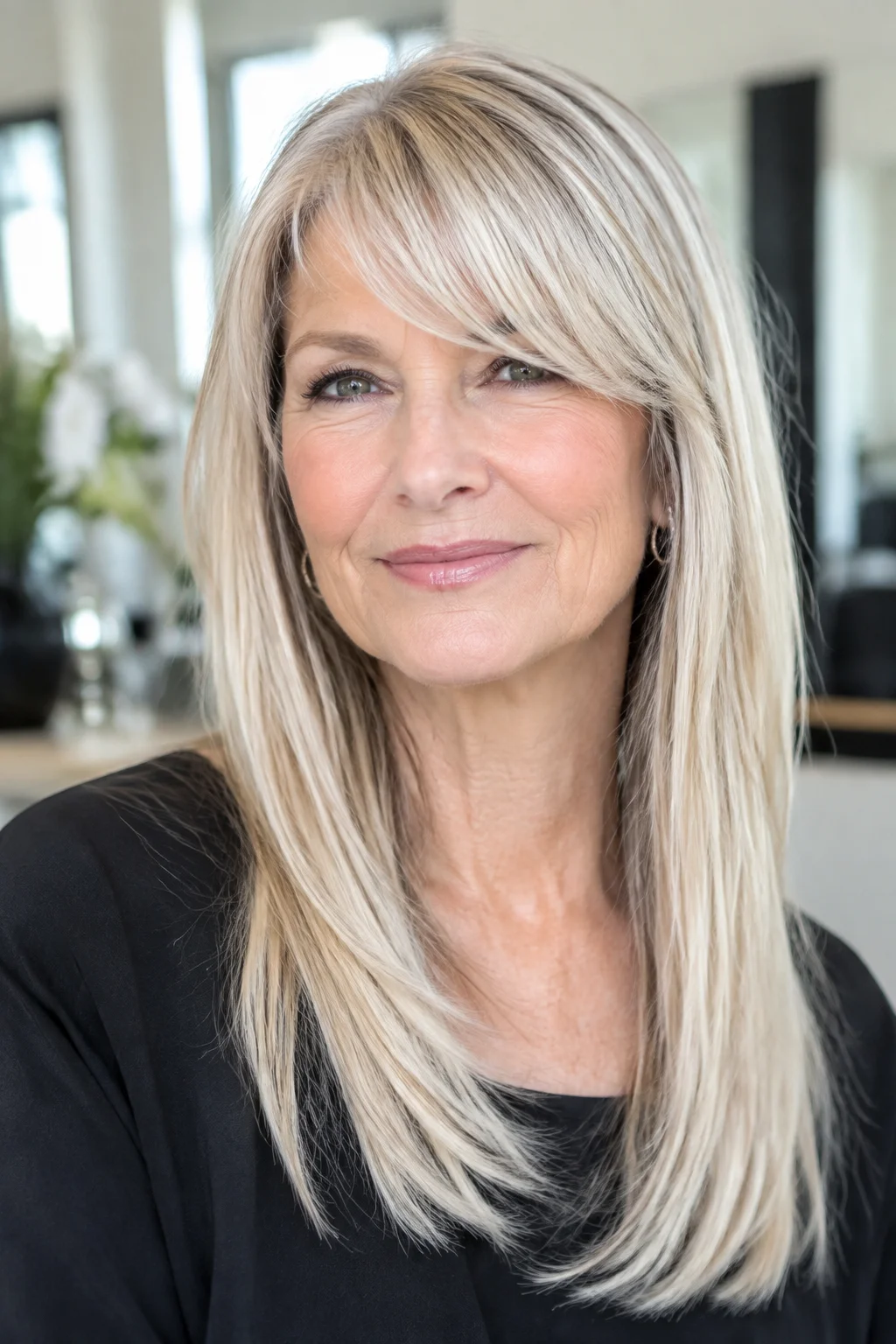
Side-swept bangs that blend into the rest of the length rather than sitting as a heavy block add softness at the forehead without adding width. Kept long and swept to one side, they work with the rest of a long straight cut to frame the face gently. This is a subtle change for anyone hesitant to commit to a full fringe, and it grows out without leaving an awkward stage.
Straight Tapered Nape With Length
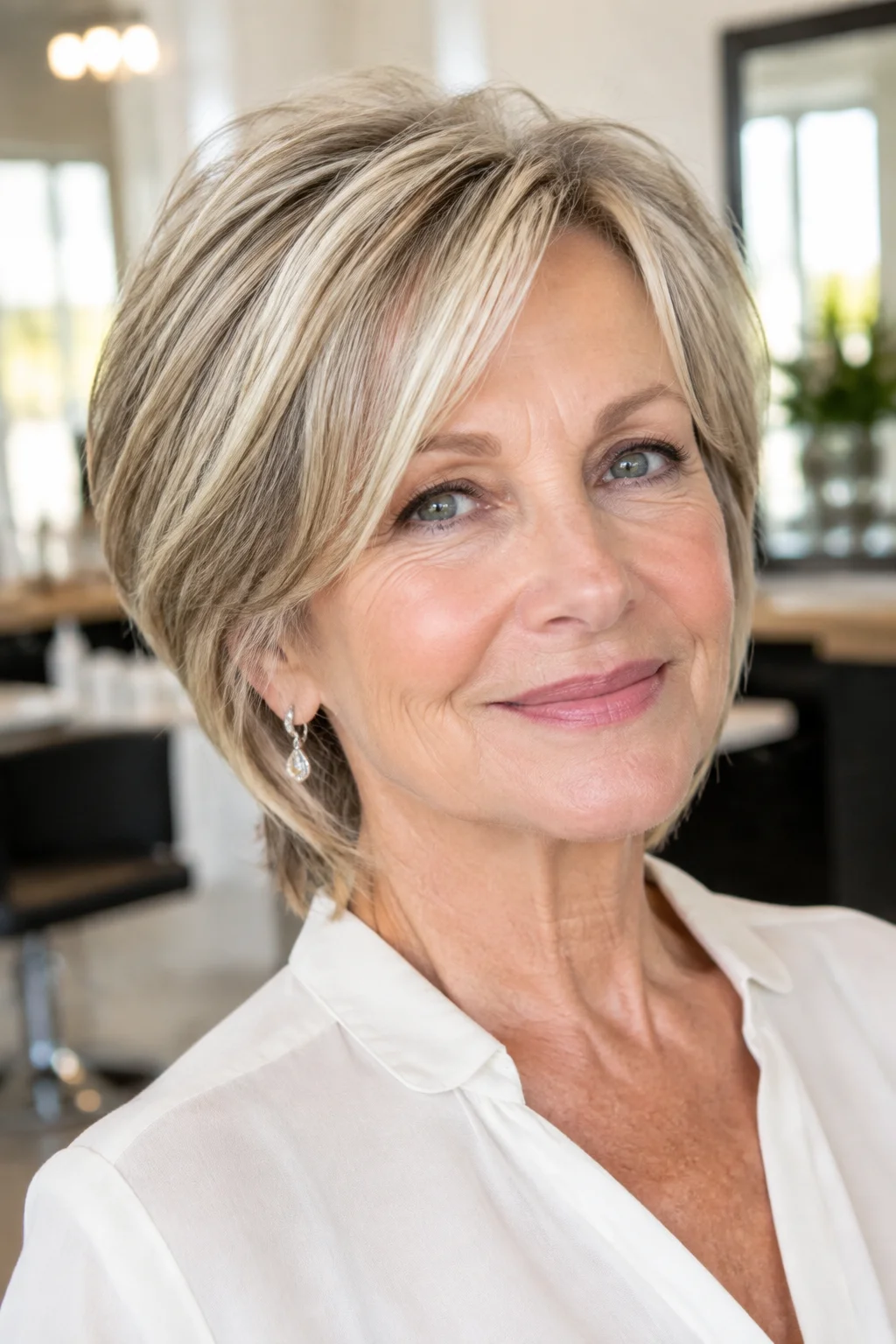
Tapering the nape while keeping the overall length long removes bulk from the back of the head, which can make the whole silhouette feel more balanced against a round face. The front and sides stay untouched and long, so the slimming length around the face is not affected. This is a good pick for thicker straight hair that feels heavy at the base of the neck.
Straight Hair With Layered Ends Only

Layering only the ends, and leaving the top and mid lengths untouched, keeps hair looking dense while still giving a bit of movement at the bottom. This approach protects the slimming effect of length while avoiding the flat, one-length look that can sometimes read as heavy on a round face.
Straight Sleek High Ponytail Base With Soft Face-Framing
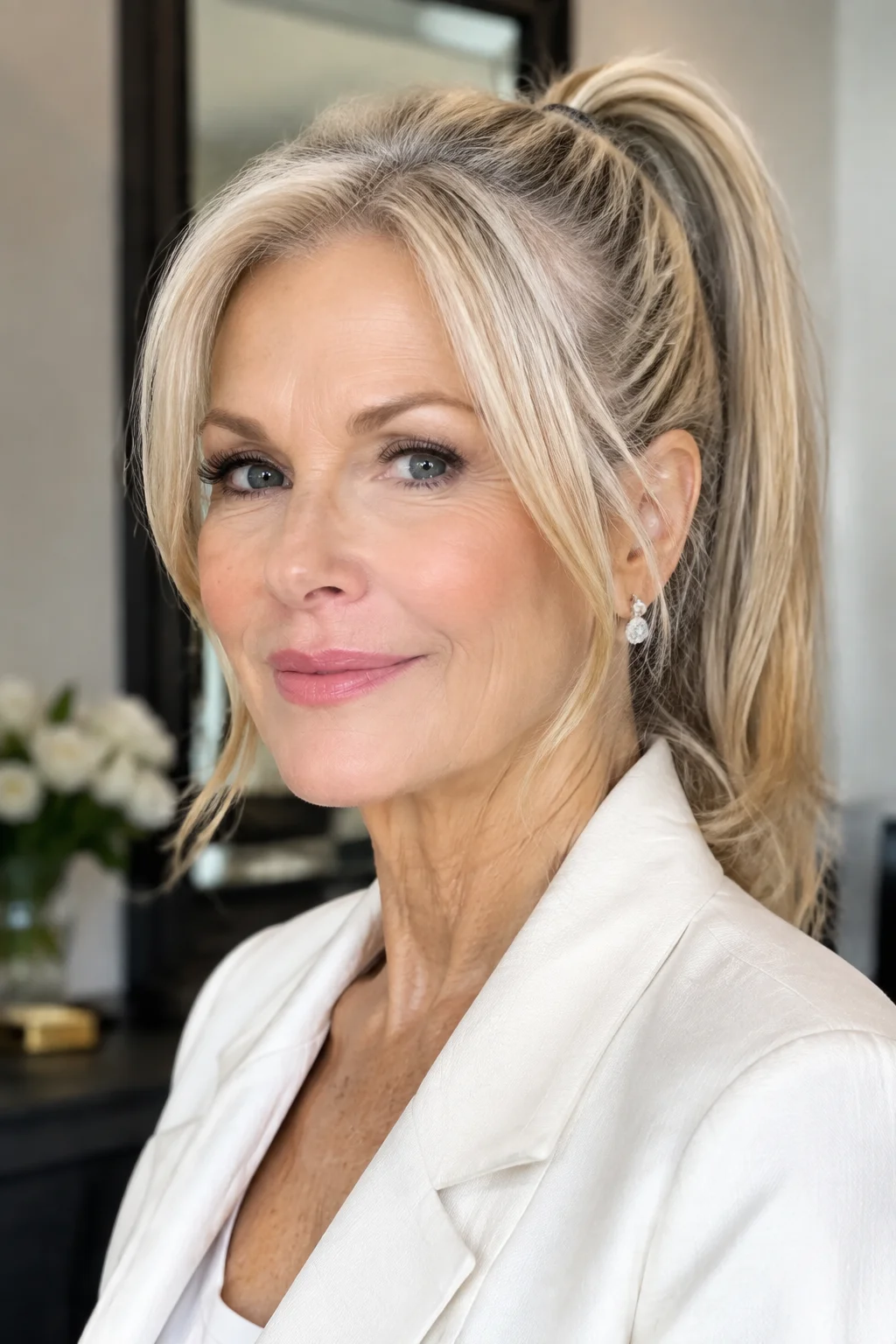
A high ponytail pulled sleek against the head, left with two soft face-framing pieces at the front, lifts the whole face upward and adds visible length. The pulled back style shows off cheekbones without emphasizing width, since the face-framing pieces break up the sides. This works especially well for special occasions or anytime you want length off your neck but still want some softness near your face. Tip: keep the face-framing pieces cut at an angle rather than straight across so they taper down instead of sitting like blunt curtains.
Choosing the Right Cut for Your Face and Hair
Picking from this list comes down to two things: how much length you want to keep and how much styling time you’re willing to spend. If low maintenance matters most, the straight blunt lob with minimal layers or the straight tapered nape with length are both cuts you can wash, dry, and go. If you want more visual slimming with less daily effort, look toward height-based options like straight hair with tall crown volume, since lift at the root does most of the work without needing length changes.
Avoid one common mistake: cutting hair to exactly jaw length with no angle or layering. A straight, blunt line at the widest part of a round face, seen in a poorly placed straight blunt bob, will always add width instead of removing it. If you want a bob, push the length just past the chin, as described in the straight blunt bob just below chin entry, so the line falls at a narrower point on the face.
For those wanting drama without a full cut change, the long straight curtain layers or the straight hair with wispy face-framing layers both add framing without sacrificing length. And if you are ready for something shorter, the straight pixie-bob hybrid offers a gentler transition than jumping straight into the straight textured choppy pixie.
Every one of these cuts can flatter a round face when the length and angles are placed with intention, and a good stylist will adjust the exact placement based on your hair’s thickness and how straight it lies.