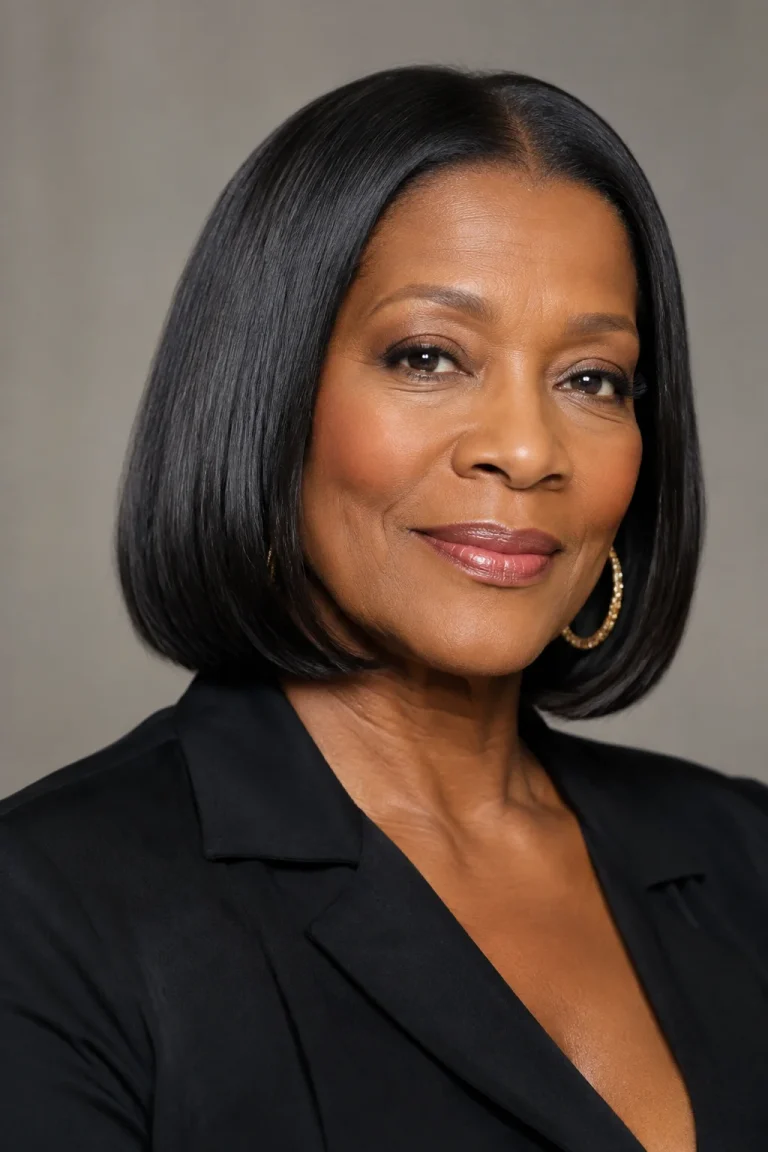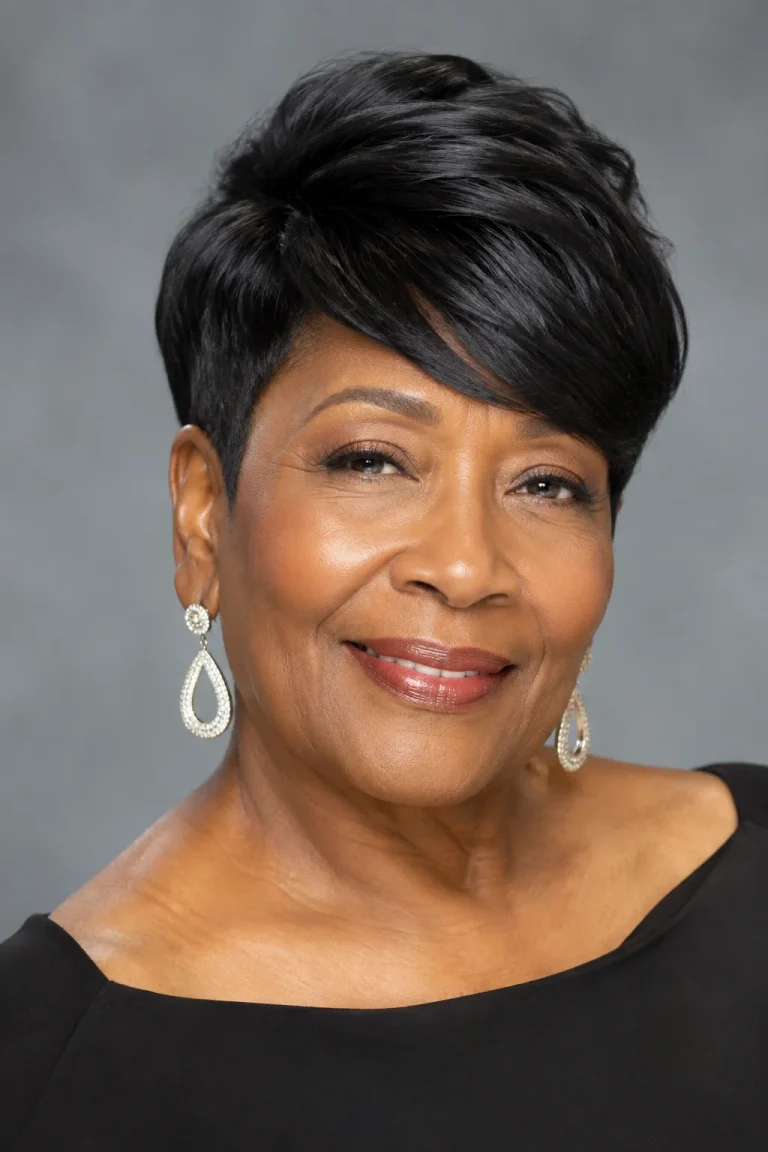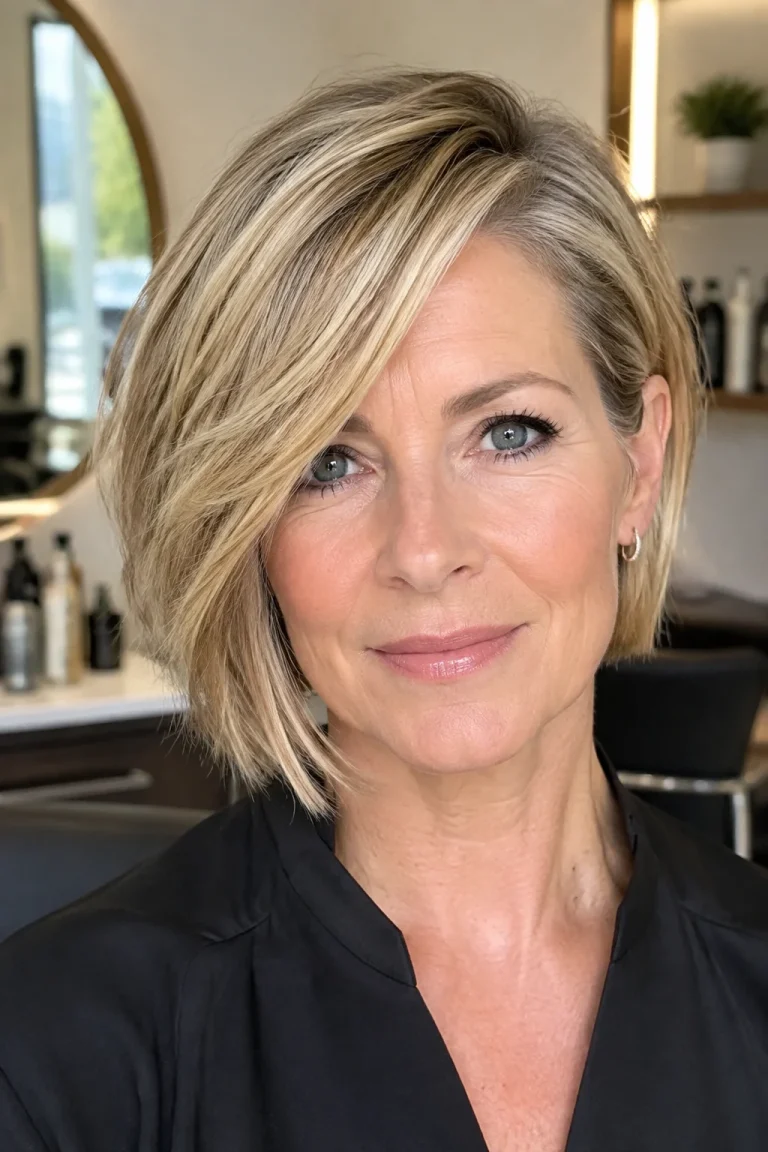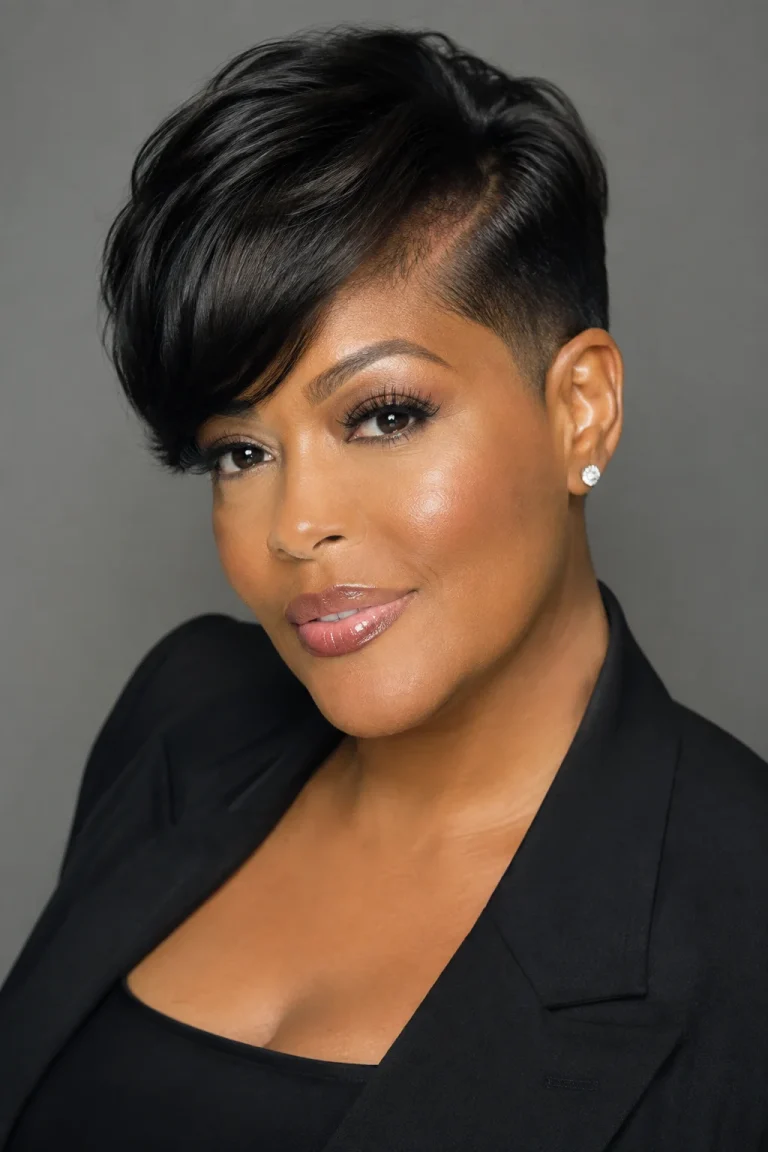
Hair changes after 50, and most women notice it gets finer, flatter, or harder to style the way it used to fall. A good cut fixes more than a product ever will. A layered bob for women over 50 adds movement where hair has gone limp, hides thinning at the crown, and softens the face without aging it. The right layers can take years off a look just by shifting where the weight sits. Below are twenty layered bob styles worth bringing up at your next salon visit, each one suited to different hair types, densities, and face shapes. Some work best on fine hair, others shine on thick or curly textures. Read through and pick the ones that match your hair’s natural behavior, then bring the photo or the name straight to your stylist.
Textured Choppy Layers on Chin-Length Bob
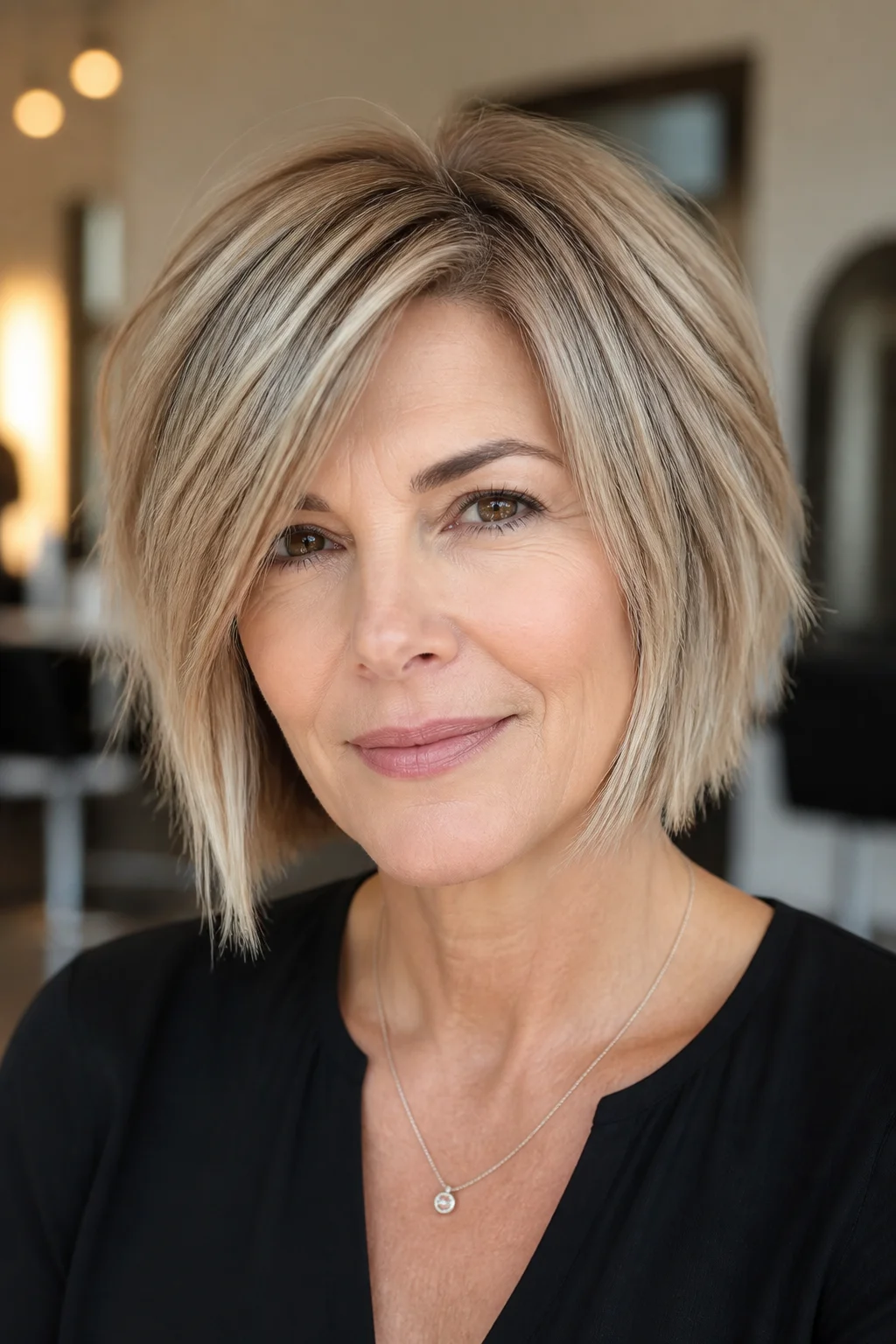
This short, punchy cut uses razor work to break up the ends so hair looks piecey instead of blunt. It sits right at the chin, which lifts the face and draws attention to the eyes. The choppy texture hides fine hair’s tendency to look flat, since each layer catches light differently. Tip: ask for a matte finish paste to keep the ends looking separated instead of slicked down. A light mist of heat protectant before styling helps the finish last. A light mist of heat protectant before styling helps the finish last.
Face-Framing Layers on Shoulder-Grazing Bob
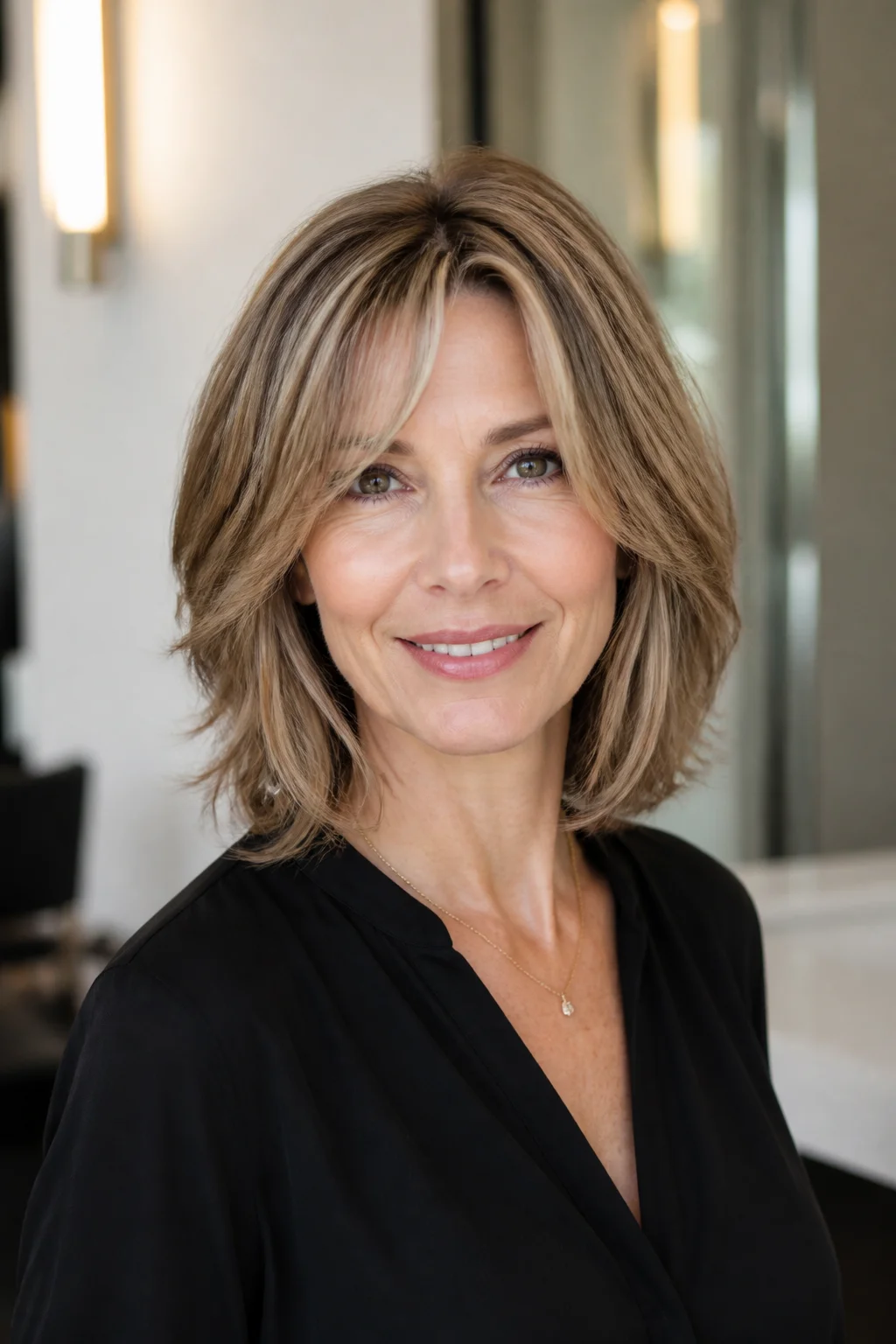
Layers cut around the face soften the jawline and can slim a rounder face shape without cutting off length. The rest of the bob stays fairly full, so you still get a hearty amount of hair to work with. This is a smart pick if you’re not ready to go short but want your color and cut to do more work around the face.
Stacked Layers at the Nape with Longer Front
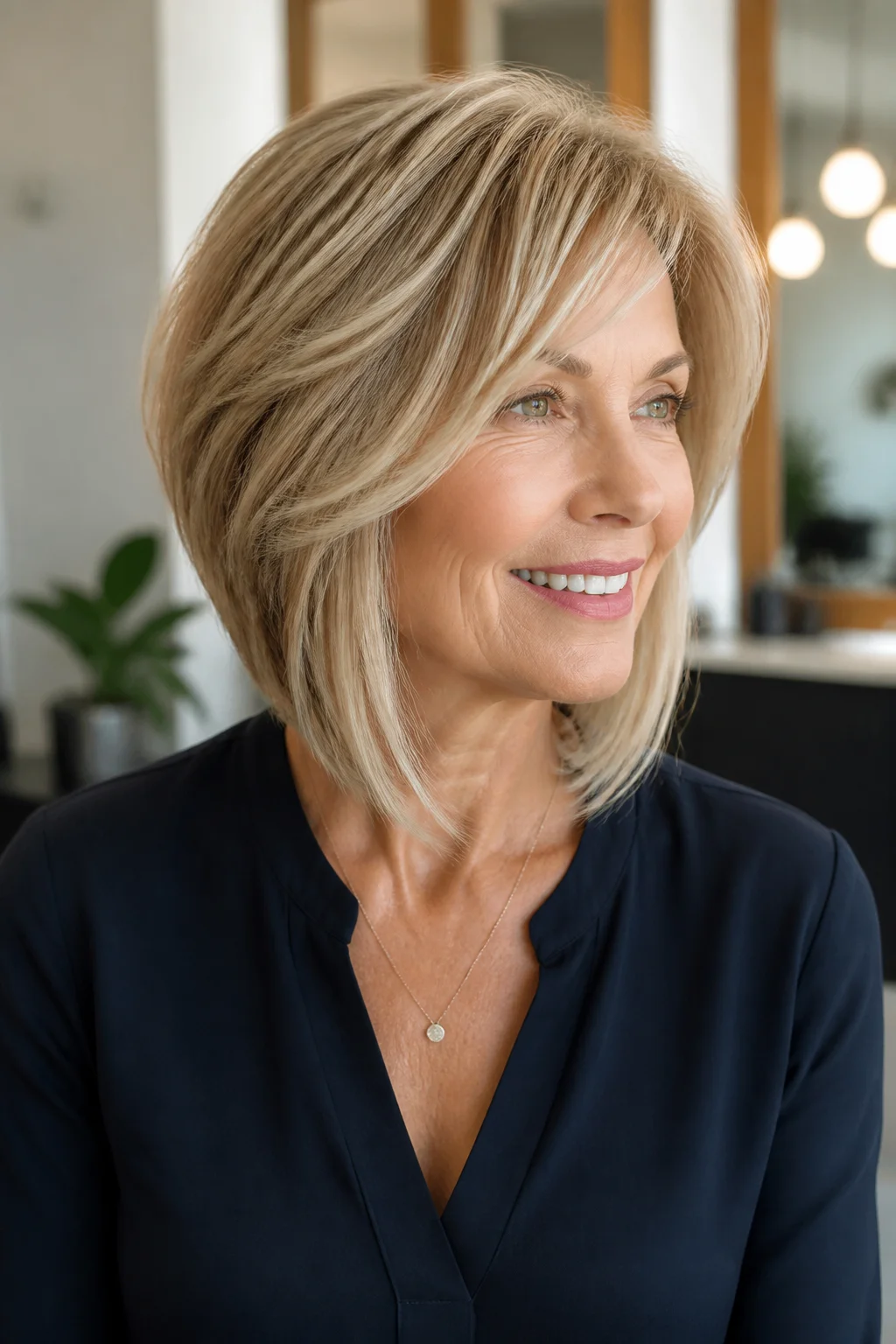
The back is cut close and layered in tight, stacked sections while the front pieces stay longer and angle down toward the chin. It builds volume exactly where hair tends to go thin as we age, right at the crown and nape. From the side, the shape looks rounded and full; from the front, it reads longer and softer. This works especially well for women whose hair has lost density at the back but still has decent thickness up top. Ask your stylist to graduate the stack gradually rather than in one hard shelf, so it blends instead of looking boxy. A light mist of heat protectant before styling helps the finish last.
Wispy Layers Throughout Fine Hair Bob
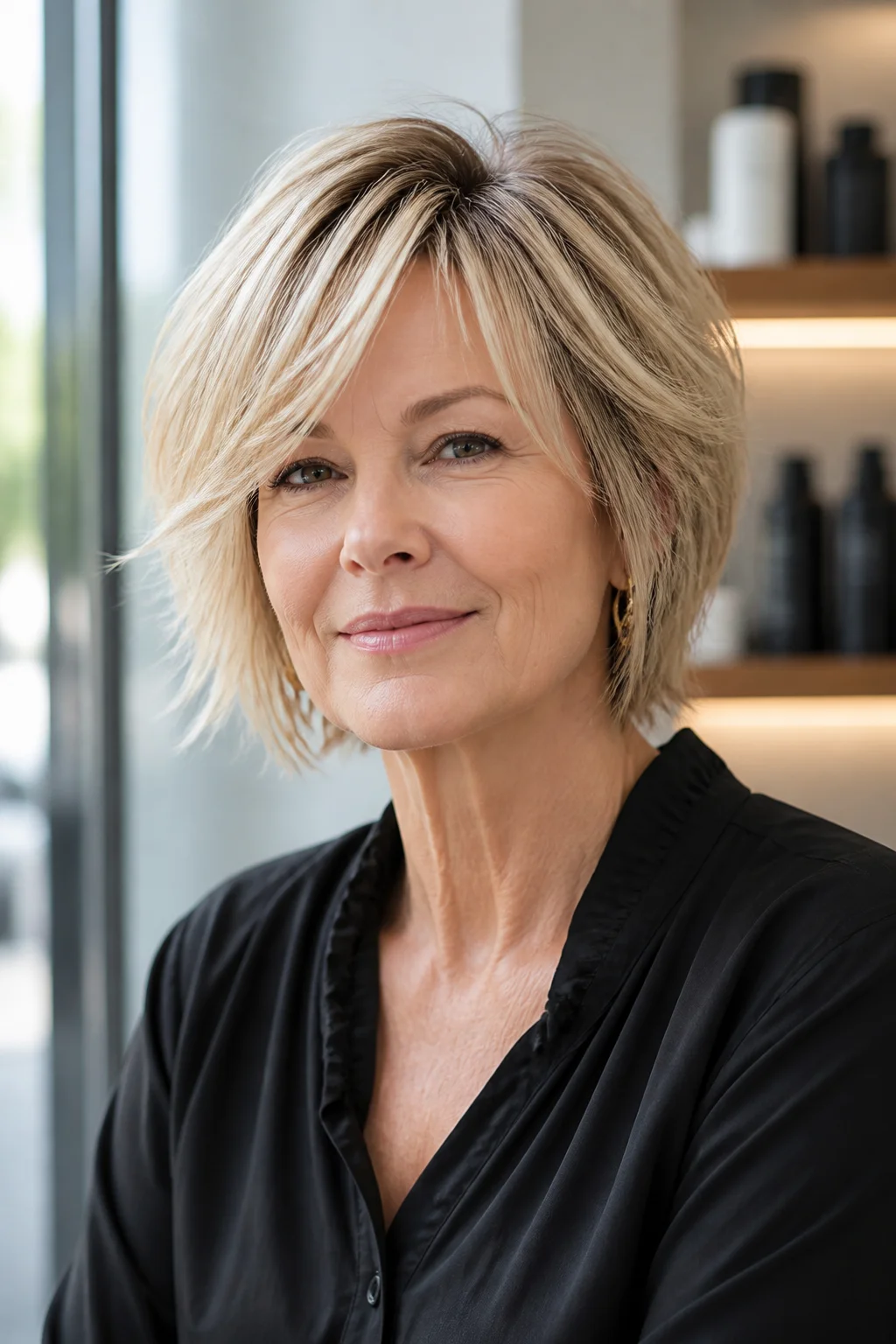
Fine hair needs layers that add the illusion of thickness without removing what little weight is there. Wispy, feathered layers cut throughout the whole bob do exactly that. The ends taper instead of getting blunt, which stops hair from looking see-through at the tips. Ask for a light dusting of layers, not heavy thinning shears, since too much thinning can make fine hair look stringy.
Curly Bob with Defined Spiral Layers
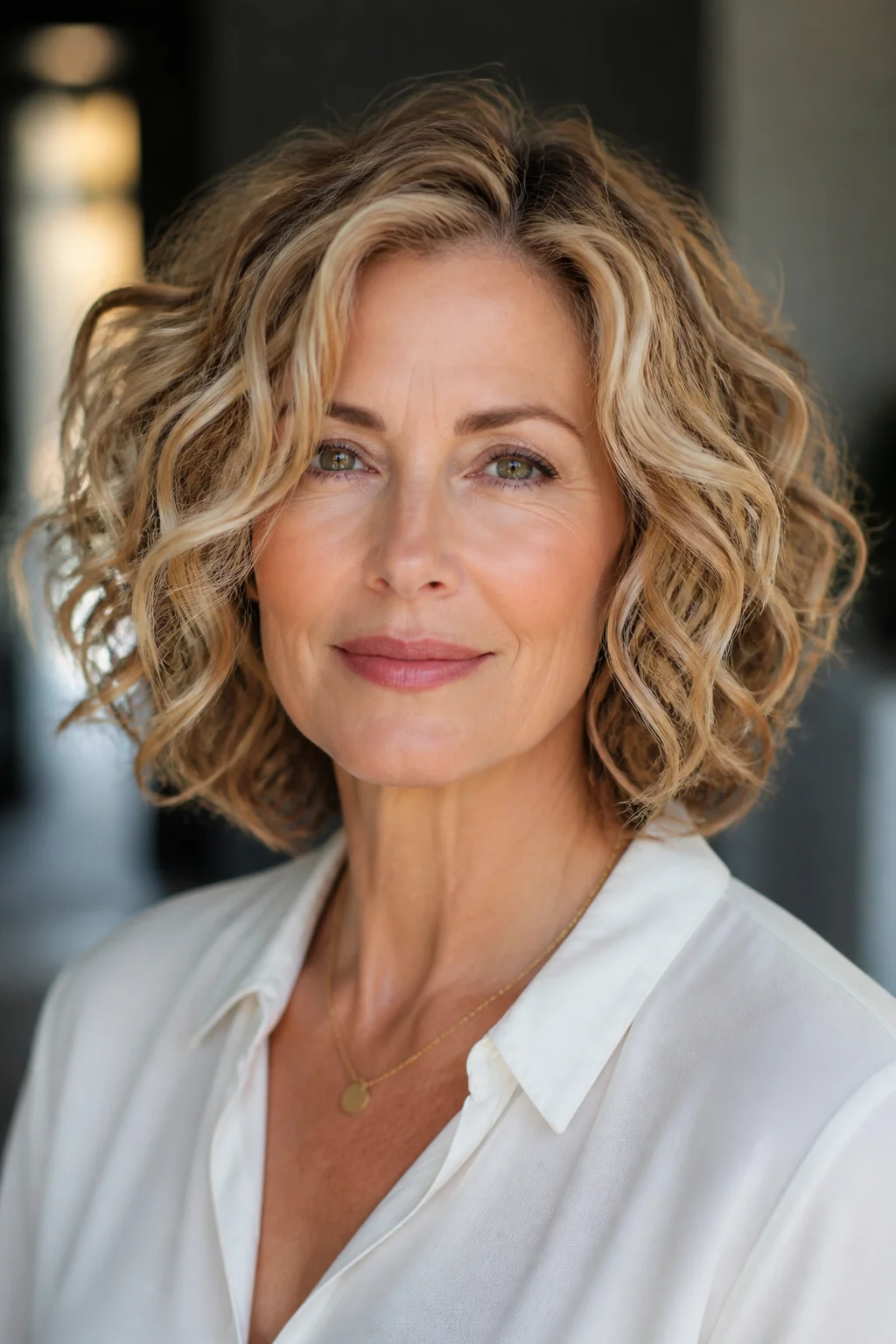
Curly hair needs a different layering approach than straight hair, since layers cut wet will spring up shorter once dry. This bob uses layers cut specifically to follow the curl pattern so each spiral has room to bounce instead of clumping into one heavy mass. The result gives shape and definition instead of a triangle silhouette. Tip: have this cut done dry, or ask your stylist to check the length again once your curls dry fully, so nothing ends up shorter than planned.
Blunt-Ended Layers with Subtle Graduation

This one keeps a cleaner, more polished line at the ends while still adding gentle graduation underneath for movement. It reads more formal than choppy layers and suits women who want a low-maintenance style that still looks put together. The subtle layering underneath adds just enough lift so hair doesn’t sit flat against the head.
Textured Layers on Pixie-Bob Hybrid
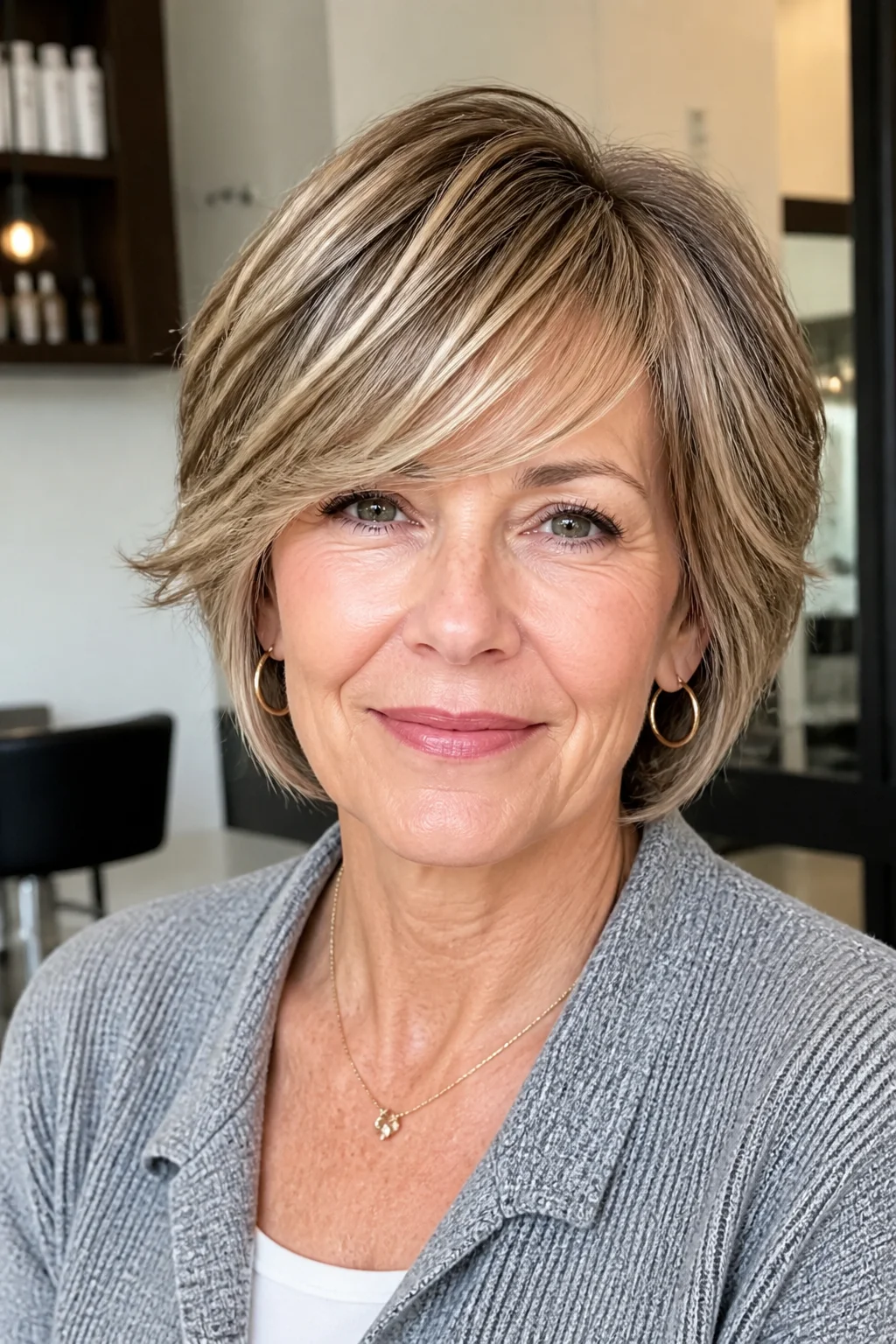
Somewhere between a pixie and a bob, this cut keeps length around the face while going shorter at the back and sides. Texture is worked in throughout so the shorter pieces don’t look stiff. It’s a bold choice, and it suits women who already wear shorter cuts and want something with a bit more edge. The hybrid shape also grows out gracefully, since the longer front pieces buy you time before a trim.
Shaggy Layers on Longer Bob
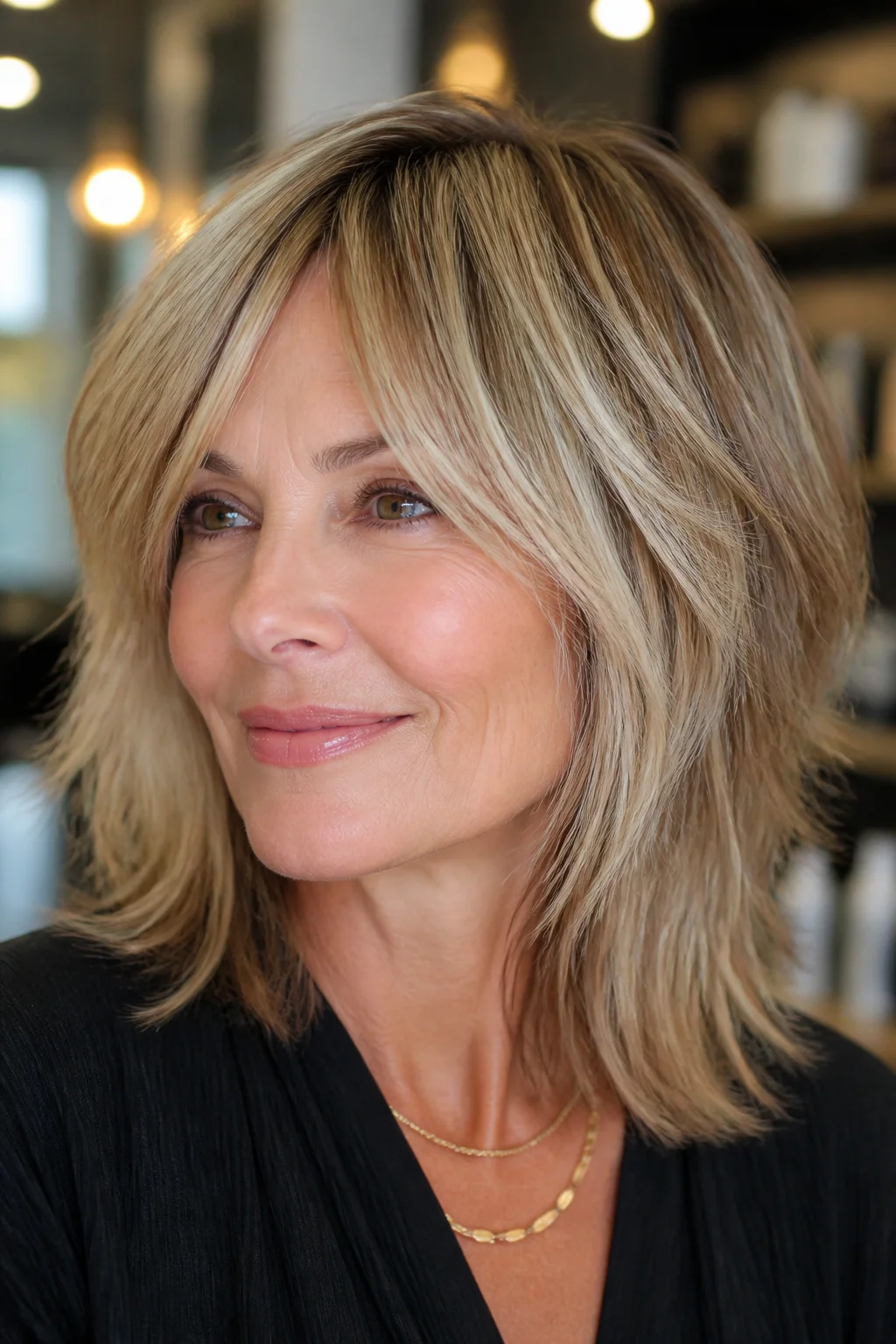
Longer bobs can look heavy without the right layering, and shag-style layers fix that by breaking up the length from mid-shaft down. The layers here are looser and less structured than a classic layered bob, giving a lived-in, effortless feel. This style pairs naturally with a bit of natural texture or a loose wave, since the shaggy layers rely on movement to look their best.
Inverted Layered Bob with Volume at Crown
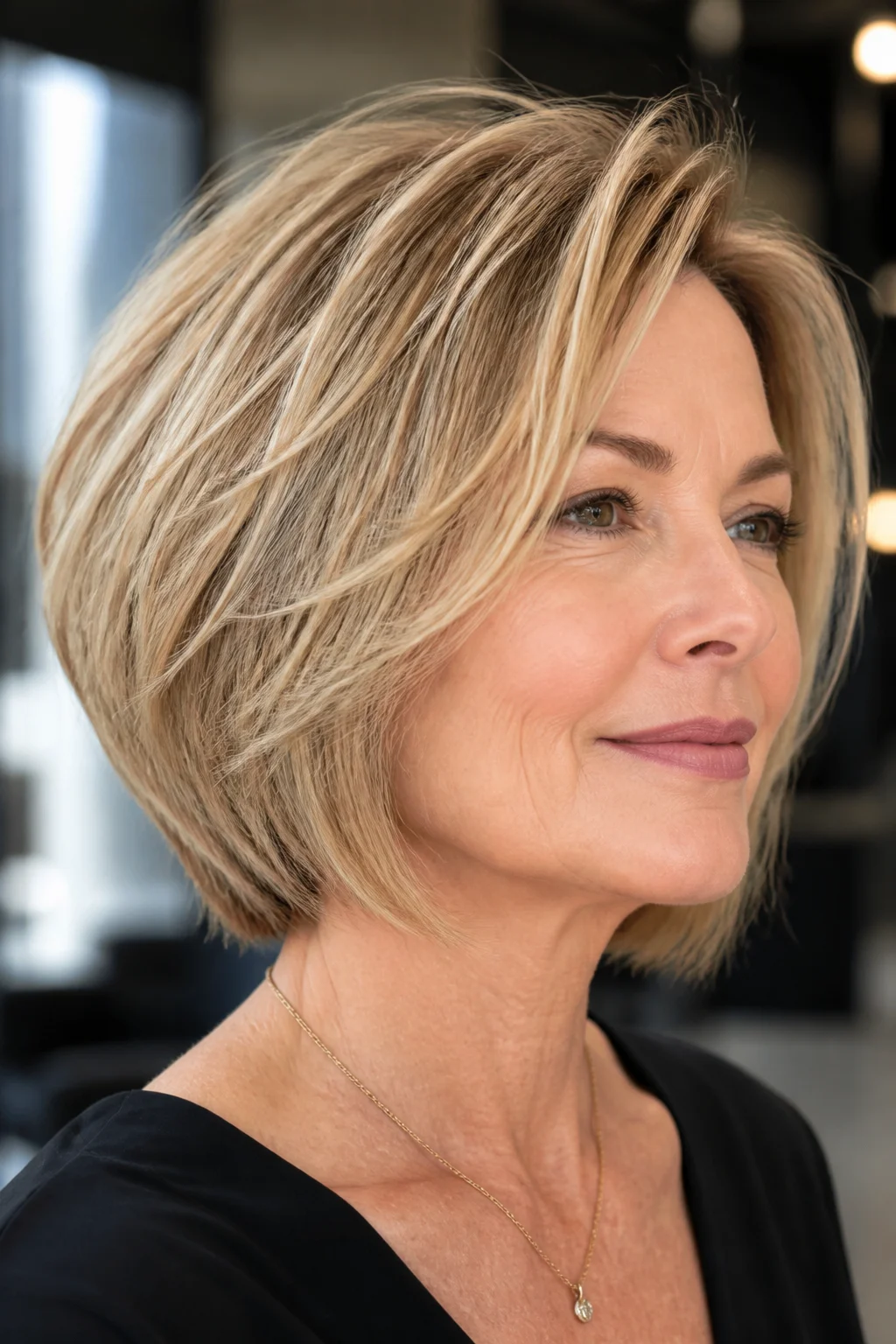
The inverted shape angles shorter in the back and longer in the front, and layering it adds volume right at the crown where hair often flattens with age. It creates a rounded, lifted look at the back of the head instead of a flat plane. Tip: a root-lifting spray applied before blow-drying helps this style hold its volume through the day.
Asymmetrical Layered Bob
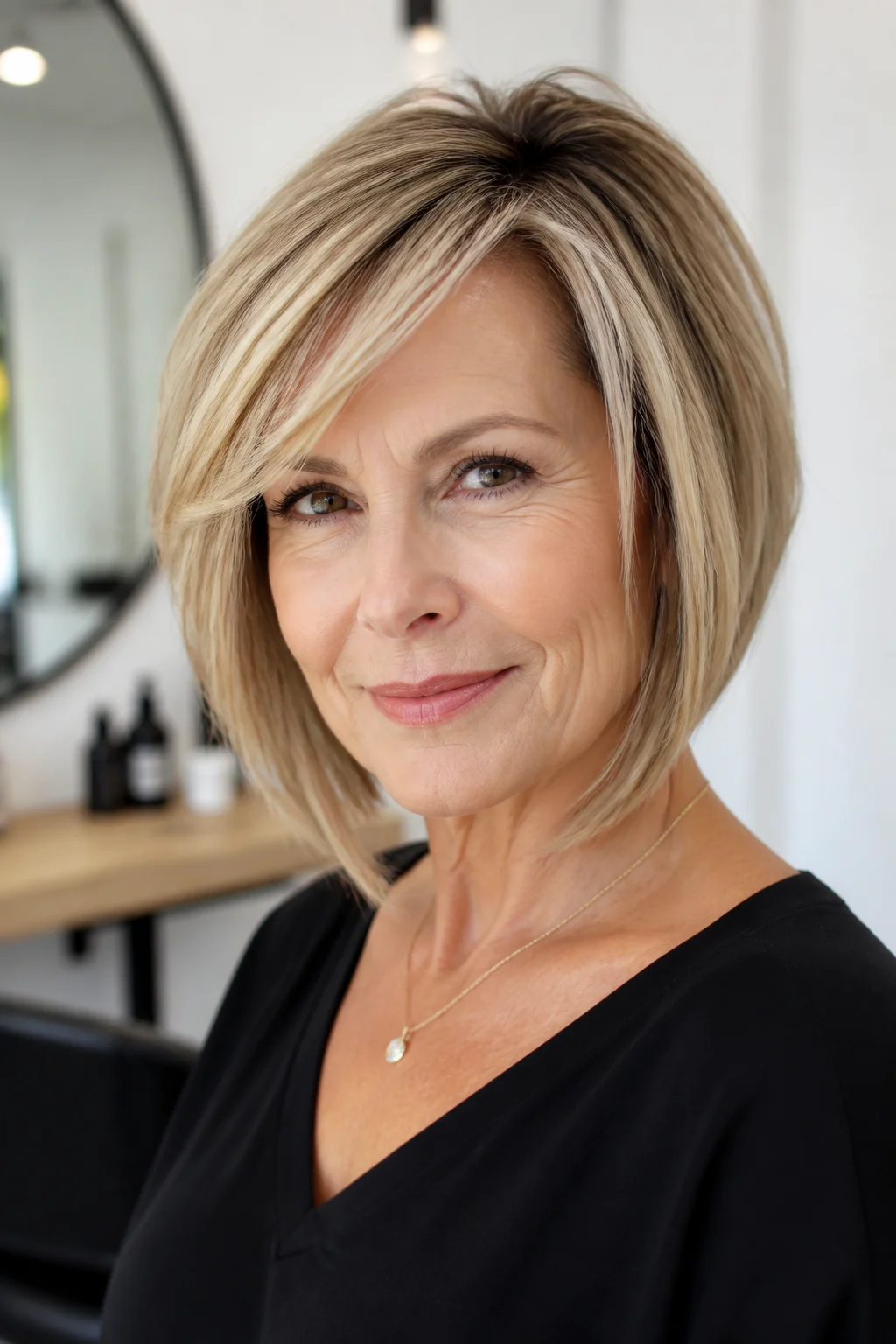
One side sits noticeably longer than the other in this cut, and layers are worked through both sides unevenly to match. It’s a striking option for anyone bored with a symmetrical bob and wanting something a little more directional. The uneven length draws the eye diagonally across the face, which can be flattering depending on your features.
Soft Feathered Layers on Gray Bob
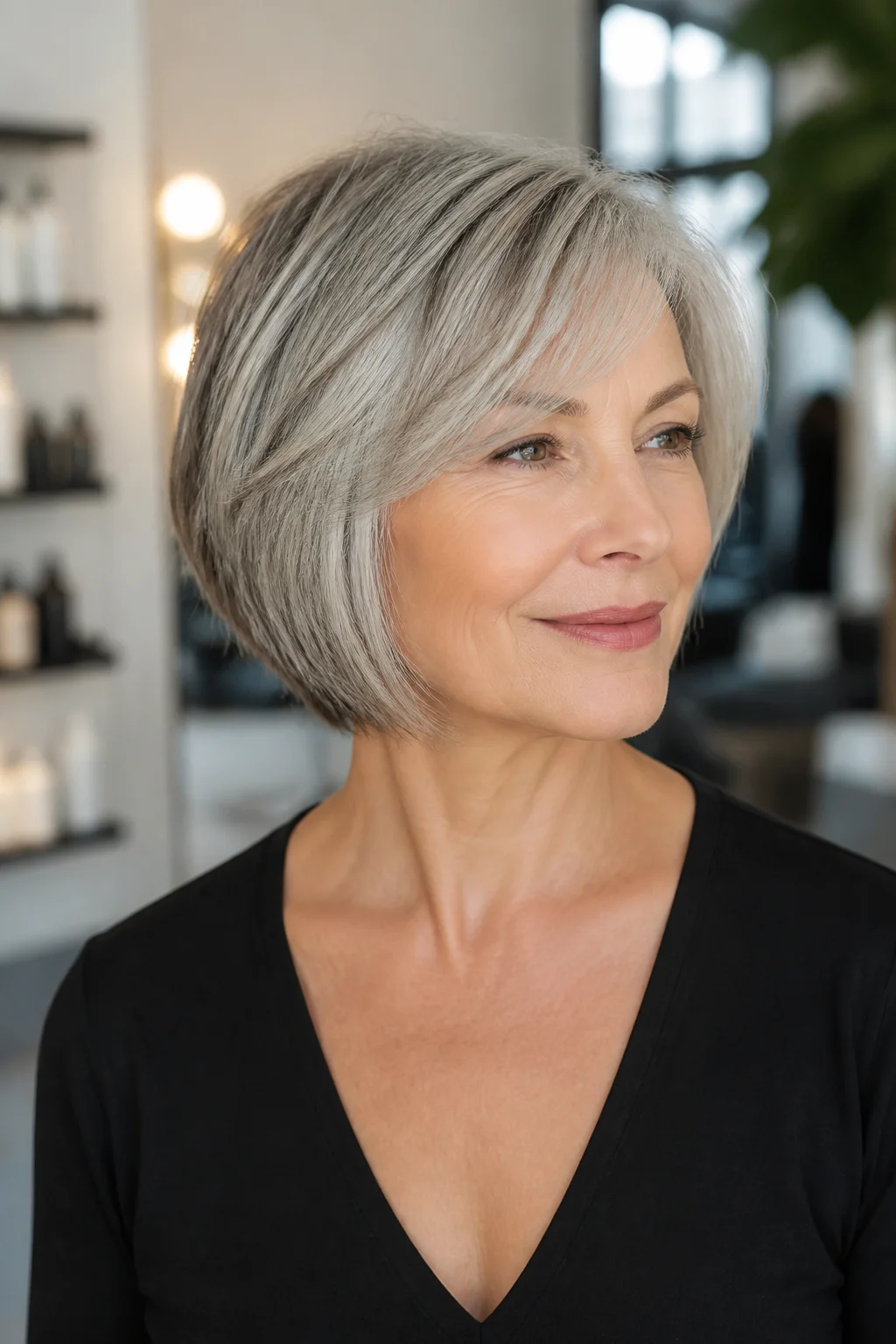
Gray hair often has a different texture than the hair it replaced, sometimes coarser, sometimes finer, and feathered layers give it a place to move instead of sitting stiff. This cut keeps the ends soft rather than blunt, which suits gray and silver tones especially well since sharp lines can look harsh against lighter color. It’s a gentle, flattering option for women fully embracing their natural gray.
Layered Bob with Bangs and Side Sweep
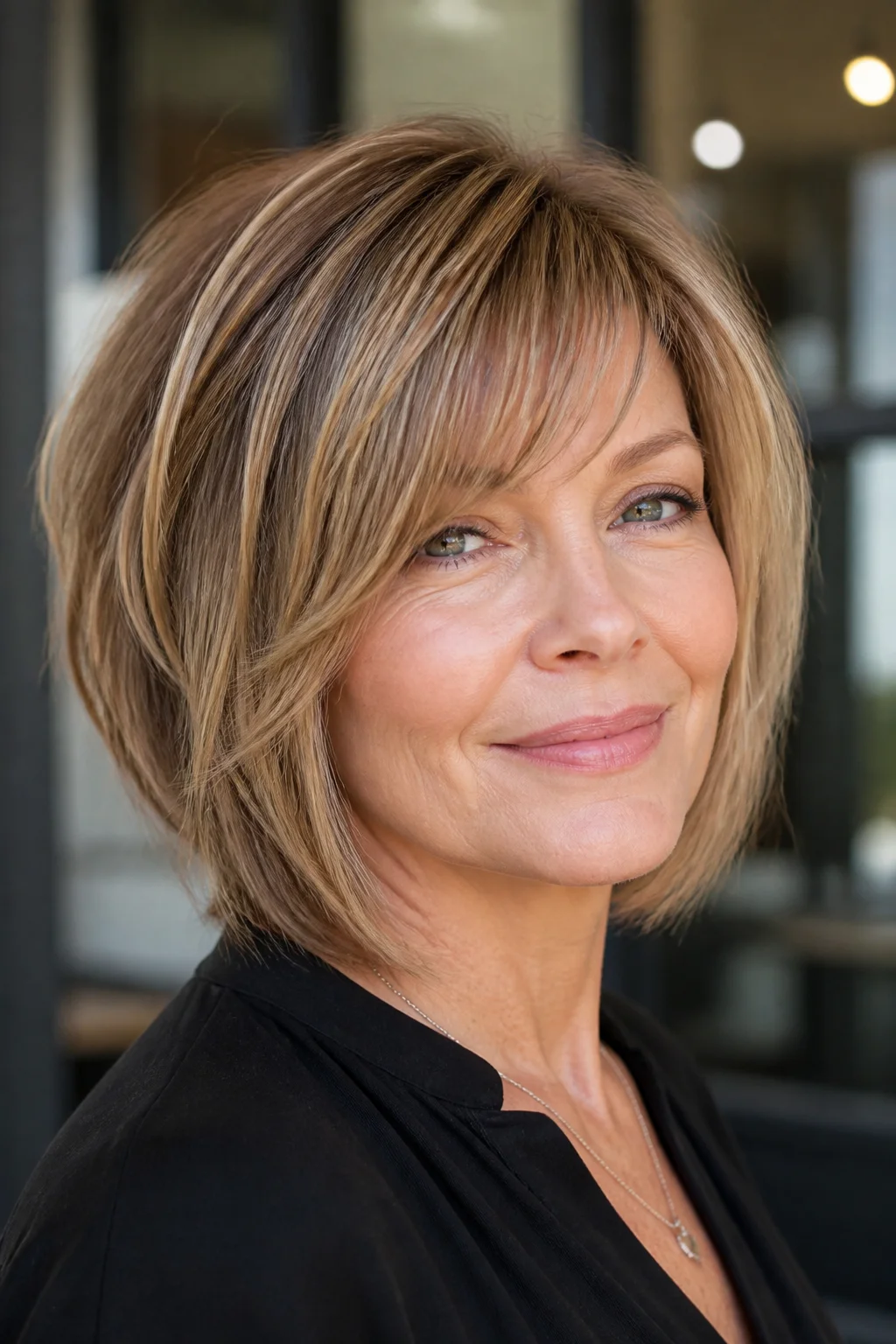
Adding a side-swept bang to a layered bob gives you a way to cover forehead lines or a higher hairline without committing to a full fringe. The bangs blend into the face-framing layers so there’s no harsh line where they meet the rest of the cut. This combination softens the whole face and works on nearly every hair texture.
Thick Textured Layers on Coarse Hair Bob
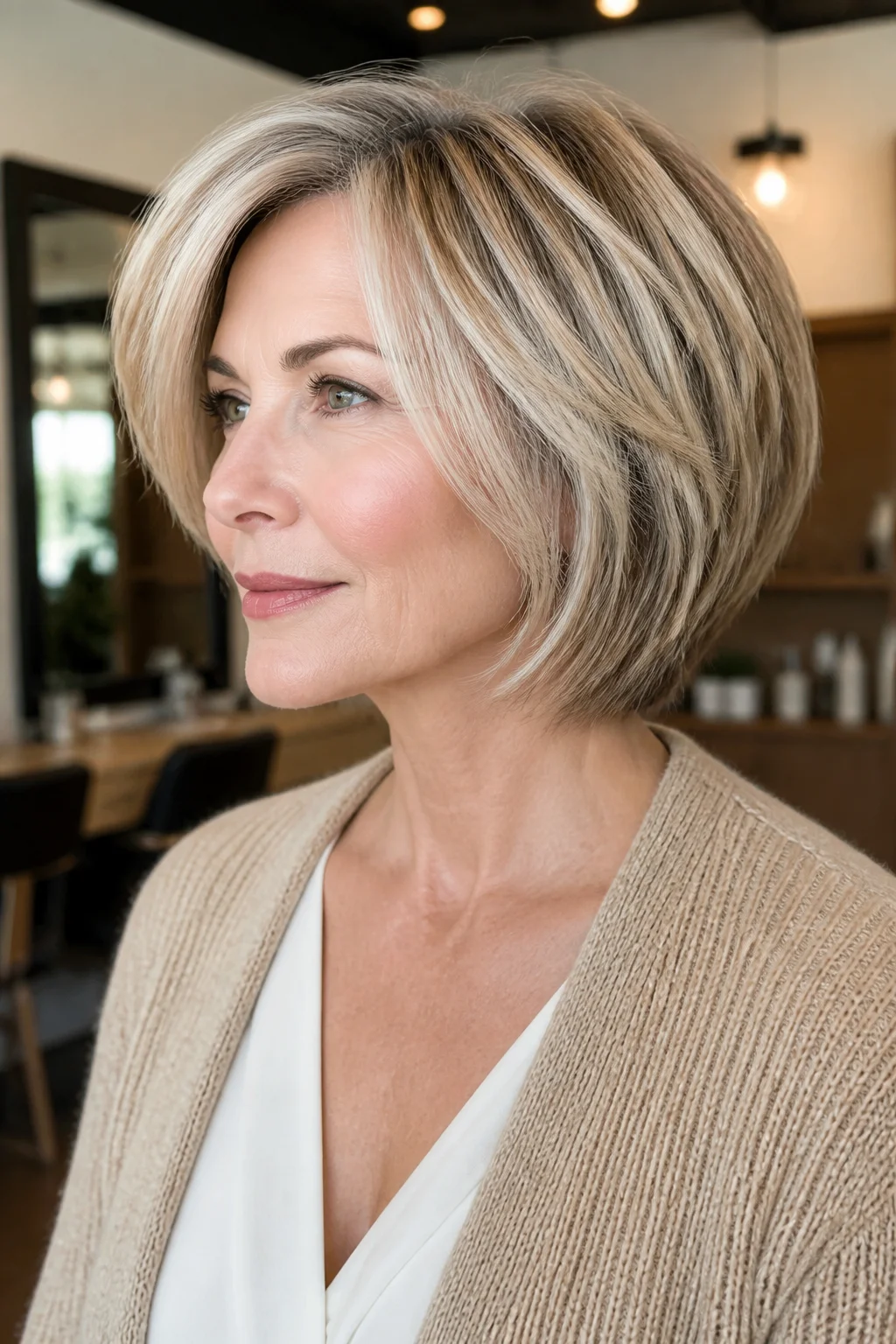
Coarse, thick hair carries weight differently than fine hair, and it usually needs more aggressive layering to move well. This cut removes bulk through the mid-lengths and ends so the bob doesn’t sit like a helmet. Texturizing shears or a razor work best here, since regular scissors alone often can’t thin coarse hair enough to feel light.
Wavy Layered Bob with Beachy Texture
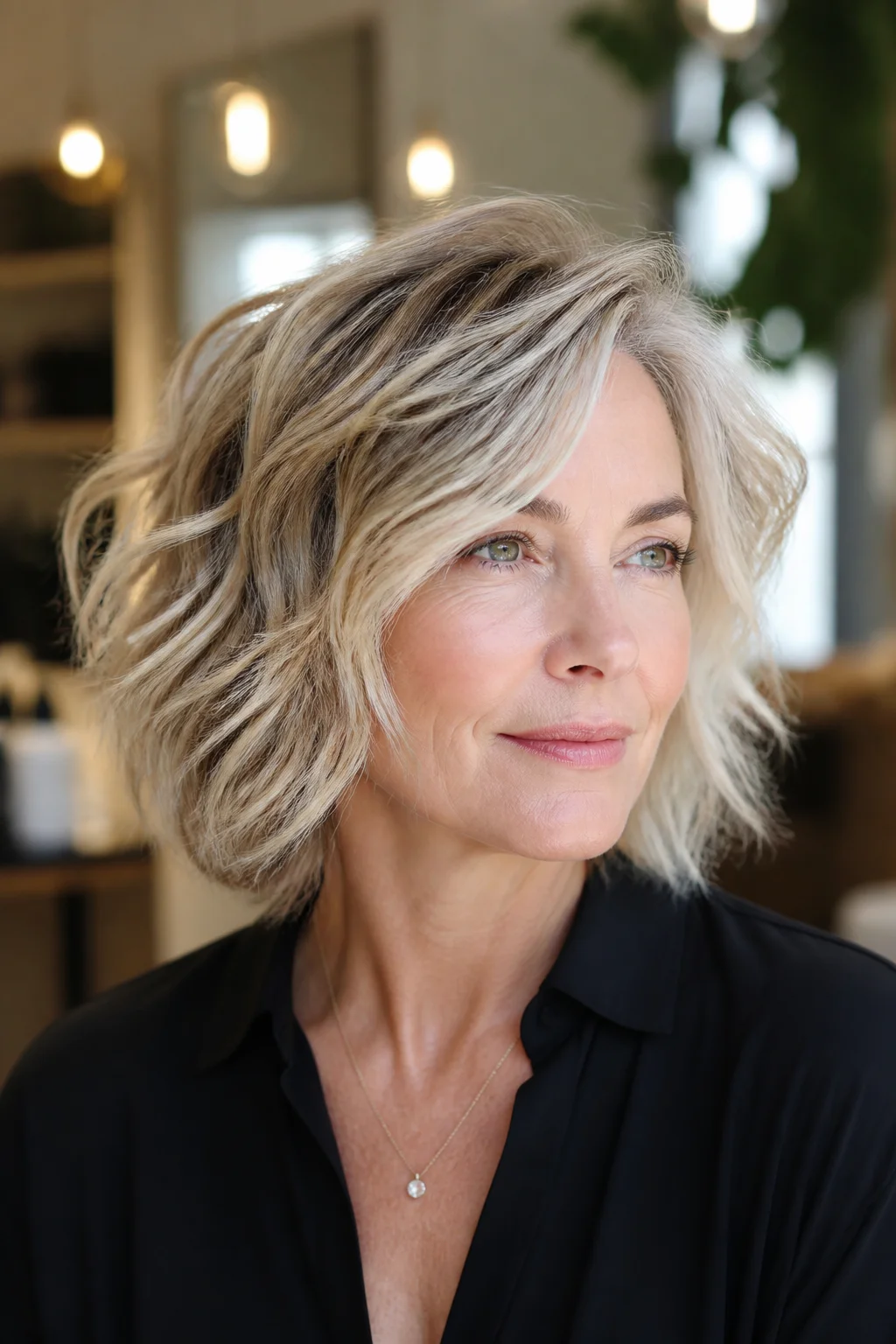
Layers cut into wavy hair let the natural bend show instead of fighting it, and this style leans into that texture rather than smoothing it out. The ends look slightly undone, almost as if you air-dried and scrunched in some texture spray. It’s a relaxed, low-fuss option for anyone who doesn’t want to spend a lot of time styling every morning.
Micro Layers for Maximum Bounce and Movement
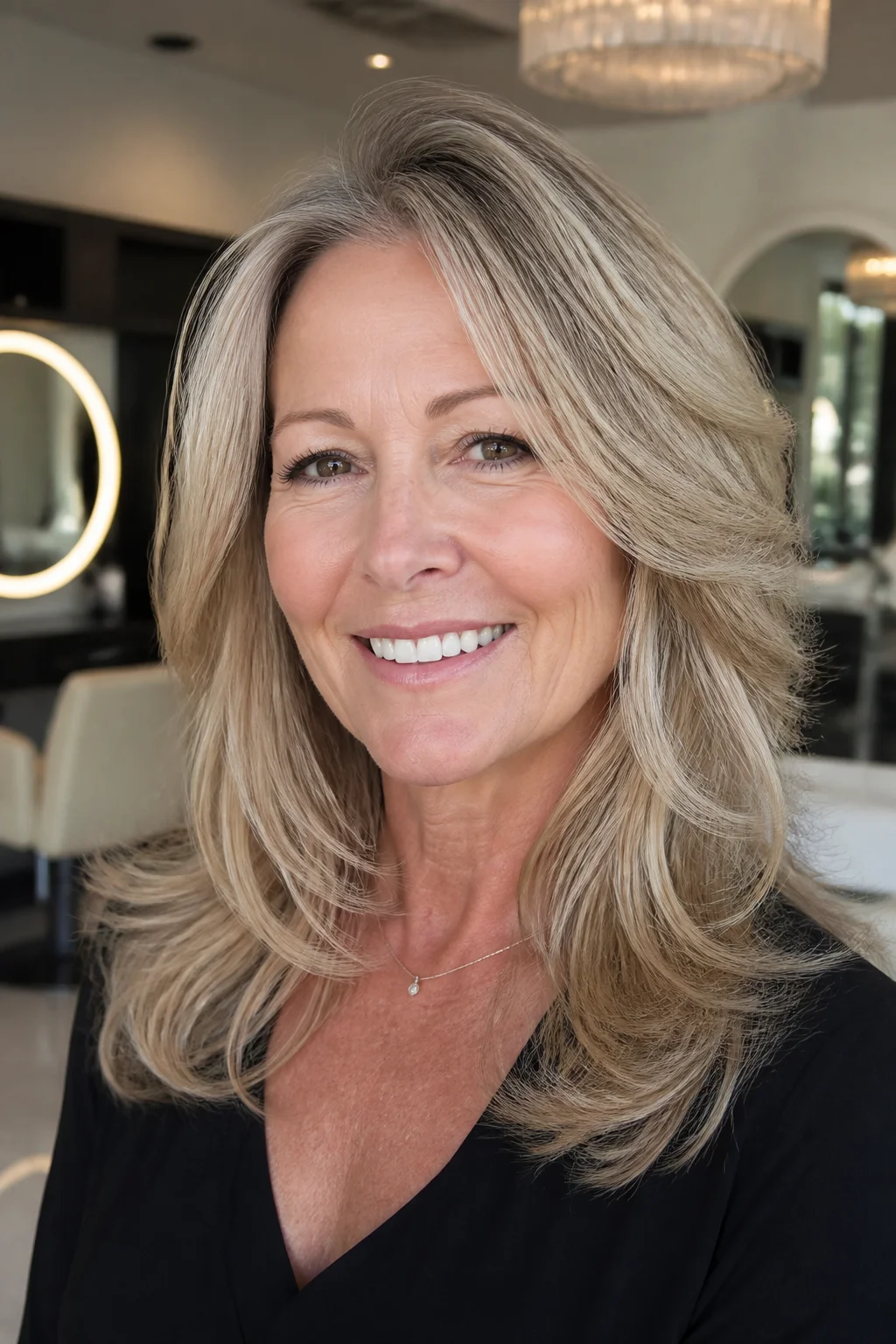
Micro layers are cut close together in fine increments, which builds serious movement into hair that might otherwise sit heavy. This technique works especially well on medium to thick hair that needs help moving instead of hanging in one solid sheet. Because the layers are so fine, the ends still read as full rather than choppy. Ask your stylist about this option if you’ve tried regular layers before and felt like they didn’t add enough lift.
Layered Bob with Deep Side Part
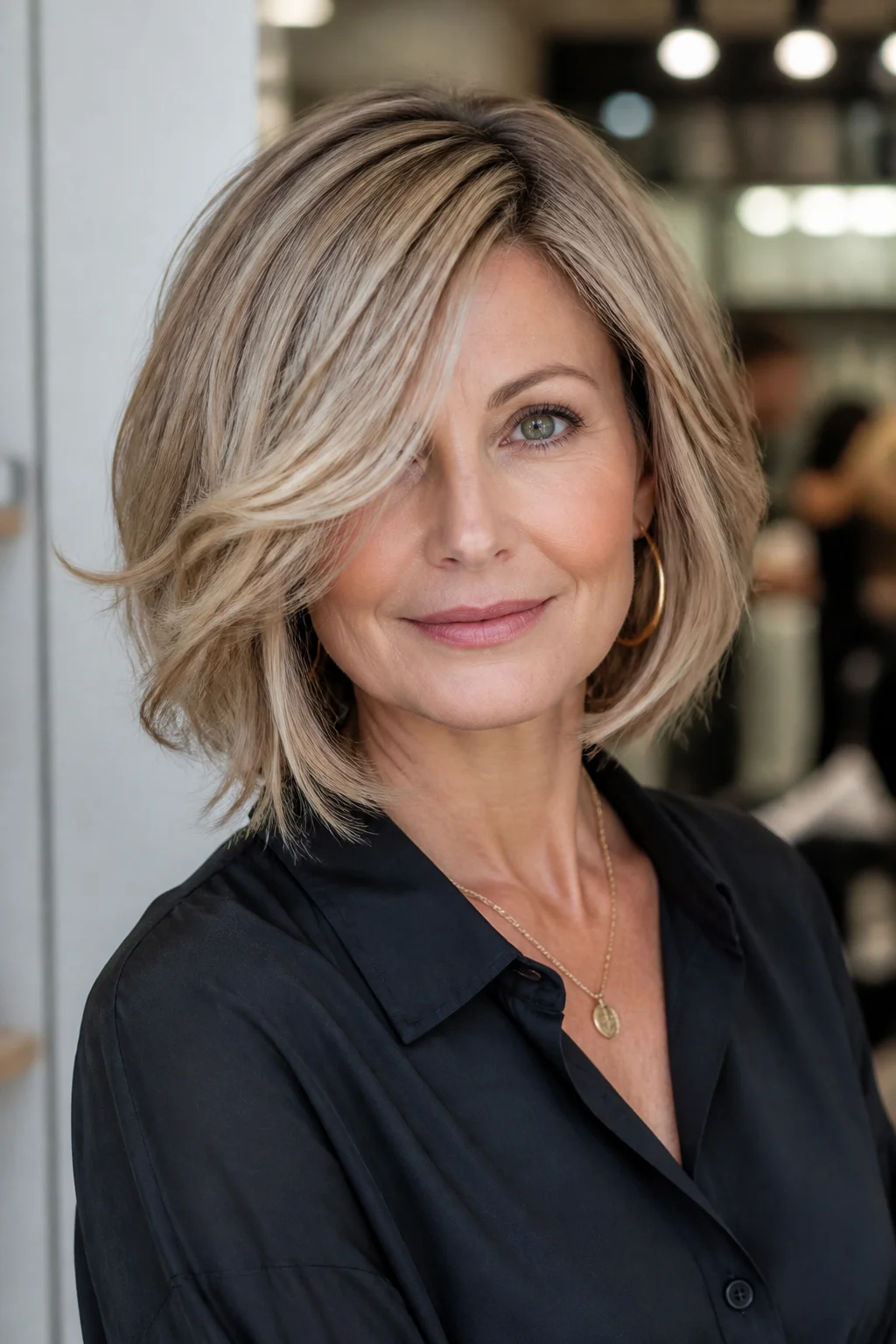
Shifting the part deep to one side changes how the layers fall and can instantly make a bob look fuller on top. This small adjustment hides thinning at the part line, a common concern after 50, since hair covers more scalp when parted this way. It’s a simple styling change rather than a drastically different cut, which makes it easy to try without much commitment.
Angled Layers on A-Line Bob
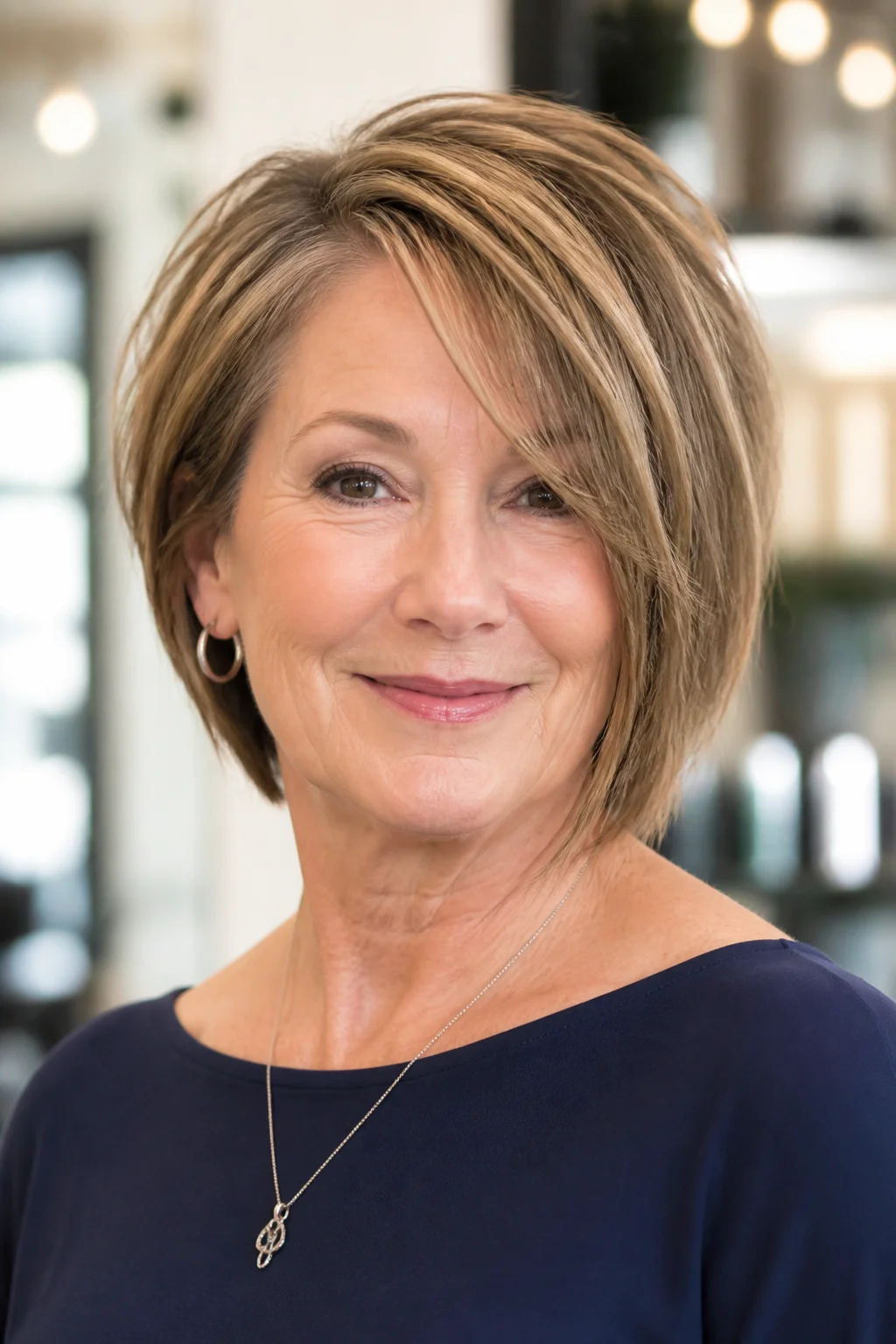
The A-line shape stays longer in front and shorter in back, and angled layers cut into it add dimension without disrupting that strong silhouette. This is a structured, graphic cut that photographs well and holds its shape between salon visits. It suits straight to slightly wavy hair best, since too much curl can blur the clean angle the cut relies on.
Soft Curly Layers on Shoulder-Length Bob
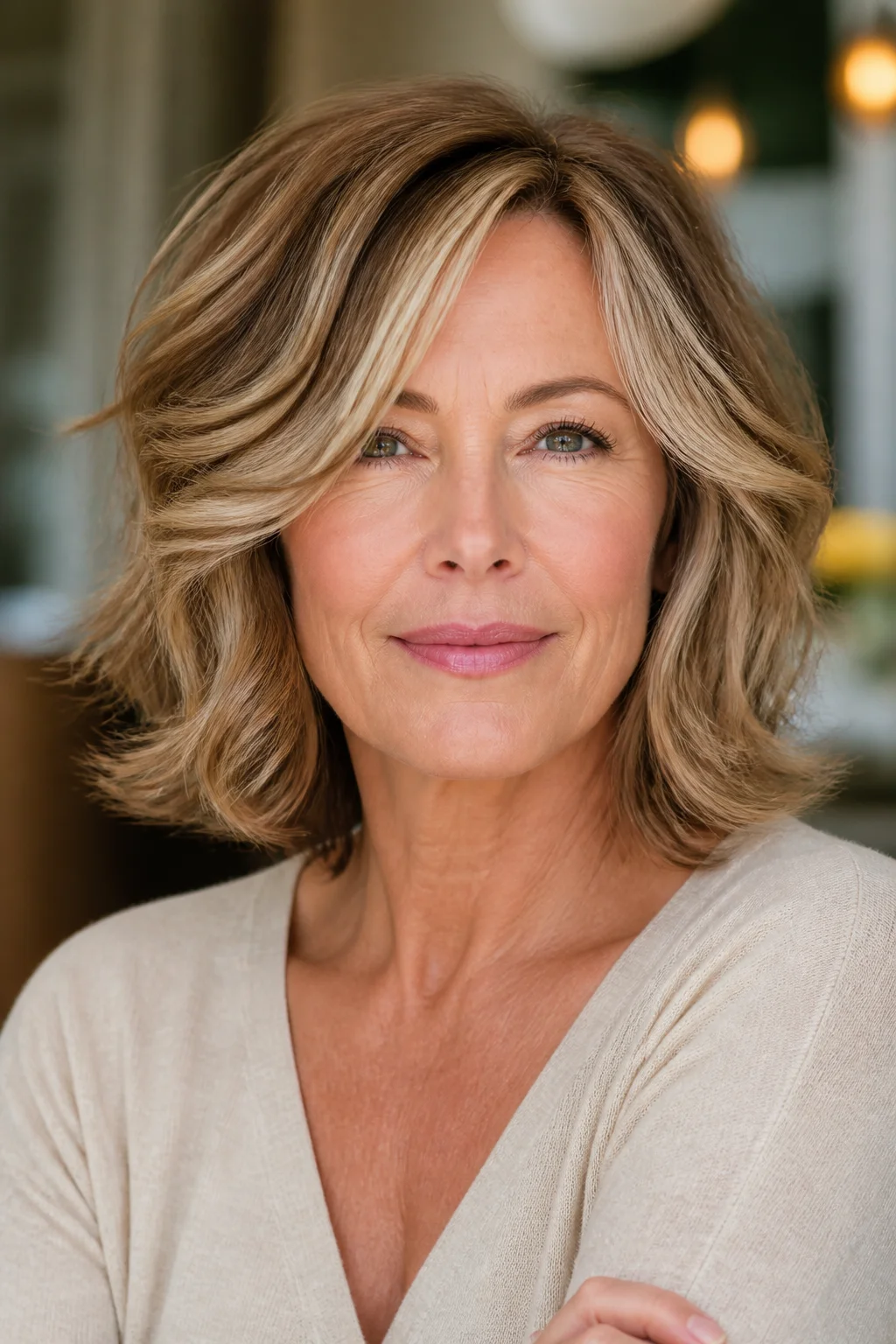
This style keeps more length than a chin-length curly bob while still layering enough to manage volume through the mid-lengths. The layers are cut softer and less defined than a spiral bob, giving a looser, more relaxed curl pattern. It’s a solid middle ground for curly-haired women who want shape without losing too much length.
Blunt Layers with Precision Edges
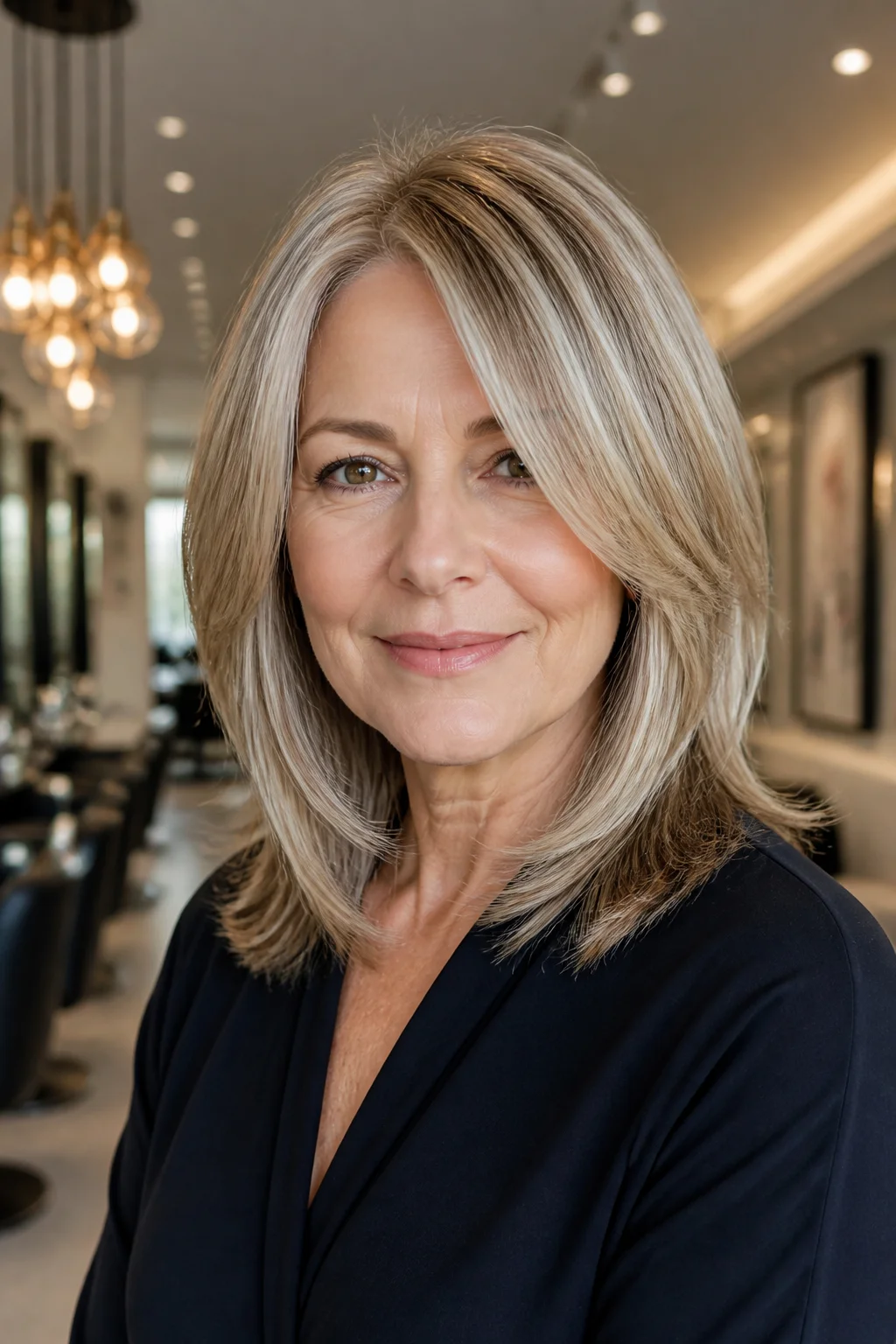
A sharper, more geometric take on layering, this cut keeps the ends crisp and precise even while layers add movement underneath. It looks polished and intentional, closer to a styled look than a casual one. Tip: this cut needs regular trims to keep the precision edges from growing out into a soft, undefined line.
Layered Bob with Highlights and Face-Framing
Pairing layers with strategic highlights around the face adds dimension that a single flat color can’t give. The highlighted pieces catch the layering pattern and make the movement in the cut more visible, especially in sunlight or under indoor lighting. This combination works on almost any base color and gives an easy way to brighten the face without changing your whole color.
Choosing the Right Layered Bob for Your Hair
Picking between these styles comes down to three things: your hair’s texture, its density, and how much time you want to spend styling it. If your hair is fine and flat, look at the wispy layers throughout fine hair bob or the micro layers style, since both are built to fake thickness rather than remove it. If your hair is thick or coarse, the thick textured layers on coarse hair bob will actually work with your hair type instead of fighting it. Curly hair has its own two lanes here: the curly bob with defined spiral layers for tighter curls and defined shape, or the soft curly layers on shoulder-length bob for a looser, more relaxed pattern.
A common mistake is asking for heavy layering when your hair is already fine, which can leave ends looking thin and wispy in the wrong way. Another is choosing a sharp cut like the blunt layers with precision edges without planning for the trims it needs to stay sharp. If you want lower maintenance, the shaggy layers on longer bob or the blunt-ended layers with subtle graduation both grow out without a hard line to chase. Bring two or three names from this list to your appointment and let your stylist help narrow it down based on how your hair actually behaves day to day.
Any of these cuts can work well past 50, but the best one is whichever matches how your hair grows, moves, and holds a style between washes. A layered bob for women over 50 should make your morning routine easier, not harder, so weigh styling time honestly before you commit. Talk through texture, face shape, and upkeep with your stylist, and you’ll walk out with a cut that actually fits your life.