Fine hair gets softer and thinner with age, and straight strands tend to lie flat against the scalp instead of holding shape. That flatness can make hair look sparse even when there’s plenty of it. The good news is that the right cut fixes most of this without a single extra product. These fine hair straight hair hairstyles for women over 70 use short layers, angled lines, and smart weight removal to lift hair off the scalp and keep it looking fuller all day. Some of these styles work through texture alone, others rely on strategic length changes near the crown or nape. None of them need heavy styling or thick hair to look right. Below are nineteen cuts worth showing your stylist, along with notes on who each one suits and how to keep it looking its best between appointments.
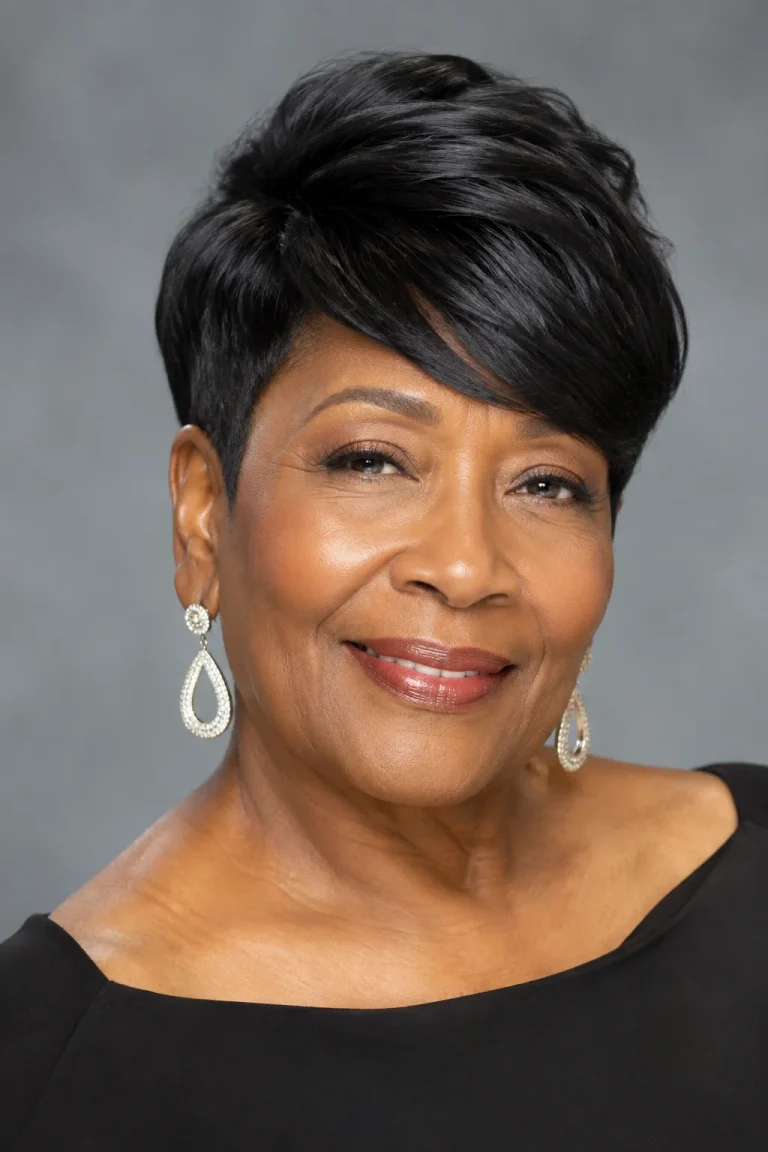
Textured Pixie with Side Sweep
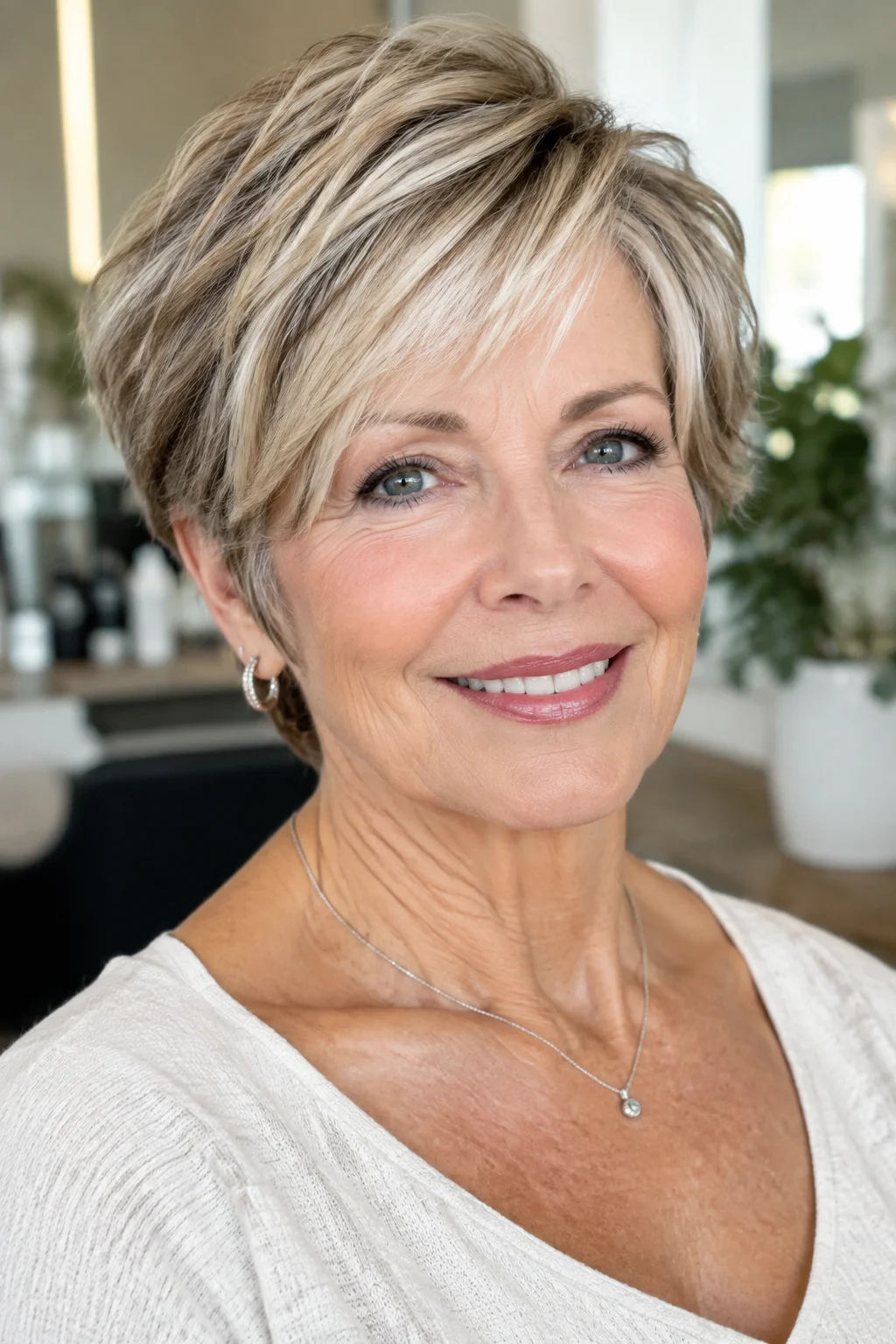
A pixie with texture cut into the top gives fine hair somewhere to go besides flat against the head. The side sweep softens the shortness around the face, which matters if you want something youthful but not severe. Layers are cut short and choppy near the crown, then blended into a longer fringe that sweeps across the forehead. This keeps volume right where thinning shows first. Tip: ask your stylist for a matte texturizing paste instead of a heavy pomade, since fine hair gets weighed down fast. A light mist of heat protectant before styling helps the finish last.
Chin-Length Shag with Feathered Layers
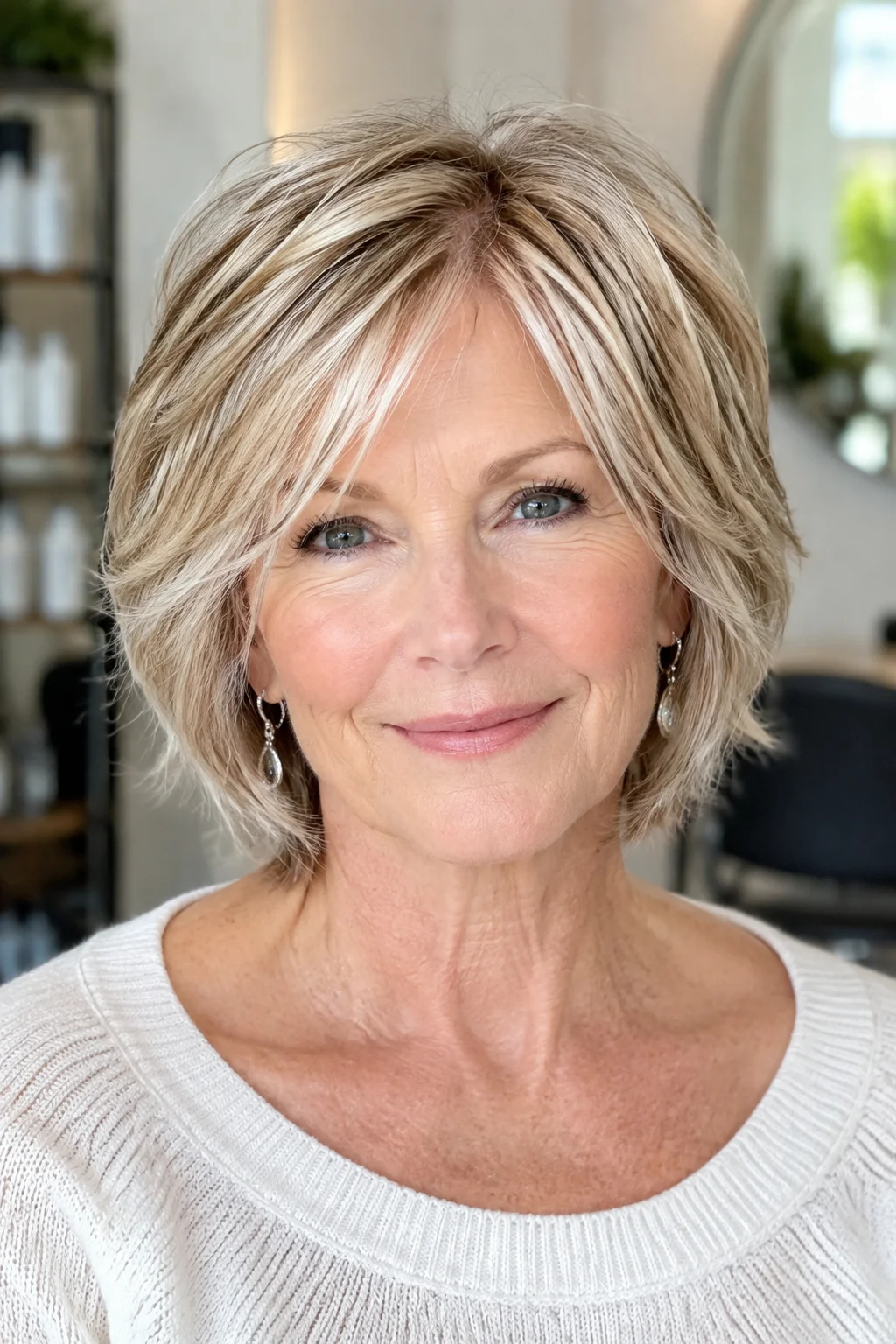
This shag brings movement to straight hair without demanding a perm or heat styling every morning. Feathered layers are cut at varying lengths around the chin, breaking up the straight line that can make fine hair look thin. The choppy ends catch light differently at each layer, giving the illusion of more density than there actually is. It works especially well on hair with a slight natural bend, though straight hair takes it fine too. Blow dry with a round brush pointing the ends outward for the best feathered effect. A light mist of heat protectant before styling helps the finish last.
Soft Perm Bob with Light Waves
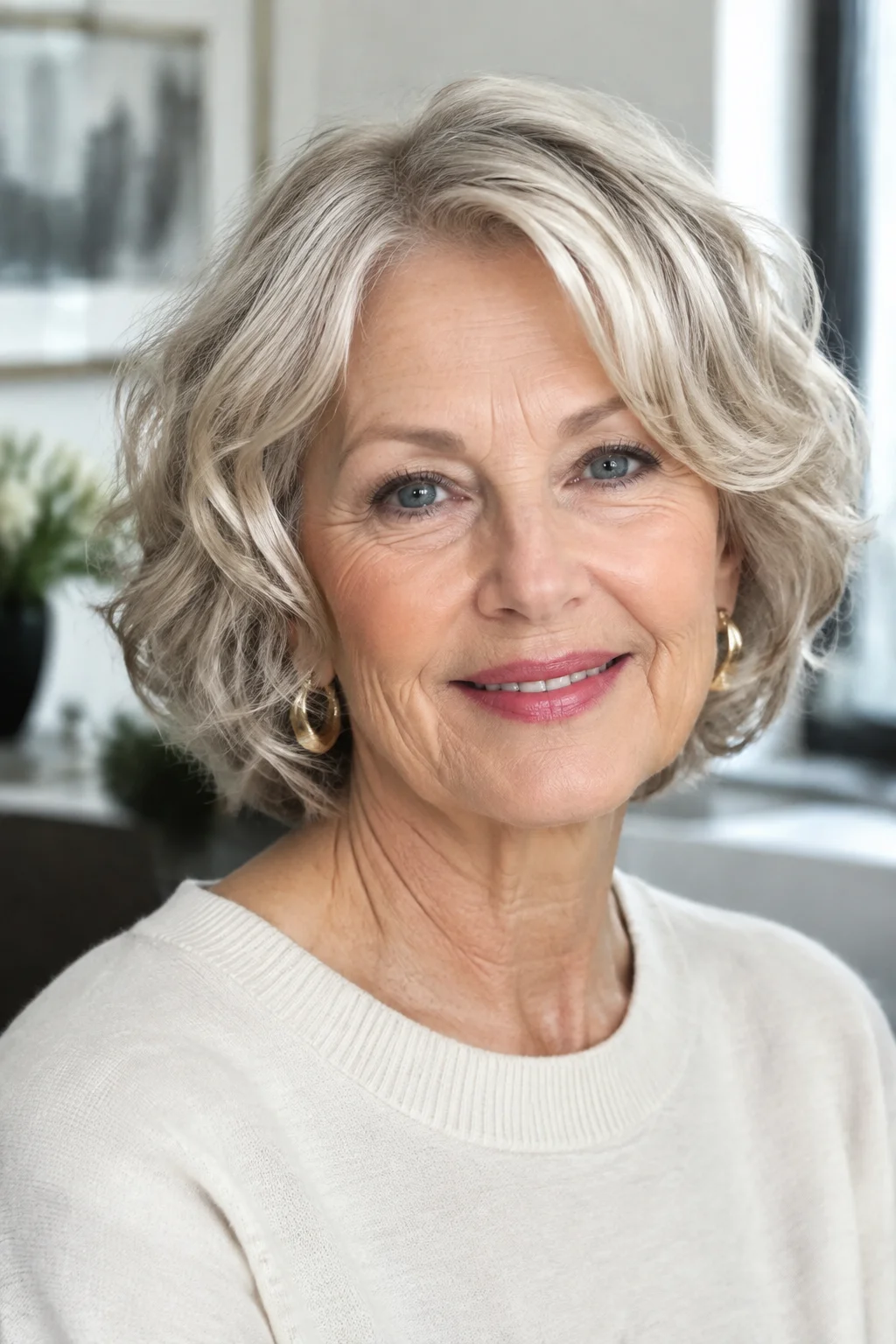
A light perm added to a bob solves the flatness problem at its source by giving straight strands actual texture to hold onto The waves are kept loose and soft rather than tight and curly, which suits older skin and softer features better This bob sits at jaw length or slightly below, letting the waves show without pulling too heavy
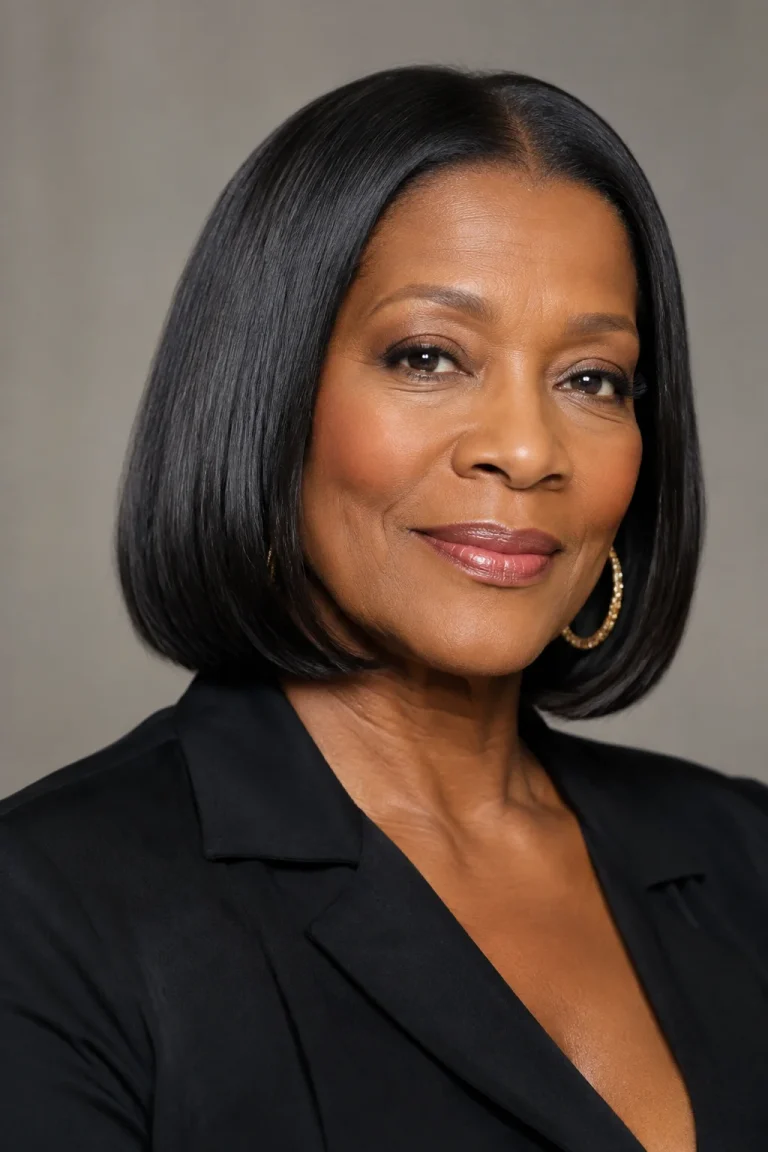
Face-Frame Layered Bob
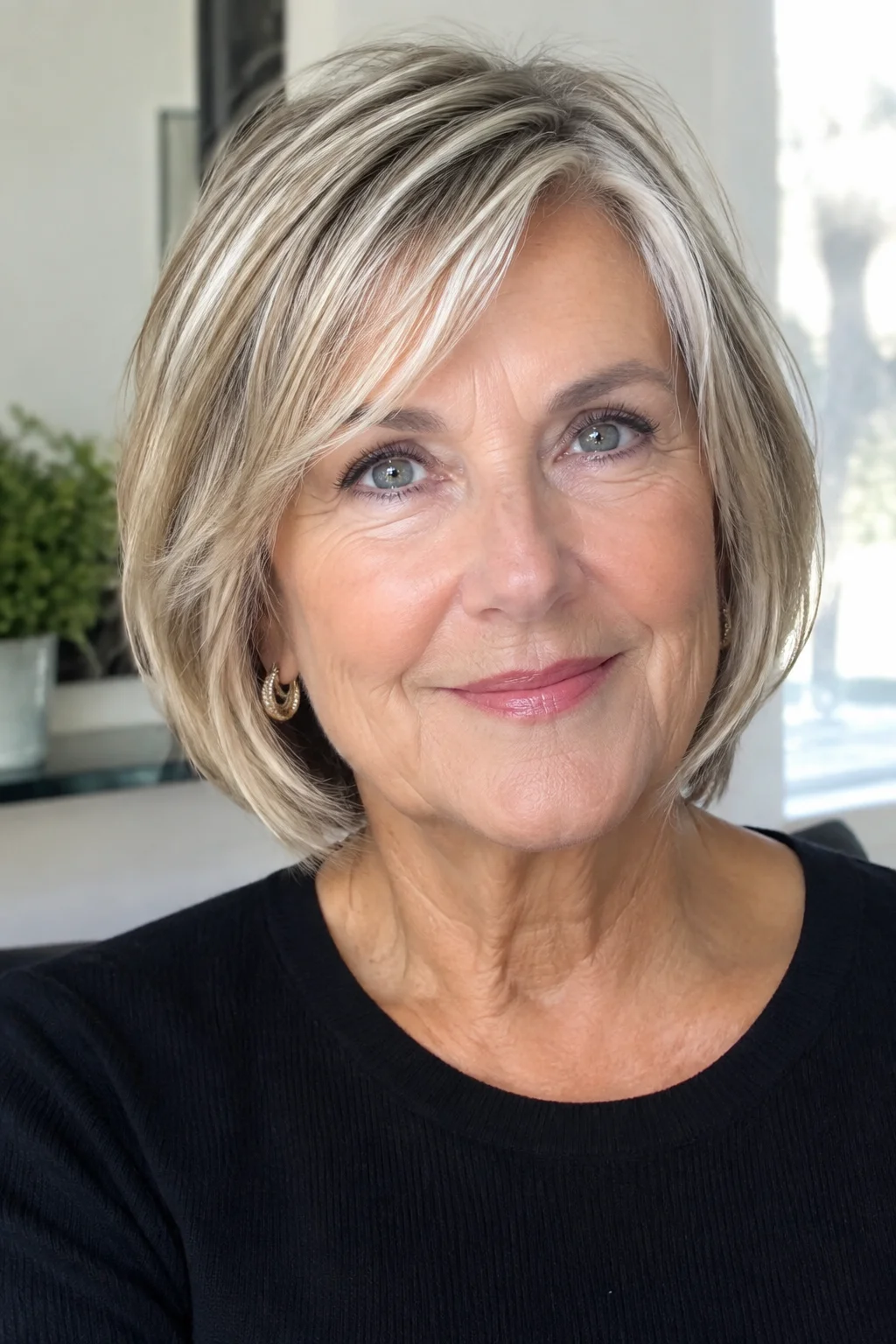
Layers cut around the face lift and frame it at the same time, which is exactly what fine straight hair needs to avoid looking stringy The back stays blunt for structure while the front pieces are cut shorter and angled toward the chin This creates a soft frame that draws attention up toward the eyes and cheekbones
Stacked Crown Pixie Cut
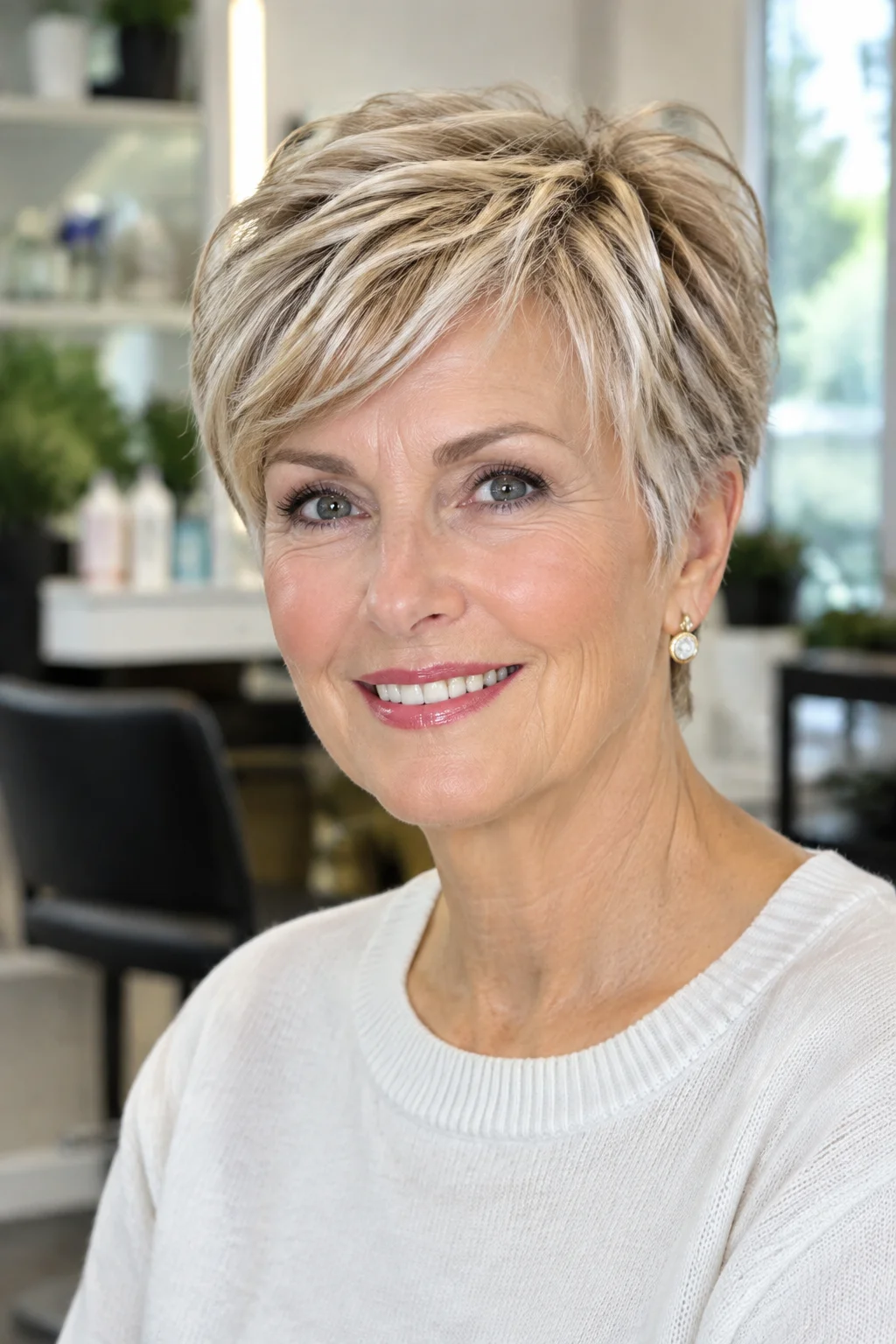
Stacking refers to how layers are cut increasingly shorter as they move up toward the crown, and it is one of the most reliable tricks for adding volume to fine hair. This pixie uses heavy stacking at the back and crown, building real height where hair usually falls flattest. The front can stay a bit longer for softness. It is a low maintenance cut that holds its shape between salon visits better than most short styles.
Layered Lob with Wispy Ends
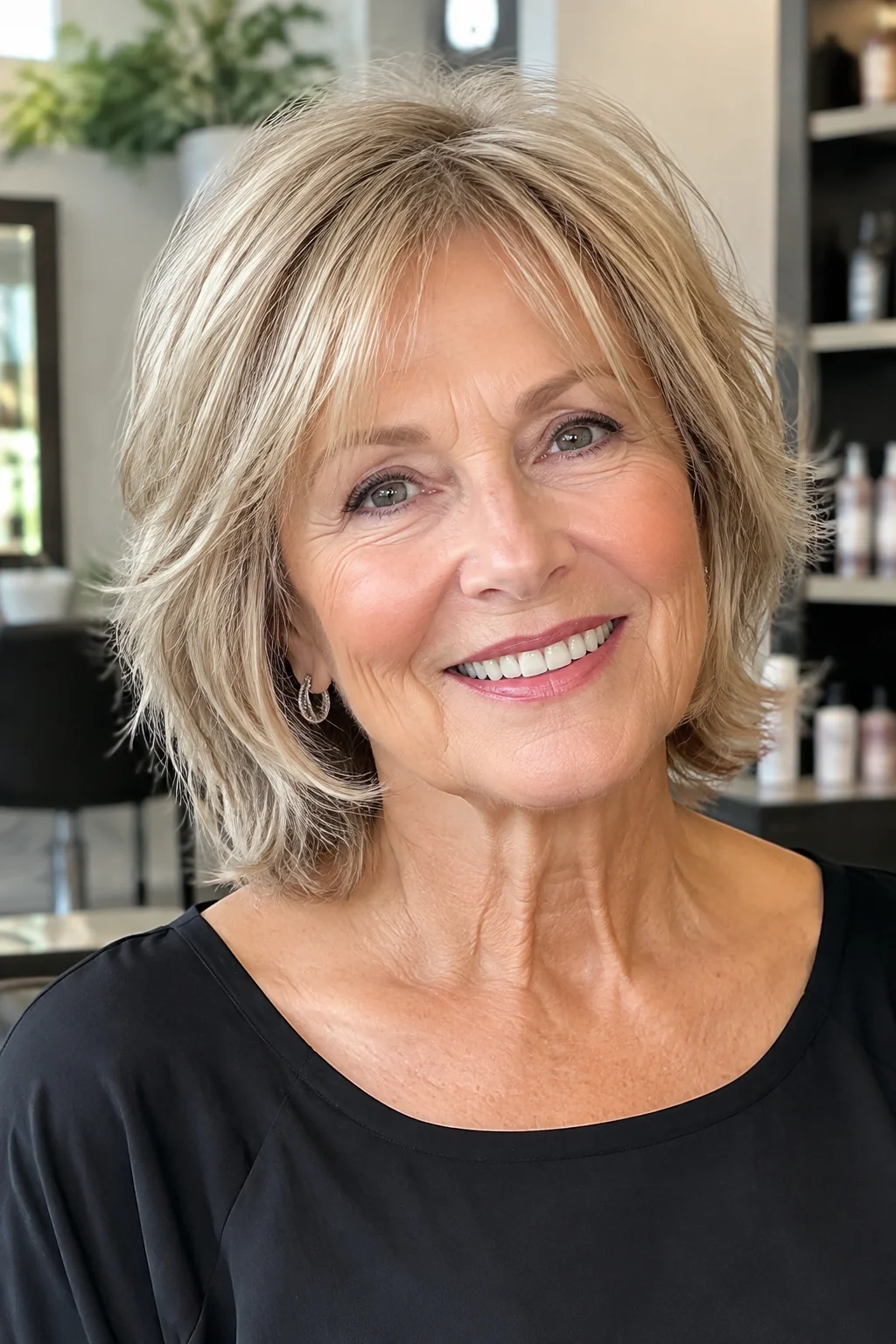
The long bob, cut with wispy, disconnected ends, keeps length while still lifting fine hair through the layering. Ends are thinned rather than left blunt, which stops straight hair from looking heavy at the bottom. This lob sits around the collarbone, a length that flatters most face shapes at this age. It pairs well with a slight bend from a curling iron but looks good straight too.
Two-Tone Textured Pixie
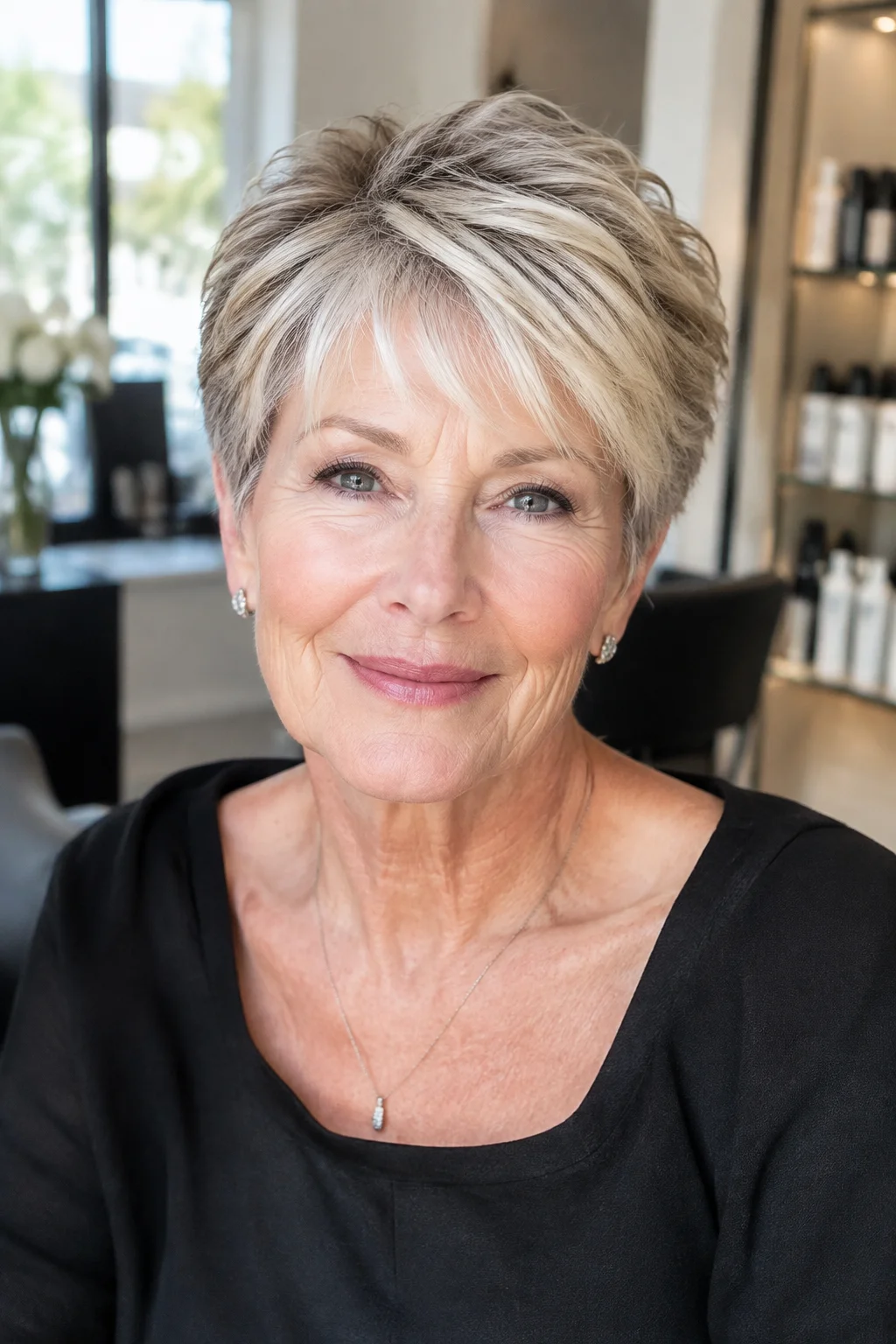
Adding a second tone, even a subtle one like a few lighter pieces around the crown, gives a textured pixie extra dimension that a single flat color can’t match. The texture itself comes from point-cutting throughout the top and sides. Together, the color break and the texture make thin areas less noticeable because the eye reads dimension instead of scalp. This one asks for a bit more upkeep at the colorist, so it suits someone who already gets regular color touch-ups.
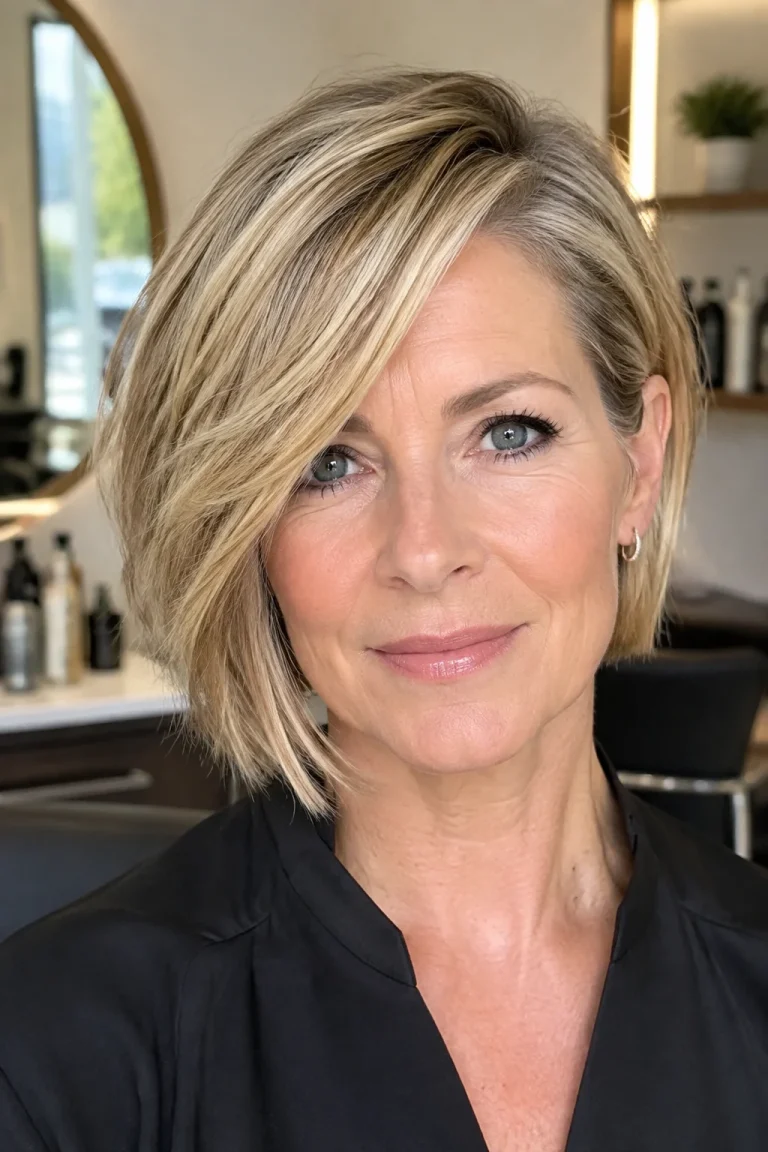
Tousled Bob with Diagonal Layers
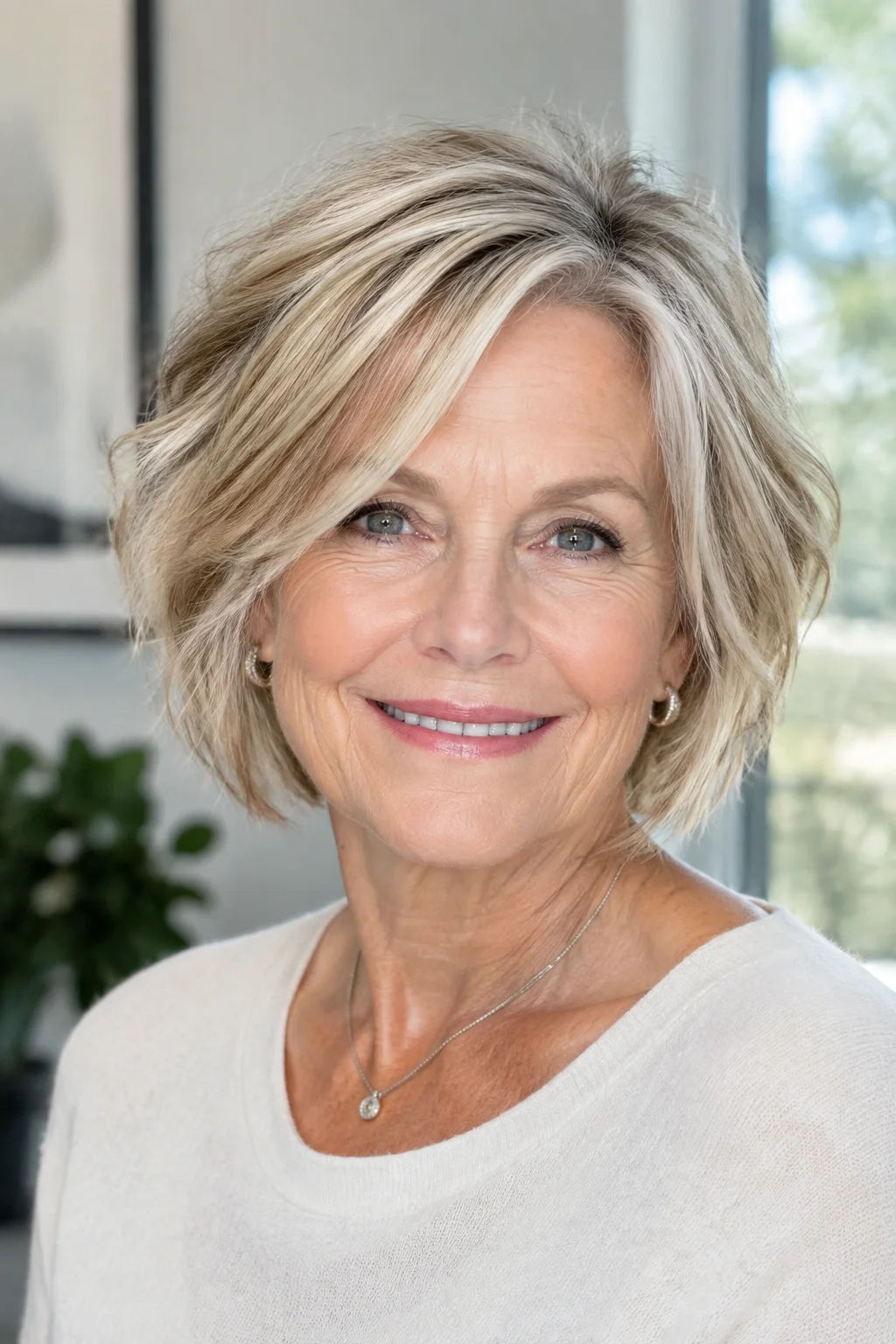
Diagonal layers, cut from short at the front to longer at the back, give this bob a tousled, undone quality that flat fine hair rarely achieves on its own. The angle keeps weight from settling all in one place. A little texturizing spray worked through damp hair before drying helps the tousled look last. This bob suits women who want something low effort that still looks styled.
Crown-Volume Shag Cut
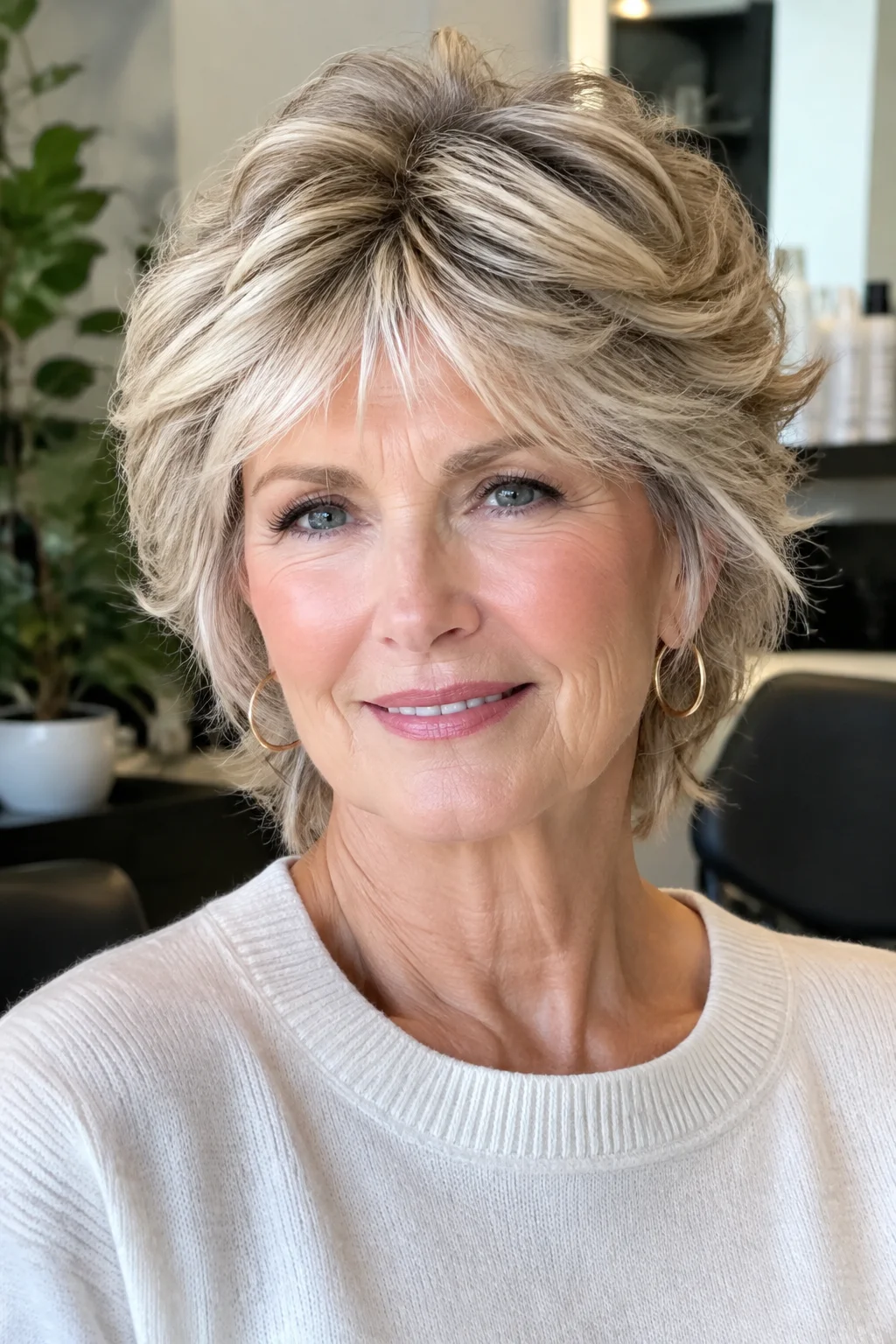
This shag concentrates its shortest layers directly at the crown, building lift exactly where fine hair thins first with age. The rest of the shag falls in loose, choppy pieces down to shoulder length or shorter. It reads as youthful and relaxed rather than fussy. Because the volume is built into the cut itself, you can skip heavy styling and still get lift, which makes it a good pick if you don’t want to spend much time with a blow dryer each morning.
Side-Parted Textured Bob
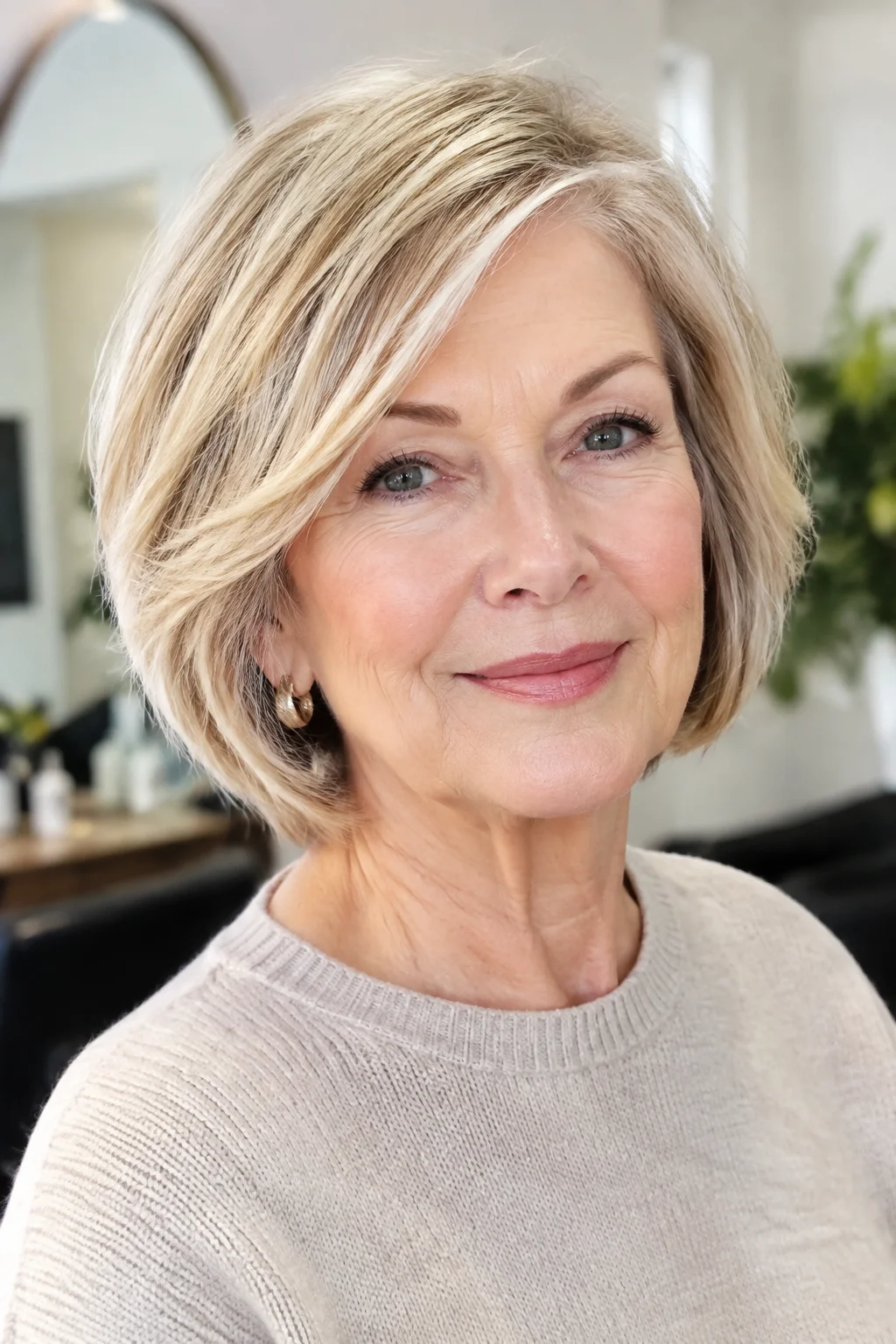
A deep side part changes how light hits the hair and immediately reads as more voluminous, especially paired with texture cut into the ends. This bob keeps a classic blunt shape at first glance, but the underneath layers are thinned to prevent heaviness. The side part also softens a square or angular face shape. Tip: switch which side you part on every few weeks so the roots don’t train flat in one direction.
Feathered Pixie with Longer Top
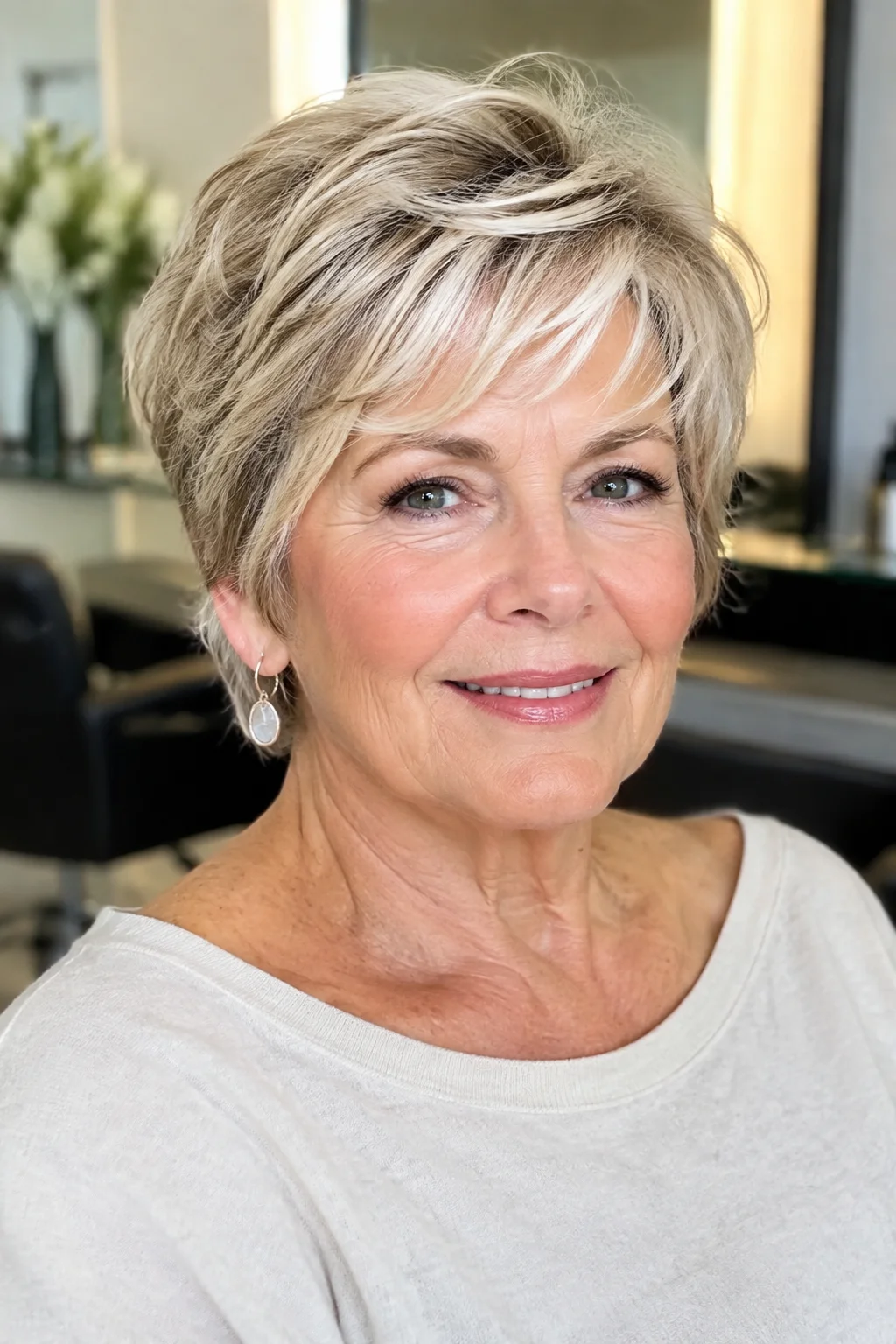
Feathering along the sides and back keeps this pixie soft, while a longer top section gives you something to style with a bit of height. It suits women who liked longer hair most of their life and want a gentler transition into short styles. The top can be brushed back or swept to one side depending on the day. This cut needs trims every six to eight weeks to keep the feathered edges from growing shapeless.
Layered Straight Hair with Flip Ends
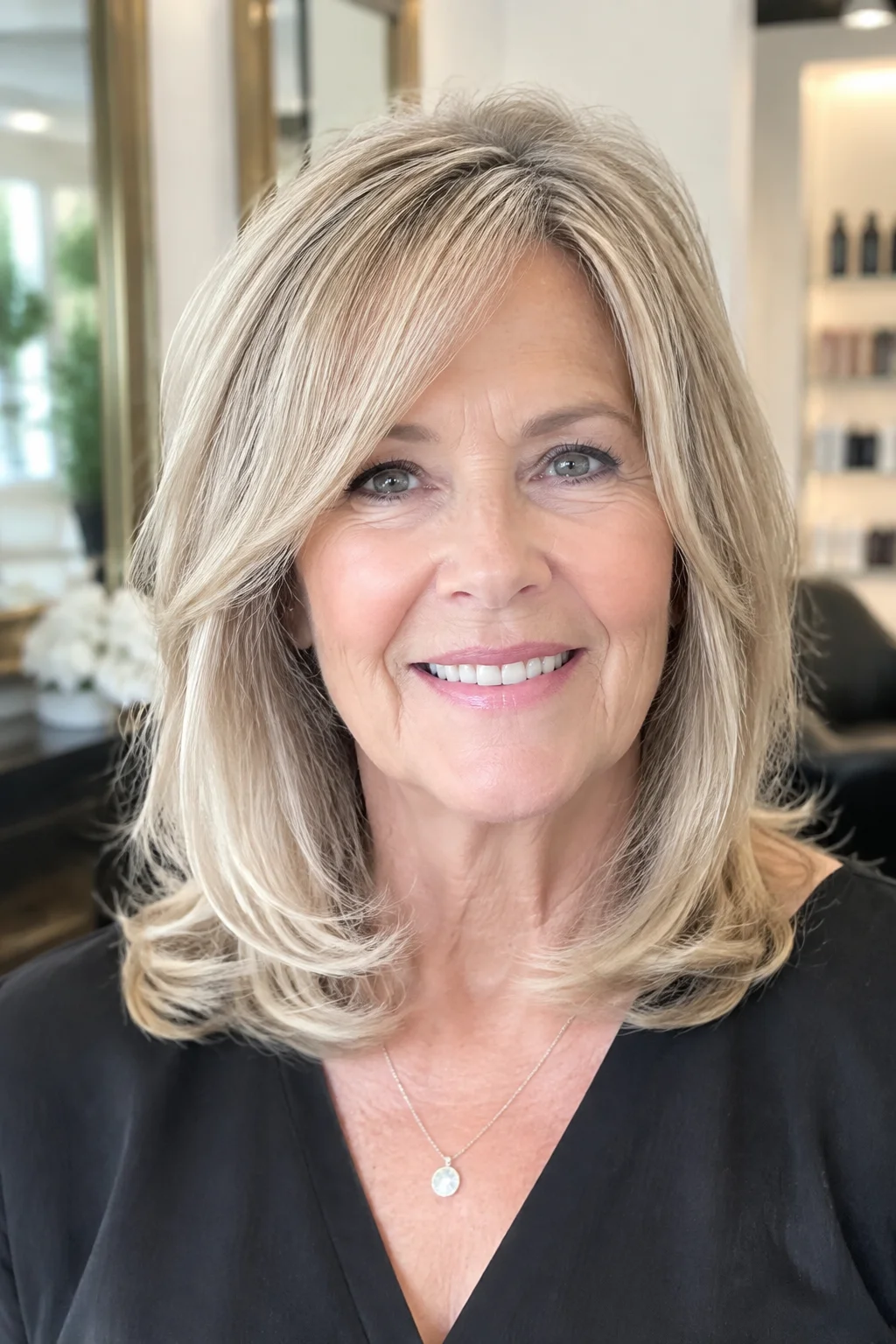
Flip ends are cut and blow dried to curve slightly away from the face instead of hanging straight down, and that small curve does a lot for fine straight hair. Layers throughout the mid-length and ends keep the flip light rather than stiff. This works on shoulder length hair especially well, since there’s enough length for the flip to actually show. A round brush and a few minutes of drying time is really all it takes to recreate the shape at home.
Choppy Layered Pixie-Bob Hybrid
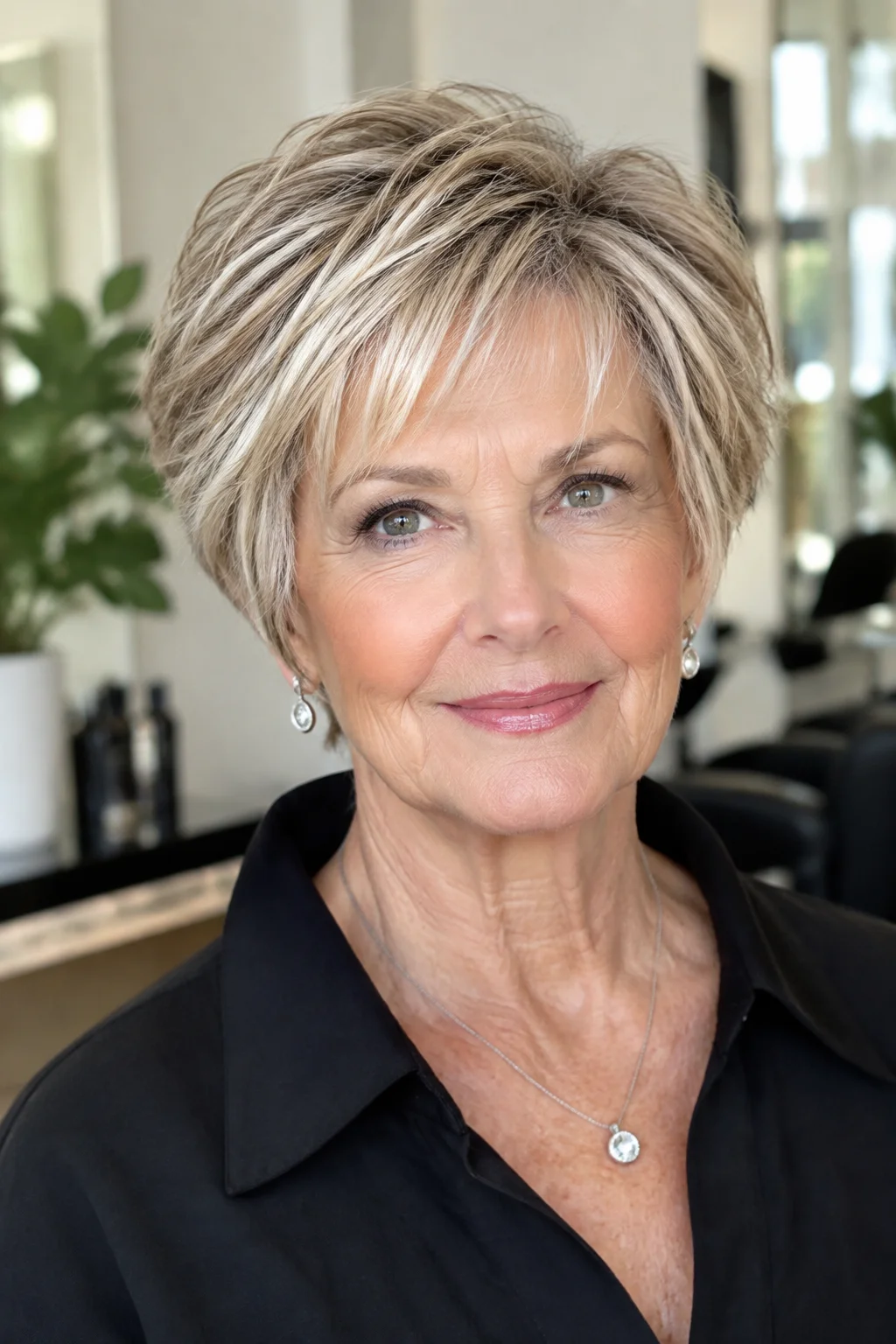
This cut splits the difference between a pixie and a bob, landing somewhere around the ear to jaw with choppy layers cut throughout. It gives you more length to play with than a true pixie while still keeping the light, lifted feel that fine hair needs. The choppy layering breaks up any straight, flat sections that would otherwise droop by midday. Stylists sometimes call this an in-between cut, and it suits someone who isn’t ready to commit to very short hair but is tired of a lob falling flat.
Textured Crop with Tapered Back
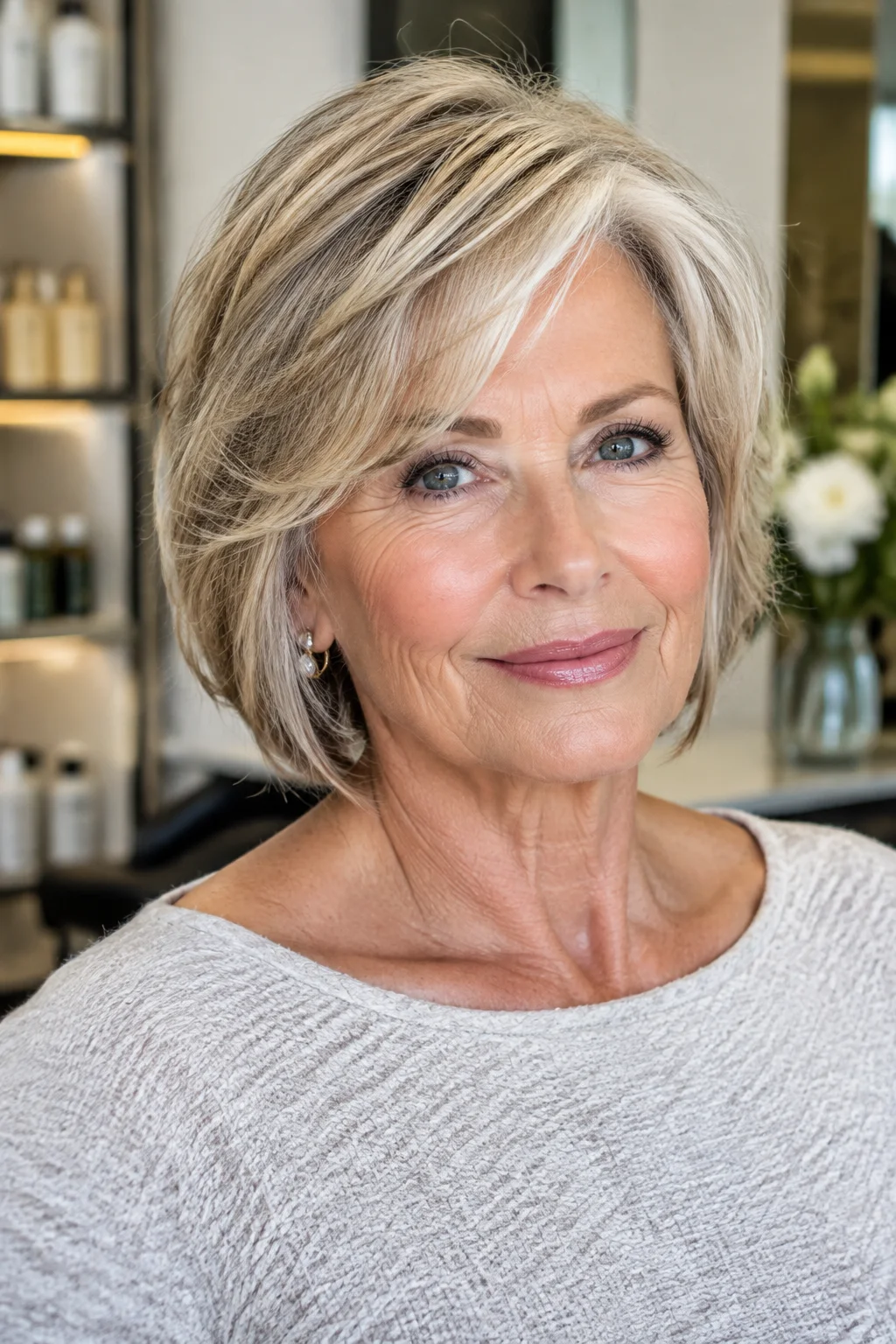
A cropped cut with a tapered back keeps things neat at the nape while leaving texture and slight length on top for styling options. The tapering removes bulk low on the head, which keeps the whole shape from looking bottom-heavy on fine hair. Texture on top is cut with a razor or thinning shears to avoid a blunt, flat appearance. This crop suits women who want a genuinely low maintenance style and don’t mind a shorter, more shaped look overall.
Piece-y Lob with Partial Perm
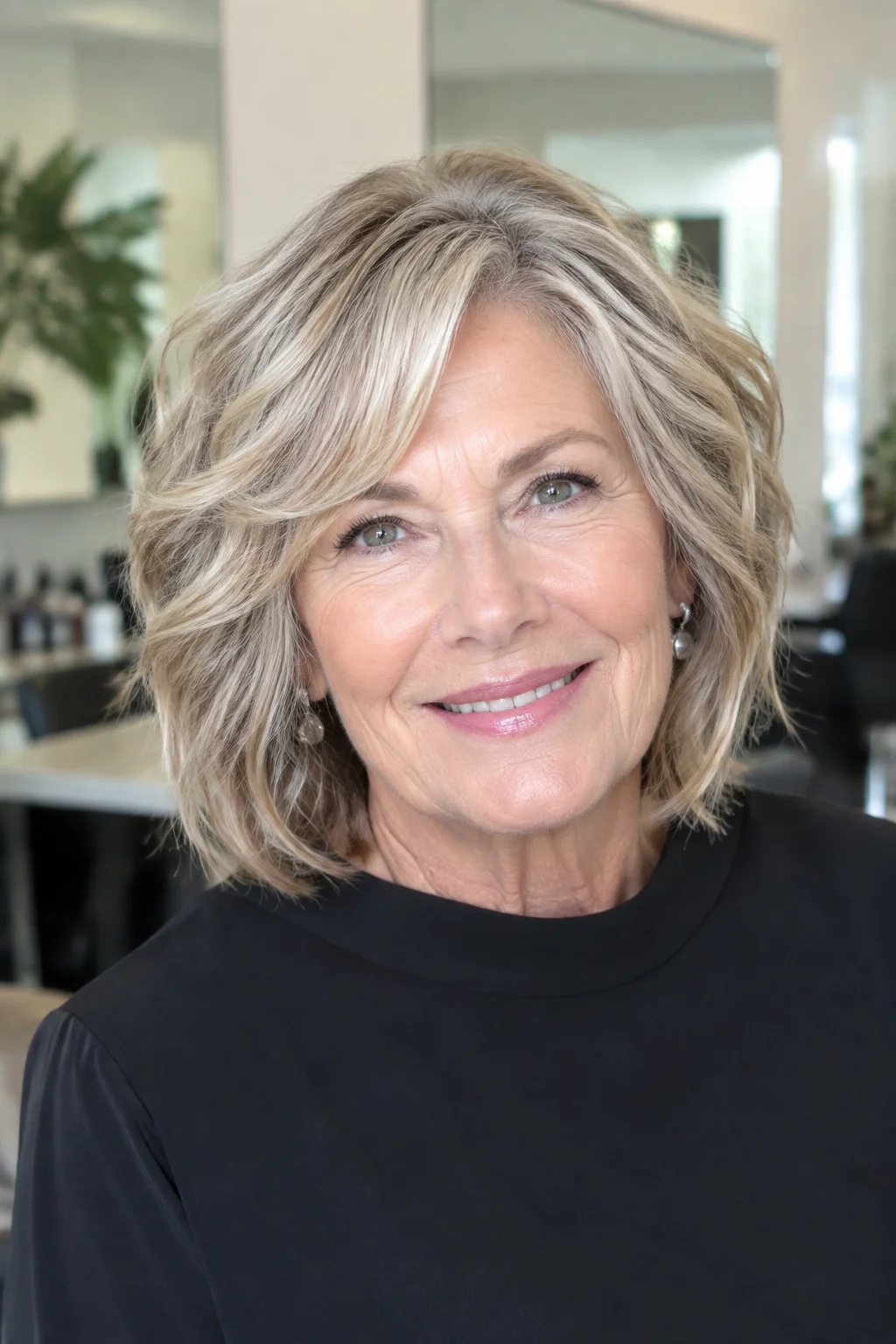
A partial perm, applied only to the mid-lengths and ends of a long bob, adds body without curling the whole head. The roots stay straight and flat against the scalp, which some women prefer, while the lower half gets movement and lift. Piece-y ends, cut with a razor, keep the perm looking textured rather than uniform. Tip: ask for a looser rod size if you want soft waves instead of tight curls.
Layered Straight Cut with Micro-Bangs
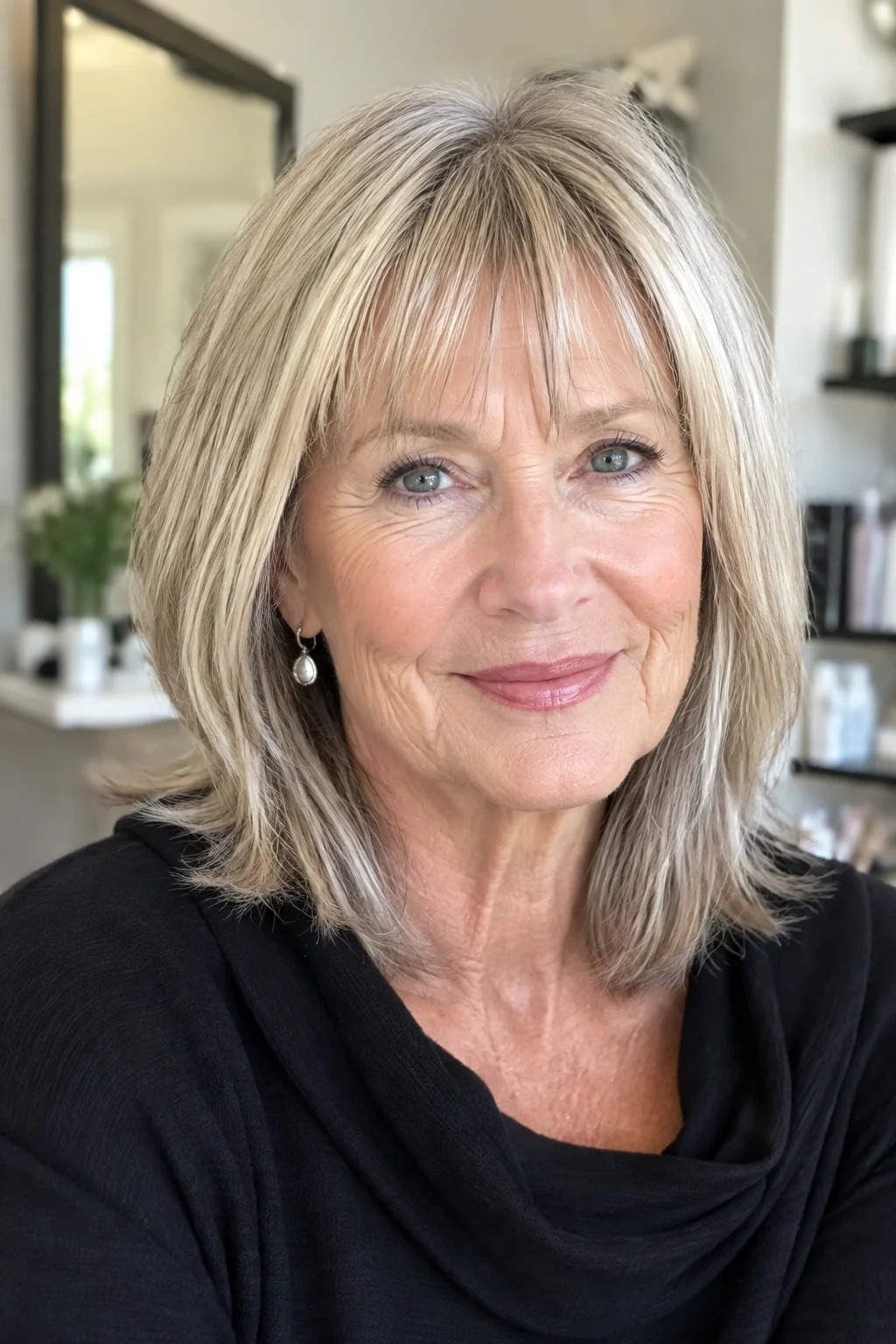
Micro-bangs sit high above the brow and pair surprisingly well with fine straight hair because they draw the eye upward and away from thinning at the part line. Layers through the rest of the cut keep everything else light and easy to manage. This is a bold choice and works best on women with strong, even features and a bit of confidence to carry it off. The bangs need trimming every three to four weeks since they grow out quickly and lose their shape.
Feathered Shag with Minimal Weight
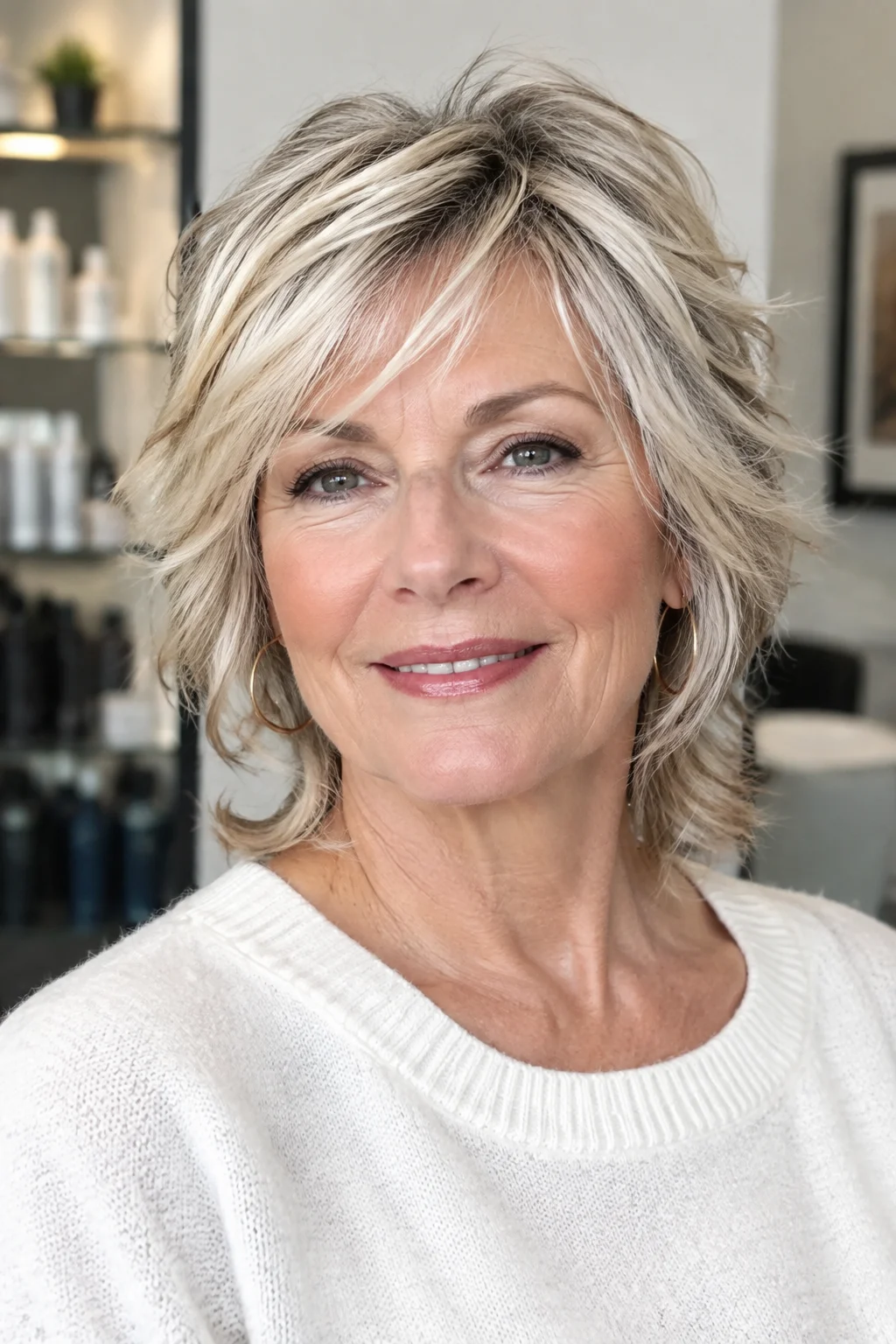
This shag removes as much weight as possible throughout, using feathered layers cut close to the head at the crown and looser toward the ends. Almost none of the natural heaviness that makes fine hair go flat is left behind. It’s a good match for hair that has thinned noticeably, since there’s nothing weighing it back down. Regular trims keep the feathering from growing out into a shapeless mess.
Textured Rounded Bob with Crown Lift
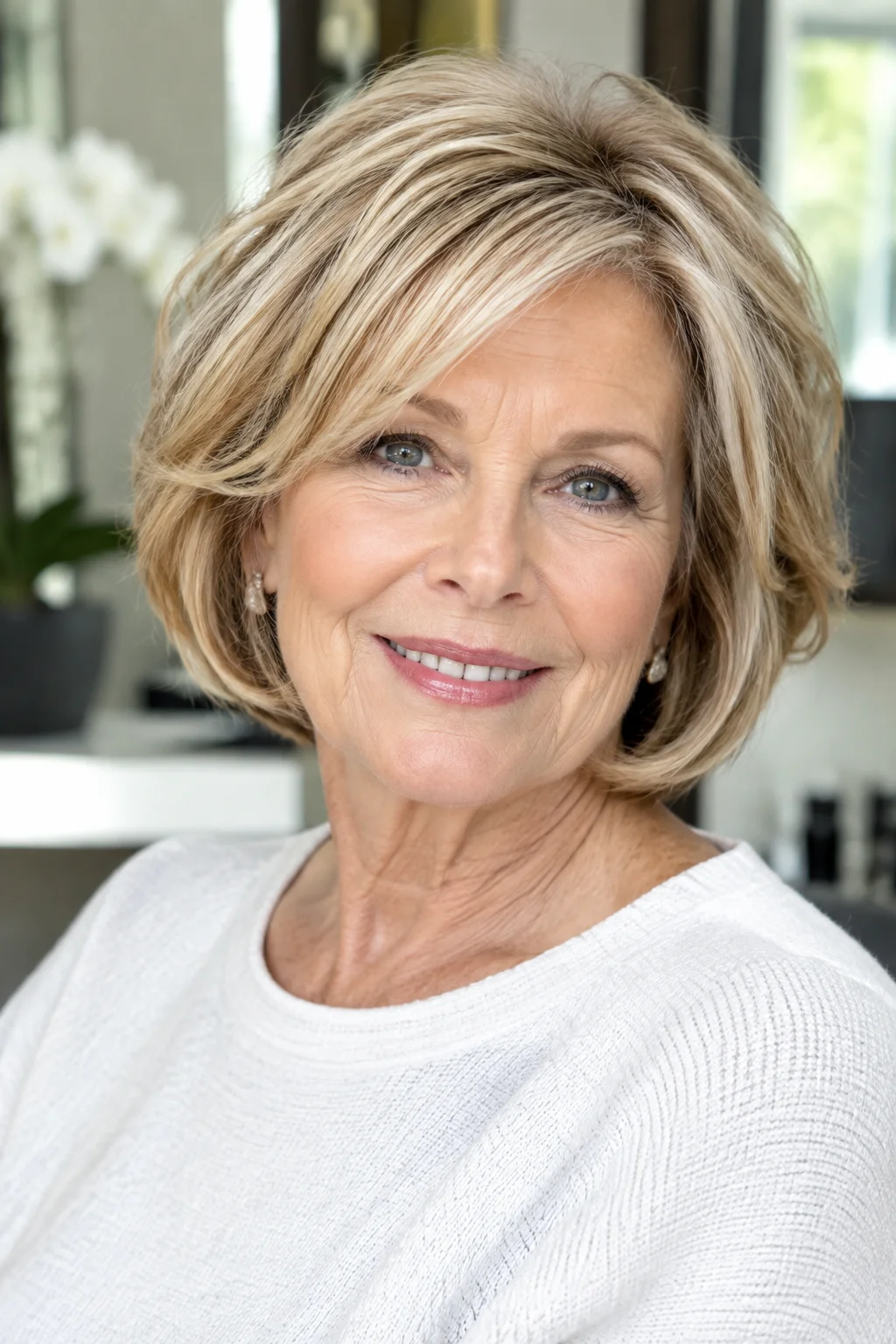
A rounded bob shape, combined with a bit of extra layering right at the crown, gives fine hair a soft, full silhouette without looking overdone. The roundness at the bottom keeps things classic, while the crown layering handles the volume work. This bob suits women who prefer a more traditional look over choppy or edgy texture. It holds its shape well between cuts, needing only a trim every couple of months.
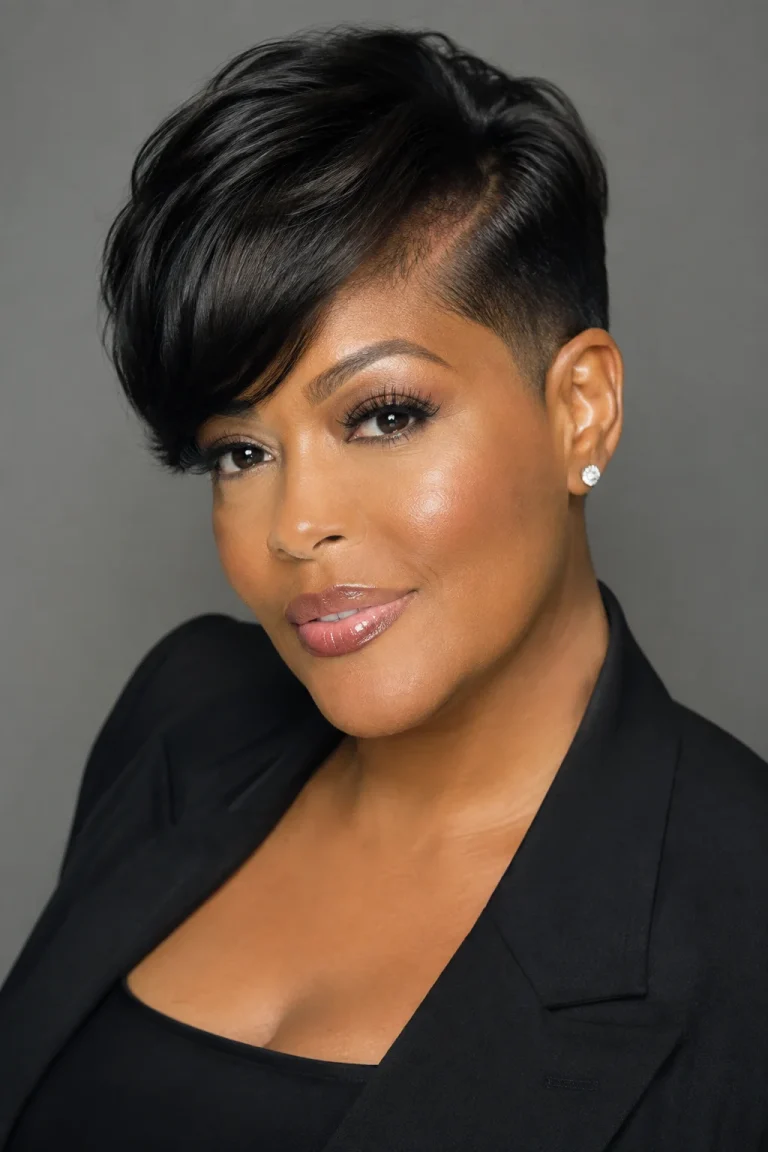
Angled Pixie with Extended Crown
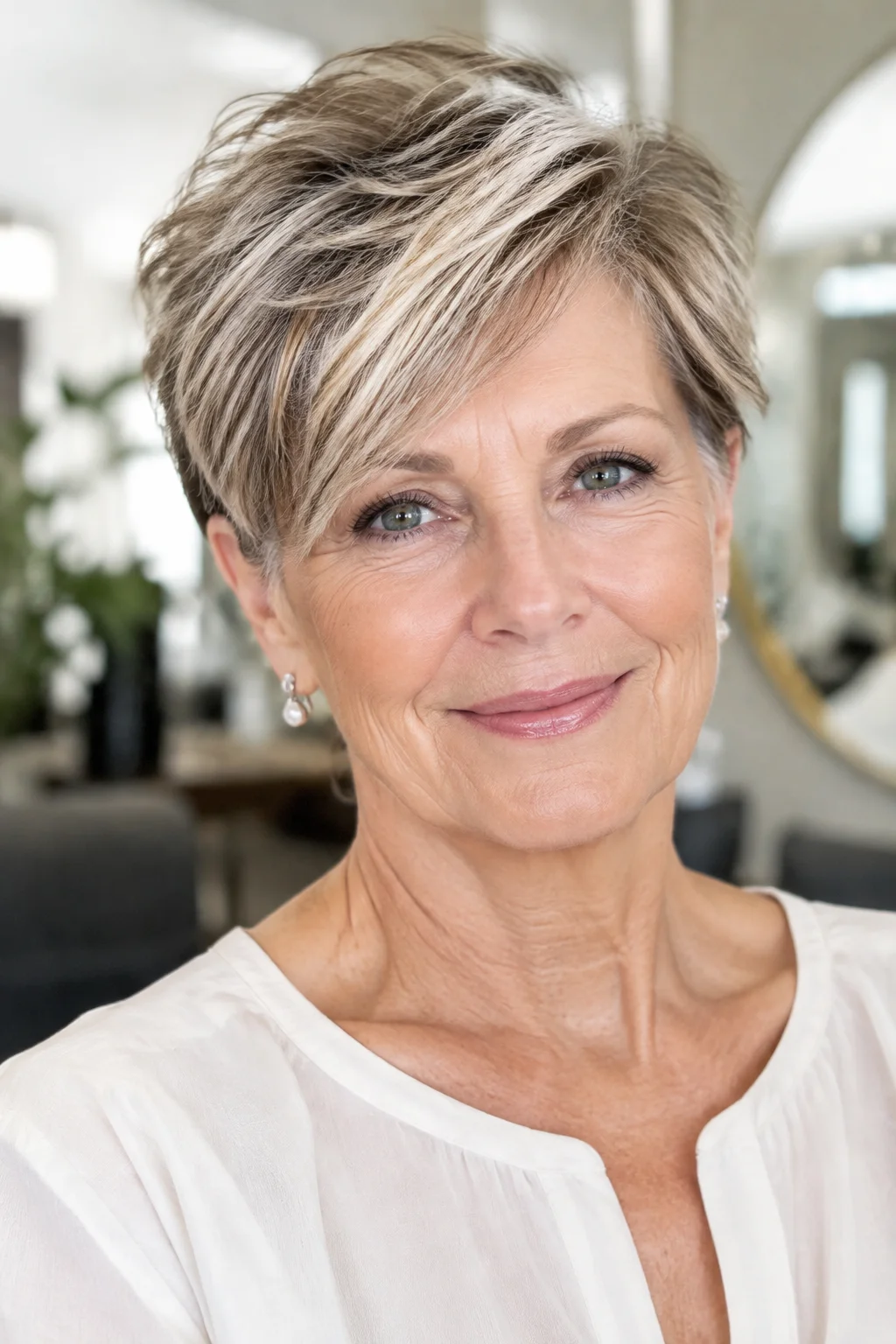
An angled pixie with extra length left at the crown gives you height without needing a full head of long layers. The sides and back stay short and close, while the crown section can be combed up and slightly forward for lift. This works well for women who want a pixie but don’t want it too severe near the face. A small amount of texturizing cream at the crown, worked in with fingers, holds the shape through the day.
Choosing the Right Cut for Your Hair
With nineteen options, picking one comes down to how much volume you need and how much time you want to spend styling. If your hair has thinned significantly, look toward the feathered shag with minimal weight or the textured crop with tapered back, since both remove heaviness rather than just disguising it. If you want a classic, easy shape that still lifts at the crown, the stacked crown pixie cut or the textured rounded bob with crown lift are safer, lower maintenance choices.
Women who miss having longer hair but still want fullness should look at the layered lob with wispy ends or the piece-y lob with partial perm, both of which keep length while still fighting flatness. Avoid any cut left completely blunt with no layering at all, since blunt ends on fine straight hair tend to look thin no matter the length. A common mistake is choosing a style based on a photo alone without accounting for how fine your hair actually is. Bring a photo to your stylist, but let them adjust the layering and weight removal to suit your texture specifically. That conversation matters more than the exact style name.
Final Thoughts
Fine straight hair does not have to look flat or thin once you know which cuts actually work with it instead of against it. Layering, texturizing, and smart placement of shorter pieces near the crown all do real work toward building volume that lasts through the day. Talk with your stylist about your daily routine and how much styling time you actually want to spend, then pick from this list with that honesty in mind. The right cut should feel easier, not harder, to manage every morning.