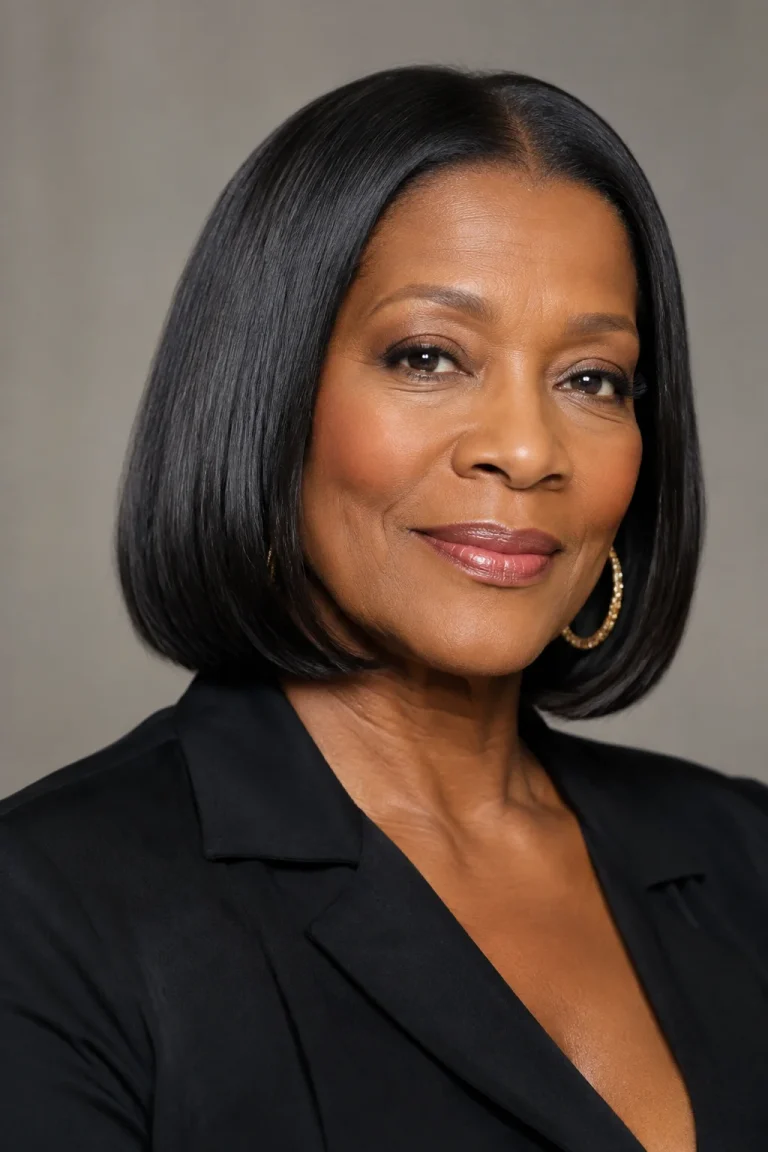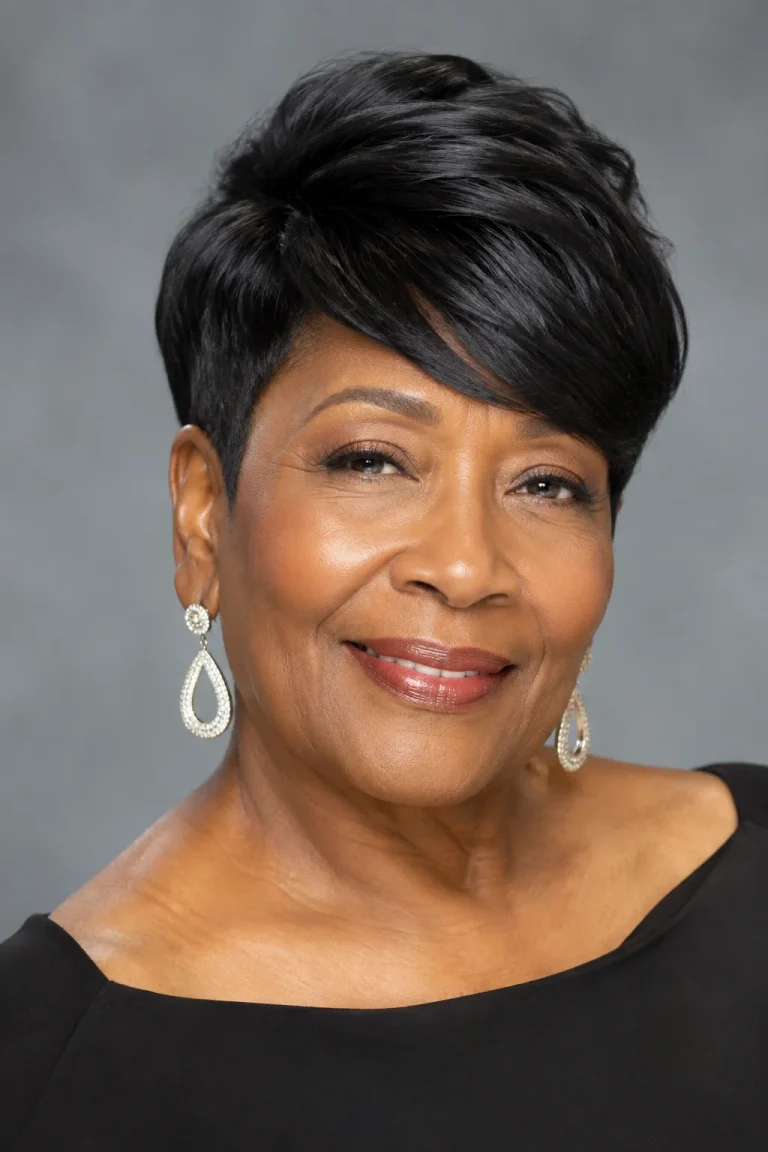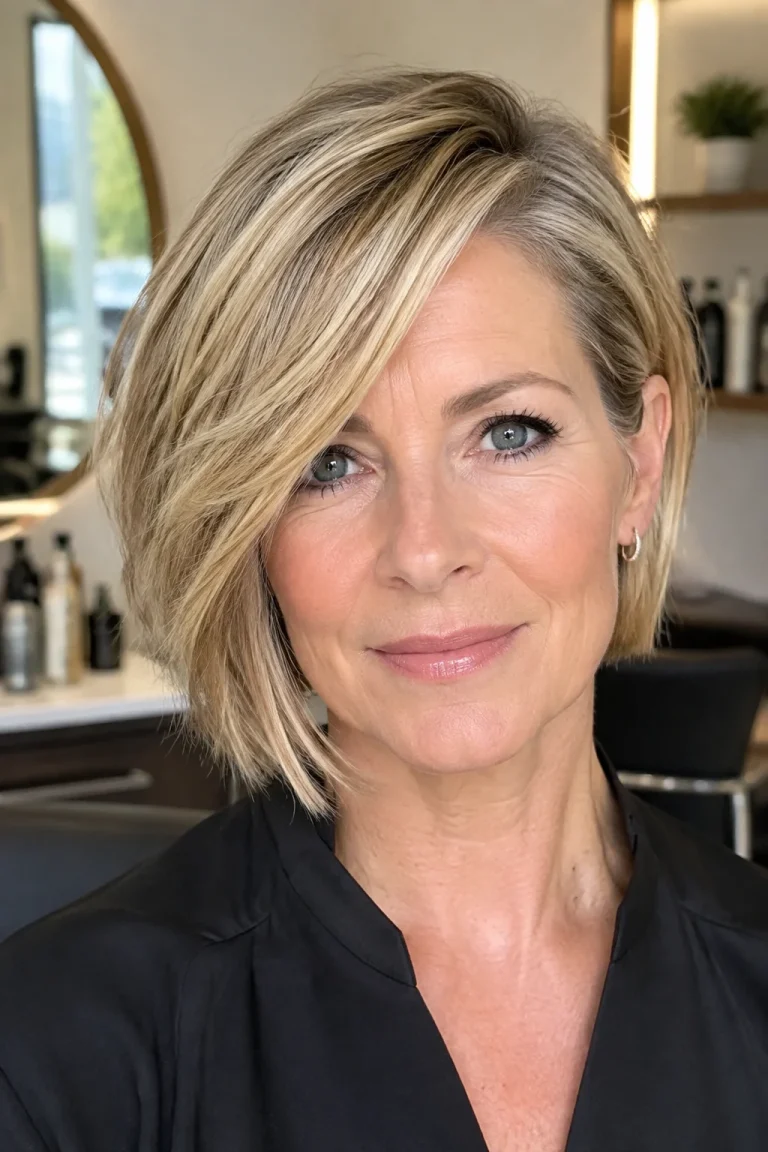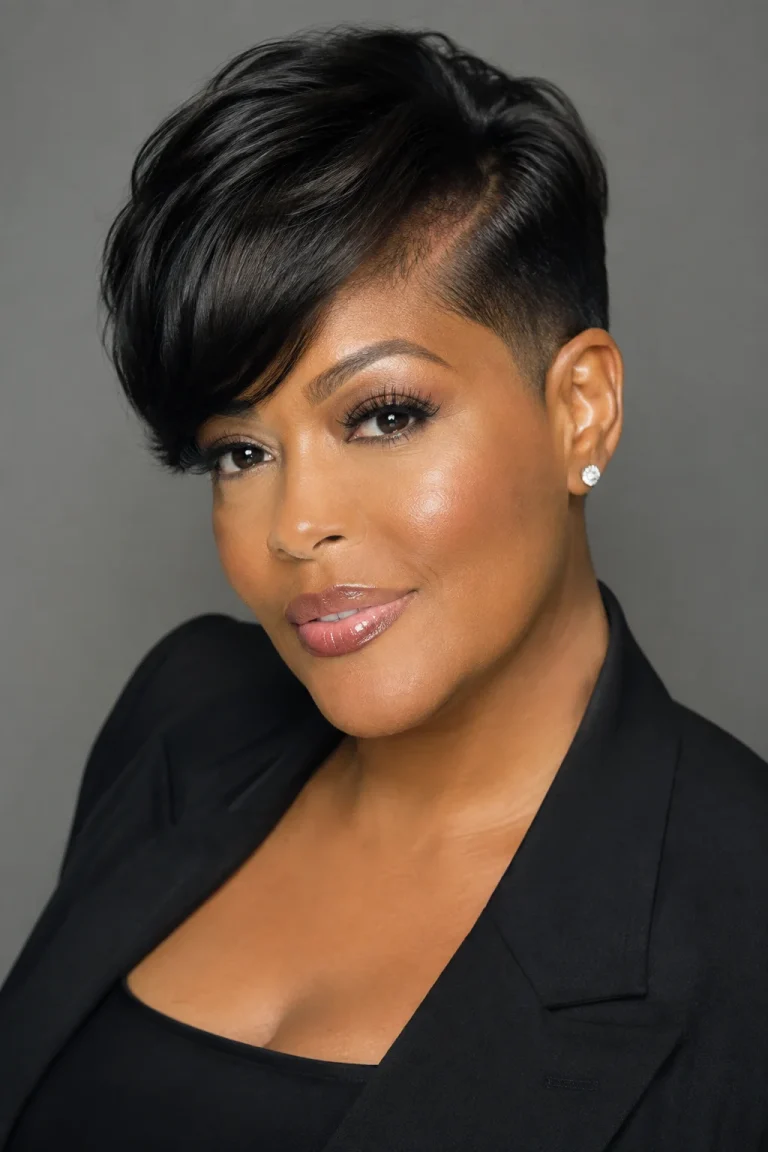
Straight hair after 60 can feel flat against the face if the cut doesn’t work with you. Heavy layers piled on top do nothing for the areas that matter most, which are the cheeks, jaw, and chin. Softness comes from strategic length near the face, not from volume everywhere else. Face framing straight hair hairstyles for women over 60 solve this by placing movement exactly where it counts, lifting the eyes, softening the jawline, and taking years off without a single perm or curl. These cuts work with straight texture instead of fighting it, using angles and layers placed close to the cheekbones to create the illusion of lift and warmth. Below are 21 options, each built around a different silhouette so you can find one that matches your hair length, density, and how much daily styling you actually want to do. Some need a blow dryer and round brush, others air dry just fine.
Straight Bob with Wispy Front Pieces
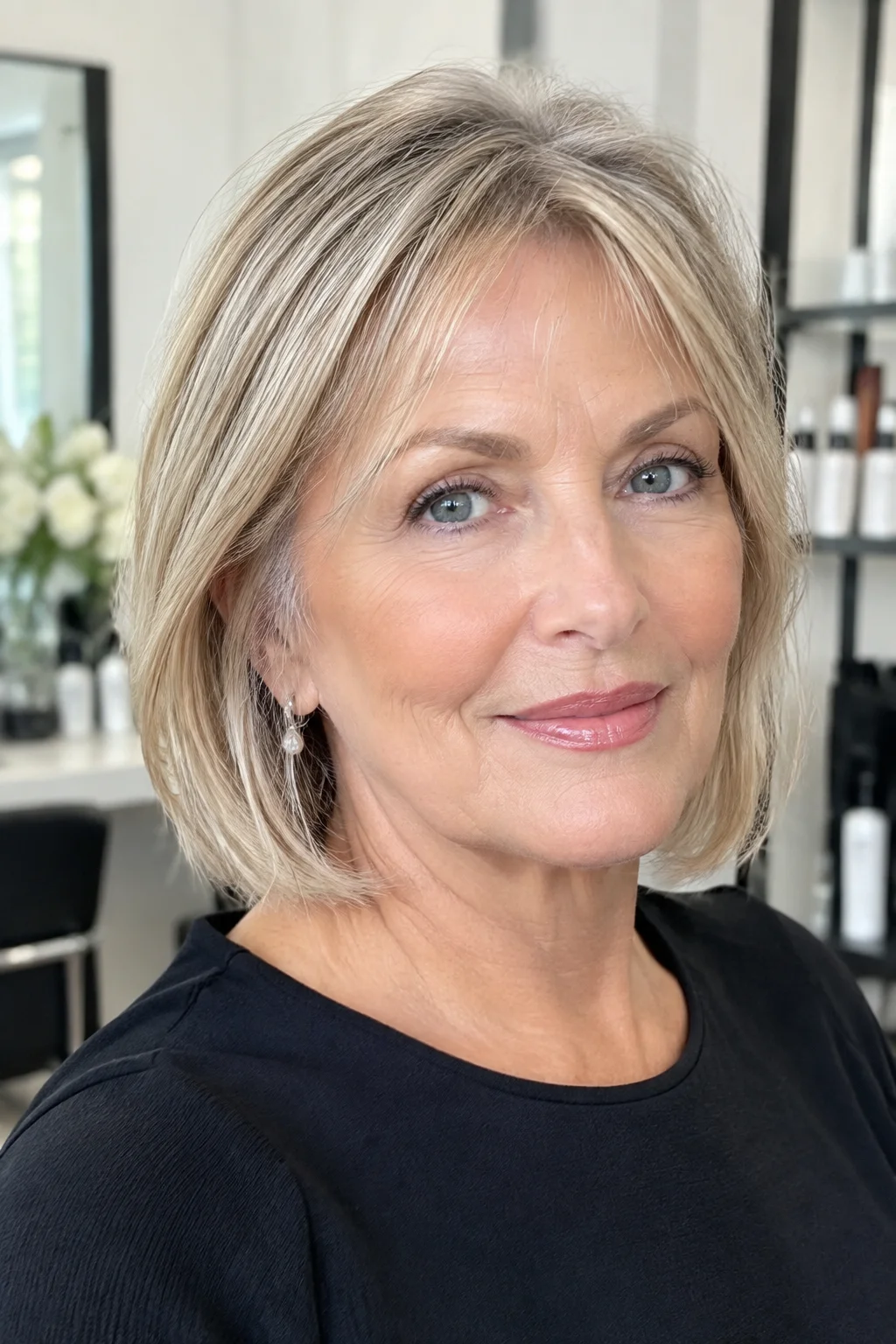
This bob keeps most of the length blunt and heavy while a few finer pieces near the cheeks get thinned out and cut slightly shorter. Those wispy sections catch the light and move even when the rest of the bob stays still. It’s a low maintenance way to soften a strong jawline without losing the clean shape a bob is known for. Tip: ask your stylist to point-cut just the front two inches so the wisps taper naturally instead of ending in a blunt line. A light mist of heat protectant before styling helps the finish last. A light mist of heat protectant before styling helps the finish last.
Long Straight Hair with Subtle Layers Around the Face
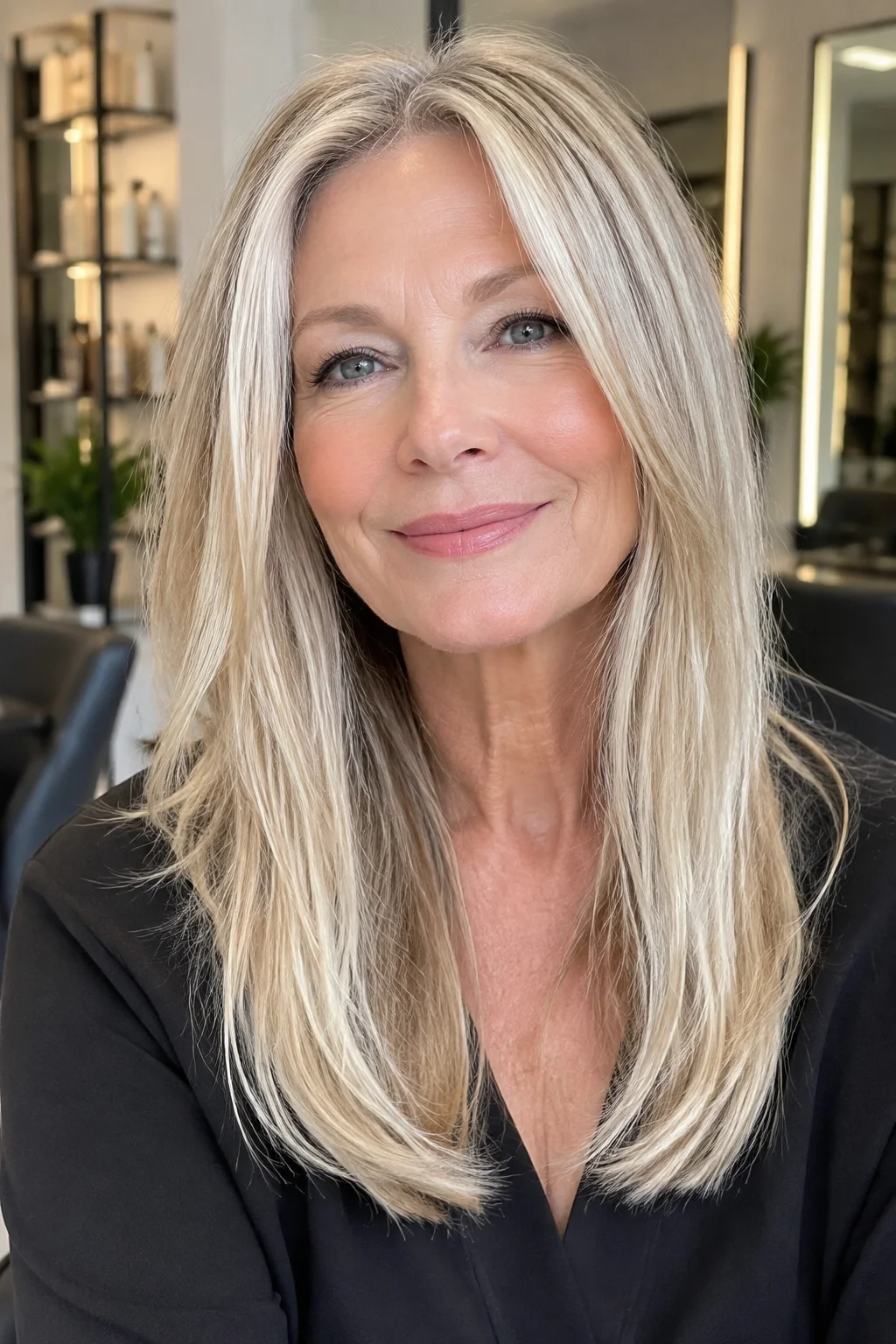
Keeping length past the shoulders while adding gentle layers only near the face gives you movement without sacrificing the weight that makes straight hair look sleek. The layers start around chin level and blend upward, so from the back the hair still reads as one solid length. This works especially well on fine to medium hair that needs a little shape near the crown. It also grows out gracefully, since the layering is minimal and concentrated in one area rather than scattered throughout. A light mist of heat protectant before styling helps the finish last. A light mist of heat protectant before styling helps the finish last.
Blunt Straight Bob with Angled Side-Swept Bangs
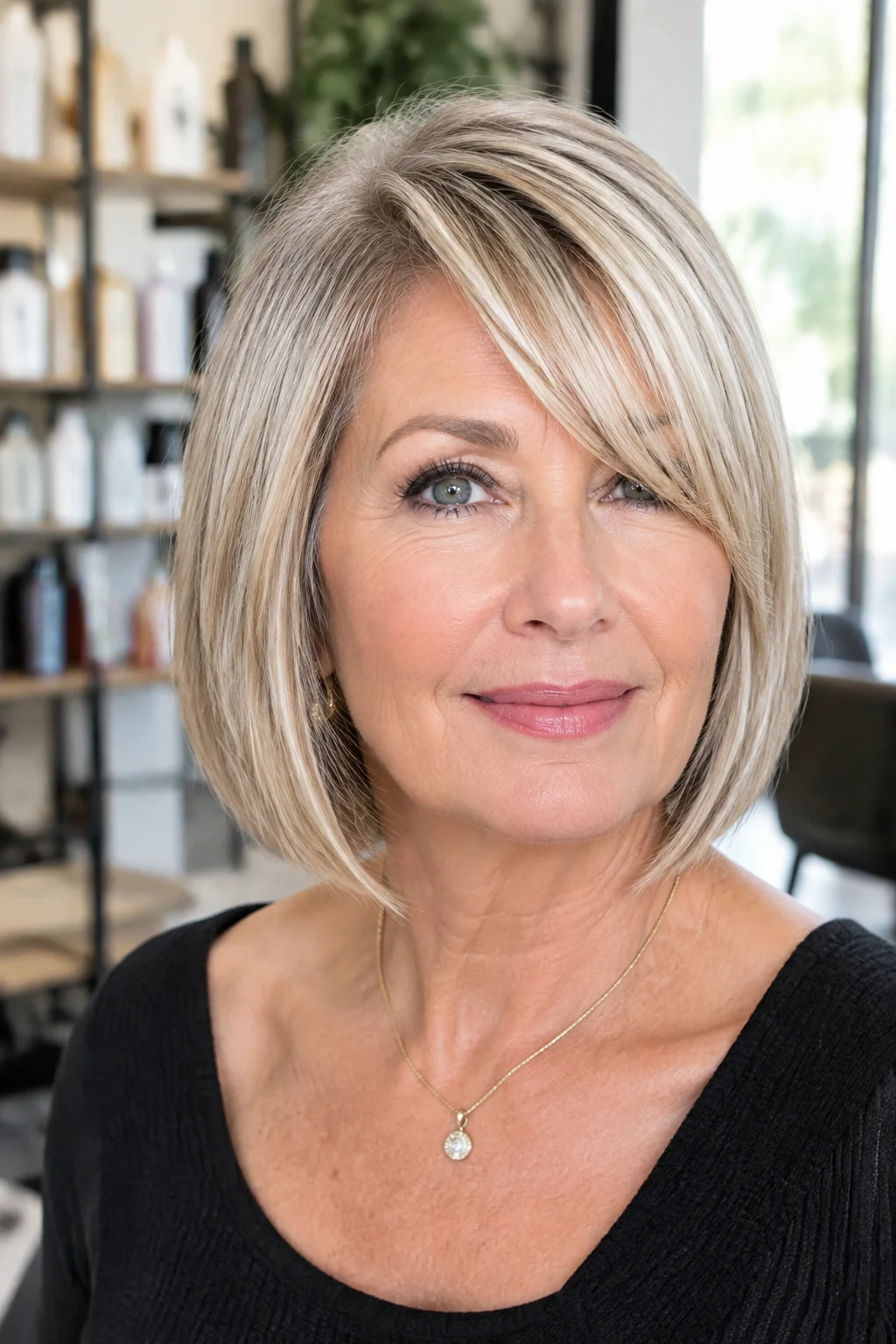
The bangs here are cut on a diagonal, longer on one side and shorter on the other, sweeping across the forehead instead of sitting straight across. Paired with a blunt bob, the angle softens what could otherwise feel like a severe, geometric shape. This combination flatters rounder faces by breaking up width at the forehead. Tip: have the bangs cut dry so the angle lands exactly where your natural part falls.
Straight Lob with Choppy Face-Framing Layers
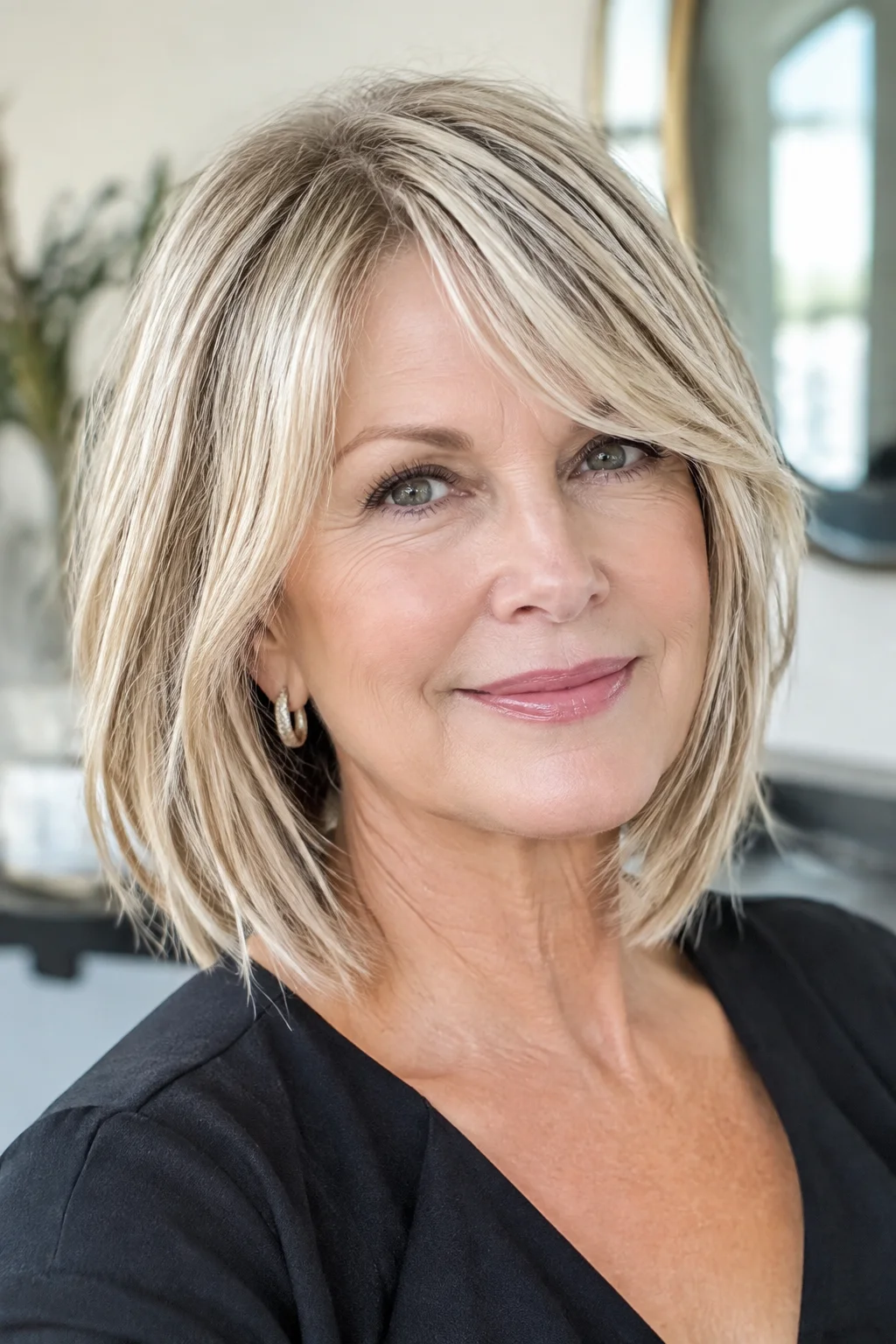
A lob, or long bob, sitting around the collarbone gets extra texture through choppy layers cut into the front sections. These layers are uneven on purpose, with some ending at the chin and others reaching past the jaw. The result feels a little edgier than a standard bob while still keeping the face-softening benefit. It suits women who want a bob’s ease but aren’t drawn to a perfectly smooth, one-length finish.
Sleek Straight Hair with Soft-Curtain Bangs
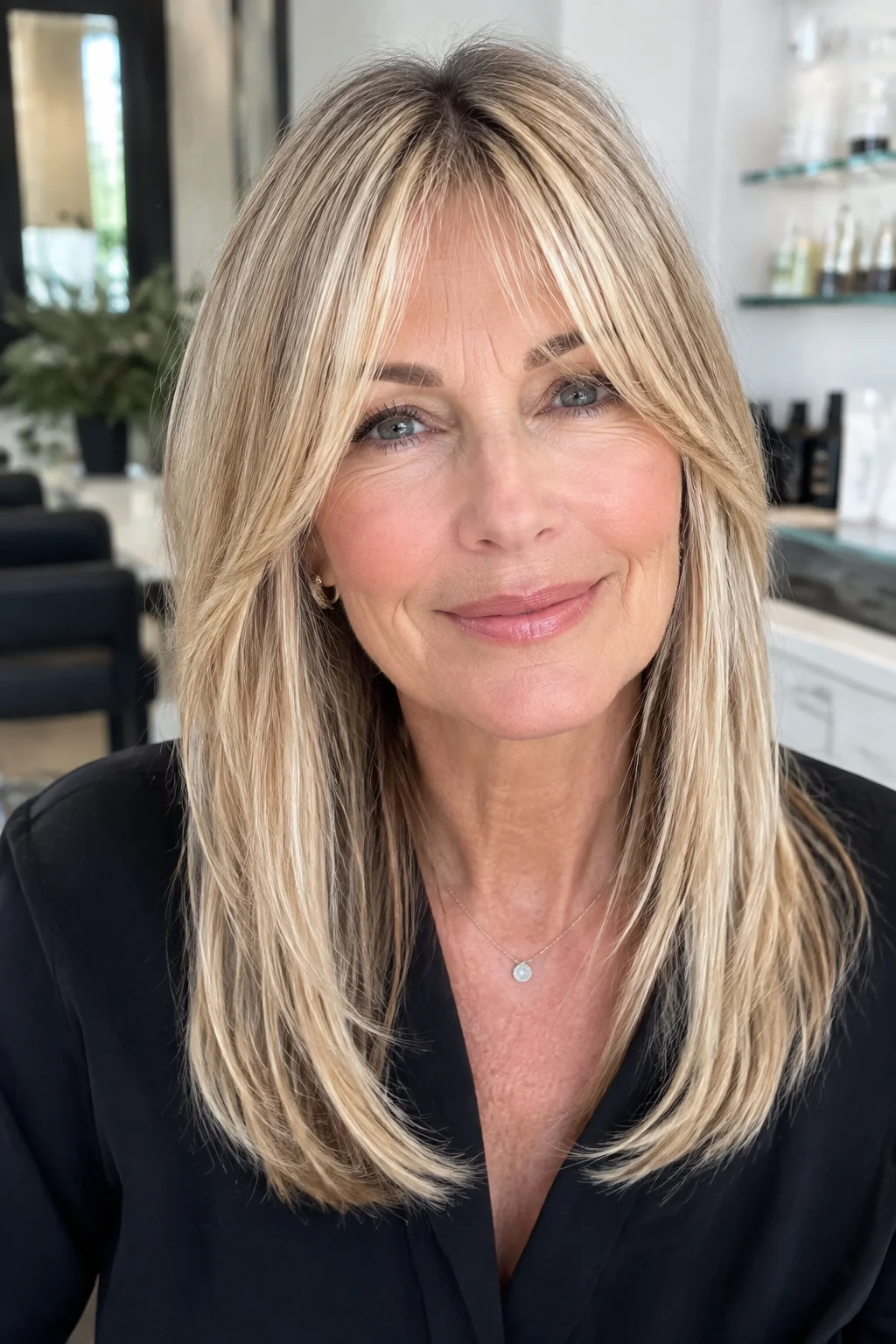
Curtain bangs part in the middle and sweep back on both sides, framing the face like an open curtain rather than covering the forehead. On sleek straight hair, this style adds softness without changing the overall length or requiring layers throughout the rest of the head. It’s one of the easier bang styles to grow out too, since the shape simply blends into a middle part over time. Reminds me of the way scarves are draped loosely around the neck, soft and open rather than tight.
Straight Pixie-Bob Hybrid with Layered Crown
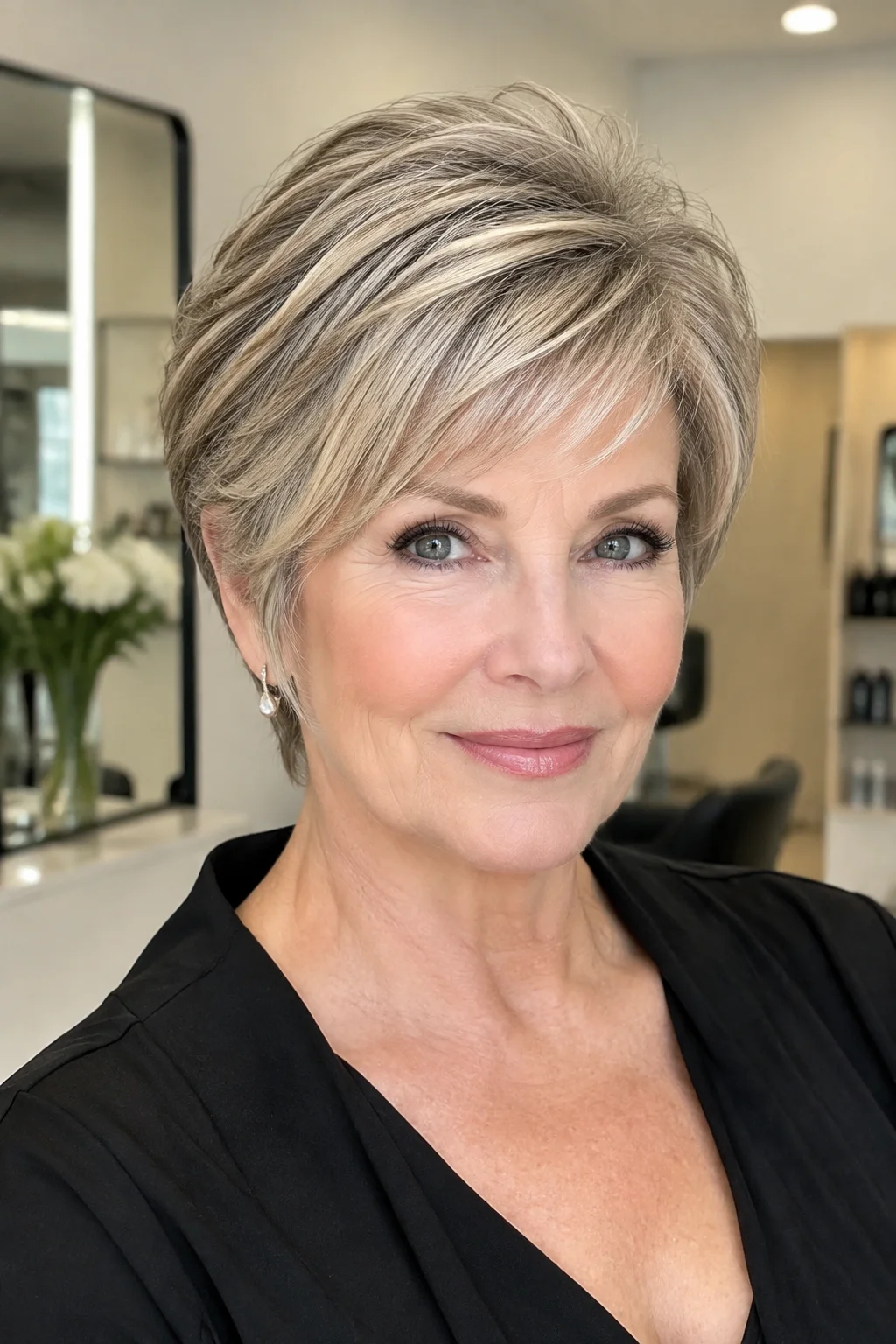
This cut sits between a pixie and a bob, usually landing at the jaw or just below, with shorter layers built into the crown for lift. The face-framing pieces come down at an angle along the cheeks, balancing the shorter top with longer sides. It’s a strong option for thinning hair since the crown layers create the appearance of more density.
Straight Shoulder-Length with Feathered Layers
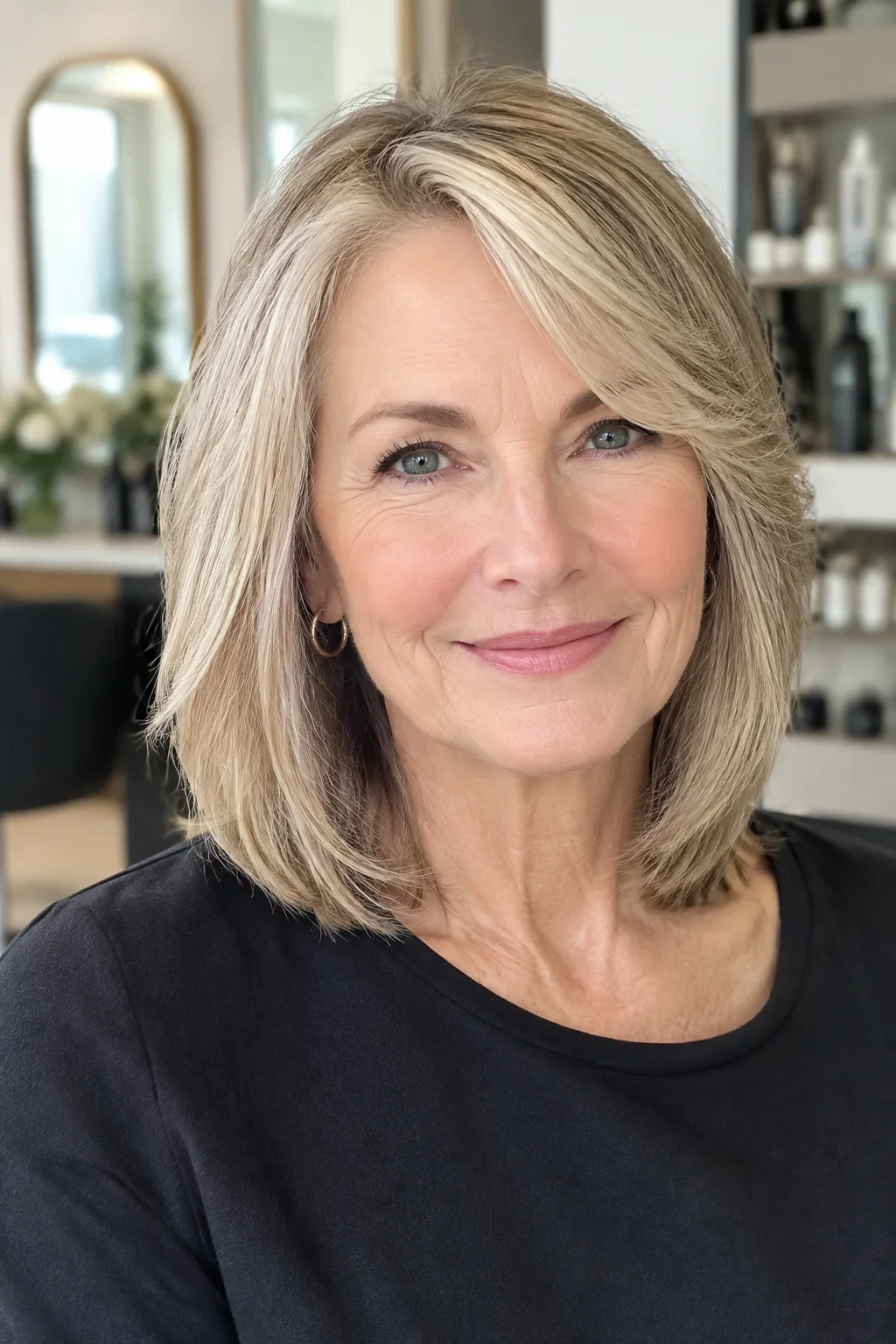
Feathered layers are cut with a lighter hand than choppy layers, creating soft edges rather than sharp lines. At shoulder length, this feathering works around the face to lift the cheekbones and soften the temples. The rest of the hair stays fairly full, so the overall look reads as gently textured rather than heavily layered. It’s a comfortable middle ground for anyone who finds blunt cuts too severe but doesn’t want shag-level texture either.
Tapered Straight Bob with Longer Cheekbone Pieces
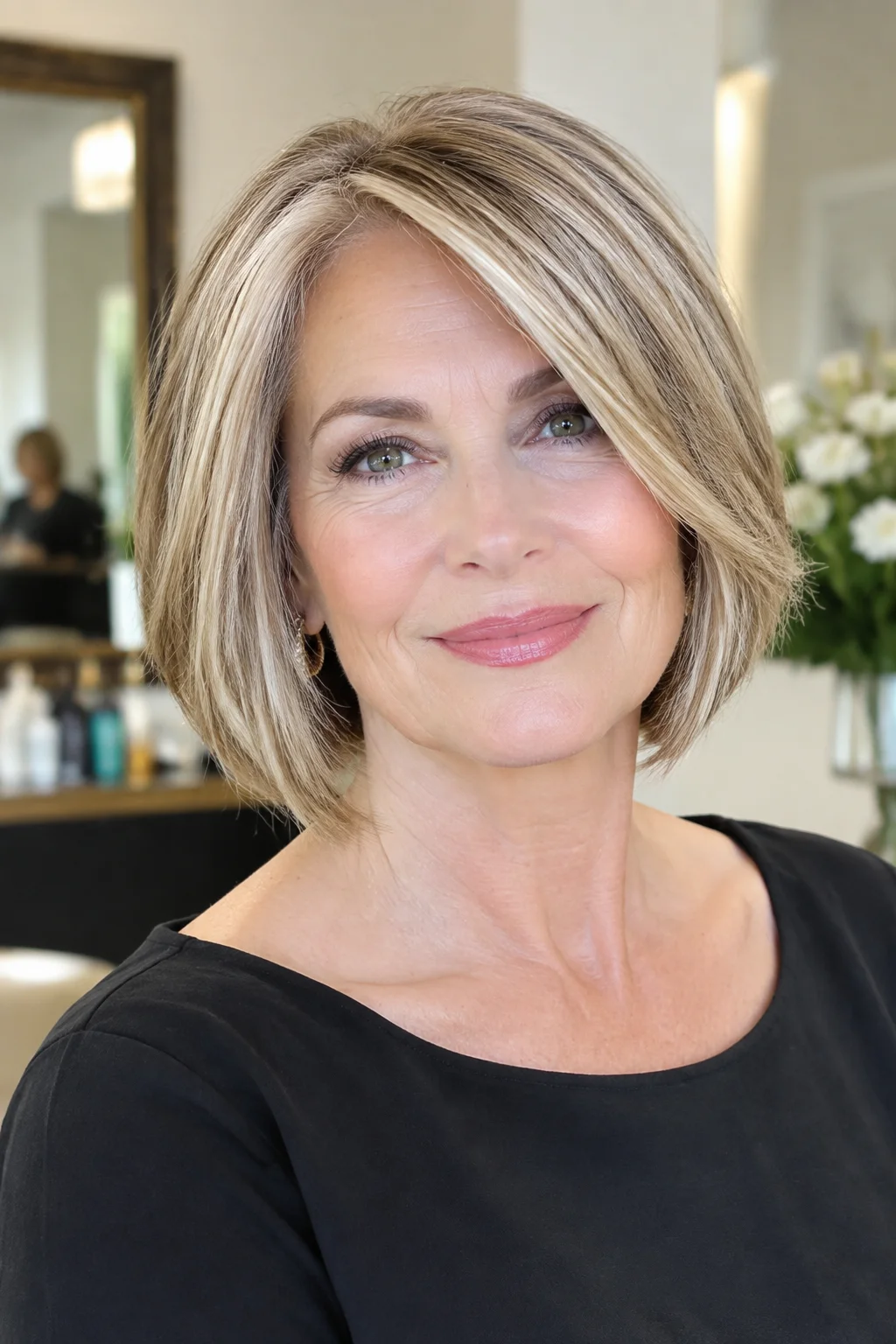
The back and sides of this bob taper shorter toward the neck while two longer pieces are left to frame the cheekbones. That contrast between short and long creates a subtle diagonal line that draws attention up toward the eyes. Tip: request the taper be cut close but not shaved, so the transition into the longer front pieces stays smooth instead of abrupt.
Long Straight Hair with Layered Bangs and Side Sweep
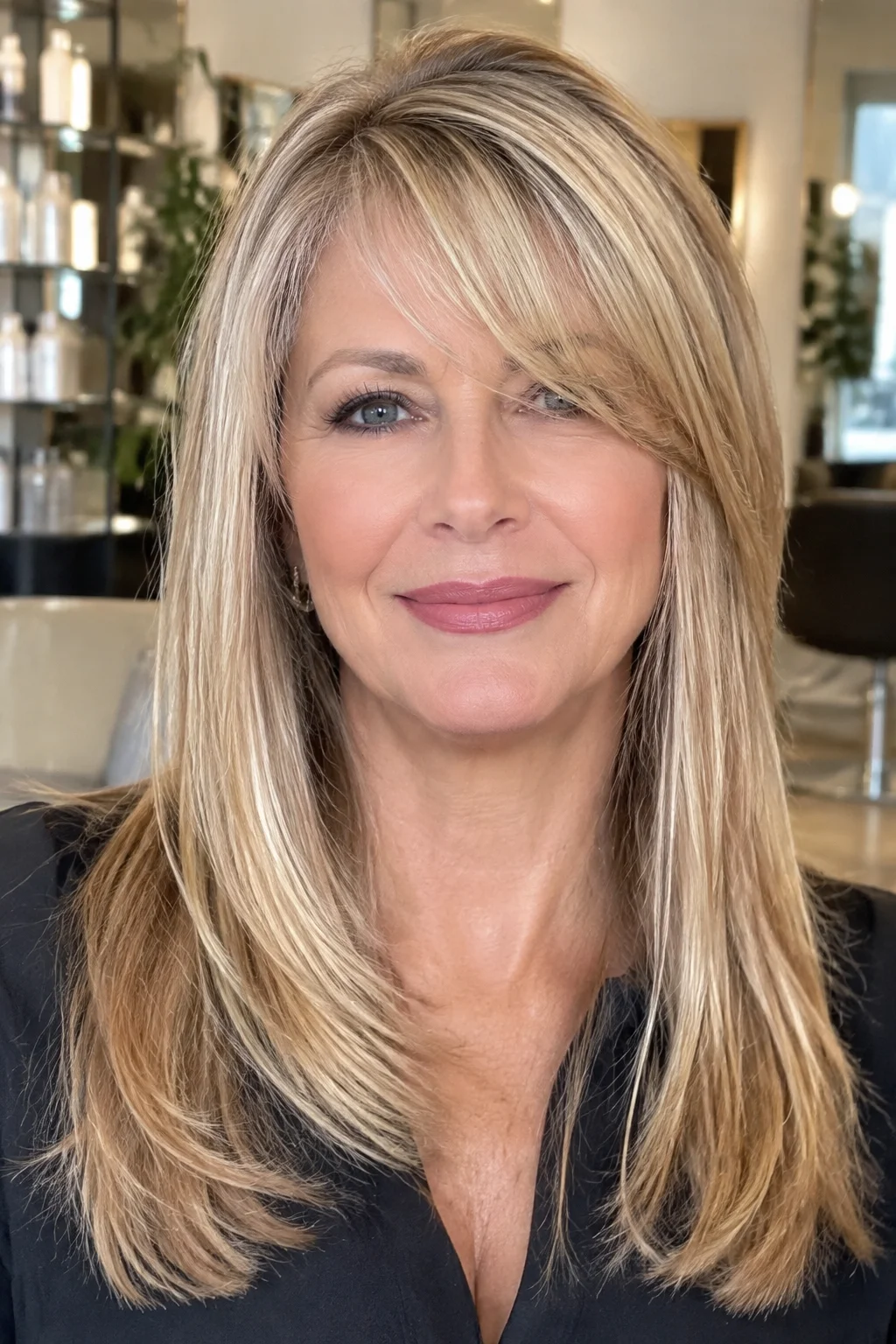
Layered bangs cut on an angle and swept to one side give long straight hair a focal point near the face without disrupting the length elsewhere. The layers within the bang itself, rather than just at the ends, keep them from looking like a flat curtain. This style flatters square and rectangular face shapes especially well because the sweep softens the forehead corners.
Straight Bob with Disconnected Front Layers
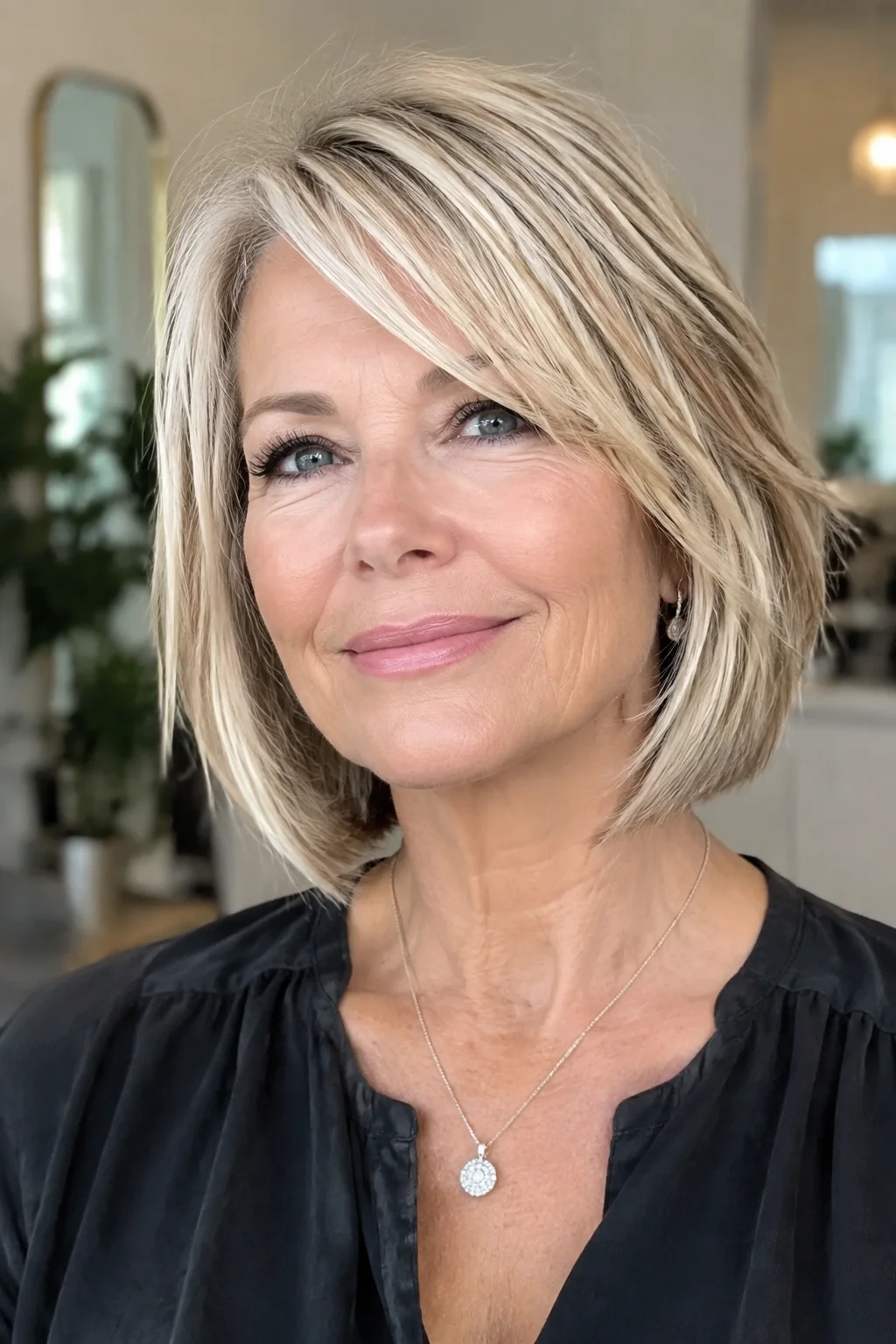
Disconnection means the front layers are cut noticeably shorter than the back sections, creating a visible break rather than a smooth blend. On a straight bob, this gives a modern, slightly architectural feel while still framing the face with movement near the chin. It suits women with thicker hair who want the front pieces to stand apart texturally from the heavier back length.
Straight Hair with Face-Framing Highlights and Angle Cut
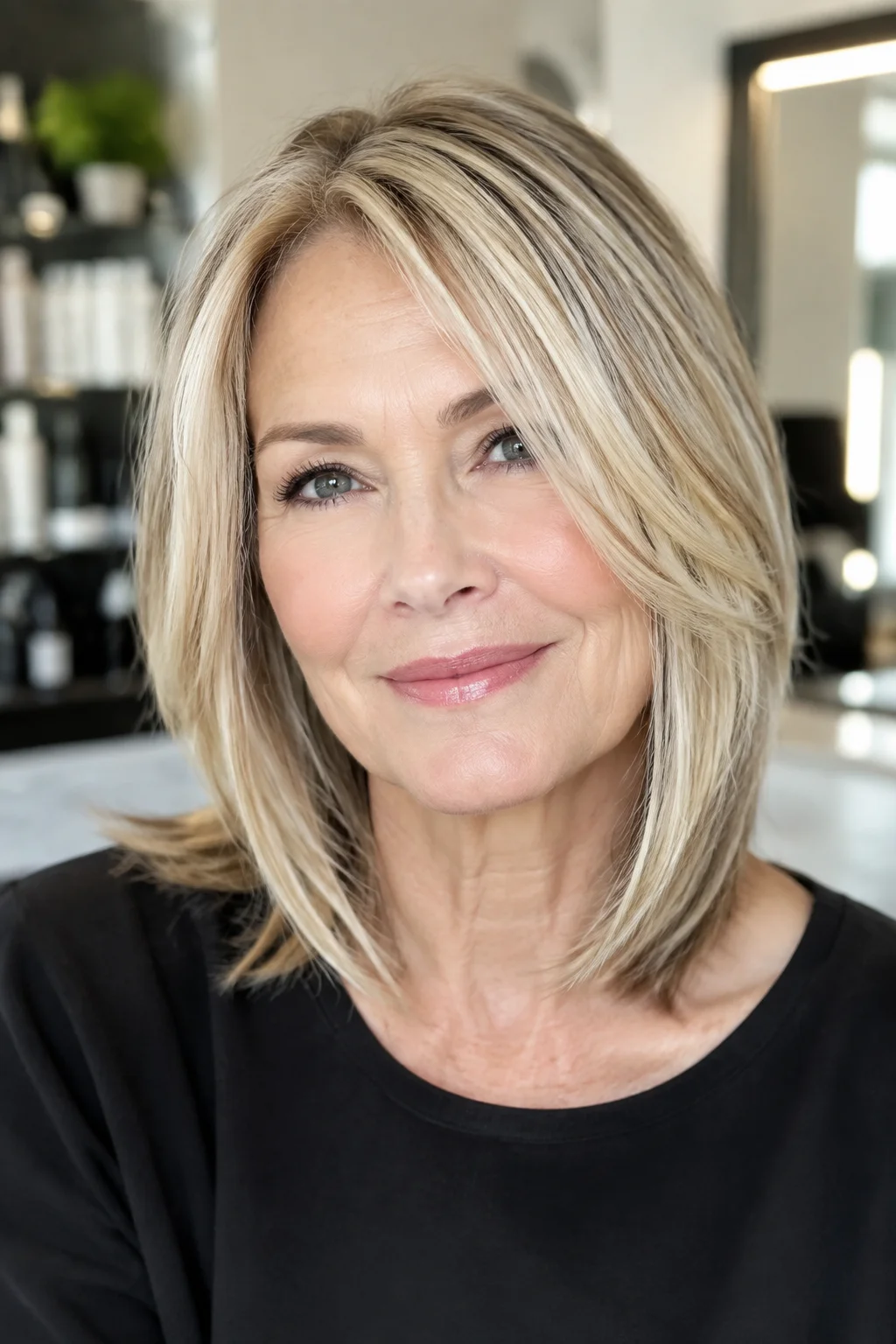
Sometimes the softening comes from color rather than length. Lighter highlights placed only in the front pieces, combined with a subtle angle cut around the face, brighten the complexion and pull focus toward the eyes. This works on almost any length since the highlight placement does most of the work. Tip: ask for highlights that start an inch or two below the part line so the regrowth doesn’t show as quickly.
Straight Asymmetrical Bob
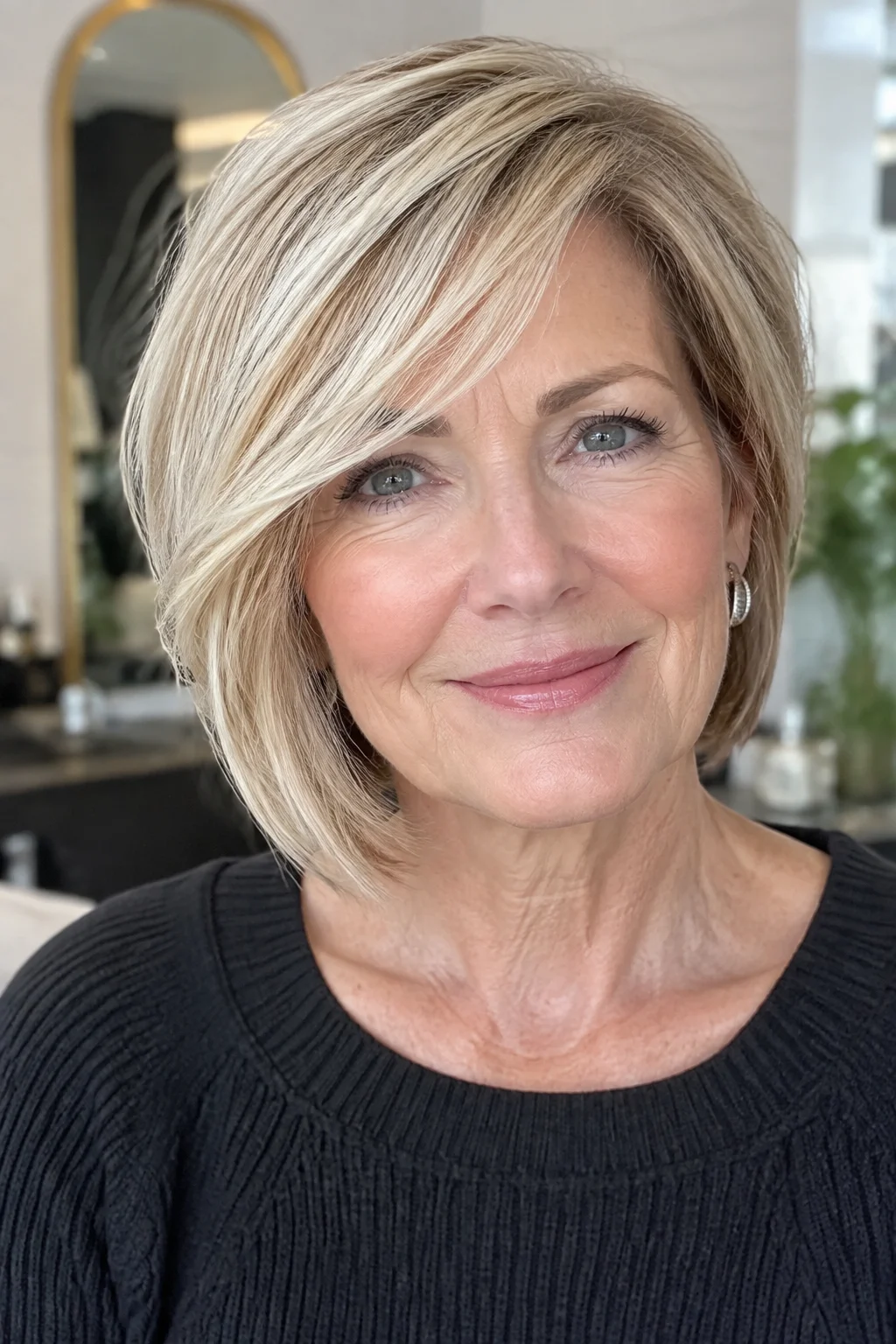
One side runs longer than the other in this bob, often by an inch or more, creating a diagonal line that moves the eye rather than sitting static. It’s a bold choice among straight face framing straight hair hairstyles for women over 60, but the asymmetry itself does the softening by avoiding a straight, harsh line across the jaw.
Blunt Straight Bangs with Long Sleek Hair
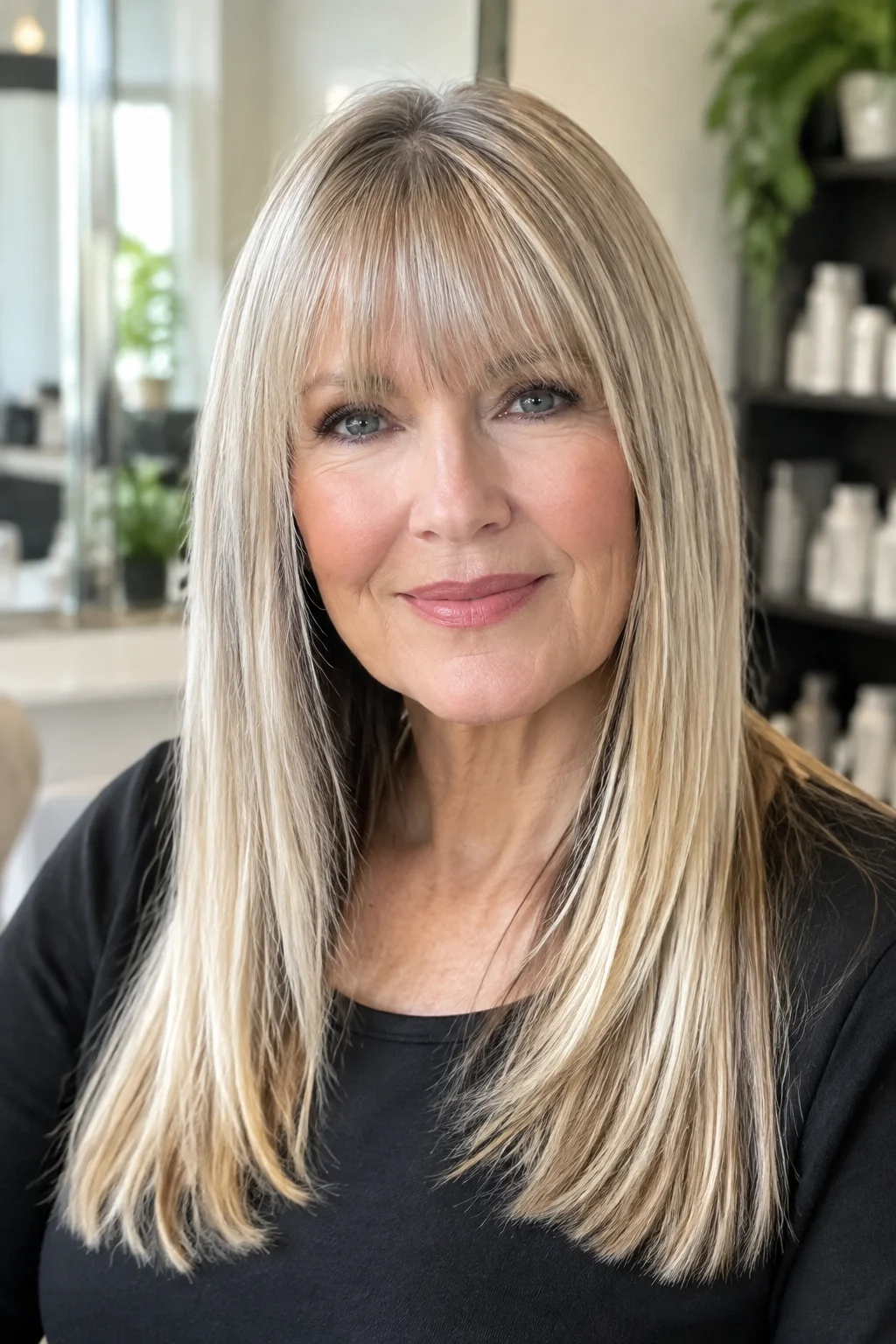
A full, blunt bang paired with long sleek hair creates strong contrast, but the horizontal line across the forehead actually frames the eyes and cheekbones in a way that feels balanced rather than harsh. This combination works best on oval or longer face shapes. Fine hair may need a little dry shampoo at the roots to keep the bang from going flat by midday.
Straight Bob with Graduated Layers and Flip-Out Ends
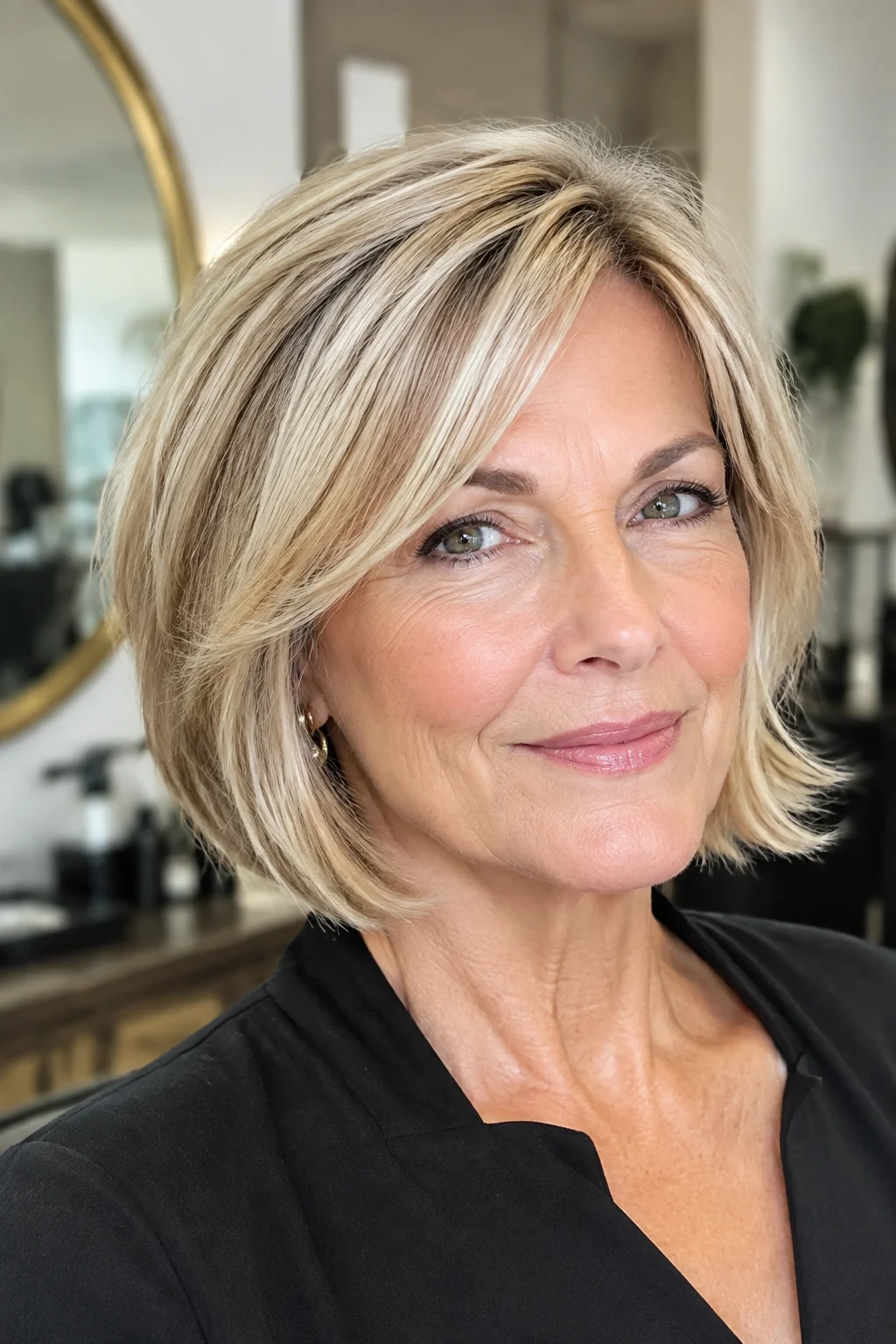
Graduated layers build gradually from the back toward the front, ending in ends that flip slightly outward rather than curving under. This flip adds a bit of retro softness and keeps the bob from looking too stiff. It works well on straight hair with a little natural body, since the flip holds better than it would on very fine, limp strands.
Straight Shag with Face-Framing Shorter Layers
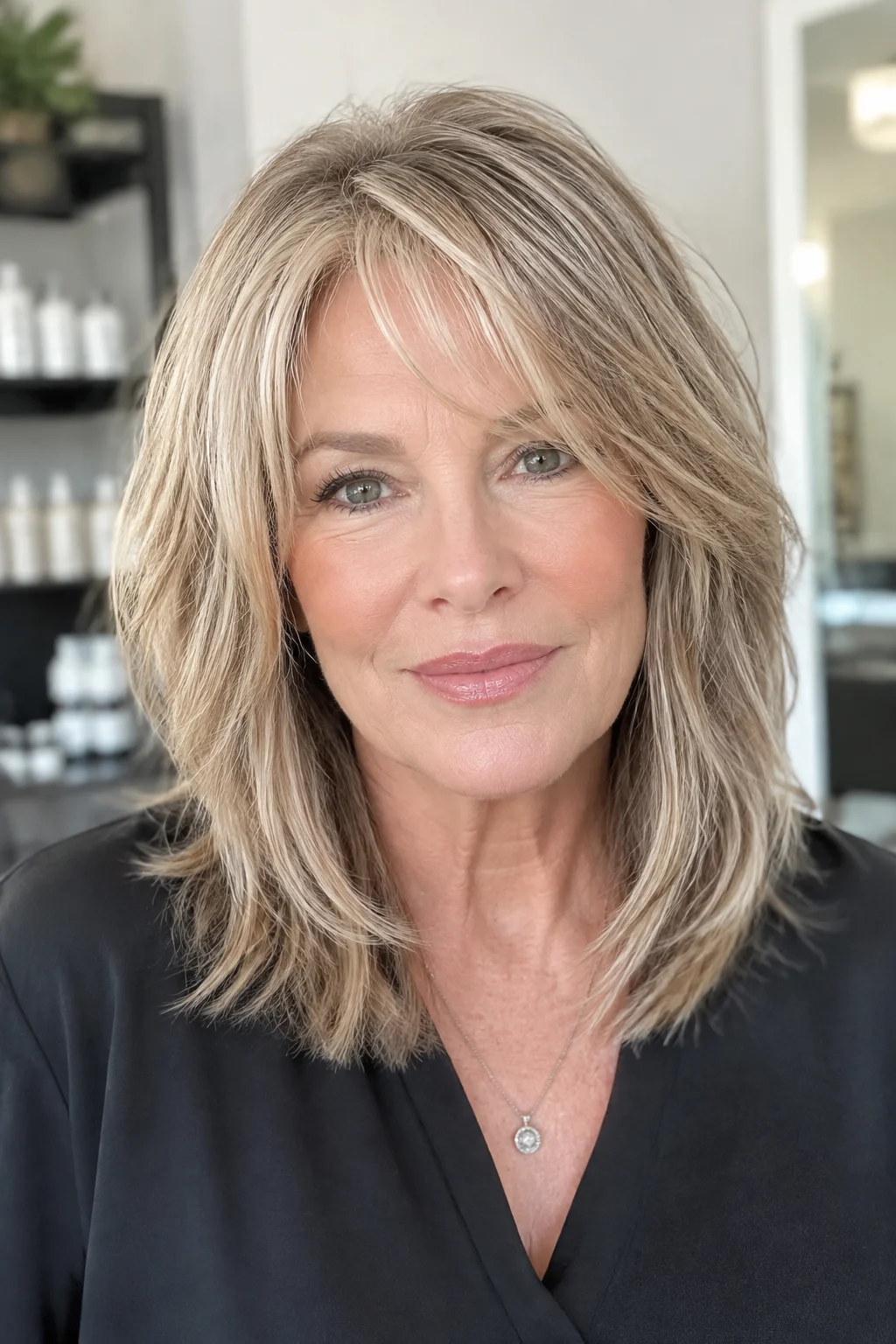
The shag brings heavy layering throughout, but the shortest pieces are concentrated around the face, framing the cheeks and chin while the rest of the hair carries more length and texture. On straight hair, a shag looks less wild and more controlled than it does on curly or wavy textures, similar to how a wool sweater looks tidier than a fringed one. It’s a good pick for anyone bored with a plain bob who wants texture without going short overall. This style does ask for some regular trims to keep the shortest layers from growing out unevenly.
Long Straight Hair with Side Part and One-Sided Face Frame
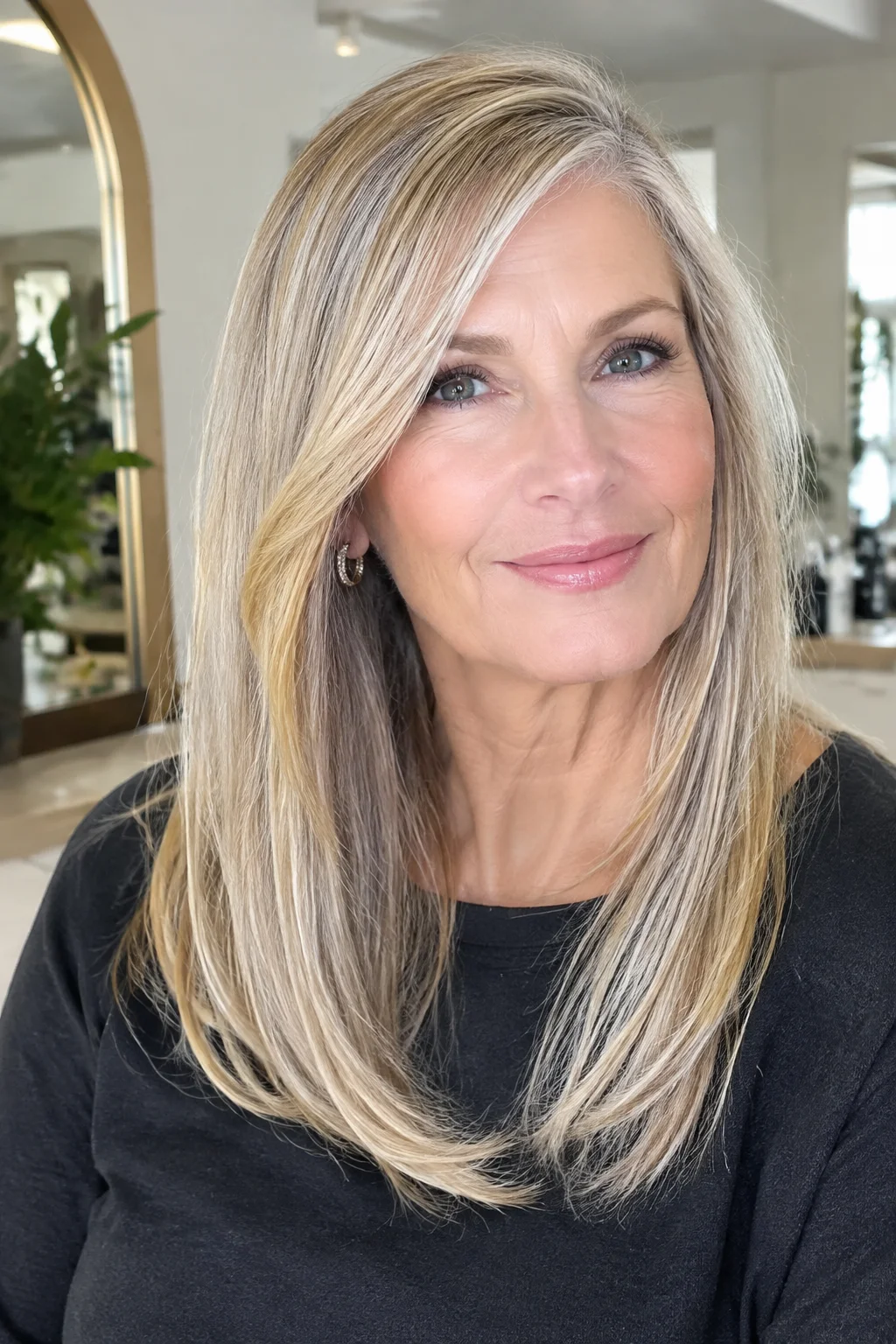
A deep side part paired with a single longer face-framing piece on the heavier side creates asymmetry without cutting an asymmetrical bob. The rest of the length stays untouched, making this one of the lowest commitment ways to add a softening element to long straight hair.
Straight Bob with Micro-Bangs and Wispy Sides
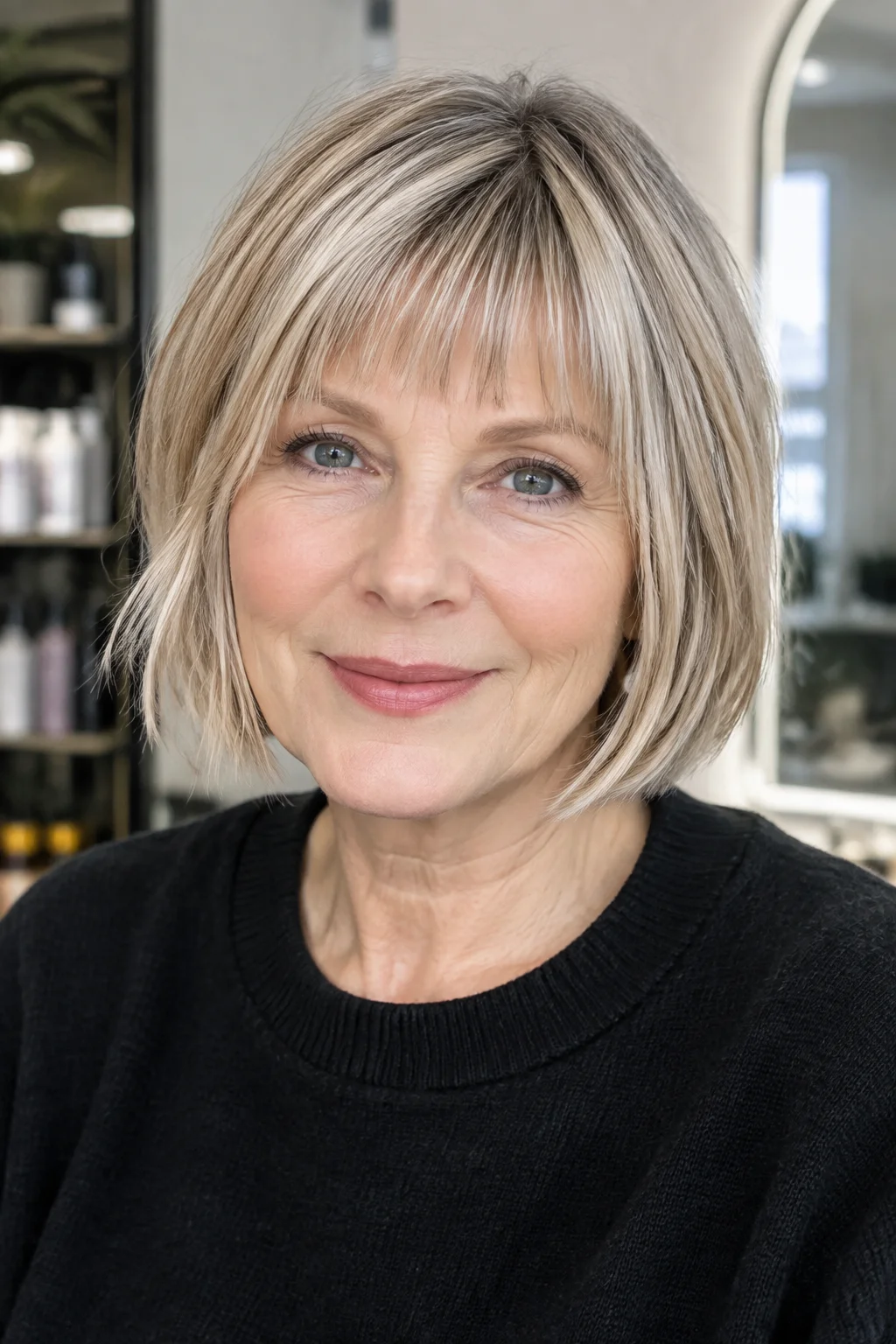
Micro-bangs sit high on the forehead, shorter than a standard fringe, and pair with wispy pieces left longer along the sides. This combination is striking and works best on women with strong, even features since the short bang draws real attention to the eyes. Tip: this style needs trims every three to four weeks to keep the micro-bang from growing past the eyebrow and looking unintentional.
Straight Medium Cut with Angled Back and Forward Layers
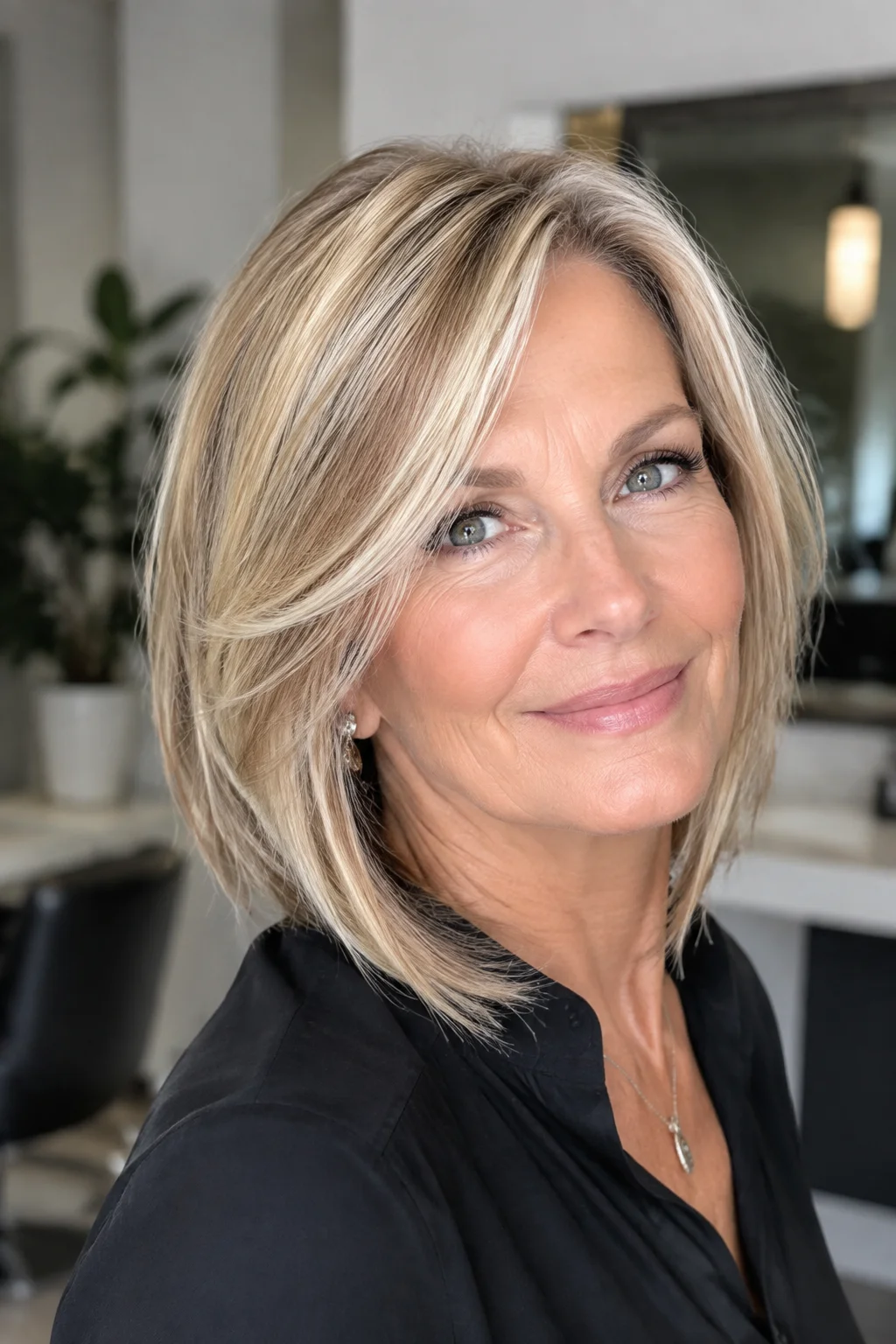
The back of this cut is angled shorter at the nape and longer toward the front, with layers pulled forward around the face. It gives a sense of forward motion in the style, gently pulling focus toward the jaw and chin rather than the back of the head.
Straight Textured Bob with Razored Face Pieces
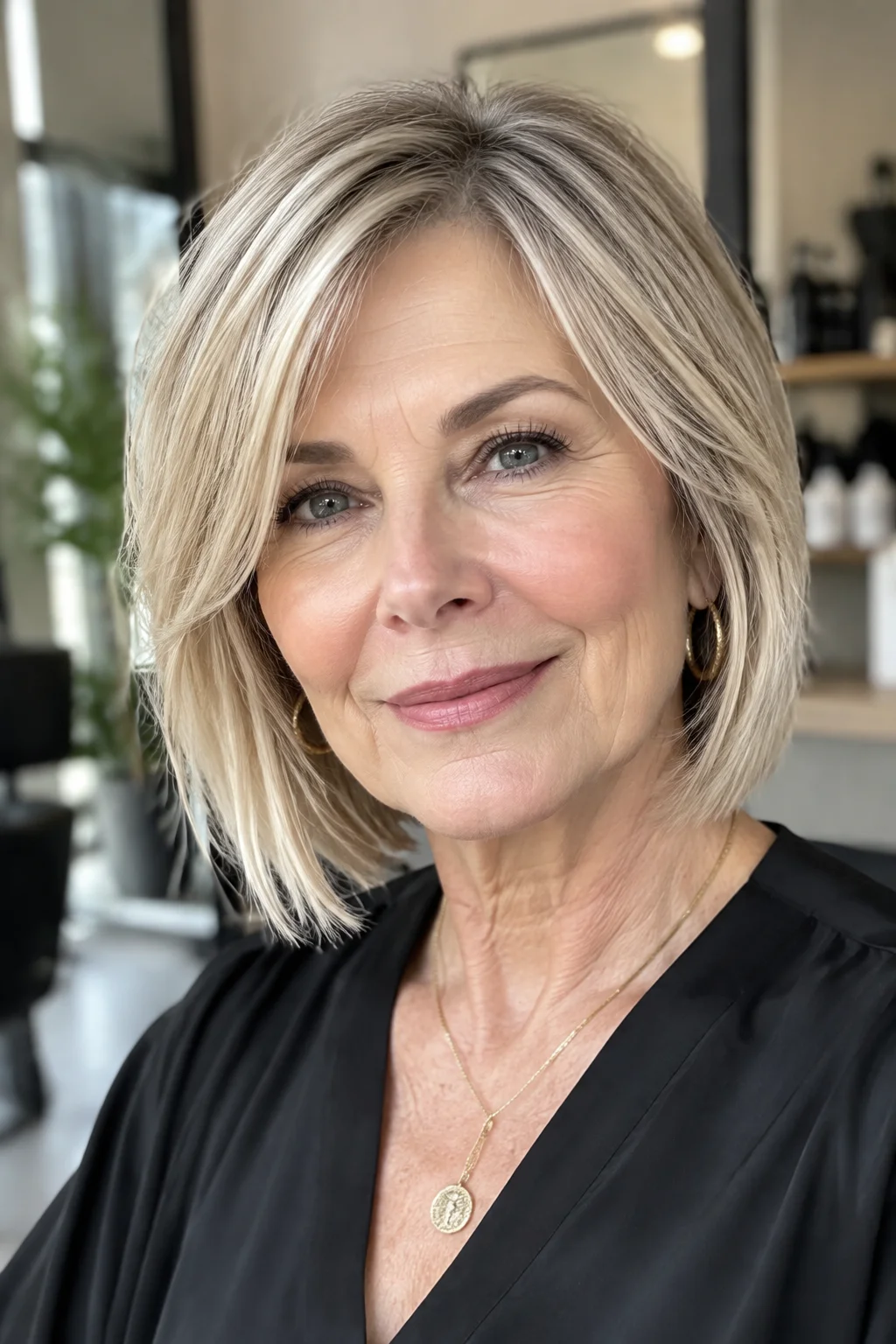
Razoring, rather than scissor cutting, gives the ends a soft, feathered finish instead of a blunt one. Applied just to the face-framing pieces of a bob, it creates texture that moves with the hair instead of holding a stiff shape. This suits thicker straight hair that can look heavy or blocky when cut with scissors alone. The razored ends also pick up less visible dust and frizz throughout the day since there’s no hard edge to catch on.
Long Straight Hair with Barely-There Layers at Face Only
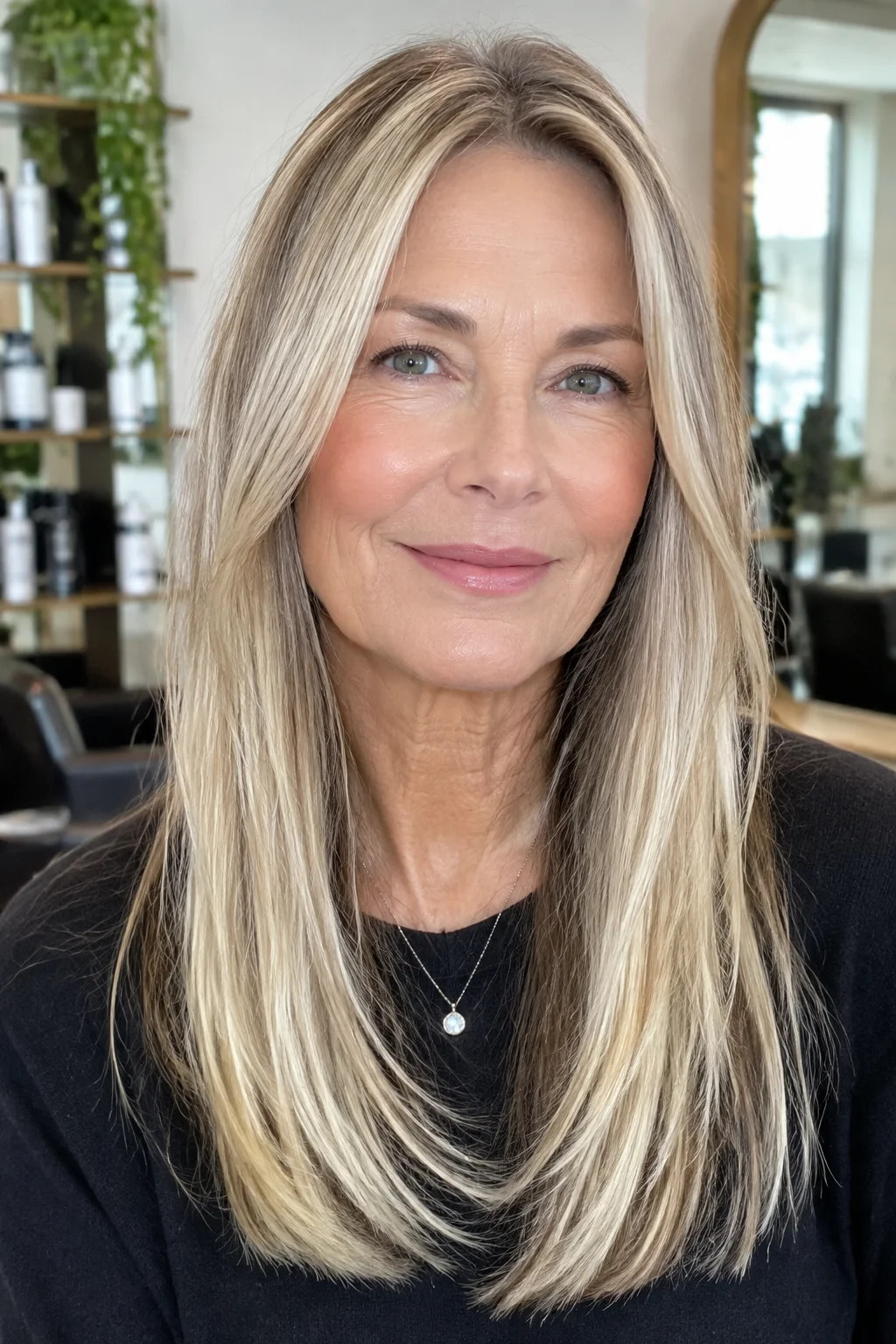
For anyone hesitant about layers altogether, this option keeps nearly all the length intact and adds only the faintest layering right at the face, barely a couple inches of difference. It’s subtle enough that most people won’t notice a cut happened at all, just that the face looks a little softer.
Straight Blunt Bob with Soft-Angled Front Corners
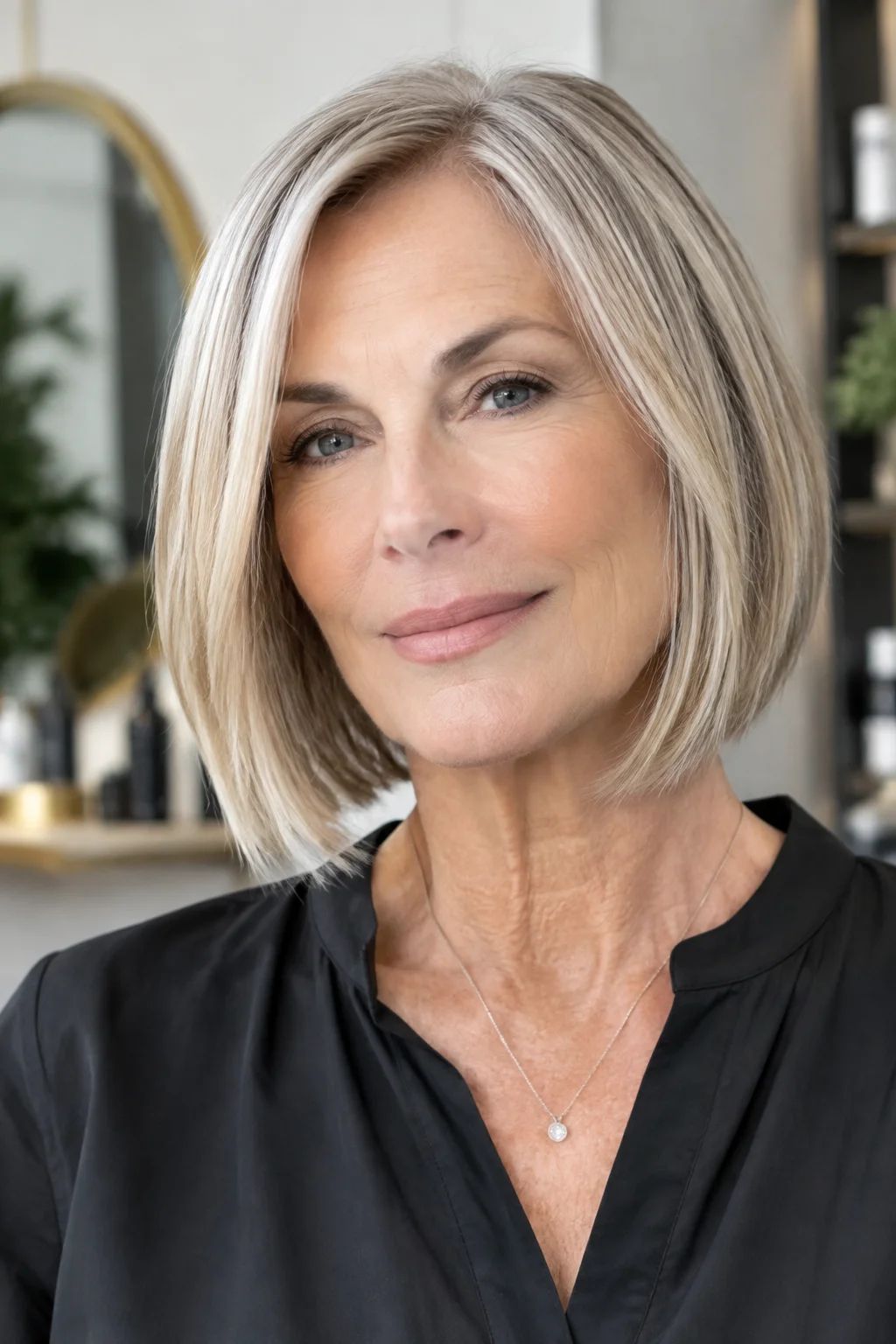
Instead of a sharp horizontal line at the jaw, the front corners of this bob are angled slightly so they curve inward toward the chin rather than pointing straight out. That small adjustment softens the entire shape. Tip: this detail works on almost any bob length, so it’s worth requesting even if you already love your current cut and just want it refreshed.
Choosing the Right Cut for Your Face and Hair Type
Picking among these styles comes down to face shape, hair density, and how much time you want to spend styling. Round faces generally do best with angled options like the blunt straight bob with angled side-swept bangs or the straight asymmetrical bob, since the diagonal lines add length visually. Square or rectangular faces soften nicely with curtain bangs or the long straight hair with layered bangs and side sweep, both of which round out sharp corners near the temples.
Fine or thinning hair benefits most from cuts that add the illusion of density, such as the straight pixie-bob hybrid with layered crown or the tapered straight bob with longer cheekbone pieces. Thicker hair handles texture-heavy options well, including the straight shag with face-framing shorter layers or the straight textured bob with razored face pieces, since those cuts remove bulk while keeping shape.
A common mistake is choosing a style like the blunt straight bangs with long sleek hair without considering upkeep. Blunt bangs need trims every few weeks to stay sharp, while options like the long straight hair with barely-there layers at face only need almost no extra maintenance. Match the cut to your real routine, not just the photo you liked.