Hair around your face does more work than any other section on your head. It softens a jawline, lifts tired eyes, and pulls attention up and out instead of down and heavy. That’s exactly what face-framing short stacked bob hairstyles for women over 50 are built to do. The stacking adds fullness at the back and sides while the shorter face-framing pieces taper in close, catching light near the cheekbones. This roundup covers twenty-three ways to wear the cut, from blunt and graphic to soft and curly, so you can find the version that matches your hair texture and how much styling time you actually want to spend. Some of these lean sleek and polished. Others are meant to look tousled and lived-in. Read through and pick the shape that fits your face, not just the photo you like best.
Classic Stacked Bob with Wispy Bangs
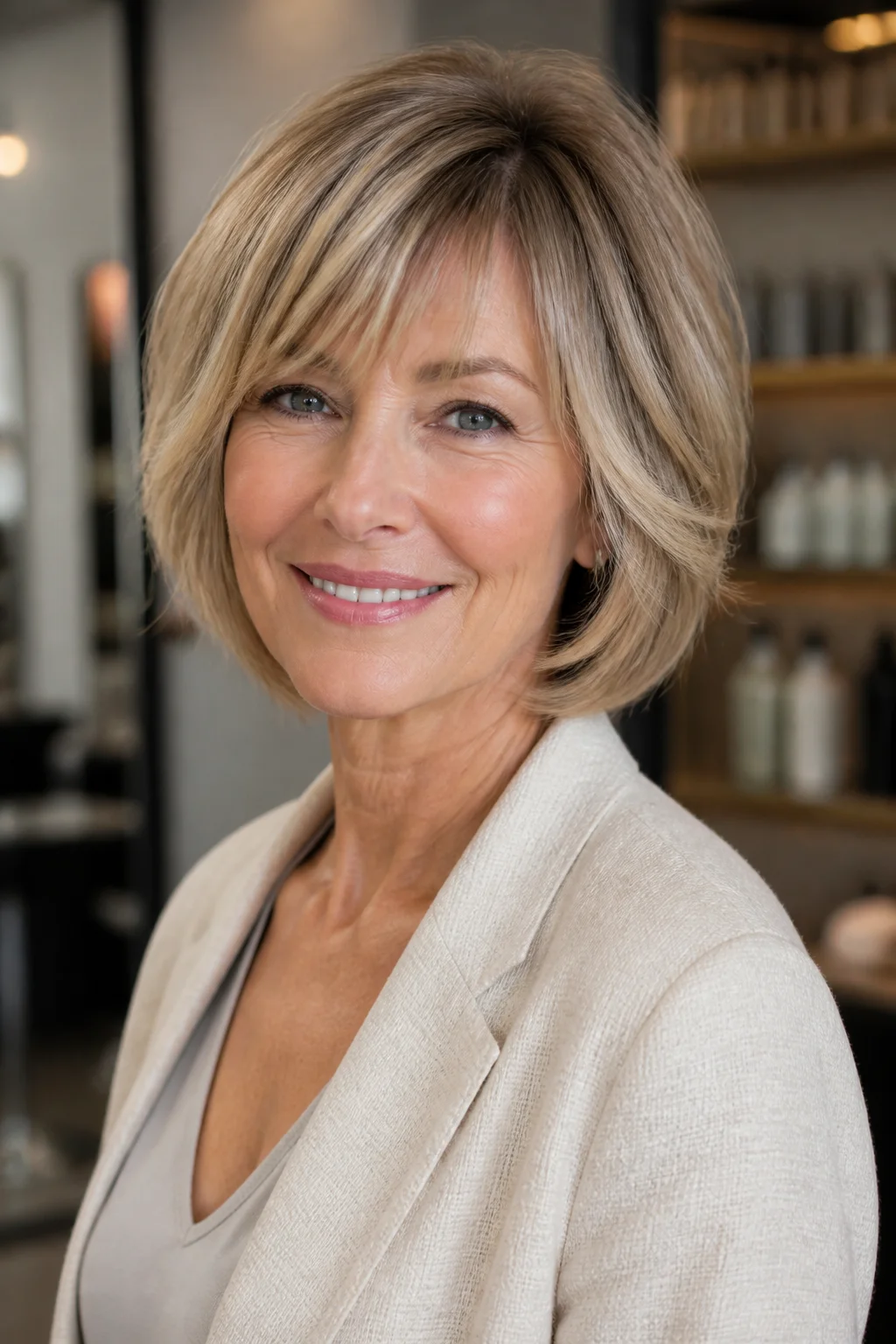
This is the version most women picture when they think of a stacked bob, and it earns that reputation. The back sits close with graduated layers that build fullness, while wispy bangs break up the forehead and soften the whole front line. It works on straight or slightly wavy hair without much fuss. A round brush and five minutes of blow-drying is usually all it takes to keep the shape crisp. Tip: ask your stylist to keep the bangs feathered rather than blunt so they grow out without a hard line. A light mist of heat protectant before styling helps the finish last.
Textured Stacked Bob with Soft Side-Swept Layers
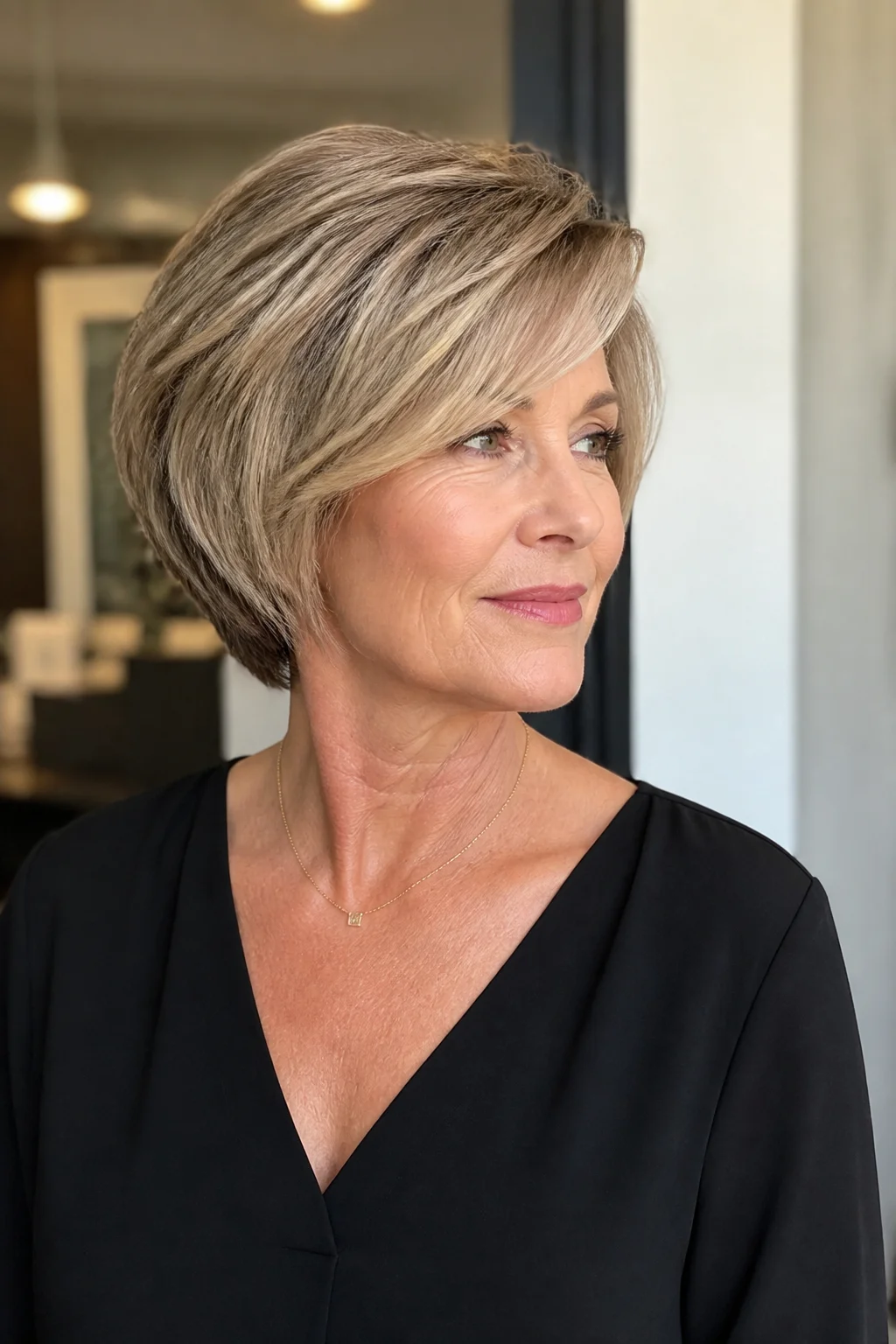
Texture changes everything about how a stacked bob reads. Here, the ends are cut with a razor or thinning shears so the layers move instead of sitting flat, and the front pieces sweep gently to one side instead of falling straight down. It suits fine hair especially well because the texturing tricks the eye into seeing more volume than is actually there.
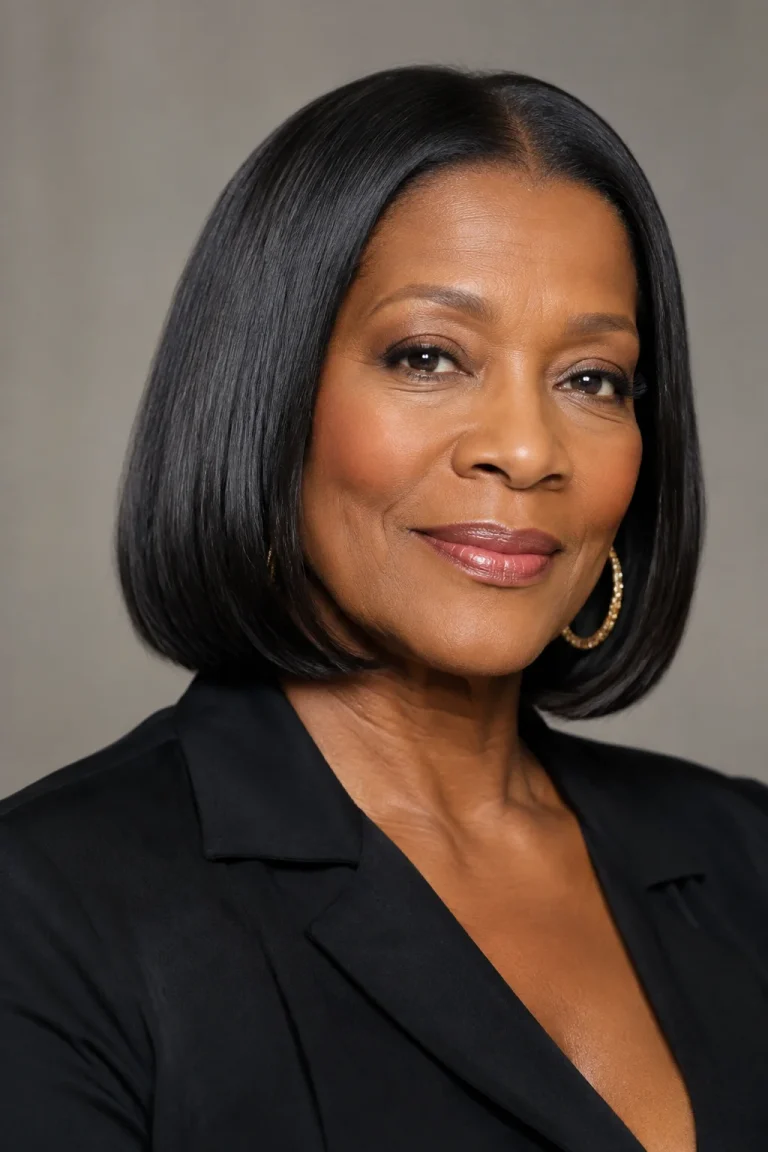
Blunt Stacked Bob with Long Face-Framing Pieces
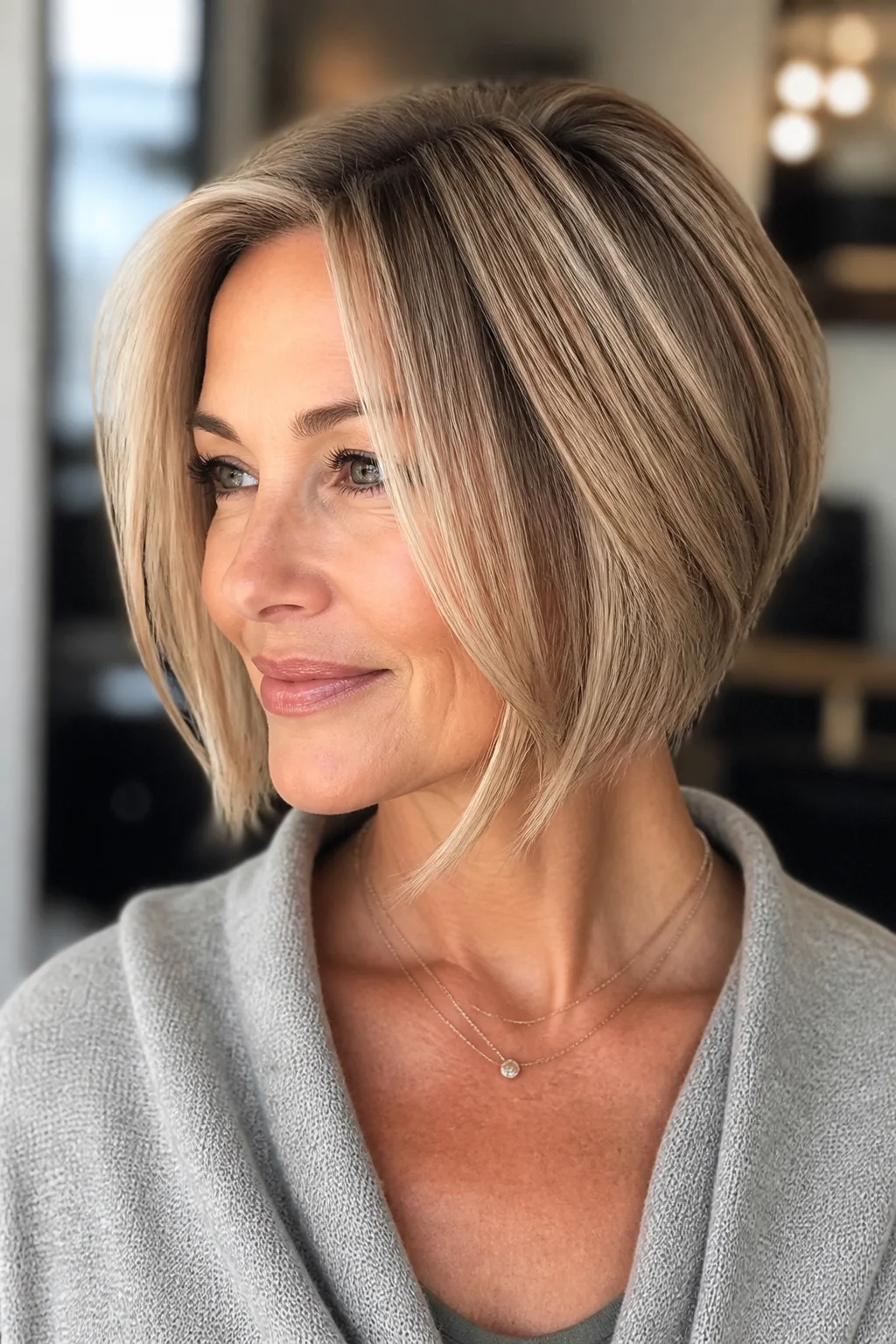
The contrast is the whole point of this cut. The back stays blunt and heavy, almost geometric, while two longer pieces frame the face and taper past the jaw. That combination gives you a strong, graphic shape at the back and a softer, elongating line up front. It looks especially sharp on straight, thick hair that holds a clean edge without frizzing. Stylists often recommend this one for anyone who wants a bob that reads as modern rather than traditional, since the blunt line does most of the visual work. Keep the face-framing pieces glossy with a light serum so they stay smooth against the skin instead of flipping out.
Layered Stacked Bob with Razored Edges
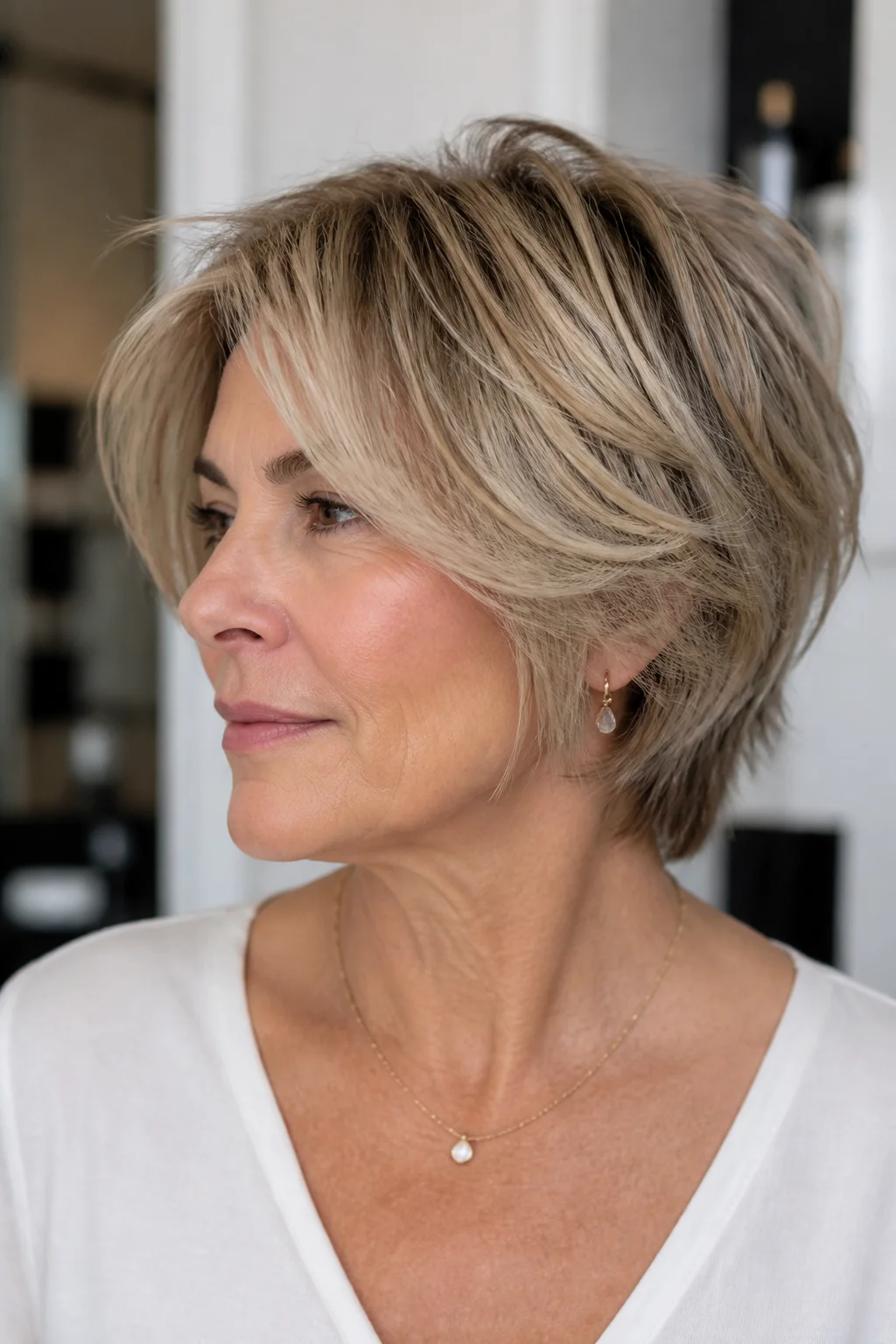
Razored edges take the stiffness out of a stacked bob and replace it with movement. Every layer ends in a soft, feathered point instead of a clean line, so the cut looks a little undone even right after styling. This suits medium to thick hair that can look bulky with blunt ends. Tip: ask for the razor work concentrated at the ends only, not throughout, so the shape underneath still holds its stack.
Curly Stacked Bob with Face-Framing Ringlets
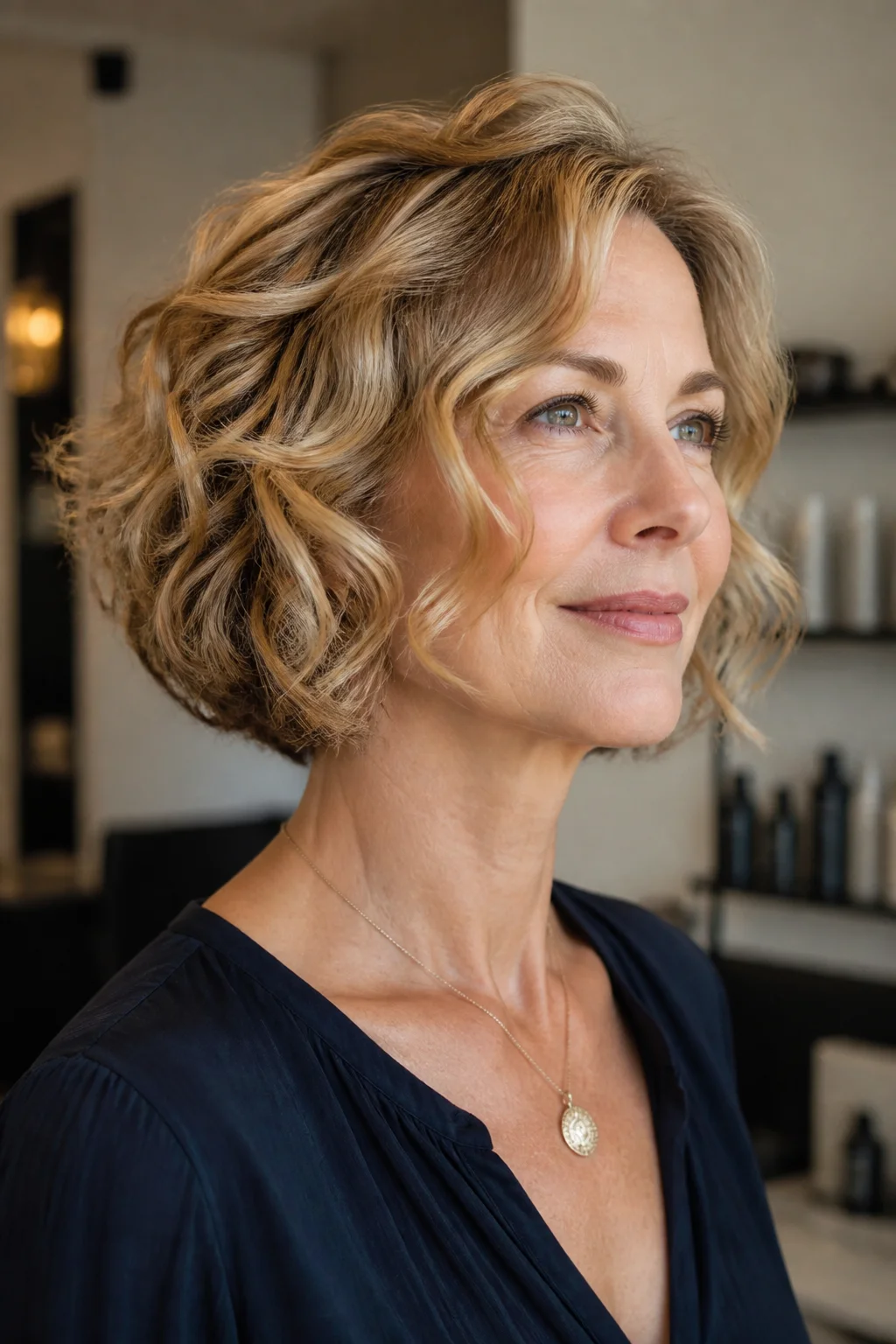
Curly hair and a stacked bob make an especially good pair because the layers give curls somewhere to fall instead of piling into a triangle. The face-framing sections are cut a bit shorter so the ringlets coil right at the cheek and jaw, drawing the eye up toward the eyes and brows. This works on both natural curls and a curl-enhancing perm, and it holds its shape well between washes since curly hair tends to need less frequent styling than straight.
Wavy Stacked Bob with Longer Front Layers
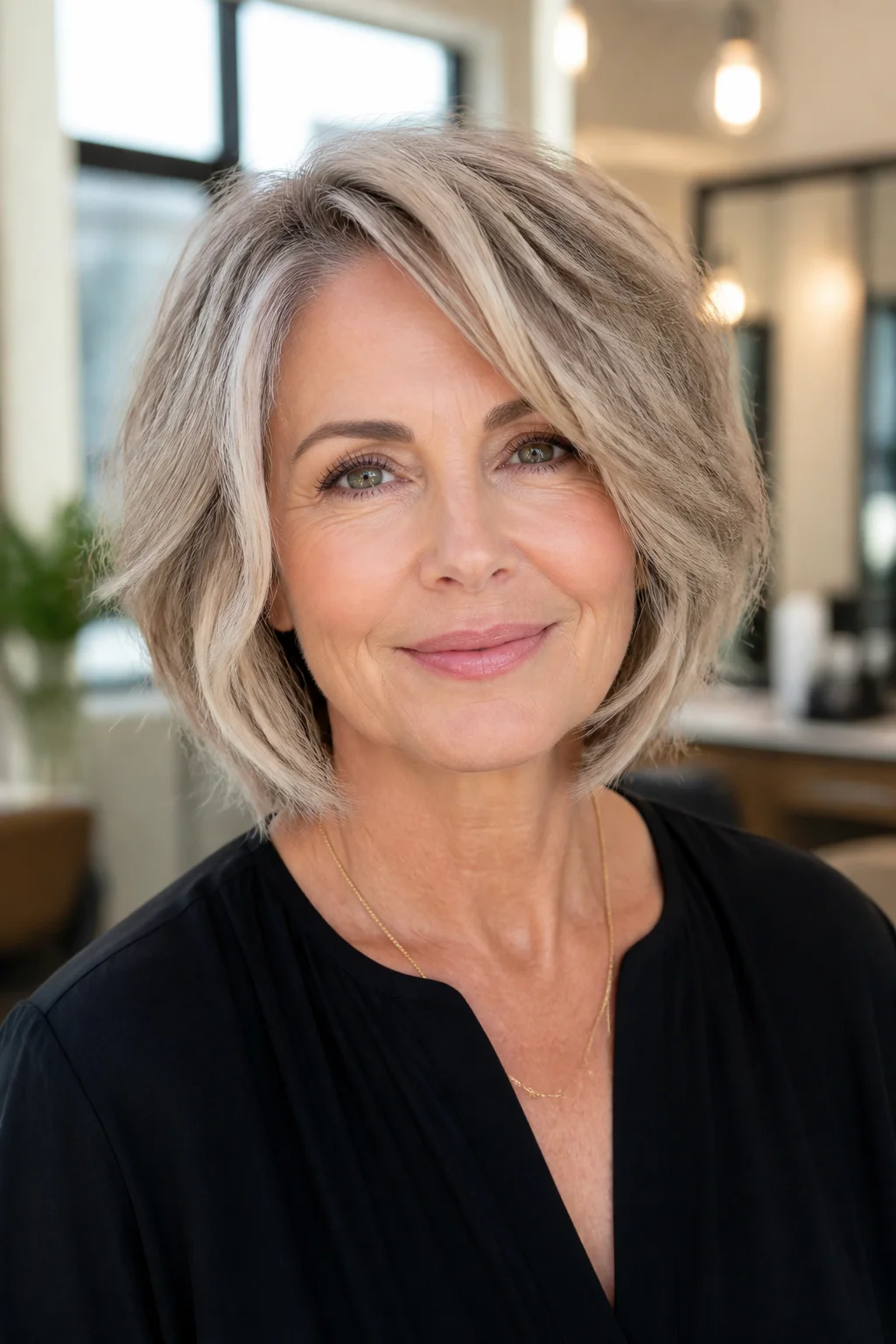
Loose waves add a relaxed, beachy quality to the stacked bob, and longer front layers keep the face-framing effect without looking severe. The back stack still gives you that lift and roundness at the crown. This is a low-maintenance option for hair that already waves on its own.
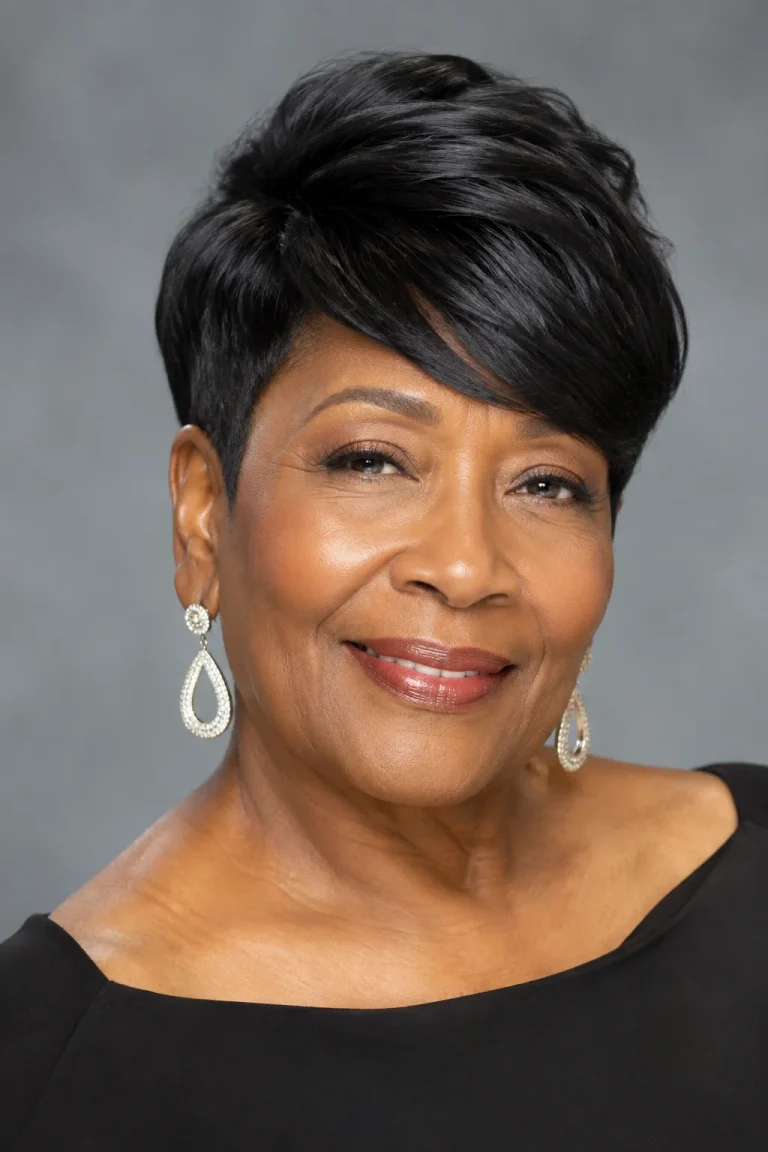
Pixie-Bob Hybrid with Face-Framing Bangs
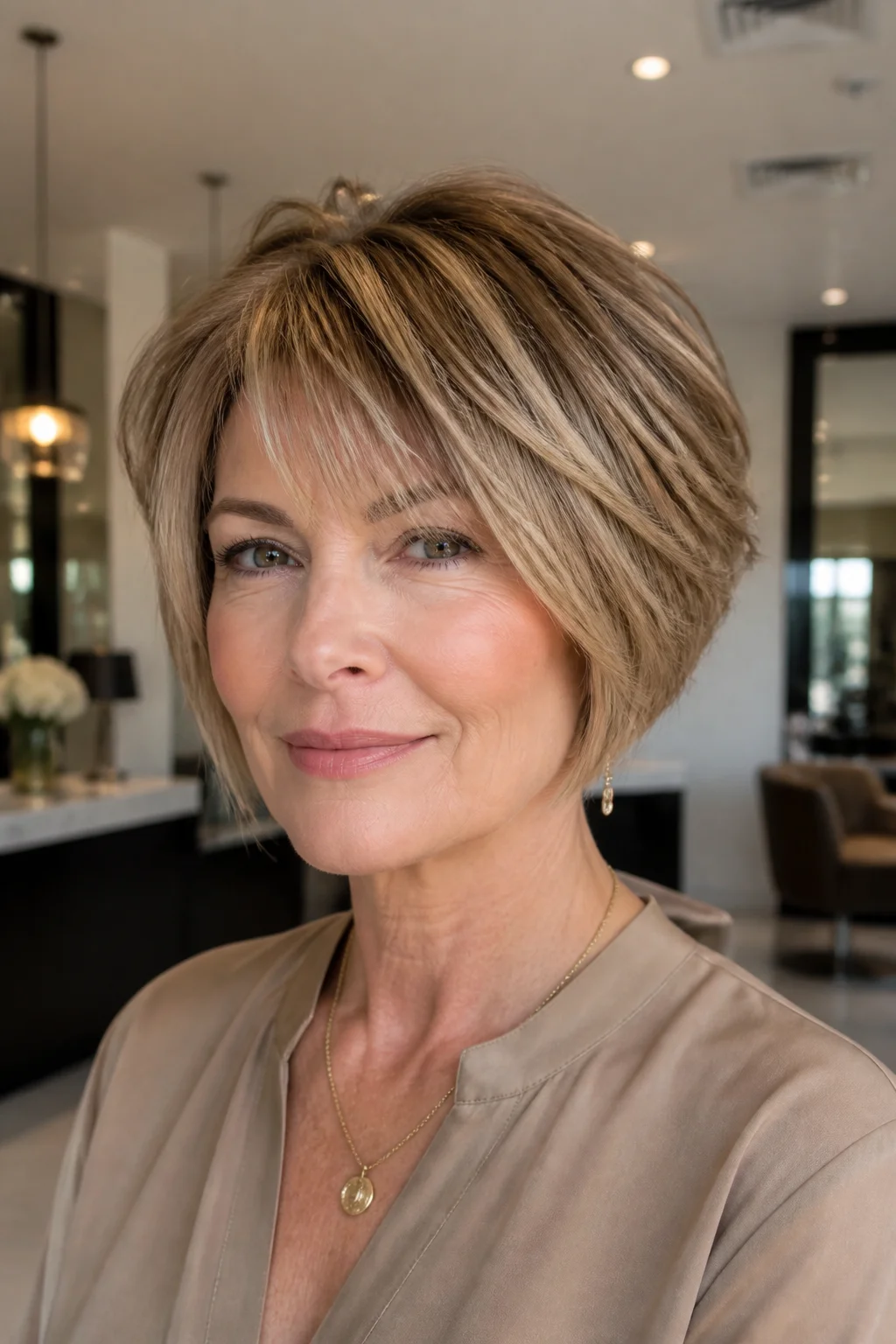
This cut splits the difference between a pixie and a bob, with short, cropped sides and back that graduate into slightly longer length at the crown and front. Face-framing bangs sweep across the forehead and taper down toward the cheekbone, keeping some softness near the eyes even though the rest of the cut is quite short. It suits women who want a dramatic change but aren’t ready to commit to a full pixie. The shorter sides also mean less bulk at the neck, which some find more comfortable in warm weather. Styling is fast, usually just fingers and a little pomade to define the top.
Graduated Stacked Bob with Choppy Bangs
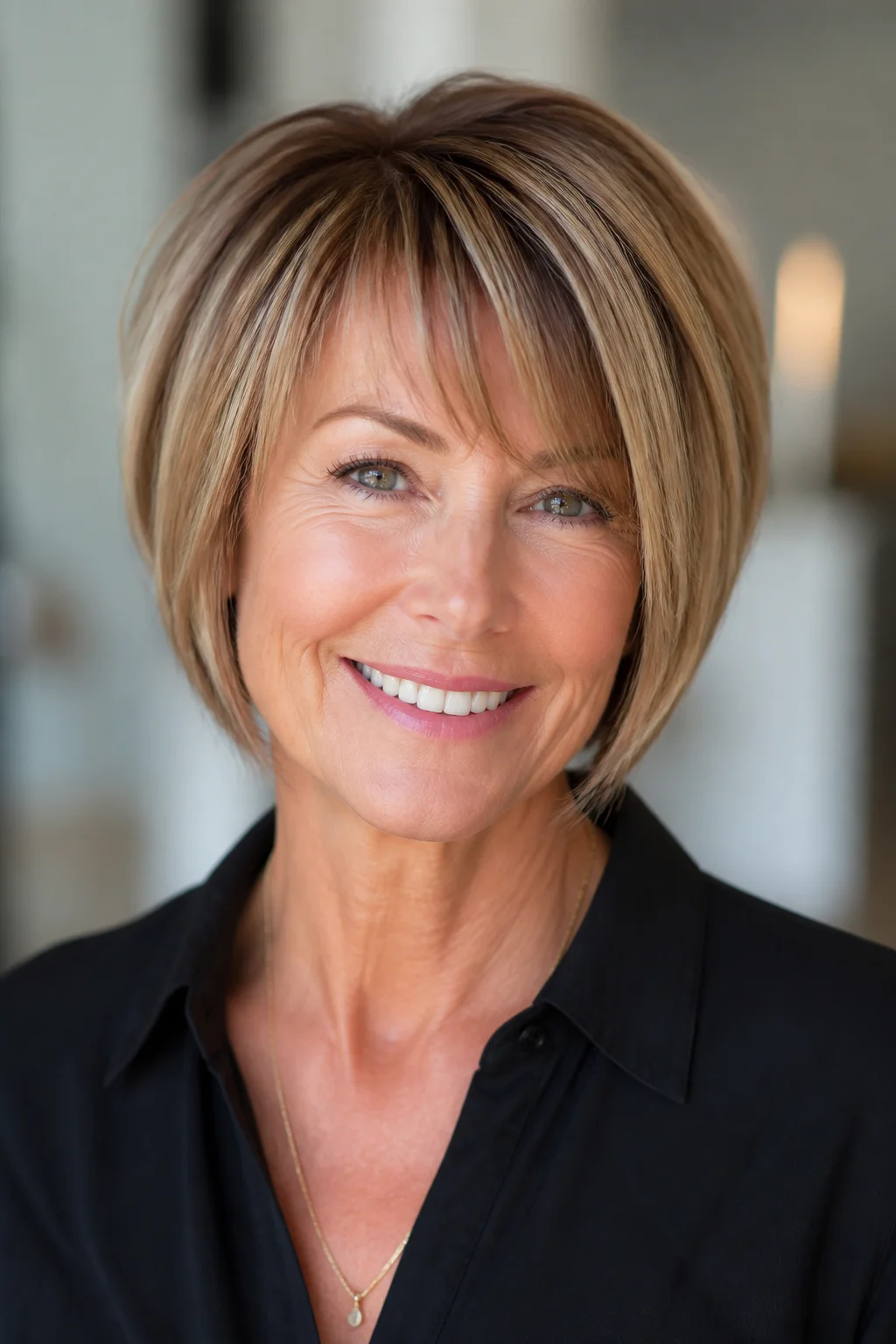
Graduation refers to how the layers build from short at the nape to longer toward the front, and this version pairs that structure with choppy, uneven bangs. The bangs are cut with intentional gaps rather than a straight line, giving the whole style a slightly edgy feel. It photographs well because the choppy texture catches light unevenly, which reads as movement rather than mess.
Asymmetrical Stacked Bob with Longer One Side
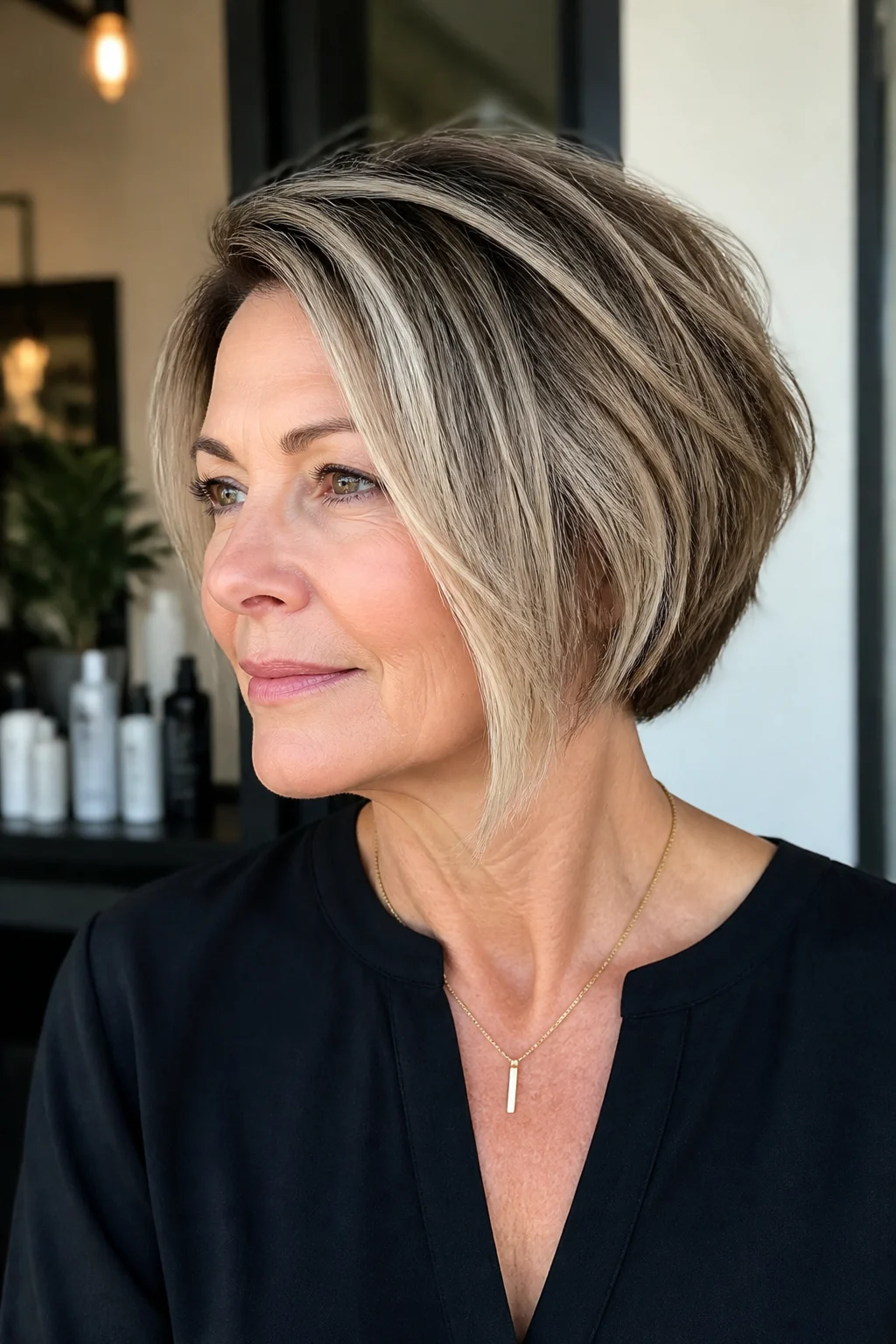
One side runs noticeably longer than the other here, which shifts the visual weight and can be a smart choice if one side of your face carries more fullness than the other. The stacking in the back still gives the shape its round, lifted quality. Tip: have the longer side cut to fall right at or just past the chin so it still reads as a bob rather than a lob.
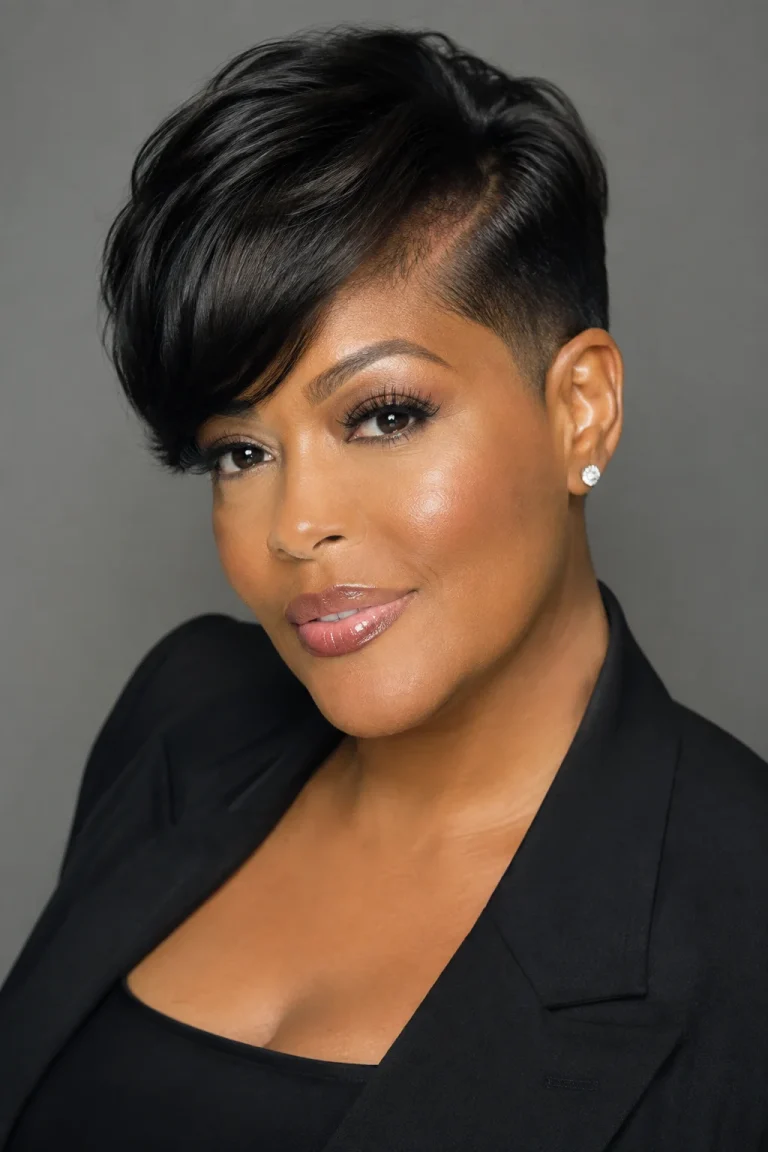
Stacked Bob with Swept Bangs and Undercut
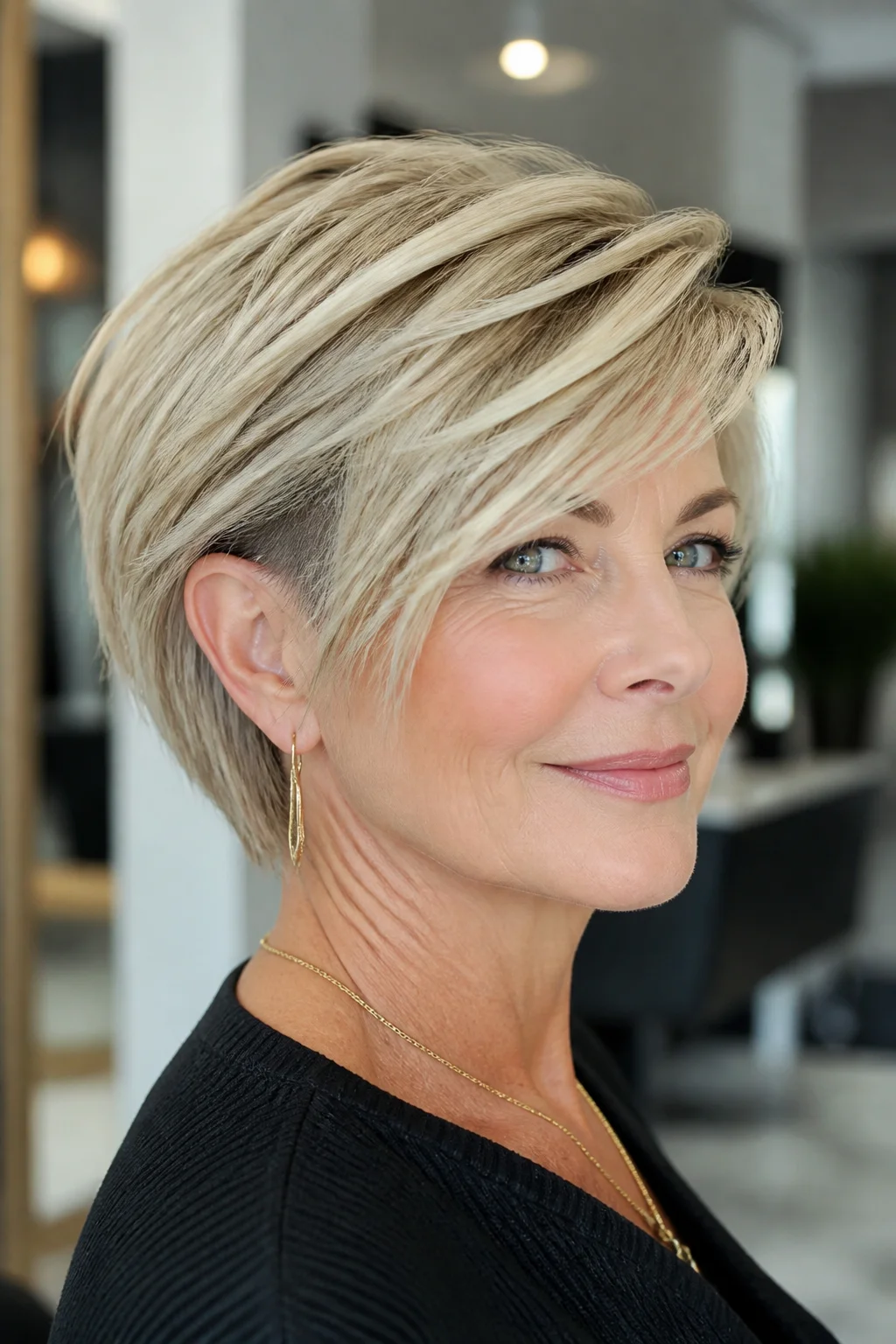
An undercut at the nape keeps the back light and close to the head, which balances out the fullness the stacking creates higher up. Swept bangs finish the look at the front, angled to one side so they graze the brow instead of covering it. This combination suits thicker hair that tends to feel heavy in a traditional stacked cut. The undercut also makes second-day styling easier since there’s less hair to manage at the neckline.
Tousled Stacked Bob with Piecey Layers
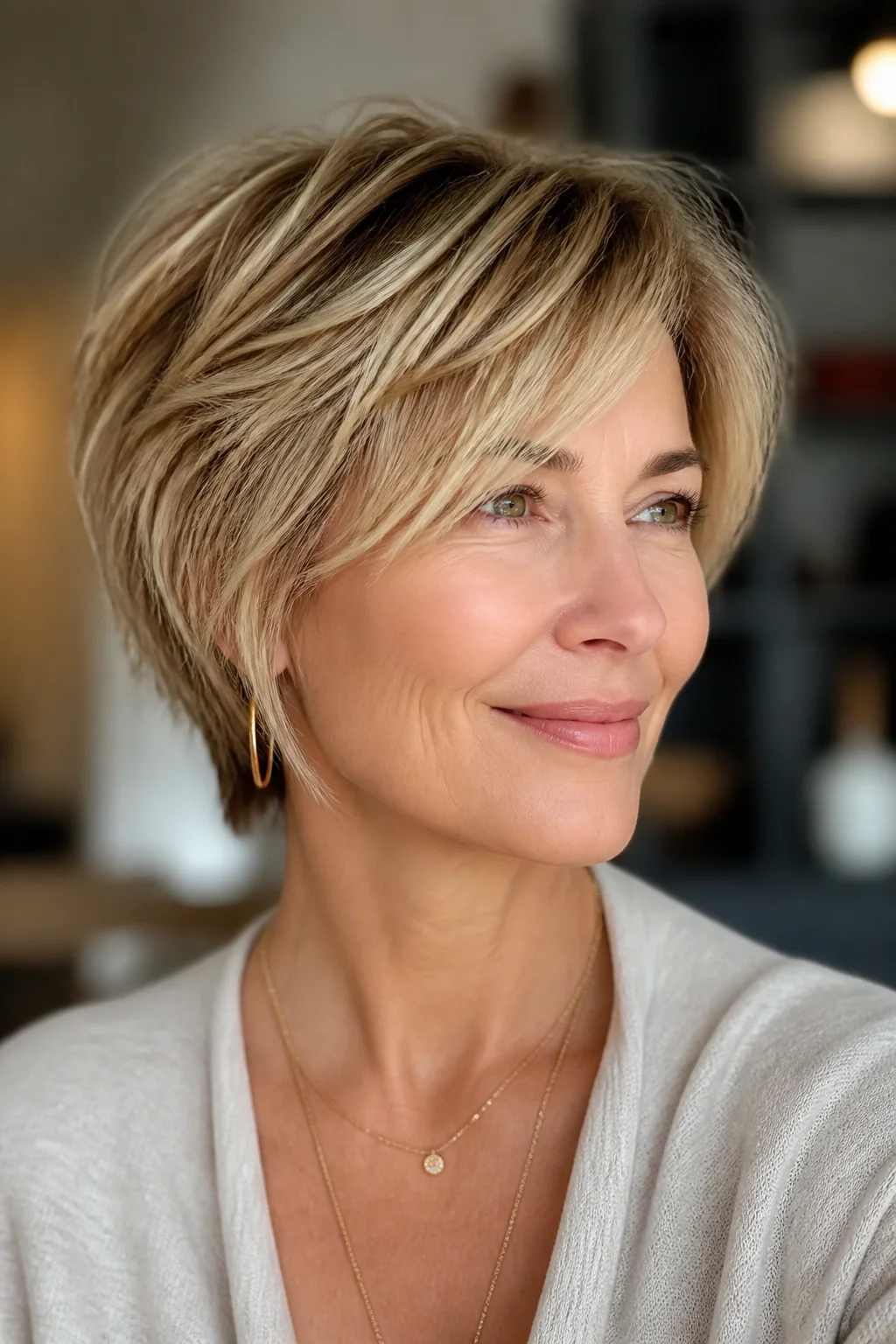
This one is styled to look a little messy on purpose. Piecey layers are separated with a matte paste or wax so individual sections stand apart instead of blending into a smooth surface. It works well for casual, everyday wear and tends to look better the second or third day after washing, once natural oils help the pieces hold their separation.
Sleek Stacked Bob with Subtle Face-Framing Highlights
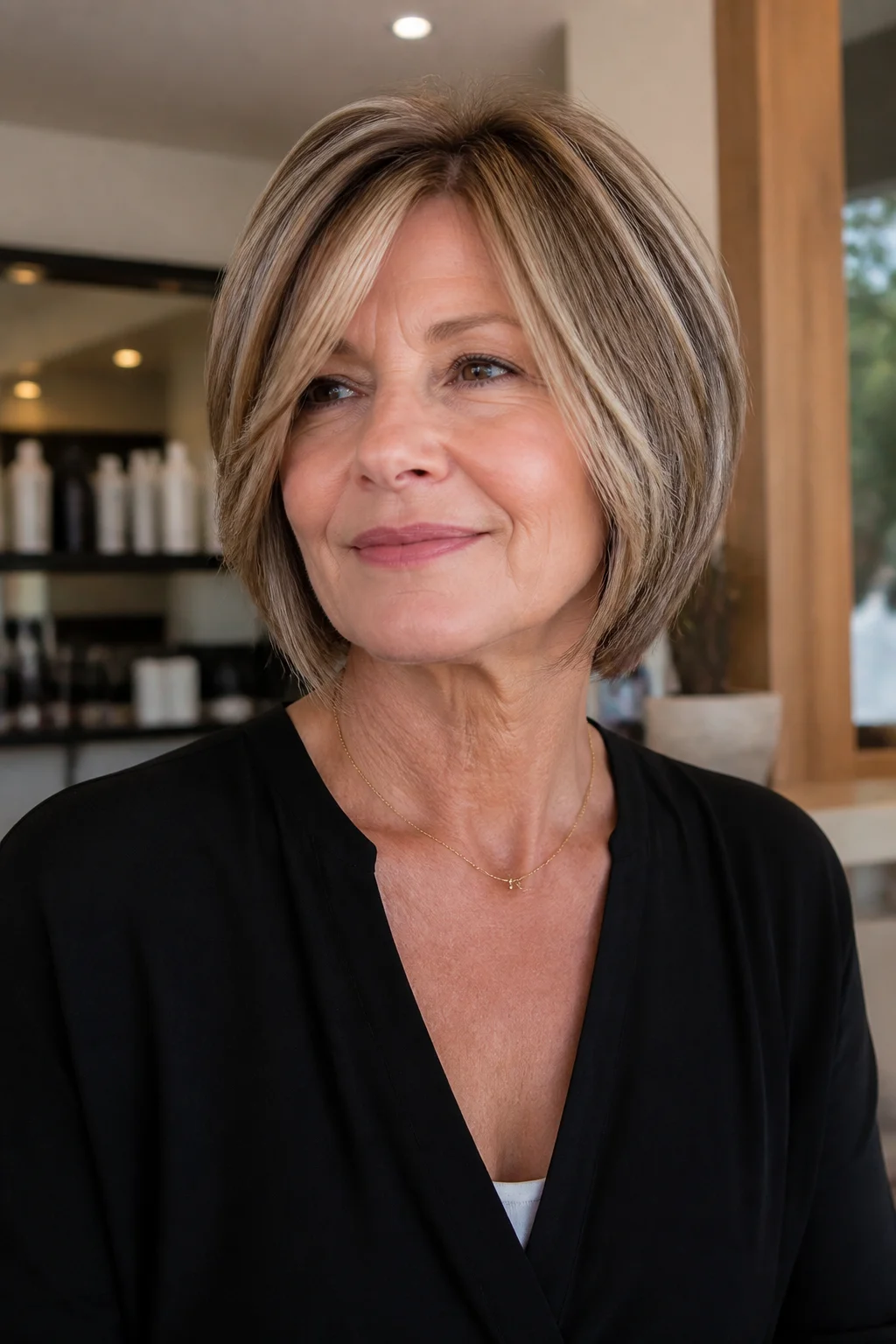
Highlights placed only around the face add dimension without committing to a full color change. Combined with a sleek, smooth finish on the stacked layers, the effect is polished and a little luminous near the cheekbones. This suits anyone who wants their color to do quiet work rather than make a loud statement. A flat iron and a lightweight shine spray keep the surface glassy.
Rounded Stacked Bob with Soft Layers
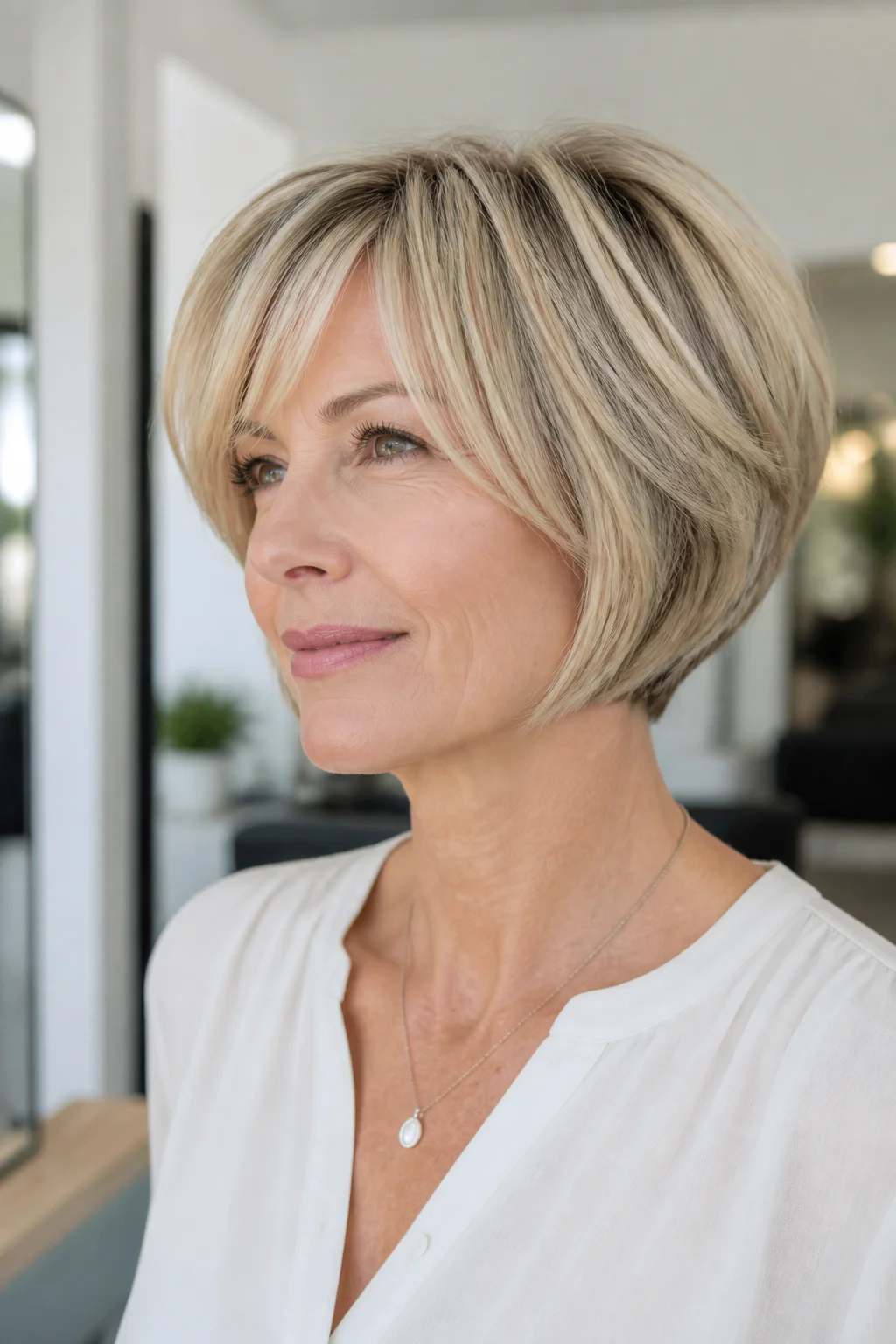
The rounded silhouette here curves gently from ear to ear instead of angling sharply at the jaw, and soft layers throughout keep the shape from looking stiff. It’s a forgiving cut for softer jawlines since the roundness echoes rather than fights the face shape.
Thick Stacked Bob with Textured Crown
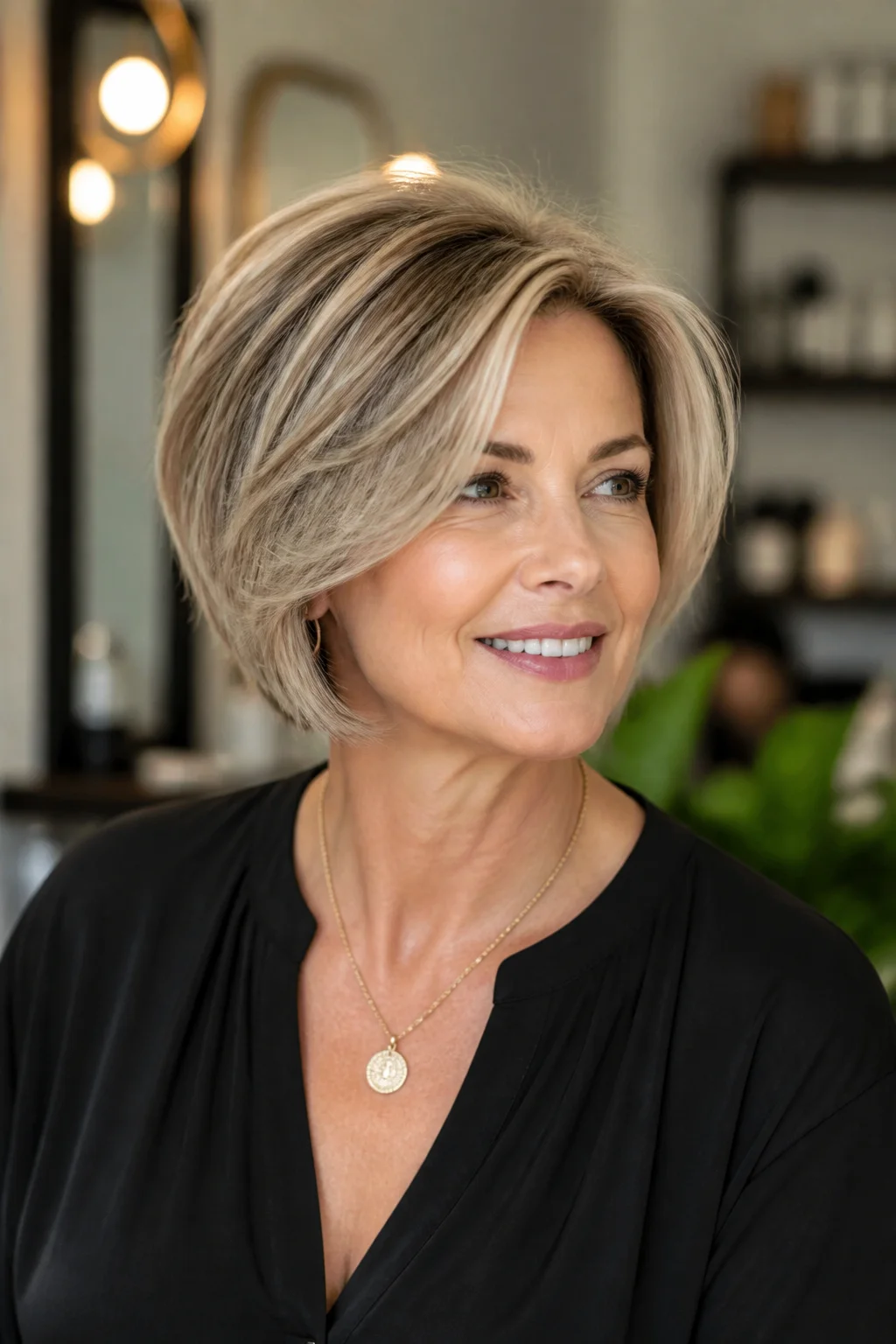
Thick hair needs the stack to be built with intention, and texturing at the crown removes bulk before it has a chance to look heavy. This version keeps the sides fuller near the face for a framing effect while thinning out the top layers so the whole thing sits closer to the head. Tip: request internal layering rather than external point-cutting if your hair is very thick, since it removes weight without shortening the visible length.
Stacked Bob with Longer Curtain-Framing Pieces
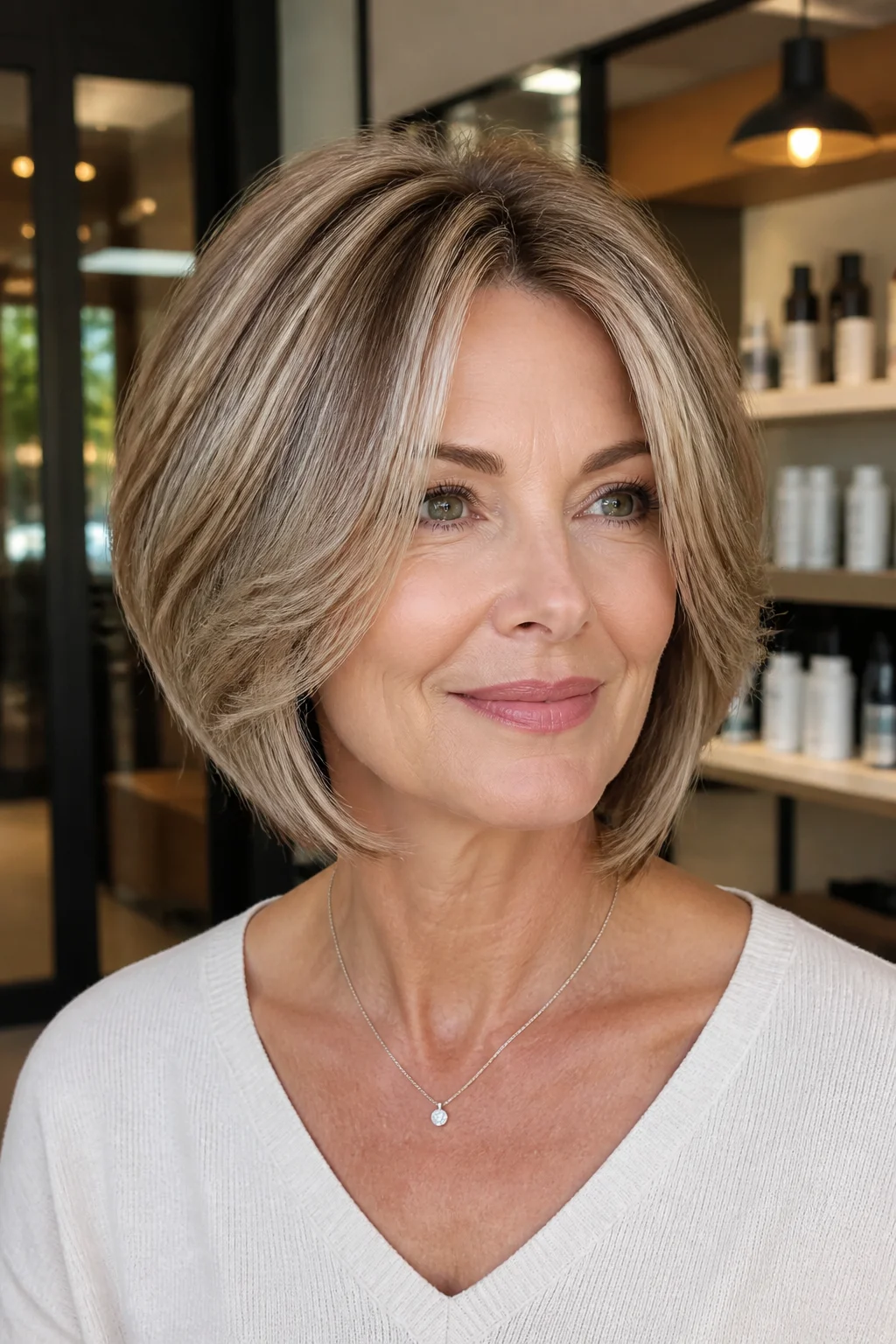
Curtain pieces part in the center and fall on either side of the face, longer than the rest of the cut and often reaching past the chin. Paired with a stacked back, this gives a soft, open frame around the eyes that works especially well for anyone who wants length at the front without losing the lift a stacked bob provides everywhere else.
Disconnected Stacked Bob with Volume at Crown
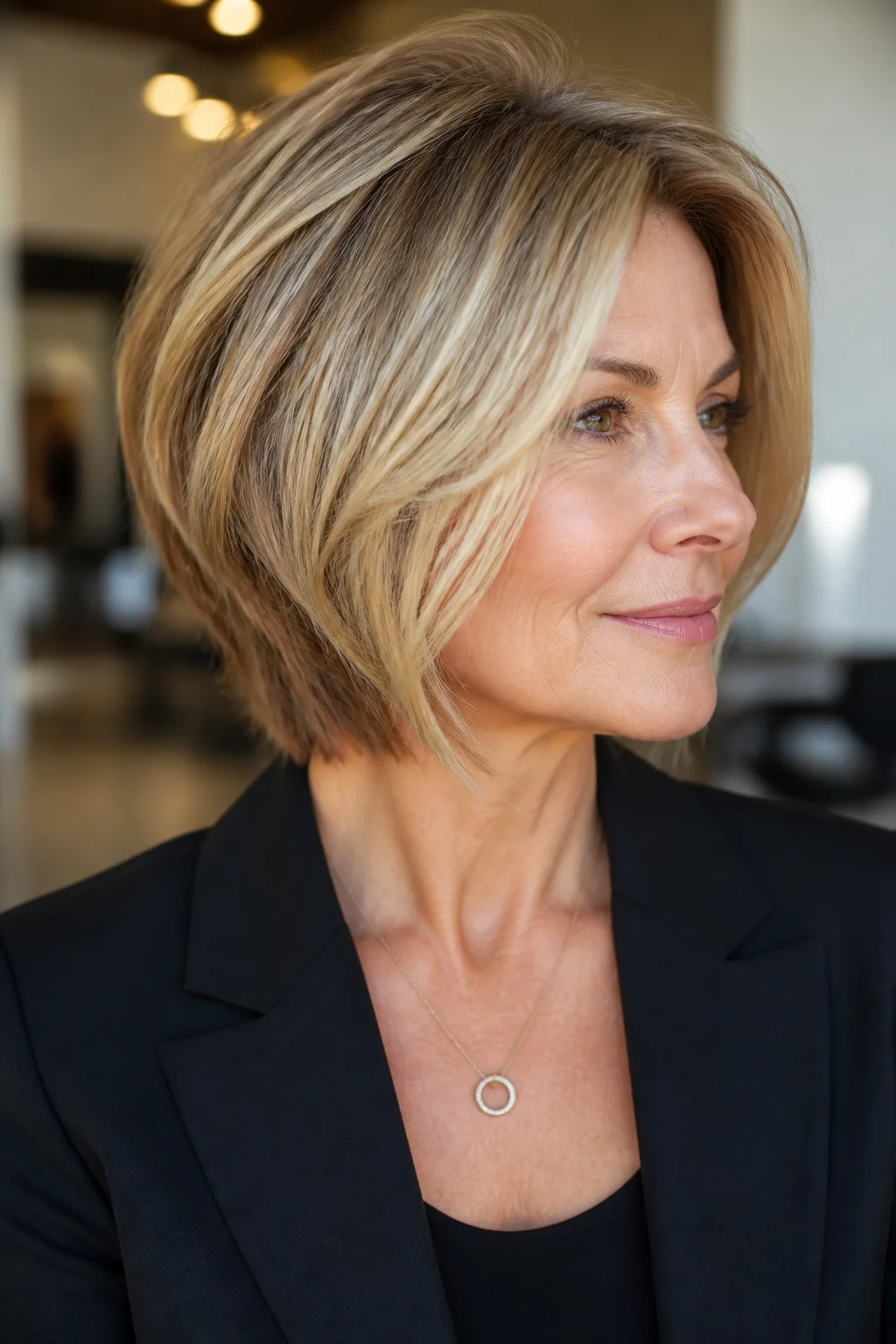
A visible gap between the shorter top layers and the longer perimeter gives this cut its disconnected look, and it builds noticeable volume right at the crown. That height at the top balances a fuller stack below, keeping the whole silhouette from looking bottom-heavy. It suits fine to medium hair that needs help holding shape through the day.
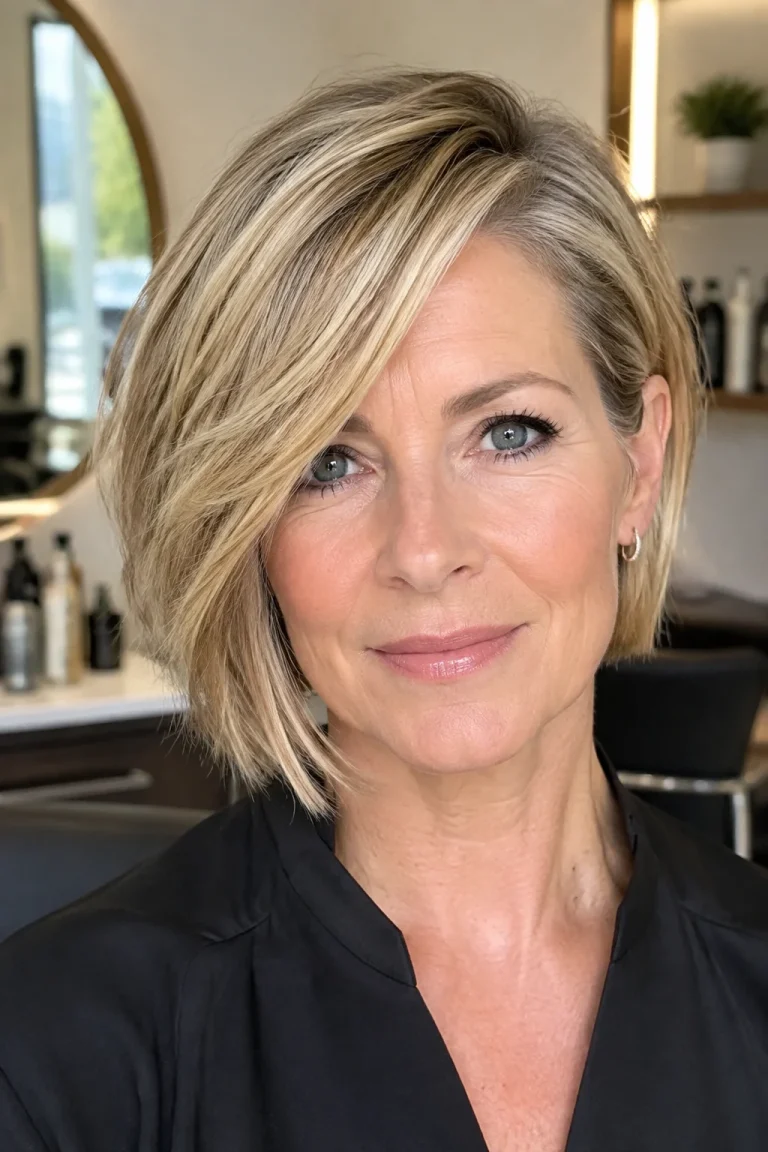
Honey-Toned Stacked Bob with Choppy Layers
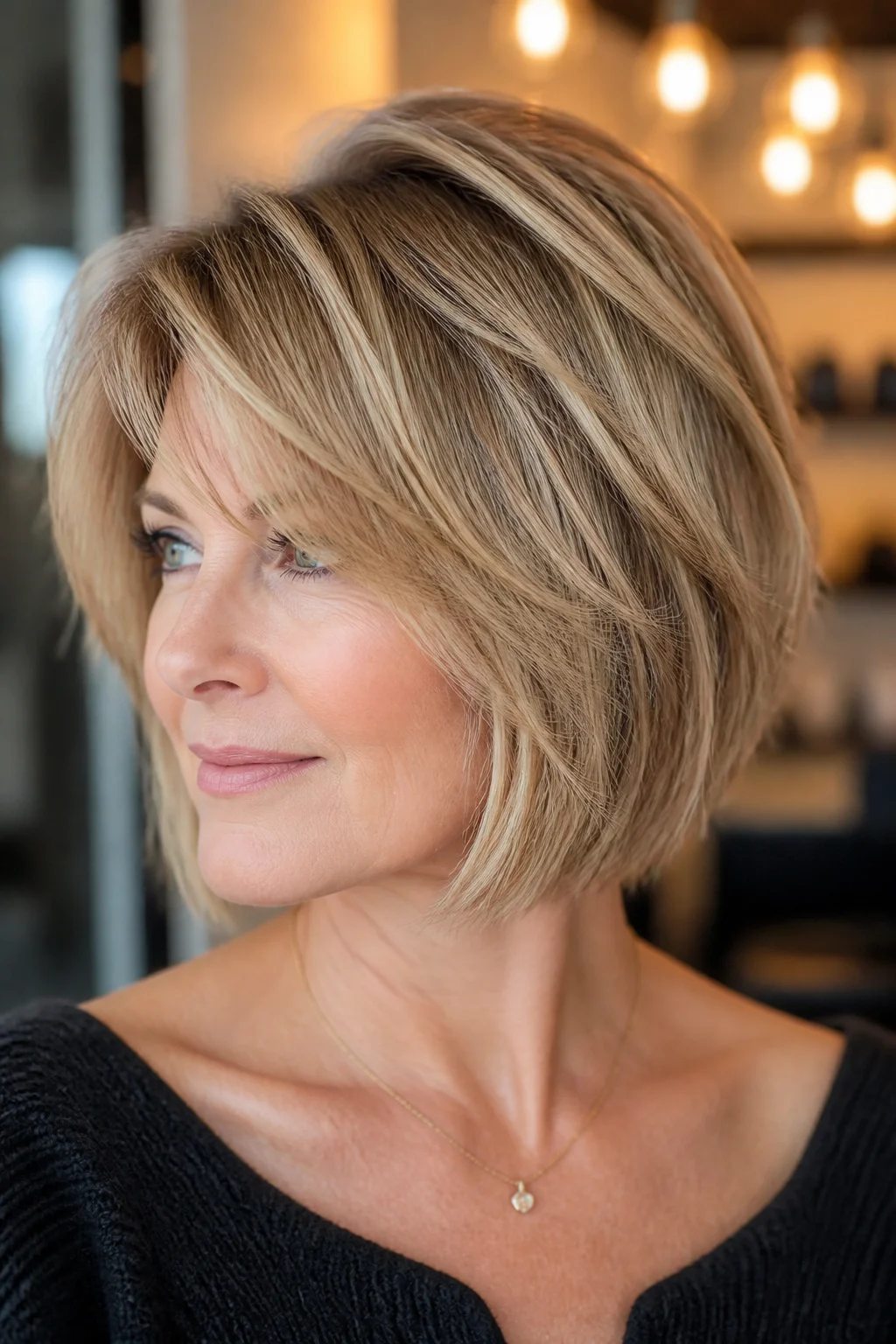
Warm honey tones woven through choppy layers add depth that a single flat color can’t. The choppiness keeps the ends from looking too polished, which suits the casual warmth of the color itself. This pairing works particularly well on hair that’s transitioning to gray, since the honey tones blend rather than fight the natural change.
Stacked Bob with Micro-Bangs and Side Layers
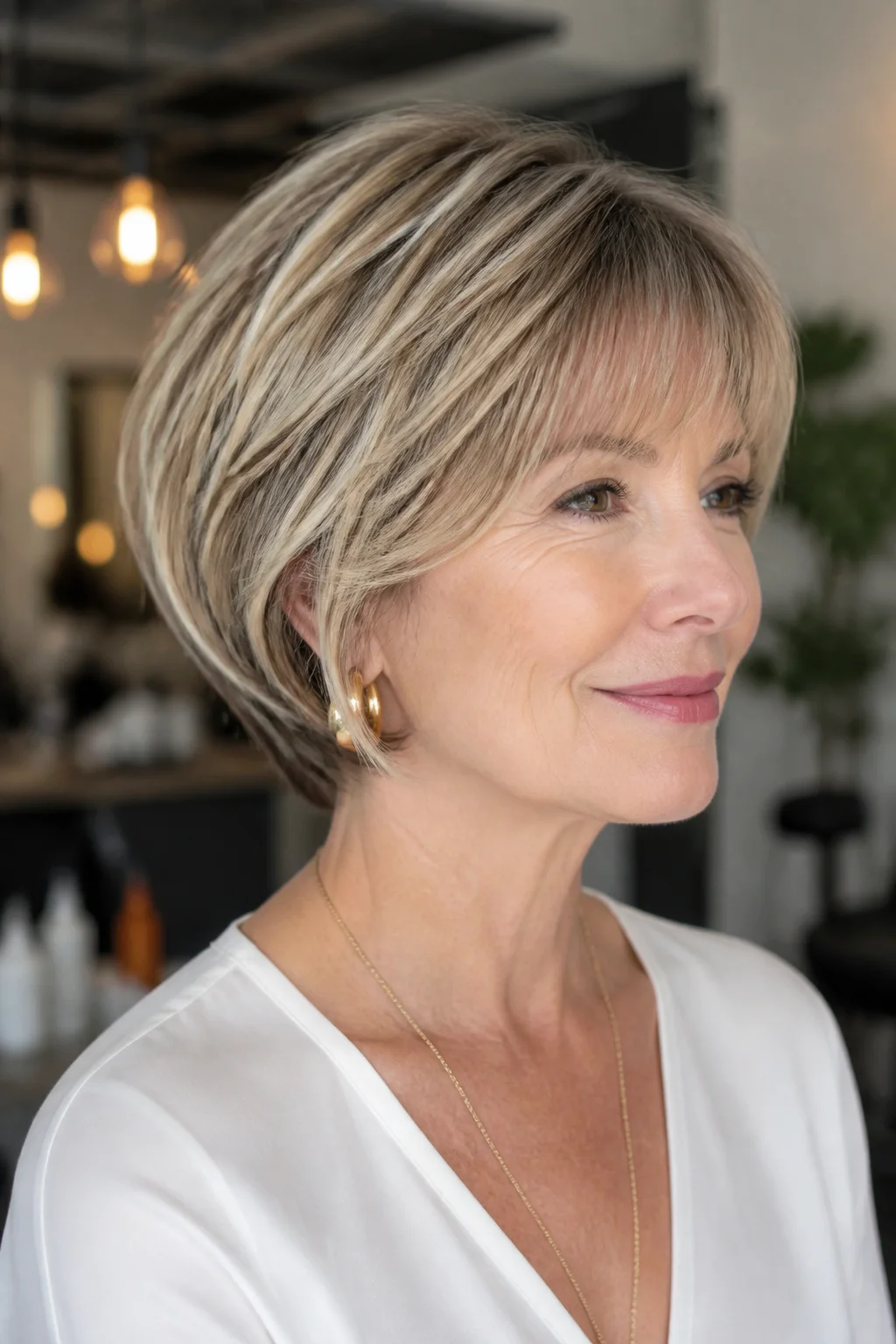
Micro-bangs sit well above the brow, short and blunt, while longer side layers soften the transition from bangs to the rest of the face-framing sections. It’s a bolder choice than a standard fringe and works best on those with strong, even brows since the bangs draw attention straight to them.
Tousled Gray Stacked Bob with Face-Framing Waves
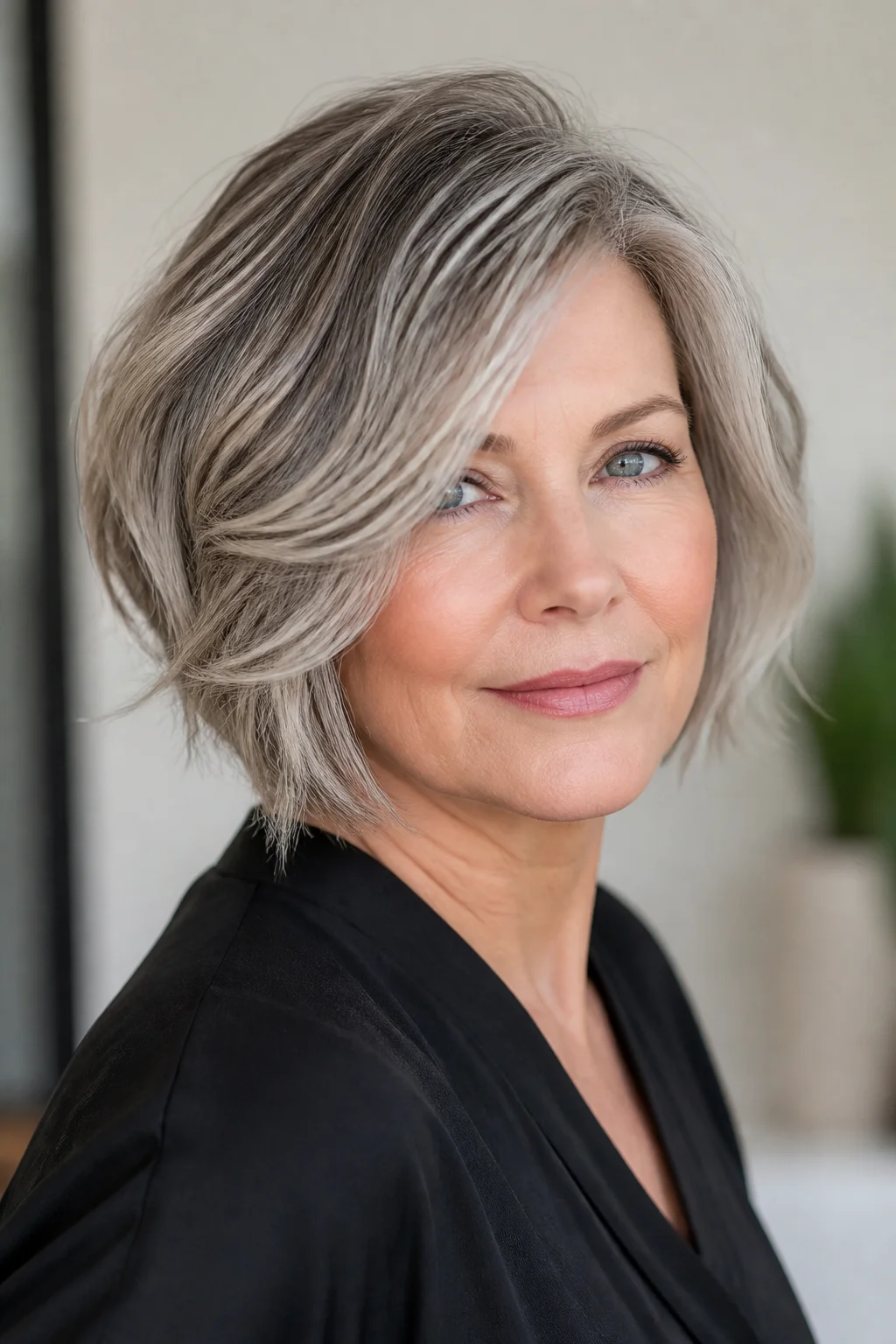
Gray hair often has a coarser, wavier texture than it did before, and this cut works with that rather than against it. Tousled styling keeps the waves loose and natural-looking, while face-framing sections are cut to catch those waves right where they’ll do the most good, near the cheek and jaw. The stacked back adds the volume that gray hair sometimes needs since it can grow in a bit flatter at the roots. This is a low-effort style day to day, since the natural wave pattern does most of the styling work on its own, and a little texturizing spray after air-drying is usually enough to finish it.
Stacked Bob with Feathered Face-Framing and Textured Top
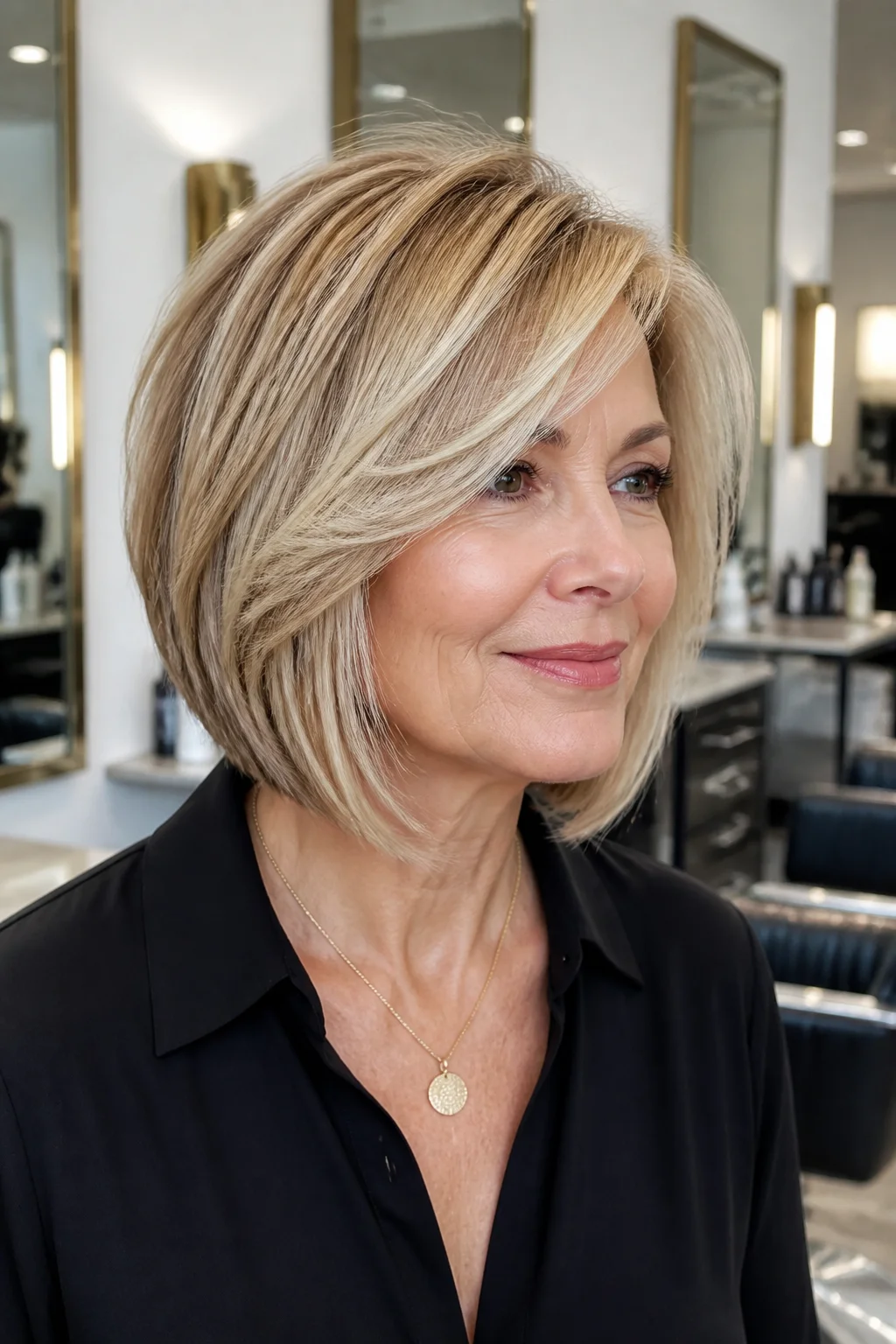
Feathering along the face-framing pieces means the ends are cut at an angle rather than straight across, so they blend softly into the cheek instead of stopping abruptly. A textured top adds a bit of lift and keeps the crown from looking flat against the fuller sides.
Sleek Angled Stacked Bob with Longer Front Sections
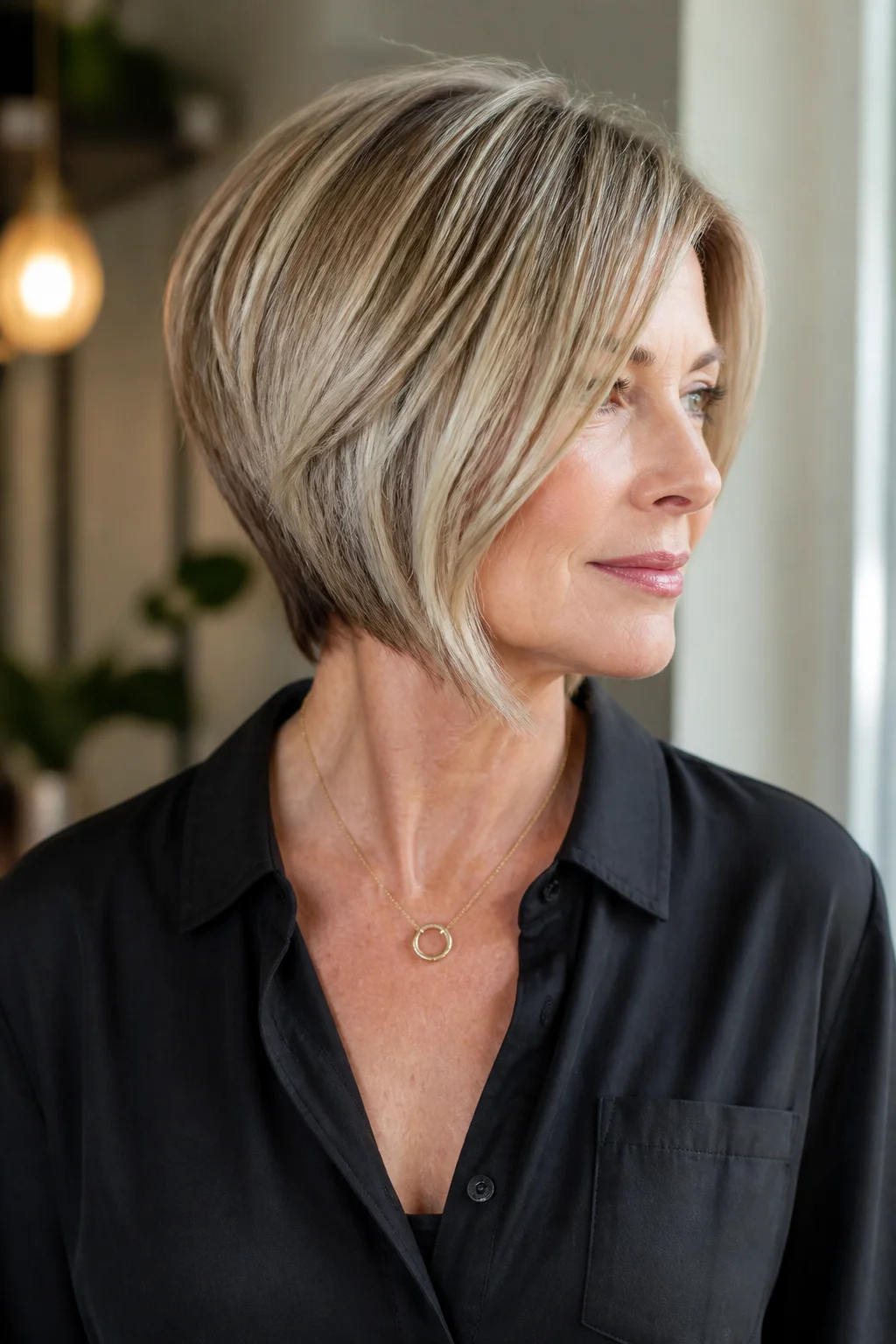
An angled cut means the back is shorter than the front, creating a diagonal line that slims the jaw visually as it moves forward into the longer sections near the face. Kept sleek and smooth, this reads as one of the more formal options on this list, suited to those who like a polished, finished look rather than texture and movement.
Textured Stacked Bob with Sideswept Fringe
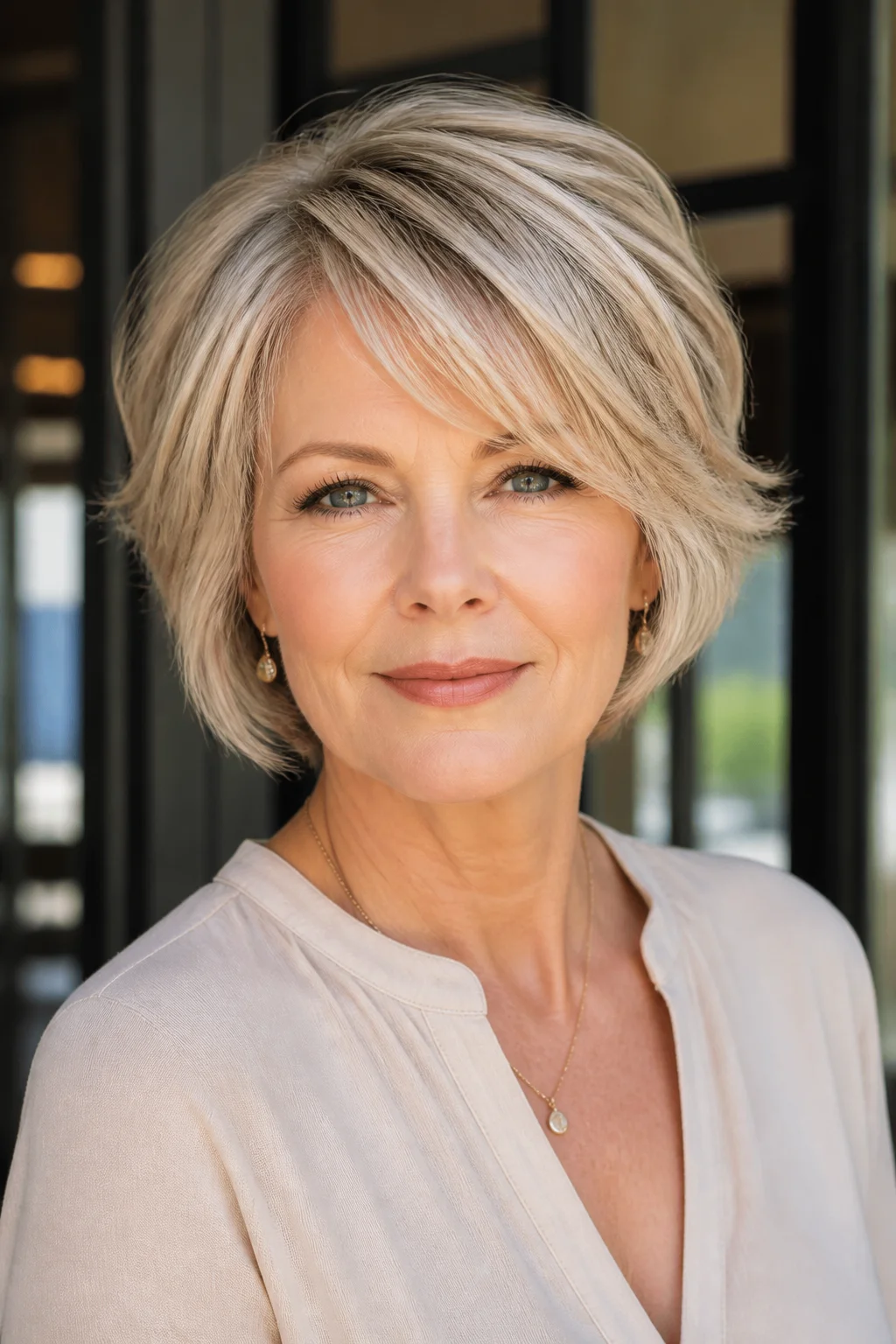
A sideswept fringe blends into the face-framing layers instead of standing apart as a separate bang, and texturing throughout keeps the whole cut from looking too uniform. It’s an easy transition style for anyone moving away from full bangs but not ready to grow them out completely.
Soft Stacked Bob with Longer Layered Face-Framing
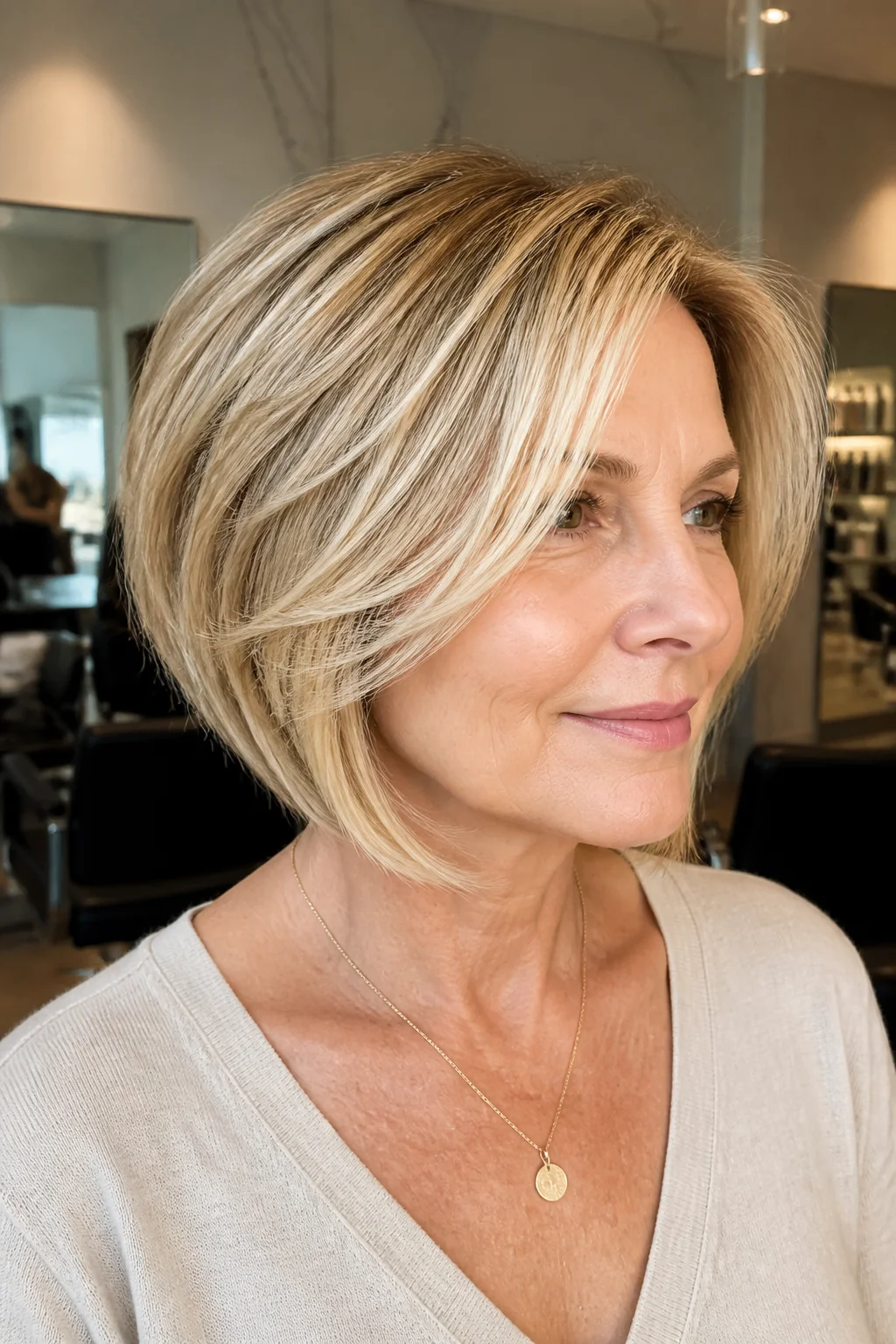
This closing option keeps everything gentle. Long, soft layers frame the face without a hard edge anywhere, and the stack at the back stays loose rather than sharply graduated. It’s a good pick for anyone who wants the lifting effect of a stacked bob without a style that looks like it needs constant upkeep.
Choosing the Right Stacked Bob for Your Face and Hair
With twenty-three options, the choice usually comes down to face shape, hair texture, and how much time you want to spend styling. If your jawline is soft, the rounded stacked bob with soft layers or the curly stacked bob with face-framing ringlets will echo that softness rather than sharpen it. If you want more definition, the blunt stacked bob with long face-framing pieces or the sleek angled stacked bob with longer front sections gives a cleaner, more architectural line.
Fine hair generally does better with texture built in, so look at the textured stacked bob with soft side-swept layers or the disconnected stacked bob with volume at crown, both of which create the illusion of thickness. Thick or coarse hair benefits from internal layering like the thick stacked bob with textured crown, which removes bulk without sacrificing length.
A common mistake is choosing a heavily blunt style and expecting it to behave like a textured one. Blunt cuts need straight, cooperative hair or a flat iron most days to look intentional. If you’re not willing to style daily, lean toward the tousled stacked bob with piecey layers or the tousled gray stacked bob with face-framing waves instead, since both are designed to look good with minimal effort.