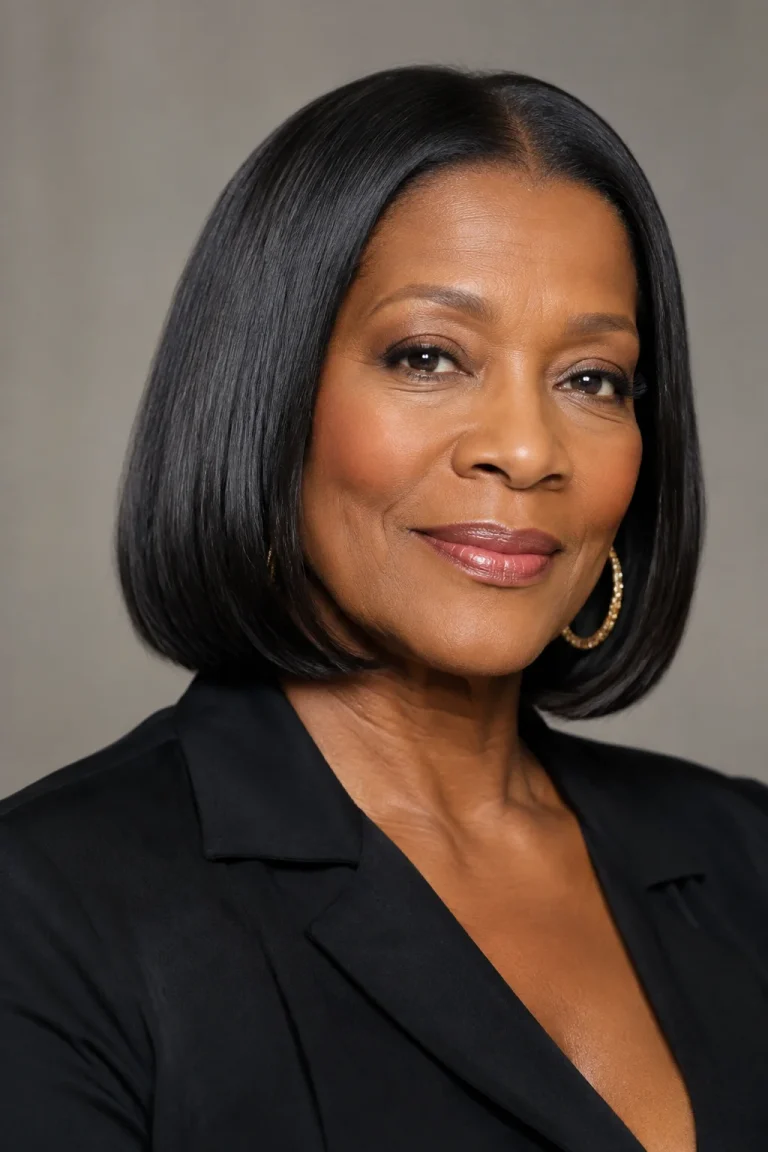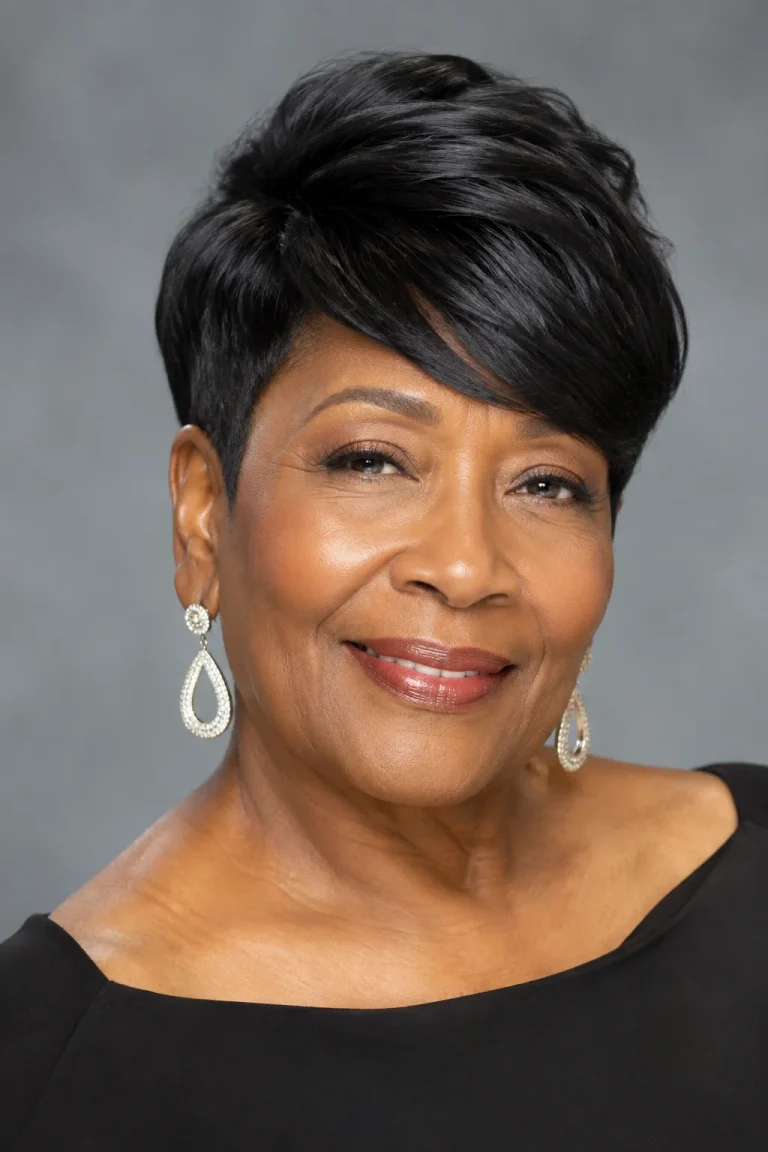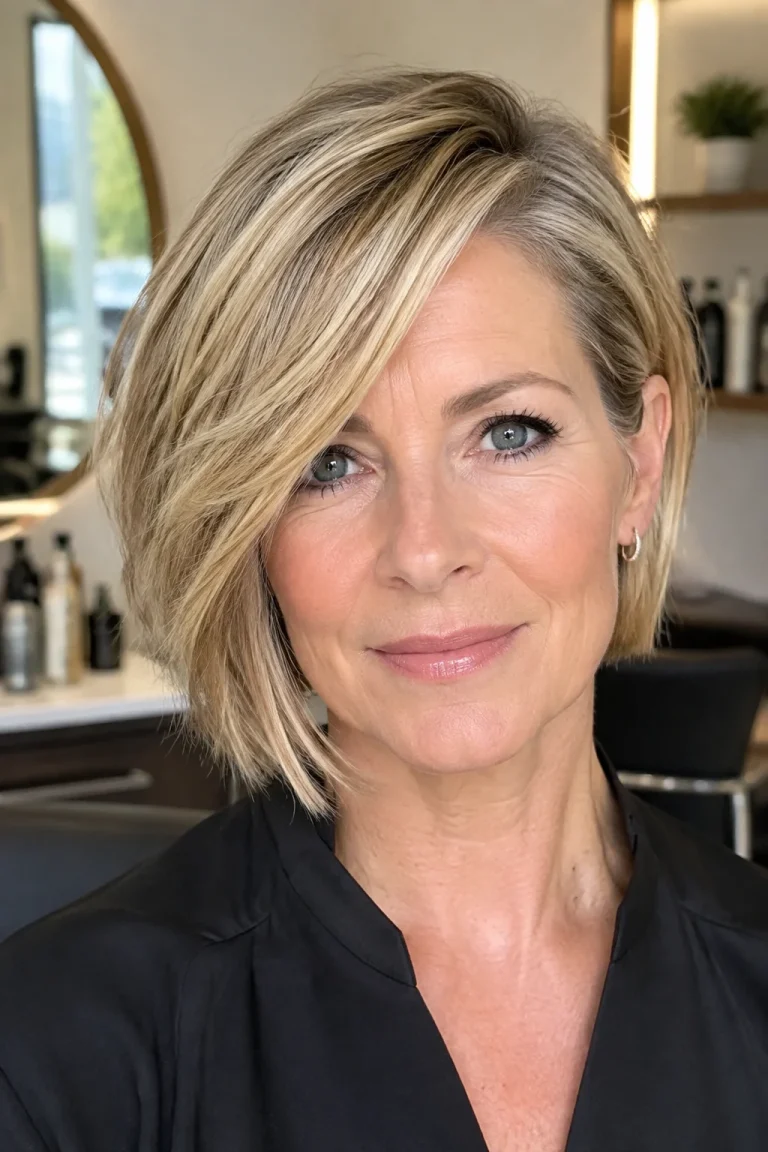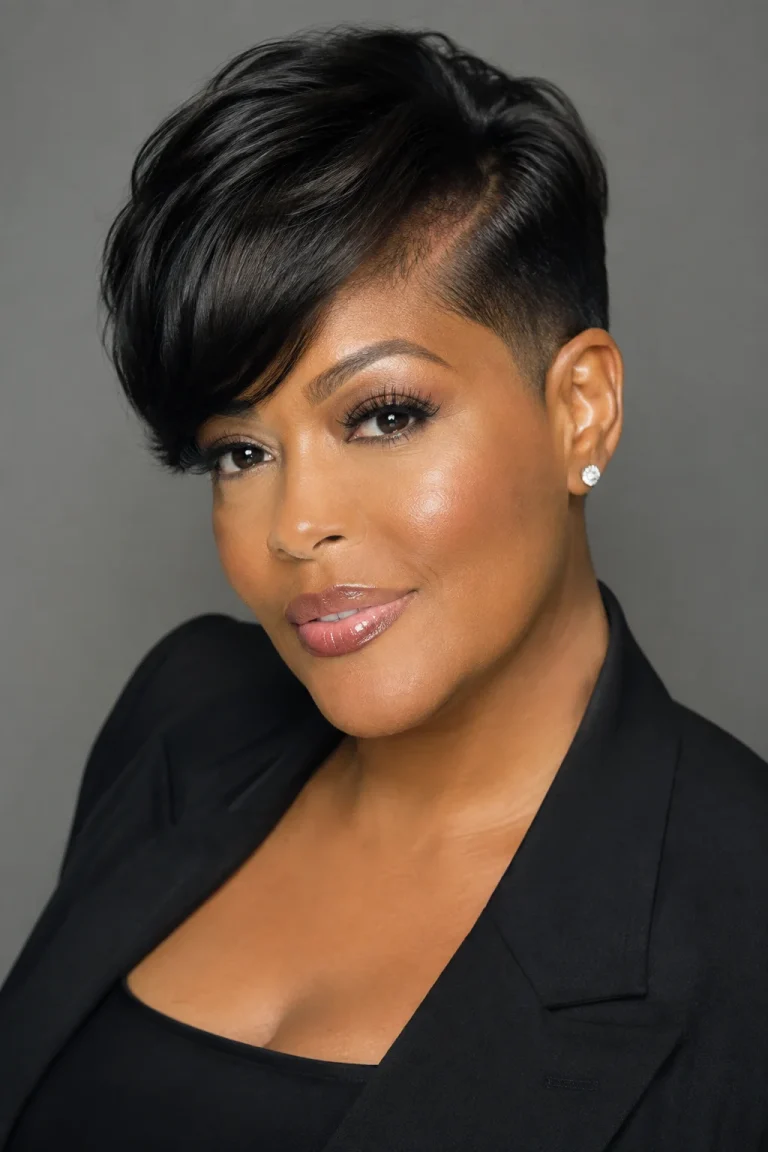
Thinning texture, less time in front of the mirror, and hair that used to cooperate but doesn’t anymore. That’s the reality for a lot of women past 50, and it’s exactly why the right cut matters more now than it did at 30. An easy to style layered bob for women over 50 solves the problem at the root by working with your natural texture instead of fighting it, so you spend less time styling and more time out the door. The layers below are built for air-drying, finger-styling, and the kind of low-effort mornings you actually want. Some suit fine hair, some are made for curls, and a few work best on thicker strands that need weight taken out. Read through them with your own texture and face shape in mind, then bring the one that fits to your next appointment.
Soft Face-Framing Layers with Chin-Length Base
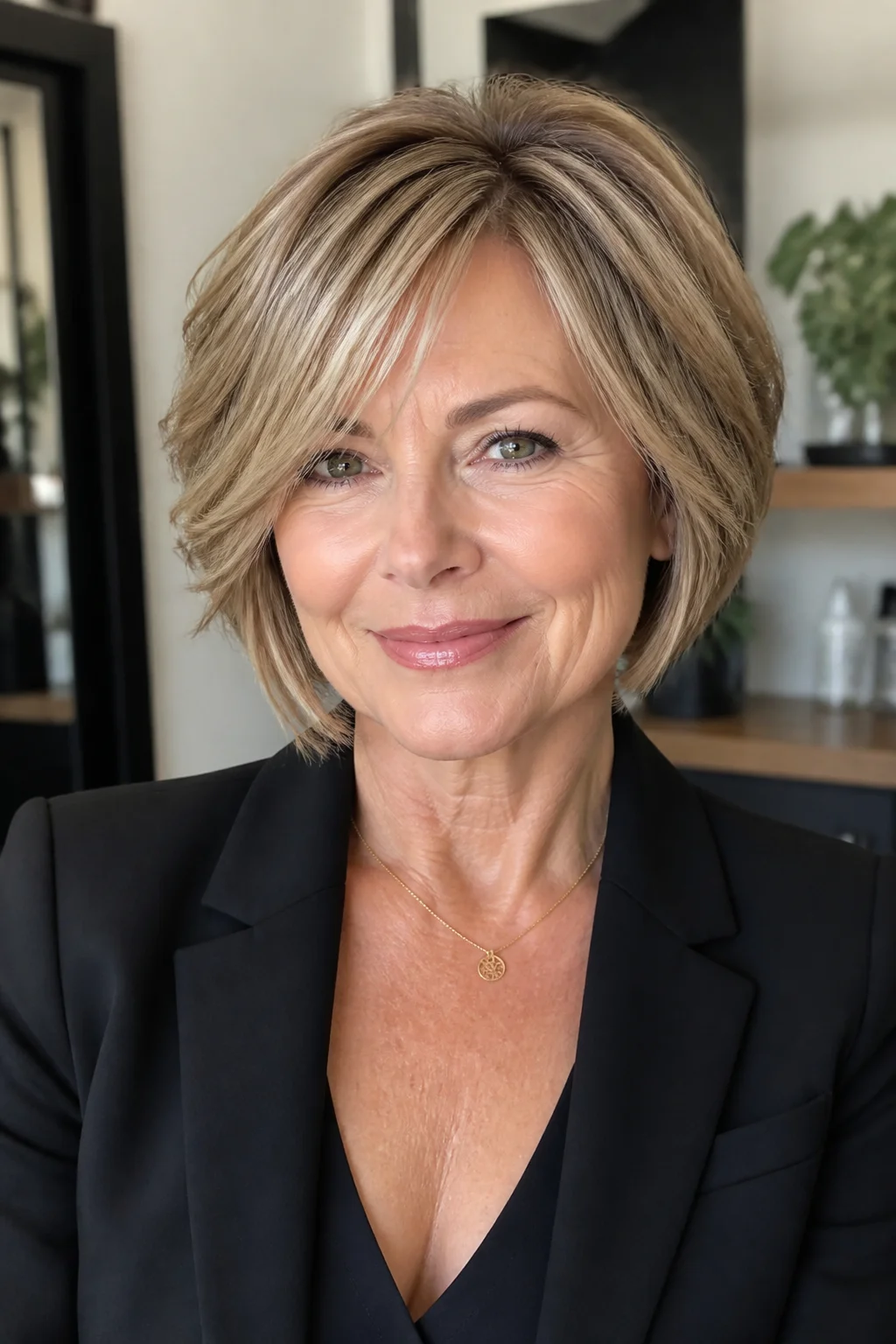
This cut keeps a chin-length base intact while adding soft layers around the face to soften angles and draw attention up toward the eyes. It works especially well on square or angular face shapes because the layers break up hard lines without removing much length. The base stays blunt enough to hold shape as it grows, so you’re not stuck getting trims every four weeks. Air-drying is simple here since the face-framing pieces fall naturally with a little finger-combing. Tip: apply a light cream to damp hair and scrunch gently instead of brushing to keep the ends soft rather than flat. A light mist of heat protectant before styling helps the finish last.
Textured Shag Bob with Choppy Layers
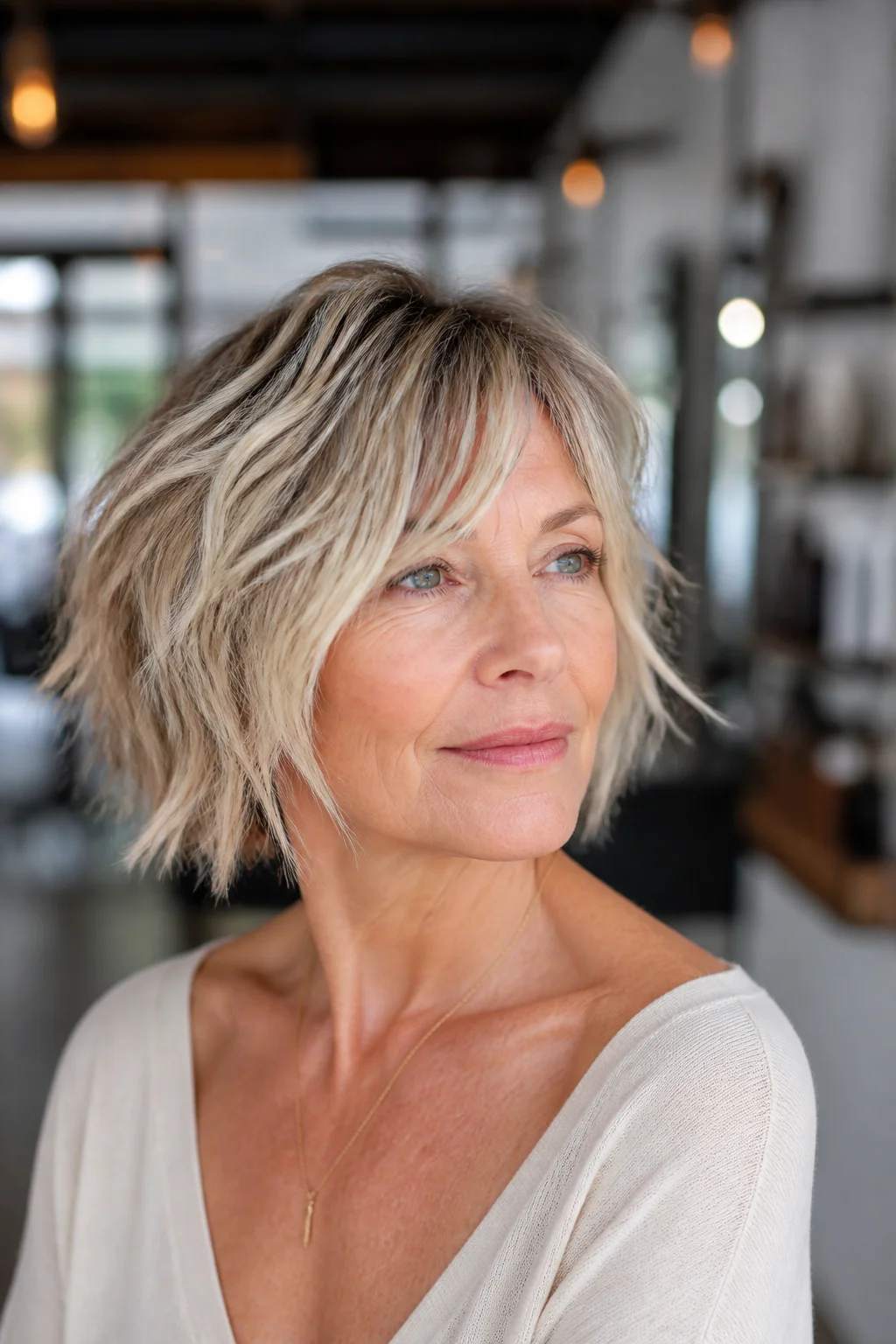
Choppy layers cut in at random angles give this bob a lived-in texture that never needs a flat iron. It looks like it took effort but actually came together with a towel-dry and some texturizing spray. Fine hair benefits most from this shape because the choppy ends create the illusion of thickness without adding weight. Just scrunch a small amount of product through damp strands and let it dry on its own.
Graduated Layers with Longer Front Pieces
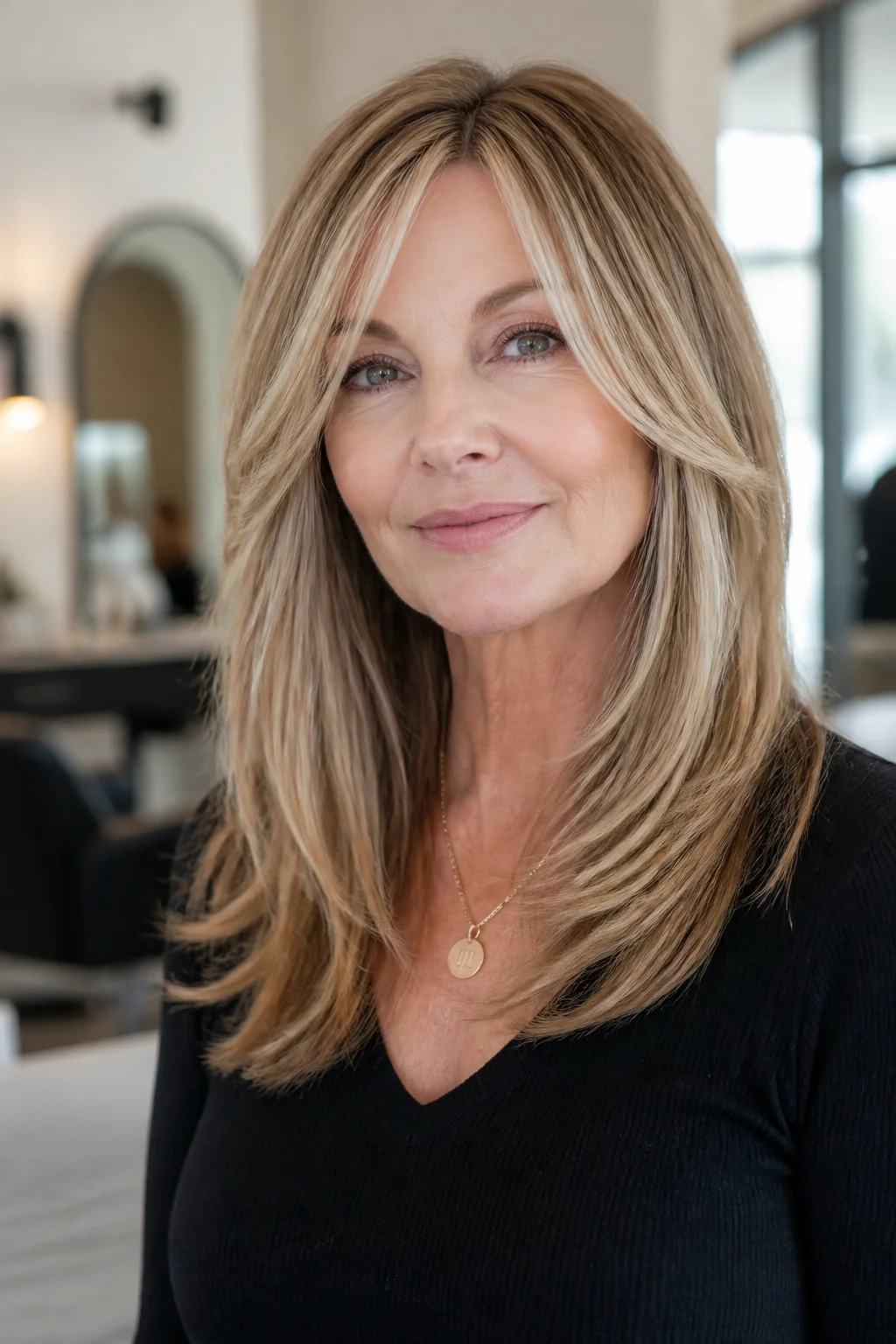
Graduation at the back combined with longer pieces up front gives this bob a shape that stays polished even without heat styling. The shorter back layers add lift at the crown, while the front pieces frame the jaw and soften the transition into the neck. This works particularly well for women with fuller cheeks who want length near the face without a heavy, blunt cut pulling everything down. It also grows out gracefully, since the graduation blends rather than leaving a hard line. Air-drying tends to bring out natural wave patterns in this cut more than in a one-length bob. Tip: twist small sections around your finger while damp if you want extra curl definition without a curling iron.
Wispy Layers Throughout Short Bob
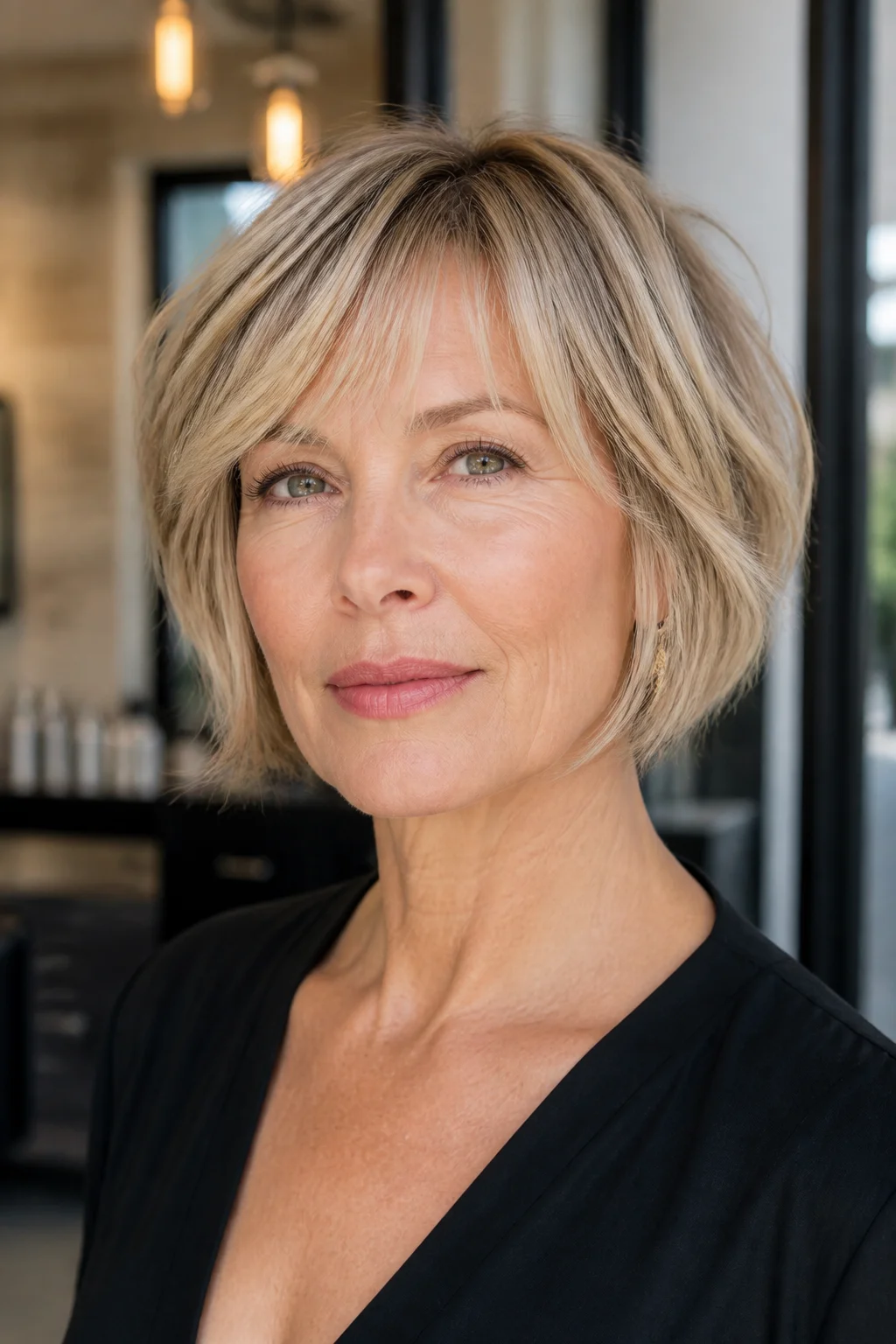
Short bobs with wispy layers cut throughout carry a softness that reads younger and more relaxed than a blunt cut ever could. The layers are thinned out enough that the ends look feathery rather than heavy, which suits thinner hair that tends to look stringy when left too thick. This shape needs almost no styling tools. A little mousse scrunched through towel-dried hair and you’re finished.
Stacked Layers at Crown with Tapered Nape
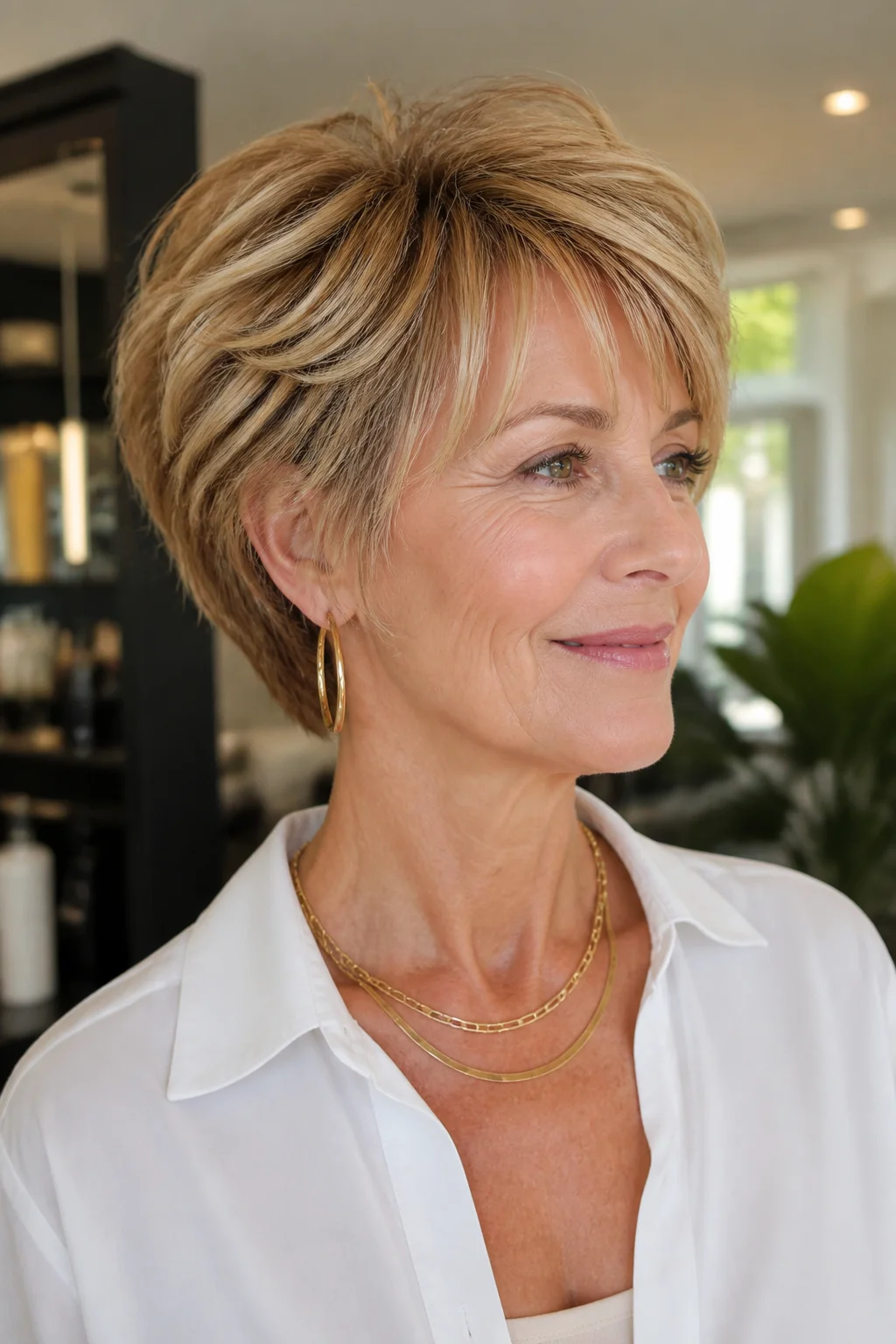
Stacking layers at the crown builds volume exactly where most women over 50 need it most, since hair naturally loses density there with age. The tapered nape keeps the back neat and controlled so the volume up top doesn’t look unbalanced. This cut suits straight or slightly wavy hair best, since curls can sometimes fight the tapered shape at the neckline. Because the volume is built into the cut itself, you skip the round brush and blow dryer routine most stacked styles usually require. A quick flip of the head while drying is often all it takes to activate the lift at the crown.
Blunt Ends with Strategic Internal Layers
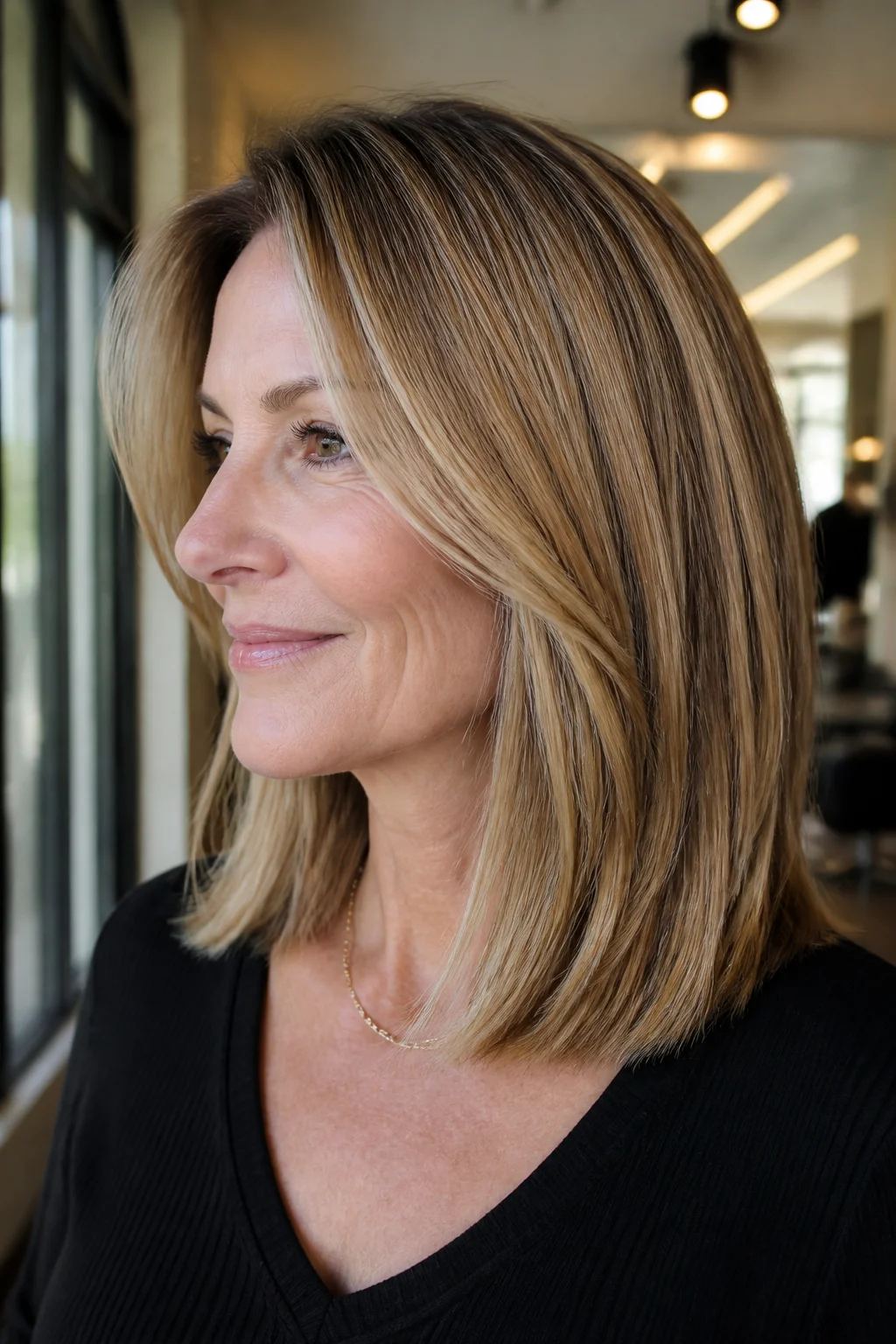
The outer shape here stays blunt and clean, but internal layers cut beneath the surface remove bulk without changing the silhouette. This is a smart option for thick or coarse hair that looks heavy and shapeless when cut with only one length throughout. From the outside it reads as a sleek, simple bob. Underneath, the internal layers do the work of letting it move and dry faster.
Asymmetrical Layered Bob with Side-Swept Bangs
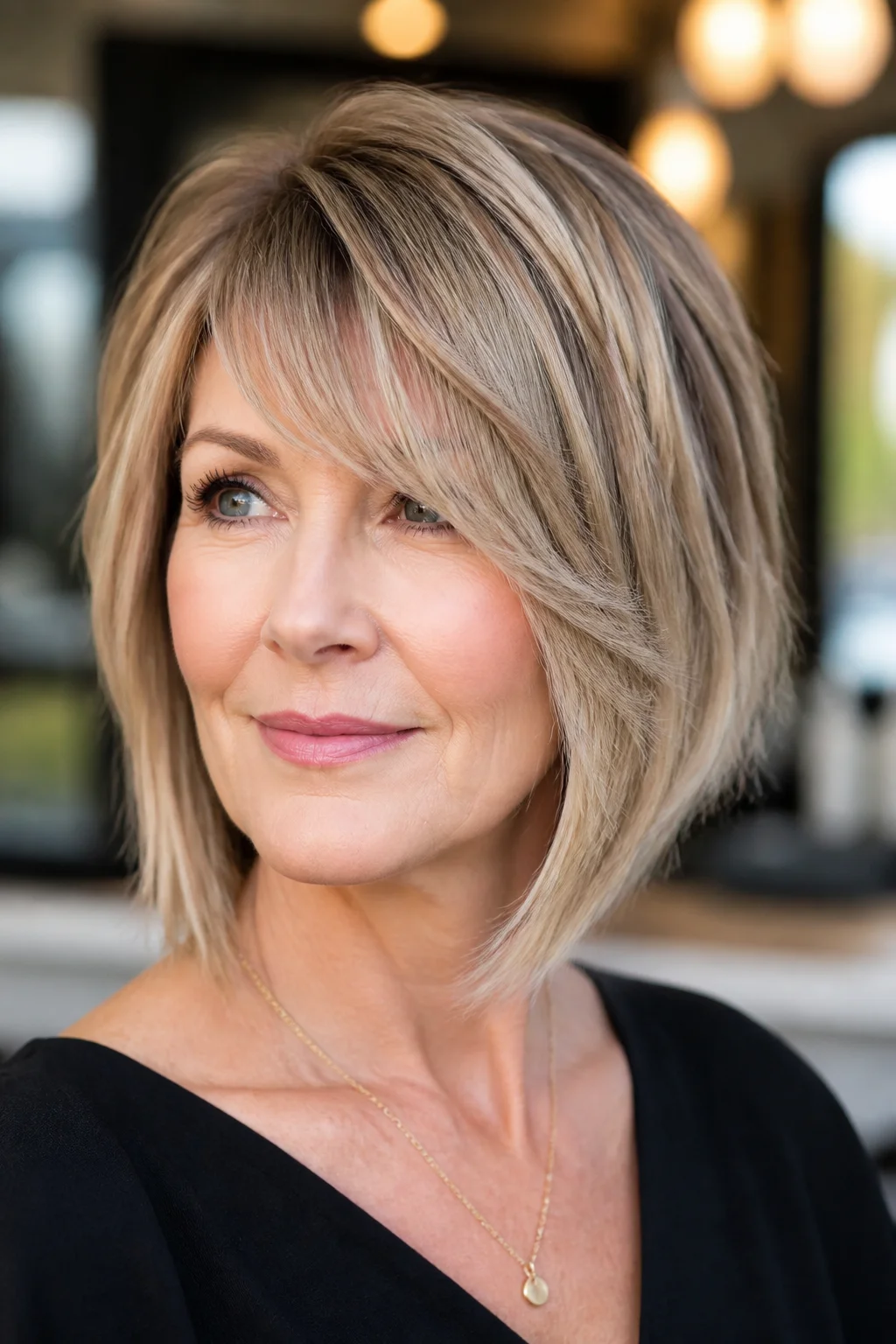
An asymmetrical length paired with side-swept bangs gives this bob a modern edge while still keeping the low-maintenance qualities that matter most after 50. The uneven length draws the eye diagonally across the face, which flatters rounder shapes especially well. Side-swept bangs blend into the layers rather than needing their own separate styling step, so they grow out softly instead of looking like an afterthought. This cut does ask for slightly more sectioning during the initial cut, but the day-to-day styling stays simple. Tip: dry the bangs first with your fingers, pushing them to the side while damp, and they’ll set in that direction as the rest of your hair air-dries.
Curly-Textured Layered Bob for Natural Curls
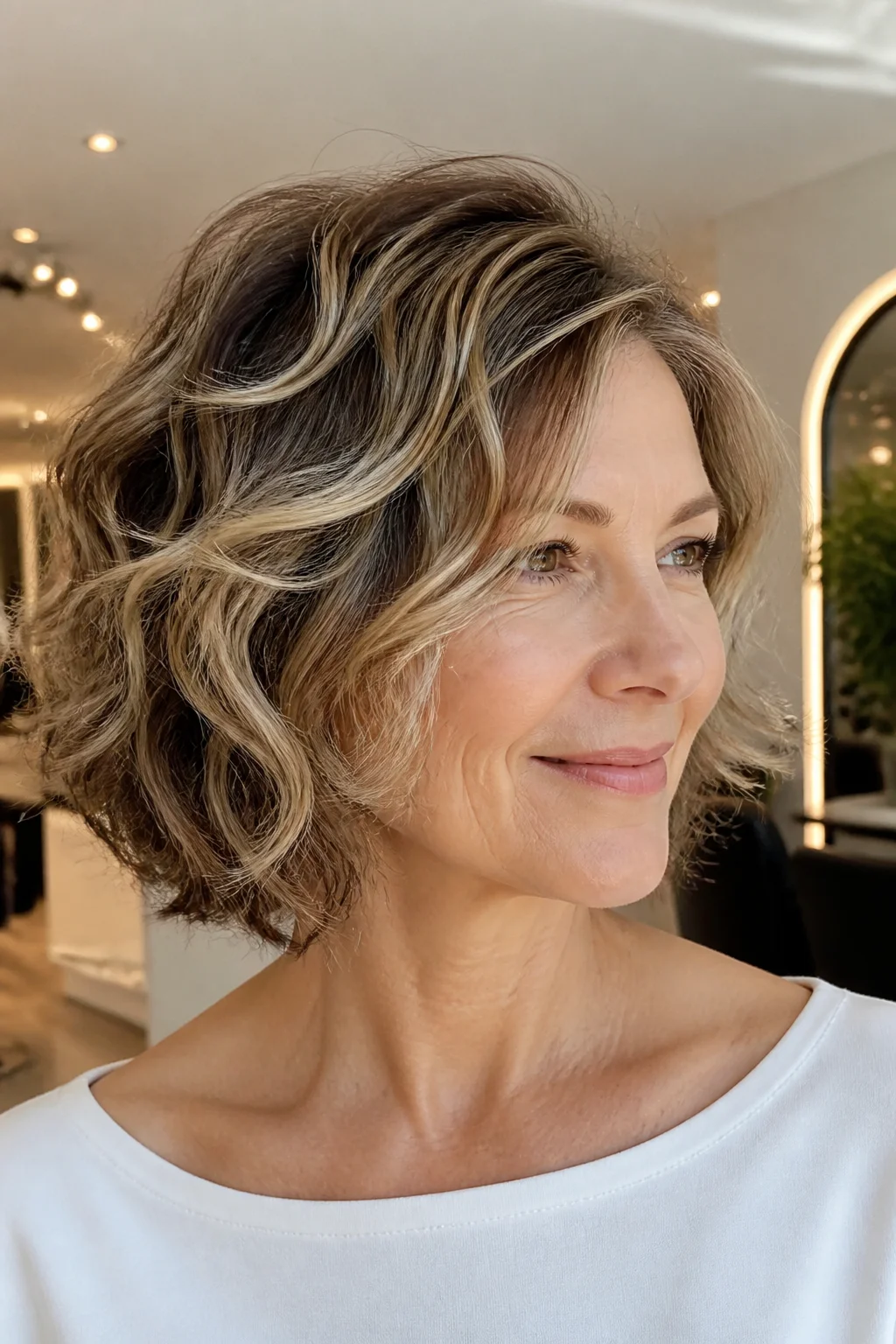
Layers cut specifically for curl pattern let natural texture do most of the styling work on its own. Curls need room to bounce and coil, and a bob layered too uniformly can end up looking like a triangle instead of a soft shape. This version thins out the internal weight so each curl falls with its own movement rather than clumping into a solid mass. It’s one of the few cuts on this list built entirely around skipping heat tools altogether, since diffusing or air-drying is really the only step required.
Wavy Layers with Longer Length at Shoulders
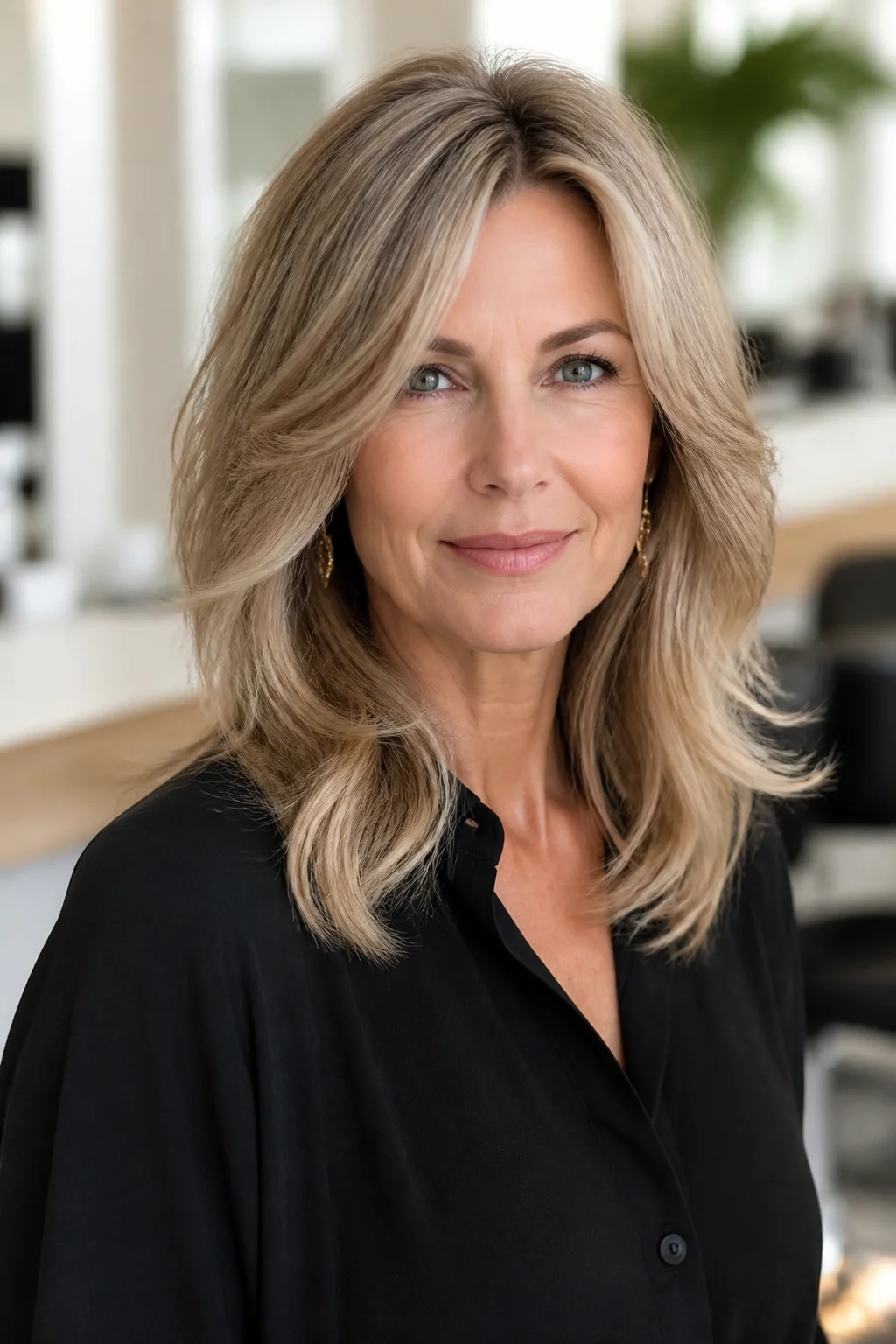
Shoulder-grazing length with soft layers cut throughout gives natural waves the space to move without frizzing into a triangle shape. This length also tends to feel more youthful than a shorter bob for women who aren’t ready to cut significantly shorter. The layers help distribute the wave pattern evenly from root to end. A leave-in cream applied to damp hair, followed by air-drying, brings out the texture nicely.
Feathered Layers Throughout for Fine Hair
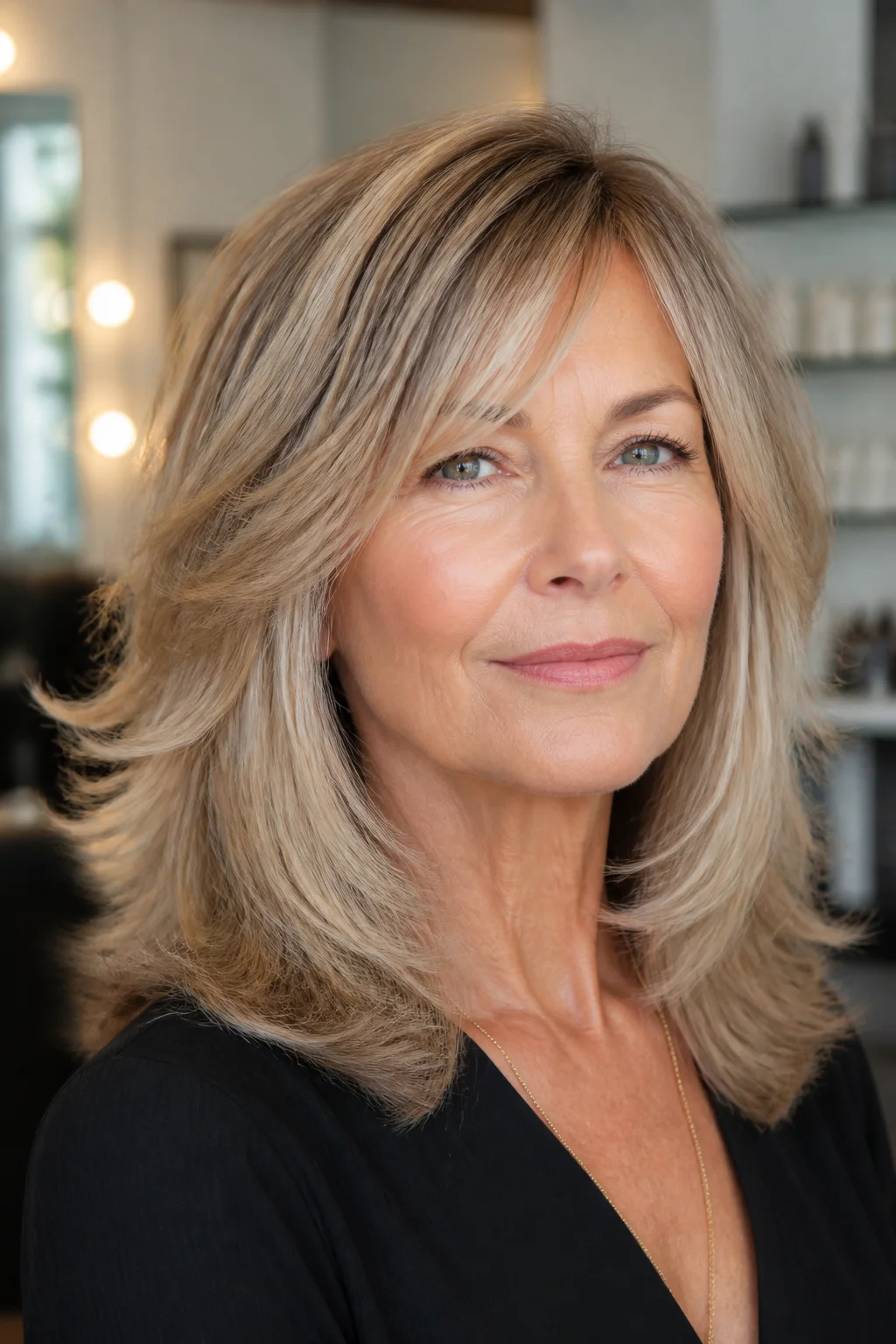
Feathered layers are cut with a light hand, tapering the ends so thin hair doesn’t look flat or see-through at the bottom. This technique adds the illusion of density without stacking on heavy layers that fine strands can’t support. It’s a subtle cut, not dramatic, but the difference shows up the moment you skip the blow dryer and let it dry naturally. Tip: a volumizing mousse at the roots, applied before air-drying, keeps the feathered ends from going limp by midday.
Disconnected Layers for Texture and Movement
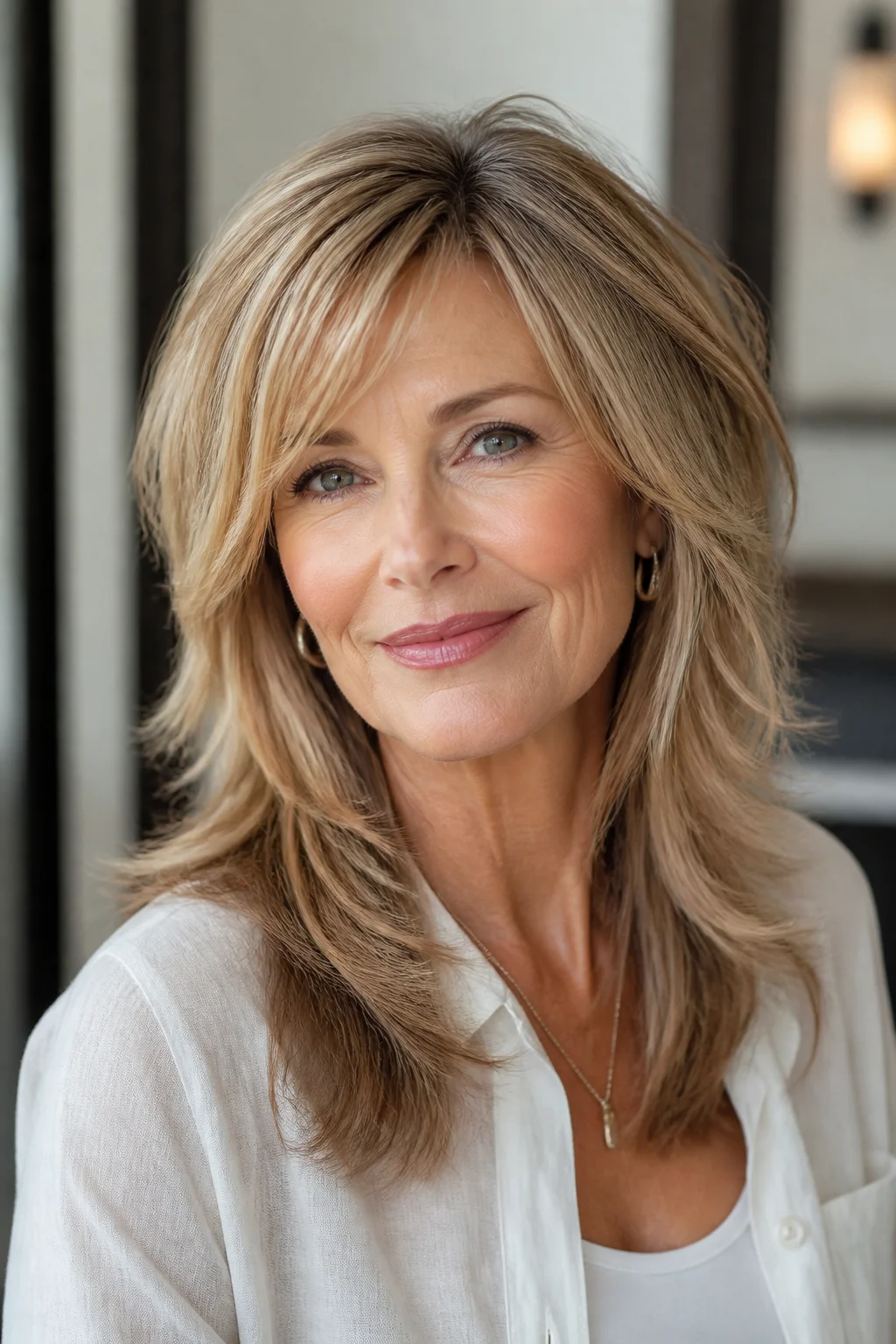
Disconnection between the top layers and the bottom length creates intentional contrast that looks styled even straight out of the shower. This works well on medium to thick hair that can handle the visual weight of two distinct layers meeting at an angle. Movement is the whole point of this cut, so resist the urge to smooth it down.
Rounded Layered Bob with Soft Perimeter
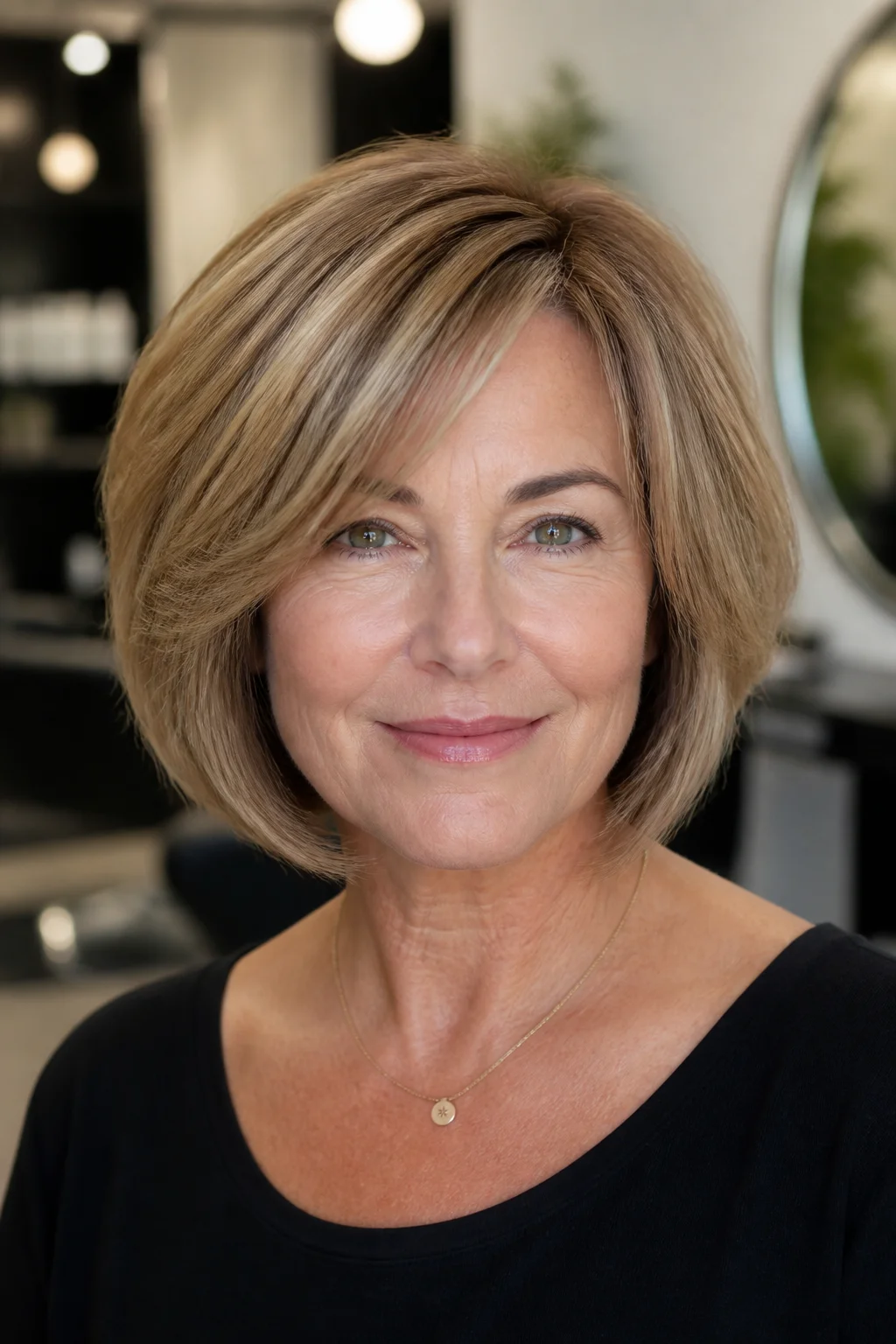
A rounded perimeter with soft internal layering gives this bob a classic, polished shape that still air-dries easily. Unlike a sharp, blunt bob, the soft edges here forgive slight texture changes day to day, so humidity or natural wave won’t throw the whole shape off. This is a dependable option for women who want something that looks put together without daily maintenance. It suits most face shapes, though it flatters oval and heart shapes especially well since the roundness balances a narrower chin.
Choppy Layers with Longer Back Length
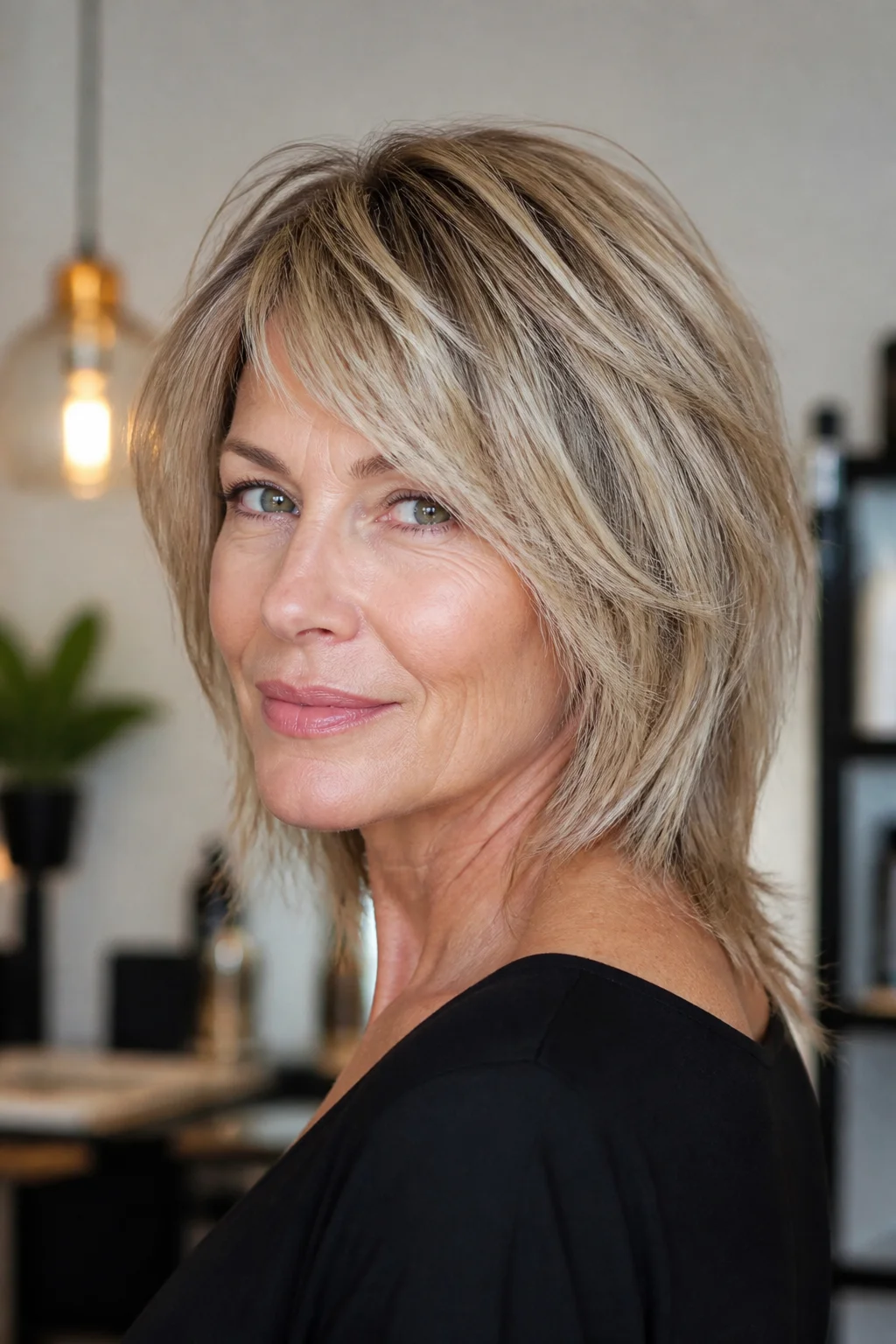
Length left longer in the back with choppy layers cut through the crown and sides gives this bob an asymmetrical energy without an obvious diagonal line. It’s a good middle ground between a short, textured bob and one that keeps more length for versatility. The choppy layers reduce bulk at the crown, which helps hair dry faster and lie with less poof. Because the back stays longer, this cut also works well if you’re not ready to commit to something drastically shorter but still want the low-maintenance benefits of layering.
Face-Framing Layers with Sleek Sides
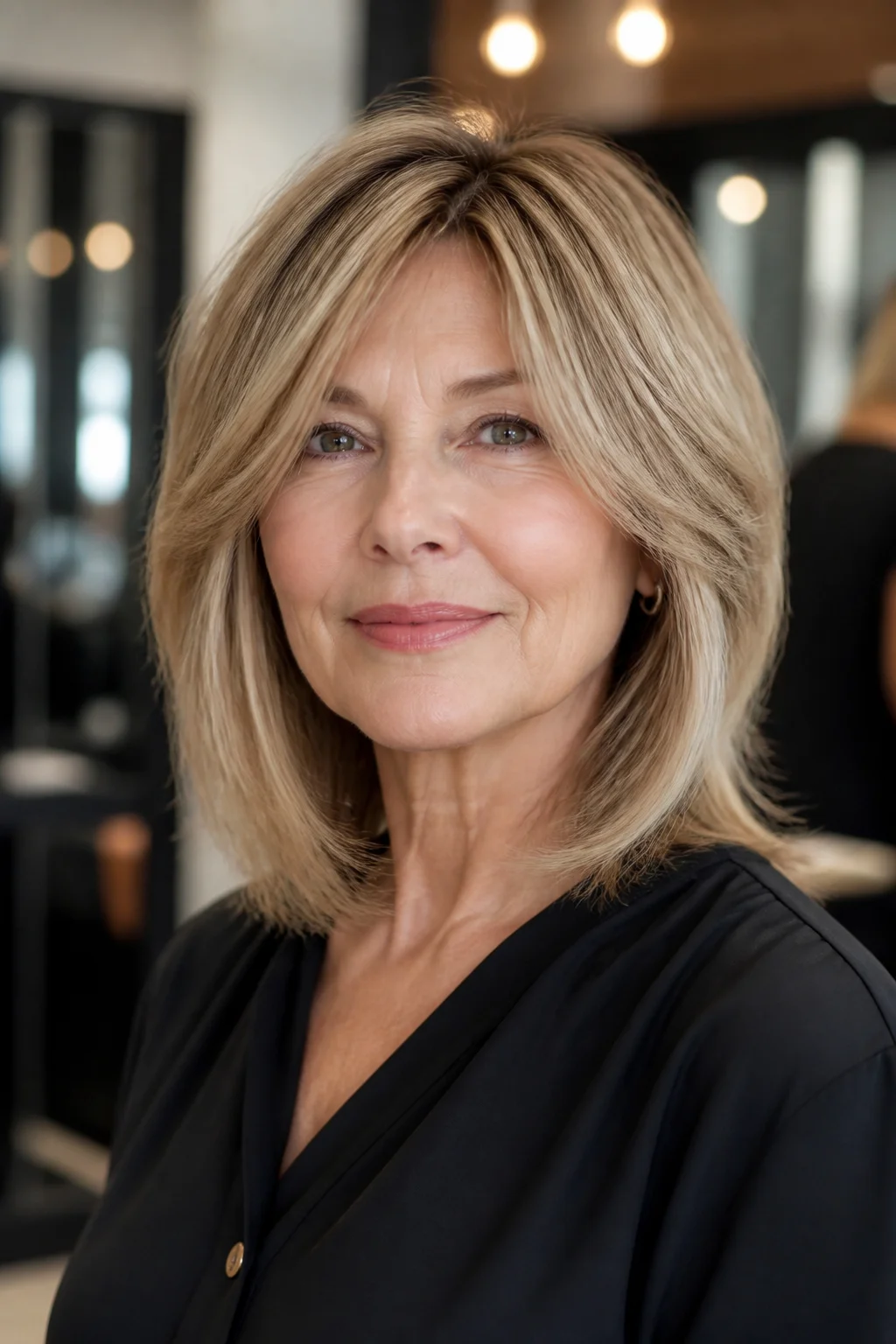
Layers concentrated only around the face, paired with sides left smoother and less layered, create a shape that looks intentional and neat with almost no effort. The sleek sides mean less bulk to manage near the ears, while the face-framing pieces do the styling work near the front. This cut suits straighter hair types best since the sleekness relies somewhat on a natural fall rather than texture.
Pixie-Bob Hybrid with Layered Crown
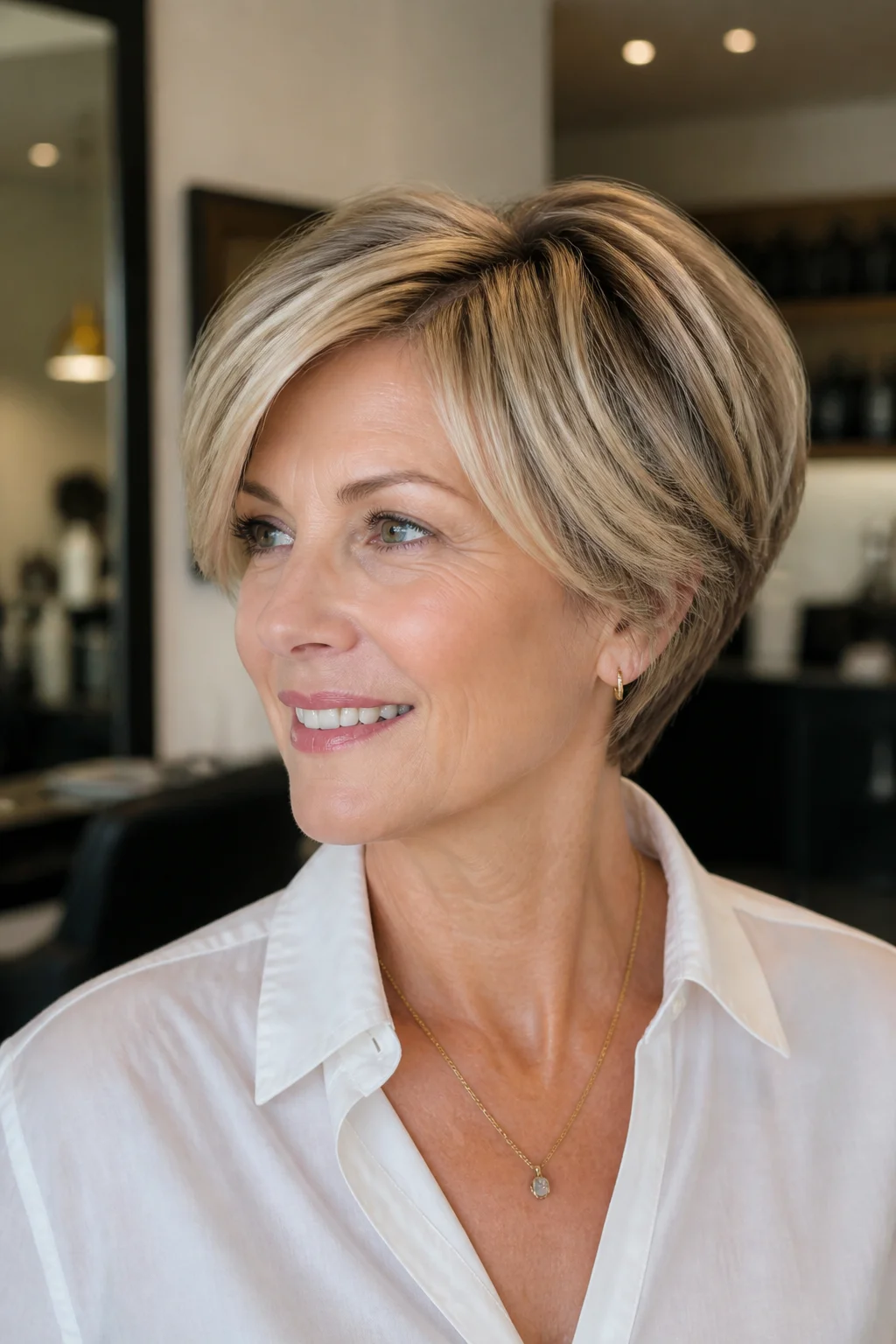
This cut splits the difference between a pixie and a bob, keeping length at the nape and sides while cutting the crown shorter and layered for lift. It’s a strong option for women ready to go shorter without fully committing to a pixie. The layered crown adds volume exactly where fine or thinning hair often needs it, and the slightly longer back keeps some femininity in the shape. Styling really just means running fingers through damp hair, maybe with a little pomade at the ends.
Layers with Subtle Undercut for Volume
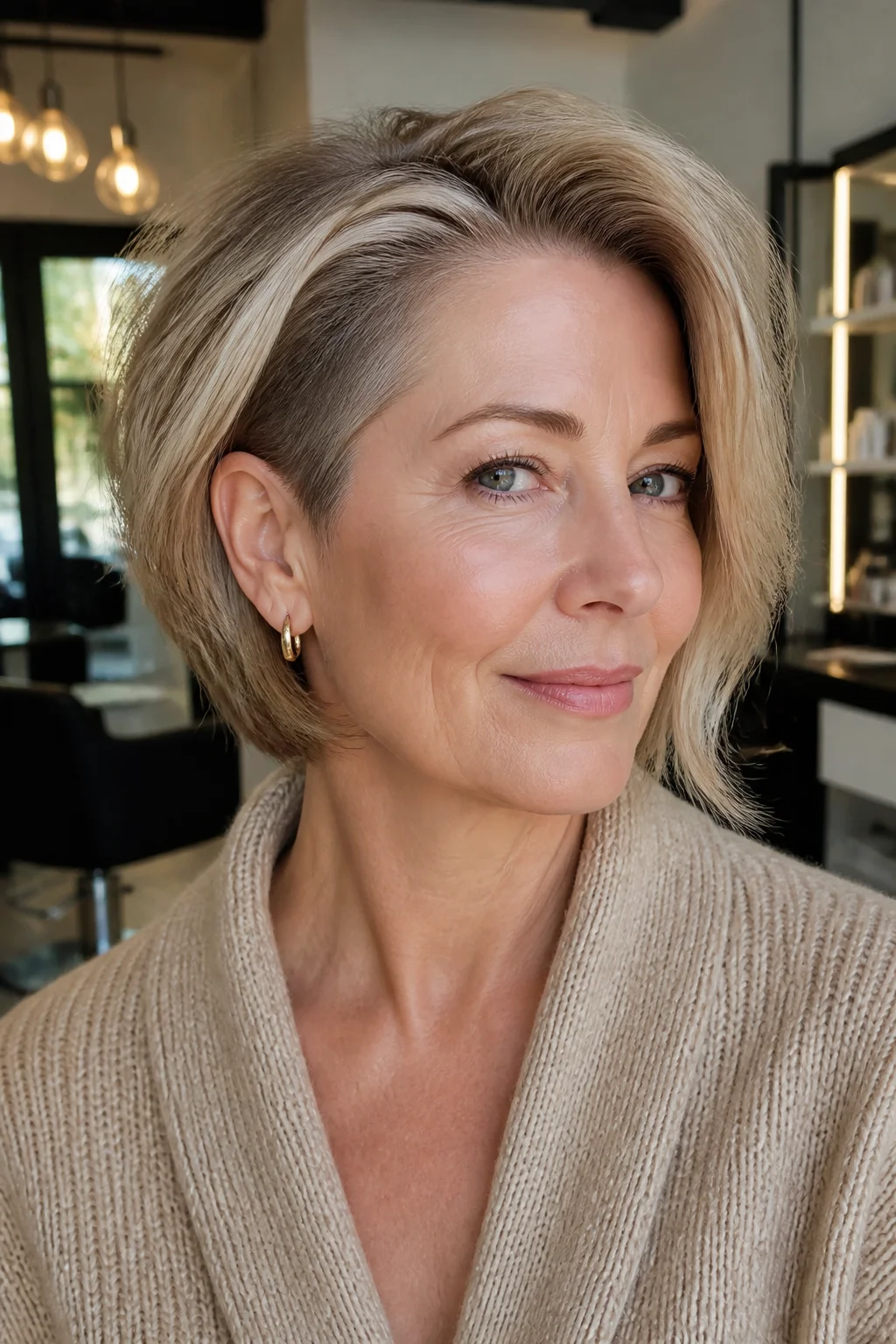
A light undercut beneath the top layers removes bulk at the nape, which helps the whole shape sit closer to the head and dry faster. This isn’t a dramatic shaved undercut, just enough thinning to reduce weight underneath. It pairs especially well with thick, straight hair that tends to feel heavy by the end of the day.
Textured Layers Angled Toward Face
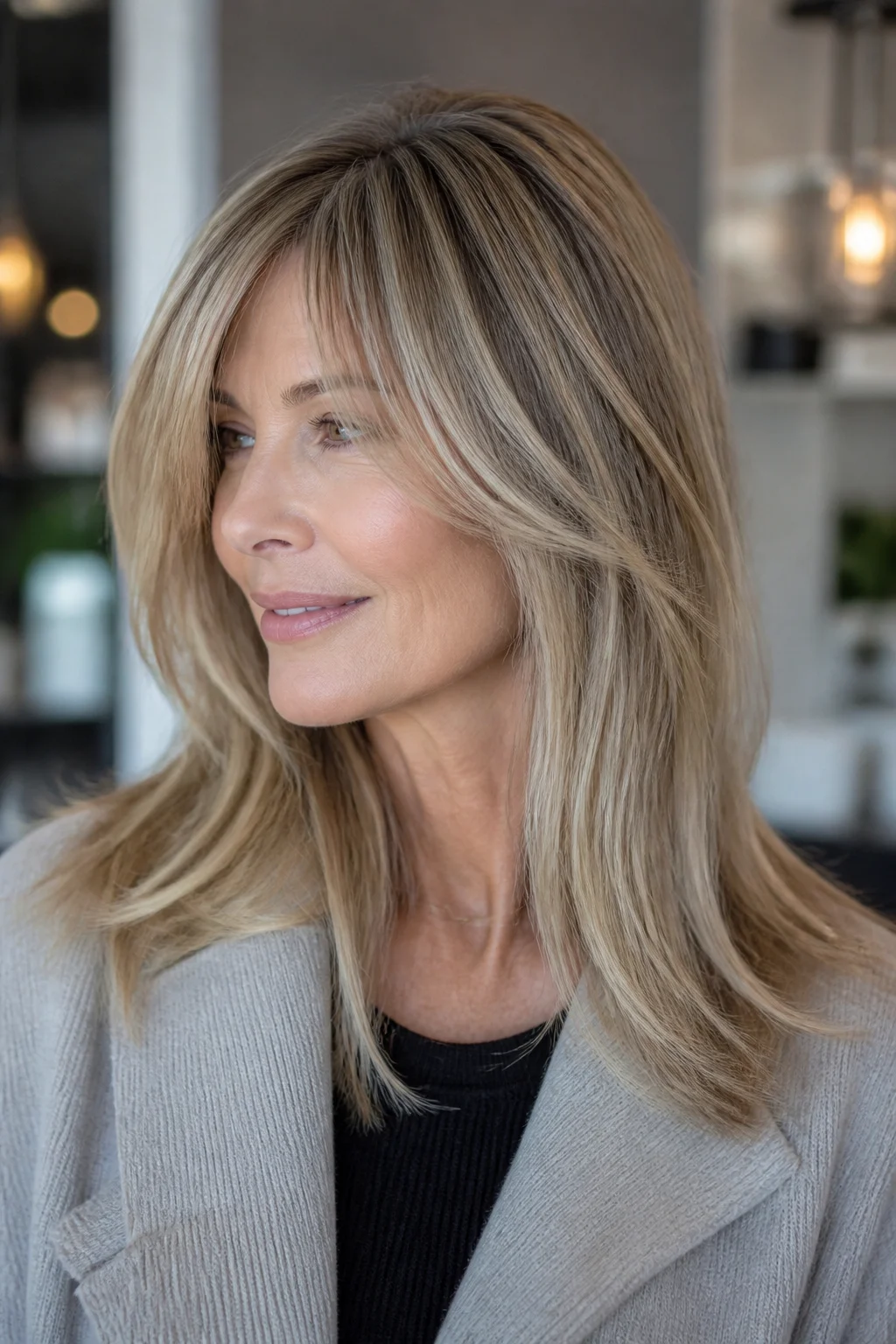
Layers cut at an angle that points toward the face rather than straight down add a soft frame around the cheeks and jaw. This angled approach flatters most face shapes because it draws the eye inward rather than outward. The texture also breaks up any bluntness left in the perimeter, so the ends look feathered instead of chopped straight across.
Pencil-Thin Layers for Defined Texture
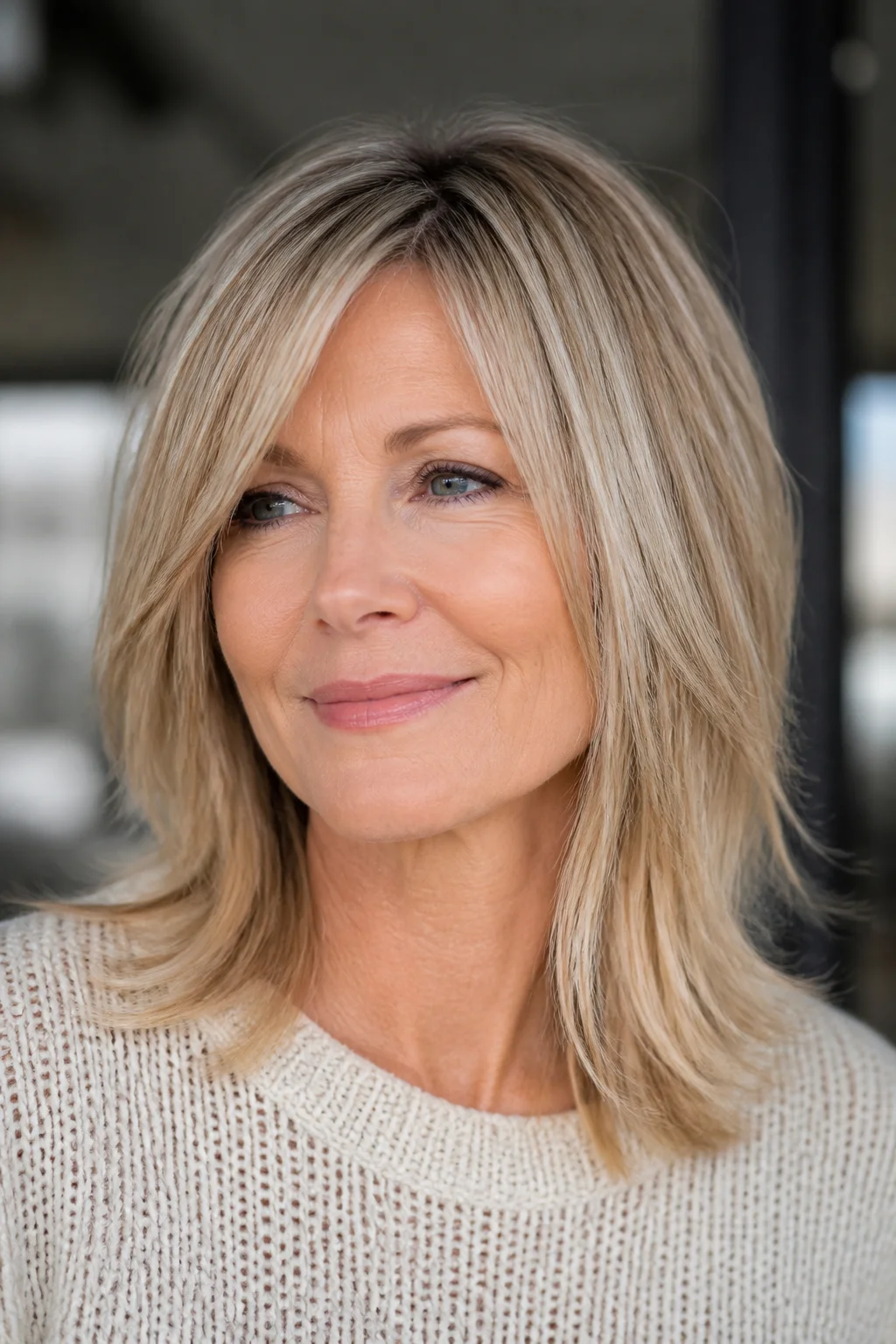
Thin, precise layers cut close together give this bob a defined, almost piece-y texture that holds its shape well between washes. It’s a good option for hair that’s naturally a bit oily at the roots, since the texture masks buildup better than a smooth, one-length cut. Tip: work a small amount of texturizing paste through dry ends to keep the definition crisp without looking greasy.
Curled-Under Layers with Side Part
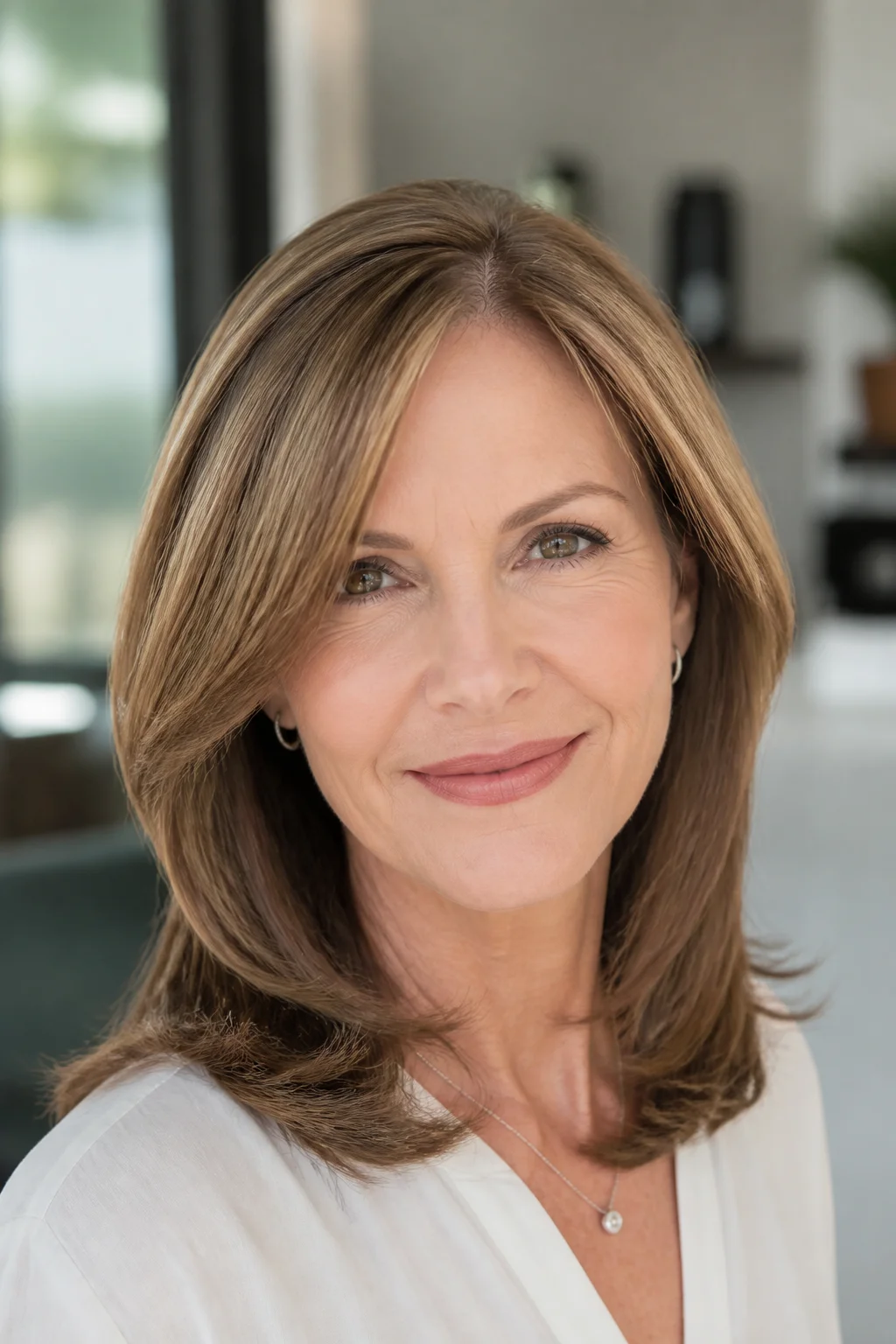
Ends that curl gently under, combined with a deep side part, give this bob a soft, rounded finish that reads polished without a curling iron. The side part alone changes the whole framing of the face, often taking years off simply by shifting how the front pieces fall. This cut relies on layers cut with enough weight to encourage the ends to curl inward naturally as they dry, rather than flipping out. It works nicely on medium-thick hair with a slight natural bend, though straighter hair can achieve the look with a small amount of setting product applied while damp.
Soft Graduated Layers from Crown to Nape
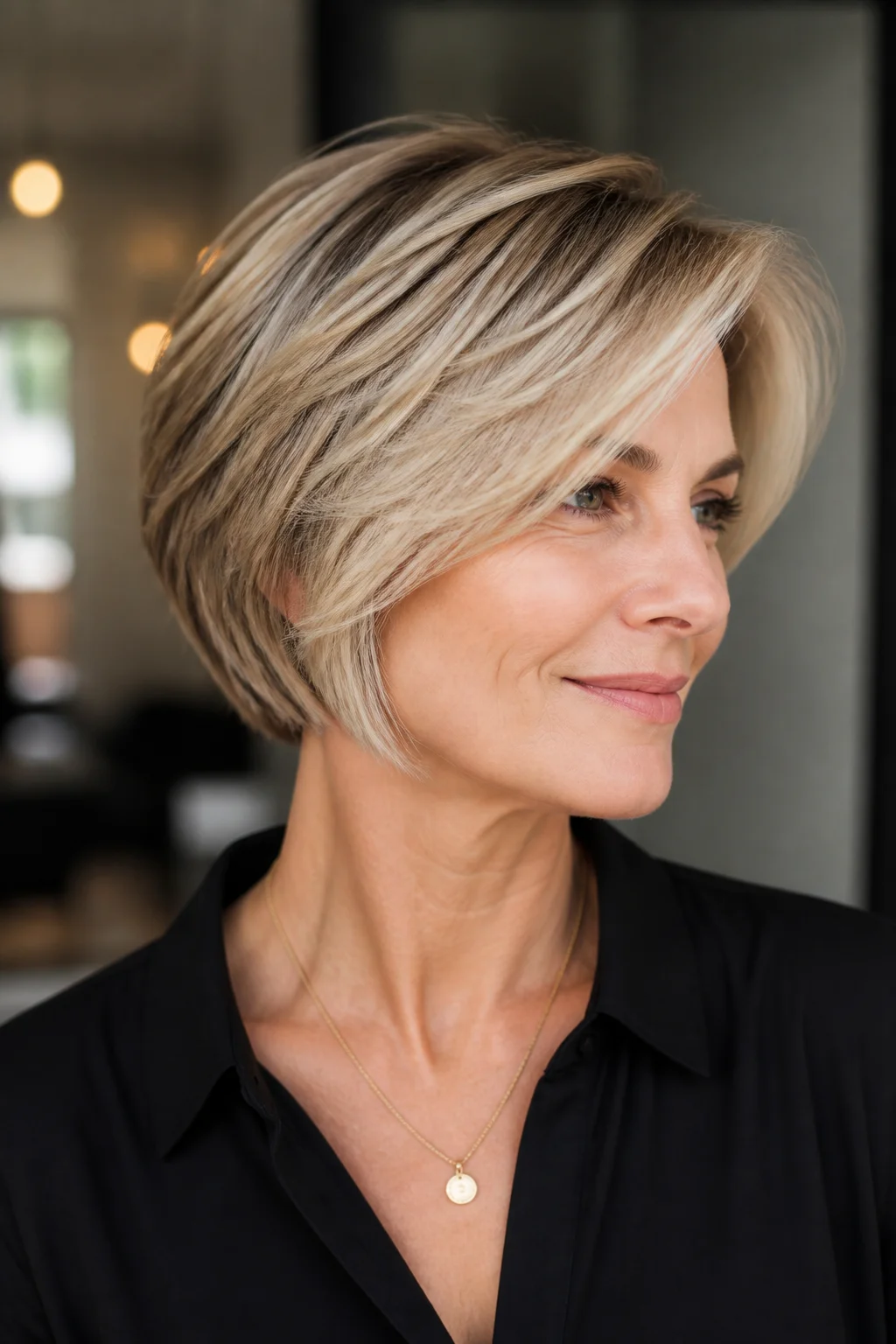
Graduation that starts soft at the crown and increases gradually toward the nape creates a rounded, gentle shape without any harsh lines. This is one of the more forgiving cuts on this list, since the gradual change hides regrowth well between salon visits. It suits nearly every hair type, from fine to medium thickness, because the layering is subtle rather than aggressive.
Layered Shag with Wispy Bangs for Dimension
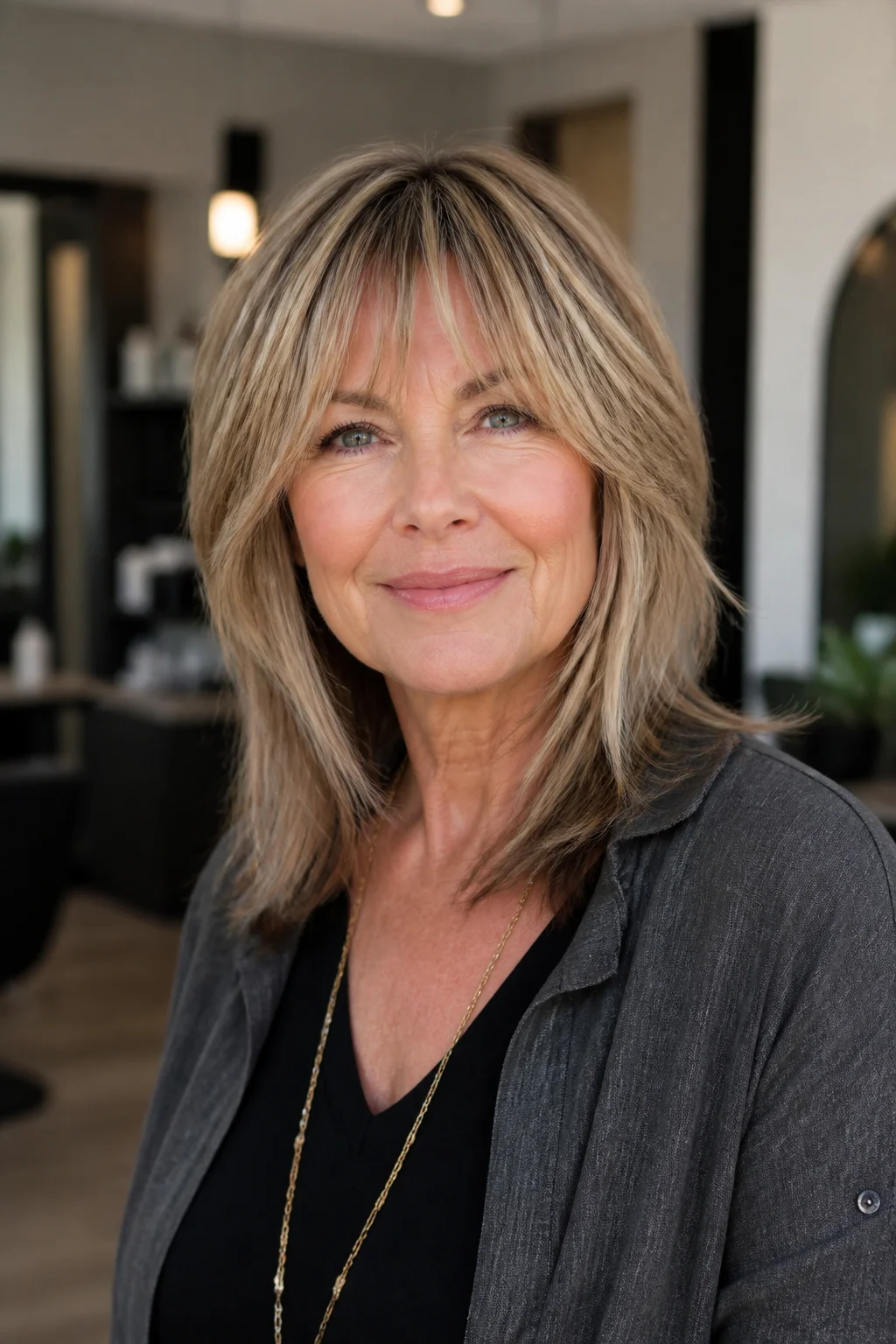
A shag cut layered throughout, paired with wispy bangs, gives this bob serious dimension and texture that looks intentionally undone. The wispy bangs blend into the face-framing layers rather than sitting as a separate, blunt piece, so they’re easy to grow out or trim yourself between appointments. This cut thrives on second or third day hair, since a little natural oil actually helps the texture hold. It’s one of the most forgiving options here for anyone who wants a lower-maintenance routine but still wants a style with personality.
Which Layered Bob Fits Your Hair Type
Picking the right cut comes down to your natural texture more than anything else. If your hair is fine and tends to fall flat, look toward the feathered layers throughout for fine hair or the wispy layers throughout short bob, since both are built to fake density without adding heavy layers that fine strands can’t support. Thick or coarse hair does better with cuts like the blunt ends with strategic internal layers or the layers with subtle undercut for volume, both of which remove weight from underneath rather than the surface, keeping the outer shape clean.
Curly and wavy hair should stay away from anything cut too uniformly, since even layering tends to create a triangle shape as it dries. The curly-textured layered bob for natural curls and the wavy layers with longer length at shoulders are both cut with that movement in mind.
A common mistake is choosing a heavily graduated or stacked cut, like the stacked layers at crown with tapered nape, on hair that’s already very thick, since the stacking can add bulk instead of removing it. Match the cut to what your hair is actually doing, not just what looks good in a photo.