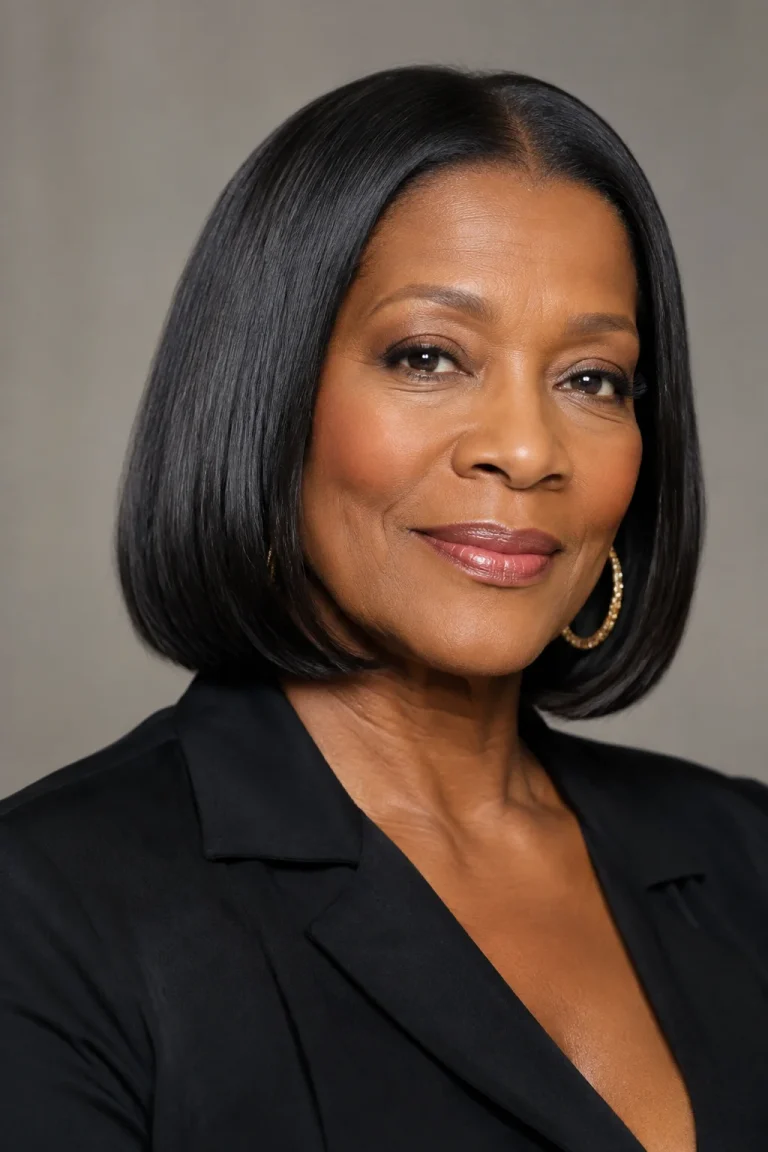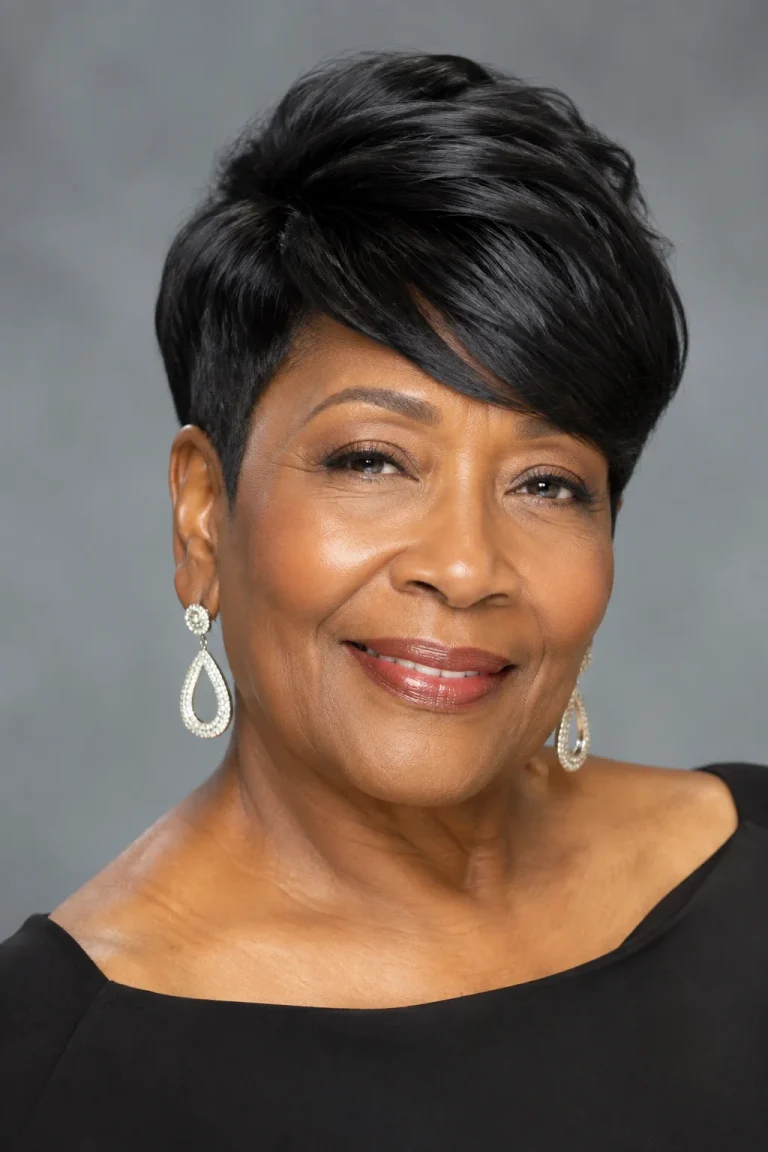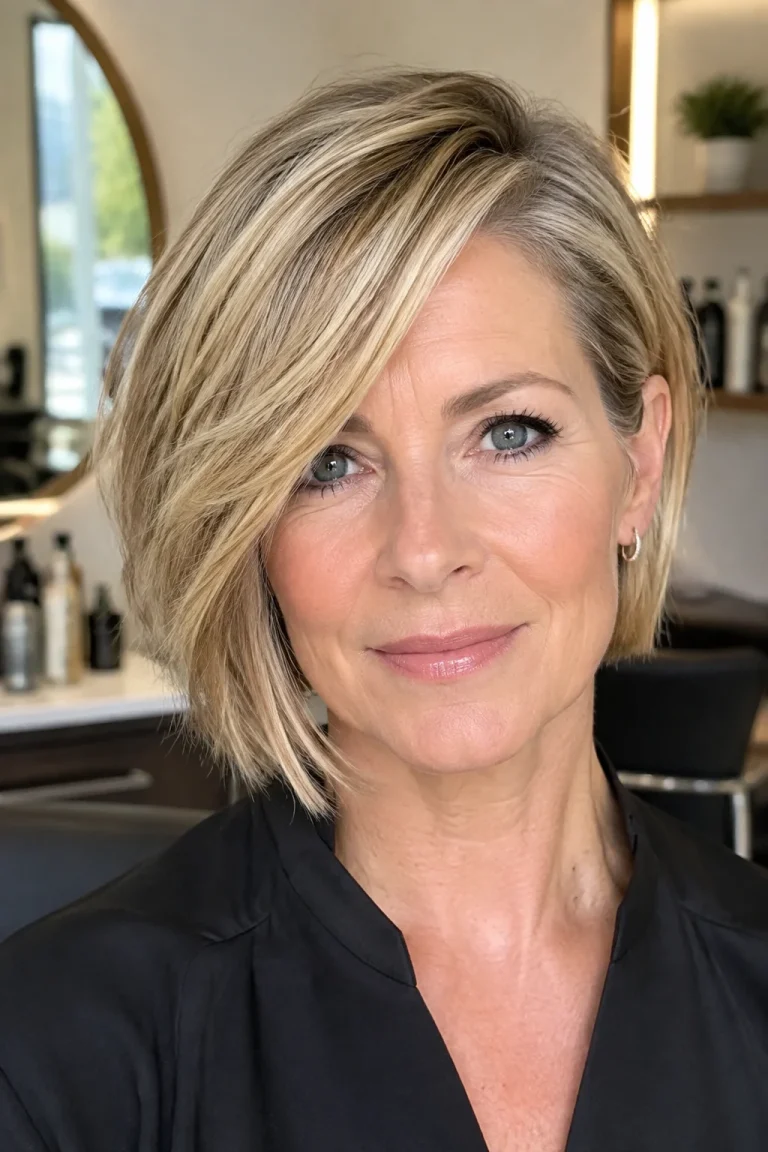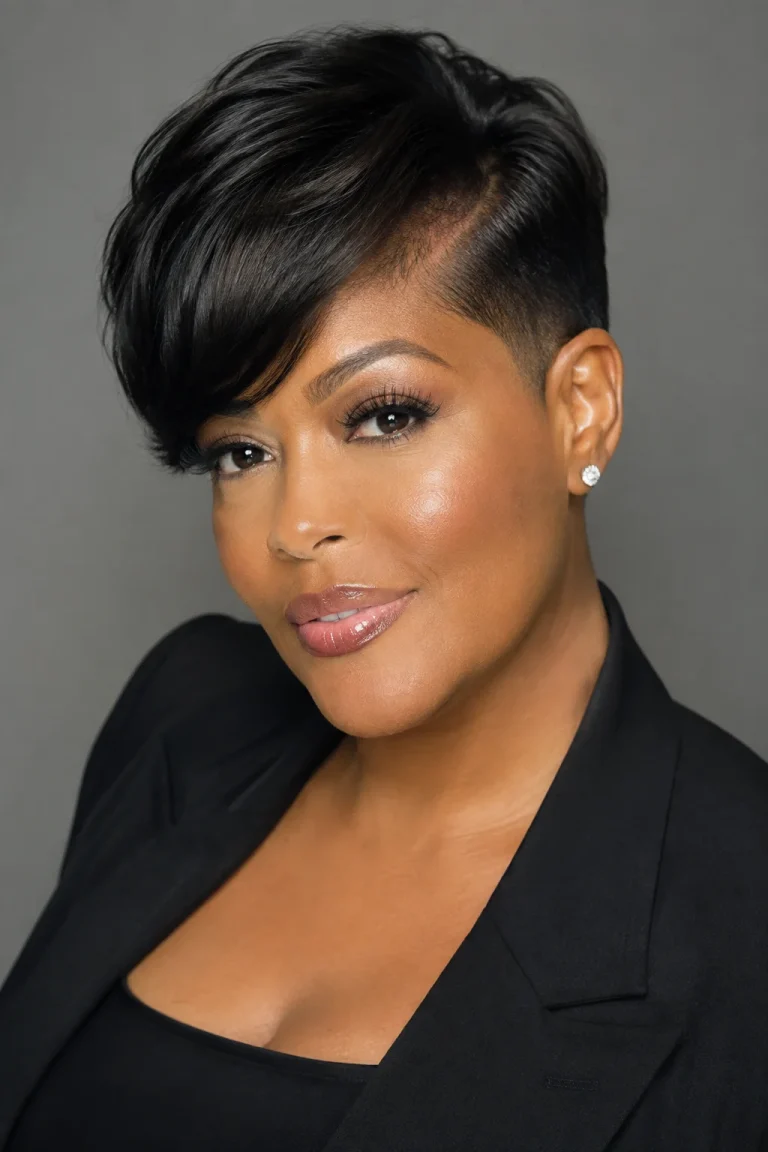
Short curls can be tricky to get right once you factor in changing hair texture, thinning at the crown, or years of color processing. A lot of women assume a pixie means giving up softness or shape, but that’s simply not true when the cut is chosen well. The right curly pixie haircuts for women over 60 actually work with what your hair is doing now instead of fighting it, giving you fullness where you need it and control where things tend to frizz. Some of these cuts lean classic and polished, others are looser and more playful, and a few blend gray tones in a way that looks intentional rather than accidental. Below you’ll find 21 distinct options, each with its own texture, length, and attitude, so you can bring a clear picture to your stylist instead of a vague idea.
Classic Textured Pixie with Side Sweep
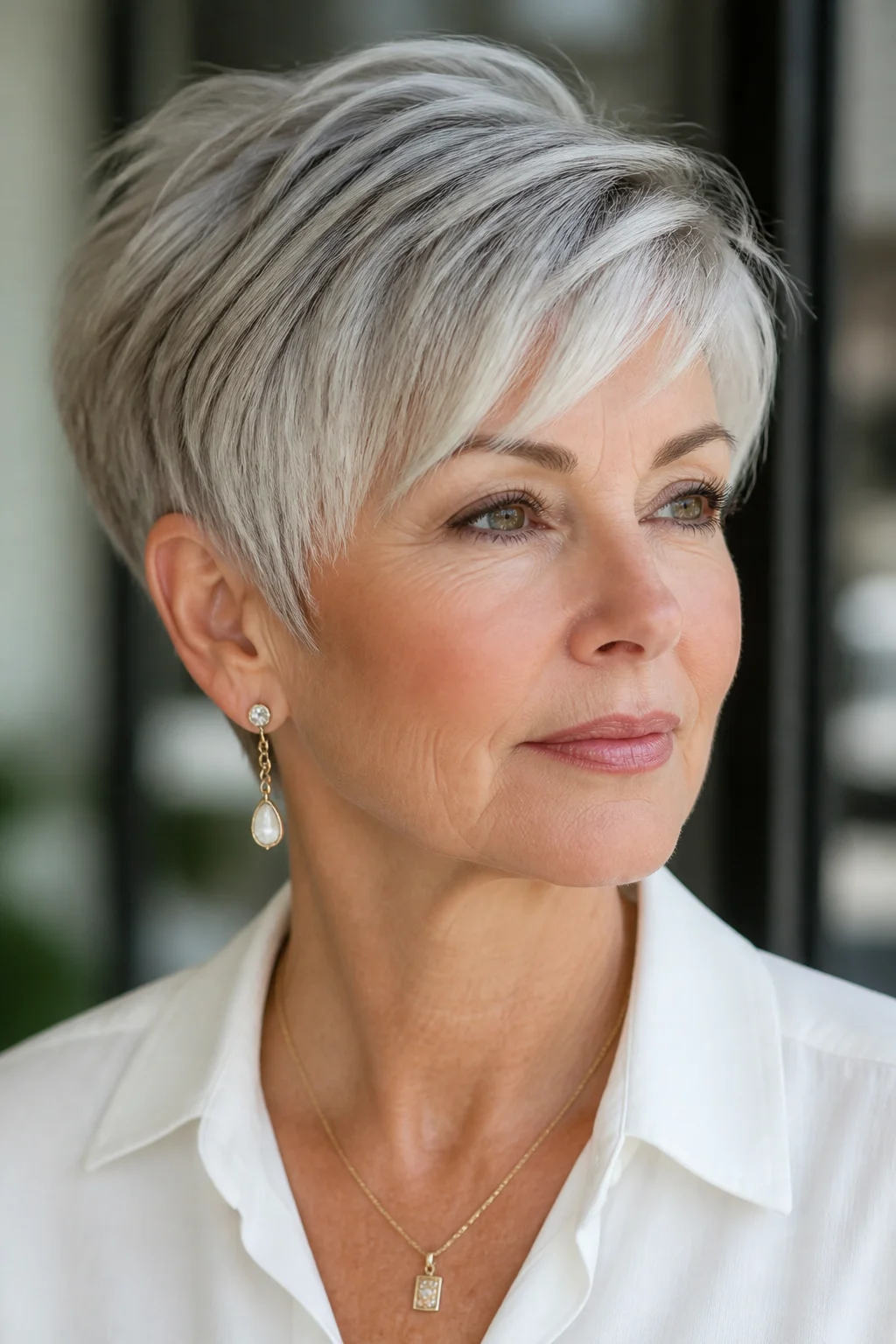
This one stays close to the head on the sides and back, then lets the curls at the top fall into a soft side sweep instead of standing straight up. It works especially well on fine to medium curl patterns because the weight of the longer top keeps things from puffing out too much. The side sweep also softens the forehead and draws the eye across the face rather than straight down. Tip: ask for the front section left slightly longer than you think you want, since curls shrink up more than straight hair does once they dry.
Tousled Curly Pixie with Undercut
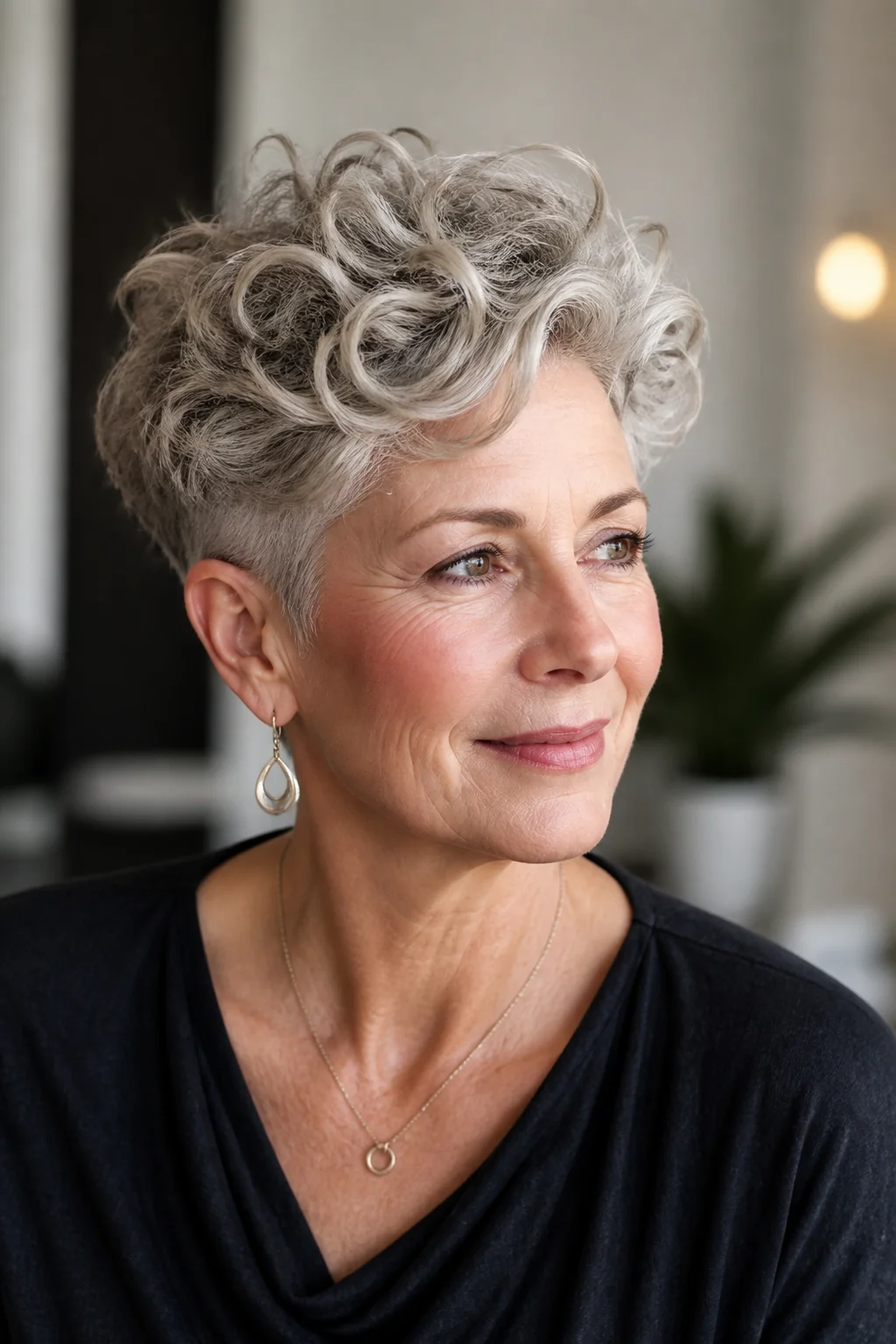
The undercut underneath removes bulk so the curls on top can do their thing without fighting gravity or humidity. It reads casual and a little rebellious, which is exactly the point. Because the sides are cut close, this style also shows off cheekbones and jawline in a flattering way. Regrowth on the undercut needs a trim every four to six weeks to keep the contrast sharp, so this is a commitment cut more than a low-maintenance one.
Face-Framing Curly Pixie
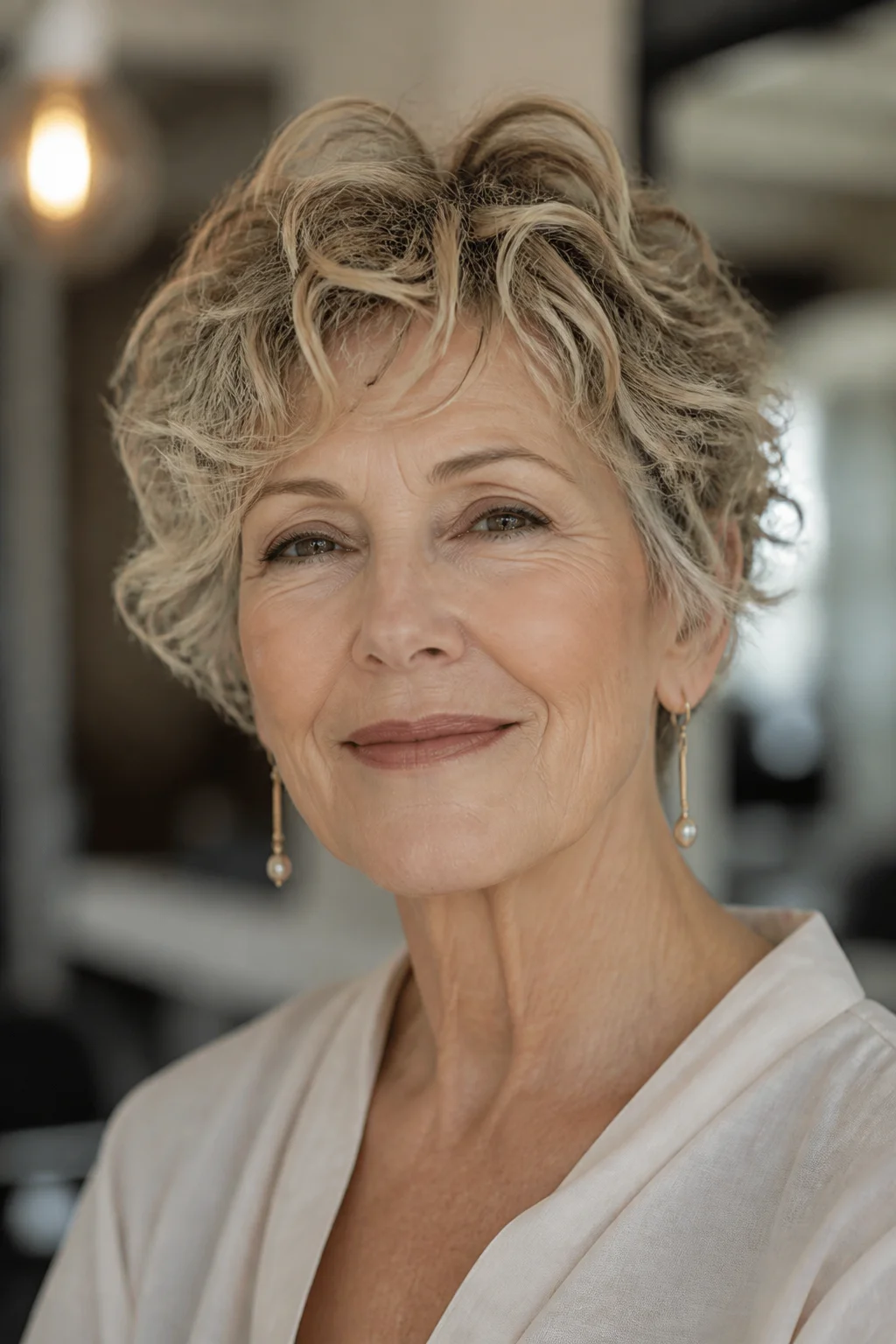
Here the curls are cut longer right around the face while the crown and back stay short and tidy. It’s a smart option if you’ve got a longer face shape or just want softness near the eyes and cheeks. The framing pieces can be curled forward or left loose depending on your mood that day. Stylists often recommend this shape for women moving away from longer hair for the first time, since it still gives something to hold onto near the face.
Soft Waves Pixie Crop
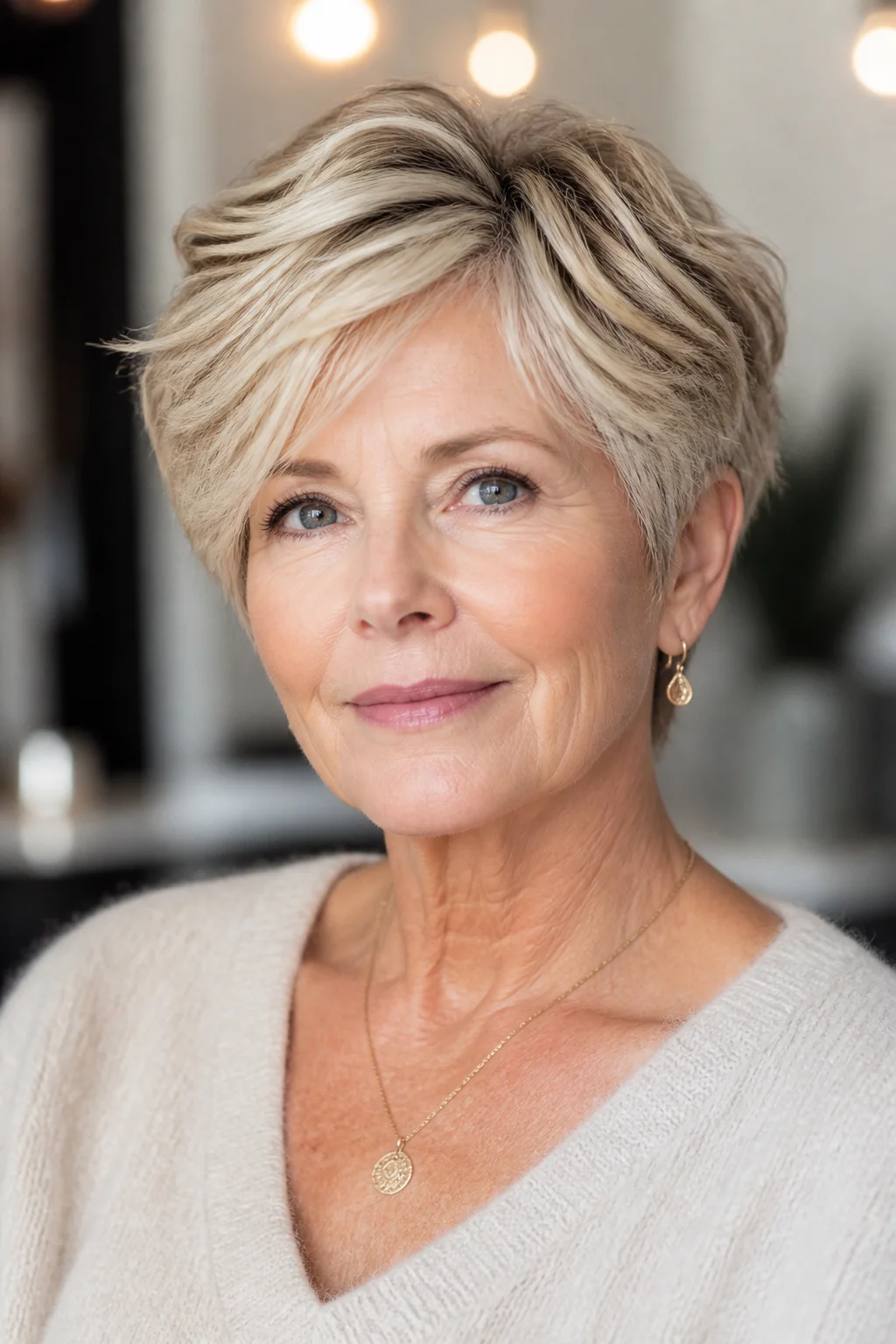
This crop leans gentle rather than sharp, with soft waves instead of tight coils running through the top layers. It suits looser curl patterns and works nicely if your hair has started to change texture with age, becoming a bit wavier or finer than it once was. The cut is short enough to stay easy but has enough length on top to style differently from day to day.
Textured Pixie with Crown Volume
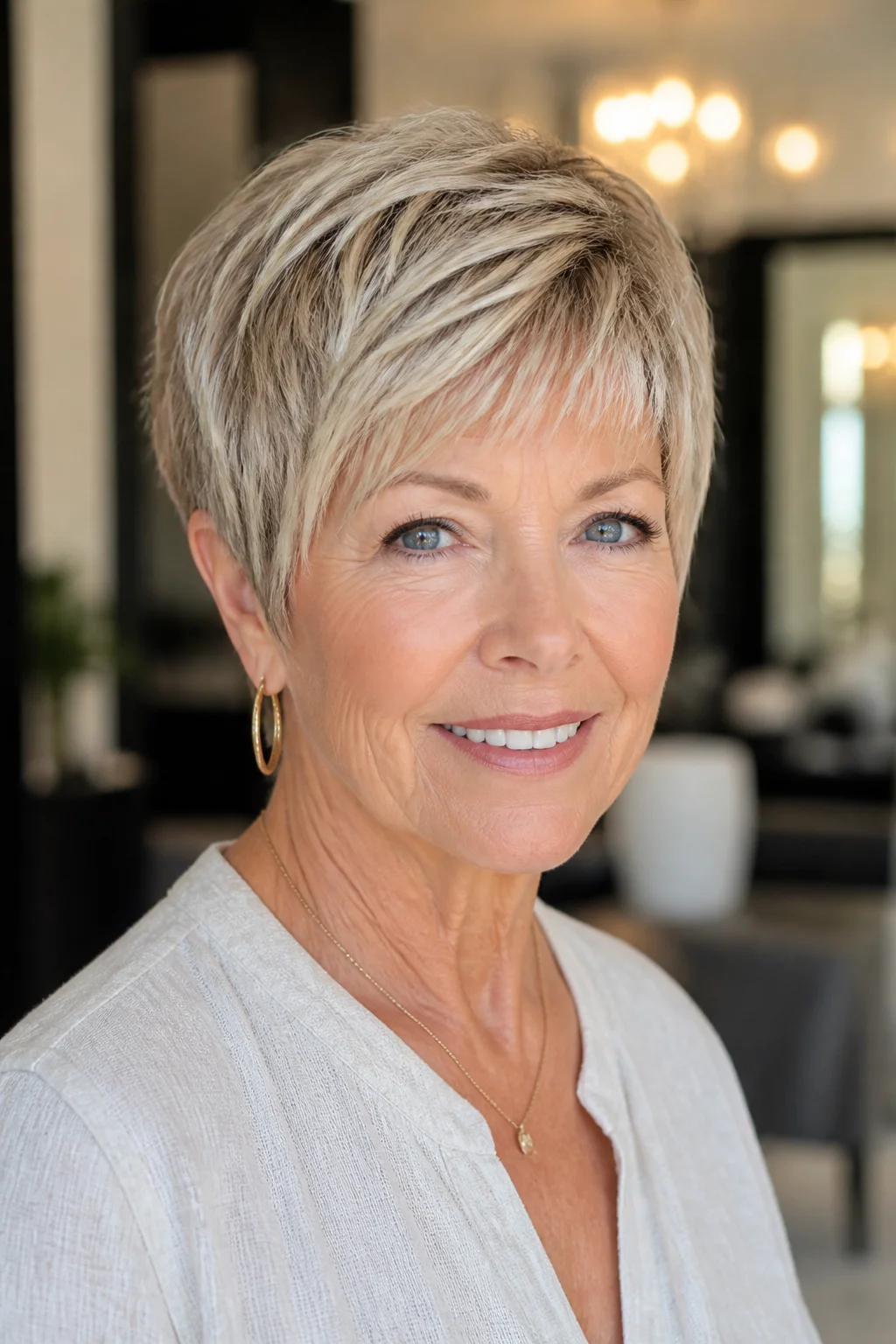
Volume at the crown is the whole point here, and it’s built through strategic layering rather than teasing or heavy product. This matters a lot for anyone dealing with thinning at the part line, since lift at the crown creates the illusion of denser hair all over. The sides stay fairly short and simple so all the attention goes upward. Tip: a light mousse scrunched in at the roots while hair is still damp helps this volume hold through the day.
Curly Pixie Bob Hybrid
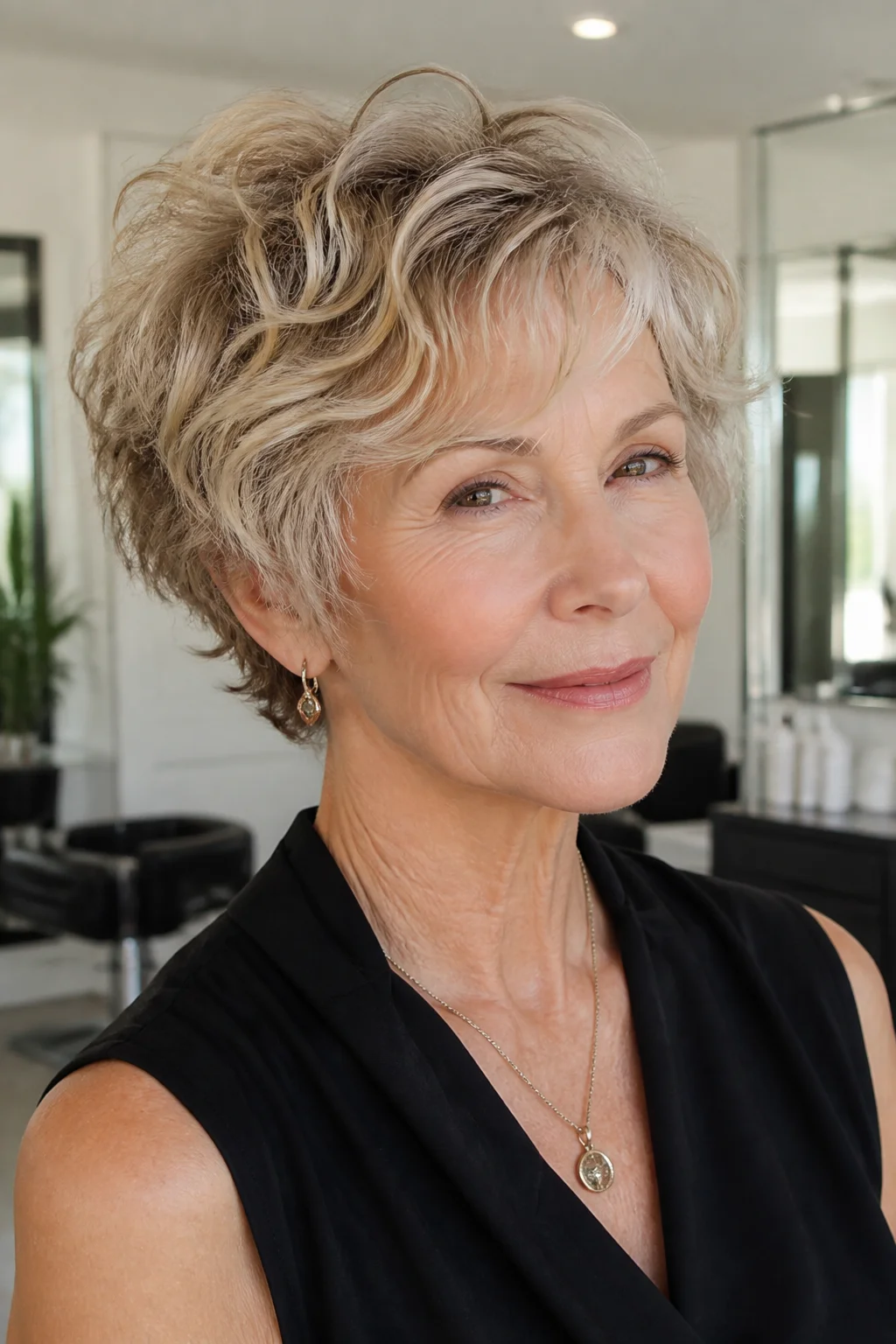
This is a longer, in-between cut that borrows the closeness of a pixie at the nape and the length of a bob through the crown and sides. It gives you more to work with than a true pixie while still keeping things well above the shoulders. Curls get room to form loose spirals rather than tight coils, which softens the whole look.
Layered Curly Pixie with Movement
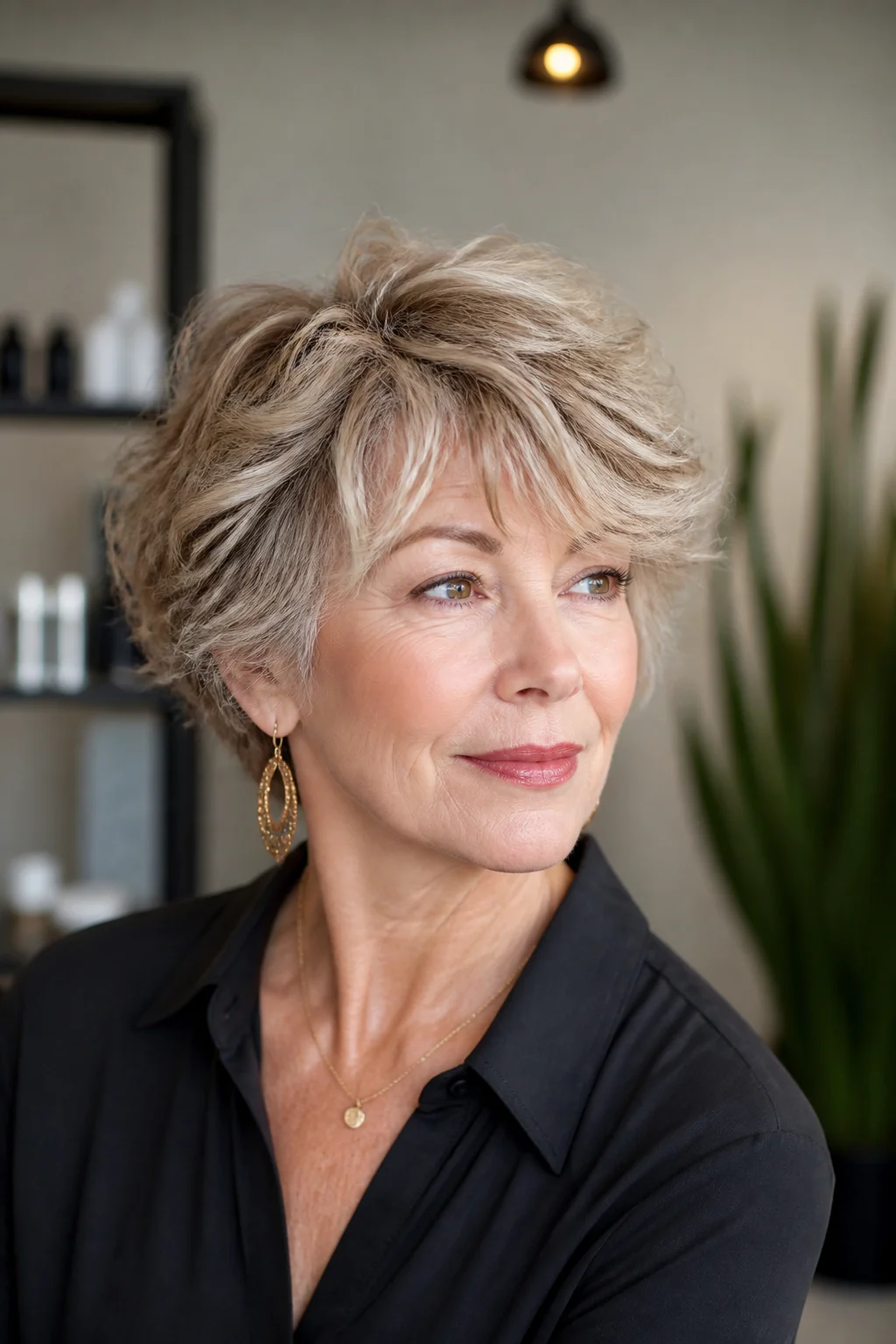
Layers throughout the top and sides let each curl move independently instead of clumping into one solid shape. The result feels lively and a little unpredictable, similar to how curls behave when they’re left completely natural. This cut needs regular trims to keep the layers working together, since curls that grow out unevenly can start looking scraggly at the ends. It’s a strong pick if you want a shape that photographs well from every angle and never looks flat.
Sophisticated Spiral Pixie
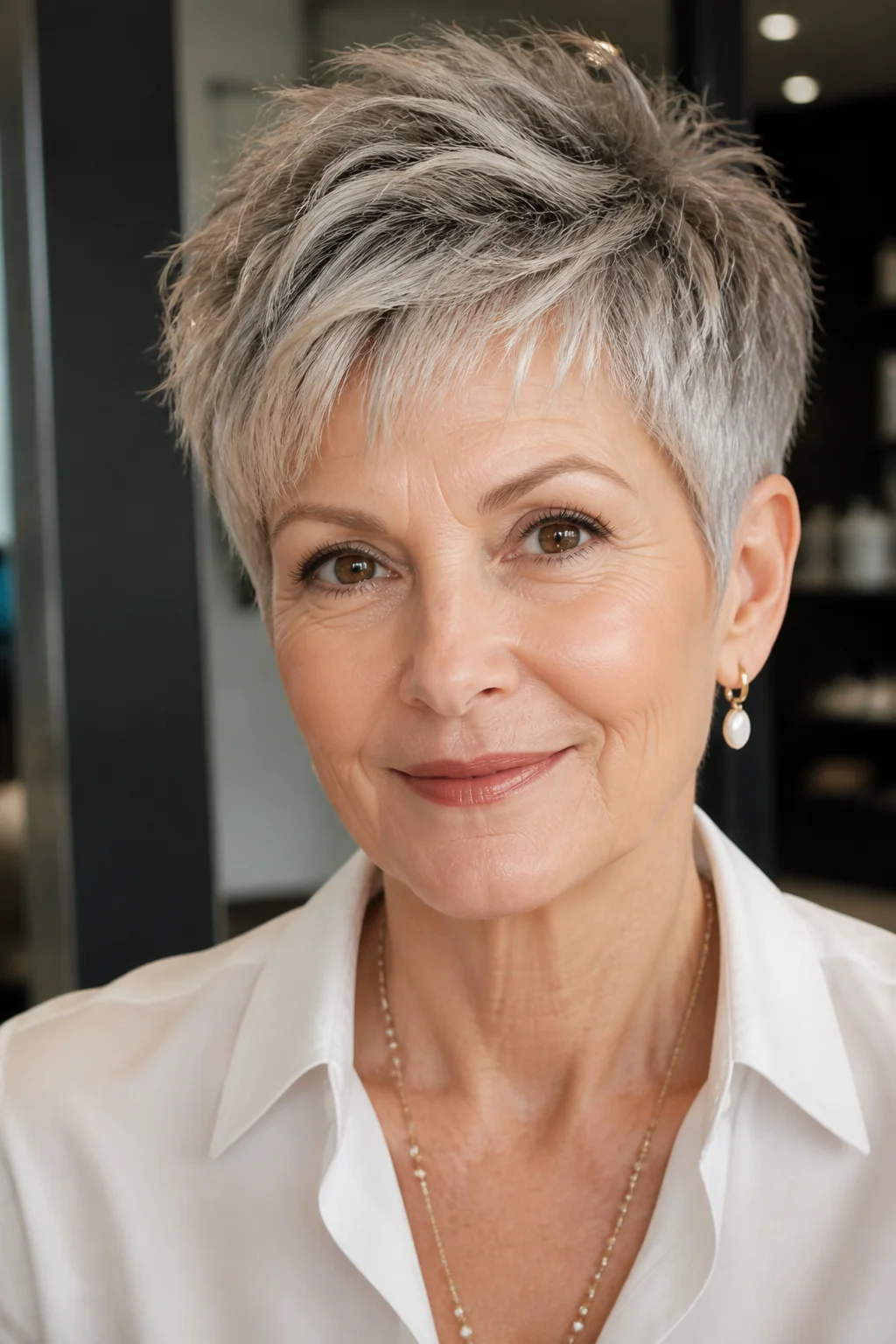
Tight, well-defined spiral curls are cut short and kept close to the head, giving this style a polished, almost sculptural quality. It works best on naturally tight curl patterns since the spirals hold their shape without much daily styling. A curl-defining cream applied to soaking wet hair is really the only product step needed here. This one photographs beautifully for events and holds up fine in humid weather too, which is a nice bonus if you travel somewhere warm.
Soft Curly Pixie with Longer Bangs
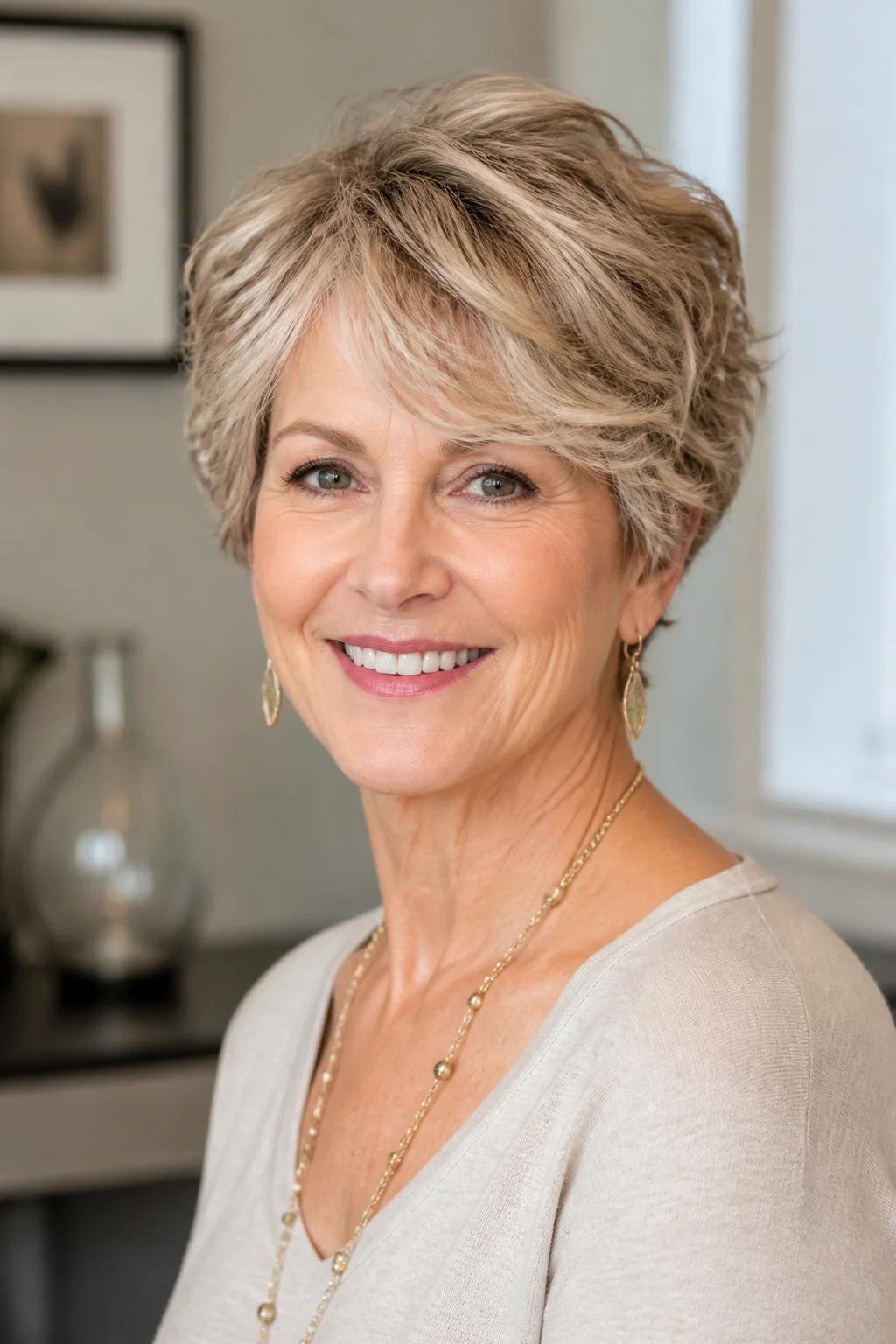
Longer curly bangs swept to one side give this pixie a softer, more romantic feel than most short cuts. The rest of the hair stays cropped close, so the bangs become the clear focal point. Women with rounder faces often like this shape because the diagonal line the bangs create adds some visual length.
Textured Pixie with Gray Blending
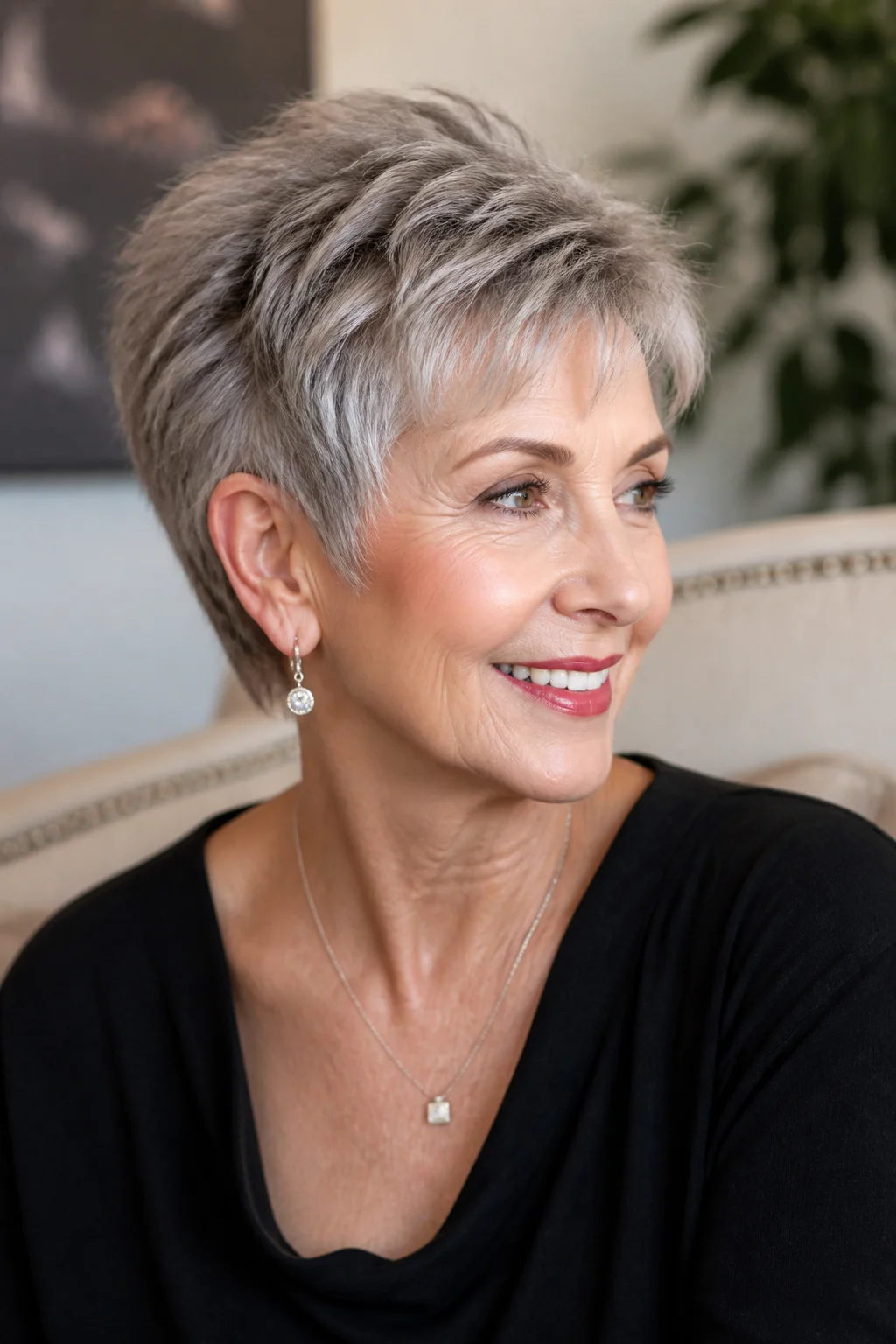
This cut is really about the color transition as much as the shape, using texture to help gray and natural tones blend together instead of showing a harsh line. Choppy, textured ends break up any obvious contrast between regrowth and older color. It’s a smart choice for anyone growing out dye and tired of touch-up appointments every few weeks. The pixie length also means you’ll grow through the transition faster than you would with longer hair. Ask your stylist about adding a few face-framing pieces to soften the line where gray meets your natural shade. A light mist of heat protectant before styling helps the finish last.
Curly Pixie with Rounded Crown
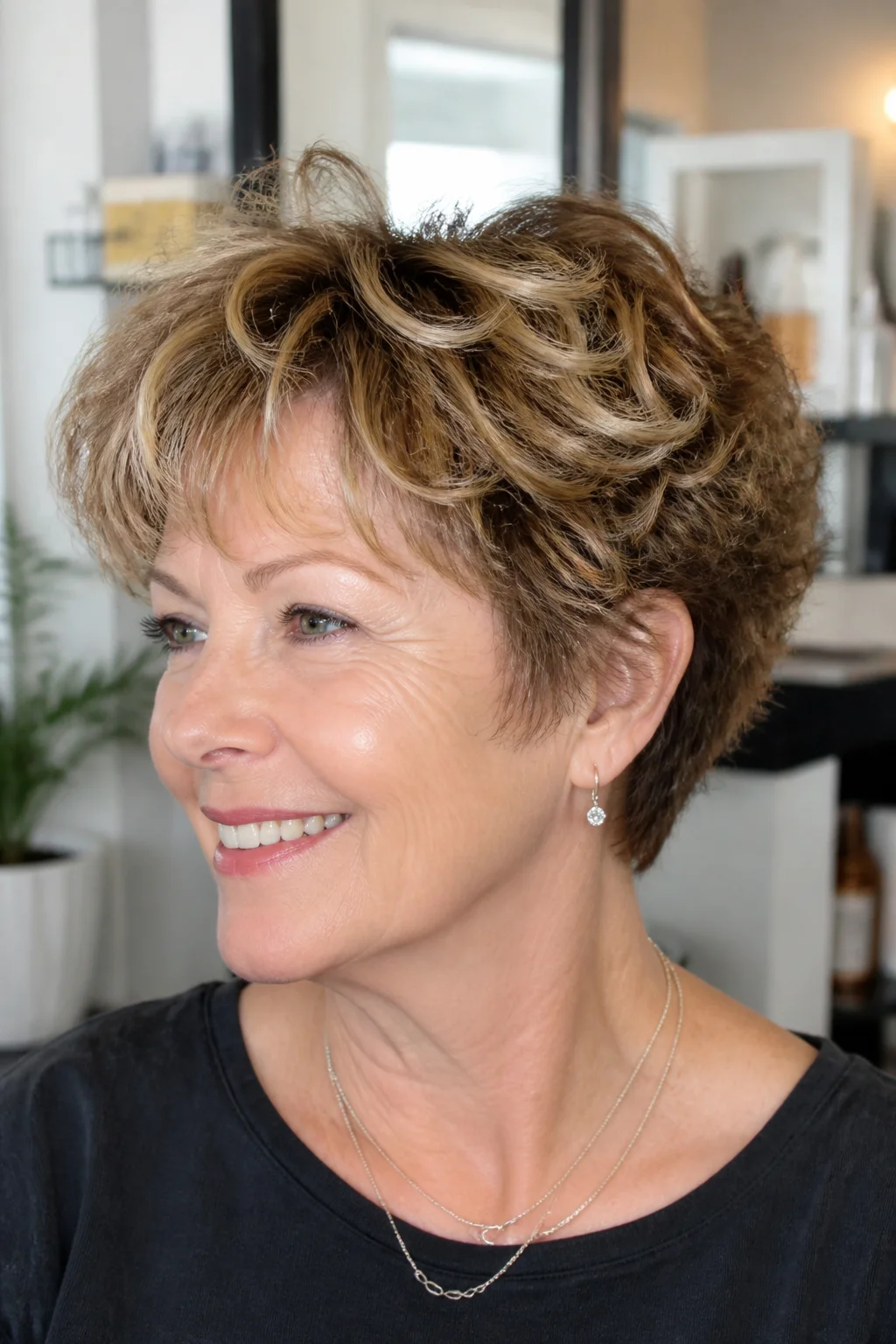
The rounded crown shape gives this pixie a soft, almost halo-like silhouette instead of sharp angles or spiky texture. It flatters most face shapes because the roundness balances out sharper jawlines or angular features. This style also tends to be low maintenance since the rounded shape hides awkward regrowth fairly well between cuts.
Feathered Curly Pixie
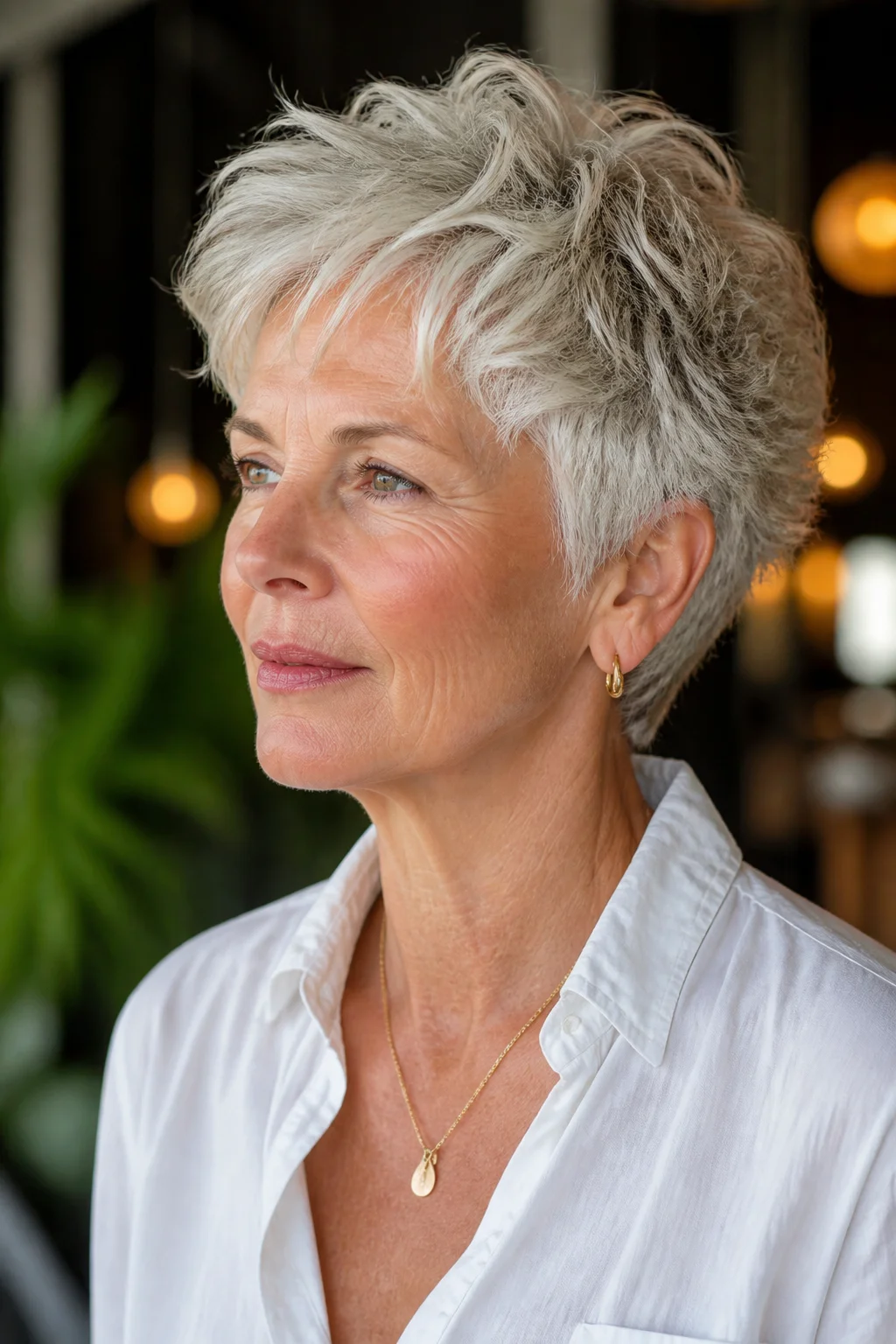
Feathered ends add a wispy, lightweight quality to the curls, especially around the crown and the nape. This technique thins out bulk without making the cut look choppy or uneven, which is helpful for thicker curl types that tend to feel heavy. The feathering also lets curls catch light differently depending on how you move, giving the whole style extra dimension.
Bold Curly Pixie with Texture Contrast
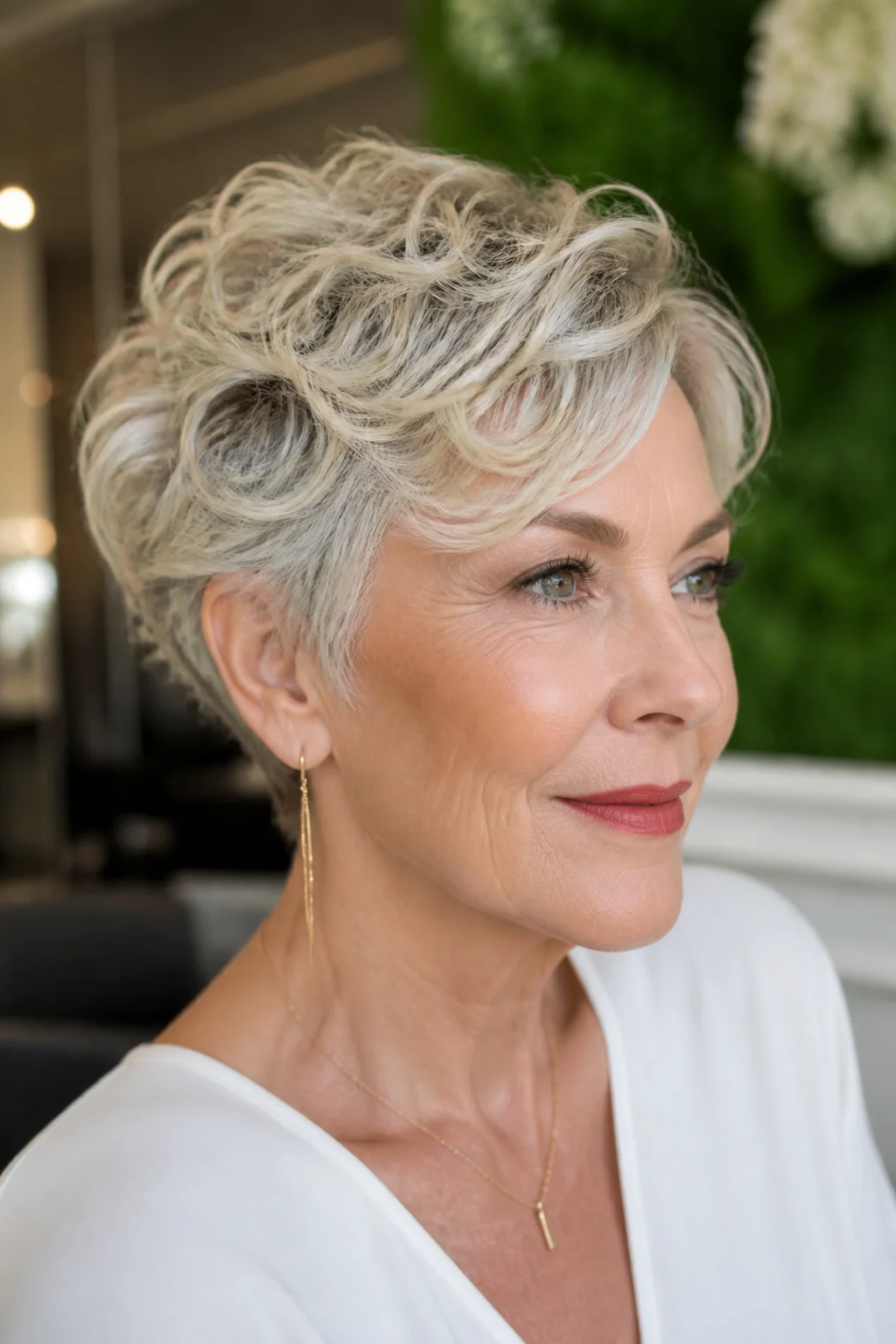
This one plays with contrast on purpose, pairing very short, smooth sides with a top full of loose, bouncy curls. The difference between the two textures is what gives it personality rather than looking like an accident. It suits women who want something a little edgier without going full undercut. Because the sides stay short and simple, upkeep mostly involves keeping the top curls conditioned and defined rather than frequent trims. I recommend this shape for anyone who wants a pixie that reads as confident rather than safe. A light mist of heat protectant before styling helps the finish last.
Curly Pixie with Side Part
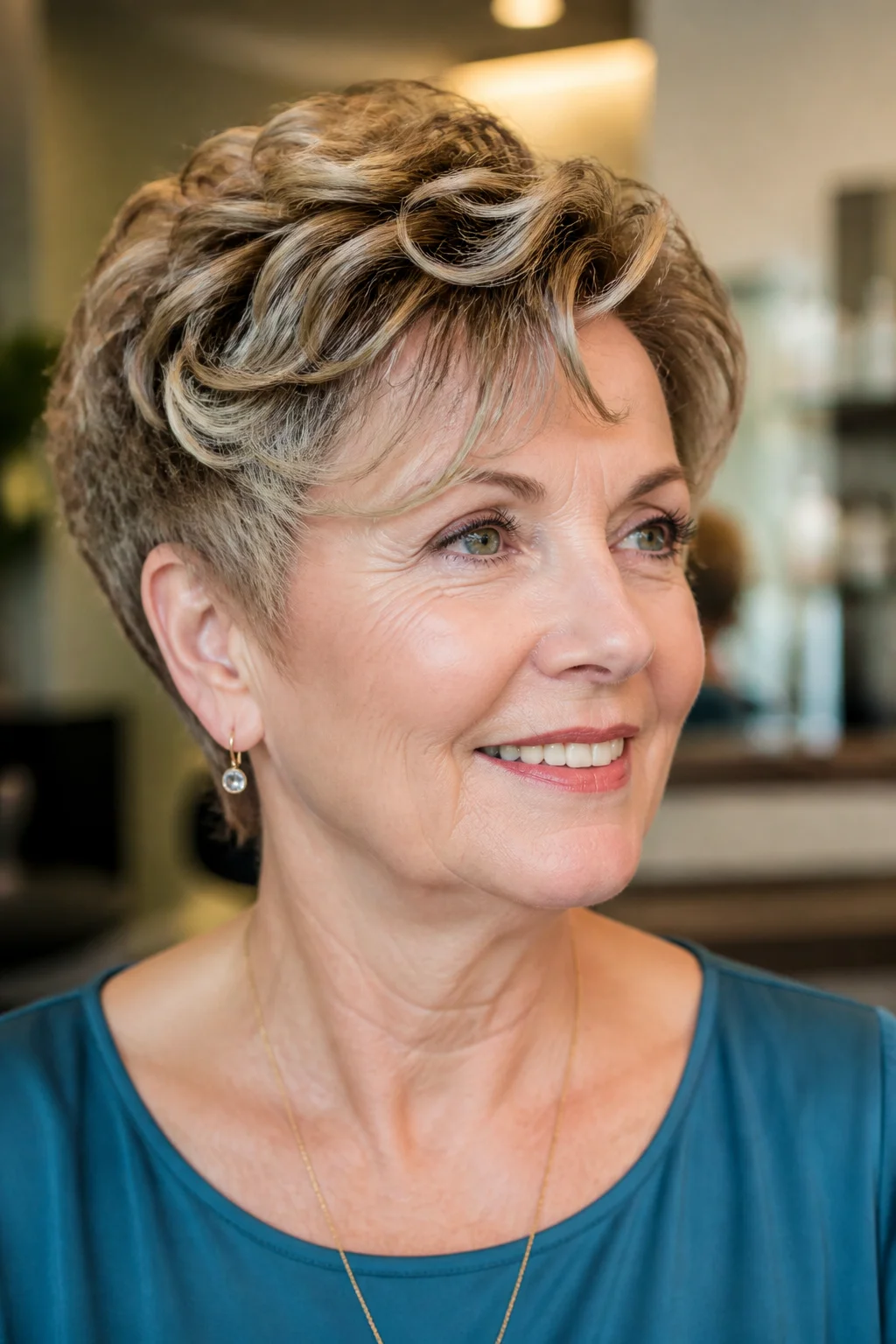
A defined side part adds structure to an otherwise loose, curly shape, giving you something to anchor the style around each morning. It works with nearly any curl pattern since the part itself does most of the styling work. This is a good low-effort option for busy mornings when you don’t have time to scrunch or diffuse.
Relaxed Curly Pixie Crop
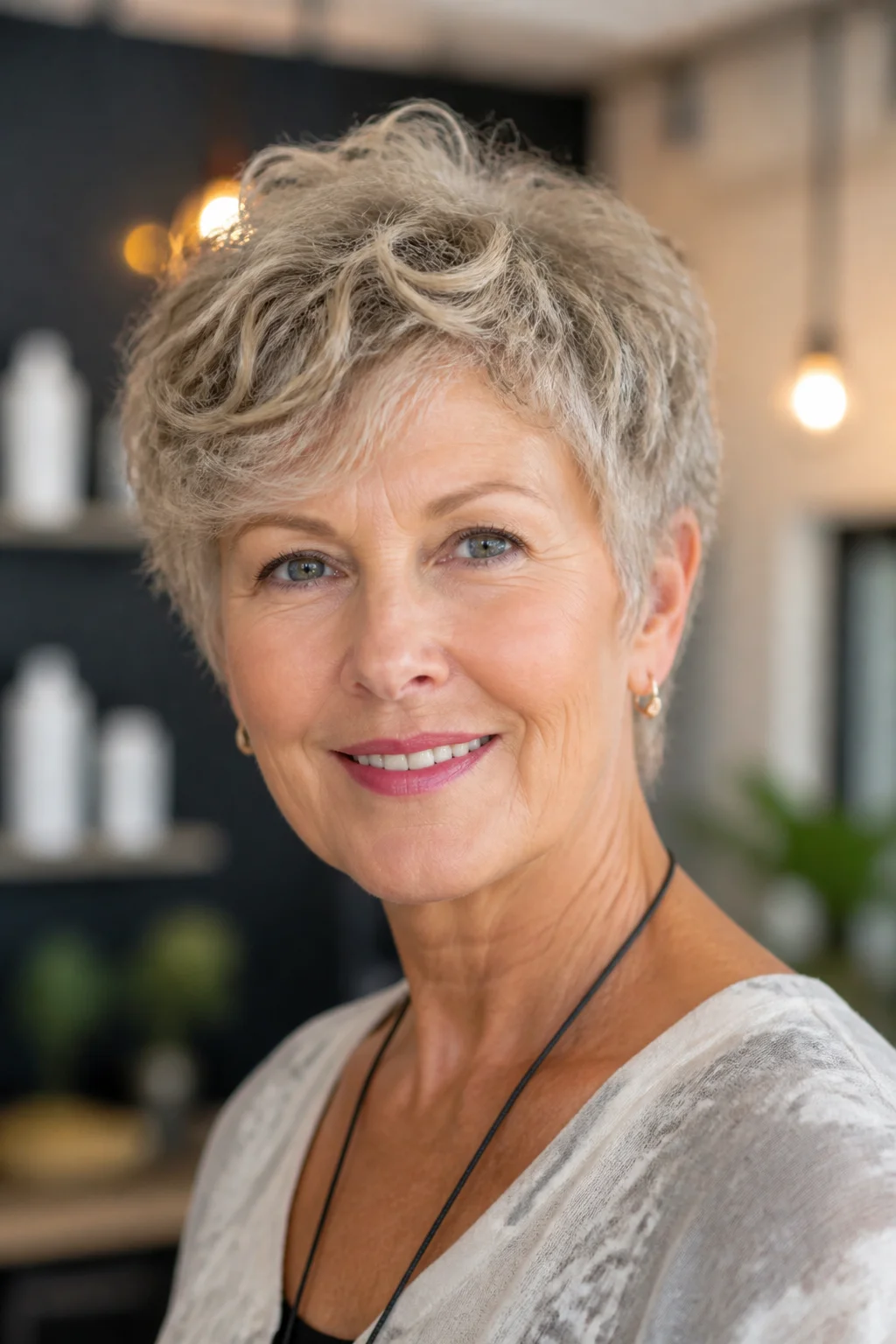
Nothing about this cut is fussy. The curls are left to fall naturally with minimal shaping, giving it an easy, lived-in quality that still looks put together. It’s a great match for anyone who wants short hair but doesn’t want to spend fifteen minutes each morning defining every curl. A little leave-in conditioner scrunched through damp hair is usually all it needs.
Vintage-Inspired Curly Pixie
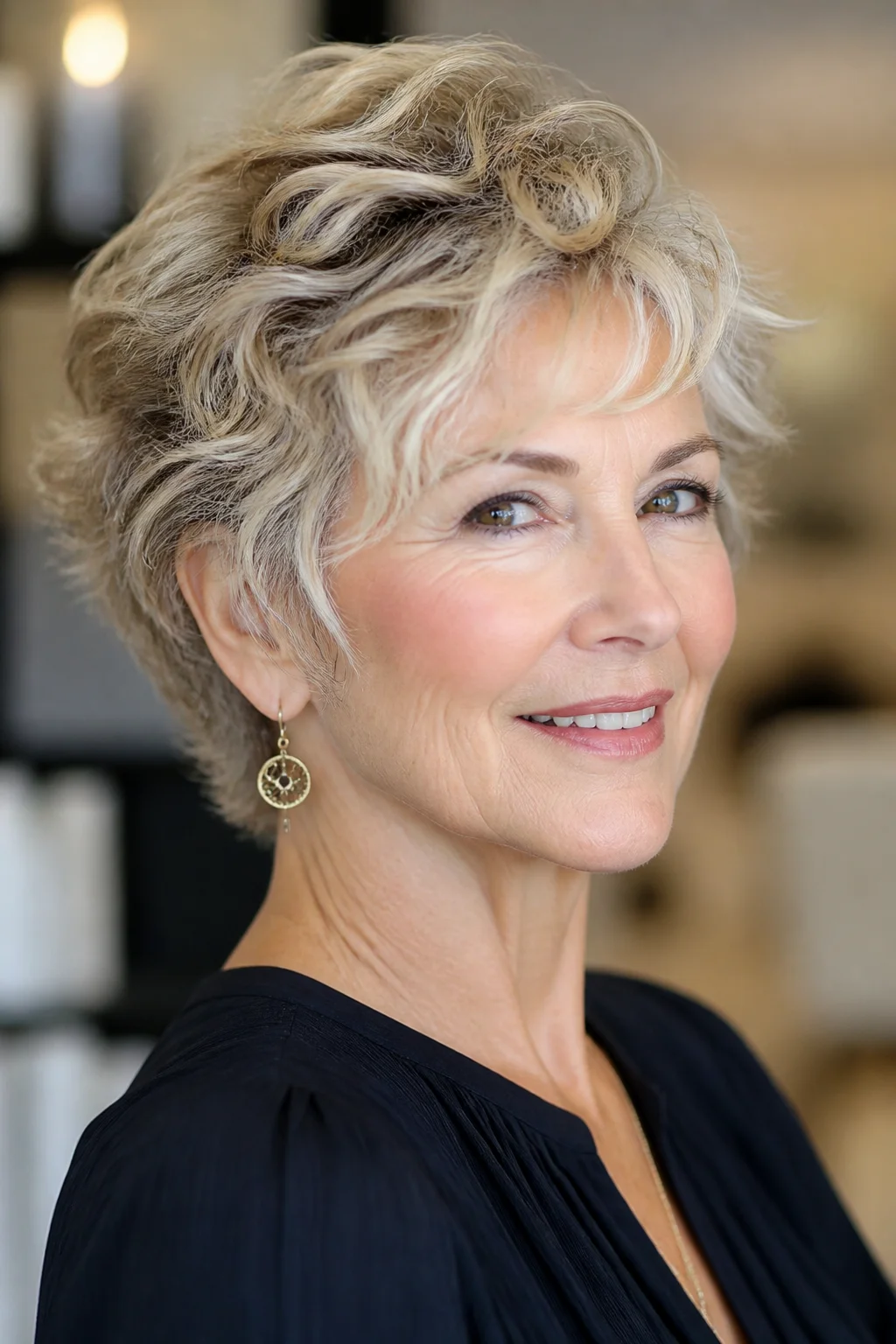
Pin-curl-style waves set close to the head give this cut a throwback feel that still looks current on shorter hair. The shape takes some inspiration from mid-century short hairstyles but softens the lines for a more modern finish. It suits women who like a little glamour in their everyday look without needing a full set every time. Setting lotion and a wide-tooth comb are the main tools for keeping the wave pattern consistent between salon visits.
Curly Pixie with Extended Back Length
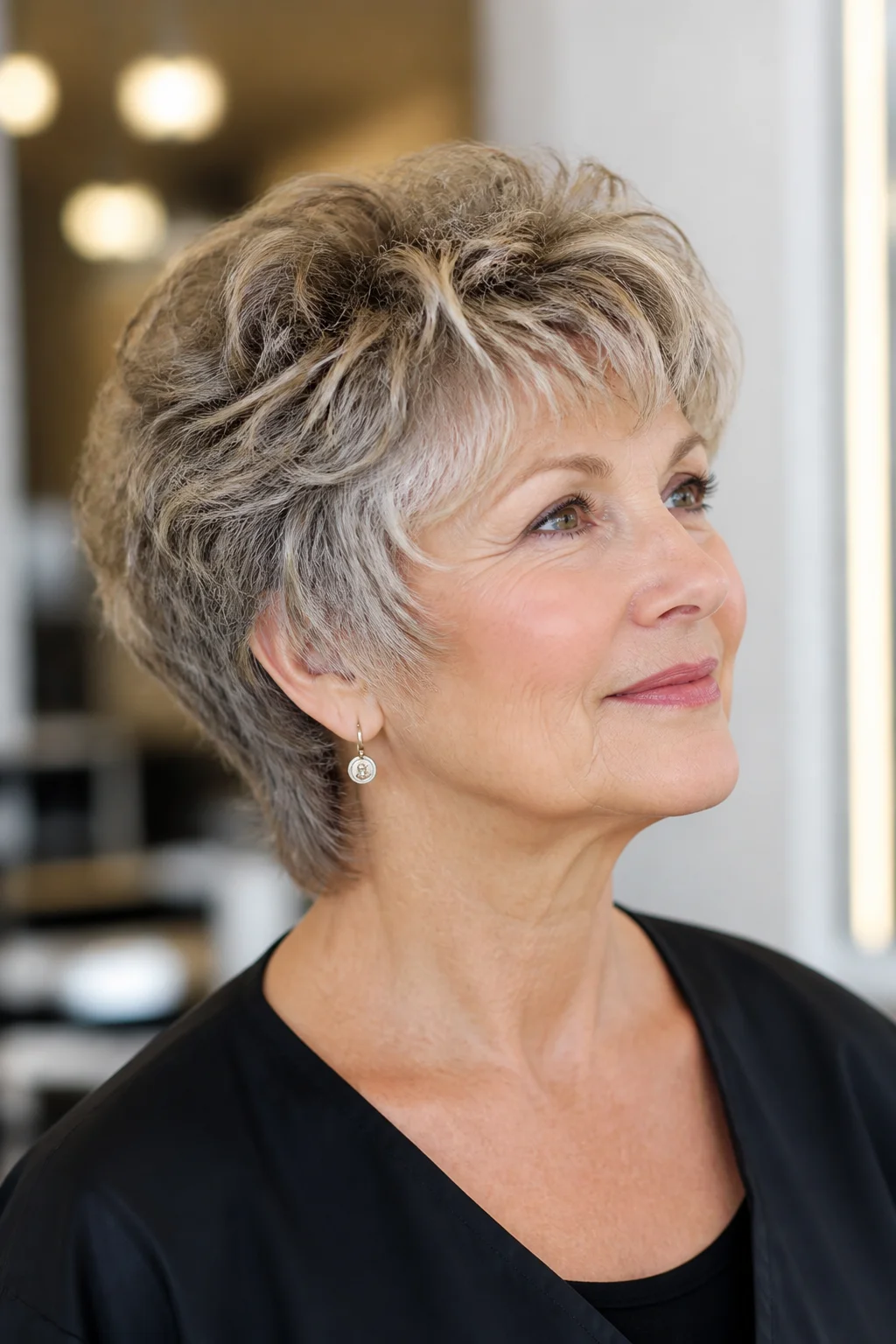
Instead of the usual short-cropped nape, this version keeps a little extra length at the back while the sides and top stay classically pixie-length. It gives the neckline a softer finish and works nicely for women who feel exposed by a very short nape. The extra length back there also gives the curls something to loosely coil into rather than sticking out.
Tightly Coiled Curly Pixie
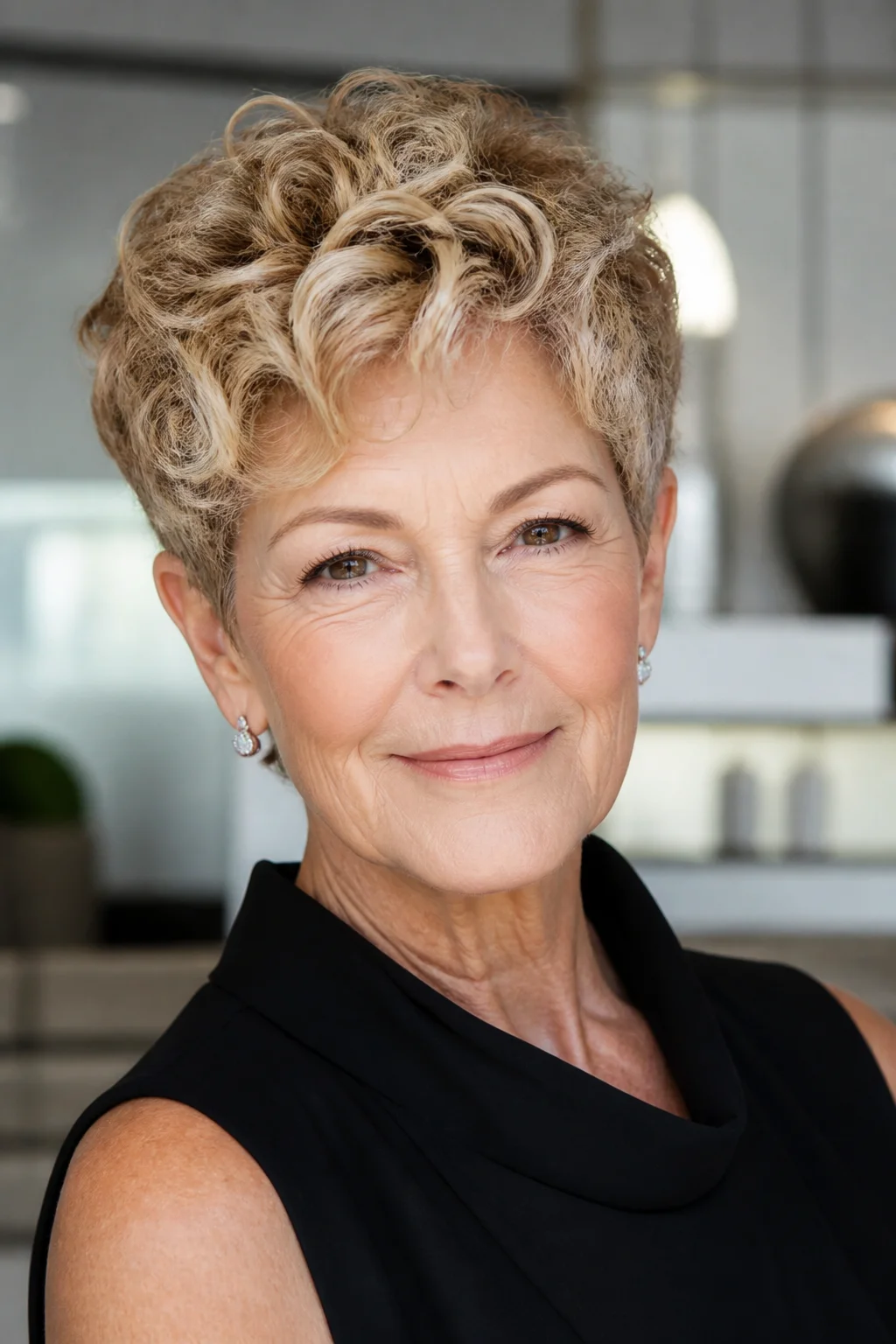
This shape is built specifically for tight, springy curl patterns, cutting close enough that each coil is visible and well defined. Because the curls shrink up so much, the cut often looks even shorter once it’s dry than it did wet, so communicating that clearly with your stylist matters. The tight coils also mean less daily styling since the natural pattern does most of the work. It holds shape well through humid days and requires trims mostly to keep the perimeter even rather than to manage length.
Curly Pixie with Ear-Grazing Layers
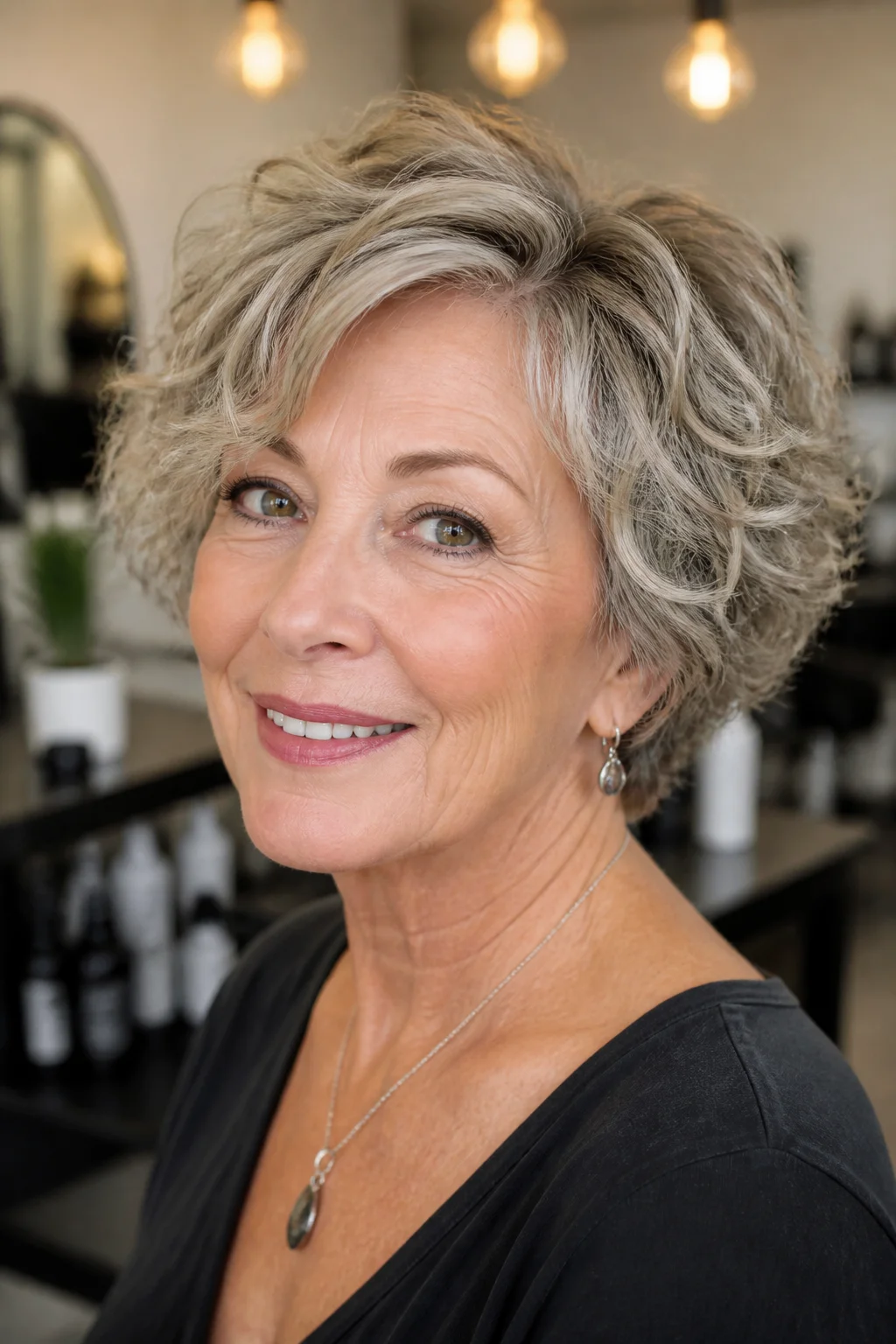
Layers cut to graze the tops of the ears add a bit of movement without going long enough to lose the pixie’s short, easy quality. This length also tends to flatter the ears and jaw, especially paired with a side part. It’s a versatile in-between choice if you’re not ready to go extremely short but still want something clearly cropped.
Modern Curly Pixie with Undercut Detail
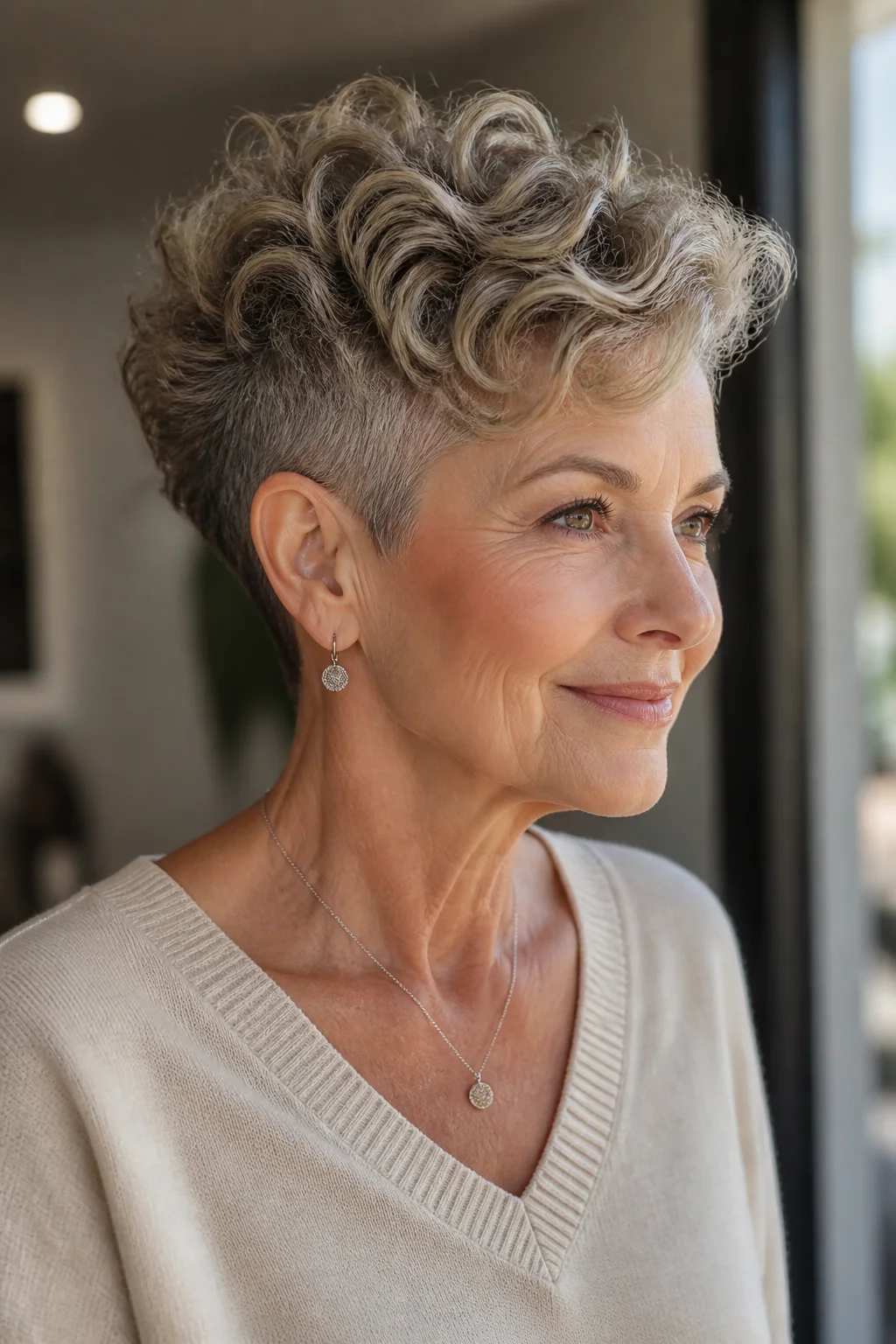
Instead of a full undercut, this style uses just a small shaved or clippered detail near the nape or temple, paired with fuller curls up top. The detail adds a modern edge without changing the overall shape dramatically. It’s a nice way to try an undercut element for the first time since it’s subtle and grows out easily if you change your mind.
Dimensional Curly Pixie
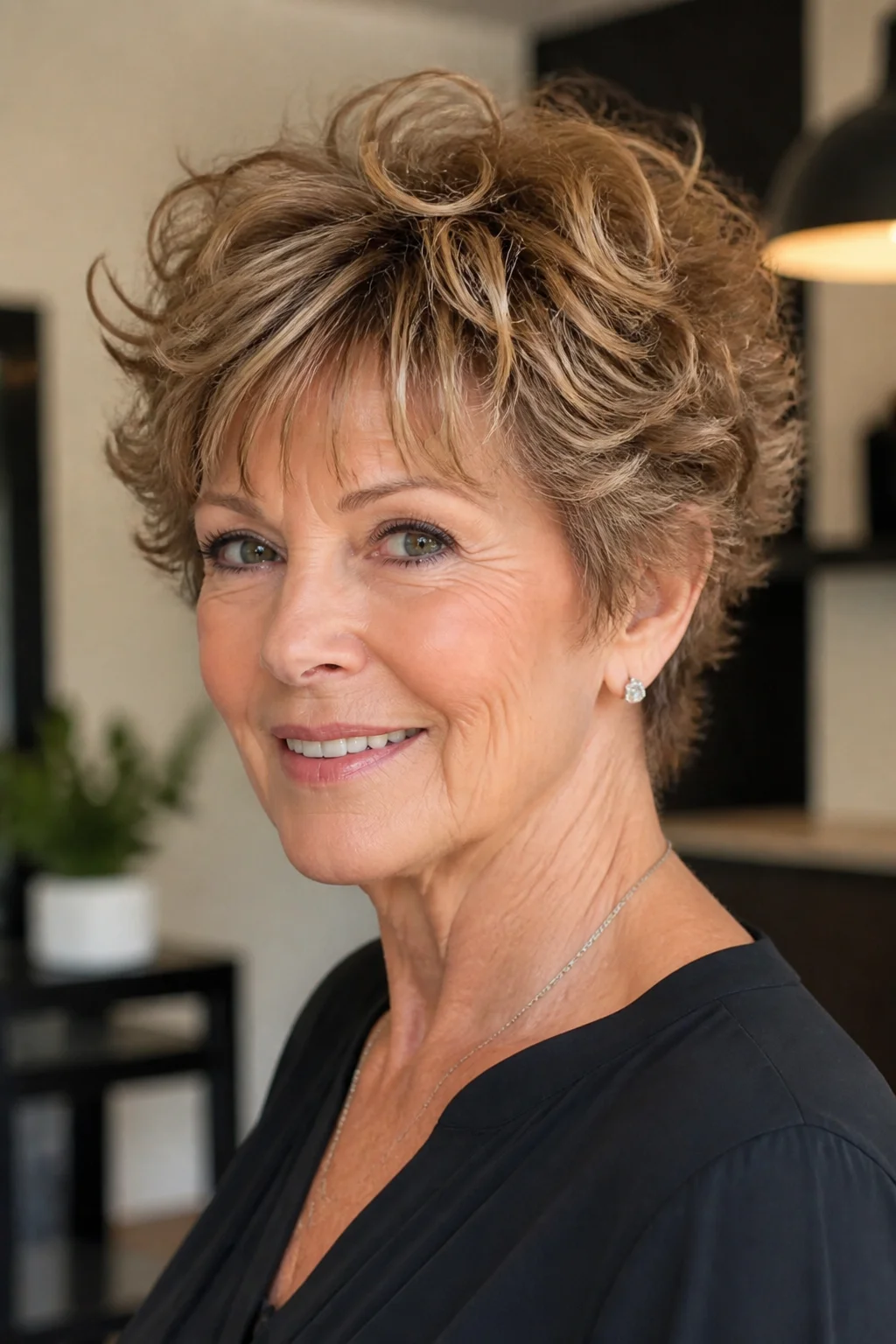
Color placement does a lot of the work in this cut, with lowlights or highlights woven through the curls to create depth as they move. Even a simple curl pattern looks more complex once you add a couple of tonal variations throughout. This style pairs especially well with looser curls, since the color has more surface area to show through. It’s worth discussing placement carefully with your colorist so the dimension follows the curl pattern instead of cutting across it awkwardly.
Choosing the Right Curly Pixie for You
With this many options, it helps to think about your priorities before your next salon visit. If your main concern is thinning hair, the textured pixie with crown volume or the curly pixie with rounded crown will do more heavy lifting than a flat, close-cropped style. If you’re growing out color, the textured pixie with gray blending is built exactly for that transition and will save you money on touch-ups along the way. Women who want low daily maintenance should look at the relaxed curly pixie crop or the curly pixie with side part, both of which rely on the cut itself rather than styling time.
For anyone wanting a bit of drama, the bold curly pixie with texture contrast and the sophisticated spiral pixie bring the most visual punch, while the soft curly pixie with longer bangs and the vintage-inspired curly pixie lean softer and more romantic. A common mistake is choosing a cut based on a photo without accounting for your actual curl pattern. Tight coils and loose waves behave very differently once cut short, so bring reference photos of curls similar to yours, not just the shape you like. Talk through shrinkage with your stylist too, since curls always look shorter dry than they measured wet.
Final Thoughts
Short curly cuts give you way more room to express personality than most people expect, and age has nothing to do with how good they can look. Pay attention to your natural curl pattern, be honest with your stylist about how much styling time you actually want to spend, and pick a shape from this list that matches your real daily life rather than just a photo you liked. Any of these cuts can look sharp and current with the right care behind them.