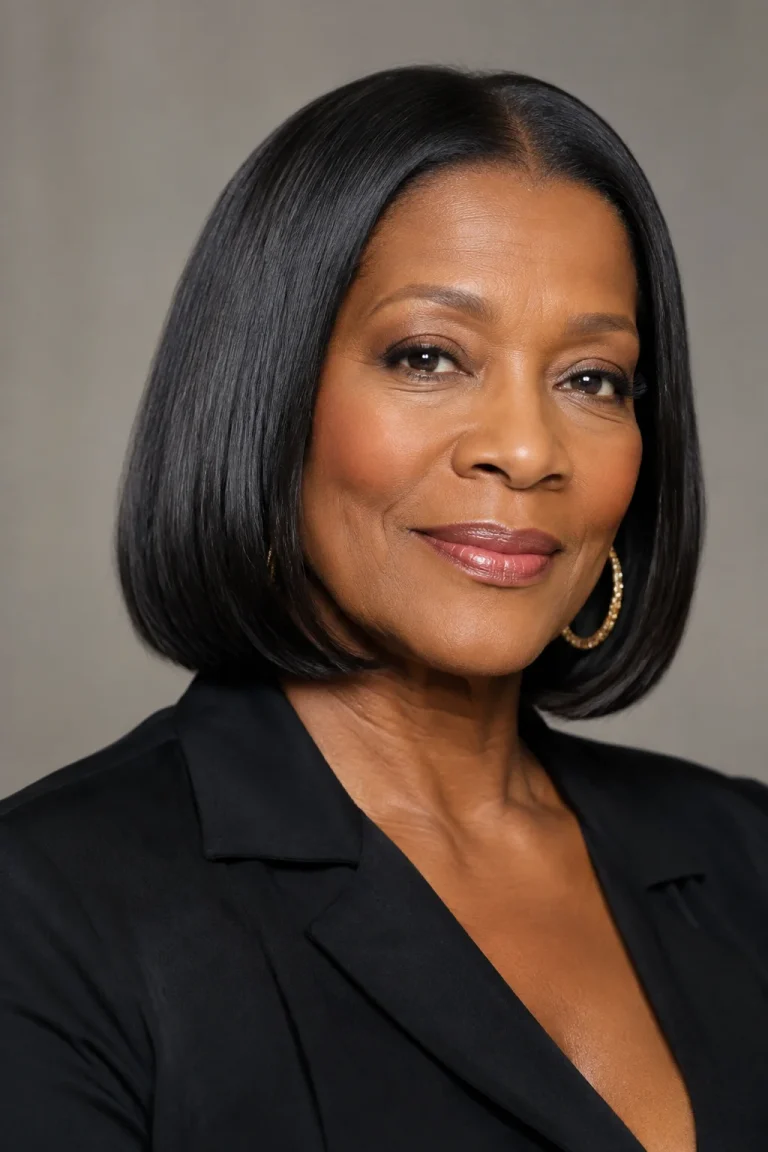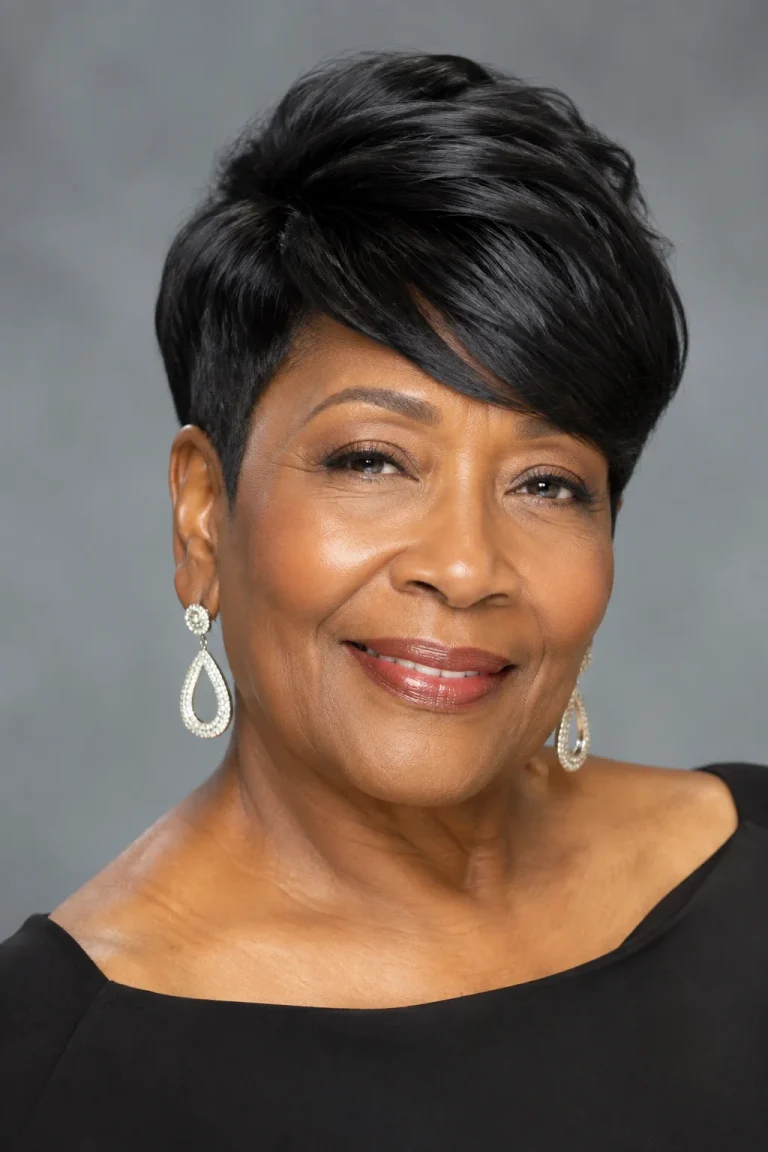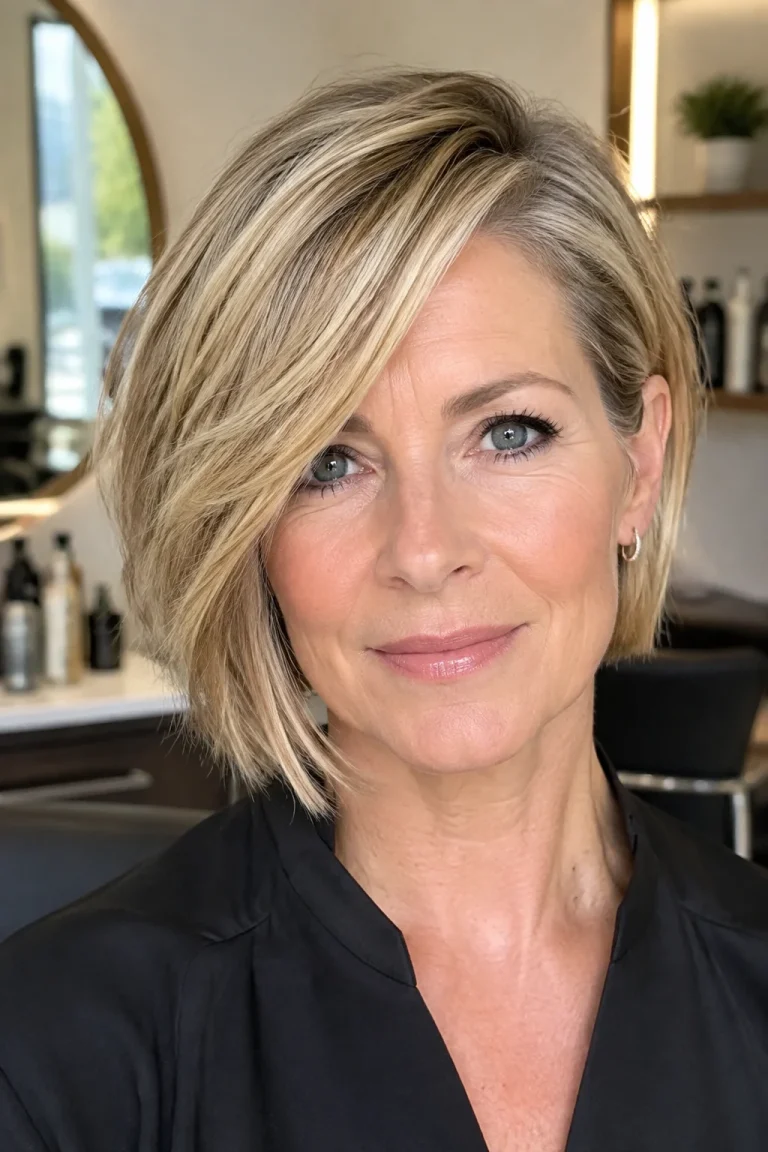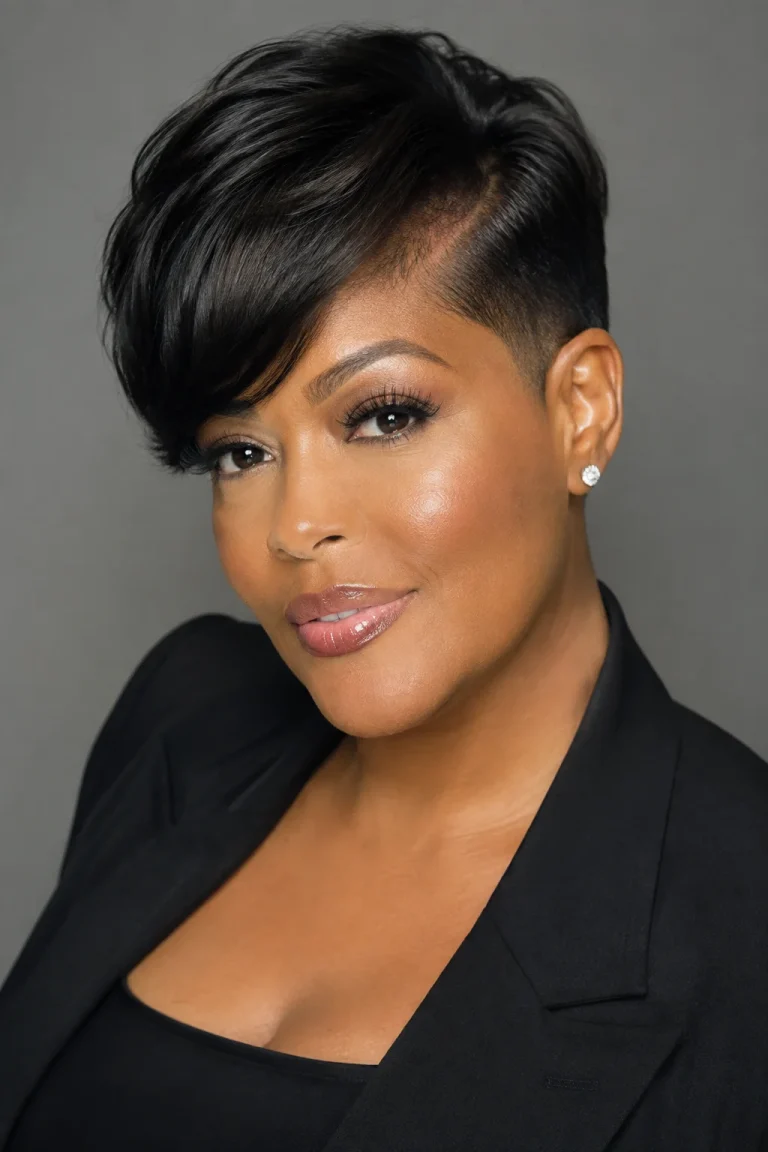
Fine hair loses its shape fast and flat curls can make you look tired before you even leave the house. A short cut fixes both problems when it’s cut right, and curls give you built-in body that straight pixies just can’t match. The trick is finding curly pixie haircuts for women over 40 with fine hair that add texture without weighing the curl pattern down. Some cuts work by stacking layers at the crown. Others rely on a soft fringe or a tapered nape to frame your face and hide thinning spots. Below you’ll find twenty five options that range from tight coily crops to loose wavy shapes, each one picked because it holds up on fine strands instead of fighting them. Read through and find the shape that matches your curl type and face structure, then bring the photo to your stylist.
Classic Curly Pixie with Textured Crop
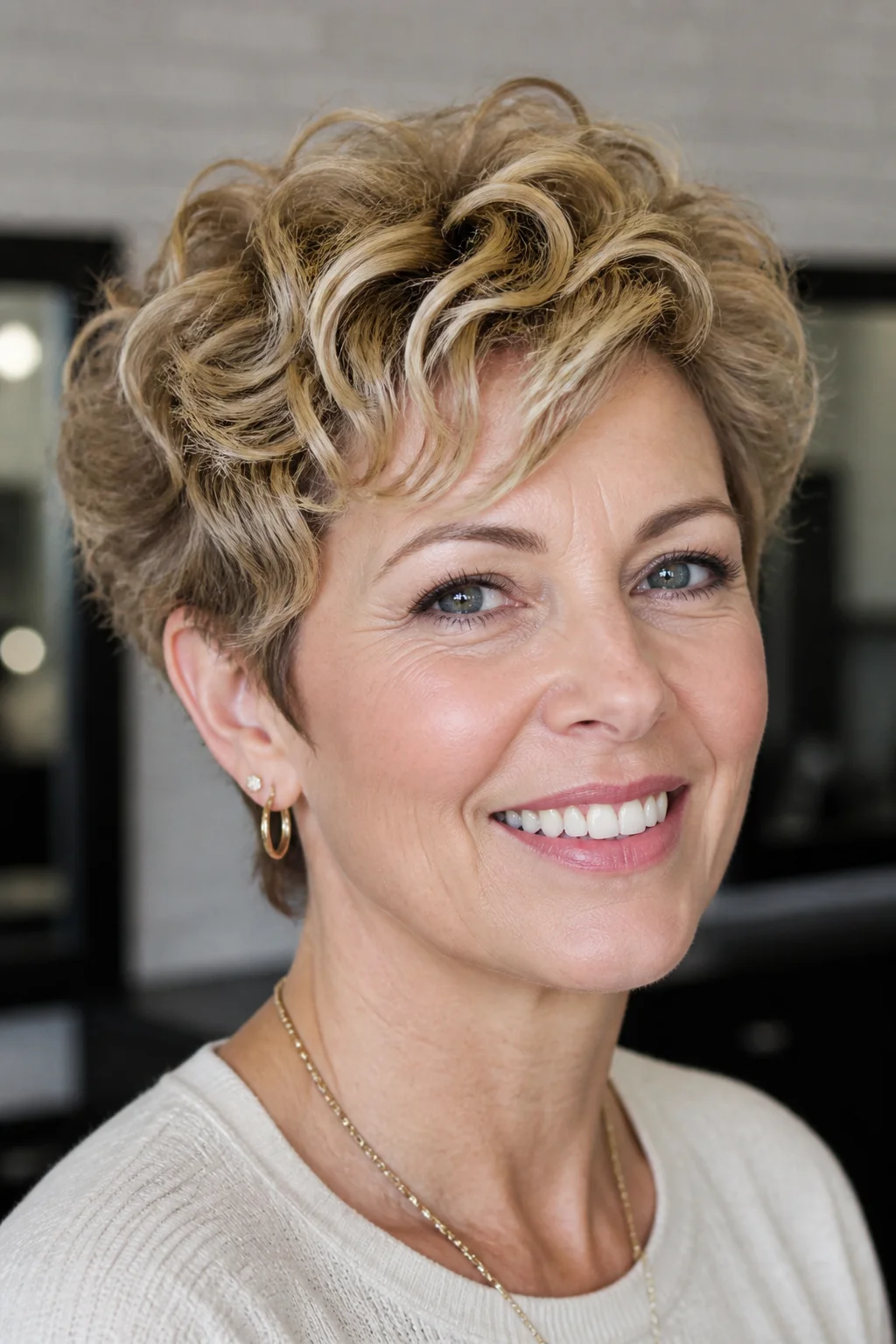
This is the cut most people picture when they hear the word pixie, and it earns that reputation. The sides stay short and close, while the top gets just enough length to let the curl pattern show. Texturizing shears remove bulk at the ends so fine curls don’t look stringy or thin out unevenly. It works on nearly every face shape and it’s easy for a stylist to maintain with regular trims. Tip: ask for point cutting instead of blunt cutting to keep the curls looking soft rather than chunky. A light mist of heat protectant before styling helps the finish last.
Tapered Curly Pixie with Side Sweep
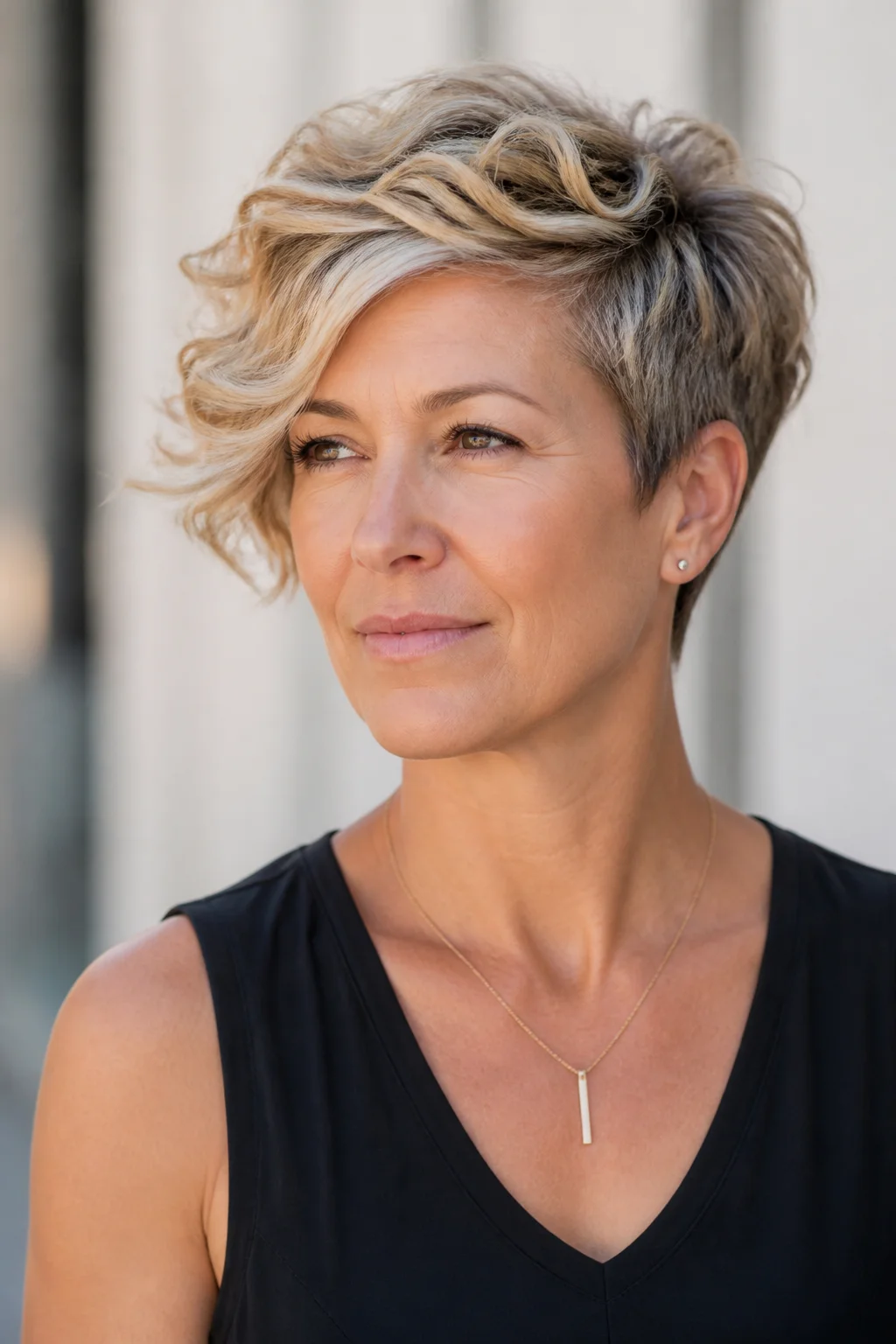
The taper hugs your head from the nape up to the ear, then the top hair sweeps to one side for a bit of drama. This shape flatters fine curls because the weight sits toward the front, giving the illusion of fullness where you need it most. It also softens a square jaw or a longer face. Ask your stylist to leave slightly more length at the crown so the sweep has something to grab onto.
Layered Curly Pixie with Volume at Crown
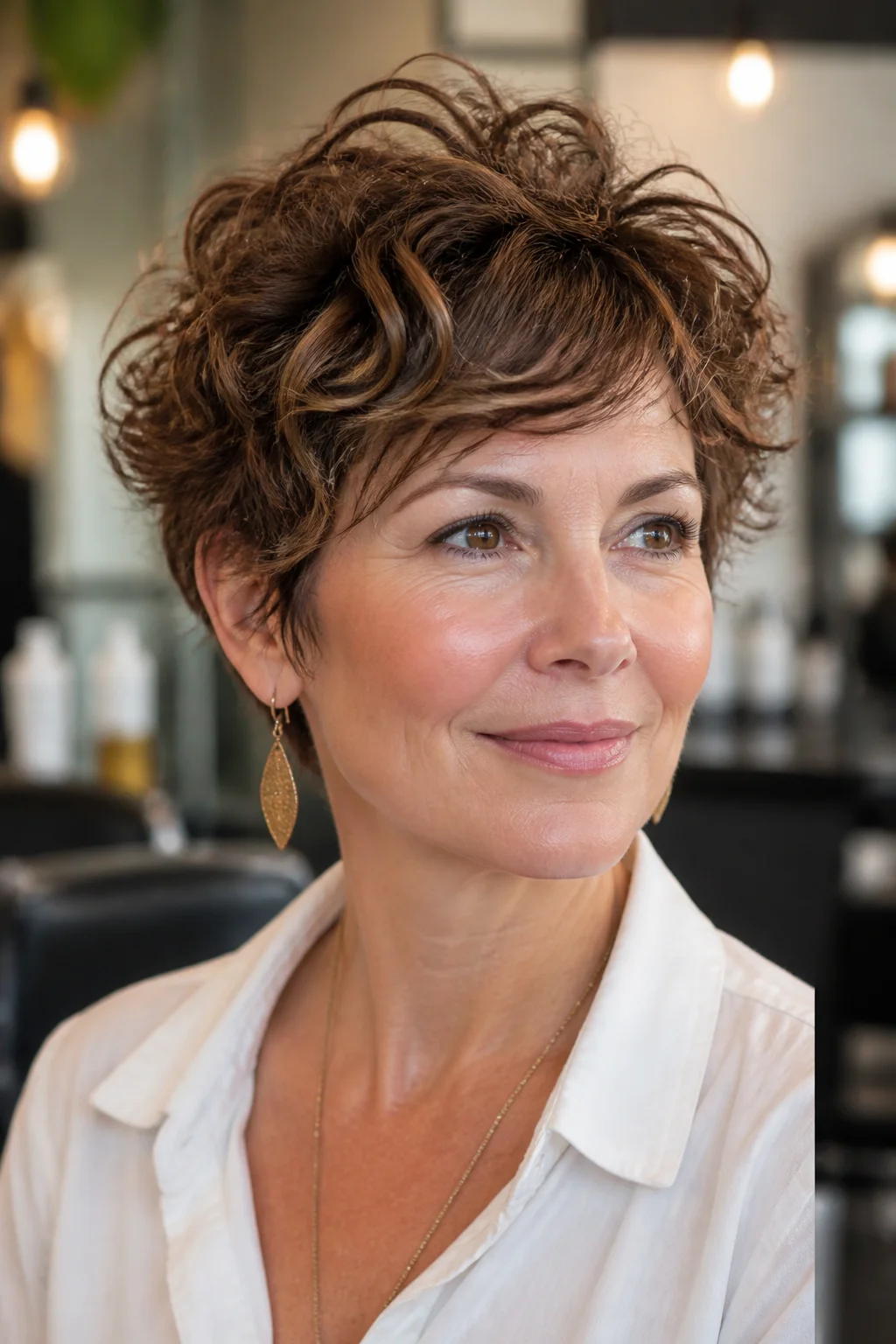
Fine curly hair tends to sit flat at the crown, and this cut solves that directly. Short layers are stacked right at the top of the head so each curl has room to spring up instead of collapsing under its own weight. The sides and back stay simple and close cropped, which keeps the whole look balanced instead of top heavy. Because the volume comes from the cut itself, you won’t need much product to hold the shape through the day. It’s a smart pick if your hair tends to go limp by afternoon. Stylists often recommend this one first for clients with baby fine curls because it does the heavy lifting without extra styling time.
Soft Fringe Curly Pixie
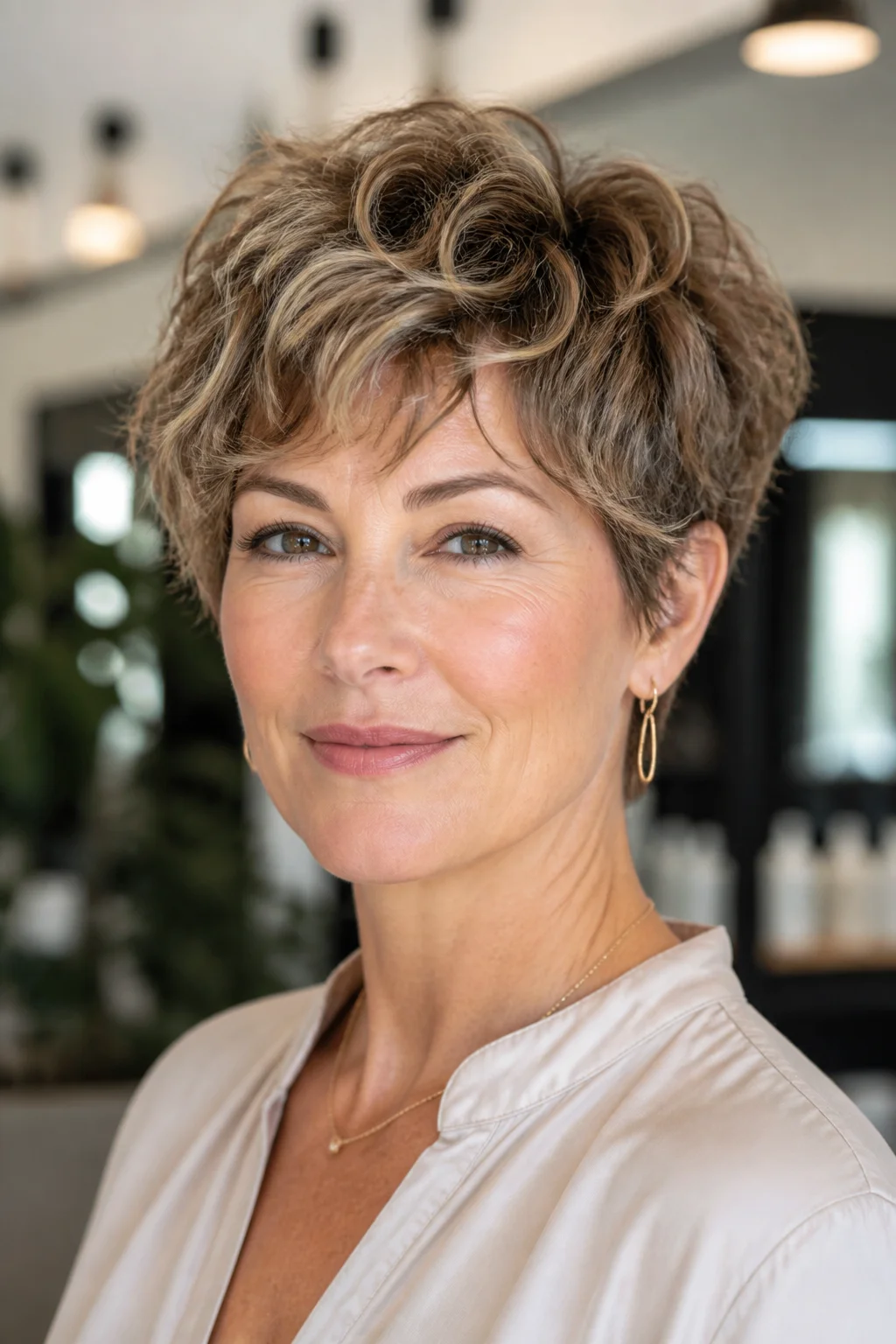
A soft, curled fringe falls across the forehead instead of sitting in a straight line. This works well for fine hair because a hard blunt fringe can look thin and patchy, while a soft curly one hides gaps naturally. Pair it with short sides for an easy, low maintenance shape.
Disconnected Curly Pixie
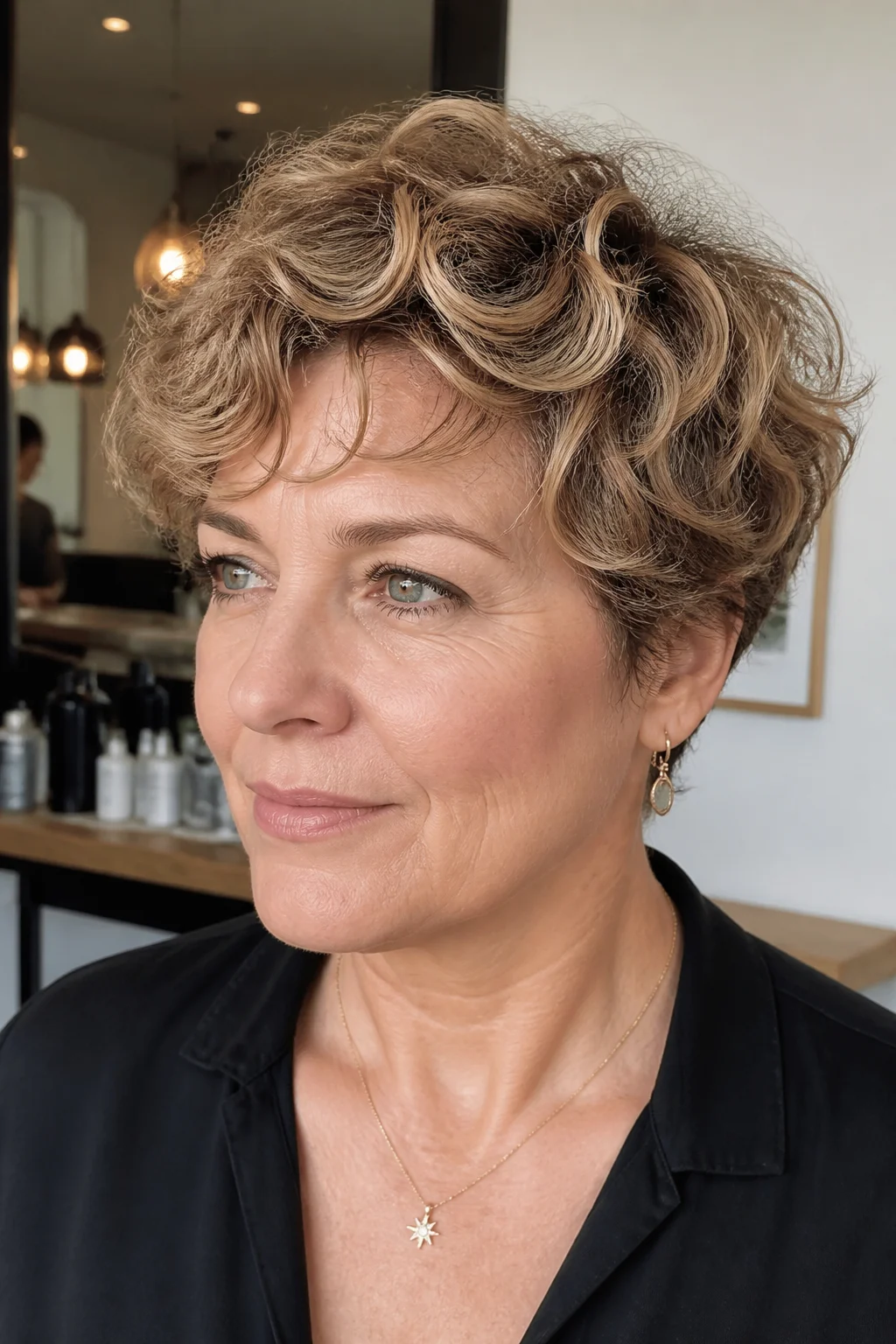
Here the top section is cut with noticeably more length than the sides, creating a visible break instead of a smooth blend. That contrast gives fine curls more visual weight and makes the top look thicker than it actually is. It’s a bold choice, and it looks best on women who want their pixie to read as a style statement rather than a safe trim. The disconnection also means your stylist has more room to adjust the top length as your hair grows, so you get more mileage between appointments.
Textured Curly Pixie with Undercut
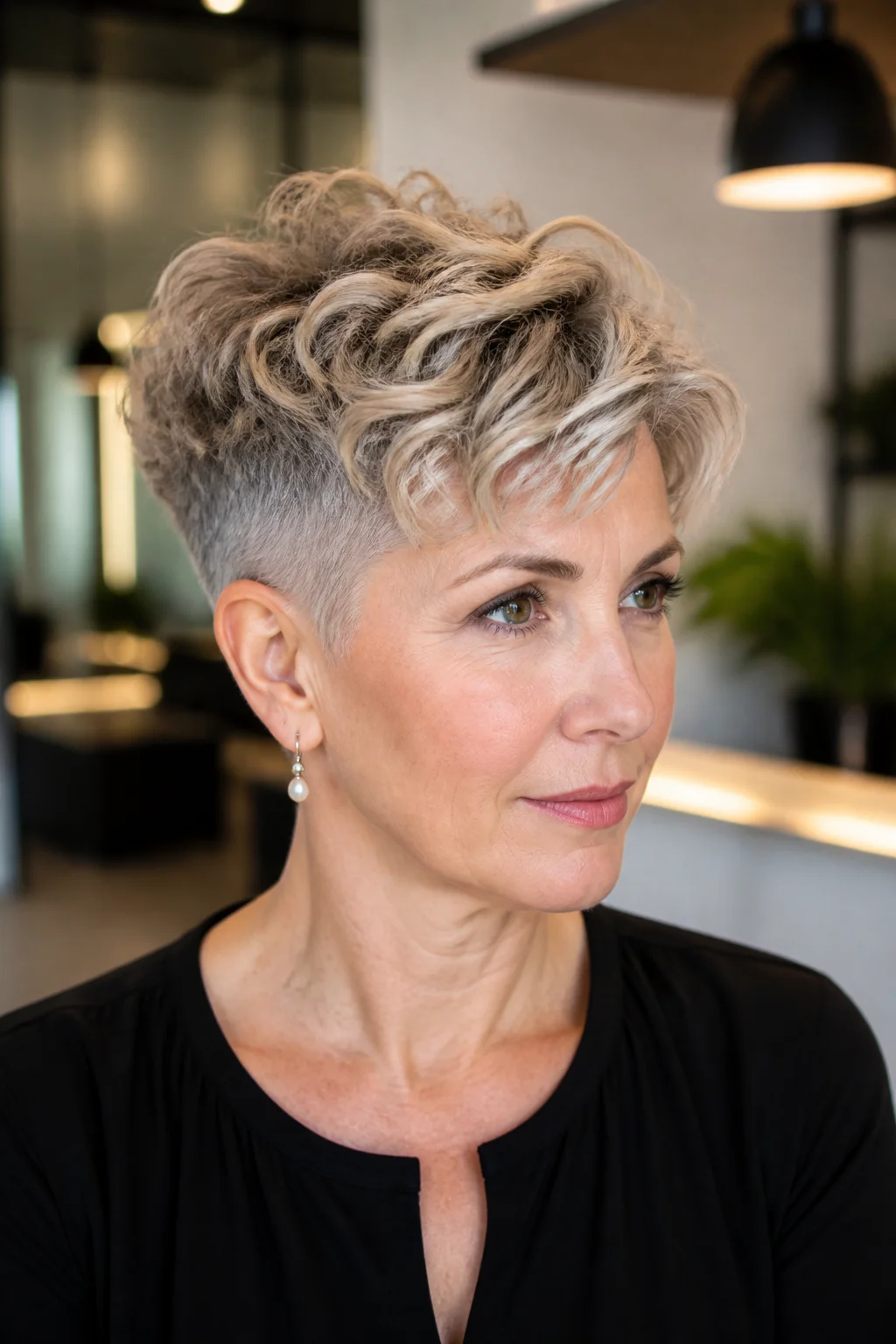
An undercut trims the hair close underneath the top layer, so when the top curls fall over it, they land on nothing but short stubble. This creates a clean line and makes fine curls on top look denser by comparison. It’s a low maintenance option since the undercut grows out slowly and doesn’t need frequent touch ups.
Curly Pixie with Choppy Layers
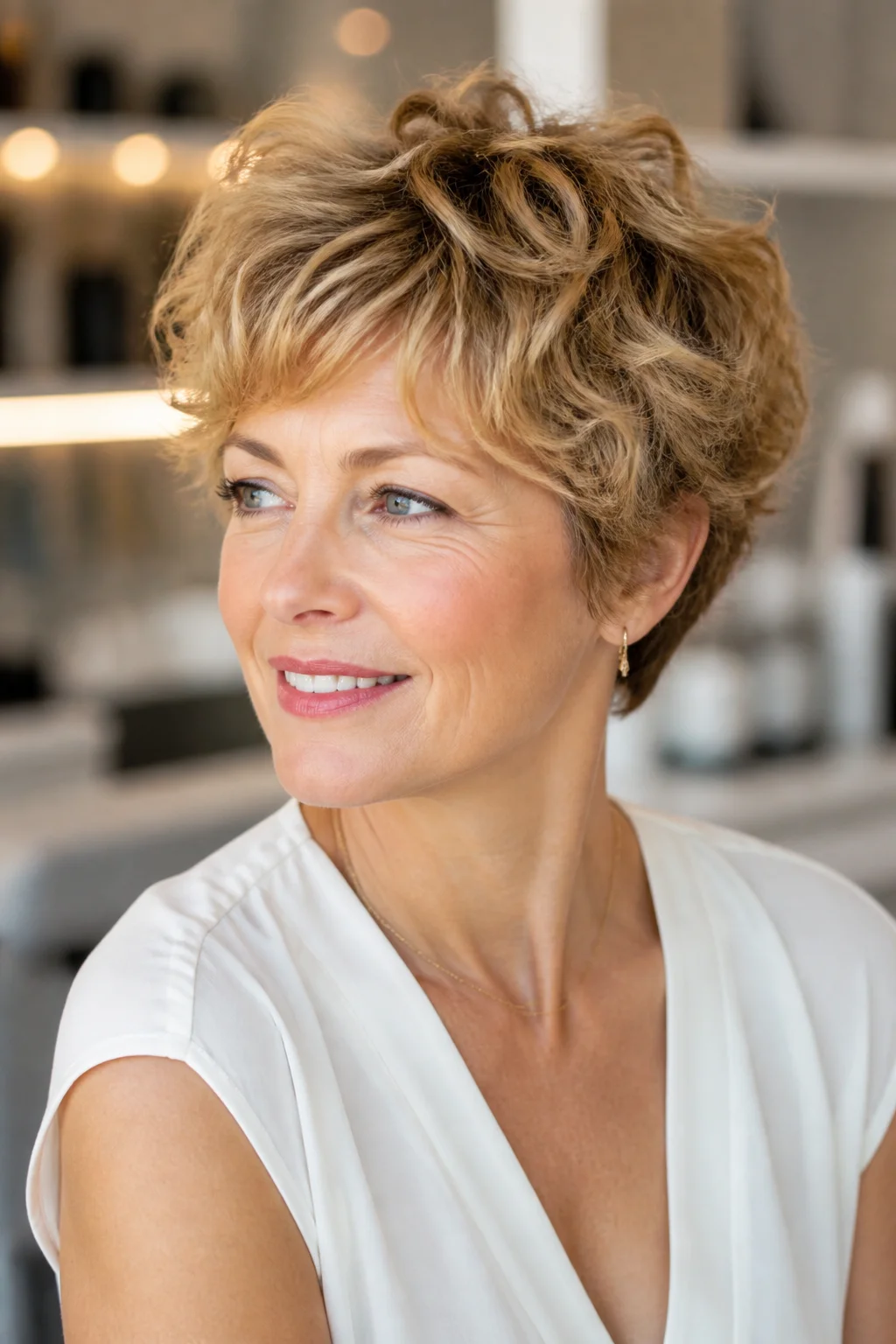
Choppy layers are cut at irregular lengths on purpose, giving the curls a lived-in, textured finish instead of a neat, uniform one. This suits fine hair because the irregular cutting adds the illusion of thickness without needing heavy product. It also hides the line where new growth starts, so the cut looks intentional even a few weeks after your appointment. Women who want a slightly edgier finish tend to gravitate toward this one.
Rounded Curly Pixie for Round Faces
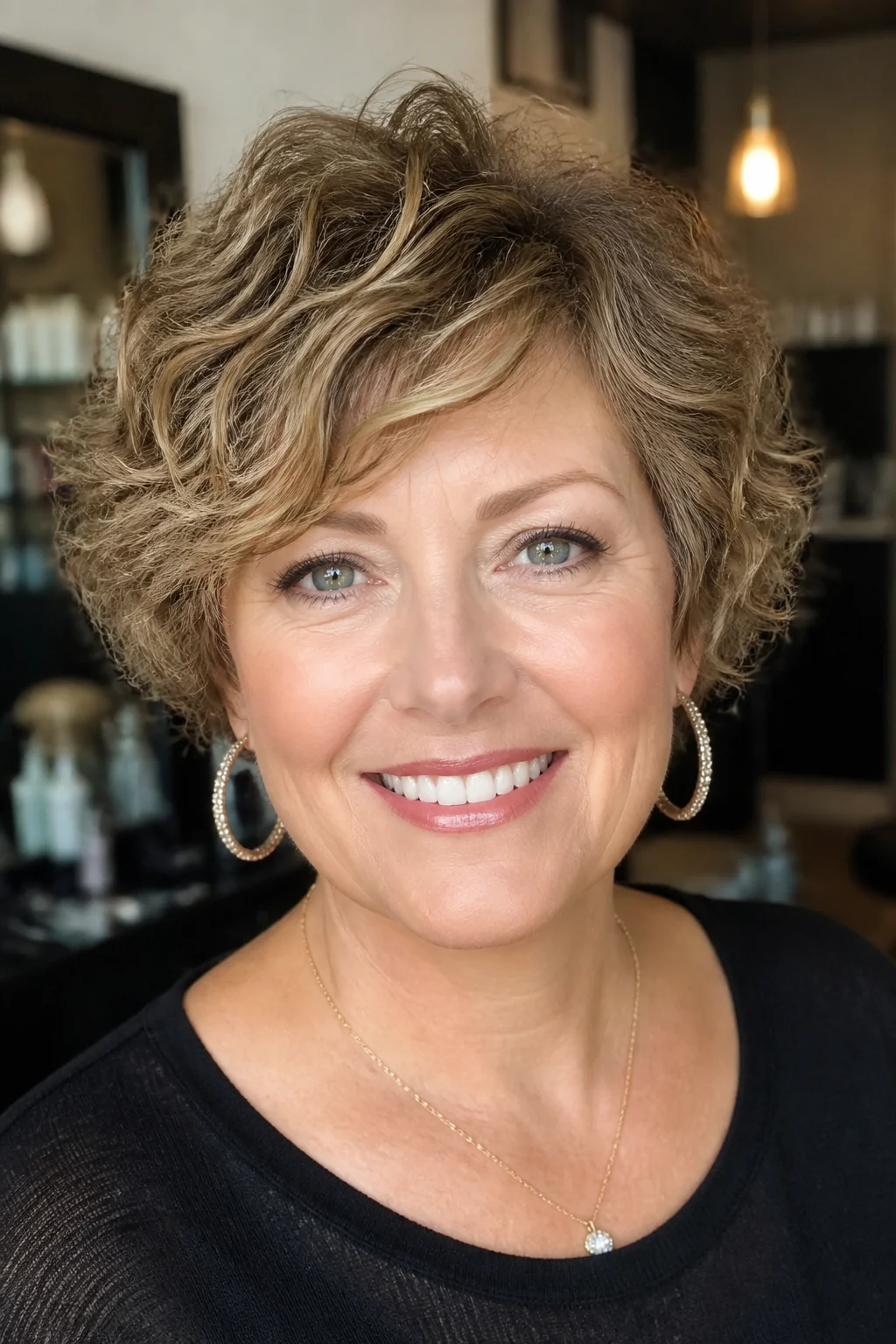
This shape keeps more height at the crown and less width at the sides, which elongates a round face instead of adding to its width. The curls are cut close near the ears and cheeks, then allowed to build volume upward. Tip: avoid too much length at the sides, since extra width there can make the roundness more obvious rather than less.
Curly Pixie with Long Bangs
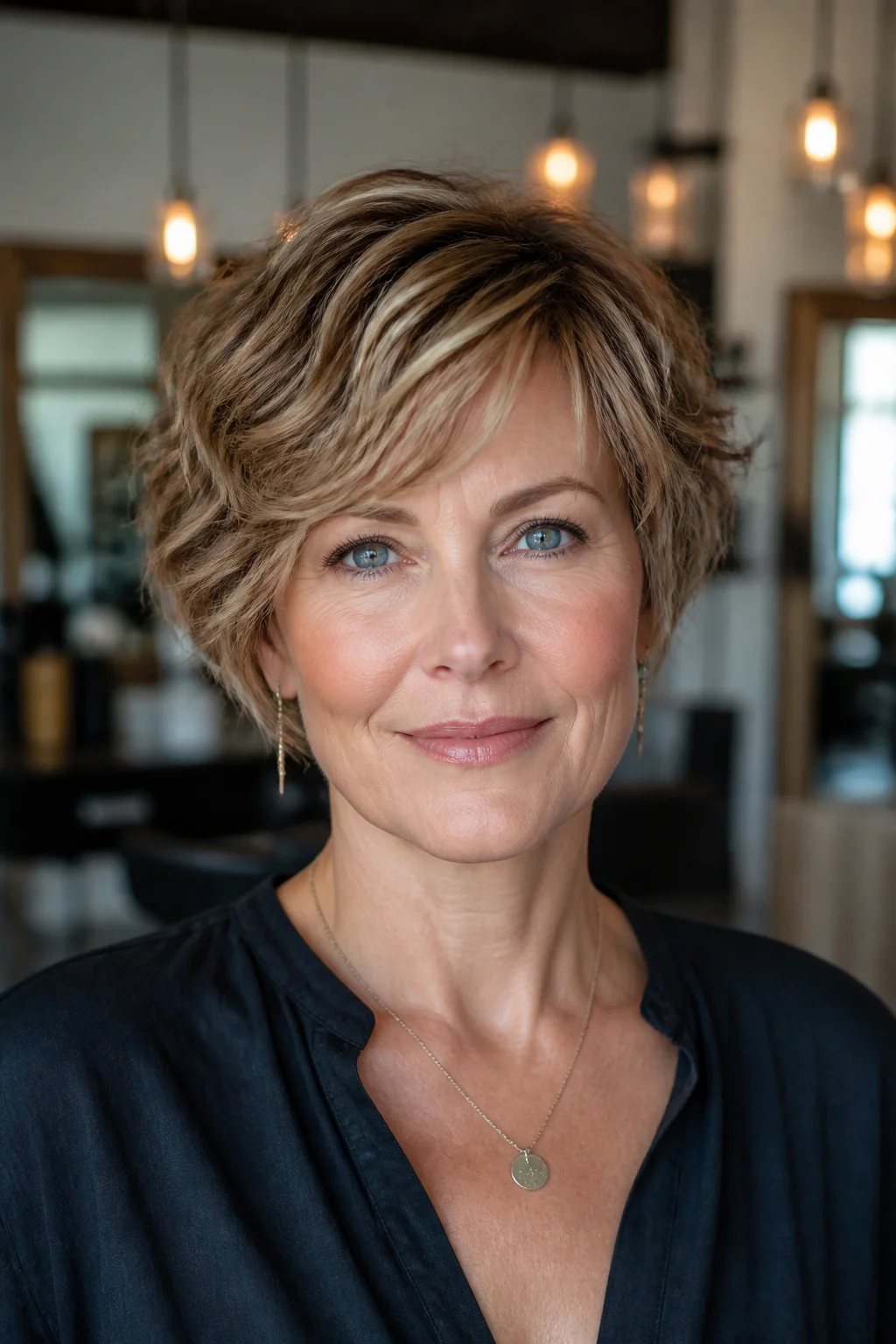
Long, curled bangs sweep across the forehead and can be tucked behind the ear or worn loose. This gives you the option to change your look day to day without touching the rest of the cut. Fine curly hair holds this length well because the curl pattern keeps the bangs from looking flat against the skin. It also softens the forehead area, which many women over 40 appreciate as a face-framing option.
Feathered Curly Pixie
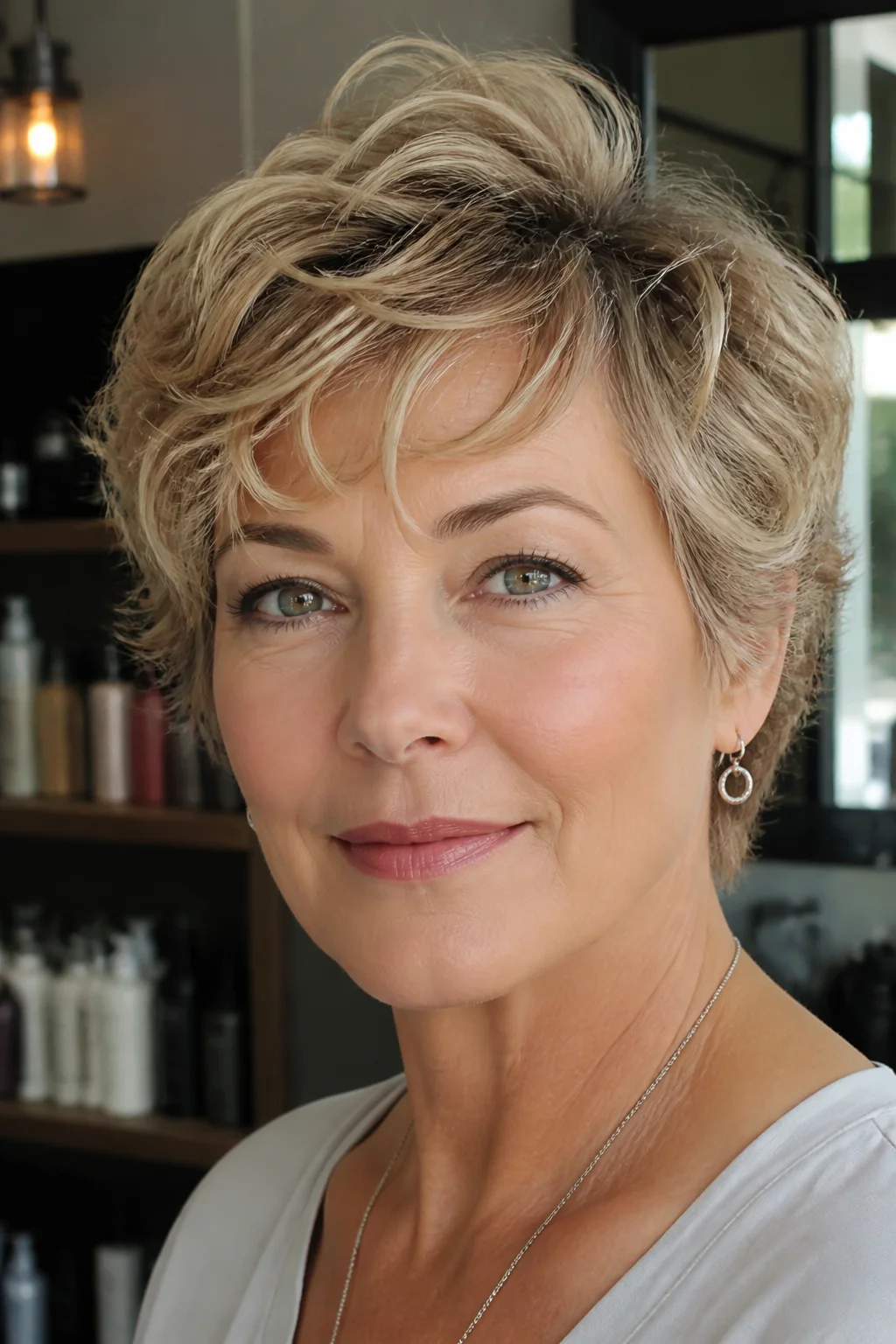
Feathering thins the ends of each curl so they taper to a fine point instead of ending in a blunt clump. On fine hair this reads as movement rather than thinness because the feathered ends catch the light and give the illusion of texture throughout. It’s a subtle effect, best for anyone who wants their curls to look soft rather than sculpted.
Curly Pixie with Grown-Out Texture
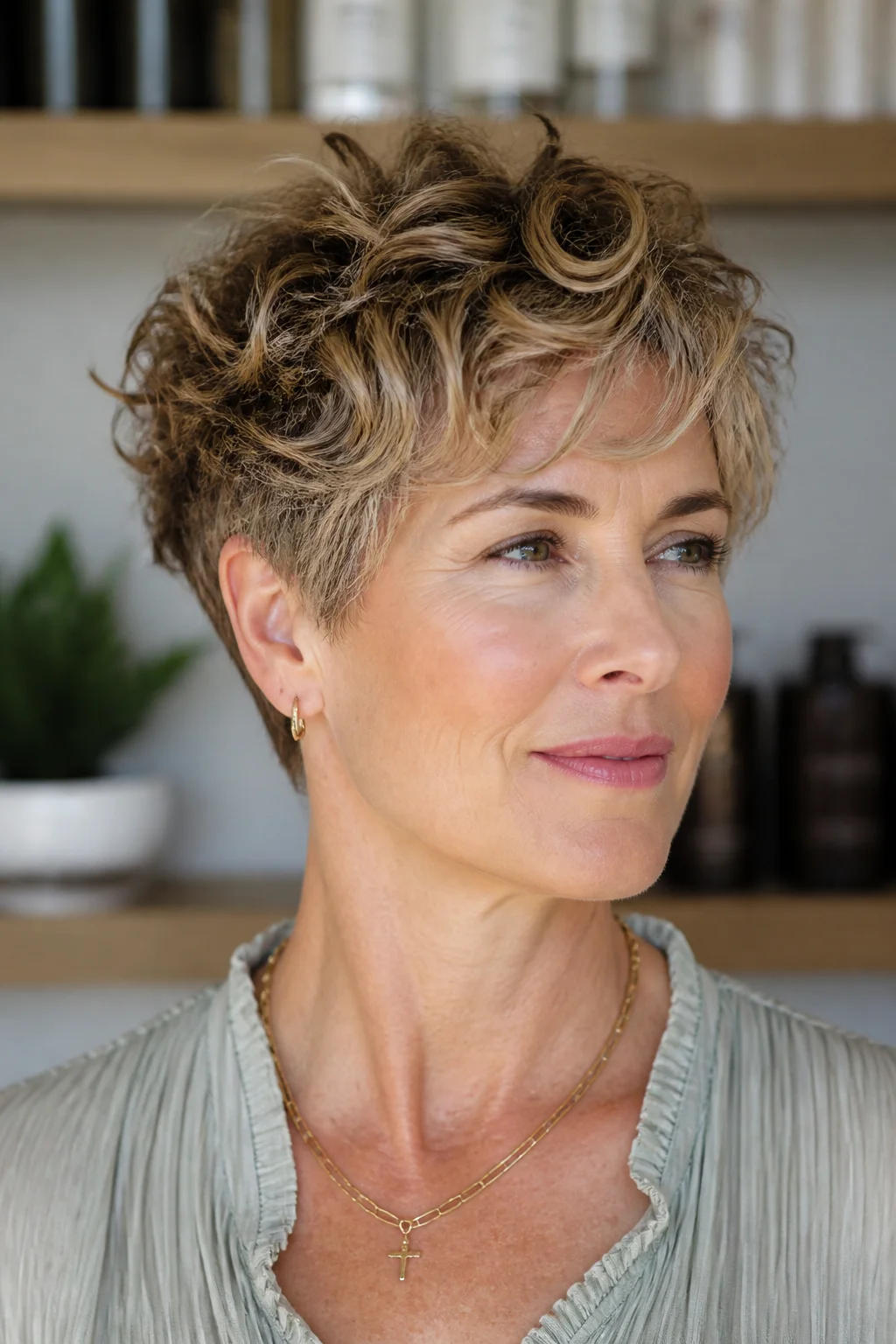
Not every client wants a fresh, sharp cut every six weeks, and this style is built for that reality. It allows the pixie to grow a bit longer between visits while still keeping shape through the sides and nape. The curls fill in the growing length instead of looking messy, since curl pattern naturally disguises uneven growth better than straight hair does. This is a solid option if your schedule does not allow for frequent salon trips. It also gives you room to experiment with length before committing to a full cut again.
Asymmetrical Curly Pixie
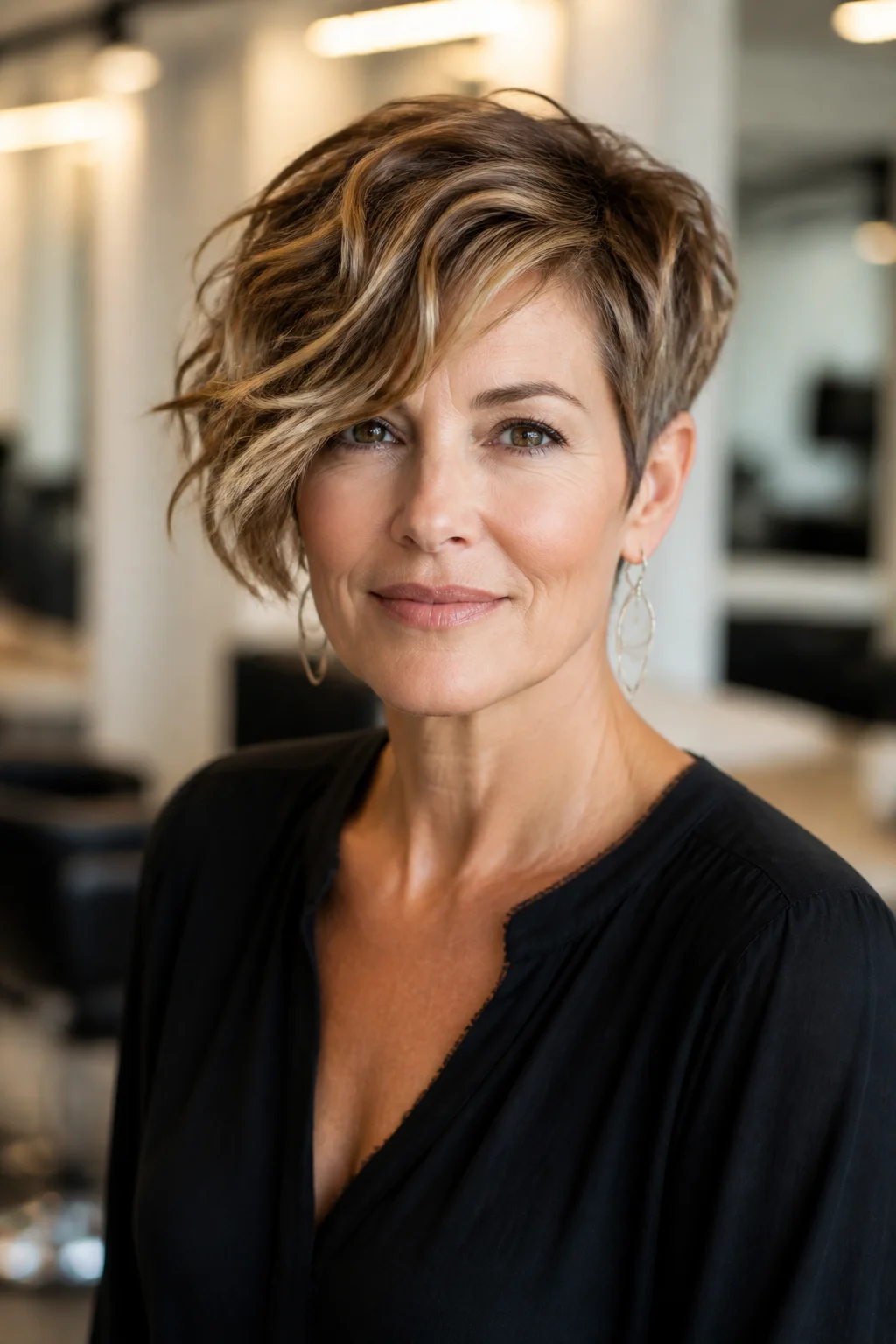
One side is cut noticeably shorter than the other in this style, creating an off balance shape that feels modern and a little unexpected. It works surprisingly well on fine curls since the shorter side adds structure while the longer side keeps softness and movement. Ask your stylist to blend the transition point so it doesn’t look like an accident.
Curly Pixie with Deep Side Part
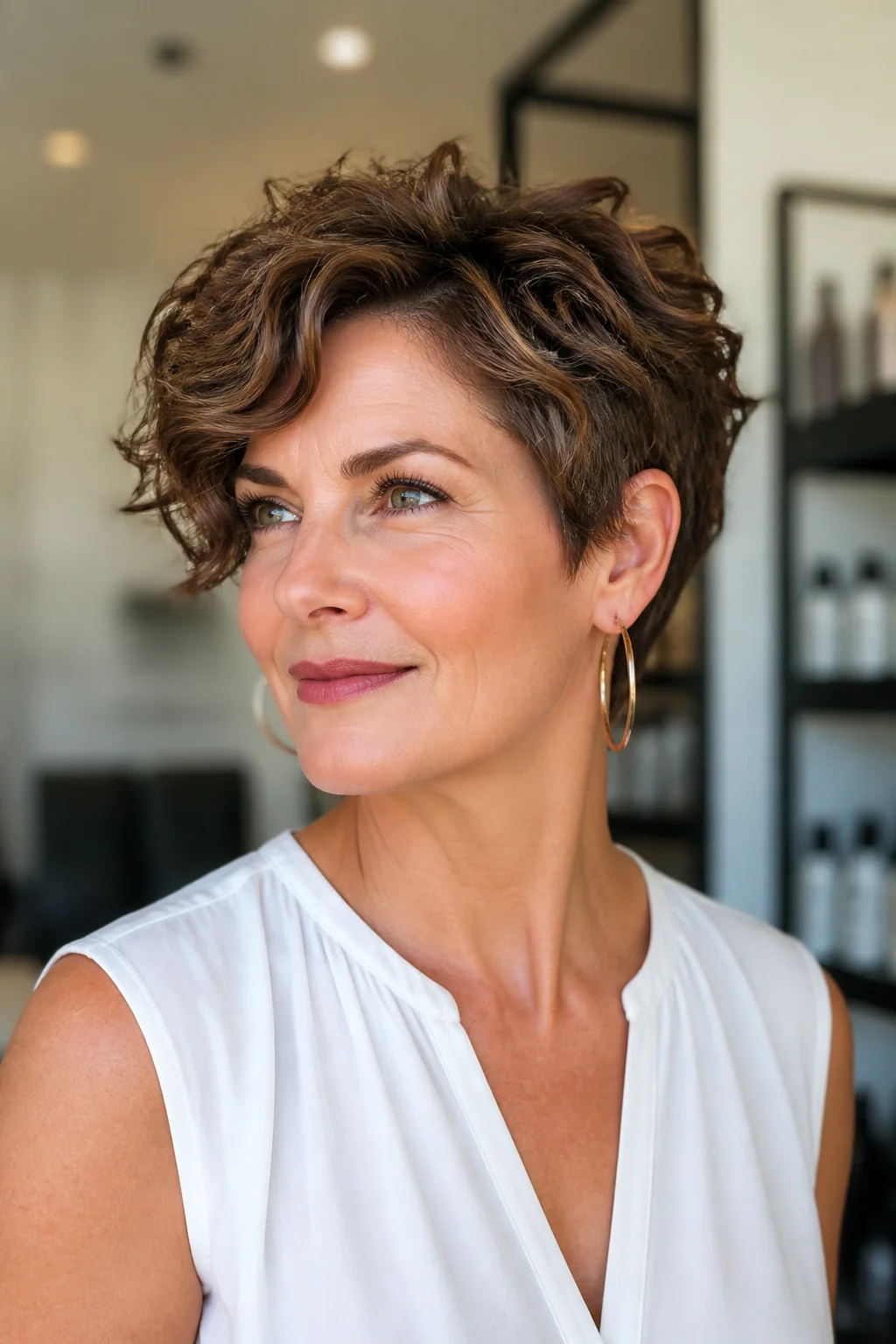
A deep side part shifts more hair to one side of the head, instantly adding the look of fullness where the part is heaviest. Combined with curly texture, this cut can make fine hair look noticeably denser without extra layers. It’s a quick styling trick that takes seconds each morning.
Tight Curly Pixie for Coily Hair
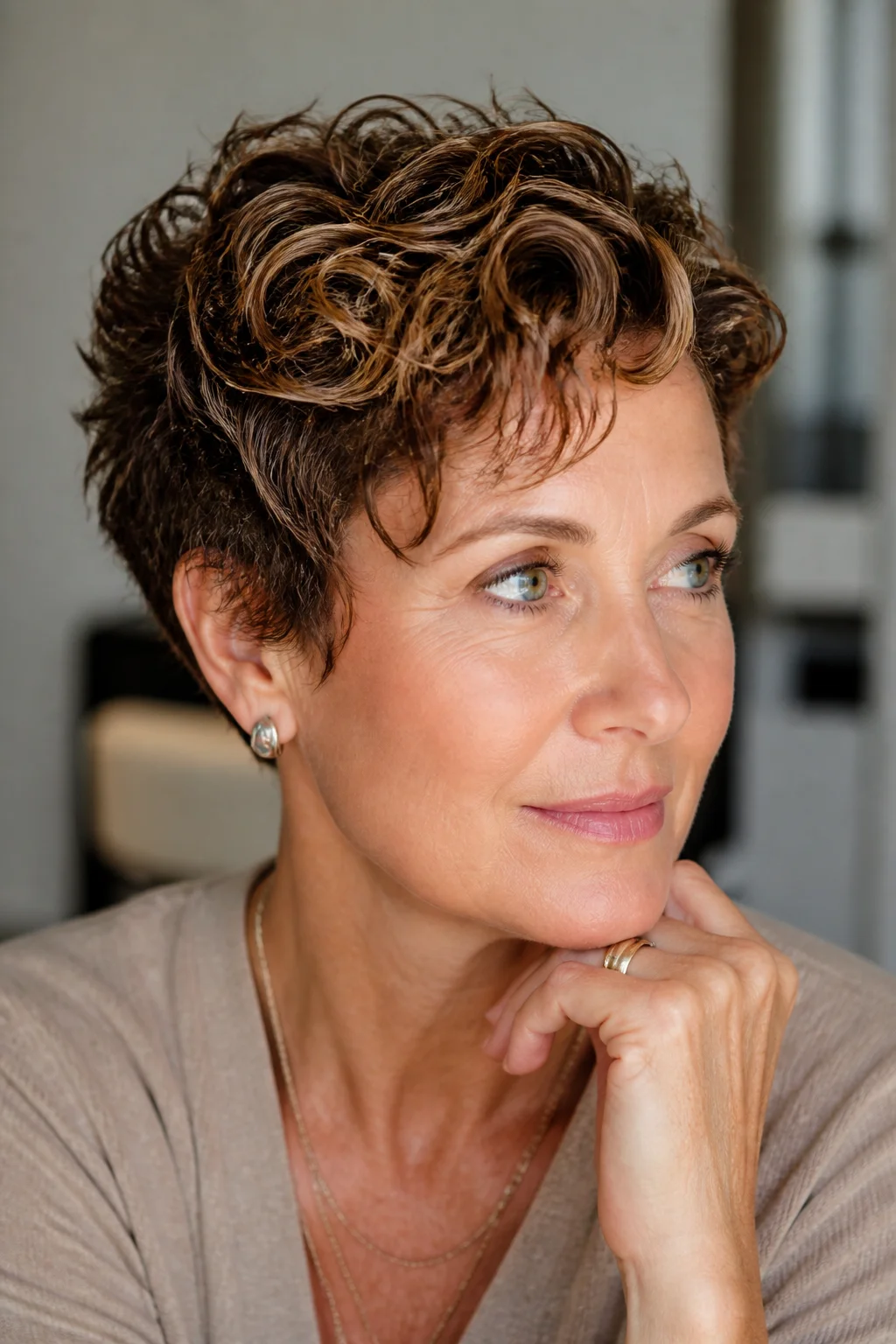
Coily hair holds shape differently than looser curl patterns, and this cut respects that by keeping the length short and even throughout. Because coils shrink more than other curl types, your stylist should cut slightly longer than the final look you want so the shrinkage doesn’t leave you shorter than planned. This shape gives a clean, polished silhouette that needs very little daily styling once it’s cut correctly. It’s a great low maintenance option for anyone tired of fighting their curl pattern every morning.
Curly Pixie with Wispy Layers
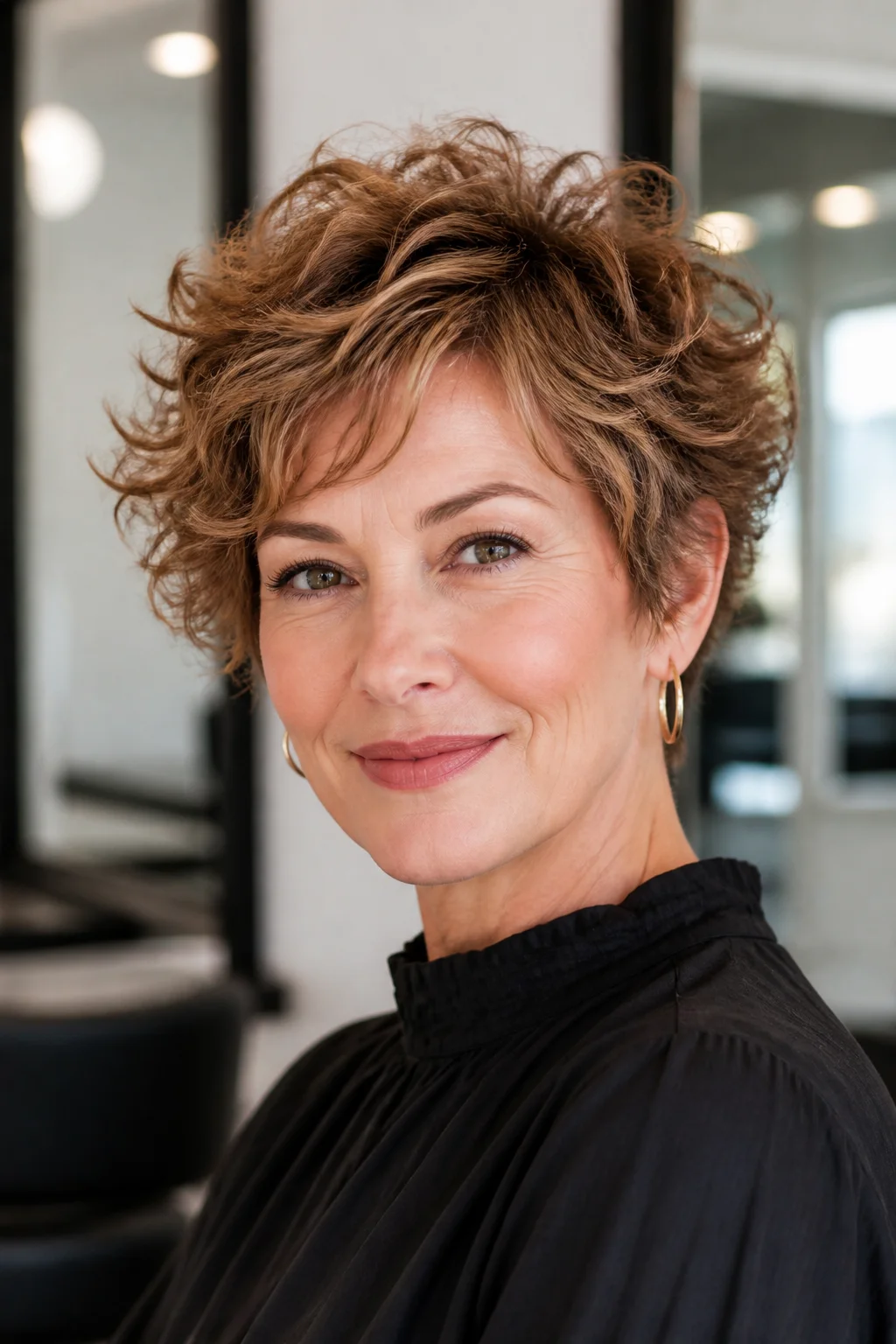
Wispy layers are thin, feather light sections cut throughout the top and sides. On fine curly hair they add gentle movement without bulk, which keeps the whole cut from feeling heavy. This is one of the softer, more romantic pixie options on this list.
Textured Curly Pixie Fade
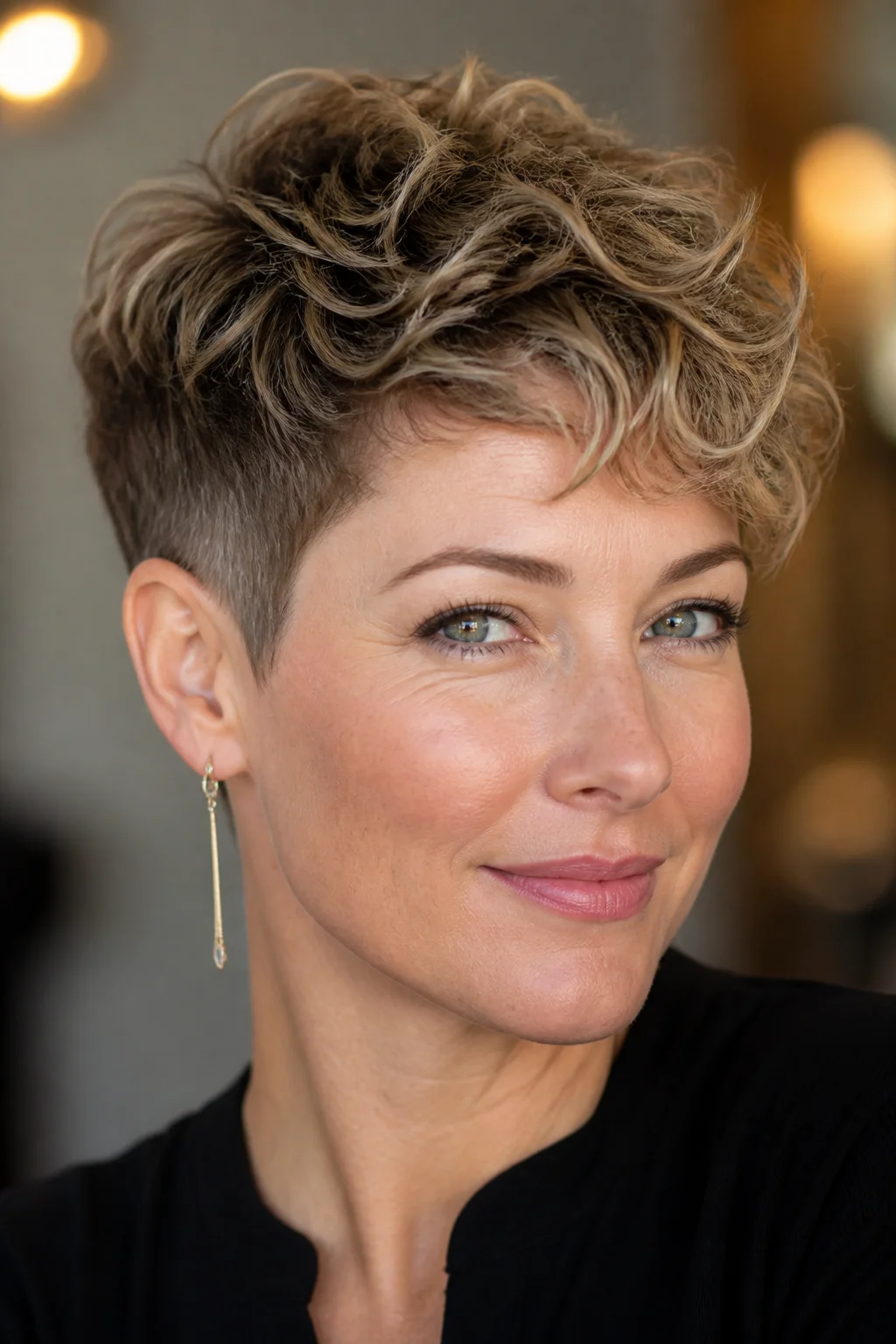
A fade blends the hair gradually from very short at the neckline up to longer texture on top, with no visible line anywhere in between. This gives fine curls a polished, almost sculpted appearance since the eye is drawn upward toward the fuller crown. It requires more frequent trims to keep the fade sharp, so plan on visiting your stylist every four to five weeks.
Curly Pixie with Center Part
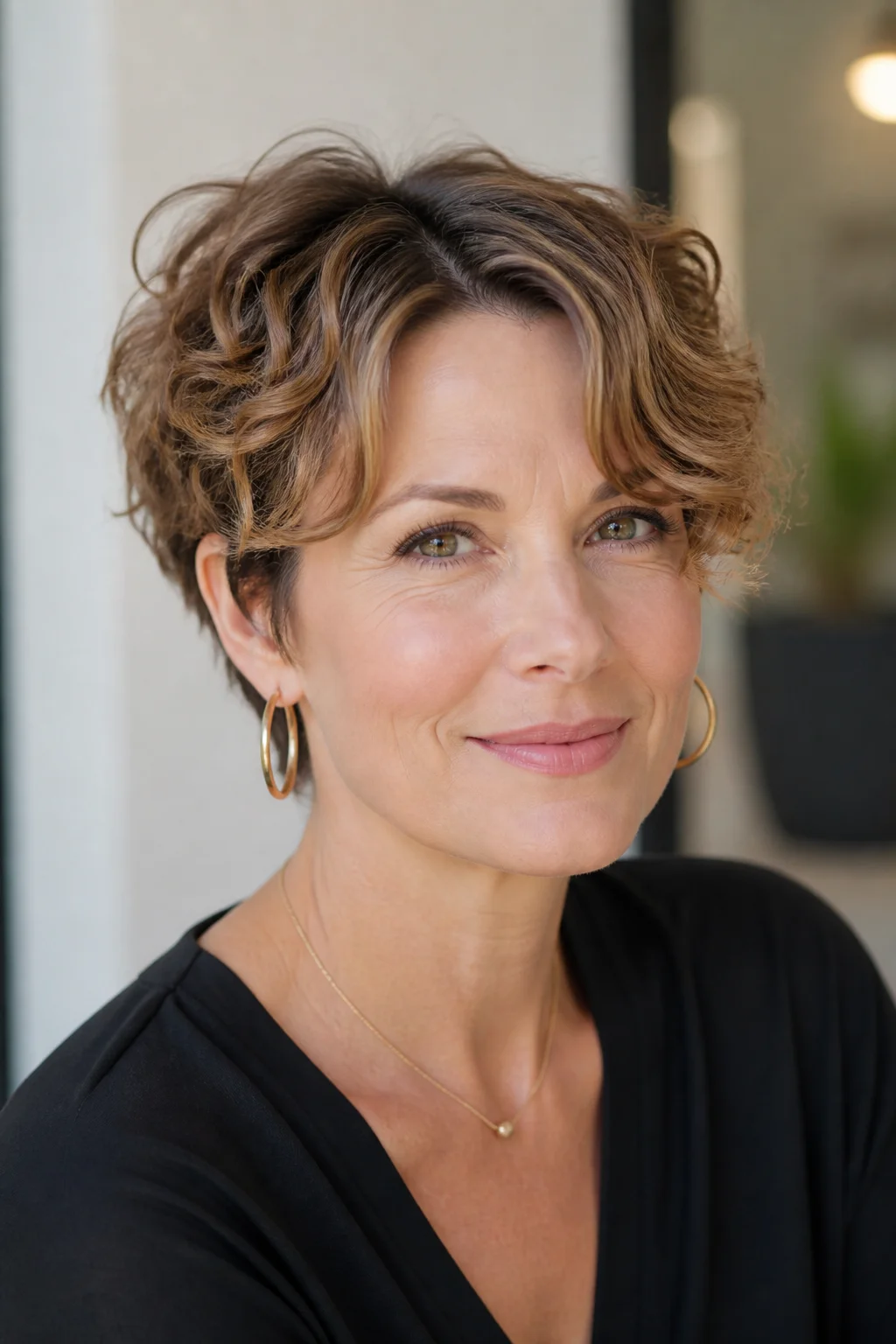
Splitting the top section down the middle creates a symmetrical frame around the face, which can be flattering if your features are fairly balanced. This part style works with curly texture because the curls naturally fall away from the center line instead of needing to be forced into place. It’s simple, classic, and easy to maintain at home.
Curly Pixie with Tousled Crown
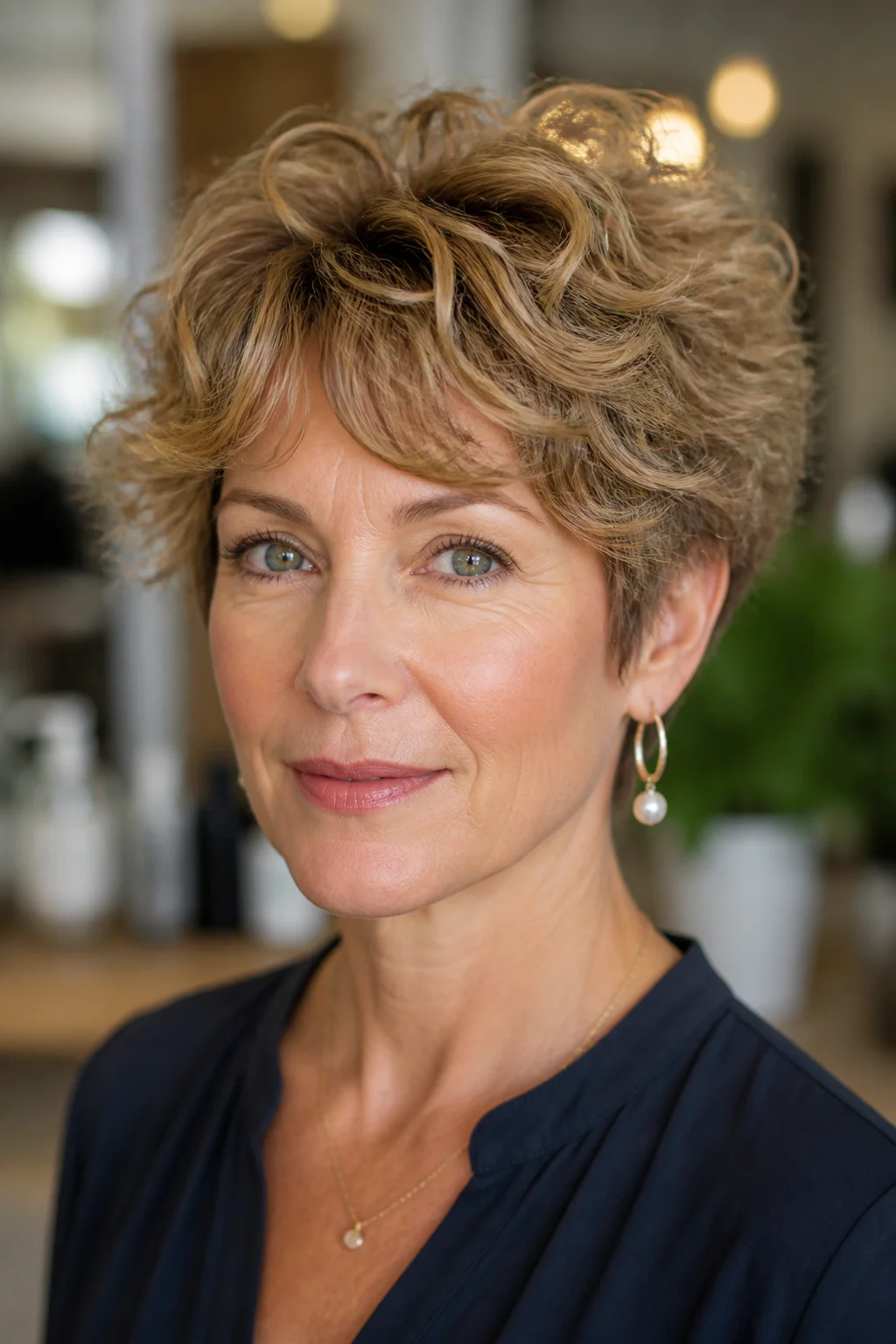
The crown section is cut and styled to look purposely undone, almost as if you just woke up and ran your fingers through it. Fine curls actually help this effect look natural instead of messy, since the curl pattern already has that lived-in quality built in. A little texturizing cream worked through damp hair is usually all it takes to recreate this daily.
Curly Pixie with Light Layers
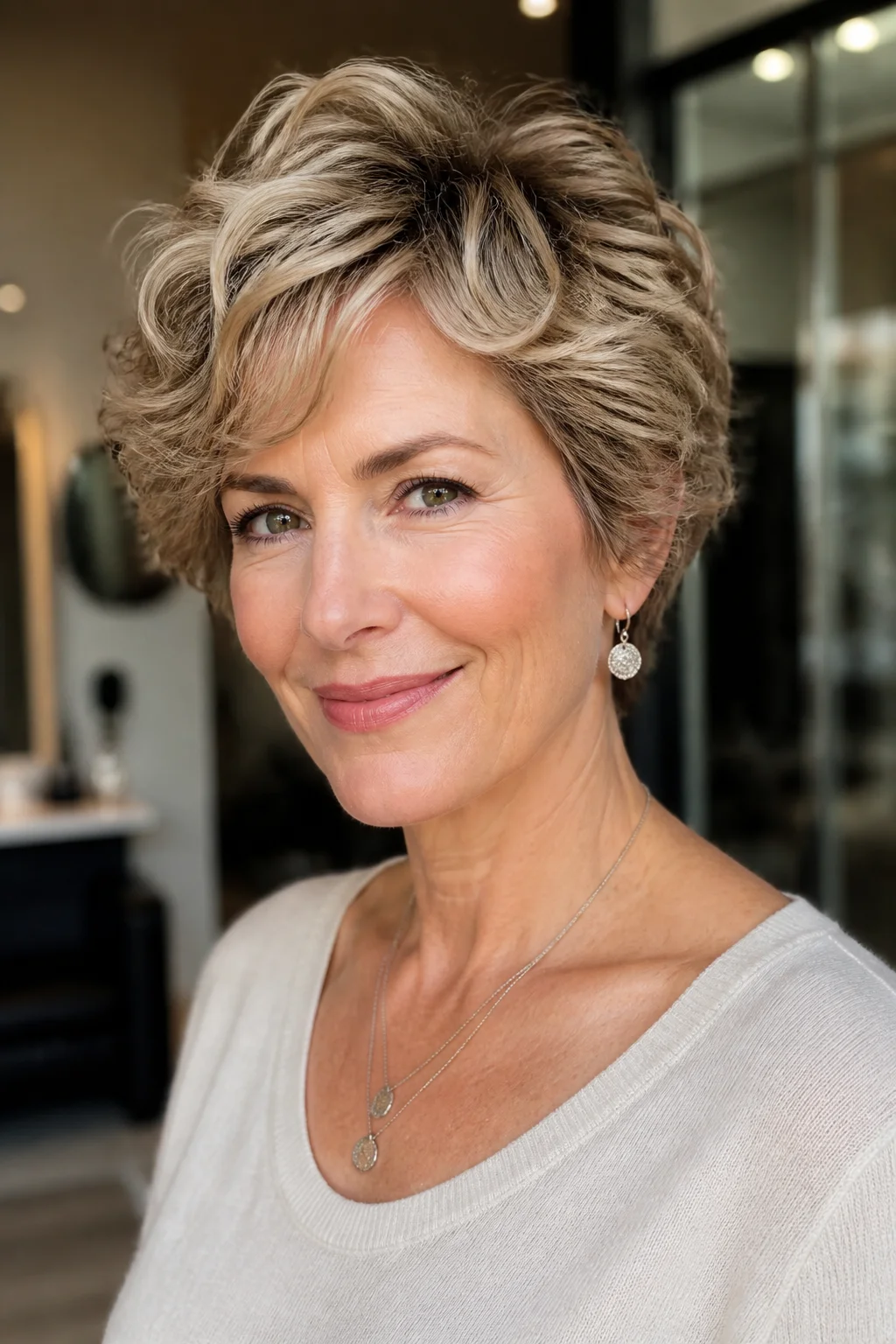
Light layering removes just a small amount of weight throughout the cut, which is often all fine curly hair needs to keep from looking too dense or heavy. This is a gentler approach compared to choppy or feathered layering, and it suits anyone who wants a soft, natural finish rather than a dramatic textured one.
Curly Pixie with Nape Fade
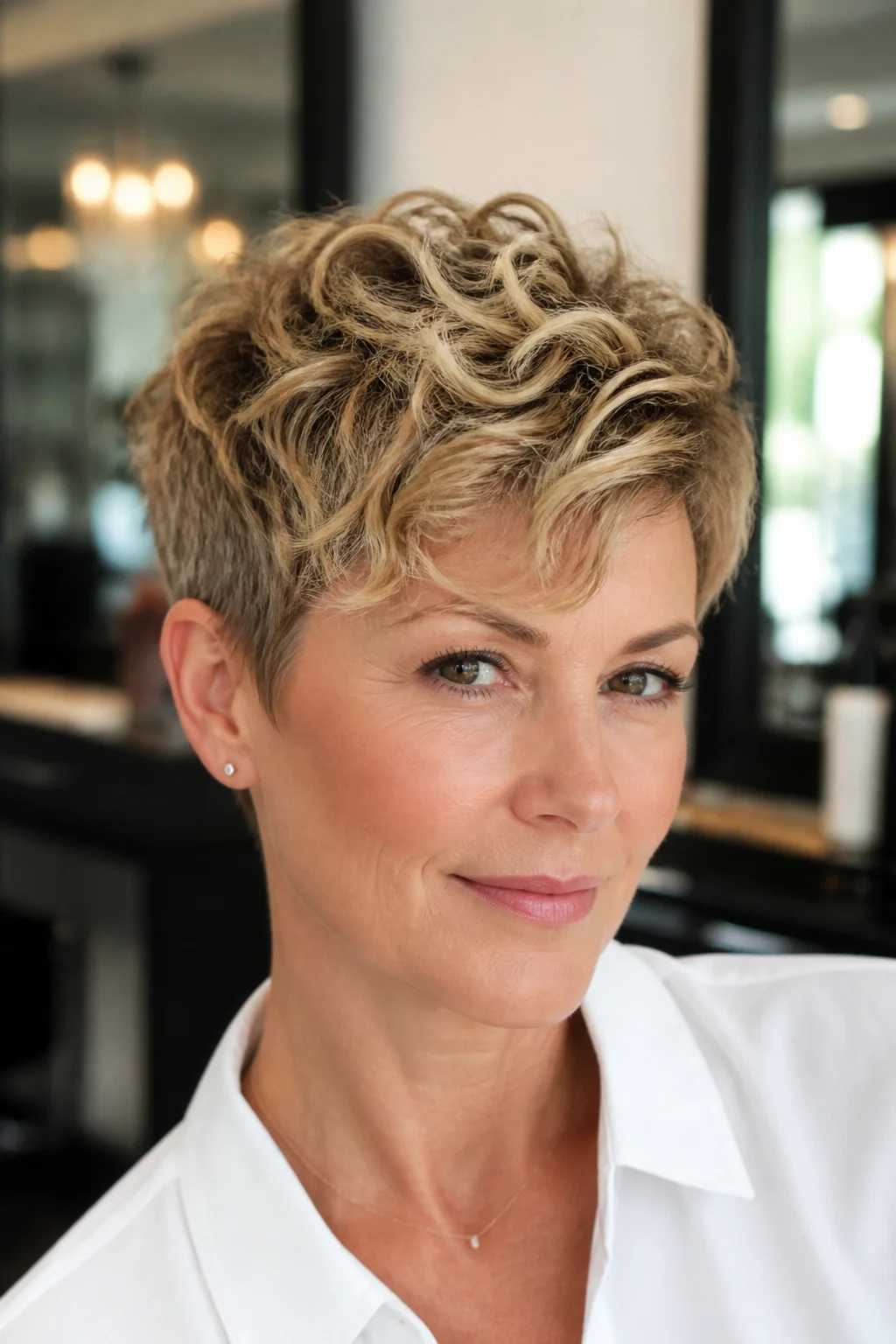
The fade here is limited to the nape of the neck, keeping the rest of the cut relatively unchanged while still giving a clean, groomed finish at the back. This detail works well for fine curls because it removes bulk from an area that can otherwise look thin and wispy. It also extends the time between salon visits since only the nape needs regular upkeep.
Wavy Curly Pixie
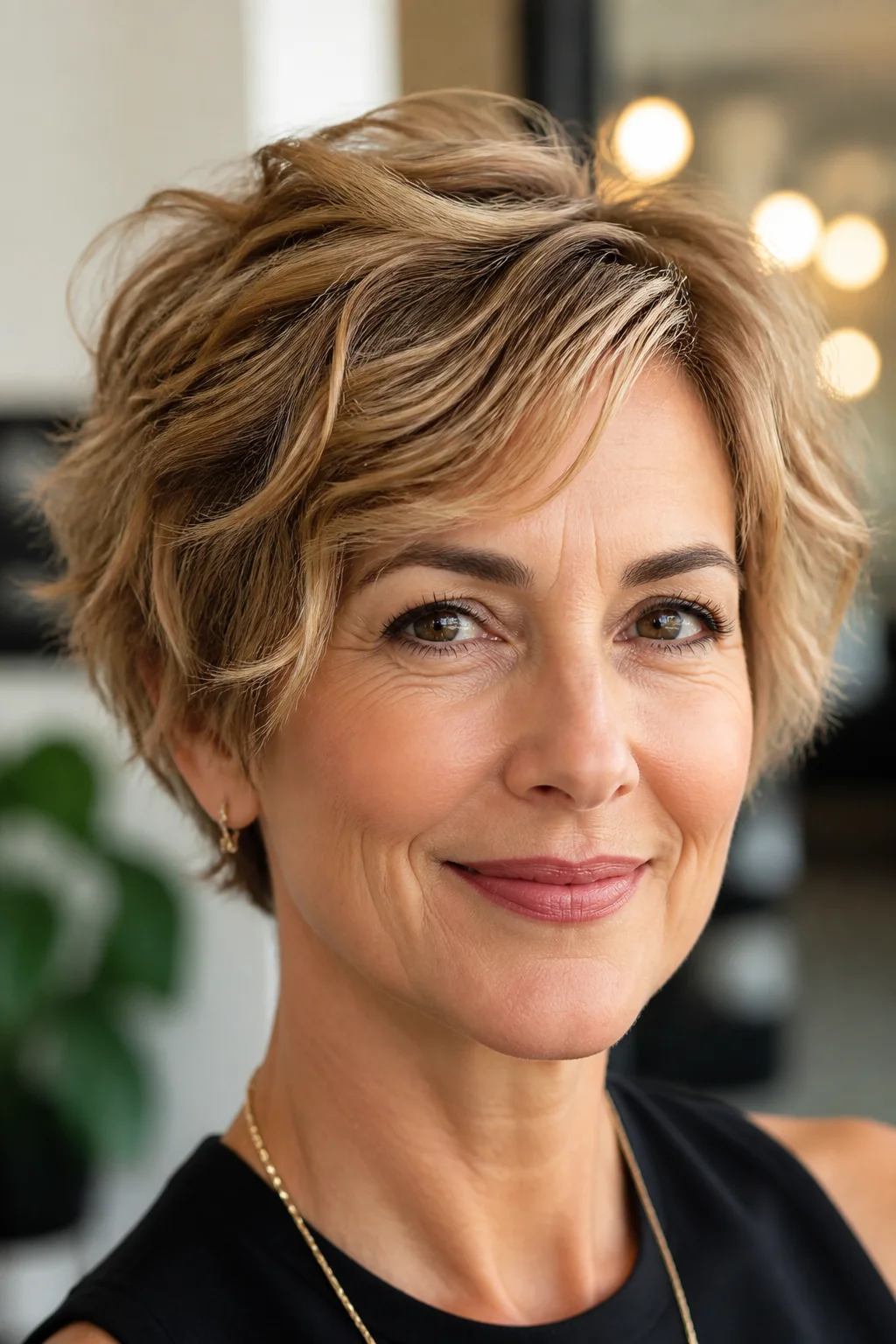
This version sits between a curl and a wave, which suits women whose hair pattern is looser or has loosened with age. The cut keeps enough length on top to let the wave pattern show while the sides stay short and neat. It’s a gentle, easy-to-style option for anyone whose curl pattern isn’t tight enough for a more structured pixie.
Curly Pixie with Side-Swept Crown
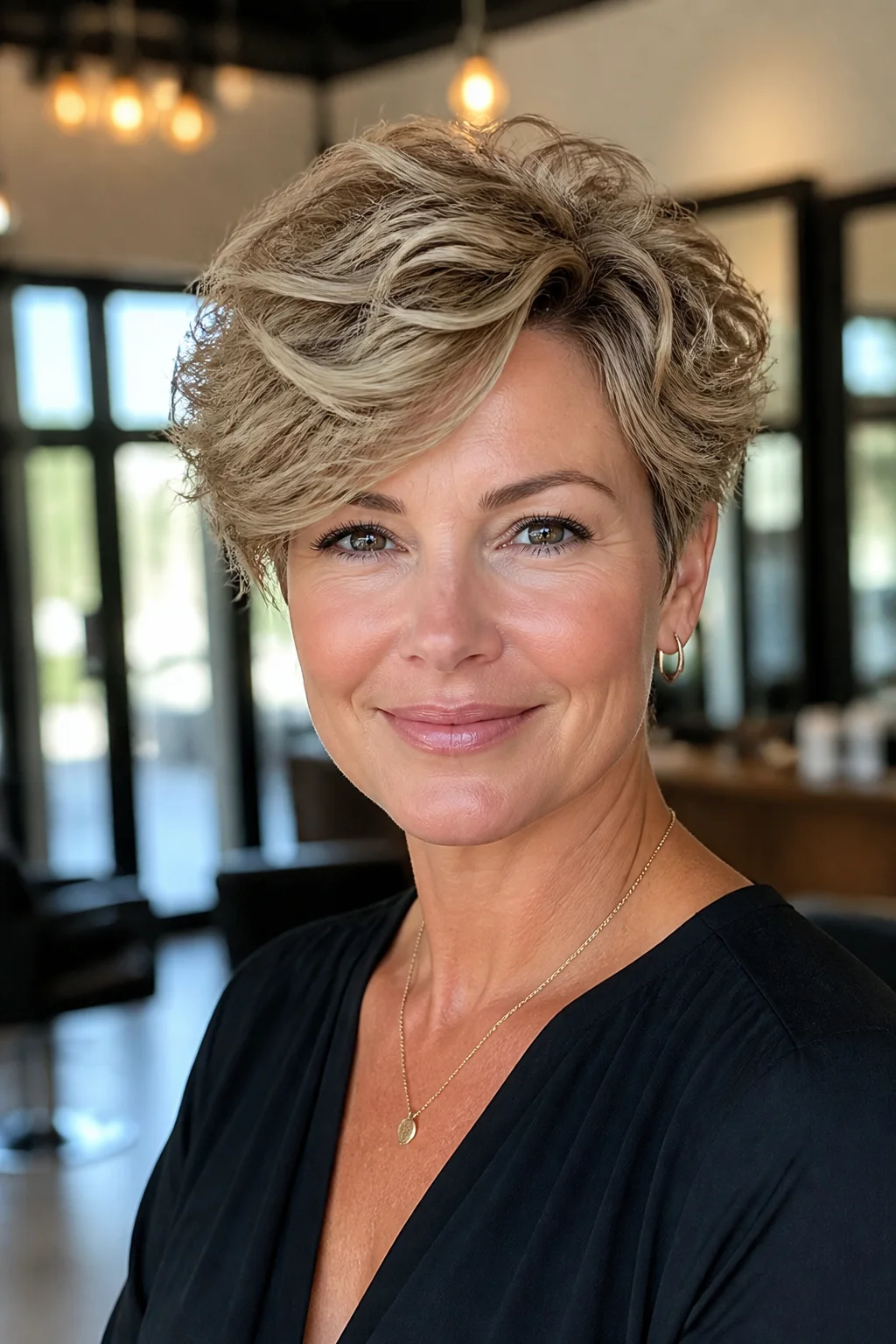
The crown hair is cut and directed to sweep to one side, adding shape and a bit of drama without needing daily styling effort. Fine curls hold this direction naturally once trained through a few washes, so this cut becomes easier to manage over time rather than harder.
Curly Pixie with Textured Transition
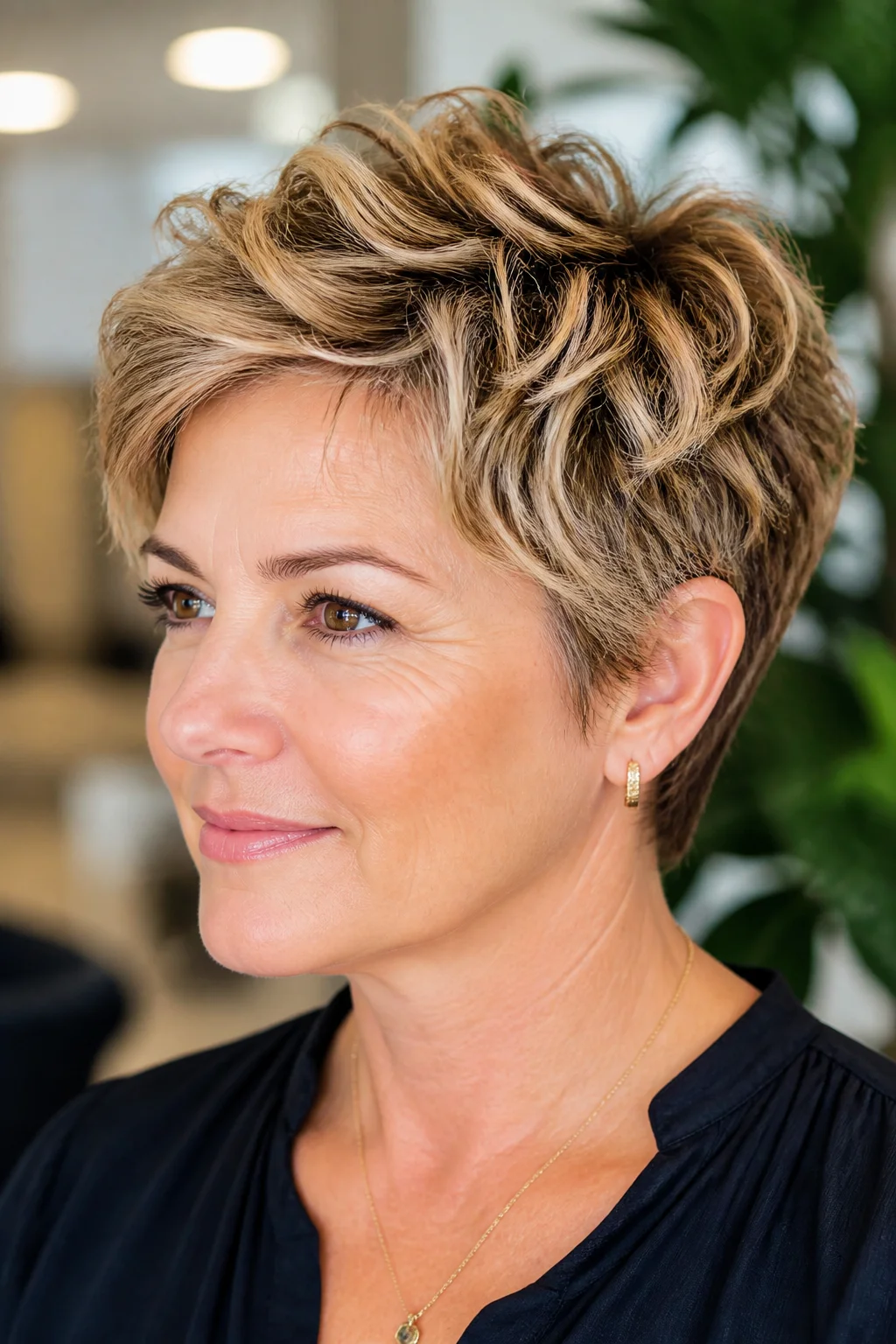
This style focuses on the section where short sides meet the longer top, blending it with textured cutting instead of a hard line. The result feels like a natural progression from short to long rather than two separate sections stitched together. It suits fine curly hair especially well since a hard blend line can look overly severe on delicate strands.
Curly Pixie with Sculpted Shape
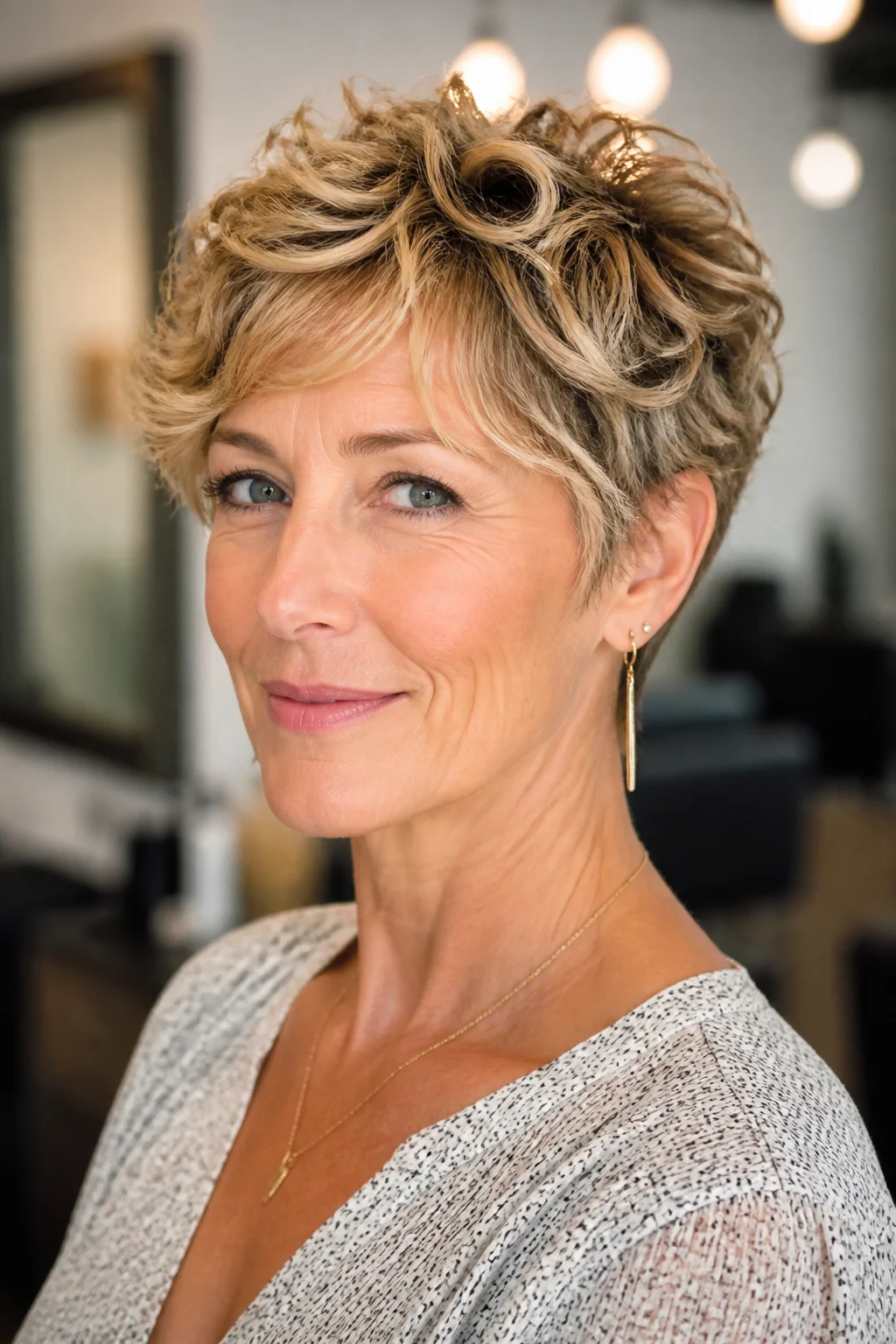
Sculpted pixies use precise cutting to create a defined silhouette, almost architectural in how the curls are arranged around the head. This isn’t a wash and go style. It needs product and some finger styling to keep its shape, but the payoff is a polished, put together look that holds up well for events or workdays alike.
Curly Pixie with Piece-y Top
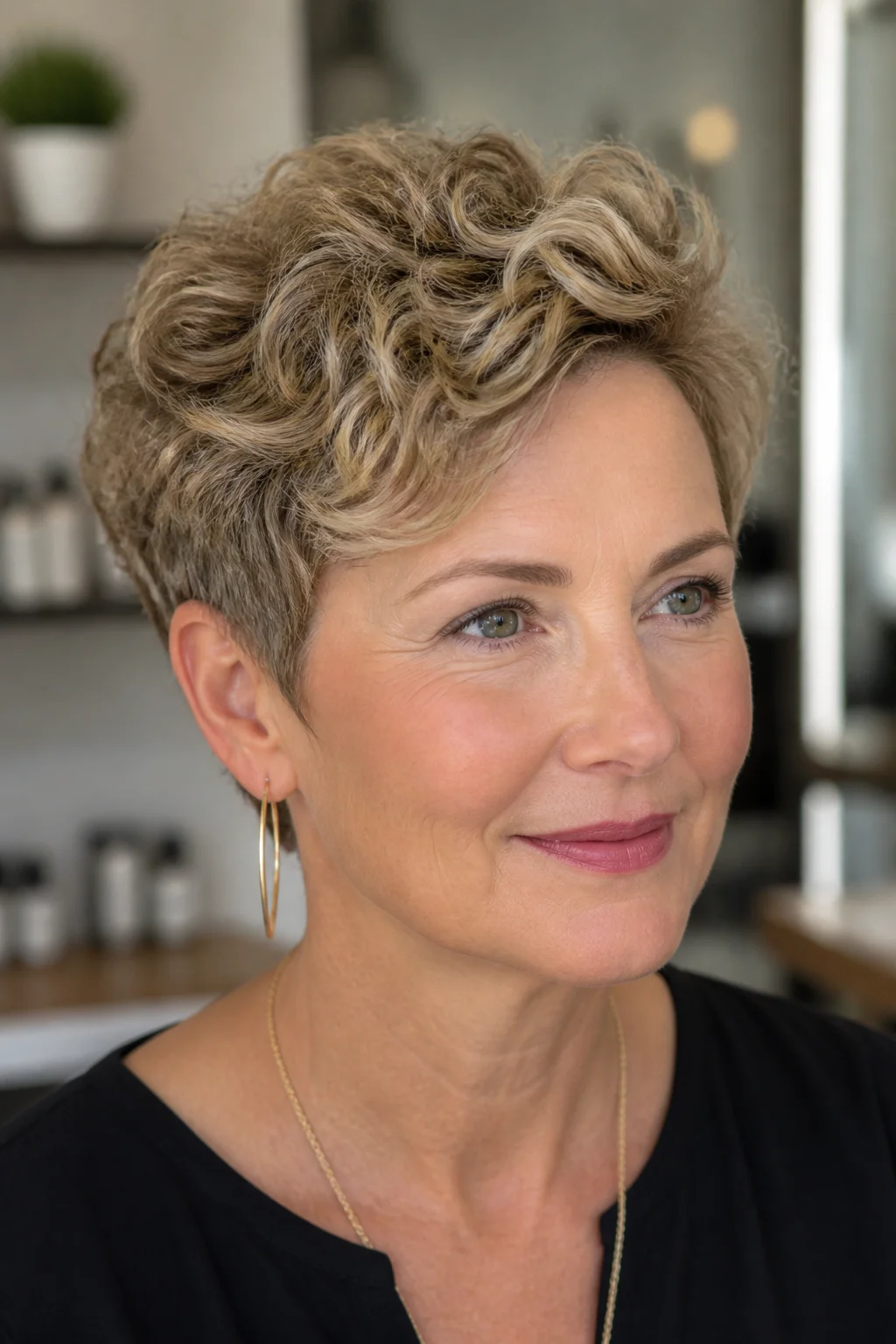
Individual pieces of curl are separated and defined on top, usually with a small amount of styling cream or gel. This creates a textured, slightly spiky finish that reads as modern and low effort at the same time. It’s an easy update if you already have a classic pixie and want to switch up the styling without cutting anything new.
Choosing the Right Curly Pixie for Your Hair and Face
With this many options, picking one cut can feel overwhelming, so it helps to think about your priorities first. If you want the lowest maintenance option, look toward the textured curly pixie with undercut or the curly pixie with nape fade, since both grow out cleanly and need fewer touch ups. If volume is your main concern, the layered curly pixie with volume at crown and the rounded curly pixie for round faces both build height exactly where fine hair tends to fall flat.
For anyone with tighter coils, the tight curly pixie for coily hair respects shrinkage in a way that looser cuts don’t account for, so don’t borrow a style meant for wavy patterns if your curls are dense and springy. Those who want daily styling flexibility should consider the curly pixie with long bangs or the curly pixie with deep side part, since both can be adjusted morning to morning without a fresh cut.
A common mistake is choosing a heavily layered style, like the curly pixie with choppy layers, when your hair is already very fine and prone to looking sparse. In that case, lighter layering or a soft fringe will serve you better than aggressive texturizing. Match the cut to how your curls actually behave, not just to a photo you liked.