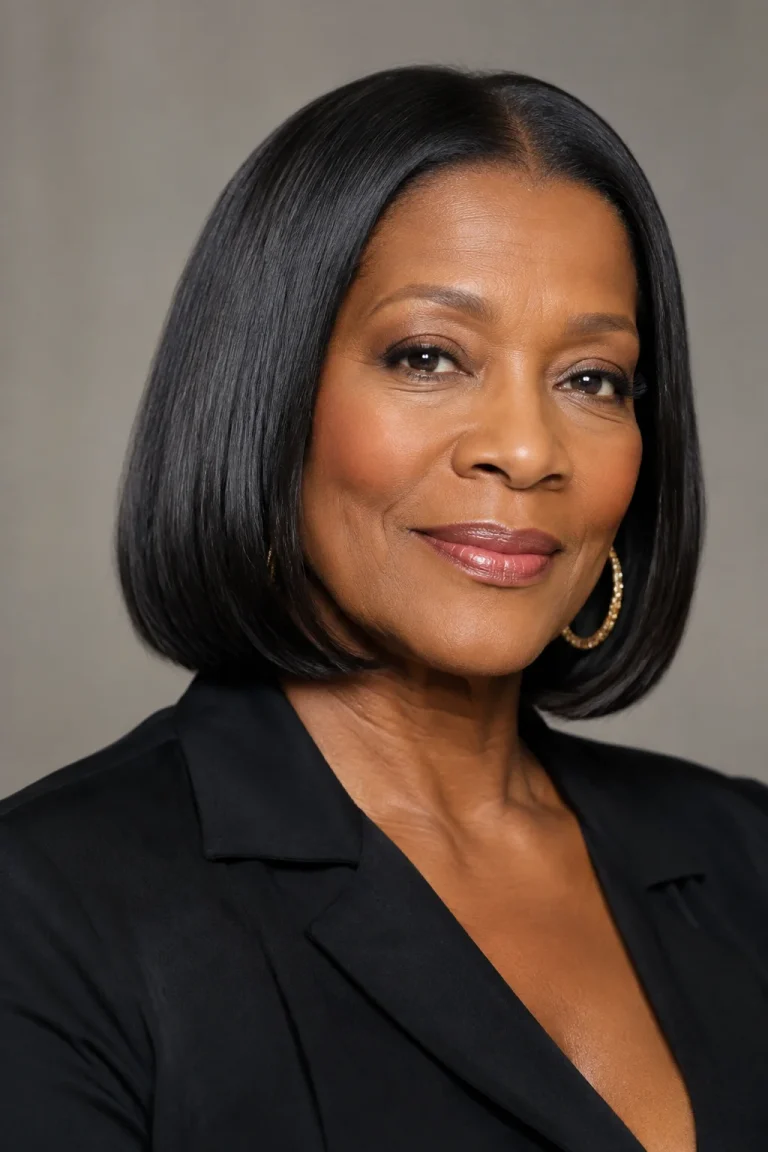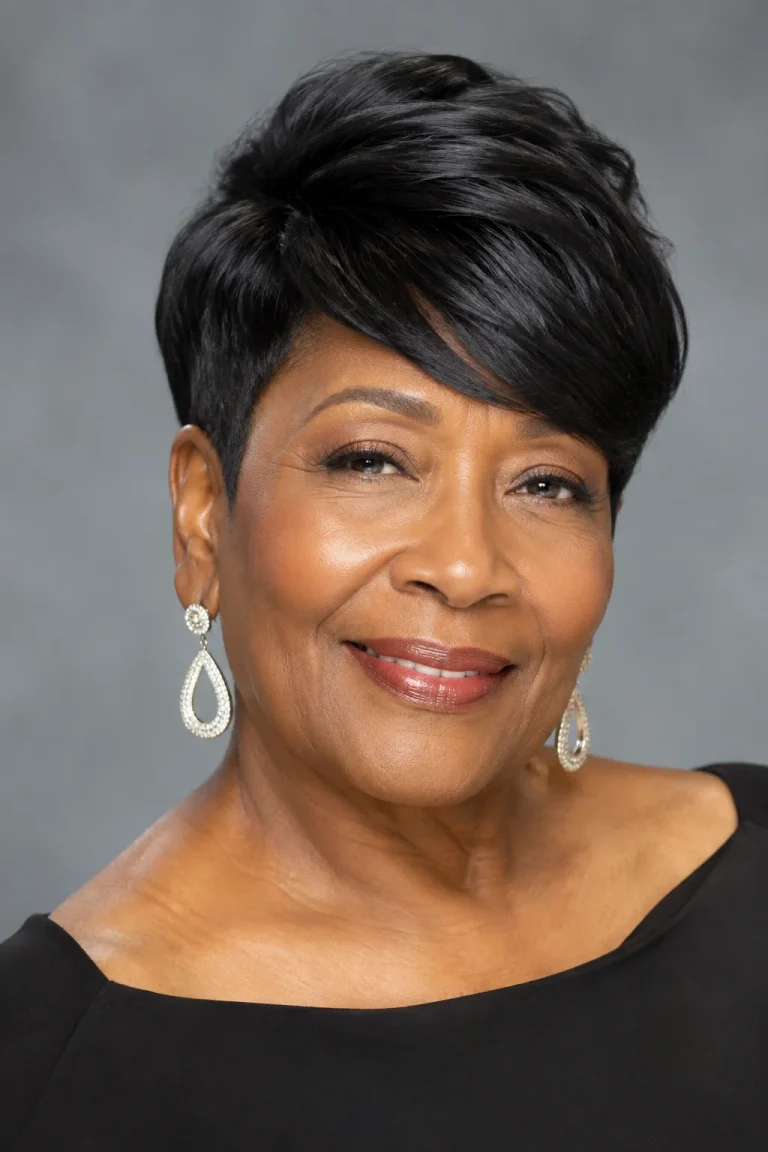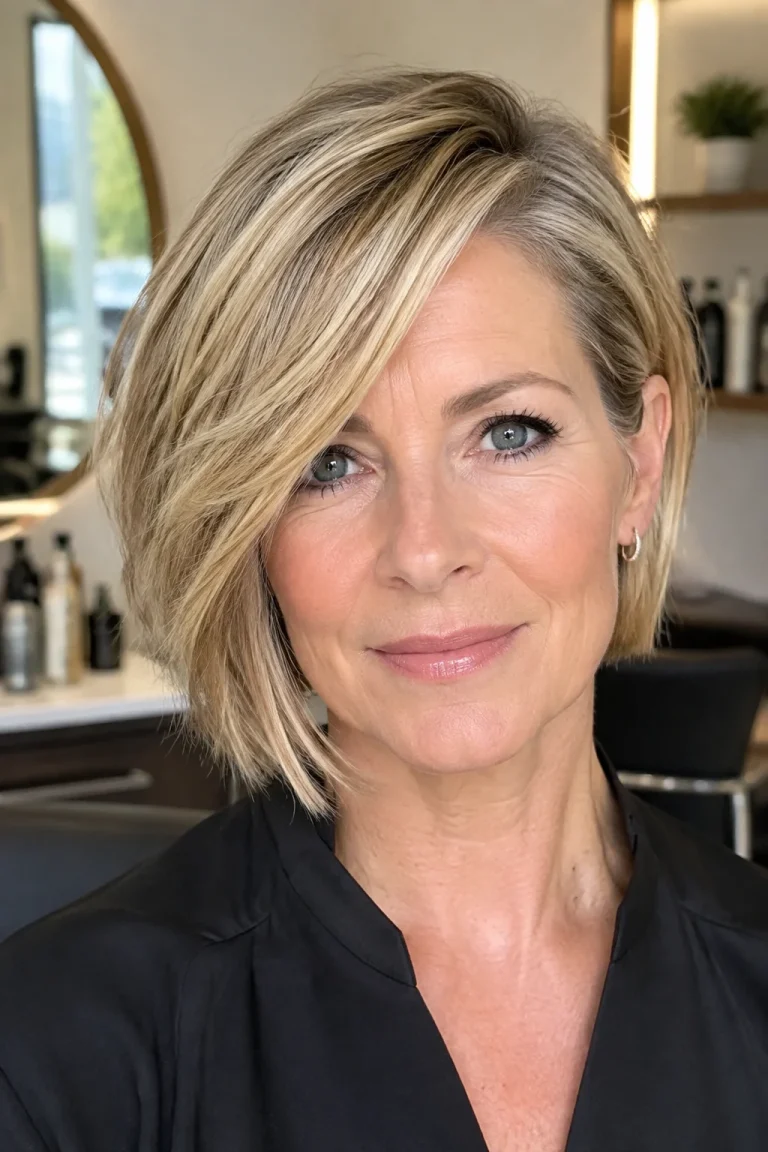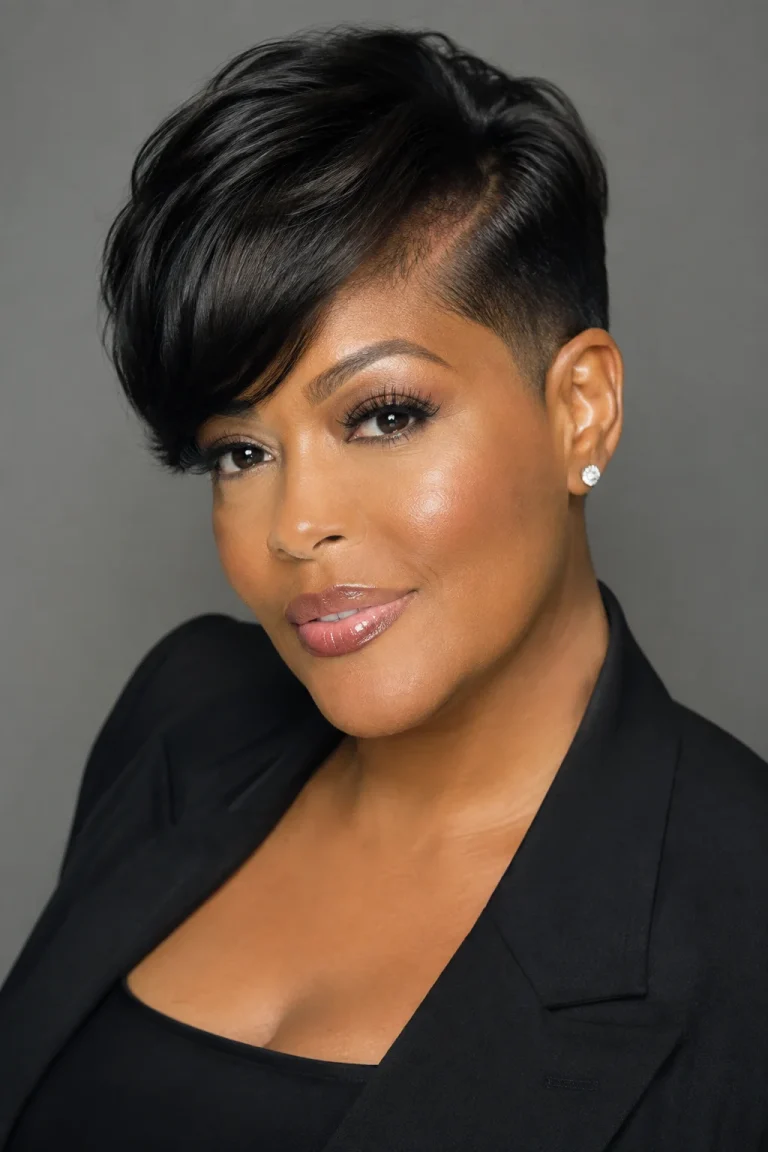
Short curls that lose their shape by noon and bobs that fall flat before lunch are two of the most common frustrations stylists hear about. The good news is that the right cut fixes most of that on its own, before any product gets involved. Curly bob hairstyles for black women come in enough variety that texture, face shape, and daily routine can all be matched to a specific silhouette instead of forcing one generic cut to work for everyone. Some of these styles lean on undercuts for lift, others use graduated layers to build a rounder shape, and a few skip layers entirely to let coils stack into their own natural volume. Below you’ll find twenty two cuts, each built around a different curl pattern, length, or finishing detail, so you can walk into a salon knowing exactly what to ask for instead of pointing at a photo and hoping.
Chin-Length Coil Bob With Defined Edges
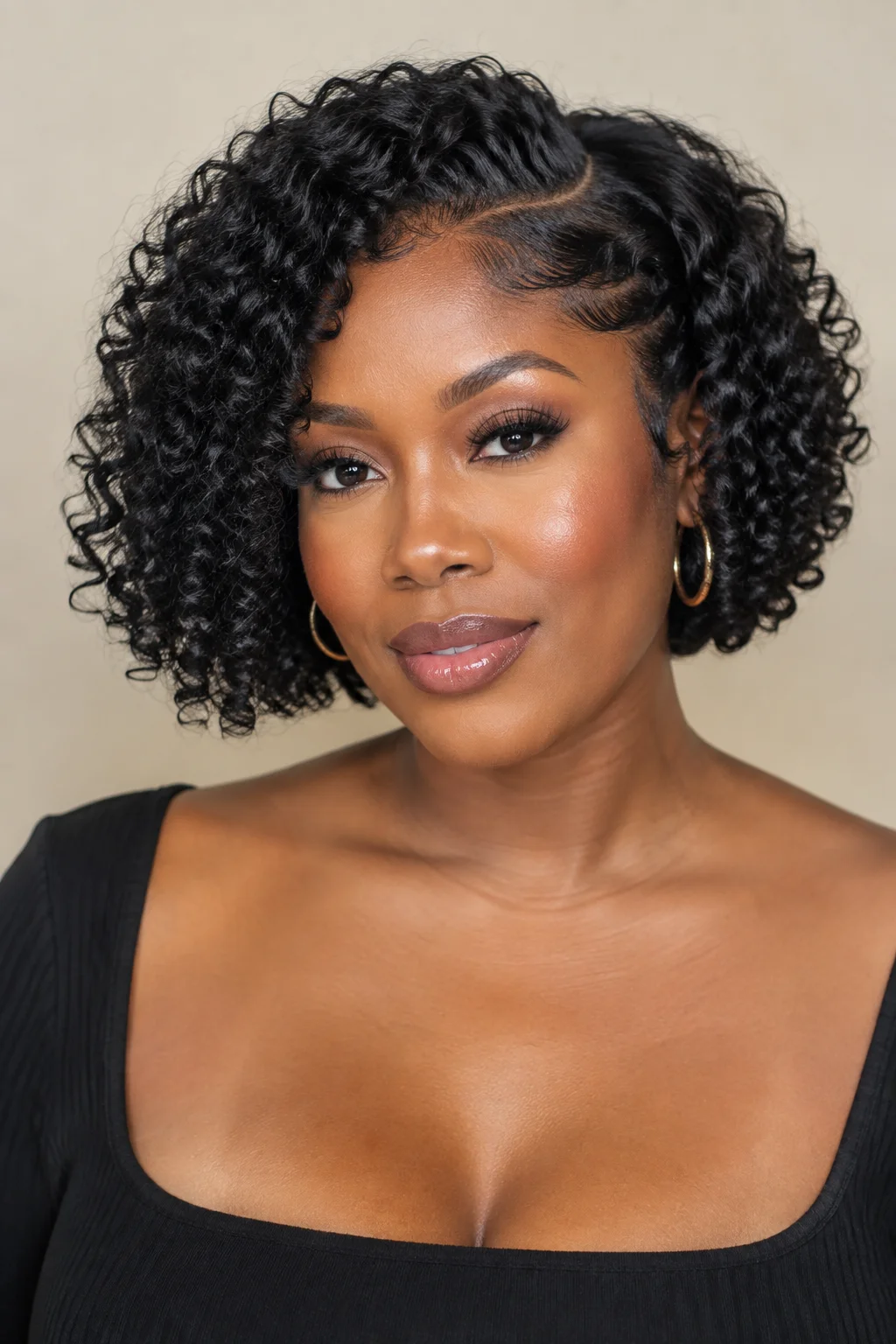
This cut sits right at the jaw and relies on crisp, defined edges to keep the whole shape looking intentional. The coils stay compact and close to the head, which gives the style a clean outline instead of a loose, undefined halo. It works especially well for anyone who wants a low-maintenance bob that still photographs sharp. Edge control along the hairline does most of the heavy lifting here, so keep a small brush on hand for touch-ups. A light mist of heat protectant before styling helps the finish last. A light mist of heat protectant before styling helps the finish last.
Textured Tapered Bob With Low Fade
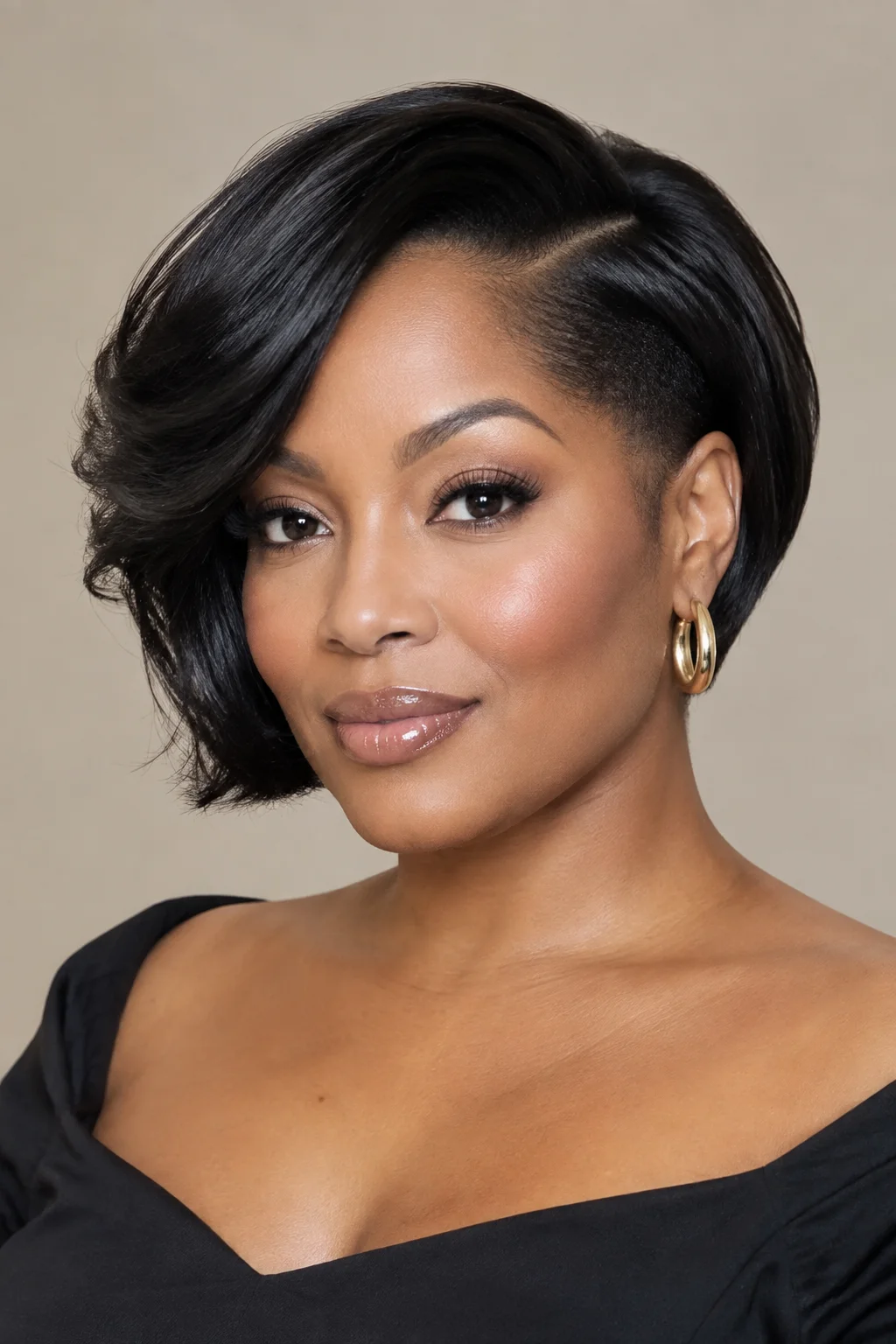
A low fade at the nape blends into textured curls up top, creating a shape that narrows as it goes down. The taper keeps things neat around the ears and back of the neck, so the bulk of the volume stays where you want to see it, up near the crown and through the fringe. This is a great pick if you like the look of an undercut but want something softer than a hard shaved line. Tip: ask your stylist to leave slightly more length at the crown so the fade has something to build toward. A light mist of heat protectant before styling helps the finish last. A light mist of heat protectant before styling helps the finish last.
Shoulder-Length Curly Bob With Side Part
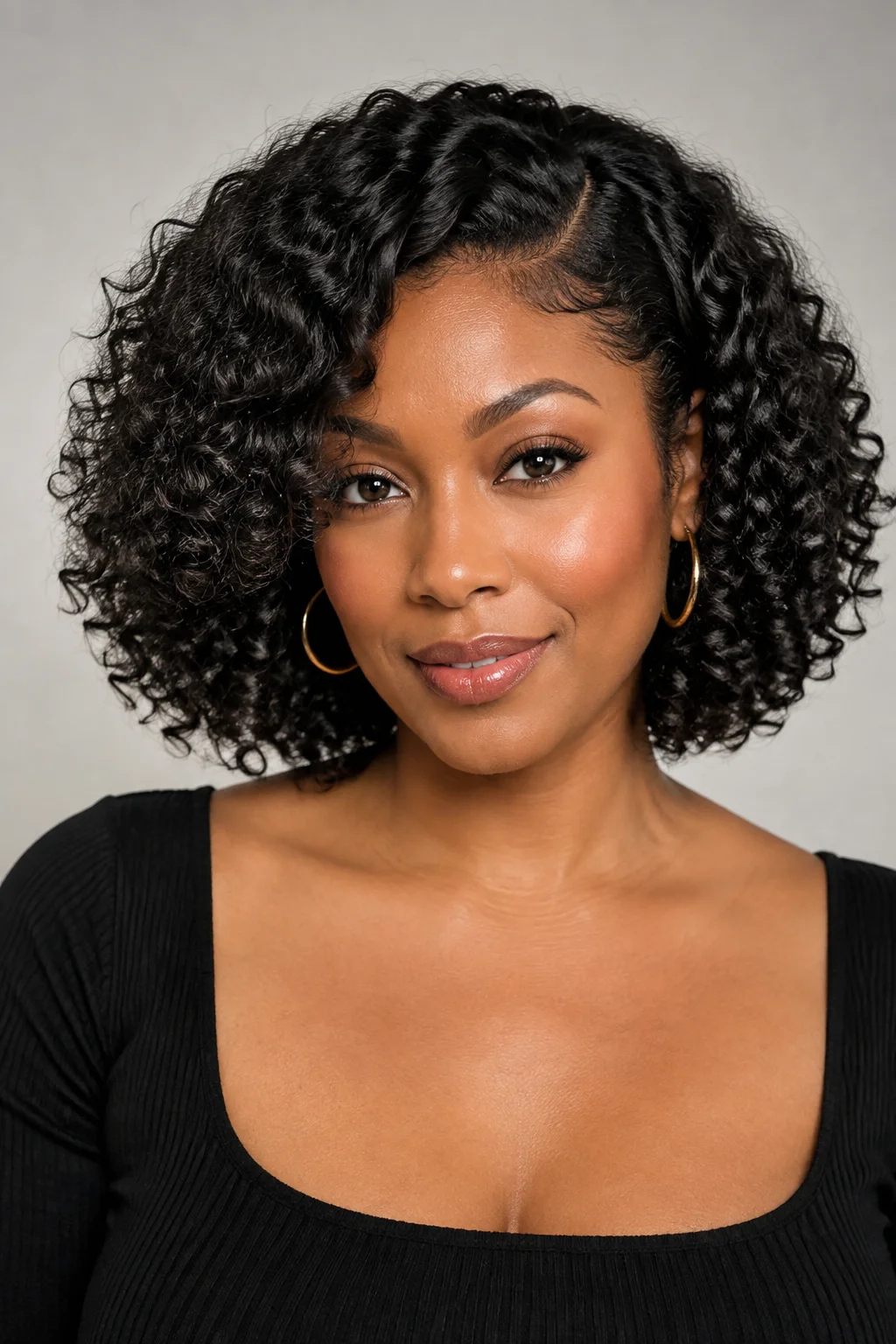
This longer bob skims the shoulders and uses a deep side part to shift weight and frame the face differently than a center part would. The extra length gives curls more room to hang and settle into loose, natural-looking spirals. It suits rounder face shapes particularly well since the asymmetry breaks up width. Because the part is deep, it also tends to make thinner curls at the crown look fuller than they actually are.
Stacked Curly Bob for Maximum Crown Lift
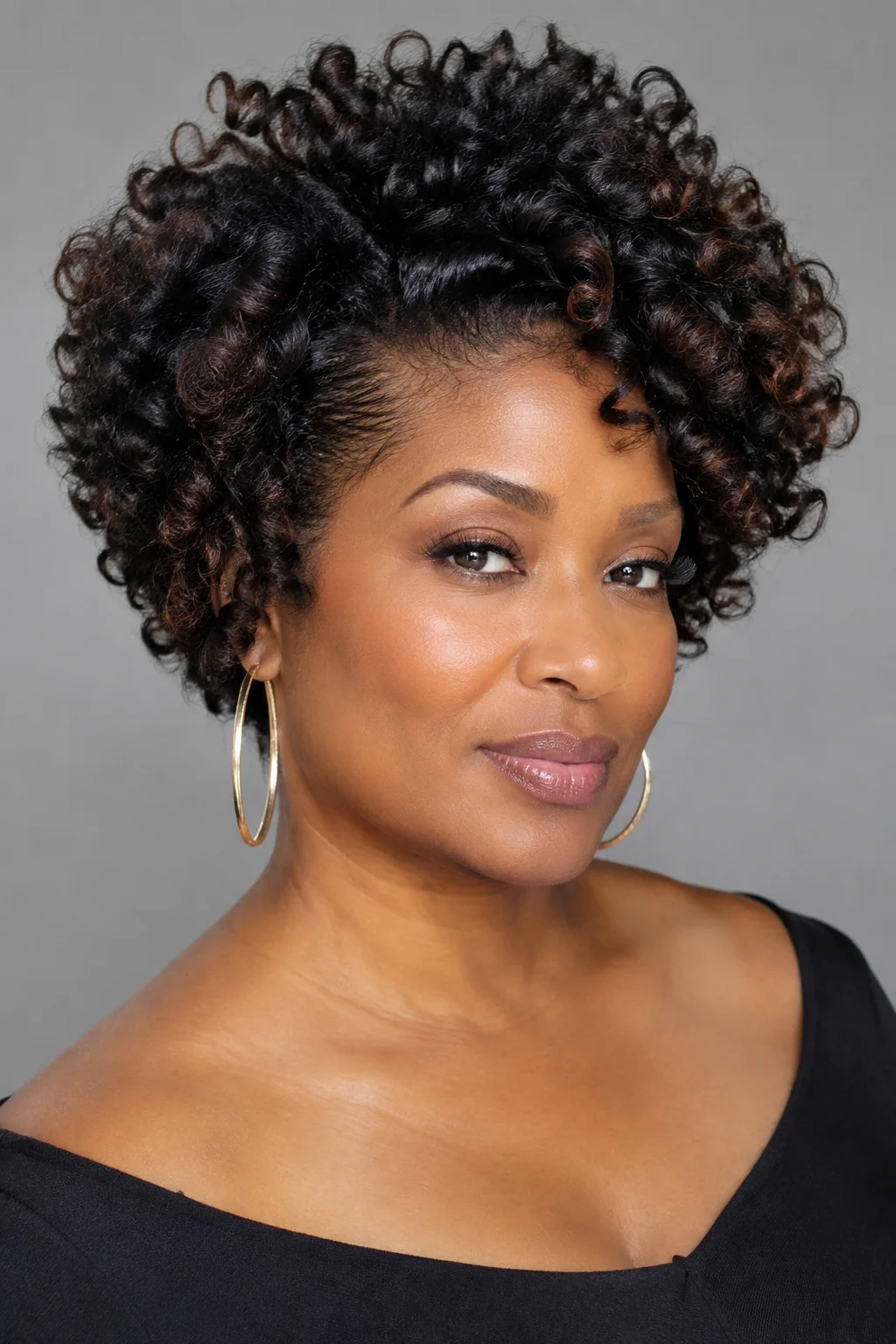
Graduated layers stack on top of each other at the back, pushing volume upward and outward instead of letting it fall flat. The result is a rounded, almost dome-like shape that looks intentional rather than accidental. This works best on medium to thick curl patterns that can hold the stacking without collapsing by afternoon. If your hair tends to go limp at the roots, this is one of the more reliable fixes on this list.
Micro Curl Bob With Blunt Bangs
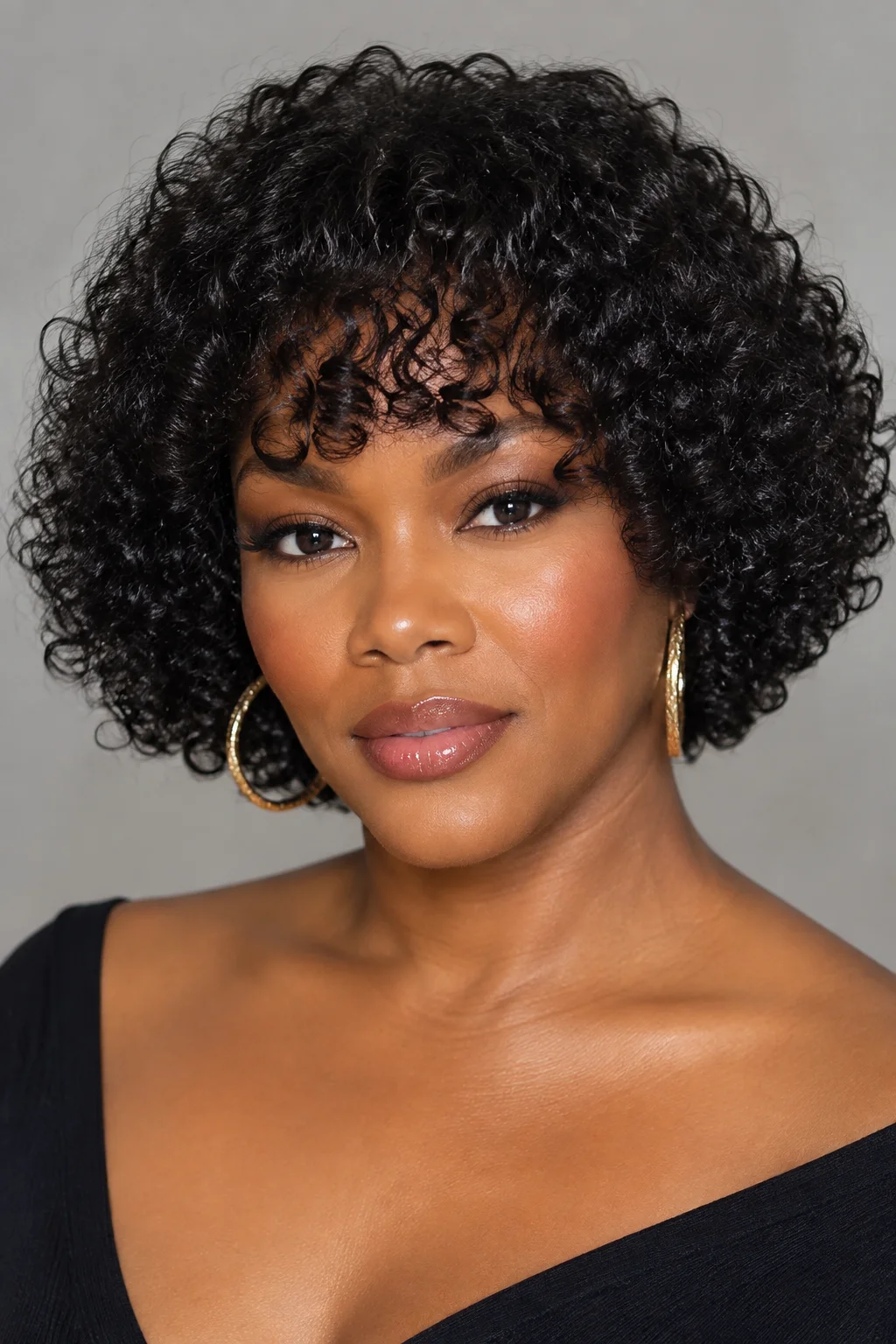
Tight, micro-coiled curls paired with a blunt fringe make for a bold, graphic look that reads as polished even without much styling. The contrast between the structured bangs and the springy texture everywhere else keeps the cut from looking one-note. Tip: blunt bangs on tight curls shrink up quite a bit once dry, so ask your stylist to cut them longer than you think you want.
Loose Wave Bob With Textured Layers
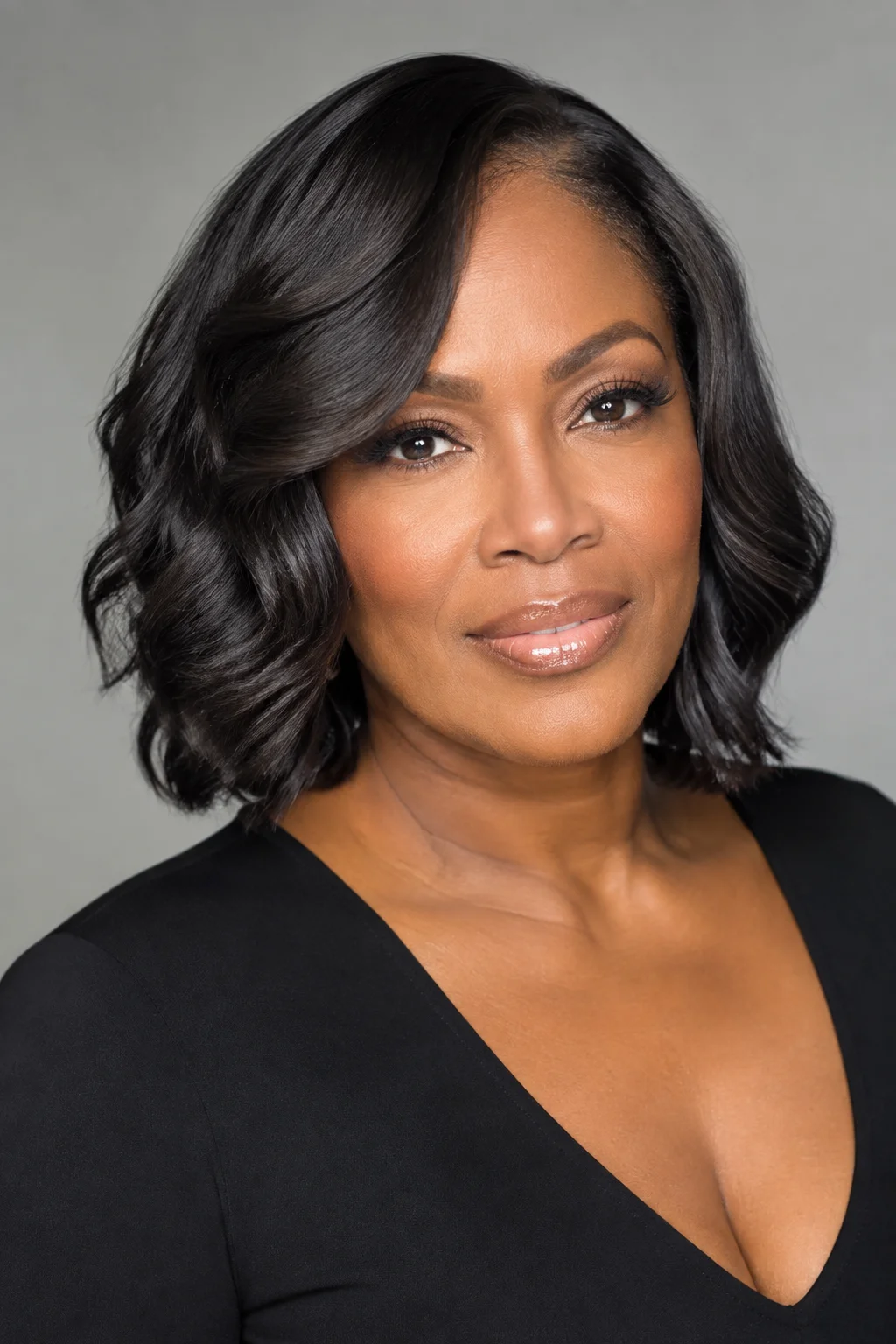
Soft, loose waves get broken up with textured layers throughout, which keeps the ends from looking heavy or blocky. This one leans a little more relaxed than the tighter coil styles on this list, and it suits curl patterns that naturally sit looser. It’s a forgiving cut for humid climates since the layers give the wave pattern room to move instead of clumping.
Undercut Curly Bob for Shape Definition
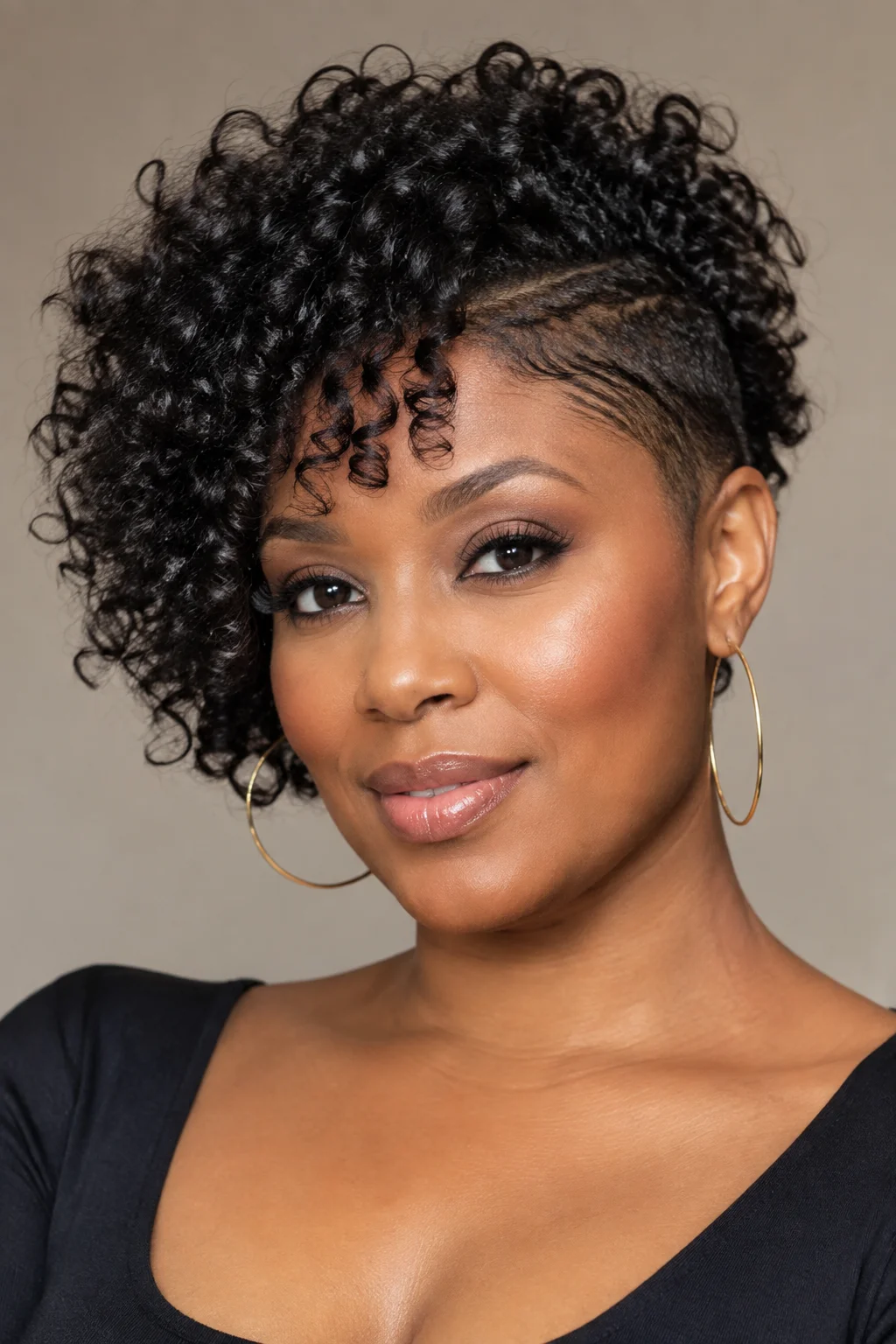
An undercut along the perimeter removes bulk underneath while leaving the top layers full and shaped. This creates a strong outline you can actually see, especially from the side, and it makes the curls on top look denser by comparison. It’s a good option if your hair is thick enough to hide the undercut when styles are worn down but you still want the option to show it off pulled back. Tip: this cut needs a touch-up every few weeks to keep the undercut from growing out shapeless.
Graduated Curly Bob With Forward Angle
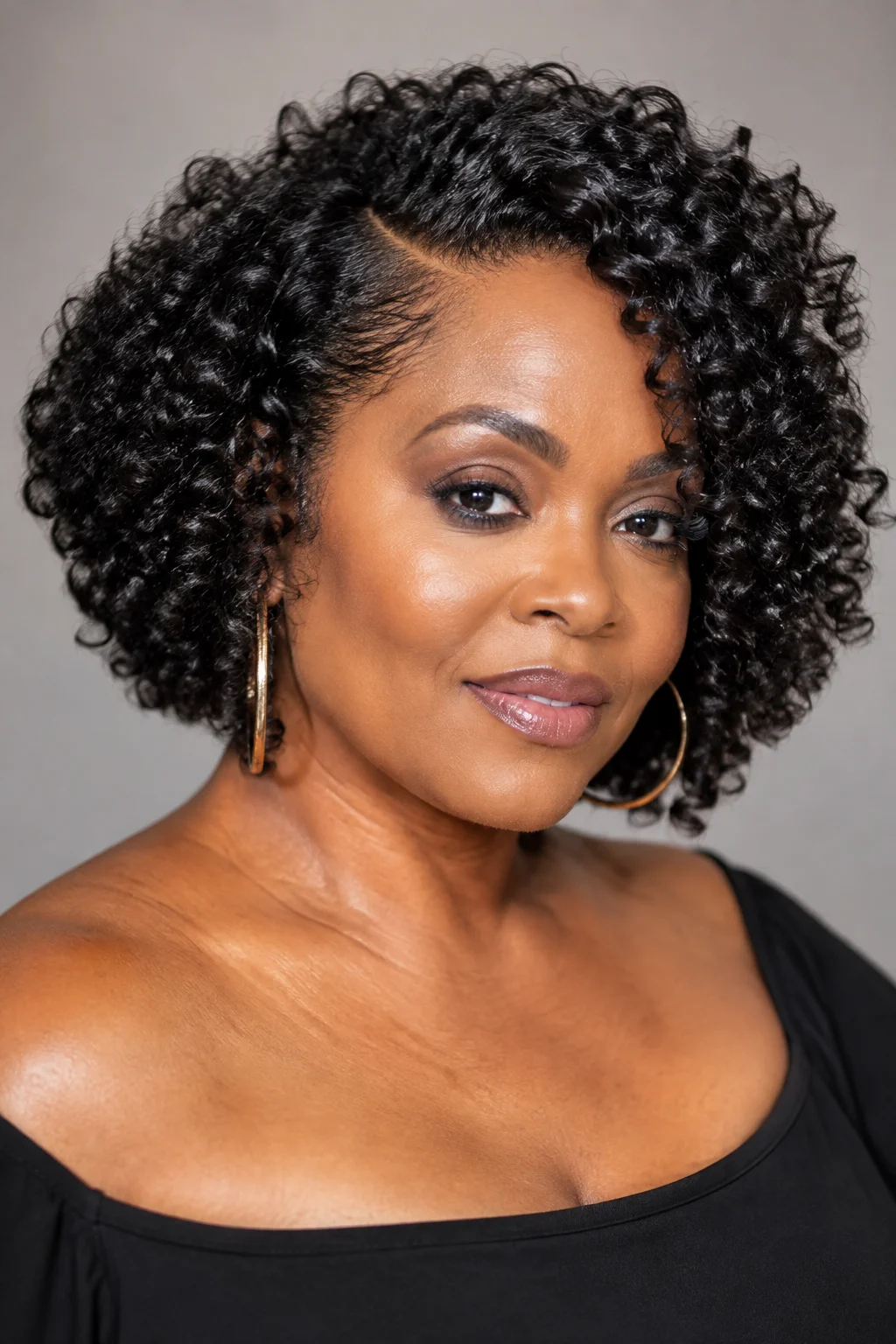
The back stays shorter while the front pieces angle down longer, giving the whole cut forward motion instead of sitting straight across. This angle naturally frames the jaw and chin, which makes it a solid choice for square or rectangular face shapes. Curls at the front tend to fall into soft points rather than blunt edges, softening the overall line.
Coil Pattern Bob With Center Part
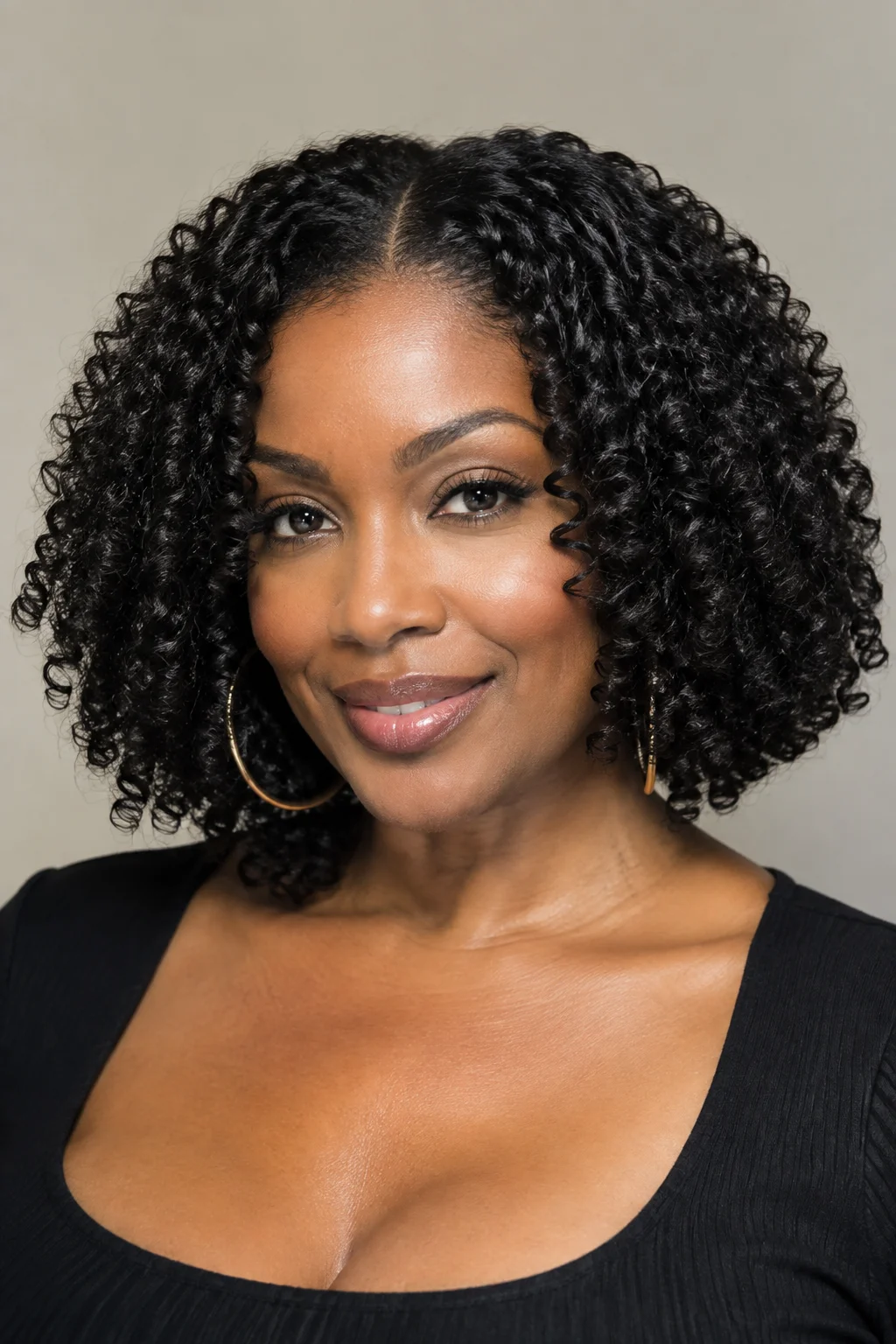
A straightforward center part splits this bob evenly and lets the natural coil pattern do most of the visual work. There’s not much cutting drama here, just clean, even length and a part that keeps things symmetrical. It’s one of the simplest cuts on this list to maintain, which makes it a smart pick if you’re not looking to spend a lot of time styling every morning.
Textured Bob With Shaved or Faded Sides
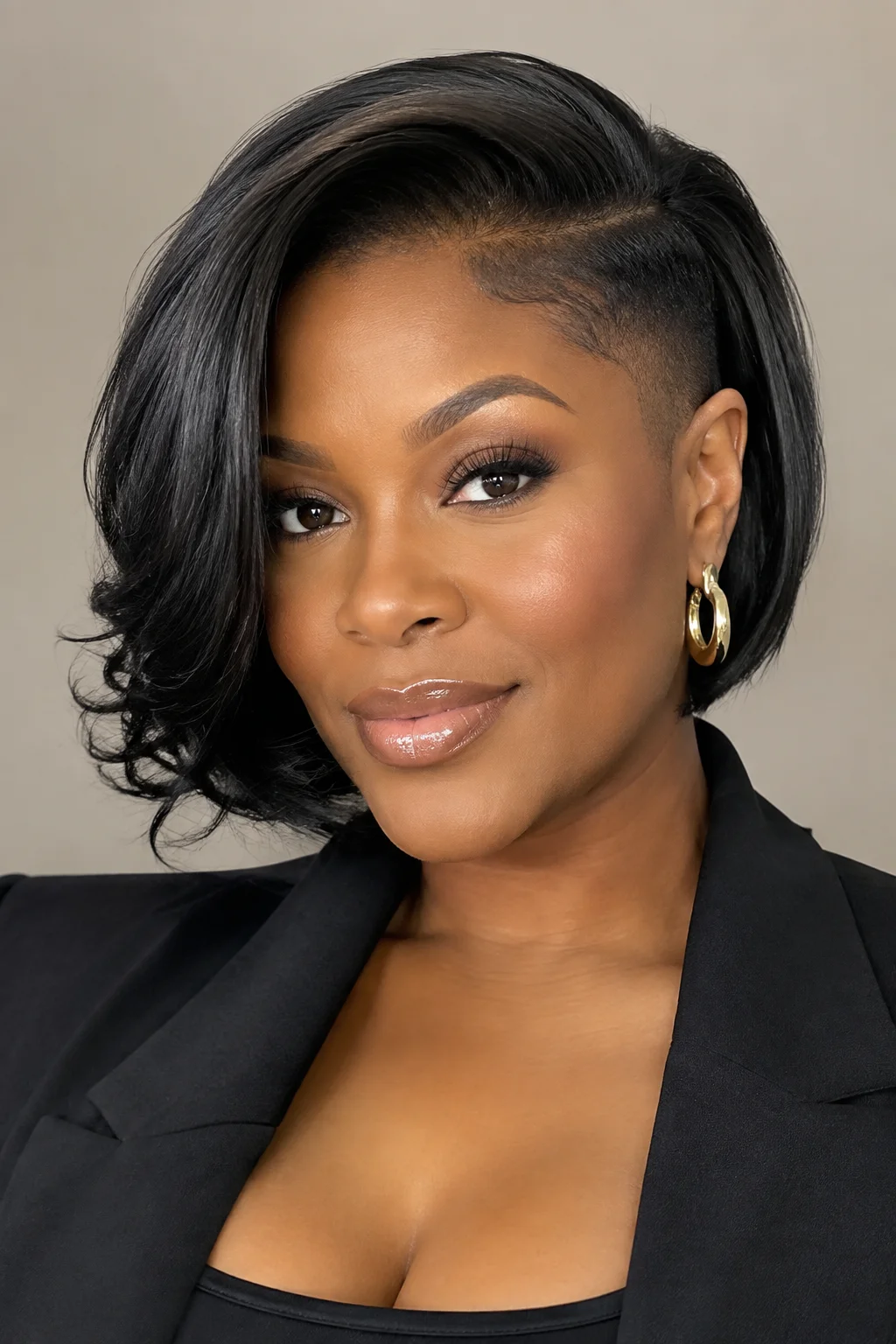
Shaved or faded sides paired with textured curls on top create sharp contrast between smooth skin and dense texture. This is one of the bolder options here, and it reads as edgier than most bob variations. The top section can be worn curly, twisted, or even straightened occasionally without disturbing the fade underneath.
Curly Bob With Curved Face-Frame Pieces
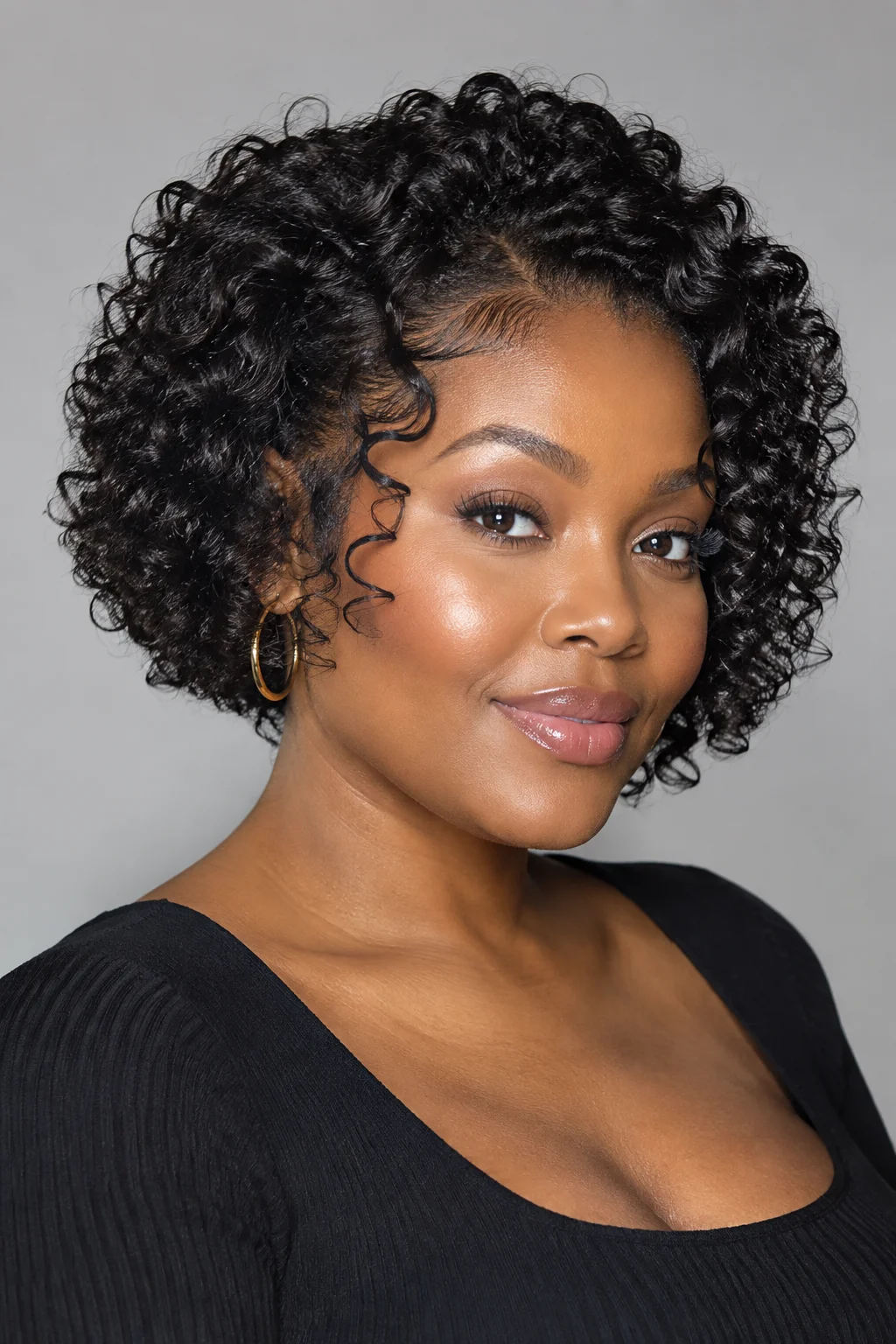
Face-framing pieces are cut to curve inward toward the cheeks, softening angular features and drawing attention to the eyes. The rest of the bob stays fairly uniform in length, so the face-framing curve becomes the focal point rather than one detail among many. This is a subtle change that makes a bigger difference than you’d expect in photos.
Chunky Twist-Out Bob
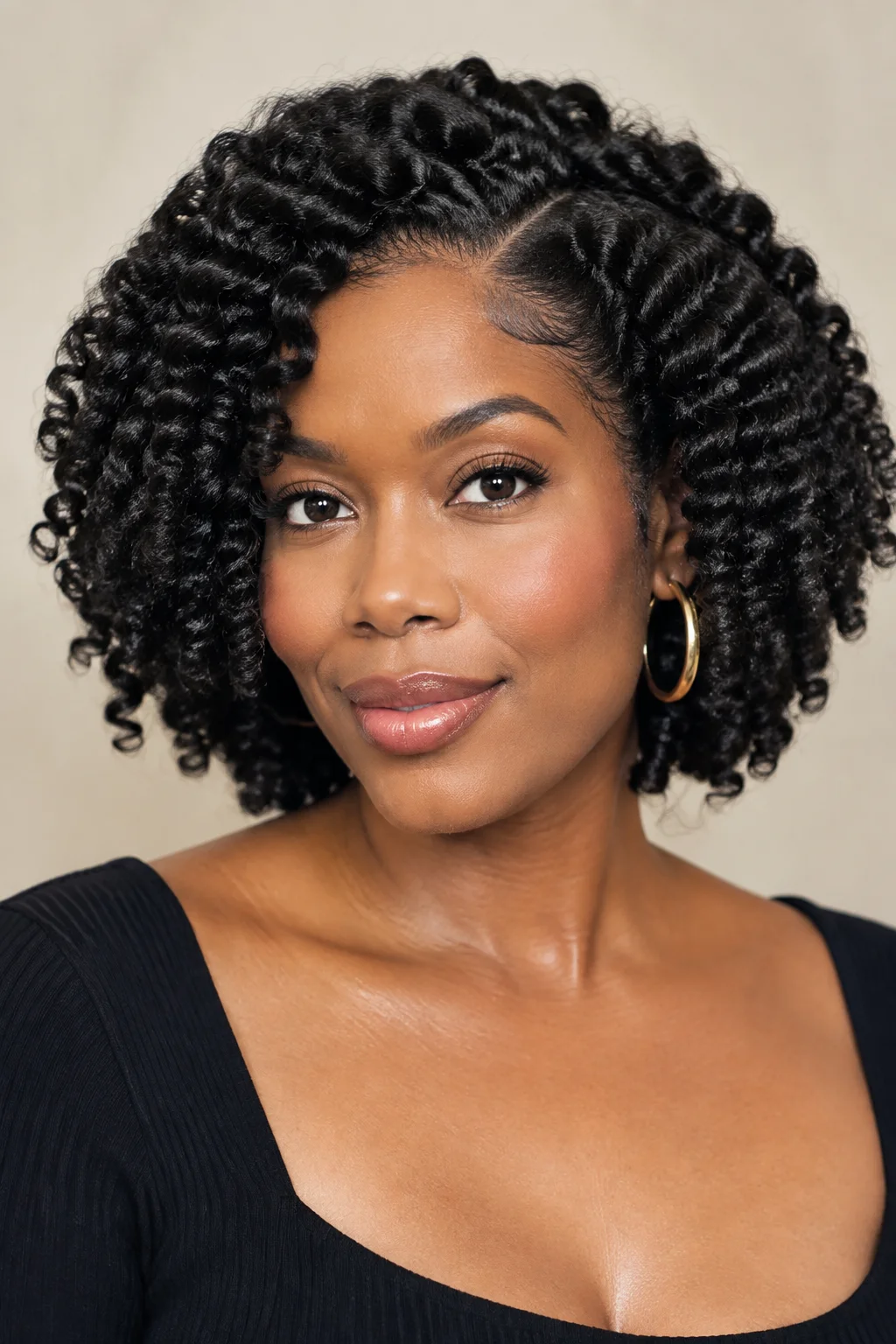
Twist-outs create thick, chunky curl clumps instead of individual strands, giving this bob a bold, sculptural texture. It’s less about precision cutting and more about how the style is set and dried, so the same haircut can look completely different depending on twist size. Bigger twists mean looser, bigger curls, and smaller twists mean tighter definition. This one rewards patience during the styling process but needs very little upkeep once it’s set.
Long Curly Bob With Wispy Layers
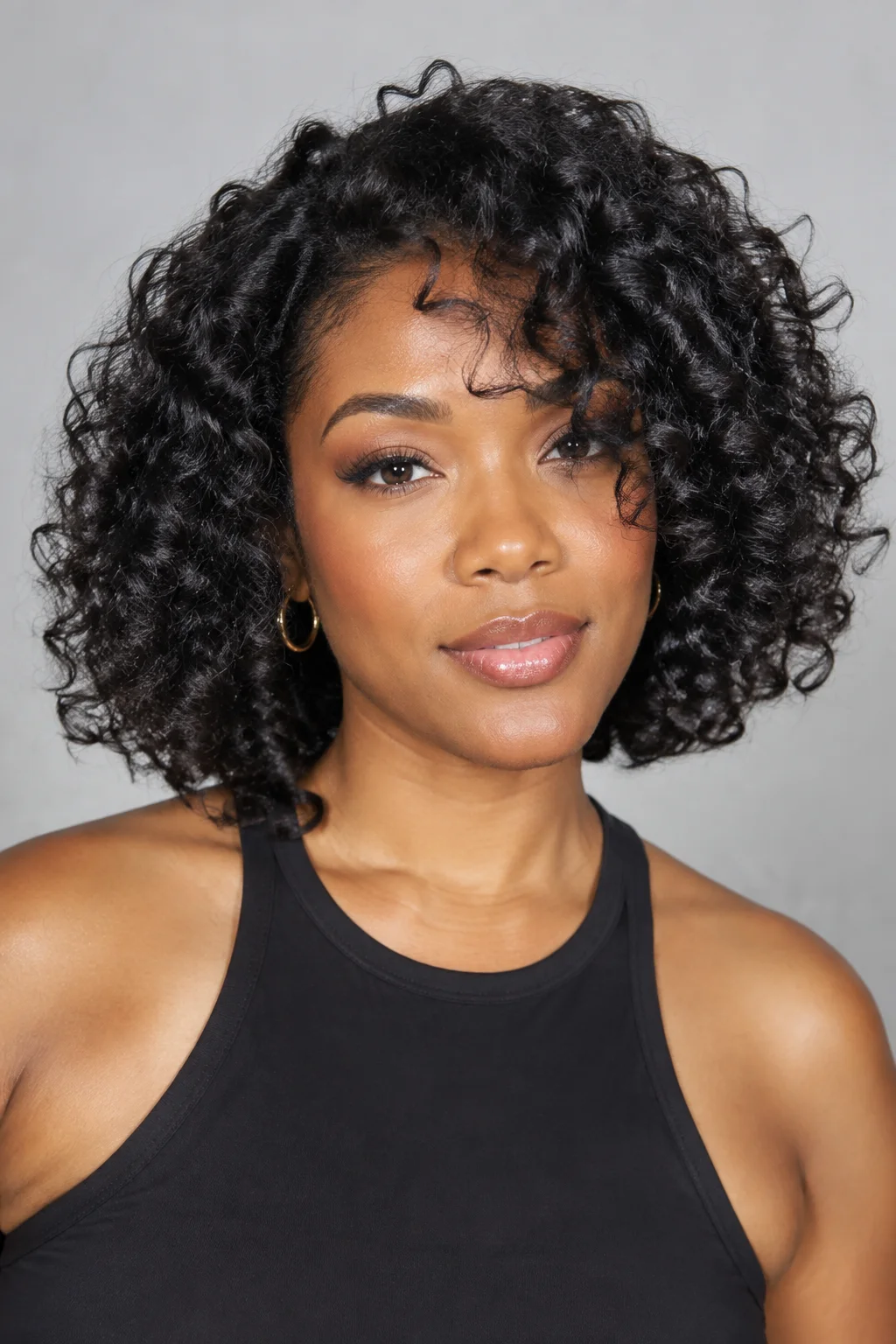
Wispy, feathered layers keep this longer bob from looking heavy at the ends, even when the curl pattern is dense. It’s a soft, easy shape that works well transitioning out of a longer cut without committing to something short. The layers move independently instead of clumping into one solid mass, which gives the whole style a lighter feel.
Short Curly Bob With Rounded Crown
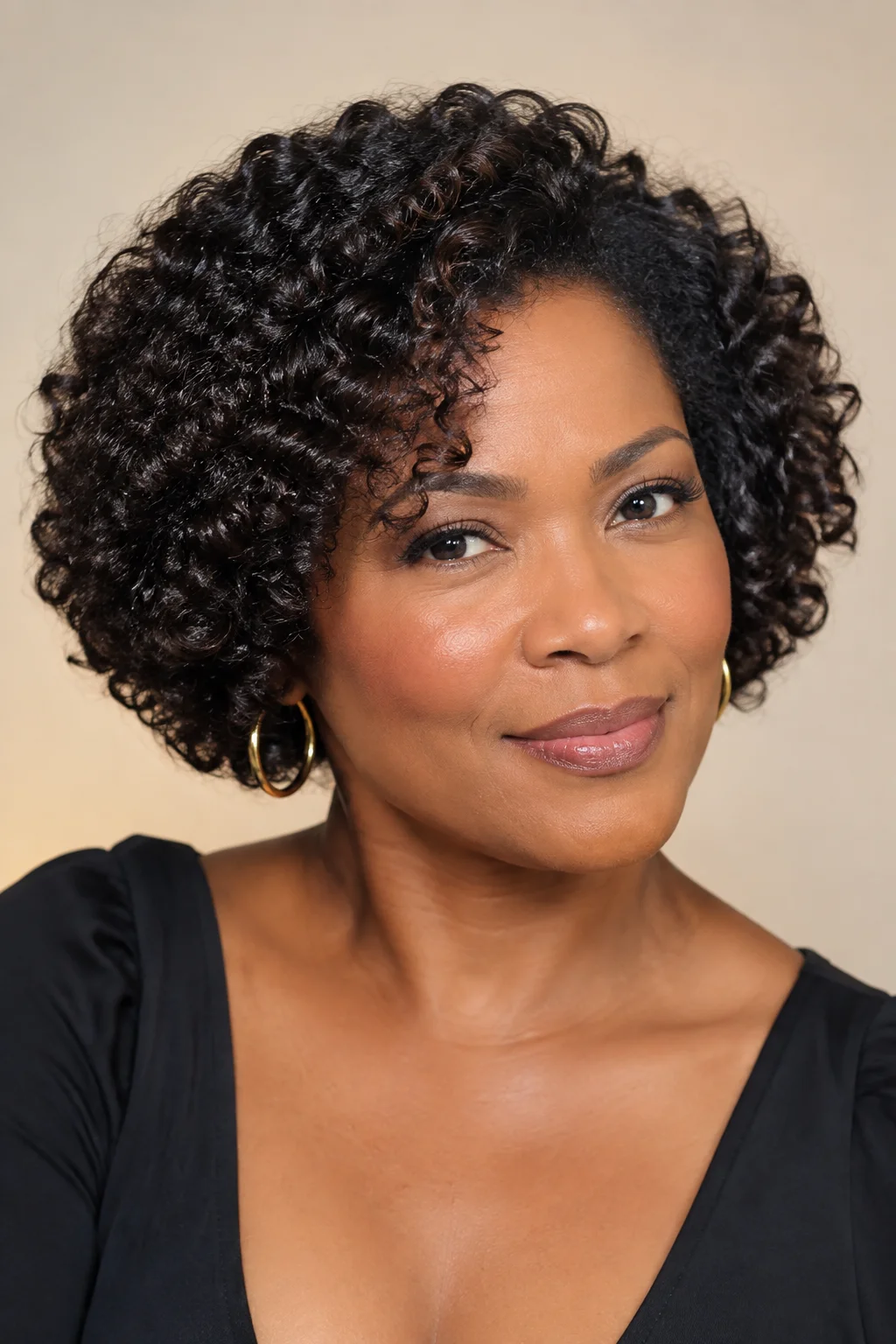
Short and compact, this bob is cut to round out at the crown so the shape stays balanced instead of looking flat on top. It’s a low-maintenance option that still holds visible shape day to day. Curl definition matters more here than length, since there’s less hair to hide any unevenness in the cut.
Curly Bob With Color Block or Fade
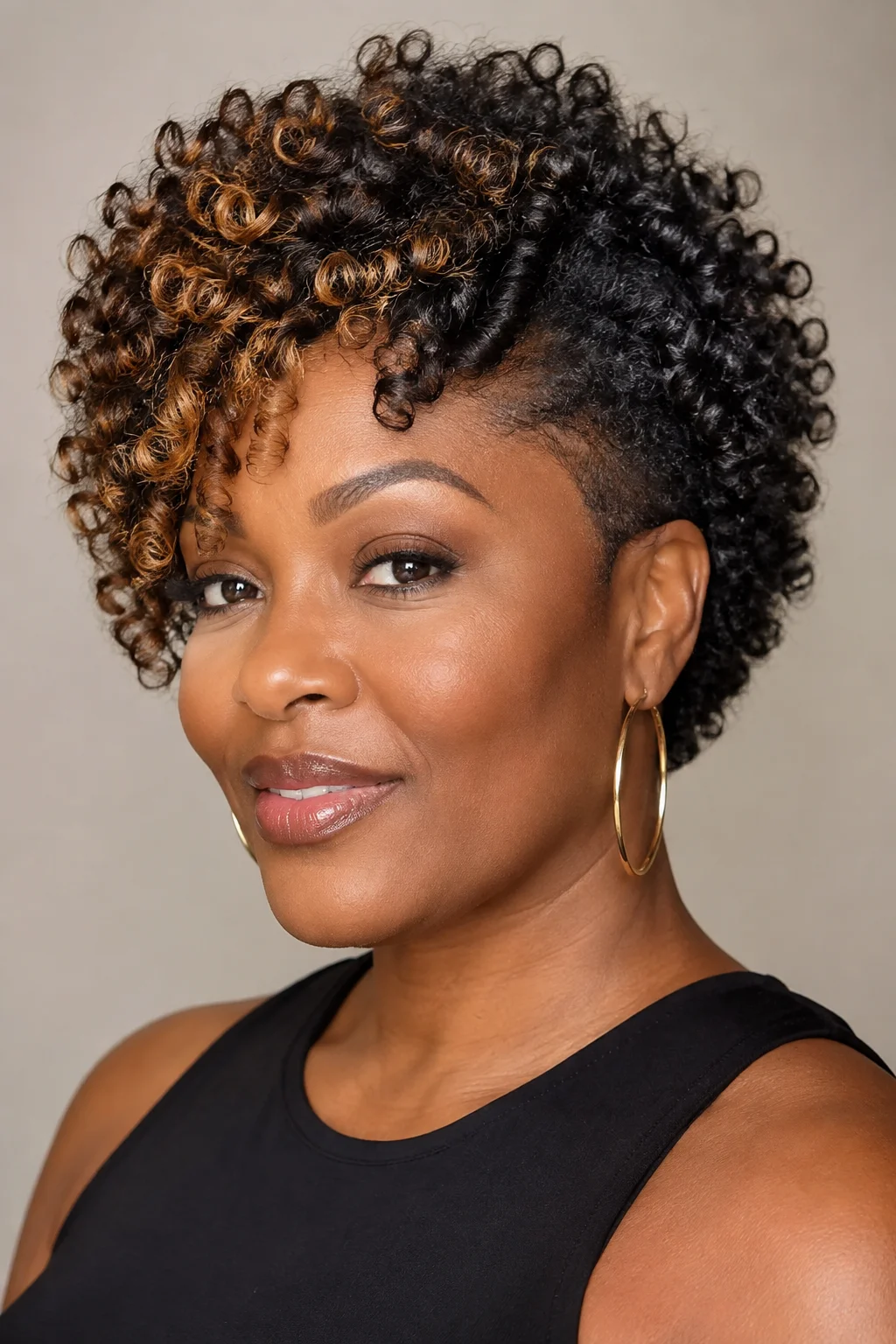
Color placed in blocks or faded gradually through the curls adds dimension that a single flat color can’t match. This works on almost any of the shape variations already listed, since it’s really a coloring technique layered onto a cut rather than a cut itself. Curl movement catches the color differently as it bounces, so the effect looks slightly different depending on how the hair is styled that day. Tip: ask for the color to be placed with your natural part and curl fall in mind so it doesn’t look accidental.
Twist-Braided Bob Hybrid
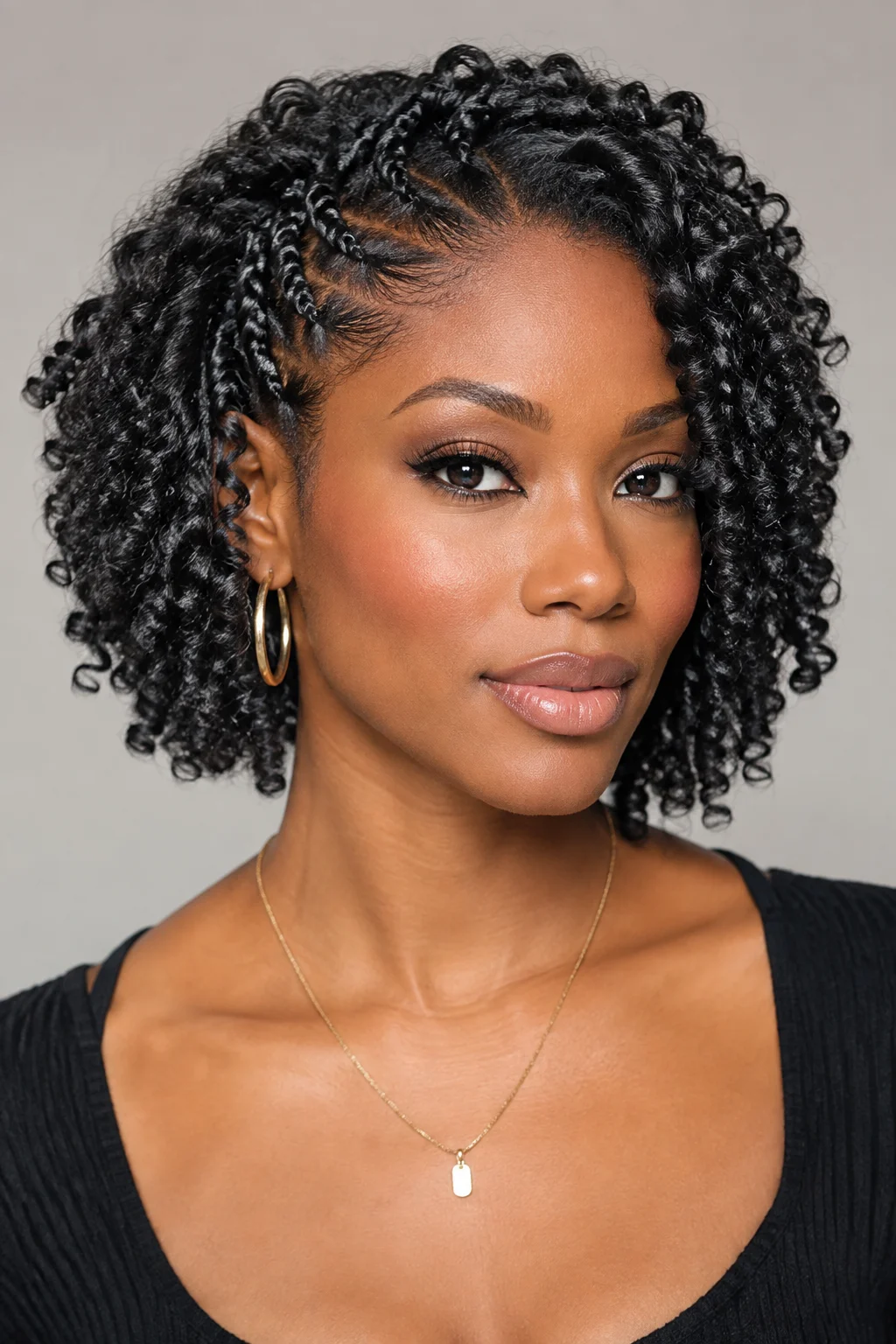
This style combines twists and small braids within the same bob shape, mixing textures instead of relying on one technique throughout. It reads as more intricate than a standard curly bob without needing extensions or added length. It also tends to last longer between restyles since twists and braids hold their shape better than loose curls do.
Voluminous Coily Bob With Deep Side Sweep
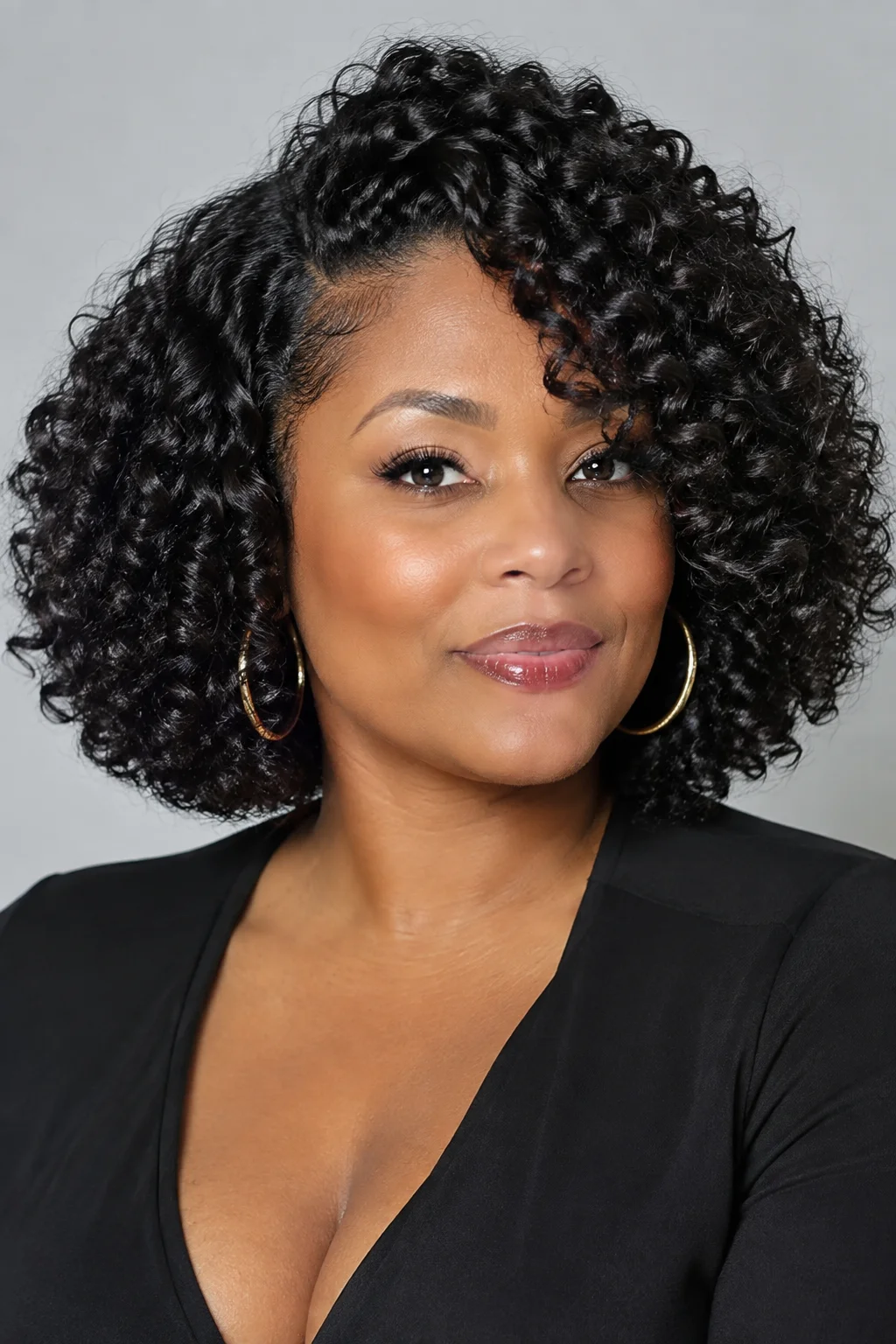
Full, coily volume gets pushed to one side with a deep sweep that almost covers one eye when worn down. It’s dramatic without being high-maintenance, since the volume comes from the natural coil pattern rather than heavy styling. This one looks especially good on thicker hair types that can support the sweep without needing extra product to hold it in place.
Textured Bob for Fine or Thin Curls
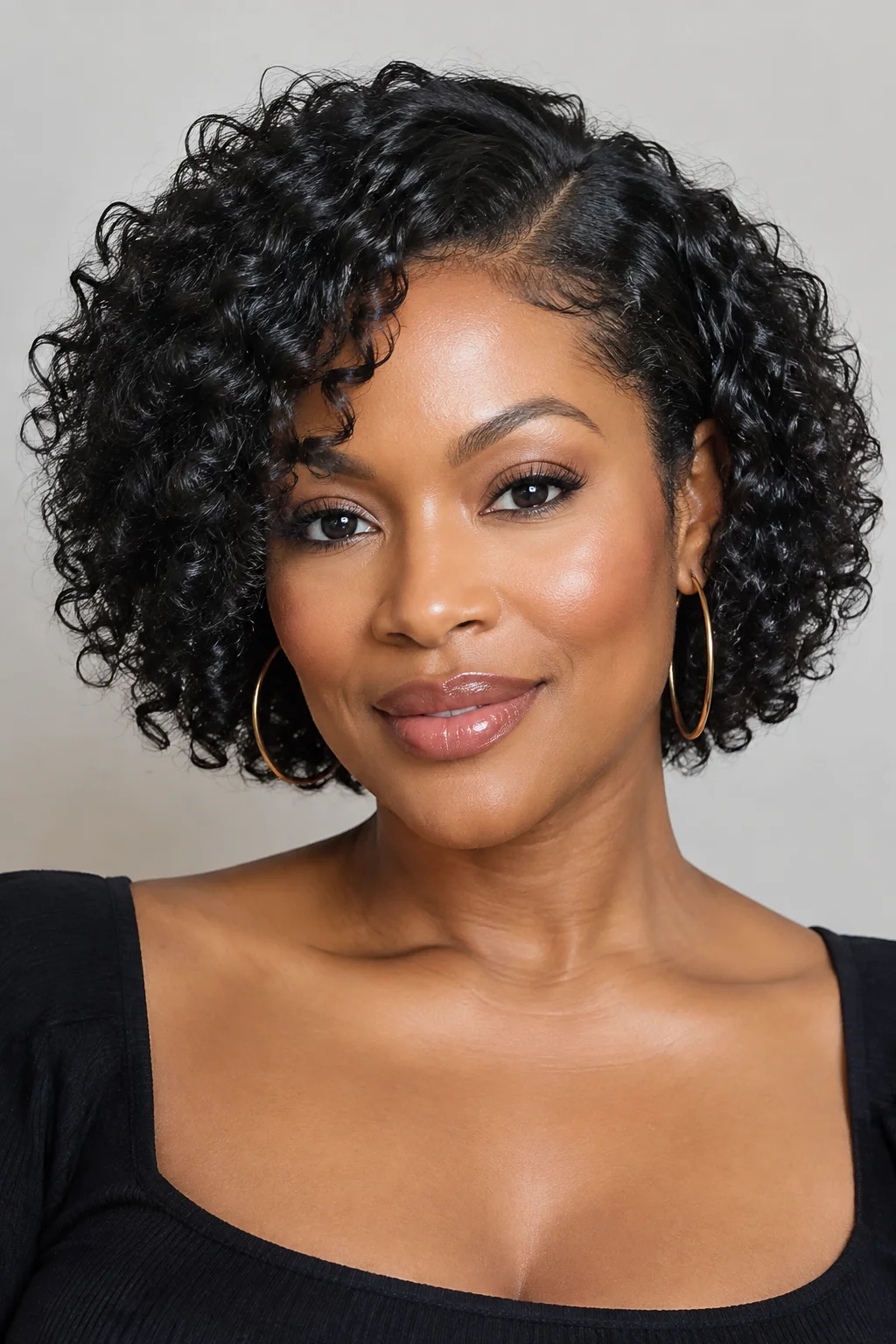
Fine or thin curl patterns need a different approach than thicker textures, and this cut accounts for that by keeping layers minimal so the hair doesn’t lose density. Too many layers on finer curls can make hair look sparse, so this style favors a blunter overall line with just enough texturizing to prevent heaviness. It’s a good example of how the same general bob shape needs real adjustment depending on curl thickness.
Curly Bob With Sharp Disconnected Undercut
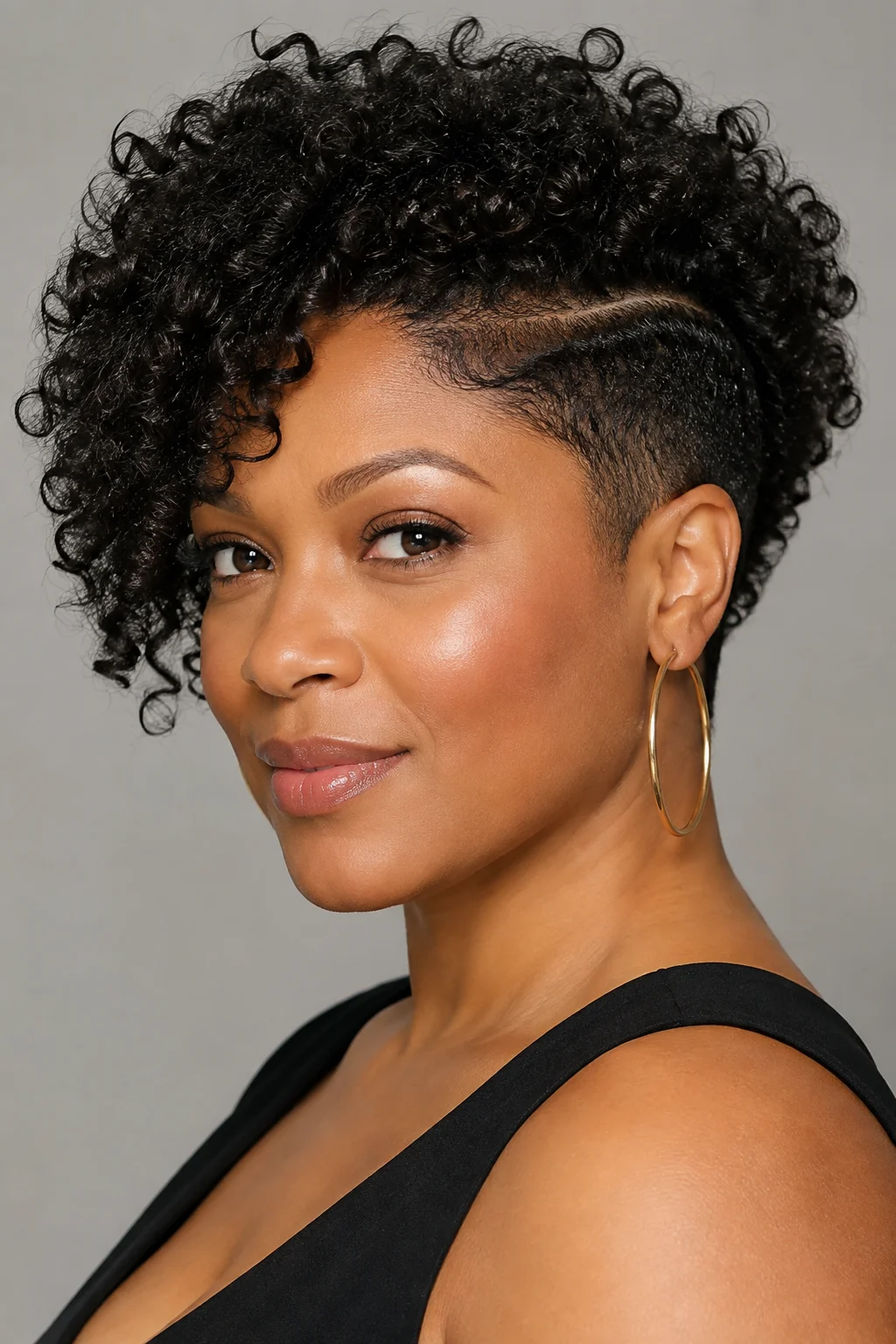
A hard, visible line separates the undercut from the curly top section, creating sharp contrast instead of a gradual blend. This disconnected approach is bolder than the low-fade version described earlier, since the line is meant to be seen rather than softened. It suits anyone who wants their haircut to look architectural even before styling product goes in.
Kinky Curl Bob With Defined Sections
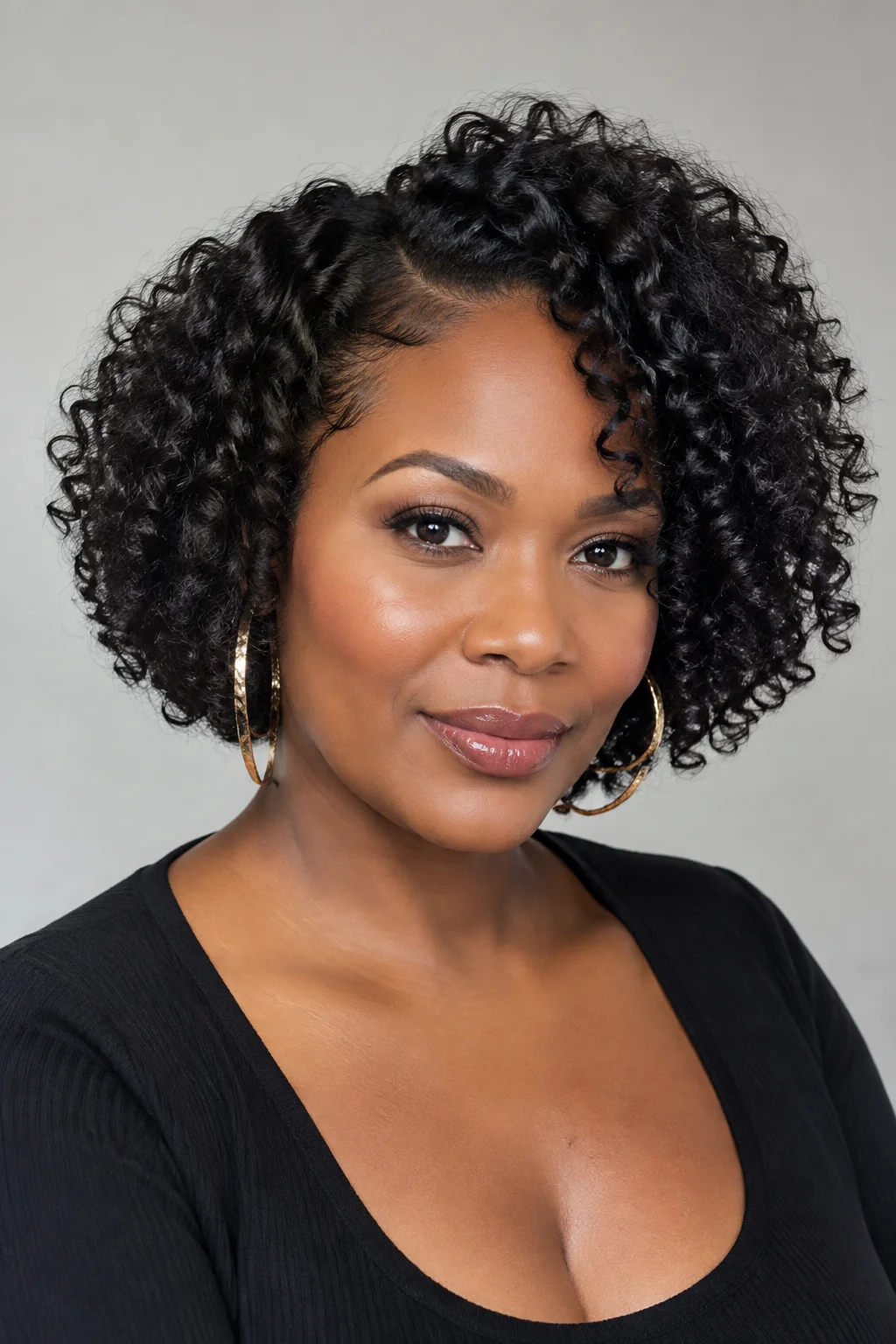
Kinky curl texture gets cut and styled in clearly defined sections, so each piece holds its own shape rather than blending into a single mass. This sectioning approach helps prevent shrinkage from making the whole style look uneven, since every section shrinks at roughly the same rate. It’s one of the better options for showcasing natural kinky texture without altering the curl pattern itself.
Wavy Curly Bob With Textured Nape
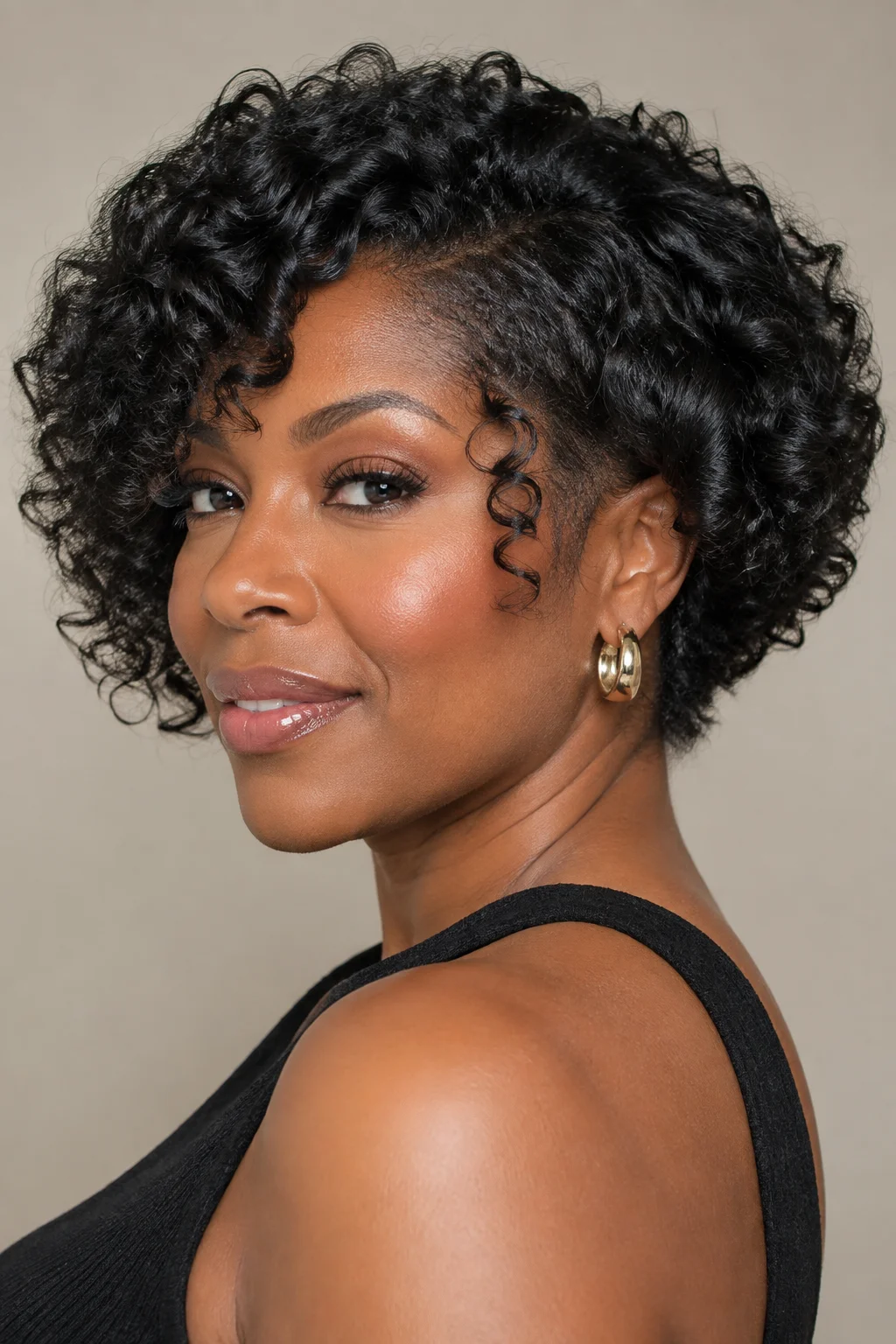
Texture at the nape keeps the back of this bob from looking bulky, while looser waves take over through the mid-lengths and ends. It’s a quieter, more understated cut compared to some of the bolder shapes on this list. This works well for anyone easing into a curly bob for the first time.
Bouncy Curl Bob With Rounded Back
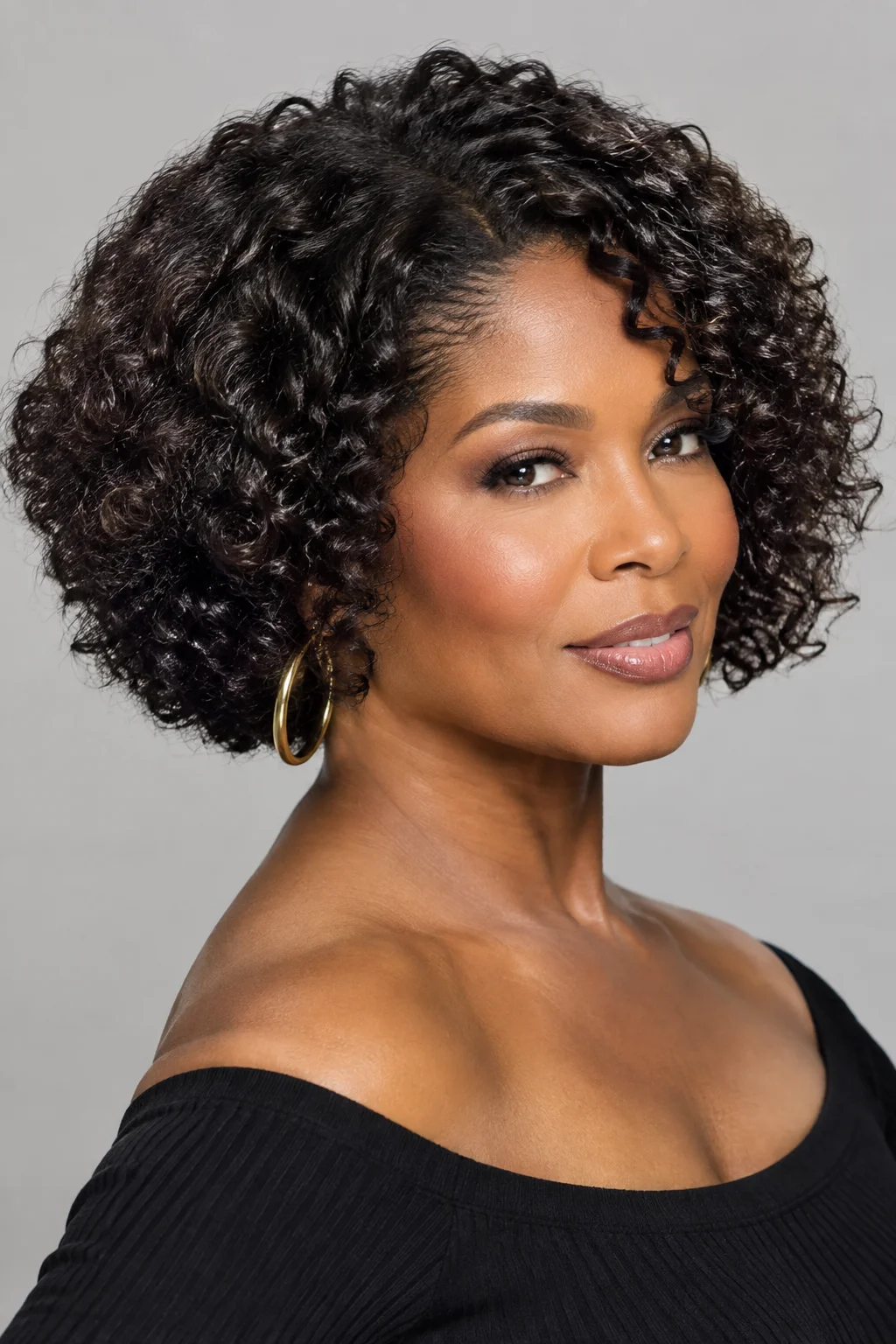
A rounded back section gives this bob spring and movement, so curls bounce rather than sit still when you walk or turn your head. It’s built for curl patterns with good natural bounce already, since the cut is designed to enhance movement rather than create volume from scratch. Length stays fairly even all the way around, keeping the rounded silhouette consistent from every angle.
Choosing the Right Curly Bob for Your Hair
Picking between these styles comes down to three things: how thick your curls are, how much time you want to spend styling, and how much length you’re willing to lose. If you have fine or thin curls, steer toward the textured bob for fine or thin curls or the wavy curly bob with textured nape, since both avoid heavy layering that can make thin hair look sparse. Thicker, denser curl patterns can handle more dramatic shaping, like the stacked curly bob for maximum crown lift or the voluminous coily bob with deep side sweep, without losing structure.
If daily styling time is limited, the coil pattern bob with center part and the chin-length coil bob with defined edges need the least daily fuss. For anyone wanting a bolder statement, the curly bob with sharp disconnected undercut and the textured bob with shaved or faded sides deliver the most visual contrast, though both need more frequent touch-ups to stay sharp.
A common mistake is choosing a heavily layered style, like the loose wave bob with textured layers, when your curl pattern is naturally fine. Too many layers on thin curls can leave hair looking thin at the ends instead of soft. Match the cut to your actual density first, then worry about which shape looks best.
Final Thoughts
Any of these twenty two cuts can work well, but the fit depends on matching curl thickness, face shape, and daily routine to the right silhouette rather than picking based on a photo alone. Bring reference pictures to your appointment, but also talk through your hair’s actual texture and how much time you realistically want to spend styling it each morning. A good stylist can adjust any of these shapes slightly to suit your specific curl pattern, so treat this list as a strong starting point rather than a rigid set of rules.