Fine, flat hair gets harder to manage once you hit your sixties, and a lot of women get stuck wearing the same short style for years because they don’t know what else works. Thin strands lose their bounce, the scalp starts to show more, and a plain pixie can end up looking stiff instead of soft. The good news is that texture fixes most of that. Textured pixie cuts for women over 60 add movement at the root, break up bare patches on top, and give the whole shape more life without adding length you’d have to fight with every morning. Some versions lean curly, some lean spiky, some barely graze the ears. Below are ten distinct options, each built around a different silhouette, so you can pick one that matches your face shape, your hair texture, and how much styling time you actually want to spend.
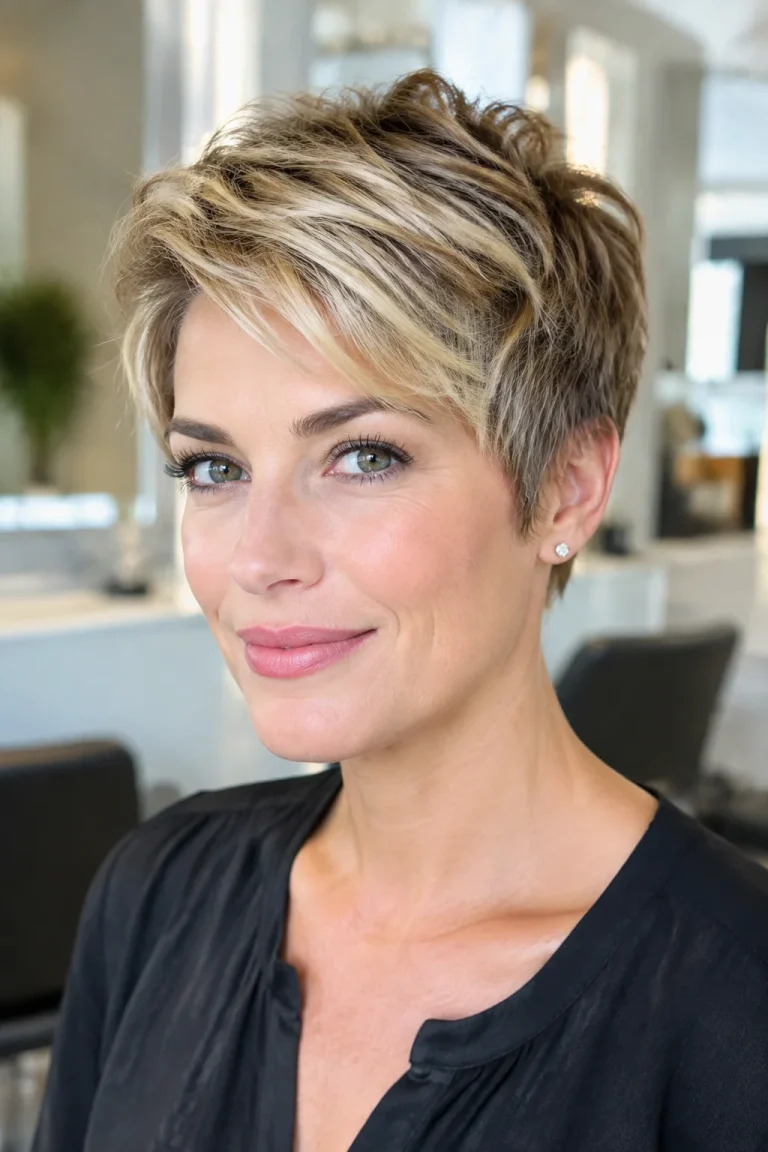
Classic Cropped Textured Pixie
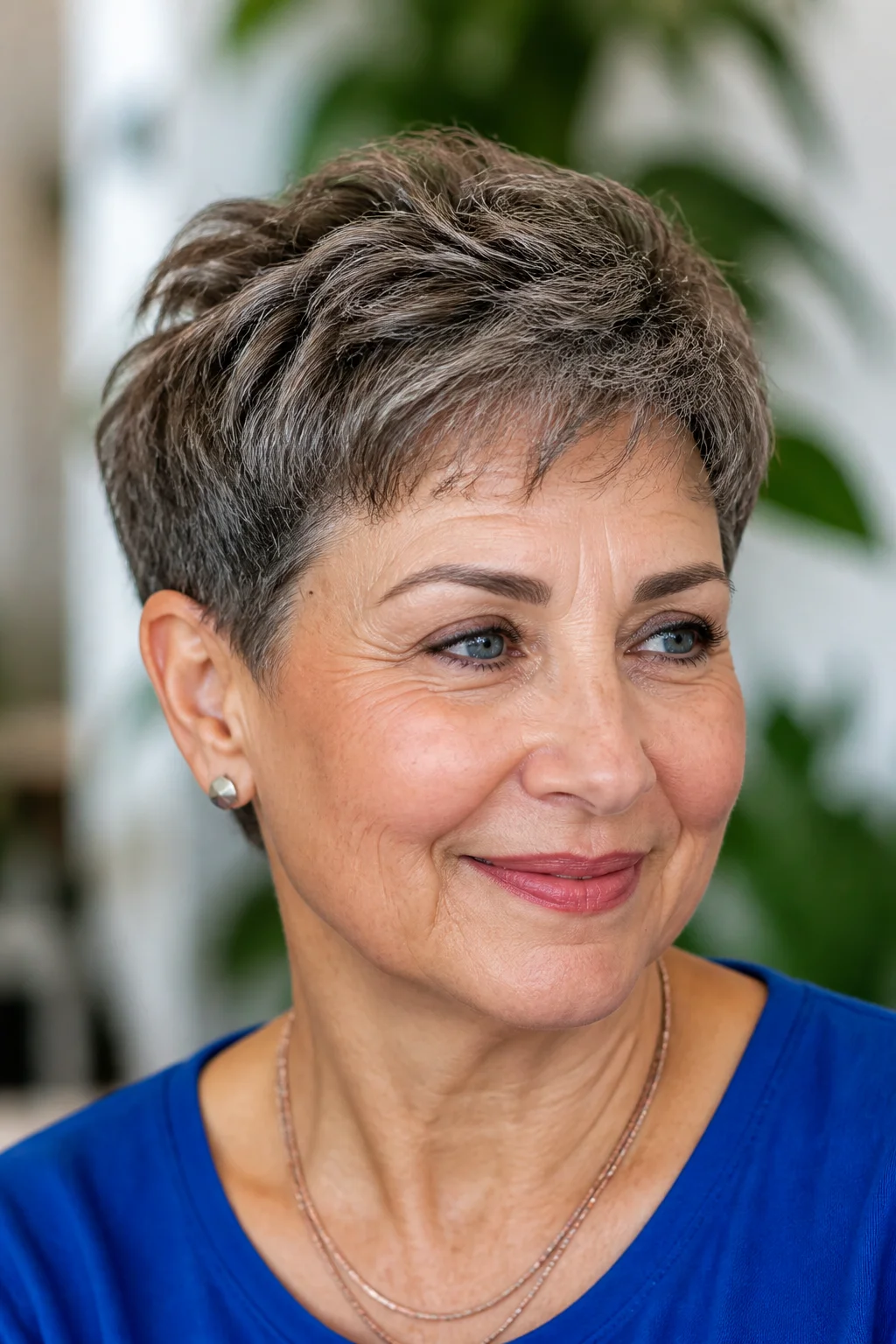
This is the pixie most people picture first: short all over, choppy ends, and just enough length on top to twist between your fingers for lift. It works especially well on fine hair because the cropped length means no weight is dragging the roots flat. Ask your stylist for point-cutting through the crown so the layers catch air instead of sitting flat against the scalp. Tip: a small amount of texturizing paste worked into damp hair before blow-drying gives you volume that actually holds through the afternoon.
Long Textured Pixie With Side-Swept Fringe
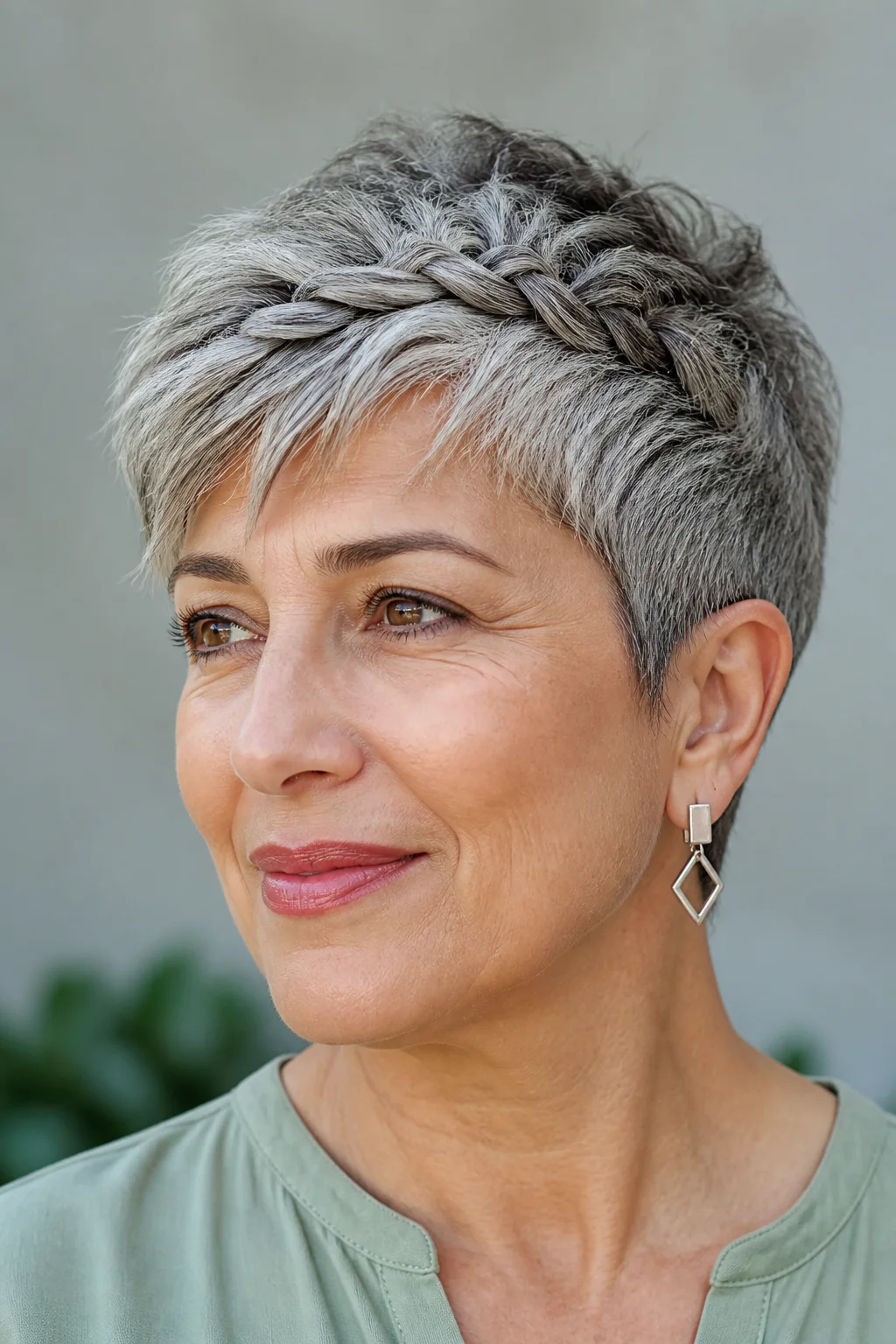
Here the top stays longer, maybe two to three inches, and gets swept to one side instead of standing straight up. The longer fringe softens the forehead and gives you something to style differently depending on your mood. It suits women who aren’t ready to go super short but still want the low maintenance of a pixie. Round brushing the fringe while blow-drying creates a soft wave that falls naturally to the side without hairspray holding it hostage.
Tapered Textured Pixie
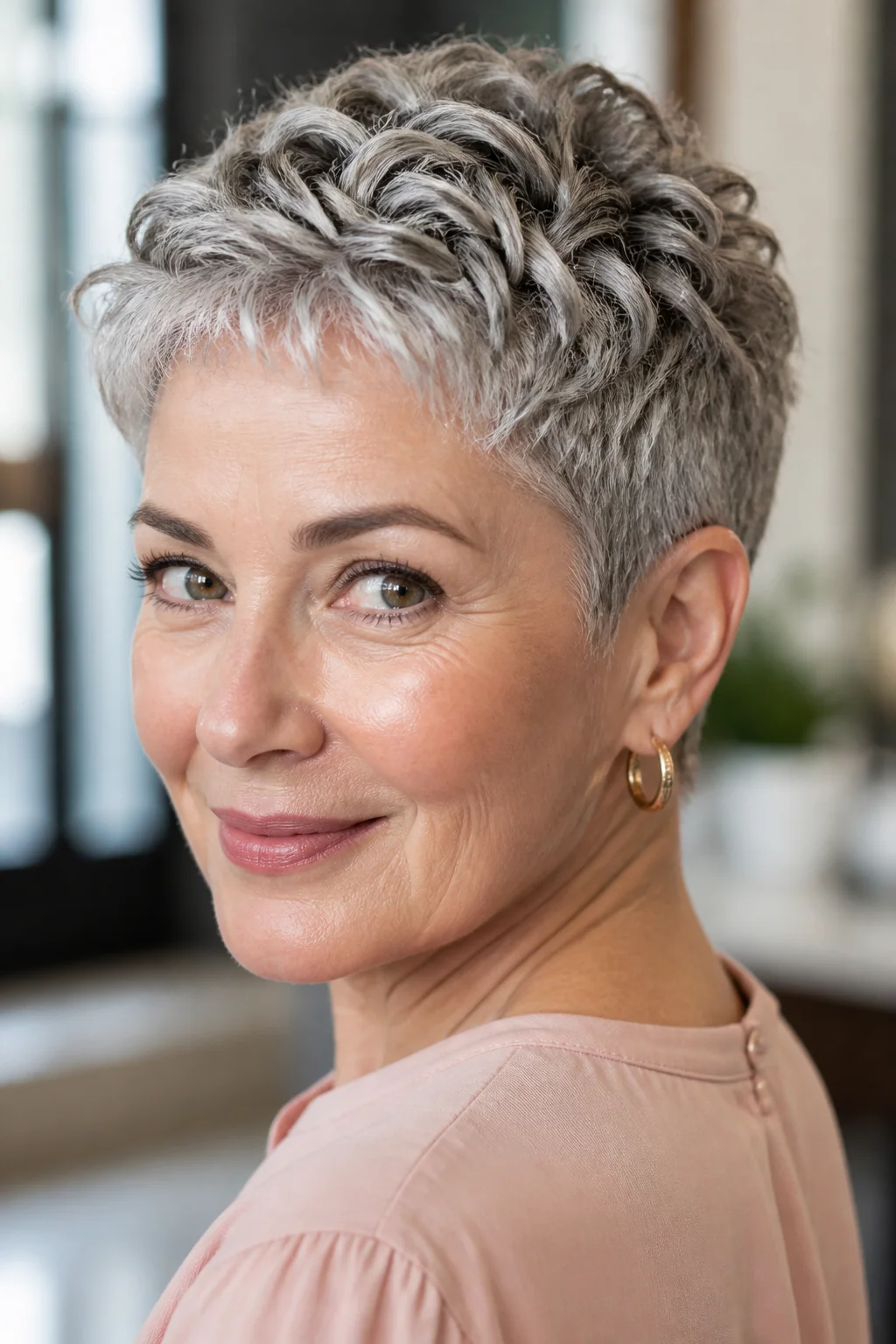
The sides and back taper close to the head while the top keeps enough length for texture and movement. This shape flatters longer necks and works well if you wear glasses, since it keeps hair off the frames. It’s a clean, low-fuss cut that grows out slowly and evenly, which matters if you don’t want monthly salon trips. I recommend this one for anyone who wants short hair that still reads as feminine rather than severe.
Asymmetrical Textured Pixie
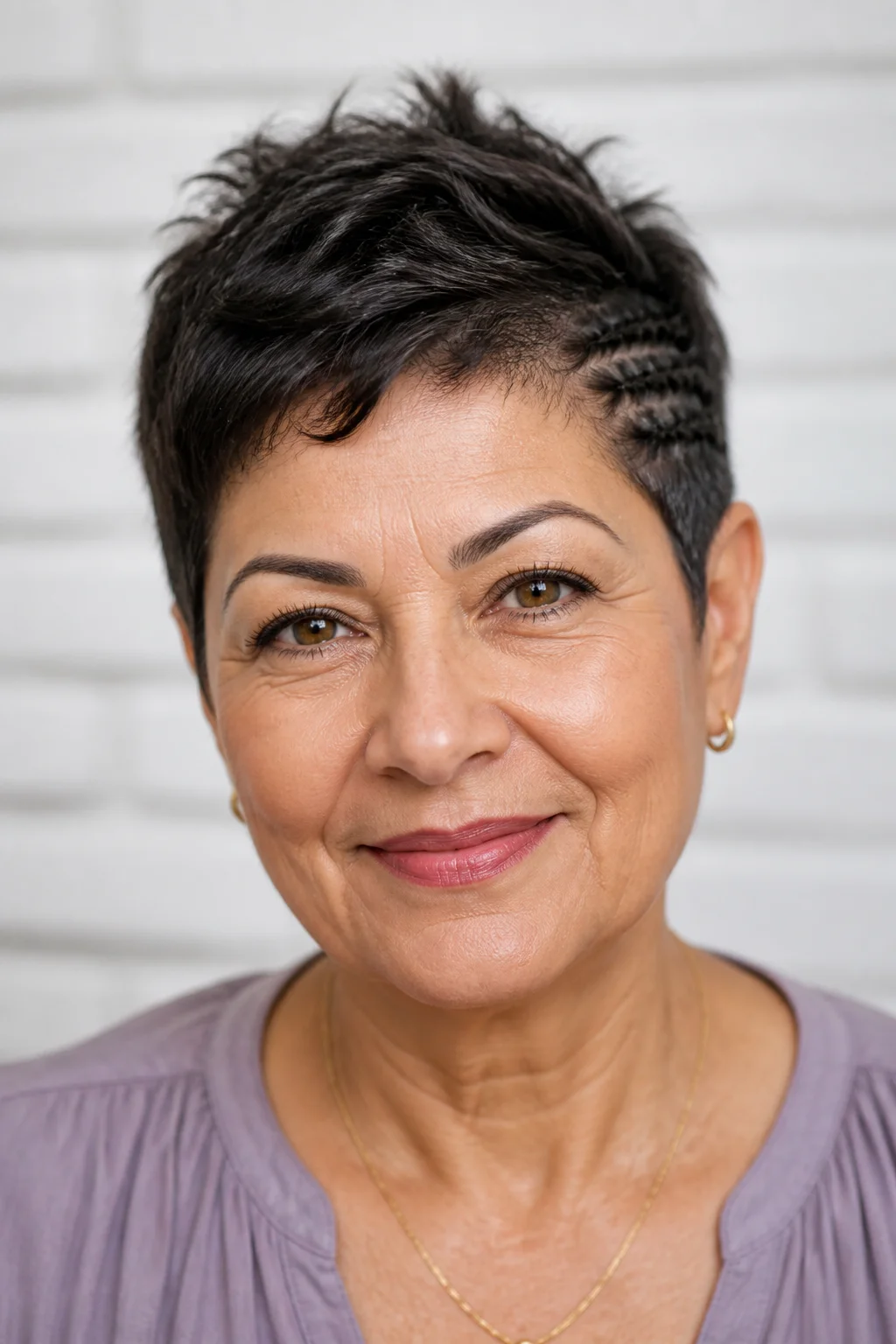
One side stays a bit longer than the other, which pulls the eye and breaks up symmetry that can otherwise look flat on fine hair. It’s a great option if your hair is thinning more on one side than the other, since the longer piece can cover thinner spots. The uneven length also gives you more styling options: sweep it back for a night out or let it fall forward for something more casual. Tip: ask for the asymmetry to start above the ear, not at the nape, so it stays easy to manage as it grows out.
Curly Textured Pixie
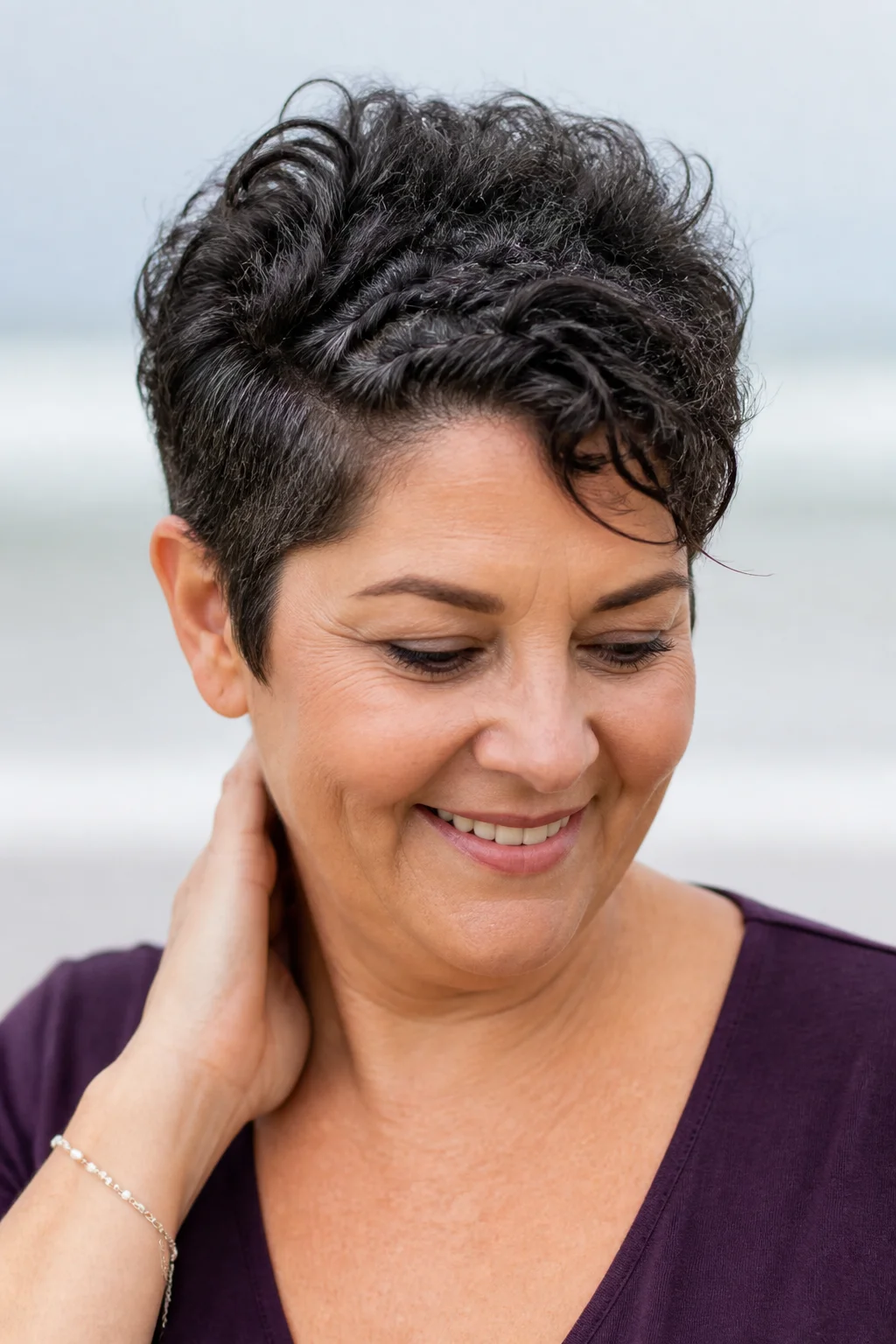
Natural curls and short hair are a genuinely good match, since the curl pattern does most of the volume work for you. A curly textured pixie is cut with the curl in mind, meaning layers are shaped while dry so each curl lands where it should. This keeps the shape from turning into a triangle, which is the biggest complaint with curly short cuts. A light curl cream scrunched in while hair is still damp keeps the pattern defined without stiffness.
Wavy Textured Pixie With Crown Volume
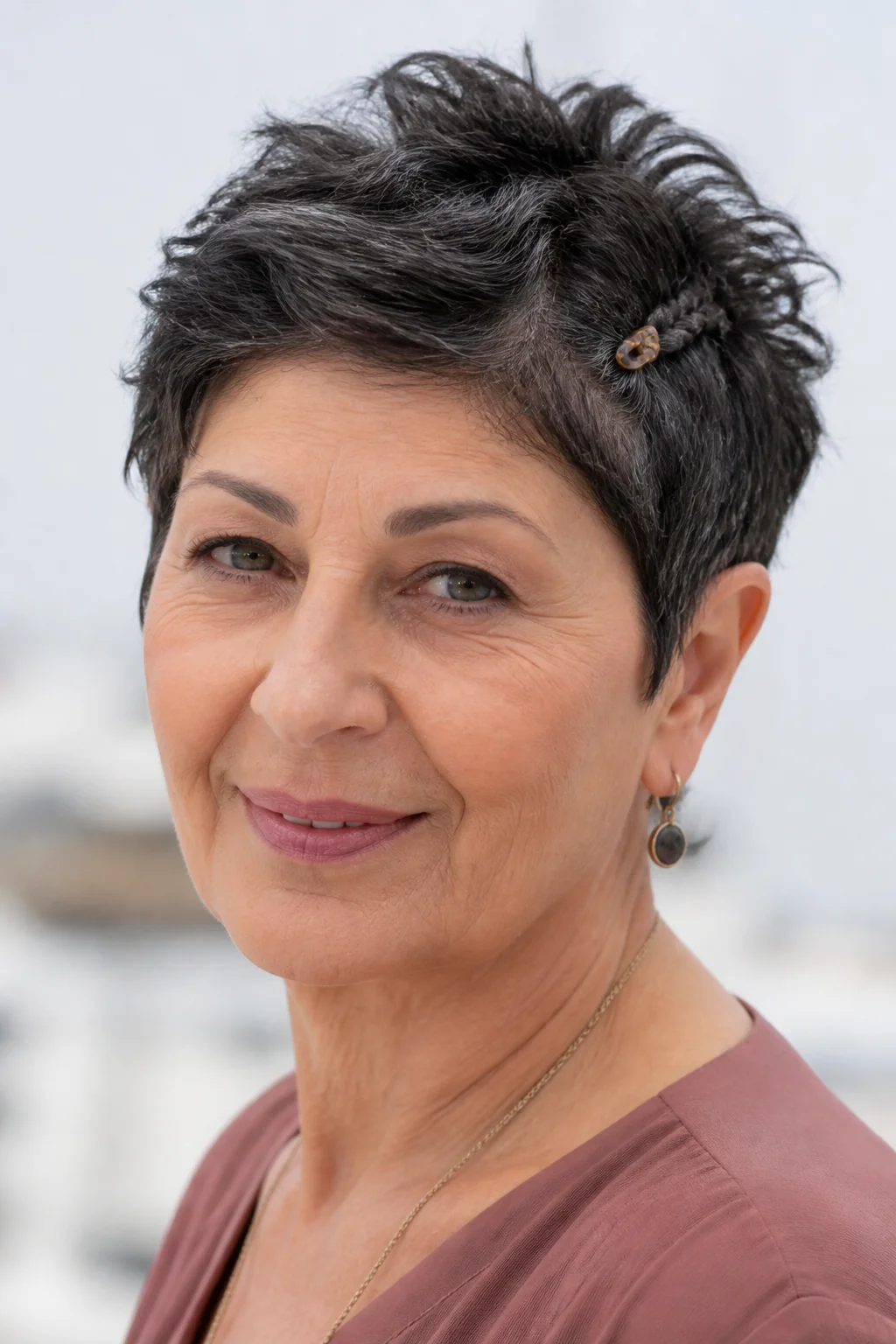
This cut is built for hair with a natural bend but not a full curl. Extra layering right at the crown lifts the roots and keeps waves from collapsing under their own weight, which is a common problem with fine wavy hair. The rest of the cut stays soft and textured rather than sharply cut, so the waves have room to move instead of being chopped off mid-bend. It reminds me of the kind of shape you get from an overnight braid, loose and a little undone in the best way.
Textured Pixie With an Undercut
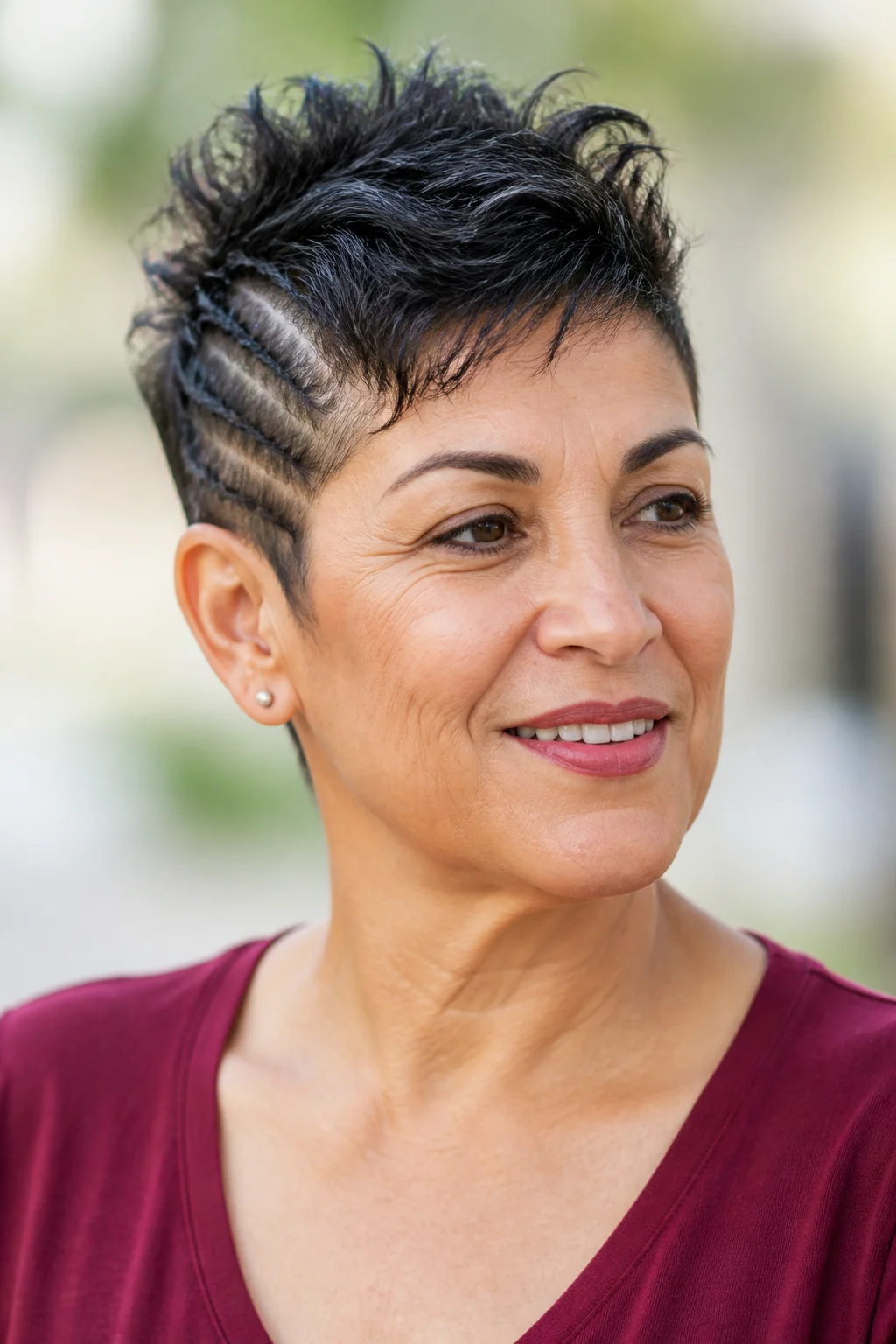
An undercut shaves or closely clips the hair underneath while leaving length and texture on top. It’s a bolder choice, and it works particularly well for anyone dealing with heat or heavy hair days, since it removes a lot of bulk without shortening the visible top layer. The contrast between the shaved sides and the textured crown gives the whole cut a sharper, more modern edge. This isn’t the cut to pick if you want something you can restyle into a completely different look each day. It commits to one strong shape, and that’s exactly its appeal.
Feathered Textured Pixie
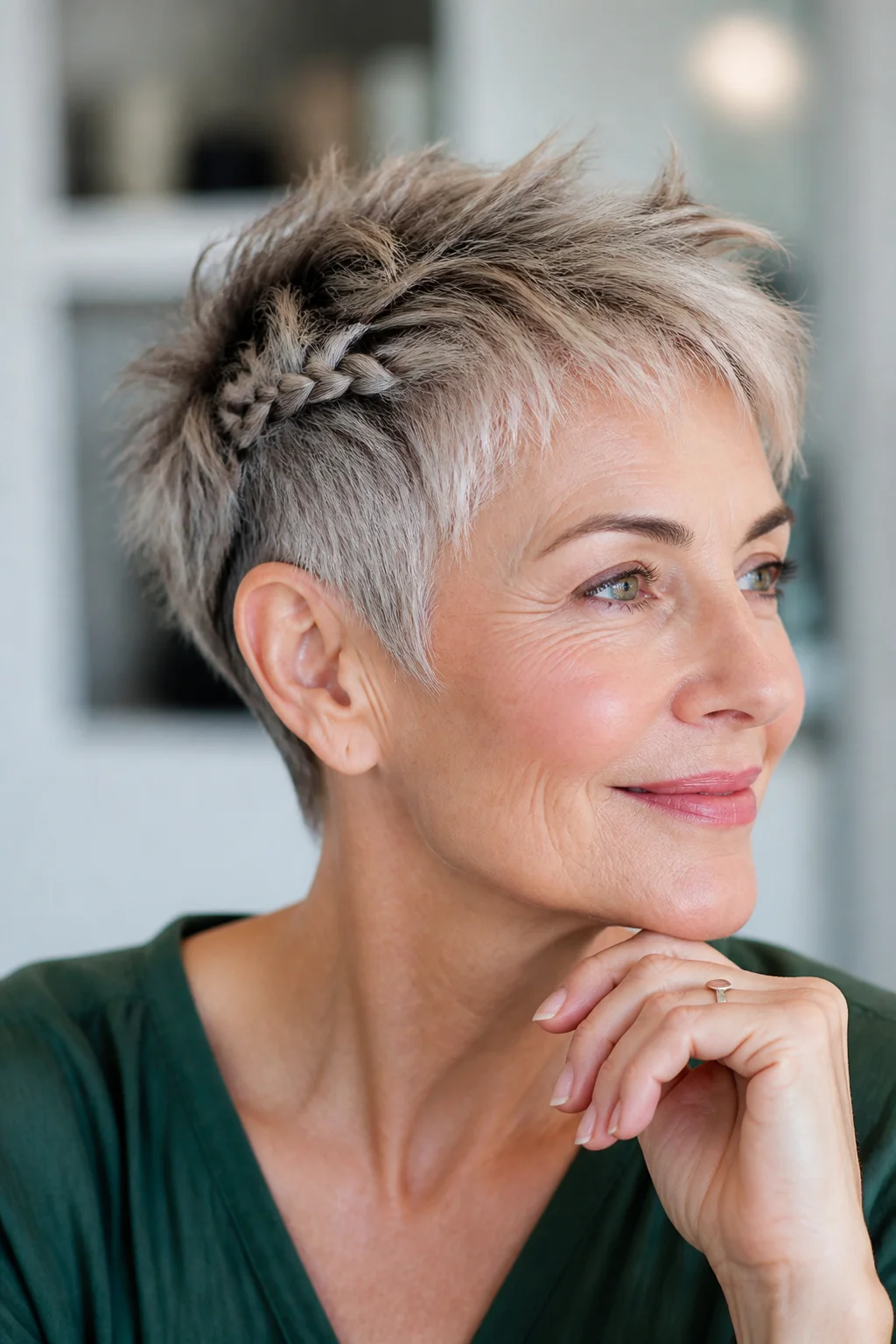
Feathering uses razor cuts or slide cutting to thin the ends so they fall softly instead of sitting in a blunt line. On a pixie, this creates movement around the face that looks a little like feathers laying over each other, hence the name. It’s a gentle option for women who want texture without anything spiky or dramatic. The softness around the face also helps disguise fine lines, since there’s nothing sharp cutting across the cheek or jaw.
Spiky Textured Pixie
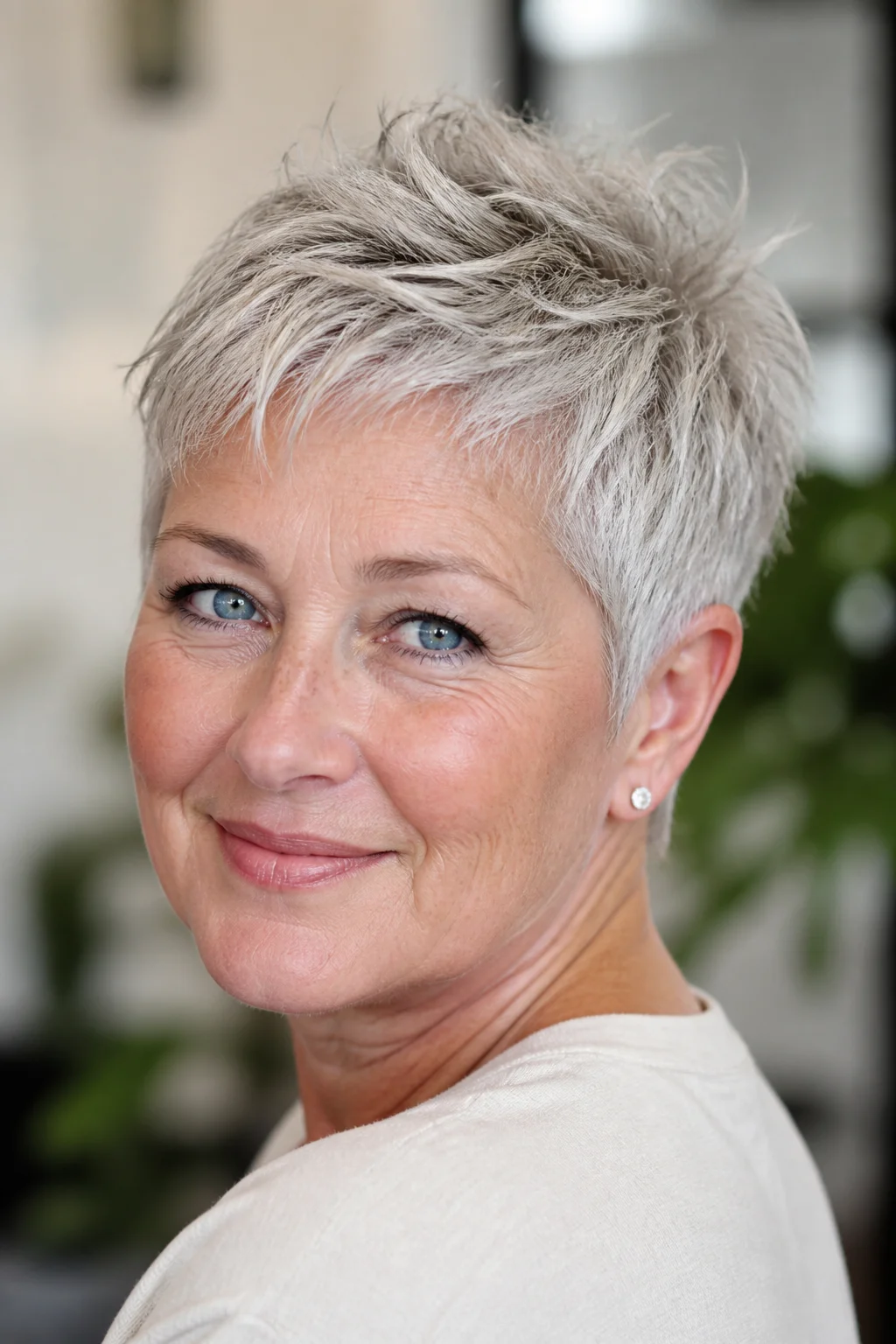
Short, choppy pieces styled upward with a strong-hold product give this cut its energy. It’s not subtle, and that’s the point. Spiking works best on hair with some natural thickness, since fine hair may need a volumizing mousse underneath to help the spikes hold their shape through the day. Tip: apply product to towel-dried hair, not fully dry hair, so the pieces separate cleanly instead of clumping.
Textured Bixie With Pixie Shape
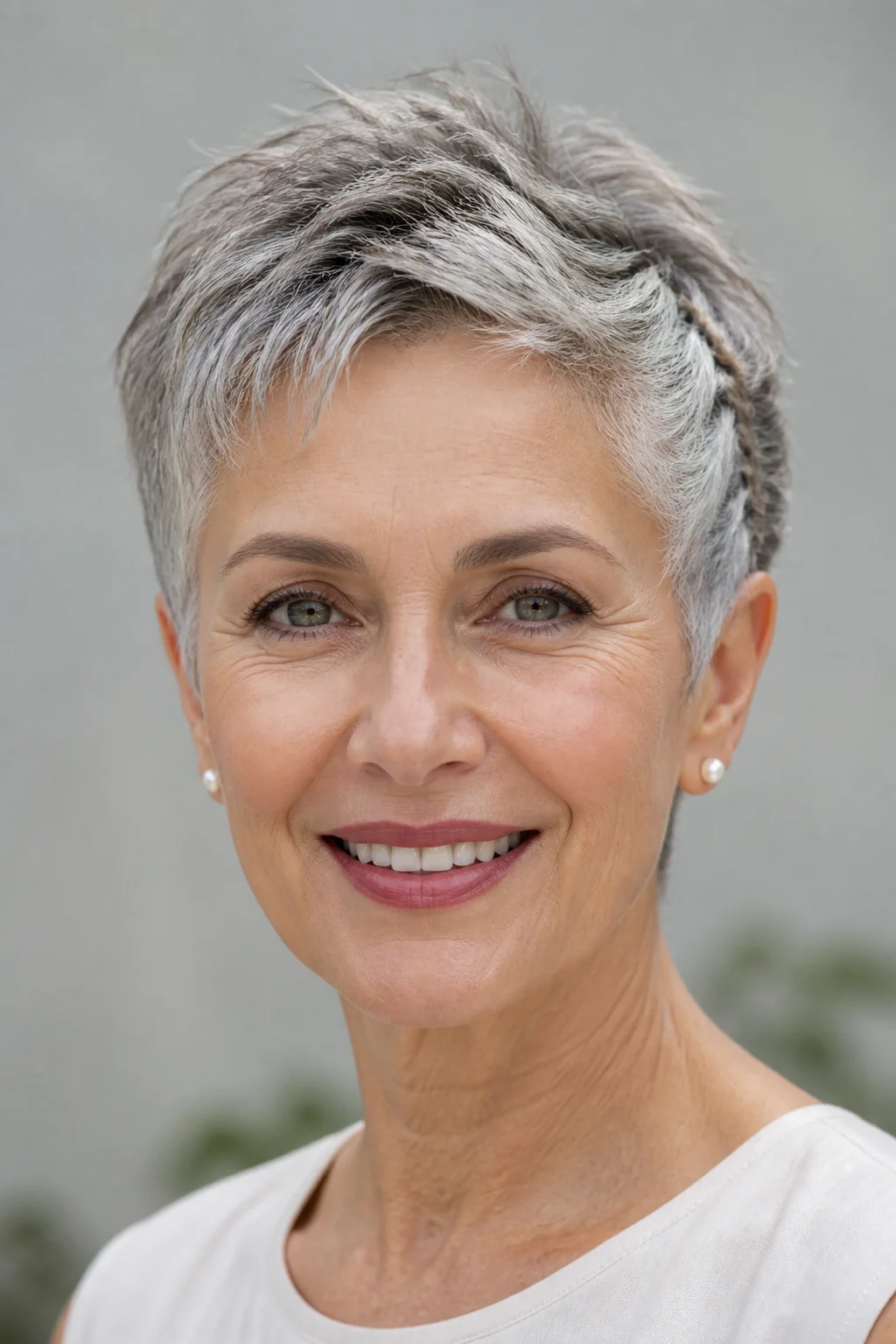
A bixie splits the difference between a bob and a pixie, keeping length a little longer at the nape while staying short and textured through the crown and sides. It gives you more versatility than a true pixie since there’s enough length to tuck behind the ears or style with a bit of a wave. The layering throughout keeps it from looking like a plain bob that’s simply been shortened. This is a smart pick if you’re transitioning out of longer hair and aren’t ready to commit to a fully cropped shape yet, and it still delivers plenty of volume up top.
How to Choose the Right One for You
With ten options on the table, the decision usually comes down to your natural texture, your face shape, and how much time you want to spend styling. If your hair is fine and flat, the classic cropped textured pixie or the tapered textured pixie will give you the most lift with the least effort, since both are built to work with minimal hair rather than against it. If you have natural curl or wave, skip any cut designed for straight hair and go straight to the curly textured pixie or the wavy textured pixie with crown volume, since those are shaped specifically around how your texture falls.
Women who want a softer, more romantic look should lean toward the feathered textured pixie or the long textured pixie with side-swept fringe, both of which avoid harsh lines around the face. If you want something with more edge, the textured pixie with an undercut and the spiky textured pixie deliver the most dramatic contrast. A common mistake is choosing the asymmetrical textured pixie without discussing hair growth patterns first, since a cowlick or stubborn part can fight the uneven line and make it harder to maintain. Bring a photo to your appointment, mention your natural part, and let your stylist adjust the layering to your actual texture rather than the picture alone.
Final Thoughts
Short hair after 60 doesn’t have to mean giving up movement or personality. Texture is what keeps a pixie from looking flat or dated, whether that means soft feathering, defined curls, or a bold undercut. Pick the shape that matches how your hair naturally behaves, communicate that clearly at your next appointment, and you’ll get a cut that actually works with you every morning instead of against you.