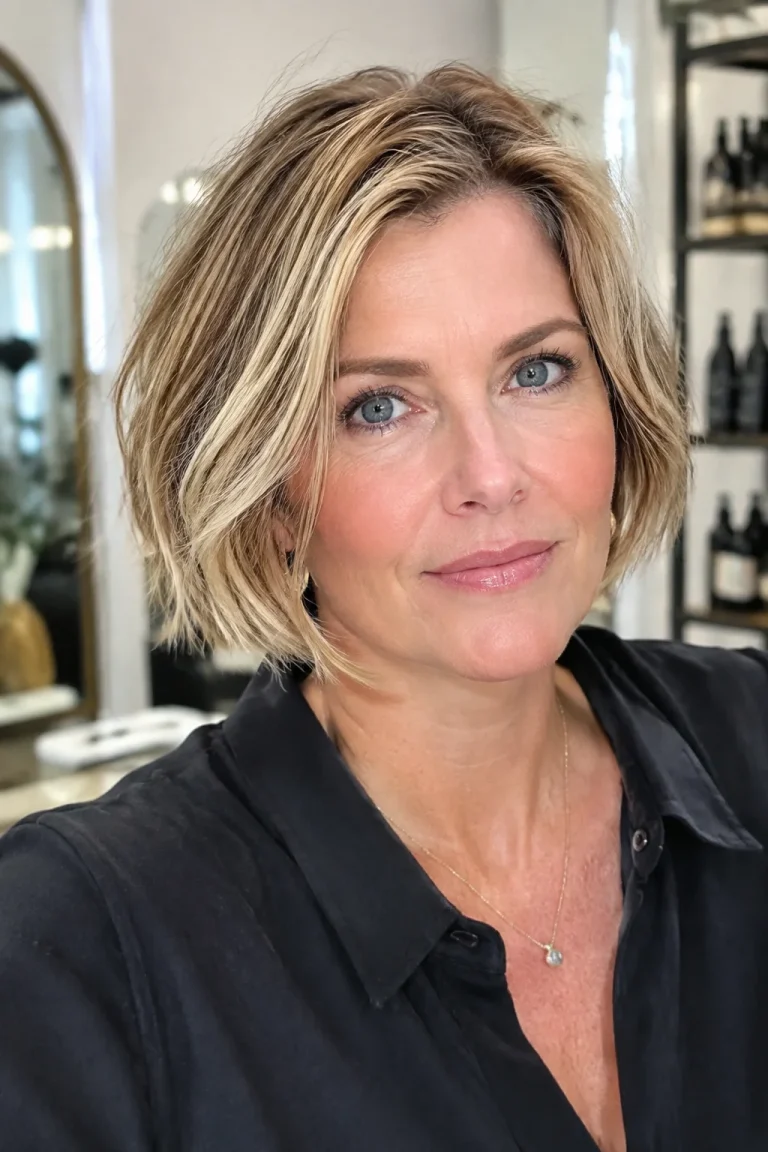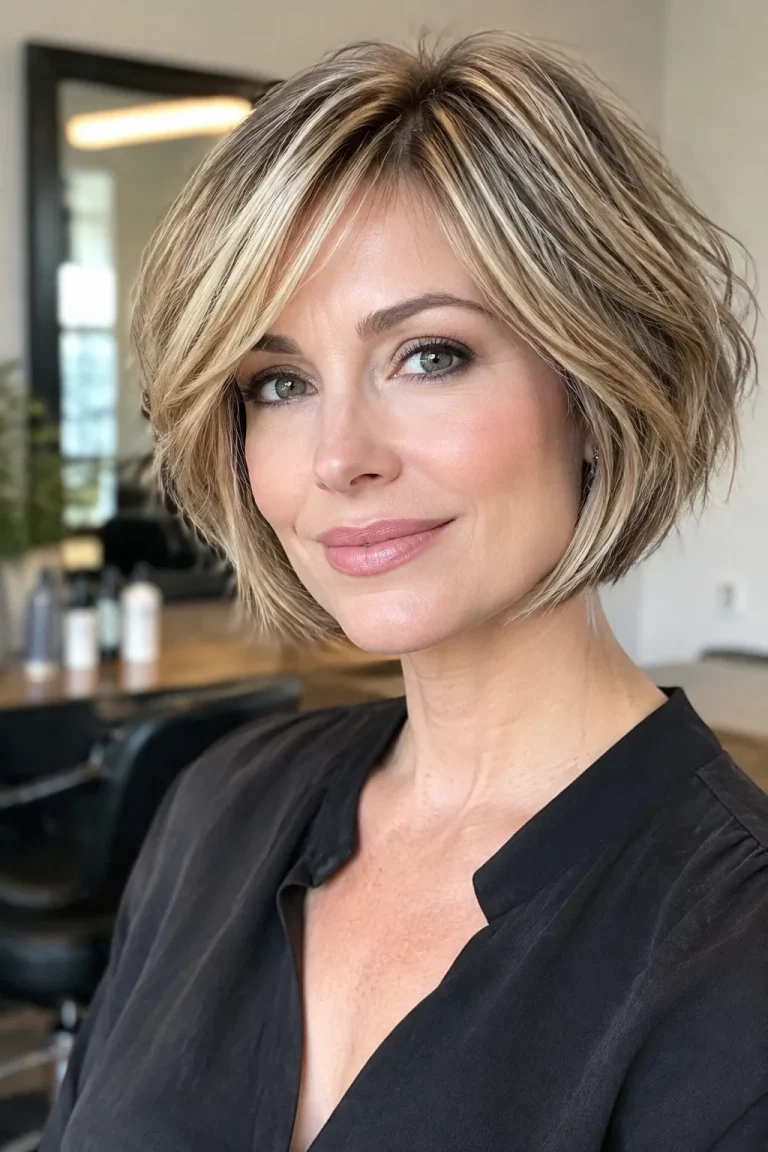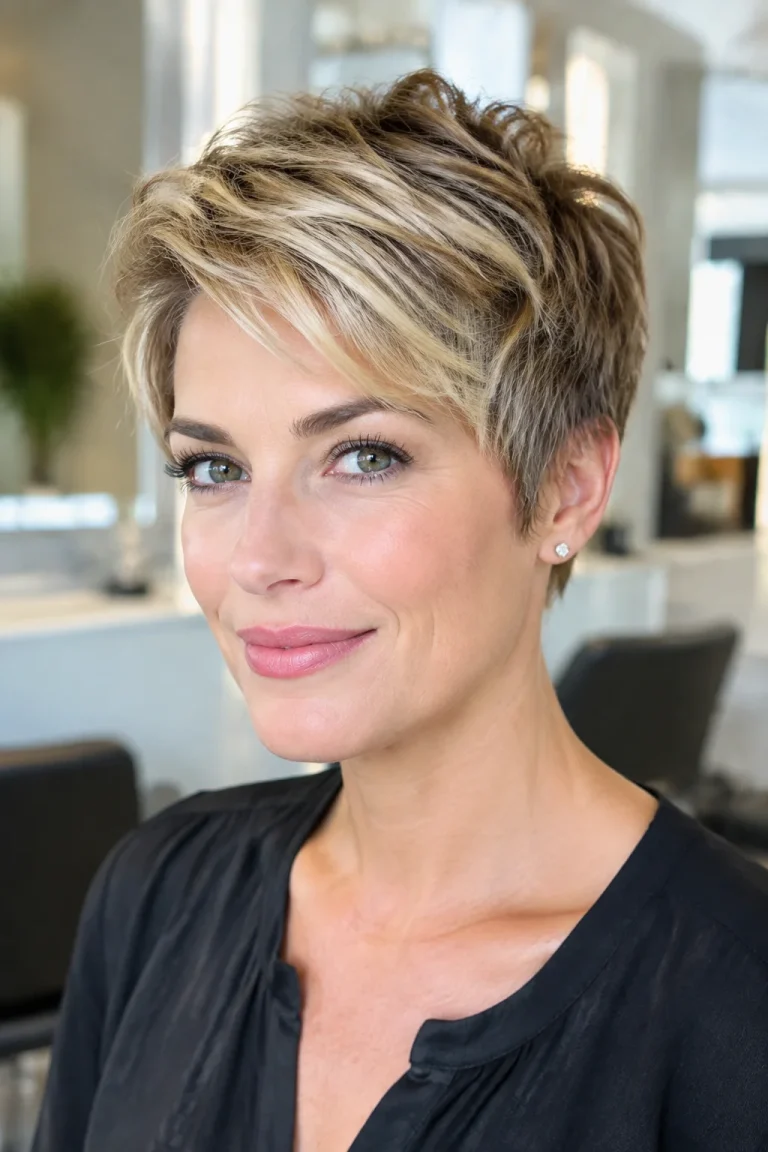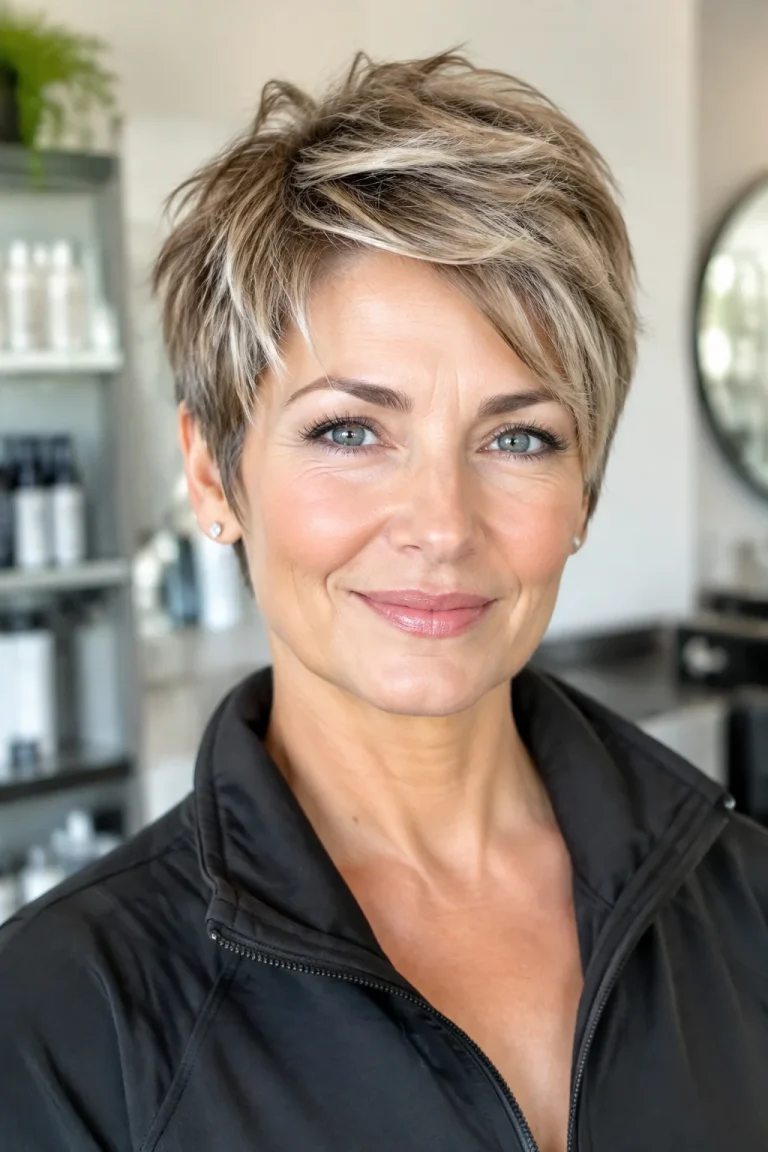
Scrolling through photos and pointing at a screen only gets you so far in the chair. Stylists need words they can work with, and bobs come in way more shapes than most people realize. Picking the wrong name can mean walking out with three inches gone when you wanted one, or a blunt line when you pictured something softer. Short hair bob haircuts cover a huge range, from razor-sharp geometric cuts to loose, undone shags that barely look styled at all. The goal here is simple: give you exact names and clear descriptions so you can ask for precisely what you want, not something close to it. Each cut below has its own personality, its own upkeep level, and its own way of framing your face. Read through, find the one that matches your hair texture and your morning routine, and bring that name to your next appointment.
1. Classic Blunt Bob
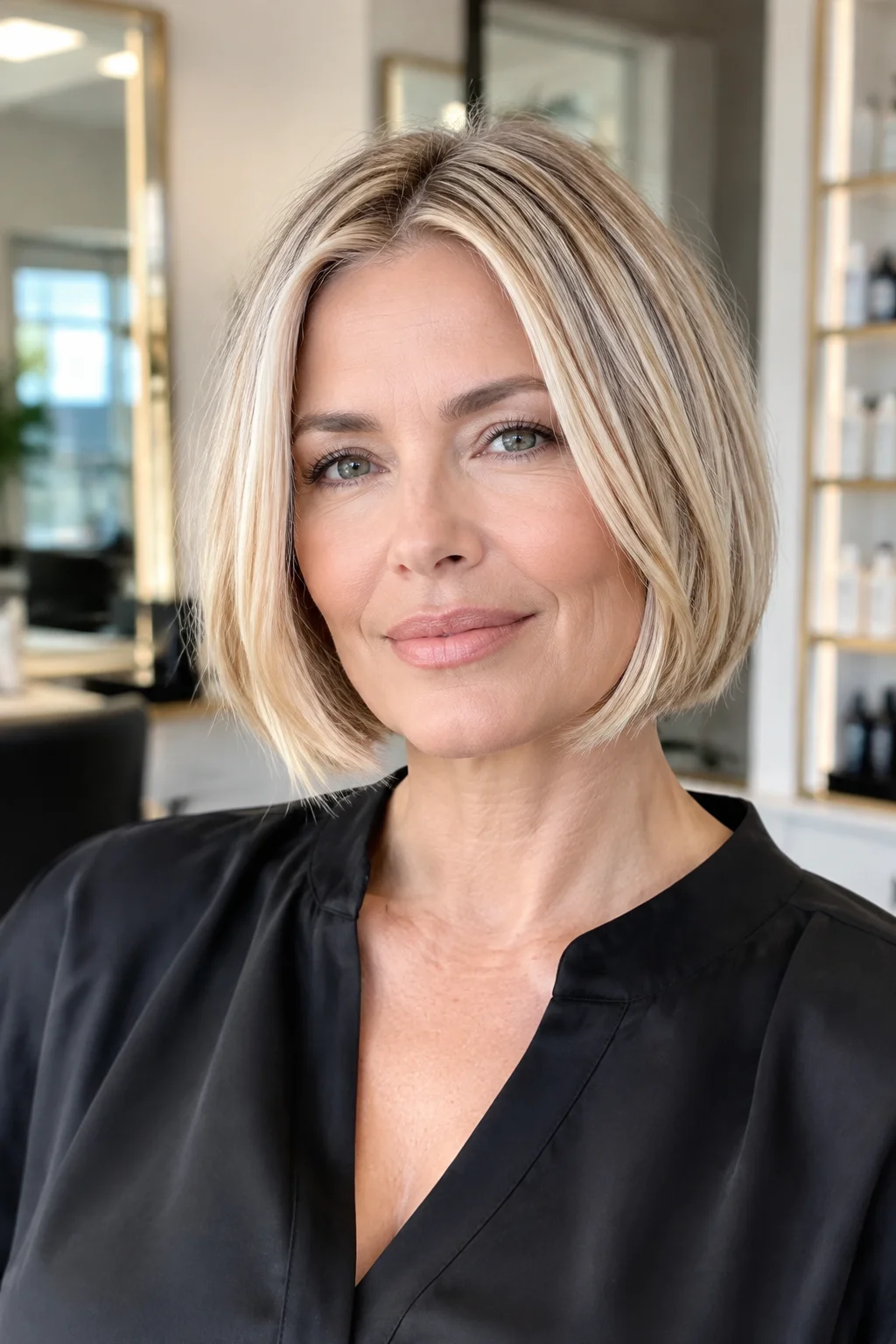
This is the bob most people picture first. The ends are cut in one straight line, usually hitting right at the jaw, with zero layers to soften the edge. It works best on hair with some natural body because fine, flat hair can make the blunt line look thin at the ends. The cut reads polished and a little severe in the best way. Ask your stylist to cut it dry for the most accurate length, since blunt lines show every uneven inch. Tip: request a slight undercut at the nape if you want the back to sit closer to your neck.
2. Graduated Bob
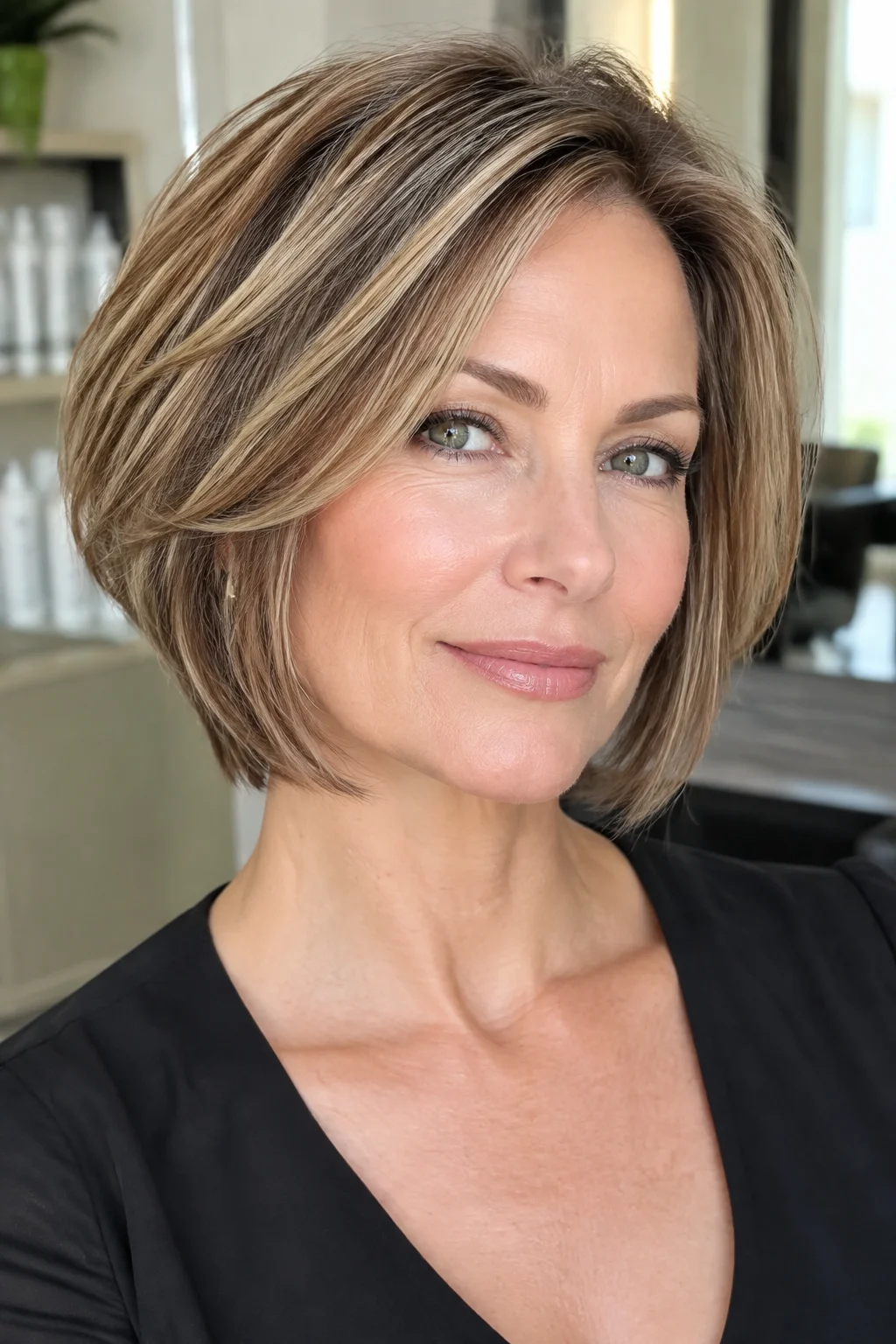
The graduated bob stacks the hair at the back, building weight that tapers shorter toward the nape and longer in the front Think of it as a bob with built-in volume at the crown and a rounded, curved shape when viewed from the side It suits thinner hair especially well because the stacking creates the illusion of thickness
3. A-Line Bob
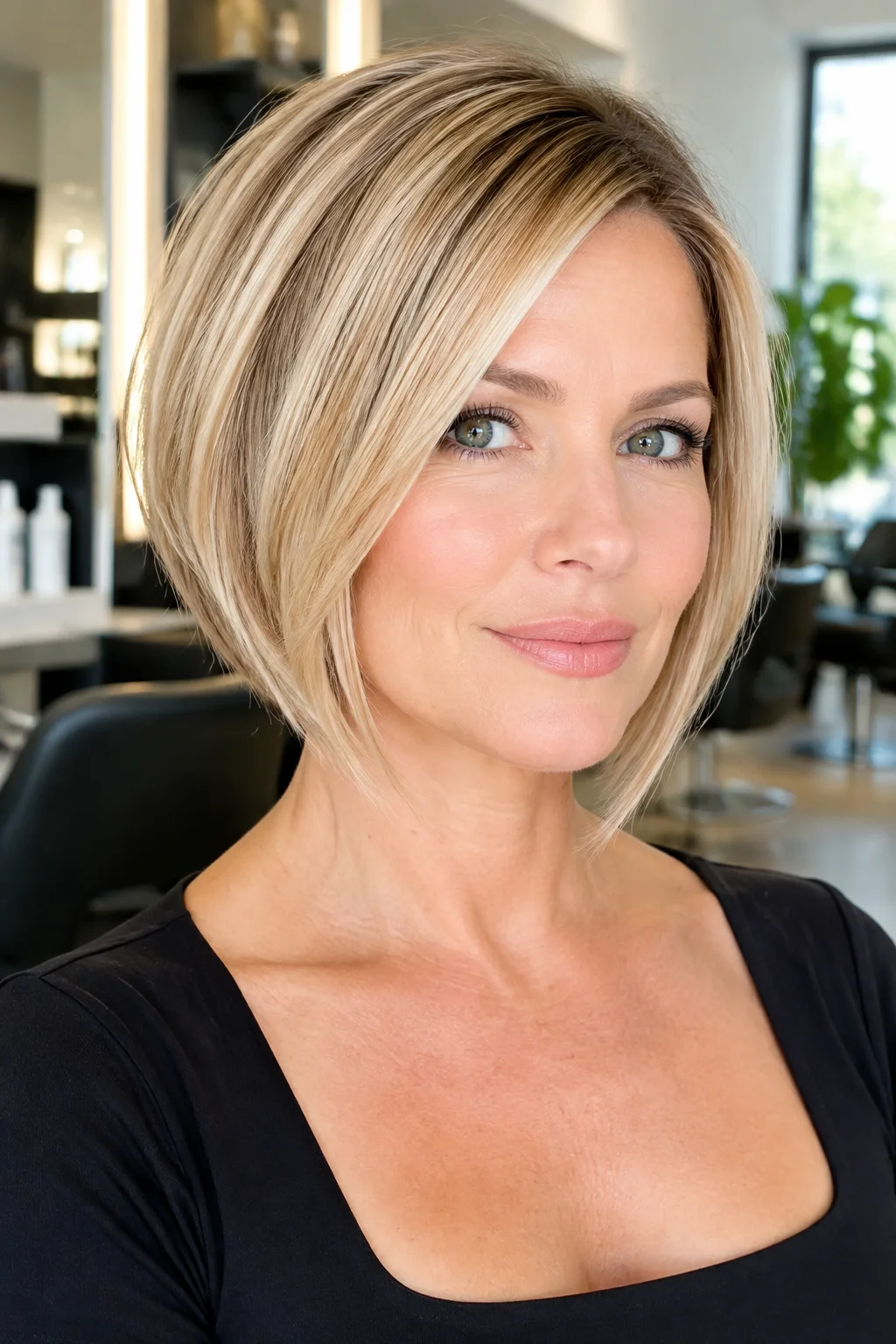
An A-line bob is shorter in the back and gradually longer toward the front, creating a visible diagonal line along the jaw The angle can be subtle or dramatic depending on how much length difference you ask for This shape flatters round and square faces because the longer front pieces draw the eye downward
4. Inverted Bob
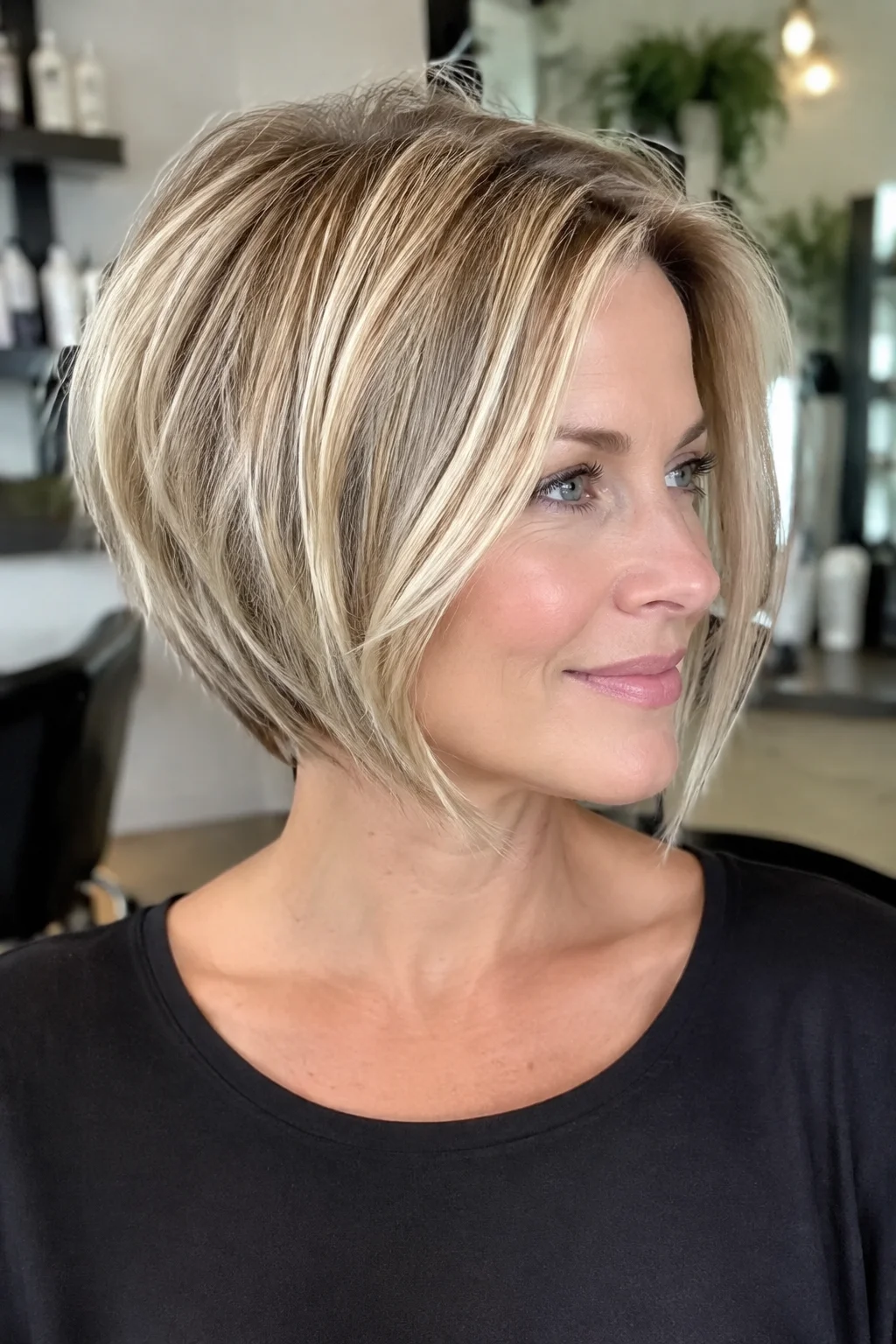
The inverted bob takes the A-line idea further, with more dramatic stacking in the back and noticeably longer pieces in front. The silhouette narrows at the neck and flares slightly at the jaw, almost like an upside-down triangle. It’s a strong choice for fine hair that needs help holding shape, since the layering adds real lift at the crown. Styling is fairly low effort once you learn to blow it out with a round brush. Tip: ask for point-cutting at the ends so the front pieces don’t look too heavy against the shorter back.
5. Textured Choppy Bob
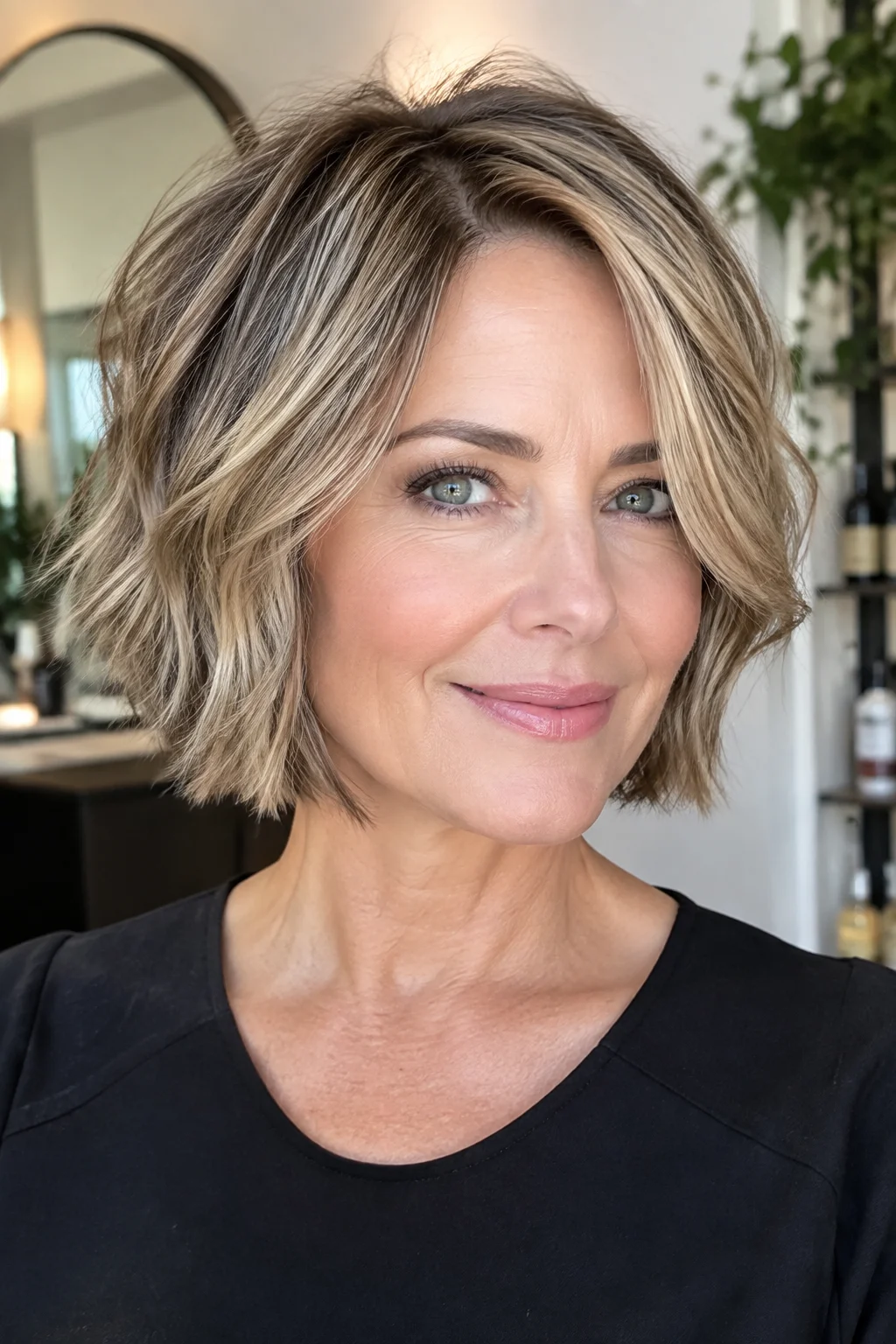
This version skips the smooth, polished finish for something rougher around the edges. A stylist will use a razor or deep point-cutting to break up the ends so they look fringed instead of clean. It suits thick hair that tends to look bulky in a blunt cut, since the texturizing removes weight without shortening the length. The choppy bob also hides the growing-out stage better than most short styles. Most people style it with a texturizing spray and just scrunch it dry.
6. Shag Bob
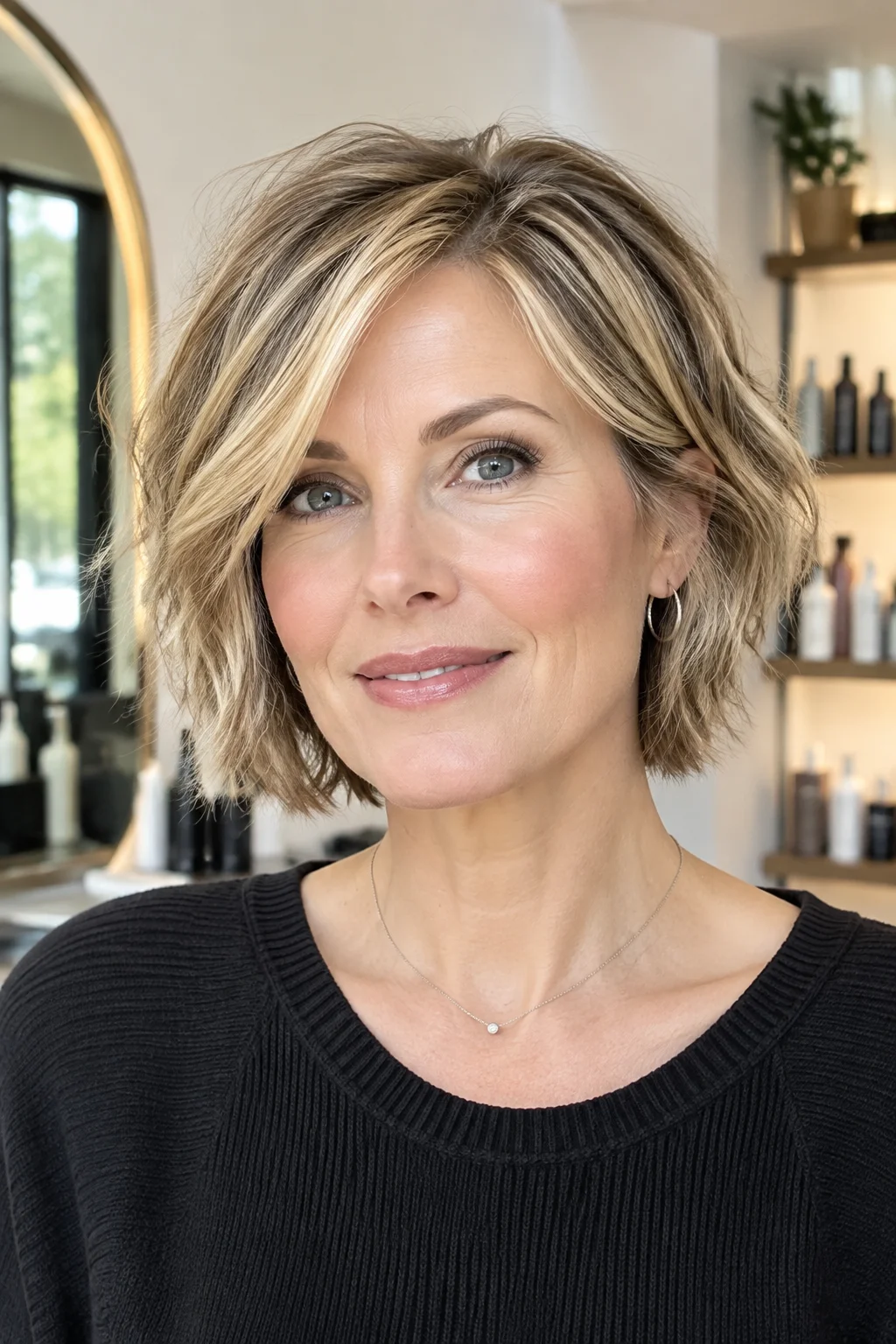
The shag bob mixes a short length with heavy, feathered layers throughout, giving it a loose, lived-in look that needs almost no precision styling. It’s built for movement, not symmetry, so slight unevenness is part of the design rather than a flaw. This cut works well with naturally wavy or curly hair since the layers let the texture do the work. Fine hair can wear it too, but a stylist will usually add a few shorter face-framing pieces to create the illusion of fullness. It pairs naturally with curtain bangs if you want more framing around the face. People who hate blow-drying tend to gravitate toward this one because air-drying with a light product gives it the right amount of texture.
7. Pixie Bob
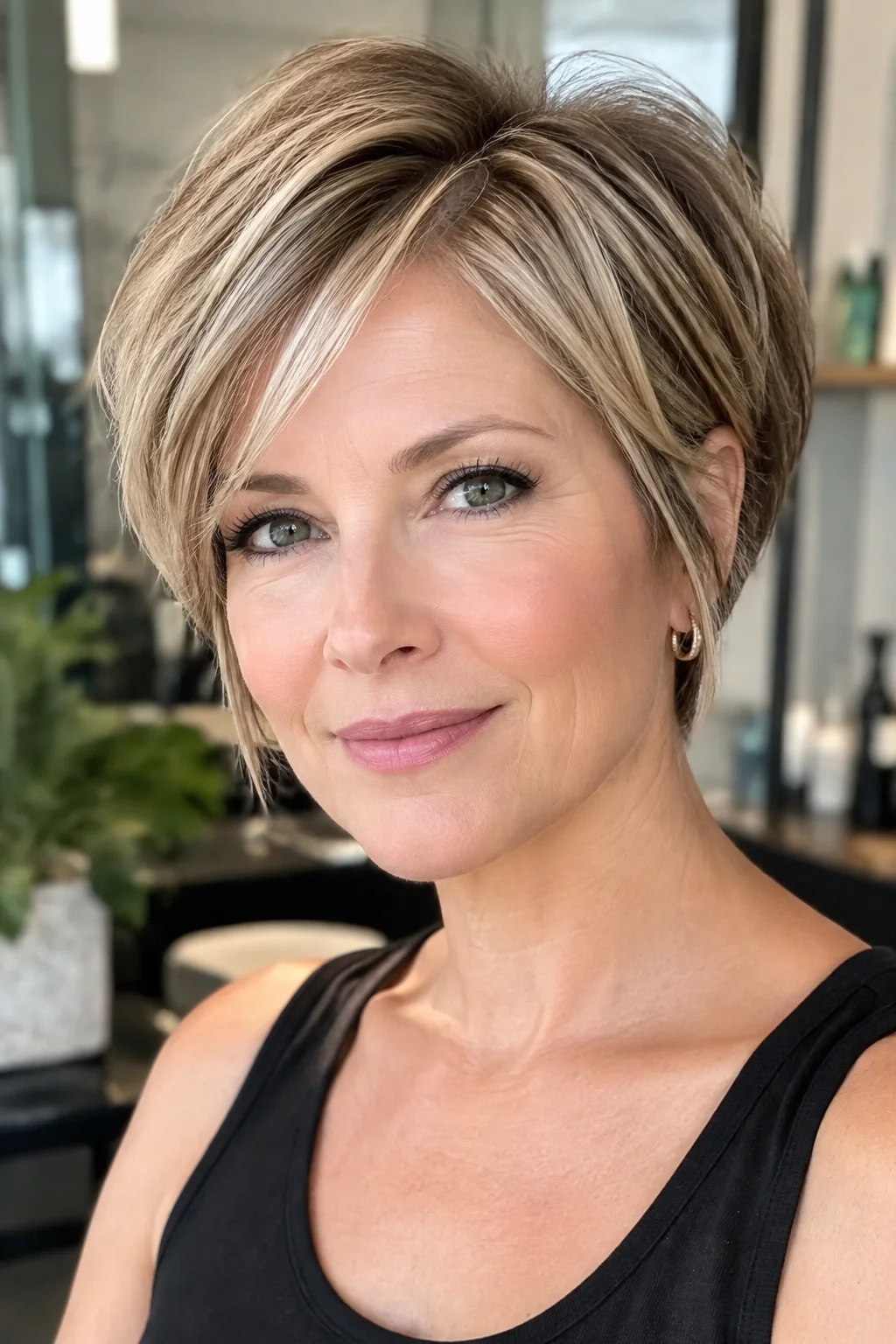
A pixie bob sits between a true pixie and a bob, usually landing just below the ear with short, cropped sides and a slightly longer top. It’s a good middle-ground choice for anyone who wants short hair but isn’t ready to commit to a full pixie cut. The length at the crown gives you some styling options, like sweeping it to one side or pushing it back with a little pomade. It grows out more gracefully than a pixie since there’s already length built into the top.
8. French Bob
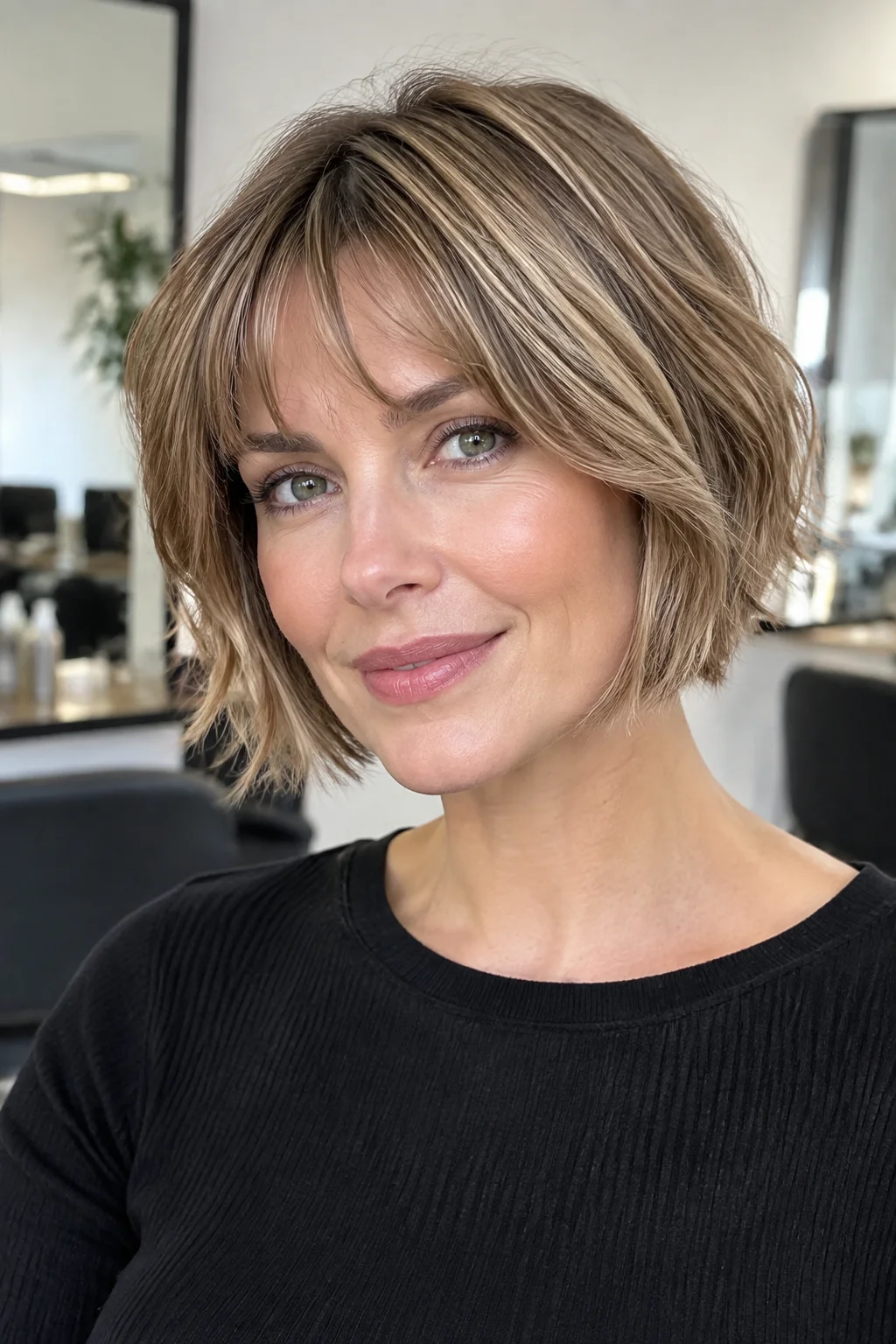
The French bob is short, usually chin-length or shorter, with blunt ends and often a curtain of bangs across the forehead. It has that effortless, slightly undone look that somehow still reads intentional. This cut tends to suit straight to slightly wavy hair best, since curls can fight the blunt shape. Keep the bangs a little longer and wispy rather than razor straight for a softer frame around your eyes.
9. Curly Textured Bob
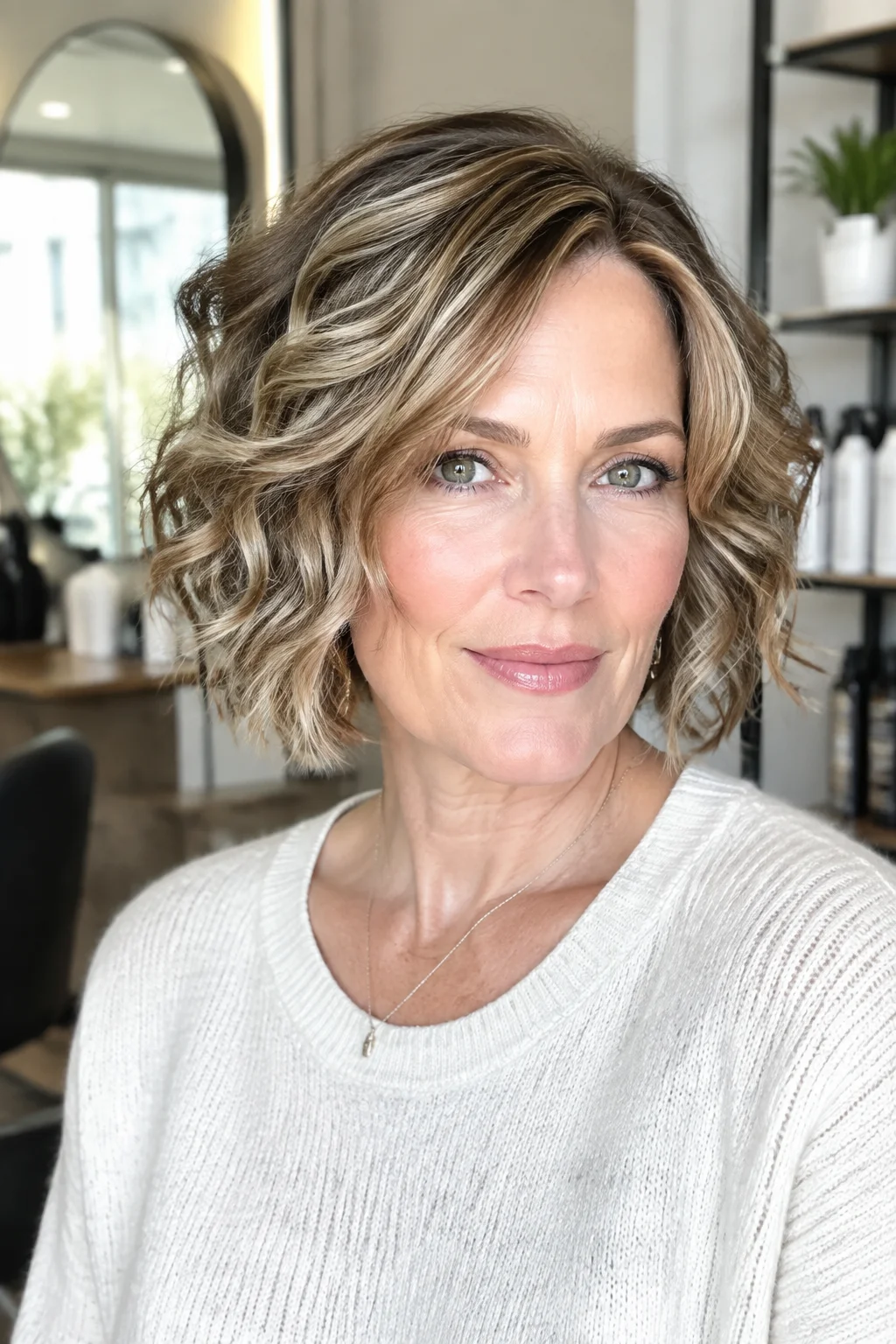
Curly hair needs a different approach than straight hair, and this cut respects that by working with the curl pattern instead of against it. A stylist cuts it curl by curl, dry, so each piece springs up to its true length rather than guessing where it will land. The result is a rounded shape that moves and bounces instead of sitting flat. This bob also tends to shrink up shorter than expected once it dries, so going in knowing your curls’ shrinkage pattern helps avoid surprises. Tip: bring photos of your curl type specifically, since curly cutting techniques vary a lot between stylists.
10. Tousled Wavy Bob
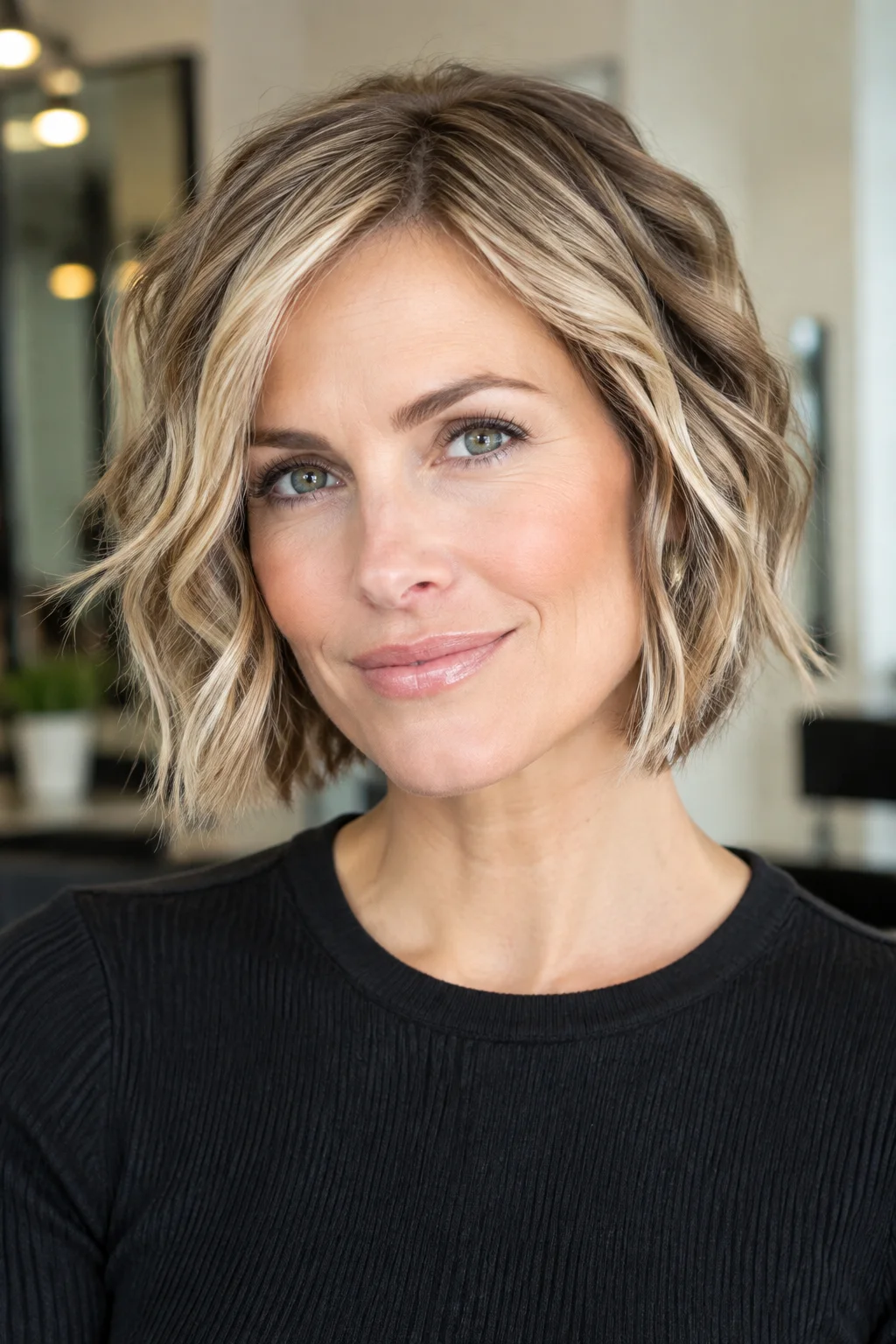
This bob leans into natural wave instead of smoothing it out, with layers cut to encourage movement rather than control it. It looks a little undone on purpose, like you scrunched some product in and walked out the door. Salt spray or a light mousse brings out the wave pattern without weighing the ends down. It’s a forgiving cut for second and third-day hair since the waves only get more relaxed and textured over time.
11. Sleek Rounded Bob
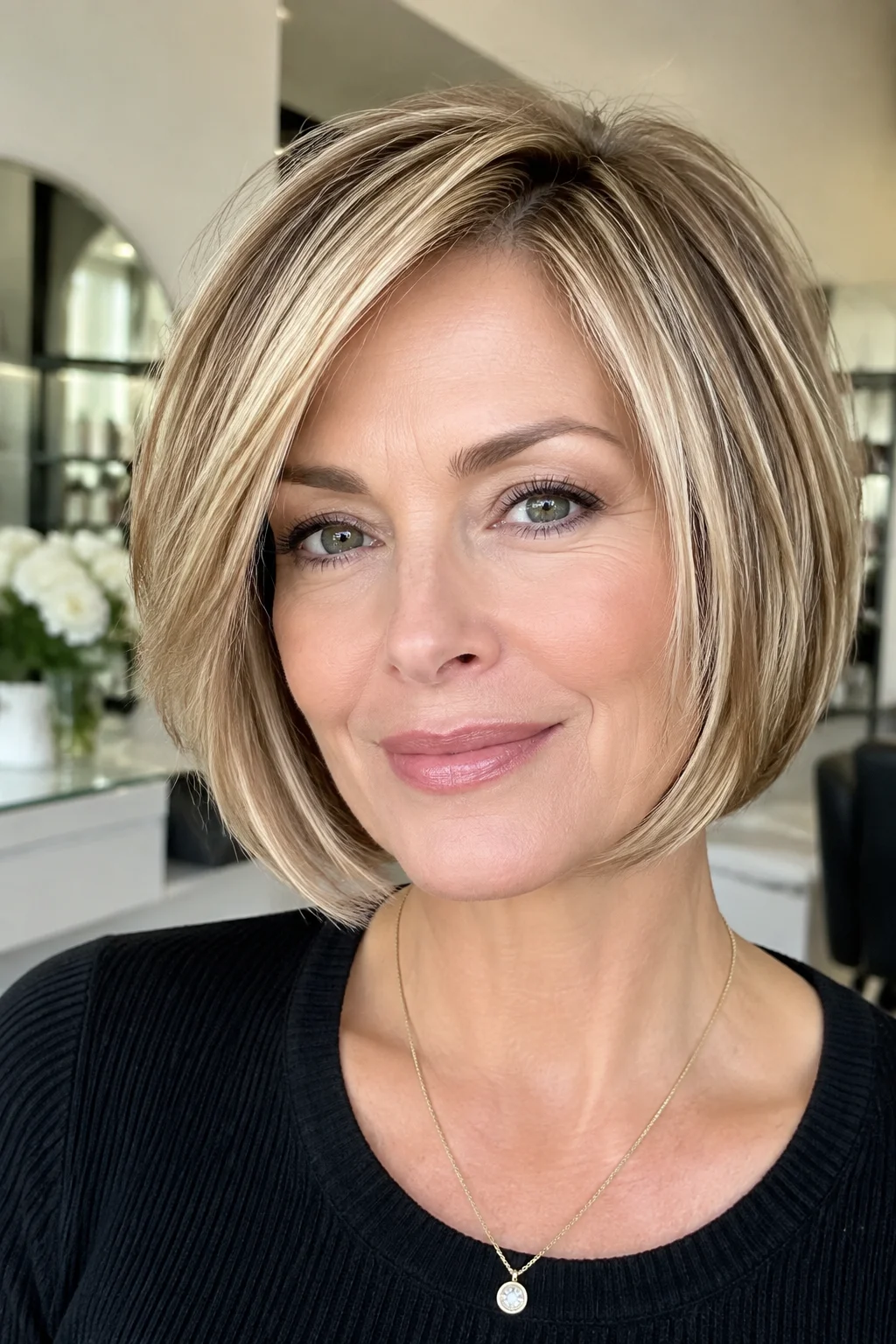
Smooth, glossy, and perfectly curved under at the ends, this bob is the polished opposite of anything choppy or tousled. It requires blow-drying with a round brush or a flat iron to get that mirror-like finish, so it’s higher maintenance than most on this list. The rounded shape flatters most face shapes because the curve softens angles at the jaw. This one looks best on hair with minimal frizz, so a smoothing treatment might be worth asking about if your hair tends to puff up in humidity.
12. Asymmetrical Bob
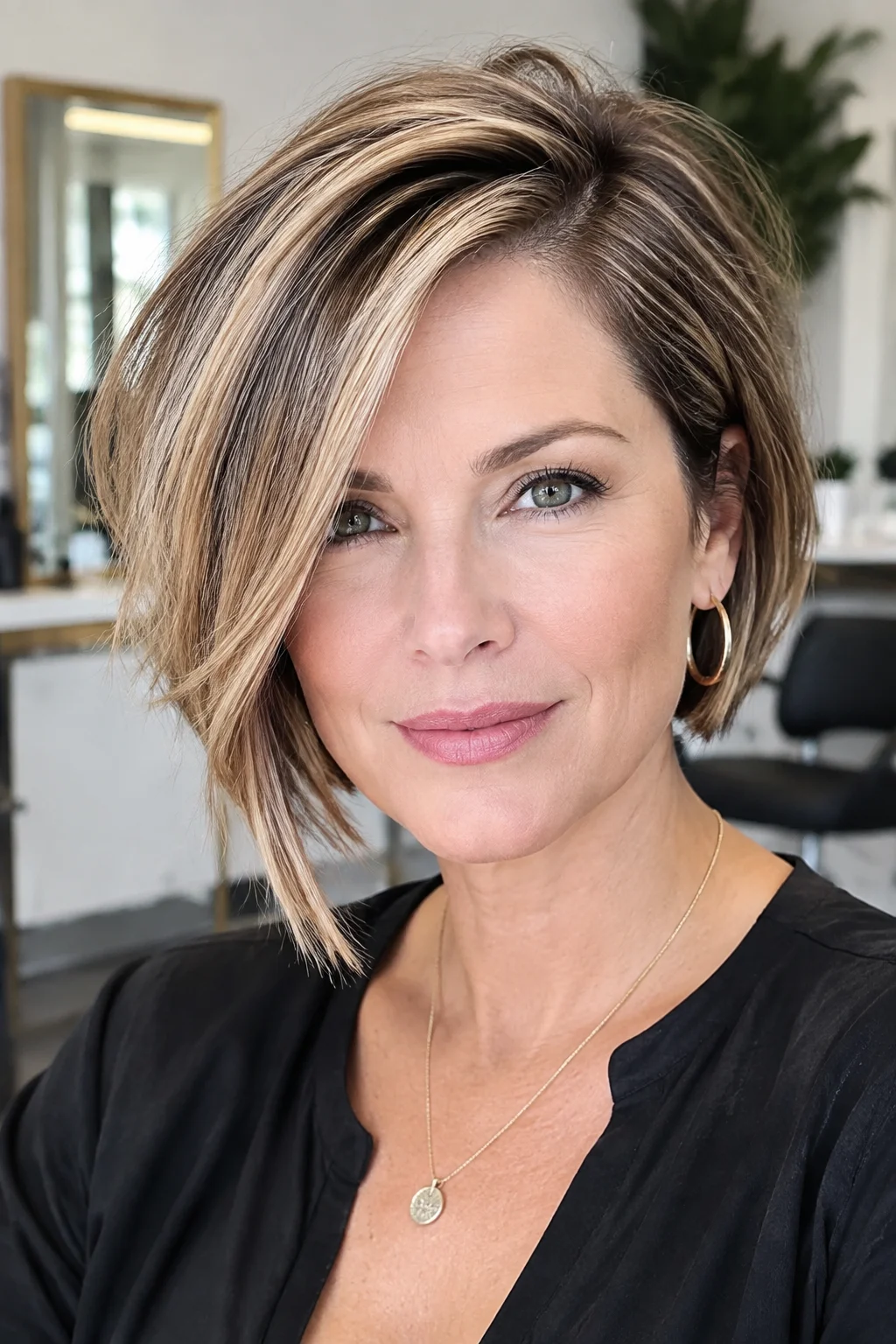
One side cut noticeably shorter than the other defines this style, with the length difference ranging from subtle to dramatic depending on your comfort level. It’s a strong option if you want a bob that feels a little edgier without going into shaved-side territory. The asymmetry draws attention to the jawline and can make a round face look more defined. Growing it out evenly later takes some patience, so this is a commitment cut rather than a low-stakes trial.
13. Stacked Bob
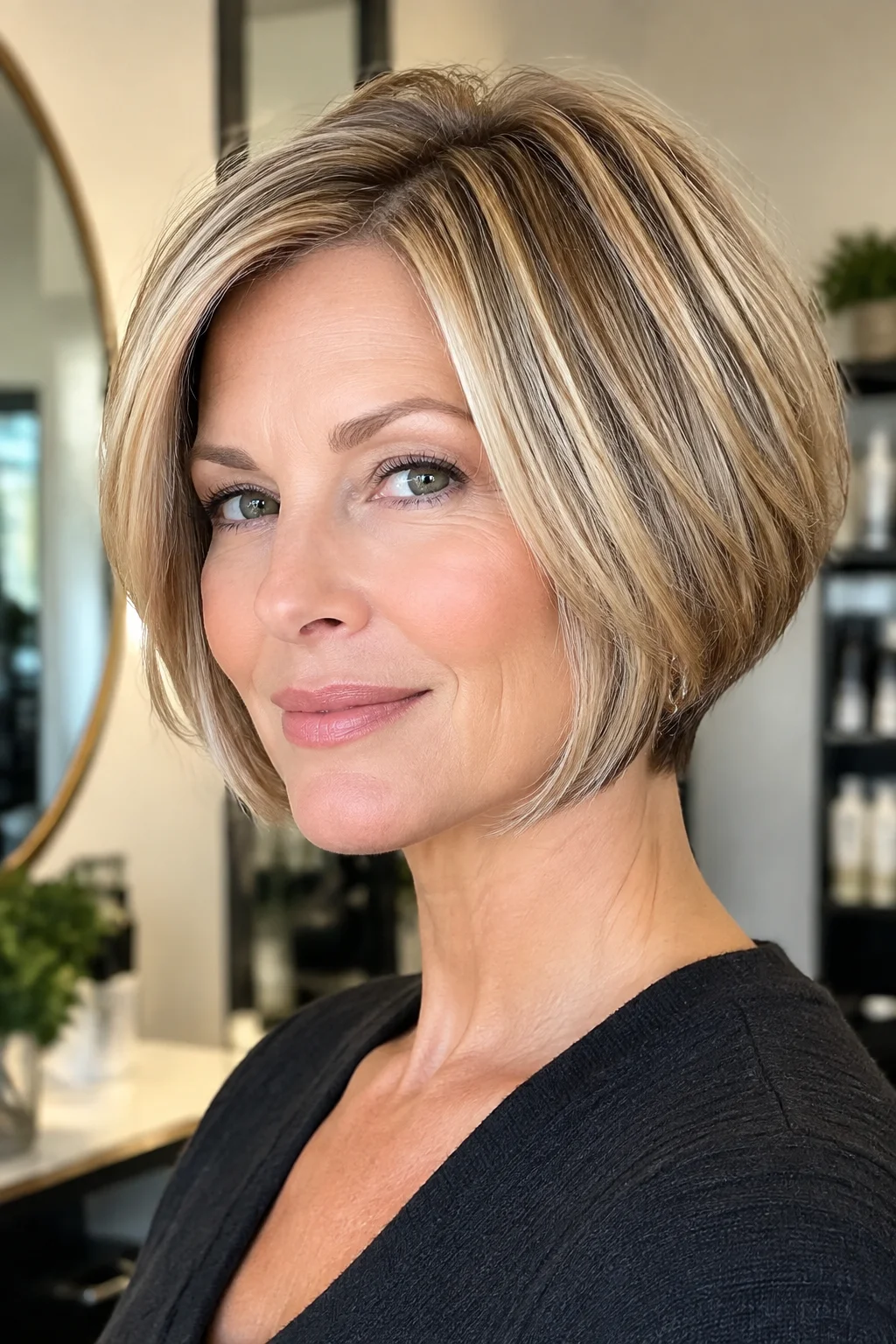
Heavy layering at the back creates noticeable stacking that gives this bob serious volume right where most short cuts tend to fall flat. The front is usually left a bit longer, similar to a graduated bob, but the stacking here is more pronounced and built for texture-heavy hair. It’s a great pick if your hair is naturally thick and you want the back to have shape instead of just hanging straight down. Regular trims matter more here since the stacked layers grow out unevenly compared to one-length cuts.
14. Micro Bob
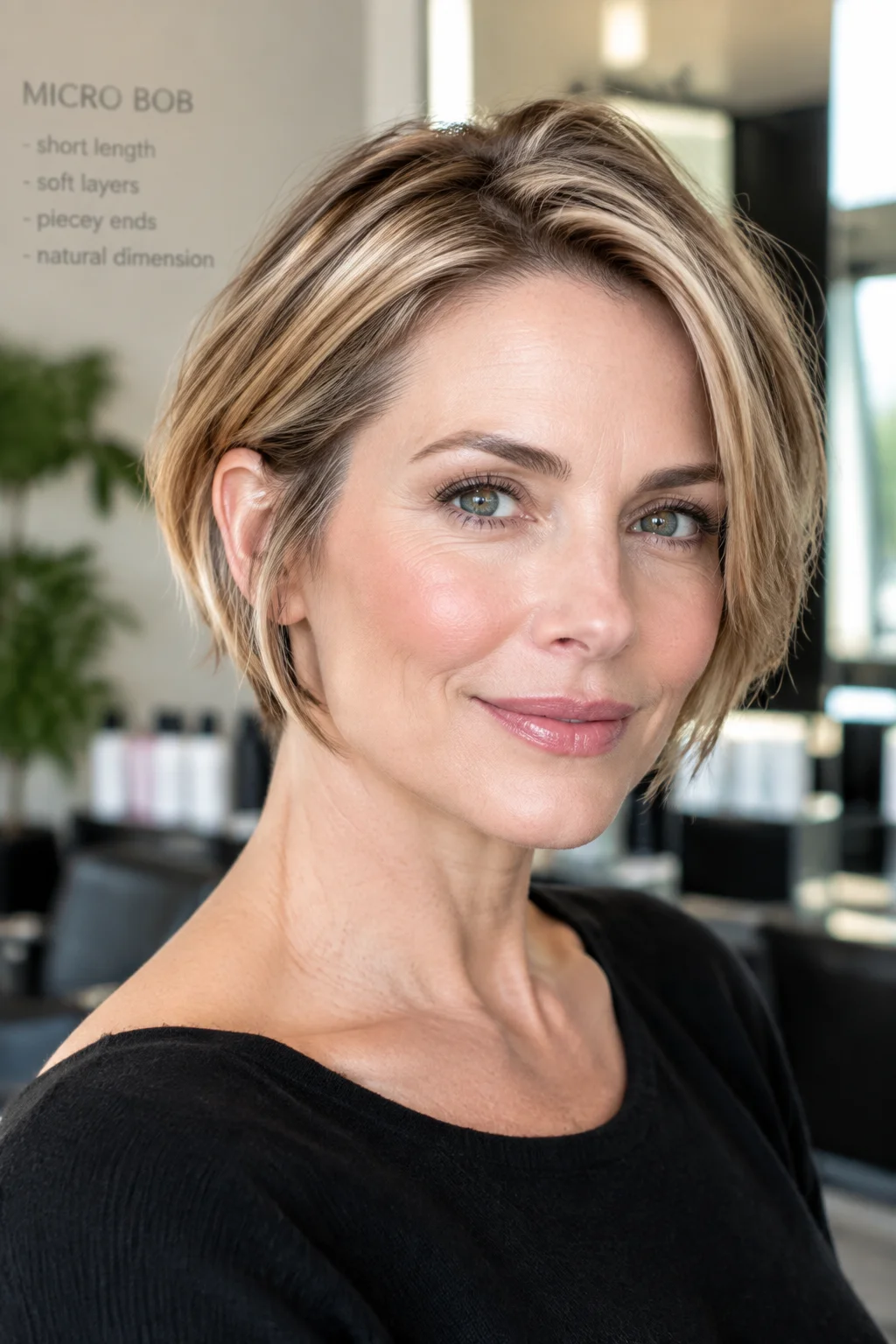
This is about as short as a bob gets before it crosses into pixie territory, usually landing above the jaw or even at ear level. It’s a bold choice that puts your whole face on display, so it works best if you’re comfortable with a cut that doesn’t hide behind length. Fine hair actually looks fuller in a micro bob because there’s less weight pulling it down. Styling takes just a few minutes with a small round brush or even finger-drying with product.
15. Wispy Bangs Bob
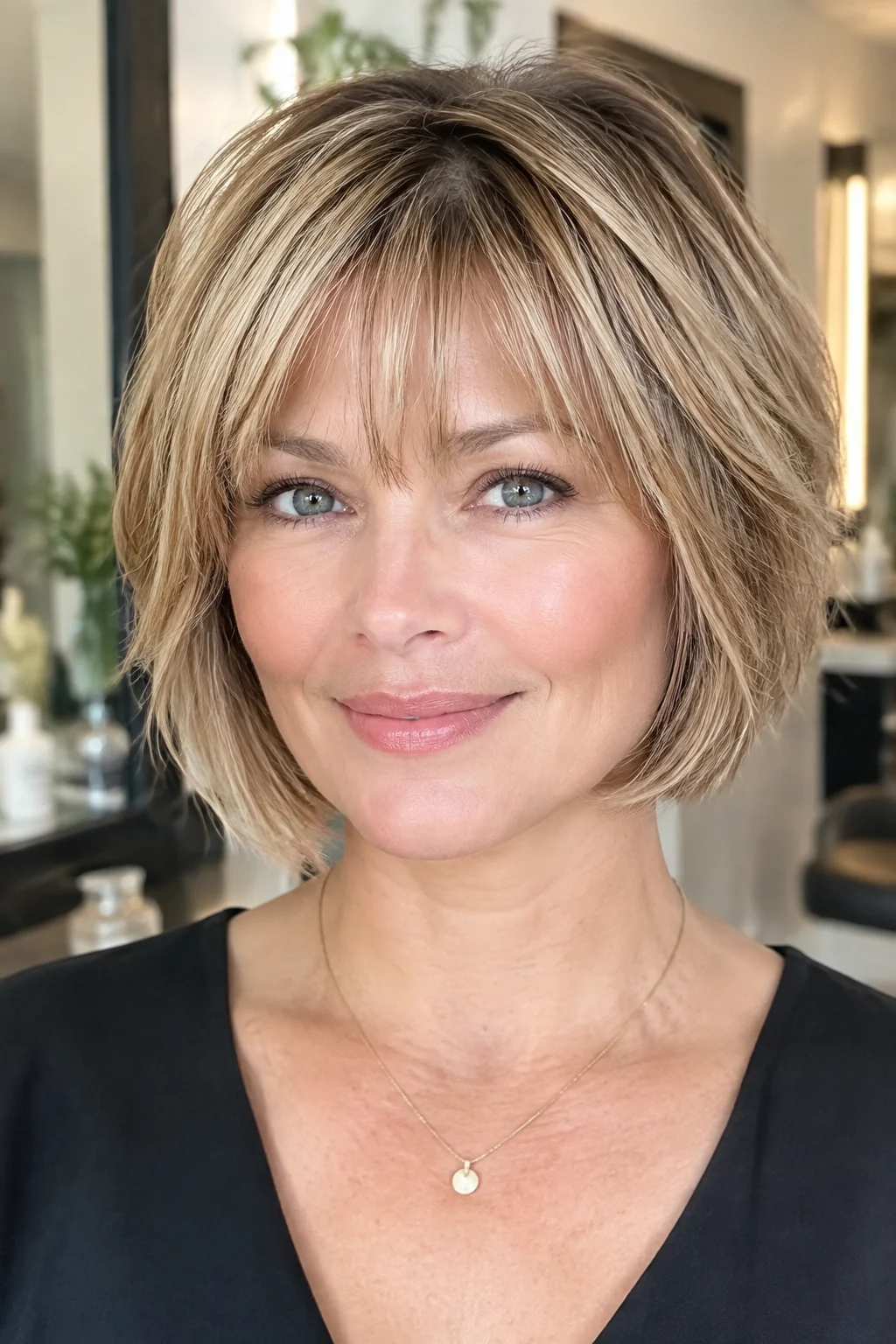
Pairing a bob with soft, feathered bangs changes the whole feel of the cut, making it look lighter and less structured. The bangs are cut with a razor or thinning shears so they have gaps instead of a solid blunt line across the forehead. This combination suits most face shapes since the wispy fringe can be parted or pushed to the side easily. It’s a good option if you want bangs but worry about committing to a heavy, blunt fringe.
16. Blunt Bangs Bob
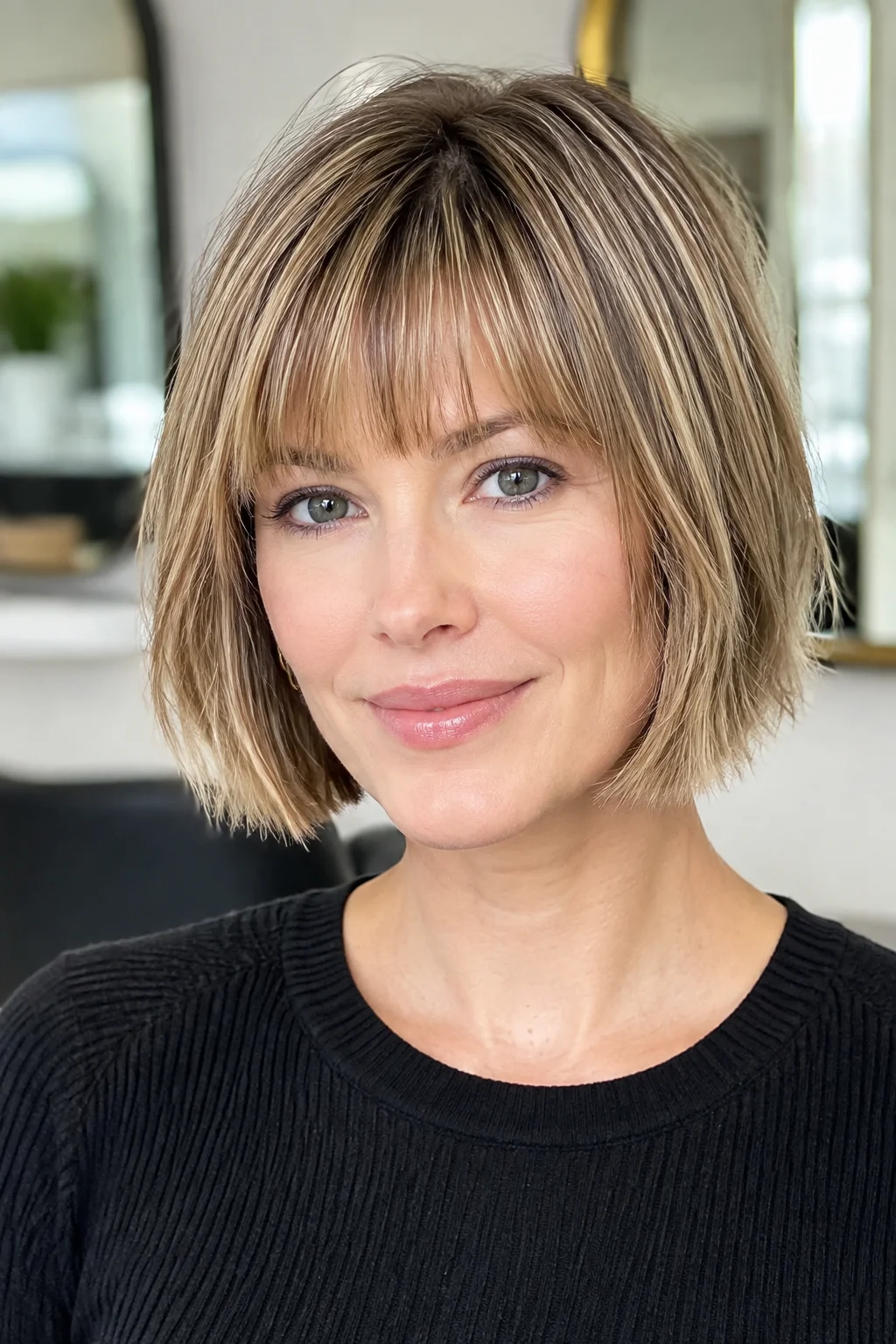
This pairs a clean, straight-across fringe with any bob length, creating a strong graphic look. The bangs usually hit right above the eyebrows and are cut thick enough to read as a solid shape. It suits oval and heart-shaped faces particularly well since the straight line balances a narrower chin. Hair with cowlicks near the hairline can make this combination tricky, so mention that during your consultation.
17. Disconnected Bob
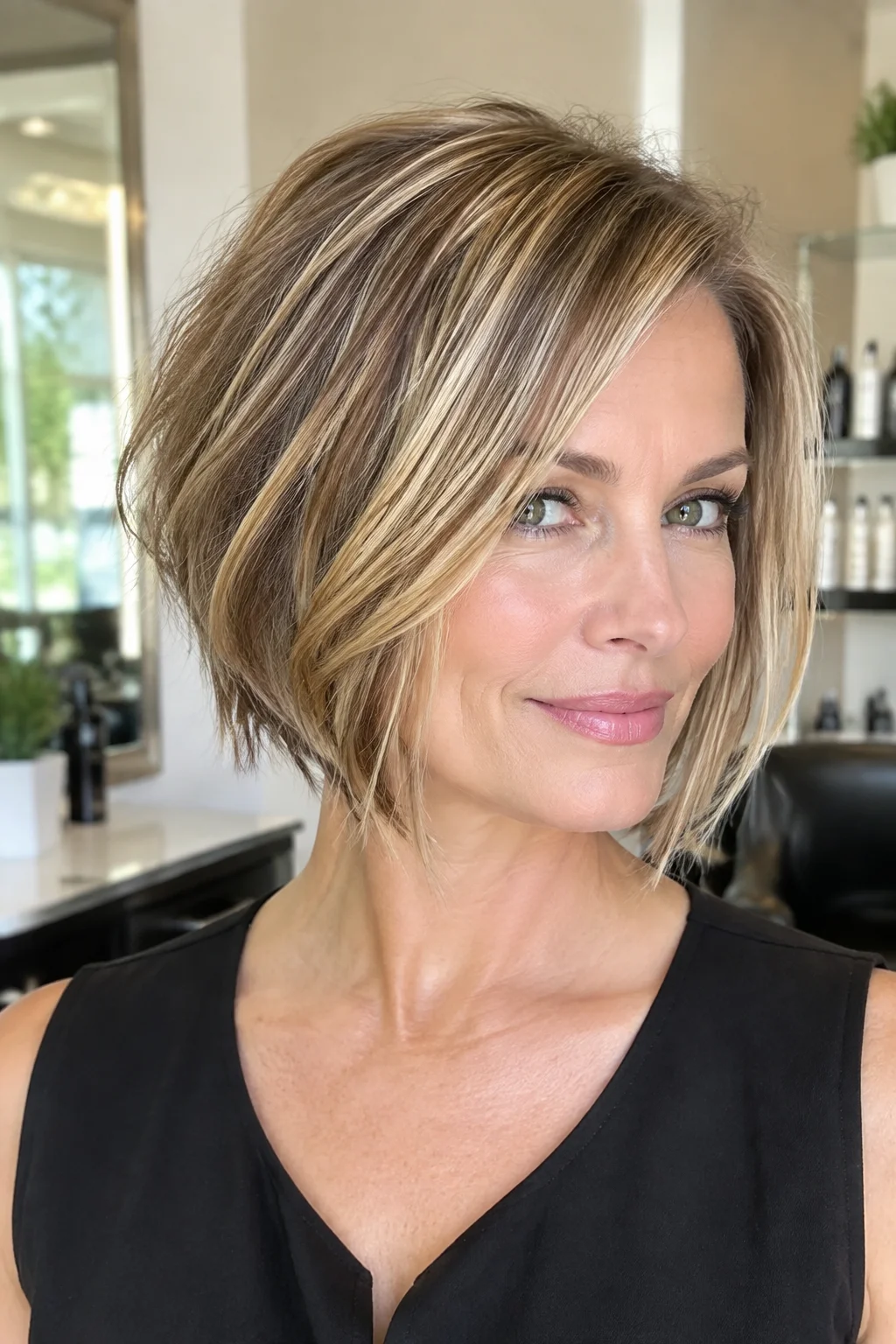
A disconnected bob has a deliberate gap between the top layers and the length underneath, creating two distinct sections instead of one blended shape. It often shows up paired with an undercut or shaved nape for extra contrast. This style suits people who want something a little unconventional and aren’t afraid of a cut that photographs with sharp lines. Styling usually involves pushing the top section back or to the side so the disconnection stays visible.
18. Undercut Bob
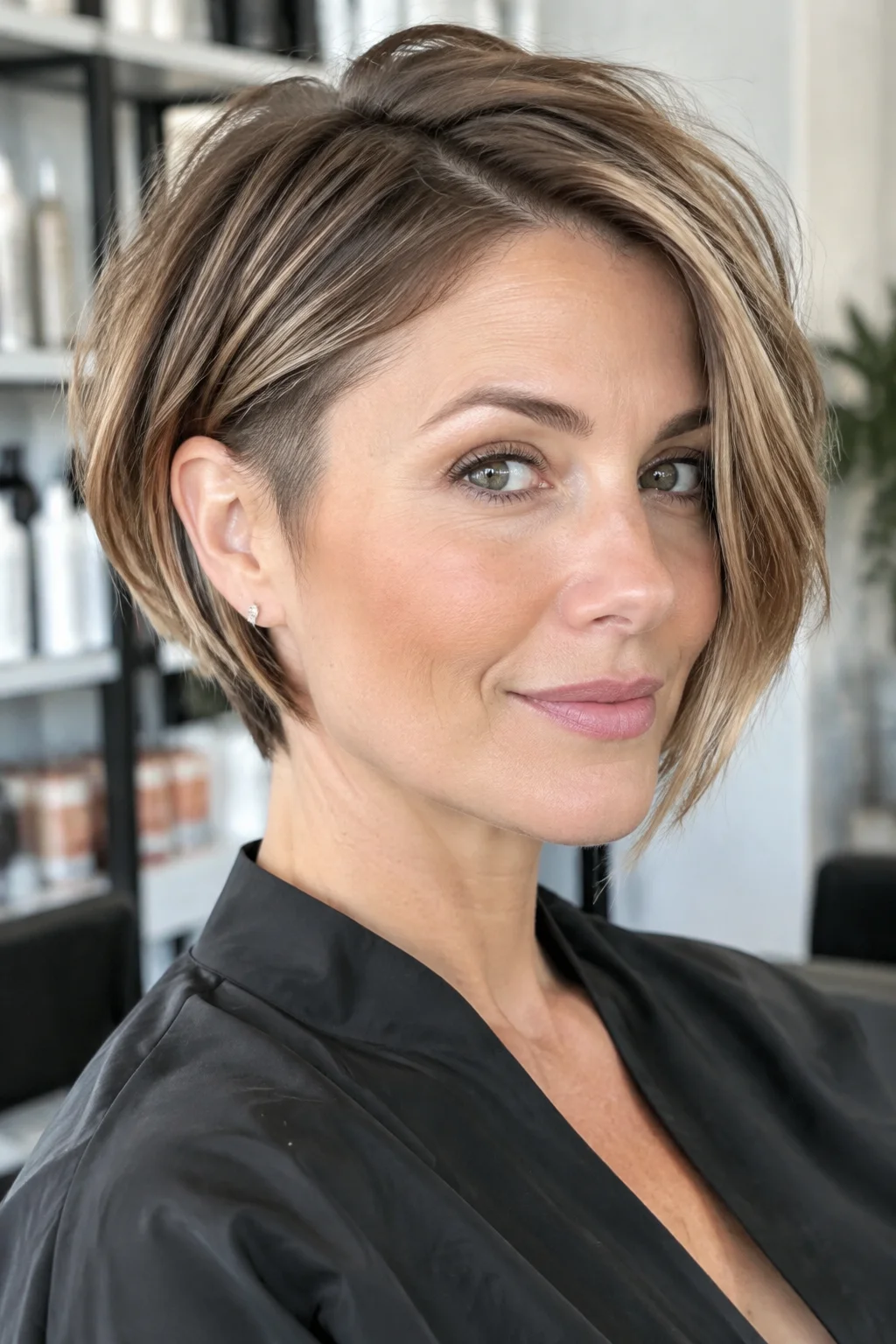
Shaving or closely cropping the hair underneath while keeping length on top gives this bob a hidden edge, literally. From the front it can look like almost any other bob, but flip it up and there’s a bold shaved section underneath. It’s popular with people who want the option to show off something unexpected or need to manage thick, heavy hair that feels hot in warmer months. The shaved part also grows out fairly low maintenance since it’s meant to be buzzed again in a few weeks anyway.
19. Modern Lob Bob
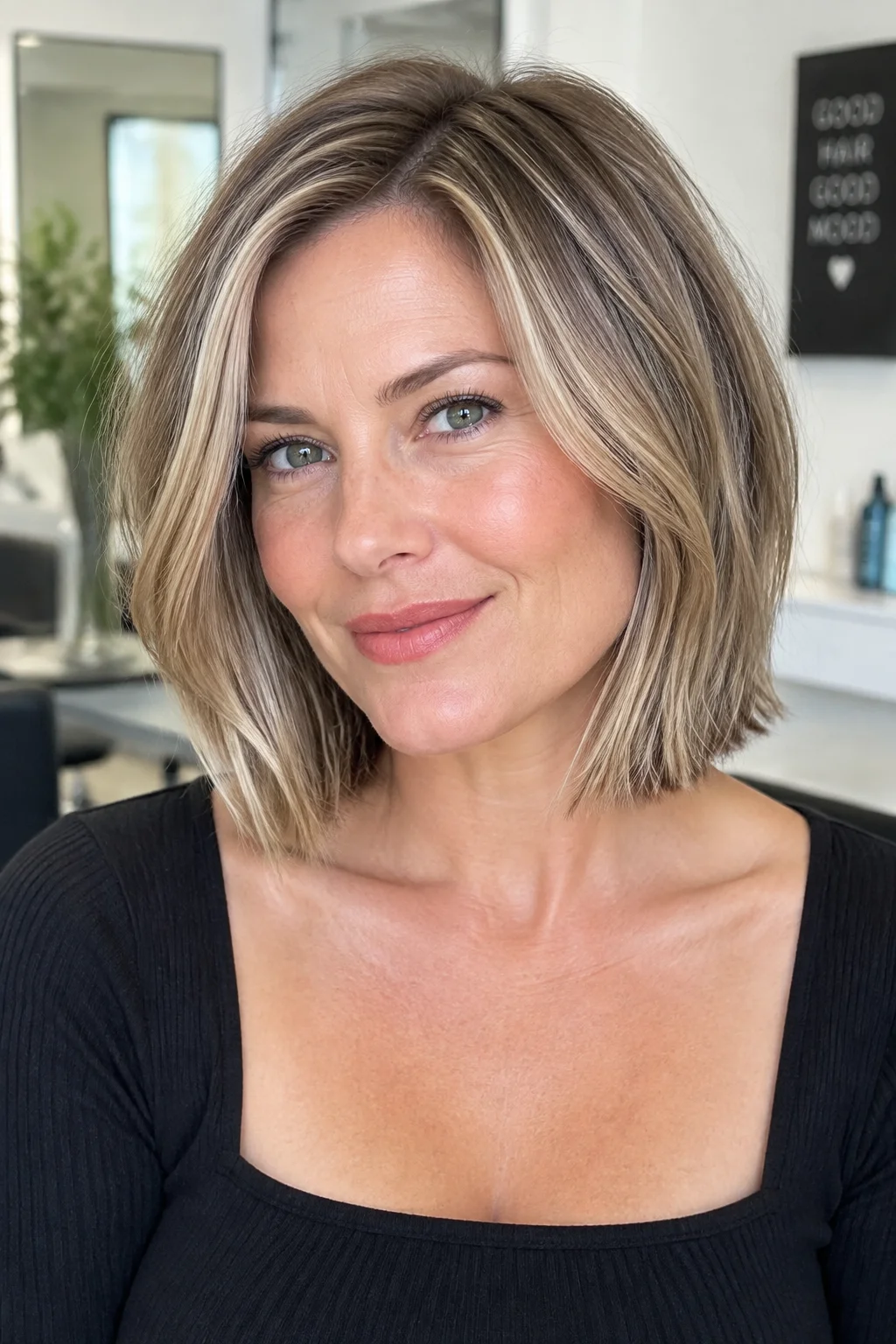
The lob, short for long bob, usually falls between the collarbone and shoulders, making it the longest cut on this list while still counting as a bob. It’s a flexible length that works straight, wavy, or curled, and it transitions well from office to weekend without much styling effort. This version adds subtle layering to prevent the ends from looking too heavy at that longer length. It’s often the easiest bob to grow into or out of since the length sits in such a forgiving middle zone.
20. Feathered Layers Bob
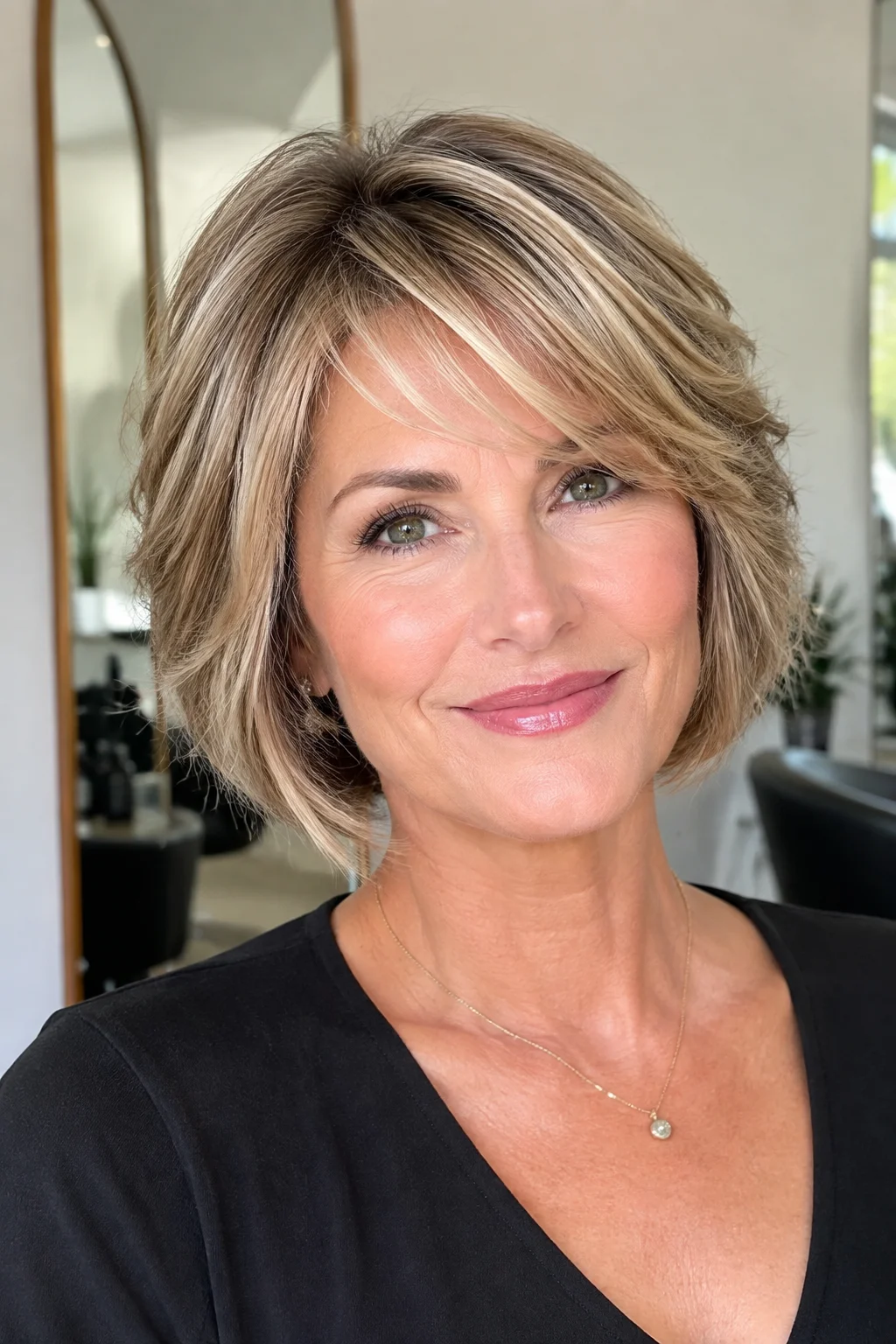
Soft, feathered layers throughout this bob remove bulk and add movement without going full-on choppy or shag-style. The layering is more subtle than a shag, so the overall shape stays recognizable as a bob rather than something looser. This cut suits hair with some natural texture since the feathering works with flyaways and waves instead of fighting them. It’s a solid middle-ground choice for anyone who wants layers but isn’t ready for heavy texturizing.
21. Slicked-Back Bob
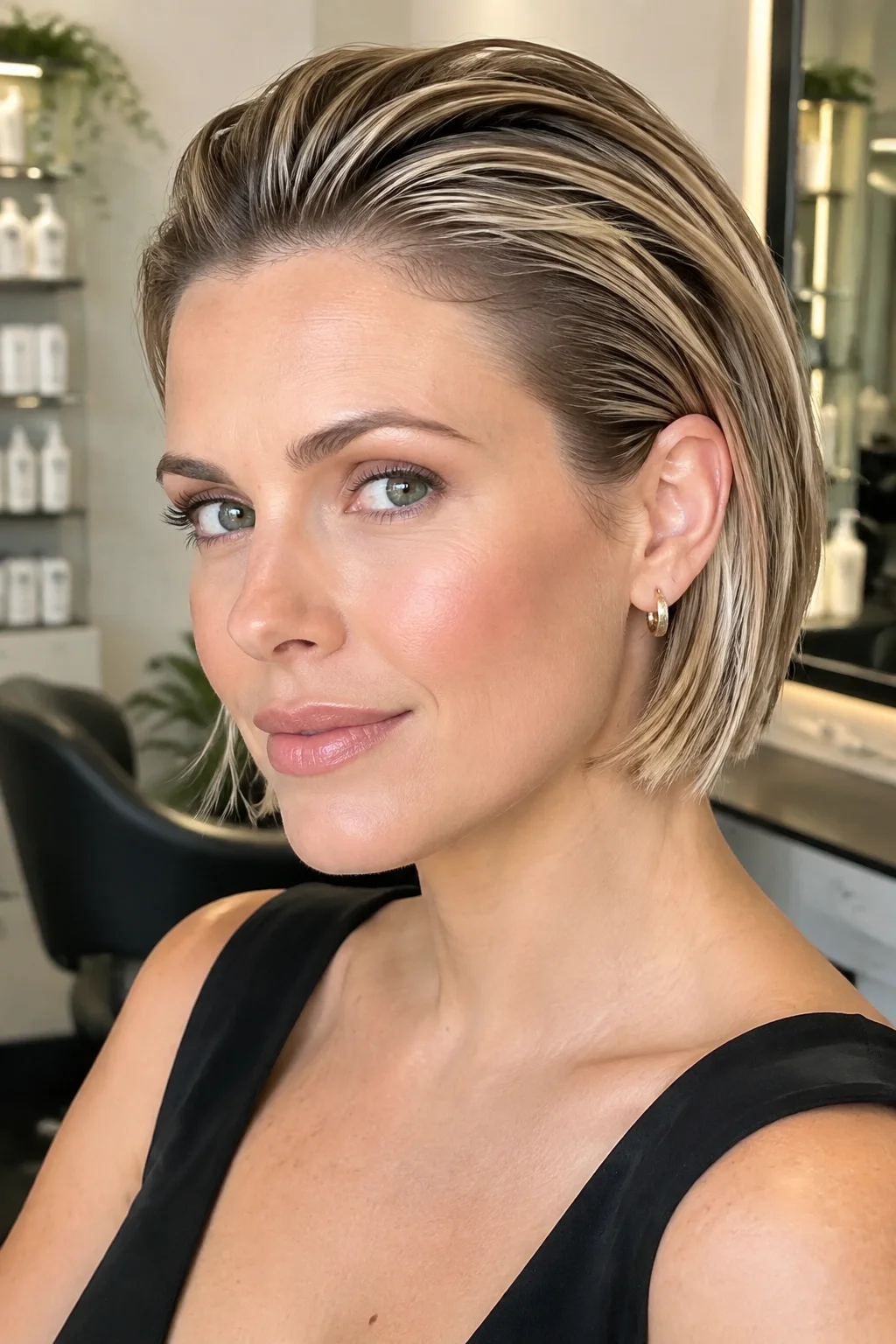
Instead of changing the cut itself, this style is about how a classic or graduated bob gets worn, pulled back smooth and close to the head with gel or a strong-hold cream. It looks sleek and a little tougher than the same bob worn loose. The style relies on a healthy hairline since every strand is visible once it’s pulled back. It works for a night out or anytime you want a change from your usual part without any extra cutting involved.
22. Messy Textured Bob
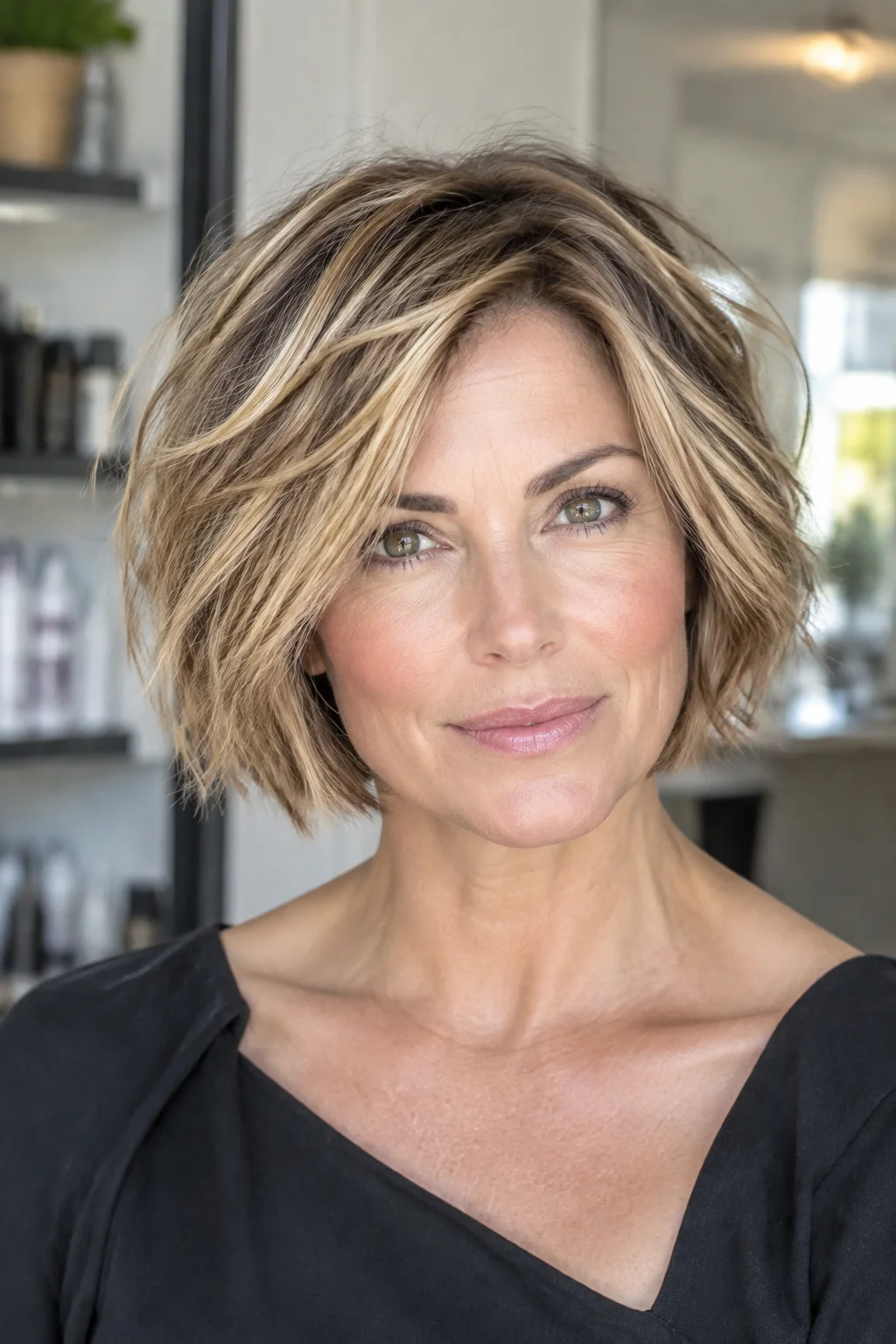
This bob looks like you ran your fingers through it and called it done, though getting that effect usually takes a texturizing spray and some strategic layering underneath. It’s the most relaxed option on this list, built for people who don’t want to spend more than five minutes styling in the morning. The layers are cut to create separation and piece-y ends rather than a smooth, uniform shape. Almost any hair type can wear this one since the messiness forgives a lot of natural texture and cowlicks.
Which Short Bob Actually Fits You
Picking from this many short hair bob haircuts comes down to three things: your hair texture, how much time you want to spend styling, and how bold you’re feeling. If you have fine hair, lean toward cuts that build in volume, like the graduated bob, the inverted bob, or the stacked bob. All three use layering tricks to create fullness that fine hair doesn’t have on its own.
If your hair is thick or coarse, the textured choppy bob, feathered layers bob, or messy textured bob will remove weight and keep things from looking like a helmet. Curly hair really only has one right answer here: the curly textured bob, cut dry and curl by curl, because any blunt cutting method risks an uneven shape once it dries.
For low maintenance, the modern lob bob, shag bob, and messy textured bob need the least daily effort. For a polished, put-together look, go with the classic blunt bob or the sleek rounded bob, but budget time for a blow-dry. A common mistake is requesting an asymmetrical bob or micro bob without discussing face shape first. Both are bold cuts that reward a real consultation rather than a quick point-and-go.