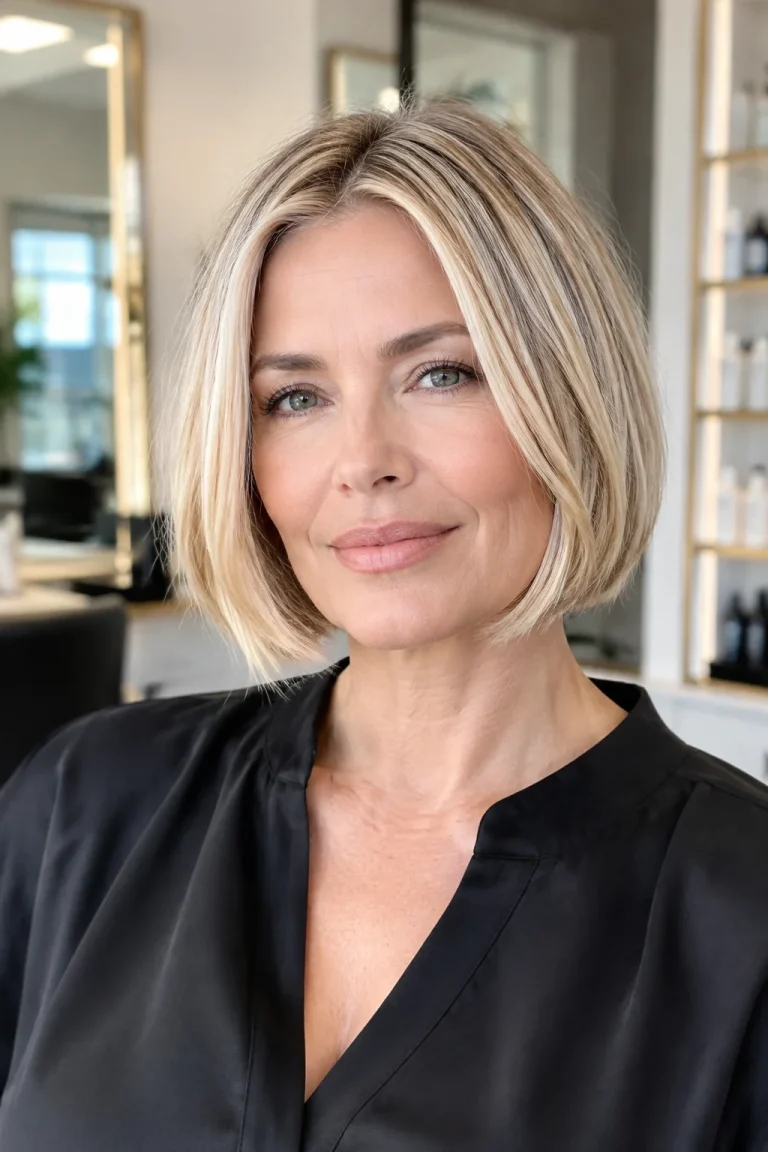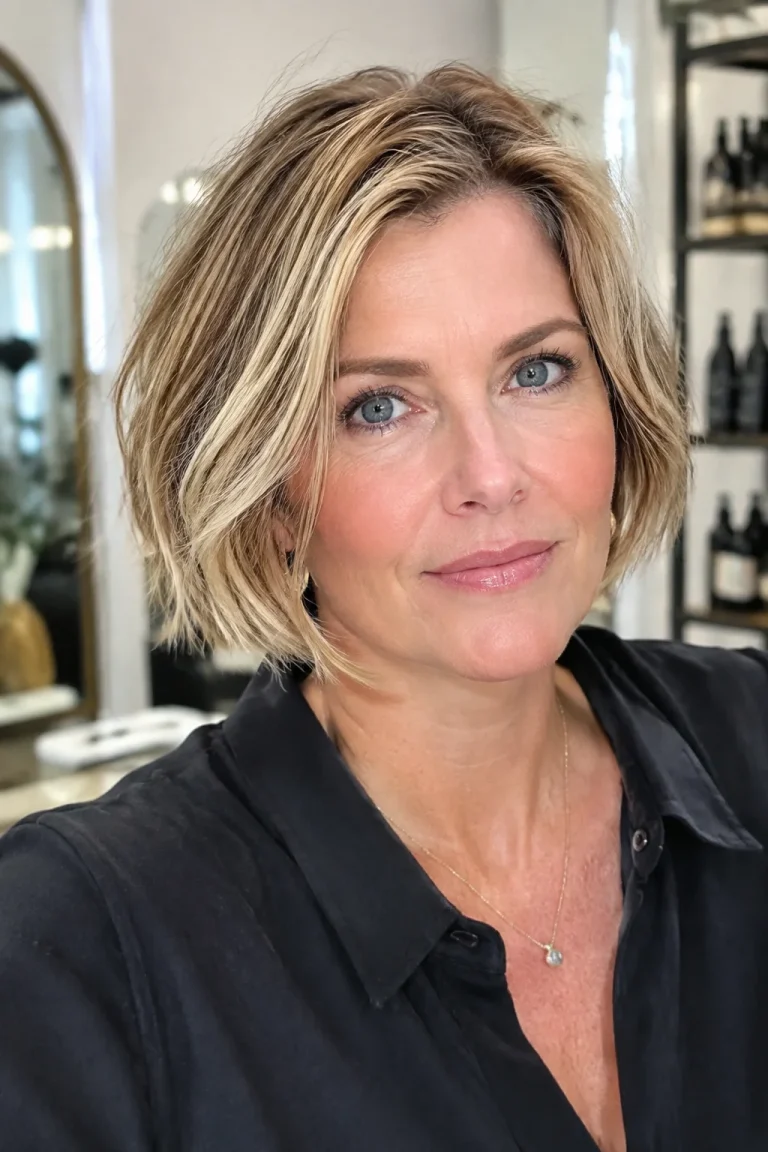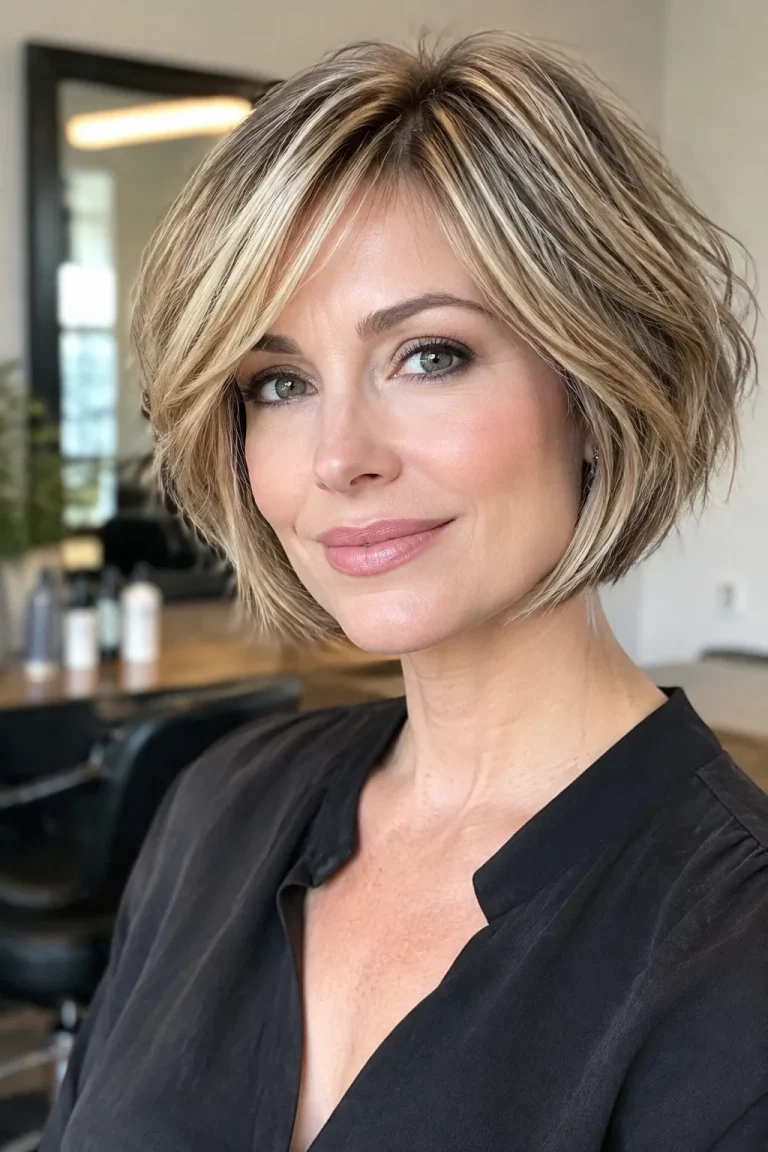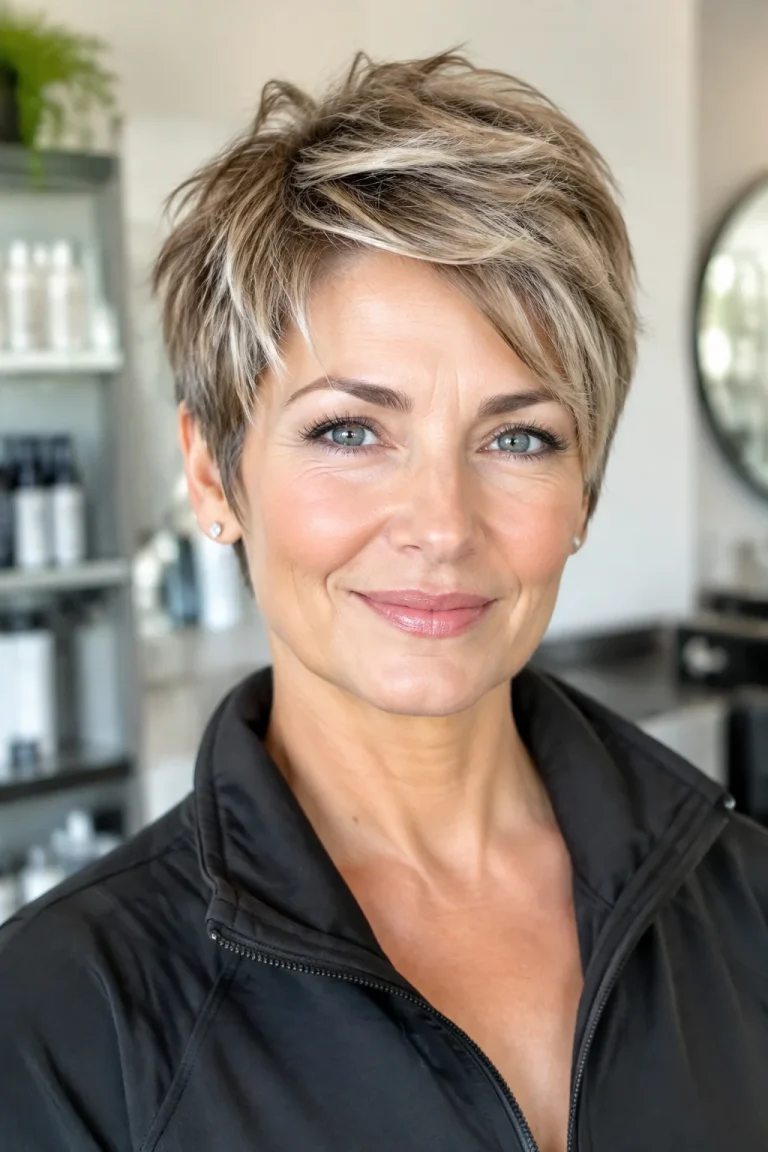
Mornings feel shorter every year, and a hairstyle that eats up twenty minutes before coffee just isn’t worth it anymore. If you’re tired of blow-drying, flat-ironing, or fighting with product just to leave the house, a shorter cut solves the problem at the root. Low-maintenance short hair pixie cuts work because they strip away the extra steps without stripping away style. A good pixie dries in minutes, holds its shape through a workout, and still looks put-together on day three. The trick is picking the right version for your hair texture, face shape, and how much gray or color you’re working with. Some pixies lean soft and grown-out, others go short and sharp, and a few sit right in between for days you want options. Below are two dozen ways to wear this cut, broken down by texture, face shape, age, and lifestyle, so you can walk into your next salon visit knowing exactly what to ask for.
Classic Textured Pixie
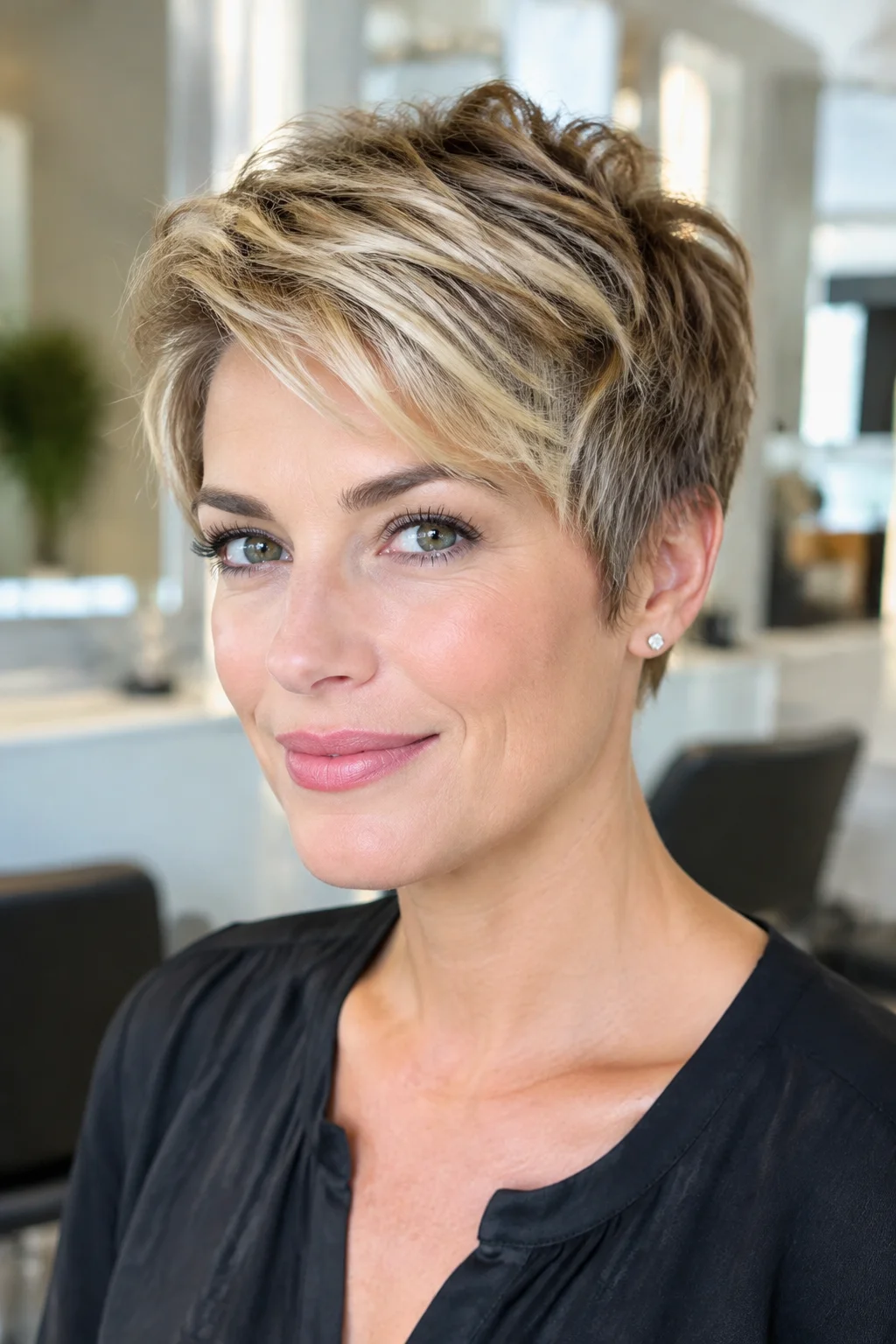
This is the pixie most people picture when they hear the word. Short on the sides and back, slightly longer on top, with choppy texture cut into the ends so it never looks flat. It works on almost any hair type and grows out without leaving an awkward in-between stage. A little pomade rubbed between your palms and scrunched through damp hair is all the styling it needs. Tip: ask your stylist for point-cutting on top, which keeps the texture looking soft instead of spiky. A light mist of heat protectant before styling helps the finish last.
Tapered Fade Pixie
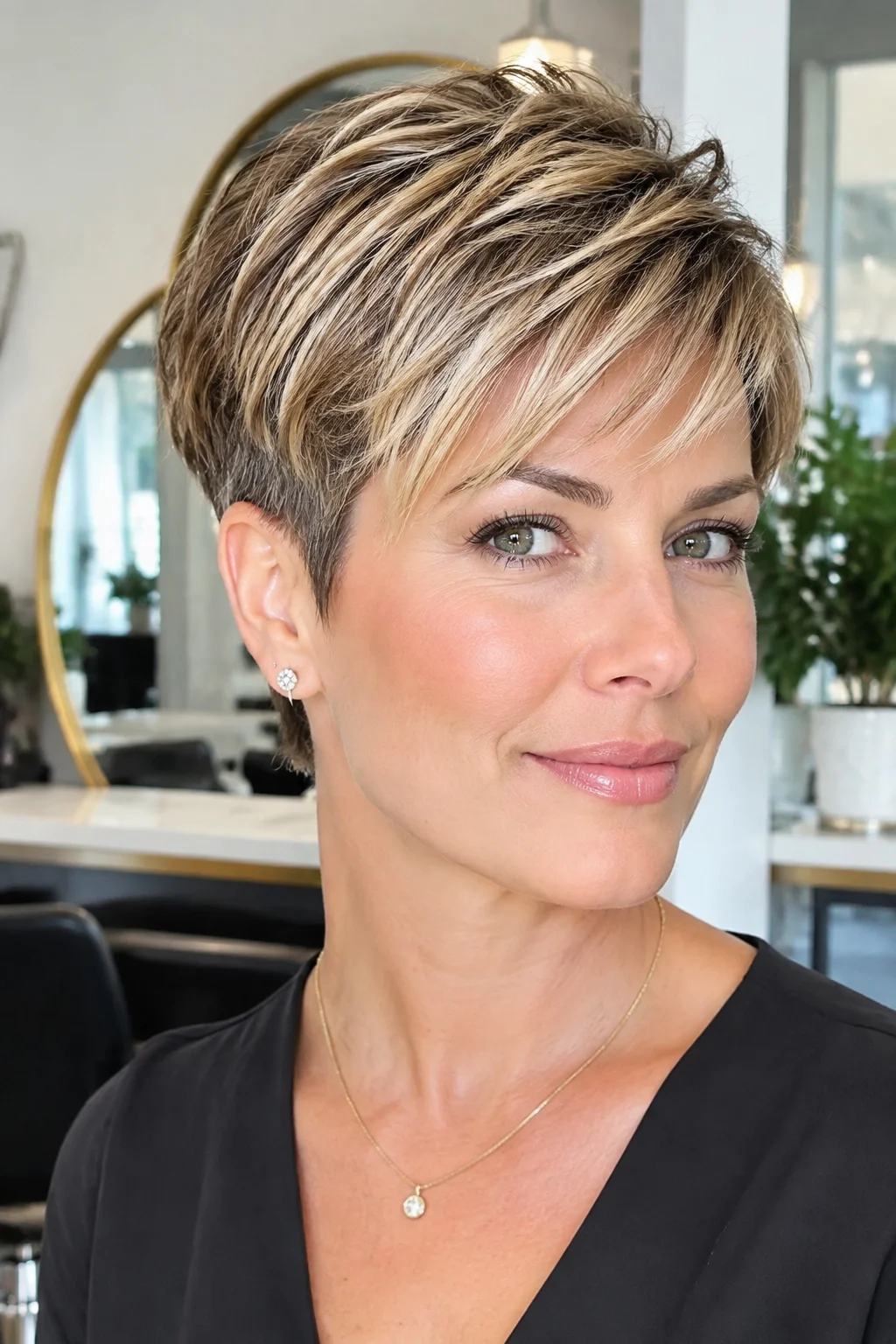
The sides and back taper down to nearly nothing, blending into skin the way a men’s fade does, while the top stays longer and textured. It reads polished immediately after a cut and keeps that sharp line for weeks. Barbershops handle this cut well since it uses the same clipper work as a men’s fade. You’ll need touch-ups every three to four weeks to keep the taper crisp, but between visits there’s almost no styling required. A light mist of heat protectant before styling helps the finish last. A light mist of heat protectant before styling helps the finish last.
Grown-Out Pixie Bob
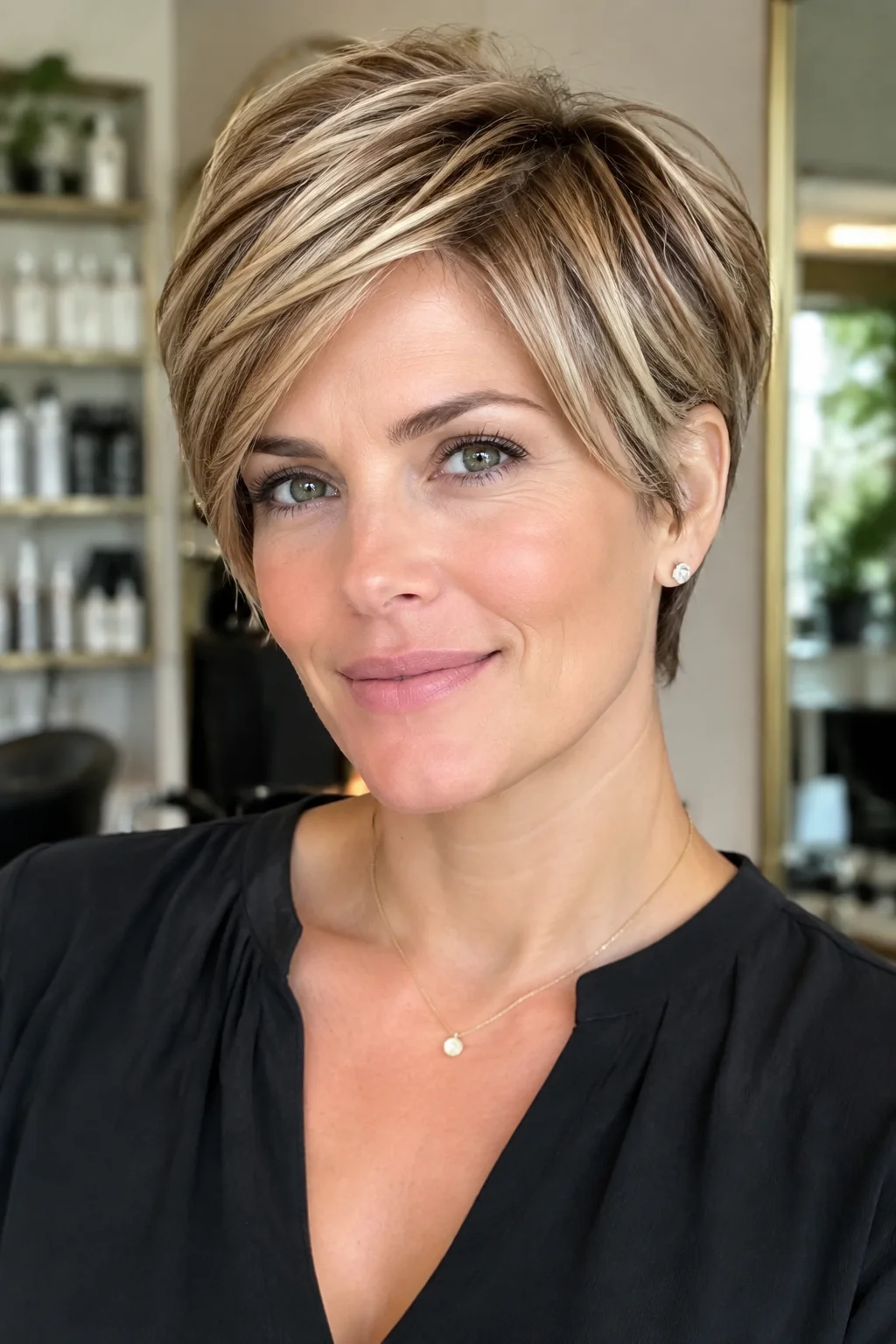
Somewhere between a pixie and a bob, this version has length at the nape and sides that brushes the jaw, with shorter layers only through the crown It suits anyone who wants short hair but isn’t ready to commit to clippers near the ears The longer pieces give you a little more to tuck behind your ears or push to one side
Straight-Across Bangs Pixie
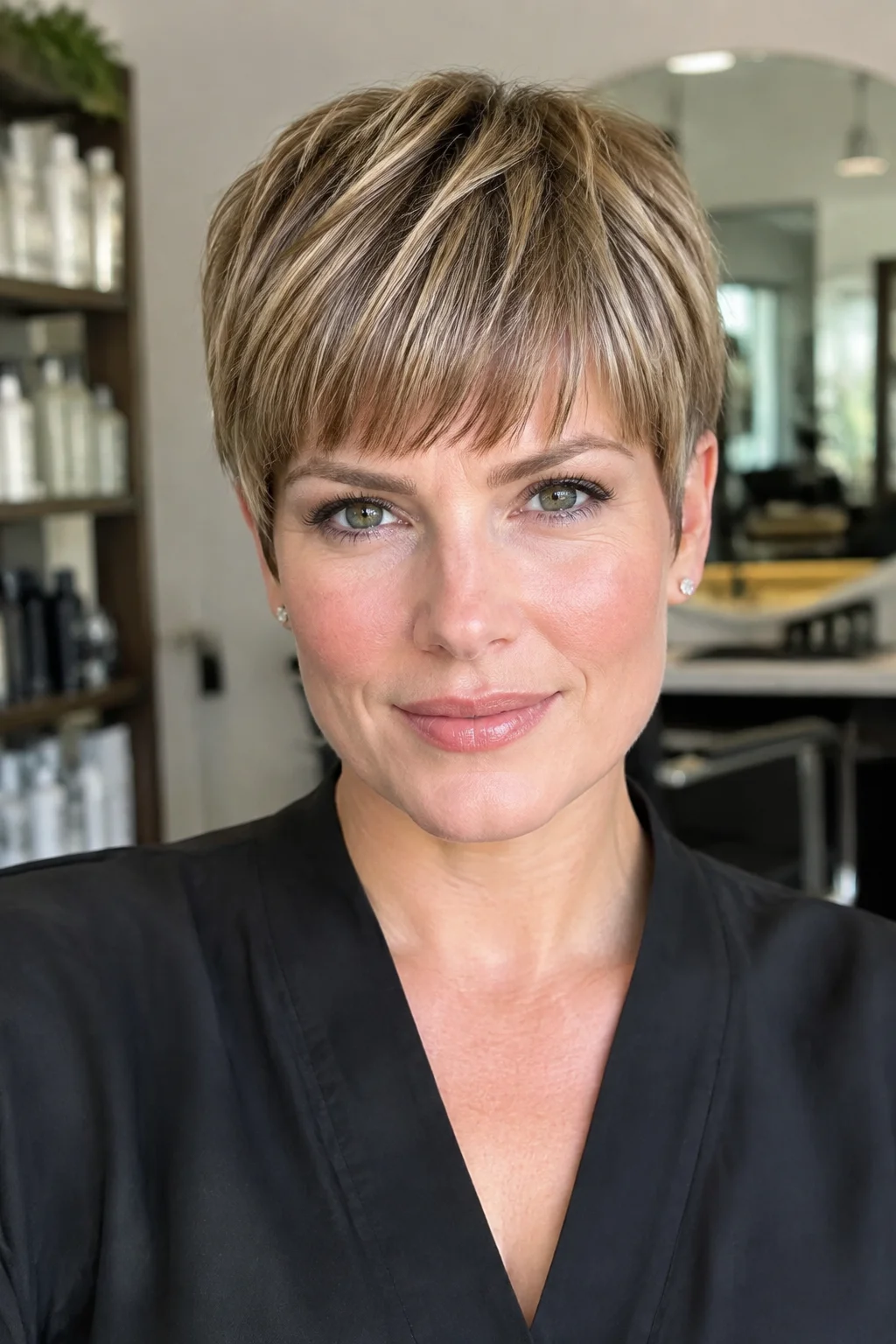
Blunt bangs cut straight across the forehead give this pixie a graphic, modern look that contrasts nicely with soft layers everywhere else. It works best on straight or slightly wavy hair since curls tend to fight a blunt line. The bangs need trimming every few weeks to stay sharp, but the rest of the cut holds its shape for a full growth cycle. Tip: keep a small pair of grooming scissors at home for quick bang trims between salon visits.
Side-Swept Pixie
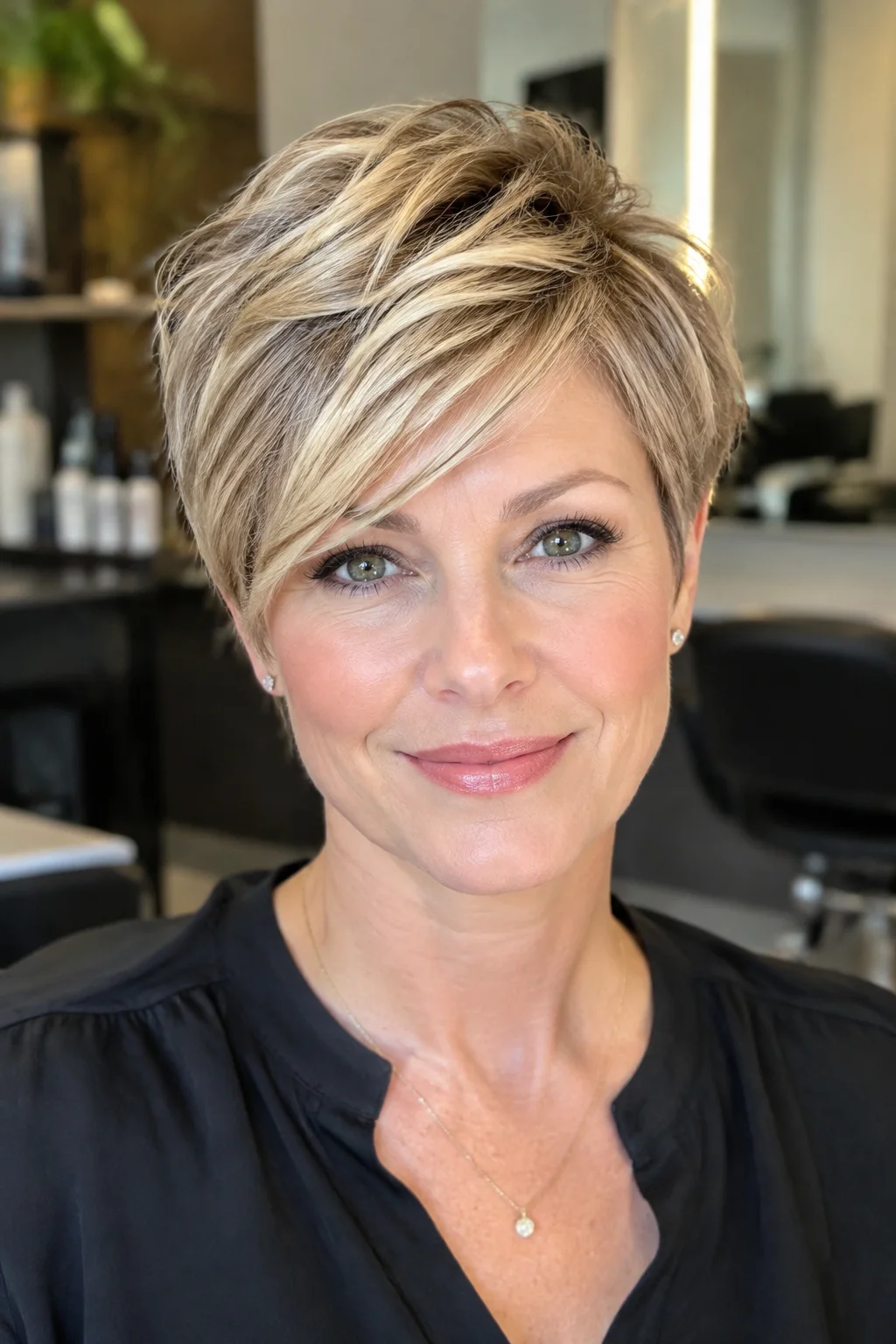
Longer fringe swept to one side softens the whole face and adds a bit of movement that a straight-across cut doesn’t have. This style flatters rounder faces by breaking up width across the forehead. It takes almost no effort, a quick comb-through and a dab of light cream, and still looks intentional. Many women choose this over a blunt fringe because it grows out gracefully instead of needing constant trims.
Curly-Haired Pixie
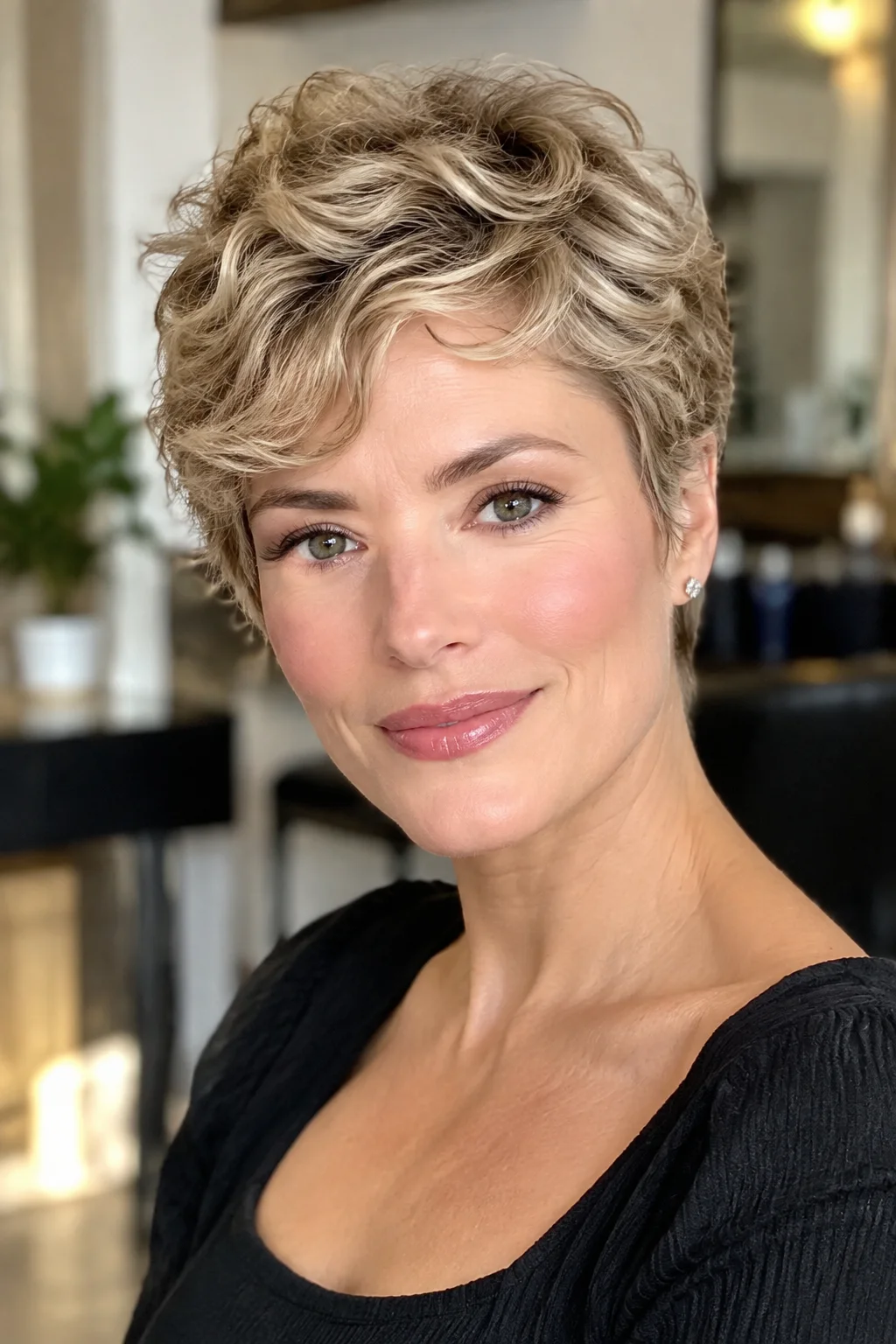
Curls shrink up when they’re cut short, so a curly pixie usually ends up a bit longer than you’d expect once it’s dry. Layers need to be cut curl by curl, dry, so each ring falls where it should instead of puffing out. This cut gives natural curl patterns room to spring and coil without the weight of long hair pulling them straight. A light curl cream scrunched in while hair is damp keeps the shape defined, and there’s rarely any need for heat tools afterward. Expect some shrinkage, embrace it, and trust a stylist who has experience cutting curls specifically.
Fine Hair Pixie
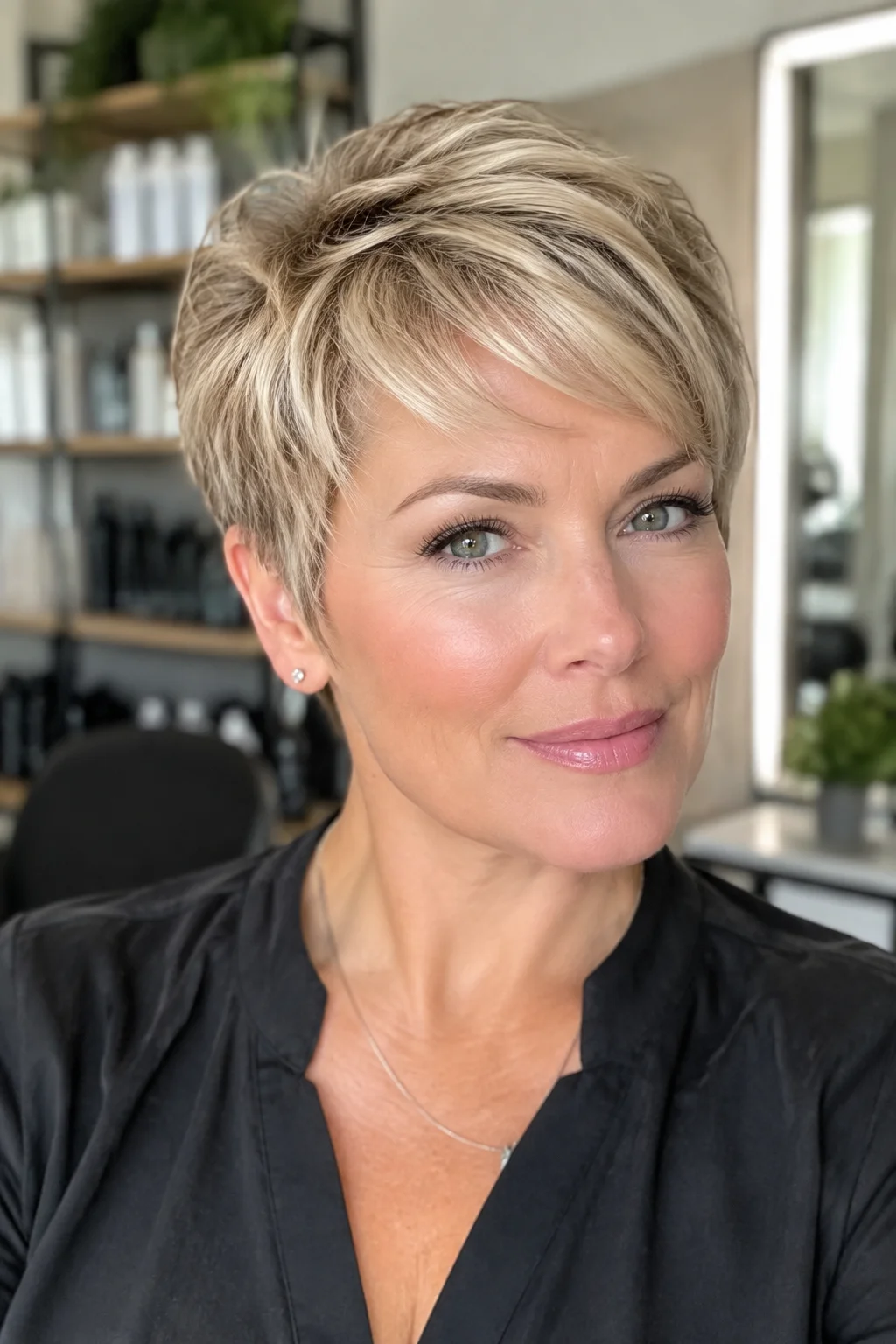
Fine strands can go flat and limp if a pixie has too much weight left in it, so this version relies on shorter layers that create the illusion of thickness. Texturizing sprays or a lightweight mousse at the root give it lift without weighing it down. Keeping the back and sides especially short helps balance out hair that doesn’t have much natural body. This cut actually gets easier to style the shorter it is, since there’s less length for fine hair to collapse under.
Thick Hair Pixie
Thick hair needs the opposite approach, with layers thinned out so the cut doesn’t balloon into a triangle shape. Heavy texturizing or point-cutting removes bulk while keeping the overall length even. Without this thinning, a pixie on thick hair can feel bulky by midafternoon, almost like wearing a hat that’s slightly too warm. Regular trims every four to five weeks keep the shape from growing out into a mushroom silhouette.
Androgynous Buzz Pixie
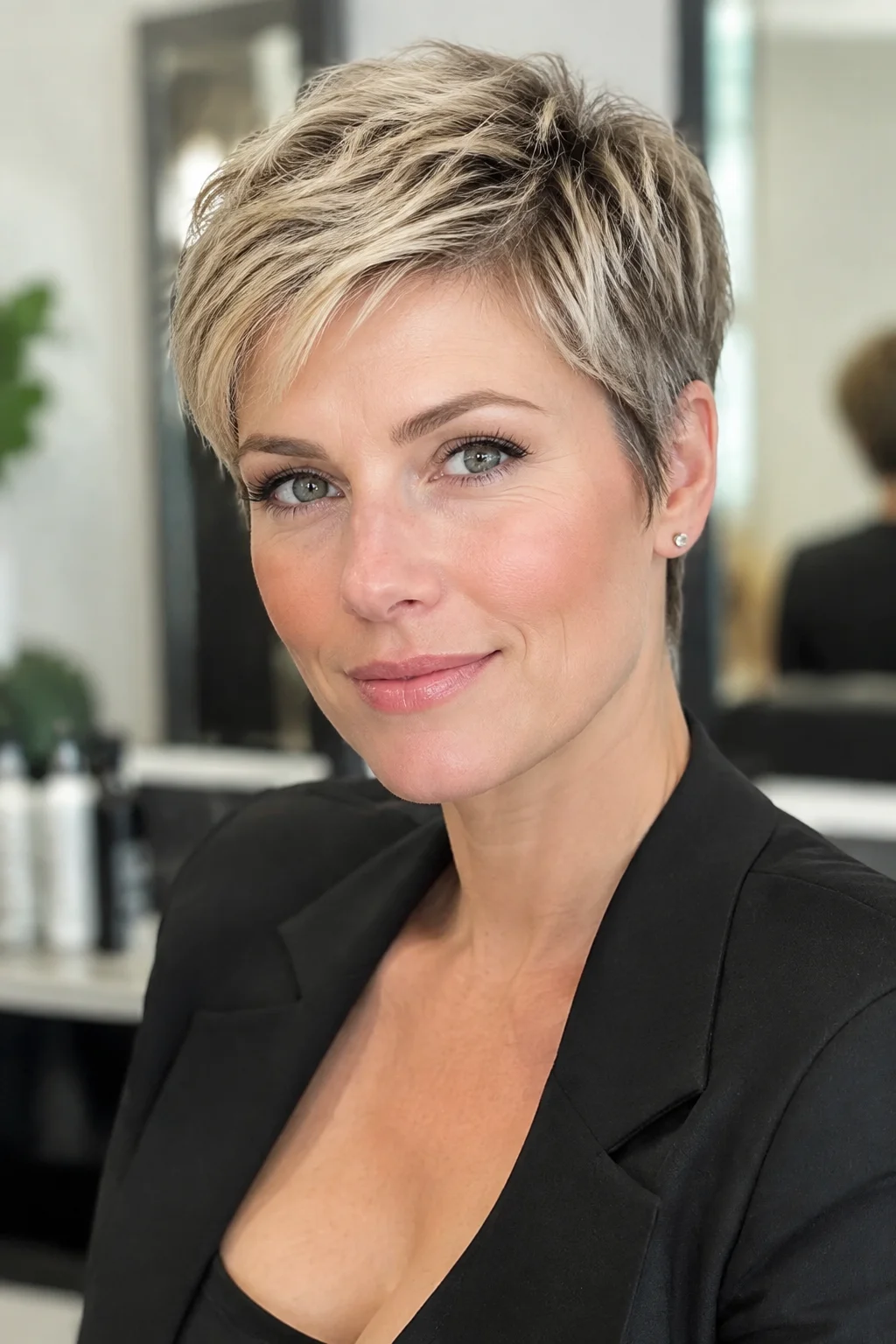
This is the shortest end of the pixie spectrum, cut close all over with clippers and barely any length left on top. It’s about as low maintenance as hair gets since there’s nothing to style at all. A little scalp oil keeps things from looking dry, and that’s the entire routine. This cut suits anyone who wants to skip hair tools completely and still have a defined, intentional look.
Longer Crown Pixie
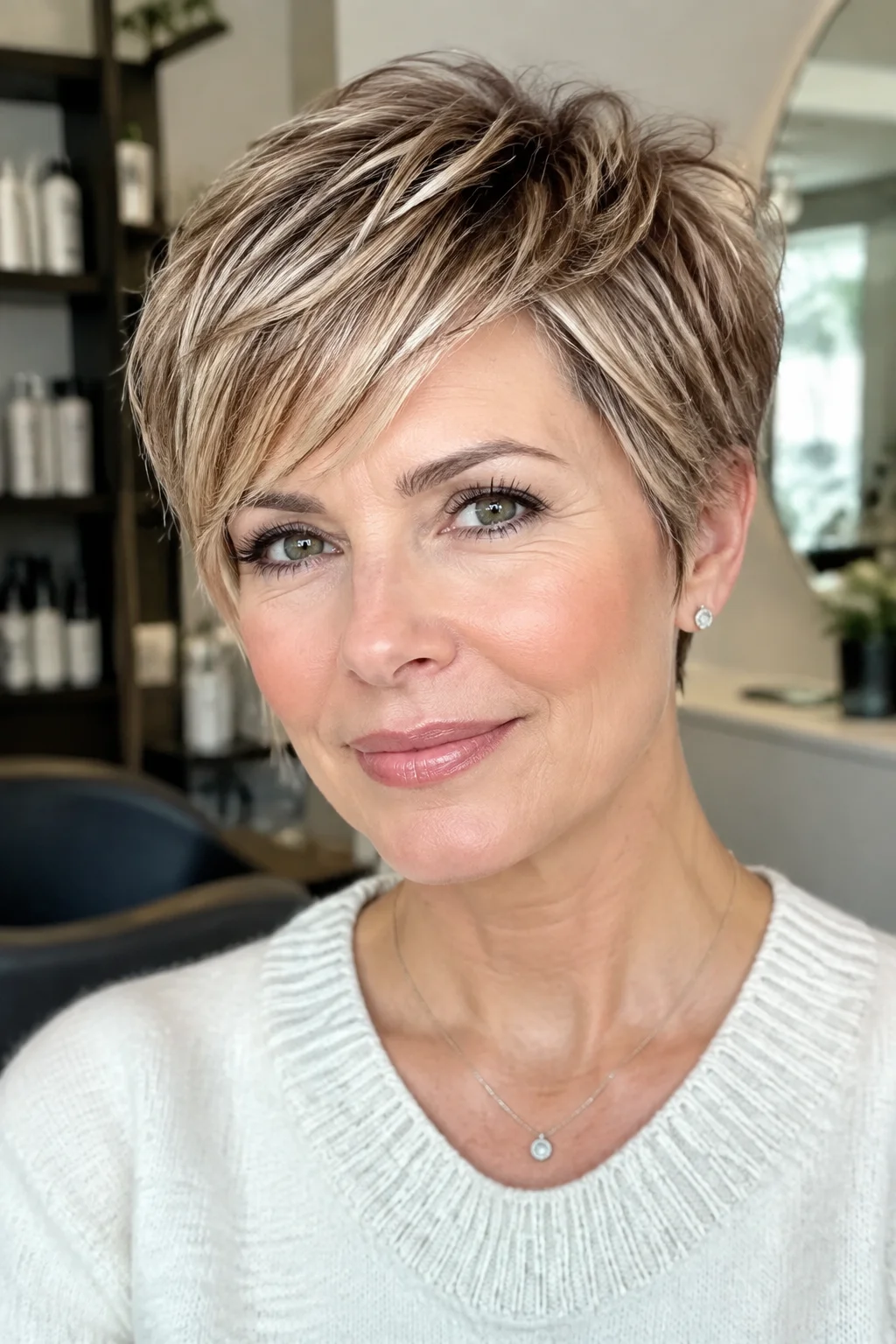
Here the sides and back stay short while the crown keeps several inches of length, giving you options to spike it up, sweep it back, or let it fall soft. It’s a pixie for people who miss having something to do with their hands in the morning but don’t want long hair to manage overall. Texturizing paste worked through damp or dry hair controls the longer pieces on top. Tip: ask for the crown layers cut at varying lengths so the style doesn’t look like a flat helmet when it grows past a few weeks.
Round Face Pixie
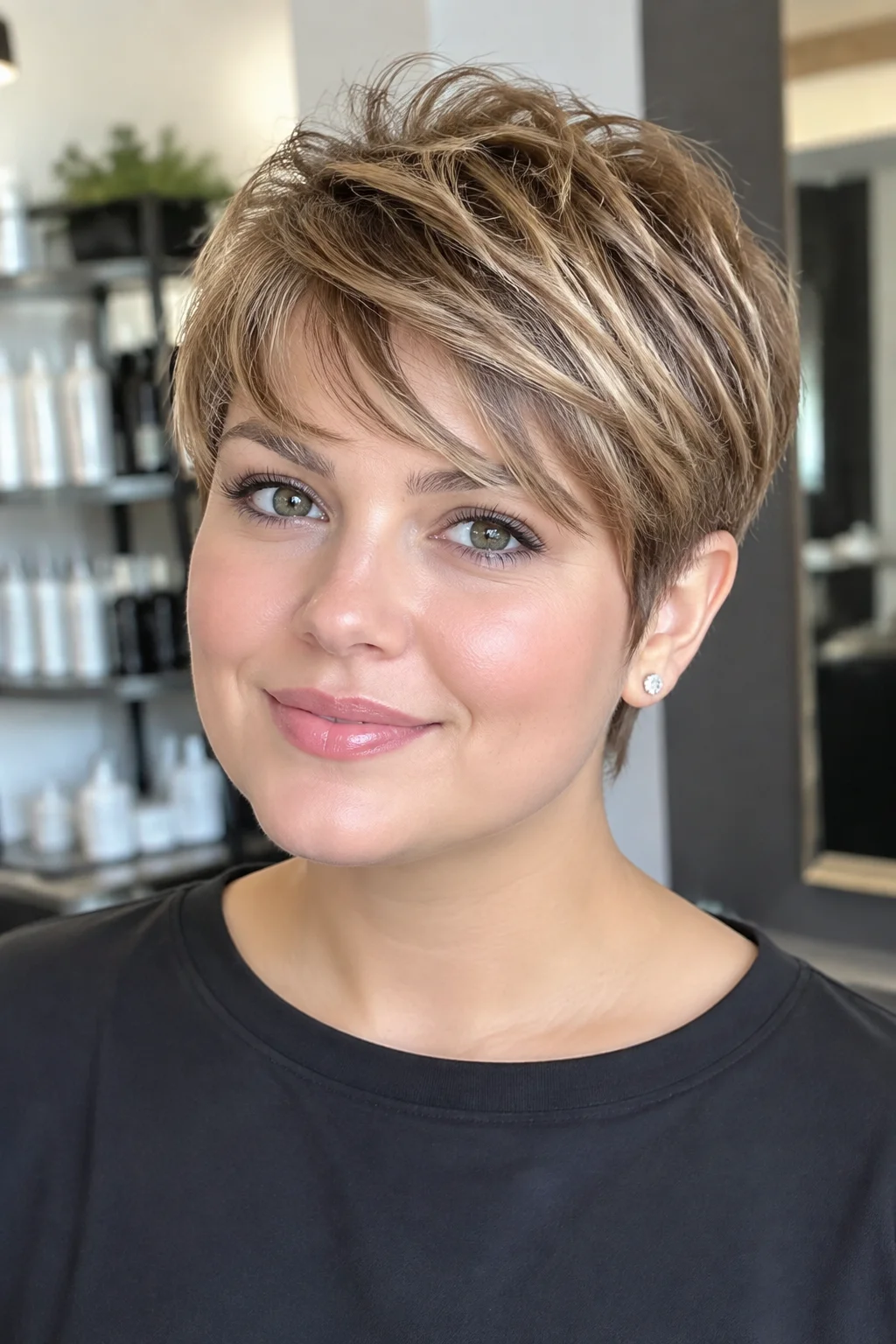
Height on top and shorter sides are the two things that matter most here, since they add length visually instead of width. Avoid rounded, full shapes that sit close to the cheeks, because they tend to echo the roundness of the face rather than balance it. Asymmetry, whether in the fringe or the part, also helps break up a circular outline. A stylist can check this against your bone structure in person, but height at the crown is almost always the right call.
Oval Face Pixie
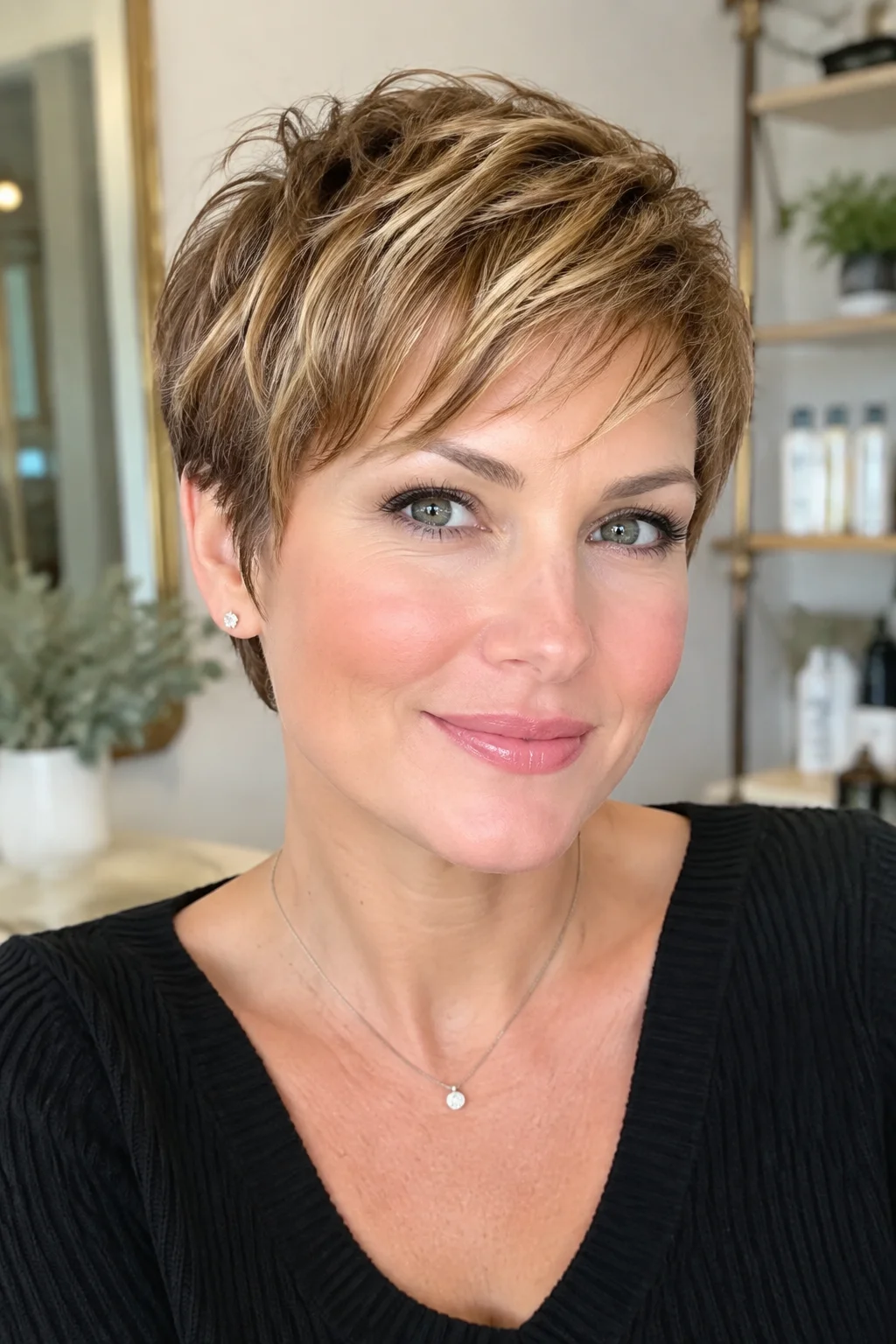
Oval faces can wear nearly any pixie shape without much concern, which makes this one of the easier face shapes to cut for. Soft fringe, side-swept bangs, textured crowns, even a close buzz all sit well on these proportions. The main thing to watch is not covering up the natural balance of the face with too much weight at the jawline. If your face shape is oval, use the cut as a chance to pick a style based on lifestyle and hair texture instead of worrying about correction.
Square Face Pixie
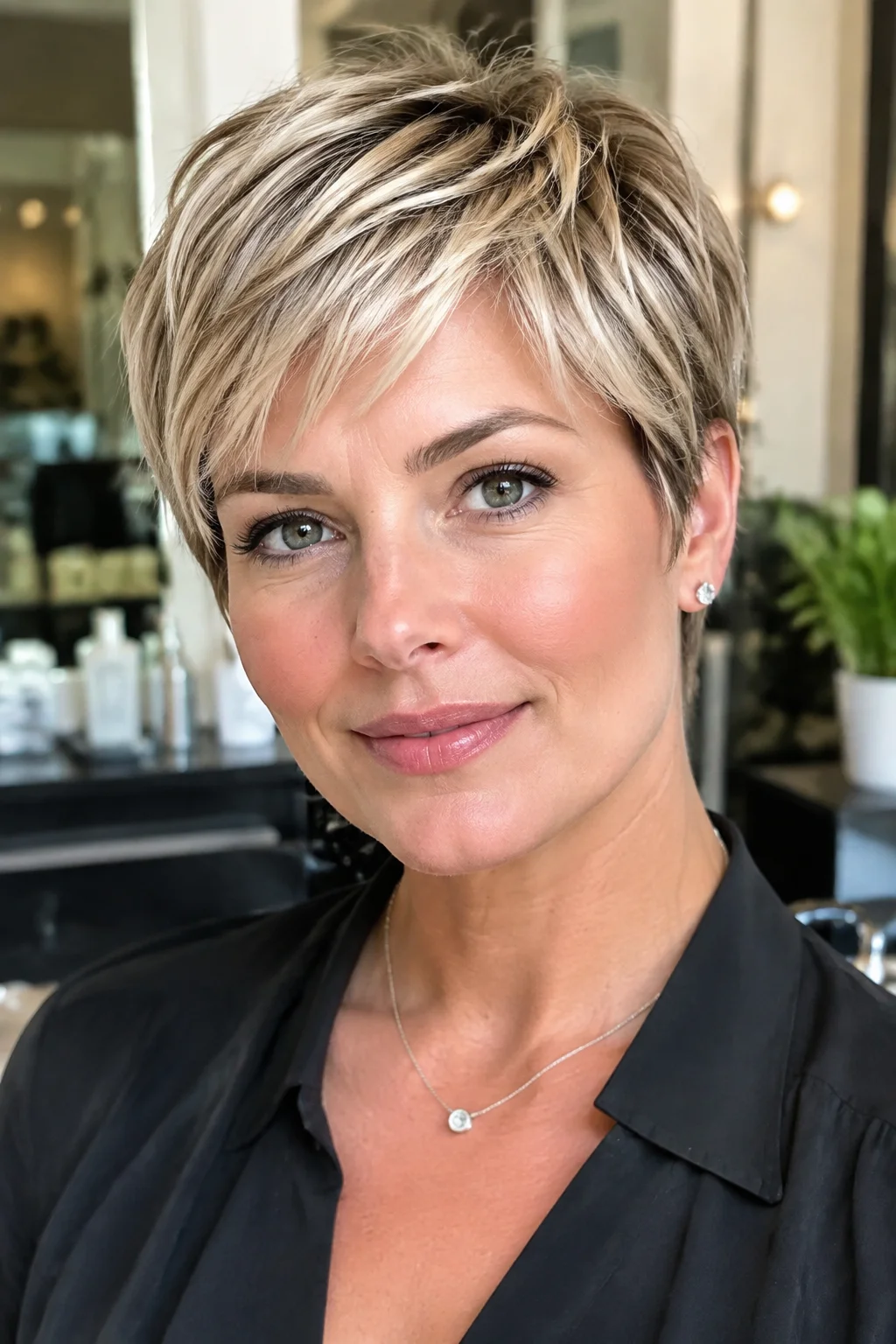
Soft, textured layers around the jaw and temples take the edge off strong, angular bone structure without hiding it completely. A side part also helps break up the symmetry of a square face in a flattering way. Avoid anything cut too blunt or geometric near the jawline, since it tends to echo the angles instead of softening them. Longer, wispy pieces near the cheeks do more work here than volume on top.
Gray or Silver Pixie
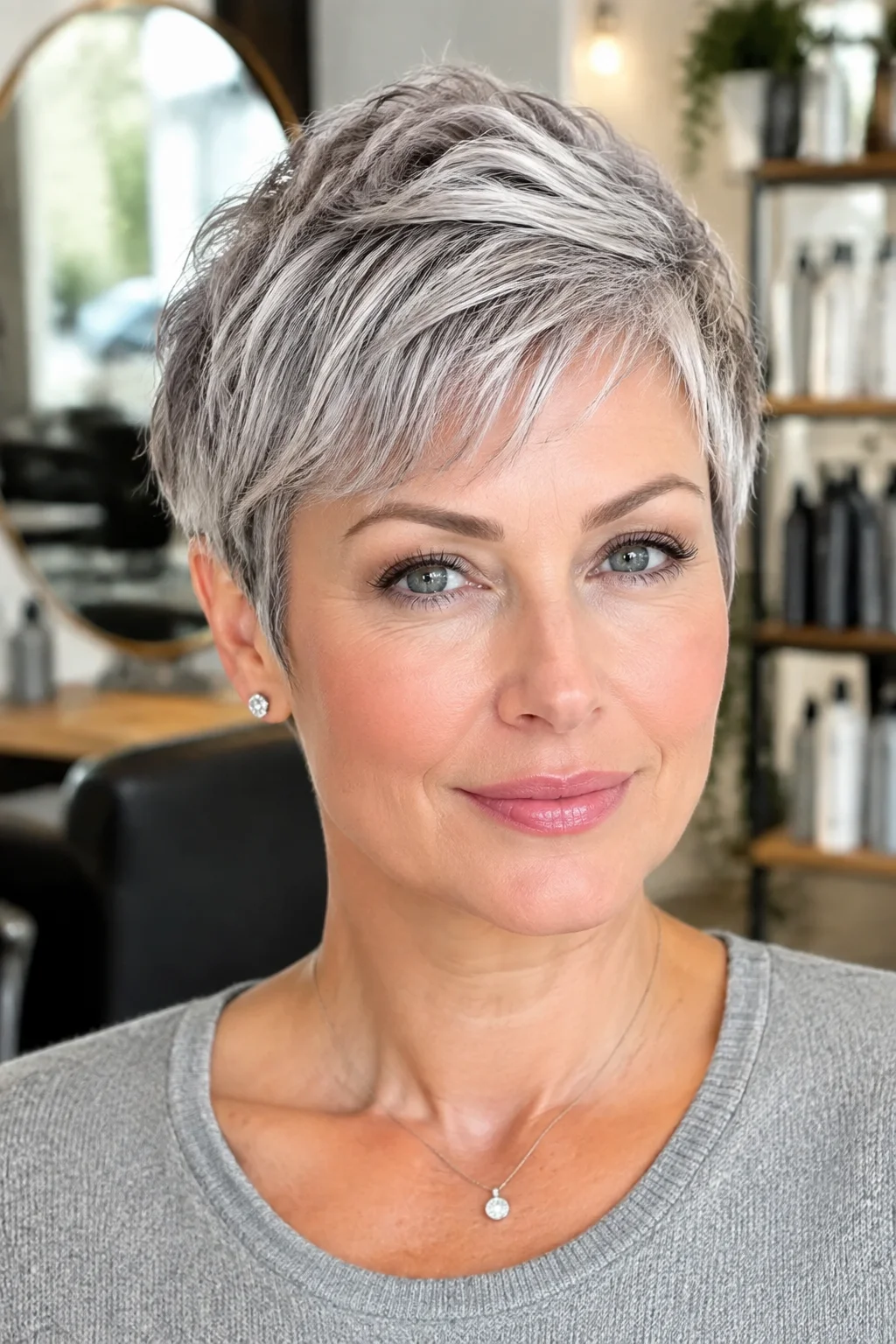
Gray hair often has a different texture than it did before, sometimes wirier, sometimes finer, and a pixie cut adapts easily to either. Keeping the cut short highlights the color itself rather than letting it fade into longer, duller-looking lengths. Purple or blue-toned shampoo once a week keeps brassiness from creeping into lighter silver tones. This cut pairs especially well with a textured top, since movement catches the light and makes gray look deliberate rather than simply unstyled.
Straight Hair Pixie
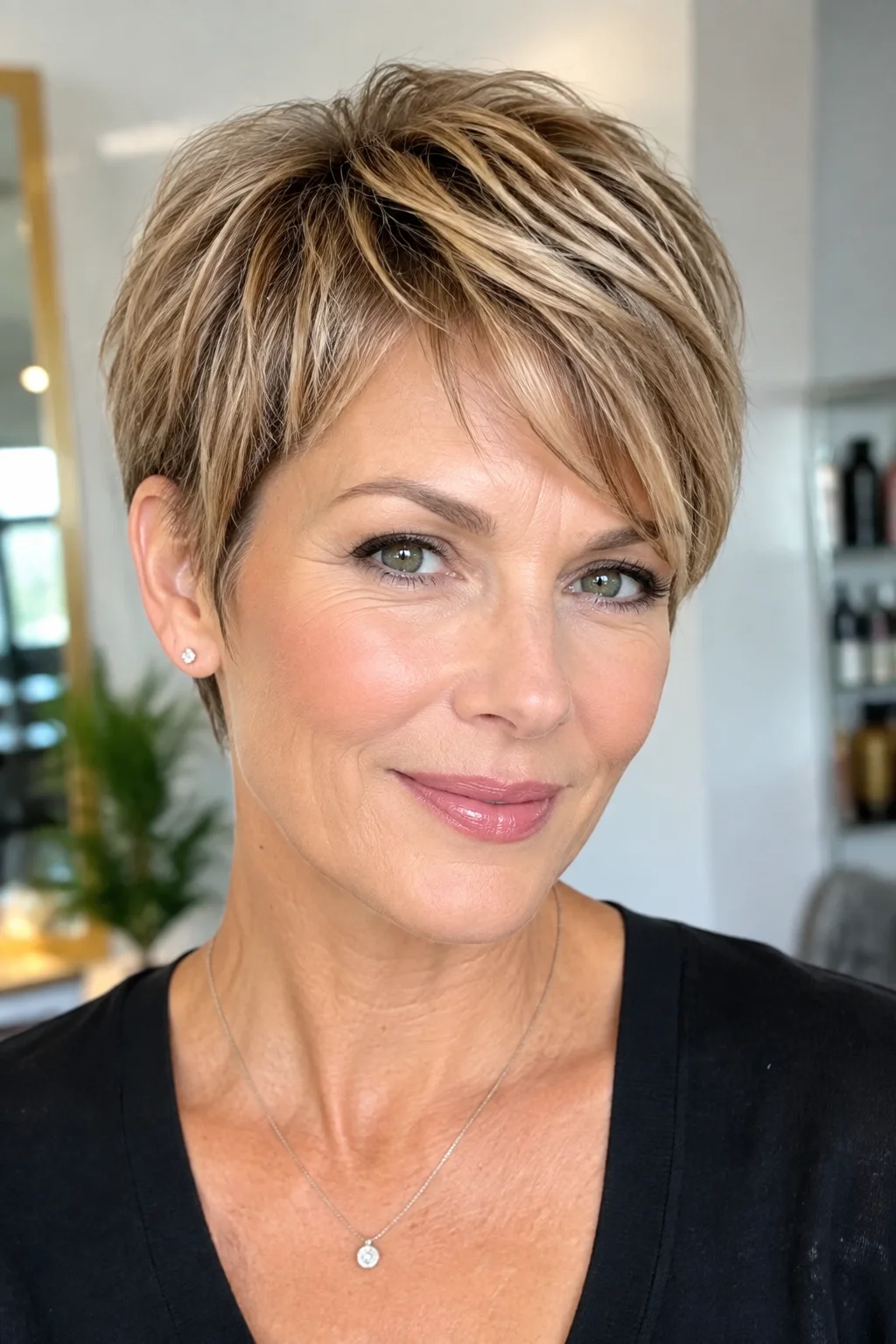
Straight strands show every line of a haircut clearly, so precision matters more here than with wavy or curly textures. Clean, sharp layers look crisp right after cutting and stay that way with very little upkeep. A flat or glossy finish comes naturally to straight hair, so there’s rarely a need for extra smoothing products. Touch-ups every four weeks keep the shape from growing out into a single blunt layer.
Wavy Hair Pixie
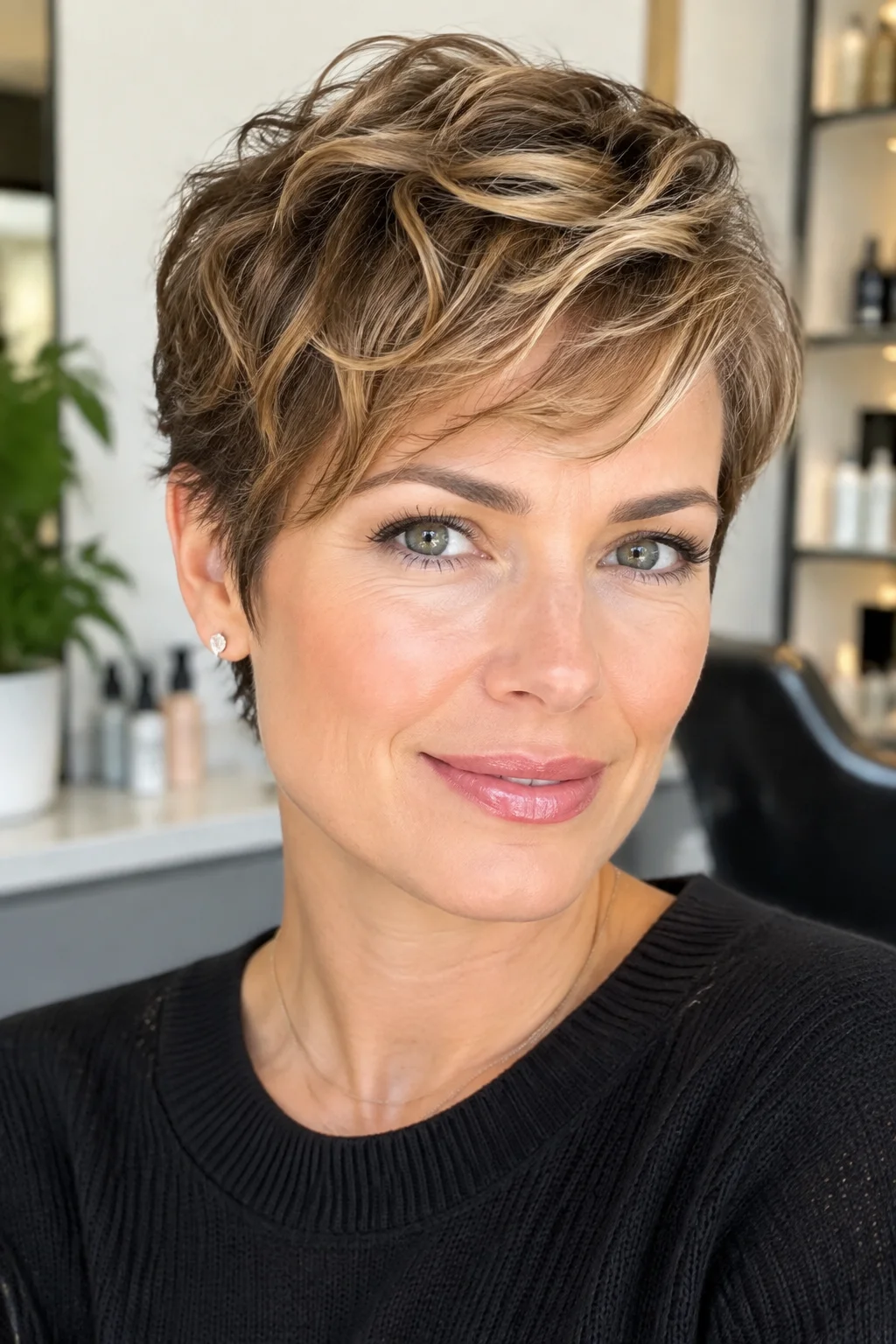
Waves add natural texture that a stylist can work with instead of against, which means less reliance on product to create movement. Layers cut slightly longer than a straight-hair pixie let the waves show without frizzing out. A sea salt or texturizing spray scrunched into damp hair enhances the natural pattern instead of fighting it. This is one of the more forgiving textures for a pixie, since waves hide small inconsistencies in the cut better than straight hair does.
Bleached Blonde Pixie
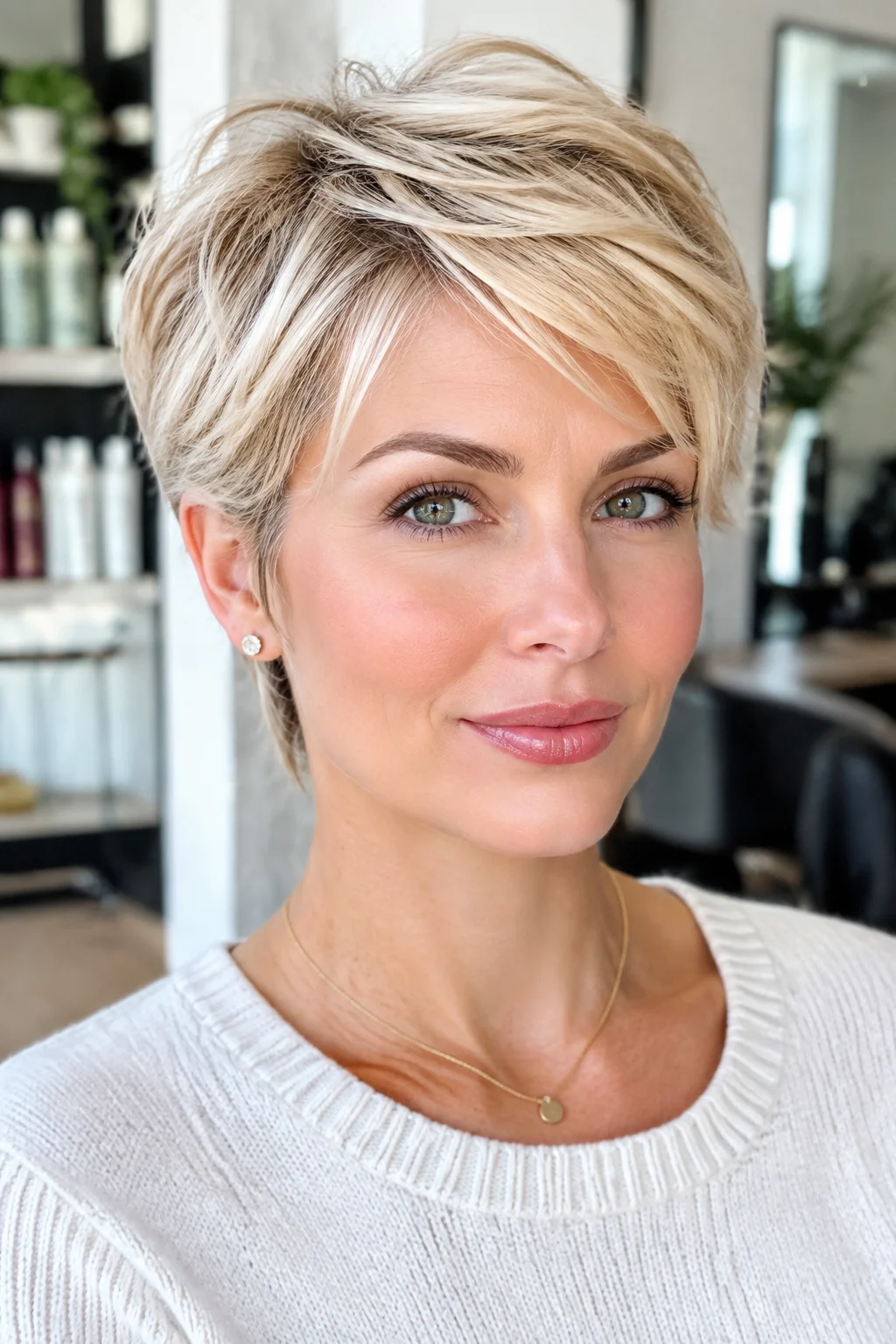
Bleaching short hair this pale takes commitment, since regrowth shows fast against a lighter shade and roots become obvious within a couple of weeks. A purple shampoo routine is nonnegotiable here to keep yellow tones from creeping in between salon visits. Deep conditioning matters more on bleached hair than almost any other version of this cut, since the processing leaves strands drier. Despite the upkeep on color, the cut itself still styles in minutes once it’s dry.
Dark Hair Pixie
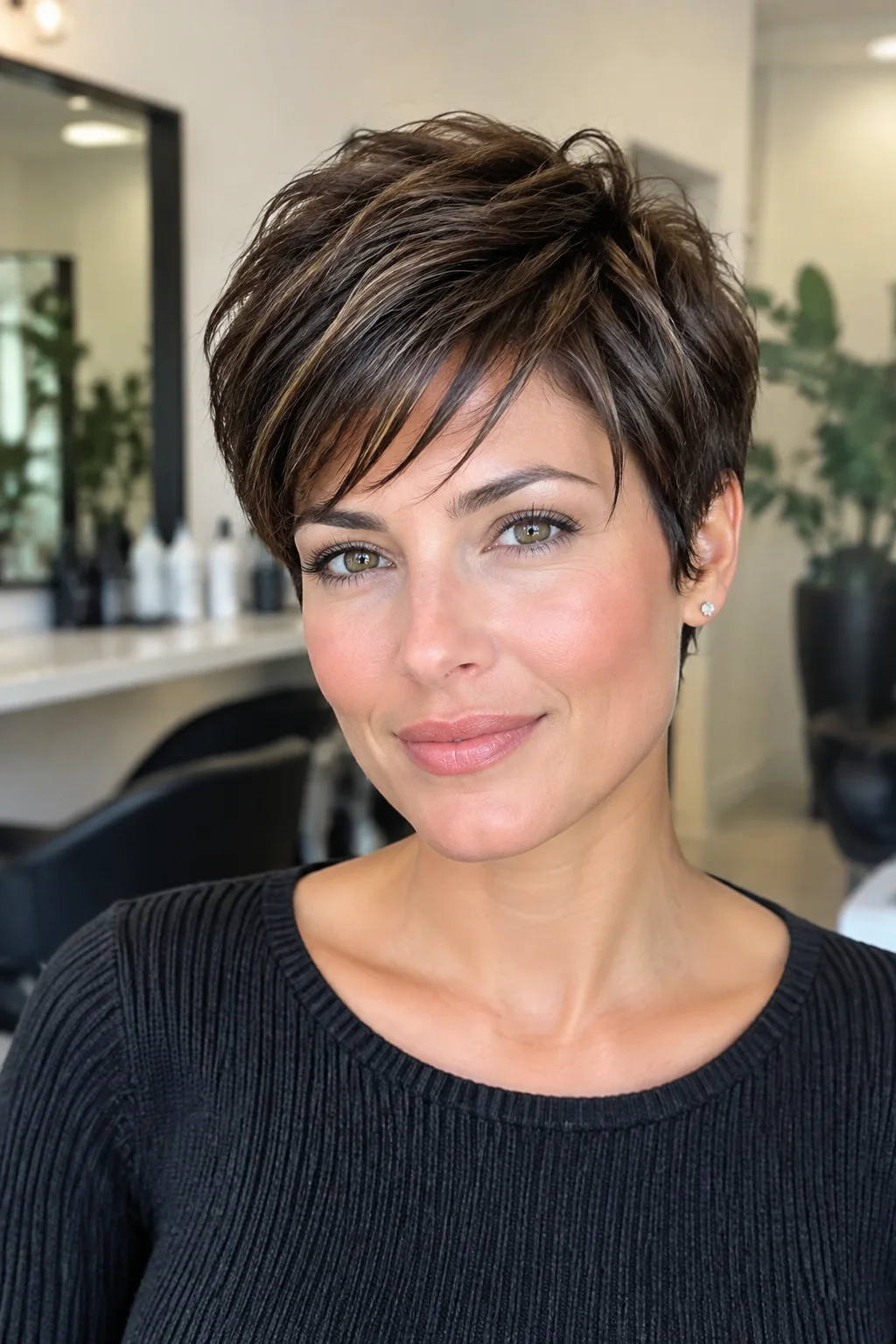
Dark hair holds a crisp line exceptionally well, and a dark pixie tends to look sharper for longer between trims compared to lighter shades. Shine matters more than texture on dark hair, so a lightweight serum does more for this cut than a matte paste would. Grayout and regrowth are less noticeable here too, which stretches out the time between color appointments if you’re dyeing it. This combination of low color maintenance and strong definition makes dark hair one of the easiest bases for a pixie overall.
Pixie with Undercut
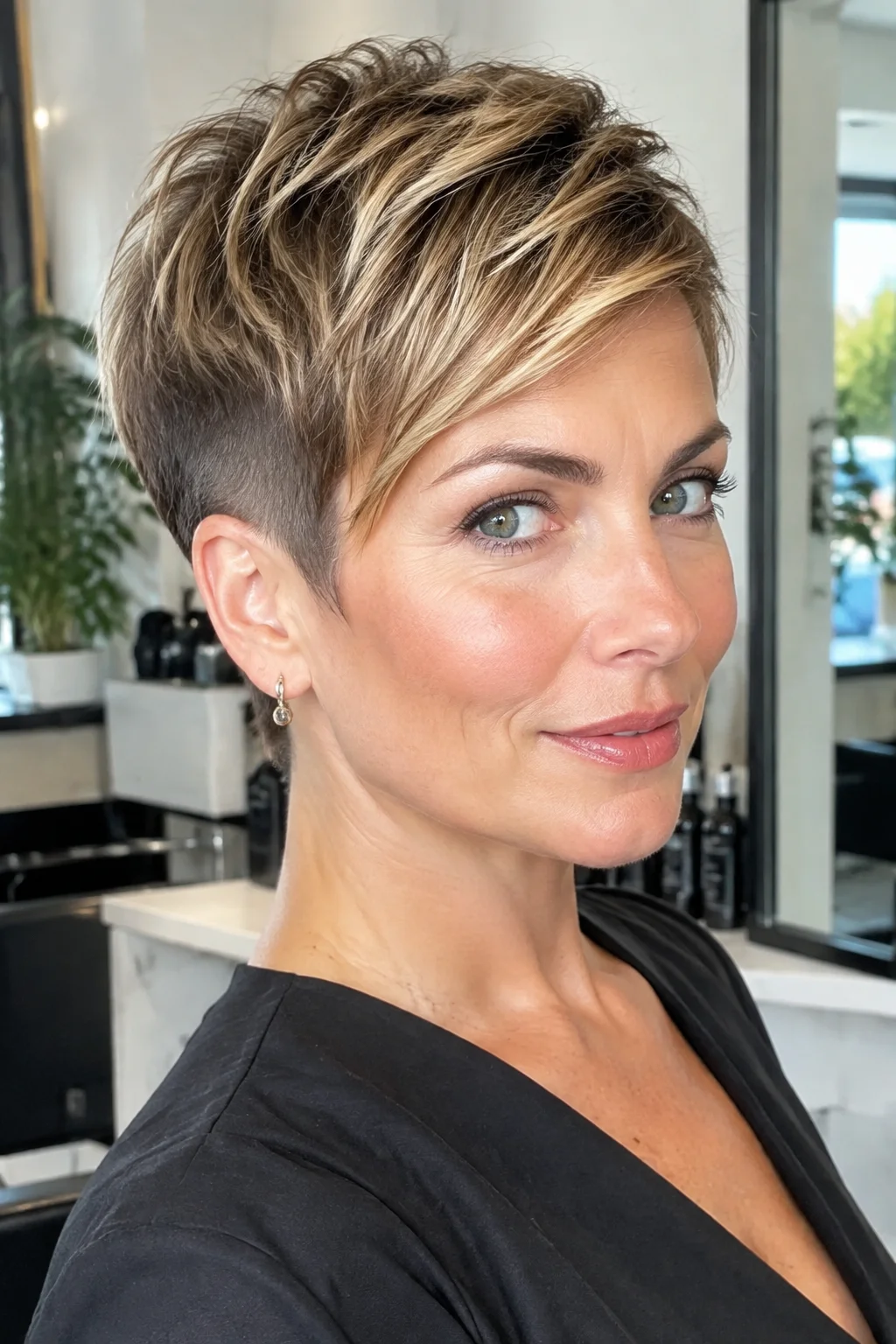
Shaved or clipped sections underneath longer top layers give this pixie an edge that a standard cut doesn’t have. The undercut stays hidden when the top hair is down and shows through when you push it back or tuck it behind your ears. It needs clipper maintenance every few weeks to keep the shaved section from growing shaggy. Tip: this style photographs well from multiple angles, which makes it a good pick if you like switching up your look during the week without a full restyle.
Pixie Over 50
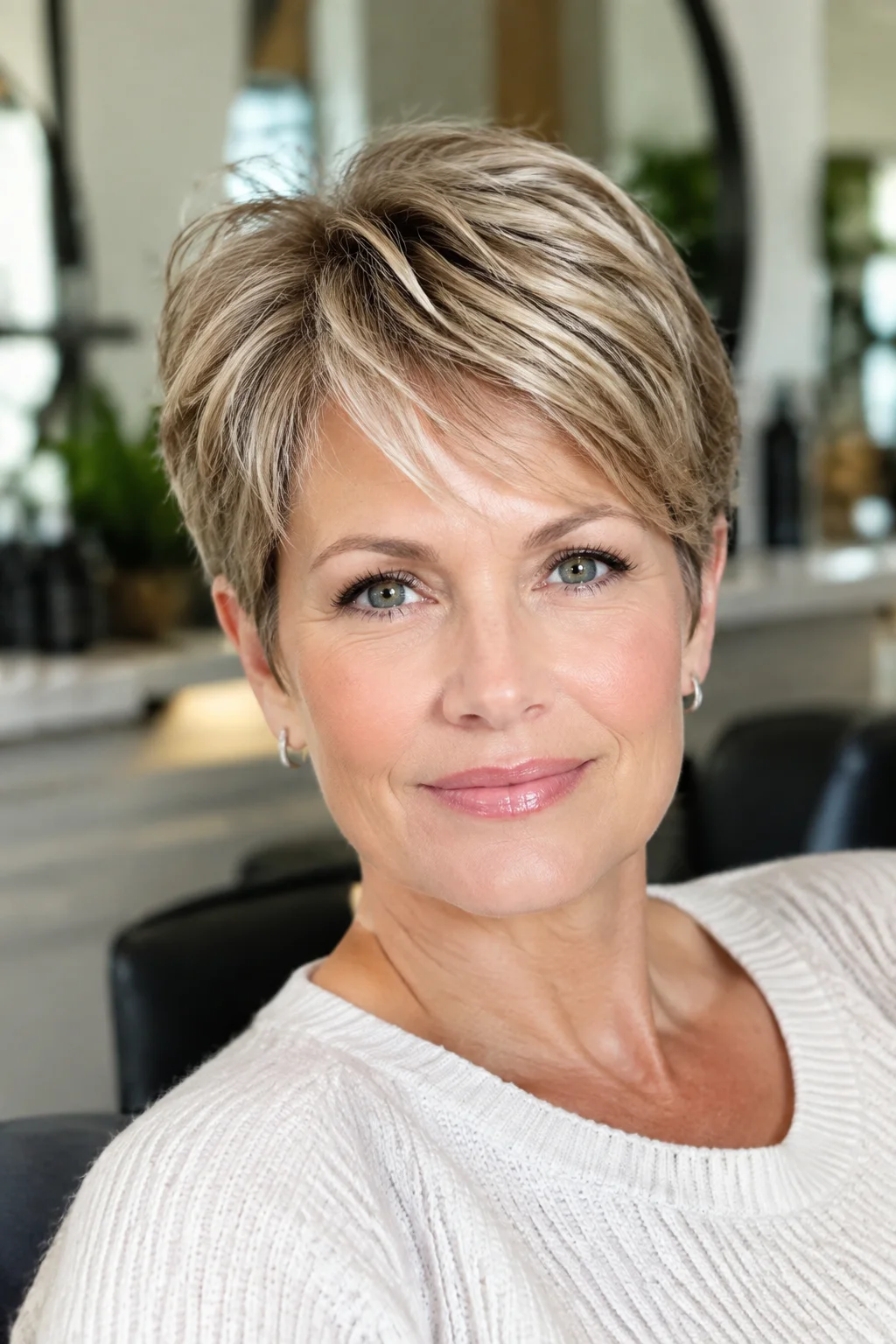
Hair often loses some density with age, so a pixie cut for this stage benefits from softer layers rather than anything razor-sharp or blunt. A side-swept fringe or longer crown adds a bit of youthful movement without looking like it’s trying too hard. Color, if you use it, tends to look most natural with lowlights rather than a flat single shade. This cut also tends to photograph better under flattering light when there’s some texture left on top instead of a completely flat cut.
Pixie for Fine, Thin Hair Over 40
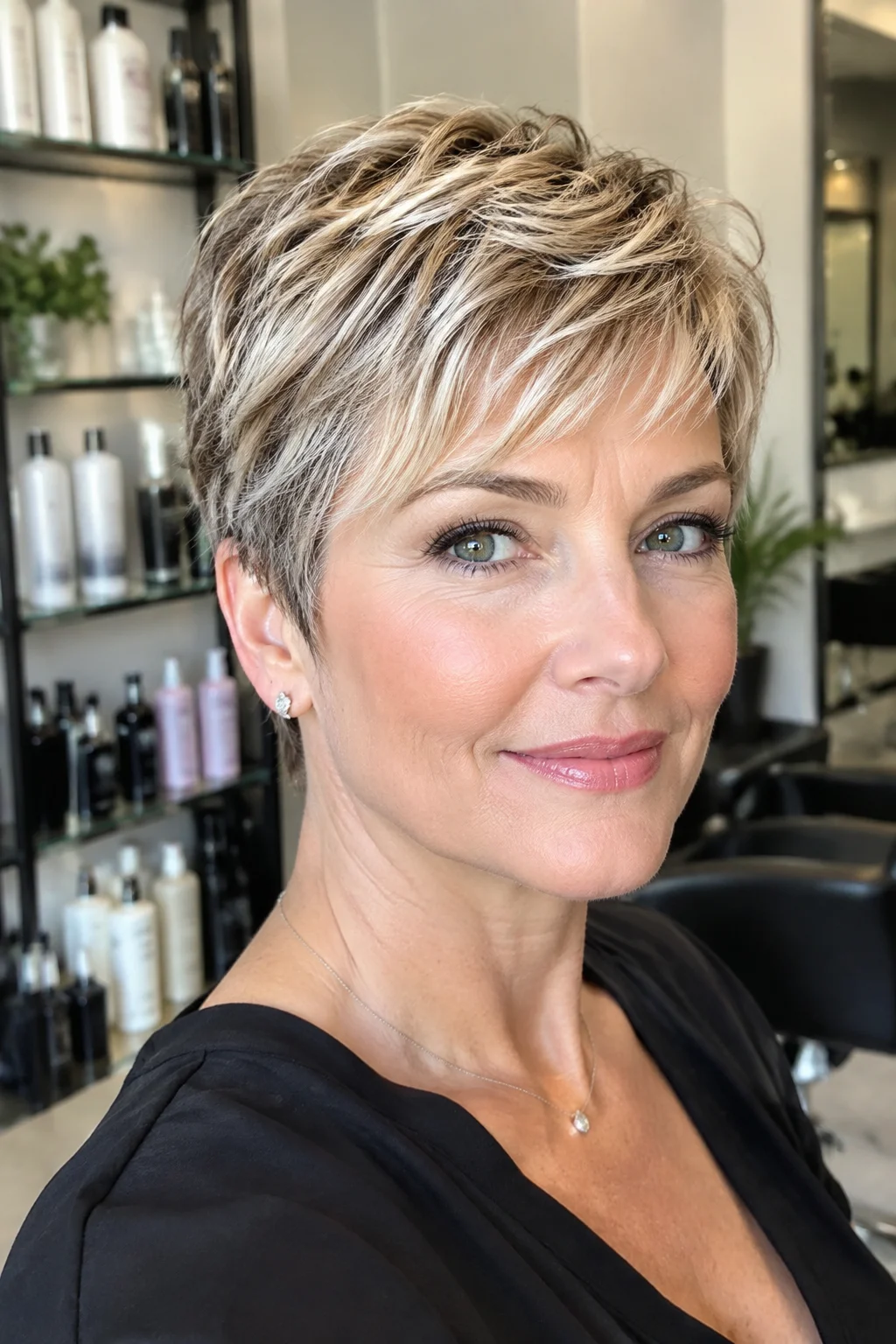
Thinning hair at this stage needs a cut that creates the appearance of density instead of fighting the texture that’s actually there. Short layers, concentrated mostly through the crown, lift hair away from the scalp and disguise thinner patches. Volumizing mousse applied at the root before blow-drying upside down adds noticeable lift in under two minutes. Avoid long, wispy ends here, since they tend to look sparse rather than soft on fine, thinning strands.
Pixie with Textured Top
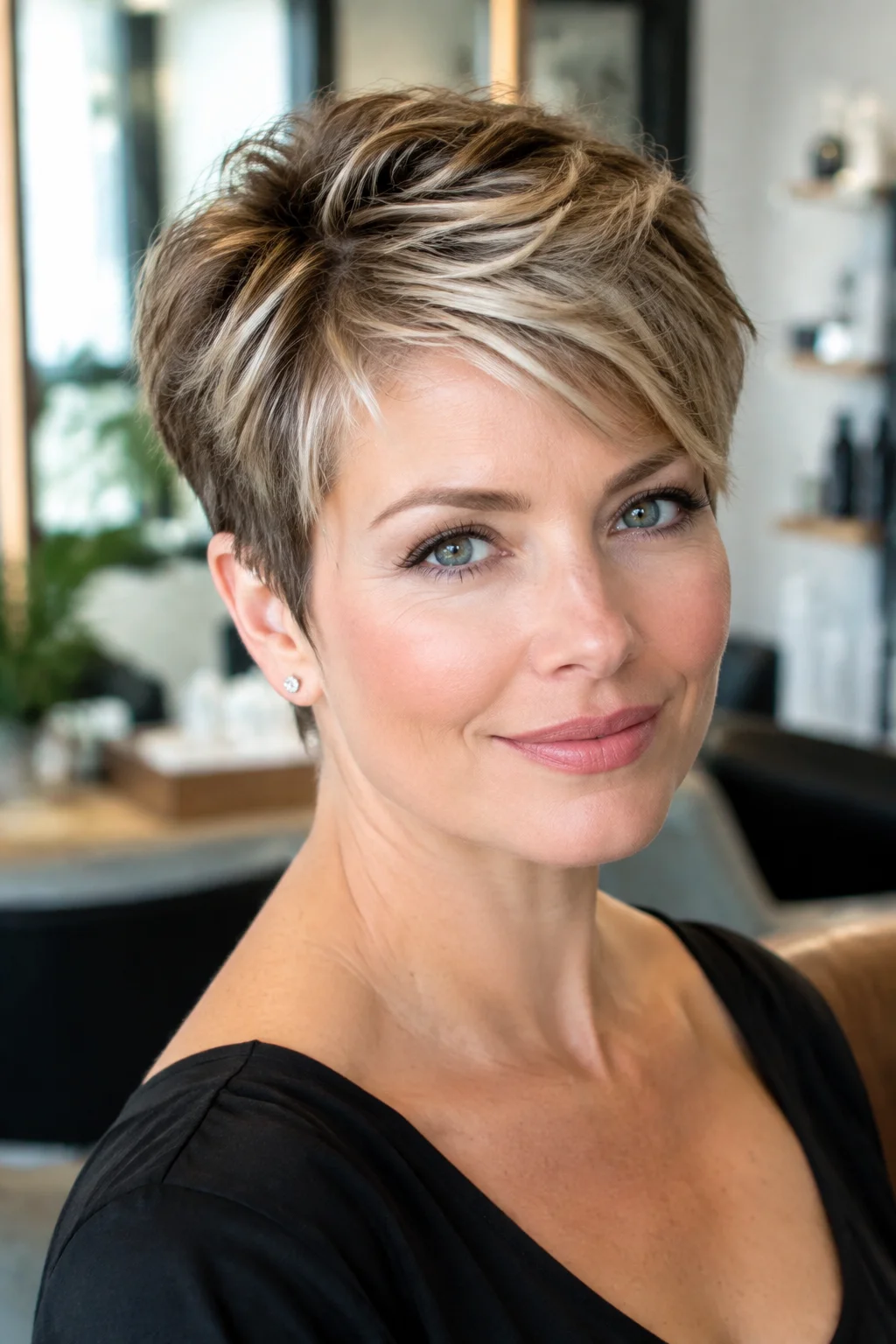
Choppy, piece-y layers through the crown give this pixie dimension even on days when you skip styling altogether. A small amount of matte paste rubbed between fingers and pressed into the ends is really the entire routine. It works on straight, wavy, and curly textures alike since the texture is built into the cut itself.
Minimal-Styling Pixie
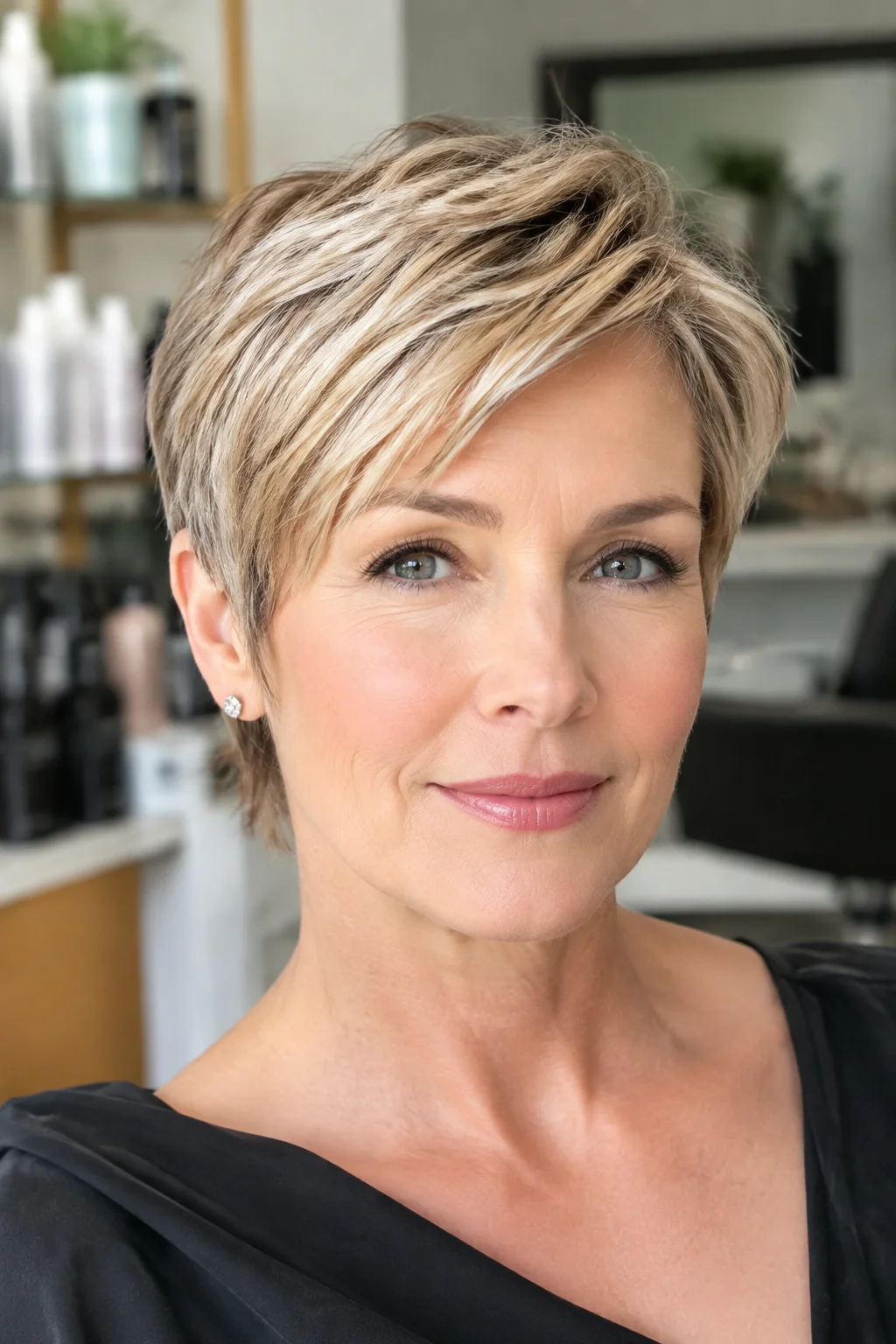
Some people want a cut that looks finished straight out of the shower, no product, no tools, nothing. This version relies on a precise cut rather than styling to do the work, with layers that fall into place on their own as hair dries. It’s short all over with just enough length on top to look deliberate instead of accidental. If five minutes still feels like too long, this is the pixie that asks for almost none of it.
Pixie for Athletic or Active Lifestyles
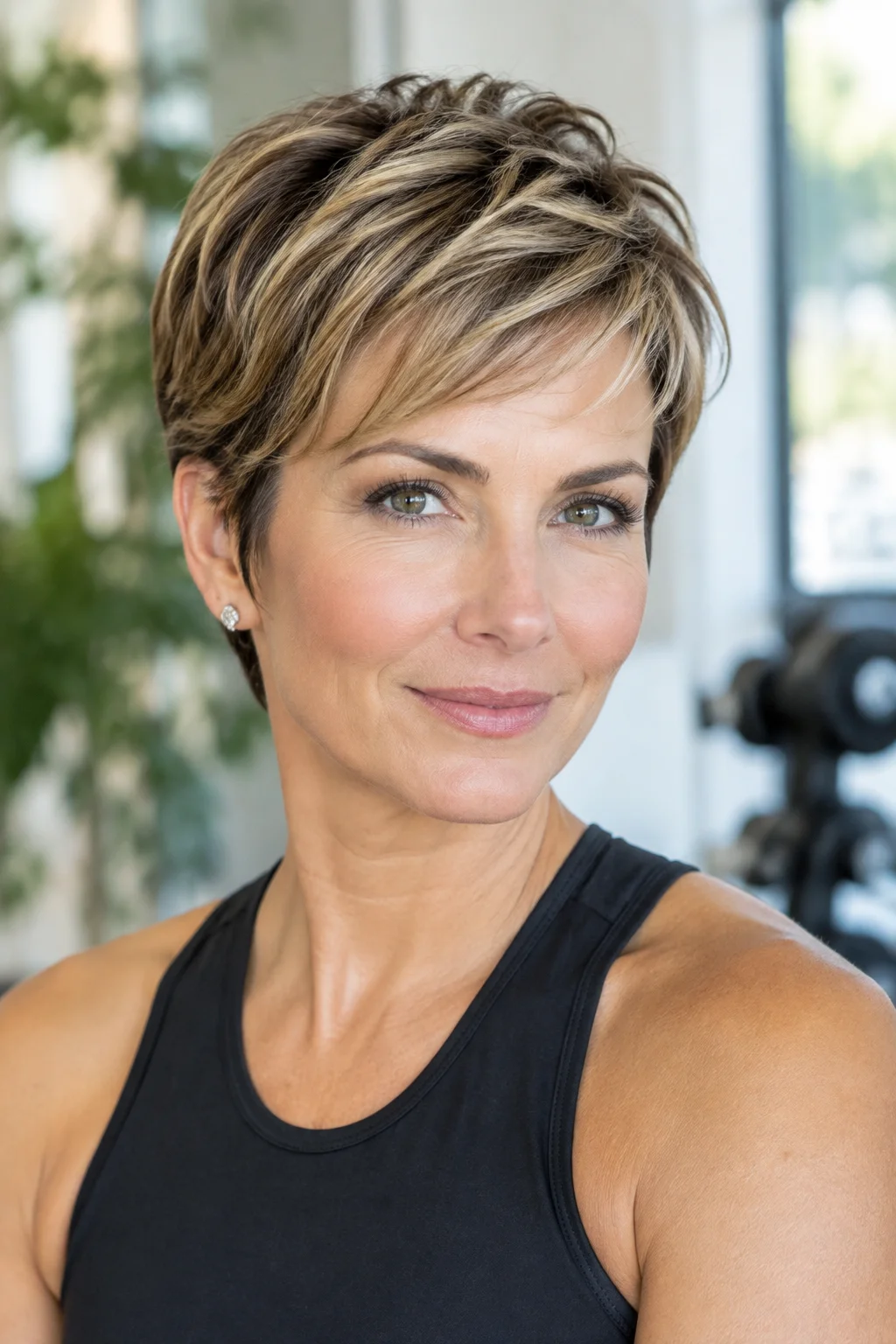
Sweat and short hair get along fine, but the cut needs to handle repeated washing and quick drying without looking limp afterward. This version keeps length minimal everywhere, with just enough texture on top to towel-dry and go. A matte, non-greasy product works better here than anything with shine, since it won’t mix badly with sweat during a workout. This is the pixie to ask for if your week includes more gym time than mirror time.
How to Choose the Right Pixie for You
Picking between these styles comes down to three things: your hair’s natural texture, your face shape, and how much time you’re actually willing to spend on it, even five minutes. If you have fine or thinning hair, the fine hair pixie or the pixie for fine, thin hair over 40 will do more for you than a heavily layered style built for thick hair. If your hair curls or waves naturally, let it, since the curly-haired pixie and the wavy hair pixie are both designed to work with texture instead of smoothing it out with heat.
Face shape matters just as much as texture. Round faces generally do better with the round face pixie’s height and asymmetry, while square faces soften nicely with the side-swept pixie or the square face pixie’s rounded layers near the jaw. A common mistake is choosing a blunt, geometric cut like the straight-across bangs pixie on a square face, which only emphasizes the angles you’re trying to balance.
If your main goal is speed, skip anything that needs daily heat styling. The minimal-styling pixie, the androgynous buzz pixie, and the pixie for athletic or active lifestyles all dry and go without a blow-dryer in sight.
Final Thoughts
A great pixie cut should save you time, not add another step to your morning. Whether you land on the classic textured pixie, a gray or silver pixie, or something sharper like the tapered fade pixie, the right choice comes down to working with your natural texture instead of against it. Bring a photo to your next appointment, mention your hair type and face shape, and let your stylist adjust the details from there. Short hair rewards good cutting more than heavy styling, and that’s exactly why it works for mornings when you’ve got five minutes and nothing more to give.