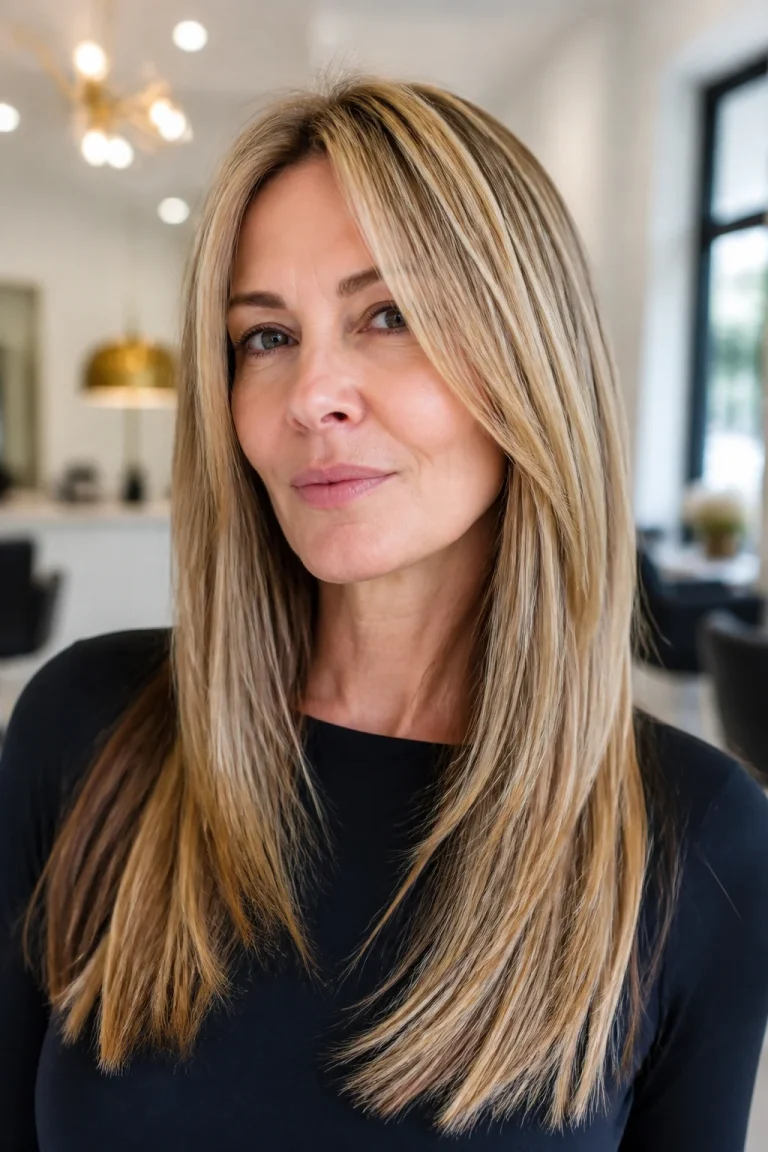
Blonde hair grows out fast and shows every split end within weeks of a trim. If you are tired of sitting in a chair every four weeks just to keep your color and shape looking fresh, layers solve the problem in a way blunt cuts never will. The right layered haircut adds movement, hides regrowth lines, and cuts down on styling time, which matters most on busy mornings. Low maintenance blonde hair layered haircuts work with your natural texture instead of fighting it, so you spend less time with a brush and dryer and more time out the door. Below are twenty layered styles that stylists recommend for blonde hair, whether it’s fine, thick, wavy, or straight. Each one holds its shape between salon visits and grows out without leaving an awkward stage.
Shoulder-Length Textured Layers with Piece-y Ends
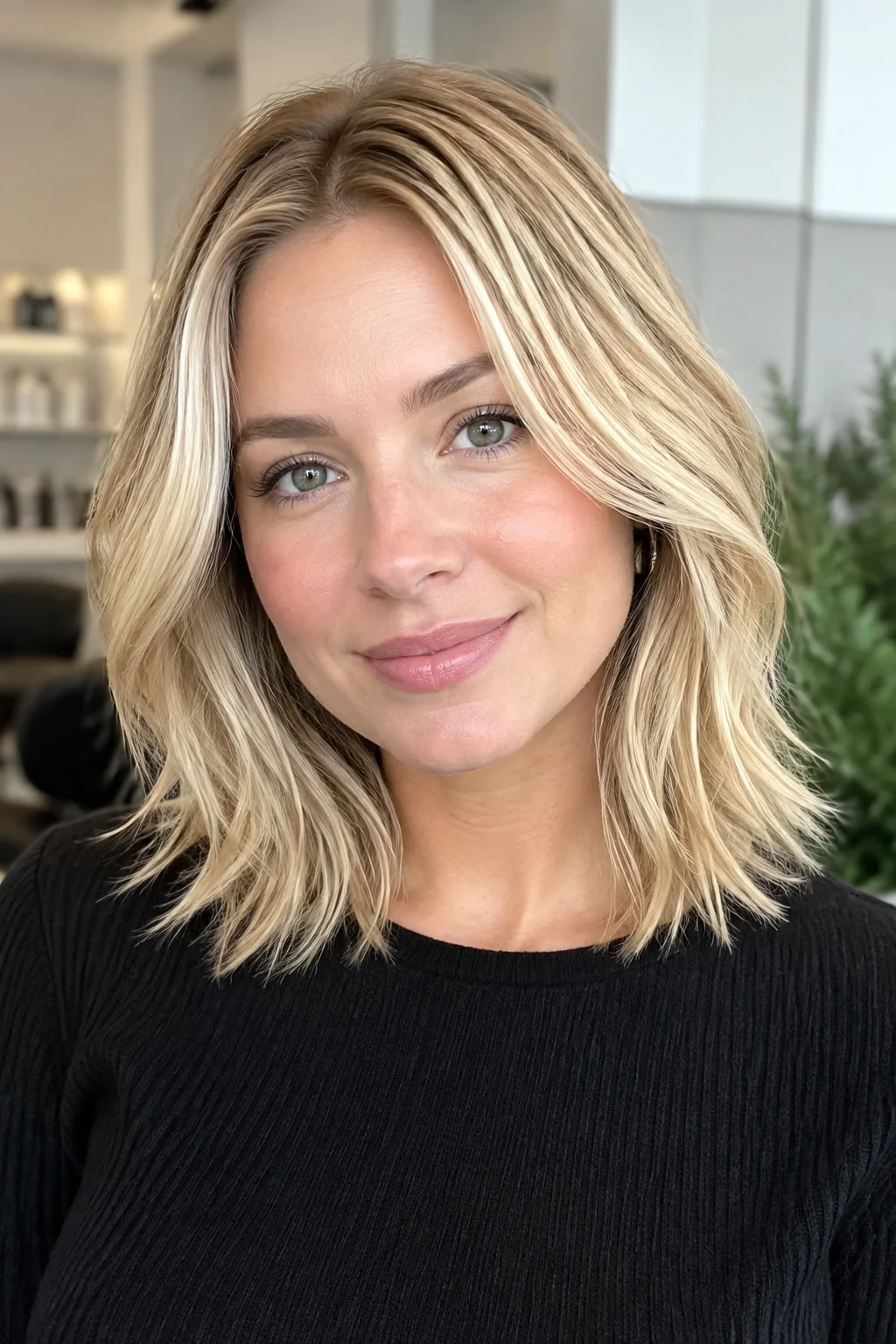
This length hits a sweet spot most stylists love recommending because it works on almost any face shape. The layers get cut in close to the ends, creating those piece-y tips that look intentional even second-day. Blonde hair especially benefits here since the layers catch light differently at every level, adding dimension without extra toner. It air dries fine and only needs a quick scrunch of texture cream to look finished. Tip: ask your stylist for a razor finish on the ends instead of shears for a softer, more broken-up edge.
Face-Framing Layers on Straight Blonde Hair
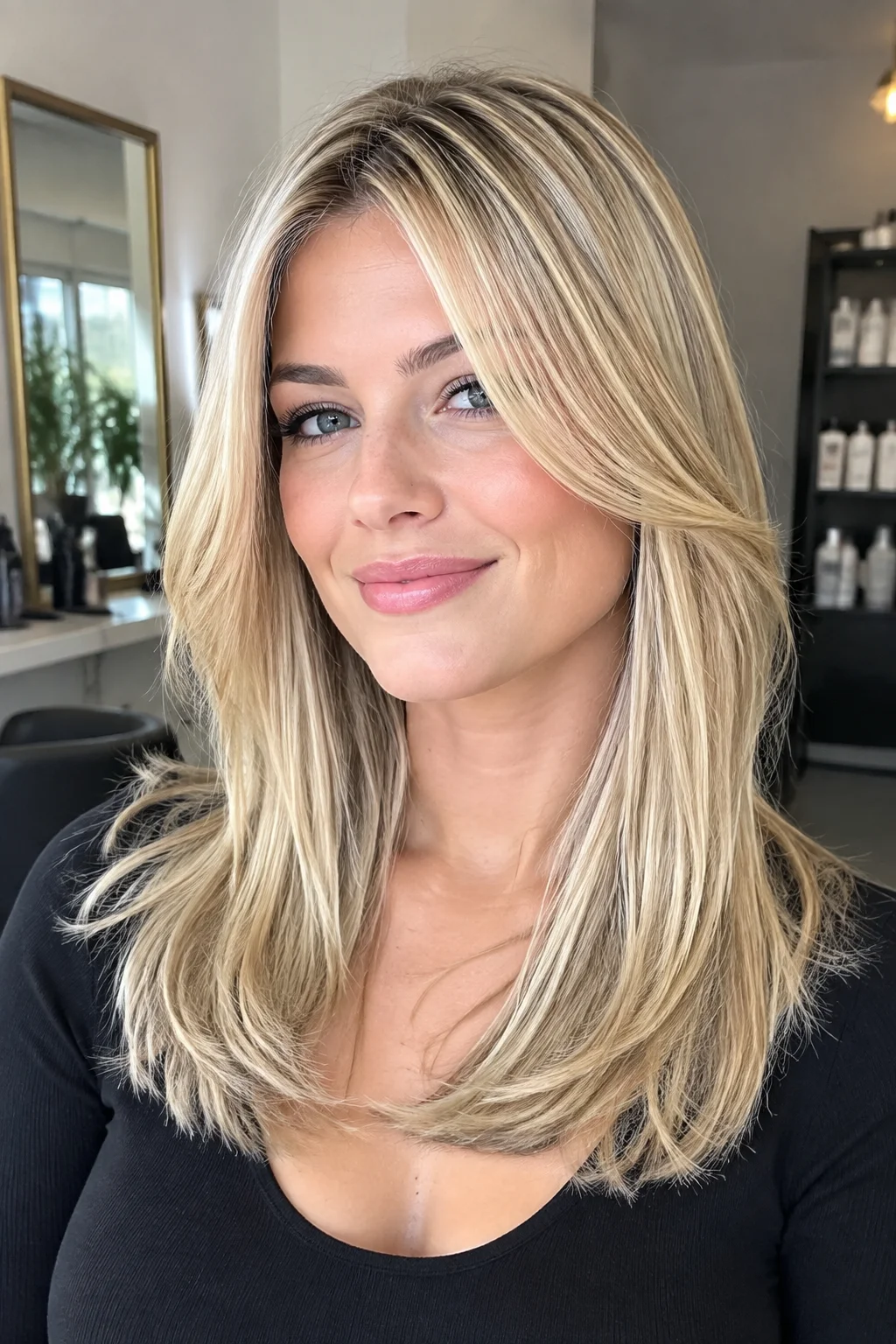
Straight blonde hair sometimes looks flat without layers doing some of the work around the face. These face-framing pieces get cut shorter near the cheekbones and blend back into the rest of the length, softening a square or angular jawline. Because the hair is straight, the layers fall exactly where they’re cut with almost no styling required. A flat iron touch-up is optional, not mandatory.
Wispy Layers for Fine or Thin Blonde Hair
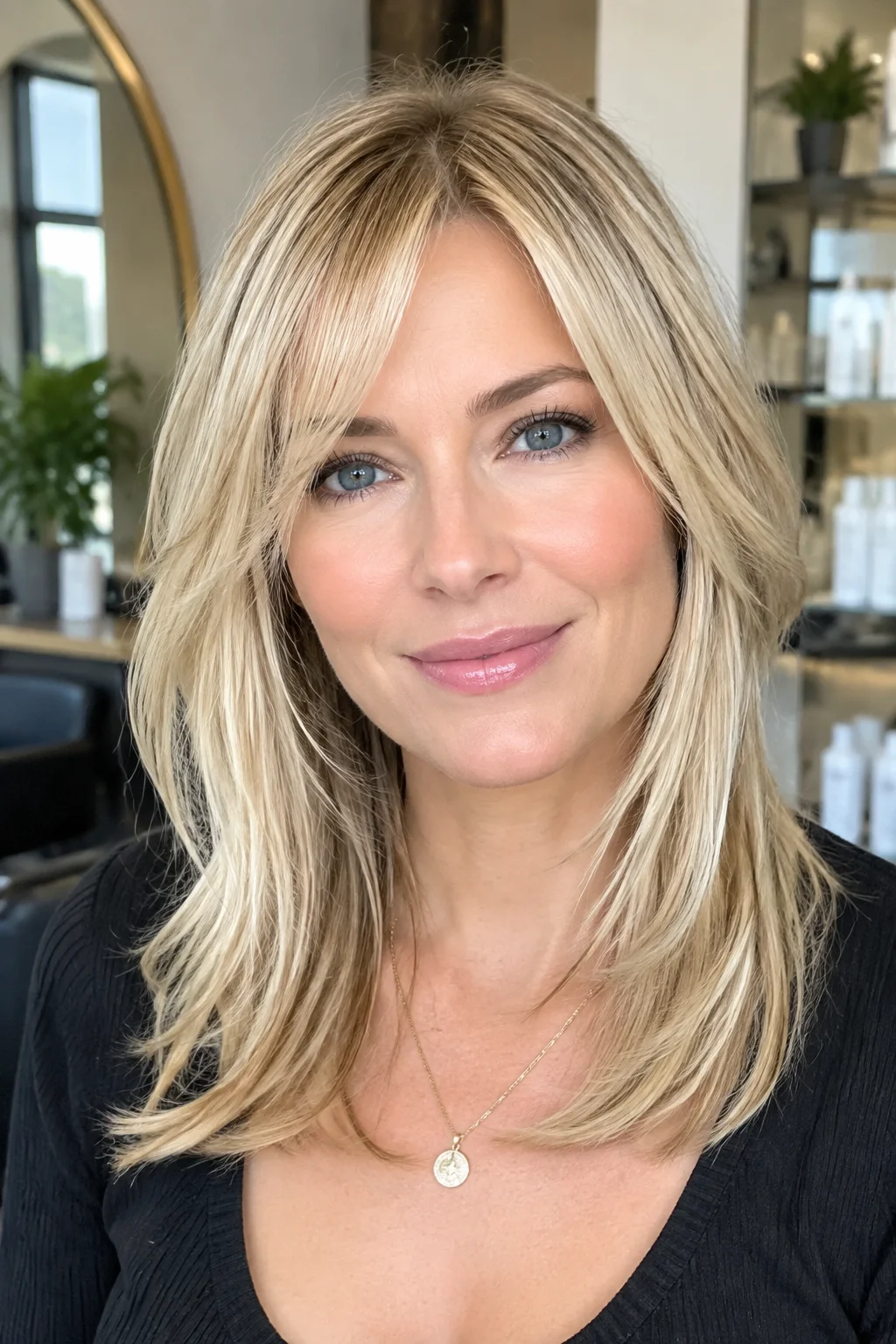
Thin hair often looks thinner with heavy layers stacked too close together. Wispy layers avoid that problem by spacing the cuts farther apart and keeping the ends soft rather than blunt. The result adds the illusion of thickness instead of stripping away what volume you already have. Blonde shades particularly show off this texture since lighter hair reflects more light at the ends. I recommend this cut for anyone who has been told layers will make their hair look sparse, because done correctly, they do the opposite. A light mousse at the roots is usually the only product needed.
Chin-Length Shaggy Bob with Layered Crown
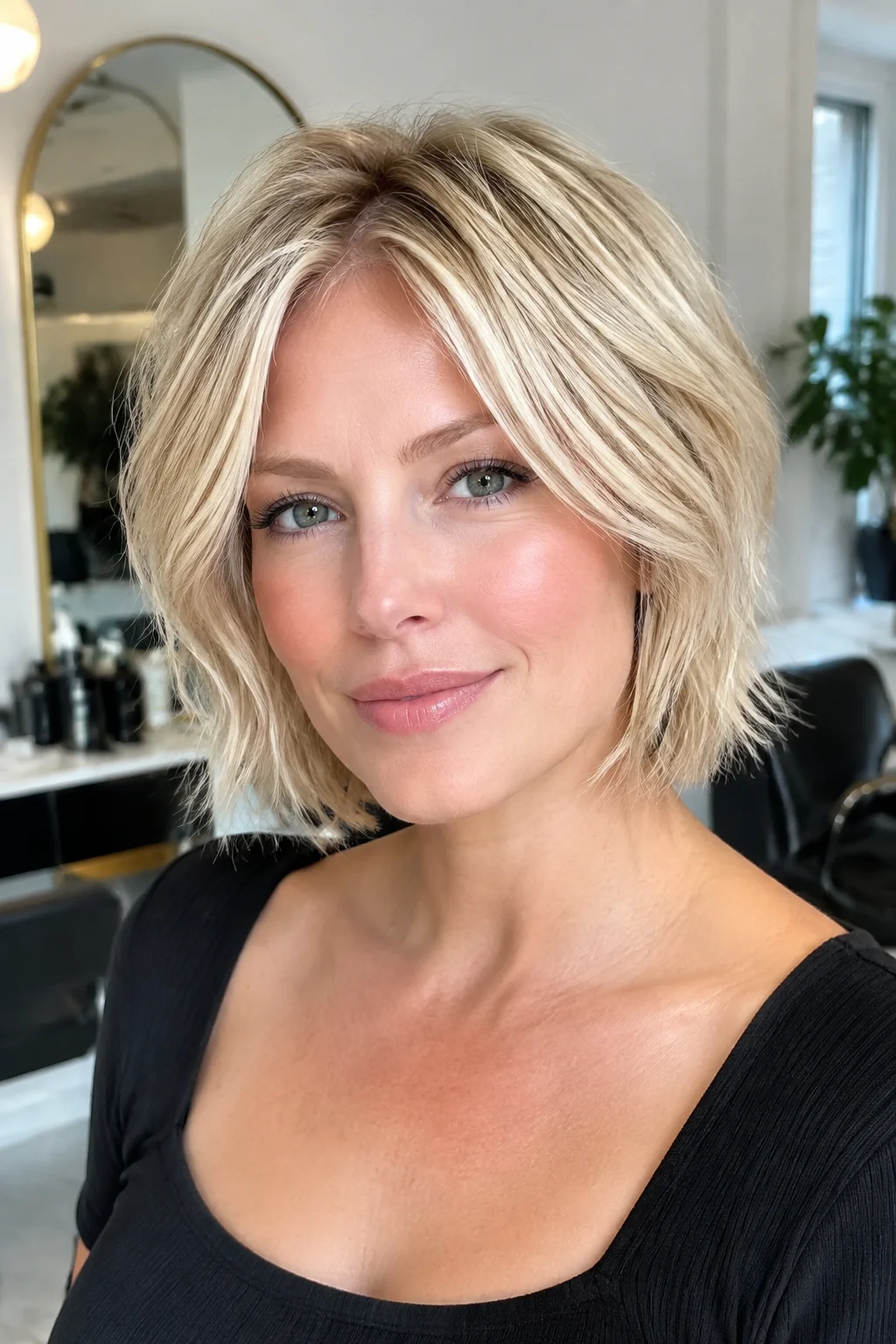
This bob brings shag energy into a shorter length, with heavy layering concentrated at the crown and looser layers toward the ends. It reads a little rock and roll without needing a curling iron every day. Blonde hair holds the choppy texture especially well since the color breaks up the shape and hides the harder layer lines. Wash and go styling suits this cut better than any blow dry routine.
Micro Layers for Blonde Waves or Curls
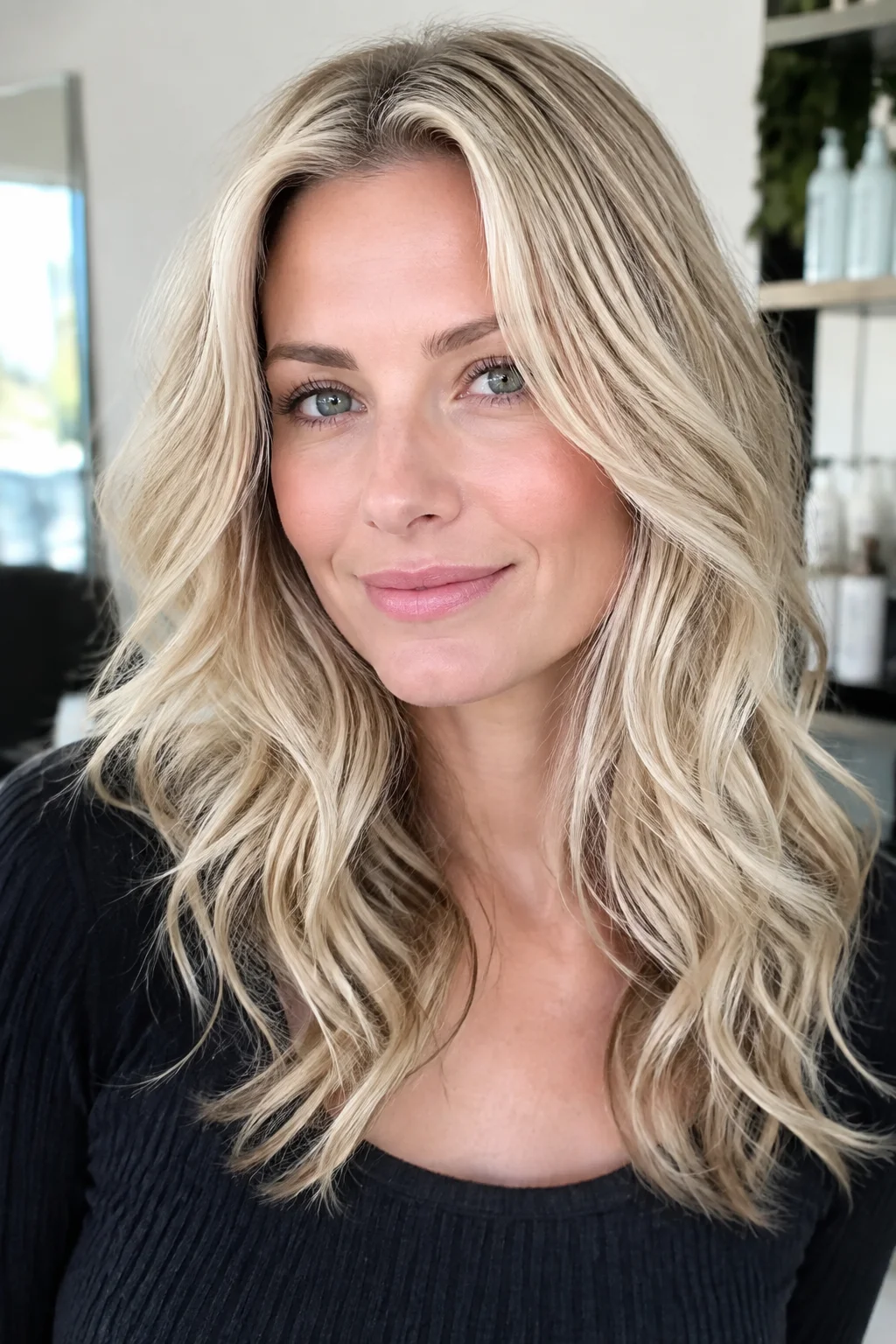
Micro layers are cut in tight, small sections throughout the hair, which sounds high maintenance but actually reduces bulk in wavy or curly blonde hair that tends to puff out. The layers let each curl clump form its own shape instead of merging into one heavy mass. This cut needs almost no diffusing time since the layers already separate the curls for you. Tip: request micro layers only from a stylist experienced with curl cutting, since uneven spacing can cause frizz instead of definition.
Mid-Length Layers with Minimal Taper
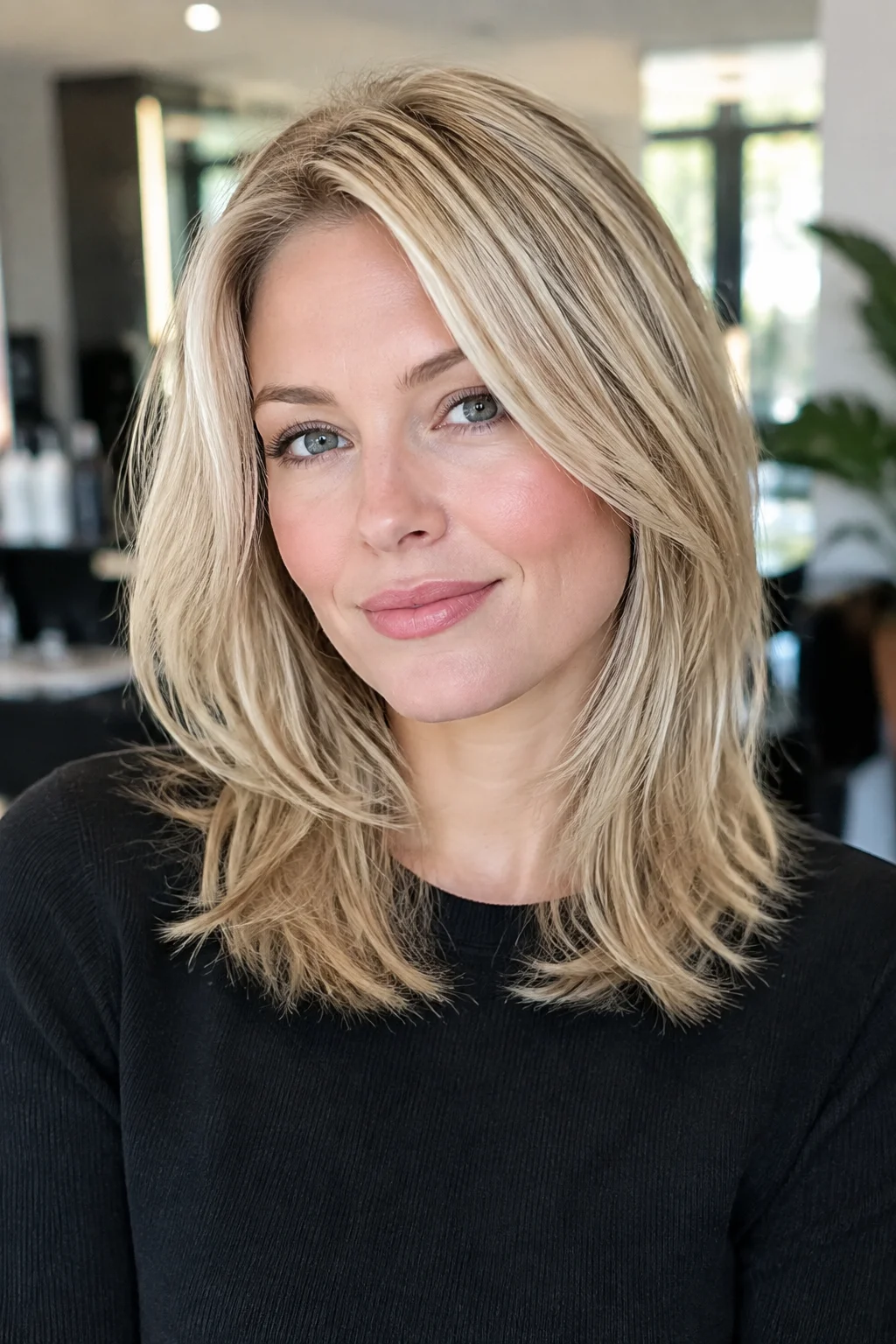
Mid-length cuts with a light taper suit people who want movement without losing much length. The layering stays subtle, mostly concentrated at the ends, so the silhouette stays fuller through the middle of the head. Blonde color looks rich here because there’s less contrast between layer levels compared to heavier layering styles. This one grows out slowly and evenly, which means fewer trims across the year.
Textured Layers Starting Below the Ears
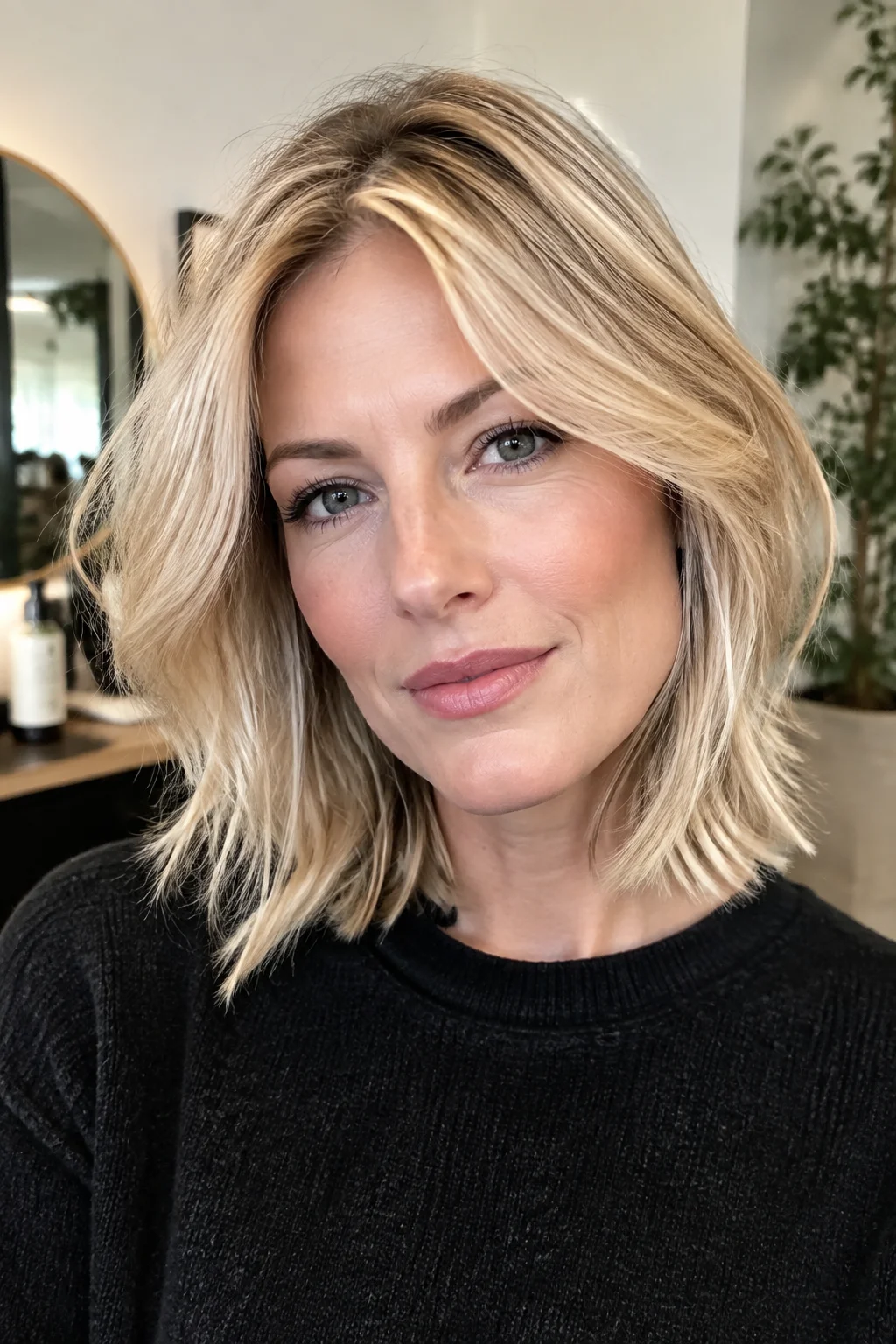
Layers that begin below the ear line keep length at the top while adding movement lower down. It’s a good compromise for anyone who loves long hair but wants some shape breaking up the ends. Blonde hair takes well to this cut since the deeper layers show tonal variation from root to tip.
Asymmetrical Layered Cut for Thick Blonde Hair
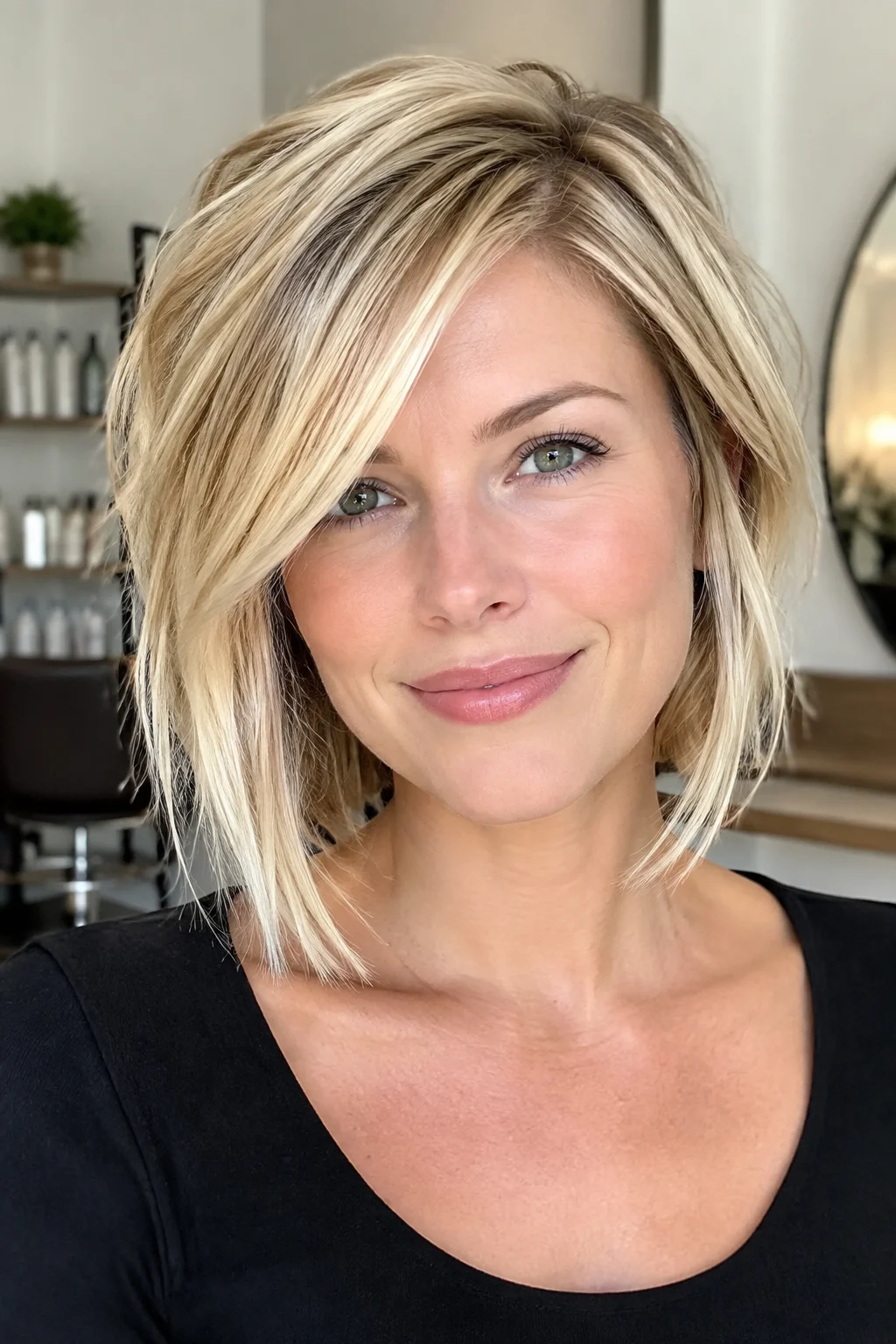
Thick hair carries weight that can make layers look chunky if they’re not cut with intention. An asymmetrical layered cut removes bulk unevenly on purpose, thinning out one side more than the other to balance the overall shape. This works especially well on blonde hair that’s naturally coarse or dense, since the color makes the asymmetry look deliberate rather than accidental. Stylists usually recommend this for people who part their hair to one side consistently, since the cut follows that natural part. It also cuts down on blow dry time because there’s simply less hair weighing down each section. Expect a slightly edgier finished look compared to symmetrical layering.
Long Layers with Blunt Blonde Ends
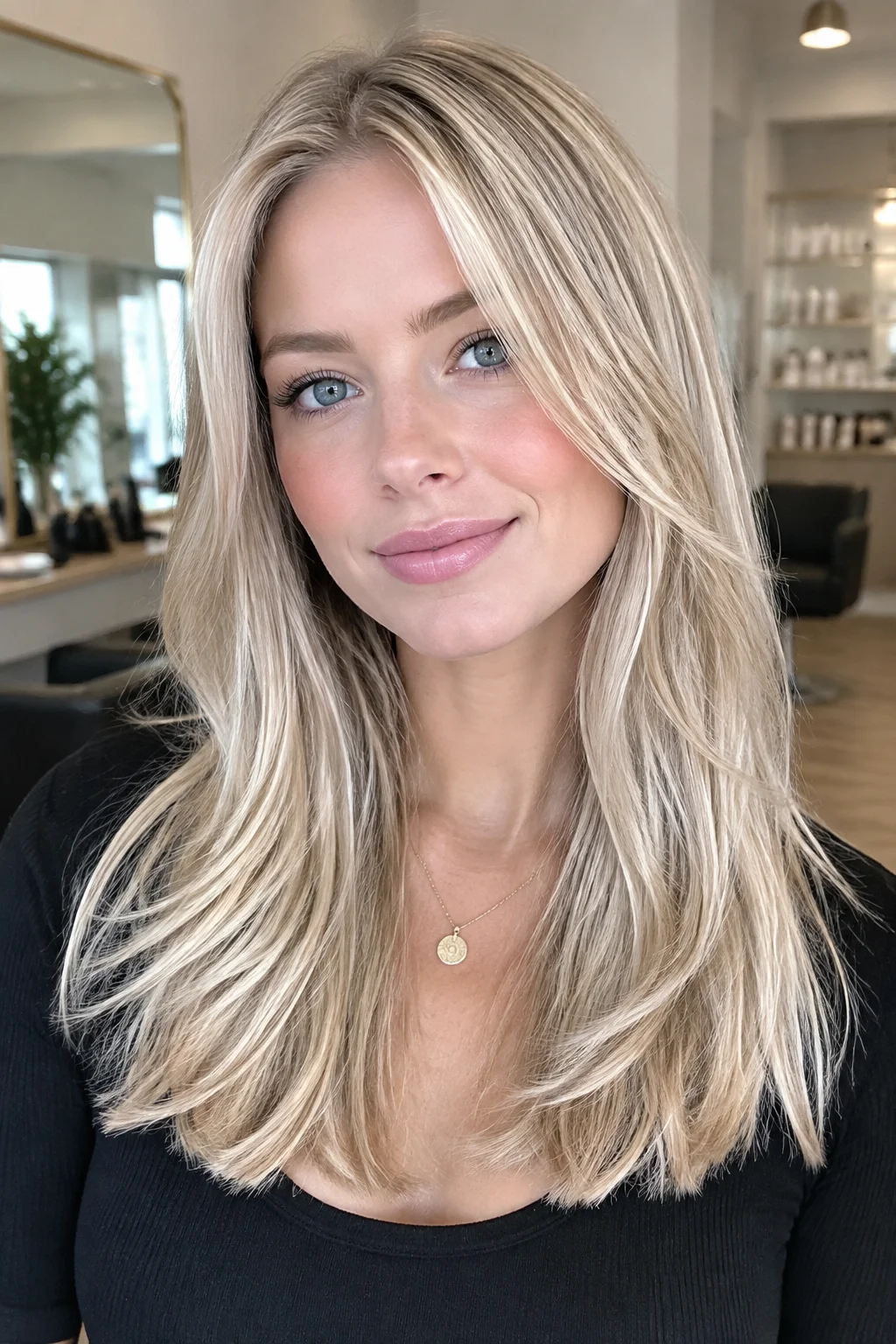
Long layers paired with a blunt end give you movement through the mid-lengths while keeping a strong, clean line at the bottom. This combination photographs well and holds up through humidity better than fully layered ends do. Blonde hair benefits from the blunt finish since it makes the color look healthier and less prone to visible breakage. Tip: keep trims on schedule even though the layers are low maintenance, since blunt ends show split ends faster than feathered ones.
Graduated Layers for Volume at the Crown
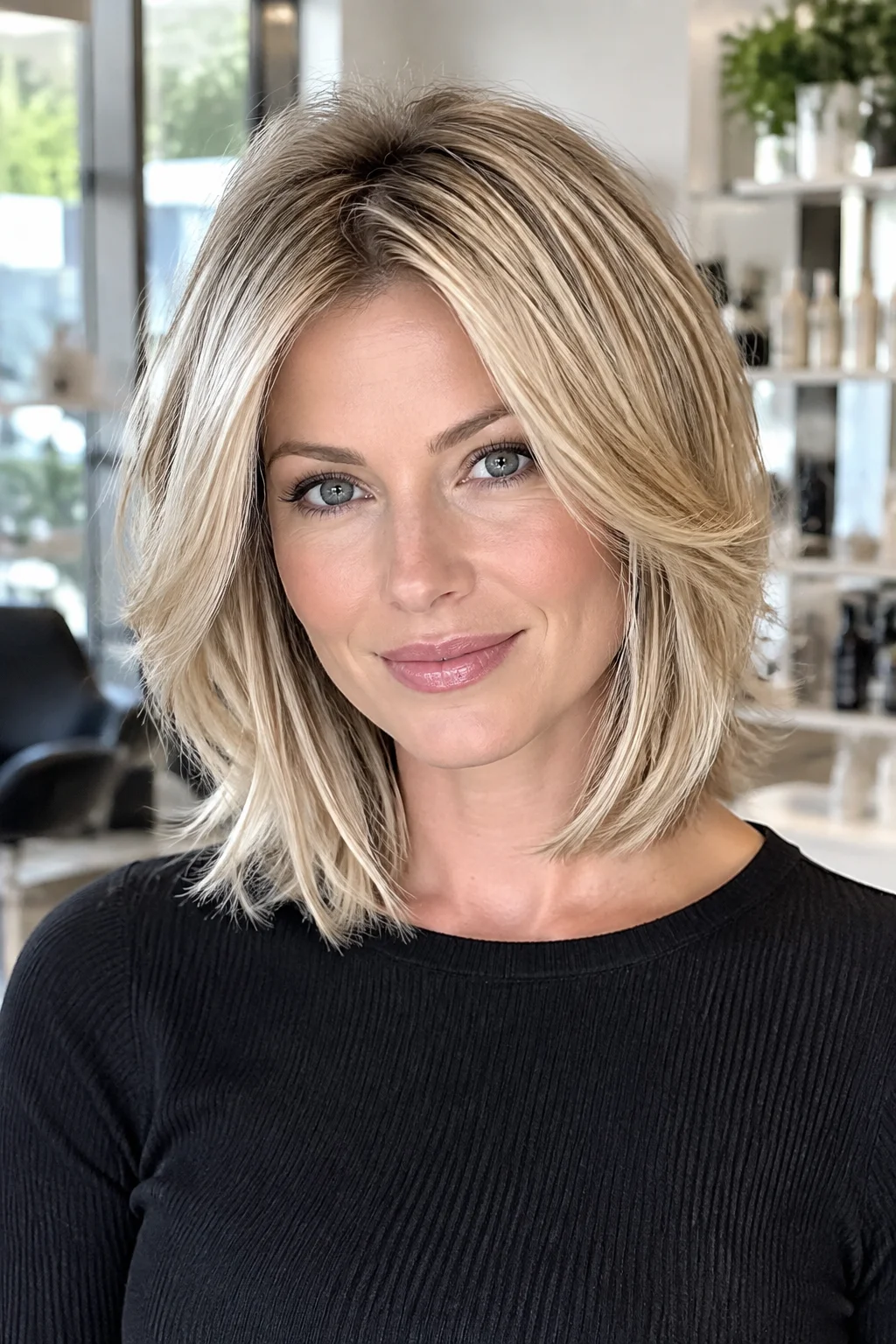
Graduated layers stack shorter pieces near the crown and let the length build gradually toward the bottom. This shape naturally lifts fine or flat blonde hair at the root without teasing or heavy products. It also disguises a smaller head shape or a flatter crown area.
Choppy Layers for Blonde Textured or Wavy Hair
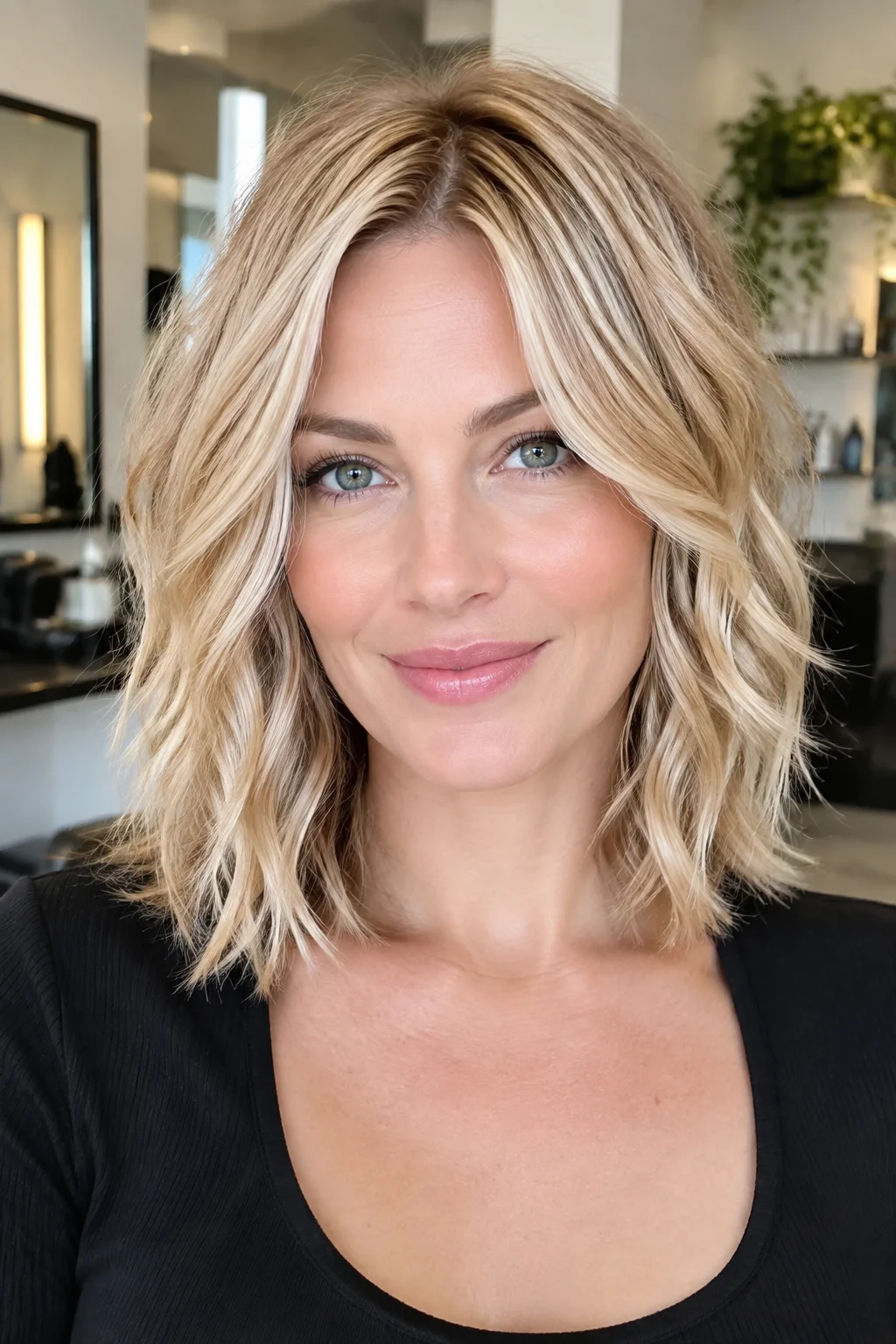
Choppy layers lean into imperfection, with uneven cutting lines that let wavy or textured blonde hair look intentionally undone. This cut hides the line between a good hair day and a lazy one since the layers are already meant to look messy. It works well for air drying since the choppy pieces separate naturally as the hair dries. Blonde tones make the choppy sections stand out more, almost like each piece has its own highlight.
Shoulder-Length Layers with Side-Swept Bangs
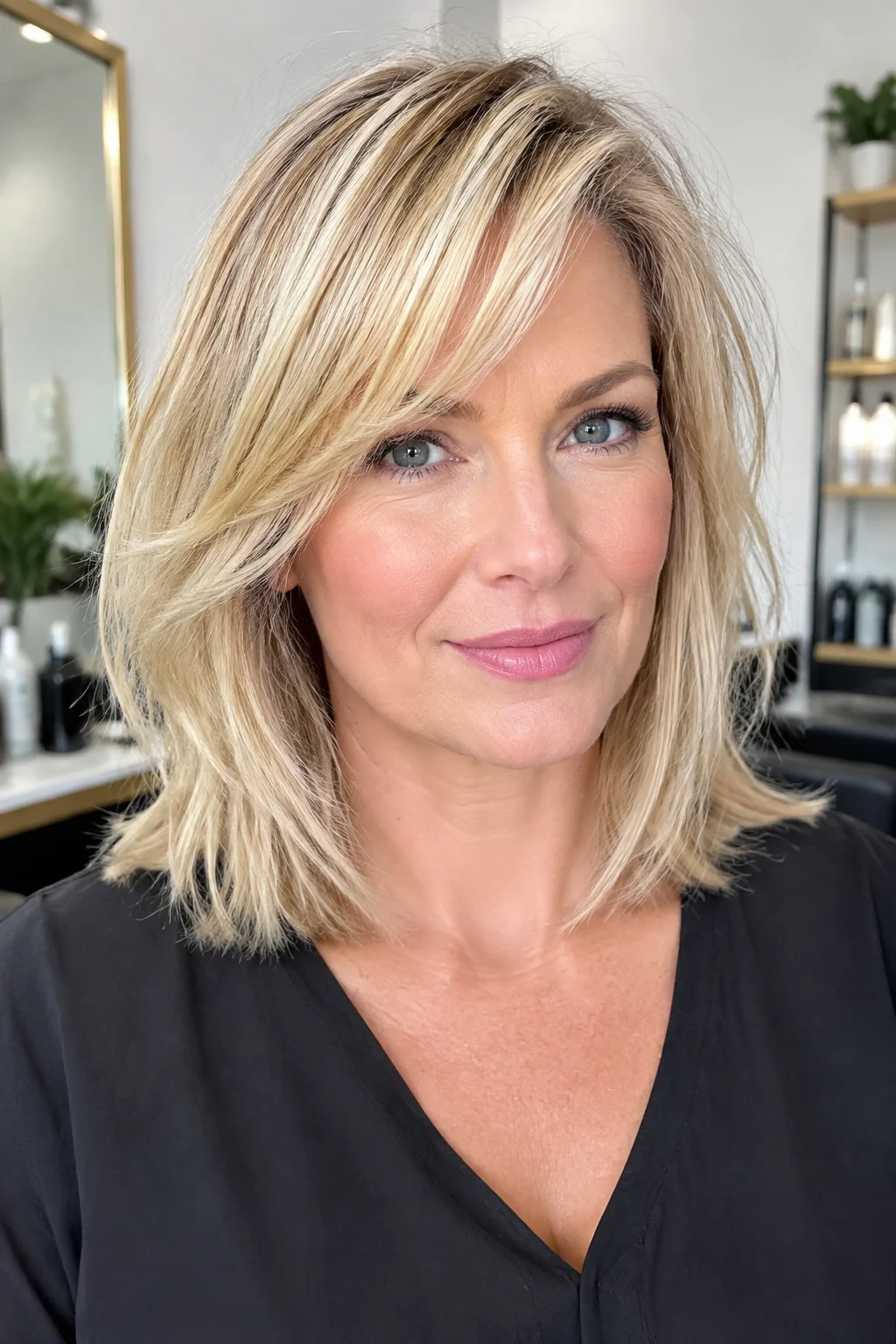
Side-swept bangs paired with shoulder-length layers create a soft frame around the face without the commitment of full bangs. The layers blend the bang length into the rest of the cut so there’s no harsh line to grow out. Blonde hair especially suits this pairing since the bangs pick up lighter pieces that draw attention toward the eyes.
Feathered Layers on Straight Blonde Hair
Feathered layers are cut thin and blended at the ends, creating a soft, wispy movement similar to styles popular in past decades but updated for straight blonde hair today. The feathering keeps the hair from looking heavy at the bottom while still preserving length. It needs very little styling since straight hair naturally falls into the feathered shape once it’s cut.
Sparse Layers with Extended Lengths
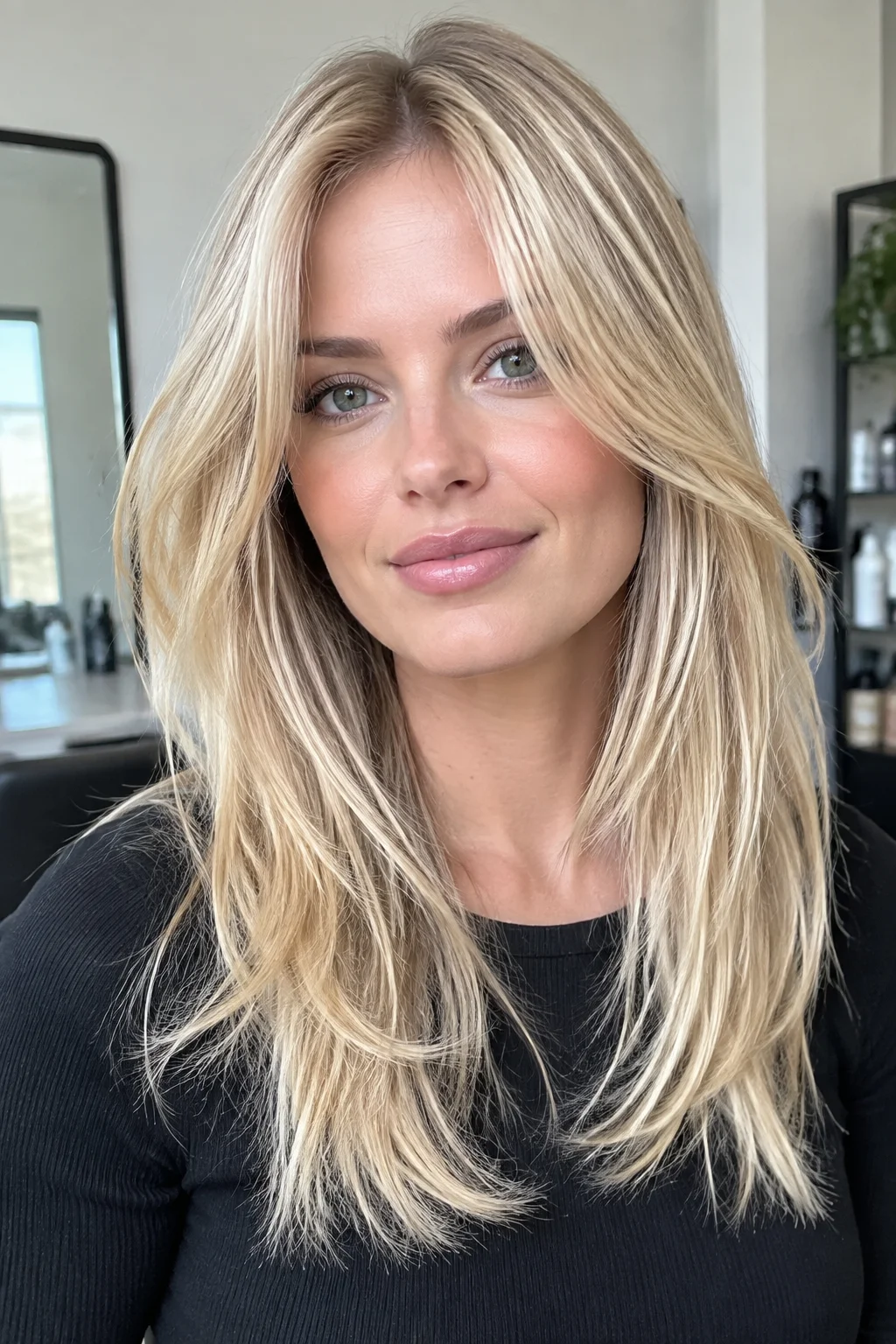
Sparse layering keeps most of the length intact while removing just enough hair to prevent a blocky, one-length look. This is a good option for anyone growing their hair out who still wants a bit of shape. Blonde hair, especially color-treated blonde, benefits from fewer layers since there’s less stress on already lightened strands. Tip: ask for sparse layers if your ends have been through a lot of bleach and need a break from heavy thinning.
Layered Lob with Textured Front Pieces
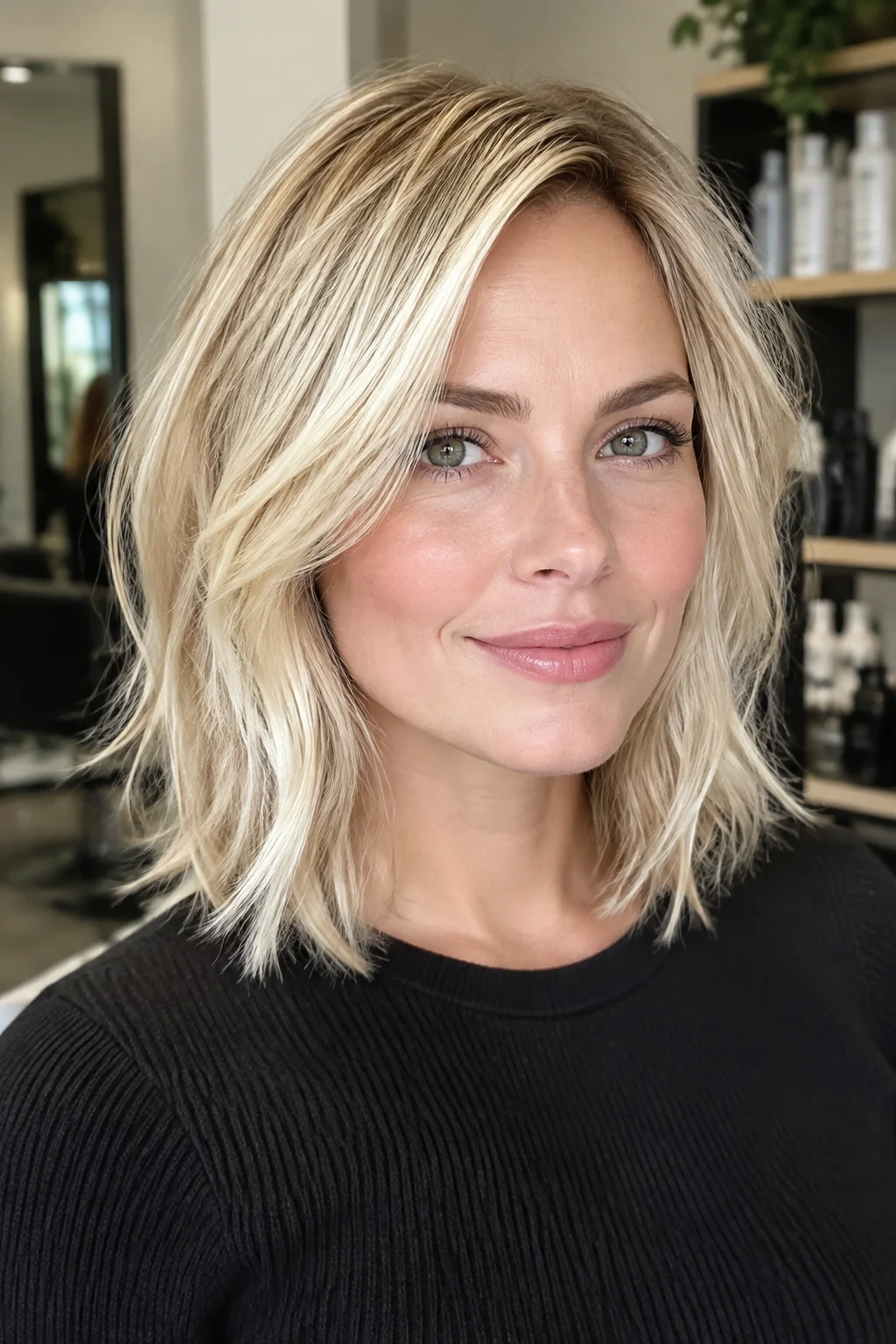
This lob sits around the collarbone with layering concentrated near the face rather than throughout the whole head. The front pieces get textured to frame the face while the back stays fuller for a longer looking silhouette from behind. It’s a strong choice for blonde hair since the front layers catch the lightest pieces of color first.
Reverse Layers for Blonde Hair with Flipped Ends
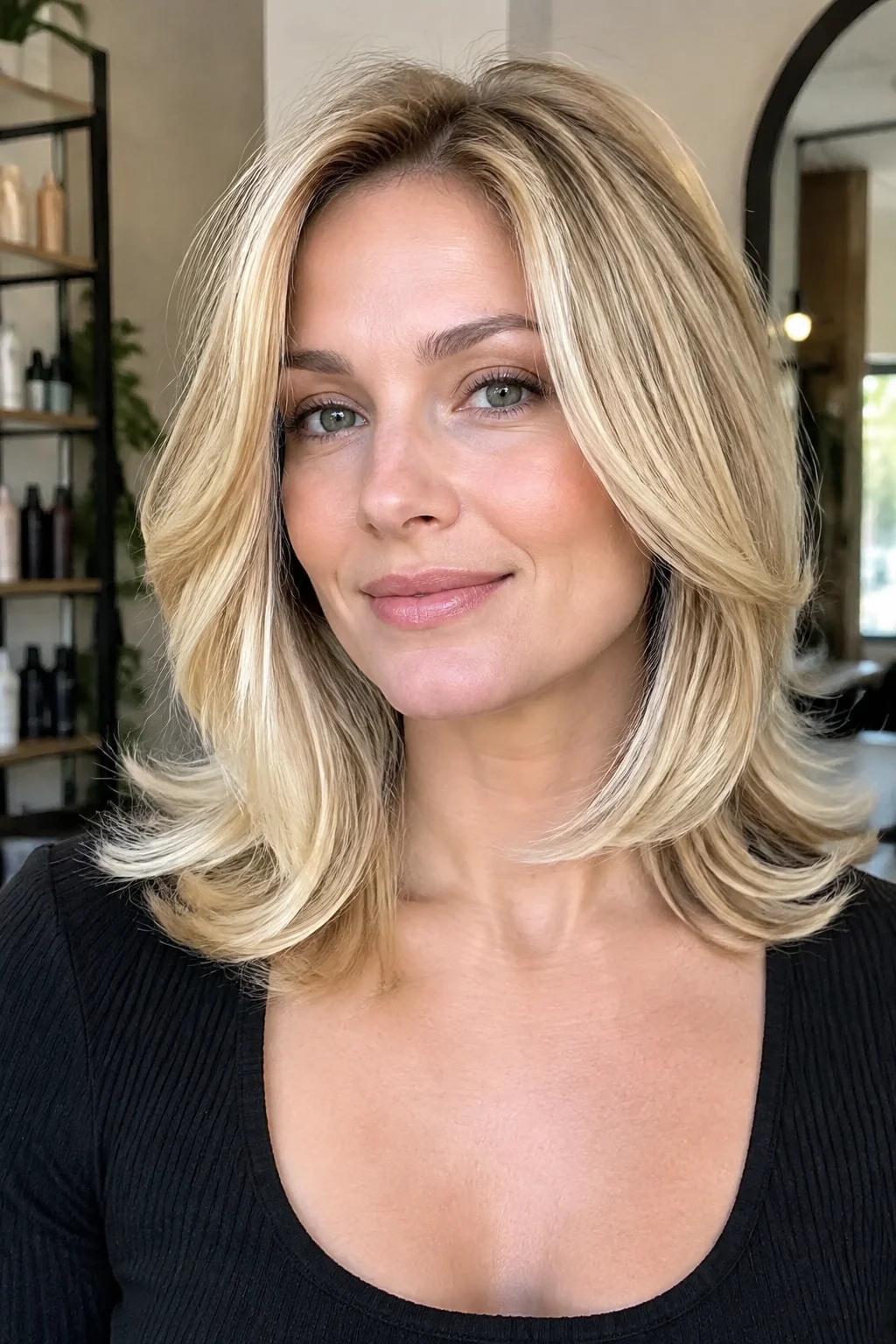
Reverse layers flip the ends outward instead of the more common inward curl, giving the haircut a retro shape that still photographs as modern on blonde hair. This cut usually needs a round brush or a flat iron with a flipped-out technique to fully show the shape, though the layers themselves stay low maintenance day to day. Blonde color highlights the flipped ends since the lighter strands curve visibly away from the face. It suits people who already blow dry their hair regularly and want a shape that rewards that step. This is not the easiest wash-and-go option on this list, but it is far from a high effort cut once you learn the flip.
Rounded Layers for Round Face Shapes
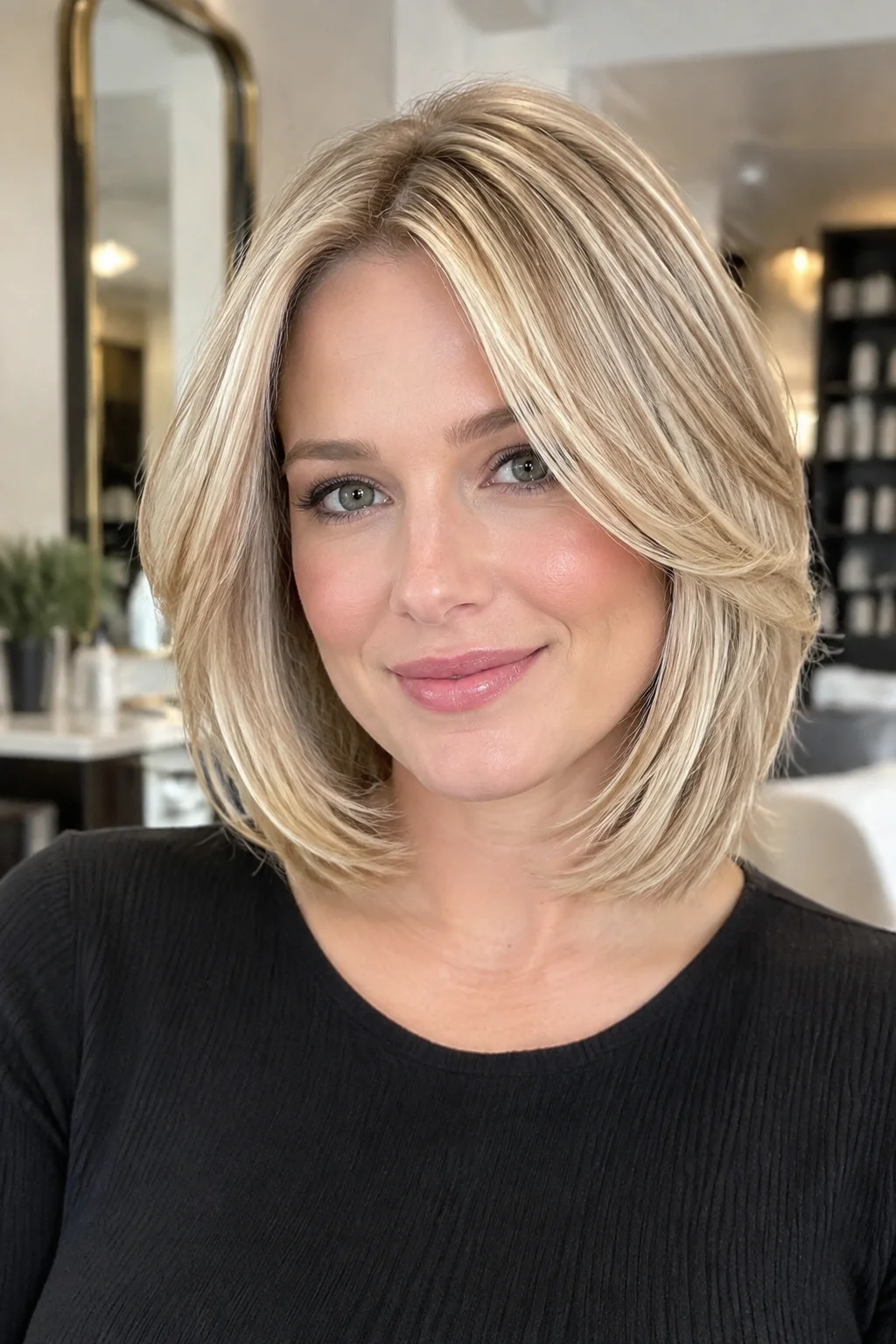
Rounded layers are cut to elongate rather than widen the face, avoiding heavy width at the cheek line. Blonde hair takes this shape well since the color naturally softens the layer lines instead of making them look blocky. This cut suits round faces looking for length without severe angles.
Angle-Cut Layers Starting at the Nape
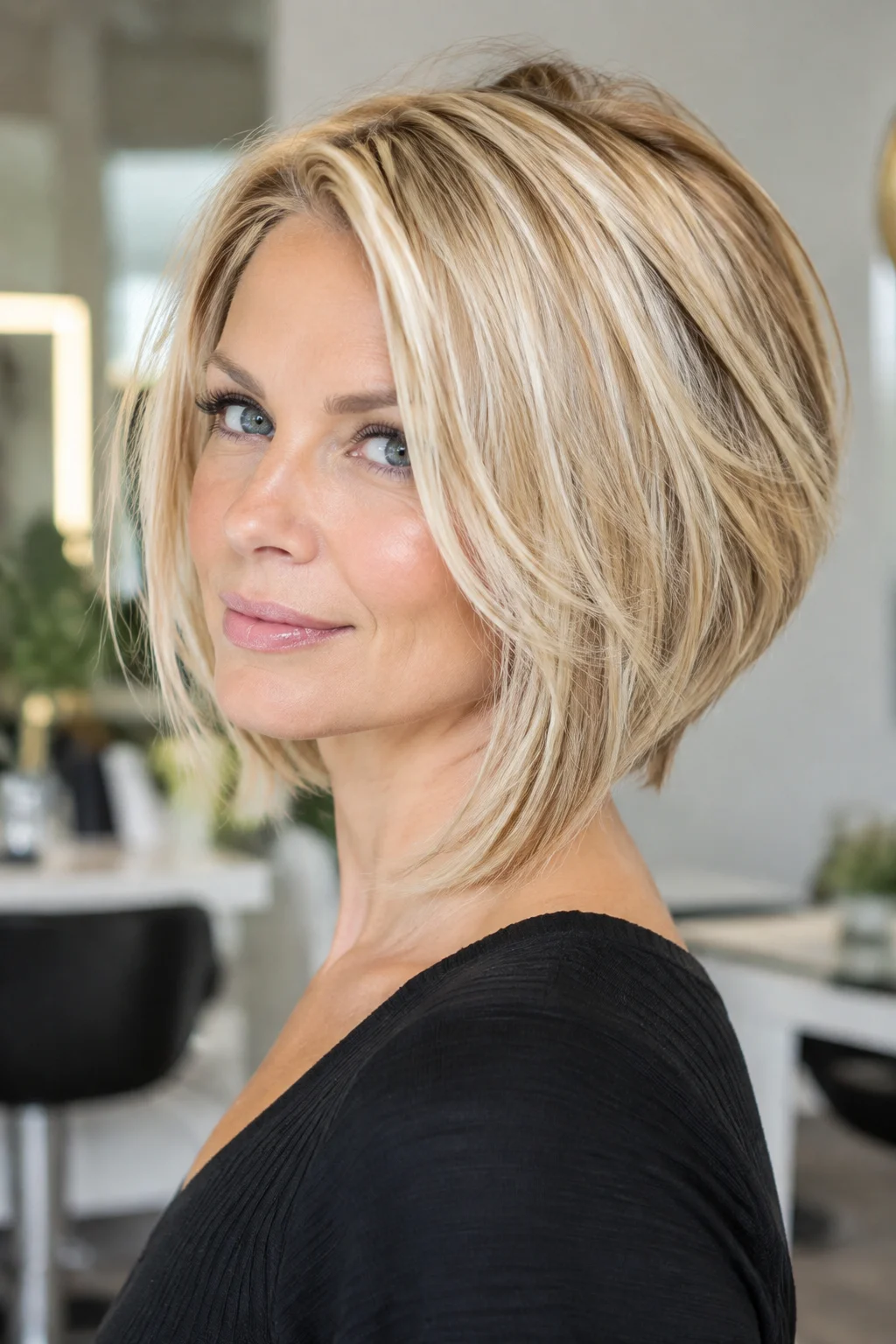
Layers that begin at the nape and angle forward create a longer front and shorter back, a shape sometimes called a stacked or reverse bob depending on the degree of angle. Blonde hair shows the angle clearly since the tonal shift between layers becomes visible at each length change. This cut needs occasional trims to maintain the angle but very little daily styling otherwise.
Textured Layers Throughout with Minimal Blending
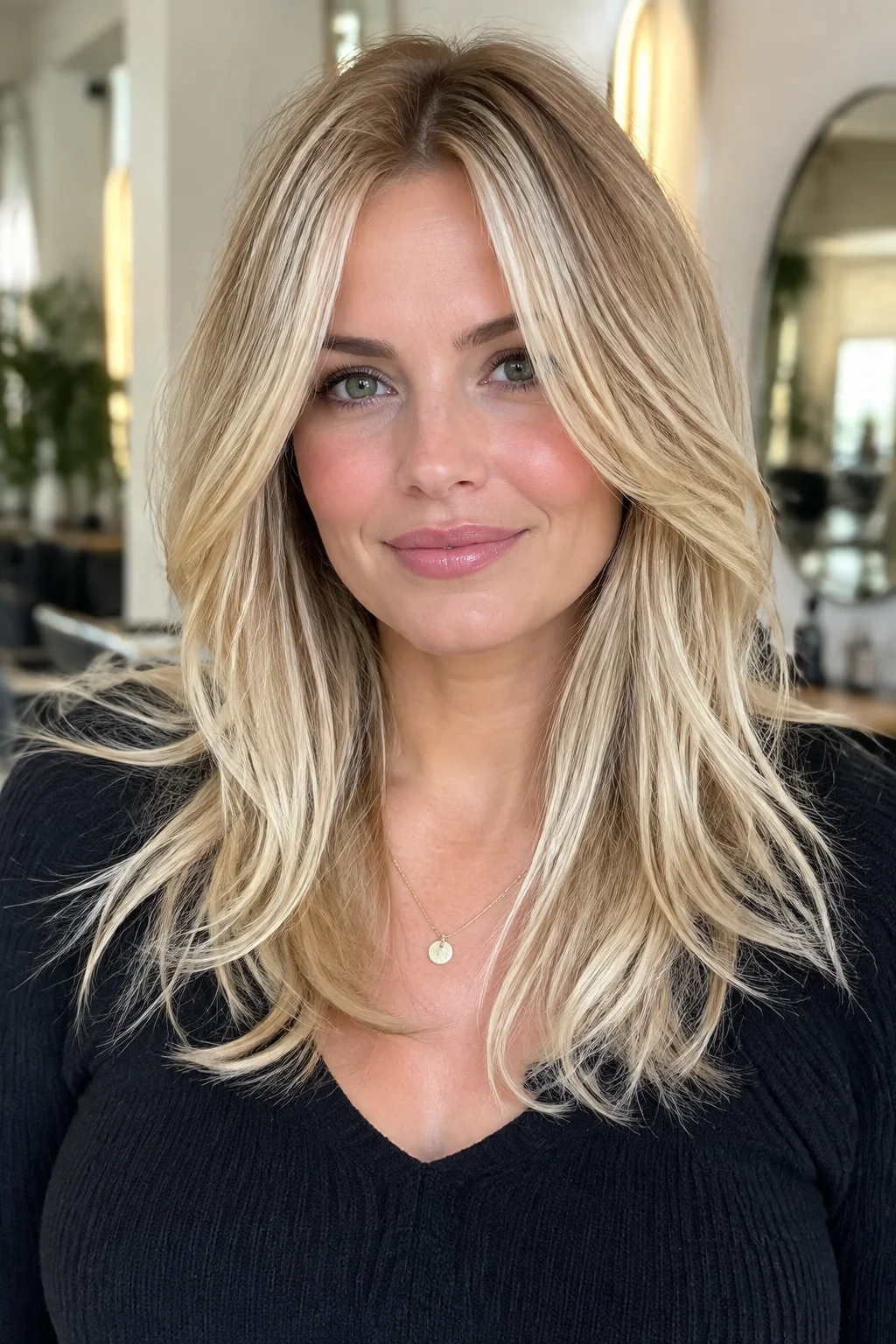
This cut skips the smooth blending most layered styles rely on, instead leaving visible separation between each layer for a rougher, more textured finish. It suits blonde hair with natural texture since the color and the layering work together instead of one softening the other. Minimal blending also means less time at the salon chair, since the stylist isn’t spending extra time feathering every transition.
Soft Layers with Rounded Ends for Blonde Waves
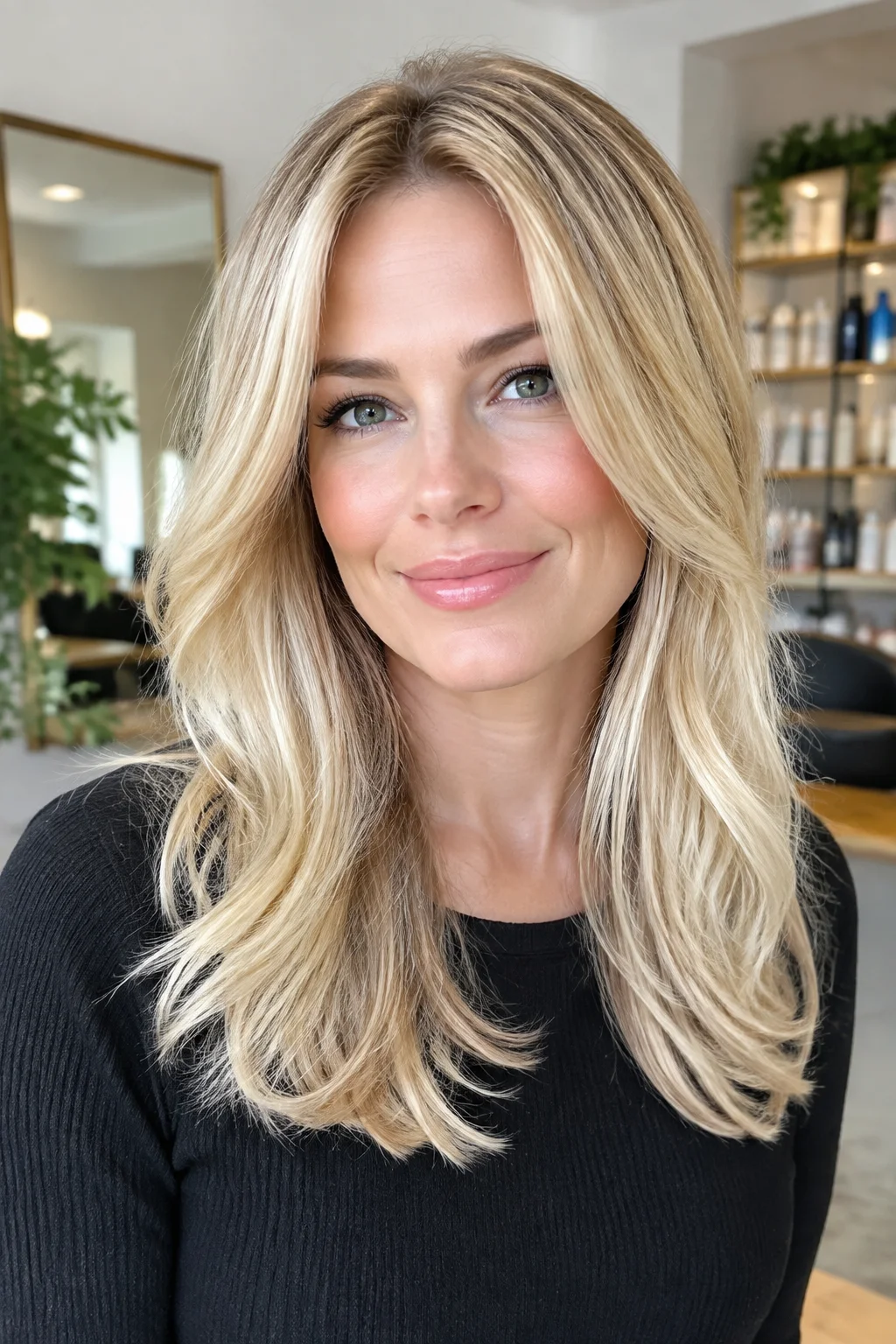
Soft, rounded layers suit wavy blonde hair that wants shape without any harsh, choppy edges. The ends get cut with a slight curve rather than a blunt or razored finish, which keeps waves looking soft and cohesive. This is one of the easiest cuts on this list to maintain, since the rounded ends hide regrowth and split ends far longer than sharper layering styles.
Choosing the Right Layered Cut for Your Hair
Picking between these styles comes down to your hair’s natural behavior more than personal preference alone. Fine or thin hair does best with wispy layers or graduated layers for volume at the crown, since both add fullness without stripping away density. Thick or coarse hair handles heavier layering better, which is why the asymmetrical layered cut for thick blonde hair and the choppy layers for blonde textured or wavy hair both work so well on denser strands.
If your hair is straight, feathered layers on straight blonde hair or face-framing layers on straight blonde hair will give you movement without requiring daily heat styling. Curly and wavy textures respond best to micro layers or soft layers with rounded ends, since both cuts work with the curl pattern instead of against it.
A common mistake is choosing a heavily layered style like the reverse layers with flipped ends without accounting for the styling time it actually requires. If your morning routine is short, lean toward the shoulder-length textured layers or the layered lob instead, since both need little more than air drying and a bit of texture cream.
Final Thoughts
Layers give blonde hair room to move, hide regrowth lines, and cut down on how often you need a trim. Whether you want something as simple as sparse layers with extended lengths or something with more shape like the chin-length shaggy bob, there’s a layered cut here that fits your texture and your schedule. Bring a few of these names to your next appointment and let your stylist tell you which one suits your hair best.