Flat hair by noon is one of the most common complaints in any stylist’s chair. You wash, you blow-dry, you feel good walking out the door, and by lunchtime your roots have given up. The fix isn’t more product. It’s the cut itself. A volume-boosting layered bob works with gravity instead of against it, stacking weight where you need lift and removing it where hair tends to droop. The right layers open up your natural texture and give your roots something to push against, so the shape holds instead of collapsing. Below are 21 ways to cut a layered bob that actually lasts, sorted by face shape, hair type, and how much texture you want to show. Pick the one that matches your hair’s natural behavior, not just the photo you like.
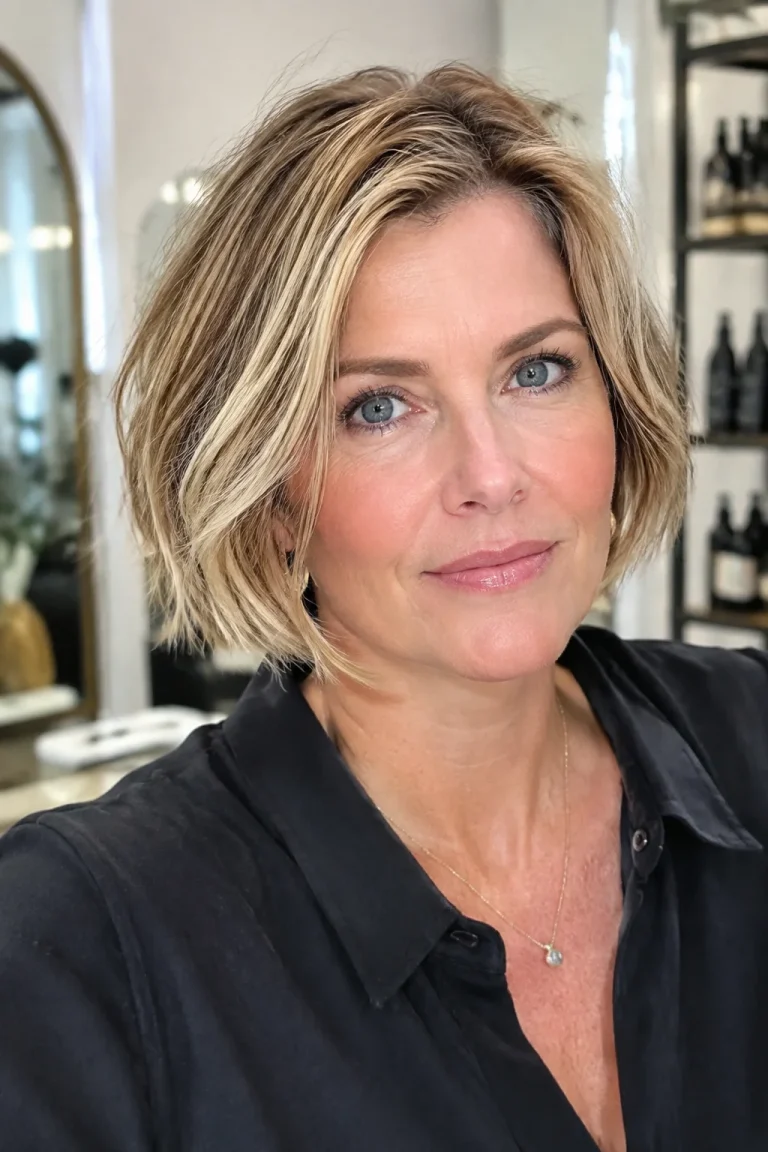
Short Choppy Layered Bob with Textured Crown
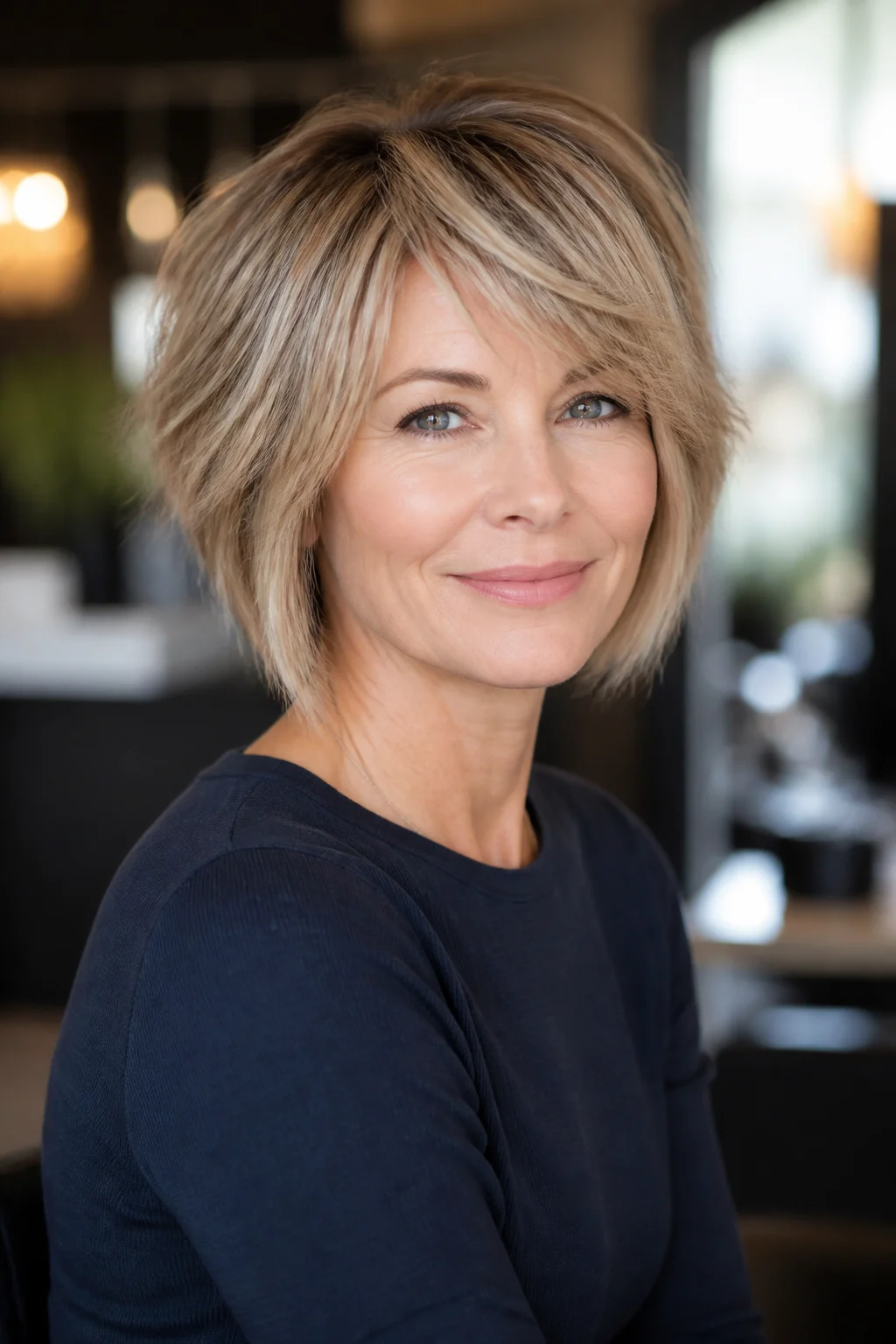
This one lives right at the jaw and depends on short, choppy layers cut into the crown to push hair up and away from the scalp. The texture on top works like a built-in root lift, so you skip a lot of the blow-dry gymnastics other bobs demand. Ends get point-cut rather than blunt, which keeps things looking a little undone on purpose. It suits thick or medium hair best since fine strands can look sparse under this much texturizing. Tip: ask for the heaviest texturizing near the part line, not the perimeter, so the crown gets the lift instead of the ends getting thin. A light mist of heat protectant before styling helps the finish last. This volume-boosting layered bob option keeps the shape easy to maintain day to day.
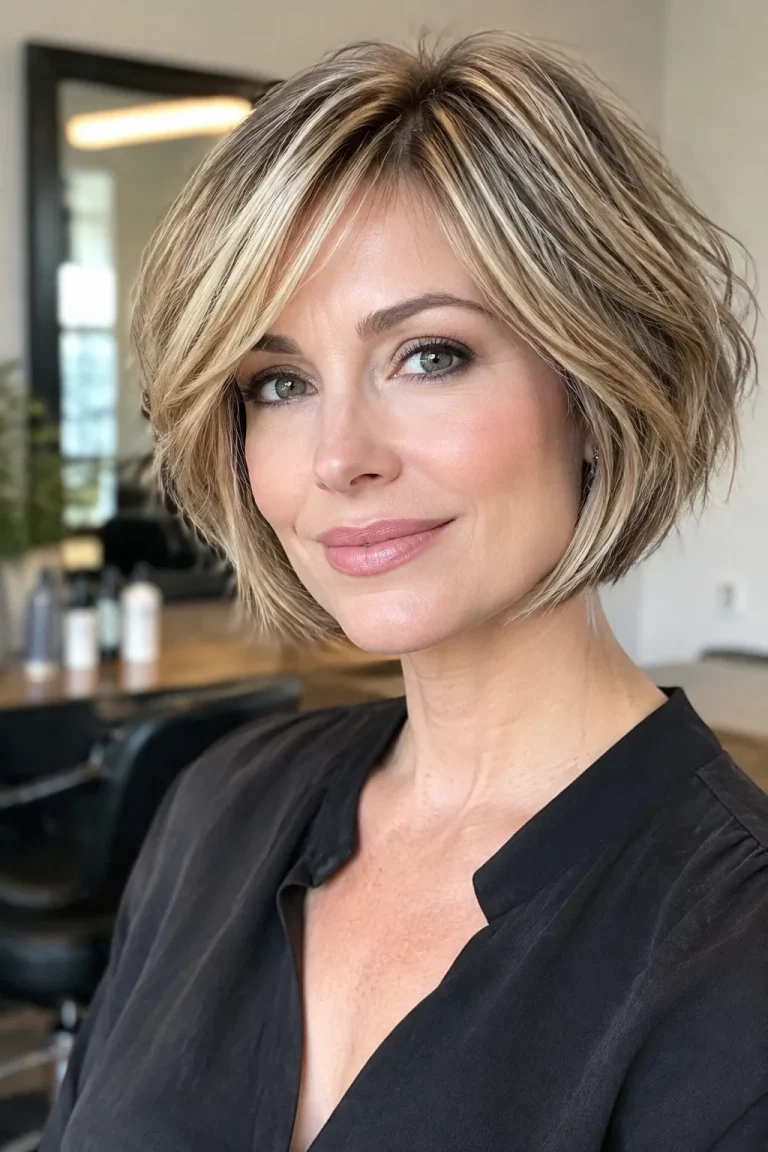
Face-Framing Layered Bob with Feathered Ends
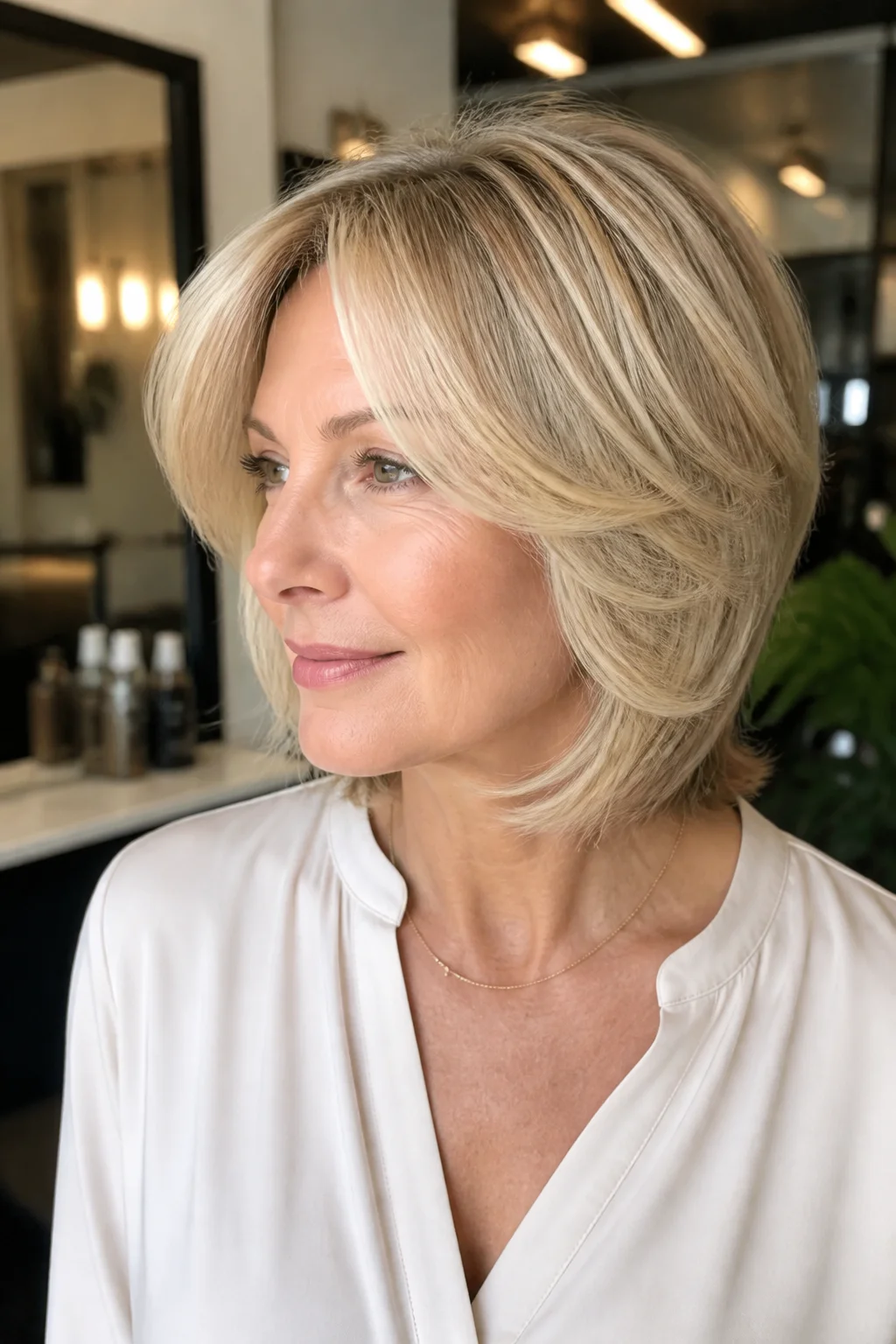
Feathered layers around the face soften angles and add movement without cutting a ton of weight out of the overall shape. The feathering happens mostly at the cheekbone and chin, so it frames your features while the rest of the bob stays fuller for volume. It’s a forgiving cut that grows out slowly, since the feathering blends rather than creating a hard line. I recommend this for anyone who wants softness without losing density through the back. A light mist of heat protectant before styling helps the finish last. A light mist of heat protectant before styling helps the finish last. This volume-boosting layered bob option keeps the shape easy to maintain day to day.
Stacked Layered Bob for Fine Hair
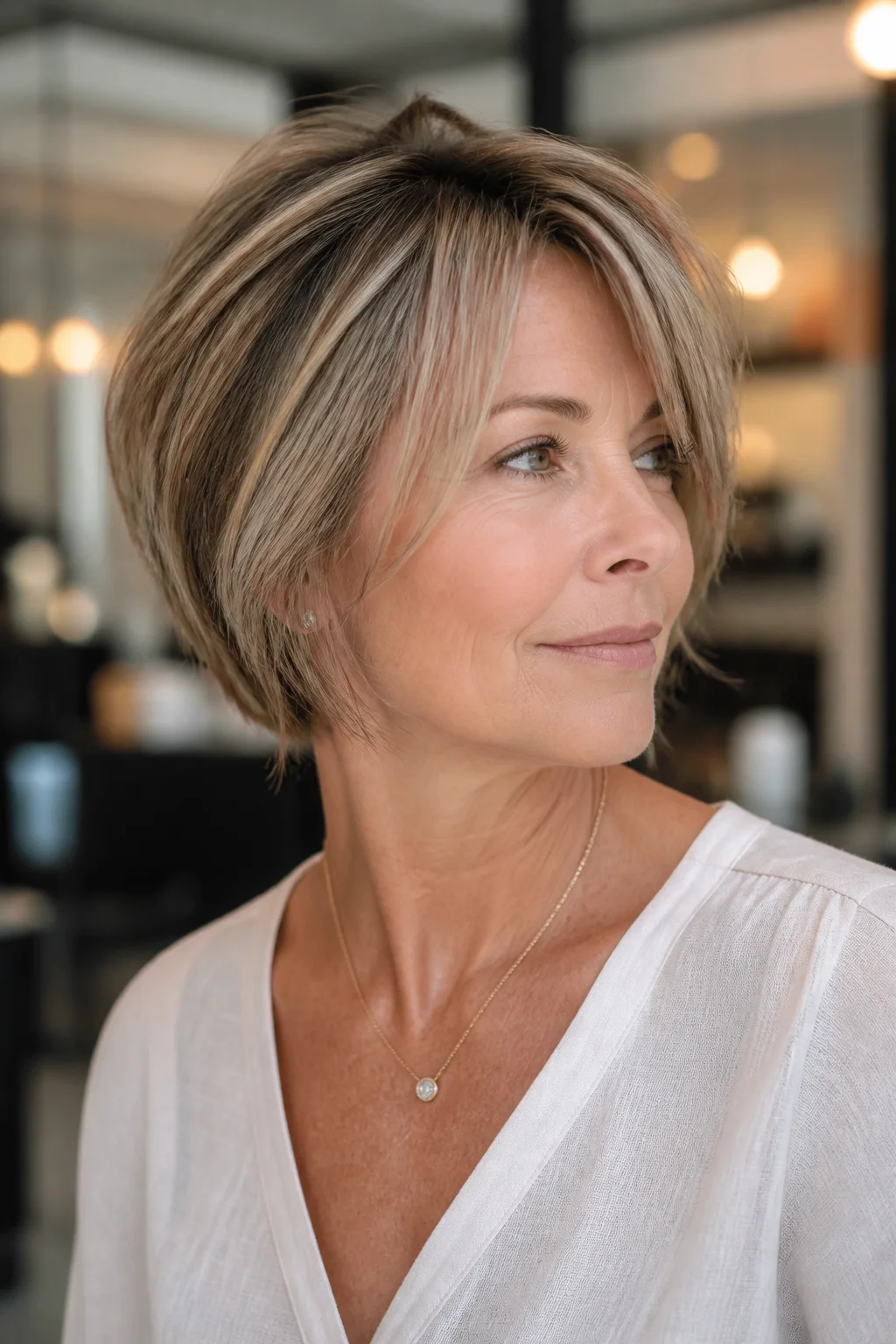
Fine hair needs help holding shape, and stacking is the answer. The back gets cut in tight, graduated layers that build on top of each other, creating the illusion of thickness even when the hair itself is thin. Sides taper down gradually so the silhouette doesn’t look boxy. This cut needs regular trims, maybe every six weeks, because fine hair shows growth and lost shape faster than coarser textures. This volume-boosting layered bob option keeps the shape easy to maintain day to day.
Textured Shaggy Layered Bob
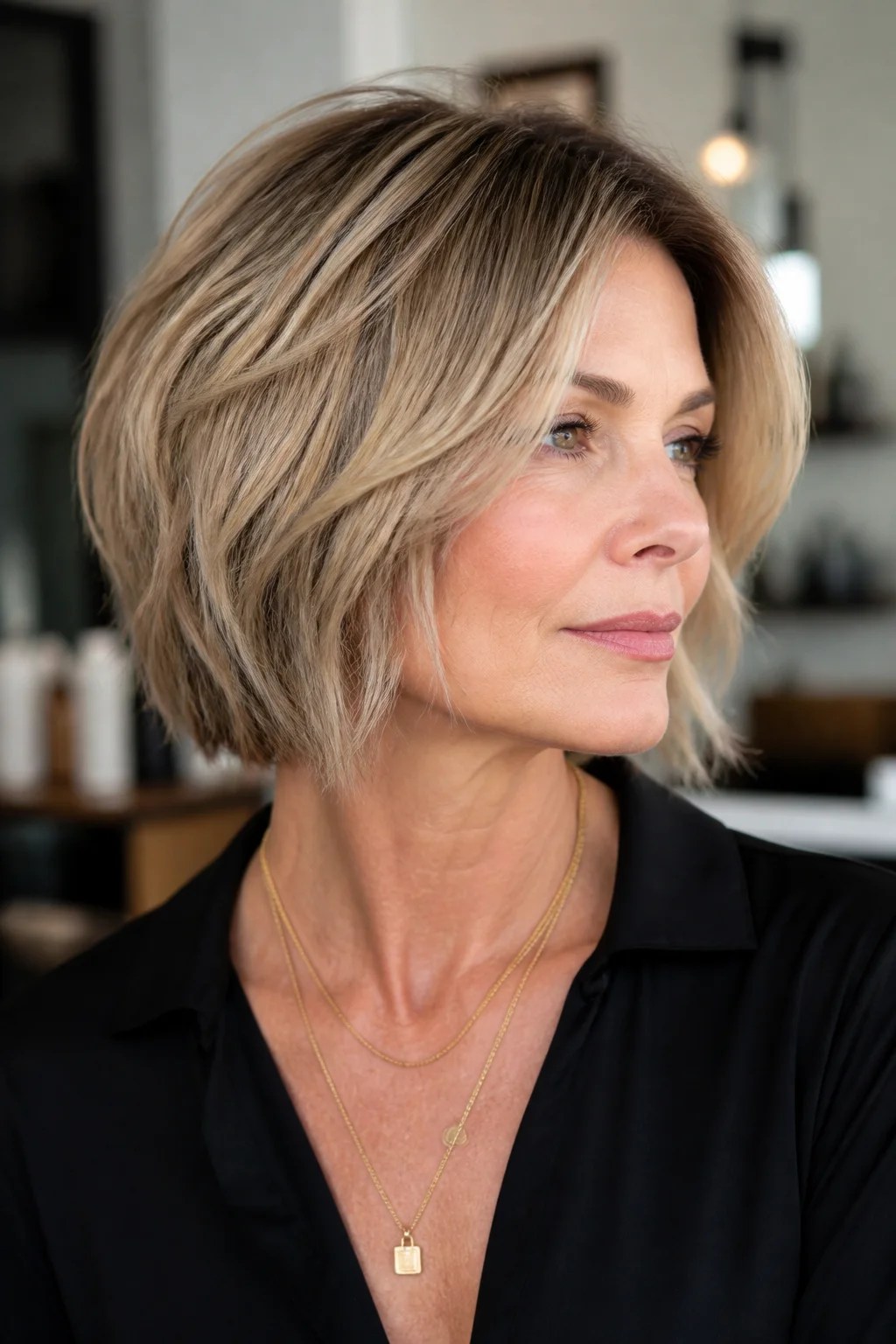
Choppy, uneven layers throughout give this bob a lived-in, almost undone look, similar to the shag cuts from decades back but shortened and modernized. Volume comes from the disconnect between layers rather than from stacking or graduation. It works on nearly every hair type, though wavy and curly hair show off the texture best. Bangs are optional here, but wispy, textured bangs tend to complete the shaggy effect rather than compete with it. The cut is low maintenance day to day since the messiness is intentional, and it actually looks better on the second or third day after washing.
Graduated Layered Bob with Curved Volume
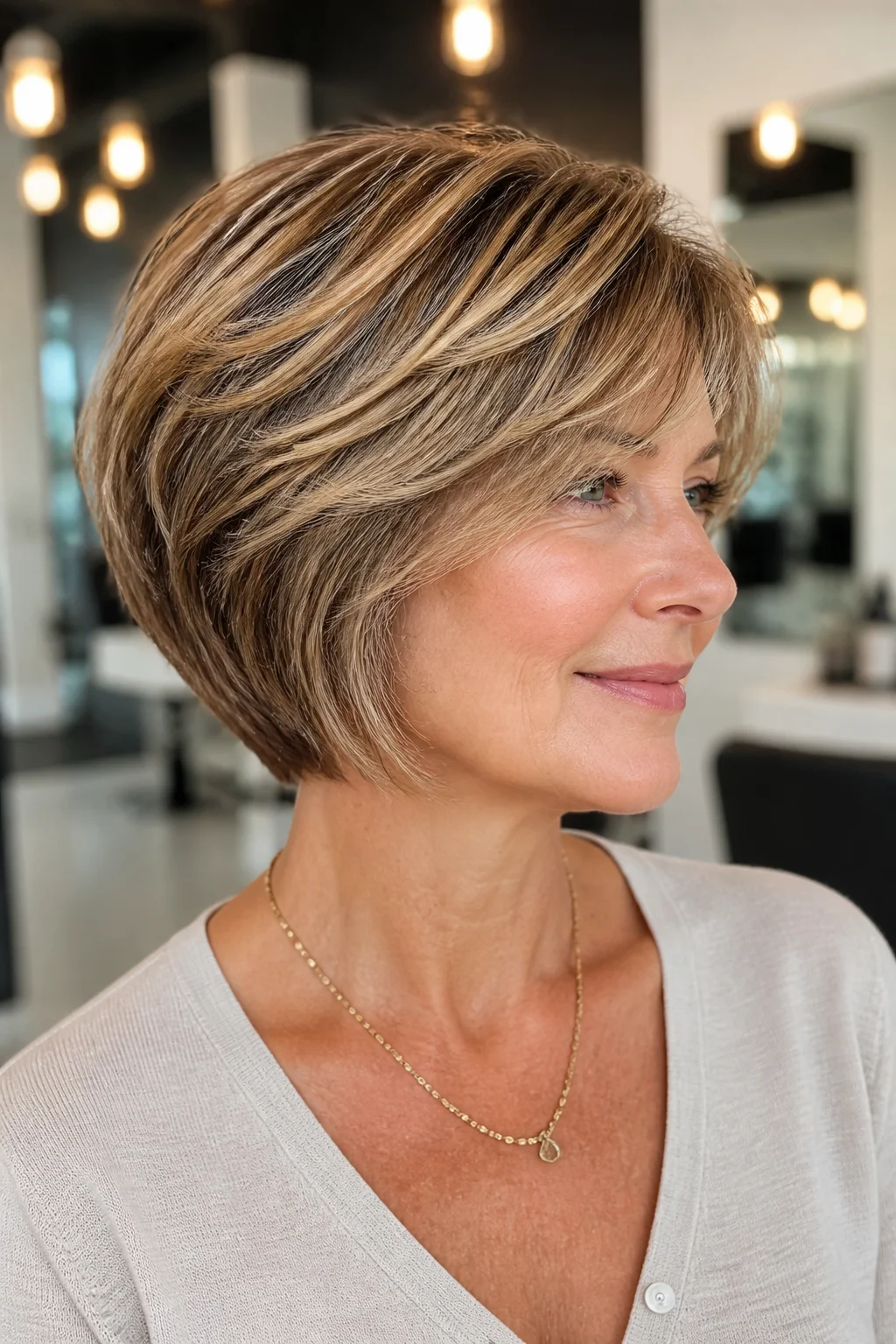
Graduation builds weight at the bottom and layers it upward, creating a rounded, curved shape that flares slightly at the ends. This gives noticeable volume through the lower half of the bob, which is useful if your hair tends to go flat specifically at the ends rather than the roots. The curve reads polished and a little retro, closer to a classic bob silhouette than the choppier options on this list. Straight hair holds the curve well with a round brush and minimal heat.
Wispy Layered Bob for Straight Hair
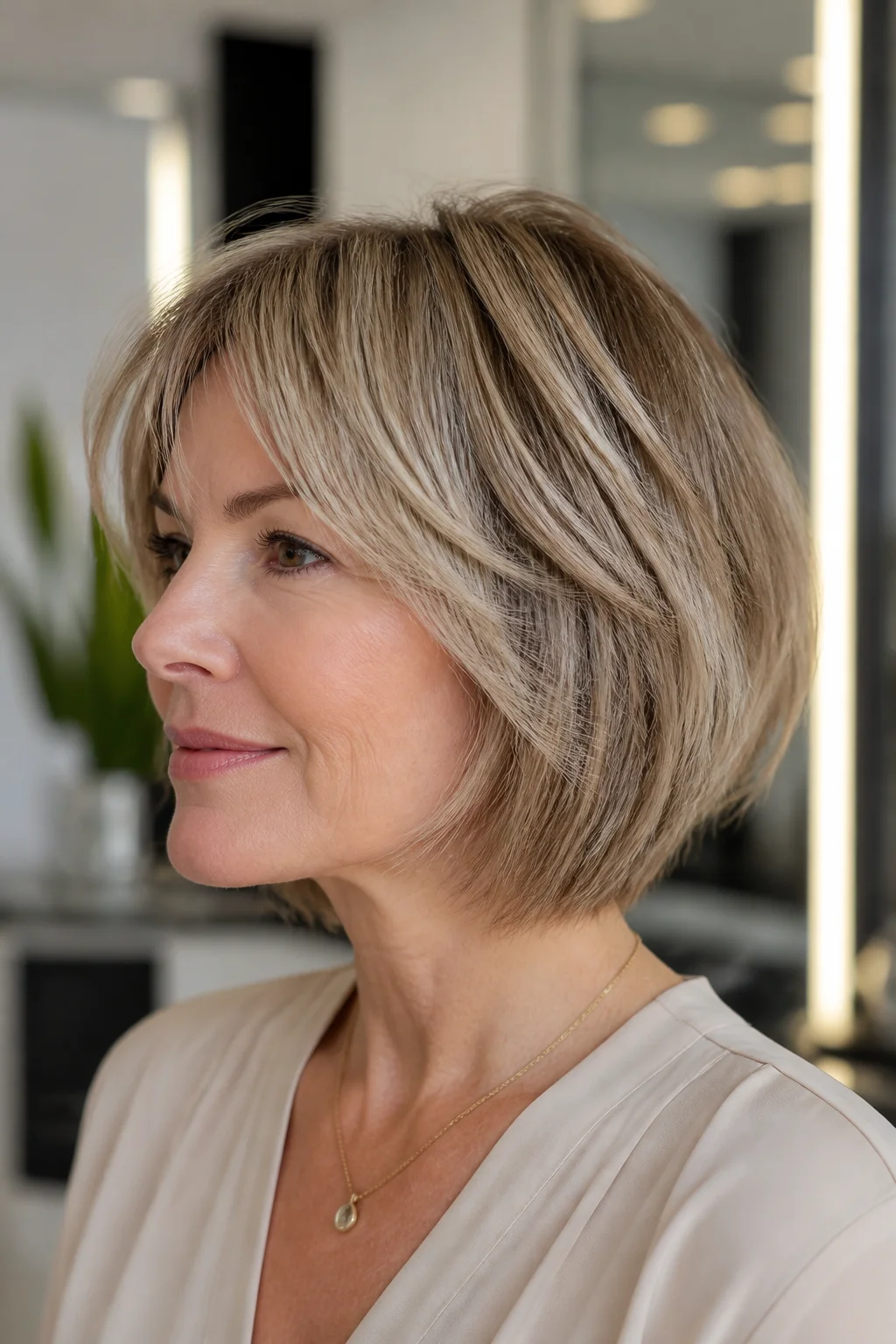
Straight hair often falls flat because there’s nothing to interrupt the smooth line of the strand. Wispy layers, cut thin and feathered throughout, break up that smoothness and let small sections of hair move independently instead of falling as one flat sheet. The result reads lighter and airier without a perm or heavy styling routine. Tip: request the wispiest layers around the temples and crown, where straight hair tends to lie flattest.
Blunt-Cut Layered Bob with Hidden Layers
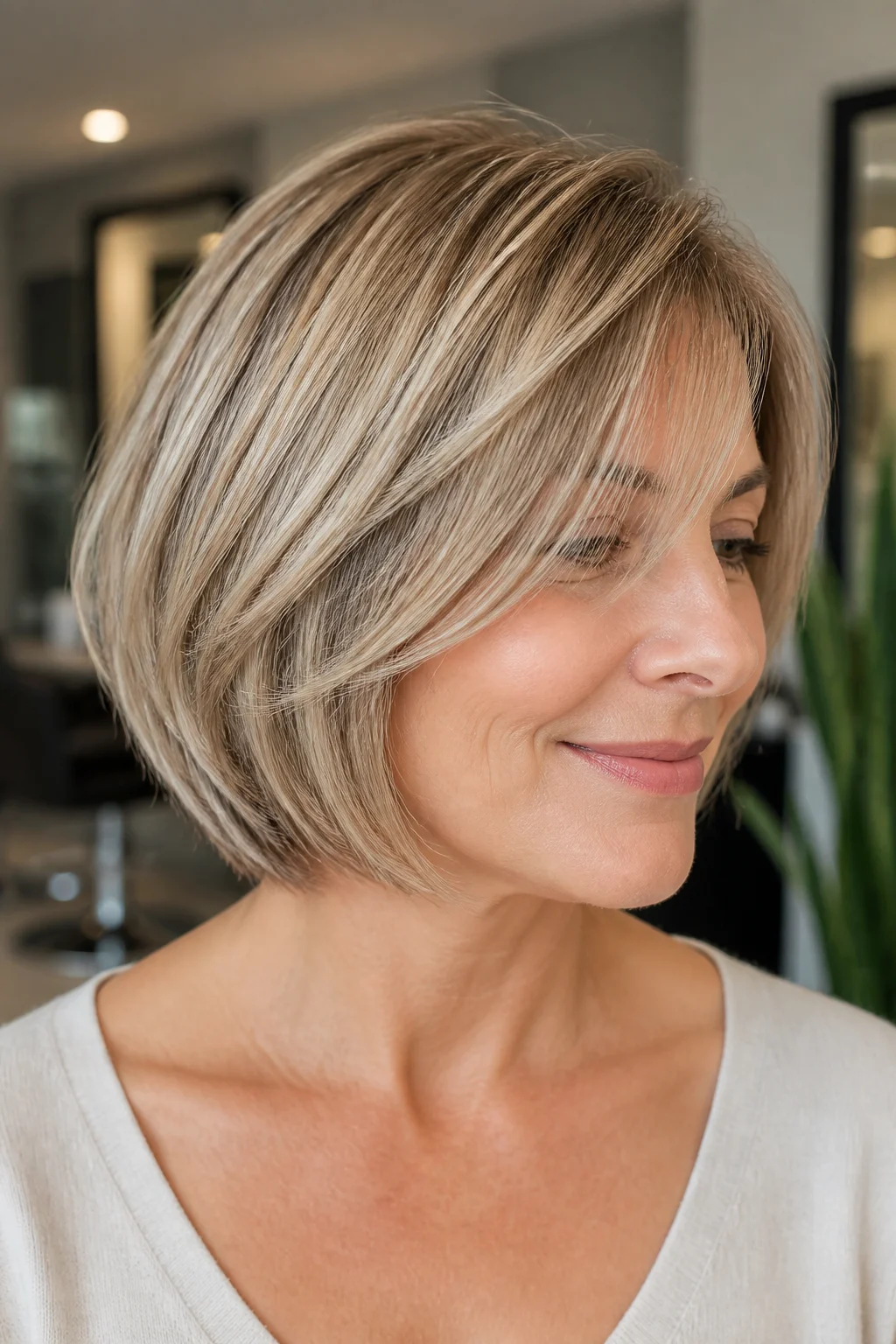
This is a bob for people who want the clean, graphic line of a blunt cut but still need internal movement so it doesn’t sit like a helmet. The layers are cut underneath, invisible from the outside, so the silhouette reads sharp and geometric while the internal structure does the volume work. It’s a smart choice for thick hair that looks heavy in a true one-length blunt cut. The trim schedule is a little more forgiving here since the blunt line hides regrowth better than choppier styles.
Curly Layered Bob for Natural Texture
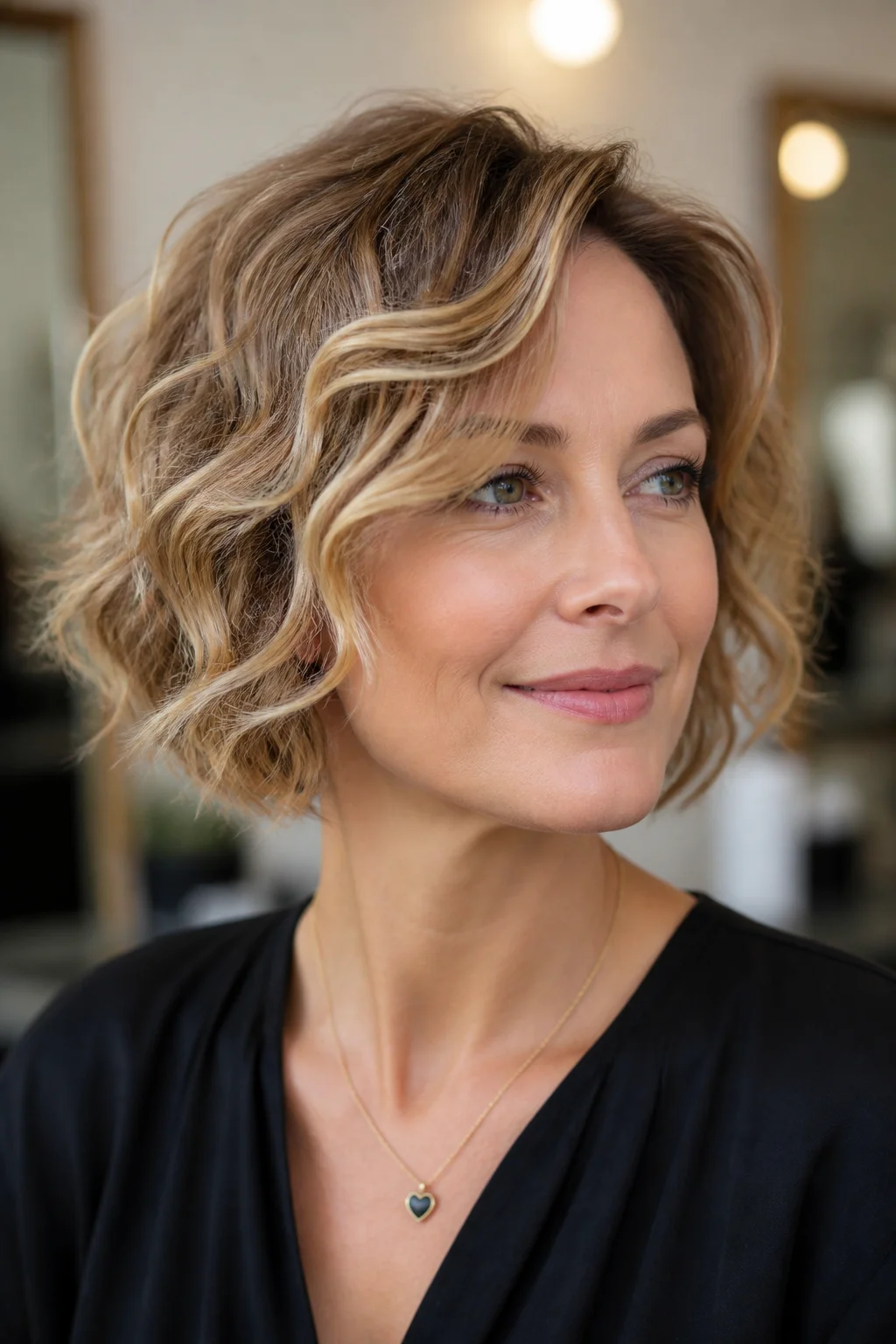
Curls need layers cut dry, or at least finished dry, so the stylist can see exactly how each curl springs up before removing length. Layers are spaced out more than they would be on straight hair, since curl shrinkage means a small cut translates to a bigger visual change. The volume this bob delivers comes from the curl pattern itself; the layering just keeps the shape from turning into a triangle. Diffusing instead of air-drying tends to keep the volume even from root to end.
Asymmetrical Layered Bob with Side-Swept Volume
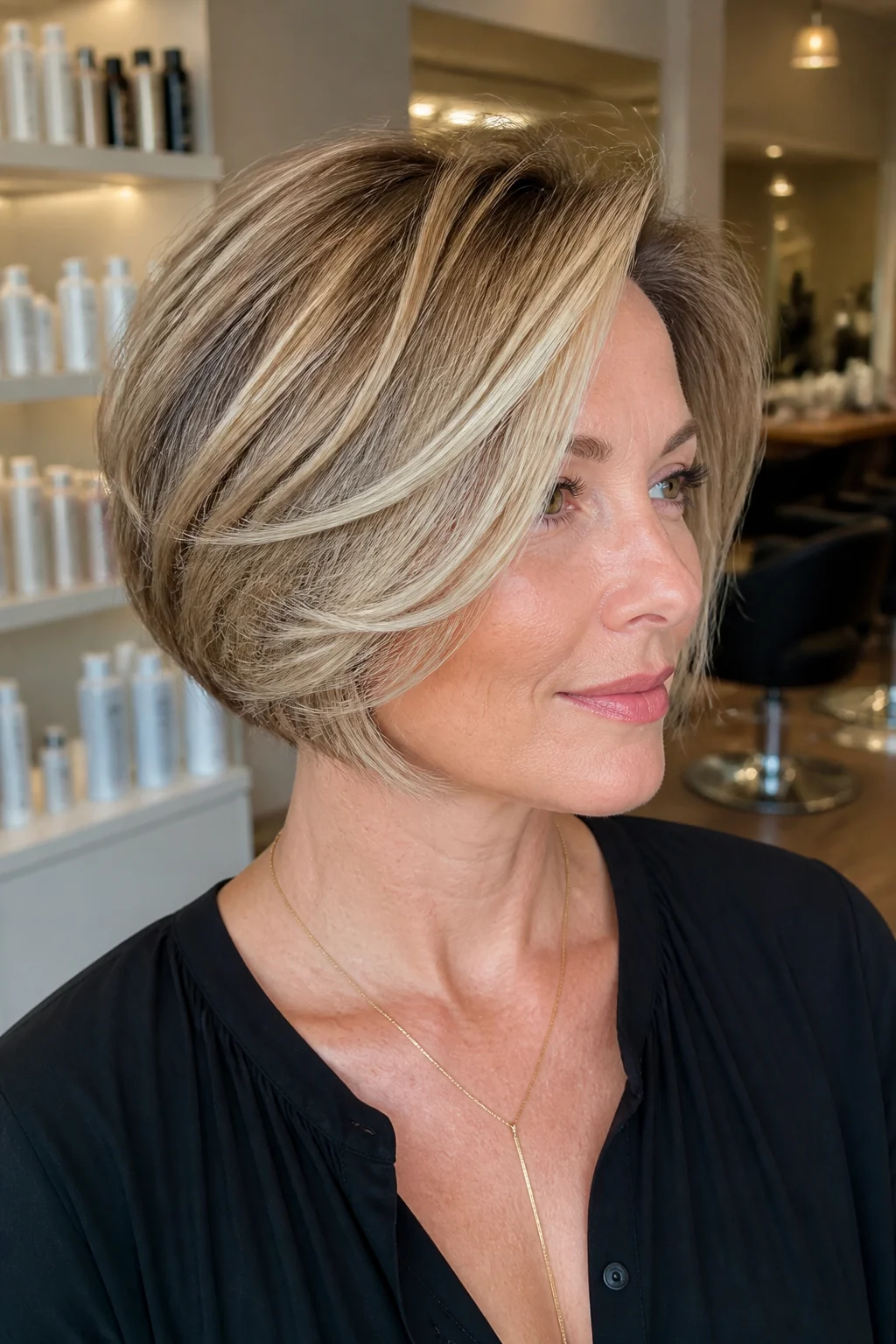
One side sits longer than the other, and the layers are cut to sweep volume toward the shorter side, creating a lifted, angled look that reads modern rather than symmetrical and safe. This works well if you already part your hair deeply to one side. The asymmetry also hides a cowlick or stubborn part line better than an even bob does.
Choppy Layered Bob for Thin Hair
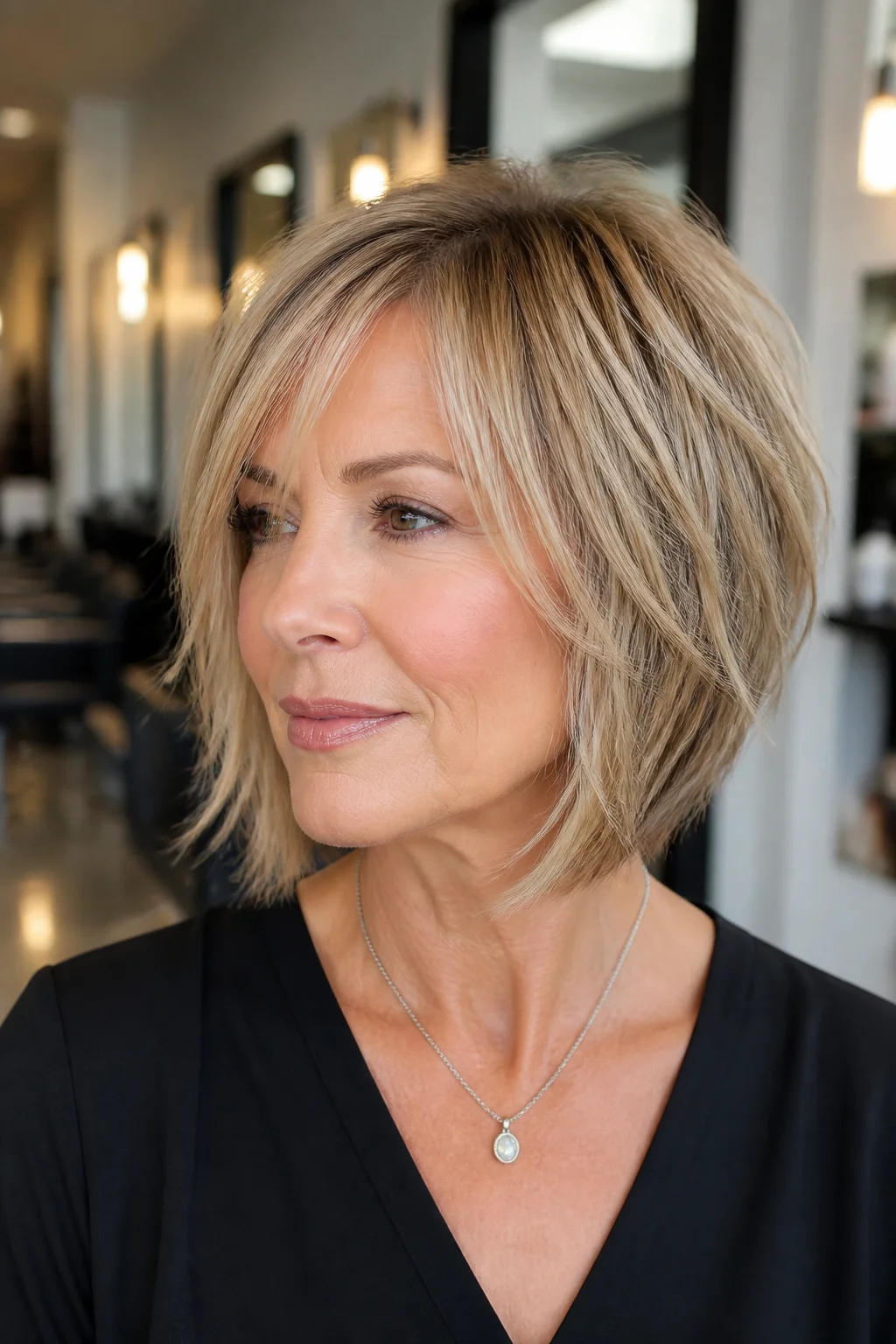
Thin hair can’t support heavy layering, so this version keeps the choppy texture concentrated at the ends only, leaving the mid-lengths fuller and untouched. The result feels like there’s more hair than there actually is, without the thinning shears working overtime near the scalp. Tip: avoid thinning shears near the roots entirely on thin hair, since that’s the exact area where you need density to stay put.
Layered Bob with Textured Bangs
Textured bangs cut with a razor or point-cutting technique add movement to the front of the face and pull attention away from flatness at the crown. The bangs blend into the layers of the bob rather than sitting as a separate, thick block, which keeps the whole look cohesive. This works particularly well for people who want bangs but are nervous about commitment, since textured, layered bangs grow out more gracefully than a blunt fringe.
Rounded Layered Bob for Round Faces
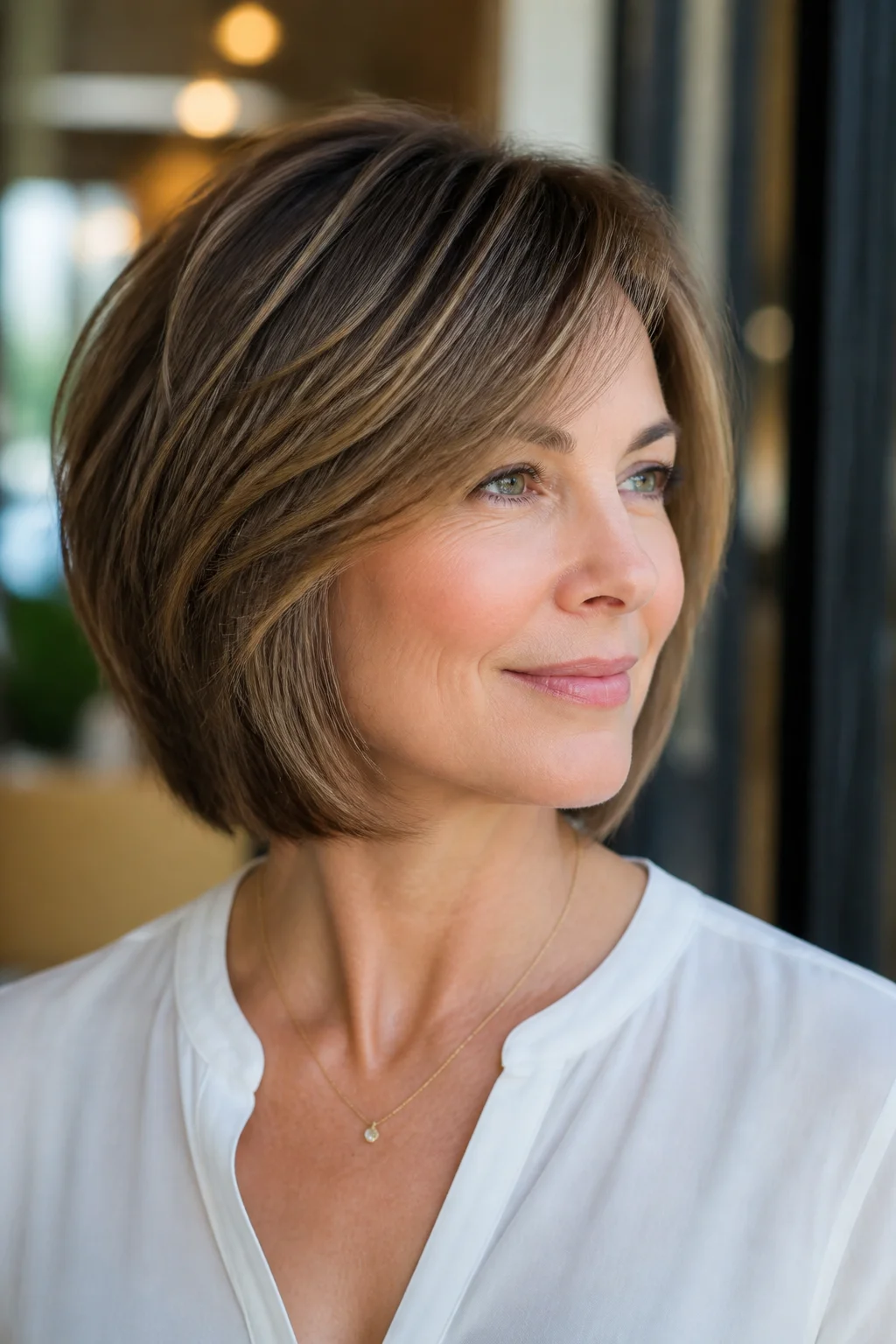
Layers here are cut to add length and angles rather than roundness, since a round face doesn’t need more curve added to it. The bob sits just below the jaw with layers that create a slight vertical pull, elongating the face instead of widening it. Volume is concentrated at the crown, which draws the eye up and away from the cheeks. This is one of the more flattering options if your face shape is your main concern rather than hair type.
Long Layered Bob with Razor-Cut Texture
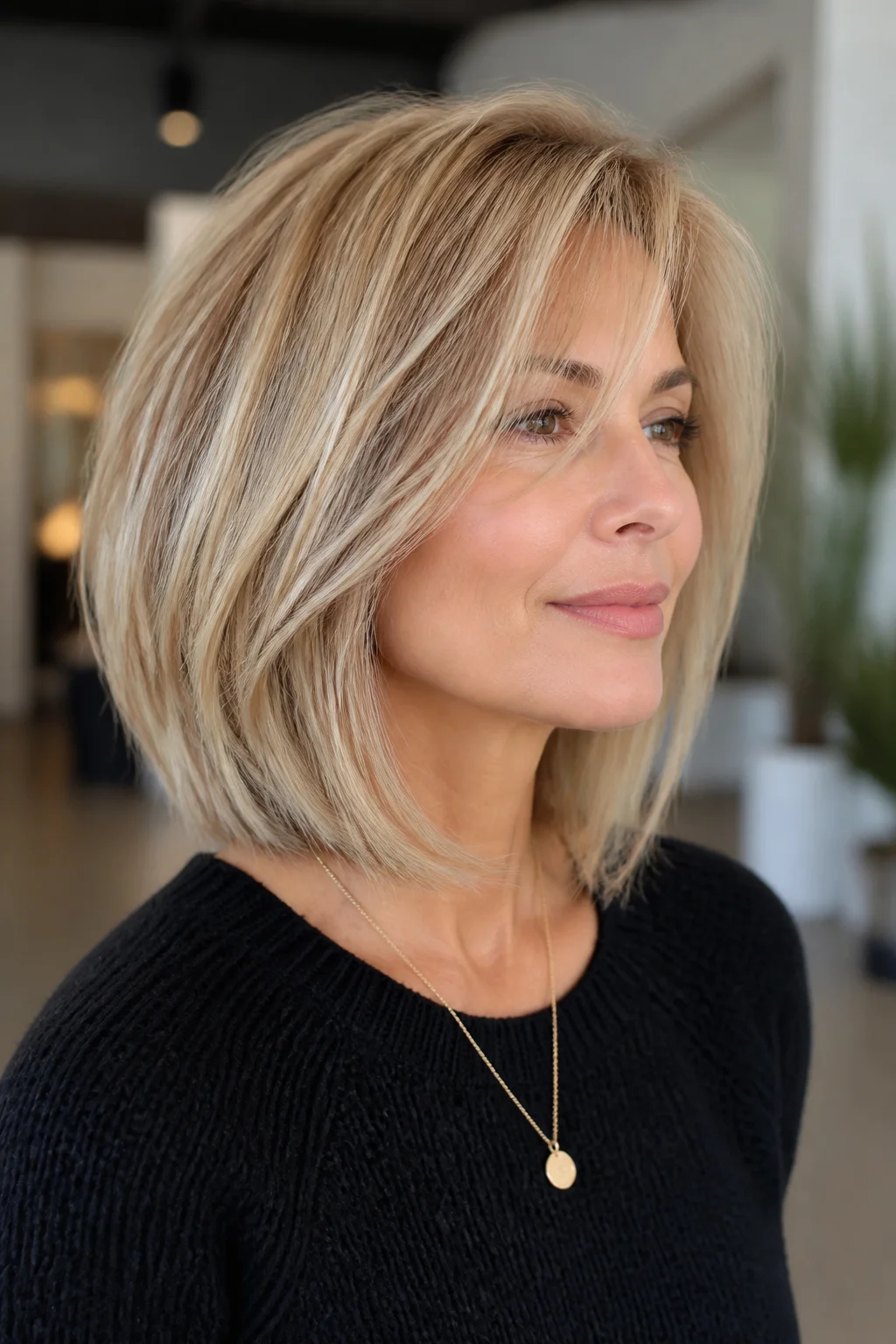
A razor, instead of shears, creates a softer, more feathered edge on each layer, which adds texture without the choppiness of point-cutting. This longer bob, often called a lob, keeps length near the collarbone while still getting real movement through razor-cut layers at the ends. It suits hair that’s naturally a little dry or coarse, since razoring can add extra frizz to already fine or damaged strands, so ask your stylist about your specific texture before committing.
Layered Bob with Volume at the Nape
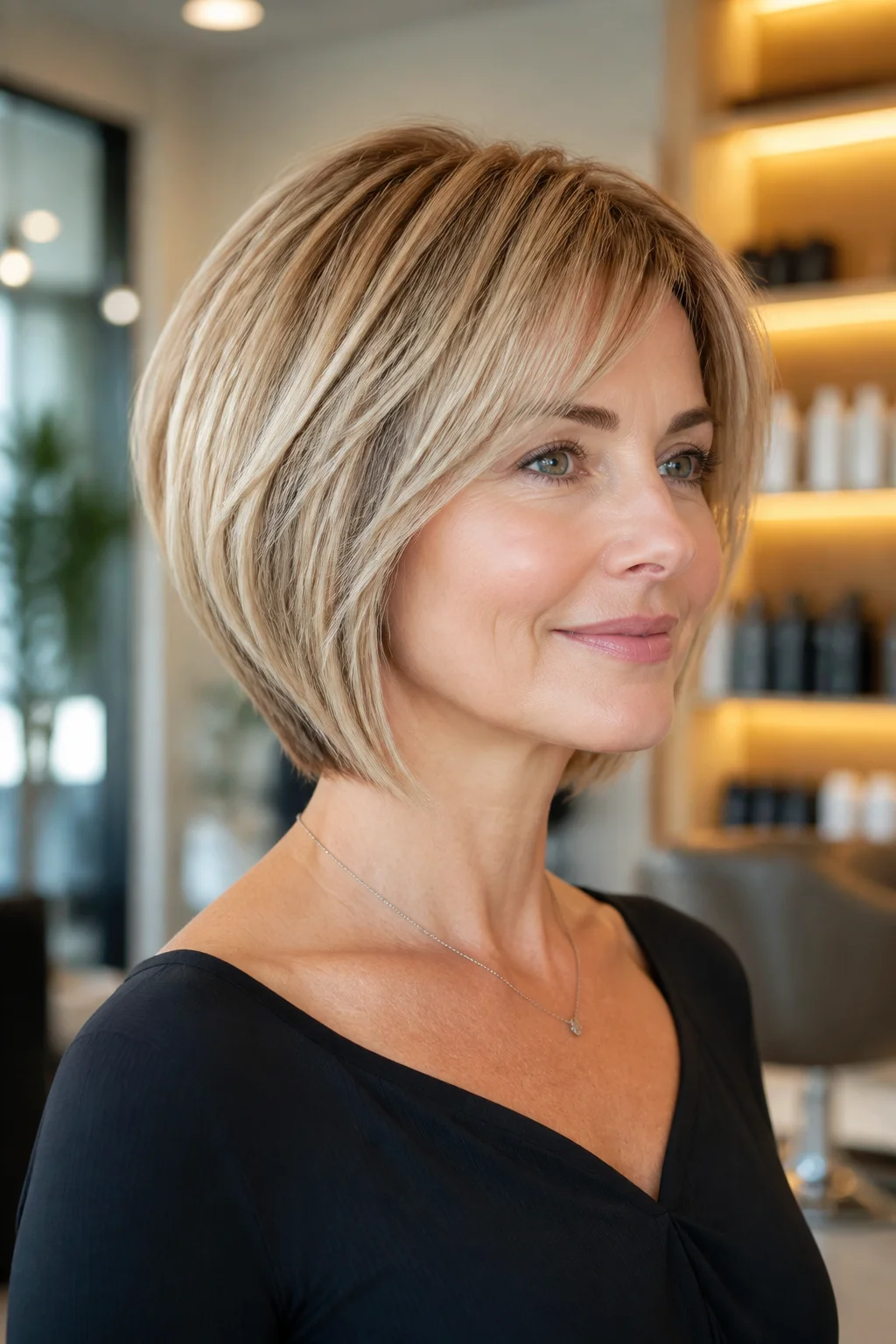
Most volume-focused bobs concentrate lift at the crown, but this one builds it at the nape instead, using short, stacked layers at the back of the head. It creates a rounded, almost bell-like shape when viewed from the side. This is a strong option for anyone whose hair is fine on top but has decent density lower down, since it puts the layering where the strength already is.
Tousled Layered Bob for Wavy Hair
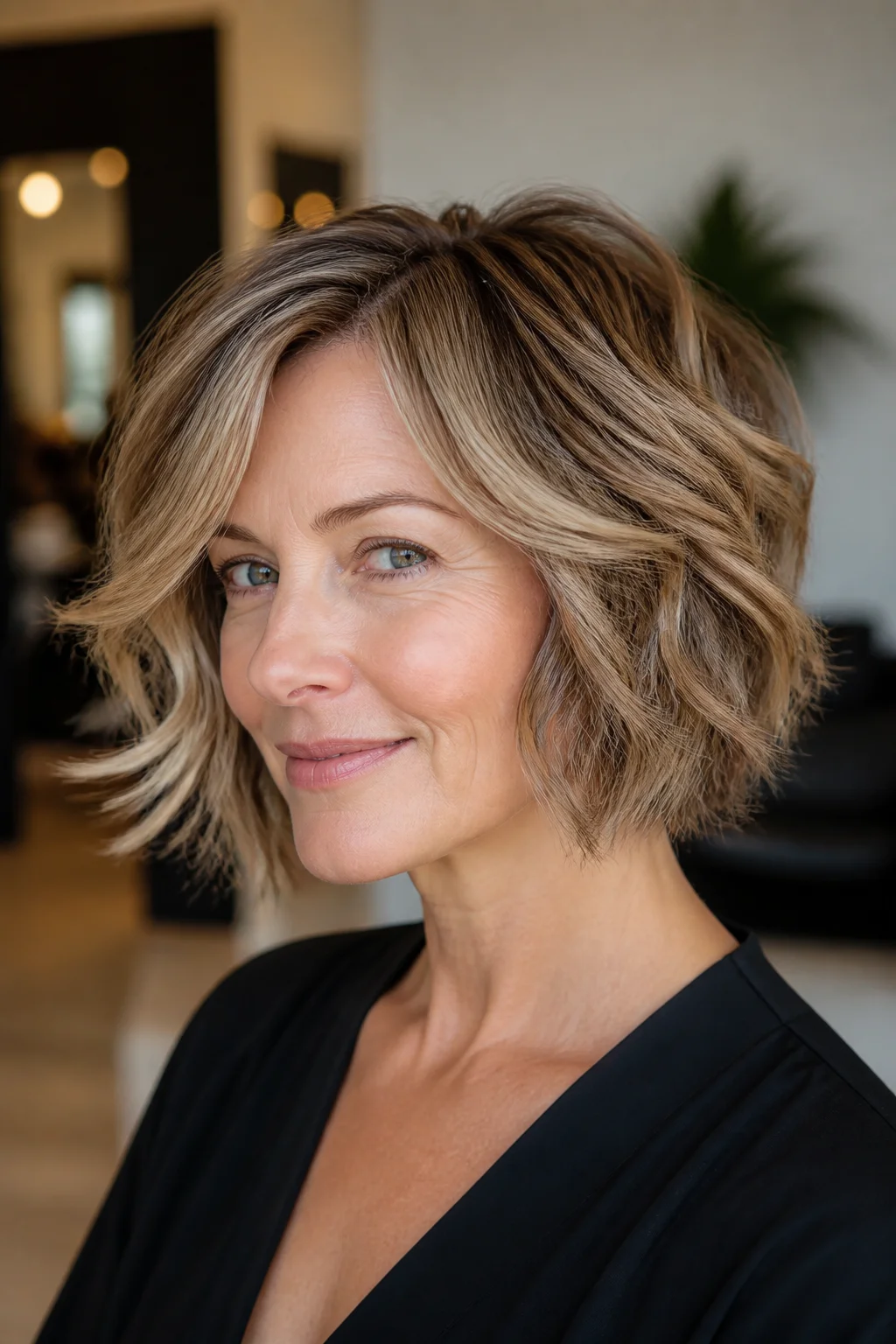
Waves get extra help from layers cut to follow the wave pattern rather than against it, so each layer curves instead of falling straight. The tousled finish comes from scrunching with a diffuser or air-drying with a light texturizing spray, letting the layers separate naturally. Volume builds throughout the day as the waves loosen slightly, which is the opposite of most cuts that look best right after styling.
Disconnected Layered Bob with Piece-y Texture
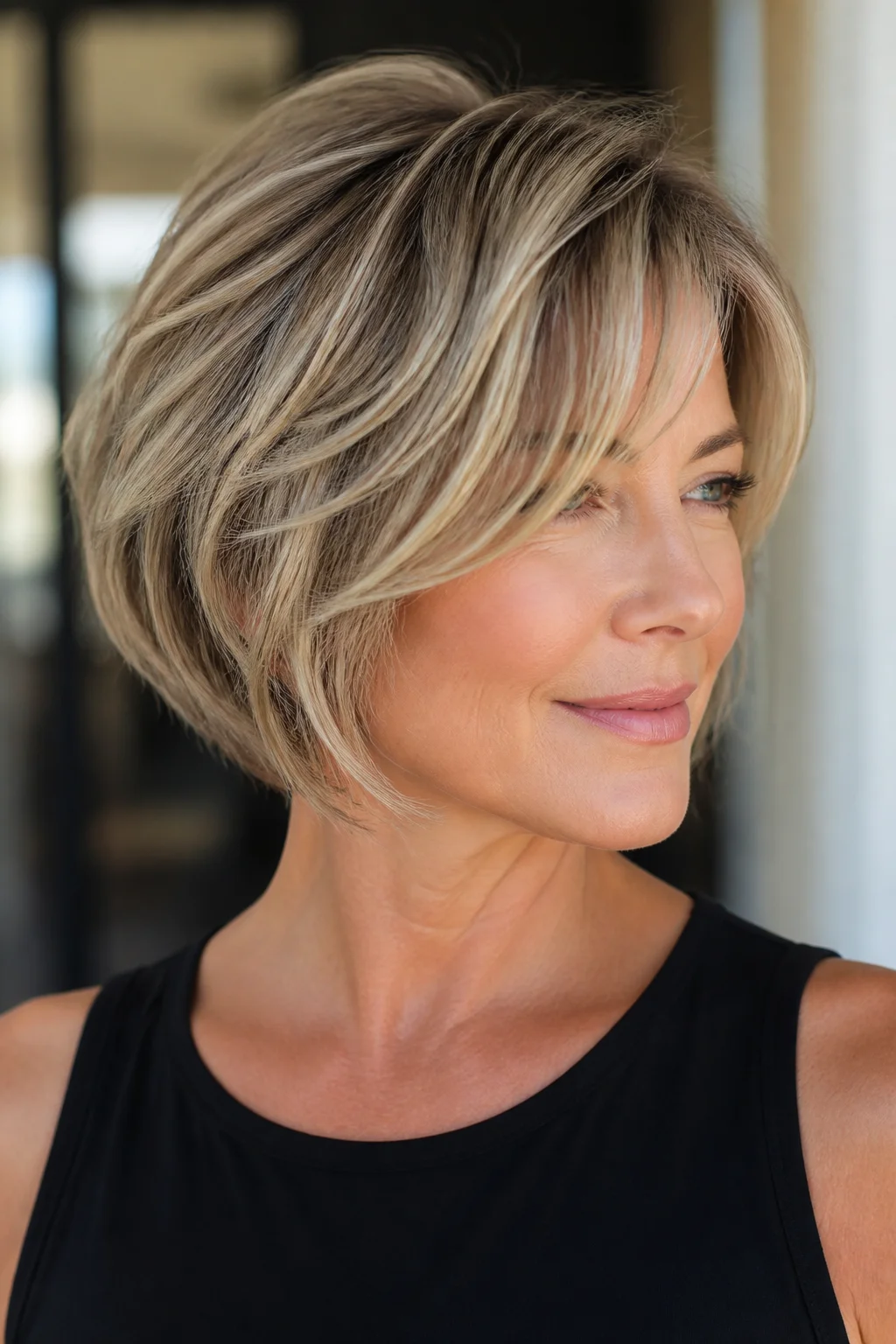
Disconnection means an intentional gap between length sections, like a shorter top layer sitting distinctly apart from a longer bottom layer, rather than the smooth blend most layered bobs aim for. It’s a bold, editorial choice that reads more fashion-forward than the softer cuts on this list. Piece-y texture, styled with a matte paste, keeps each section defined instead of blending back together. Tip: this cut needs a heavier hand with product than most bobs, since the whole look depends on visible separation.
Layered Bob with Crown Lift Layers
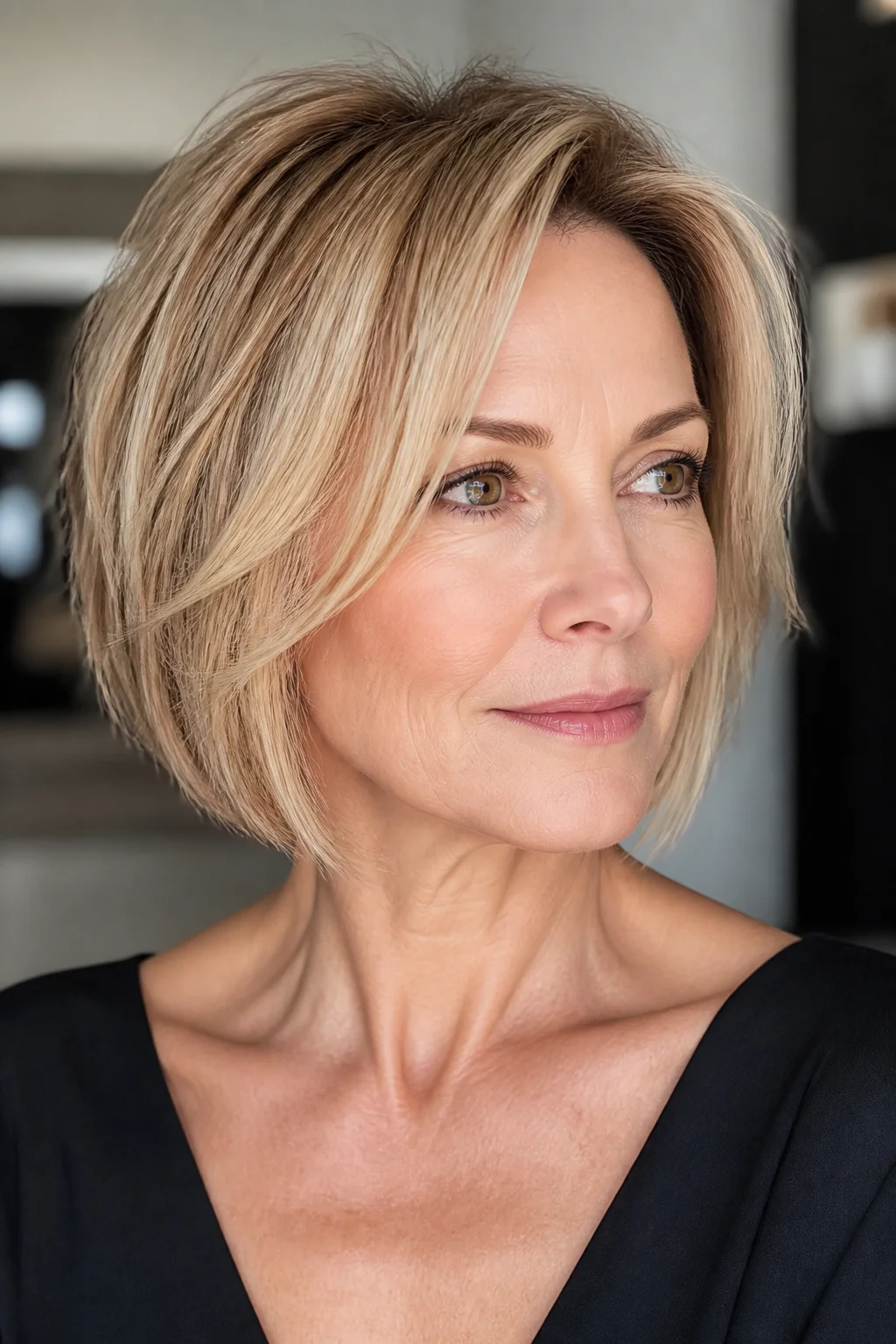
Short layers cut specifically at the crown, sometimes just an inch or two of hair, create a built-in root lift that doesn’t rely on backcombing or heavy mousse. It’s a targeted fix for anyone whose main complaint is flatness right at the part, rather than all-over thinness. The rest of the bob can stay however long or textured you like, since the crown layers do the volume work independently.
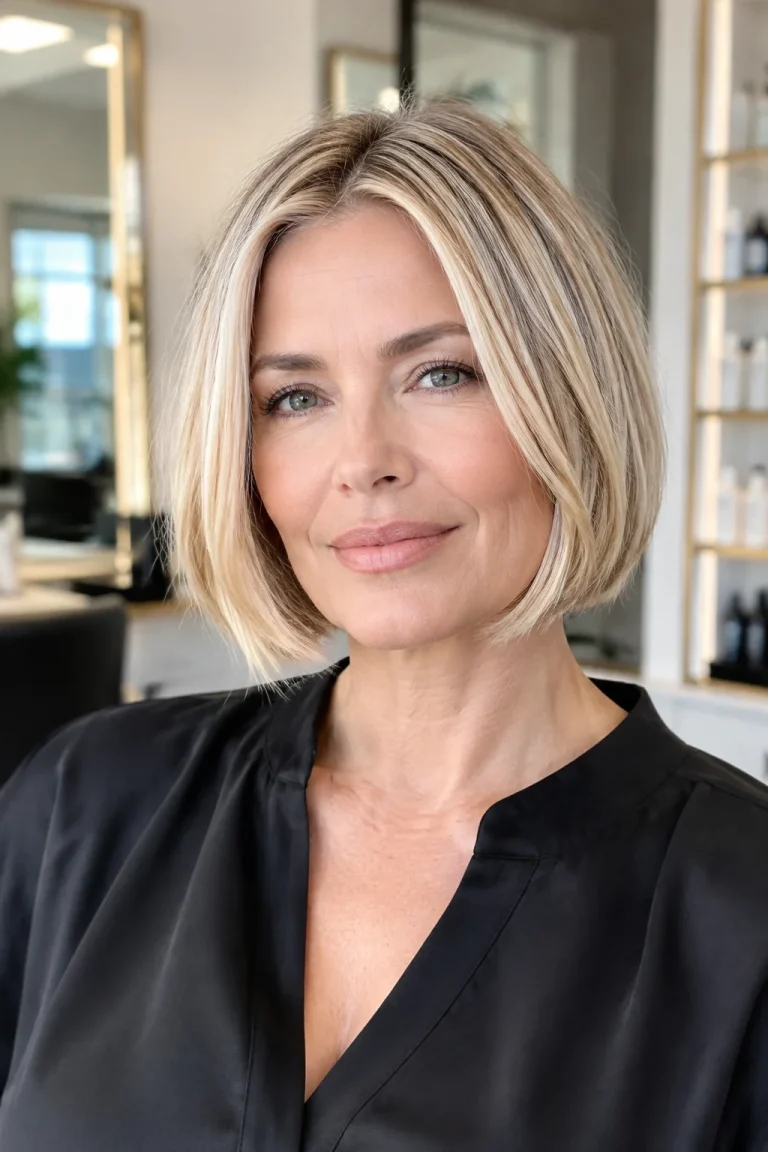
Face-Framing Layered Bob for Over 40
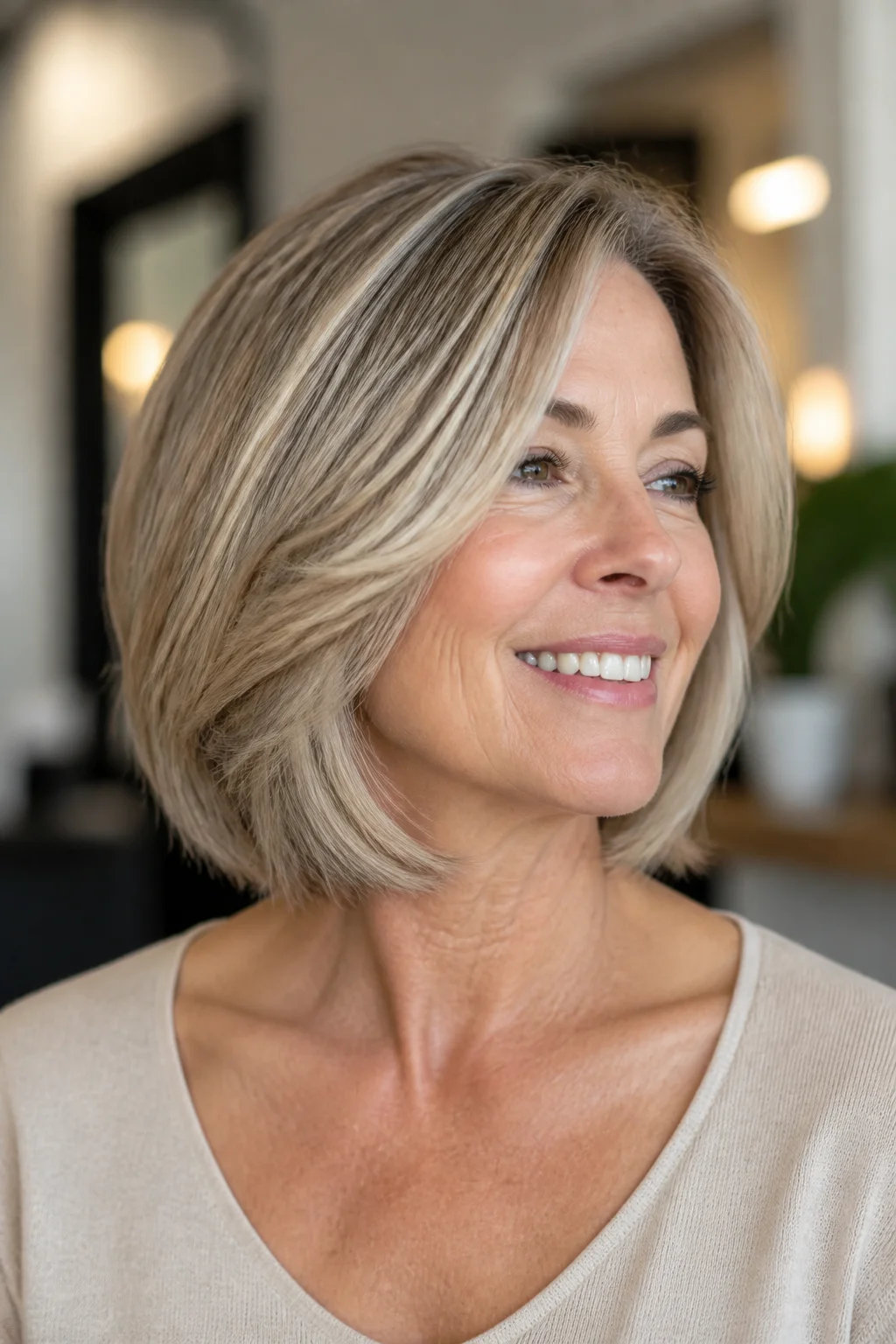
Layers here are cut to soften the jawline and add lift near the face, which tends to counteract the way hair naturally loses density and shine with age. The face-framing pieces are longer and softer than a choppy cut, giving a polished rather than edgy result. This bob pairs well with a slightly warmer color, since a monotone shade can look flat next to skin that’s lost some of its natural color contrast. I recommend keeping the layers no shorter than chin length here, since anything choppier can read harsh instead of soft.
Sleek Layered Bob with Dimensional Layers
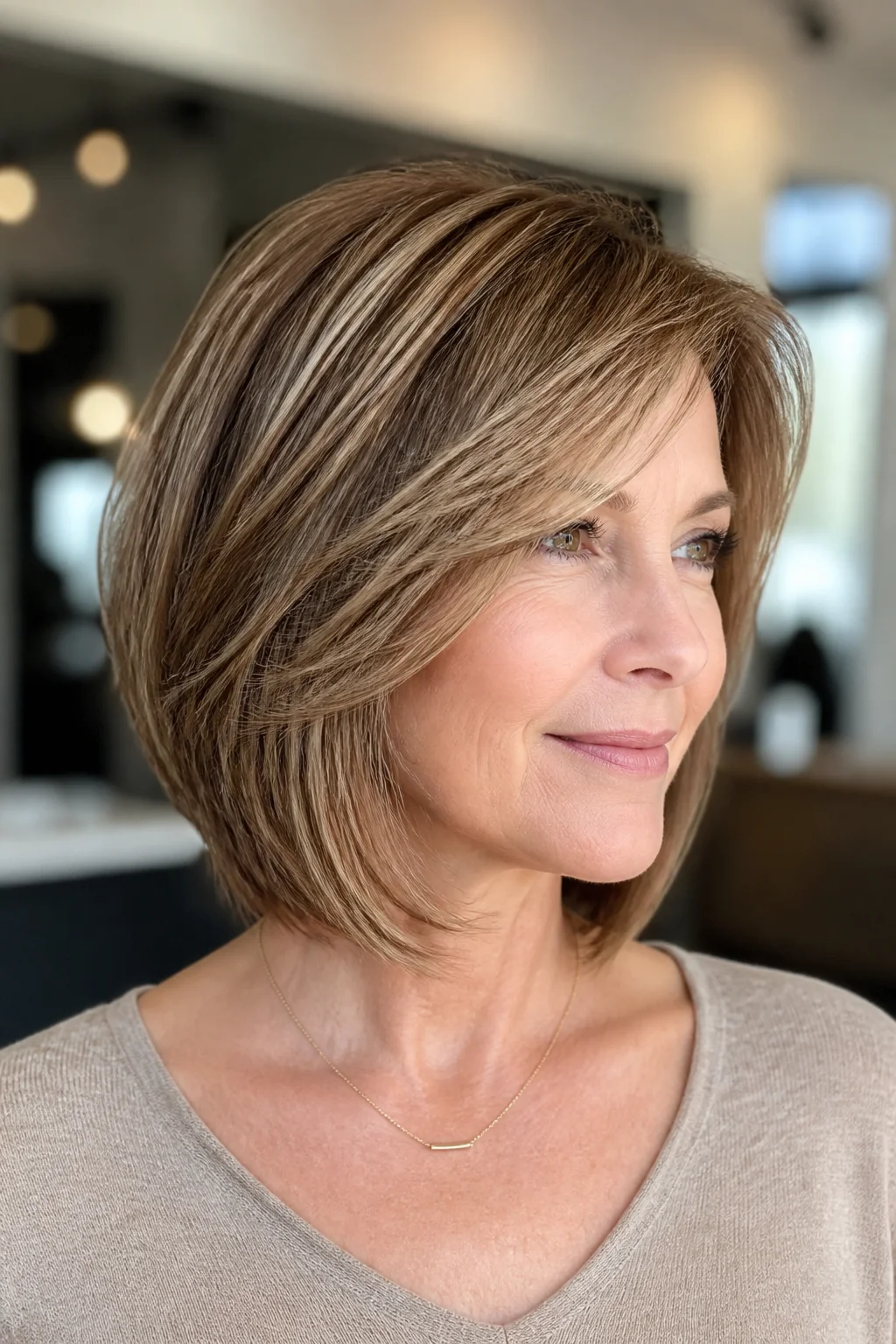
Dimensional layers rely on color as much as cutting, with subtle highlights or lowlights placed to catch the light differently across each layer. The cut itself stays sleek and smooth, blow-dried straight rather than tousled, so the layers show up as tone rather than texture. It’s a polished, low-drama option for anyone who wants volume without a choppy or piece-y finish.
Layered Bob with Undercut Detail
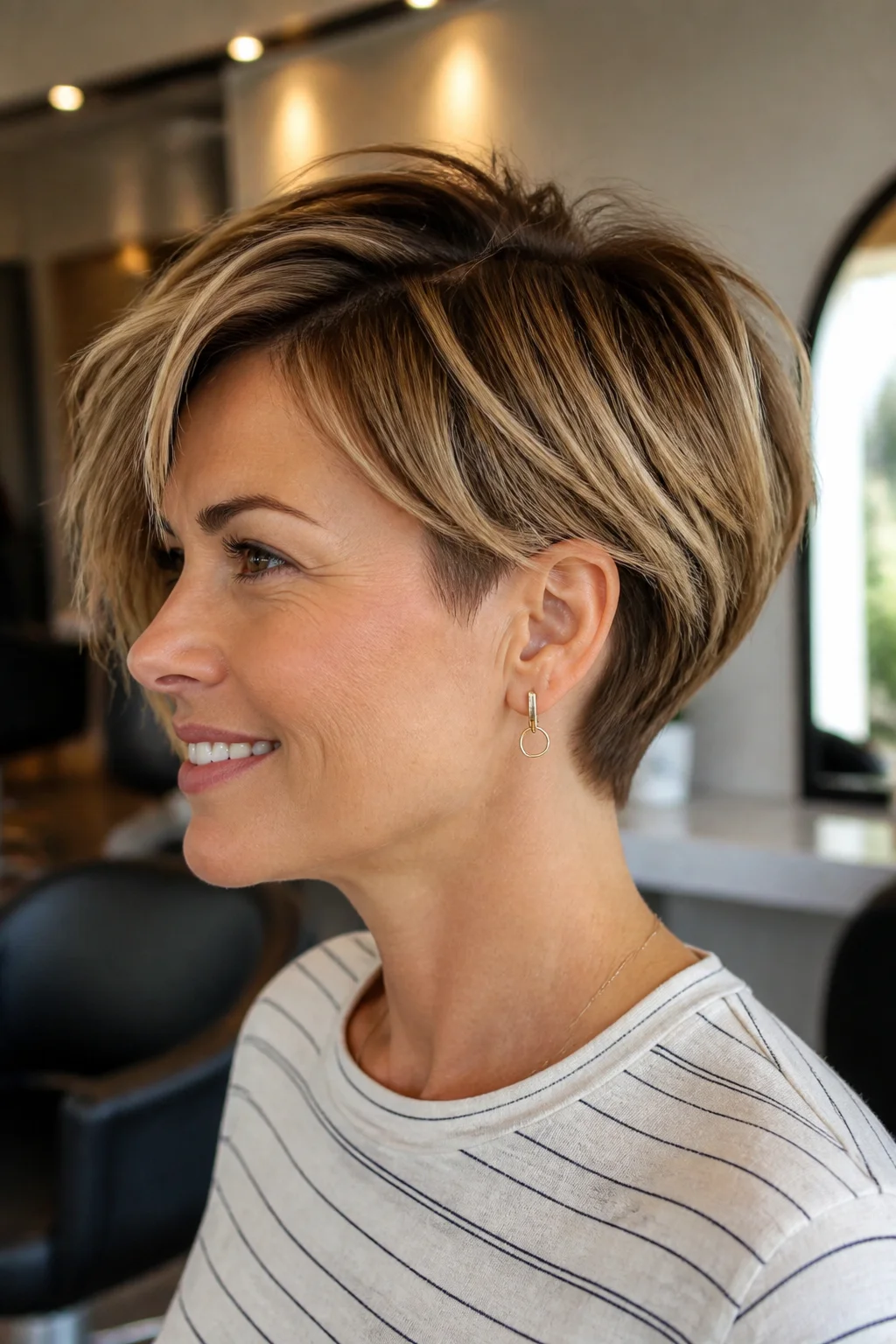
An undercut at the nape removes bulk underneath while leaving the top layers full, creating volume on top without the back looking heavy or triangular. It’s a hidden detail, invisible when hair is down, but it changes how the whole bob sits and moves. This works especially well for thick, heavy hair that tends to push the bottom of a bob out into a wide shape instead of a rounded one.
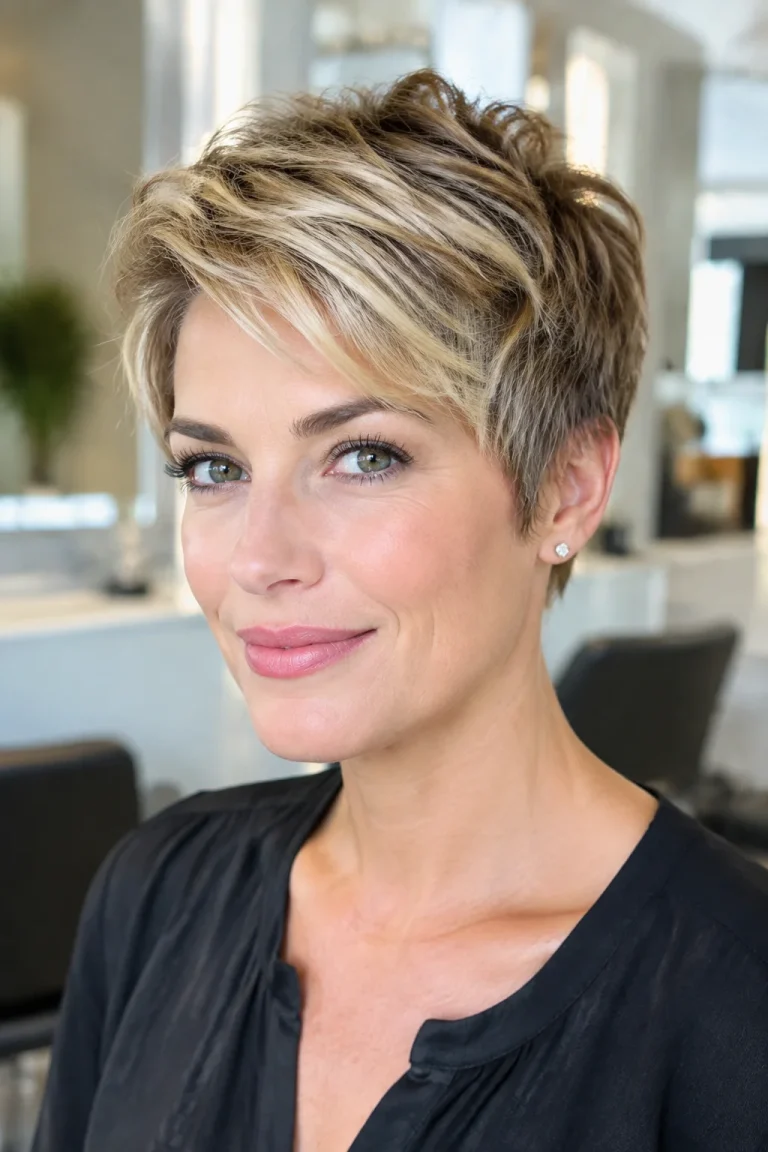
Textured Layered Bob for Flat Hair
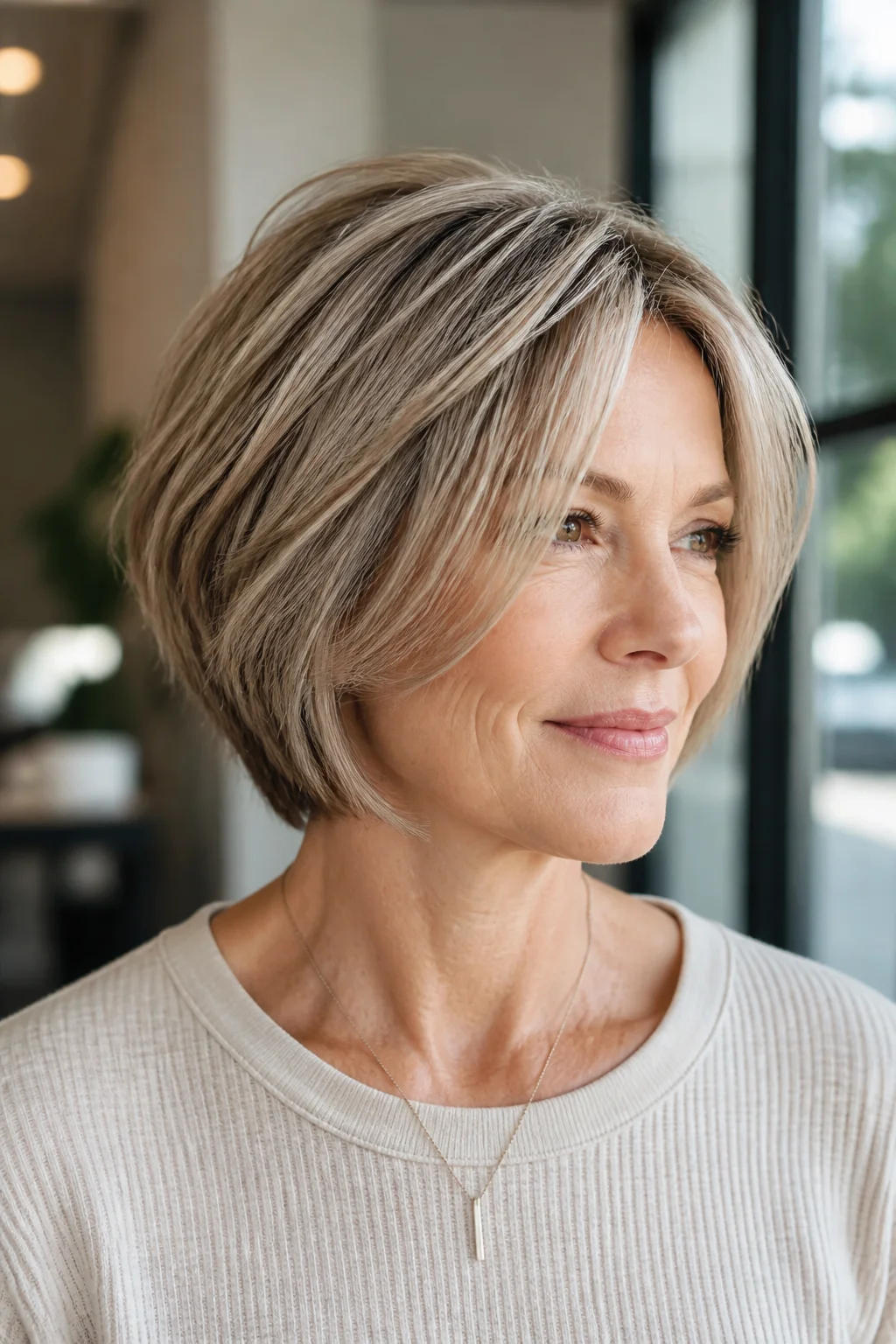
If your hair is flat by nature rather than just fine, this bob leans hard into texture everywhere, not just at the crown or ends. Layers are choppy throughout, cut at varying lengths to create maximum separation and lift. It’s paired best with a texturizing spray applied to damp hair before drying, since flat hair benefits from product worked in early rather than added after styling is done.
Which Layered Bob Actually Holds Volume Best
Not every cut on this list solves the same problem, so it helps to match the style to the actual complaint. If your hair is fine and falls flat by midday, the stacked layered bob for fine hair or the layered bob with crown lift layers will outperform anything with heavy, blunt weight left in. If your hair is thick and looks bulky rather than flat, the blunt-cut layered bob with hidden layers or the undercut detail bob will thin things out without sacrificing shape.
A common mistake is choosing a cut based on a photo rather than your actual texture. The textured shaggy layered bob looks incredible on wavy or curly hair but can look thin and stringy on fine, straight strands without the right layering underneath. Similarly, the disconnected layered bob with piece-y texture demands daily styling with product, so it’s a poor match if you want something wash-and-go. Curly hair almost always needs the curly layered bob approach, cut dry, rather than any style designed around straight or wavy patterns. Match the cut to how your hair actually behaves on an average day, not on its best day, and the volume will hold far longer.