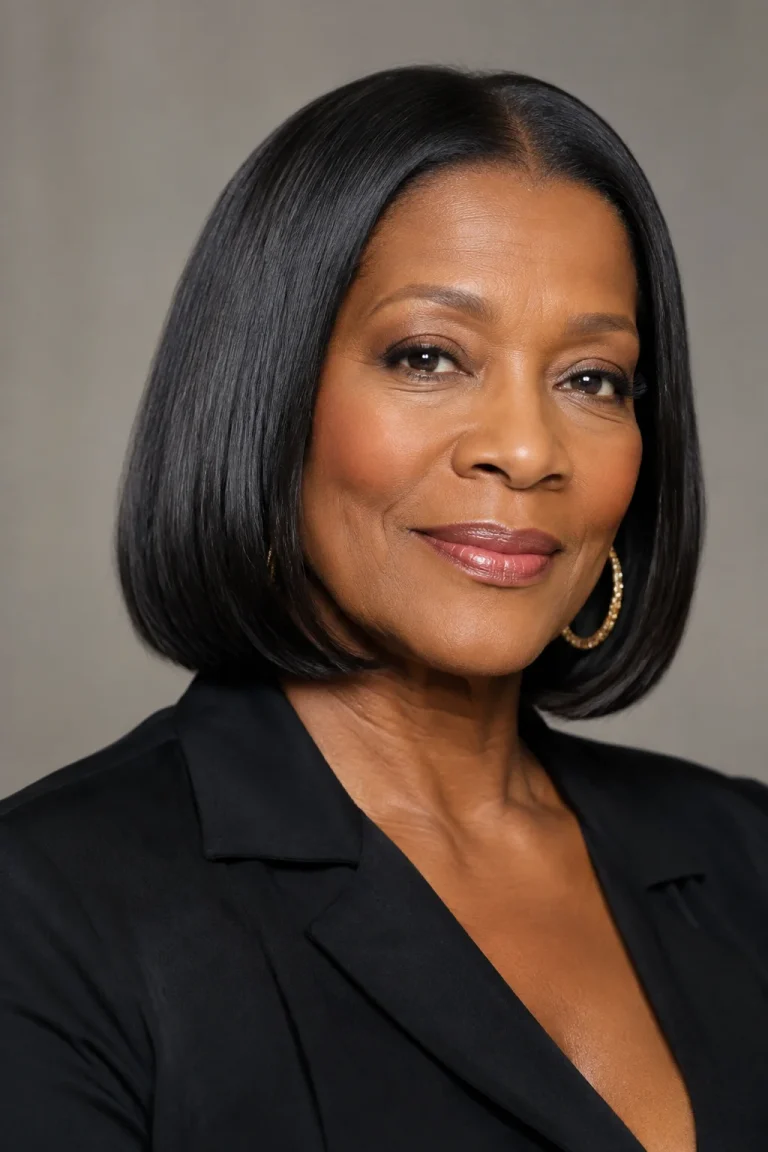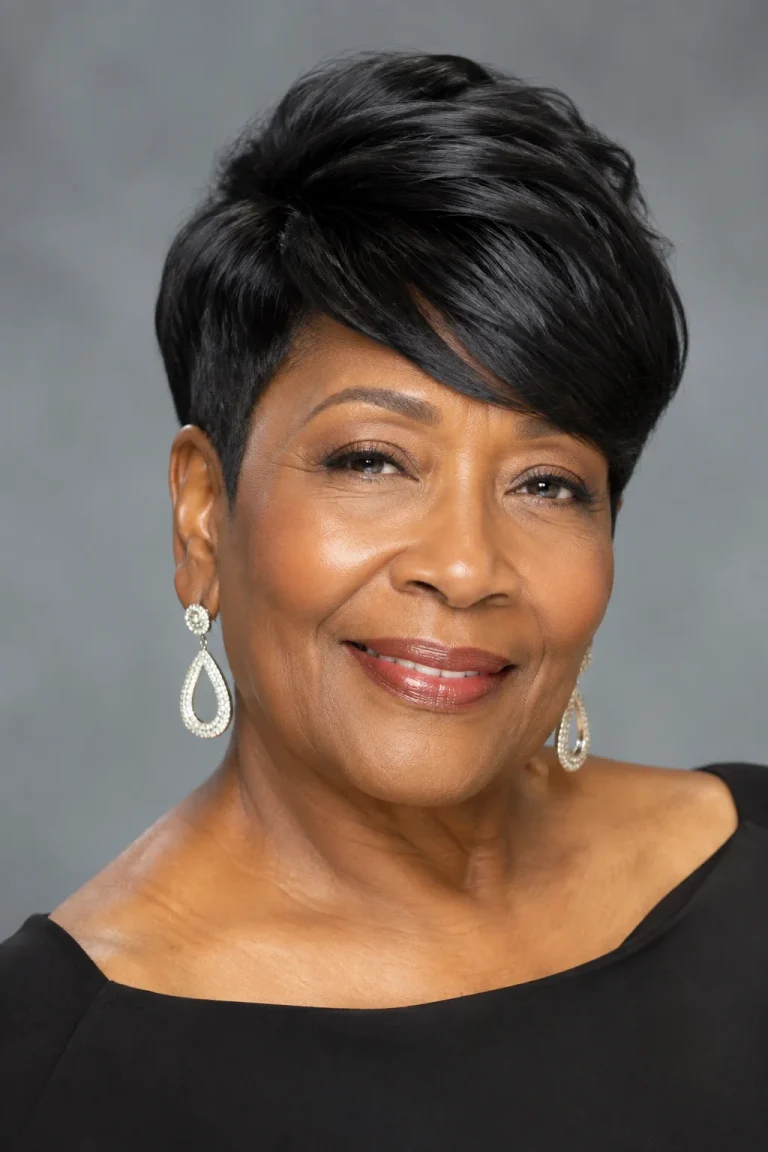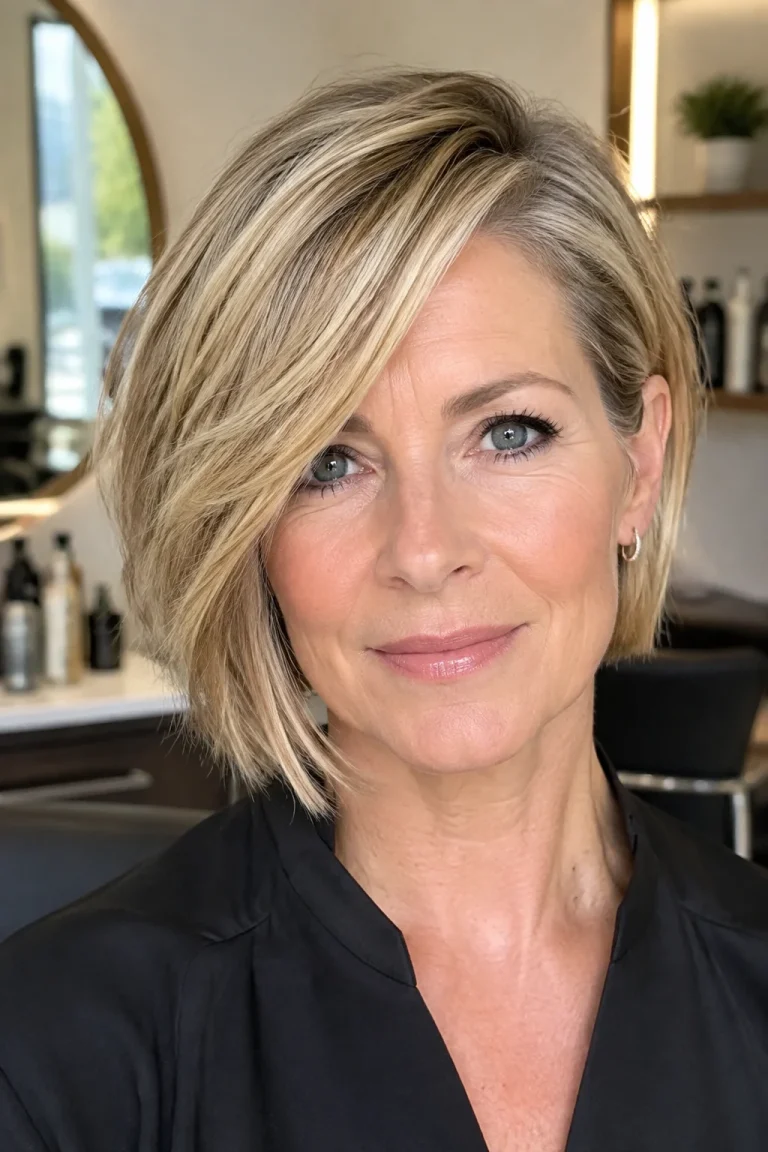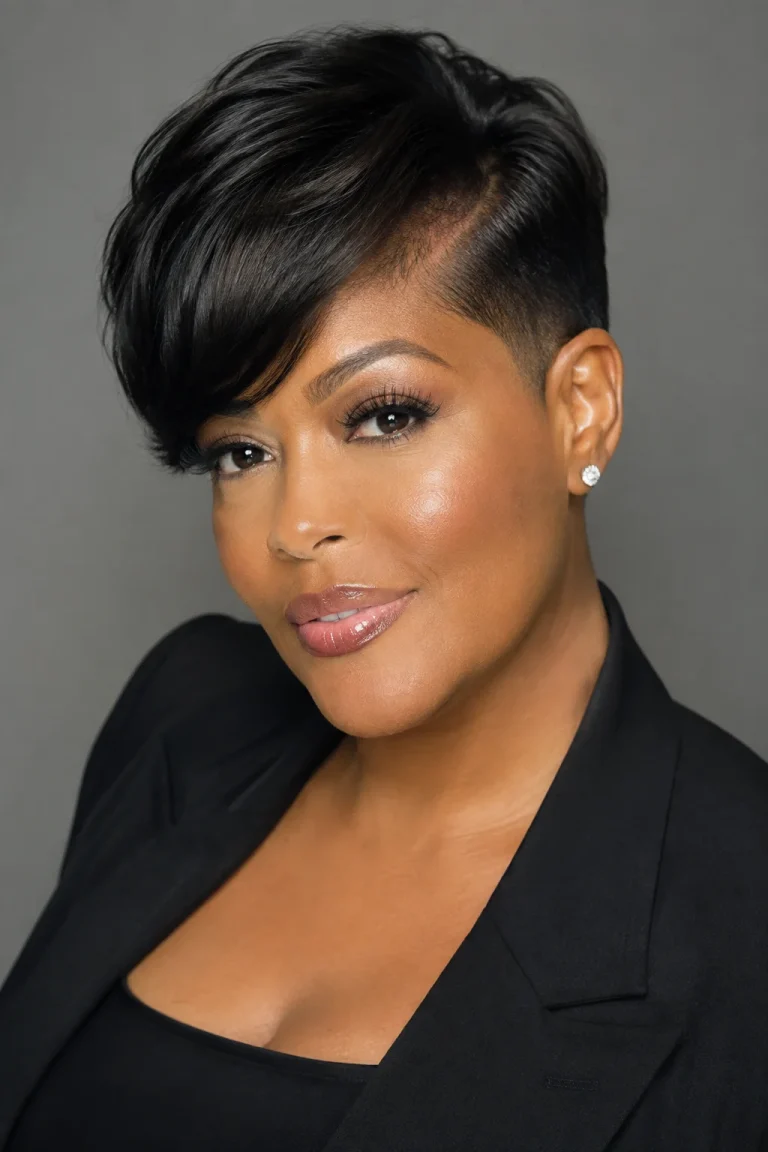
Gray hair has stopped being something to cover up and started being something to shape well. The right cut turns silver, salt and pepper, or white strands into the main event instead of an afterthought. If you’re growing out color or you’ve been gray for years and want a fresher shape, these 18 gray hairstyles for women over 50 worth booking now cover short, medium, long, curly, and updo options so there’s a real starting point for your next appointment. Some of these styles ask for regular trims to keep their shape crisp. Others grow out with almost no maintenance at all. Bring a few photos to your stylist, talk about your face shape and how much time you spend on styling, and pick the cut that matches your actual morning routine, not just the picture.
Gray Buzz Cut
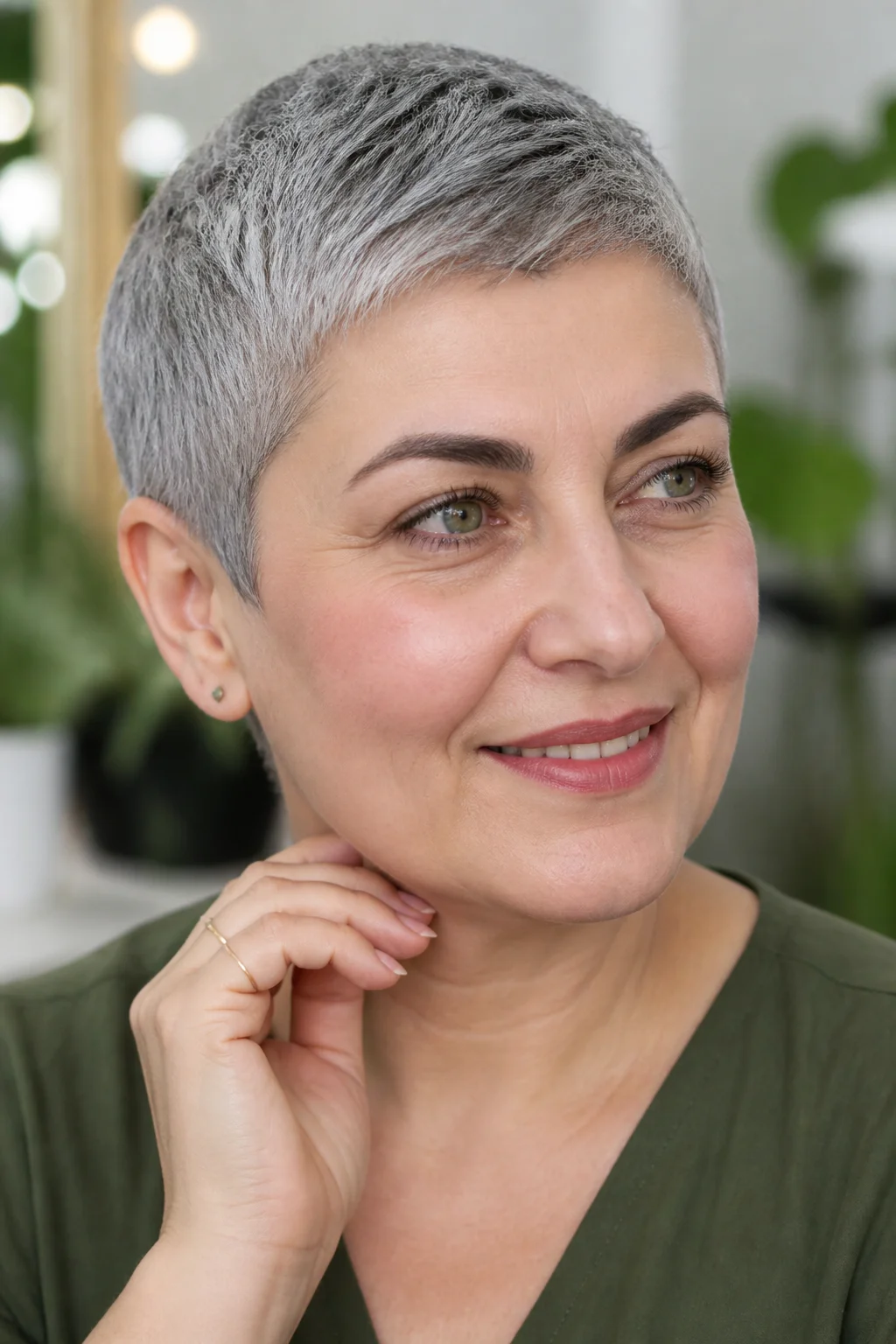
This is the lowest maintenance option on the list, and it puts gray tone front and center with nothing to soften it. A buzz cut works best on someone comfortable with a strong look and a visible scalp, since there’s no length to hide behind. It suits oval and heart face shapes especially well, though a skilled barber can adjust the guard length to flatter rounder faces too. Gray hair in a buzz cut often shows more shine because light hits the short strands evenly. Upkeep means a trim every two to three weeks to keep the shape sharp. Tip: ask for a slightly longer guard on top if you want a soft fringe instead of an all-over even length.
Textured Gray Pixie
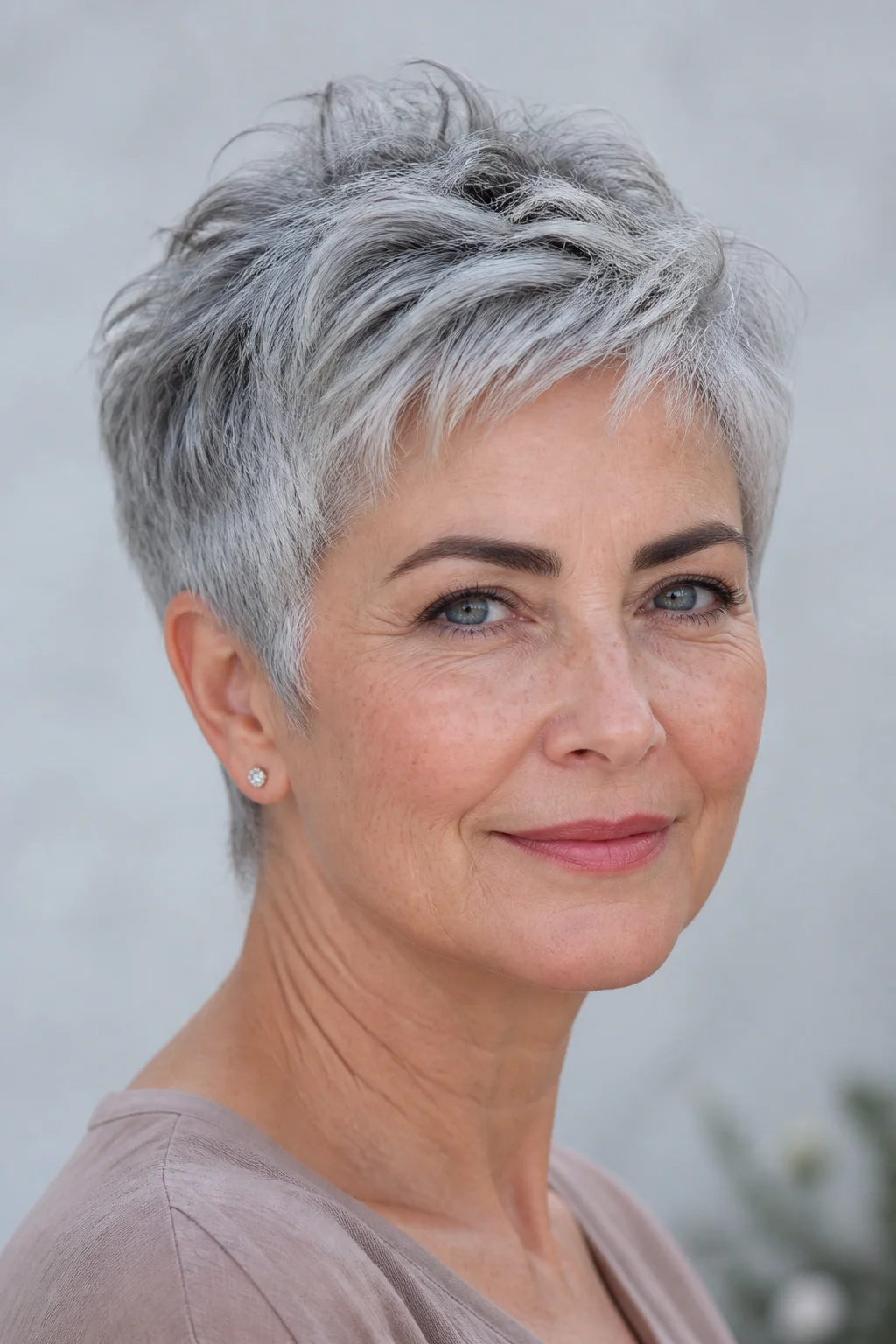
Choppy layers and a piece-y finish keep this pixie from looking flat or helmet-like. It’s a great pick if your gray hair has some natural wave, since the texture plays into the cut instead of fighting it. A little pomade or texturizing paste worked through dry hair brings out the separation that makes this style look intentional rather than just short.
Gray Bixie
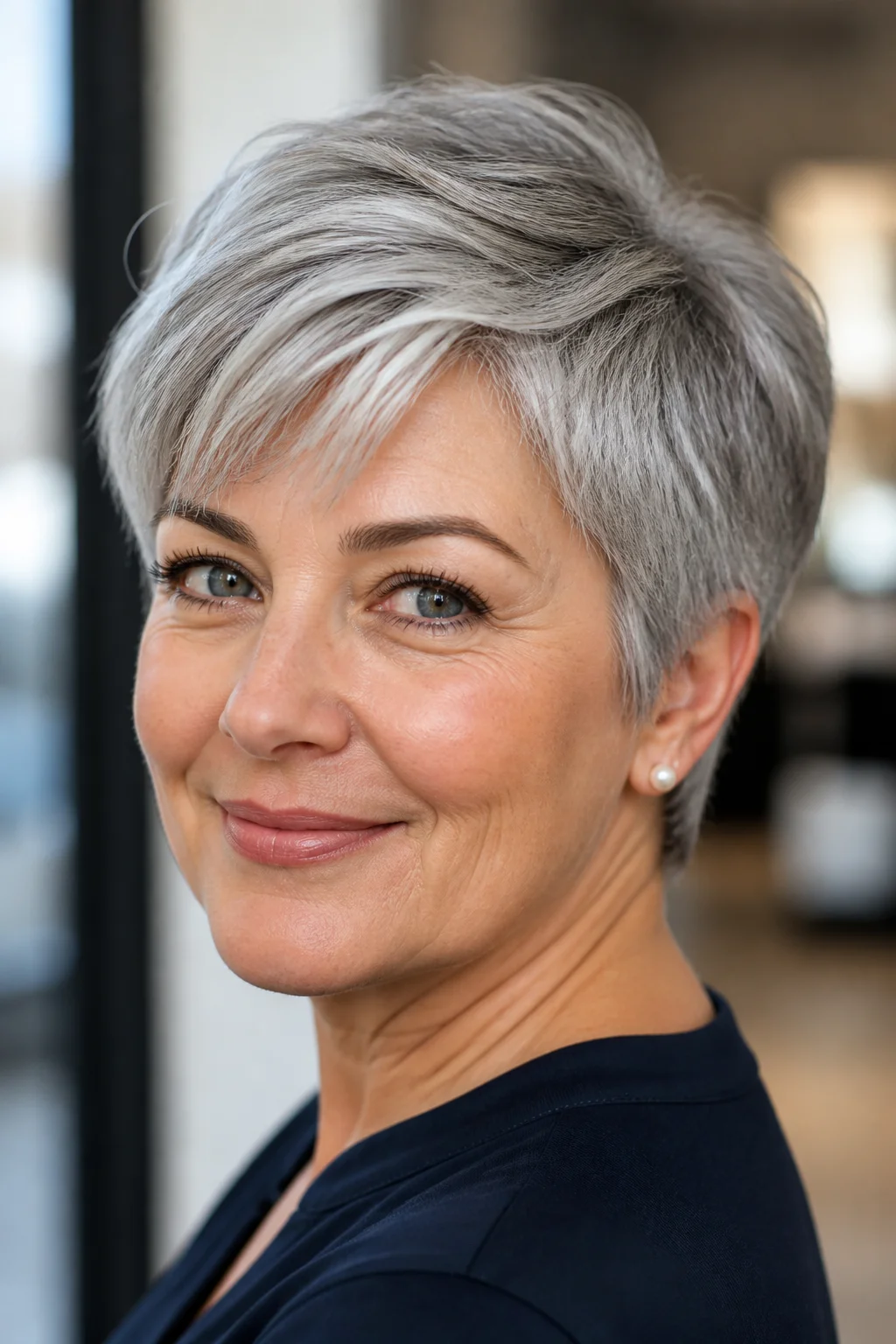
The bixie splits the difference between a bob and a pixie, sitting just below the ears with enough length to move but short enough to stay easy. It gives you more styling options than a full pixie, including a slight side part or soft waves with a curling iron. Gray hair in this length often shows a nice range of tone, especially if you have a mix of white and darker gray strands. This cut flatters most face shapes because the length can be adjusted at the jaw to add or remove width. It also grows out more gracefully than a shorter pixie, so you have a bit more room between salon visits. I recommend this one for anyone who wants short hair energy without committing to something above the ears.
Gray Pageboy Cut

Rounded at the bottom with a blunt line, the pageboy cut has a slightly retro feel that reads modern again in gray. The rounded shape works well with fuller gray hair since it holds its curve nicely under its own weight. A side-swept fringe softens the geometry if a full blunt bang feels too severe for your taste.
French Gray Bob

Soft, slightly undone, and cut with a razor for texture, the French bob avoids sharp lines in favor of movement. It sits at chin length or just below, with pieces that fall naturally rather than sitting in a fixed shape. Gray hair suits this cut because the softened ends let individual strands of color show through instead of blending into one flat mass. Styling is simple: rough dry with your fingers, add a light cream, and let the layers fall where they want. It’s a low-effort option that still looks put together for work or errands. This bob also pairs well with a middle part, which tends to suit longer face shapes better than a heavy side part.
Blunt Gray Bob

A one-length blunt bob has a clean, graphic edge that looks sharp against gray tones, especially bright white or icy silver shades. The straight line at the bottom catches light in a way that softer cuts don’t, so this style rewards hair that’s in good condition. Split ends show up fast on a blunt line, so regular trims matter more here than with layered styles.
Gray A-Line Bob

Shorter in the back and longer toward the chin, the A-line bob adds shape without needing a lot of layers. It’s particularly good for anyone who wants length in front to frame the face while keeping the back manageable and light on the neck. Gray hair holds this angle well since the color doesn’t need highlights or lowlights to show off the cut’s structure. Tip: ask for the angle to hit right at your jawline for the most flattering frame, since going shorter than that can widen a round face.
Gray Collarbone Lob

Landing right at the collarbone, this length is long enough to pull back on busy days but short enough to feel fresh compared to longer styles. It works with straight or wavy gray hair and takes well to soft layers around the face. A lob at this length also transitions easily from a workday look to something dressed up with minimal effort, which makes it a practical pick for anyone who doesn’t want to plan hairstyles around their schedule.
Feathered Gray Shoulder Cut
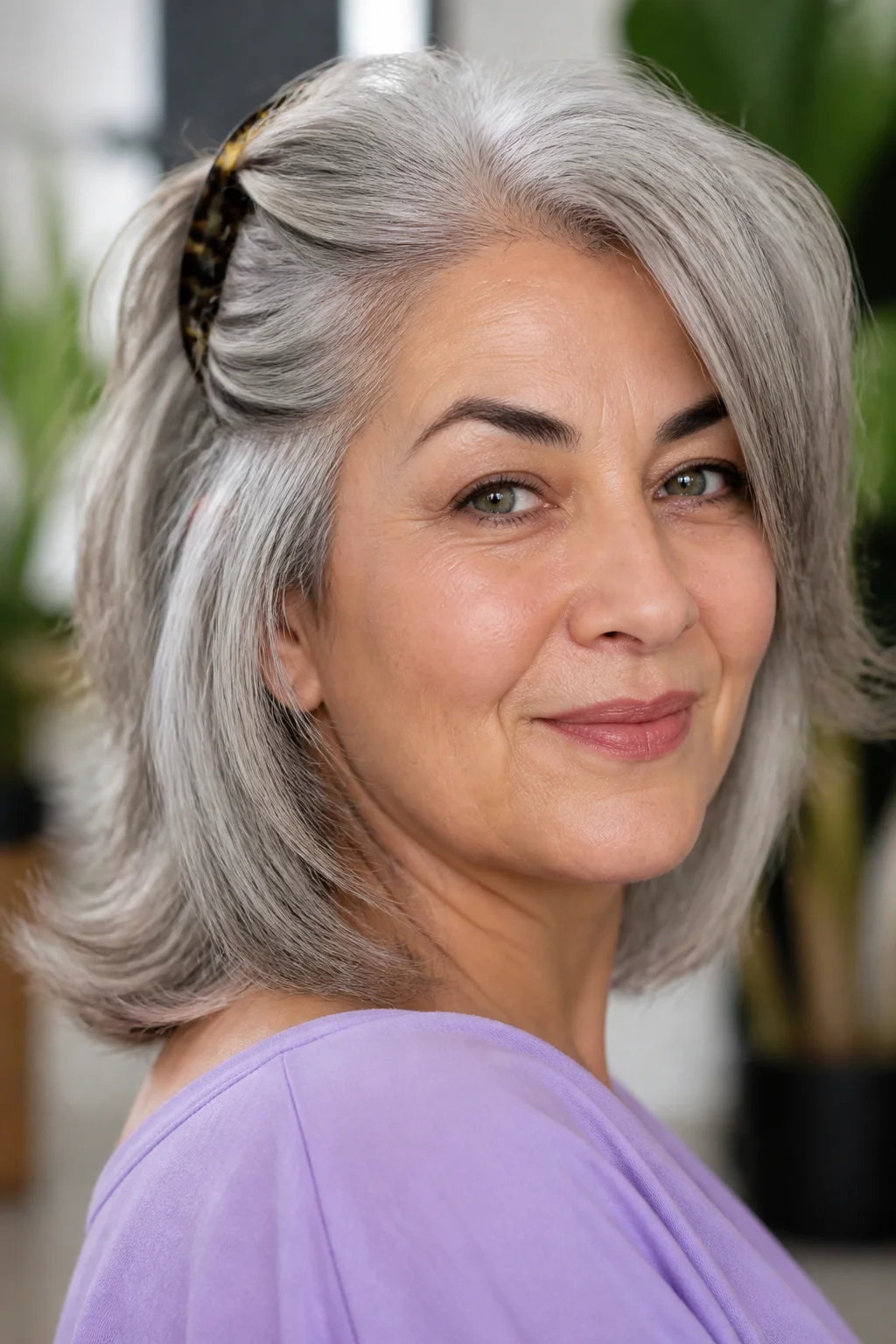
Feathered layers around the face soften the transition between short pieces and longer length, which helps ease a hard part or heavy fringe into the rest of the cut. This style sits at the shoulder and moves nicely with a blowout using a round brush. Gray hair with some natural texture tends to hold the feathered shape longer between washes, so this one rewards hair that isn’t bone straight.
Long Gray Layered Cut
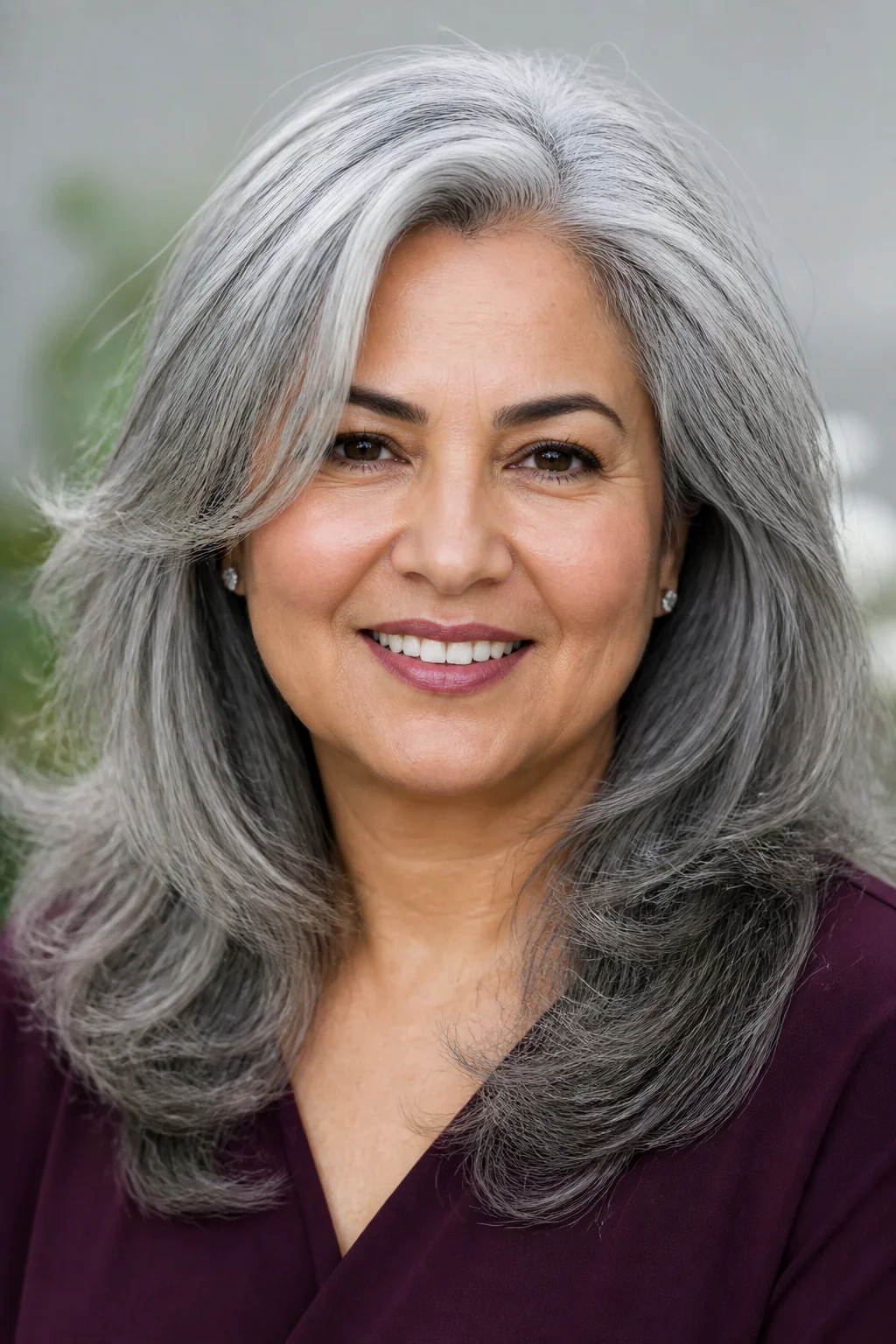
Long layers keep length while removing bulk, which matters more with gray hair since it can sometimes feel coarser or drier than it did before. This cut lets you keep the length you’ve grown for years while giving it shape and movement instead of one heavy mass. Layers also help long gray hair catch light differently throughout, showing off the range of silver, white, and darker strands rather than flattening them into a single tone. Ask your stylist to keep the layers long and soft rather than short and choppy if you want to preserve as much length as possible. This cut needs regular deep conditioning since dry ends show more on longer hair. It’s a solid option if you’re not ready to cut short but want your gray hair to look styled rather than just long.
Gray Shag

Heavy layering throughout, a bit of a shredded fringe, and plenty of movement define the shag. It works particularly well on gray hair with natural wave or curl, since the layers encourage texture instead of smoothing it away. This is a cut for anyone who wants something with personality rather than a polished, uniform shape.
Gray Wolf Cut

A cross between a shag and a mullet, the wolf cut has short, choppy layers on top that blend into longer pieces below. It’s a bold choice, and it looks best on someone who already wants a bit of an edge to their everyday look. Gray hair with texture or a slight curl pattern makes the choppy top layers stand out more, almost like the cut has its own built-in volume. Styling usually means scrunching in a texturizing spray and letting it air dry, or using a diffuser for extra lift. This cut needs more frequent trims than a standard layered style to keep the short and long sections distinct. It’s not the lowest maintenance option here, but it delivers a lot of personality for the effort.
Gray Modern Mullet

Short at the crown and sides with length left at the back, the modern mullet is softer and more blended than versions from decades past. Gray hair gives this cut a completely different feel than it has on darker hair, reading more artistic than retro. It’s a strong choice for someone who wants a distinct silhouette and doesn’t mind standing out a little.
Gray Butterfly Cut

Heavy face-framing layers paired with longer layers underneath give the butterfly cut its signature shape, named for how the layers seem to open up like wings when styled. This works on medium to long gray hair and adds a lot of movement without sacrificing overall length. It’s a good pick if you want your hair to look styled and full even on days you don’t have time to do much with it. The shorter framing pieces highlight the face, which can be especially flattering if your gray hair has grown in with lighter pieces near the hairline. Round brushing the top layers while air drying the rest is usually enough to keep the shape looking finished.
Curly Gray Tapered Cut
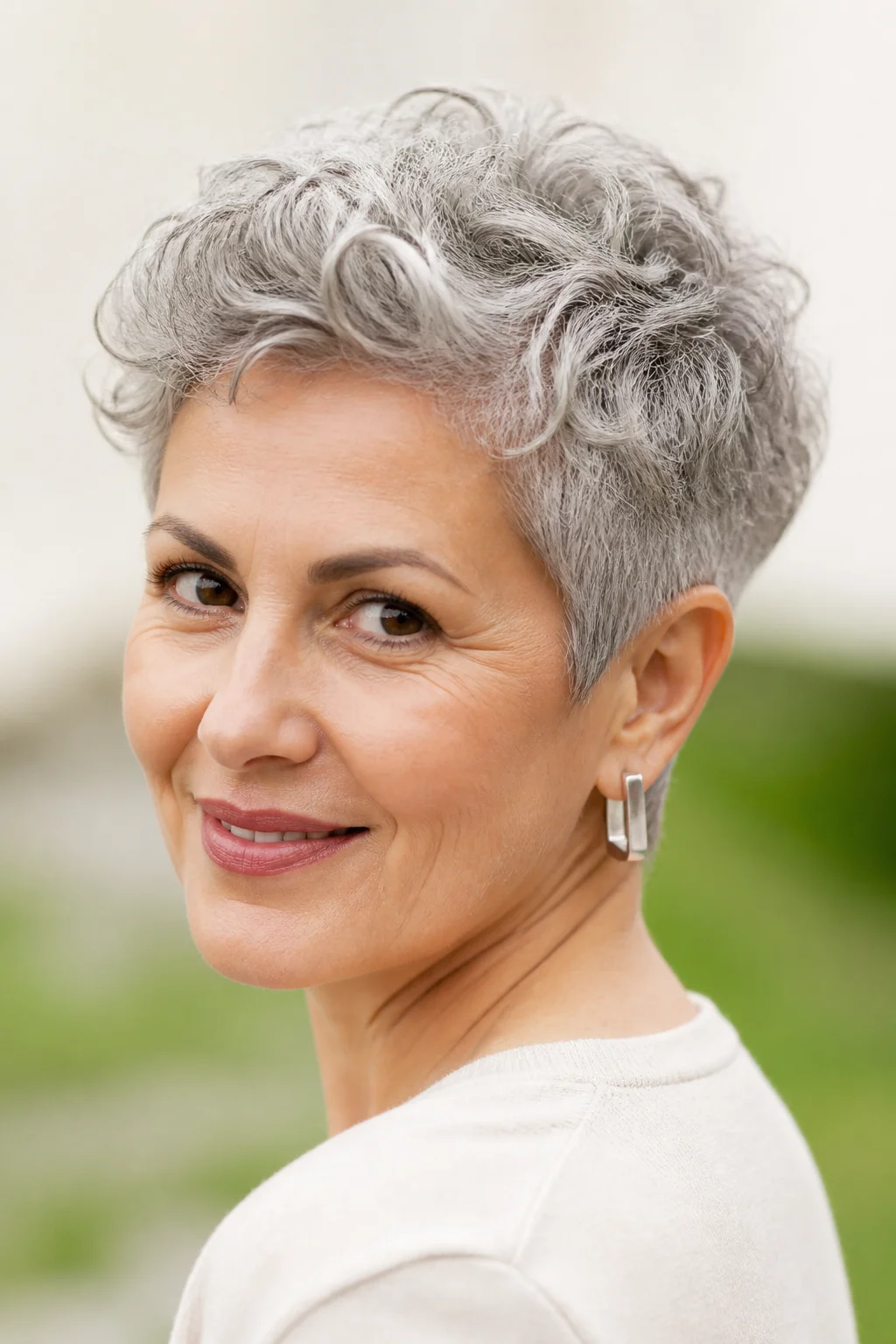
Tapered on the sides and left fuller on top, this cut is built for natural curl patterns and shrinkage. It gives curly gray hair a defined shape instead of letting it grow out into a formless cloud. This style needs a stylist who understands curl cutting specifically, since cutting curly hair dry, curl by curl, gives a much more accurate result than cutting it wet.
Rounded Gray Coils

This style keeps natural coils in a soft, rounded shape close to the head, letting the coil pattern itself do most of the visual work. It suits tightly coiled gray hair especially well since the rounded shape holds up without much daily styling. A light curl cream or oil defines the coils without weighing them down, and this cut can go weeks between trims since the shape is forgiving as it grows.
Gray Crown Braid Updo
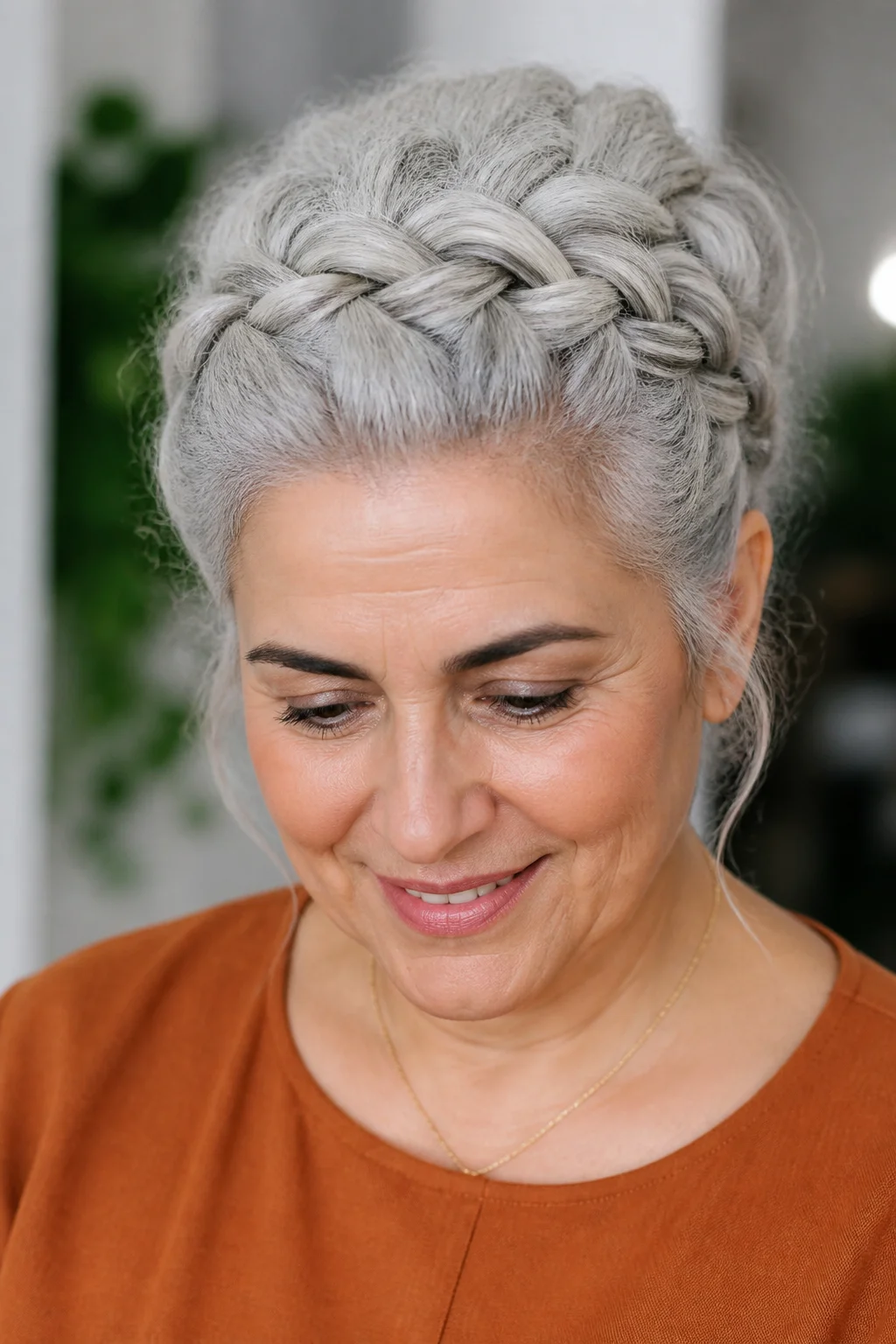
A braid that wraps around the crown of the head turns gray hair into a polished, put-together look for events or just an ordinary day when you want something different. This works on long or medium length hair and looks especially pretty when a few loose pieces are pulled out around the face. Gray hair often has a slight natural sheen that shows up nicely in braided styles, catching light along the plaited sections. Tip: leave the braid a little loose rather than pulling it tight, since a relaxed braid looks more natural and less like a costume style.
Low Gray Chignon

A low, loose bun at the nape of the neck reads elegant without looking fussy or overdone. This updo works for nearly any hair length past the shoulders and takes only a few minutes once you get the technique down. It’s the kind of style worth booking a lesson for, so you can recreate it at home for everyday wear or dress it up with a few pins and a bit of hairspray for something more formal.
Which Gray Hairstyle Actually Fits Your Life
Picking from a list is one thing. Picking the style that fits your actual week is another. If you travel often or don’t want to think about your hair most mornings, the gray buzz cut, the textured gray pixie, or the rounded gray coils are the easiest to maintain since they need little more than a quick product application and you’re done. If you want something polished for work without spending a lot of time styling, the French gray bob, the gray collarbone lob, or the low gray chignon strike a good middle ground between low effort and a finished look.
For anyone who wants a bit of drama or an edgier reputation at the salon, the gray wolf cut and the gray modern mullet deliver the most personality, though they also need the most frequent trims to hold their shape. A common mistake is choosing a blunt style like the blunt gray bob or gray A-line bob without accounting for how often you’ll need trims to keep the line crisp, since these cuts grow out more visibly than layered ones. If your hair has natural curl or coil, don’t force it into a shape built for straight hair. The curly gray tapered cut and rounded gray coils were designed around that texture, and fighting your natural pattern usually leads to more styling time, not less.
Final Thoughts
Gray hair looks its best when the cut is chosen with the same care as any color would get. A shape that works with your texture, your face, and your actual daily routine will always look better than one picked from a photo alone. Bring your stylist real details about how much time you spend on your hair, and let that guide the final decision as much as the picture does.