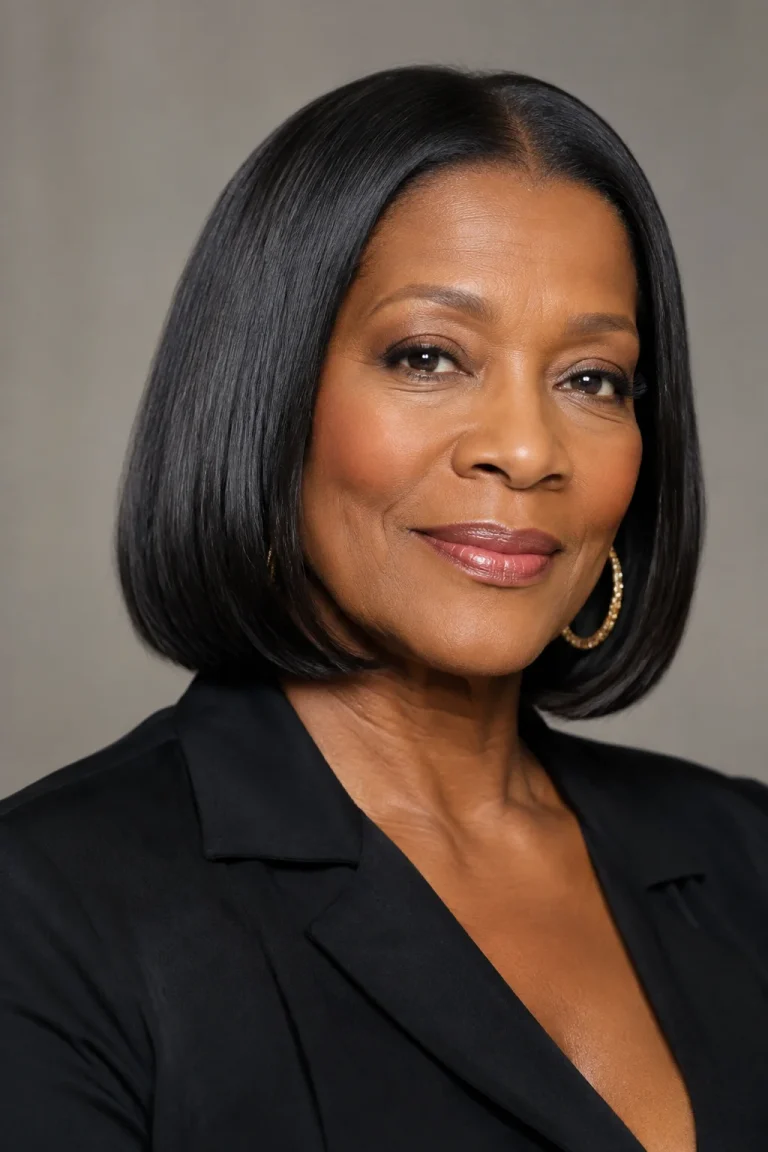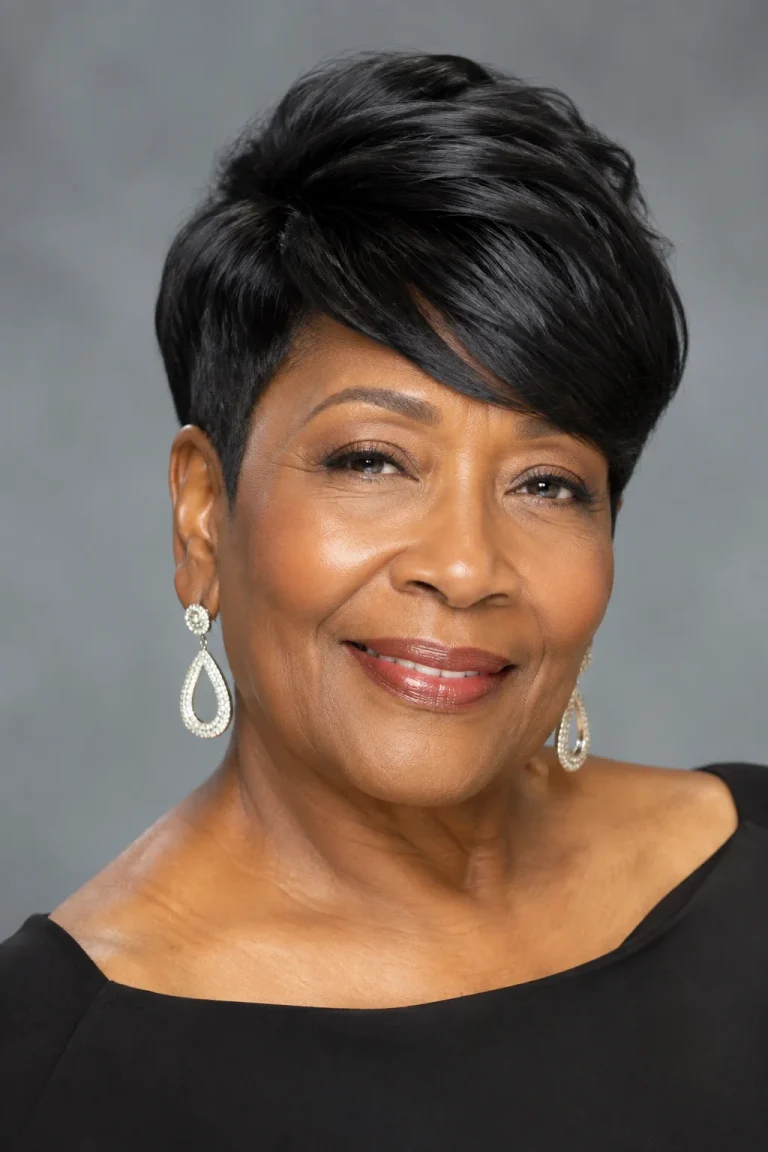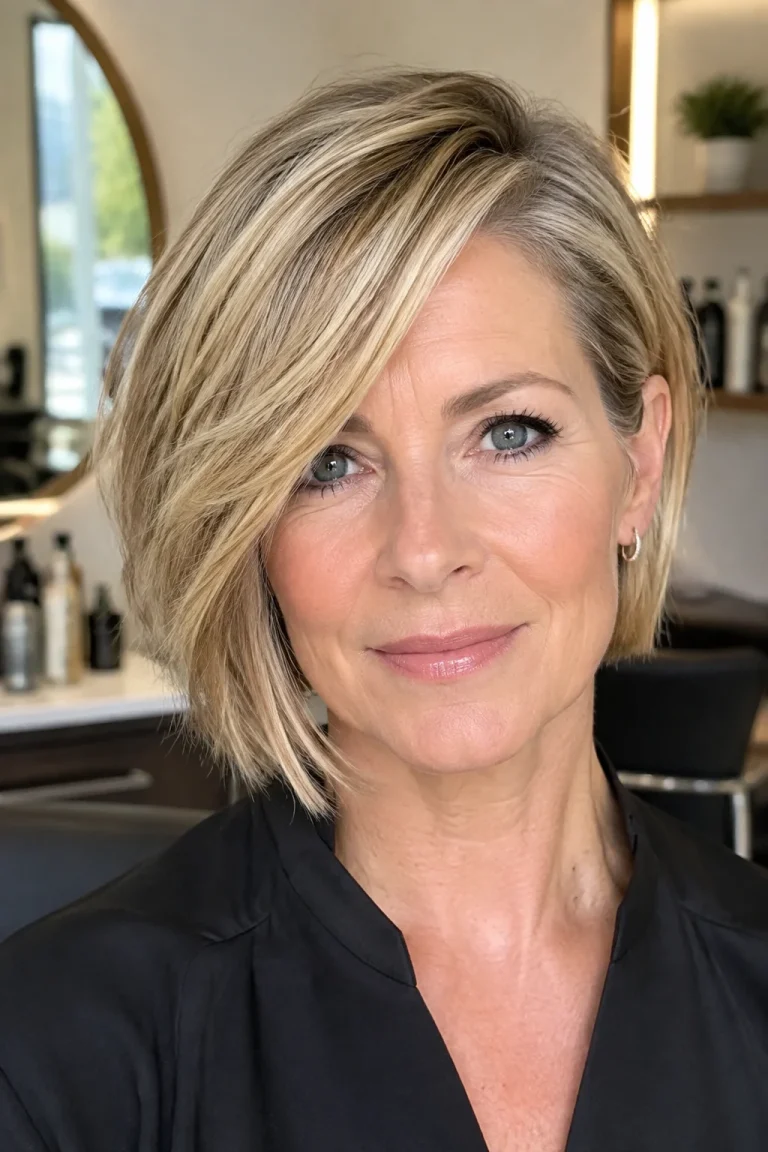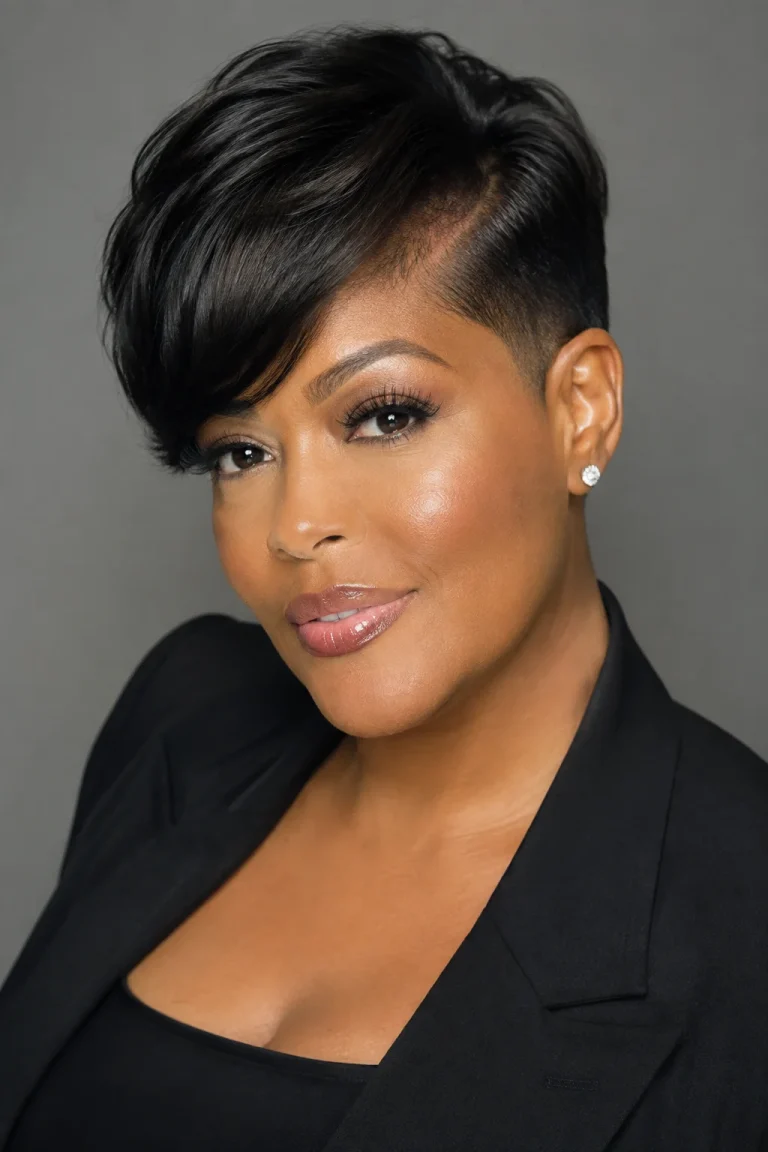
Short hair on curly texture gets a bad reputation it doesn’t deserve. Curls shrink up, and a cut that looks great on straight hair can turn stiff or shapeless once your natural pattern takes over. That’s the real issue most women run into when they start looking at shorter styles after 40: the photo shows one thing and the mirror shows something else. The fix isn’t avoiding short hair. It’s picking a cut built around how curls actually behave, with layers and shaping that work with the bounce instead of fighting it.
Curly pixie haircuts for women over 40 can look soft, sharp, edgy, or polished depending on how they’re cut, and that range is exactly why this list exists. Below are 22 distinct silhouettes, from tapered classics to shag-inspired crops, so you can walk into your next appointment with a clear picture and a real plan instead of a vague idea.
Classic Tapered Curly Pixie
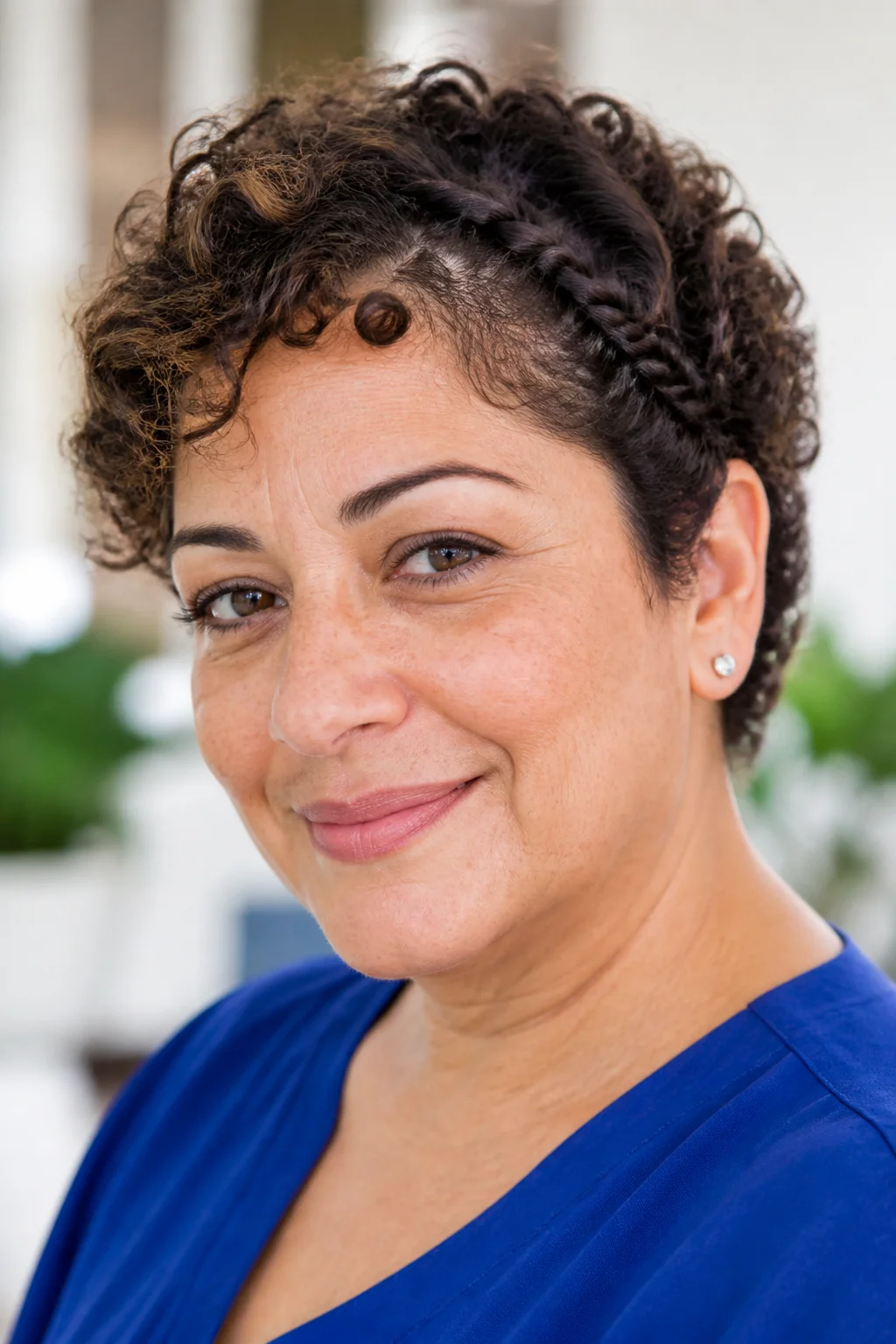
This is the cut most people picture when they think “curly pixie,” and it earns that reputation. Sides and back taper close to the head while the top stays fuller, so your curls get room to move without swallowing your face. It’s a shape that reads polished at work and relaxed on the weekend, which is part of why it’s stayed popular for decades. The taper also means less bulk around your ears and neck, which a lot of women over 40 find more flattering than a blunt, boxy short cut. Upkeep is simple: a trim every six to eight weeks keeps the taper crisp, and a light curl cream is usually all you need day to day. Tip: ask your stylist to cut the sides slightly shorter than you think you want, since curls always look longer once they dry and spring up.
Rounded Curly Pixie
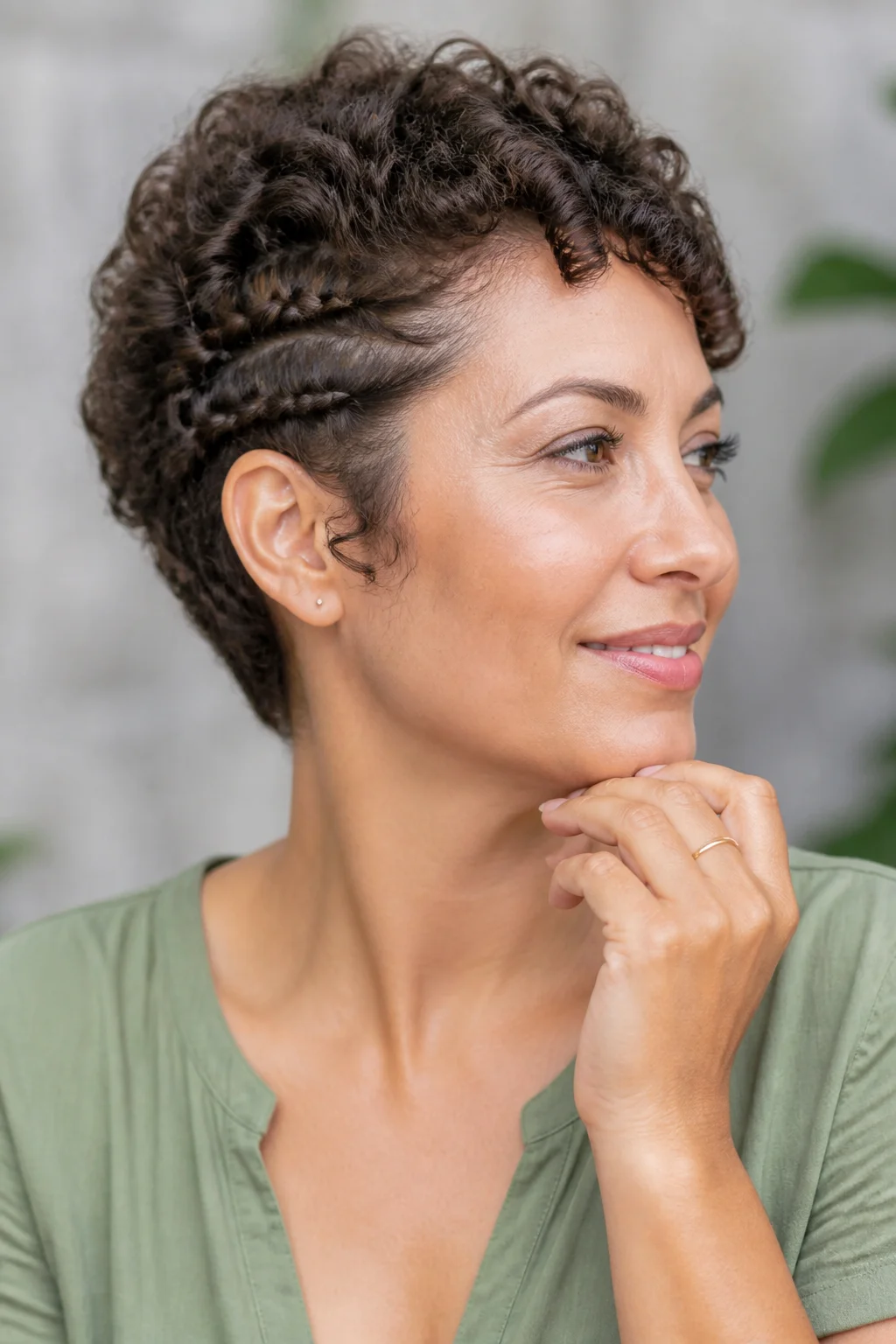
The rounded pixie hugs your head in a soft, even dome shape, with curls trimmed to follow the curve rather than stick out at odd angles. It suits fine to medium curl patterns best, since tighter coils can fight the rounded outline. This style flatters oval and heart-shaped faces especially well, and it pairs nicely with a natural, low-maintenance routine.
Side-Swept Curly Pixie
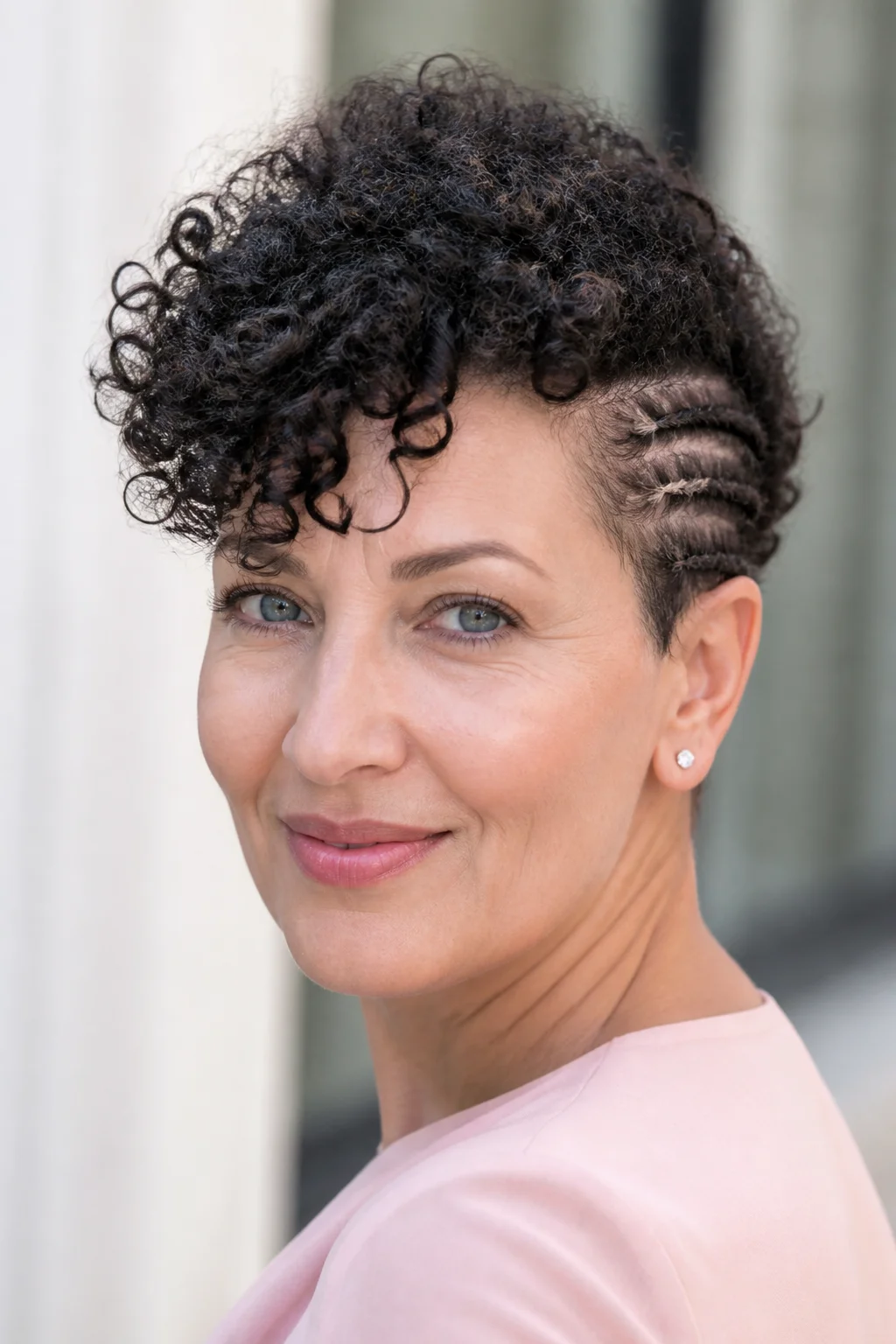
Instead of sitting straight up or falling evenly, the top section of this pixie gets pushed to one side, creating a soft diagonal line across your forehead. It’s a good option if you want something a little more feminine than a straight-up pixie without adding real length. The swept section also does a nice job softening a square jaw or angular features. Curl clumps hold the sweep better than loose waves, so this works especially well on medium to tight curl types. A little pomade rubbed between the palms and smoothed over the top keeps the direction in place without weighing the curls down.
Curly Pixie with Full Fringe

A full fringe on curly hair takes some planning because curls do not lay flat the way straight bangs do. Instead, the fringe is cut a bit longer than a straight fringe would be, so it settles into place instead of standing straight off your forehead. The rest of the pixie stays short and simple so the fringe becomes the focal point. This is a strong choice if you want to cover more forehead or soften a high hairline. Expect regular trims, since curly fringe grows out and changes shape faster than the rest of the cut.
Long-Top Curly Pixie
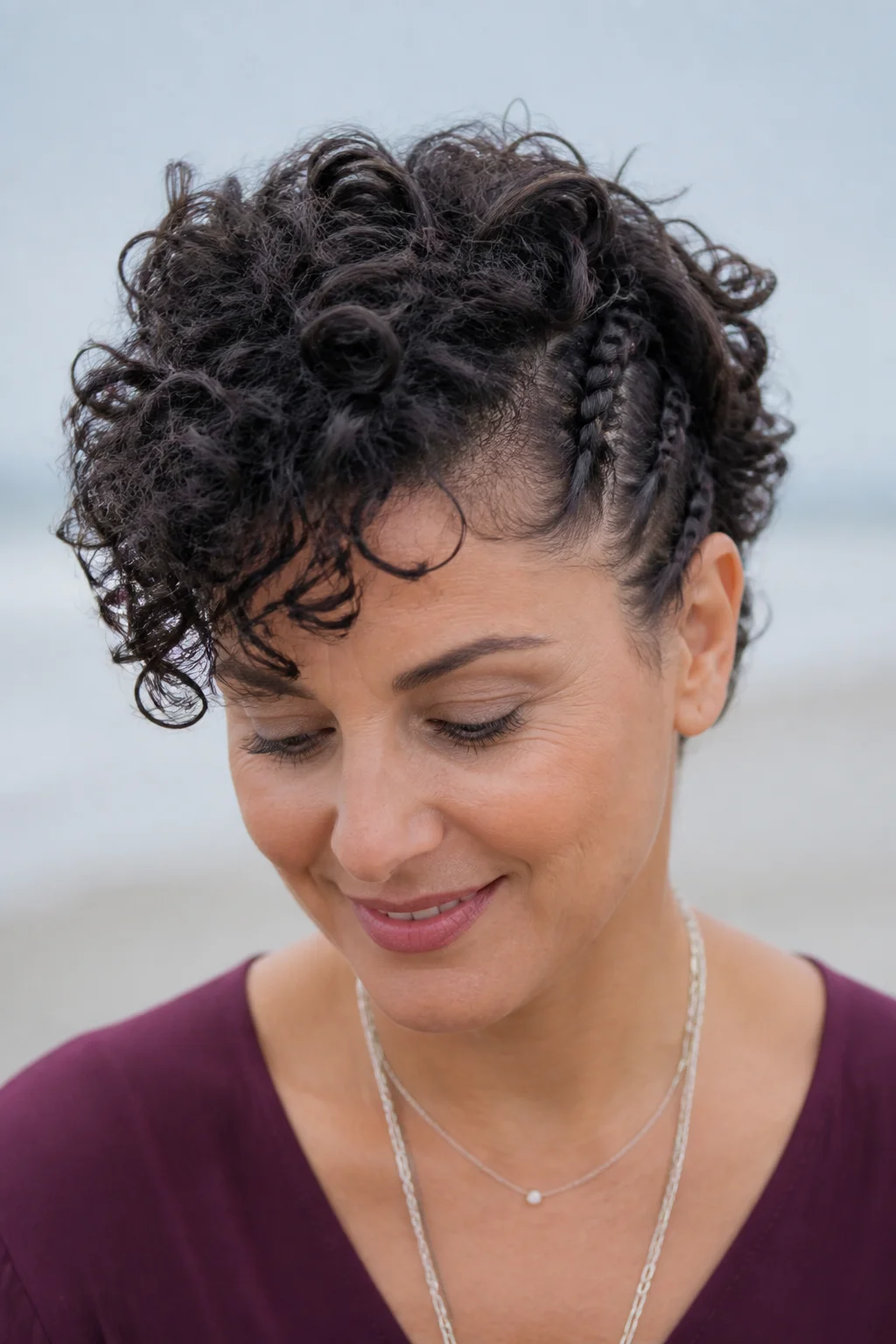
This version keeps the sides and back short and close while letting the top grow out longer, sometimes long enough to tuck behind an ear or twist into a tiny knot. It gives you styling options a traditional pixie doesn’t: you can scrunch it curly one day, stretch it out with a diffuser the next, or push it back off your face entirely. The extra length on top also softens the overall shape, which some women prefer as they get older. Because the top carries more weight, it needs regular layering so it doesn’t clump into one heavy section. Ask your stylist for point-cutting through the longer pieces to keep individual curls looking separated instead of matted together.
Asymmetrical Curly Pixie
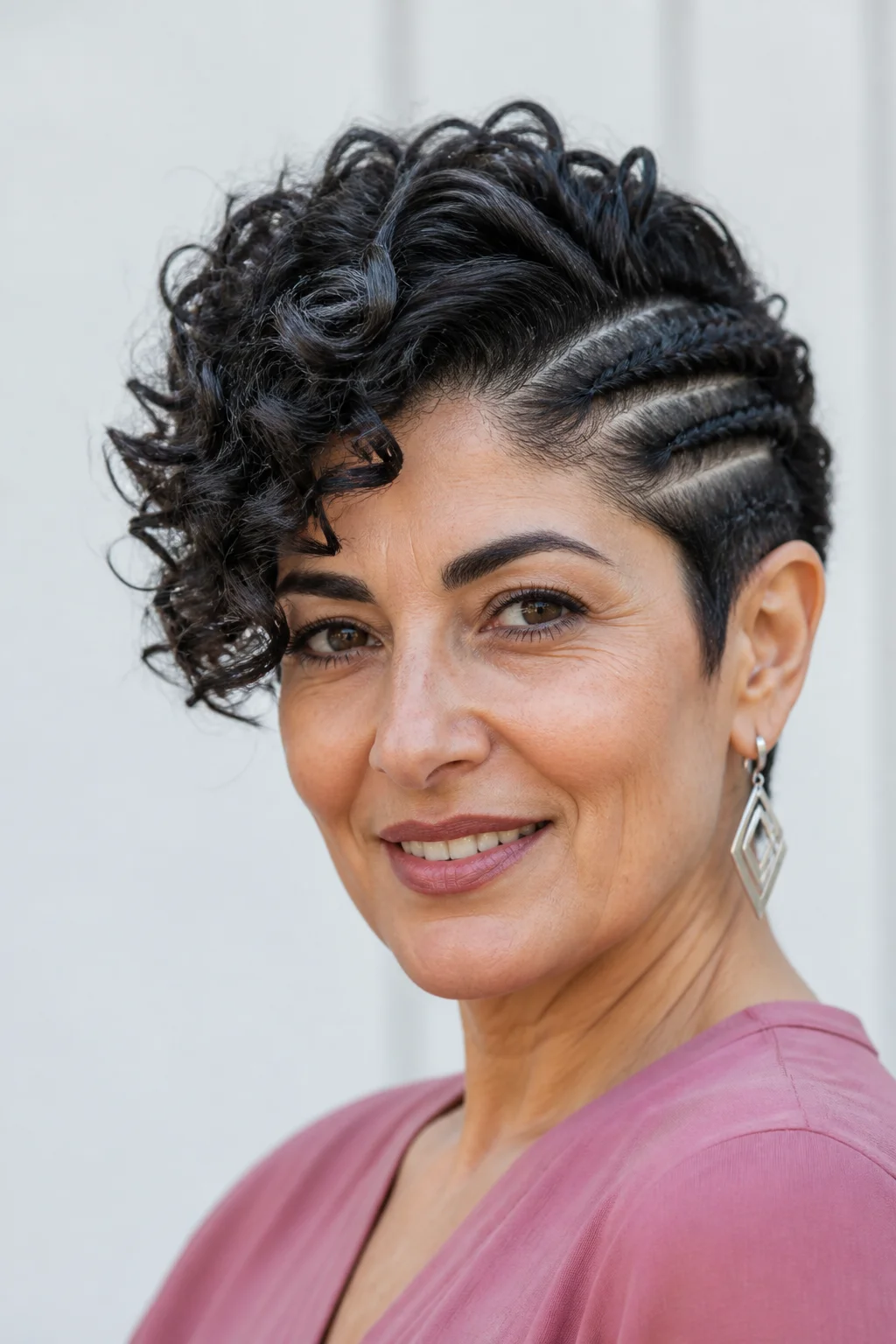
One side runs noticeably shorter than the other in this cut, creating a diagonal line that moves across the whole head rather than sitting symmetrically. It’s a striking option for anyone who wants their haircut to look a little more artistic and a little less predictable. Curl density matters here, since the asymmetry shows up best when there’s enough volume on the longer side to balance the short one.
Curly Pixie with a Side Undercut
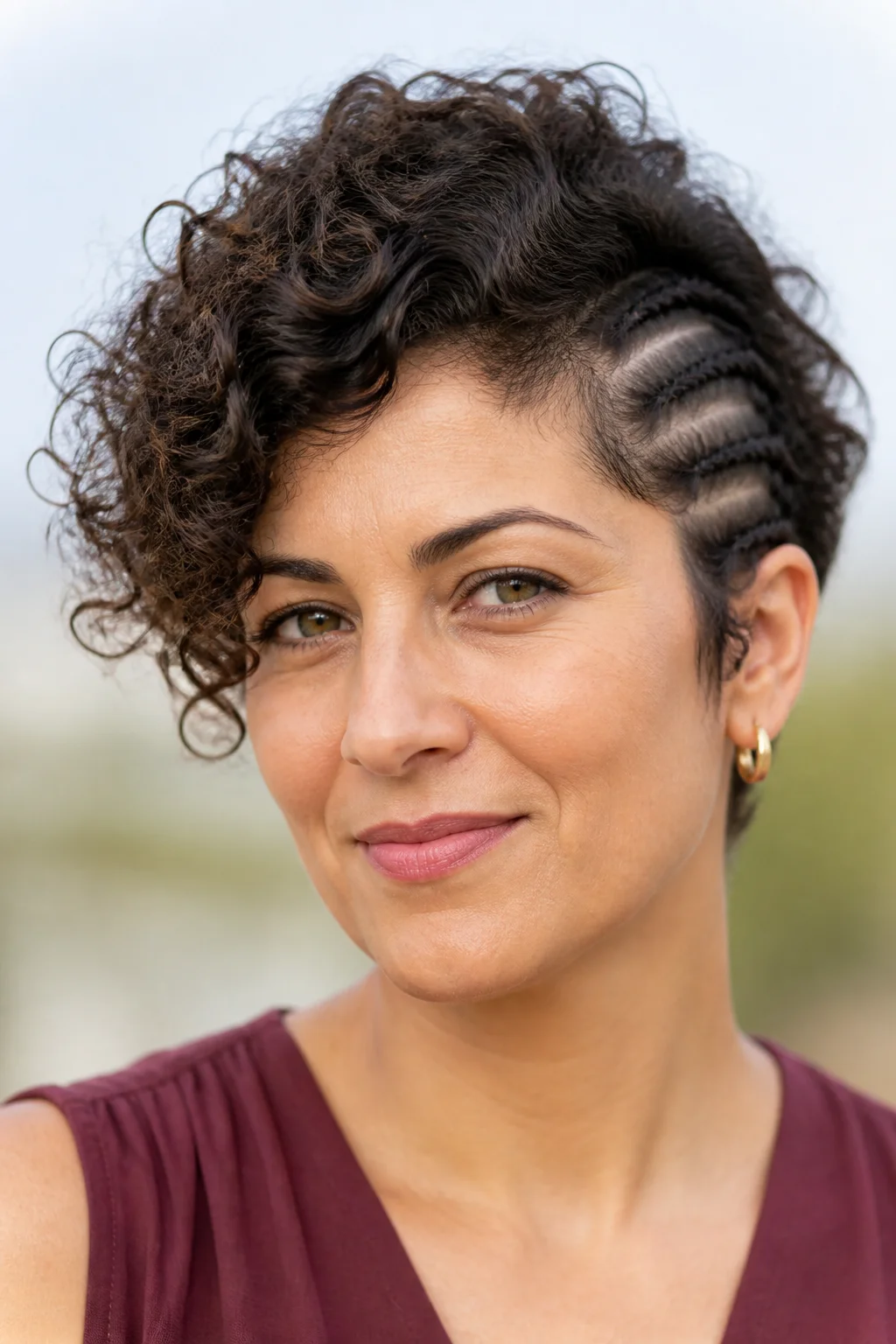
Shaving or closely clipping one side underneath the longer curls on top gives this pixie a sharper, more graphic edge than a standard taper. The undercut section can stay hidden under the top curls for an everyday look, or get shown off by pushing the curls to the opposite side. It’s a favorite among women who want a short cut with some attitude but aren’t ready to commit to an all-over close crop. Because the shaved section grows out faster than the curly top, plan on more frequent maintenance visits, roughly every three to four weeks, to keep the line clean. Tip: keep the undercut area conditioned too, since bare skin under hair can get dry and itchy if it’s ignored.
Disconnected Curly Pixie
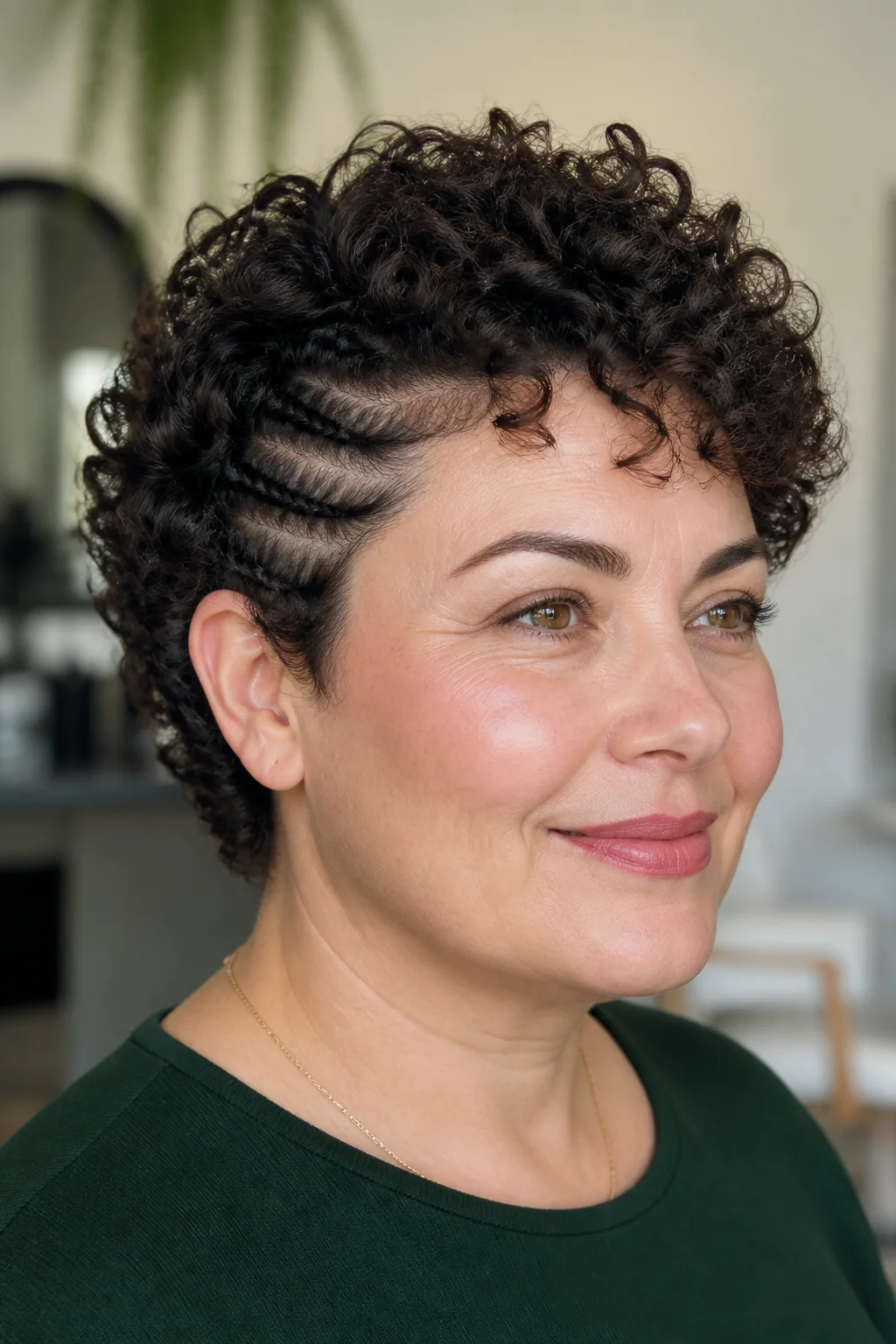
Here, the top section is cut with almost no blending into the sides, so there’s a visible, deliberate line where the two lengths meet. It gives the style a bold, almost architectural look compared to the soft blending of a classic taper. This works particularly well on thick, tightly coiled hair, where the contrast between lengths reads clearly instead of getting lost.
Curly Faux Hawk Pixie
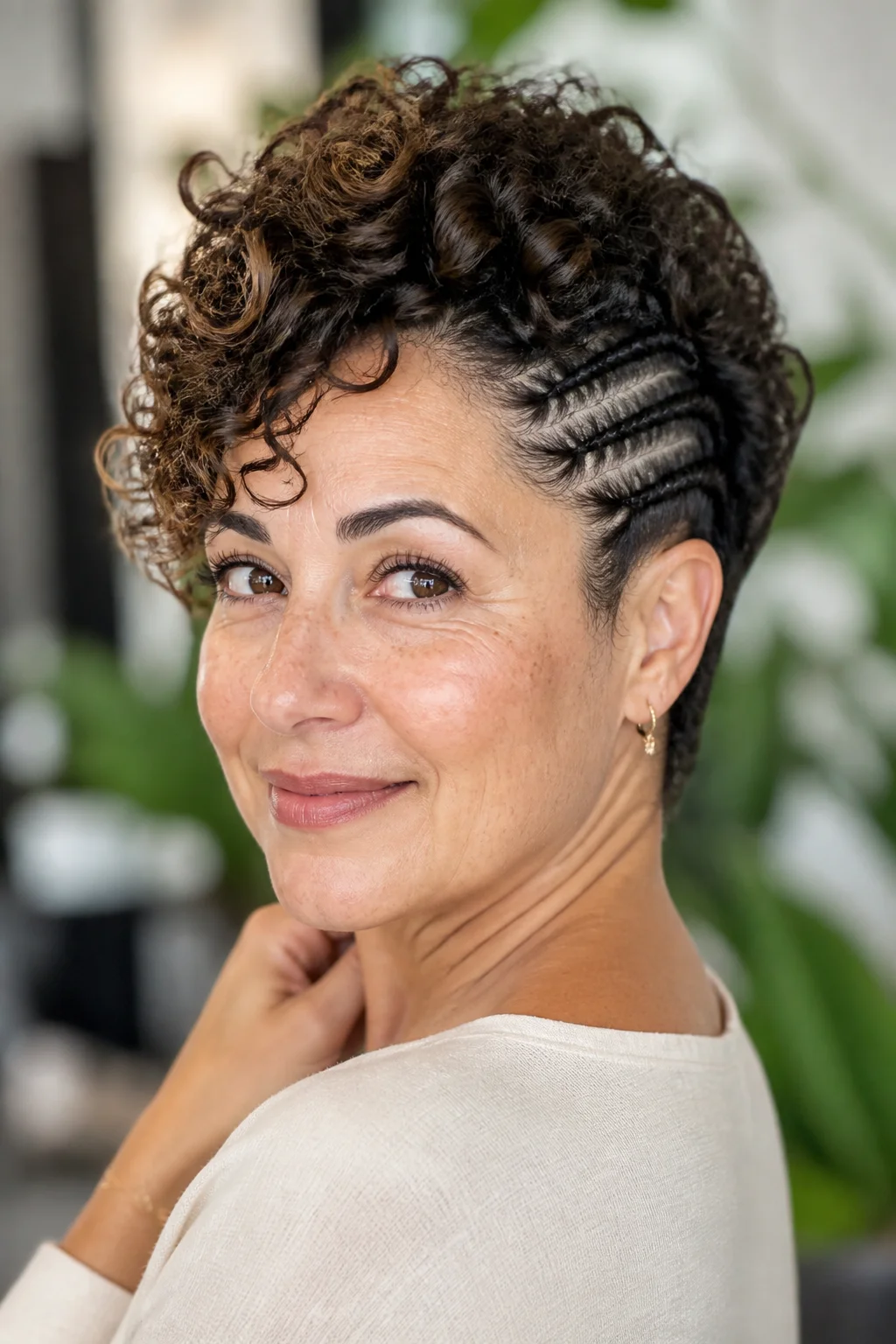
The faux hawk pixie takes inspiration from a mohawk but keeps things wearable for daily life. Hair on the sides is cut short and close, while the center strip is left longer and full, so curls pile up along the middle of your head when styled upward. You don’t need gel or heavy product to get the shape, since natural curl volume does a lot of the work already. This cut tends to suit women who already have some styling confidence and want a look with more personality than a traditional round pixie. It also photographs really well, since the height and shape hold up under bright light instead of flattening out.
Curly Mohawk Pixie
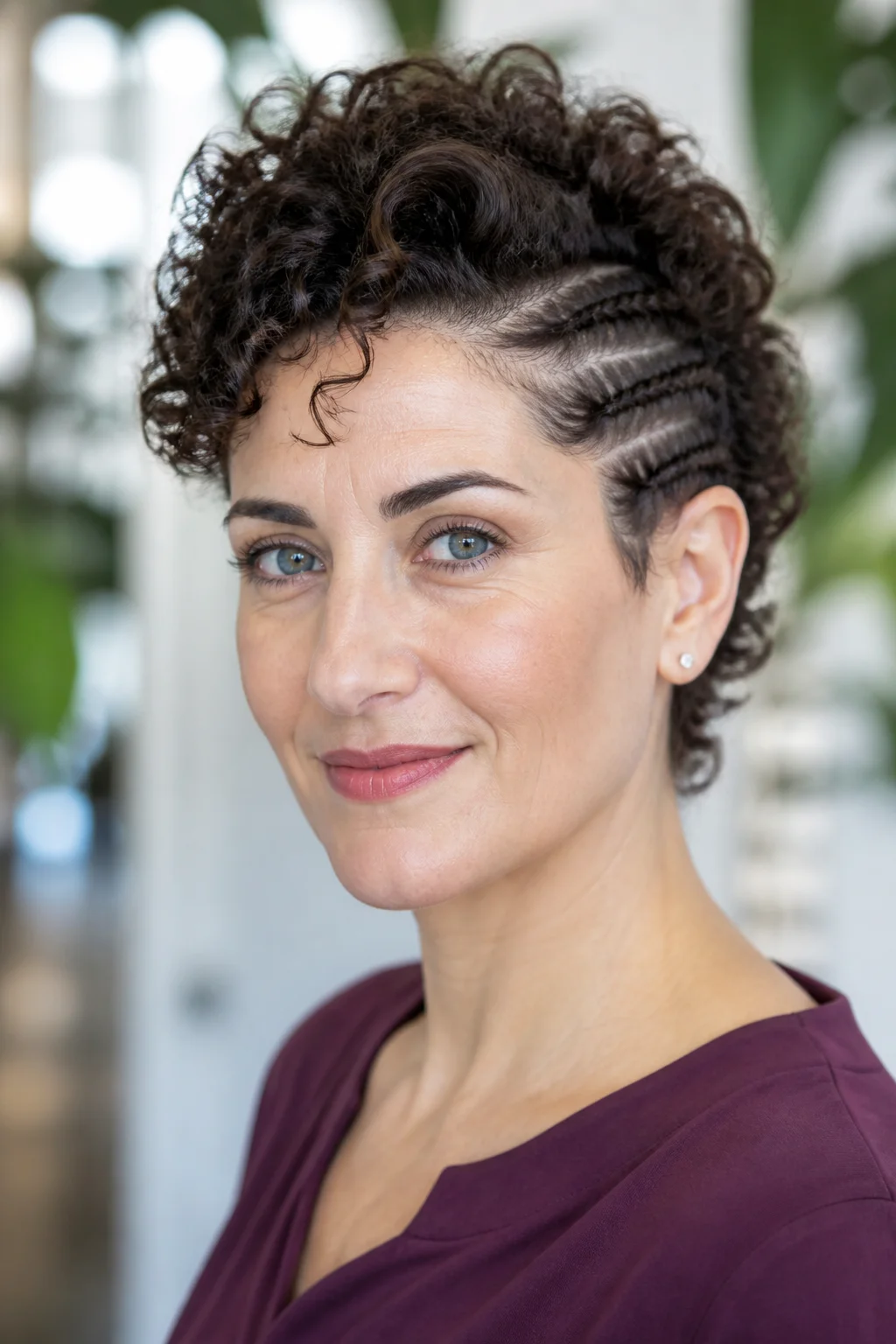
This is a bolder step than the faux hawk, with the sides cut much shorter, sometimes shaved, and the center strip left noticeably fuller and higher. It’s not subtle, and it isn’t meant to be. Curl texture actually makes the mohawk easier to maintain day to day, since the natural pattern holds shape without constant restyling.
Curly Pixie Mullet
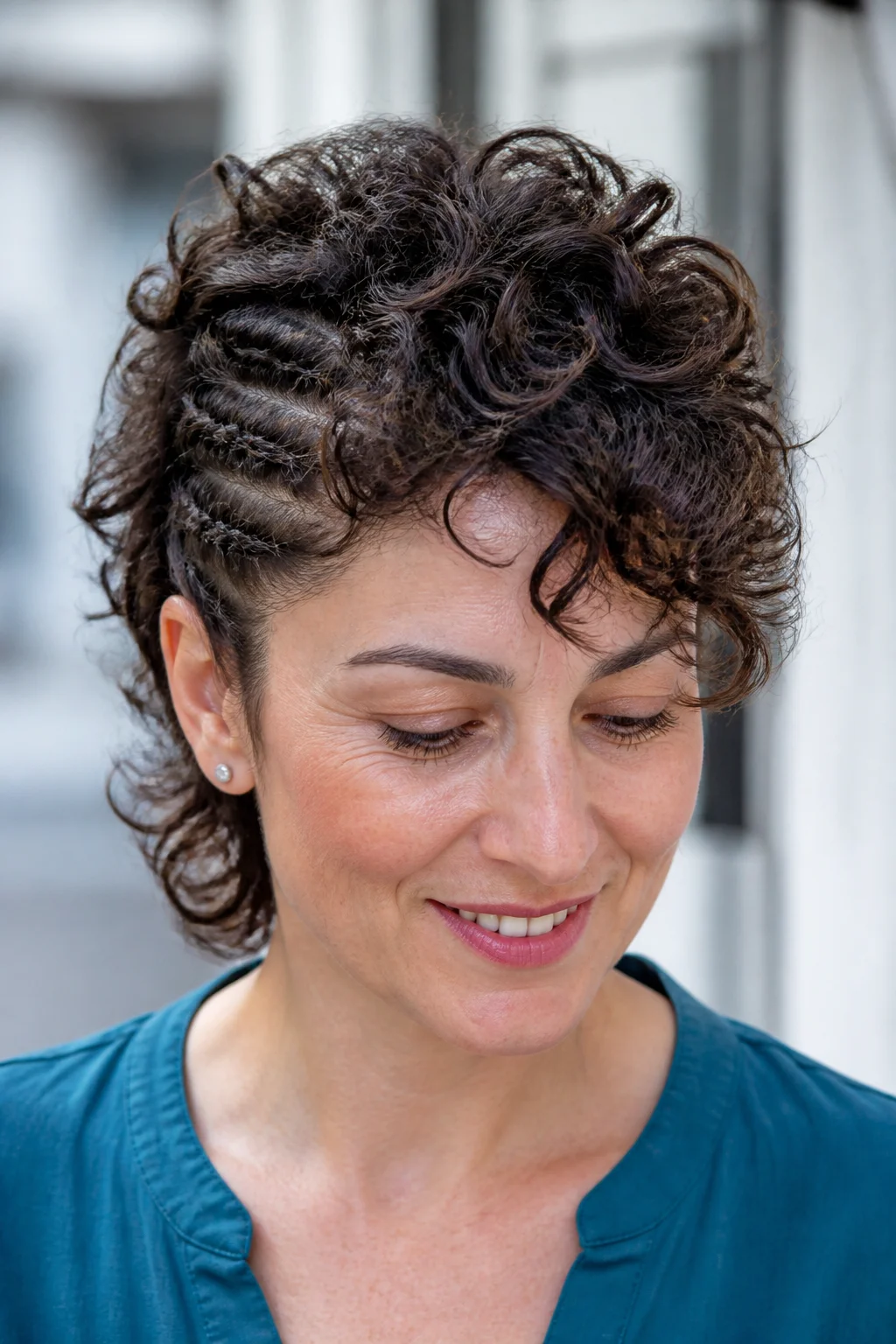
The curly mullet pixie plays with contrast: short and tapered through the front and sides, with a longer tail left at the back. On curly hair, that back section springs up into loose ringlets or defined curls instead of hanging flat, which softens the retro edge of a traditional mullet. It’s an unexpected pick for women over 40 who want something current rather than classic, and it tends to draw compliments precisely because it isn’t what people expect from a “mom haircut.” The front stays easy to manage since it’s cut short, while the back gives you a little length to play with, twist, or clip back on busy days. If you’re nervous about commitment, ask for a shorter tail at first. You can always let it grow longer once you see how it behaves with your curl pattern.
Curly Shag Pixie
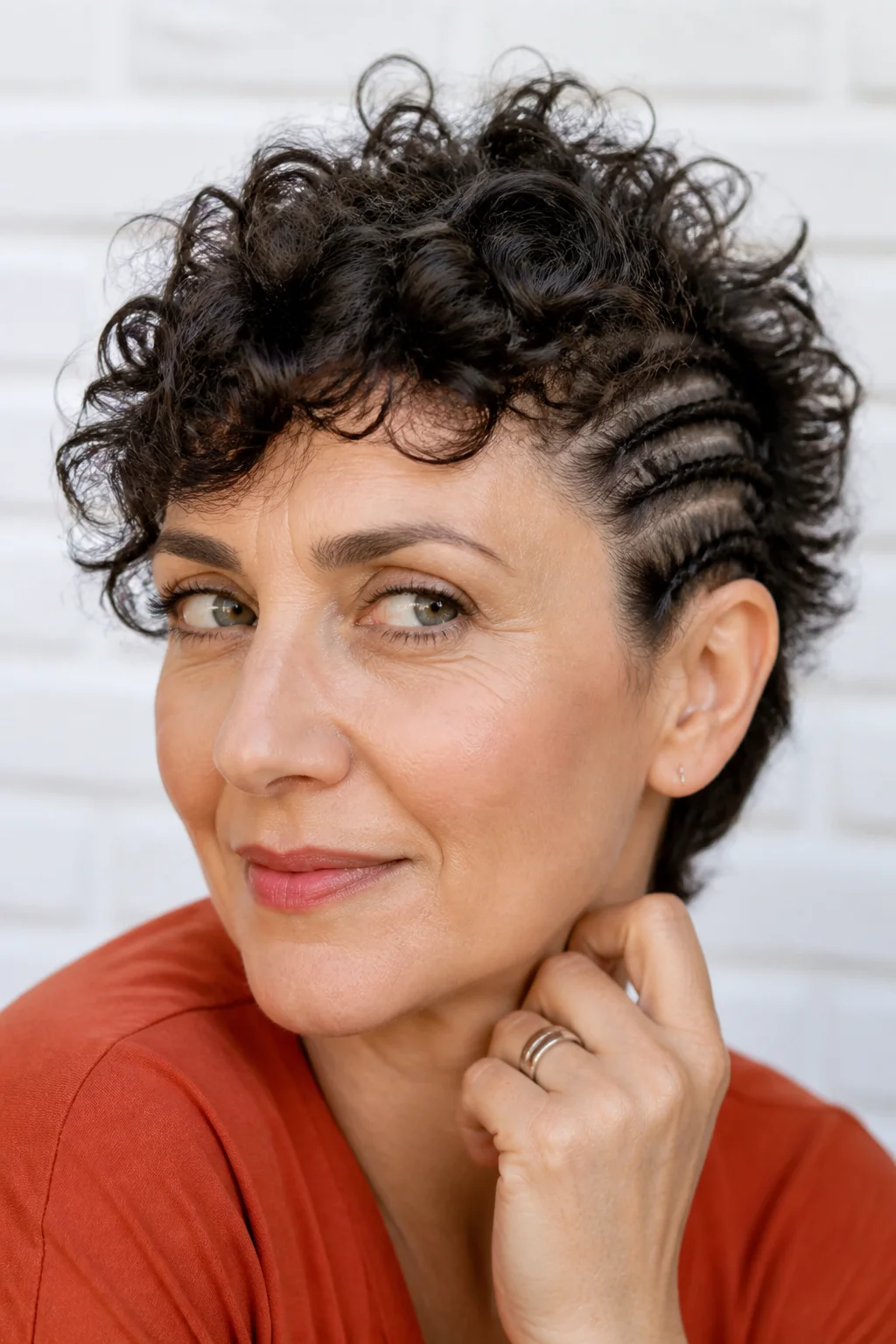
Shag layers, cut short, on curly hair create a lot of texture and movement without much length at all. The layers are choppy and irregular on purpose, which reads as effortless rather than messy once the curls settle into place. This one works especially well for wavy-to-curly patterns that have some natural body already, since the shag layering amplifies texture rather than creating it from scratch. It’s a lower-maintenance styling routine day to day, since the point of the cut is a slightly undone look. A curl cream scrunched in while hair is damp is usually enough to finish it.
Curly Bixie

The bixie sits right between a bob and a pixie, a little longer than a true pixie but nowhere near bob length, and it has become one of the most requested short cuts for curly hair over the last few years. Curls at this length hit a sweet spot: long enough to have real movement and shape, short enough to stay low maintenance. It flatters a wide range of face shapes because the length can be adjusted slightly at the jawline to either lengthen or soften your features. This is a strong option for anyone transitioning from longer hair who isn’t ready for a tight, close pixie yet. Layering throughout keeps the curls from bunching into one solid shape at the bottom.
Bowl-Shaped Curly Pixie
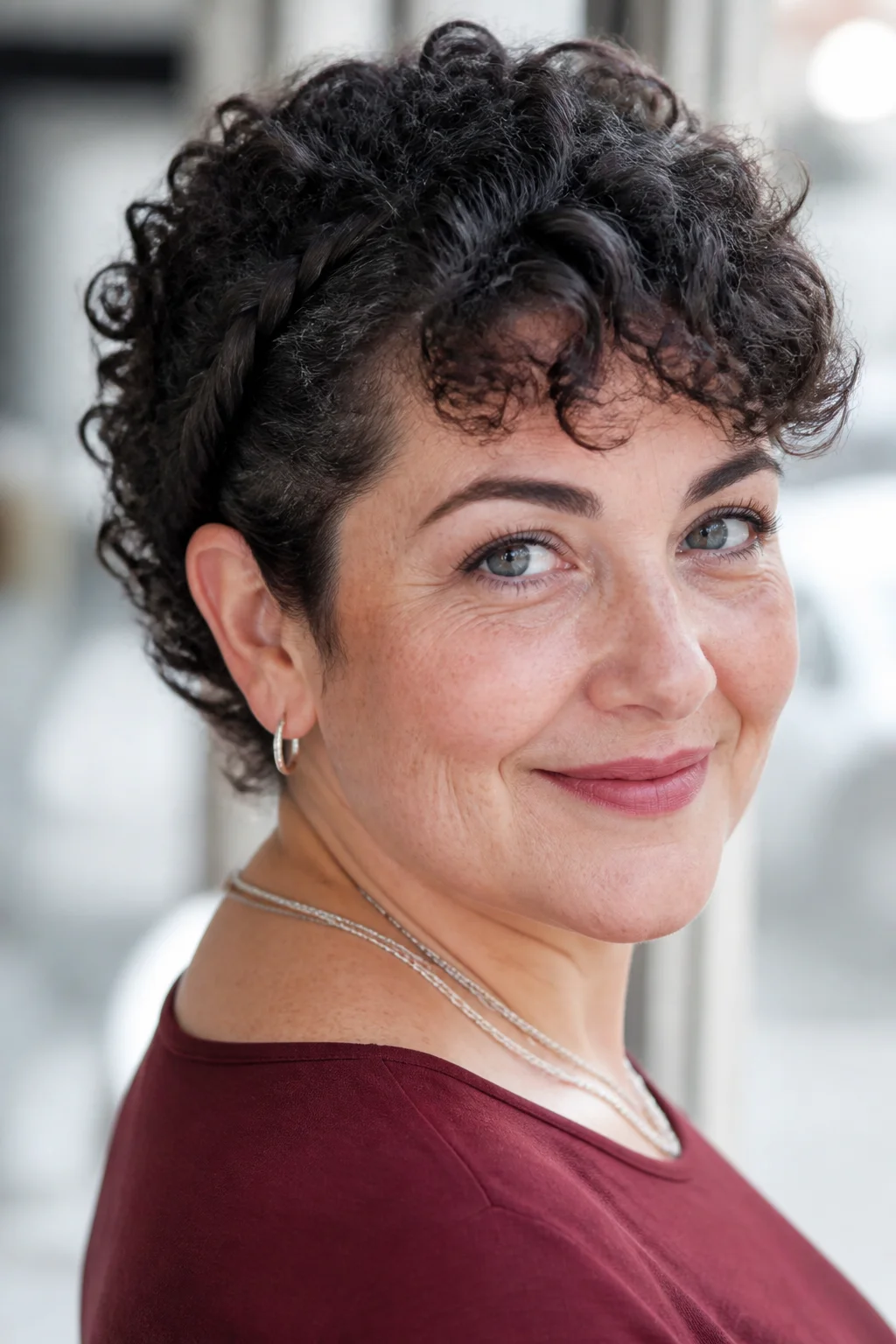
A modern bowl cut on curly hair looks nothing like the childhood version people remember. The rounded shape is softened by natural curl texture, so the outline blurs slightly instead of looking like a hard helmet shape. It’s a distinctive choice, and it works best on someone with a smaller face who can carry the fuller, rounder silhouette without it overwhelming their features.
Curly Wedge Pixie
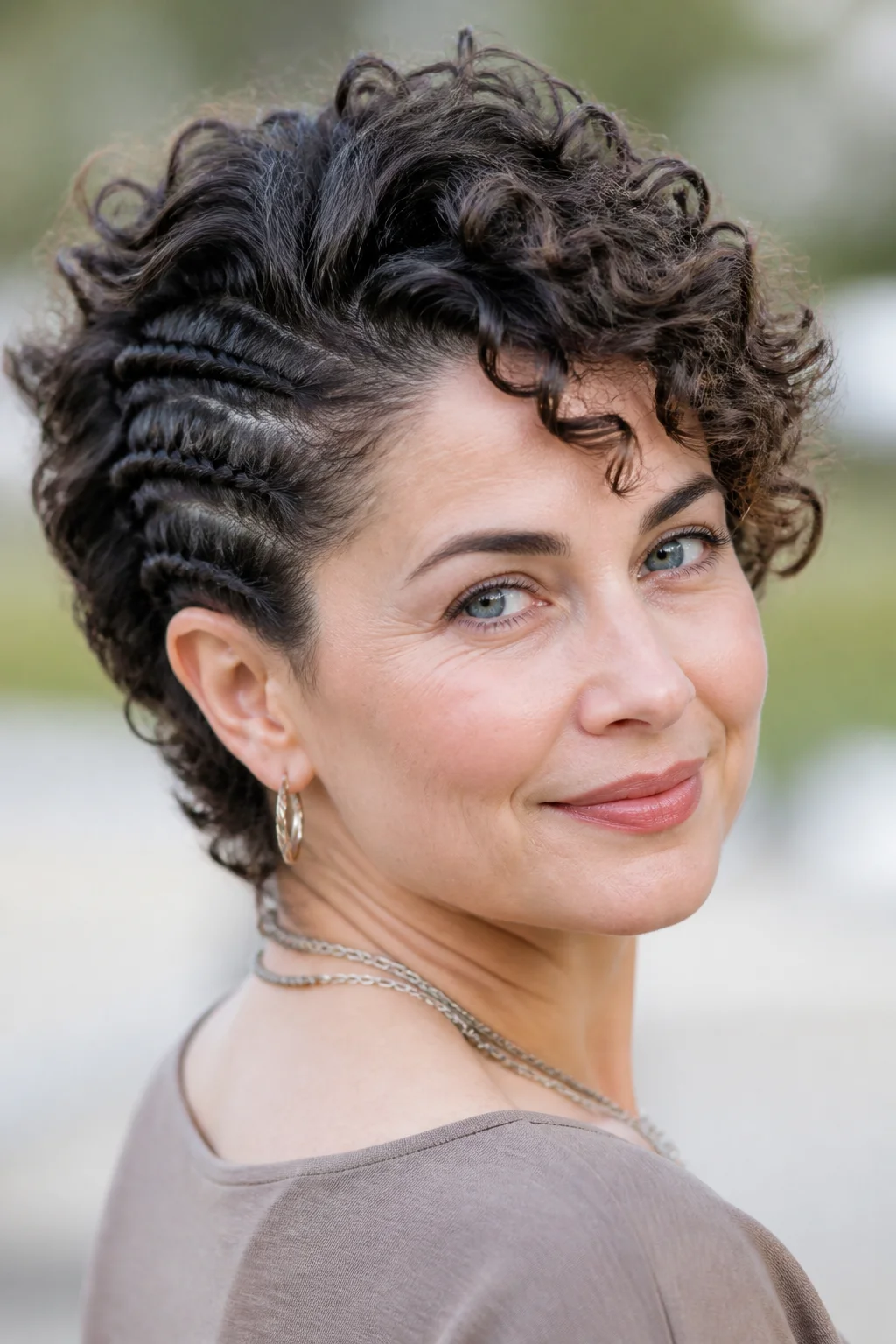
The wedge shape stacks shorter layers at the back and lets the top and sides taper out longer, creating an angled silhouette when viewed from the side. On curly hair, this stacking creates noticeable volume at the crown, which a lot of women appreciate as hair naturally thins with age. It’s a structured cut, more sculpted than a soft round pixie, and it tends to hold its shape well between salon visits.
Curly Pompadour Pixie
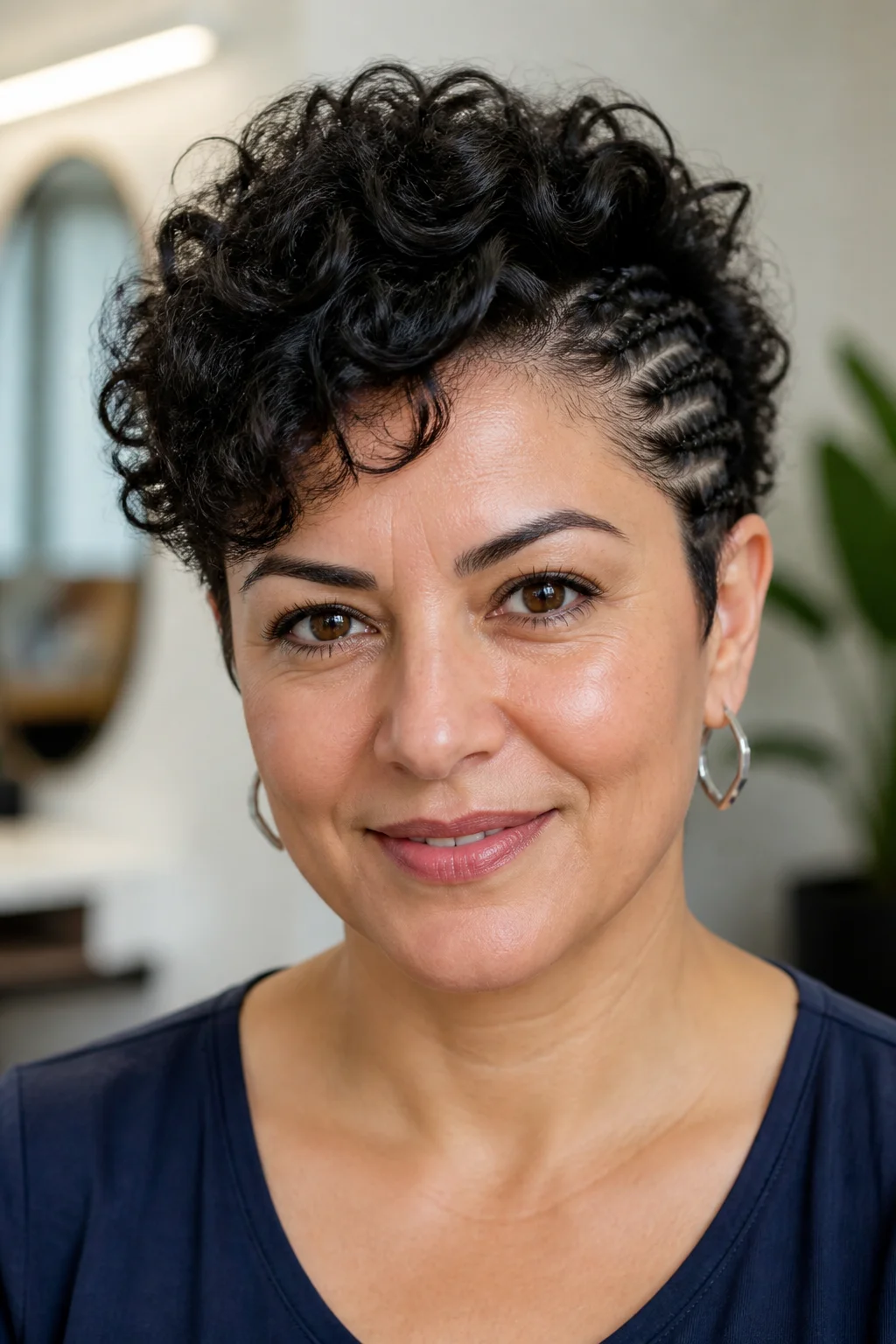
Volume at the front, swept up and back, is the whole point of a pompadour, and curly texture makes that volume easy to achieve without heavy backcombing or teasing. The sides stay short and tapered so all the attention goes to the height and shape on top. It’s a confident look, closer to vintage glamour than casual everyday styling, and it works well for women who want a dramatic option for special occasions but don’t want long hair to manage. Tip: a light-hold mousse applied at the root before diffusing gives you lift without the stiffness a heavier gel can leave behind.
Tapered Coily Pixie
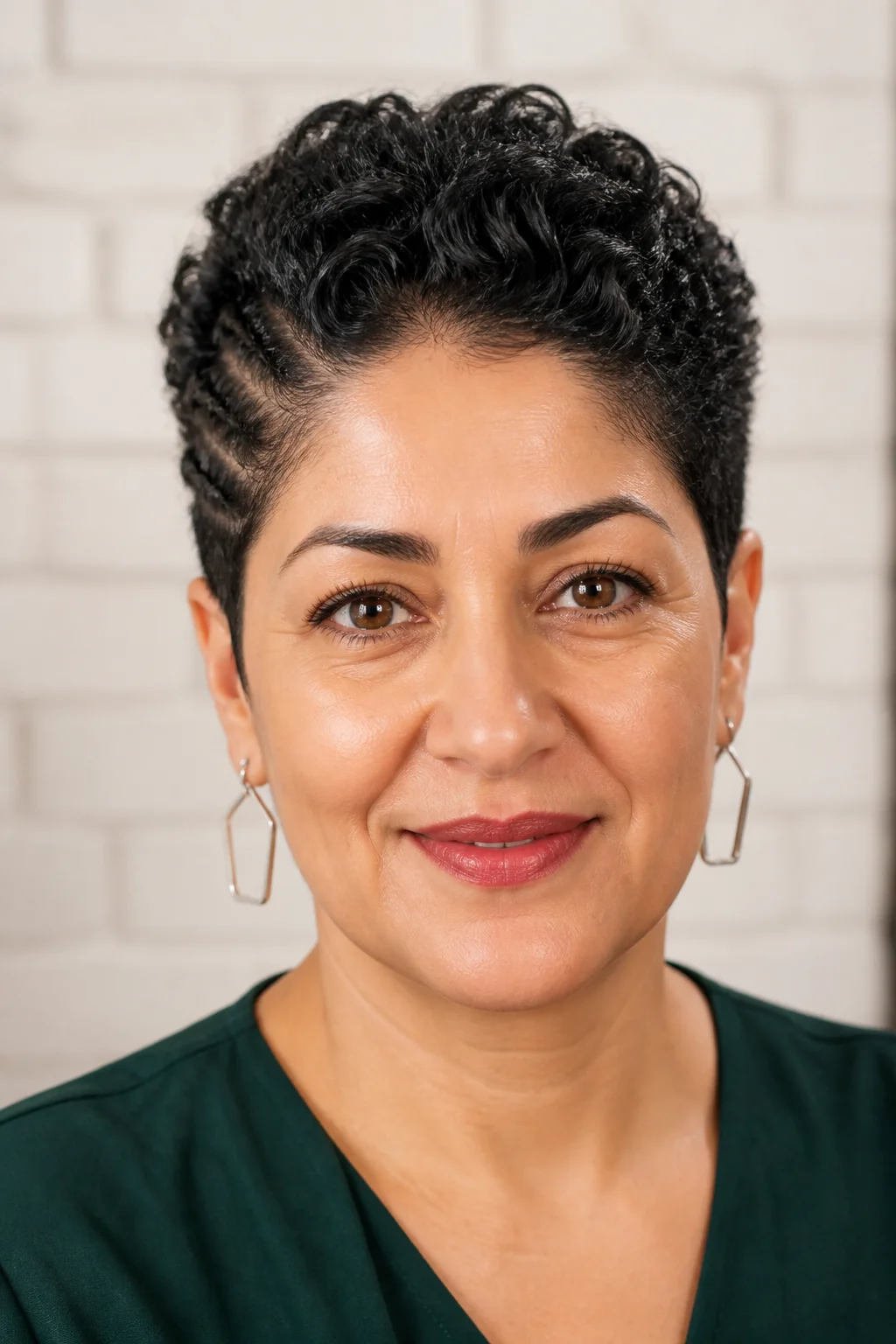
Built specifically for tighter coil patterns, this cut tapers the sides and back close to the scalp while allowing the coils on top to stand up and outward, showing off their natural shape and shrinkage. It celebrates coily texture instead of trying to stretch or minimize it. Regular moisture is essential here, since shorter coily hair can dry out fast without a leave-in conditioner or curl butter in the routine.
Curly Crop with Temple Fade
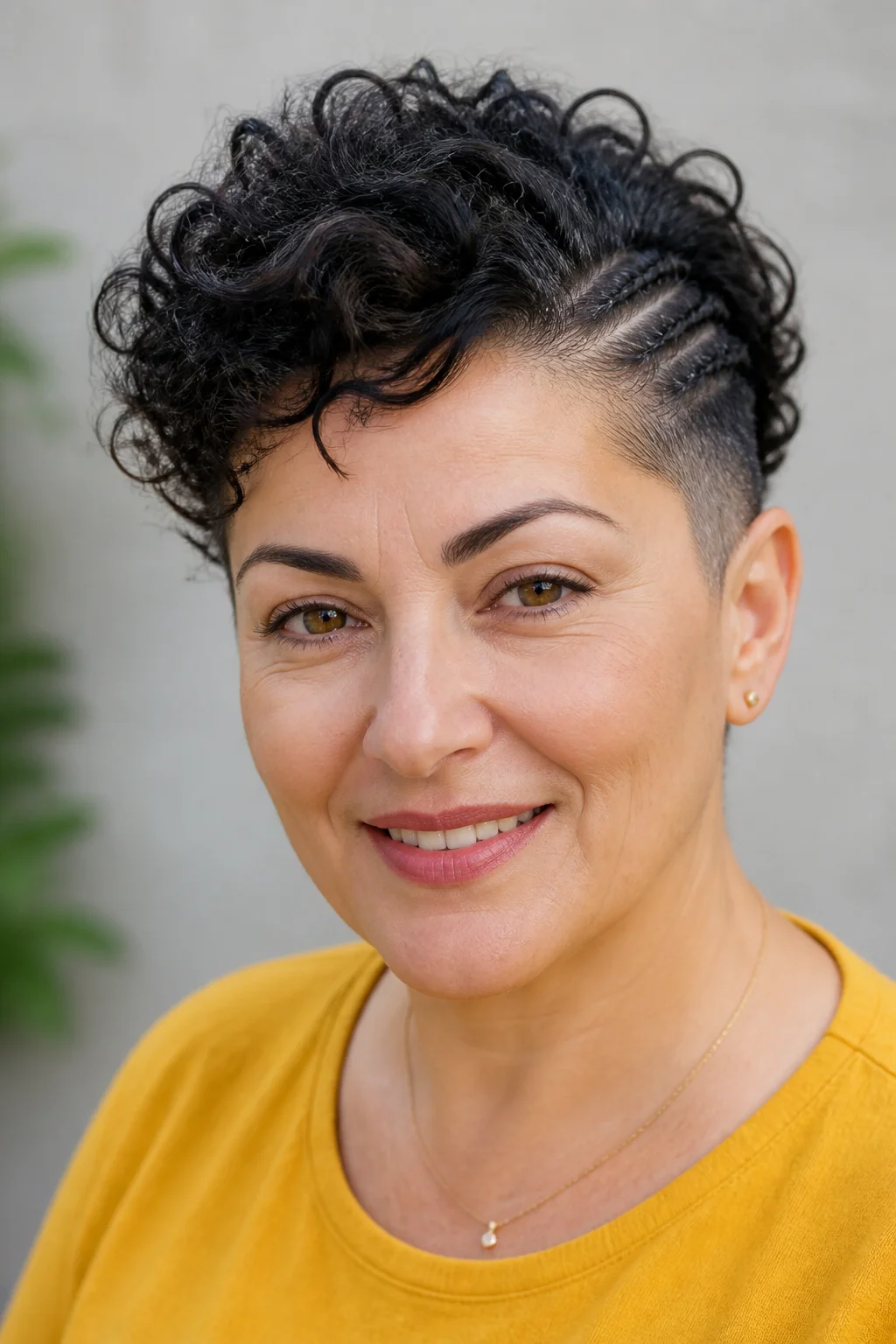
A fade at the temples, blending gradually from skin to a short length and then into fuller curls on top, gives this cut a clean, barbershop-inspired edge. It’s sharper and more graphic than a traditional taper, and it needs more frequent touch-ups to keep the fade looking crisp, usually every two to three weeks. Women who already keep an active, low-fuss routine tend to like this one best, since the top curls need almost no daily styling once they’re cut into shape.
Sculpted Finger-Curl Pixie
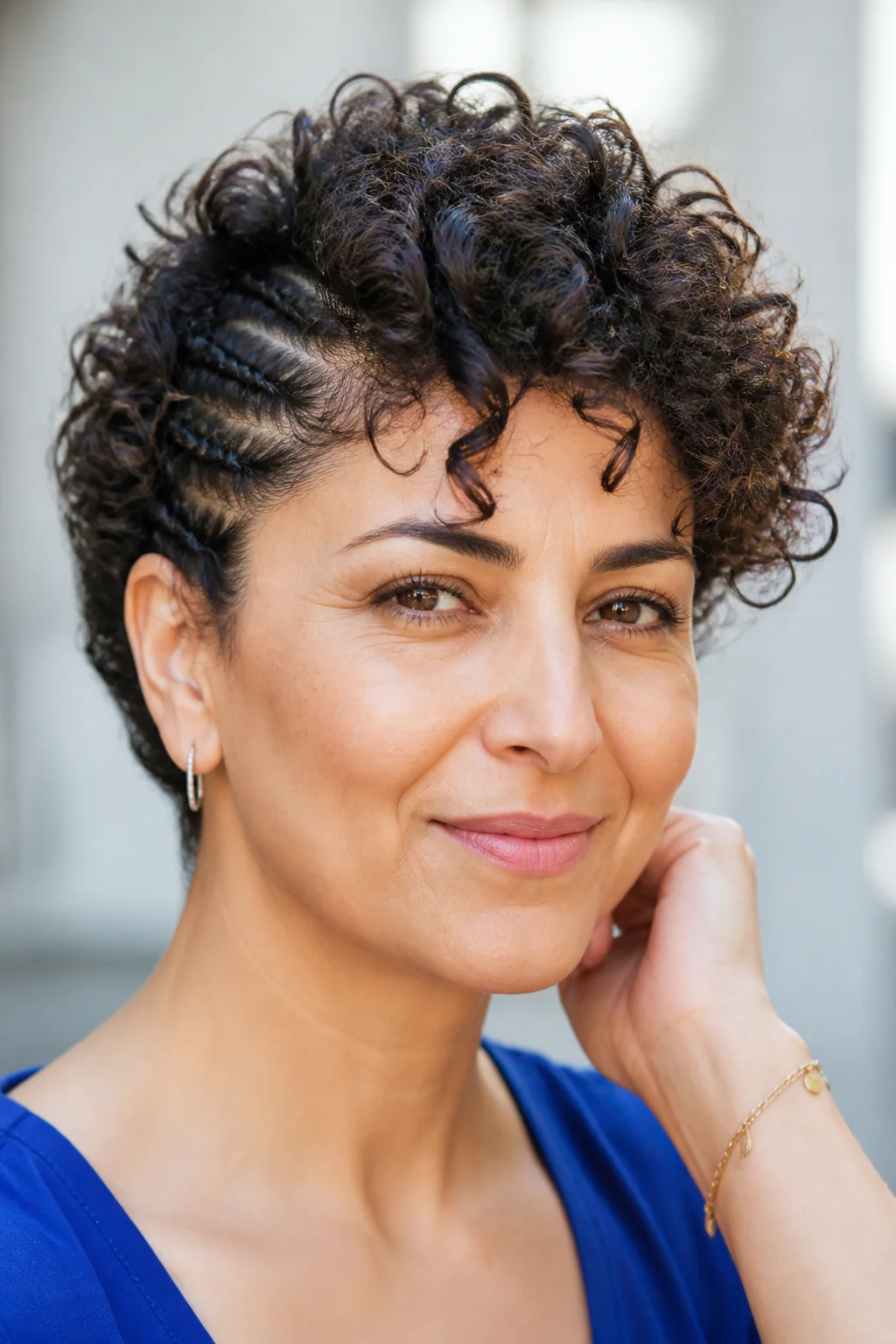
This style leans into definition, with each curl or curl cluster shaped individually using fingers and a styling cream rather than left to dry naturally. The result looks a little like a vintage pin curl set, but shorter and more current. It takes more time at the mirror than a wash-and-go pixie, so it suits someone who enjoys the styling process rather than someone looking to save time each morning.
Spiky Curly Pixie
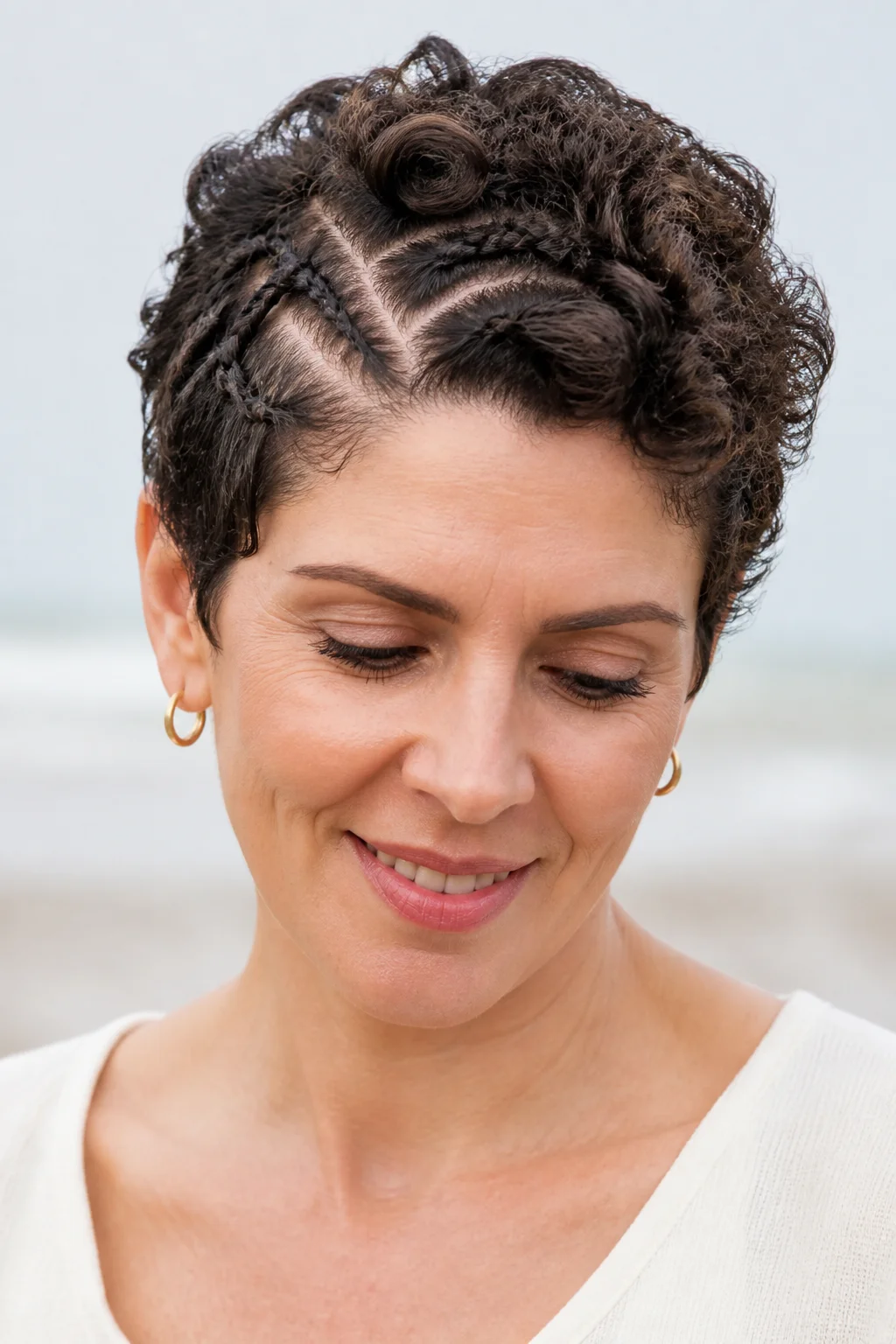
Curls twisted or pinched into small spiky sections all over the head give this pixie an energetic, textured finish that photographs well and reads younger without trying too hard. A strong-hold cream or paste is needed to keep the spikes defined through the day, since curls left alone will relax back into their natural pattern. This is a fun option for anyone who wants a change from their usual routine without a drastic new cut, since it’s really more about styling than the underlying shape.
Curly Pixie with a Deep Nape Taper
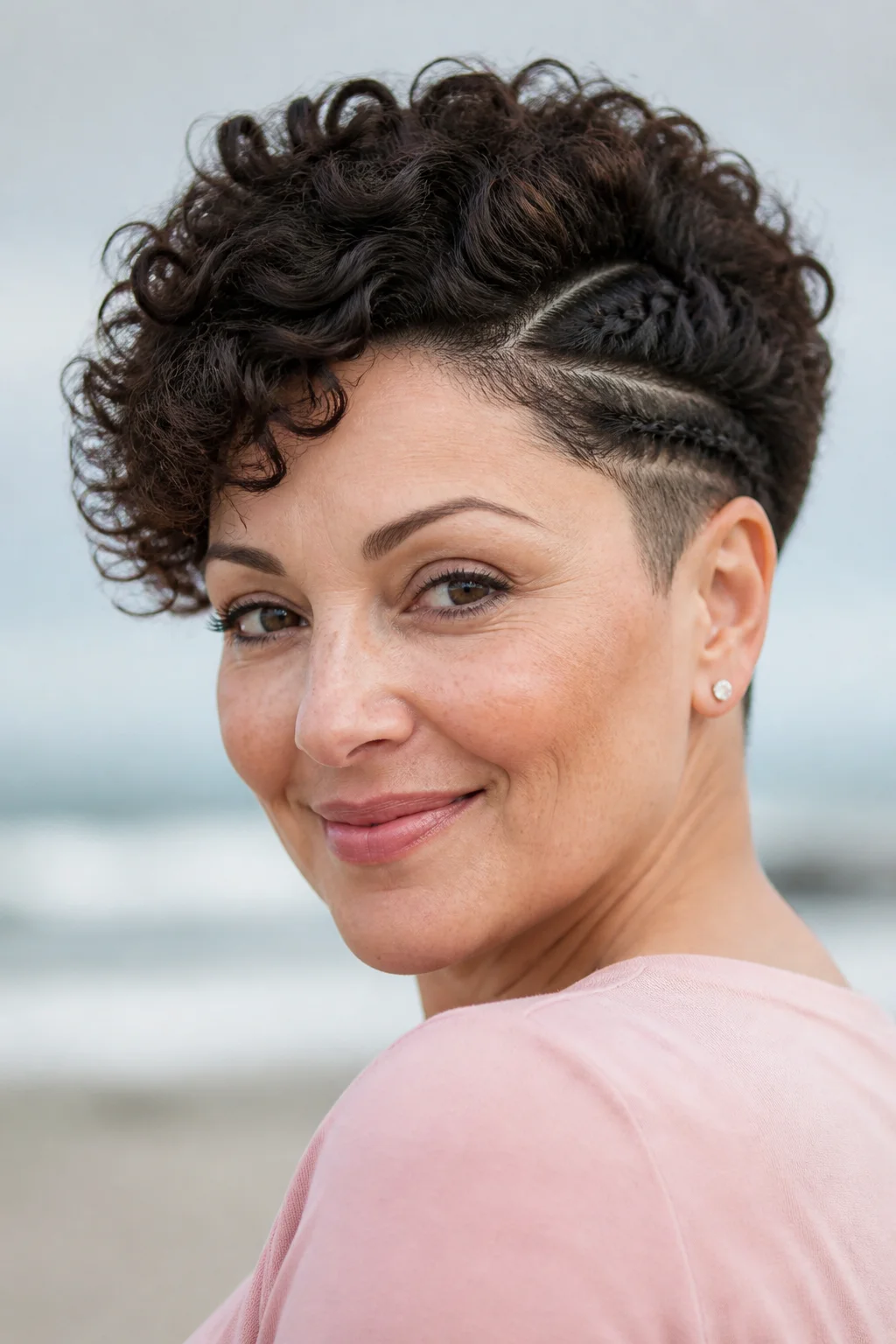
Extra attention at the nape, tapering deep into the hairline rather than stopping at a standard line, gives this pixie a neat, finished look at the back of the neck. It matters more than people expect, since an undefined nape can make an otherwise great pixie look unfinished from behind. Ask your stylist to check this area specifically at every trim, since it grows out faster than the rest of the cut and loses definition quickly.
Voluminous Crown Curly Pixie
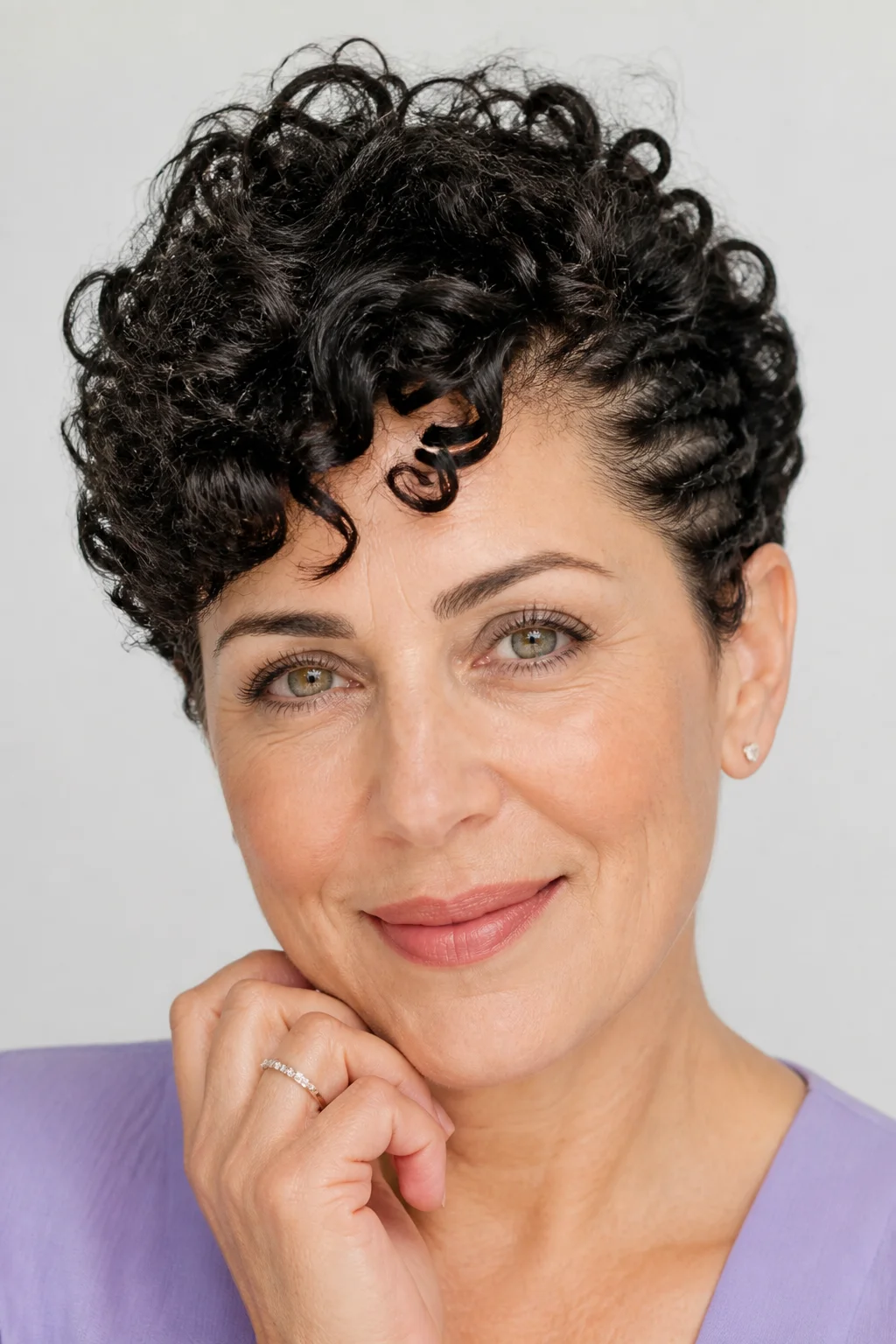
Extra layering and lift are concentrated right at the crown in this cut, building height where hair naturally sits flattest on a lot of people as they get older. The sides and back stay simpler and shorter, so the eye goes straight to the volume up top. It’s a practical choice for anyone dealing with thinning at the crown, since the layering itself helps disguise low density rather than just relying on product to fake fullness. Diffusing upside down for the first few minutes after washing tends to boost the lift even more before you flip your head back over to finish.
Choosing the Right Curly Pixie for You
With 22 options on the table, it helps to think about your priorities before you sit in the chair. If low maintenance matters most, the classic tapered pixie, the rounded pixie, and the curly bixie all need minimal daily styling and forgive a missed wash day better than more structured cuts. If you want something with more personality, the curly mohawk pixie, the spiky curly pixie, and the curly pixie mullet bring in texture and shape that stand out without requiring long hair.
Face shape matters too. Rounder faces often do well with the asymmetrical curly pixie or the curly pixie with a side undercut, since the angles add definition. Softer, rounder cuts like the bowl-shaped curly pixie or the rounded curly pixie tend to suit longer or more angular face shapes better.
A common mistake is choosing a cut based on a photo of straight or loosely wavy hair. Tight coils shrink more than loose waves, so a length that looks like a bixie on straight hair might land closer to a true pixie once your curls dry and spring up. Talk to your stylist about your specific curl pattern before you commit, not just the picture you brought in.
If your hair is thinning at the crown, avoid all-over close crops like the tapered coily pixie and lean toward cuts built with lift in mind, such as the voluminous crown curly pixie or the curly pompadour pixie. And if you’re not sure how much length to keep, ask for a slightly longer version first. Curly hair is far easier to cut shorter at your next visit than to force back into length once it’s gone.