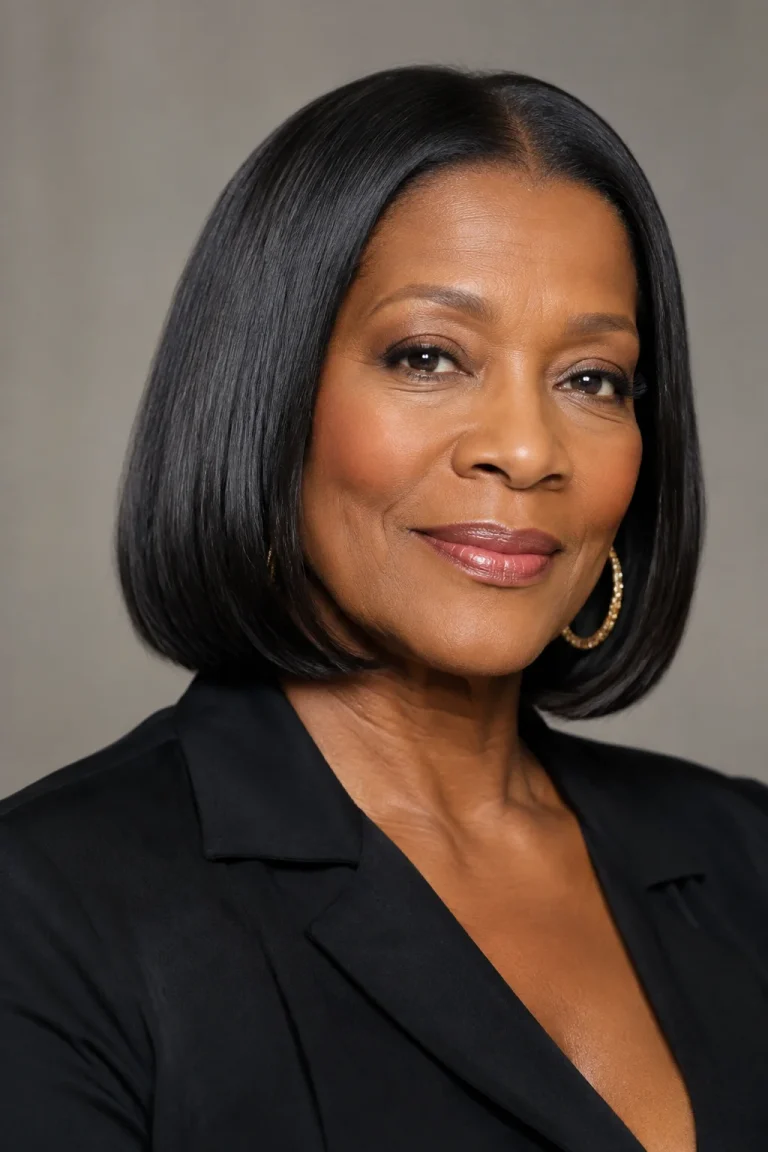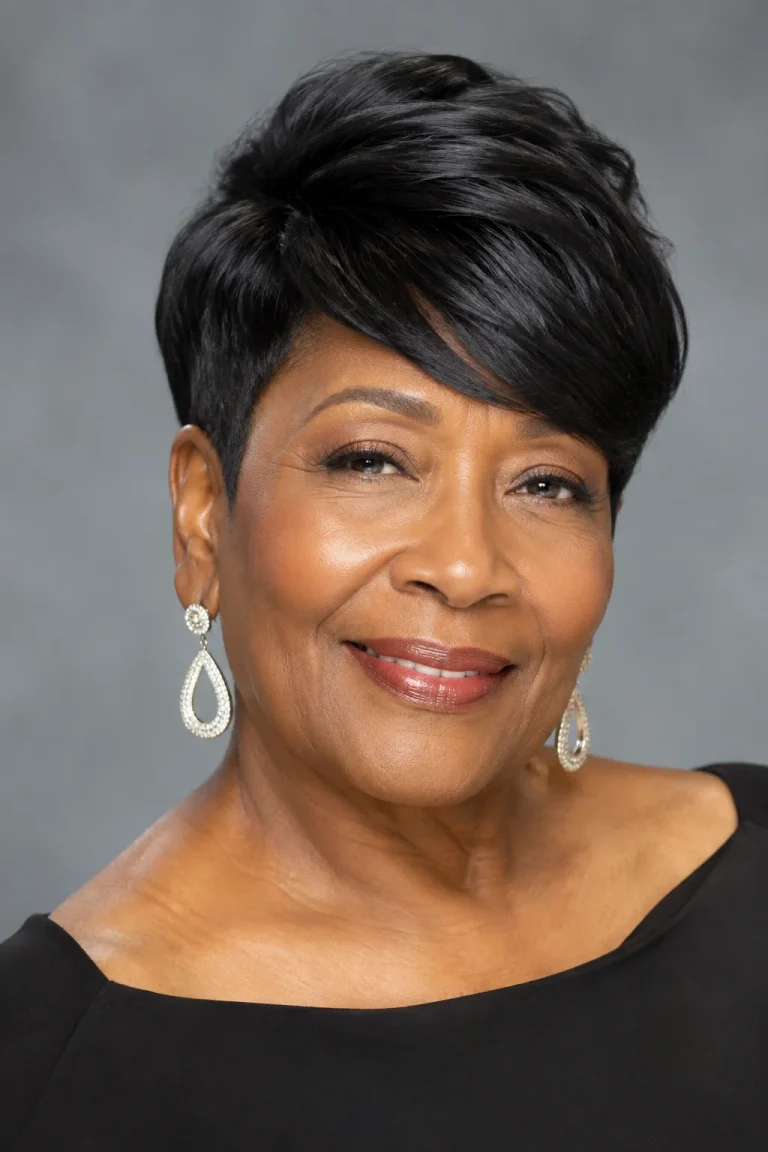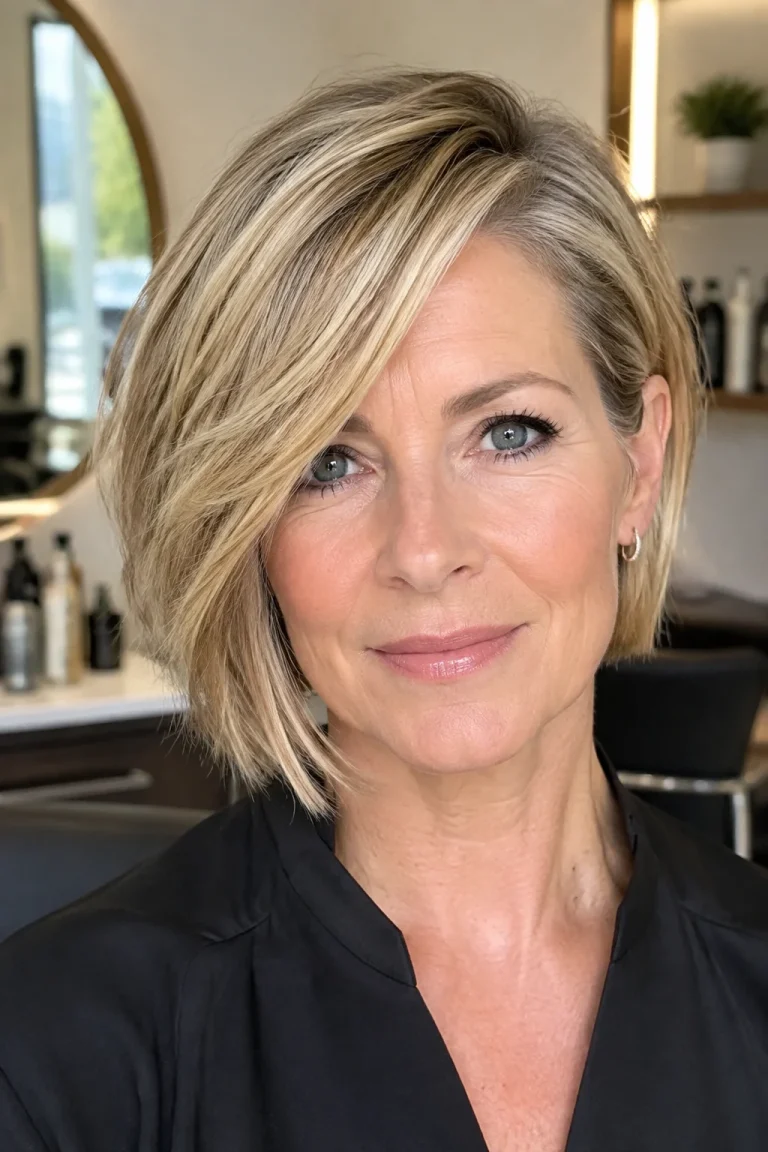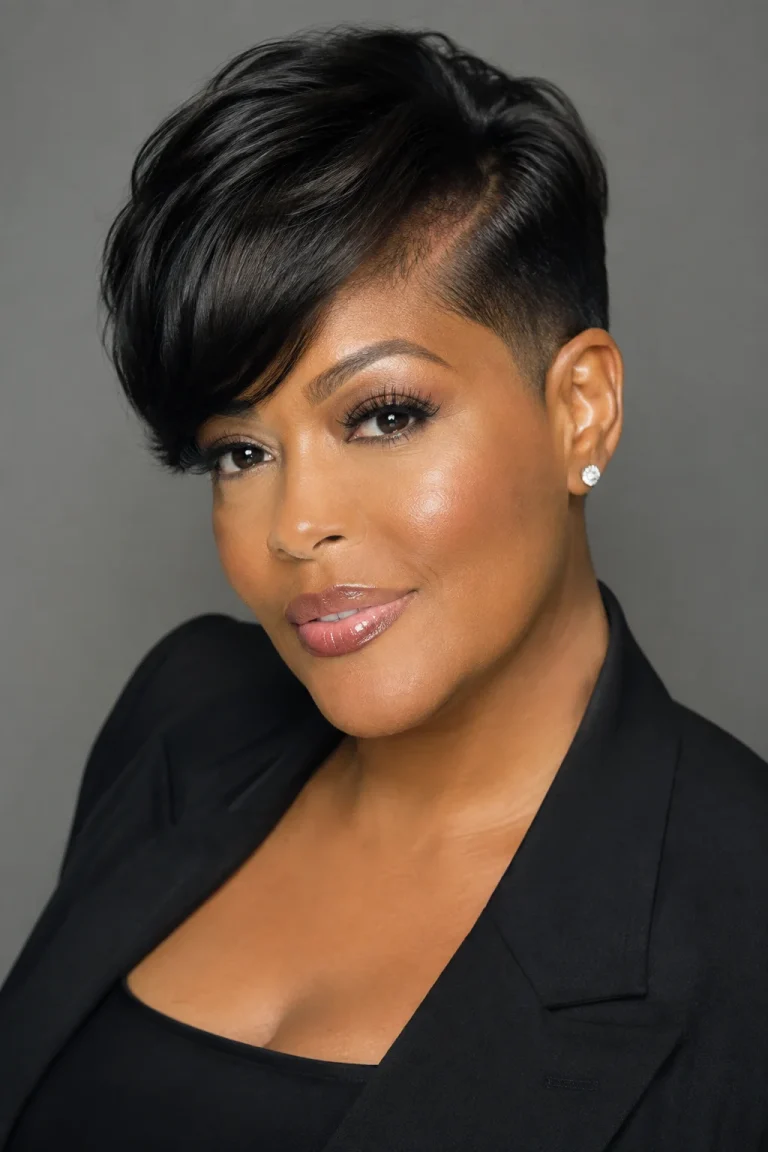
Thinning strands, less natural volume, and years of color can make long hair feel like more work than it’s worth. A good short cut solves all three problems at once, and it can take years off your look without trying too hard. These short hair pixie cuts for women over 70 are built around real hair texture at this stage of life, not just trendy photos pulled from younger models. Some add soft layers for movement, others use texture to fake volume, and a few lean into gray as a feature instead of something to hide. Pick based on your face shape, your hair’s natural thickness, and how much styling time you actually want to spend each morning. Bring the photo that matches your hair type to your next appointment, not just the one you like best.
Classic Tapered Pixie with Soft Layers
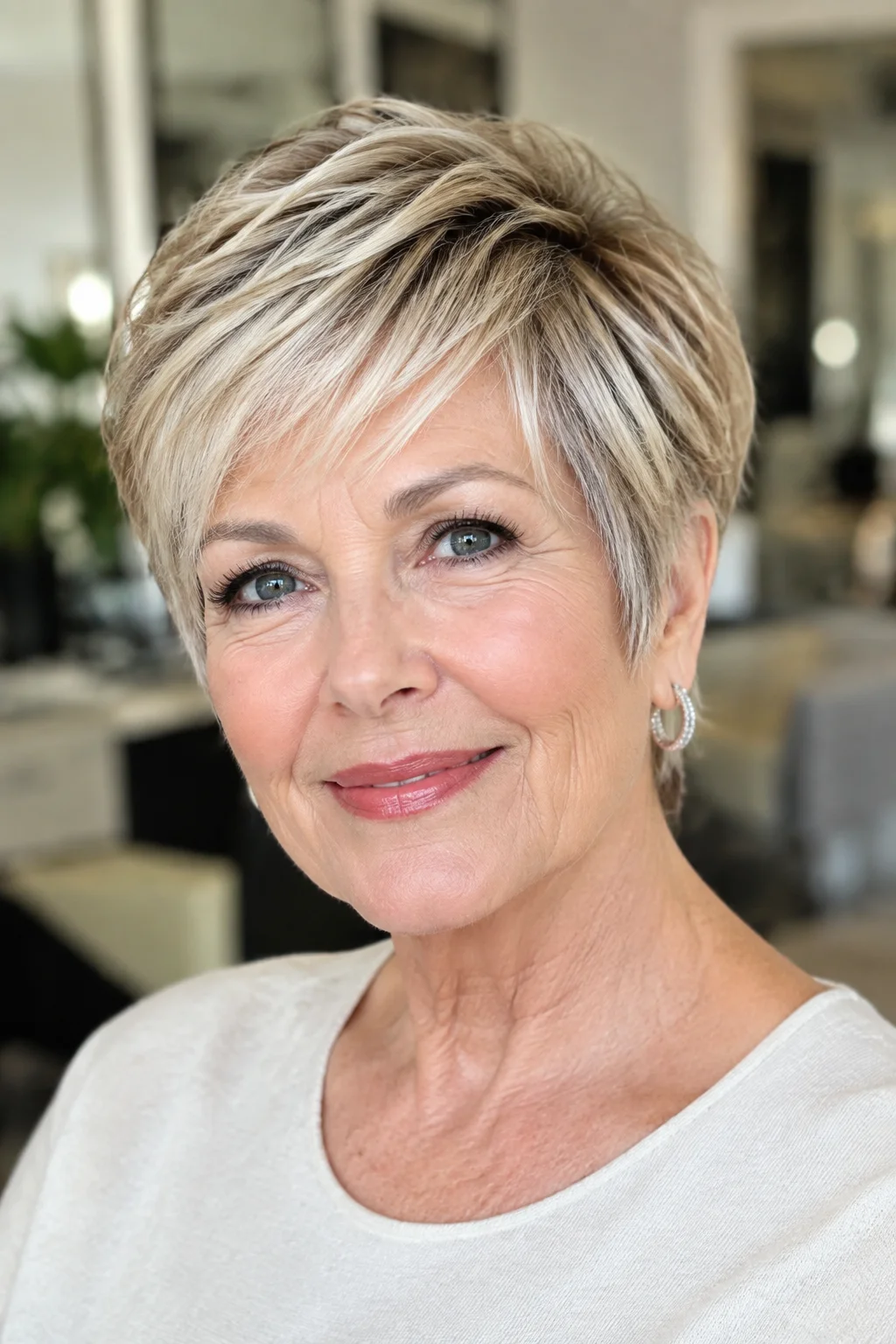
This is the cut most women picture when they think pixie, and it earns its reputation. The sides and back taper close to the head while the top carries soft layers that catch light and add movement without looking fussy. It works especially well on fine to medium hair because the layers create the illusion of fullness. Stylists often recommend it as a starting point for anyone new to short hair since it flatters nearly every face shape. Tip: ask for the layers to be cut dry so your stylist can see exactly how they’ll fall once styled. A light mist of heat protectant before styling helps the finish last.
Longer Pixie with Side Sweep
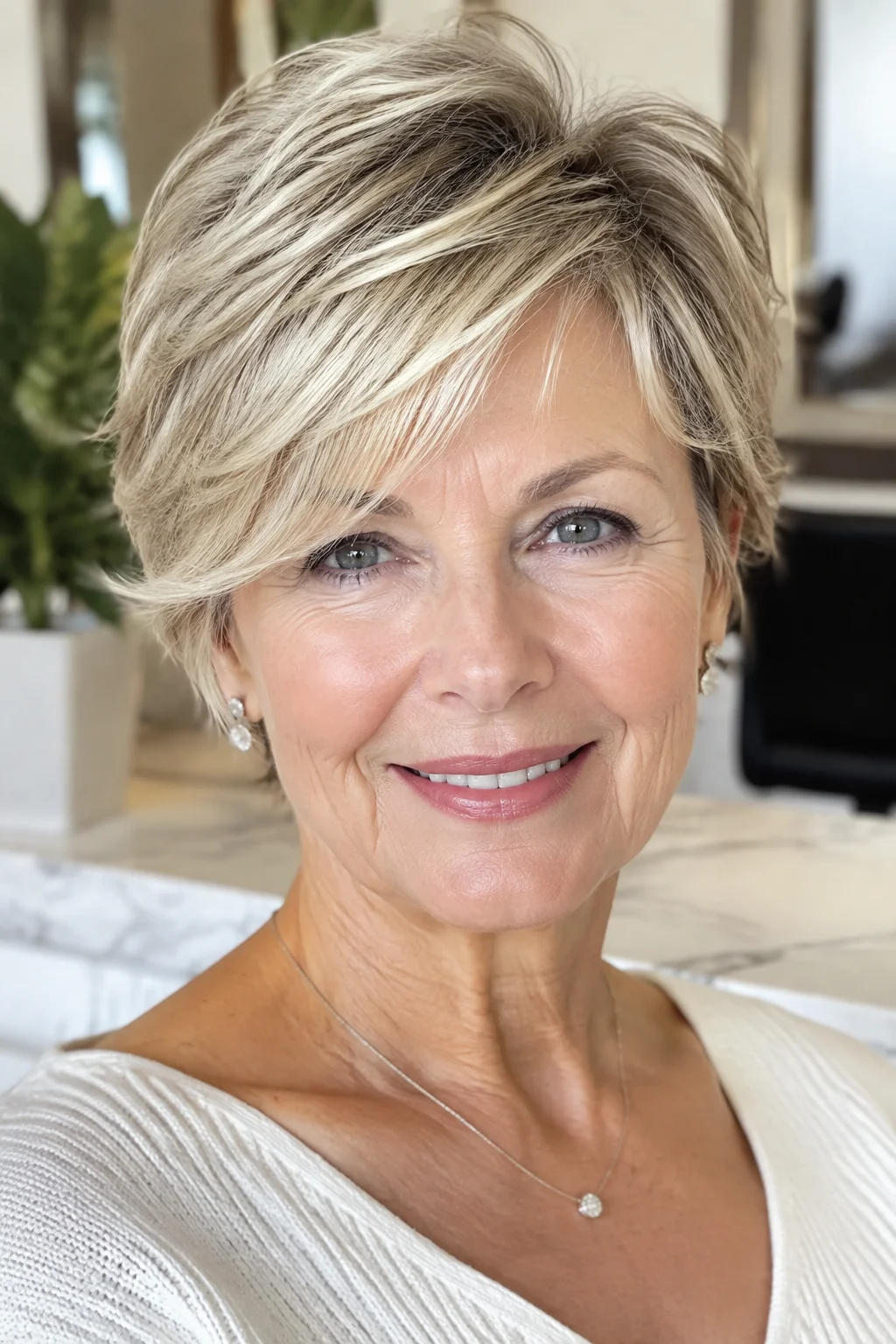
Keeping a bit of extra length on top gives you more to work with than a cropped version, and the side sweep softens the whole face. It’s a smart option if you’re not ready to go fully short but still want the ease of a pixie. The longer pieces can be tucked behind an ear or swept across the forehead for a different look each day.
Textured Pixie for Fine Hair
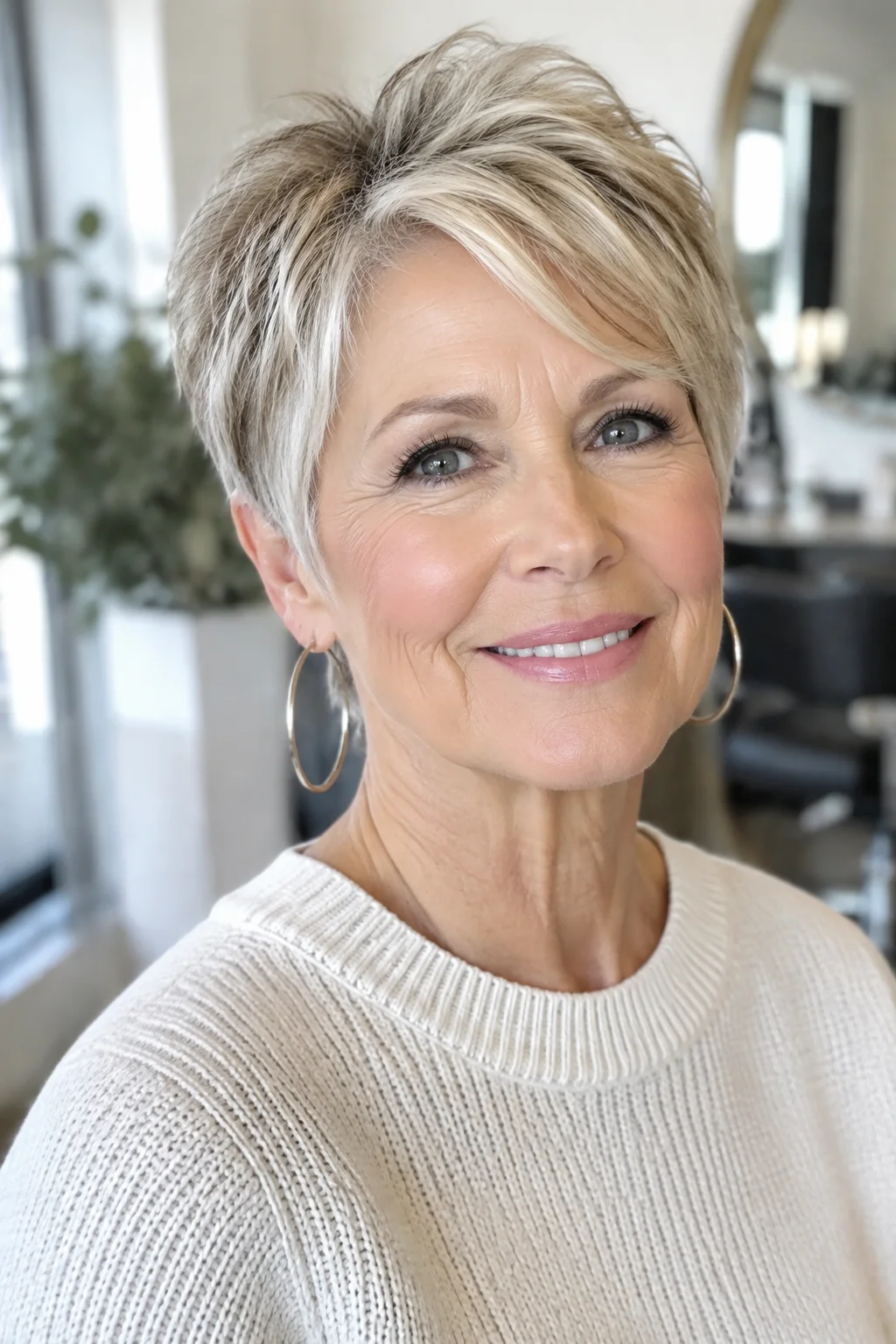
Fine hair often falls flat by midday, and this cut fights that with choppy, uneven texture cut into the top layers. The texture breaks up the hair so it looks fuller than it actually is, almost like each strand is doing double duty. A light texturizing cream worked through damp hair before blow drying helps the pieces separate instead of clumping together.
Curved Pixie for Round Faces
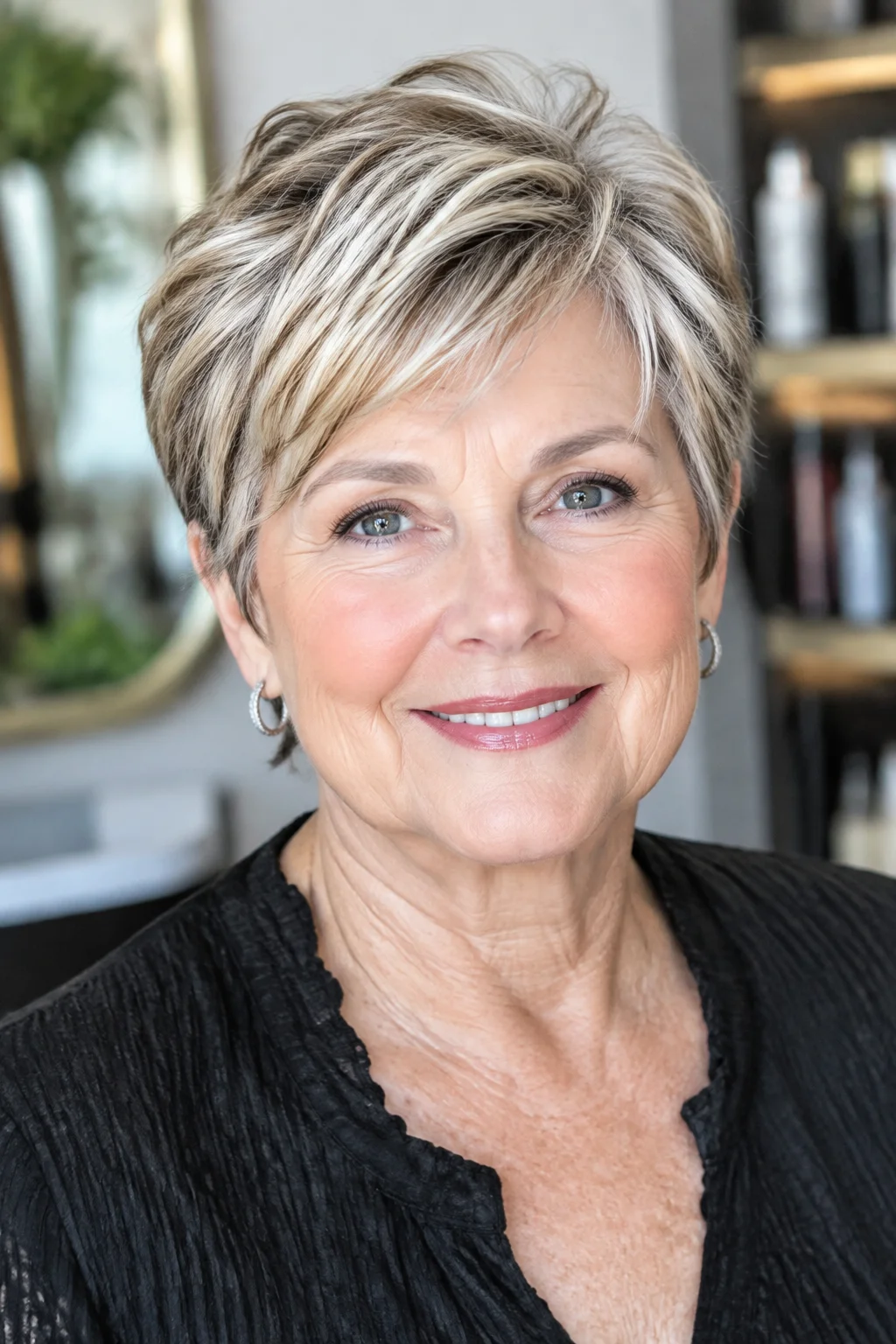
Round faces benefit from height and angles, and this version delivers both. The sides curve in close to the jaw while the crown builds up with volume, which elongates the face instead of widening it. Avoid rounding out the ends further with a brush, since that softens the very angles doing the flattering work.
Textured Gray Pixie
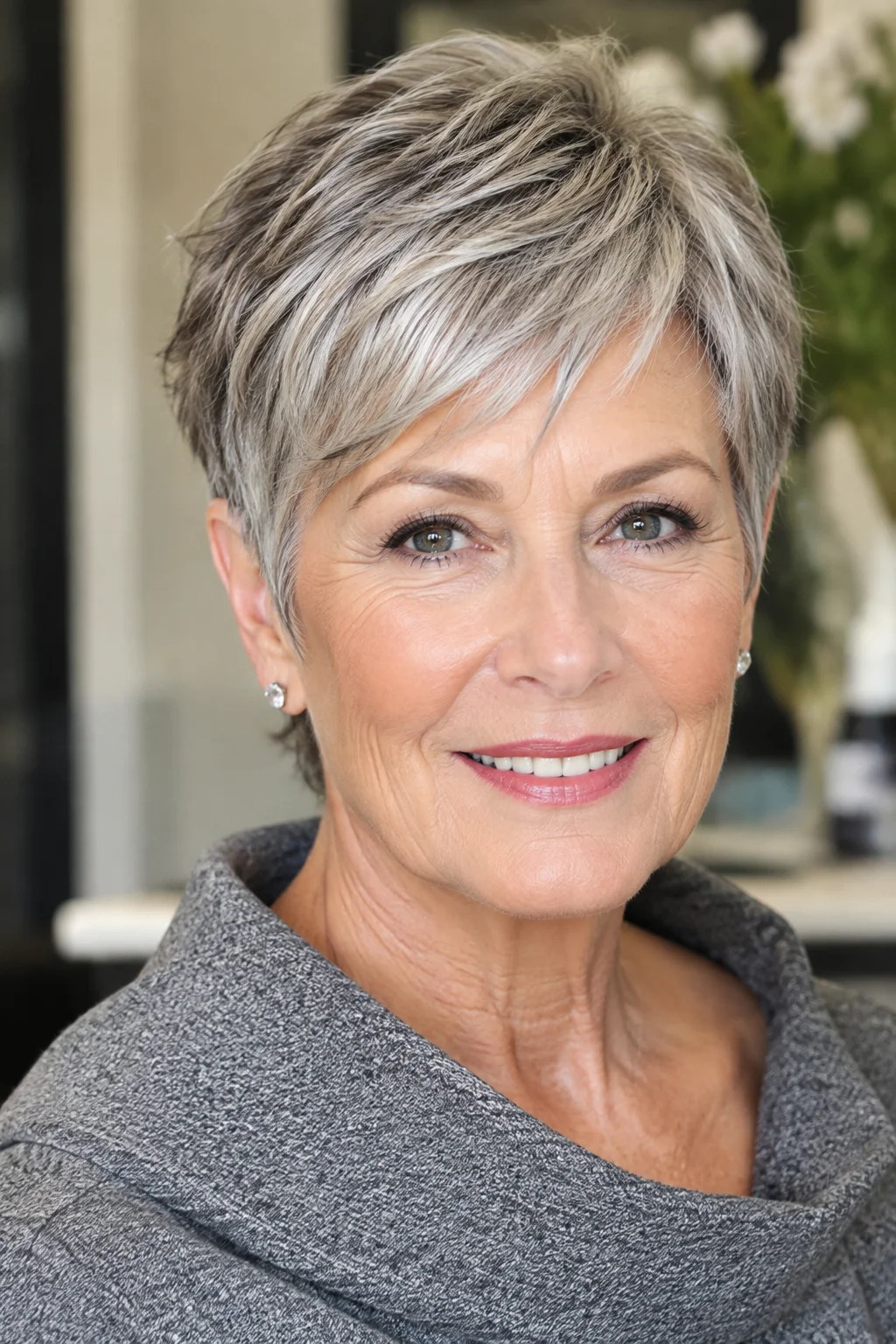
Gray hair has a texture and shine all its own, and this cut is built to show it off rather than disguise it. Choppy layers catch the natural variation in gray strands, from silver to white to the darker roots many women keep a little longer. It reads modern instead of severe because the layers break up any flat patches of color. I recommend this one for anyone who stopped coloring recently and wants a cut that makes the grow out look intentional. The texture also hides the slight dryness gray hair sometimes has, since it relies on shape rather than shine for its effect. Ask your stylist about a glossing treatment at your next visit if the gray looks dull rather than bright.
Pixie Bob Hybrid
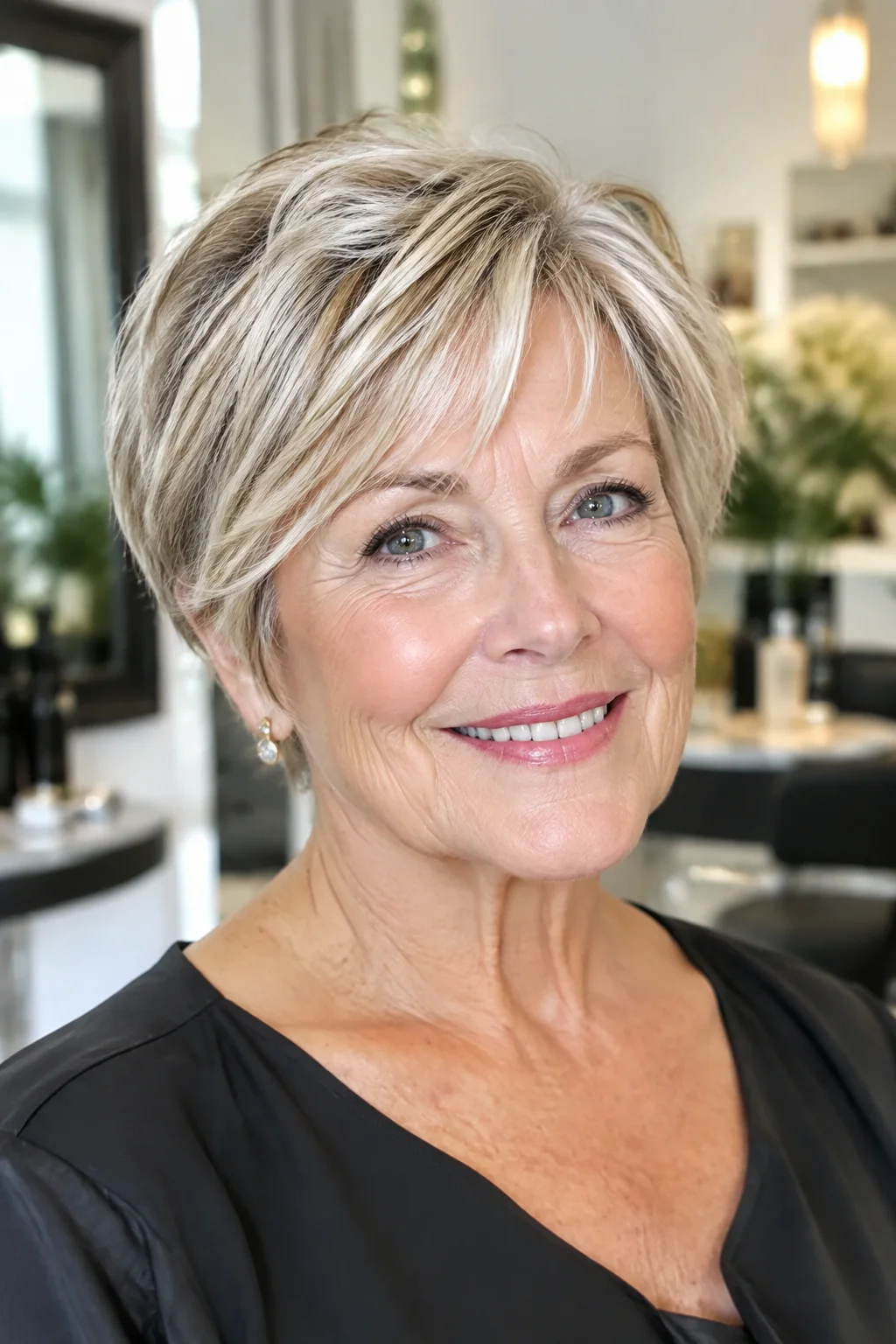
This cut splits the difference between a pixie and a bob, keeping length around the jaw while the back stays short and tapered. It suits women who want the ease of short hair but aren’t ready to lose length entirely. The slightly longer front pieces can be curled under or left straight depending on the day.
Undercut Pixie for Thick Hair
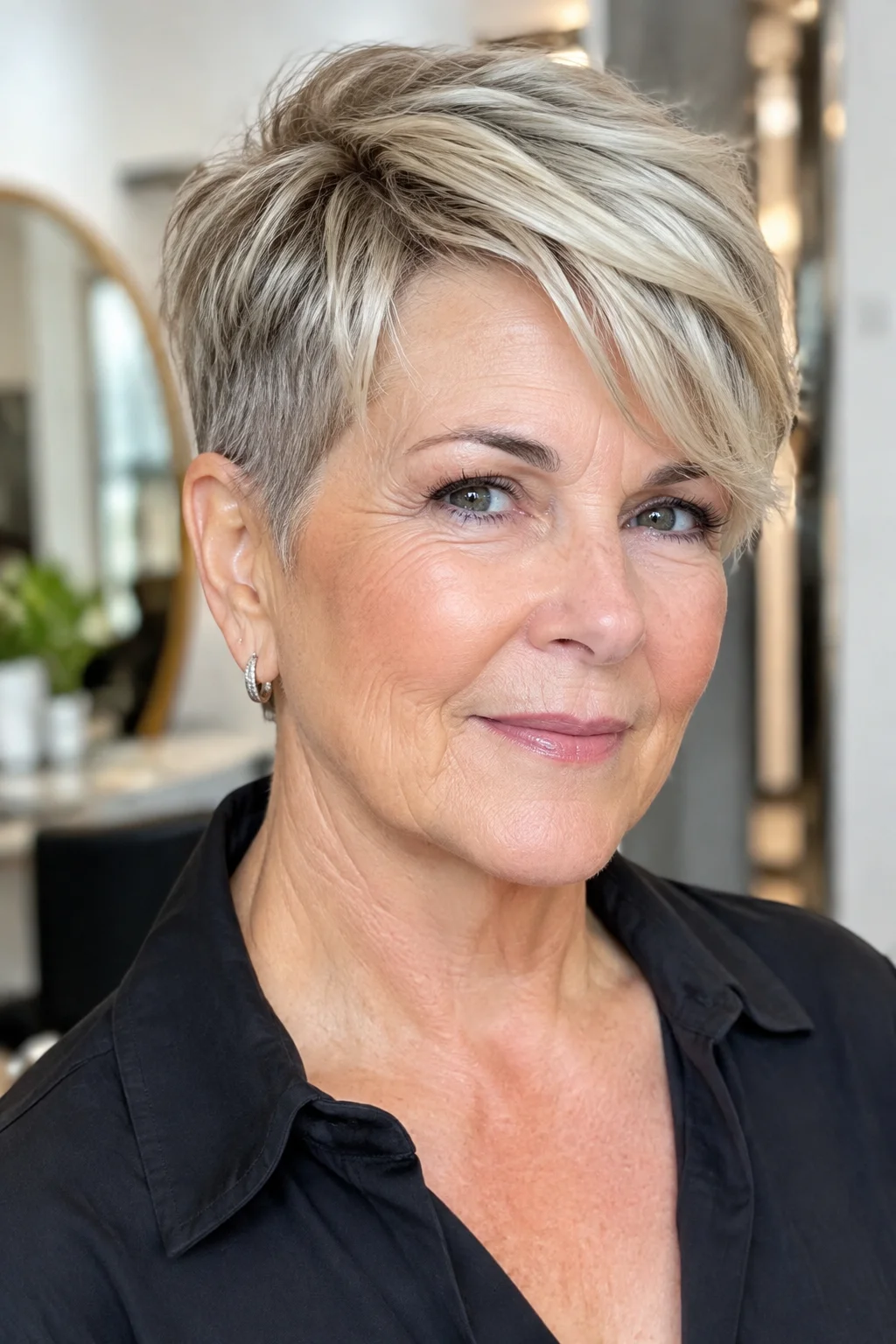
Thick hair can turn a pixie into a triangle shape if it’s not thinned properly, and the undercut solves that directly. Shaving or closely clipping the underlayer removes bulk where you don’t need it while leaving the top full and workable. This is one of the lower maintenance options on this list once it’s cut, since the weight removal means less daily styling to keep it looking neat. It does require more frequent trims, though, usually every four to five weeks, to keep the undercut from growing out shaggy.
Soft Curly Pixie
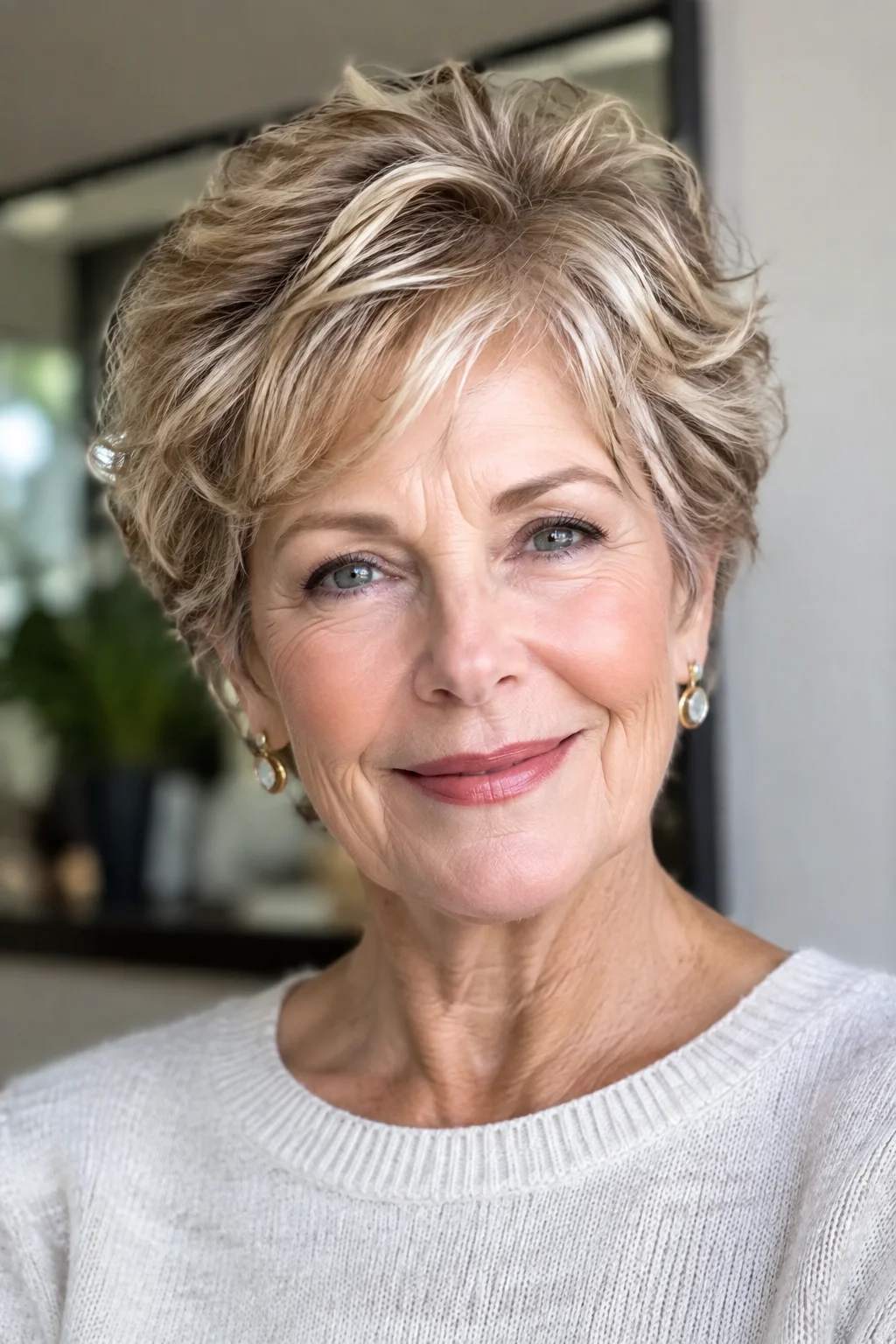
Natural curl and a pixie cut are a great match, since the curl itself provides texture and volume without any extra work. This version keeps slightly more length so the curl pattern has room to show rather than frizzing into a halo. A curl cream applied to wet hair and left to air dry usually gives the cleanest result.
Asymmetrical Pixie
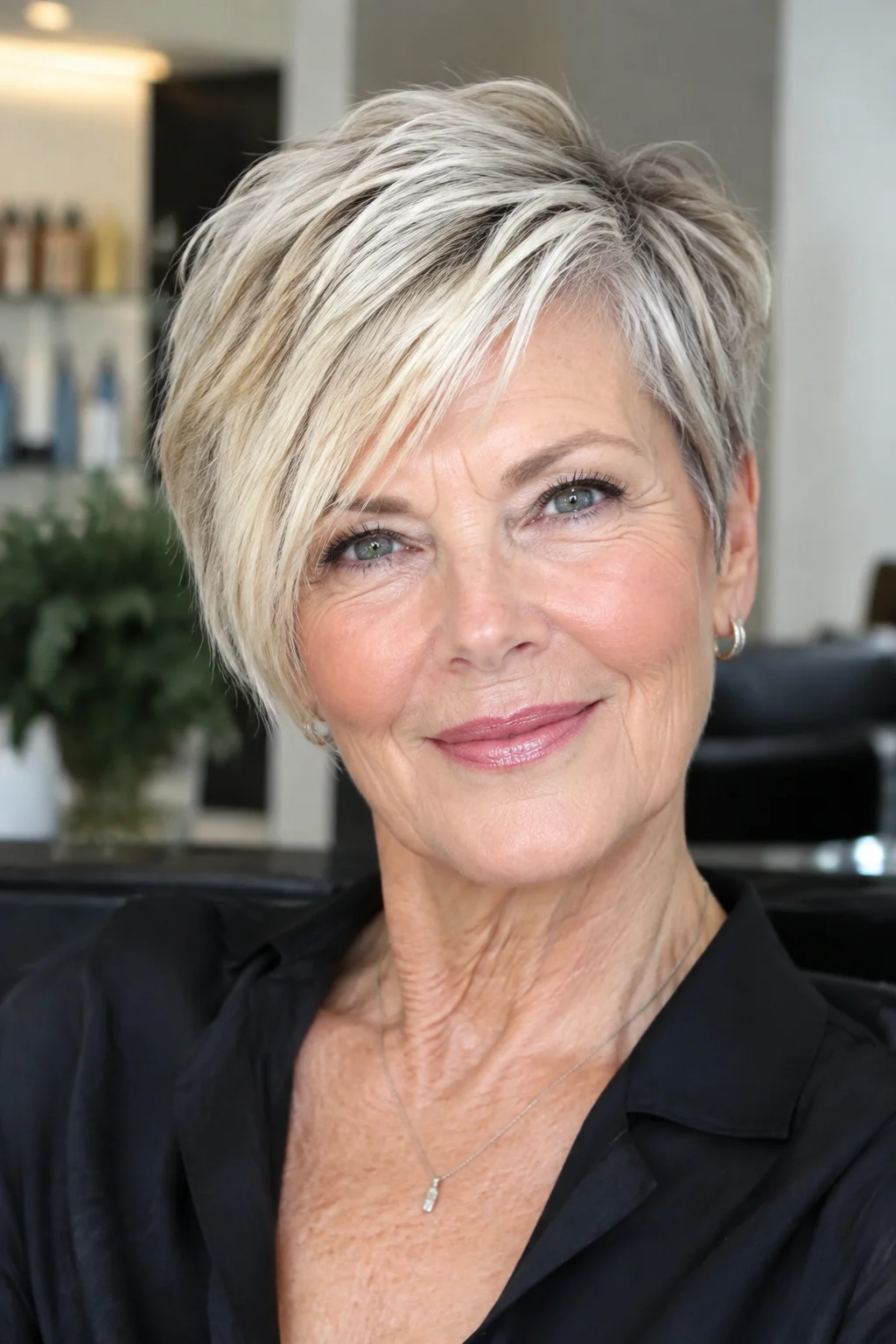
One side cut shorter than the other gives this pixie a bit of edge without going into territory that feels too young or trendy. It works particularly well for women who want a cut with personality but still easy to maintain. The asymmetry also draws the eye diagonally across the face, which can be flattering for square or angular face shapes.
Pixie with Face-Framing Pieces
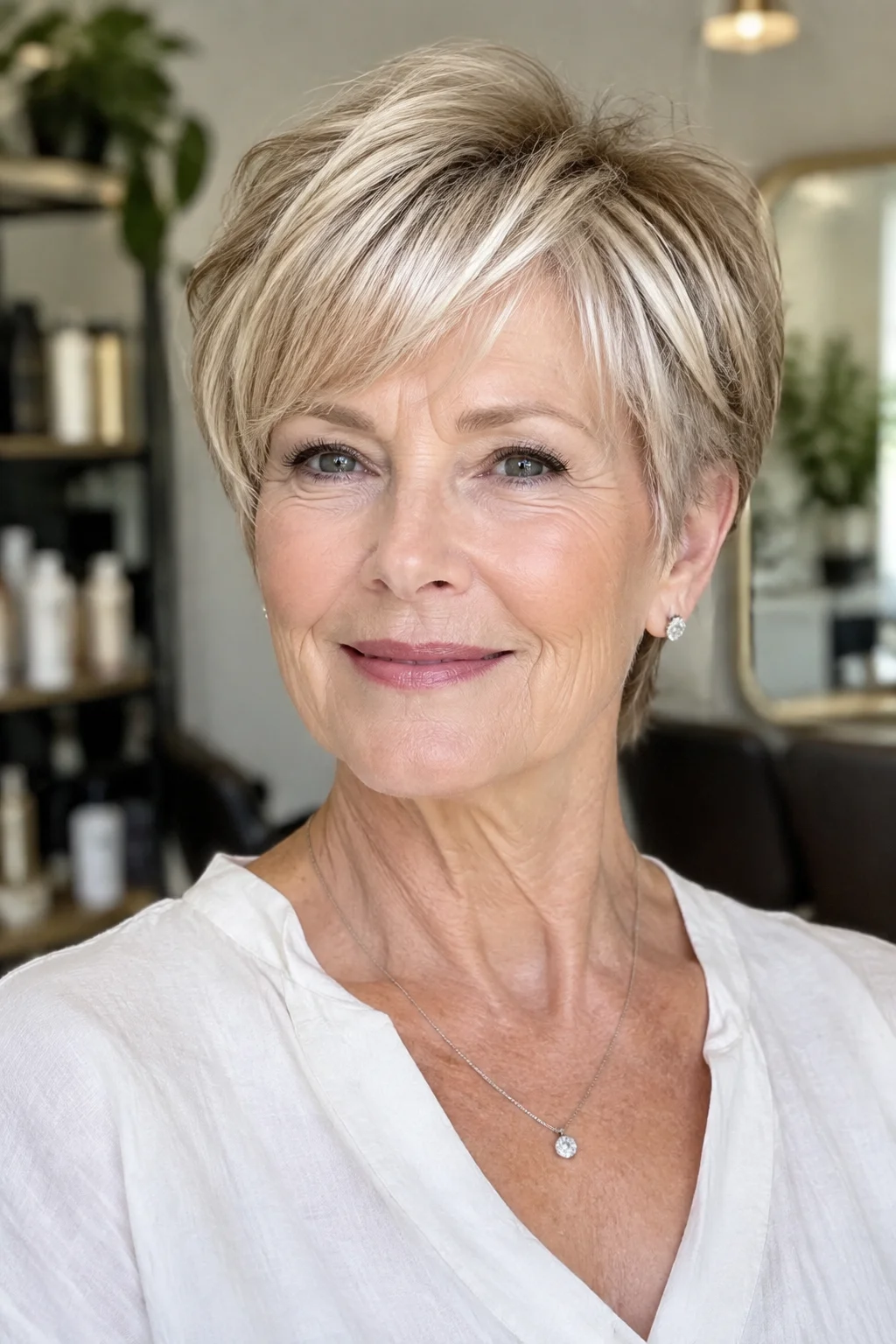
Leaving longer pieces around the face while keeping everything else short creates a softening effect similar to bangs but with more flexibility. These pieces can be tucked back, curled forward, or left loose depending on the look you want that day. It’s a good choice if you’ve been told your jawline or cheekbones need a bit of camouflage.
Taper-Fade Pixie
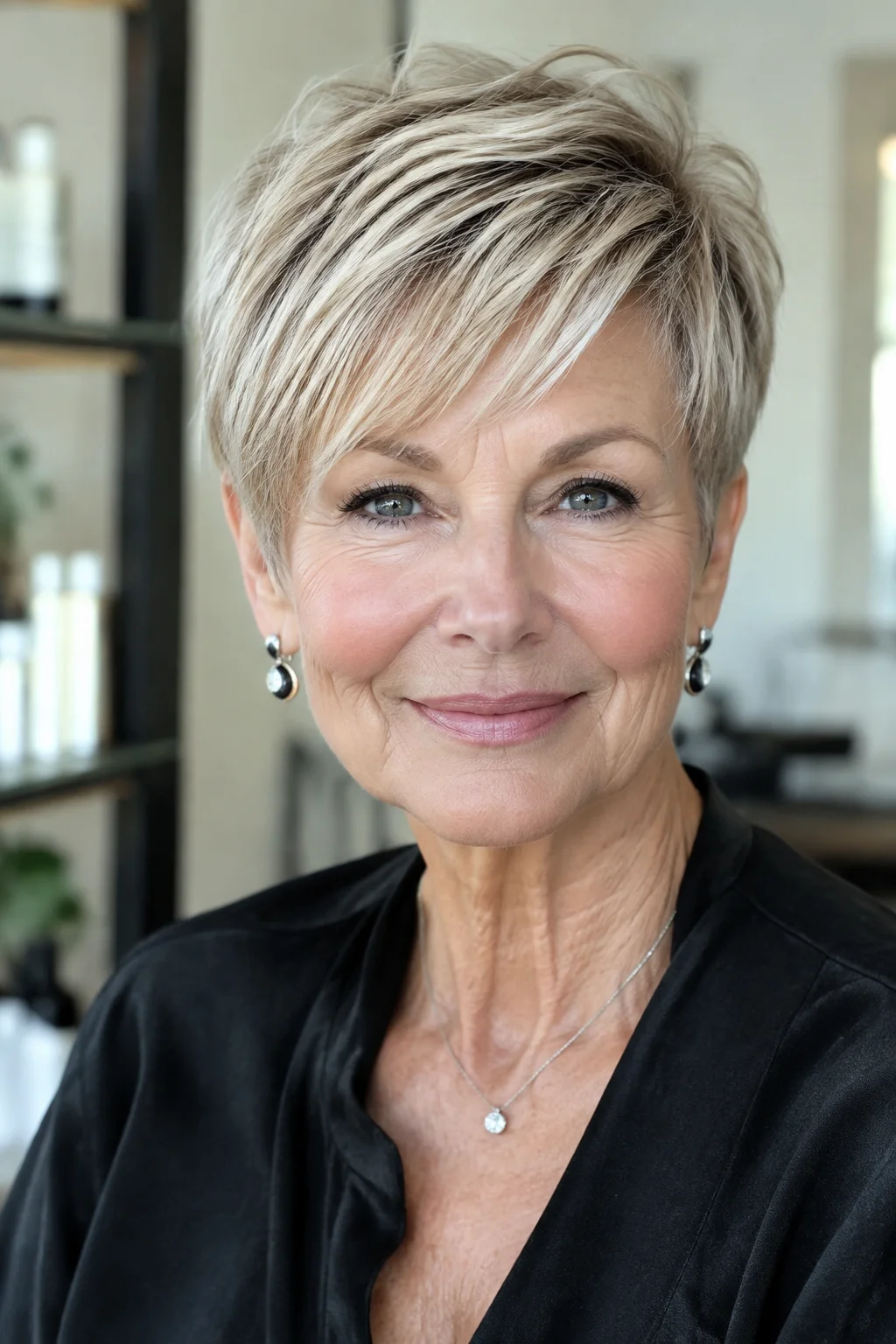
Borrowed from men’s barbering but increasingly popular on women, the taper fade gradually shortens the hair at the nape and sides into almost nothing. It gives a clean, structured finish that reads polished even without much styling. This works best on women with good scalp health and no sensitivity to clippers close to the skin, so mention any concerns before your stylist starts.
Wispy Pixie for Thinning Hair
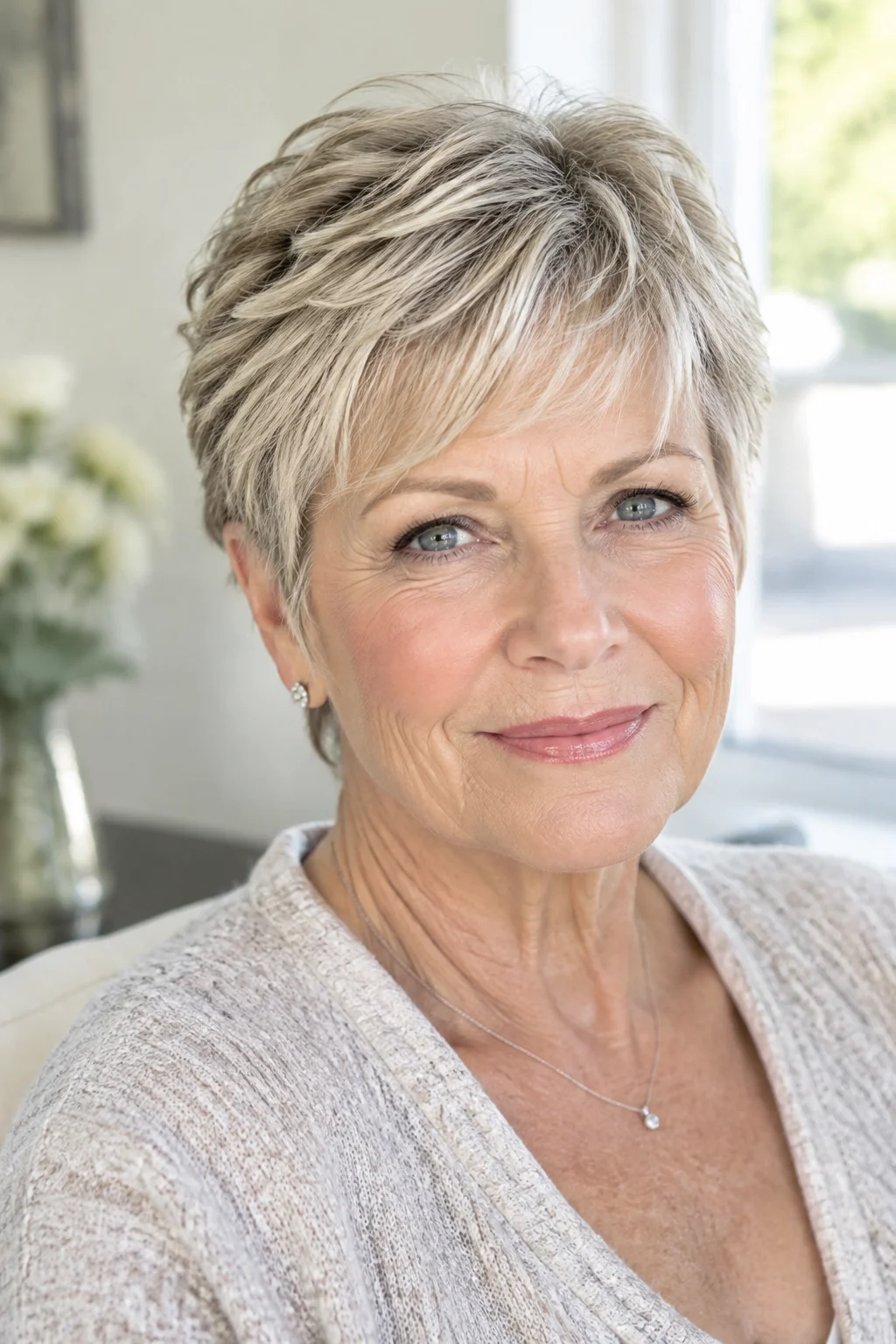
Thinning hair needs a cut that doesn’t rely on thick ends to look finished, and the wispy pixie delivers exactly that. Fine, feathered pieces at the perimeter create softness instead of the blunt, heavy lines that can expose scalp on thinner hair. It’s one of the kindest cuts for hair that has lost density over the years. A volumizing mousse at the roots, blow dried with a round brush, adds the lift this style depends on. Tip: ask your stylist to point the cut edges upward slightly rather than down, which keeps thin ends from looking stringy.
Pixie with Textured Bang
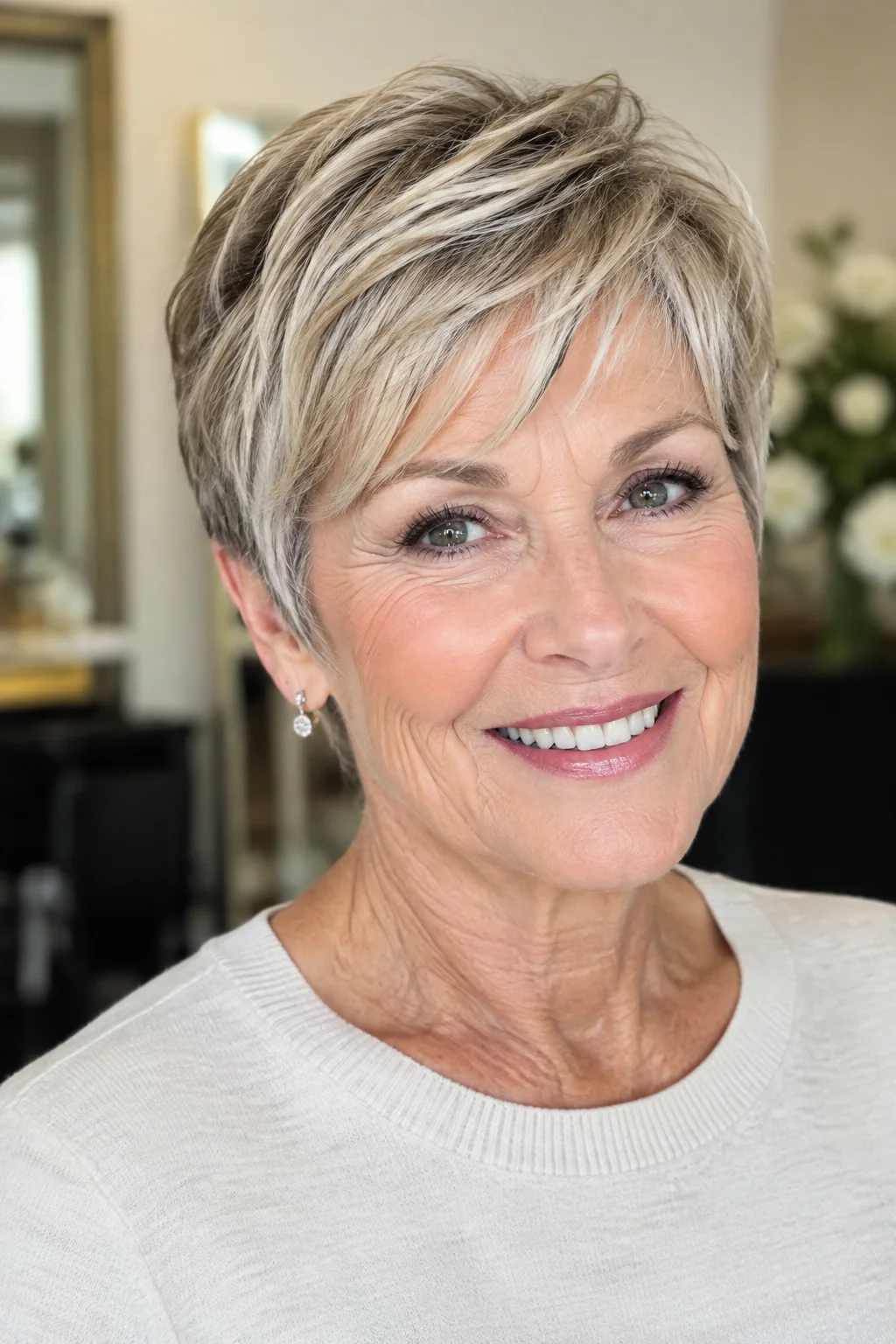
A choppy, textured fringe changes the whole personality of a pixie cut, making it look more current and a little less formal. The bang can be cut short and spiky or longer and swept to one side, depending on your forehead and how much maintenance you want. It’s a solid option if you’re looking to soften a high forehead without committing to full bangs across your whole face.
Cropped Pixie with Length on Top
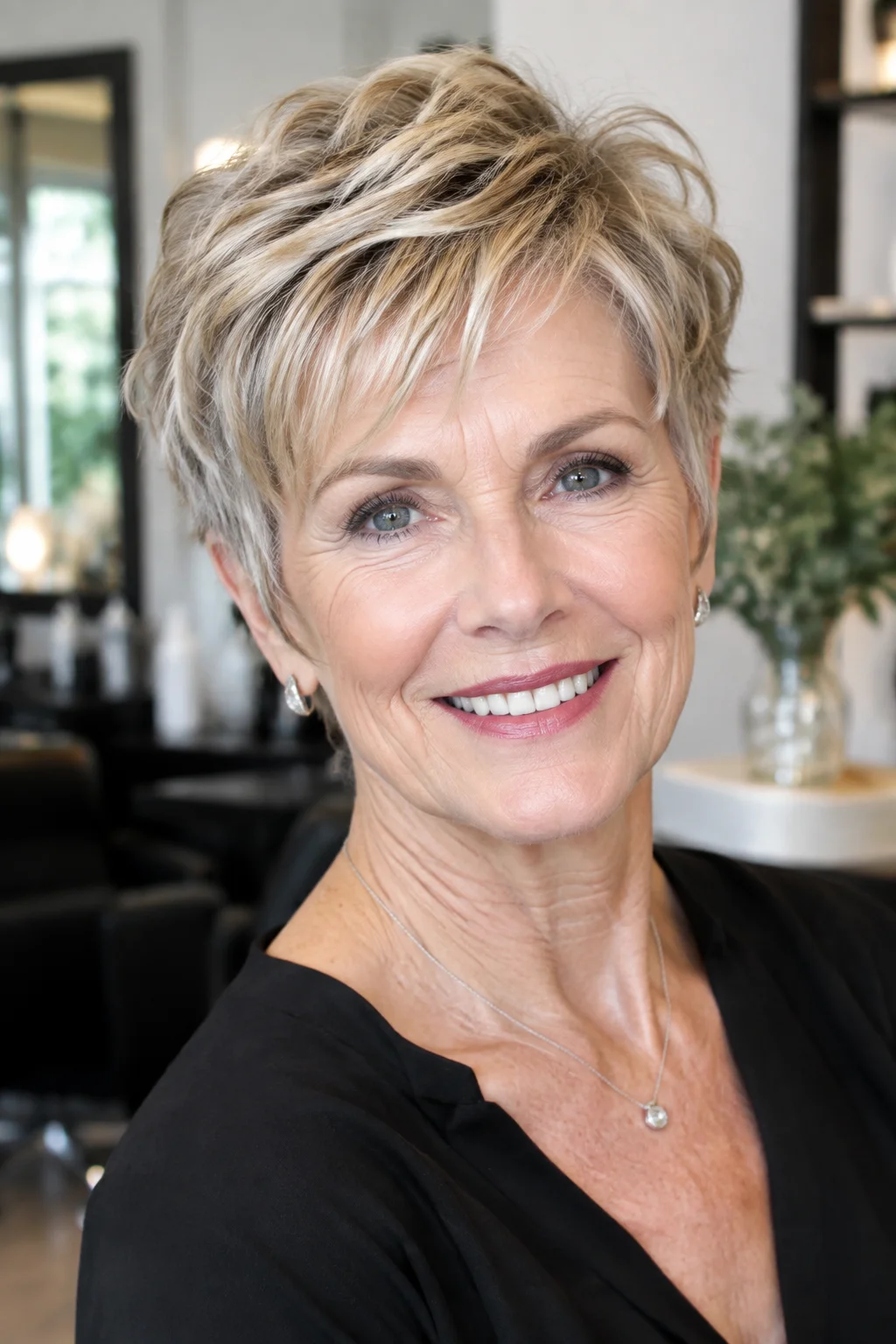
Very short sides paired with noticeably longer top hair create strong contrast and a bit of drama. This cut needs daily styling to really work since the longer top can look unfinished if left to air dry. A matte paste or wax worked through damp hair and shaped with fingers usually gets the best texture.
Pixie Shag
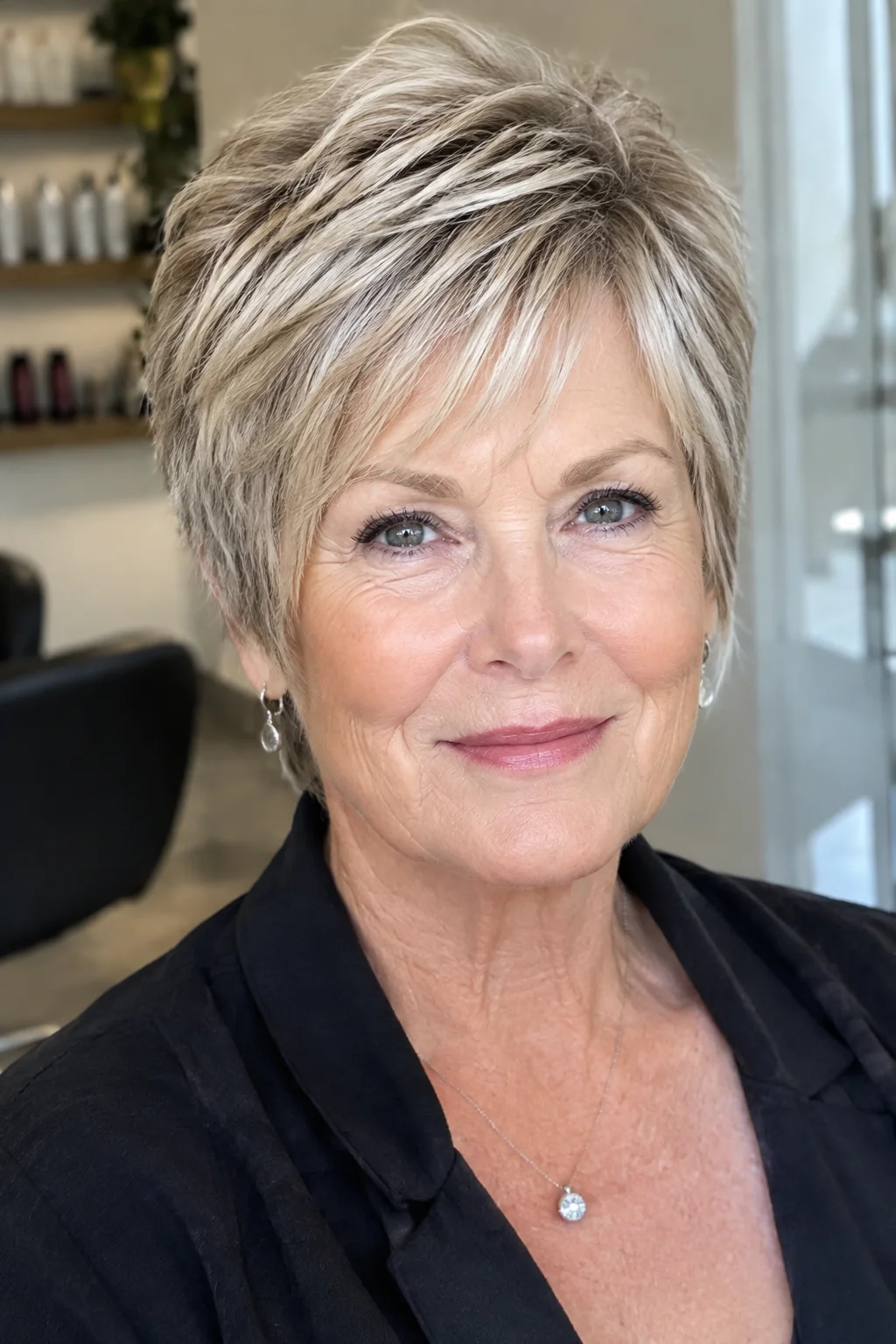
The shag brings choppy, feathered layers throughout the whole cut, giving it a loose, undone texture that feels less structured than a traditional pixie. It suits women who want something with a bit of rock and roll energy rather than a polished, salon-perfect finish. Hair with some natural wave takes to this cut especially well, since the wave does half the styling work.
Side-Part Pixie
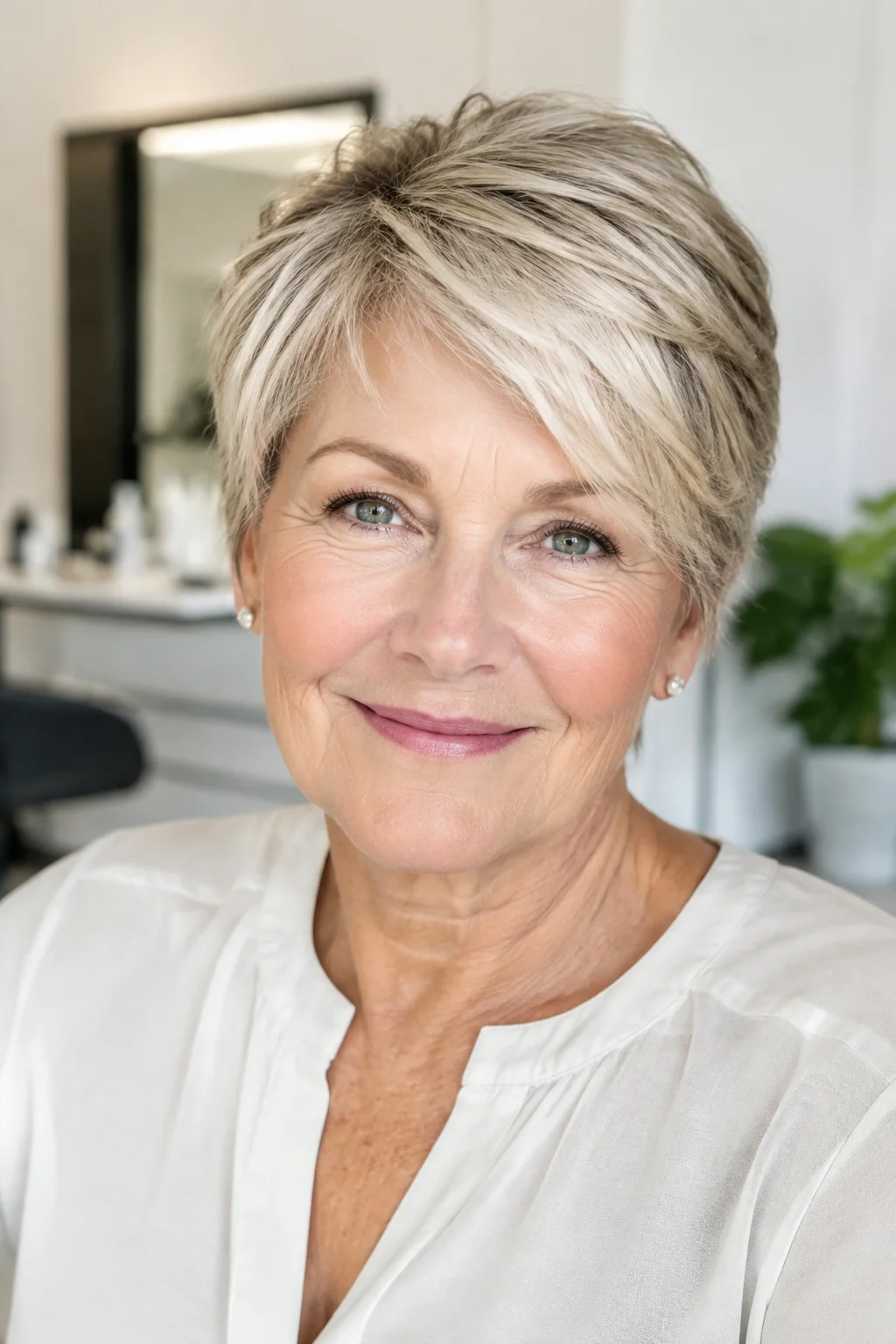
A deep side part instantly changes the shape of a pixie, pushing more volume to one side and creating a longer, sweeping line across the top. It’s a simple adjustment that works on almost any pixie base and gives you a quick way to vary your look without a new cut. Pin the shorter side back with a small clip for a slightly dressier version.
Sleek Pixie with Sharp Lines
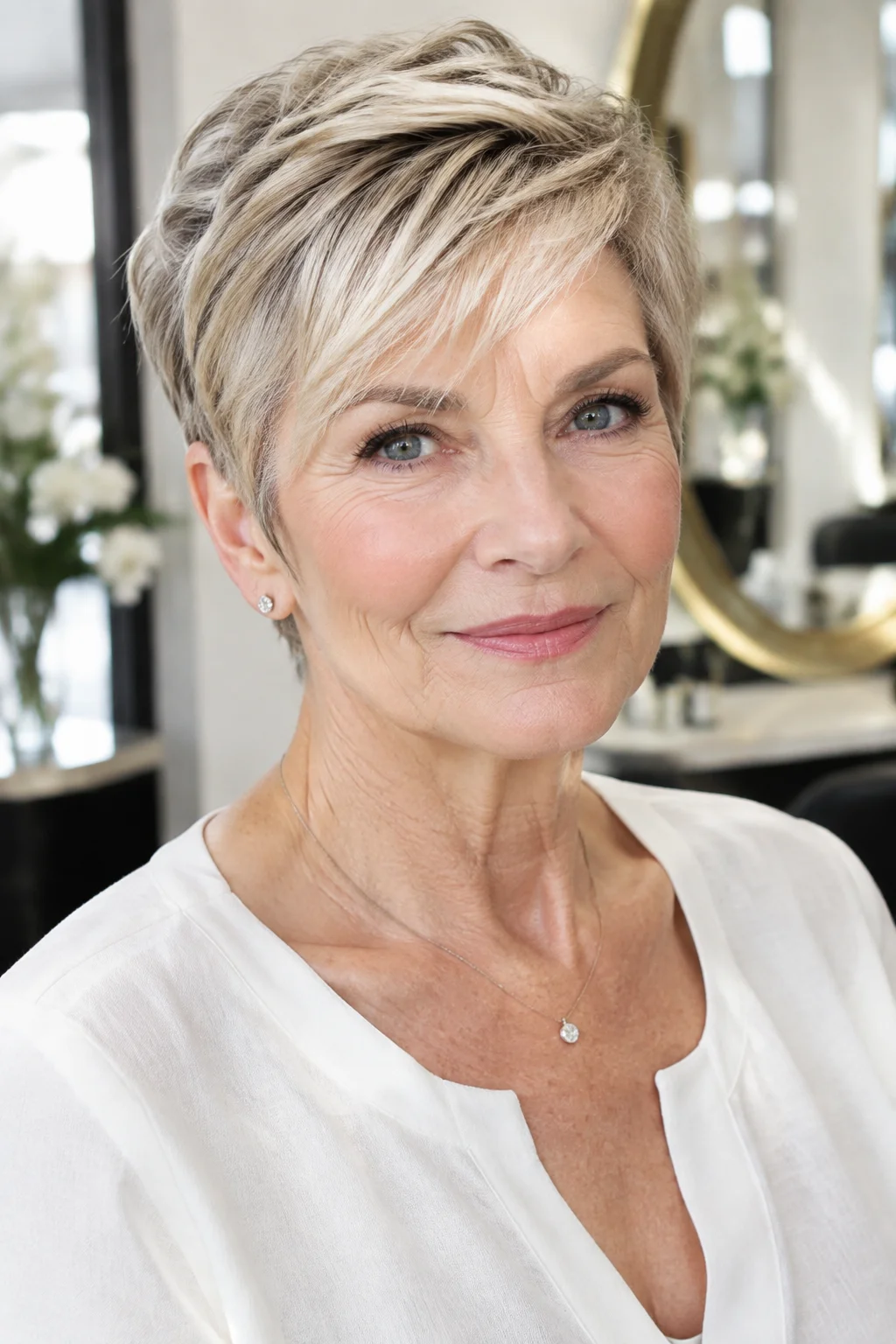
This version relies on precision rather than texture, with crisp, clean lines at the nape, sideburns, and around the ears. It looks best on straight hair that holds a shape well, since any natural wave tends to soften the sharp edges this cut depends on. A flat iron run lightly over the top section keeps the lines looking fresh between salon visits.
Volumizing Pixie for Flat Hair
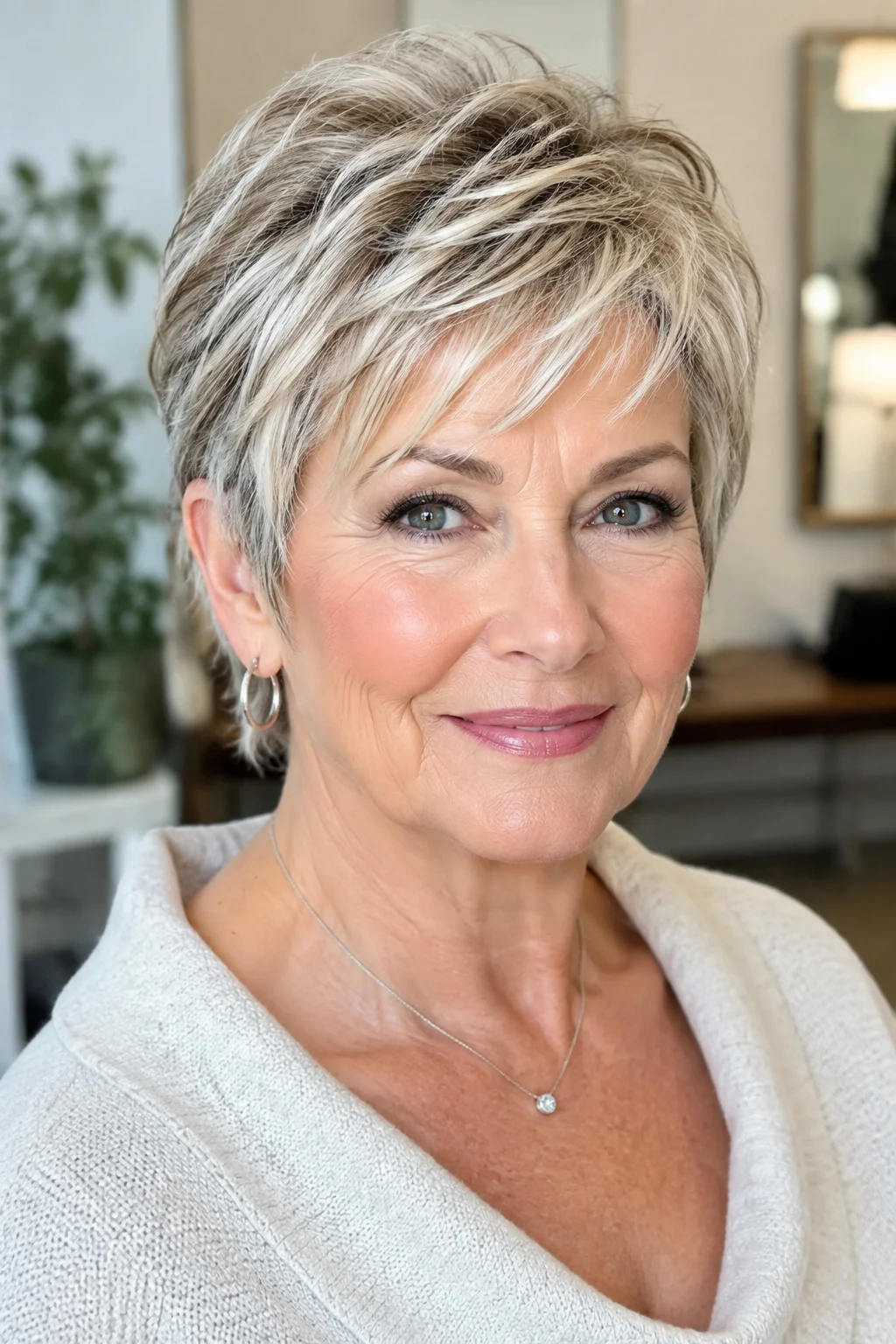
Flat, limp hair gains the most from a cut designed specifically to build in lift at the crown. Shorter layers stacked at the top create a built-in root bump that doesn’t rely entirely on styling products to hold up. Blow drying upside down for the first few minutes, then flipping back over to finish, makes a real difference with this cut.
Rounded Pixie Crop
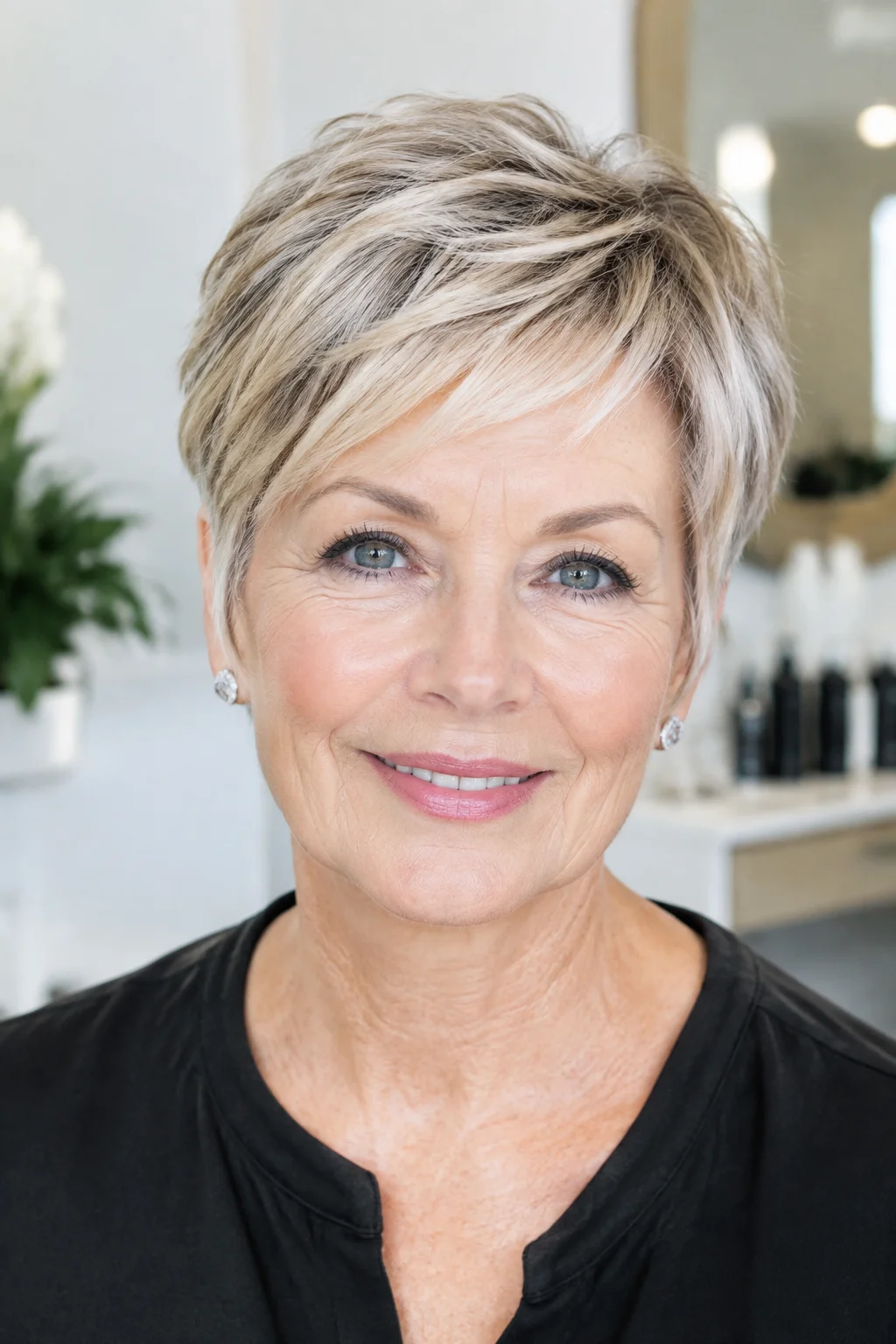
A soft, rounded silhouette all over gives this pixie a gentle, approachable look rather than anything angular or severe. It’s an easy, low drama cut for anyone who wants short hair without a bold statement attached to it. Light waves or a simple finger-styled texture is really all it needs to look finished.
Which Pixie Actually Fits Your Hair
Picking from this many options comes down to three things: your hair’s natural texture, how much time you want to spend styling it, and your face shape. If your hair is thin or has lost density, skip anything that depends on blunt heavy ends, like the sleek pixie with sharp lines, and go instead for the wispy pixie for thinning hair or the textured pixie for fine hair, both built to fake fullness rather than show its absence. If your hair is naturally thick, the undercut pixie for thick hair removes bulk at the source instead of fighting it every morning with product.
For round faces, the curved pixie for round faces or the asymmetrical pixie add the angles a soft face shape needs. For anyone transitioning away from color, the textured gray pixie is worth the conversation with your stylist even if you’ve never worn your hair this short before.
A common mistake is choosing a cut because it looked good in a photo without checking if the model’s hair texture matches your own. A cut like the pixie shag depends on natural wave to really work, while the sleek pixie with sharp lines needs straight hair to hold its lines. Bring up your hair’s actual behavior, not just the picture, before you sit down in the chair.