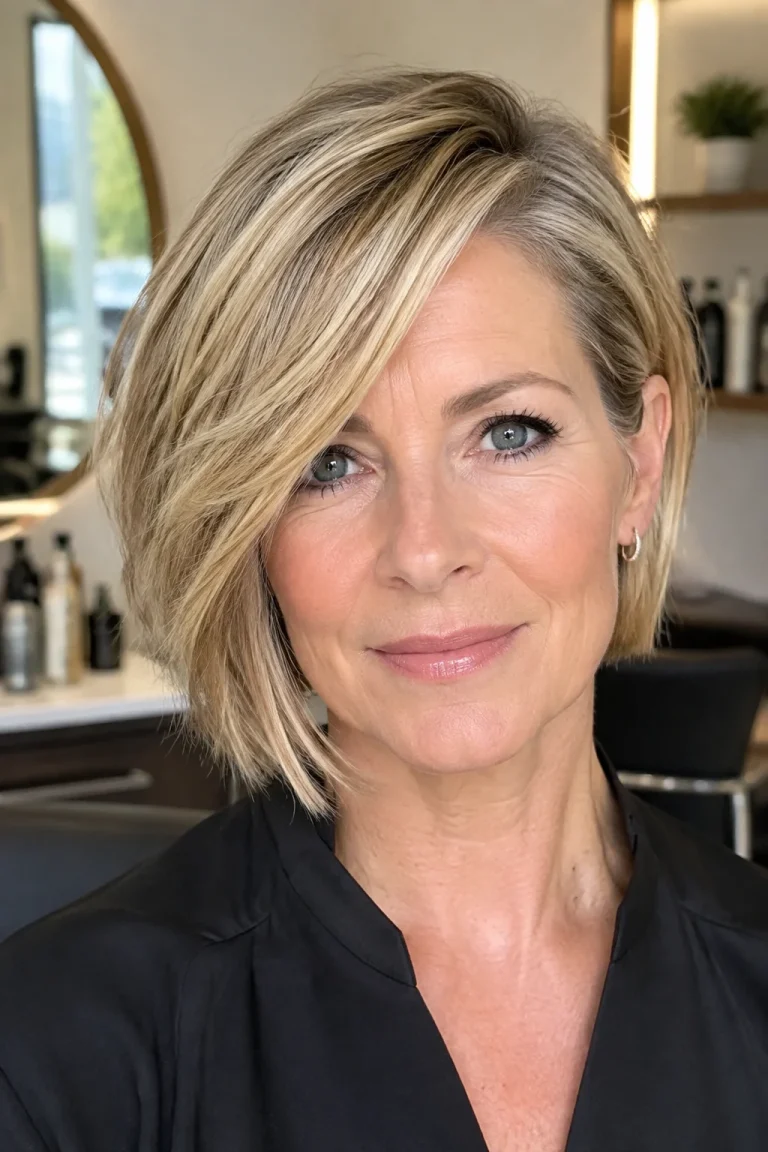
Short hair gets a bad reputation for being harder to style than it actually is, and blonde shades can make a pixie look even easier to wear once the color settles into a soft, grown-out pattern. If you’re tired of blow-drying long layers every morning or fighting with color that fades unevenly, a shorter cut solves both problems at once. Low maintenance blonde hair pixie cuts for women over 50 work because they pair a simple shape with a shade that hides regrowth and grows out without a hard line. You don’t need a fresh salon visit every three weeks to keep these looking sharp, and you don’t need a drawer full of styling products either. Below are twenty pixie variations, each built for different face shapes, hair textures, and comfort levels with short hair. Take this list to your stylist and point at whatever catches your eye.
Classic Short Pixie with Textured Top
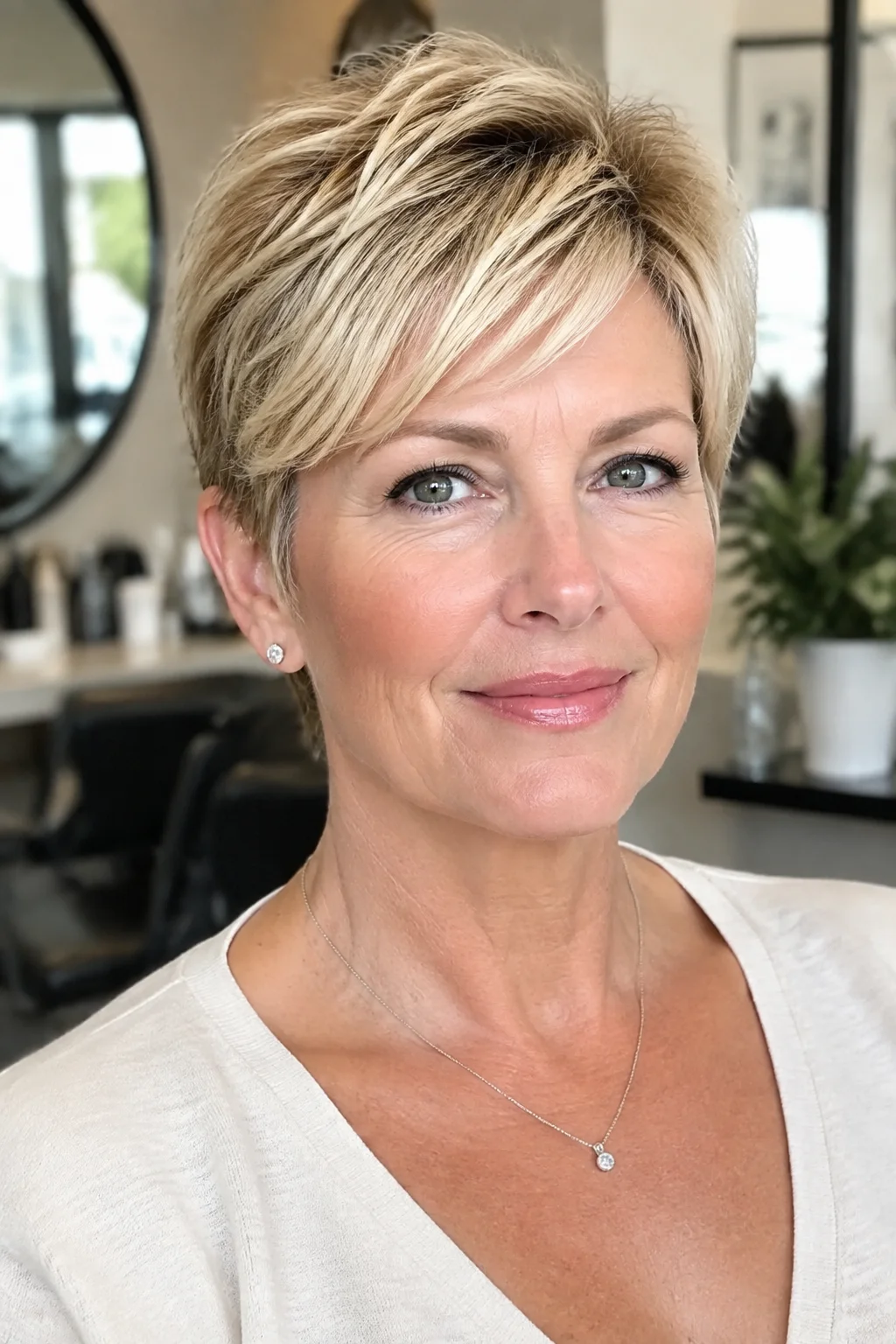
This is the pixie most people picture when they hear the word. The sides and back stay close to the head while the top carries just enough length to add texture with fingers and a small amount of product. Blonde tones soften the contrast between skin and hair, which matters more as hair naturally lightens with age. It suits round, oval, and heart face shapes without much adjustment. Upkeep involves a trim every four to six weeks and maybe two minutes of styling time. Tip: ask your stylist to point-cut the top pieces so the texture looks broken up rather than blunt.
Grown-Out Pixie Bob Hybrid
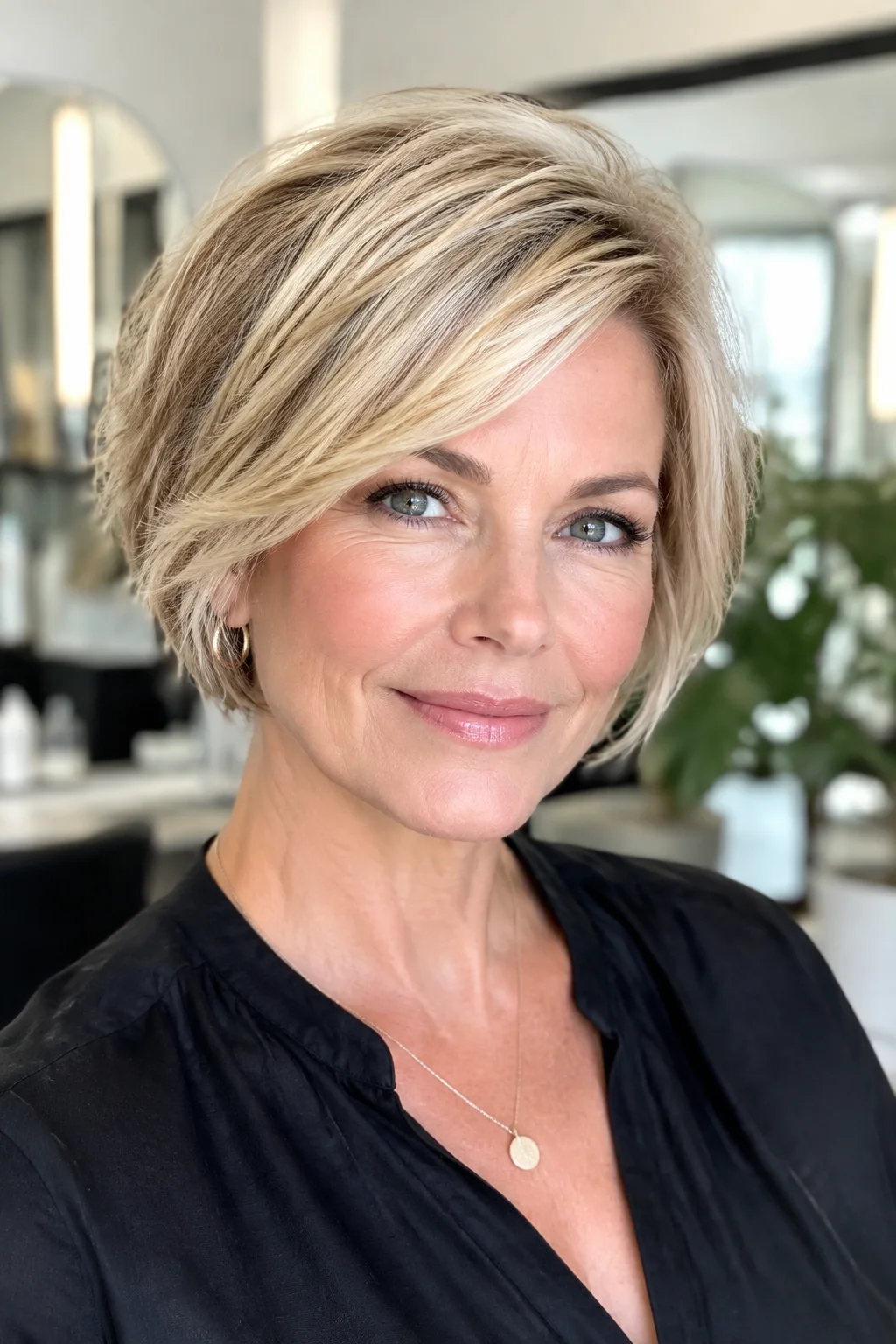
For women easing out of long hair, this cut bridges the gap between pixie and bob. The crown stays short while the perimeter grows a bit longer, landing somewhere around the jaw or just below it. Blonde color hides the transition lines that usually show up during growing-out phases. It’s a smart pick if you’re not ready to commit to something drastic.
Side-Swept Pixie with Long Bangs
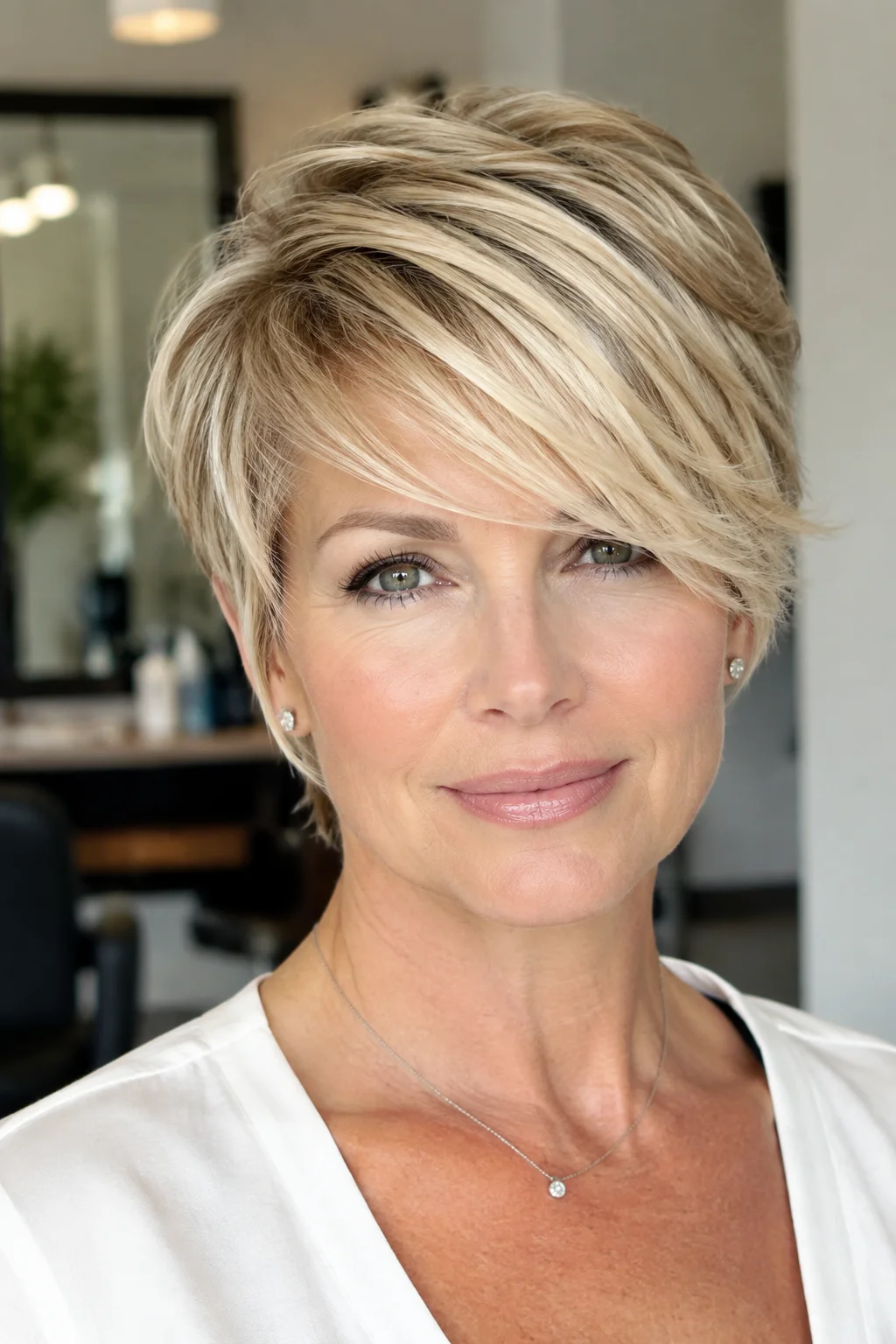
Long, swept bangs give this pixie a softer frame around the face, which flatters square or angular features. The rest of the cut stays short and low fuss, so most of the styling attention goes to the fringe. A round brush and a blast of heat is usually all it takes in the morning. This works well if you want one longer element without committing to length all over.
Textured Crop Pixie for Fine Hair
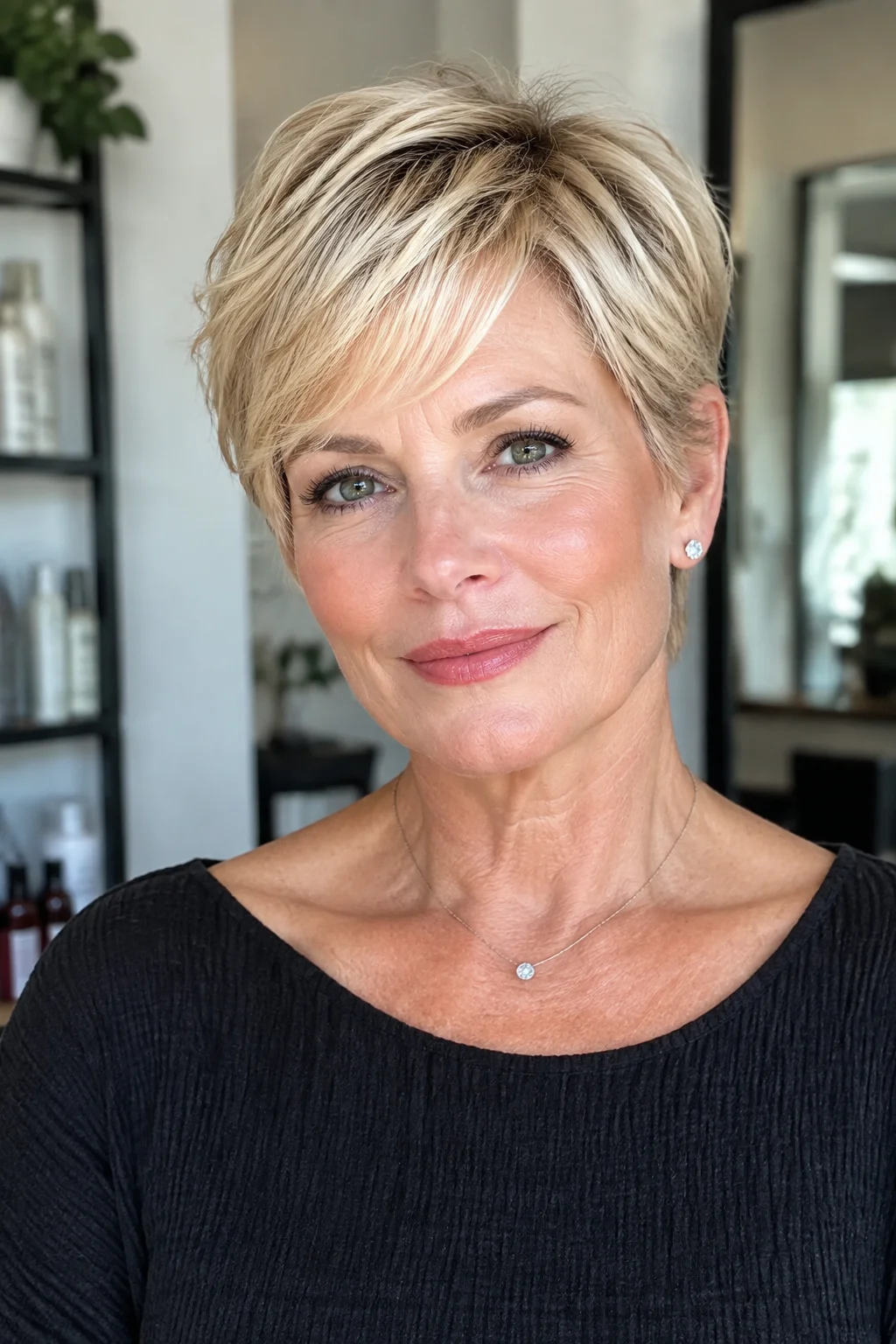
Fine hair often looks thin when it’s grown too long, and this crop fixes that by keeping everything short and choppy. The texture creates the illusion of thickness because there’s less weight pulling the strands flat. Blonde color, especially with subtle lowlights, adds even more depth and movement. Tip: a matte texturizing paste worked through damp hair does more for fine strands than a heavy cream ever will.
Sleek Pixie with Defined Undercut
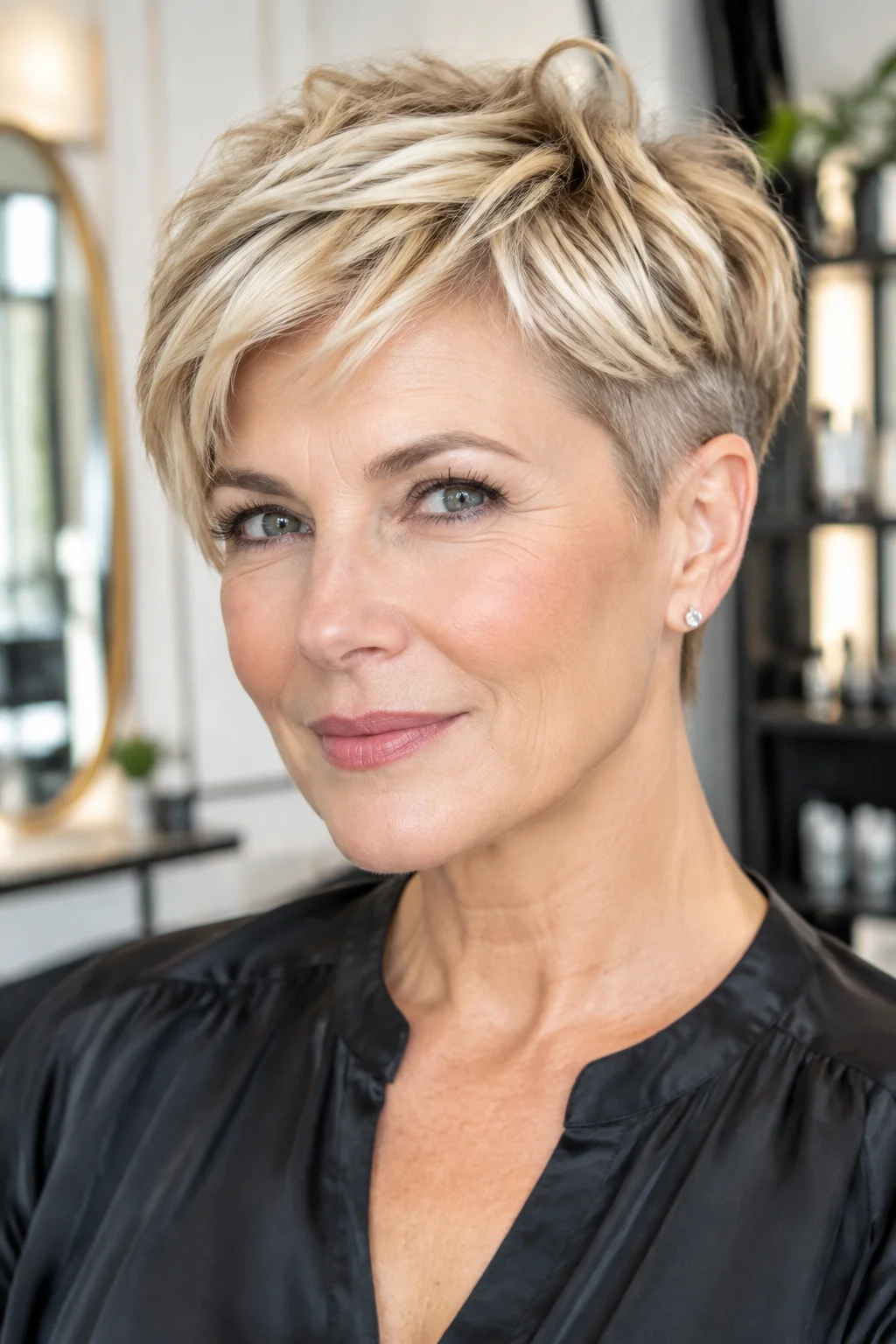
An undercut adds a sharp, modern edge to an otherwise soft blonde pixie. The shaved or closely clipped sides contrast against longer top layers, creating a defined shape that holds up even without daily styling. This one requires more frequent trims on the undercut portion, usually every three to four weeks, to keep the line crisp. It suits women who want a bolder statement and don’t mind a bit more upkeep on that specific area. The top can be styled sleek and smooth or left textured and piecey depending on the day.
Tousled Pixie with Longer Crown
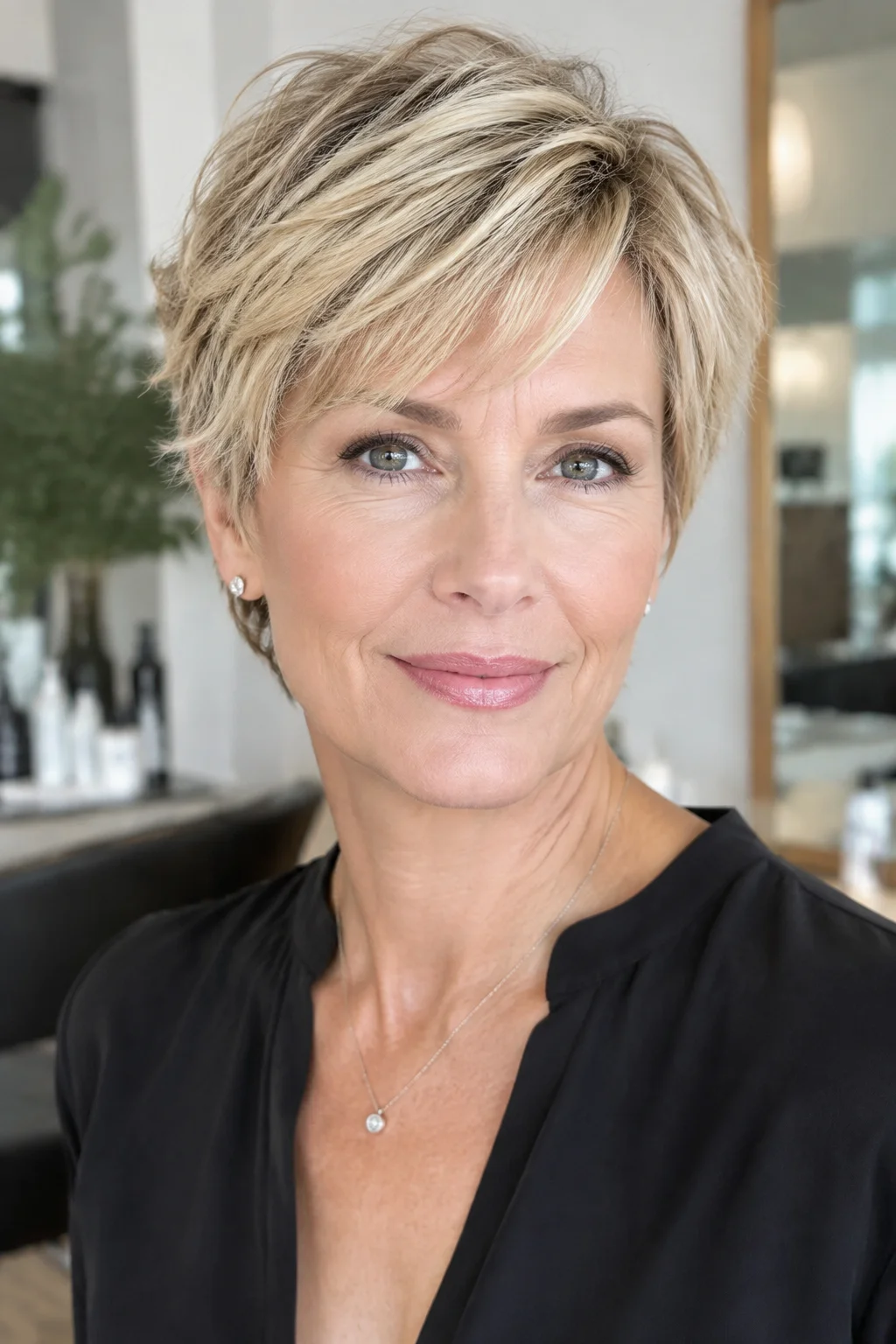
Extra length on top gives this pixie a tousled, lived-in look that never feels overdone. Air-drying works fine most days, and a little sea salt spray adds the right amount of grit. Blonde shades pick up light nicely in the tousled layers, giving the whole cut a sun-kissed feel even in winter.
Feathered Pixie for Mature Face Shape
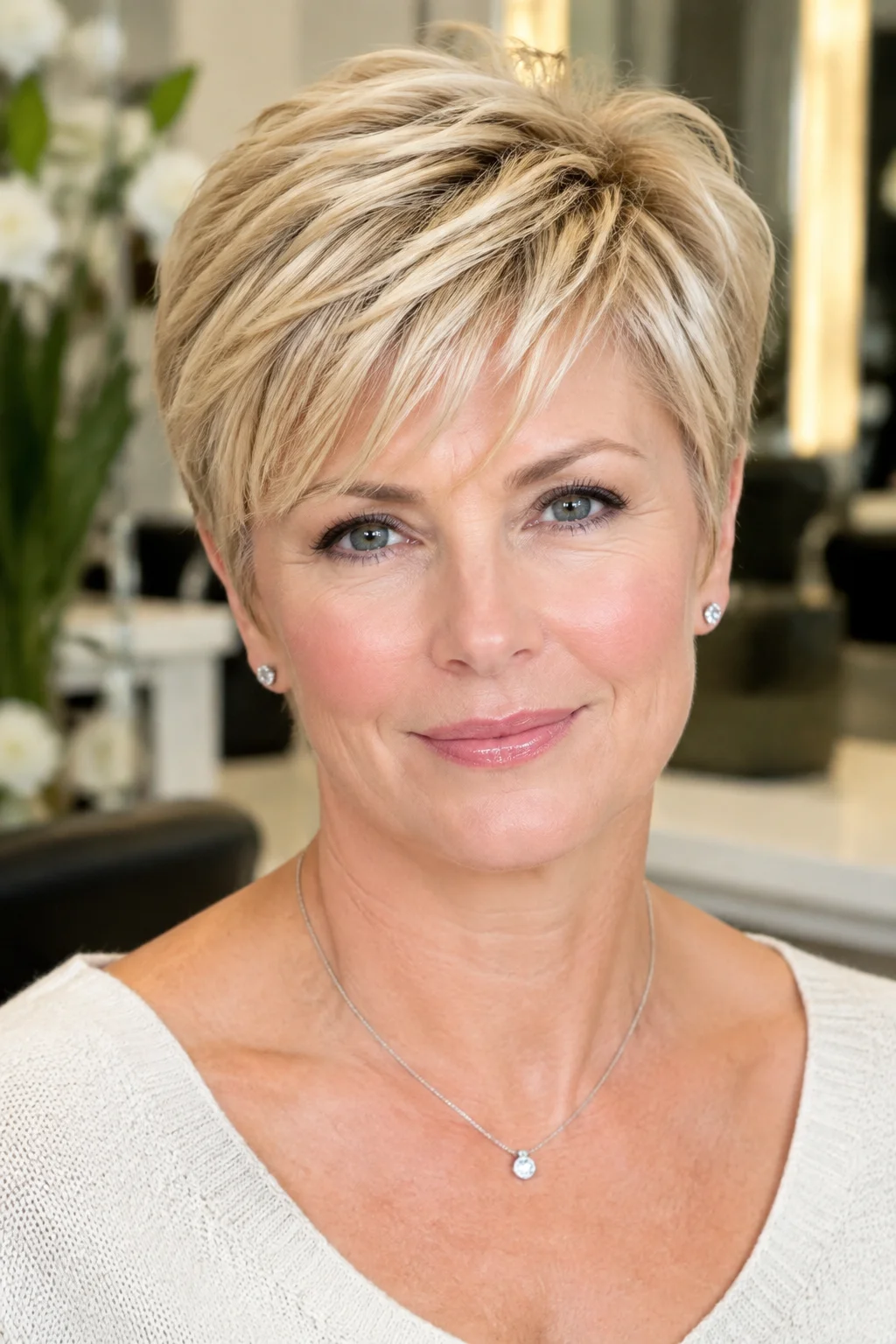
Feathered layers soften the transition between hair and face, which is especially flattering as skin changes with age. The layers are cut at an angle rather than straight across, creating movement without adding bulk. This style photographs well because the feathering catches light from multiple angles. It pairs beautifully with warm blonde tones like honey or buttery gold. Maintenance stays low since the feathering hides regrowth for weeks past a normal trim schedule. Most women find a comb-through with fingers is enough on busy mornings.
Pixie with Disconnected Longer Pieces
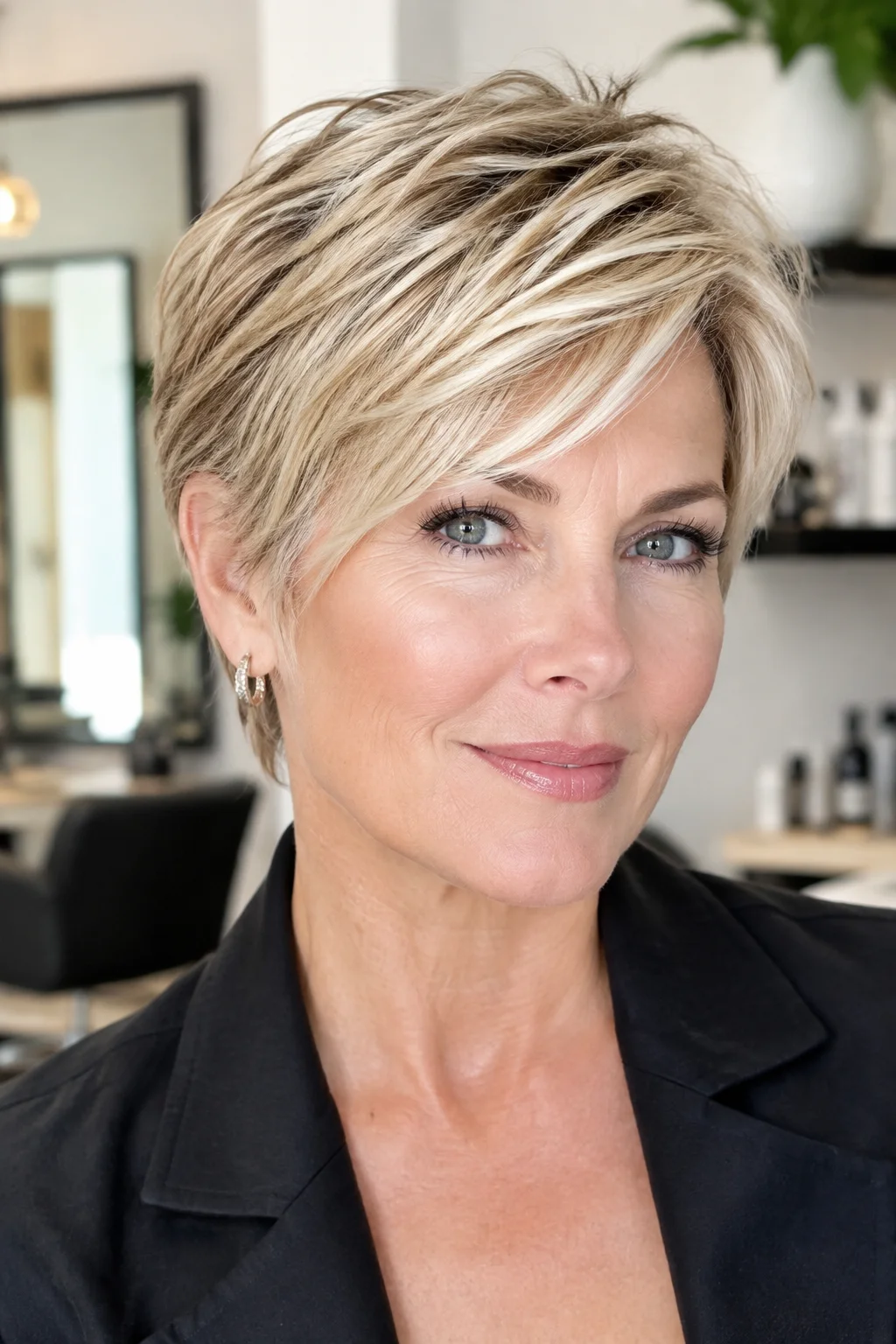
Disconnection means the top layers are cut separately from the shorter sides and back, creating an intentional gap in length. It gives the cut an edgier, more graphic look compared to a traditional blended pixie. Blonde color at the tips draws attention to the disconnected pieces even more. Tip: ask for the disconnection to happen gradually rather than abruptly if you want something easier to grow out later.
Round-Face Pixie with Angled Back
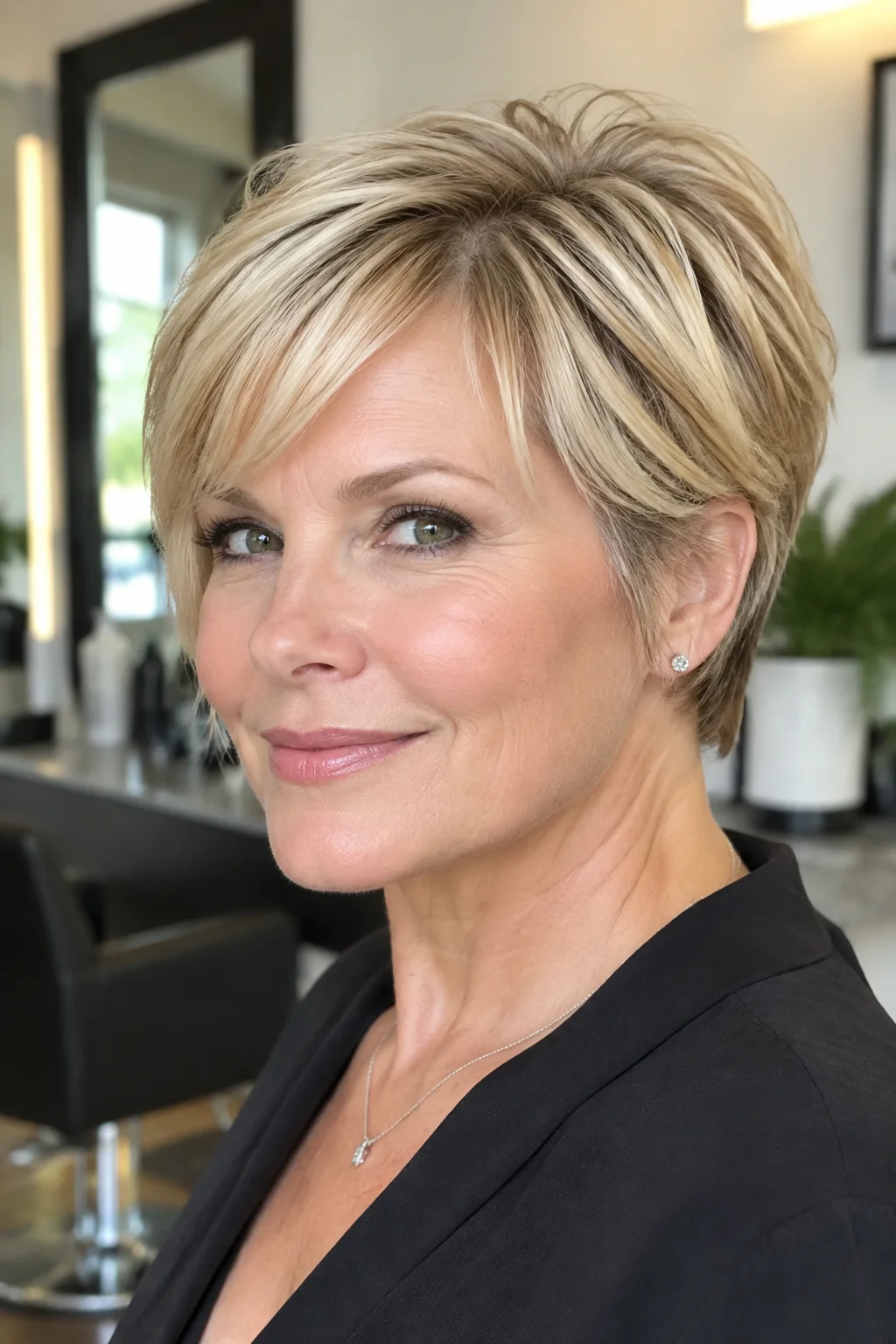
An angled nape, cut shorter at the bottom and longer toward the crown, adds the illusion of length to a round face. This detail matters more than people expect, since a straight-across back can make the whole head look wider. The angle also gives the cut a tapered, polished finish from behind. Blonde color works especially well here because it keeps the angled sections from looking too severe or blocky.
Messy Pixie Crop with Minimal Styling
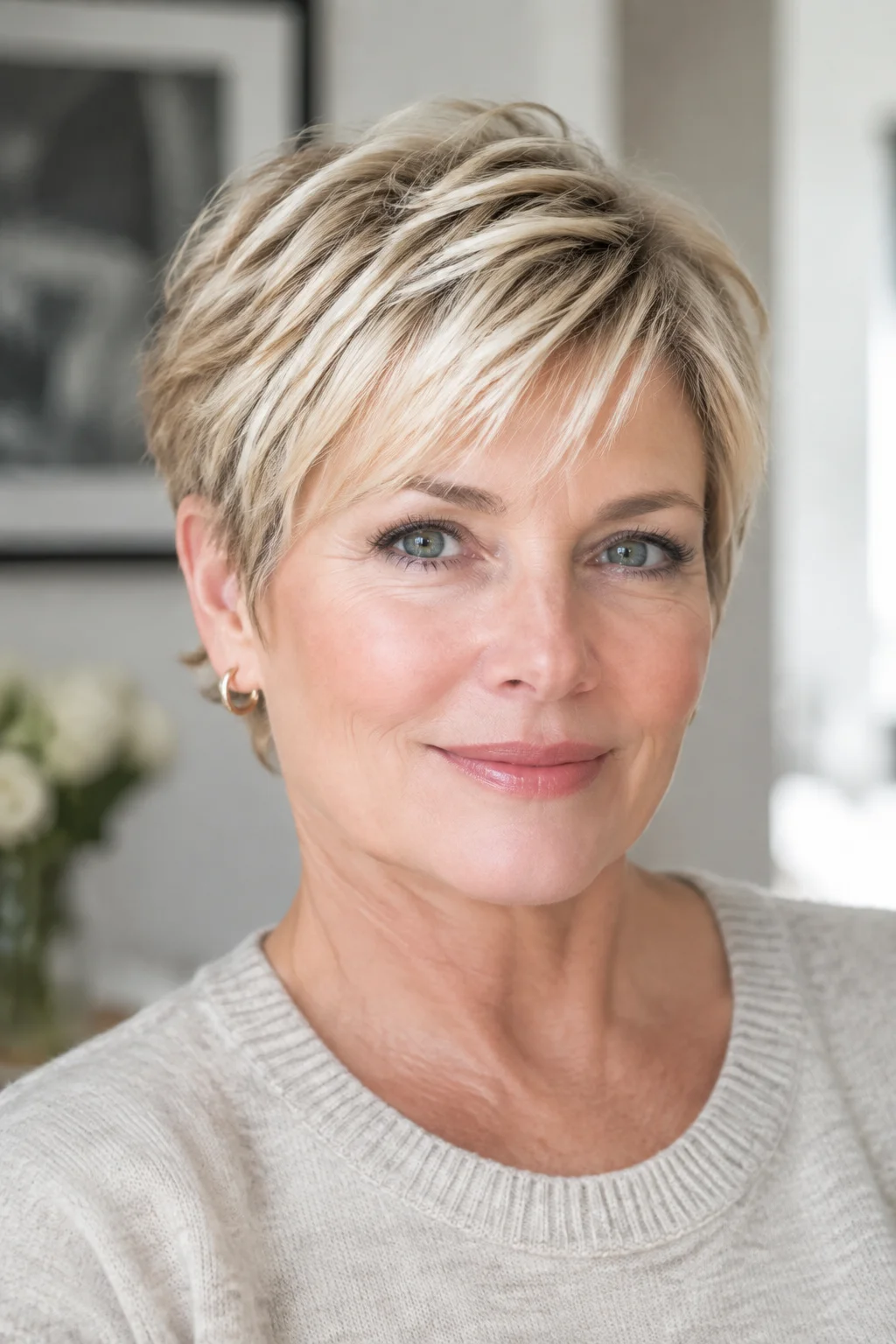
Some mornings call for hair that needs almost nothing done to it, and this crop delivers exactly that. The cut is short, choppy, and intentionally imperfect, so a slightly messy finish is the goal rather than a mistake. Scrunch in a bit of texturizing spray while hair is damp, let it air dry, and you’re done. It’s one of the lowest maintenance options on this list.
Ash Blonde Pixie with Silver Blend
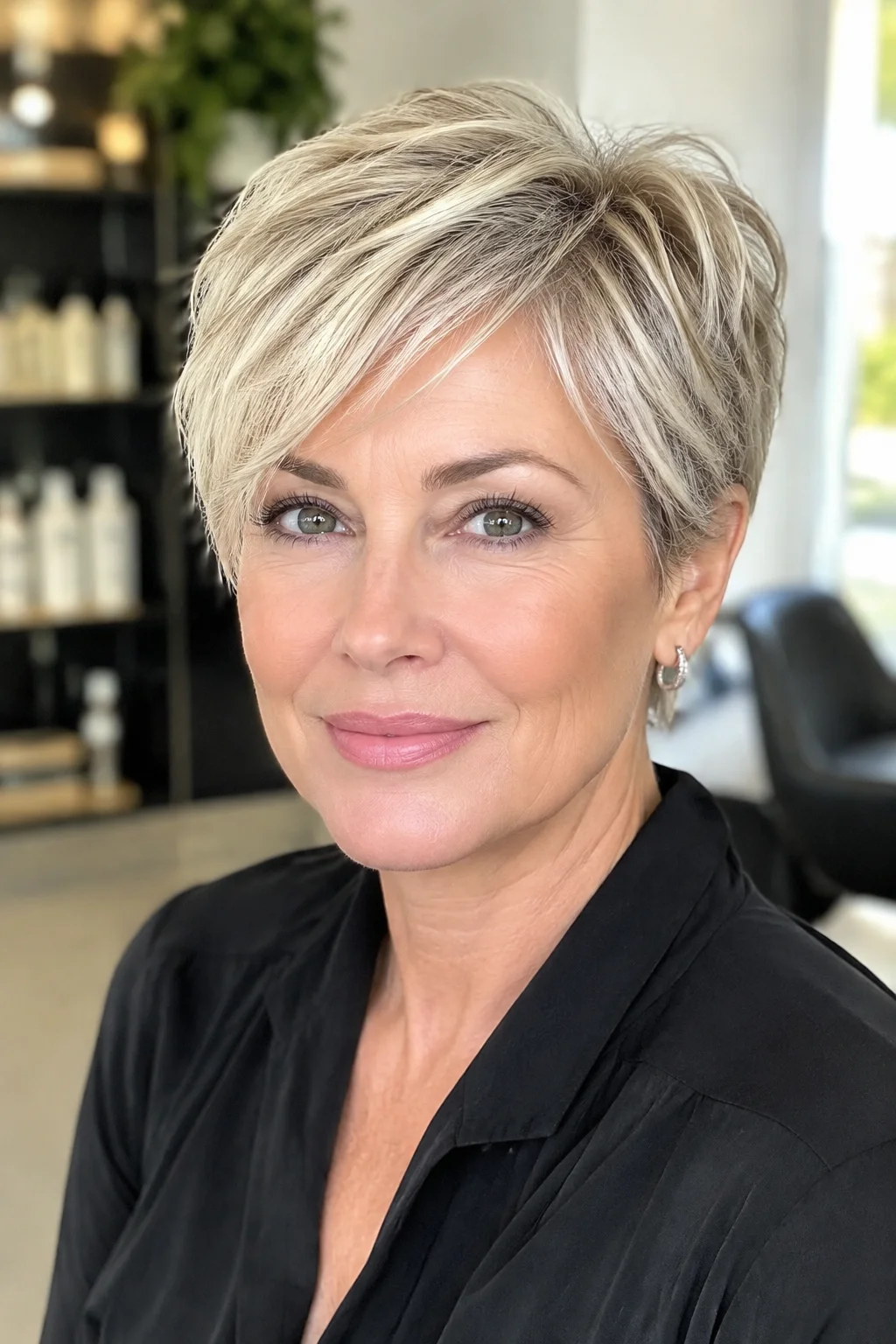
Ash blonde tones blend naturally with silver and gray strands, which makes this pairing popular among women who are transitioning away from covering gray completely. The cool undertone avoids the brassy look that warmer blondes sometimes develop between salon visits. This combination often stretches color appointments out longer than expected, since the blend camouflages regrowth so well. It’s a practical choice if you want less time in the chair overall.
Textured Pixie with Extended Fringe
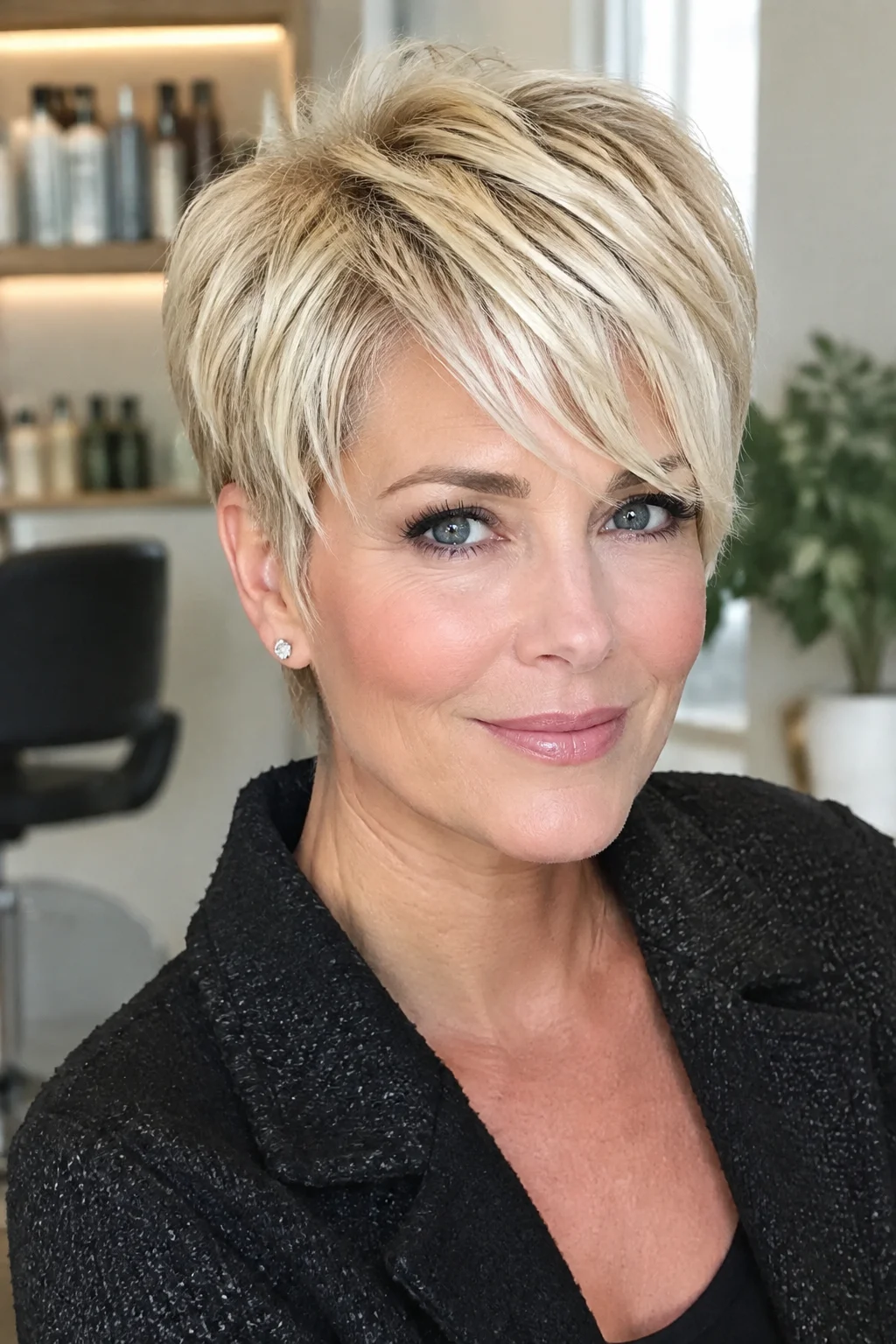
An extended fringe that reaches past the eyebrows adds softness to a short cut without adding much length elsewhere. The texture throughout keeps the fringe from looking heavy or flat against the forehead. Blonde color highlights the movement in the fringe every time it catches light. This style needs slightly more trimming around the face to keep the fringe from growing into the eyes, but the rest of the cut holds its shape well between visits.
Pixie Shag for Wavy Hair
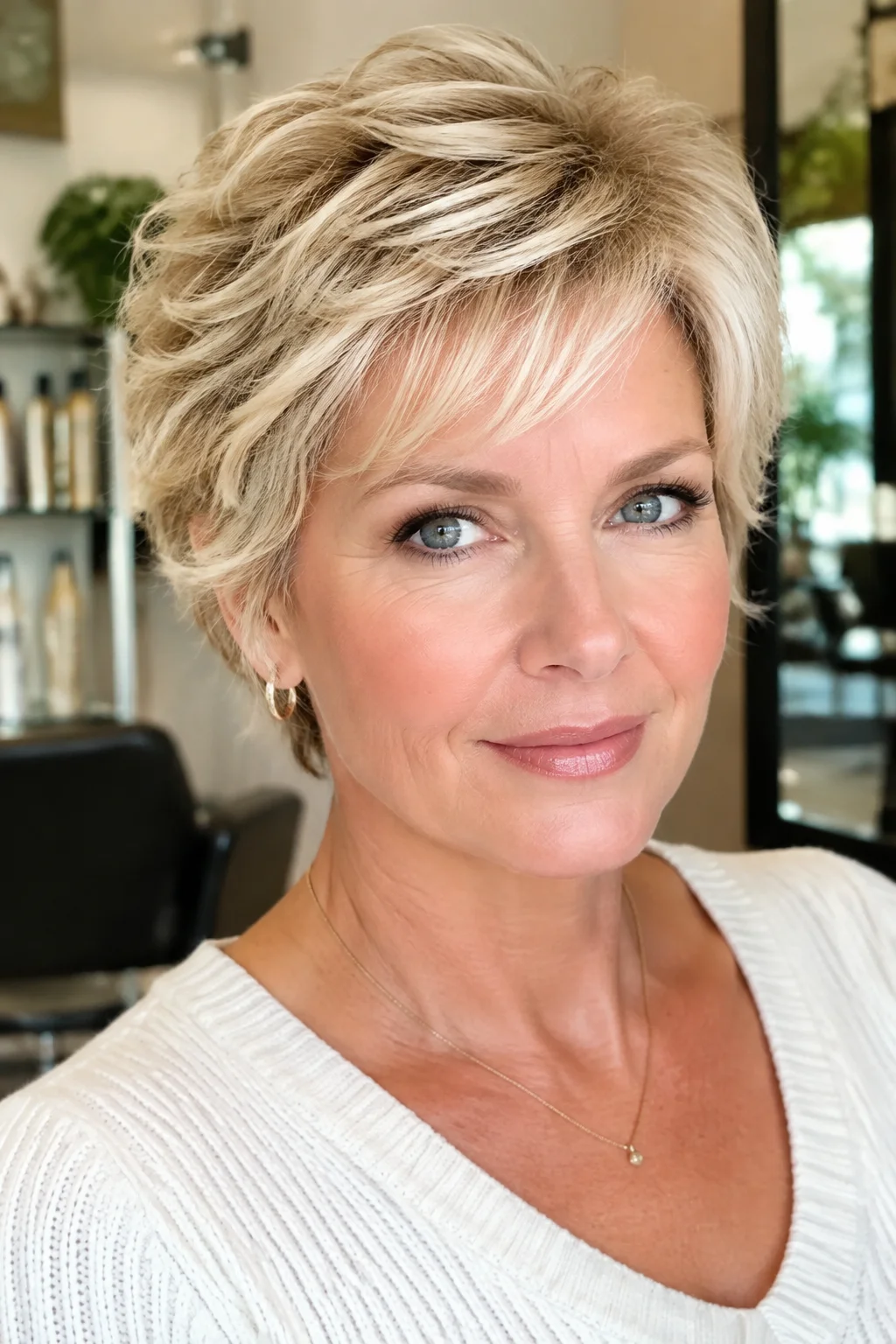
Waves and pixies aren’t always an easy match, but a shag-inspired cut solves that by working with the wave pattern instead of against it. Layers are cut choppy and uneven on purpose, letting natural texture do most of the styling work. Blonde color, particularly with some babylights, adds extra dimension to every wave. This is one of the better options for anyone who has given up trying to flat iron short hair into submission.
Neat Pixie with Subtle Fade
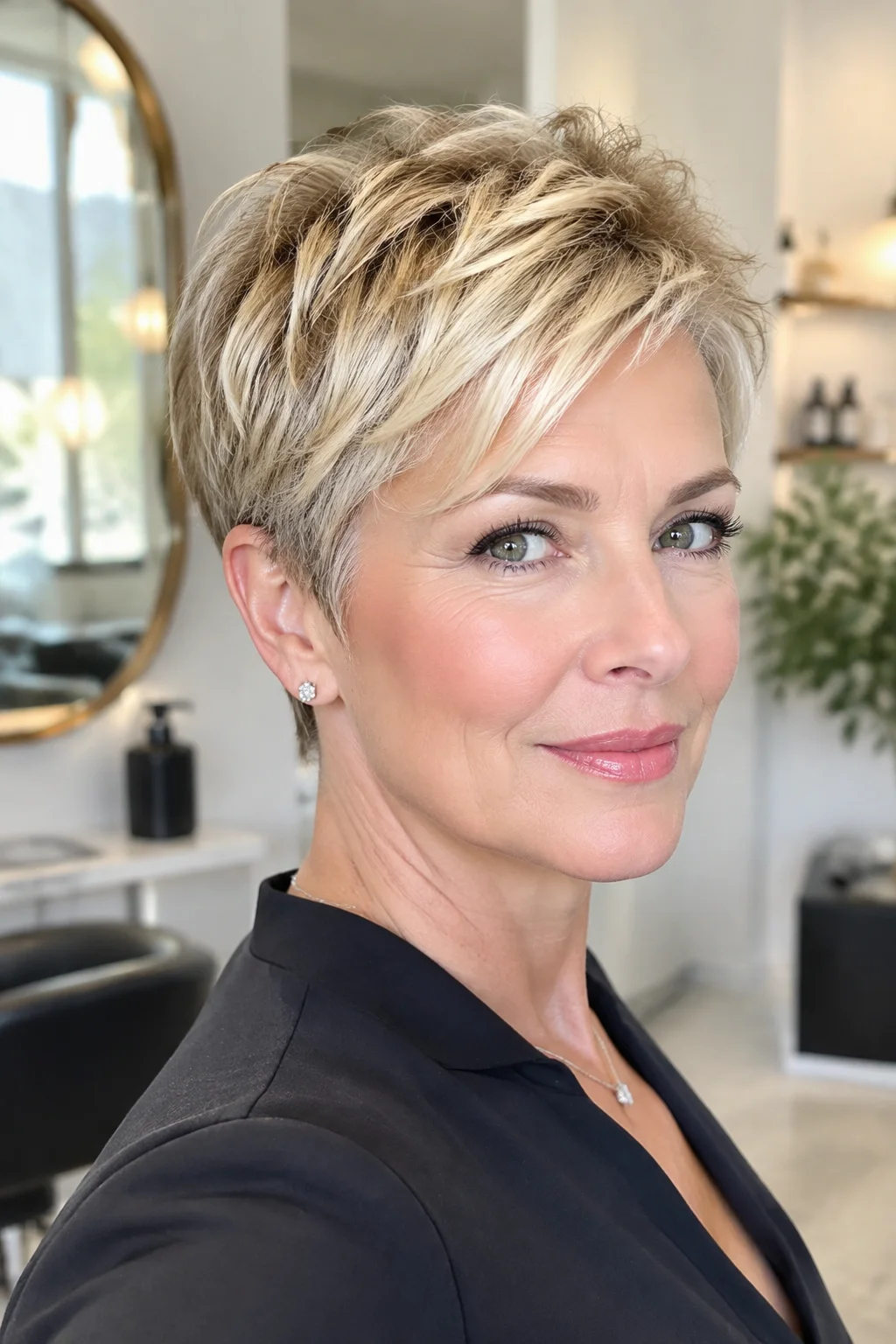
A fade along the sides gives this pixie a clean, shaped finish similar to a men’s cut but softened for a more feminine result. The top stays longer and can be styled smooth or textured depending on preference. Blonde color on top against the faded sides creates nice contrast without looking harsh. This one does require fade maintenance every few weeks, so it’s not the lowest upkeep option, but the styling time day to day is minimal.
Voluminous Pixie for Thin Hair
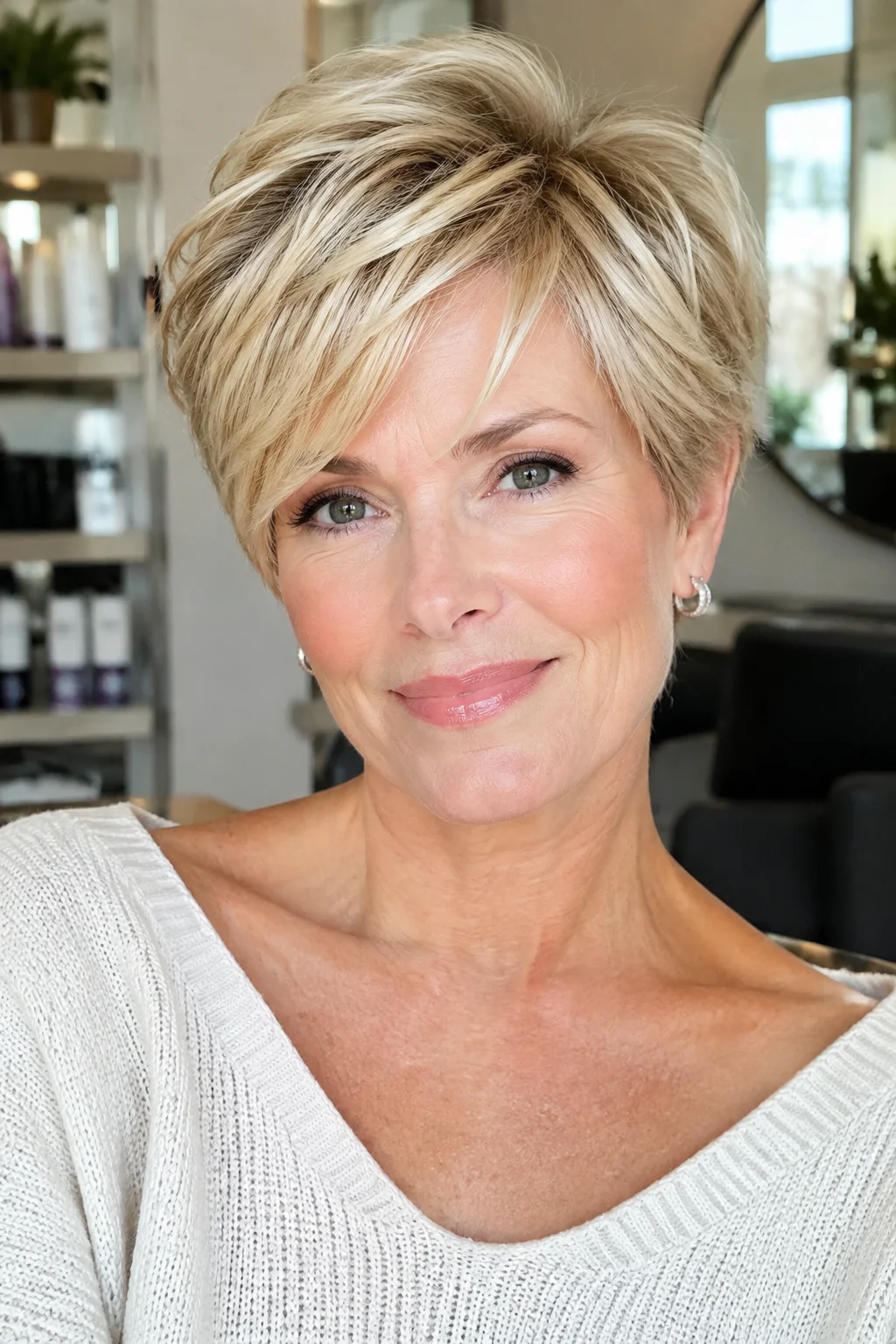
Thin hair benefits from cuts that create the appearance of volume rather than relying on thickness that isn’t there. Shorter layers stacked at the crown lift the roots and give the illusion of fuller hair throughout. A volumizing mousse applied at the roots before blow-drying upside down makes a noticeable difference. Blonde color, especially with dimensional highlights, adds another layer of visual thickness.
Pixie with Longer Nape Detail
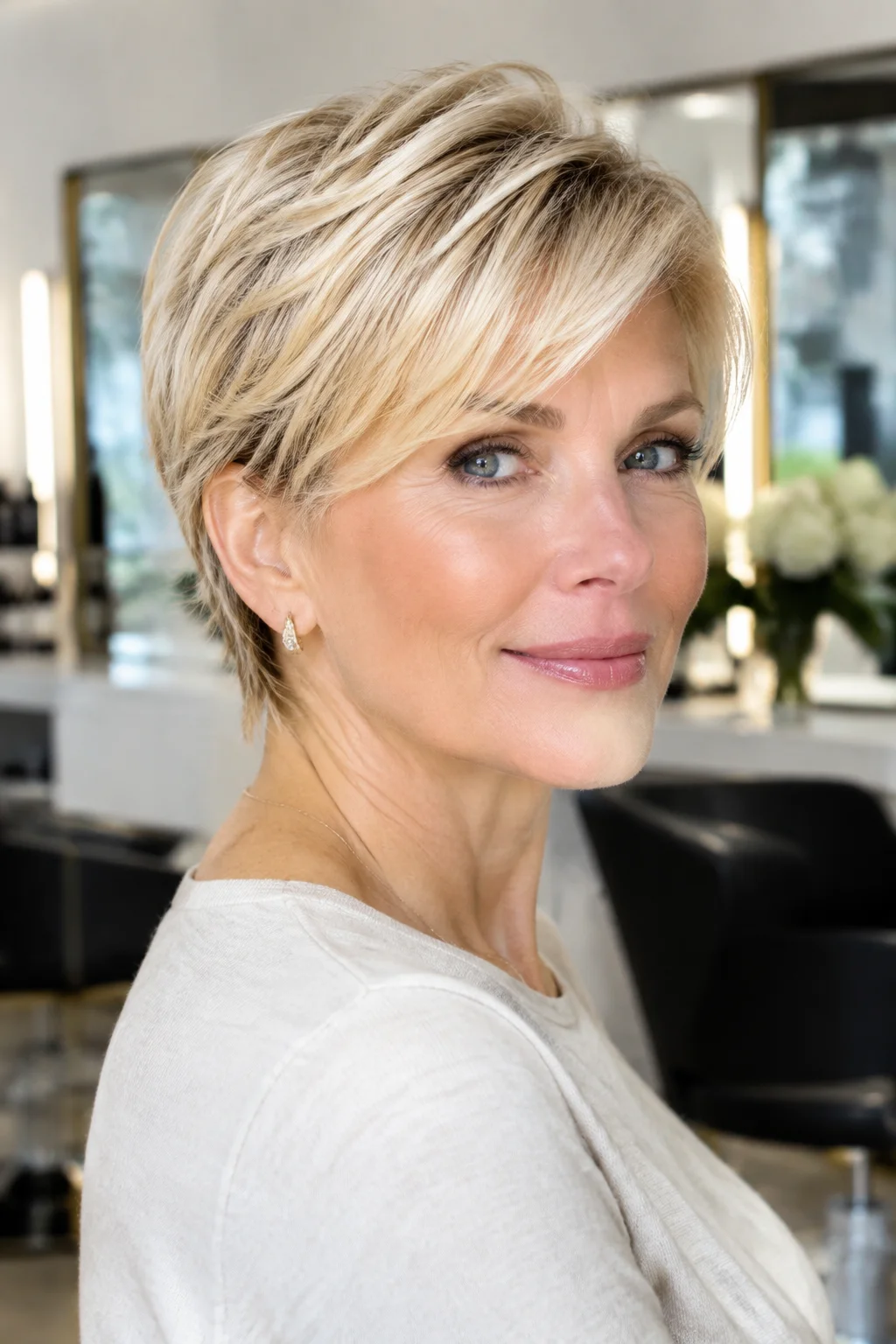
Leaving a bit of extra length at the nape gives this pixie a slightly softer silhouette from the back. It’s a subtle detail that most people won’t consciously notice, but it changes how the cut sits against the neck. Tip: this detail works best on straight or slightly wavy hair, since curlier textures tend to shrink the nape piece up and lose the effect.
Honey Blonde Pixie with Dimension
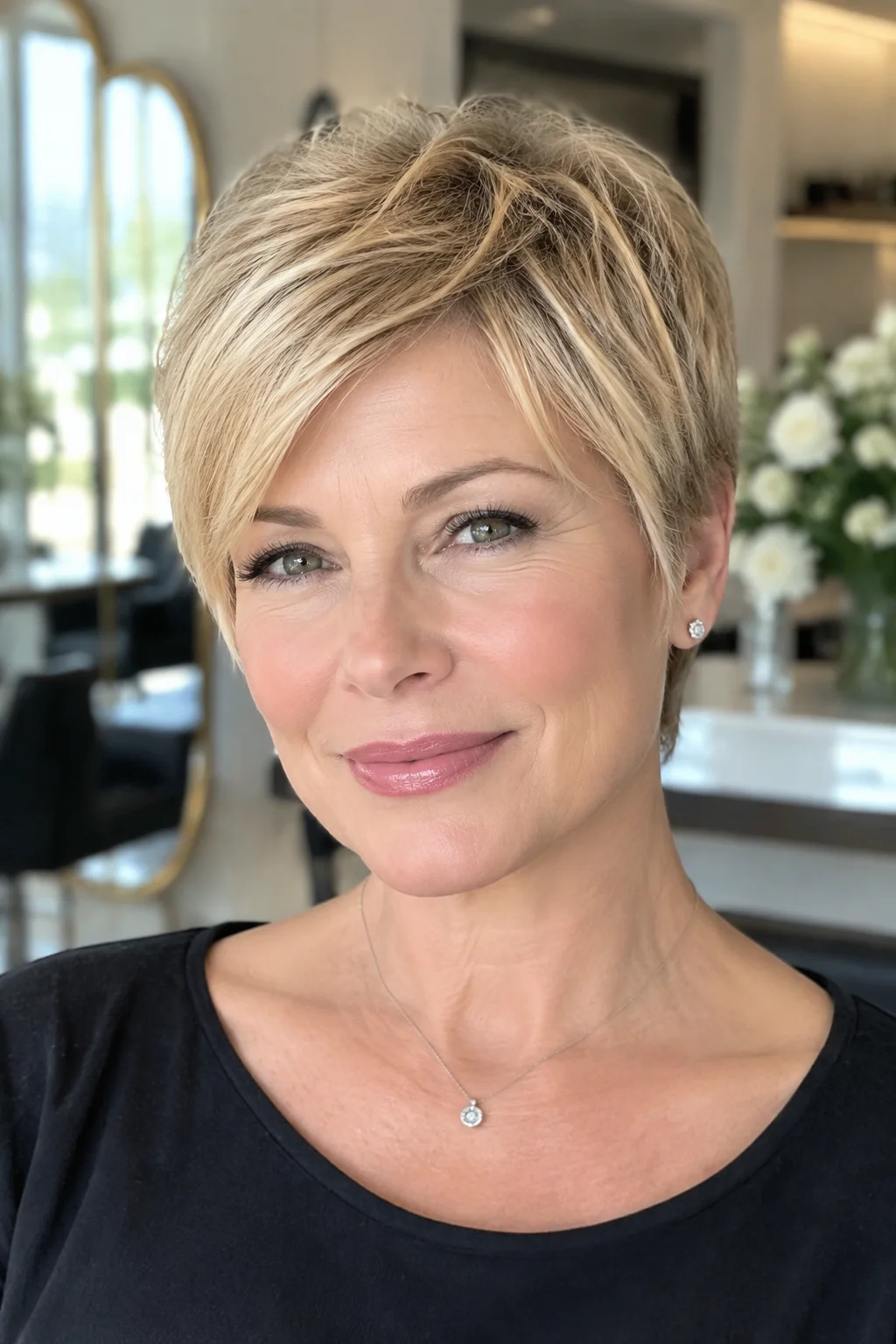
Honey blonde brings warmth without going too golden or brassy, and it looks especially good with a few lowlights woven through for dimension. The color choice flatters most skin tones, particularly those with warm or neutral undertones. This pairing tends to grow out gracefully since the dimension hides the demarcation line between new growth and color.
Choppy Pixie for Coarse Hair
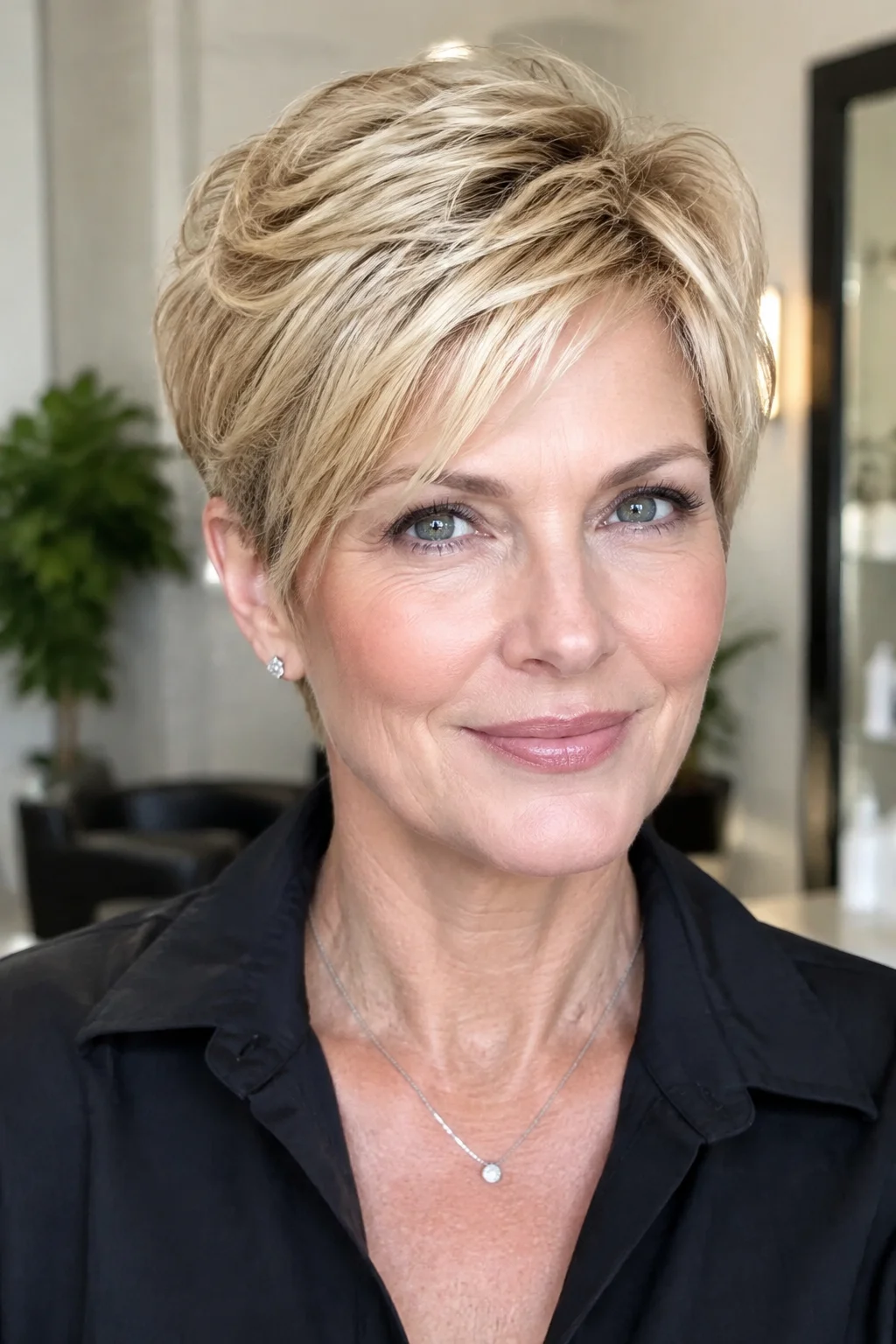
Coarse hair holds a choppy cut exceptionally well because the texture already has enough grip to keep pieces separated. This cut leans into that natural roughness instead of trying to smooth it out. Blonde color lightens the overall look of coarse hair, which can otherwise read as heavier or denser than it is. A small amount of pomade rubbed between the palms and pressed into the ends is usually all the styling this needs.
Modern Pixie with Blunt Front
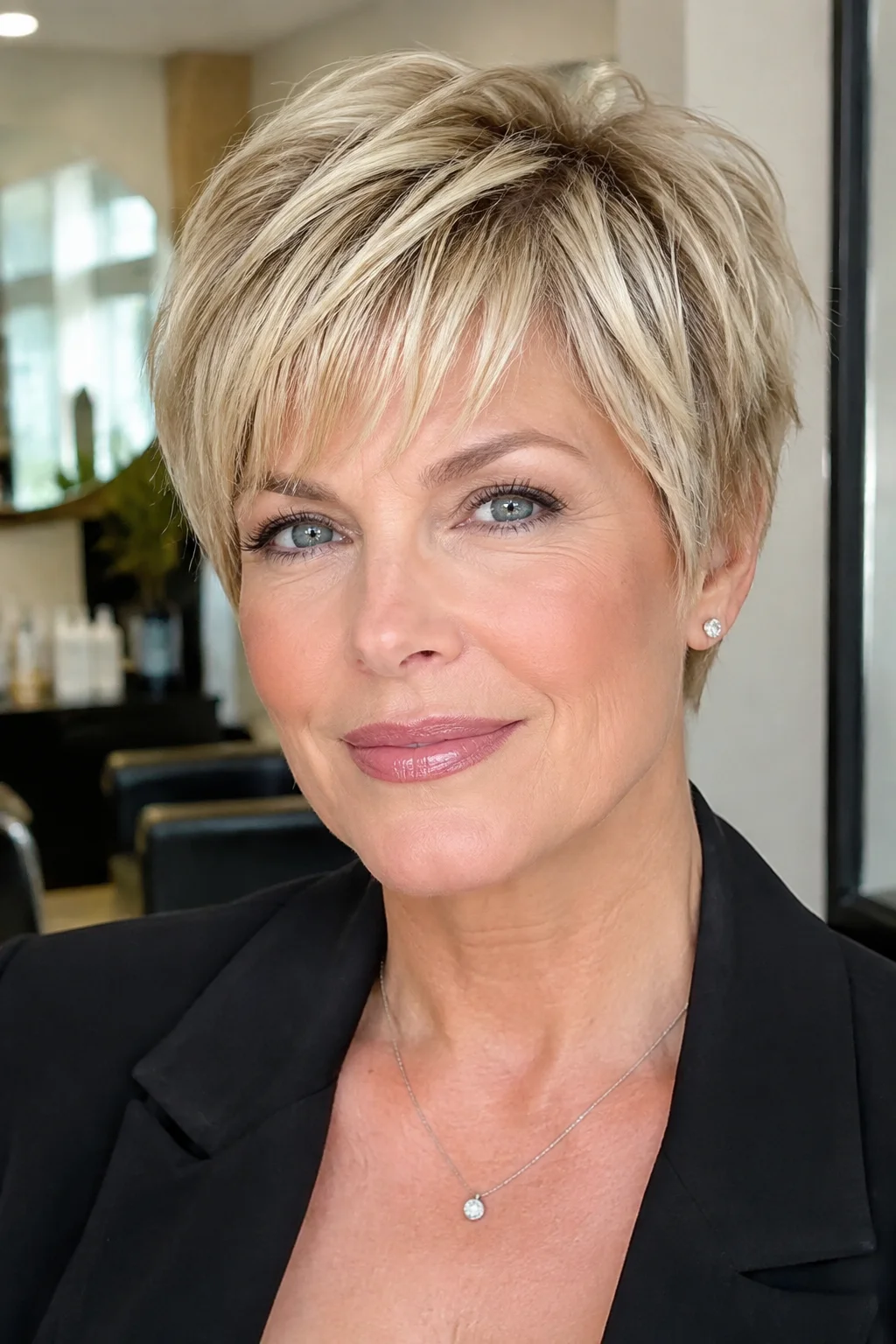
A blunt, straight-across fringe paired with a short pixie gives the whole style a graphic, modern edge. It contrasts nicely against the softer, more textured sections in the back and sides. Blonde color keeps the blunt front from looking too heavy or stark against the face. This cut suits women who want something a little different from the usual soft, feathered pixie shapes.
Low-Fade Pixie with Longer Top
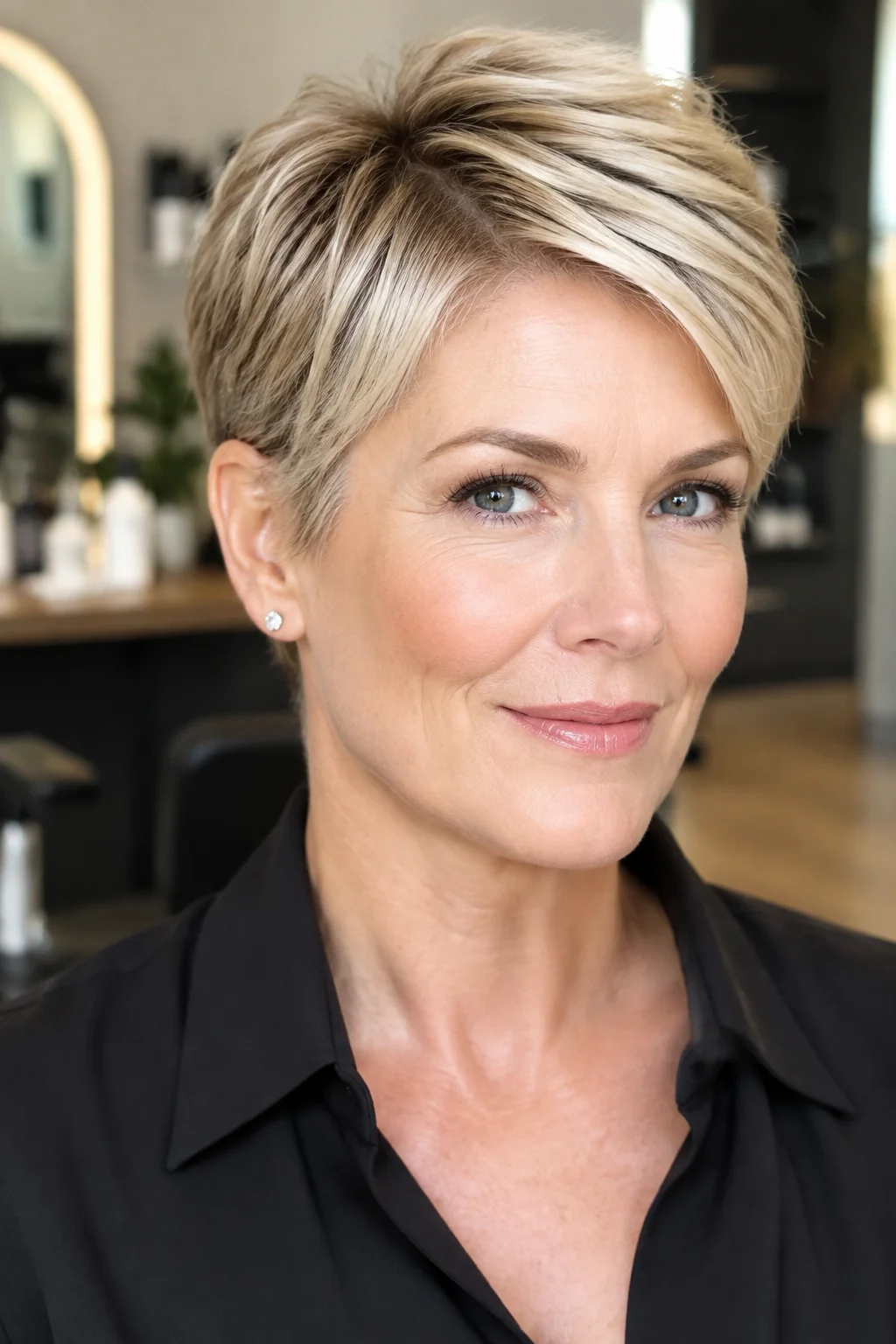
A low fade sits closer to the neckline than a standard fade, giving a subtler version of that shaped look. The longer top can be pushed to the side, styled up, or left loose depending on the day. Blonde color throughout keeps the whole cut feeling light and bright, especially against a low fade that’s still growing in. This combination is a good middle ground for anyone who likes structure but isn’t ready for a dramatic undercut.
Choosing the Right Pixie for Your Hair and Lifestyle
With twenty options on the table, picking one comes down to texture, face shape, and how much time you actually want to spend on your hair each morning. If your hair is fine and prone to looking flat, the textured crop pixie or the voluminous pixie for thin hair will serve you better than anything with heavy, blunt lines. Coarse or wavy textures tend to do best with cuts built around natural movement, like the choppy pixie for coarse hair or the pixie shag for wavy hair, since fighting texture with a flat iron every day gets old fast.
Face shape matters just as much. Rounder faces usually look more balanced with the round-face pixie with angled back or the feathered pixie for mature face shape, since both add length and movement where it’s needed. Square or angular faces often soften nicely with the side-swept pixie with long bangs.
A common mistake is choosing a cut based purely on a photo without accounting for hair density or growth pattern. The sleek pixie with defined undercut looks sharp on straight, medium-density hair but can be a headache to maintain on very curly or extremely fine hair, since the undercut grows out unevenly. Talk through your actual texture with your stylist before committing, not just the picture you brought in.
Final Thoughts
Short blonde pixies earn their popularity because they solve real problems: less time styling, less product needed, and color that grows out without demanding constant touch-ups. Whether you gravitate toward the ash blonde pixie with silver blend or something bolder like the modern pixie with blunt front, the common thread across every style here is simplicity built into the cut itself. Bring this list to your next appointment, point to two or three favorites, and let your stylist tell you which one your hair texture will love most.