Mornings are busy enough without a hairstyle that demands twenty minutes and three tools before you can walk out the door. If your hair is straight and you’re over 40, you already know that some cuts practically style themselves while others fight you every single day. The good news is that low-maintenance straight hair hairstyles for women over 40 exist in plenty of shapes and lengths, from cropped pixies to waist-length strands, and most of them just need a quick brush and maybe a spritz of dry shampoo. Below are 22 cuts that hold their shape, grow out gracefully, and skip the fuss without looking plain. Each one works with straight hair’s natural tendency to fall flat and smooth, so you spend less time fighting your texture and more time getting on with your day.
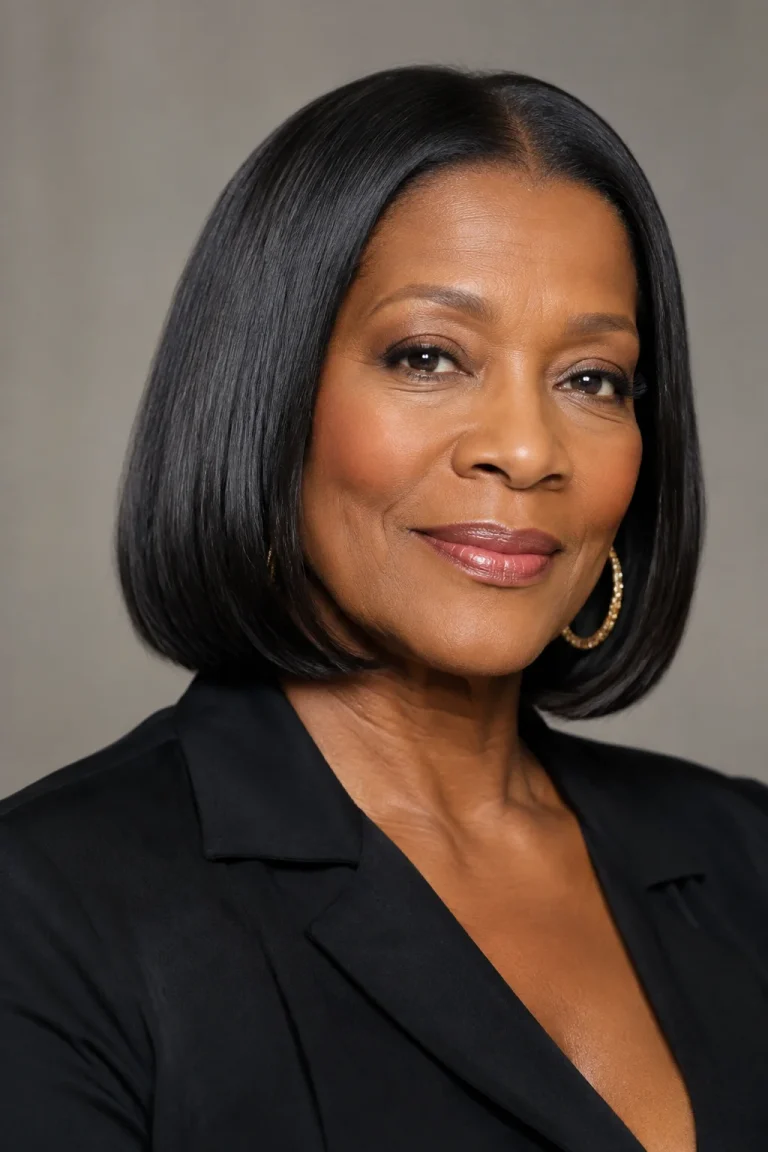
Blunt Shoulder-Length Bob
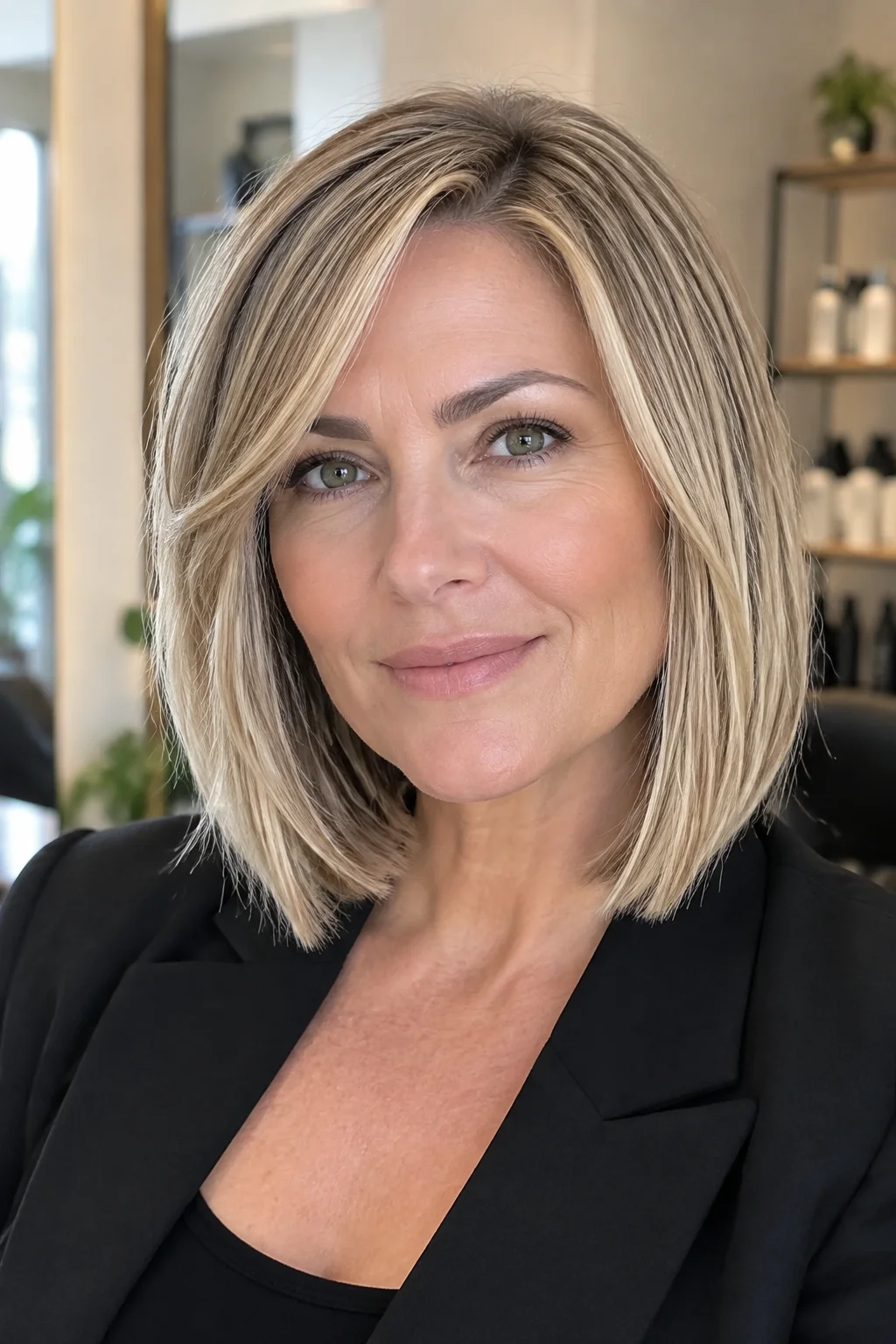
A blunt cut at the shoulders is one of the easiest styles to maintain because there’s no shaping or layering to grow out unevenly. The straight line across the bottom gives it a clean, finished look even on days you skip styling entirely. Run a brush through it after air drying and you’re done. This length also hits a sweet spot for women over 40 who want hair that still reaches a ponytail on gym days but doesn’t require much upkeep otherwise. A light mist of heat protectant before styling helps the finish last. A light mist of heat protectant before styling helps the finish last.
Long Straight Layers with Minimal Movement
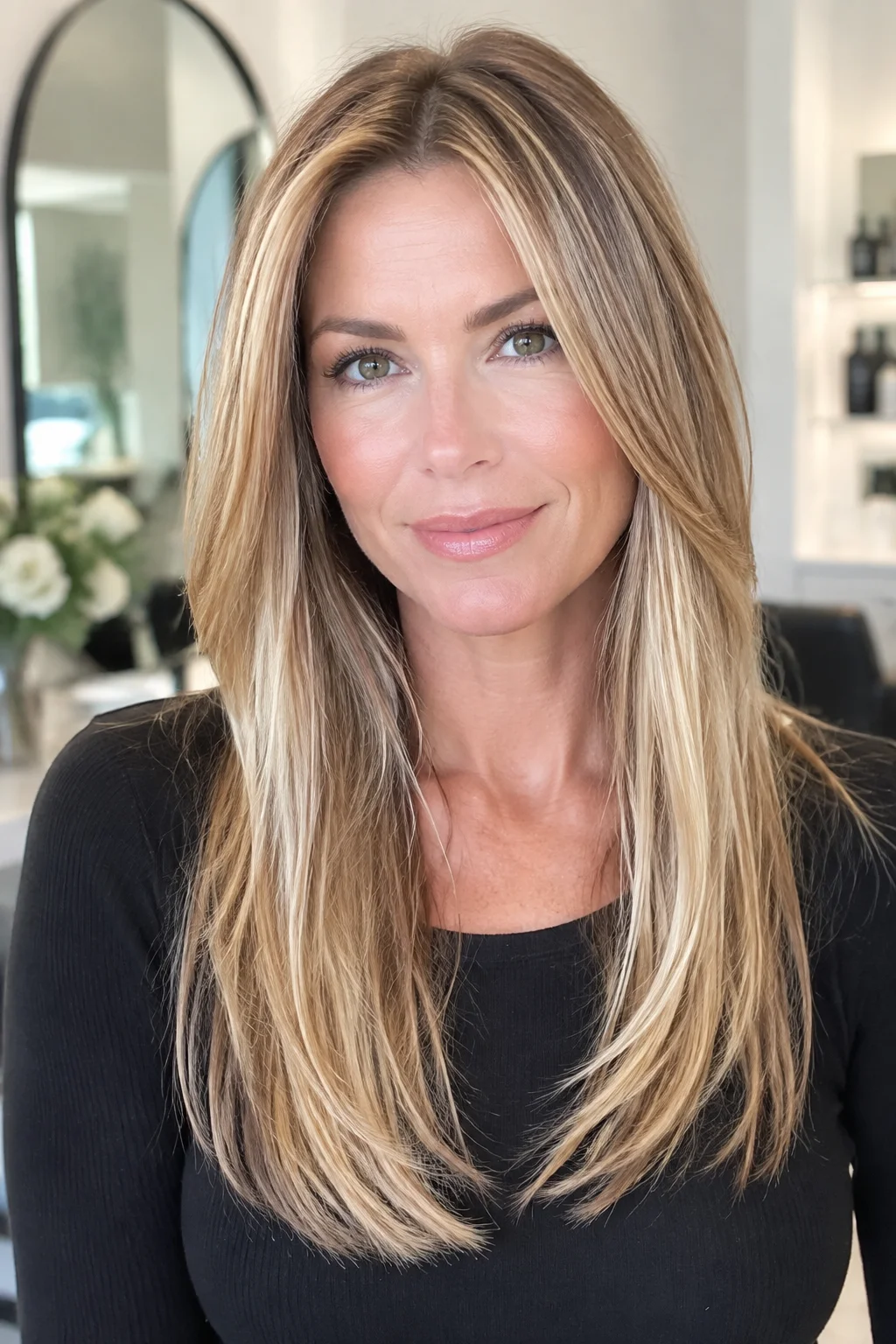
Layers get a bad reputation for needing constant blow drying, but when they’re cut long and kept subtle, they behave. This style keeps most of the length intact while thinning out the ends just enough to prevent that heavy, blunt curtain look. It air dries smooth most days, and a flat iron touch-up on the front pieces is usually all you need. The layers add a little bounce without demanding a round brush or diffuser to look right. A light mist of heat protectant before styling helps the finish last. A light mist of heat protectant before styling helps the finish last.
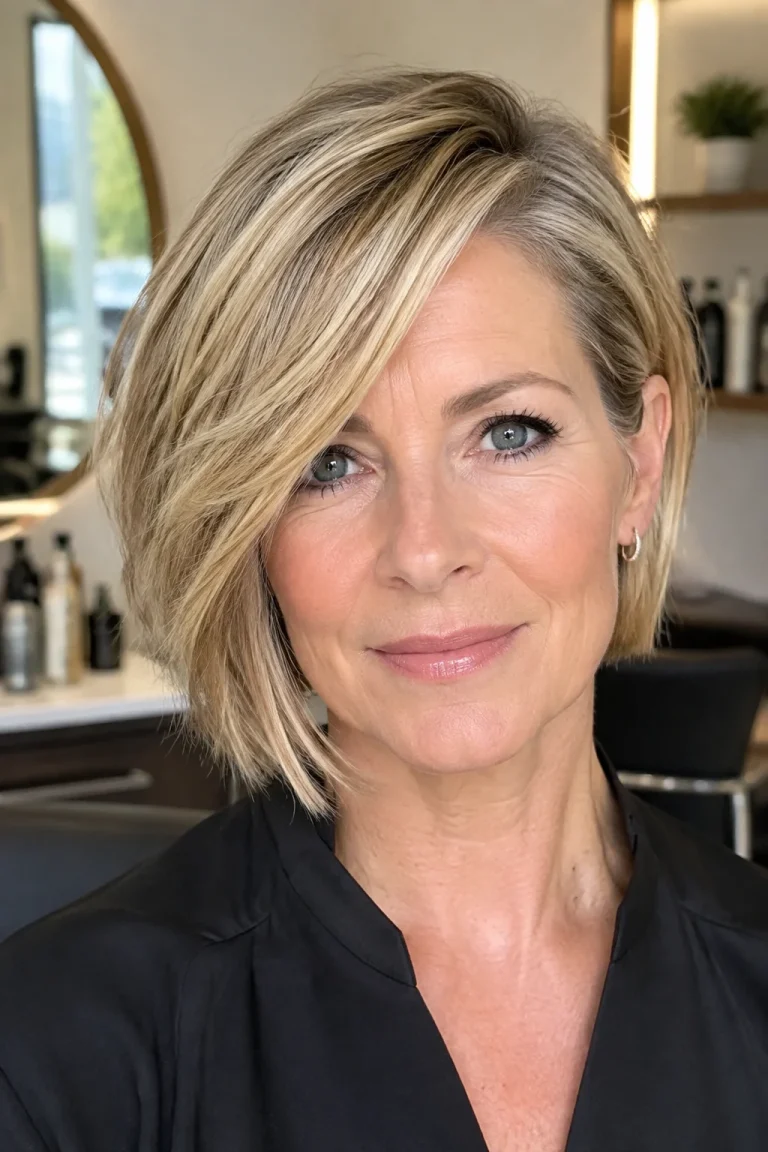
Chin-Length Straight Bob with Side Part
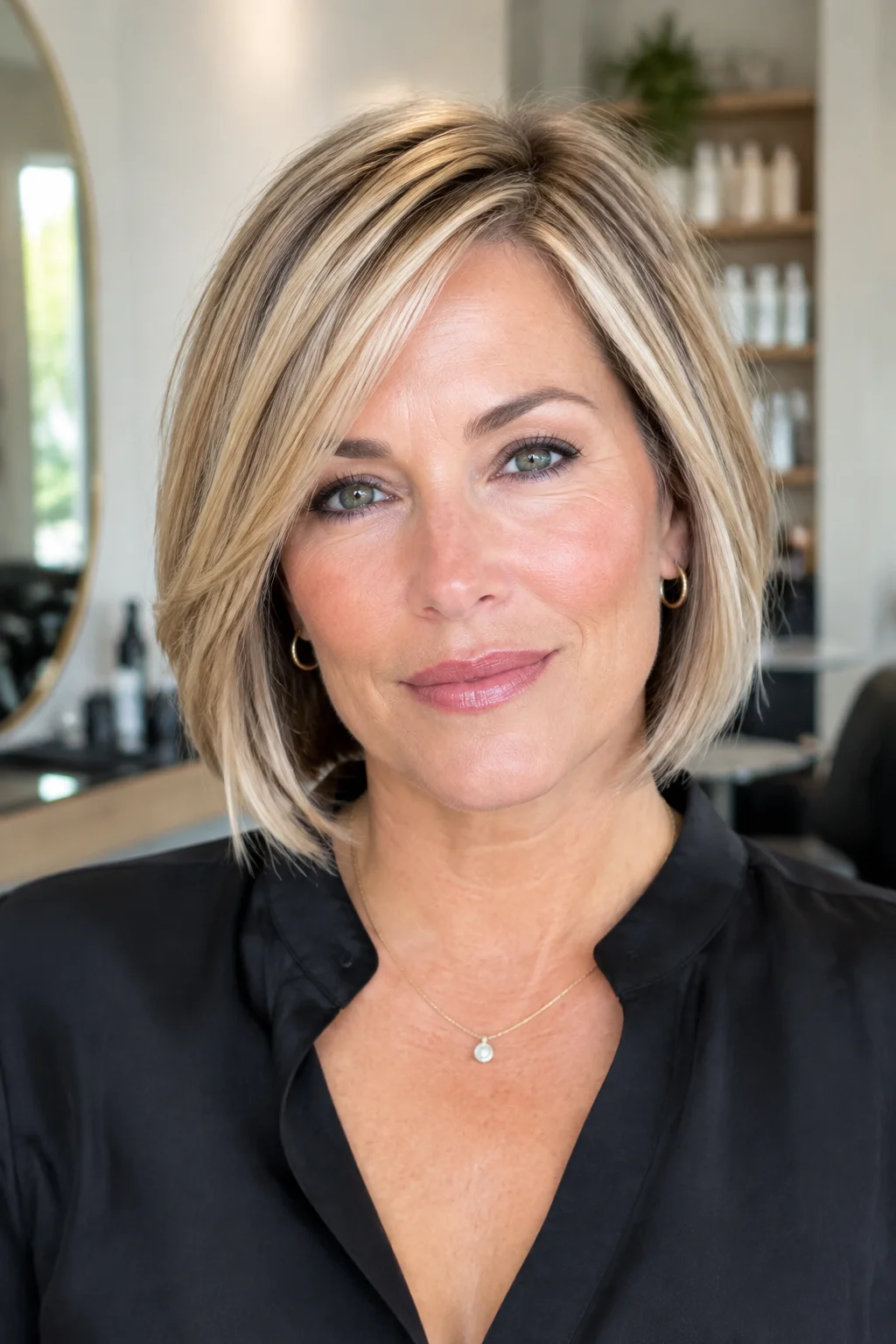
This bob sits right at the chin and relies on a side part to soften the face. It’s short enough to dry fast but long enough to tuck behind the ears when things get windy. Tip: ask your stylist for a slight undercut in the back so it doesn’t puff out when humidity rises.
Sleek Pixie Cut for Fine Straight Hair
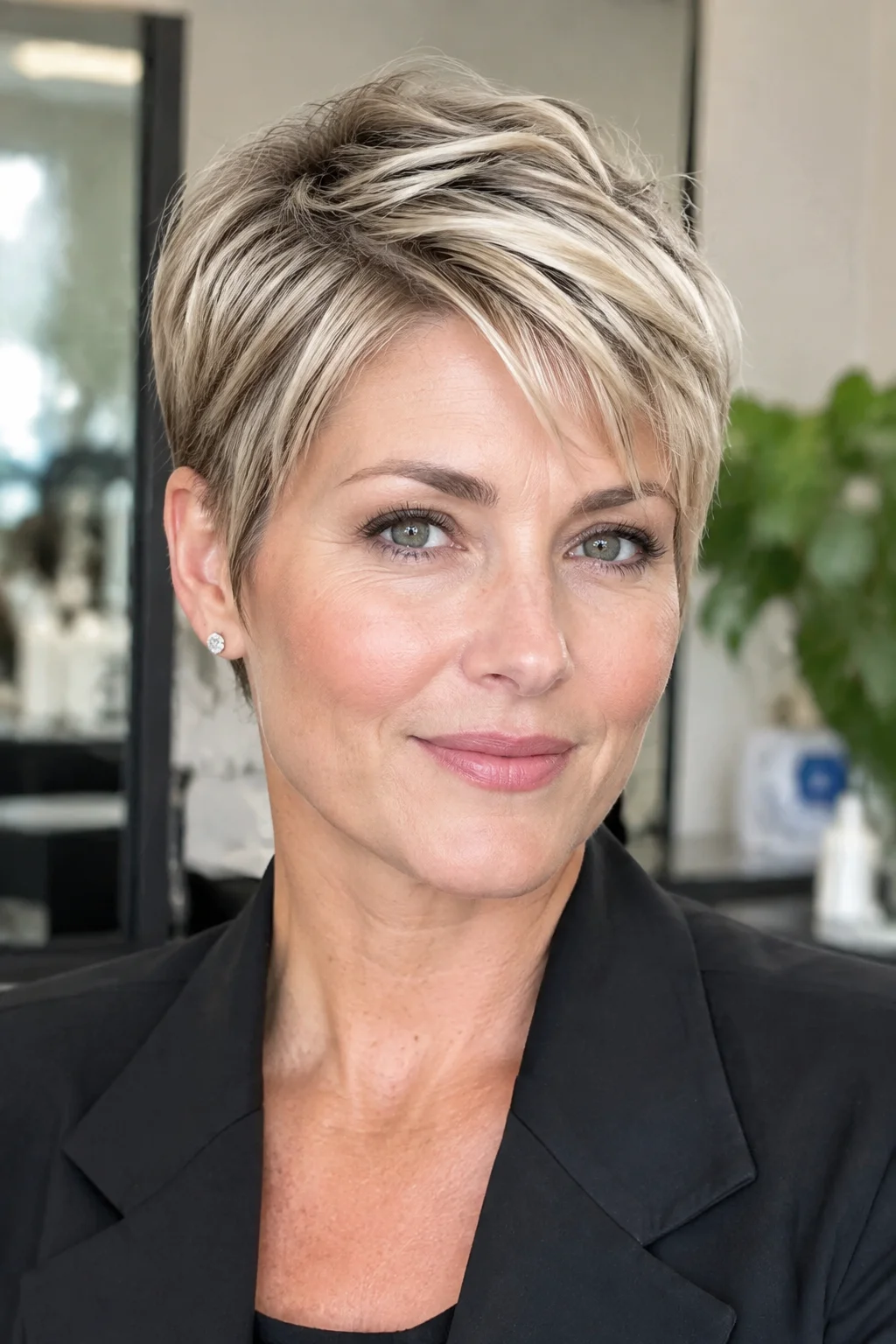
Fine straight hair often looks thin and flat at longer lengths, which is exactly why a pixie works so well. Short hair reads fuller because there’s less weight pulling it down. This cut takes maybe five minutes to style with a small amount of pomade rubbed through damp strands. It also cuts your shower and drying time in half, which matters a lot on hectic mornings. The only real commitment is more frequent trims, roughly every four to six weeks, to keep the shape sharp.
Straight Long Hair with Center Part
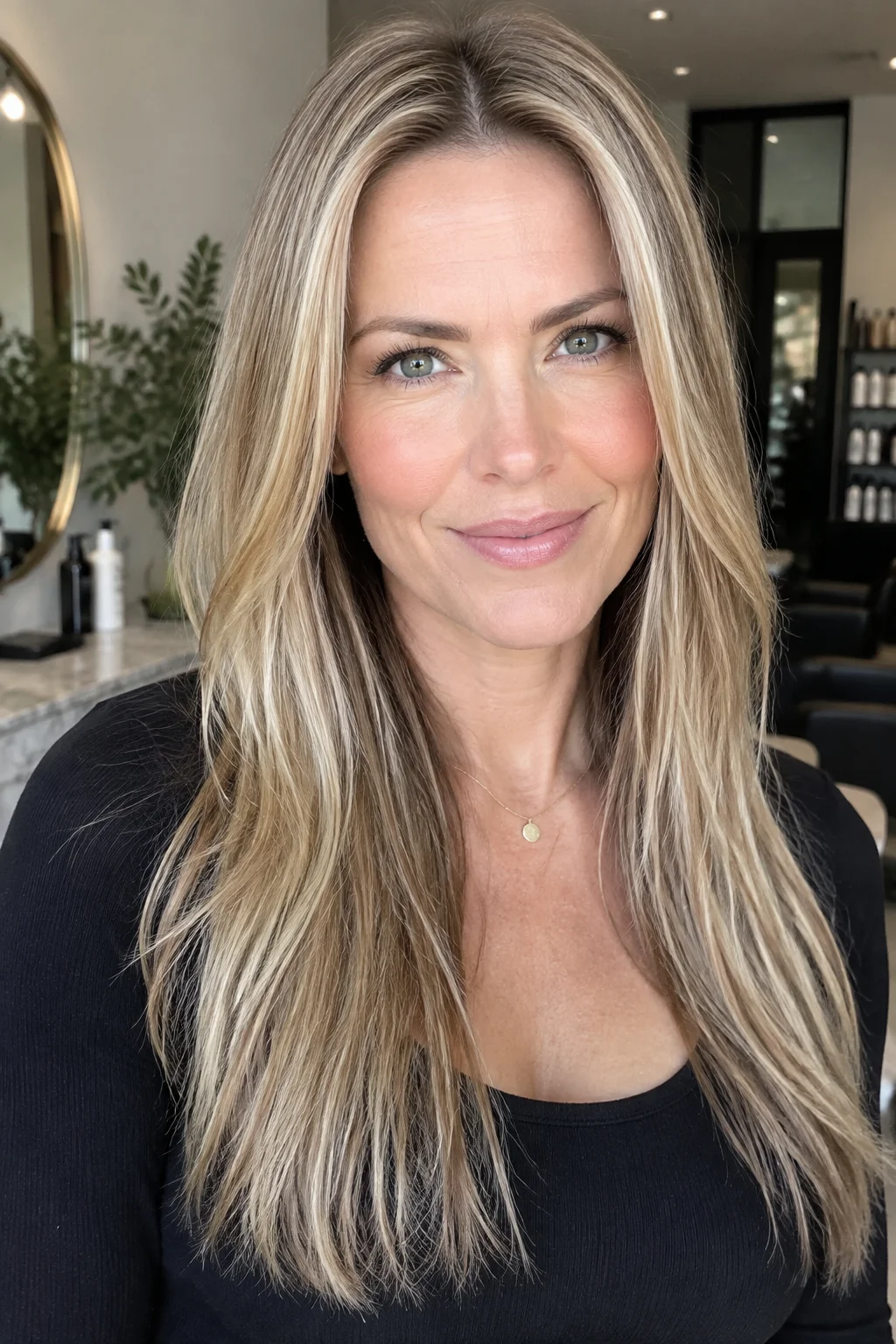
Long hair, straight all the way through, parted down the middle, might be the lowest-effort style on this list. There’s no cutting technique creating shape you need to maintain, just healthy ends and a part that falls naturally. Wash, brush, go. It looks like you spent time on it even when you rushed out the door in ten minutes flat.
Tapered Straight Bob with Bangs
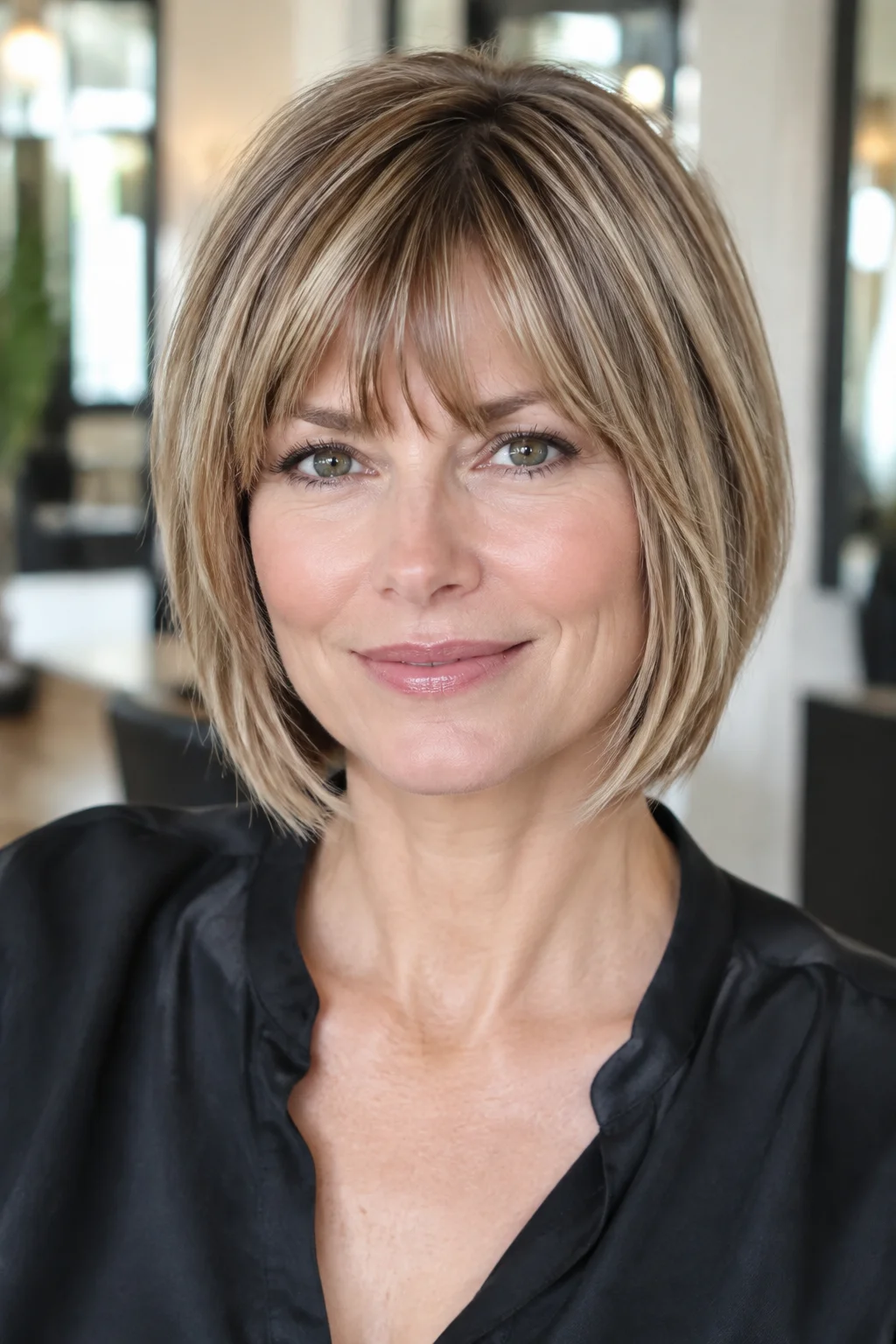
Adding bangs to a tapered bob gives the whole look more personality without adding styling time. The taper means the back sits shorter than the front, framing the jaw nicely, while the bangs draw attention up toward the eyes. Straight hair holds bangs well since there’s no curl pattern working against the blunt line. You will need to trim the bangs yourself between salon visits, usually every two to three weeks, to keep them out of your eyes.
Waist-Length Straight Hair with Minimal Layers
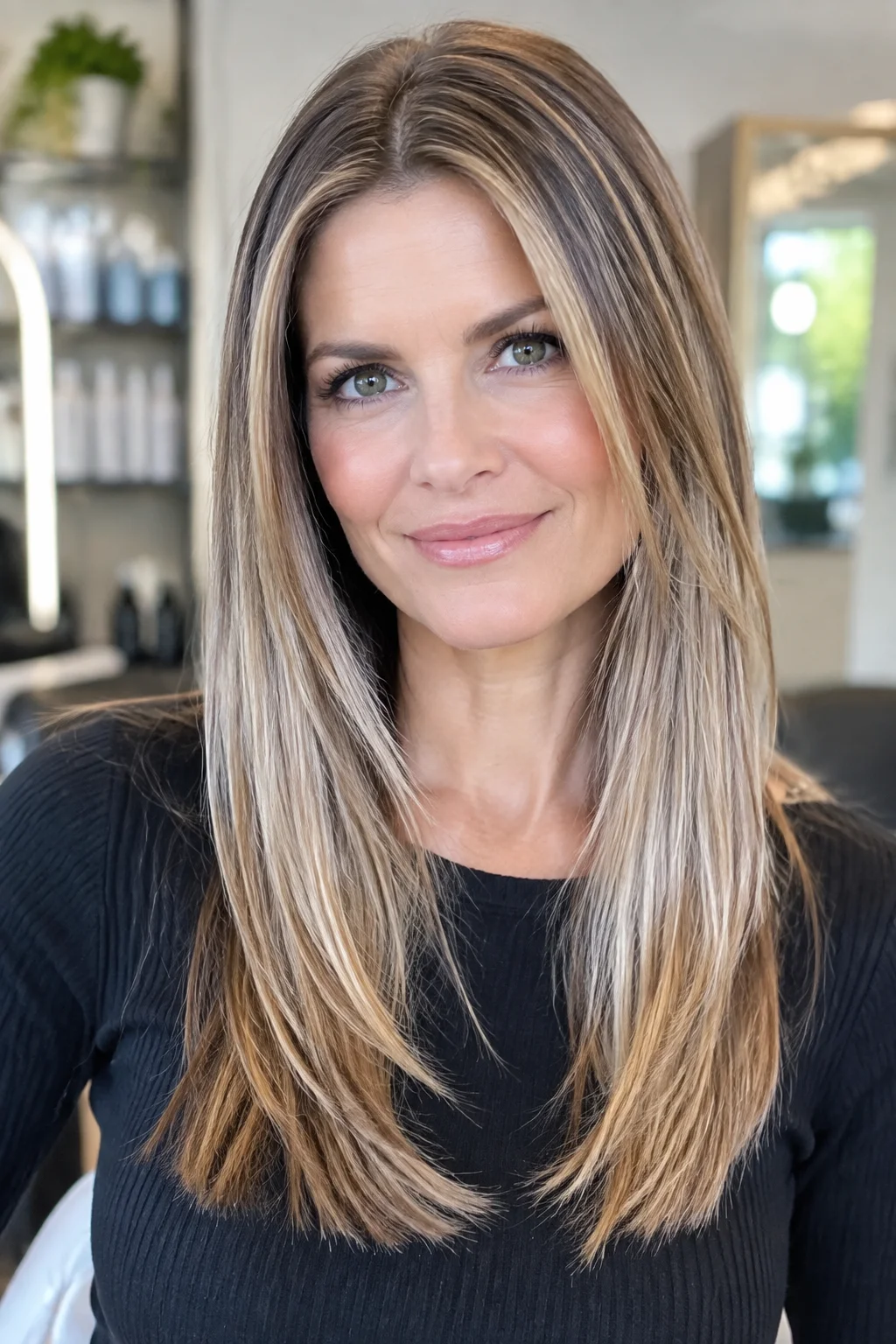
Long hair kept nearly one length is deceptively easy to manage once it’s healthy. A few soft layers around the face keep it from looking like a solid curtain, but the bulk of the length stays untouched by scissors. Brushing takes longer simply because there’s more hair, but styling itself stays minimal. Many women in their 40s find this length flattering because it elongates the whole silhouette. Tip: get regular dustings every ten to twelve weeks so the ends stay strong instead of thinning out and looking wispy.
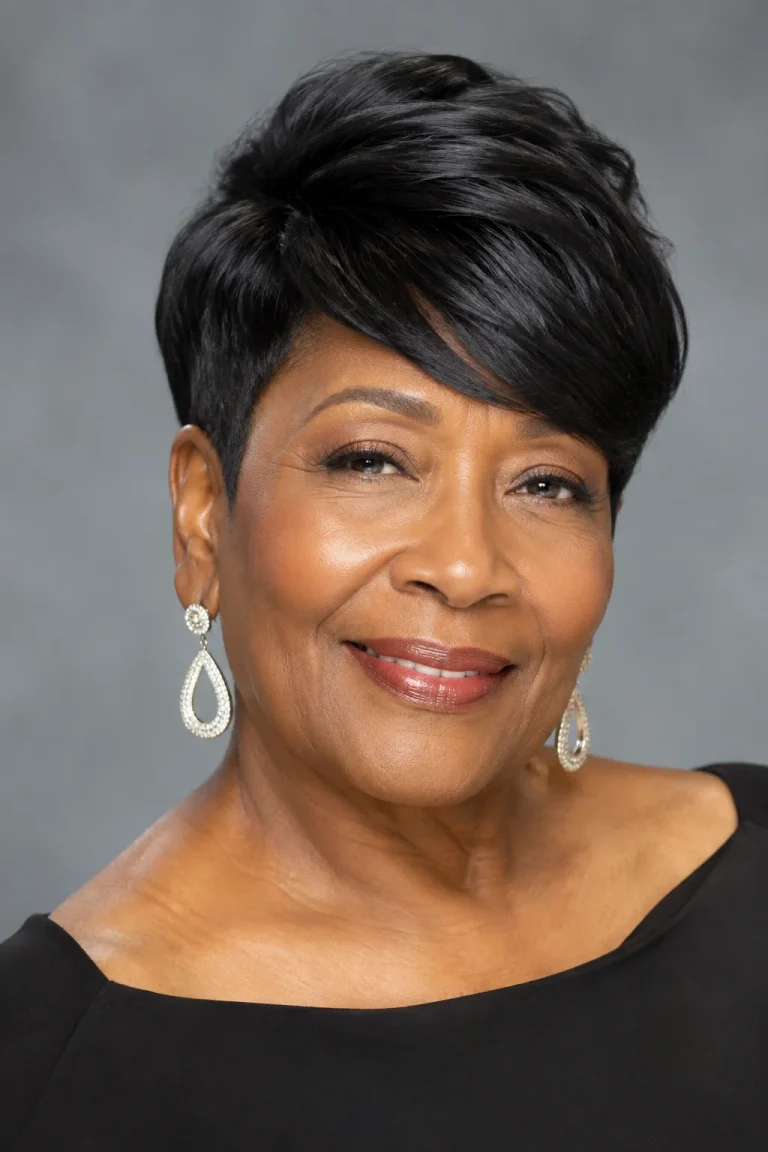
Textured Pixie with Straight Sides
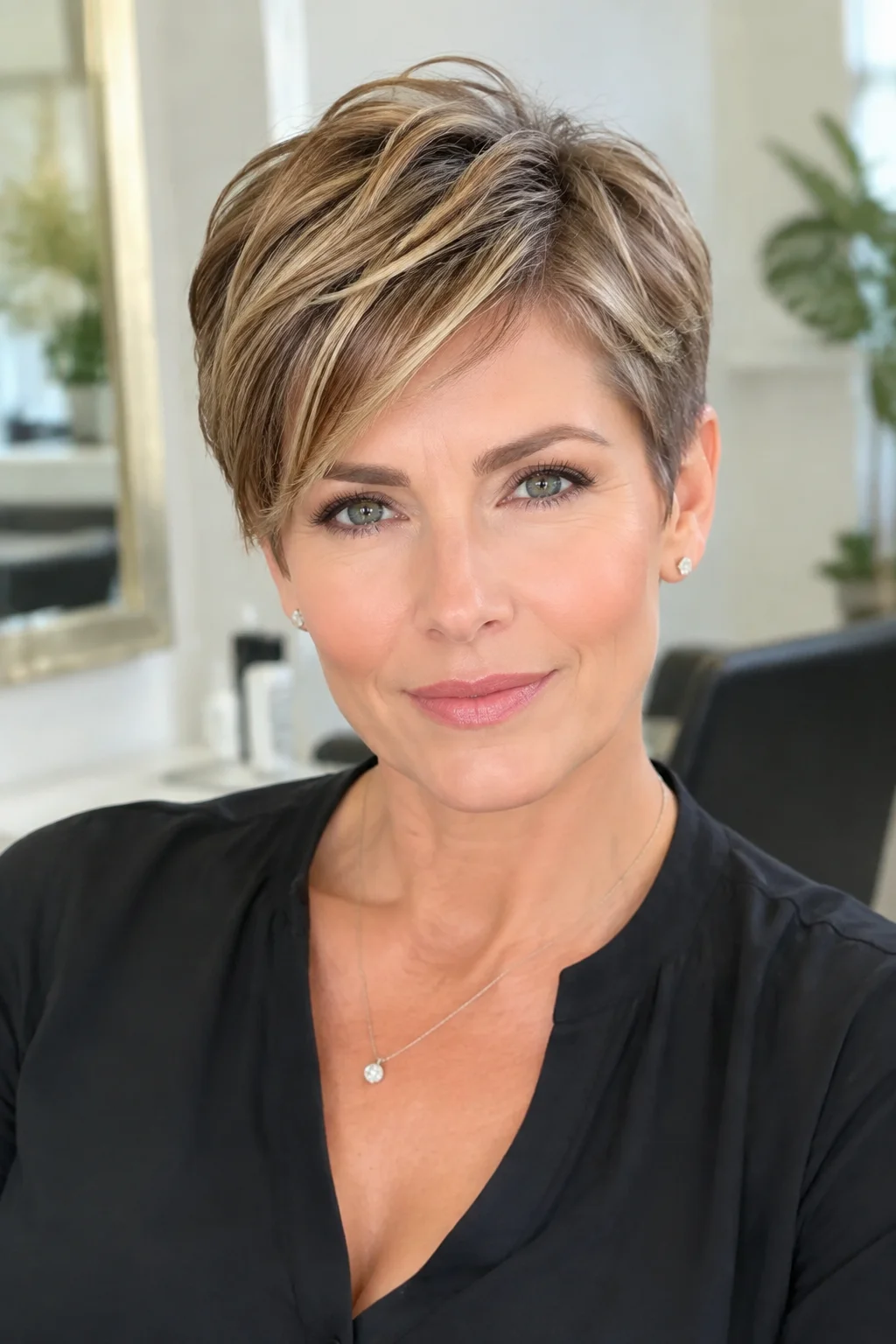
This pixie keeps the sides sleek and close to the head while adding a bit of texture on top for interest. It’s a good middle ground between a fully sleek pixie and something with more movement. A dab of texturizing paste worked through the top is the entire routine most mornings.
Straight Lob with Blunt Ends
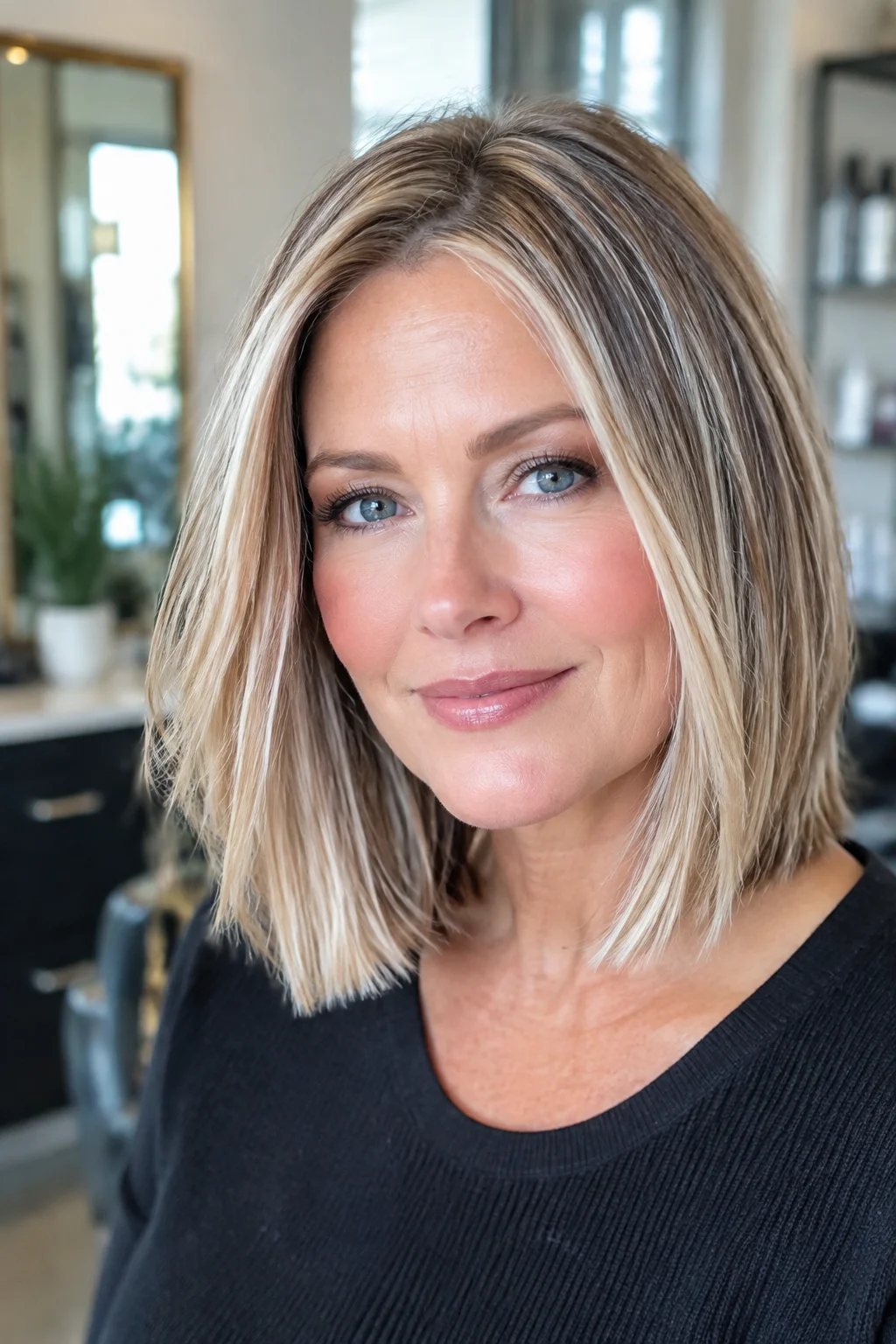
The lob, or long bob, usually falls between the collarbone and shoulders, and cutting it with blunt ends keeps maintenance simple. There’s no shaping to lose, so it grows out without a hard line marking the transition. Straight hair suits this length particularly well because it shows off the crisp bottom edge. It works for office days and weekend errands equally, which is part of why it stays such a popular choice among women looking to simplify their routine.
Face-Framing Straight Bob at Jawline
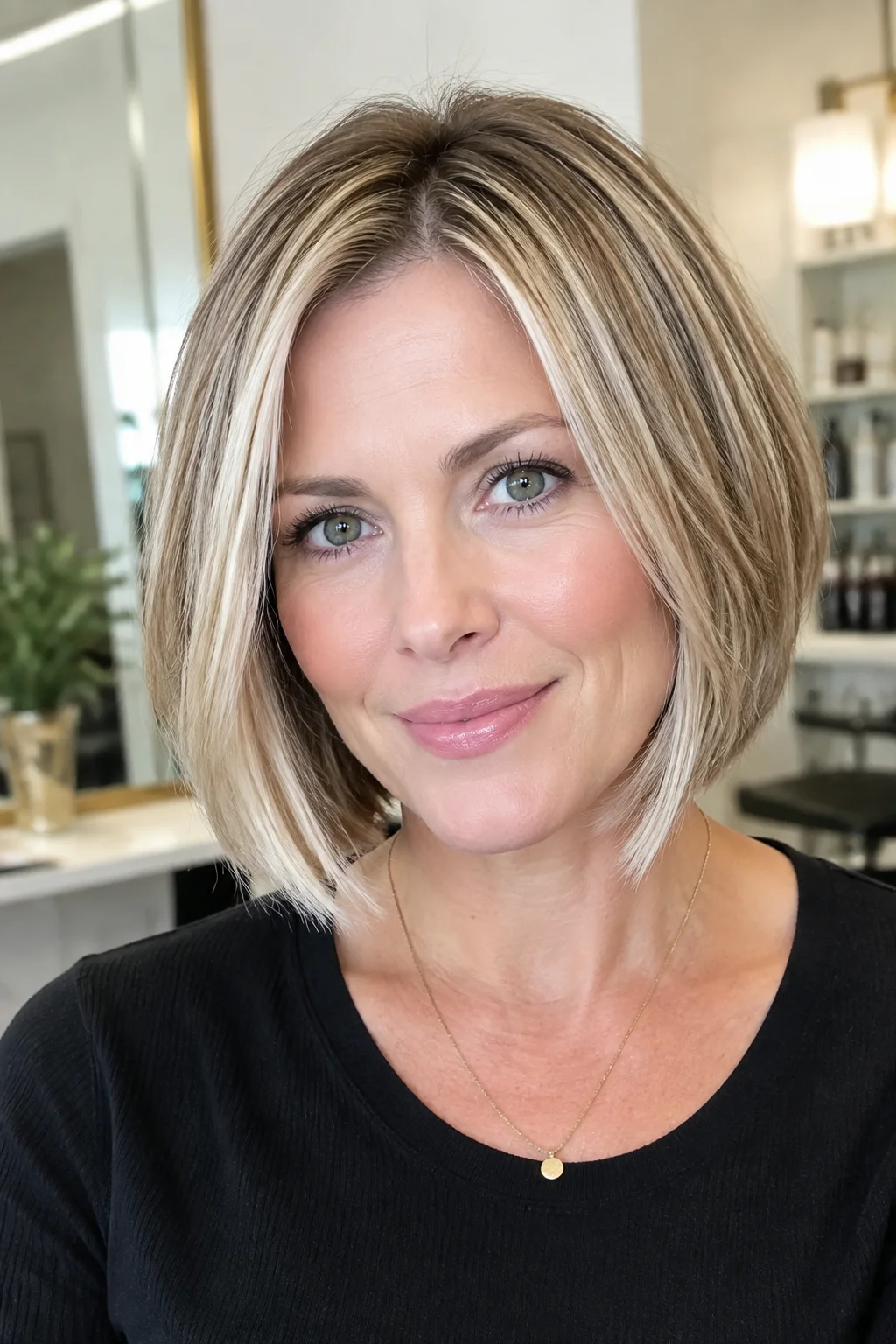
Cutting a bob right at the jawline with slightly shorter pieces near the face gives definition without any layering throughout the rest of the cut. It highlights cheekbones and softens a square jaw. Styling amounts to a comb-through and maybe a light shine serum.
Long Straight Hair with Subtle Wispy Layers
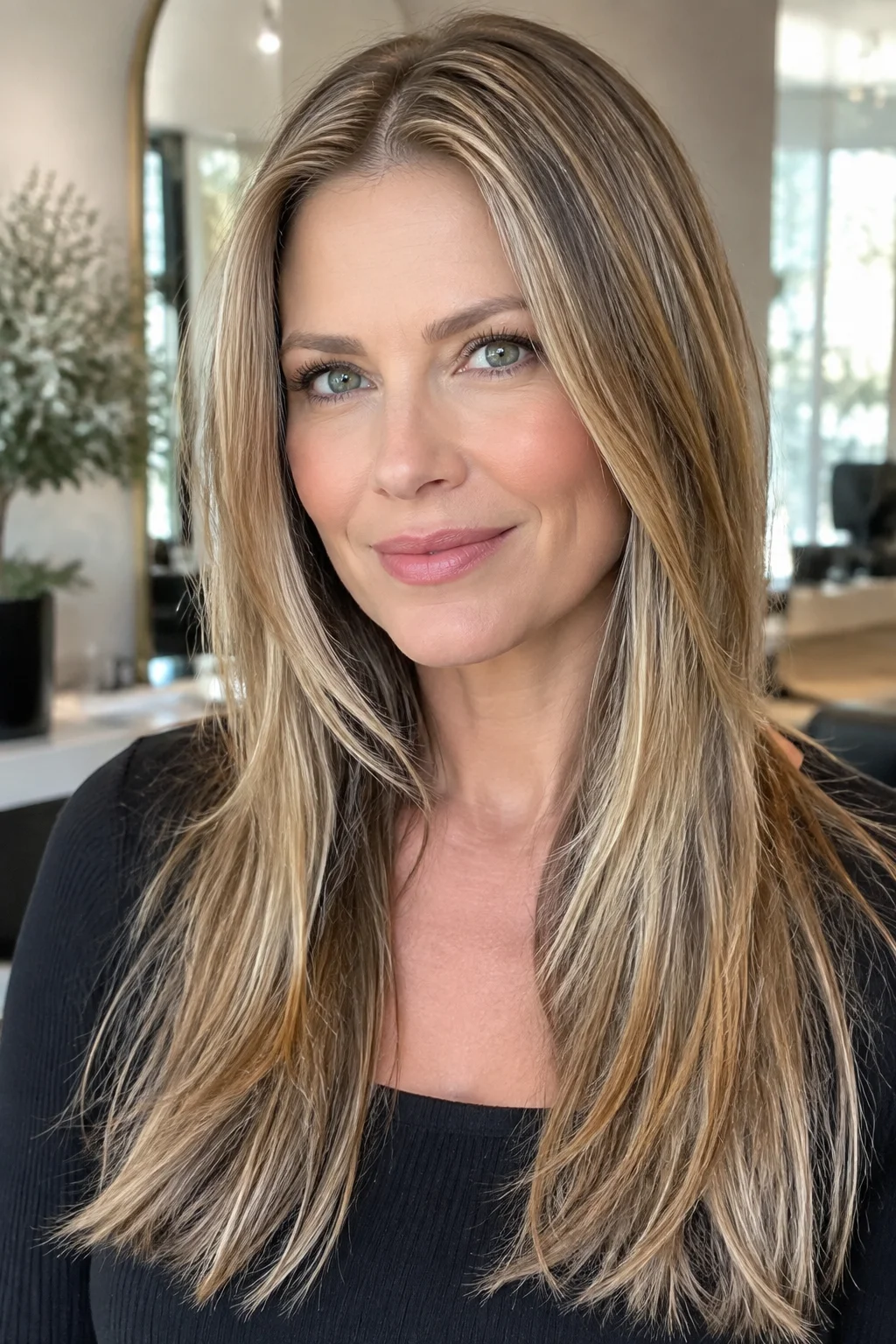
Wispy layers sound high-maintenance, but when they’re kept light and placed mostly around the crown, they add movement without requiring a curling iron to activate them. The rest of the length stays straight and simple. This style suits women who want a little softness at the top of the head while keeping the overall silhouette long and streamlined. Air drying works fine here, though a quick pass with a flat iron on humid days keeps flyaways down.
Straight Shag with Blunt Layers
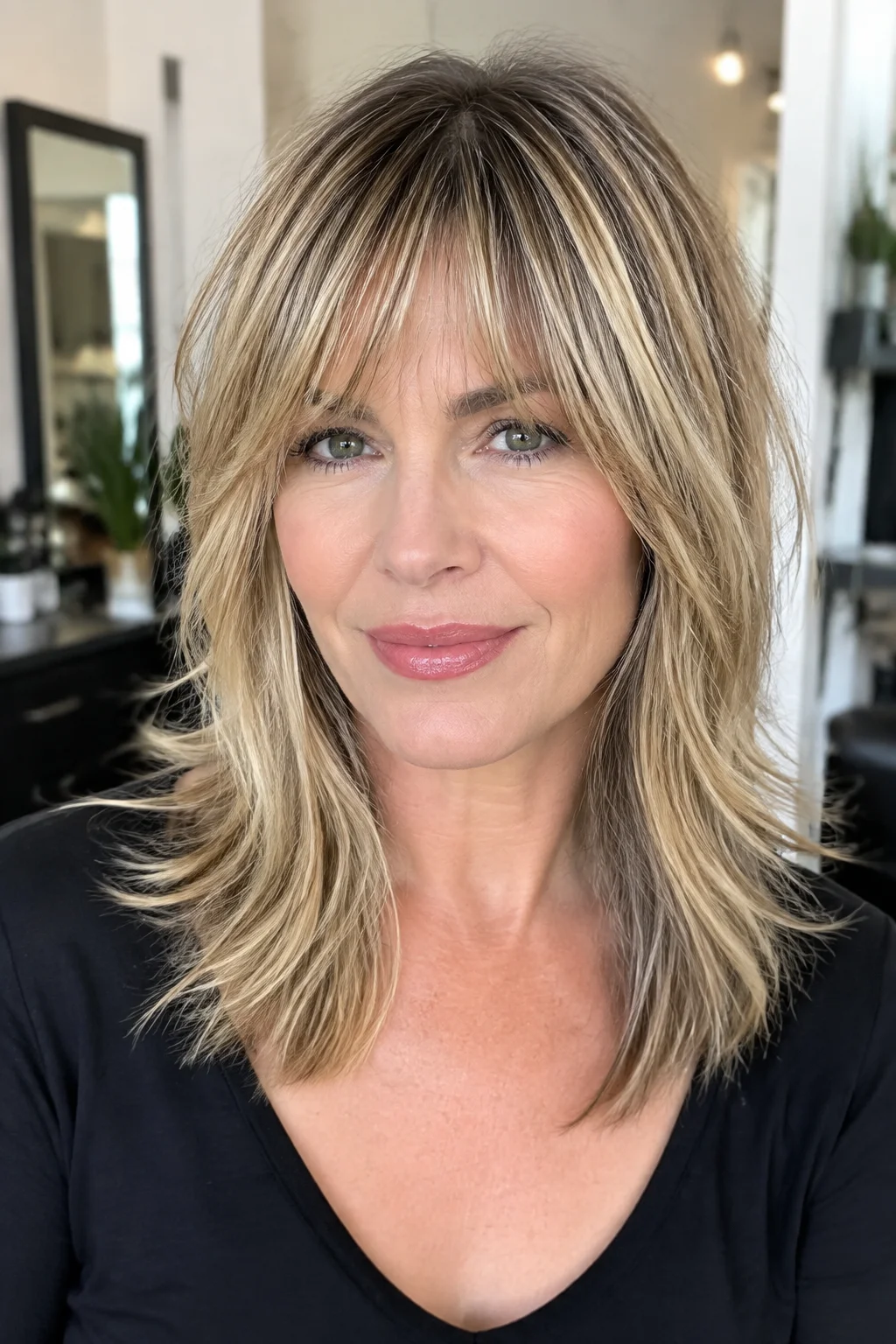
A shag built from blunt, choppy layers gives straight hair texture it wouldn’t otherwise have. It looks like it has more body than it actually does, thanks to how the layers are stacked. This cut is a good option if your hair tends to look stringy or lifeless when left completely untouched. Because the layers are cut with intention rather than feathered thin, the shape holds even without heat styling. Regular trims keep the choppy ends from growing into a shapeless mess.
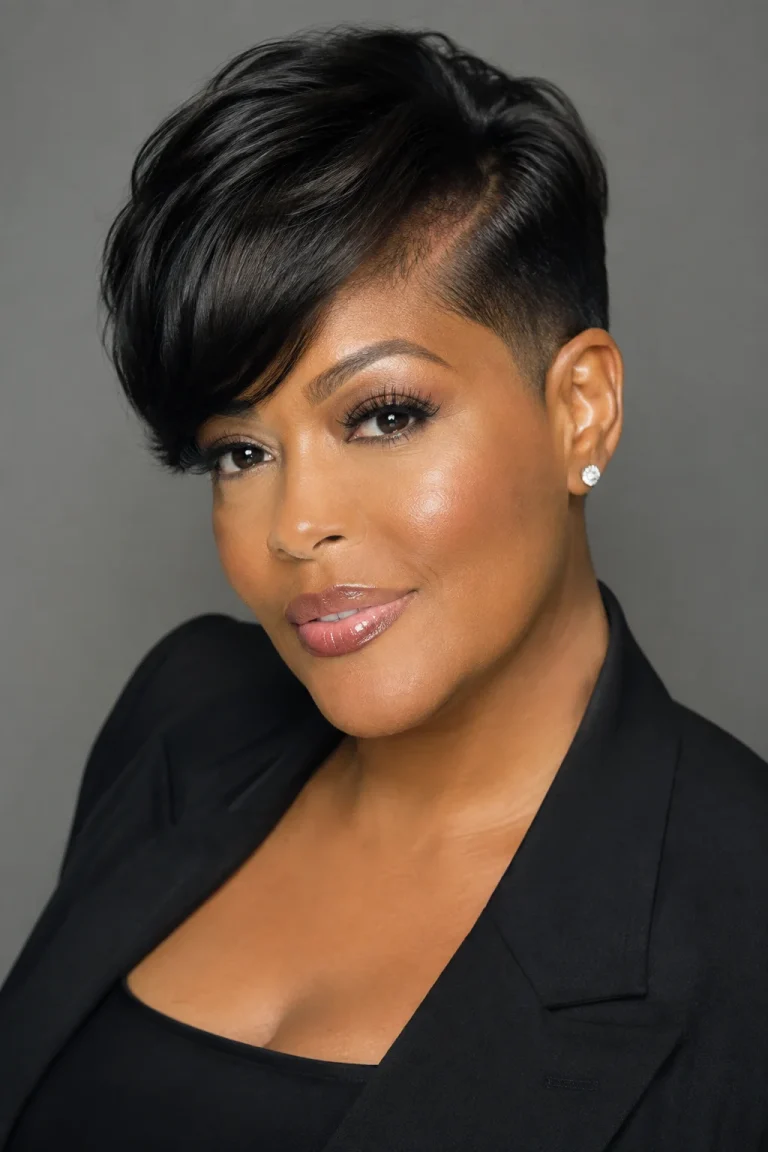
Sleek Straight Bob with Undercut
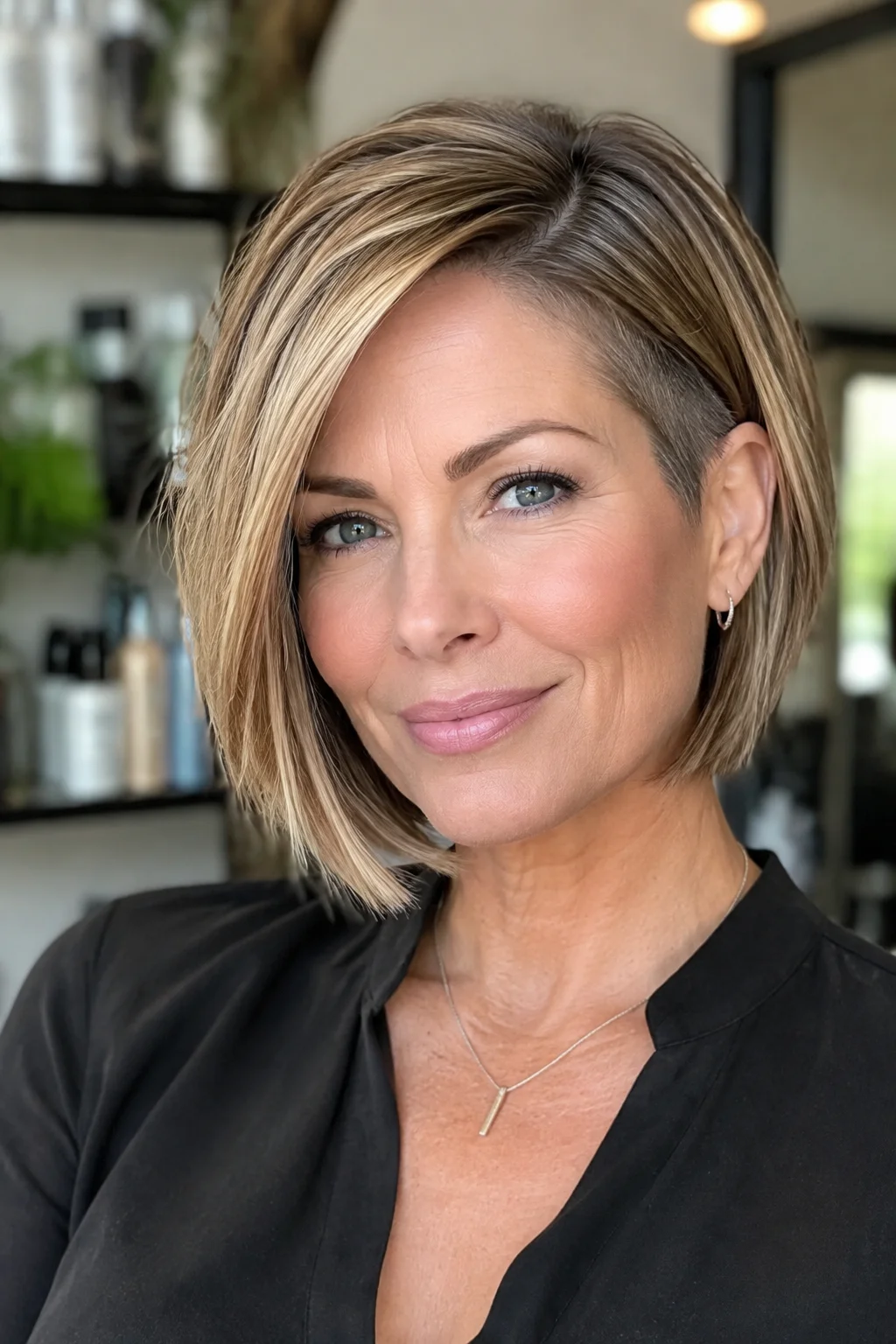
Shaving or clipping a small section underneath a bob removes bulk without changing the visible length on top. This keeps the outer layer smooth and heavy, which is exactly what straight hair needs to look sleek without a lot of product. It’s a great pick if your hair runs thick and tends to puff out at the bottom.
Straight Hair with Deep Side Sweep
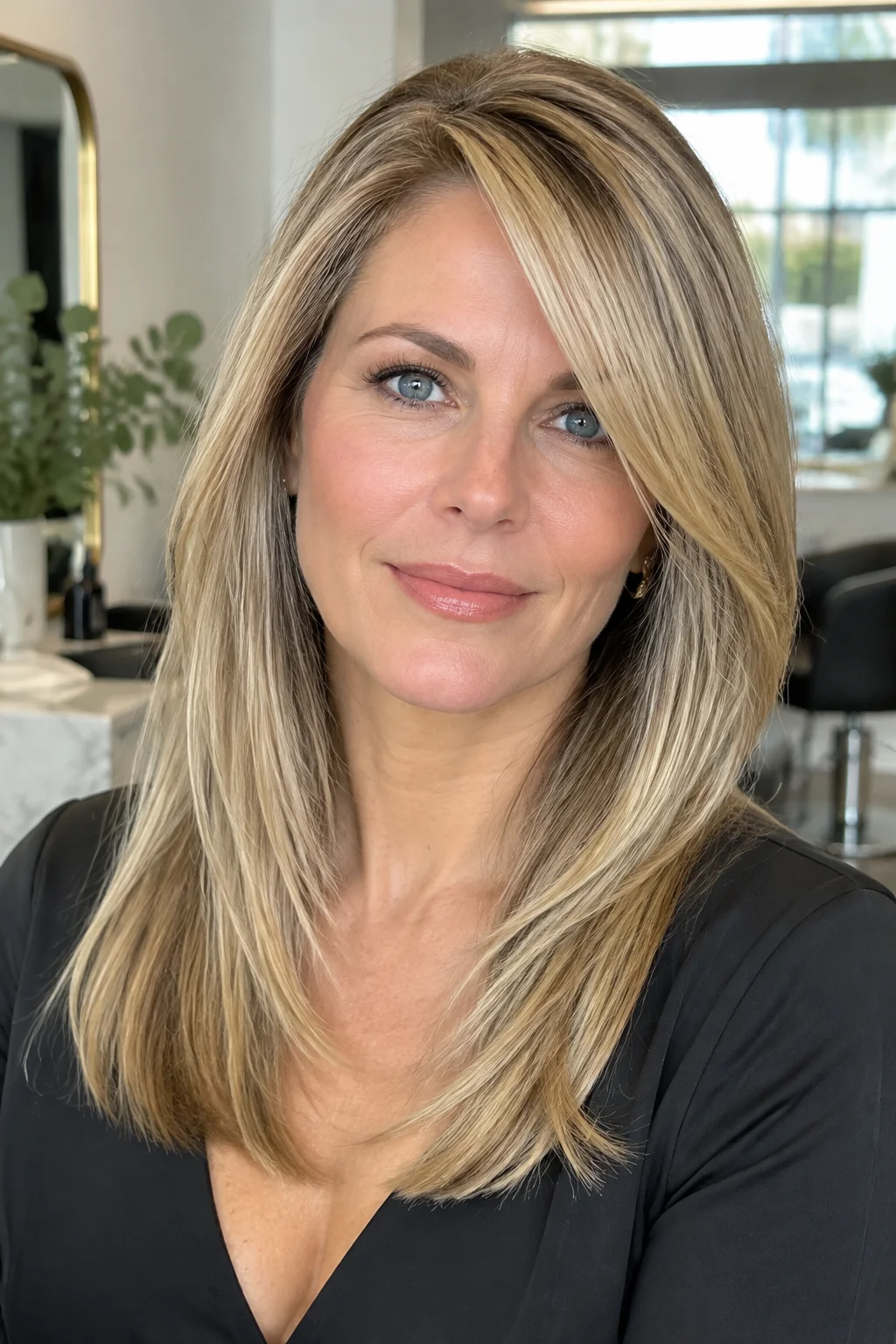
Sweeping a large section of hair to one side changes the whole shape of the face without any cutting technique required, just a strong part and a bit of clipping while it dries. This works on almost any length. It’s especially useful for softening a fuller face or balancing asymmetrical features. The style takes seconds to recreate each morning once you’ve found your preferred part placement, and it holds all day on straight hair without pins or spray.
Collarbone-Length Straight Cut with Minimal Styling
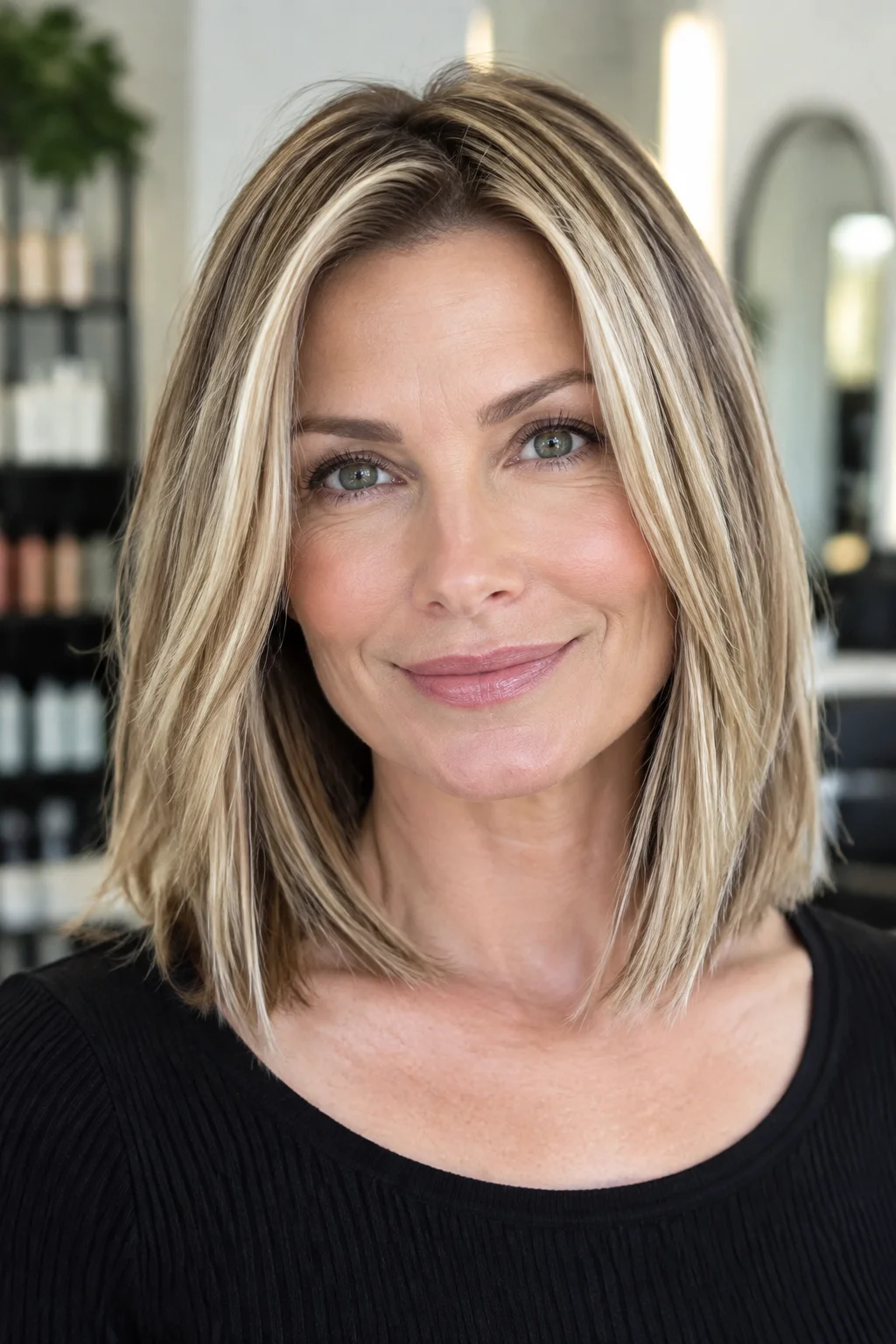
Landing right at the collarbone, this cut is long enough to pull back but short enough to dry quickly. Minimal layering keeps the ends thick and blunt looking. It suits almost every face shape, which is part of its appeal for women who want one dependable style they don’t have to think about.
Short Straight Cut Above Ears
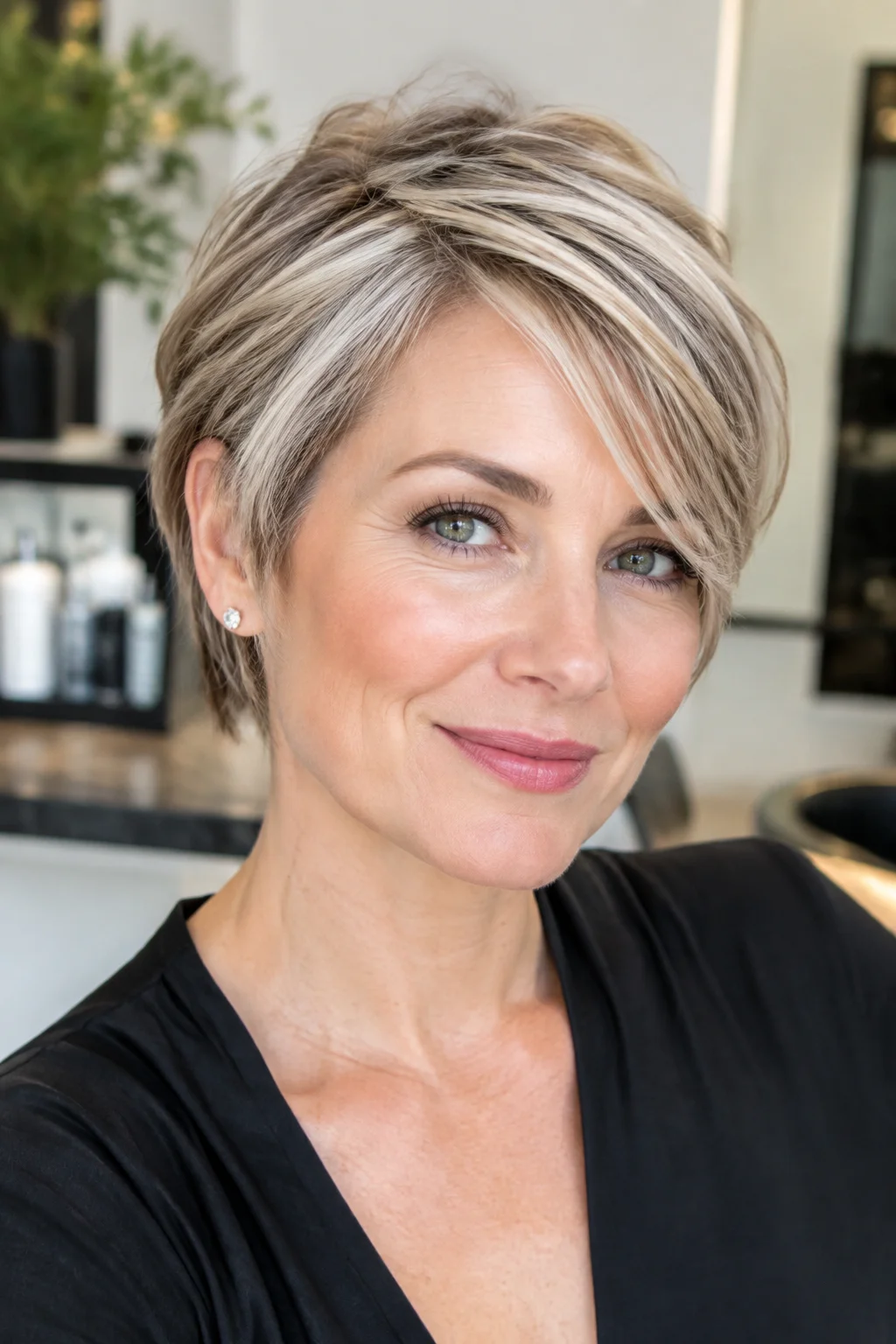
This cut sits above the ears, similar to a classic pixie but slightly longer on top for a bit more versatility. It suits fine to medium straight hair particularly well since there’s less length to weigh it down. Wash and go styling is basically the whole routine, with maybe a comb through damp hair to set the shape. Tip: keep sideburns and neckline trimmed between cuts so the shape doesn’t grow out shaggy.
Straight Hair with Straight-Across Bangs
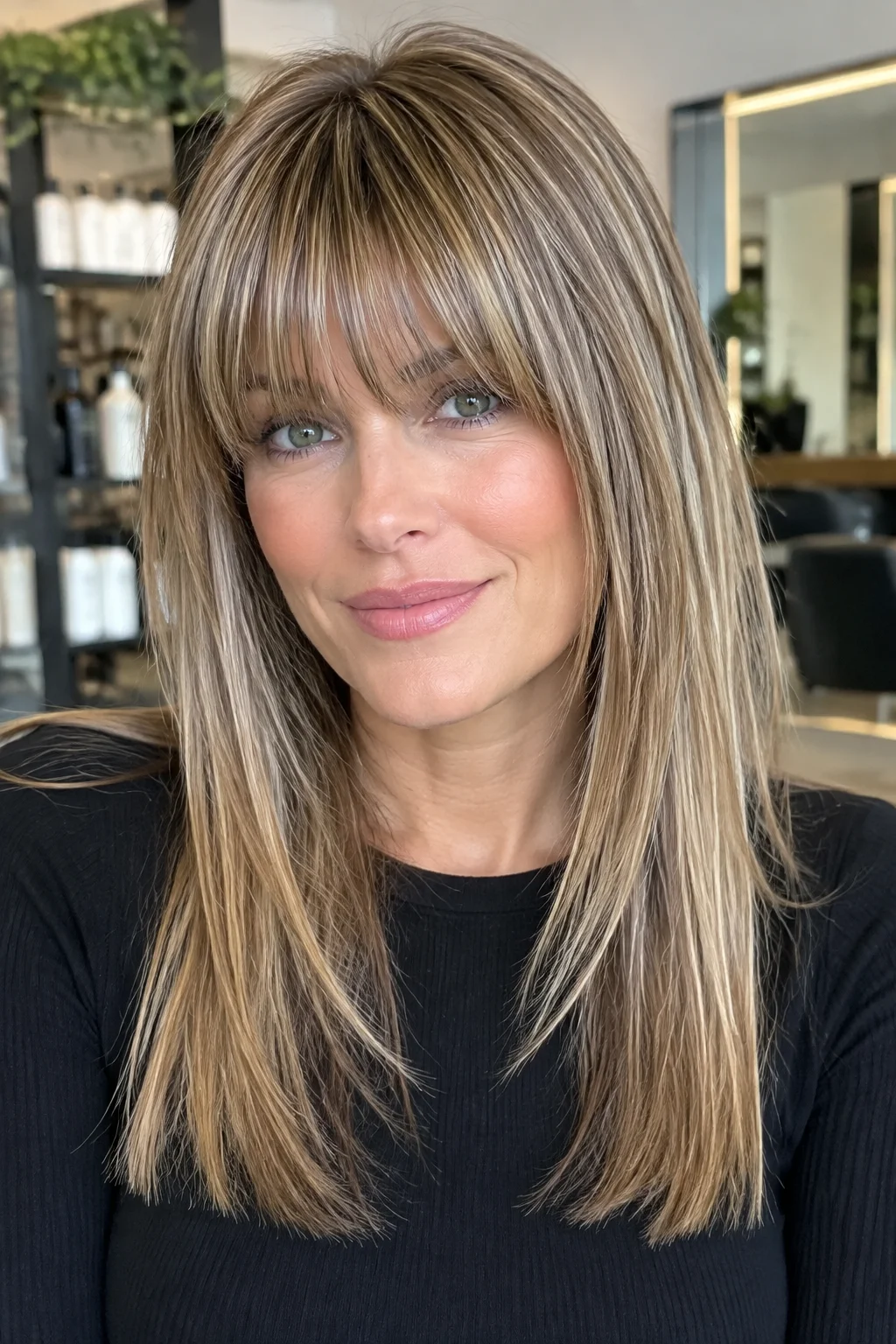
Full bangs cut in a straight line pair naturally with straight hair since there’s no curl pattern pulling them out of shape. This look works at almost any length, from a bob to hair past the shoulders. The bangs need trimming every few weeks, but the rest of the cut stays low-effort.
Graduated Straight Bob Shorter in Back
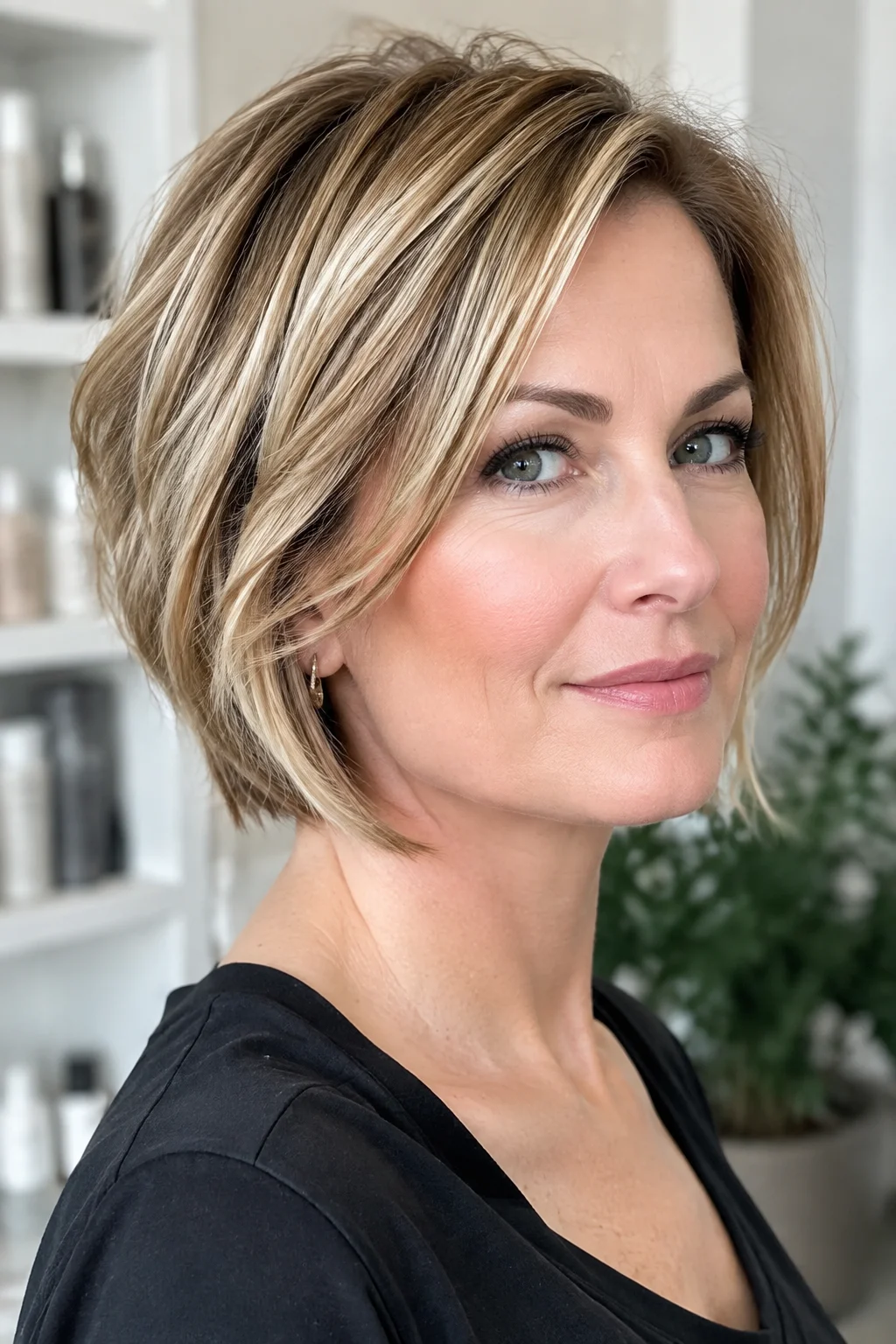
Graduation means the back sits shorter than the front, creating a rounded shape that tapers as it moves forward. This adds structure without requiring layers throughout the whole head. It’s flattering for a lot of face shapes because the angle draws the eye upward. Straight hair holds the graduated line cleanly, so the shape stays recognizable even between salon visits. Styling is mostly about keeping the ends smooth, which a flat iron or even a good brush can handle in a few minutes.
Mid-Length Straight Hair with Tucked Sides
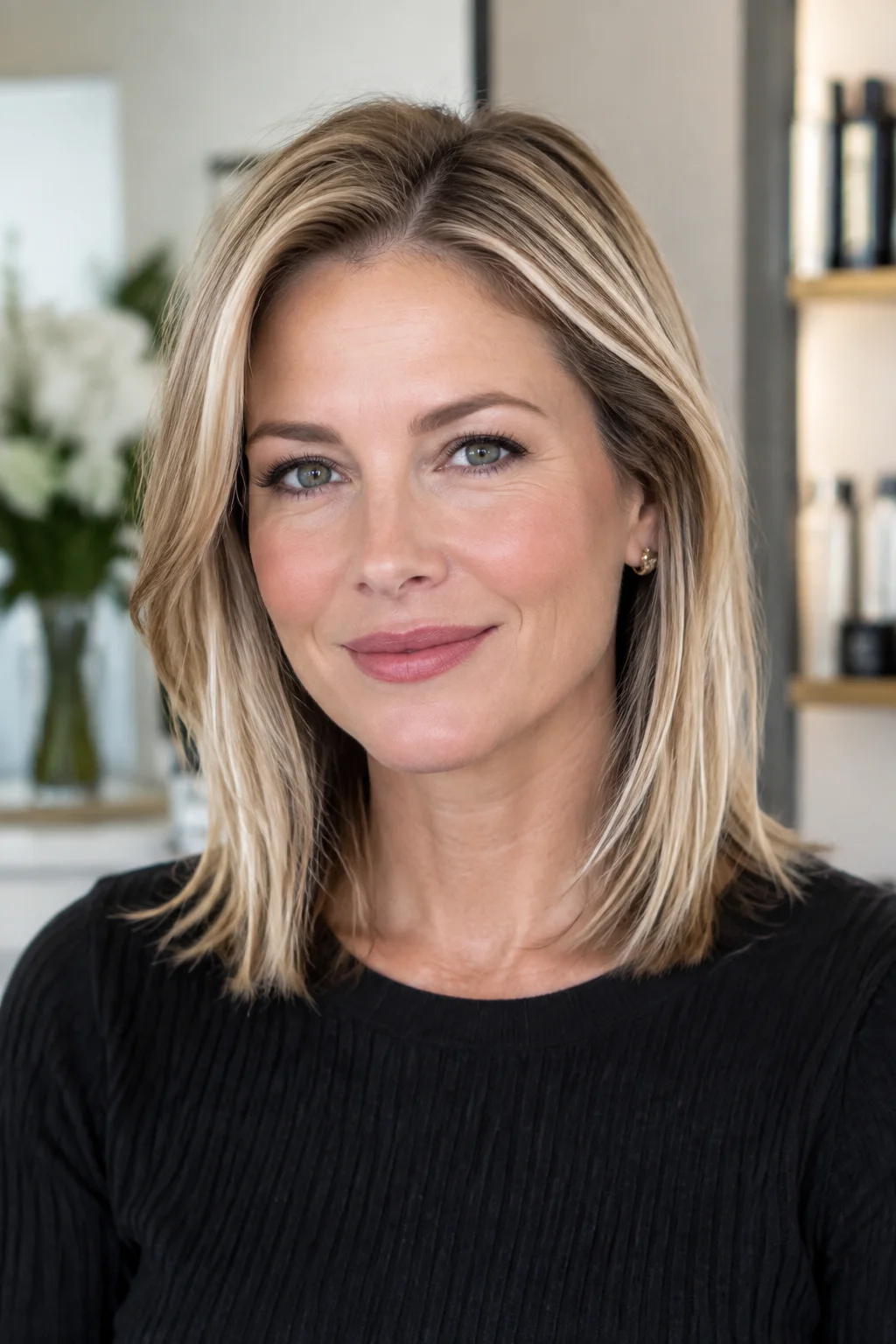
This style sits somewhere between a lob and shoulder-length cut, kept simple with the sides tucked behind the ears most days. There’s no fussy layering, just a clean length that moves easily. It’s an easy transition style if you’re growing out a shorter cut and don’t want an awkward in-between phase.
Straight Crop with Textured Layers on Top
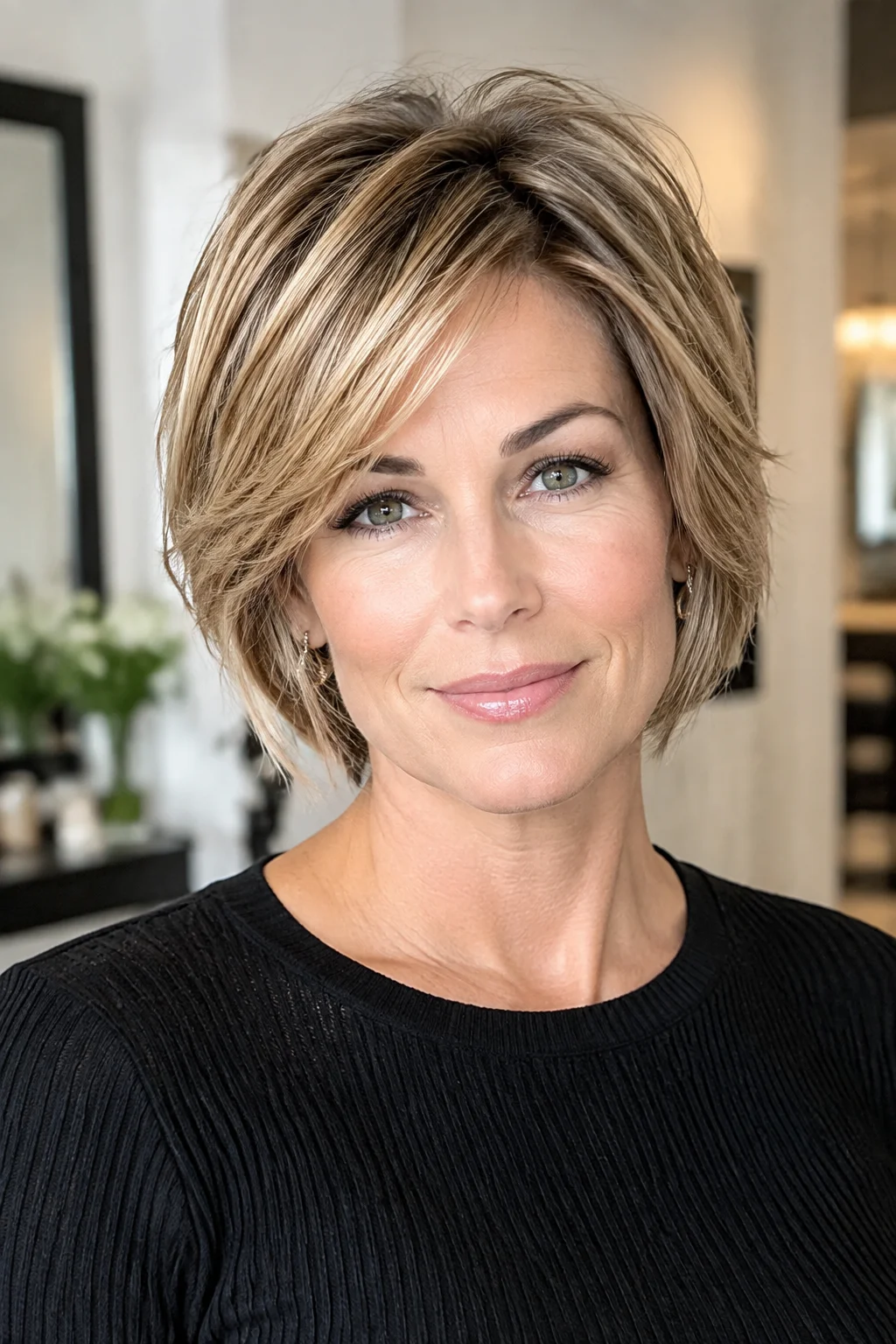
A cropped cut with some textured layers on top gives straight hair a bit of lift at the crown, which helps if your hair tends to sit flat. The sides and back stay close and simple, keeping the overall shape tidy. A small amount of styling cream is usually enough to define the top pieces.
Long Straight Ponytail-Ready Hair
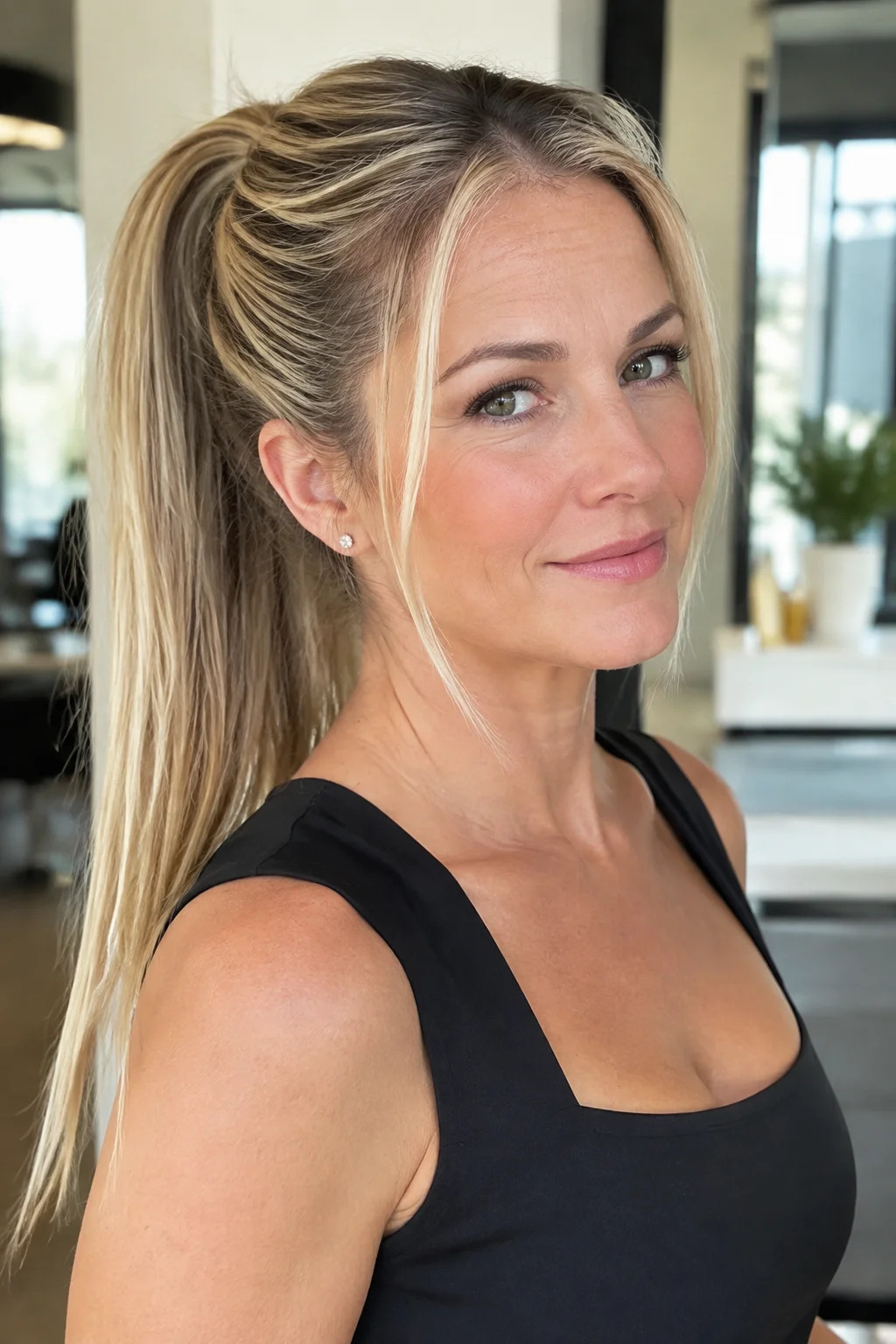
Some women over 40 keep their hair long specifically because it pulls back into a ponytail so easily, and this cut is built for exactly that. Minimal layering near the face keeps flyaways down when hair is pulled tight. The rest stays one length so the ponytail sits smooth rather than lumpy. This is one of the most practical low-maintenance straight hair hairstyles for women over 40 who move between work and errands and want one style that adapts fast.
Straight Bob with Razor-Sharp Line
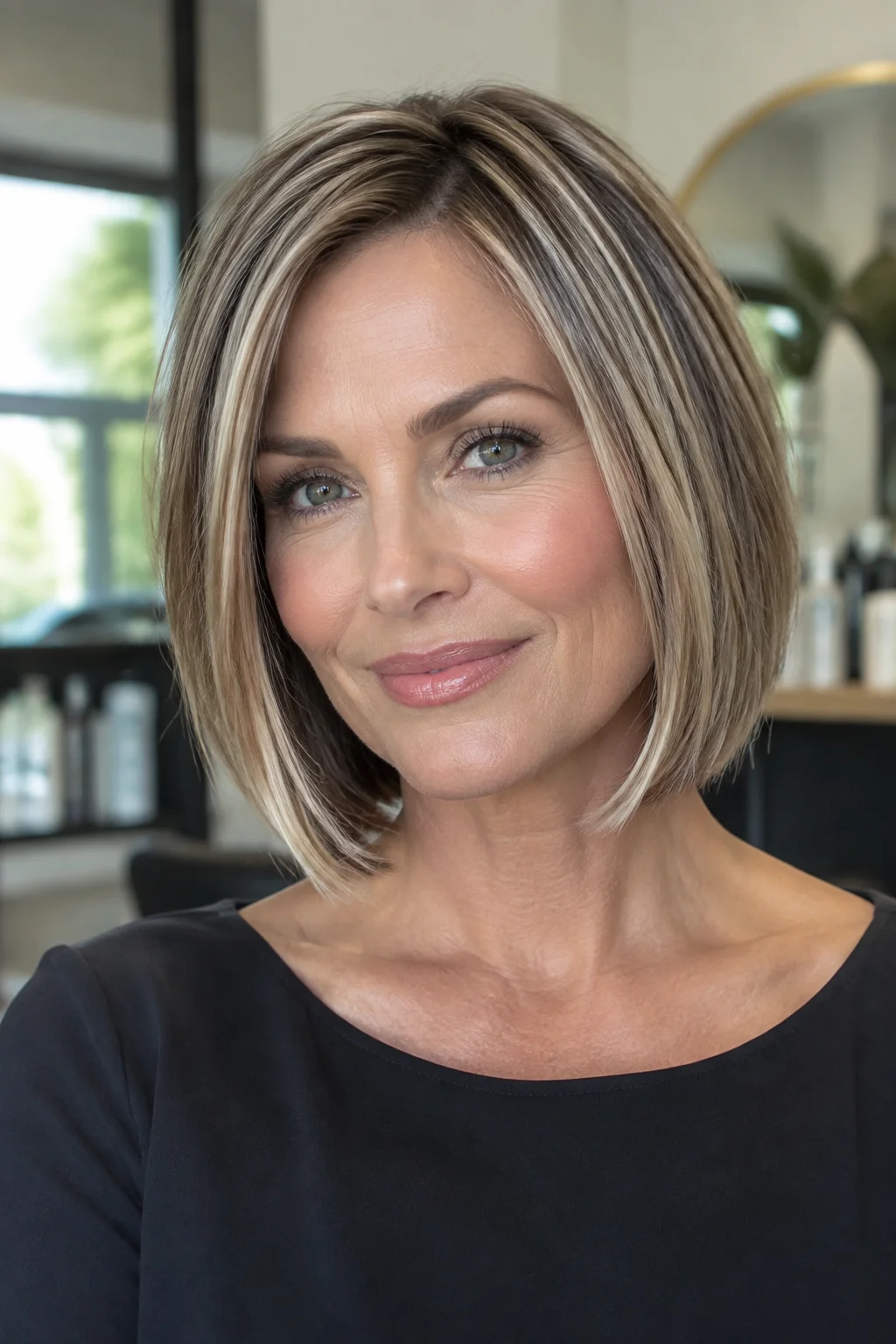
A razor-cut bob creates a crisp, geometric line along the bottom that looks intentional even when you haven’t touched a styling tool. The sharpness comes from the cutting technique itself, not from daily maintenance. This works best on straight hair with good density, since thinner hair may not hold the sharp edge as cleanly.
Choosing the Right Low-Maintenance Cut for You
With 22 options on the table, picking one comes down to how much length you’re willing to give up and how much texture you actually want to deal with. If you barely have time to brush your hair, look toward the shorter end: the sleek pixie cut for fine straight hair, the textured pixie with straight sides, or the short straight cut above ears all dry in minutes and need very little product. If you love long hair but hate styling it, the straight long hair with center part and the long straight ponytail-ready hair are the two easiest long options since they skip layering almost entirely.
Somewhere in the middle, the straight lob with blunt ends and the collarbone-length straight cut with minimal styling both give you a bit more length while still drying fast. Avoid heavily layered shags or wispy cuts if mornings are truly tight, since even light layering asks for a bit more brushing and occasional heat styling to lay flat. A common mistake is choosing a cut based on a photo without considering your hair’s natural density. Thick straight hair can carry a blunt bob beautifully, while fine hair often looks better with a shorter, cropped shape that reads fuller. Talk to your stylist about your hair type before committing to length.
Final Thoughts
Straight hair has a real advantage for low-maintenance styling because it naturally falls smooth without much coaxing. The 22 cuts above cover pixies, bobs, lobs, and long lengths, so there’s a fit for whatever amount of time you actually have in the morning. Pick a length that matches your patience level, keep up with trims, and you’ll spend a lot less time in front of the mirror before you’re out the door.