Thin, flat hair gets more noticeable after 50, and straight strands without any shape tend to show it the most. The good news is that a smart haircut can fix that problem without a single perm or texturizing product. Layered straight hair hairstyles for women over 50 build in movement and lift right at the root, so hair reads thicker even on days when it hangs limp by noon. The right layers catch light differently at different lengths, which tricks the eye into seeing volume that plain, one-length hair just can’t fake. Below are eighteen cuts worth bringing to your stylist, each one picked for how it handles fine or aging hair texture. Some suit short hair lovers, others work best if you’re not ready to give up length. Pick the one that matches your face shape and your daily styling patience, not just the photo you liked.
1. Face-Framing Layers with Shoulder Length
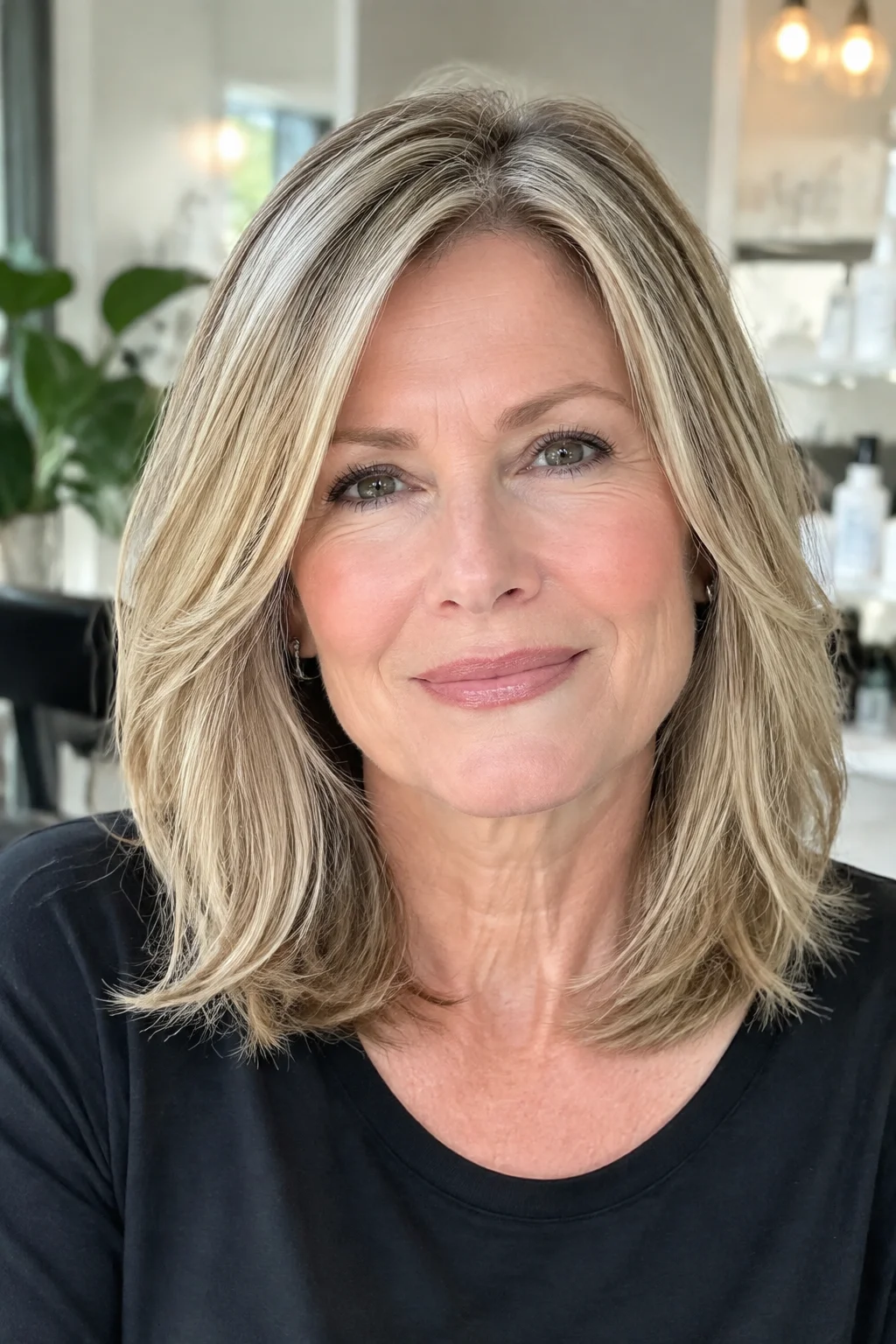
This cut keeps hair at the shoulders while cutting shorter pieces around the face to open things up. It softens the jawline and draws attention up toward the eyes and cheekbones. Because the layers start high, roots get lifted just from blow-drying with a round brush. Tip: ask your stylist to keep the face layers a bit longer than chin length so they blend instead of poofing out sideways.
2. Choppy Layers from Mid-Length
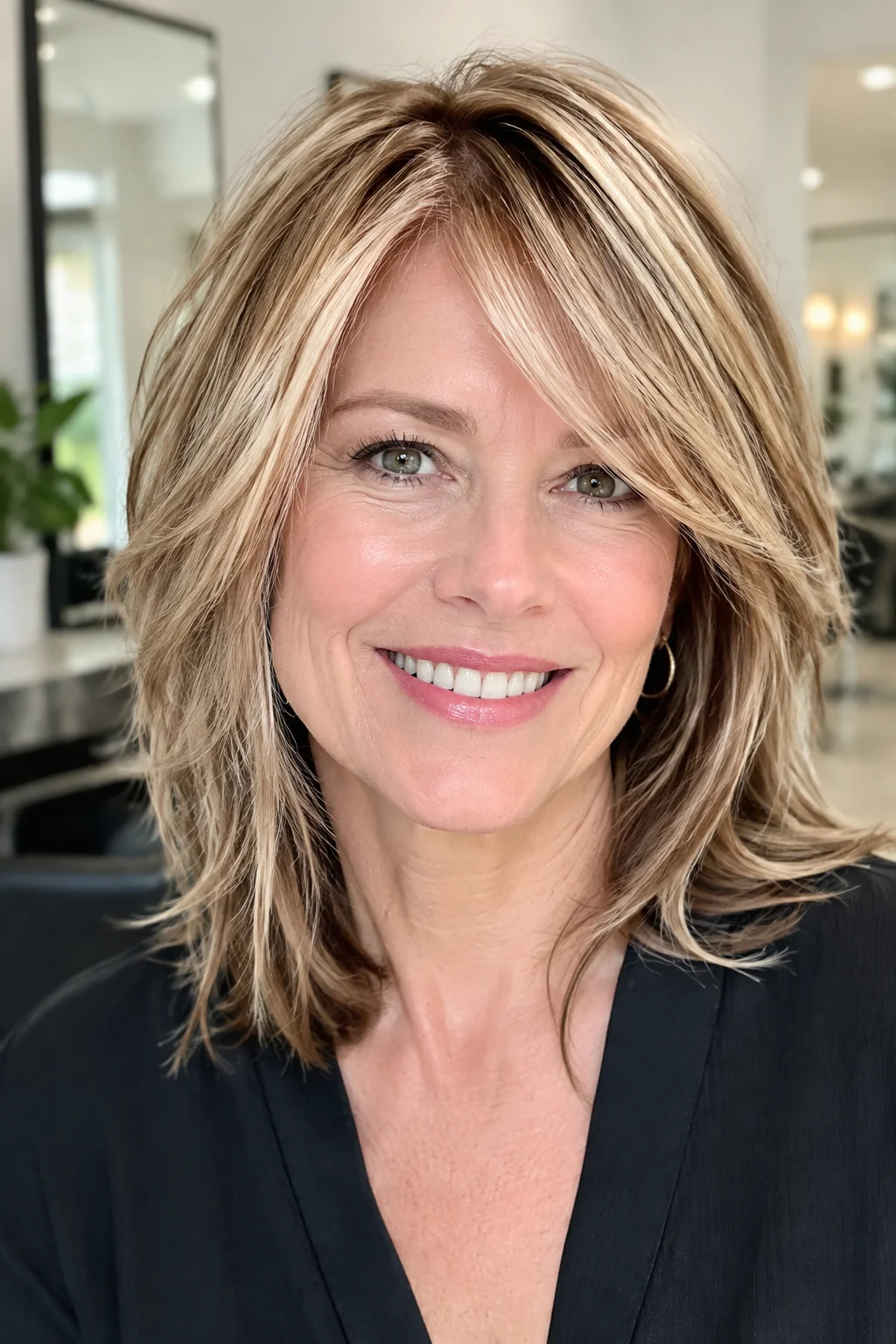
Choppy layers cut into mid-length hair break up the solid block of straight strands that can look thin and heavy at the same time. The chunks of varying length create texture without needing a curling iron. This works especially well on hair that’s naturally straight and resistant to holding curl, since the cut itself does the work. It’s a low-maintenance option for anyone tired of daily styling.
3. Blunt Bangs with Long Layered Straight Hair
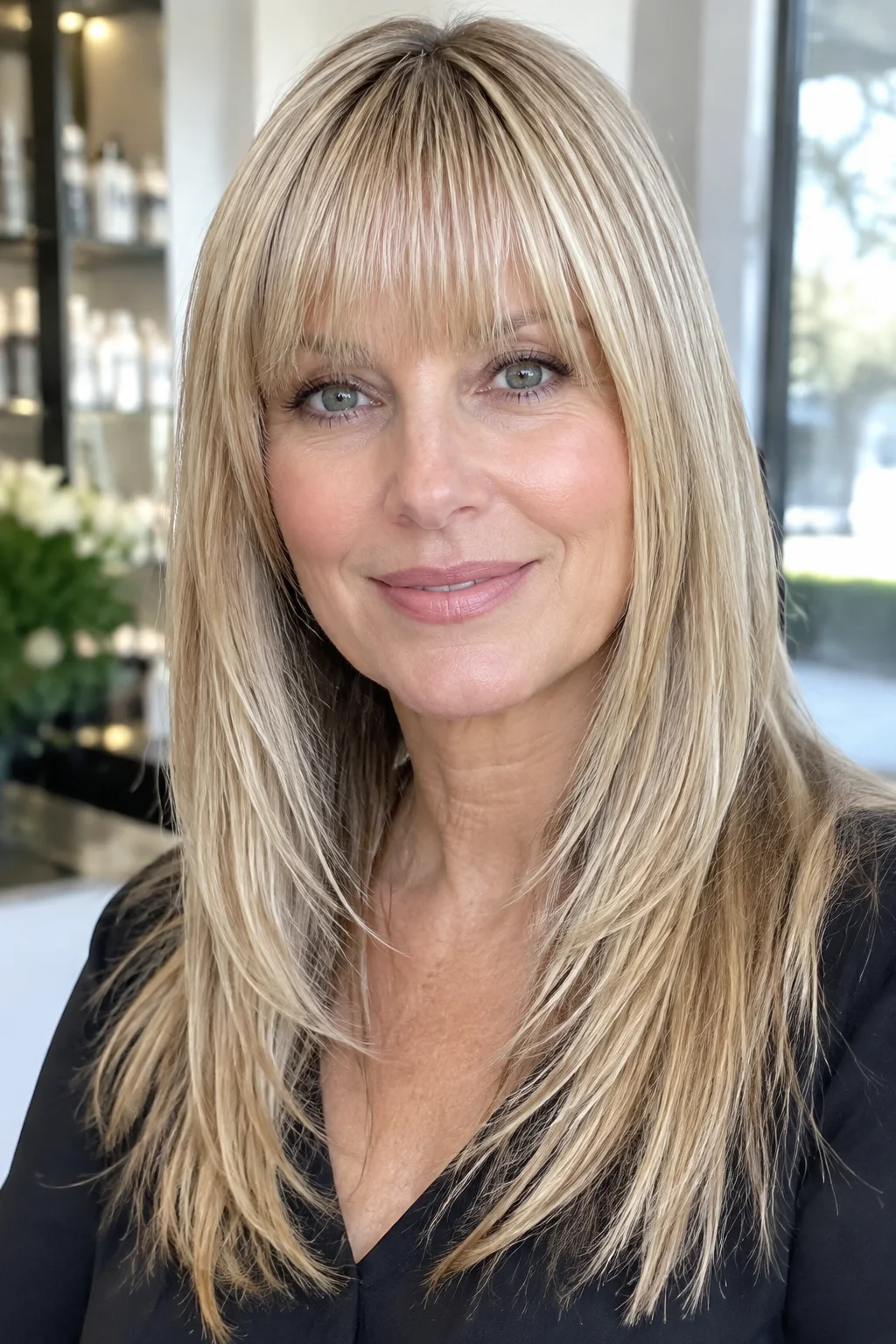
Pairing blunt, straight-across bangs with long layers gives you a bold frame up top while the rest of the hair stays soft and long. The contrast between the sharp fringe line and the loose layers below keeps the whole look from feeling too severe. This style suits women who want a graphic, modern edge but aren’t ready to cut off length. It also tends to make round or square faces look longer, since the eye travels down through the layers.
4. Tapered Layers Ending Above Shoulders
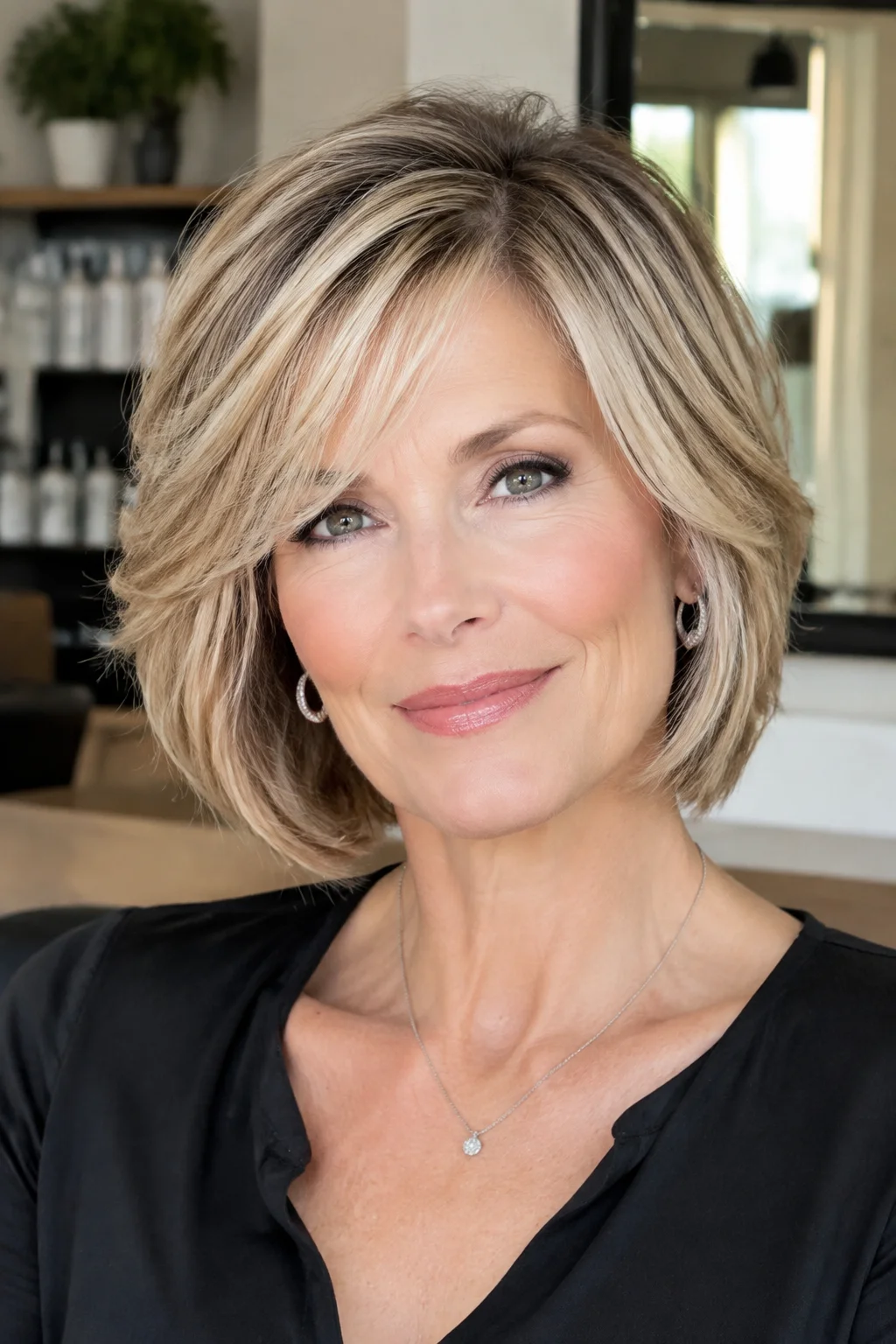
Tapering the ends just above the shoulder line removes bulk without sacrificing much length. This cut flatters women whose hair thins toward the ends, since shorter layers naturally look denser than long, stringy ones. Styling stays simple. A quick blow-dry with a round brush is usually all it needs to look finished.
5. Wispy Face-Framing Layers on Long Straight Hair
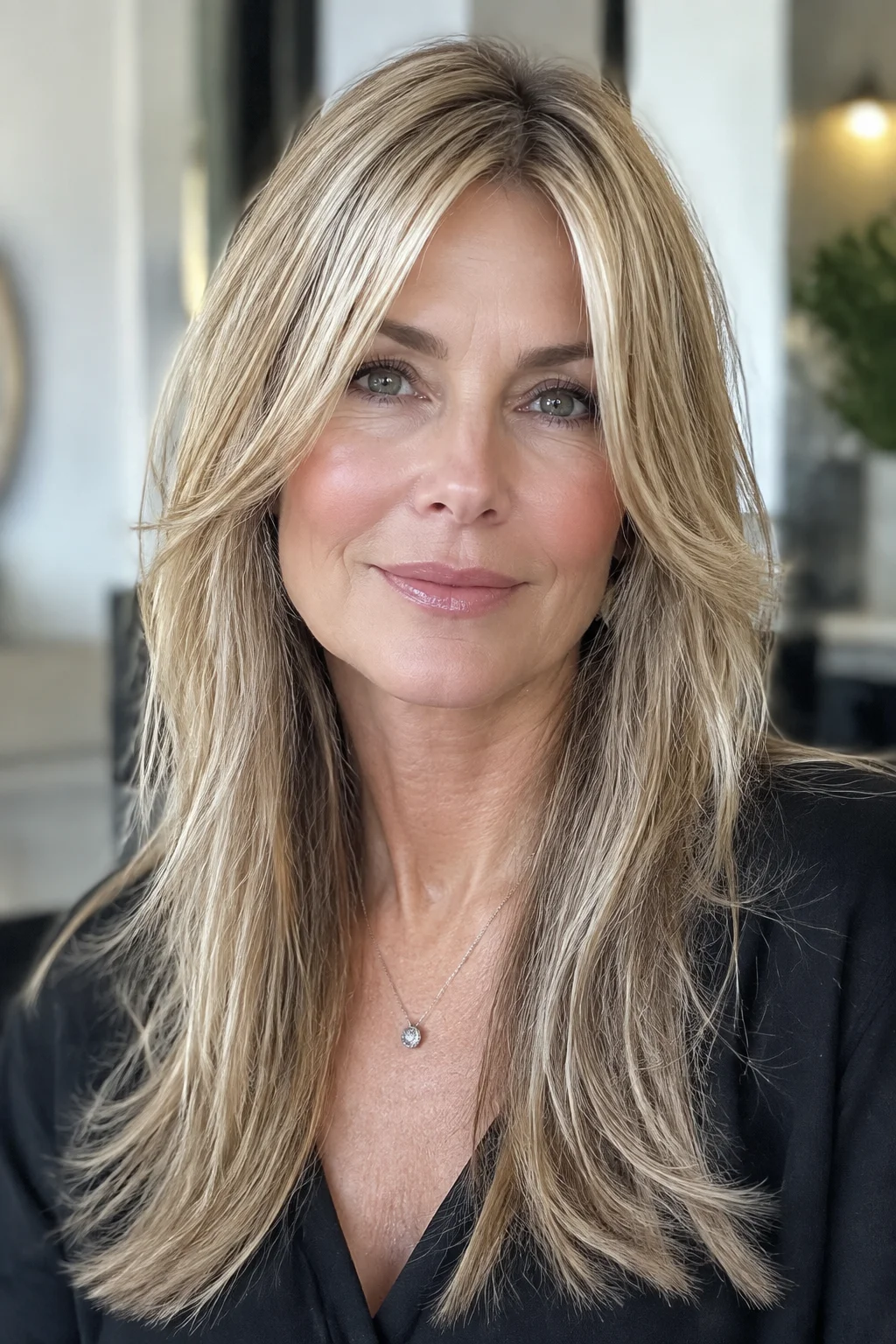
Wispy layers around the face soften harder features and add a bit of movement to hair that’s otherwise all one length. The pieces are cut thin and feathered rather than blunt, so they blend into the rest of the hair instead of standing apart. This works well for anyone who wants a subtle update without committing to a whole new shape. Think of it as a gentle refresh rather than a dramatic change.
6. Textured Pixie-Bob Hybrid with Layers
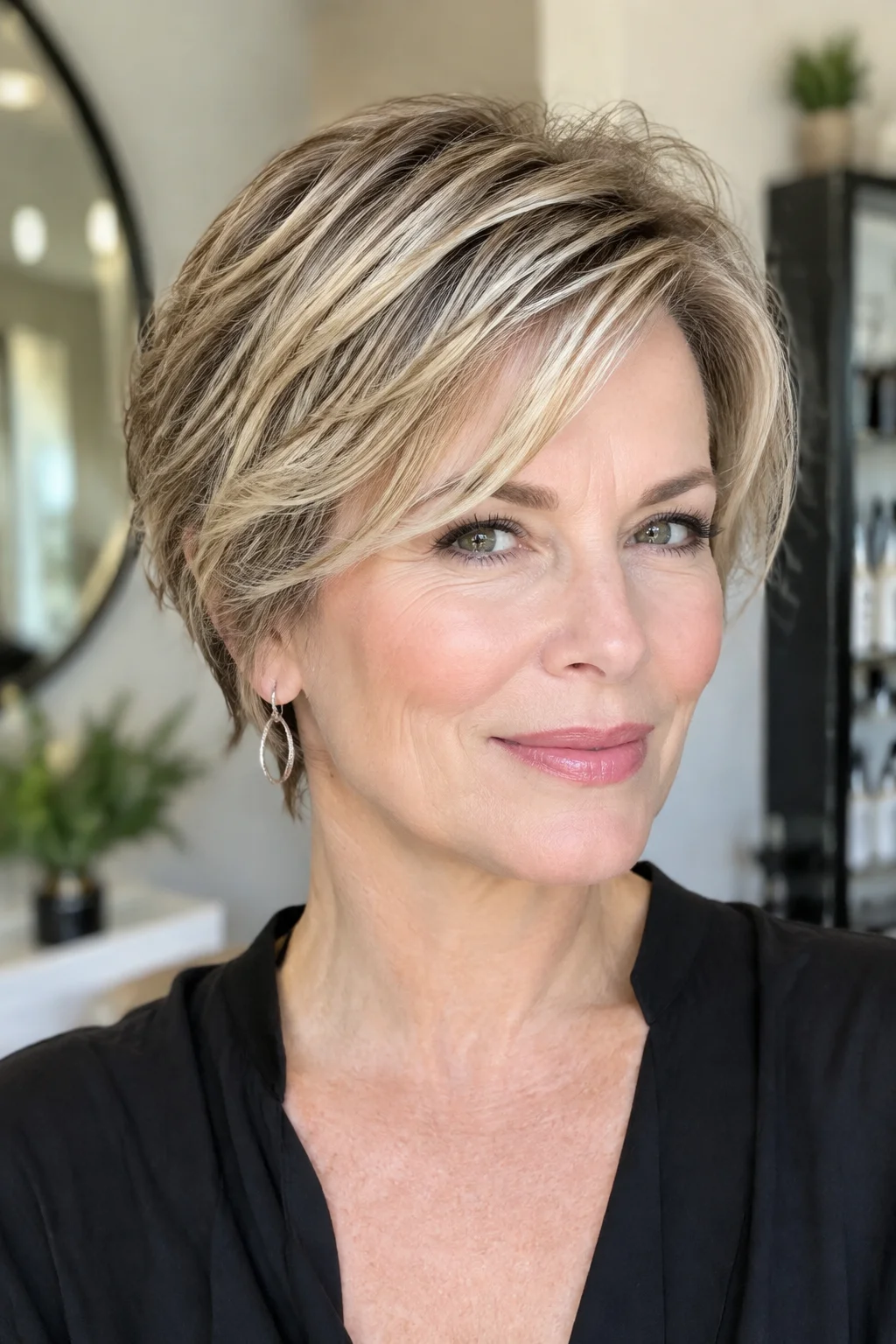
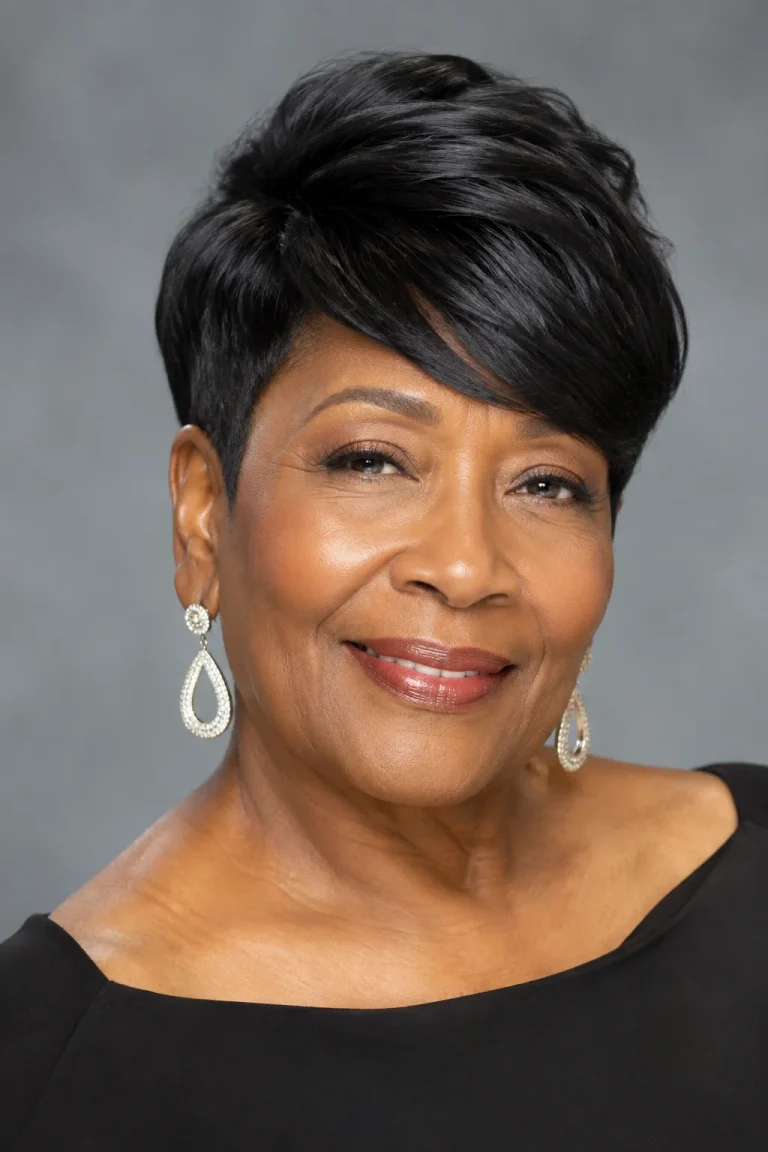
This cut splits the difference between a pixie and a bob, landing somewhere around the jaw with heavy texturizing throughout. It’s a strong choice for women who want short hair but still like a bit of length to tuck behind the ears. The layers are cut close at the crown and get longer toward the perimeter, which keeps the shape from looking boxy. Fine hair benefits the most here, since the short layers force it to sit up instead of falling flat. Styling takes minutes with a bit of pomade worked through damp hair. It also grows out fairly gracefully, so you’re not stuck getting a trim every three weeks.
7. Asymmetrical Layered Bob
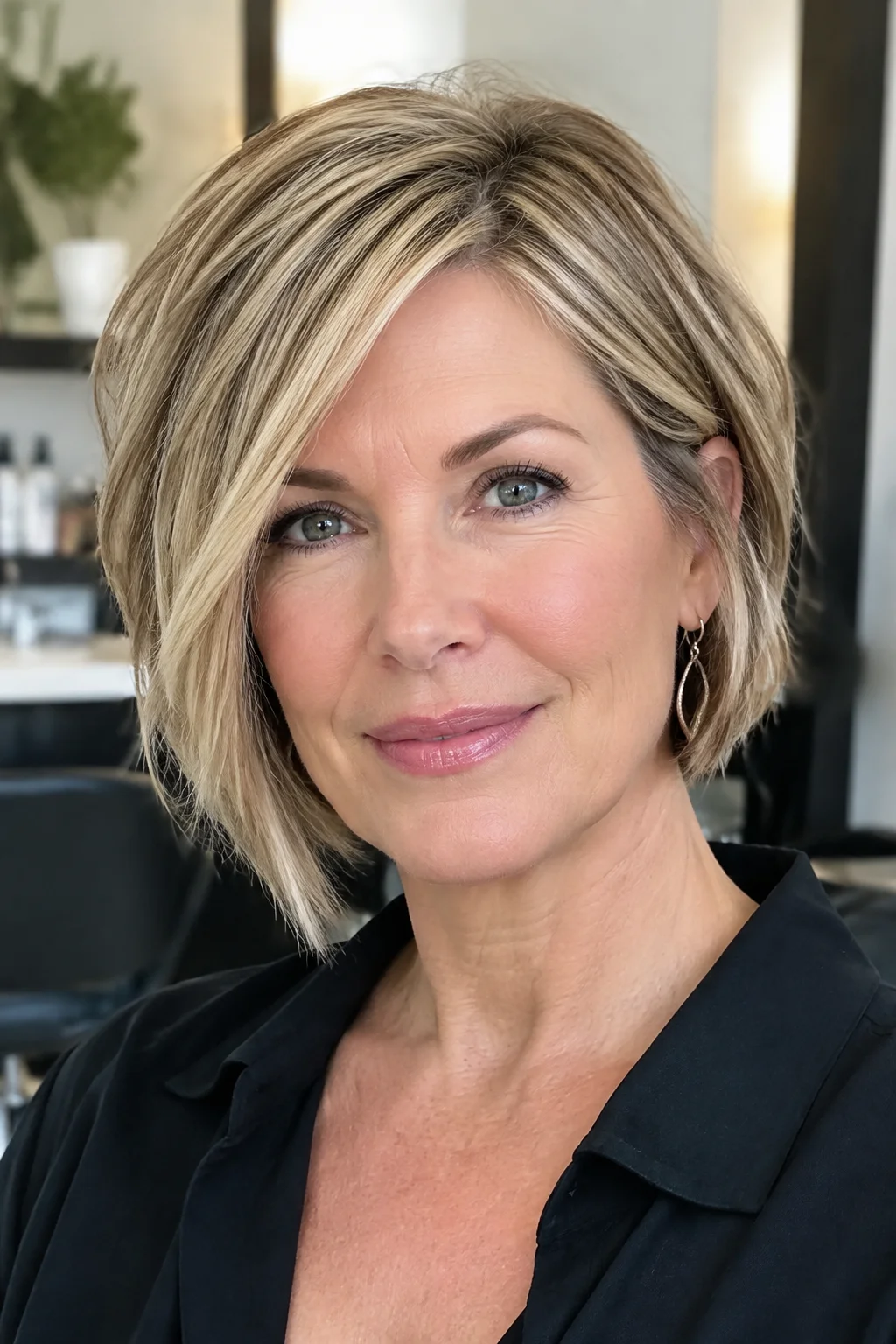
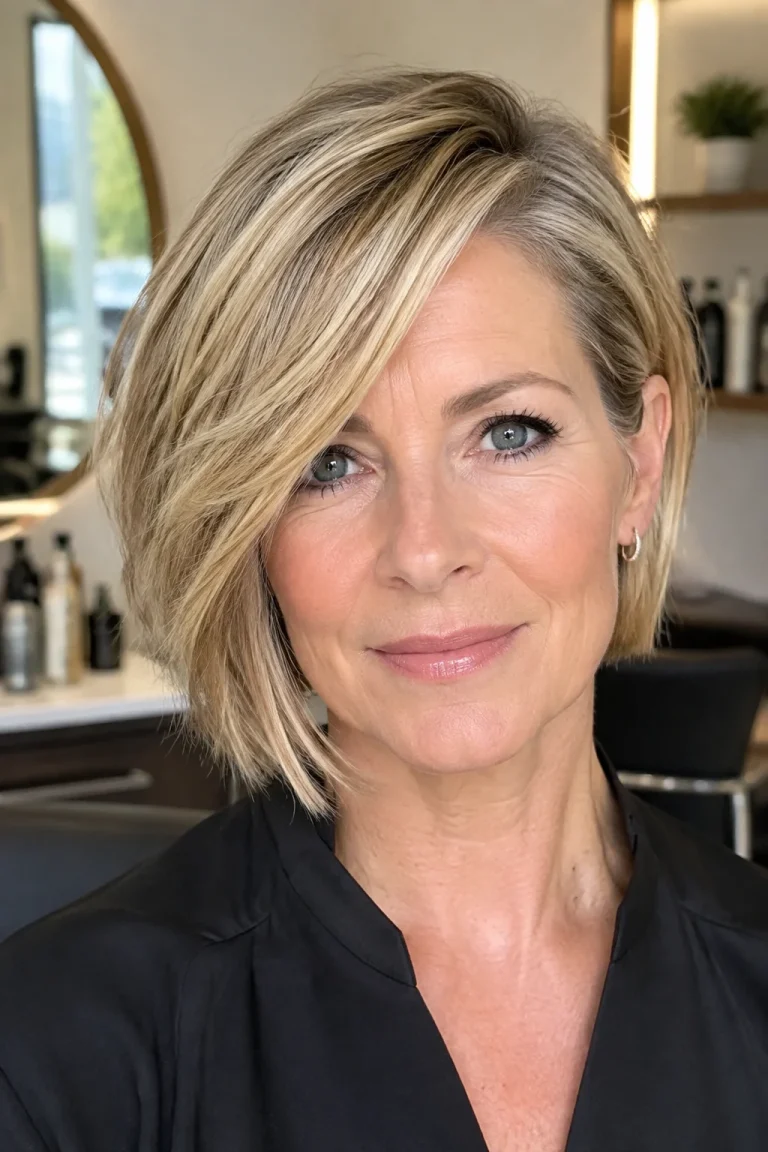
An asymmetrical bob cuts one side shorter than the other, usually with the longer side landing near the chin and the shorter side higher up. Layers are worked through both sides so the length difference doesn’t look like an accident. This is a good pick if you want something that reads as intentional and a little edgy without going short all over. It photographs well from any angle, which is more than most bobs can claim.
8. Feathered Layers Throughout Mid-Length Hair
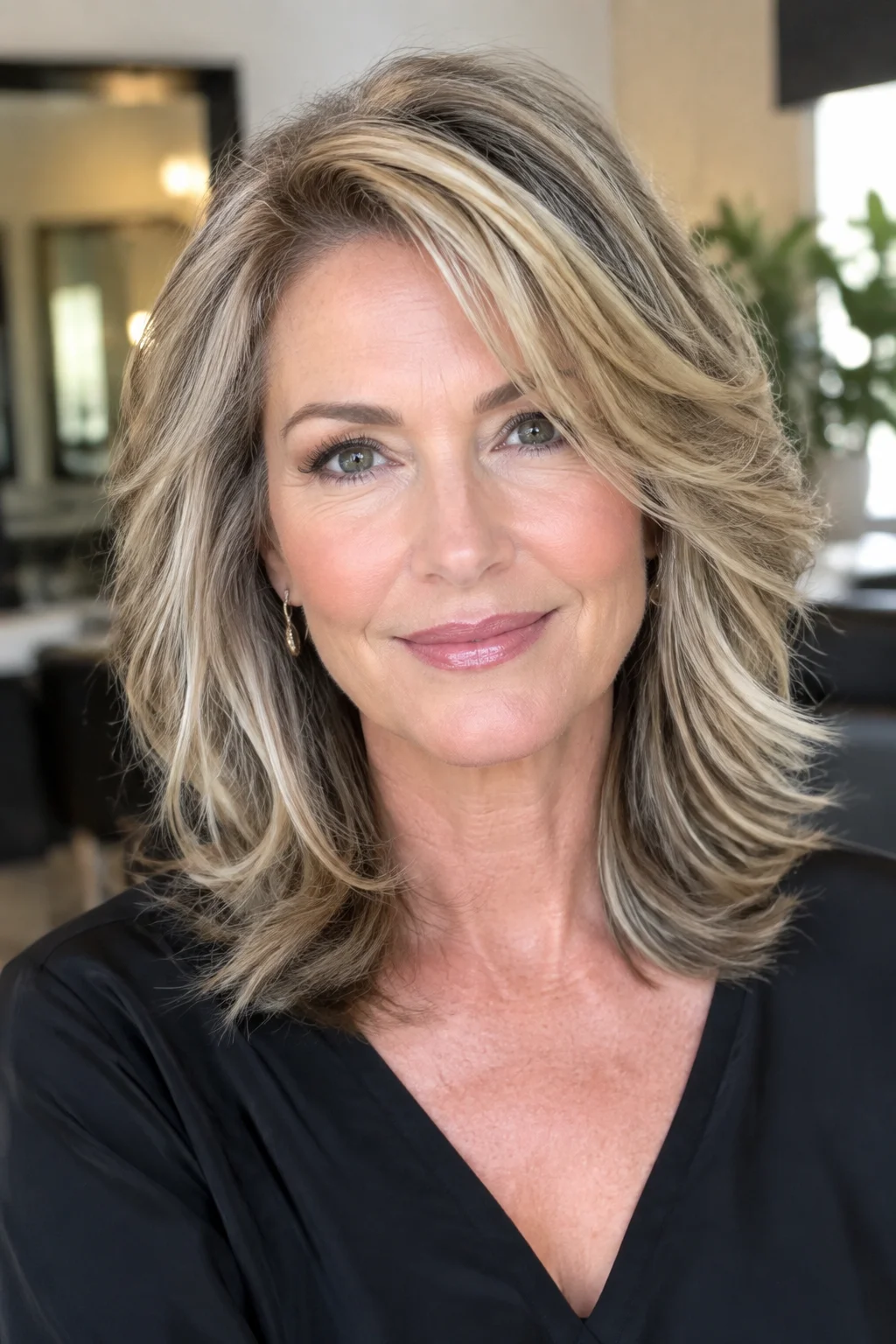
Feathered layers are cut at an angle throughout the length of the hair, tapering the ends so they look almost brushed rather than blunt. On mid-length straight hair, this softens the overall shape and adds noticeable body near the crown. It’s a solid option if your hair tends to look stiff or helmet-like when left one length. The feathering also helps hide flyaways, since the layered ends blend into each other instead of sticking out on their own.
9. Stacked Layers at Crown with Length Below
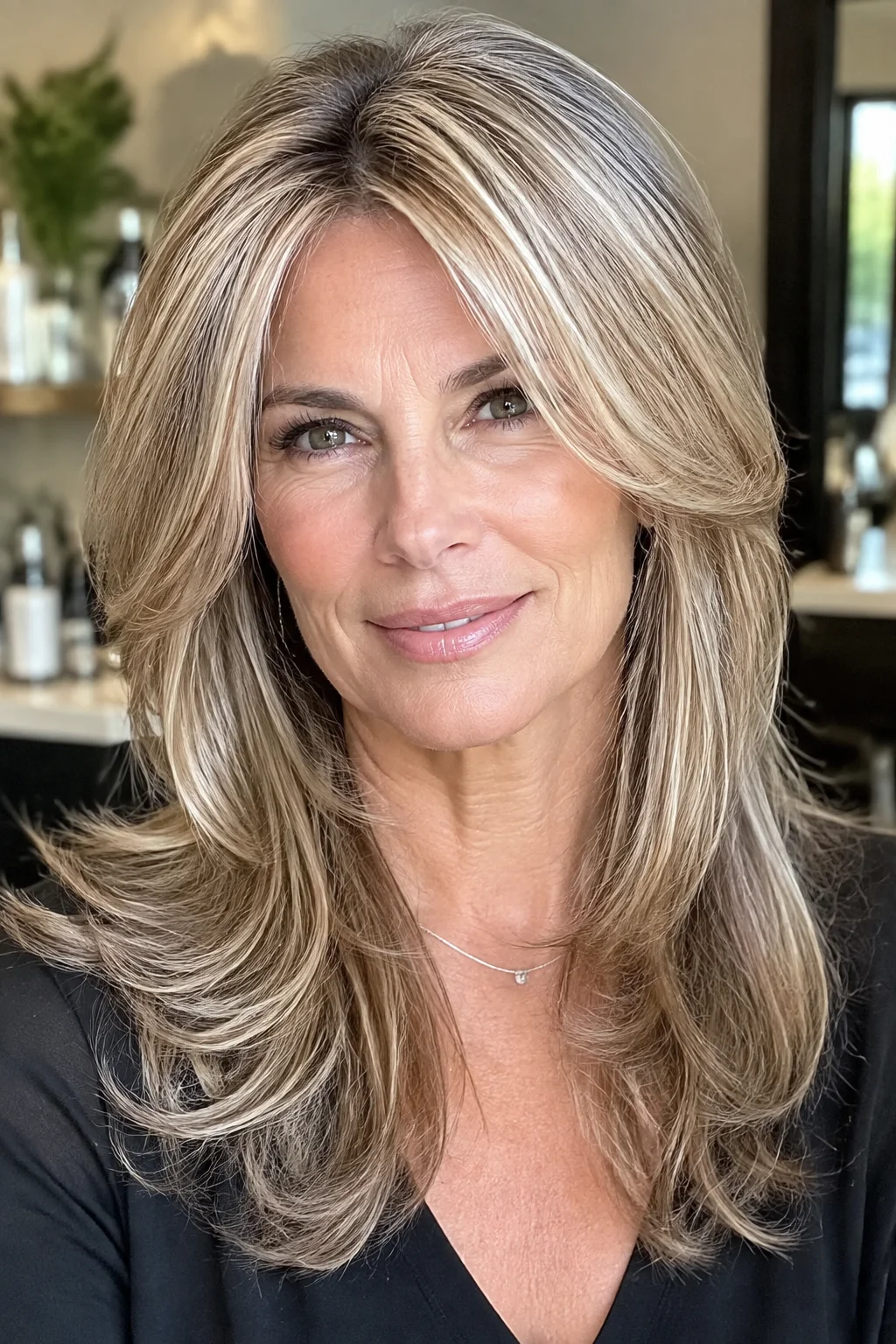
Stacking layers right at the crown builds height where thinning is most obvious, while leaving the lengths below untouched. This creates a noticeable lift without shortening the overall hair length. It’s particularly useful for anyone who has noticed their part looking wider than it used to. A little dry shampoo at the roots before styling extends the lift through the day.
10. Shaggy Layers on Straight Shoulder-Length Hair
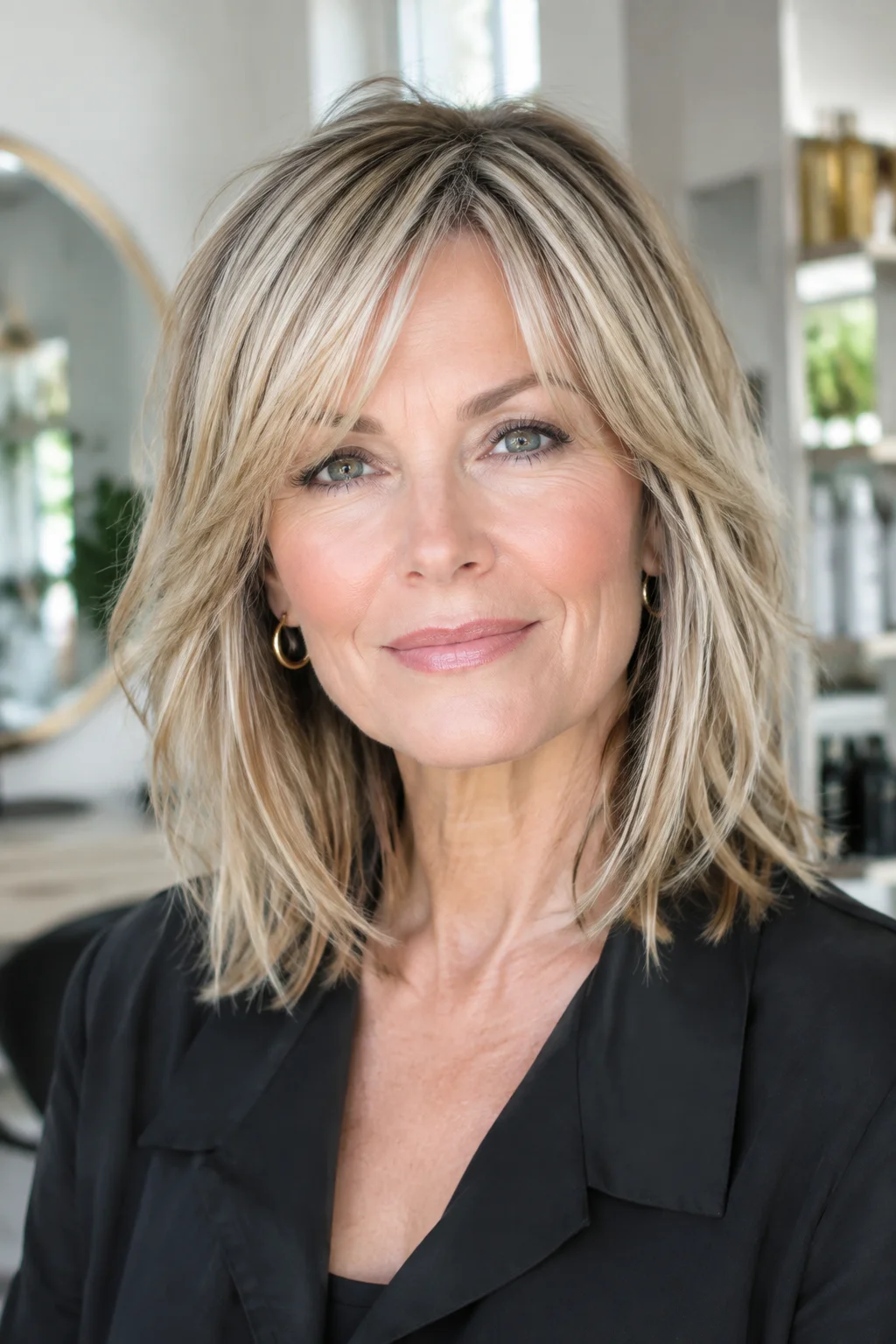
Shag cuts have made a strong comeback, and shoulder-length straight hair takes to them easily. The layers are choppy and uneven on purpose, giving the whole style a lived-in, slightly undone feel. This cut works for women who don’t want to spend much time styling, since the shag looks intentional even when it’s air-dried. It also adds visible texture to hair that would otherwise look thin and one-dimensional. The shorter layers near the crown lift the roots, while the longer pieces around the face soften the jaw. Most versions need very little product, just a touch of texturizing spray if you want extra grip.
11. Long Straight Hair with Subtle Interior Layers
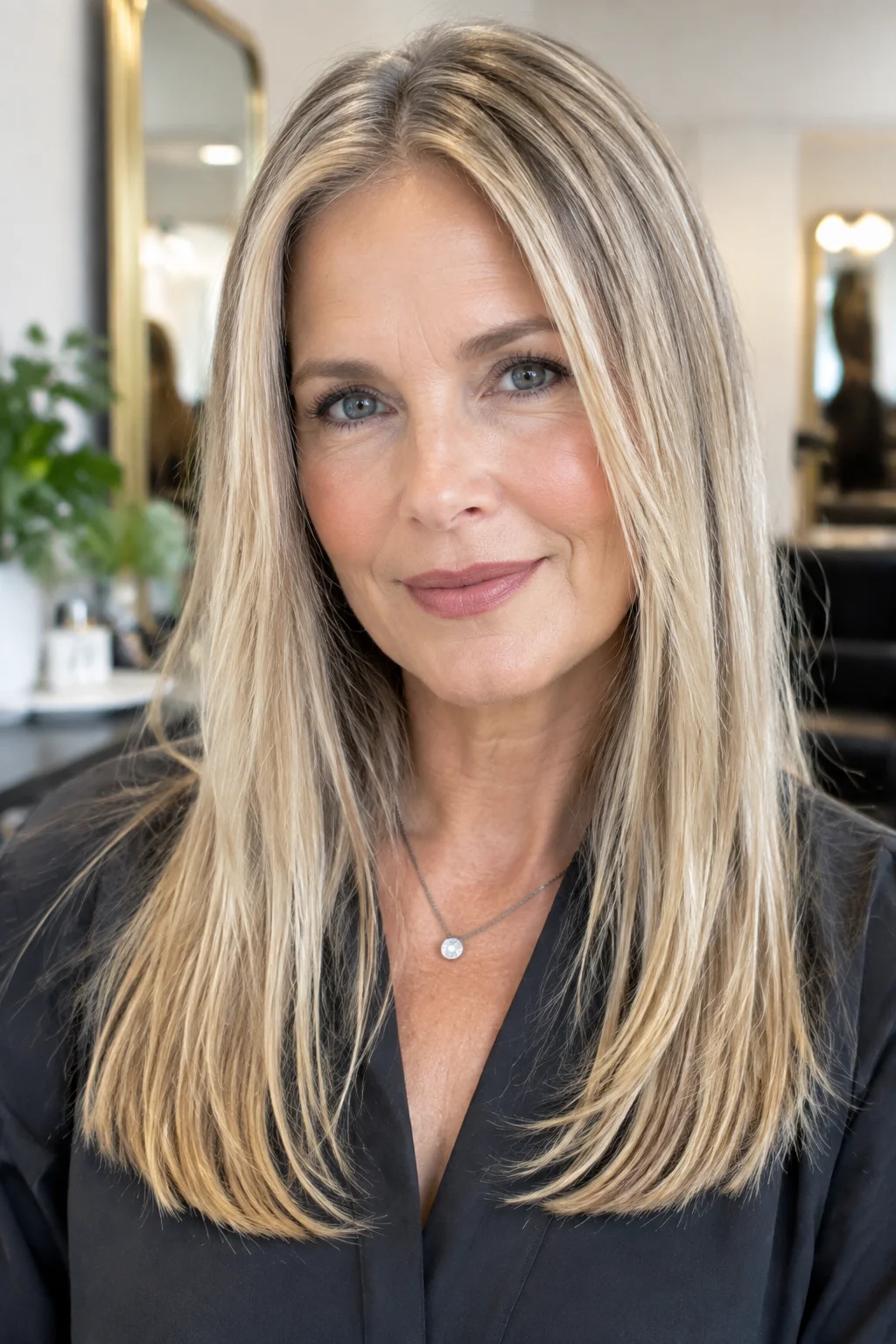
Interior layers are cut inside the hair rather than at the visible ends, so the length stays intact but the inside gets thinned and shaped. This gives long hair a bit of movement without an obvious layered look from the outside. It’s a smart choice if you like the idea of layers but worry about losing length or having a shape that looks too cut-up.
12. Angled Layers Longer in Front, Shorter in Back
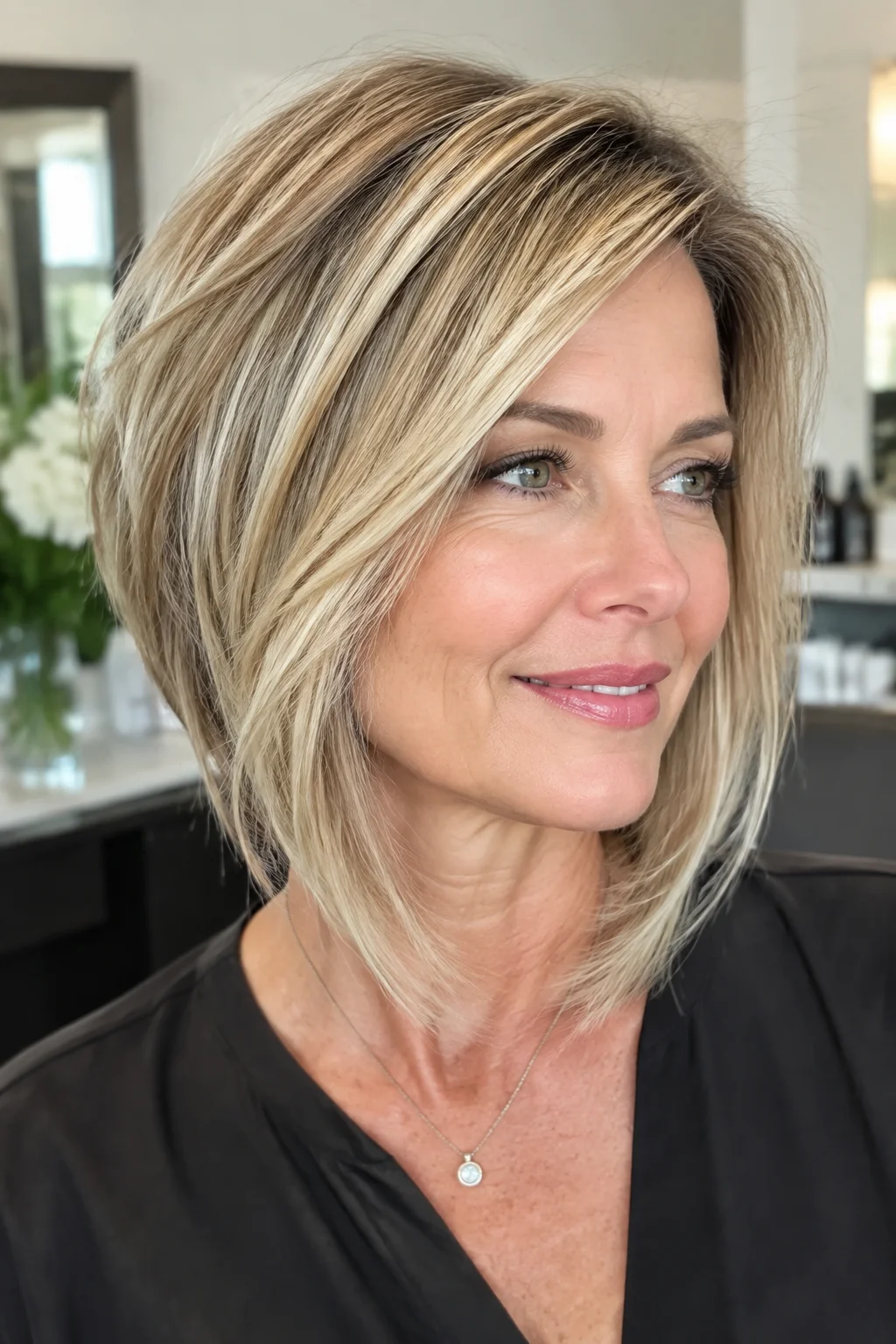
This shape keeps more length toward the face and gets progressively shorter toward the back, creating a soft, sloped silhouette. It flatters longer necks and works nicely with straight hair since the angle stays crisp without curling. The front pieces can be tucked behind the ears or left loose to frame the face, giving you two different looks from one cut.
13. Layered Bob with Blunt Underline
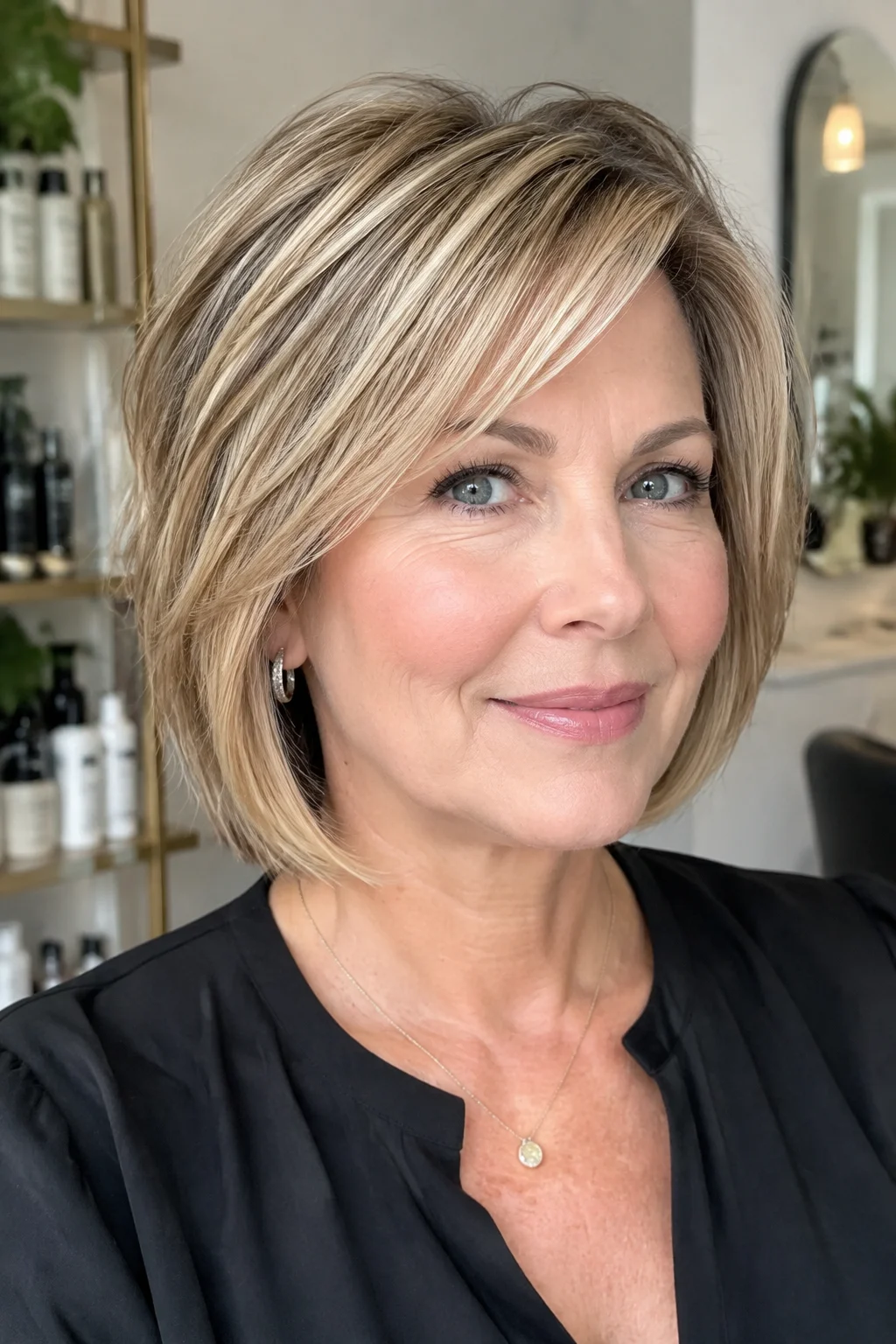
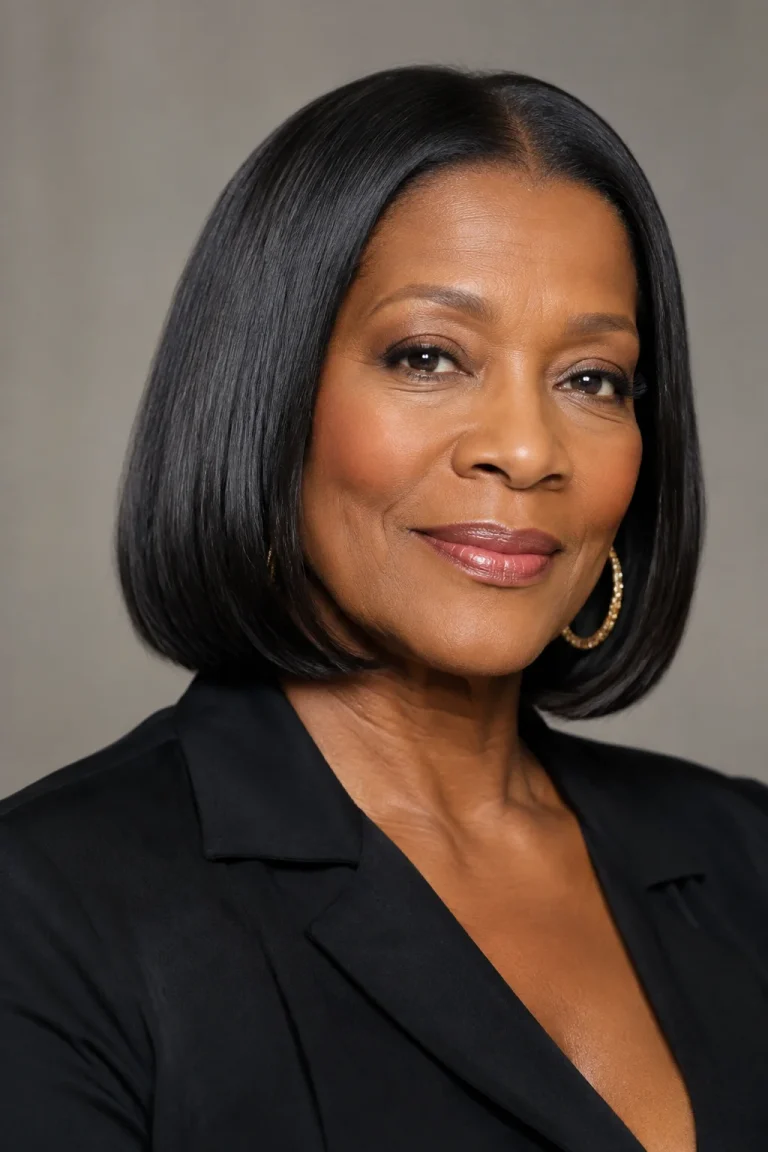
This bob keeps a sharp, straight line at the bottom while adding layers throughout the top and interior. The blunt edge gives the illusion of thickness, since a solid line always looks denser than feathered ends. Meanwhile, the interior layers keep the style from feeling heavy or stiff. It’s one of the better options for fine, straight hair that needs to look fuller without any length sacrificed to feathering. Regular trims keep that blunt line crisp, which is really what makes the whole cut work.
14. Curtain Layers Down the Center with Straight Hair
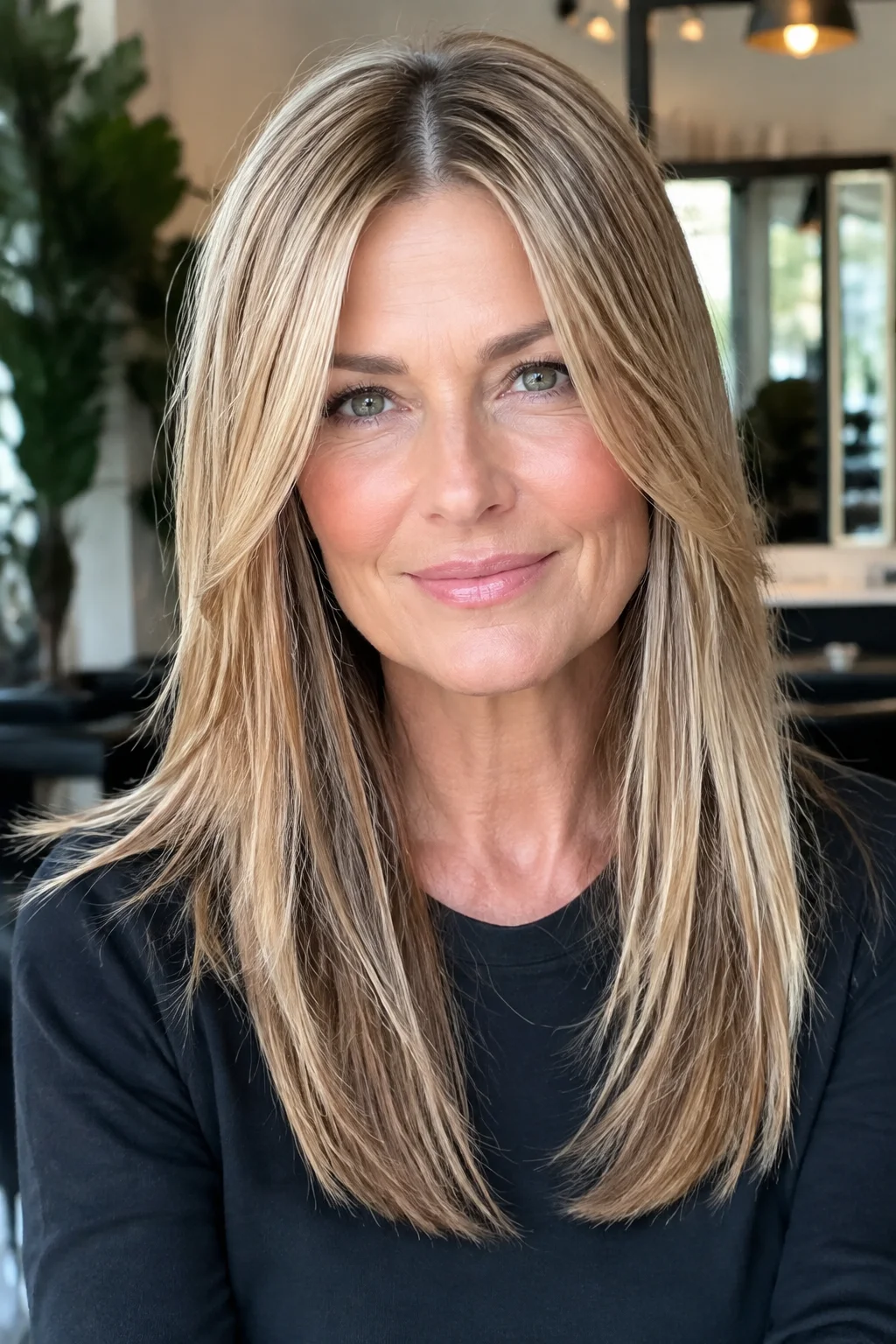
Curtain layers part down the middle and frame both sides of the face, similar to the look popularized decades ago and still going strong. On straight hair, they fall naturally without much effort, sweeping away from the face on their own. This cut suits women who want a face-framing effect but don’t want to deal with bangs that need daily attention.
15. Choppy Layers on Thick Straight Hair
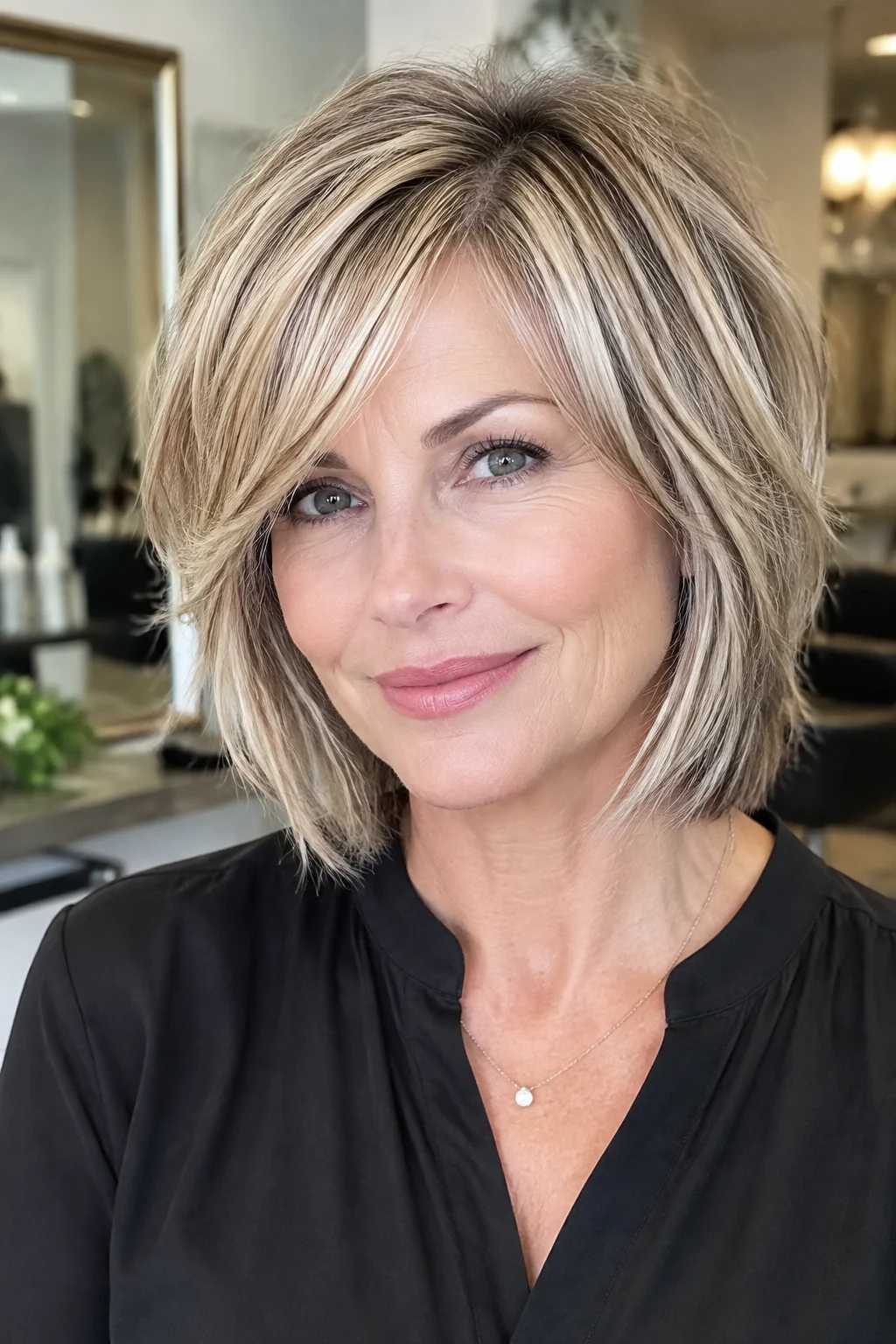
Thick straight hair can look heavy and shapeless without the right cut, and choppy layers solve that by removing bulk in sections rather than evenly throughout. The result is hair that moves more and sits closer to the head instead of flaring out at the ends. This is one of the more dramatic layering styles on this list, so it’s worth showing your stylist a picture before the appointment. Ask for the layers to start around cheekbone level for the most noticeable effect.
16. Short Layered Cut with Side Sweep
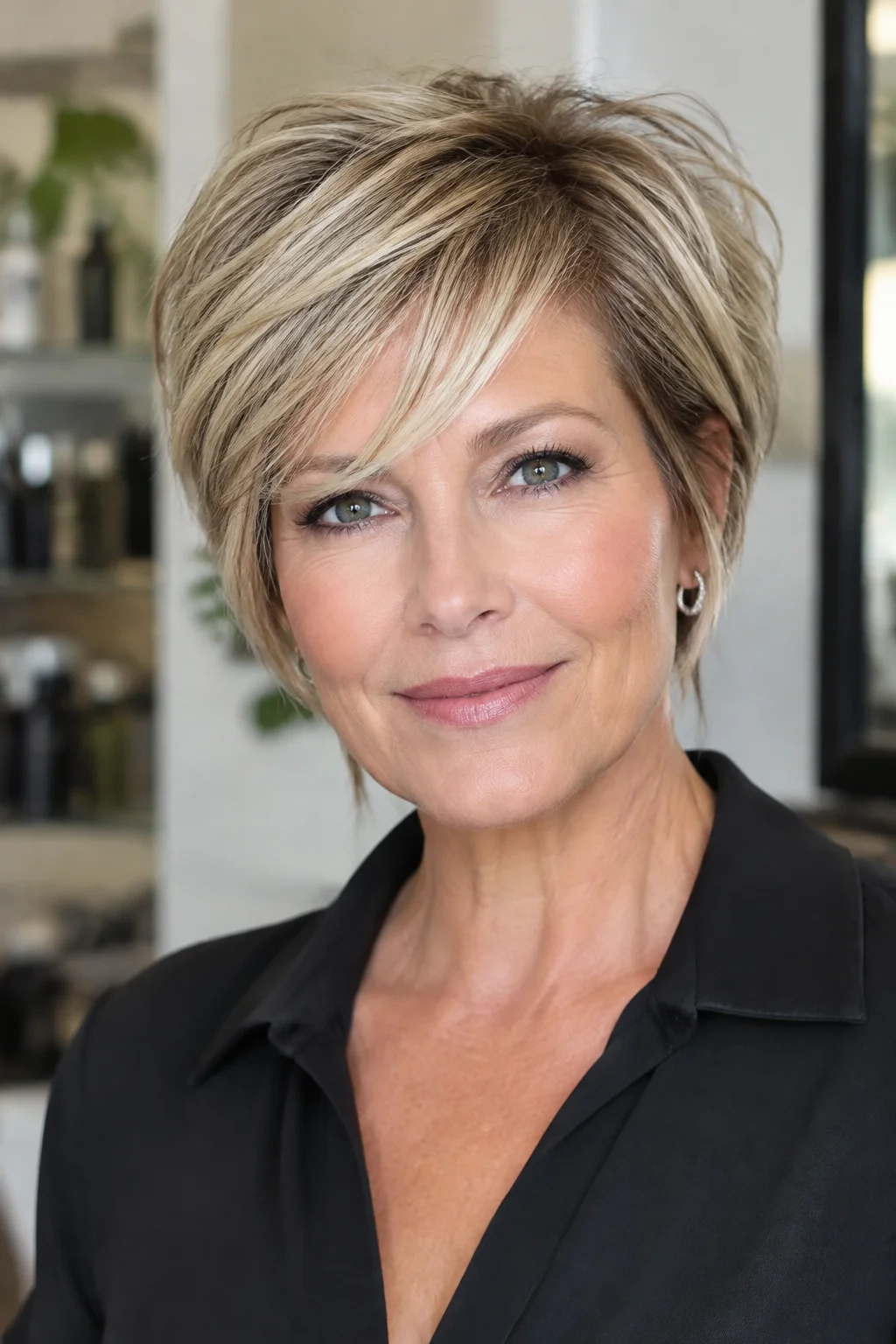
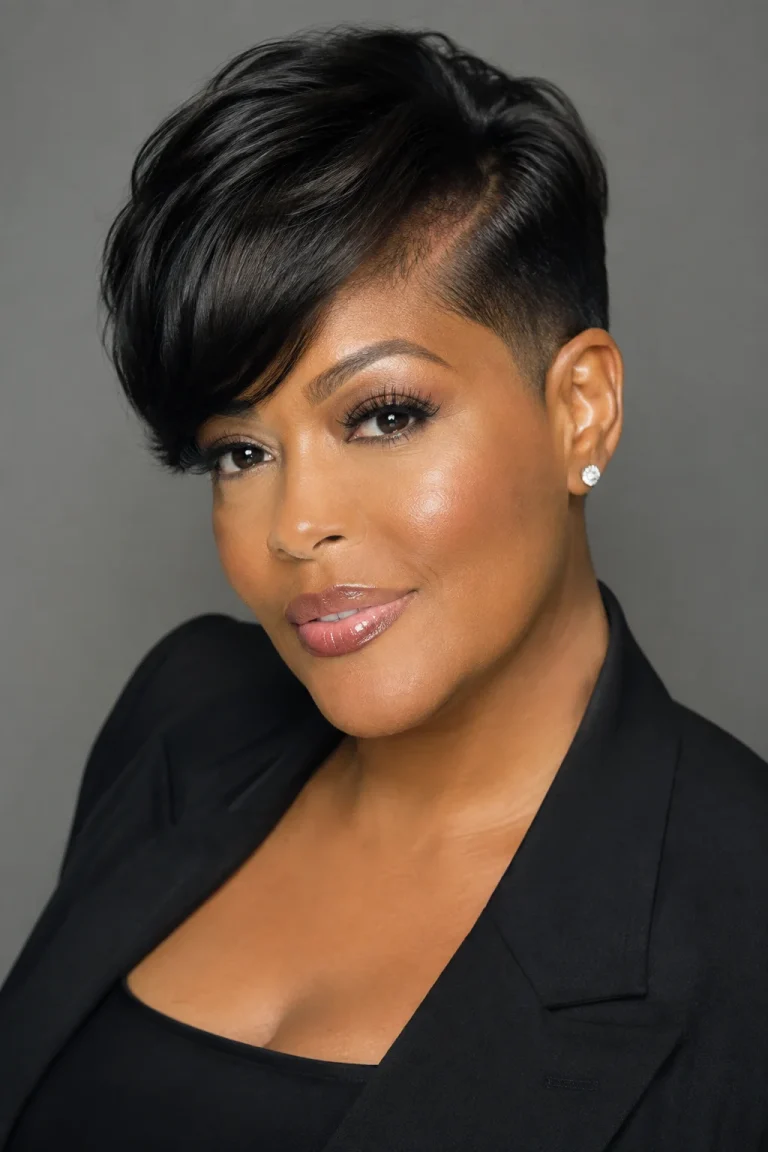
A short cut with layers swept to one side gives an asymmetrical, softer finish than a straight-across short style. The side sweep also helps hide a receding hairline or thinning part, which becomes more common after 50. Styling only takes a comb and a bit of product to hold the sweep in place.
17. Razored Layers on Fine Straight Hair
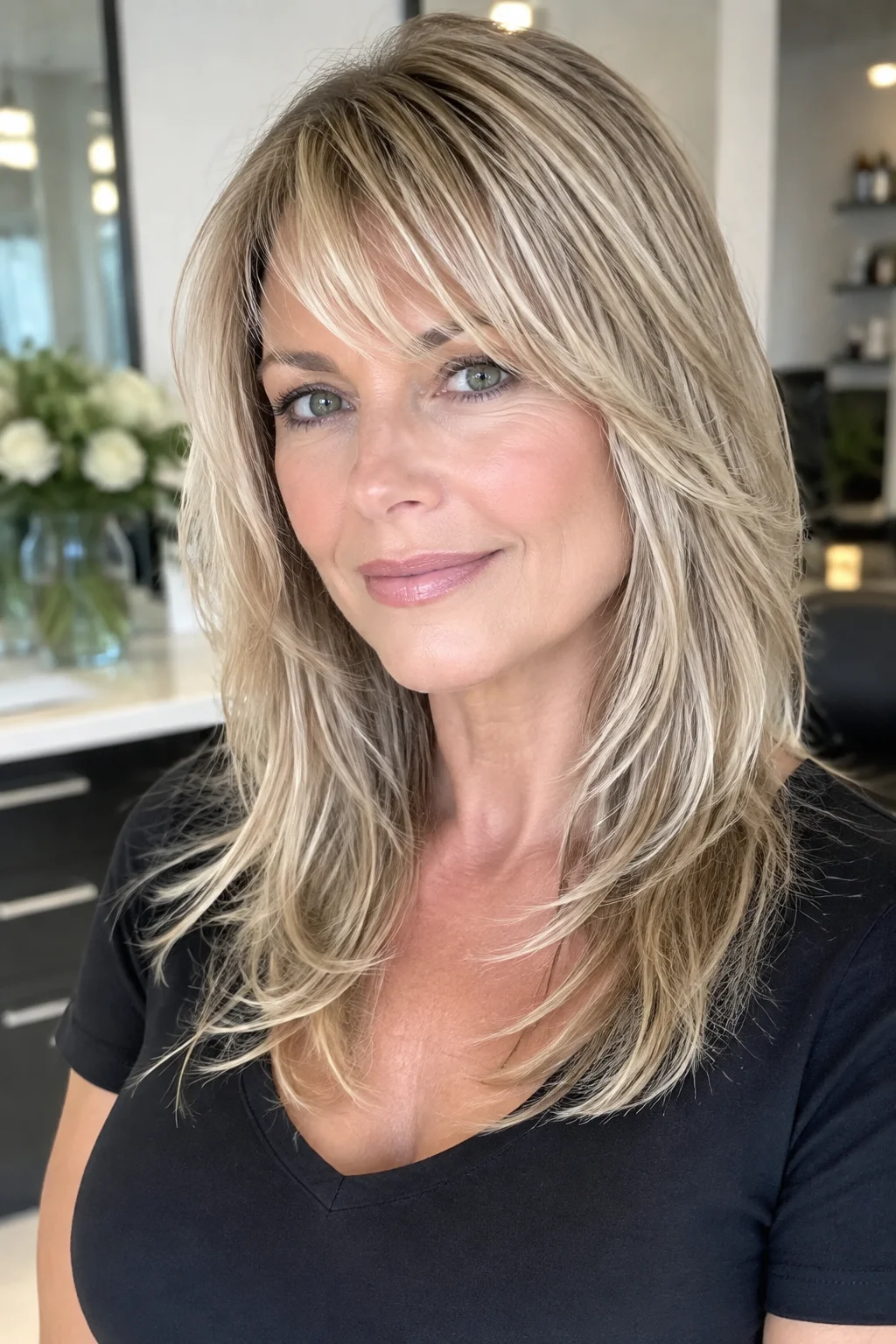
Razor cutting, instead of traditional scissor cutting, creates softer, more textured ends that suit fine straight hair especially well. The razor removes weight gradually rather than in a hard line, so the hair doesn’t look thin or overly wispy at the ends. This technique pairs well with almost any length, from a bob to longer layers, and it’s worth asking for by name since not every stylist defaults to it. Fine hair in particular benefits from the added texture, since razored ends grip curl and volume products better than blunt ones.
18. Long Layers with Slight A-Line Shape
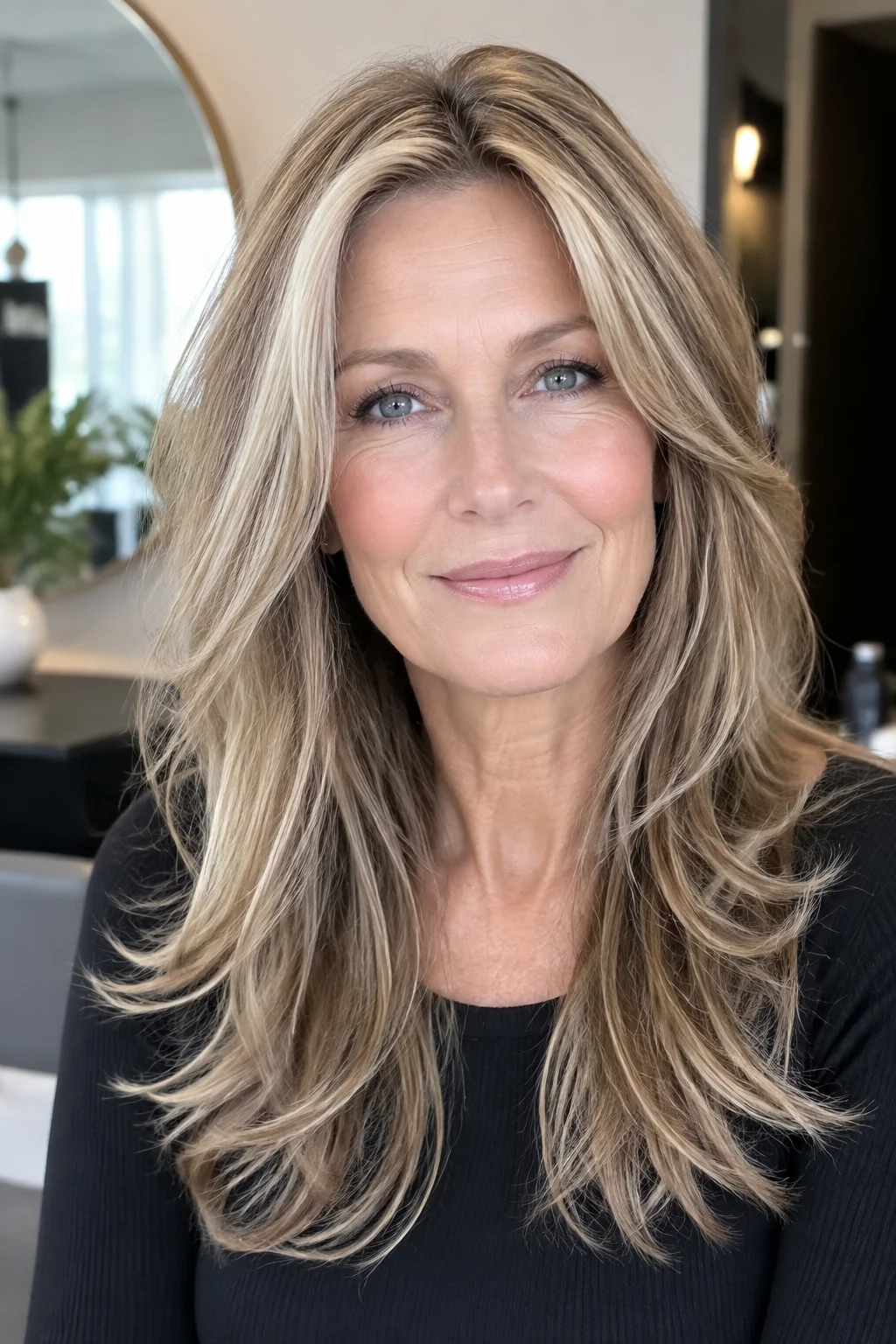
This cut keeps length in the back while layers taper the sides slightly shorter, creating a subtle A-line that’s more suggestion than statement. It’s a gentle way to add shape to long hair without any dramatic layering or a short section anywhere. Compared to a full shag or choppy cut, this one is quiet and easy to grow out whenever you’re ready for a change.
Which Layered Cut Should You Choose?
Picking the right layered straight hair hairstyle for women over 50 comes down to three things: how thin your hair actually is, how much time you want to spend styling, and how much length you’re willing to give up. If root volume is your biggest complaint, go with something built for lift, like the stacked layers at crown with length below or the face-framing layers with shoulder length. Both are designed to work from the roots outward rather than relying on the ends to create shape.
If your hair is fine and prone to looking flat by midday, the layered bob with blunt underline or the razored layers on fine straight hair will do more for you than a longer cut ever could, since shorter, denser shapes naturally look thicker. Women who want low maintenance should lean toward the shaggy layers on straight shoulder-length hair or the choppy layers from mid-length, since both are meant to look a little undone and forgive an air-dry day.
A common mistake is choosing a heavily feathered or wispy cut, like the wispy face-framing layers on long straight hair, when your hair is already thin. That style needs a bit of natural density to look intentional rather than sparse. Match the cut to your hair’s actual condition, not just the picture you’re drawn to.