Fine lines, softer jawlines, and thinner strands change what looks flattering as we age, and a lot of women get stuck wearing the same cut from decades ago simply because nobody showed them better options. Soft straight hair hairstyles for women over 60 solve this by working with what your hair actually does now, not what it used to do. Straight styles cut with the right shape can lift the face, soften harsh angles near the chin, and add movement without demanding a curling iron every morning. The trick is choosing lengths and layers that sit near the cheekbones or jaw, since that’s where softness reads best on mature skin. Below are twenty-one cuts worth showing your stylist, along with notes on who each one suits and how to keep it looking fresh between salon visits.
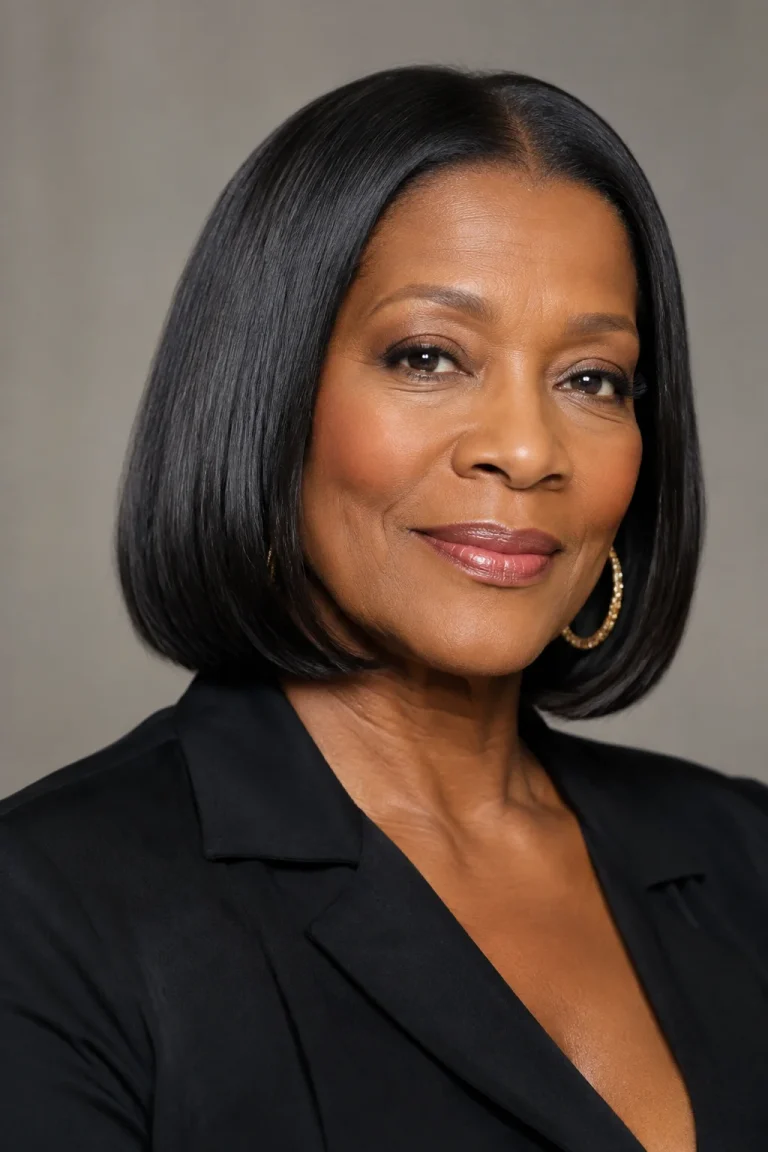
Chin-Length Blunt Bob with Soft Angles
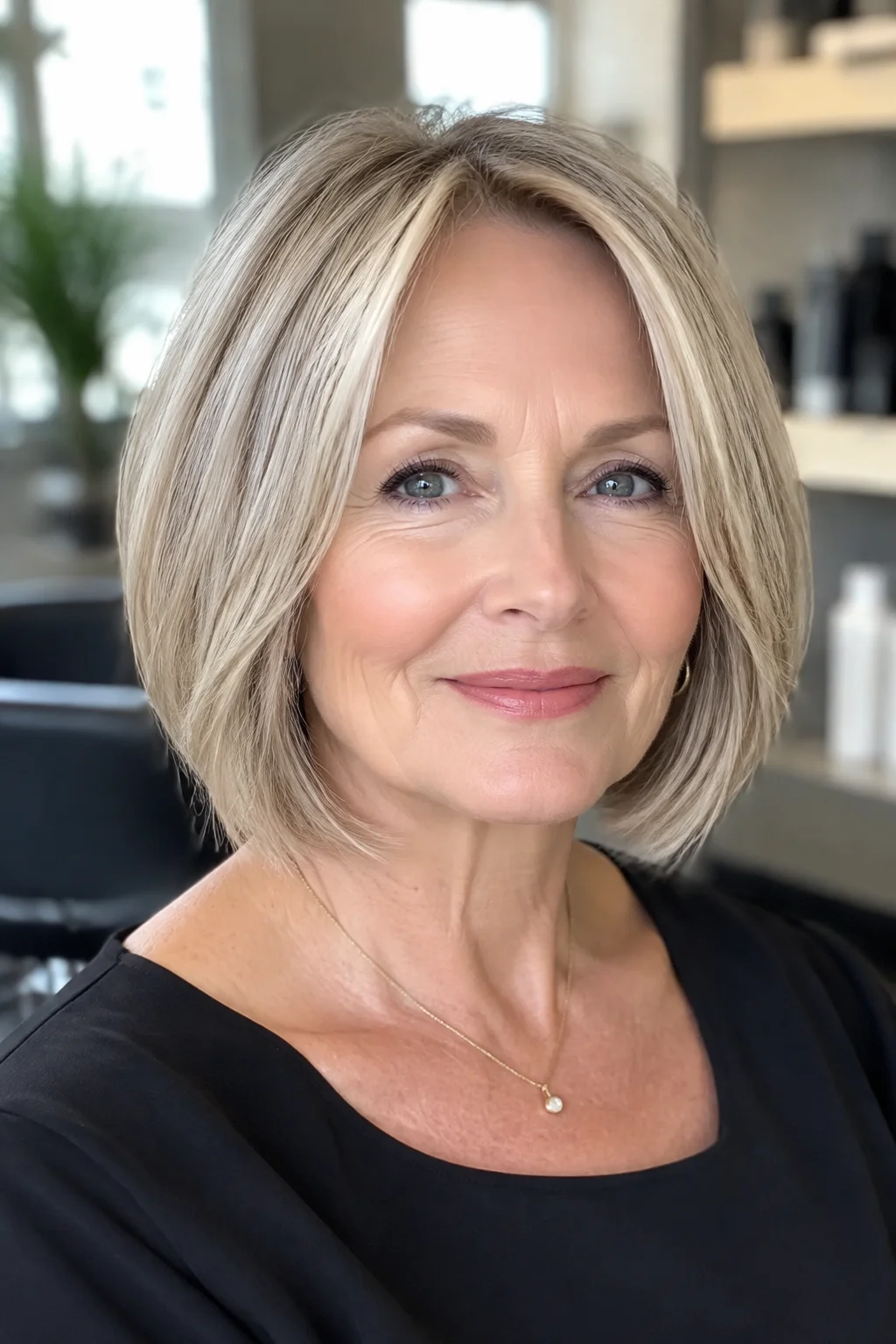
This bob sits right at the chin and skips the razor-sharp edge you’d see on a younger client. Instead the ends get a soft, slightly rounded finish that keeps the line clean without looking severe. It works well on rounder faces because the length draws the eye downward, and it suits finer hair since blunt ends create the illusion of thickness. Ask your stylist to keep the angle barely graduated so it still reads as blunt but doesn’t look stiff. Tip: a light smoothing cream on damp hair keeps flyaways down without weighing the shape flat. A light mist of heat protectant before styling helps the finish last.
Shoulder-Length Straight with Long Wispy Bangs
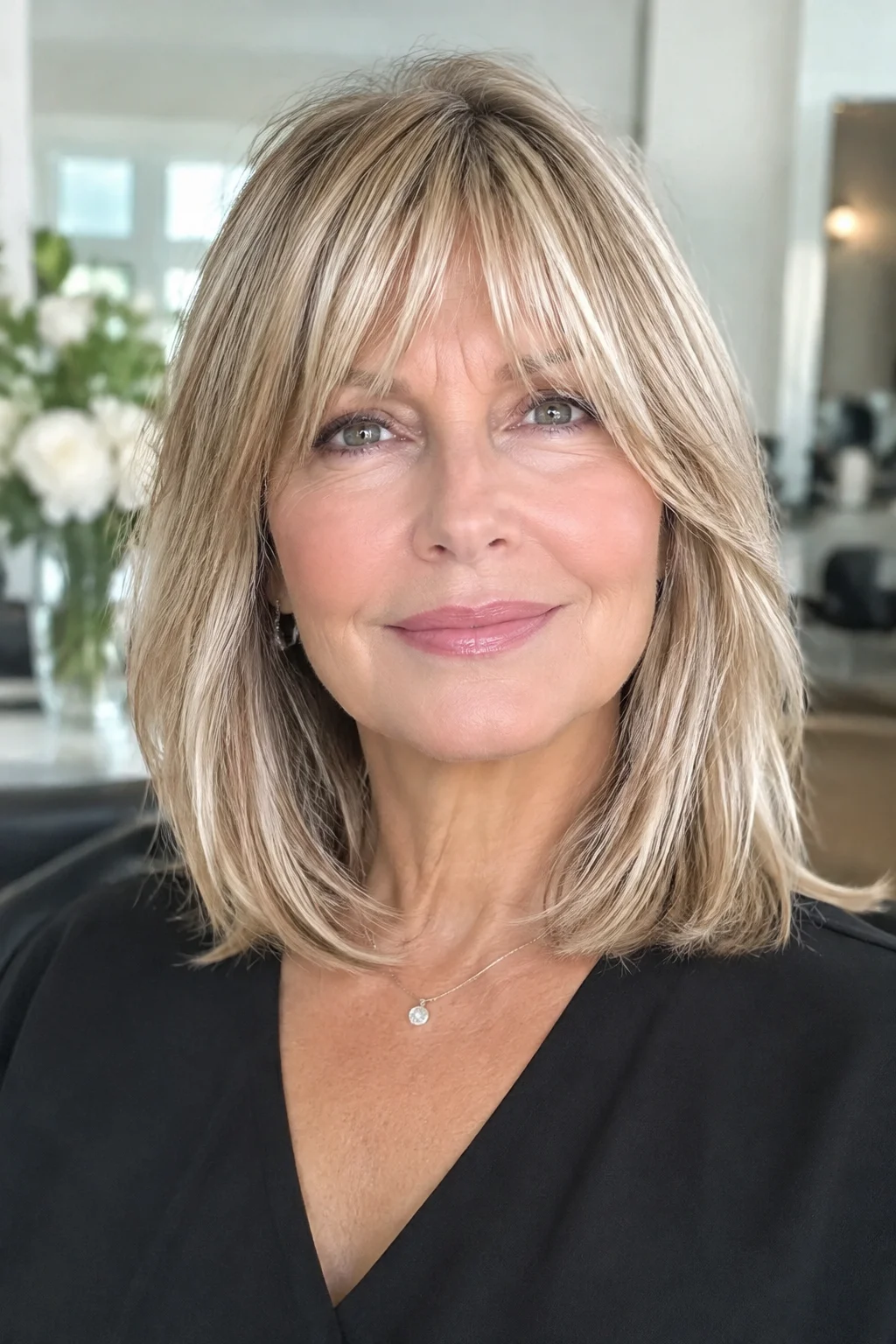
Long wispy bangs graze the brow line and break up a straight shoulder-length cut without adding bulk. The wispiness comes from point-cutting the ends so they taper instead of sitting in a thick block, which matters a lot for hair that’s thinned with age. This length hits a sweet spot too, long enough to pull back on busy days but short enough that it still frames the face when worn down.
Micro Bangs with Straight Mid-Length Hair
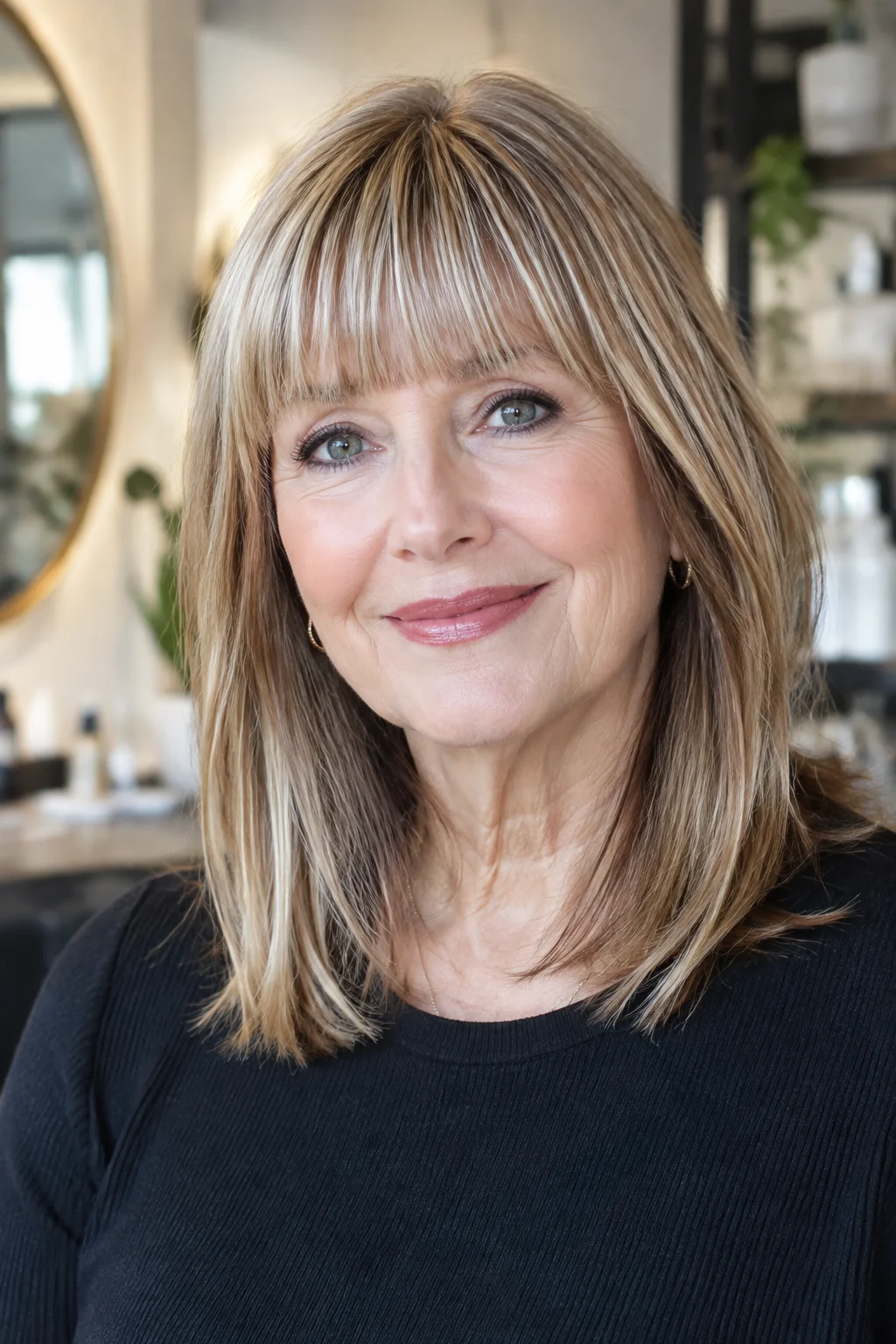
Micro bangs sit high on the forehead, well above the brow, and they’re a bolder choice than most cuts on this list. They work best on women with strong bone structure and shorter foreheads, since the shortness of the fringe puts real focus on the eyes. Paired with straight mid-length hair, the whole look feels current rather than dated, and it photographs well because there’s nothing to hide behind. This isn’t a low-maintenance bang style. It needs trimming every three to four weeks to keep the line crisp, so only choose it if you’re willing to keep that schedule. A light mist of heat protectant before styling helps the finish last.
Straight Lob with Subtle Internal Layers
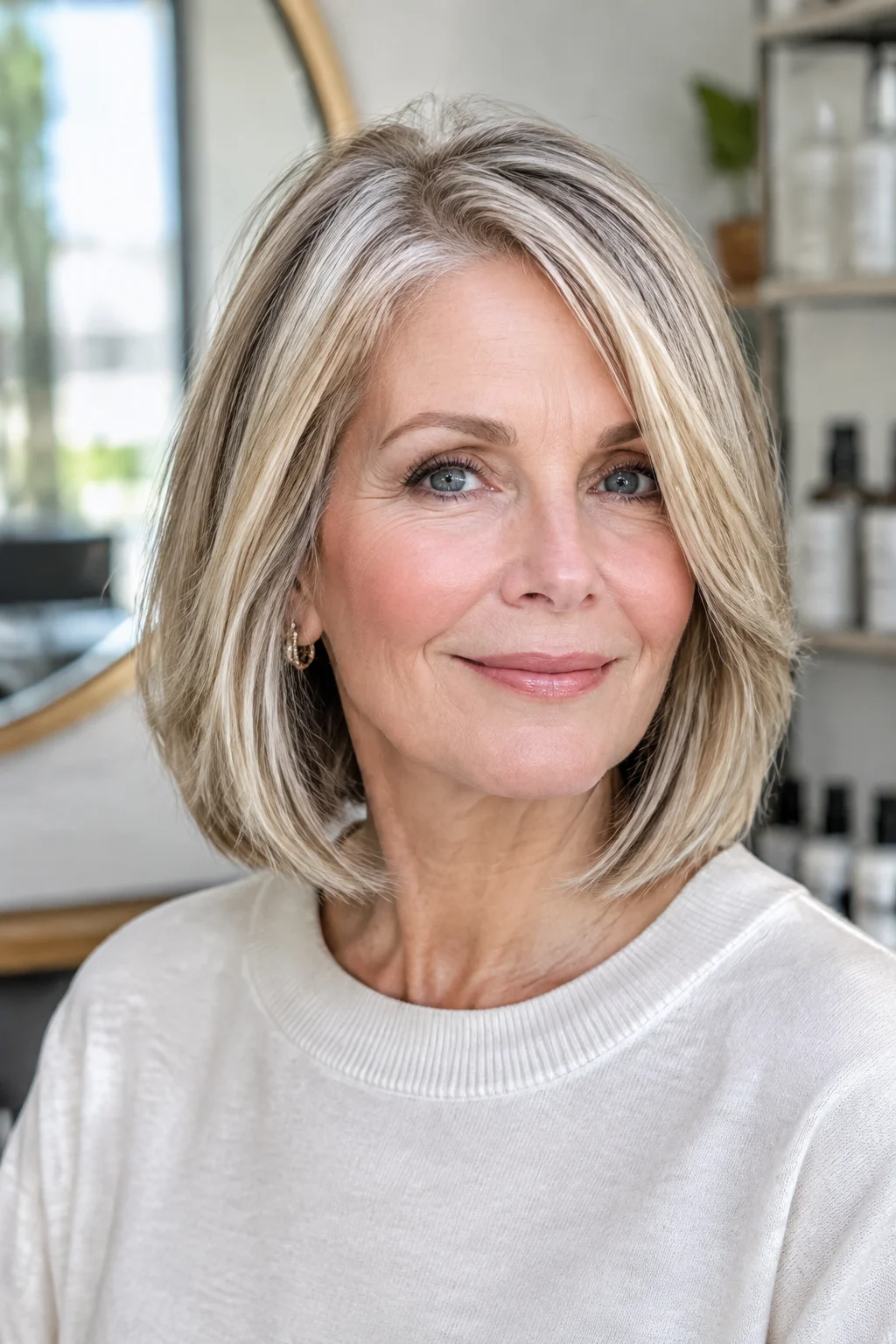
The straight lob lands between the chin and the shoulders, and adding subtle internal layers gives it movement without sacrificing the clean line at the bottom. Internal layers stay hidden under the top layer of hair, so from the outside the cut still looks blunt, but it moves more naturally when you walk or turn your head. Fine to medium hair benefits most from this structure because it prevents the ends from looking too heavy.
Textured Straight Bob with Choppy Ends
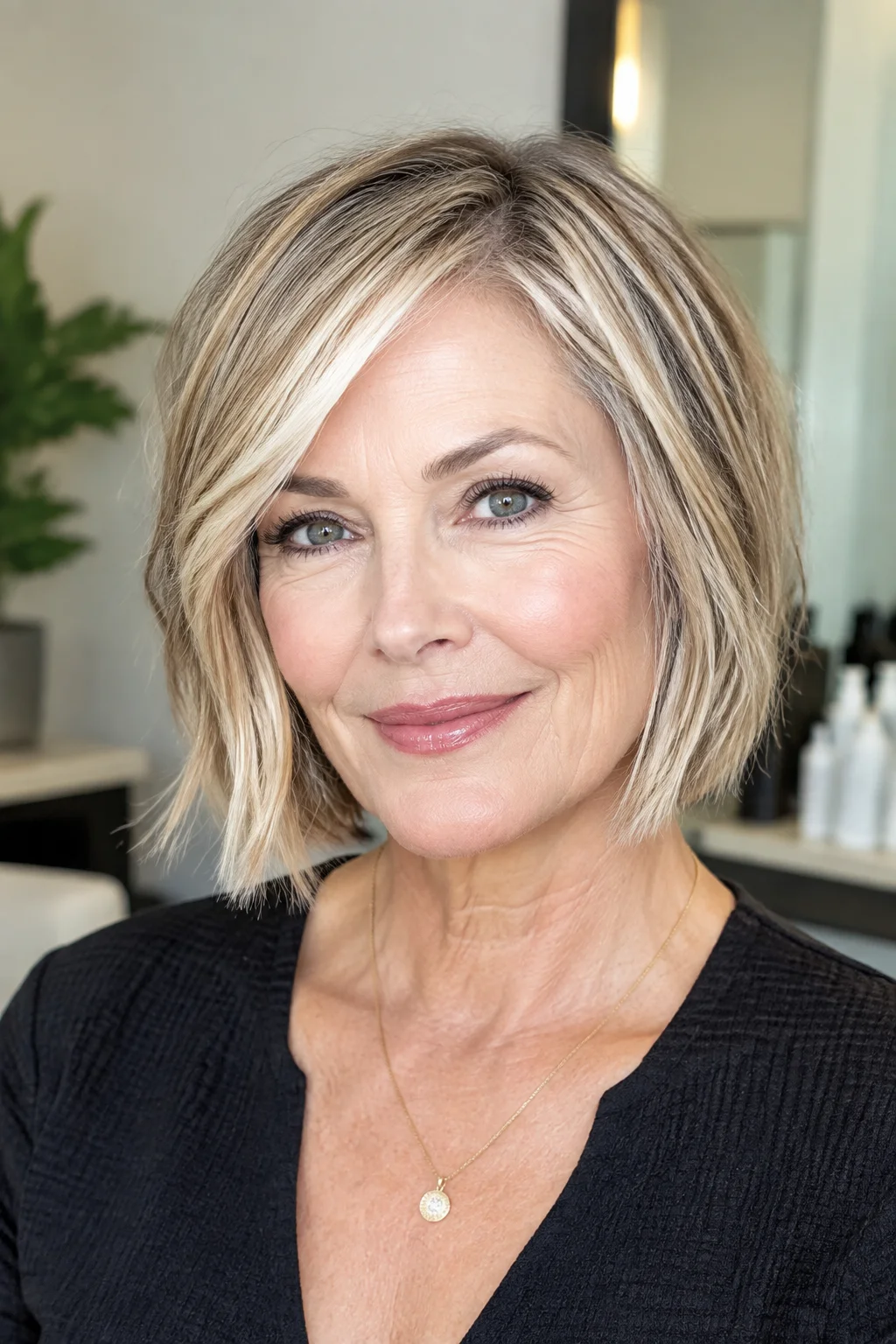
Choppy ends give a straight bob some grit, breaking up the perfection that can sometimes read as aging rather than youthful. The texture is cut in with a razor or thinning shears at the very ends, so the top of the cut stays full while the bottom looks a little undone. Similar to how a slightly rumpled blazer looks more interesting than a pressed one, this bob has personality built into the shape itself. It suits thicker hair especially well, since the choppiness removes bulk that can otherwise sit heavy around the jaw.
Long Straight Hair with Side Part and Face Framing
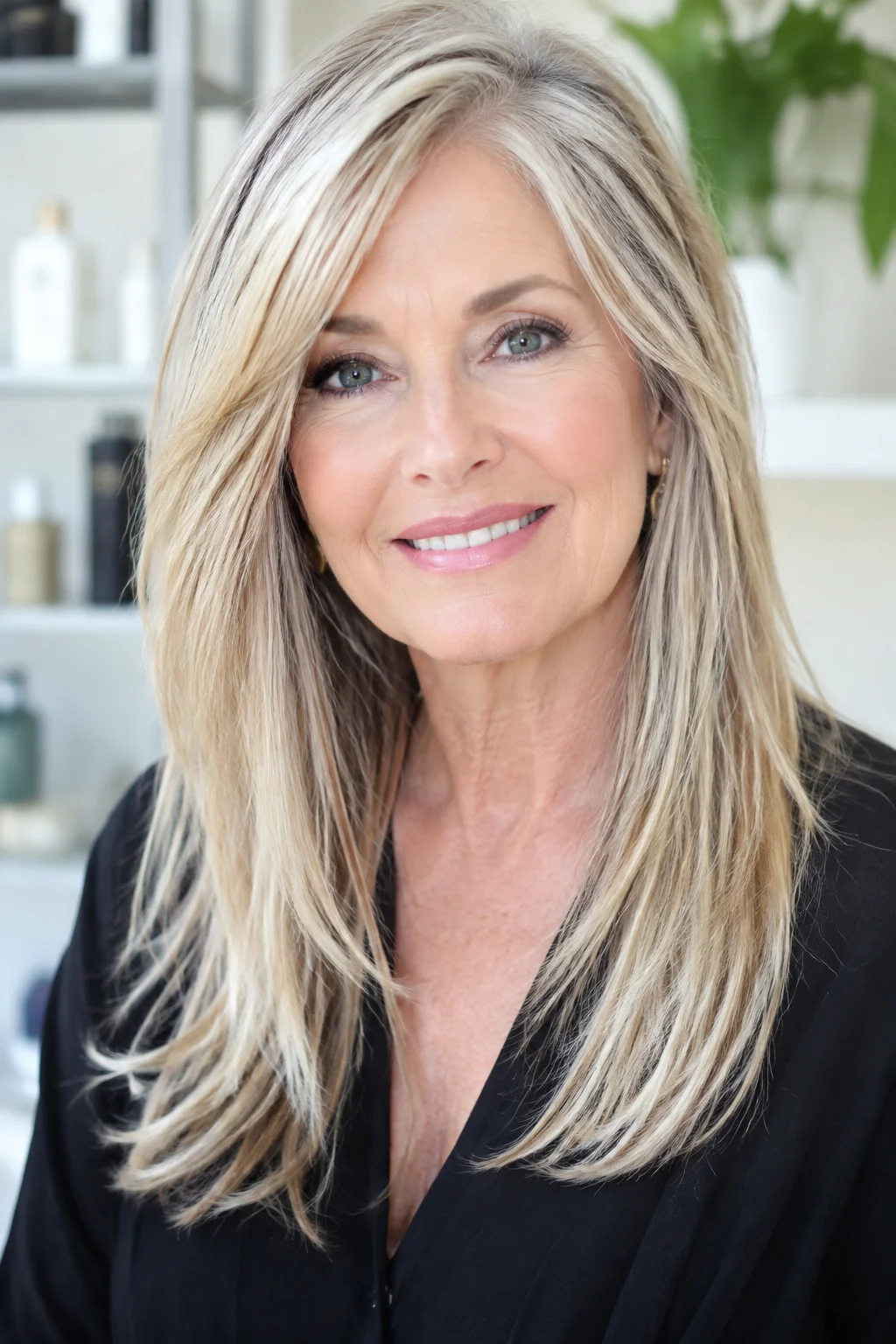
Keeping hair long past the shoulders is entirely fine after 60 as long as face-framing layers do the real work. A deep side part shifts weight away from a center line that can look flat, and long layers around the front pull focus up toward the cheekbones rather than down toward the neck. Tip: ask for layers that start no higher than the cheekbone, since anything shorter can look choppy rather than framing.
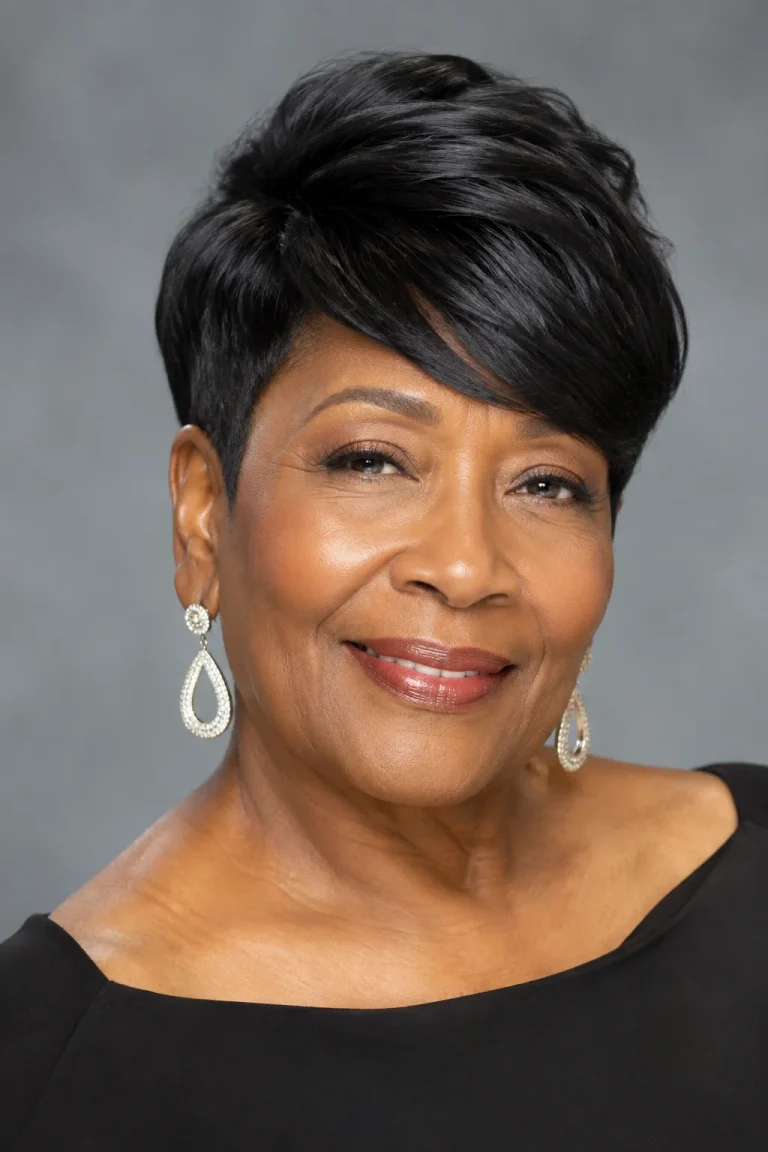
Straight Pixie Bob Hybrid
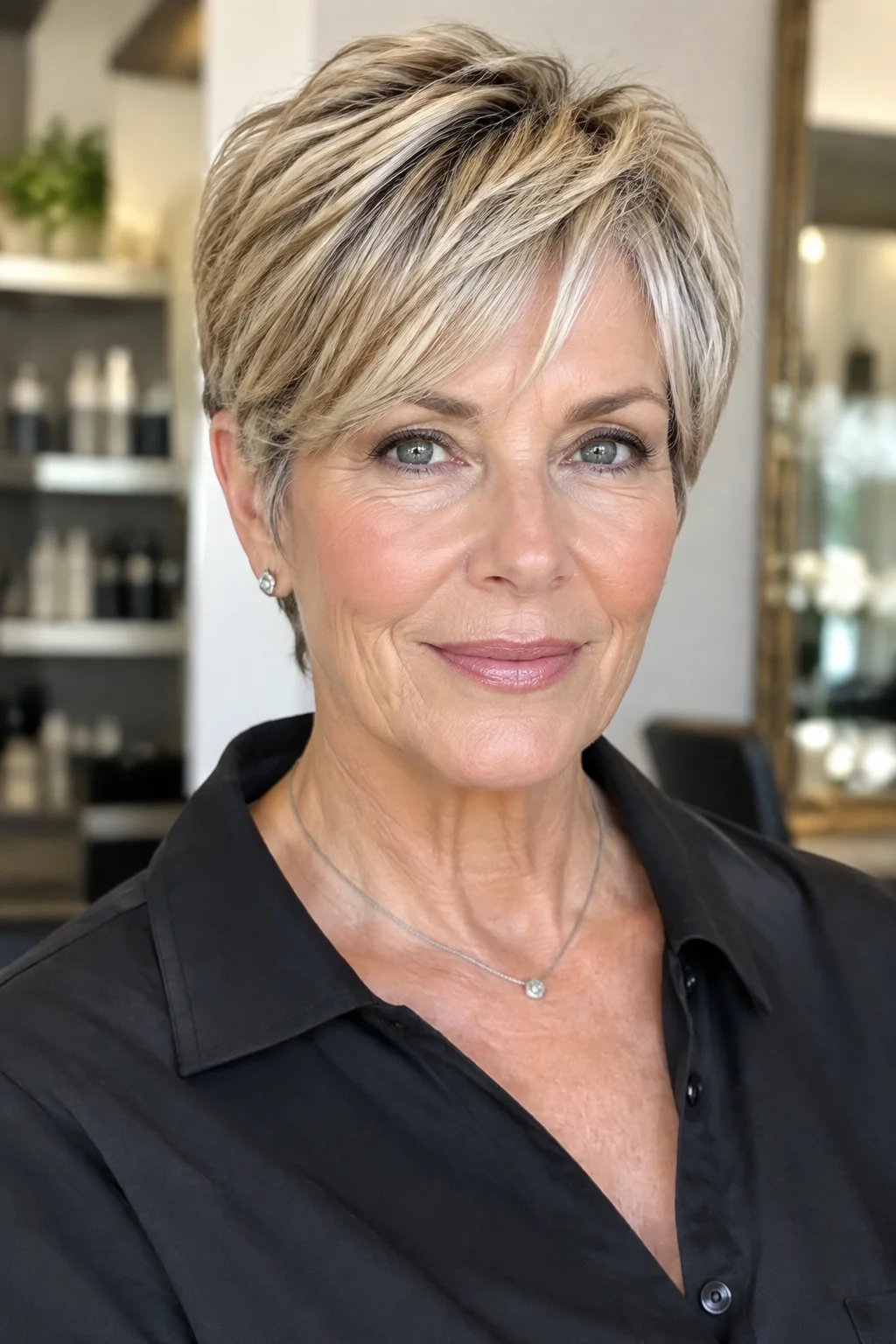
This cut borrows the shortness of a pixie in the back and sides while leaving a little more length up top and around the face, landing somewhere close to a bob in the front. It’s a strong option for women who want short hair but aren’t ready to give up all softness around the face. The longer front pieces can be tucked behind the ear or left loose to graze the cheek.
Blunt Bangs with Straight Collarbone Length
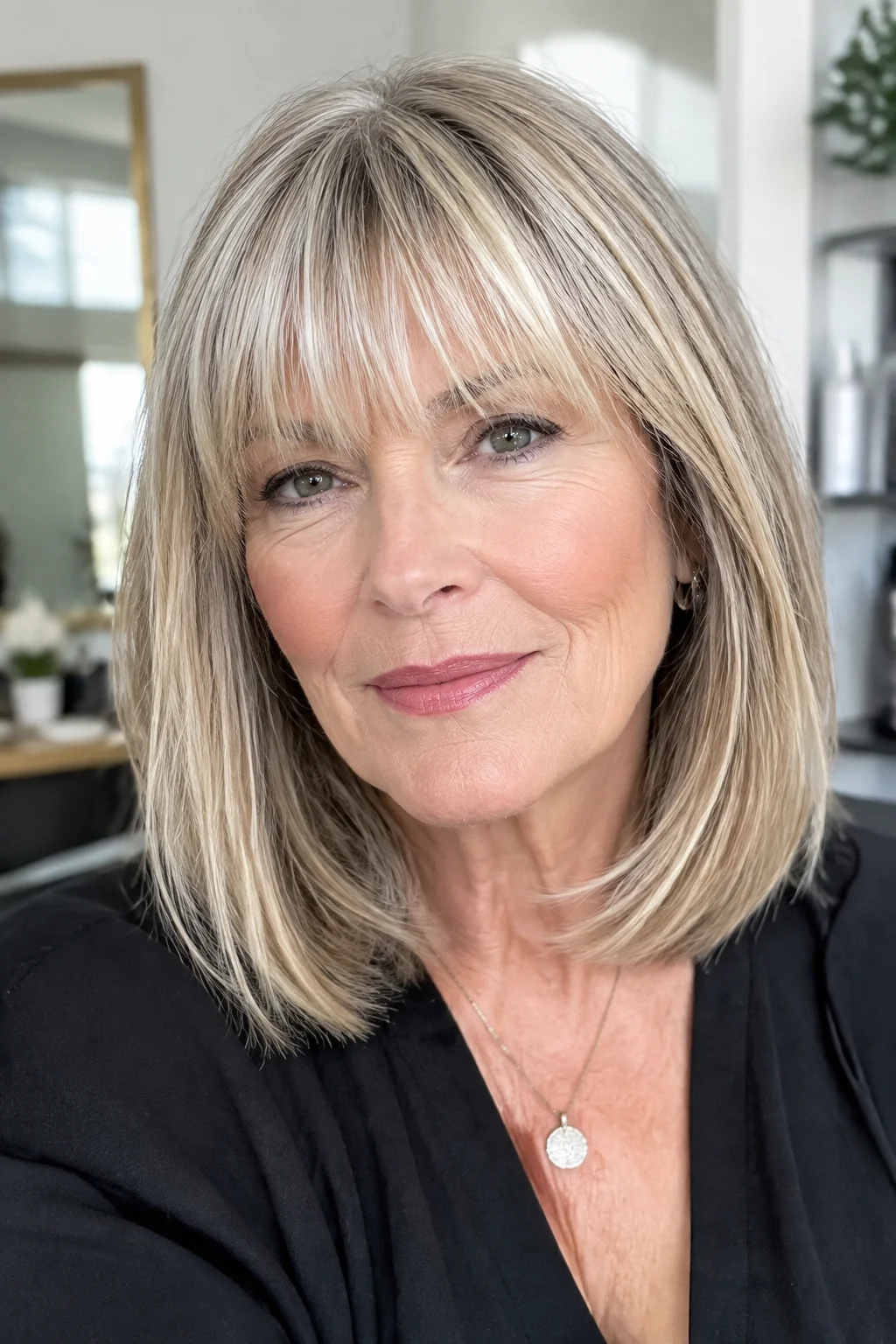
Blunt bangs cut straight across the brow pair surprisingly well with collarbone-length hair, creating a graphic, put-together look that reads modern rather than retro. The straight line of the bangs echoes the straight ends of the length below, so the whole cut feels intentional. This combination flatters longer face shapes especially, since the bangs shorten the appearance of the forehead. Round faces should approach this one carefully, since blunt bangs paired with a straight blunt length can widen the face if the cheekbone area isn’t softened with a few face-framing pieces.
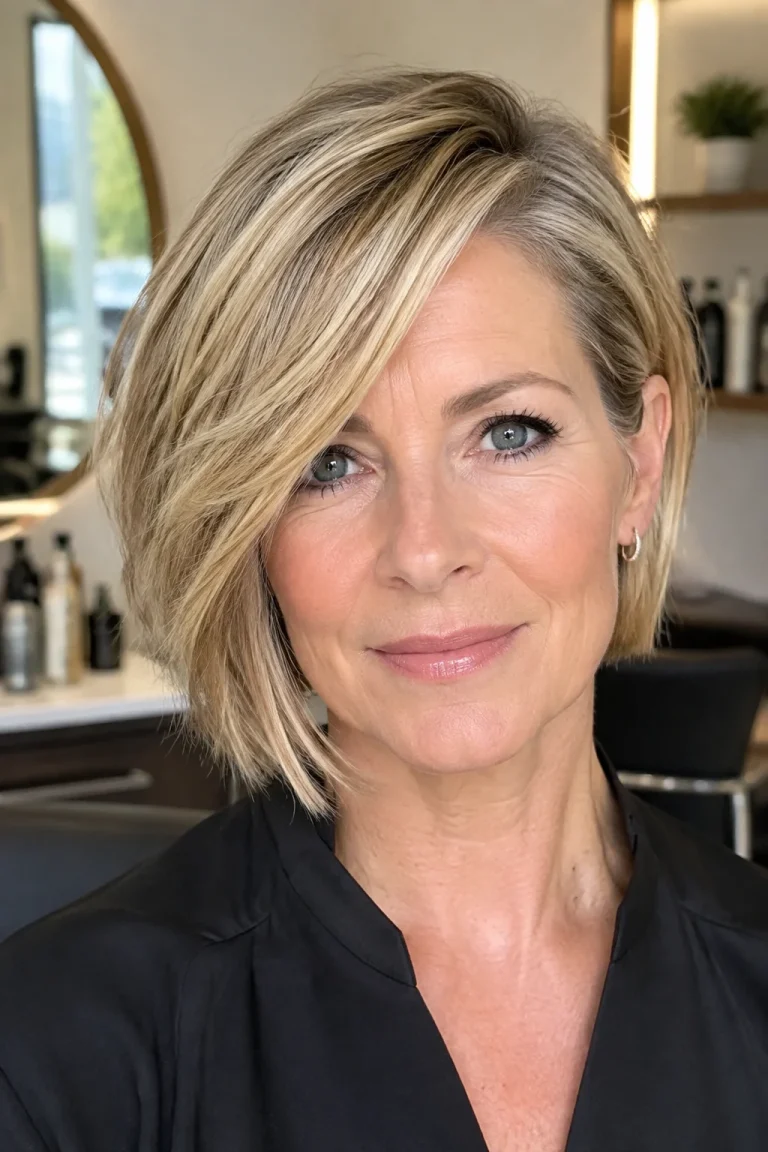
Straight Asymmetrical Bob
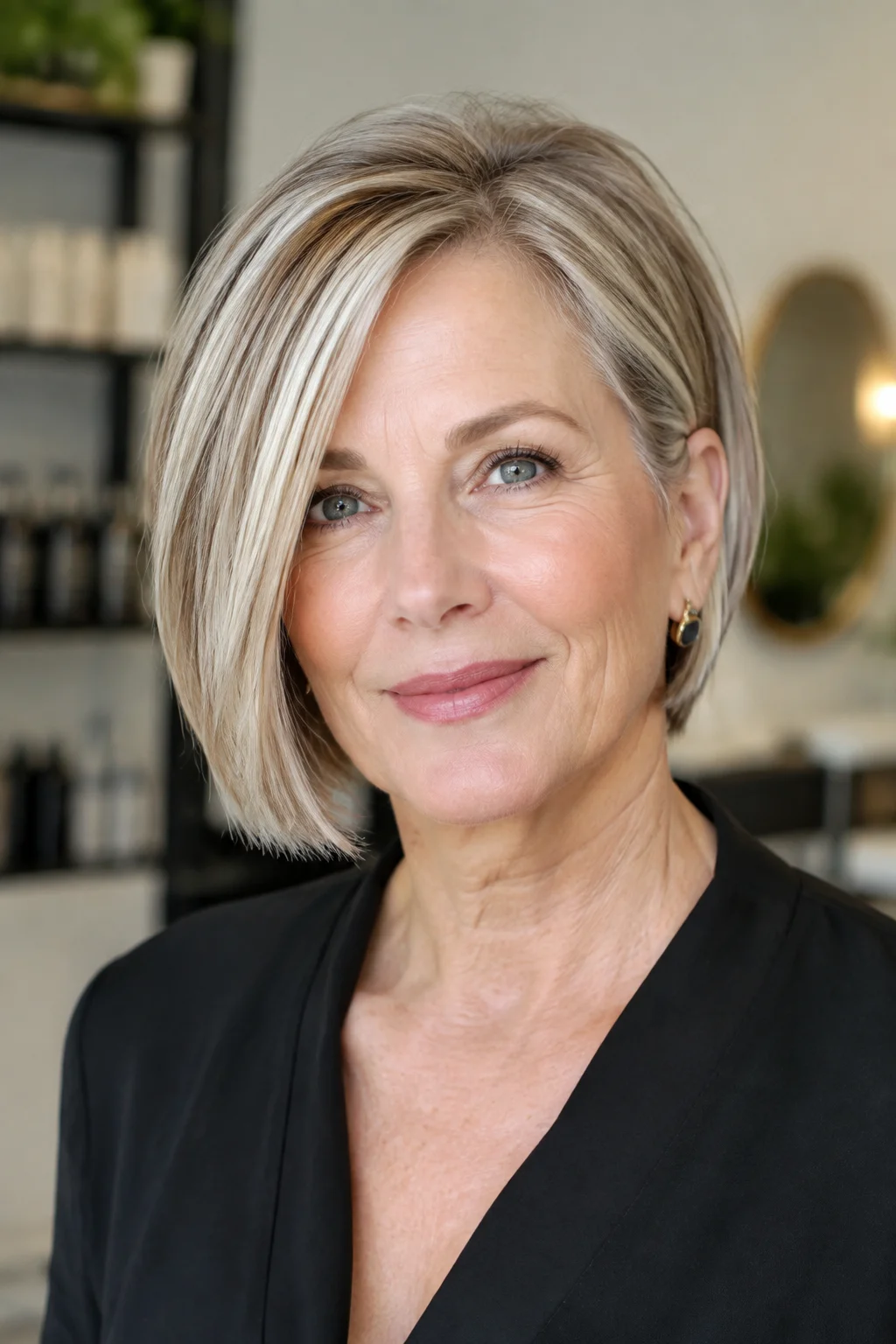
An asymmetrical bob keeps one side longer than the other, usually with a few inches of difference, giving a straight cut visual interest without a single layer added. It’s a strong choice for anyone bored with a standard blunt bob but not looking for a dramatic change in maintenance. Tip: the longer side should land near the chin or jaw, since anything shorter can look uneven instead of styled.
Sleek Straight Shag with Subtle Layering
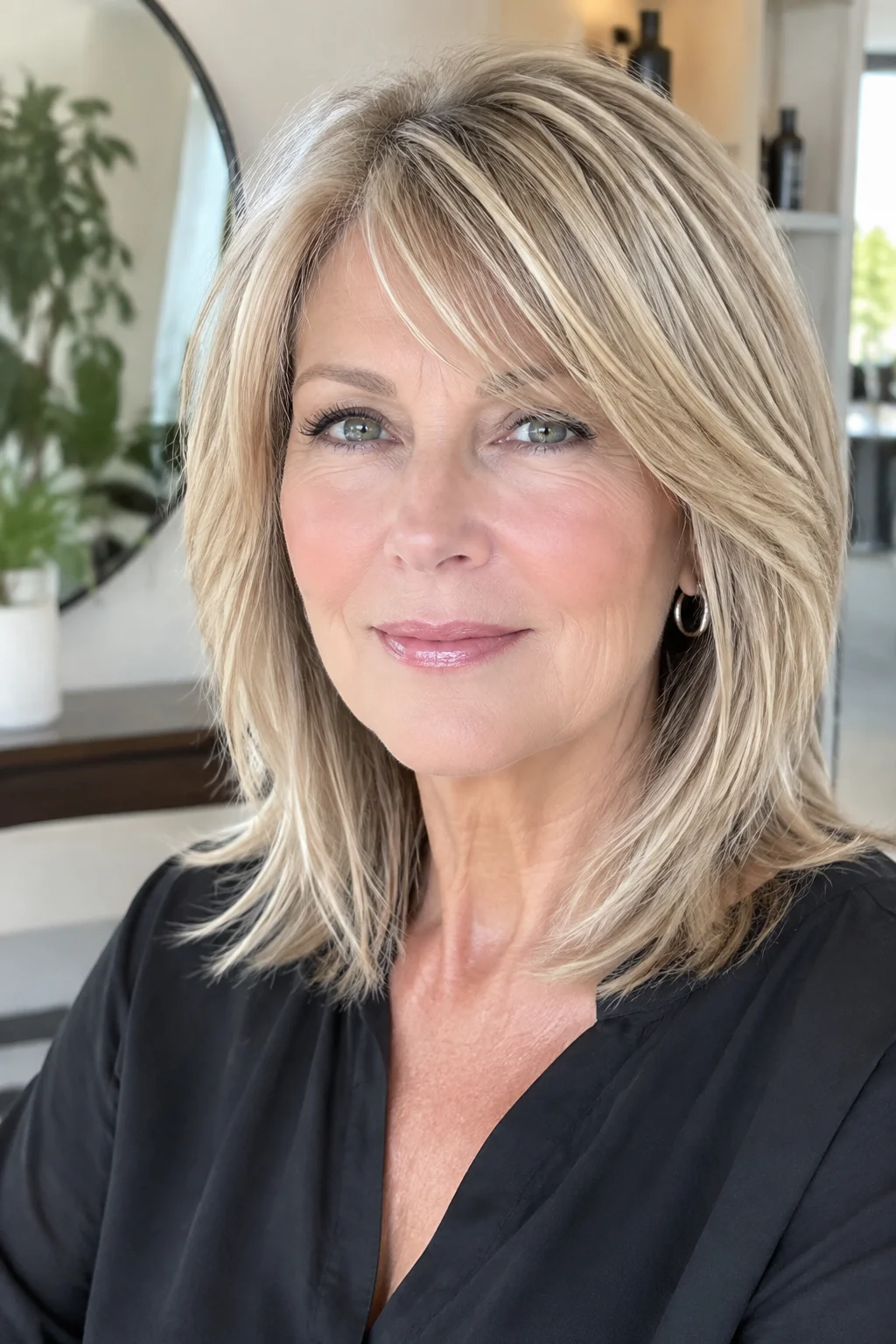
The shag has made a real comeback, and a sleek straight version works better for mature hair than the tousled, bedhead style younger women wear. Subtle layering through the mid-lengths and ends adds shape without the choppiness of a full shag, and keeping the hair sleek rather than piece-y makes it look polished. This cut suits women with medium to thick hair who want movement but still want a controlled, finished look. It also grows out gracefully since the layers are soft rather than sharply cut.
Straight Hair with Deep Side Bangs
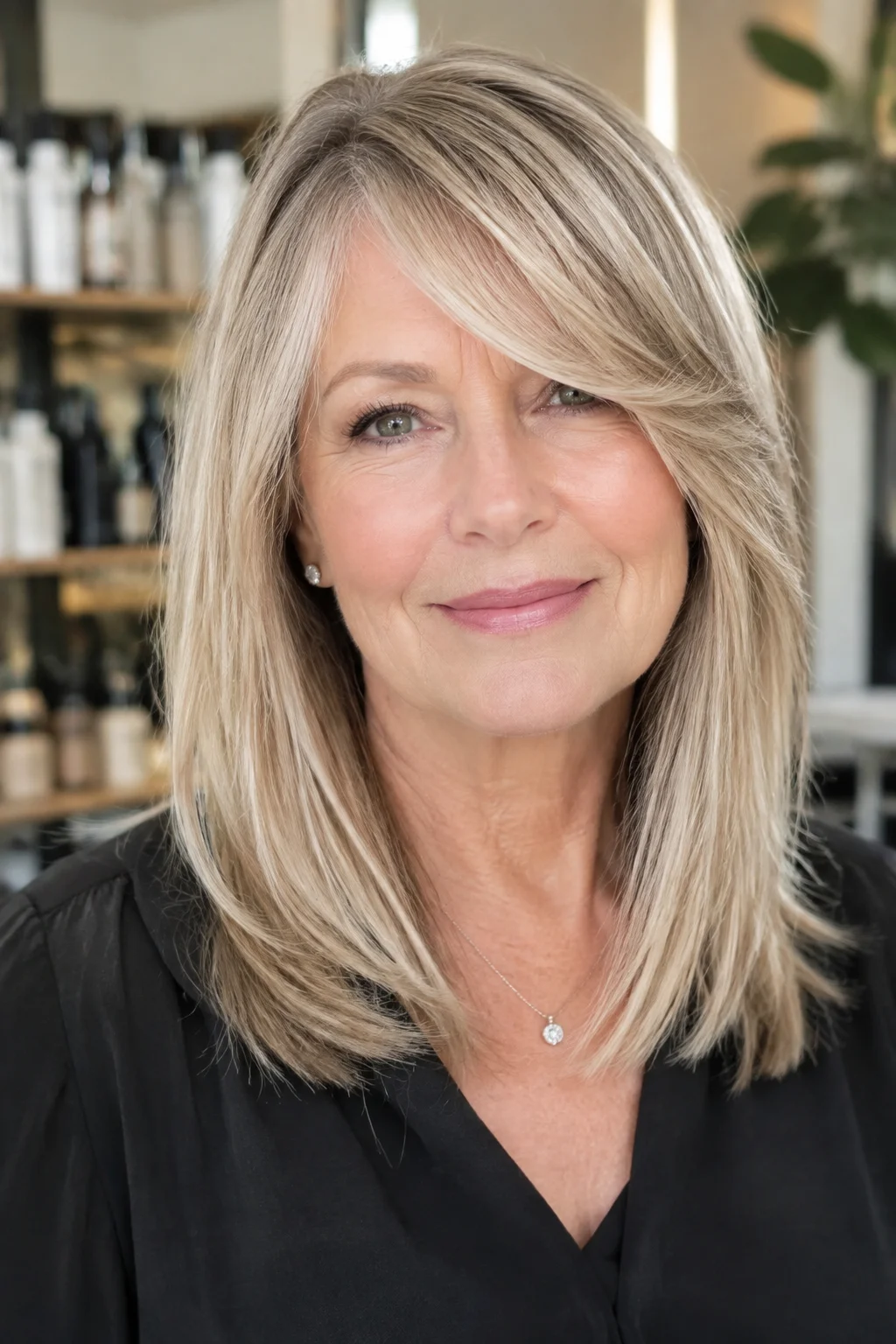
Deep side bangs sweep across the forehead at an angle instead of falling straight down, and they work on nearly every face shape because the angle can be adjusted to balance wider or narrower features. They soften a straight, otherwise simple cut and give you something to style differently depending on the day, brushed to the side or pinned back. Fine hair actually looks fuller with this bang style since the angled piece adds visual density near the front.
Blunt Straight Shoulder-Length Cut
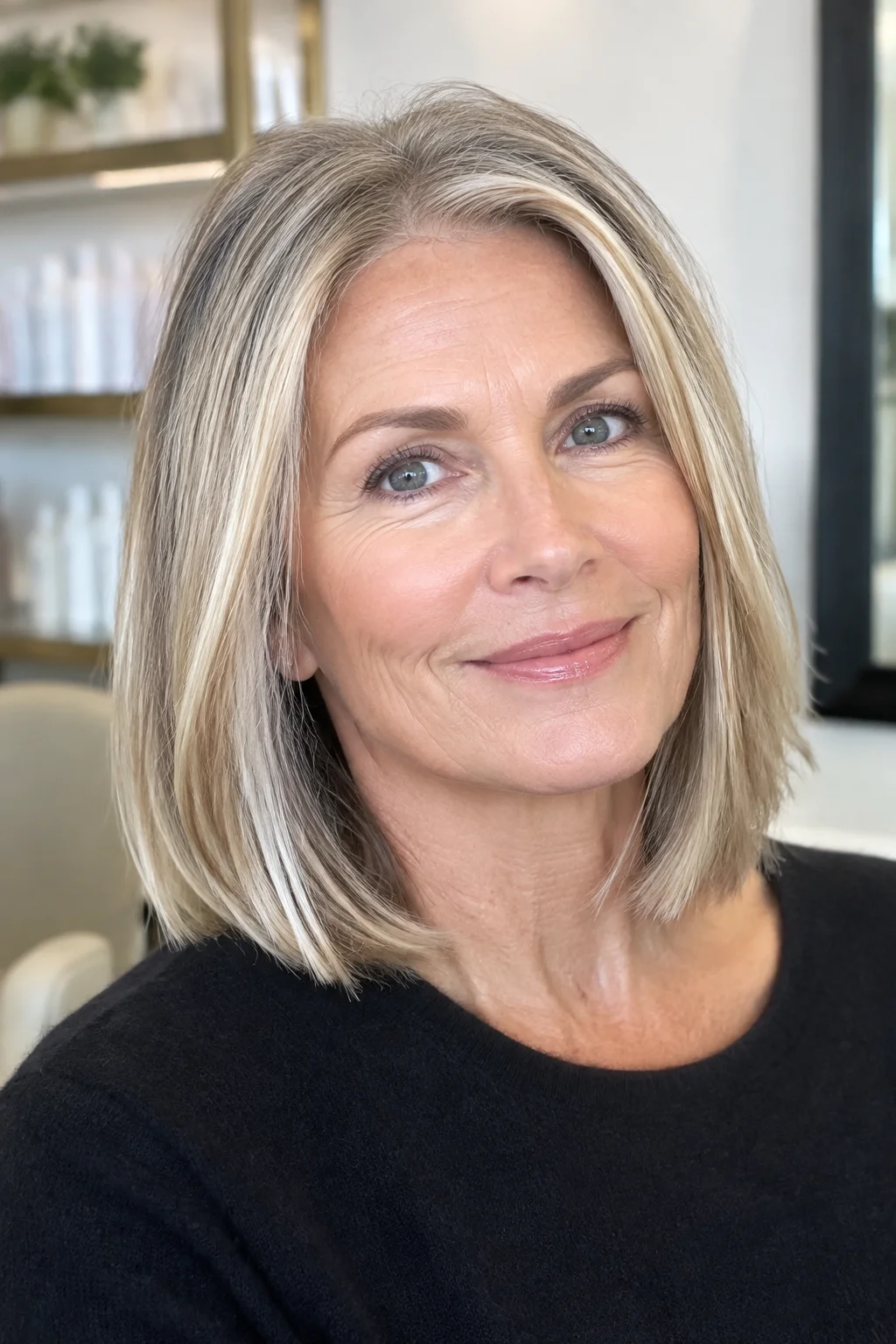
A cut with no layers, no bangs, and one clean length at the shoulders is about as low maintenance as straight hair gets. It looks intentional rather than plain because the blunt ends catch the light evenly across the whole length. This works particularly well for thick, healthy hair that doesn’t need layers to move.
Straight Bob with Longer Front Pieces
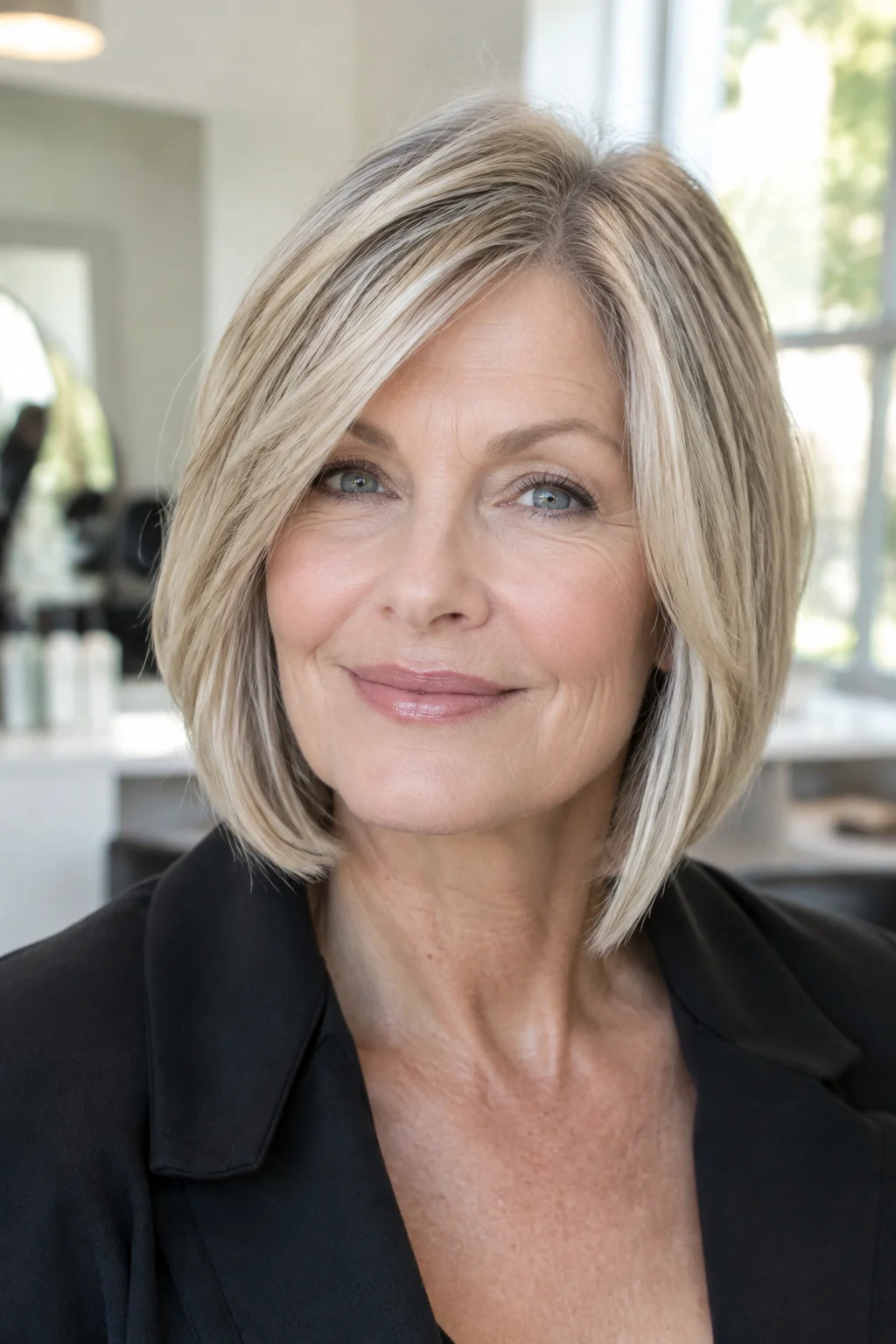
This bob keeps the back and crown short while leaving a couple of longer pieces in the front that can be tucked behind the ears or left to frame the jaw. It gives a bob more flexibility day to day since those front pieces can be styled several different ways. Compared to a strict blunt bob, this version feels a little more relaxed and less severe around the face.
Straight Long Hair with Feathered Face Frame
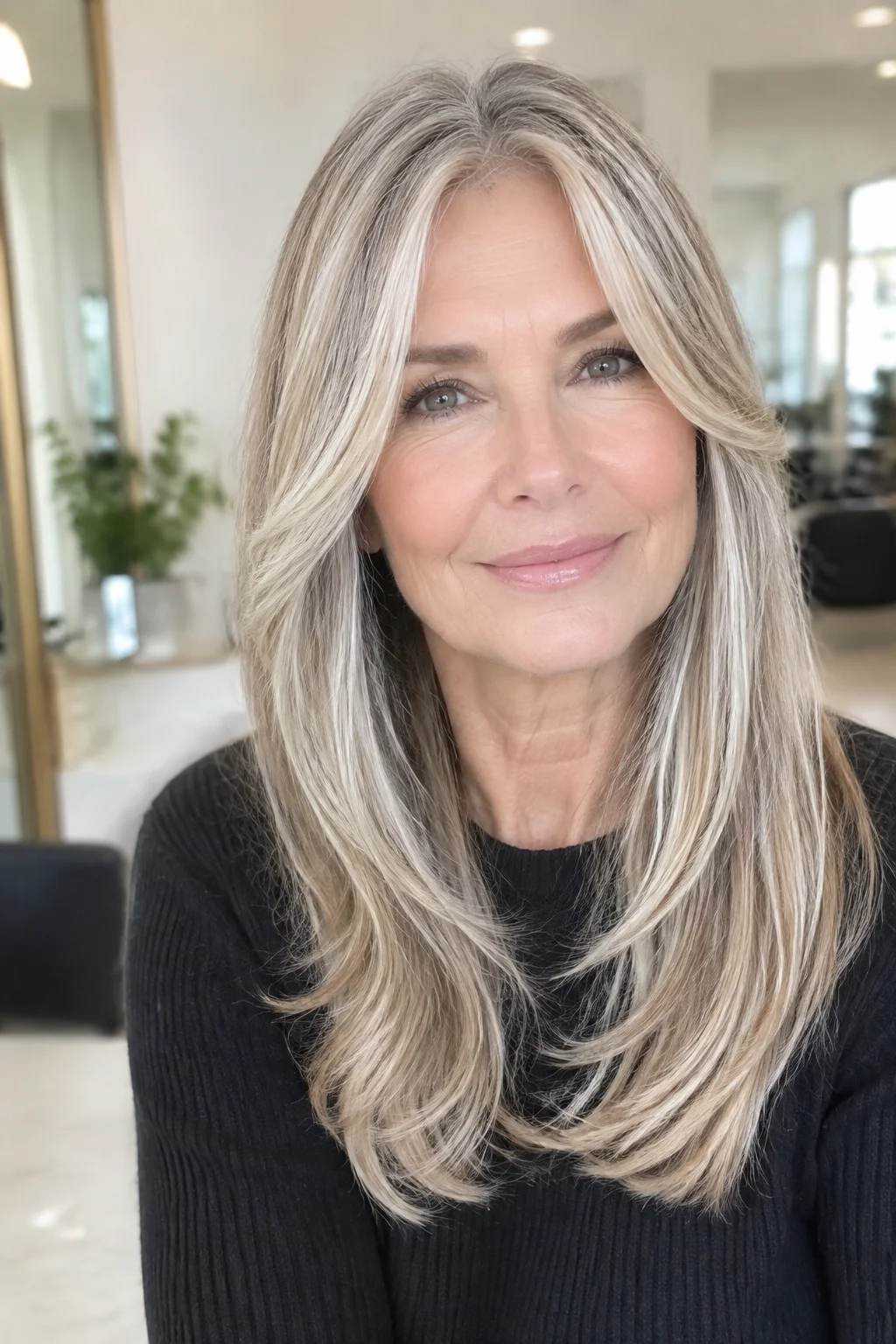
Feathered layers around the face are cut at an angle and slightly thinned, so they lie softer against the cheek than a blunt-cut face frame would. Paired with long, straight length through the rest of the hair, this creates a gentle transition instead of a hard line near the front. It’s a good option for anyone with a strong jawline who wants to soften it without cutting real length off the hair. Regular trims every six to eight weeks keep the feathering from growing out into a shapeless triangle around the face.
Straight Geometric Bob with Sharp Angles
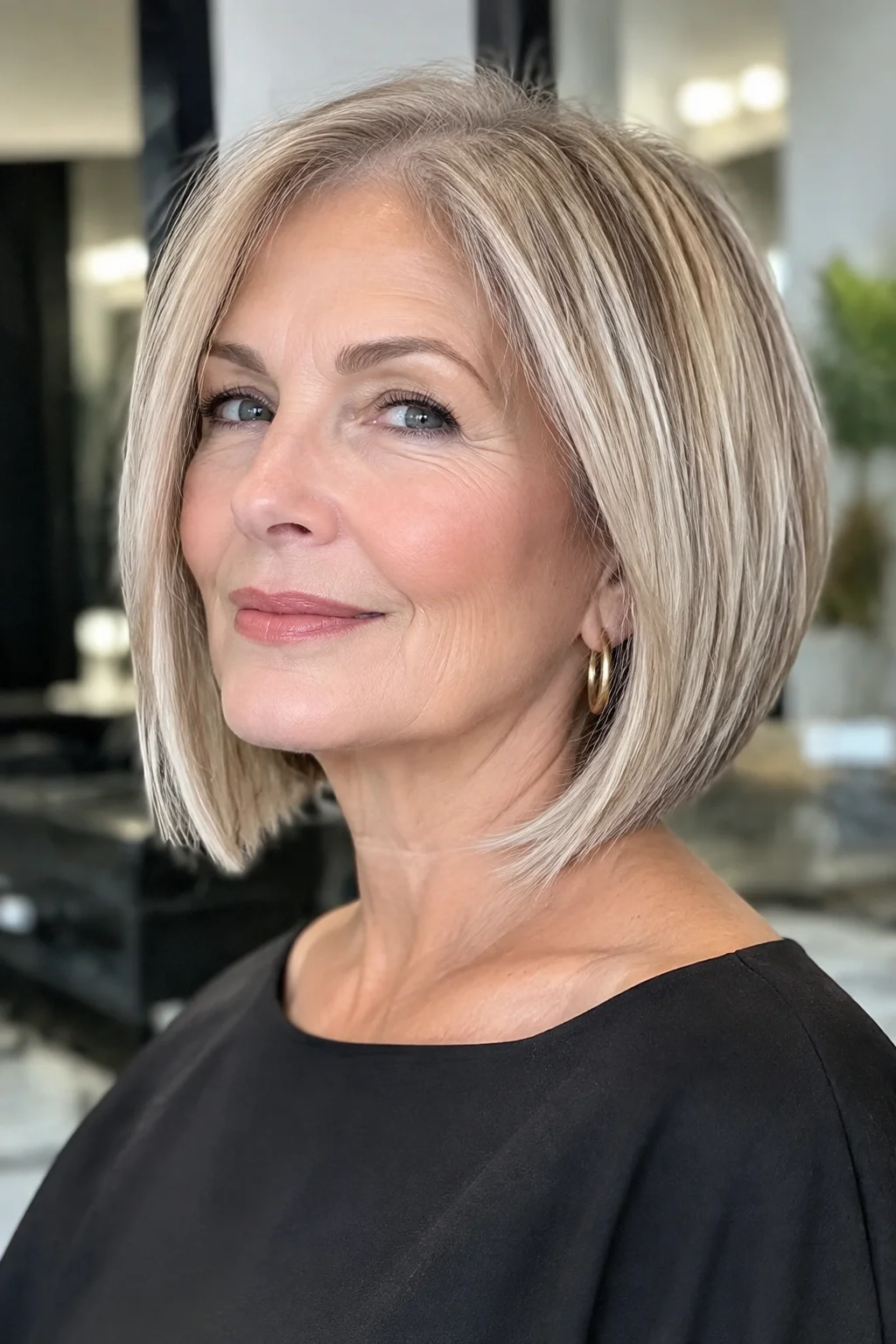
For women who like a more architectural look, a geometric bob with sharp, deliberate angles reads as confident and modern. The lines are cut with precision, often shorter in the back and angling down longer toward the front, and the effect only works if the hair is kept glass-straight. This isn’t a forgiving cut if you skip styling, since any bend in the line undoes the geometry the whole style depends on.
Medium Straight Cut with Wispy Layers at Face

Wispy layers concentrated just around the face, rather than throughout the whole head, keep a medium-length straight cut looking soft without turning it into a fully layered style. The rest of the length stays thick and blunt, so you get movement exactly where it’s needed most, near the cheeks and jaw, and density everywhere else.
Straight Bob with Soft Undercut
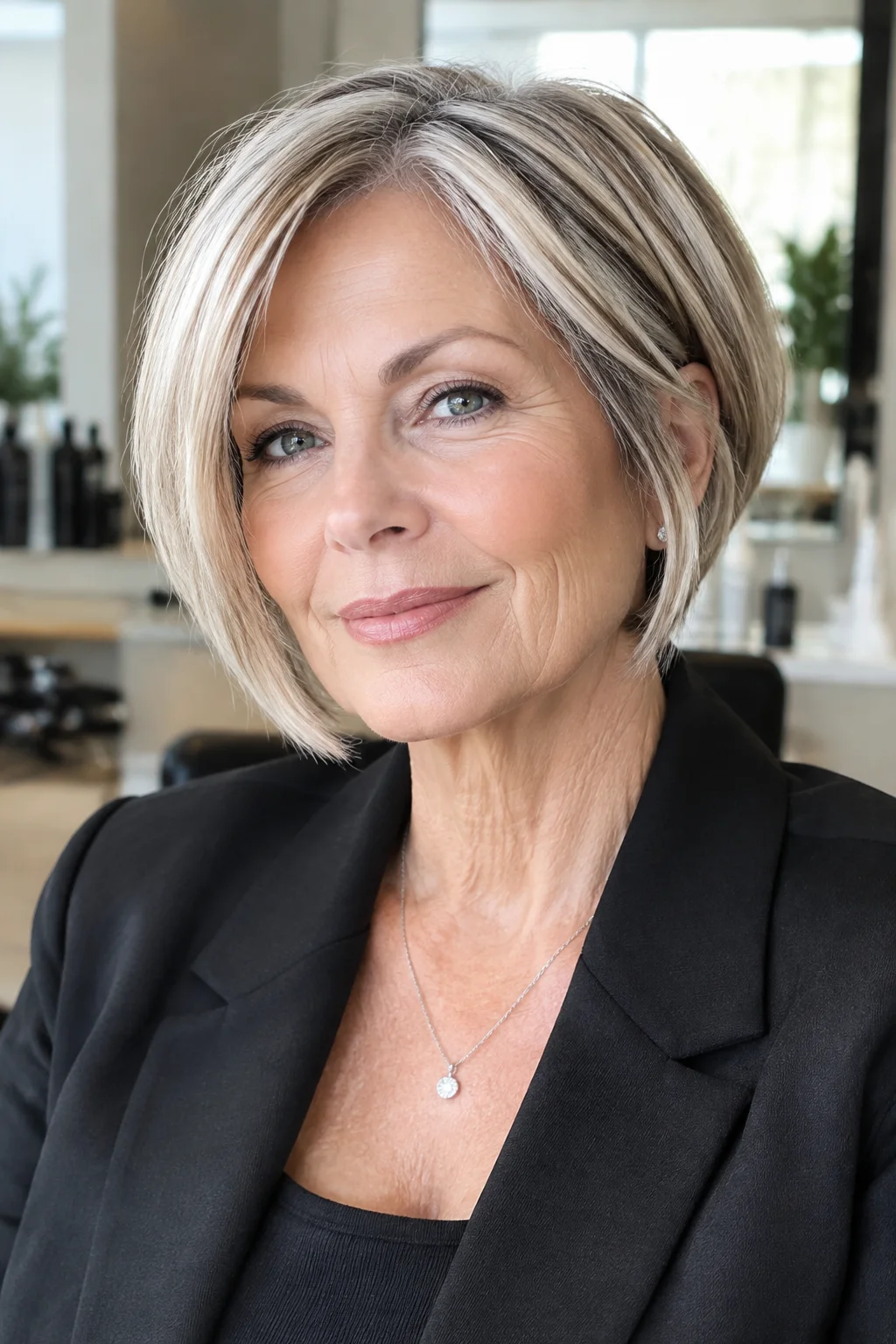
A soft undercut trims the hair underneath the top layer at the nape, reducing bulk without shortening the visible length of the bob. It’s especially useful for thick or heavy hair that tends to puff out at the ends instead of lying flat. From the front the bob looks completely normal, but the back sits closer to the neck and feels lighter. Tip: mention to your stylist that you want the undercut subtle, since a heavy one can show through thinner hair on top.
Straight Curtain Bangs with Mid-Length Hair
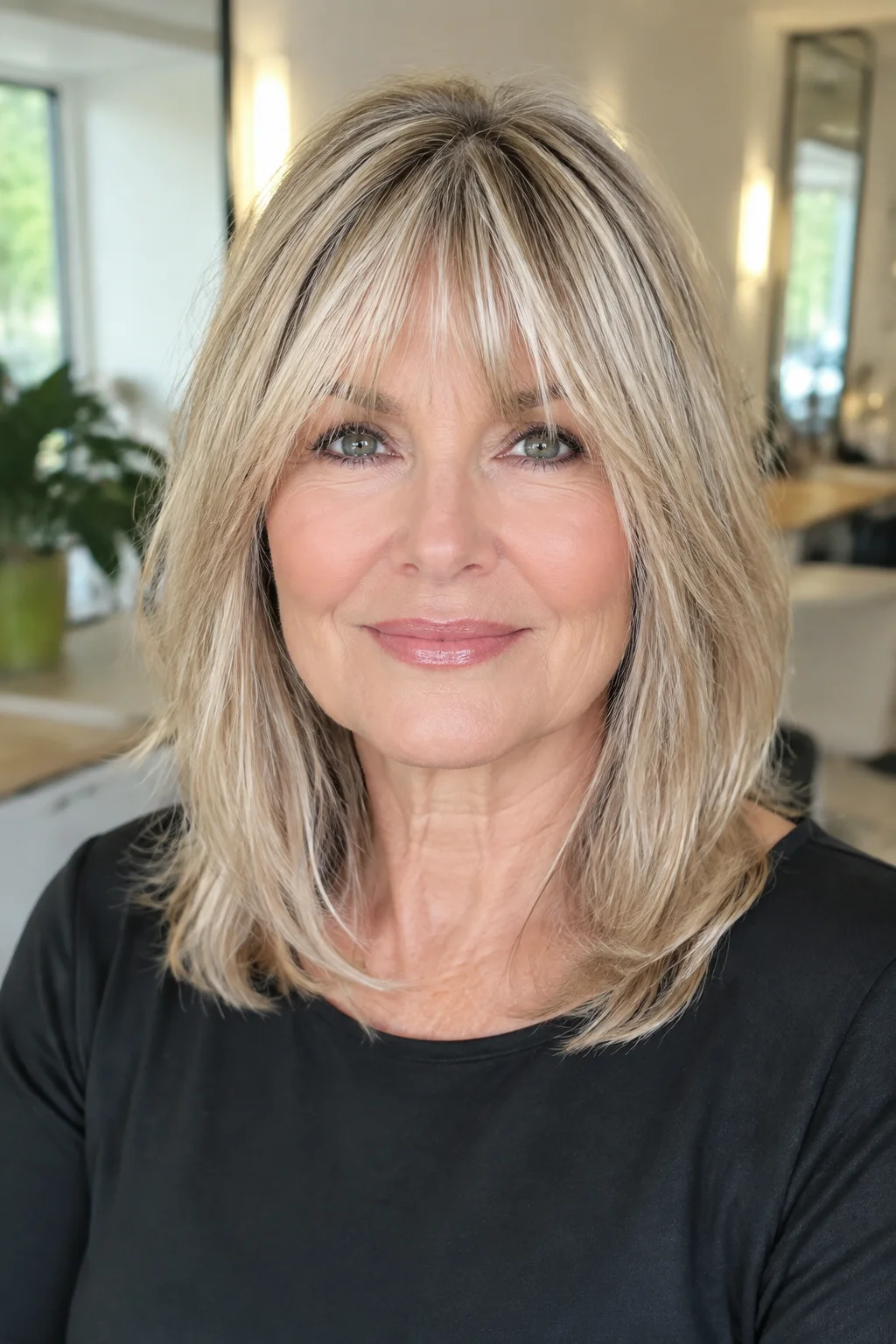
Curtain bangs part in the middle and sweep to both sides, framing the face like actual curtains pulled open. They’re one of the more universally flattering bang styles because they can be grown out or trimmed shorter without losing their shape entirely. Mid-length straight hair gives curtain bangs room to blend into the rest of the cut instead of looking like a separate piece stuck on the front.
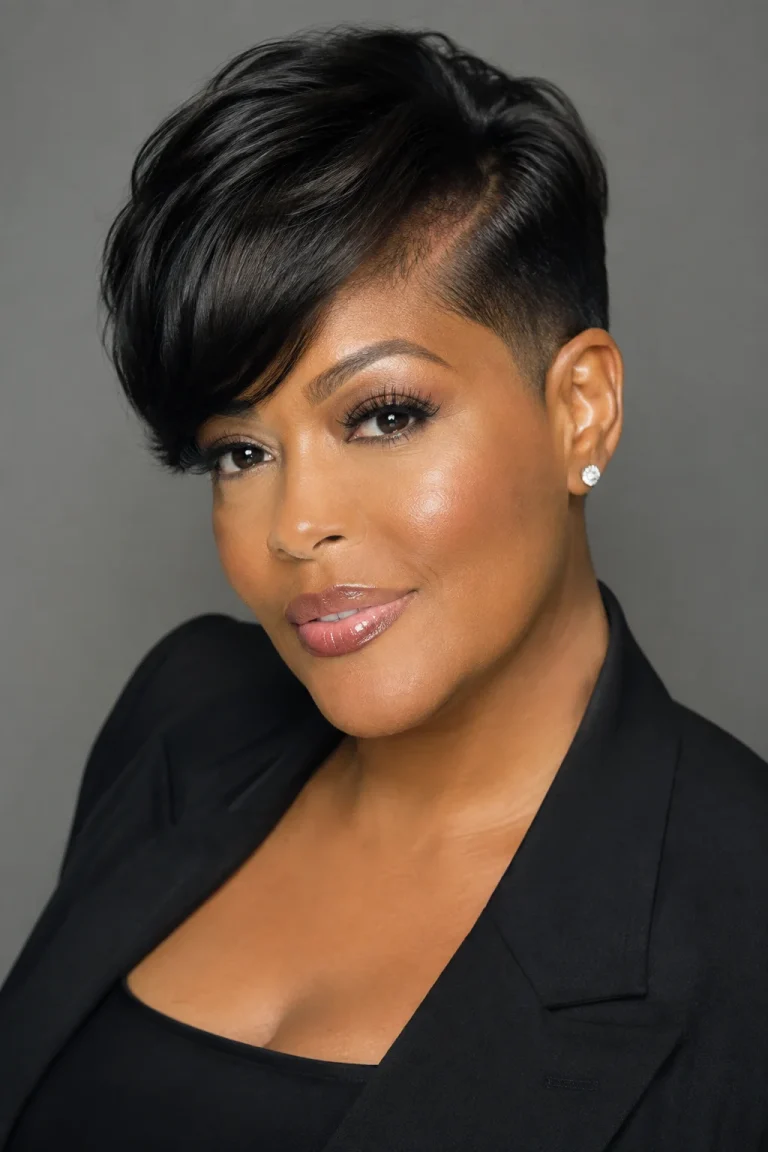
Blunt Straight Pixie with Longer Top Length
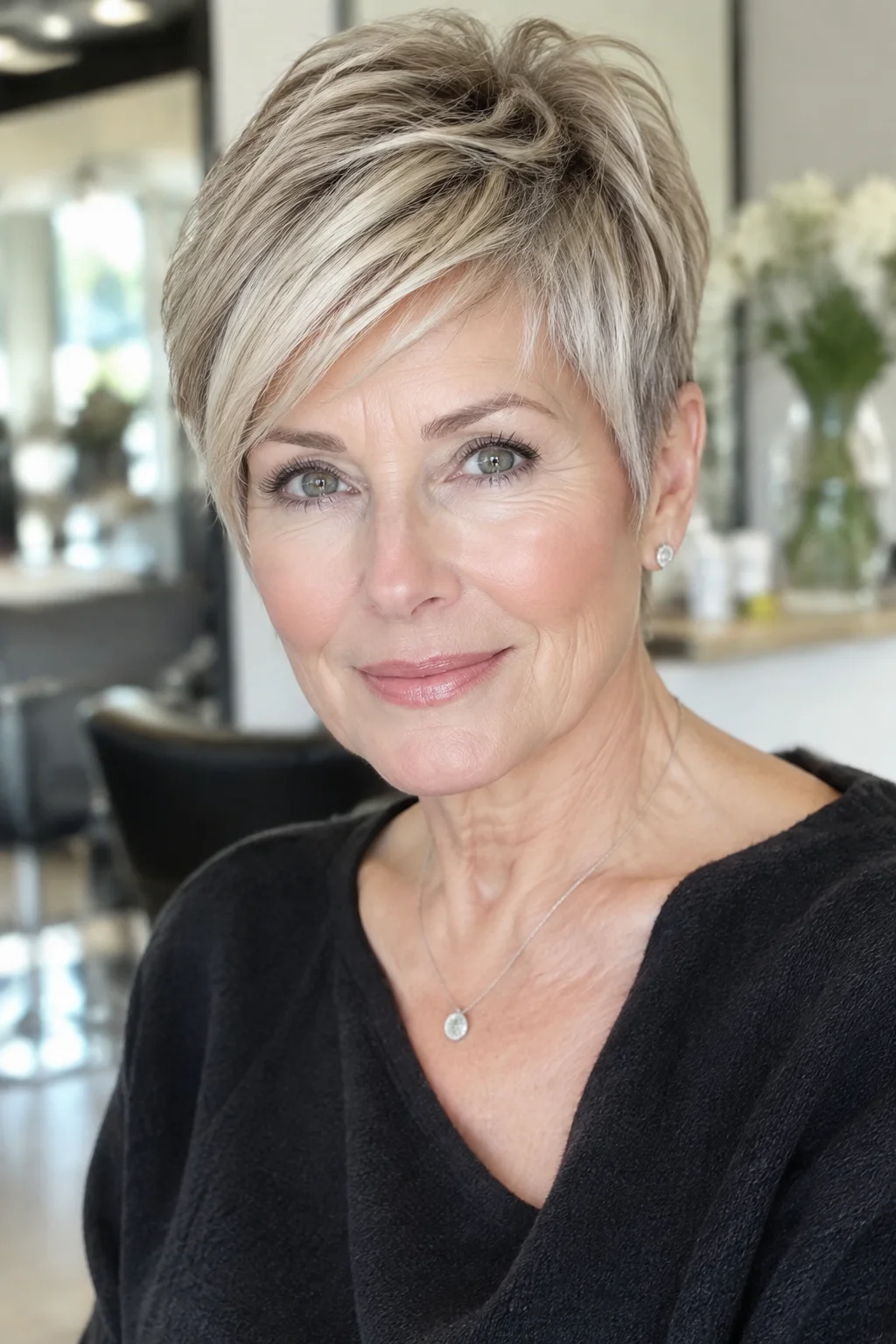
This pixie keeps the sides and back short and blunt while leaving noticeably more length across the top, which can be styled straight down over the forehead or swept to one side. It gives short hair a little more range than a traditional pixie, since the top length changes the whole look depending on how it’s styled.
Straight Collarbone Bob with Textured Ends
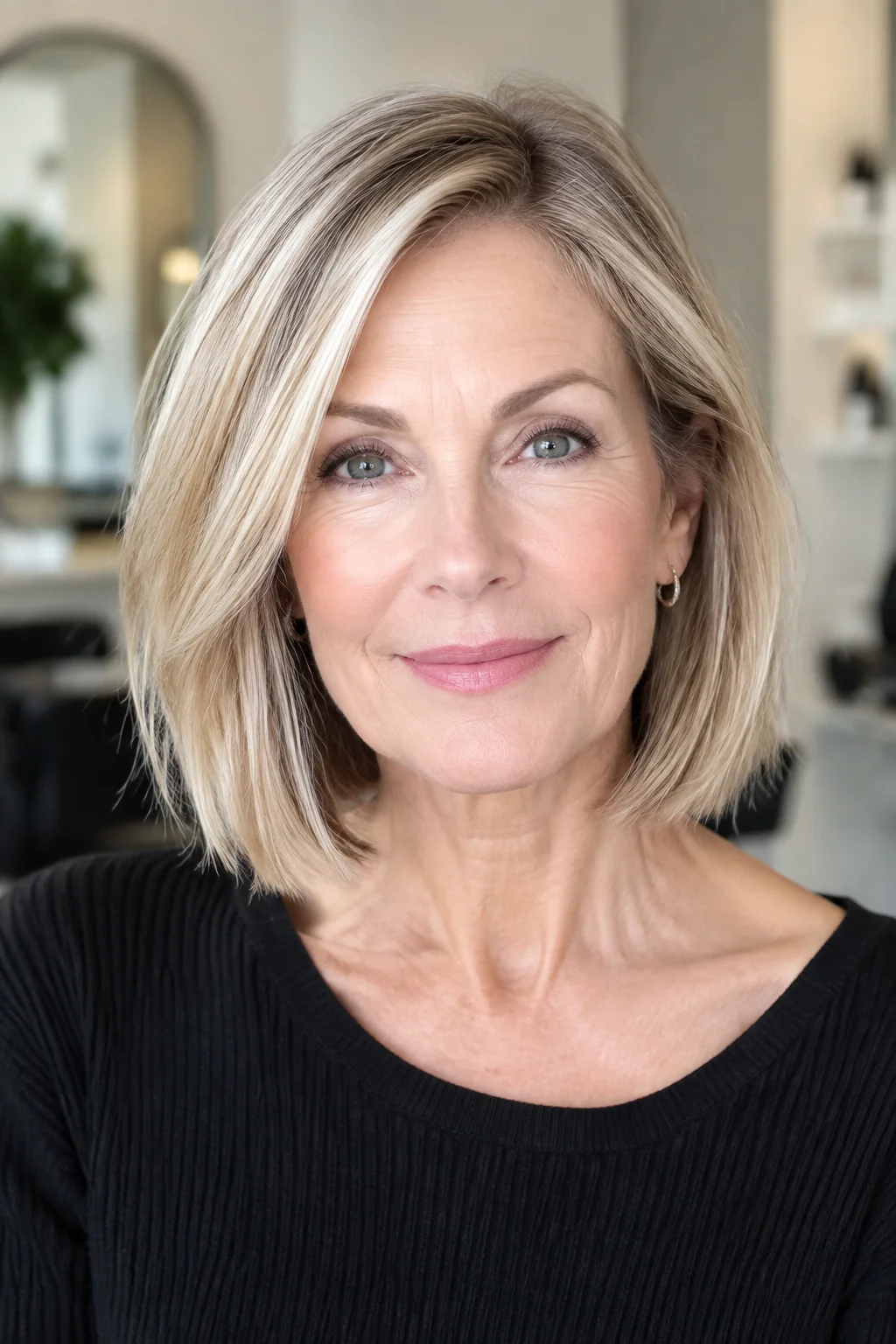
Landing right at the collarbone, this bob is long enough to still tuck behind the ears but short enough to keep a defined shape. Textured ends, cut with a razor or point-cutting shears, keep the bottom from looking like a thick blunt line, which tends to look softer on mature skin. It’s a solid middle-ground choice for anyone who can’t decide between a shorter bob and longer hair.
Straight Hair with Baby Bangs and Lob Length
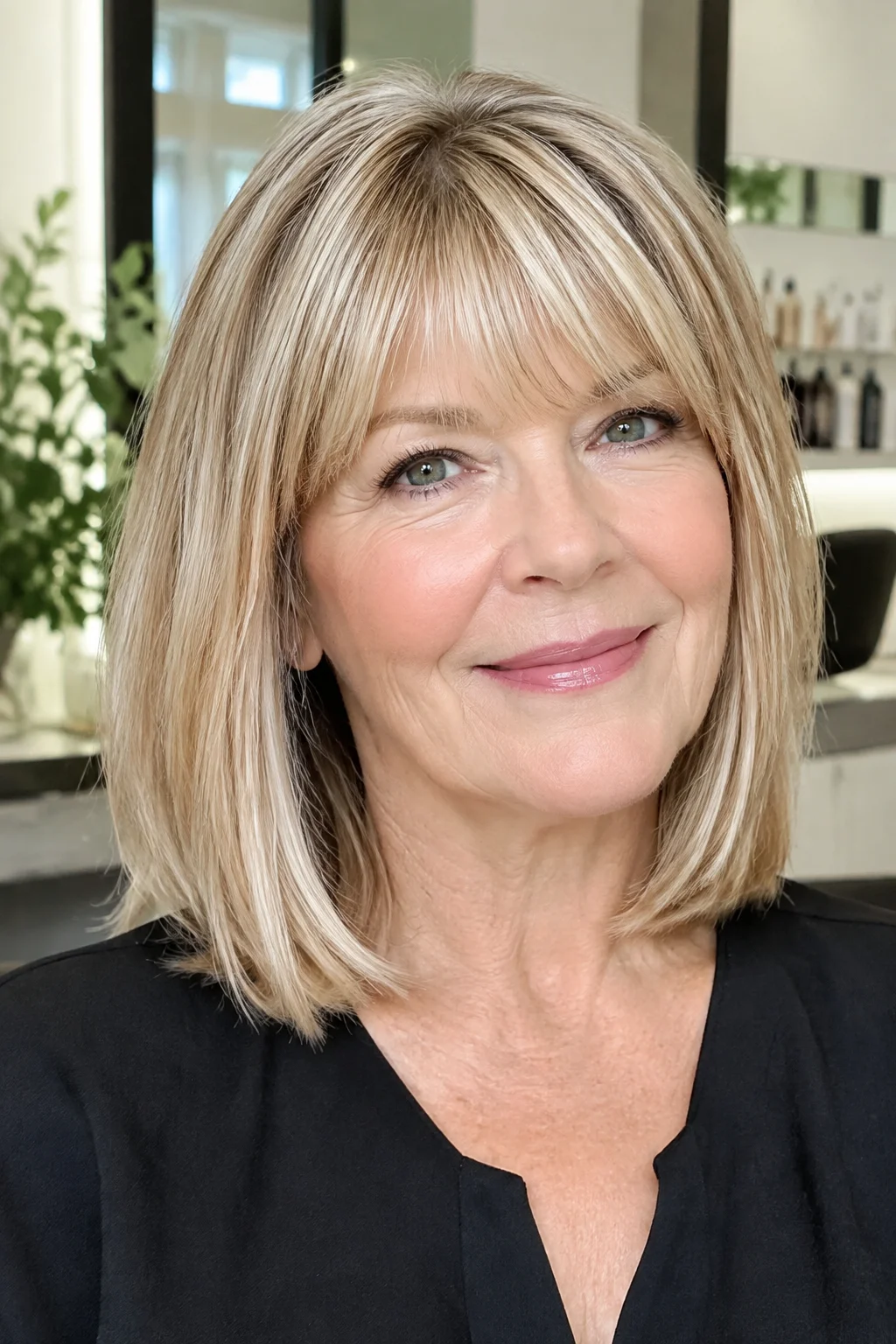
Baby bangs are cut extremely short, sitting well above the eyebrows, and they demand confidence since there’s no length to hide behind. Paired with lob-length hair below, the contrast between the very short fringe and the longer length creates a striking, fashion-forward look. This combination isn’t for everyone, and it works best on women with even, unlined foreheads and strong features that can carry the boldness. If you’re drawn to the look but not ready for something this dramatic, ask your stylist about longer wispy bangs instead as a gentler entry point.
How to Choose the Right Straight Cut for Your Face and Hair Type
With this many options, picking one comes down to two things: your face shape and how your hair actually behaves day to day. Rounder faces generally do better with the chin-length blunt bob, the straight asymmetrical bob, or anything with a deep side part, since these add length and angles rather than width. Longer faces benefit from blunt bangs with straight collarbone length or curtain bangs, both of which shorten the look of the forehead. If your hair is fine and prone to looking flat, avoid one-length cuts with no texture at all, like a plain blunt shoulder-length cut, unless you’re diligent about adding volume at the root. Thick hair, on the other hand, usually looks better with some internal layering or texture, like the textured straight bob with choppy ends or the sleek straight shag, since these prevent bulk from building up near the jaw.
Maintenance matters just as much as shape. Micro bangs and baby bangs need trims every three to four weeks without exception, while a straight geometric bob demands daily styling to keep its sharp lines intact. If you travel often or simply don’t want to fuss with hair every morning, lean toward lower-maintenance options like the blunt straight shoulder-length cut or the straight bob with longer front pieces, both of which hold their shape well between salon visits. A common mistake is choosing a bold cut like the straight pixie bob hybrid or the blunt straight pixie with longer top length purely because it looks striking in a photo, without considering whether your hair’s natural texture will cooperate. Bring a photo to your consultation, but also ask your stylist directly whether your hair type and face shape suit that particular style before committing to the chair.