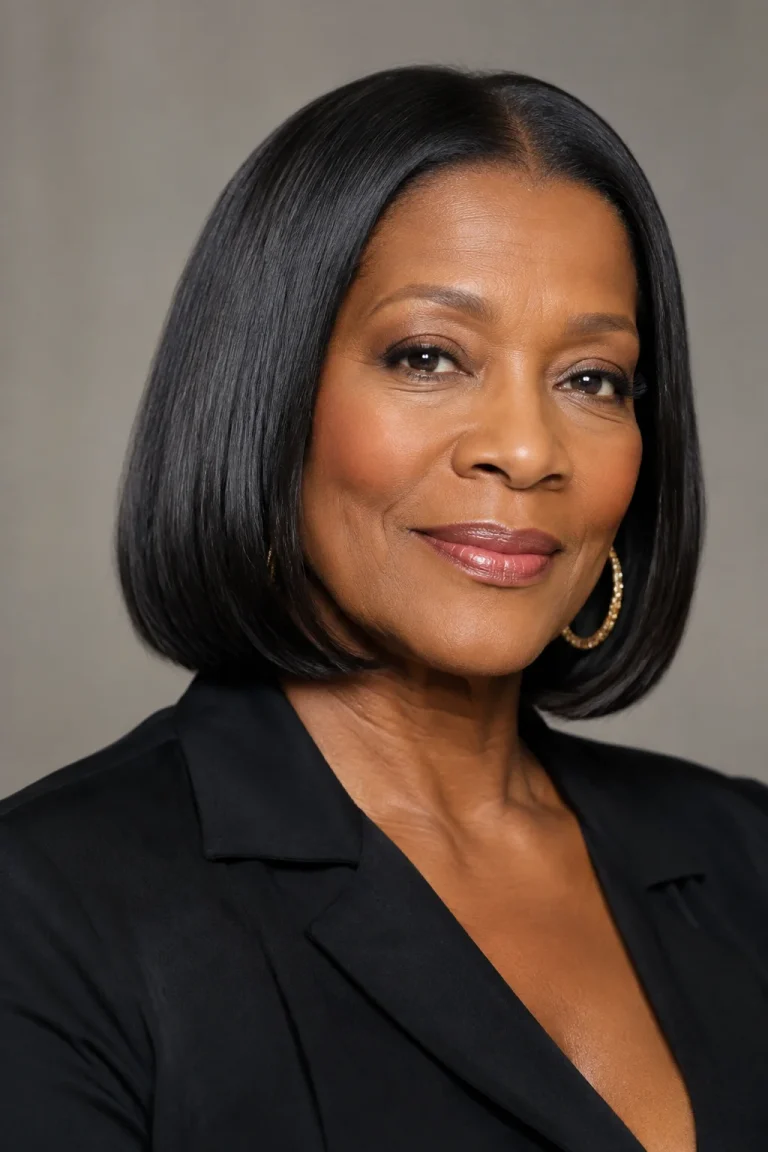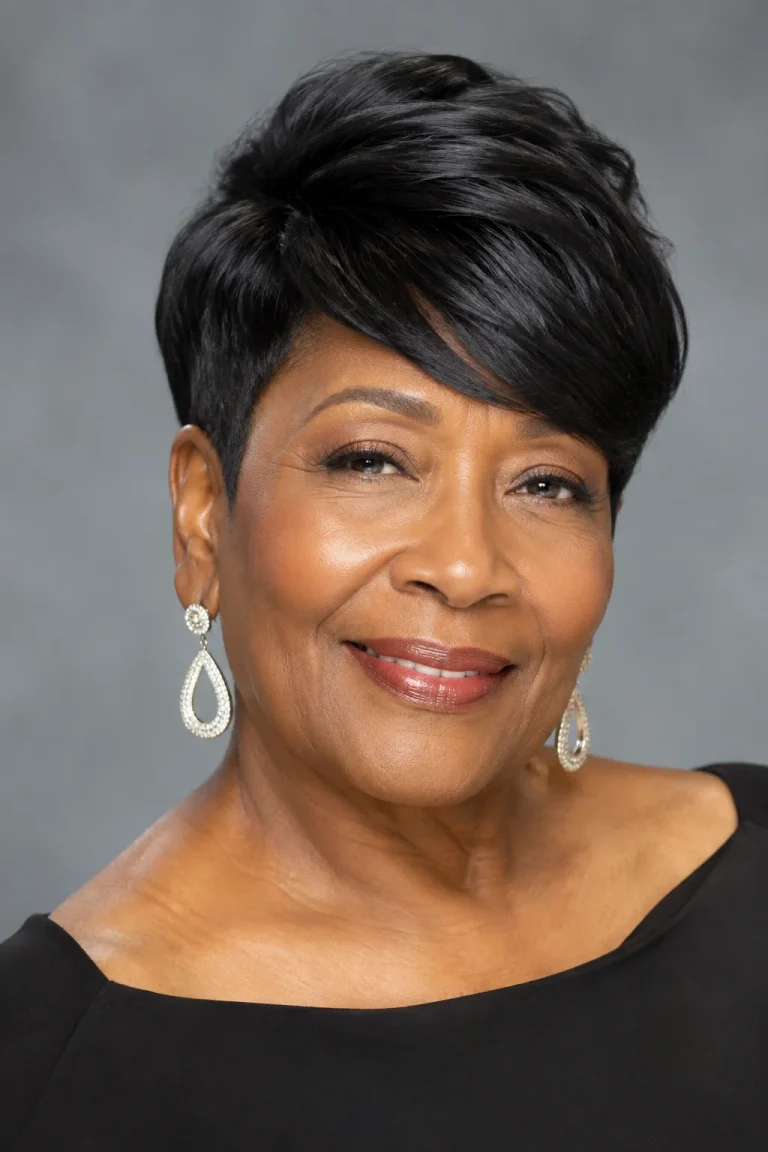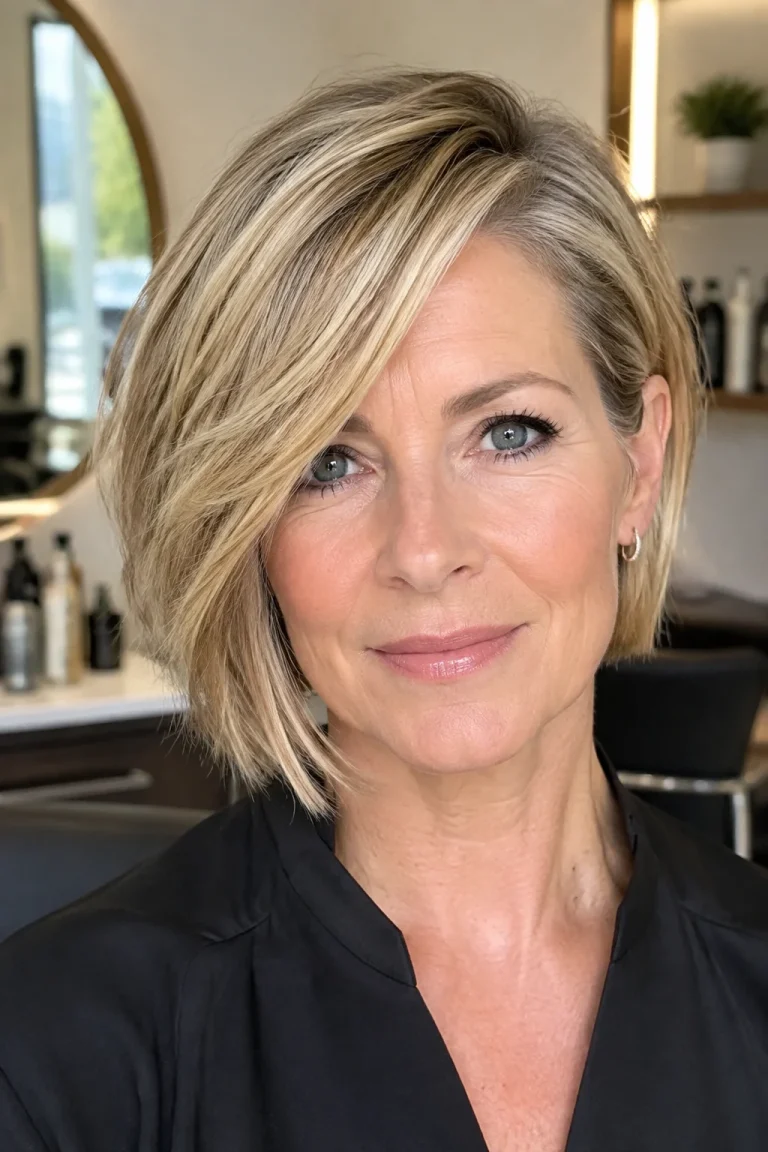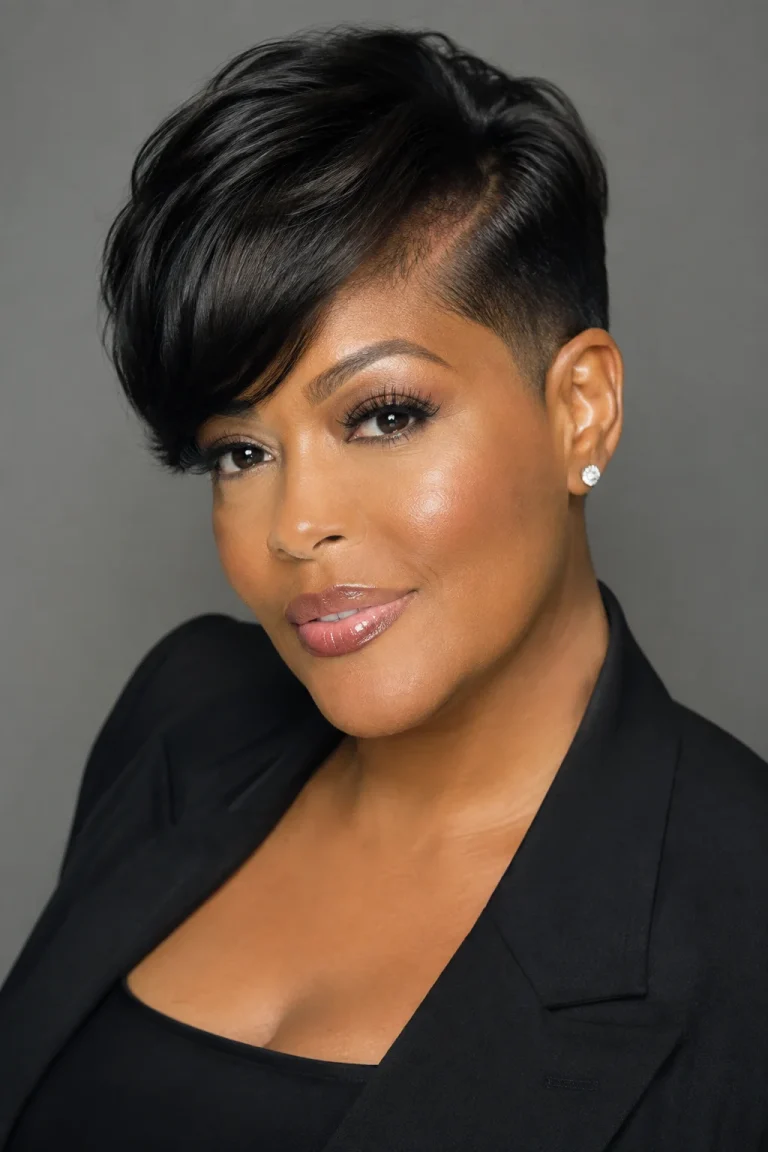
Fine, thinning, or flat straight hair can start to look tired after 70, and the wrong cut only makes it worse. Blunt, one-length styles tend to weigh hair down and highlight sparse spots at the crown or temples. The good news is that layered straight hair hairstyles for women over 70 solve this problem directly by adding lift, motion, and shape without demanding heat styling or thick strands you no longer have. A well-placed layer catches light, gives the illusion of density, and softens the face at the same time. Below are 23 cuts worth showing your stylist, each one built around real bone structure, hair texture, and the way straight hair actually falls. Some are barely-there trims and others change the whole silhouette. Pick the one that matches your hair’s thickness and your patience for styling, not just the picture.
Face-Framing Layers with Blunt Ends
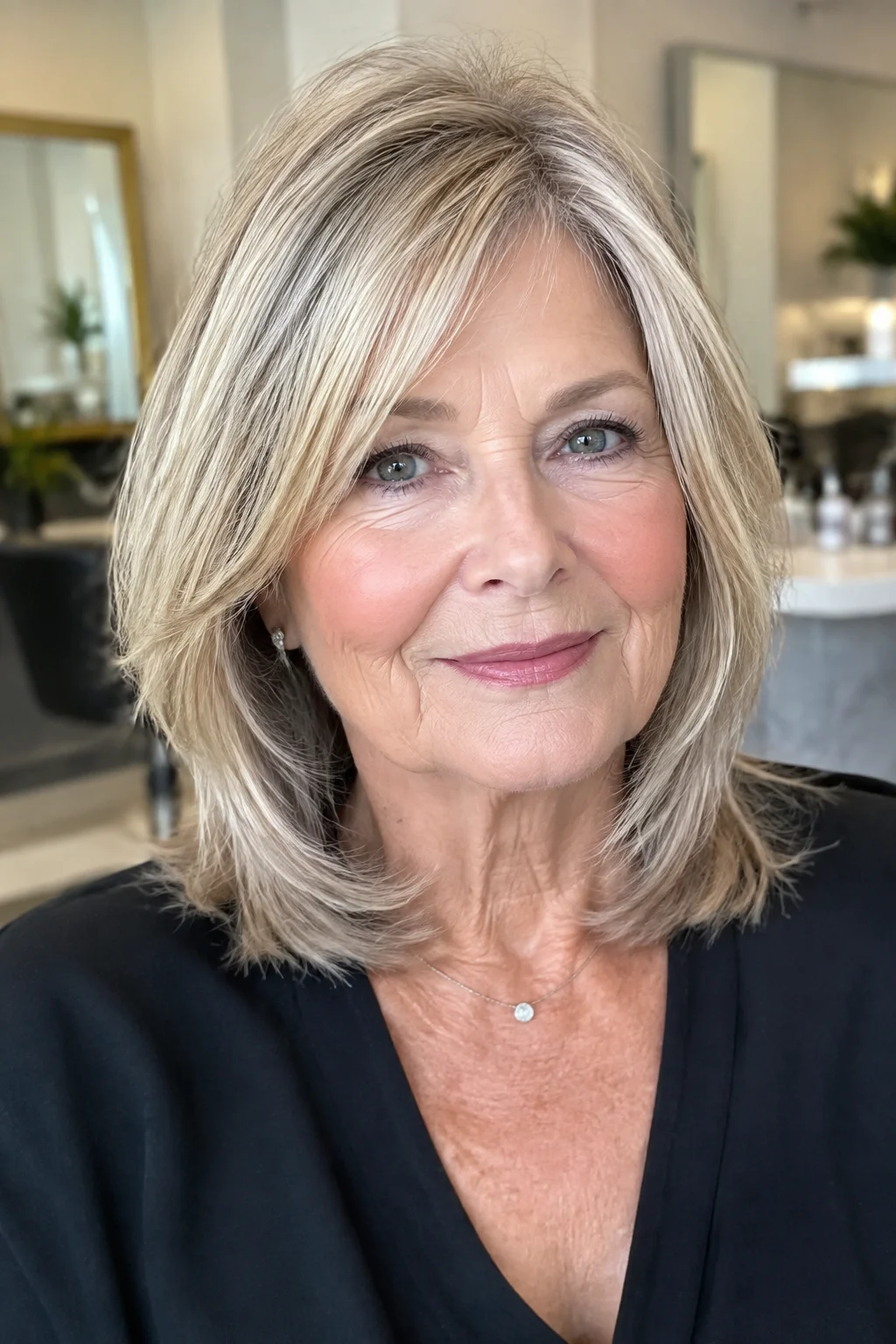
This cut keeps the bulk of the length blunt for weight and body, then adds soft layers only around the face. The result frames the cheeks and jaw without cutting away density everywhere else, which matters once hair starts thinning with age. It works especially well on medium to fine straight hair that needs help looking fuller at the ends. Tip: ask your stylist to keep the face-framing pieces long, landing at or below the chin, so they soften rather than shorten your look. A light mist of heat protectant before styling helps the finish last. A light mist of heat protectant before styling helps the finish last.
Long Layered Cut with Side Part
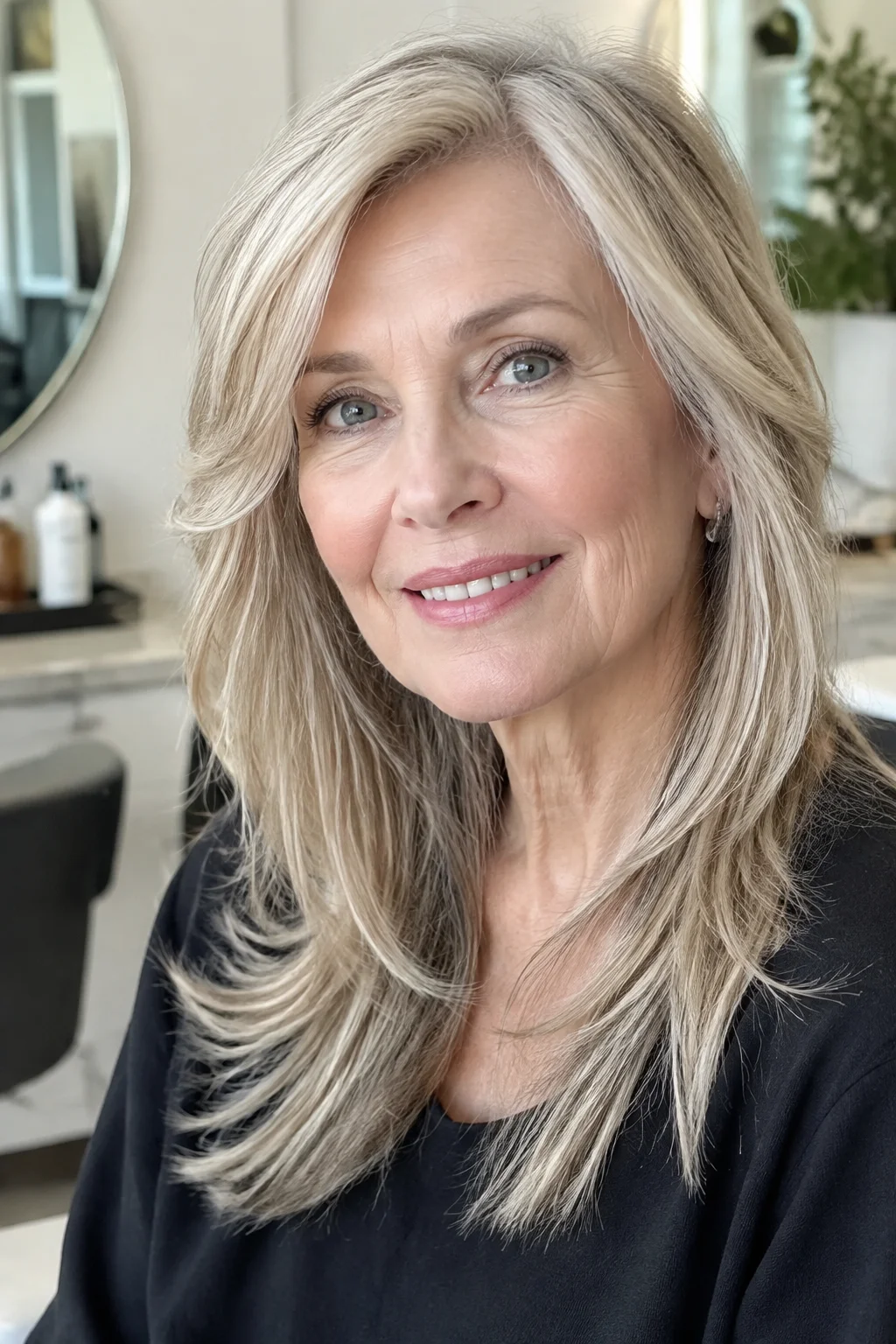
A deep side part combined with long layers gives straight hair a gentle wave-like movement even without curling. The layers start below the ear and get longer toward the ends, so the hair swings instead of hanging stiff. This shape suits women who want to keep length but are tired of flat, straight-across ends. It also flatters a longer face by breaking up the vertical line.
Chin-Length Layered Bob with Movement
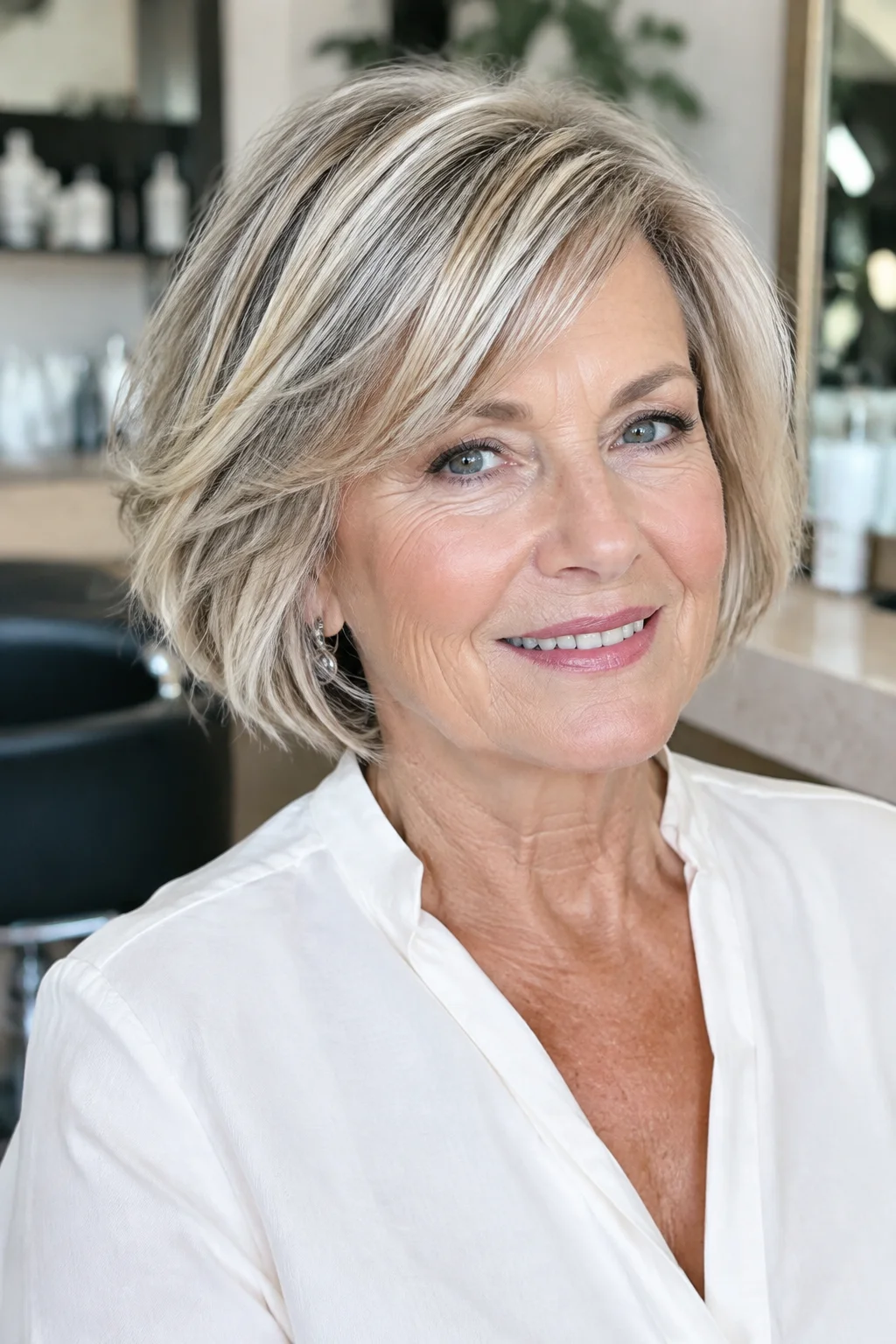
A chin-length bob with internal layering avoids the helmet effect that plagues so many short straight cuts on older women. The layers are cut inside the shape rather than at the perimeter, so the outline stays clean while the inside moves freely. This is a strong pick if you want short hair that still looks soft rather than severe. Compared to a blunt bob, this version reads younger and less stiff around the jaw.
Textured Pixie-Bob Hybrid
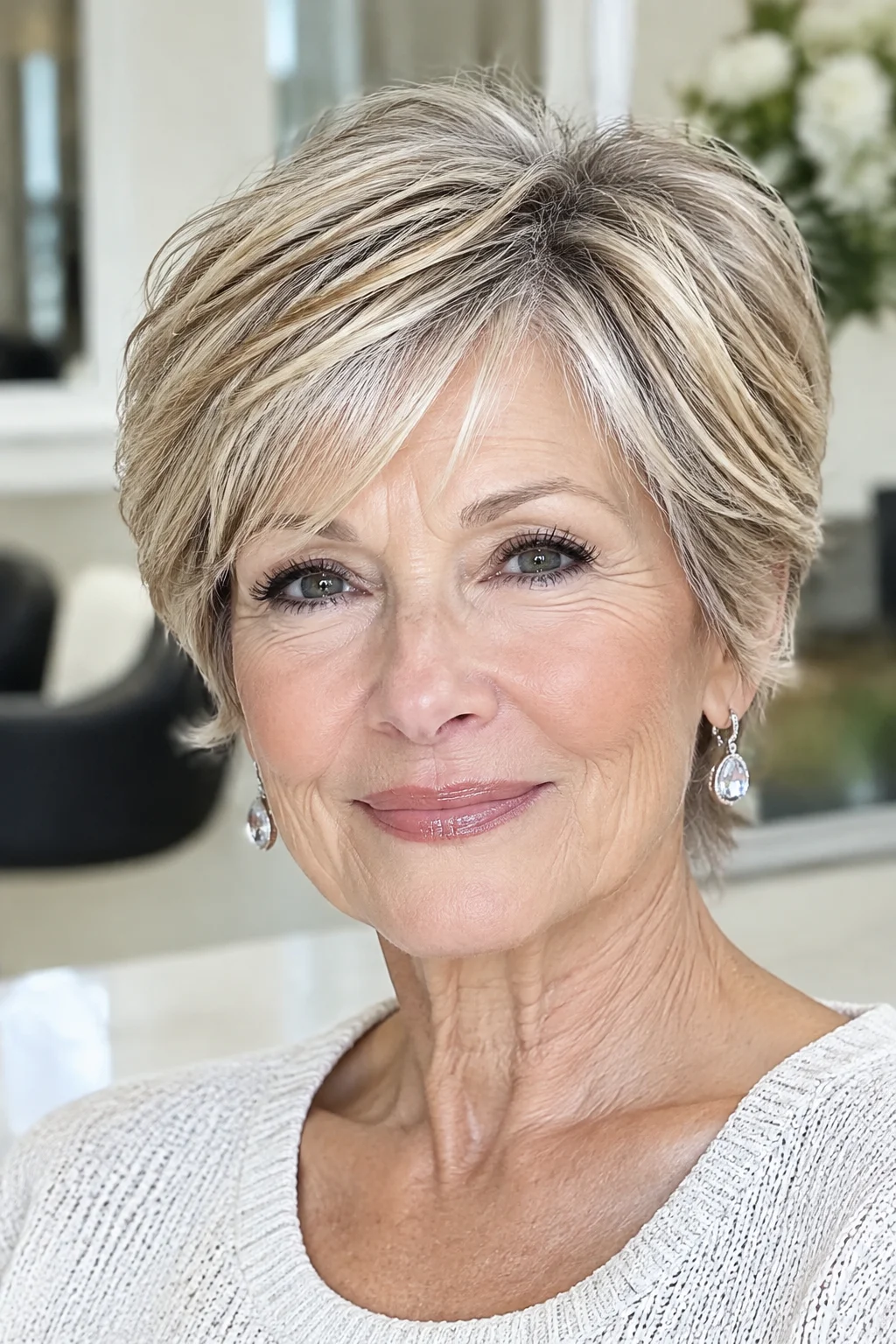
This cut splits the difference between a pixie and a bob, keeping length at the crown and sides while texturizing the ends so they don’t sit flat. It gives the appearance of thicker hair at the top, which helps if your crown has thinned. The choppy ends add just enough texture to keep straight hair from looking too neat or matronly.
Shoulder-Length Layers with Feathered Ends
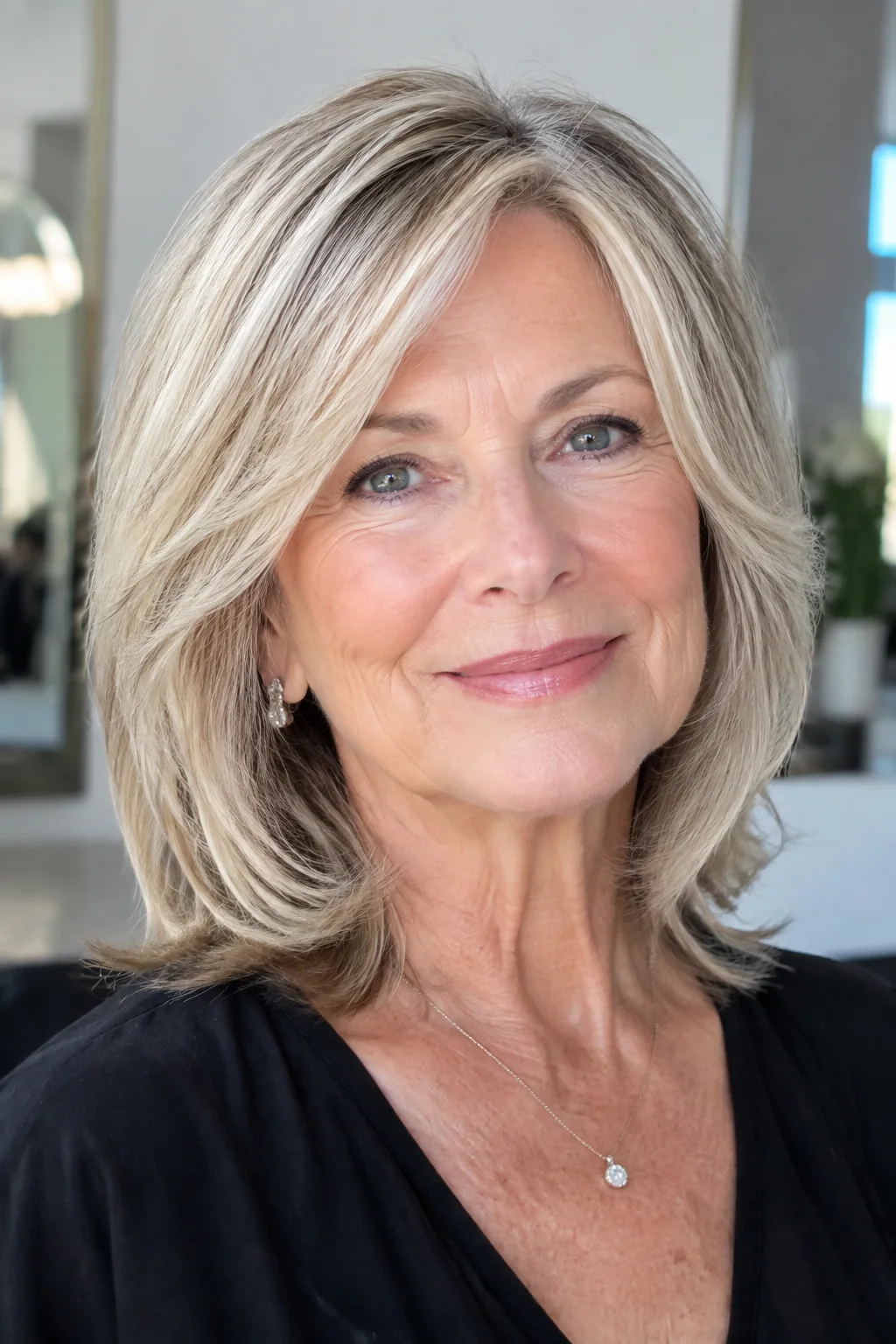
Feathered layers at the ends flick outward slightly instead of pointing straight down, which keeps shoulder-length hair from looking heavy. This length is easy to manage with a round brush and a few minutes of blow drying. It suits women who want a middle ground between short, low-maintenance cuts and long styles that need more upkeep. The feathering also disguises split or frizzy ends between trims.
Shag Cut for Fine Straight Hair
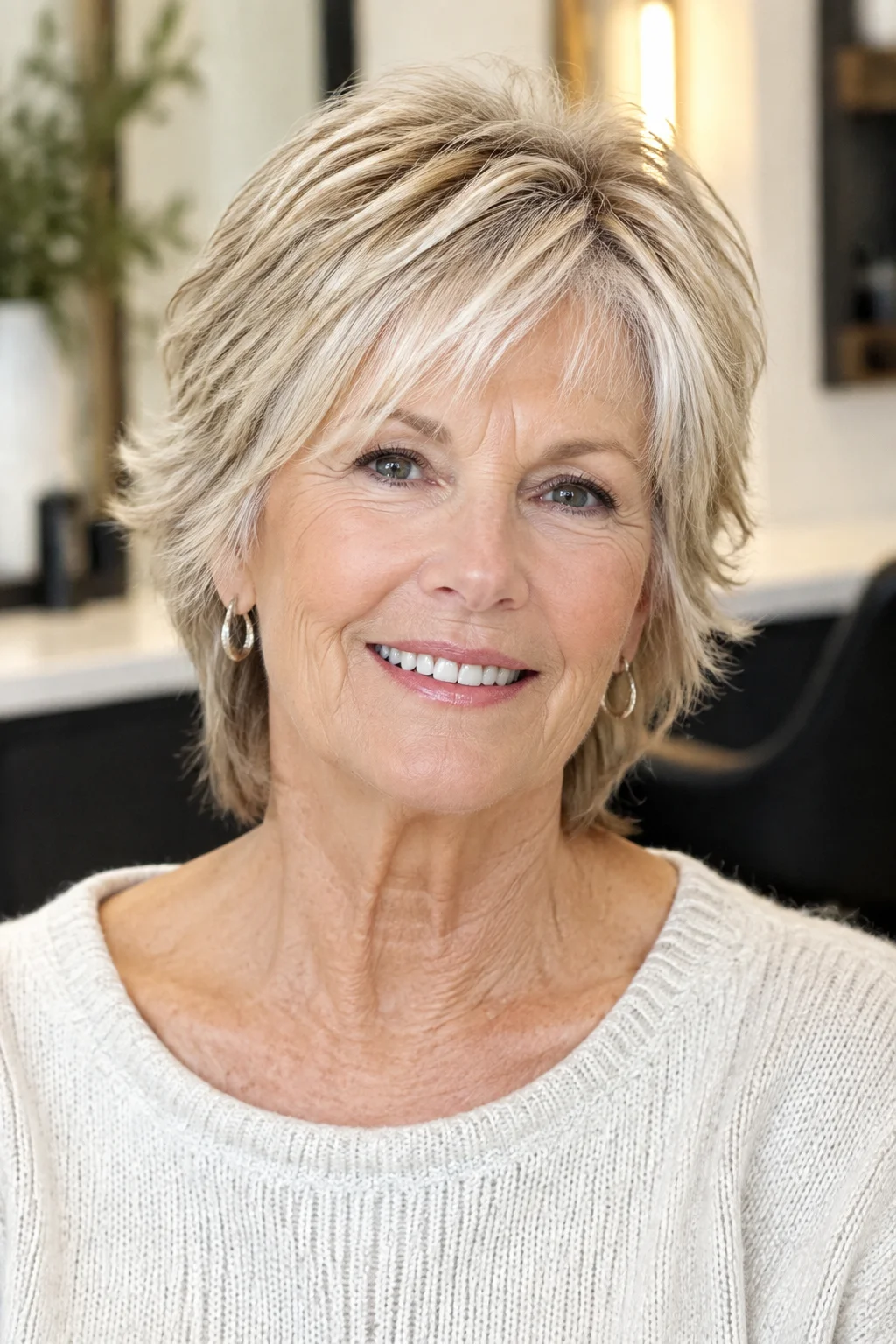
The shag is one of the best rescue cuts for fine, flat straight hair because it’s built entirely on choppy, disconnected layers. Every layer is cut short and jagged on purpose, which tricks the eye into seeing more volume than actually exists. Bangs are often included, cut wispy rather than blunt, to keep the whole look loose. This style needs almost no styling tools since the cut itself does the work, though a light mousse at the roots helps it hold shape through the day. It’s a favorite for anyone who wants texture without committing to curls or daily heat styling. The shag also grows out gracefully, so appointments can stretch a bit longer than with a precise bob.
Straight Lob with Stacked Layers
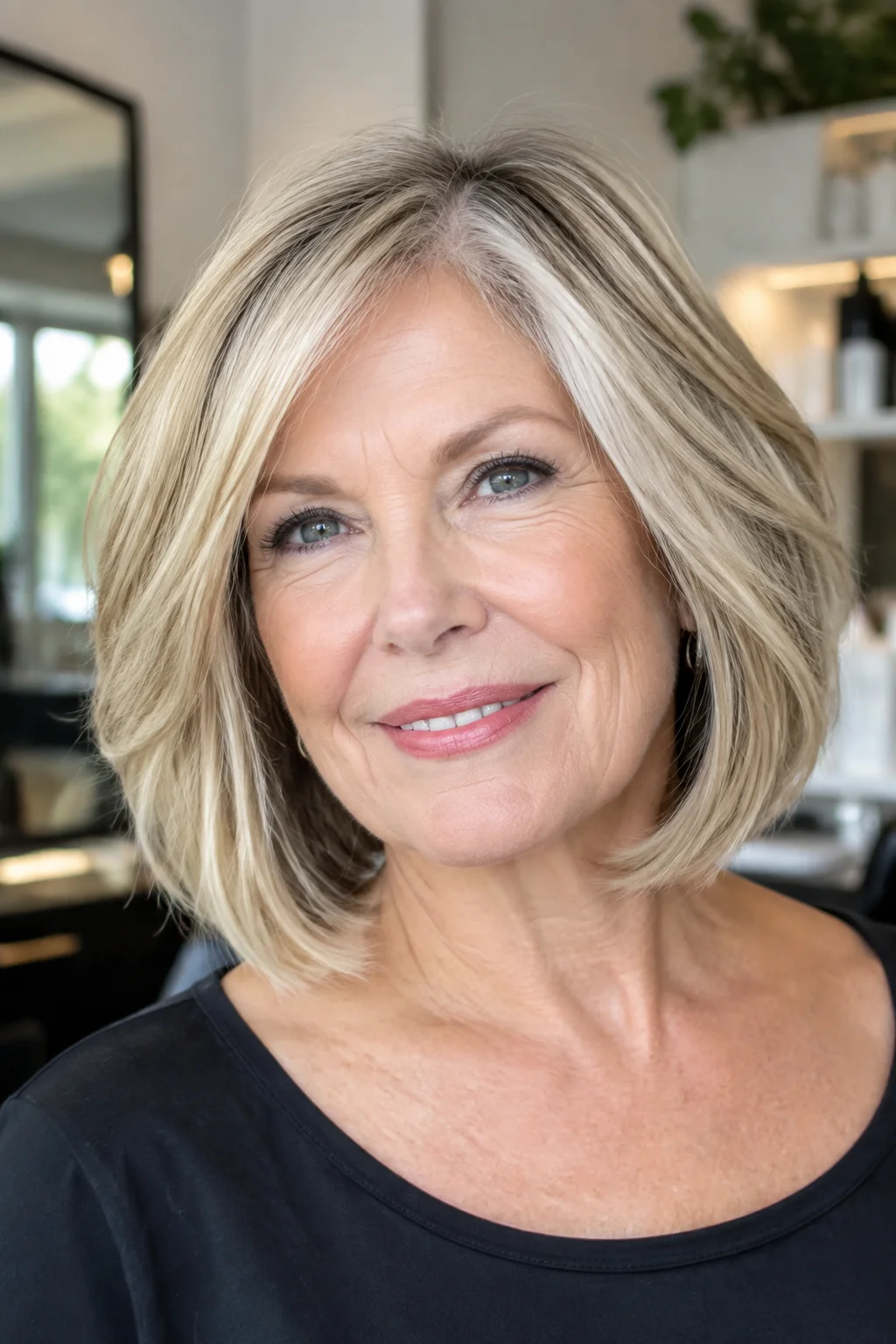
A long bob, or lob, gets stacked layers at the back to build height and prevent the flat, pancake look straight hair can fall into. The front stays longer and softer while the back is layered tighter for lift. This shape flatters most face shapes and works whether your hair is thick or on the thinner side.
Asymmetrical Layered Cut
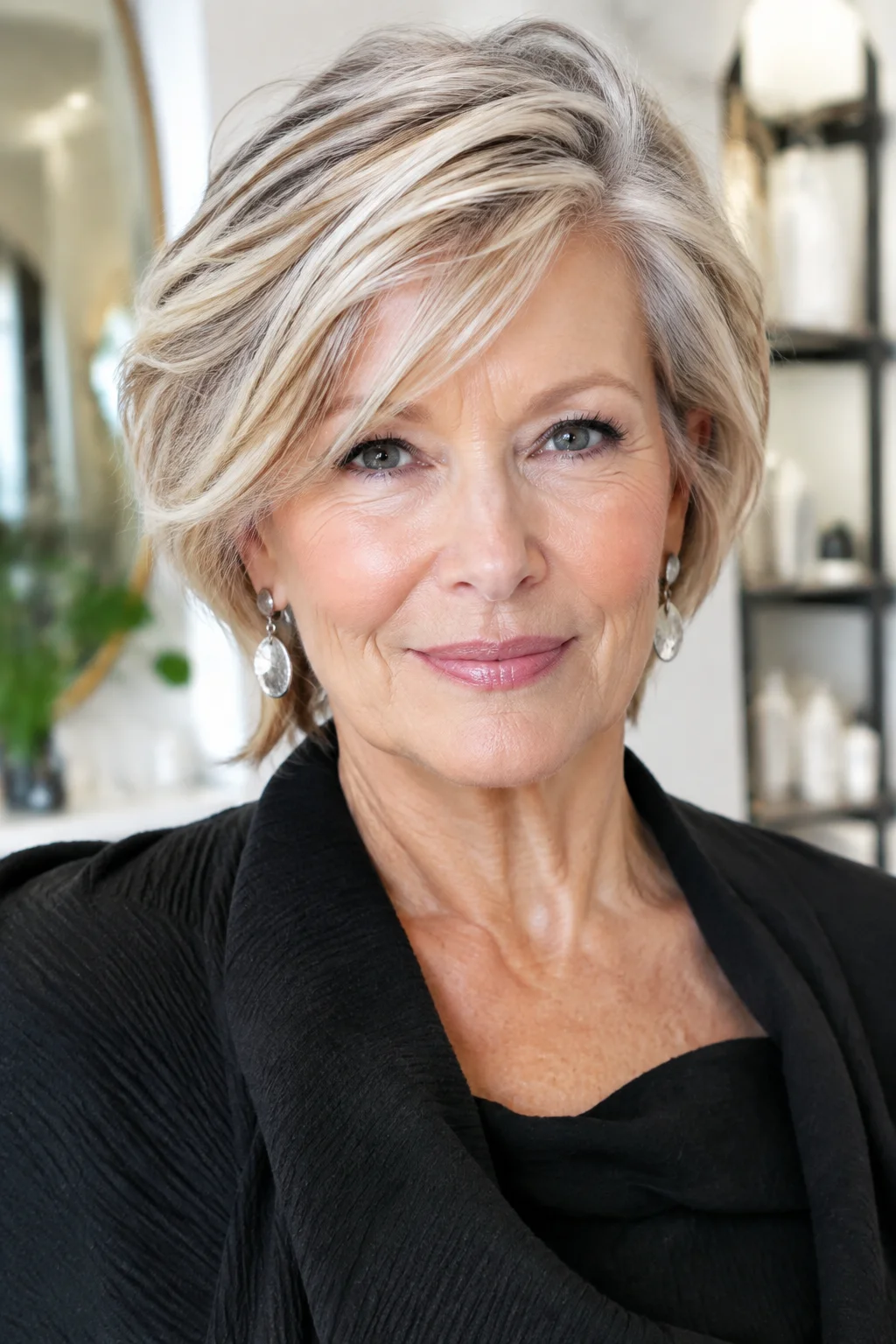
An asymmetrical layered cut takes one side shorter than the other, then blends layers through both lengths so the difference feels intentional rather than accidental. It’s a bold choice, but on straight hair the clean lines read as modern rather than harsh. Women who want a cut with a bit of edge, without going short all over, tend to like this option. Tip: keep the shorter side above the jaw and the longer side near the collarbone for the most flattering contrast.
Blunt Bangs with Layered Straight Sides
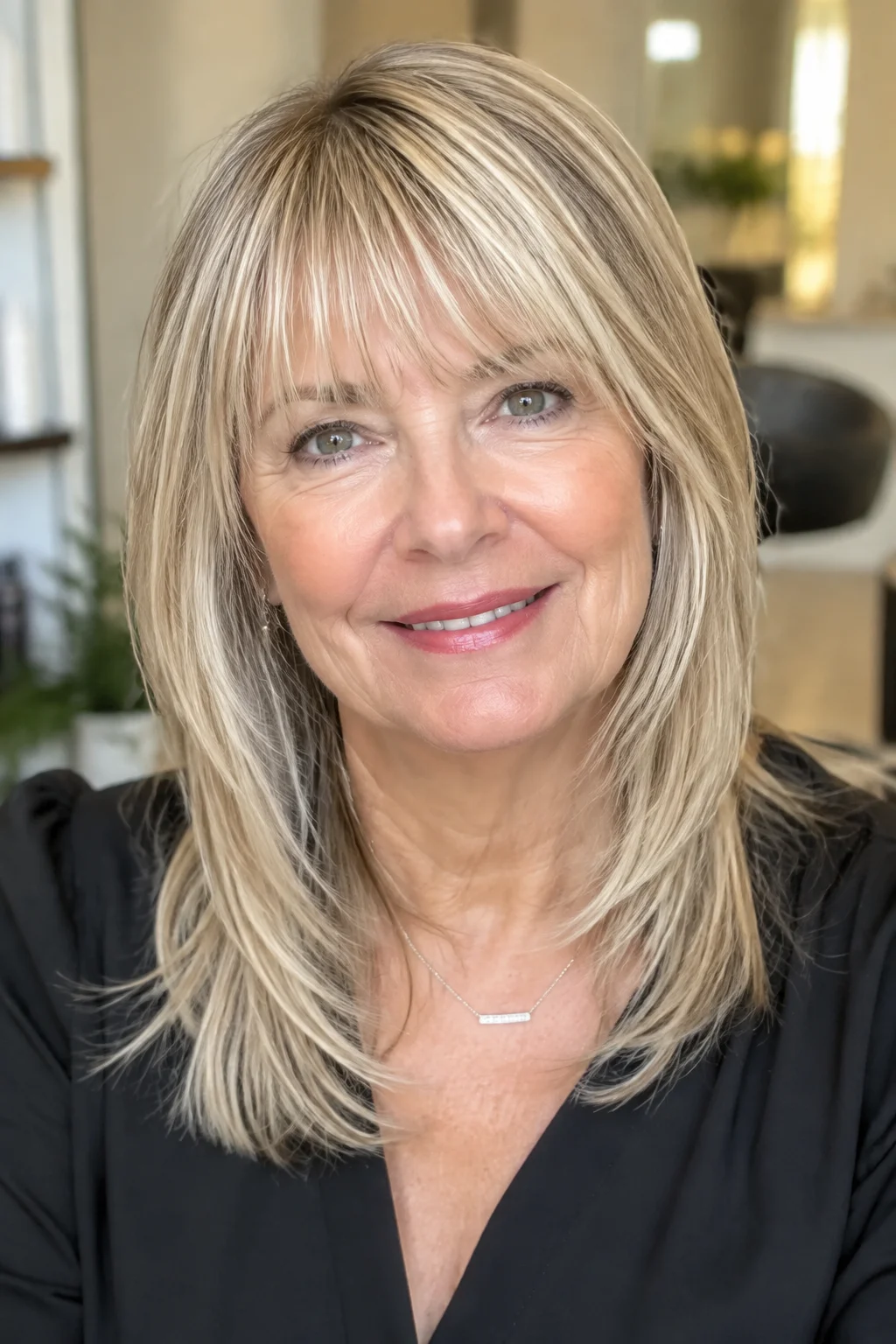
Blunt, straight-across bangs paired with softly layered sides create a nice contrast between structure and movement. The bangs draw attention to the eyes, which can be a flattering distraction as skin changes with age. The layered sides keep the rest of the cut from looking too heavy or too matched to the bangs.
Textured Crop with Longer Top Layers
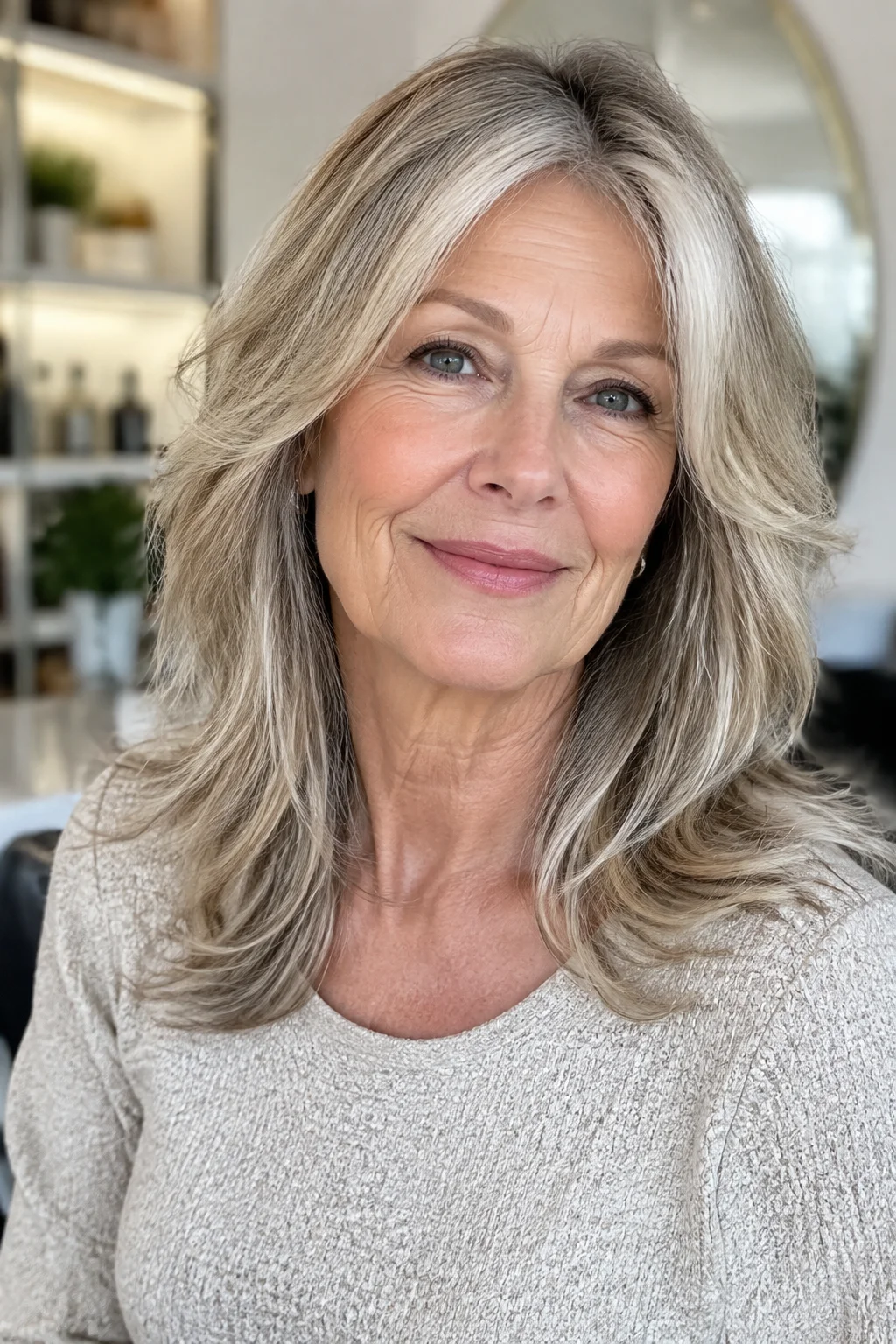
This crop stays short at the nape and sides but leaves longer, textured layers on top that can be pushed to one side or left tousled. It’s a low-maintenance option for women who want short hair without looking overly cropped or masculine. The longer top layers give you something to style, which keeps the cut feeling personal rather than generic.
Long Straight Hair with Deep Layers
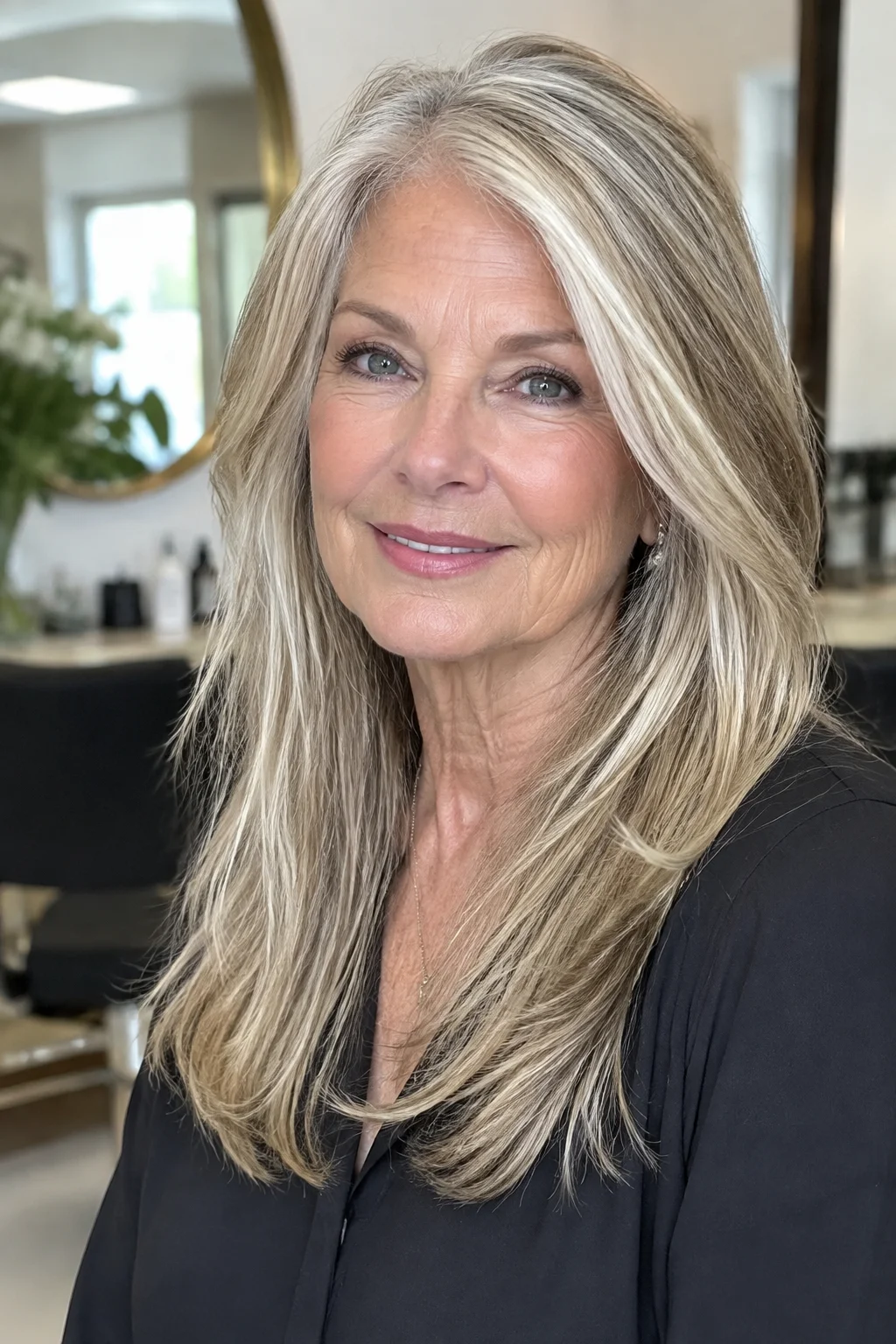
Deep layers cut throughout long hair remove weight from the ends and let the hair move instead of hanging like a curtain. This is a solid choice for women who don’t want to give up length but are frustrated with how flat and heavy straight hair gets past the shoulders. The layers can start as high as the cheekbone for dramatic movement or lower, near the collarbone, for a subtler effect.
Modern Straight Shag with Center Part
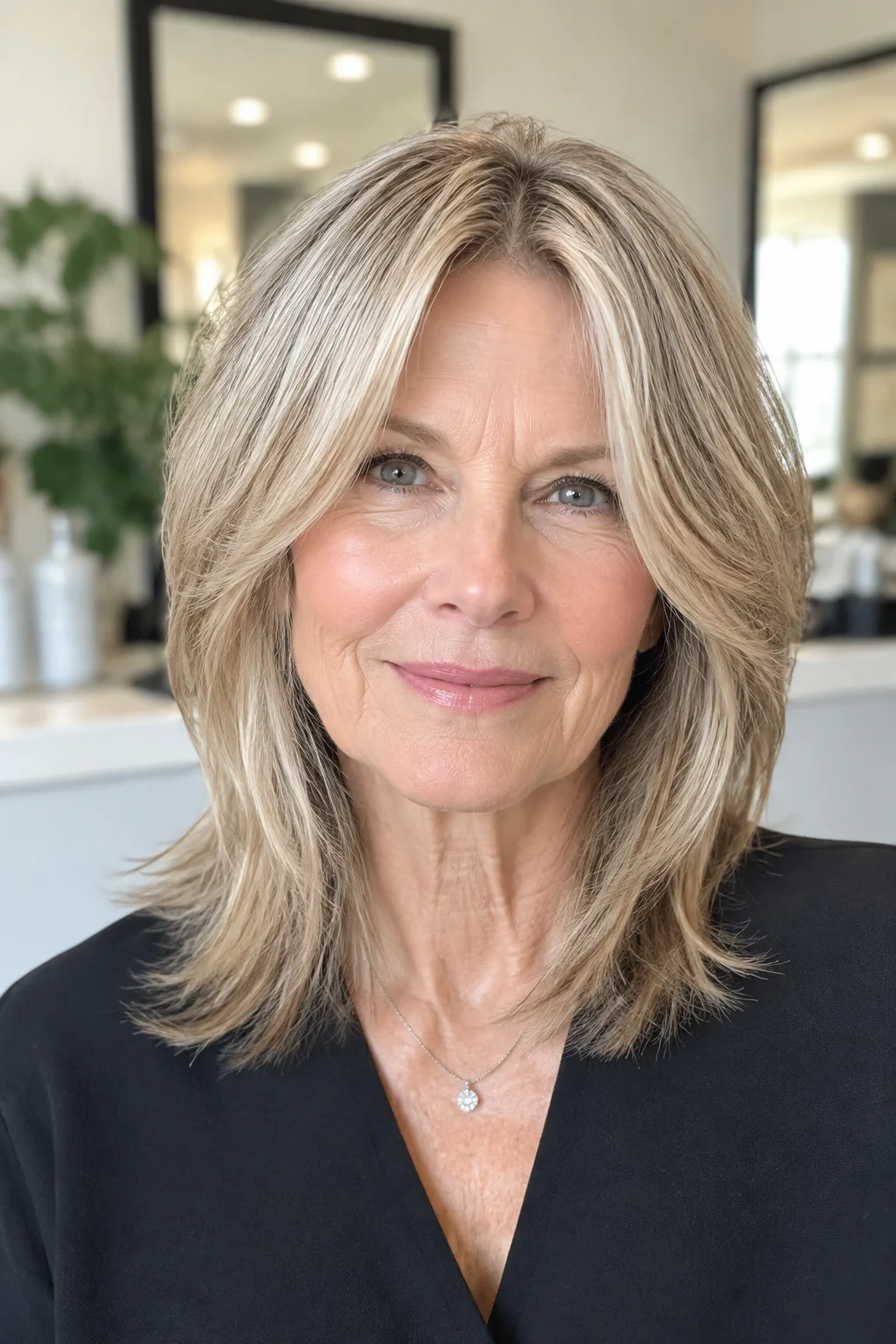
A center part on a shag cut changes the whole feel of the style, making it look more polished and less wild than a side-parted version. The layers still do the heavy lifting for texture, but the symmetry of a center part balances the face. This works nicely for women with rounder faces who want the shag’s movement without extra width at the temples.
Geometric Layered Cut
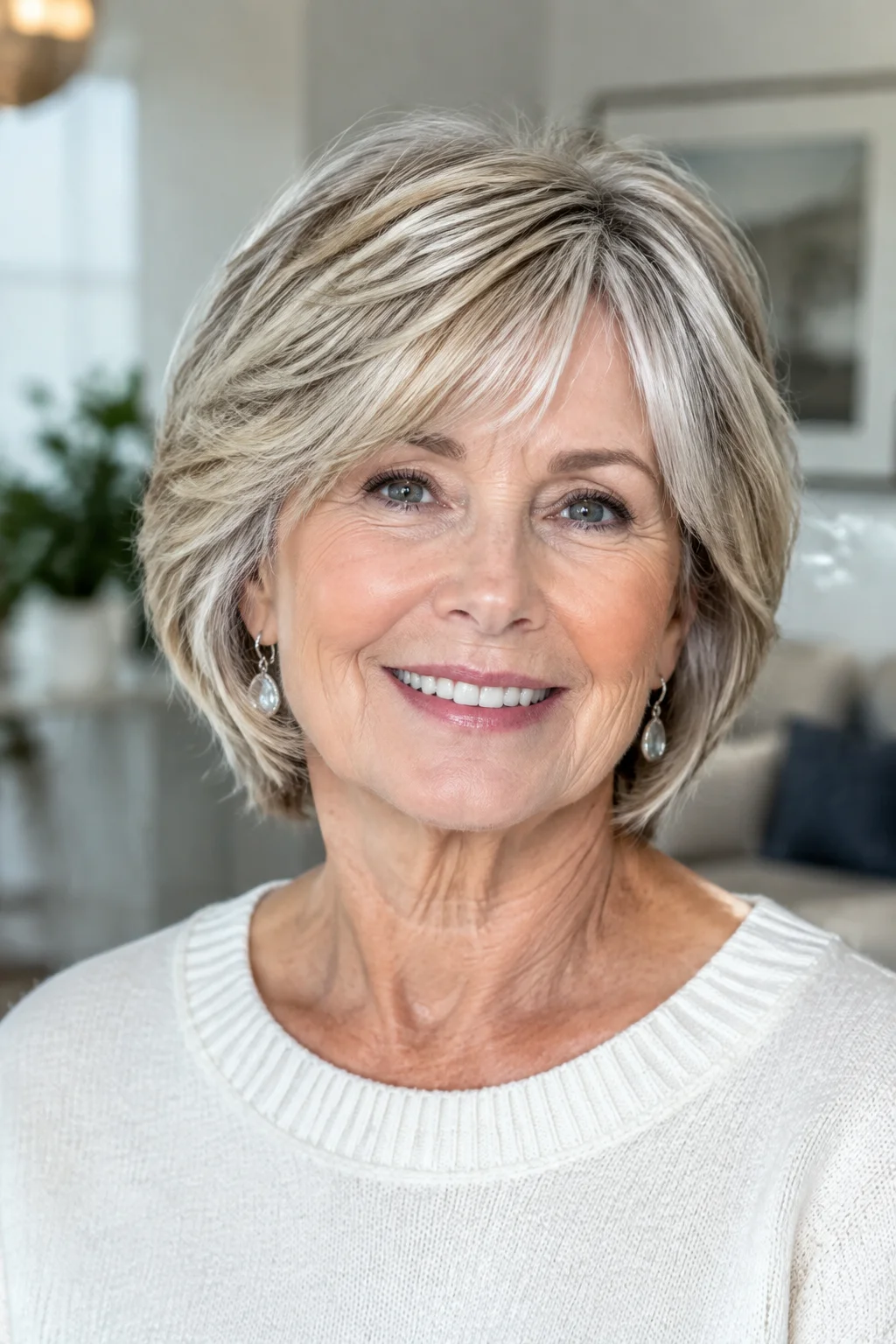
Sharp, intentional lines define this cut, with layers cut at clear angles rather than blended softly into each other. It’s a striking option for straight hair since the precision only shows up when the hair lies flat and smooth. This isn’t a low-fuss cut. It needs regular trims to keep the geometry crisp, so it suits someone who enjoys a polished, structured look and doesn’t mind the upkeep.
Tapered Nape with Longer Straight Layers
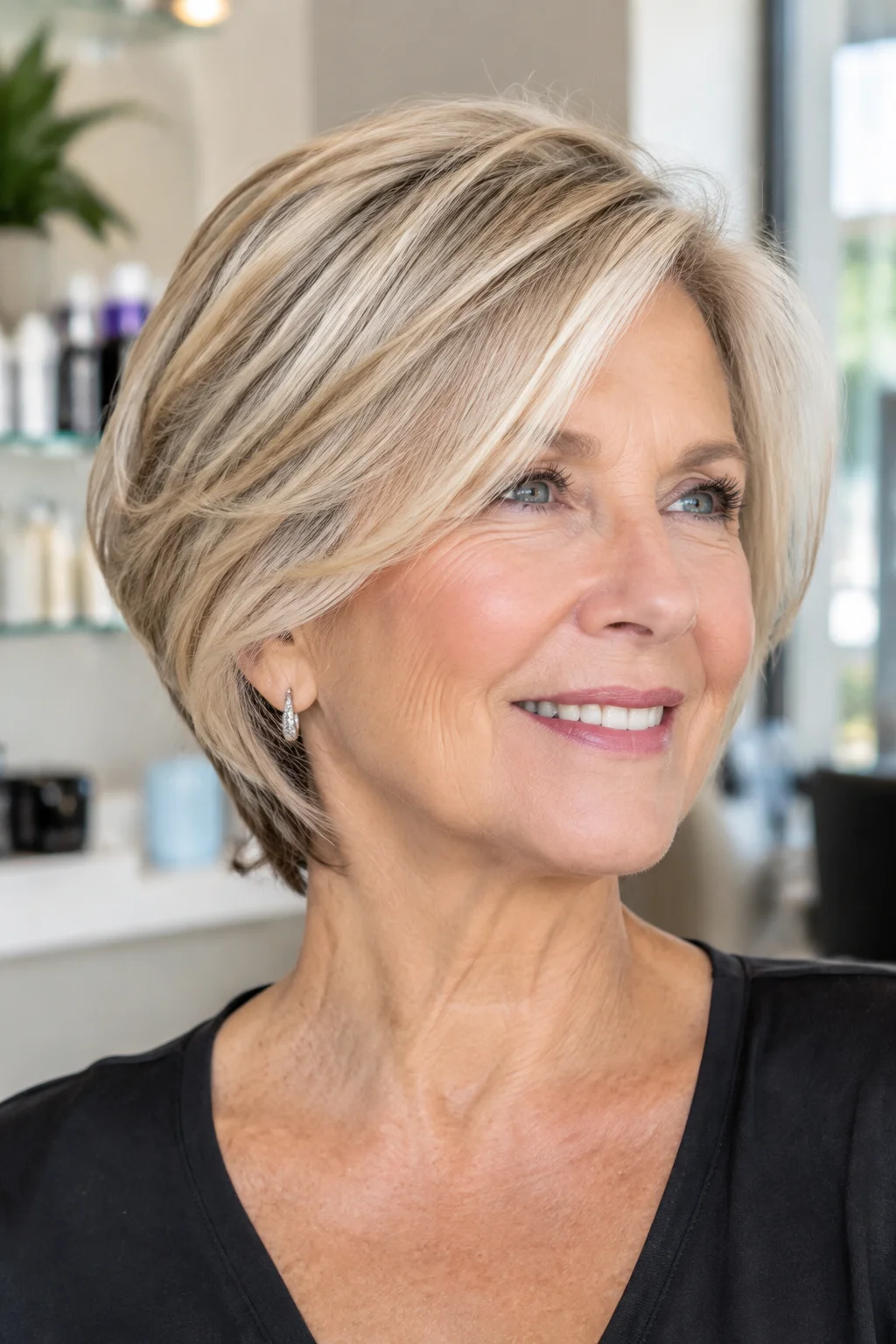
Tapering the nape short while leaving longer layers through the crown and sides creates a cut that looks neat from behind and full on top. It’s a practical choice for thinner hair at the back of the head, a common change with age, because the short taper hides sparseness rather than drawing attention to it.
Straight Bob with Micro Layers
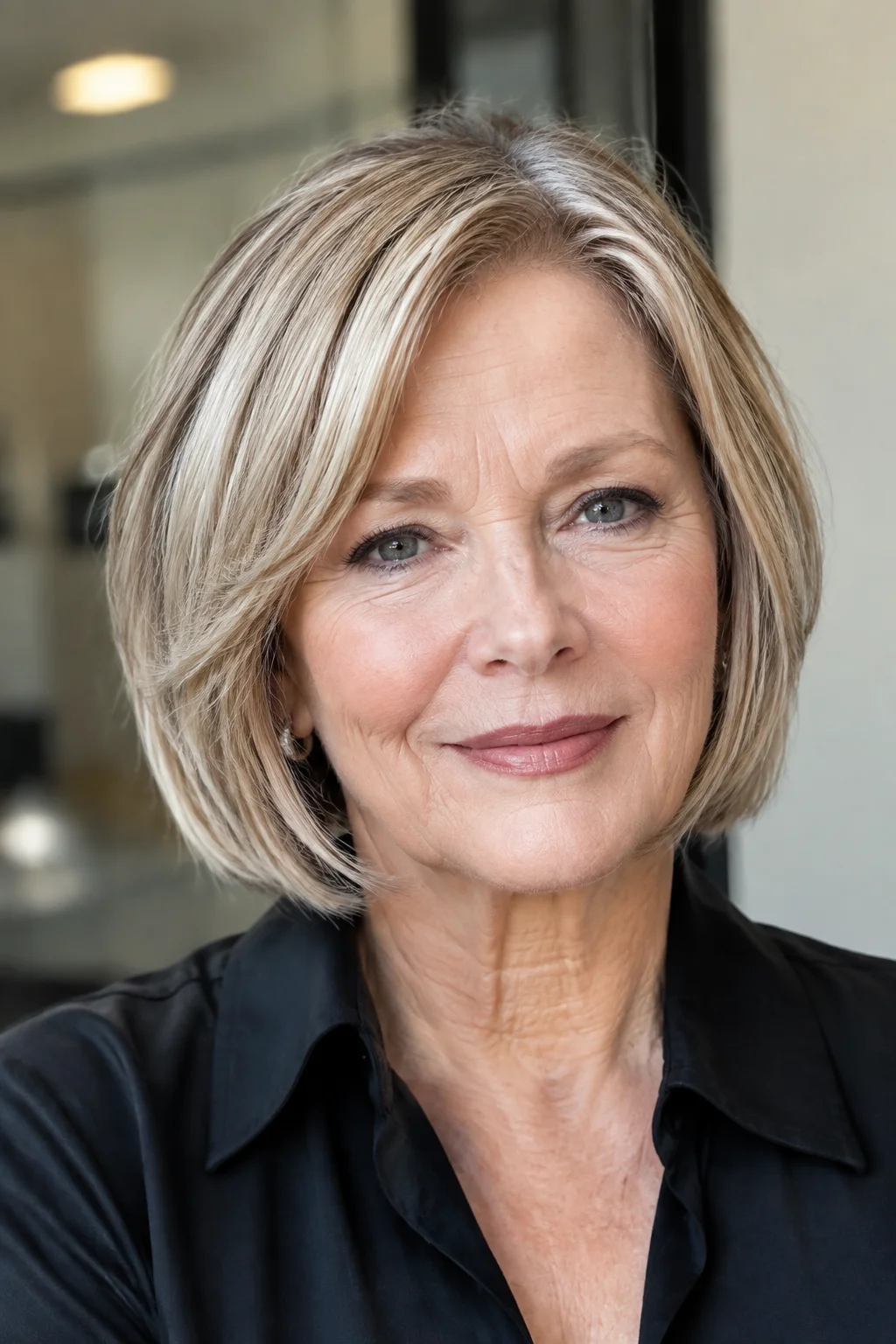
Micro layers are cut close together in fine increments, which softens a bob’s edges without removing much length or weight. This is a subtle version of layering, ideal for women who want movement but are nervous about a stylist taking off too much. The bob keeps its shape while the micro layers give it a softer, less blocky finish.
Wispy Layers Throughout
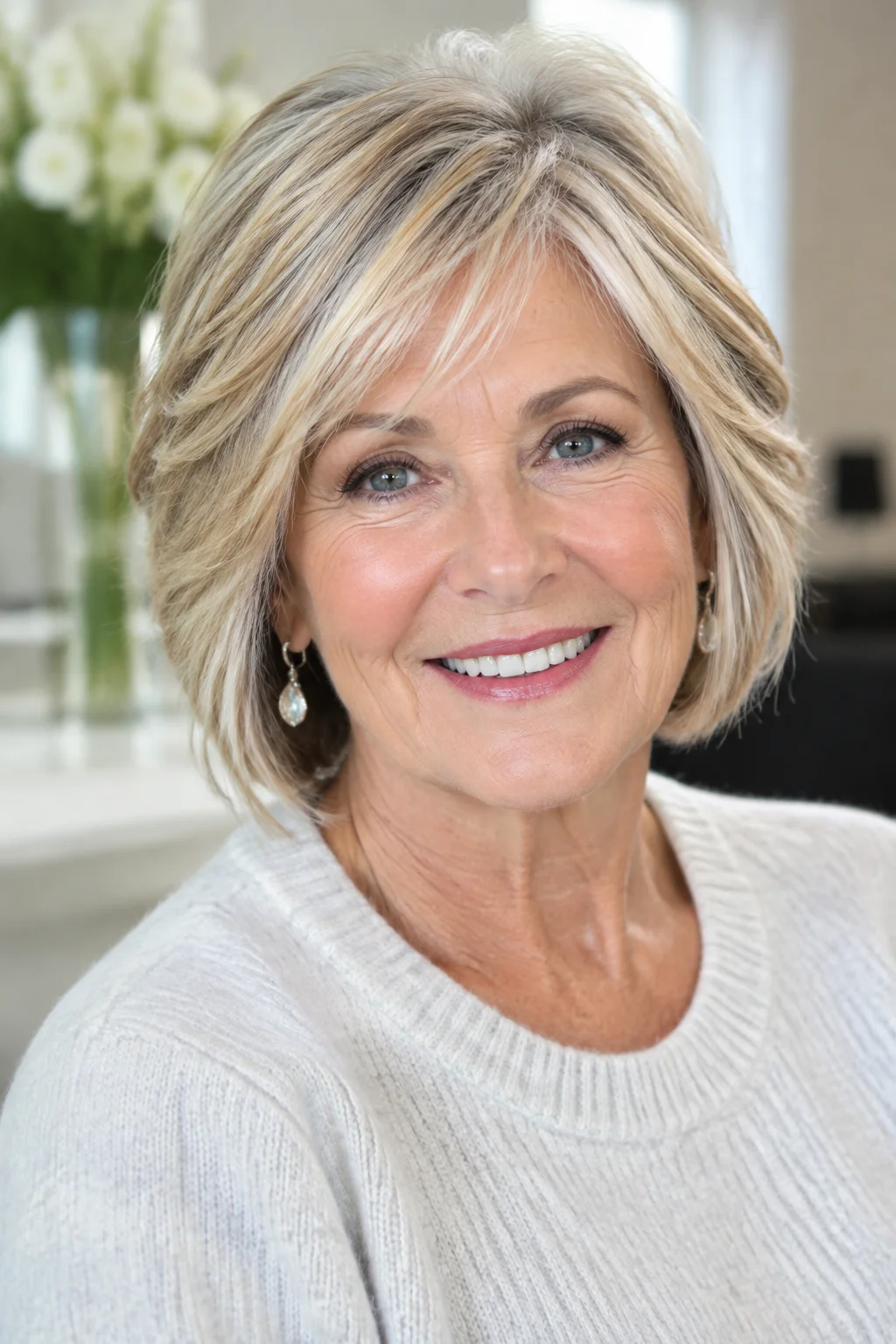
Wispy layers are thin, feathery pieces cut throughout the length of the hair, giving straight styles a light, airy quality. This works on almost any length and is especially good for hair that has thinned with age since the wisps look delicate rather than sparse. Tip: pair wispy layers with a light-hold spray instead of heavy product, since too much weight flattens the wisps and cancels out the effect.
Straight Mullet with Textured Crown
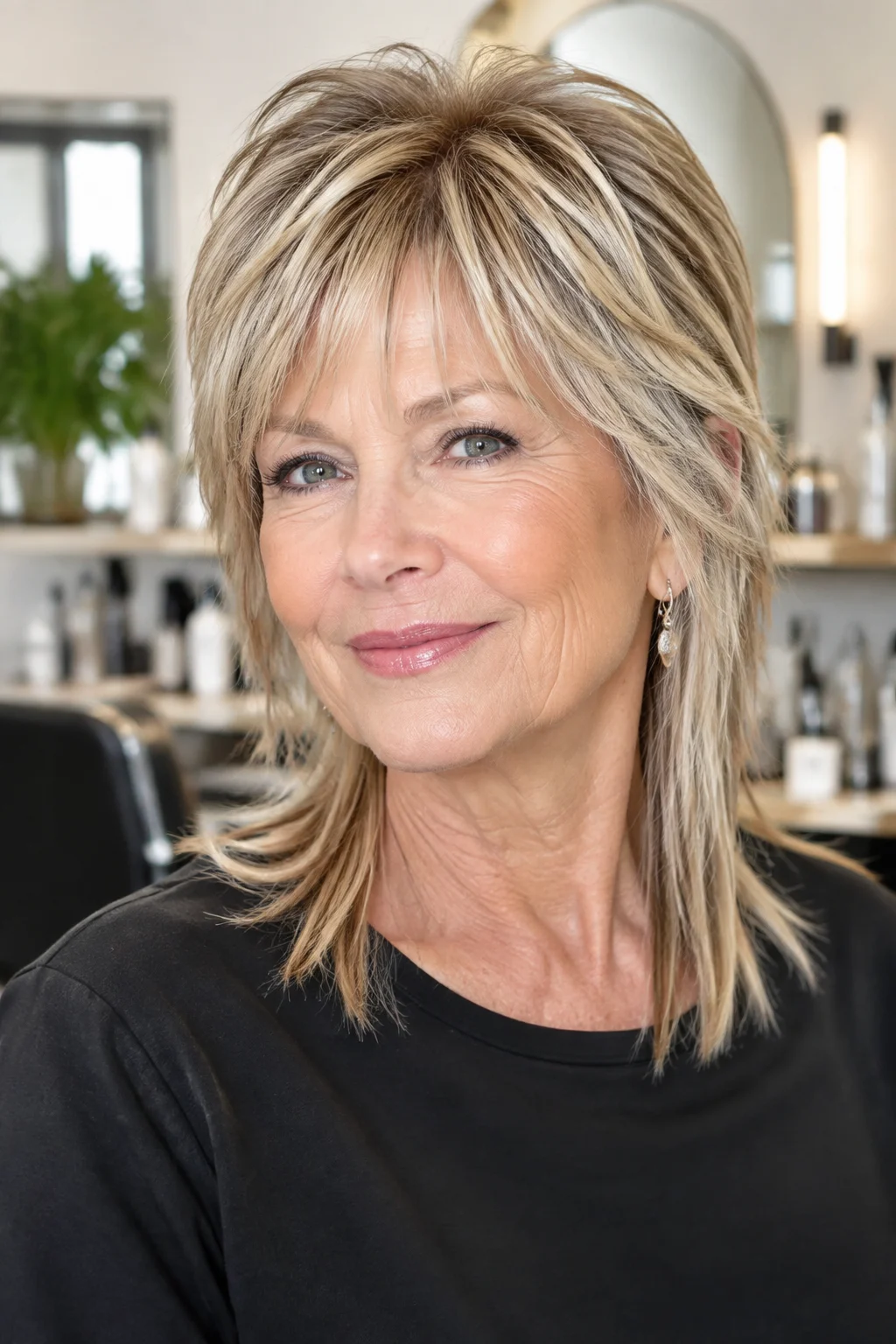
The modern mullet keeps short, textured layers at the crown and front while leaving length in the back, and on straight hair it reads as edgy rather than dated. It’s not for everyone, but women who want a statement cut with real personality often gravitate toward it. The textured crown adds lift right where hair tends to thin first.
Side-Swept Straight Layers
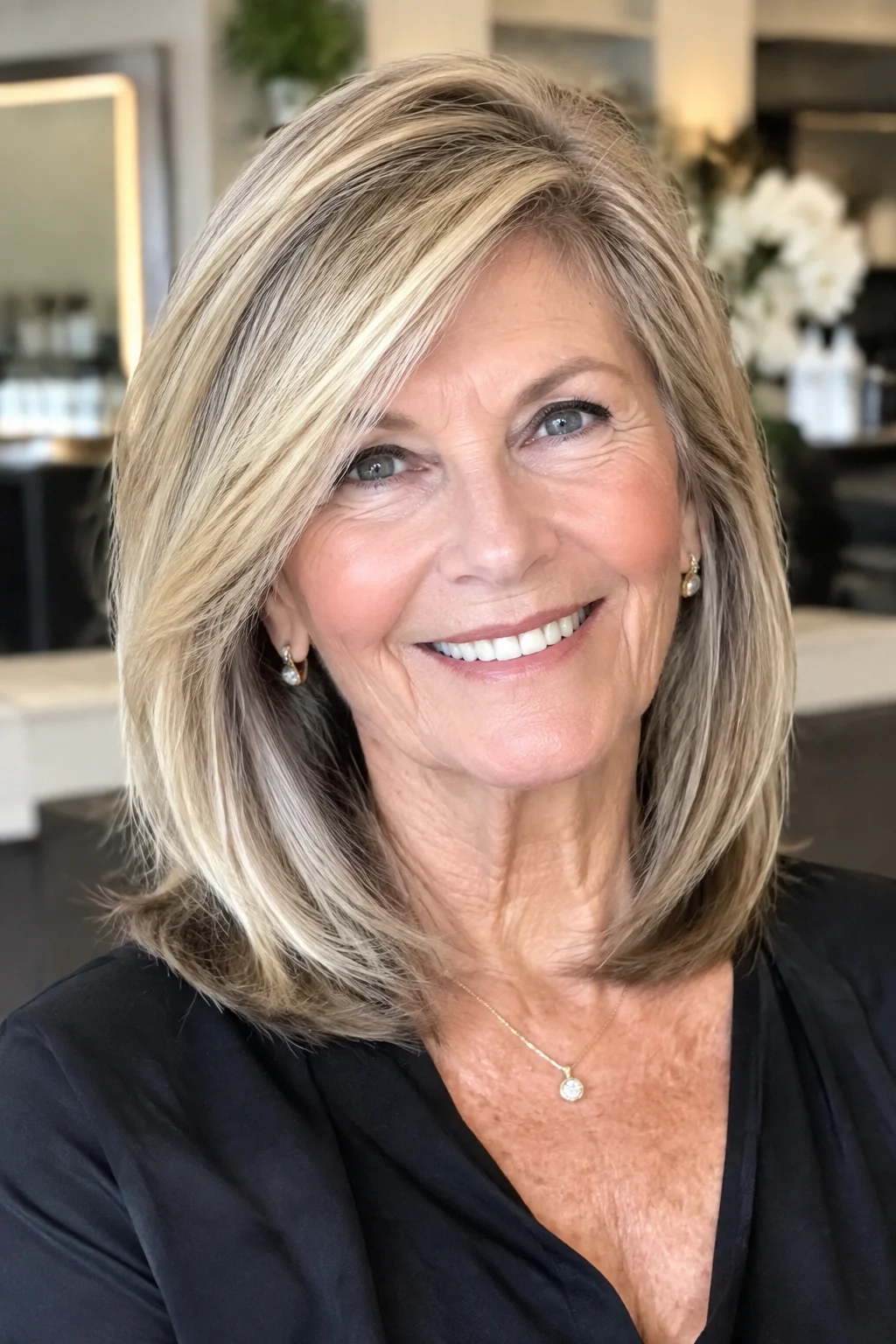
Side-swept layers are cut to fall diagonally across the forehead and cheek, softening angular features and drawing the eye toward the eyes and cheekbones. This style pairs well with almost any length and is easy to maintain with a flat brush during blow drying.
Choppy Straight Pixie with Length on Top
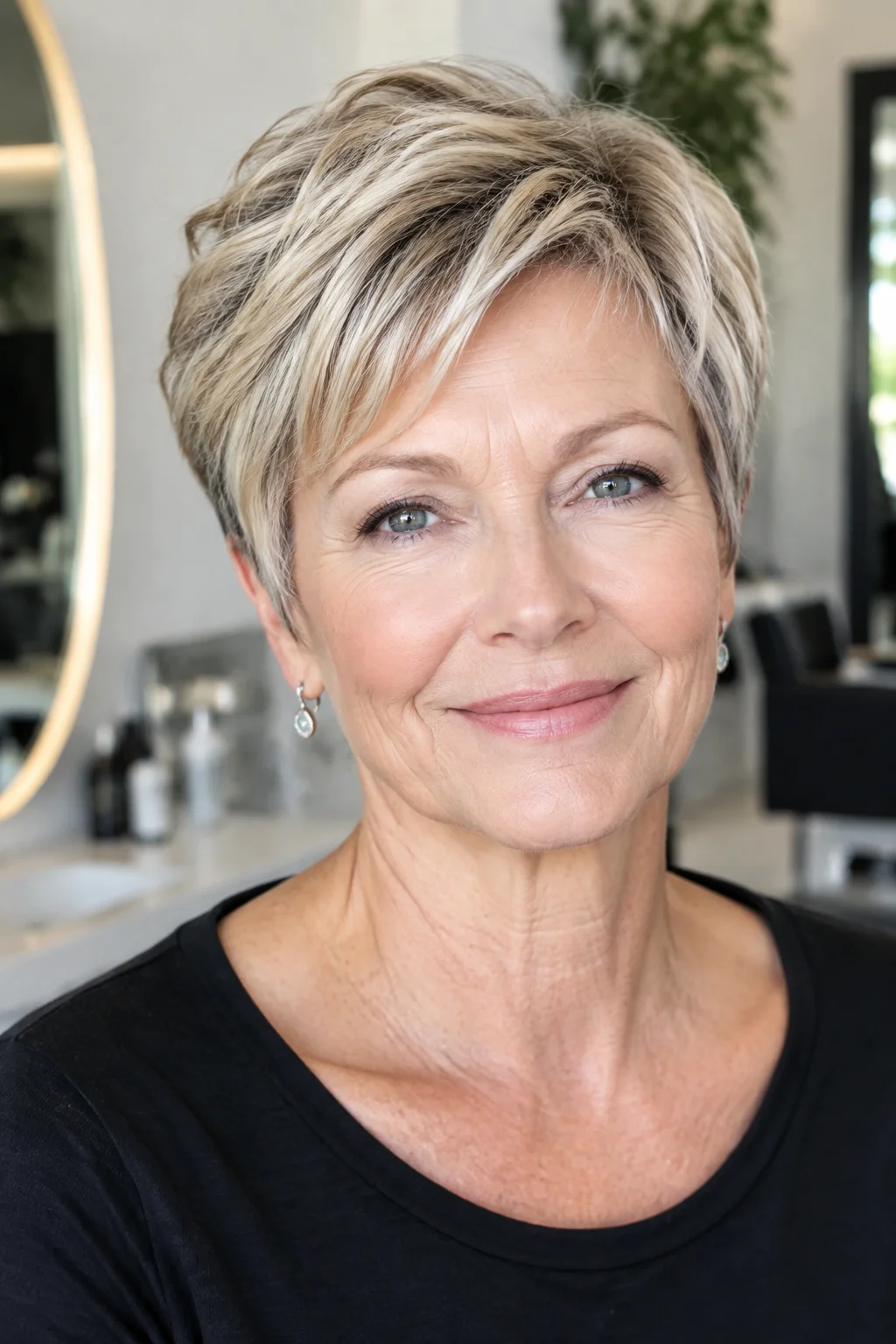
This pixie keeps the sides and back short and choppy while leaving enough length on top to style with texture cream or a light pomade. It’s one of the most youthful short cuts available for older women because the longer top prevents the cut from looking severe. The choppy ends give straight hair the texture it usually lacks on its own.
Straight Layers with Defined Cheekbones Focus
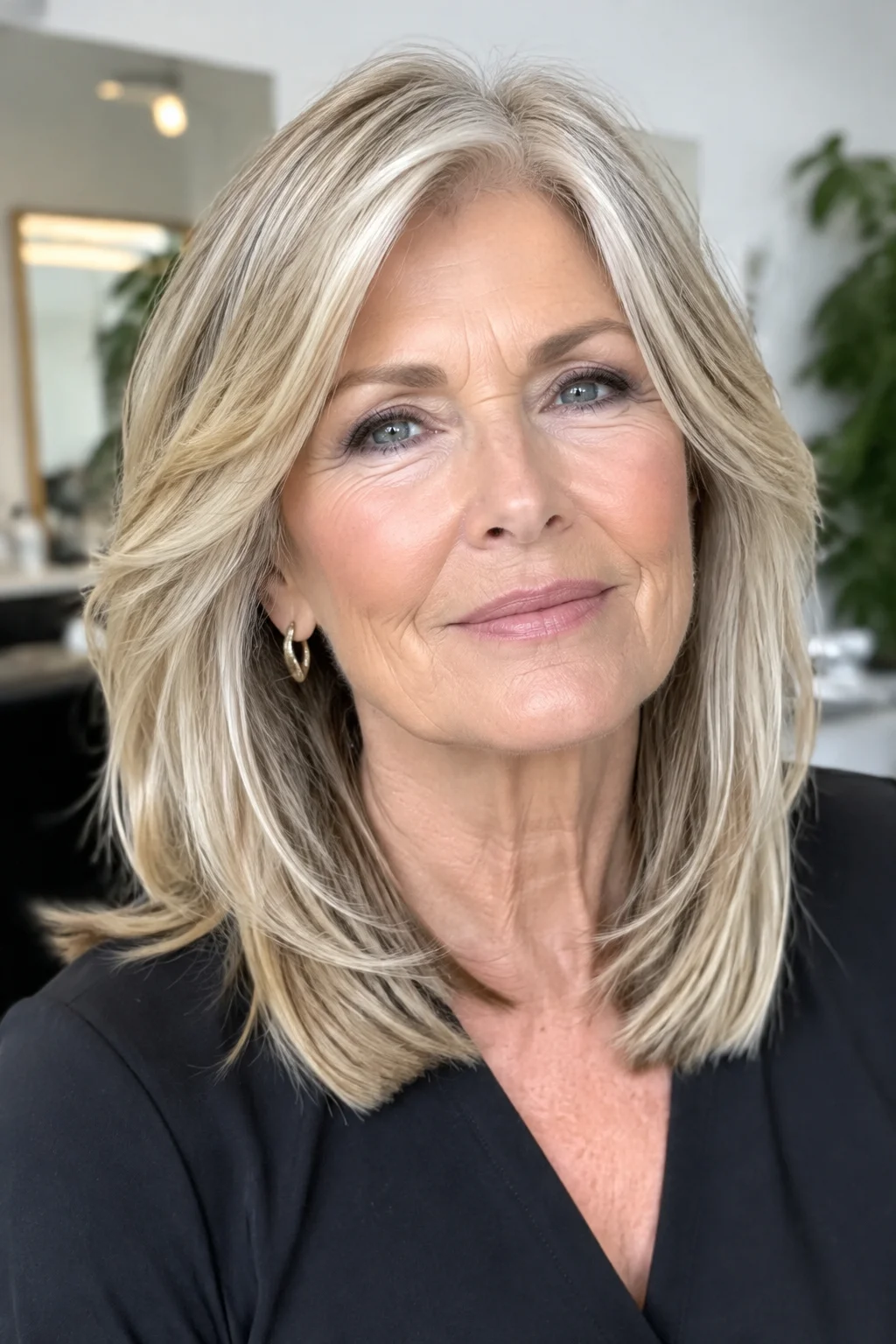
Layers here are placed specifically to hit at cheekbone height, drawing attention upward toward the eyes and away from the jaw and neck. It’s a smart choice if your goal is a flattering frame rather than a dramatic change in length or texture.
Subtle Layers for Thickness at Crown
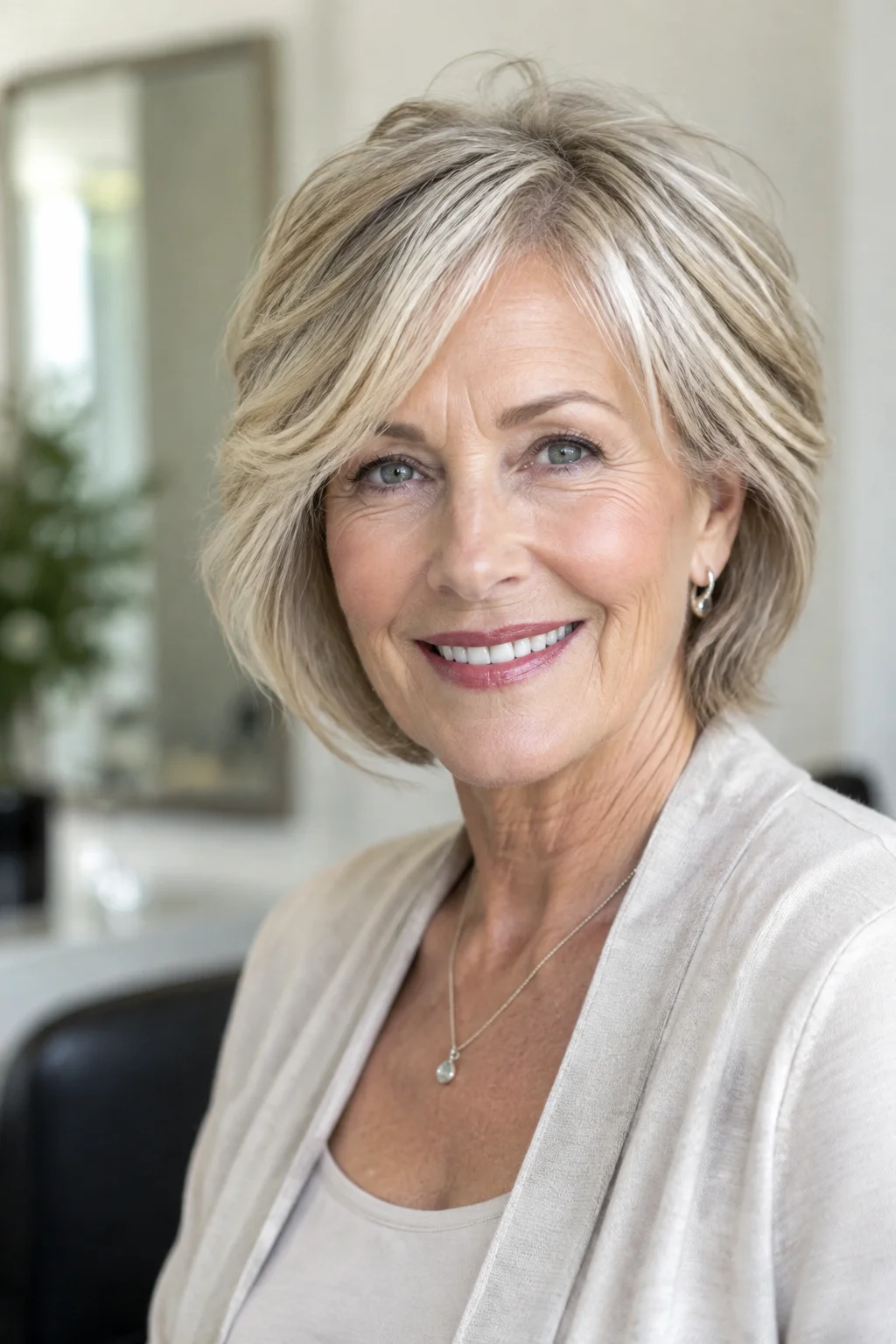
This is a gentle layering technique focused entirely on the crown, adding volume exactly where hair often flattens first with age. The rest of the length stays mostly intact, so it’s a good option for women who love their current length but want more lift on top. Tip: ask for layers no longer than two to three inches at the crown so the lift stays put through the day.
Straight Shag with Blunt Fringe
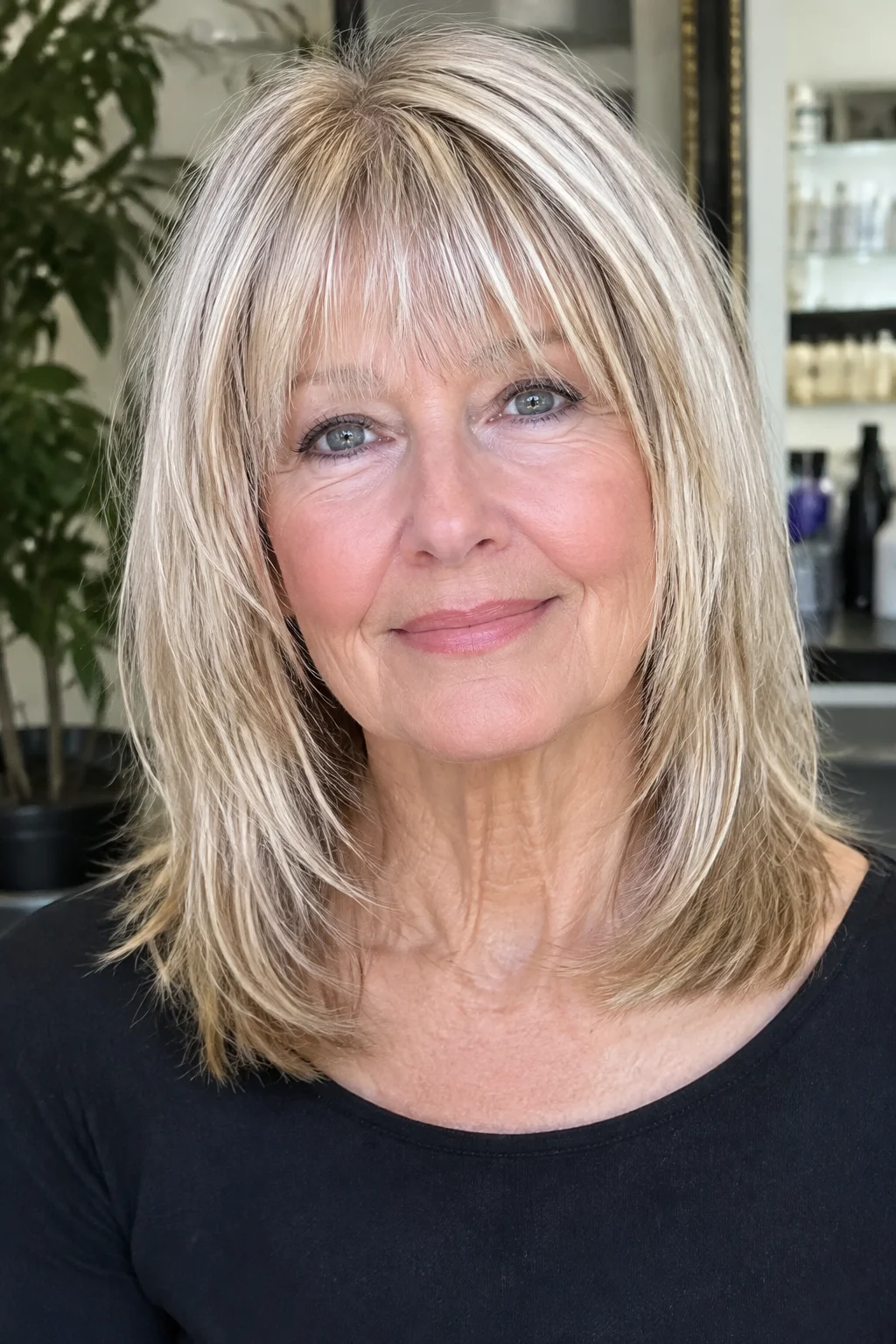
Combining a shag’s loose layers with a blunt, straight-across fringe gives this cut a nice push and pull between structure and softness. The blunt fringe grounds the look, while the shag layers keep everything else feeling loose and undone.
Layered Straight Bob for Round Faces
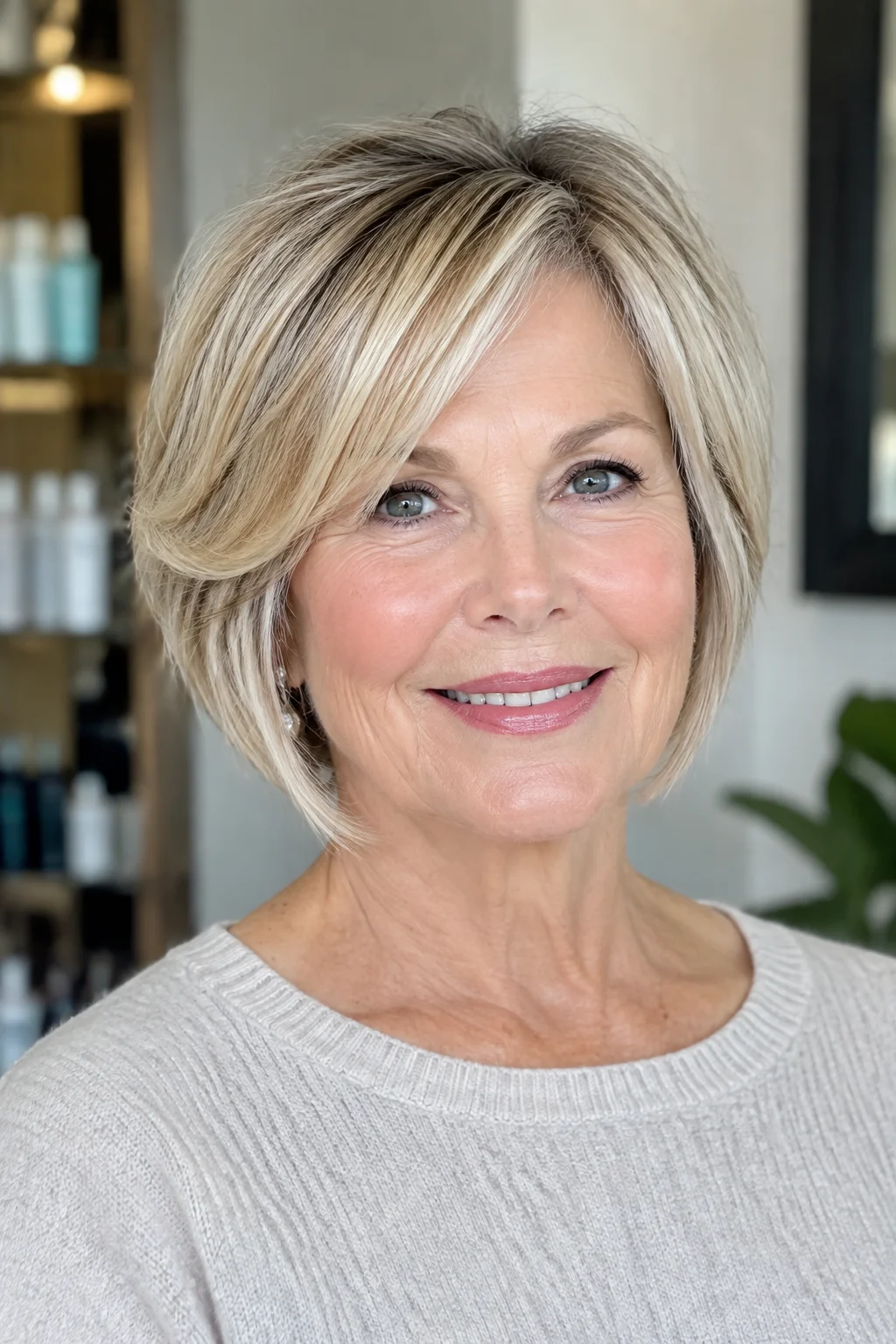
This bob is layered specifically to elongate a round face, with length left longer at the front corners and layers concentrated through the crown for height. It avoids width at the cheeks, which is the main thing that makes round faces look wider in a blunt bob. The layering also keeps the straight hair from clinging tightly to the jawline, which would otherwise emphasize roundness.
Choosing the Right Cut for Your Hair and Face
With this many options, picking one comes down to three things: how much hair you actually have, how much time you want to spend styling it, and what your face shape needs. If your hair has thinned significantly, lean toward cuts built for the illusion of density, like the shag cut for fine straight hair or the textured pixie-bob hybrid. Both rely on choppy, disconnected layers rather than length to create fullness.
If you want something low-maintenance that still looks finished, the straight bob with micro layers or the tapered nape with longer straight layers are good choices. Neither needs much more than a blow dry to look complete. For round faces, skip anything with heavy width at the cheeks and go with the layered straight bob for round faces or side-swept straight layers instead, since both slim the face rather than widen it.
Avoid one common mistake: choosing a dramatic style like the straight mullet with textured crown or the geometric layered cut without asking about upkeep. These cuts look sharp in photos but need frequent trims to hold their shape, and they can look messy rather than intentional once they grow out.
Final Thoughts
Layered straight hair hairstyles for women over 70 give you options at every length and every hair density, from subtle crown lift to a full shag rebuild. The right layers do more than add style. They correct thinning, soften the face, and make straight hair behave with far less effort. Bring a few of these names to your next appointment and let your stylist adjust the details to your texture and face shape. A good cut should feel like less work, not more, and the right layers make that possible.