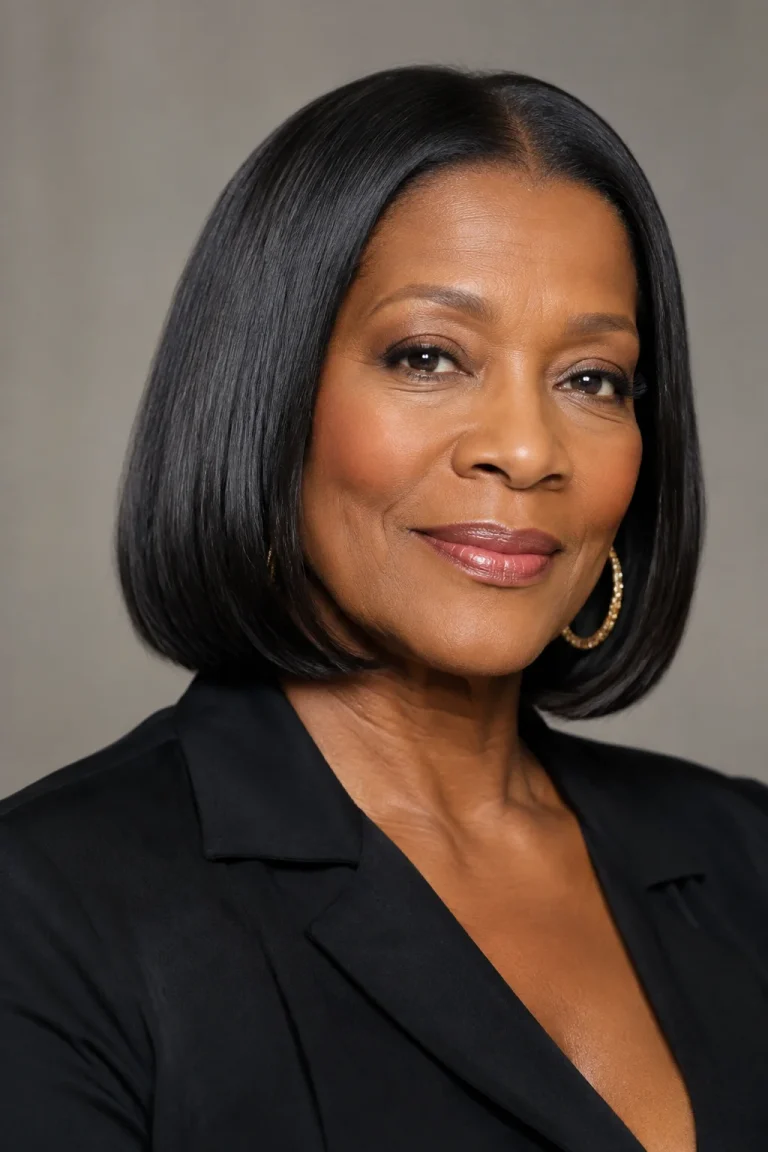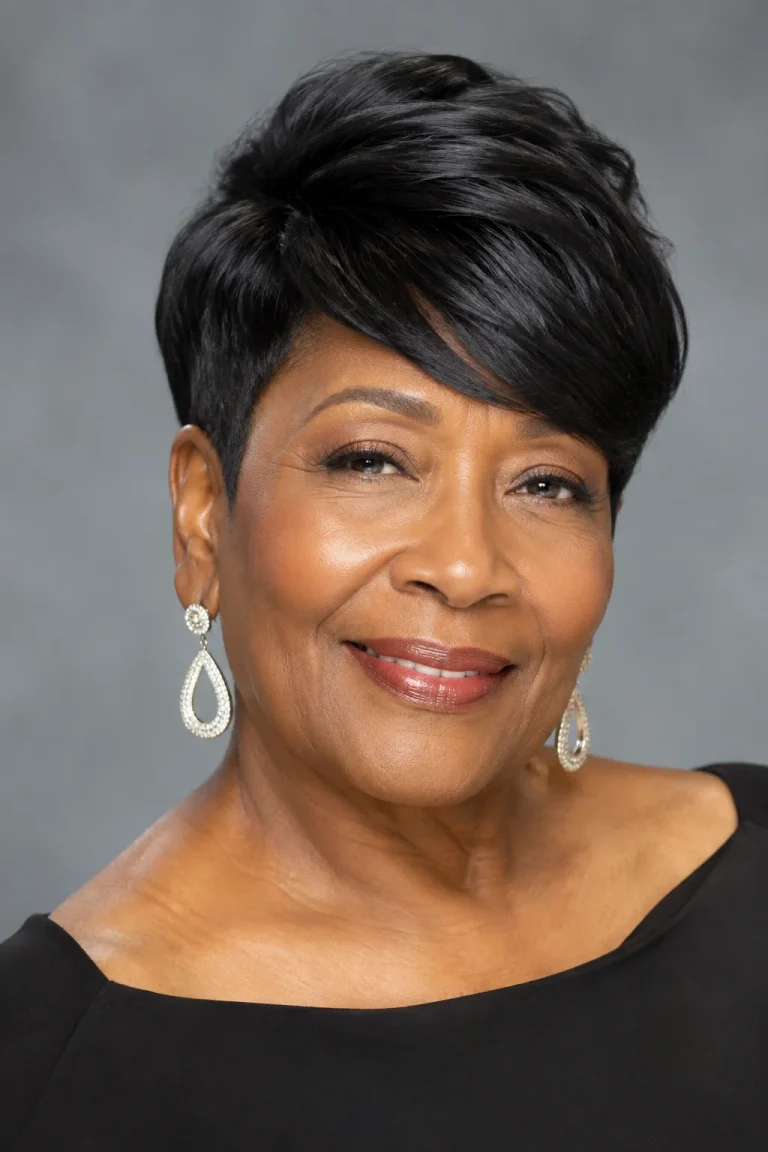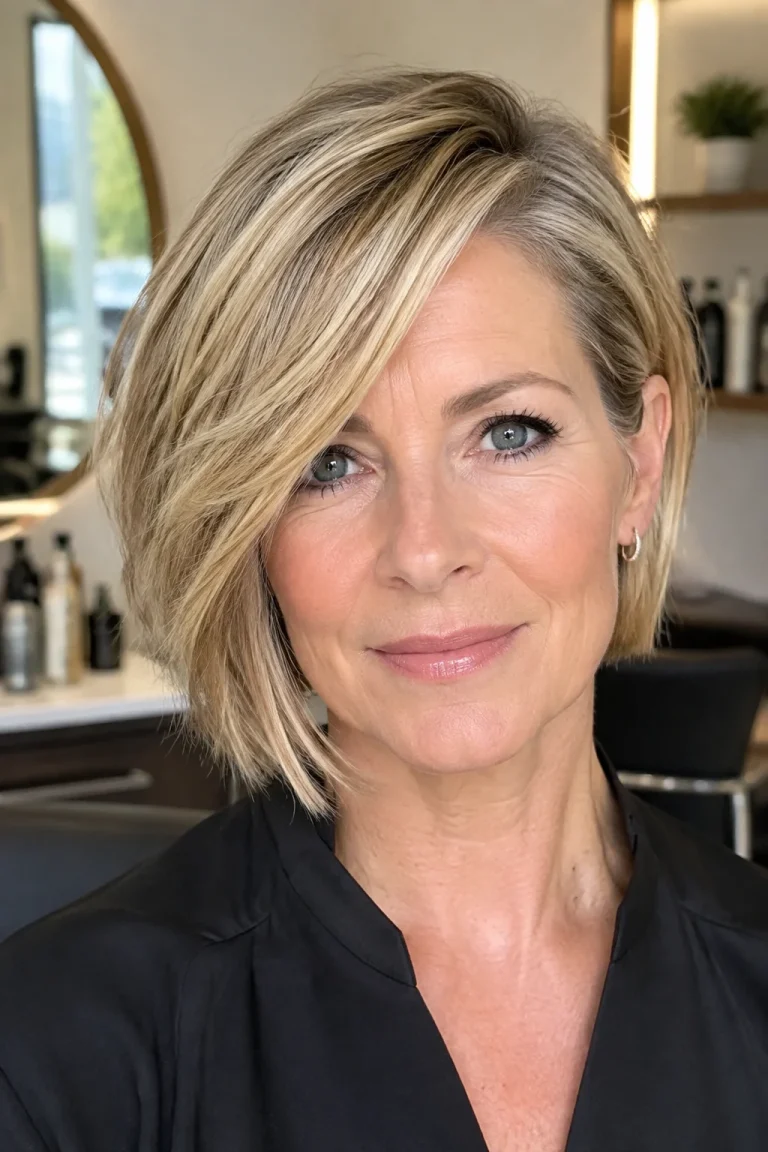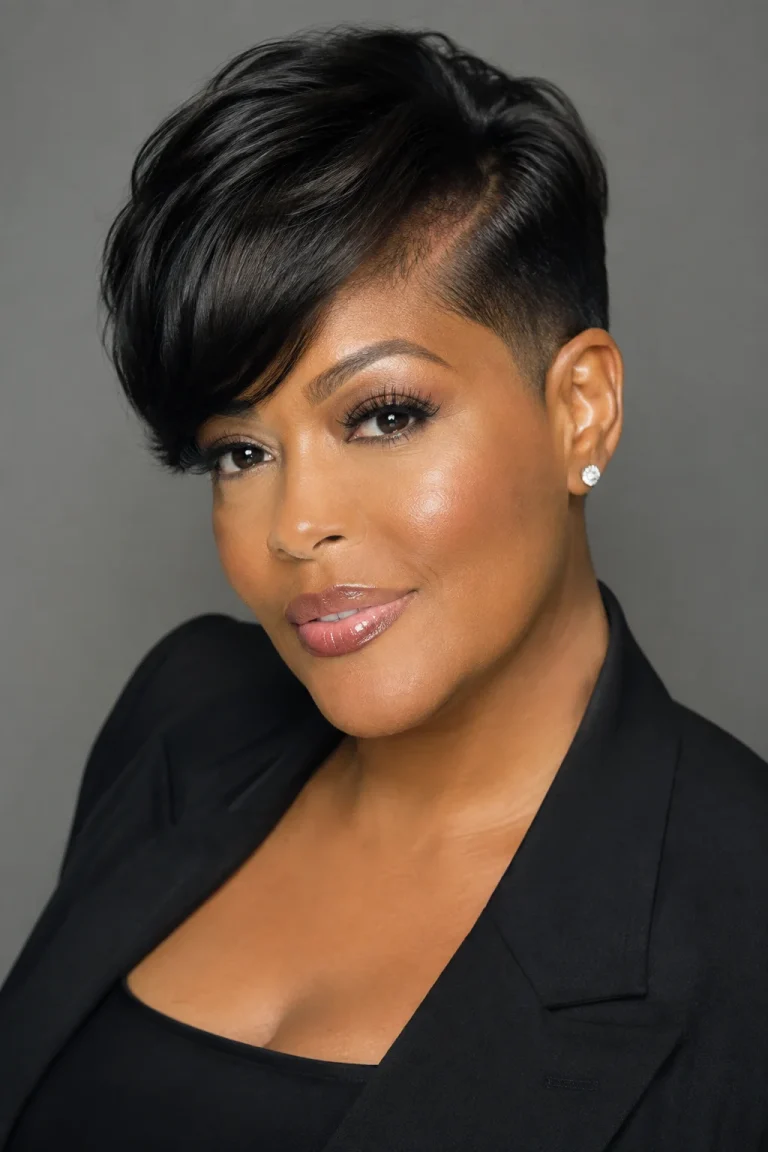
Gray coming in, curls losing their old bounce, hair that feels thinner than it used to be. That’s the honest starting point for most women looking for a fresh cut after 50, and a bob built for curls solves more of those problems at once than almost any other style. The right curly bob hairstyles for women over 50 add shape where hair has gone flat, hide thinning at the crown, and cut down on styling time in the morning. Curls also age differently than straight hair, so a cut that ignored that pattern years ago might not suit the texture you have now. Below are 21 real options to print out, screenshot, or just describe to your stylist word for word. Each one calls out who it flatters, what to ask for, and how much upkeep it takes.
Chin-Length Tight Curl Bob with Volume at Crown
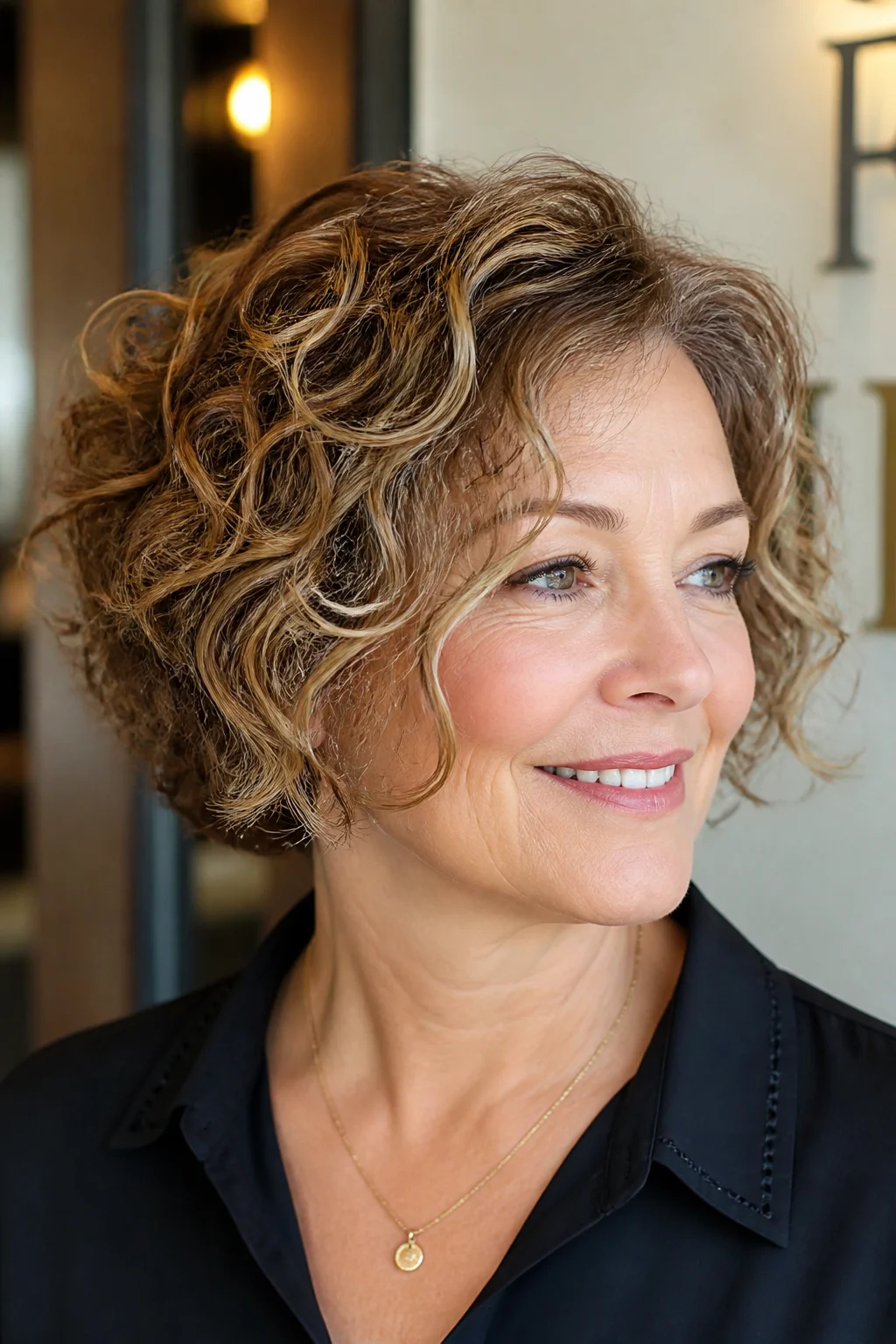
This cut sits right at the jawline and uses lift at the crown to balance out tighter curl patterns that tend to shrink up close to the scalp. It works especially well if your curls have gotten smaller in circumference over the years, a common shift after 50. Ask your stylist for internal layering rather than blunt layers, since that keeps the curls springy instead of triangle-shaped. Tip: a lightweight mousse applied to soaking wet hair holds the volume at the root without weighing down the ends. A light mist of heat protectant before styling helps the finish last. A light mist of heat protectant before styling helps the finish last.
Shoulder-Grazing Loose Wave Bob
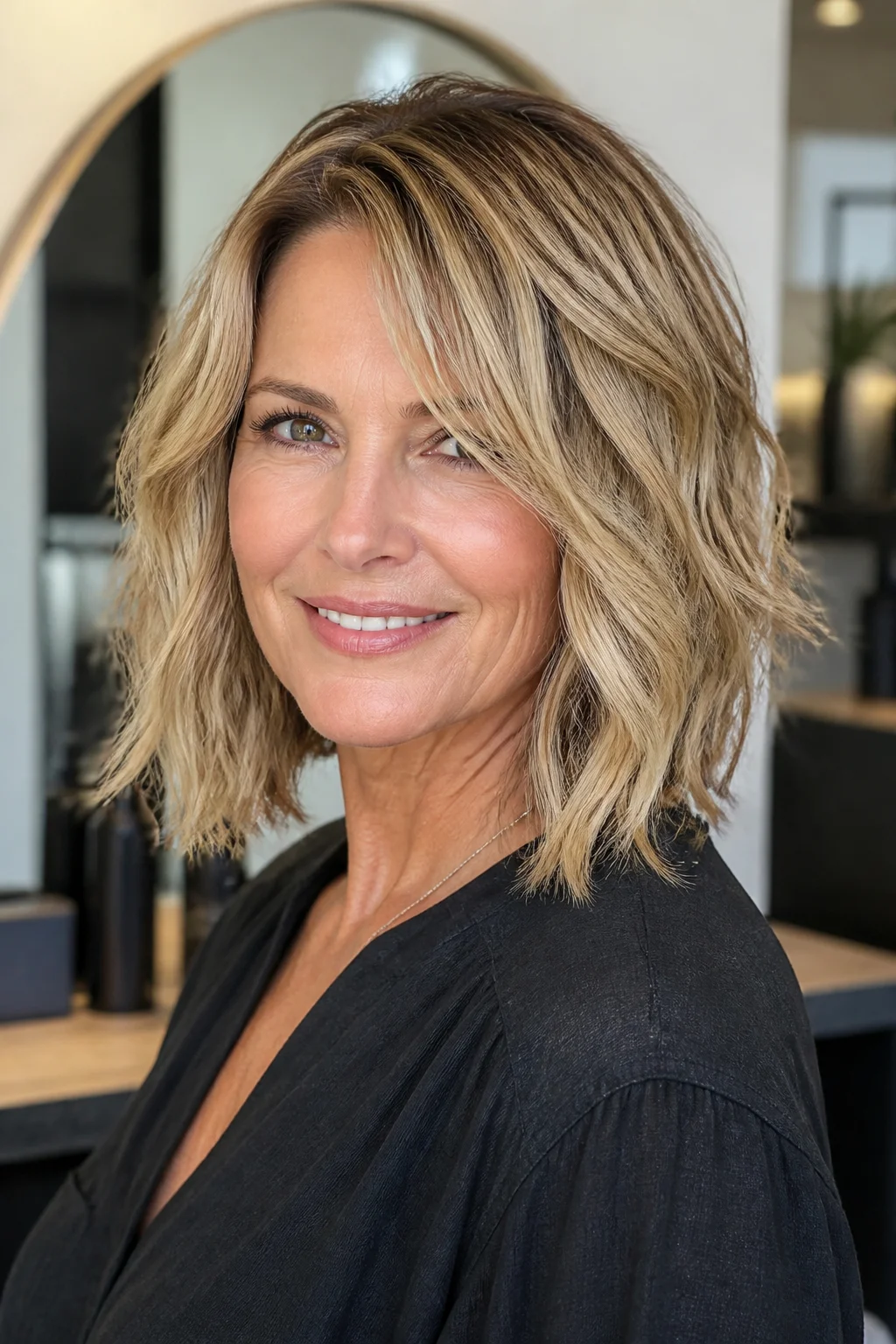
Loose, relaxed waves read as soft and easy rather than sculpted. This length gives waves room to move without falling flat against the neck, which is a real risk with shorter cuts on looser textures. It suits fine to medium hair that doesn’t hold tight curl well anyway.
Textured Pixie-Bob Hybrid with Curly Layers
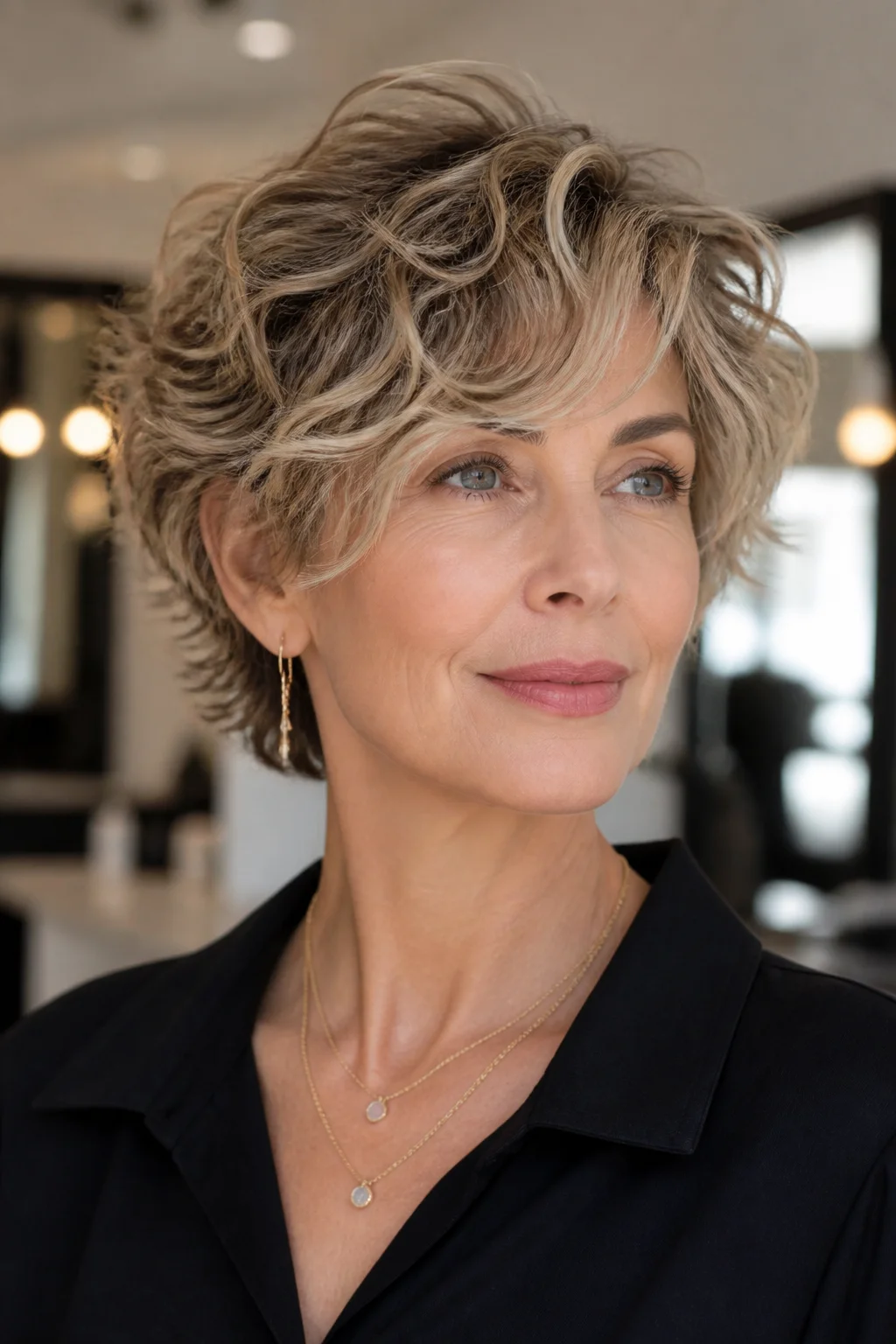
Somewhere between a pixie and a bob, this cut keeps length on top and around the face while cropping the back and sides much shorter. Curly layers scattered through the top prevent the classic bob triangle and instead create soft, irregular pieces that catch light differently depending on how you scrunch them. It’s a strong pick if you want something lower maintenance than a full bob but aren’t ready to go full pixie. The shorter back also helps if you’re dealing with thinning at the nape, since less length means less visible sparseness. Ask for the curly layers to be cut dry so your stylist can see exactly how each curl falls before committing to length. This one grows out fairly gracefully too, softening into a longer shag over a few months instead of turning into an awkward mullet shape.
Stacked Back Curly Bob for Fine Hair
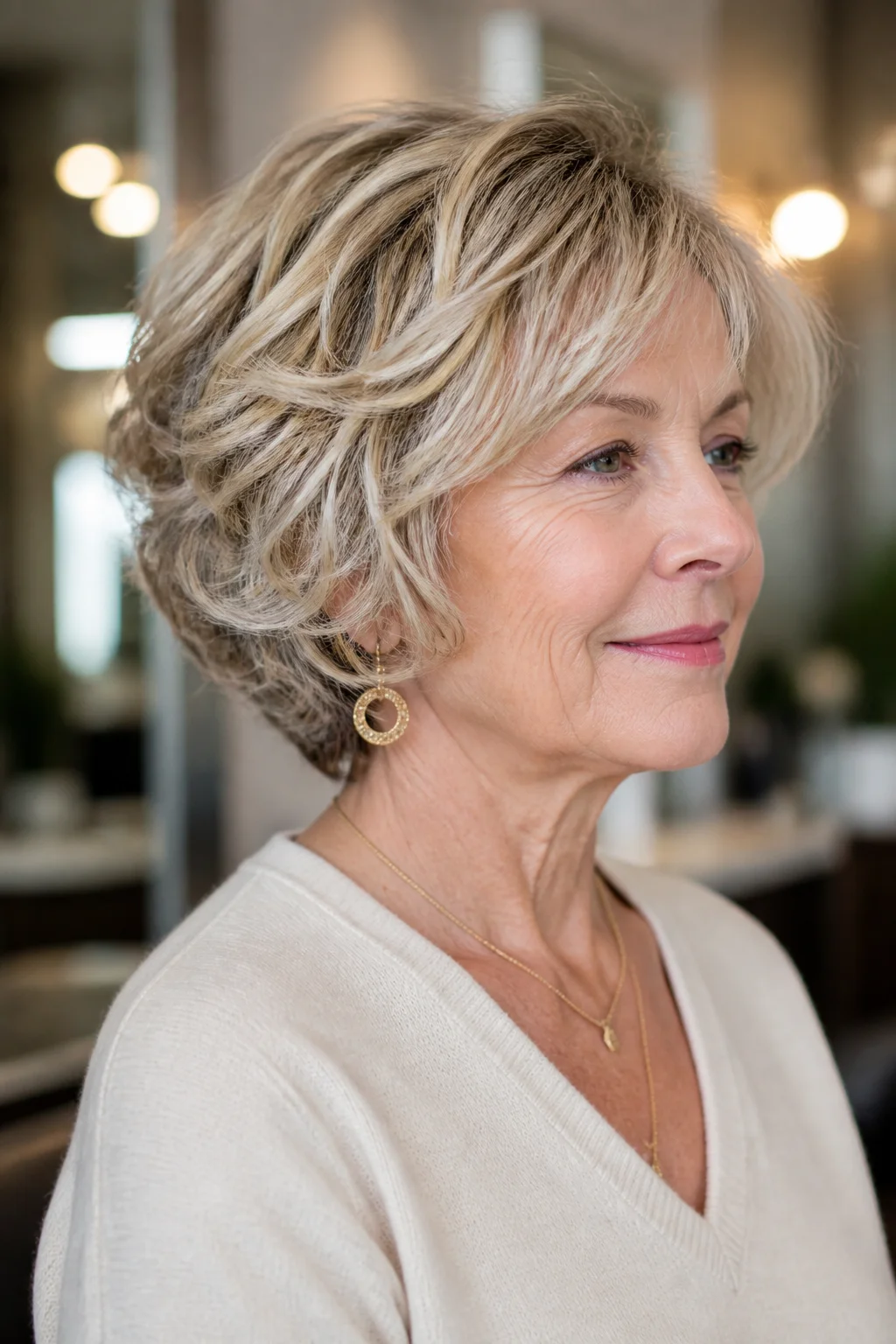
Fine curly hair often falls flat in back even when the front looks full, and stacking solves that directly. The back sections are cut shorter and layered close together so the curls stack on top of each other for extra body, while the front stays a bit longer for a soft frame around the face. This is one of the better curly bob hairstyles for women over 50 whose curl pattern has loosened with age but who still want visible shape and lift.
Face-Framing Curl Bob with Longer Sides
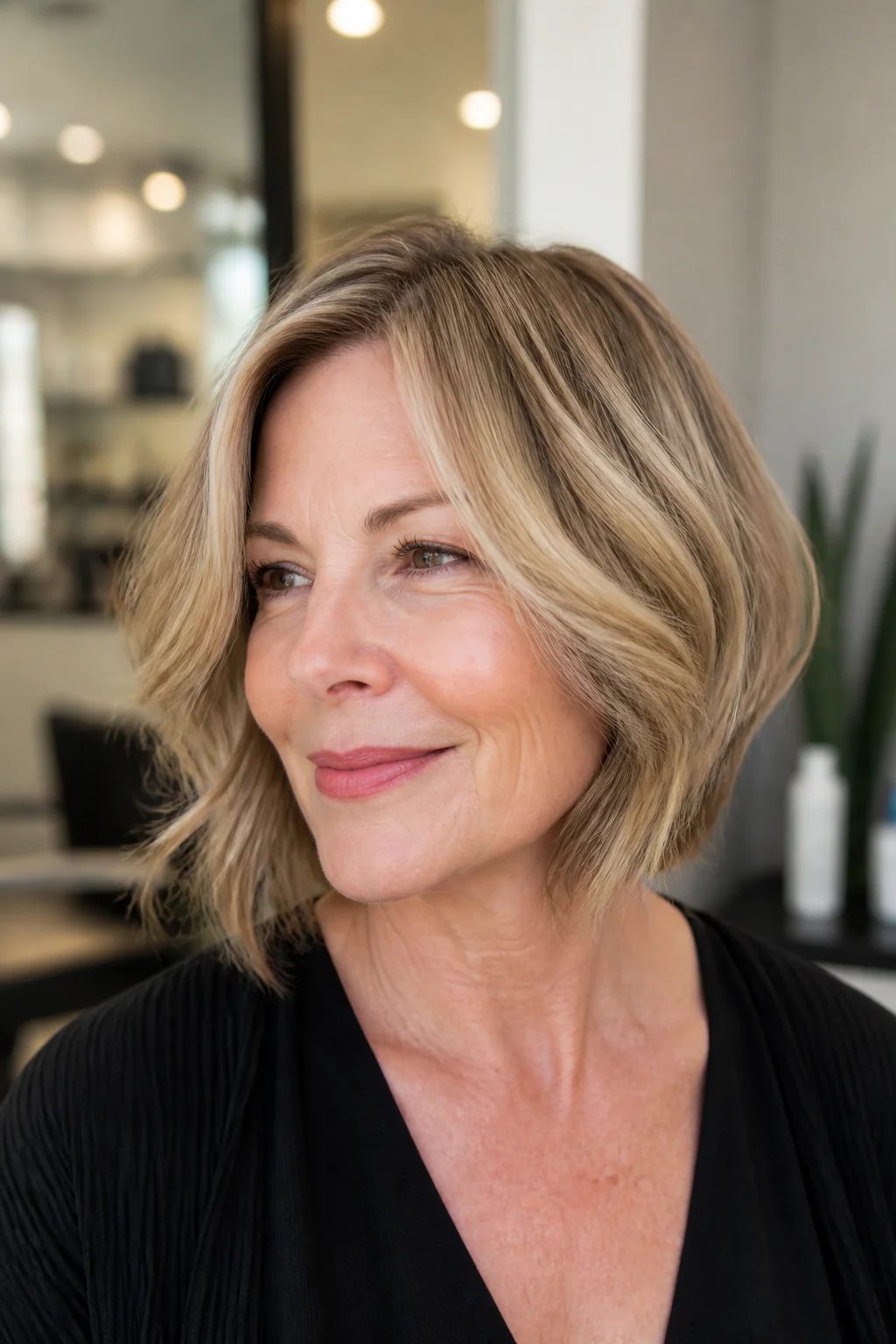
The sides are left a couple inches longer than the back, drawing the eye down and softening a rounder or fuller jawline. Curls at the front get styled forward instead of tucked back, which frames the cheekbones nicely. Tip: ask for the face-framing pieces to be cut a little longer than you think you want, since curls shrink up more than straight hair once they dry.
Gray Curly Bob with Root Texture Blend
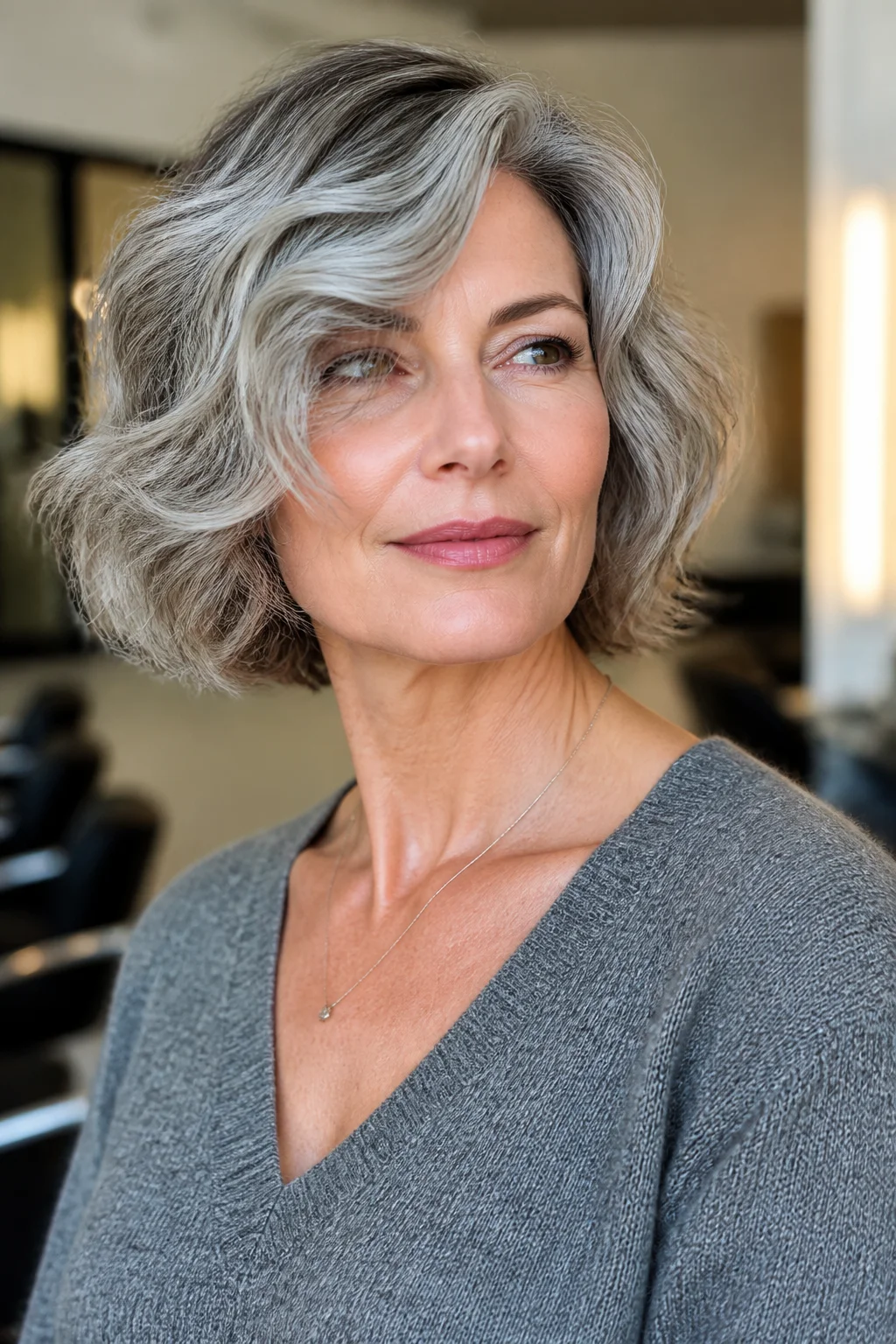
Gray hair often has a different, wirier texture than the hair around it, and this cut is built around that reality instead of fighting it. Your stylist blends the root texture into the mid-lengths using a technique that softens the line where gray meets color, so the transition looks intentional rather than patchy. It suits anyone growing out color entirely or embracing salt-and-pepper without a harsh demarcation line.
Voluminous Spiral Curl Bob
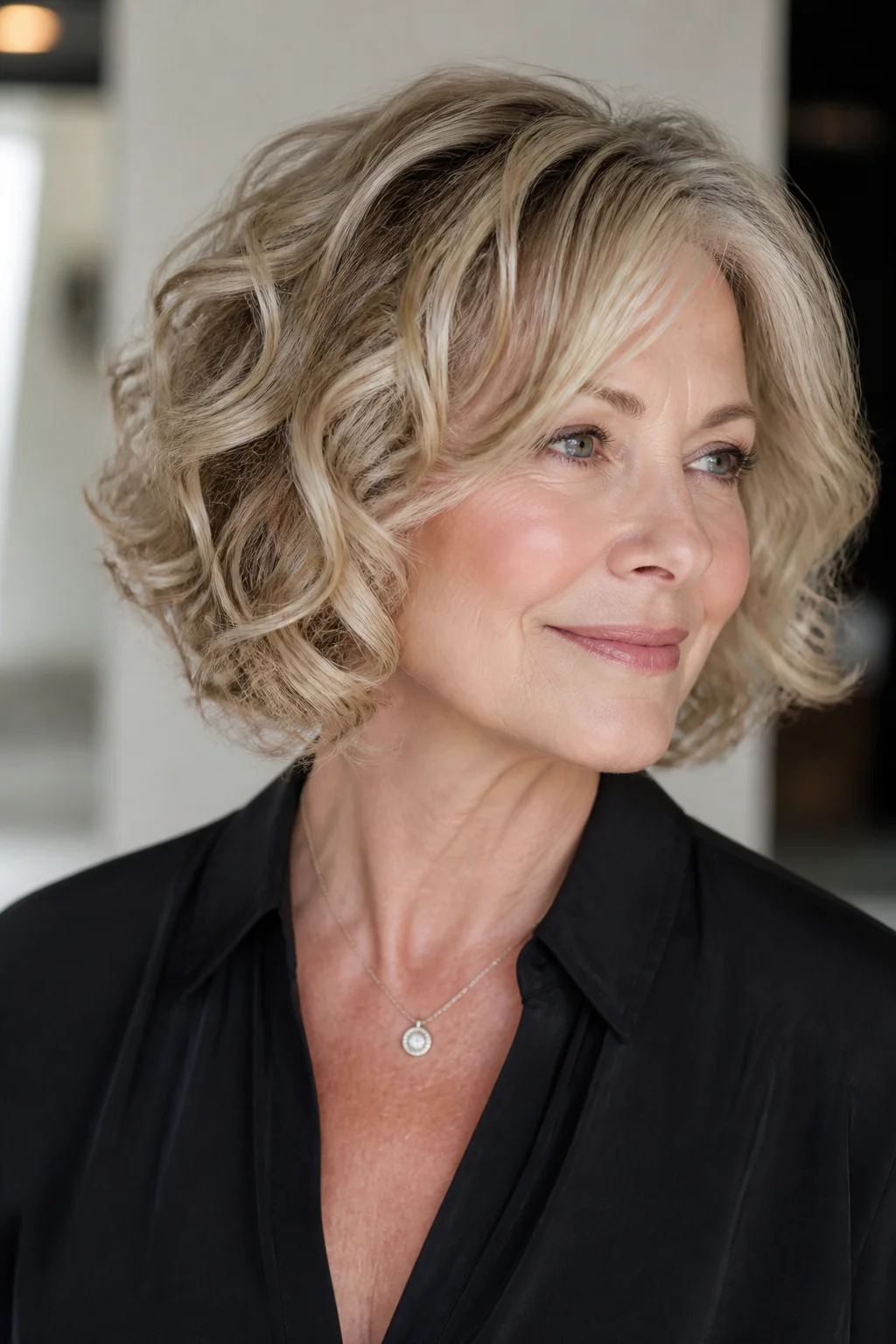
Spiral curls need room to coil, so this cut avoids heavy layering near the roots that can cut spirals short before they get a chance to form. Length is kept slightly longer than a typical bob to let the spiral pattern fully develop down the length of the hair. The result looks like a cloud of defined ringlets rather than a compact curl. This works best on naturally curly or permed hair with a strong spiral pattern already in place, less so on looser waves that won’t hold the shape.
Wavy Bob with Relaxed Curl Pattern
A gentler option for hair that waves more than it curls. The cut is simple, one length with soft ends, and it relies on the hair’s natural movement rather than heavy styling.
Asymmetrical Curly Bob for Round Faces
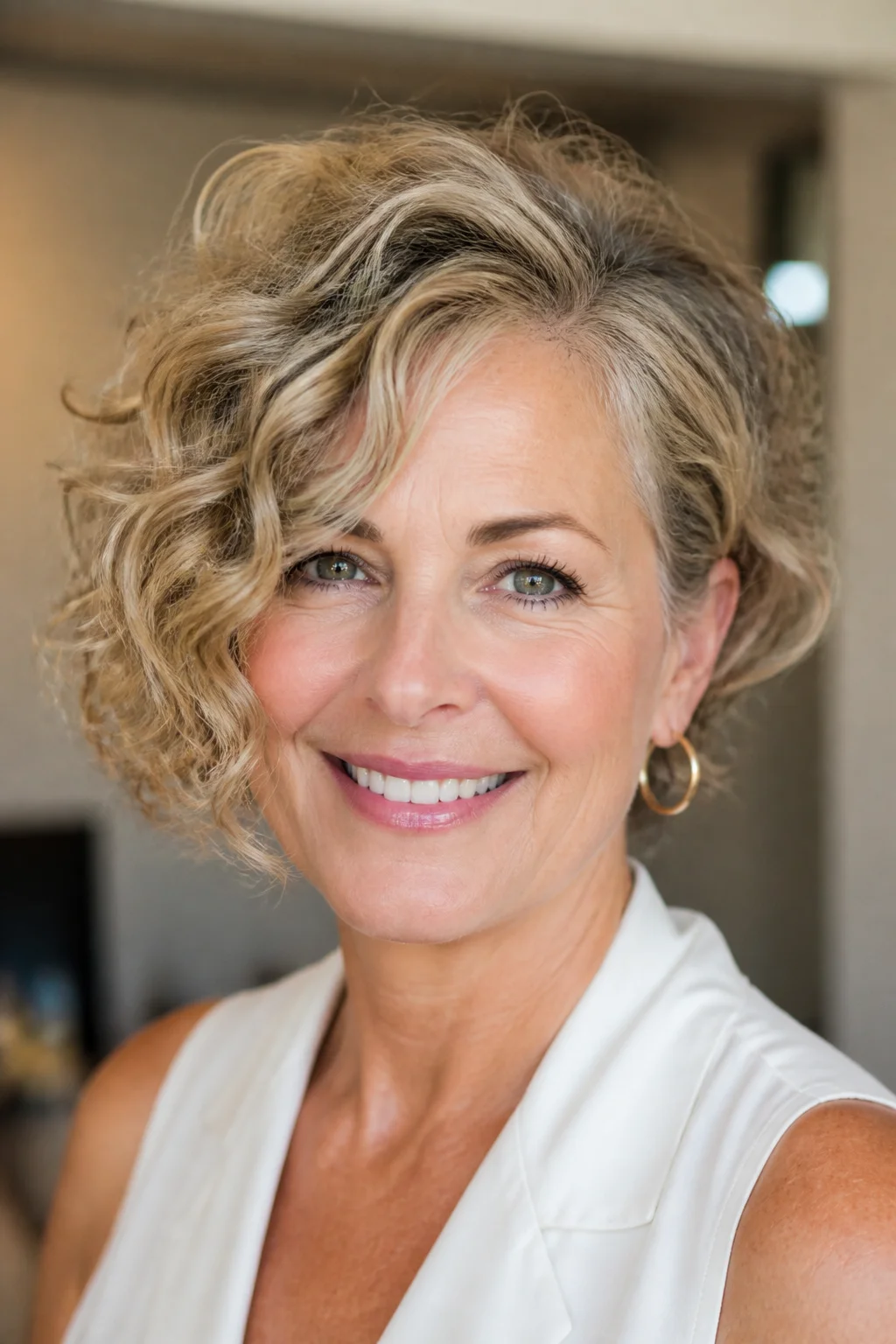
One side cut longer than the other breaks up the roundness of a full face and adds a diagonal line that’s more flattering than a straight-across bob. Curls on the longer side tend to fall forward and soften the jaw, while the shorter side keeps things from looking heavy. Ask for at least an inch of difference between the two sides so the asymmetry actually reads once the curls dry and shrink up.
Undercut Curly Bob with Shaved Nape Detail
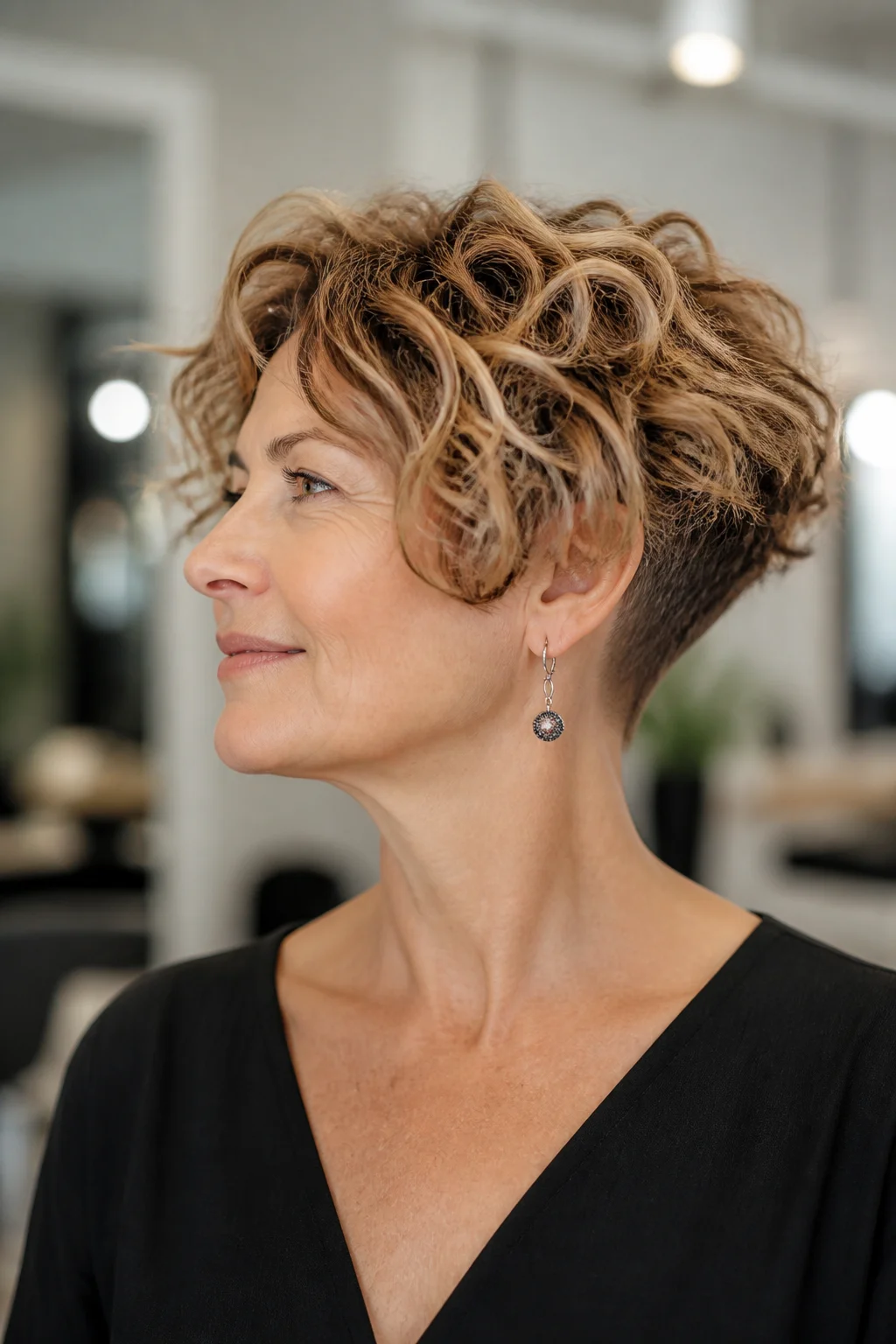
The visible length stays curly and full on top, but the nape underneath is shaved or clipped very short. This removes bulk that often makes curly hair feel heavy at the back of the neck, especially in warmer months. It’s a bold choice and works best if you’re comfortable with some upkeep, since the shaved section grows out fast and needs trims every few weeks to stay clean.
Textured Coily Bob for Thick Curls
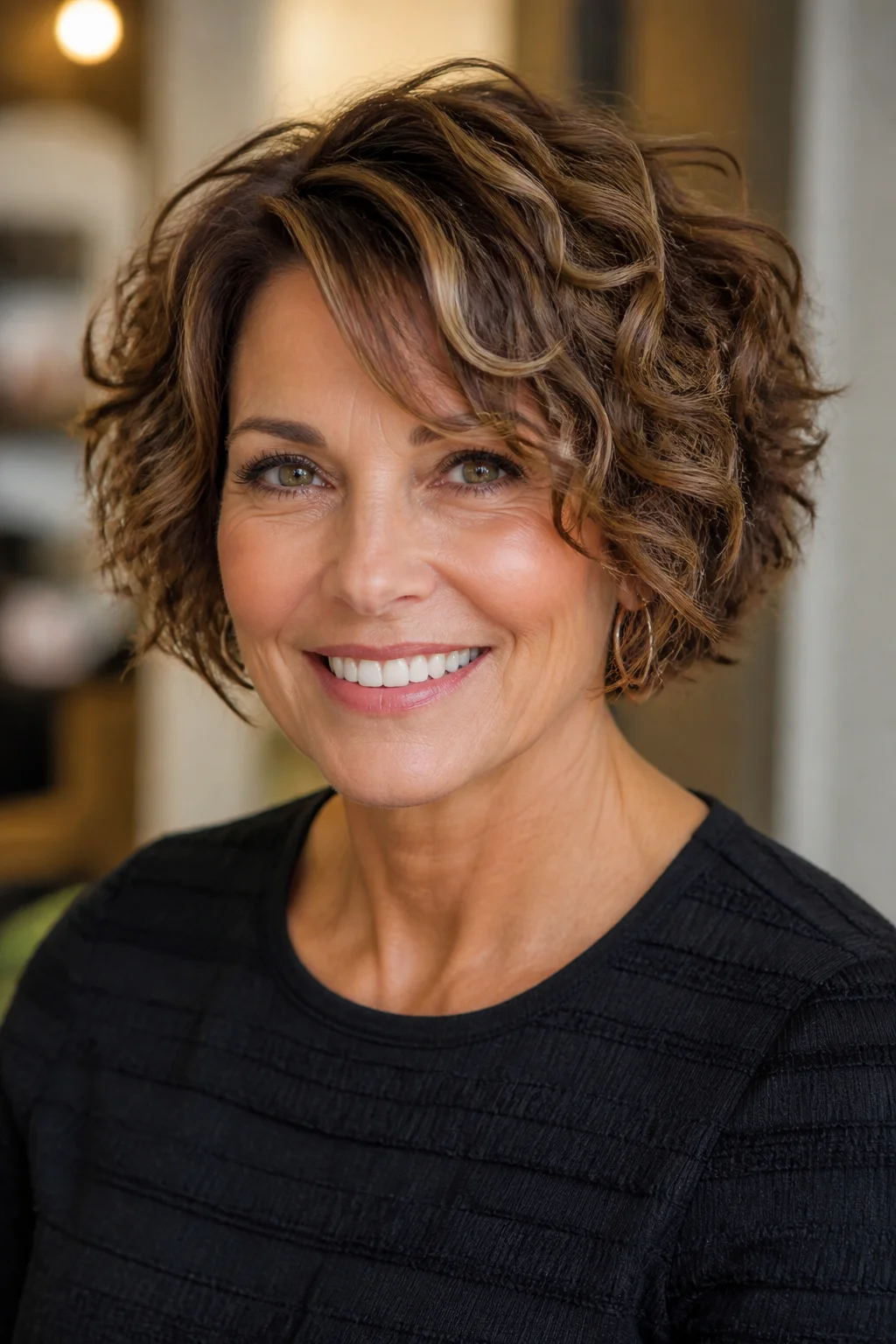
Thick, tightly coiled hair benefits from heavy thinning and texturizing so the bob doesn’t sit like a solid triangle. This cut removes weight from underneath while keeping the outer layer intact, letting each coil show its shape instead of clumping into one dense mass. It holds up well through humidity and needs less daily styling than looser curl types.
Inverted Curly Bob with Angled Front
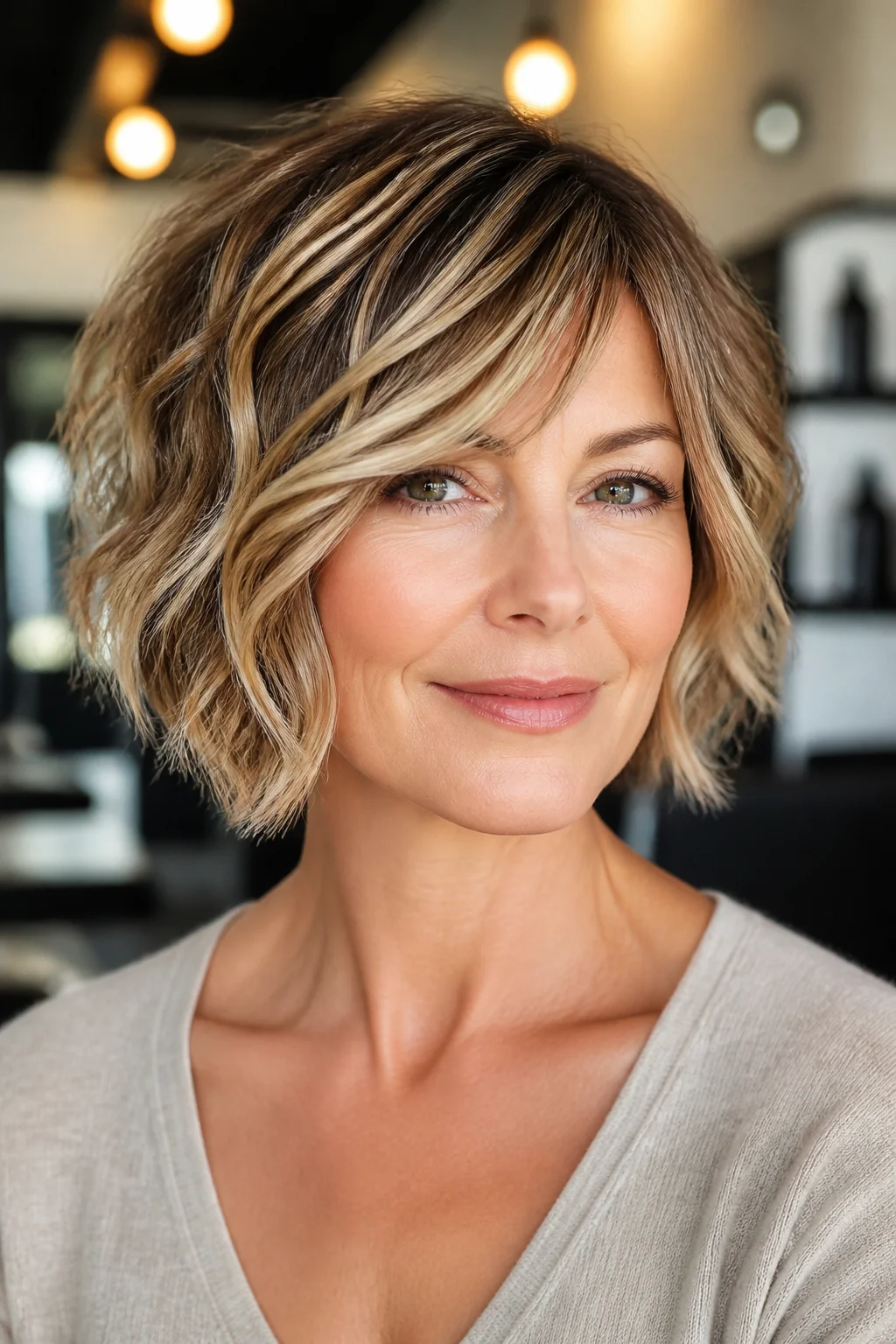
The back is cut short and close while the front angles down into longer points near the chin. On curly hair this creates a rounder, softer version of the sharp inverted bob popular on straight hair. Tip: this shape reads best when the curls in front are defined with a curl cream rather than left to dry loose, since the angle needs some definition to show.
Feathered Curly Bob with Soft Layers
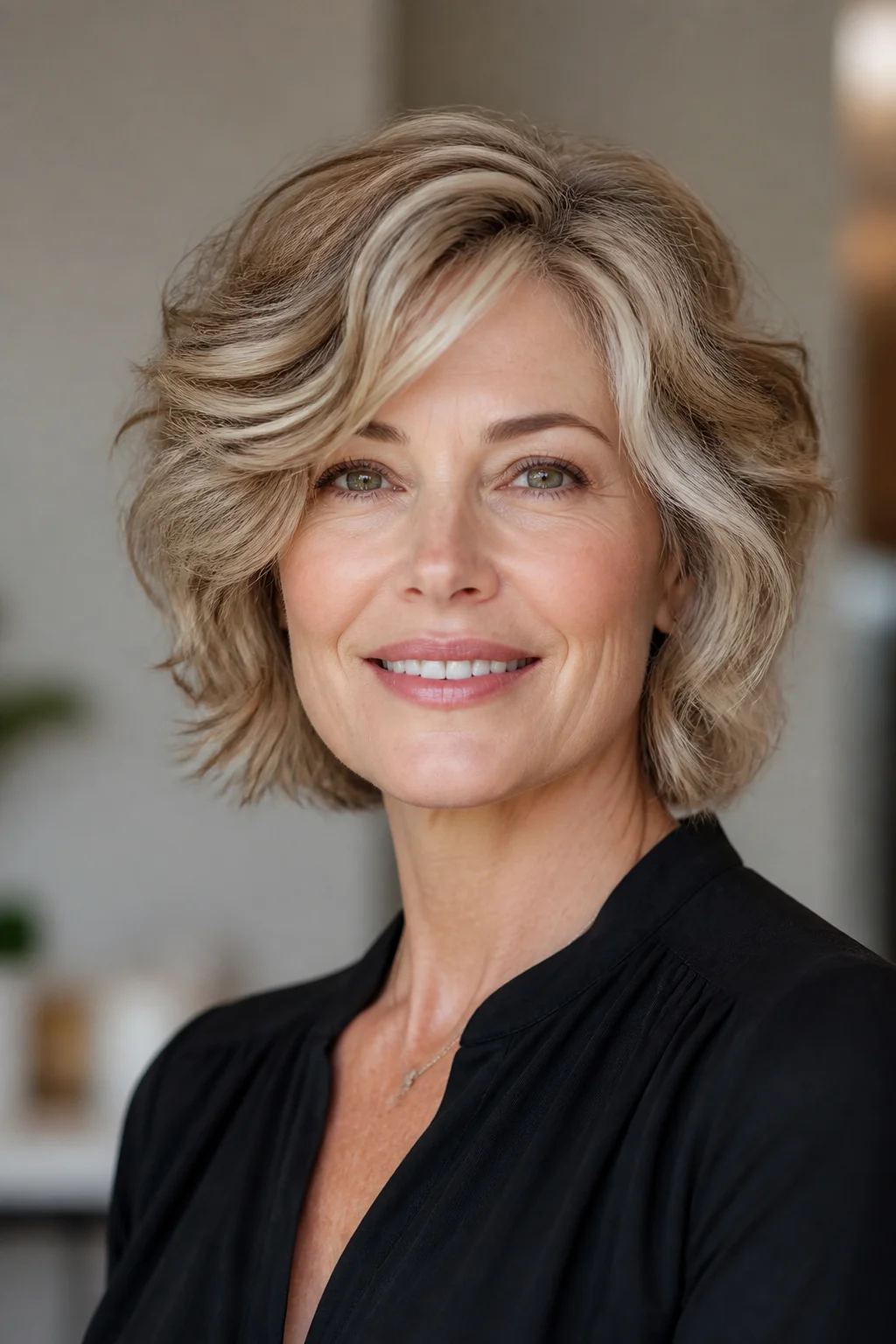
Feathered ends soften the bottom line of the bob so it doesn’t look heavy or blunt. Layers are cut with a razor or point-cutting technique that thins out the ends just enough to let curls separate naturally.
Curly Bob with Highlights for Dimension
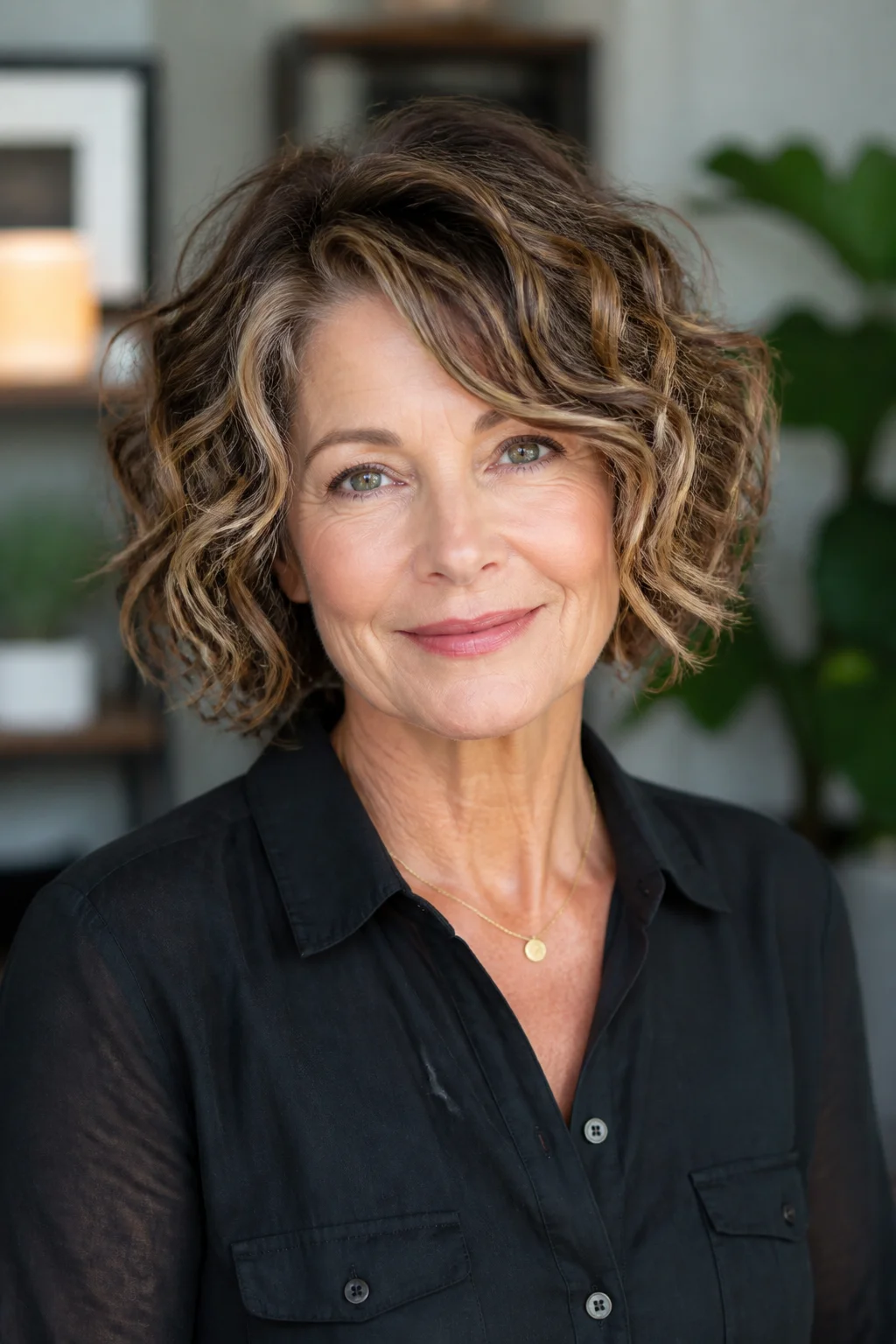
Solid color on curly hair can look flat because curls twist and catch light unevenly, so highlights placed through the mid-lengths and ends add movement that a single shade can’t. Face-framing pieces get a bit more lightness than the rest, which brightens the whole look without a full head of foils. This approach works on gray-blending clients too, using lighter pieces to soften the contrast between new gray growth and older color. Ask for a hand-painted or babylights technique rather than traditional foils, since it blends more naturally into a curl pattern that doesn’t lie flat.
Textured Bixie Cut with Curly Taper
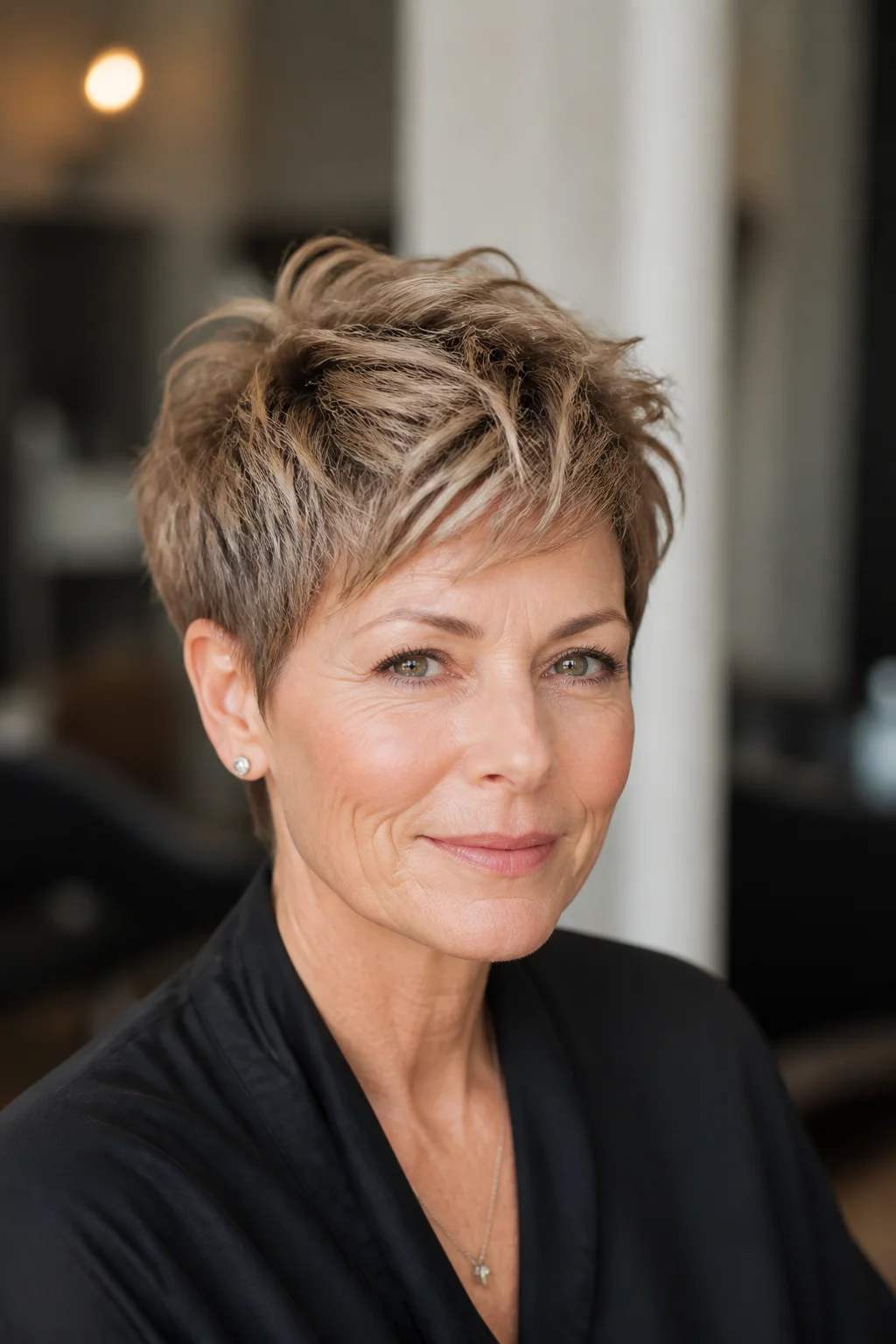
Part bob, part pixie, the bixie tapers shorter at the back and sides while leaving enough length on top for curls to actually curl. It’s an efficient cut for anyone who wants short hair without losing the curl pattern entirely, since a full pixie often cuts curls so short they lose their shape.
Shoulder-Grazing Curly Bob with Volume Underneath
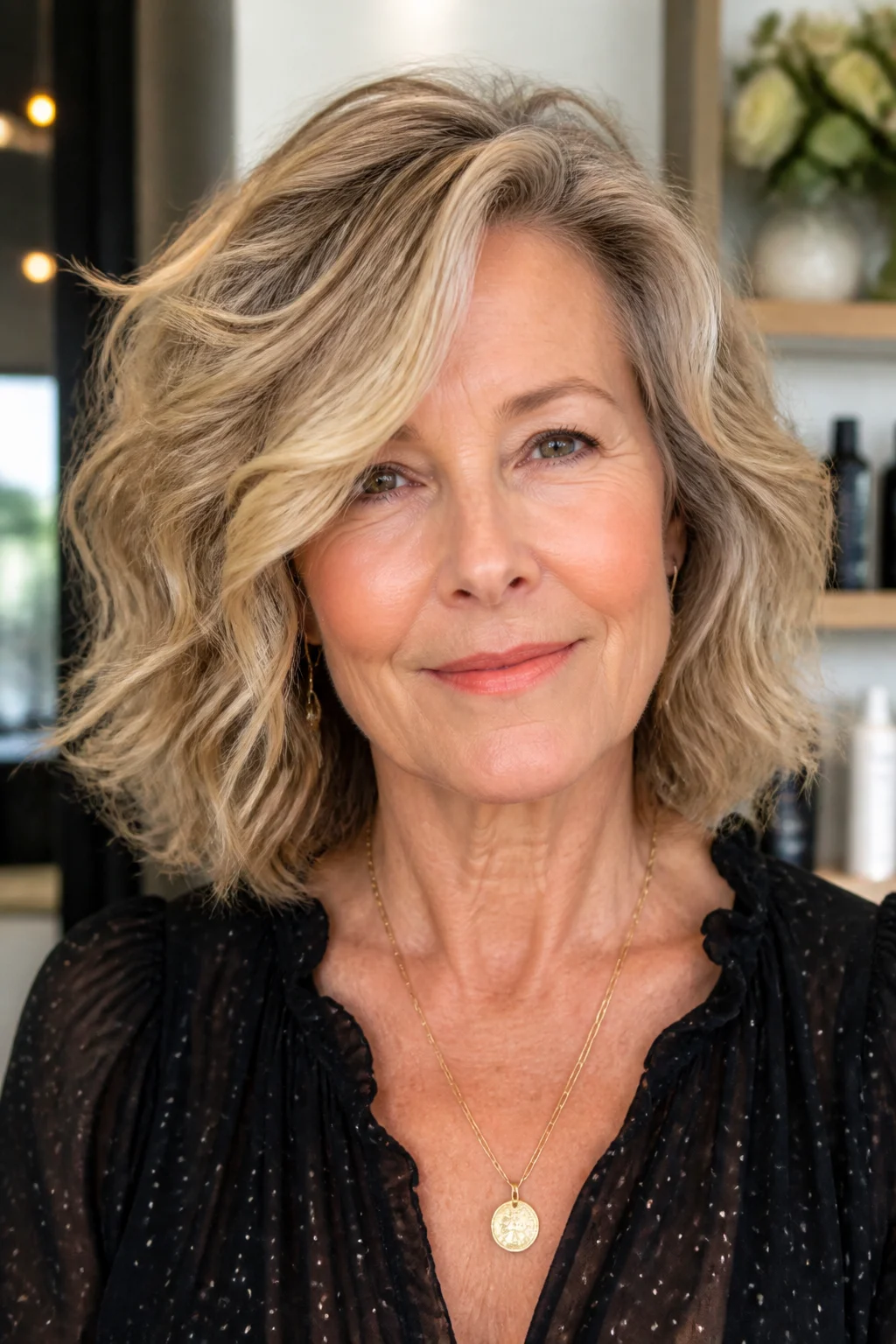
Layers cut into the underneath section create lift that pushes the top layer of curls outward and up, adding fullness through the crown and sides. The visible top layer stays longer and smoother in shape, so the volume looks natural rather than teased. This is a solid option for hair that’s thinned out with age but still has decent curl pattern left to work with.
Blunt-Edged Curly Bob with Defined Curls
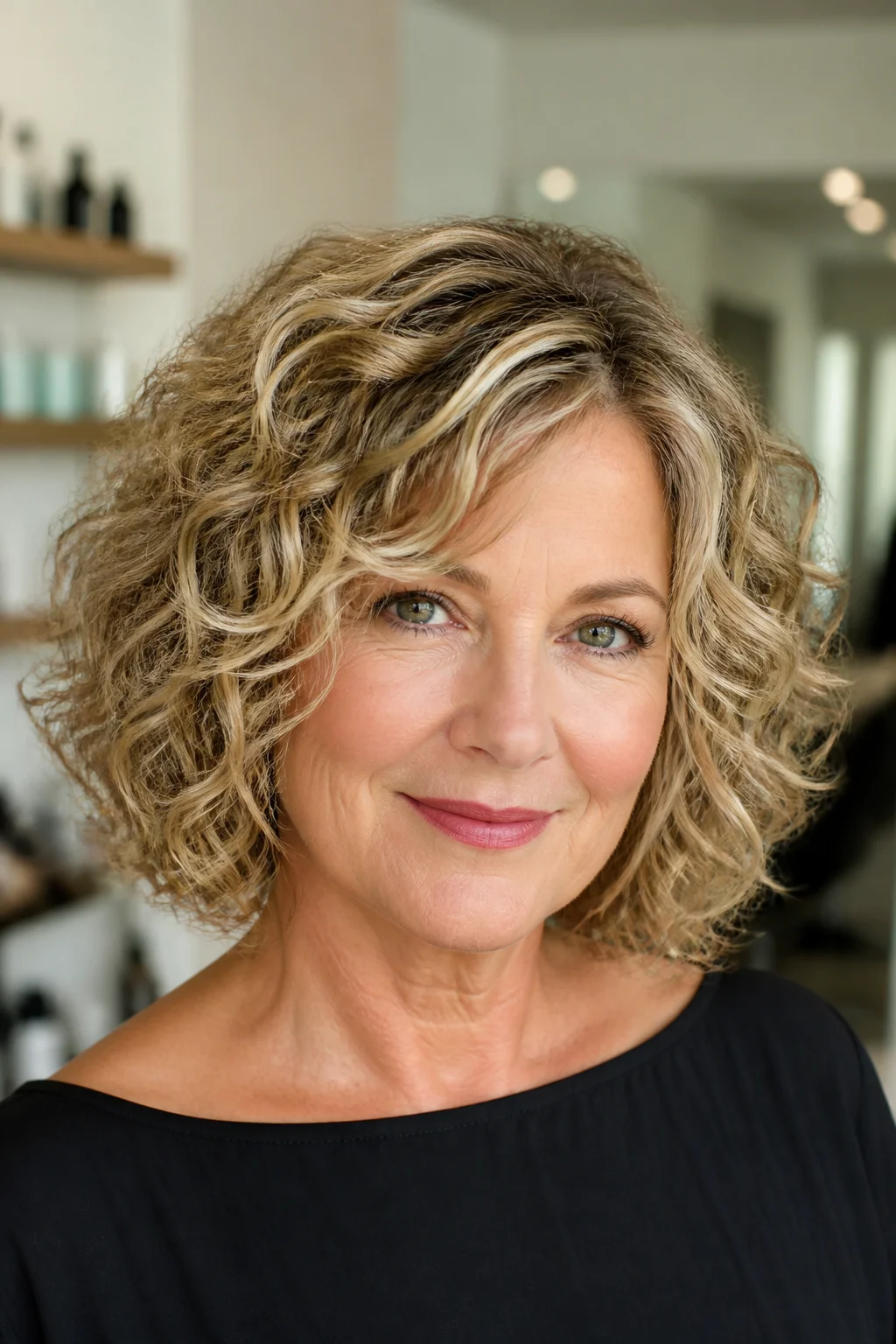
A single blunt line at the bottom, no layering, just clean curls falling to one length. It suits thick curly hair that holds its shape well without extra texturizing, and it reads more polished than a heavily layered cut. Tip: ask your stylist to cut this one curl by curl rather than pulling hair straight, since curly hair cut wet and straight often springs up shorter and uneven once it dries.
Soft Curl Bob for Low-Porosity Hair
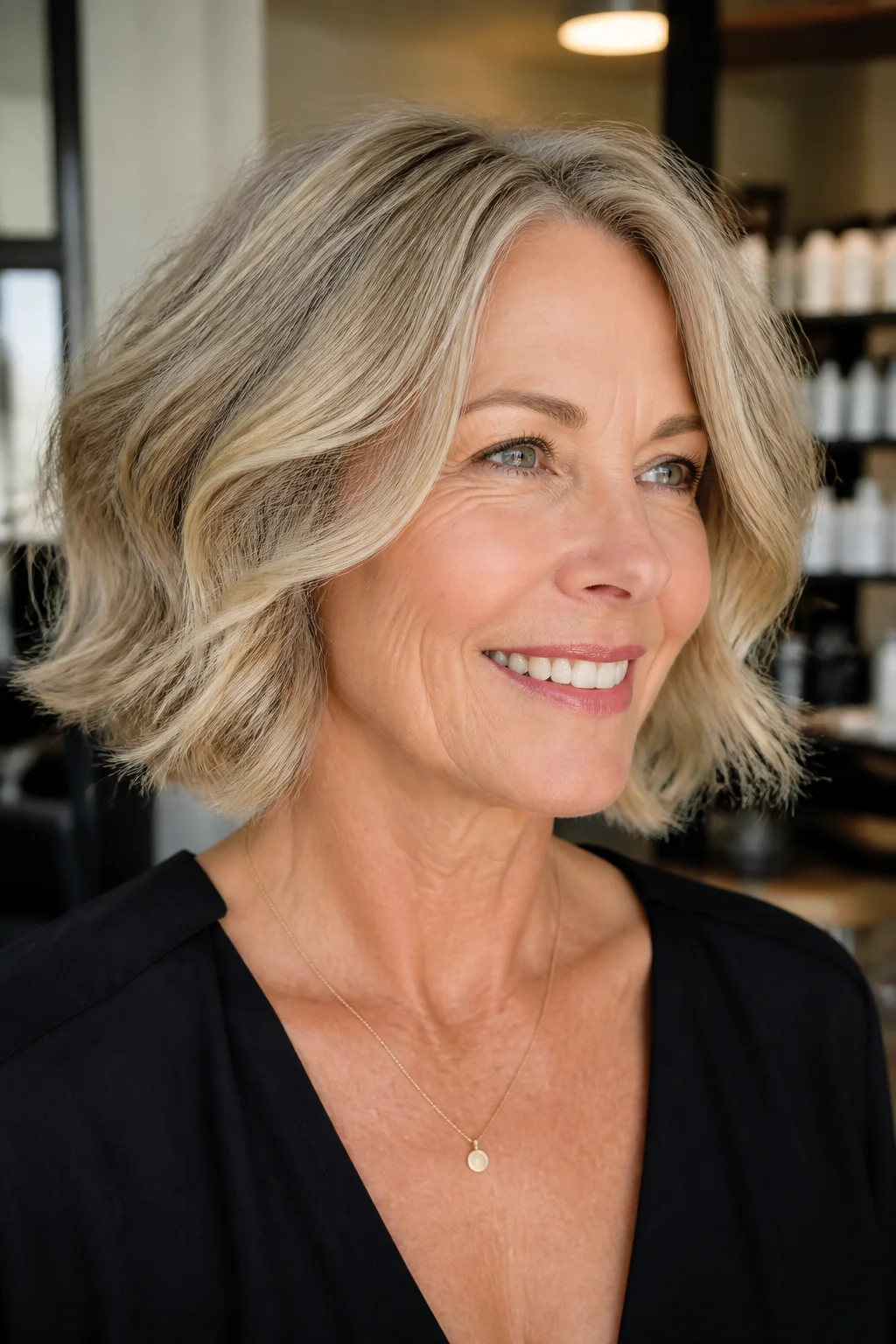
Low-porosity hair resists moisture and can look dull even with the right products, so this cut is kept simple with minimal layering to avoid stressing the strands further. Fewer layers means less exposed cuticle, which helps low-porosity curls hold whatever moisture they do absorb.
Textured Bob with Bangs and Curly Fringe
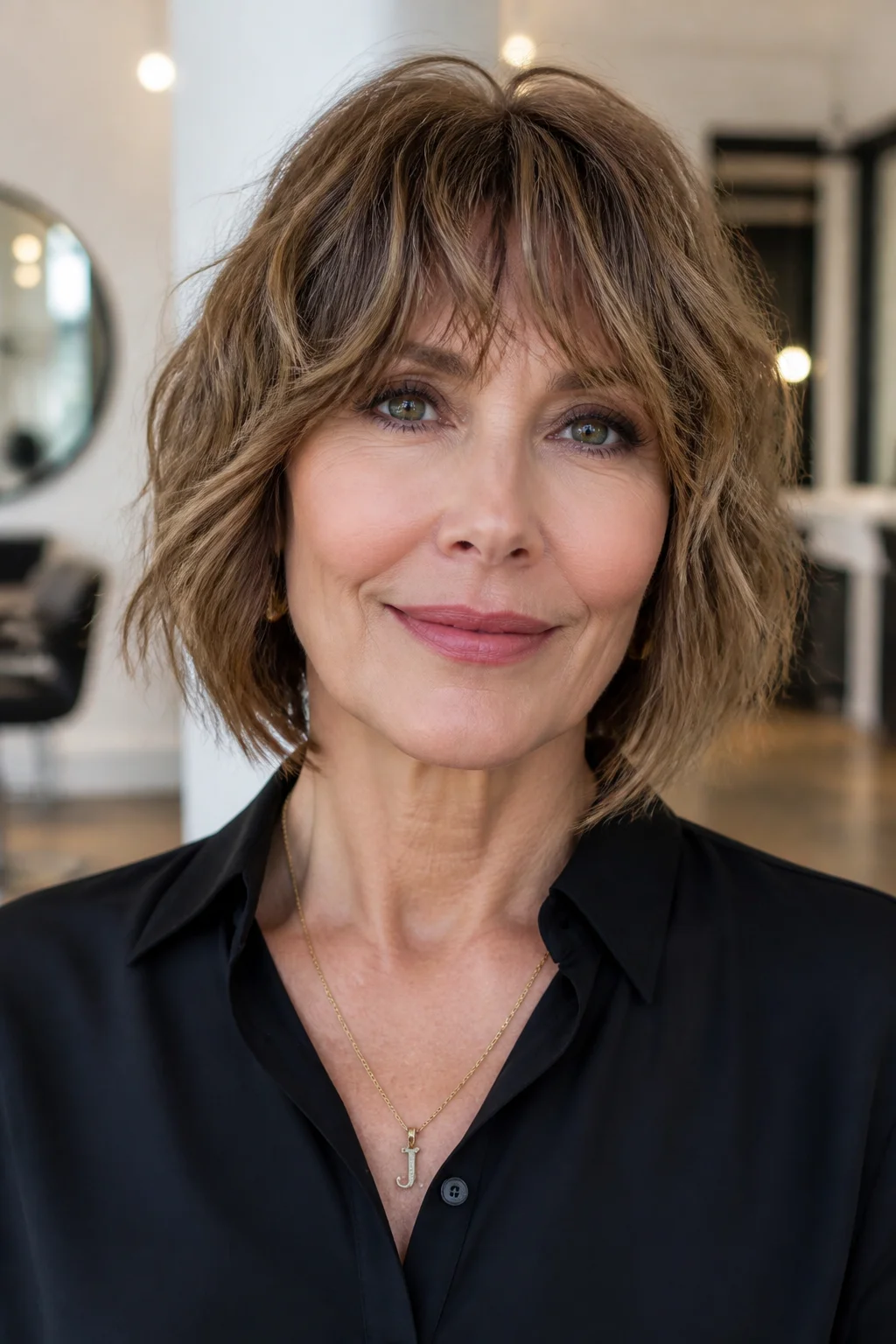
Curly bangs behave differently than straight ones, shrinking up as much as half their cut length once they dry, so this cut leaves the fringe noticeably longer than a client might expect. The rest of the bob stays textured throughout to match the movement of the fringe rather than contrasting a smooth back with a curly front. It’s a good option for softening a strong forehead or drawing attention to the eyes. Ask your stylist to cut the fringe dry, in stages, checking shrinkage as they go, because cutting curly bangs wet and straight is the single most common reason curly fringes come out too short.
Jet-Black Curly Bob with Shine
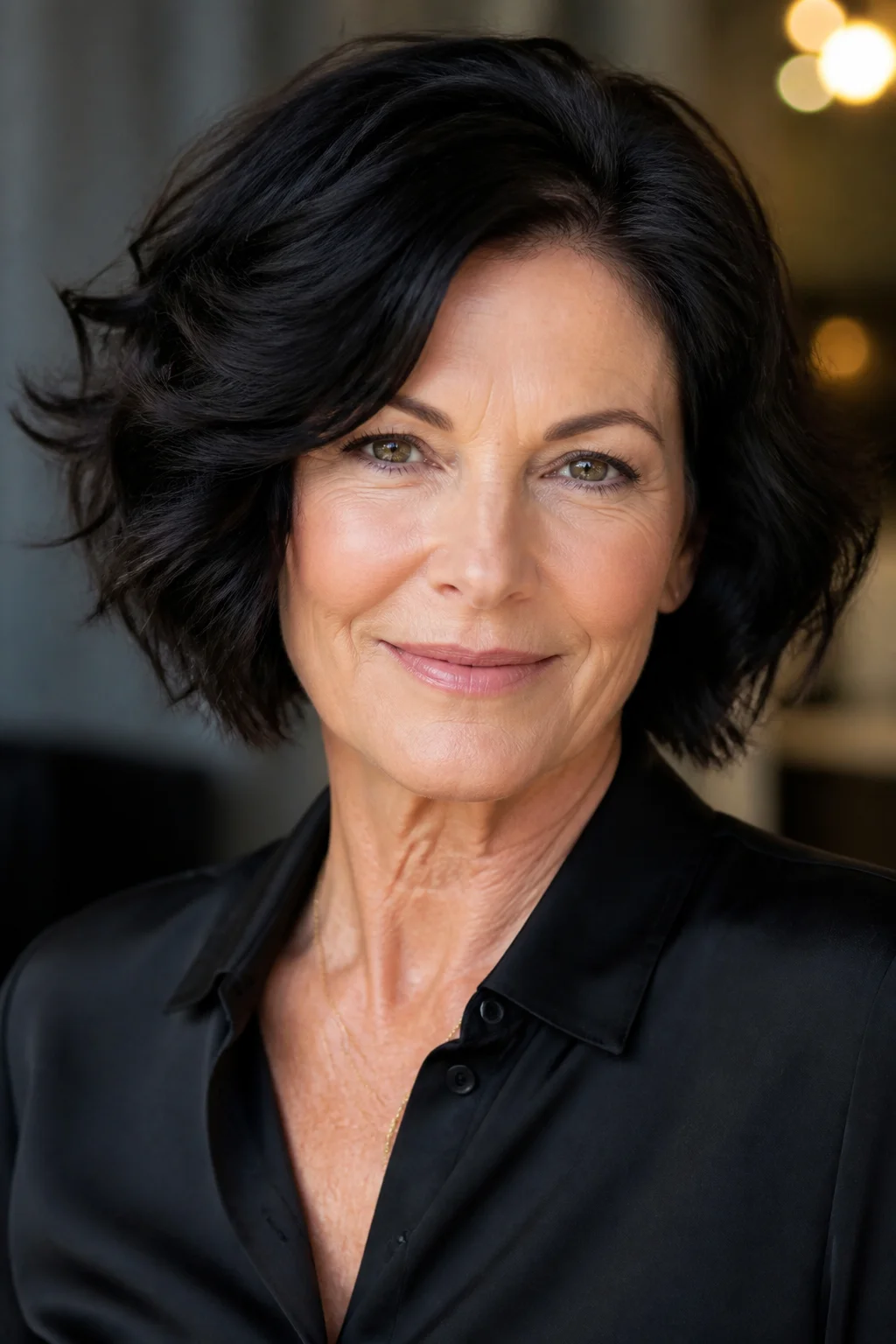
Deep black color shows off curl definition better than most shades because the contrast between light and shadow on each curl becomes more visible. This cut keeps a classic bob shape and leans on a glossing treatment to boost shine, since black hair can look dull without added gloss. It’s a striking, low-fuss option if you’re already dark or looking to go darker.
Lived-In Textured Curly Bob for Easy Styling
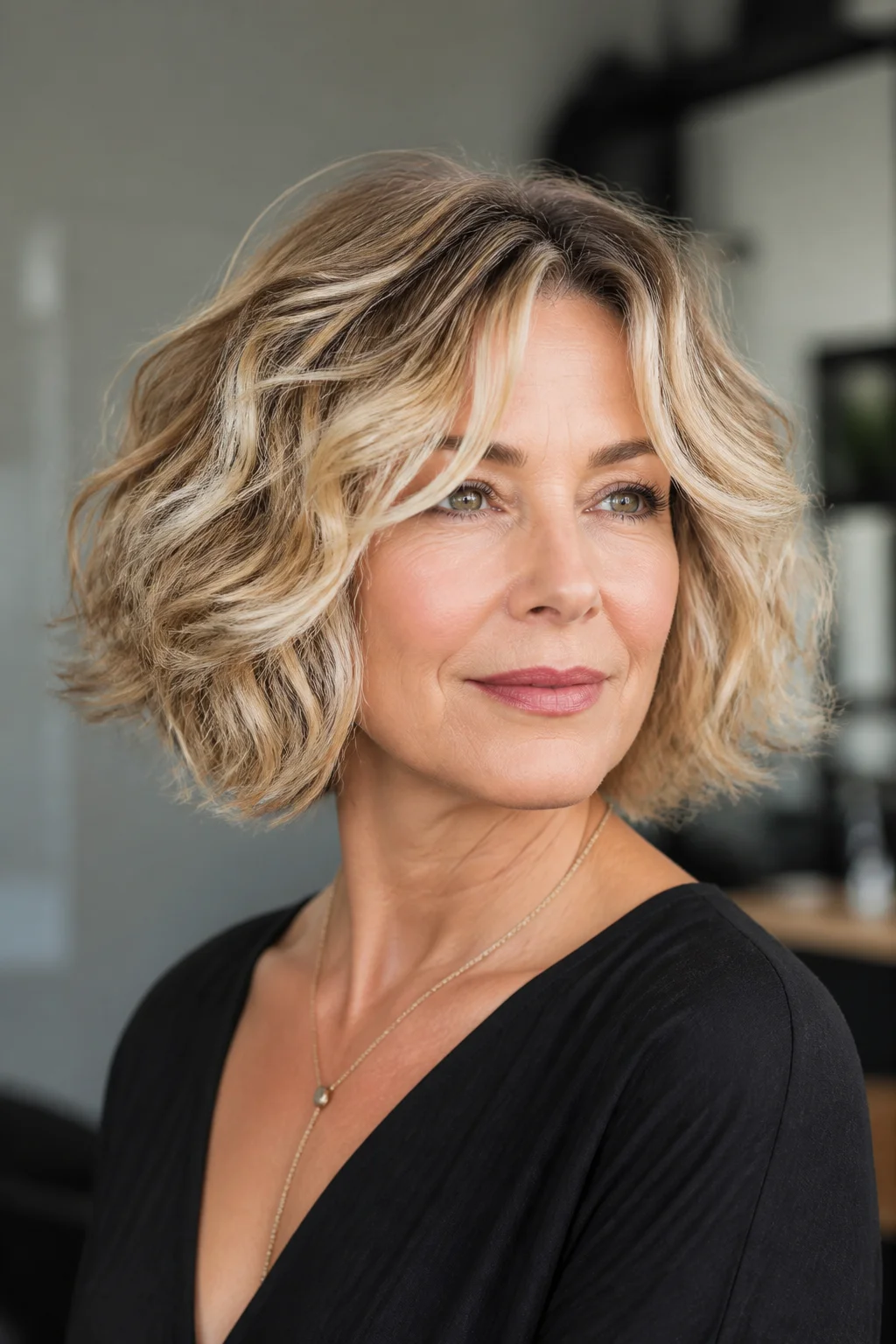
Built for wash and go mornings, this cut uses minimal layering and a slightly grown-out shape so regrowth and root shrinkage don’t show as fast. It’s forgiving between salon visits and doesn’t demand daily diffusing or product-heavy routines to look finished.
Choosing the Right Curly Bob for Your Hair and Face
With this many options, picking one comes down to three things: your curl pattern, your hair’s density, and how much time you want to spend styling it. If your curls have loosened or thinned with age, look toward the stacked back curly bob for fine hair or the shoulder-grazing curly bob with volume underneath, both built specifically to fake fullness that’s naturally faded. If your curls are still tight and springy, the textured coily bob for thick curls or the voluminous spiral curl bob will do more justice to that pattern than a heavily layered cut would.
For round faces, the asymmetrical curly bob for round faces beats a straight-across blunt cut every time, since the diagonal line does the work a symmetrical shape can’t. Anyone growing out color or letting gray in should start with the gray curly bob with root texture blend rather than jumping straight to the jet-black curly bob with shine, since the blend gives you a softer transition period.
The biggest mistake is asking for a cut like the blunt-edged curly bob with defined curls when your hair is fine or low-density. That much solid length pulls curls straight down and cancels out any volume, leaving you flatter than before the haircut. Match the cut to what your hair is actually doing now, not what it did ten years ago.