Short hair after 50 should feel easy, not like a daily fight with a round brush. A stacked bob solves that problem because the back stays cropped close and full while the front can do almost anything you want, from soft waves to a sharp blunt line. This shape flatters most face types, works with thinning hair, and grows out without a hard line to chase. Short stacked bob hairstyles for women over 50 give you the fullness of a bob without the weight dragging your face down, which is why stylists keep recommending the cut year after year. Some of these versions lean classic, some lean edgy, and a few are made specifically for fine or gray hair. Bring the picture that matches your texture and face shape to your next appointment, and talk through the details below with your stylist before you sit in the chair.
Classic Stacked Bob with Blunt Ends
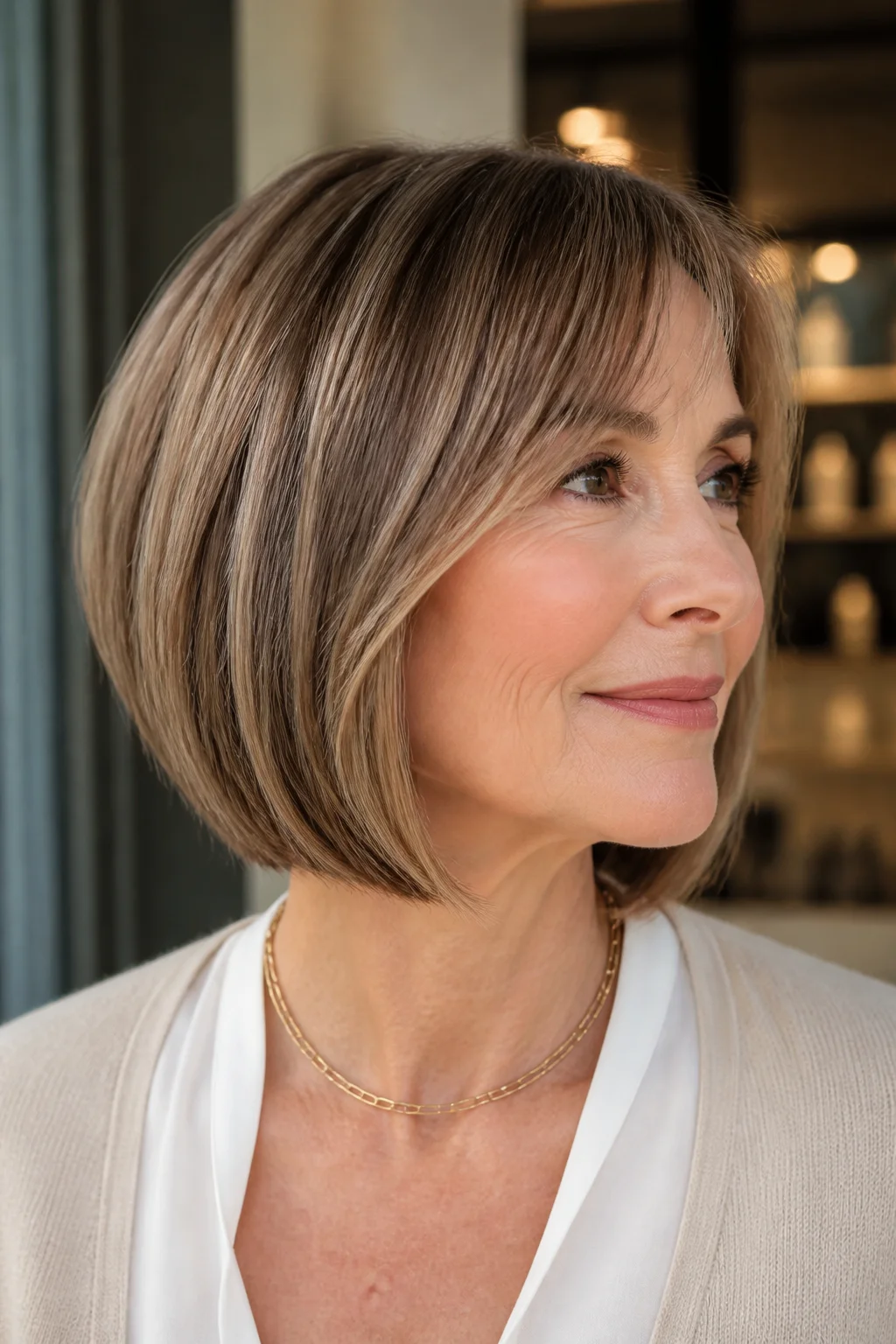
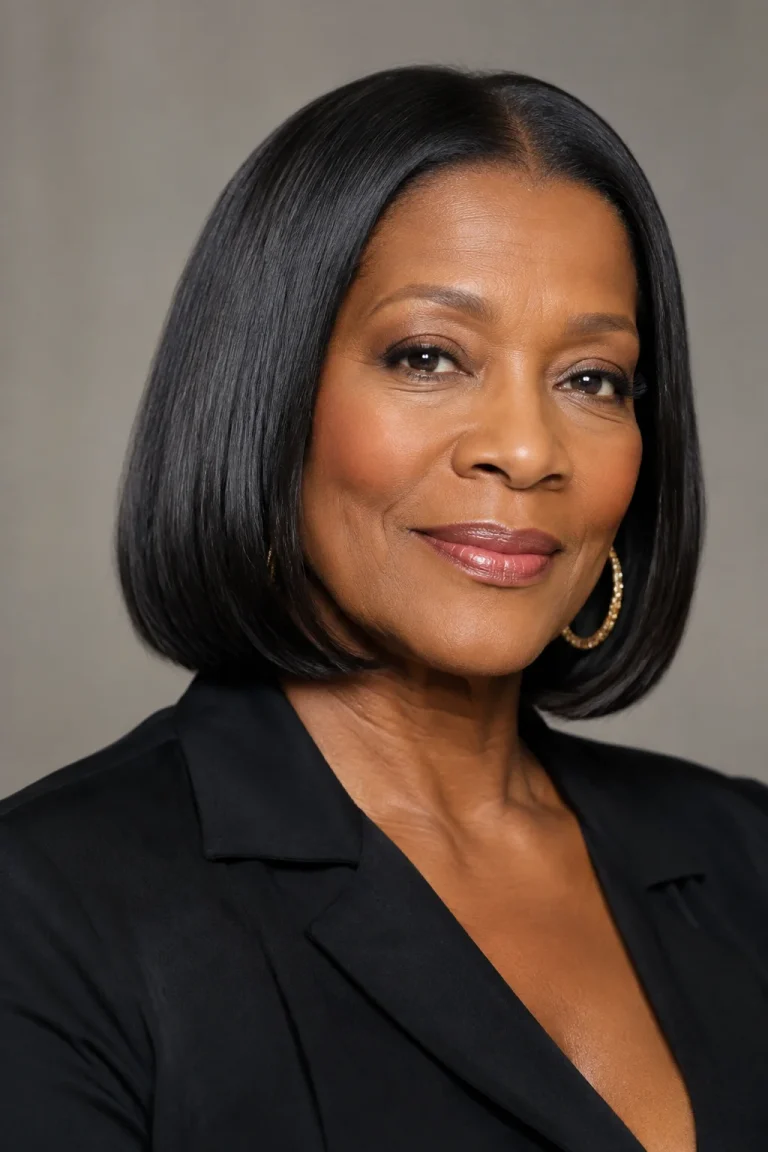
This is the version most people picture when they hear the word “bob.” The back is cut short and stacked with several rounds of graduated layers, building visible fullness right at the nape. Up front, the ends stay blunt and heavy, which gives the whole style a clean, finished look. It works especially well on straight or slightly wavy hair because the blunt line shows off best without frizz interrupting it. Round and oval face shapes take to this one easily, though a good stylist can adjust the front length for square faces too. Tip: ask for the stacking to stop just above the occipital bone so the fullness sits high and doesn’t flatten by midday.
Textured Stacked Bob with Choppy Layers
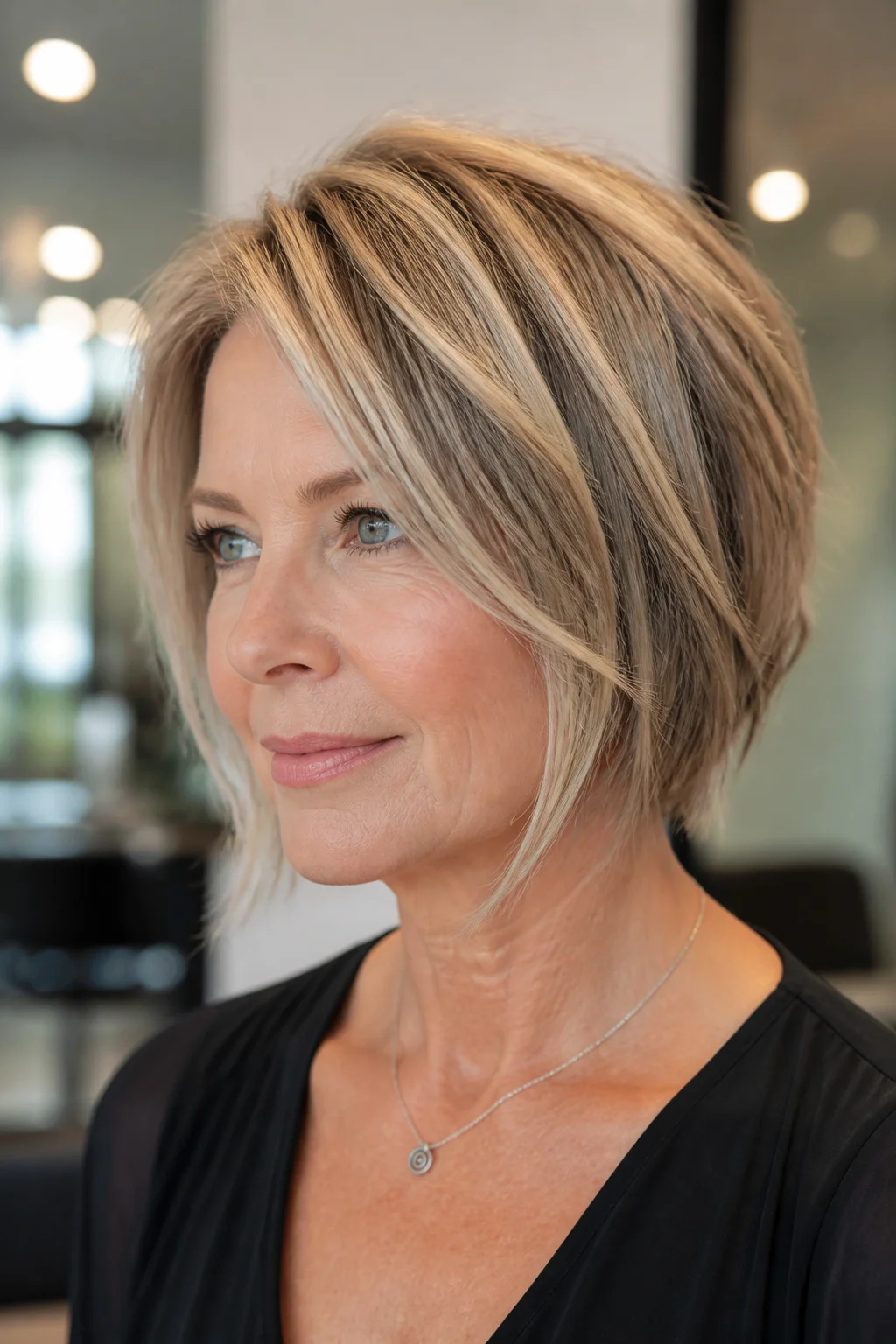
Choppy layers cut into the ends break up the solid weight of a traditional bob. Instead of one heavy line, you get a rougher, more casual finish that hides thinning spots at the crown. This version pairs nicely with a texturizing cream rather than a heavy gel, since the goal is movement, not shine. It suits women who blow dry with their fingers rather than a round brush and want something low fuss.
Stacked Bob with Face-Framing Layers
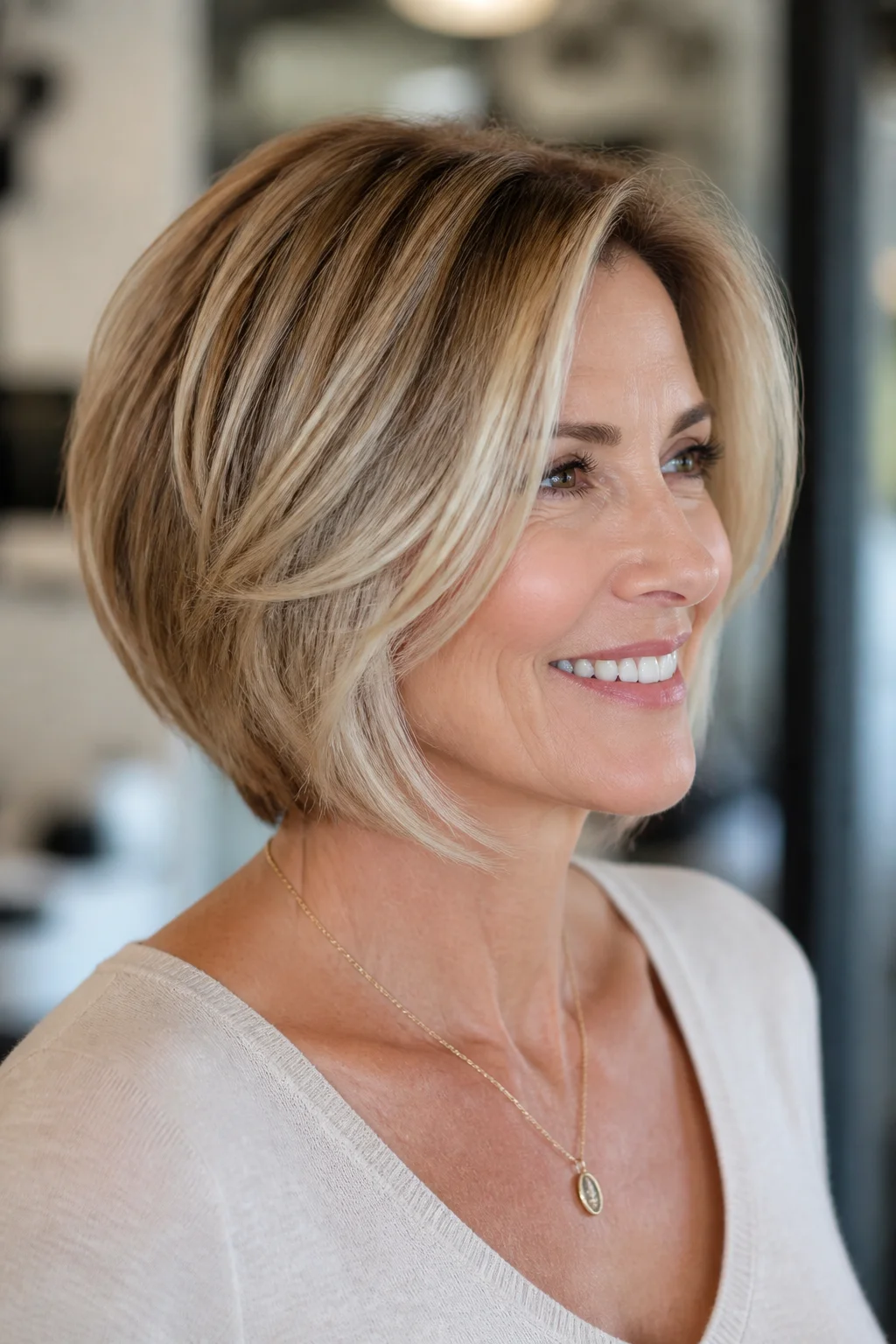
Face-framing layers pull length down along the cheeks while the rest of the bob stays stacked and full in back. This creates a soft frame around the face that can soften a strong jawline or draw attention up toward the eyes. The layers are usually cut a bit longer than the rest of the perimeter, angling in toward the chin. Women with rounder faces often find this version more flattering than a straight-across blunt bob because the diagonal lines add length visually. It also gives you options for styling. Wear it smooth for a polished day look, or add a loose wave for something softer at night. Tip: ask your stylist to keep the face-framing pieces slightly longer than you think you want, since they shrink up with natural wave or curl.
Curly Stacked Bob with Volume
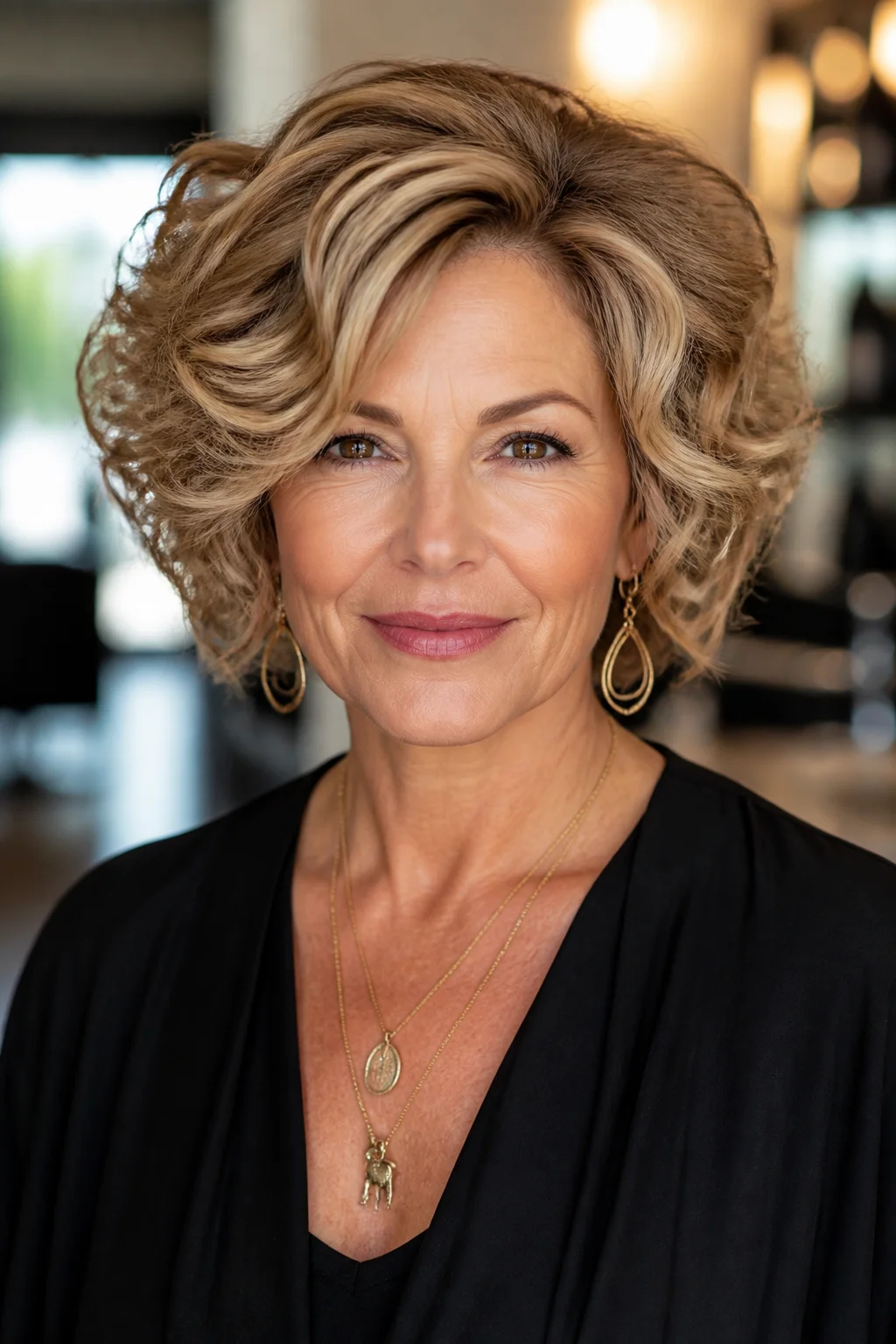
Curly hair and stacked layers were made for each other. The layers remove bulk from underneath so curls can spring up instead of pulling into a triangle shape. This version relies on a diffuser more than a flat iron, letting the natural curl pattern do the styling work.
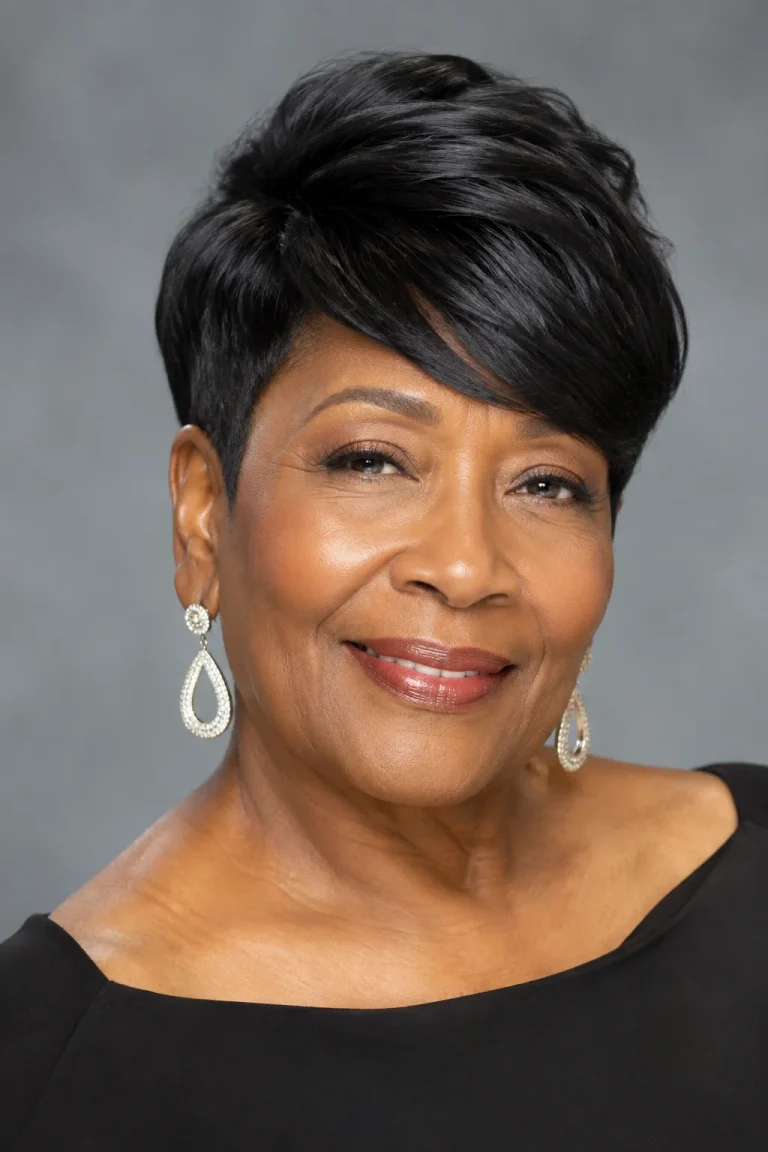
Stacked Pixie-Bob Hybrid
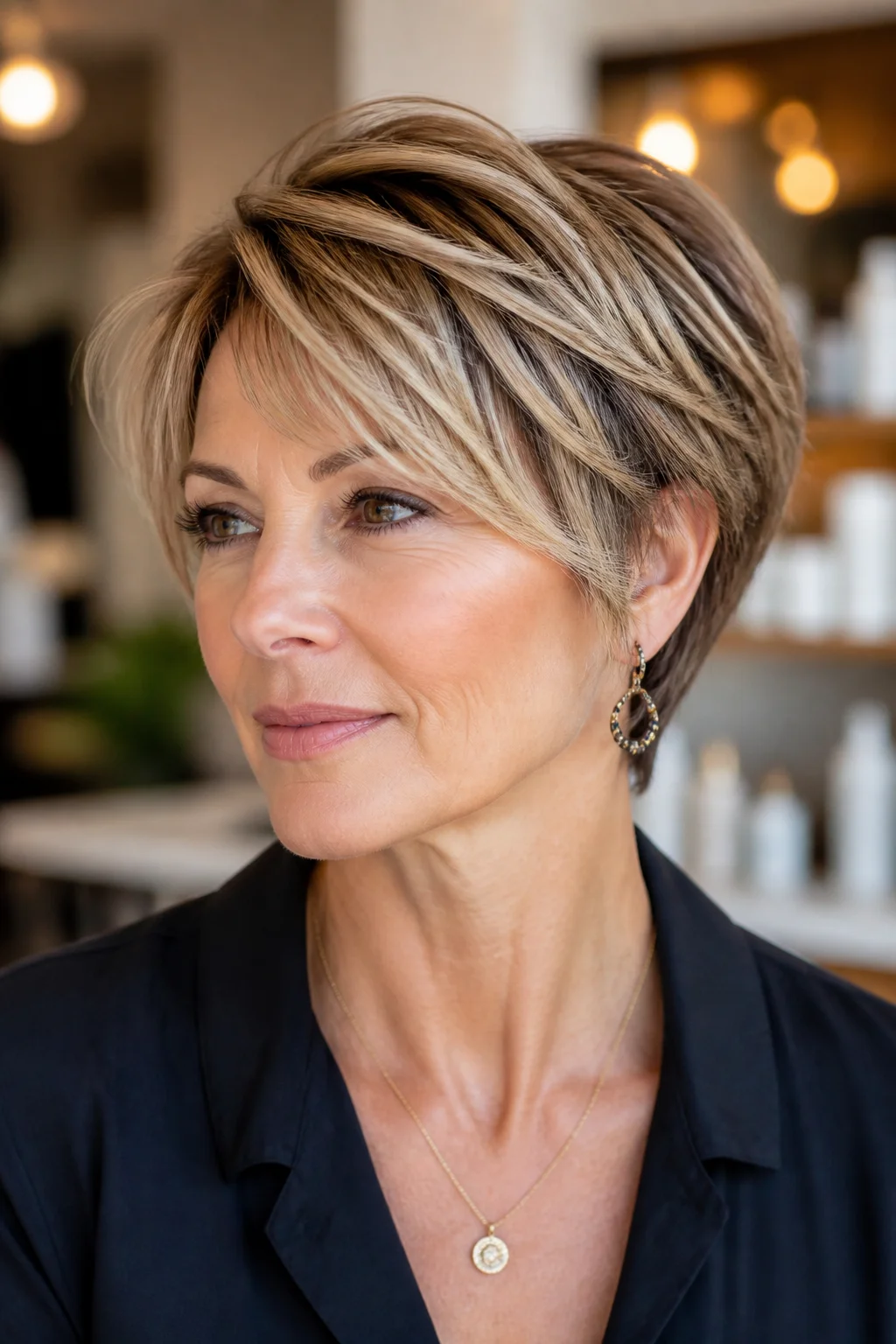
This cut splits the difference between a pixie and a bob, cropping the sides and back much shorter than a typical stacked bob while leaving enough length on top to blend into longer pieces near the crown. It reads shorter overall but keeps the stacking technique in the back for volume. Women who want a low-maintenance cut but aren’t ready to go full pixie tend to gravitate here. The shorter sides also mean less time under the dryer. Ask your stylist to taper the nape close so it doesn’t look bulky under collars, and to leave enough length on top for a side-swept finish if you want one.
Soft Stacked Bob with Waves
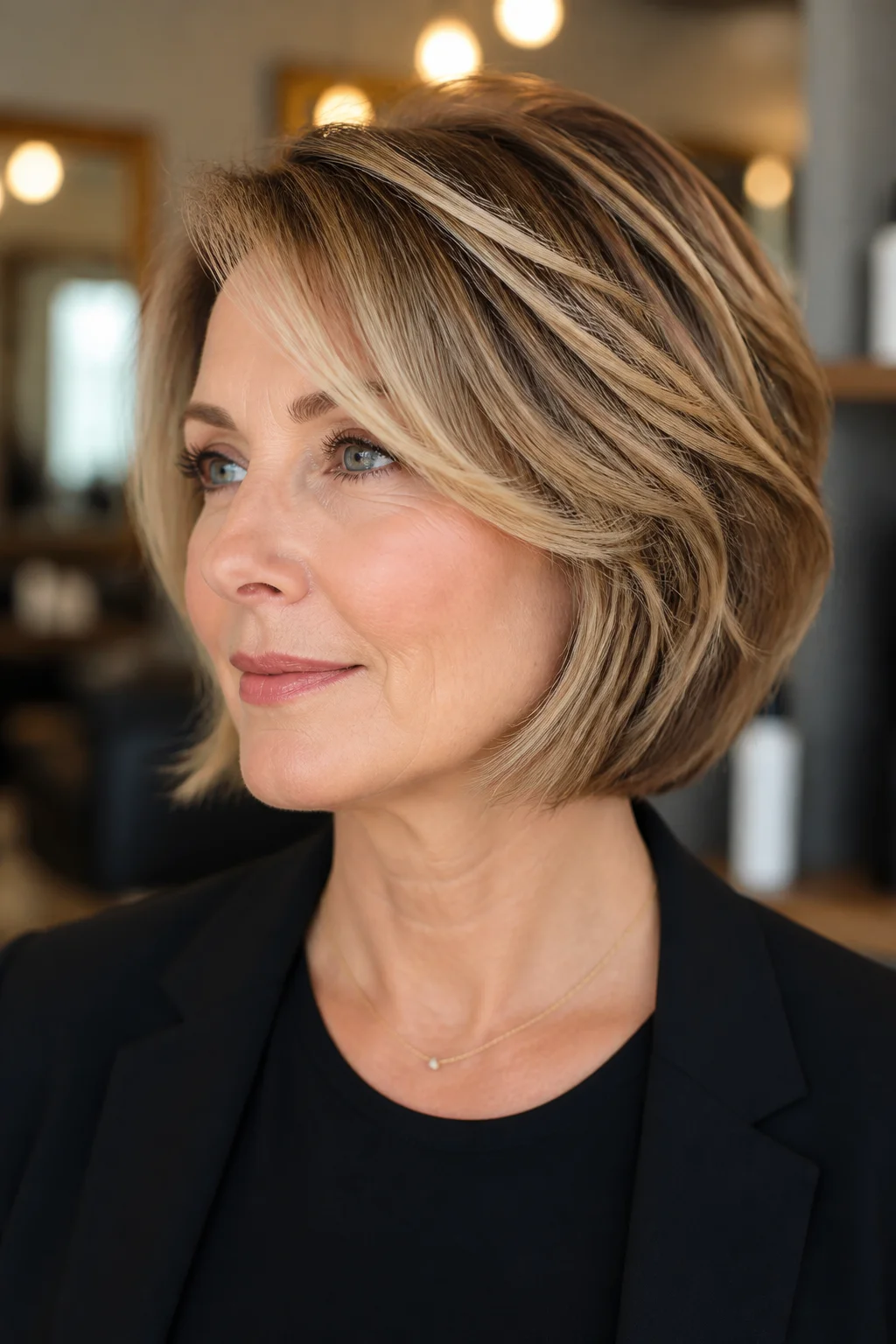
Loose waves take the sharp edges off a stacked bob and give it a relaxed, undone quality. This version photographs well because the waves catch light differently than flat, straight strands. A large barrel curling iron or a wave wand works better here than a flat iron, since the goal is soft bend, not a tight curl. Fine hair benefits from a light mousse before styling to hold the wave through the day without stiffness.
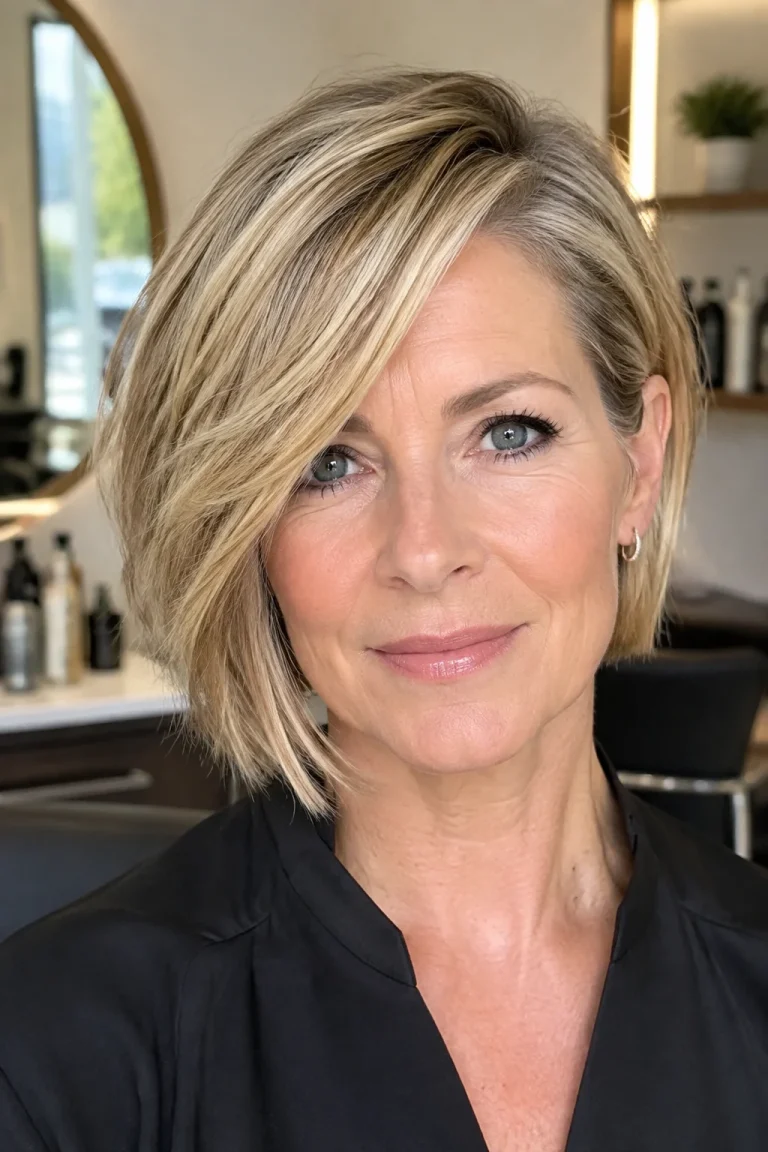
Asymmetrical Stacked Bob
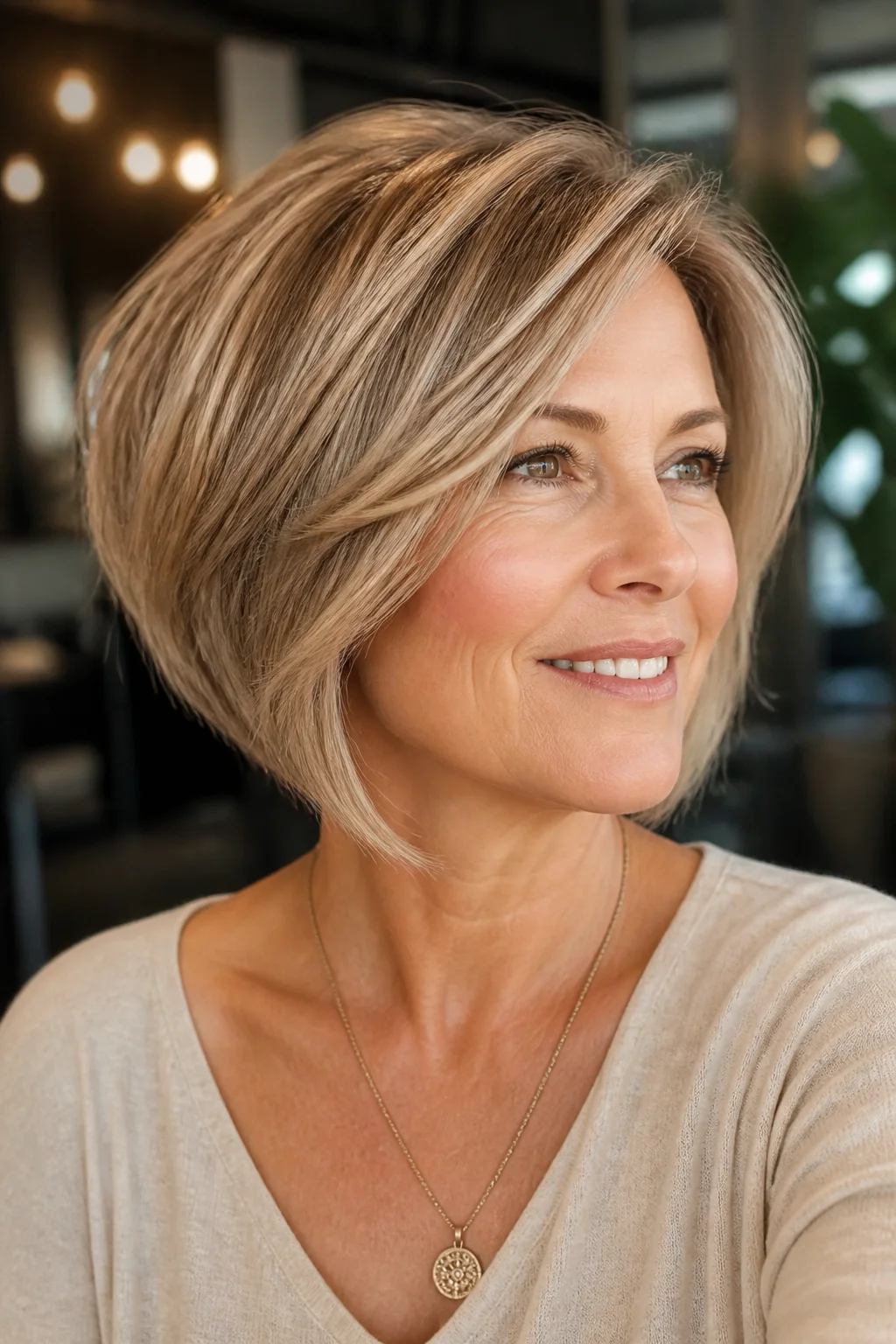
One side runs longer than the other in this version, usually with the shorter side landing above the chin and the longer side reaching just below it. The asymmetry adds visual interest without requiring bangs or heavy layering. It works particularly well for square or angular face shapes because the uneven line breaks up strong jaw angles. Some women feel unsure about the imbalance at first, but it settles in fast once you see it styled. Tip: keep the part on the same side as the longer length so the whole shape stays intentional rather than lopsided.
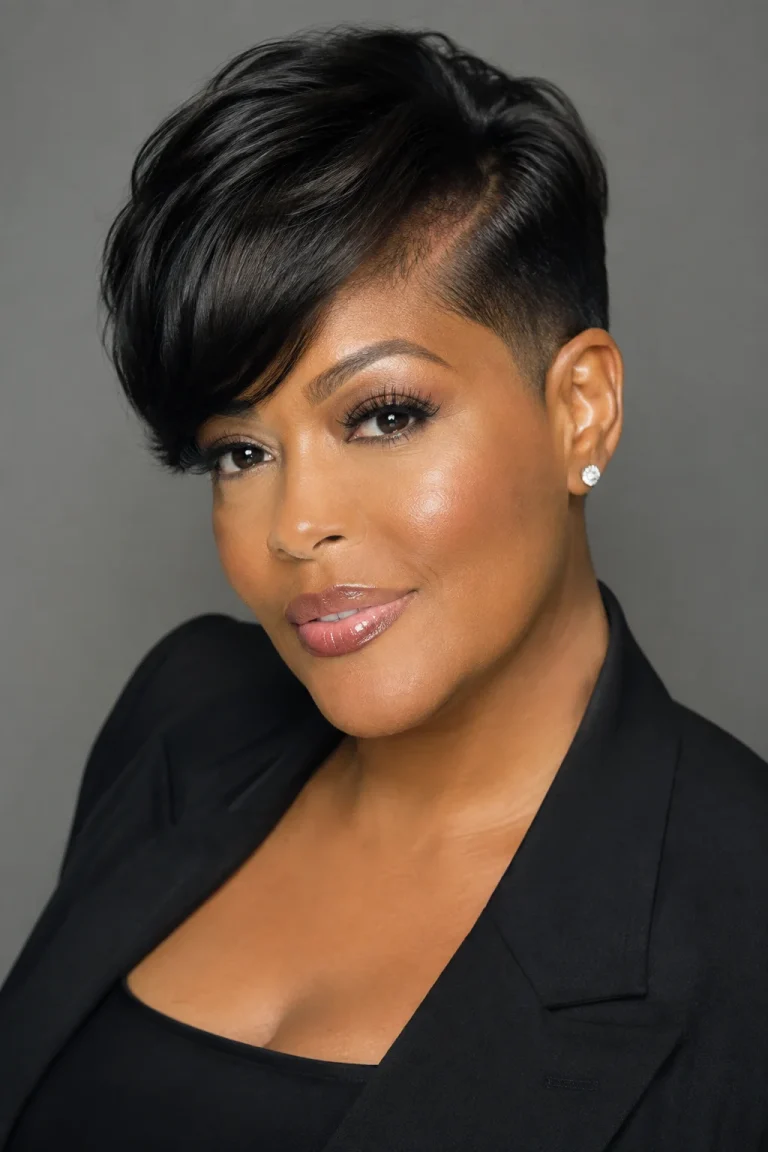
Stacked Bob with Undercut Detail
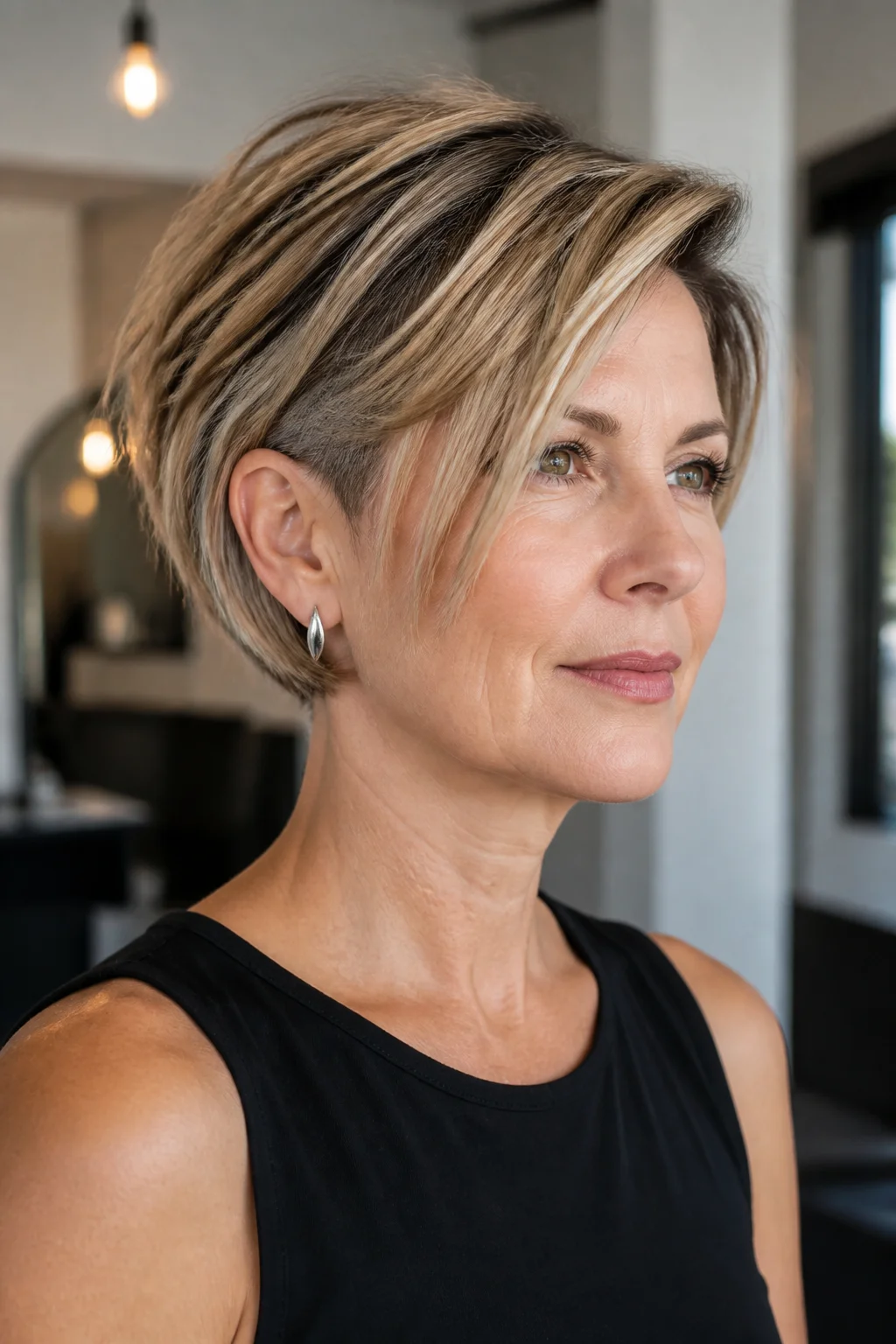
An undercut hidden beneath the top layers shaves away bulk at the nape while leaving the visible hair full and stacked. From the front, nobody notices anything unusual. From the back, there’s a clean, almost architectural line where the shaved section meets the longer hair above it. This version suits thick hair that tends to feel heavy in a standard bob, since removing the underlayer lightens the load considerably.
Graduated Stacked Bob
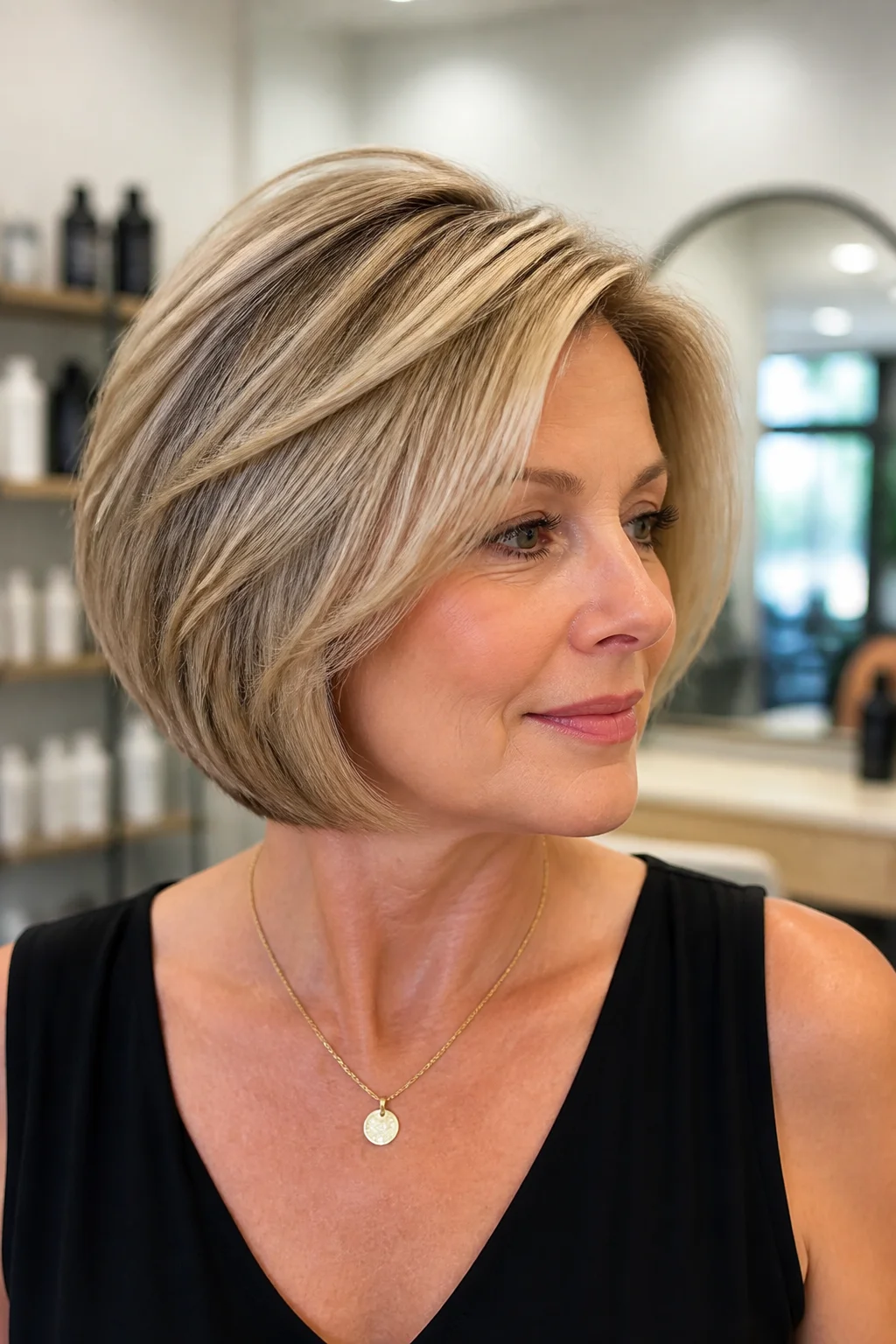
Graduation refers to the angle cut into the back sections, where each layer is slightly shorter than the one below it. This produces a rounded, dome-like shape at the back that’s fuller than a one-length bob but softer than heavy stacking. It’s a good middle ground for women who want body without an obvious “stacked” look. The graduation also helps hair sit closer to the neck on the sides while staying full in back.
Stacked Bob with Bangs
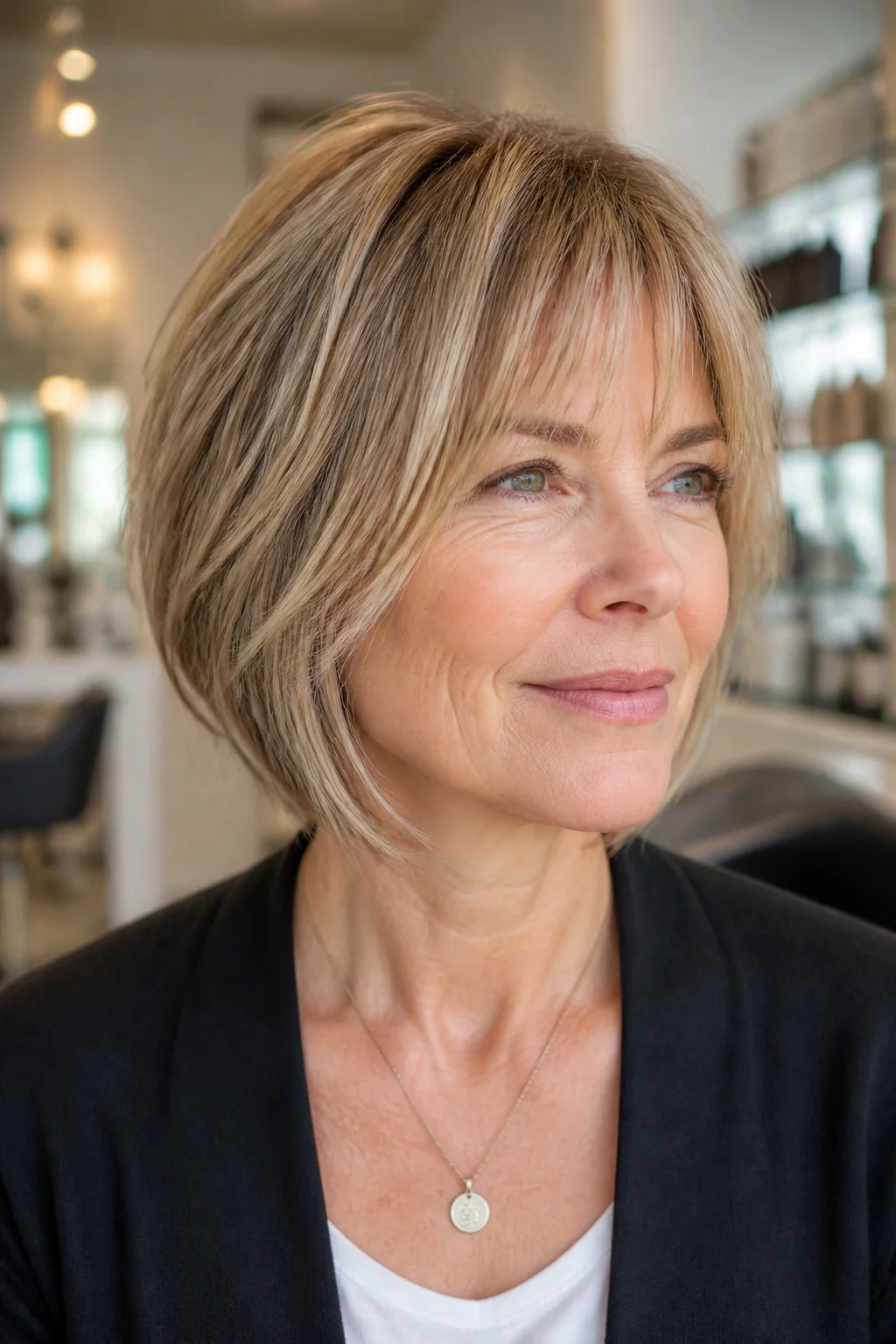
Bangs added to a stacked bob shift the whole style younger and softer around the face. Curved, side-swept bangs blend more naturally into layers than a blunt straight-across fringe, though either works depending on your forehead and brow shape. This combination suits women who want to cover forehead lines without committing to a full fringe cut across the whole hairline. Fine hair does better with wispy, textured bangs rather than thick ones, since heavy bangs can look flat fast. Tip: bring in a photo showing the exact bang length you want, since “just above the brow” means different things to different stylists.
Sleek Stacked Bob
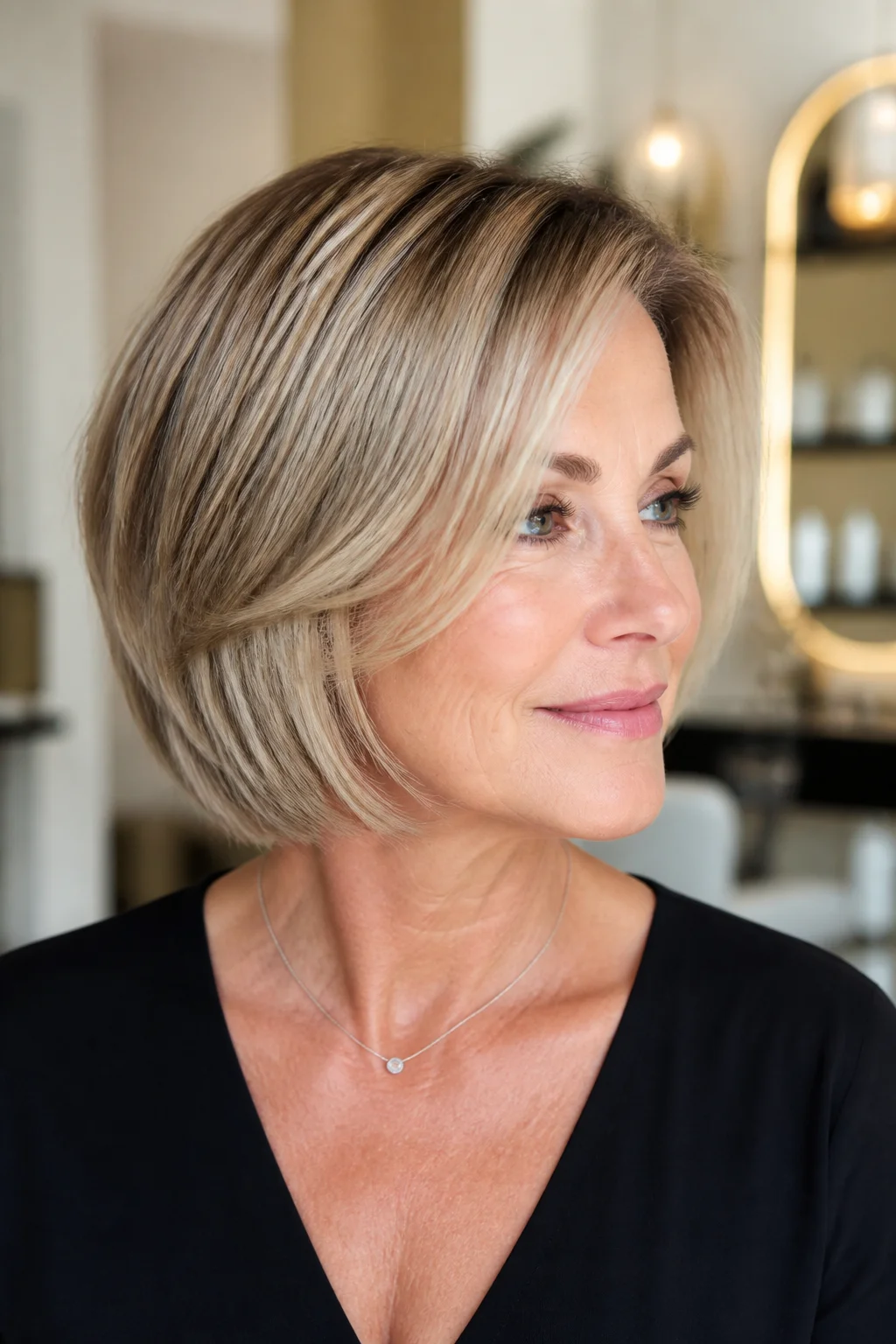
A sleek finish relies on a flat iron and a good shine serum rather than any diffuser or texturizer. The stacked layers still build volume underneath, but the surface stays smooth and glassy. This version reads more formal and polished, making it a strong pick for work settings or special occasions. It does require more daily styling time than textured versions, so keep that in mind if you’re looking for something low maintenance.
Stacked Bob with Gray Blending
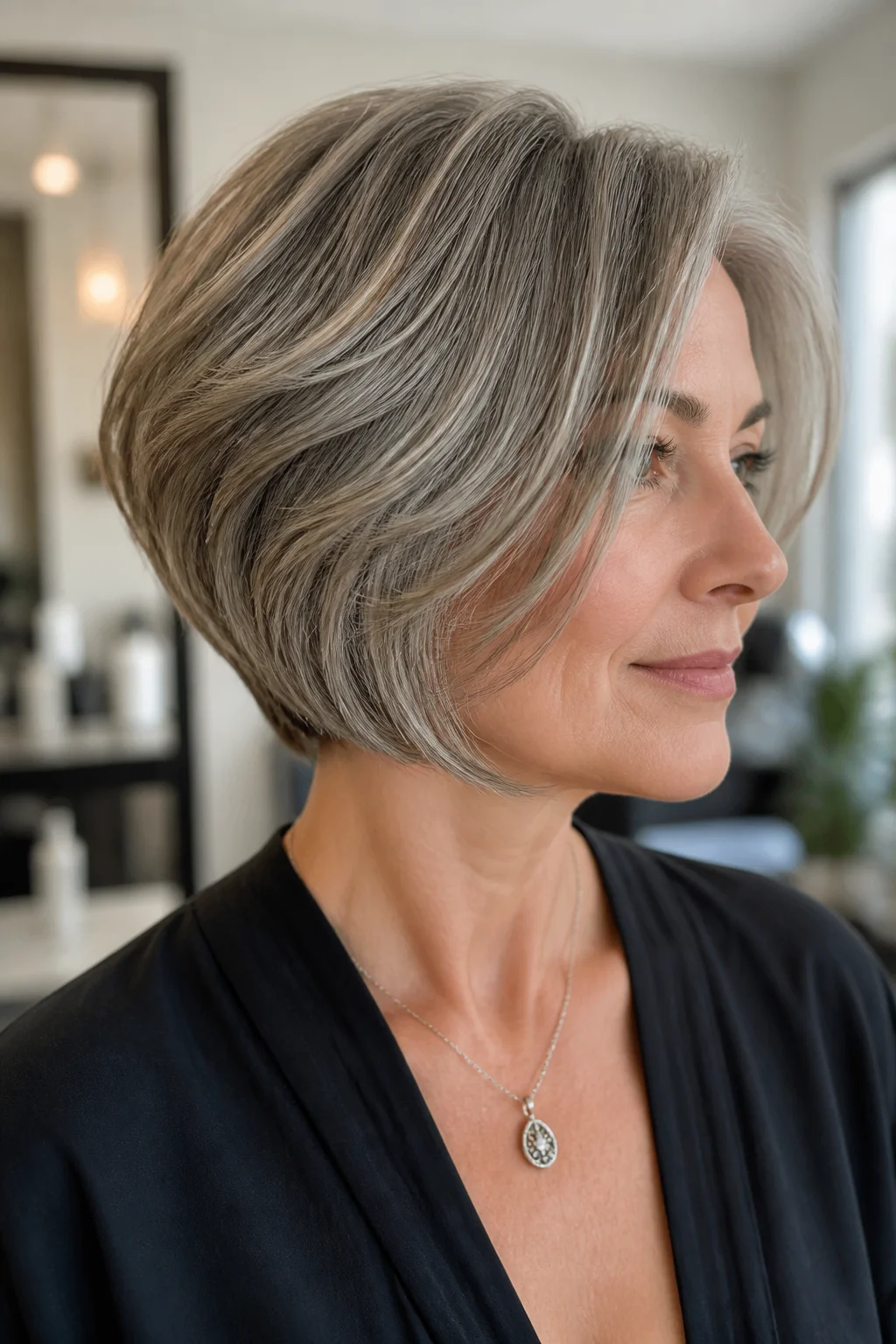
Gray blending uses lowlights and highlights close to your natural gray tone so the transition looks intentional rather than patchy. Paired with a stacked bob, the technique adds dimension to a style that could otherwise look flat once color is removed from the equation. Ask your colorist for a demi-permanent gloss rather than full color if you want low upkeep, since it fades gently instead of leaving a hard regrowth line.
Tousled Stacked Bob
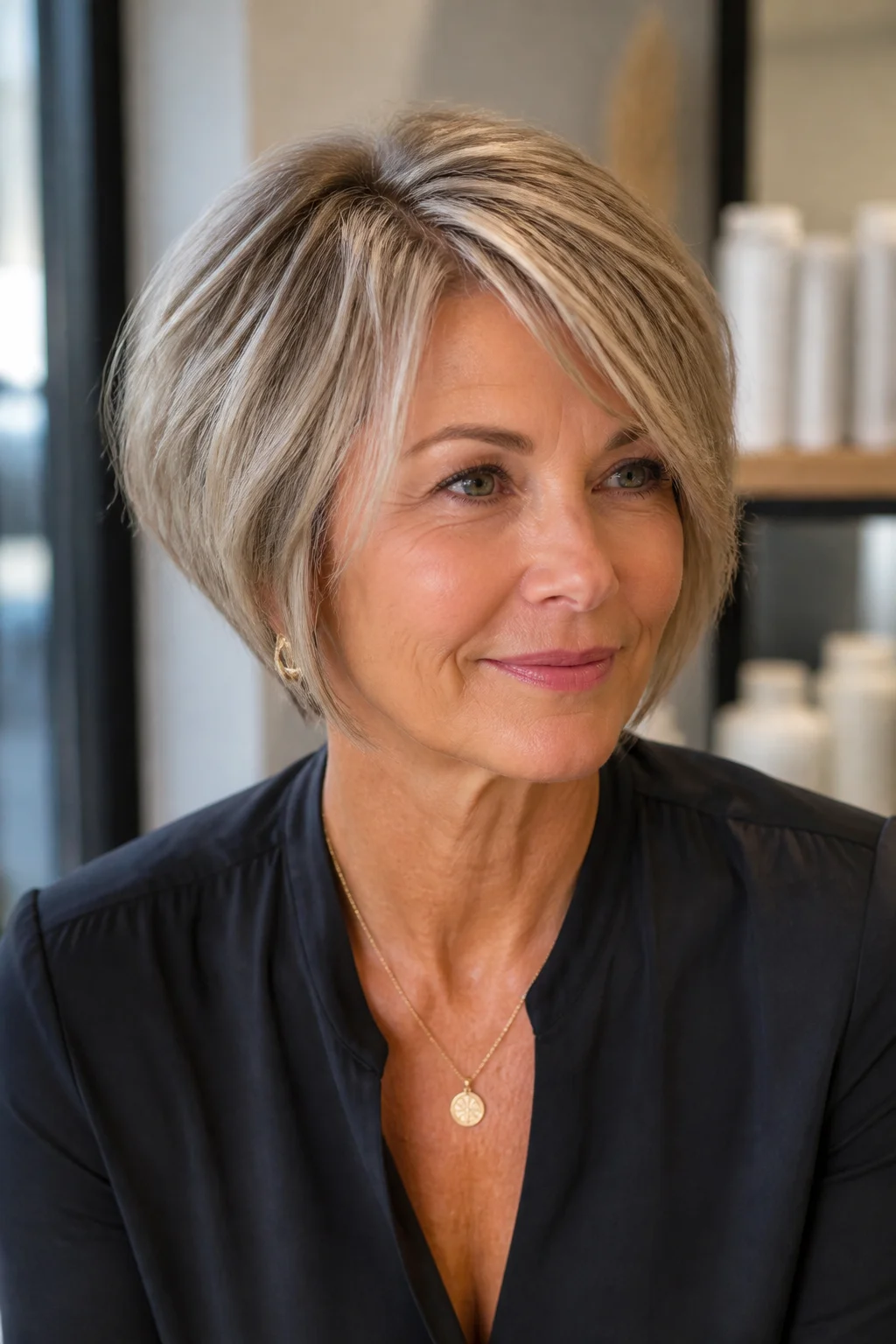
This version looks deliberately undone, almost like you just ran your fingers through it and walked out the door. Texture spray and a light hand with the blow dryer create the effect, letting pieces fall slightly out of place rather than sitting in a perfect line. It suits casual lifestyles and hair that already has some natural wave to work with.
Stacked Bob with Side Part
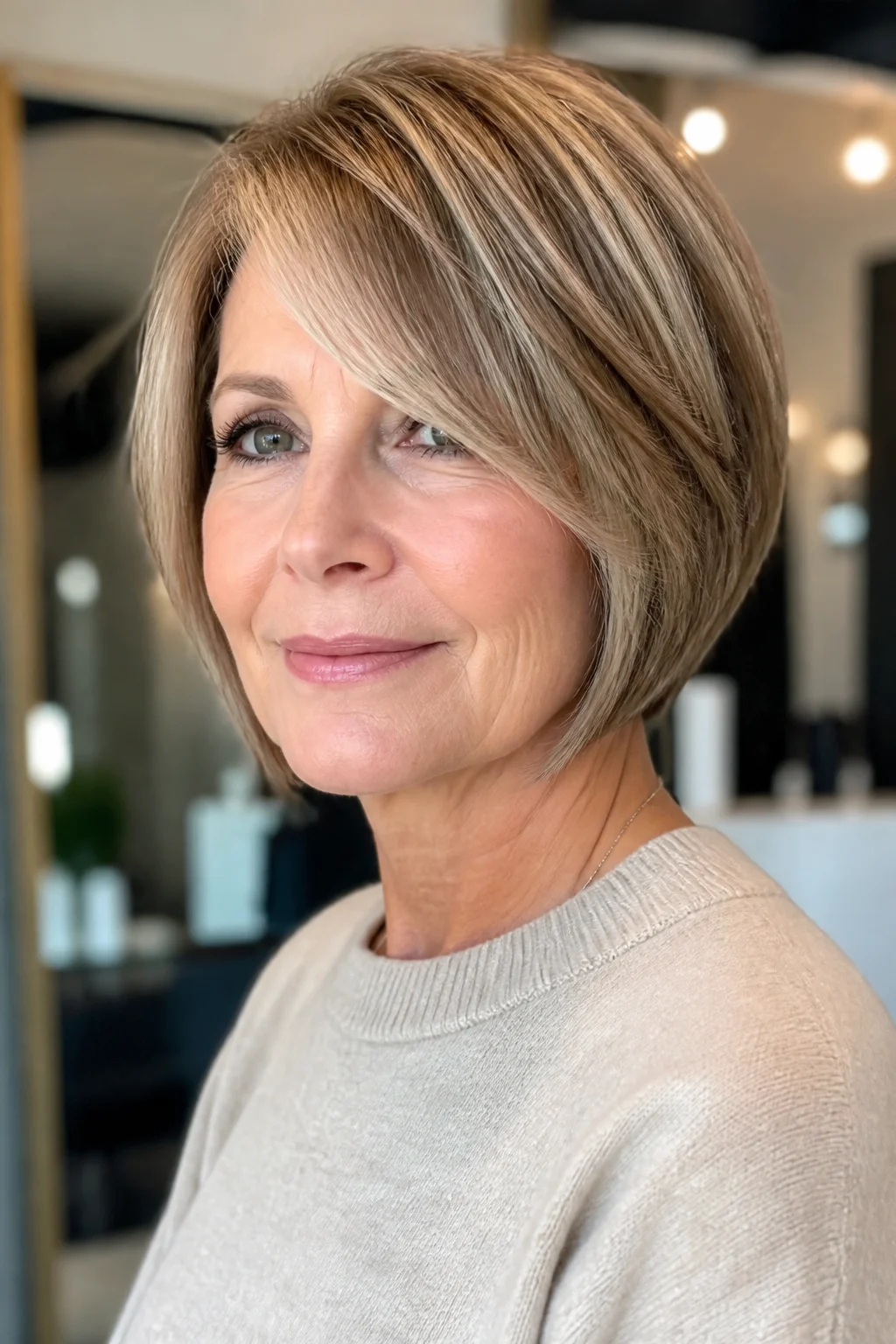
Switching from a center part to a deep side part changes how the stacked layers fall across the face. A deep side part adds height at the crown and can soften an asymmetrical hairline. This small adjustment works with almost any of the other stacked bob variations listed here, so it’s worth experimenting with even if you already have the cut. Try parting on the opposite side of where you normally do for an instant lift at the root.
Stacked Bob with Feathered Layers
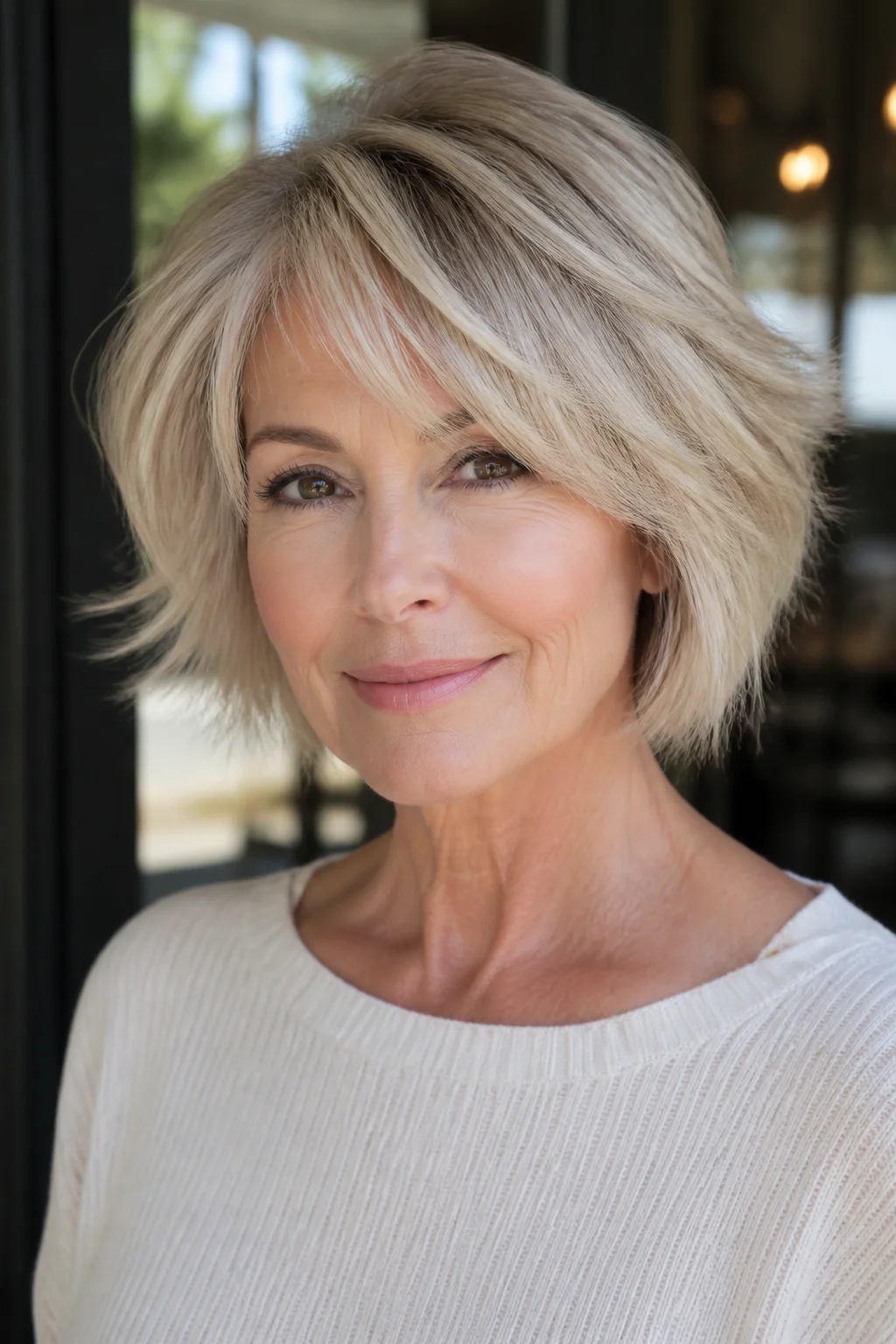
Feathered layers are cut with a razor or point-cutting shears to create soft, feathery ends rather than blunt ones. This softens the overall silhouette and works especially well on fine to medium hair that can look thin with too much blunt weight. The feathering also helps the style move more naturally when you turn your head, rather than swinging as one solid piece.
Heavily Stacked Bob for Fine Hair
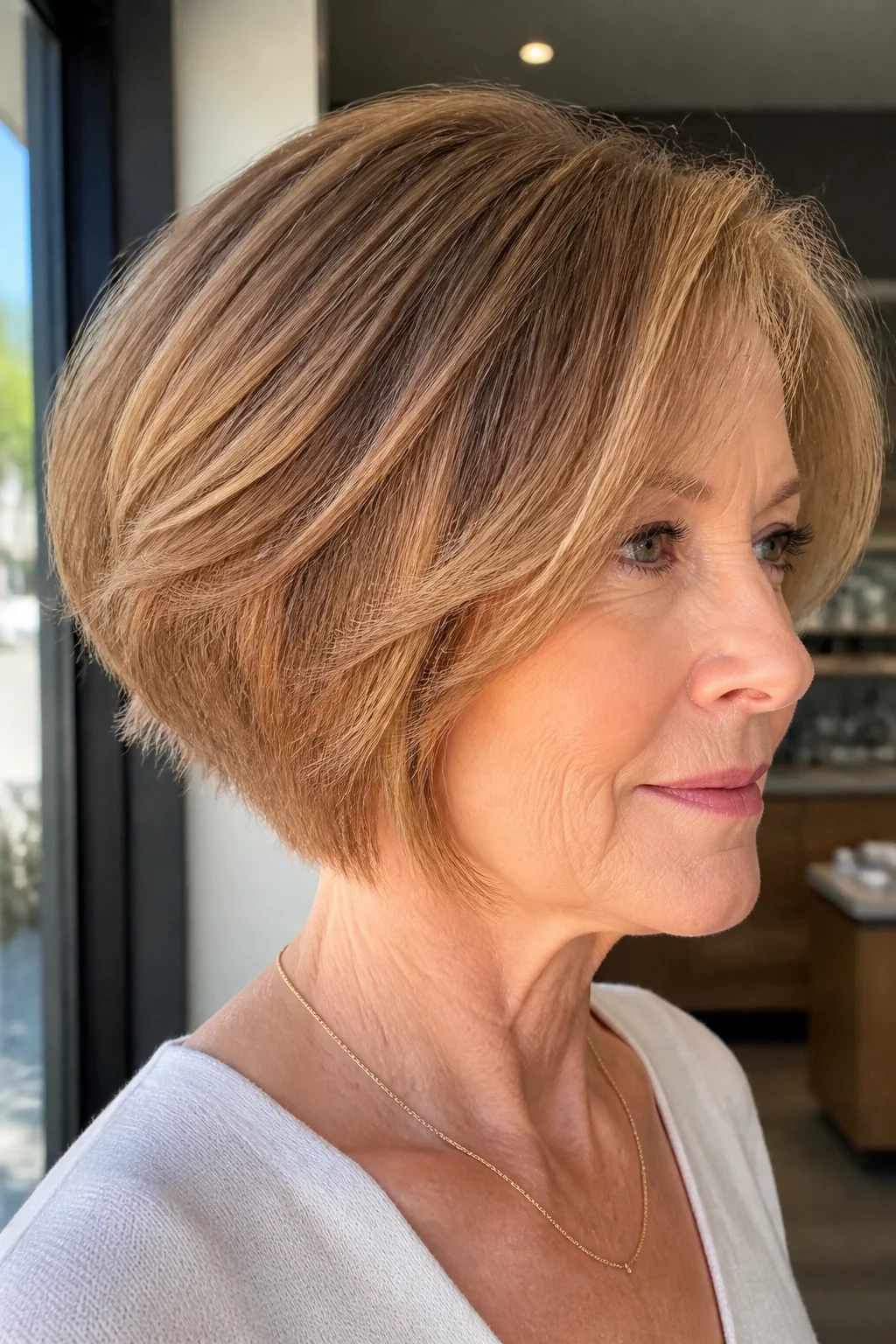
Fine hair benefits from aggressive stacking in the back, sometimes four or five layers deep, to fake density that isn’t naturally there. This version can look almost sculptural from the side, with a pronounced curve building out from the nape. It needs a strong-hold mousse at the root to keep the volume standing through the day, since fine hair falls flat without some help. Tip: ask your stylist about a volumizing powder for touch-ups between washes, since fine hair loses lift faster than thick hair.
Stacked Bob with Honey Highlights
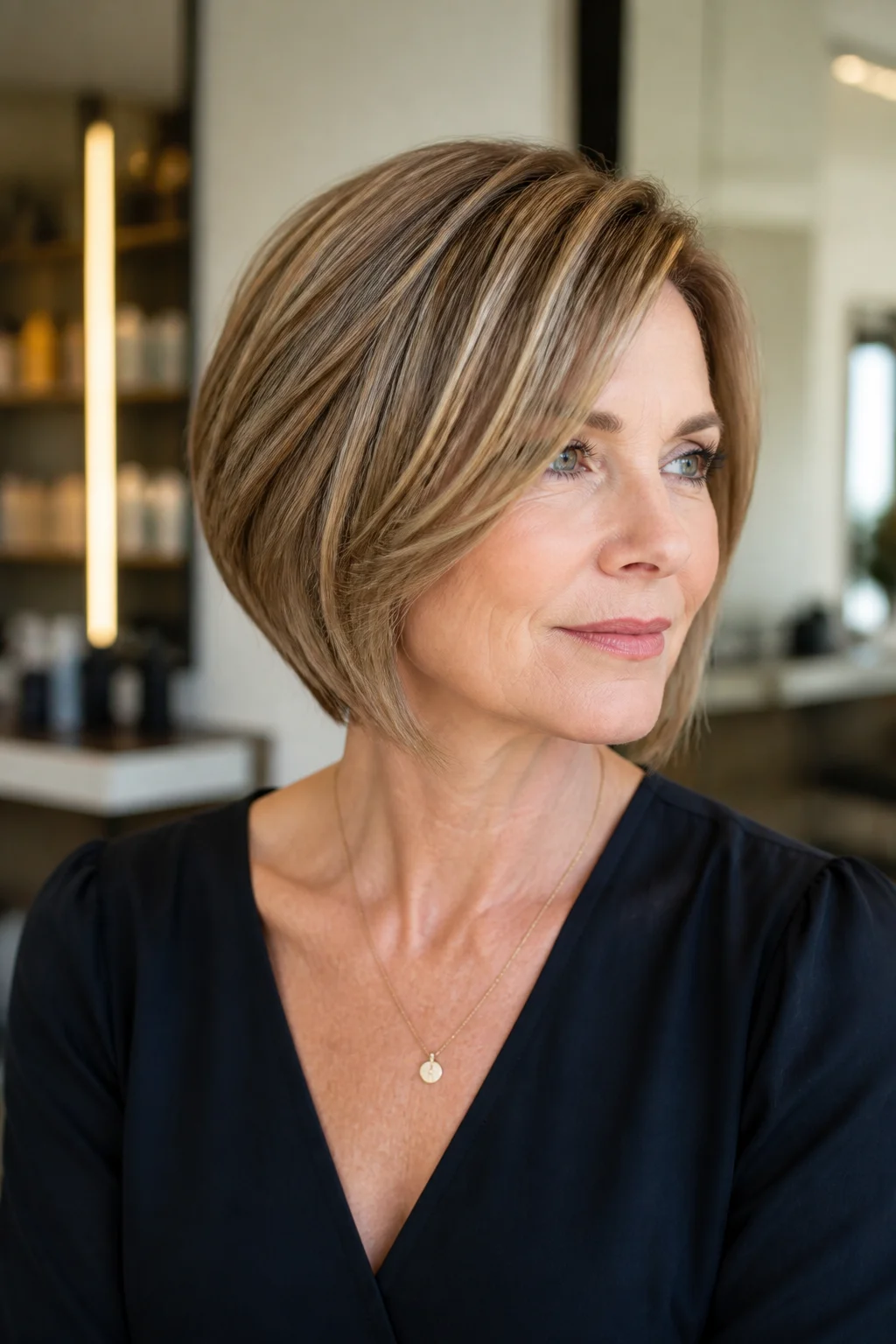
Warm honey tones woven through a stacked bob add depth without demanding constant salon visits. The highlights catch light differently depending on how the layers fall, so the color looks different in motion than it does sitting still. This combination works particularly well on brunette or dark blonde bases, since honey tones blend rather than contrast sharply.
Cropped Stacked Bob
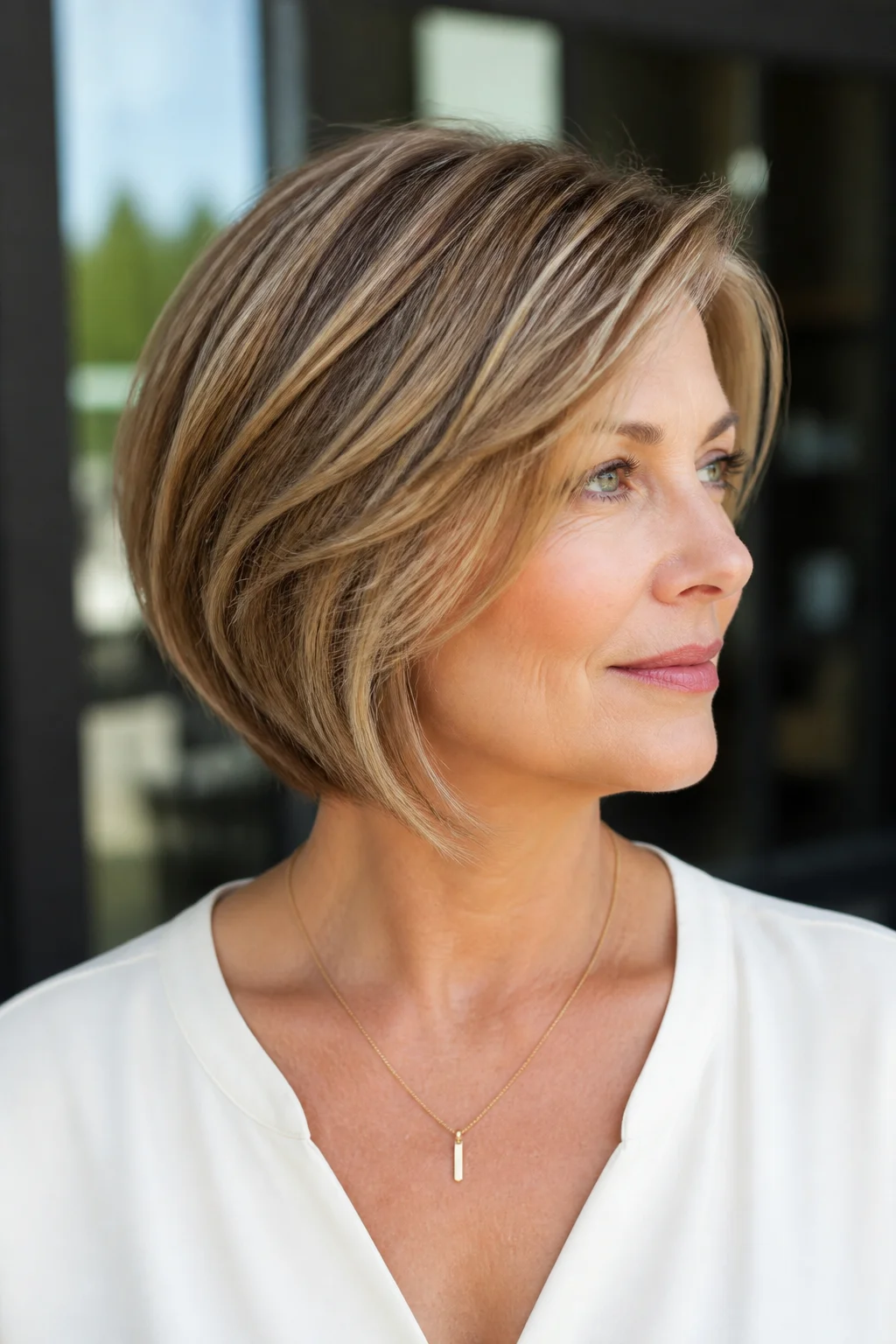
This is the shortest version on this list, sitting just below the ear with heavy stacking throughout. It suits women who want the fullness of a bob but the low maintenance of something much shorter. Washing and drying takes a fraction of the time a longer bob requires. Because there’s so little length to work with, precision matters more here than in longer versions, so choose a stylist who cuts a lot of short hair.
Stacked Bob with Soft Undercut
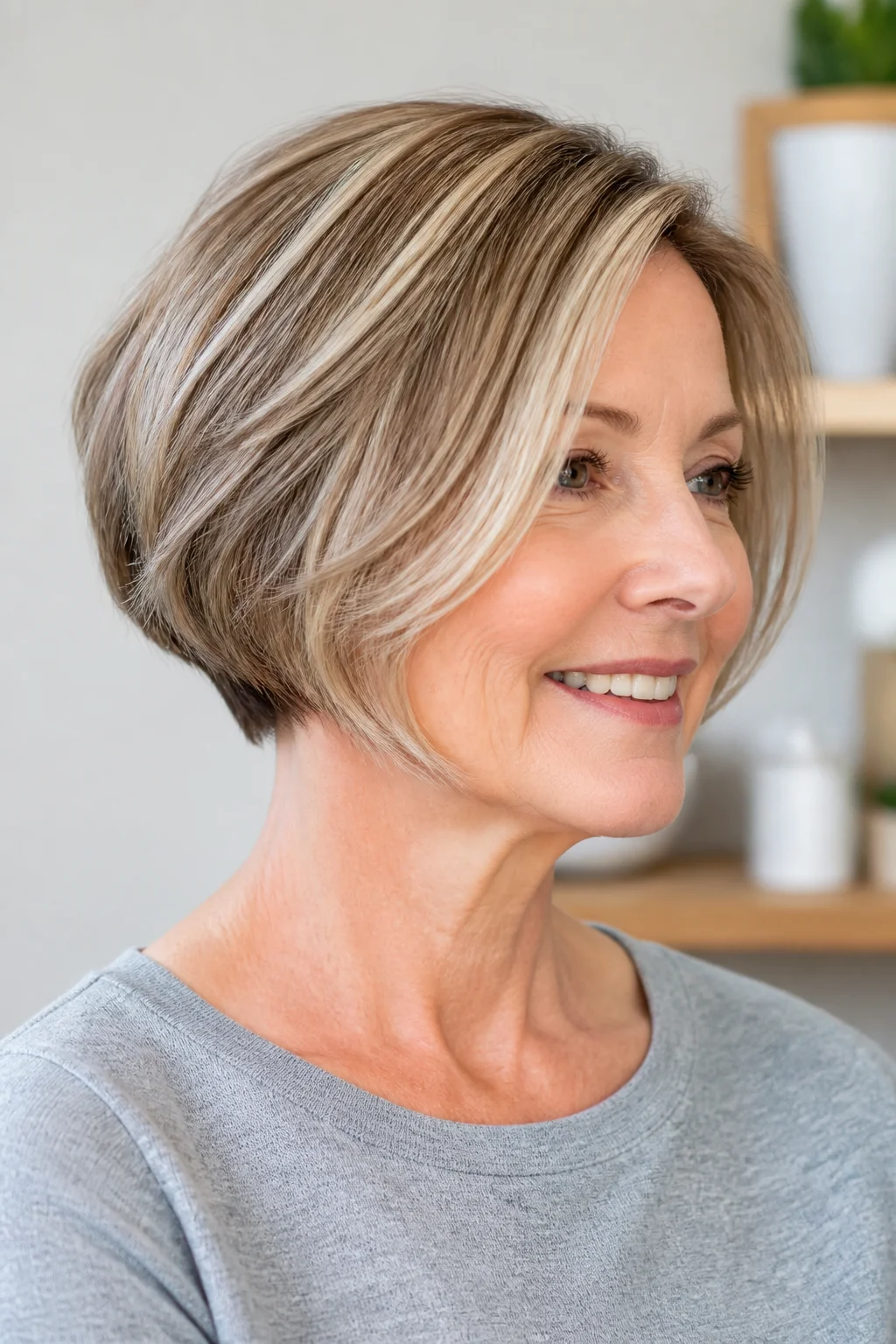
Unlike the sharper undercut detail mentioned earlier, this version uses a gentler, blended undercut that tapers gradually instead of creating a hard shaved line. It’s a good option for women who like the lightness of an undercut but don’t want anything too noticeable when hair is pulled back or wet from the shower.
Stacked Bob with Shaggy Texture
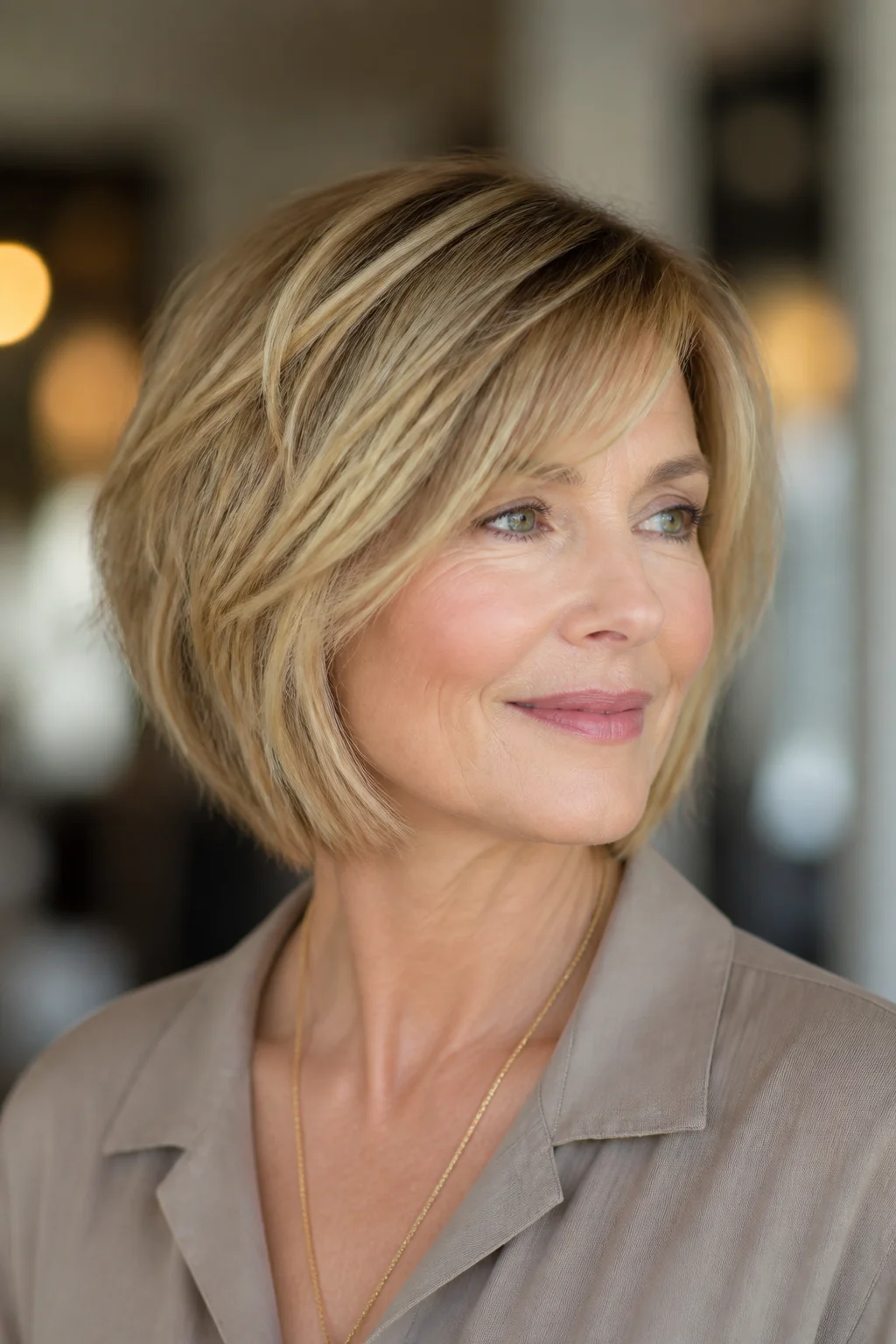
Shag influences show up here through choppy, irregular layers cut throughout the whole style rather than just at the ends. The result feels a little rock and roll compared to a traditional bob, with pieces that separate naturally and don’t require a lot of smoothing. It works best on hair with some natural texture already, since straight, fine hair may need extra product to hold the separation. Tip: a texturizing paste applied to dry hair brings out the choppy pieces better than any styling product applied while hair is wet.
Which Stacked Bob Actually Fits You
Picking between these comes down to your hair’s natural texture and how much time you want to spend styling it. If you have straight hair and fifteen minutes each morning, the classic stacked bob with blunt ends or the sleek stacked bob will reward the effort with a polished finish. If your hair curls or waves on its own, fighting that with a flat iron every day gets old fast, so the curly stacked bob with volume or the soft stacked bob with waves will work with what you’ve already got instead of against it.
Fine hair does best with cuts built specifically to fake density, like the heavily stacked bob for fine hair, rather than styles that rely on hair’s own weight to hold shape. Thick or coarse hair tends to look better with some bulk removed, which is exactly what the stacked bob with undercut detail and the stacked bob with soft undercut are designed to do. Women easing into gray should pair the cut with the stacked bob with gray blending rather than trying to grow it out cold turkey, since the color technique makes the transition period far less noticeable.
The biggest mistake is asking for heavy stacking without mentioning your hair type first. What looks full and bouncy on thick hair can look stiff and helmet-like on fine hair, so always describe your texture before your stylist picks up the shears.