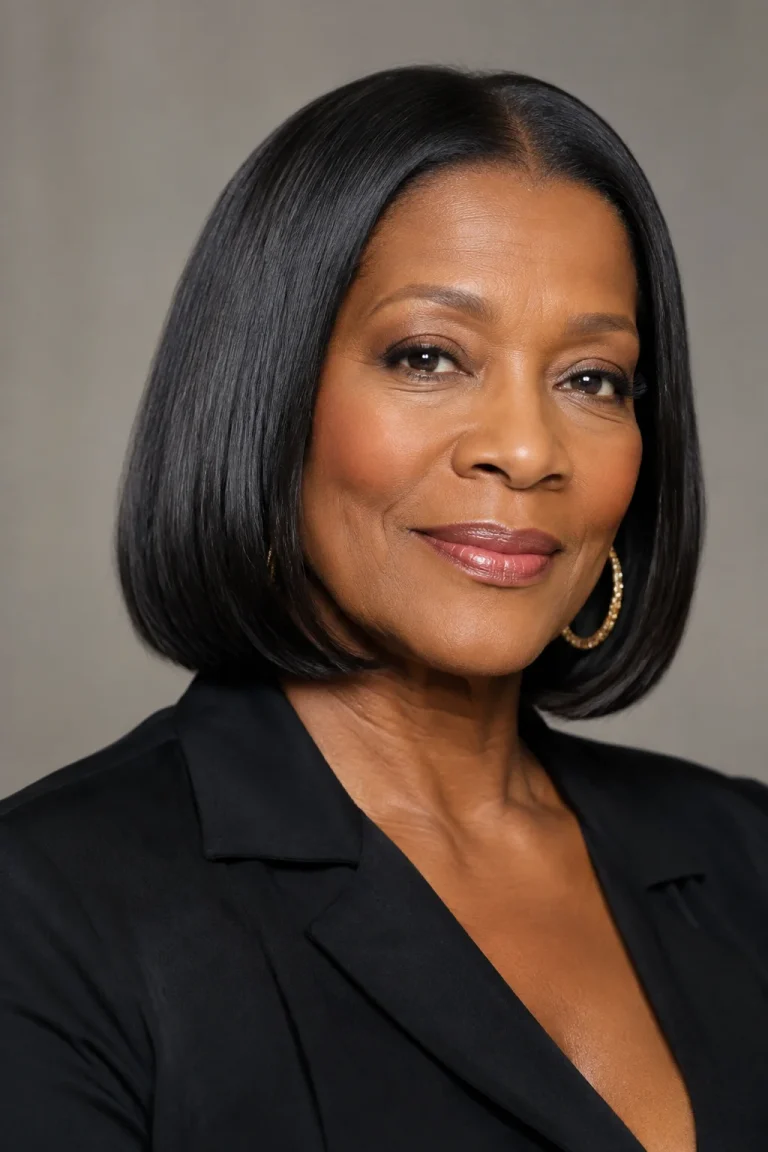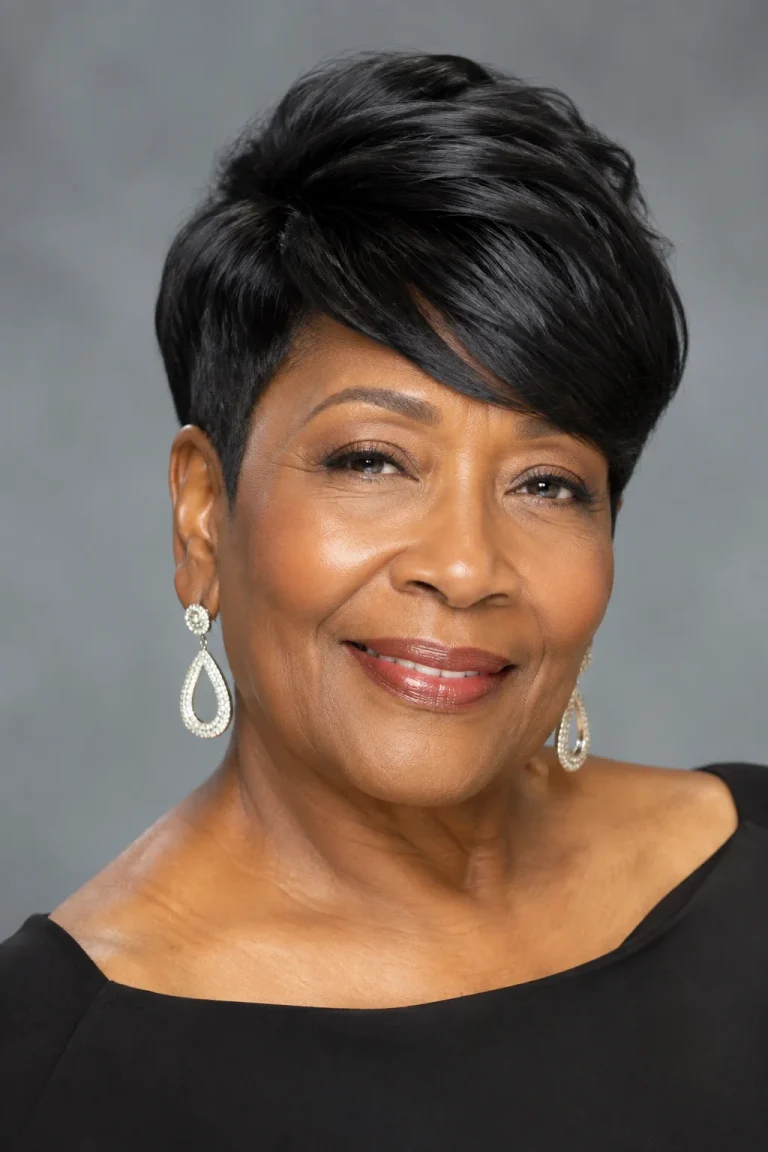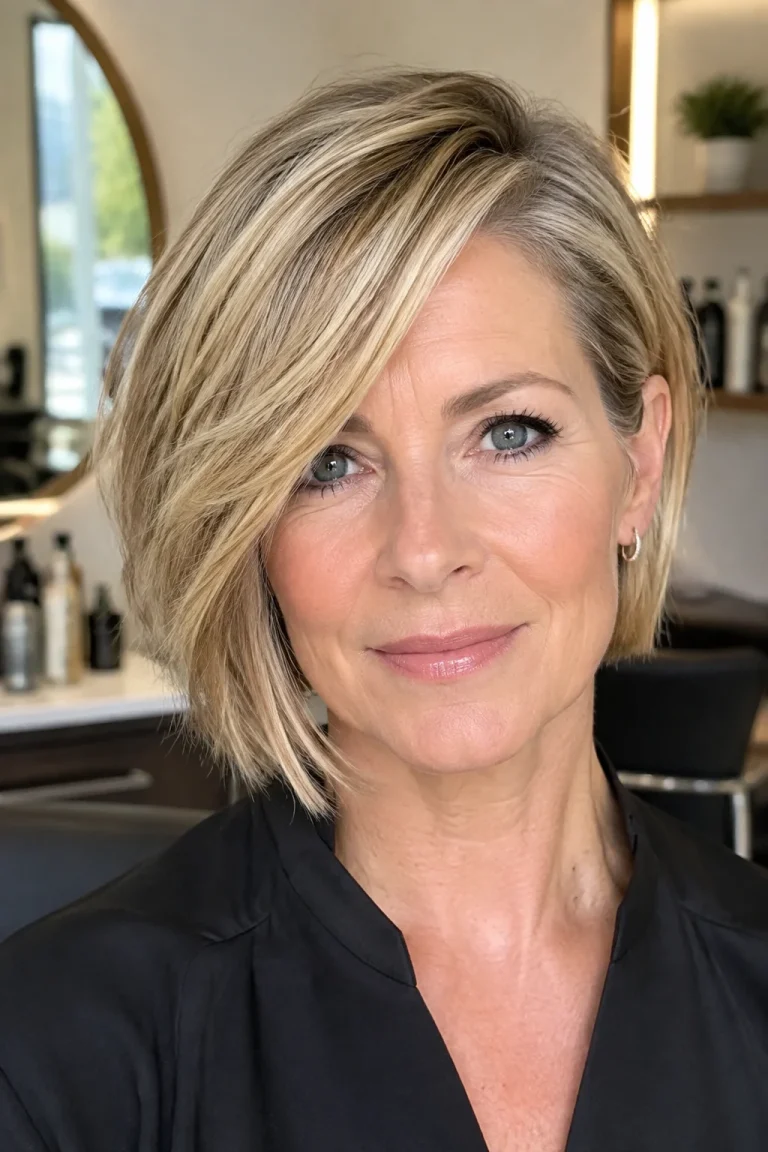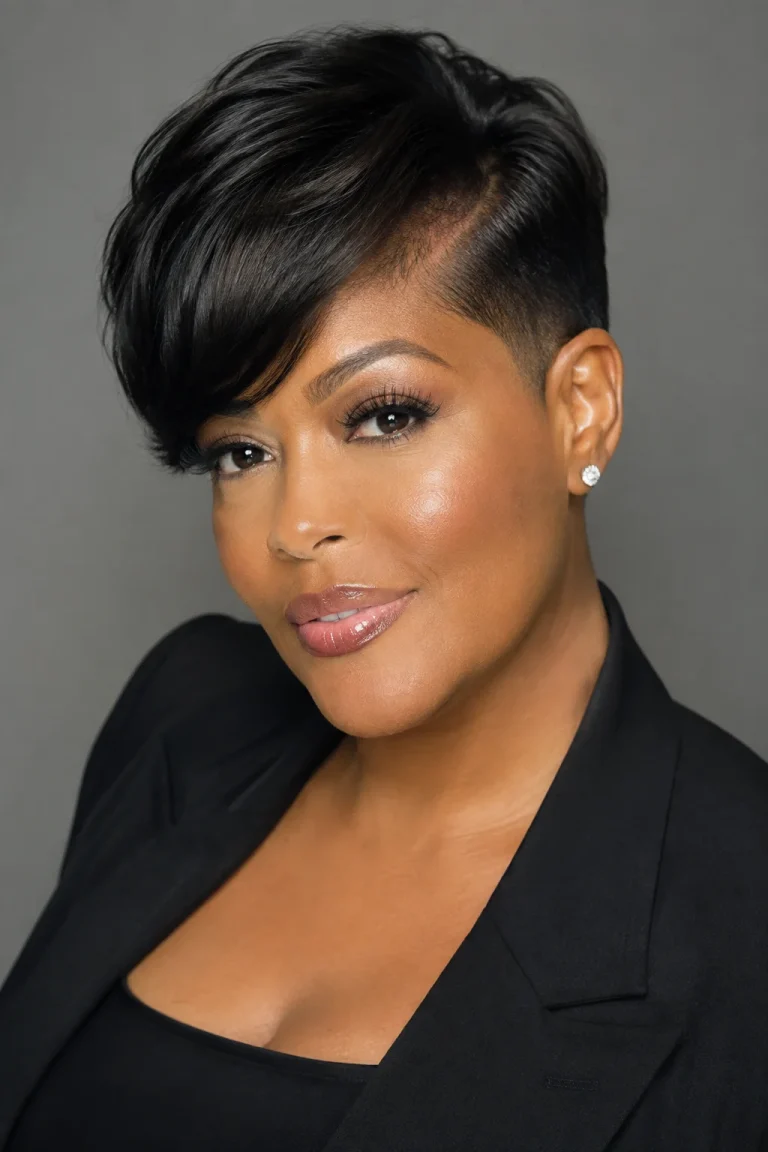
Growing out a short pixie or trimming down a longer style, you land in the same spot: hair that hits the shoulder and needs shape to actually work with your face and texture. A lot of cuts marketed to older women either read too safe or too severe, and neither one does you any favors. Shoulder length pixie cuts for women over 50 solve that problem because they borrow the ease of a pixie up top while leaving enough length at the sides and back to soften your jawline and give you styling options. This length also flatters gray, silver, and color-treated hair without demanding a lot of daily fuss. Below are 23 ways to wear it, from choppy and textured to sleek and controlled, so you can find the version that matches your hair type, your face shape, and how much time you actually want to spend on it each morning.
Classic Textured Shoulder Pixie

This is the style most women picture when they think of a grown-out pixie done right. The crown stays short and textured while the sides and back extend to the shoulder, creating a shape that tapers naturally instead of stopping in a blunt line. Layers throughout the mid-lengths keep the hair from looking heavy, which matters a lot once hair thins with age. It works on straight or slightly wavy hair and holds up well between salon visits. Tip: ask your stylist for point-cutting at the ends so the layers blend instead of stacking. A light mist of heat protectant before styling helps the finish last.
Shaggy Shoulder Pixie with Movement
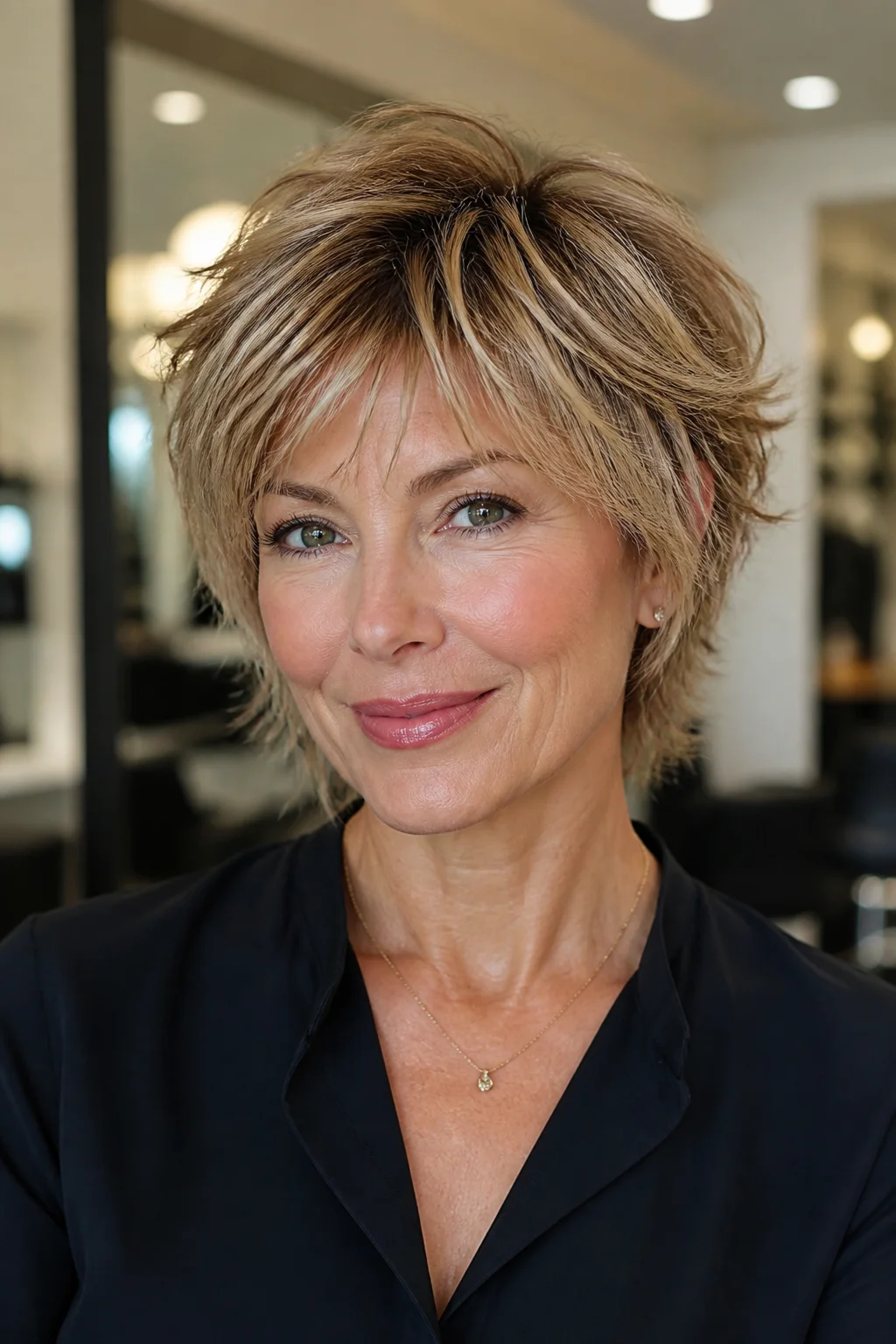
Shag layers cut all through this style give it a loose, undone quality that never looks stiff. The top pieces are choppy and short, while longer layers fall toward the shoulder in a way that moves when you turn your head. It suits fine to medium hair especially well since the layering creates the illusion of thickness without added weight. Curl the ends under with a one-inch iron for extra bounce, or leave it air-dried for a more relaxed finish. A light mist of heat protectant before styling helps the finish last. A light mist of heat protectant before styling helps the finish last.
Asymmetrical Shoulder Pixie
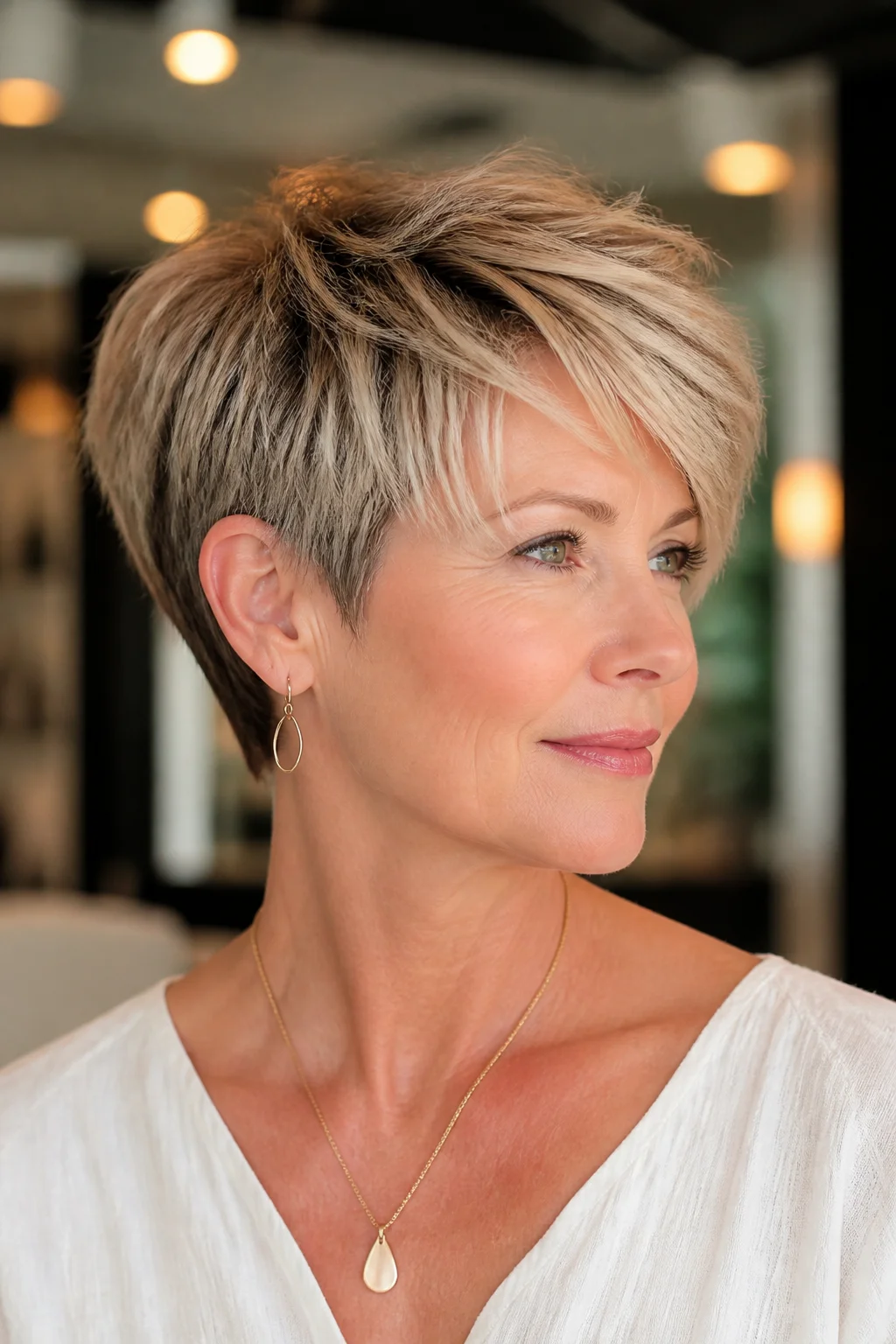
One side sits shorter than the other in this cut, creating a diagonal line that draws the eye up and across the face. It’s a bold choice, but it reads more sophisticated than severe once it’s shaped correctly. This works best on women who already part their hair to one side, since the asymmetry follows that natural line. Ask for the shorter side to stop just above the jaw so the contrast doesn’t look accidental.
Pixie Bob Hybrid
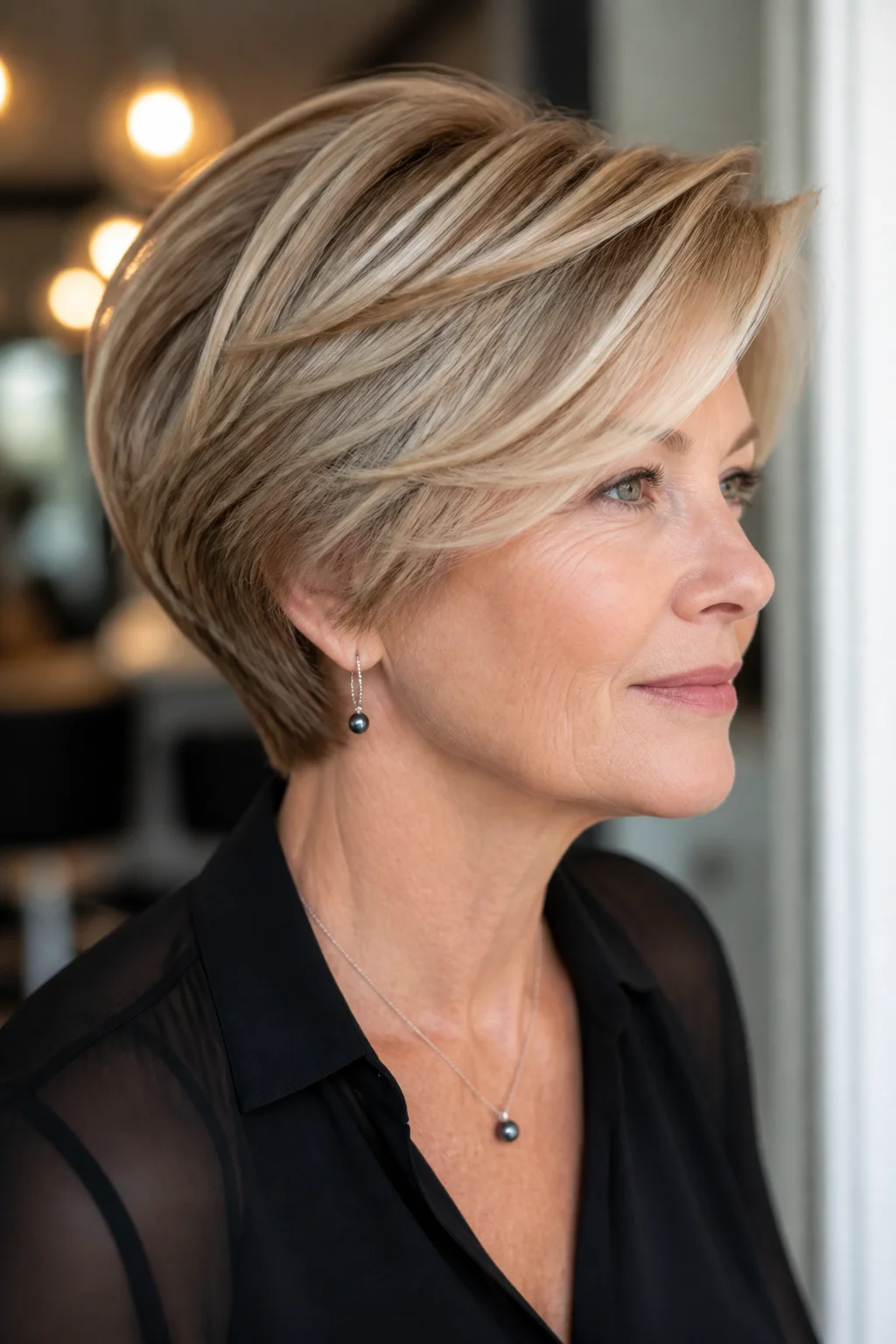
This cut blends the cropped top of a pixie with the length and blunt edge of a bob, landing right at the shoulder. It gives you the low upkeep of shorter layers on top with a fuller, rounder shape at the bottom. Because the ends stay thicker, it tends to suit coarser hair textures that can look thin in a fully layered pixie. It’s a strong pick if you want something polished enough for work but not fussy to style.
Curly Shoulder Pixie
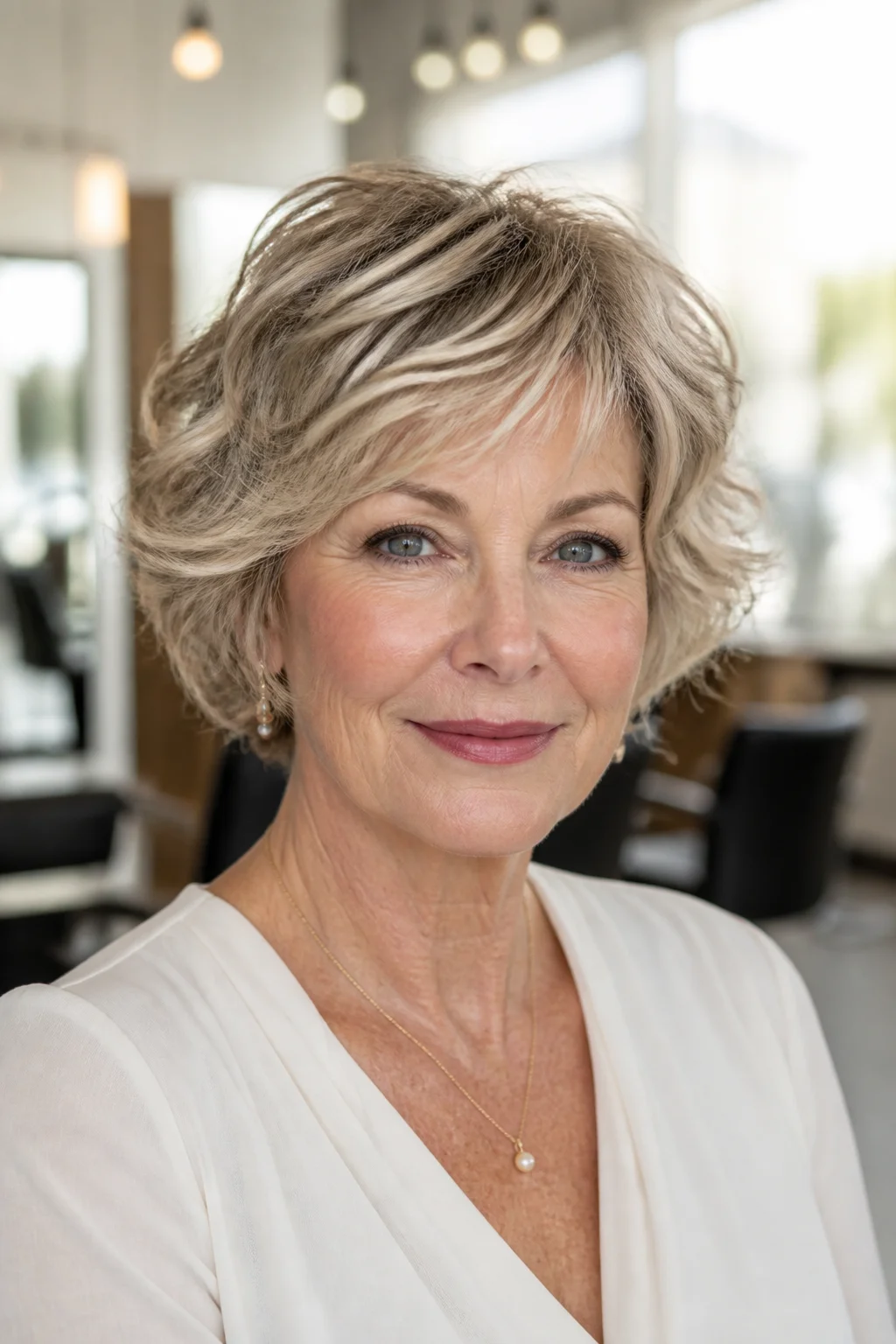
Curls need room to spring up and out, and this cut gives them exactly that by keeping the top layers shorter while letting the curls at the sides and back reach the shoulder. The shape follows the natural curl pattern instead of fighting it, so definition looks intentional rather than frizzy. A curl cream applied to damp hair helps hold the pattern through the day. This is one of the lower-maintenance curly options because it doesn’t require diffusing every section separately.
Feathered Shoulder Pixie
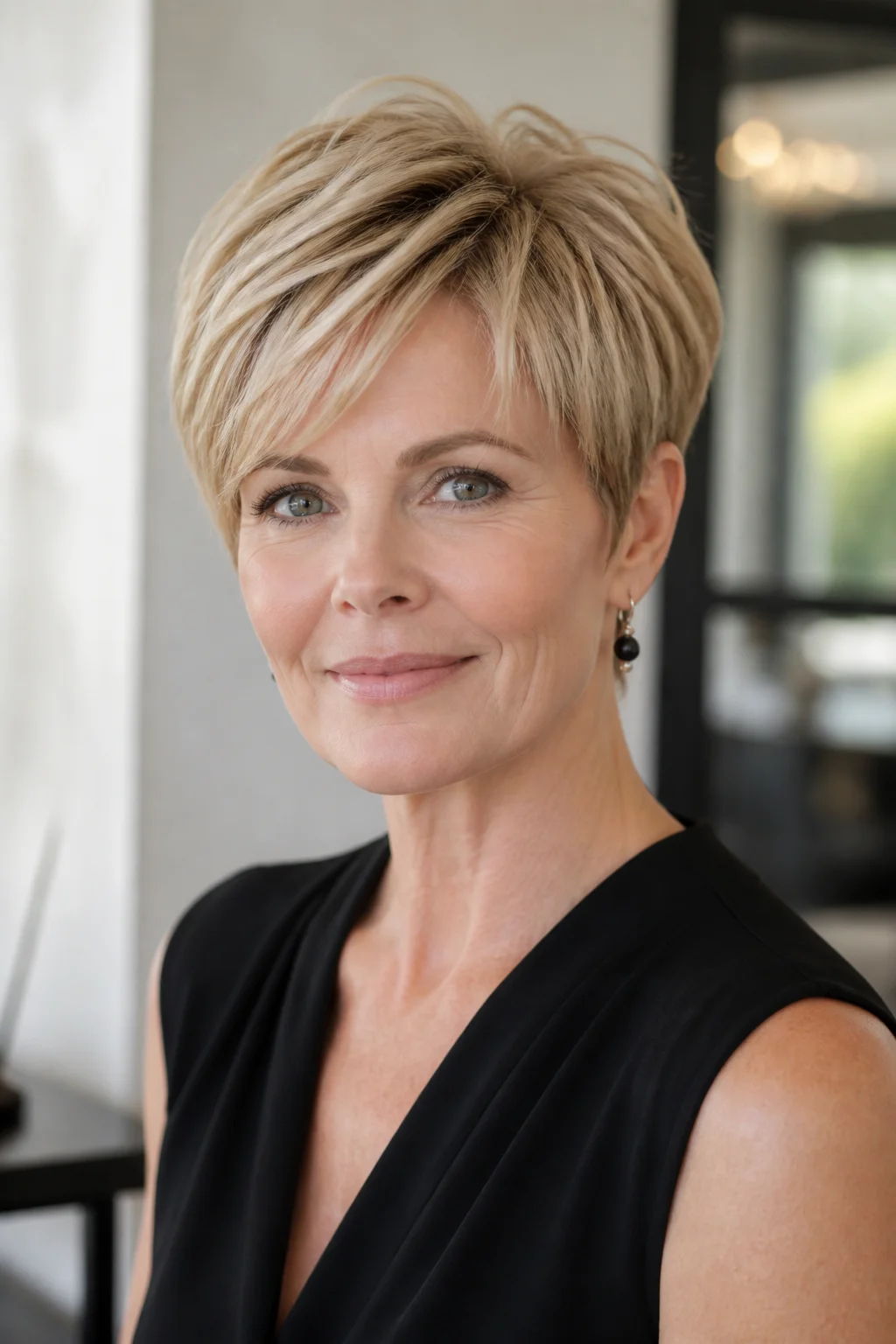
Feathered layers are cut to flick outward at the ends, giving the whole style a soft, airy finish. The layers are longer and less choppy than a typical shag, so the overall look feels a little more polished. It flatters round and square face shapes because the outward flick softens strong angles. A light-hold mousse keeps the feathering visible without stiffening it.
Disconnected Shoulder Pixie
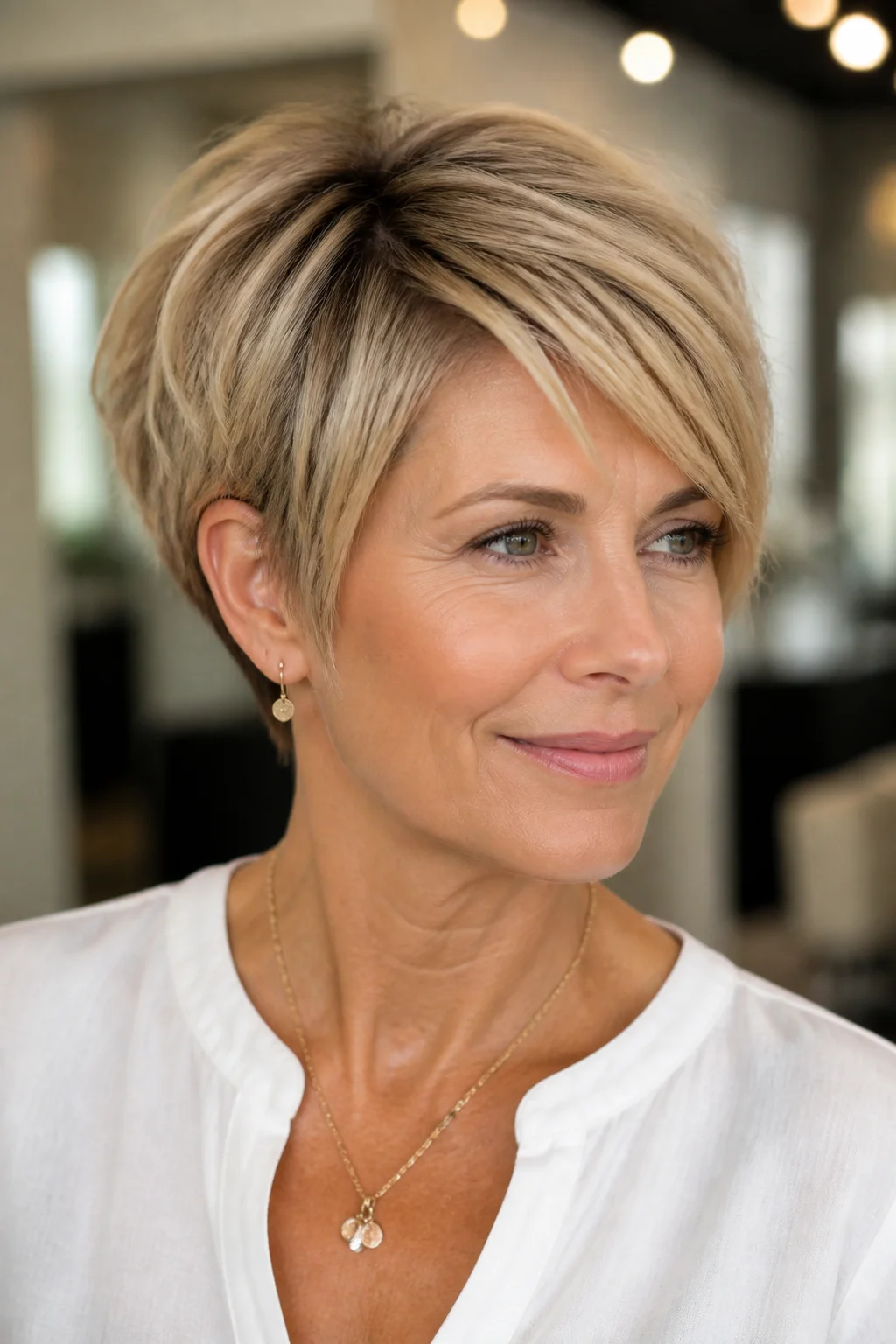
Here the top section is cut with almost no blending into the sides, creating a clear break between short and long. It’s a dramatic look, and it works especially well on women with strong facial features who can carry the contrast. The disconnection also means you can style the top separately, pushing it up for volume or flattening it for a sleeker day. Tip: keep the disconnected top trimmed every four weeks or the line starts to blur and lose its shape.
Choppy Face-Framing Shoulder Pixie
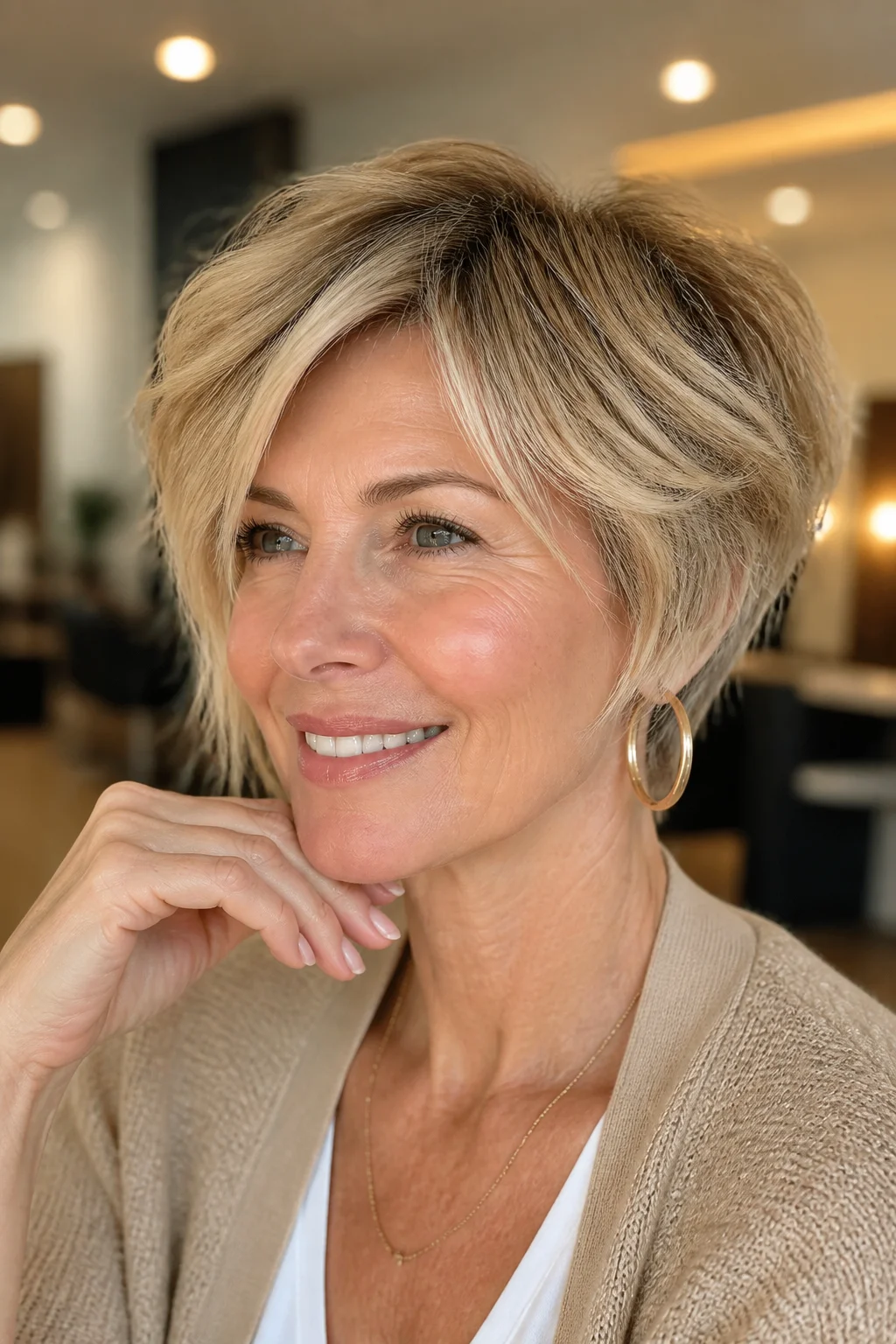
Short, choppy pieces are cut around the face while the rest of the hair falls to the shoulder in longer layers. The face-framing pieces do a lot of the work here, softening the forehead and cheek area without touching the rest of the length. It’s a good option if you want a lower-commitment way to try a pixie influence without cutting everything short. This style also grows out gracefully since the face-framing pieces blend into the longer layers over time.
Wavy Textured Shoulder Pixie
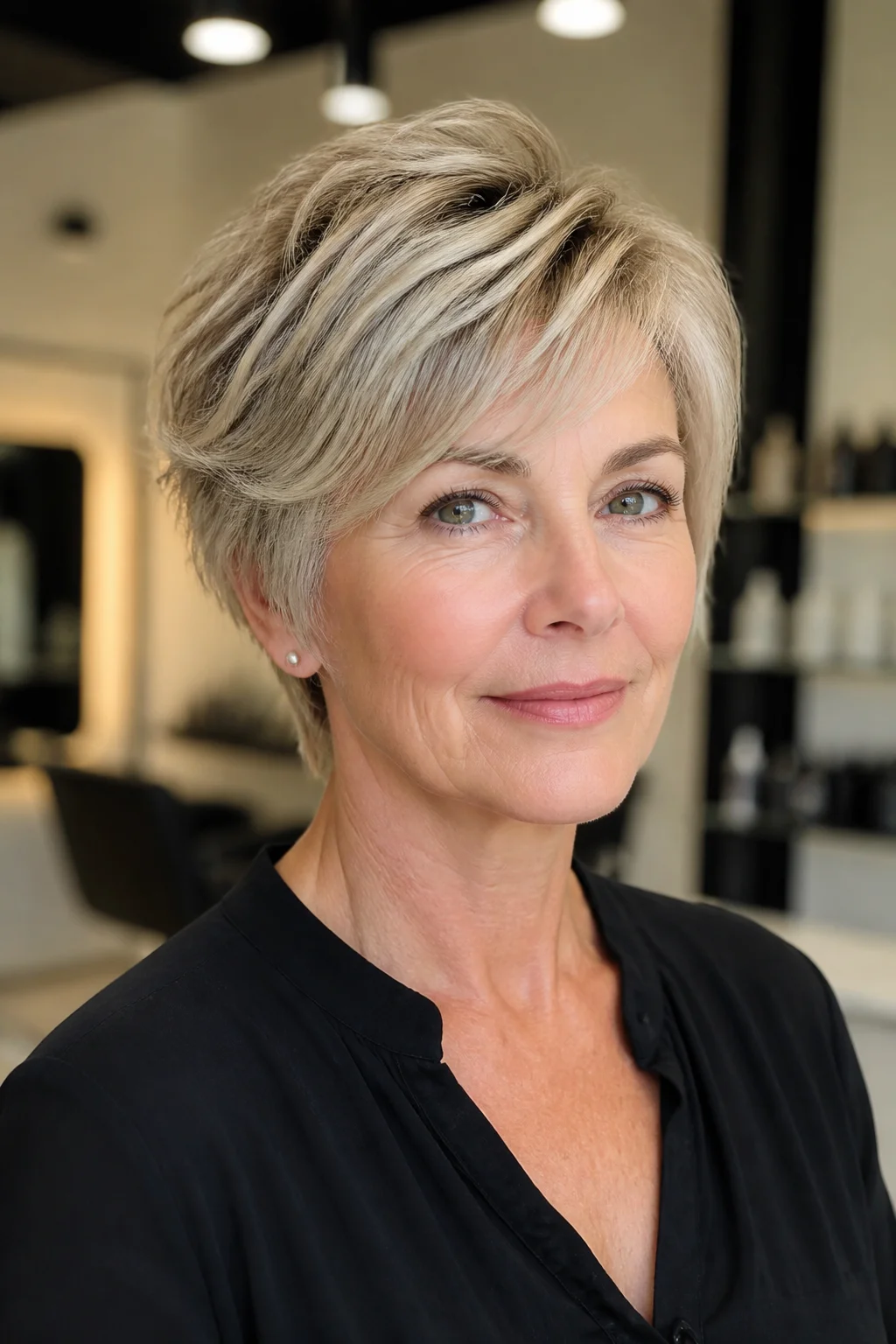
Waves add natural texture to this cut, and the layering is designed to enhance that wave pattern rather than smooth it out. The shorter top pieces dry into loose waves while the longer sides and back settle into soft bends by the shoulder. It’s a forgiving style for hair that doesn’t hold curl well but isn’t fully straight either. Sea salt spray scrunched into damp hair brings out the texture without much extra effort.
Pixie Mullet Shoulder Length
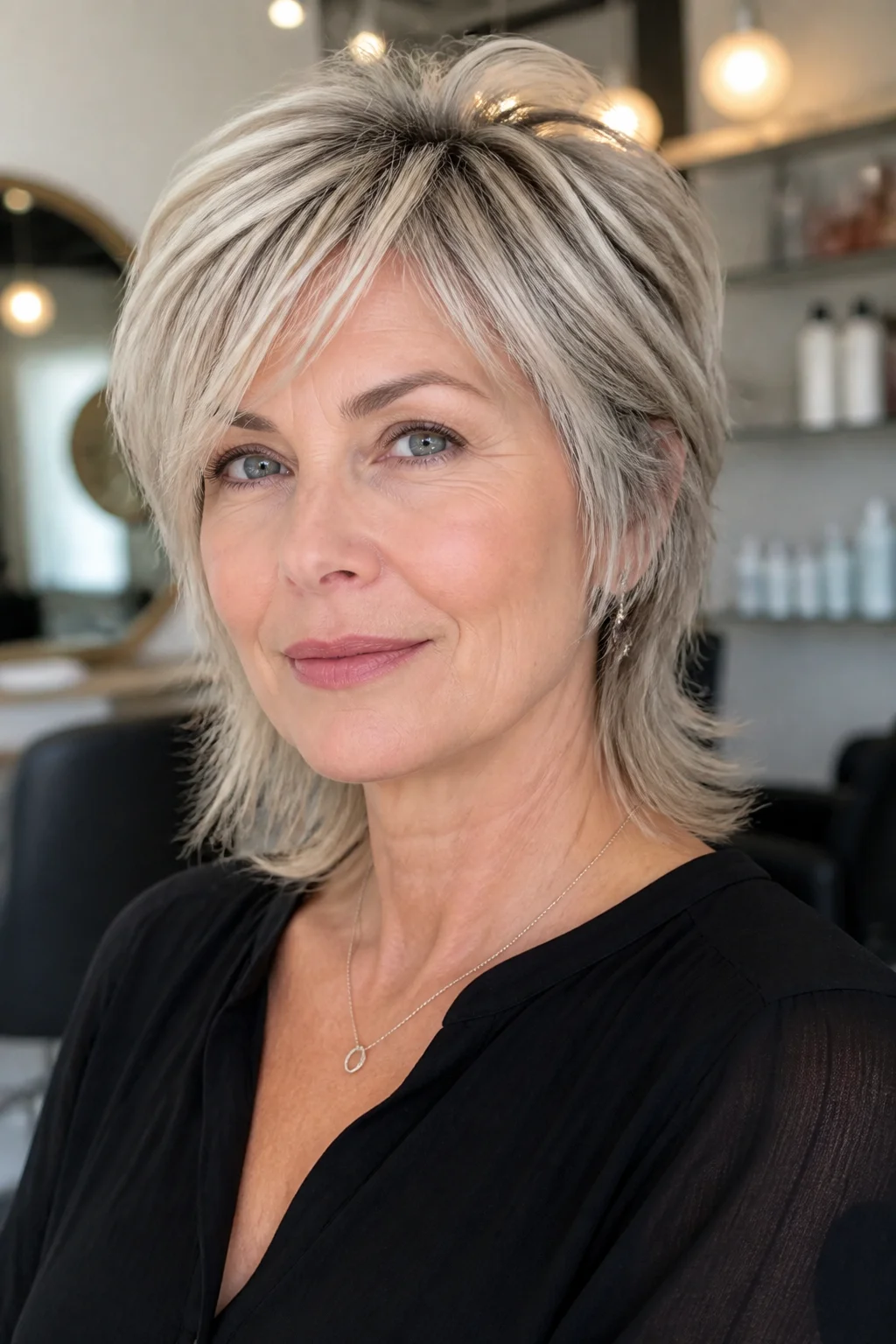
This one takes the short-on-top, long-in-back structure of a mullet and stretches the back section down to the shoulder. It’s edgier than most of the cuts on this list and tends to suit women who already gravitate toward bold styling choices. The short crown keeps things easy to manage day to day, while the length in back gives you something to work with when you want a different look. It’s not for everyone, but on the right person it looks confident rather than costume-like.
Blunt Shoulder Pixie with Texture
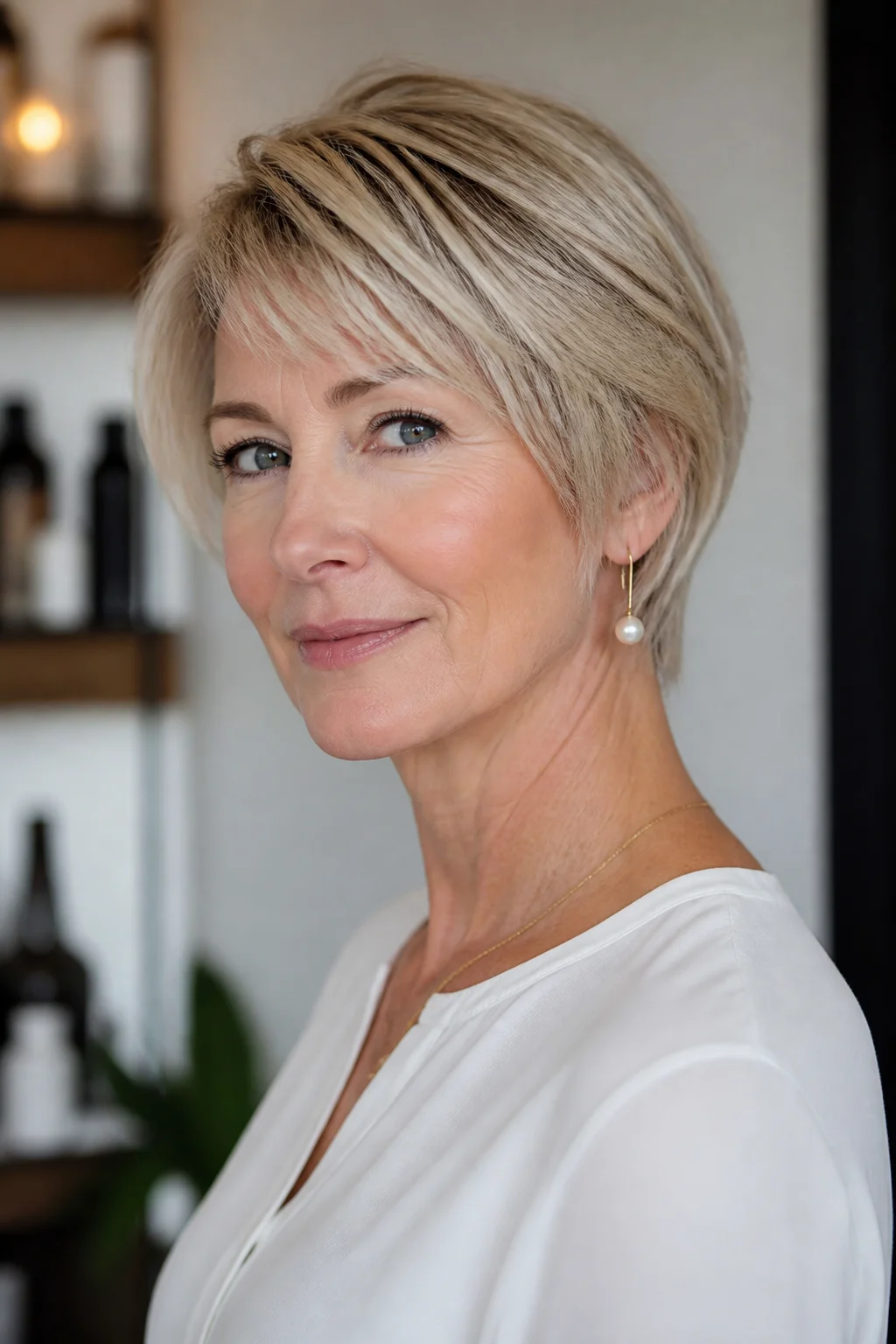
A blunt cut at the shoulder paired with a textured, layered top creates contrast between structure and softness. The bottom line stays clean and straight, which gives the style a more put-together appearance than fully layered versions. Texture at the crown keeps it from looking too severe or dated. This is a solid choice for thicker hair that holds a blunt line well without looking heavy.
Tapered Shoulder Pixie
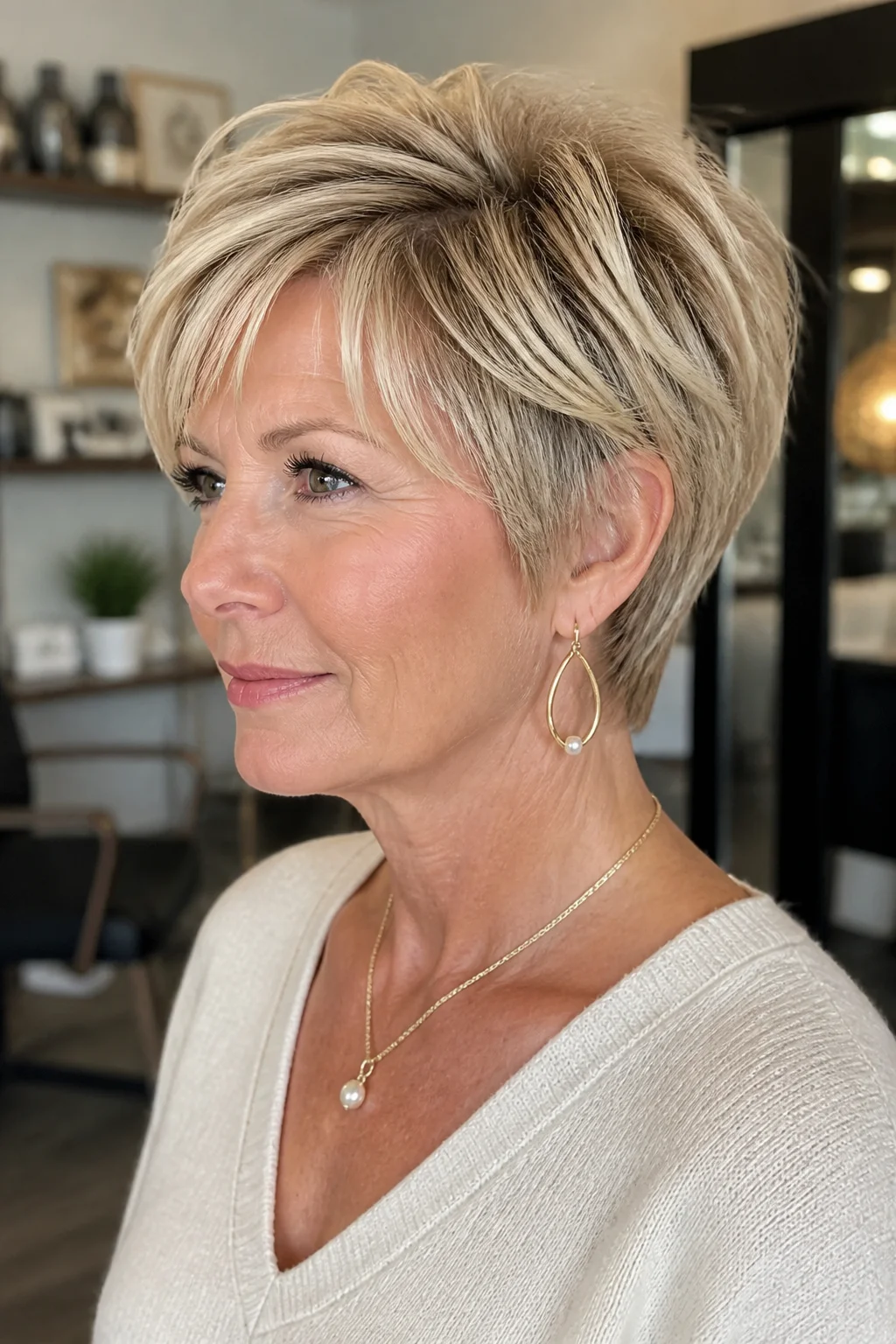
Tapering gradually reduces the hair’s length and weight as it moves down from the crown to the shoulder, so there’s no hard line anywhere in the cut. It’s one of the more classic, low-drama shapes on this list and suits nearly every face shape. The taper also makes it easier to grow out if you ever want more length, since there’s no blunt edge to wait through. Tip: request a razor taper instead of scissor tapering if your hair is fine, since it removes less bulk at once.
Piecey Layered Shoulder Pixie
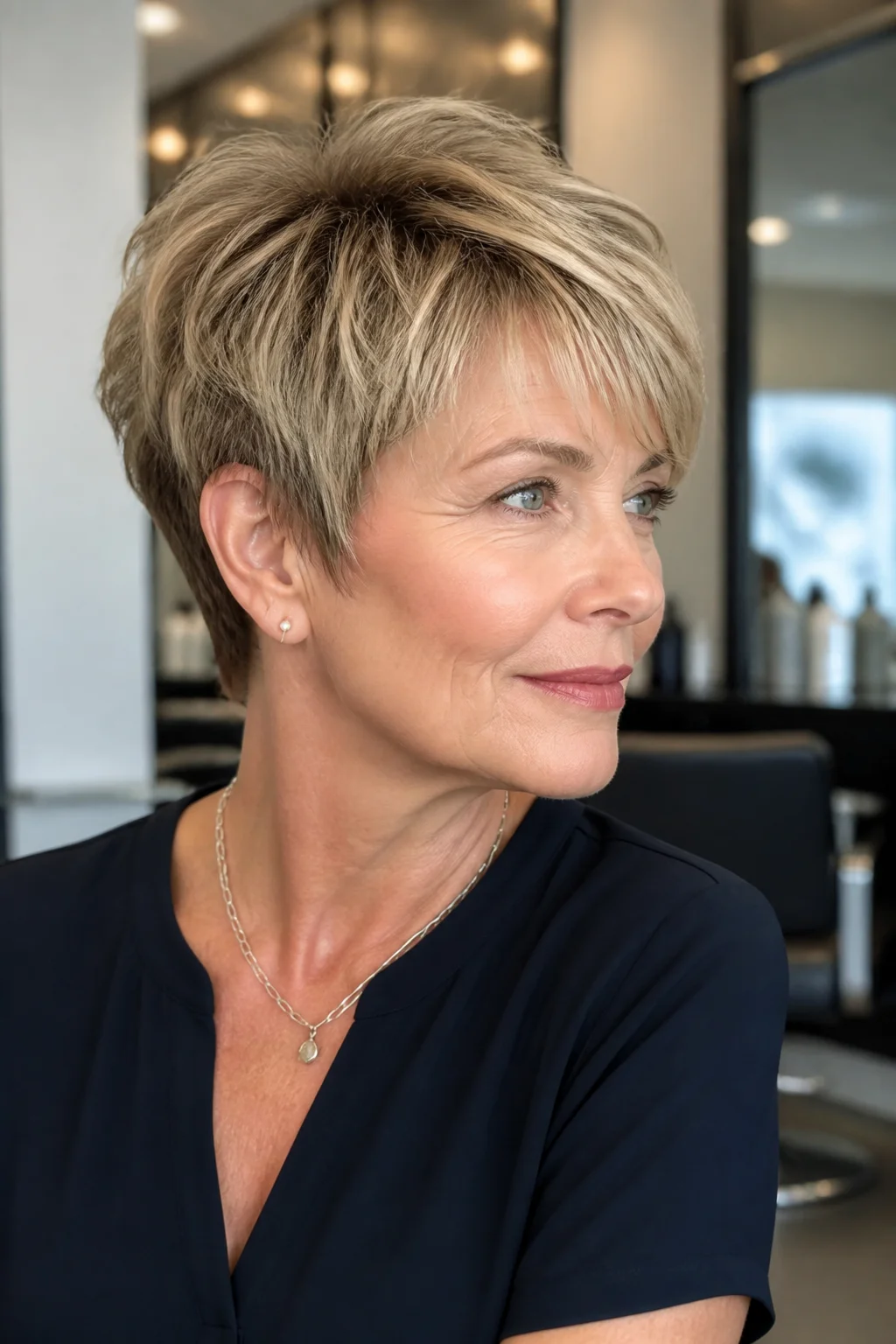
Individual pieces are cut and separated throughout this style, giving it a fragmented, textured look rather than one solid shape. A little pomade worked through dry ends keeps the pieces defined. This cut photographs well because the separation catches light in a way that flatter, single-layer cuts don’t.
Voluminous Shoulder Pixie
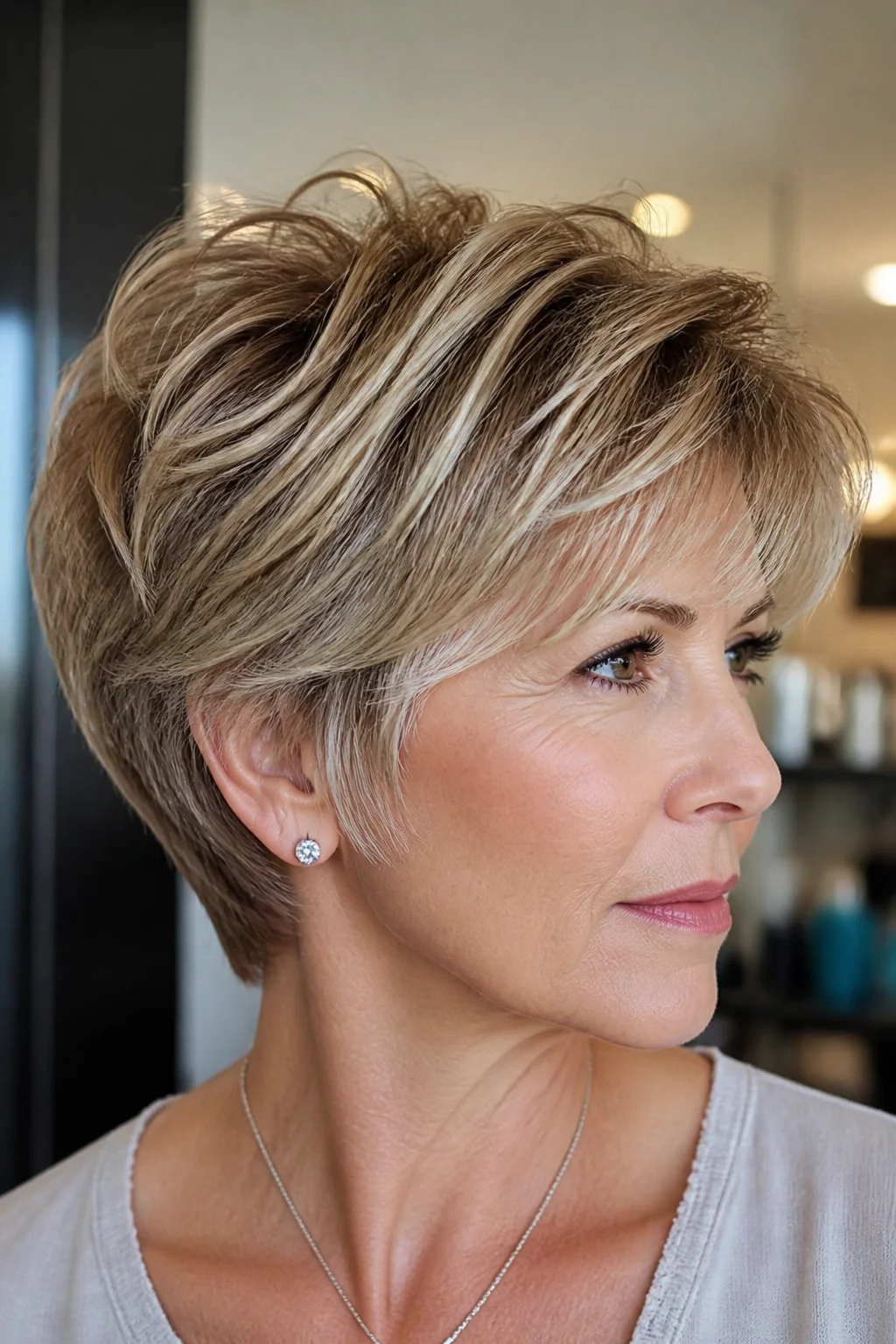
Volume is built in at the roots through shorter layers on top, while the length at the shoulder balances out the fullness so it doesn’t look top-heavy. This is a strong option for fine hair that tends to fall flat by midday. Root-lifting spray applied before blow-drying extends the volume further into the afternoon. The shape also works well with a side part, which adds even more lift at the crown.
Sleek Textured Shoulder Pixie
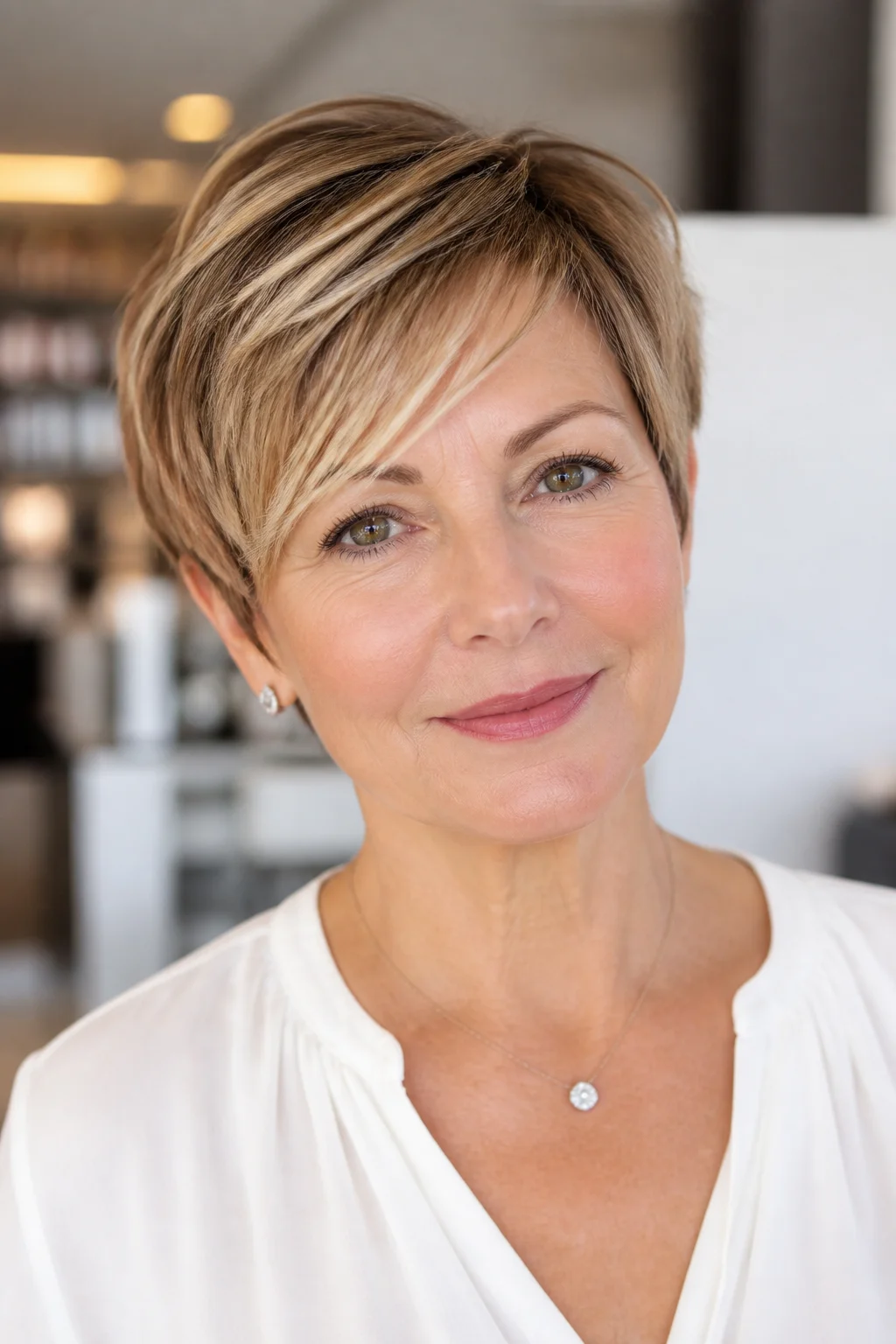
Smooth, sleek styling meets subtle texture in this cut, giving you something polished enough for professional settings but not stiff. The layers are cut with enough texture to add movement, but the finished look is smoothed down with a flat iron or round brush rather than left tousled. It suits straight hair particularly well since the natural texture already leans smooth. This is a dependable choice if you want one style that works for both daytime and evening.
Spiral Curl Shoulder Pixie
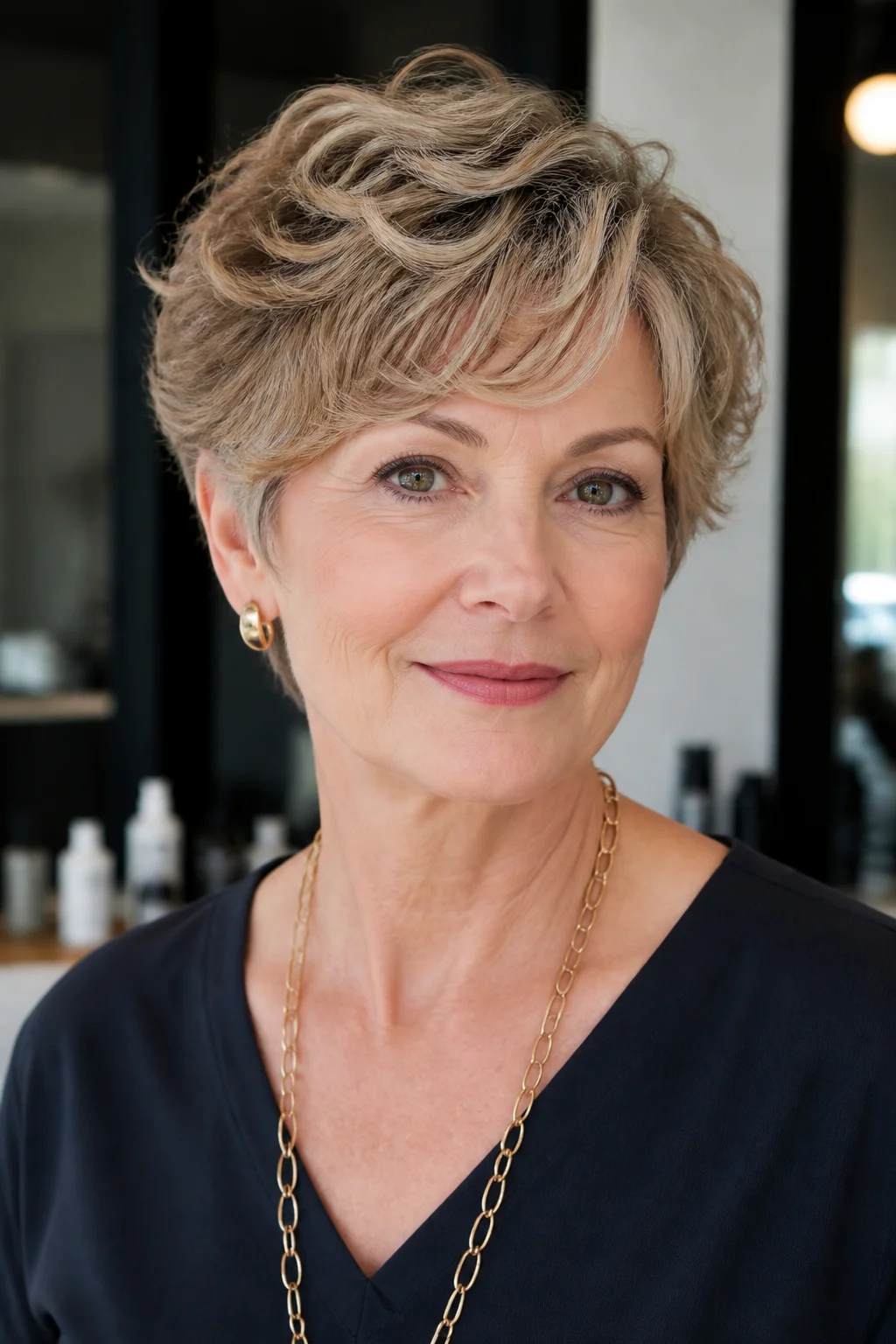
Tight spiral curls need a cut that respects their shrinkage, and this style accounts for that by leaving extra length in the back and sides so the curls settle at the shoulder once dry. The top is cut shorter to keep curls from ballooning at the crown. A curl-defining gel applied section by section on wet hair gives the cleanest spiral pattern. This is one of the more specialized cuts on the list, so it helps to work with a stylist who has specific experience cutting curly textures.
Textured Lob Pixie Blend
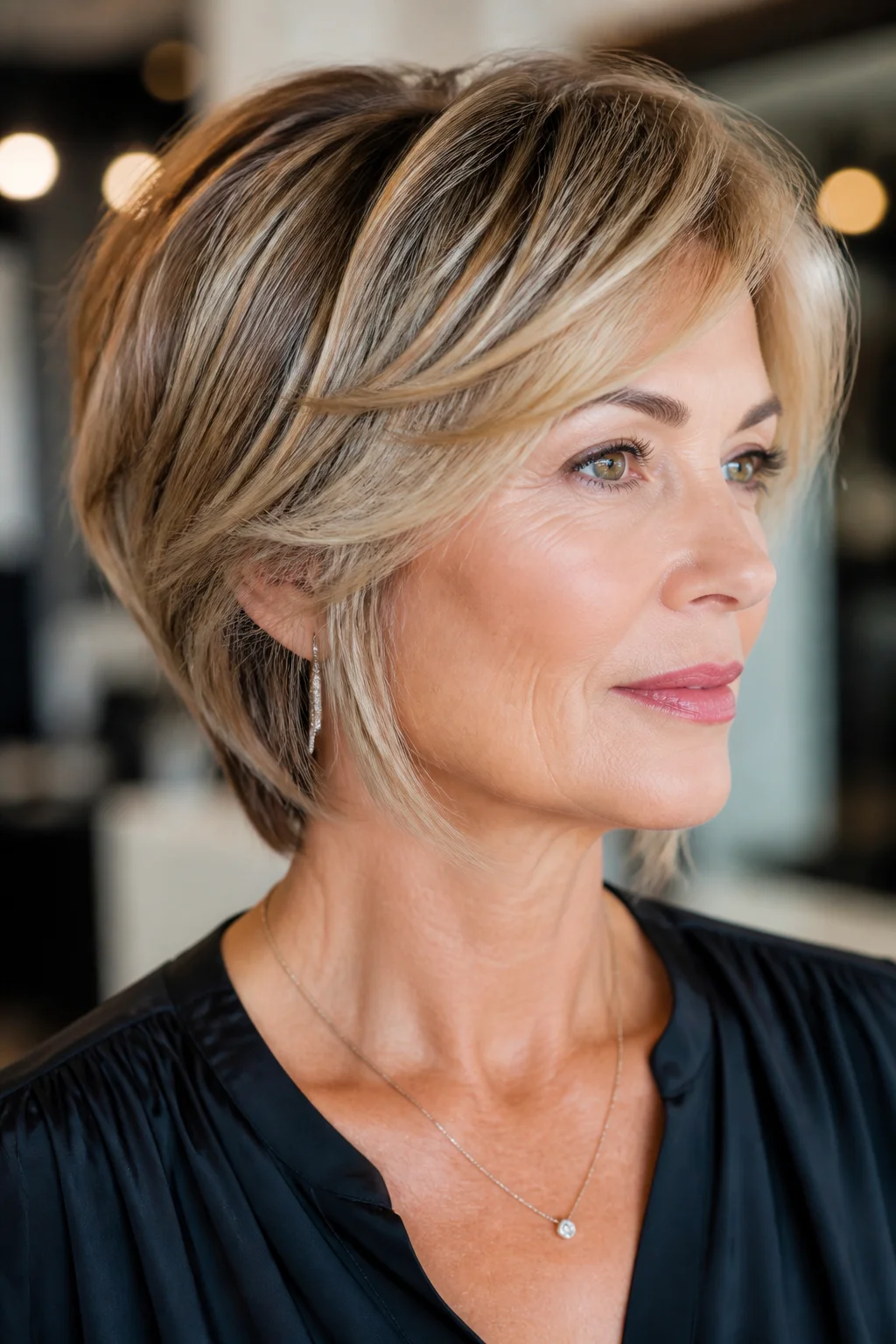
This blends the long bob, or lob, with pixie-style texture at the crown, landing somewhere between the two. The result feels modern without abandoning length entirely. It’s a good middle-ground pick for women who like the idea of a pixie but aren’t ready to commit to shorter layers throughout.
Side-Swept Shoulder Pixie
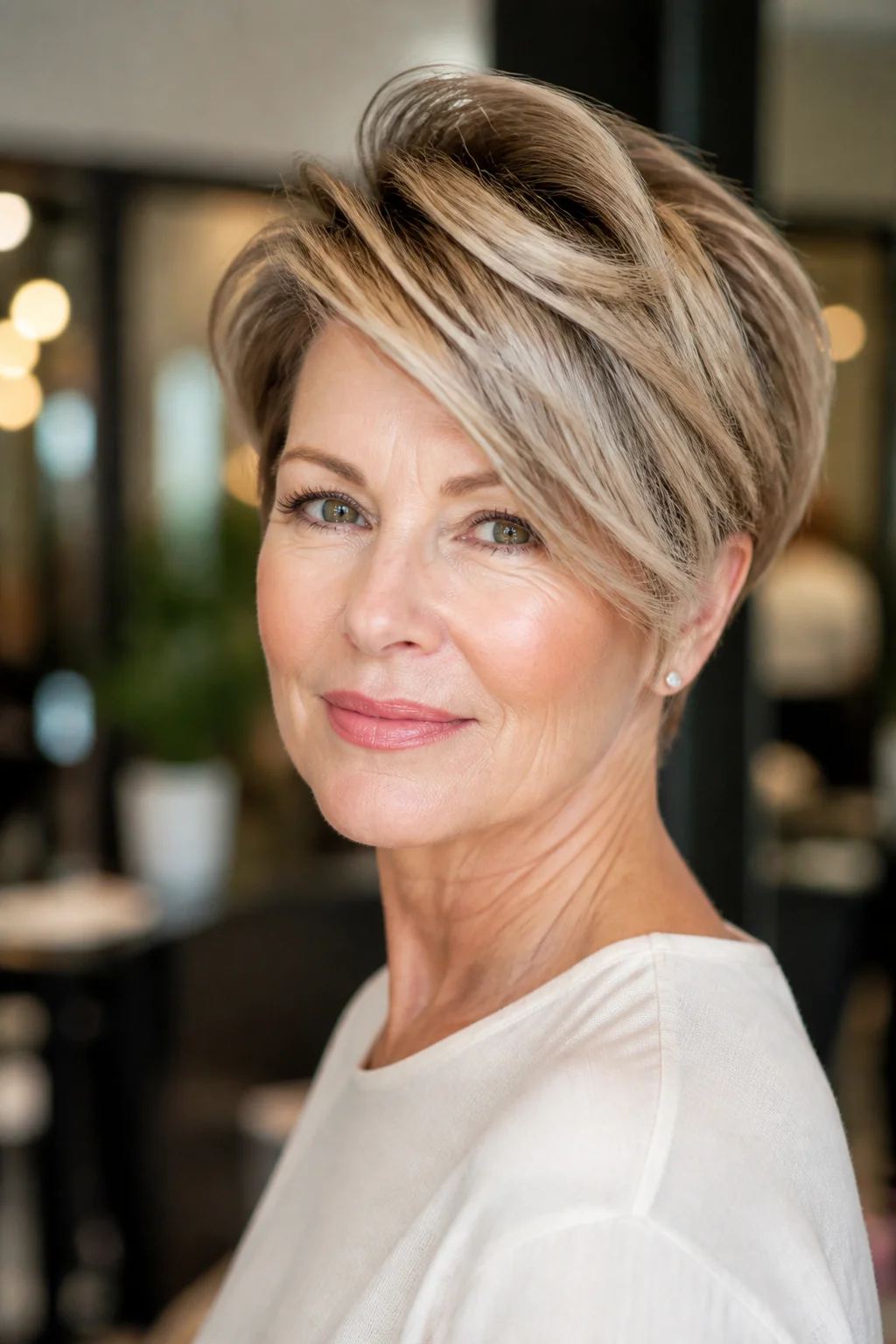
A deep side part pushes more hair to one side, creating a swept look that softens the face and adds asymmetry without a full asymmetrical cut. The shorter side stays close to the head while the longer side sweeps across, landing near the shoulder. This style is particularly good for hiding a receding hairline or thinning spot near the temple. Tip: switch the part side every few weeks to prevent the hair from losing volume in one spot.
Tousled Modern Shoulder Pixie
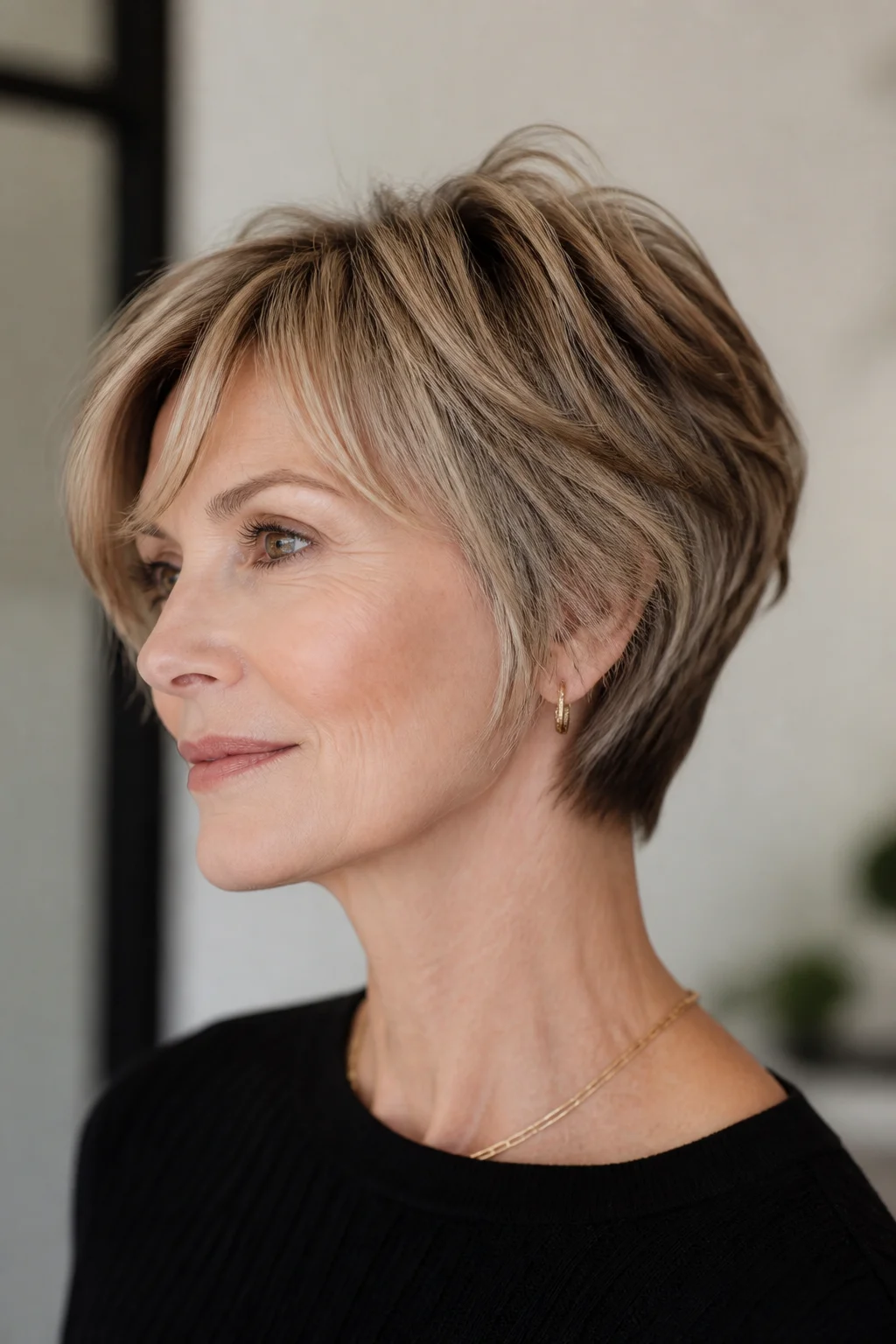
Texture is cut in unevenly here, so the hair looks purposefully undone rather than styled into place. Scrunching a texturizing spray into damp hair and letting it air dry gives the most natural version of this look. It reads younger and more relaxed than sleeker cuts, which makes it a favorite for weekend styling.
Cropped Crown Shoulder Pixie
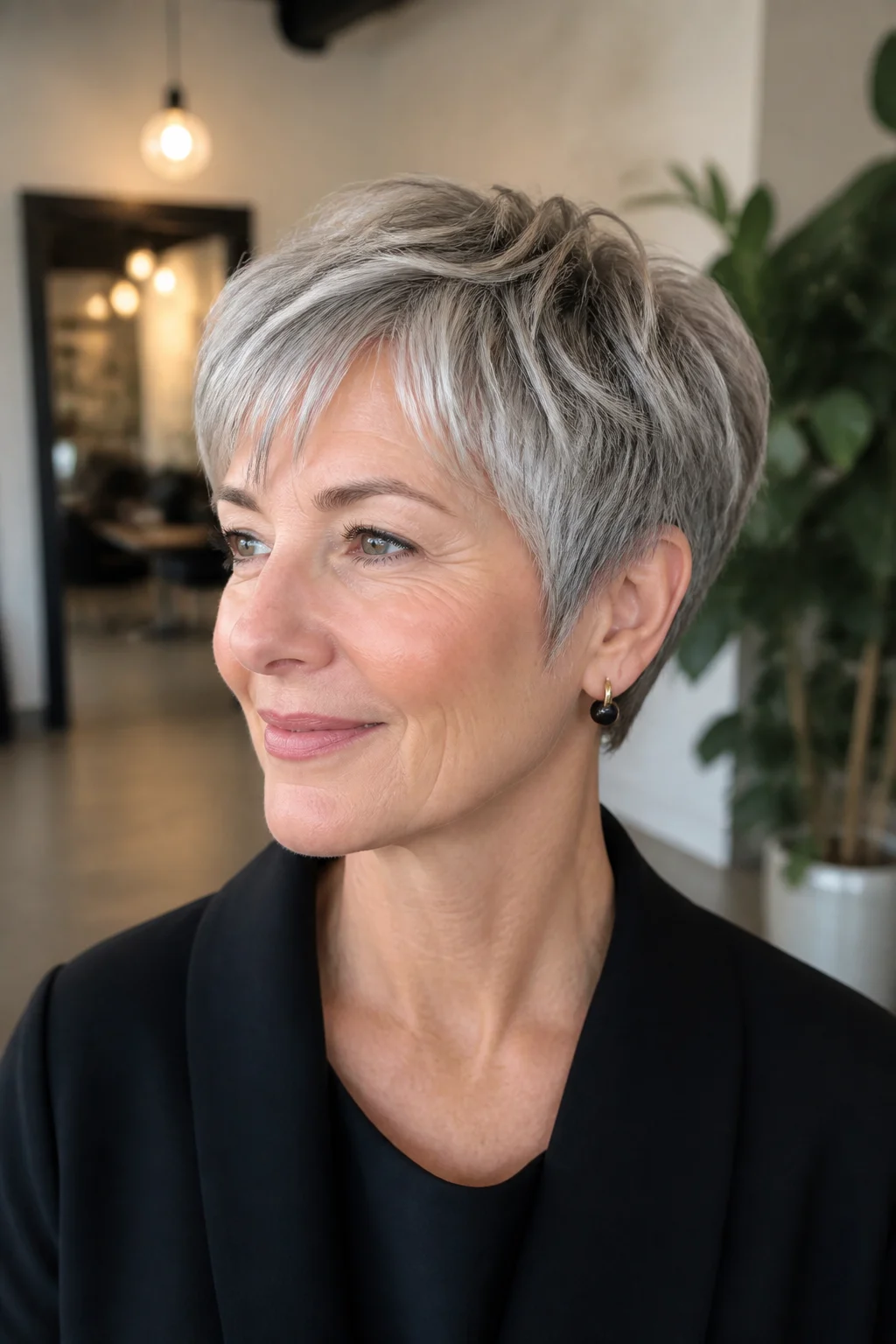
The crown is cut noticeably shorter than the rest of the head in this style, creating strong height at the top that balances out the length below. It suits women with longer face shapes since the height at the crown shortens the overall visual line of the face. Styling mostly involves working a small amount of paste into the crown to keep it standing slightly away from the head. The length at the shoulder can be left simple, since the crown carries most of the visual interest.
Wispy Shoulder Pixie
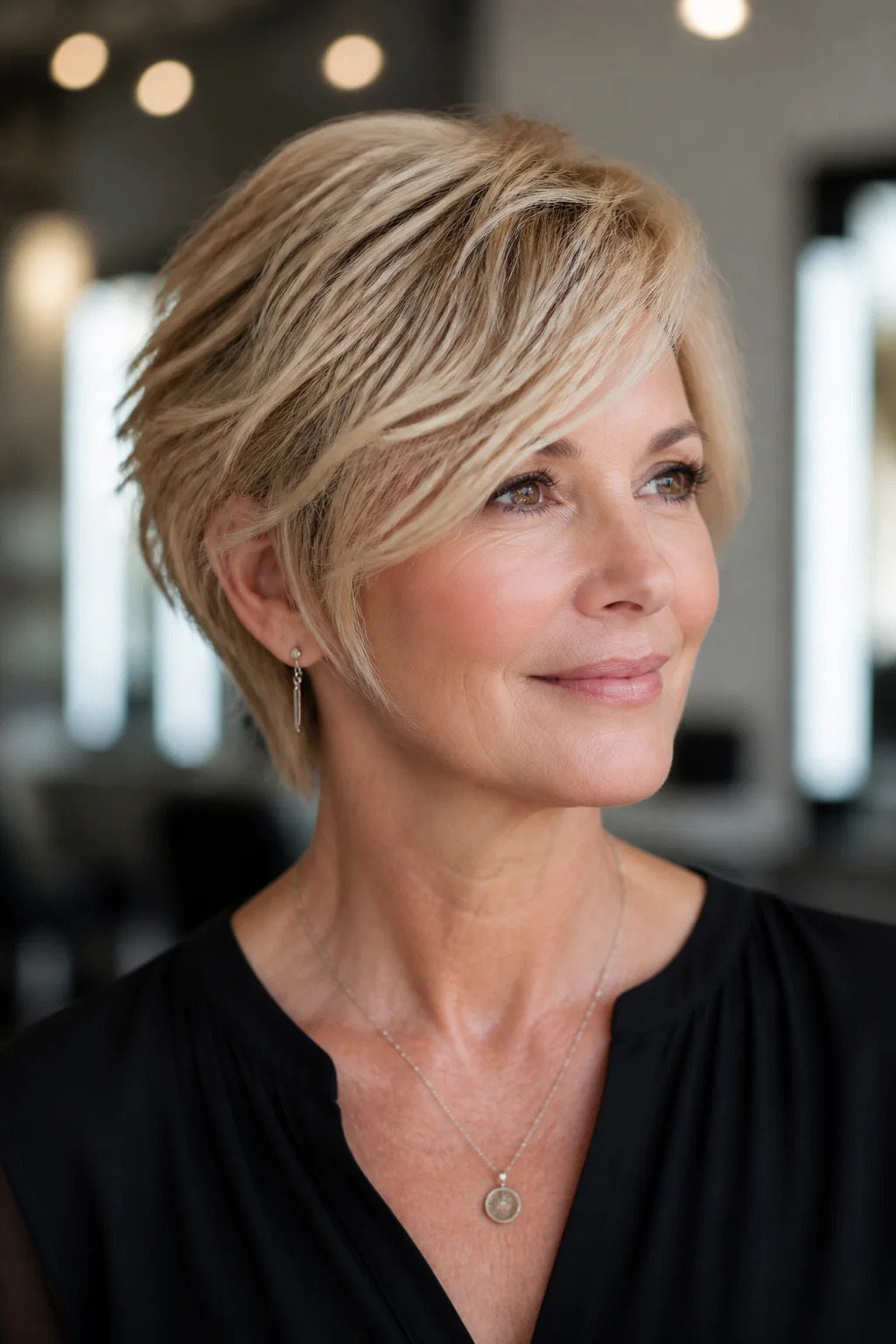
Fine, wispy ends throughout this cut give it a delicate, soft appearance that works especially well on finer hair textures. The wispiness comes from heavy point-cutting at the tips rather than blunt trimming. It’s a gentle look, similar to hair that has been softly feathered by wind, and it suits women who want something understated. Very little product is needed, just a light shine spray to finish.
Coiled Texture Shoulder Pixie
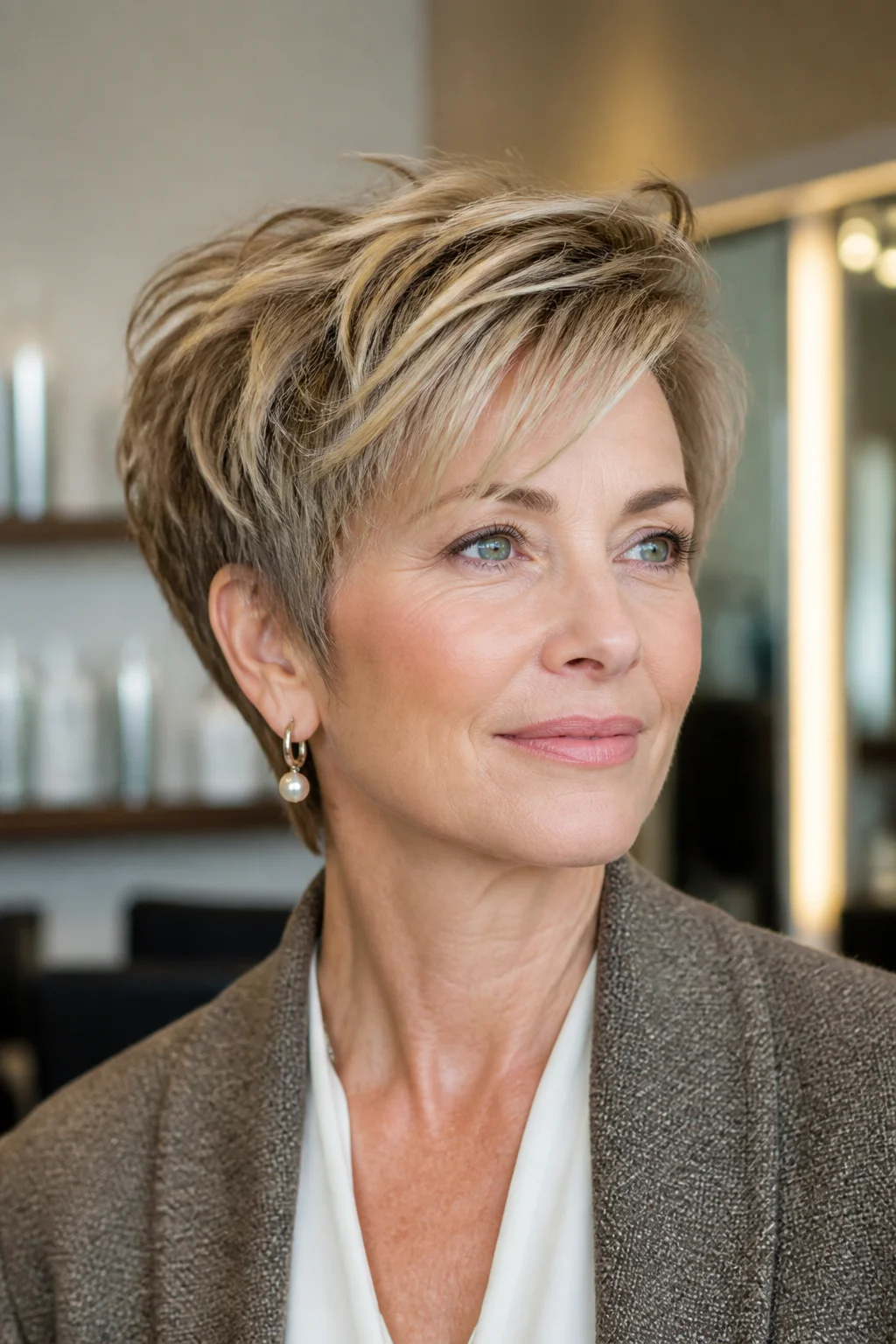
Natural coils are left largely intact in this cut, with layering used mainly to control shape and reduce bulk rather than to change the coil pattern. The top is cut shorter to prevent excess width at the crown, and the length at the sides is preserved down to the shoulder. This approach respects the hair’s natural pattern instead of forcing it into a different texture. Leave-in conditioner followed by a curl cream keeps coils defined and reduces breakage at the ends.
Low-Maintenance Shoulder Pixie
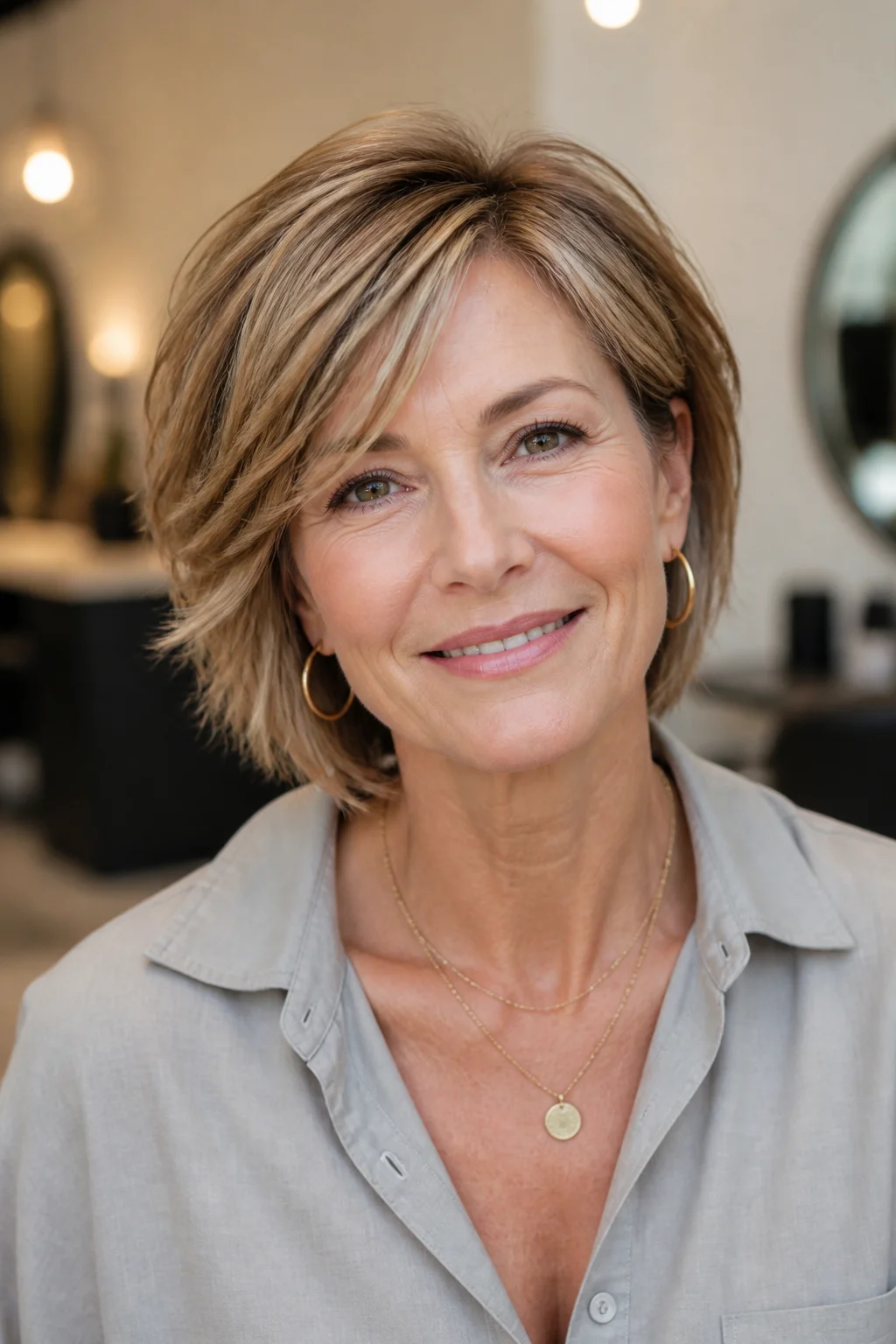
This cut is built entirely around minimal styling time, using layers that fall into place with just a rough towel-dry and a little product. There’s no elaborate layering pattern or dramatic line, just a clean, even taper from crown to shoulder. It’s a dependable option for women who want a pixie-inspired shape without adding a single extra step to their morning routine.
How to Choose the Right One for You
With this many options, picking one comes down to your hair’s natural texture, how much time you want to spend styling, and what you want the cut to do for your face shape. If you have fine, flat hair, look toward the voluminous shoulder pixie or the shaggy shoulder pixie with movement, since both are built to create fullness at the root. If your hair is naturally curly or coiled, skip styles that rely on blunt lines and go for the curly shoulder pixie, the spiral curl shoulder pixie, or the coiled texture shoulder pixie, all of which are cut to work with your pattern instead of against it.
For anyone short on time in the morning, the low-maintenance shoulder pixie and the tapered shoulder pixie are the easiest to keep looking finished with almost no styling. If you want more drama or a stronger fashion statement, the disconnected shoulder pixie, the asymmetrical shoulder pixie, or the pixie mullet shoulder length will give you that edge. A common mistake is choosing a heavily layered style like the piecey layered shoulder pixie when your hair is already fine, since too much layering can leave ends looking thin. Match the cut to your texture first, then adjust for style preference.
Final Thoughts
A shoulder length pixie gives you room to experiment without committing to something drastic, and the range of options here means there’s a version for straight, wavy, curly, and coiled hair alike. I recommend bringing two or three reference photos to your appointment so your stylist can see exactly which details you want, whether that’s the choppy top of a classic textured pixie or the soft ends of a wispy shoulder pixie. The right cut should feel easy to live with, not just nice in a photo.